Flashback : Dallas

A Miscellany: History, Ads, Pop Culture

Category: Photographs

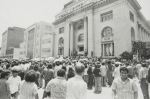
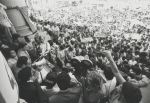
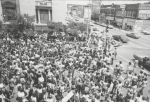
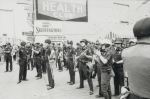
Santos Rodriguez: The March of Justice — 1973
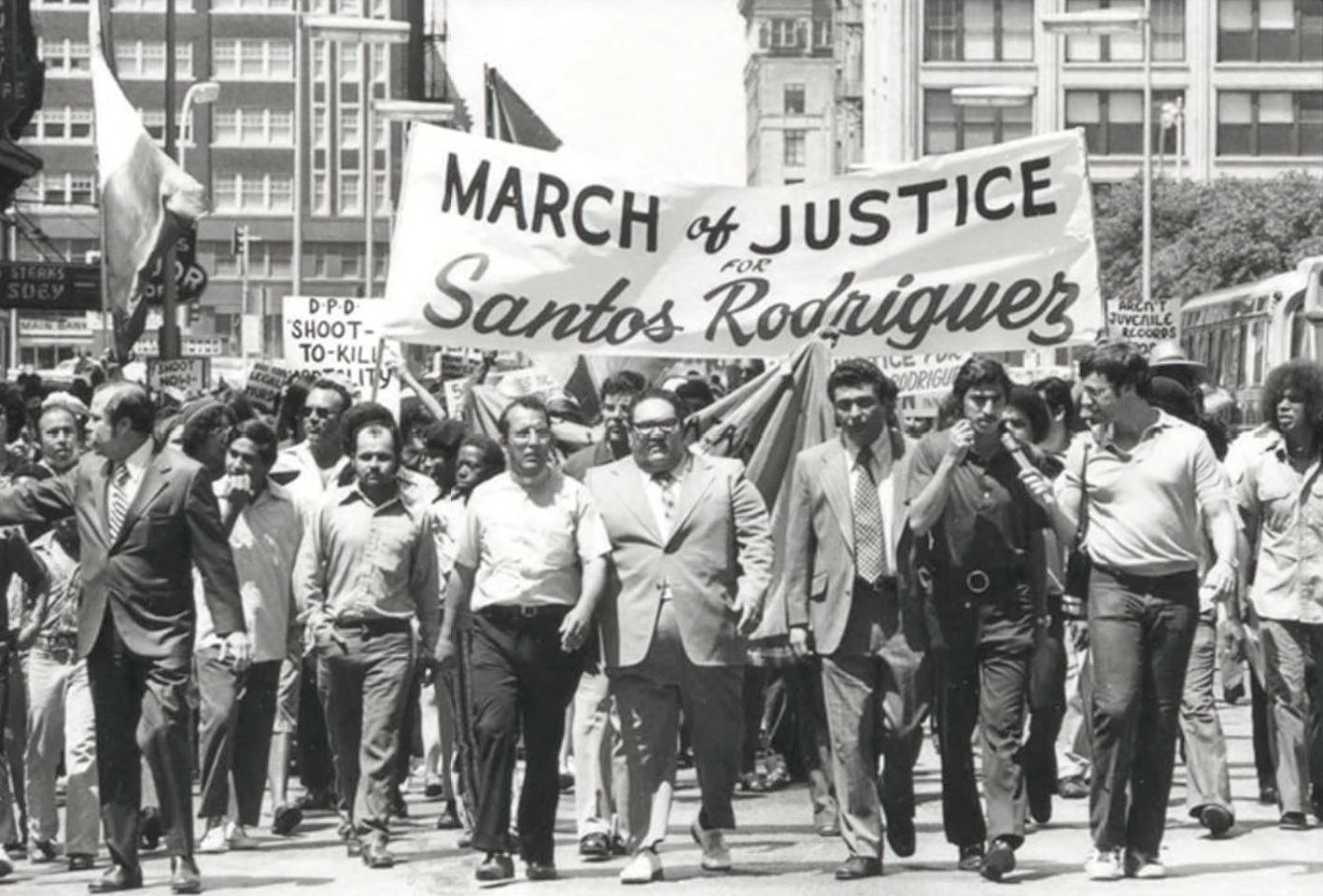
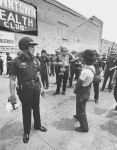
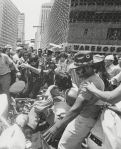
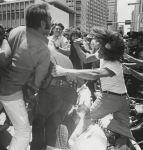
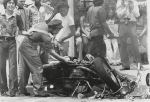
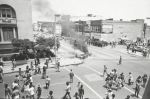
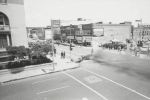
santos-rodriguez_march_contact-sheet-12_andy-hanson_degolyer_SMUThe March of Justice, July 28, 1973… (photo: Andy Hanson / SMU)

by Paula Bosse

In the wee hours of the morning of Saturday, July 24, 1973, 12-year-old Santos Rodriguez — who was handcuffed in the front seat of a police car — was shot in the head by a Dallas police officer attempting to coerce a confession in a deadly game of Russian roulette. Santos died instantly, as his 13-year-old brother — also handcuffed — watched in horror from the back seat. The shooting (which I wrote about here) set off an explosion of outrage in Dallas, with the bitterest and angriest coming from the Mexican American community.

Four days after Santos was killed, a “March of Justice for Santos Rodriguez” was scheduled to be held in downtown Dallas, beginning at the Kennedy Memorial and ending at City Hall (the old Municipal Building, at Main and Harwood). The event was to be a peaceful march to show the solidarity of the Hispanic community and to protest what many felt was racial prejudice within the Dallas Police Department.

The march down Main Street to City Hall was earnest, and the speeches at City Hall by Dallas activists and concerned civic leaders were impassioned calls to action. After the speeches, many of the marchers headed back to the Kennedy Memorial. About halfway back, they encountered another group of marchers.

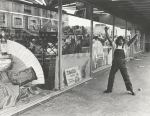
At some point, various groups described as “outside agitators” arrived. While the first crowd was listening to speeches at City Hall, a second (and perhaps later even a third) group of protestors assembled and began their own march to City Hall. These new arrivals (many said to be from Fort Worth and Waco) appear to have been the spark that set off what has been described as a “riot,” which erupted back at City Hall, with protesters attacking the police (who had been ordered to refrain from retaliation), breaking windows, and looting several downtown businesses. The image most emblematic of the day was a burning police motorcycle lying in the street just outside City Hall.

…[A]ll was havoc. A motorcycle was burning, a news vehicle was smashed, several officers injured and the sound of shattering glass filled the street… [T]he stench of burning rubber filled the air.” (“Police Taunted By Crowd” by Mitch Lobrovich, Dallas Morning News, July 29, 1973)

Luckily, there were few injuries, and the crowd dispersed after less than an hour.

A couple of days after the protest, the Rodriguez family issued this statement:

The Rodriguez family would only ask that when the people of Dallas hear the name Santos Rodriguez they think not of the unwanted violence that became associated with his name Saturday; but they think of the real Santos Rodriguez, a gentle and well-liked 12-year-old boy who had his life tragically taken from him.

*

Below (and above), photos taken that day by Dallas Times Herald photographer Andy Hanson which were recently unearthed by curator Anne Peterson, from the collection of his photographs at SMU’s DeGolyer Library:
**

The only footage I’ve found of the actual march is this video, uploaded recently to YouTube by Mountain View College. It was apparently shot by a Dallas police officer. There is no sound. This is great. Thank you, Mountain View, for preserving this important historical moment.


*
***

Sources & Notes

Photos taken by Andy Hanson on July 28, 1973; from the Collection of Photographs by Andy Hanson, DeGolyer Library, Southern Methodist University. See the rest of the photos from this day, here. (Note: this does not appear to be the entirety of Hanson’s photos taken that day.) Read about the full Andy Hanson Collection at SMU, here

Read “Honoring Santos Rodriguez” by Anne E. Peterson, Curator of Photographs at the DeGolyer Library (and the person who unearthed these Andy Hanson photos), here.

The YouTube video is titled “Santos Rodriguez 1973 News Footage,” with the description “Rare news footage taken during the 1973 protests in downtown Dallas following the tragic shooting death of 12 year old Santos Rodriguez by a Dallas Police officer. No audio.” I’d like to know more about the story behind this footage.

The coverage of the march(es) and ensuing riot is confusing. A couple of months after the march, Jose Antonio Gonzales wrote a fascinating and (seemingly) comprehensive report for The Fort Worth Star-Telegram on how the events developed and unfolded, with an almost moment-by-moment timeline and insight into the individuals involved. Read his fantastic job of reporting in the (awkwardly-titled) article “Chicano Leadership Unity Faulted in Study of Boy’s Death” (FWST, Sept. 16, 1973): part one is here; part two is here.

My previous post on Santos Rodriguez — “Santos Rodriguez, 1960-1973” — is here.

Click pictures to see larger images.

*

Copyright © 2018 Paula Bosse. All Rights Reserved.
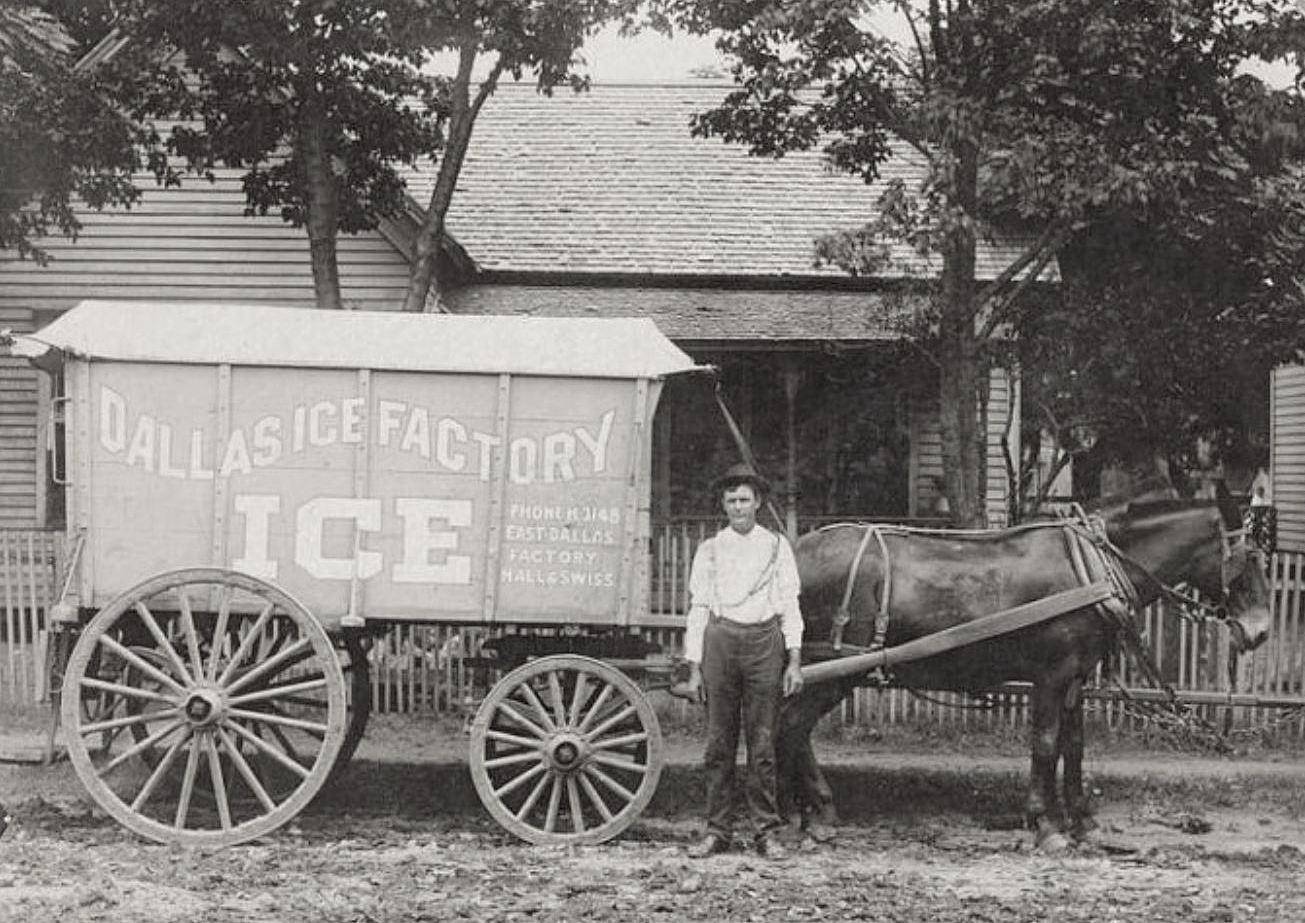
Dallas Ice Factory

dallas-ice-factory_dallas-observer_ebayIce…

by Paula Bosse

Lordy, it was hot today. At one point I looked at my phone and it told me it was 112° (but thanks to the chill factor, it felt like a refreshing 110°). It’s 10:00 p.m. and it’s 100°. That’s too many degrees.

Above is a photo of a horse-drawn Dallas Ice Factory wagon and its driver. There was probably ice in there.

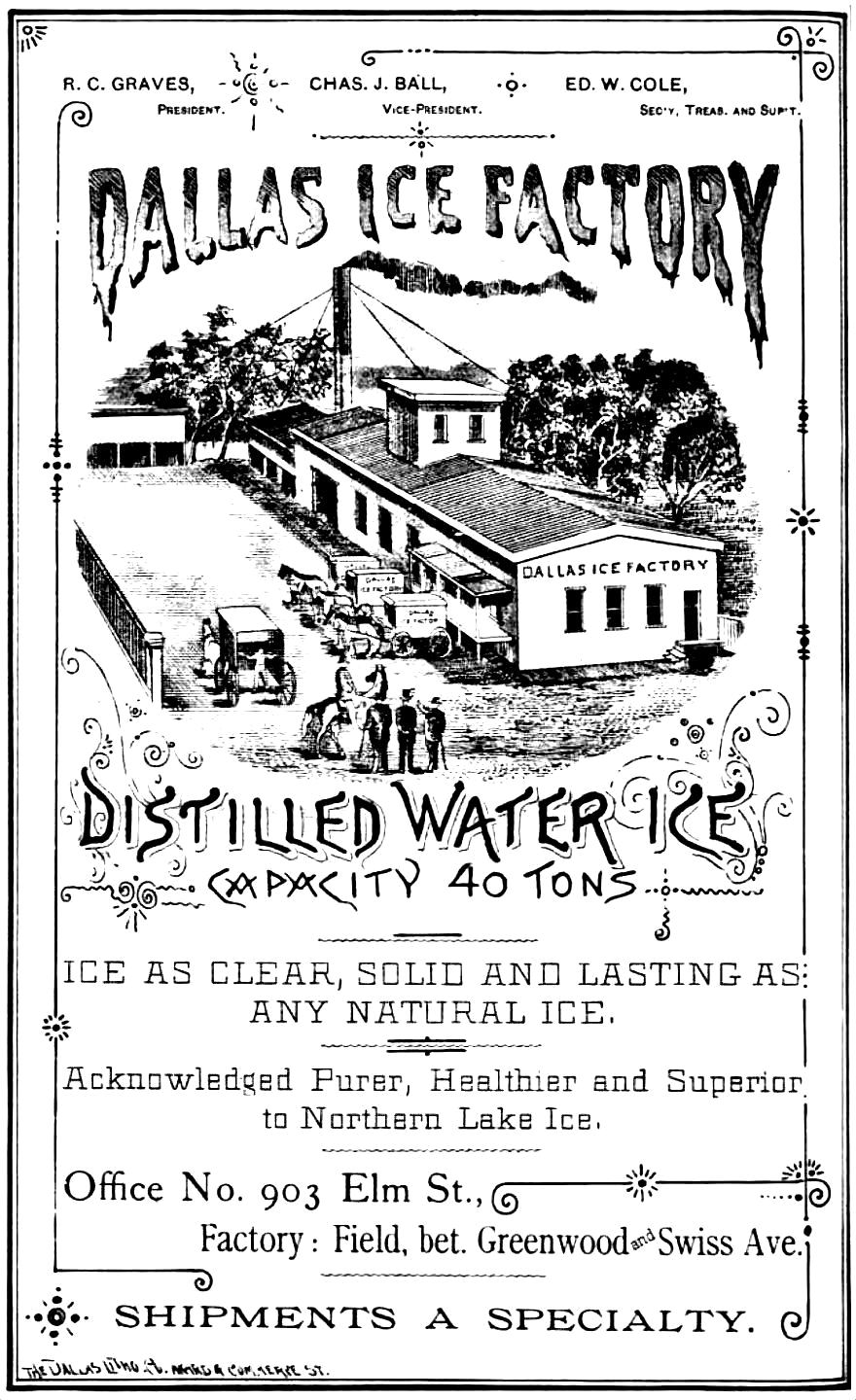
Here’s an ad from 1888 showing the factory:

dallas-ice-factory_1888-directory1888 Dallas directory

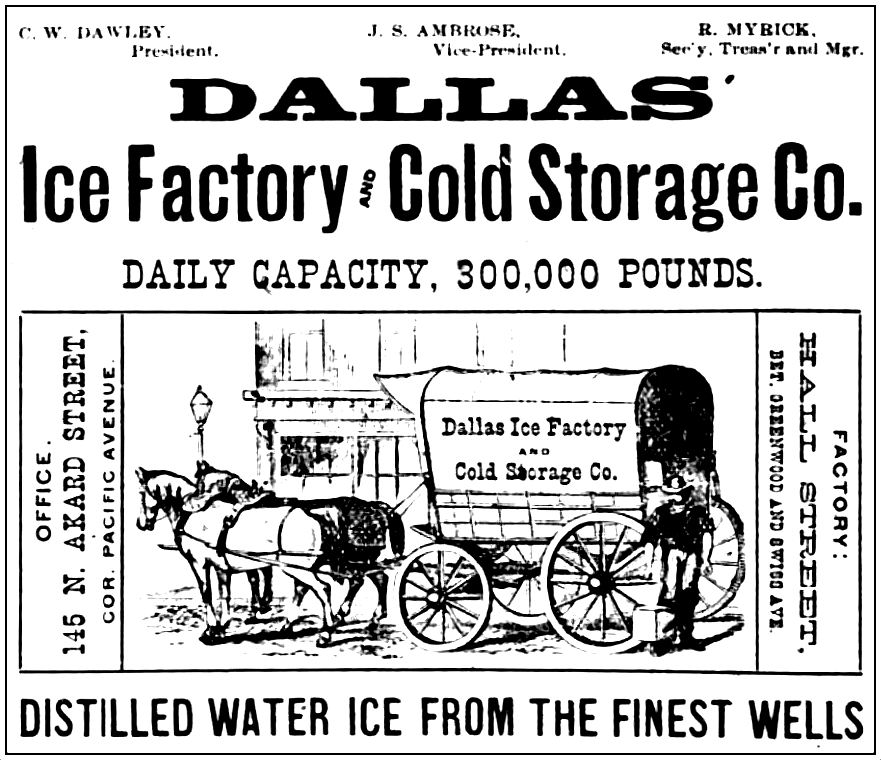
Here’s an ad from 1894 not showing the factory:

dallas-ice-factory_1894-directory1894 Dallas directory

Here’s a link to an 1899 Sanborn map showing you where the Dallas Ice Factory was located (in Old East Dallas, at Swiss and Hall): link.

That’s about all I can muster. It’s too dang hot.

***

Sources & Notes

Photo from a 2011 eBay listing, reproduced in The Dallas Observer by Robert Wilonsky; now owned by Peter Kurilecz.

Ads from Dallas directories.

Heat from the sun.

And here’s an ice-factory-related post I actually did some work on, when I wasn’t feeling like a sweaty, limp dishrag (…a long, long time ago…): “Oak Lawn Ice & Fuel Co.”

*

Copyright © 2018 Paula Bosse. All Rights Reserved.
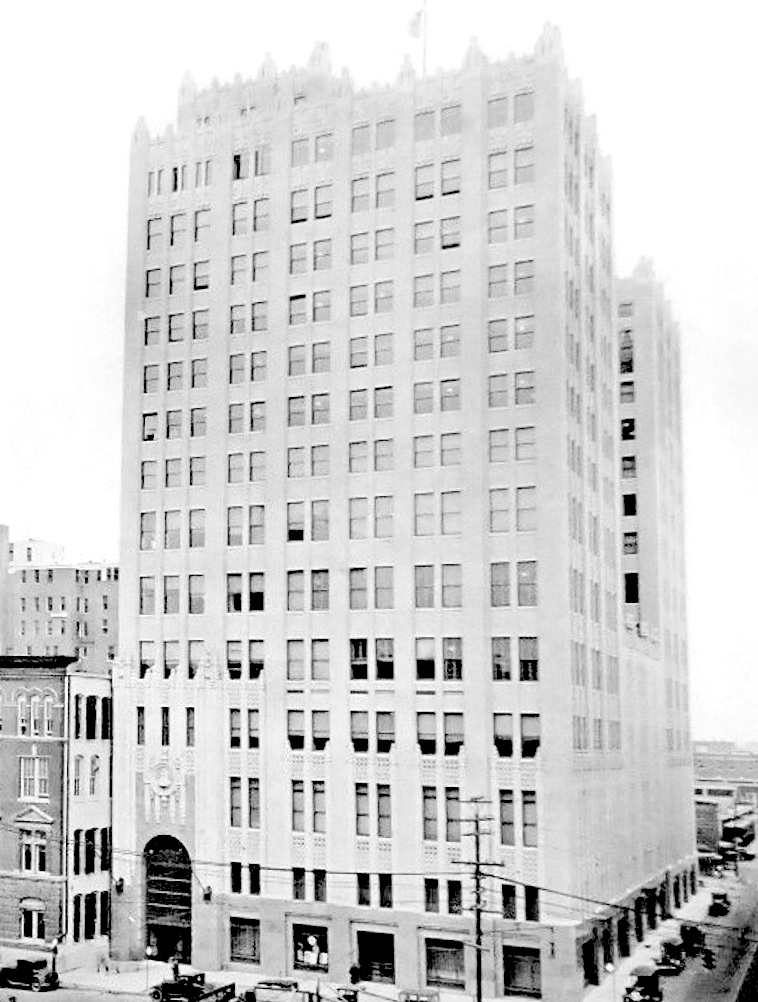
The New Southwestern Bell Telephone Co. Building — 1928

swb-bldg_atlantic-terra-cotta-booklet_1929Brand new, at S. Akard and Wood streets…

by Paula Bosse

Above, the beautiful new Southwestern Bell Telephone Company building, photographed not long after its opening at the end of 1928. Designed by noted Dallas architects Lang & Witchell (in association with Southwestern Bell’s chief architect I. R. Timlin) the building took up almost an entire block on the east side of South Akard, between Jackson and Wood streets. Construction began in April 1927, and the building was finished and occupied in December 1928. It served as a regional hub, containing not only business offices, but also cumbersome telephone equipment which necessitated very high ceilings on some of the floors. (There were also downtown and suburban telephone exchanges which handled local calls, as well as the Haskell exchange which was handling long-distance traffic.)

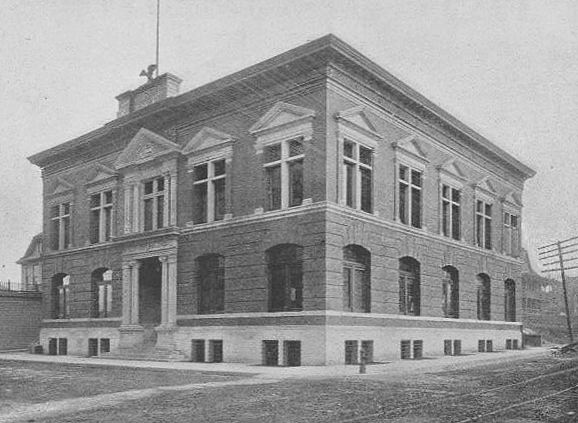
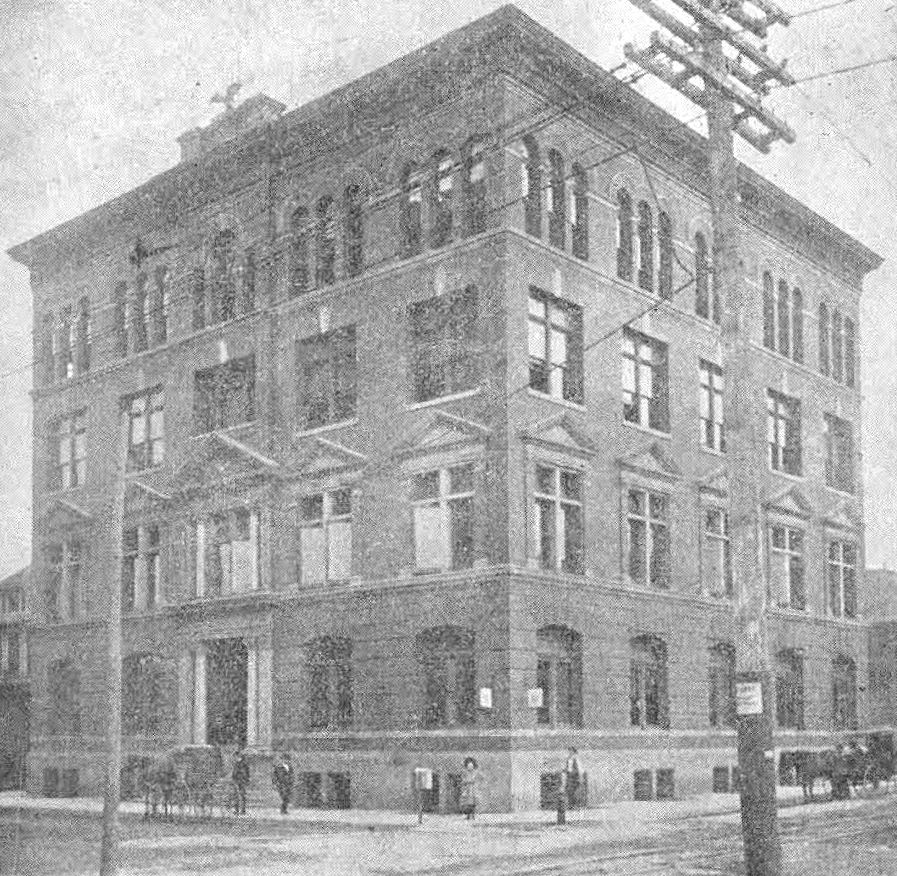
The photo above is interesting because it shows part of the building which this new “skyscraper” replaced. Designed by H. A. Overbeck, the previous telephone HQ (seen below sometime before 1899) was built on the corner of Akard and Jackson in 1897.

sw-bell-telegraph-and-telephne_dallas-fire-dept_1899_portal_det

Here’s the same building in about 1905, with a couple of floors added:

southwestern-bell-bldg_come-to-dallas_degolyer_SMU_ca1905

The plan was to maintain the smaller building during the construction of the new building in order that operations would not be interrupted, then demolish it at a later date when expansion would take place. When construction of the new building was completed, the smaller building served primarily as the downtown exchange.

In 1929/1930, S. Akard was widened, which necessitated the condemnation or moving of several existing structures. Luckily, the new telephone building had been built far enough back from Akard to dodge any problems, but the smaller telephone building would have to be moved or demolished — it was moved: Southwestern Bell moved the 4-story, 4,200-ton building 18 feet eastward, at a cost of more than $75,000 (more than a million dollars in today’s money). The planning took six months, with elaborate schemes involving wooden cribbing, steel rods, jacks, rails, slackened power and telephone cables, and flexible joints for water mains. The actual move took 36 hours and was “so gradual that the workers inside [were] unaware of it” (Dallas Morning News, Aug. 18, 1929). There was no interruption of telephone service during this costly relocation. Quite a feat!

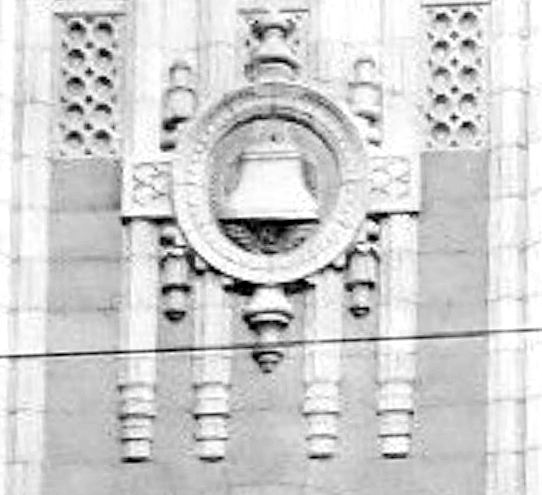
The building still stands — in amongst the humongous AT&T complex, but, sadly, one of the original features of the building is long gone: a large, ornate “bell” above the grand entrance (an entrance which is no longer quite so grand). Wonder what happened to it?

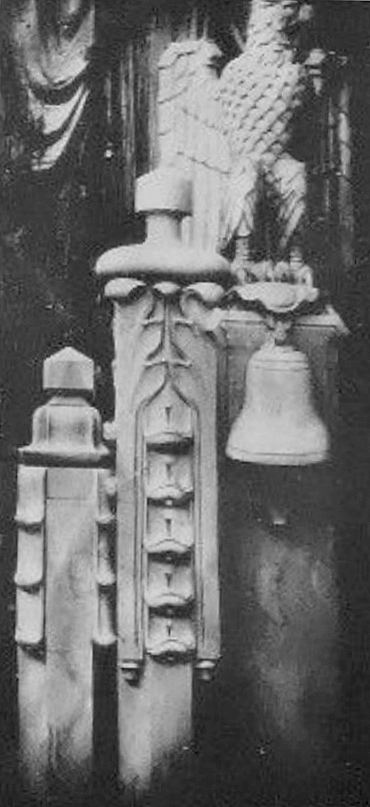
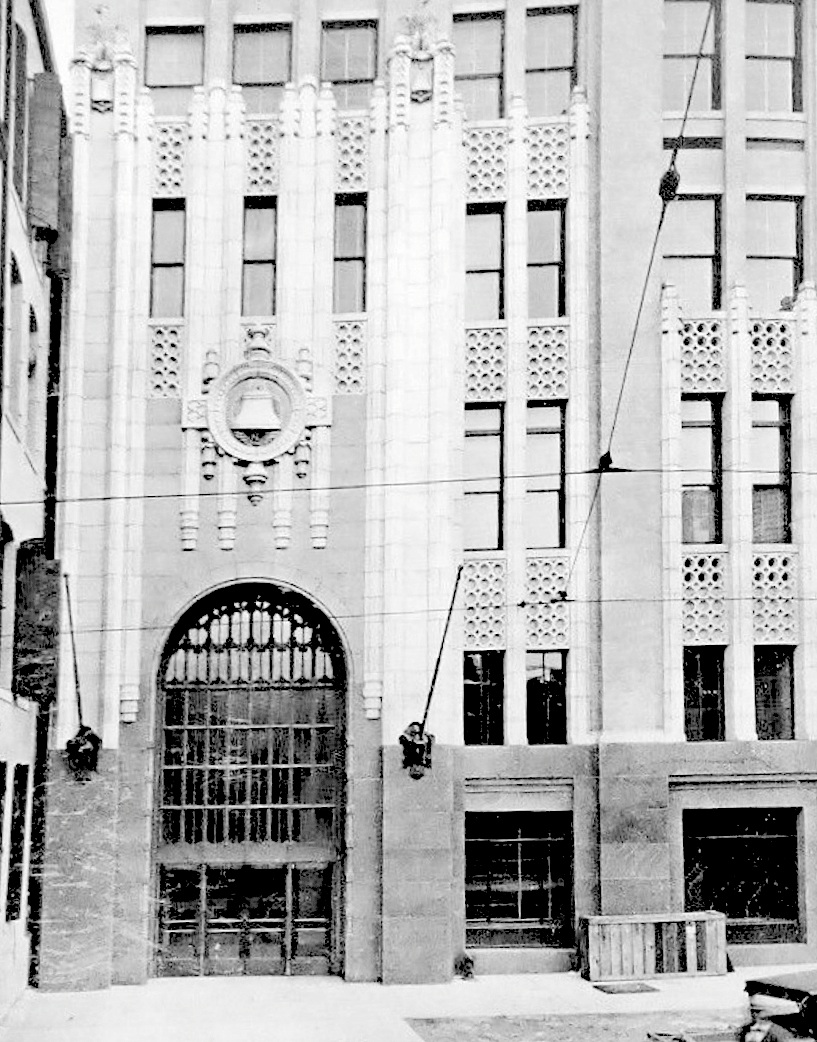
Below are a couple of other photos of the brand-new building, from a promotional booklet by the Atlantic Terra Cotta Co. The top photo had the following caption: “A most successful example of modern design in Atlantic Terra Cotta. The detail is carefully scaled and the design has the freshness of originality. Terra Cotta is light gray containing particles of mineral oxide and with an unglazed surface, a color and finish of particular character.”

swb-bldg_atlantic-terra-cotta-booklet_1929_entrance“The main entrance shows an unusual and effective combination of Terra Cotta and granite. The bell design gives an appropriate and original touch.” (Click pictures to see larger images.)

swb-bldg_atlantic-terra-cotta-booklet_1929_bell-det

swb-bldg_atlantic-terra-cotta-booklet_1929_court“The court of the Telephone Building for four stories is faced entirely with Atlantic Terra Cotta. A bell, guarded by a strongly modeled eagle, tops each pier.” I believe this is the Wood Street side — after many expansions and renovations, these details no longer remain. The bells and eagles are difficult to make out in this photo — here is a photo of the terra cotta company’s “shop model”:

swb-bldg_atlantic-terra-cotta-booklet_1929_bells-eagles-det

southwestern-bell-telephone-bldg_postcard

Above, a postcard showing the S. Akard entrance, with Wood Street on the right. The only things still immediately recognizable about Lang & Witchell’s beautiful building are the repeating circular elements, the “court” along Wood, and the granite facing that wraps around the exterior of the ground floor. So much of the decorative detail is gone. No more bells, no eagles, no flash, no filigree. I hope the building’s interior decor has fared a bit better.

**

Added: In response to the comment below by elmwoodhobo, I thought I should add a tiny bit about a pertinent later razing, addition, and expansion.

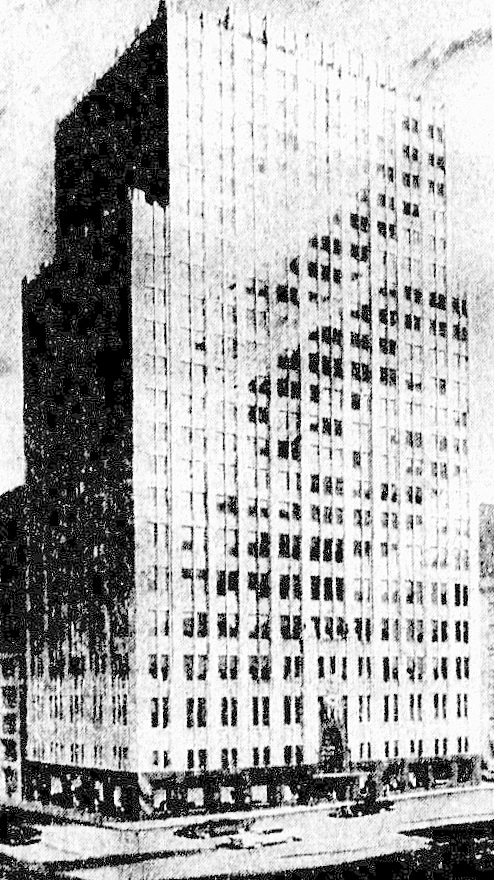
In May 1961 the old, 4-story telephone building, built in the 1890s at the corner of S. Akard and Jackson, was finally demolished to make way for a new 23-story addition to the SWB building. This addition was finished in 1963 (possibly 1964), substantially increasing the footprint of the Southwestern Bell headquarters. Square footage was further increased by the concurrent construction of eight new stories built atop the 1928 Lang & Witchell building. Below are drawings showing the original 1959 rendering by the architectural firm of Thomas, Jameson and Merrill, as well as an updated vision from January 1962, as construction was underway. A lot changed in those couple of years. (Click to see larger images.)

swb-addition-expansion_architects-orig-drawing_19591959

swb-addition-expansion_architects-updated-drawing_ad_jan-1962_det1962

swb-telephone-bldg_postcard

***

Sources & Notes

Top photos are from a promotional booklet titled Atlantic Terra Cotta (Vol. X, No. 3, June 1929), which features tons of cool photos of then-recent buildings constructed with that company’s product (including San Antonio’s stunning Smith-Young Tower — now the Tower Life Building — which I have to admit I’d never heard of). These photos were found on an eBay listing, and their quality is not the greatest, but I’ve never seen them, and this is just a small attempt to preserve them for posterity. 

Photo of the original Southwestern Bell Building (2 stories) is from an ad in the Dallas Fire Department (1899) book — see the full ad in the book, scanned at the Portal to Texas History, here.

Photo of the original Southwestern Bell Building (4 stories) is from a promotional booklet titled Come To Dallas (Dallas: Dorsey Printing Co., ca. 1905); more info on this booklet (held by the DeGolyer Library, Southern Methodist University), is here.

A Google Street View here shows the building these days. It’s still standing — which is great — but its entrance has definitely lost most of its original grandeur.

More Flashback Dallas posts on Southwestern Bell doings:

  • “The Haskell Exchange — ca. 1910,” here
  • “Southwestern Bell Telephone Goings-On, Circa 1928,” here
  • “Work and Play In Telephone Land,” here
  • “Telephone Operators Sweating at the Switchboard — 1951,” here

*

Copyright © 2018 Paula Bosse. All Rights Reserved.
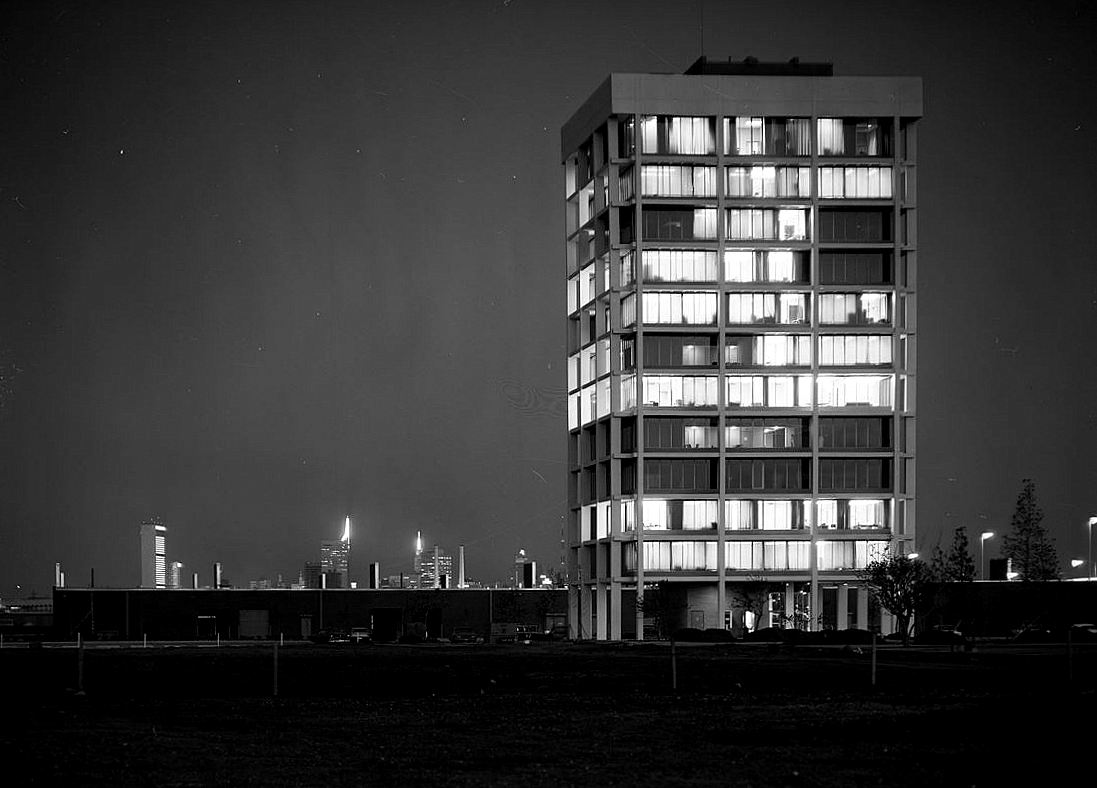
Stemmons Tower, Downtown Skyline — 1963

stemmons-tower_night_squire-haskins_041963_UTAPhoto by Squire Haskins, 1963 (UTA Libraries, Special Collections)

by Paula Bosse

Another fantastic photo from premier Dallas photographer, Squire Haskins: the new Stemmons Tower (East), with the Dallas skyline serving as a dramatic nighttime backdrop. (See this photo really big at the UTA website, here.)

***

Sources & Notes

“Stemmons Tower with downtown Dallas, Texas in the background; photo taken at night,” by Squire Haskins, taken on April 19, 1963; from the Squire Haskins, Inc. Photography Collection, University of Texas at Arlington Libraries, Special Collections (more info on this photo can be found here).

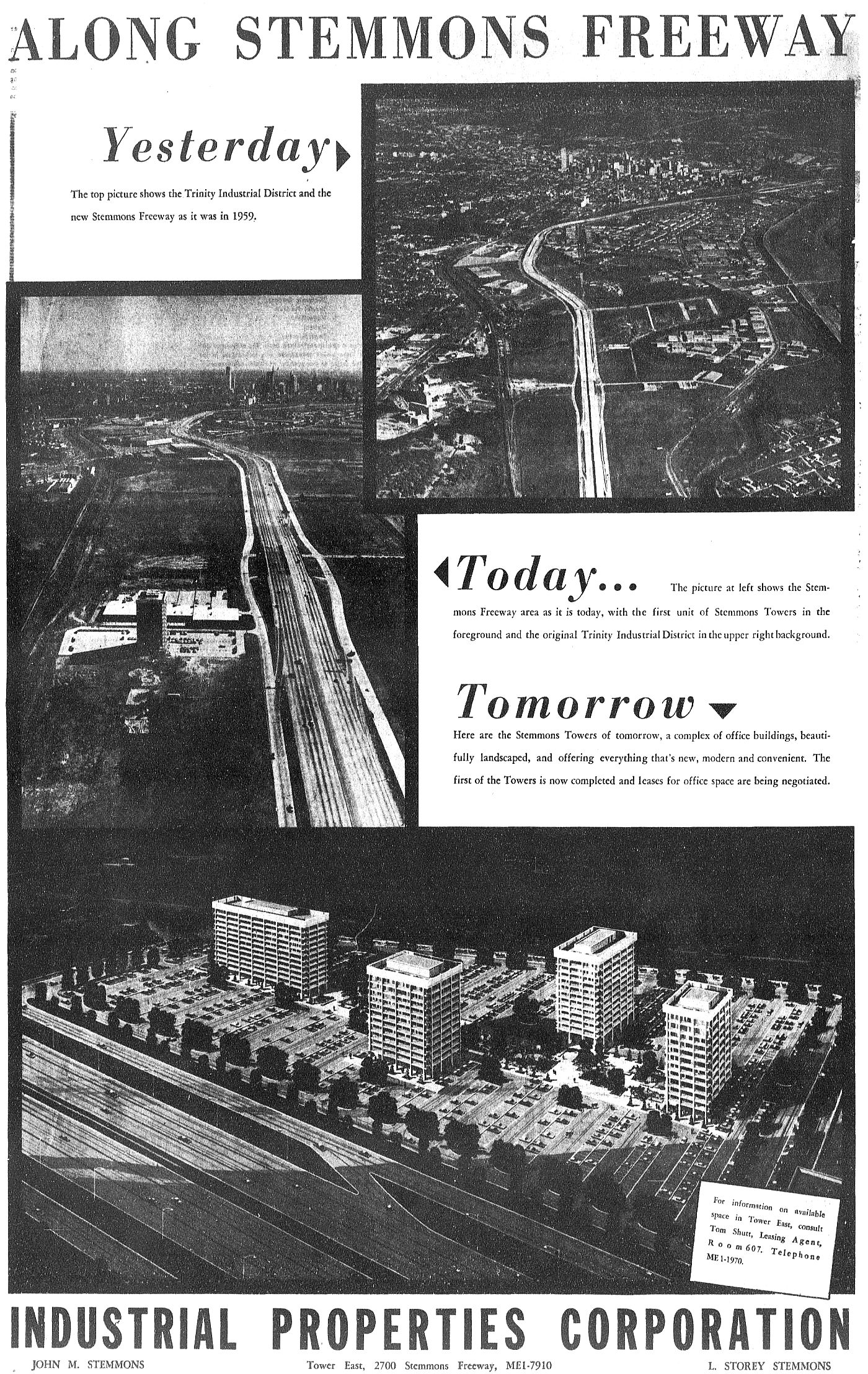
The first of several “towers,” construction of Trammel Crow’s Stemmons Tower East began in the summer of 1961 and was open and leasing by December 1962. This office complex was part of the grand vision of the Trinity Industrial District and the “Stemmons corridor” (click ad below to see a much larger image).

stemmons-tower_jan-1963Jan. 1963

*

Copyright © 2018 Paula Bosse. All Rights Reserved.
Willie’s Picnic Or Bust

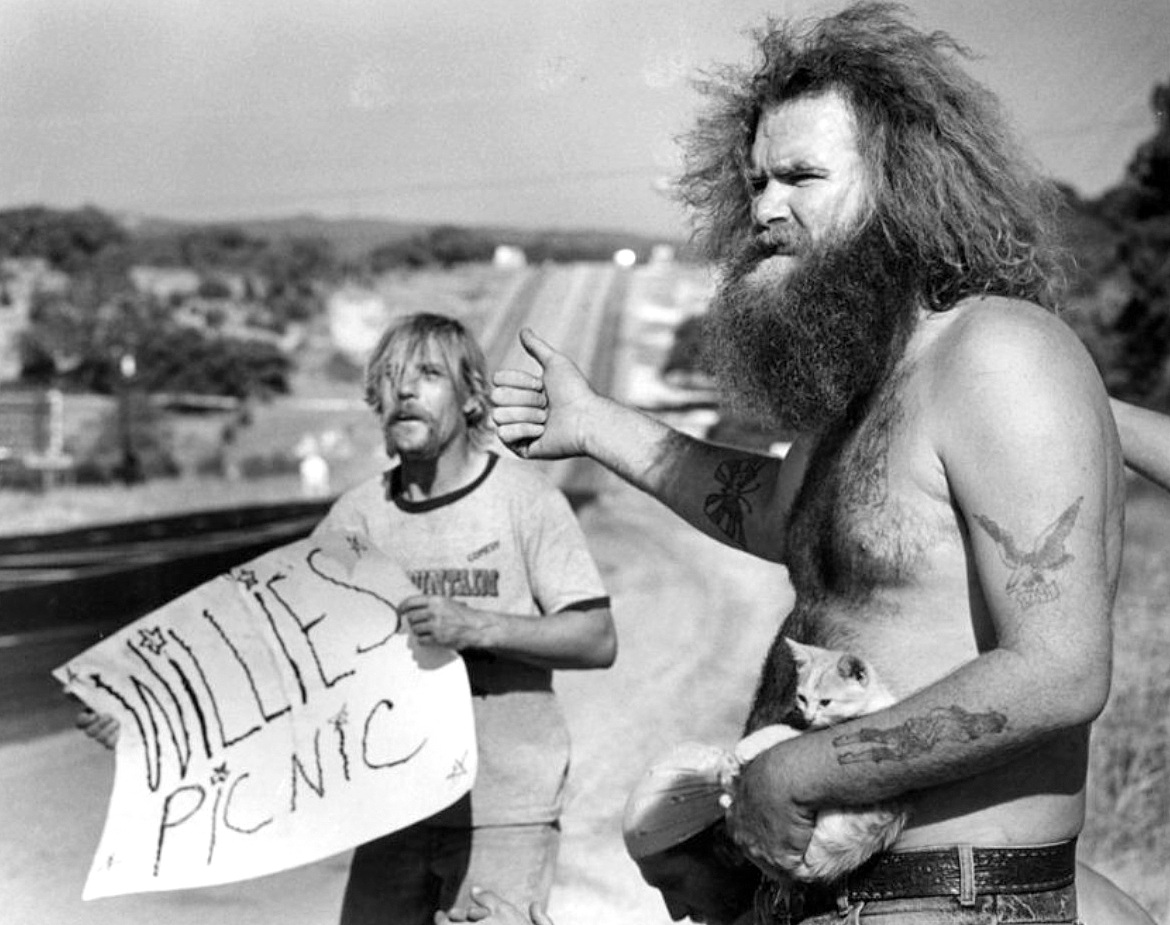
willie-nelson-picnic_1980_austin-american-statesman“All’s we need is a ride, man…”  (photo: Austin American-Statesman)

by Paula Bosse

Today is July 4th, 2018 — the 45th anniversary of the first Willie Nelson 4th of July Picnic. The photo above — taken by Austin photographer Stanley Farrar — ran in The Austin American-Statesman in 1980 and shows hitchhikers (including a bare-chested Jerry Rundell and his go-with-the-flow cat “Precious”) thumbing it on Highway 71, hoping for a ride to that year’s picnic at Willie’s Pedernales Country Club, near Austin.

Take a look at the full illustrated program for the second Picnic, which was held at the Texas World Speedway in College Station, July 4-6, 1974, in a PDF, here. The huge line-up included Dallas natives Michael Murphey, B. W. Stevenson, Ray Wylie Hubbard (all three of whom attended Adamson High School in Oak Cliff), and singer-turned-DJ-turned-singer, Johnny Dallas (aka Groovey Joe Poovey). To make this a somewhat Dallas-y, I’ve pulled out a few of the local ads (click ’em to see larger images).

willie-nelson-program_cover-1974

willie-nelson-program_1974_kzewKZEW — from the Zoo’s “Progressive Country” years?

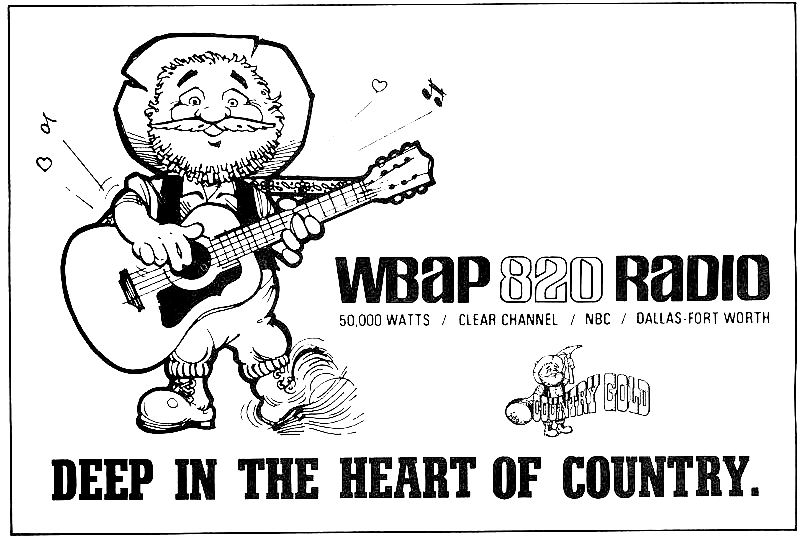
willie-nelson-program_1974_wbapWBAP — how much Ray Wylie Hubbard was WBAP playing?

Speaking of Ray Wylie Hubbard:

willie-nelson-program_1974_ray-wylie-hubbard_mother-bluesMother Blues had a one-buck cover charge, and Gertie’s was rocking until 5 a.m.

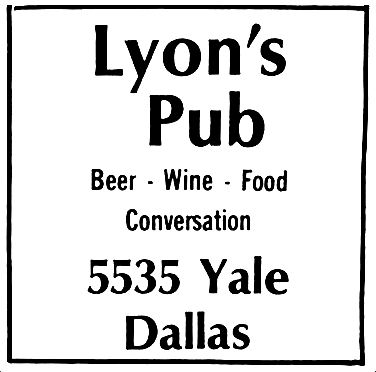
willie-nelson-program_1974_lyons-pubLyon’s Pub, 5535 Yale Street.

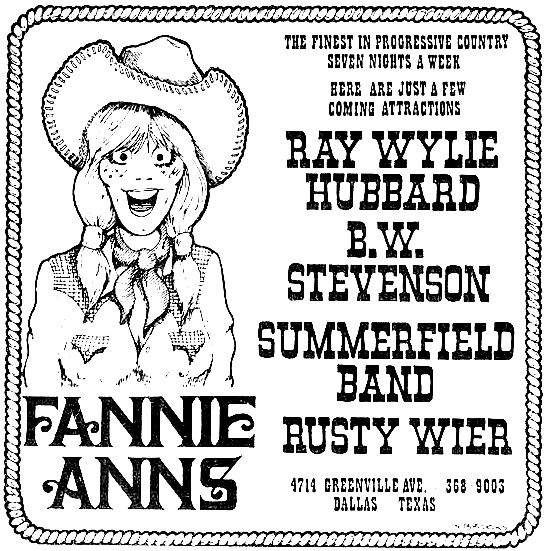
willie-nelson-program_1974_fannie-annsFannie Ann’s, 4714 Greenville Avenue, the lower part of Upper Greenville.

willie-nelson-program_1974_lone-star-opryhouseThe Lone Star Opry House, 1011 S. Industrial, at Cadiz (formerly the Aragon Ballroom). Willie appeared during its first week in business.

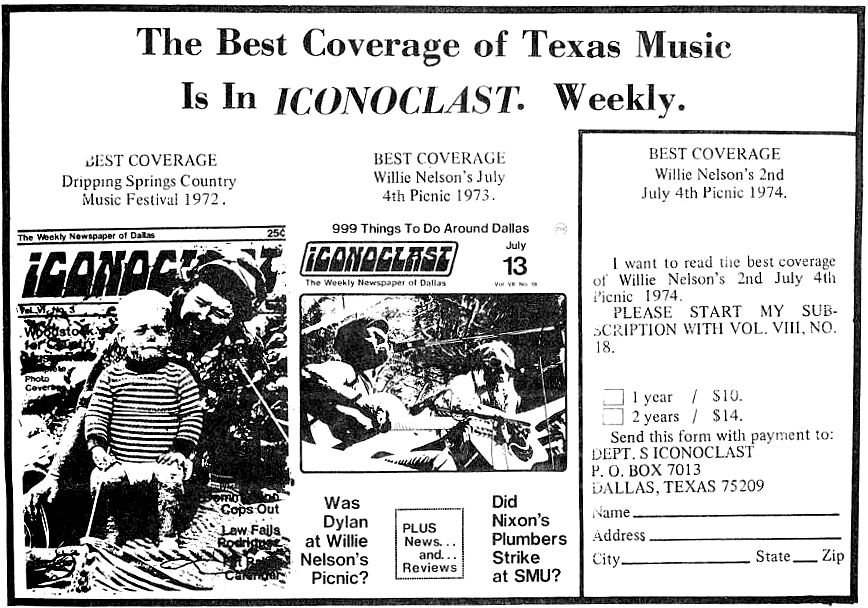
willie-nelson-program_iconoclastThe Iconoclast, Dallas’ underground newspaper, which began as Stoney Burns’ Dallas Notes.

willie-nelson-program_1974_ethylsEthyl’s (“Only Bluegrass Club in Dallas”), 3605 McKinney Avenue.

***

Sources & Notes

Top photo from The Austin American-Statesman (July 4, 1980); photo taken by photographer Stanley Farrar. See many more photos of Willie Nelson 4th of July Picnics in an American-Statesman slideshow, here.

I wonder if Willie’s picnics have their own Wikipedia page? Of COURSE they do! Have at it.

I’ve written about it before, but, hey, it’s the 4th of July, so here’s Willie’s very … um, unusual ode to Dallas:

*
Happy 4th!

*

Copyright © 2018 Paula Bosse. All Rights Reserved.
 

The Last Traces of Vickery Park Are Now Definitely Gone

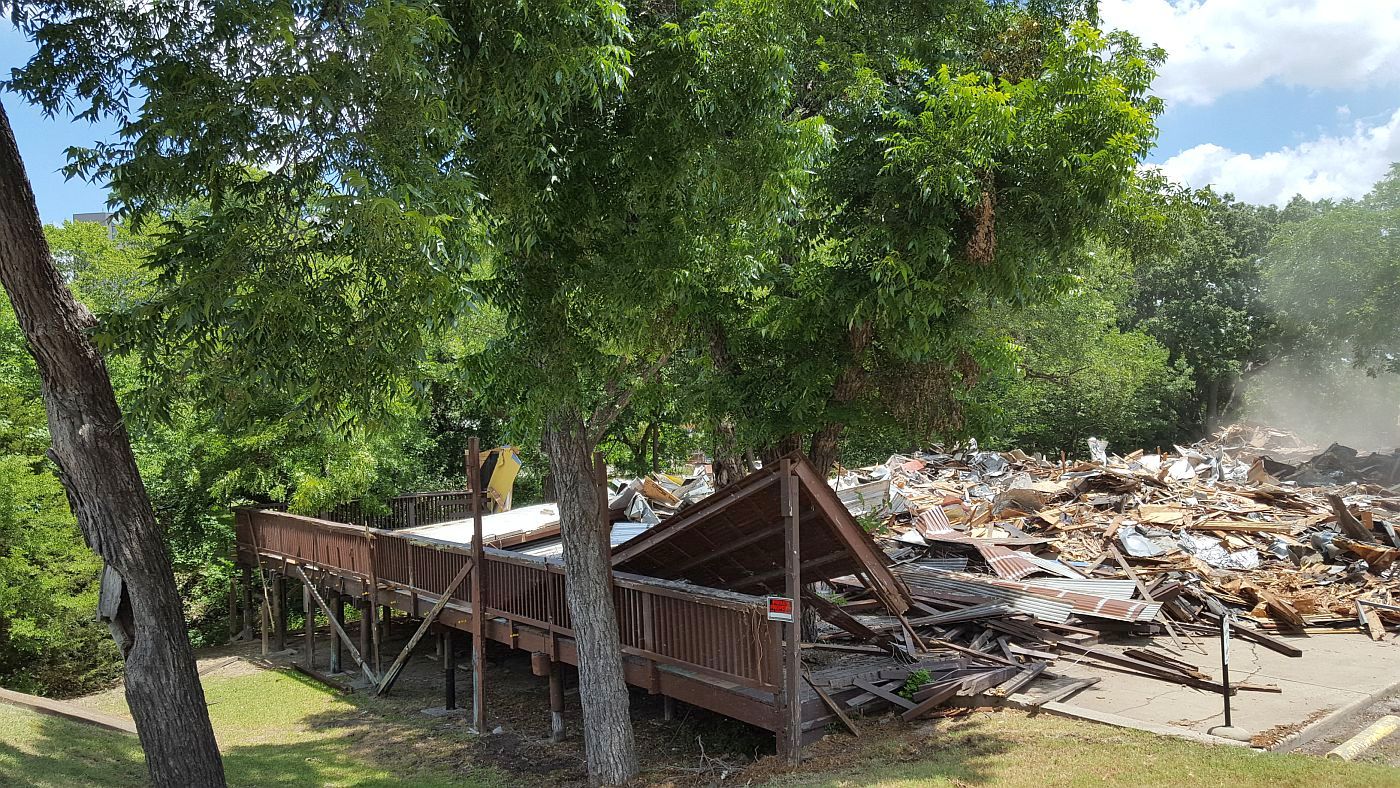
vickery-park_demo_062118_d_PEBThe last vestige of a one-time summer destination…

by Paula Bosse

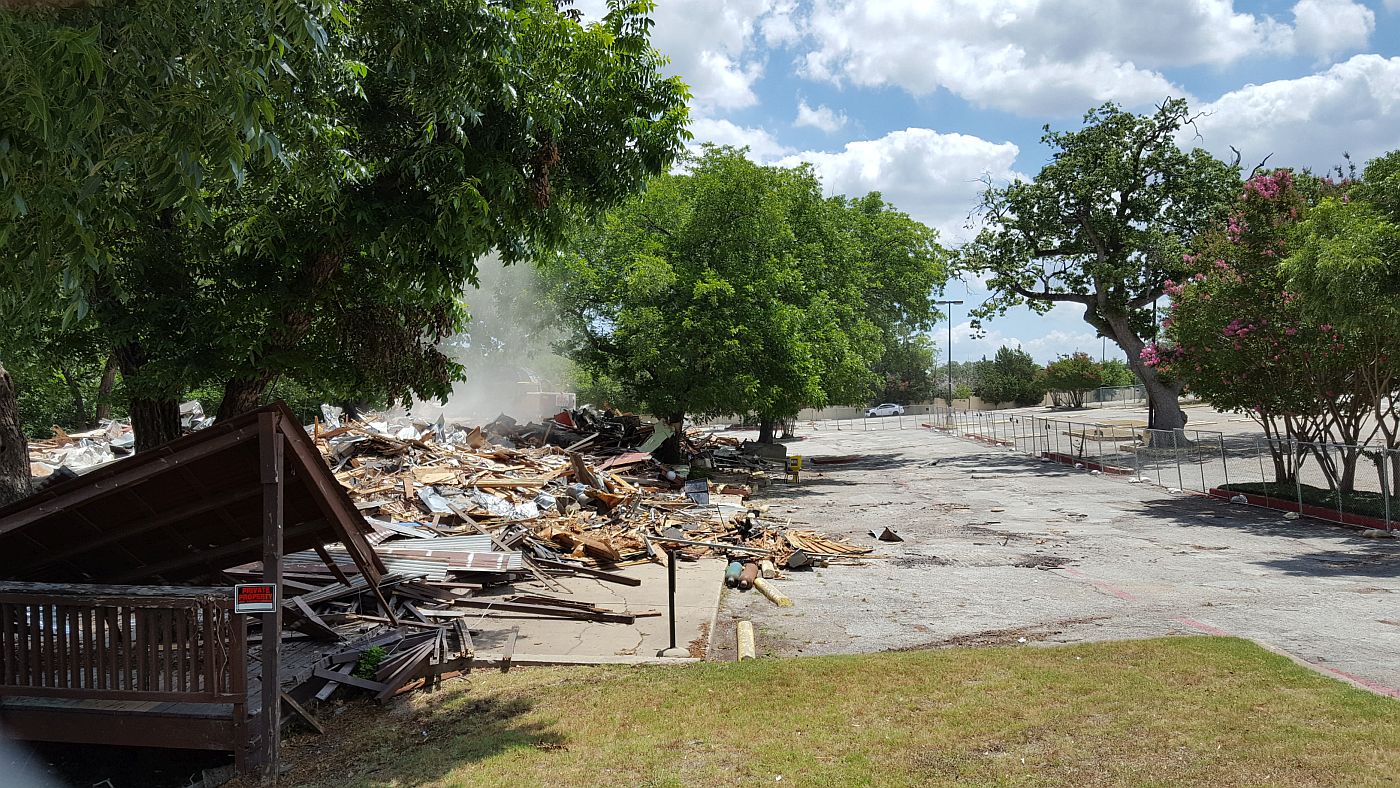
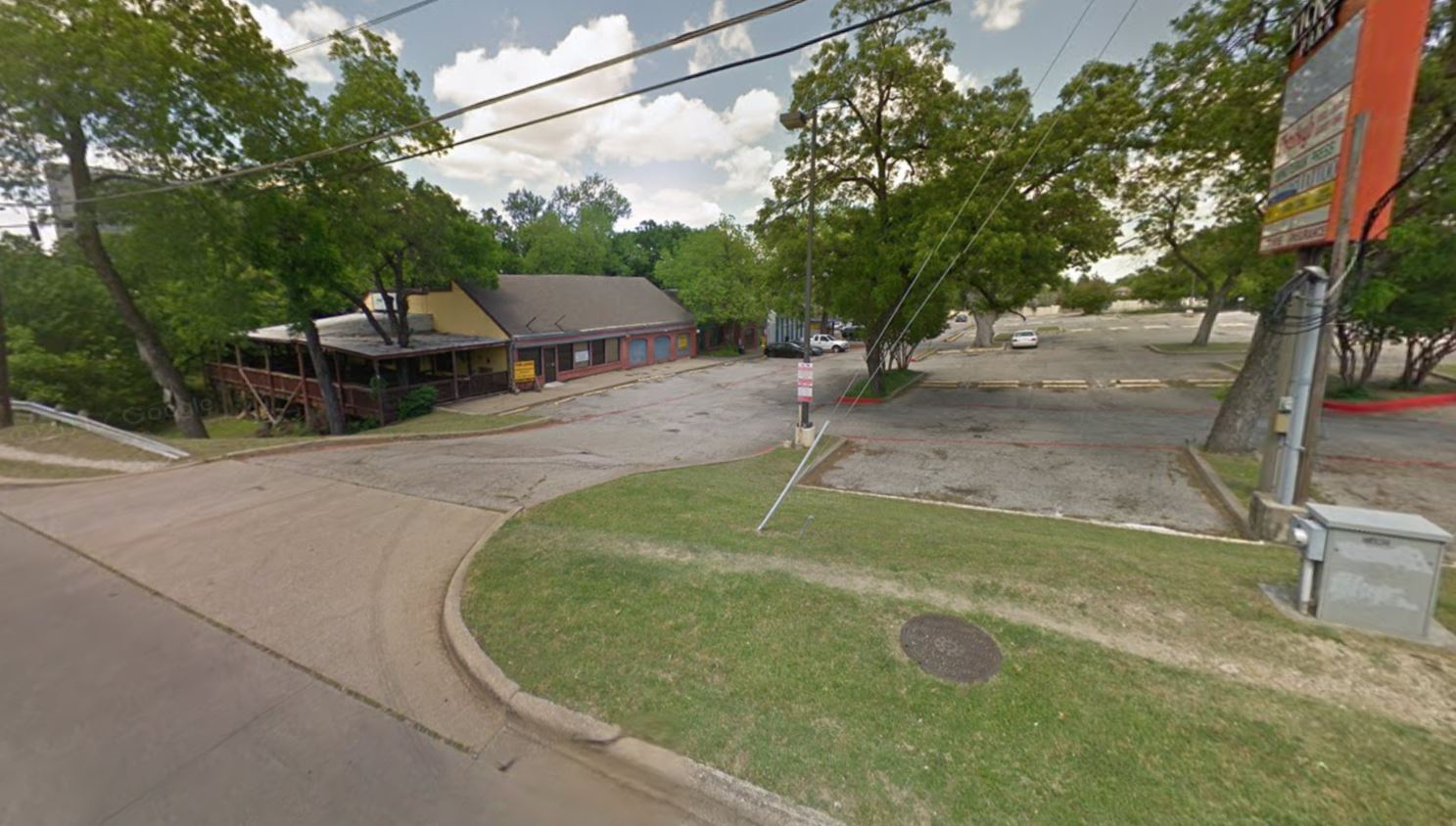
Driving along Greenville Avenue this morning, I noticed a pile of rubble where Vickery Park once stood (just south of Walnut Hill, across from Presbyterian Hospital). It seemed sadly ironic that the land which was once occupied by a fondly-remembered swimming pool and picnic area was heaped with demolished buildings on the first day of summer.

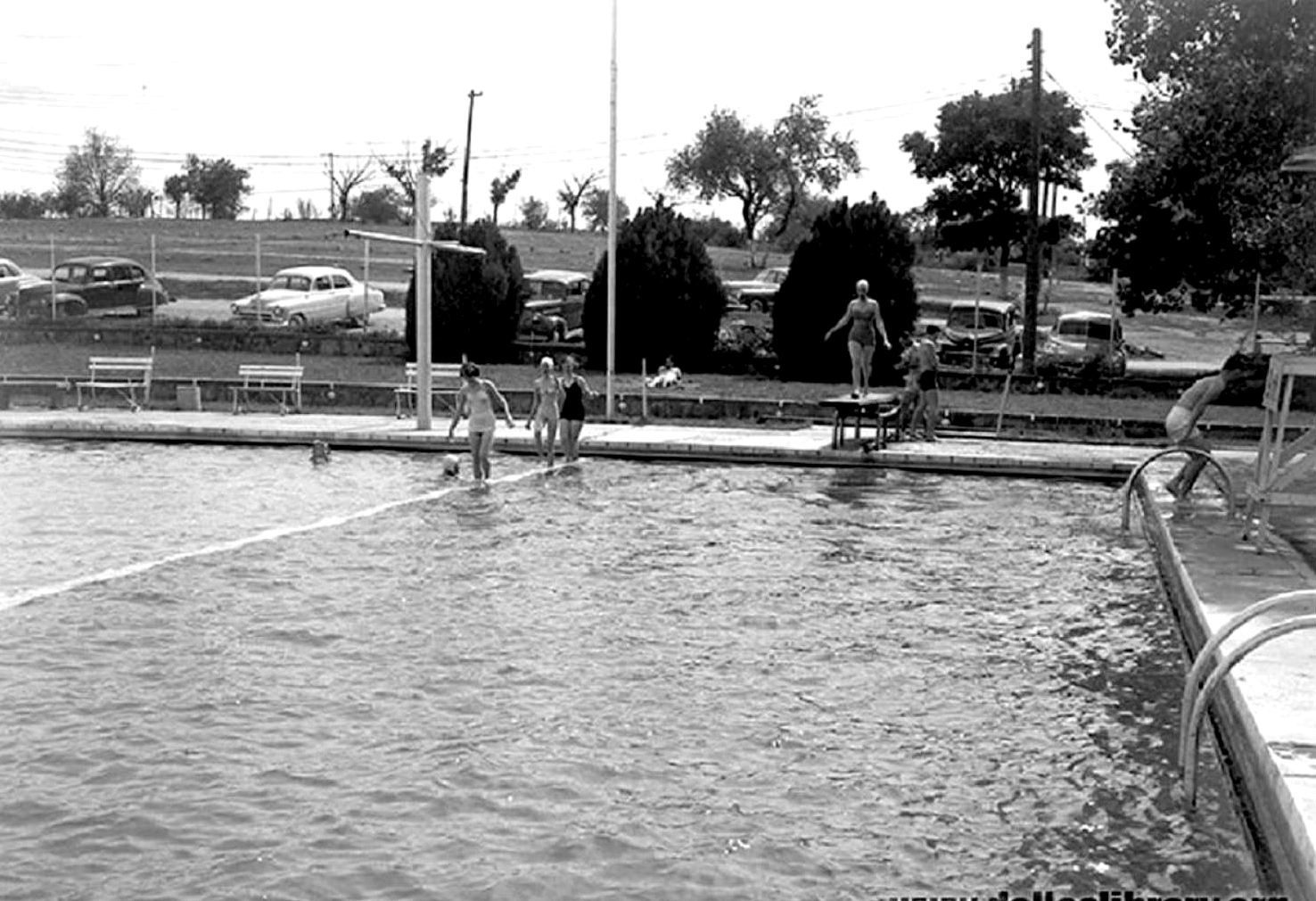
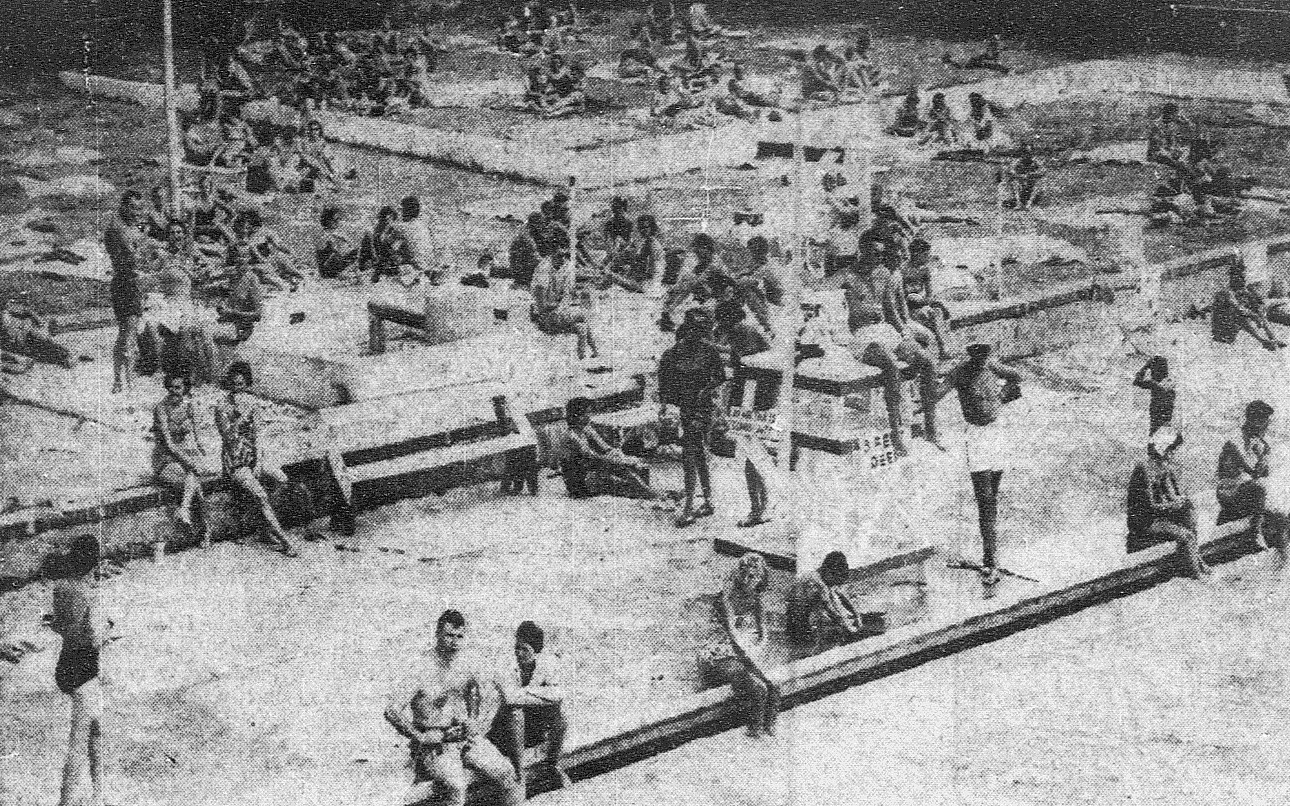
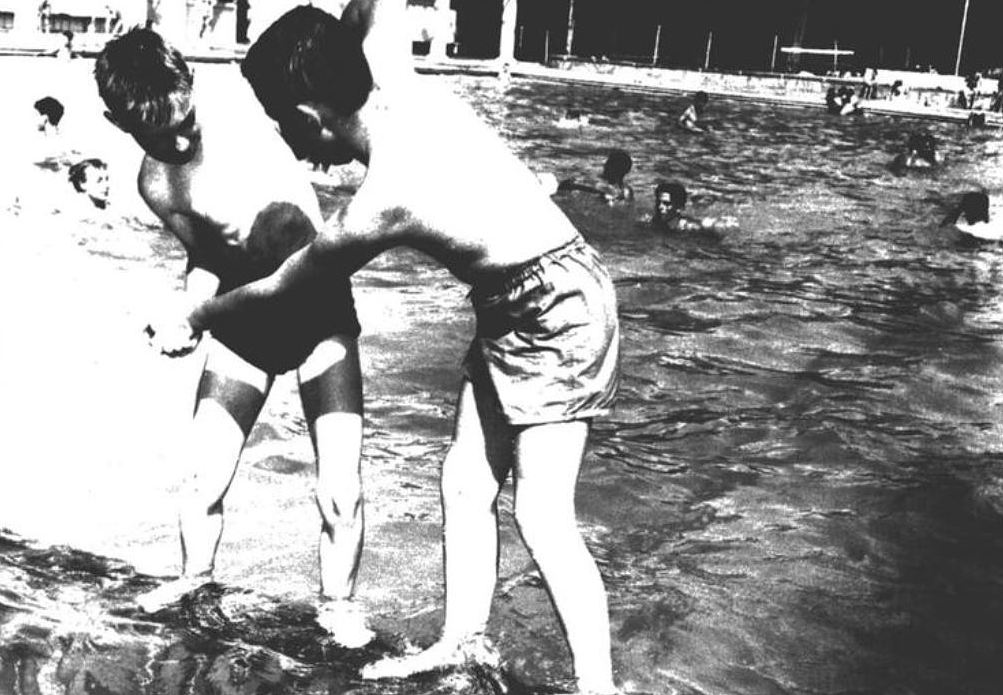
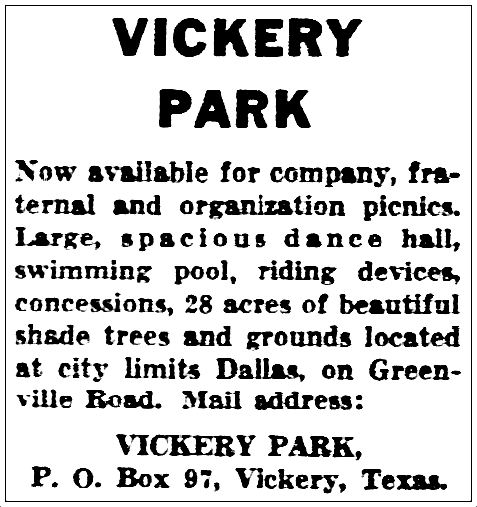
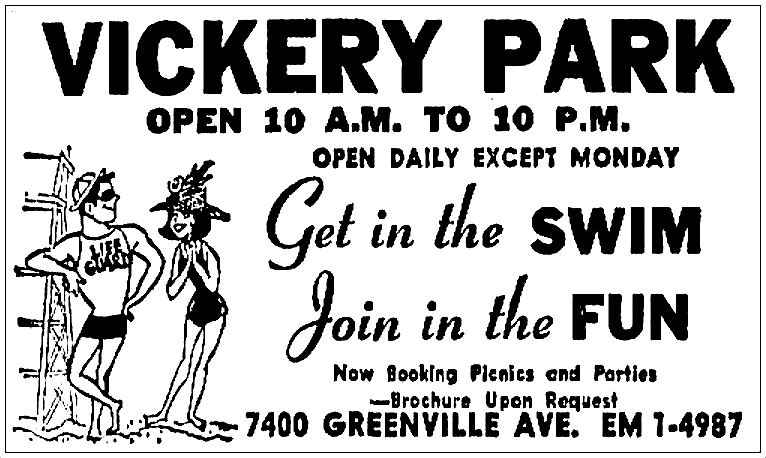
I never saw the huge swimming pool myself, but from everything I’ve read about it over the years, it seems to have been very, very popular with generations of Dallasites. It was built in the then-rural community of Vickery as far back as the 1930s (well before Vickery was annexed by the city of Dallas), and it was still open at least through the ’60s.

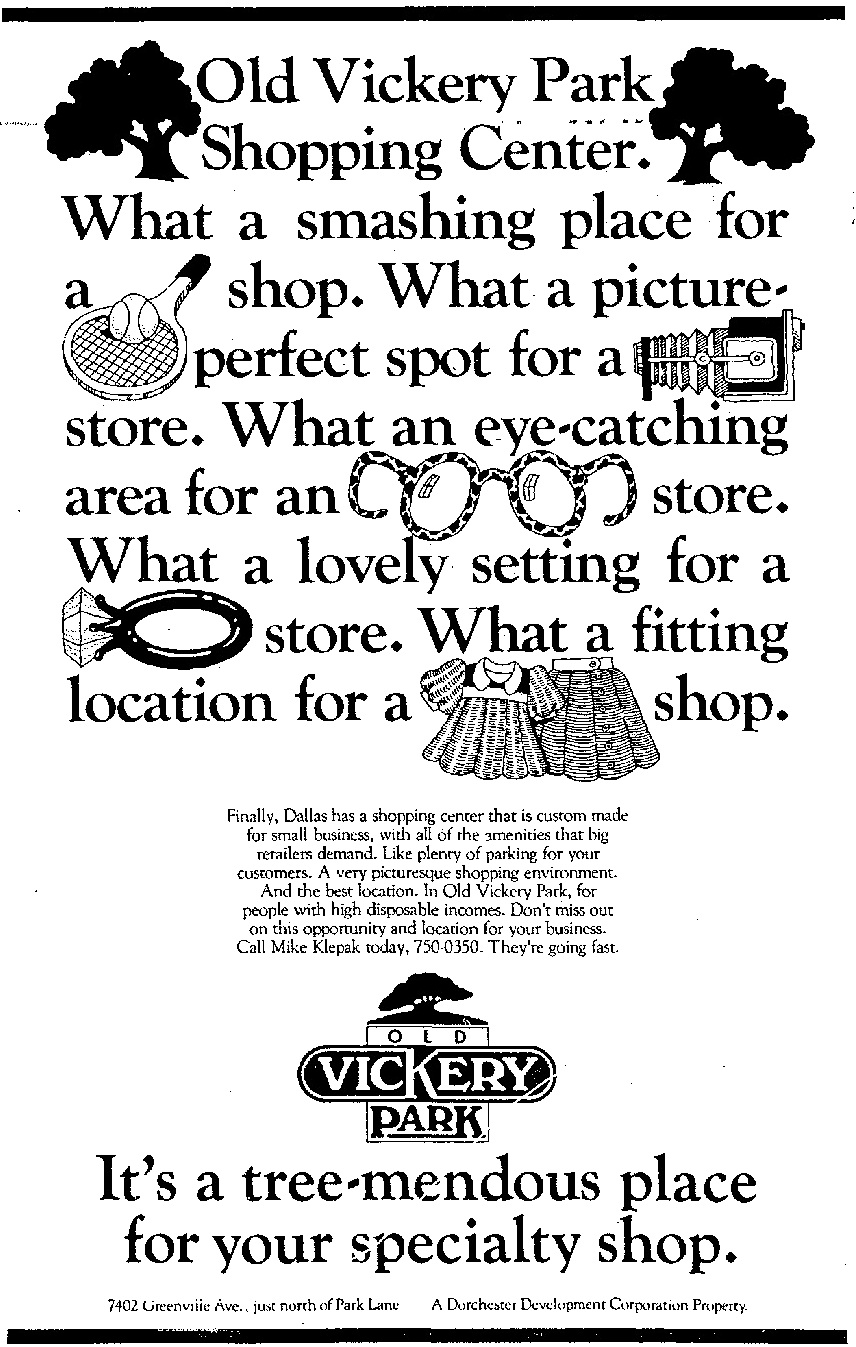
The pool and amusement park were long gone when the (now-demolished) small shopping and restaurant area was built in the mid-1970s on a very pretty wooded site alongside White Rock Creek. Initially, the developer envisioned lots of quaint little boutiques and cafes (similar to those found in the Quadrangle) dotting the banks of White Rock Creek, creating Dallas’ version of San Antonio’s River Walk. …No one has ever accused real estate developers of dreaming small.

It’s sad to see this anachronistic, funky little area go away. My vague memories of childhood games of miniature golf in the ’70s are about to get vaguer.

vickery-park_demo_062118_a_PEB

*

vickery-park_demo_062118_b_PEB

I’ve never known exactly where the pool was, but I think it might have been at the back right of the photo above, just off Pineland.

vickery-park-pool_dpl_pinterest

vickery-park-swimming-pool_1950s

vickery-park-swimming-pool_legacies_fall-2002

vickery-park-pool_19461946

swim_vickery-park_19651965

1978_vickery-park_sept-1978Sept., 1978

vickery_google_may-2017Google Street View

Above is a Google Street View from May, 2017. If you’d like to take a little virtual “drive” through the parking lot, hie yourself over to Google, here.

*

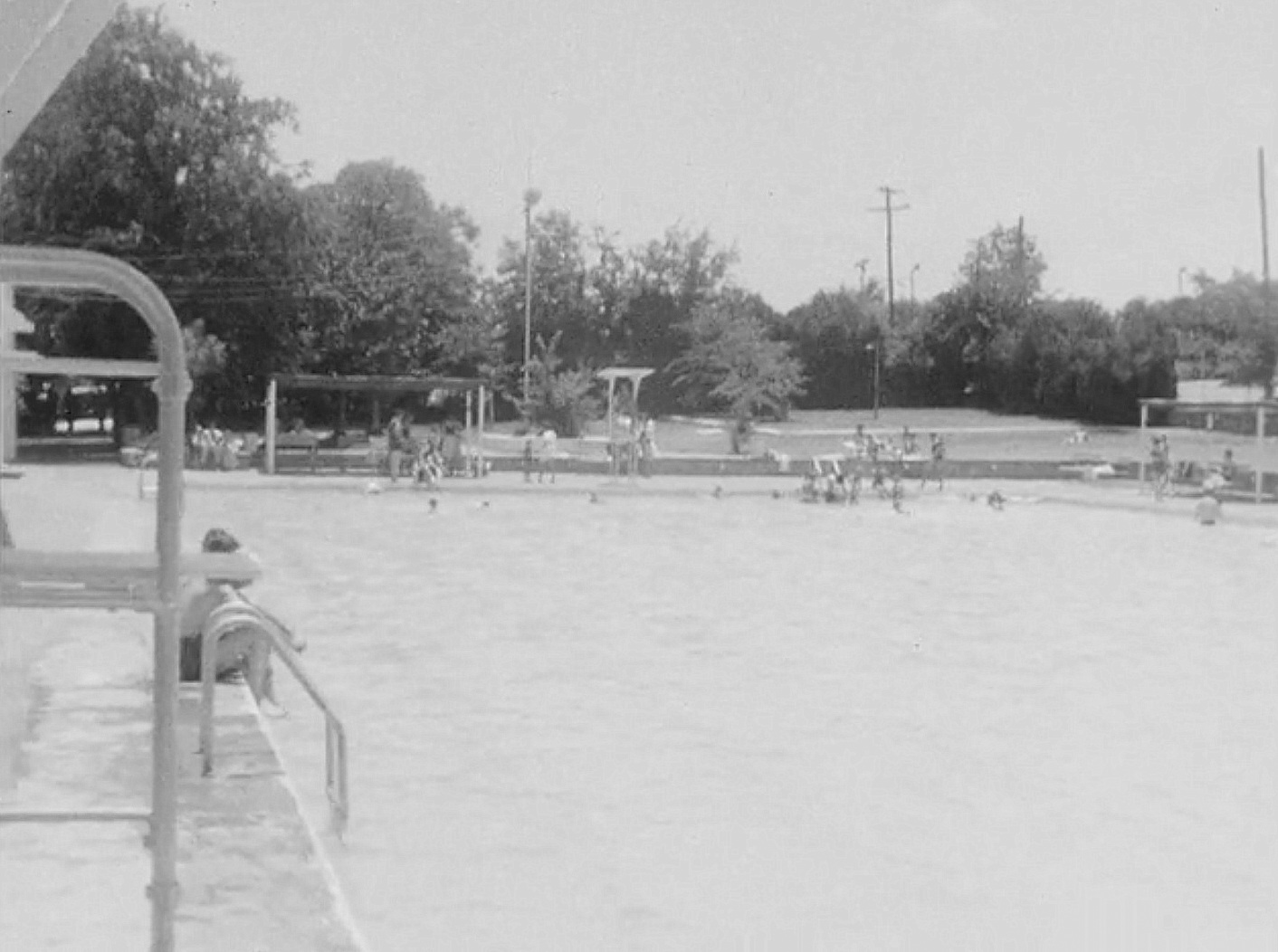
Here are two pieces of film footage showing the pool. The first one is from June, 1964 and is (silent) news footage shown on WBAP Channel 5. It’s a little unsettling, as it shows a boy being rushed off by ambulance after an accident, but it does have some interesting shots of the pool and the park, which I’ve certainly never seen before. I am unable to embed the video, but you can watch it here. (The script for the story is here.) (Footage is from the WBAP-TV News collection, UNT Libraries Special Collections.) Here is a screen capture:

vickery-pool_WBAP_portal_062364

The second is undated, but the clips are from home movies.

***

Sources & Notes

Rubble photos taken by me on June 21, 2018 — construction was underway. And it was extremely HOT.

The first historic photo appears to be a Dallas Public Library photo, with most of the watermark cropped off. I found it on Pinterest, here.

The third photo, showing two boys, was found in the Fall 2002 issue of Legacies.

There are memories-galore of Vickery here.

A couple of interesting tidbits:

  • The Vickery pool was used as an officers’ recreation club during World War II by the Fifth Ferrying Group; an aquatic meet was held there in June, 1945 which featured a variety of exhibitions, including a water ballet performed by “half a dozen mermaids from University Park.”
  • In the early 1970s, Vickery Park (…not to be confused with Vickery Place…) was owned by the Seventh Day Adventist Church. They reopened the park as a “family recreation center” — unlike the earlier days, alcohol was no longer sold. They sold the land to developers around 1974 or 1975; in the summer of 1975, the recreation center was bulldozed and the pool was paved over (and became a parking lot).

Articles on the disappearing community of Vickery can be found in the archives of The Dallas Morning News:

  • “Progress Overtakes Old Vickery” by Rena Pederson, with photos by Eli Grothe (DMN, August 3, 1975)
  • “Store Provides Feed For Thought On Town’s Past” (Vickery Feed Store) by Steve Kenny (DMN, Nov. 18, 1979)

*

Copyright © 2018 Paula Bosse. All Rights Reserved.
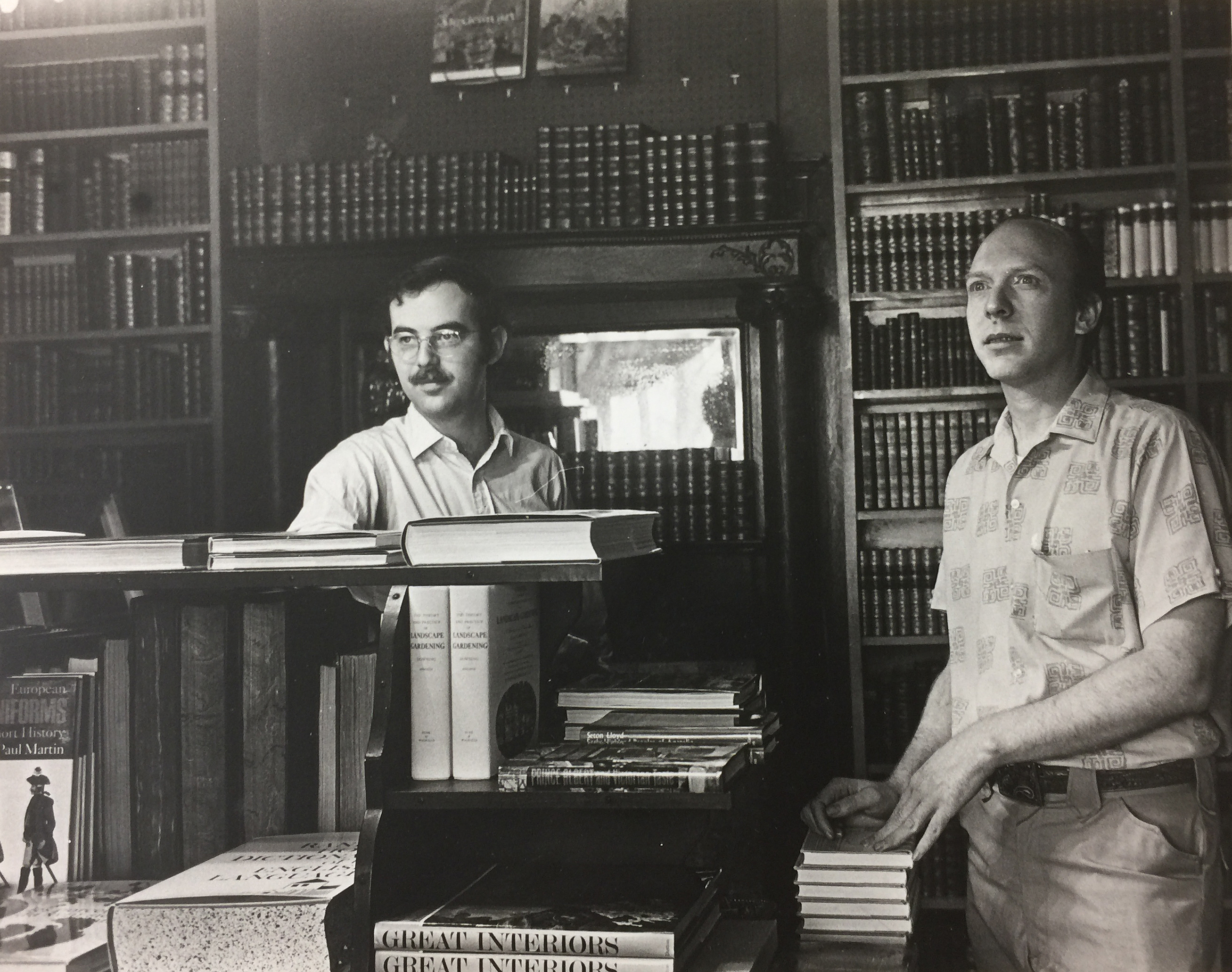
The Aldredge Book Store — 1968

ABS_charlie-drum_dick-bosse_andy-hanson_degolyer-library_SMUCharlie Drum and Dick Bosse… (click for larger image)

by Paula Bosse

Today my father, Dick Bosse, would have been 84 years old. A very nice person at the DeGolyer Library at SMU (who knew my father) sent me this photo a couple of days ago. It’s from the DeGolyer’s Andy Hanson collection (Hanson was a long-time photographer for the Dallas Times Herald). Taken in the original location of The Aldredge Book Store at 2800 McKinney Avenue, the photo shows bookseller Charles Sartor Drum at the left, and my father — the then-manager of the store — at the right. My father looks really young here! Dig that cool shirt — worn with a paisley belt buckle and western-cut slacks. Hey, man, it was 1968.

***

Sources & Notes

Photo is from the Collection of Photographs by Andy Hanson, DeGolyer Library, Central University Libraries, Southern Methodist University. (Thank you, friendly DeGolyerite — I now have a 50-year-old photograph of my father I’d never seen before!)

I’ve written several posts about The Aldredge Book Store, the store my father worked at fresh out of college and after eventually owned. The ABS-related Flashback Dallas posts can be found here.

More on the career of photographer Andy Hanson can be found here and here.

*

Copyright © 2018 Paula Bosse. All Rights Reserved.
 

Oak Lawn Ice & Fuel Co.

oak-lawn-ice-and-fuel-co_krystal-morrisThe fleet… (click to see larger image) / Photo: Krystal Morris

by Paula Bosse

Above, another great Dallas photo shared by a reader — this one shows the Oak Lawn Ice & Fuel Co., which sold ice to independent dealers and to retail customers. Krystal Morris sent in the family photo — her great-great-grandfather J. F. Finney is standing next to the horse-drawn wagon.

The first mention I found of the Oak Lawn Ice & Fuel Co. was in a notice of “New Texas Charters” in Dec., 1912 (there was a classified ad from Dec., 1909, but that appears to be either another company with the same name or an earlier incarnation of the business seen above). Below, an ad from 1913:

1913_oak-lawn-ice_19131913

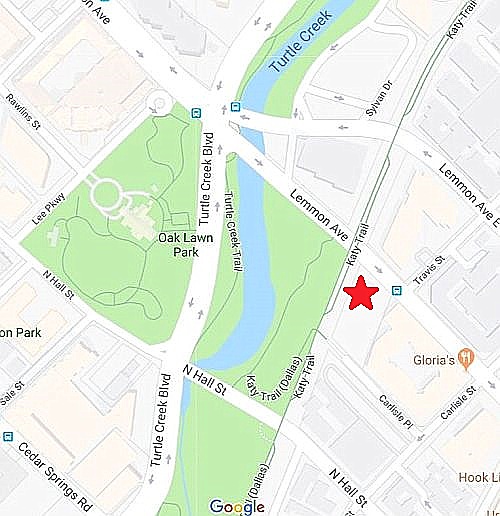
The company was located at 3307 Lemmon Avenue, at the MKT railroad track (now the Katy Trail) — on Lemmon between the railroad tracks and Travis Street (see the location on a map composed of two badly-cobbled-together Sanborn maps from 1921 here). The location is marked on a present-day Google map below (click to see a larger image):

lemmon-and-katy-trail_google-map

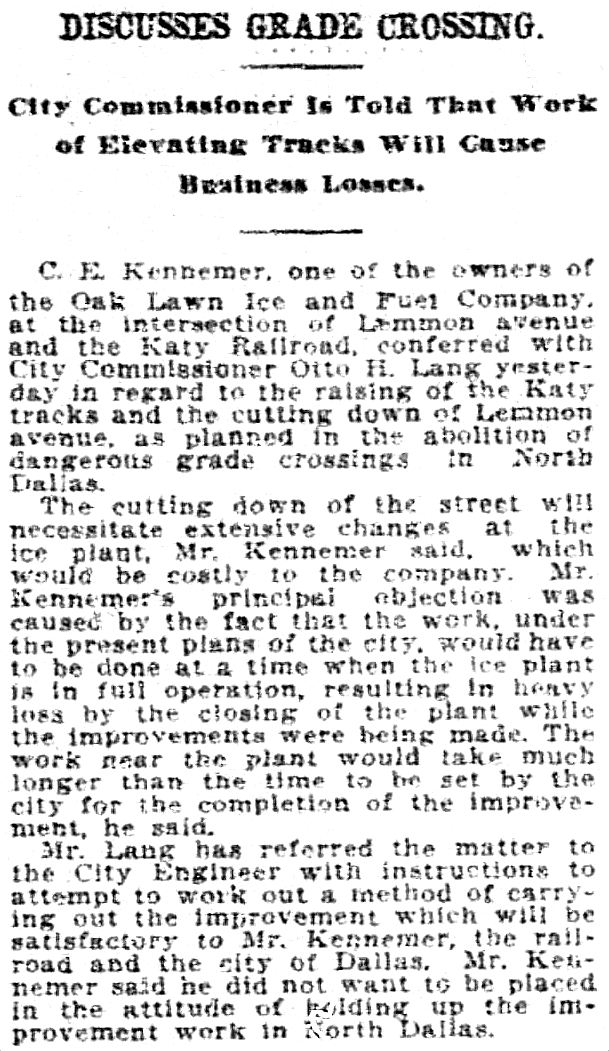
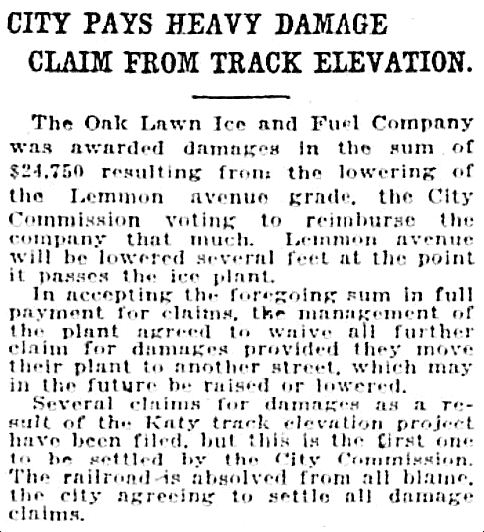
In 1917, the City of Dallas, in partnership with the Missouri, Kansas & Texas Railroad began to eliminate grade crossings in the Oak Lawn area — one of those crossings was at Lemmon Avenue: Lemmon was to be lowered and the MKT tracks were to be raised. Oak Lawn Ice & Fuel Co. General Manager Clarence E. Kennemer (who, along with his brothers, operated something of an ice empire in Texas) was concerned about the negative impact of this construction on his business. (All images are larger when clicked.)

1917_oak-lawn-ice_dmn_013117_katy-crossing     Dallas Morning News, Jan. 31, 1917

To the surprise of many, the ice company was awarded damages by the city.

1917_oak-lawn-ice_dmn_120617_katy-crossingDMN, Dec. 6, 1917

Things apparently continued fairly well until 1920 when the company began to experience tensions with its residential neighbors. Early in the year, city building inspectors responded to nuisance complaints and ordered the company to move its horse stables as they were too close to adjoining residences (ice delivery even into the 1940s and possibly 1950s was often done via horse-drawn wagons). Later the same year, still-unhappy neighbors filed suit to “force the company to remove its plant from the thickly settled residence district” (DMN, Dec. 1, 1920). The ice company appears to have won the lawsuit, since the company (under various names) was at 3307 Lemmon until at least 1939 or ’40, but these problems might have led them to build a new plant at Cole and what is now Monticello in 1922 (as with the Lemmon location, this new plant was also built alongside the MKT tracks). The mere prospect of this new icehouse was met with loud protests by the new neighborhood — before construction even began — but a judge ruled in favor of the ice people. Construction went ahead, and the plant was a neighborhood fixture for many years. (See the location on a 1921 Sanborn map here; “Gertrude” — near the top edge — was the original name of Monticello Avenue.)

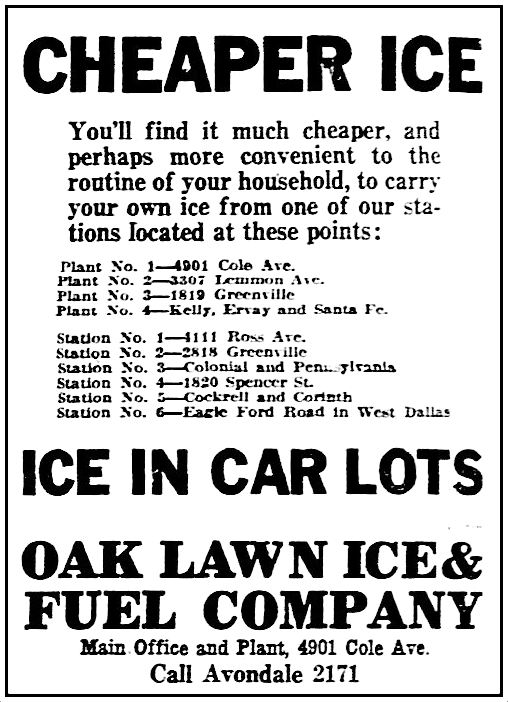
In 1923, ads for the Oak Lawn Ice & Fuel Co. began displaying both addresses: the original location, 3307 Lemmon, was now being referred to as “Plant No. 2,” and the new location, 4901 Cole, was being referred to as the “Main Office/Plant No. 1.”

1923_oak-lawn-ice_1923-directory
1923 Dallas city directory

By 1924 the company expanded as it absorbed other ice companies.

1924_oak-lawn-ice_sept-19241924

By 1925, “Oak Lawn Ice & Fuel Company” had become “American Ice Co.” (another C. E. Kennemer enterprise).

1925_american-ice-co_aug-19251925

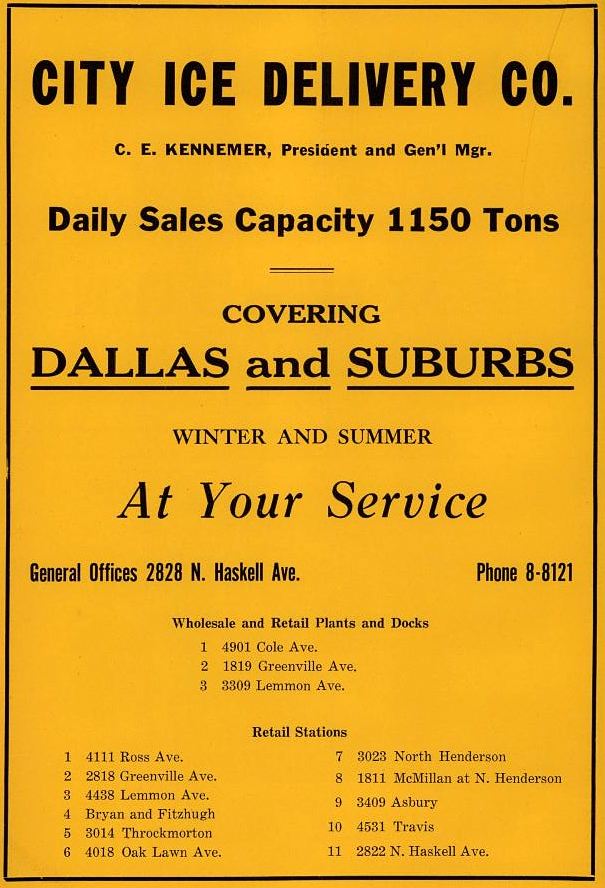
By 1933, American Ice Co. was swallowed up by City Ice Delivery Co.

city-ice-delivery_1934-directory1934 Dallas city directory

In the late 1930s or early 1940s City Ice Delivery Co. was acquired by Southland Ice (the forerunner of the Southland Corp., owners of 7-Eleven convenience stores). The Lemmon Avenue location became a meat-packing plant sometime in the mid-’40s (if neighbors were bent out of shape by an ice company, imagine how they felt about a meat-packing plant!); the Cole location became a 7-Eleven store and later a Southland Corp. division office.

*

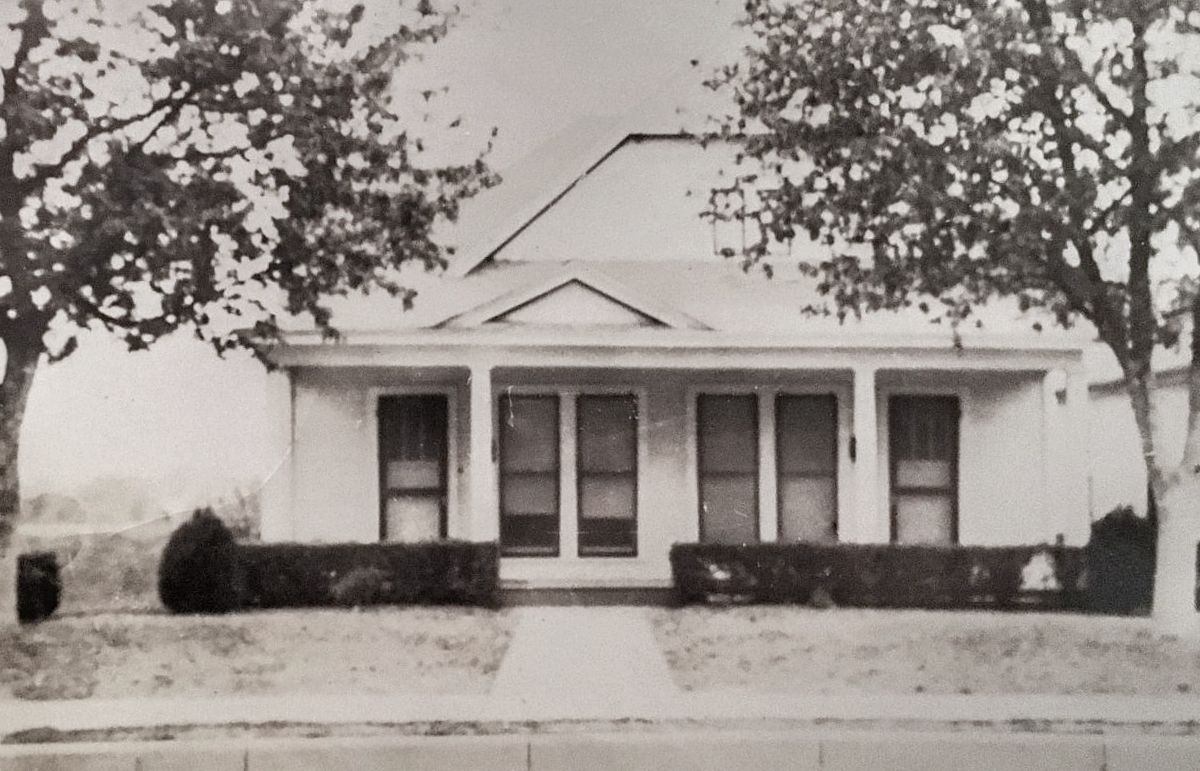
But back to Jonathan F. Finney, the man standing next to the ice wagon in the top photo. He came to Dallas from Alabama around 1916 and bought a house at 3001 Carlisle Street, where he lived for most of his life in Dallas. His occupation was “ice dealer,” and he seems to have worked in both the wholesale and retail areas, as a driver, a salesman, and even for a while the owner of his own company. His great-great-granddaughter Krystal Morris (supplier of these wonderful family photos) says she believes he was the manager of the Oak Lawn Ice & Fuel Co. The 1932 directory lists him as foreman of the City Ice Delivery Co., and as he lived at 3001 Carlisle, it seems to make more sense he was working at the Lemmon Ave. location (which was less than half a mile away from his home) rather the Cole Ave. location. The actual address of the photo at the top is unknown, but it may show the Lemmon Ave. location when Finney was working as an independent ice dealer, standing beside his own wagon.

Below, the Finney family around 1920 (J. F., daughters Thelma and Viva Sue, and wife Wenona), and below that, their house at 3001 Carlisle (which was at the corner of Carlisle and Sneed — seen in a 1921 Sanborn map here).

finney-family_krystal-morris-photoFinney family, circa 1920 / Photo: Krystal Morris

finney-home_3001-carlisle_krystal-morris-photo3001 Carlisle, Finney family home / Photo: Krystal Morris

J. F. Finney, born in 1885, died in Dallas in 1962, long after the era of necessary daily ice deliveries to residences and businesses. The occupation listed on his death certificate was “painter” but I have a feeling “once an iceman, always an iceman.”

***

Sources & Notes

All photographs are from the family photos of Krystal Morris and are used with her permission. Thank you, Krystal!

The history of ice delivery is very interesting, especially to those of us who have never lived in a house without an electric refrigerator. Here are links-a-plenty on the subject:

  • “Icehouses — Vintage Spaces with a Cool History” by Randy Mallory (Texas Highways, Aug., 2000) here (additional photos can be found in the scanned issue on the Portal to Texas History site, here)
  • “Keeping Your (Food) Cool: From Ice Harvesting to Electric Refrigeration” by Emma Grahn on the Smithsonian National Museum of American History blog, here
  • “Delivering the Ice: Ice Wagons” — from an online exhibit based on an exhibit that was on display at the Woods Hole Historical Museum in Woods Hole, Massachusetts during the summer of 2015, here
  • “Portals to the Past: Golden Days of Home Delivery (ice, as well as bread, milk, groceries, etc.) by Waco historian Claire Masters, here
  • “The Iceman Cometh” by Dick Sheaff from the Ephemera Society of America blog, here

Here’s a fantastic little clip of a woman ice deliverer manning the tongs (and wearing heels):


*

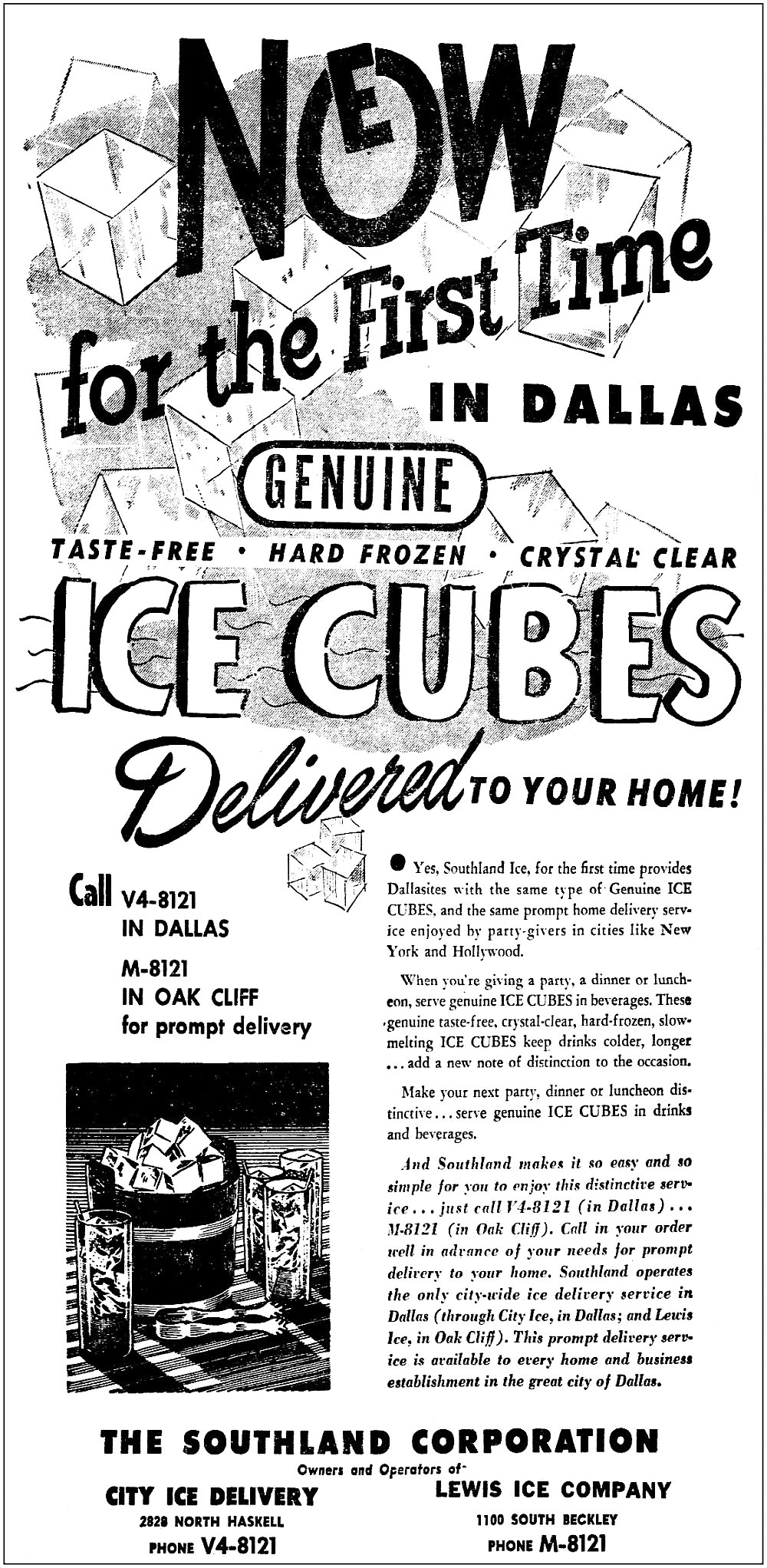
And, lastly, the Southland Corp. to the rescue with an ad from Dec., 1948 with news of the arrival in Dallas of “genuine” ice cubes! “Now for the first time in Dallas: Genuine Taste-Free, Hard Frozen, Crystal Clear Ice Cubes delivered to your home!”

city-ice-delivery_southland-ice_dec-1948
1948

All images are larger when clicked.

*

Copyright © 2018 Paula Bosse. All Rights Reserved.
Jefferson Dagnal’s Saloon, Deep Ellum — 1906

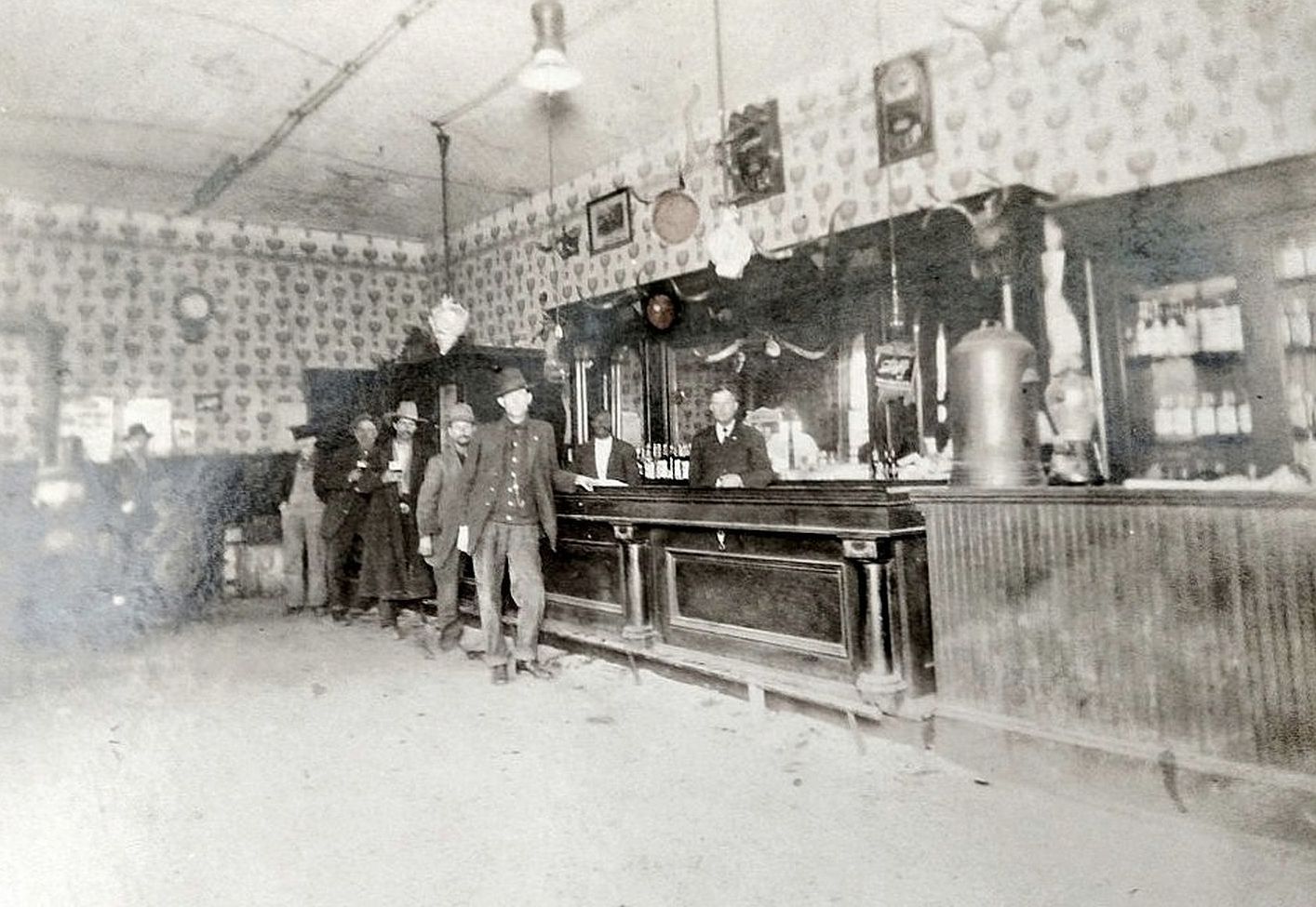
fritts-and-dagnal_brent-burton
“Fritts & Dagnal,” Deep Ellum saloon… (photo: Brent Burton)

by Paula Bosse

Reader Brent Burton commented on one of my tweets on Twitter to say that he had an old photo showing his great-great-grandfather standing in a saloon he had owned in Dallas around the turn-of-the-century and wanted to know how he might access old Dallas directories in order to try to determine where the bar had been. I told him that online scans of city directories are available for free from the Dallas Public Library and the Portal to Texas History (more on this is in my post How to Access Historical Dallas City Directories Online”). I also offered to see what I could find out.

The photo is the one above (click it to see a larger image). All he knew was that it was taken in a bar owned by his great-great-grandfather Jefferson Davis Dagnall (whose last name is most often spelled “Dagnal” in various documents such as census records, directories, and his death certificate, so I will refer to him with this spelling) and that the photo was taken in the late 1800s or early 1900s. I figured it would be pretty easy to find the info because his name was so uncommon, but that was complicated by the fact that his name was spelled and misspelled many different ways — I think I came across five or six permutations. It took a long time to figure out where that photo was most likely taken — mainly by going through census records and looking at all the city directories — year by year — to pin down where he was working each year. And he got around — he lived at a new address almost every year, and changed jobs almost as frequently.

Jefferson Davis Dagnal was born in 1861, probably in Fort Bend, Texas. His father, a South Carolina native, appears to have died fighting in the Civil War; Jeff (…I call him Jeff…) was 3 years old when his father died. By 1880 he was a teenager, working on a Dallas-area farm. In 1883, Jeff was working as a blacksmith. According to city directories, he held the following jobs: store clerk, laborer, streetcar driver, house-mover, electrician, and bartender.

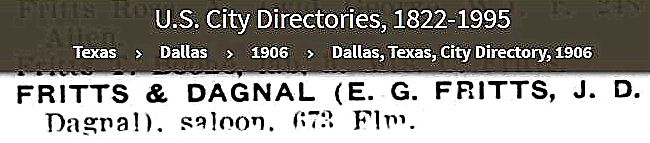
1905 was the year he seems to have settled into bartending, a job he held in various establishments in Deep Ellum for a decade, until his death in 1915. He appears to have owned (or co-owned) only one of these bars: Fritts & Dagnal. It seems the venture with partner E. G. Fritts was short-lived: its only listing is in the 1906 directory — by 1907 Jeff had moved on, tending bar elsewhere.

1906-directory_dagnal_saloon_fritts-and-dagnal_673-elm

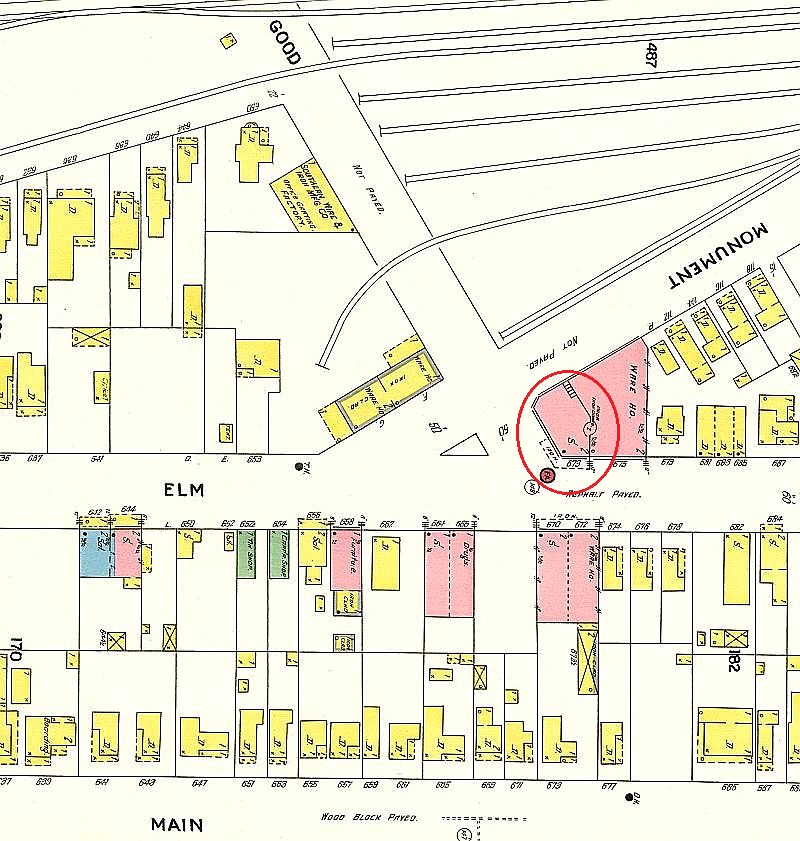
The saloon was listed in the 1906 city directory as being at 673 Elm — that address was changed in 1911 and became 2603 ½ Elm. This was in Deep Ellum, at the northeast corner of Elm and Good (possibly on the second floor). Below is a 1905 Sanborn map showing the location (the full map is here).

673-elm_fritts-and-dagnal_sanborn_sheet-42_1905_det
1905 Sanborn map, detail

The lot that building stood on at Elm and what is now Good-Latimer is empty, but a current-ish look at the location, from Google Street View, can be seen here (I am attempting to post a view from 2015, before all the construction work was going on near the Elm and Good-Latimer intersection — but just move up or down Elm a bit on Google and you’ll see construction images take over).

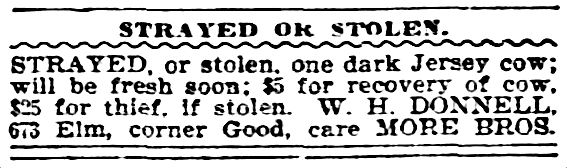
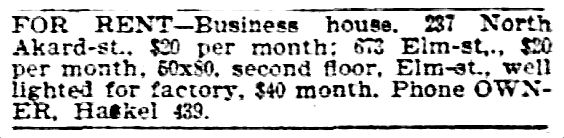
Below, a couple of ads from around the time Jeff Dagnal and E. G. Fritts decided to start up their short-lived saloon at 673 Elm: the first ad shows that it was not unusual in 1905 for large livestock to be kept in Deep Ellum (where they might even have been “rustled”), and the second ad shows that both the upstairs and downstairs spaces of the building at 673 Elm were available to rent:

1905_673-elm_strayed_dmn_051305Dallas Morning News, May 13, 1905

1906_673-elm_for-rent_dmn_050606DMN, May 6, 1906

(According to the Inflation Calculator, those 1906 rents of $20 and $40 would be about $550 and $1,100 in today’s money.)

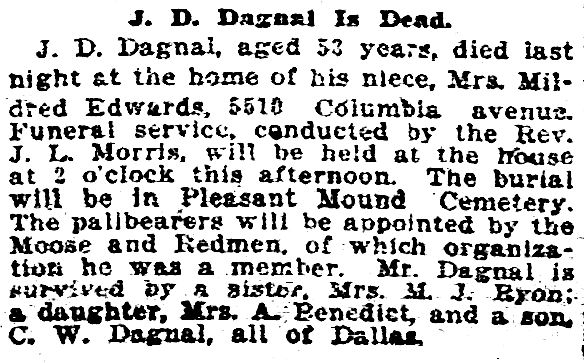
Jefferson Davis Dagnal died in Dallas on Feb. 25, 1915. His death certificate — with information provided by his daughter, Cora — listed his occupation as “blacksmith,” even though he had been a bartender (and, briefly, a saloon owner) for at least the last ten years of his life.

1915_dagnal_death_dmn_022615
DMN, Feb. 26, 1915

*

One interesting thing about Mr. Dagnal, was his relationship with his wife Alice, the mother of his second child, Clarence, who was born in 1893. Alice and Jeff appear to have hit a rough patch in their marriage pretty early on. In the 1900 census, they were living in different cities, and each claimed to be widowed. I don’t know if they ever officially divorced (or even if they officially married), but I suppose it was easier in that era to claim a spouse had died rather than admit the shame of divorce or abandonment. By 1903 both were living in Dallas — at the same address. But by 1904 they were living apart, and Alice was, again, claiming to be a widow — even though an alive-and-kicking Jeff was listed in the directory right under her name!

1904-directory_dagnal_alice-and-jeff1904 Dallas directory

I have come across this phenomenon so frequently that I now question every “widow” or “widowed” claim I come across. Information from the U. S. Census (where people give false ages and incorrect marital status ALL THE TIME) should be taken with a grain of salt!

***

Sources & Notes

Photo of Jefferson Dagnal’s saloon was shared with me by Dagnal’s great-great-grandson, Brent Burton and is used here with his permission. Jeff is probably in the photo — in 1906 he would have been 45 years old. Thank you for the great photo, Brent!

All images are larger when clicked.

*

Copyright © 2018 Paula Bosse. All Rights Reserved.


State Fair Coliseum / Centennial Administration Building / Women’s Museum / Women’s Building

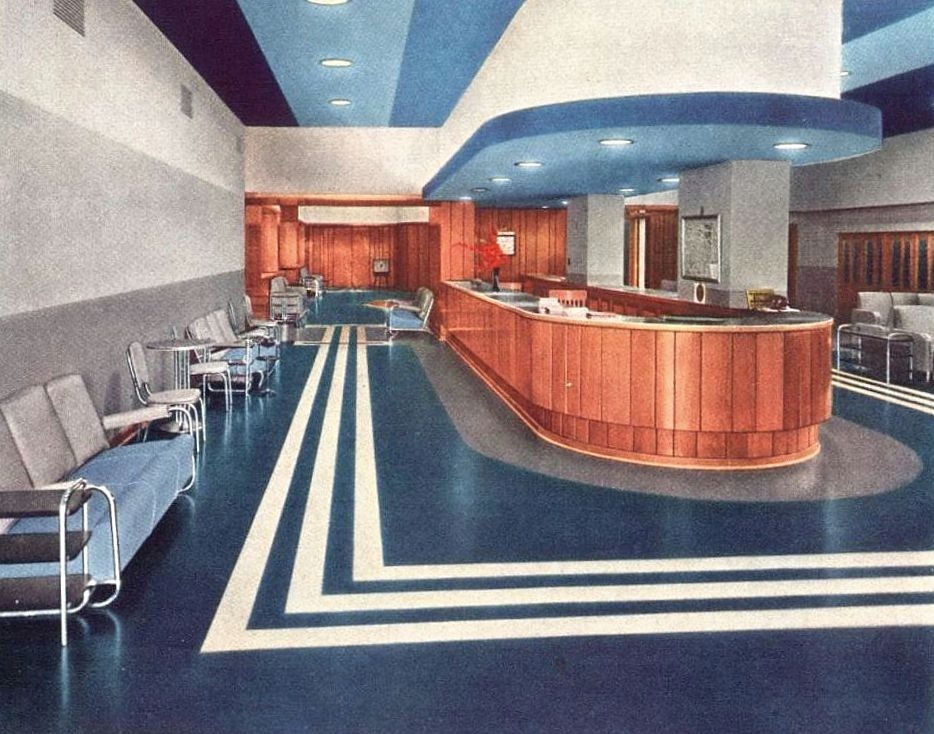
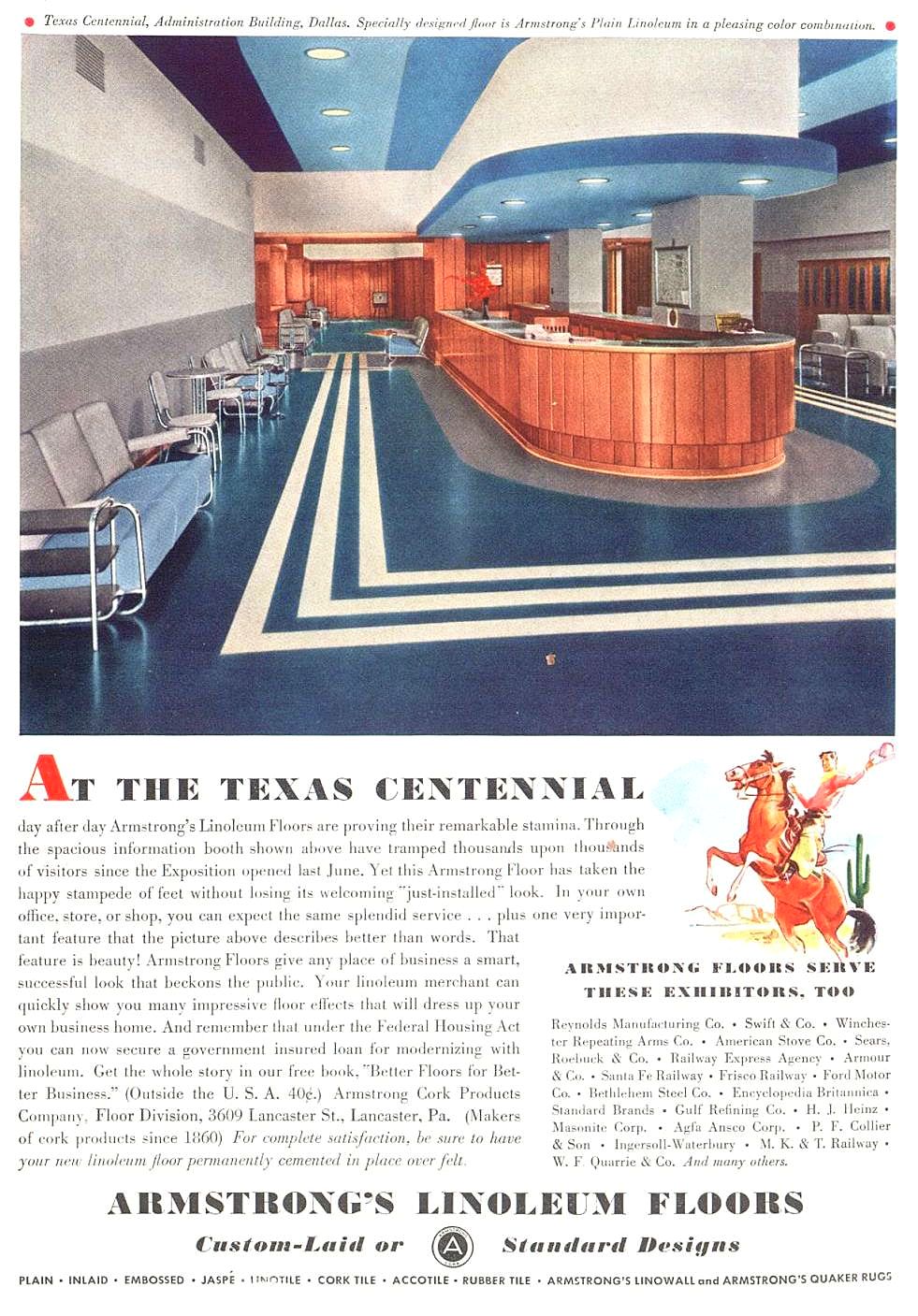
tx-centennial_armstrong-linoleum-ad_1936_detAdministration Building interior, 1936…

by Paula Bosse

Thursday night I attended a very entertaining Dallas Historical Society presentation at the Hall of State in Fair Park: “An Evening With Jim Parsons: Lost Fair Park,” in which the author of Fair Park Deco and DFW Deco talked about many of the buildings constructed for the Texas Centennial Exposition in 1936 which are no longer with us.

One of Jim’s asides was that there are very, very few color photos of the Centennial buildings and murals taken in 1936. If you’ve seen a Centennial view in color, it’s probably a colorized postcard. Kodachrome film was introduced in 1935 and was, sadly, not in wide use by visitors to Fair Park in 1936 (or by the Centennial organization).
When he said that, though, I remembered an ad I had come across that I thought was pretty cool, simply because it shows the interior of one of the Centennial buildings when it was brand new (…well, it was sort of new — more on that below). The ad is for Armstrong Linoleum and it features a color photo showing one of their custom linoleum floors installed in the Centennial Administration Building, an interior I’d never seen. And it’s in color! (Check out the furniture and the recessed lighting!) Here’s the full ad, which appeared in national magazines in 1936 (click for larger image).

ad- tx-centennial_armstrong-linoleum_19361936 ad

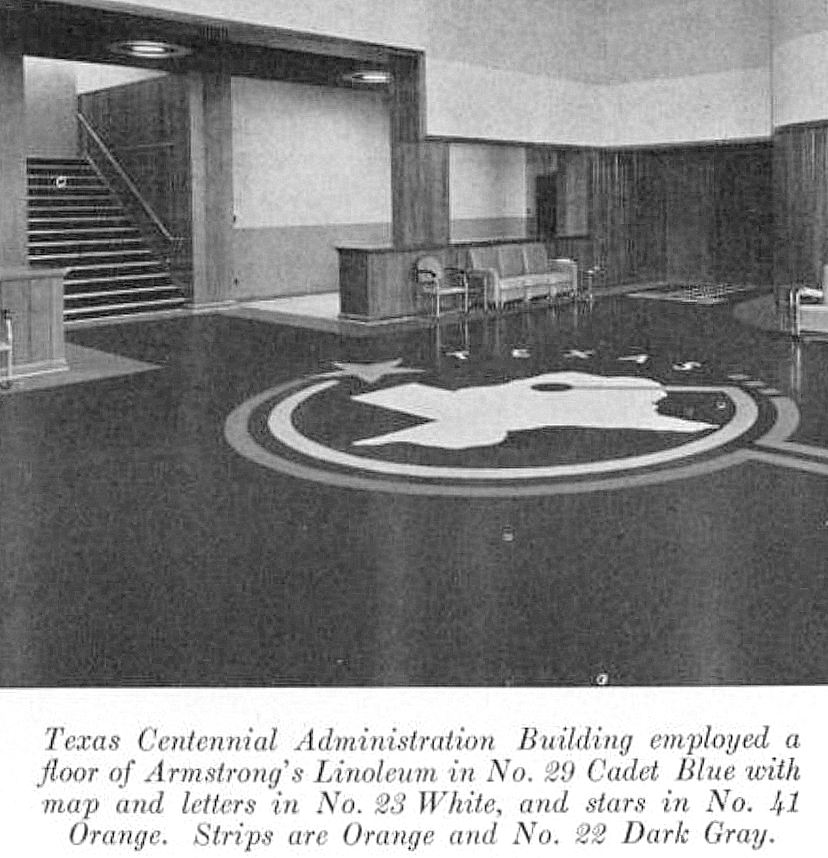
And — hallelujah — I found another photo of the interior — also from the helpful Armstrong people (I don’t know if they had the concession to outfit all the Centennial buildings, but, if so, I’d love to see all of their designs). Unfortunately this one is not in color, but it shows a fantastic Texas-centric custom design, laid down in fabulous linoleum.

tx-centennial_armstrong-linoleum_admin-bldg_texas-floor

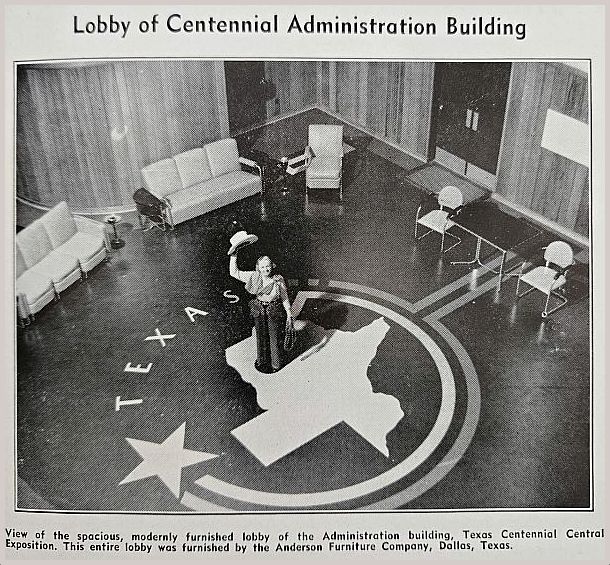
And another one:

tx-centennial_administration-bldg-floor_southwest-business-mag_june-1936
Southwest Business, June 1936

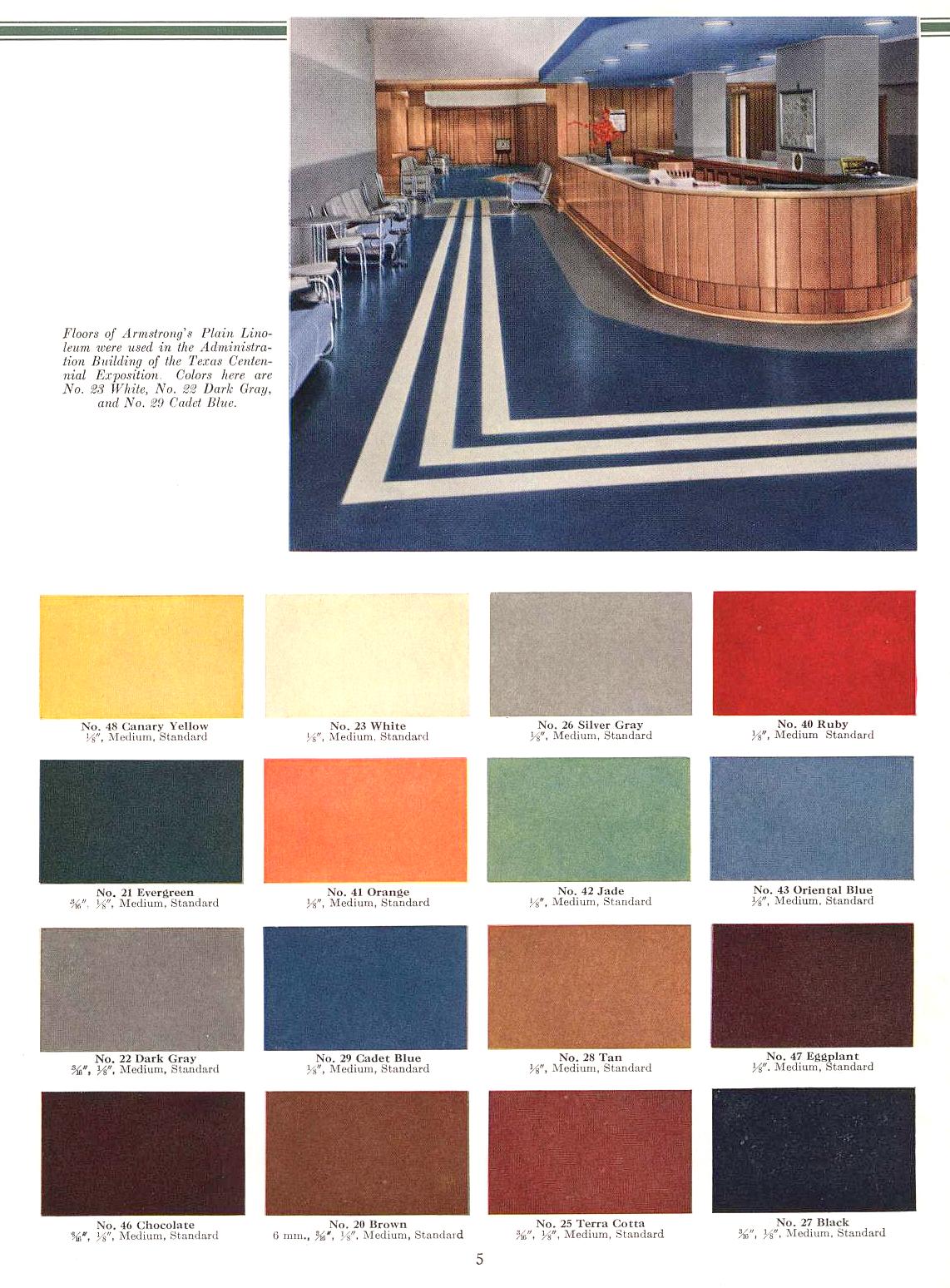
Imagine that floor in Cadet Blue, White, Orange, and Dark Gray. This is from a trade publication called Armstrong’s Floors and Walls for Homes and Public Buildings, published around 1950 (and fully scanned here). A cropped version of the photo of the top is also included here (that floor, by the way, is in White, Dark Gray, and Cadet Blue), with handy swatches (which, reproduced below, lose some accuracy in color).

tx-centennial_armstrong-linoleum_admin-bldg_colors

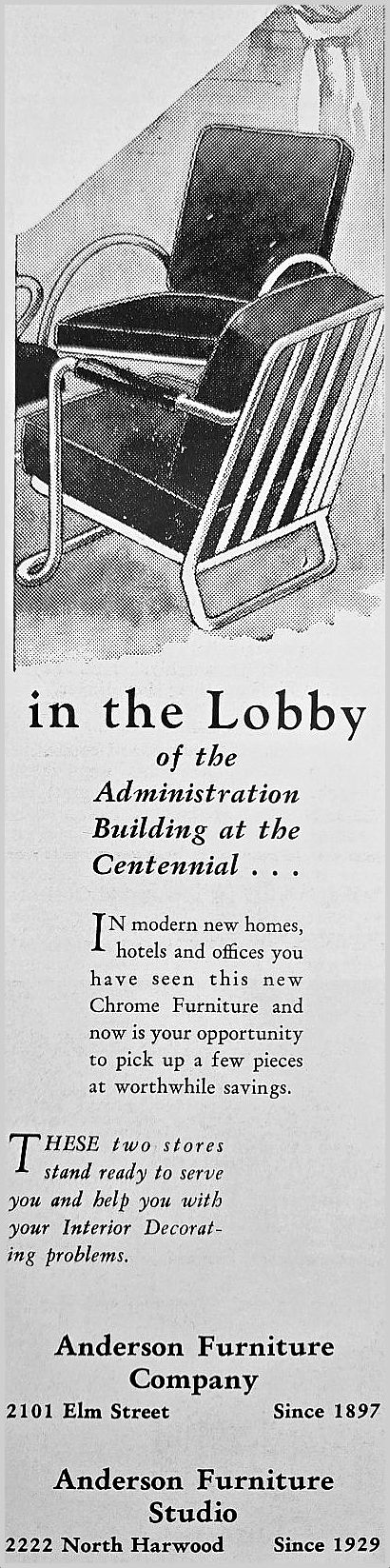
And just because I found an ad for those cool chairs:

tx-centennial_furniture_southwest-business-mag_oct-1936Southwest Business, Oct. 1936

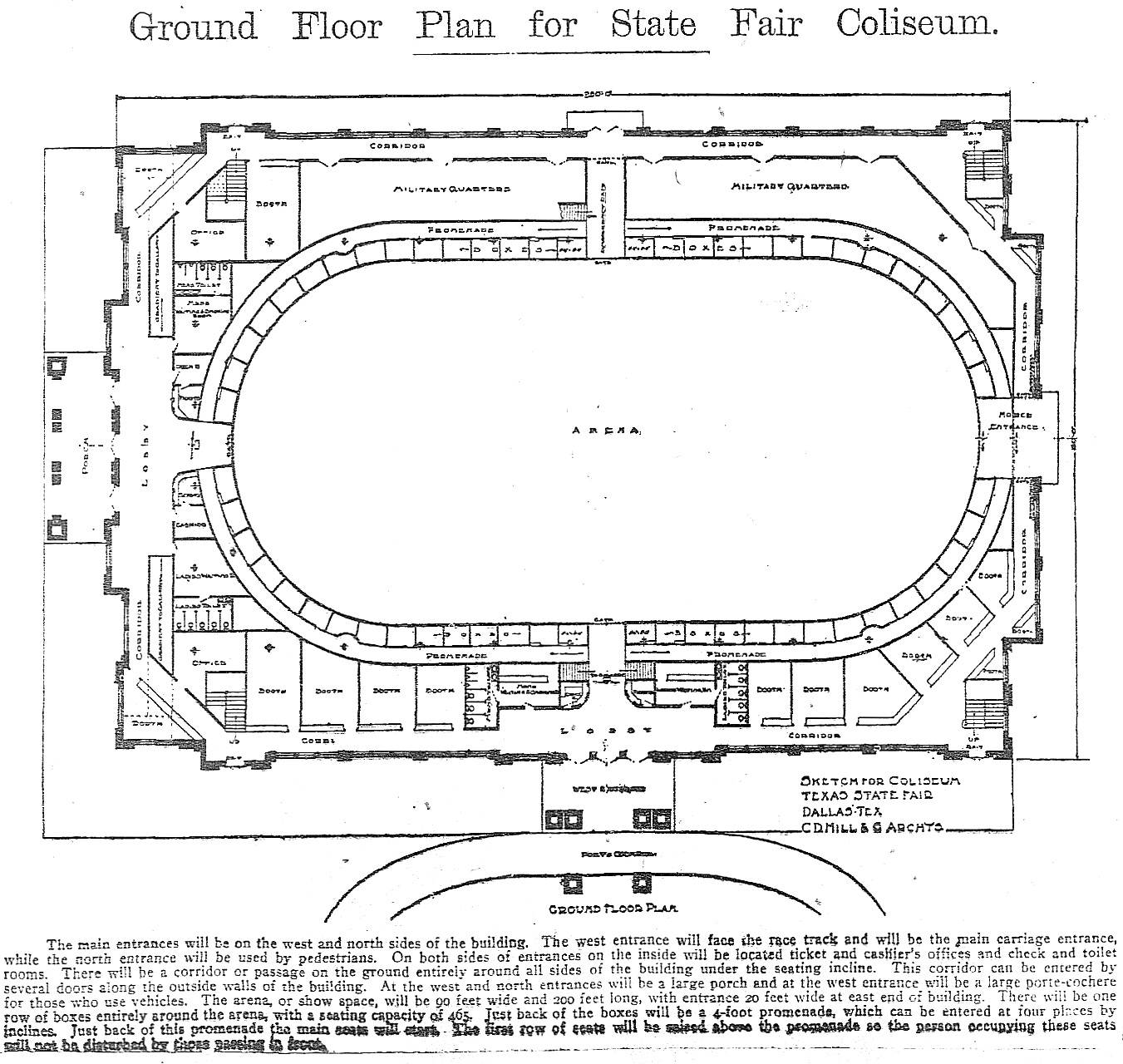
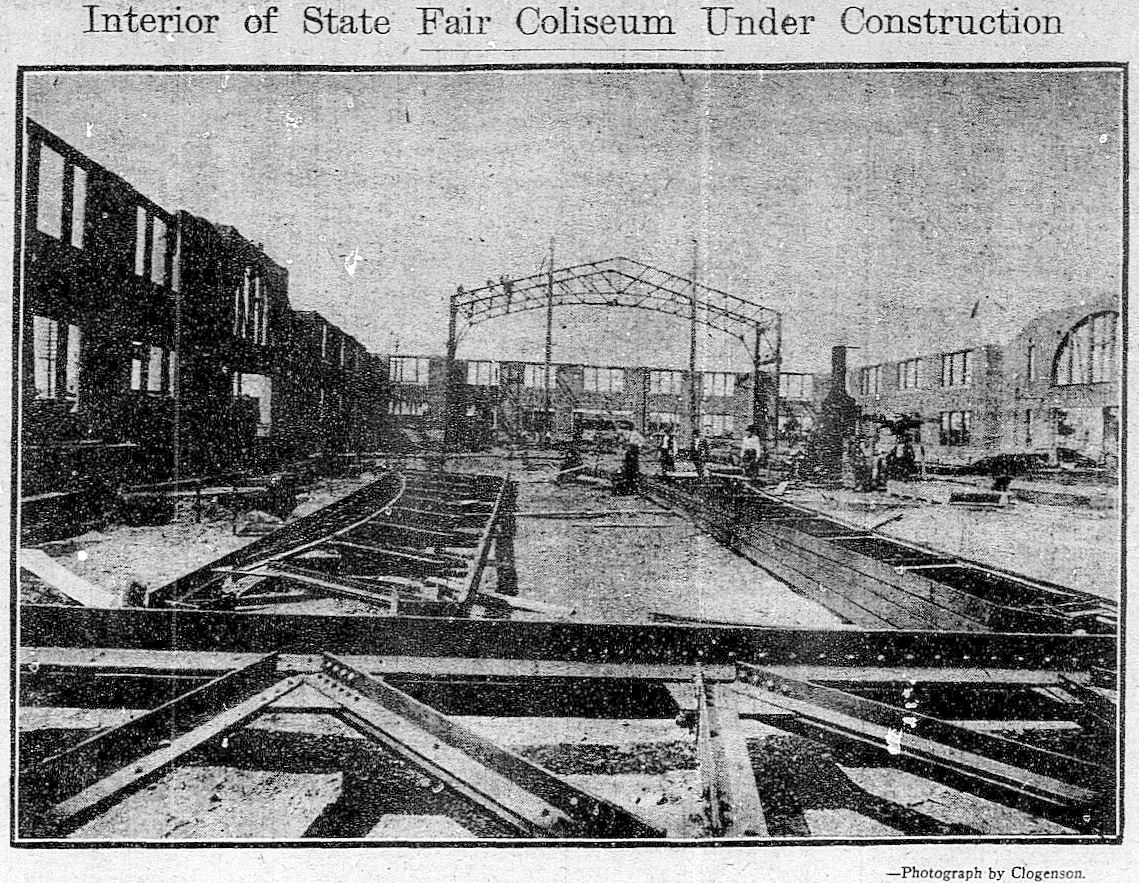
The Centennial Administration Building — which housed the hundreds of office workers and executives behind the running of the Texas Centennial Exposition — was actually the very first Centennial building completed (at the end of December 1935). Most of the Centennial buildings were newly built in 1936, but the Administration Building was actually an old building given a new stucco façade and completely remodeled — it even acquired a second floor inside the huge structure. This building was originally known as the State Fair Coliseum, built in 1910, designed by architect C. D. Hill (who designed many buildings in Dallas, including the still-standing Municipal Building downtown (built in 1914) and the Melrose Hotel (1924).

state-fair-coliseum_dmn_062009_drawingDallas Morning News, June 20, 1909

state-fair-coliseum_dmn_050710_constructionDMN, May 7, 1910

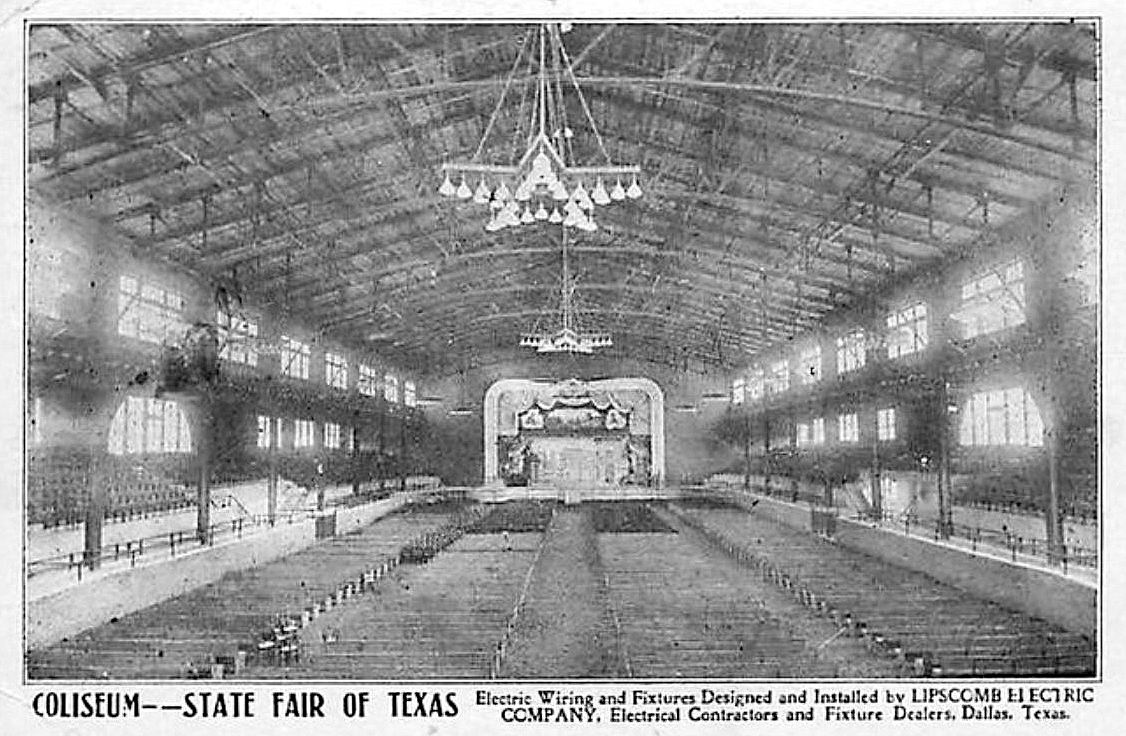
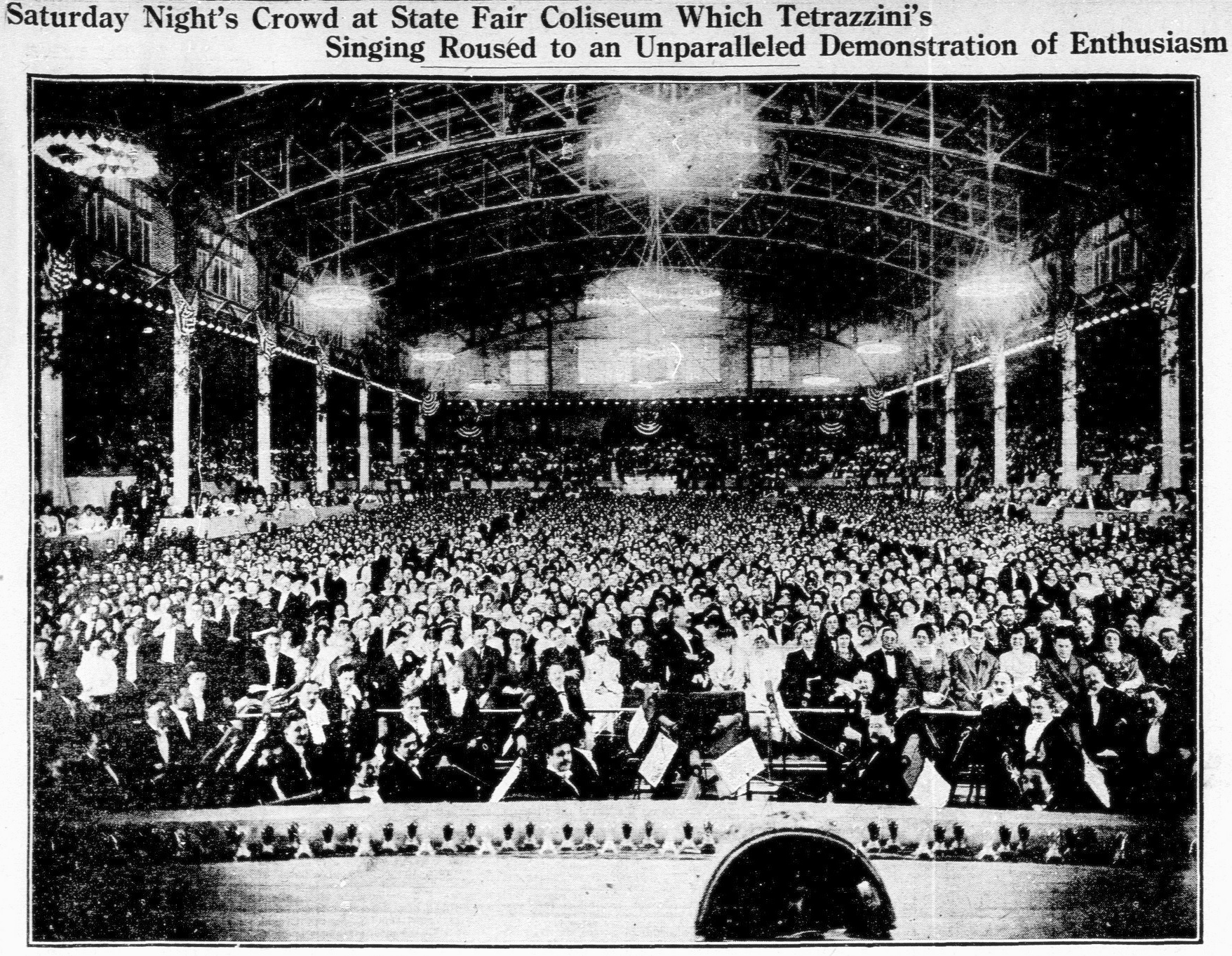
It was BIG. It had a seating capacity of 7,500.

state-fair-coliseum_flickr_coltera

state-fair-coliseum_dmn_030413DMN, March 4, 1913

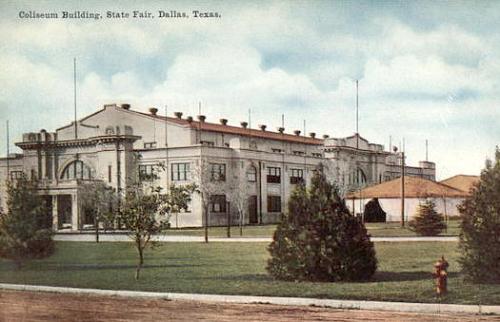
This was the first building you’d see as you entered Fair Park, as it was right inside the front entrance on Parry Avenue (after you entered, the building would be on your left).

Coliseum Building, State Fair Dallas, TX

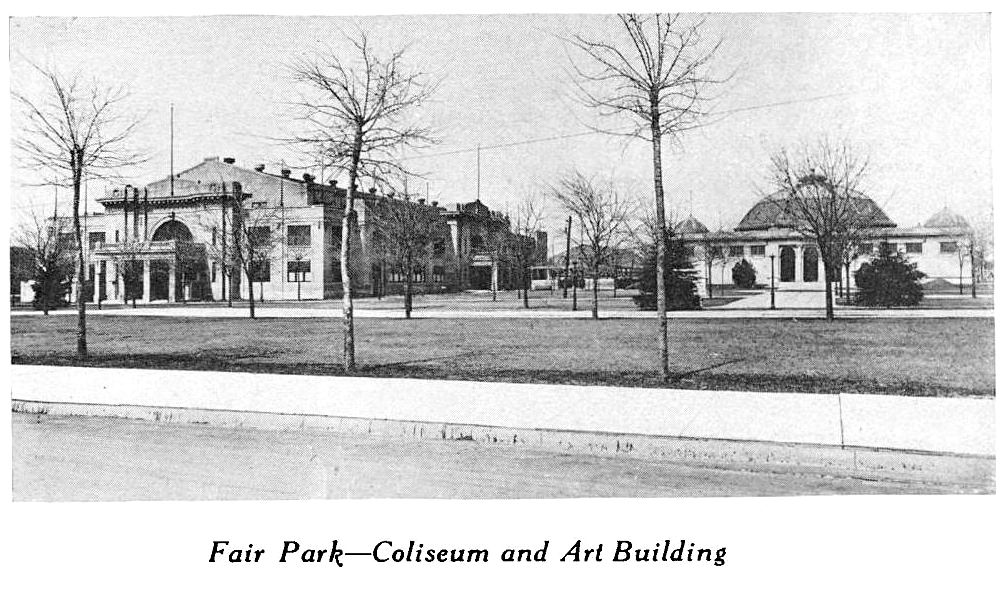
park-board-bk_fair-park-coliseum_1914

It was the city’s first official municipal auditorium, and it hosted everything from livestock shows, conventions, large civic gatherings, and the occasional opera.

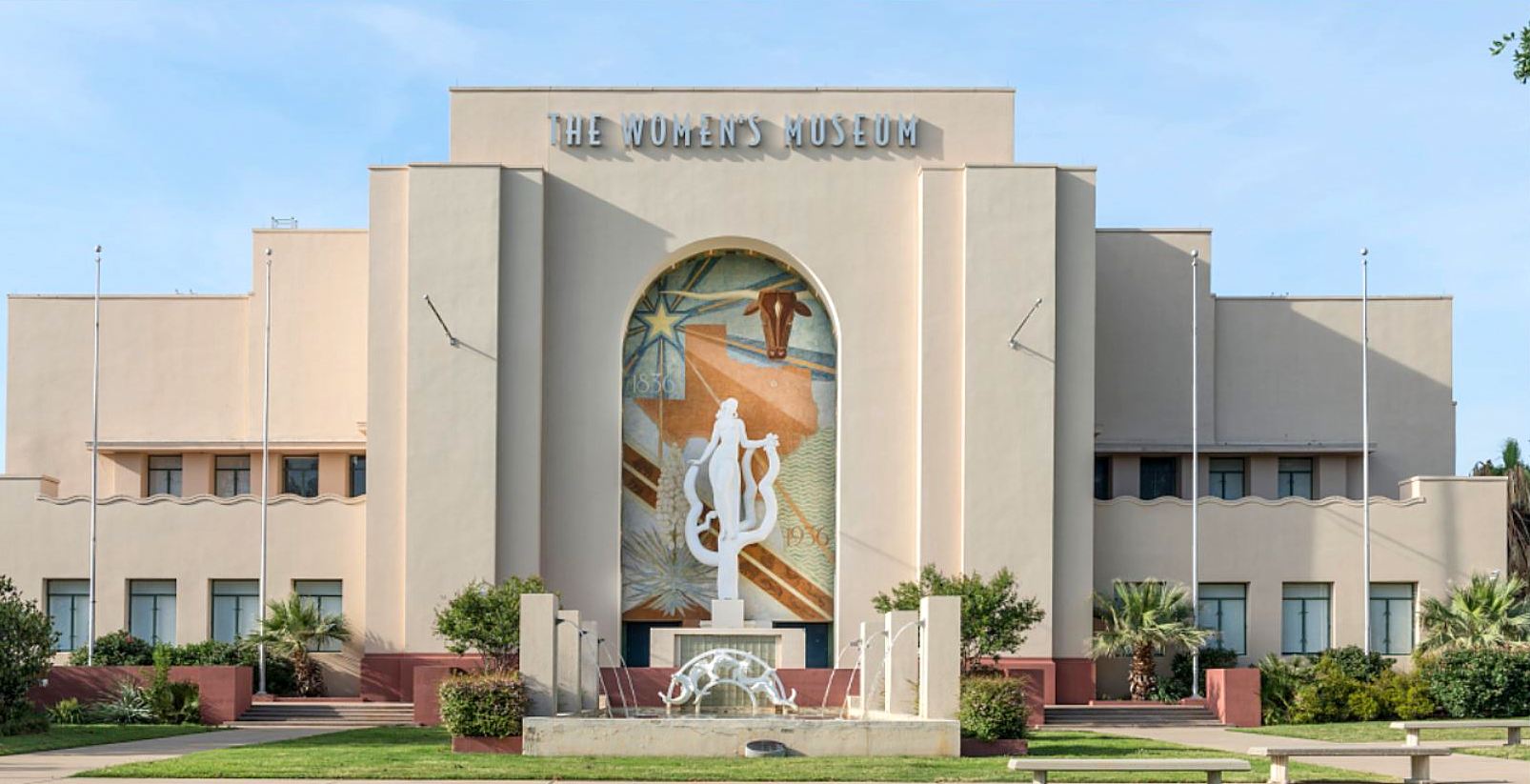
Fast-forward a few decades: in 2000 the building became the home of the Women’s Museum. The museum closed in 2011 and is now called the Women’s Building and is used for special events.

A photo of the building from 2014:

womens-museum_fair-park_2014_carol-highsmith_library-of-congressphoto: Carol Highsmith, Library of Congress

See a Wikimedia photo of this building in 2016 here — click it again (and again) to see it really big, and linger on the mural by Carlo Ciampaglia and the sculpture by Raoul Josset. See interior photos of the space in 2009 during its time as the Women’s Museum here and here. I’m not sure if the exposed brick and steel are from the original 1910 building, but I certainly hope so! And, lastly, exterior photos from 2009 showing the side of the building here, and here

***

Sources & Notes

This building can be seen on this aerial Google view, here. It is currently the Women’s Building, and it is available for special events — more about this building from the Friends of Fair Park, here.

Black-and-white postcard showing the interior of the Coliseum is from Flickr.

Black-and-white photo “Coliseum and Art Building” is from Report for the Year 1914-1915 of the Park Board of the City of Dallas, With a Sketch of the Park System (Dallas: Park Board, 1915), which can be accessed as part of the Dallas Municipal Archives via the Portal to Texas History, here.

And since this whole post was spurred by Jim Parsons’ talk the other night, here’s a link to the book he and David Bush wrote: Fair Park Deco: Art & Architecture of the Texas Centennial Exposition.

*

Copyright © 2018 Paula Bosse. All Rights Reserved.