Flashback : Dallas

A Miscellany: History, Ads, Pop Culture

Category: Photographs

Knox Street Fire — 1961
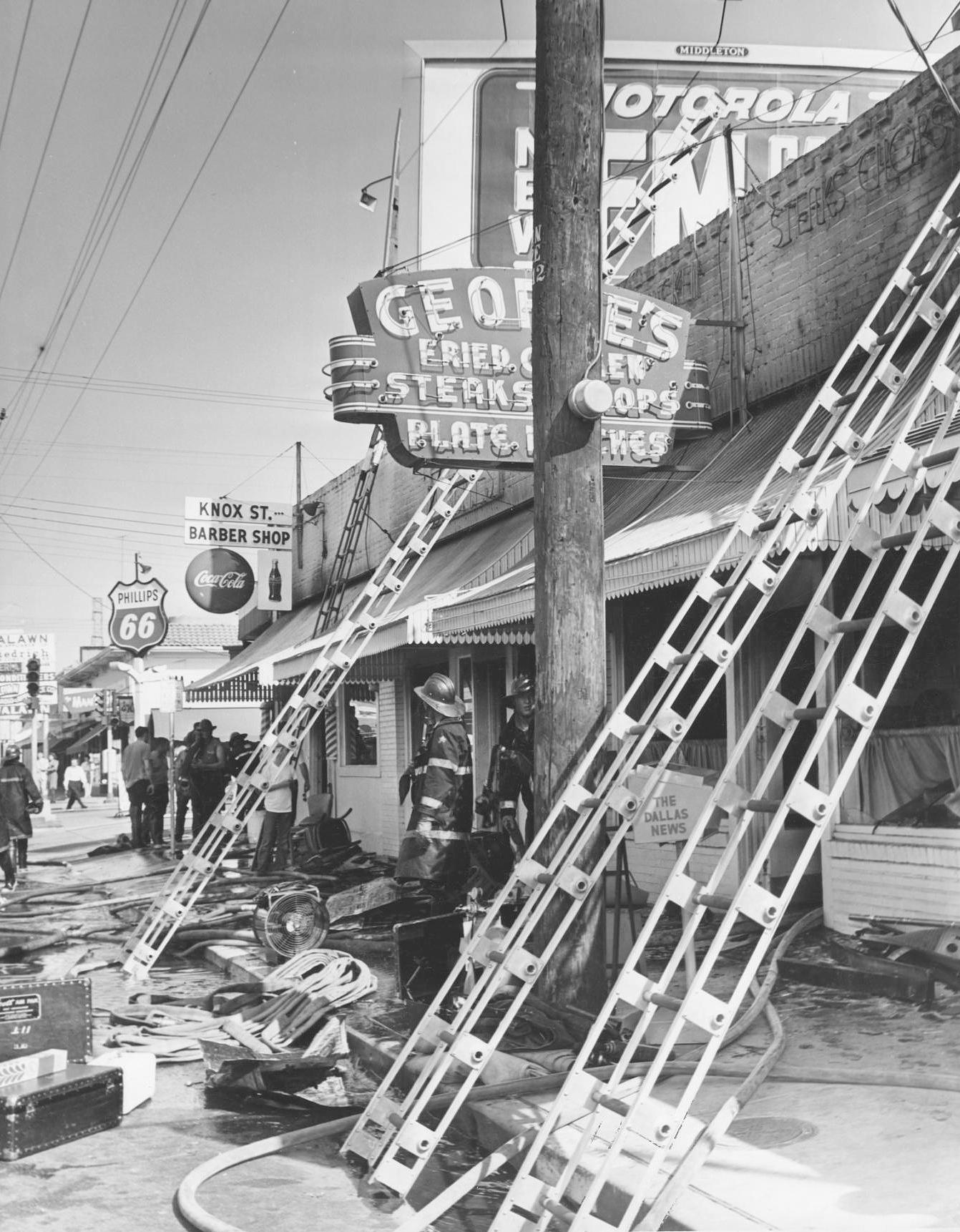
knox-street-fire_3100-block_052161_unt_portal_dallas-firefighters-museum3100 block of Knox, after a 4-alarm fire…

by Paula Bosse

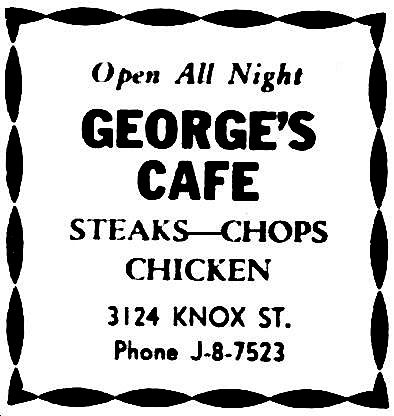
I often run across photos that aren’t particularly historical, but they’re interesting because they show a part of town with which I’m familiar, but which looks very different today. The photo above shows the 3100 block of Knox Street, between McKinney and Cole, looking toward Cole (seen at the stoplight). It shows the aftermath of a 4-alarm fire that broke out on May 21, 1951 and destroyed three businesses: George’s Cafe (at 3124 Knox), the Knox Street Barber Shop (3128 Knox), and Foster’s Food Store (3122 Knox) — the building housing these business survived, but it is long-gone; the land is now occupied by On The Border.

There were no fatalities at the scene, but, sadly, Charles William Layne, a 13-year-old neighborhood boy who suffered from a heart condition, collapsed while running to see what the commotion was and later died.

I looked up one of the businesses affected by the fire: George’s Cafe, owned by George Bartlett, who opened the business at 3124 Knox in 1937. Apparently those early days were difficult, and Bartlett barely kept the business afloat. The only thing that seemed to keep him going was the fear of losing the money his widowed mother had loaned him after she had mortgaged her home. A heartwarming rags-to-riches article about Bartlett appeared in the pages of The Dallas Morning News (“Shot at the Moon” by Kenneth Foree, DMN, Nov. 28, 1946).

Digging a bit, I saw that Bartlett had tried to sell the cafe several times but never seems to have found a buyer. The for-sale ads stopped after 1964. The last appearance of the cafe in the Dallas directory was in 1965. Bartlett died in 1966.

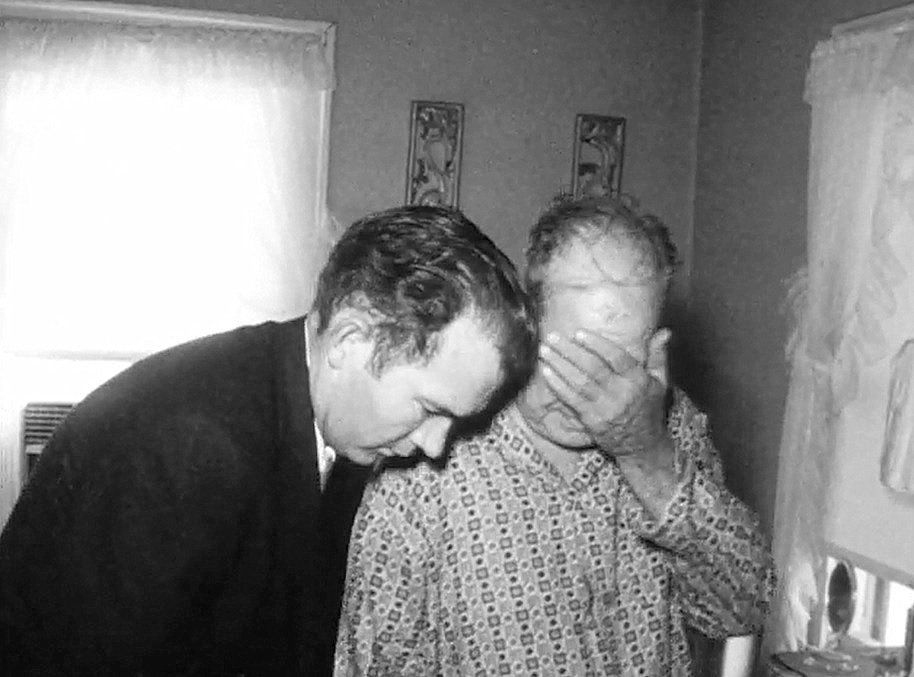
But Bartlett wasn’t kidding when he was interviewed by Kenneth Foree in that Dallas News article: it was very hard making money running the place. So hard, in fact, that in order to keep from going under, he had to take on a side job: he became a bookie, taking bets on basketball games, football games, and horse races. He was arrested twice (in 1959 and 1963) and spent 90 days in jail after being convicted on book-making charges. When arrested in 1963 after having been caught flushing receipts down the toilet as the vice squad broke down his door (a case which was later no-billed), the 57-year-old Bartlett told the arresting officer, “I just can’t make any money in the cafe business” (“Bookmaking Raid Nets Two Arrests” by Hugh Aynsworth, DMN, Nov. 17, 1963). He was shown in a news photo wearing handcuffs and pajamas. Oh, George. What would your mother have said?

UPDATE: I stumbled across news footage from 1963 of poor George on the worst day of his life, described above: in it, he is seen being arrested on camera — in his pajamas — after vice cops raided his East Dallas home. He has a black eye, which he sustained when cops caught him attempting to flush evidence. You can watch the short, silent video here — and you can read the news script which would have been read by the news anchor over the footage, here (it will explain those loaves of bread). Below is a screen shot.
bartlett-george_bookie-raid_nov-1963_WBAP_portalKXAS-NBC 5 News Collection, UNT

**

georges-cafe_dmn_062245
June 22, 1945

Below, the businesses in the 3100 block of Knox Street at the time of the fire. The businesses that burned were located in a building torn down many years ago and replaced by On The Border (the view today is here).

knox-street_3100-block_1962-directory
1962 Dallas directory

***

Sources & Notes

The photo at the top is from the Dallas Firefighters Museum collection, via the Portal to Texas History — more info is here.

Screen shot of George Bartlett is from footage shot on Nov. 16, 1963, from the KXAS-NBC 5 News Collection, UNT Libraries Special Collections, via the Portal to Texas History.

*

Copyright © 2016 Paula Bosse. All Rights Reserved.
November 22, 1963: Will Fritz and the JFK Investigation

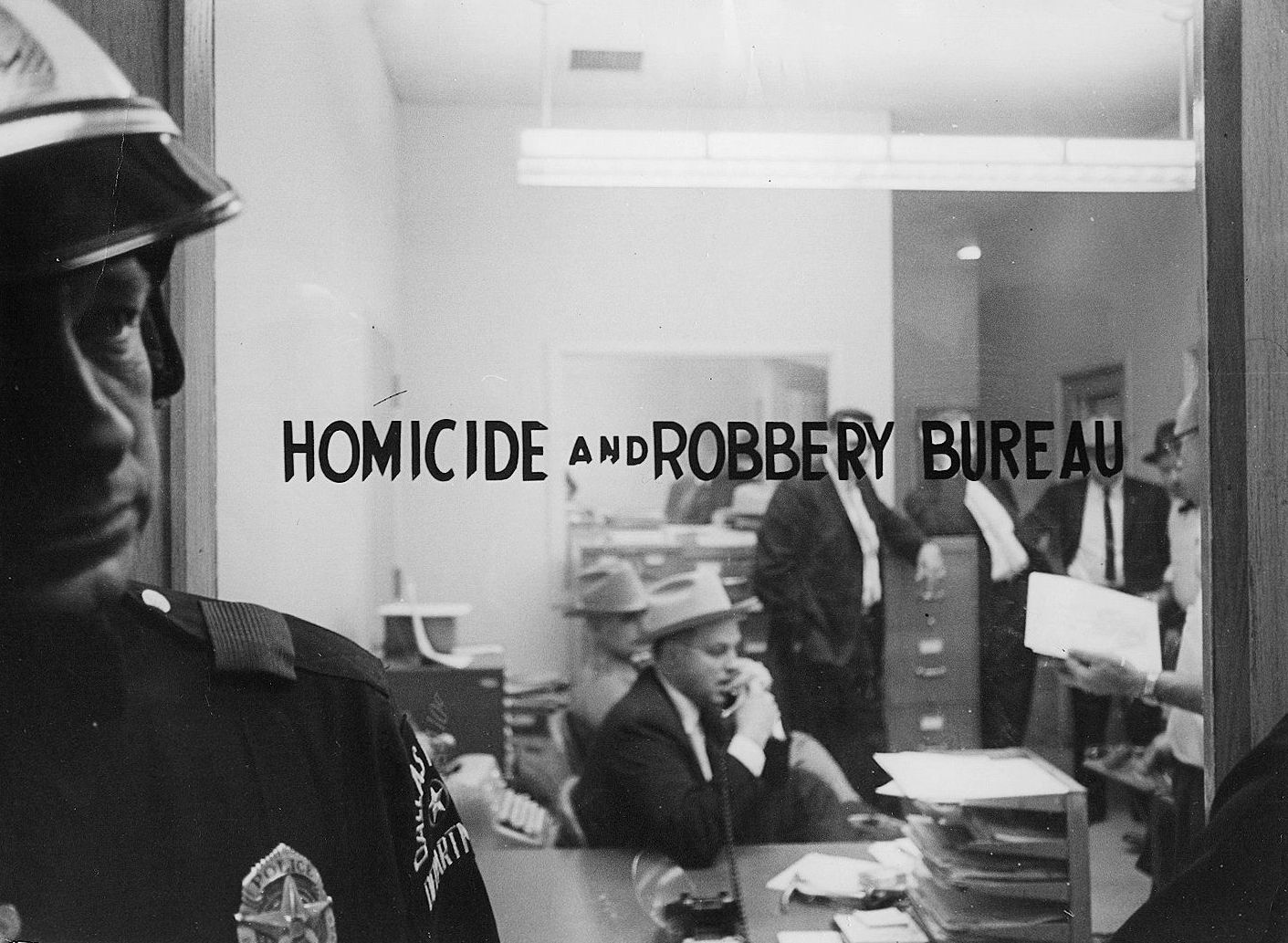
jfk_dpd_post-assassination_ebayThe men of the Homicide & Robbery Bureau at work (click for larger image)

by Paula Bosse

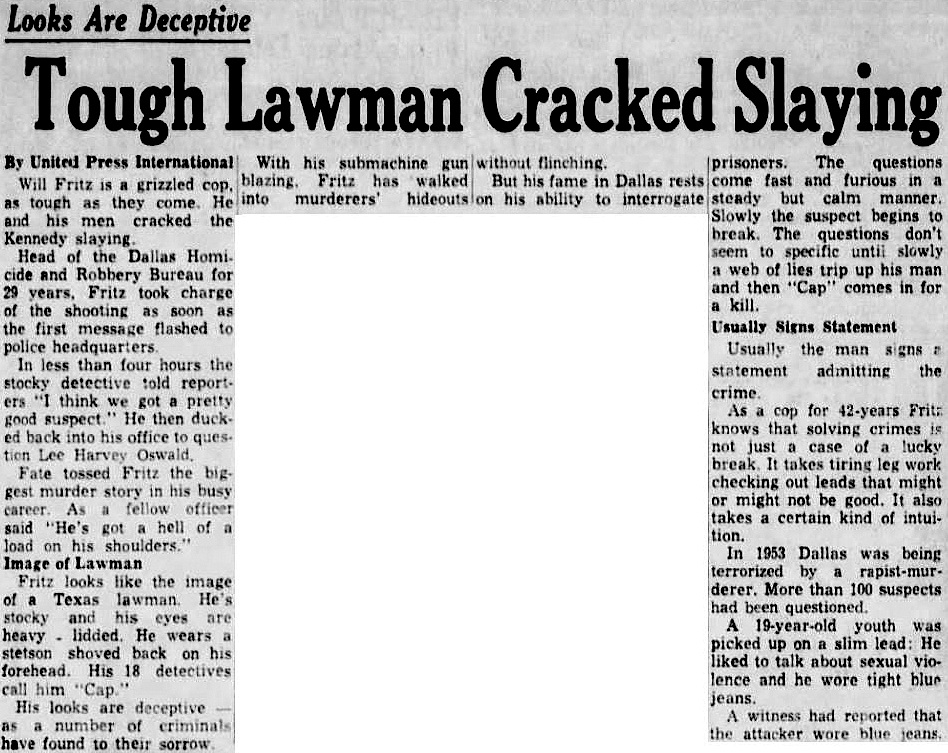
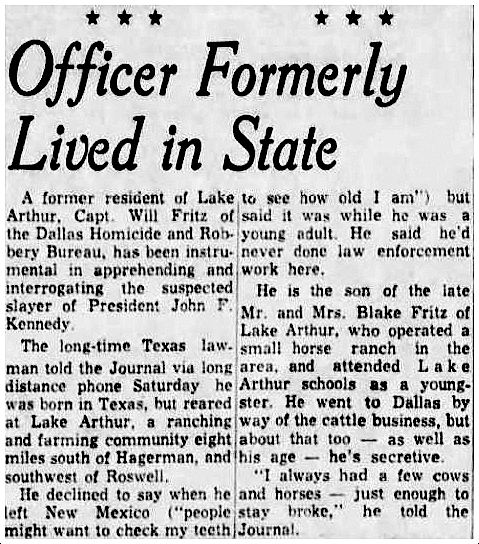
After the unthinkable had happened on the streets of Dallas — the assassination of a U.S. president — the Homicide and Robbery Bureau of the Dallas Police Department, led by Will Fritz, Captain of Detectives, sprang into action and quickly apprehended Lee Harvey Oswald as a suspect in the shooting of President John F. Kennedy. The FBI, the Secret Service, the Texas Rangers, and the whole of the Dallas Police Department worked together, but Fritz was the face of the investigation.

Will Fritz (1895-1984) was born in Dublin, Texas and grew up in New Mexico. He joined the Dallas Police Department in 1921 and remained on the force for 49 years, retiring in 1970 at the age of 74. He was considered one of the top police interrogators in the state and was a dedicated lawman — so dedicated he lived just steps away from police headquarters in the White Plaza Hotel (originally the Hilton Hotel, now the Indigo).

The success rate of Fritz’s detectives was impressive:

The record of Fritz and the Police Department’s Homicide and Robbery Bureau — which he has led since its formation — is a nationally enviable one. Over the past quarter century, he and his aides have solved roughly 98 per cent of the 54 to 98 homicides committed each year. (Dallas Morning News, March 1, 1959)

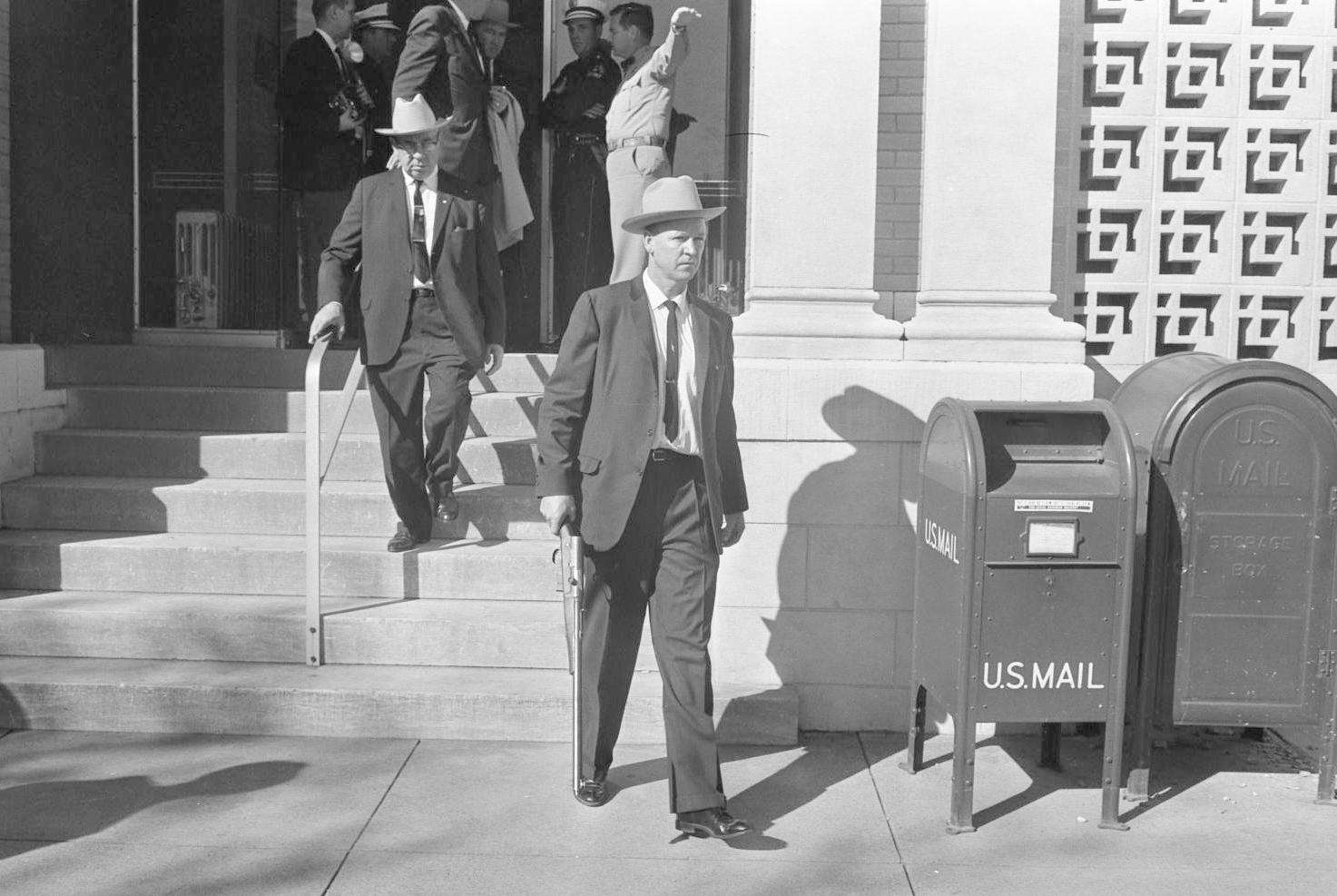
Fritz served for almost half a century with the DPD, involved in all sorts of colorful cases, but he’ll always be most remembered for the events surrounding the JFK assassination. The photo above shows his detectives at work in the Homicide office in the aftermath of the Kennedy assassination; the photo below shows him exiting the Texas School Book Depository with DPD detective Elmer Boyd (carrying rifle).

jfk_fritz_school-book-depository_112263_portal

*

*

jfk_fritz_albuquerque-journal_112463-photo

jfk_fritz_albuquerque-journal_112463a

jfk_fritz_albuquerque-journal_112463b

jfk_fritz_albuquerque-journal_112463_sidebar
Above photo and clippings from the Albuquerque Journal, Nov. 24, 1963

***

Sources & Notes

Top photo showing a Dallas police officer standing outside the Homicide and Robbery Bureau is from a 2015 eBay listing. The reverse of the photo is stamped “Paris Match/Marie Claire.”

Photo showing Fritz walking down the steps of the Texas School Book Depository, taken on November 22, 1963 by Dallas Times Herald staff photographer William Allen. It is from the Sixth Floor Museum’s Dallas Times Herald Collection, which is hosted online by the University of North Texas Libraries, via the Portal to Texas History, here (with additional information here).

More about Capt. Will Fritz from the Handbook of Texas History, here.

A really interesting profile of Fritz can be found in the 1959 Dallas Morning News article “Captain Fritz: Stays With the Case” by Don Freeman (DMN, March 1, 1959).

Other Flashback Dallas posts related to the assassination of President John F. Kennedy can be found here.

Click on photos and clippings to see larger images.

*

Copyright © 2016 Paula Bosse. All Rights Reserved.
 

The Expanded “Texas Size” Titche’s Building: Twelve Glamorous Acres of Department Store — 1955

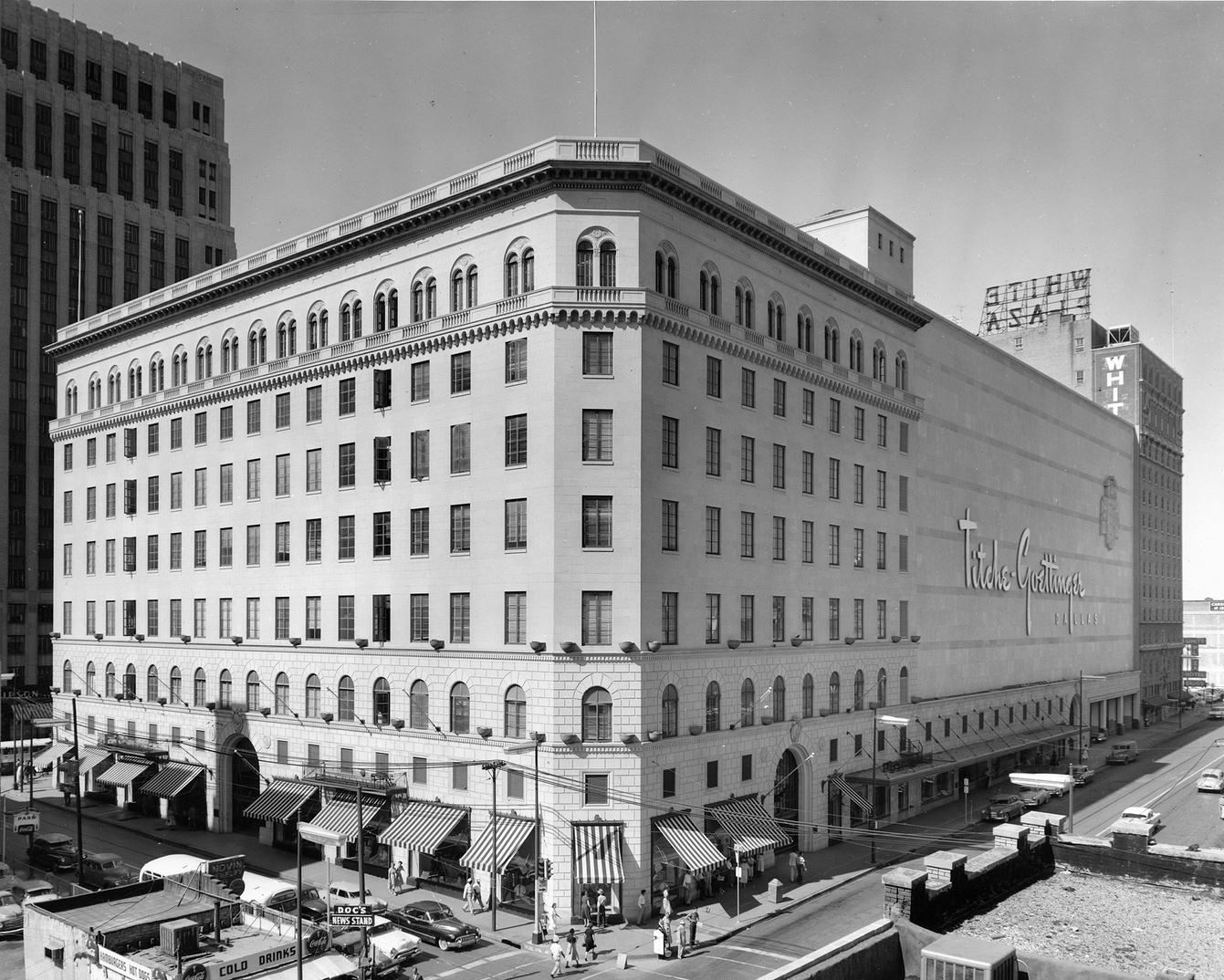
titches_utaDallas’ largest department store, ca. 1955…

by Paula Bosse

This photo of the Titche-Goettinger department store (Main and St. Paul) was taken soon after the store’s expansion which increased its size from 250,000 square feet to a whopping 504,000 square feet. When the greatly enlarged store introduced itself to the Dallas public at an open house in March 1955, one of the most notable things about it (for me, anyway) was the fact that 93-year-old Max Goettinger — founder of the department store in 1902, along with Edward Titche — attended the festivities.

The beautiful original building — designed by George Dahl — was built in the late 1920s and was a commanding presence at only half its later size. (Click pictures to see larger images.)

titches_night

The postcard view above has handily erased most of the other buildings in that block which one would have seen in a photograph, including the Pollock Trunk Co. and the old Hilton Hotel (later the White Plaza, currently the Indigo). A 1942 view of the block, looking west from Harwood, looked like this:

main-street-canyon_ebay

When construction of the new part of the store was completed in 1955, this new 12-acre “Texas Size” Titche’s was the largest store in Dallas, a head-spinning prospect for a city that loves to shop.

**

If you want a much more comprehensive overview of the Titche’s building — and want to see wonderful photos of the building, inside and out — I highly recommend Noah Jeppson’s Unvisited Dallas post, “Titche-Goettinger Building,” here. My favorite part? Its innovative system of pneumatic tubes!

***

Sources & Notes

Top photo by Squire Haskins, from the Squire Haskins Photography, Inc. Collection, UTA Libraries, Special Collections — more info here) (click on the thumbnail image on the page to see this photo BIG).

Read more on the expansion at the Dallas Morning News archives:

  • “Titche’s Reports Plans to Double Present Size” by Edd Rout (DMN, Sept. 7, 1952)
  • “Visitors Jam Opening of Texas-Sized Titche’s” by James A. Cockrell (DMN, March 15, 1955)

This wonderful building is still standing, modified to accommodate its current owners, the University of North Texas. Here’s how the building looks these days, via Google Street View, here.

More on the Titche-Goettinger Building on Wikipedia, here.

*

Copyright © 2016 Paula Bosse. All Rights Reserved.
Children and Cadets: Junior Red Cross Parade — 1918

wwi_jr-red-cross-parade_022218_camp-dick-soldiers_waruntold-siteCadets from Camp Dick march down Elm… (click for larger image)

by Paula Bosse

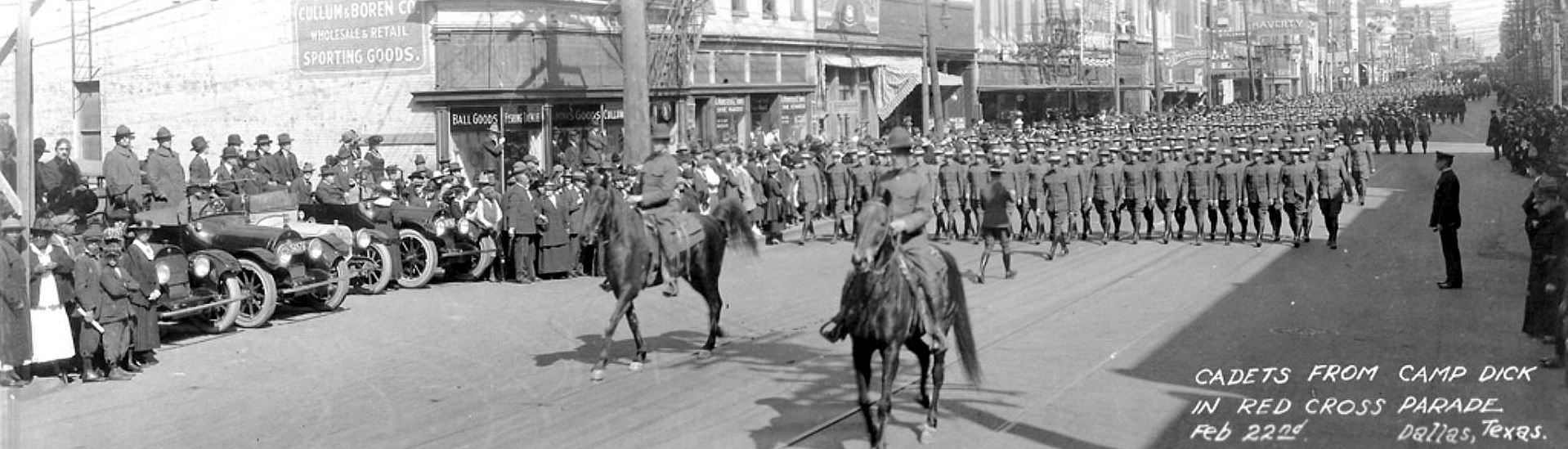
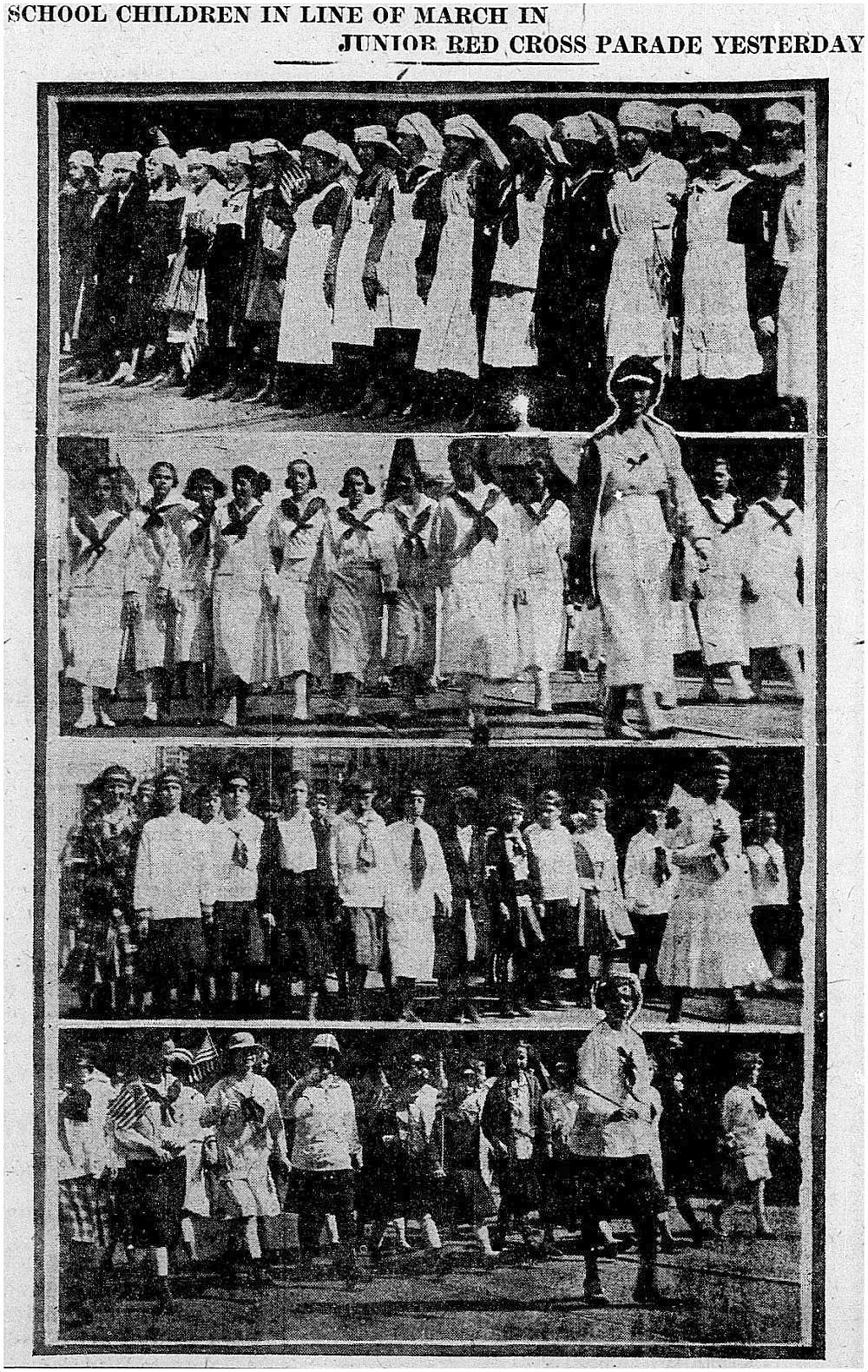
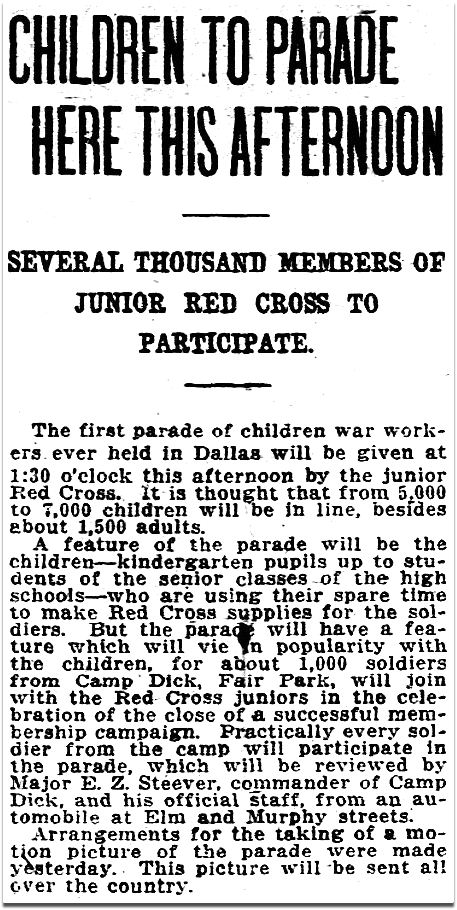
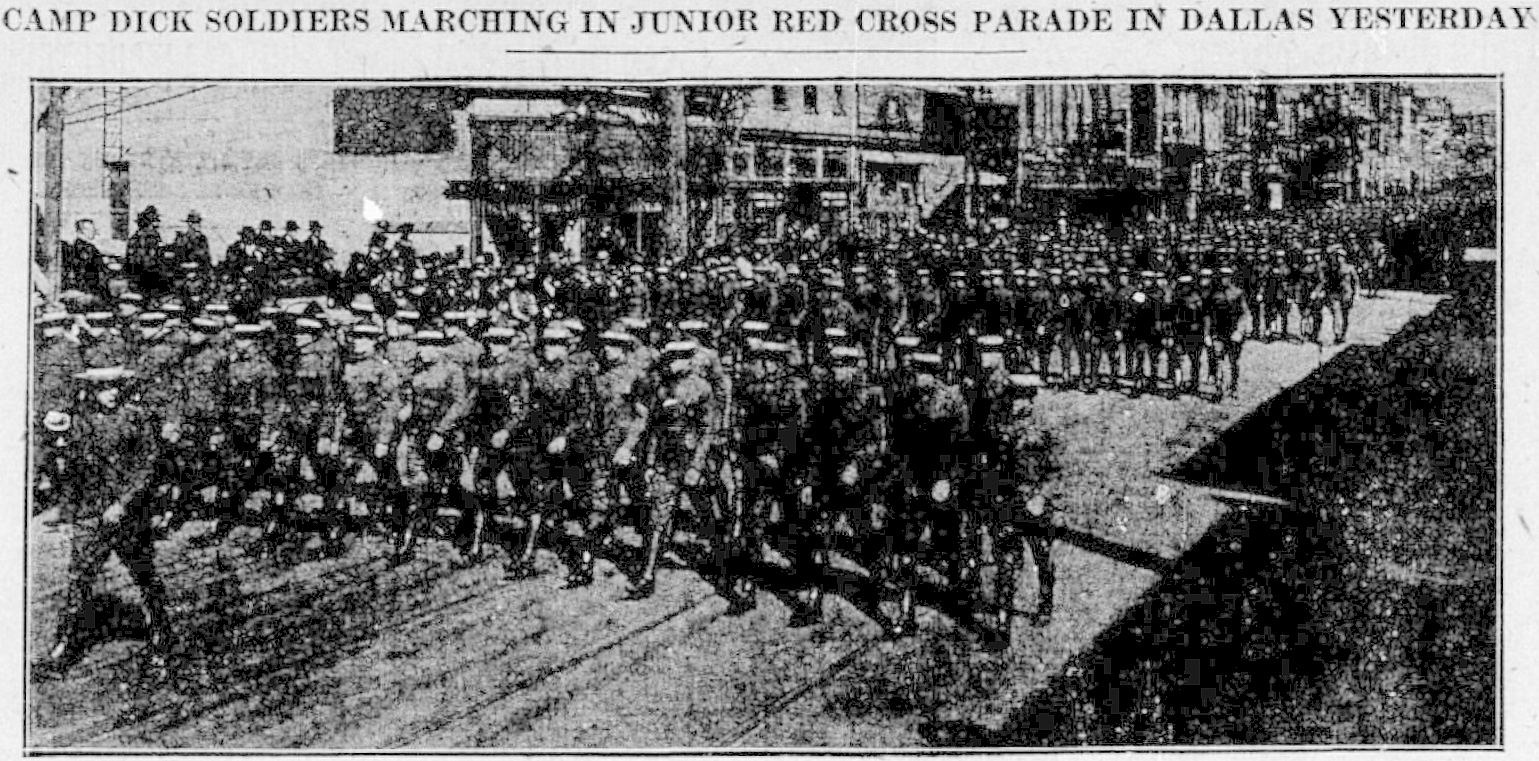
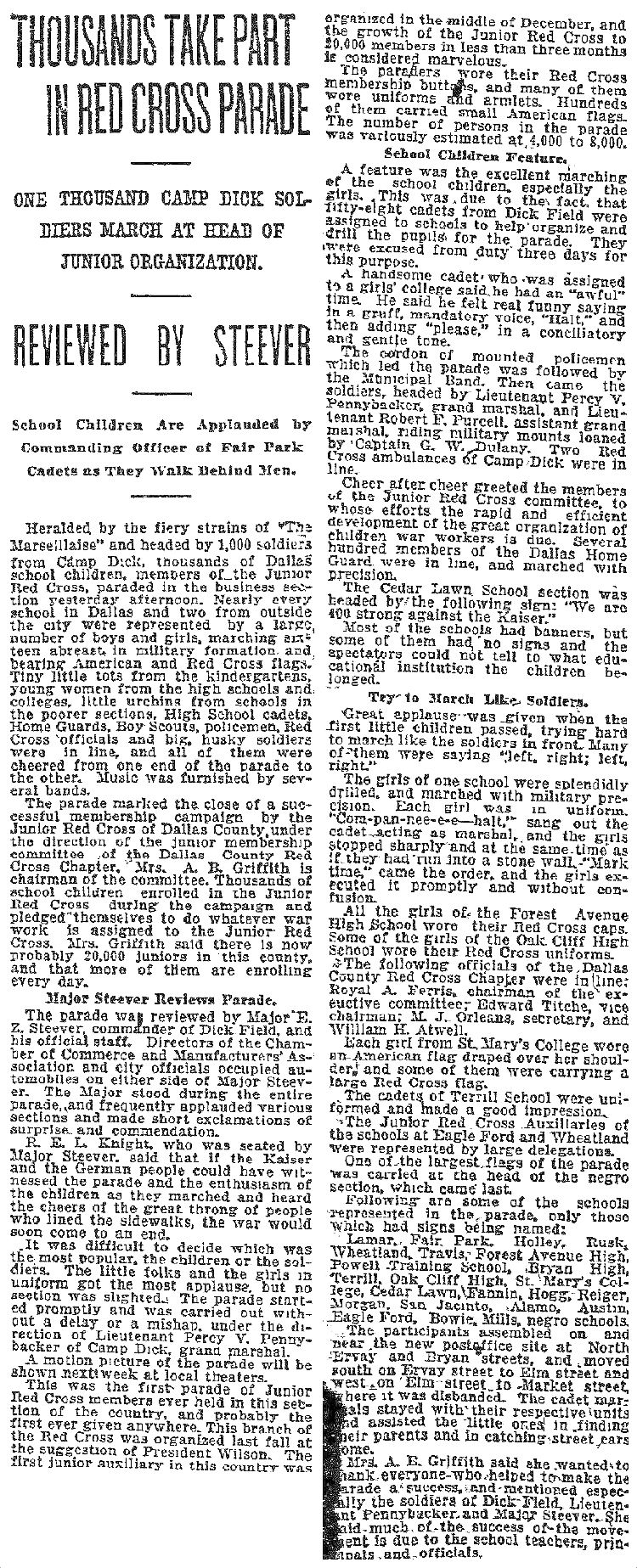
Today is Veteran’s Day, a national day of observance which originally began as Armistice Day in 1919 to mark the end of hostilities in World War I. I was thinking of posting something non-WWI-related, but I stumbled across this wonderful photo showing a WWI-era parade down Elm Street and couldn’t pass up the opportunity to share it. The parade was comprised almost entirely of children who had contributed to the war effort through the Junior Red Cross. The parade was described as “the first parade of children war workers ever held in Dallas.” The number of children (said to represent every school in Dallas) was estimated at up to 8,000 marchers, from kindergarteners to high school seniors.

The parade — which took place on February 22, 1918 — also featured 1,000 or so men based at Camp John Dick, the Air Service training camp at Fair Park. Seeing this parade must have been quite a novelty for Dallasites, as cadets had begun to arrive at Camp Dick only 16 days previously (airmen had been stationed at Love Field a little longer, but only by a couple of months).

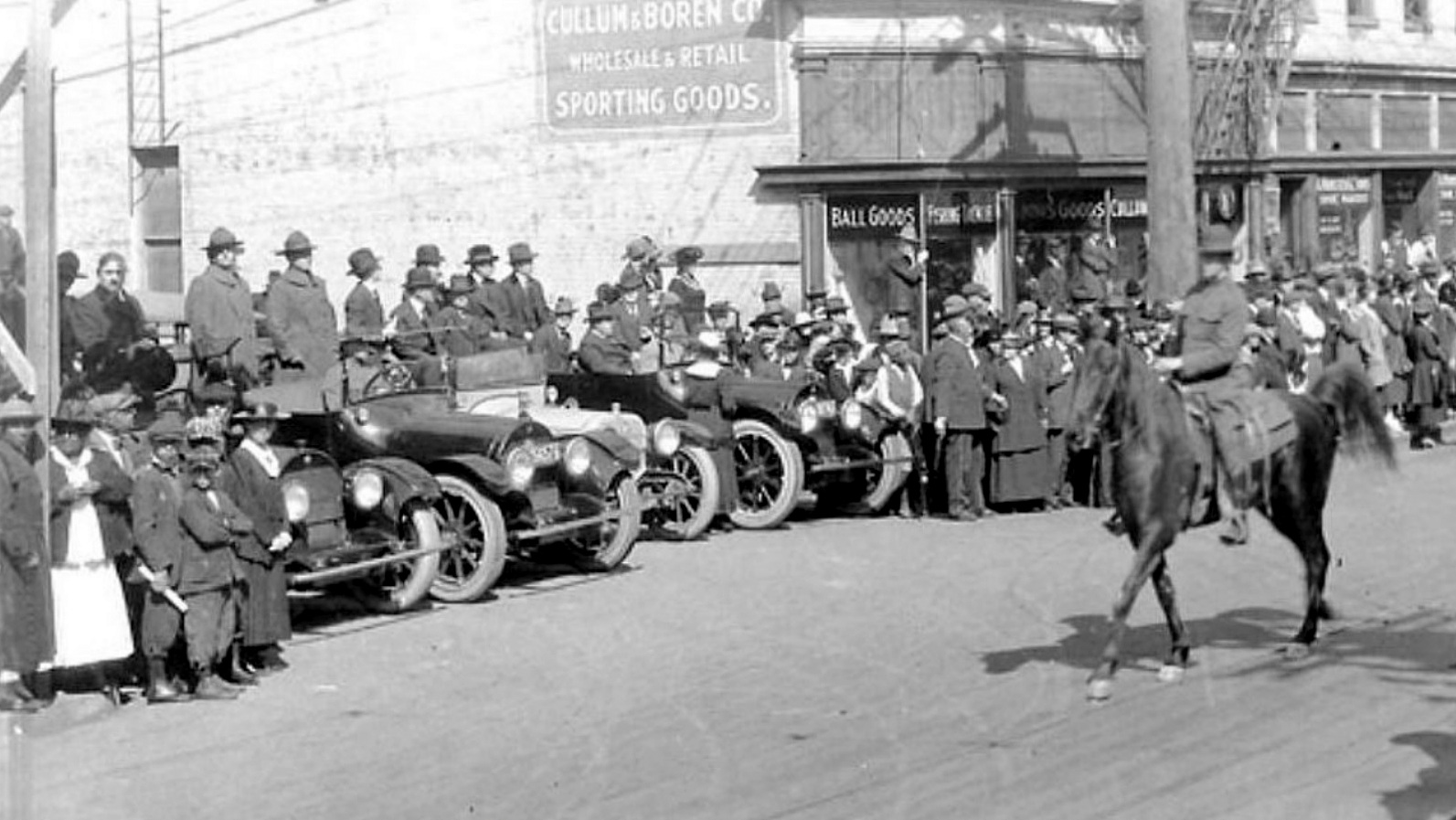
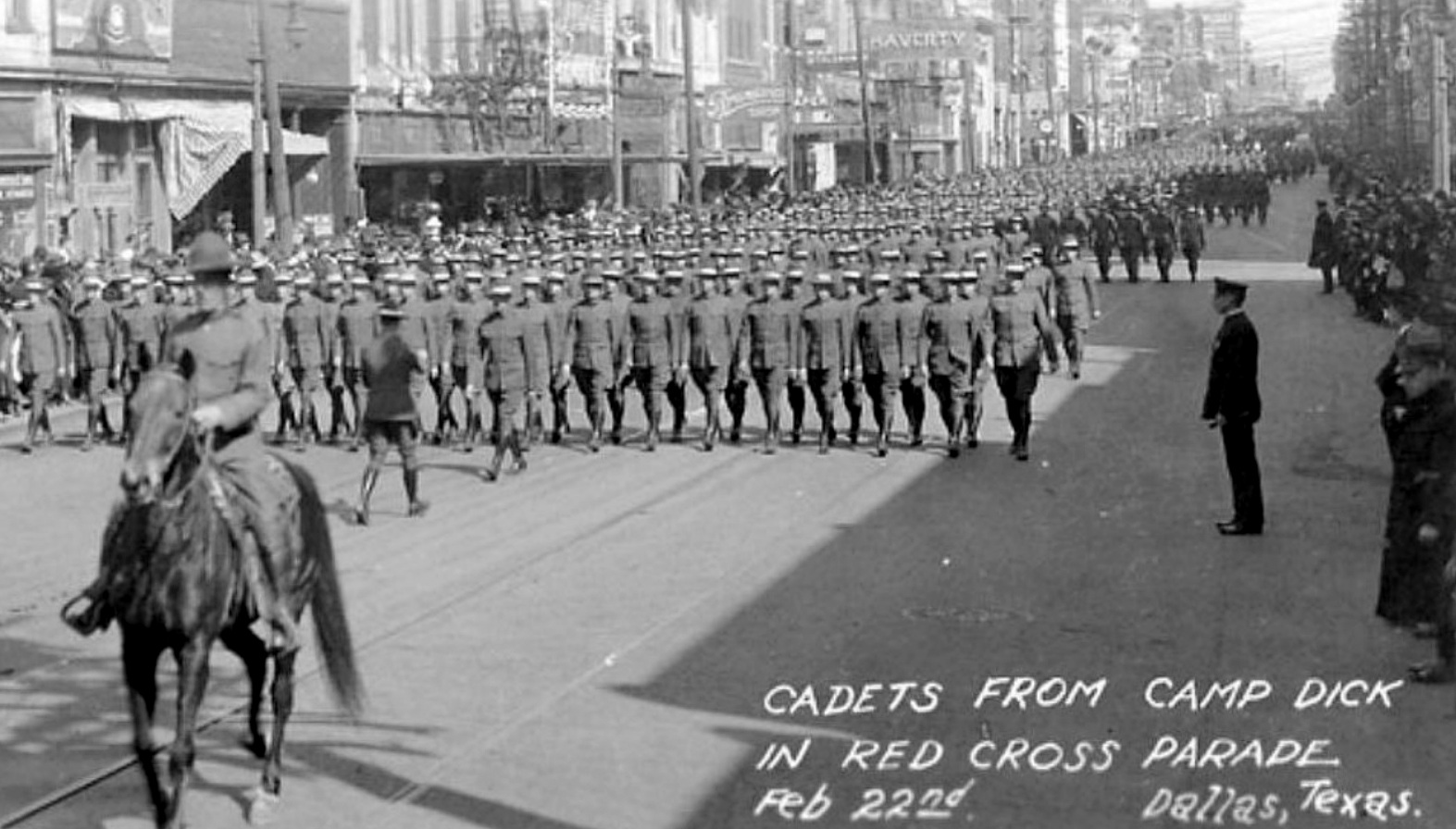
Below, I’ve taken the photo from the top and broken it into two halves and then magnified them. The parade was heading west on Elm Street and can be seen here passing Cullum & Boren (1509-1511 Elm), a downtown sporting goods mainstay just a few doors east of Akard. (See a similar view of Elm Street from later that year — in September — from a Dallas Times Herald photo, here.)

wwi_jr-red-cross-parade_022218_det1

wwi_jr-red-cross-parade_022218_det2

And the children.

wwi_jr-red-cross-parade_dmn_022318Dallas Morning News, Feb. 23, 1918

wwi_jr-red-cross-parade_dmn_022218
DMN, Feb. 22, 1918

wwi_jr-red-cross-parade_dmn_022218_camp-dick-soldiers

wwi_jr-red-cross-parade_dmn_022318
DMN, Feb. 23, 1918, photo and article

***

Sources & Notes

Top photo titled “Cadets From Camp Dick in Red Cross Parade, Feb. 22nd, Dallas, Texas” found on the site War Untold, The Collection of Andrew Pouncey, here (click “continue reading” at  bottom of post).

More on the Camp John Dick Aviation Concentration Camp from The Atlantic in the article “What America Looked Like: Bayonet Practice During WWI” (with a great photo), here.

Other Flashback Dallas WWI-related posts here:

Armistice Day Wikipedia page is here.

All pictures and clippings are larger when clicked.

*

Copyright © 2016 Paula Bosse. All Rights Reserved.
 

“Dallas Midway, Night Illumination” — 1936

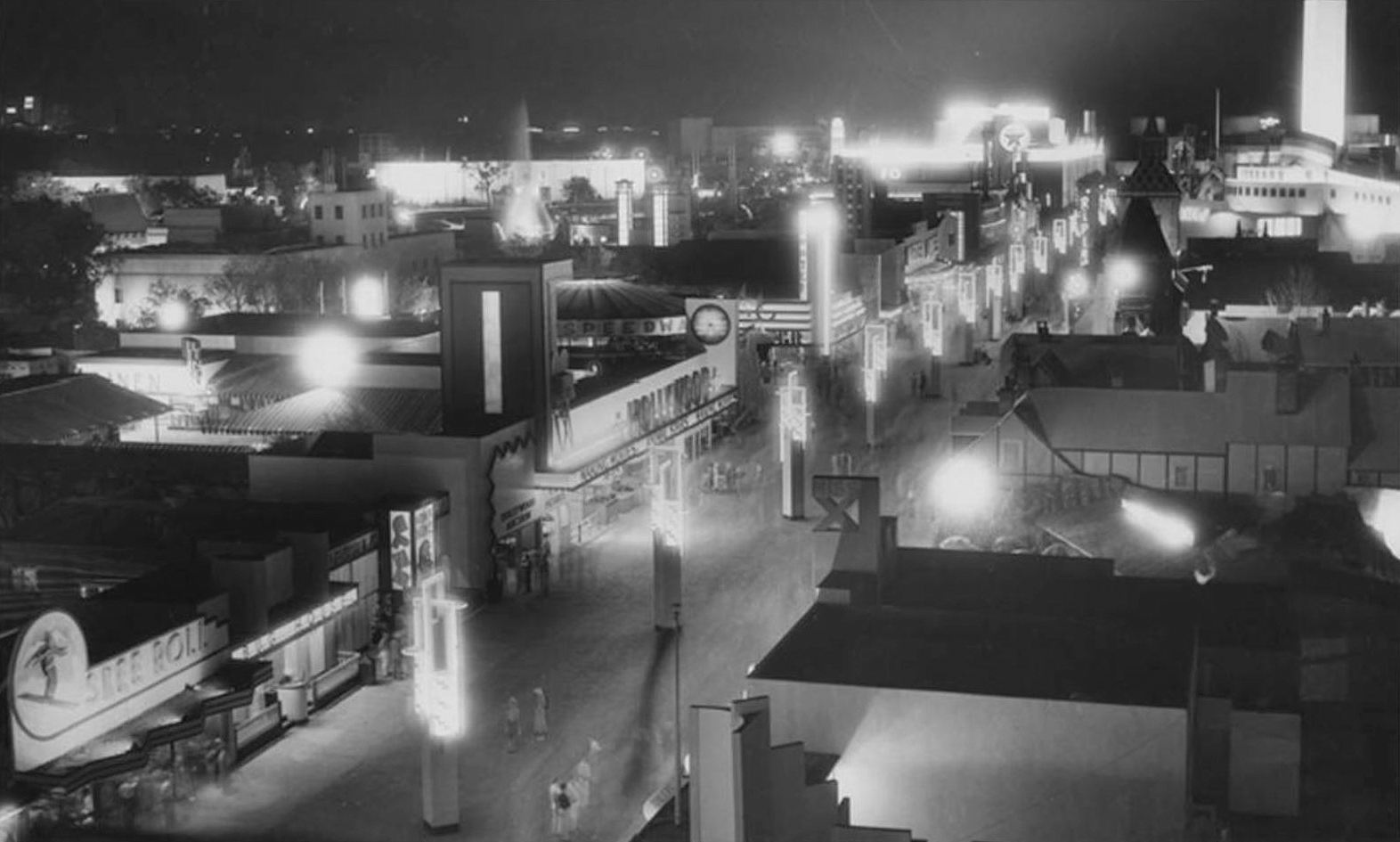
tx-centennial_midway_night_cook-coll_smuAll calm in Fair Park along the Centennial Midway (click for larger image)

by Paula Bosse

Above, a nighttime shot of an almost empty Midway during the Texas Centennial. All this scene needs in order to boost the moody atmosphere is a little fog. Go a little further and add some zither music, Joseph Cotten, and Orson Welles running past the Texaco Building and you’d have a pretty cool setting for a Texas version of The Third Man.

***

Photo titled “Dallas Midway, Night Illumination, Centennial Exposition, State Fair of Texas” (taken by an unknown photographer on Oct. 16, 1936) is from the George W. Cook Dallas/Texas Image Collection, DeGolyer Library, Central University Libraries, Southern Methodist University; more info here.

*

Copyright © 2016 Paula Bosse. All Rights Reserved.

Voting Day

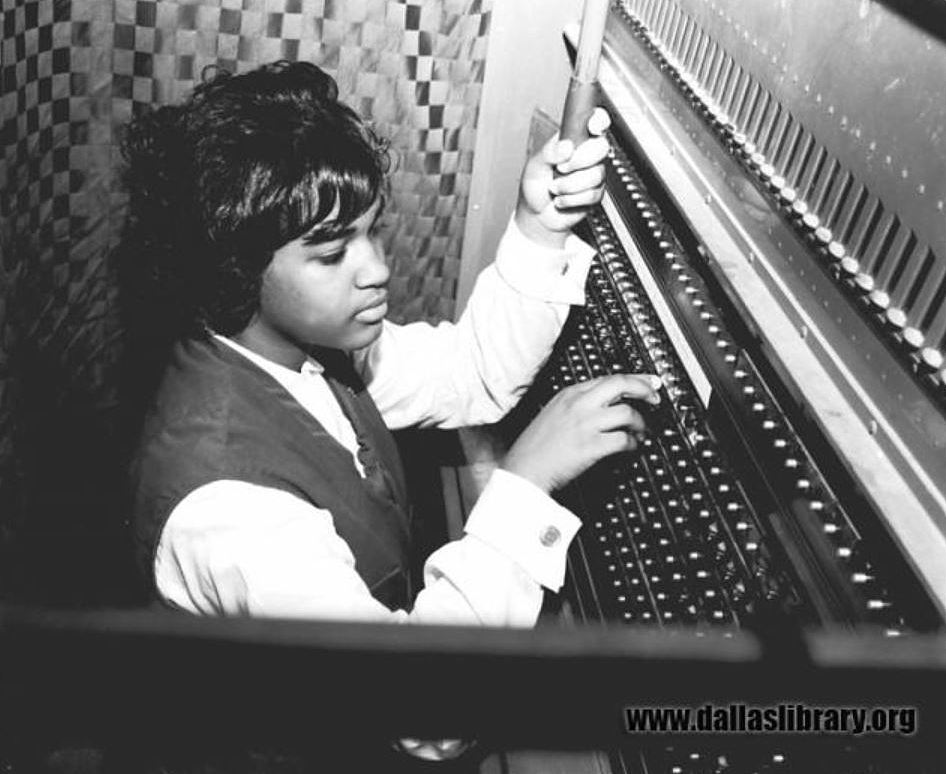
voting-instructions-for-youth_marion-butts_dpl_1965Lever-pulling behind the curtain, 1965 (click for larger image)

by Paula Bosse

It’s here, y’all. Get out and get it done.

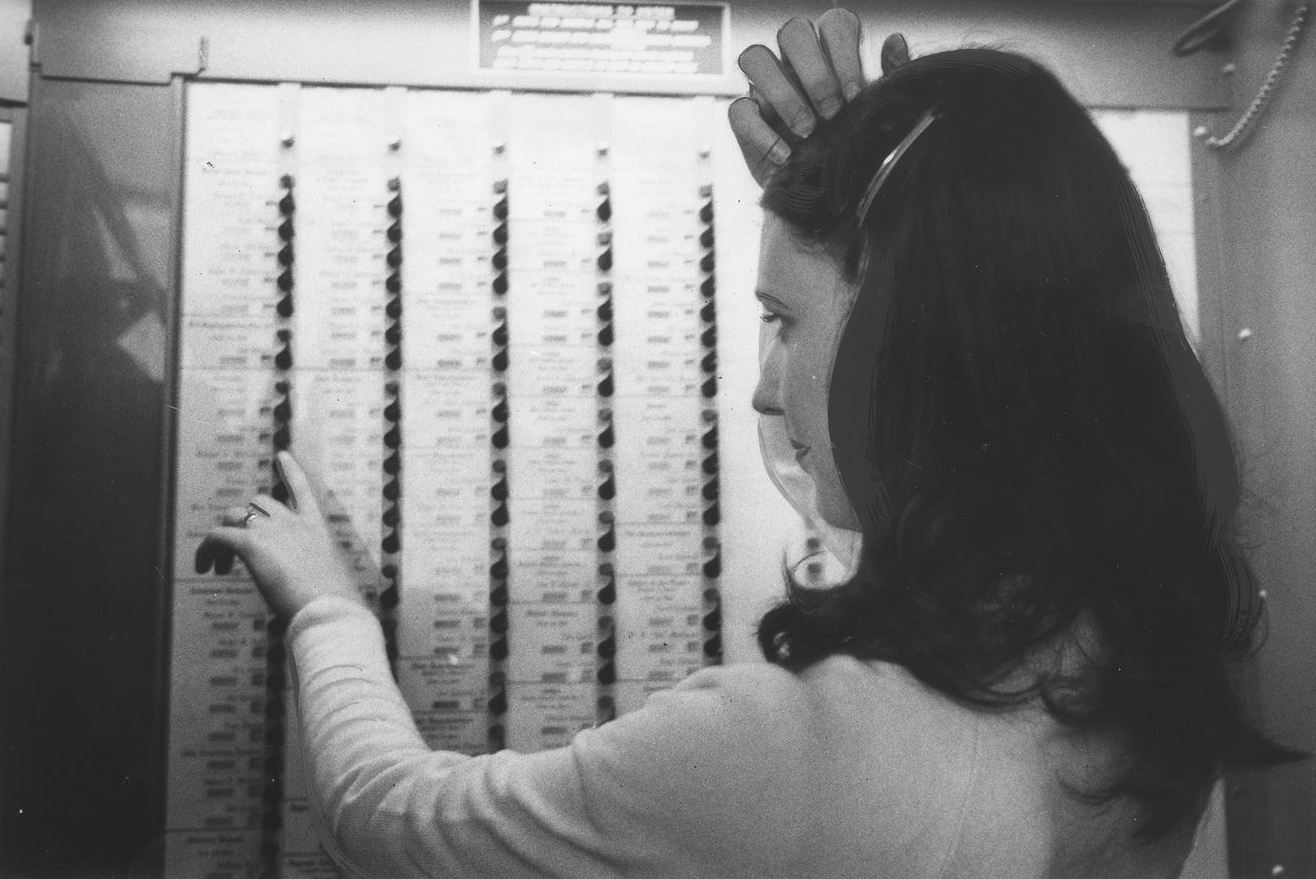
voting_uta_no-date

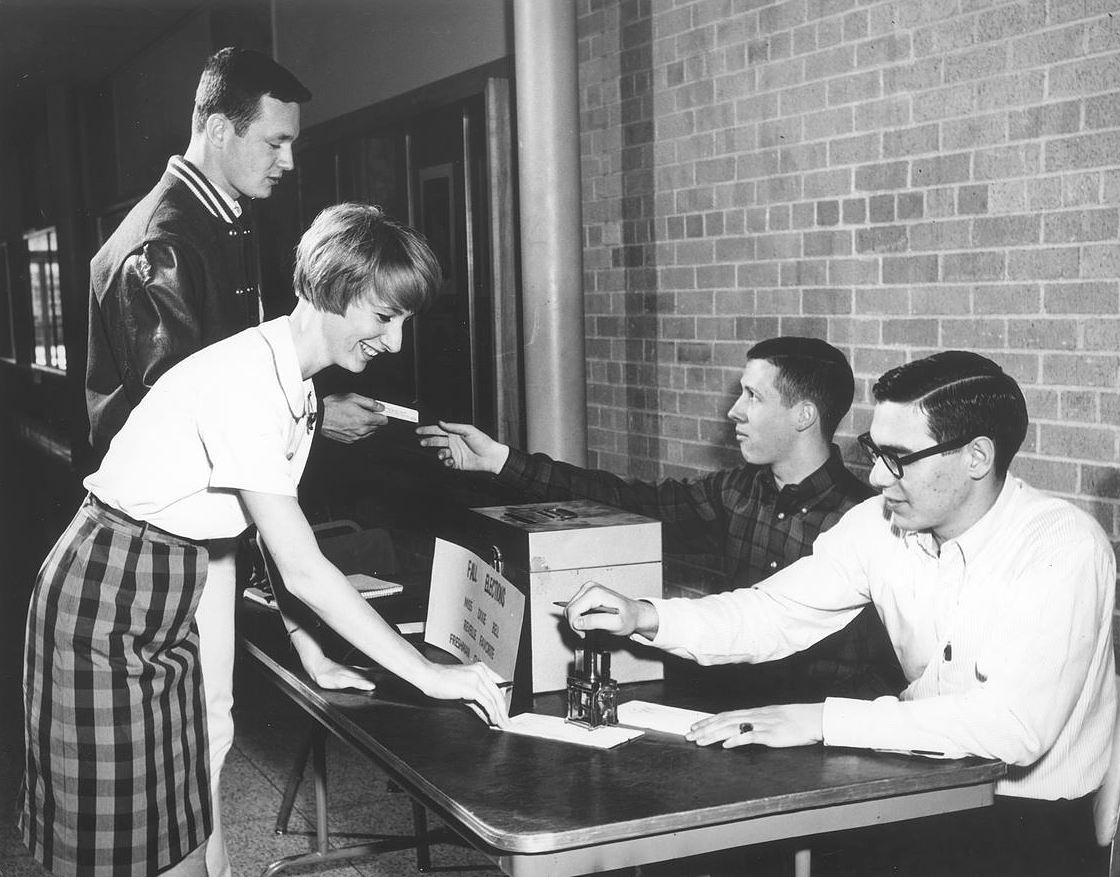
voting_uta_1972

***

Sources & Notes

Top photo from 1965 by Marion Butts, from the Dallas Public Library’s Marion Butts Collection: “Young woman demonstrates the use of a voting machine” — more here (you may have to be logged into to your Dallas Public Library account to reach this page).

Second photo is undated and has no photographer info: “Early voter, Mrs. Gene Savage, looking at long Democratic party ballot,” from UTA Libraries, Special Collections — more info here.

Third photo is from 1972: “Students voting in Fall Elections, University of Texas at Arlington (UTA), 1972,” from UTA Libraries, Special Collections — more info here.

More on Dallas elections can be found in the Flashback Dallas post “How Dallas Used to Get Election Returns,” here.

Click photos to see larger images.

*

Copyright © 2016 Paula Bosse. All Rights Reserved.
 

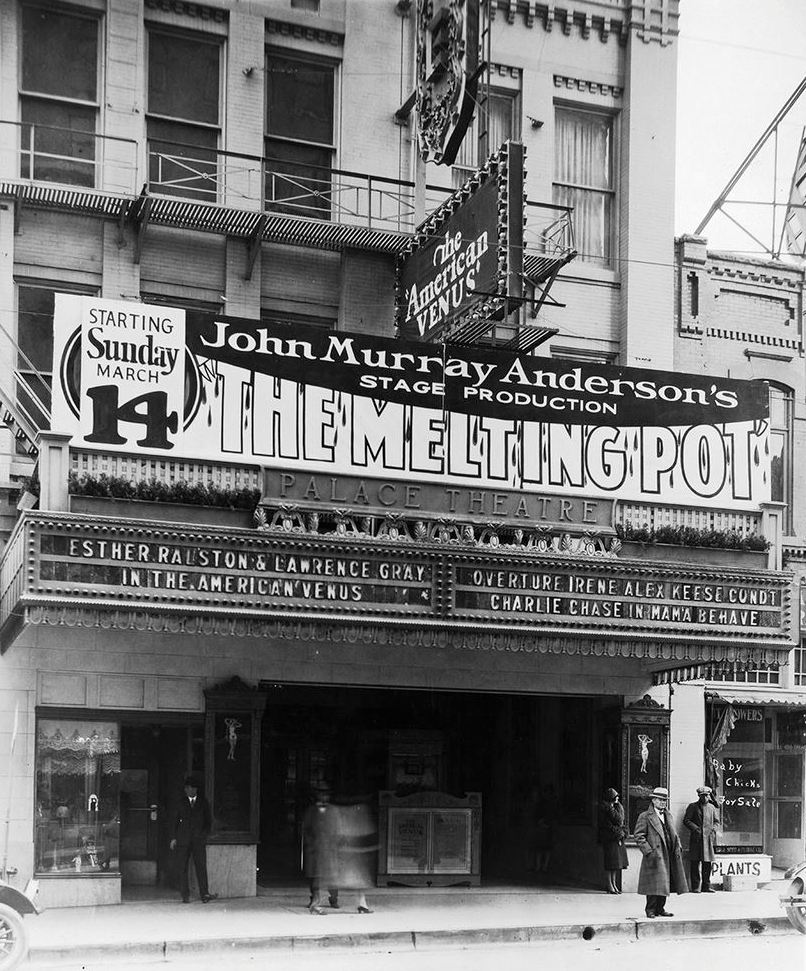
Next-Door Neighbors: The Palace Theater and Lone Star Seed & Floral — 1926

palace-theatre_melting-pot_march-1926_utaElm Street neighbors, March, 1926…. (click for larger image)

by Paula Bosse

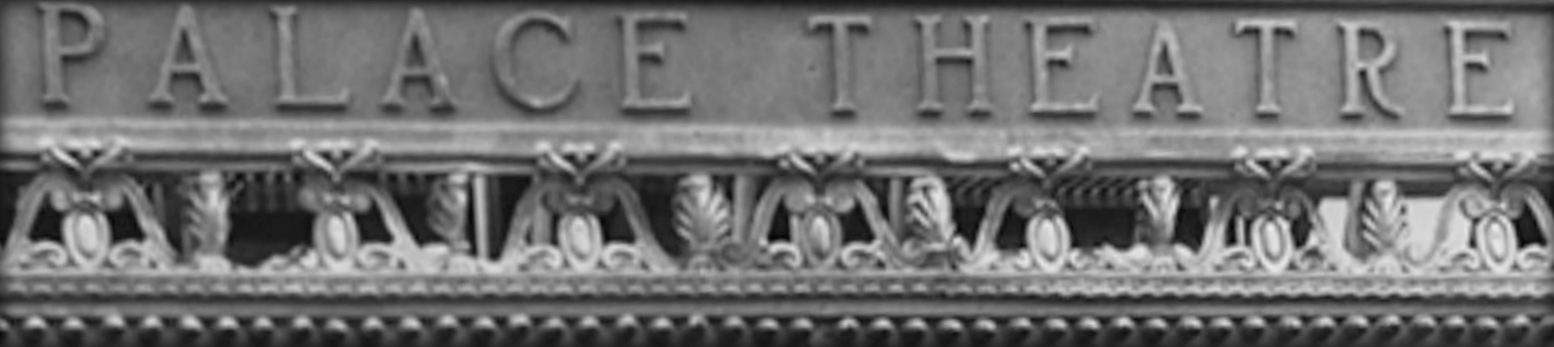
Above, the Palace Theater, one of Dallas’ great moviehouses. It opened in June, 1921, near the northwest corner of Elm and Ervay; this photograph is from March of 1926, three months before the theater’s fifth birthday. It was still a whippersnapper. 

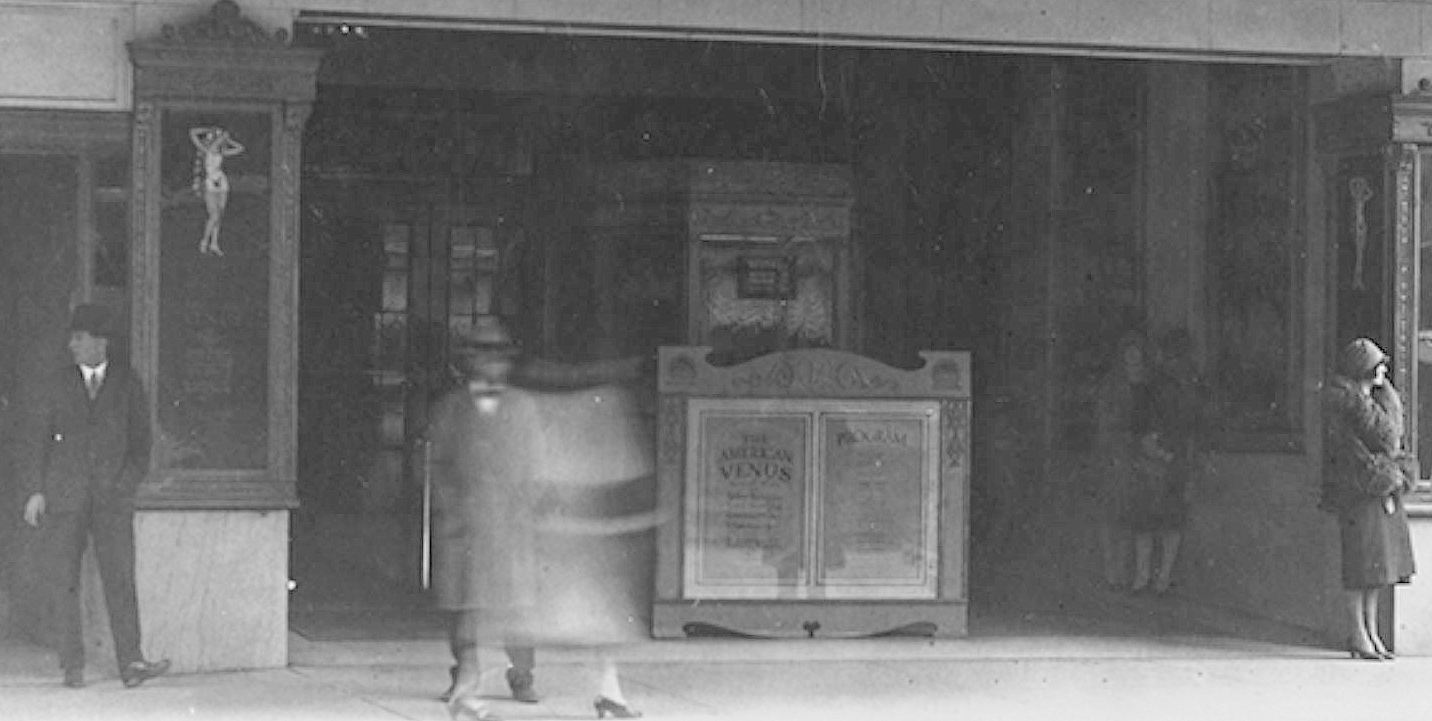
Below, a detail from the photo: by zooming in and tweaking the contrast, the box office is revealed, as are two women chatting in the shadows (all pictures and clippings are larger when clicked).

palace-theatre_melting-pot_march-1926_uta_det2

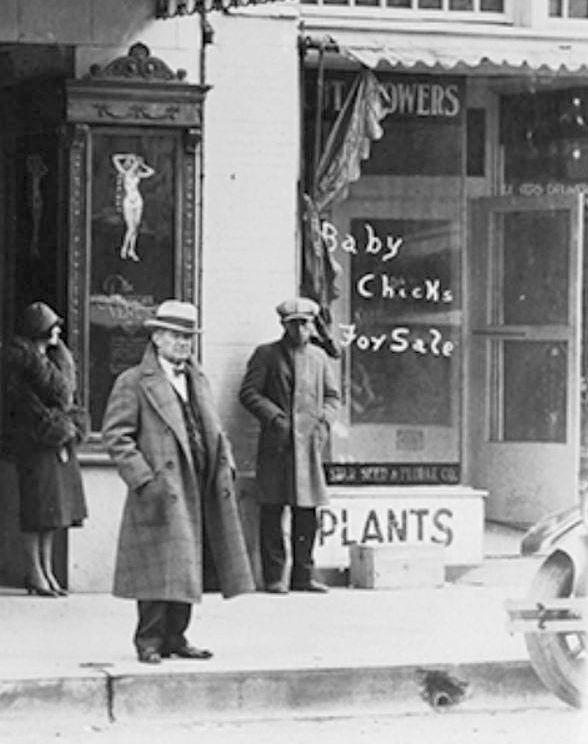
As interesting as old movie theaters are, I was more intrigued by the three people to the right of the theater (who all look like characters from a period melodrama) and by the business next door. I’ll never know who those men were or who that woman was waiting for, but finding out what business was selling baby chicks (…next door to the Palace?) was pretty easy.

palace_lone-star-seed_1926_uta_det

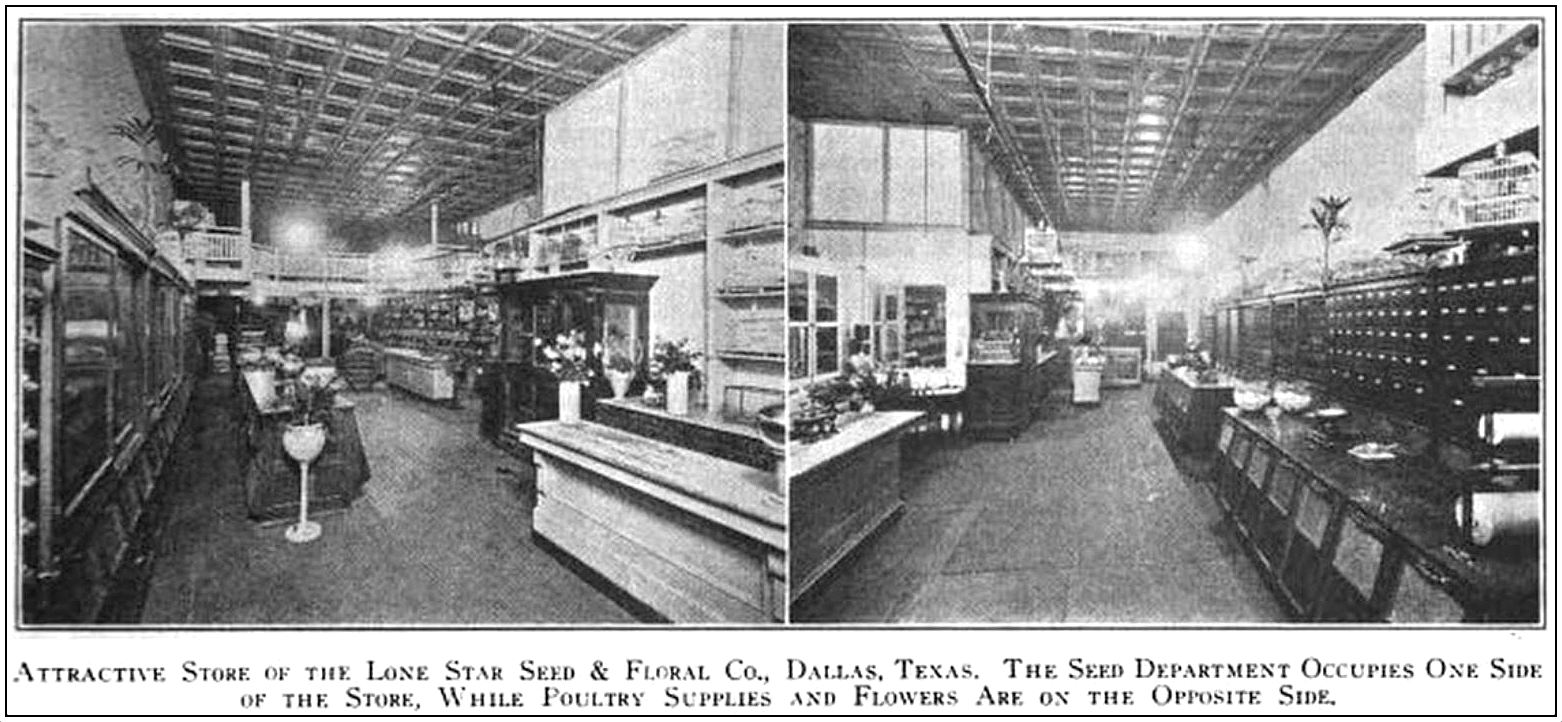
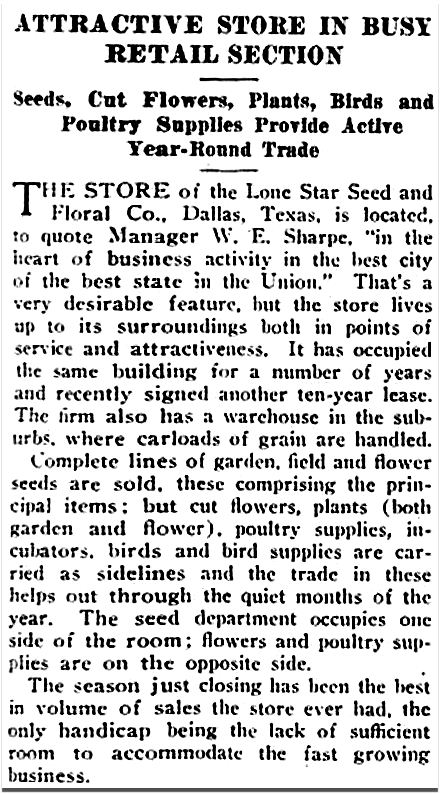
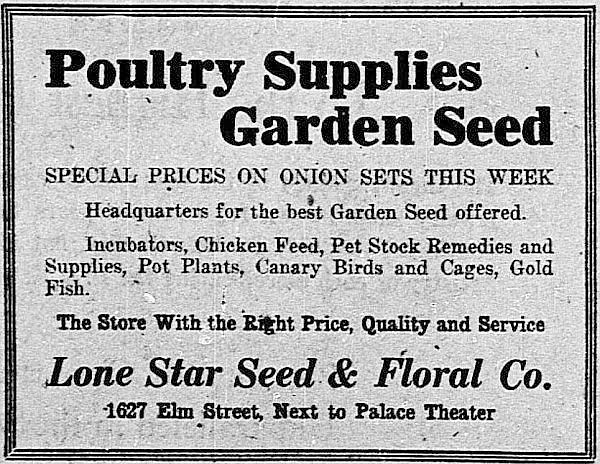
The store was Lone Star Seed & Floral (1627 Elm). They sold seeds and flowers, potted plants, canaries, goldfish, and pet and livestock supplies. They could also help you with all your poultry needs: feed, incubators, medicine, and live chickens. …Right next door to one of the plushest and most luxurious entertainment destinations in Dallas.

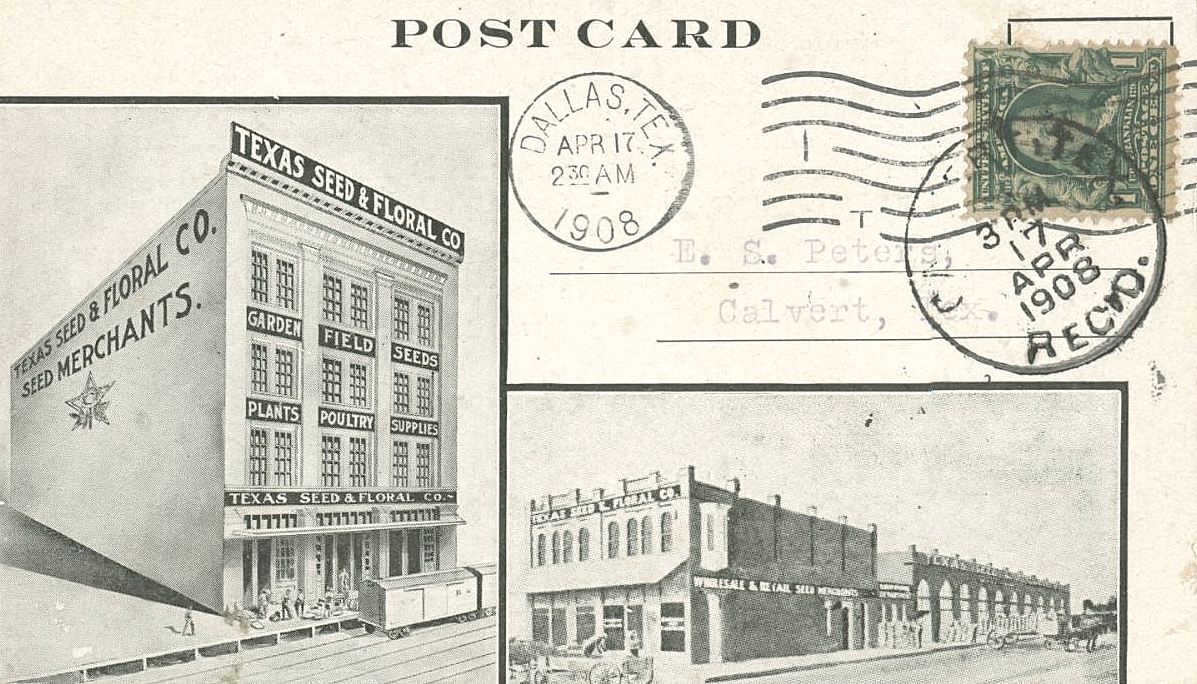
Lone Star Seed & Floral appears to have once been Texas Seed & Floral and had been around since at least 1892. They set up shop at 1627 Elm in 1902 and remained there quite a while until they moved in January, 1927, just a few months after the top photo was taken. Here is a postcard of its earlier incarnation, with photos of the Pacific Avenue location at the left, and the Elm Street location at the lower right (the view is looking north on Ervay; the Palace would later be built immediately west of this  building, to the left of the lower postcard image, just out of frame).

texas-seed-and-floral_1908_portal

The store looks very clean and extremely well organized. My inexplicable love of things stored in card-catalog-file-like cabinets and fold-out bins tells me I’d probably be stopping in fairly regularly after having seen the latest Buster Keaton film next door.

lone-star-seed_the-seed-world_082020

lone-star-seed_the-seed-world_082020_article
Photo and article from, yes, The Seed World, Aug. 20, 1920

lone-star-seed_dmn_022622
Feb., 1922

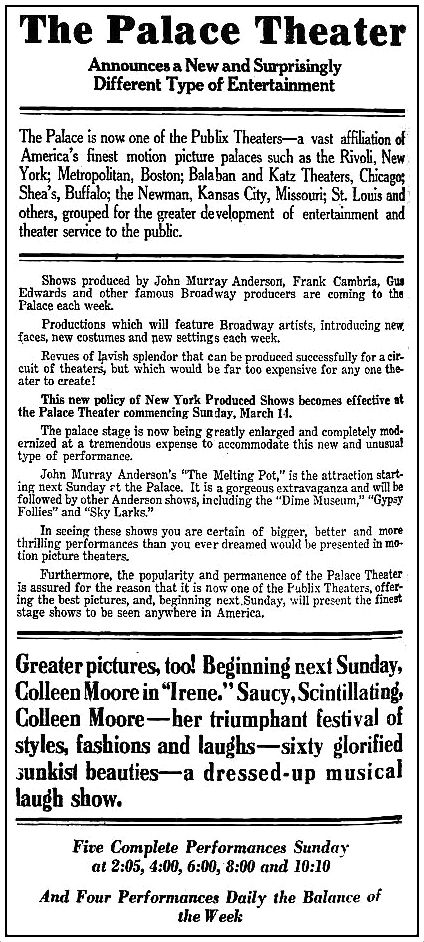
But back to the Palace. The banner is publicizing the imminent arrival of John Murray Anderson’s “The Melting Pot,” a stage production which opened at the Palace on March 14, 1926. The Palace Theater, owned by the Publix chain, was about to embark on “a new and surprisingly different type of entertainment,” which consisted of musical revue roadshows staged in New York under the direction of producer John Murray Anderson. Each production — its performers, costumes, and sets — would be sent into the hinterlands, playing a circuit which included Dallas, the only stop in Texas. There was a new show every week. And if you missed it, you really had no excuse: there were four shows daily (five on Sunday). (Anderson was later asked by Billy Rose to help with producing Fort Worth’s Centennial celebration.) (John Rosenfield’s tepidly positive Dallas Morning News review, “‘Melting Pot’ Is Presented at Palace, Introducing New Style Film Theater Feature,” ran on March 15, 1926.)

palace_dmn_031326_melting-pot-ad
Palace ad, March 13, 1926

*

palace-theatre_1926_uta_det1

***

Sources & Notes

Top photo from the Billy Burke Photograph Collection, UTA Libraries, Special Collections; more info here.

See the same view today via Google Street View here.

The Texas Seed & Floral Co. postcard is from the collection of Dallas Heritage Village, via the Portal to Texas History, here.

The beloved Palace — once an honest-to-God “movie palace” was unceremoniously demolished in 1971. It had stood at Elm and Ervay for 50 years. The north side of that block is now occupied by Thanksgiving Tower. The theater and the seed store were just west of Ervay — Lone Star Seed & Floral was just to the left of where the 7-Eleven is, on the ground floor of 211 N. Ervay, the blue building seen here (the view is northwesterly from the Wilson Building across the street).

See a great photo of Elm Street in the ’20s in the post “Dazzling Neon, Theater Row — 1929” here.

Click pictures and clipping to see larger images.

*

Copyright © 2016 Paula Bosse. All Rights Reserved.
 

The Katy Building, Commerce Street

m-k-t_katy-bldg_flickr_coltera“The Katy Serves the Southwest…” (click for larger image)

by Paula Bosse

A couple of days ago I posted a photo of an M-K-T train leaving Dallas and, today, coincidentally, I came across a photo of the Katy Building, the railroad’s headquarters, at Commerce and Market. This photo shows Commerce looking west toward the Old Red Courthouse from Austin Street. An interurban car is heading east.

See the same view today, via Google Street View, here.

A photo I really love — which shows a view from about the same time looking east on Commerce — can be seen in a previous post, “Commerce & Record Streets — 1946,” here.

***

Photo from Flickr, here.

*

Copyright © 2016 Paula Bosse. All Rights Reserved.

The M-K-T Pulling Out of Dallas

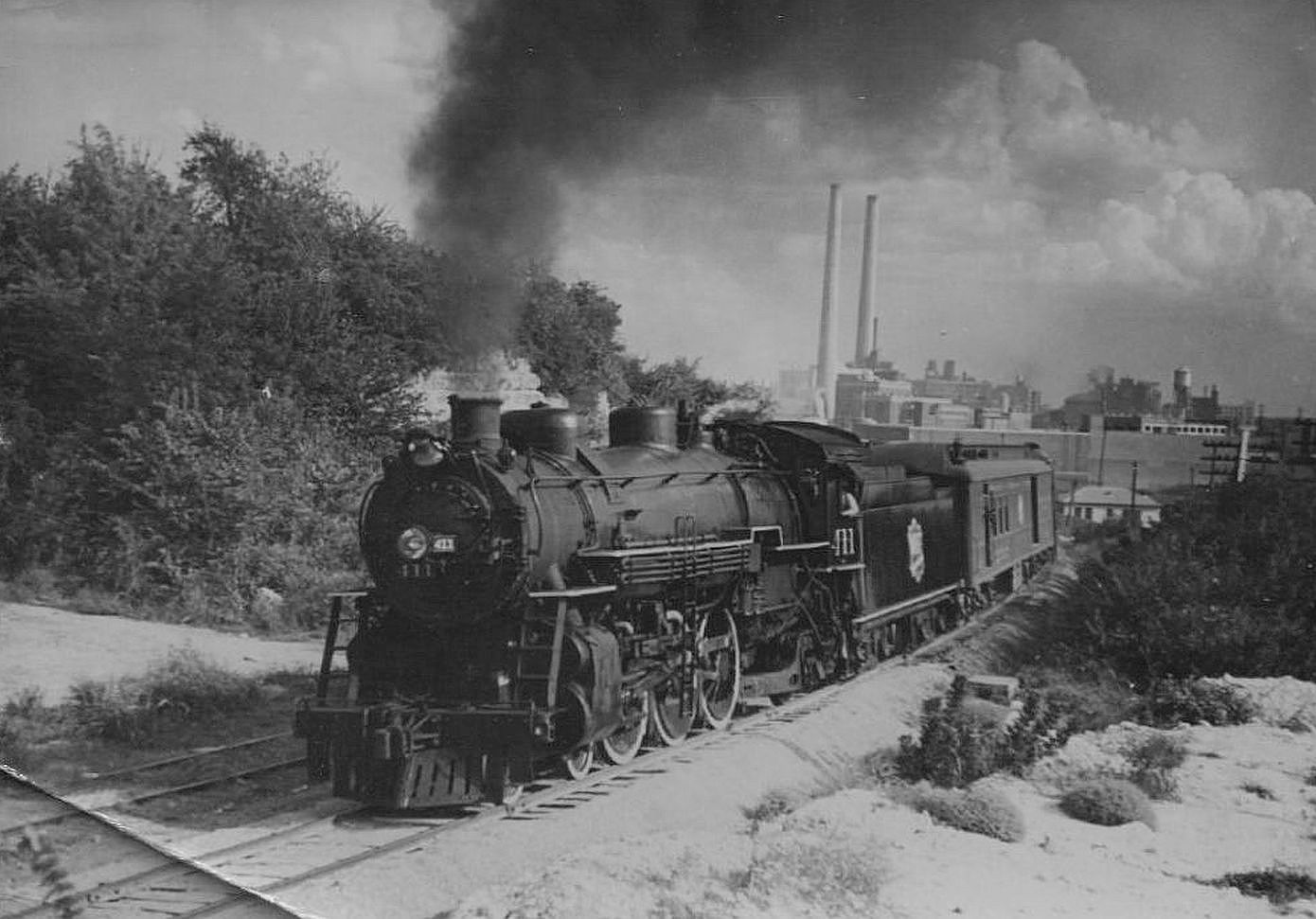
mkt-leaving-dallas_peter-stewart_austin_ebayTrain whistles don’t sound so lonesome in the daytime…

by Paula Bosse

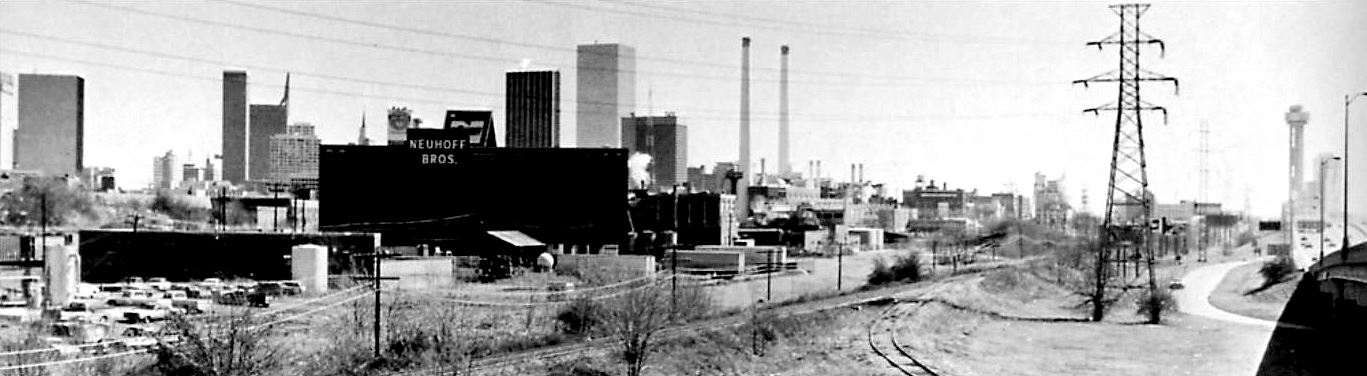
Above, an undated photo I came across on eBay a couple of months ago, showing a Missouri-Kansas-Texas train heading north from the Katy yard at the northwest corner of downtown. In the background are the twin DP&L smokestacks which were iconic landmarks until they were demolished in order to build the American Airlines Center and Victory Park. Below, a later photo taken from about the same location.

neuhoff_dpl_reunion-tower

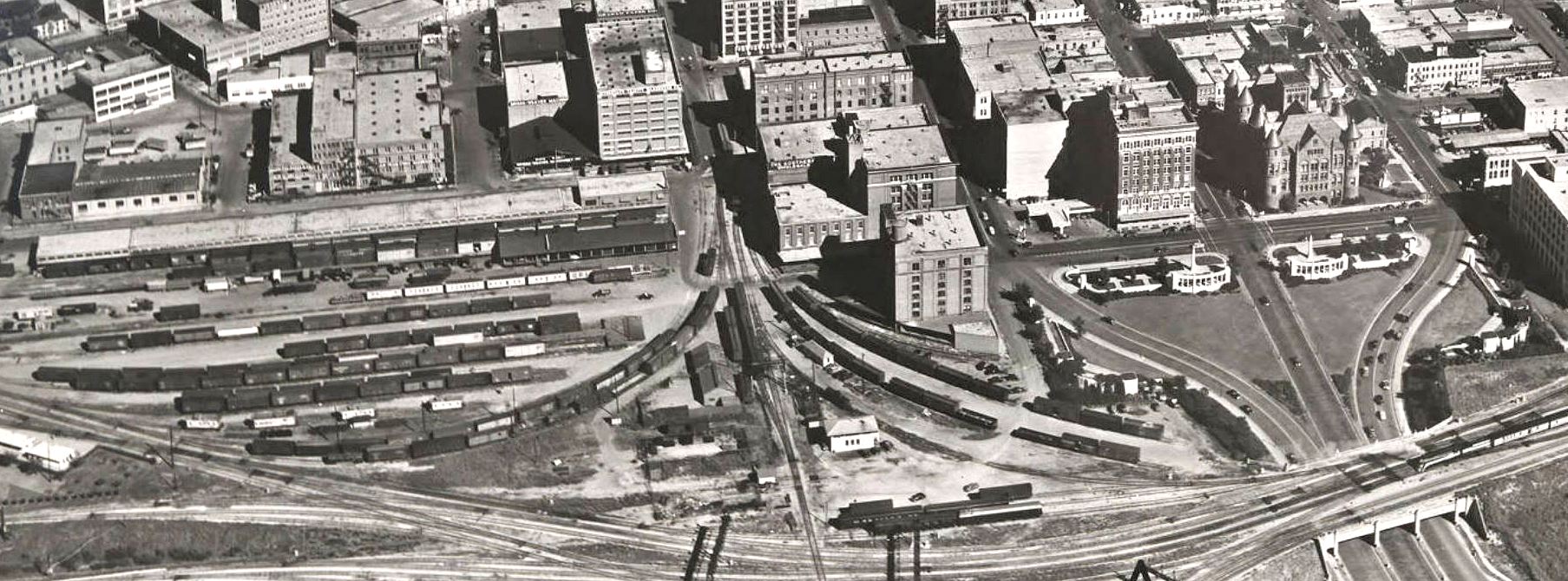
The area between Dealey Plaza and the Neuhoff meat packing plant was crammed with tracks; below is a detail from a mid-1940s aerial photo (click to see a larger image).

aerial_long_foscue-lib_smu_1940s_det

The M-K-T split about where the photo at the top was taken, as can be seen in the Sanborn map below (from 1927) between Turtle Creek and McKinney Avenue. One track headed north, the other cut through Oak Lawn and Highland Park (now the Katy Trail), crossing Mockingbird at the Dr Pepper plant near Central Expressway.

sanborn_vol-2_key_1927

mkt-logo

***

Sources & Notes

Top photo from eBay, with the photographer of this “vintage snapshot” credited as “Peter Stewart, Austin, Texas.” (There is a crease to the lower left corner.) It is undated, but when posted to the Texas Railroad History group on Facebook, commenters suggested mid-to-late-1930s to early ’50s. It’s a bit grainy, but the number on the engine appears to be 411.

The second photo, showing the Neuhoff plant and Reunion Tower, is from the collection of the Dallas Public Library.

The aerial shot is a detail from this photo by Lloyd M. Long, from the Edwin J. Foscue Map Library, Central University Libraries, Southern Methodist University.

The map detail is from the “key” page of the 1927 Sanborn Fire Insurance Map, here. Speaking of Sanborn maps, this one from 1921 shows M-K-T tracks galore behind the DP&L plant.

Click pictures to see larger images.

*

Copyright © 2016 Paula Bosse. All Rights Reserved.


Fair Park’s Statue of Liberty

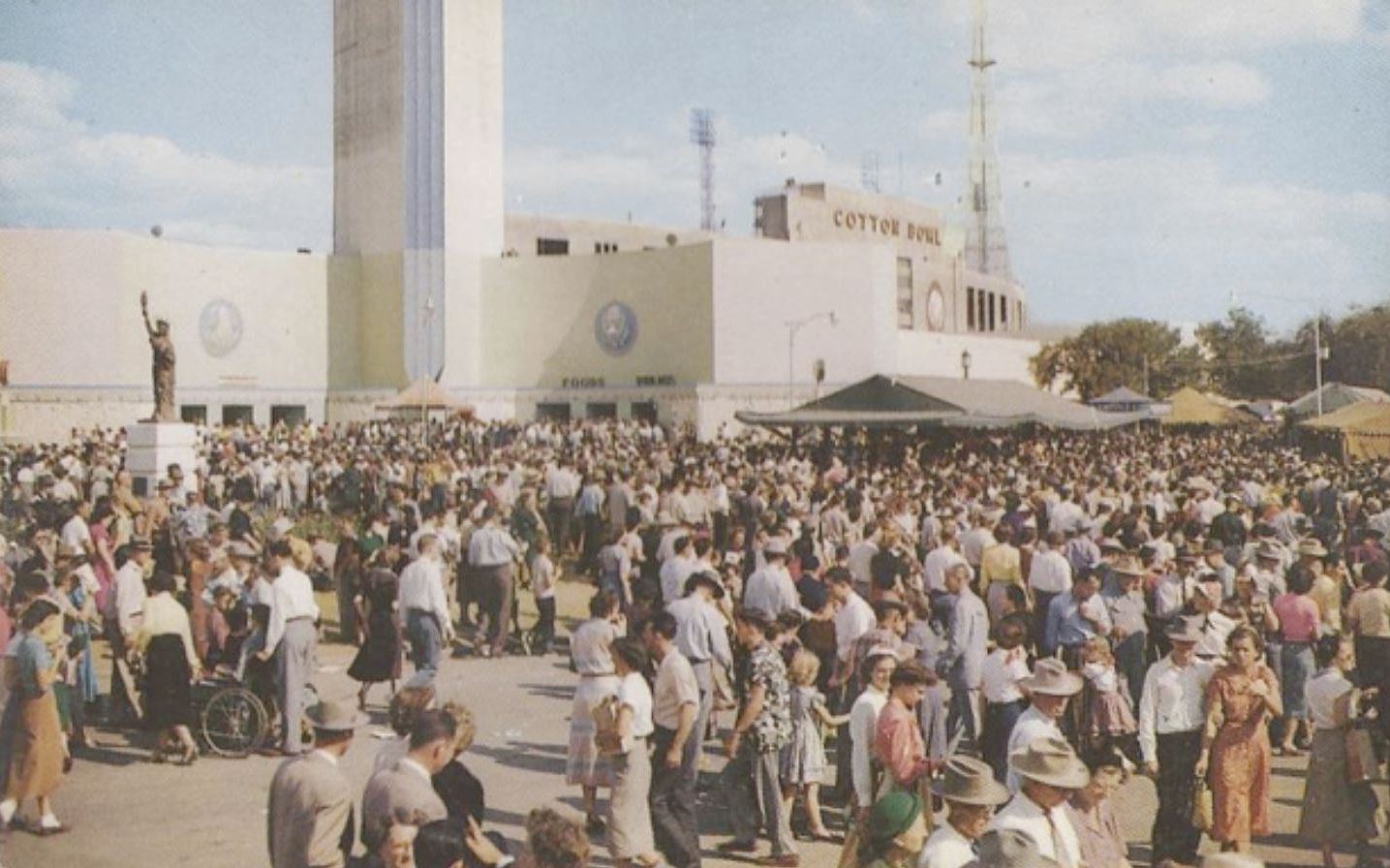
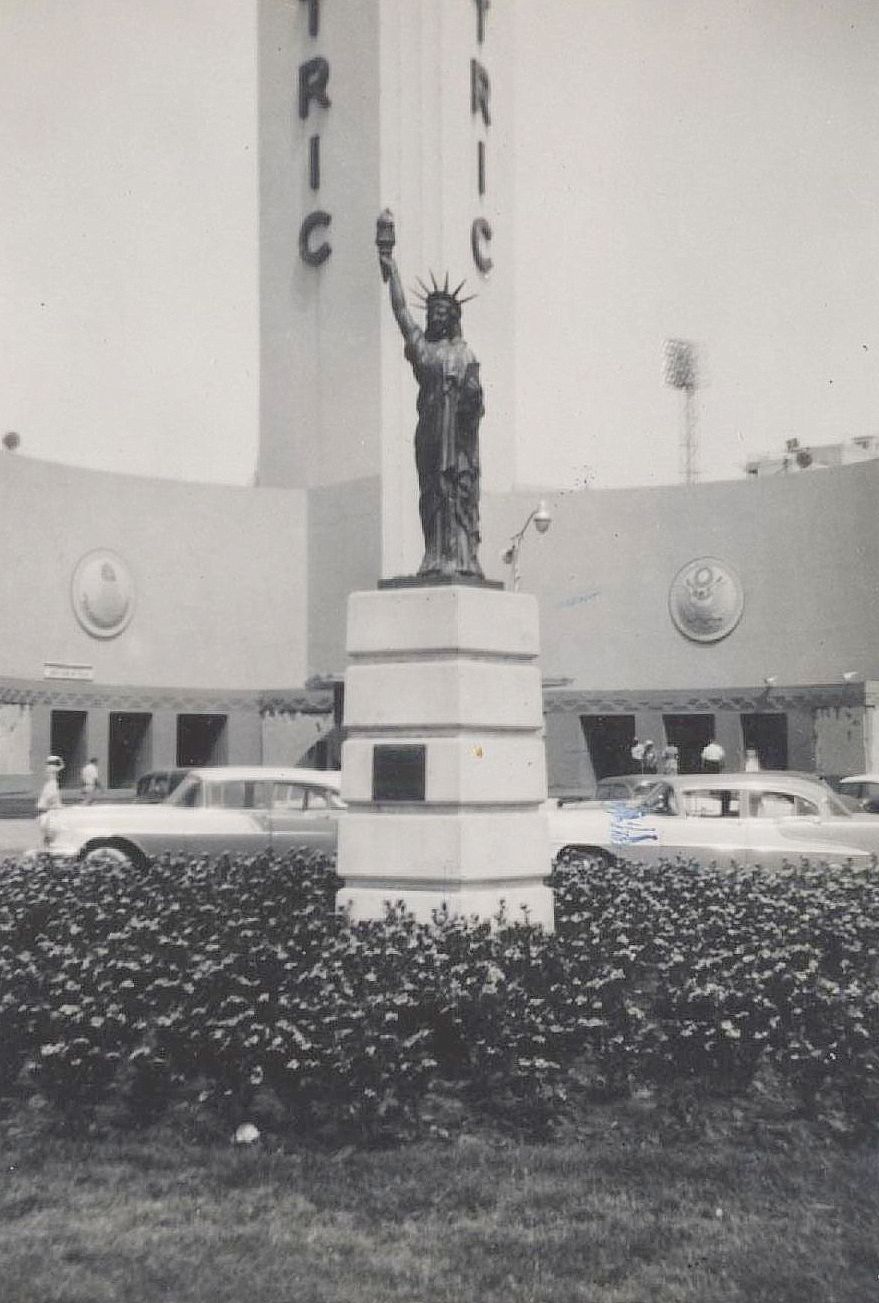
statue-of-liberty_fair-park_flickr_colteraGetting a bit lost in the crowd…

by Paula Bosse

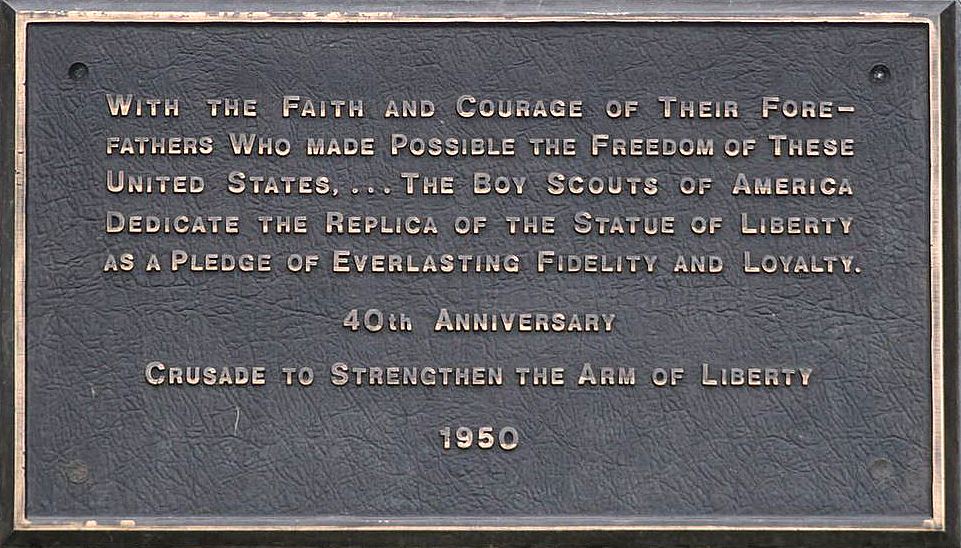
Somehow I missed the fact that October 28th was the 130th anniversary of the dedication of the Statue of Liberty in New York Harbor. And somehow I also forgot that there is a replica of the Statue of Liberty here in Dallas, at Fair Park. It was a gift from the State Fair of Texas to the Boy Scouts and the people of Texas and was dedicated by the Boy Scouts of Circle Ten Council on July 4, 1950. (These miniature replicas of the Statue of Liberty were placed all over the United States in 1950 to commemorate the 40th anniversary of the Boy Scouts of America.)
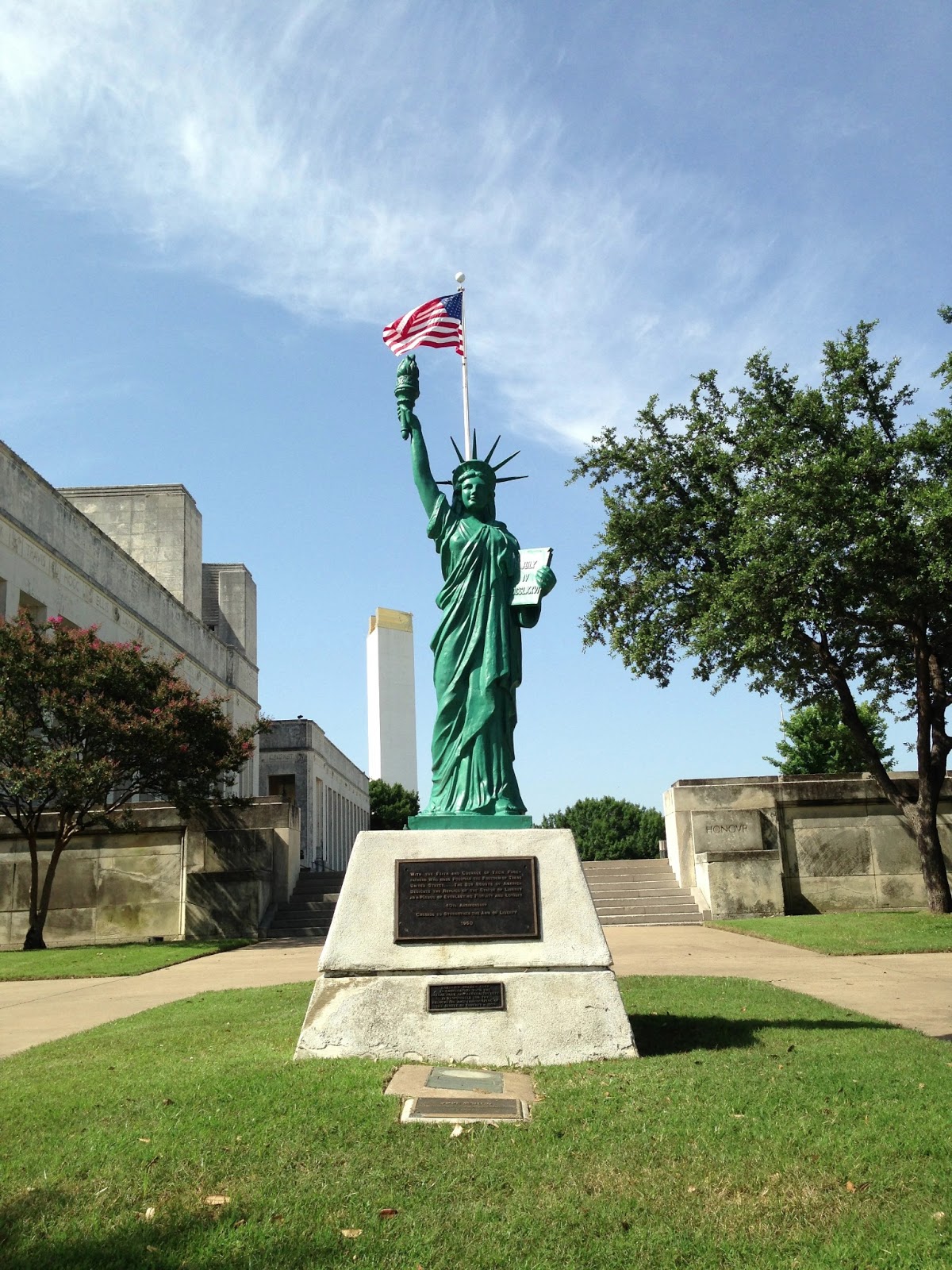
Below, the plaque at the base of the statue which stands near the Hall of State in Fair Park. (Click pictures to see larger images.)

statue-of-liberty_fair-park_plaque_flickr_aringo

Were they sentient, I’m sure Lady Liberty’s numerous miniature offspring would join me in sending belated birthday greetings to their full-size non-replica progenitor.

statue-of-liberty_fair-park_roaming-itinerant-blog
Photo: Adam Cruz/Roaming Itinerant

Here’s another view of Mini Lady Liberty welcoming the huddled masses to the State Fair of Texas in 1956:

fair-park_statue-of-liberty_ebay_stamped-1956

***

Sources & Notes

Photo of the Statue of Liberty replica amidst the crowd outside the Cotton Bowl is from Flickr user Coltera, here.

Photo of the plaque is from Flickr user Aringo, here.

Photo of the replica with the Hall of State in the background is by Adam Cruz, from his blog, The Roaming Itinerant.

1956 photo is from eBay.

A list of the Statue of Liberty replicas in Texas is here.

Perhaps we should send NYC a replica of Big Tex to keep Lady Liberty company. (The Statue of Liberty is kind of like a New York version of Big Tex, right?)

*

Copyright © 2016 Paula Bosse. All Rights Reserved.