Flashback : Dallas

A Miscellany: History, Ads, Pop Culture

Category: Photographs

Stemmons and Inwood, Before and After

stemmons-inwood_haskins_1954

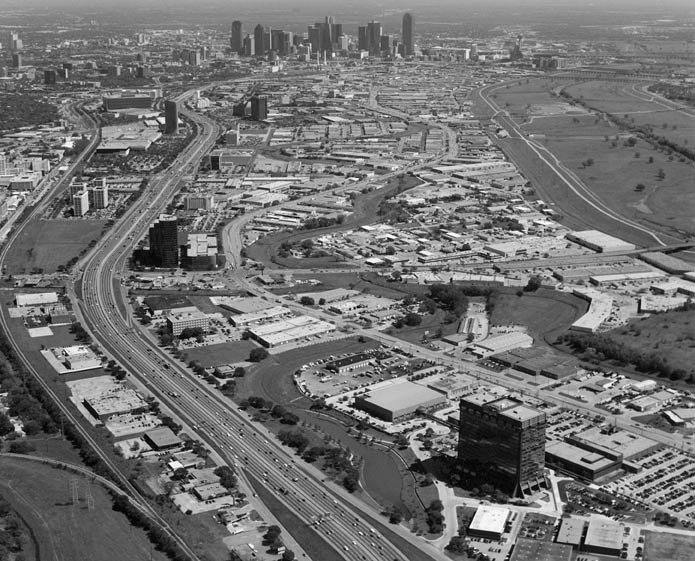
Stemmons and Inwood, looking southeasterly toward town, 1954. Below, pretty much the same shot, 1994.

stemmons-inwood_haskins-jr_1994

***

Top photo by the great Squire Haskins; bottom photo by the firm bearing his name that carried on after his death in 1984. Both from the Squire Haskins Photography Collection, Special Collections, University of Texas at Arlington Libraries.

For more on the life and career of Dallas photographer Squire Haskins, see the article “Squire Haskins: High Flying Images” by Brenda S. McClurkin, here.

Need a visual aid? See a Google Map view of the same area today, here.

Click photos for larger images.

*

Copyright © 2014 Paula Bosse. All Rights Reserved.

World War II “Victory Huts” at Parkland

parkland-victory-huts_c1945-utswPhoto: UT Southwestern Library

by Paula Bosse

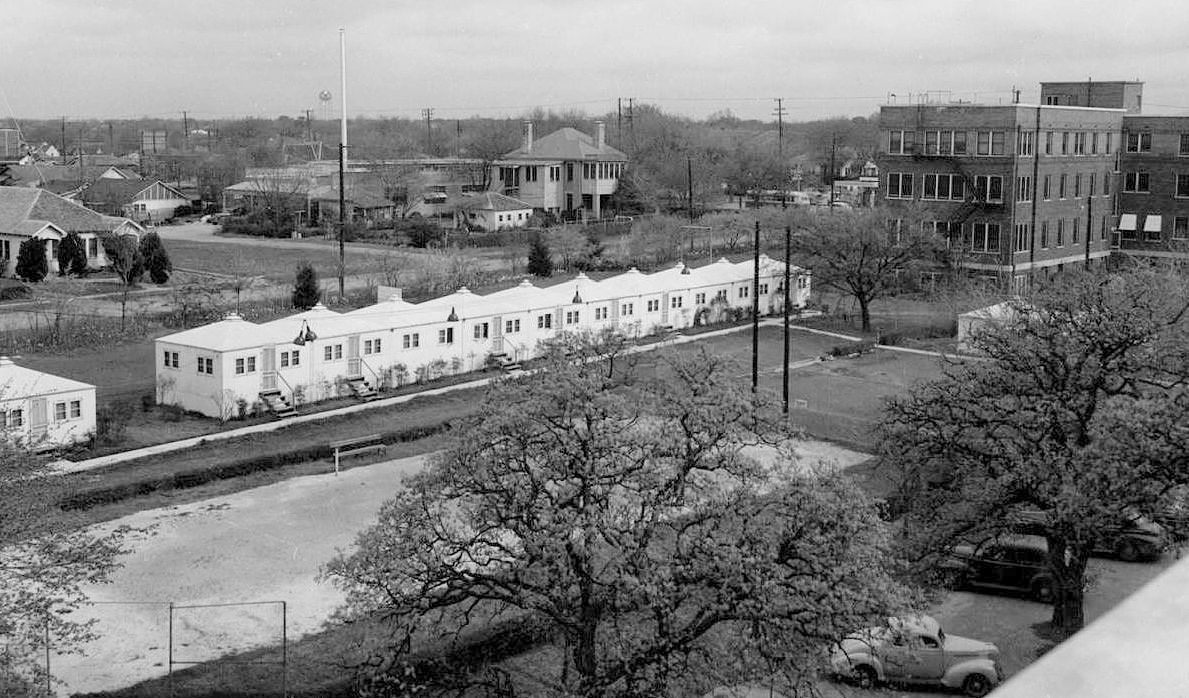
Above are a row of “Victory Huts,” behind the old Parkland Hospital at Maple & Oak Lawn, circa 1945. The description of the photo from the UTSW Library:

“Victory Huts” were prefabricated buildings developed during World War II as a method of providing quick housing for soldiers. The white “Victory Huts” behind the Parkland Nurses’ Home are believed to have been used first as housing for recovering servicemen during World War II, then after the war as housing for nursing students.

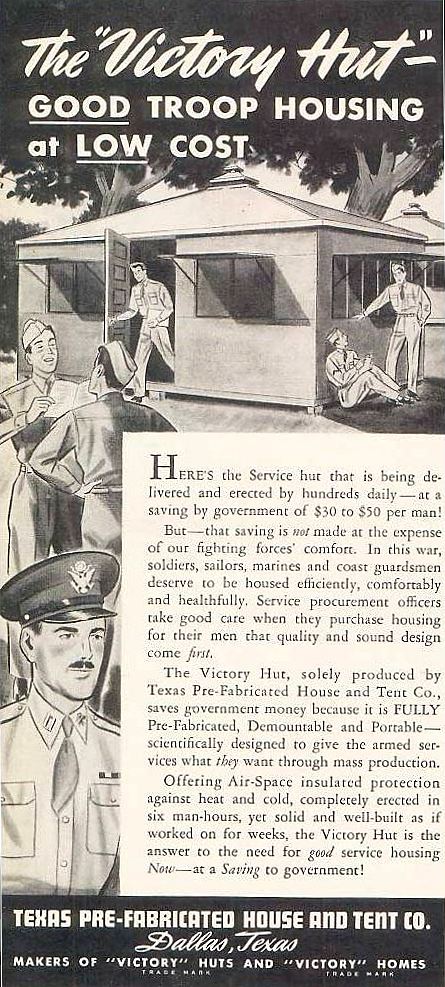
Victory Huts were the brainchild of builder H. F. Pettigrew and wealthy Dallas businessman Winfield Morten. Read about the beginnings of their wildly popular prefab buildings here.

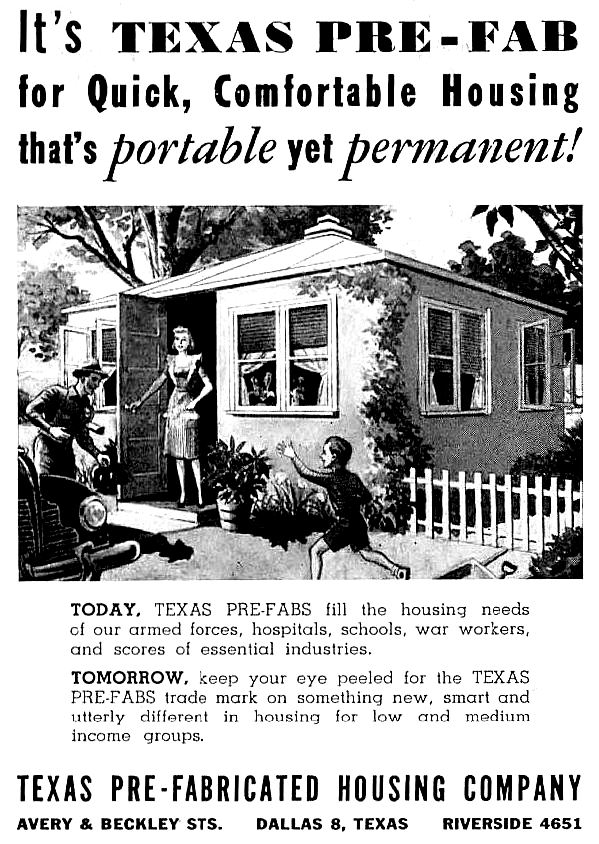
Below, an ad from the Dallas company that manufactured them, Texas Pre-Fabricated House and Tent Co.:

victory-huts_texas-historical-commission_flickr

And, after the war, just add some curtains, a few plants, and a white picket fence.

texas-pre-fabricated-housing-co_southwestern-medical-college_1944-yrbk-ad

***

Sources & Notes

Top photo and quote are from the Parkland Hospital Collection at the UT Southwestern Library, accessible here.

First advertisement from the Flickr stream of the Texas Historical Commission, here. Second ad from the 1944 Southwestern Medical College yearbook.

Victory Huts were widely used during World War II, as cheap housing for military personnel, military families, and as housing in internment camps. See the huts as they were used for Japanese/enemy alien internment camps in Texas, at Camp Kenedy, at Crystal City, and at Dodd Field/Fort Sam Houston.

*

Copyright © 2014 Paula Bosse. All Rights Reserved.

The Britling Cafeteria Serves Those Who Serve Themselves

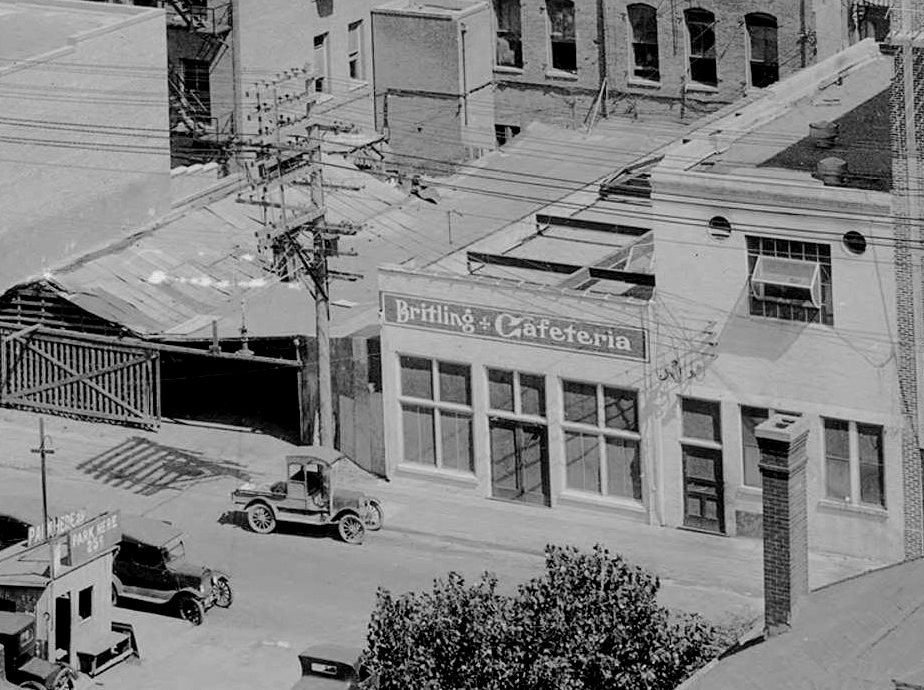
britling-cafeteria_rear-entrance_degolyerBritling Cafeteria’s rear entrance on Jackson St., 1920s

by Paula Bosse

A few weeks ago, I was zooming in on a view of the Dallas skyline when I saw an interesting restaurant sign: the Britling Cafeteria. After a little research, I learned that Britling Cafeterias are something of a cultural institution in Birmingham and Memphis (Elvis’ mother worked the coffee urn station in Memphis, and if that isn’t the sign of a Southern institution, I don’t know what is). Here in Texas, though … I’d never heard of it. It claimed to be the first cafeteria chain in the South, having begun in Birmingham in 1917 (and named for a character in, of all things, an H. G. Wells story). When the Dallas location opened at the end of 1922, it was only the sixth restaurant in the chain, joining others in Birmingham, Atlanta, and Memphis.

The Britling Cafeteria was at 1316 Commerce (“Right in the Heart of Things”), between Field and Akard. There were two entrances, one on Commerce and one on Jackson (seen in the photo above). It sounds pretty nice for a cafeteria — it was lavishly decorated in black and gold, lined with mirrors, filled with flowers, and it had a mezzanine and a raised platform for a live orchestra to provide background music. It had a seating capacity of 450, with an expected daily capacity of 3,000. We’re not talkin’ Luby’s here. Quick “Southern home-cooking” had arrived in Dallas, and it seems to have remained an active advertiser until the ads suddenly stopped in 1926. I hope Dallas enjoyed it while it had it.

Below is the interior of the Atlanta location, from about the same time as the Dallas location. Cafeterias were a whole lot nicer back then.

britling_atlanta

The first non-institutional cafeteria I can find mentioned in The Dallas Morning News was the one in the basement of the Praetorian Building (“Cleanliness, courteous, tipless”) in 1912, but the cafeteria “concept” must have still been fairly new to Dallas as the Britling advertisements that appeared in the week before the grand opening felt it necessary to explain how the system worked. “You’ll wait on yourself — and do it gladly.”

britling_dmn_112722abritling_dmn_112722b1922 (click to read)

But first, stop by for a “Day of Courtesy” preview — flowers for the ladies!

britling_open_dmn_1127221922

britling-cafeteria_forest-ave-high-school-yrbk_19231923

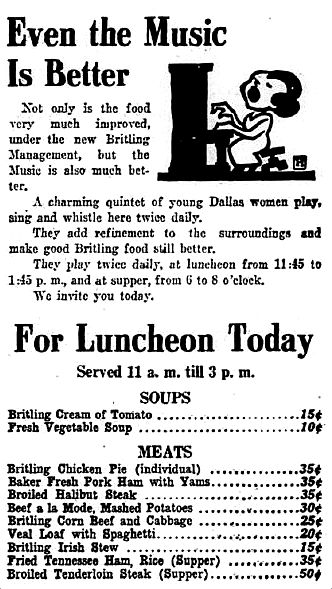
Below, a sample of some of the Southern home-cooking on the menu as well as the warning that there WILL be live music as “a charming quintet of young Dallas women play, sing and whistle (!) here twice daily.”

britling_dmn_030926abritling_dmn_030926b1926

britling_logo_dmn-112722

***

Sources & Notes

Photo is a detail from a larger view of the city from the DeGolyer Library, Southern Methodist University, seen in an earlier post here. The block in which the cafeteria was located is now 2 AT&T Plaza.

Postcard of the interior of the Atlanta Britling Cafeteria from somewhere on the internet.

More can be found in the DMN article “Britling Cafeteria Will Open” (Nov. 26, 1922), with details on the chain and specifics on the Dallas location, here.

Great short history on the cafeteria that every self-respecting citizen of Alabama and Tennessee is apparently familiar with can be found here.

An amusing first-hand account of a Texan (J. J. Taylor) visiting a newfangled cafeteria in San Francisco appeared in The Dallas Morning News on Aug. 25, 1912 and can be read here.

*

Copyright © 2014 Paula Bosse. All Rights Reserved.

Main Street Traffic — c. 1905

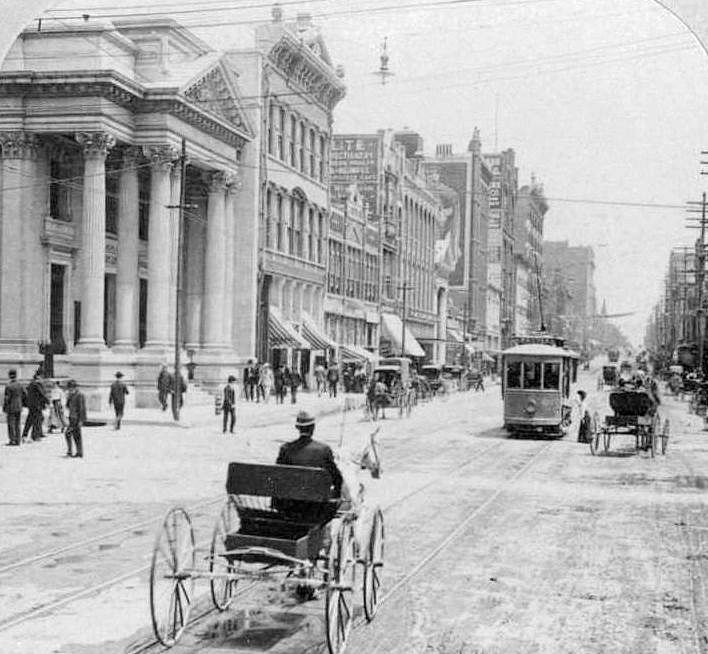
main-murphy_degolyerMain, east from Murphy (DeGolyer Library, SMU)

by Paula Bosse

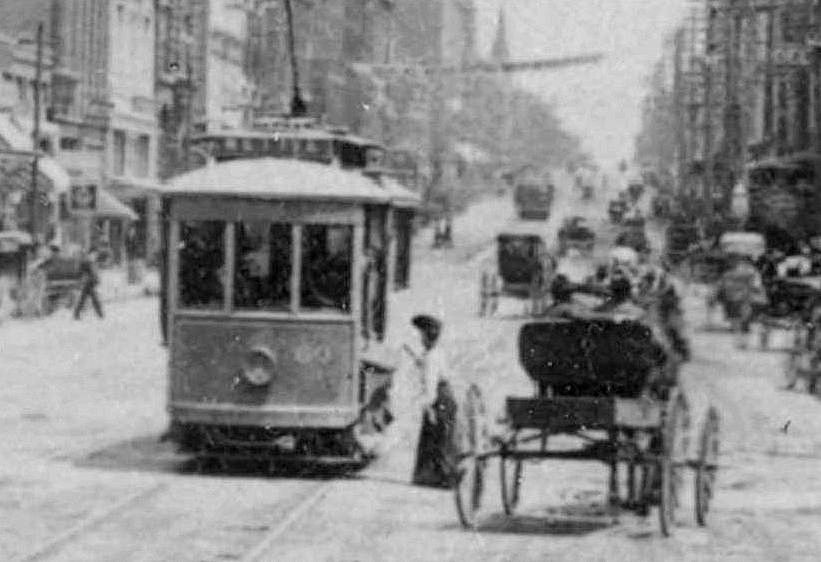
Another day, another dollar. At left, the City National Bank, which was built in 1902-03. At right (and below), a woman dodging traffic to catch a streetcar.

main-murphy_degolyer_det

***

Sources & Notes

Stereograph image from the Lawrence T. Jones III Texas Photography Collection, DeGolyer Library, Southern Methodist University; it is accessible here.

The DeGolyer description reads “Looking east on Main Street.” The City National Bank at the left was at the northeast corner of Murphy and Main, which would be, today, about where One Main Place stands.

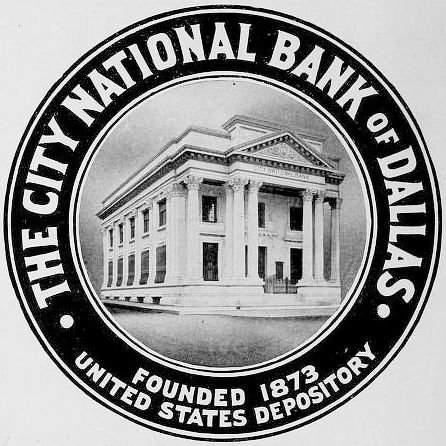
A photo of the City National Bank, from the 1909 Worley’s directory:

city-national-bank_1909-det

*

Copyright © 2014 Paula Bosse. All Rights Reserved.

Dallas Morning News Lobby — c. 1904

dmn-lobby_c1903_degolyer

by Paula Bosse

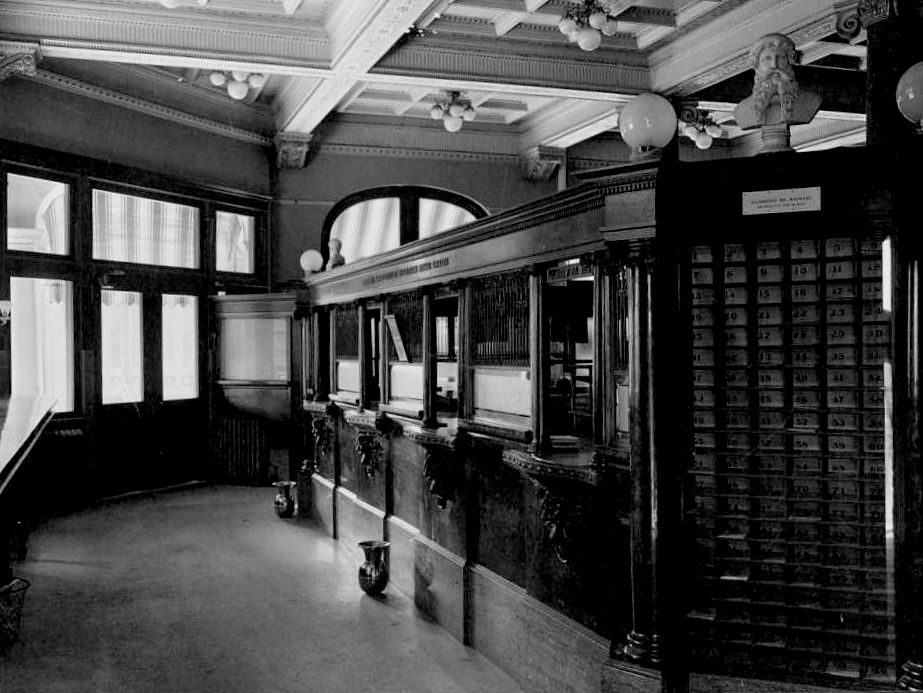
Suppose it’s 1904 and you’ve placed a classified ad in The Dallas Morning News — looking for a job, looking for a buyer for your business, or looking for your reprobate cousin Harold who’s skipped town without re-paying you the money you loaned him. You want to retain a certain amount of anonymity or you have no fixed abode, so you’ve requested that replies from interested parties be addressed in care of a box number at the newspaper offices. If you had done that in 1904, this is where you would have gone to pick them up: the lobby of The Dallas Morning News, seen here in their first building (built in 1885) at 500-501 Commerce St. I can only assume there is another strategiacally-placed spittoon just out of frame.

Here are a few random classifieds with box numbers, all of which appeared in the paper 110 years ago today. These people would have been wandering in and out of this lobby hoping to see envelopes waiting for them when they arrived. Having watched a LOT of old movies, I picture woefully conspicuous detectives hanging out in the lobby, pretending to read the paper, with one eye fixed on those boxes. Waiting. …Watching. …Spitting.

classified_stenographer_dmn_051704

classifieds_dmn_051704

classifieds-dmn_041704

***

Photo from the Belo/Dallas Morning News collection, DeGolyer Library, Central University Libraries, Southern Methodist University, accessible here.

Classifieds from the May 17, 1904 edition of The Dallas Morning News.

Click photo for larger image.

*

Copyright © 2014 Paula Bosse. All Rights Reserved.

Reverchon Park, Site of a Hovel Town Once Known as “Woodchuck Hill”

reverchon_park_baseballAnyone for a little sport? Or a spell-checker?

by Paula Bosse

Before it became one of Dallas’ nicest parks, Reverchon (named for the French botanist Julien Reverchon who arrived in Dallas to join the La Réunion settlement) began life as a 36-acre plot of land called “Turtle Creek Park.” But before that, it was an open-air slum known as “Woodchuck Hill” — an eyesore of an area filled with tents and hovels where families lived in deplorable conditions. It was a pretty dangerous place — the only thing the violent “Squattertown” had going for it was that it was practically next door to Parkland Hospital at Maple and Oak Lawn. The injured and dying didn’t have far to go for medical attention. Or to breathe their last breaths. News reports such as the one below — from 1911 — were, sadly, fairly common (click for larger image):

woodchuck-hill_dmn_081711
Dallas Morning News, Aug. 17, 1911

In October, 1914 it was announced that the city had purchased this tract of land from the heirs of the pioneer Cole family in order to establish what would become Reverchon Park.

reverchon-park_dmn_101914
DMN, Oct. 19, 1914

A few months after the purchase of the land, the squatters were told to vacate the city’s new park property, and what had been a miserable slum was cleared away and transformed into one of the city’s prettiest “pleasure grounds.”

woodchuck-hill_dmn_031215
DMN, March 12, 1915

*

The following is from the Dallas Park Board’s 1915 report:

Pending suggestions for a more suitable one, Turtle Creek Park has been temporarily adopted as the name for this property. At the time of its purchase it corresponded in a measure to the slum districts of the great cities. It was known as “Woodchuck Hill,” and its inhabitants constituted a novel settlement for the city. They resided in make-shift houses and hovels built by the occupants who paid a small stipend each month in the shape of ground rent. The moral conditions of these people was bad, and they caused much concern to the Social Welfare Workers in particular.

In addition to an athletic field, this park is adaptable for an elaborate botanical garden. Being situated at the western base of the Turtle Creek Boulevard, which extends the entire length of the property, it will one day constitute one of the chief attractions of the city for visitors. It adjoins the water works property, comprising a total of 103 acres of city property, a large portion of which has already been beautified. The grounds surrounding the pumping station and the water purification plant have been laid out in lawns and flower beds. Near the center of this park and at the base of the hills on its northern boundaries is located Raccoon Springs. The springs flow a large volume of water to year round, and provide shady nooks with delightful surroundings.

*

Hovels below, in the “before” picture.

reverchon-park_before-1915

reverchon-park-1915

Turtle Creek Park
Located on Maple Avenue.
Area, 36 acres.
Acquired, 1915.
Cost of land, $40,000.

reverchon-plat_kessler_1915

***

Sources & Notes

Top postcard (with “Reverchon” misspelled — understandably so…), from somewhere in the wilds of the internet.

Quoted text and other images from Report for the Year 1914-1915 of the Park Board of the City of Dallas, With a Sketch of the Park System (Dallas: Park Board, 1915), which can be accessed as part of the Dallas Municipal Archives, here.

For more on the Dallas Parks System, the definitive source may well be Historic Dallas Parks by John Slate (Charleston: Arcadia Publishing, 2010); more info here.

Friends of Reverchon Park website here.

*

Copyright © 2014 Paula Bosse. All Rights Reserved.

Jordan Moore

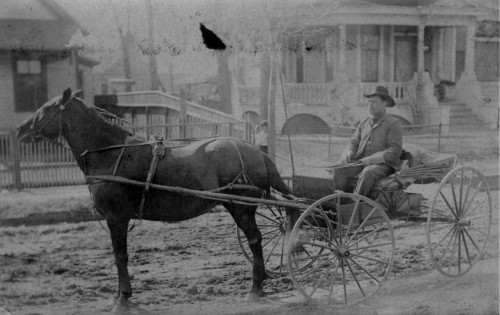
jordan-moore-buggy_c1905Jordan Moore, about 1905 (click for larger image)

by Paula Bosse

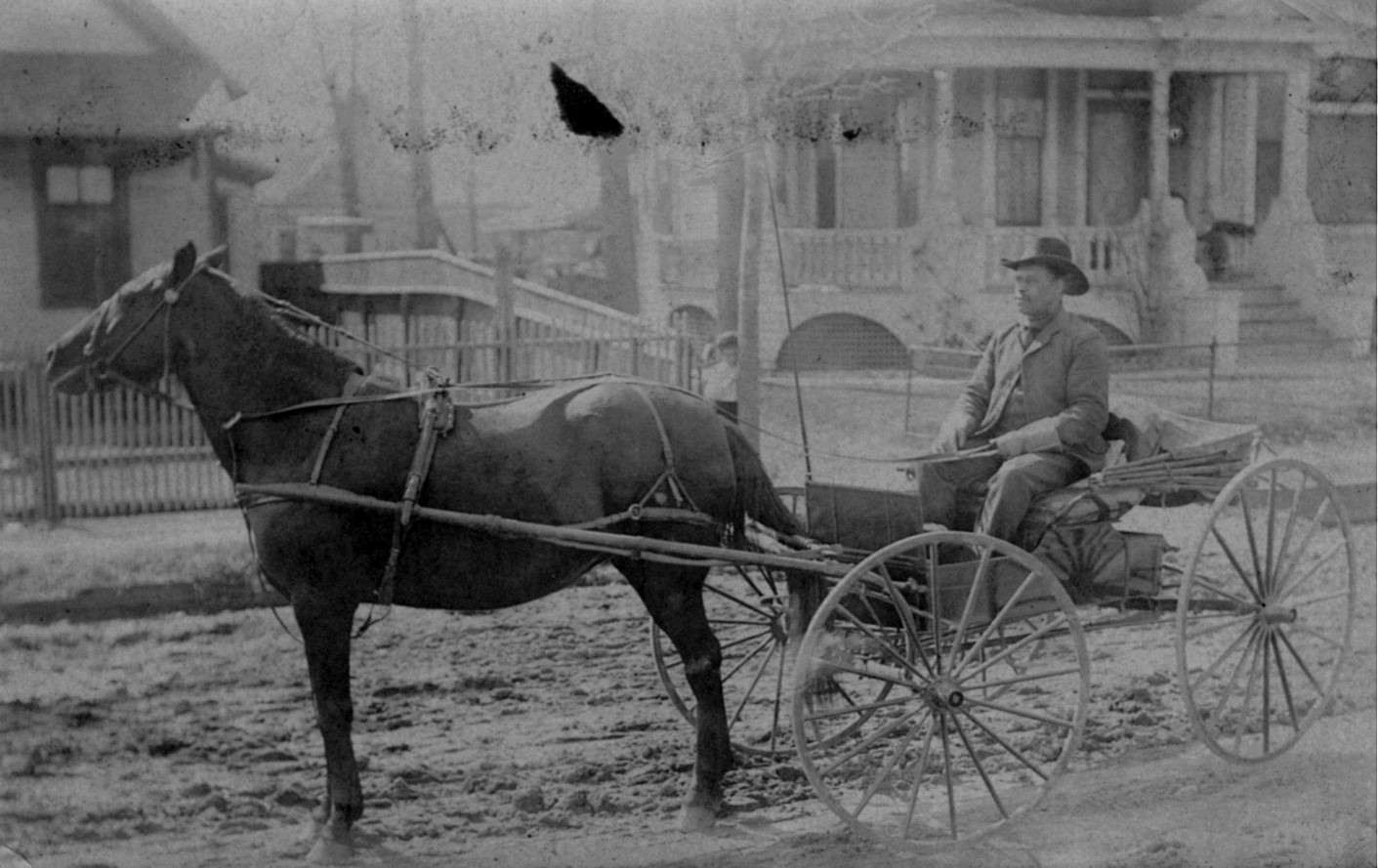
When wandering around the internet, one often encounters arresting images. Like the one above. There’s something about that photograph that grabs your attention. The stoic man in the buggy, the stiff, straight-standing horse, the child hiding behind the pole, the partial view of the porch of a fancy house, and the horrible, horrible condition of that street. The description reads simply: “Photograph of Jordan Moore seated in a horse-drawn carriage. Houses are visible in the background.” I wondered if I should know who Jordan Moore was, because the name wasn’t familiar. The photograph was in the collection that had been donated to the Dallas Historical Society by J. L. Patton, a prominent African-American educator. I found a few more photos of Mr. Moore in Patton’s collection, but I still had no idea who Jordan Moore was. So I did a little research.

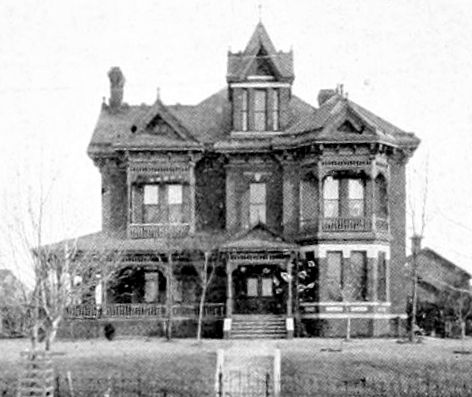
Jordan Moore was born in Virginia in 1863. At some point he made it to Texas, perhaps in the early 1880s, and then to Dallas a few years later. By 1893 he was working for Mrs. Miranda Morrill, who had moved to Dallas in 1886, following the death of her husband, Judge Amos Morrill. Though born in Tennessee, Mrs. Morrill had moved to Texas as a child in 1834 and had strong ties to the state (one of her uncles was a signer of the Texas Declaration of Independence). When she arrived in Dallas, she built an imposing mansion at Ross and Harwood and, as she had no children, she and her servants (as they were listed on census forms) had that huge house to themselves to ramble around in. Mrs. Morrill was a prominent mover-and-shaker in town, devoting her time and money to a host of worthy social causes. In her employ was Jordan Moore, who is listed variously as her coachman and yardman, and who resided on the property. He worked for her until she died in 1906 at the age of 80.

(Mrs. Morrill’s obituary is interesting for many reasons, but particularly because amongst her surviving family members were her half-brothers R. L. Moore and S. J. Moore, sons of Mrs. Morrill’s stepfather. I don’t know if Jordan Moore was born into slavery and was owned by members of Mrs. Morrill’s family, but it’s interesting that he shared a surname with his employer’s family.)

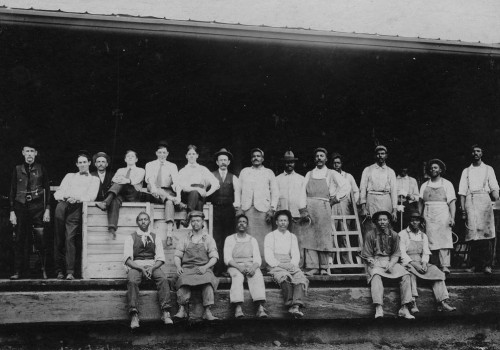
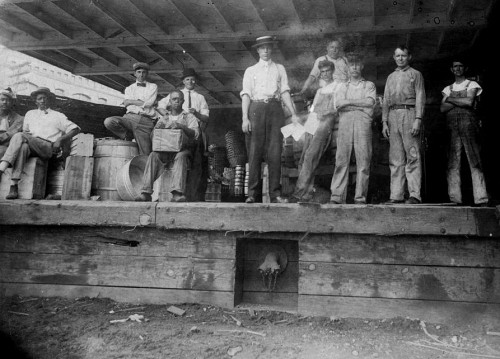
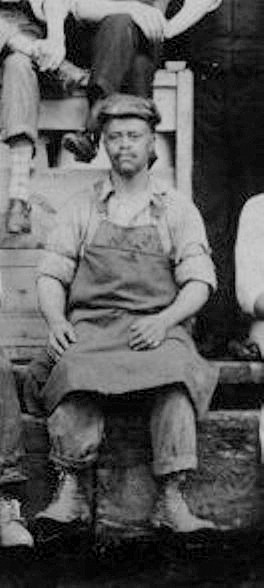
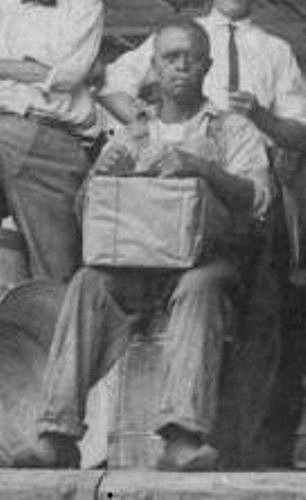
In 1907, after Mrs. Morrill’s death, Mr. Moore had moved to rooms elsewhere and went to work as a porter for the very large, very successful Huey & Philp Hardware Company at Griffin and Elm. Below are a couple of photographs of Moore and co-workers on the loading docks. He does not look very happy. He stayed at the job for 11 years but moved around from rooming house to rooming house — from Ross to Cochran to N. Harwood to Masten. (One of the captions on these photos states that Mr. Moore purchased a house on Cochran St. in 1900. I don’t think that’s correct. If he did buy a house, he doesn’t appear to have ever lived in it.)

Jordan Moore died on January 22, 1918, from complications of  diabetes. He was 54. He never married and had no children, and the friend he had been staying with when he died offered scant and approximate guesses as to dates and places when asked to supply them for the official death certificate.

I wondered why all these photos of a man who apparently left no family and had lived a fairly commonplace life had made their way into the personal collection of J. L. Patton, a principal at Booker T. Washington High School and a pioneer in education for African-American students in Dallas. And then I noticed that the name of the “informant” on the death certificate was Samuel Stanton, a long-time friend with whom Moore had been staying in his last days. Moore was the godfather of Mr. Stanton’s daughter, and Mr. Stanton’s daughter was Mr. Patton’s mother. Patton would have been 12 when Moore died, and he would certainly have remembered him — and one hopes he had fond memories of him.

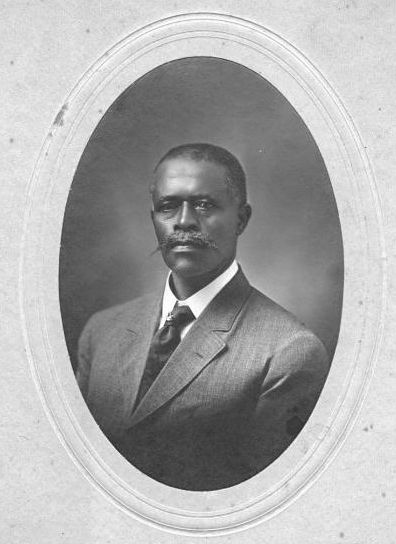
Jordan Moore was buried in Alpha Cemetery, one of the few “negro” cemeteries of the time, near the old freedmen’s town of Alpha, near present-day Preston and Alpha Road. Below are more photographs of Mr. Moore, now in the collection of the Dallas Historical Society.
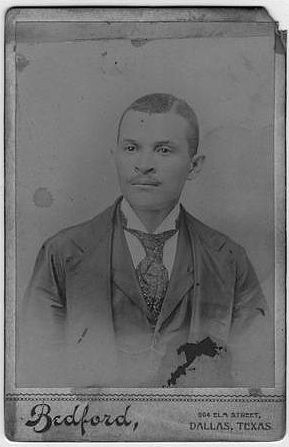
jordan-moore-portrait_18901890

moore-loading-dock_c1905Mr. Moore (seated, second from left), Huey & Philp loading dock, ca. 1907
moore-det

moore-with-box_loading-dock_c1910Mr. Moore (seated, with box), Huey & Philp loading dock, ca. 1910-15
moore-box-det

jordan-moore-photo_c1910sca. 1910-15

morrill-house_1898Mrs. Morrill’s house at Ross & Harwood, 1894
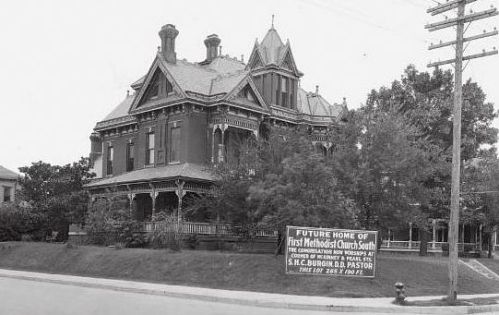
morrill-house_lost-dallas_doty_dmnThe Morrill house — next stop: demolition, 1920
huey-philp_19091909 ad

huey-philp_1913_dmn_080212Huey & Philp Hardware Co., at Griffin and Elm — ca. 1913

***

Sources & Notes

Photos of Jordan Moore from the Dallas Historical Society’s J. L. Patton Collection, once viewable at UNT’s Portal to Texas History website. Top photo, c. 1905.

The first photo of Mrs. Morrill’s house at Ross and Harwood is from Clifton Church’s book Dallas, Texas Through a Camera (Dallas, 1894). (As an interesting aside, Church was married to Morrill’s niece.) In the book Dallas Rediscovered, the house is described thusly: “Mrs. Miranda Morrill’s dark, brooding residence, completed in 1886 by A. B. Bristol at the southwest corner of Harwood, was leveled in 1920 for construction of the First United Methodist Church.”

The second photo of the Morrill house is from Mark Doty’s book Lost Dallas (Charleston: Arcadia Publishing, 2012).

Huey & Philp Hardware Co. ad from Worley’s 1909 Dallas directory.

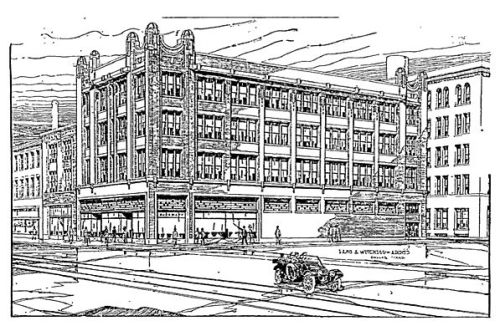
Lang & Witchell drawing of the Huey & Philp building is from a Dallas Morning News blog post by Steve Brown, here.

More on the accomplishments of J. L. Patton from the Handbook of Texas, here.

*

Copyright © 2014 Paula Bosse. All Rights Reserved.


What Do You Get When You Convert an Old Oak Cliff Firehouse Into a Restaurant?

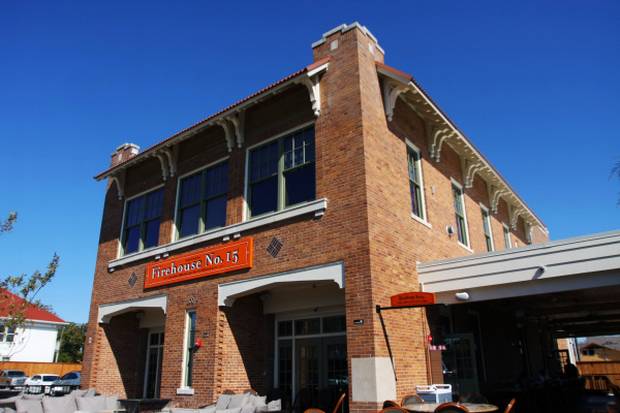
firehouse-15_glorias

by Paula Bosse

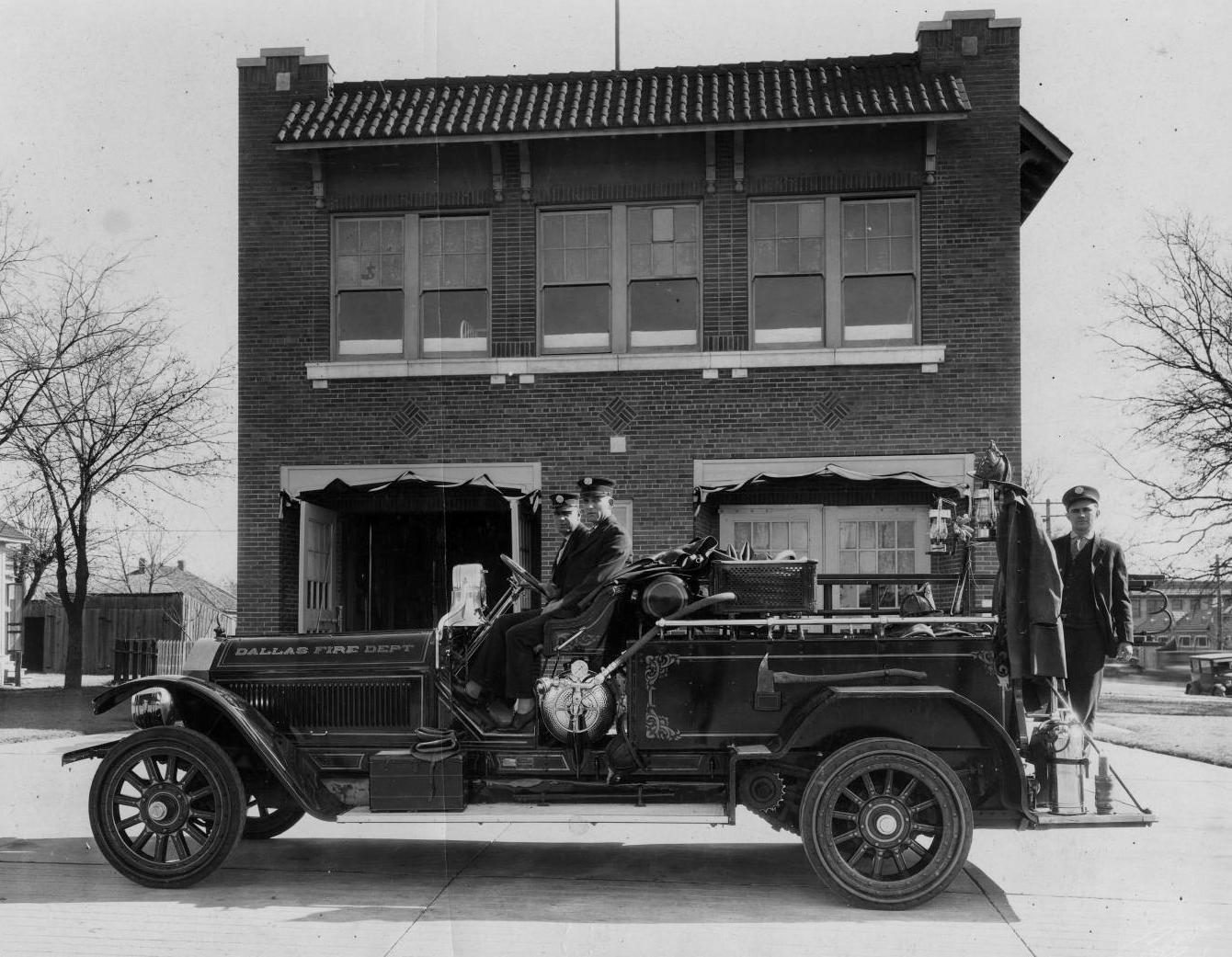
Station 15 — at Davis and Bishop — was a working firehouse decades before it was converted into Gloria’s restaurant in the Bishop Arts District. Here are the “before” photos.

station-15_oak-cliff

fire-station-15_oak-cliff

While you’re enjoying that incredible black rice (among other things…), take the time to enjoy your surroundings — it’s not every day you’re able to dine inside an old firehouse (don’t miss the brass fireman’s pole). Here’s the firehouse today:

firehouse-15_glorias_dmn

***

Sources & Notes

First and third photo from Dallas Firefighters Museum collection on the Portal to Texas History site here.

Second photo (circa 1931) is available for purchase here.

Photo of Gloria’s from The Dallas Morning News.

More info on Station 15 here.

Gloria’s website here.

*

Copyright © 2014 Paula Bosse. All Rights Reserved.

Braniff DC-3 Over Downtown — 1940

braniff_triple-underpass_imagearchives

by Paula Bosse

Unless there was some sort of photo manipulation involved, that photographer pretty much had just one chance to get that shot. And he got it.

***

Sources & Notes

Photo from Image Archives USA, available for purchase here.

*

Copyright © 2014 Paula Bosse. All Rights Reserved.

Pike Park, Fiesta Central — 1926

little-mexico_1926_dmahl-facebook-pagePike Park (click for MUCH larger image)

by Paula Bosse

Fantastic photo of a 4th of July celebration in Little Mexico’s Pike Park in 1926, with the caption reading “Concilio Pro Mexicano y La Colonia de Dallas.”

Today is Cinco de Mayo, which, before it was co-opted by the gringo, was primarily a big party in communities populated by Mexican-Americans and Mexican immigrants. In Dallas, that meant a fiesta of music and food at Pike Park. I remember going to a few of these when I was a child, and my unmistakably Anglo family stood out in the crowd, but we were always welcomed and we had a great time. I loved it. Not to be a killjoy, but I’m not a fan of what Cinco de Mayo has become — just another excuse to drink to excess (St. Patrick’s Day with margaritas). But, if you’ve pulled out that novelty sombrero from the back of your closet and you’re celebrating today, well … olé. But pace yourself, amigos.

***

Photo from the Dallas Mexican American Historical League; it accompanied a great Dallas Morning News blog post by Dianne Solís regarding Pike Park, here.

A CNN interview with the always-entertaining Gustavo Arellano — the man behind the very funny “Ask a Mexican” column — on why he believes the Cinco de Mayo holiday is “pointless” is here.

And Arellano’s article “Gringo de Mayo”  is here.

That photo is gigantic. Click for larger image.

*

Copyright © 2014 Paula Bosse. All Rights Reserved.