Flashback : Dallas

A Miscellany: History, Ads, Pop Culture

Category: Photographs

Mardi Gras Parade in Dallas — ca. 1876/1877

mardi-gras_c1870s_degolyerMain St. looking east from Austin (click for larger image)

by Paula Bosse

What was happening downtown on this day, about 140 years ago? Mardi Gras, Dallas-style! Let’s wander around this parade photo, taken by Alfred Freeman. (Click photos to see larger images.)

mardi-gras_c1870s-det1This kid has a great, unobstructed second-story view of the parade below.

mardi-gras_c1870s-det2No glitz, no beads, no flashing.

mardi-gras_c1870s-det5Every time I look at the original photograph, my eye always goes to this woman.

mardi-gras_c1870s-det3Okay, that kid’s view is nothing compared to these guys who’ve scaled the Dallas Herald building.

mardi-gras_c1870s-det4In information about the 1876 parade, the Feb. 24, 1876 edition of The Dallas Herald advised: “To prevent accidents, owners of buildings having varandas [sic] will permit no one to stand on them, unless the same have been sufficiently strengthened.” I don’t know … some of those “varandas” look pretty shaky.

And down Main Street they go.

***

This is a stereograph photo by Alfred Freeman, from the Lawrence T. Jones III Texas Photographs Collection, DeGolyer Library, Central University Libraries, Southern Methodist University; it can be viewed here. (I have manipulated the color.) SMU has the photo as being “ca. 1870,” but the first Mardi Gras parade in Dallas wasn’t held until 1876. The view shows Main Street looking east, apparently taken from the roof of the Reed & Lathrop building on the northeast corner of Main and Austin.

UPDATE: This might be a photograph of the Mardi Gras celebration held in Dallas on February 24 (a Thursday…), in 1876. This was the first such celebration held in the city, and it was a massive undertaking, attracting more than 20,000 spectators. For weeks after the event, Alfred Freeman was advertising his Mardi Gras photographs with the following text: “Freeman, the artist, has nine different views of the Mardi Gras procession, for sale.”

mardi-gras_c1870s_freeman

Read about the first Mardi Gras parade in Dallas in the Flashback Dallas post “Mardi Gras: ‘Our First Attempt at a Carnival Fete’ — 1897,” here.

Click pictures for larger images.

*

Copyright © 2014 Paula Bosse. All Rights Reserved.
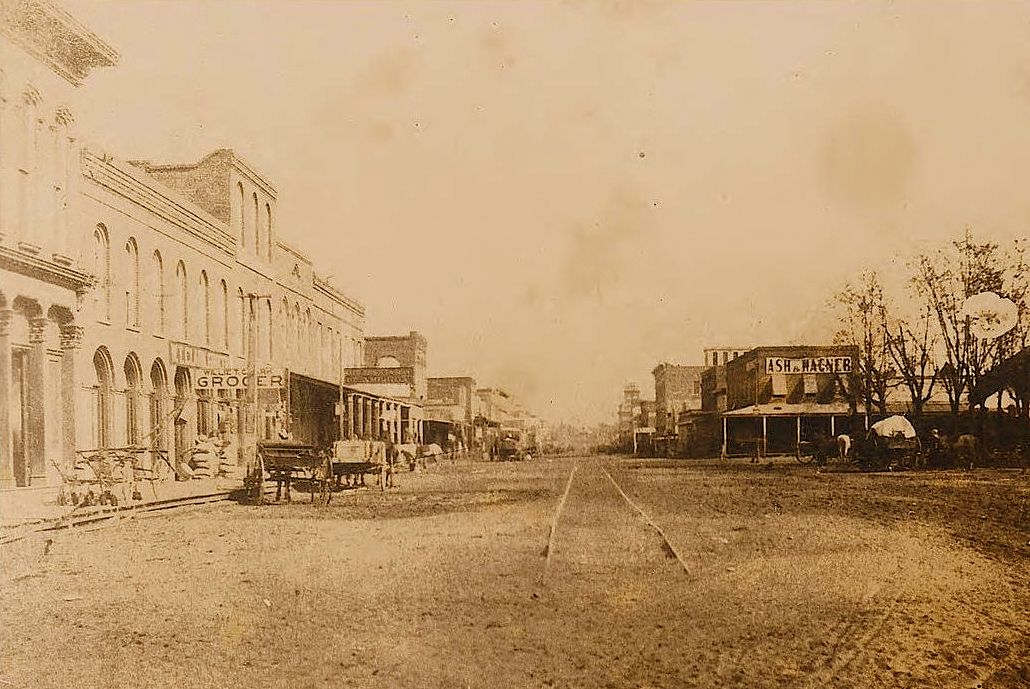
Main Street, 1875 — Very Little Hustle, Very Little Bustle

by Paula Bosse

Main Street, looking east from the old courthouse, at Houston Street. 1875. Wow.

***

Stereograph from the George A. McAfee collection, DeGolyer Library, Central University Libraries, Southern Methodist University; more info on this image can be found here.

Click to see larger image.

*

Copyright © 2014 Paula Bosse. All Rights Reserved.
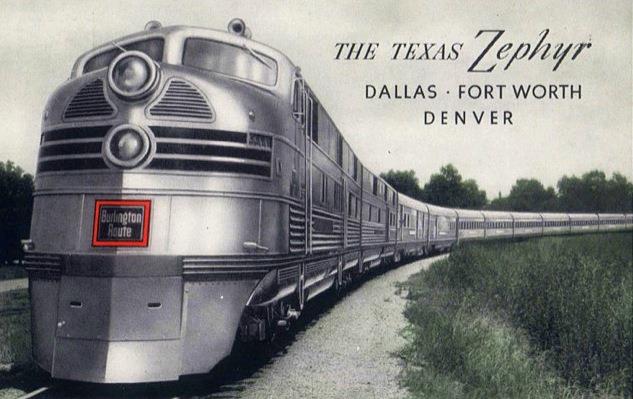
The Texas Zephyr — Streamlined Luxury Train Travel

Dallas — Fort Worth — Denver

by Paula Bosse

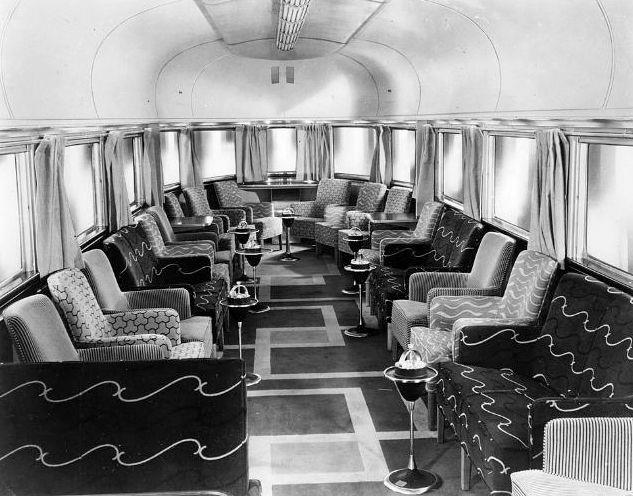
From the golden age of train travel. …I was born in the wrong era.

***

Sources & Notes

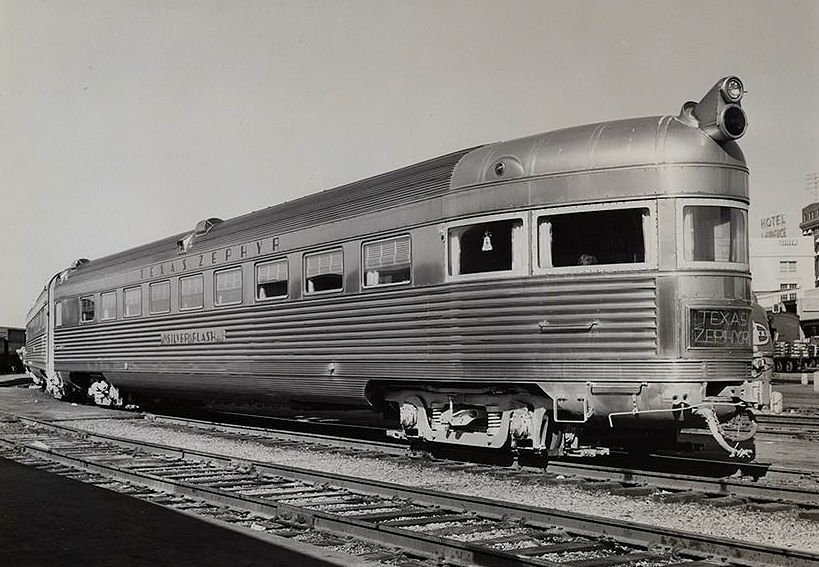
Second photo showing the exterior of the “Silver Flash” passenger car on the tracks at Union Station in Dallas is from the DeGolyer Library, Central University Libraries, Southern Methodist University; it was taken by Everett L. DeGolyer Jr. in 1960; more information on this photo is here.

Top and bottom images are from the wilds of the internet.

More on the Texas Zephyr here.

*

Copyright © 2014 Paula Bosse. All Rights Reserved.
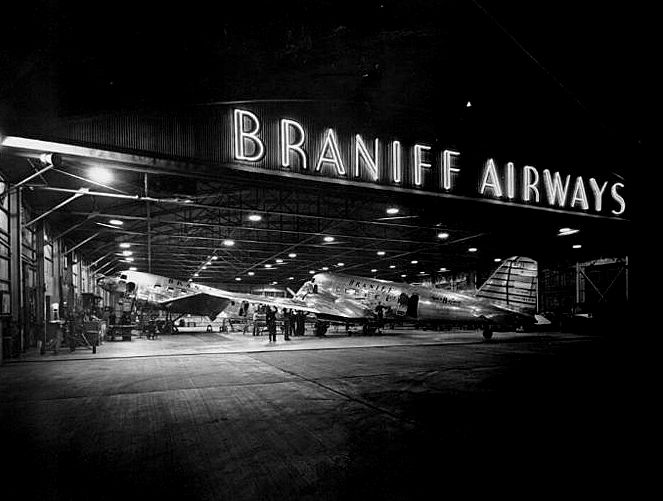
Braniff Hangar, Love Field — 1940s

by Paula Bosse

Overnight maintenance. Beautiful sign.

Photo caption:

Night maintenance at the Braniff hangar, main entrance on Roanoke Drive at Dallas Love Field, early 1940s.

Planes being serviced include a DC-2 and DC-3.

*

Copyright © 2014 Paula Bosse. All Rights Reserved.
A Robot Visits the Texas Centennial — 1936

by Paula Bosse

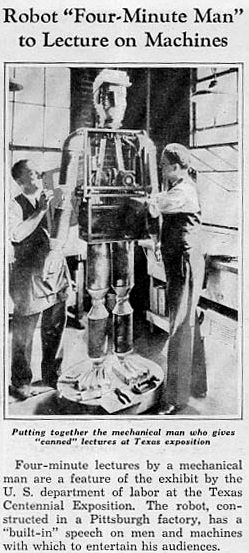
This “mechanical man, built by human hands” was quite the attraction at the 1936 Texas Centennial.

Four-minute lectures by a mechanical man are a feature of the exhibit by the U.S. department of labor at the Texas Centennial Exposition. The robot constructed in a Pittsburgh factory, has a ‘built-in’ speech on men and machines with which to entertain his audiences.

***

Lower image from Popular Mechanics (Sept. 1936).

*

Copyright © 2014 Paula Bosse. All Rights Reserved.
2400 McKinney Avenue — 100+ Years and Counting

by Paula Bosse

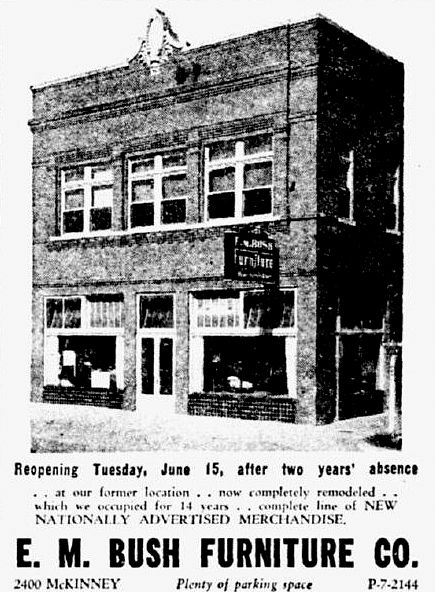
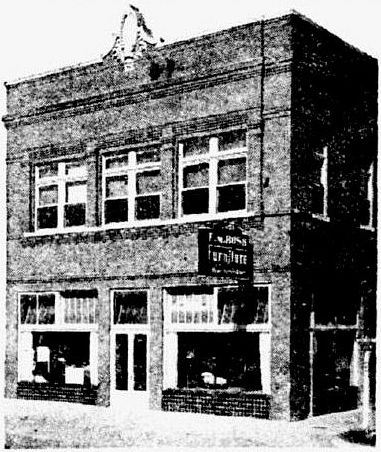
I came across this ad and wondered just where on McKinney Avenue this building had been. The ad was from 1948, but the building certainly looked older than that. I’m not sure when the building was built (update: it was built in 1909), but by at least 1929 the Hughes Auction Market was conducting furniture auctions there. An ad from 1929 invites the public to attend the regular auctions in which their two floors were packed to the gills with furniture and household goods that “positively must sell.” Prospective buyers were promised a large parking lot and a “comfortable, cool building.”

In the summer of 1933, a longtime Dallas furniture salesman, E. M. Bush, opened his retail business in the building and remained there for many years, perhaps until 1958 when he moved to Snider Plaza.

I wondered what’s at 2400 McKinney these days, and, I have to say … I’m shocked to find that the building is actually still there! On McKinney Avenue! And it looks very much the same as it does in the photo above (and, presumably, since it was built) — a little more elegant, perhaps, as it’s now part of the fabulous Hotel ZaZa — but the building looks pretty much the same. The building has survived! I feel like crying.

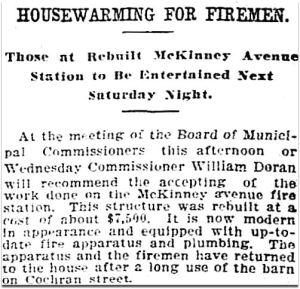
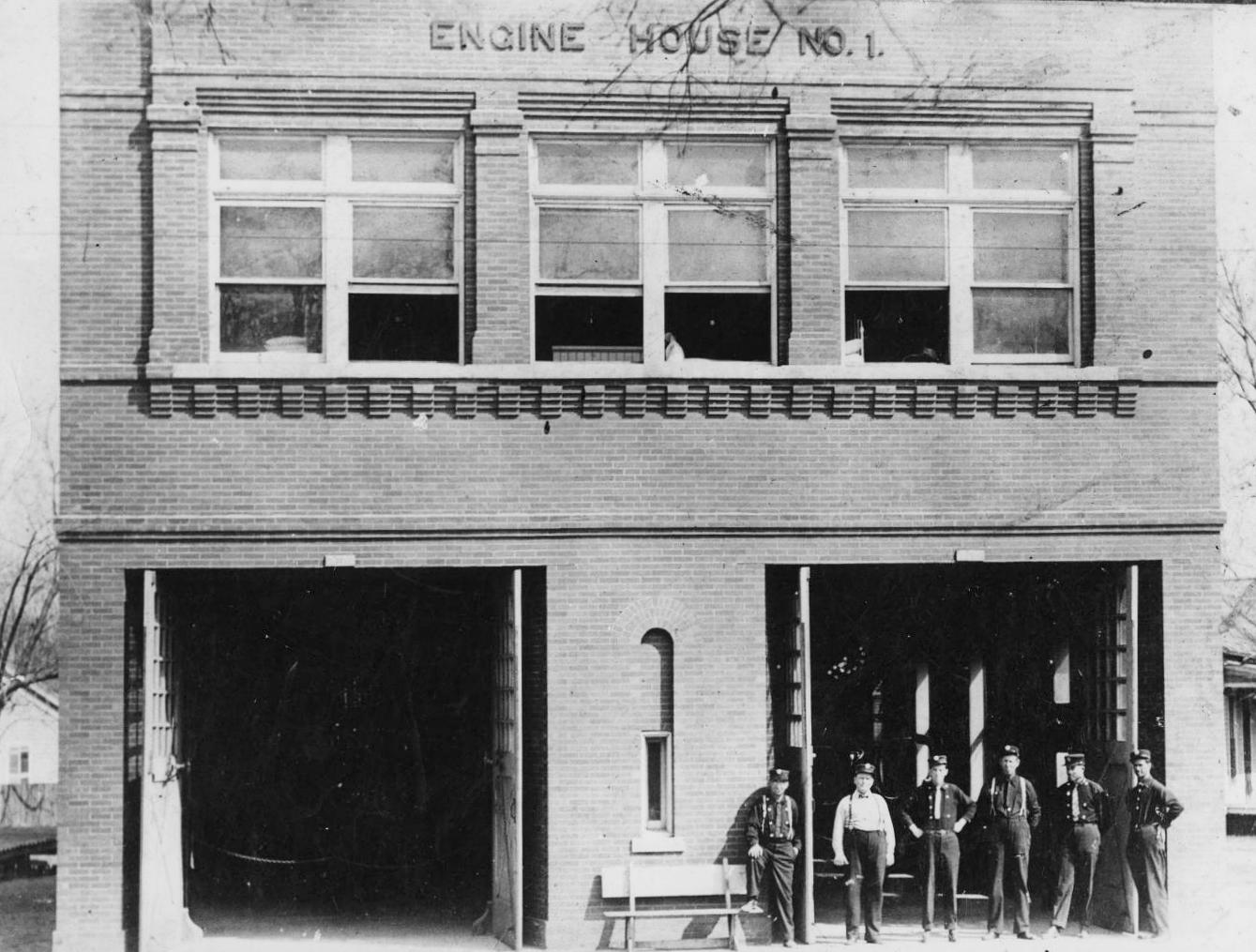
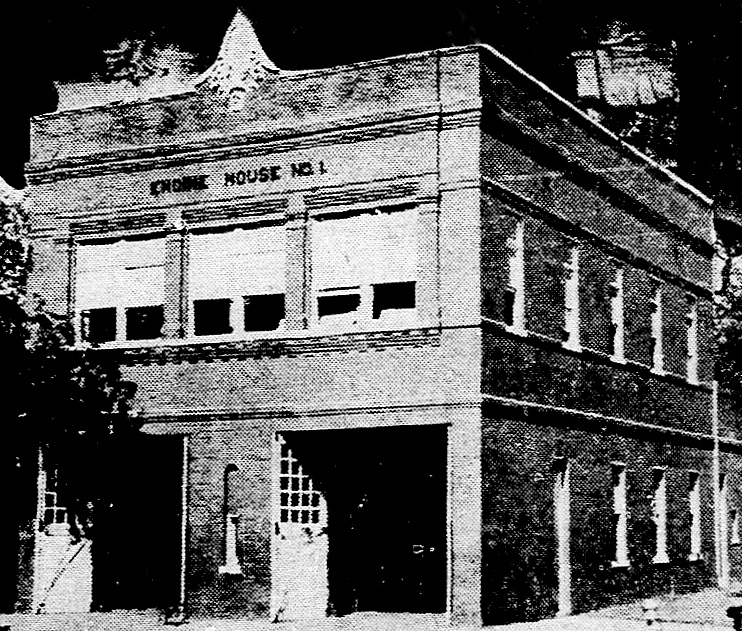
But wait, there’s more. What was this building originally? It was a firehouse! More specifically, it was Engine House No. 1, in use until 1928. The fire station that originally occupied this location was built in 1894 (see what it looked like in 1901 here, third photo down). By 1909, automobiles were placing horse-drawn fire engines, one of many reasons the station house needed to be modernized. Newspaper articles from 1909/1910 used the words “rebuilt” and “remodeled” almost interchangeably, so it’s unclear whether the original building was completely, or only partially demolished and then rebuilt, using materials from the original structure. The “new” engine house re-opened in January, 1910.

rebuilt_dmn_012510
Dallas Morning News, Jan. 25, 1910

Here’s a photo from its early days:

engine-house-no-1_mckinney

And from the 1920s:

fire-dept_mckinney-leonard-photo_1920s

The city ordered the building sold in 1928 when plans had been made to move personnel and equipment from McKinney and Leonard to a new station at Ross and Leonard.

To have a 100-plus-year-old building still standing in “newer-is-better” Dallas — and in Uptown — is quite a feat!

***

Sources & Notes

E. M. Bush Furniture Co. ad from 1948.

Photo of Stay ZaZa Art House and Social Gallery from the Hotel ZaZa website.

Firehouse photo from The Dallas Firefighters Museum. More on this station here.

Most images are larger when clicked.

*

Copyright © 2014 Paula Bosse. All Rights Reserved.


Dear JFK: Welcome to Big “D” — Love, DP

Nov. 22, 1963

by Paula Bosse

Sorry, Dr Pepper, but this might be the most unfortunate, unintended instance of product placement ever.

***

Sources & Notes

AP photo, November 22, 1963.

*

Copyright © 2014 Paula Bosse. All Rights Reserved.
Speaking of the Arcadia and Its “Rustic Simplicity”…

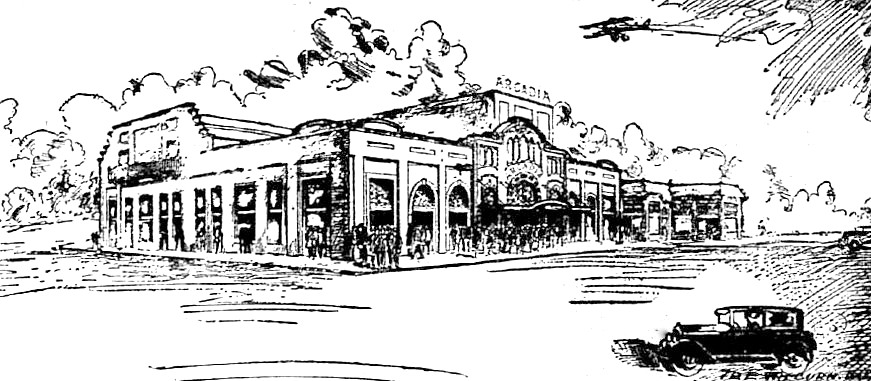
arcadia_architectural-renderingArcadia Theater, 1927…

by Paula Bosse

Above is a rendering of architect W. Scott  Dunne’s design for the Arcadia Theater on Greenville Avenue, at Sears Street, between Ross Avenue and Belmont. (The low-flying bi-plane is a nice touch.) Among the many Dallas theaters designed by Dunne were the Esquire in Oak Lawn and the Texas Theatre in Oak Cliff (as well as another entertainment mecca, the Fair Park Band Shell).

The Dallas Morning News had this to say about Dunne’s concept for the new “suburban theater” in 1927:

W. Scott Dunne, architect of Arcadia, is working out an interior design that should prove in harmony with the theater’s name — an atmospheric design of as near rustic simplicity as is possible in a theater.

“Rustic”!

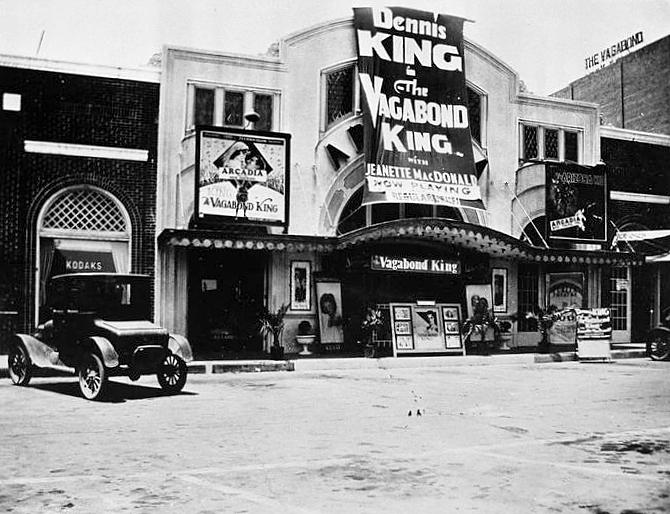
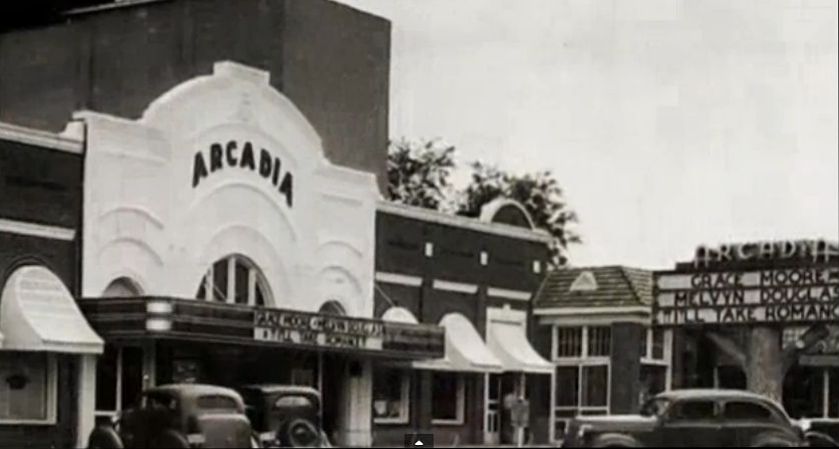
A photo of the not-particularly-rustic exterior in 1930:

arcadia-theater_1930_portal1930

The fabulous giant tree marquee, posted previously (link to post below), from about this time can be seen here.

All went well for many years until 1940 or ’41 when the original 1927 building was badly damaged in a fire; it had to be gutted and completely overhauled by architects Pettigrew & Worley. John A. Worley wrote an article for Box Office magazine about the rebuilding process (link below), including the hard-to-believe tidbit that the firm had been “vigorously instructed to studiously avoid any pretense of ‘super-colossal’ — or, more thoroughly defined, we were told to steer clear of that ‘regal’ air, which had been known to impel theater patrons to take off their shoes before daring to walk across the foyer.

The article even has a photo of the lopped-off, now-sadly diminished tree sign. (The author — in something of a reach — explains that the “stump” was there as a symbol of the “Arcadian” nature of the theater.) (You just know that both Pettigrew and Worley were praying for the go-ahead to just get rid of it already.)

1941

There was another bad fire in 1958, which led to further renovation. By then, that tree was loooooong gone and but a dim memory.

There sure were a lot of fires at the ol’ Arcadia. Including the final, fatal one, in 2006. R.I.P. And from the ashes sprang the present-day Trader Joe’s.

***

Sources & Notes

Photo showing “The Vagabond King” (1930), from the Hardin-Simmons University Library via the Portal to Texas History, here.

Photo showing “stump” is from the June 21, 1941 issue of Boxoffice.

An interesting article on the Arcadia — and life along Lowest Greenville — can be found in a Lakewood Advocate article “The Rise and Fall of the Arcadia,” here.

The original post that spurred a further look into the early days of the Arcadia — and the one with the crazy huge electric tree marquee — can be found in the Flashback Dallas post “The Arcadia Theater Sign You’ve Never Seen,” here.

*

Copyright © 2014 Paula Bosse. All Rights Reserved.
 

The Arcadia Theater Sign You’ve Never Seen

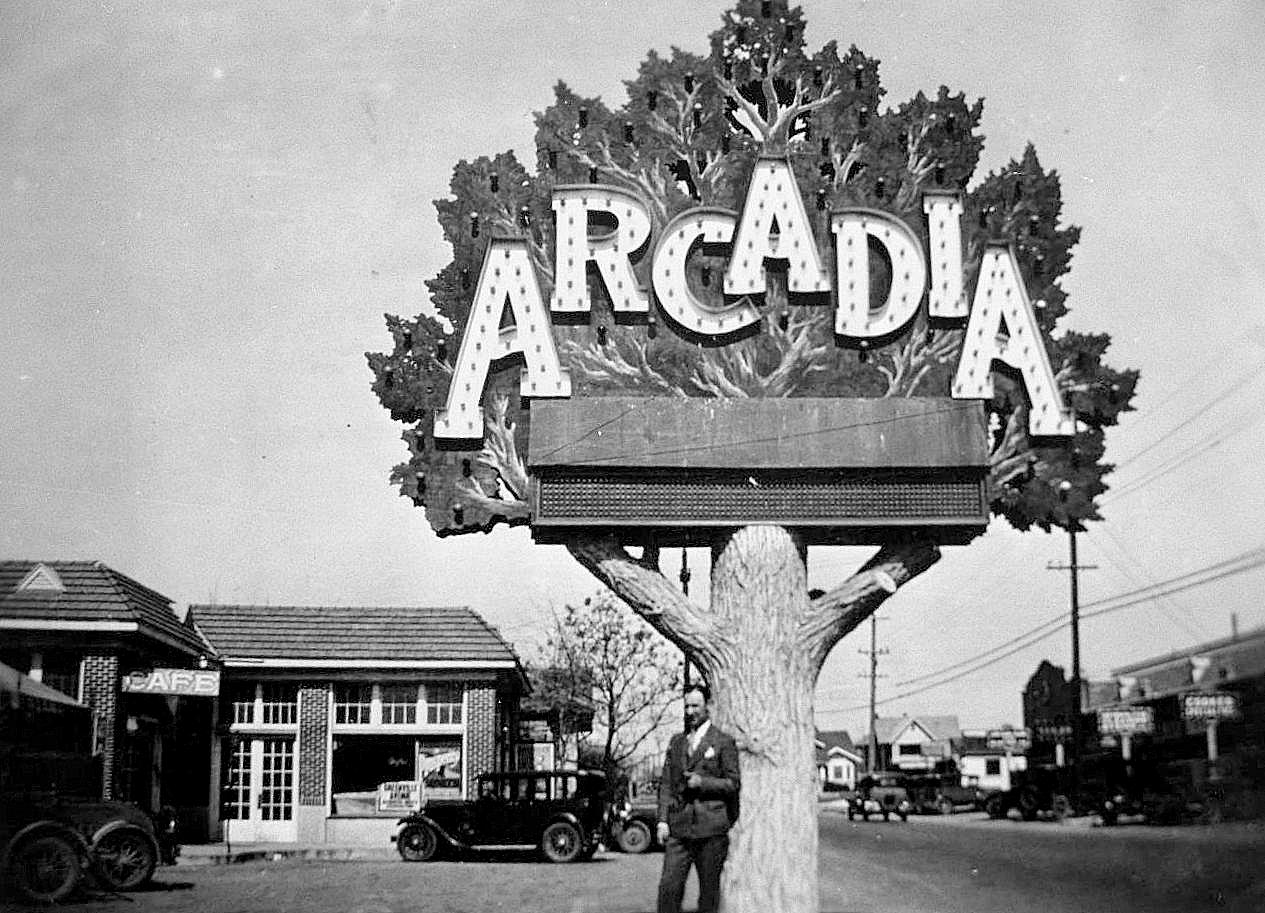
Best theater marquee EVER! Lower Greenville, late ’20s (click for larger image)

by Paula Bosse

I LOVE this photo! Forget the sign for a moment (difficult though that may be…) — take a look at Greenville Avenue in the late-1920s! That building at the top right, across the street from the (late, lamented) Arcadia, is still there. The car heading north is just about to pass where the 7-Eleven is now (at Richmond). As for that tree-shaped sign … wow. I’ve never seen anything like that. The photo was used in a promotional campaign for a new sort of electric marquee technology.


Here’s what Arcadia manager Wally Akin (pictured above) had to say about this new-fangled Vendope Changeable ‘Lectric Letter thing:


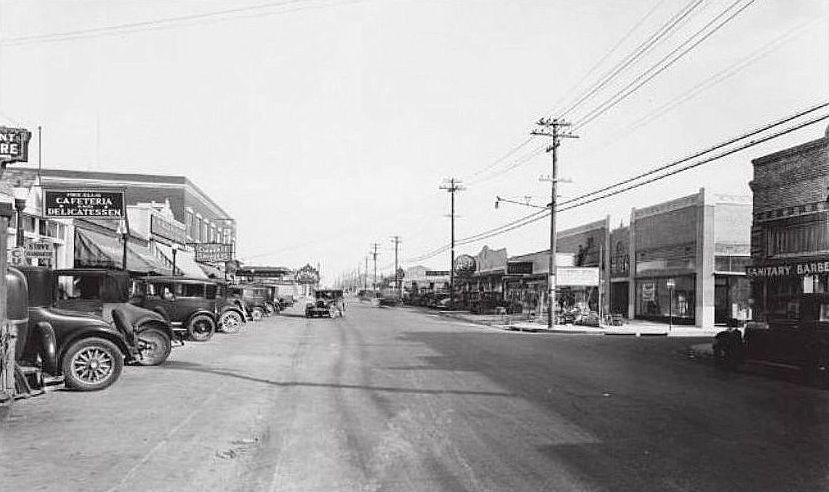
I’m not sure the Vendope Service System took off, but, damn, that sign is cool. Here’s a another view, from 1930, looking up Greenville from about Alta — you can see how close to the curb the sign was. Imagine driving up the street and seeing that lit up in front of you.

greenville-avenue_1930

It was a little less cool, though, by 1937 when the “tree” had been pruned and tampered with almost beyond recognition, but, still, that is one weird eye-catcher of a marquee.

*

UPDATE: The following information comes from a comment to me from the estimable Angus Wynne, who took over the Arcadia in the 1980s (and 1990s?) and booked some great live shows there (several of which I paid to see): “The tree sign evolved from a lesser marquee that was installed in a real tree which grew in the original parkway formerly located adjacent to the street. A very unusual attraction, it remained there for many years until the tree died, upon which the owner had it concreted over and had the electric branches added, pictured here. It was torn down when the theater’s facade and interior were renovated during the 1940’s.”

What a shame that something so wonderful didn’t survive. All those lights! I’d have loved to have seen it lit up at night, back when this lowest stretch of Greenville Avenue was called a “northern” and “remote” part of the city.

***

Sources & Notes

First three images, including top photo, from the Hardin-Simmons University Library, via the Portal to Texas History — these and other Arcadia Theatre images from this collection can be viewed here. The main photo (MUCH larger when clicked) is undated, but it’s sometime between the Arcadia’s opening in 1927 and the Publix theater chain’s plummet into receivership around 1931. UPDATE: When I posted this photo back in February, 2014, I was excited to think I had stumbled across something that had been unseen for years. At almost the exact time I posted this, Troy Sherrod’s great book Historic Dallas Theatres was published … and this photo was in it. Troy beat me to it!

If you’re into patent-perusing, just google “Vendope” and you’ll see oodles — an example of one them is here. I’m not sure if this is part of the same system described above, but this patent is dated 1931. The inventor (apparently of Fort Worth) had the unlikely name of Vendope L. Pistocco. Or maybe Van Lawrence Vendope. …There’s a Vendope in there somewhere.

1930 view of Lowest Greenville, looking north from Alta, is from the archives of the Dallas Public Library.

For further exploration of the Arcadia (and another photo of the barely recognizable tree), see my follow-up post here.

*

Copyright © 2014 Paula Bosse. All Rights Reserved.
 

“Dallas Motor Cycle Cops” — 1910

dallas-police_motorcycles_1910_bReady and on the job…

by Paula Bosse

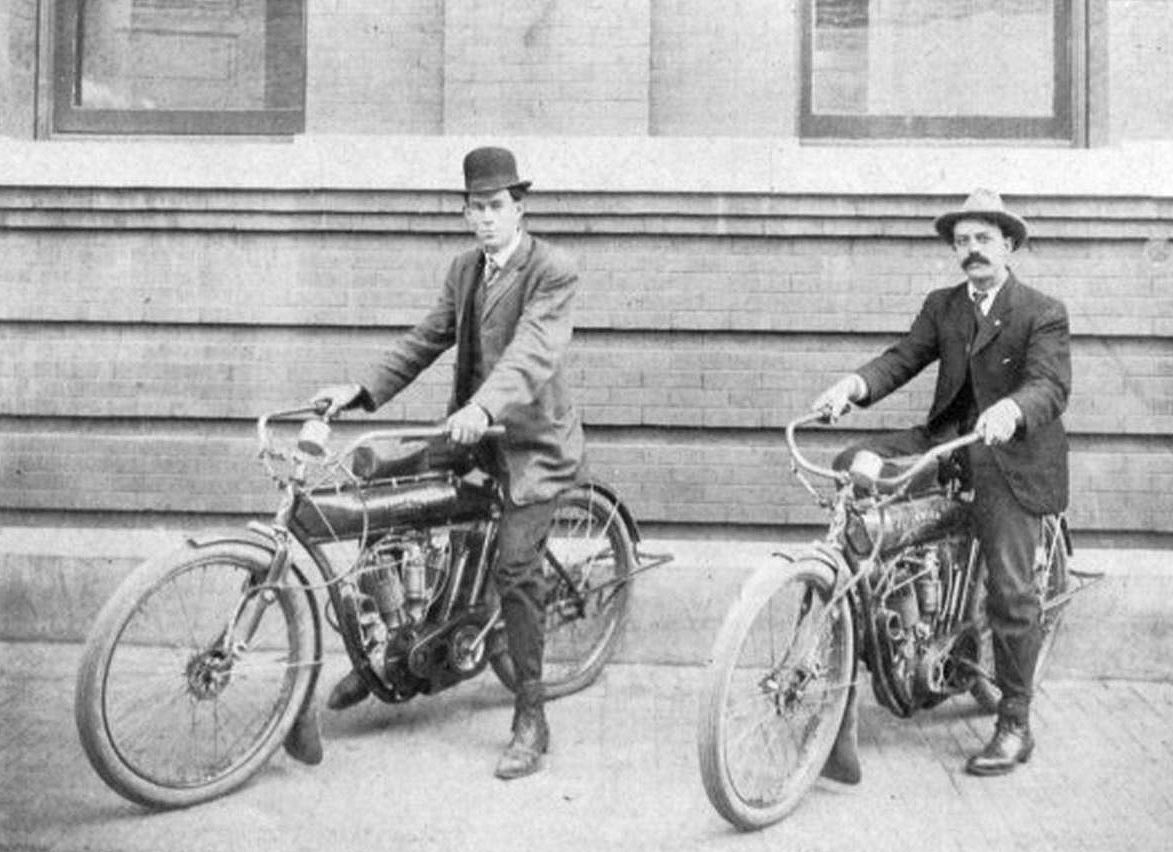
These photos of the Dallas Police Department’s “Motor Cycle Cops” appeared in a police publication from 1910.  We see them astride their machines, — one in a bowler hat — waiting for their call. Above, the “cops” are identified as B. G. Ford and A. W. Schulz; below, T. R. McSwain and S. R. Dean.

dallas-police_motorcycles_1910_a

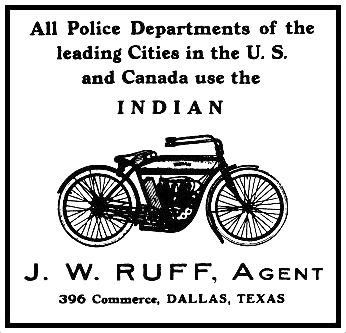
I can’t vouch for the models of the bikes, but this ad for Indian Motorcycles appeared just pages away.

ad-indian-motorcycles_1910

***

Sources & Notes

From a book with almost no publication info; it is presented simply as Dallas Police Department (Dallas, 1910). It’s got great photos and can be found on the Portal to Texas History site, here.

By 1951, the DPD’s allegiance had shifted to Harley-Davidson, as can be seen in the post “The Dallas Police Department & Their Fleet of Harleys — 1951.”

*

Copyright © 2014 Paula Bosse. All Rights Reserved.