Flashback : Dallas

A Miscellany: History, Ads, Pop Culture

Category: State Fair of Texas

When a Virgin Sacrifice at Fair Park Almost Caused an International Incident — 1937
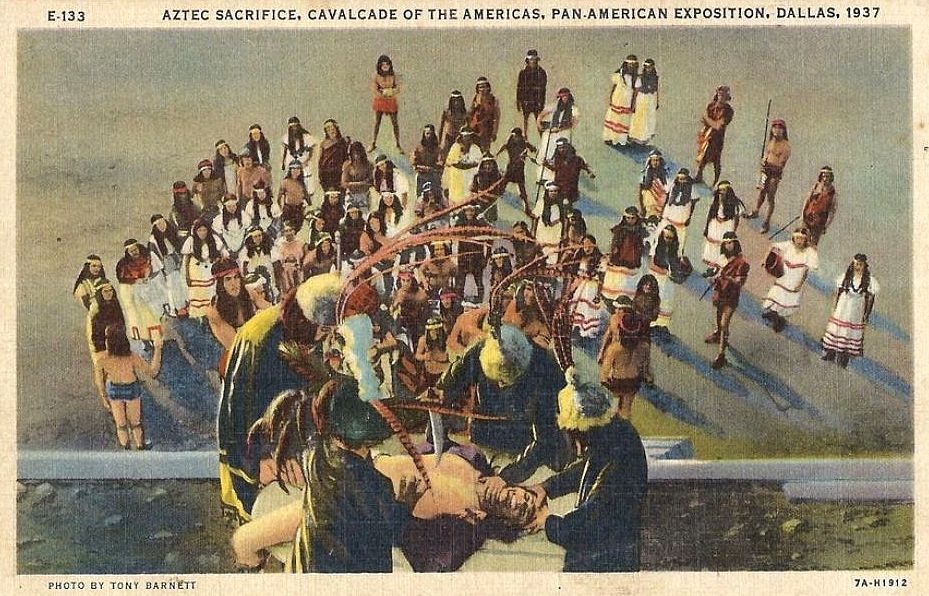
pan-american_aztec-sacrifice_colteraAztec sacrifice with a warrior, not a virgin, on the official postcard

by Paula Bosse

The Greater Texas and Pan-American Exposition at Fair Park was a four-and-a-half-month extravaganza which opened in June, 1937 as a follow-up of sorts to the previous year’s Texas Centennial Celebration. According to promotional material, its goal was to celebrate the Americas and “to promote the feeling of international goodwill between the twenty-one independent nations of the New World.” (It was also hoped that the city could rake in some more Centennial-sized cash.)

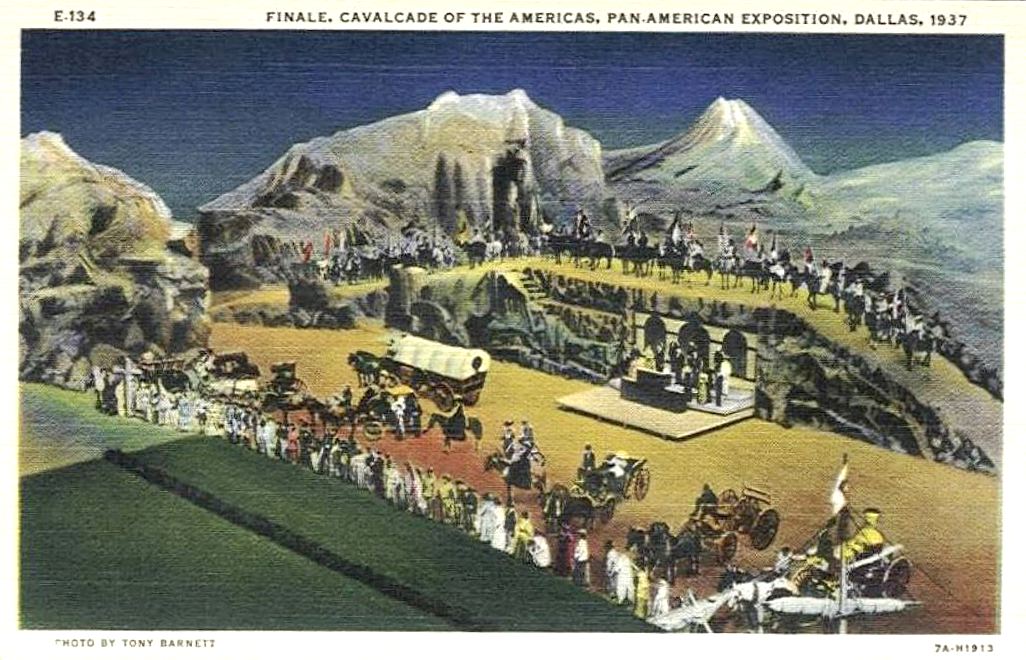
One of the biggest attractions of the Pan-American Expo was a huge production called Cavalcade of the Americas, which presented highlights from the history of Latin America and the United States. There were scenes from ancient Mexico, Columbus’ landing, the Revolutionary War, Stephen F. Austin’s arrival in Texas, the settling of the Old West, etc., right up to FDR’s participation in the Inter-American Peace Conference in Argentina in 1936. Utilizing much of the same infrastructure as the previous year’s Cavalcade of Texas, it was staged outdoors, in the old racetrack, with a 300-foot stage and elaborate scenery depicting an ocean, mountains, and a smoking volcano. Horses, wagons, “ships,” and a cast of hundreds took part in the production.
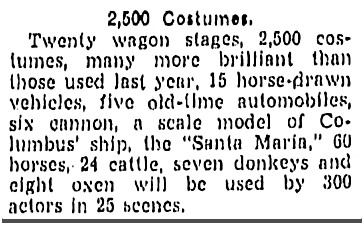
cavalcade-americas_FWST_060637Fort Worth Star-Telegram, June 6, 1937

It was quite elaborate. The postcard view below will give you an an idea of the scale of what was being billed as the world’s biggest stage.(I  believe the whole thing revolved — or at least part of it did — with another stage on the side facing away from the audience; the scenery, cast, and perhaps the donkeys, would change out before revolving to face the audience.)
cavalcade_1937

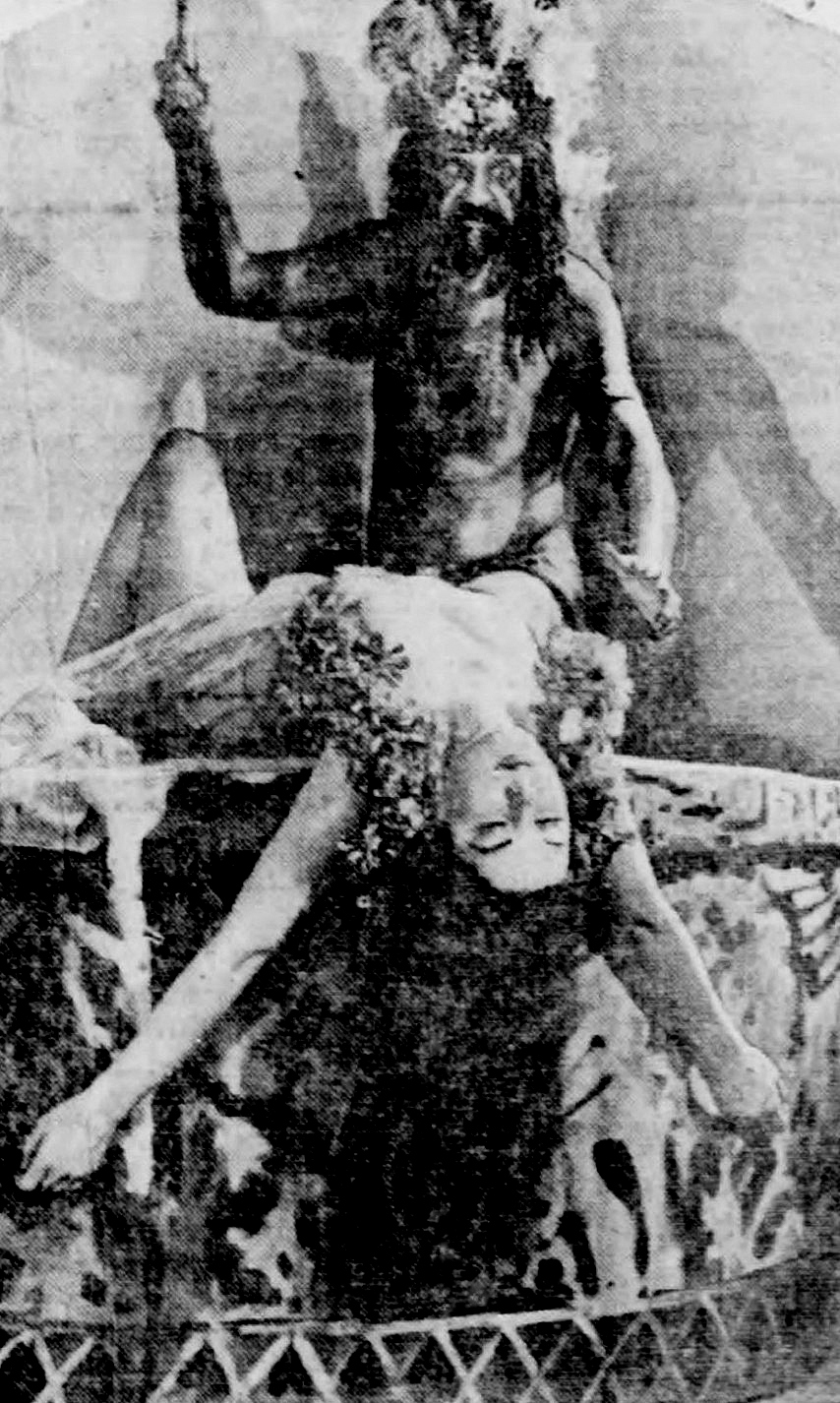
The opening scene featured an Aztec sacrifice and an angry volcano. Start big! This relatively brief portion of the show caused a lot of headaches (and/or much-welcomed publicity) for the producers, State Fair organizers, and, probably, the image-conscious Dallas Chamber of Commerce. But why? As originally written (by the remarkably prolific Jan Isbelle Fortune), the Aztec sequence involved the sacrifice of a struggling young maiden atop a blood-stained pyramid. Two months before the opening of the Expo, a rather sensationalistic photo of this historical reenactment appeared in the pages of newspapers across the country, no doubt resulting in raised eyebrows and whetted appetites. (Click to enlarge!)
aztec_greencastle-indiana-daily-banner_080437Greencastle (Indiana) Daily Banner, 1937

The star of this scene was 17-year-old Geraldine Robertson, who had been crowned Queen of the Centennial the previous year and who played a multitude of roles in the current production, including Cortés’ “lover and interpreter,” a young woman in a Boston Massacre scene, Martha Washington, and the wife of Jim Bowie. Here she is in real life in 1936, with Jean Harlow platinum-blonde hair, posing for one of a seemingly endless number of publicity photos.

robertson-geraldine_queen-of-centennial_1936Geraldine Robertson, 1936

And the thing that caused so much trouble? Probably not what you would assume.

Before the Exposition opened, the Dallas-based Mexican Consul, Adolfo G. Dominguez, became aware of this casting choice. And that was when the mierda probably first hit the ventilador. Dominguez was adamant that the virgin be replaced with the more historically accurate male warrior. He probably said much the same thing to the Cavalcade producers when confronting them about his concerns before the Expo began as he did when he said this in a Dallas News article on the topic weeks later:

“We Mexicans feel that use of a girl in the role can bring nothing but racial prejudice and misconception of the true meaning of the Aztec human sacrifice as it was performed, not thousands of years ago, as has been wrongly represented, but as late as 1521.” (DMN, July 28, 1937)

The producers acquiesced, and when the Exposition began its run on June 12, 1937, the opening scene of the Cavalcade did, in fact, feature a sacrificial warrior. But on Sunday, July 25, the producer of the extravaganza brought the scantily-clad virgin back and nixed the warrior, hoping the added sex appeal and pizzazz would increase audience numbers. (Interestingly, when the Exposition opened, tickets to Cavalcade of the Americas cost 50⊄ — about $8.00 in today’s money — but on July 18, it was announced that, except for 600 reserved seats, admission to the show would be free. Promoters said this was being offered as a gesture of goodwill to Expo visitors, but one wonders if they weren’t having a hard time filling the 3100-seat grandstand.)

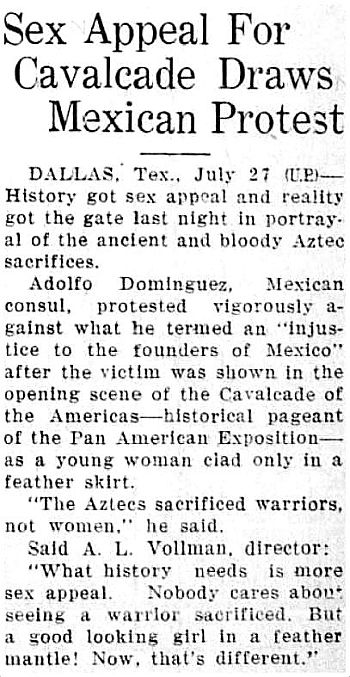
Señor Dominguez was not amused by this sexed-up revamping and protested. A. L. Vollman, the Cavalcade’s producer-director pooh-poohed the diplomat’s protestations and responded in true impresario fashion: “What history needs is more sex appeal.” That didn’t go over particularly well with the consul, who thought he’d already dealt with the problem weeks before. (Click to see larger image.)
aztec_waxahachie-daily-light_072737Waxahachie Daily Light, July 27, 1937

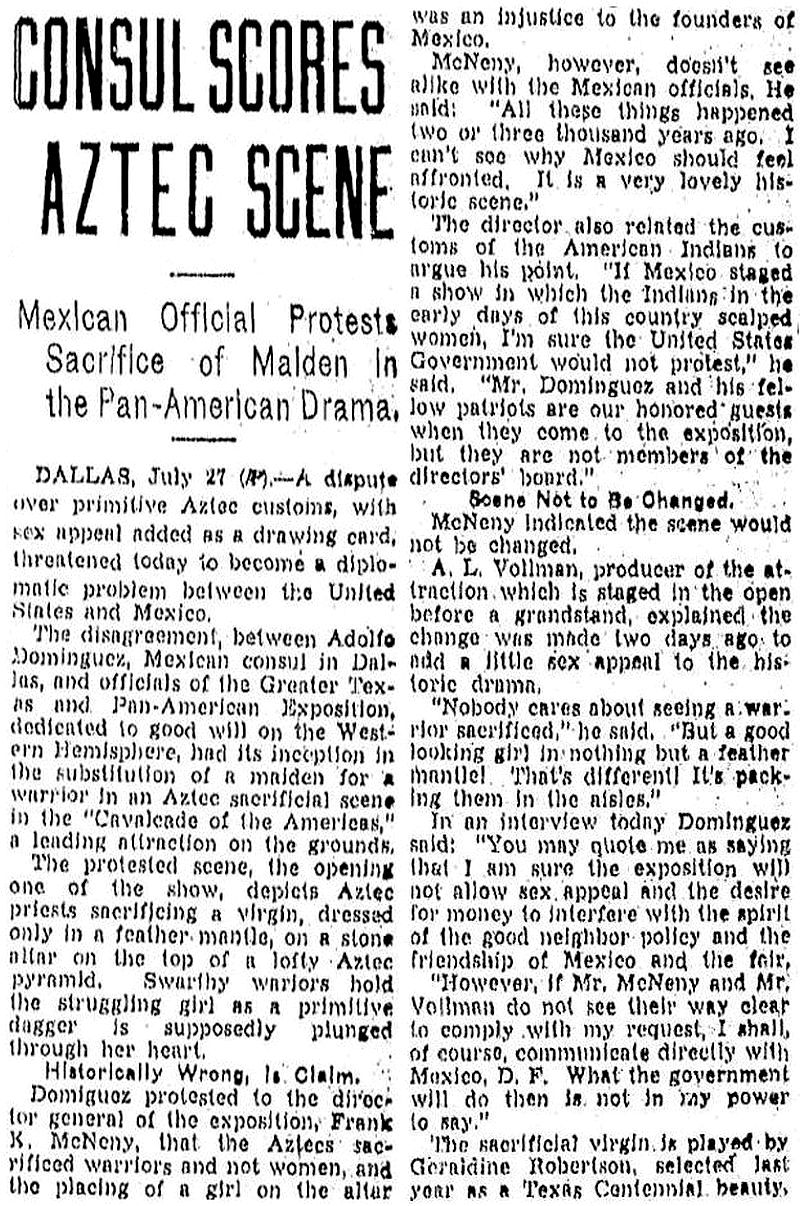
Dominguez complained to Frank K. McNeny, Director General of the Exposition, saying that the scene was historically inaccurate and was an injustice to the founders of Mexico. McNeny disagreed, saying that the scene involving the plunging of a dagger into the breast of a sacrificial virgin was “a very lovely historic scene.” He declined to bring back the warrior, because, as Vollman noted, the revamping had increased attendance: “It’s packing them in the aisles.” An exasperated Dominguez said that if the change from maiden back to warrior was not made, he would take the matter to the Mexican government.
aztec_FWST_072837FWST, July 28, 1937

At this point, a disagreement over the gender of a character in what was, basically, an oversized school history pageant was dangerously close to setting off an international incident. It was also causing embarrassment for local civic leaders who were looking upon the Exposition as a major marketing tool for the city as well as a symbolic display of Pan-American solidarity and goodwill. Can’t we all just get along, amigo?

The refusal of the Cavalcade to UN-revamp the show did not deter the Mexican Consul who, by now, was probably more het-up than ever. Dominguez decided to go over McNeny’s head. He pulled out the written agreement he had made with fair officials back in the spring — which clearly stated that a male warrior and NOT a young woman would feature in the theatrical human sacrifice — and he took it to the top man, State Fair president Fred F. Florence. Florence discussed the matter with his board of directors who voted “to a man” to uphold the original agreement.

The warrior would be reinstated as the writhing victim on the bloody sacrificial stone. The sexy maiden would have to hand over the 30-foot-long robe, which had been made from 9,000 feathers and which had trailed behind her as she was carried up the great pyramid at Tenochtitlán. The actor playing the warrior was probably happy to get back in the spotlight. Geraldine Robertson, the virgin who had trailed that robe, was relegated to a role as a daughter of Montezuma.

Presumably the dagger kept plunging into the flailing warrior’s heart twice nightly for the remainder of the show’s run, and the memory of that short-lived international squabble was quickly forgotten (…until now).

And they all lived happily ever after. / Vieron felices por siempre.
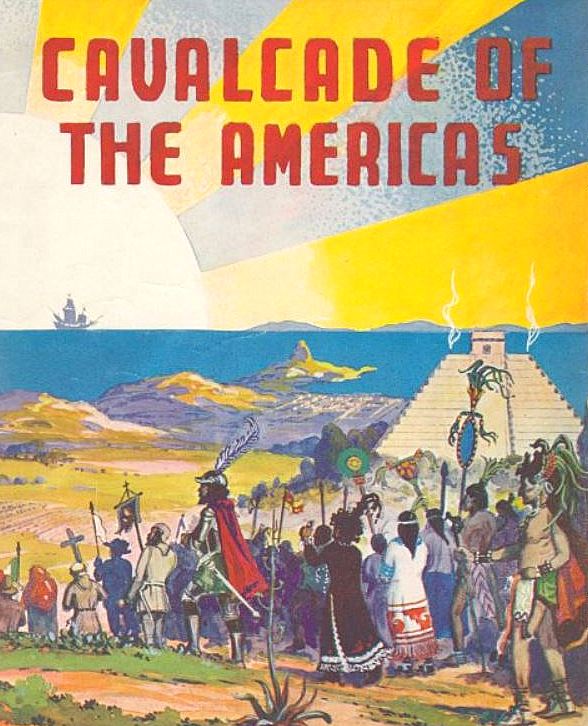
panamerican_cavalcade_watermelon-kid

*

Hey! If you’ve read this far, here’s a little reward. A Universal Newsreel titled “Pan-American Exposition Is Opened For 1937, Dallas, Tex.” — which contains 20 whole seconds of the Aztec (warrior) scene!  — can be viewed on the T.A.M.I. (Texas Archive of the Moving Image) site, HERE. The entire short newsreel is interesting (sadly, it has no sound), but if you want to jump to the sacrifice scene, it begins at the :49 mark. (If you’re watching on your desktop, make sure to click the little square just to the left of the speaker icon beneath the viewing area to watch it full-screen.
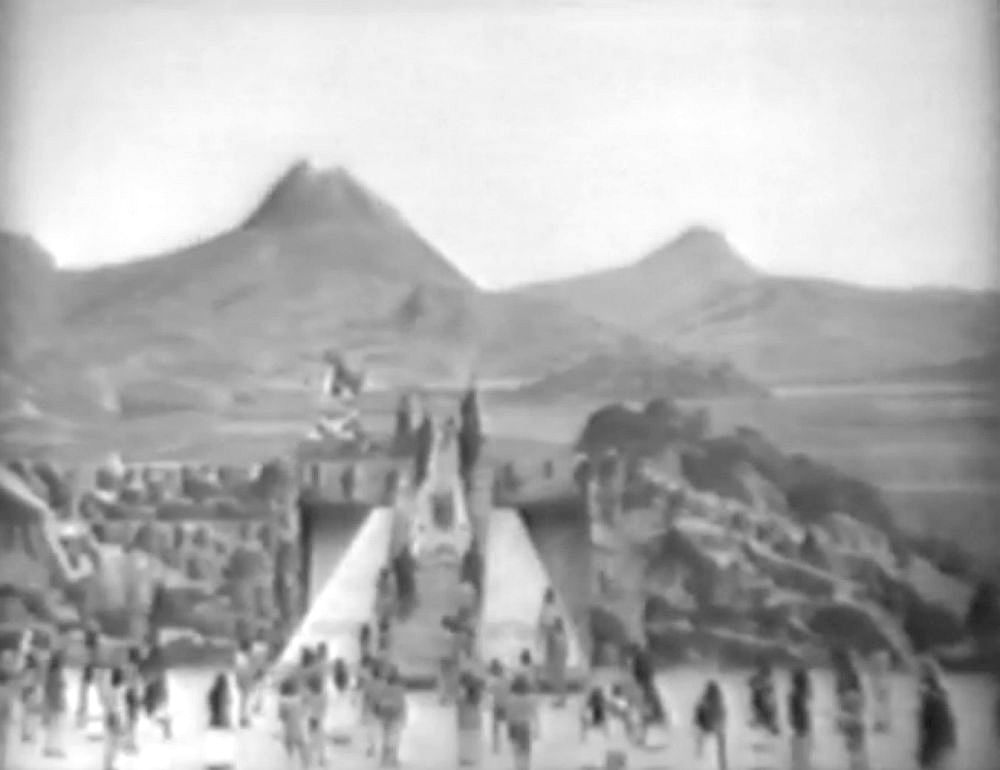
aztec_newsreelSuper-grainy screenshot from the Universal newsreel, 1937

***

Sources & Notes

Postcards of the Pan-American Exposition are from “the internet.”

Color souvenir program image from the Watermelon Kid site; background on the Pan-American Exposition can be found on the same site, here.

All other clippings as noted.

Related Dallas Morning News articles:

  • “As Sacrificial Virgin, Star of Cavalcade Put In Showy Opening Act” (DMN, July 26, 1937)
  • “Cavalcade Dispute Is Won by Consul As Virgin Is Replaced” (DMN, July 28, 1937)

Below, an interview with Jan Fortune on her Cavalcade of the Americas; it appeared in her hometown newspaper, The Wellington (Texas) Leader on March 18, 1937. She also wrote the Centennial’s big production, Cavalcade of Texas, the previous year, in 1936.
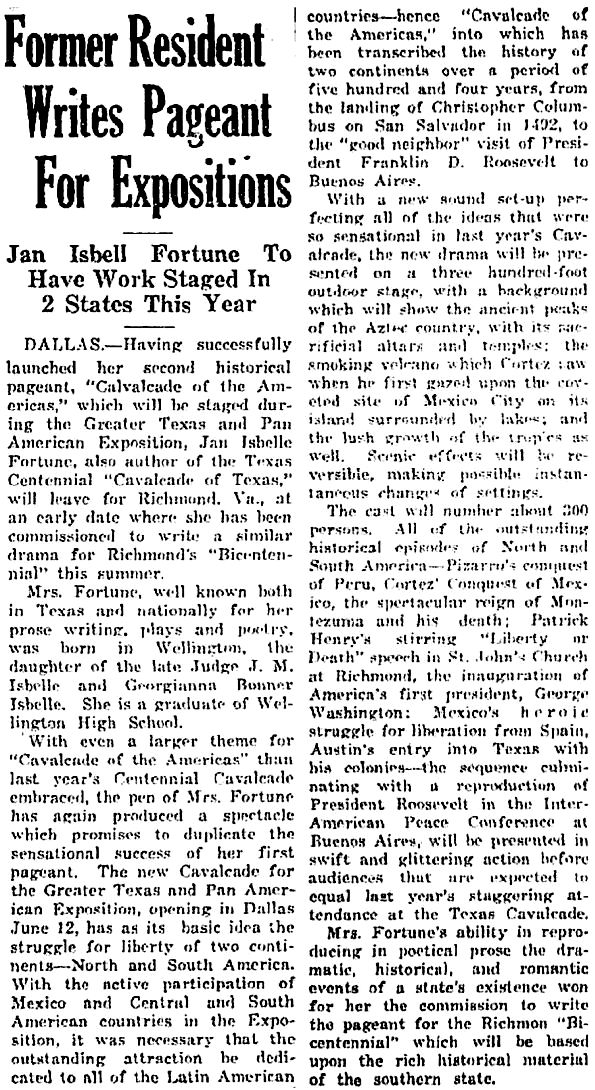
jan-isbell-fortune_wellington-tx-leader_031837

And, speaking of Aztec human sacrifices in DFW (a phrase I don’t believe I’ve ever written…), the following tidbit was contained in an article about Six Flags Over Texas’ 1970 season.
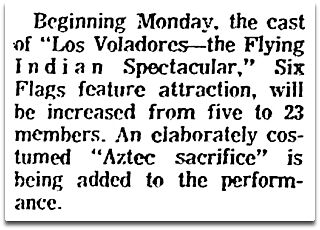
aztec_FWST_052170-six-flagsFWST, May 21, 1970

Promotional material about Los Voladores — a group of aerialists from Mexico — informs us that in their show “a beautiful maiden’s life is given as tribute to Tlaloc, the rain god.” Those beautiful maidens can’t catch a break. Sorry, Adolfo.

*

Copyright © 2015 Paula Bosse. All Rights Reserved.

“A Day at the State Fair of Texas” — A Color Film of the 1941 Fair

title-cardOfficial SFOT-produced movie (via Texas Archive of the Moving Image)

by Paula Bosse

TAMI — Texas Archive of the Moving Image — is a great repository of old films shot in and around Texas. Its site boasts streaming newsreels, PSAs, commercials, home movies, etc. — one of these films is the 11-minute short “A Day at the State Fair,” an “official” film produced by the Jameson Film Co. of Dallas for the State Fair of Texas, directed by Curt Beck and starring two young local actors, Charmayne Smith and Harry Bleeker. The SFOT made these short movies primarily to promote the fair, and they were often shown in theaters around Texas and in neighboring states, sandwiched between other cinematic entertainment. They were also used for educational purposes and were shown to both students and civic groups. This official film was shot at the 1941 state fair for the purpose of promoting the fair the next year, but it may actually never have been shown anywhere, as the 1942 State Fair of Texas was cancelled “due to war.”

I am unable to embed the film here — to view it in its entirety on the TAMI site, click here. (Make sure to click the “full screen” square just to the left of the speaker icon below the frame.)

Below are some (admittedly grainy) screenshots from the film. It’s fun to see these pre-War shots of the fair in color (inconsistent though that color is). Click pictures for larger images.

*

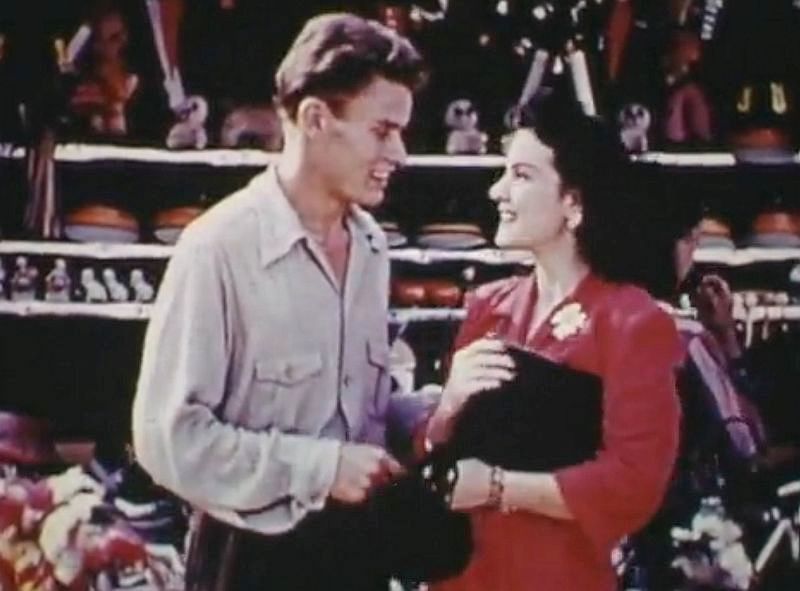
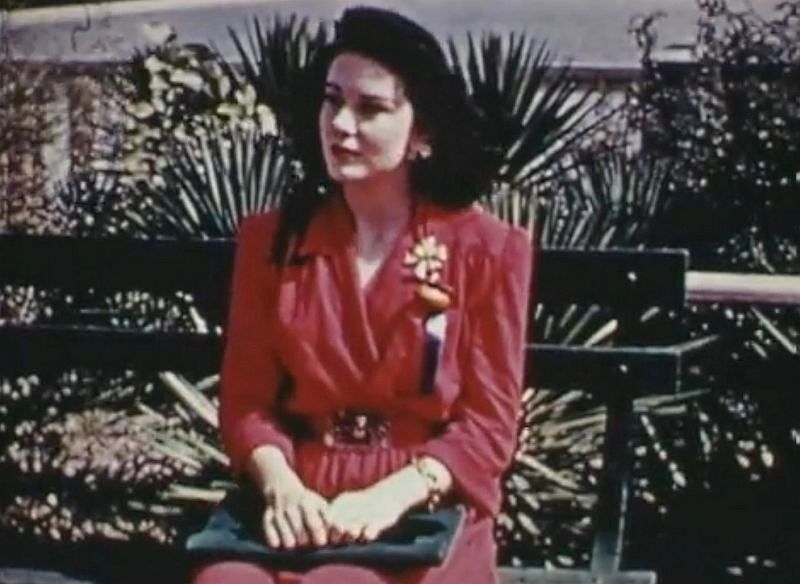
The film follows two young people who meet on a blind date and tour the fair. The young woman was played by Charmayne Smith, a Forest High School graduate who became both Miss Dallas and Miss Texas, and, at the time of this film, was studying acting at the Dallas Little Theater.

charmayne

Her date was played by Harry Bleeker, also an actor with the Dallas Little Theater. (I like the peek at Parry Ave. in the background.)

harry-bleeker

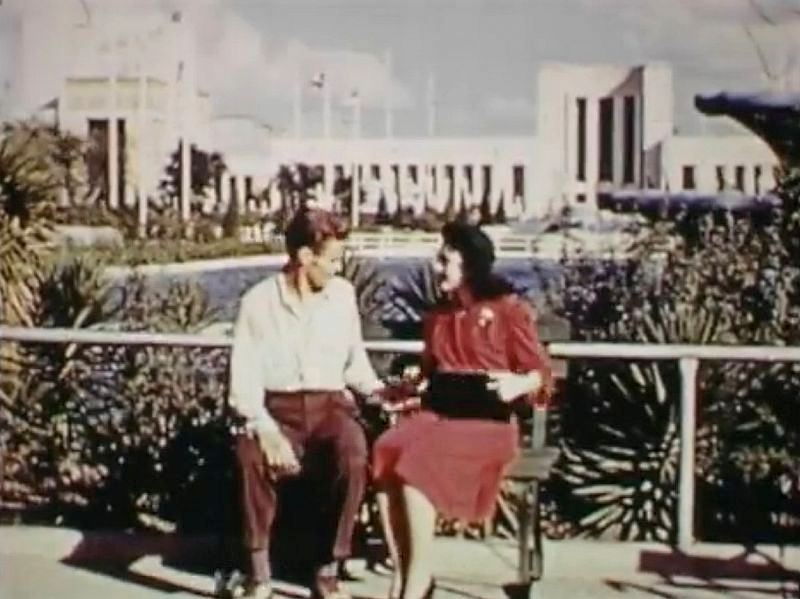
They “met cute” at a Fair Park bench.

bench

They went to the Midway.

midway

They looked at rides and made pithy observations.

rocket

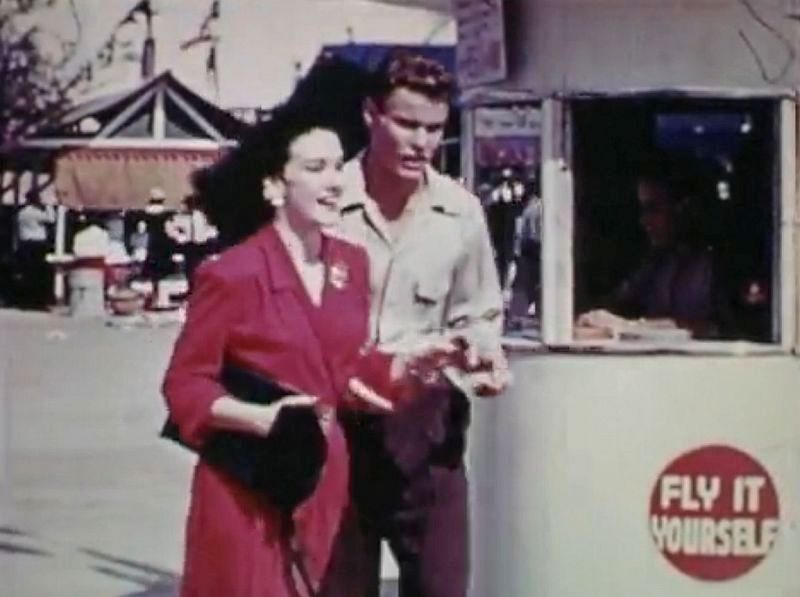
They bought tickets to an “aeroplane” ride, a ride so exciting it made Charmayne go “Whee!”

tickets

They listened to a freak show barker.

freak-show

Which, the closer you got, didn’t look all that freak-filled, unless you count the sight of a sullen girl holding a snake as being terribly “strange and unusual.” (I’m a sucker for sideshow banners, and this was my favorite shot of the film. The man in the crowd who has turned around to face the camera is more unsettling than anything on that stage — including the accordion!)

freak-show_1941-state-fair-of-texas

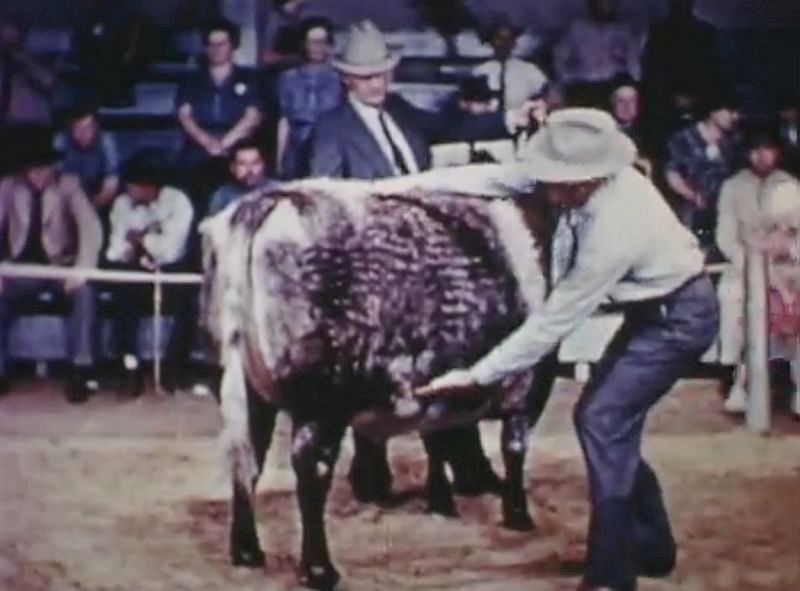
Harry and Charmayne went in and out of buildings, looked at different exhibits, rattled off facts-a-plenty, and extolled the greatness of Texas. And no way were they going to miss the livestock events. A state fair’s gotta have livestock. Like this almost perfectly rectangular Beef Shorthorn.

beef-shorthorn

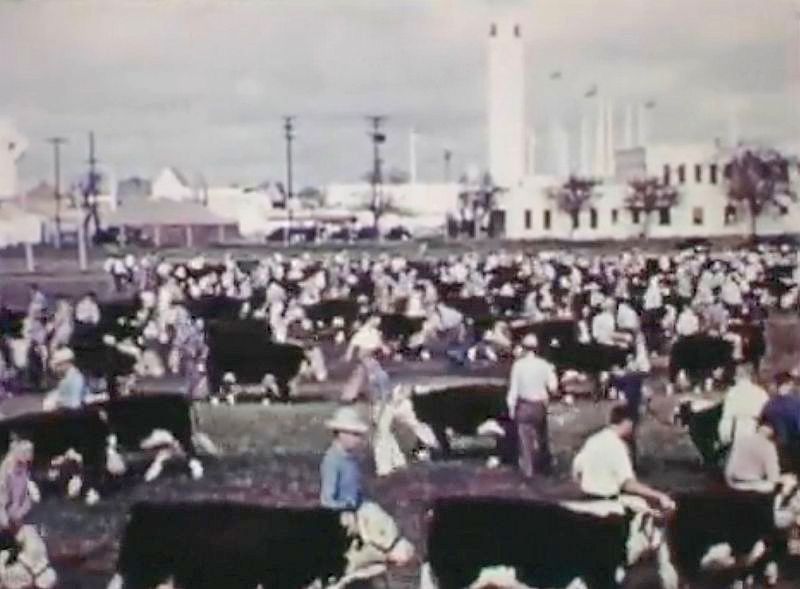
And these parading Herefords.

herefords

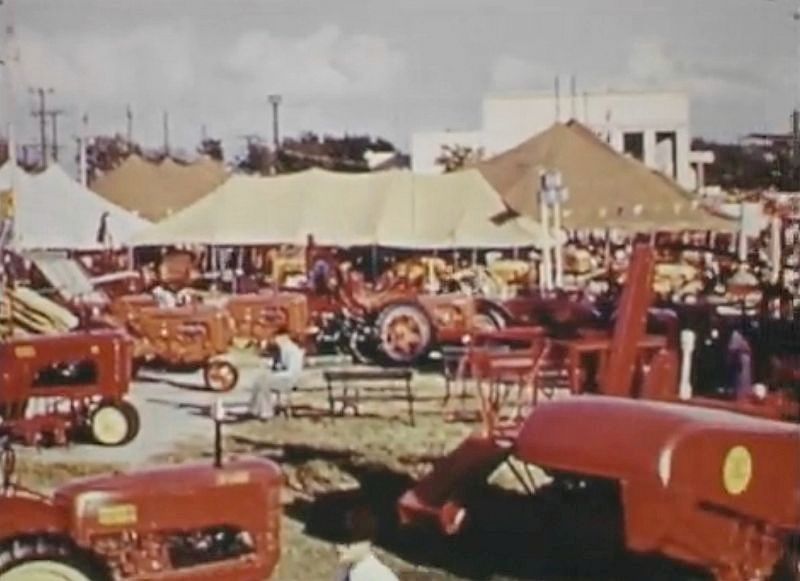
Also seen: tractors, tractors, tractors.

tractors

They took in a “petroleum exhibit” and exclaimed how fabulous it was. (In real life, Charmayne Smith and Harry Bleeker and other Dallas Little Theater actors were part of this exhibit during the 1941 fair.) If only this little car were real and had been seen at the automobile show!

petroleum-exhibit

They moseyed through the Dallas Museum of Fine Arts and viewed the art in the Texas General Exhibition. (Eugene Trentham’s cloud-filled painting, “August Landscape” — winner of the year’s top prize —  can be seen here.)

dmfa

Then, tuckered out, Charmayne tells Harry it’s probably time that she should head home. Harry offers to drive her home and suggests they return that night for more fair fun!

harry-charmayne

They leave, happy, headed for Parry Ave. (and, perhaps, whiskey, across the street).

parry

*

This wasn’t all that Harry and Charmayne saw. There was also a monkey, goats, sheep, horses, the Ice Capades, a beauty contest, jars and jars of preserved fruit, a lady handing out Hi-Ho crackers, the Hall of State, and more. Watch the film. It’s great to see 70-plus-year-old footage of Fair Park — and it’s also nice to hear people talk with Texas accents (something getting rarer every day in Dallas). Again, you can watch the film here.

***

Sources & Notes

The TAMI home page is here; the page featuring this short film is here. Thank you, TAMI, for uploading and sharing this and all the other cool stuff on your site! (The film is currently identified as being made in 1939, but everything points to this being filmed at the 1941 State Fair of Texas.)

These SFOT-produced films were an important promotional tool to entice visitors to the fair. In the months leading up to the opening of the SFOT, these films were shown in hundreds of Texas movie theaters, in theaters in contiguous states, and in thousands of schools throughout the Southwest.

Charmayne Smith (1921-1965) entered and won a lot of beauty contests while in high school and during her time at both the University of Texas and at SMU. An Oct. 12, 1941 captioned photo of Miss Smith mentions that she had been participating in the filming of (color) footage shot around the 1941 SFOT which would be used “for educational and promotion purposes before next year’s exposition.”

I was unable to find anything about Harry Bleeker, other than a mention in a 1941 Dallas Morning News article about the petroleum exhibit seen in the film. Chances are pretty high he served in World War II.

In the film, Charmayne and Harry visit the Third Texas General Exhibition (1941) at the Dallas Museum of Fine Arts. The grand prize in the oil painting division went to Eugene Trentham, a UT art instructor at the time, fresh off a Guggenheim Fellowship.

Click pictures for larger images!

*

Copyright © 2015 Paula Bosse. All Rights Reserved.
 

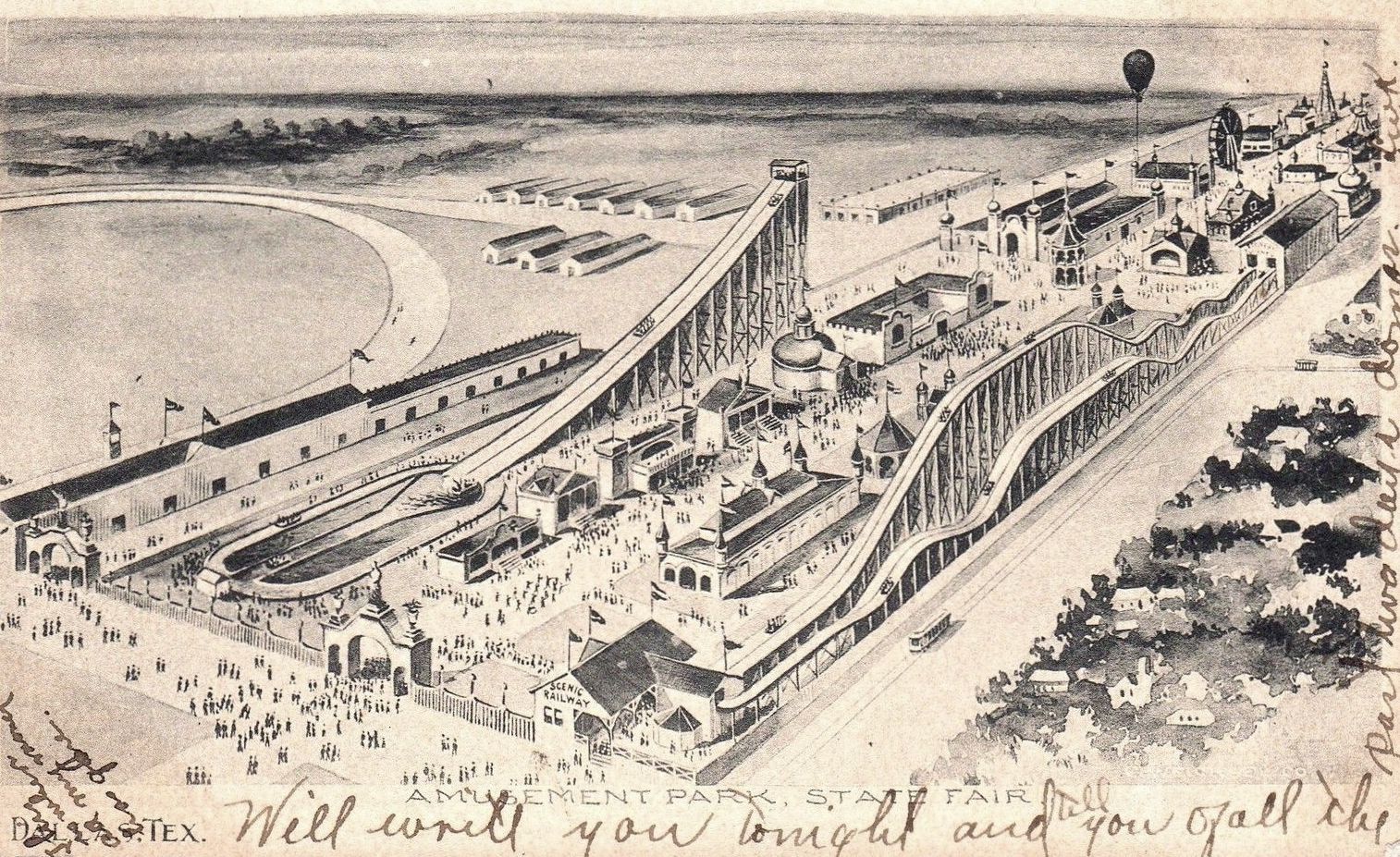
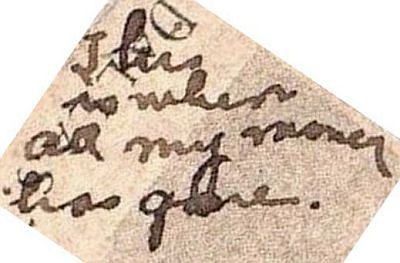
The State Fair of Texas: “This Is Where All My Money Has Gone”

state-fair_ebay

by Paula Bosse

Today is the last day of the fair. If you haven’t been yet, you should go! Have fun — and watch your moolah drain from your wallet at an alarming rate. It’s a tradition!

state-fair_money

***

Postcard from eBay. Click it to see a REALLY  BIG image!

*

Copyright © 2015 Paula Bosse. All Rights Reserved.

“The Fair Is In the Air — Let’s Go!”

state-fair_1923Look at this 1923 typeface!

by Paula Bosse

Here we are again in the final days of another State Fair of Texas. Why not take a look at a few random images of the fair over the years. (Click pictures for larger images.)

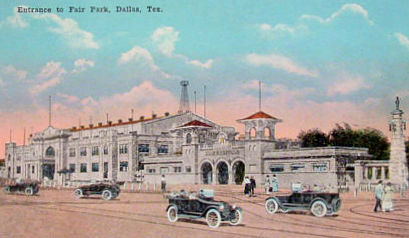
First, from 1900, the entrance to the fairgrounds. (It appears to be the same view as the top postcard seen in a previous post, here, just a few steps inside the archway.)

fairgrounds-main-entrance_bohemian_1900_fwplFort Worth Public Library

*

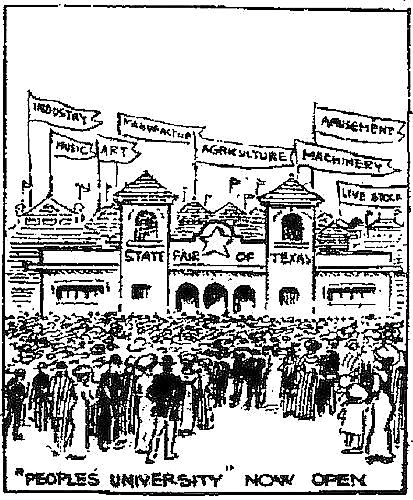
A cartoon from The Dallas Morning News in 1912 — “The People’s University.” Remember, it’s not just about Ferris wheels and candy apples.

state-fair_dmn_102012-cartoonDMN, Oct. 20, 1912

*

1921. Don’t miss The Whip.

state-fair_1921

*

From the Texas Centennial in 1936, a shot of a remarkably spotless Midway. (Am I the only one who would have paid to see the “28-Ft. Monster” do battle with whatever freakish specimens were ensconced within the walls of the Ripley’s Believe It Or Not building?)

tx-centennial-midway_1936_ebay

*

During World War II, no fair was held between 1942 and 1945. “Not until the boys come home, will there be another State Fair of Texas.”

state-fair_wwii_tx-almanac_1945-46

*

By the ’50s, everything was back to normal. Big Tex had arrived, and this ad promises “She’s a LULU in ’52.” Martin & Lewis and whatever a Thrillcade was!

state-fair_dmn_092552_lg

*

And, lastly, an aerial view of the Midway from 1966. Now this IS all Ferris wheels and candy apples. (To watch a short collection of color footage from the damp 1967 SFOT — including a sad, rainy parade downtown — click here.)

state-fair_1966_UNTUniversity of North Texas

***

Sources & Notes

1900 photo of the entrance to the fair is from The Bohemian magazine (1900) in the collection of the Fort Worth Public Library (those perforations in the photo are the FWPL’s).

1921 photo — I’m afraid I have no source on this one.

1936 postcard of the Centennial Midway is from eBay.

Patriotic WWII ad is from the 1945-1946 Texas Almanac.

Photo of the 1966 Midway is from the University of North Texas University Libraries blog, here.

My previous collection of SFOT photos over the decades appeared in the post “So Sorry Bill, But Albert Is Taking Me To The State Fair of Texas,” here.

Other Flashback Dallas posts on the State Fair of Texas are here; posts specifically on the Texas Centennial are here.

Again … some of these pictures are pretty dang big — when in doubt, click ’em!

*

Copyright © 2015 Paula Bosse. All Rights Reserved.
 

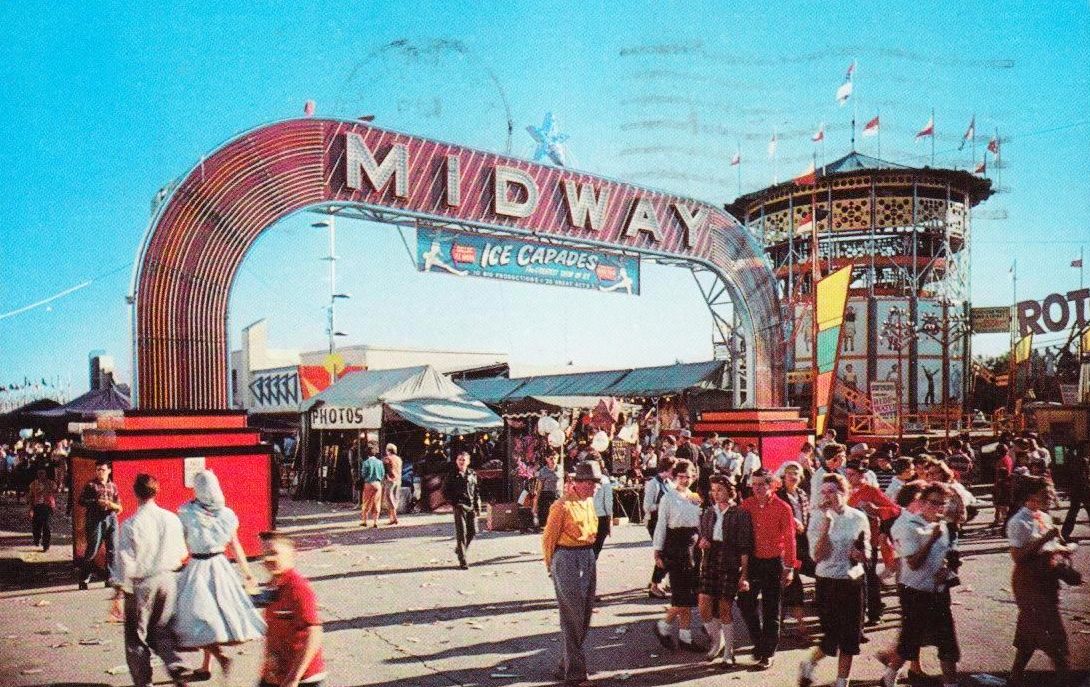
Take a Spin In “The Rotor” at The State Fair of Texas

state-fair-midway_ebayAnother beautiful day at the fair!

by Paula Bosse

Students’ Day at the Fair? There are a lot of unaccompanied kids in that photo eating food on sticks.

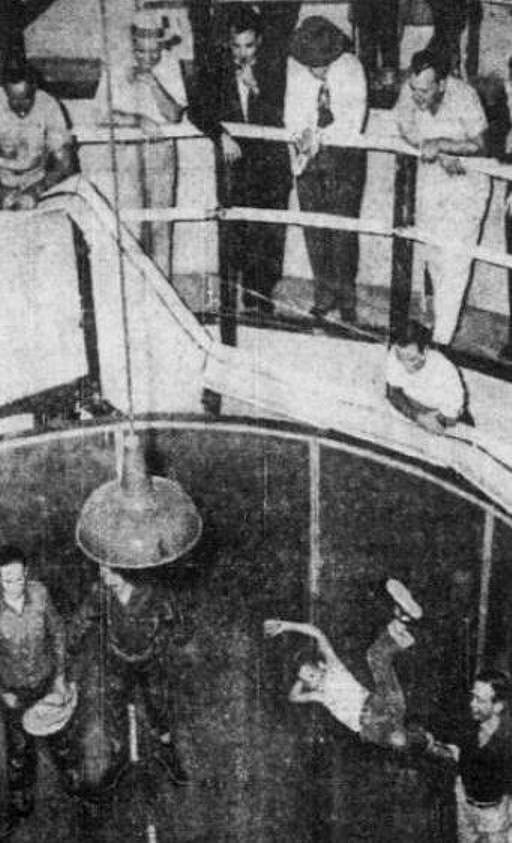
I could be wrong, but I think the round structure to the right of the entrance is The Rotor (part of the sign is visible at the far right). The Rotor resembled a large barrel inside. You’d stand with your back to the curved wall, and then the walls would begin spinning around. Eventually the spinning got faster and you’d be pinned against the wall with centrifugal force as the floor dropped out. …Which could be a big mistake after too many corny dogs and cotton candy.

The Rotor debuted at the State Fair in 1952, imported from England. The British company would be sued later that year by the man who invented the ride, Ernst Hoffmeister. Hoffmeister sued several people who were operating similar rides internationally, but all was resolved by the following year, and the Rotor ride was an extremely popular fixture of the State Fair of Texas midway for many years.

 Below, the ride in action.

rotor_1953

***

Sources & Notes

Postcard from eBay.

For more on this, head to the Dallas Morning News archives and read an interview with the men who brought the Rotor to the State Fair of Texas in the article “‘Bloody Sensation’ — Britons to Supply Ride on State Fair Midway” by Frank X. Tolbert (DMN, Sept. 25, 1952).

*

Copyright © 2015 Paula Bosse. All Rights Reserved


Young Bucks at the Fair — 1915

state-fair_men-touring-car_1915_degolyerRaring to go…

by Paula Bosse

Some of these guys look like they’d be fun to spend a day with at the fair. …Some of them don’t.

***

Sources & Notes

Real photo postcard titled “Men in a touring car with 1915 State Fair of Texas in Dallas banner” is from the Collection of Texas Postcards, DeGolyer Library, Central University Libraries, Southern Methodist University; it can be accessed here.

*

Copyright © 2015 Paula Bosse. All Rights Reserved.

“Clean, Delightful, Refined” — The 1908 State Fair of Texas

ad-1908_sfot_dmn_101508_katzenjammer-castleDon’t miss the Katzenjammer Castle!

by Paula Bosse

As it’s State Fair of Texas time again and I’ve recently reposted the wonderful 1908 panoramic photo of a crowd-filled entrance to Fair Park (seen here), I thought I’d look to see what kinds of attractions that particular fair had to offer.

The 23rd State Fair of Texas was held from October 17 to November 1, 1908. Below are two ads that ran before the opening of the fair, the first one in The Dallas Morning News, the second in The Fort Worth Star-Telegram. The very wordy ad copy is similar in both, but they’re different enough to warrant taking a look at each one (click for larger images).

ad-1908_sfot_dmn_101508-textDMN, Oct. 15, 1908

An excerpt:

The very best features of every species of entertainment, from the Olympian games of old down to the creations and inventions of this year. Our permanent amusements represent an investment of $100,000. In addition to the Scenic Railway, Katzenjammer Castle [pictured at top], Hall of Mirth, Electric Theater, Figure Eight, Laughing Gallery, we have constructed this year the latest in the field of amusement and novelty – the ‘Tickler’ – the most laughable and fun-producing creation yet devised by man. Our Amusement Park an ensemble brilliantly spectacular and educational – a miniature Oriental City as it were. Here will be gathered a grand ethnological congress – Turks, Arabs, Cinghalese, Igorrotes, Bedouins, Turcomen, Japanese and Zulus – the strange peoples of the world, living as they do in their native lands.

Wow. The Hall of Mirth, the Tickler, and a “grand ethnological congress” — it had everything! But, wait — there’s more!

Here’s the ad for Fort Worth:

ad-1908-sfot_FWST_ 101608FWST, Oct. 16, 1908

And an excerpt:

Clean, Delightful, Refined

More than 100 new and superb shows constitute our amusement department. Permanent attractions alone represent an investment of $100,000. A grand aggregation of the latest and most ingenious attractions and revived sensations from all parts of the world. A cosmopolitan gathering of Oriental dancing girls, wrestlers, whirling dervishes, magicians, torture dancers, rough riders of the world, in a strange display of barbaric splendor. Marvelous free attractions, including the great Velaire, in his act “Beyond the Limit.”

Wonderful Exhibitions

Six acres of implement and vehicle displays. Three thousand birds in the poultry department. Over two thousand head of exhibition stock. Magnificent arena program. Agricultural and industrial growth of the state exemplified. Notable display of the handiwork of the women of the South in all departments of home life. Superb art display. Great dog show.

Martial Pyrotechnic Display Thrilling to Thousands.

Barbaric splendor, whirling dervishes, and a “great dog show.” And that mysterious “torture dance” (which I’m sure was “clean, delightful, and refined”).

Here’s one more ad promoting “Fort Worth Day,” which was held as “The Greatest Fair on Earth” was winding down:

ad-1908_sfot_FWST_102808FWST, Oct. 28, 1908

So, lots of interesting stuff was going on. But apparently the thing that people were most excited about was the horse racing (…and the wagering). Back then, people looked forward to the races with the same manic enthusiasm that people today look forward to the fried food. Racing aficionados were such a huge source of SFOT revenue that it seemed only fair they got a brand new grandstand that year.

state-fair_grandstand_dmn_082308DMN, Aug. 23, 1908

state-fair_grandstand_dmn_082308_textDMN, Aug. 23, 1908

There was also a new Grand Gateway at the main entrance to Fair Park, designed by one of Dallas’ most notable early architects, James Edward Flanders (read about him here).

fair-park-entrance_gate_flanders_dmn_052208DMN, May 22, 1908

fair-park-entrance_gate_flanders_dmn_090608DMN, Sept. 6, 1908

You can see it in this detail from the panoramic photo by Henry Clogenson mentioned earlier:

fair-park-entrance_gate_clogenson-photo_1908_loc-det

There was an exhibit of thousands of live bees in a mesh-enclosed apiary.

state-fair_bees_dmn_092908DMN, Sept. 29, 1908

And fireworks. Gotta have fireworks. Somehow they managed to recreate a pyrotechnic display which simulated a Crash at Crush scenario of two locomotives colliding with each other head-on. I’m not quite sure how that worked, but it seems to have been effective. (I’m not a fireworks connoisseur, but this “set-list” is really great.)

fireworks_trains-colliding_dmn_103108DMN, Oct. 31, 1908

fireworks_trains-colliding_dmn_110108DMN, Nov. 1, 1908

I have to say, I’m a big fan of the exhibit that was set up in the new Agricultural Building: three figures of women, each about seven feet tall, one made of rice (from Beaumont), one made of salt (from Grand Saline), and one made of coal (I’m going to guess from somewhere like Thurber),

state-fair_salt_lots-wife_dmn_092408DMN, Sept. 24, 1908

That last sentence:

She will stand in the attitude of looking over her shoulder, and in the direction in which she is represented as looking will be placed paintings of the Cities of the Plain in flames, and the terrified inhabitants making desperate though vain attempts to escape the wrath which they have called down on their stiff necks.

How fun! (When I visited Grand Saline a few years ago, I saw a little cabin in the center of town purported to be made of salt. I was curious, and when no one was looking, I licked it. Yep. Salt. I’m sure I wasn’t the first to have done that, disgusting as it was. But I digress….)

Lastly, my favorite little throwaway factoid mentioned in one of the many endless articles that appeared in the weeks leading up to the opening of the fair was that the walkways were paved with “finely crushed pink granite.”

state-fair_pink-granite_dmn_092708DMN, Sept. 27, 1908

I’d like to have seen that.

***

The photo at the top shows the Katzenjammer Castle, a popular attraction that had appeared the previous year and which sounds like the old German Funhouse (the thing *I* used to look forward to every year). The photo accompanied the ad that appeared in The Dallas Morning News on Oct. 15, 1908 (the first ad posted above). It looks as if it shows part of the Shoot the Chute water ride. (You can see several pictures of this ride, which was right next to that brand new grandstand, in a previous post “The Chute,” here.

*

Copyright © 2015 Paula Bosse. All Rights Reserved.

The Giant Cash Register at the Texas Centennial — 1936

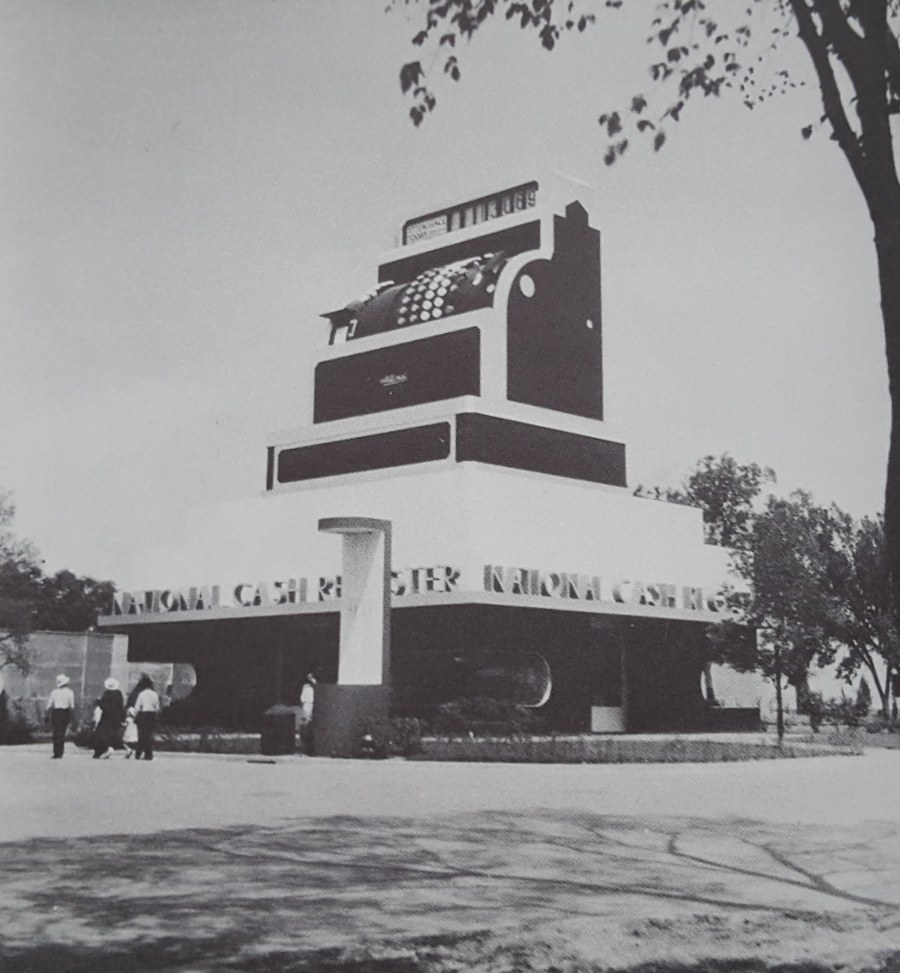
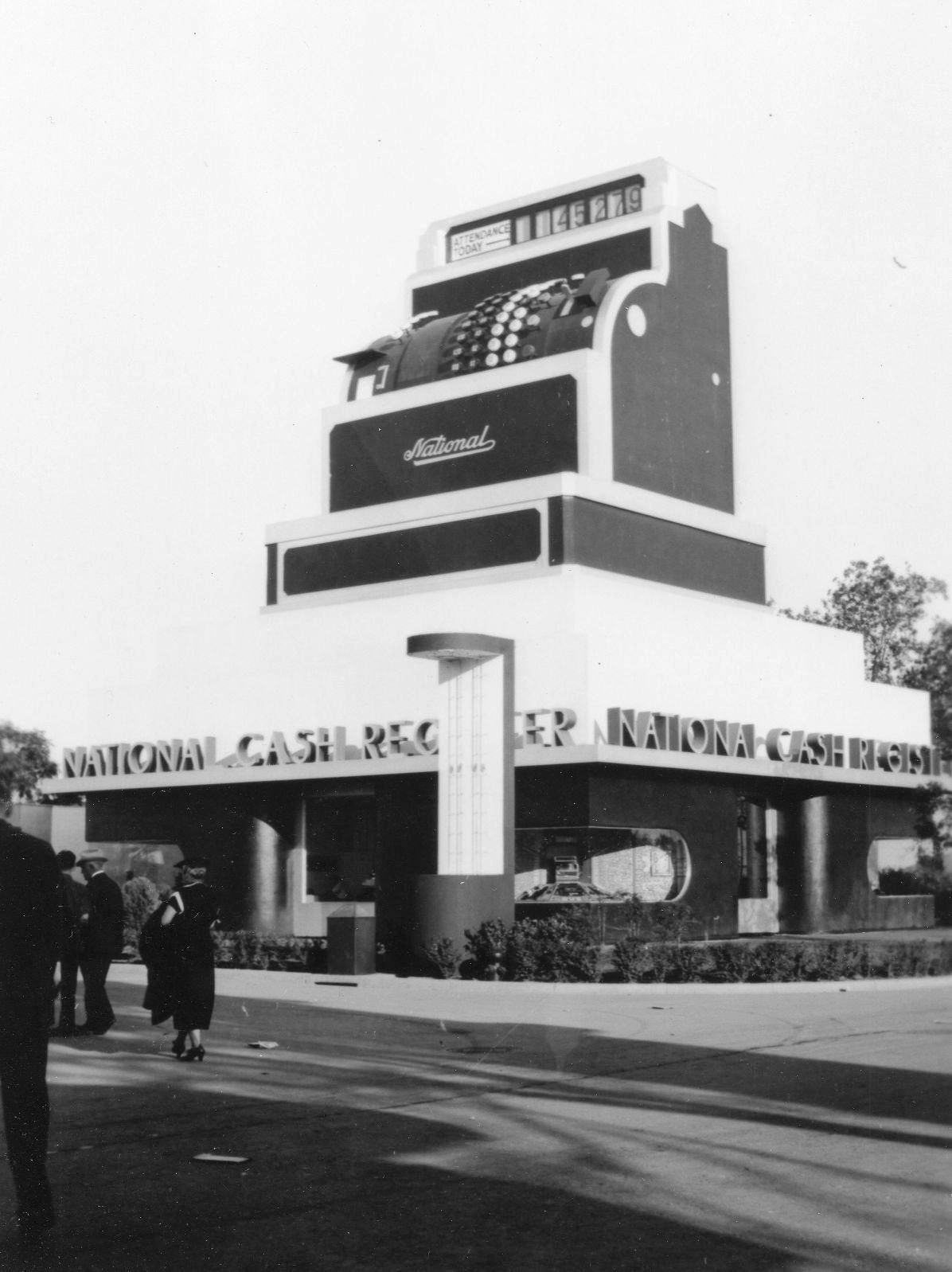
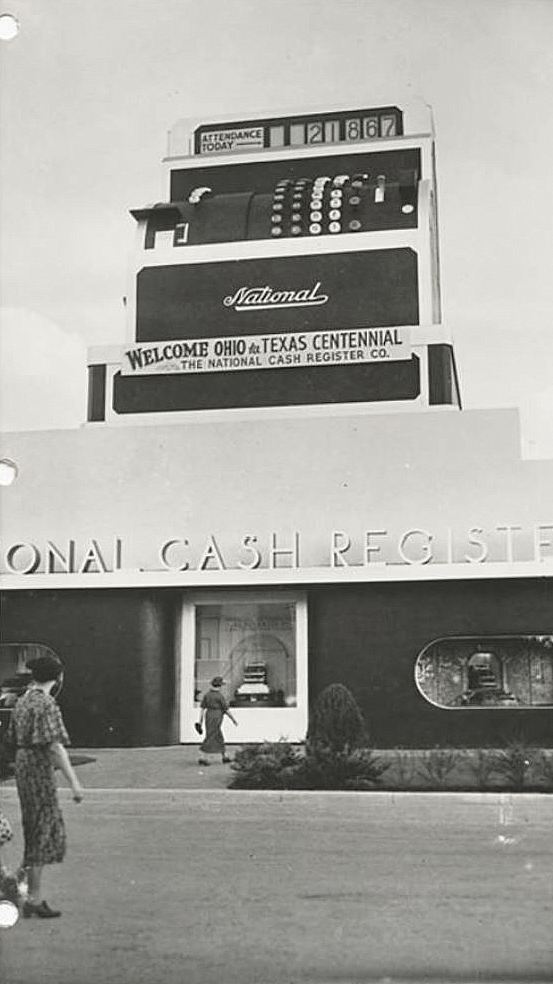
cash-register_ncr_tx-centennial_ragsdaleBefore Big Tex we had Big Till (click for larger image)

by Paula Bosse

What’s not to love about a 65-foot-tall cash register? And how appropriate that this larger-than-life attraction was featured at the bigger-than-big Texas Centennial Exposition at Fair Park in 1936. This building, shaped like a very large National Cash Register (made under the auspices of noted designer Walter Dorwin Teague), served two purposes: its interior was an exhibit space to show off the company’s line of cash registers, and its exterior served as a giant tally board which was updated hourly to display the number of Centennial visitors. A similar giant cash register had been a popular feature at the Chicago World’s Fair in 1933/34, and it was decided to commission one for the Texas Centennial (another one would show up at the New York World’s Fair in 1939).

At the risk of turning into a blog-realized Monty Python sketch (“This is Uncle Ted at the front of the house. This is Uncle Ted at the back of the house. And this is Uncle Ted at the side of the house….”), let’s take a look at this great big cash register from several slightly different angles.

**

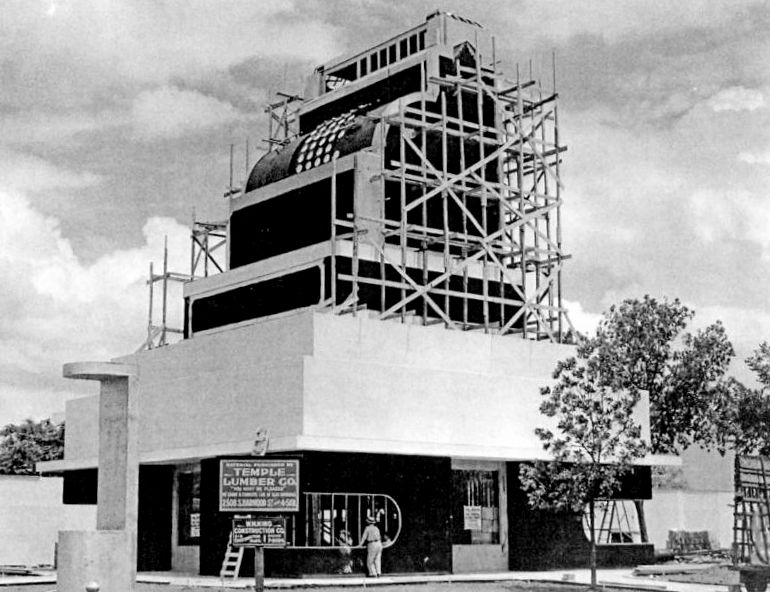
Here it is under construction.

ncr_fair-park_willis-winters_sfot-archives

*

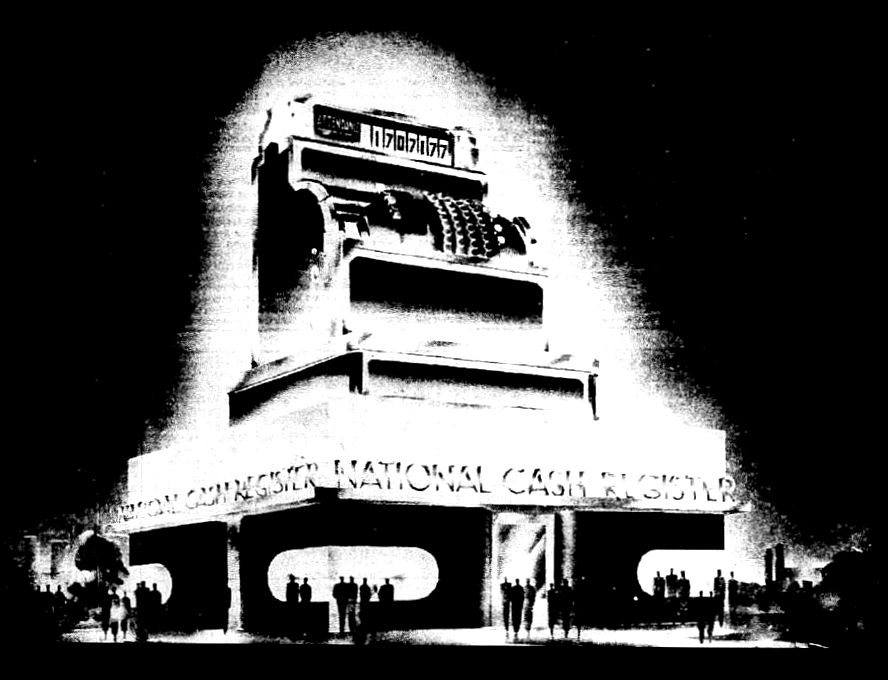
Here it is glowing in an ad with a tantalizingly dynamic illustration (click to see the illustration larger).

ncr_dmn_060736-adJune, 1936

That text?

Towering in the air the height of a six-story building, this is the largest National Cash Register the world has ever seen.

In giant figures at the top of the register Centennial attendance is recorded.

Look for this outstanding feature of the Texas Centennial. See the electrical recording device accumulating the total of all attendance as the turn-stiles click, at each gate.

The huge figures at the top of the giant register tell the whole story of the Centennial attendance. A modern National Cash Register in your store will give you the whole story of what is happening in your business.

*

Here it is in a photo that, admittedly, looks a lot like the top photo — but take a closer look — those shrubs have gotten shrubbier.

cash-register_tx-centennial

*

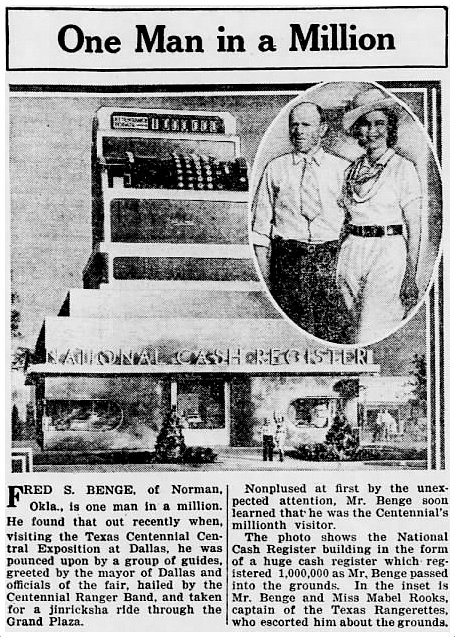
And here it is towering over Mr. Fred S. Benge of Norman, Oklahoma, the Centennial’s millionth visitor. According to the report below, when Mr. Benge passed through the gates into Fair Park on June 25, 1936 (less than three weeks after the opening of the Exposition), the giant cash register numbers flipped over to “1,000,000” and the poor man was “pounced upon” by Centennial officials eager to make a spectacle of the momentous occasion. (In this photo, and two others I’ve seen, Mr. Benge does not look particularly amused at the situation.)

ncr_greenfield-indiana-daily-reporter_080636The Greenfield (Indiana) Daily Reporter, Aug. 6,, 1936

UPDATE: Another photo of a somewhat stoic-looking Benge is here. An entertaining article about Mr. Benge’s big day is here. I sure hope Fred didn’t mind being described as a short and bald-headed jobless mechanic.

*

And here’s the “official photo,” which is a little bland and dowdy, but at least you can see what it looked like head-on.

ncr_tx-centennial

*

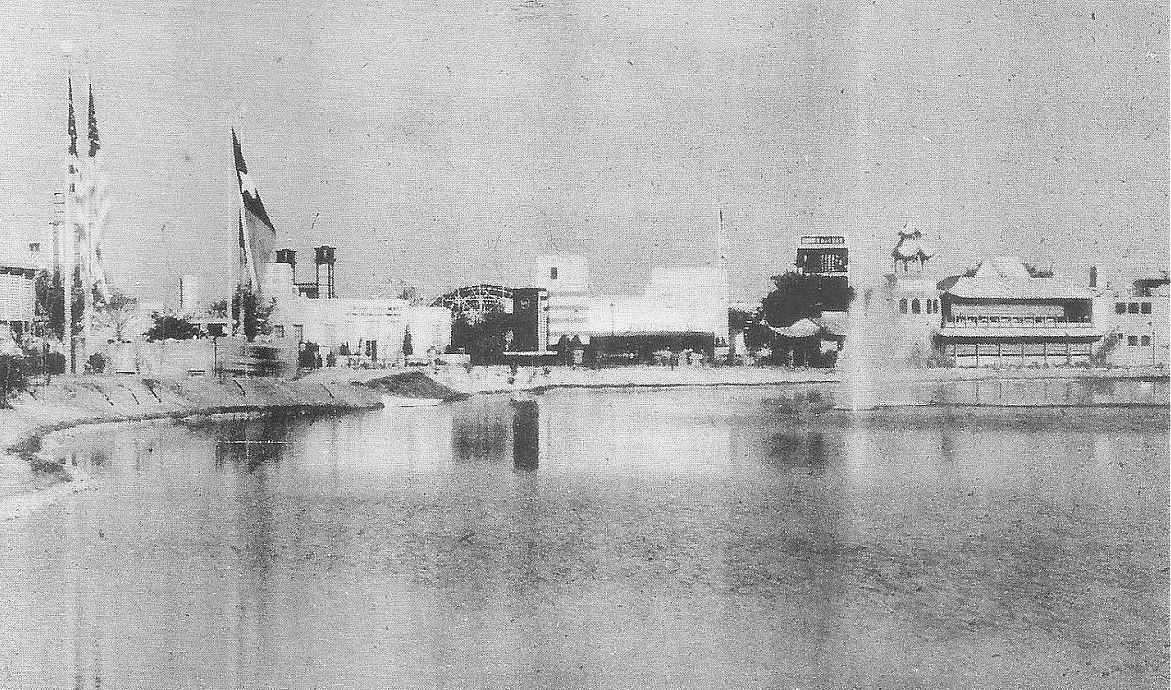
And here it is, as seen from the other side of the lagoon.

tx-centennial_lagoon_cash-register_1936

*

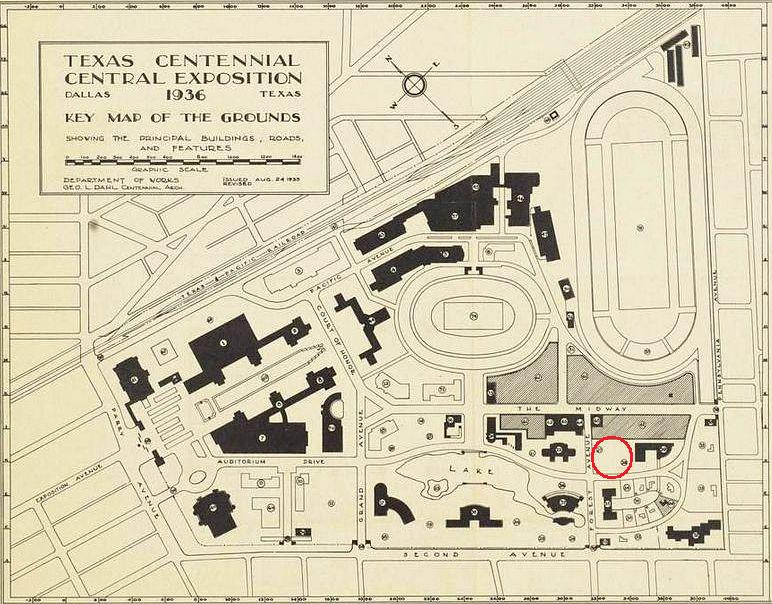
Where exactly was this “six-story cash register” located? I believe it was at San Jacinto/1st Avenue & Forest Avenue (now MLK). I think it might have been one of the two unnamed attractions I’ve circled on the “Key Map of the Grounds.” (See the full unmarked map, from the University of Texas at Arlington, via the Portal to Texas History, here.)

tx-centennial-map_ut-arlington_via-portal

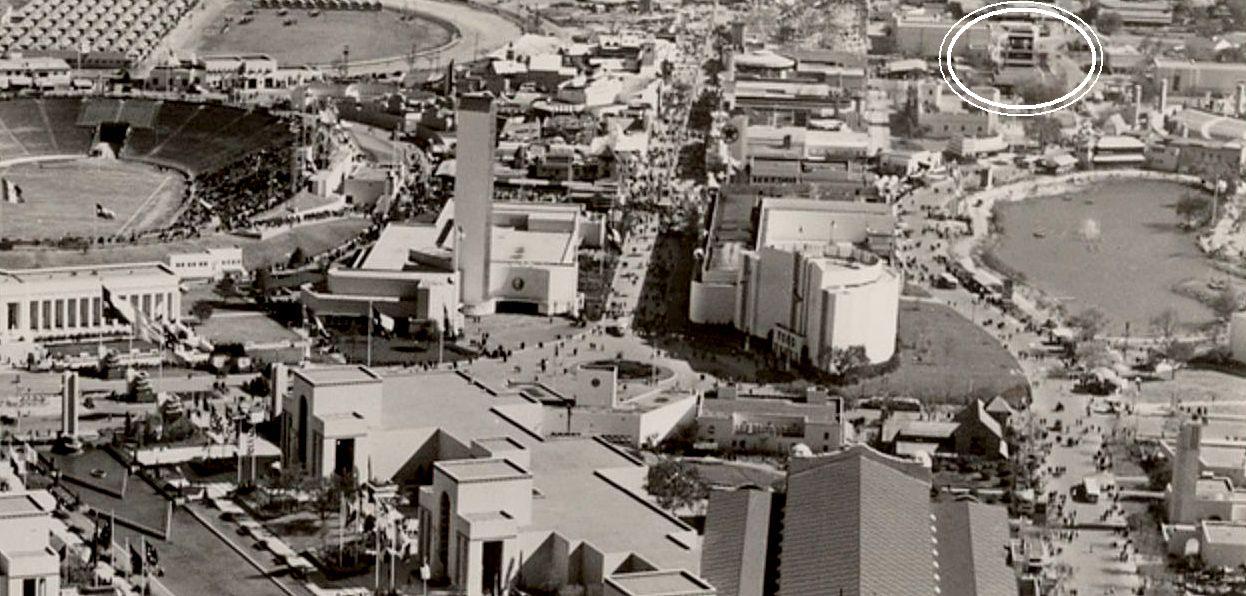
You can see it in a detail from a photo of the Centennial fairgrounds I posted previously (see that post here) — the cash register is circled at the top right.

ncr_centennial-photo-det(click for larger image)

I’ll just keep adding new photos as I come across them. Below are two photos from the George W. Cook Dallas/Texas Image Collection, DeGolyer Library, SMU (info is here and here). One of them shows a family standing in front of it — since Big Tex hadn’t arrived on the scene yet, this was as good a giant “thing” to stand in front of as anything!

tx-centennial_ncr_cook-coll_smu     cash-register_cook-collection_SMU_rau-family_1936

***

Sources & Notes

Top photo is from The Year America Discovered Texas: Centennial ’36 by Kenneth B. Ragsdale (College Station: Texas A&M University Press, 1987); the photograph is from the collection of Texas author Elithe Hamilton Kirkland (Love Is a Wild Assault) who worked as the director of school publicity for the Centennial.

The State Fair of Texas Archives photo of the cash register under construction is from Fair Park by Willis Cecil Winters (Charleston, SC: Arcadia Publishing, 2010). Another photo of the NCR register can be seen in Winters’ book here — in the bottom photo, it is the dark square in the background, left of center — you can see how it towered over everything around it.

The “shrubbier” photo is in the collection of the Dallas Historical Society, but I found it here, not identified as being the one at the Texas Centennial (if you click the picture in this interesting article, it will be super-super-gigantic).

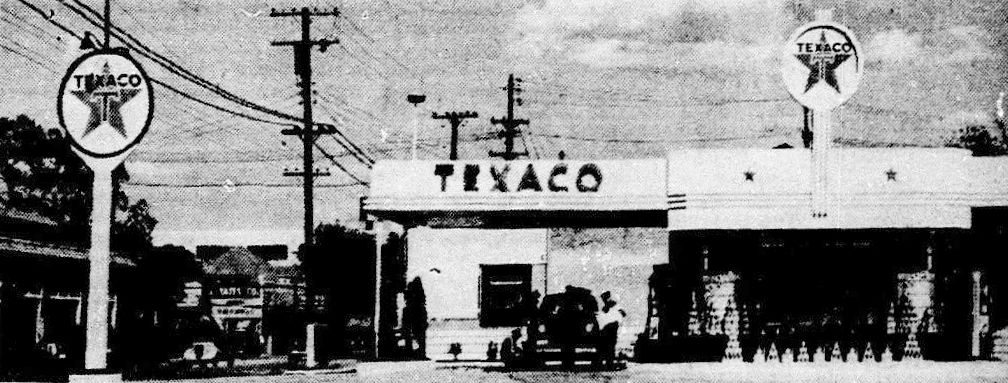
Walter Dorwin Teague (1883-1960) was the man who not only designed the National Cash Register exhibit building, he also designed other Centennial-related attractions, including the Ford Building and the nearby cool-looking new-concept moderne Texaco station (at Commerce & Exposition). Read about  him here.

texaco-station_dmn_080936_designed-teague_centennial_commerce-exposition1936

There were hopes that the Texas Centennial Exposition would attract in excess of ten million visitors over its six-month run, but the final numbers were just under six-and-a-half million. Pity. We had that great big tally machine sitting there and everything. Waiting.

Most pictures larger when clicked.

*

Copyright © 2015 Paula Bosse. All Rights Reserved.
Aerial View of the Centennial Fairgrounds — 1936

fair-park_1936_red-oak-kidThe Texas Centennial: a “World’s Fair” for Dallas

by Paula Bosse

This fantastic photo (by one of Dallas’ top aerial photographers, Lloyd M. Long) shows the impressive expanse of Fair Park’s new Art Deco splendor — most of the buildings seen here were built especially for the 1936 Texas Centennial Exposition, and most of those are, thankfully, still standing.

***

Sources & Notes

Lloyd M. Long photo, found on Red Oak Kid’s Flickr stream, here.

To see this photo REALLY big, click here.

*

Copyright © 2015 Paula Bosse. All Rights Reserved.

“So Sorry, Bill, But Albert is Taking Me to The State Fair of Texas”

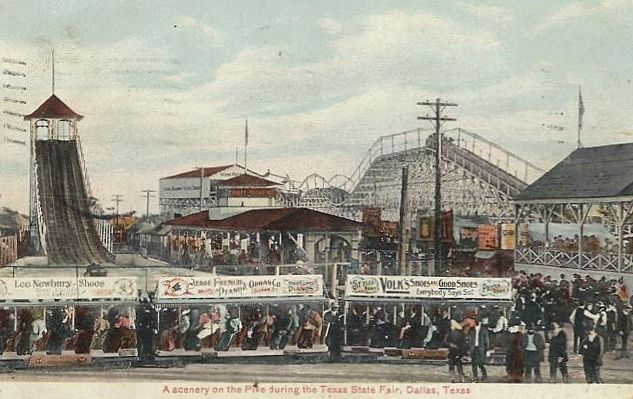
state-fair_1909_flickr“The Pike” — 1909

by Paula Bosse

Hey, y’all — guess what ends this weekend? Hurry!

One doesn’t really need an excuse to post a bunch of photos of the Great State Fair of Texas, but it IS the closing weekend, so why not enjoy a few images from the past few decades.

Above, a view of the Midway in 1909 (then called “The Pike”), with the Log Ride-like “Chute” and its ramp, a roller coaster, and a loaded tram festooned with shoe ads (including one for Volk’s).

Below, the Fair Park entrance in 1919:

fair-park-entrance_1919

A nice little newspaper ad from 1924:

state-fair_092724

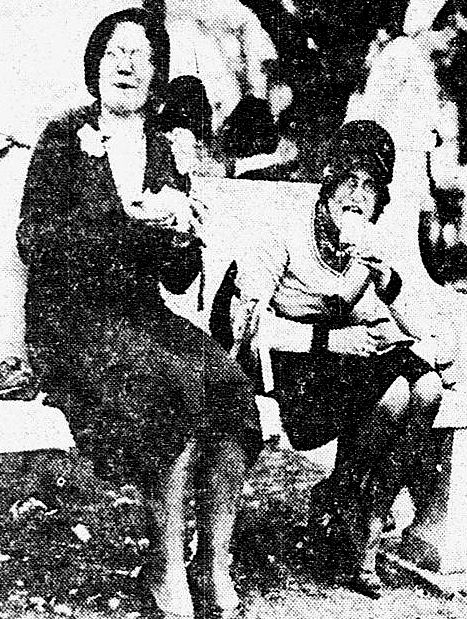
Two women enjoying ice cream in 1930 — State Fair food has always been one of the main joys of visiting the fair.

state-fair_dmn_101530

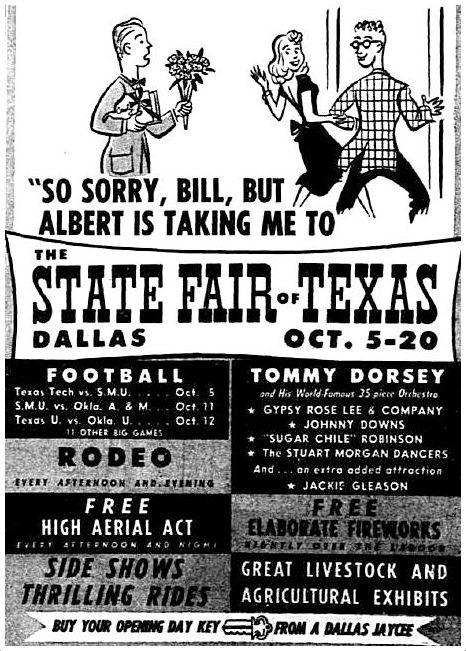
Ad from 1946: “So sorry, Bill, but Albert is taking me to the State Fair of Texas.” The grown-up entertainment that year was provided by Tommy Dorsey, Gypsy Rose Lee, and Jackie Gleason.

state-fair_dmn_092446

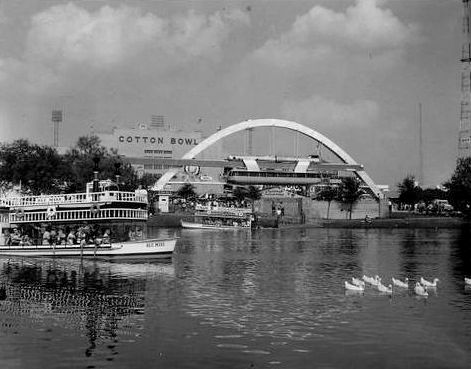
In 1958, Fair Park had a monorail (the only one then operating in the United States) and a paddle-wheeler in the lagoon:

state-fair_lagoon_squire-haskins_dmn-1958

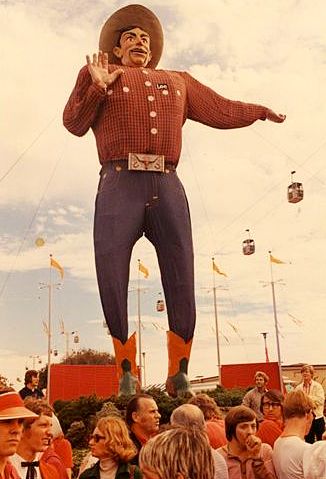
And then there’s this guy, who spans the decades:

big-tex_briscoe-center

***

Sources & Notes

1958 photo featuring the monorail by Squire Haskins, from a Dallas Morning News online article featuring TONS of cool photos of the fair over the years, here.

Big Tex photo (undated) from the Dolph Briscoe Center for American History.

Another post of random images of the SFOT through the decades — “The Fair Is In the Air — Let’s Go!” — is here.

*

Copyright © 2014 Paula Bosse. All Rights Reserved.