Flashback : Dallas

A Miscellany: History, Ads, Pop Culture

Category: Automobile

“Experimental” Bus Trip to White Rock Lake — 1925

white-rock-bus_dmn_071625Next stop: White Rock Lake

by Paula Bosse

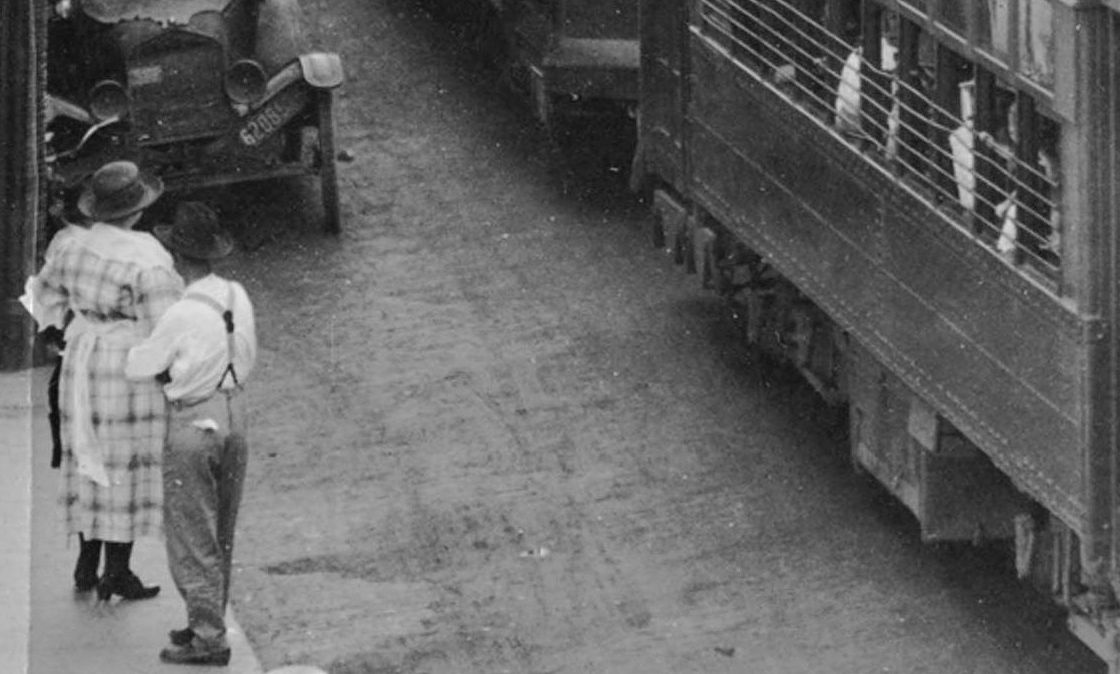
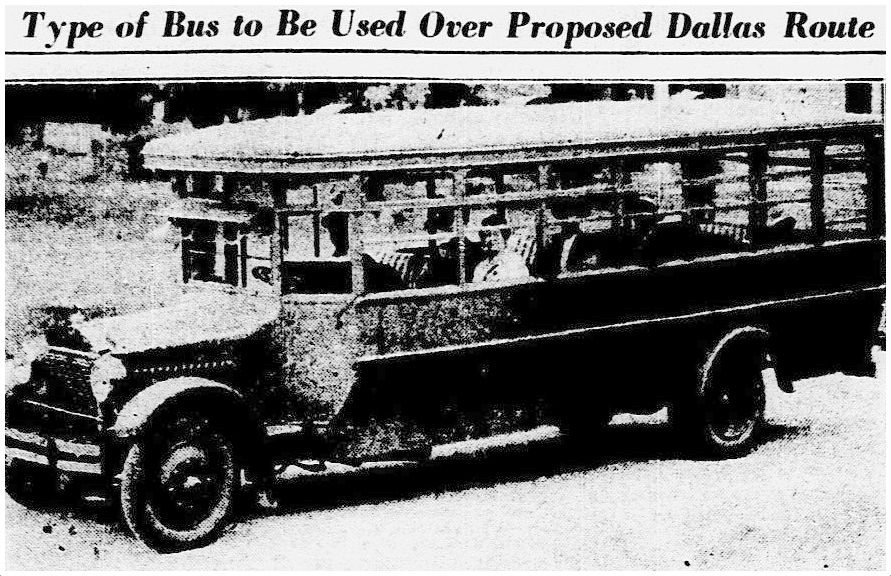
In the 1920s, White Rock Lake was becoming a popular nearby recreation area and beauty spot. It was a bit of a drive to get out there, though. Bus operators were wangling to get the contract to transport tired and pale Dallasites to a nice day out at the lake. The caption accompanying the above photo:

“This city type bus will make an experimental trip to White Rock with city officials, applicants for bus franchise and newspaper men to test adaptability of various routes to bus line operation. Busses [sic] of this type, said C. D. Cain, who has been voted the White Rock franchise informally by the City Commission, will be run on the line when the franchise is formally granted.”

***

Sources & Notes

Photo and caption from The Dallas Morning News, July 16, 1925.

*

Copyright © 2015 Paula Bosse. All Rights Reserved.

Teenagers, Hot-Rods — 1960s

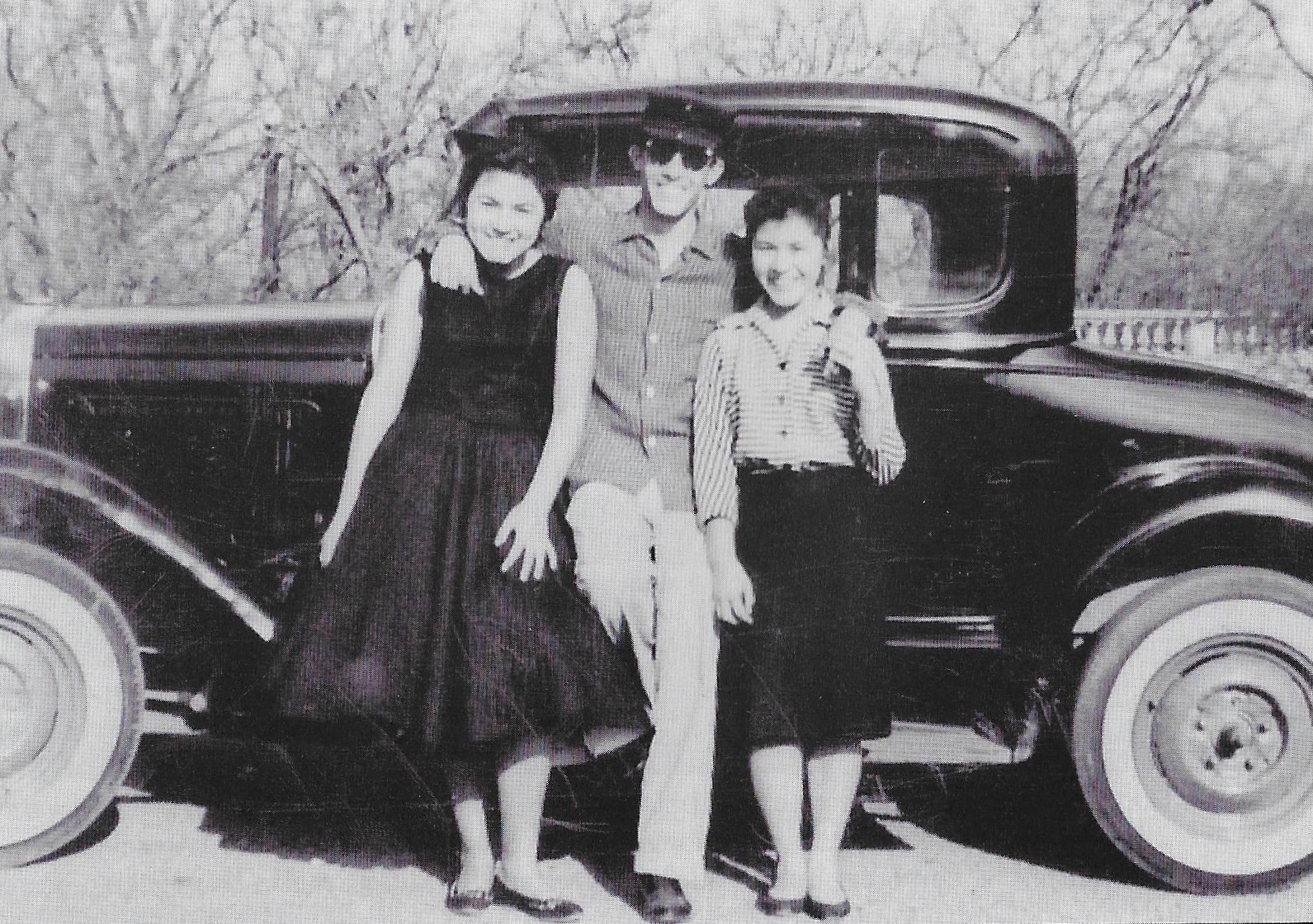
little-mexico_hot-rod_villasana A cool cat and his kittens… (via DMAHL)

by Paula Bosse

Teenagers and hot-rods, man. These kids are cool.

***

Sources & Notes

Photo from the book Dallas’s Little Mexico by Sol Villasana (Charleston, SC: Arcadia Publishing, 2011); photo is credited to Dallas Mexican American Historical League (DMAHL). Caption reads: “These Little Mexico teenagers show off their hot-rod in this 1960s picture. Shown are, from left to right, ? Santos, Rudy Trevino, and Maria Rodriguez.”

*

Copyright © 2015 Paula Bosse. All Rights Reserved.

2222 Ross Avenue: From Packard Dealership to “War School” to Landmark Skyscraper

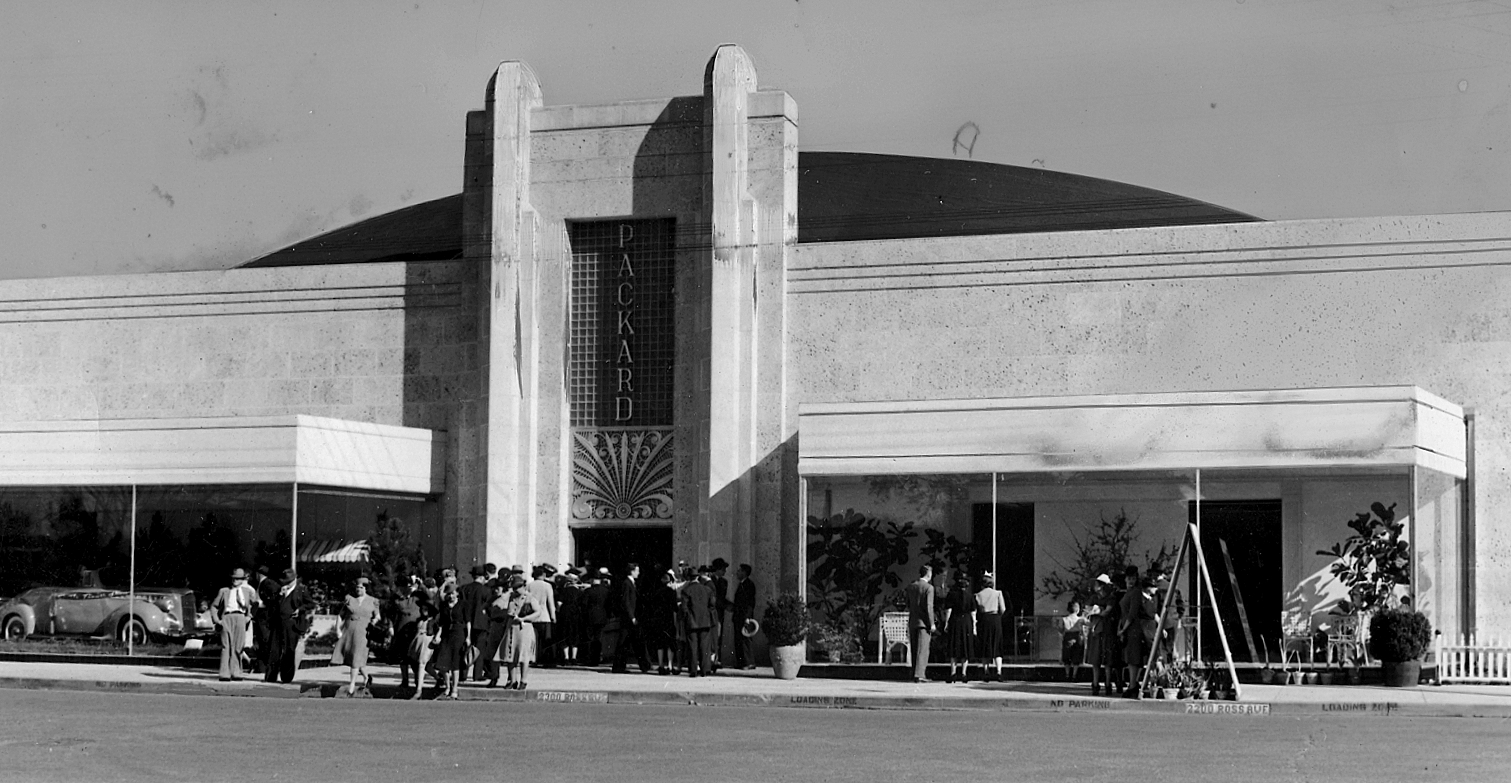
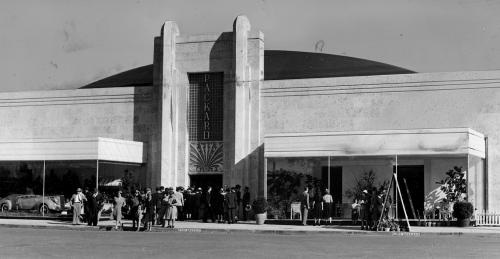
packard-dealership_2222-ross_detroit-pub-lib_1940Packard automobile showplace, 1940

by Paula Bosse

In late summer of 1939, a new 60,000-square-foot. $250,000 home for Packard-Dallas, Inc. featuring a “luxurious showroom” was announced. The first Packard automobile dealership had opened in 1933 at Pacific and Olive, and in the intervening six years, their growth had been tremendous, necessitating several moves and expansions.
packard_ross_rendering_1939

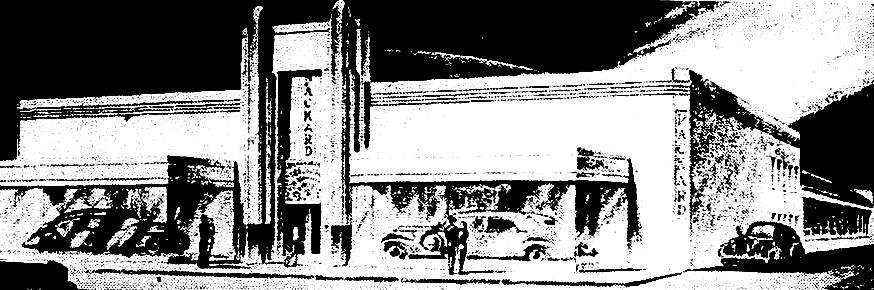
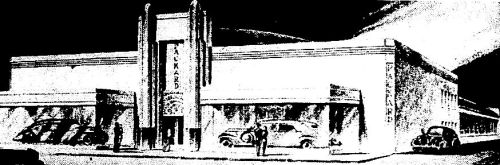
The attractive art deco building, faced with Cordova limestone and decorated with glass bricks, cast aluminum letters, and neon, was designed by J. A. Pitzinger and Roy E. Lane Associates, and was constructed at 2222 Ross Avenue in a mere three months. The large building was right across the street from the Cathedral of the Sacred Heart, in the block bounded by Ross, Crockett, San Jacinto, and N. Pearl. The president of Packard-Dallas was J. A. Eisele and the secretary-treasurer was his son, Horace. The grand opening on Dec. 16, 1939 was a big enough deal that the home-office Detroit honchos flew in, and there was even a 15-minute radio program devoted to it on KRLD.

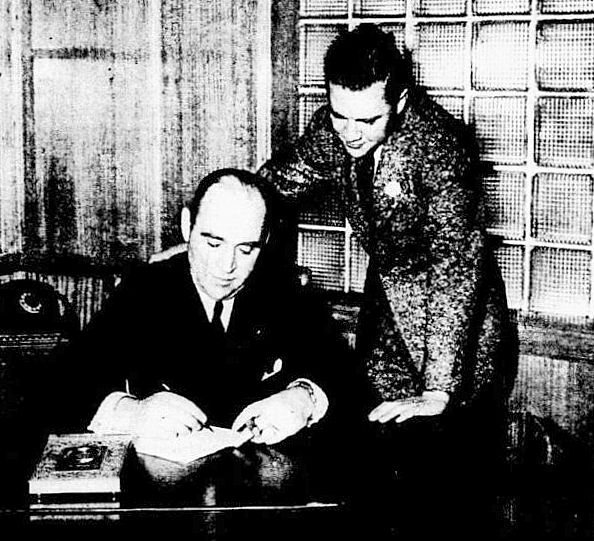
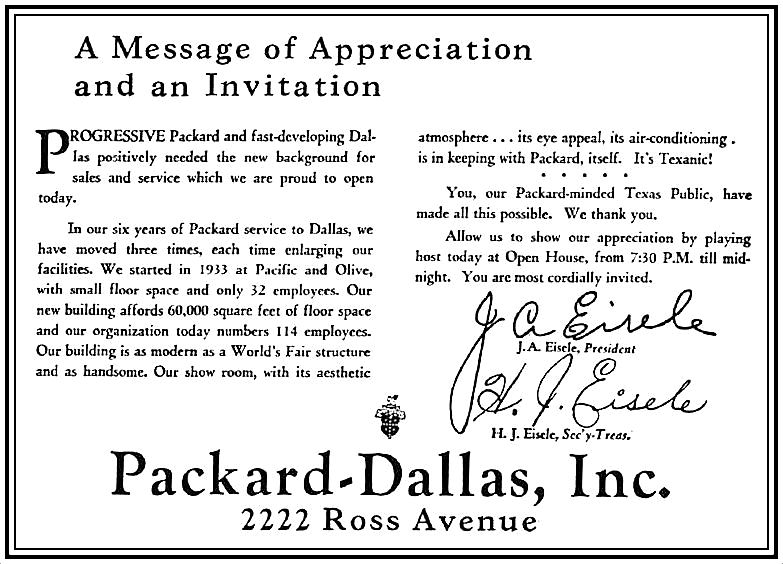
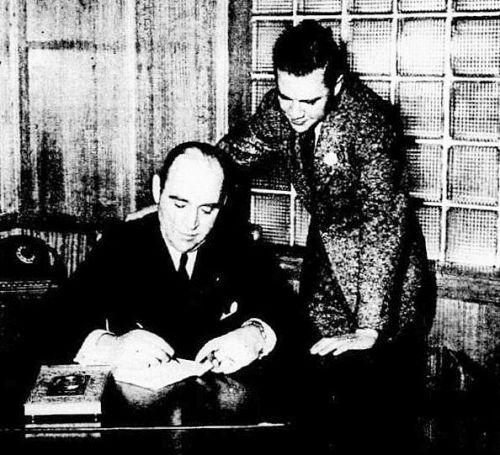
Under the headline “Growing With Dallas,” the opening-day ad featured a photograph of Joe and Horace Eisele and “A Message of Appreciation and an Invitation”:
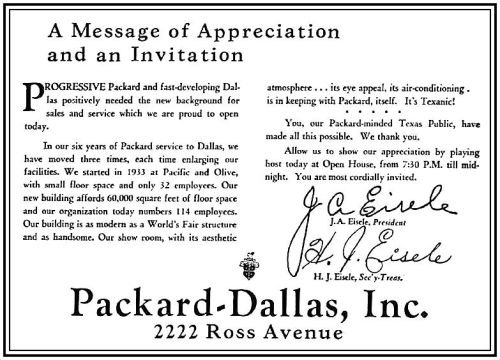
packard_dmn_121639_ad1

packard_dmn_121639_ad2Ad, Dec. 16, 1939 (click for larger image)

“It’s Texanic!”

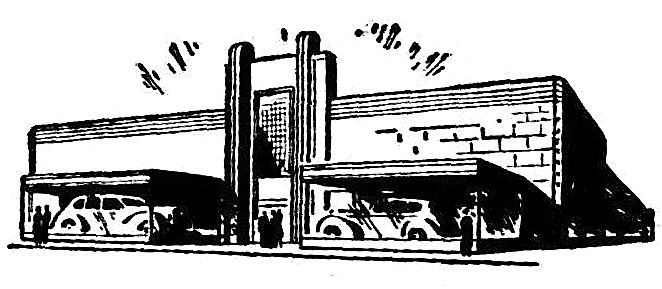
And another ad featured this nifty little line drawing of the cool building:
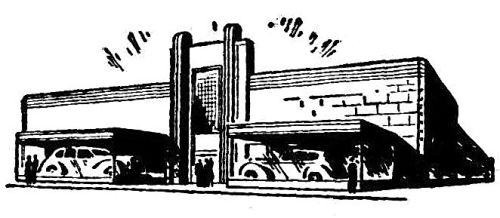
packard_dmn_121639-drawing-detDec. 16, 1939 (ad detail)

One of the stories about the opening of Dallas’ new auto showroom palace boasted that this big, beautiful, brash building was here to stay — Packard-Dallas had a 15-year lease on the place. …Which is why it was surprising to read that the building was sold less than two years later.

The U.S. was on the inevitable brink of involvement in the European war, and the National Defense School had begun operation in Dallas in July 1940. After a year of classes in which young men were taught “to do the technical and mechanical work necessary to warfare” (DMN, March 20, 1941), classrooms at the Technical high school and at Fair Park were bursting at the seams, and a larger facility was necessary. The Dallas Board of Education (which oversaw the program, often called “the War School”), was given the go-ahead to purchase the building (and, presumably, the property) for $125,000 in August 1941.

I’m not sure why J. A. Eisele sold the building (his name was listed as owner, rather than the Packard Company) — it wasn’t even two years old, and he got only half of what it cost to build. Patriotism? His son Horace had been drafted in April, so … maybe. Eisele seems to have left the auto sales business, which he had been in for decades, and had moved out of Texas by 1945.

After the U.S. officially entered the war and it became obvious that “defense schools” around the country would have to admit women in order to maintain manufacturing quotas, women began to work beside men at the Ross Avenue school in January 1942.

Eighty women Saturday pulled their fingers against the triggers of aircraft rivet guns as the Dallas National Defense School, 2222 Ross Avenue, started the state’s first major training course designed to place women side by side with men in Texas war materials plants. (DMN, Jan. 4, 1942)
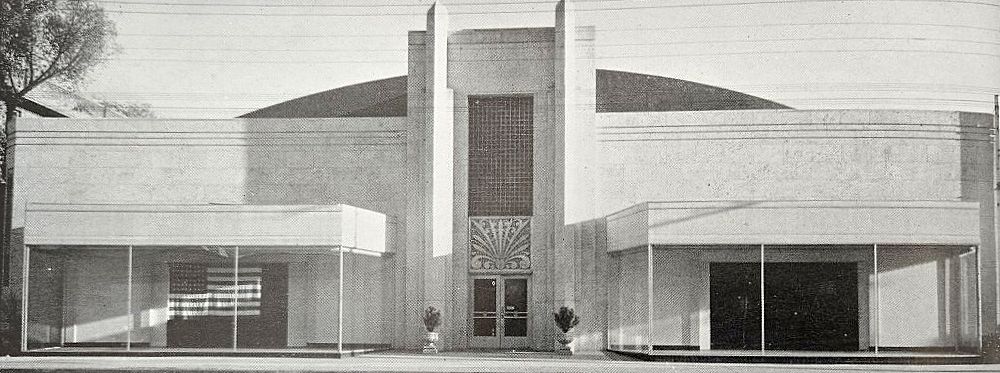
packard_ross-avenue_war-school_young-america-in-dallas_1942_DPL
1942

This “War School” was a training school for war-time jobs at places like North American Aviation.
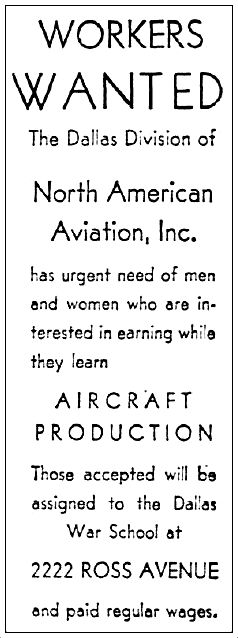
defense-school_dmn_090643Sept. 1943

Thousands of men and women trained at the Ross Avenue facility until the war ended in 1945. The school continued, but no longer as a Defense School — it became Dallas Vocational School, and its first students were veterans.

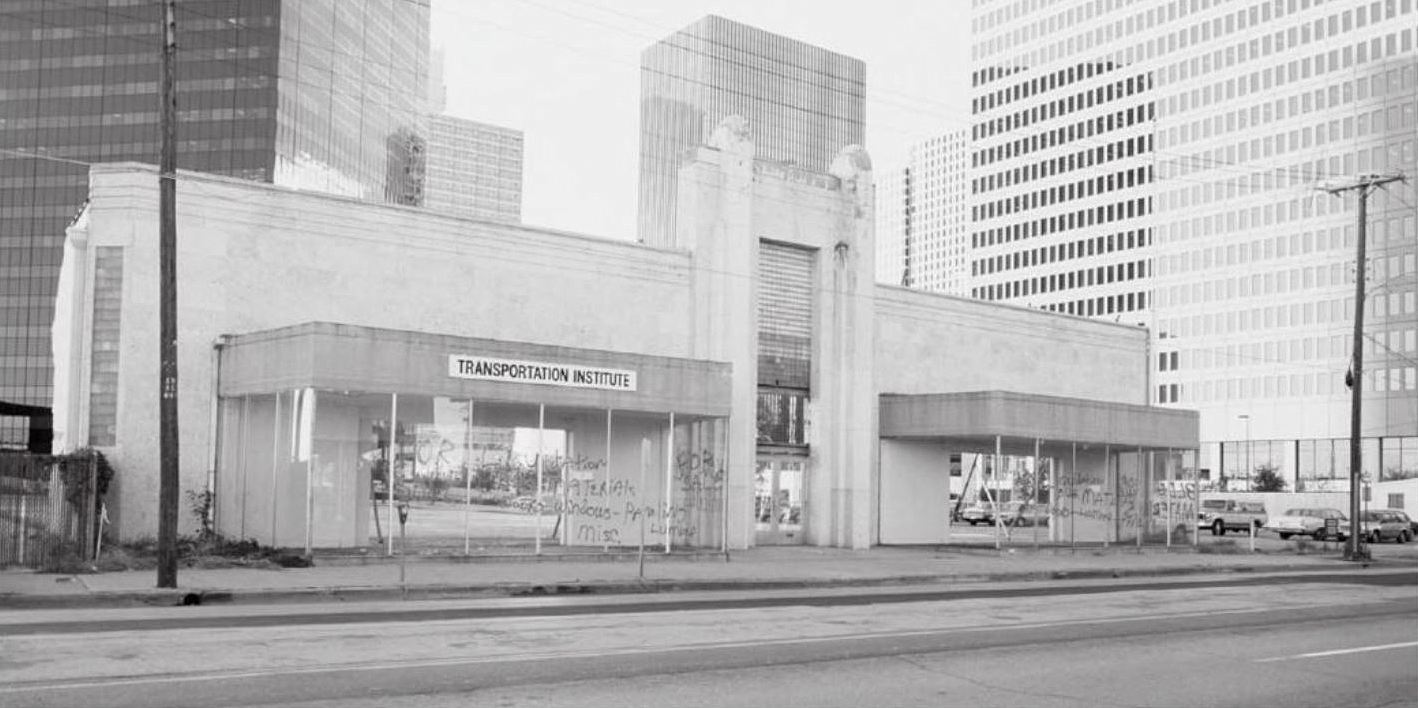
In 1976, the school was designated as one of the Dallas Independent School District’s magnet schools — it became the Transportation Institute, where “students interested in owning their own dealership, becoming a technician-mechanic or an auto body specialist will receive on the spot training in a laboratory consisting of a new car showroom, a modernly equipped repair center and a complete auto rebuilding facility” (DMN, Aug. 22, 1976). Back to its roots! And it only took 37 years.

The school continued for a while but, inevitably, the property became more and more attractive to developers. In 1981, as the developers were circling, a City Landmark Designation Eligibility List was issued. It contained buildings which had “particular architectural, historical, cultural and/or other significance to the City of Dallas,” and, if approved, were eligible to receive historic landmark designation. I’m guessing 2222 Ross Avenue didn’t make the cut, because Trammell Crow bought the building in 1983 and tore it down the next year.
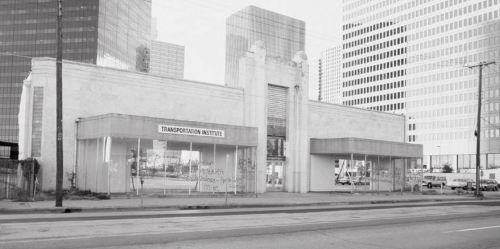
transportation-institute_lost-dallas_dotyvia Lost Dallas by Mark Doty

But … Crow sold the facade to real estate developer and investor Lou Reese, who said that he would reassemble the limestone facade and incorporate it into a restaurant he planned to build in Deep Ellum. That was an interesting plan. (Incidentally, in the same city council meeting in which the demolition/disassembling of the building’s facade was discussed, the council also considered “a request for more than $7 million in federal funds for a project to renovate the Adams Hat Co building into apartments” (DMN, Aug. 8, 1984). …Lou Reese owned the Adams Hat building. What a coincidence!)

The city council’s decision?

The council authorized developer Trammell Crow to disassemble the art deco facade of the former Transportation Institute Magnet High School on the condition that the facade be reconstructed in Deep Ellum…. The company [has] demolished all but the building’s limestone facade, which was determined to be eligible for designation as an historic landmark. (DMN, Aug. 9, 1984)

So? Where’s that facade? There was no mention of it for three years, until an article in the Morning News about another developer who had big plans for a major Deep Ellum complex called “Near Ellum,” which would be bounded by Commerce, Crowdus, Taylor, and Henry streets.

Highlighting Near Ellum will be a 40-foot art deco facade, formerly on the front of the Transportation Institute on Ross Avenue, in the main parking plaza. The plaza will also include an outdoor stage for concerts and special events. (“Developer Plans Deep Ellum Project,” DMN, June 25, 1987)

Aaaaaaaaaaaaaaaand … that never happened. I wonder if that 76-year-old disassembled limestone facade is still crated up somewhere around town. Somehow I doubt it.

So, 2222 Ross Avenue. What’s there now? None other than the 55-story skyscraper, Chase Tower, also known as “The Keyhole Building.”

You could get a lotta Packards in there.

***

Sources & Notes

Top photo from the Detroit Public Library’s Packard Collection in the National Automotive History Collection, viewable here; I’ve straightened and cropped it. The reverse has this notation: “Packard Motor Car Co., branches/dealerships/agencies, 2300 [sic] Ross Avenue Dallas, Texas, exterior, show windows left to right; 1940 Packard 110 or 120, eighteenth series, model 1800 or 1801, 6/8-cylinder, 100-120-horsepower, 122/127-inch wheelbase, convertible coupe (body type #1389/1399), special furniture display.”

1942 photo of the building is from a publication called “Young America in Dallas,” Dallas History and Archives, Dallas Public Library.

The developer who apparently came into possession of the facade after Lou Reese was Ed Sherrill. Perhaps someone associated with the Near Ellum project might know what became of the “saved” facade.

Chase Tower info on Wikipedia here; photo of it here. Imagine a teeny-tiny car dealership at its base.

Packard automobiles? Some of them were pretty cool. Check ’em out here.

A lengthy article on the notorious developer Lou Reese — “Hide and Seek” by Thomas Korosec (Dallas Observer, June 8, 2000) — is here.

*

Copyright © 2015 Paula Bosse. All Rights Reserved.

The Allen Street Taxi Company

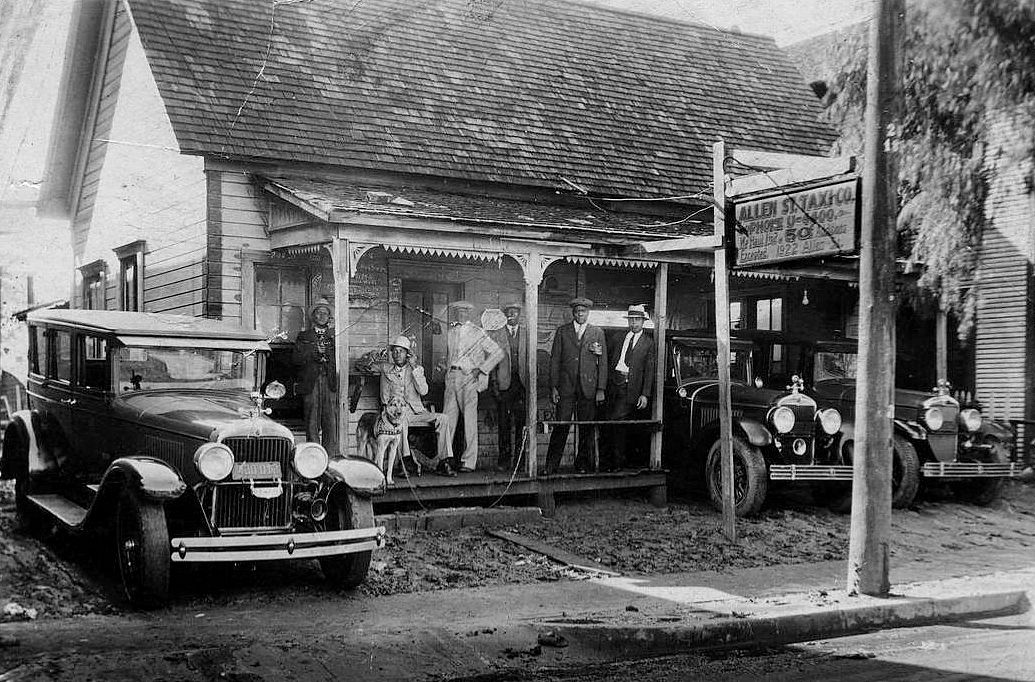
allen-st-taxi-co_cook-degolyerAllen St. Taxi Co. / George W. Cook Collection, SMU

by Paula Bosse

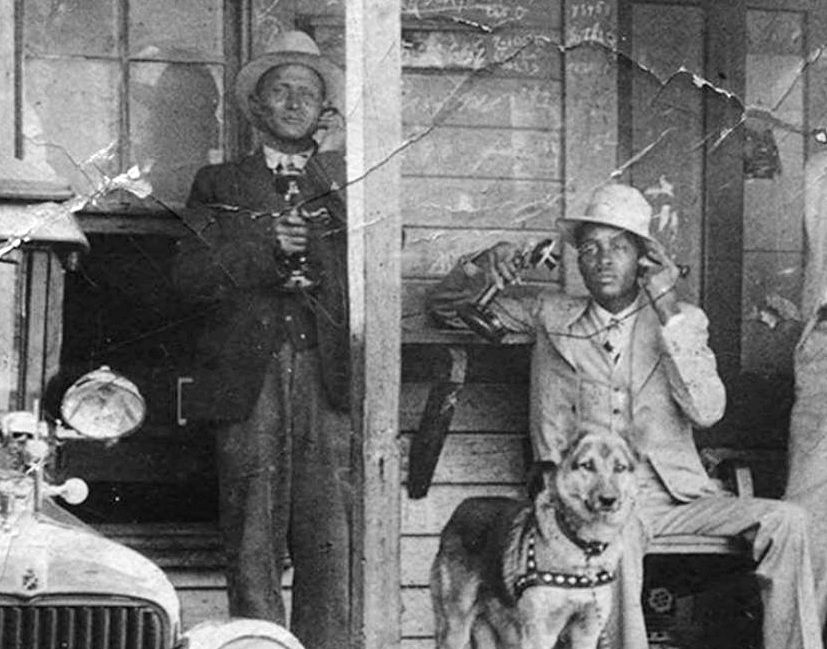
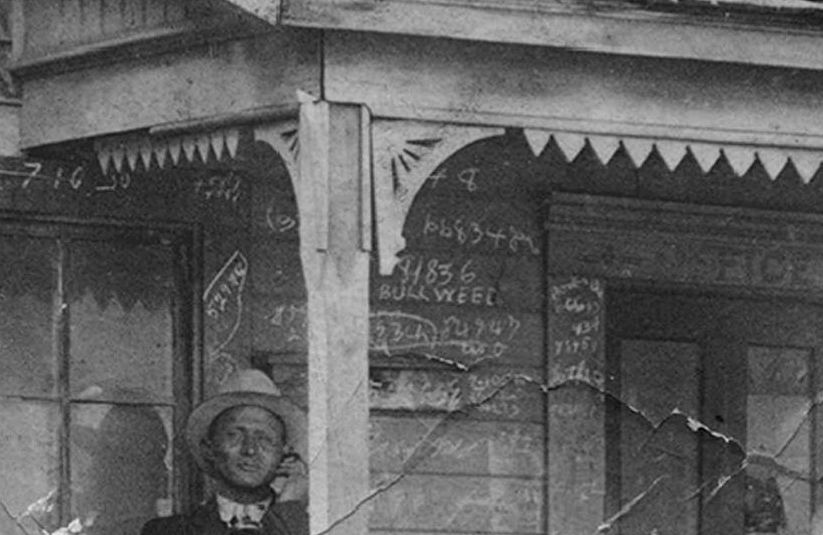
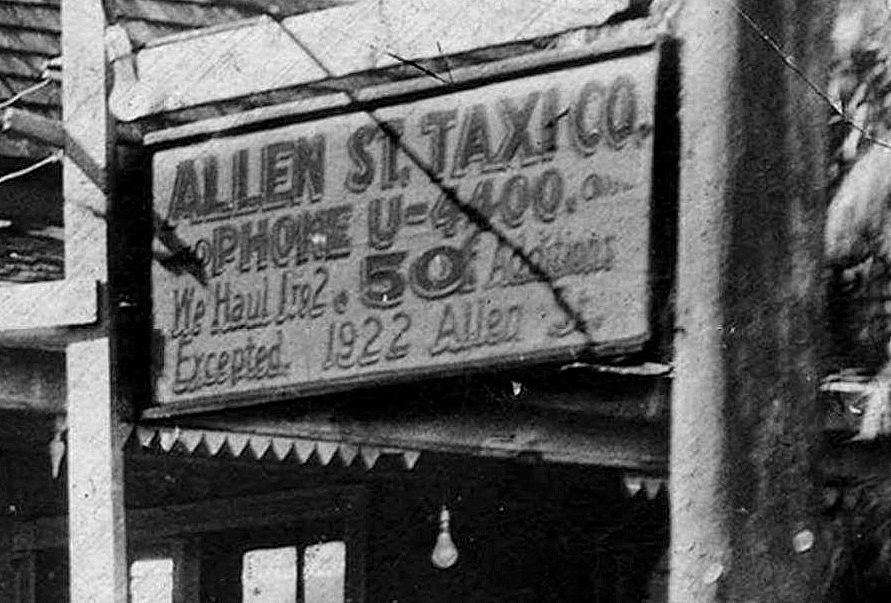
This has to be one of my favorite “unknown Dallas” photographs that I’ve come across. It shows the Allen St. Taxi Co. — in the State-Thomas area — at 1922 Allen Street (now pretty much vacant land under the Woodall Rodgers freeway). My ability to date cars is not good, but from city directory information, it seems that this photo might date from somewhere between the mid-1920s to around 1930. The owners/proprietors of the company were listed as John Leonard and Andrew Short in the 1929 telephone book. I wonder if they are in this fantastic photo? Let’s look a little more closely at some of the details. (All pictures larger when clicked.)

allen-st-taxi-co_cook-degolyer_det2Those phones!

allen-st-taxi-co_cook-degolyer-det4I love these guys. All business.

allen-st-taxi-co_cook-degolyer_det5“Bullweed.” What is all this writing? I love the guy’s face looking out of the window.

allen-st-taxi-co_cook-degolyer_det1“Dallas.” Car-people know exactly what make and model this vehicle is. …I am not one of these people.

allen-st-taxi-co_cook-degolyer_det3

***

Sources & Notes

Top photo, titled “Allen Street Taxi Co.,” is from the George W. Cook Dallas/Texas Image Collection, DeGolyer Library, Central University Libraries, Southern Methodist University; it can be viewed here.

The first “official” listing of the Allen St. Taxi Co. was in the 1929 city directory. The address at that time (which usually reflected information supplied the previous year) was 1907 Allen St. It didn’t appear again in the directory until 1932 when it was listed at 2816 Juliette St. In 1933 and 1934 it was listed at 2114 Hall St. In 1936 and 1937 it had moved to 2217 Hugo. And in 1938, the taxi part of the business seems to have fallen by the wayside, and it became Allen St. Transfer.

In 1925 there were only three official cab companies listed in the city directory. But the rough-and-tumble world of taxi cab service in the unregulated ’20s and ’30s was pretty intense. There were a lot of unlicensed jitneys rolling around town, especially, one would assume, in the segregated black neighborhoods of the city unlikely to be served by white-owned companies. My guess is that this might have been how the Allen St. Taxi Co. began.

For more on the go-go-go competitive world of taxi service at this time, see my previous post, “Washington Taxi Company: ‘Call George!'” here.

*

Copyright © 2015 Paula Bosse. All Rights Reserved.
The World’s Largest Santa & The Christmas Tragedy — 1953

santa_chevrolet_color_observerSanta considers a test-drive, 1953 (photo: Roy Addis)

by Paula Bosse

Back in 2010, Robert Wilonsky (now a reporter for The Dallas Morning News, but back then a reporter for The Dallas Observer) posted a 1950s-era photo of a giant Santa Claus sitting on the roof of a Dallas car dealership. Robert had found the photo on eBay and wondered what the story behind the promotional stunt might have been. The thing that sparked my interest (other than it being a giant Santa Claus — holding a full-size car in his lap!) was the fact that the dealership, Porter Chevrolet (which I’d never heard of), had been just around the corner from where I grew up — it was in the 5500 block of E. Mockingbird, right across from the old Dr Pepper plant, about where the Campisi’s parking lot is now. I, too, really wanted to know more about that huge Santa Claus that had once been hanging out so ostentatiously in my neighborhood.

At about the time when Robert’s post appeared in 2010, I had only recently discovered that the Dallas Morning News archives were available online. For free. All the way back to 1885! (All you need is a current library card from the Dallas Public Library, and you’re on your way to losing absolute days while reading about one fascinating thing after another.) I had just begun to dabble with searches in the archives, so this seemed like a great opportunity to test my research skills and see if there was more to the story. And there was! I sent Robert what I’d found, and he wrote a great follow-up, here (which has yet another photo of the giant Santa). And a year later he did another follow-up, this one including the color photo seen above, sent in by a reader.

This is just such a great and weird holiday-related bit of Dallas’ past, that I thought I’d revisit the story, especially since some of the links in the original Observer posts no longer work.

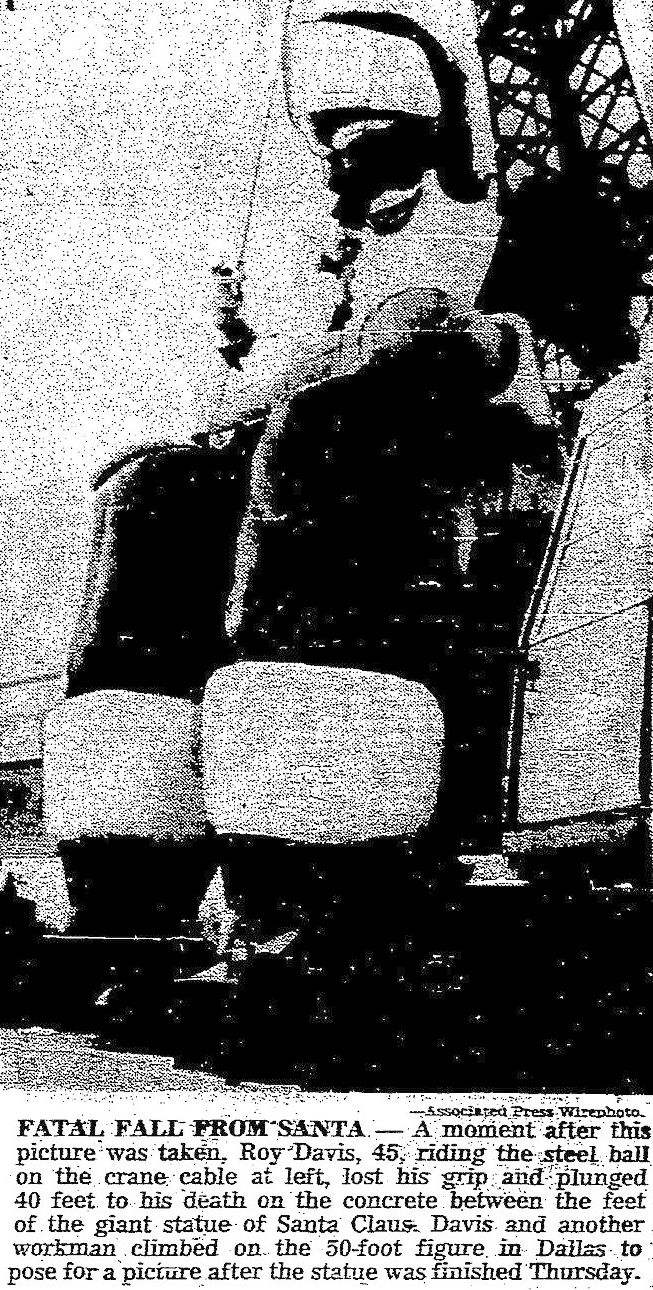
First, a quick re-cap (but, please, read Robert’s story, because you’ll enjoy  it, and it’s much more colorful than my quick overview here). During the 1953 Christmas season, Porter Chevrolet (5526 Mockingbird) commissioned Jack Bridges (the man who had previously made Big Tex (who was himself originally a giant Santa Claus)) to construct an 85-foot-tall steel-and-papier-mâché Santa Claus (he’d be that tall if he were standing) to sit on the dealership building and hold an actual 1954 Chevy in his lap. It was definitely a promotion that would grab people’s attention. The day the giant Santa was put in place, using a crane, a man whose company had done the installing (as they had with Big Tex), thought it would be a great opportunity to get a Christmas card photo of himself dangling from the crane next to Santa. The man, Roy V. Davis, was recovering from heart-related health problems, and, as it turned out, he experienced a “myocardial rupture” while hoisted 35 feet above the concrete parking lot. He lost his grip and fell to his death. This tragic news made the front page of local papers and was picked up by the Associated Press, but, oddly, it was never spoken of again. Giant Santa apparently remained at his perch throughout the holidays, but as far as I can tell, there was no further mention of Mr. Davis’ death — until Robert Wilonsky stumbled across the photo and wrote about it 57 years later.

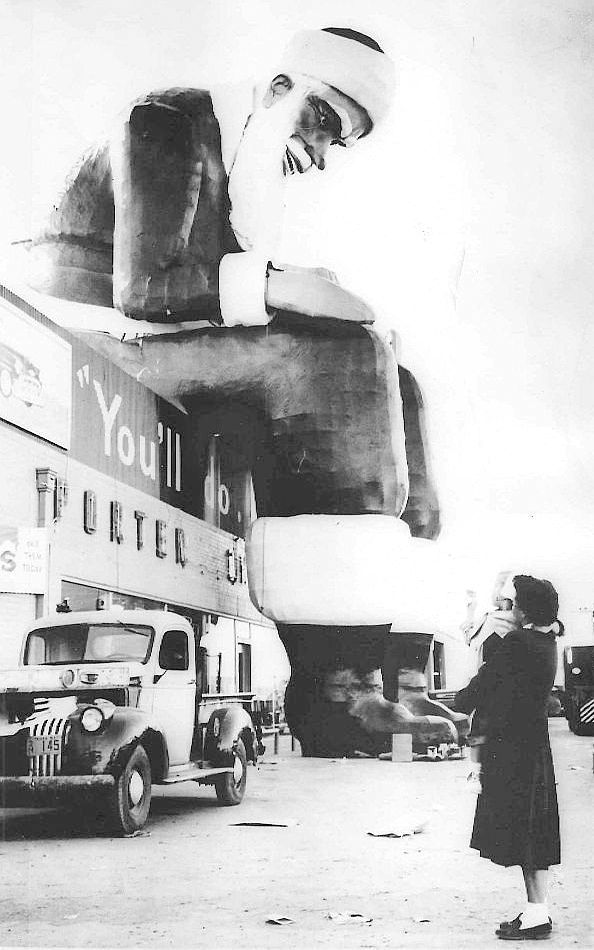
Below is the AP photo and blurb which ran nationally, showing Mrs. John Ashmore and her 4-year old daughter Ruth Ann looking up at the towering Santa Claus. 

santa_porter-chevrolet_news-photo_1953_PEB
Photo: Collection of Paula Bosse

The caption (click for larger image):

santa-claus_porter-chevrolet_caption

**

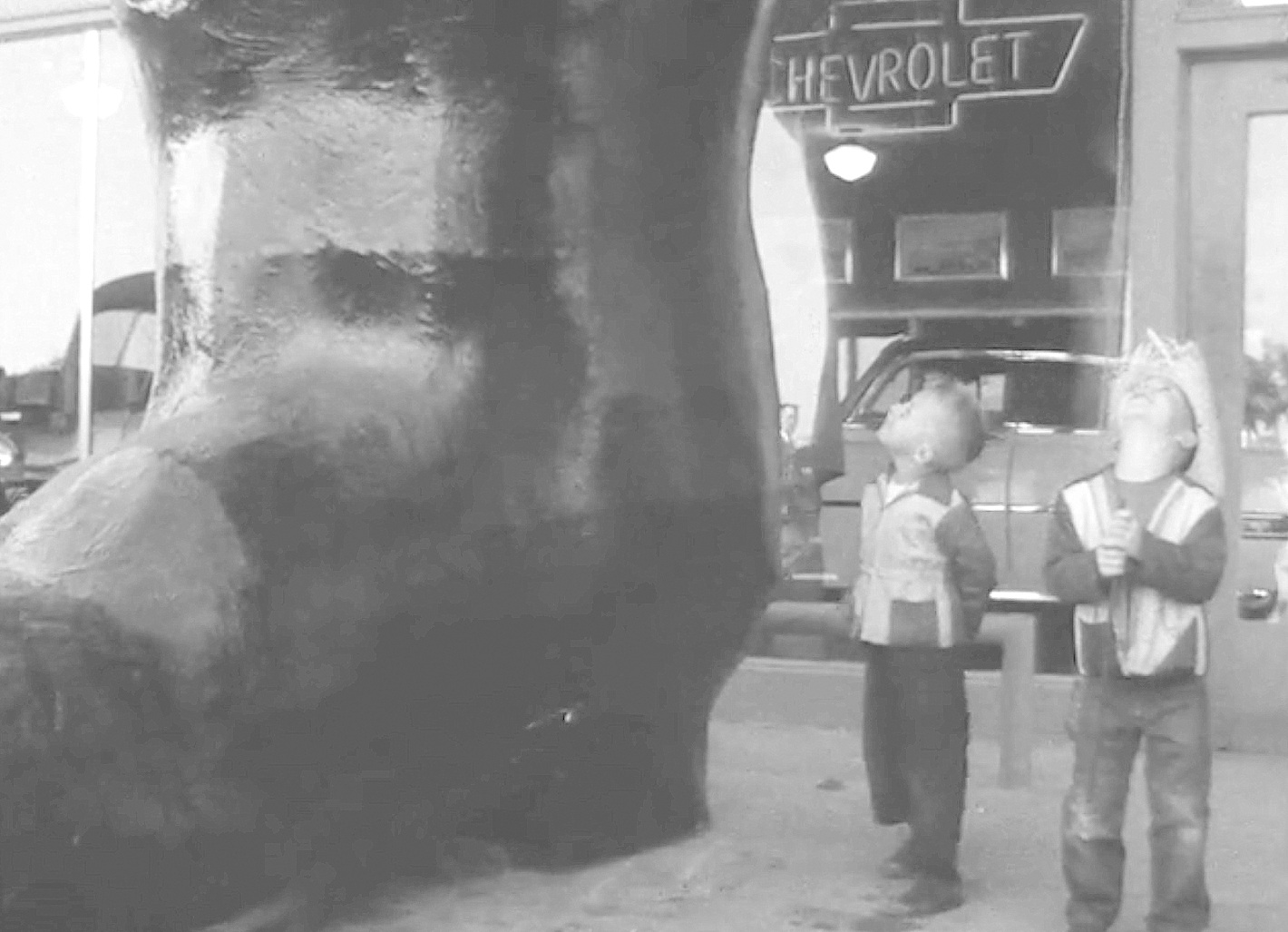
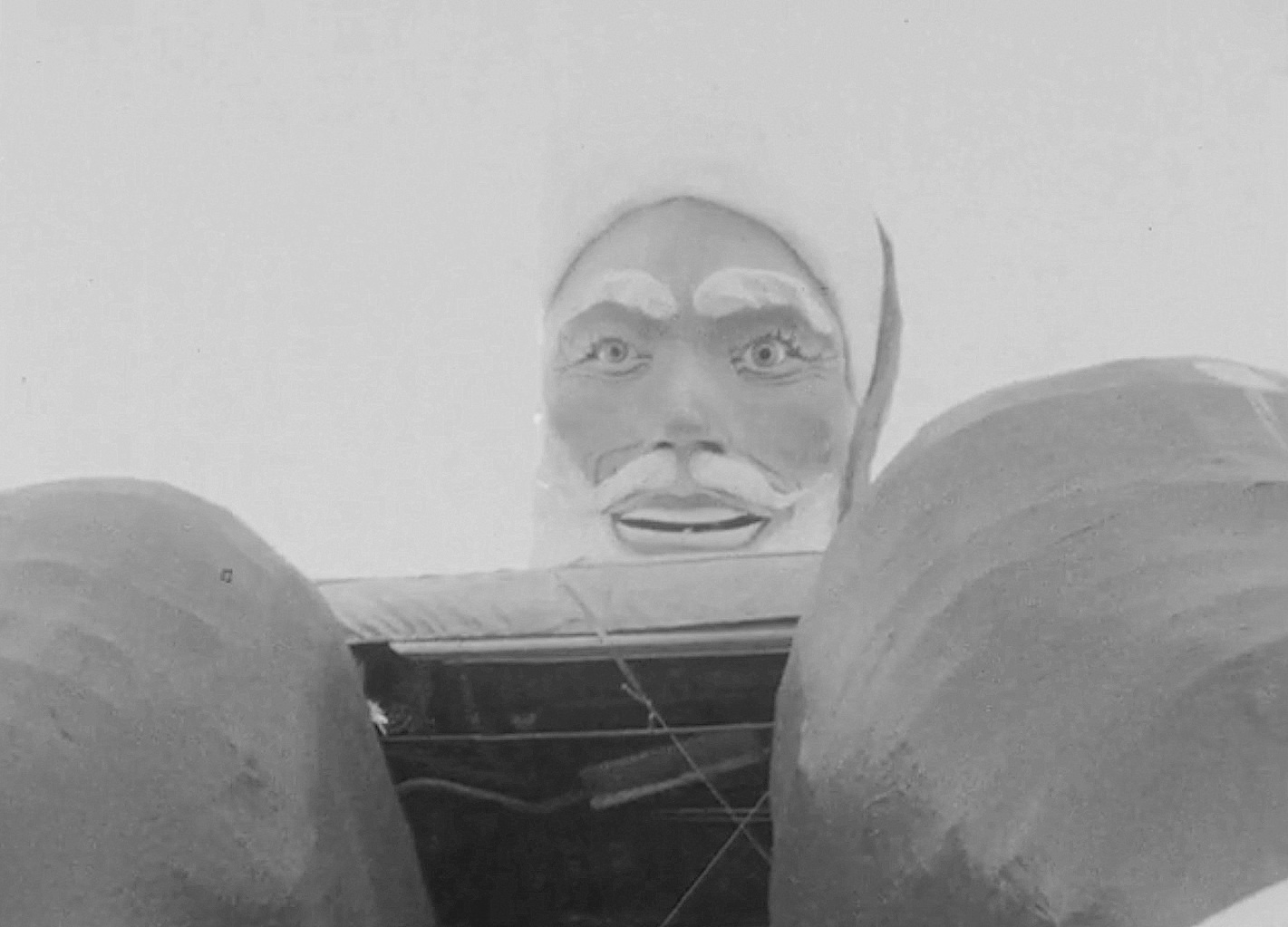
UPDATE: Okay this is VERY EXCITING — and also kind of chilling: there is WBAP-Channel 5 television news footage of the Giant Santa as well as the on-the-scene tragic aftermath of Mr. Davis’ accident. The Dec. 10, 1953 footage is without sound (the script the anchor read on the air as the film played during the newscast can be found here). The video starts off with children marveling at the giant Santa Claus but suddenly turns dark with shots of the bloody Mr. Davis being loaded onto a stretcher (helped by Jack Bridges, the man who built the giant Santa, seen wearing a beret and white coveralls). The one-minute clip titled “Worker Dies at Santa’s Statue” can be viewed on the Portal to Texas History site here.

Below are a few screen captures:

santa-kids_wbap-1_portal

santa-face_wbap-2_portal

santa-crane_wbap-3_portal

santa-dr-pepper-plant-ambulance_wbap-4_portal

**

santa_denison-press_122553Denison Press, Dec. 25, 1953

santa_FWST_121153_AP_photoFort Worth Star-Telegram, Dec. 11, 1953

santa_lubbock-avalanche_121153_APLubbock Avalanche, Dec. 11, 1953

***

Sources & Notes

Top color photo (which I’ve cropped) is by Roy Addis. It appeared in the Dallas Observer blog Unfair Park in Robert Wilonsky’s 2011 update to the previous year’s story — it was sent in by a reader who discovered it in his personal collection. To read that story, click here.

Wilonsky’s original Unfair Park post — which contained the photo he found on eBay — is here. And, again, his post containing “the rest of the story” is here. (Robert Wilonsky continues to write enthusiastically about Dallas — its past as well as its present — and his Dallas Morning News pieces are, quite frankly, where I get most of my news about what’s going on in the city. Thanks for the opportunity to be part of the unearthing of this story, Robert!)

The news photo of Mrs. Ashmore and her daughter is from the author’s personal collection.

The video is from the KXAS-NBC 5 News Collection, University of North Texas Libraries Special Collections, accessible on the Portal to Texas History site. The main page of the video is here (click picture to watch video in a new window).

Dallas Morning News articles on the giant Santa and the tragic accident:

  • “Santa Claus Turns Texan” (DMN, Sept. 23, 1953)
  • “Figure of Santa Claus Will Overshadow Tex” by Frank X. Tolbert, with photo of Jack Bridges (DMN, Nov. 18, 1953)
  • “Santa Claus Too Large For Trucks” (DMN, Nov. 29, 1953)
  • “Christmas Card Picture With Tragic Ending” (DMN, Dec. 11, 1953)
  • “Man Falls to Death Off Cable,” with photo of Roy V. Davis (DMN, Dec. 11, 1953)

UPDATE: Robert Wilonsky has written on the giant Santa in a new Dallas Morning News article, with some interesting new tidbits about Porter Chevrolet’s proposal to the City Council requesting permission to put this huge structure on top of the building. Read his 2017 update here. Robert keeps telling me we should write a book about this — or make a documentary. Which, of course, we should! After all these years now of visions of the giant Santa and sober thoughts of Roy Davis — more “real” now, having seen film footage of him bloody on that stretcher — I really do feel this is all part of some personal family Christmas lore, recounted every year around the table.

Pictures and clippings are larger when clicked.

*

Copyright © 2014 Paula Bosse. All Rights Reserved.


A Downtown Gas Station! — 1949

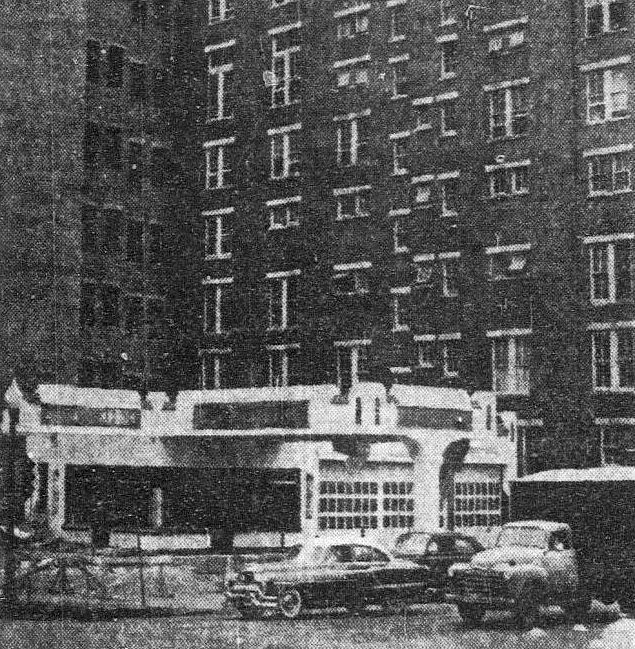
tyler-service-stn_degolyer_1949-det1Gas station at Elm & Houston! (click for larger image) (SMU Libraries)

by Paula Bosse

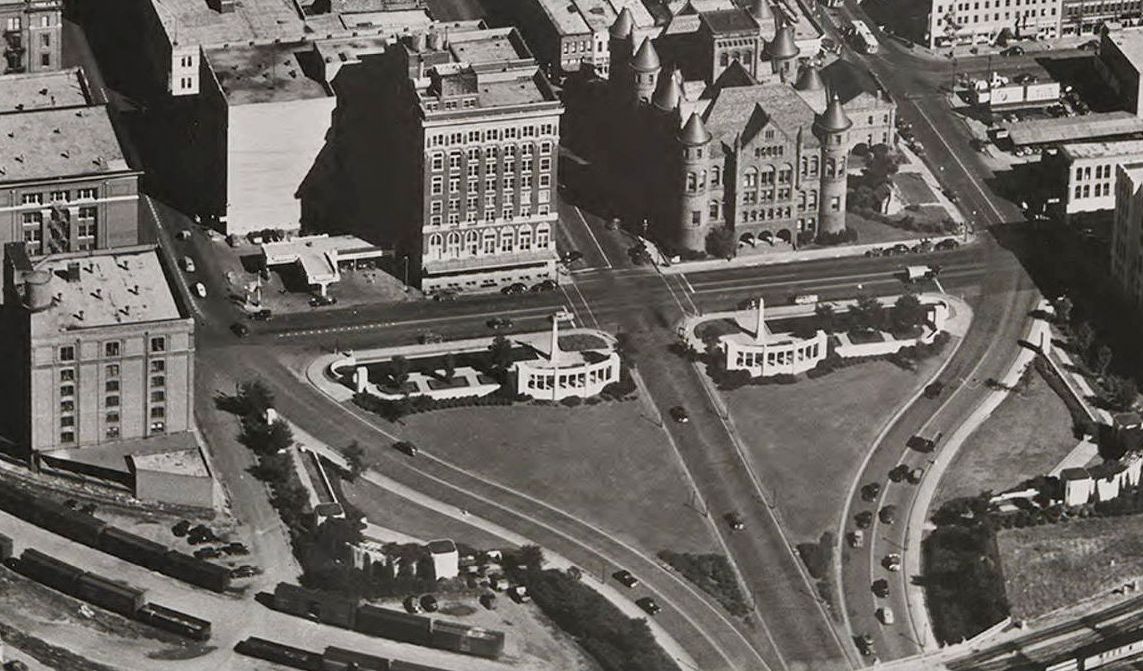
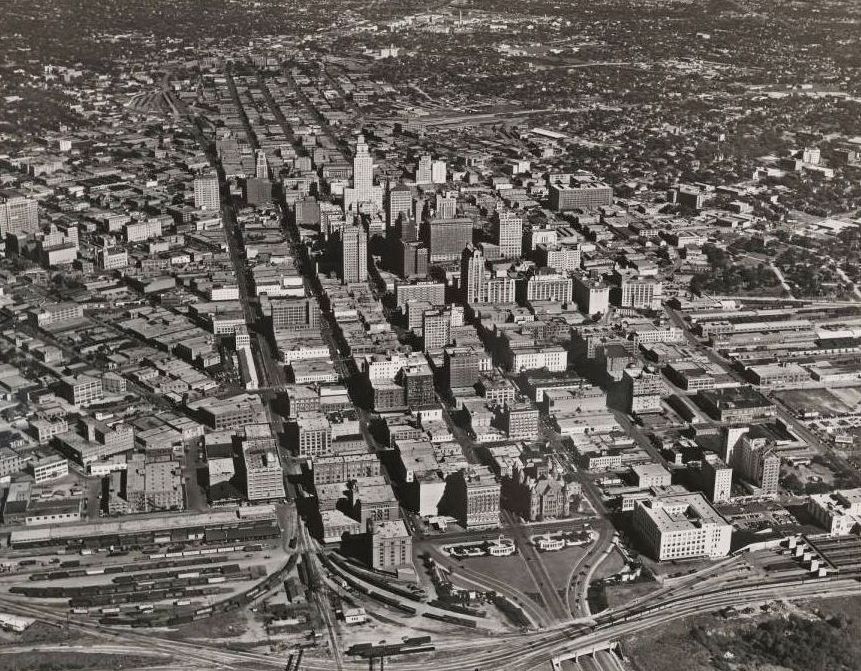
There was a time when gas stations populated the central business district in downtown Dallas. But now? I’m not sure I’ve ever seen a gas station in the heart of downtown. Which is probably why the station seen above (from a detail of a larger aerial view of downtown) stood out so much when I was looking at the photo. And it wasn’t located just anywhere downtown, but it was in the primo location opposite Dealey Plaza at the “gateway” to the city. It doesn’t fit in that space very well — it’s a corner crying out for a more substantial structure — but … wouldn’t it be nice to have an actual full-service gas station downtown again?

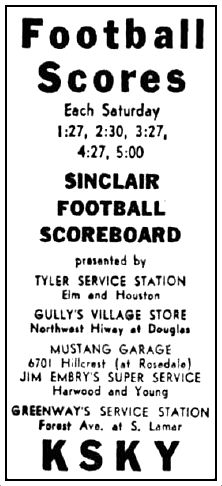
The Tyler Service Station (and before that the Longhorn Service Station) held down the corner at Elm and Houston streets in the 1940s but was demolished in 1953 to make way for the construction of the Records Building/Criminal Courts Building annex. And, hallelujah, I found a photo of the service station from ground-level — and it was pretty cool-looking!

gas-station_elm-and-houston_1950s

tyler-service-stn_dmn_100948Oct. 9, 1948

And, finally, here’s the original photo I saw in which that long-gone gas station jumped out at me, another wonderful photo by Lloyd M. Long, taken in May, 1949. You never know what odd things you’ll discover if you just take the time to explore.

downtown_degolyer_1949Aerial photo by Lloyd M. Long, 1949 (Foscue Map Library, SMU)

***

Sources & Notes

Lloyd M. Long photo (“Downtown Dallas, looking east”), from the Edwin J. Foscue Map Library, Central University Libraries, Southern Methodist University; it can be viewed here.

Click pictures for larger images.

*

Copyright © 2014 Paula Bosse. All Rights Reserved.


Dallas’ Ford Dealerships in the 1920s: Authorized for Your Protection

ford_dal-exp_091622-smAuthorized Ford dealers, 1922

by Paula Bosse

Dallas has always been a big car town, getting its first look at a “horseless carriage” way back in 1899 when E.H.R. Green sped into town at 15 m.p.h. and startled the citizenry. By 1903, The Dallas Morning News was bragging that Dallas had more privately owned cars than any other city its size in the South (“over 40”). By 1909, the Ford Motor Company had a Model T service center in the city, and in 1914, Ford opened an important regional assembly plant downtown (which later moved to more spacious digs on East Grand).

For many years, there were six — and only six — authorized Ford dealers in town. In several ads of the period, “automobilists” were stringently warned to avoid “bogus” agents offering counterfeit Ford parts. (Accept no knock-offs!) Below, the six authorized Ford dealers operating in Dallas in the 1920s. (All photos are larger when clicked.)

ford-dealer_fishburn_houston_dmn_101329Above, Fishburn Motor Company, 101 N. Houston St. Long gone, Dealey Plaza now occupies this site. Behind the building, at the right, is the Southern Rock Island Plow Company building, better known today as the School Book Depository.

ford-dealer_flippen_ross_dmn_101329The Flippen Auto Company, 1917 Ross Ave. The building took up part of the block now occupied by the Dallas Museum of Art.

ford-dealer_lamberth_dmn_101329Lamberth Motor Company, 3800 Main St. This building, not far from Fair Park, is at Main and S. Washington and later became part of the Fritos factory. With the building’s renovations over the years, it’s a little difficult to tell, but I think this building is still standing (and is the only one of these six buildings that has survived). To see what this building has looked like over the years, see my previous post, “3800 Main: Fritos Central,” here.

ford-dealer_morriss_lancaster_dmn_101329aThe John E. Morriss Company, 132 North Lancaster Ave., Oak Cliff. I’m not positive, but I think this may have been where Hector P. Garcia Middle School now stands.

ford-dealer_rose-wilson_ervay_dmn_101329Rose-Wilson Company, 1218 South Ervay St. In the Cedars, one block north of the Ambassador Hotel.

ford-dealer_shelton_main_dmn_101329J. H. Shelton & Company, 2311 Main St., at the very edge of Deep Ellum. The buildings seen here were right about where Central Expressway crosses over Main.

ford-logo_19221922

*

Copyright © 2014 Paula Bosse. All Rights Reserved.


“We Like to LIVE in Dallas!” — Chrysler Ad, 1939

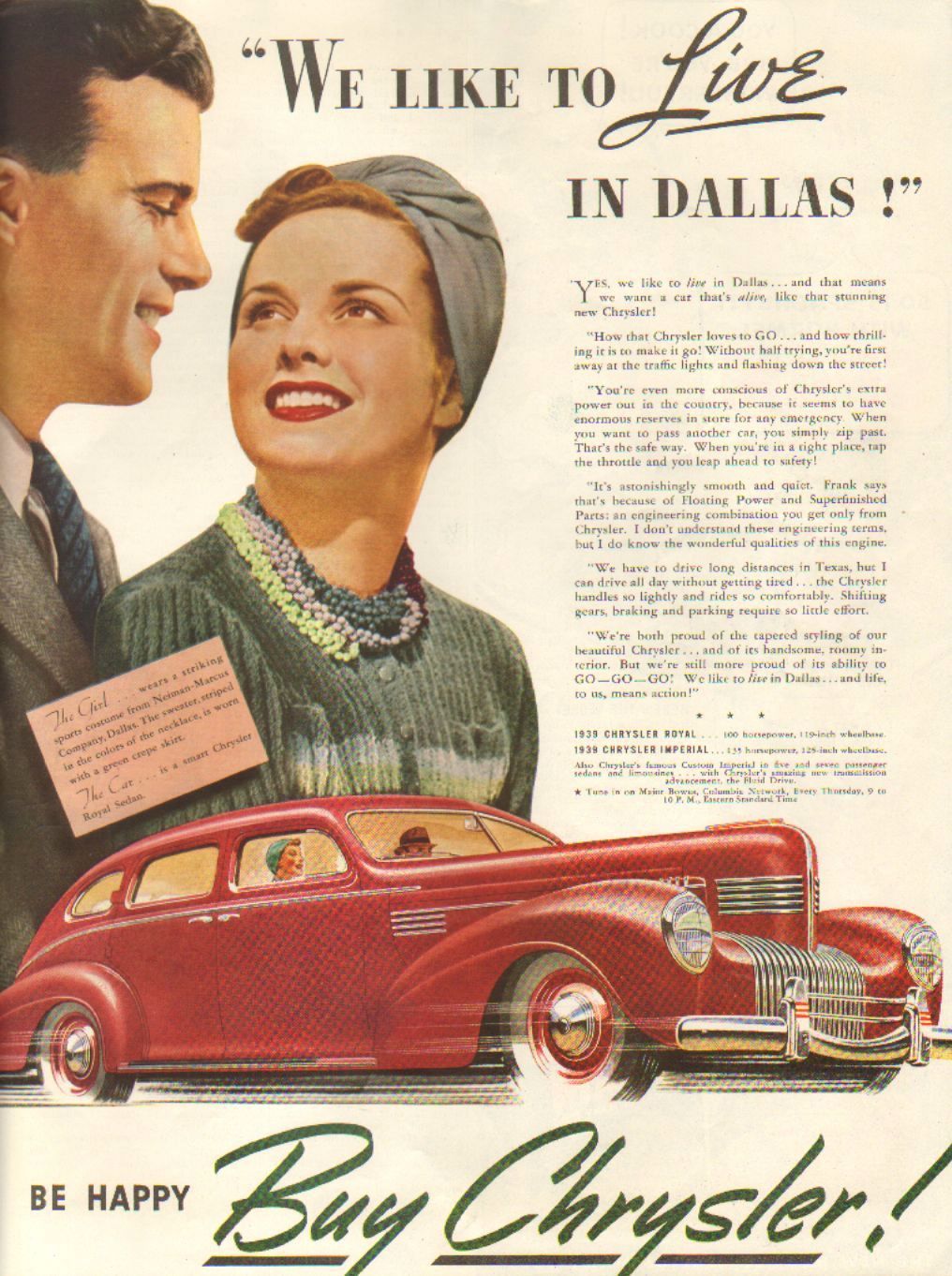
ad-chrysler_1939sm

by Paula Bosse

Madison Avenue knows a thing or two about who we Dallasites are, what we want, and — more importantly — what we need.

“We Like to LIVE in DALLAS!”

“Yes, we like to *live* in Dallas … and that means we want a car that’s *alive* like that stunning new Chrysler!

“How that Chrysler loves to GO … and how thrilling it is to make it go! Without half trying, you’re first away at the traffic lights and flashing down the street!

“You’re even more conscious of Chrysler’s extra power out in the country, because it seems to have enormous reserves in store for any emergency. When you want to pass another car, you simply zip past. That’s the safe way. When you’re in a tight place, tap the throttle and you leap ahead to safety!

“It’s astonishingly smooth and quiet. Frank says that’s because of Floating Power and Superfinished Parts; an engineering combination you get only from Chrysler. I don’t understand these engineering terms, but I do know the wonderful qualities of this engine.

“We have to drive long distances in Texas, but I can drive all day without getting tired … the Chrysler handles so lightly and rides so comfortably. Shifting gears, braking and parking require so little effort.

“We’re both proud of the tapered styling of our beautiful Chrysler … and of its handsome, roomy interior. But we’re still more proud of its ability to GO — GO — GO! We like to *live* in Dallas … and life, to us, means action!”

But wait … there’s more! The inset (the ad-within-the-ad):

THE GIRL … wears a striking sports costume from Neiman-Marcus Company, Dallas. The sweater, striped in the colors of the necklace, is worn with a green crepe skirt.

THE CAR … is a smart Chrysler Royal Sedan.

And now you know. (Unless you’re a woman, in which case you will need Frank to explain all of this to you. Ask him to speak slowly and use small words.)

“Be Happy, Buy Chrysler!”

***

Click ad for readable text and to get a closer look at that necklace and oddly hausfrau-ish turban.

*

Copyright © 2014 Paula Bosse. All Rights Reserved


Protected: Parking Hogs, Meet Your Nemesis: The Parking Meter — 1935

This content is password-protected. To view it, please enter the password below.

“There Are Eight Million Stories in the Naked City…” — ca. 1920

1-ervay

by Paula Bosse

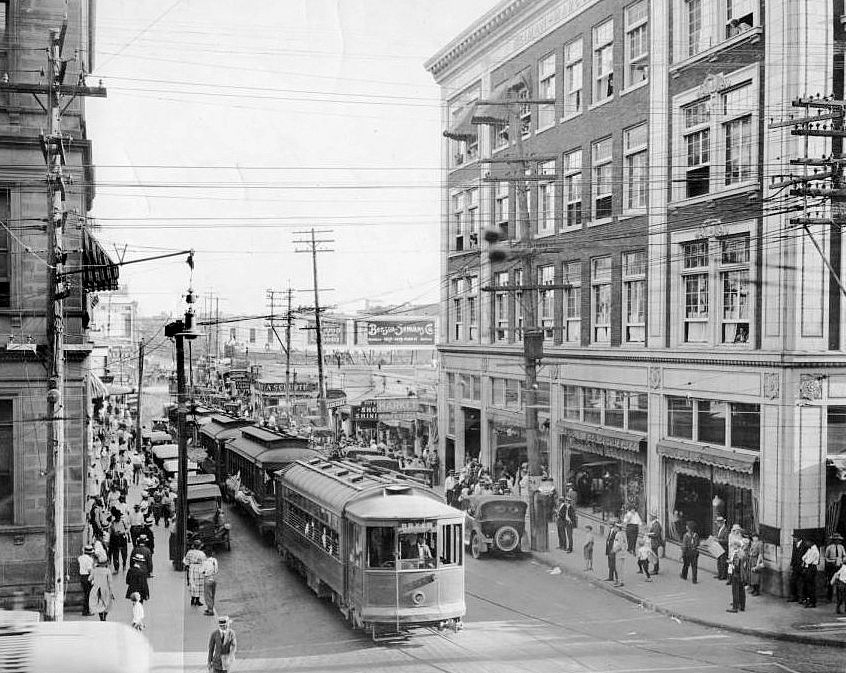
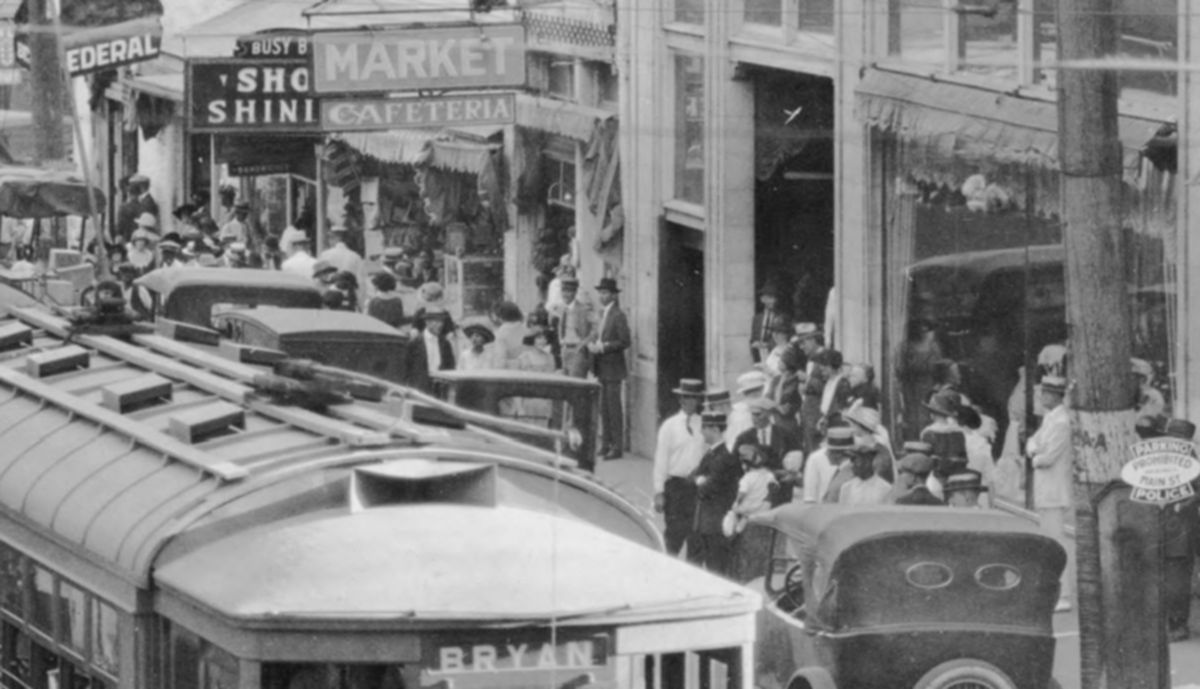
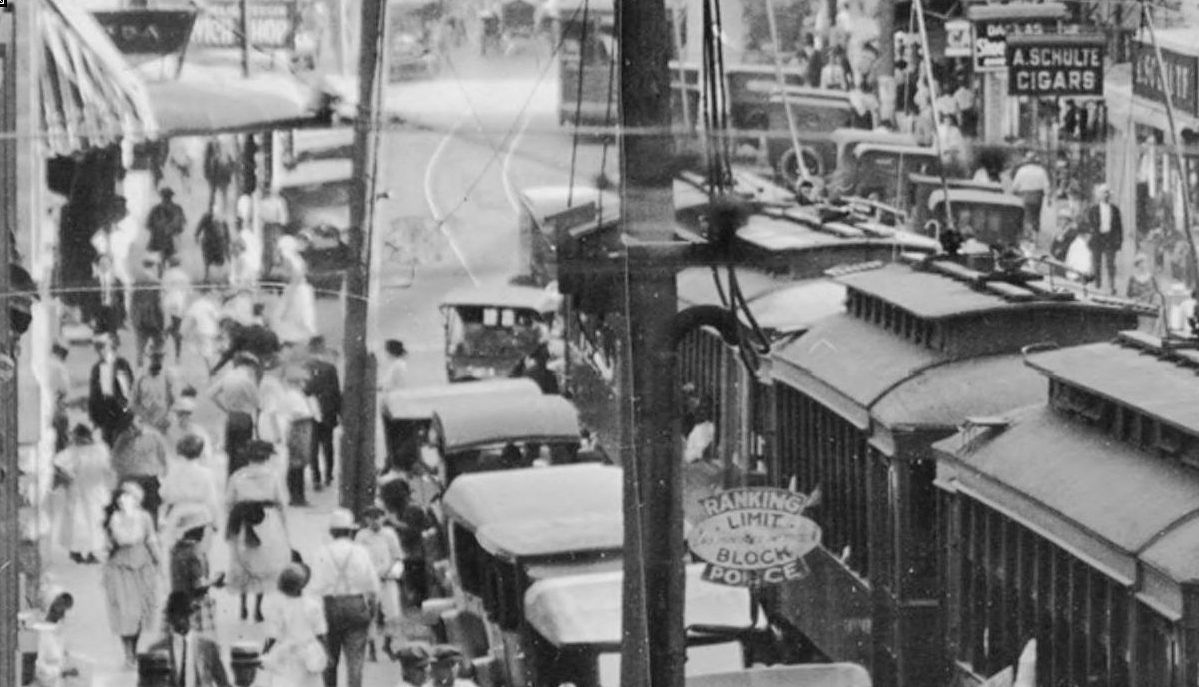
The photograph above, by George A. McAfee, shows Ervay Street, looking south from Main, in about 1920. Neiman’s is on the right. I’m not sure what the occasion was (I see special-event bunting….), but the two things that jump out right away are the number of people on the sidewalks and the amount of  congestion on the streets. In addition to private automobiles (driven by “automobilists” or “autoists,” as the papers of the day referred to them), the street is also packed with cars standing in the taxi rank (cab stand) at the left, and a long line of hulking streetcars. This busy intersection is jammed to capacity.

The city of Dallas was desperately trying to relieve its traffic problems around this time, and there were numerous articles in the papers addressing the concerns of how to manage the congestion of streets not originally designed to handle motor vehicle traffic. Dallas and Fort Worth were working on similar plans of re-routing traffic patterns and instituting something called “skip stop” wherein streetcars would stop every other block rather than every block. Streetcars, in fact, though convenient and necessary, seemed to cause the most headaches as far as backing up and slowing down traffic, as they were constantly stopping to take on and let off passengers. There was something called a “safety zone” that was being tried at the time. I’m not sure I completely understand it, but it allowed cars to pass streetcars in certain areas while they were stopped.

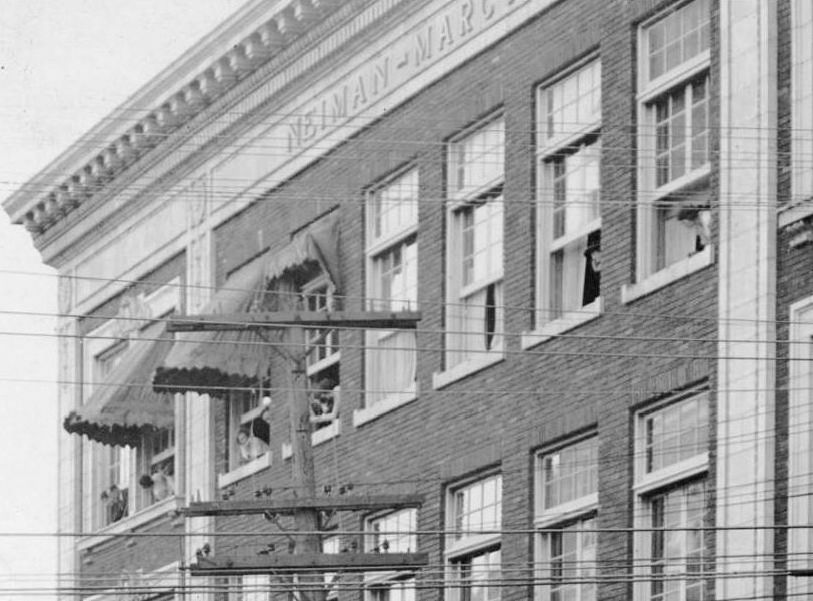
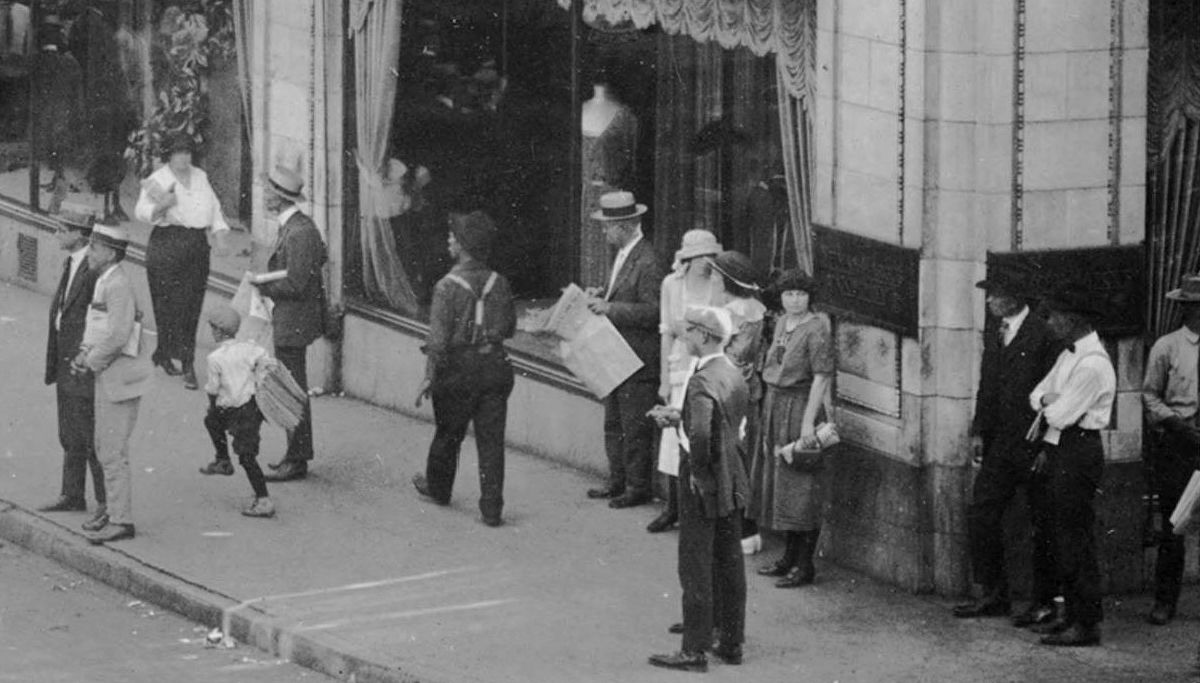
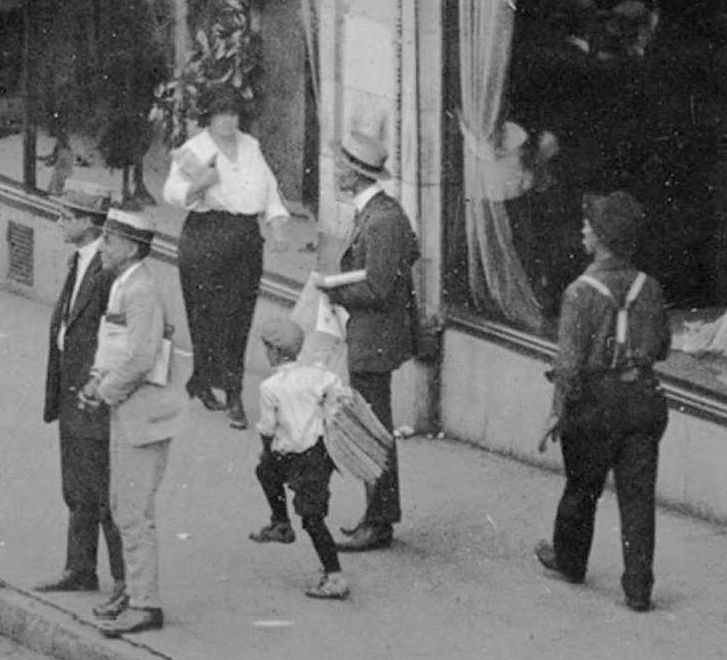
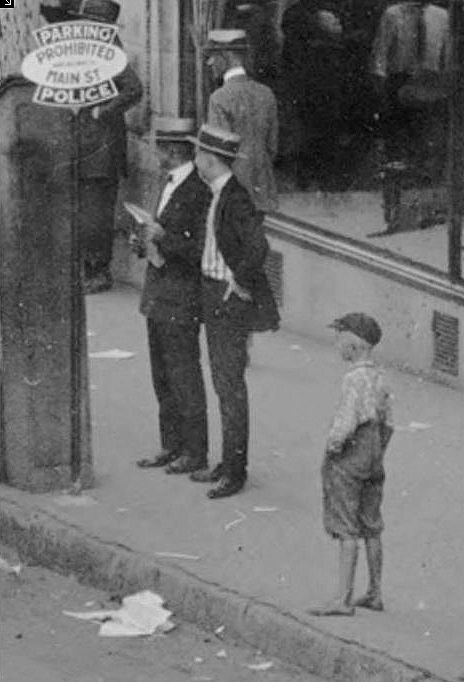
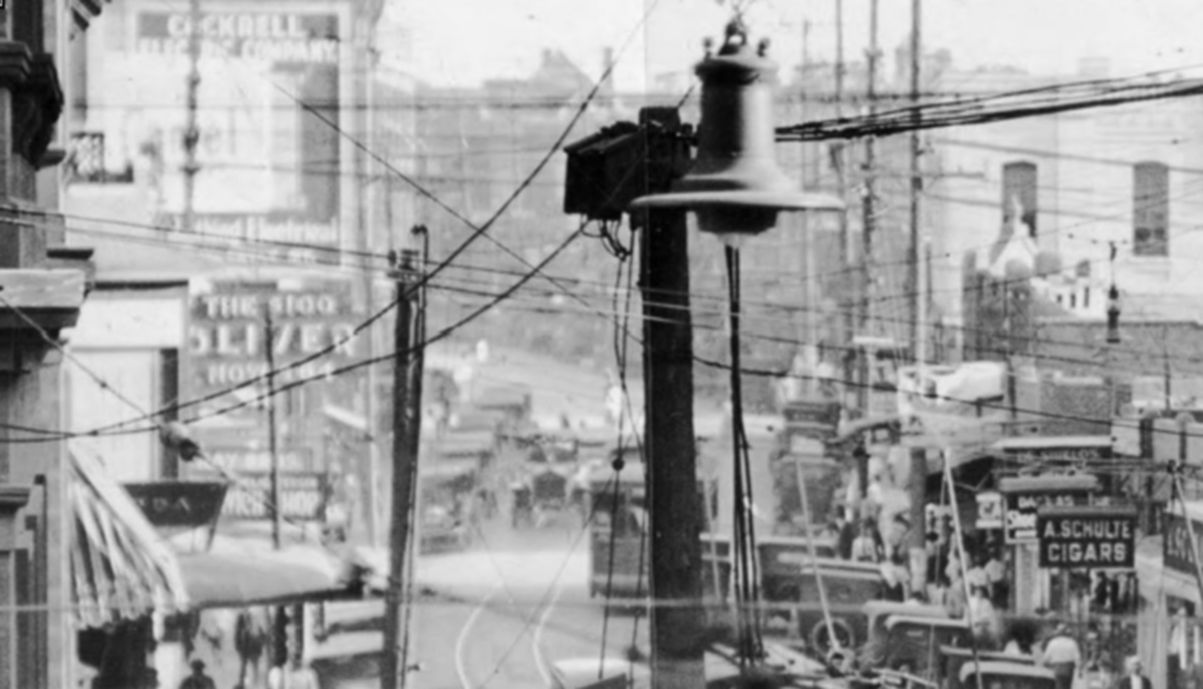
That traffic is crazy. But, to be perfectly honest, it’s far less interesting than all that human activity — hundreds of people just going about their daily business. It’s always fun to zoom in on these photos, and, below, I’ve broken the original photograph into several little vignettes. I love the people hanging out the Neiman-Marcus windows. And all those newsboys! Not quite as charming was all that overhead clutter of power lines and telephone lines; combined with the street traffic, it makes for a very claustrophobic — if vibrant — downtown street scene. (Click photos for larger images.)

2-ervay

3-ervay

4-ervay

5-ervayMy favorite “hidden” image in the larger photograph. The only moment of calm.

6-ervayI love this. The woman in front of the Neiman-Marcus plaque looking off into the distance, the display in the store window, the newsboy running down the street, the man in suspenders, the women’s fashions, and all those hats!

7-ervay

8-ervayA barefoot boy and litter everywhere.

9-ervay

10-ervay

11-ervayThe congestion is pretty bad above the streets, too.

12-ervay

13-ervayCabbies, newsboys, and working stiffs.

14-ervay

15-ervayI swear there was only one streetcar driver in Dallas, and he looked like this! Those motormen had a definite “look.”

***

Sources & Notes

Original photograph attributed to George A. McAfee, from the DeGolyer Library, Central University Libraries, Southern Methodist University, accessible here.

For other photos I’ve zoomed in on the details, see here.

*

Copyright © 2014 Paula Bosse. All Rights Reserved.