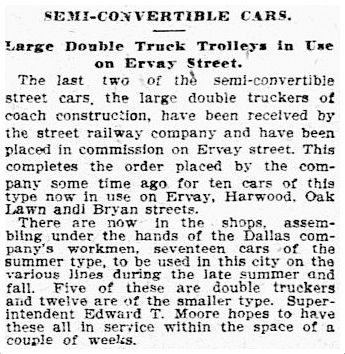
Ah, the “grooveless-post semi-convertible” streetcar with the “extra long platforms,” the cherry and maple interior, the domed ceiling, and the clusters of frosted globes. Sounds nice.
“Interior of Car for Dallas” (click for larger image)
Dallas Morning News, Aug. 29, 1907
***
Photos from Street Railway Journal, April 6, 1907; original article can be accessed here. Above scans from an old eBay listing.
Want to know more about the Brill Convertible and Semi-Convertible Cars? Sure you do! Hie yourself here.
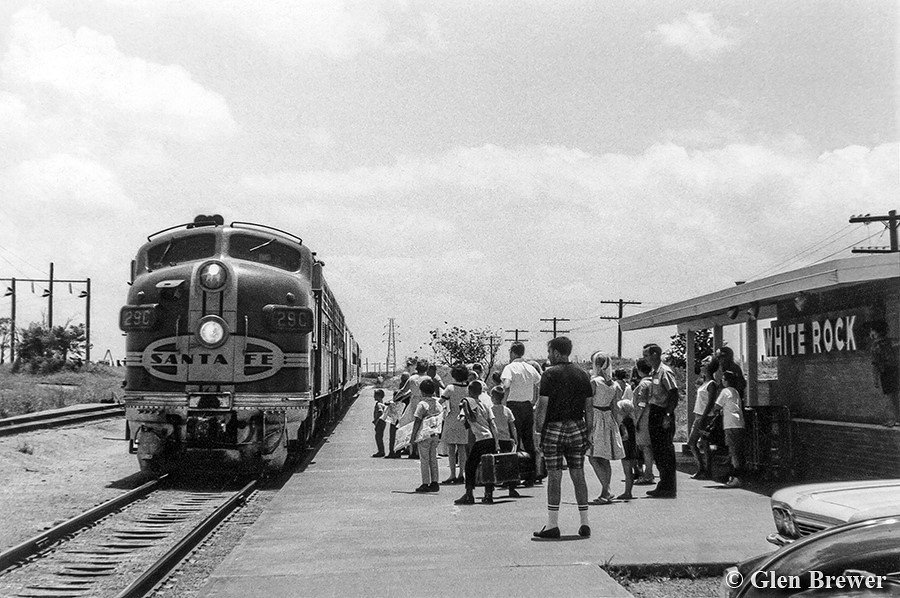
In the previous post, “White Rock Station,” I wrote about the opening of a new passenger depot that had been built to serve suburban travelers along the new stretch of Santa Fe track laid between Dallas and Denton in 1955, opening up direct through-travel to Chicago. This was big news, and as was the charming custom back then, when a new business endeavor opened or expanded, other businesses (often direct competitors) placed ads in the local papers to welcome them and wish them well.
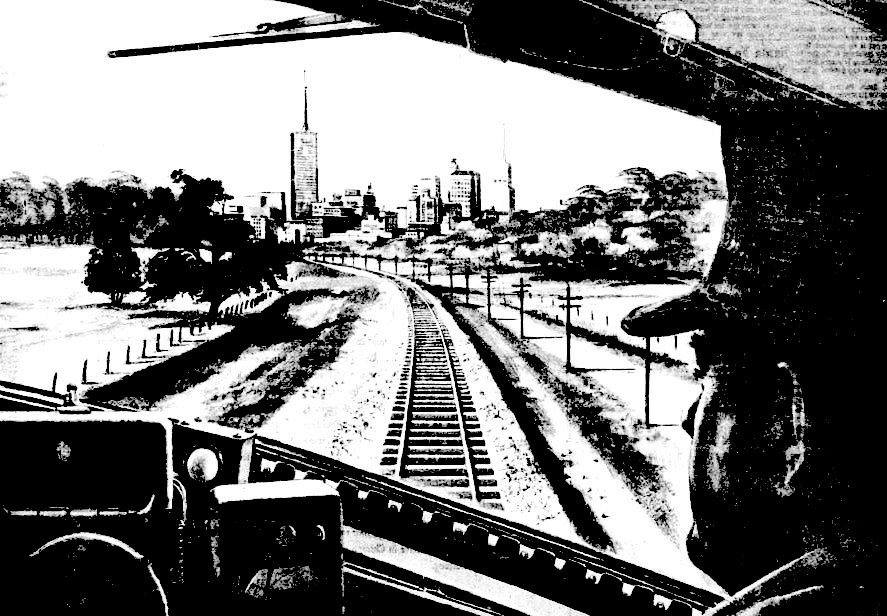
Here are a few of the ads that appeared in December, 1955 to promote/congratulate the new line. I’ve chosen these details of ads because they feature illustrations of the city’s skyline — I always love to see the Dallas skyline in ads, but I particularly like the style of commercial art from this period.
At the top is a detail from an ad placed by the Magnolia Petroleum Company, with the tag-line “Main Line to Progress.”
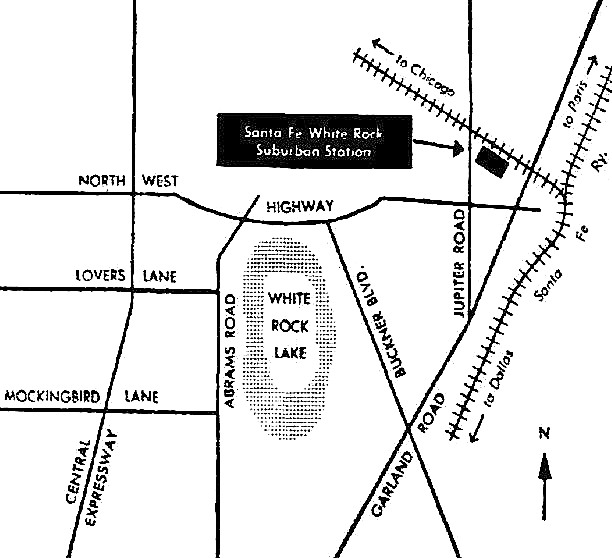
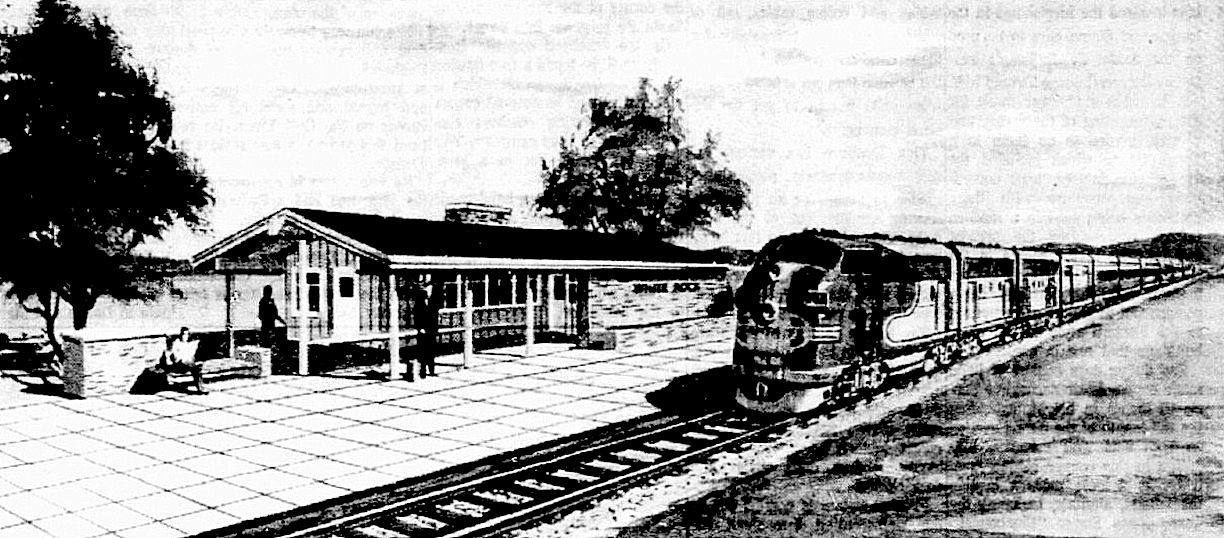
The White Rock passenger station — the Santa Fe railroad’s first suburban train depot built in the Southwest — opened on December 5, 1955 on Jupiter Road, about a quarter of a mile south of Kingsley (located mere steps across the Garland city line), a few miles northeast of White Rock Lake. It was the culmination of a $7,000,000 construction project in which two depots were built and 49.3 miles of new track was laid between Dallas and Denton (or, more specifically, between Zacha Junction — the area near Northwest Highway & Garland Road — and Dalton Junction, an area just northwest of Denton).
The new track — touted by a Santa Fe ad as being “the longest main line construction over new territory by any railroad in 25 years” — was important because it offered passengers from Dallas the ability to travel for the first time directly to Chicago without having to change trains. It also reduced freight line distances by 65 miles. The swanky streamlined Texas Chief shuttled passengers between Dallas’ Union Station and Chicago in about 19 hours — travel time between Union Station and the new White Rock Station was 25-30 minutes.
Santa Fe ad detail, Dec. 4, 1955
The breathless copy from the giant two-page advertising spread heralding the new line included the following description:
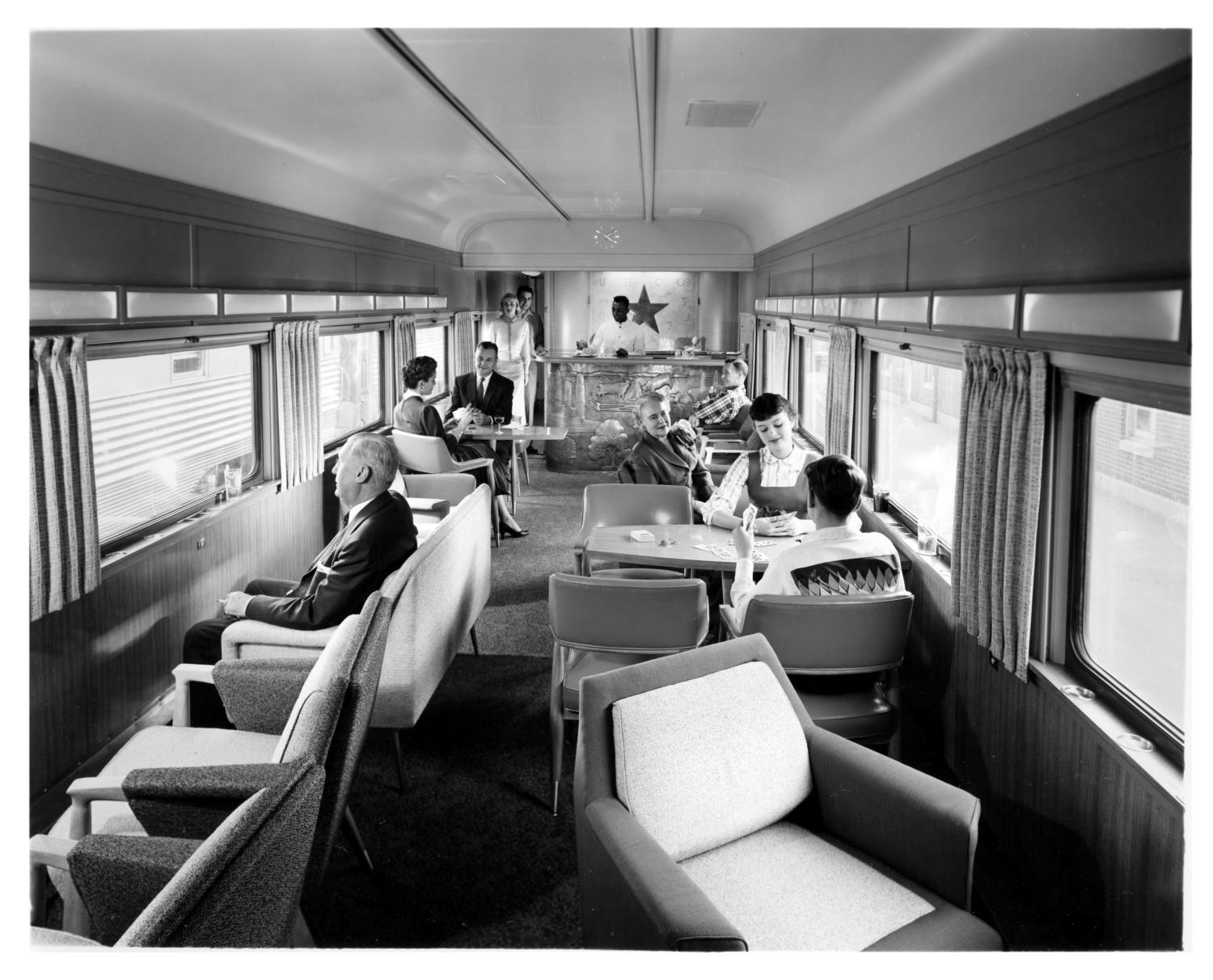
And just wait until you see the special lounge car and dining car on the Texas Chief — the last word in luxury in railroad equipment, decorated in the style and smartness indicative of Dallas…. A lounge decorated to please a Texan! Wide open and spacious feeling, with really comfortable modern sofas and chairs, casually grouped to make you want to relax. You’ll see the Star of Texas and famous cattle brands tooled into the rich leather back-bar — and Texas-inspired murals in hand-hammered copper. Even the walls are richly paneled — in smart, new frosted walnut. Just wait until you see it, you’ll say there’s nothing like it.
And here they are (click for larger images):
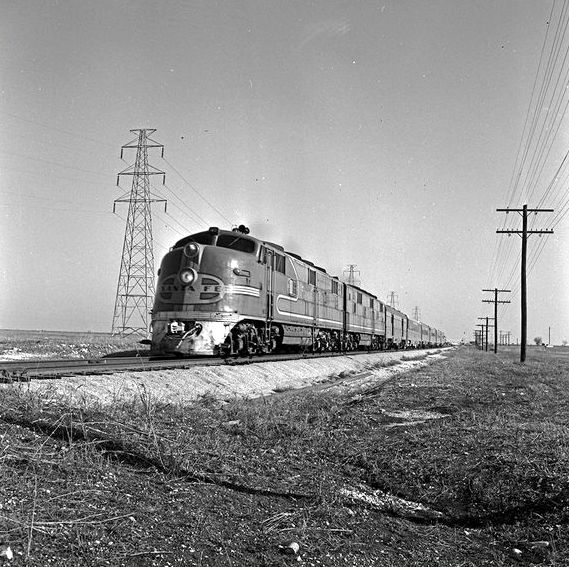
Below, the Texas Chief, pulling out of the station, heading north. (To see a grainy closeup of the station in the background, click here.)
Photo by Everette DeGolyer, Dec. 29, 1956, via SMU
UPDATE: Watch color home-movie film footage taken at the station in this clip from the Portal to Texas History (the pertinent footage begins at the 3:00 mark). More on this cool piece of film can be found in another Flashback Dallas post, here.
*
Interesting tidbit: the engine of the Texas Chief was christened at Union Station on Dec. 5, 1955 with a bottle of water from White Rock Lake! The caption of a photo of the christening in the Dallas Morning News read: “NEW STREAMLINER CHRISTENED — With a bottle of water from White Rock Lake, Mrs. Fred G. Gurley, wife of the Santa Fe Railway’s president, christens the new Dallas-Chicago Texas Chief in ceremonies Monday at the Union Terminal. At right is Miss Sandra Browning of Garland, who presented the local bottle of water,” (DMN, Dec. 6, 1955). Champagne? Pffft! We’ve got pure-dee White Rock Lake water!
And I found footage of that! Here is a screenshot of Mrs. Gurley wielding the bottle of East Dallas’ finest (as Miss Garland, Sandra Browning looks on).
And here is the short clip of the Texas Chief on Dec. 5, 1955, the day of its inaugural run from Dallas to Chicago — in color!. There are shots of the ceremonies at Union Station in Dallas, of the new White Rock Station, of the streamliner with the Dallas skyline behind it, and, possibly, footage from the other big ceremony in Denton.
The two photos showing the dining and lounge cars of the Texas Chief were taken around 1956; both are from the Museum of the American Railroad Collection, Portal to Texas History. Other photos of the Texas Chief from this collection can be seen here.
Photo of the Texas Chief pulling out of the White Rock Station was taken by Everette L. DeGolyer on Dec. 29, 1956; it is from the Everette L. DeGolyer Jr. Collection of United States Railroad Photographs, DeGolyer Library, Central University Libraries, Southern Methodist University. The photo (“Atchison, Topeka, and Santa Fe, Diesel Electric Passenger Locomotive No. 11, White Rock Station”) can be viewed here.
The two drawings, and a few quotes, are from large advertisements placed by the Santa Fe railroad to announce the opening of their new line.
The last photograph showing the station is dated “circa 1956” and credited to “Monaghan, M.D.”; it can be viewed on the Portal to Texas History site, here.
The YouTube video showing color footage of the Texas Chief’s inaugural festivities is titled “New railroad into Dallas. Archive film 93424,” from the Huntley Film Archives, here.
The photo of the commemorative railroad spike (“Spiked with Progress”) was sent to me by a man who had seen it for sale in an antique store in Ardmore, Oklahoma in 2020 (thanks, Joe!).
A 1962 map showing the location of the station is here. A present-day Bing map showing where the station was is here. A Google Street View image of the area today is (…if you must…) here.
An article on the construction of the Denton and Dallas (White Rock) depots — “Work on New Santa Fe Depot To Start Here” (Denton Record-Chronicle, July 13, 1955) — can be read here.
For anyone doing research into this specific new rail line, there was a 16-page section in The Dallas Morning News on Dec. 5, 1955 which was bursting with helpful info, civic pride, “welcome to the neighborhood” ads, and corporate puffery. There was an even larger (MUCH larger!) tribute to the sainted Santa Fe which consumed the entire Dec. 4, 1955 edition of The Denton Record-Chronicle (there was even a ghost image of a Santa Fe engine which covered page one).
As mentioned above, there is home-movie film footage taken at the station — more about this can be found in the Flashback Dallas post “White Rock Station (And a Helicopter Ride),” here.
And, lastly, check out a YouTube video of Henry Mancini’s version of Johnny Mercer’s “Atchison, Topeka & Santa Fe” — with loads of cool period film footage of train travel — here.
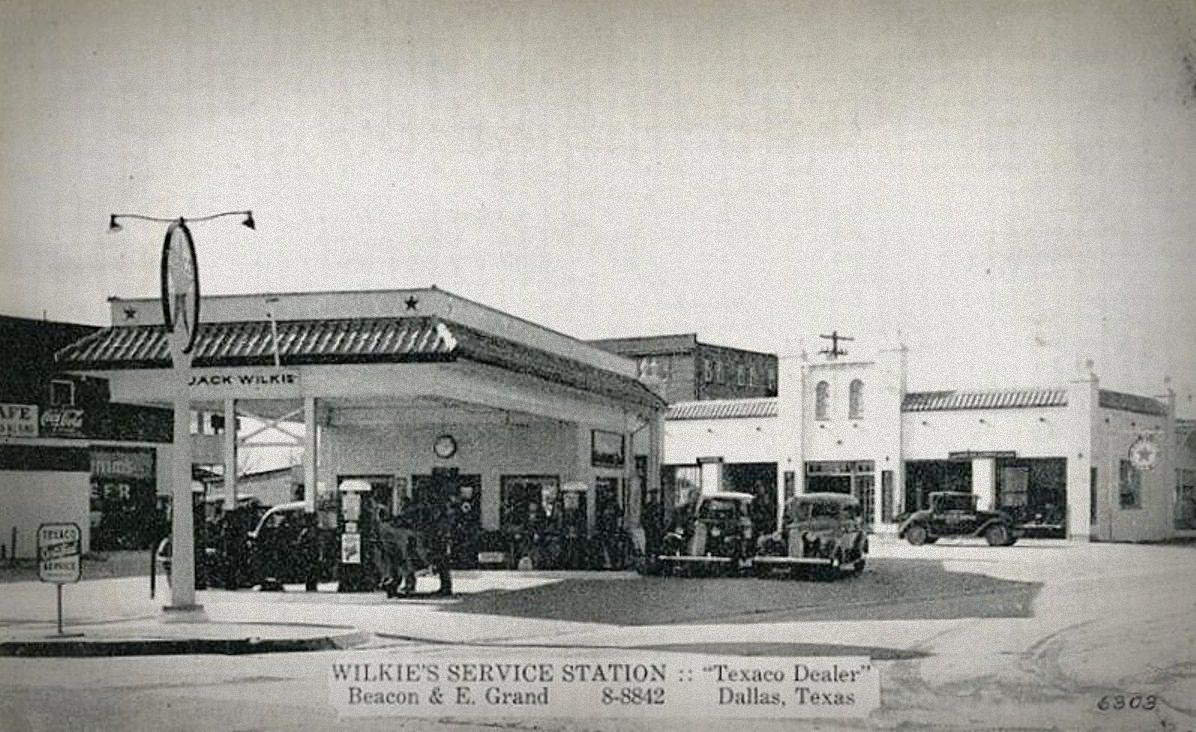
Above, Jack Wilkie’s Texaco service station at 5523 East Grand. It’s a shame gas stations are rarely this interesting anymore. The station opened in 1937 and was at this location well into the 1940s. Below, the same view today, with that tall brick building in the background of both photos. (I’m not sure what that building is, but while I was waiting for a friend in the Kalachandji’s parking lot a few months ago, I remember thinking what a strange building it was — especially when seen from the side. It’s had some weird additions made to the original building.) This part of East Dallas still has pockets of charm, but it’s never again going to be as cool as it was when Jack Wilkie’s service station was holding down the fort at the corner of Beacon and E. Grand.
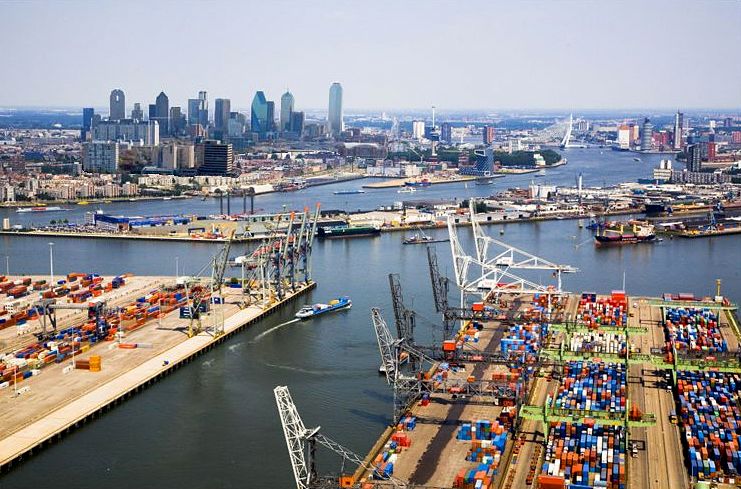
Okay, this will be my last Trinity River post for a while. This is what some clever person imagined Dallas would look like today as an inland port had anyone ever managed to make the Trinity a navigable commercial waterway between DFW and the Gulf. So there you go!
***
This image was linked to a Reddit post linking to a Flashback Dallas Trinity River post. I have no idea who created this, but the image link is here. If anyone knows the source, I’d love to credit the person responsible.
107 years ago today — after days and days of torrential rains — the Trinity River reached a crest of over 52 feet, and the resulting flooding caused loss of life and property and almost incalculable widespread damage on both sides of the suddenly surging river. Bridges and train trestles were washed out, cutting off any way for Dallasites or travelers heading west on trains and interurbans to get from Dallas to Oak Cliff, and vice versa. Ever the home of the entrepreneurial capitalist, the owner of one of the only large boats in the area, the Nellie Maurine, offered his water vehicle to be used as a ferry for those souls desperate to cross the river. For a price.
In September of 1906, E. L. Gale built a large boat in Dallas. It was designed to carry freight as well as passengers on pleasure trips between the “wharf” at the base of Commerce Street and the under-construction Lock and Dam No. 1 at McCommas Bluff. The boat was named after his daughters Vanelle and Maurine.
The Nelle Maurine is a model bow, flat-bottomed boat, seventy feet in length, sixteen-foot beam on the water line, and twenty feet including the guard rail. She is a propeller boat, draws twelve inches of water, and is driven by a 40-horsepower engine. In the event it be found that the engine is not of sufficient power to give the boat the required speed, it is so arranged that it can be changed to 80-horsepower with but very little trouble. With full cargo aboard, the vessel will require a depth of about thirty-three inches of water. (Dallas Morning News, Sept. 29, 1906)
DMN, Sept. 29, 1906 (before upper deck/pilot house had been built)
Gale envisioned great success in establishing shipyards and a wharf in Dallas. Though the much hoped-for “navigable Trinity” was still not a reality, many believed a trade route waterway between Dallas and the Gulf of Mexico was inevitable. A person could make a great deal of money by being in on the ground floor of such an industry.
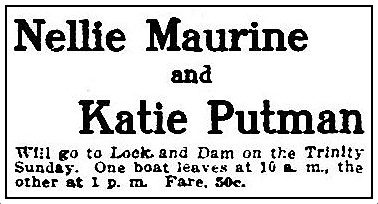
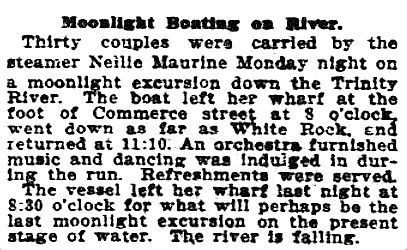
The boat, initially a propeller boat which was converted to a sternwheeler in the summer of 1907, had trouble in operating along the short stretch of river with any kind of regular service — the water level was either too low or too high (when the water was high, the boat could not pass beneath the “Zang boulevard bridge”). The Nellie Maurine was often moored near a large cottonwood tree waiting for the river to cooperate. When it did cooperate, the boat was in demand as a pleasure craft, often offering moonlight treks down the river, complete with onboard dance band. The fare for a daytime round-trip to McCommas Bluff was 50¢; the privately chartered night-time cruises were likely quite a bit higher.
Ad, DMN, July 4, 1909
May 13, 1908 (less than two weeks before the flood)
When the Great Flood of 1908 hit on May 25, there was absolute bedlam, beginning in the middle of the night when one man set off several “dynamite bombs” one after another in order to awaken his neighbors who were unaware of the sudden and unexpected rise of the swollen river and who were in imminent danger. When Dallasites went to bed on May 24, the river was at an already high 28 feet. By 3:00 in the morning, just a few short hours later, it had risen to an incredible — and incredibly dangerous — 41.5 feet. By that afternoon it was over 51 feet, and by nightfall, it had surpassed all records and was at more than 52 feet. West Dallas and downtown were underneath water. Homes and livestock were washed away. Electricity was out. Telephones were out. Roads and railways were impassable. There was absolute panic.
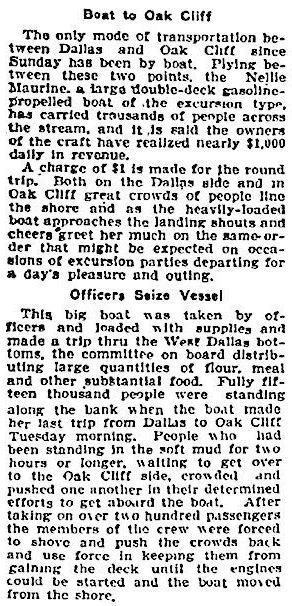
For numerous reasons, people were desperate to cross the river. As all roads and bridges across the Trinity were submerged or destroyed, the only way across was by boat. The Nellie Maurine’s owner saw an opportunity to make a lot of money — by charging people to ferry them back and forth across the Trinity, something that probably rubbed people the wrong way. When city authorities asked permission to use the Nellie Maurine to survey the damage, they were rebuffed when Gale (or his captain) insisted the city pay a fee and the city refused. Dallas County Sheriff Arthur L. Ledbetter and Criminal District Judge W. W. Nelms were having none of that and seized the boat, deputizing the crew and ordering them to set off for the west bank of the river. As it turned out, the damage was far worse than anyone could have expected, and the boat was used to rescue stranded people, some of whom were pulled from treetops. (The account of this survey, titled “West Dallas Trip Proves Thrilling,” is pretty gripping — see link below.)
When the city was done with its search-and-rescue mission, it UN-seized the boat, and the Nellie Maurine began operating as a ferry again, transporting frantic people back and forth across the river. If you wanted to cross the river, you’d have to cough up one dollar — maybe even two, a hefty price to reach safety. (According to the Inflation Calculator, $1 in 1908 would be the equivalent of about $26 in today’s money). It was rumored that this ferry service was generating $1,000 a day (almost $26,000 a day in today’s money!).
DMN, May 28, 1908
The Nellie Maurine provided a much-needed service during the Great Dallas Flood — and they also made a substantial profit, which — depending on your business philosophy — is either ingenious or appalling.
*
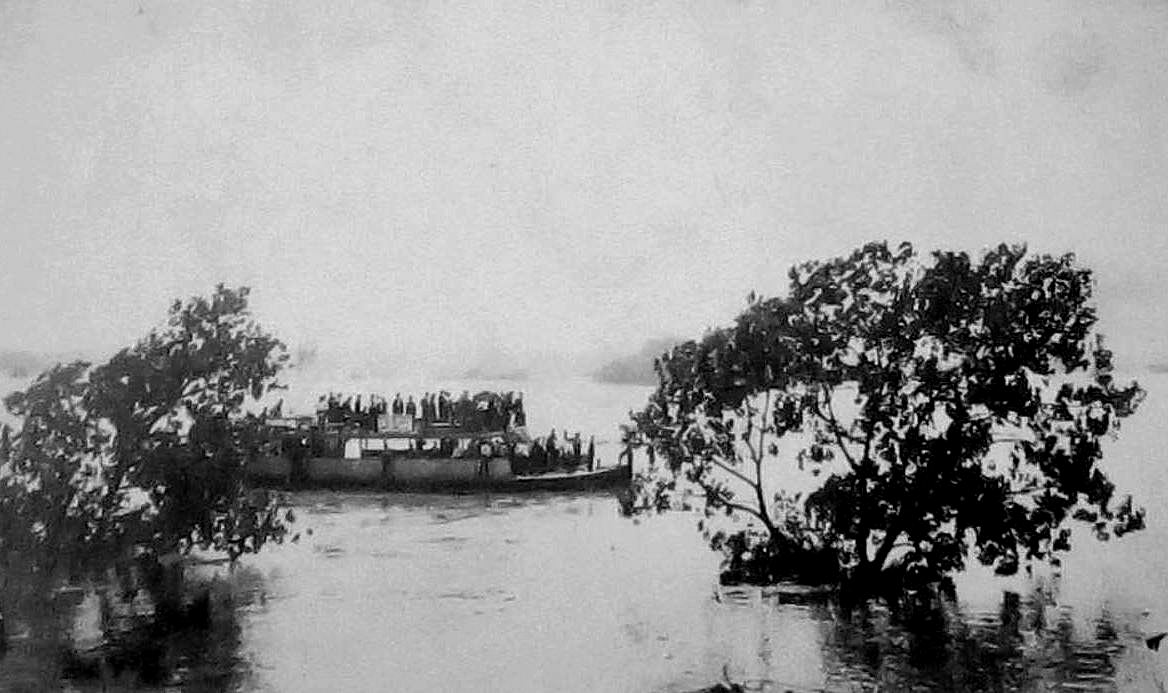
Below, a few images of the Nellie Maurine. I’m not sure what ultimately became of her, but I have found no mention of the boat past 1910, a year before E. L. Gale died.
First, two photos of the boat taken during the flood (the boat had lost its pilot house when it was caught under the Commerce Street bridge earlier that day). (These two “real photo postcard” images found on eBay.)
Another photo from 1908 (from the John Miller Morris collection of Texas real photographic postcards and photographs, DeGolyer Library, SMU,here):
1908, DeGolyer Library, SMU
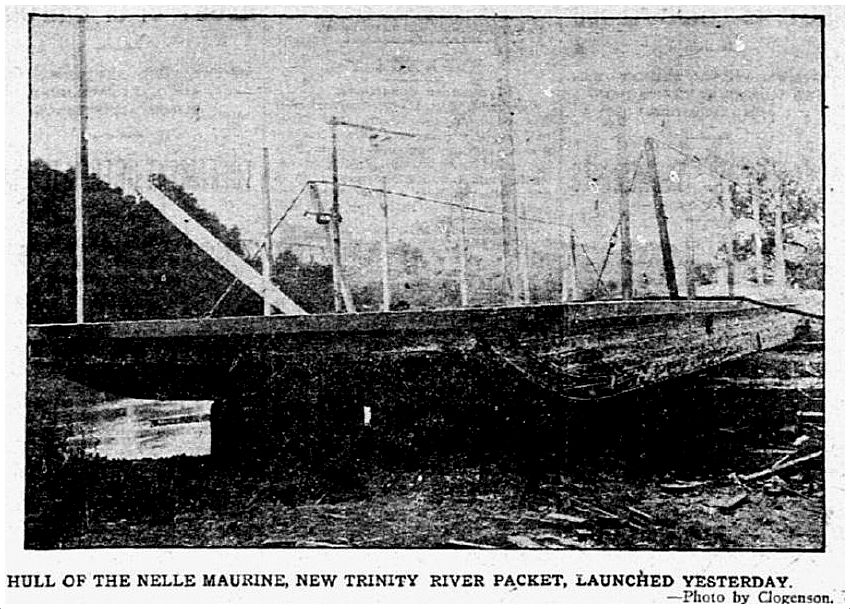
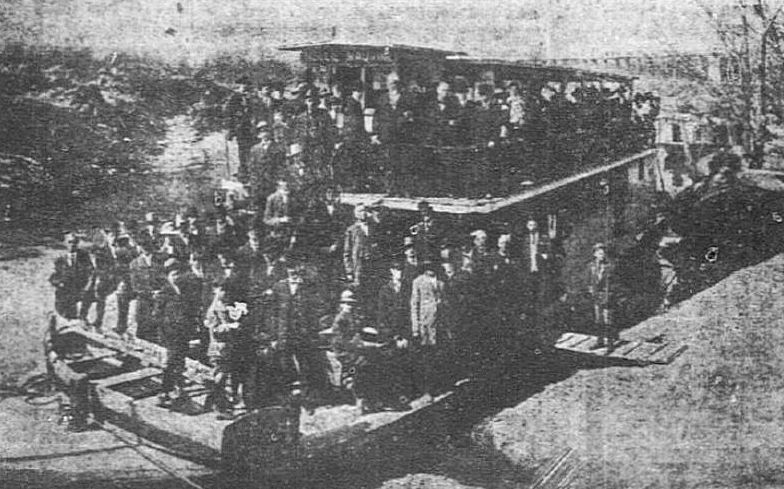
And, lastly, a post-flood photo from 1909, showing builders and contractors onboard, about to head to Lock and Dam No. 1 to check on its progress.
DMN, Feb. 23, 1909 (photo by Clogenson)
***
Sources & Notes
Top photo from the highly recommended book Diaper Days of Dallas by Ted Dealey.
Clippings and photos from The Dallas Morning News, as noted.
Read about the introduction of the Nellie Maurine (or the “Nelle Maurine”) to Dallas newspaper readers in an article published in The Dallas Morning News on Sept. 29, 1906, here. (The second photo above accompanied this article.)
Read the account of what was seen from the boat when it was commandeered by city officials in “West Dallas Trip Proves Thrilling,” published in the DMN on May 26, 1908, here.
Read more about the flood in these articles from The Dallas Morning News:
“The Trinity’s Swan Song Spree of 1908” by Gene Wallis (DMN, March 1, 1931), a hair-raising account of the havoc wreaked by the flood
“Riders Saw 1908 Flood from Ferry” (DMN, May 28, 1957), includes an account of S. S. Cumby, a farm boy who witnessed the flood
The Trinity River flood of 1908 was a story that made national headlines. The death-toll reports were all over the place, from 4 to “hundreds.” I think the official number of lives lost was only 4 or 5, which is pretty amazing, considering the massive destruction caused by the flood. An interesting first-day report can be found in the Wichita (Kansas) Beacon, in a late edition from May 25, 1908, here. “Trinity Is on a Rampage” — indeed.
An incredible photo of the washed-out T & P railroad trestle can be found in a previous post here.
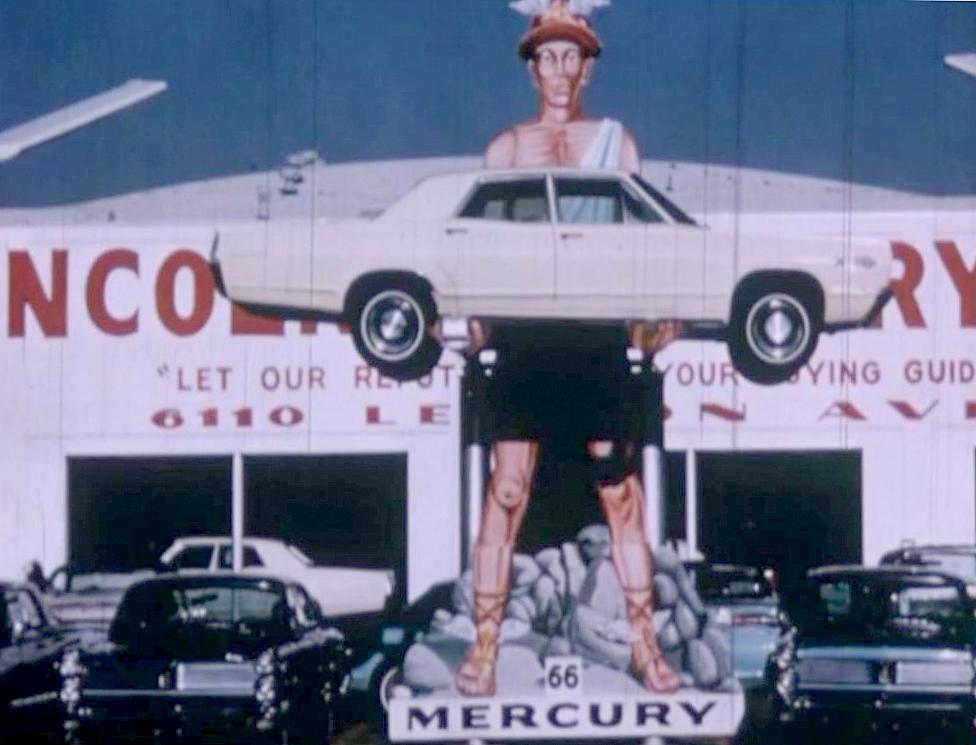
Dallasites love their cars…. (photo from “The Walls Are Rising”/AIA Dallas)
by Paula Bosse
Late last year I stumbled across mention of a 1967 film about Dallas called “The Walls Are Rising.” It was made by the American Institute of Architects, Dallas Chapter, and was sponsored by the Greater Dallas Planning Council as a sort of warning to the people of Dallas about the dangers of auto-centric sprawl and uncontrolled urban planning. I searched and searched for the whereabouts of the film, but it seemed to have disappeared without a trace. I contacted AIA Dallas, and after much searching, they found the film, still on an old reel. They digitized the film and screened it before a large and enthusiastic crowd in January, and after viewing the film and listening to a panel discussion, audience members launched into a lively and concerned discussion about the state of Dallas today. It turns out that most of the topics of grave concern in 1967 continue to be topics of grave concern today, almost 50 years later.
AIA Dallas has uploaded the 27-minute film to Vimeo, and it is now available for all to watch online. Made to emphasize the dangers of out-of-control urban blight brought on by an over-reliance on automobiles, a lack of green spaces, and depressing expanses of visual clutter, the film is a sardonic look at a claustrophobically “modern” Dallas. It’s a hip documentary — absolutely a product of its era — made by a filmmaker with avant-garde tendencies; imagine what an industrial film would have been like had it been made by “with-it” ad men who were given free-rein to get their message across (and who may have indulged in illicit substances during the editing phase). Not as weird as the film itself (though still plenty weird) are some of the proposals from architects and planners on ways to improve the city’s “livability.”
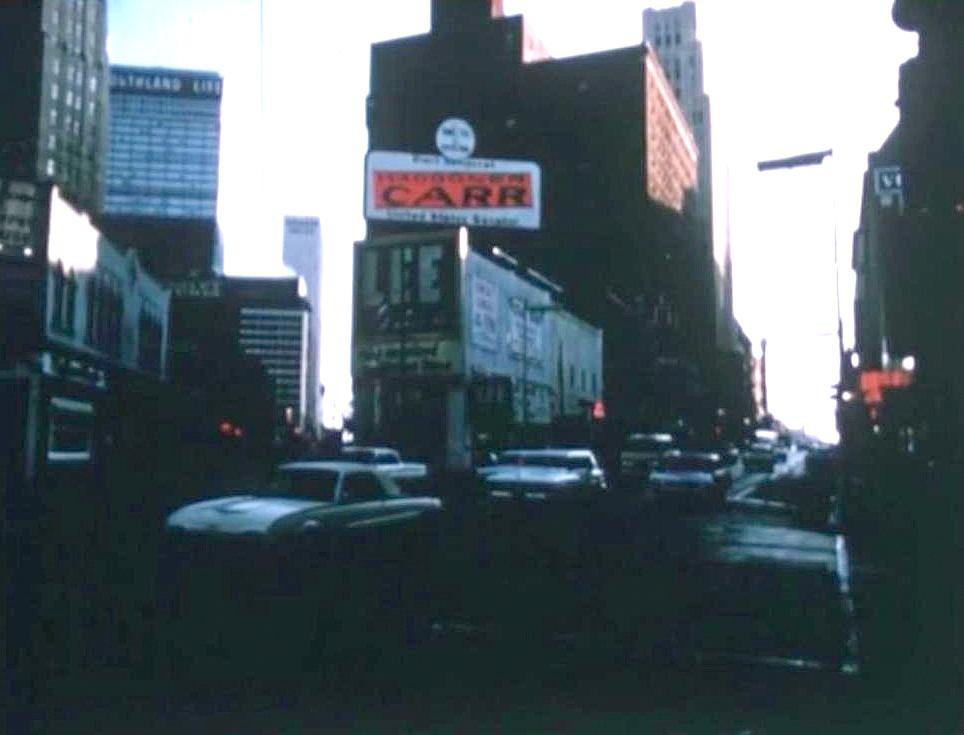
Best of all, though, are all the photos of the city. It’s great being able to hit “pause” and take a look at each and every 1967 photo of Dallas, from a jam-packed downtown, to a cluttered Oak Lawn, to a serene Turtle Creek.
Thanks again to AIA Dallas for finding the film and uploading this weird little slice of Dallas history!
All photos by Ronald Perryman, from his film “The Walls Are Rising” (1967), “produced by Greater Dallas Planning Council in collaboration with Dallas Chapter of American Institute of Architects.”
Advertisement from the 1929 city directory. Harley-Davidson — 2700 Commerce Street, at Henry — was in Deep Ellum, in the same block currently occupied by Angry Dog.
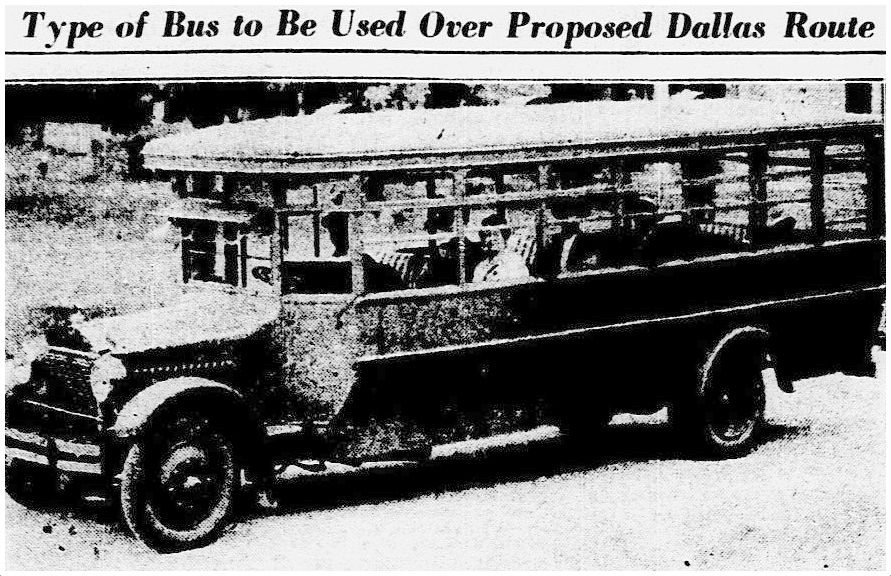
In the 1920s, White Rock Lake was becoming a popular nearby recreation area and beauty spot. It was a bit of a drive to get out there, though. Bus operators were wangling to get the contract to transport tired and pale Dallasites to a nice day out at the lake. The caption accompanying the above photo:
“This city type bus will make an experimental trip to White Rock with city officials, applicants for bus franchise and newspaper men to test adaptability of various routes to bus line operation. Busses [sic] of this type, said C. D. Cain, who has been voted the White Rock franchise informally by the City Commission, will be run on the line when the franchise is formally granted.”
***
Sources & Notes
Photo and caption from The Dallas Morning News, July 16, 1925.

 Back when the N. Lamar area was a bit more industrial

 Dallas Morning News, Aug. 29, 1907






 Ad, DMN, July 4, 1909
 May 13, 1908 (less than two weeks before the flood)
 DMN, May 28, 1908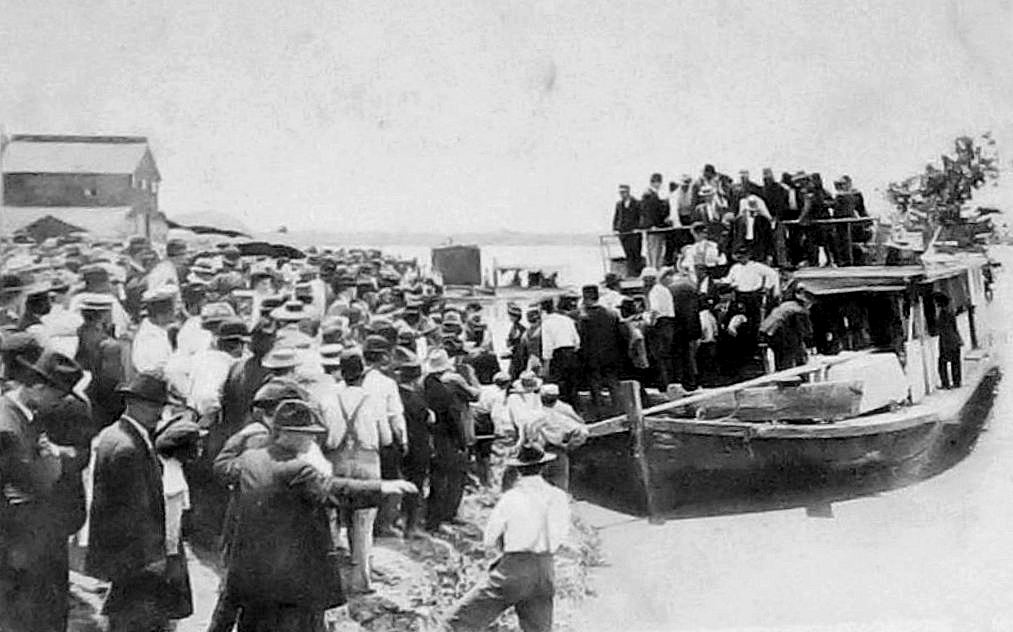





 Flashback : Dallas