Flashback : Dallas

A Miscellany: History, Ads, Pop Culture

Category: Vault

From the Vault: Panoramic View of the Entrance to the State Fair of Texas — 1908

state-fair_clogenson_1908_LOC

by Paula Bosse

Frequently I post links to previous Flashback Dallas posts on Facebook, Twitter, and Instagram — usually on days when I’m unable to post anything new, due to lack of time, computer issues, or just general malaise. I might experiment with posting those links here.

Today, for instance, is the first day of the 2015 State Fair of Texas. Last year I posted a very, very cool panoramic photograph (taken by the always dependable Henry Clogenson) showing the crowded entrance to the 1908 fair. To read the post and to view a very large image of the above photo, check out last year’s very popular post here.

*

Copyright © 2015 Paula Bosse. All Rights Reserved.


Ebby Halliday, 1911-2015

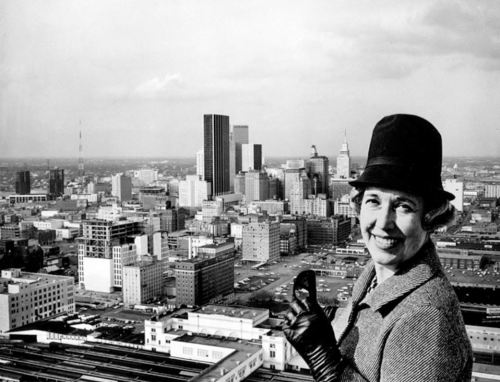
ebby_1957_big-d_cowboy-hat_via-candys-dirt
Ebby in Big D, 1957… (photo: Ebby Halliday Realtors)

by Paula Bosse

(Feb. 2019: This post has been expanded since its original publication on Sept. 9, 2015.)

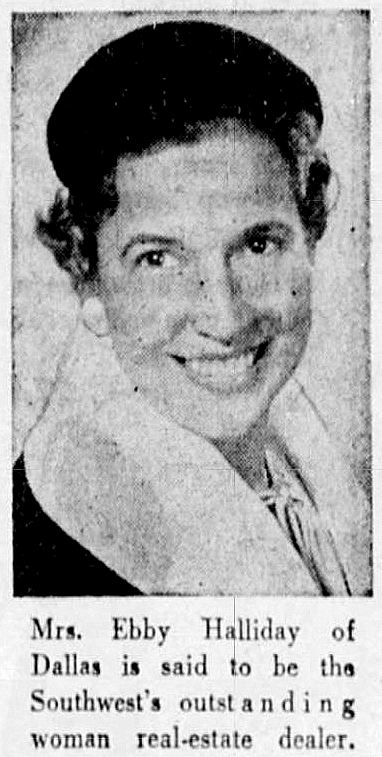
Ebby Halliday — the Dallas realtor known instantly by just her first name — died September 8, 2015 at the age of 104. Ebby was not only stunningly successful in the world of Dallas real estate, she was also something of a pioneer in paving the way for other women to establish and find great success in business. There are several obituaries that will present a more complete overview of her life (see links at the bottom of this post), so I’ll just post a few odds and ends that have caught my attention.

*

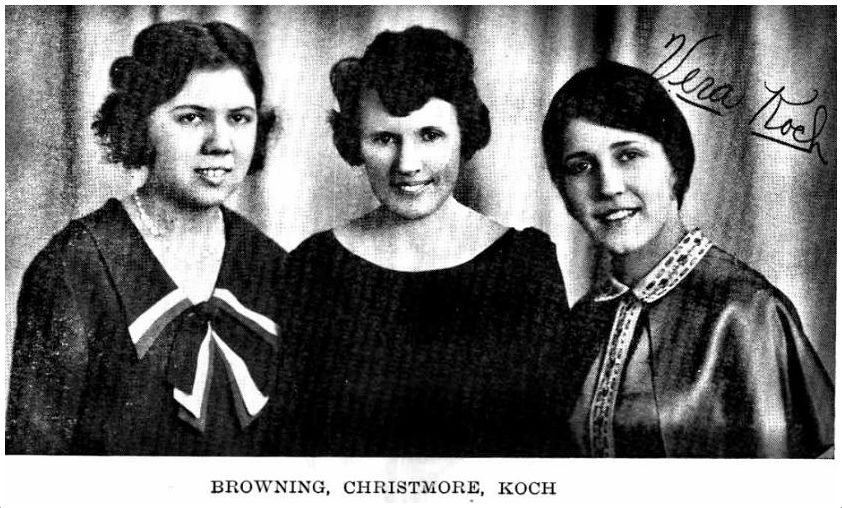
Vera Lucille Koch grew up in Kansas, and according to her 1929 Abilene High School yearbook, she was inordinately active in all sorts of clubs and sports. Here are a couple of photos from that yearbook (most images are larger when clicked); the first one shows her with the debate team.
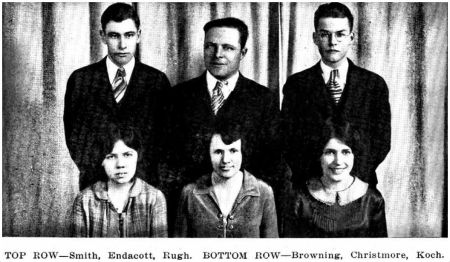
ebby_debate-club_AHS-1929

And the second one shows her with her “Forensics” teammates (she excelled in reading competitions, although I’m not exactly sure what that means, as most “forensics” events involve debating). Rather amazingly, this scanned yearbook has her signature!
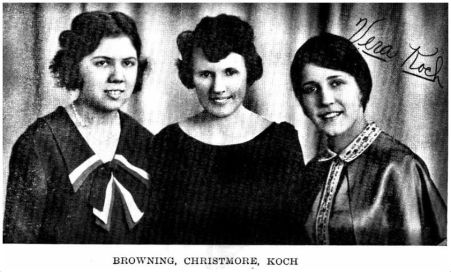
ebby_forensics-team-reading_AHS-1929

These two extra-curricular activities served her well in her later career — she obviously learned a lot about the effectiveness of persuasion at an early age.

After school, she spent several years working in department stores selling women’s fashions (including a stint in Omaha, where a vivacious young Vera can be seen in a  fantastic photo posted by D Magazine here). Ultimately she arrived in glamorous Dallas around 1938, where she began life as a Dallasite managing the women’s hat department at the downtown department store W. A. Green. Most accounts have her entering the real estate business while still selling hats, soon after the war — almost by a fluke. Legend has it that one of her customers mentioned to her husband, famed oilman Clint Murchison, that he might want to utilize Ebby’s sense of style by having her decorate a few of his newly-built houses in Far North Dallas in order to increase sluggish sales; she was apparently so successful at this that she decided to pursue selling houses on her own and eventually established her own realty company.

*

I’ve always wondered about the name “Ebby” — what was it short for? Ebby Halliday is the only Ebby I’ve ever heard of. Turns out that she made the name up, sometime between graduating from high school in Kansas and coming to Dallas. In a 1983 Dallas Morning News interview, she explained how Vera Lucille Koch became “Ebby Halliday”:

“I was selling hats when one of the buyers who I admired a great deal told me I had to get rid of  Vera Lucille. She said it was the silliest name she’d ever heard. I needed something more sophisticated. I thought about it and came up with the name Ebby. That sounded very, to me, like I had a lot of class.” (DMN, Sept. 25, 1983)

The  paragraph ended with two sentences added by the writer of the article:

The name Halliday came from an early first marriage. That husband is now deceased.

The somewhat dismissive tone of those last two lines is interesting, because that husband, Claude W. Halliday — whom she appears to have married in 1947 (although an earlier marriage license for the couple had been issued in 1945 in New York) — is almost non-existent in newspaper searches. C. W. Halliday (1908-1965) was described in a 1957 article about Ebby as being “engaged in an investment and building corporation.” In his 1965 obituary, C. W. was described as “head of C. W. Halliday Realtors and a partner in Ebby Halliday Realtors.” When C. W. died in 1965 — several years he and Ebby had divorced (and the same year Ebby married Maurice Acers) — it was Ebby who acted as informant on his death certificate. Mr. Halliday’s real estate career began about 1946, a year or so before Ebby opened her own retail millinery business. Ebby and C. W.’s marriage lasted for over 12 years, but most traces of him seem to have vanished into the ether.

But back to the name “Ebby.” When the former Vera Lucille Koch arrived in Dallas around 1938 to work at the W. A. Green department store, she was listed in the city directory as “Mrs. Vera Eberhardt.” I’m not sure where the “Mrs.” came from (had she been married before she arrived in Dallas?), but it’s certainly easy to see that “Ebby” probably came from “Eberhardt,” a name which was either a husband’s surname or the name she described as having created for herself because it sounded sophisticated.

eberhardt_vera_ebby_1939-directory1939 Dallas directory

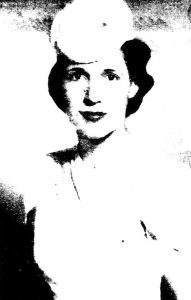
In June, 1940, 29-year-old Ebby married KRLD broadcaster Royce H. Colon. Their marriage lasted only a few years, but it was during this time that the city directory shows her using the name “Ebby” professionally, while still working at Green’s.
colon_ebby_1940
Mrs. Royce Colon, 1940

colon_1941-directory
1941 Dallas directory

colon_1942-43-directory1942-43 Dallas directory

In Mr. Colon’s 1975 obituary it was stated that he had begun his career in real estate (with Majors & Majors Realtors) at a time which would have coincided with the years he and Ebby were married. This is to take nothing away from Ebby’s incredible accomplishments, but if that were the case, it seems that she might have had some (at least rudimentary) background in real estate before Clint Murchison asked her to spiffy-up some new houses he was having trouble unloading. It’s possible she may have entered her new profession with more in her quiver than simply a flair for interior decoration. Ambition may have seemed unladylike and immodest for a “career gal” in the 1940s, even for someone as independent and focused as Ebby. I wonder if her “origin story” might have been softened a bit to play down her ambition? Whatever the case, it didn’t take Ebby long to make her mark on the world of Dallas real estate, and, in so doing, establishing for herself a national reputation as both a top realtor as well as a major inspiration and mentor for women in business. 

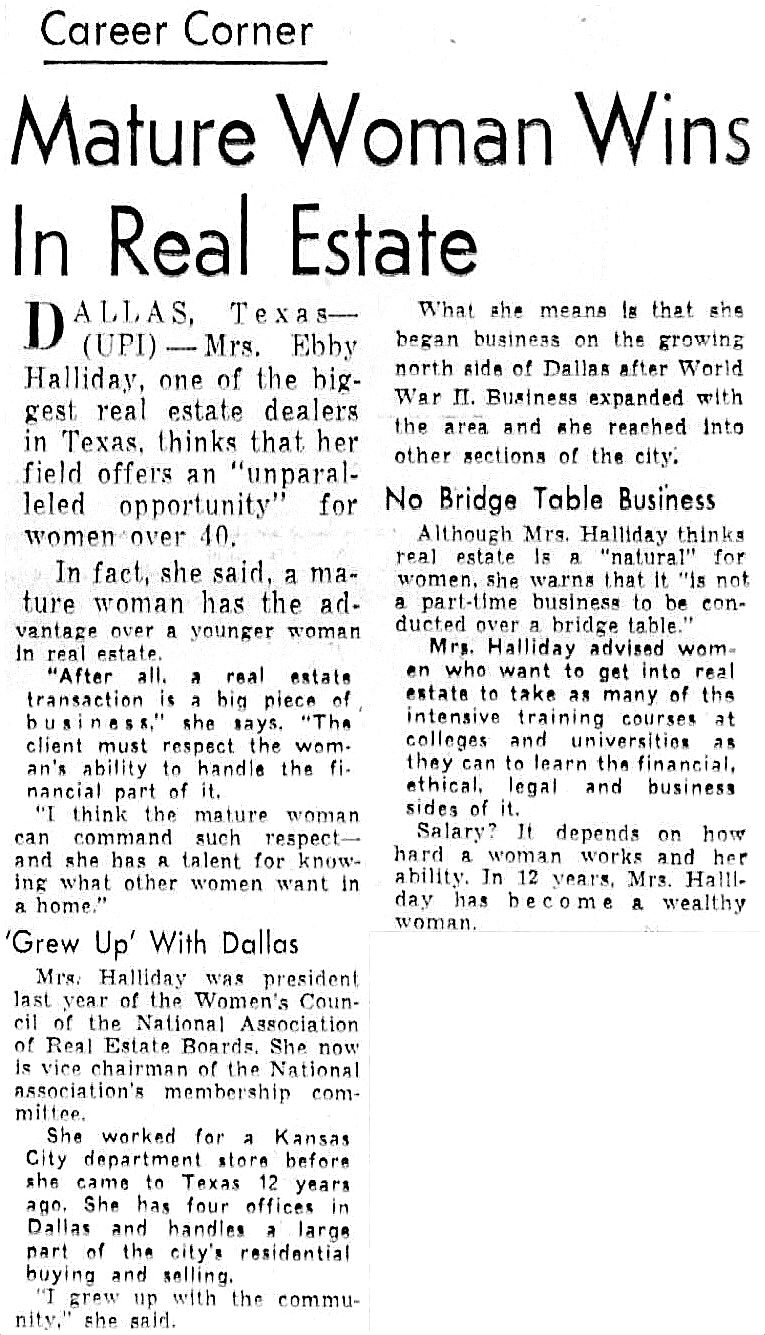
Below is the type of article about Ebby Halliday’s accomplishments which ran constantly throughout her career. (Most images in this post are larger when clicked.)
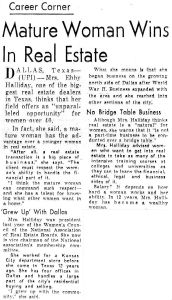
ebby-halliday_tennessean_090758_upi-wire-story
The Tennessean, Nashville, TN, Sept. 7, 1958

*

But back to that hat shop.

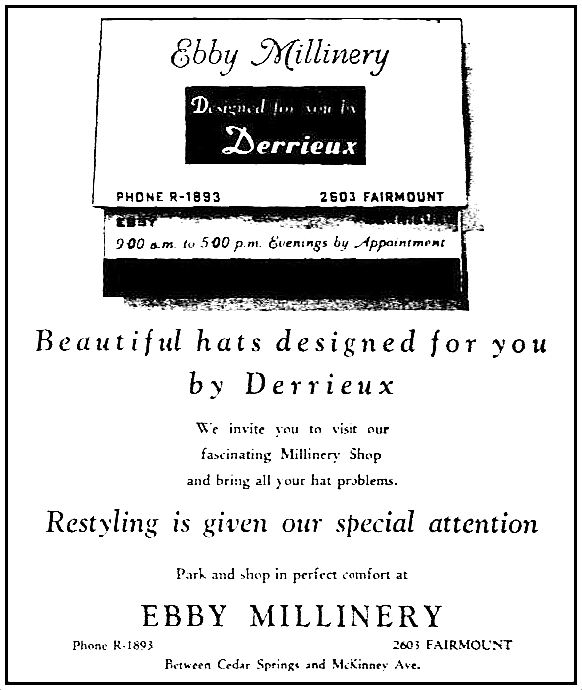
The first mentions I found for the shop Ebby Millinery (one of several boutique shops which operated in the still-beautiful old home at 2603 Fairmount), were in August, 1947 — an article in The Dallas Morning News described the shop as having “opened recently.” Ebby (who had recently become Mrs. C. W. Halliday) opened the shop in partnership with Dallas hat designer Annabelle Derrieux Bradley.

ebby-millinery_081047
Aug. 10, 1947

The shop’s bold decoration sounds … bold:

…Ebby Millinery’s French Room is decorated with bottle green walls and carpets and accented with striped drapes of deep shocking pink and chartreuse. The designing room has a touch of the Victorian with frilly white curtains and oversized wallpaper roses against a bottle-green background. (DMN, Aug. 20, 1947)

ebby-millinery_102647
Oct. 26, 1947

When Ebby decided to pursue her new real estate business full-time, Derrieux and her husband took over the shop and eventually renamed it Derrieux Hats.

*

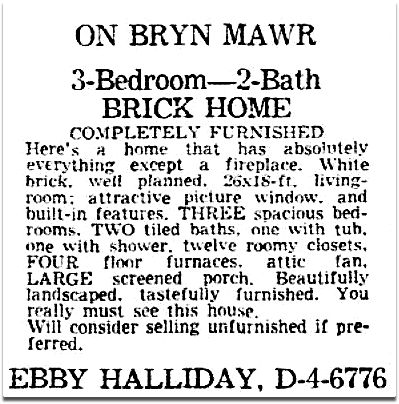
The first real estate ad I could find that featured Ebby’s name is this one, from 1948:
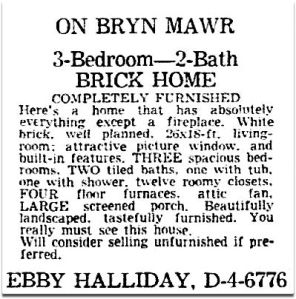
ebby_dmn_080548DMN, Aug. 5, 1948

And she was off like a rocket.

**

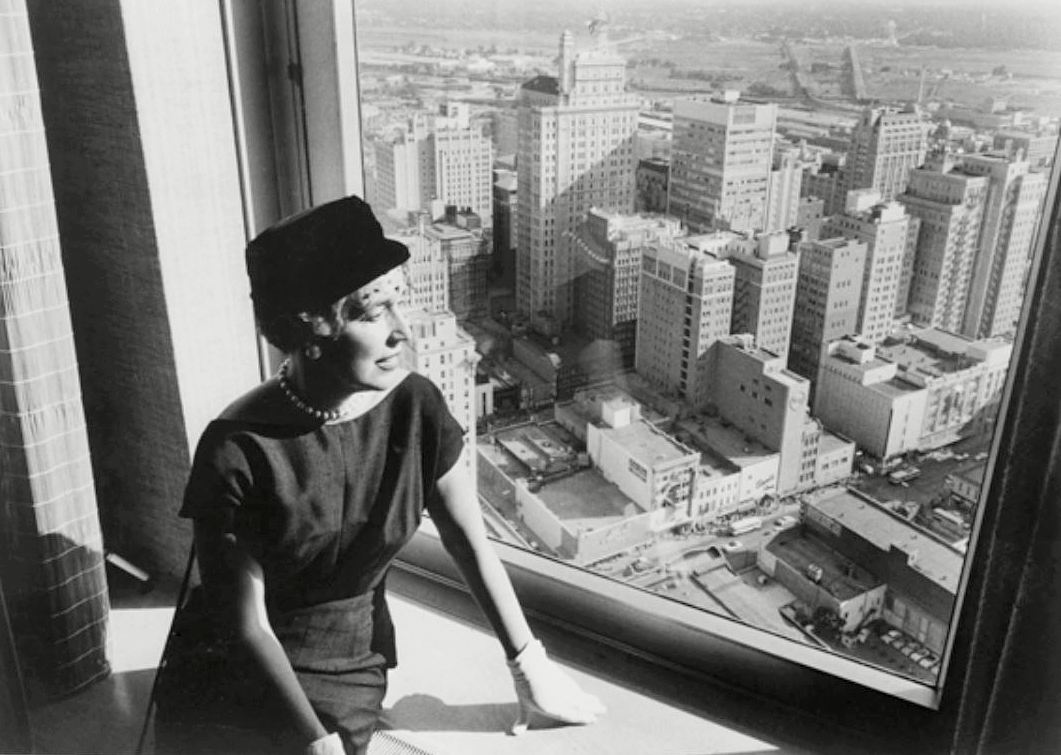
Below are a few photos of Ebby I’ve come across which I particularly like.

ebby_1956_charm_via-candys-dirt1956, Charm magazine (“the magazine for women who work”) (via Candy’s Dirt)

*

ebby-halliday_louisville-KY-courier-journal_092257Louisville (KY) Courier-Journal, Sept. 22, 1957

*
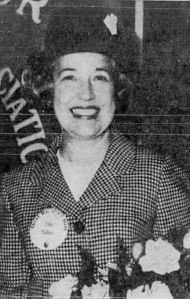
ebby-halliday_austin-statesman_012566
Austin Statesman, Jan. 25, 1966

*

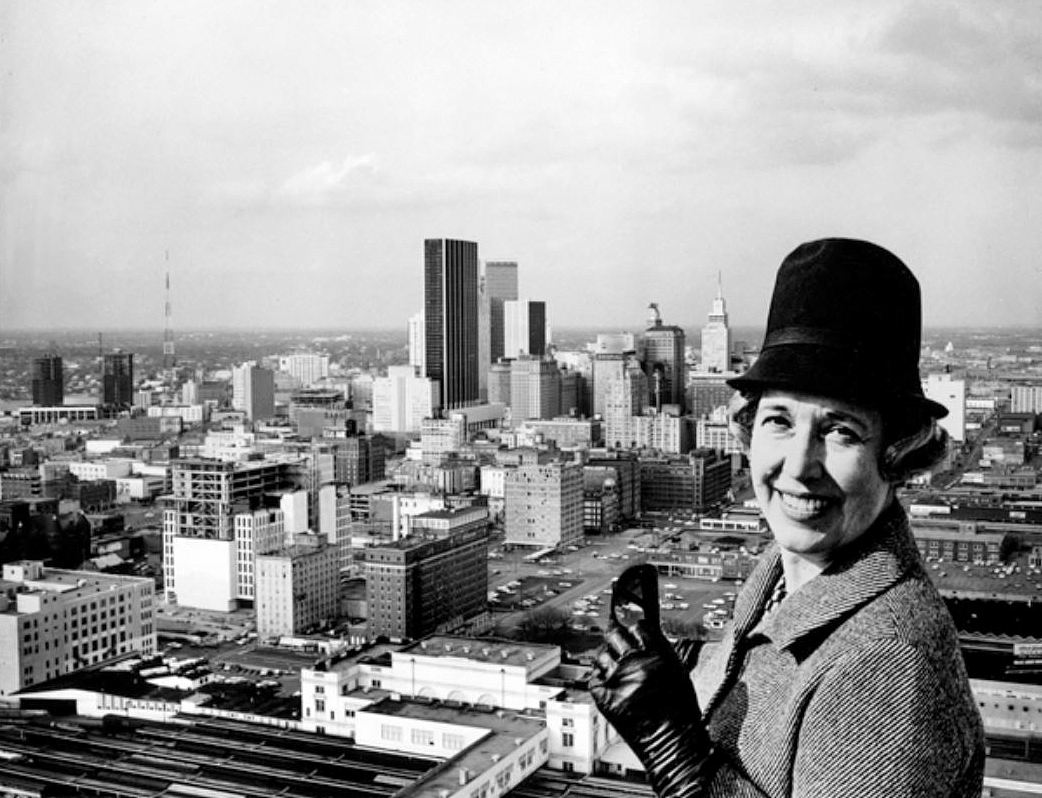
ebby_dallas-skyline1966 (via Candy’s Dirt)

This photo is interesting because a version of it appears in the May 15, 1966 edition of the Sydney Morning Herald under the headline “The Texas Millionairess” with one slight difference: instead of posing above the Dallas skyline, she is shown posing above the Sydney skyline while on a trip to Australia.

*

And here she is in later days: the undisputed grand dame of Dallas real estate. RIP, Ebby.
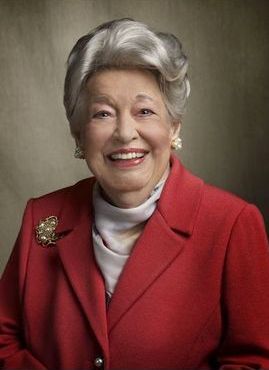
ebby_wfaa

***

Sources & Notes

Top photo is one of three in this post which appeared in a Candy’s Dirt slideshow here (slideshow photos are from the archives of Ebby Halliday Realtors — there are tons of great photos there!).

Highschool photos of Vera Koch are from the 1929 yearbook of Abilene (Kansas) High School.

Ebby Halliday Acers died Tuesday, Sept. 8, 2015. A few of the online obituaries/tributes in the local media:

  • Dallas Morning News, here
  • Dallas Business Journal, here
  • D Magazine, here
  • Ebby Halliday Realtors website, here

A great article on a typical day at work for the 96-year-old Halliday (!) appeared in D Magazine in July, 2007; read Candace Carlisle’s article “Ebby Halliday: The Woman Who (Still) Sells Dallas,” here.

*

Copyright © 2015 Paula Bosse. All Rights Reserved.


“Male Fixings” and Horse Manure — Akard Street, ca. 1906

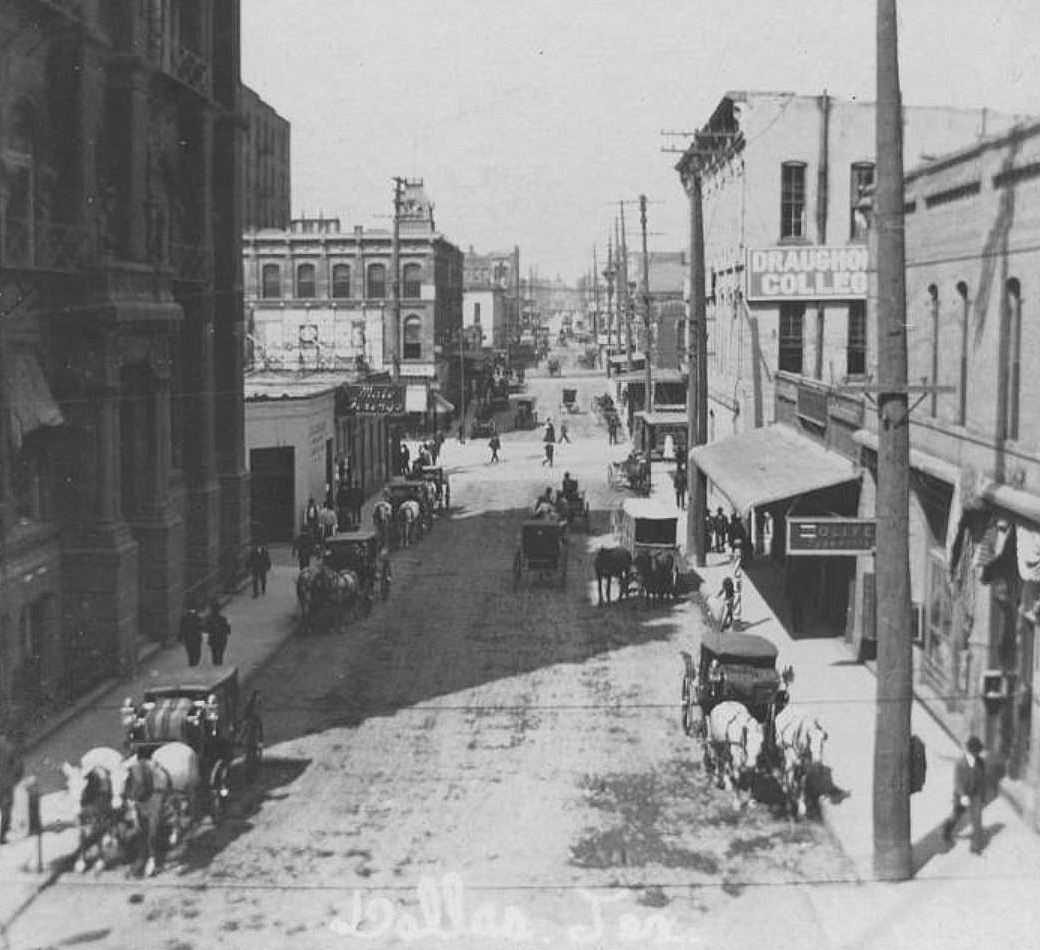
akard-looking-north_cook-colln_degolyer_smu_ca-1906George W. Cook Collection, SMU

by Paula Bosse

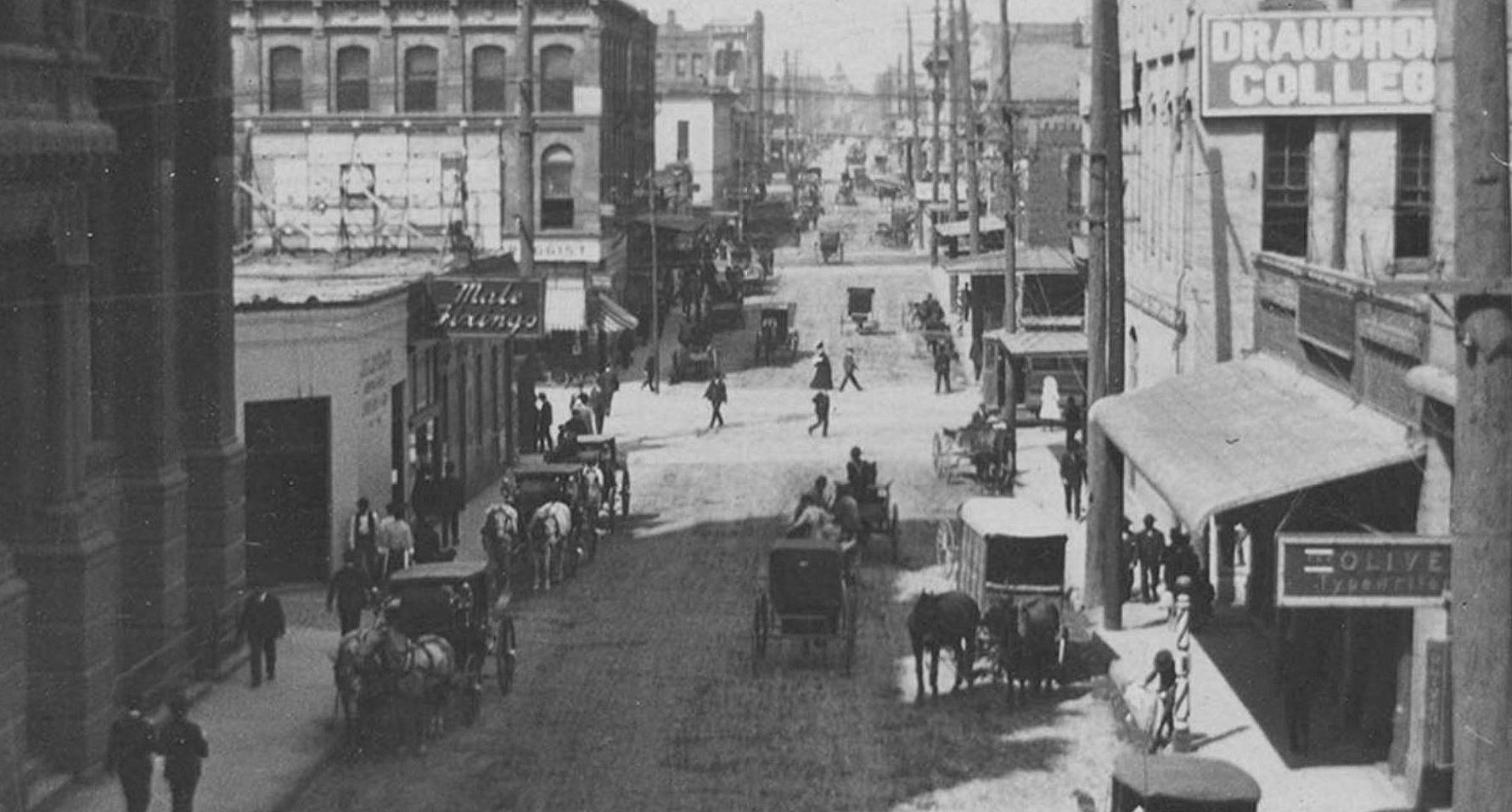
This great photograph shows Akard Street looking north from just south of Main. I especially like the sign for “Male Fixings” (a store selling men’s clothing accessories). Let’s zoom in to see that sign better (click photo to see a much larger image).

akard-looking-north_cook-colln_degolyer_smu_ca-1906-det

I also like the guy with the bicycle, next to the barber pole at the lower right, and the lone woman crossing the street. (There is a little girl in a white dress on the sidewalk on the right — about to cross Main — but everyone else in this photo is of the gender that might well patronize a business called “Male Fixings.”)

As indelicate as it may be to bring up the subject … I assume there were people employed to walk around the streets with shovels to clean up after all those horses? I’ve actually thought of this fairly often. It had to have been a major, major problem back then. I’ve just looked it up. The average horse pulling wagons and carriages produced, on average, 30+ pounds of manure and several gallons of urine daily, deposited willy-nilly whenever the need arose (which was often). Multiply that by hundreds. This article isn’t about Dallas, but I highly recommend “The Great Horse Manure Crisis of 1894” — you’ll learn way more about the subject than you may want to — read it here. That lady crossing the street? I bet she spent a good part of every day hiking her skirts and dodging dung.

*

UPDATE: I’ve updated the title to this post several times (you’ll notice that the URL of this post shows a different location and year). After spending time to pin down the date, it appears this photo was taken between 1906 and 1909, when the Draughon Practical Business College was located at the southeast corner of Main and Akard — and the Oliver Typewriter Agency was located at 114 South Akard. The original annotation of this photo says the view is Main Street, with Akard in the midground, but it appears this photo was taken just south of Main Street looking north on Akard. The photo is confusing because the Draughon’s sign is seen here on the Akard Street side, not the Main Street side. The main tip-off is the cupola seen atop the building standing at the northwest corner of Main and Akard — it is the Rowan Building, which housed the Marvin Drug Store, which I wrote about here.

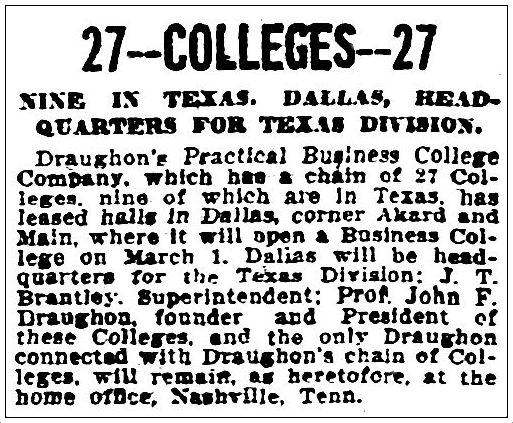
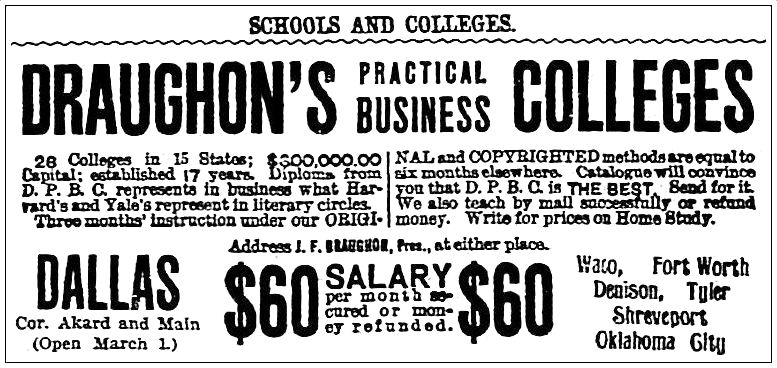
Draughon’s Practical Business College opened its first Dallas campus (but its 27th location across the major cities of the south) at the southeast corner of Main and Akard in March, 1906. By the time the 1910 city directory was printed, they had moved to another location (in fact, in their first ten years in Dallas they had moved five times!). I’m not sure how long the business college lasted in Dallas — at least through the 1970s, possibly longer — but the institution seems to still be in business after something like 130 years. (Click ads below to see larger images.)

draughon-business-school_dmn_0304061906

draughon-business-school_dmn_0315061906

***

This is another wonderful photo from the George W. Cook Dallas/Texas Image Collection, DeGolyer Library, Central University Libraries, Southern Methodist University; it can be accessed (and zoomed in on) here.

Another interesting article on the “manure problem” is “When Horses Posed a Public Health Hazard” — a blog post from The New York Times (which tantalizingly mentions herds of pigs roaming the streets of NYC) — read it here.

*

Copyright © 2015 Paula Bosse. All Rights Reserved.

Fly United to Chicago in Only Eight Hours!

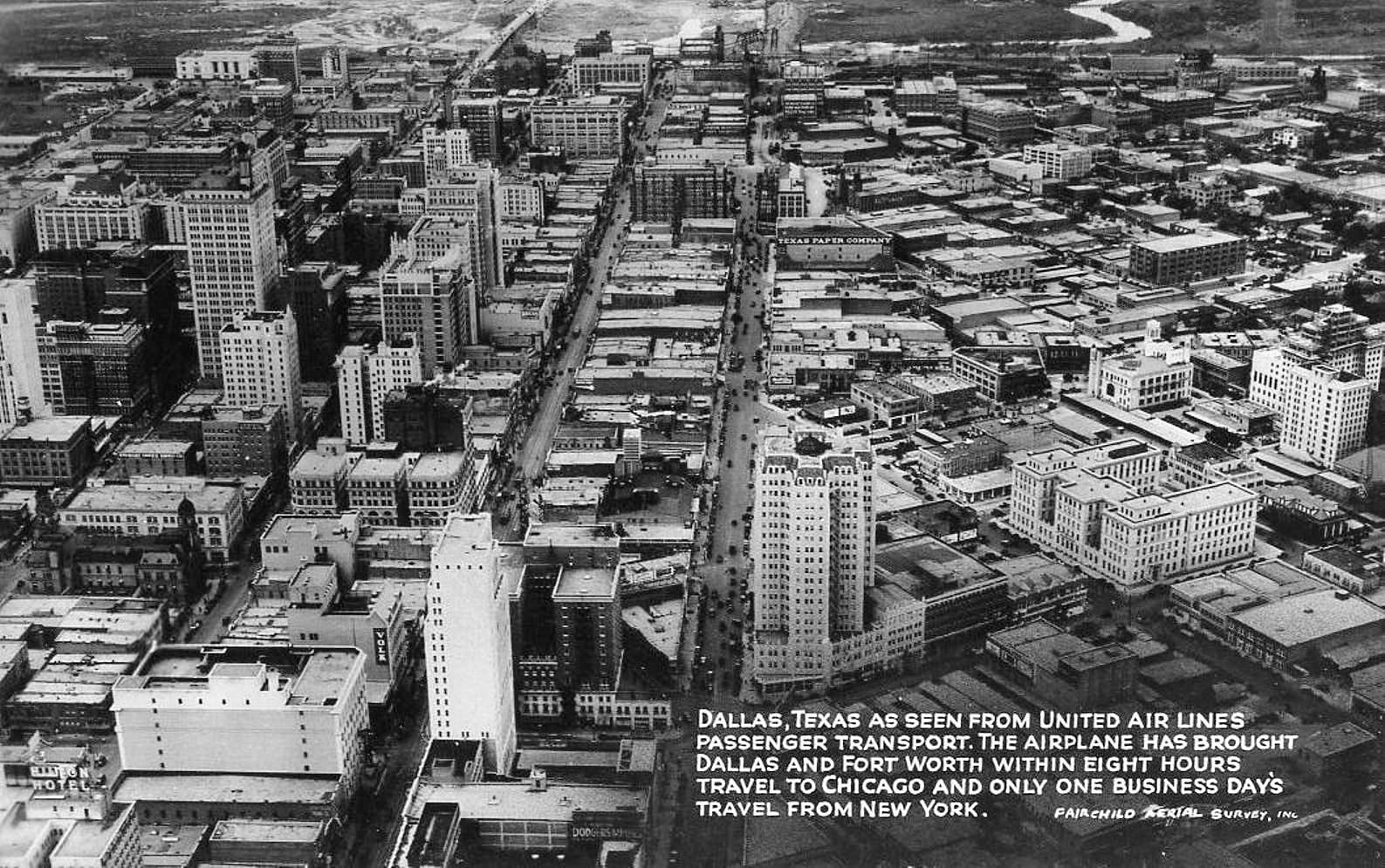
aeiral_united-air-lines_fairchild_ebay_rppcHow many buildings can you identify? (click for larger image)

by Paula Bosse

Dallas, Texas as seen from United Air Lines passenger transport. The airplane has brought Dallas and Forth Worth within eight hours travel to Chicago and only one business day’s travel from New York.

Back when it took all day to fly to New York from Dallas.

This is another great aerial photo by the Fairchild Aerial Survey company, probably taken by Lloyd M. Long. Date-wise? Late-1920s? Before the Trinity was straightened (beginning in 1928), with land being cleared in the area that would become Dealey Plaza? 1928-ish? Or could it have been the very early 1930s? The United Air Lines promotional postcard was issued around 1932 or 1933.

It wasn’t until 1933 that United introduced its new Boeing “twin motor airline transports” and boasted that they would finally “bring the city within eleven and a half hours of New York City” (Dallas Morning News, Aug, 16, 1933).

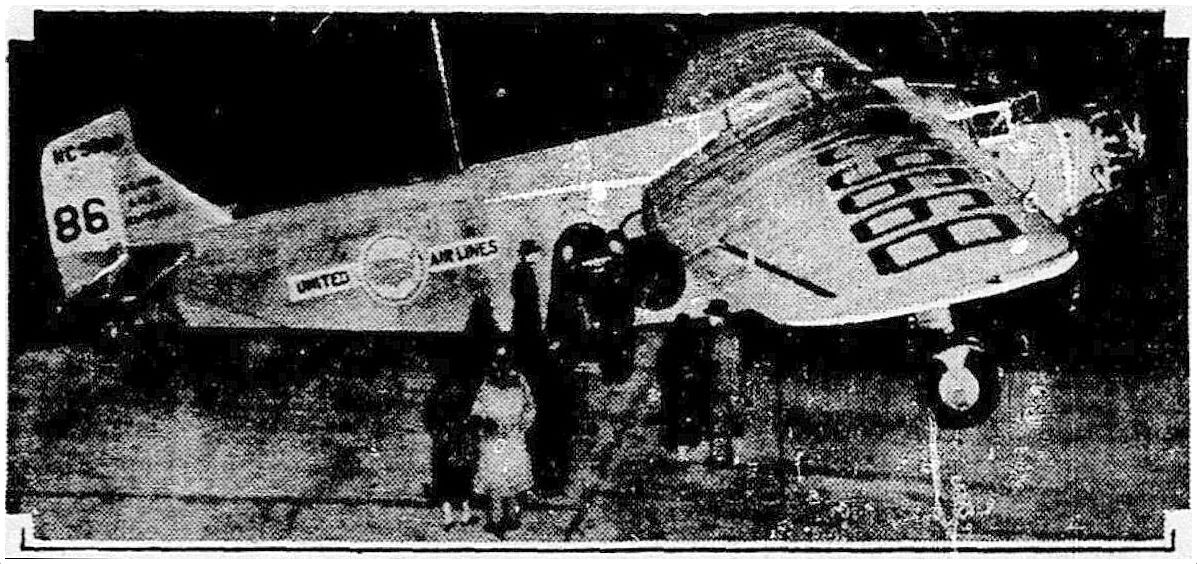
Below is a photo from a Dallas newspaper ad showing one of United’s planes from the earlier, more carefree days of 1932, when passengers were still trudging through the skies at a more leisurely pace.

united-air-lines_ad-det_dmn_110432United Air Lines ad, detail, 1932

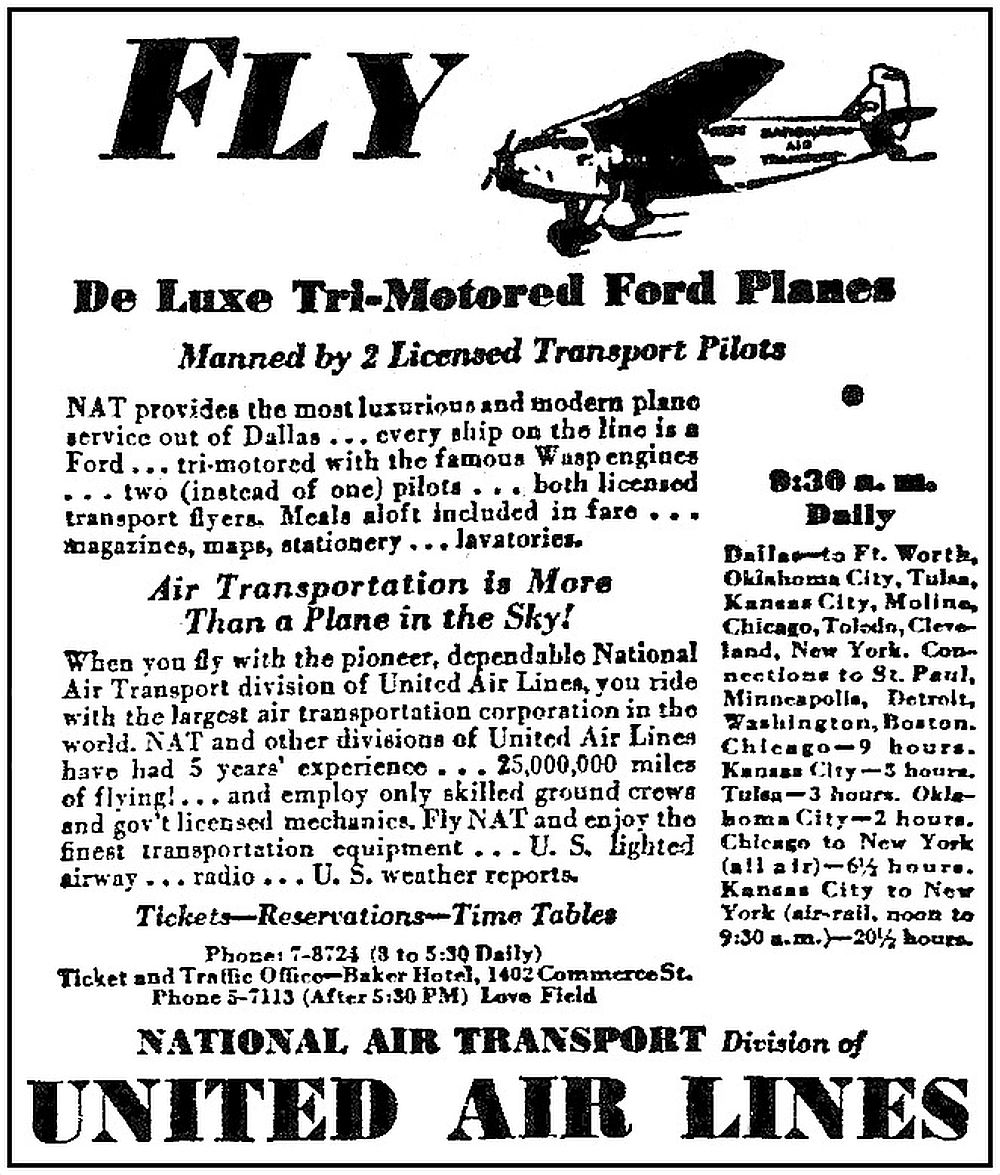
And an even earlier ad, from 1931, when a flight from Love Field to Chicago was nine hours long (today a direct flight from Love Field to Chicago takes about two hours and fifteen minutes). And if you wanted to continue to NYC, you had to board another plane and fly from Chicago to New York, adding another six and a half hours!

united-air-lines_dallas-to-nyc_1931
1931 ad

FLY

De Luxe Tri-Motored Ford Planes Manned by 2 Licensed Transport Pilots
 
NAT provides the most luxurious and modern plane service out of Dallas … every ship on the line is a Ford … tri-motored with the famous Wasp engines … two (instead of one) pilots … both licensed transport flyers. Meals aloft included in fare … magazines, maps, stationery … lavatories. 

Air Transportation is More Than a Plane in the Sky! 

When you fly with the pioneer, dependable National Air Transport division of United Air Lines, you ride with the largest air transportation corporation in the world. NAT and other divisions of United Air Lines have had 5 years’ experience … 25,000,000 miles of flying! … and employ only skilled ground crews and gov’t licensed mechanics. Fly NAT and enjoy the finest transportation equipment … U.S. lighted airway … radio … U.S. weather reports.

*

In an interesting side-note, the first pilot to fly a mail plane between Kansas City and Dallas (on May 12, 1926) was Richard Dobie, brother of Texas literary legend, J. Frank Dobie. In 1926 he flew a Curtiss Carrier Pigeon; in 1933, he’d worked his way up to the speedy and powerful Boeing. He flew for United for several years.

***

Sources & Notes

Top image is a promotional postcard, found on eBay.

Read more about the tri-motor airplane (manufactured by the Ford Motor Company and affectionately known as the “Tin Goose”) in the article “Ford’s Tri-Motor” by Edward J. Vinarcik (Advanced Materials and Processes, Oct. 2003) here.

All images larger when clicked.

*

Copyright © 2015 Paula Bosse. All Rights Reserved.


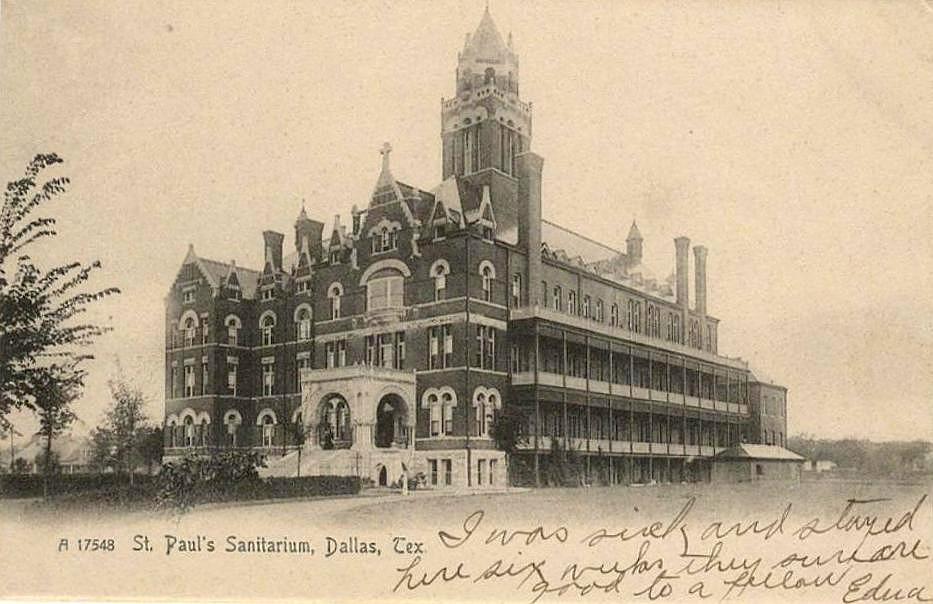
St. Paul’s Sanitarium — 1910

st-pauls_postcard_de-paul-univSt. Paul’s Sanitarium, located at Bryan & Hall (click for larger image)

by Paula Bosse

My posting has been infrequent as of late, due, in part, to obligations concerning a family member’s hospital stay. So, since I have a short time before I have to rush off to run errands and make visits, why not focus on a historic Dallas hospital?

St. Paul’s Sanitarium was opened in a small cottage on Hall Street in 1896 by the Daughters of Charity of St. Vincent de Paul, but it soon moved to the new large H. A. Overbeck-designed building on Bryan Street in 1898. In 1927 the name changed to St. Paul’s Hospital, and in 1958, the name changed again, this time to St. Paul Hospital. The imposing building and annex (and whatever other structures were contained in the complex) were demolished in 1968.

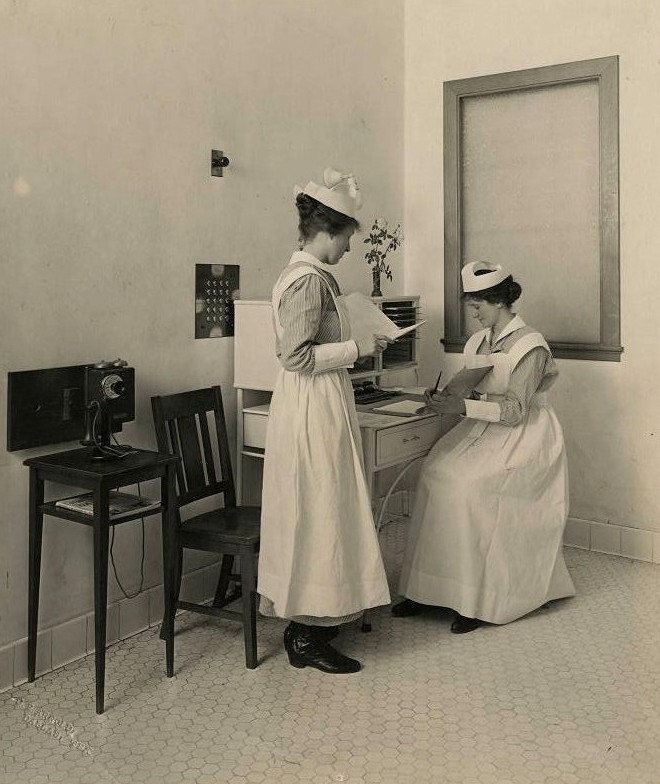
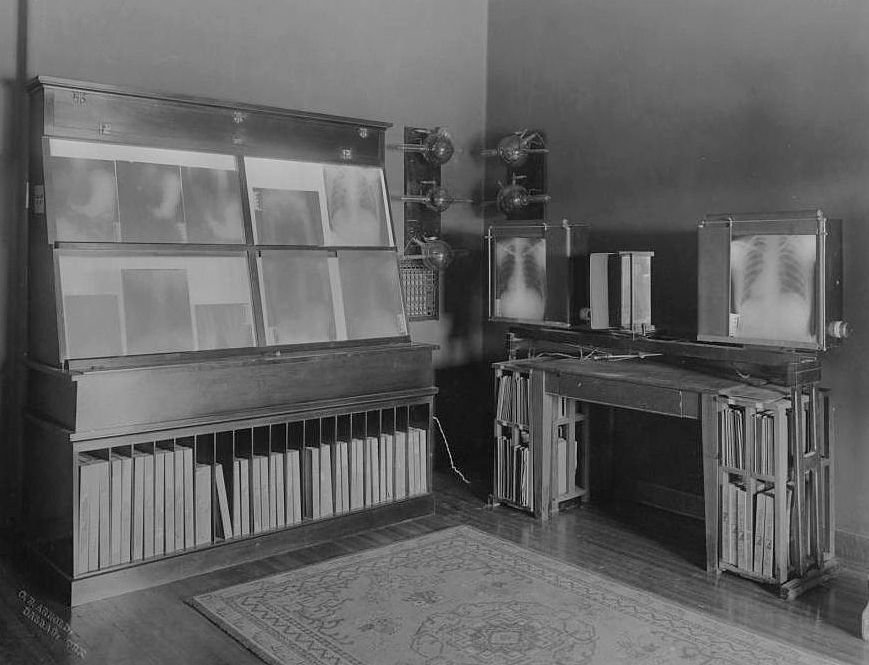
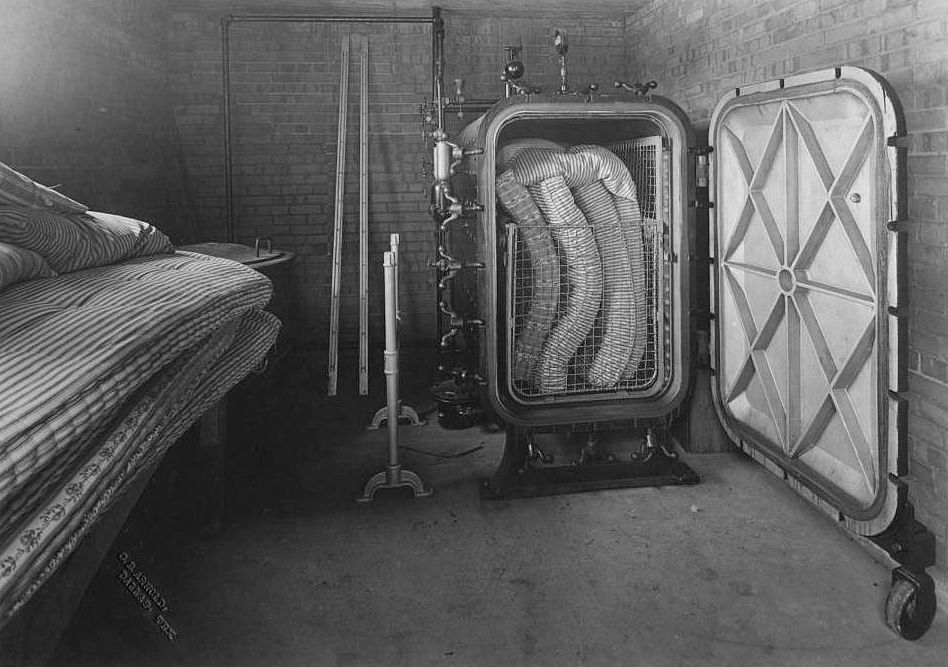
Below are several wonderful photographs taken inside the sanitarium around 1910 by one of Dallas’ best photographers, C. E. Arnold. They are from the St. Paul Hospital Collection in the UT Southwestern Library (click links below photos to see info about each picture).

*

st-pauls_nursing-stn_1910_utsw_smThe nursing station.

*

st-pauls_mexican-ward_1910_utswThe “Mexican Ward” (as noted on the back of the photograph).

*

st-pauls_sleeping-porch_1910_utswA patient ward on a screened-in sleeping porch.

*

st-pauls_waiting-room_1910_utswA waiting room.

*

st-pauls_xray-room_1910_utswThe x-ray room.

*

st-pauls_nurses-library_1910_utswThe nurses’ library. (I LOVE this photo! Check out the crazy typewriter stand attached to the desk — I’ve never seen anything like that before.)

*

st-pauls_student-nurses-dorm_1910_utswThe nurses’ dormitory on the top floor.

*

st-pauls_mattress-sterilization-room_1910_utswAnd, my favorite, the ominous-looking mattress sterilization room in what appears to be a dungeon.

*

st-pauls_flickr_coltera

**

UPDATE: Check out some fantastic historic photos of the hospital and its nurses contained in this UT Southwestern Medical Center publication, “St. Paul University Hospital, A Legacy of Caring,” here.

***

Top postcard is from the Vincentiana Postcard Collection, Special Collections and Archives, DePaul University Library, Chicago; it can be found here.

Bottom postcard, with the cheerful message from Edna, was found on Flickr, here.

All photographs are from the St. Paul Hospital Collection in the UT Southwestern Library. Other photos from this 1910 collection can be found here. (For fuller descriptions, click the linked text beneath the photos in this post.)

An interesting article on the photographer, Charles Erwin (C. E.) Arnold, and the technique used in capturing his interiors, can be found here.

A historical timeline of St. Paul’s can be found in a PDF here.

Wondering where St. Paul’s Sanitarium was located? It was at Bryan and Hall streets, across from Exall Park. Here is the location, from a 1919 map:

st-pauls_1919-map

All images larger when clicked.

*

Copyright © 2015 Paula Bosse. All Rights Reserved.

Dallas’ First Two Drive-In Theaters — 1941

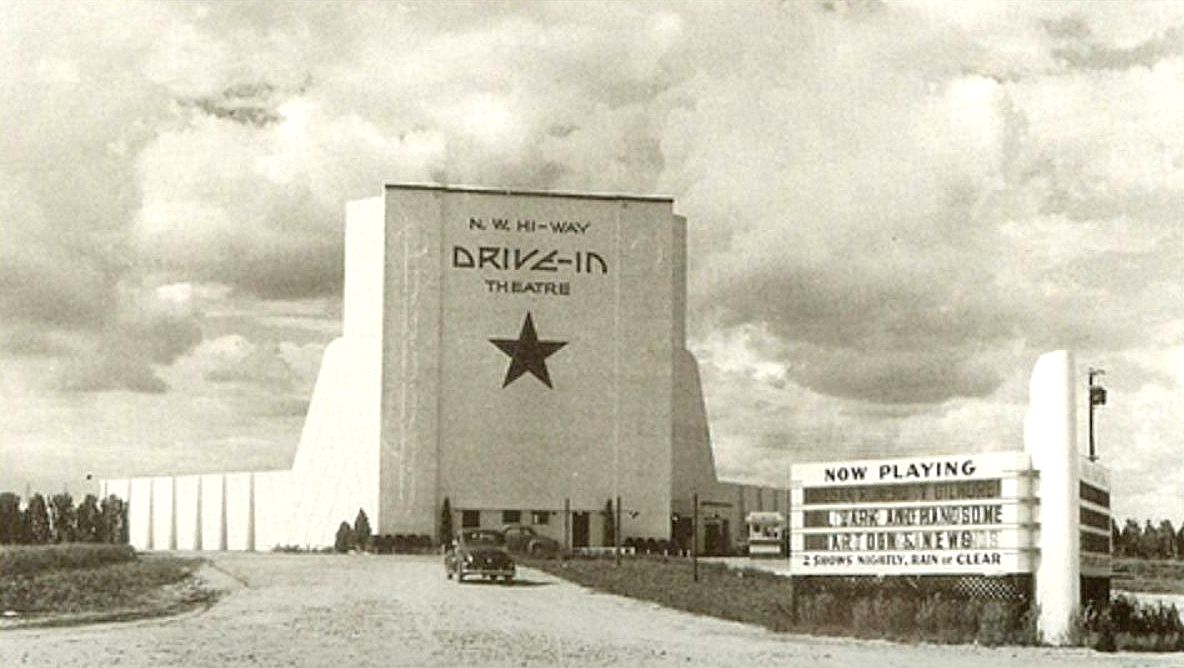
nwhwy-drive-in_july-1941Northwest Hi-Way Drive-In, July 1941

by Paula Bosse

The drive-in theater arrived in Dallas on June 20, 1941, the night that “Give Us Wings,” starring the Dead End Kids, played as the first feature of the Northwest Hi-Way Drive-In, located at the northwest corner of Northwest Highway and Hillcrest. It stood on twelve-and-a-half acres and had a 450-car capacity. The drive-in was opened by W. G. Underwood and Claude Ezell, who had opened similar outdoor movie theaters in San Antonio and Houston.

The Hi-Way (which appears to have usually been spelled “Highway”) featured something I had never seen in drive-in design: cars parked on terraced ramps, where the car behind was always slightly higher than the one in front of it so as to offer an unobstructed view, and speakers were on stands embedded in cement and were placed between cars (no in-car speakers).

Rain was apparently not a problem in this brave new world of outdoor entertainment — if it rained the show would go on (even though the opening was delayed by a few days because of rainy weather) — but fog was a problem, and in case of such weather, movie-goers would be issued a “fog-check” to come back another (fog-free) night.

A newspaper article appeared a few days before the theater’s opening, explaining what a drive-in was and how it worked. Here is the last paragraph:

According to Mr. Underwood 80 per cent of the people who attend drive-in theaters are non-theatergoers. These include people with children and no one to leave them with, semi-invalids, cripples and corpulent individuals who find it embarrassing to attend the regulation theaters. At the Drive-In there is no necessity for getting out of the car, an attendant meets you at the gate, takes your money and buys your tickets, while another wipes your windshield. A third pilots the car to a space on one of the ramps. These are widely spaced enough that any car may leave at any time. (Dallas Morning News, “Northwest Highway Drive-In To Open Tuesday, Rain Or Stars,” by Fairfax Nisbet, June 14, 1941)

Okay then.

The the weather eventually behaved, and the opening on June 20, 1941 was a success, with an almost-capacity audience. The drive-in had arrived in Big D.

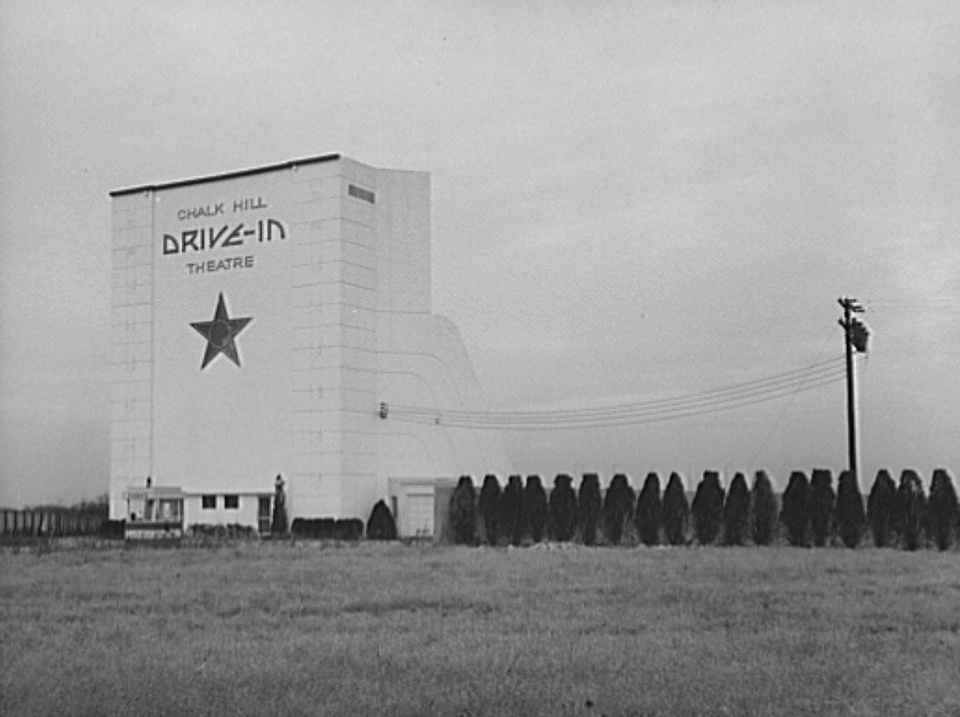
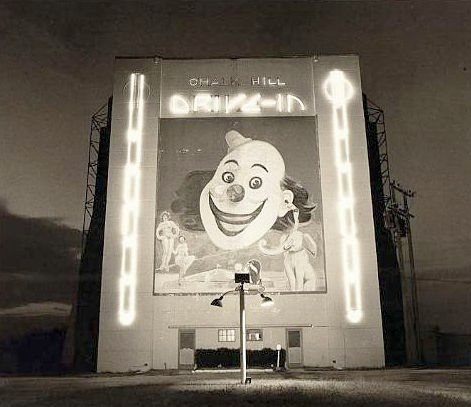
Two weeks later — on July 4, 1941 — Underwood and Ezell opened the Chalk Hill Drive-In in Oak Cliff, at about West Davis and Cockrell Hill Road. It looked almost exactly like the Northwest Highway drive-in, down to the great big star on the outside of it (to be replaced with a clown mural years later). The very first feature was “The Invisible Woman” with Virginia Bruce and John Barrymore.

chalk-hill-drive-in_1942_LOC1942, out on the Fort Worth pike (Library of Congress)

Both theaters had successful and relatively long lives. The Northwest Highway drive-in closed in 1963 when the land was purchased for development (the most notable occupant of the new businesses that occupied that corner was probably the fondly remembered Kip’s restaurant).

The Chalk Hill Drive-In closed in the late 1970s, and from what I can tell, it spent a couple of decades abandoned and decaying.

*

A few random tidbits.

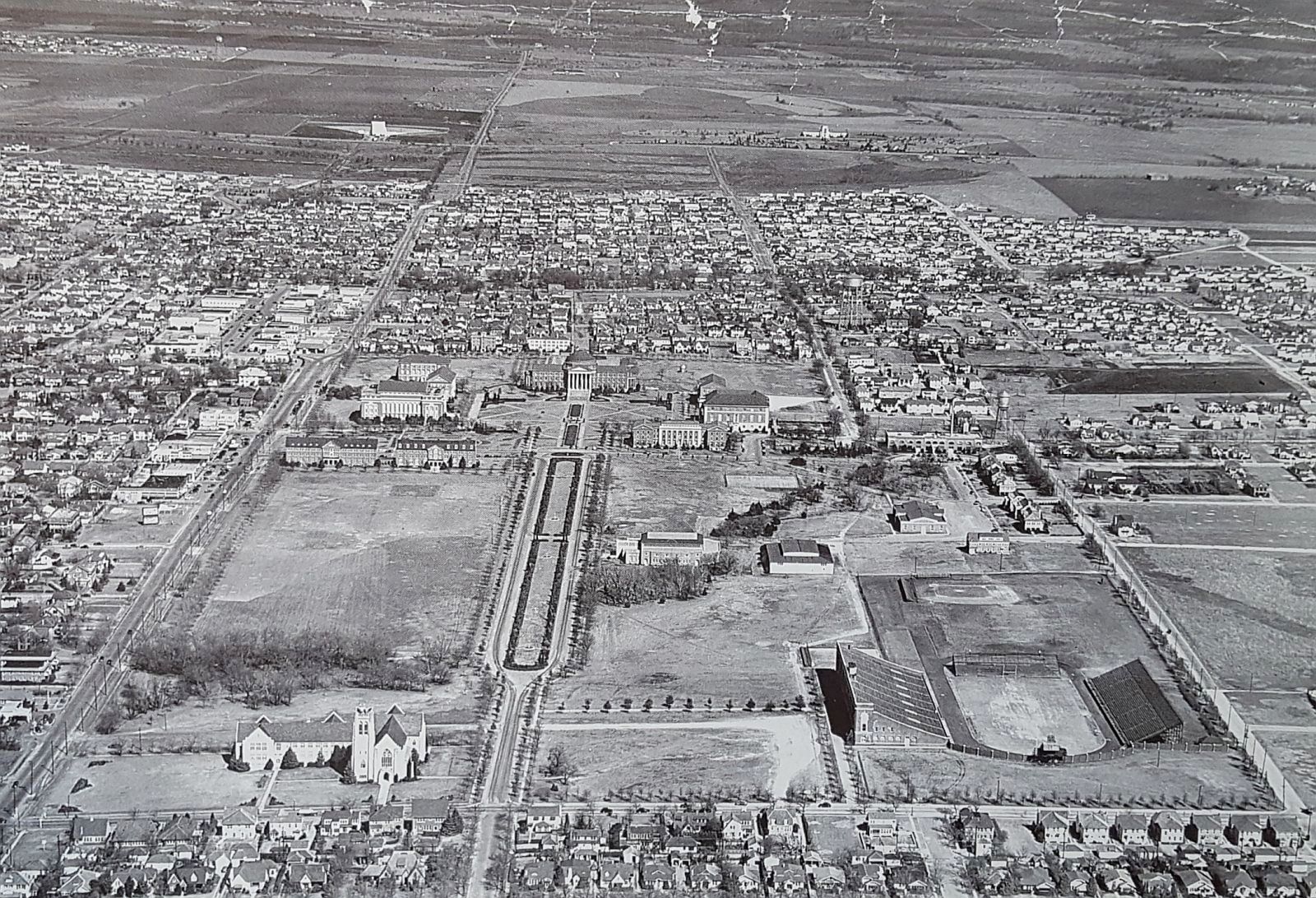
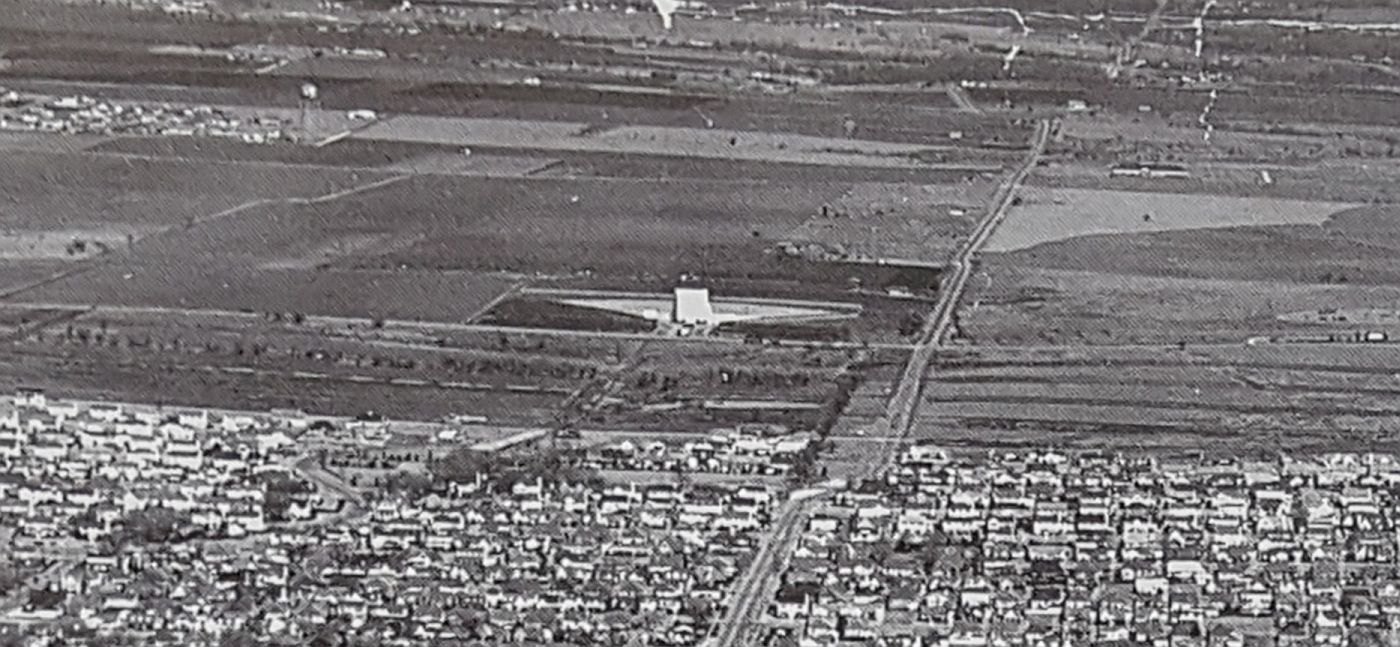
Here’s a 1945 aerial shot over SMU looking north — the drive-in is in the middle of all that wide-open Caruth farmland, seen just left of Hillcrest (the Hillcrest Mausoleum, built in 1936, can be seen to the right of Hillcrest; the Caruth Homestead is at the far right edge of the photo).

nw-hway-drive-in_1945_galloway_park-cities-photohistory

Here’s a detail, showing it up-close:

nw-hway-drive-in_1945_galloway_park-cities-photohistory_det

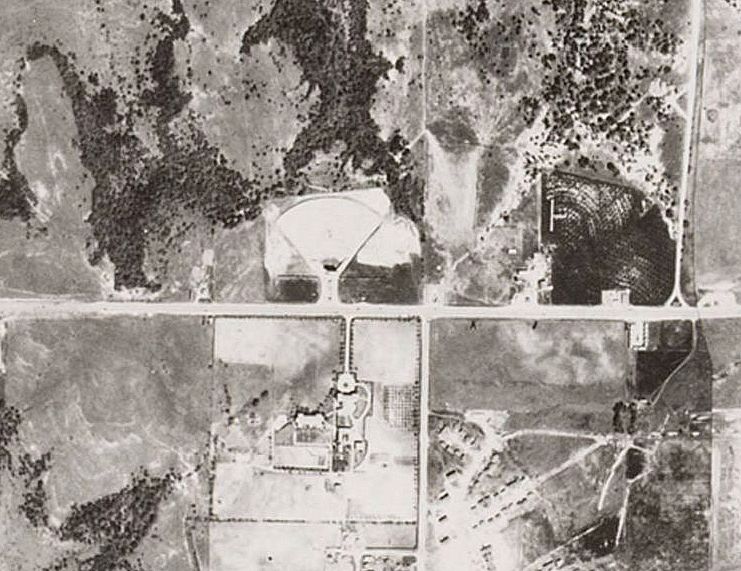
Two aerial shots by the United States Army Air Forces, taken for a USDA survey in 1945. First, the Northwest Highway Drive-In, with Northwest Highway running horizontally in the photo and Hillcrest running vertically.

nwhwy-hillcrest_usaaf_fosucue_smu_1945SMU

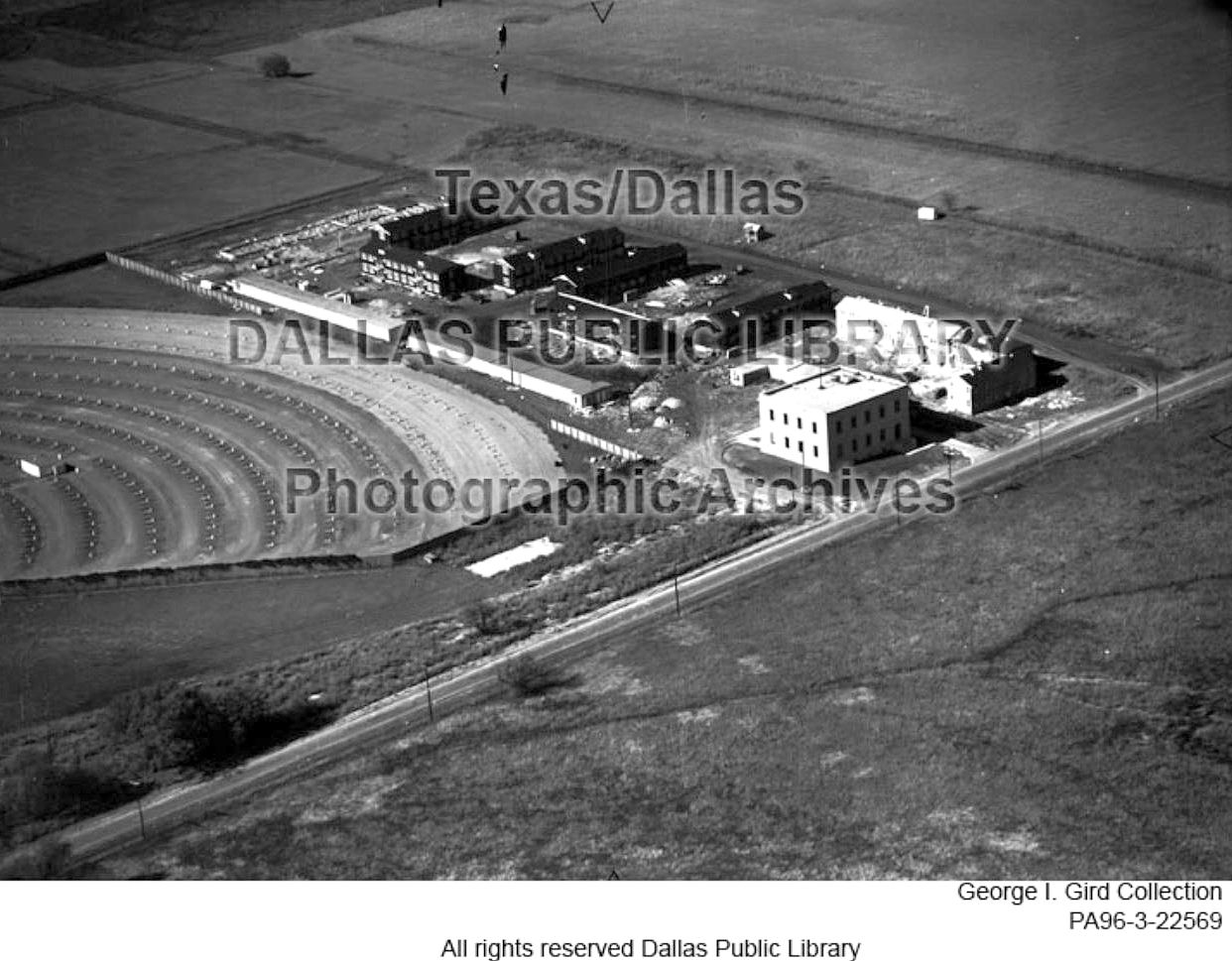
This aerial photo from 1947 shows a view to the northwest, with Hillcrest running from lower left corner to top right — it appears the photo was taken to show the new apartment complex just north of the parking area of the drive-in.

northwest-hi-way_drive-in_DPL_1947
Dallas Public Library

And Chalk Hill, with Highway 80 running horizontally:

chalk-hill_usaaf_smu_1945SMU

Chalk Hill again, this photo from 1973, with the clown face and circus theme that many remember:

chalk-hill-drive-in_1973_smithsonian
Photo by Steve Fitch, Smithsonian American Art Museum

A couple of amusing livestock-oriented drive-in-related human-interest blurbs appeared in the pages of The Dallas Morning News:

Some cattle going from Waco to Wisconsin stampeded through University Park when their truck caught fire on Greenville. Police herded most of the steers into a Northwest Highway drive-in theater. Five were found nuzzling zinnias at a home on Southwestern. (Lorrie Brooks, DMN, Sept. 18, 1952)

Cattle in 1952, donkeys in 1955:

University Park police early Wednesday captured two pet donkeys who escaped their pen at the Northwest Highway Drive-In Theater during the night. A startled passerby spotted the two donkeys grazing contentedly on a lawn at Centenary and Hillcrest, about four blocks from the theater…. Bill Duckett, manager of the theater, reported the loss of the two pets, which he keeps for the entertainment of the theater’s small-fry patrons. (DMN, May 26, 1955)

***

Sources & Notes

I’m not sure of the source of the top photo, but I’m pretty sure of when it was taken: the marquee shows that the movie “Tall, Dark and Handsome,” starring Cesar Romero, was playing; that movie ran at the Northwest Hi-Way Drive-In July 12-14, 1941.

The aerial photo (by Capt. Lloyd N. Young) showing SMU and the land that lay north of it is from the Highland Park United Methodist Church Archives; I found it in Diane Galloway’s fantastic book The Park Cities, A Photohistory.

The two aerial photos are details of larger photographs from the collection of Dallas Aerial Photographs, 1945 USDA Survey, Edwin J. Foscue Map Library, Central University Libraries, Southern Methodist University. The full (labeled) Northwest Highway photo is here; the Chalk Hill photo is here.

Two other aerial photos (from 1958) are interesting because they are a bit closer and because you can see the terraced ramps — they can be seen here (apologies for the watermarks — photos from HistoricAerials.com).

The Wikipedia entry for the Drive-In Theater is here.

The patent (with illustrations) for the drive-in theater, filed by Richard M. Hollingshead, Jr. in 1932 is here (it’s a very interesting read). I had no idea a drive-in movie theater could be patented. This cool drawing is part of it (click it to see it larger):

drive-in-patent_1

A great history of drive-ins in the Dallas-Fort Worth area can be found in the article “Starlit Skies and Memories” by Susan and Don Sanders; it appeared in the Spring, 1999 issue of Legacies, and can be read here. Great photos! (Who knew there was a drive-in on South Lamar — the Starlite — which catered exclusively to the black community?)

*

Copyright © 2015 Paula Bosse. All Rights Reserved.
Tracking Down a Photo Location & Discovering a City Pioneer: D. M. Clower, The Man Who Brought the Telephone to Dallas

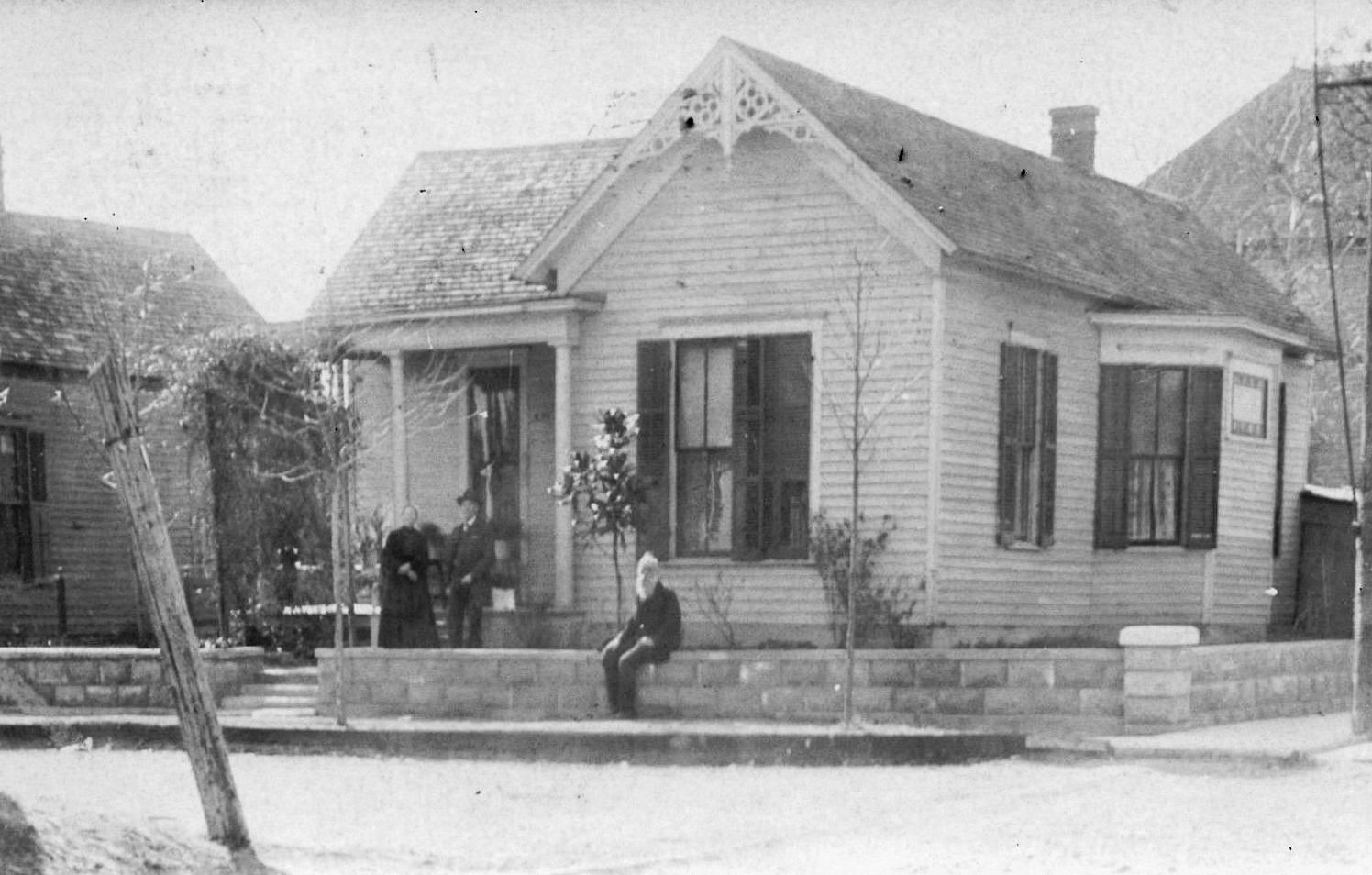
house_RPPC_1909_ebayMystery house, Dallas, ca. 1908 (click for larger image)

by Paula Bosse

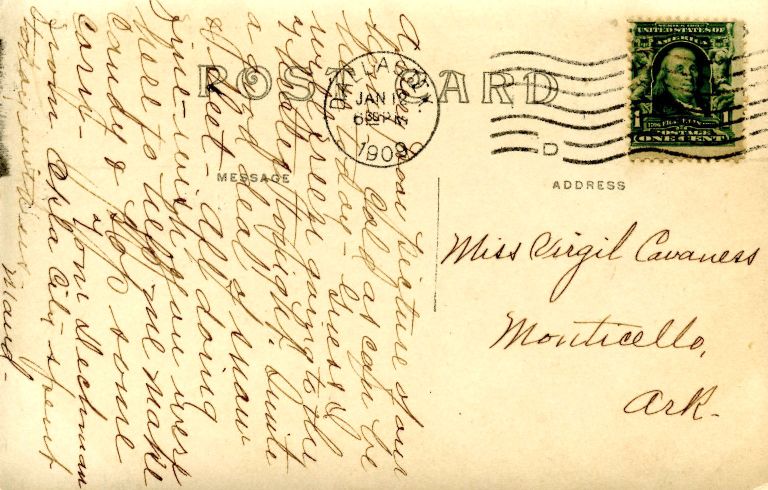
Not too long ago I came across the above photo which had been made into a real photo postcard.” It was postmarked January 12, 1909, and it contained a chatty message.

“A very good picture of our house. Cold as can be here today – guess I will freeze going to the theater tonight. Quite a good deal of snow and sleet. All doing fine – wish you were here to help me make candy & pop some corn. Tom Dechman from Okla. City spent today with us. Maud.”

house_RPPC_1909_ebay_back

Such a nice photo of a modest little house in Dallas, probably taken in 1908. When I saw it, I thought it would be cool if I could figure out where it was. There wasn’t much to go on from the postcard, though. But, as it turns out, there was just enough information to put the pieces together and figure it out. Someone asked me recently how I track down things like this. Basically, I look for a long time in a lot of different places. Here’s how I found out where this mystery house was.

Using Ancestry.com, I found Virginia (“Virgil” — sometimes “Virgie”) Cavaness in Monticello, Arkansas. She was born in 1871 and would have just turned 37 years old when she received this card. The familiar tone of the postcard message indicated to me that Virgil was probably a close friend or family member.

I found Thomas Dechman in Oklahoma City — he would have been 23 when he visited Maud. He probably wasn’t a close friend or immediate family member because she writes his full name out. According to the 1909 Oklahoma City directory (accessible on Ancestry.com), he worked alongside his father, A. F. Dechman, at a wholesale produce company.

Then I checked the Dallas Morning News archives and found this from Dec. 30,1909.

clower_dmn_123009DMN, Dec. 30, 1909

Tom Dechman was Mrs. A. F. Dechman’s son. So I searched on “Maud Clower.” Maud, born in 1877, was also D. M. Clower’s daughter. Mrs. A. F. Dechman was Maud’s sister Annie, and Tom was her nephew.

I continued searching the DMN archives for mentions of the Clower family and found that in 1906 Maud Clower had married Jesse (J. D.) Patterson — and, hey, Virgil had attended the wedding.

virgie_dmn_090206DMN, Sept. 2, 1906

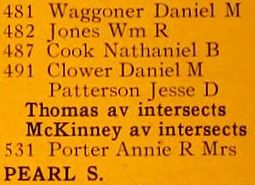
I checked to see where Maud and J. D. Patterson were living in 1908/1909. Most directories are available on Ancestry (a subscription site), but, as it happens, the 1909 directory is one of the few historical Dallas city directories that is available online (for free) — you can access it here (a few other directories are here). I found a Jesse D. Patterson listed as living at 491 N. Pearl, but no spouse’s name was listed, so I cross-referenced the address with the street directory section to determine whether this was the right J. D. Patterson. (Street directories are very helpful — not only do they list the occupants for each address, they also help to pinpoint where specific addresses were as they show which cross-streets those addresses were between; this is extremely helpful when trying to figure out where things were when streets had different names and/or when trying to figure out where things were before all of Dallas’ street numbers were changed in 1911. Another useful resource is a page on Jim Wheat’s site, which has links to every page of the 1911 street directory — click on a street name and find your address: the “new” address is on the left, and the “old” address is next to it, in bold.)

clower-patterson_1909-directory1909 city directory, residents of N. Pearl Street

Even though this didn’t have Maud’s name listed alongside her husband’s, it DID show that her father, D. M. Clower, was living at the same address. Success!

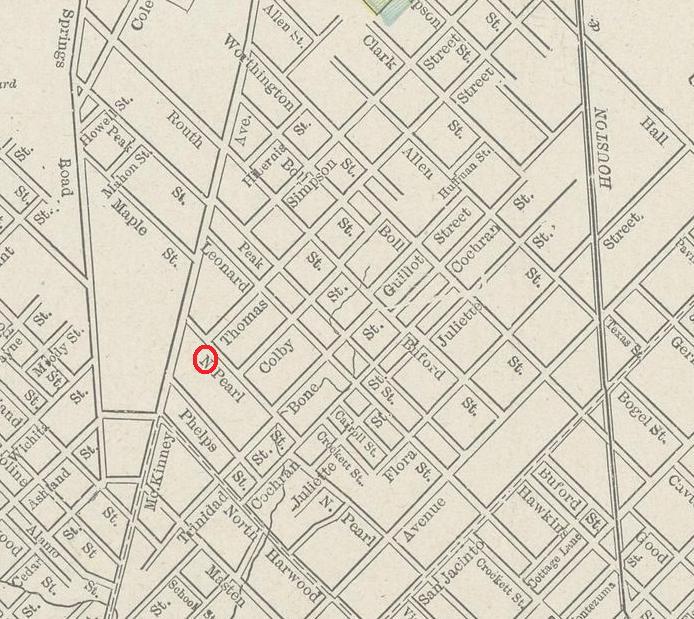
So there it is. When Maud sent that postcard to Virgil, she and her husband were living with her parents at 491 N. Pearl Street. The house in the photo was at the southwest corner of N. Pearl and Thomas. It’s always helpful to check a street map from about the same period for context and to make sure you’re looking at the right location — many street names have changed over the years — if a street named “Forest” is being referenced in the 1940s, for instance, you need to know that the old Forest Avenue and the current Forest Lane are absolutely nowhere near each other. Below is a map drawn about 1900, with the location of the Clower house circled in red (this is one of many maps found on the Portal to Texas History site; the one below is a detail of the map found here).

clower-home_map-ca1898

I also checked out Sanborn maps to see if the house in the photo matched the house that was actually on the lot at N. Pearl and Thomas. It does. To see what the general footprint of the house looked like in 1905 (the Clowers lived at 491 N. Pearl from about 1905 to 1910), see here. In the 1921 map (by which time the address had been changed to 2221 N. Pearl), you can see that additions had been made to the house since 1905 and that it looks more like the house in the photo (a room now juts out at the right and there is an out-building behind the house); see the 1921 Sanborn map here. To see what that Uptown block looks like now, see here (N. Pearl is on the left, looking south). Quite a change! It took me a long time to realize just how essential Sanborn maps can be — they are incredibly useful, and I try to use them whenever I can.

**

I really didn’t expect to track down the actual address of an unidentified house found on a picture postcard, but persistence pays off. A bonus of this persistence was that I ended up learning about the very interesting man who owned the house — a man who played a pivotal role in the development of Dallas: Daniel Morgan (D. M.) Clower. Clower was an electrical engineer who, in 1881, installed the very first telephone in Dallas (for Judge John Bookhout) and ran the city’s first telephone exchange; he also set up phone systems in other cities. In addition to his work for Bell Telephone, he also ran Dallas’ electric company for many years and was responsible for setting up the city’s first electric street lights and helped in developing electrified rail systems in the region.

clower_electrician_1889-directory1889 Dallas directory (click for larger image)

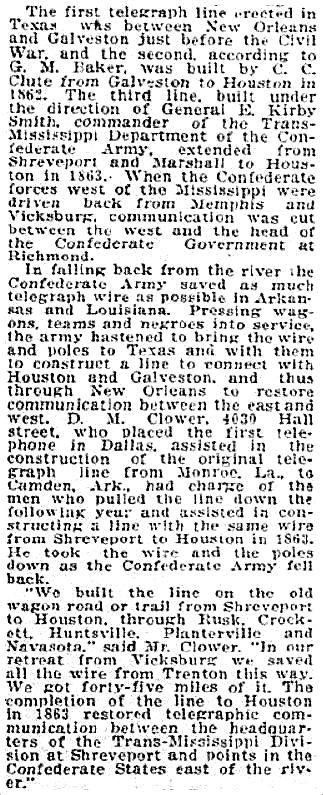
During the Civil War, Clower was a Confederate telegraph operator in the 1st Louisiana Regiment (see Clower’s fascinating obituary below). When the Union army was advancing after the fall of Vicksburg, Clower directed (and helped in) the destruction of the Confederate telegraph system he had helped set up, in order to prevent its being commandeered by Yankee forces — he and his men raced to pull up over 40 miles of wire and equipment, loaded everything on wagons, bugged out, and then used the same wire and poles to string a new Confederate line into and across Texas.

clower-telegrapher_dmn_010822DMN, Jan. 8, 1922

The war ended before Clower had completed his line northward from Houston, but his efforts had helped lay the telegraph infrastructure that the state of Texas relied on for decades afterward.

*

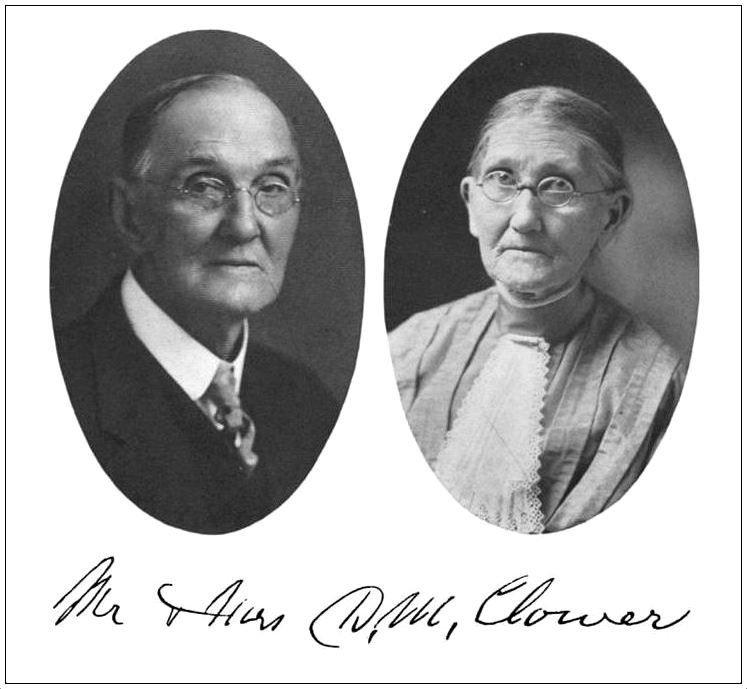
The people in the top photo are not identified. When that photo was taken, D. M. Clower and his wife, Ellender, would have been about 73; their daughter Maud and her husband Jesse would have been in their early 30s. I assume it’s the elder Clowers, with a mystery bearded man in the foreground.

clowers_d-m-and-ellender_hist-of-tx-and-texans_1914_portal
Mr. and Mrs. D. M. Clower, ca. 1914

You never know what you’re going to discover when you read a 106-year-old postcard and wonder where an old house used to be.

***

Sources & Notes

Postcard found on eBay.

Daniel Morgan Clower was born in Alabama in 1835; he arrived in Dallas in 1879, coming from Comanche, where Maud was born in 1877. Clower died in 1927 at the age of 92; Maud died in 1948. His wife, Ellender Paralee Clower, died in 1917 (at which time the couple had been married for more than sixty years).

More on Clower can be found in the pages of The Dallas Morning News:

  • “Telegrapher Tells Civil War Episode” (DMN, Feb. 1, 1924) — a fantastically cinematic account of Clower’s past, in his own words
  • A photo of Clower and Eli Sanger, (DMN, May 1, 1927) — what might well be the last photo of Clower ran in the News just a few months before his death at the age of 92; also in the photo is Eli Sanger, of Sanger Bros. (Clower once had a business in Millican, TX when Sanger’s opened there at the close of the Civil War, and he proudly boasted that he was one of their very first customers)
  • “Daniel Clower Funeral Held” (DMN, Aug. 19, 1927) — Clower’s obituary, with photo

Photo of Mr. Clower with text from a Dallas Times Herald story published on the occasion of his 89th birthday can be found here (scroll down to 1924, about halfway down the page), via Jim Wheat’s site.

The photo of Mr. Clower and his wife Ellender is from the book A History of Texas and Texans, published in 1914; the accompanying entry about Clower’s very interesting life can be found here, via the Portal to Texas History.

*

Copyright © 2015 Paula Bosse. All Rights Reserved.

Neon Refreshment: The Giant Dr Pepper Sign

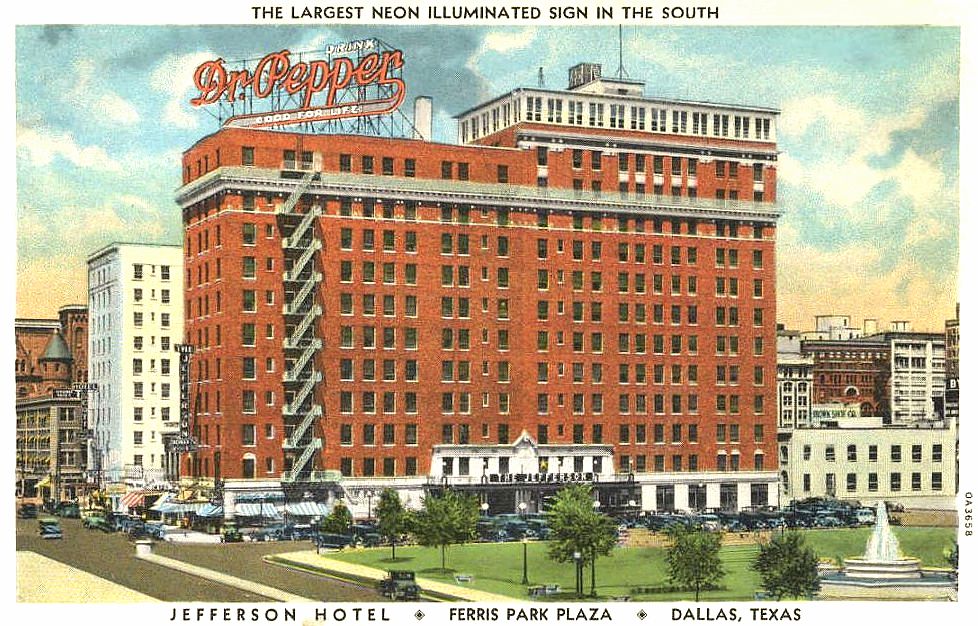
hotel-jefferson_neon-dr-pepper_cook_degolyer_SMU_ca1945

by Paula Bosse

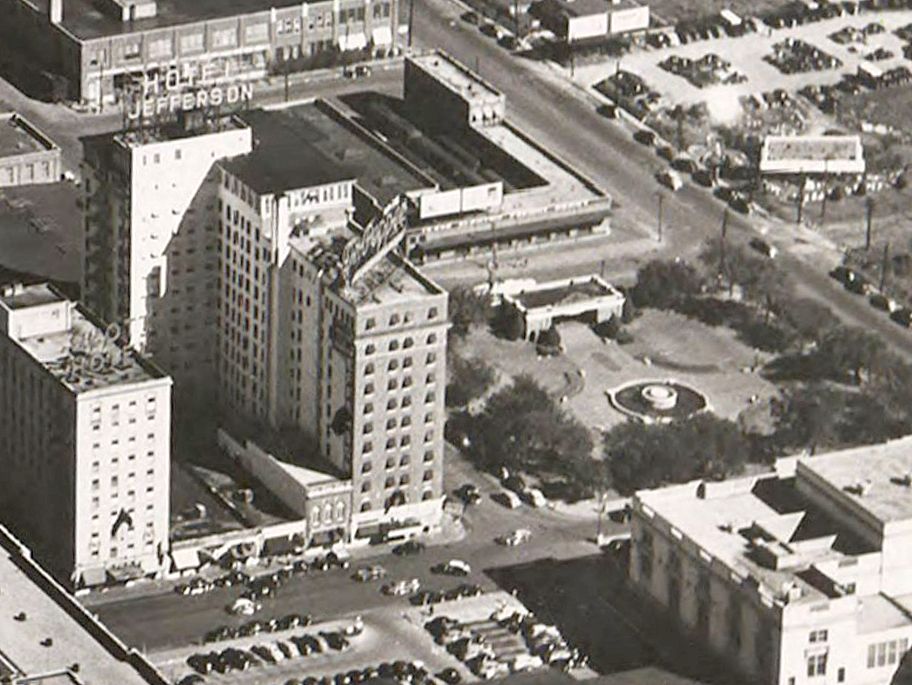
The Jefferson Hotel probably made some serious money leasing out rooftop acreage to the Dr Pepper people who erected a huge neon sign there. The hotel was located across from Union Station and a couple of blocks from the Old Red Courthouse. For people approaching the city from the southwest, there was absolutely nothing between them and that refreshing beacon rising tantalizingly above S. Houston and Wood streets.

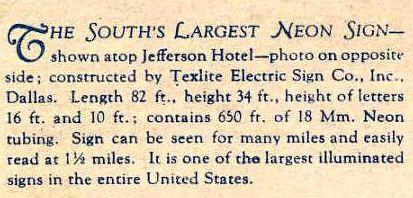
hotel-jefferson_neon-dr-pepper_cook_degolyer_ca1945-verso

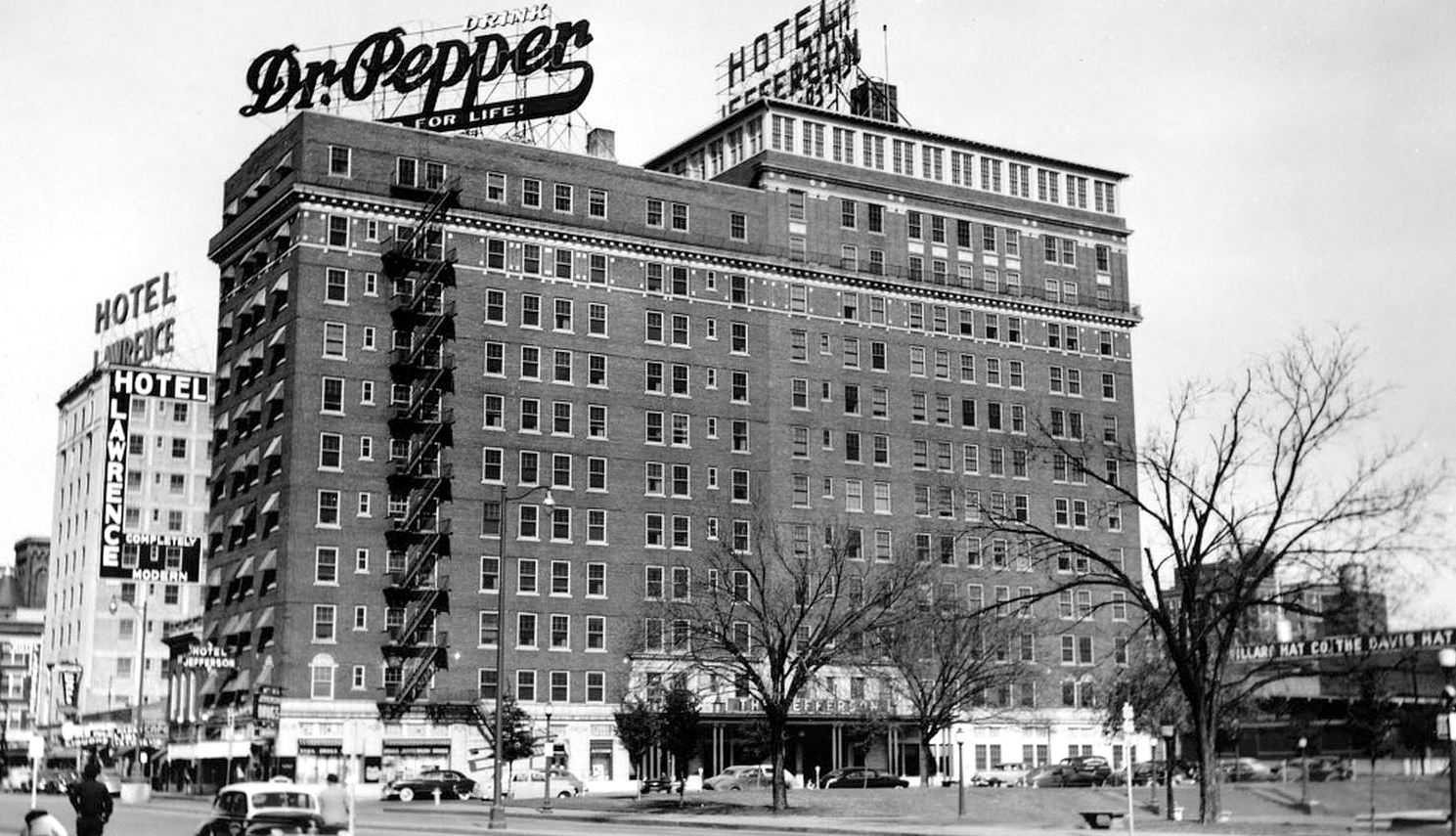
jefferson-hotel_hotel-lawrence_dr-pepper-sign_dmn-tumblr

Texlite — the Dallas company that made the sign — was the first company in the Southwest to build and sell neon signs. Their first neon in Dallas advertised a shoe store in 1926 or 1927. (Texlite is best known as the company that built the red neon Pegasus and installed him on top of the Magnolia Petroleum Building in 1934.) My guess is that this Dr Pepper sign went up sometime between 1927 and 1934. It was up there for quite some time. Below is a detail from a photo taken sometime after 1943, and that DP sign was still there, continuing to make people subliminally thirsty

hotel-jefferson_dp_foscue-det(click for larger image)

It’s surprising Dallas didn’t have more neon back then. With a pioneering hometown neon company, the Dallas skyline should have been lit up like a Christmas tree 24 hours a day!

***

Sources & Notes

Postcard is from the George W. Cook Dallas/Texas Image Collection, Central University Libraries, Southern Methodist University; it can be viewed here.

First black-and-white photo was purchased at an antique mall or flea market, origin unknown; found here.

The 1940s-era aerial photo is a detail of a larger photo, “Downtown Dallas looking east (unlabeled)” by Lloyd M. Long, from the Edwin J. Foscue Map Library, Central University Libraries, SMU; the full photo can be viewed here.

A great photo of the hotel and sign can be seen in Sam Childers’ Historic Dallas Hotels, here. Childers writes that the Dr Pepper sign came down when the Jefferson was sold and became the Hotel Dallas in 1953. 20-some-odd years for a sign like that to remain in one place is a pretty good run.

The Jefferson Hotel (or as it’s sometimes identified, “Hotel Jefferson”) was at 312 S. Houston St. The building was demolished in 1975. It is now a hotel-shaped parking lot.

See what other clever thing once occupied the roof of the Jefferson Hotel in the Flashback Dallas post “The Jefferson Hotel and Its ‘Wireless Telegraph’ Rooftop Tower — 1921.”

*

Copyright © 2015 Paula Bosse. All Rights Reserved.
 

“Our First Joy Ride” — 1911

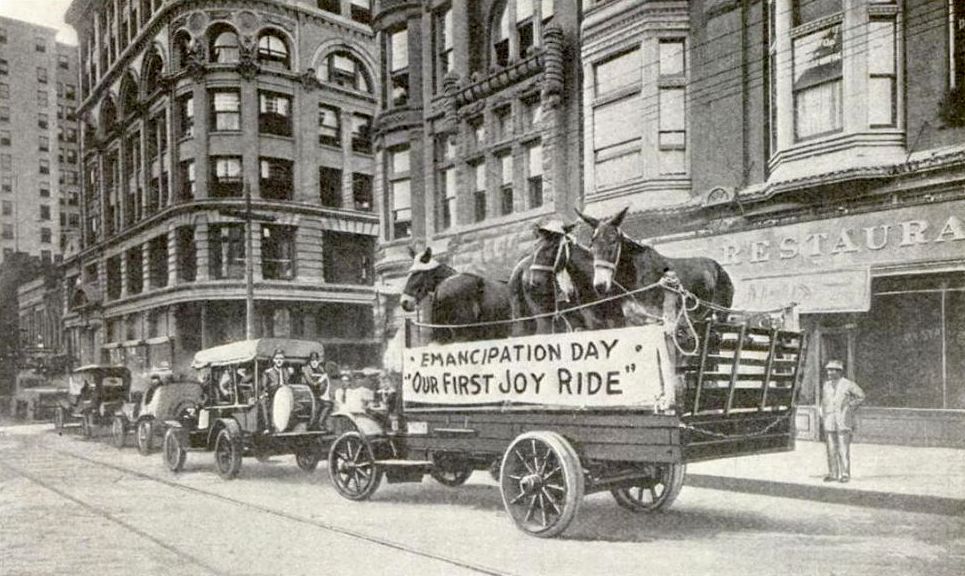
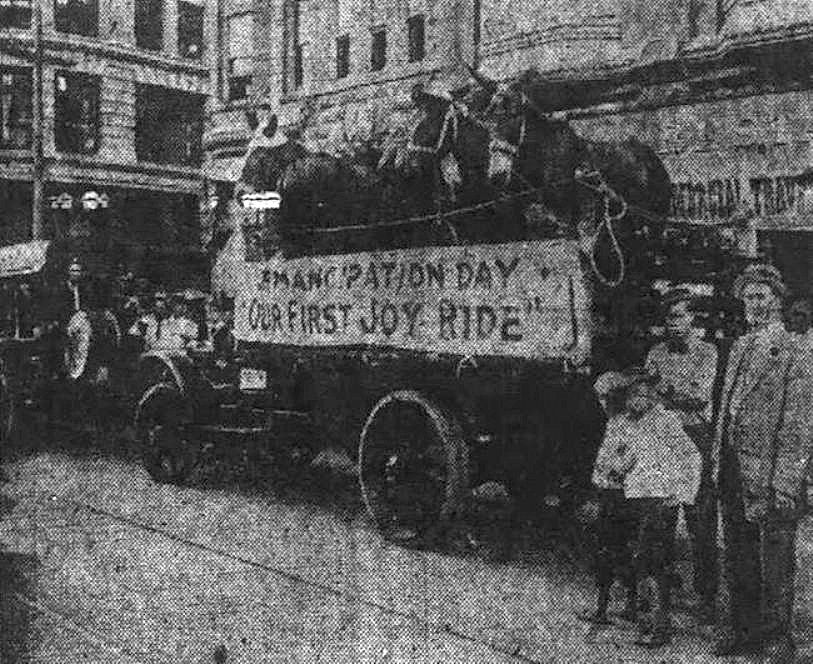
mule-joyride_pop-mechanics_jan-1912Mules taking a load off, Main & Ervay, 1911

by Paula Bosse

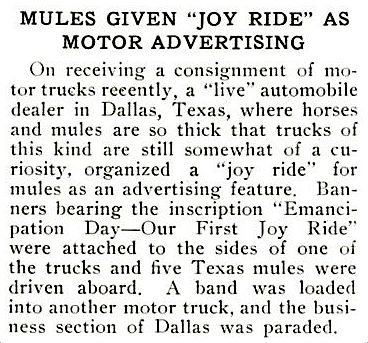
Flipping through the pages of a Jan. 1912 issue of Popular Mechanics — as one does — I came across a photo of a truckload of joyriding mules which was accompanied by this explanatory text:

mule-joyride_pop-mechanics_jan-1912-text

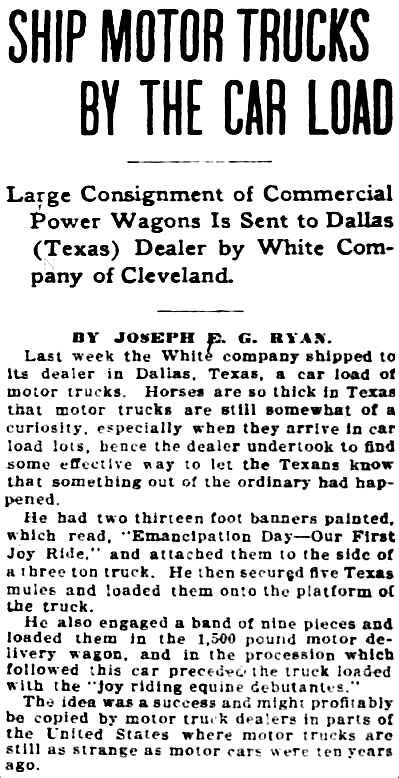
Ah, a publicity stunt. A Chicago newspaper offered a bit more background, and gave us the delightful phrase “joy-riding equine debutantes.”

mules_chicago-inter-ocean_102311Chicago Inter Ocean, Oct. 23, 1911

Another report added that the mules were “adorned with a collection of discarded women’s hats and bonnets elaborated with all the old ribbons, feathers and similar gee-gaws […] securely tied on with pink and red mosquito netting…. The procession was headed by Dallas’ most prominent business men in a brand new White 1912 ’30.'” (Automobile Topics magazine, Oct. 28, 1911)

Despite the fact that this, let’s face it, pretty unusual “parade” happened on Main St., with apparent participation by “prominent businessmen,” I can find no mention of it in local newspapers. Maybe because it was a publicity stunt and there was no advertising fee collected by the papers. The story ran in a handful of newspapers (Chicago, San Francisco, Washington, DC), and the Washington Post ran the photo below under the headline “New Way to Advertise Motor Trucks.”

mules_washington-post_102211Washington Post, Oct. 22, 1911

The White Motor Company (makers of the mule-laden truck) must have been quite taken with the unnamed entrepreneur’s banner, because they used the exact same wording on a banner draped on one of their trucks which was a featured attraction on Transportation Day at the 1915 Panama-Pacific International Exposition in San Francisco.

Let’s hope the original Dallas guy got a little something out of all this.

*

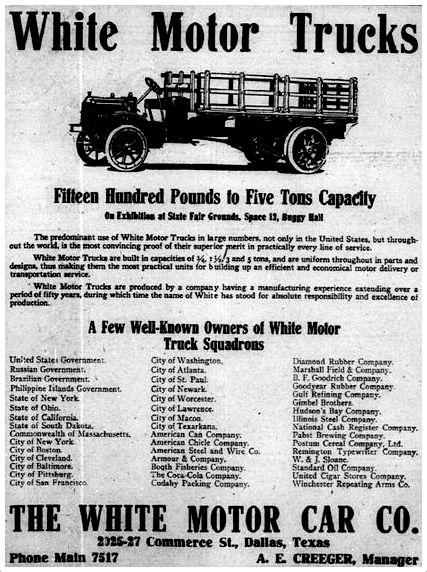
On further investigation into The Case of the Joyriding Mules, it appears that this was the brainchild of the General Manager of the White Motor Co., A. E. Creeger (or perhaps that of one of his gung-ho underlings). In a 1912 article in The Dallas Morning News, Creeger talks about the relatively soft truck market in Texas (!), and it’s easy to see why he was doing all he could to draw attention to his company’s line of trucks — even if it meant loading them up with “emancipated” livestock.

And here’s one of his ads from almost exactly one year after the mule stunt:

white-motor-co_dmn_101312Oct. 13, 1912

***

Sources & Notes

Top photo appeared in the January, 1912 issue of Popular Mechanics.

The “parade” (which took place sometime in the middle of October, 1911) is seen heading west on Main Street, just about to pass Ervay. The inescapable Wilson Building dominates the photo, with the tall, white Praetorian Building in the background. The restaurant at the right — at 1705 Main — was the California Restaurant, a Dallas eatery specializing in Chinese food since at least the 1890s.

*

Copyright © 2015 Paula Bosse. All Rights Reserved.

Salvador Dali Brings “Nuclear Mysticism” to Dallas — 1952

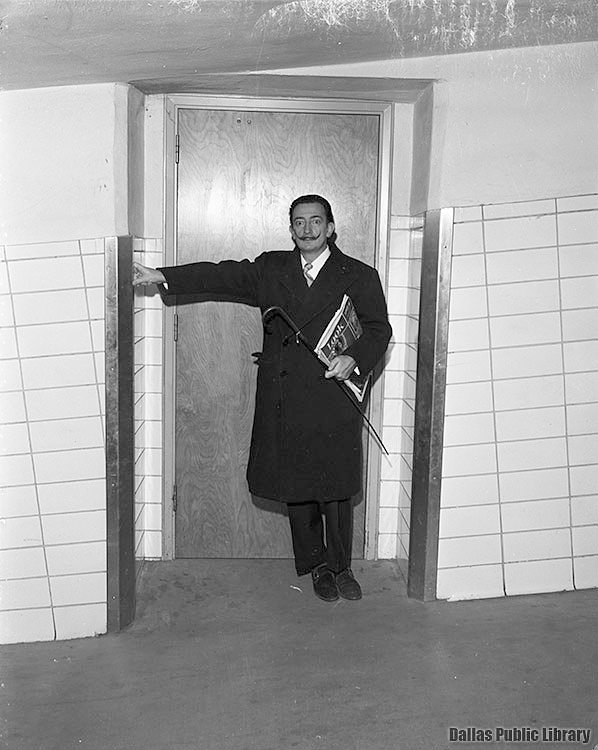
dali_union-station_feb-1952_dplDali does Dallas (in a slanted doorway at Union Station)

by Paula Bosse

The artist and pop phenomenon Salvador Dali came to Dallas in 1952 to present a lecture at McFarlin Auditorium on the SMU campus as part of the popular Community Course series. This was during his “Nuclear Mysticism” period, during which his paintings were influenced by the atomic age, science, and religion. One of the examples of this direction in his art is his painting “Raphaelesque Head Exploding” from 1951.
dali-raphaelesque-head_1951“Raphaelesque Head Exploding”

This 1952 American lecture tour included at least three stops in Texas: Houston, Fort Worth, and Dallas. Dali and his wife, Gala, arrived in Dallas on the afternoon of Thursday, February 14, 1952, after the artist had spoken at a members-only event and luncheon at Fort Worth’s River Crest Country Club earlier in the day. The lecture at McFarlin Auditorium was on Saturday night, Feb. 16. One wonders what he did in Dallas on his free day Friday.

While in Dallas, Dali was interviewed at the Baker Hotel by Paul Crume of the Morning News, a bit of an odd choice, in that Crume — author of the very popular front-page “Big D” column — was generally the paper’s go-to humor writer, an indication, perhaps, that Dali was considered less of a serious artist than as a quirky and larger-than-life entertainer. Which… fair enough.

One of the interesting little morsels that Dali told Crume was that he was amazed that his dreams in Texas had all been in technicolor, a relative rarity for him.

“Astonishing! In New York, all black and white. In Texas, all in color. In Italy, everybody dreams in color. In France, not so much. It is very mysterious. But in Houston, I am dream in color twice. And then, last night here [in Dallas].” (DMN, Feb. 17, 1952)

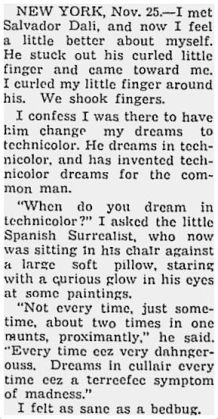
Dali loved dreaming in technicolor and mentioned it several times throughout his career. This little tidbit from Earl Wilson’s column in 1944 is amusing (if weighted down by Wilson’s unfortunate lapses into dialect).

dali_earl-wilson_112644New York Post, Nov. 26, 1944

To dream in technicolor every time “is very dangerous. Dreams in color every time is a terrific symptom of madness.” …I’m not sure what that says about Texas and/or Texans.

dali-caricature_technicolor

***

Sources & Notes

Top photo (dated Feb. 15, 1952) shows Salvador Dali standing in a slanted doorway at Union Station in Dallas (it seems likely that the photo was taken on Feb. 14th when he arrived in Dallas from Fort Worth, and was then published on Feb. 15th); it is from the Hayes Collection, Dallas History & Archives Division, Dallas Public Library (Call Number PA76-1/7171).

(Regarding this crooked door frame at Union Station: when Dali saw it he exclaimed, “A Dali-an door!”) (He would have loved Casa Magnetica at Six Flags.)

Articles about Dali’s visit to Dallas can be found in the archives of The Dallas Morning News:

  • “Key to New Art Revealed by Dali” (It’s Mysticism)” — an unbylined review, probably written by Paul Crume (DMN, Feb. 17, 1952)
  • “Texas Tints Dreams of Artist Dali” — interview by Paul Crume, conducted in the Baker Hotel (DMN, Feb. 17, 1952)
  • “Big D” column by Paul Crume (DMN, Feb. 19, 1952)

An entertaining 1965 appearance by Dali on Merv Griffin’s talk show can be seen here. He talks about dreaming in “glorious technicolor” at about 4:55. And, I mean… it’s just a great example of Dali as entertainer.

*

Copyright © 2015 Paula Bosse. All Rights Reserved.