Flashback : Dallas

A Miscellany: History, Ads, Pop Culture

Category: Women

“Work and Play in Telephone Land”

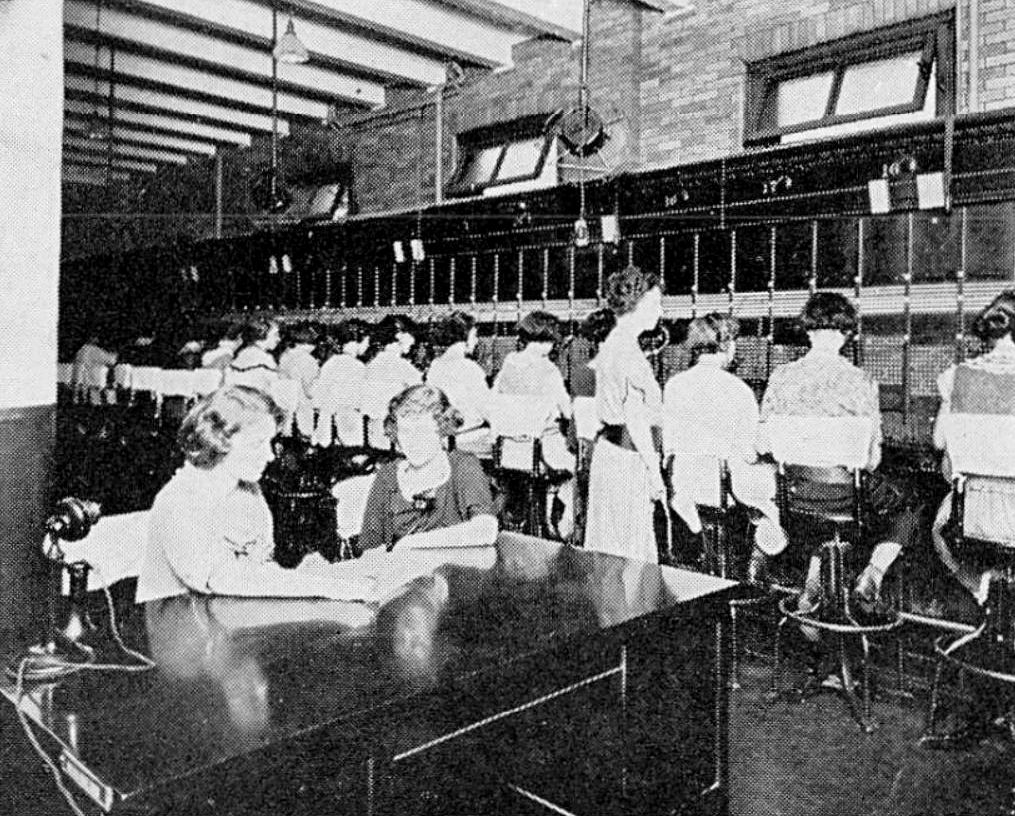
sw-bell-telephone_oak-cliff-high-school-yrbk_1925aDallas women at work, 1925 (click for larger image)

by Paula Bosse

Today at look at two ads seeking “young women of high ideals and ambition” to become telephone operators, one of the few careers open to women exclusively.

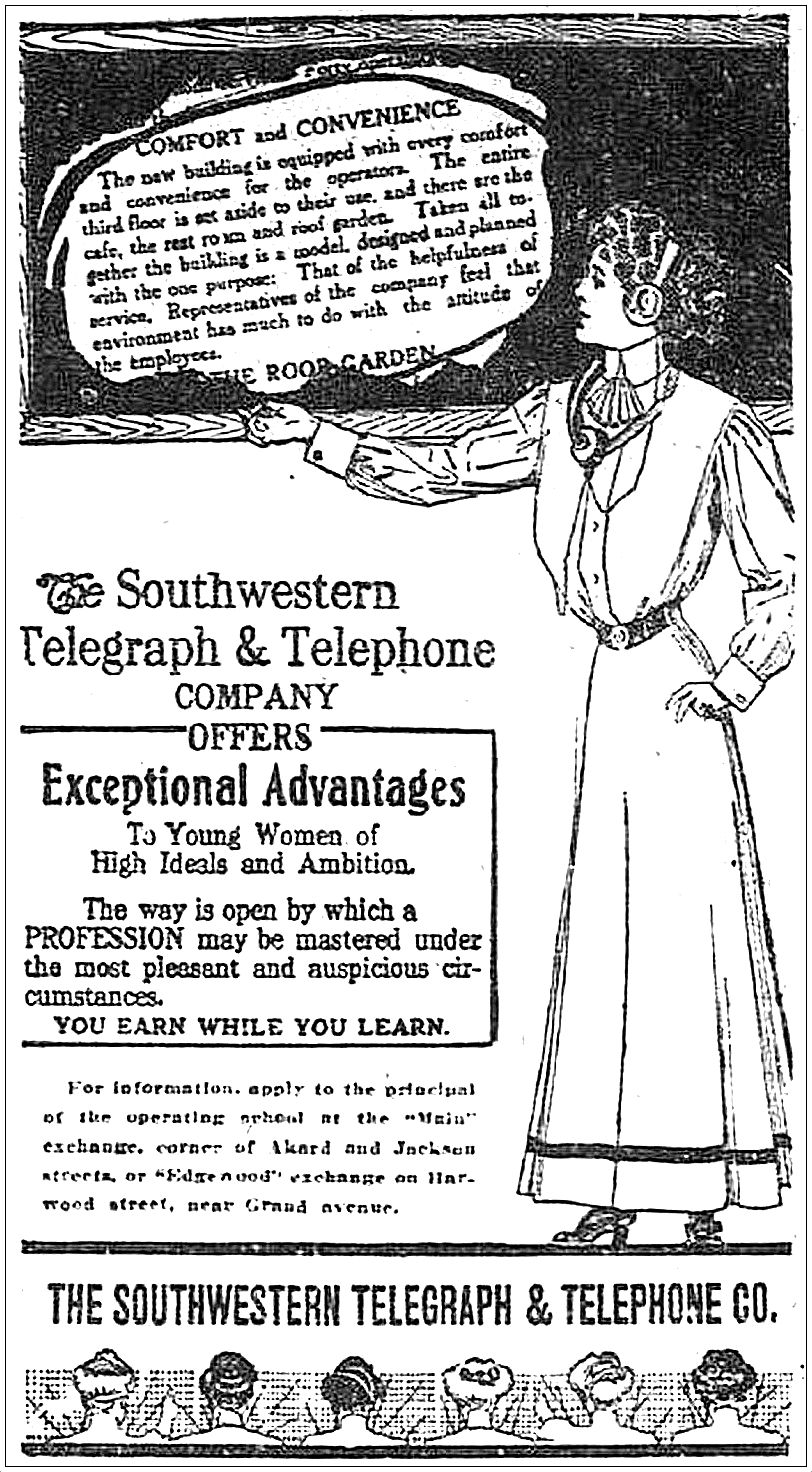
First, an ad from 1911 for the Southwestern Telegraph & Telephone Company (click for larger image — transcription below).

ad-telephone-company_dmn_052911-lg1911

COMFORT and CONVENIENCE

The new building is equipped with every comfort and convenience for the operators. The entire third floor is set aside to their use, and there are the cafe, the rest room and roof garden. Taken all together the building is a model, designed and planned with the one purpose: That of the helpfulness of service. Representatives of the company feel that environment has much to do with the attitude of the employees.

The Southwestern Telegraph &  Telephone Company offers exceptional advantages to young women of high ideals and ambition. The way is open by which a PROFESSION may be mastered under the most pleasant and auspicious circumstances. You earn while you learn.

For information, apply to the principal of the operating school at the “Main” exchange, corner of Akard and Jackson streets, or “Edgewood” exchange on Harwood street, near Grand avenue.

*

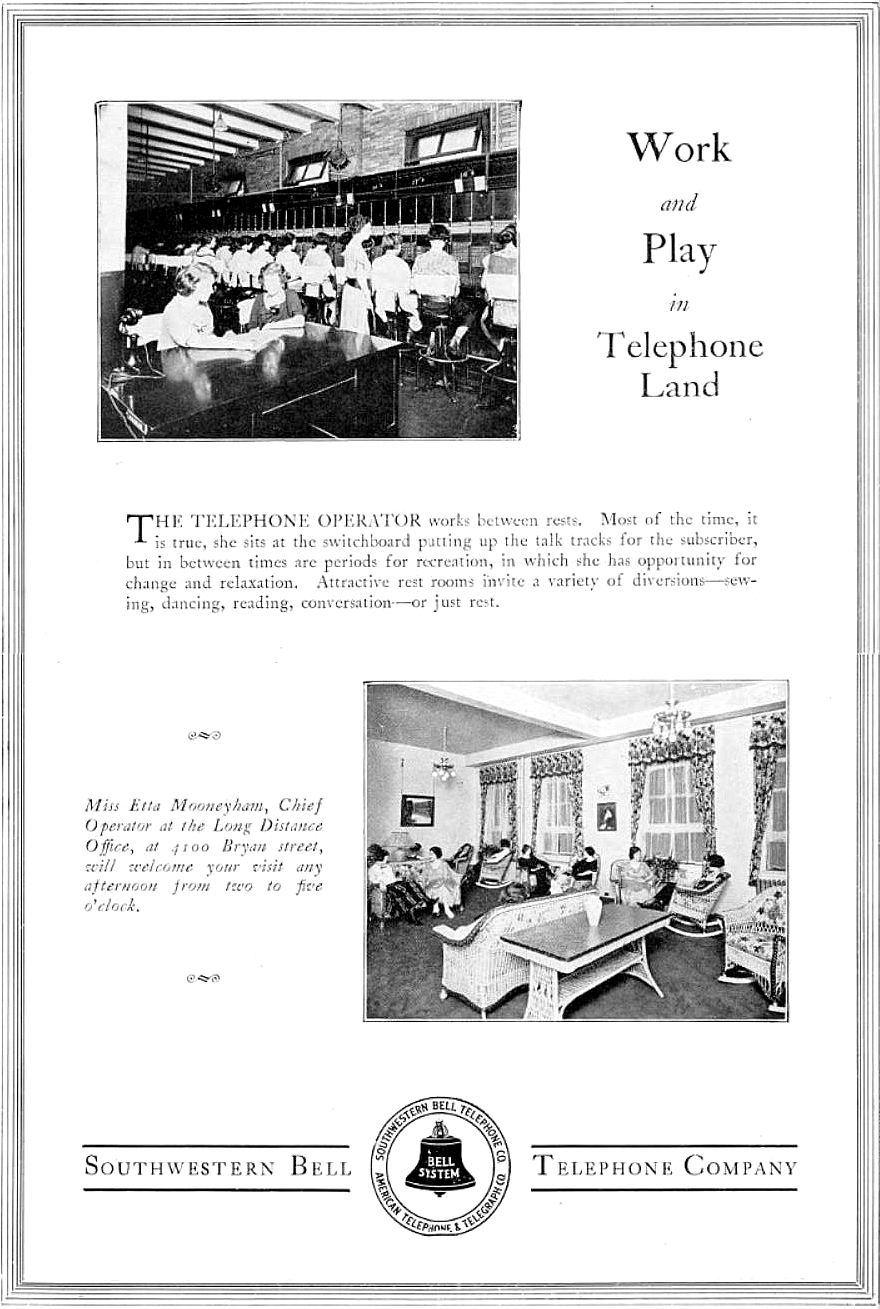
Here’s an ad from 1925 for Southwestern Bell Telephone Company, really pushing the idea that working as a switchboard operator is mostly rest and “a variety of diversions — sewing, dancing [!], reading, conversation”... more play than work, really!

sw-bell-telephone_oak-cliff-high-school-yrbk_19251925

WORK AND PLAY IN TELEPHONE LAND

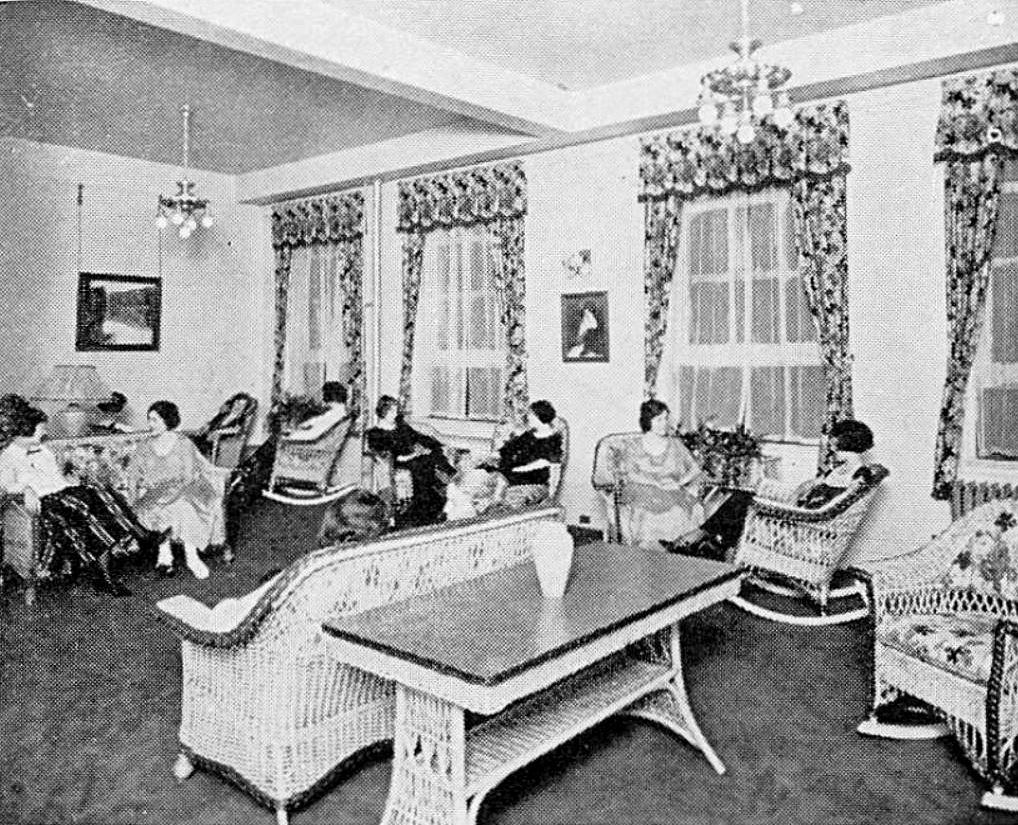
The telephone operator works between rests. Most of the time, it is true, she sits at the switchboard putting up the talk tracks for the subscriber, but in-between-times are periods for recreation, in which she has opportunity for change and relaxation. Attractive rest rooms invite a variety of diversions — sewing, dancing, reading, conversation — or just rest.

Miss Etta Mooneyham, Chief Operator at the Long Distance Office, at 4100 Bryan street, will welcome your visit any afternoon from two to five o’clock.

If you’re lucky, maybe Miss Mooneyham will ask you to dance.

sw-bell-telephone_oak-cliff-high-school-yrbk_1925bRelaxing in one of the “attractive rest rooms” (1925)

***

Sources & Notes

1911 ad appeared in the Dallas Morning News on May 29, 1911; 1925 ad (containing the photos at the top and bottom) appeared in the 1925 edition of “The Oak,” the yearbook of Oak Cliff High School (later renamed Adamson High School).

I’ve  been fascinated by telephone operators my whole life. Ever wonder why operators have historically always been women? Watch an entertaining 5-minute video about why women took over the profession, here.

Also, read an interesting New York Times article about “telephone girls” (June 11, 1899), here.

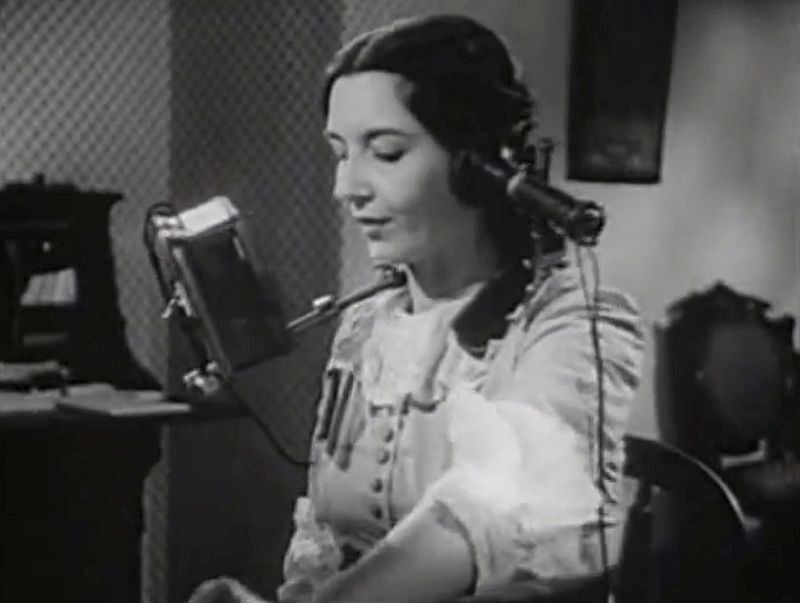
Lastly, because I really want to post this ridiculous screenshot of what 19th-century operators apparently wore at some point, an AT&T industrial film called “The Nation at Your Fingertips”can be viewed here. (The few seconds showing this operator who surely would have experienced crippling next pain for the rest of her life begins at the 3:43 mark.)

operator_whoa_nation-at-your-fingertips

See an earlier, related post — “Telephone Operators Sweating at the Switchboard — 1951” — here.

Click pictures for larger images.

*

Copyright © 2015 Paula Bosse. All Rights Reserved.

“Carhops” — A Short Documentary, ca. 1974

carhops_title
Schlitz on its way…

by Paula Bosse

The carhop is an oddly American invention — and it began here in Dallas in the 1920s, with boys and young men serving customers in cars at J. G. Kirby’s Pig Stand drive-in restaurants. In 1940, Sivils hit Dallas, but this time with young women as servers — young women in skimpy outfits. There was no looking back — from then on, pretty girls showing a lot of leg and hoping for big tips carried trays of food, soft drinks, and beer to cars full of waiting customers.

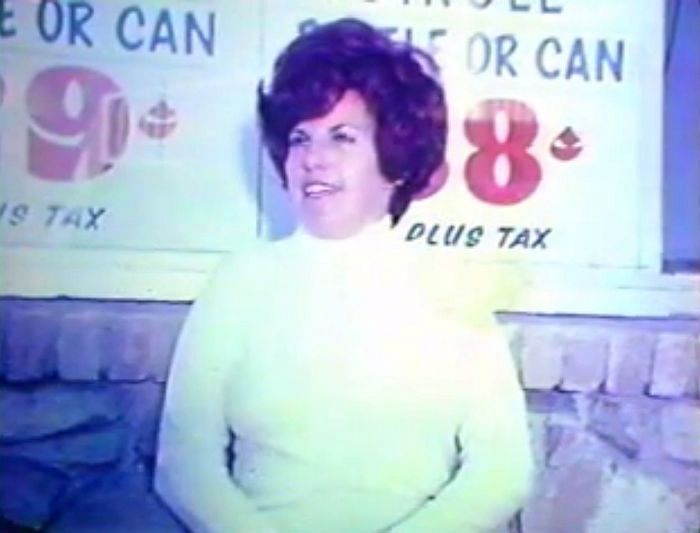
One of the few remaining “old school” drive-ins is Keller’s on Northwest Highway, still doing good business today. Around 1974 or 1975, SMU film teacher Pat Korman made a short documentary about Dallas carhops past and present (the result, it seems, of reading a Dallas Morning News article by Rena Pederson). He interviewed B. J. Kirby (owner of Kirby’s steakhouse on Lower Greenville and son of Jesse Kirby, founder of the Pig Stand pig-sandwich empire, which, as legend has it, had the very first carhops), J. D. Sivils (owner of Sivils drive-ins, who, along with his wife, was an important figure in the evolution of curb-side dining), and Jack Keller (owner of Keller’s Hamburgers). The three businessmen reminisce about the early days of drive-in restaurants in Dallas as a lot of cool historical film footage unspools and photographs from the ’20s to the ’50s are flashed on the screen. Also interviewed are four women carhops who were working at Keller’s at the time, talking about their jobs.

It’s a cool film. Big cotton-candy hair, accents you wish were still around, and cans and cases of Schlitz, Schlitz, Schlitz.

The 14-minute film is in two parts on YouTube. Here is the first part:

*
And here is the second part:

*
Below, screenshots of the interviewees.

sandy-carhopsSandy

shirley-carhopsShirley (as of Jan. 2015, she’s been a fixture at Keller’s for 50 years!)

rita-carhopsRita

nancy-carhopsNancy

kirby_carhopsB. J. Kirby

sivils-carhopsJ. D. Sivils

keller-carhopsJack Keller

kellers-menu-board_carhopsNo. 5 — 80¢

***

Sources & Notes

“Carhops” — filmed sometime in the early ’70s — was directed by Patrick Korman, shot by Ron Judkins, and produced by Don Pasquella. It premiered at Jesuit High School in April 1976. The film is on YouTube in two parts, here and here. (By the way, if you look at the YouTube comments under part two, you’ll see a comment from Sandy herself. She’s still looking good in the avatar photo.) (The music at the beginning and end of the film is great! I’m pretty sure it’s the legendary steel guitarist Ralph Mooney and the equally legendary guitarist James Burton; I love those guys! I urge to go get a copy of their album “Corn Pickin’ and Slick Slidin.'”)

Rena Pederson is thanked in the credits. She wrote a great article in The Dallas Morning News called “Carhops Fading, Those Were the Days” (Aug. 25, 1974) — she interviewed many of the same people seen in the film.

The Keller’s Northwest Highway location celebrates its 50th anniversary this year. Shirley — one of the carhops featured in the film — has worked there since it opened in 1965. As of Jan. 2015, she was still there! Go by and see her! Check out a Lakewood Advocate story on Shirley, here.

Also, take a look at a Dallas Morning News article on Keller’s 50th anniversary, here — scroll down to the slideshow to check out some great photos from its early days.

Read about sexy male carhops who plied their trade in skimpy outfits — a short-lived fad in Dallas inspired by the success of drive-ins like Sivils — in my previous post “Carhops as Sex Symbols — 1940,” here.

*

Copyright © 2015 Paula Bosse. All Rights Reserved.

An Afternoon Outing with SMU Frat Boys & Their Dates — 1917

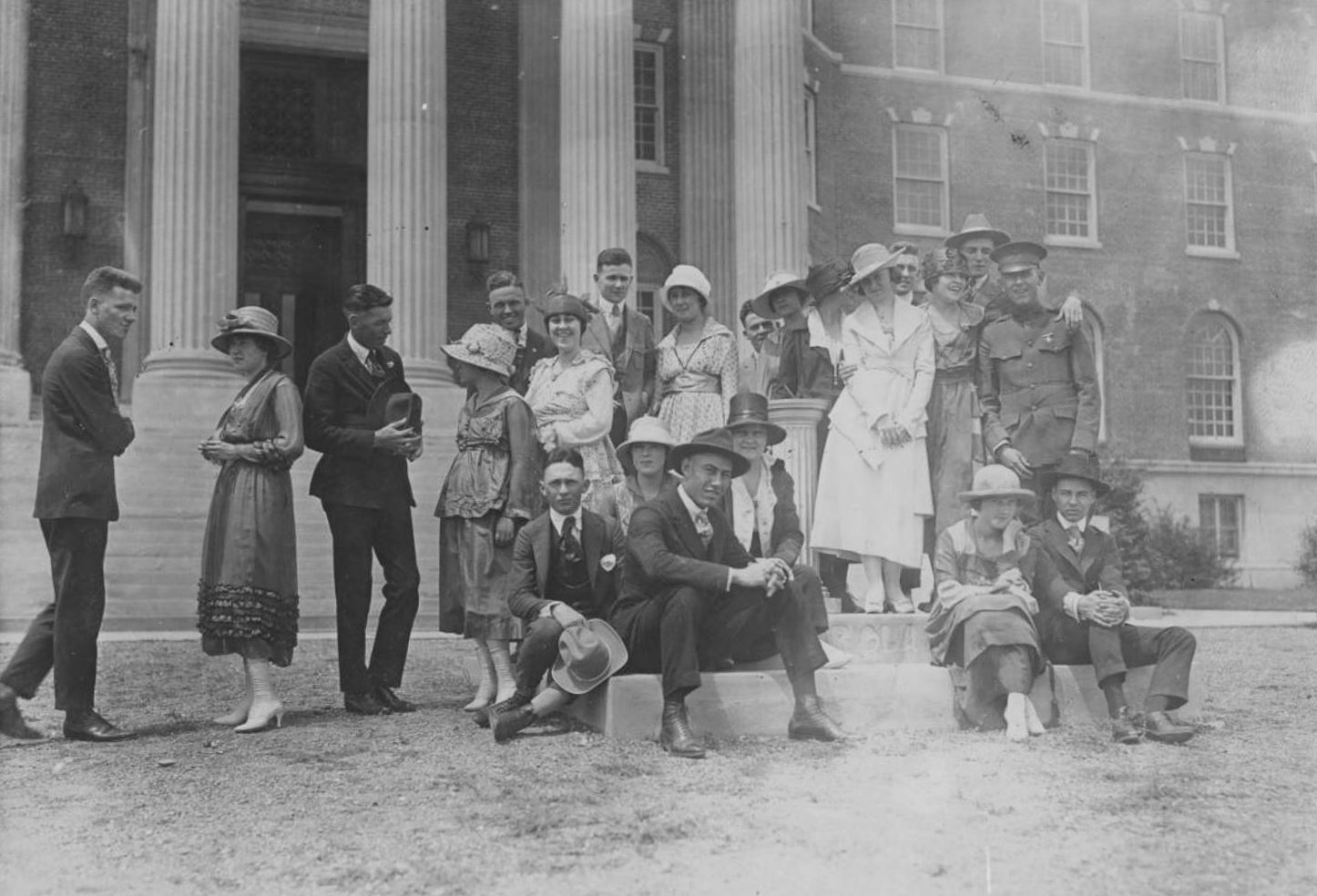
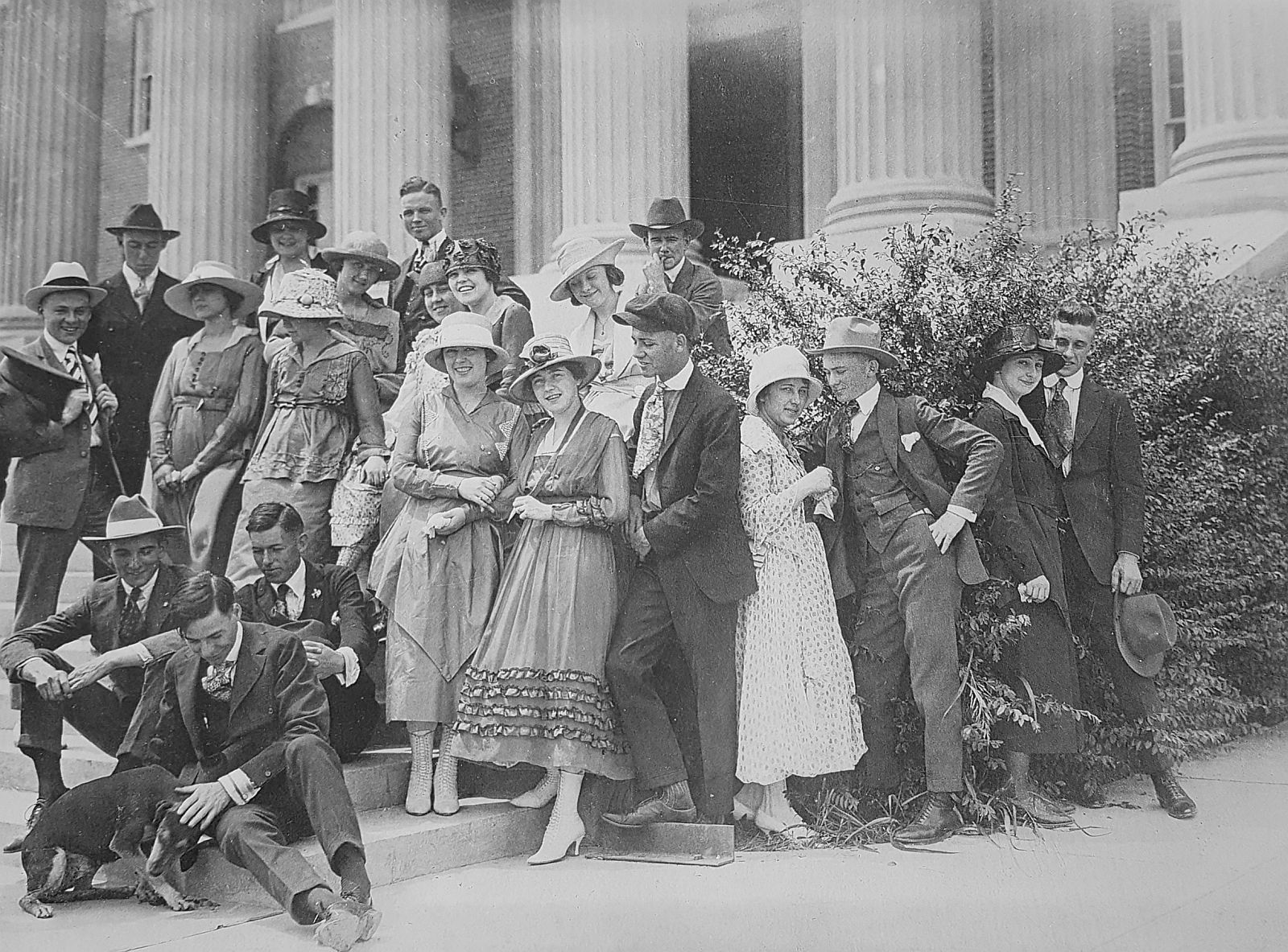
smu_omega-phi_dallas-hall_1917_degolyerCampus couples, 1917

by Paula Bosse

I came across three wonderful World War One-era photos in the SMU archives while I was looking for something else. You know how you can become enthralled by the charm of old photos and sit for long stretches of time staring at every little detail and wondering about the lives of the unidentified people who populate them? That happened to me with these. There is one particular young woman who stands out more than anyone else. Not only is she the best-dressed person in the photos, she also seems calm, collected, and serene. She looks friendly. She was probably very pleasant to have around.

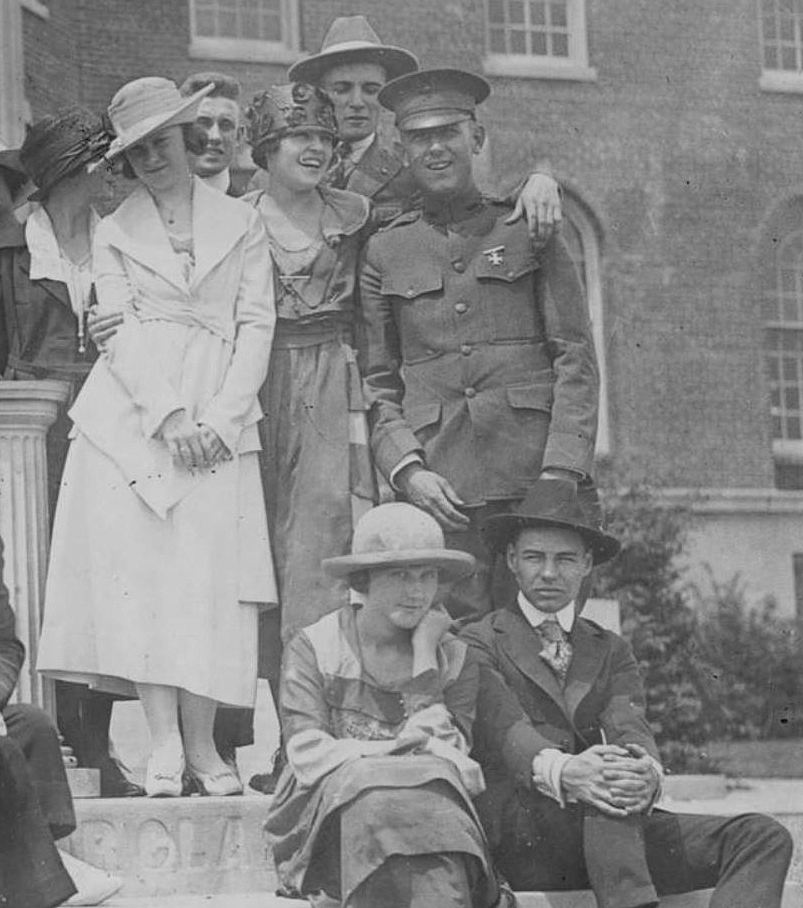
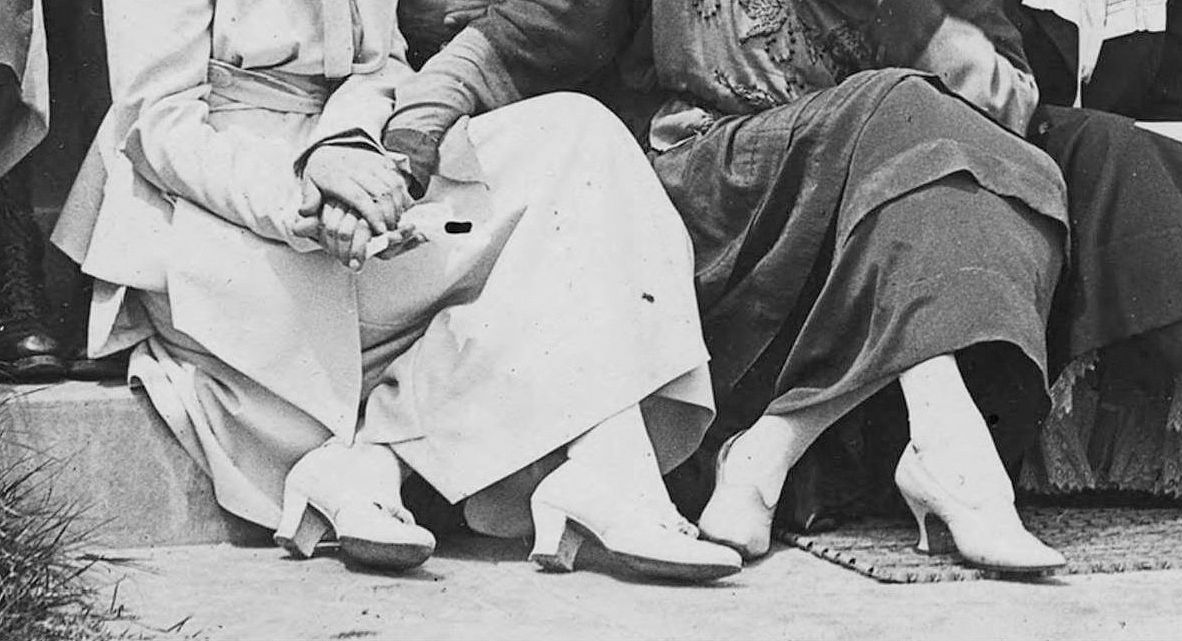
These three photographs show a group of ten young couples and a pair of chaperones spending a beautiful sunny day together, with the highlight of the day being a trip to Highland Park’s Exall Lake. The men are SMU students, identified only as members of the Omega Phi fraternity. The women are identified merely as “dates,” but I’m sure that some of them were also SMU students. The photograph above shows the crowd gathered on campus in front of Dallas Hall. The woman in white looks like she’s on a pedestal, glowing in a spotlight. Below, a closer look at her stylish outfit (as well as a look at the young be-medaled WWI soldier next to her).

smu_omega-phi_dallas-hall_1917_degolyer-det1

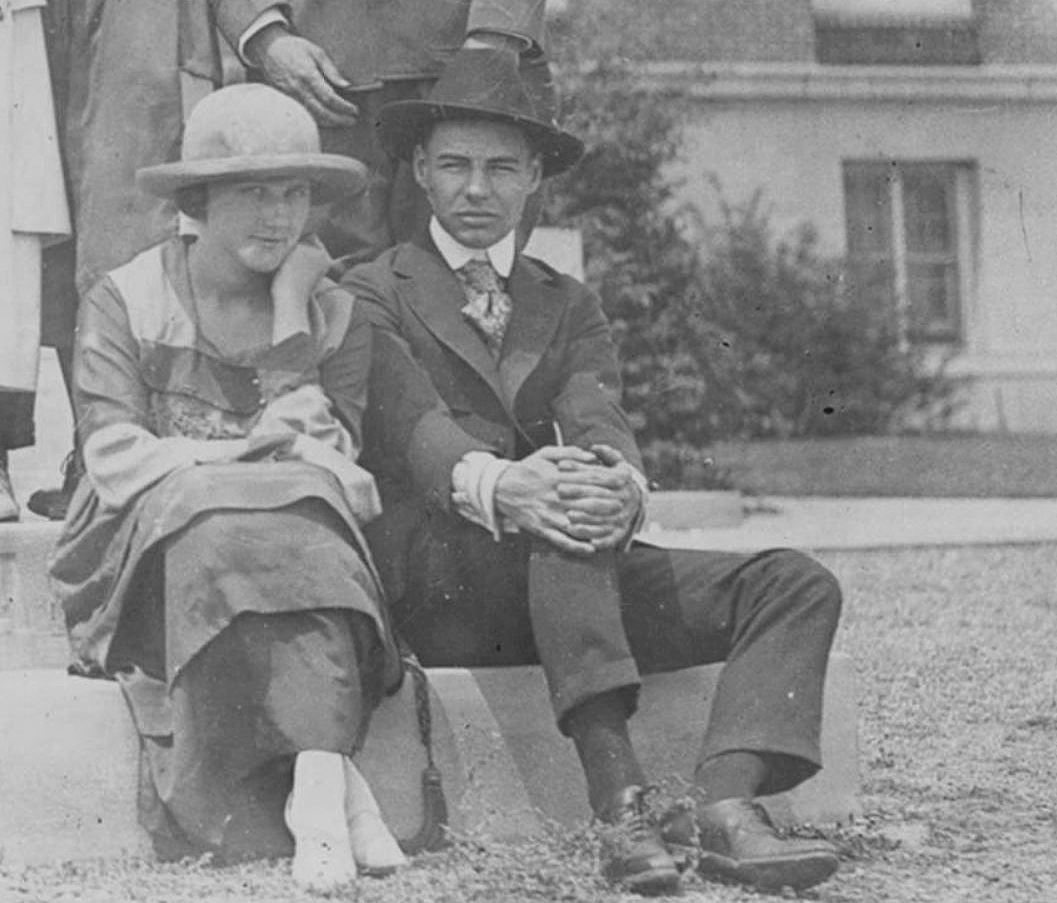
And, below, a similar detail, but this one showing the daintily crossed ankles of another pretty girl, seated beside a sour-looking companion.

smu_omega-phi_dallas-hall_1917_degolyer-det2

And here’s the gang on the idyllic banks of Exall Lake. Diane Galloway included this photograph in her book The Park Cities, A Photohistory with this caption:

At one time a bridge crossed Exall Lake near the Cary house, shown in the distance. The photographer was standing on the bridge to capture this picture of well-dressed SMU students going boating on the lake. A trip to Lakeside Drive was one of the few off-campus excursions permitted in 1917.

I love this photo. If I didn’t know what the Turtle Creek area looked like, I’d be hard-pressed to identify this as Dallas!

smu_omega-phi_exall-lake_1917_degolyer

Here’s a close-up of the beatific, smiling woman in white. I like the kid lurking in the background.

smu_omega-phi_exall-lake_1917_degolyer-det1

And the boat.

smu_omega-phi_exall-lake_1917_degolyer-det2

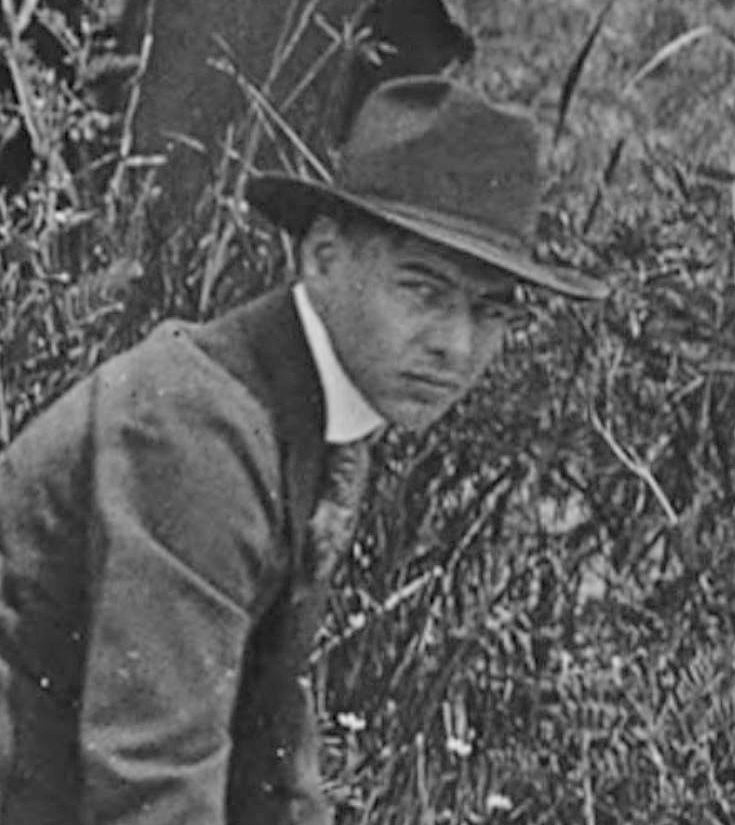
And the sour-looking guy again, looking even more annoyed than before.

smu_omega-phi_exall-lake_1917_degolyer-det3

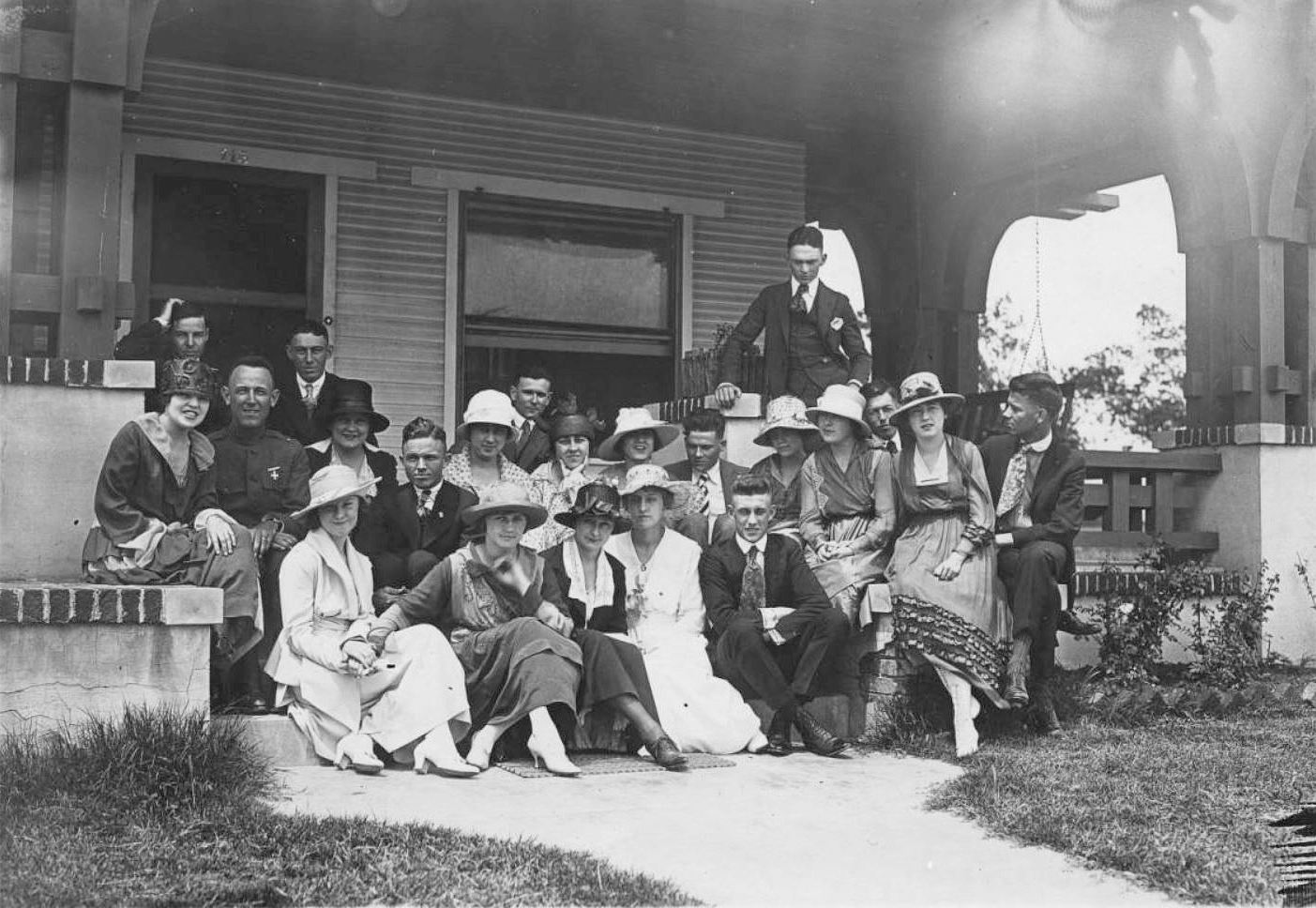
And here’s the crowd sitting on the steps of the frat house (which was located at Haynie and Hillcrest). The personnel has changed a little bit (they gained a woman and lost a man), but (almost) everyone seems pretty happy.

smu_omega-phi_porch_1917_degolyer

And, below, my very favorite detail from these three photos.

smu_omega-phi_porch_1917_degolyer-det1

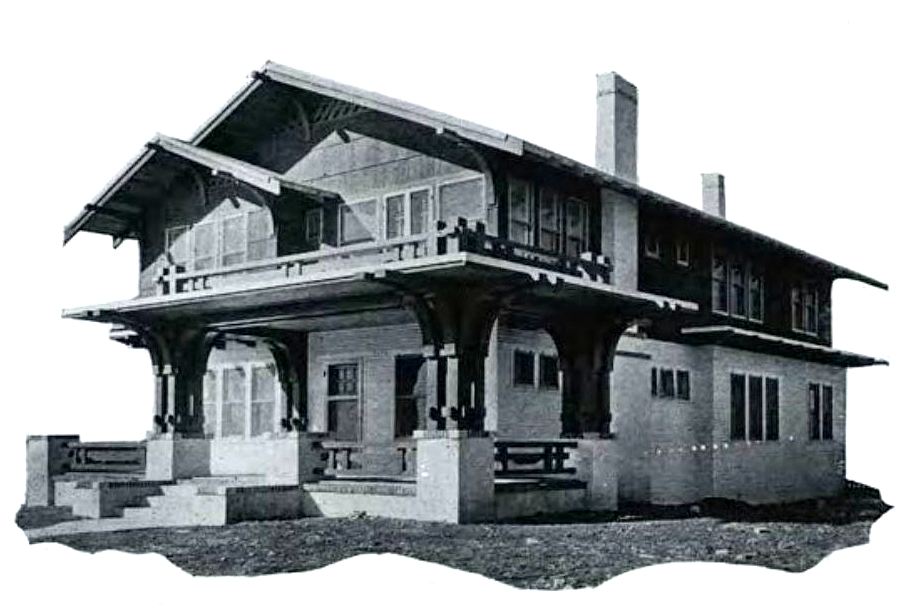
After a bit of sleuthing, I found a picture of the house at the time these photos were taken. It was actually a residence which was, I think, being rented out to the small group of Omega Phis. They had a proper fraternity house built several years later.

omega-phi-house_rotunda_1917

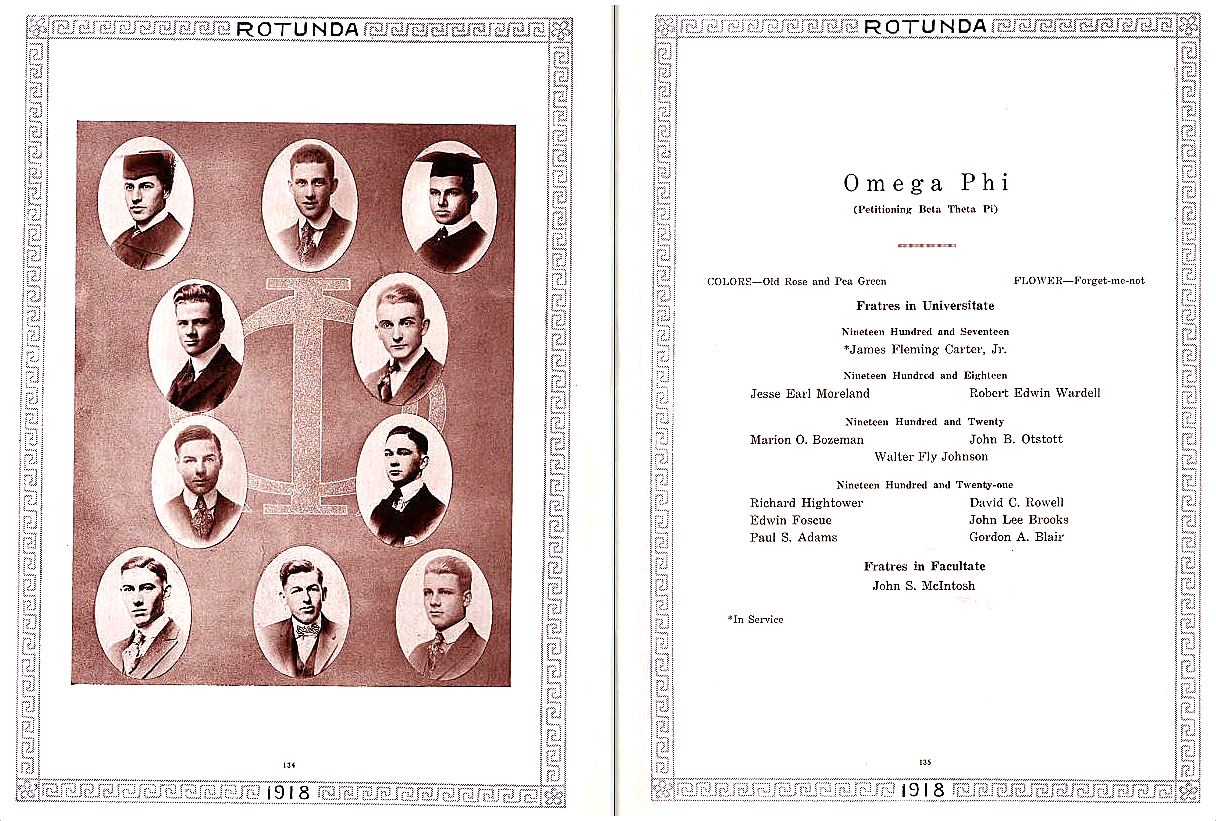
The top photo had “1917” written on the back, so I checked SMU’s Rotunda yearbooks from around that time. Here’s a look at the men who were members of Omega Phi in 1918. Several of these faces match the ones in the photos of the afternoon outing.

omega-phi_rotunda-1918

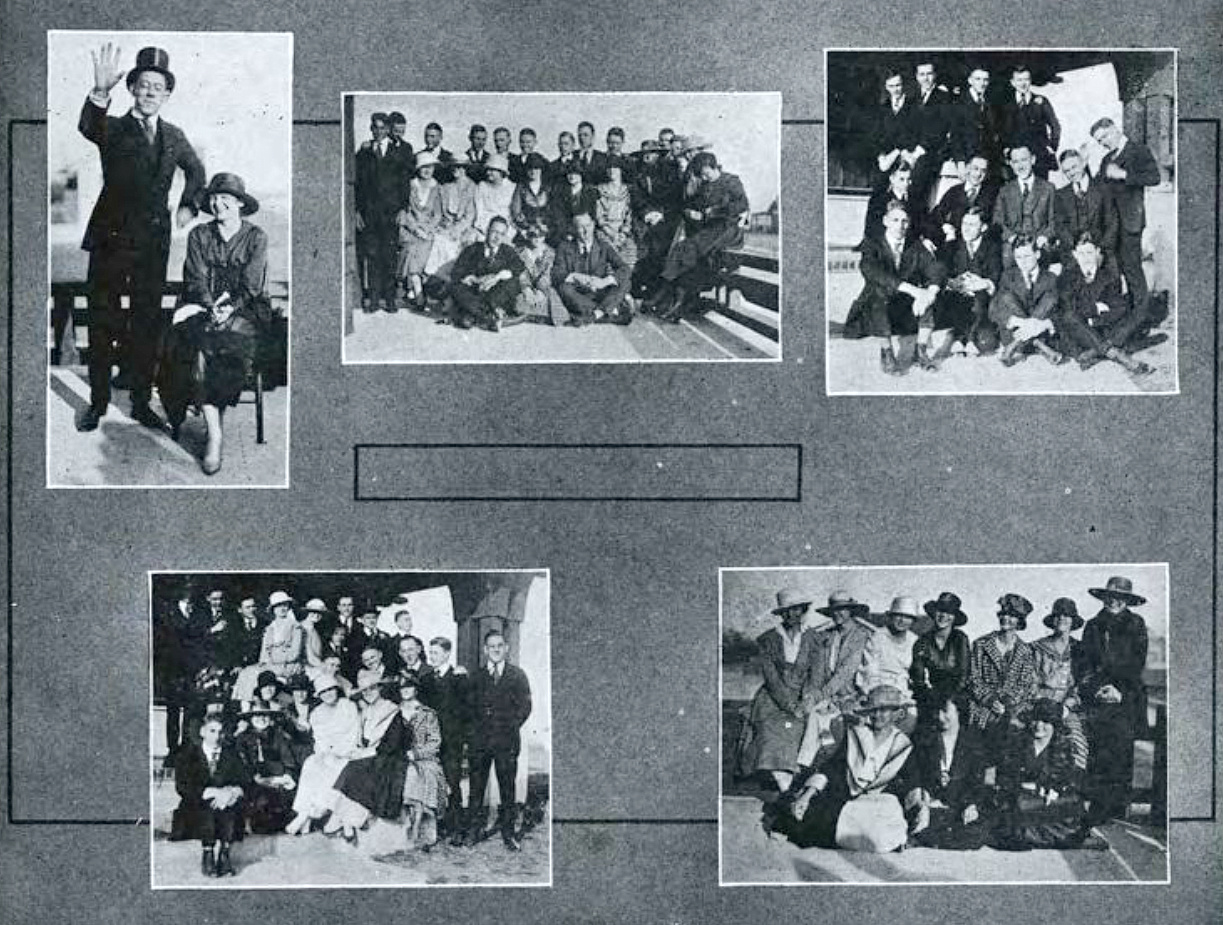
And, below, a photo collage from the Omega Phi page of the 1917 Rotunda. Several of the women look familiar. I see the Woman in White in at least one of these snapshots.

omega-phi_photos_rotunda_1917

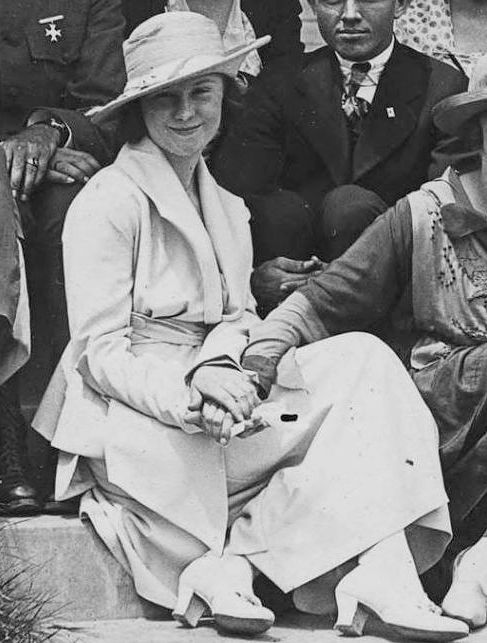
And here she is, close up. I hope she was as happy, intelligent, and confident in her real life as she appears to be in these photos.

smu_omega-phi_porch_1917_degolyer-det2

***

Sources & Notes

The three photos of the afternoon outing all come from the collection of the DeGolyer Library, Central University Libraries, Southern Methodist University:

  • “Omega Phi Fraternity members and their dates in front of Dallas Hall” is here.
  • “Omega Phi Fraternity member outing to Exall Lake” is here.
  • “Omega Phi Fraternity members and their dates on porch” is here.

The quote from Diane Galloway comes from her FANTASTIC book, The Park Cities, A Photohistory (Dallas: Diane Galloway, 1989), p. 24.

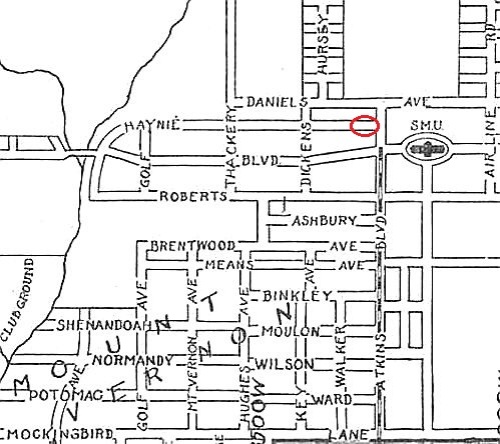
The ersatz Omega Phi fraternity house was located at 115 Haynie Avenue, just west of Atkins (now Hillcrest). (The photo of the exterior of the house is from the 1917 SMU Rotunda yearbook.)

omega-phi_map_19191919 map (detail), Portal to Texas History

I have absolutely no idea how college fraternities work, but it seems that when they formed on the SMU campus in 1915, the Omega Phi group was not actually affiliated with a national fraternity. They “petitioned” to be chartered by national groups, but they finally stopped trying after 11 years of, I guess, being repeatedly turned down — in 1926 they declared themselves to be an “independent society.” But one year later, they were granted a charter by the national Kappa Sigma fraternity. In the Dallas Morning News article announcing the news, this sentence was included: “The local chapter will be known as Delta Pi chapter.” I have no idea what any of that means, but if you’re really into these things, read the DMN article “Kappa Sigmas Grant Charter” (Sept. 26, 1927), here.

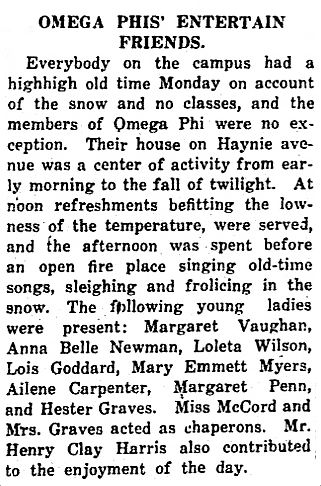
As for the identities of the women in the photos, it’s a mystery. I would assume, though, that at least some of them were the women mentioned in this little article about a cozy winter get-together at the Haynie Ave. house:

omega-phi_smu-campus_011917DMN, Jan. 19, 1917

If you’re not familiar with beautiful Exall Lake, you can watch a short, minute-long video of the lake’s history, produced to celebrate the 100th anniversary of Highland Park, here.

For other posts featuring photos I’ve zoomed in on to reveal interesting little vignettes, click here.

UPDATE: I stumbled across another photo of this group, from Diane Galloway’s book The Park Cities, A Photohistory:

smu_group-date_park-cities-photohistory_galloway

*

Copyright © 2015 Paula Bosse. All Rights Reserved.

The Idle Wild Social Club: Life Magazine Presents Black Debutantes — 1937

debs_life_120637-detThree of 1937’s debs (click for larger image and caption)

by Paula Bosse

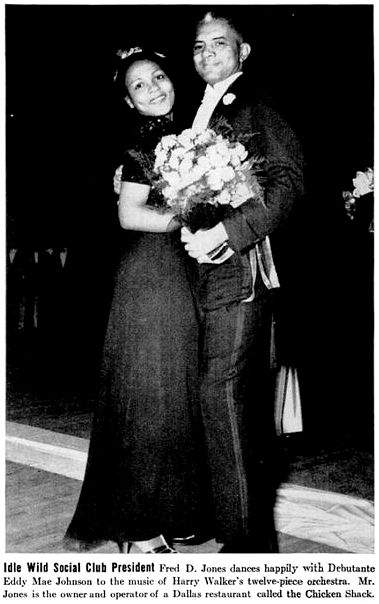
In December of 1937, something appeared in a national mainstream magazine that had probably never appeared before: photographs of a society ball celebrating African-American debutantes. In the December 6, 1937 issue of Life magazine — in the recurring “Life Goes To a Party” pictorial feature — four pages were devoted to coverage of the annual Idle Wild Social Club ball (later Idlewild Social Club, and later Cotillion Idlewild Club — none of which is to be confused with Dallas’ 130-plus-year-old super-exclusive, white Idlewild Club). The letters this unusual pictorial elicited were either congratulatory or, dismayingly, shocked and irate. Although today these photos are nothing unusual, in 1937, to see African-Americans depicted in a magazine such as Life as just normal, everyday Americans, was exceedingly uncommon. To see photos of black high-society must have made people’s heads explode. So kudos to Life for running the only slightly patronizing story and for publishing some wonderful photographs.

life_debs_120637_aLife magazine, Dec. 6, 1937

*

The Idle Wild Social Club was started in Dallas around 1918 by a group of socially well-placed black men — perhaps as a response to the white Idlewild Club. By the early 1920s they, like the white club, were presenting the cream of the crop of their young women to society in debutante balls. The ball covered by Life took place on November 18, 1937. The women making their debuts were:

  • Eddy Mae Johnson
  • Glodine Marion Smith
  • Lorene Marjorie Brown
  • Gladys Lee Carr
  • Gladys Lewis Powell
  • Hattie Ruth Green

life_debs_120637The debs and their escorts (Life, Dec. 6, 1927)

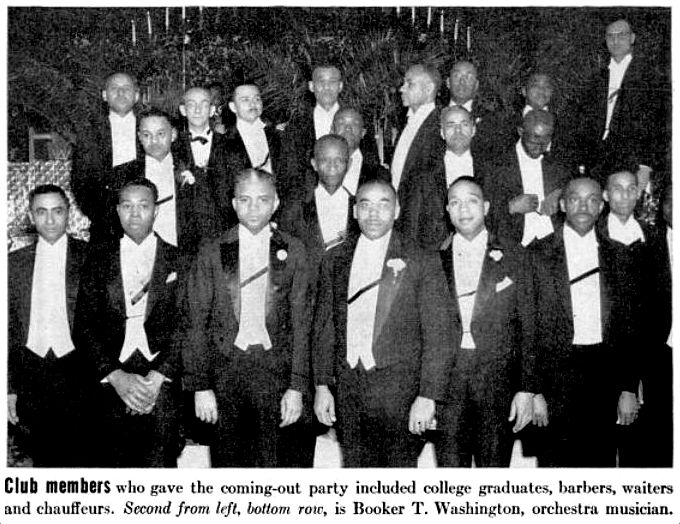
life_debs_120637-club-membersClub members (Life, Dec. 6, 1927)

life_debs_120637-crowd“Social chitchatterers” (Life, Dec. 6, 1927)

life_debs_120637-couple(Life, Dec. 6, 1927)

Read the article and see additional photos featured in this pictorial here.

There was an outcry in response to the article, and some of it was shockingly ugly — read the letters to the editor about the “Negro Ball” that Life published in the next issue, here (use the magnification tool at the top of the page to increase the size of the text).

Here is the more progressive response, from the Jan. 1938 issue of the NAACP’s magazine, The Crisis:

the-crisis-mag_jan-1938

Progress moves at a snail’s pace, but if coverage of a debutante ball can help to move things forward even a step or two … great!

***

All photos from Life magazine, Dec. 6, 1937; the scanned article (and, in fact, the entire scanned issue) is here.

The January, 1938 issue of The Crisis is available online; the page featuring the editorial is here. (This issue also has an interesting article, “Free Negroes In Old Texas” by J. H. Harmon, Jr., here.) The Crisis Wikipedia page is here.

To read coverage of earlier Idle Wild Social Club balls — published in the black-owned Dallas Express — see this from 1922, and this from 1923.

The African-American debutante ball has been called Cotillion Idlewild for many years now; information on their 2014 ball is here. (Again, this is not to be confused with the (white) Idlewild Club, which has been throwing heart-stoppingly elaborate balls in Dallas since the 1880s.)

Apparently there is a history of the club out there — Idle Wild Social Club History (1940) — and, according to WorldCat, appears to be available at nearby libraries.

Personally, I don’t really “get” debutante balls, but growing up in Dallas, I know that they’ve always been big, big, BIG deals. A. C. Greene’s snarky article “Social Climber’s Handbook” (D Magazine, October, 1976), is both amusing and informative; read it here.

*

Copyright © 2015 Paula Bosse. All Rights Reserved.


Ebby Halliday, 1911-2015

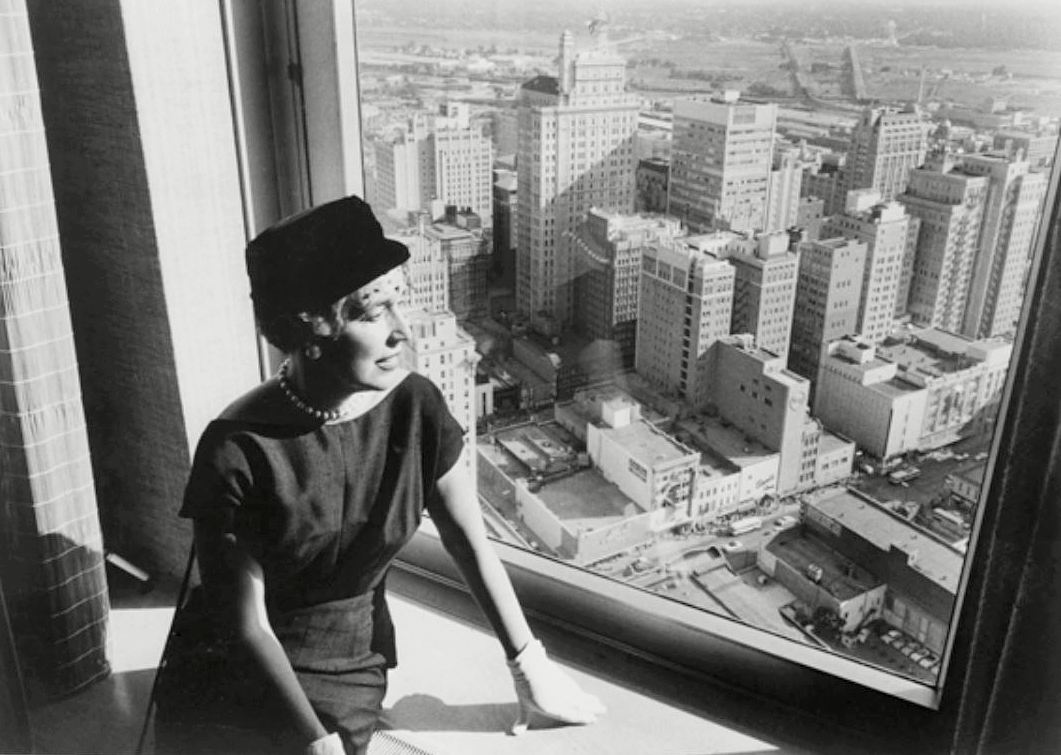
ebby_1957_big-d_cowboy-hat_via-candys-dirt
Ebby in Big D, 1957… (photo: Ebby Halliday Realtors)

by Paula Bosse

(Feb. 2019: This post has been expanded since its original publication on Sept. 9, 2015.)

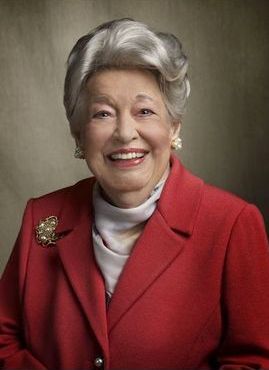
Ebby Halliday — the Dallas realtor known instantly by just her first name — died September 8, 2015 at the age of 104. Ebby was not only stunningly successful in the world of Dallas real estate, she was also something of a pioneer in paving the way for other women to establish and find great success in business. There are several obituaries that will present a more complete overview of her life (see links at the bottom of this post), so I’ll just post a few odds and ends that have caught my attention.

*

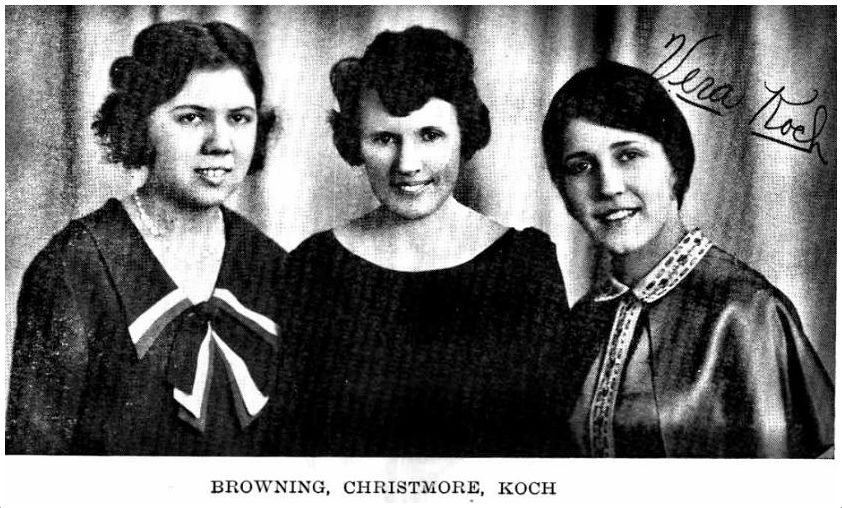
Vera Lucille Koch grew up in Kansas, and according to her 1929 Abilene High School yearbook, she was inordinately active in all sorts of clubs and sports. Here are a couple of photos from that yearbook (most images are larger when clicked); the first one shows her with the debate team.

ebby_debate-club_AHS-1929

And the second one shows her with her “Forensics” teammates (she excelled in reading competitions, although I’m not exactly sure what that means, as most “forensics” events involve debating). Rather amazingly, this scanned yearbook has her signature!

ebby_forensics-team-reading_AHS-1929

These two extra-curricular activities served her well in her later career — she obviously learned a lot about the effectiveness of persuasion at an early age.

After school, she spent several years working in department stores selling women’s fashions (including a stint in Omaha, where a vivacious young Vera can be seen in a  fantastic photo posted by D Magazine here). Ultimately she arrived in glamorous Dallas around 1938, where she began life as a Dallasite managing the women’s hat department at the downtown department store W. A. Green. Most accounts have her entering the real estate business while still selling hats, soon after the war — almost by a fluke. Legend has it that one of her customers mentioned to her husband, famed oilman Clint Murchison, that he might want to utilize Ebby’s sense of style by having her decorate a few of his newly-built houses in Far North Dallas in order to increase sluggish sales; she was apparently so successful at this that she decided to pursue selling houses on her own and eventually established her own realty company.

*

I’ve always wondered about the name “Ebby” — what was it short for? Ebby Halliday is the only Ebby I’ve ever heard of. Turns out that she made the name up, sometime between graduating from high school in Kansas and coming to Dallas. In a 1983 Dallas Morning News interview, she explained how Vera Lucille Koch became “Ebby Halliday”:

“I was selling hats when one of the buyers who I admired a great deal told me I had to get rid of  Vera Lucille. She said it was the silliest name she’d ever heard. I needed something more sophisticated. I thought about it and came up with the name Ebby. That sounded very, to me, like I had a lot of class.” (DMN, Sept. 25, 1983)

The  paragraph ended with two sentences added by the writer of the article:

The name Halliday came from an early first marriage. That husband is now deceased.

The somewhat dismissive tone of those last two lines is interesting, because that husband, Claude W. Halliday — whom she appears to have married in 1947 (although an earlier marriage license for the couple had been issued in 1945 in New York) — is almost non-existent in newspaper searches. C. W. Halliday (1908-1965) was described in a 1957 article about Ebby as being “engaged in an investment and building corporation.” In his 1965 obituary, C. W. was described as “head of C. W. Halliday Realtors and a partner in Ebby Halliday Realtors.” When C. W. died in 1965 — several years he and Ebby had divorced (and the same year Ebby married Maurice Acers) — it was Ebby who acted as informant on his death certificate. Mr. Halliday’s real estate career began about 1946, a year or so before Ebby opened her own retail millinery business. Ebby and C. W.’s marriage lasted for over 12 years, but most traces of him seem to have vanished into the ether.

But back to the name “Ebby.” When the former Vera Lucille Koch arrived in Dallas around 1938 to work at the W. A. Green department store, she was listed in the city directory as “Mrs. Vera Eberhardt.” I’m not sure where the “Mrs.” came from (had she been married before she arrived in Dallas?), but it’s certainly easy to see that “Ebby” probably came from “Eberhardt,” a name which was either a husband’s surname or the name she described as having created for herself because it sounded sophisticated.

eberhardt_vera_ebby_1939-directory1939 Dallas directory

In June, 1940, 29-year-old Ebby married KRLD broadcaster Royce H. Colon. Their marriage lasted only a few years, but it was during this time that the city directory shows her using the name “Ebby” professionally, while still working at Green’s.

colon_ebby_1940
Mrs. Royce Colon, 1940

colon_1941-directory
1941 Dallas directory

colon_1942-43-directory1942-43 Dallas directory

In Mr. Colon’s 1975 obituary it was stated that he had begun his career in real estate (with Majors & Majors Realtors) at a time which would have coincided with the years he and Ebby were married. This is to take nothing away from Ebby’s incredible accomplishments, but if that were the case, it seems that she might have had some (at least rudimentary) background in real estate before Clint Murchison asked her to spiffy-up some new houses he was having trouble unloading. It’s possible she may have entered her new profession with more in her quiver than simply a flair for interior decoration. Ambition may have seemed unladylike and immodest for a “career gal” in the 1940s, even for someone as independent and focused as Ebby. I wonder if her “origin story” might have been softened a bit to play down her ambition? Whatever the case, it didn’t take Ebby long to make her mark on the world of Dallas real estate, and, in so doing, establishing for herself a national reputation as both a top realtor as well as a major inspiration and mentor for women in business. 

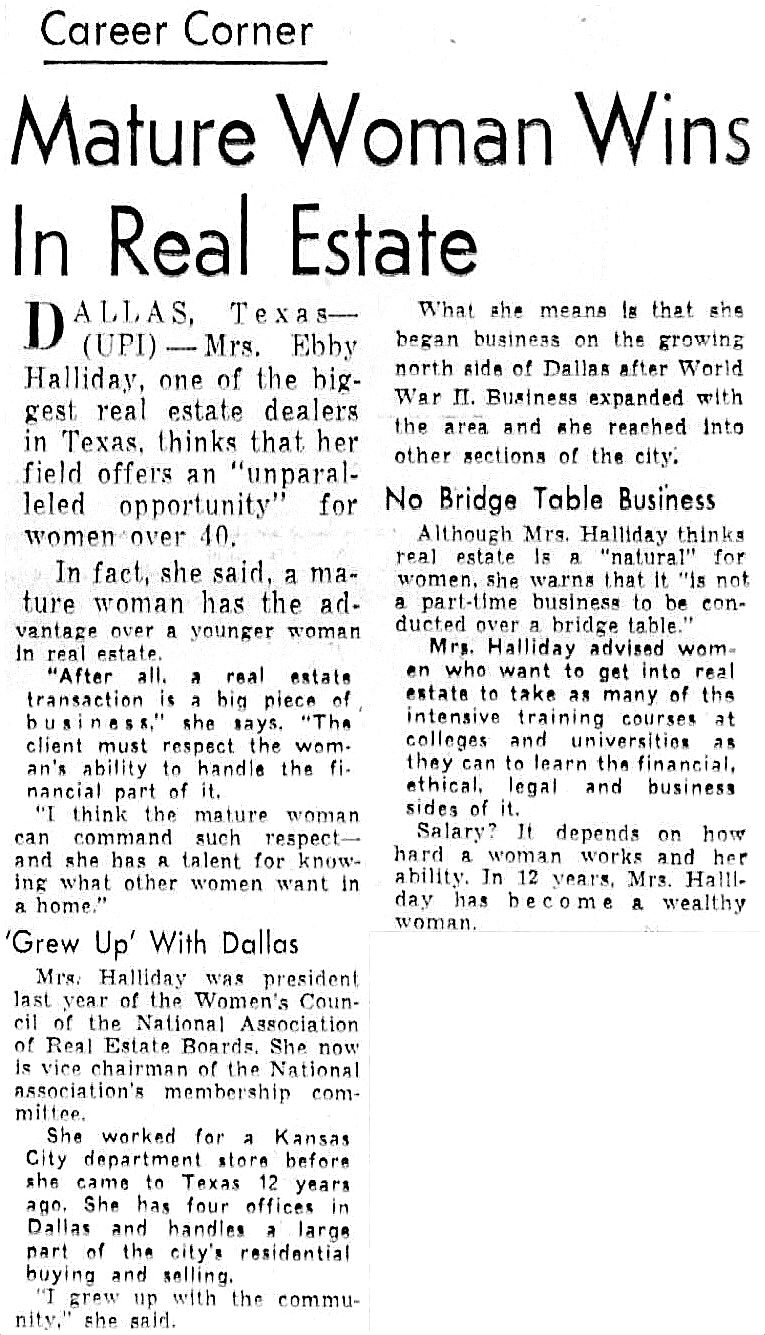
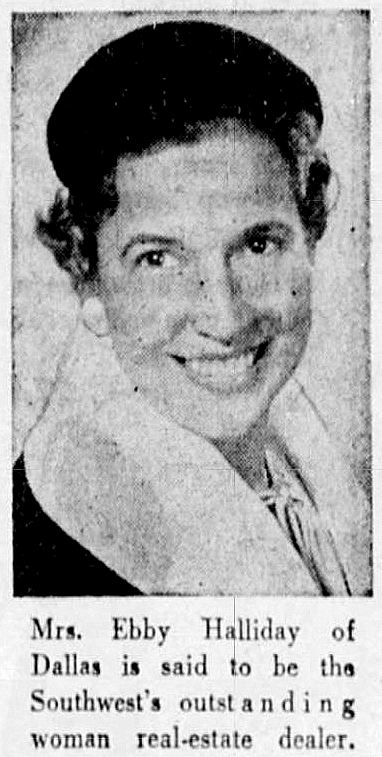
Below is the type of article about Ebby Halliday’s accomplishments which ran constantly throughout her career. (Most images in this post are larger when clicked.)

ebby-halliday_tennessean_090758_upi-wire-story
The Tennessean, Nashville, TN, Sept. 7, 1958

*

But back to that hat shop.

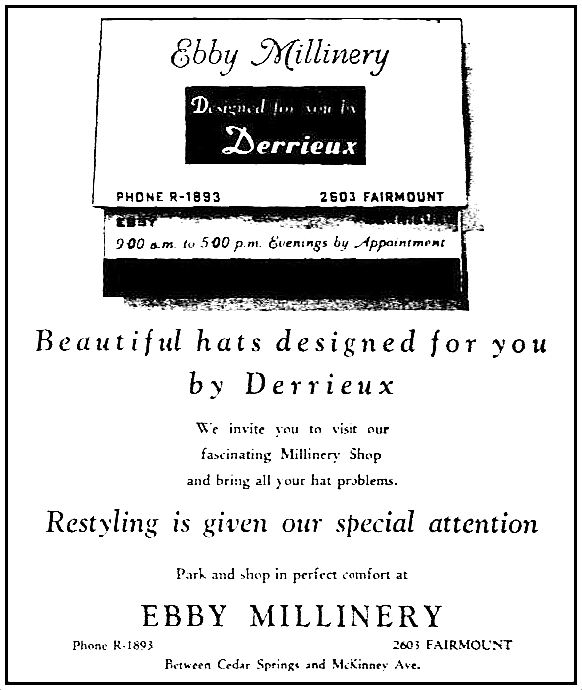
The first mentions I found for the shop Ebby Millinery (one of several boutique shops which operated in the still-beautiful old home at 2603 Fairmount), were in August, 1947 — an article in The Dallas Morning News described the shop as having “opened recently.” Ebby (who had recently become Mrs. C. W. Halliday) opened the shop in partnership with Dallas hat designer Annabelle Derrieux Bradley.

ebby-millinery_081047
Aug. 10, 1947

The shop’s bold decoration sounds … bold:

…Ebby Millinery’s French Room is decorated with bottle green walls and carpets and accented with striped drapes of deep shocking pink and chartreuse. The designing room has a touch of the Victorian with frilly white curtains and oversized wallpaper roses against a bottle-green background. (DMN, Aug. 20, 1947)

ebby-millinery_102647
Oct. 26, 1947

When Ebby decided to pursue her new real estate business full-time, Derrieux and her husband took over the shop and eventually renamed it Derrieux Hats.

*

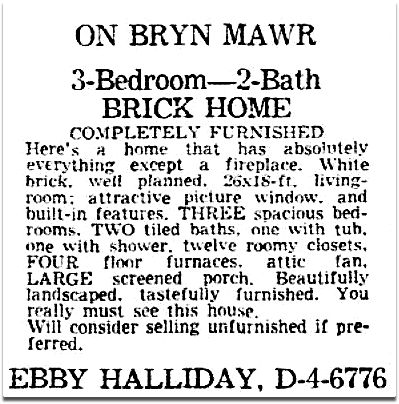
The first real estate ad I could find that featured Ebby’s name is this one, from 1948:

ebby_dmn_080548DMN, Aug. 5, 1948

And she was off like a rocket.

**

Below are a few photos of Ebby I’ve come across which I particularly like.

ebby_1956_charm_via-candys-dirt1956, Charm magazine (“the magazine for women who work”) (via Candy’s Dirt)

*

ebby-halliday_louisville-KY-courier-journal_092257Louisville (KY) Courier-Journal, Sept. 22, 1957

*

ebby-halliday_austin-statesman_012566
Austin Statesman, Jan. 25, 1966

*

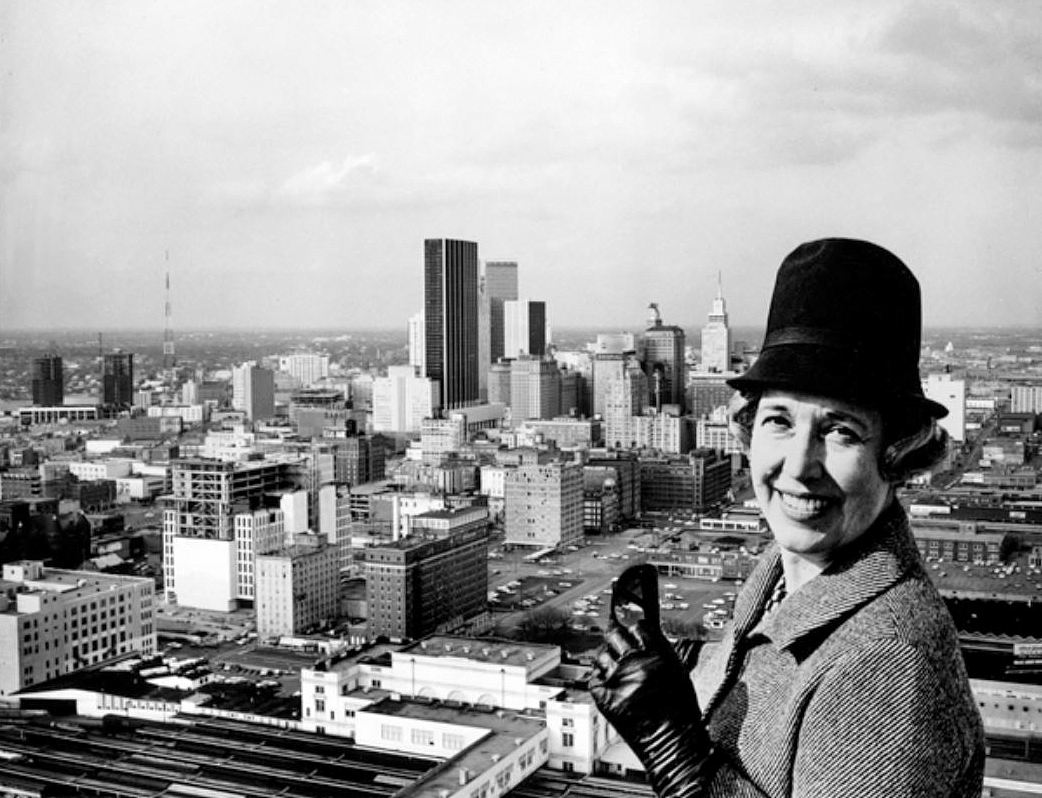
ebby_dallas-skyline1966 (via Candy’s Dirt)

This photo is interesting because a version of it appears in the May 15, 1966 edition of the Sydney Morning Herald under the headline “The Texas Millionairess” with one slight difference: instead of posing above the Dallas skyline, she is shown posing above the Sydney skyline while on a trip to Australia.

*

And here she is in later days: the undisputed grand dame of Dallas real estate. RIP, Ebby.

ebby_wfaa

***

Sources & Notes

Top photo is one of three in this post which appeared in a Candy’s Dirt slideshow here (slideshow photos are from the archives of Ebby Halliday Realtors — there are tons of great photos there!).

Highschool photos of Vera Koch are from the 1929 yearbook of Abilene (Kansas) High School.

Ebby Halliday Acers died Tuesday, Sept. 8, 2015. A few of the online obituaries/tributes in the local media:

  • Dallas Morning News, here
  • Dallas Business Journal, here
  • D Magazine, here
  • Ebby Halliday Realtors website, here

A great article on a typical day at work for the 96-year-old Halliday (!) appeared in D Magazine in July, 2007; read Candace Carlisle’s article “Ebby Halliday: The Woman Who (Still) Sells Dallas,” here.

*

Copyright © 2015 Paula Bosse. All Rights Reserved.


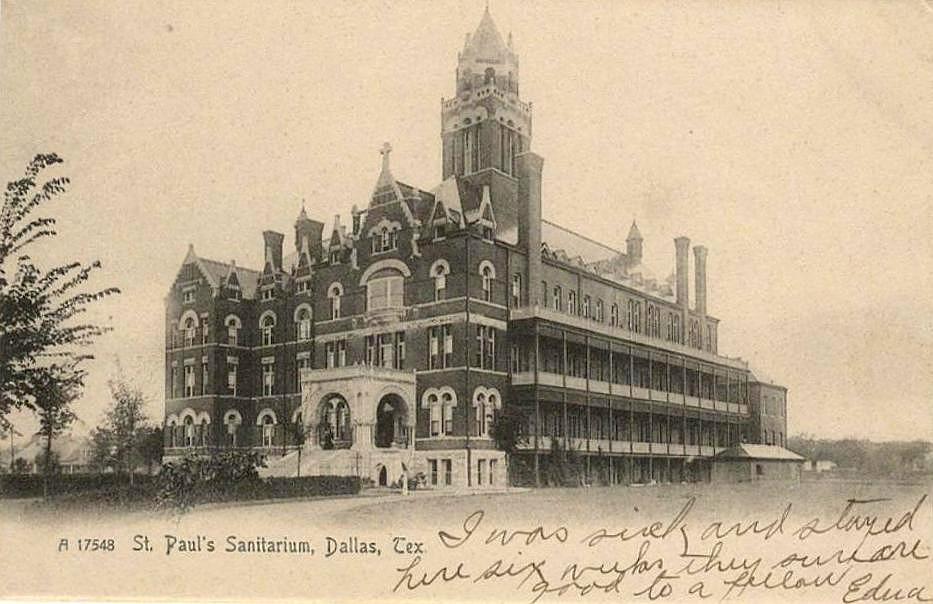
St. Paul’s Sanitarium — 1910

st-pauls_postcard_de-paul-univSt. Paul’s Sanitarium, located at Bryan & Hall (click for larger image)

by Paula Bosse

My posting has been infrequent as of late, due, in part, to obligations concerning a family member’s hospital stay. So, since I have a short time before I have to rush off to run errands and make visits, why not focus on a historic Dallas hospital?

St. Paul’s Sanitarium was opened in a small cottage on Hall Street in 1896 by the Daughters of Charity of St. Vincent de Paul, but it soon moved to the new large H. A. Overbeck-designed building on Bryan Street in 1898. In 1927 the name changed to St. Paul’s Hospital, and in 1958, the name changed again, this time to St. Paul Hospital. The imposing building and annex (and whatever other structures were contained in the complex) were demolished in 1968.

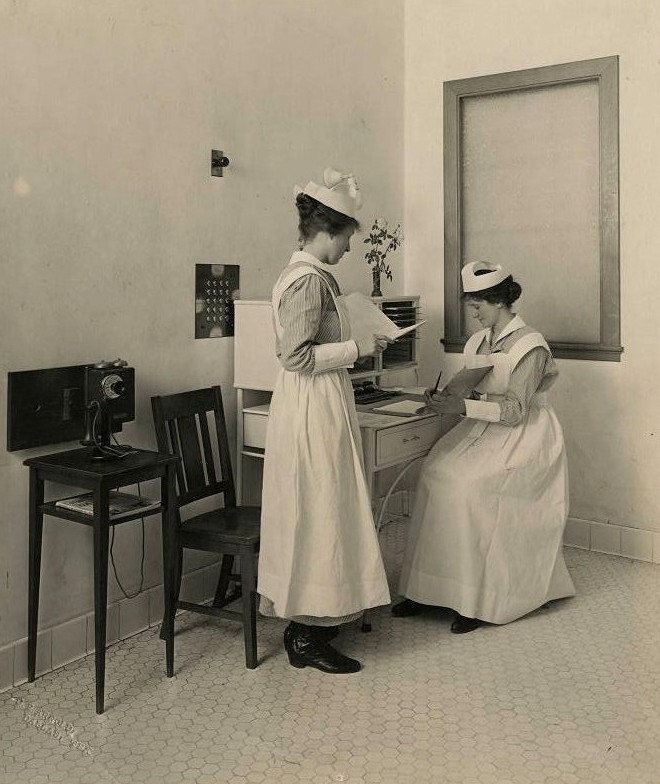
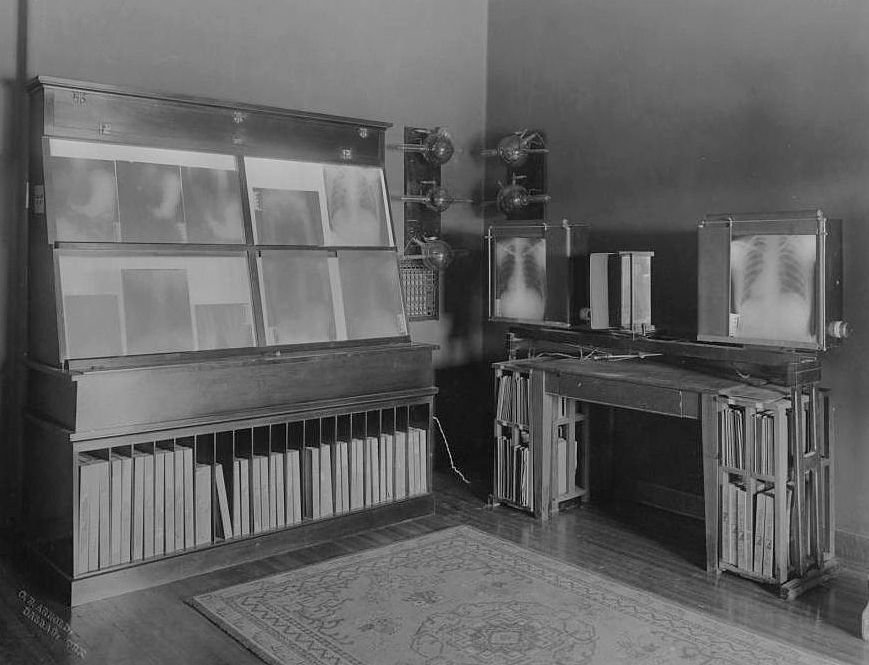
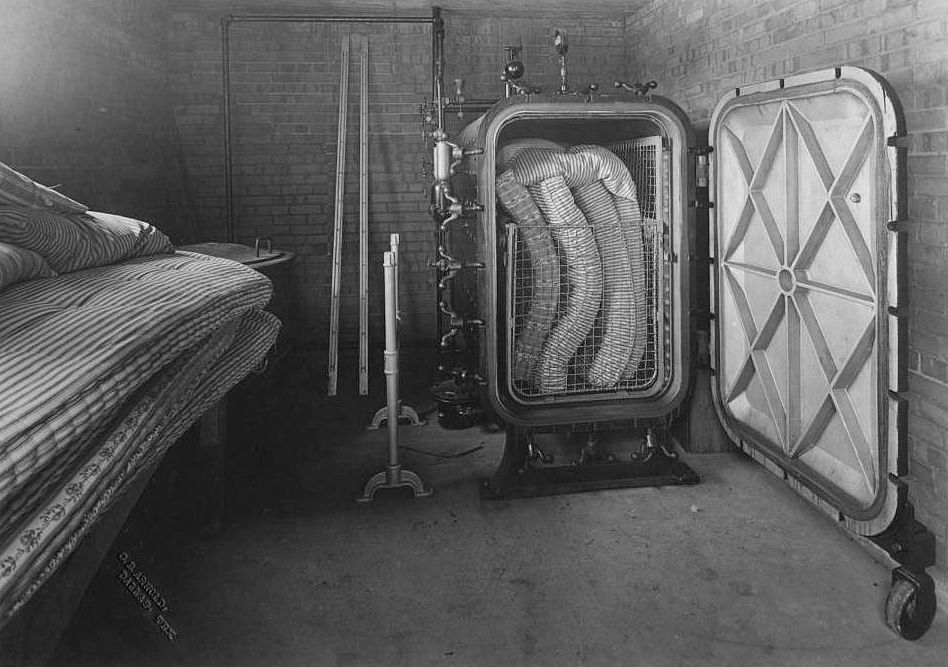
Below are several wonderful photographs taken inside the sanitarium around 1910 by one of Dallas’ best photographers, C. E. Arnold. They are from the St. Paul Hospital Collection in the UT Southwestern Library (click links below photos to see info about each picture).

*

st-pauls_nursing-stn_1910_utsw_smThe nursing station.

*

st-pauls_mexican-ward_1910_utswThe “Mexican Ward” (as noted on the back of the photograph).

*

st-pauls_sleeping-porch_1910_utswA patient ward on a screened-in sleeping porch.

*

st-pauls_waiting-room_1910_utswA waiting room.

*

st-pauls_xray-room_1910_utswThe x-ray room.

*

st-pauls_nurses-library_1910_utswThe nurses’ library. (I LOVE this photo! Check out the crazy typewriter stand attached to the desk — I’ve never seen anything like that before.)

*

st-pauls_student-nurses-dorm_1910_utswThe nurses’ dormitory on the top floor.

*

st-pauls_mattress-sterilization-room_1910_utswAnd, my favorite, the ominous-looking mattress sterilization room in what appears to be a dungeon.

*

st-pauls_flickr_coltera

**

UPDATE: Check out some fantastic historic photos of the hospital and its nurses contained in this UT Southwestern Medical Center publication, “St. Paul University Hospital, A Legacy of Caring,” here.

***

Top postcard is from the Vincentiana Postcard Collection, Special Collections and Archives, DePaul University Library, Chicago; it can be found here.

Bottom postcard, with the cheerful message from Edna, was found on Flickr, here.

All photographs are from the St. Paul Hospital Collection in the UT Southwestern Library. Other photos from this 1910 collection can be found here. (For fuller descriptions, click the linked text beneath the photos in this post.)

An interesting article on the photographer, Charles Erwin (C. E.) Arnold, and the technique used in capturing his interiors, can be found here.

A historical timeline of St. Paul’s can be found in a PDF here.

Wondering where St. Paul’s Sanitarium was located? It was at Bryan and Hall streets, across from Exall Park. Here is the location, from a 1919 map:

st-pauls_1919-map

All images larger when clicked.

*

Copyright © 2015 Paula Bosse. All Rights Reserved.

World War II: The Homefront — 1944

WWII-mother_dmn_051444Mrs. A. H. Curry

by Paula Bosse

This touching photo appeared in The Dallas Morning News on Mother’s Day, 1944. The caption:

HER DAY — Sons are scattered all over the world in a fight for a deep cause. Mother’s Day, 1944, isn’t the brightest we have ever had, but it is the most hopeful for the future. And it serves to call attention again to the fact that Mothers are still the greatest heroes of all. In Dallas, Mrs. A. H. Curry, 3719 Miramar, a Mother with six sons in the service — one of them missing in action — looks over the pictures of the men she reared who now fight for her safety at home.

(More about the Curry boys can be read in the full Mother’s Day article that accompanied this photo — an article written in the purplest of patriotic prose by Dallas Morning News editor Felix R. McKnight; read it here.)

curry_dmn_012465
Ethel Walz Curry (1883-1965)

Below, a photo of the Curry sons with their father, A. H. Curry (whose early career was spent with the Edison Company, working personally with Thomas Edison).

curry-brothers_dmn_091242DMN, Sept, 12, 1942

***

Sources & Notes

Photo and text appeared in The Dallas Morning News on May 14, 1944, Mother’s Day. Photo by E. W. Odom.

Mrs. Curry also had two daughters, Catherine and Carolyn. In one of those “everything is connected” discoveries, Catherine married Robert E. Grinnan who grew up in the Connor house I wrote about here.

*

Copyright © 2015 Paula Bosse. All Rights Reserved.

When In Doubt, Get Mom a Hat — 1951

mothers-day_dmn_050351

by Paula Bosse

Give Mom a teeny-tiny hat!

Mother’s Day Sure to please everybody’s mother is this attractively packaged Mother’s Day hat certificate that she can use to purchase the hat that is most becoming. The certificate is enclosed with a miniature straw hat in a crystal-clear plastic hat box. W. A. Green Company.

Happy Mother’s Day!

***

Sources & Notes

From an advertorial appearing in The Dallas Morning News on May 3, 1951.

*

Copyright © 2015 Paula Bosse. All Rights Reserved.

2222 Ross Avenue: From Packard Dealership to “War School” to Landmark Skyscraper

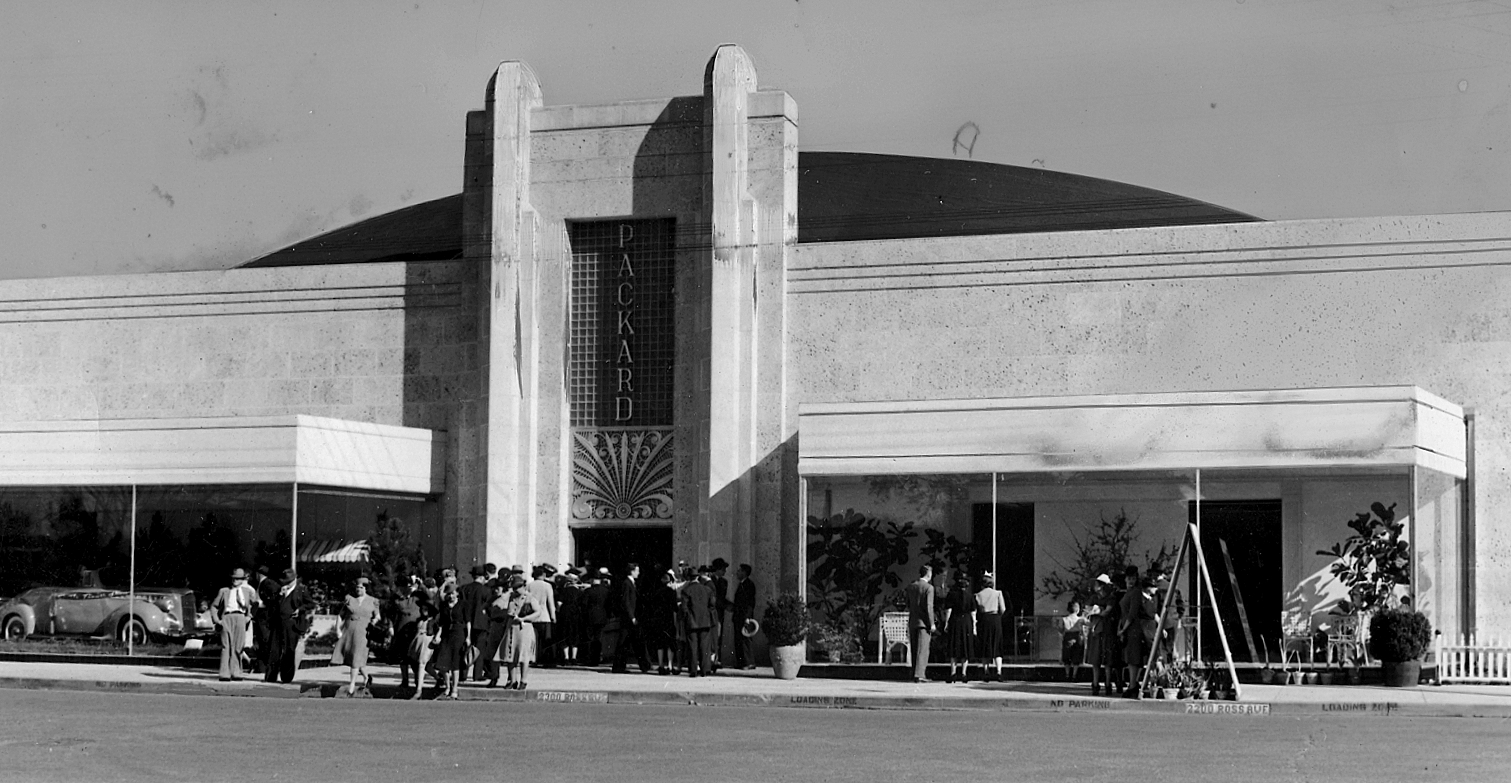
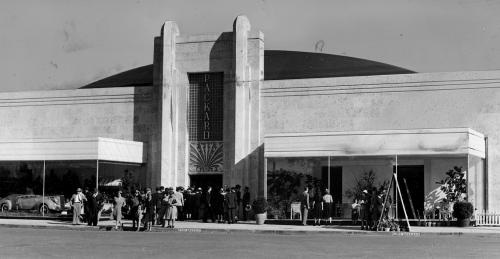
packard-dealership_2222-ross_detroit-pub-lib_1940Packard automobile showplace, 1940

by Paula Bosse

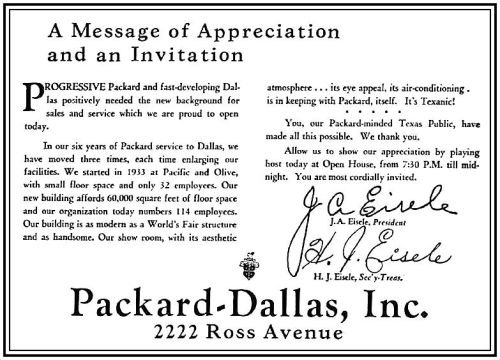
In late summer of 1939, a new 60,000-square-foot. $250,000 home for Packard-Dallas, Inc. featuring a “luxurious showroom” was announced. The first Packard automobile dealership had opened in 1933 at Pacific and Olive, and in the intervening six years, their growth had been tremendous, necessitating several moves and expansions.
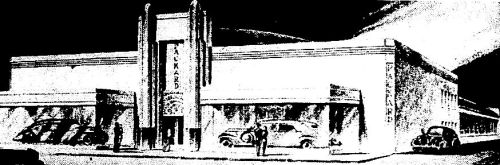
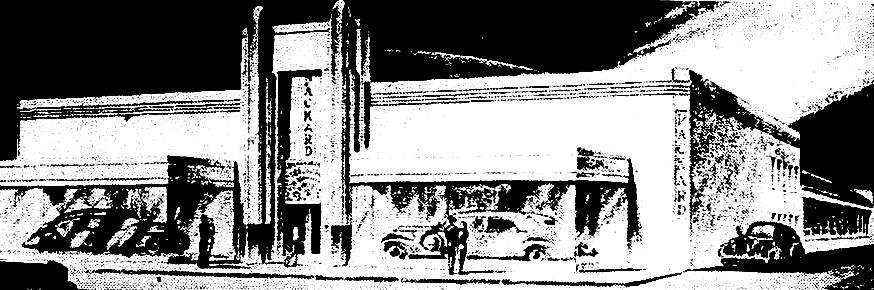
packard_ross_rendering_1939

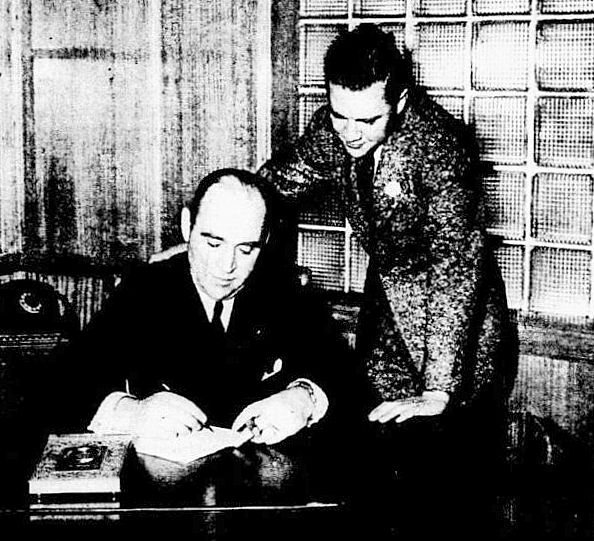
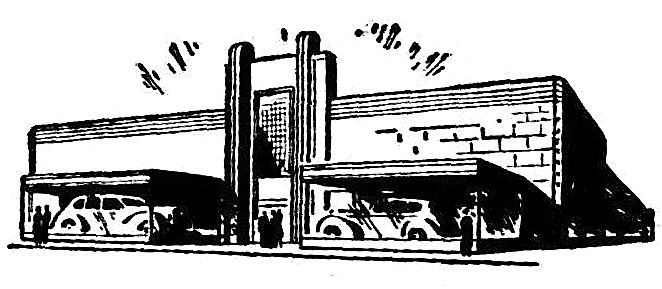
The attractive art deco building, faced with Cordova limestone and decorated with glass bricks, cast aluminum letters, and neon, was designed by J. A. Pitzinger and Roy E. Lane Associates, and was constructed at 2222 Ross Avenue in a mere three months. The large building was right across the street from the Cathedral of the Sacred Heart, in the block bounded by Ross, Crockett, San Jacinto, and N. Pearl. The president of Packard-Dallas was J. A. Eisele and the secretary-treasurer was his son, Horace. The grand opening on Dec. 16, 1939 was a big enough deal that the home-office Detroit honchos flew in, and there was even a 15-minute radio program devoted to it on KRLD.

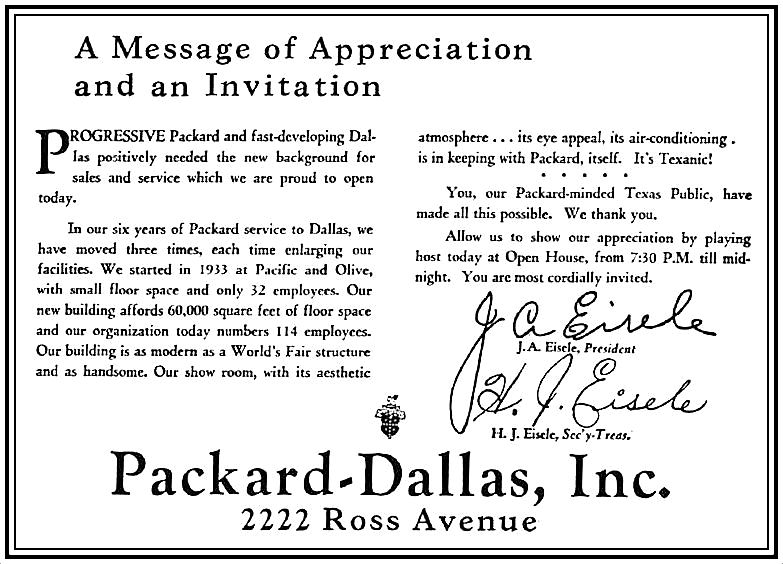
Under the headline “Growing With Dallas,” the opening-day ad featured a photograph of Joe and Horace Eisele and “A Message of Appreciation and an Invitation”:
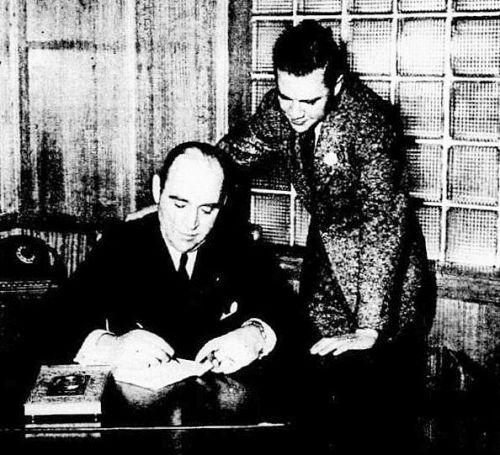
packard_dmn_121639_ad1

packard_dmn_121639_ad2Ad, Dec. 16, 1939 (click for larger image)

“It’s Texanic!”

And another ad featured this nifty little line drawing of the cool building:
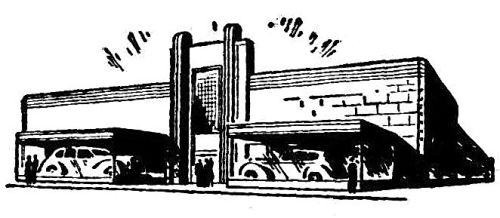
packard_dmn_121639-drawing-detDec. 16, 1939 (ad detail)

One of the stories about the opening of Dallas’ new auto showroom palace boasted that this big, beautiful, brash building was here to stay — Packard-Dallas had a 15-year lease on the place. …Which is why it was surprising to read that the building was sold less than two years later.

The U.S. was on the inevitable brink of involvement in the European war, and the National Defense School had begun operation in Dallas in July 1940. After a year of classes in which young men were taught “to do the technical and mechanical work necessary to warfare” (DMN, March 20, 1941), classrooms at the Technical high school and at Fair Park were bursting at the seams, and a larger facility was necessary. The Dallas Board of Education (which oversaw the program, often called “the War School”), was given the go-ahead to purchase the building (and, presumably, the property) for $125,000 in August 1941.

I’m not sure why J. A. Eisele sold the building (his name was listed as owner, rather than the Packard Company) — it wasn’t even two years old, and he got only half of what it cost to build. Patriotism? His son Horace had been drafted in April, so … maybe. Eisele seems to have left the auto sales business, which he had been in for decades, and had moved out of Texas by 1945.

After the U.S. officially entered the war and it became obvious that “defense schools” around the country would have to admit women in order to maintain manufacturing quotas, women began to work beside men at the Ross Avenue school in January 1942.

Eighty women Saturday pulled their fingers against the triggers of aircraft rivet guns as the Dallas National Defense School, 2222 Ross Avenue, started the state’s first major training course designed to place women side by side with men in Texas war materials plants. (DMN, Jan. 4, 1942)
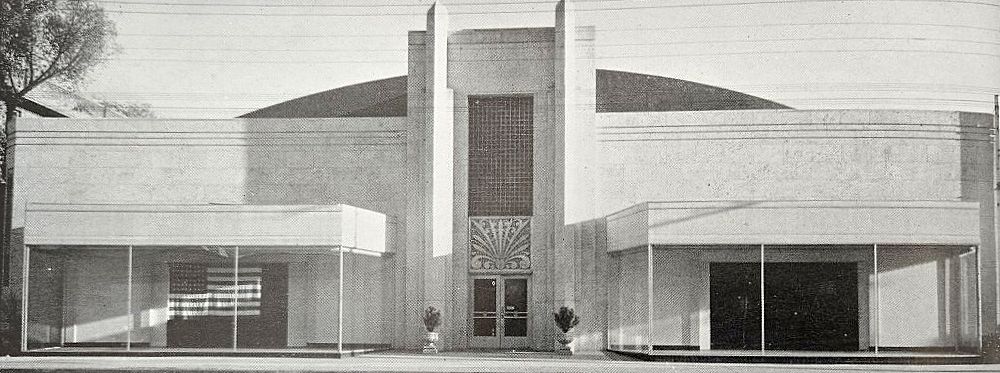
packard_ross-avenue_war-school_young-america-in-dallas_1942_DPL
1942

This “War School” was a training school for war-time jobs at places like North American Aviation.
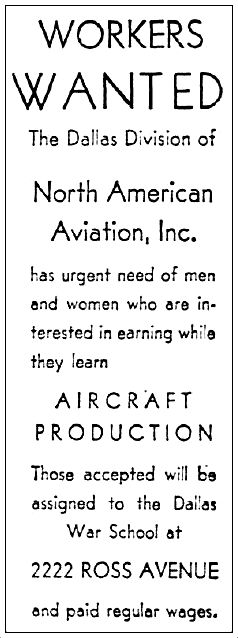
defense-school_dmn_090643Sept. 1943

Thousands of men and women trained at the Ross Avenue facility until the war ended in 1945. The school continued, but no longer as a Defense School — it became Dallas Vocational School, and its first students were veterans.

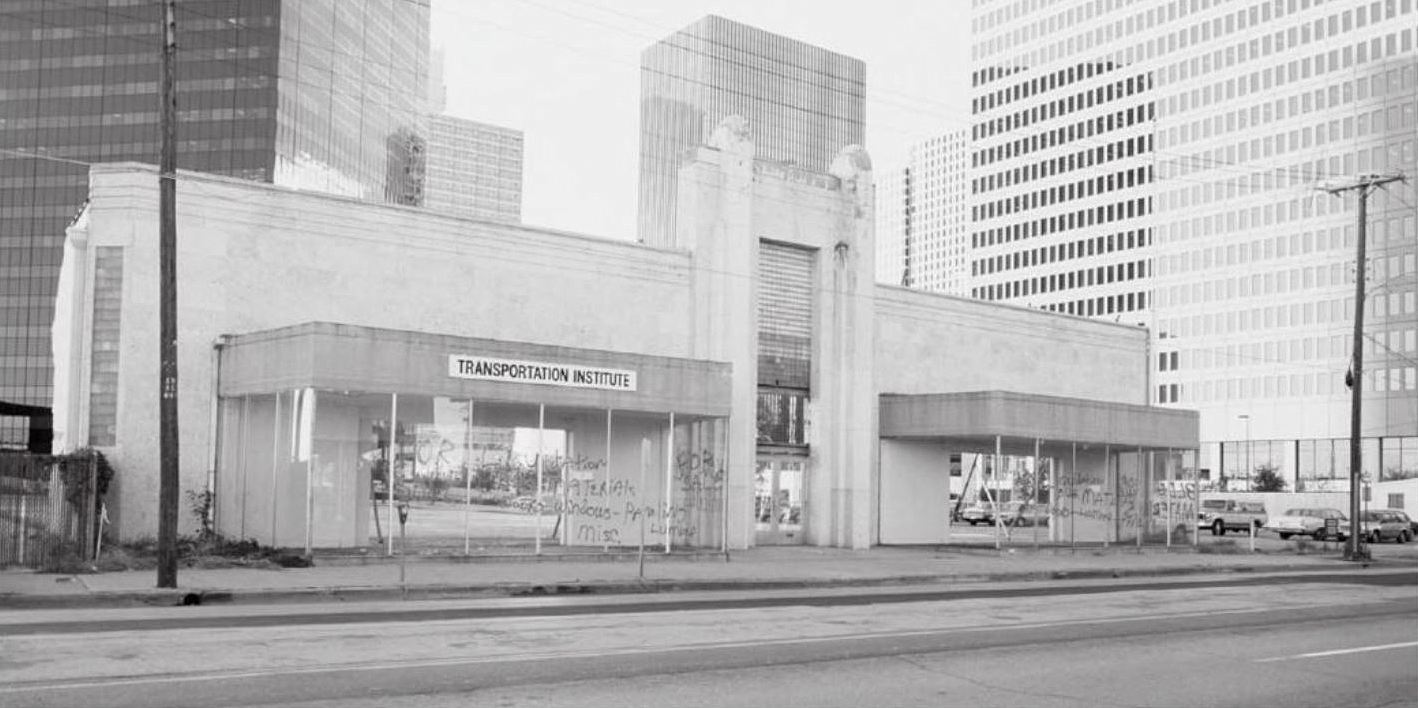
In 1976, the school was designated as one of the Dallas Independent School District’s magnet schools — it became the Transportation Institute, where “students interested in owning their own dealership, becoming a technician-mechanic or an auto body specialist will receive on the spot training in a laboratory consisting of a new car showroom, a modernly equipped repair center and a complete auto rebuilding facility” (DMN, Aug. 22, 1976). Back to its roots! And it only took 37 years.

The school continued for a while but, inevitably, the property became more and more attractive to developers. In 1981, as the developers were circling, a City Landmark Designation Eligibility List was issued. It contained buildings which had “particular architectural, historical, cultural and/or other significance to the City of Dallas,” and, if approved, were eligible to receive historic landmark designation. I’m guessing 2222 Ross Avenue didn’t make the cut, because Trammell Crow bought the building in 1983 and tore it down the next year.
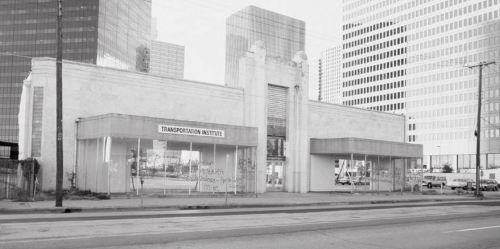
transportation-institute_lost-dallas_dotyvia Lost Dallas by Mark Doty

But … Crow sold the facade to real estate developer and investor Lou Reese, who said that he would reassemble the limestone facade and incorporate it into a restaurant he planned to build in Deep Ellum. That was an interesting plan. (Incidentally, in the same city council meeting in which the demolition/disassembling of the building’s facade was discussed, the council also considered “a request for more than $7 million in federal funds for a project to renovate the Adams Hat Co building into apartments” (DMN, Aug. 8, 1984). …Lou Reese owned the Adams Hat building. What a coincidence!)

The city council’s decision?

The council authorized developer Trammell Crow to disassemble the art deco facade of the former Transportation Institute Magnet High School on the condition that the facade be reconstructed in Deep Ellum…. The company [has] demolished all but the building’s limestone facade, which was determined to be eligible for designation as an historic landmark. (DMN, Aug. 9, 1984)

So? Where’s that facade? There was no mention of it for three years, until an article in the Morning News about another developer who had big plans for a major Deep Ellum complex called “Near Ellum,” which would be bounded by Commerce, Crowdus, Taylor, and Henry streets.

Highlighting Near Ellum will be a 40-foot art deco facade, formerly on the front of the Transportation Institute on Ross Avenue, in the main parking plaza. The plaza will also include an outdoor stage for concerts and special events. (“Developer Plans Deep Ellum Project,” DMN, June 25, 1987)

Aaaaaaaaaaaaaaaand … that never happened. I wonder if that 76-year-old disassembled limestone facade is still crated up somewhere around town. Somehow I doubt it.

So, 2222 Ross Avenue. What’s there now? None other than the 55-story skyscraper, Chase Tower, also known as “The Keyhole Building.”

You could get a lotta Packards in there.

***

Sources & Notes

Top photo from the Detroit Public Library’s Packard Collection in the National Automotive History Collection, viewable here; I’ve straightened and cropped it. The reverse has this notation: “Packard Motor Car Co., branches/dealerships/agencies, 2300 [sic] Ross Avenue Dallas, Texas, exterior, show windows left to right; 1940 Packard 110 or 120, eighteenth series, model 1800 or 1801, 6/8-cylinder, 100-120-horsepower, 122/127-inch wheelbase, convertible coupe (body type #1389/1399), special furniture display.”

1942 photo of the building is from a publication called “Young America in Dallas,” Dallas History and Archives, Dallas Public Library.

The developer who apparently came into possession of the facade after Lou Reese was Ed Sherrill. Perhaps someone associated with the Near Ellum project might know what became of the “saved” facade.

Chase Tower info on Wikipedia here; photo of it here. Imagine a teeny-tiny car dealership at its base.

Packard automobiles? Some of them were pretty cool. Check ’em out here.

A lengthy article on the notorious developer Lou Reese — “Hide and Seek” by Thomas Korosec (Dallas Observer, June 8, 2000) — is here.

*

Copyright © 2015 Paula Bosse. All Rights Reserved.

Luncheon at The Zodiac Room, Darling

zodiac-room_smFood, fashion, & the unmistakable whiff of Old Money (click for larger image)

by Paula Bosse

Two cool and sophisticated postcards from the cool and sophisticated Neiman-Marcus (although it’s debatable whether the truly cool and sophisticated N-M shopper would, in fact, mail anyone something as bourgeois as a postcard of a department store, Neiman-Marcus or not). Perhaps these were done up for the sizable tourist trade. I love these cards. Commercial art of this period is wonderful.

The description on the back reads: “One of the great dining spots of the Southwest … N-M’s famed ZODIAC ROOM. The superlative food specialties of Director Helen Corbitt and her staff are enjoyed during modeling of fashions a la Neiman-Marcus at luncheon and dinner. Also, tea served daily.”

Below, the Carriage Entrance:

neimans_postcard_c1950s-carriage-entrance-sm(click for larger image)

The description: “‘The Carriage Entrance’ — famous passageway into one of the world’s great specialty stores.”

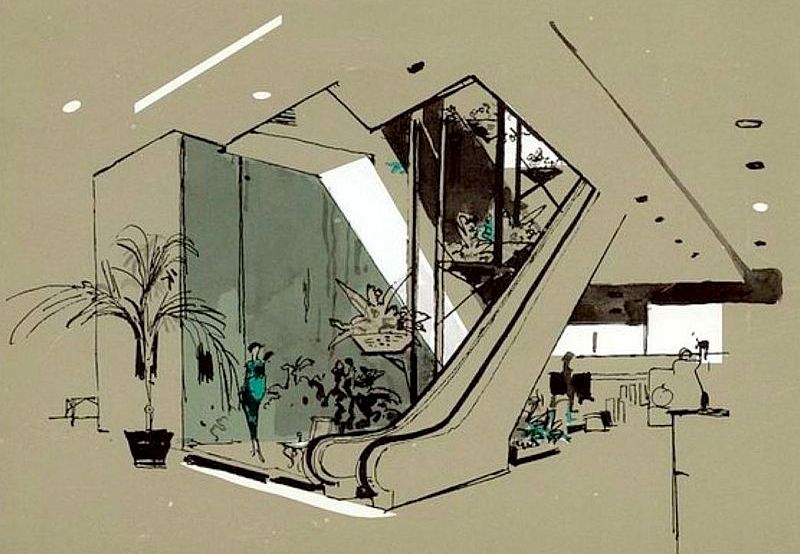
And another (I’d love to see the whole series of these postcards.) Sadly, no description on this one, featuring a fashionable escalator.

n-m_escalator_pinterest

I fear I shall never reach the level of swan-like sophistication needed to become an habitué of The Zodiac Room. Tant pis.

***

I have no idea where these postcards came from. I’m not sure of the date, either, but … “1950s”? Maybe very early 1960s? Let’s go with “Mid-Century” — everyone loves that! Whenever this was, this was a period when fashion was chic and fabulous. As was Neiman-Marcus. (I still miss that hypen!)

Need to make a reservation at The Zodiac? Info is here.

*

Copyright © 2015 Paula Bosse. All Rights Reserved.