Flashback : Dallas

A Miscellany: History, Ads, Pop Culture

Category: Zooming in on Details

Oak Cliff Trolley — 1895

trolley_oak-cliff_stark_1895_hpl“Dallas from Oak Cliff” by Henry Stark, 1895/96 (click for larger image)

by Paula Bosse

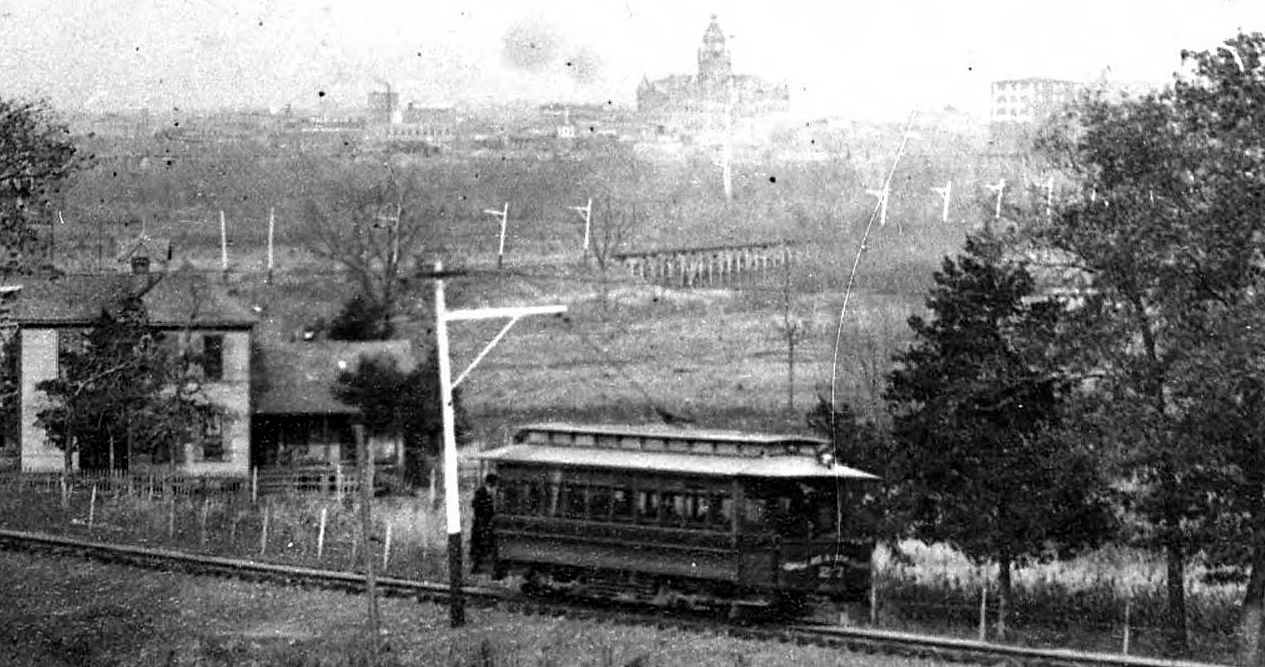
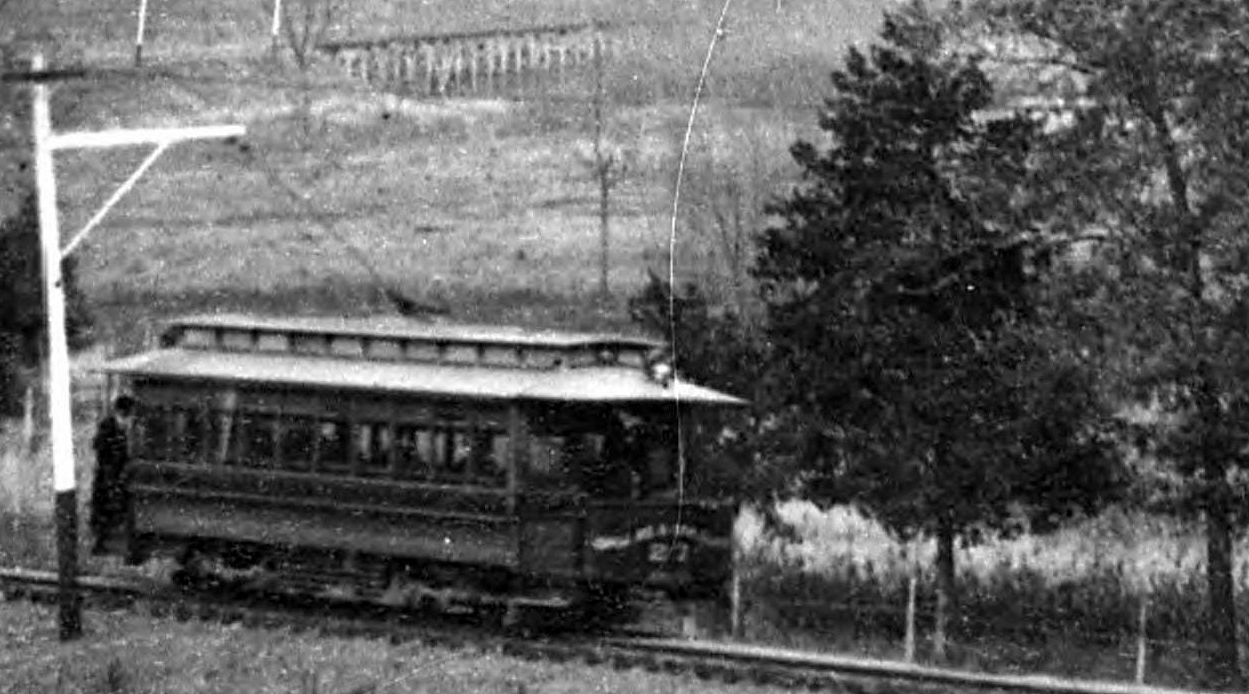
As present-day trolley service to Oak Cliff has been in the news in recent months, here’s a pastoral view of a little trolley chugging through the wilds of Oak Cliff in 1895. In the background, across the river, the still-fairly-new courthouse looms like a mirage. Below are a few details, magnified. (All images are much larger when clicked.) Enjoy!

trolley_oak-cliff_det1

trolley_oak-cliff_det2

trolley_oak-cliff_det3

trolley_oak-cliff_det4

***

Photo (labeled by the Houston Public Library as “Trolley moving through the woods”) is by Henry Stark, taken on a visit to Dallas in the winter of 1895/96; from the collection of the Houston Public Library — it can be viewed here.

For more on Henry Stark, see the previous post “Henry Stark’s ‘Bird’s Eye View of Dallas,'” here.

Other photos which I’ve “Zoomed In On the Details” can be seen here.

CLICK PHOTOS — REAL BIG.

*

Copyright © 2014 Paula Bosse. All Rights Reserved.

Henry Stark’s “Bird’s Eye View of Dallas” — 1895/96

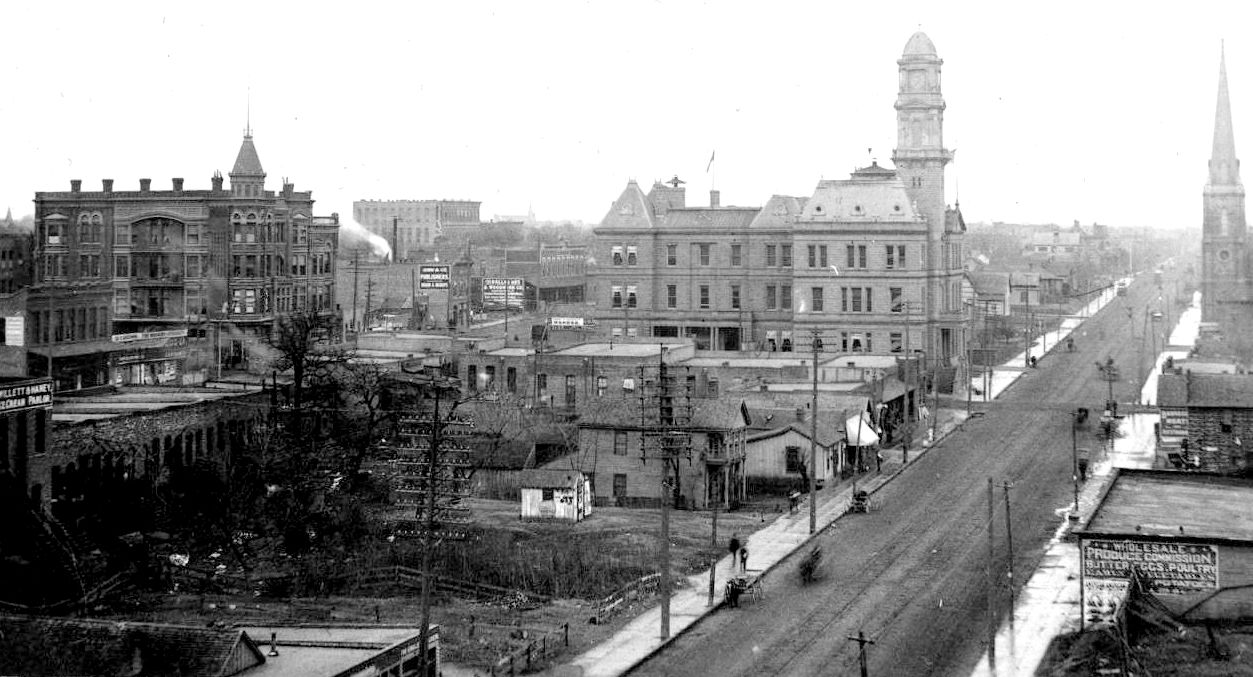
stark_downtown_1895-96_hplCommerce St. looking east from about Akard

by Paula Bosse

In the winter of 1895-1896, a St. Louis photographer named Henry Stark traveled to Texas, photographing scenes and vistas across the state. According to The Handbook of Texas, he is believed to be “the first photographer to have made an extensive photographic record of Texas.” A collection of his photos was published under the title Views in Texas.

The photograph above shows Commerce Street looking east, with the post office and its tall clock tower dominating the scene (the clock shows that it is 9:35 in the morning). The Old Post Office was bounded by Main, Ervay, Commerce, and St. Paul.

This is a great photo, showing Dallas as I’ve never seen it before. I’ve zoomed in to see the “hidden” details. (All photos are larger when clicked.)

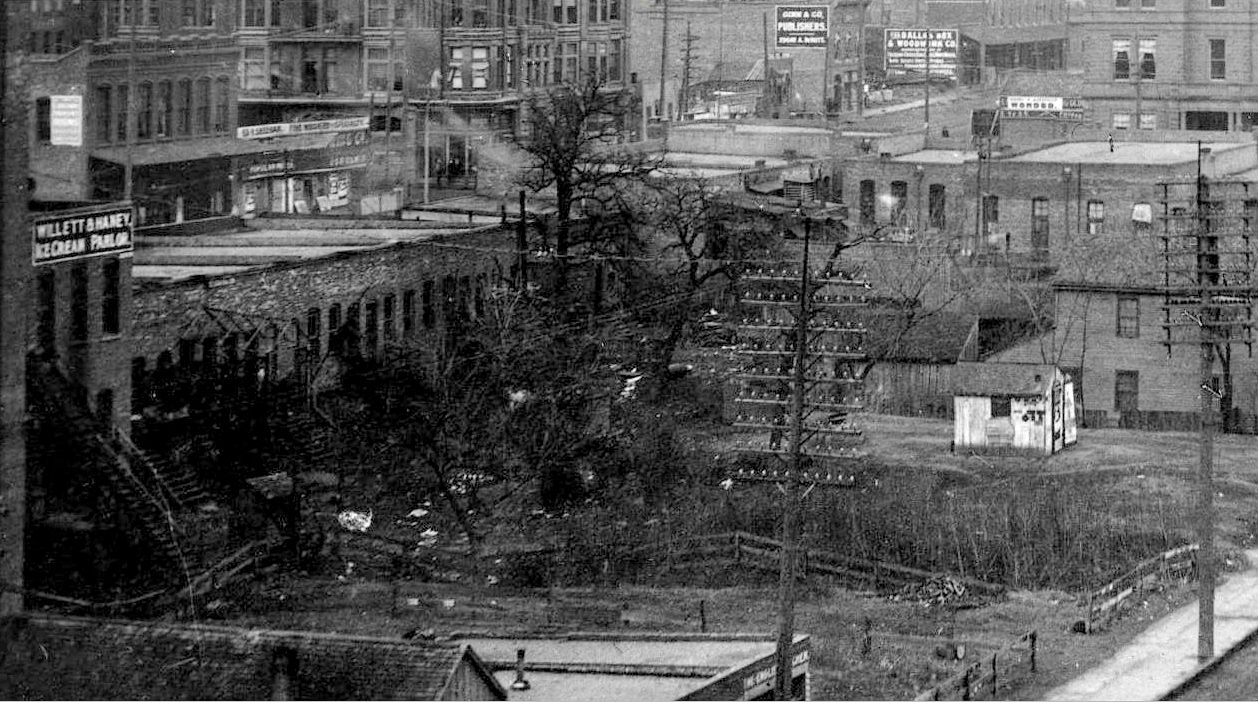
stark_det1What is the building on the left? It’s very unusual-looking. (UPDATE: See the comments below. This appears to be the adjoining Bookhout and Middleton Buildings at Ervay and Main.)

stark_det2This is my favorite detail. All that trash. And vacant lots. And a haphazard, meandering fence. Are those steps leading to rear entrances of buildings facing Main? And those utility poles! That block looks kind of squalid. Not Dallas at its best. I think this would be around Akard. (UPDATE: A reader wrote to say that this looks like a “ravine” — that the fence may be following the course of an old stream — something that might explain why that area of prime real estate hadn’t been developed yet.)

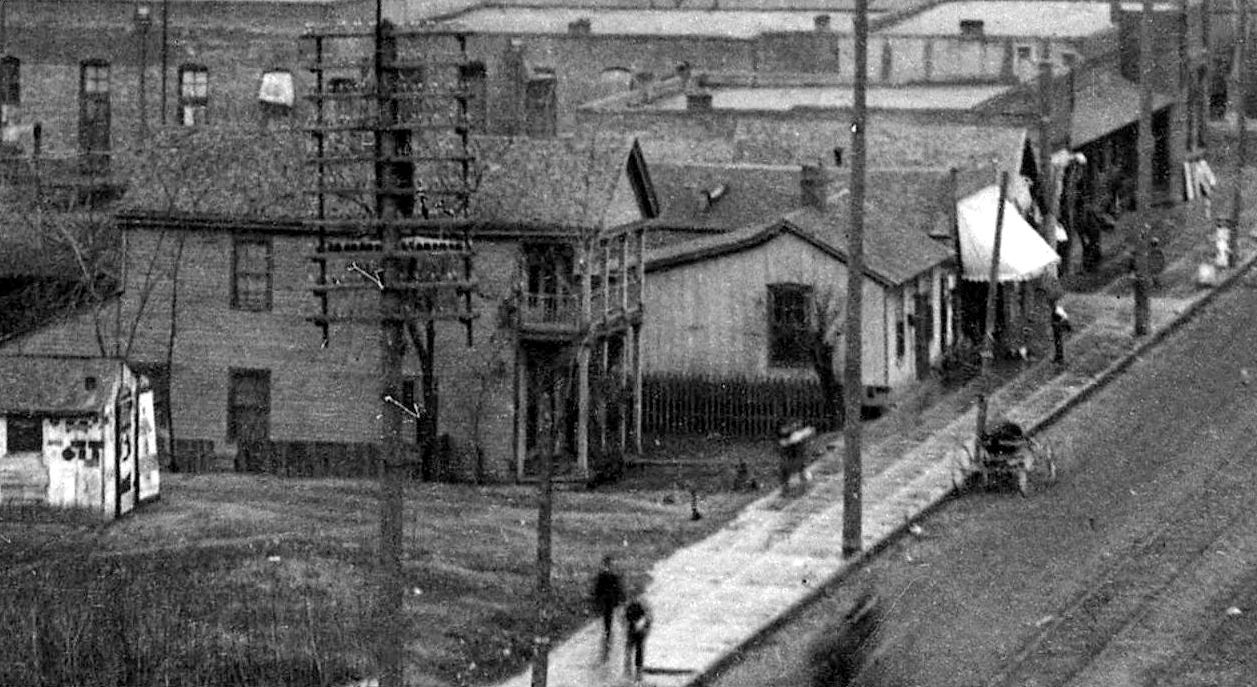
stark_det3Houses just a few steps from the giant post office building. Horse-drawn buggies parked at the curb. People on the sidewalk. What looks like a man with his hands on his hips looking down at a child. Or maybe a dog.

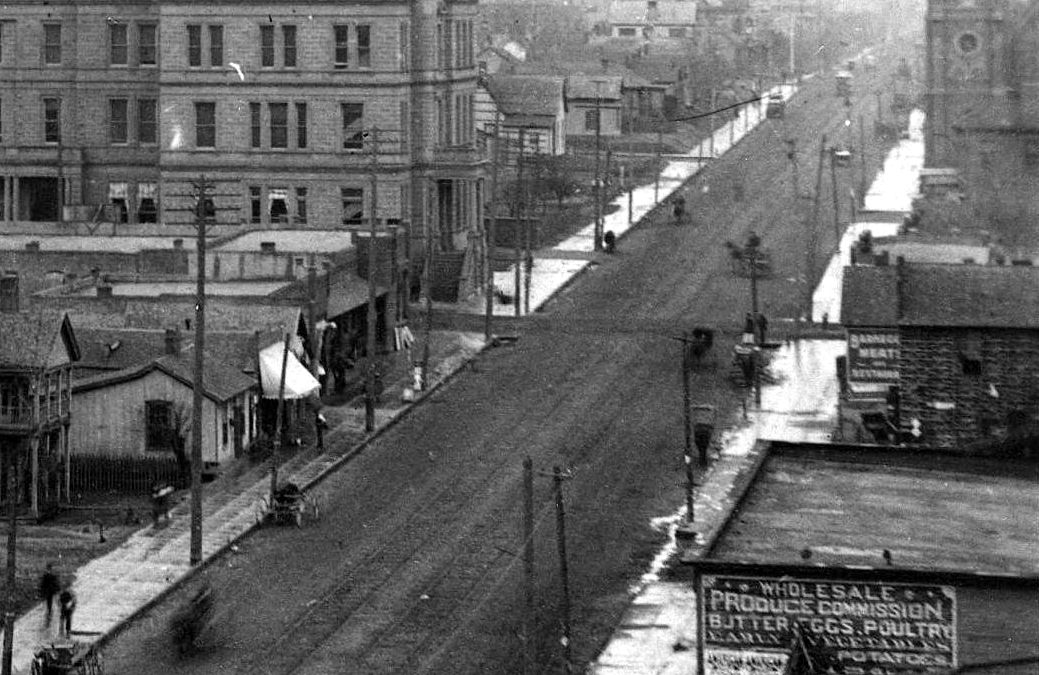
stark_det4A bustling Commerce Street at the intersection of Ervay, with trollies in the distance.

*

This photograph shows almost exactly the same view as one I posted earlier under the title “Something Like N.Y.” — check out the 1904 version here.

***

Sources & Notes

The photograph, by Henry Stark, is from the Houston Metropolitan Research Center, Houston Public Library. The resolution is a bit grainy when trying to enlarge the details — to explore the photo for yourself, see it here.

What little is known of Henry Stark can be read in the brief Handbook of Texas bio, here.

For another Henry Stark photo, see the post “Oak Cliff Trolley — 1895,” here.

For other examples of photographs I’ve zoomed in on to reveal unintended vignettes, see here.

*

Copyright © 2014 Paula Bosse. All Rights Reserved.

4th of July Parade — Sweating in Formation

july-4_degolyerI’m parched just looking at this…

by Paula Bosse

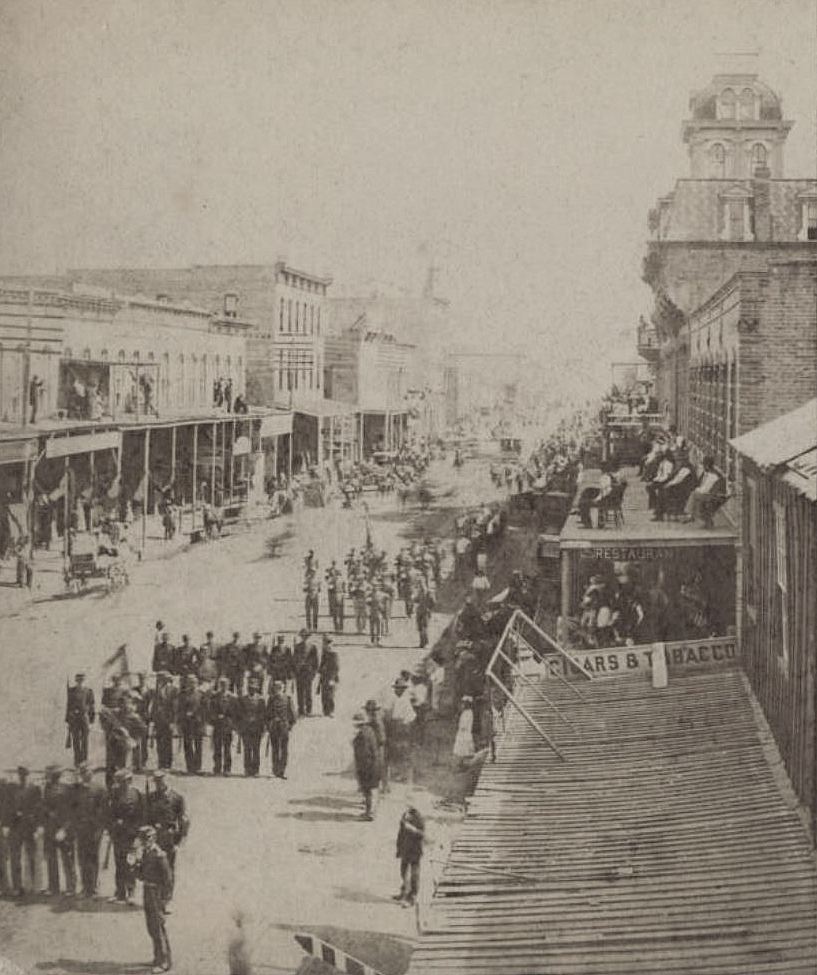
Fourth of July parade in Dallas, 1870s or 1880s. Bet it was hot in those uniforms.

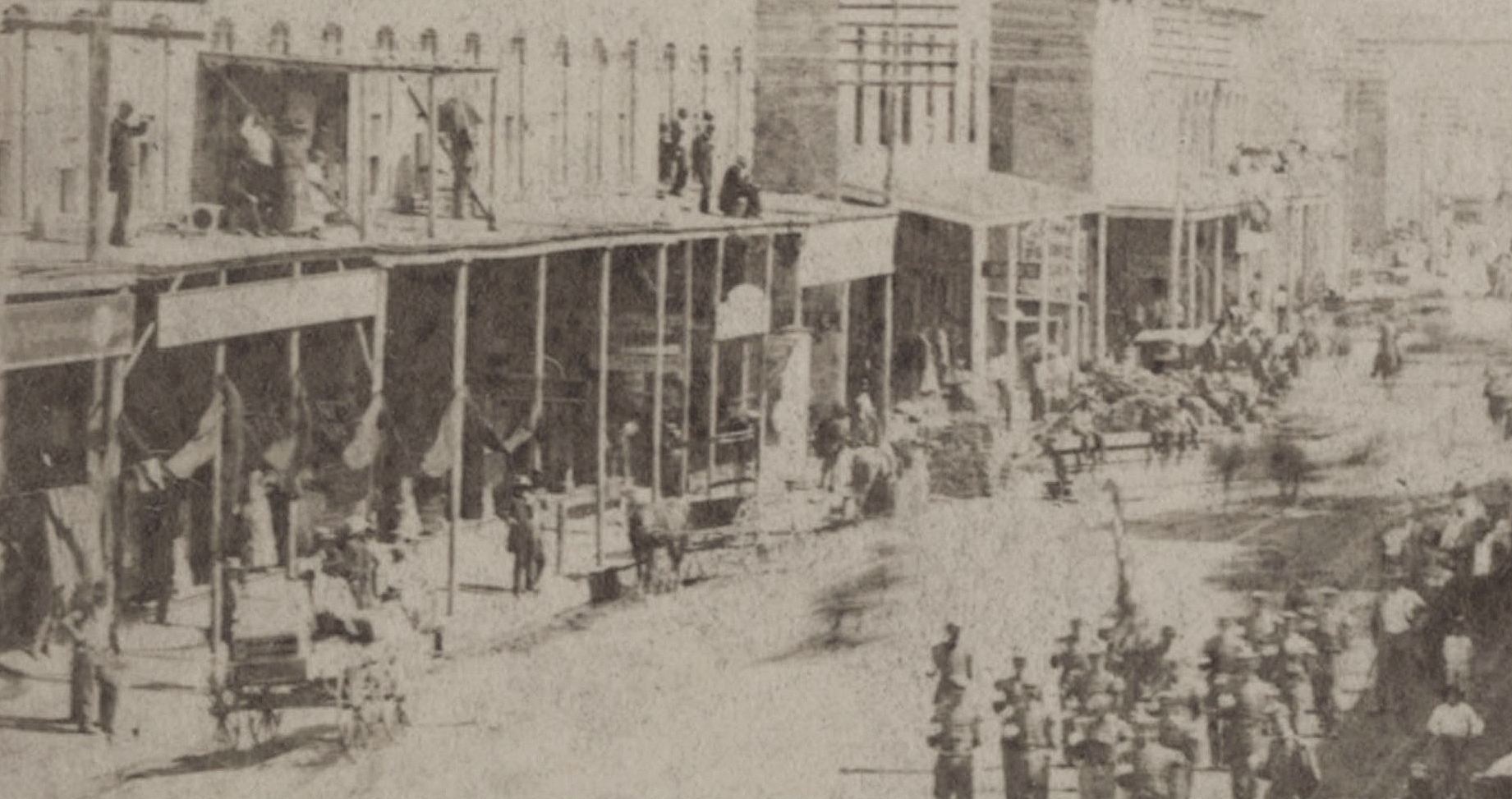
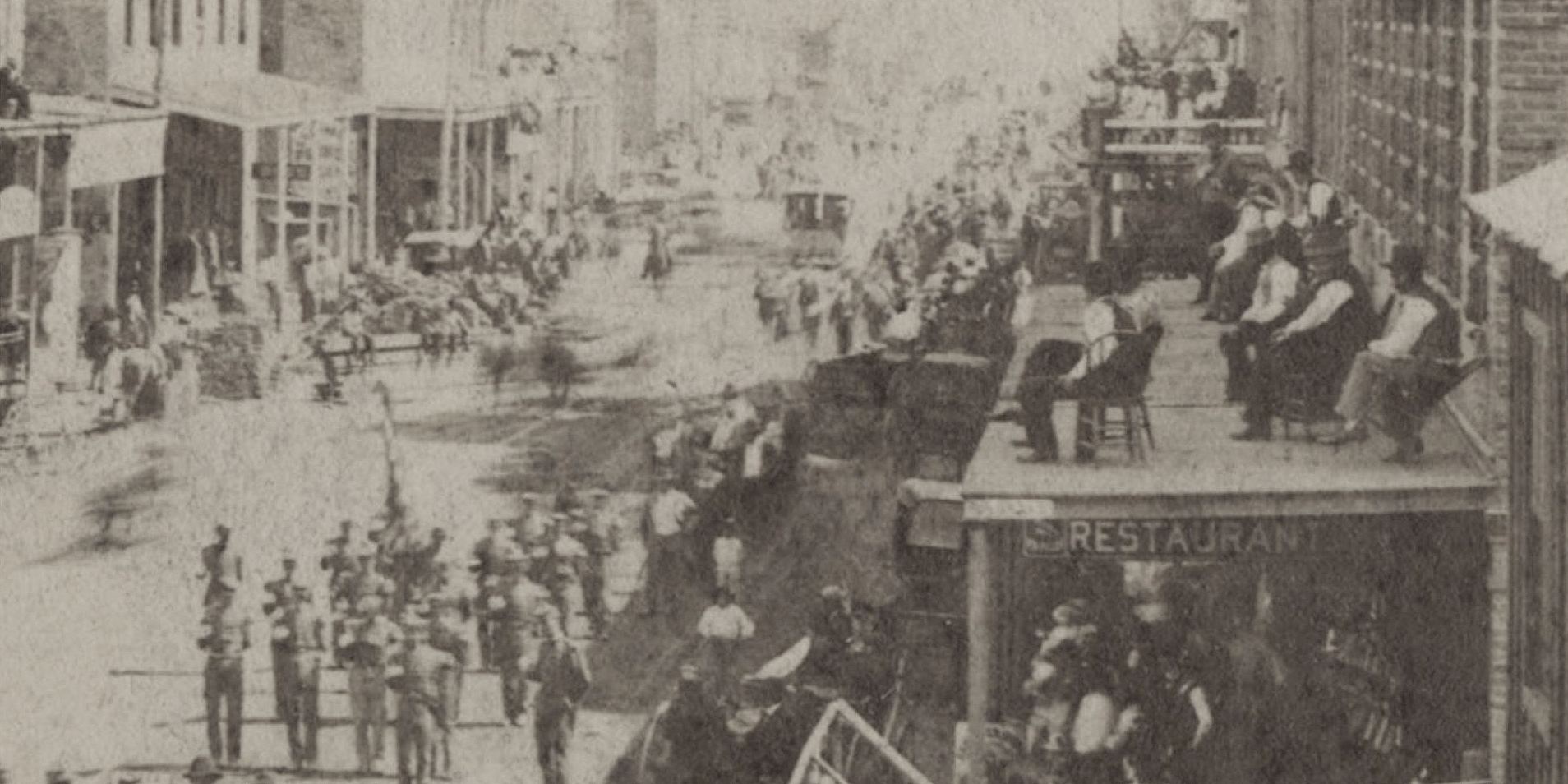
Picture quality leaves a bit to be desired, but here are a few details (click for larger images).

july-4_degolyer_a

july-4_degolyer_b

july-4_degolyer_c

***

Sources & Notes

Stereograph photo by Alfred Freeman, from the Lawrence T. Jones III Collection, DeGolyer Library, SMU Libraries, Southern Methodist University; the uncropped original can be seen here.

*

Copyright © 2014 Paula Bosse. All Rights Reserved.

Loitering In Front of The Dallas Morning News Building — ca. 1900

dmn-bldg_c1900_degolyer_smuCommerce & Lamar

by Paula Bosse

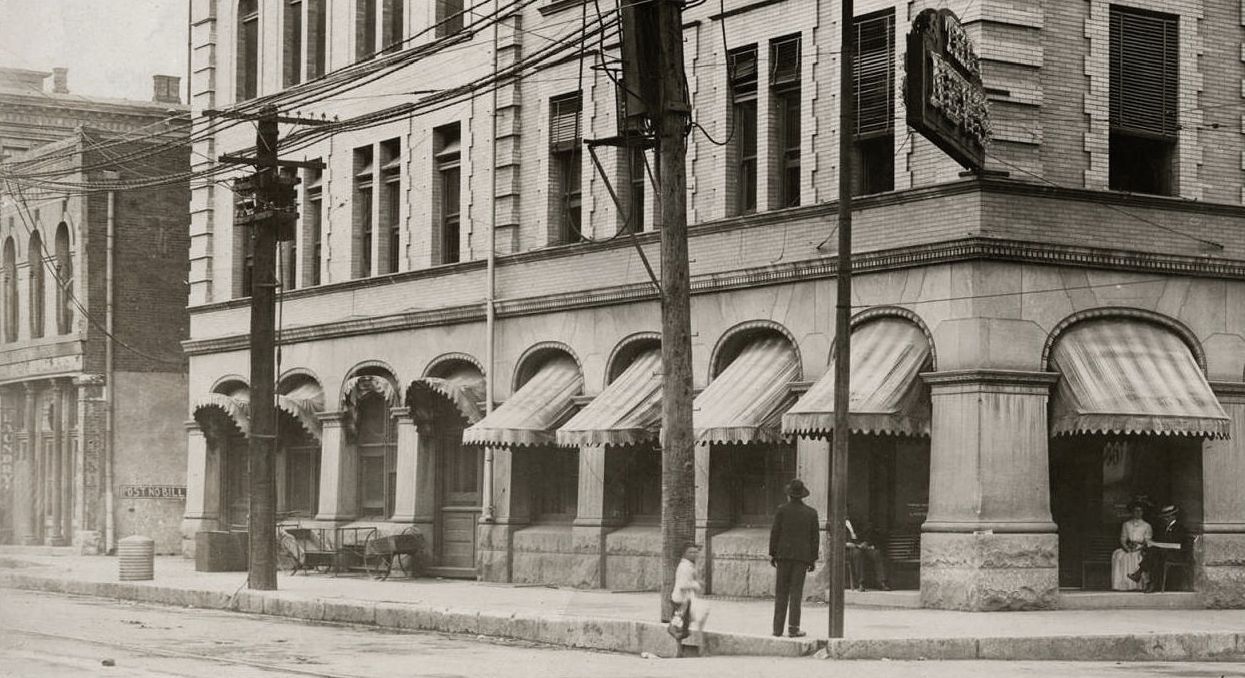
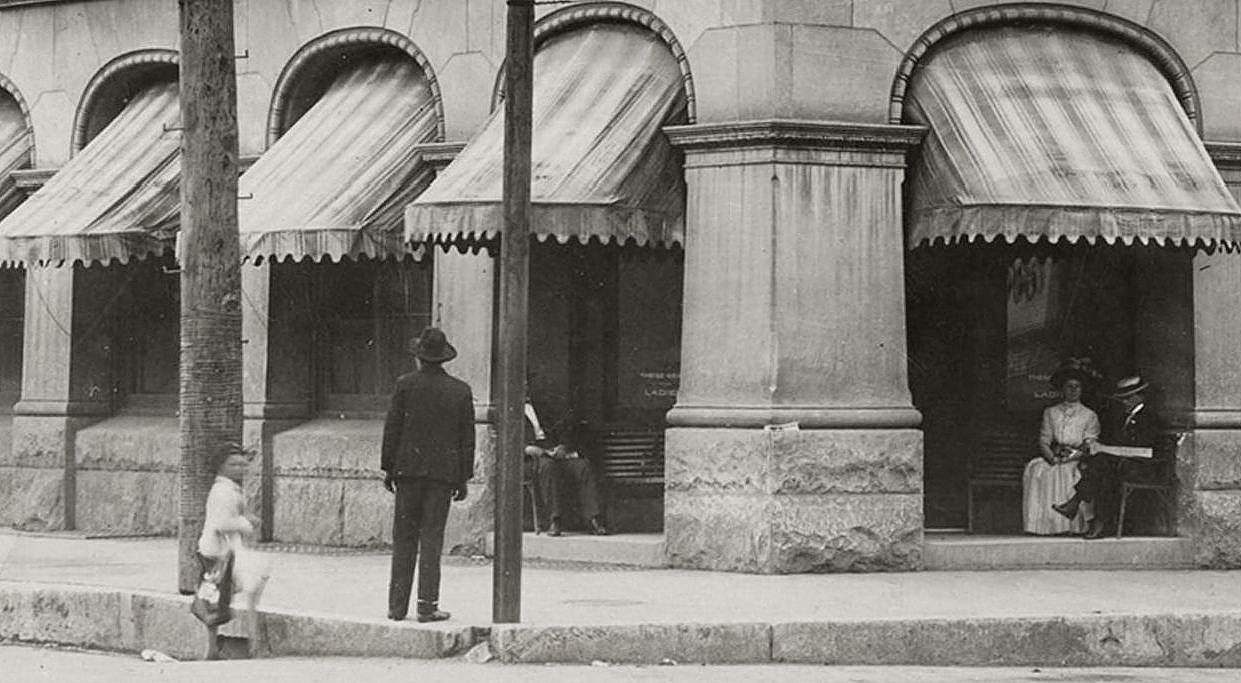
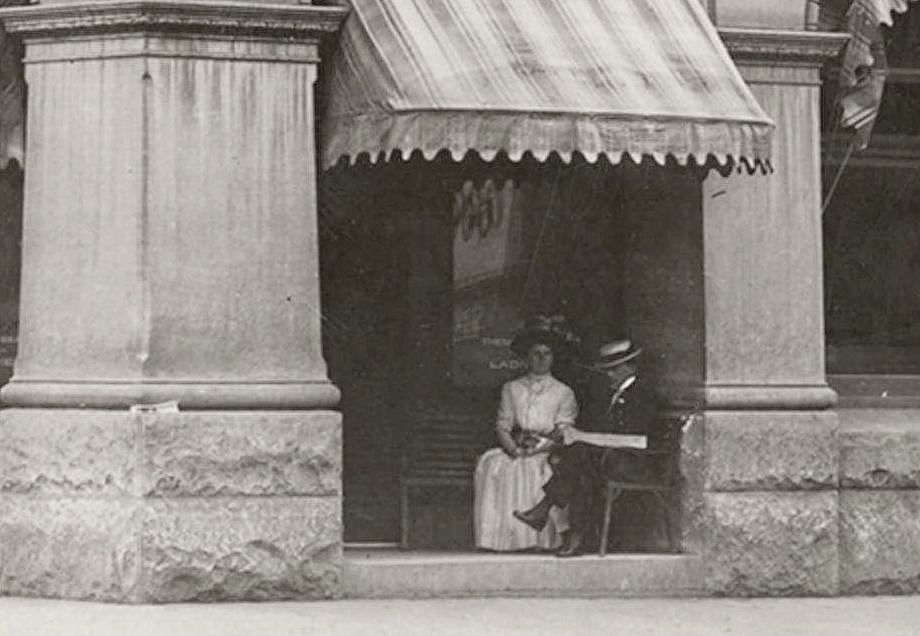
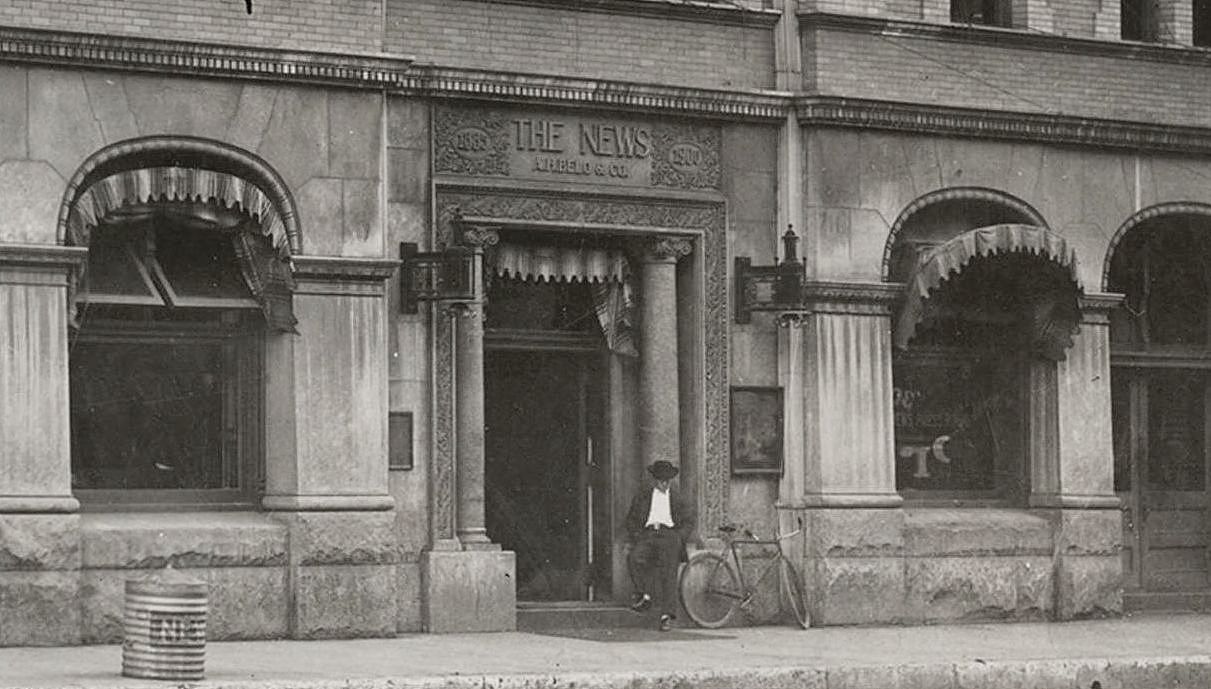
Here is another great photo from the DeGolyer Library at SMU, this one showing the then-new Dallas Morning News building anchoring the northwest corner of Commerce and Lamar. For me, it’s another case of the individual quiet vignettes that comprise the photograph being more interesting than the larger picture taken as a whole. (All pictures are much larger when clicked.)

dmn-bldg_c1900_degolyer-1

dmn-bldg_c1900_degolyer-2

dmn-bldg_c1900_degolyer-3

dmn-bldg_c1900_degolyer-4

dmn-bldg_c1900_degolyer-5

***

Sources & Notes

Photograph from the Belo Records collection at the DeGolyer Library, Central University Libraries, Southern Methodist University, seen here.

For another view of the same building, see these posts:

  • “The Dallas Morning News Building, Inside and Out — ca. 1900,” here
  • “Lively Street Life Outside the Dallas Morning News Building — 1900,” here

For other photographs I’ve zoomed in on, see here.

*

Copyright © 2014 Paula Bosse. All Rights Reserved.

“There Are Eight Million Stories in the Naked City…” — ca. 1920

1-ervay

by Paula Bosse

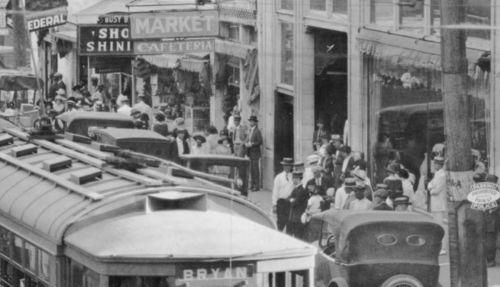
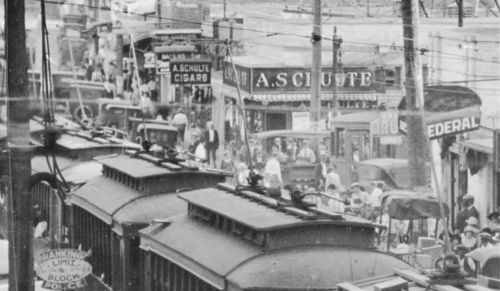
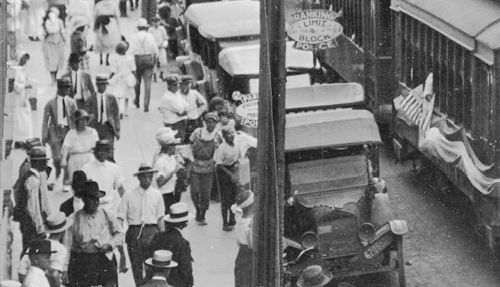
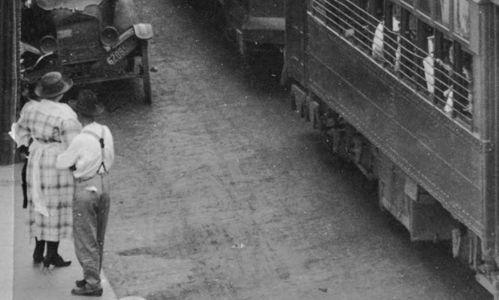
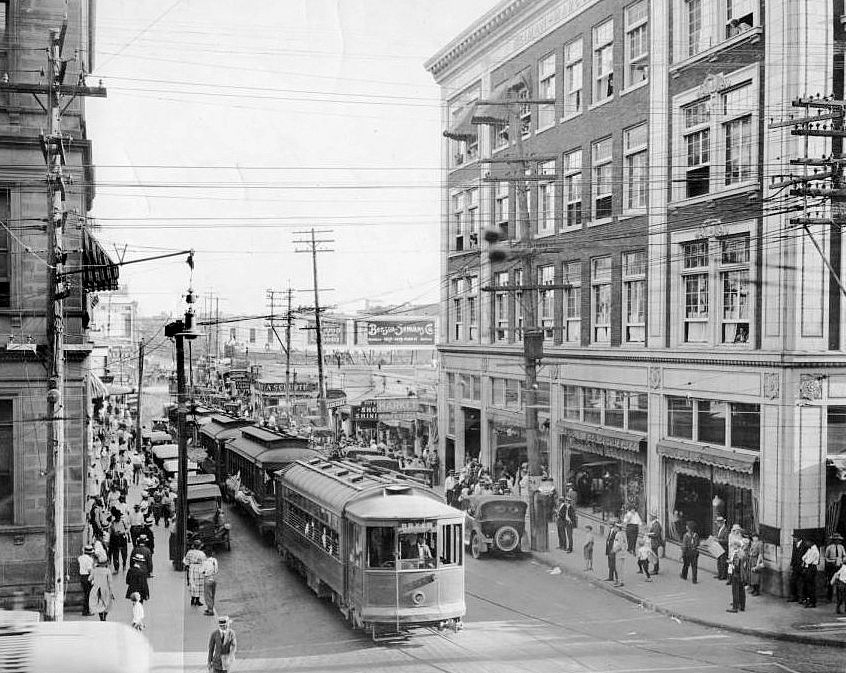
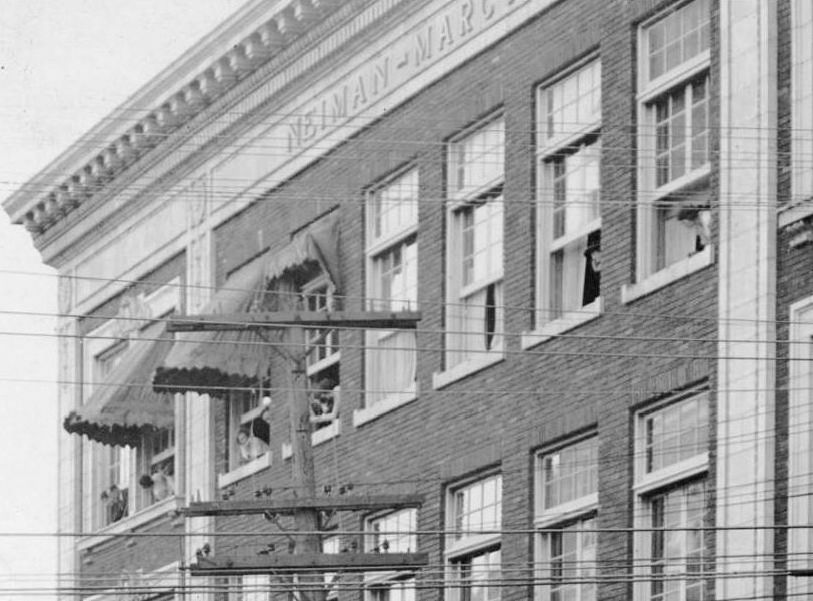
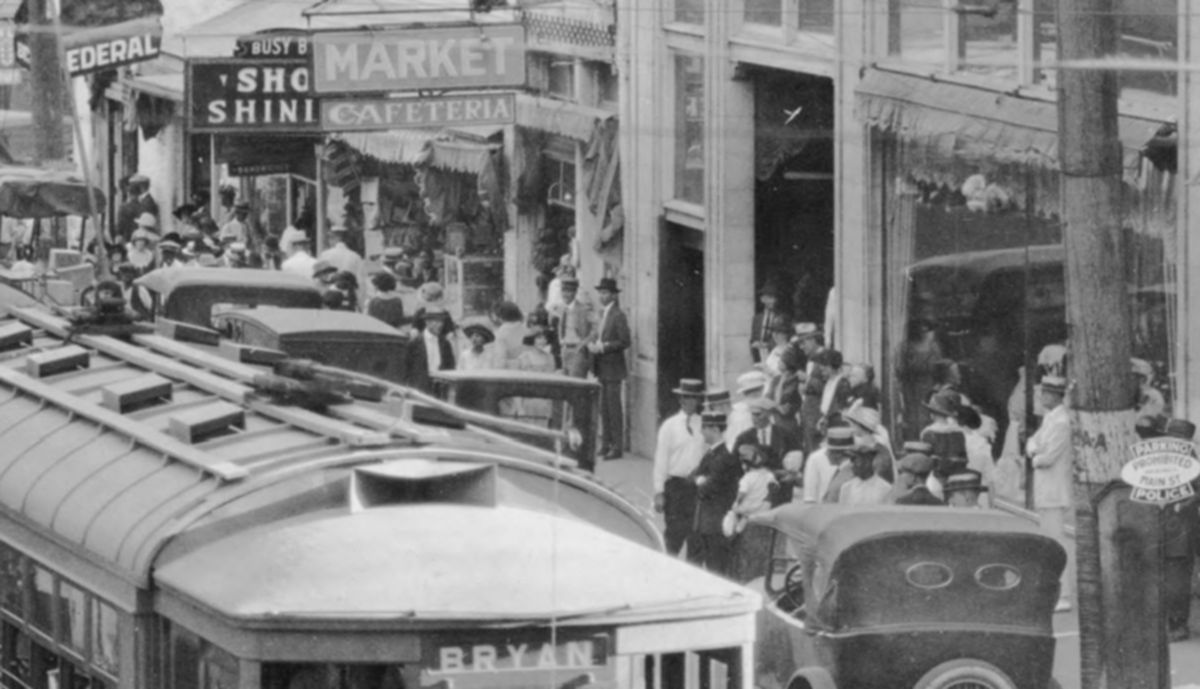
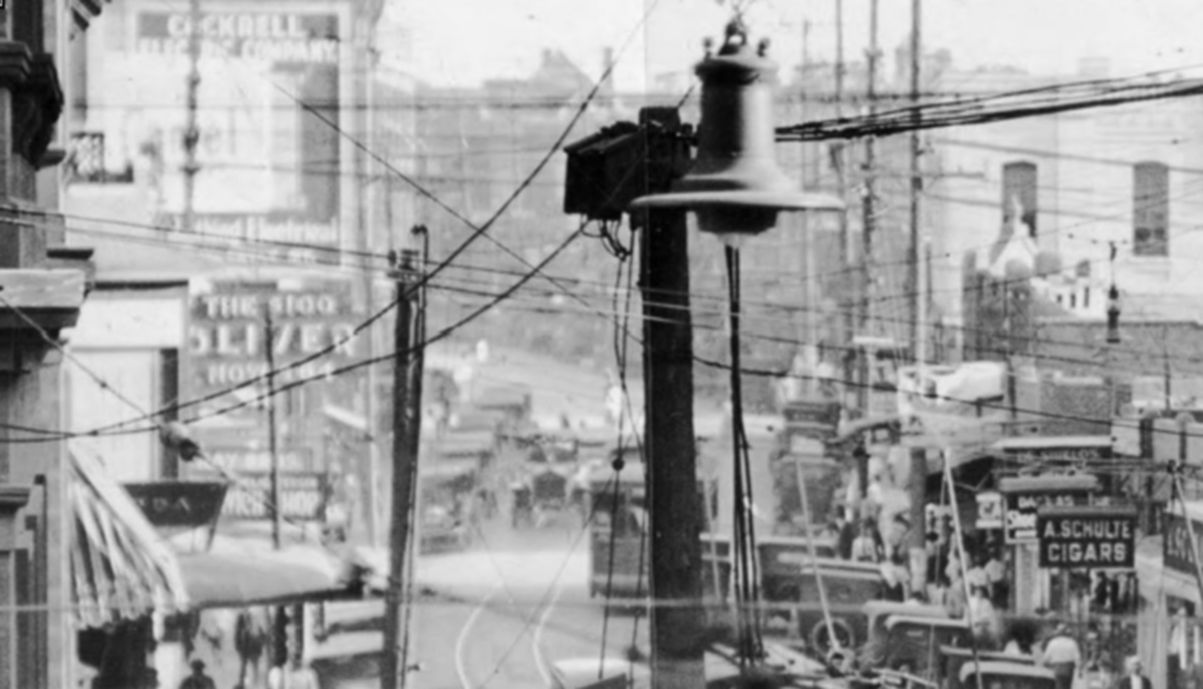
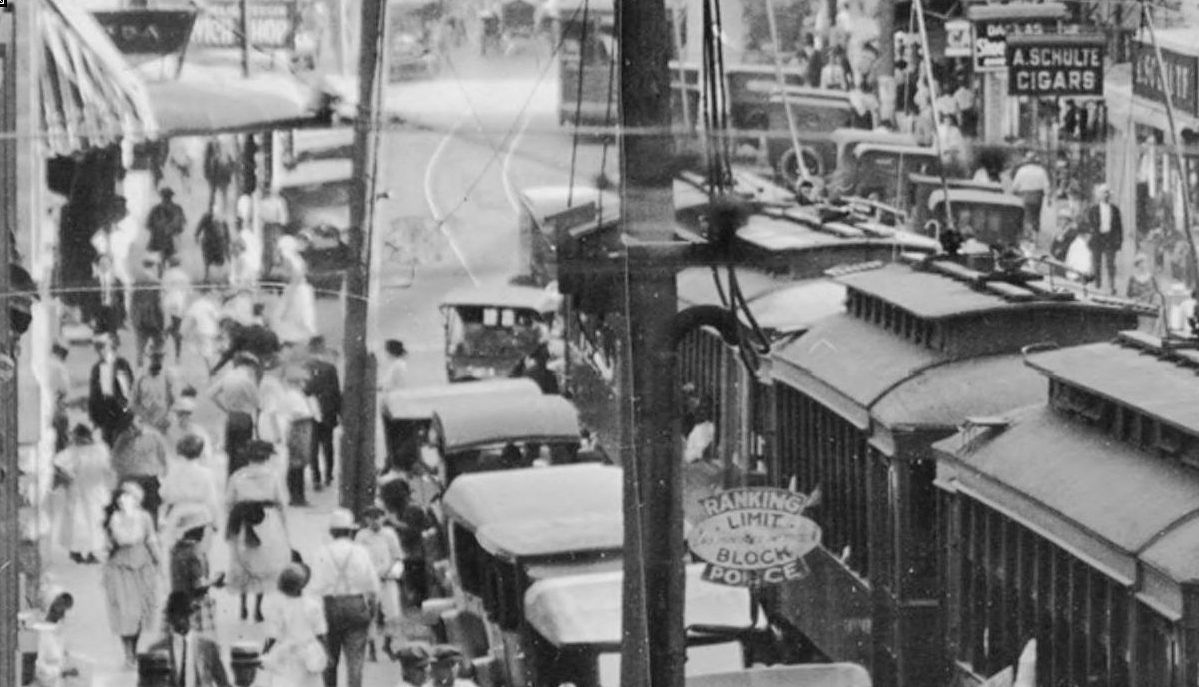
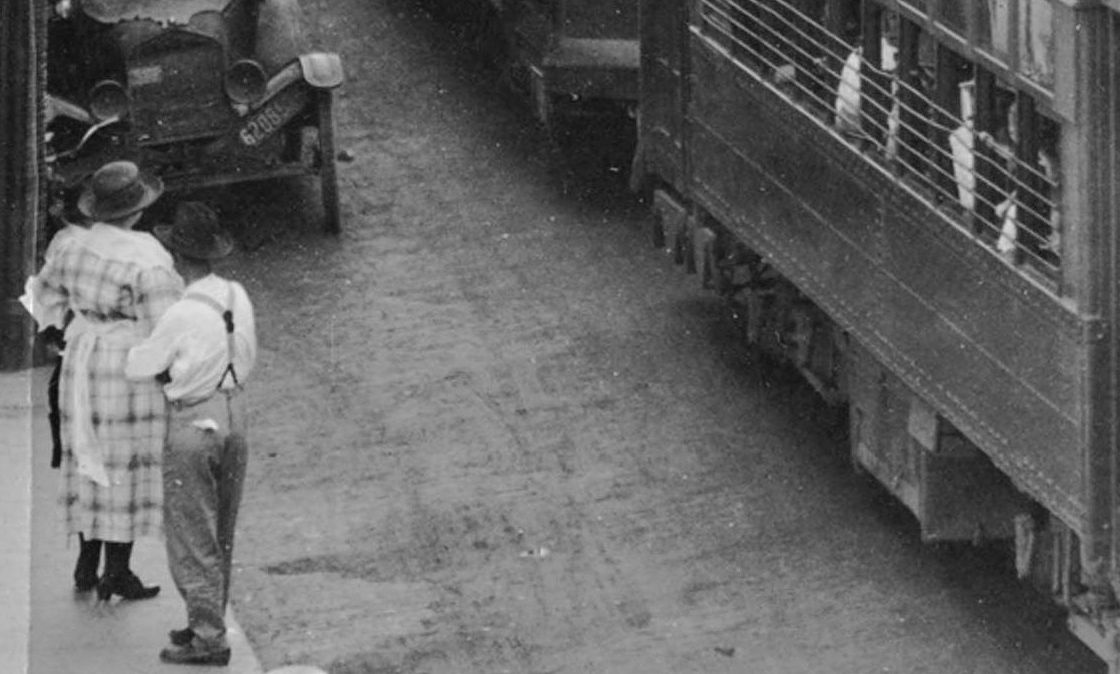
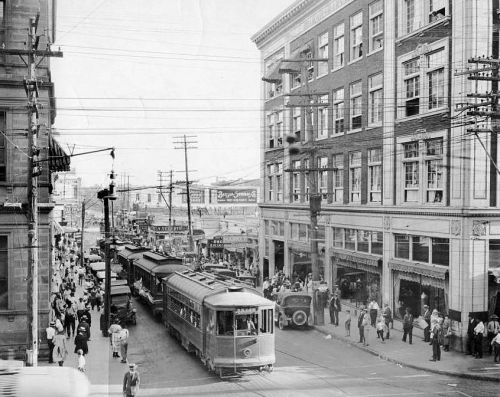
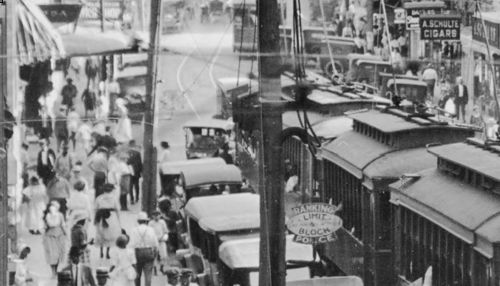
The photograph above, by George A. McAfee, shows Ervay Street, looking south from Main, in about 1920. Neiman’s is on the right. I’m not sure what the occasion was (I see special-event bunting….), but the two things that jump out right away are the number of people on the sidewalks and the amount of  congestion on the streets. In addition to private automobiles (driven by “automobilists” or “autoists,” as the papers of the day referred to them), the street is also packed with cars standing in the taxi rank (cab stand) at the left, and a long line of hulking streetcars. This busy intersection is jammed to capacity.

The city of Dallas was desperately trying to relieve its traffic problems around this time, and there were numerous articles in the papers addressing the concerns of how to manage the congestion of streets not originally designed to handle motor vehicle traffic. Dallas and Fort Worth were working on similar plans of re-routing traffic patterns and instituting something called “skip stop” wherein streetcars would stop every other block rather than every block. Streetcars, in fact, though convenient and necessary, seemed to cause the most headaches as far as backing up and slowing down traffic, as they were constantly stopping to take on and let off passengers. There was something called a “safety zone” that was being tried at the time. I’m not sure I completely understand it, but it allowed cars to pass streetcars in certain areas while they were stopped.

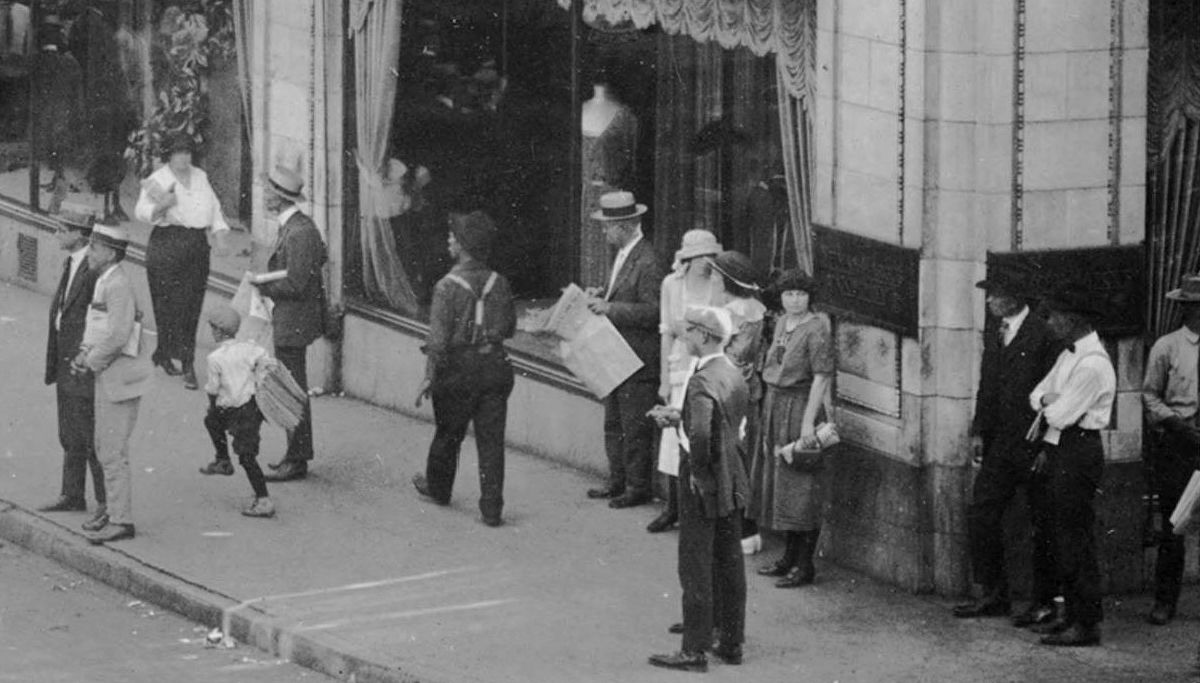
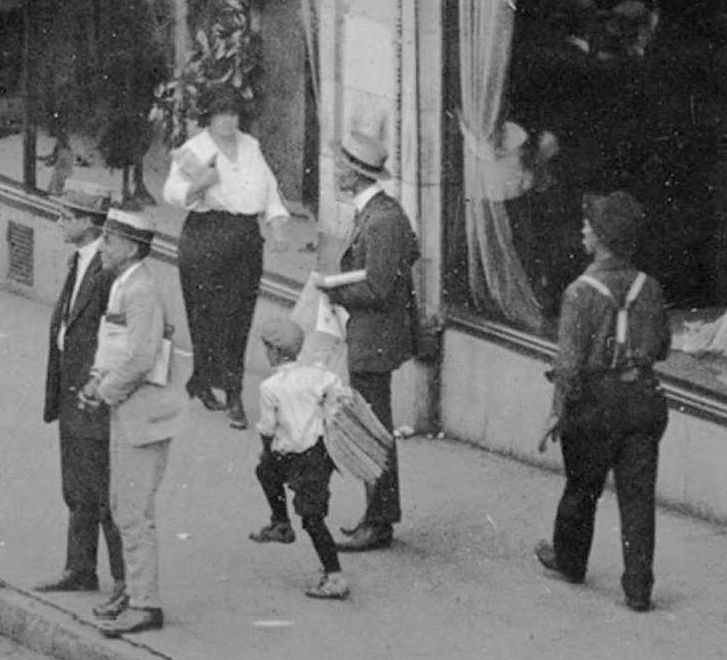
That traffic is crazy. But, to be perfectly honest, it’s far less interesting than all that human activity — hundreds of people just going about their daily business. It’s always fun to zoom in on these photos, and, below, I’ve broken the original photograph into several little vignettes. I love the people hanging out the Neiman-Marcus windows. And all those newsboys! Not quite as charming was all that overhead clutter of power lines and telephone lines; combined with the street traffic, it makes for a very claustrophobic — if vibrant — downtown street scene. (Click photos for larger images.)
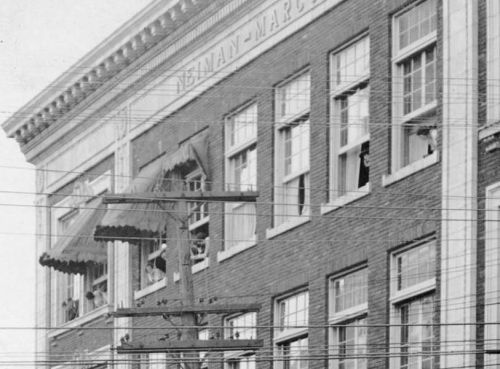
2-ervay

3-ervay

4-ervay

5-ervayMy favorite “hidden” image in the larger photograph. The only moment of calm.
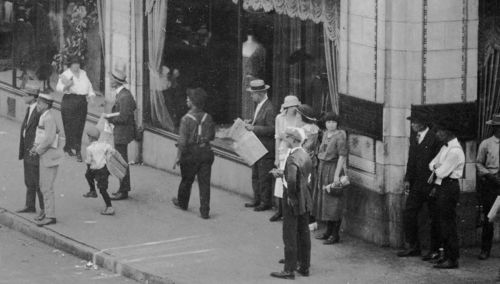
6-ervayI love this. The woman in front of the Neiman-Marcus plaque looking off into the distance, the display in the store window, the newsboy running down the street, the man in suspenders, the women’s fashions, and all those hats!
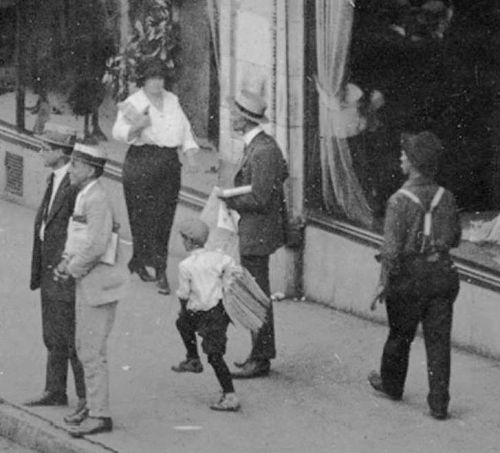
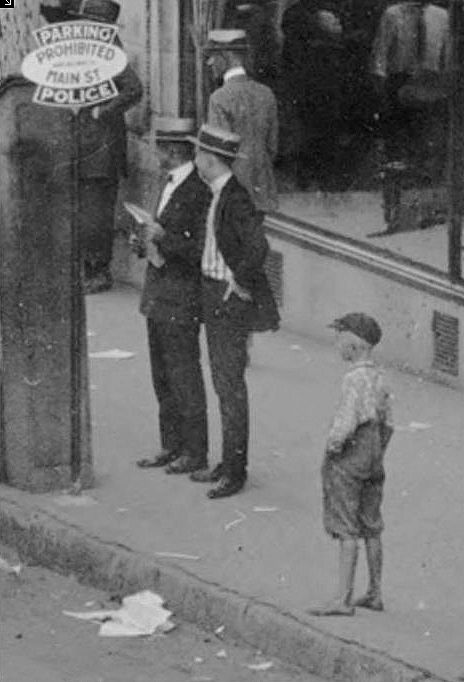
7-ervay

8-ervayA barefoot boy and litter everywhere.

9-ervay

10-ervay

11-ervayThe congestion is pretty bad above the streets, too.
12-ervay

13-ervayCabbies, newsboys, and working stiffs.
14-ervay

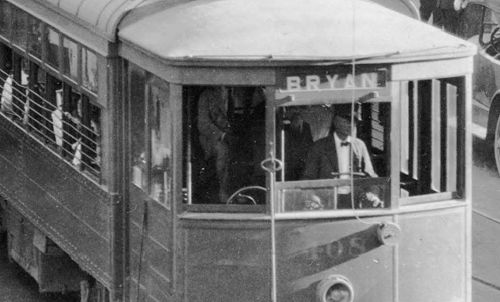
15-ervayI swear there was only one streetcar driver in Dallas, and he looked like this! Those motormen had a definite “look.”

***

Sources & Notes

Original photograph attributed to George A. McAfee, from the DeGolyer Library, Central University Libraries, Southern Methodist University, accessible here.

For other photos I’ve zoomed in on the details, see here.

*

Copyright © 2014 Paula Bosse. All Rights Reserved.

Downtown Dallas, ca. 1923 — Zooming in on the Details

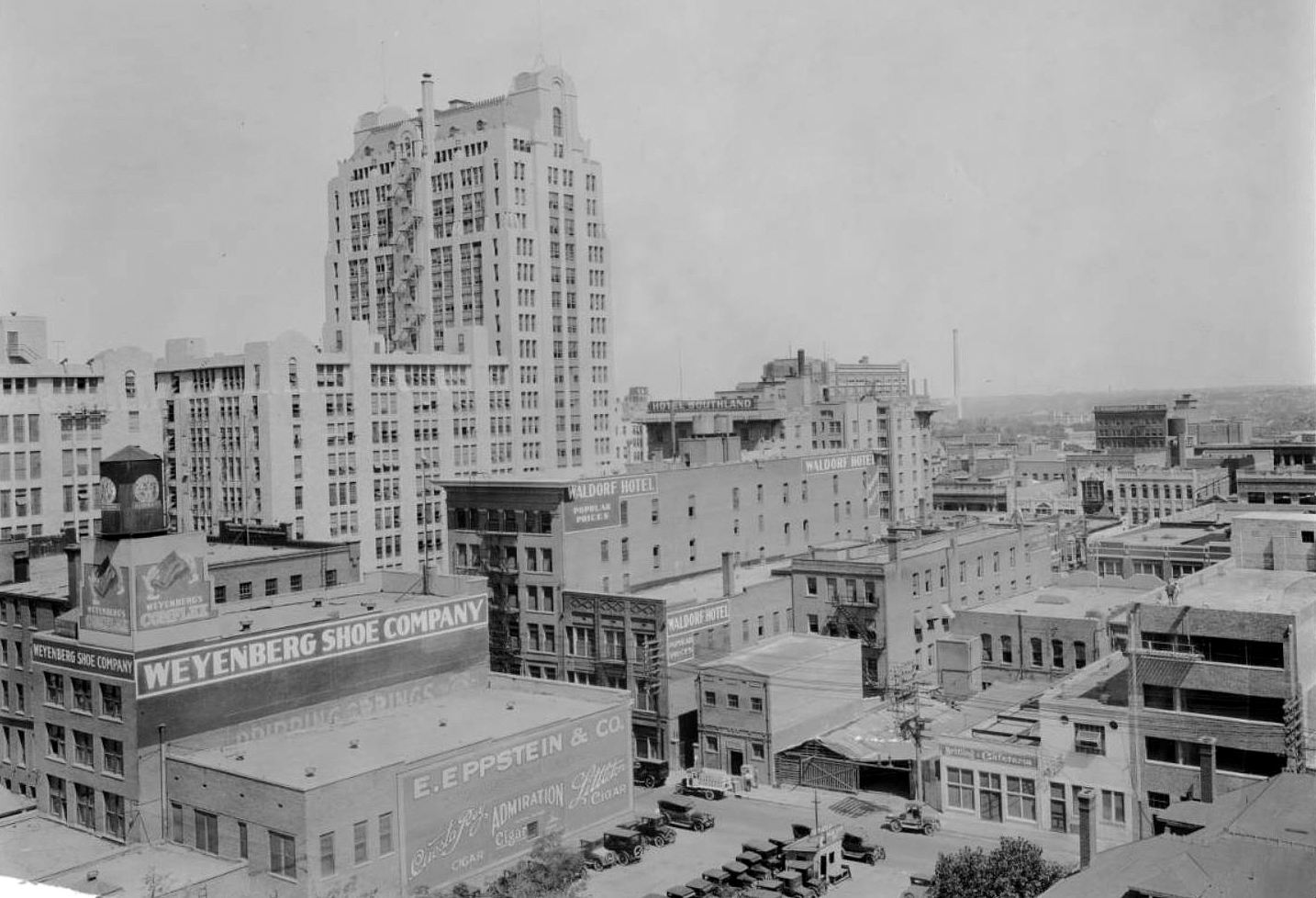
downtown-dallas_degolyer_smuThere’s a lot going on here (click for larger image) / Photo: SMU

by Paula Bosse

When I see photos like this I always want to zoom in as far as I can, to see the tiny details and everyday moments that might have been captured unwittingly by the photographer. Luckily, this photo has been scanned at such a high resolution (thank you, DeGolyer Library!) that it’s easy to zoom in and wander around it. (Click all of these pictures for much larger images.)

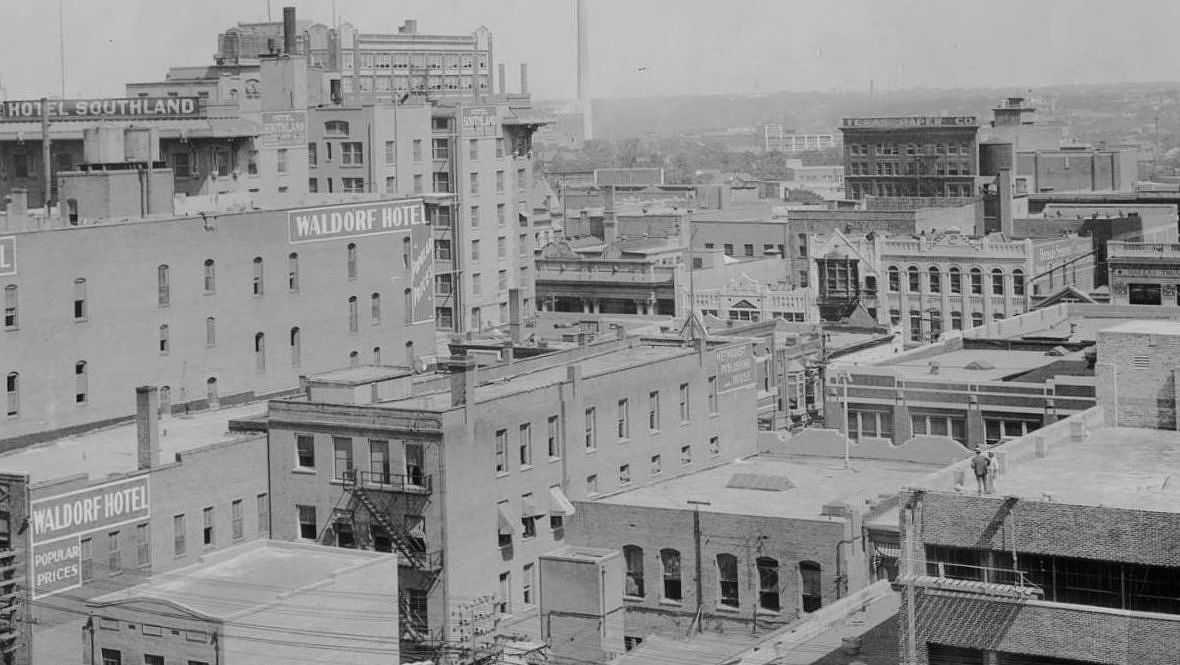
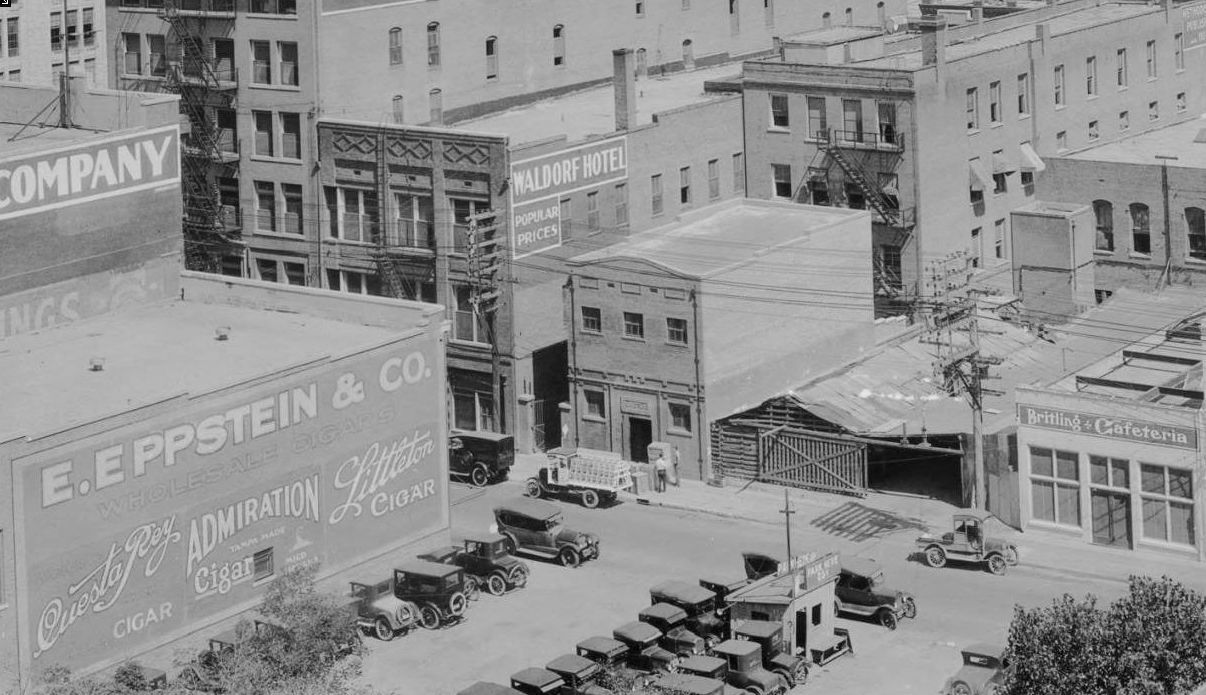
This particular photograph, from the DeGolyer Library at SMU, is attributed to Charles A. McAfee. The DeGolyer caption reads: “Downtown Dallas looking northwest at Santa Fe building complex (center left); Weyenberg Shoe Company at 1300-1302 Jackson; Waldorf Hotel, 1302 Commerce, and the Southland Hotel.” The Britling Cafeteria was at 1316 Commerce — its rear entrance on Jackson is visible in the photo. Here are a few more of the businesses in that 1300 block of Jackson Street, bounded by S. Field and S. Akard (from the 1923 city directory):

1923-directory_jackson-st

And it ALSO shows lots of signs and ads painted on the sides of buildings (some of which might still exist), two men standing on a roof surveying the skyline, a couple of guys talking on the sidewalk, a cafe next door to something that might be a crude garage, cars in a lot where it costs 25 cents to park, and a cool water tower on top of a shoe company. All of which add up to make this a much more interesting and lively photograph than originally presumed.

downtown_degolyer-b

downtown_degolyer-c

downtown_degolyer-d

downtown_degolyer-e

downtown_degolyer-f

***

Photograph of downtown Dallas attributed to Charles A. McAfee; from the DeGolyer Library, Central University Libraries, Southern Methodist University; access it here. I’ve corrected the color.

Trying to pin a date down (SMU has it as “circa 1920”), I’m guessing the photograph might have been taken around 1923, as the Britling Cafeteria opened for business on November 28, 1922. (I was so interested in that cafeteria that I wrote about it: read the Flashback Dallas post “The Britling Cafeteria Serves Those Who Serve Themselves,” here.)

For other photos I’ve zoomed in on to see the details, see here.

Click photos for much larger images.

*

Copyright © 2014 Paula Bosse. All Rights Reserved.

Mardi Gras Parade in Dallas — ca. 1876/1877

mardi-gras_c1870s_degolyerMain St. looking east from Austin (click for larger image)
by Paula Bosse

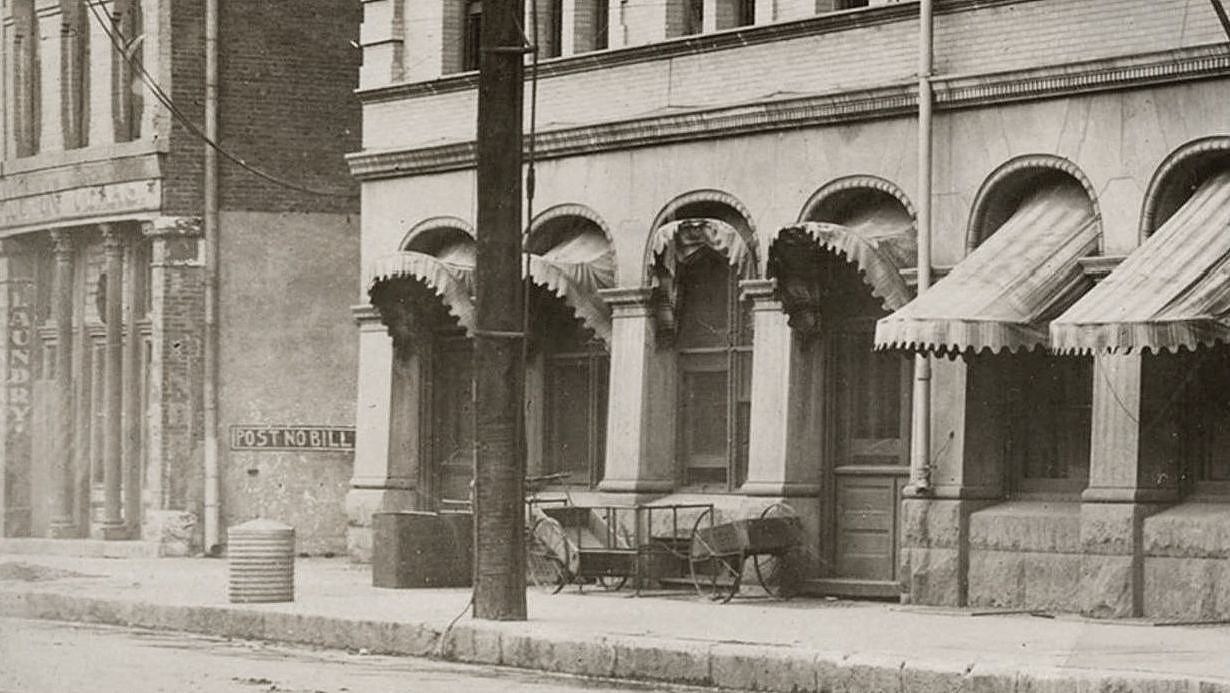
What was happening downtown on this day, about 140 years ago? Mardi Gras, Dallas-style! Let’s wander around this parade photo, taken by Alfred Freeman. (Click photos to see larger images.)

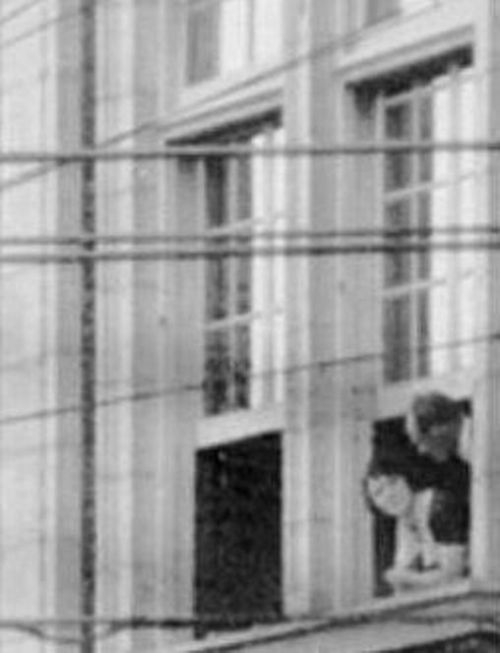
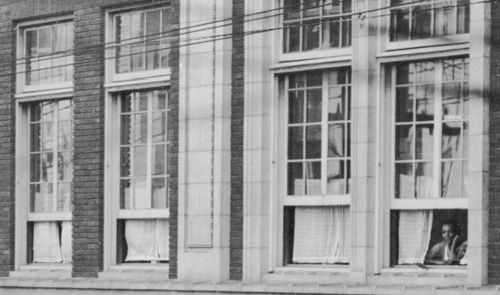
mardi-gras_c1870s-det1This kid has a great, unobstructed second-story view of the parade below.

mardi-gras_c1870s-det2No glitz, no beads, no flashing.

mardi-gras_c1870s-det5Every time I look at the original photograph, my eye always goes to this woman.

mardi-gras_c1870s-det3Okay, that kid’s view is nothing compared to these guys who’ve scaled the Dallas Herald building.

mardi-gras_c1870s-det4In information about the 1876 parade, the Feb. 24, 1876 edition of The Dallas Herald advised: “To prevent accidents, owners of buildings having varandas [sic] will permit no one to stand on them, unless the same have been sufficiently strengthened.” I don’t know … some of those “varandas” look pretty shaky.

And down Main Street they go.

***

This is a stereograph photo by Alfred Freeman, from the Lawrence T. Jones III Texas Photographs Collection, DeGolyer Library, Central University Libraries, Southern Methodist University; it can be viewed here. (I have manipulated the color.) SMU has the photo as being “ca. 1870,” but the first Mardi Gras parade in Dallas wasn’t held until 1876. The view shows Main Street looking east, apparently taken from the roof of the Reed & Lathrop building on the northeast corner of Main and Austin.

UPDATE: This might be a photograph of the Mardi Gras celebration held in Dallas on February 24 (a Thursday…), in 1876. This was the first such celebration held in the city, and it was a massive undertaking, attracting more than 20,000 spectators. For weeks after the event, Alfred Freeman was advertising his Mardi Gras photographs with the following text: “Freeman, the artist, has nine different views of the Mardi Gras procession, for sale.”

mardi-gras_c1870s_freeman

Read about the first Mardi Gras parade in Dallas in the Flashback Dallas post “Mardi Gras: ‘Our First Attempt at a Carnival Fete’ — 1897,” here.

Click pictures for larger images.

*

Copyright © 2014 Paula Bosse. All Rights Reserved.