Flashback : Dallas

A Miscellany: History, Ads, Pop Culture

The Southern Rock Island Plow Company

southern-rock-island-plow_city-directory_1908-det_smFrom plow company to Dallas’ most famous building (click to enlarge)

by Paula Bosse

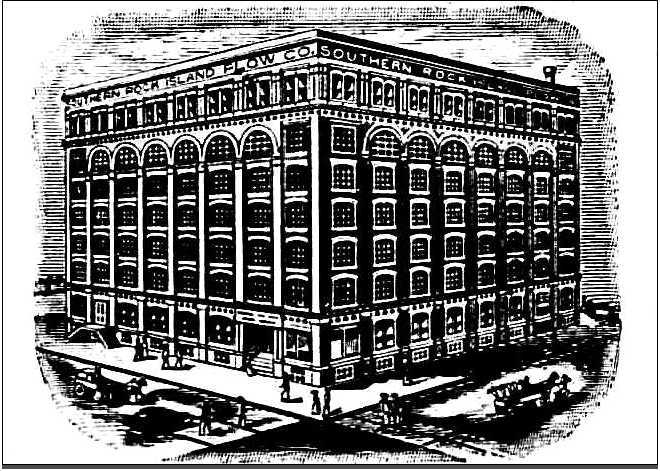
Behold, the Southern Rock Island Plow Company building. Looks familiar? Perhaps “Texas School Book Depository” is an easier hook to hang your hat on. When Dallas seemed to be farm implement-central, there were numerous plow companies in business here. This is the second Southern Rock Island Plow Co. building — the first one (built in the same location around 1898) burned down when it was struck by lighting. The building that still stands was built in 1903, and it is, without question, the most famous building in Dallas.And it’s probably not that far behind the Alamo.

southern-rock-island-plow_city-directory-19081908

southern-rock-island-plow_bldg-code_19141914

***

Sources & Notes

Ad from the 1908 city directory.

Photo from the Building, Plumbing, Gas & Electrical Laws of the City of Dallas (1914).

More on the history of the Dallas branch of the Southern Rock Island Plow Co. can be found here.

For more about what’s going on with the building these days, see the Dallas Morning News article “Dallas County May Move Offices Out of Historic School Book Depository” by Matthew Watkins, here.

For more on the various incarnations of the building (which, by the way, is officially called the County Administration Building and which now houses county offices as well as the Sixth Floor Museum), see my previous post, “The Sexton Foods Building and the Former Life of the School Book Depository,” here.

*

Copyright © 2015 Paula Bosse. All Rights Reserved.


Luncheon at The Zodiac Room, Darling

zodiac-room_smFood, fashion, & the unmistakable whiff of Old Money (click for larger image)

by Paula Bosse

Two cool and sophisticated postcards from the cool and sophisticated Neiman-Marcus (although it’s debatable whether the truly cool and sophisticated N-M shopper would, in fact, mail anyone something as bourgeois as a postcard of a department store, Neiman-Marcus or not). Perhaps these were done up for the sizable tourist trade. I love these cards. Commercial art of this period is wonderful.

The description on the back reads: “One of the great dining spots of the Southwest … N-M’s famed ZODIAC ROOM. The superlative food specialties of Director Helen Corbitt and her staff are enjoyed during modeling of fashions a la Neiman-Marcus at luncheon and dinner. Also, tea served daily.”

Below, the Carriage Entrance:

neimans_postcard_c1950s-carriage-entrance-sm(click for larger image)

The description: “‘The Carriage Entrance’ — famous passageway into one of the world’s great specialty stores.”

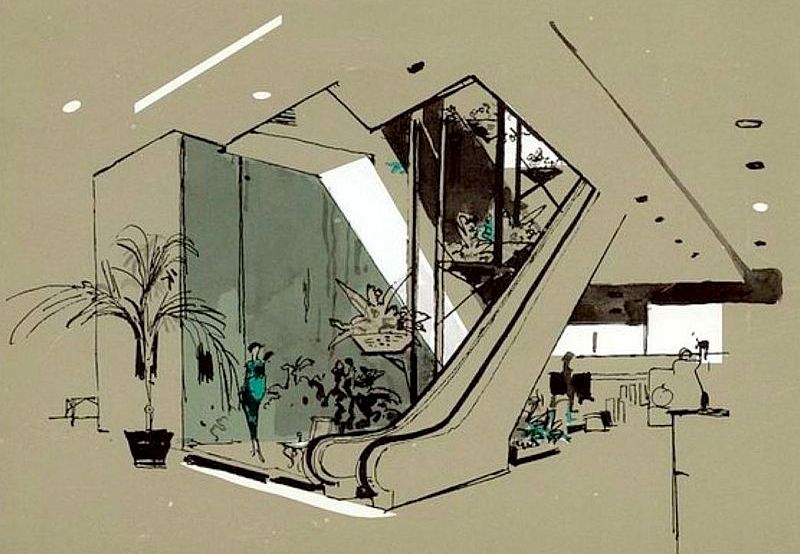
And another (I’d love to see the whole series of these postcards.) Sadly, no description on this one, featuring a fashionable escalator.

n-m_escalator_pinterest

I fear I shall never reach the level of swan-like sophistication needed to become an habitué of The Zodiac Room. Tant pis.

***

I have no idea where these postcards came from. I’m not sure of the date, either, but … “1950s”? Maybe very early 1960s? Let’s go with “Mid-Century” — everyone loves that! Whenever this was, this was a period when fashion was chic and fabulous. As was Neiman-Marcus. (I still miss that hypen!)

Need to make a reservation at The Zodiac? Info is here.

*

Copyright © 2015 Paula Bosse. All Rights Reserved.

Happy Anniversary, Flashback Dallas!

tx-centennial-light-showHappy First Anniversary, y’all! Fire up the klieg lights!

by Paula Bosse

Flashback Dallas is one year old today!

When I started this blog a year ago, it was mainly just for myself, because I thought it would be fun and a good writing exercise — and because so many of my friends had said over the years that I should do a Dallas history blog. And now, 388 posts (!) later, I can say without hesitation, that this has been one of the most personally entertaining and fulfilling things I’ve ever done. I’ve had fun writing every single post, and I hope my enthusiasm in reporting on the big and small of Dallas history has been apparent.

I’ve been so happy at the response. I’m really not very good at promoting myself, but, hell, it’s an anniversary, so, clumsily, here’s a patting-myself-on-the-back list of people or organizations who have graciously profiled, cited, or high-fived Flashback Dallas in the past year:

  • The Dallas Morning News (thank you, Robert Wilonsky, Alan Peppard, Mark Lamster, and Rudy Bush!)
  • The Dallas Observer (thank you, Lauren Smart and Eric Nicholson!)
  • D Magazine (thank you, Tim Rogers!)
  • The Ticket, Sportsradio 1310 (thank you, Orphanage guys!)
  • Candy’s Dirt (thank you Candy Evans!)
  • The State Fair of Texas
  • The DeGolyer Library, SMU
  • American Institute of Architects, Dallas Chapter
  • And all the bloggers who have linked to me or cited me!

And thanks especially to you, the reader! I’m thrilled that so many people have taken the time to email me and to read, reply to, “like,” and share my posts. After my first year, I have over 2,500 followers across social media (a small number for some, maybe, but for me … this would have been unimaginable a year ago) — and it’s interesting to note that the readers of Flashback Dallas cross all ethnic, socioeconomic, political, and perhaps most heartening, AGE lines.

I don’t consider myself a historian so much as a researcher who likes to write about things I find personally entertaining. Chances are if I find something interesting, someone else will, too. Life is too short to suffer through dull and dry historical accounts of events that were probably pretty interesting and lively when they happened.

I’ve learned more about my hometown this past year than I have in all the years leading up to it. Thanks so much to everyone for such a fun year!

*

Copyright © 2015 Paula Bosse. All Rights Reserved.

The Marietta Mask

marietta-mask_doak_boys-life_oct55SMU football star Doak Walker in an ad from Boys’ Life, Oct. 1955

by Paula Bosse

Dr. Thomas M. Marietta (1910-1995), a Dallas dentist, devised a startlingly new invention in 1947: a specially-made facemask. Initially, the mask was created to protect the face of a Dallas hockey player who had recently sustained a broken nose and would have been unable to play without a mask for fear of further injury. Marietta’s creation was a success — not only did the player get back on the ice, but tentative inquiries from other sports teams began to trickle in. But what changed everything were the masks he made for TCU’s star quarterback Lindy Berry, who had suffered a broken jaw, and Texas A&M’s fullback Bob Smith, who had a badly broken nose. Without the odd-looking masks that protected their entire faces, they would not have been able to play out the seasons. The masks were an unqualified success, and the doc went commercial.

marietta-face-mask_marion-OH-star_112251_wireDr. Marietta (Marion Ohio Star, Nov. 22, 1951 — full article is here)

In 1951, football players did not generally wear facemasks. It was commonplace for players to rack up a dizzyingly large number of injuries such as broken and dislocated jaws and noses, knocked-out teeth, facial lacerations, major bruising, concussions, etc. An article appeared in The Dallas Morning News on Aug. 31, 1951 describing what this whole facemask thing was about and how the Texas Aggies were about to try a revolutionary experiment by equipping “possibly half of the A&M team” with Dr. Marietta’s newfangled masks. Coach Ray George approved a trial test of the masks, saying that his primary concerns were reduction of facial injuries, elimination of head injuries, and improvement of athletic performance. A&M’s trainer, Bill Dayton, predicted that the wearing of facemasks would become universal among players in the coming years.

Many head injuries happen as the result of a player ducking his head. We believe that by the use of this face gear we can eliminate head ducking, and our players will see where they are going. When they watch their opponents, they are able, by reflective action, to keep their heads out of the way. (A&M trainer Bill Dayton, DMN, Aug. 31, 1951)

The various incarnations of the Marietta Mask over the next couple of decades were used in various sports by children, by college athletes, and by professionals. Dr. Marietta patented several designs for masks and helmets and had a lucrative manufacturing business for many years. In 1977 the business was sold, and the Marietta Corp. became Maxpro, a respected name in helmets.

Football and hockey will always be extremely physical sports with the very real possibility of injury, and though there’s need for further improvement, Dr. Marietta’s invention helped lower the danger-level quite a bit. Thanks to a mild-mannered dentist from Dallas, a lot of athletes over the years managed to avoid all sorts of nasty head and facial injuries. Thanks, doc.

*

marietta-mask_corbis_oct1954Oct. 1954 (©Bettmann/CORBIS)

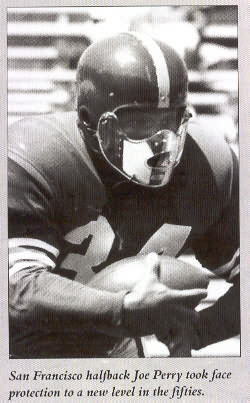
marietta_joe-perry

marietta-mask_envelope

***

Sources & Notes

Photo ©Bettmann/CORBIS; the original caption: “An outer-space look is given by this all-plastic mask lined with foam rubber. It was designed by Dr. M. T. Marietta, a Dallas, Texas dentist.”

Joe Perry photo from HelmetHut. To see some pretty wacky versions of early masks from a Marietta catalog, see images from HelmetHut.com, here.

Read the following newspaper articles:

  • “Mask Maker: Dentist Helped Wolves Win Title (Abilene Reporter-News, Nov. 29, 1950) — regarding the Colorado City (TX) Wolves and their injured player, Gerald Brasuell, the team’s tackle who wore Dr. Marietta’s mask and was able to play despite having a triple-fracture to his jaw, here
  • “Broken Jaw Protection: Doctor’s Face Mask Enables Injured Gridders To Play” (Marion, Ohio Star, Nov. 22, 1951), here

To see several of Marietta’s patents (including abstracts and drawings), see them on Google Patents, here.

And to read an interesting and entertaining history of the football facemask (and I say that as someone who isn’t really a sports person), check out Paul Lukas’ GREAT piece “The Rich History of Helmets,” here. (If nothing else, it’s worth it to see the cool-but-kind-of-weird-and-scary, crudely-fashioned, one-of-a-kind facemask made out of barbed wire wrapped in electrical tape!)

And because a day without Wikipedia is like a day without sunshine, the facemask/face mask wiki is here.

*

Copyright © 2015 Paula Bosse. All Rights Reserved.

F. J. Hengy: Junk Merchant, Litigant

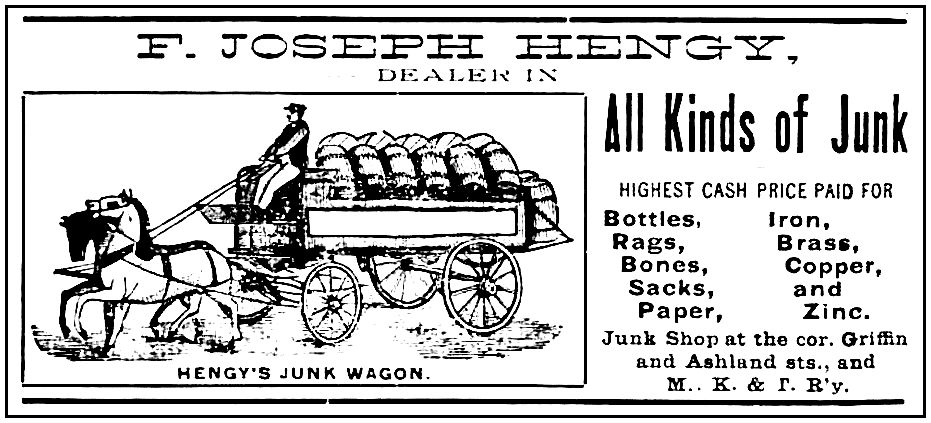
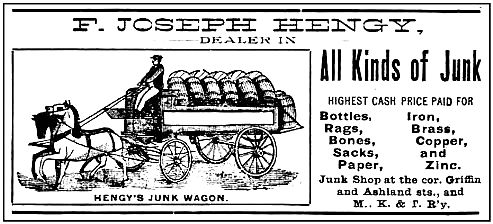
ad-hengy-junk_city-directory_1890-sm“All Kinds of Junk” — 1890 ad

by Paula Bosse

Frank Joseph Hengy was born in Germany in 1850. He immigrated to the United States in 1873, and in about 1880 he made his way to Dallas with a wife and children and established himself as a prosperous buyer and seller of scrap metal and other assorted “junk.” He also owned and operated a foundry, producing amongst other things, sash weights. In the 1894 city directory, there were exactly two “junk dealers” listed, which is surprising, seeing as Dallas was a sizable place in 1894 — there must have been a lot of bottles, rags, bones, sacks, paper, iron, brass, copper, and zinc lying around all over the place, just waiting to be hauled away.
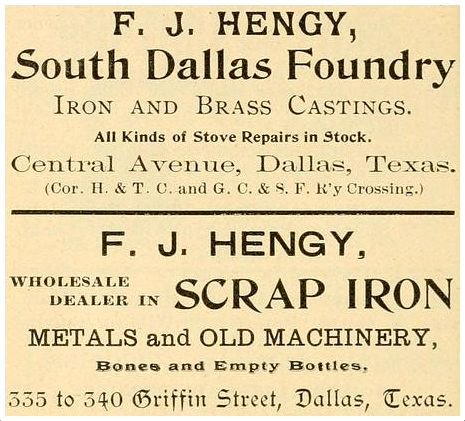
hengy_souv-gd_1984Souvenir Guide to Dallas, 1894

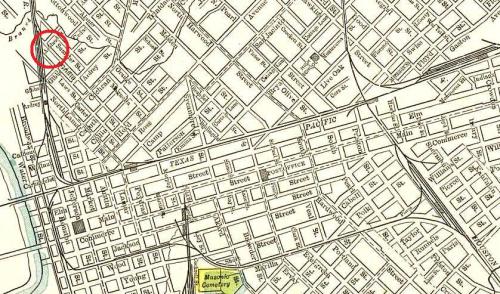
F. J. “Joe” Hengy’s junkyard (and adjacent residence) was at Griffin and Ashland, right next to the M K T Railway tracks. He advertised in the newspapers constantly and was apparently THE man to sell your junk to. His name even made its way into the minutes of an 1899 city council meeting, when, during the discussion on how the city was going to pay for the shipping of a Spanish cannon that had been captured in Cuba and had been given to the city as a war trophy, a councilman asked sarcastically, “What will Hengy give for it?” (Dallas Morning News, Aug. 5, 1899).

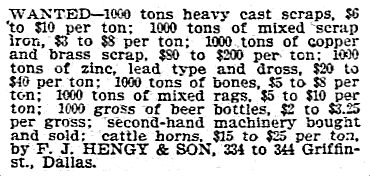
But, seriously, got junk? Call Hengy. Got tons of it? By god, he wants it. A couple of examples of the endless ads placed over the years — two ads, 12 years apart (the 1887 one getting his first initial wrong).
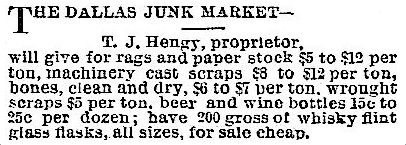
1887_hengy_dmn_082487DMN, Aug. 24, 1887

1899_hengy_dmn_102299DMN, Oct. 22, 1899

In the mid-1890s, Joe took his son Louis on as a partner, which, in retrospect, was probably not a good idea, because it wasn’t long before Joe found himself in the middle of years and years of lawsuits: father against son, son against father, father and associates against son, son and associates against father, etc. Not only was he constantly being sued by his son, he was also sued for divorce … twice … by the same woman. He turned around and sued her for custody of their youngest children (and won). She sued him for the business when he was threatening to sell it and retire. He sued her back for something or other. And on and on and on.

Not only was Joe spending all his non-junk-hauling time traipsing about courthouses, but he also found the time to suffer the occasional partial destruction of buildings on his property — twice by fire and once by the massive flood of 1908. The fires were suspicious (the flood was not).

Then there was the time he was charged with the crime of mailing an obscene letter (I’m gonna go out on a limb and guess that it was probably a letter sent to his wife — or maybe ex-wife by that point — who was in the midst of suing him and their son). Even though this was a potentially serious federal offense, he was ordered to pay only a small fine for “misuse of the mails.” He was also charged at one point with “receiving and concealing stolen property,” but I’m not sure that got past a grand jury investigation, and one might wonder if there wasn’t some sort of “set-up” by aggrieved relatives involved. It was something new anyway. Probably broke up the monotony a little bit.

But the thing that seems to have been Hengy’s biggest headache and was probably the root of most of the lawsuits filed BY him and AGAINST him concerned property he owned which had been condemned in the name of eminent domain by the M K T Railway. The condemnation was disputed, the appraisal of land value was disputed, the question of which Hengy actually owned the land was disputed, etc.

By the end of 1913, Joe Hengy had been engaged in at least 10 years of wall-to-wall litigation. He moved to Idaho at some point, remarried, started another business, and, finally, died there in 1930. Let’s hope his later years were lawsuit-free.

*
hengy_map_ca1900

Hengy’s business and residence (which was, surprisingly, right next door to his litigious son) was at 2317 Griffin, very close to the present-day site of the Perot Museum. (Full map circa 1900, here.) (Click for larger image.)

*

Lastly, two odd, interesting tidbits.

Joe Hengy took time out from junk and courtrooms to invent new and improved … suspenders! I’m not sure exactly what was so revolutionary about them, but a patent was granted in 1912 — you can read the abstract here, and see them in all their suspendery glory here. (With so much foundry and scrap metal know-how, you’d think he’d go in a more … I don’t know … anvil direction or something.)

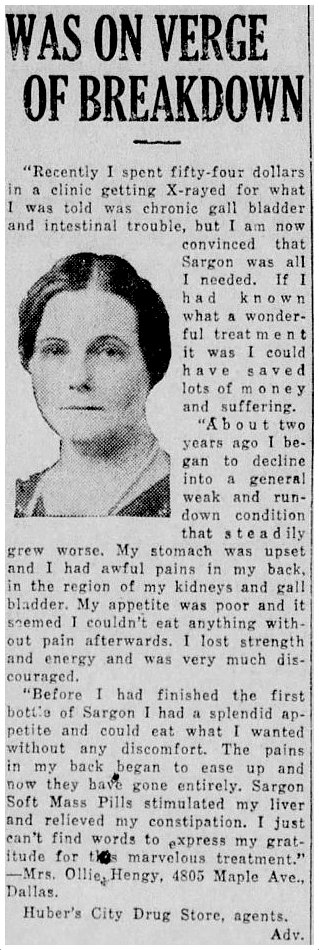
And, then there’s this — a kind of sad ad for a tonic called “Sargon” with a testimonial from Mrs. Ollie Hengy, the no doubt long-suffering wife of perennial plaintiff/defendant Louis Hengy. “Was On Verge of Breakdown.” I don’t doubt it! (Incidentally, Ollie and Louis divorced the same year this advertisement appeared in Texas newspapers. Maybe that stuff did work.)
ollie-hengy_vernon-daily-record_0906291929

***

Sources & Notes

Top ad from Dallas’ 1890 city directory.

Sargon ad appeared in The Vernon Daily Record, Sept. 6, 1929. More on the quack tonic Sargon here.

Sources for other clippings and images as noted.

Lastly, an interesting article that answers the questions “Why was the scrap metal game profitable?” and “Just where did all that metal GO, anyway?” can be found in the article “Many Uses for Junk: How Wornout and Discarded Metal is Utilized,” originally published in The Brooklyn Citizen in 1899; it can be read here. I’m nothing if not exhaustive.

*

Copyright © 2015 Paula Bosse. All Rights Reserved.

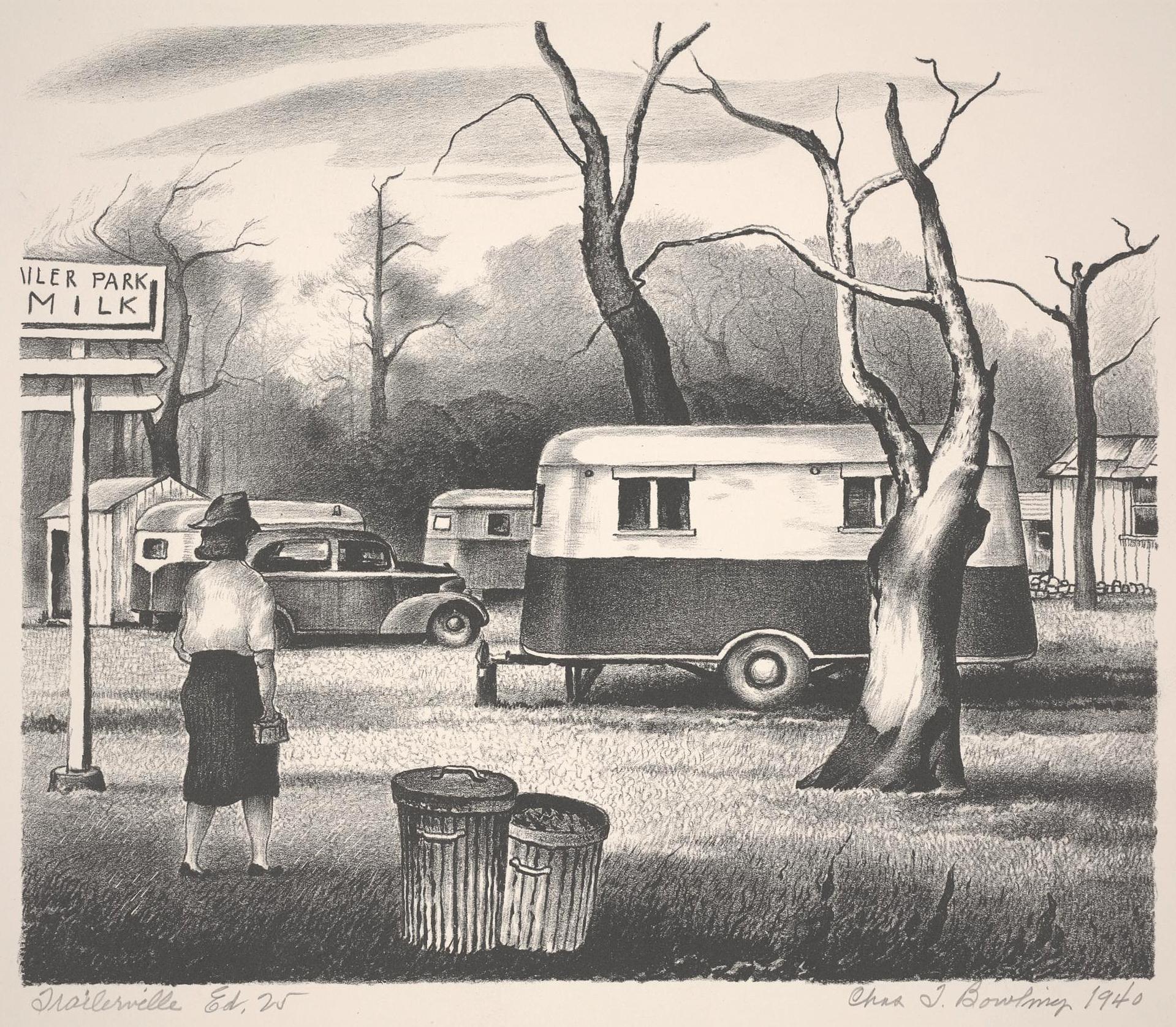
“Trailerville” by Charles T. Bowling — 1940

bowling_trailerville_1940_dma(Dallas Museum of Art)

by Paula Bosse

A 1940 lithograph by one of my favorite Dallas artists, Charles Bowling (1891-1985). I don’t know if this trailer park was in Dallas, but I certainly hope so.

***

This lithograph is in the collection of the Dallas Museum of Art, a gift of A. H. Belo Corporation and The Dallas Morning News. More info can be found at the DMA website, here.

Biographical information on Bowling can be found here.

Image is much larger when clicked.

*

Copyright © 2015 Paula Bosse. All Rights Reserved.
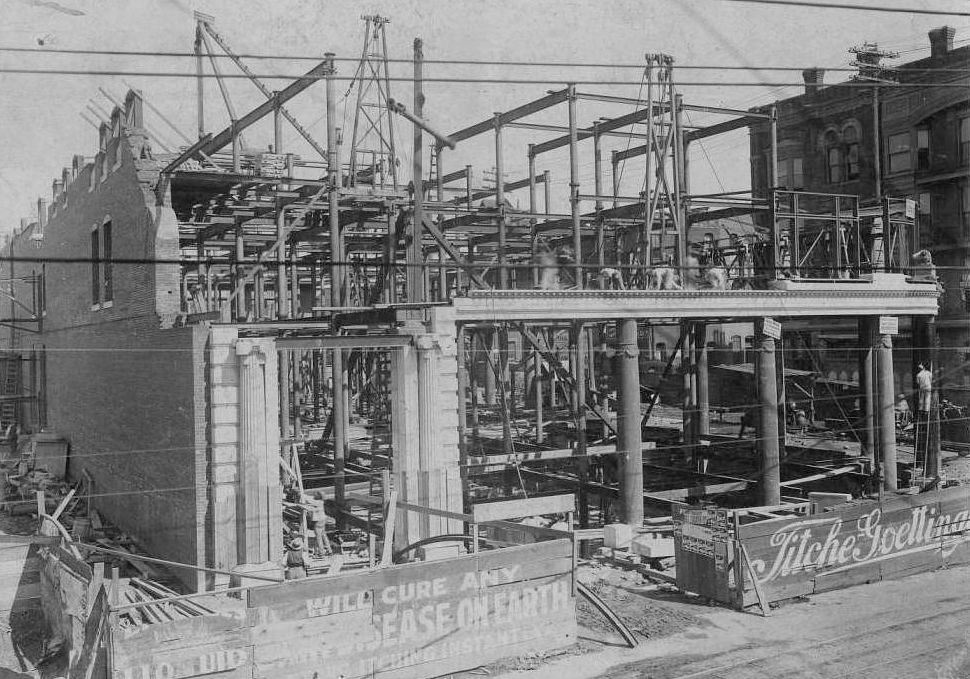
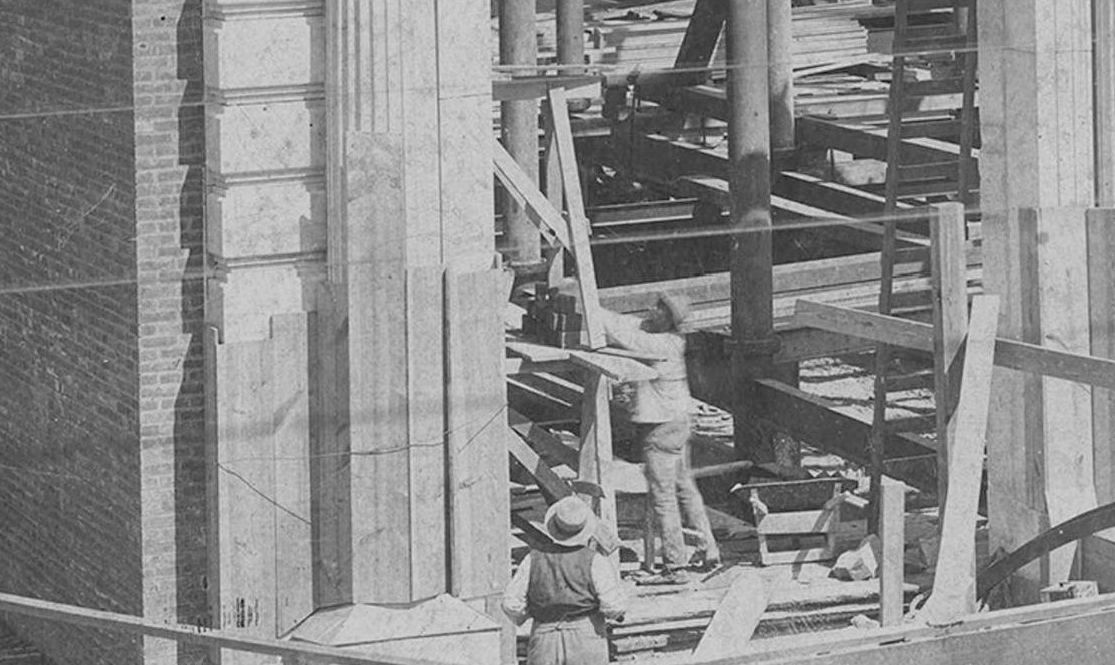
The Wilson Building Under Construction — 1902

wilson-bldg-construction_cook_degolyer_smu_1902_bwSlowly but surely…. (DeGolyer Library/SMU)

by Paula Bosse

The Wilson Building is one of Dallas’ most beautiful buildings. Designed by the immensely influential Fort Worth firm of Sanguinet & Staats, the building opened in 1904, with its most notable tenant being the Titche-Goettinger department store, which occupied the basement and first two floors.

From the Dallas Public Library’s website:

“J. B, Wilson, a wealthy Dallas cattleman, built this French Renaissance/Second Empire (Beaux Arts) style building, modeled after the Paris Grand Opera House. Craftsman from all over the country came to contribute to the building finish, exterior and interior, with a mahogany and marble interior finish. It was the first eight-story building in Texas. The building originally housed the Titche-Goettinger department store on the bottom floor, with the upper floors used as office space. In 1911, Sanguinet & Staats built a twelve-story annex to the building, which was raised five floors in 1957.”

It was listed in the National Register of Historic Places in 1979.

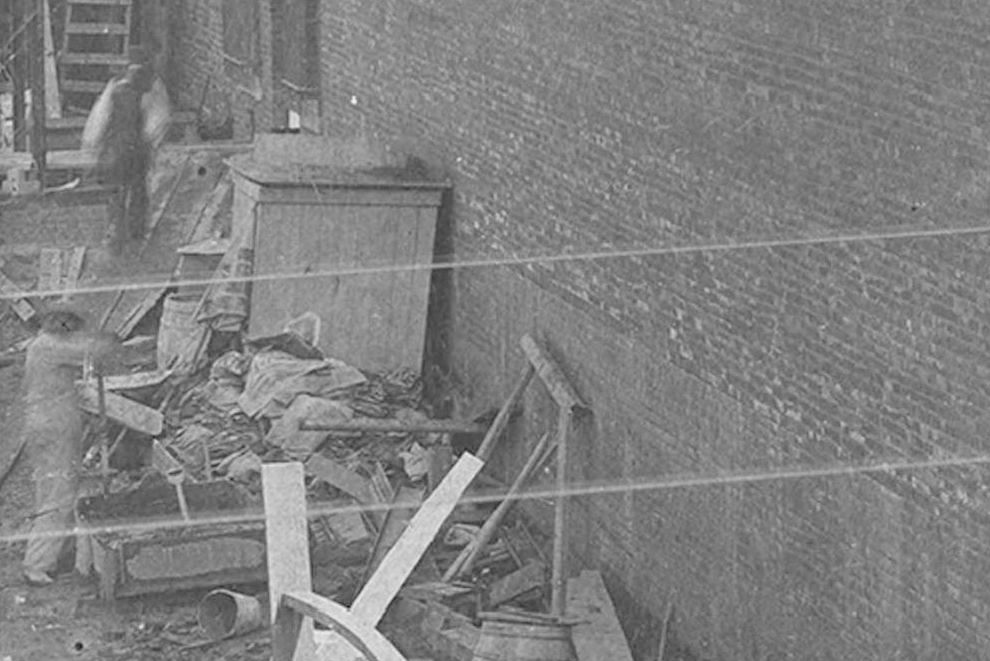
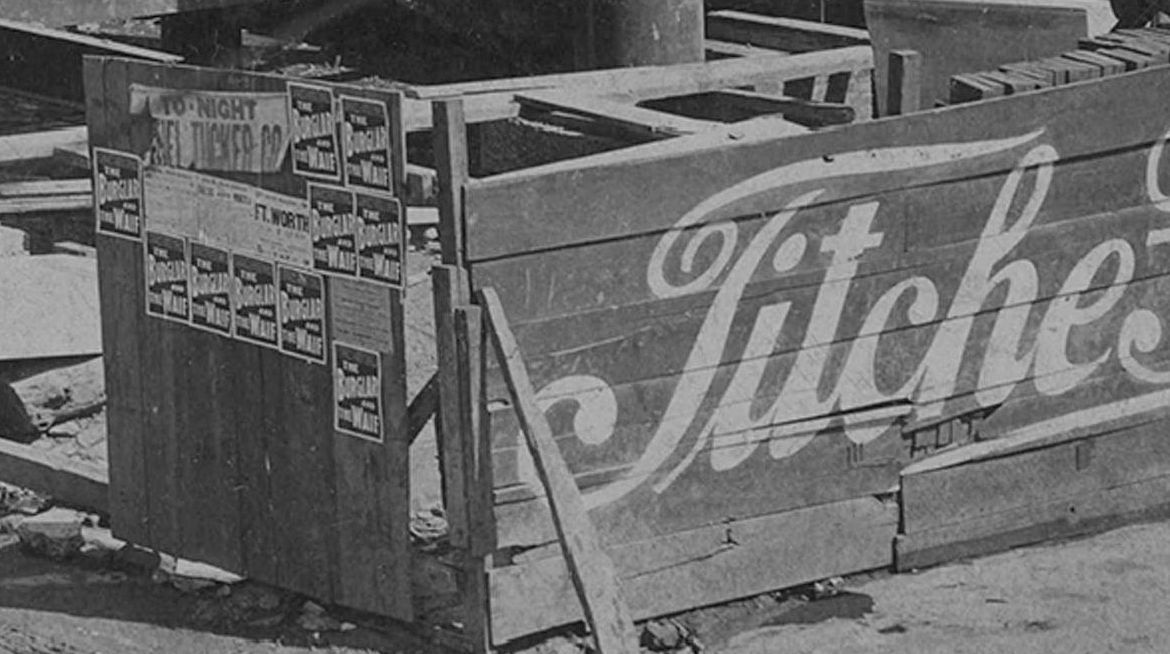
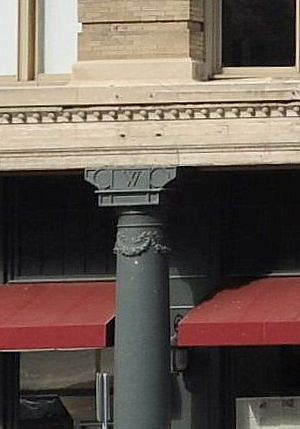
The photo above is part of the incredible George W. Cook Dallas/Texas Image Collection at SMU’s wonderful DeGolyer Library (see note below). Below are a few enlargements of parts of the original photo to see more details. (Click for larger images.)

wilson-bldg-constuction_cook_degolyer_smu_1902-det7_bw

wilson-bldg-construction_cook_degolyer_smu_1902-det4_bw

wilson-bldg-construction_cook_degolyer_smu_1902-det5_bw

wilson-bldg-construction_cook_degolyer_smu_1902-det3_bw

wilson-bldg-constuction_cook_degolyer_smu_1902-det6_bw

wilson-bldg-construction_cook_degolyer_smu_1902-det2_bw

wilsonbldg-det

wilsonbldgHere it is today. Beautiful. Click photo for an image so colossally large that you can easily check out all the fabulous intricate architectural details. (Photo by Joe Mabel.)

***

Sources & Notes

This photo (titled “Building Construction at the Intersection of North Ervay and Elm Street”) is from the incredible George W. Cook Dallas/Texas Image Collection, housed at the DeGolyer Library, Central University Libraries, Southern Methodist University; it can be viewed here. It is not currently identified as being the Wilson Building. (UPDATE: The photo is now titled “Wilson Building Construction, Intersection of North Ervay and Elm Street.” And this post is actually cited in the description! Thank you, DeGolyer Library!) (I have altered the color of these images as they were appearing harshly yellow in my photo editor — please see DeGolyer page for correct color of the original gelatin silver photograph.)

The DeGolyer Library is one of Dallas’ very best repositories of important historical images and papers, and just knowing that they are scanning this fantastic collection of Dallas ephemera is making me a little dizzy. So many incredible images!! An exhibit of selected items from the collection opens TOMORROW (Jan. 30, 2015) — details are here.

Credit and photo info for the gigantic present-day photo by Joe Mabel is here.

Read about Sanguinet & Staats here.

More on the Wilson Building from the Dallas Public Library, here. Check out the photo of the excavation of the site before construction began at the top of the page.

And what does Wikipedia say? See here.

*

Copyright © 2015 Paula Bosse. All Rights Reserved.

The Dallas Aquarium: The Building Emblazoned With Seahorses — 1936

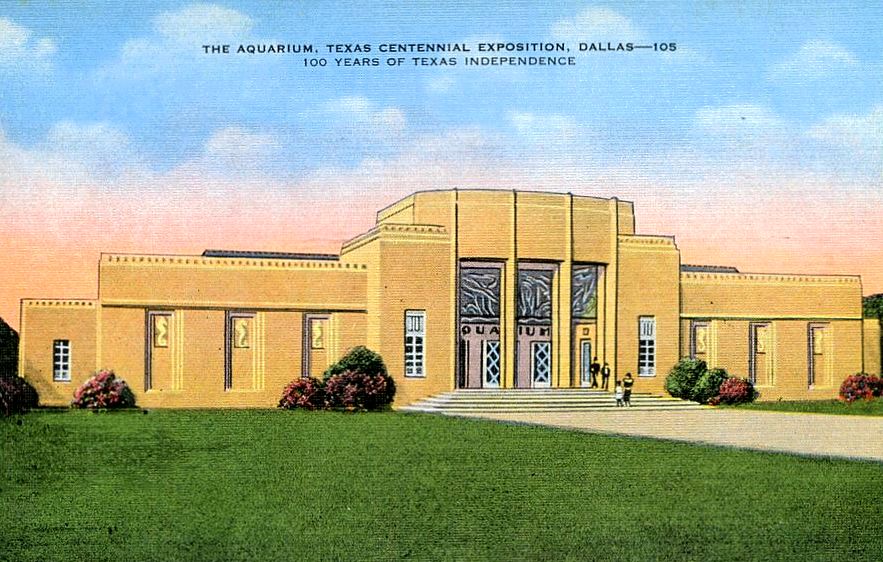
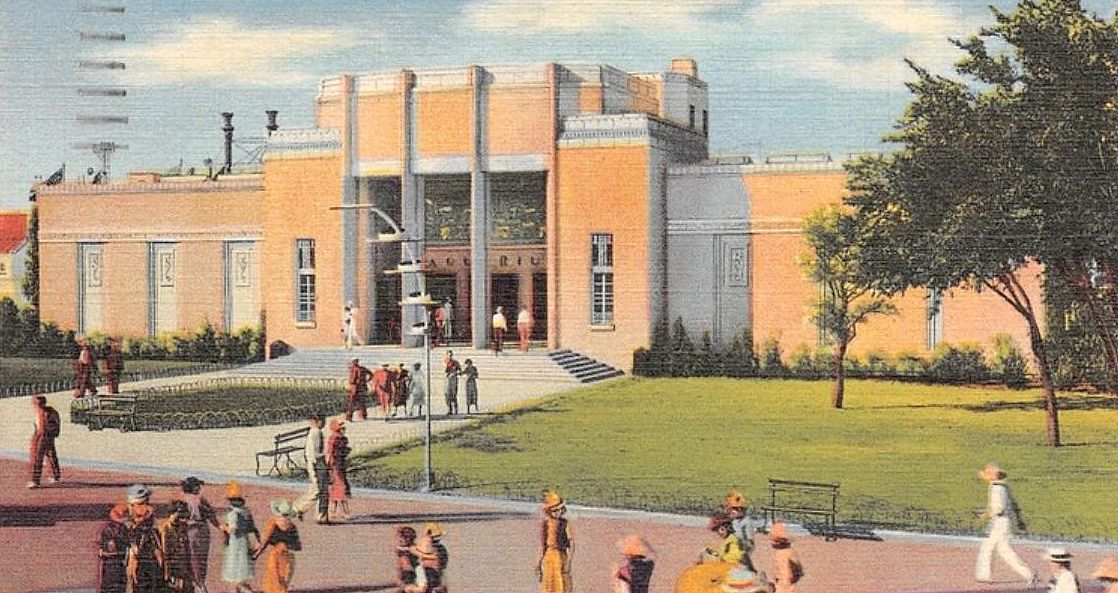
tx-centennial_aquariumThe Dallas Aquarium at Fair Park, 1936… (click for larger image)

by Paula Bosse

Out of all the buildings at Fair Park, the one I have the fondest memories of is the Dallas Aquarium, one of the buildings built in 1936 for the Texas Centennial Exposition which was specifically intended to be a permanent structure which would be available year-round to the citizens of Dallas, well after the Centennial had ended (some of these other “civic buildings” included the Museum of Fine Arts, the Museum of Natural History, the Hall of State, the bandshell, etc.). The Centennial buildings were designed by different architects, usually working in teams — the aquarium was designed by Fooshee & Cheek (best known for their previous triumph, Highland Park Village), Hal B. Thomson, and Flint & Broad. It ended up costing the city about $200,000 ($50,000 over the initial budget), and tussles with the Park Department and the City Council over its budget and space requirements meant that at various times it was suggested that the aquarium find a home at the Marsalis Park Zoo in Oak Cliff rather than at Fair Park, or that it just be shelved altogether.

fair-park-aquarium_1936

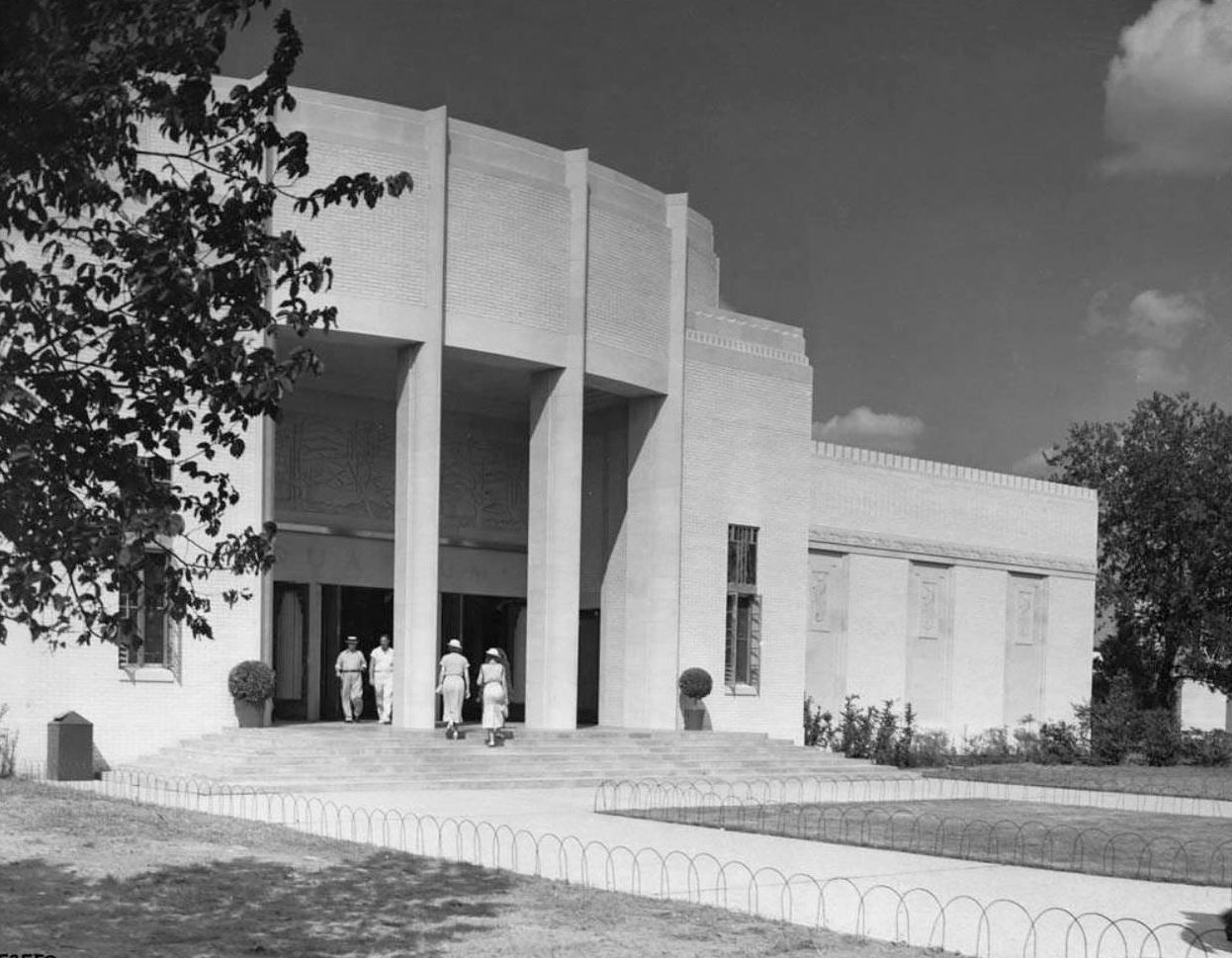
But everything worked itself out in the end, and its popularity at the Centennial was huge. HUGE. Most people in our part of the country had never been to an aquarium and had never seen fish outside of a lake or river or hatchery. According to reports in the newspapers during its construction in early 1936, not only was the Dallas Aquarium the first aquarium in Texas, it was also only the 12th aquarium in the entire United States — and it was the only one in the country in a “strictly inland city.” So unless visitors to the Centennial that year had traveled extensively, chances were slim that they’d ever seen anything like this.

fair-park_aquarium_postcard

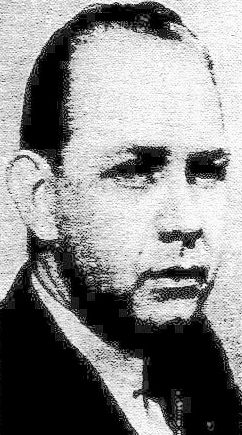
At the time that plans were being discussed for the Fair Park facility, there was something of a tropical fish fad going on around the country. The Dallas Aquarium Society — a small group of “tropical fish fanciers” — was organized in June, 1935, and in September of that year, they had enough pull to put on an exhibition of their personal collections in small tanks on an upper floor of the Dallas Gas Company. People who had never before seen anything but a goldfish in a fish bowl were fascinated, and there were several “gee-whiz” articles in the papers describing the fishy wonders that could be found that fall at the gas company. The president of the Dallas Aquarium Society was Pierre Fontaine — an advertising man and “authority on marine life” — and he must have made quite an impression with the Centennial board, because in February of 1936, he was chosen to be the head of the already-under-construction Dallas Aquarium. (Though apparently a hobbyist when appointed, Fontaine served for decades as the respected director of the Dallas Aquarium — and later the Dallas Zoo.)

aquarium_fontaine_1936
Pierre Fontaine, 1936

The fish on display during the Centennial were almost exclusively freshwater fish. Not only would it have been prohibitively expensive to ship the thousands and thousands of gallons of salt water that would have been needed, it would also have been extremely costly to purchase and maintain the special non-corroding equipment necessary to equip such tanks. But Fontaine must have pushed, because the city gave the go-ahead for a paltry 500 gallons of salt water from the Gulf to be shipped up for the opening of the Exposition, so at least a few exotic saltwater-dwelling creatures and plants were able to share their DeMille-moment in the Centennial spotlight with their freshwater brethren. (At the time, “artificial” salt water was not yet an option as it now is, and only natural salt water could be used.)

aquarium_art-institute-of-chicago_1936Art Institute of Chicago Collection

The 1936 Centennial aquarium building still stands. After extensive renovation, it now houses the “Children’s Aquarium,” which I haven’t visited, but which I’m confident is entertaining and educational. I’m pretty sure, though, that it is a completely different aquarium from the one of my childhood memories (when museums were basically designed for adults and were rarely “interactive”). I loved going to the aquarium. I remember it being dark and cool and kind of dreamy inside. Mysterious and exotic. I loved the little neon fish that playfully (or nervously) darted all around the tanks, the big, slow-moving fish that looked back at me like nonchalant cud-chewing cows in a field, the tiny skittering crabs, the turtles, the undulating plants … I loved all of it.

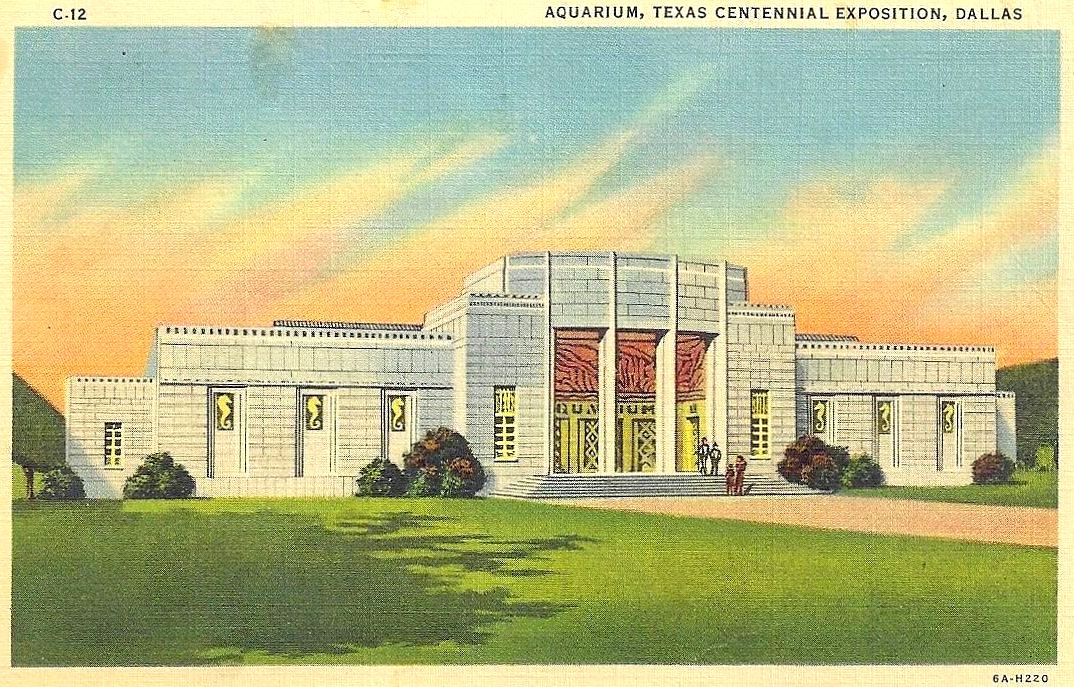
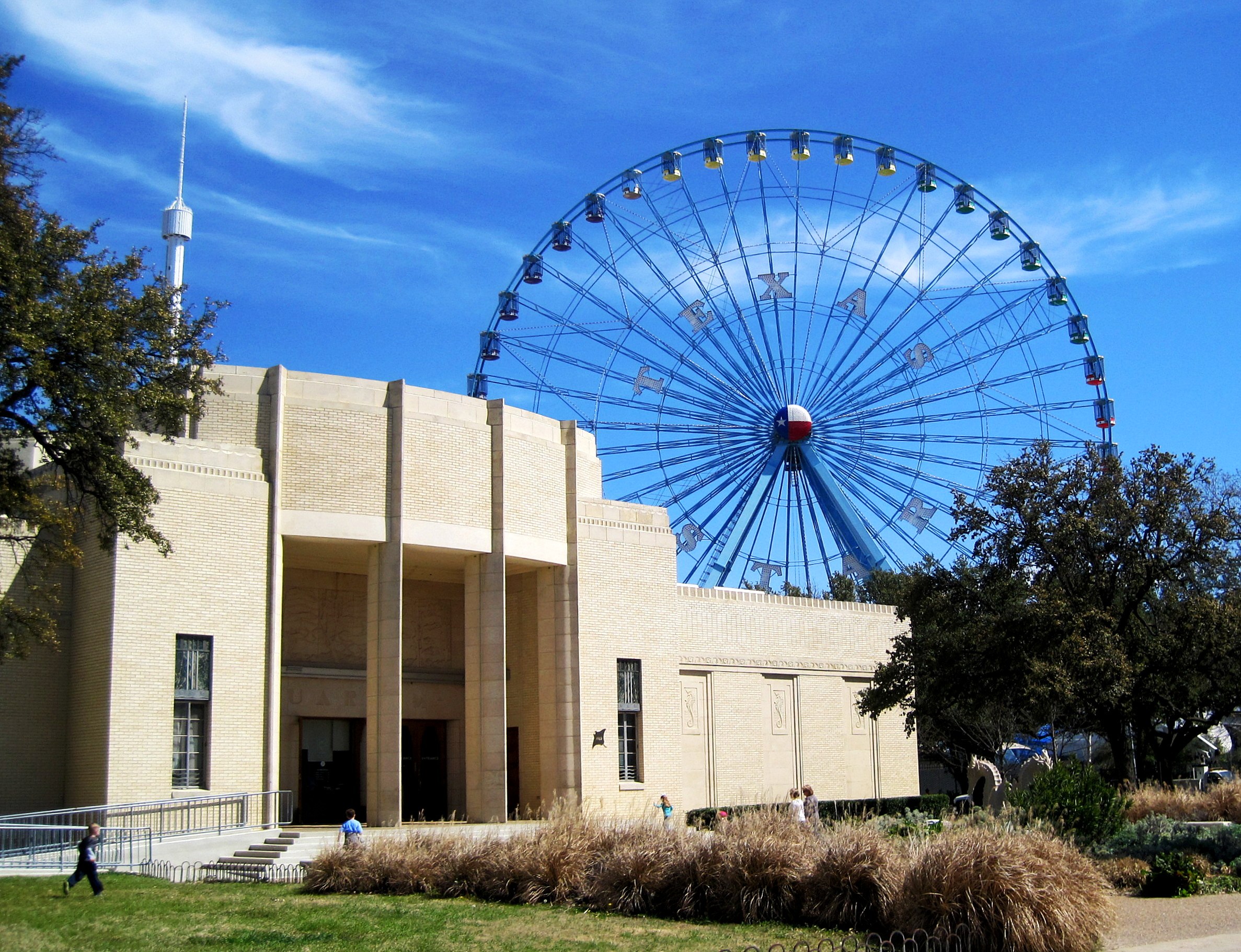
But what I really remember are the seahorses on the side of the building — whichever architect came up with that perfect little detail deserves a special place in heaven. I loved them as a child, and I love them now. The acres and acres of art deco fabulousness created for the Texas Centennial are absolutely thrilling, but those solemn and quietly elegant seahorses all in a row on the side of the Dallas Aquarium will always be my personal favorite little nostalgic detail in the whole of beautiful, beautiful Fair Park.

seahorses_pb-det

The Aquarium today (click to enlarge) / photo: Paula Bosse

*

UPDATE — Oct. 2020: It has been announced that the Children’s Aquarium will be closing permanently. This news is almost as upsetting as seeing Big Tex in flames.

UPDATE — Sept. 2021: Good news! It looks like the aquarium will be reopening in time for the 2021 State Fair of Texas. Read about it here.

***

Sources & Notes

Top two images are postcards based on the original architectural drawings, issued before the aquarium was built, found somewhere on the internet.

The third color image is a postcard from a photograph taken after the Centennial was underway.

Photo of the exterior of the present-day aquarium was taken by me in 2013.

The website for the Children’s Aquarium at Fair Park is here.

For an absolutely FANTASTIC well-illustrated article titled “The Metamorphosis of the Dallas Aquarium at Fair Park Into the Children’s Aquarium at Fair Park, With Historical Annotations” by Barrett L. Christie, Aquarium Supervisor, see p. 5 of the “Drum & Croaker” PDF, here. I really loved this article — especially the “Annotations of Historical Interest” at the end (p. 14). Seriously — this is a great read. I’m as layman as you’re gonna get regarding this topic, and I was fascinated by all of this. I’m going to have to write about that mysterious severed human leg found on the roof in 1954!

*

Copyright © 2015 Paula Bosse. All Rights Reserved.

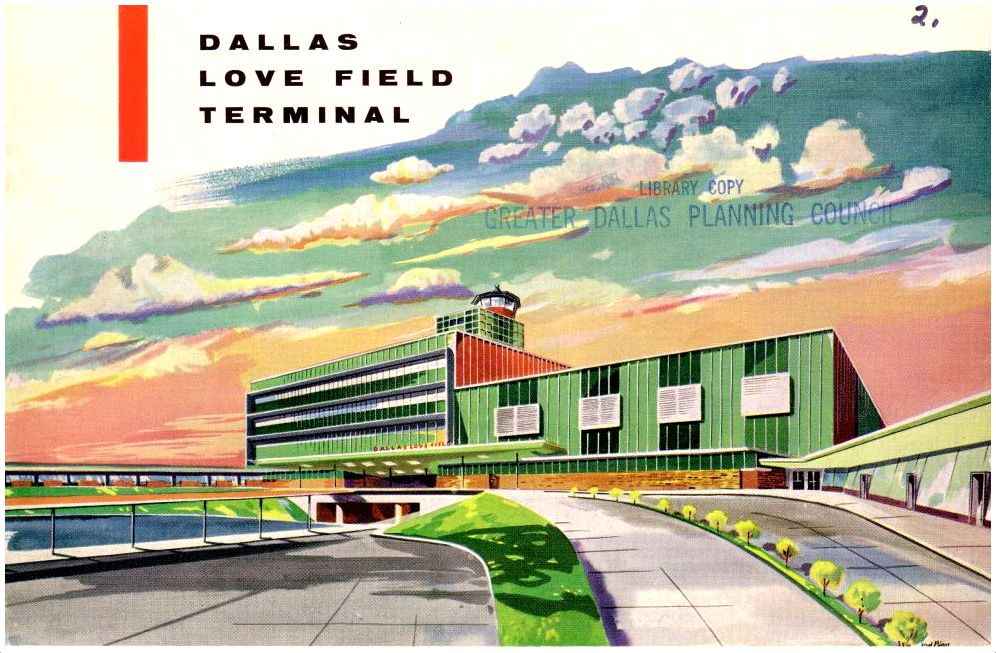
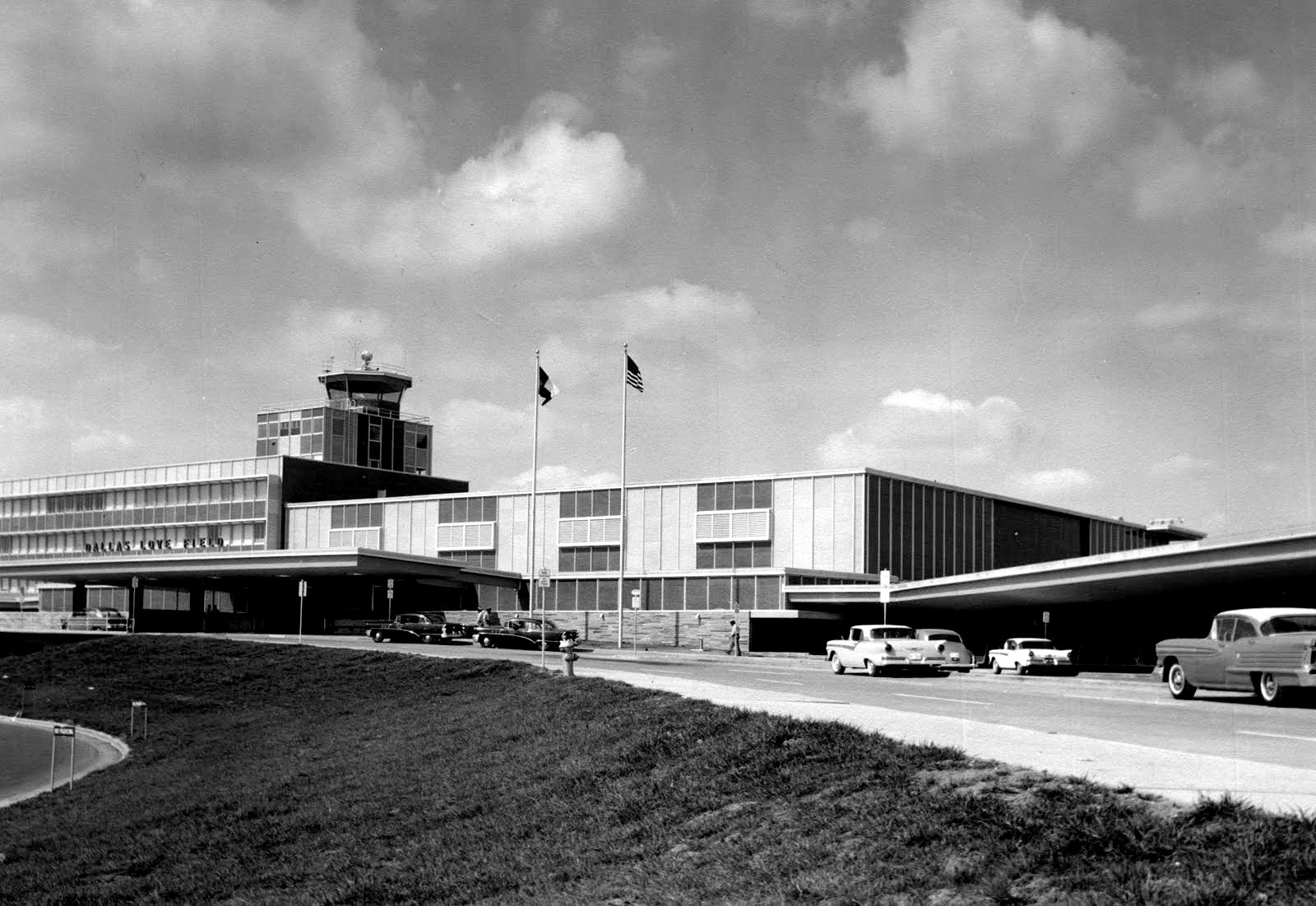
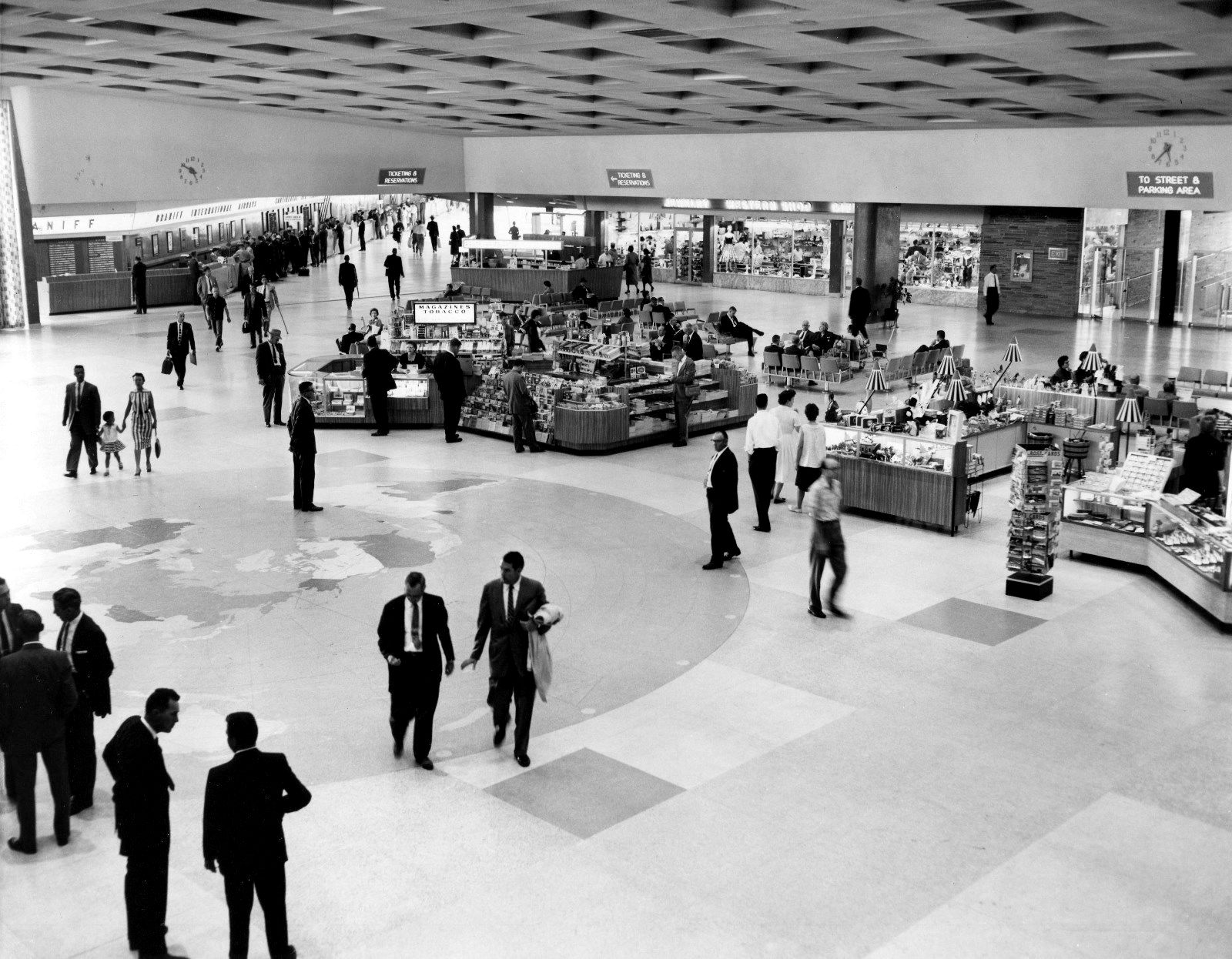
Love Field, The Super-Cool 1950s Era

love-field_1957Welcome to Dallas Love Field!

by Paula Bosse

Above, fantastic drawing, 1957.

Below, fantastic photo, 1957.

love-field_terminal_1957

And, below, fantastic-er photo. 1959. Just too cool.

love-field_1959_LARGE

***

Sources & Notes

Top two images completely lifted from a blog post by architect Jacob Haynes, here.

Bottom image from … somewhere else, long forgotten.

*

Copyright © 2015 Paula Bosse. All Rights Reserved.

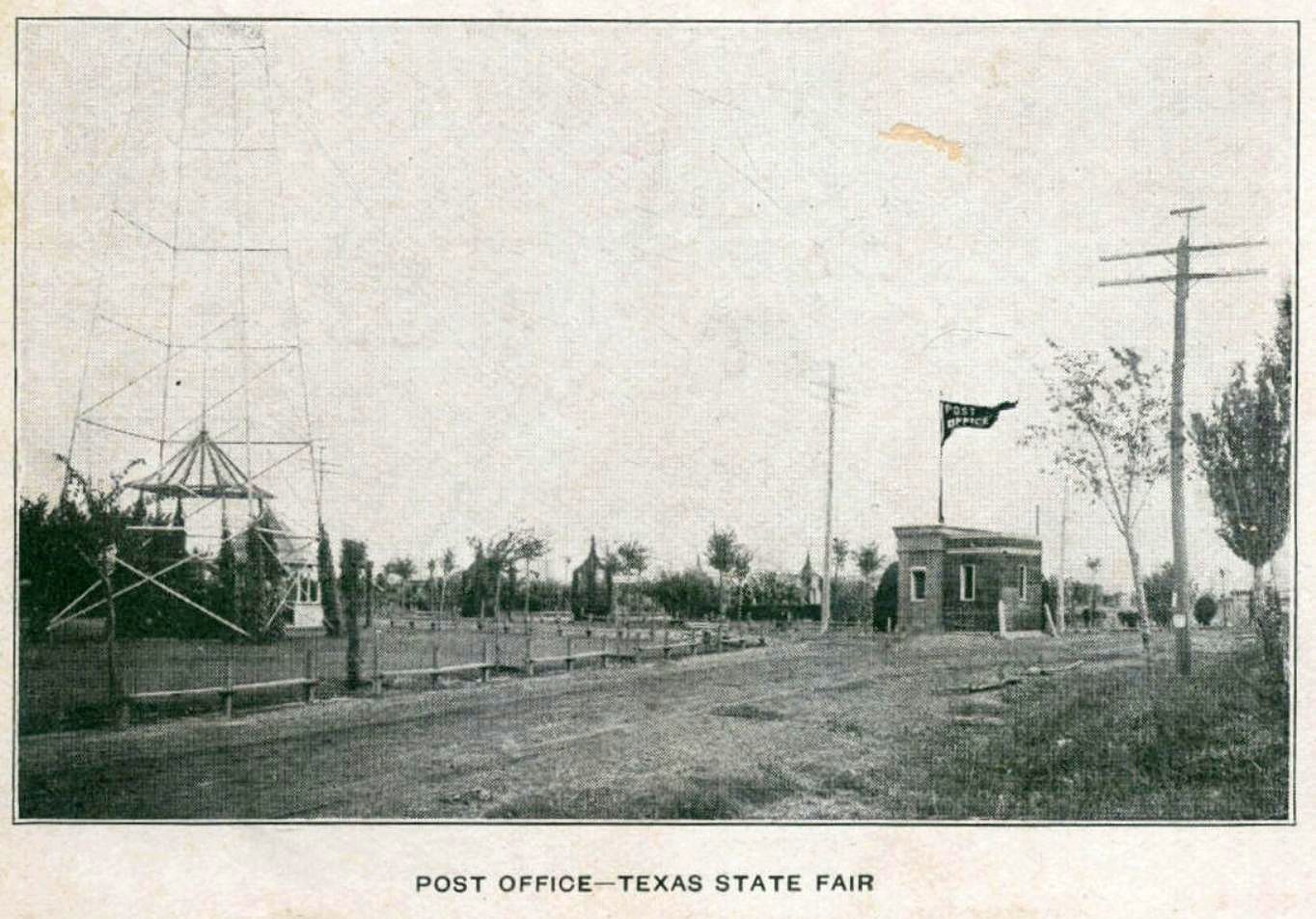
A Post Office on the Fairgrounds?

tx-state-fair_post-office_postcardTeeny-tiny post office at Fair Park… (click for larger image)

by Paula Bosse

I’m not really sure about this. It’s a postcard with a photograph captioned “Post Office — Texas State Fair” on the front, and “Missouri, Kansas & Texas Ry. Co.” printed on the back.

mkt_post-office-back

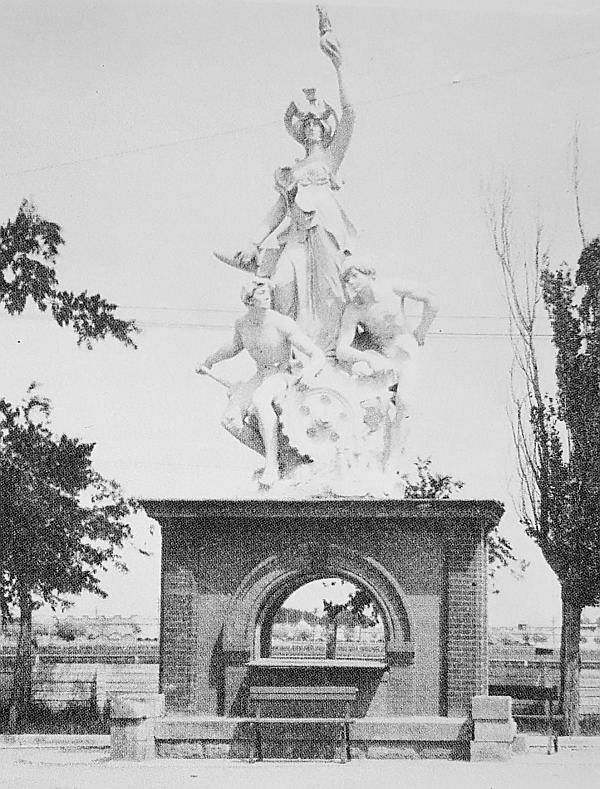
Was there a post office on the fairgrounds? After much googling, I came across a photo of a huge statue atop an arch in the book Fair Park by Willis Cecil Winters. Winters writes that this masonry arch […] served the fairgrounds as a post office.” I’m not sure how that worked, but it’s interesting.

fair-park_arch_statuary_post-office_dallas-rediscovered

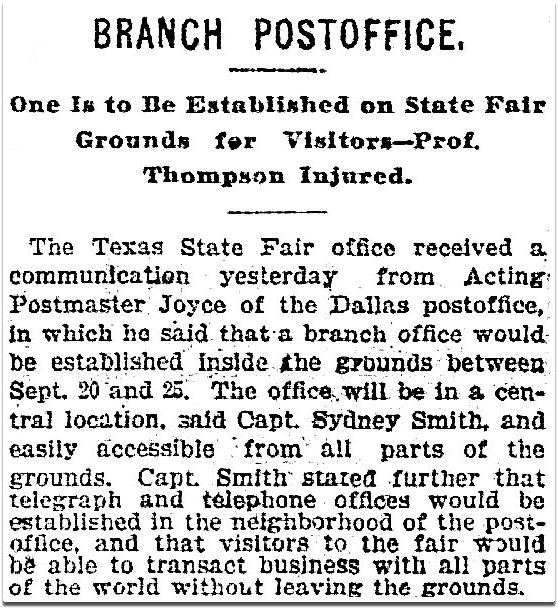
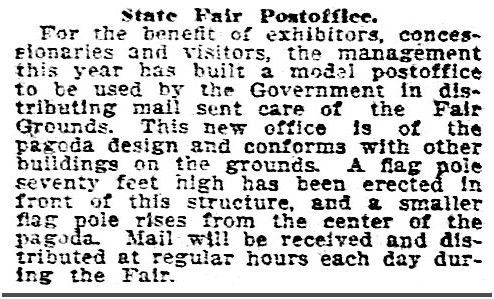
I did find a few mentions of a post office on the grounds of the state fair. Seems that it was a fairly standard temporary fixture on the fairgrounds — not only was it a post office branch that served those who worked the fair, it was also a one of the many features (along with huge steam-powered engines, restaurants, and telegraph and telephone service) that made the fairgrounds a self-contained mini city of sorts:

[I]t is no longer necessary for those doing business at the fair grounds to come down town, as the grounds constitute a completely appointed modern city, with all connection with the outside world. (Dallas Morning News, Sept. 25, 1901)

(Click clippings to see larger images.)

post-office_fairgrounds_dmn_091799
DMN, Sept. 17, 1899

post-office_fairgrounds_dmn_092501
DMN, Sept. 29, 1901

post-office_fairgrounds_dmn_091103
DMN, Sept. 11, 1903

state-fair_post-office_dmn_100408
DMN, Oct. 4, 1908

And now I know.

***

Top photo is from eBay (where this postcard is currently waiting for bids, here).

Photo of the Fair Park sculpture was taken in 1910. The Dallas Historical Society photo is captioned thusly by William L. McDonald in his book Dallas Rediscovered: “‘Progress,’ a sculptural monument to the promise of the age of technology which disappeared mysteriously just before the 1936 Centennial.” (THAT sounds like an interesting story!)

About the only mention I could find of the “colossal statuary that spans the driveway near the grand stand of the race track” (DMN, Oct. 15, 1905) was this short mention in a News article:

fair-park_arch_statuary_dmn_091505
DMN, Sept. 15, 1905

Want to know what the “Act of Congress” mentioned on the back of this “privately printed” postcard means? See here. Kind of interesting. And the info seems to indicate that the postcard above was printed between 1898 and 1901.

Click pictures and clippings to see larger images.

*

Copyright © 2015 Paula Bosse. All Rights Reserved.