Flashback : Dallas

A Miscellany: History, Ads, Pop Culture

Crossing the Trinity River Viaduct — 1946

streetcar-crossing-trinity_1946-denverpublibStreetcar on the Trinity River Viaduct (click for larger image)

by Paula Bosse

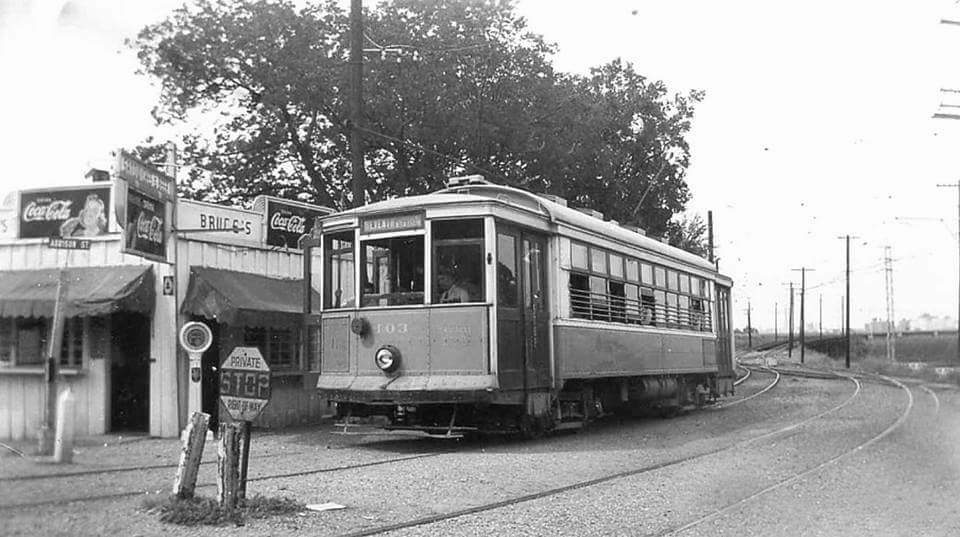
A few days ago I posted a photograph of a streetcar pulling into Oak Cliff, having just crossed the Trinity River Viaduct (link below). In this photo, we see what streetcars of the period looked like actually crossing the viaduct.

***

Photo by Robert F. Richardson, taken on June 5, 1946. From the Western History/Genealogy Dept., Denver Public Library, viewable here.

Photos of these double-ended streetcars taken from a distance present a bit of a Pushmi-Pullyu problem in determining which direction they’re heading, but if you enlarge the photo at the Denver Public Library link just above, you can see the silhouette of the operator at the eastbound end of the car, driving the car toward Dallas. UPDATE: I’m wrong! The car is moving toward O.C., not Dallas! That motorman silhouette is a figment of my imagination! See the comments below for tips on how an amateur like myself who’s never actually seen a streetcar can tell which direction one is moving. (Thanks, Bob and Bob for the correction!)

Streetcars ran back and forth across the Trinity River on a special trestle just south of the Oak Cliff Viaduct/Houston Street Viaduct. It had been in use since 1887 (through various renovations) and was demolished in the early 1970s to build the present-day Jefferson Street Viaduct. The streetcar shown is from the Dallas Railway & Terminal Co. fleet.

My previous post mentioned above, “Waiting for a Streetcar on a Sunny Winter Day in Oak Cliff — 1946,” contains a fantastic photo taken by the same photographer, four months earlier, showing people waiting for the approaching streetcar just after it’s crossed the river; that photo can be seen here.

*

Copyright © 2014 Paula Bosse. All Rights Reserved.

When Halloween In Dallas Was Mostly “Trick” and Very Little “Treat”

halloween-trick-or-treat

by Paula Bosse

Dallas used to have some pretty bad Halloweens. Way more “trick” than “treat.” The word “riot” was used frequently to describe the typical Halloween night goings-on, when thousands of people clustered downtown and did unsavory things (such as drinking, fighting, pick-pocketing, mugging, and being generally obnoxious), while out in the “suburbs” (meaning far-flung locales such as East Dallas and Oak Lawn), marauding bands of young “pranksters” were keeping themselves busy breaking things and setting things on fire. Like kids do. Each Halloween, every policeman was called in for duty — only those in their sickbeds were exempt.

The worst of these Halloweens seemed to happen in the 1930s. Elm, Main, and Commerce, between Lamar and Harwood, were cordoned off from traffic. This is where upwards of 25,000 revelers would slowly cruise up and down the streets, causing mayhem and inflicting occasional bodily injury (much like the notorious Texas-OU weekends of later years). Even though the area was off-limits to automobile traffic, the streetcars still ran, and the poor drivers must have dreaded that night each year and steeled themselves for the worst, as if heading into battle.

Apparently Dallas revelers had a signature tradition, and it was to carry large wooden paddles — sometimes as large as canoe oars — and to swat people in the crowd on their backsides, usually women. At some point women also began to carry paddles, and they did their fair share of swatting, too. It was a paddling free-for-all.

1935 was a particularly noteworthy year, as it was the first Halloween after the state of Texas had voted to repeal Prohibition. Yes, people were drinking. And paddling. Sounds like a bad combination.

Below is a list of just a few of the reported instances of vandalism and “high-spiritedness” which routinely plagued the city every Halloween:

  • Broken streetlights
  • Broken windshields
  • Broken everything
  • Flooded streets from opened fire hydrants
  • The throwing of rocks
  • The throwing of eggs and rotting fruit
  • The throwing of stink-bombs
  • The throwing of WASHTUBS (!)
  • The setting of fires, both large and small
  • The malicious uprooting of shrubbery
  • The driving of cars on sidewalks
  • The reporting of false alarms to fire stations
  • Random gunfire
  • Occasional mysterious explosions
  • Extremely loud noise
  • Smoke
  • The overturning of outhouses
  • The soaping of windows
  • The breaking of windows
  • The breaking of soaped windows
  • The soaping of streetcar tracks
  • And the unsuccessful attempt one year by a small band of aspiring shake-down artists to “extort” money (rather than candy) from their eye-rolling neighbors by foregoing the chant of “Trick or Treat!” and demanding “Dime or Damage!”

In 1939, an intoxicated man who was “playfully threatening people with a knife” was playfully arrested.

In 1935, there was a huge mud-fight in Oak Lawn at Newton and Throckmorton which involved over 100 boys. Like greased pigs, an adrenaline-fueled, mud-encased 10-year old running from beleaguered and hopelessly out-numbered policemen — who, quite frankly, had bigger fish to fry that night — were almost impossible to catch. Spectators and passersby did not escape unscathed. Except for the dry cleaners the next day, Oak Lawn was not amused.

And in 1936, during the Texas Centennial, a policeman was suspended and demoted after an incident of “horseplay” at Parry and Exposition in which he had been shocking passing pedestrians by poking them with the end of a walking stick that had been hooked up to the battery of a police motorcycle. He got into trouble because one of his victims was a young woman who had been standing on wet pavement when the electrified stick touched her, resulting in a more-powerful-than-expected shock. She lost consciousness, fell to the ground, and hit her head on the sidewalk. Luckily, she recovered quickly and even requested that the officer not be punished, but the police chief was not so forgiving. He was understandably livid, especially when he discovered that a number of motorcycle cops had been doing the same thing. One imagines there were several new orifices opened up amongst the force in the days that followed.

But the pièce de résistance was in 1920 when several boys “anchored a block and tackle around a two-story house in Cockrell Hill and hoisted a wagon and a team of terrified mules up in the air” (DMN, Oct. 27, 1963). That right there required impressive organizational planning and a certain amount of entry-level engineering skill.

Eventually things settled down. By 1949 officials had finally put an end to the swarming, surging masses downtown. People began to celebrate Halloween with candy and costumes and haunted houses and parties. In 1966, a policeman was asked if things had improved from those earlier dark days:

There’s been an extensive change for the better in recent years. Police almost never get a call to let a cow out of a school house anymore. (DMN, Oct. 27, 1966)

And Halloween became more “treat” than “trick.” Good news for the City of Dallas. And for its mules. Bad news for the makers of Ivory soap and thick wooden paddles.

***

Sources & Notes

Selected tidbits gleaned from the frenzied coverage in The Dallas Morning News archives:

  • 1935: “Much Damage Done By Hoodlums During Halloween Rioting” (DMN, Nov. 1, 1935)
  • 1936: “Young Woman Victim of Police Prank Asks Jones Pardon Men” (DMN, Nov. 3, 1936)
  • 1939: “Witches Stage Costly Carnival For Halloween; Roughness Breaks Out In Downtown Crowd; Police, Firemen Busy” (DMN, Nov. 1, 1939)

Other Flashback Dallas posts on Halloween can be found here and here.

Happy Halloween!

*

Copyright © 2014 Paula Bosse. All Rights Reserved.


Halloween Isn’t Only About the Candy

halloween_e-m-kahn_dmn_102525E. M. Kahn ad, 1925

by Paula Bosse

A few Halloween ads from the 1920s. The top ad for a snazzy “Halloween suit” is something of a whimsical departure for the legendary men’s clothing store, E. M. Kahn (est. 1872): it was an advertisement for children’s Halloween costumes — “printed in orange and black, the proper colors.” (I’d snap it up, kid — for two bucks, it’s the cheapest thing you’re ever going to find at E. M. Kahn.) “Suit includes pointed hat.”

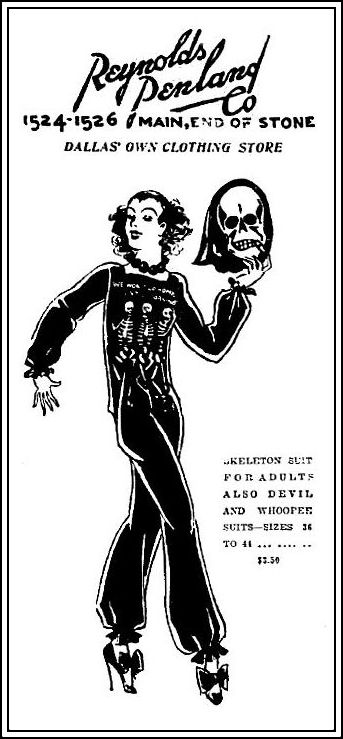
But Halloween isn’t just for kids. Below, a Reynolds Penland ad for adult costumes, which include skeleton, devil, and “whoopee” suits. No pointed hats, but there are accessories — just look at those shoes!

halloween_reynolds-penland_dmn_102729Reynolds Penland Co., 1929

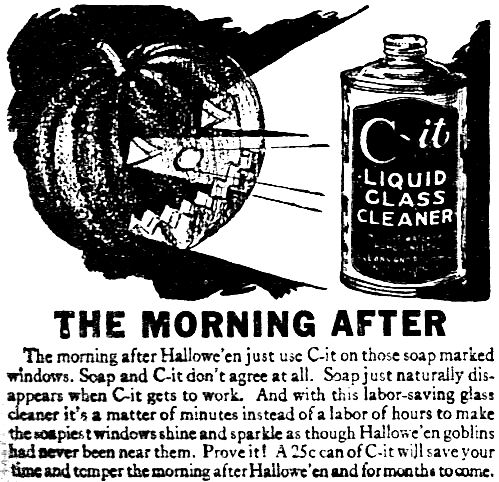
And lastly, an ad for glass cleaner. Dallas had a MAJOR problem with unruly “goblins” soaping windows — especially downtown — and this product probably came in pretty handy on “the morning after.” I bet this was the busiest time of the year for the C-It Liquid Glass Cleaner company — their make-it or break-it sales period. Halloween might well have been their Black Friday. …Or rather their Orange and Black Friday (because those are the “proper colors”).

halloween_glass-cleaner_dmn_1031251929

*

Copyright © 2014 Paula Bosse. All Rights Reserved.


Waiting For a Streetcar on a Sunny Winter Day in Oak Cliff — 1946

jefferson-addison_denver-pub-lib_1946Addison St. & Jefferson Blvd. in Oak Cliff — Feb., 1946 (click for larger image)

by Paula Bosse

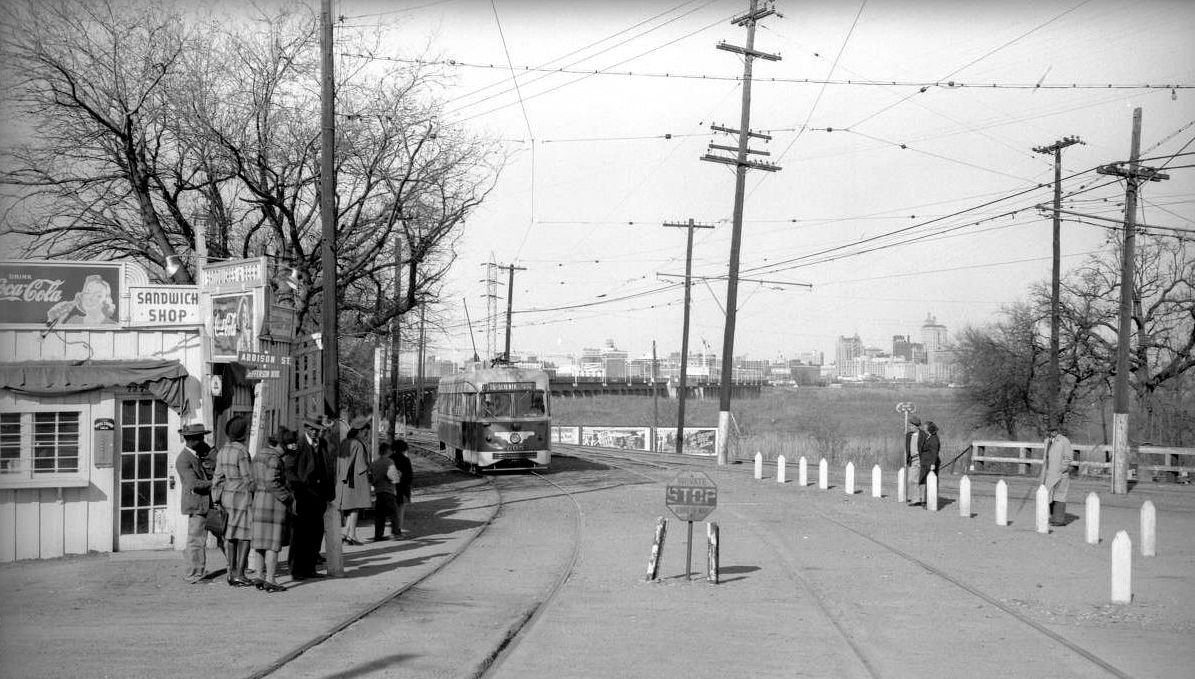
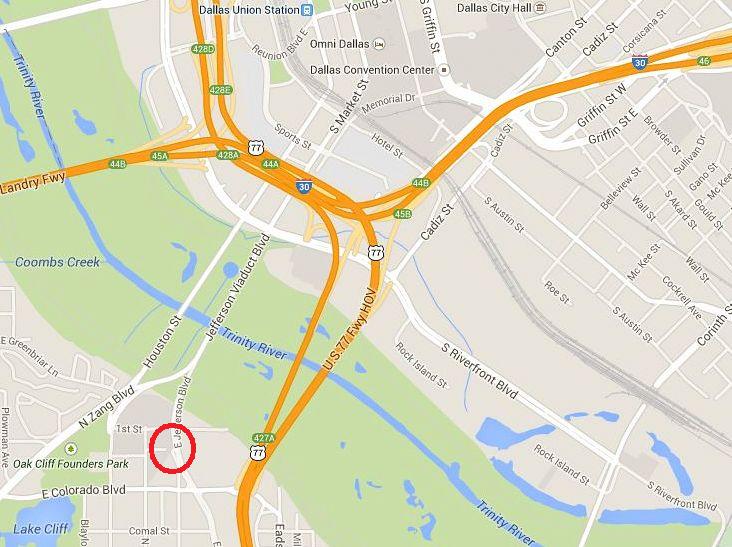
I love streetcars, photos from the 1940s, fashions of the ’40s, and views of the Dallas skyline. And here are all of these things, in one great, GREAT photograph. We see people waiting for the streetcar on a sunny Saturday in February, 1946 — in Oak Cliff, at E. Jefferson Blvd. and Addison St. The people at the left (outside Helen’s Sandwich Shop) are about to catch the car that has just crossed the Trinity River and head into Oak Cliff; the people on the right are waiting to go to Dallas. The Oak Farms Dairy is just out of frame at the top left, and Burnett Field is just out of frame at the bottom right. The Dallas skyline looms across the Trinity.

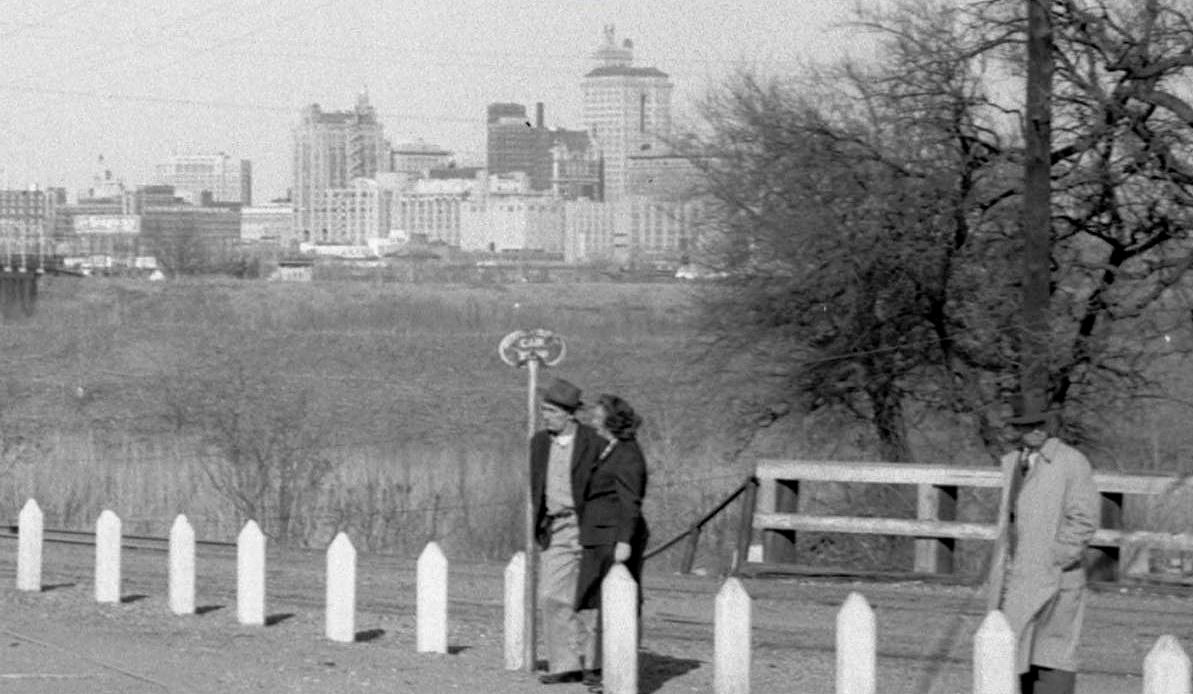
Below, I’ve zoomed-in a bit and cropped this fantastic photograph into two images to show, a bit more intimately, details of an ordinary moment in an ordinary day of ordinary people. What once was such a commonplace scene — people waiting for a streetcar or interurban — now seems completely out of the ordinary and quaintly nostalgic. (Nostalgic on its surface, anyway — not shown is the interior of the car which had specific black-only and white-only seating areas for passengers.) (As always, click for larger images.)

jefferson-addison-det1

jefferson-addison-det2

***

Photo by Robert W. Richardson, taken on February 2, 1946. From the Western History/Genealogy Dept., Denver Public Library, viewable here. More on rail enthusiast, writer, photographer, and preservationist Bob Richardson, here.

The same stop can be seen in this undated photo (source and photographer unknown):

oak-cliff-streetcar-stop_addison-jefferson

Streetcars ran back and forth across the Trinity River on a special trestle just south of the Oak Cliff Viaduct/Houston Street Viaduct. It had been in use since 1887 (through various renovations) and was demolished in the early 1970s to build the present-day Jefferson Street Viaduct.

To see a photo by the same photographer showing a streetcar actually on the trestle over the Trinity, see the post “Crossing the Trinity River Viaduct — 1946,” here.

Streetcar enthusiasts are incredibly, well, enthusiastic, and they keep precise track of where cars operated over their life spans. The car from the photo — Dallas Railway & Terminal Co. car #605 — was a PCC streetcar, built by the Pullman-Standard company in 1945; it was sold to the MTA in 1958 and was in operation in Boston for many years. See cool photos of the very same streetcar in operation over the years in both Dallas and Boston, here (scroll down to “605”). To see what the retired car looked like in 2002 — a bit worse for wear — click here.

A distinctly less-wonderful view from roughly the same location, seen today, is here.

map_jefferson-addison_googleGoogle

Click pictures for larger images.

*

 Copyright © 2014 Paula Bosse. All Rights Reserved.

Simulcasting the World Series In Dallas In the Days Before Radio, Via Telegraph

world-series_dmn_100422-smThe later version, for radio listeners, 1922…

by Paula Bosse

It’s 1912. You’re a huge baseball fan, and the World Series is about to begin — New York vs. Boston! But you live in Dallas, a million miles away from the action. You can’t wait for the results in the paper the next day because you’re an impatient S.O.B., and radio won’t be introduced for another ten years. Do you panic? No! Because you live in a big city with a taste for new technology, and the Dallas Opera House is going to present a sort of early simulcast of the games on a “mammoth automatic score board.” Your sports prayers have been answered!

1912_world-series_dmn_100612DMN, Oct. 6, 1912

You lean back in your comfy theater seat and smoke your smokes in plush and civilized surroundings as each play is sent by telegraph to Dallas from the ballpark back East where the game is being played RIGHT NOW, hundreds of miles away. The telegraph operator in Dallas will relay the play-by-play information to personnel in the theater who will somehow do something to some sort of “automatic electric board.” And, according to promoters of these “reproductions” of baseball games, you’ll feel like you’re right there in the thick of the action. You’ll “see” the game played before your eyes!

I’ve read several articles about these boards and these reproductions, but I can’t for the life of me figure out how it worked. I assume there was a large traditional scoreboard on stage that lit up, keeping track of the score, runs, outs, etc. But apparently there’s more, and I just can’t picture it. Here’s a somewhat confusing description of what happened during these productions:

WORLD SERIES WILL BE SHOWN AT THE OLD MILL

Manager Buddy Stewart of the Old Mill Theater announced that he secured the New Wonder Marvel Baseball Player Board to reproduce the World Series baseball games. This board is declared the greatest board ever invented for reproducing baseball games. It is not a mechanical board and no mechanical devices are used, and very little electrical appliances are necessary. The games are reproduced by a crew of six experienced baseball players who are carefully rehearsed and each has a part or position to play. No other board is so complete as this. The board does not require sign cards to denote players as in other boards. You see the ball going and do not have to look in any other direction to see what it means.

Spectators will see each play reproduced in less than two minutes after it is made on the playing fields of the World Series as the board is connected with a direct wire to the baseball field, and as fast as the telegraph operator receives the play it is reproduced with as much realism as on the field. The players are seen to run bases, the ball is seen bouncing or soaring to the infield or outfield, and anyone who is familiar with baseball will know just exactly what is happening on the field by the plays made on the board with very little left for imagination.

Every hit, run, error, strike or ball, the number of strikeouts, or balls made by pitchers, or the number of hits, runs or errors made by the players is always prominently shown on the board which makes it [un]necessary for individual scoring during the progress of the game. (DMN, Oct. 3, 1920)

Doesn’t really help much. It sounds as if people are on the stage acting out each play. That would be weird. These “reproductions” of World Series games were quite popular in Texas (and probably elsewhere) for at least 15 years. If anyone reading this has a photo or diagram of one of these vaunted Marvel scoreboards, I’d love to see it!

*

An earlier description of the 1912 Opera House reproduction sounds more like an audience watching a baseball game on a giant Lite-Brite “score board.”

1912_world-series_dmn_100812DMN, Oct. 8, 1912

The trick to keeping the telegraph operators calm and on-their-toes during a lengthy baseball game? Make sure they have no interest in the game.
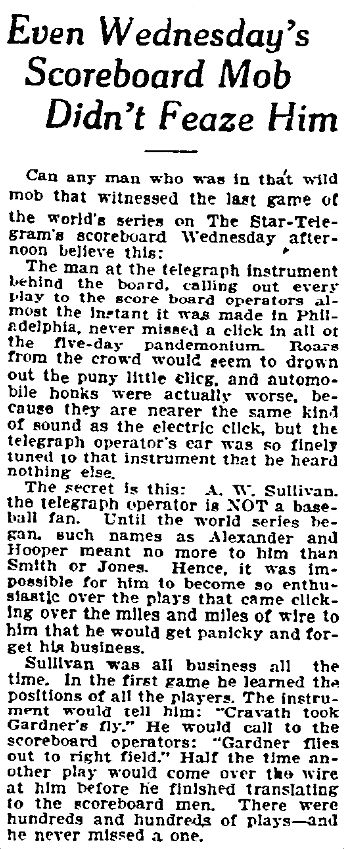
1915_world-series_FWST_101415Fort Worth Star-Telegram, Oct. 14, 1915

Fort Worth was also getting in on the action. And they had celebrities — people like Clarence (Big Boy) Kraft and Ziggy Sears (who I’m going to assume have something to do with baseball). I’m not sure what these celebrities were doing exactly, but whatever it was, they were there doing it.

1921_marvel-score-board_FWST_100221FWST, Oct. 2, 1921

These theater programs weren’t for everyone, though. If you couldn’t take the time out of a busy work day to swan over to a theater to leisurely witness one of the early “reproductions” (or if the admission price was too steep for your budget), you could always ring up the operator to have her tell you the current score:

automatic_dmn_101112-world-series
DMN, Oct. 11, 1912

These things seemed to be a popular annual event, but in 1922, something more technologically advanced than the Marvel board appeared on the scene: radio! WFAA and WBAP began broadcasting in 1922, and, suddenly, following sports became a whole lot easier. In something of a transitional technology, there was the outdoor board as described below. The games were not only broadcast live on WFAA, but The Dallas Morning News (WFAA’s parent company) also erected one of those old-fangled “electric boards” out on the street so that passersby could keep up with the scores. (Portable transistor radios were decades and decades away.)
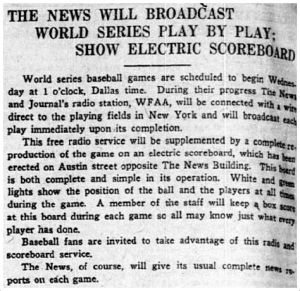
1923_world-series_dmn_101023DMN, Oct. 10, 1923

It was surprising to see that the “Marvel score boards” were still being used as late as 1926 (Yankees vs. Cardinals, at the Capitol Theater). Every baseball fan worth his salt should have had his own radio by then so he could listen to the World Series in the comfort of his own home and curse and cheer as loudly as the vicissitudes of the game demanded. Eat my dust, Marvel board! Radio changed everything, and radio was here to stay.

*

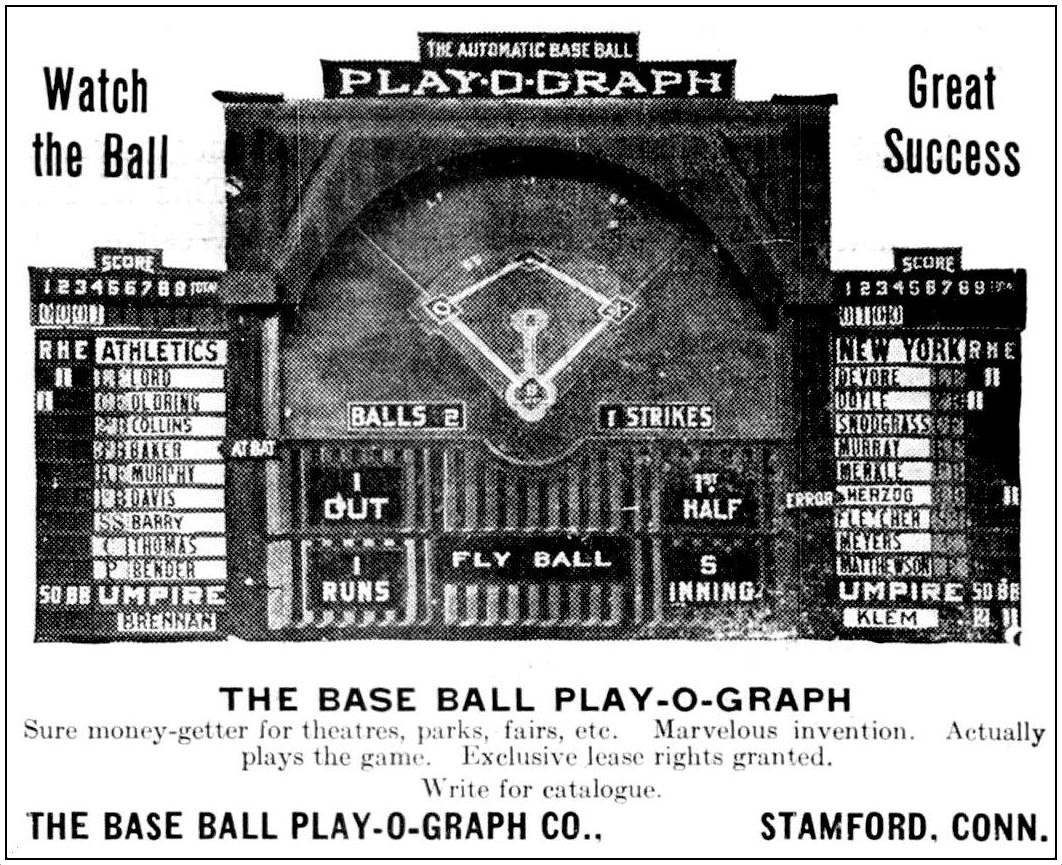
UPDATE: Thanks to Kevin’s link in the comments below, I can share this GREAT article from Uni-Watch.com about another of these boards called the Play-o-Graph: “Photography of Playography by Paul Lukas — it answers all my questions, and it even has photos (and links to photos) of crowds watching the boards. He also links to a 1912 article, “The Automatic Baseball Playograph”  by J. Hunt, in the Yale Scientific Monthly which describes how the board works and has this photo:

play-o-graph_yale-scientific-monthly_1912The “Play-o-Graph,” 1912 (click for larger image)

And, for completists, here’s an ad for the Play-O-Graph, from 1913:

baseball-simulation_play-o-graph_billboard_032213Billboard, Mar. 22, 1913

Makes a bit more sense now! Thanks, Kevin!

***

Sources & Notes

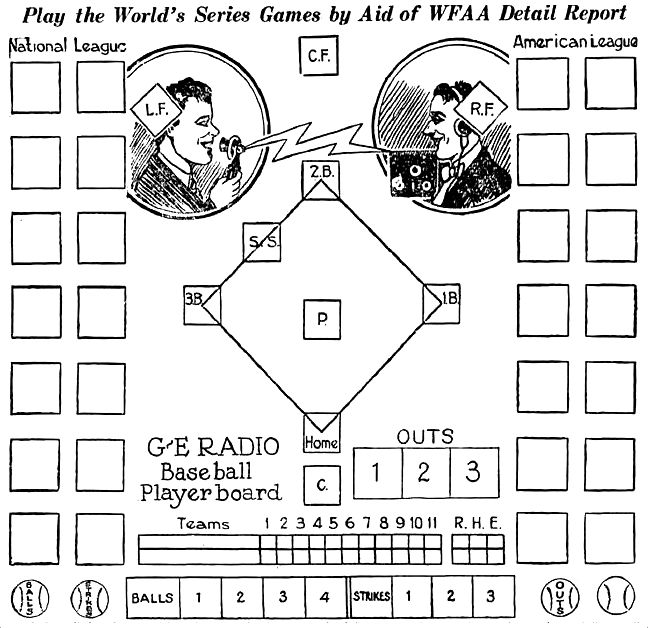
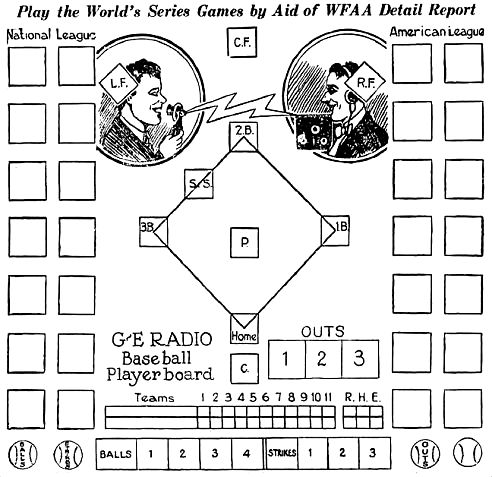
The top image is the “G.E. Radio Baseball Player Board” — a sort of home version of the big scoreboards used in theaters, printed for WFAA listeners in The Dallas Morning News on Oct. 4, 1922. The instructions are in a PDF, here. And feel free to print one out and use it while you watch the Series this year. Still works in the 21st century!

For an article on listener response to the successful first broadcast of the World Series by WFAA radio (listeners picked up the signal in England!), see the DMN article from Oct. 6, 1922 in a PDF, here.

And because they have such great names, you might want to know who Clarence “Big Boy” Kraft and Ziggy Sears were. If you’ve read this far, you owe it to yourself. “Big Boy,” here; Ziggy, here.

*

Copyright © 2014 Paula Bosse. All Rights Reserved.

“Dear Folks: Dallas’ New Filtration Plant Is Simply Glorious! Weather Great! Wish You Were Here!”

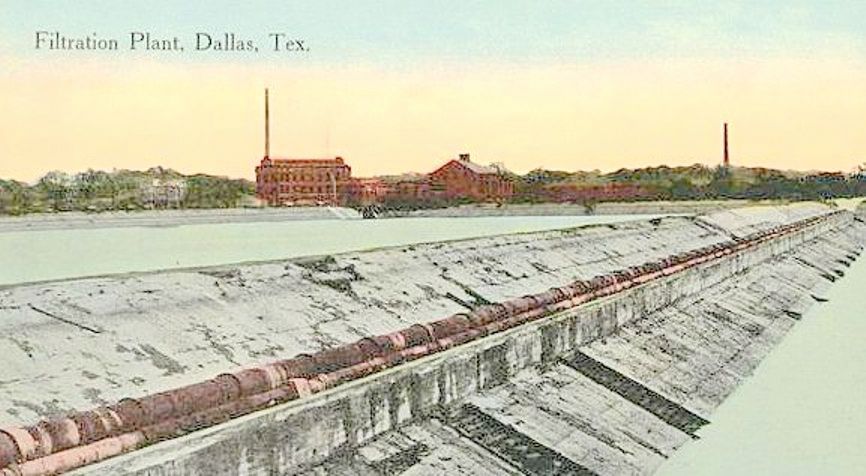
filtration-plant_c1916_lgA famed Dallas beauty spot, circa 1916

by Paula Bosse

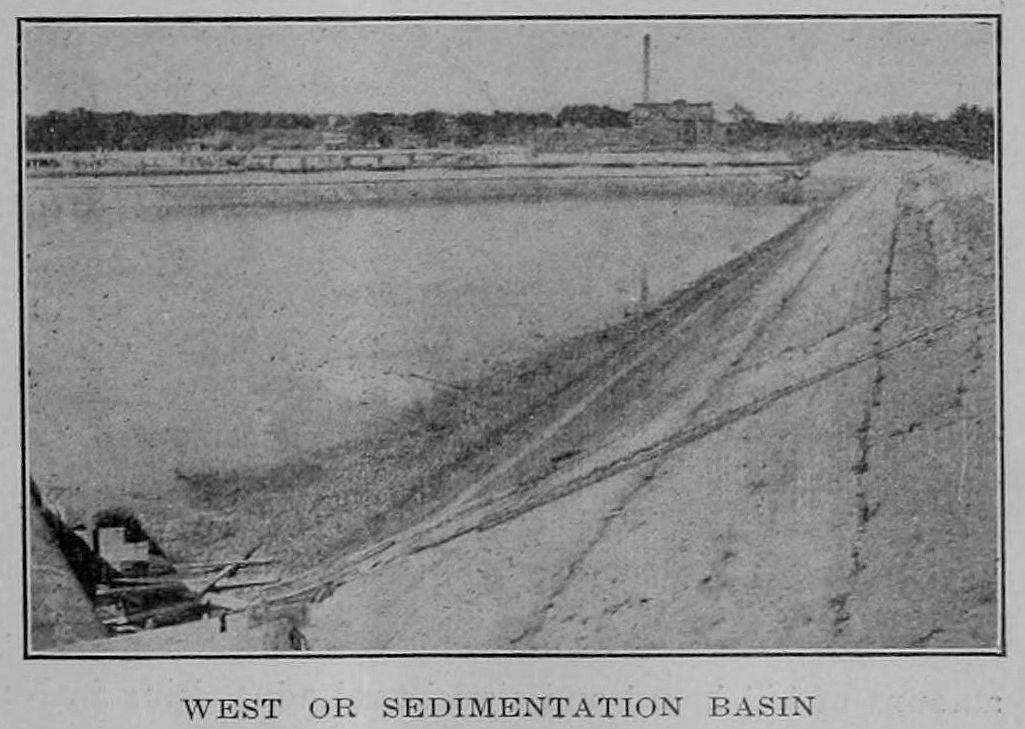
Above, a postcard from a lady visiting Dallas in 1916, sent to her “dear friend” back home in Wilmette, Illinois. The card has a short, chirpy “hello, hope everyone’s well, be home in a couple of weeks” type of message on it. But there is no mention of the fact that the picture on the other side shows a water filtration plant. …A water filtration plant. Dallas was a big and impressive city in 1916, and there were a lot of beautiful postcards to choose from, so one wonders why she chose THIS one. I’m not even sure why there would be a picture postcard of a water filtration plant in the first place. Maybe to make municipal workers in other cities jealous. “Dallas has a magnificent state-of-of-the-art sedimentation basin, and you don’t!” But, actually, it’s kind of a cool postcard.

This water filtration plant and pumping station was located along the Trinity (before the river’s course was changed), at what is now Oak Lawn and Harry Hines (now home to the Sammons Center for the Arts, a designated historic landmark which contains part of the old Turtle Creek Pump Station).

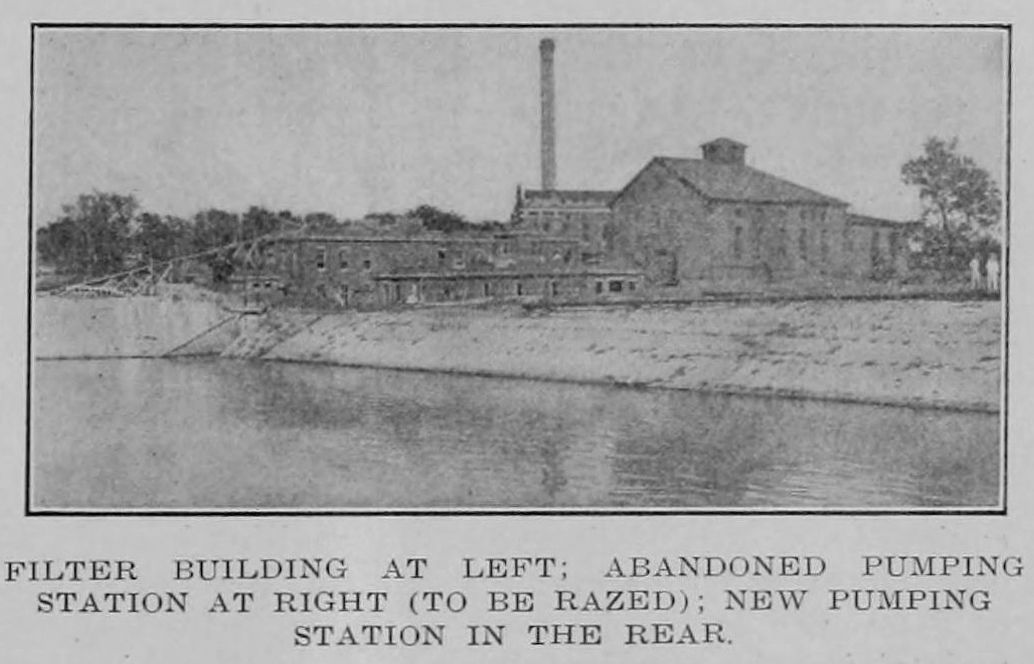
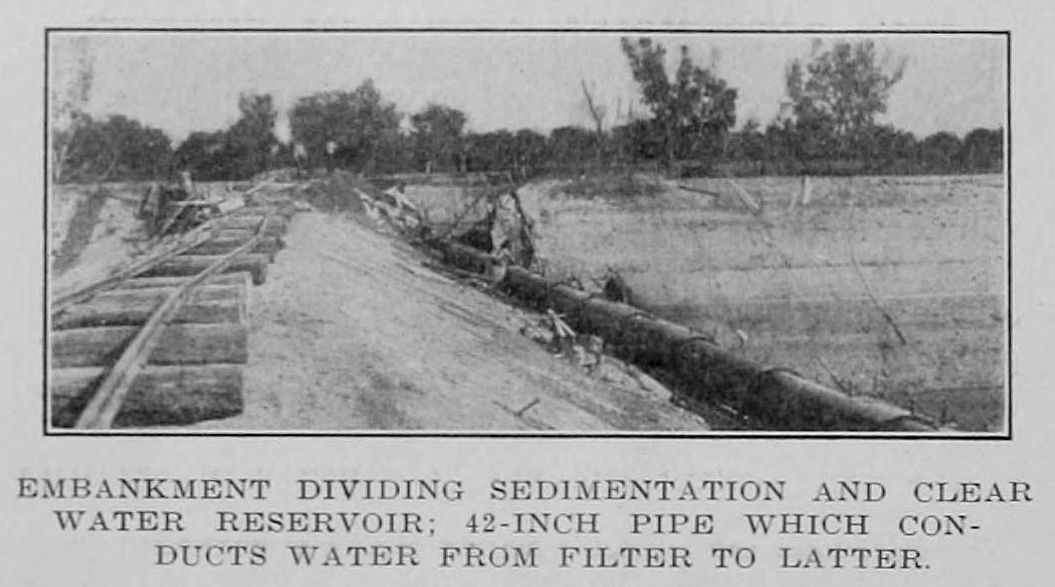
The filtration plant was built in 1913. Here are a few photos of its construction (click to see larger images):

water-filtration_photo1_102313

water-filtration_photo2_102313

water-filtration_photo3_102313

A large-capacity water filtration plant is a necessary thing for the city to have, certainly, but it still doesn’t explain why Mrs. [Illegible] was sending a postcard of it to her friend in Illinois.

***

Sources & Notes

Postcard of the filtration plant (wow, I’ve typed that a LOT today) from a site that sells postcards. It shows the reverse of the card with the hard-to-read message, here.

Photos of the filtration plant (…there it is again…) from the Oct. 23, 1913 issue of Municipal Journal, here. The entire article should be of interest to people who are interested in … this sort of thing.

Even MORE about this plant, along with diagrams, photos, and an in-depth analysis on its operation, can be found in the July 16, 1914 issue of Engineering News, here.

History page for the Sammons Center is here.

A couple of other early photos of the Turtle Creek Pump Station (from 1894 and 1908) can be seen in a previous post — “City Hospital, a Pump Station, and the County Jail — 1894” — here.

*

Copyright © 2014 Paula Bosse. All Rights Reserved.

The Pink Panther-Mr. Peppermint Connection

mr-peppermint_dmn_1961Mr. P. — 1961

by Paula Bosse

I had no idea that the “Mr. Peppermint” theme was by Henry Mancini! It’s from a 1960 movie called “High Time,” which, I have to say, I’ve never heard of. It starred Bing Crosby, Fabian, and Tuesday Weld (I kind of think Bing may have been in it solely for the paycheck). Check out the movie’s main theme music. Sound familiar?

Hearing this brings back a flood of happy memories — an aural version of Proust’s madeleines.

In a recent Los Angeles Times interview, Paul Reubens (aka Pee-wee Herman) had this to say:

“I never met Captain Kangaroo; I probably would have completely freaked out if I met Captain Kangaroo. In fact, when I meet people who are just beside themselves to meet me, I always think they’re reacting like I would react if I met Captain Kangaroo, I was so crazy about that television show as a child.” (LA Times, Oct. 21, 2014)

I ran into Jerry Haynes (aka Mr. Peppermint) several times around town over the years. The first time I saw him, I was in my 20s, and he was doing some sort of promotion (in character) at a store in, I think, Northpark. I was unaware that he would be there, but when I saw him at the top of the escalator, I was shocked. My childhood TV pal right in front of me! It’s a bit of a blur, but I think I giddily foisted myself on him and told him all the things other Dallas kids raised on his show probably told him. I might even have gushed an involuntary “I love you, Mr. Peppermint!” Yikes. I bet he got that ALL THE TIME. He was very sweet and didn’t treat me like a crazy person.

The last time I saw him, he was just Jerry Haynes, shopping for cheese at the Tom Thumb on Mockingbird and Abrams. I didn’t bother him, but I still got a little happy jolt of recognition when I saw him.

And now I find out that the composer who wrote so much of my favorite movie music wrote the music so tied to my childhood. Thanks, Mr. Mancini! Thanks, Mr. Peppermint! Thanks, Mr. Wiggly Worm!

***

Sources & Notes

Quote from Paul Reubens’ Los Angeles Times interview, here.

Wikipedia roundup: madeleines, here; “High Time” movie, here; Henry Mancini, here.

(Thank you, Steve S., for bringing this to my attention!)

*

Copyright © 2014 Paula Bosse. All Rights Reserved.


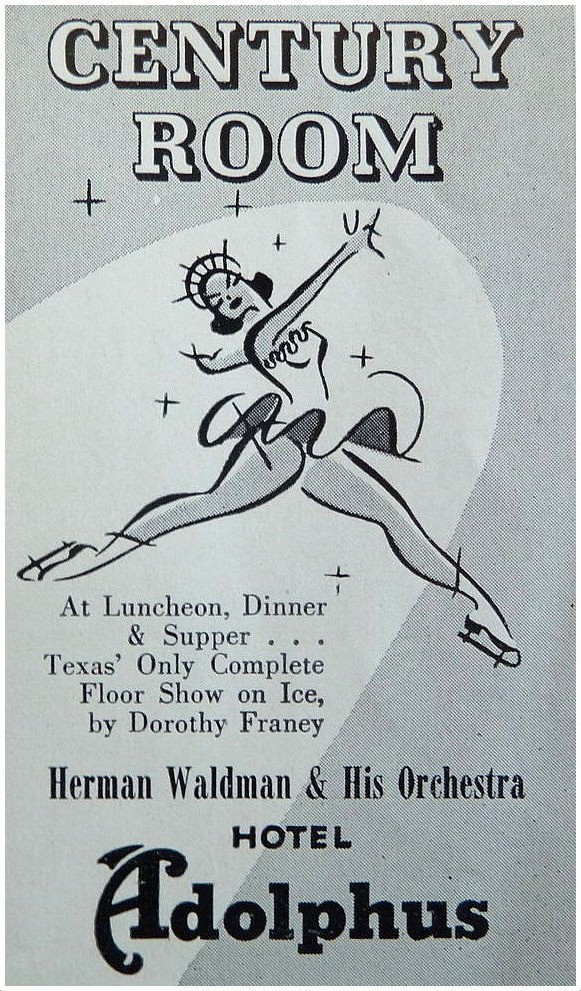
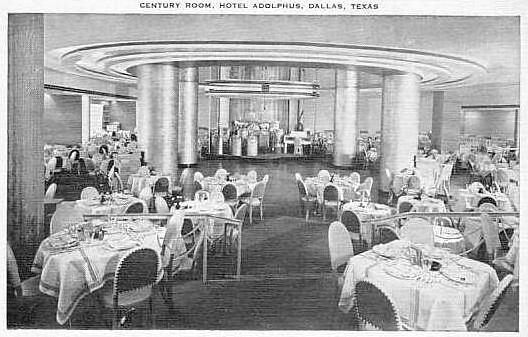
The Century Room’s Retractable Dance Floor

ad-adolphus-hotel_century-room_sm(click for larger image)

by Paula Bosse

If you’re getting all dressed up for a night on the town, you want to make sure you get your money’s worth, entertainment-wise. That’s why you head to the tony Century Room at the swank Hotel Adolphus. Not only is there dining and dancing, there’s also an ice show. Yep, an ice show. When “Texas’ Only Complete Floor Show on Ice” has wrapped up, a dance floor magically covers the ice, and you and your honey can trip the light fantastic to the fabulous strains of Herman Waldman & His Orchestra. Skates optional.

adolphus_hotel_century-room

adolphus_century-room

*

Copyright © 2014 Paula Bosse. All Rights Reserved.

Please Don’t Pull the Daisies

city-park_no-one-allowed-to-pull-flowersCity Park, 1909-ish

by Paula Bosse

Back when Old City Park was merely “City Park.” The sign at the bottom right reads: “WARNING: NO-ONE ALLOWED TO PULL FLOWERS.” Seems a bit brusque. Not even a “please.” Still, one best not.

***

Sources & Notes

Hand-colored postcard with an odd color palette, probably by Weichsel, around 1909.

*

Copyright © 2014 Paula Bosse. All Rights Reserved.

“Wonderful K-BOX” at 1480 On Your AM Dial

kbox-djs“Wonderful K-BOX” jocks atop the Southland Life Bldg.

by Paula Bosse

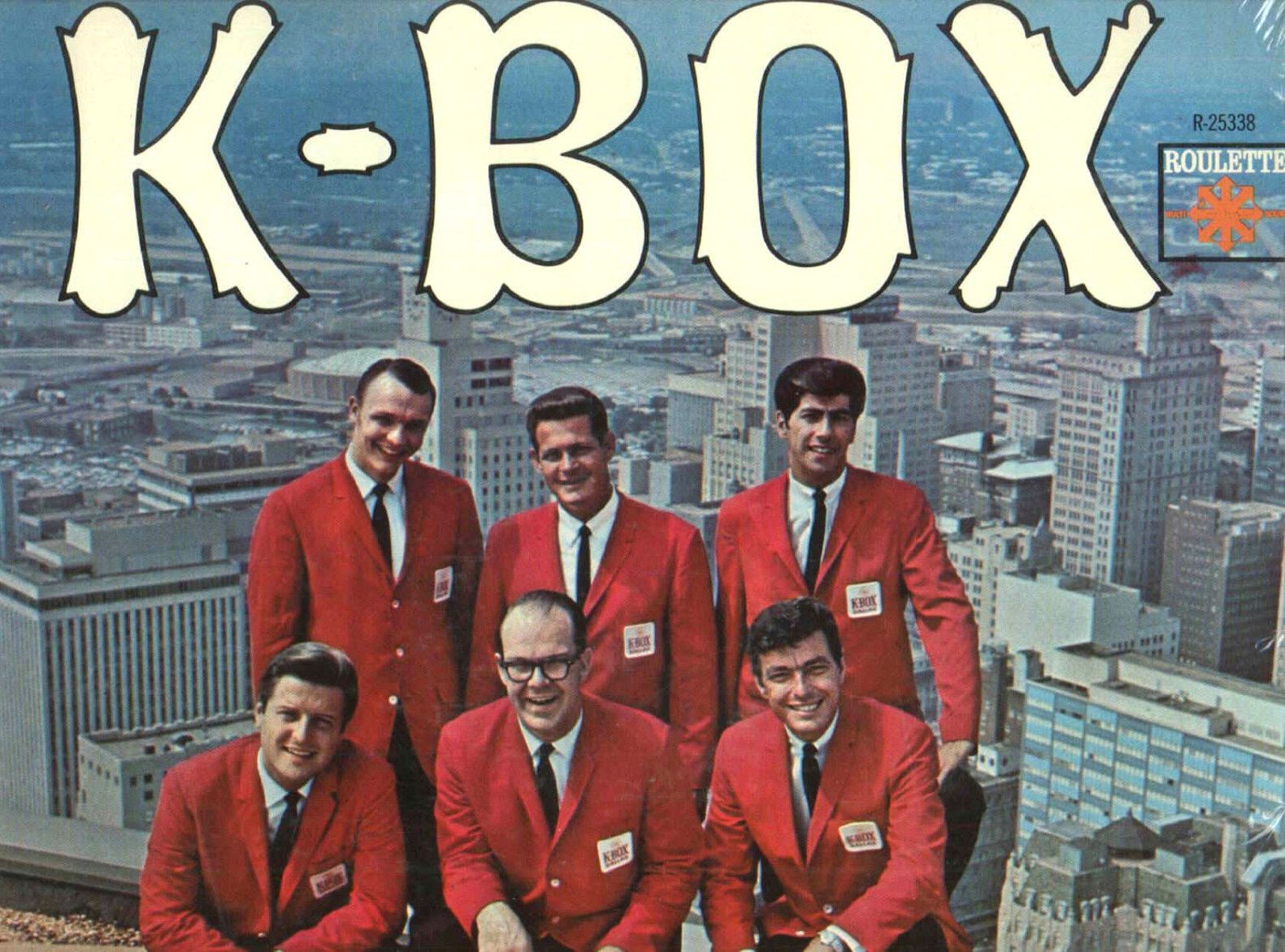
When I was a kid, it seems like KBOX was always on in the background. Always. My father was a huge country music fan, and it was one of the (if not THE) top country stations in town. This was in the ’70s. So it’s a bit of a shock to learn that KBOX had been a Top 40 station in the ’50s and ’60s — in fact, it was the major competitor of top-dog KLIF.

The photo above was shot atop the Southland Life Building in 1966 and appeared on an LP called “Dusty Discs.” On-air personalities shown are (top row) Terry Byrd, Ron Rice, Frank Jolle/Jolley, (bottom row) Dan Patrick, Bill Ward, and Bill Holley.

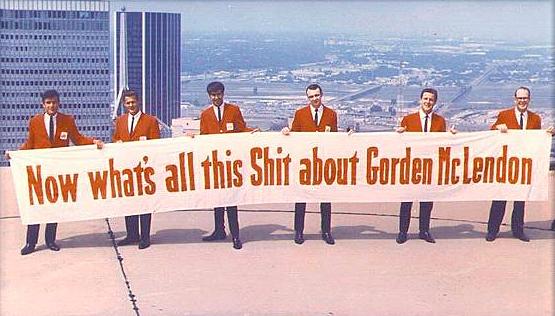
The competition between KBOX (owned by John Box — the “Box” in KBOX) and KLIF (owned by the legendary Gordon McLendon) was fierce. This explains the photo below in which John Box had his DJs hold a special banner during the same photo shoot. Box had this photo printed up and gleefully sent to McLendon as a Christmas card that year (during which KBOX had trounced KLIF in one of the crucial ratings periods). (I’m sure McLendon enjoyed seeing his name misspelled.) AM radio ain’t for the meek.

kbox-mclendon-banner

***

Sources & Notes

Top photo/album cover from eBay.

Second photo from a Frank Jolley site, here. (Jolley’s name is spelled “Jolley” and “Jolle” almost interchangeably all over the internet, so I’m not sure which is correct.)

Absolutely everything you’d ever want to know about KBOX can be found here (and this is just part two of the history!).

BEST OF ALL is this aircheck from 1959, featuring Dan Ingram. It’s crazy. The energy level is exhausting to listen to. They were really pulling out all the stops. (And, hey, you could go see Johnny Cash at the Sportatorium for ONE DOLLAR!) This is great:

 *

Copyright © 2014 Paula Bosse. All Rights Reserved.