Flashback : Dallas

A Miscellany: History, Ads, Pop Culture

The Pink Panther-Mr. Peppermint Connection

mr-peppermint_dmn_1961Mr. P. — 1961

by Paula Bosse

I had no idea that the “Mr. Peppermint” theme was by Henry Mancini! It’s from a 1960 movie called “High Time,” which, I have to say, I’ve never heard of. It starred Bing Crosby, Fabian, and Tuesday Weld (I kind of think Bing may have been in it solely for the paycheck). Check out the movie’s main theme music. Sound familiar?

Hearing this brings back a flood of happy memories — an aural version of Proust’s madeleines.

In a recent Los Angeles Times interview, Paul Reubens (aka Pee-wee Herman) had this to say:

“I never met Captain Kangaroo; I probably would have completely freaked out if I met Captain Kangaroo. In fact, when I meet people who are just beside themselves to meet me, I always think they’re reacting like I would react if I met Captain Kangaroo, I was so crazy about that television show as a child.” (LA Times, Oct. 21, 2014)

I ran into Jerry Haynes (aka Mr. Peppermint) several times around town over the years. The first time I saw him, I was in my 20s, and he was doing some sort of promotion (in character) at a store in, I think, Northpark. I was unaware that he would be there, but when I saw him at the top of the escalator, I was shocked. My childhood TV pal right in front of me! It’s a bit of a blur, but I think I giddily foisted myself on him and told him all the things other Dallas kids raised on his show probably told him. I might even have gushed an involuntary “I love you, Mr. Peppermint!” Yikes. I bet he got that ALL THE TIME. He was very sweet and didn’t treat me like a crazy person.

The last time I saw him, he was just Jerry Haynes, shopping for cheese at the Tom Thumb on Mockingbird and Abrams. I didn’t bother him, but I still got a little happy jolt of recognition when I saw him.

And now I find out that the composer who wrote so much of my favorite movie music wrote the music so tied to my childhood. Thanks, Mr. Mancini! Thanks, Mr. Peppermint! Thanks, Mr. Wiggly Worm!

***

Sources & Notes

Quote from Paul Reubens’ Los Angeles Times interview, here.

Wikipedia roundup: madeleines, here; “High Time” movie, here; Henry Mancini, here.

(Thank you, Steve S., for bringing this to my attention!)

*

Copyright © 2014 Paula Bosse. All Rights Reserved.
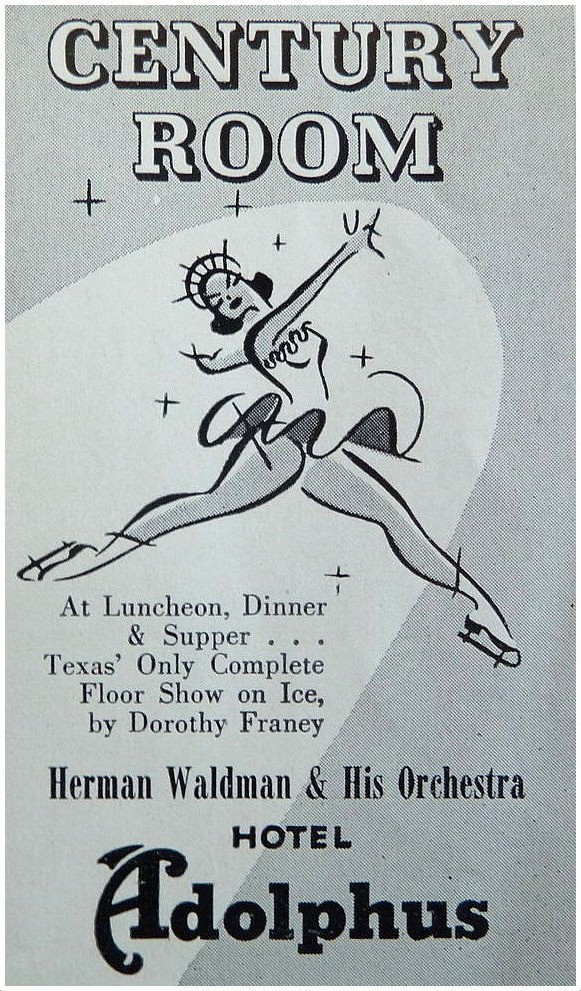
 

The Century Room’s Retractable Dance Floor

ad-adolphus-hotel_century-room_sm(click for larger image)

by Paula Bosse

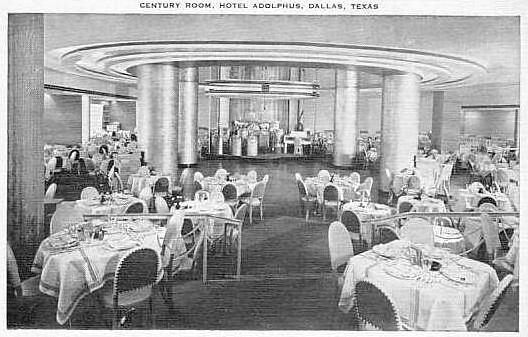
If you’re getting all dressed up for a night on the town, you want to make sure you get your money’s worth, entertainment-wise. That’s why you head to the tony Century Room at the swank Hotel Adolphus. Not only is there dining and dancing, there’s also an ice show. Yep, an ice show. When “Texas’ Only Complete Floor Show on Ice” has wrapped up, a dance floor magically covers the ice, and you and your honey can trip the light fantastic to the fabulous strains of Herman Waldman & His Orchestra. Skates optional.

adolphus_hotel_century-room

adolphus_century-room

*

Copyright © 2014 Paula Bosse. All Rights Reserved.

Please Don’t Pull the Daisies

city-park_no-one-allowed-to-pull-flowersCity Park, 1909-ish

by Paula Bosse

Back when Old City Park was merely “City Park.” The sign at the bottom right reads: “WARNING: NO-ONE ALLOWED TO PULL FLOWERS.” Seems a bit brusque. Not even a “please.” Still, one best not.

***

Sources & Notes

Hand-colored postcard with an odd color palette, probably by Weichsel, around 1909.

*

Copyright © 2014 Paula Bosse. All Rights Reserved.
“Wonderful K-BOX” at 1480 On Your AM Dial

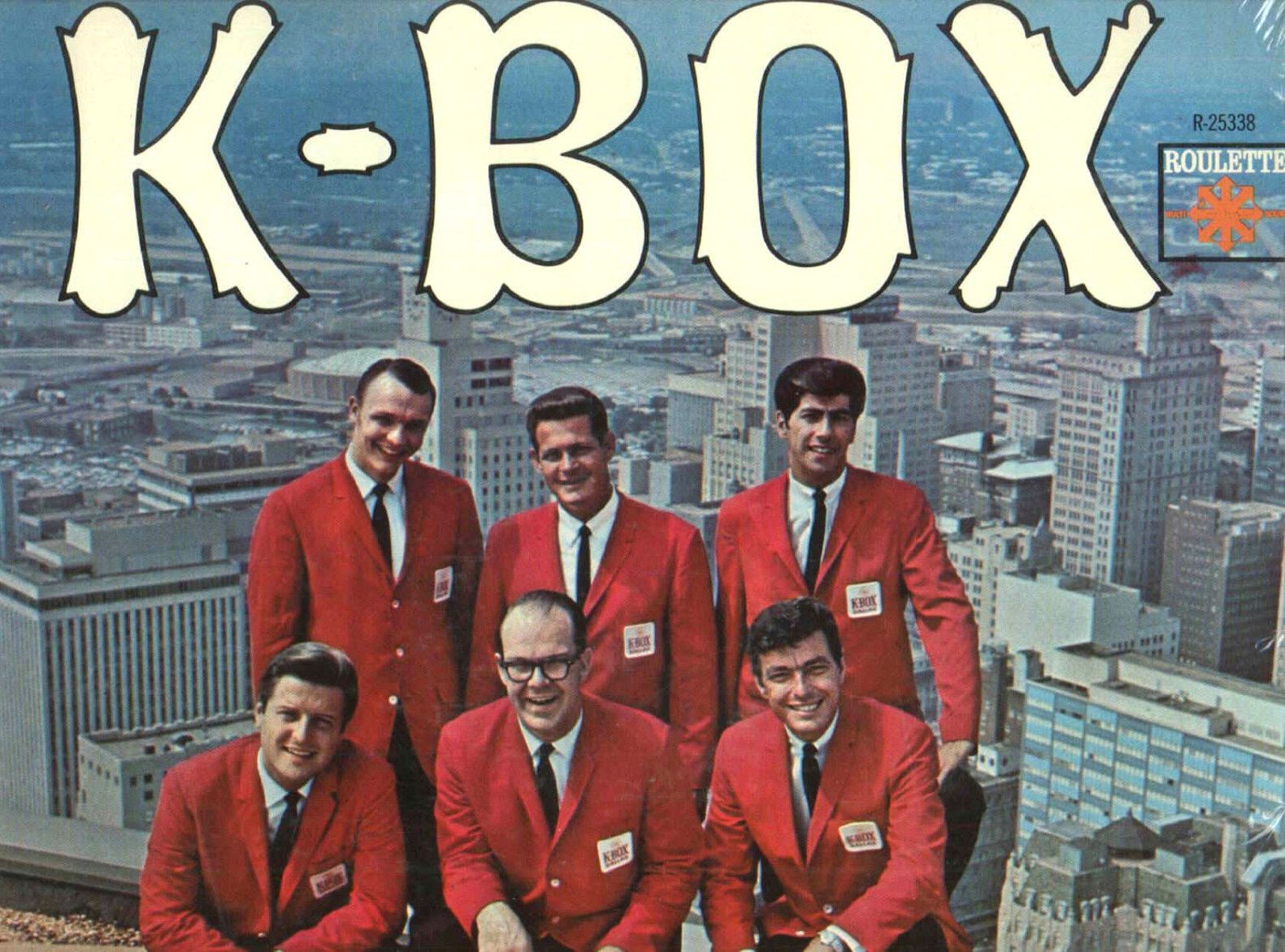
kbox-djs“Wonderful K-BOX” jocks atop the Southland Life Bldg.

by Paula Bosse

When I was a kid, it seems like KBOX was always on in the background. Always. My father was a huge country music fan, and it was one of the (if not THE) top country stations in town. This was in the ’70s. So it’s a bit of a shock to learn that KBOX had been a Top 40 station in the ’50s and ’60s — in fact, it was the major competitor of top-dog KLIF.

The photo above was shot atop the Southland Life Building in 1966 and appeared on an LP called “Dusty Discs.” On-air personalities shown are (top row) Terry Byrd, Ron Rice, Frank Jolle/Jolley, (bottom row) Dan Patrick, Bill Ward, and Bill Holley.

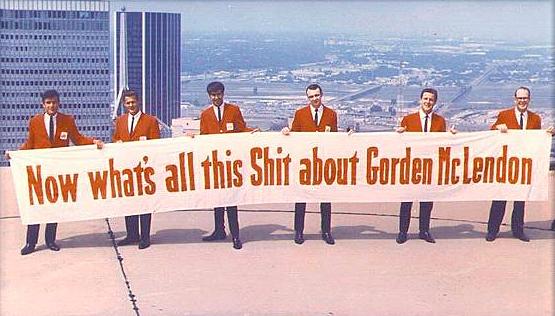
The competition between KBOX (owned by John Box — the “Box” in KBOX) and KLIF (owned by the legendary Gordon McLendon) was fierce. This explains the photo below in which John Box had his DJs hold a special banner during the same photo shoot. Box had this photo printed up and gleefully sent to McLendon as a Christmas card that year (during which KBOX had trounced KLIF in one of the crucial ratings periods). (I’m sure McLendon enjoyed seeing his name misspelled.) AM radio ain’t for the meek.

kbox-mclendon-banner

***

Sources & Notes

Top photo/album cover from eBay.

Second photo from a Frank Jolley site, here. (Jolley’s name is spelled “Jolley” and “Jolle” almost interchangeably all over the internet, so I’m not sure which is correct.)

Absolutely everything you’d ever want to know about KBOX can be found here (and this is just part two of the history!).

BEST OF ALL is this aircheck from 1959, featuring Dan Ingram. It’s crazy. The energy level is exhausting to listen to. They were really pulling out all the stops. (And, hey, you could go see Johnny Cash at the Sportatorium for ONE DOLLAR!) This is great:

 *

Copyright © 2014 Paula Bosse. All Rights Reserved.

Dallas High School Football, 1909-Style

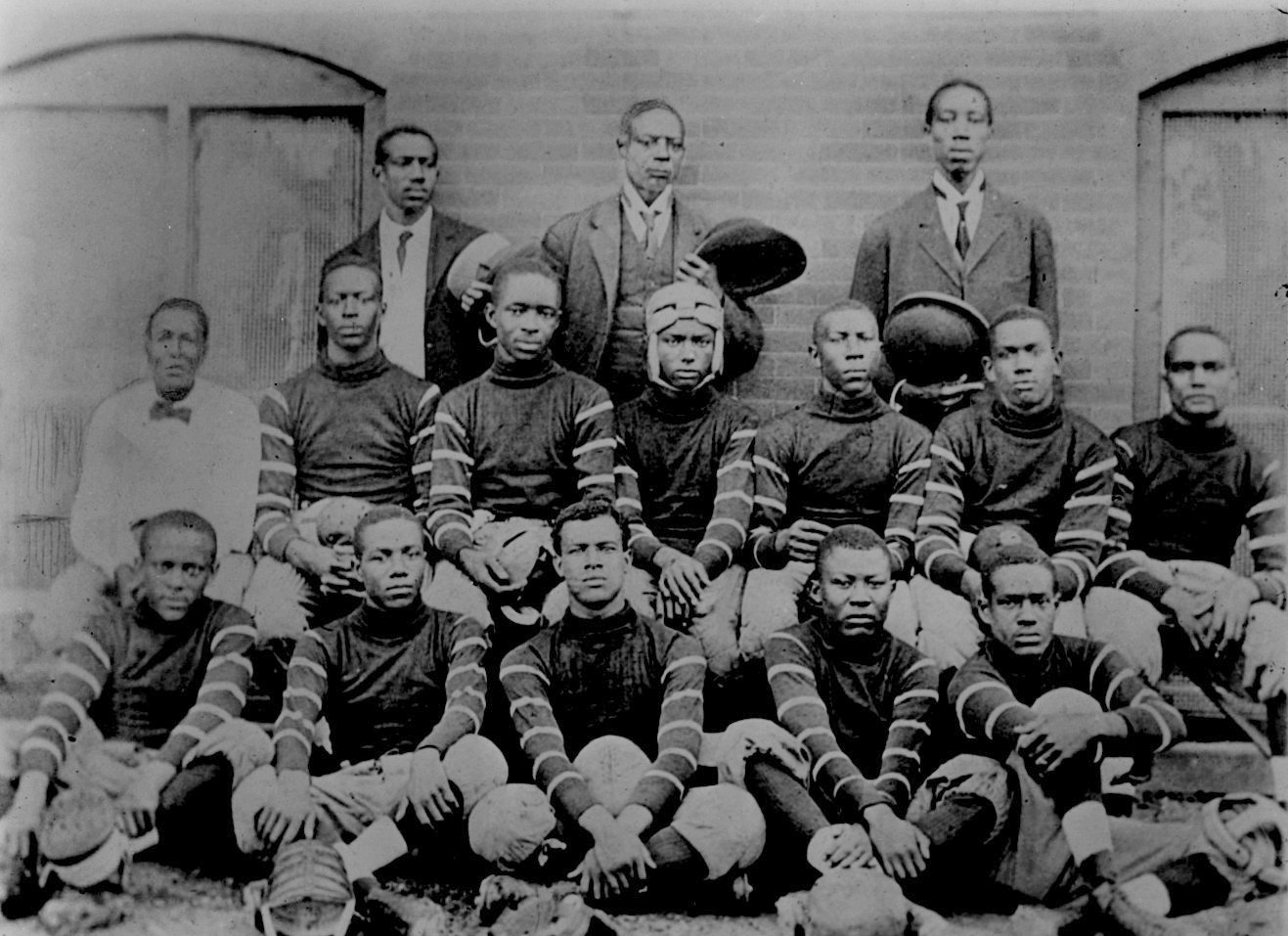
football-team-1909Game faces ON… (click for larger image)

by Paula Bosse

Great Dallas Historical Society photo described only as “a high school football team,” from 1909. The team most likely represented the “Colored High School” located at Hall and Cochran, the only high school in Dallas at the time for African-American students (it eventually merged with and relocated to the nearby Booker T. Washington High School in the early 1920s where, incredibly, it remained the city’s only high school for black students until Lincoln High School opened in South Dallas in 1939).

As everything was segregated at the time, including schools and sports, the number of black high school football teams they could play was severely limited — in-town opponents were non-existent. In fact, a 1909 blurb in The Dallas Morning News announced that “[t]he football team of the Dallas Colored High School will play the Wylie University team from Marshall at Gaston Park” (DMN, Nov. 12, 1909). They were playing college teams. From 150 miles away. At least they were the home team.

***

Photo from the J. L. Patton Collection, Dallas Historical Society.

Click picture for larger image.

*

Copyright © 2014 Paula Bosse. All Rights Reserved.
McFarlin Auditorium, Following Morning Chapel — 1927

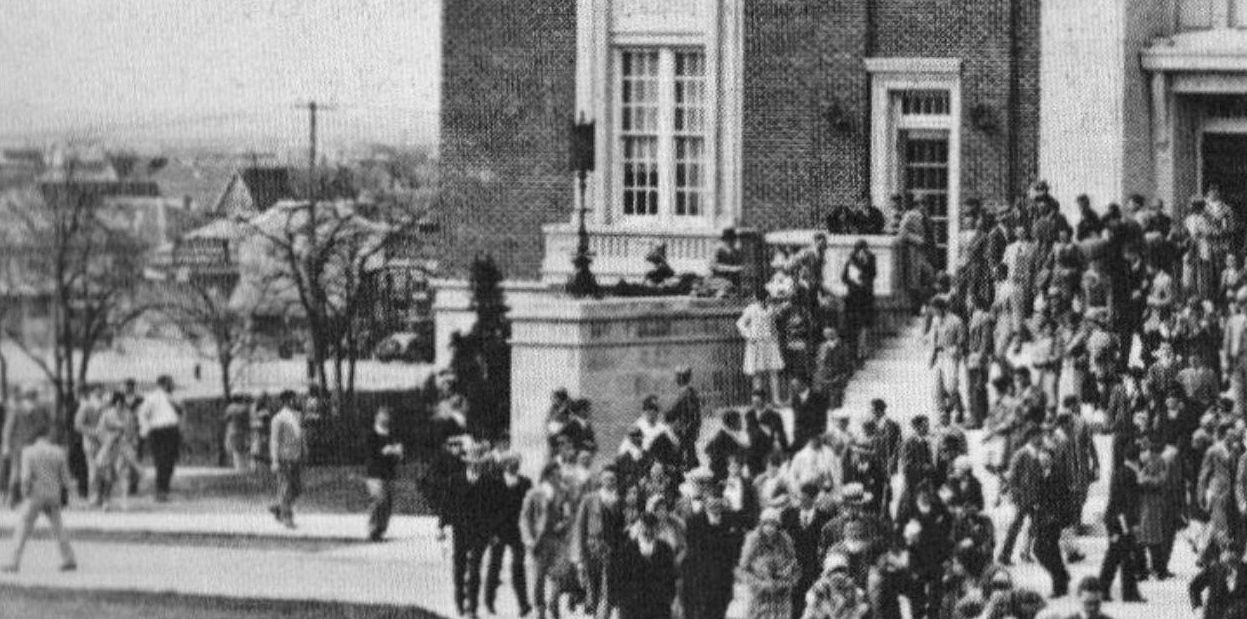
mcfarlin-auditorium_1927McFarlin Auditorium, post-Chapel, 1927 (click for larger image)

by Paula Bosse

Another in the series of wonderful postcards celebrating the history of the Park Cities, this one shows McFarlin Auditorium in 1927, then only two years old. From the back of the card:

This is a 1927 photograph taken following morning Chapel in McFarlin Auditorium. The building is located at McFarlin Blvd. and Hillcrest on the Southern Methodist University campus. At that time, Chapel attendance was mandatory for SMU students. Dr. R. E. Dickenson was Chaplain and conducted the daily chapel services, and Dr. Charles C. Selecman was the President of the University.

Below are a couple of details of the photo which show, in the background, interesting (if fuzzy) views of houses and other structures along (and beyond) Hillcrest.

mcfarlin_det1

mcfarlin_det2

***

Postcard is from the Park Cities Bank “Heritage Series” issued in the 1970s. Photo credit line on the postcard reads “Donated by Stanley Patterson.” Thanks to the Lone Star Library Annex Facebook group for use of the image.

Click pictures for larger images.

*

Copyright © 2014 Paula Bosse. All Rights Reserved.
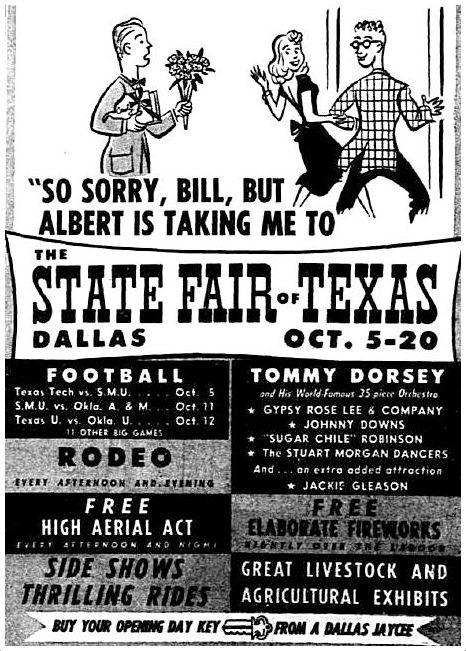
“So Sorry, Bill, But Albert is Taking Me to The State Fair of Texas”

state-fair_1909_flickr“The Pike” — 1909

by Paula Bosse

Hey, y’all — guess what ends this weekend? Hurry!

One doesn’t really need an excuse to post a bunch of photos of the Great State Fair of Texas, but it IS the closing weekend, so why not enjoy a few images from the past few decades.

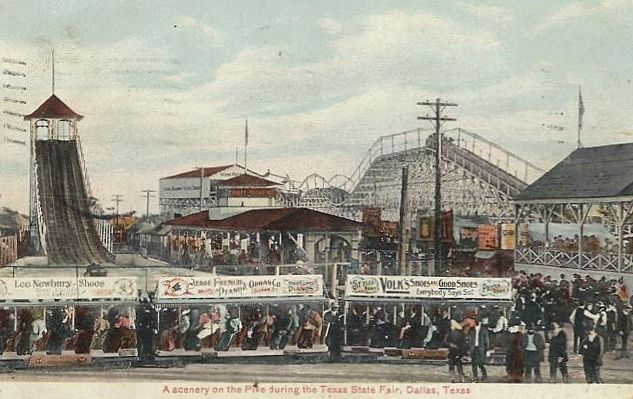
Above, a view of the Midway in 1909 (then called “The Pike”), with the Log Ride-like “Chute” and its ramp, a roller coaster, and a loaded tram festooned with shoe ads (including one for Volk’s).

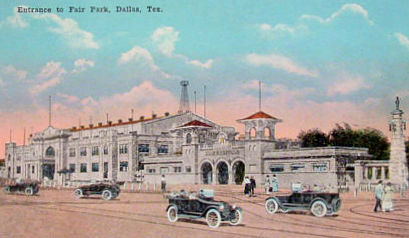
Below, the Fair Park entrance in 1919:

fair-park-entrance_1919

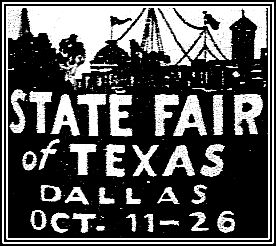
A nice little newspaper ad from 1924:

state-fair_092724

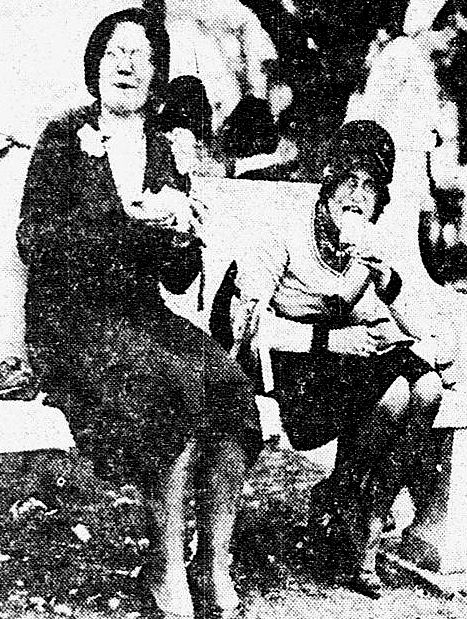
Two women enjoying ice cream in 1930 — State Fair food has always been one of the main joys of visiting the fair.

state-fair_dmn_101530

Ad from 1946: “So sorry, Bill, but Albert is taking me to the State Fair of Texas.” The grown-up entertainment that year was provided by Tommy Dorsey, Gypsy Rose Lee, and Jackie Gleason.

state-fair_dmn_092446

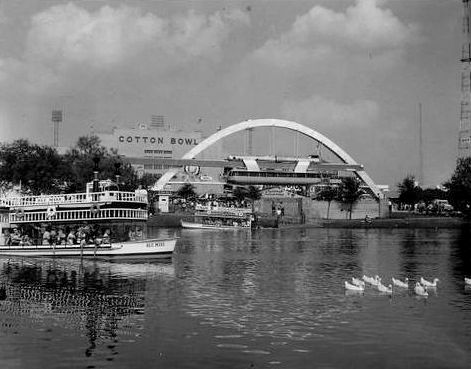
In 1958, Fair Park had a monorail (the only one then operating in the United States) and a paddle-wheeler in the lagoon:

state-fair_lagoon_squire-haskins_dmn-1958

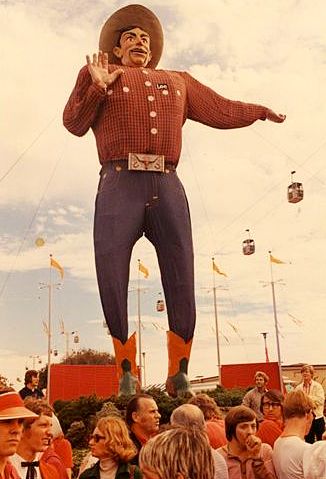
And then there’s this guy, who spans the decades:

big-tex_briscoe-center

***

Sources & Notes

1958 photo featuring the monorail by Squire Haskins, from a Dallas Morning News online article featuring TONS of cool photos of the fair over the years, here.

Big Tex photo (undated) from the Dolph Briscoe Center for American History.

Another post of random images of the SFOT through the decades — “The Fair Is In the Air — Let’s Go!” — is here.

*

Copyright © 2014 Paula Bosse. All Rights Reserved.
 

The Roller Coaster on the Prairie — 1894

state-fair-grounds_souv-dallas_1894Texas State Fair & Dallas Exposition Fair Grounds, circa 1888

by Paula Bosse

Above, a wonderful view of the “State Fair Grounds and Dallas Exposition” from an 1894 advertisement. The Little Roller Coaster on the Prairie!

If you want to see this very large (and, trust me, you DO), click here (and then click again). It’s like wandering through those old phone book covers, but without the jokes and the dinosaurs.

*

UPDATE: The artwork was used in a previous ad that appeared in The Dallas Morning News in 1888, with the following text:

The coming Fair and Exposition will, beyond a doubt, excel in point of attractiveness, numbers and variety of exhibits any heretofore held.

The County Exhibit Department promises to be the most attractive feature, one never before attempted by any State. Over forty counties up to date have secured space, and more still to enter. The exhibits these counties will present will be something that will astonish visitors.

Every variety of attractions has been provided for, and the musical treat we have in store for visitors will be presided over by the world renowned Cornetist , Prof. A. Liberati.

The purses offered in the Race Department cover $20,000, and will be competed for by the best racers in the land. The management of this department propose to give during the Fair and Exposition the finest races ever given in the South.

We desire to call the attention of counties to the fact that now is the time to get up their exhibits, when grain, fruits, etc. are ripening, and not wait until it is too late.

Space in the County Exhibit Department is free, and no county of our State can afford to be not represented. There will be more people here than ever before, and we want them all to see the varied resources of our great State.

To exhibitors in general we can promise them the finest opportunity ever offered to make displays from which will return good results, and to visitors we can assure them of the grandest entertainment ever given in the Southwest.

dallas-fair_dmn_090588

*

The scene above looks idyllic (to me, anyway), but here is a description of what the land was like before anything was built on it, from a Dallas Morning News history of the SFOT (Oct. 2, 1960):

An 80-acre tract approximately in the center of the present-day State Fair Park was chosen as the site for the Fair. The location was termed by some to be “the worst kind of hog wallow,” and the question most frequently asked was “How are you going to hold a fair in all that mud?”

*

The Dallas State Fair and Exposition (which became the State Fair of Texas) was chartered in 1886, and unless that artist’s rendering is highly romanticized (which it probably is), it looks like the hog wallow was but a faint memory by the time that roller coaster was plopped down on top it.

***

Sources & Notes

Artwork by the Dallas Engraving and Manufacturing Company. Top ad appeared in the Souvenir Guide of Dallas (1894); bottom ad appeared in The Dallas Morning News, Sept. 5, 1888.

*

Copyright © 2014 Paula Bosse. All Rights Reserved.

Ferris Plaza Waiting Station — 1925-1950

railway-info-bldg_1926From The Electric Railway Journal, 1926

by Paula Bosse

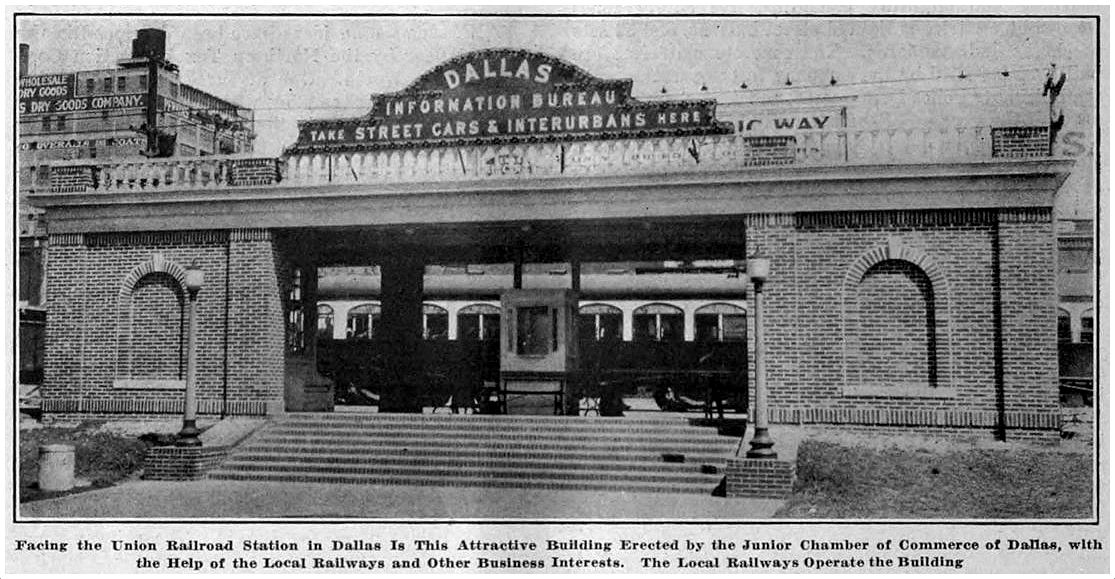
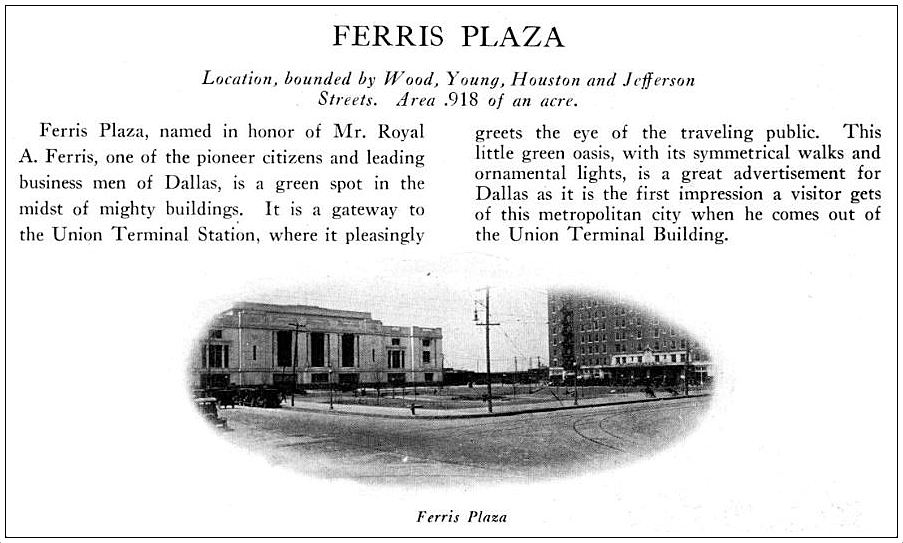
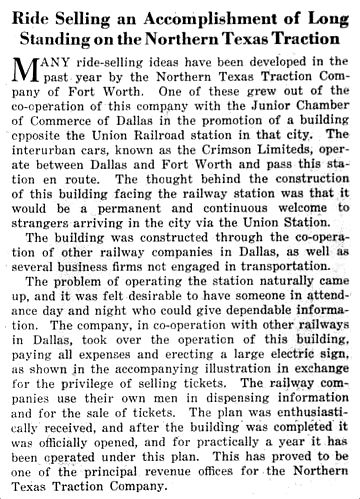
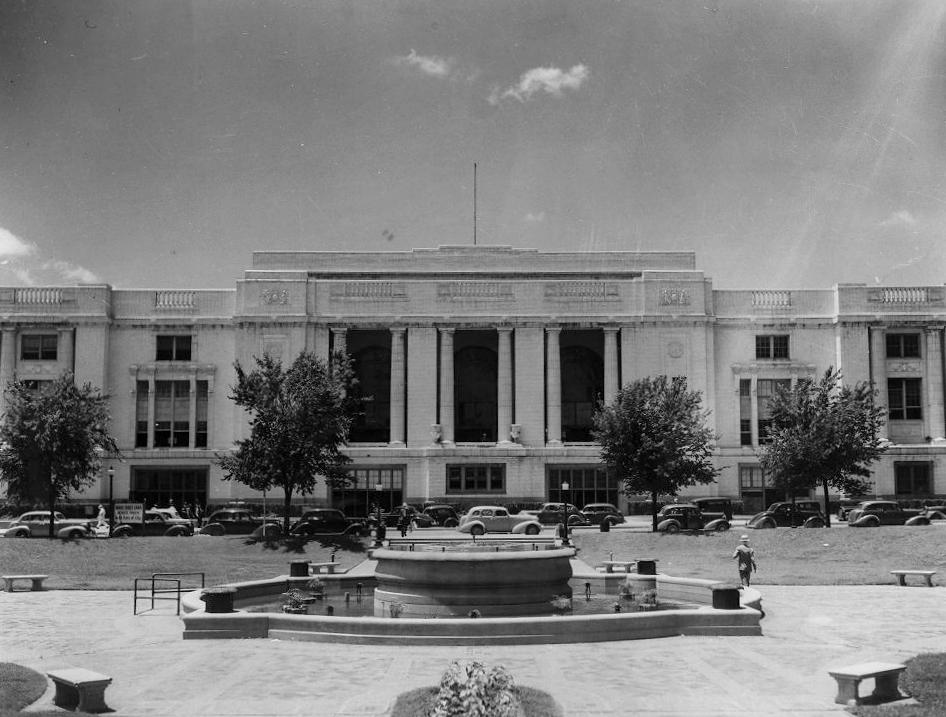
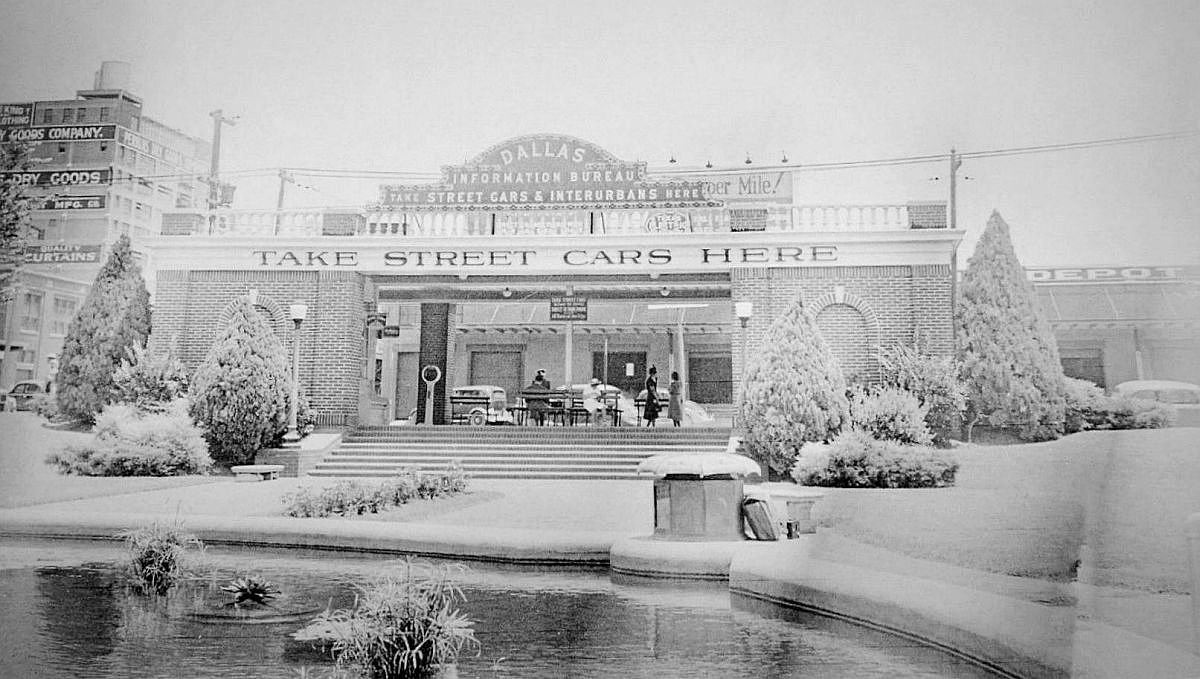
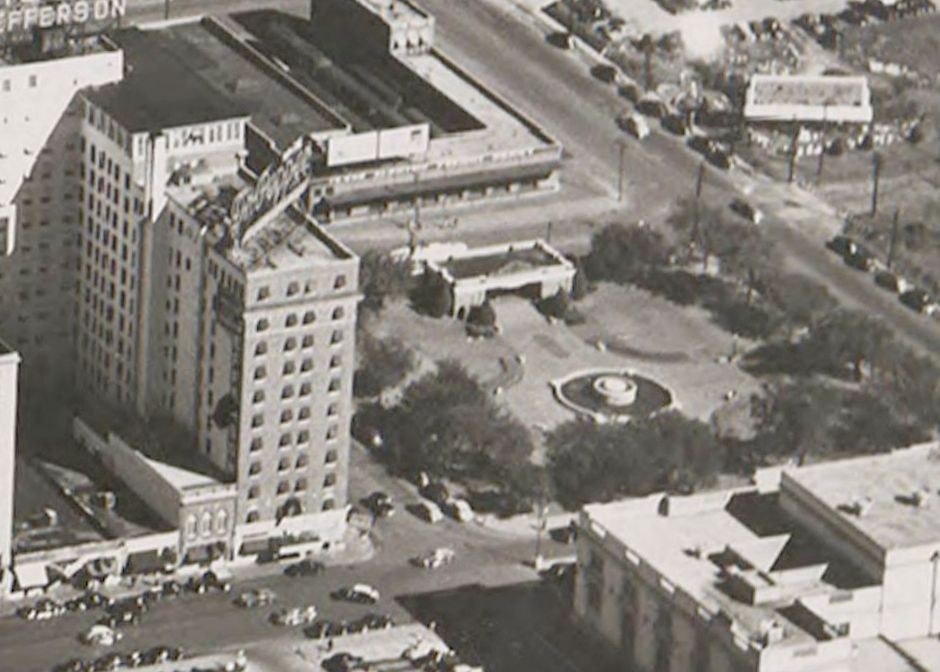
I came across the odd image above whilst digitally thumbing through a 1926 issue of The Electric Railway Journal (as one does…) and wondered what it was. It was definitely something I’d never seen downtown. Turns out it was a combination information bureau, covered stop in which to buy tickets for and await the arrival of interurbans and streetcars, a place to purchase a snack, and a location of public toilets (or, more euphemistically, “comfort stations”). It was located at the eastern edge of Ferris Park along Jefferson Street (which is now Record Street), with the view above facing Union Station. It was intended to be a helpful, welcoming place where visitors who had just arrived by train could obtain information about the city, and it was also a pleasant place to wait for the mass transit cars to spirit them away to points beyond. With the lovely Ferris Plaza (designed by George Dahl in 1925) between it and the front of the Union Terminal, this was considered The Gateway to the City long before Dealey’s Triple Underpass was constructed. (Click photos and articles to see larger images.)

ferris-plaza_park-and-playground-system_pubn_1921-23_portal

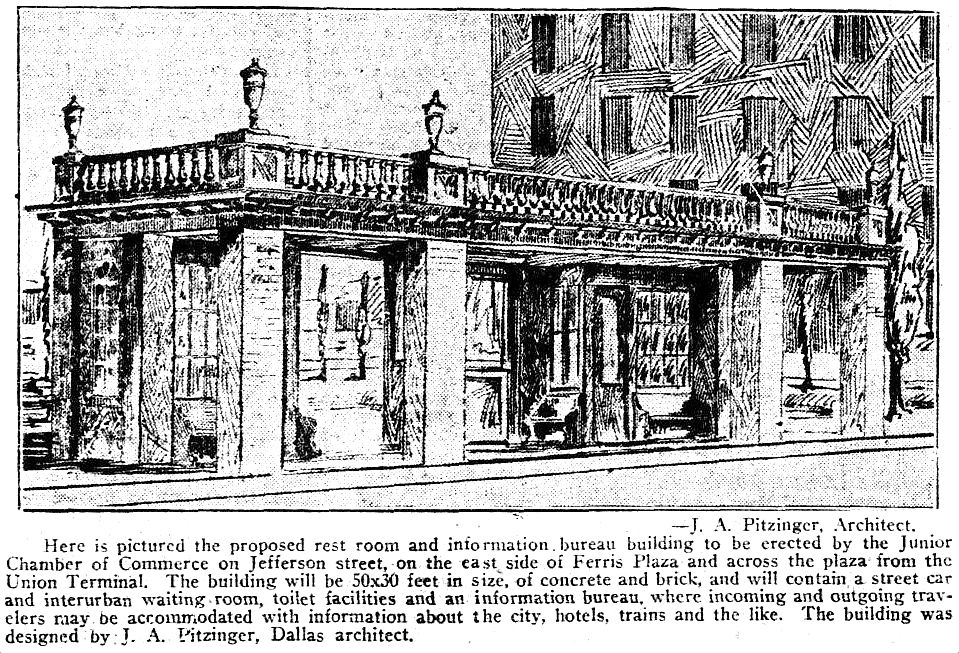
The “waiting station” was the brainchild of the Dallas Junior Chamber of Commerce which proposed the idea to the City of Dallas and, as it was to be built at the edge of a city park, the Park Board. The small (50 x 30) brick building — designed by Dallas architect J. A. Pitzinger — would cost $5,000 and would be paid for by funding from local businesses, including various transportation concerns (namely, the Northern Texas Traction Company). The “traction” companies would staff the information booth and sell tickets. The plans were accepted and permission was granted. Construction began in July, 1925, and the building was opened for waiting by October.

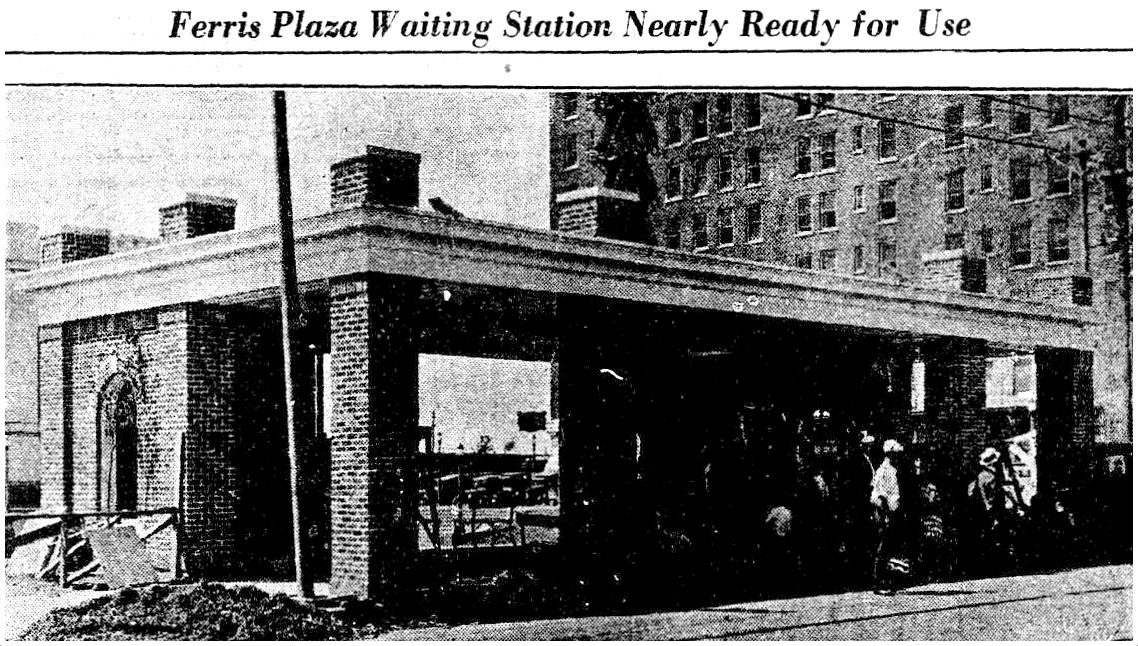
This improvement is the most recent of a number which have made of Ferris Plaza a beauty spot at the gateway of the city. Designed for a sunken garden, fringed with trees, the plaza is now adorned with a great fountain, illuminated with colored lighting at night, the gift of Royal A. Ferris. The new waiting station is in harmony with the general scheme of the plaza development, and combines beauty with utility. (Dallas Morning News, Sept. 20, 1925)

The little waiting station proved to be quite popular, and by the end of its first year the Northern Texas Traction Company (who operated interurban service between Dallas and Fort Worth) was very pleased, as interurban ticket sales at the station had become a solid source of company revenue. The Ferris Plaza station lasted a rather surprising 25 years. It was torn down in 1950, mainly because the interurbans had been taken out of service and there was no longer a need for it. Also, the park department was eager to get their park back and make it more “symmetrical.”

People would just have to wait somewhere else.

*

ferris-plaza-info-bureau_rendering_pitzinger_dmn_031625Architectural rendering by J. A. Pitzinger (DMN, March 16, 1925)

ferris-plaza-waiting-stn_dmn_092025Nearing completion (DMN, Sept. 20, 1925)

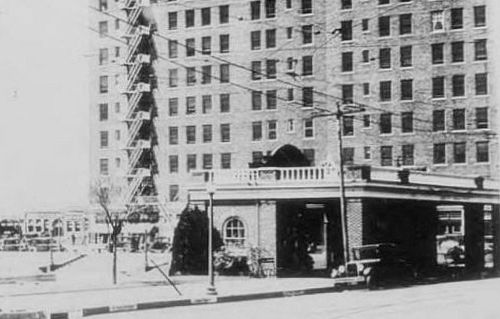
waiting-station_jefferson-hotel_degolyer-lib_SMU_croppedDeGolyer Library, SMU (cropped)

railway-info-bldg_1926_text_smThe Electric Railway Journal (Nov. 6, 1926)

ferris-plaza_union-station_dpl_1936Union Station, 1936 — view from the “waiting station” (Dallas Public Library)

waiting-station_ebay

ferris-plaza_aerial_smu_c1949-det1949 aerial view, showing “waiting station” just above plaza’s circular fountain

***

Sources & Notes

Top photo from The Electric Railway Journal, Nov. 6, 1926.

Very early photo and description of Ferris Plaza is from Park and Playground System: Report of the Park Board of the City of Dallas, 1921-1923, via the Portal to Texas History, here.

Cropped image showing the waiting station with the Jefferson Hotel in the background is from the DeGolyer Library, SMU — more info is here.

Photograph of Union Station from the Texas/Dallas History and Archives Division of the Dallas Public Library.

Aerial photo showing Ferris Plaza is from a larger view of downtown by Lloyd M. Long (the original of which is in the Edwin J. Foscue Map Library collection of the Central University Libraries, Southern Methodist University, and which can be viewed here).

To read about the Ferris Park restoration project, see here.

For a few interesting and weird tidbits about the block that eventually became Ferris Plaza (including the fact that it was thought to be haunted and that it was once the site of a brothel), check out this page on Jim Wheat’s fantastic site.

*

Copyright © 2014 Paula Bosse. All Rights Reserved.
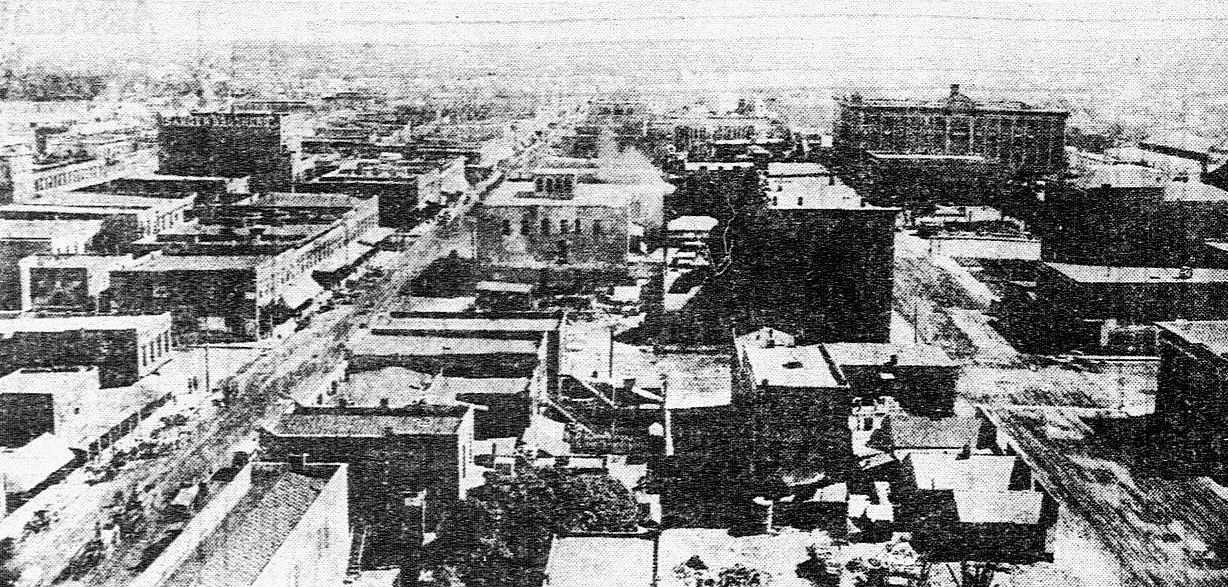
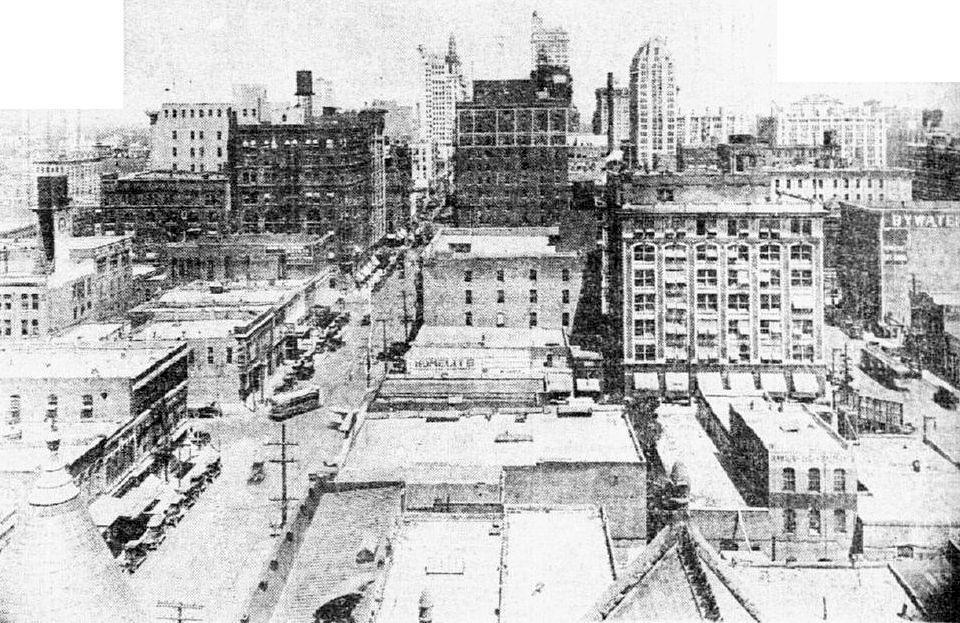
Dallas Gets Vertical: 1887-1925

east-from-courthouse_1887Looking east from the courthouse, ca. 1887 (click for larger image)

by Paula Bosse

Above and below, the view of downtown Dallas looking east from the courthouse, with Main Street on the left and Commerce on the right. The top photo was taken about 1887 (the Grand Windsor hotel is the mammoth building in the top right corner), and the bottom one was taken about 1925. What a difference 38 years makes — the horizon has disappeared!

east-from-courthouse_1920s

***

Sources & Notes

Both photos appeared in The Dallas Morning News on Oct. 1, 1925. The caption reads: “[First photo]: View of Dallas looking east between Main and Commerce streets from the courthouse. It was taken about 1887. So far as known it is the only picture in existence which shows the Dallas Opera House at the southwest corner of Commerce and Austin streets. It also shows the old Grand Windsor Hotel. Note the vacant lots, and the unpaved condition of the streets and the horsedrawn vehicles on Main. [Second photo] This picture was made by H. B. Hillyer & Son.”

*

Copyright © 2014 Paula Bosse. All Rights Reserved.