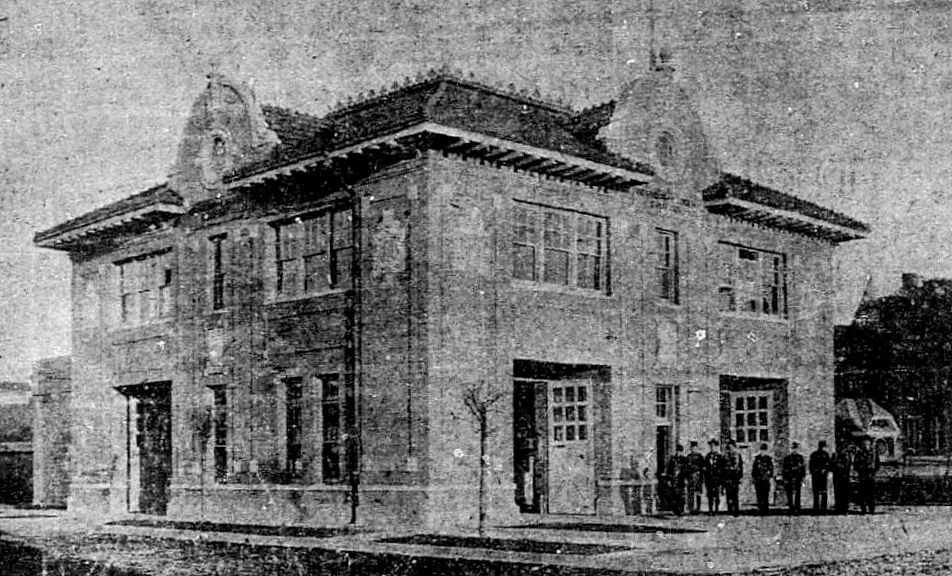
The photograph below appeared in The Dallas Morning News on December 5, 1909 under the headline, “Fire Station Lately Erected in the Oak Lawn District.”
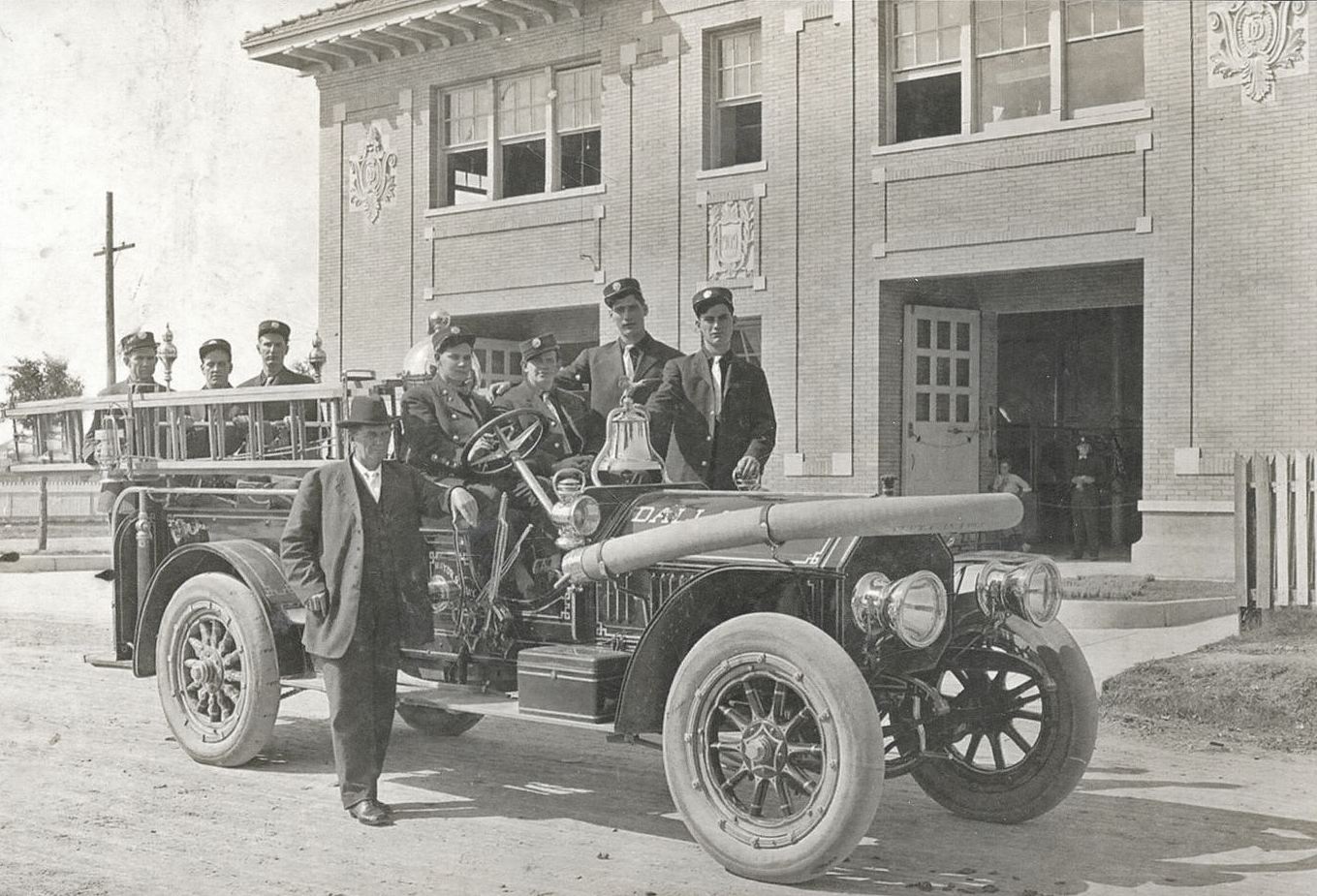
“Hook & Ladder Company No. 4” (now known as the more prosaic “Station No. 11”), was designed by noted architects Hubbell & Greene. It was built at Cedar Springs Road and Reagan Street in 1909 as the first “suburban” fire station in Dallas. Still a working firehouse, the Mission Revival building is a designated historic landmark and is listed in the National Register of Historic Places.
*
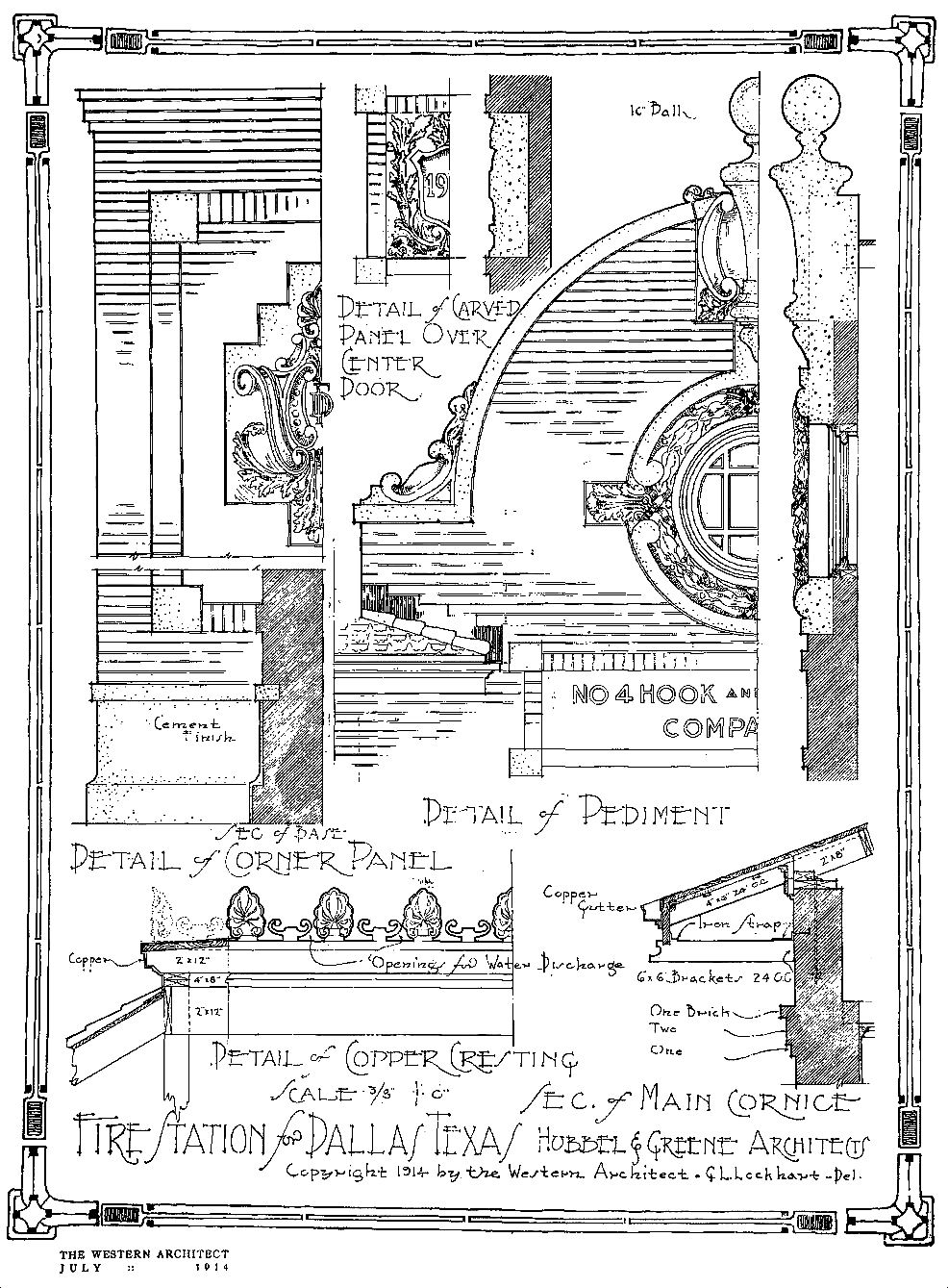
Below, a photo and architectural plan which appeared in the 1914 “Western Architect” journal (more about this here):
*
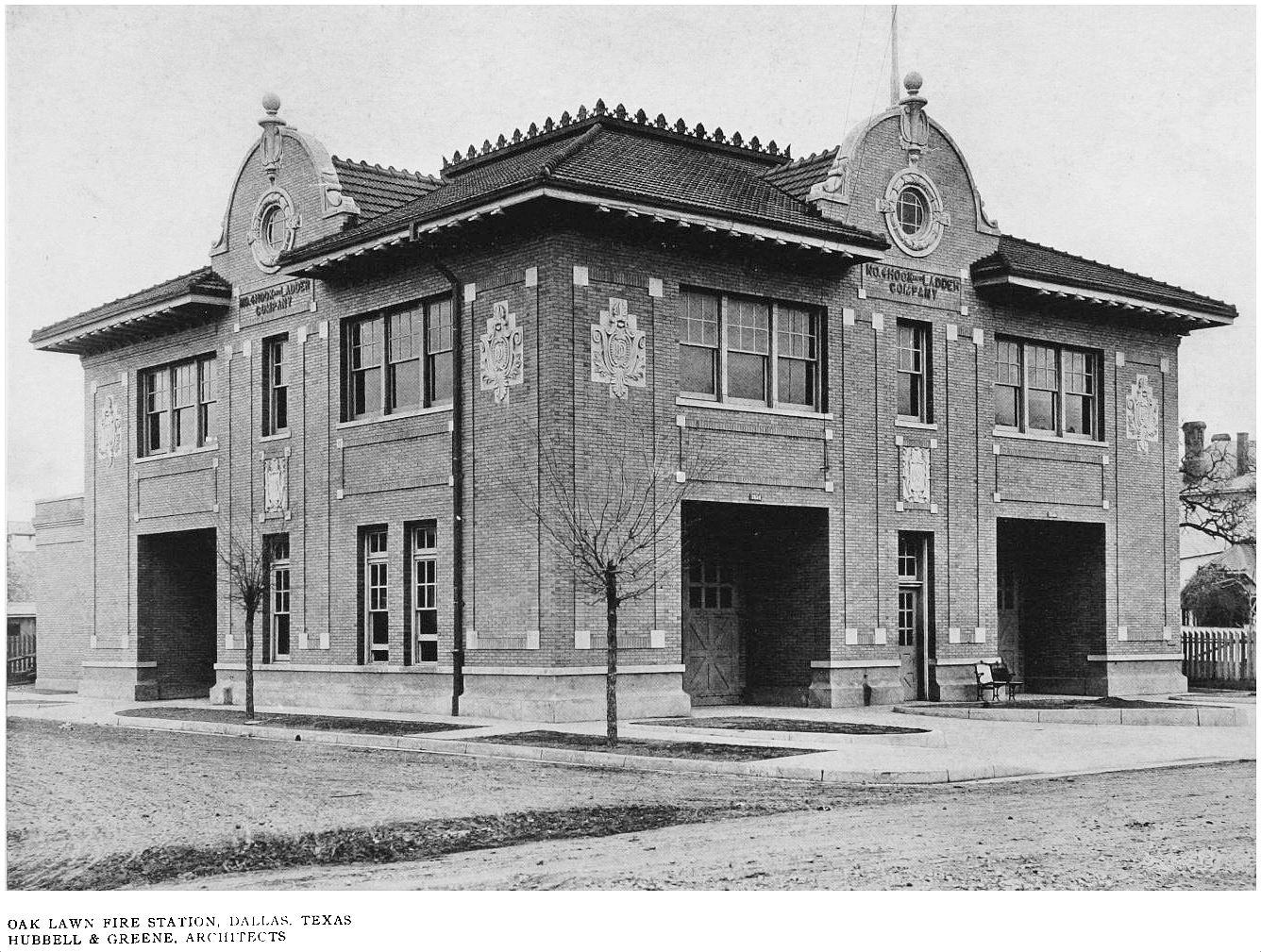
Another photo of the historic firehouse, from a 1931 publication, captioned “No. 11 Engine Co., Cedar Springs & Reagan”:
***
Sources & Notes
Top photo found on eBay.
1909 Dallas Morning News photograph by Clogenson.
Color image of the station as it looks today from Google Street View.
Final photograph is from The Man in the Leather Helmet: A Souvenir Booklet of The Dallas Fire Department (1931), via the Portal to Texas History.
For more on the history of this historic fire station, see the page devoted to it on the Dallas Fire Rescue Department website, here. Also, see the City of Dallas Landmark Structures and Sites page here.
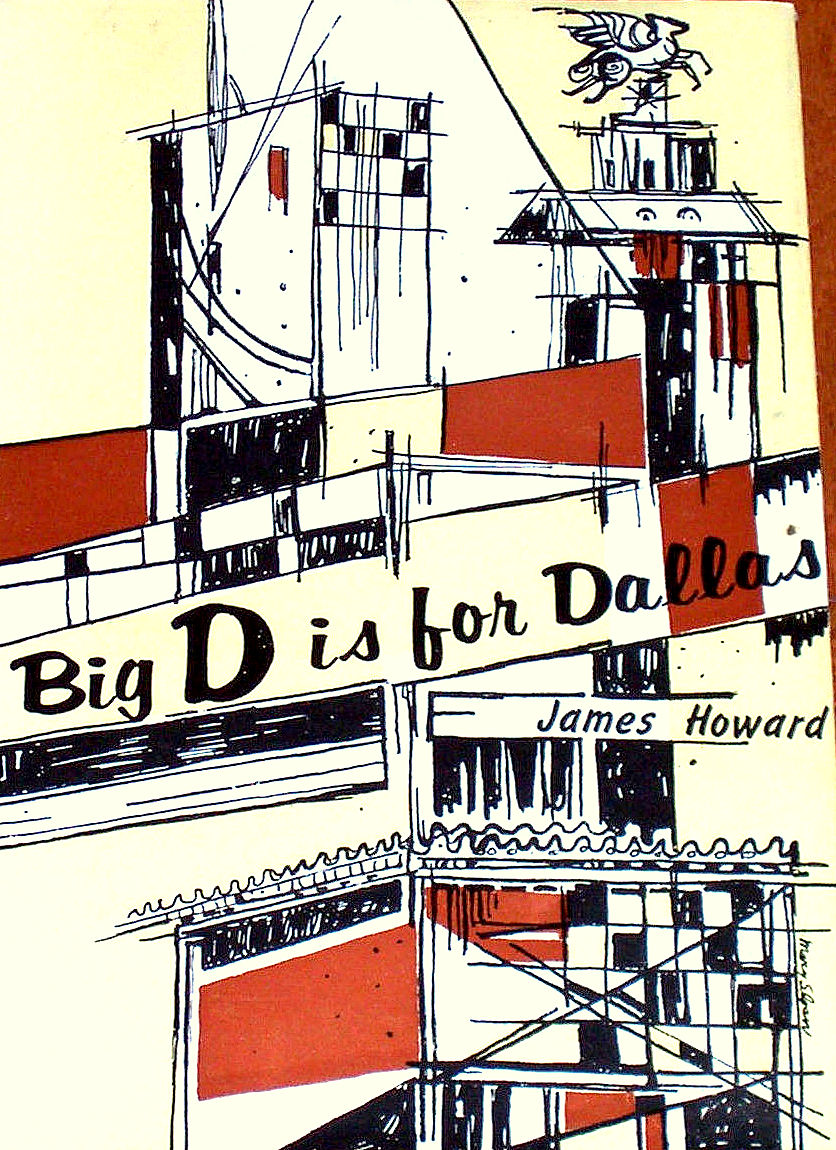
Dust jacket artwork and design are often taken for granted, which makes no sense because the cover of a book does actually tend to drive book sales. Things have improved in recent years, but in the past, these artists were frequently not credited at all. Here’s an example, though, of jacket art that actually gives full credit to the artist, Mary Sloan. This fantastic, stylized depiction of the Dallas skyline positively reeks (in a good way) of mid-century illustration. I don’t think I’ve seen this before, which is a bit of a surprise, because I was a bookseller for many years, specializing in Texana titles. I’m not sure how this one escaped me, but I’m pretty sure I’d remember this cover art.
Mary Sloan was born Mary Key in about 1925 and grew up in Denton. She studied art in Denton and Austin, working under noted Texas artists such as William Lester, Everett Spruce, and Charles Umlauf. She won numerous art competitions and is represented in several Texas museums. She settled with her husband and family in Corpus Christi where she taught art for many years at Del Mar College. In addition to painting and drawing, she was also a proficient mosaic artist and designed glass and stone mosaic murals. I don’t know if she did any other book jacket art — it would be a shame if this is all she did, because I think it’s really great.
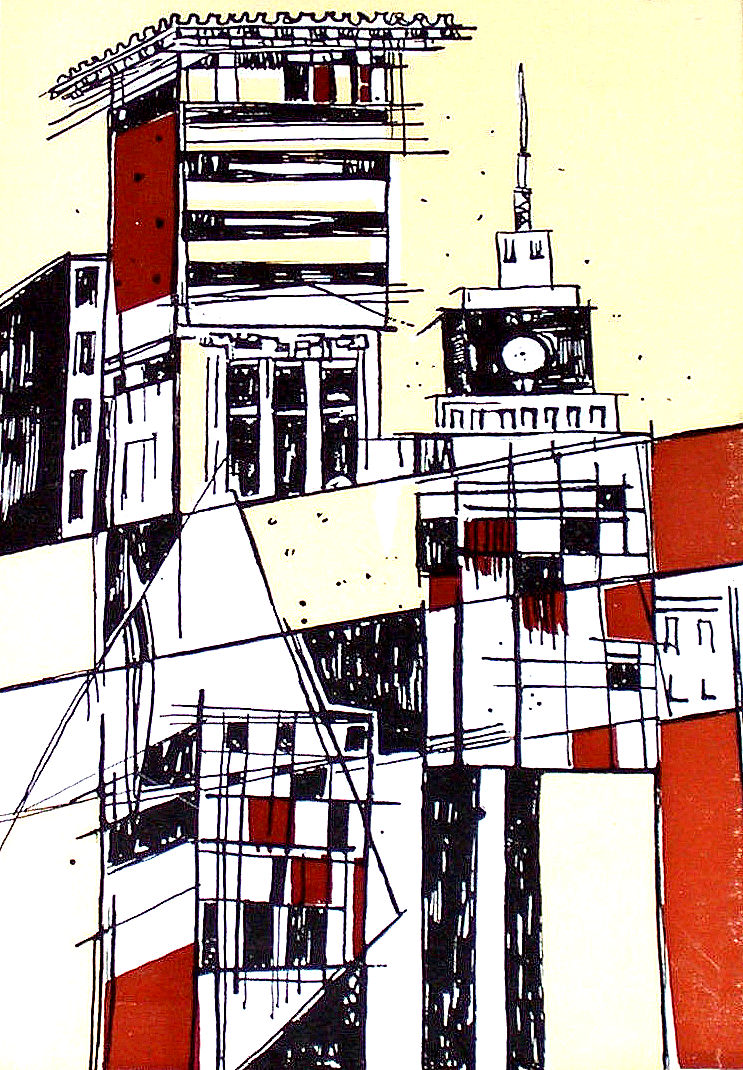
Rear panel of dust jacket
***
Sources & Notes
Dust jacket for Big D is for Dallas by James Howard (Austin: self-published, 1957), a collection of biographical profiles of Dallas business luminaries.
Black-and-white image of the cover art and accompanying text are from an ad that appeared in the Southwestern Historical Quarterly in 1957.
Had The Graduate been set near the beginning of the twentieth century rather than the middle of it, that famous scene out by the pool (er…near the horse trough) might have gone something like this:
Mr. McGuire: I just want to say one word to you. Just one word.
Benjamin: Yes, sir?
Mr. McGuire: Are you listening?
Benjamin: Yes, sir, I am.
Mr. McGuire: …”Millinery.”
Benjamin: …Exactly how do you mean?
Mr. McGuire: There’s a great future in millinery. Think about it. Will you think about it?
Benjamin: Yes, I will.
Mr. McGuire: Enough said. That’s a deal.
***
Sources & Notes
Photograph of the Dallas Shakespeare Club is from the Dallas Historical Society; it appears in the book Women and the Creation of Urban Life in Dallas, Texas, 1843-1920 by Elizabeth York Enstam (College Station: Texas A & M University Press, 1998). Enstam’s caption of this photograph identifies two women in the front row, on the right as Sallie Griffis Meyer (1863-1932), future president of the Dallas Art Association, and May Dickson Exall (1859-1936), president of the Dallas Shakespeare Club from 1886 until her death. Ms. Enstam has labeled this photo as “about 1895.”
*
Dialogue (all but one word) from the film version of The Graduate, screenplay by Buck Henry, based on the novel by Charles Webb. “Millinery adaptation” by Paula Bosse, based on the screenplay by Buck Henry which was based on the novel by Charles Webb.
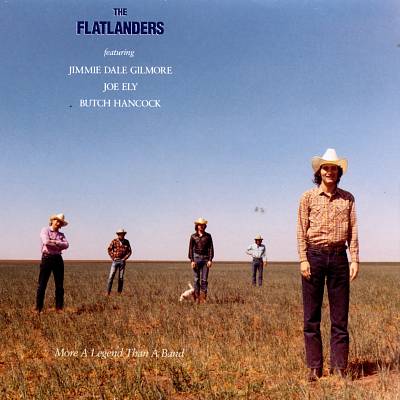
One of the best-known songs about Our Fair City is the dark and cynical “Dallas” by The Flatlanders (written by Panhandle-born Jimmie Dale Gilmore). It may be the best representation of the city ever written. I mean, how can you ever improve upon the immortal line, “Dallas is a rich man with a death wish in his eye”?
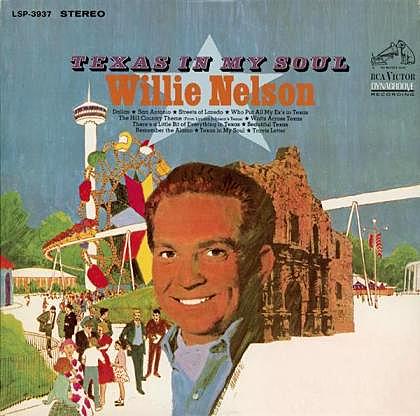
In August of 1967, right in the middle of The Summer of Love and several years before The Flatlanders recorded their song, Willie Nelson recorded a very different song which was also called “Dallas.” These two songs offer the yin and the yang of Dallas, a city people seem to love or hate.
Willie’s song, written by Stovall and Groom (the Groom being Dewey Groom, the country musician who owned Dallas’ Longhorn Ballroom), appeared as the lead track on Willie’s “Texas In My Soul,” a concept album of covers (!) produced by Chet Atkins and released in 1968. I love Willie, but that song is pretty awful. I’m not sure if Willie picked it or Chet picked it, but … oh dear. I love songs from Willie’s early recording years — when he was trying to branch out from a successful songwriting career to being a performer — and he sounds great on the song, and the production is Nashville-studio-impeccable, but … those lyrics. If the Dallas Chamber of Commerce had a stamp of approval for songs about Dallas, I’m sure they would have stamped the bejabbers out of this one. It’s a very positive, damn near chirpy song about the city — and it’s got to be one of the only songs out there to name-check Central Expressway, LBJ, Love Field, Highland Park, Neiman’s, and the Cotton Bowl in lyrics like this:
Take a ride on her Central Expressway — breeze down the LBJ. Look her over good, you’ll have to say: she’s the best-dressed city in the USA.
Uh-huh. It does have one absolutely great line which is (unintentionally) pure Dallas: “She swings like a blonde with a millionaire” — and, if you’re familiar with Jimmie Dale Gilmore’s song, you probably immediately think of these lines from his later 1972 song:
Well, Dallas is a woman who will walk on you when you’re down, But when you are up, she’s the kind you want to take around, But Dallas ain’t a woman to help you get your feet on the ground. Yes Dallas is a woman who will walk on you when you’re down.
But as Jimmie Dale says, Dallas will always look great from a DC-9 at night.
*
To hear the mercifully very short song Willie recorded but did not write, check it out:
*
To listen to the sublime Jimmie Dale Gilmore-penned “Dallas” by The Flatlanders (sung by Gilmore, with Joe Ely and Butch Hancock, accompanied by a musical saw), listen to this:
*
Two very different perspectives of Dallas, one written by a conservative middle-aged local businessman in the go-getting 1960s (Dewey Groom), the other by a young, long-haired outsider in the cynical, post-hippie 1970s (Gilmore). People who actually live in Dallas are either much more tolerant of (or oblivious to) the city’s shortcomings — or we’re just born self-promoters. I’m thinking it’s mostly the latter. #worldclasscity
***
Thanks to my friend Steve Ray of the Texas Music Office for bringing the Willie Nelson song to my attention!
For more on the “Texas In My Soul” album (which has what must be one of the worst album covers ever), see the review at AllMusic.com, here.
Willie’s Nelson’s website is here. (If anyone knows of a Dallas song written by Willie, please let me know!)
The Flatlanders site is here. (Incidentally, there is a very cool, previously unreleased 1972 version of “Dallas” on the new “Odessa Tapes” album.)
The 2100 block of Canton — there’s a lot going on here (click for much larger image)
by Paula Bosse
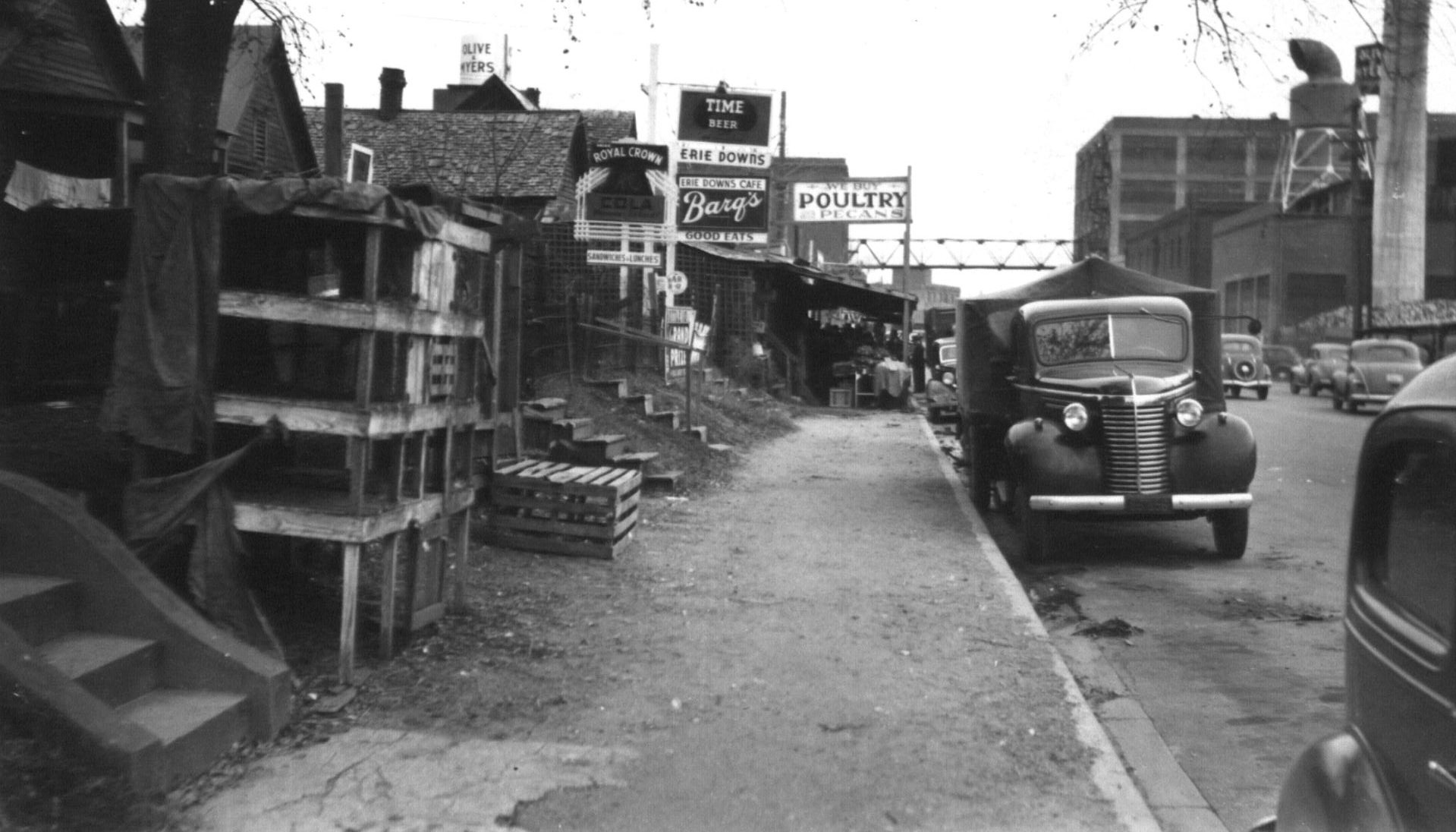
While reading about the “produce market district” (aka the wholesale fruit and vegetable businesses in the Farmers Market area), I came across the above unlabeled photograph. At first glance I thought the building at the top right was the Adam Hats building/Ford assembly plant, but the neighborhood didn’t look right. But on seeing the two Olive & Myers signs (a manufacturer I have to admit I’d never heard of), this seems to be a view of Canton Street, looking east from Cesar Chavez. The only thing that remains today is that cool building, which now contains pricey lofts and is known simply as “2220 Canton.” Below, the same view today.
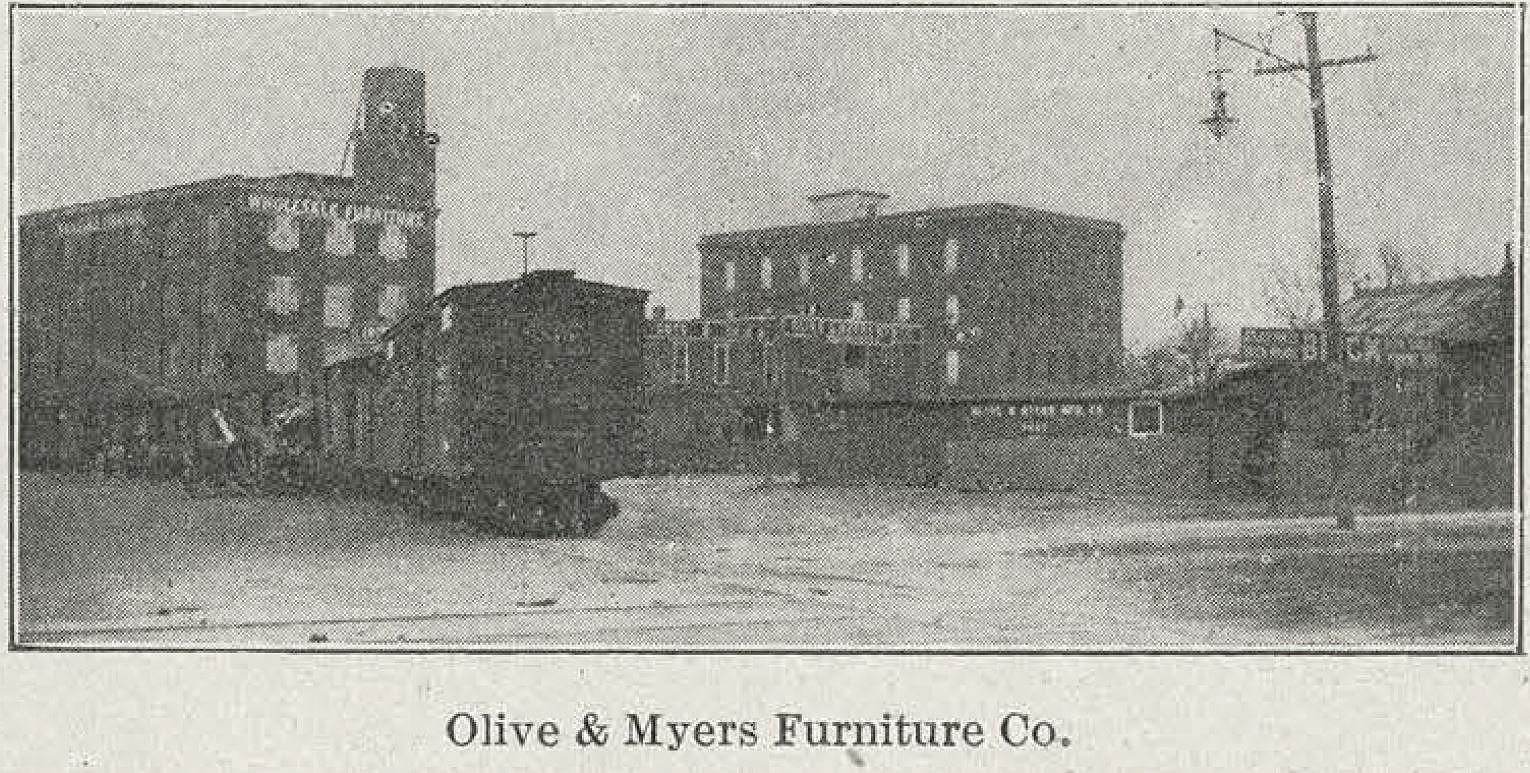
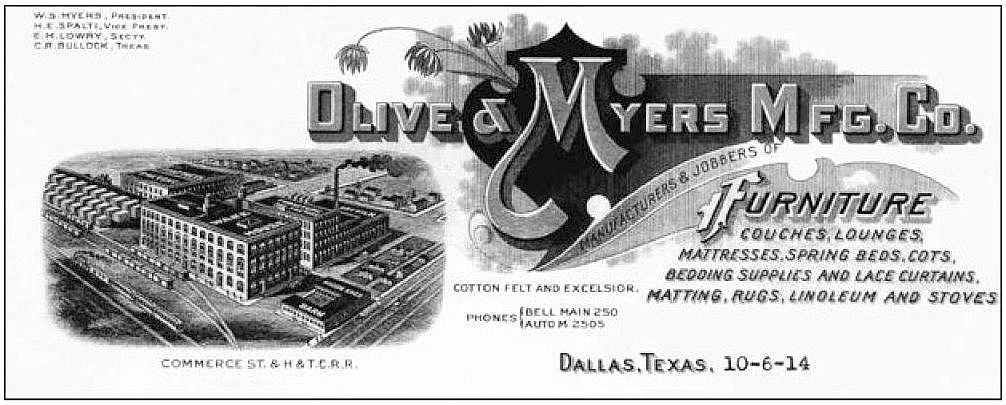
The Olive & Myers Manufacturing Company was founded in Dallas in 1899 by two Iowa transplants and became a very successful furniture wholesaler and manufacturer. The company was housed in a large complex of buildings grouped near the Farmers Market; the six-story building seen above was built around 1925. Even though it was quite attractive back then, the building’s current incarnation as super-swanky luxury digs (with a heated rooftop pool) would certainly put those poultry sellers of yore to shame.
The sidewalk chicken coops may be gone, and the neighborhood no doubt smells a lot better, but, I have to say … a seedy and unsavory 1940s-era Canton Street looks a whole lot more lively and interesting than the scrubbed and fumigated 21st-century version.
ca. 1905
ca. 1910
1936 Texas Centennial ad – click to see very large detail of buildings
***
Sources & Notes
Top photo is from the Dallas Municipal Archives, via the Portal to Texas History. It was included in a large scrapbook — I looked at every single page, which was a bit of a slog, but persistence paid off, and I was rewarded with this incredible photo which was ALL THE WAY AT THE END — p. 166 of 169! The scrapbook page is here. (The Erie Downs Cafe is listed in the 1942 and 1945 city directories as being at 2117 Canton.)
Color image from Google Street View, 2014.
Olive-Myers logo from a 1937 ad.
The circa-1905 photo is from a publication I neglected to note, but which I know is in the collection of the DeGolyer Library, Southern Methodist University.
The blurry circa-1910 photo is from a publication called “History of an Opportunity: Facts About Dallas and Texas,” accessible in a PDF here; DeGolyer Library, SMU.
The letterhead dated “10-6-14” is from the Spring, 2013 issue of Legacies, via the Portal to Texas History.
For a follow-up post of sorts, I wrote about the darker side of the market area — full of crime and vermin — in the post “The Runyonesque Pearl Street Market, Full of Colorful Characters and an Army of Rats,” here.
Highland Park Methodist Church, 1927 (click for larger image)
by Paula Bosse
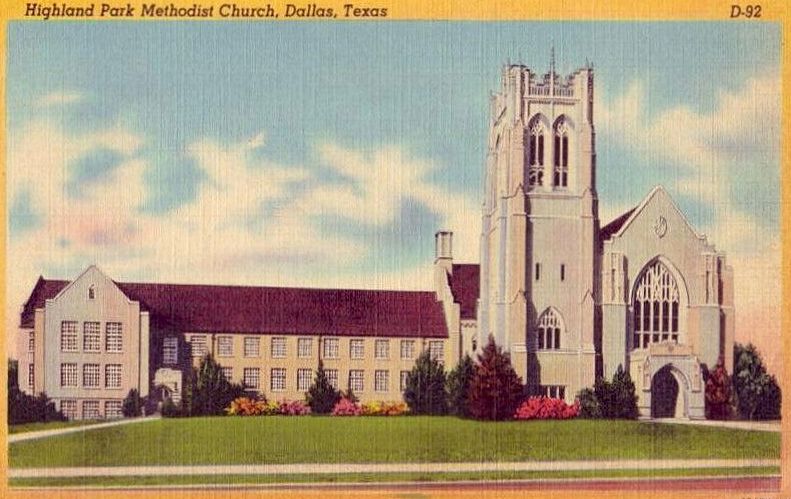
The beautiful Highland Park Methodist Church (now Highland Park United Methodist Church) was designed by architects Mark Lemmon and Roscoe DeWitt (who also designed several of the buildings on the adjacent SMU campus, as well as Woodrow Wilson and Sunset high schools, to name only a few of their projects). According to the HPUMC website, the first church — a temporary building which was referred to as “The Little Brown Church” — was built at Mockingbird and Hillcrest in 1917. It wasn’t until 1927 that the beautiful French Gothic-inspired building we know today was built on that same site. (At one time, Highland Park Methodist Church was the largest Methodist church in the world.)
(Incidentally, Mark Lemmon built his lovely cottage-like home on Mockingbird, across the street from both the church and the SMU campus, where at any time of the day or night, he could look out his front window and gaze with satisfaction upon his beautiful church and the ever-growing university campus dotted with buildings he had designed.)
“The Little Brown Church” — built 1917
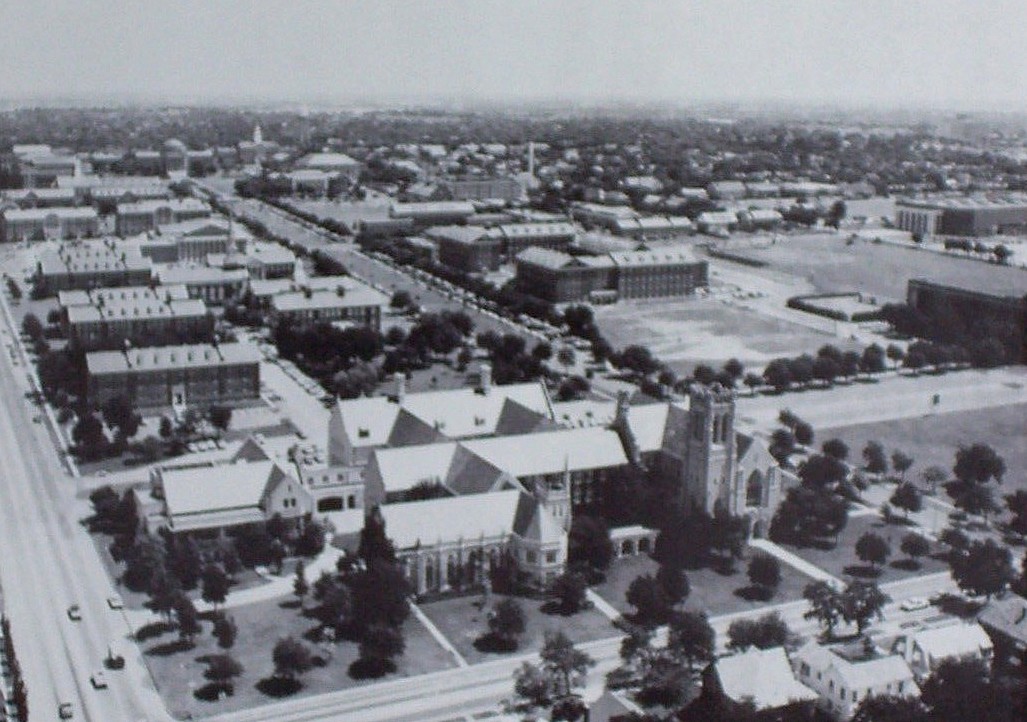
Church and SMU campus, Hillcrest and Mockingbird, 1960s
***
Top photo by Joseph Neland Hester, taken in 1927. From the DeGolyer Library, Central University Libraries, Southern Methodist University; photo can be seen here. (UPDATE: I erroneously labeled the direction of this photo previously. It actually shows the back of the church, looking toward Mockingbird. It would have been taken from about where the Meadows Museum is now. If this is incorrect, please let me know!)
Photo of “The Little Brown Church” from the Park Cities Bank Heritage Series, used courtesy Lone Star Library Annex Facebook Group.
Aerial view from the back cover of Golden Prologue to the Future: A History of Highland Park Methodist Church by Doris Miller Johnson (Parthenon Press, 1966).
Other images from postcards.
For more on the history of Highland Park United Methodist Church check out the Wikipedia page here; check out the church’s history page here.
The Rogers Lacy Hotel, designed by Frank Lloyd Wright
by Paula Bosse
Feast your eyes on that fantastic skyscraper. That building was *this close* to being built in Dallas. And even though it was designed in 1946 (!), it looks modern enough to fit right in with the city’s celebrated 21st-century skyline.
Frank Lloyd Wright designed this 47-story hotel for millionaire East Texas wildcatter Rogers Lacy, to be built at the southwest corner of Commerce and Ervay, catty-corner from the also fabulous (if not quite so futuristic-looking) Mercantile National Bank Building.
Even though he had a firm distaste for the overly-populated, traffic-clogged, modern American city, Wright jumped at the chance to design a hotel smack dab in the middle of one of the country’s largest and fastest-paced cities. In fact, the Lacy Hotel was one of Wright’s pet projects, and he went all-out in his attempt to convince his wavering client of the merits (both aesthetic and utilitarian) of the multi-million-dollar skyscraper he had, apparently, been dreaming of for decades.
While Wright worked on swaying Lacy in his favor, John Rosenfield — the influential arts critic of The Dallas Morning News — worked on winning over the people of Dallas. Rosenfield really pulled out the stops when writing about the project; his promotion of the proposed hotel (in print as well as behind-the-scenes) was as tireless as it was passionate.
The startlingly new architectural design combined with Wright’s salesmanlike pronouncements on how he had transcended what he saw as the crushing gloom of hotel space caused quite a bit of excitement. Lacy, the Texas oil man with deep pockets, was eventually won over. But a client’s enthusiasm and an architect’s full-bore persuasion can sometimes go only so far. After an initial gung-ho response from the Lacy camp, communication with Wright began to get spotty (causing a freak-out at Taliesin), and plans never really got underway. When Lacy died unexpectedly at the end of 1947, the project was scrapped, and Frank Lloyd Wright’s dream of a soaring glass skyscraper was never realized.
If only we could go back and nudge Rogers Lacy to sign off on this building’s construction. It’s amazing how Wright’s concept here predicted the later glass-clad, atrium-centered architecture that has been a Dallas staple for decades. If Wright’s Lacy building were announced today — even without the weight of Frank Lloyd Wright’s name attached to it — I think news of its construction would, again, be met with excitement.
***
Sources & Notes
The Frank Lloyd Wright drawing of the proposed Rogers Lacy Hotel is from the cover of the Spring 2009 issue of Legacies: A History Journal for Dallas and North Central Texas. Charles T. Marshall’s extremely entertaining article, “Where Dallas Once Stood: Frank Lloyd Wright and the Rogers Lacy Hotel,” is in this issue, and it’s a great read, illustrated with photos of the key players and additional architectural drawings of the hotel; you can read the full article here.
Wright’s biggest champion in Dallas was legendary Dallas Morning News critic John Rosenfield (he and Wright were also personal friends). His articles on the proposed Rogers Lacy hotel appeared in the DMN, including the ones listed below:
“Famed Architect Confers on New Dallas Hotel Plans” (DMN, March 28, 1946)
“47-Story, Windowless Dallas Hotel Designed by Celebrated Architect” (DMN, July 28, 1946) — Rosenfield’s extensive, soaring description of the planned building
“Dallas’ Dream Hotel Soon Coming To Life” (DMN, Aug. 11, 1946)
“Wright Bares Lacy Hotel Plans” (DMN, June 22, 1947) — the unveiling to the Dallas public of the final plans (which was accompanied by the images contained in the Legacies article linked above)
Headlessness and wardrobe malfunctions being attended to…
by Paula Bosse
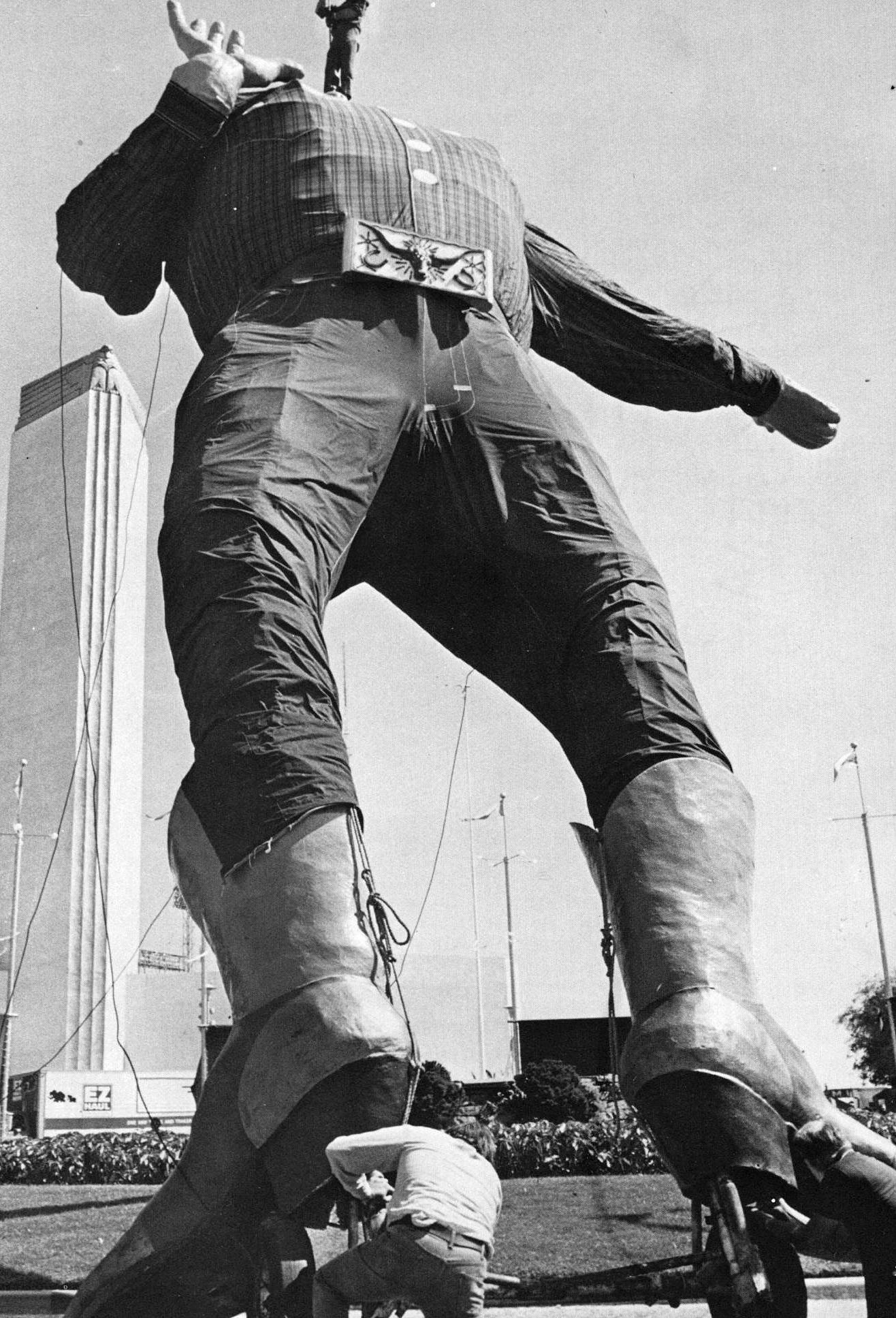
It’ll probably all get straightened out in the end.
When I worked in a bookstore that had frequent visits by costumed characters for children’s events, we were told to make sure children never saw the characters without their costume heads because it might freak the kids out. If true, that photo above has the potential to scar some impressionable youngsters for life.
Above, Big Tex in dishabille.
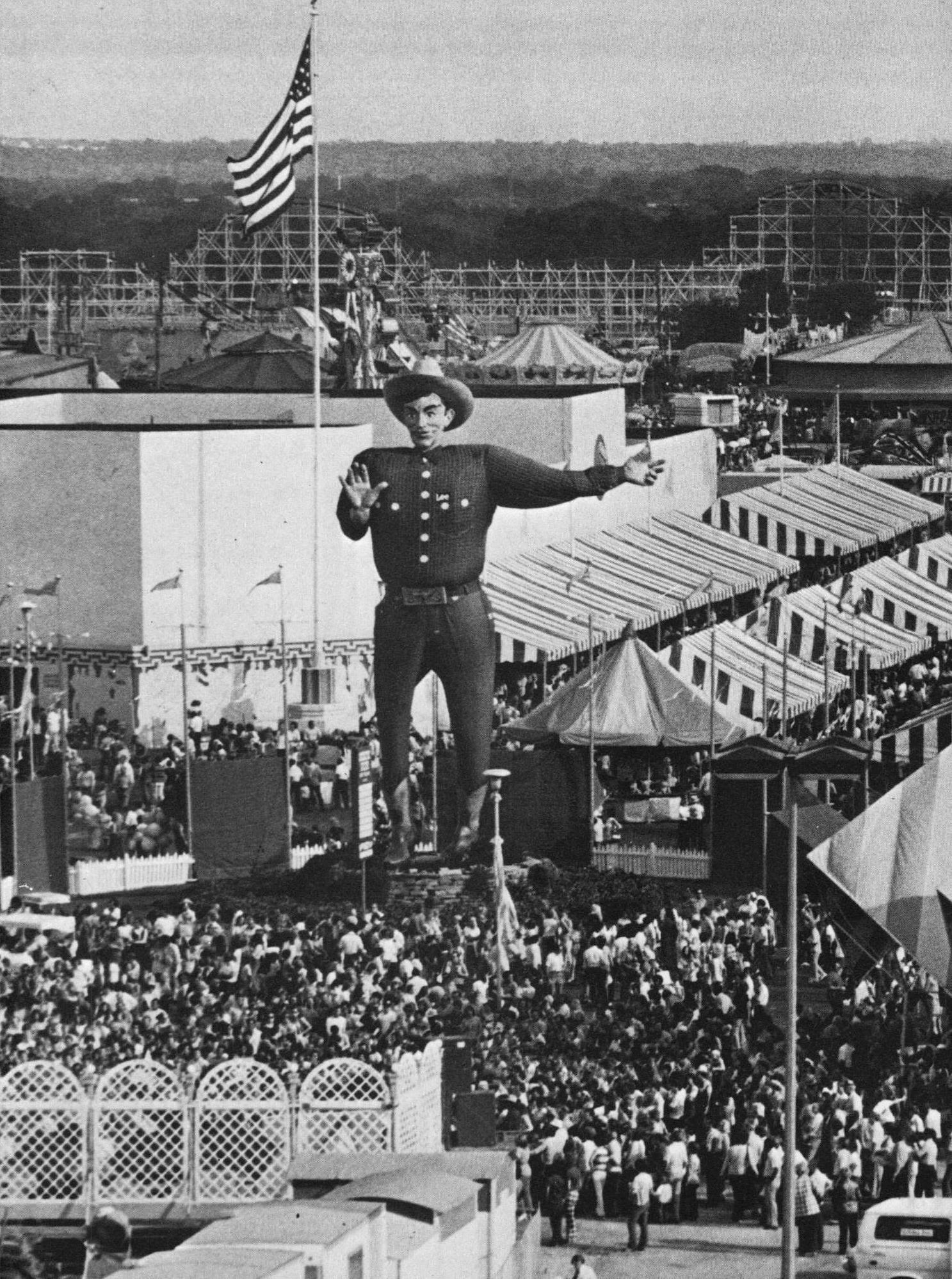
Below, all pulled together.
***
Sources & Notes
Top photo of a headless Big Tex is from the Sept. 1976 issue of Texas Historian, a Texas State Historical Association publication of the Junior Historians of Texas.
Second photo, of a put-together Big Tex is a State Fair of Texas photo from the same issue of Texas Historian.













 Flashback : Dallas