Flashback : Dallas

A Miscellany: History, Ads, Pop Culture

Dallas in 1879 — Not a Good Time to Be Mayor

main-jefferson_1879_greeneA view from the courthouse, looking north (click for larger image)

by Paula Bosse

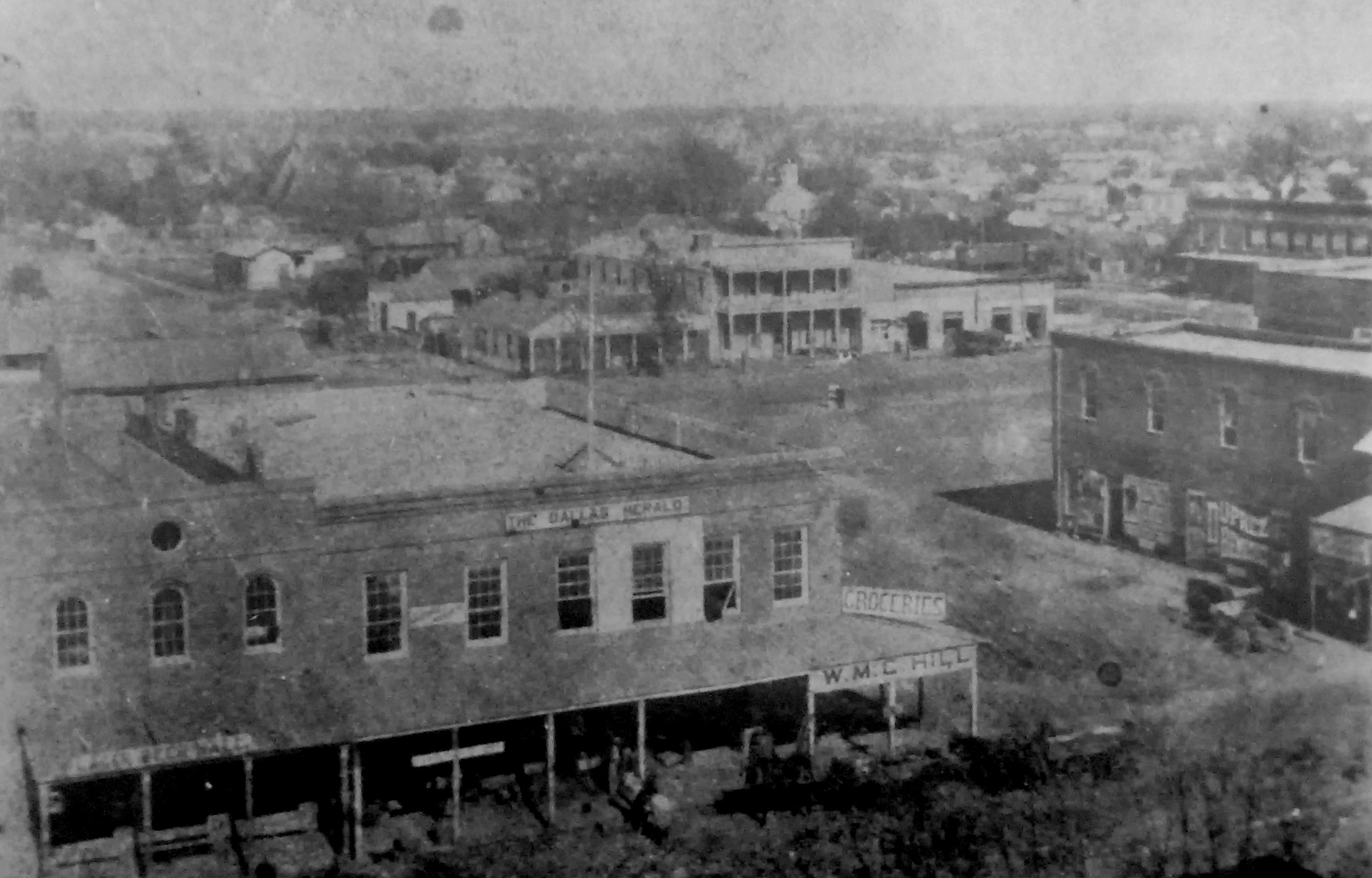
Above, a view of Dallas in 1879, looking north from the courthouse (one of many in the city’s past that eventually burned down); the intersection in the right foreground is Main and Jefferson (now Record Street).

This is such a cool photo that, on a whim, I checked to see what exciting things might have happened in Dallas in 1879. I found that the city’s voters had just elected a new mayor, James M. Thurmond, who had run on an “independent reform and morality ticket.” Yawn. On the surface, that hardly seemed very interesting — a  historical fact, yes, but not all that exciting. But, wait, there’s more to the story.

Thurmond’s post-election honeymoon was short-lived because, even though he had won a second (one-year) term, he had made some serious enemies in his first term. He was removed from office in 1880 by the city council in a lack-of-confidence vote, the result of a nasty trial and probably slanderous accusations by lawyer Robert E. Cowart.

The feud between Thurmond and Cowart grew more and more bitter as time passed, and on March 14, 1882 — moments after the two men had exchanged angry words in Judge Thurmond’s courtroom — Cowart shot and killed Thurmond. Witnesses described the shooting as an act of self-defense. They said that Cowart shot when the judge reached for his pistol. (For an incredibly gruesome account of this incident, the contemporary newspaper report is linked below.)

The photograph above was taken from the courthouse where this shooting took place. When the photograph was taken in 1879, the animosity between the new mayor and an unhappy lawyer had already begun to percolate. I suppose men with “Esq.” after their names in the 1880s were predisposed to shoot-outs indoors in well-appointed courtrooms rather than out in the dusty streets at high noon. It’s classier.

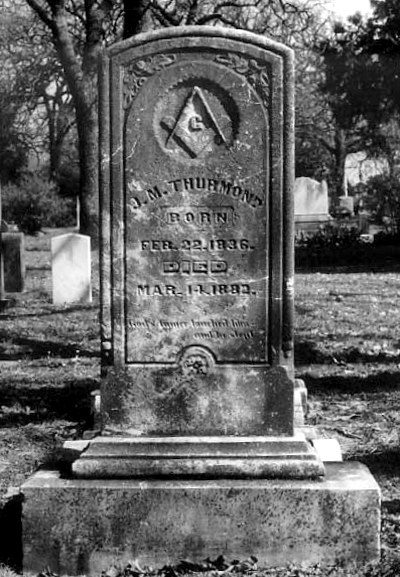
thurmond_headstone_greenwood-cemetery_findagraveGreenwood Cemetery, Dallas (photo: David N. Lotz)

***

Top photo is from Dallas, The Deciding Years — A Historical Portrait by A. C. Greene. (Austin: The Encino Press for Sanger-Harris, 1973); photo is from the collection of the Dallas Public Library.

Photo of J. M. Thurmond’s headstone in Greenwood Cemetery is from Find A Grave, here. Cowart — who died in 1924 — is buried in a nearby plot in the same cemetery. (Incidentally, Cowart’s claim to fame — other than shooting a judge in his own courtroom — appears to be that he was the person who inadvertently came up with Fort Worth’s nickname, “Panther City” when he wrote a tongue-in-cheek newspaper article about Fort Worth in 1875. Read a great history of this amusing kerfuffle in Hometown by Handlebar’s post, here — scroll to the second story.)

For an interesting contemporary report of the shooting — including gruesome eyewitness accounts — check out the article from the March 15, 1882 edition of The Dallas Herald (under the headline “The Deadly Pistol”), here, via the Portal to Texas History.

A short background on the Thurmond-Cowart feud, from the WPA Dallas Guide and History (which includes the verdicts of Cowart’s two trials for murder), can be read here.

Click top photograph for HUGE image.

*

Copyright © 2014 Paula Bosse. All Rights Reserved.

Cokesbury Book Store — 1959

cokesbury_dallas_1959

“For a summer of pleasure, grab a good book.”

*

Copyright © 2014 Paula Bosse. All Rights Reserved.

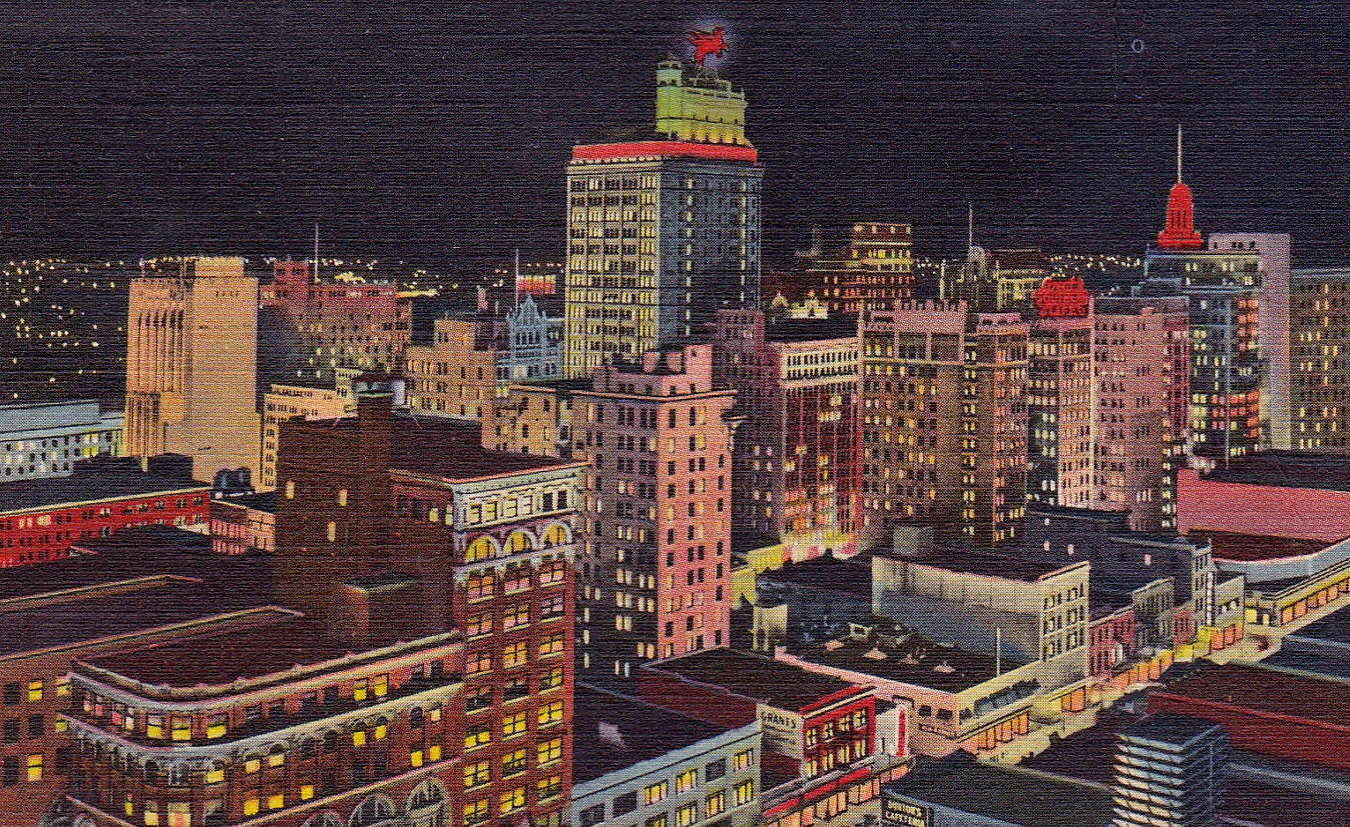
When the Flying Red Horse Could Be Seen From Miles Away

birdseye_night_early1940sThe symbol of Dallas…

by Paula Bosse

One of my favorite views of the skyline — back when Pegasus had no competition.

***

Sources & Notes

Original photograph by Lloyd M. Long, from postcard “Night Scene, Heart of Dallas, Texas” (D-43).

*

Copyright © 2014 Paula Bosse. All Rights Reserved.

The Old Union Depot in East Dallas: 1897-1935

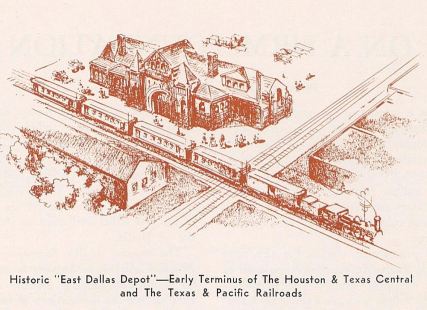
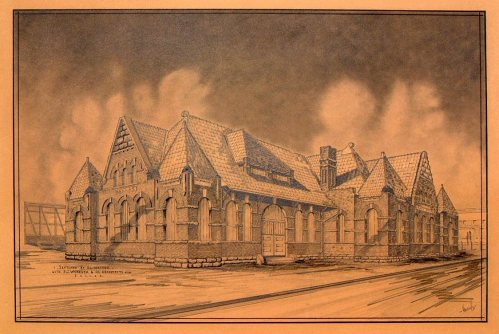
east-dallas-depot_rendering_art-hoffmanFrom the collection of Art Hoffman (click for larger image)

by Paula Bosse

I saw the above rendering of the old East Dallas rail depot posted recently in a Dallas history group. It was bought several years ago by Art Hoffman who was told it had belonged to a former employee of the Houston & Texas Central Railroad (which, along with the Texas & Pacific, served this station). It’s an odd thing for an architect to sketch — a boarded-up railroad depot. I couldn’t find anything on E. L. Watson, the architect who did the rendering (perhaps a member of the Watson family who were prominent Dallas contractors?), and I couldn’t find any connection between the depot and the F. J. Woerner & Co. architectural firm. The drawing might have been done in 1931, with what looks like “31” next to the artist’s signature. Could the drawing have been done merely as a study for E. L. Watson’s portfolio?

But back to the building itself. It was referred to by all sorts of names: Union Station, Union Depot, East Dallas Depot, Old Union Station, etc. With all these permutations, it took considerable digging to determine exactly when it had been built and when it had been demolished.

A couple of stations had previously occupied this site (about where Pacific Avenue and Central Expressway would cross), the first being built in 1872 at the behest of William H. Gaston who was developing the area, well east of the Dallas city limits. Due to the presence of the railroad, the area grew quickly, and in 1882, it was incorporated as the city of East Dallas. It thrived and continued to grow and on January 1, 1890 it was annexed and became part of the city of Dallas.
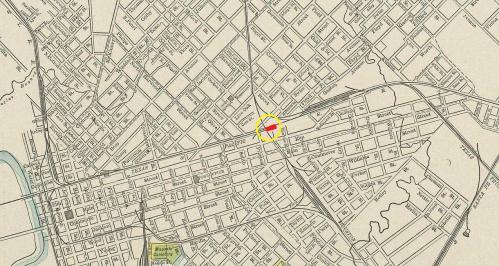
dallas-map-ca1900Location of depot in red — map circa 1890-1900 (click to enlarge)

The depot pictured in the drawing above was built in 1897. The previous station, a woefully inadequate and outdated “shanty,” was, by early 1897, being nudged toward demolition in order to remain competitive with the new Santa Fe depot then under construction. In the Feb. 10, 1897 edition of The Dallas Morning News, it was referred to as “the present eye-sore in East Dallas” which would be better off “abandoned and used for kindling wood.”

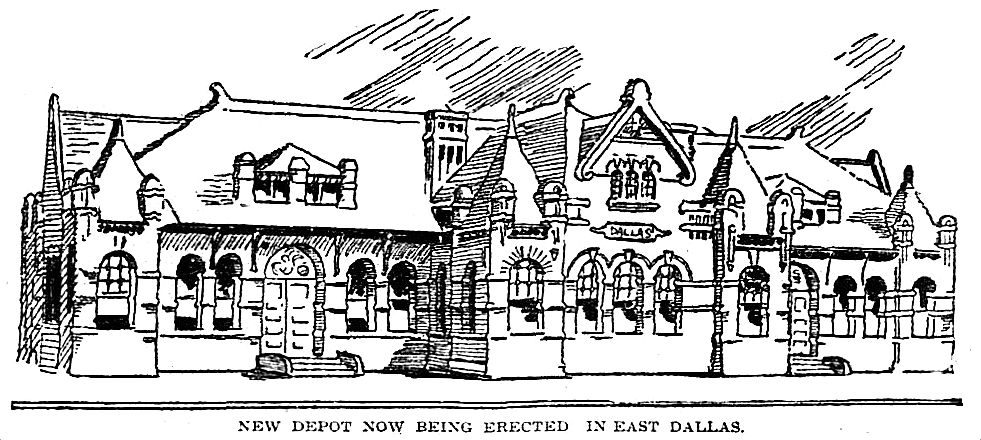
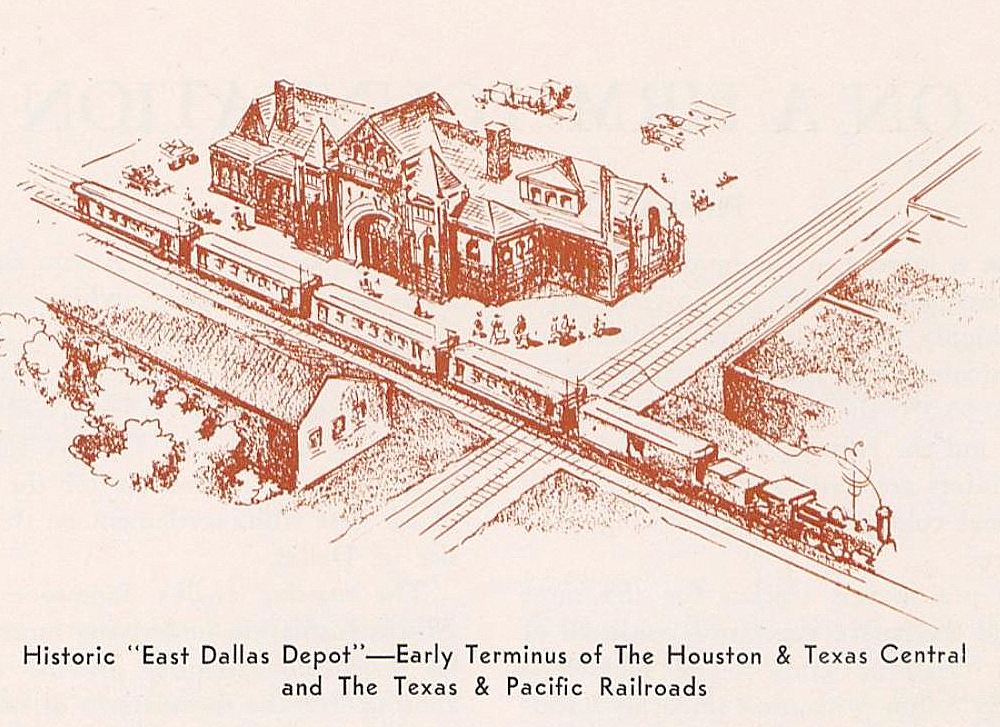
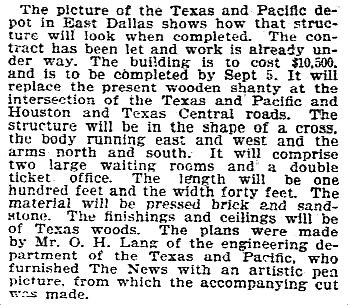
On April 4, 1897, it was reported that plans for a new Texas & Pacific passenger depot were nearly completed. By the beginning of June, the shanty had been torn down, and on June 6, 1897, the drawing below appeared in the pages of the Morning News, giving the people of Dallas a first look at what the much grander station would look like when completed. (It’s unfortunate that the actual architectural rendering was not used, but, instead, a more rudimentary staff artist’s version was printed.) The accompanying information revealed that the new depot had been designed by Mr. O. H. Lang, an architect who worked in the engineering department of the Texas & Pacific Railroad. This was an exciting tidbit to find, because I had wondered who had designed the structure but had been unable to find this elusive piece of information. And it was Otto Lang! Eight years after designing this railroad depot, Lang and fellow architect Frank Witchell would form the legendary firm of Lang & Witchell, and they would go on to design some of Dallas’ most impressive buildings.
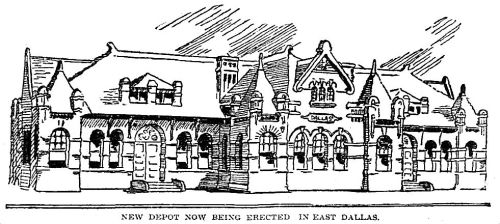
east-dallas-depot_dmn_060697-DRAWING

east-dallas-depot_dmn_060697-TEXTDallas Morning News, June 6, 1897

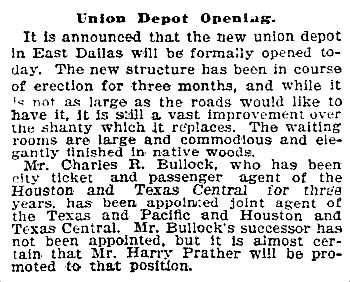
The building was completed fairly quickly, and its official opening was announced on Oct. 12, 1897.
east-dallas-depot_GRAND-OPENING_dmn_101297DMN, Oct. 12, 1897

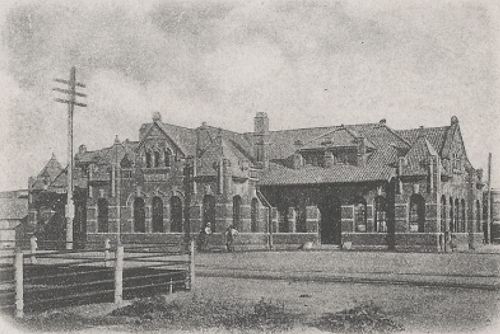
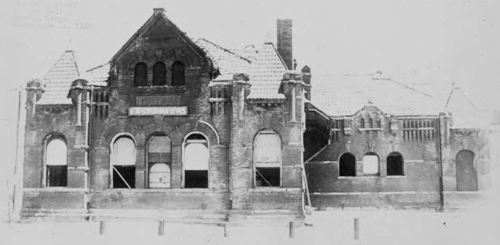
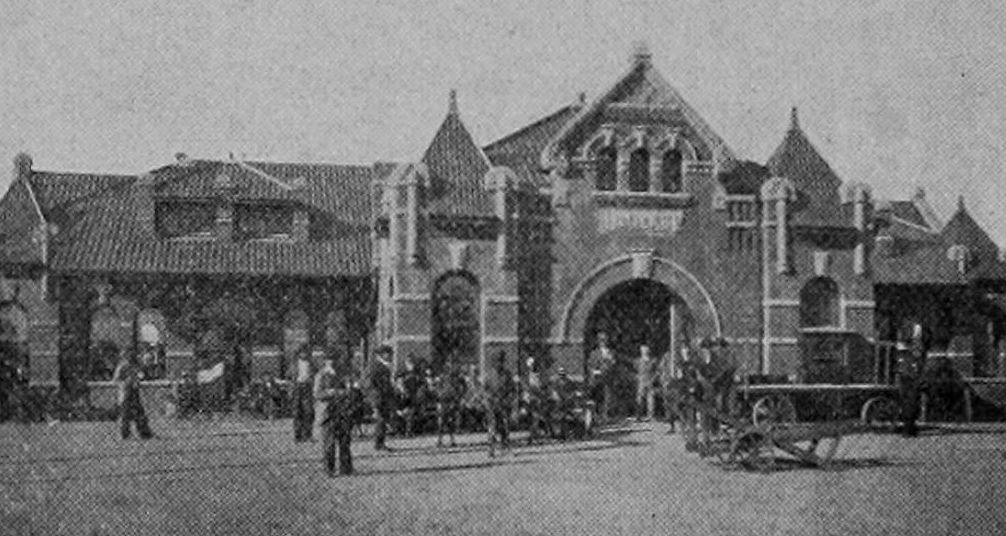
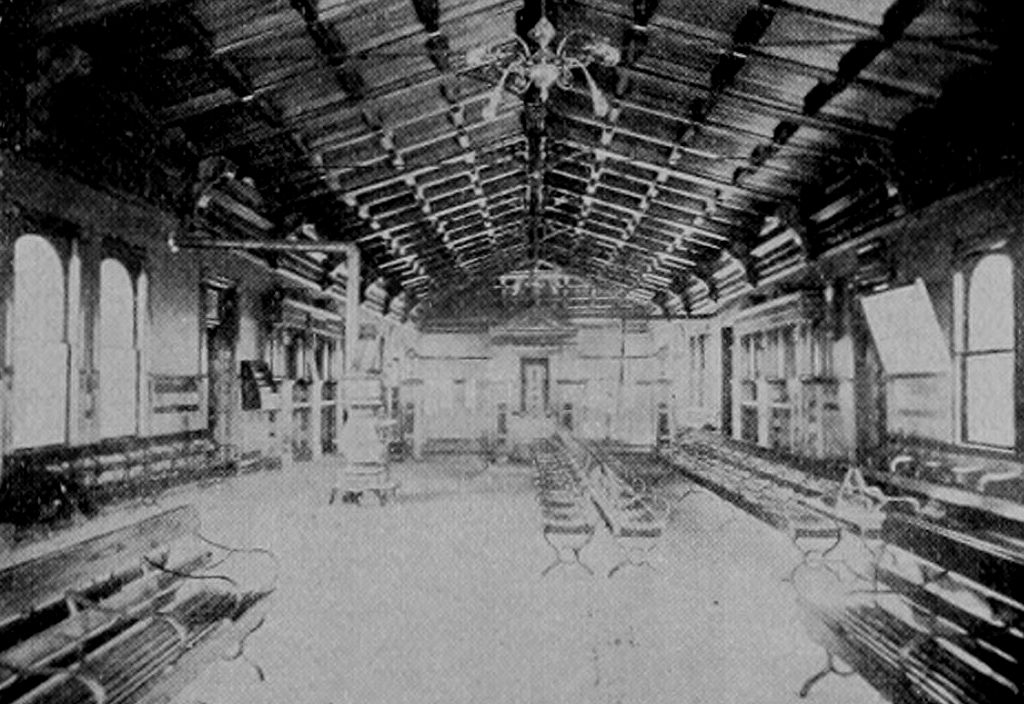
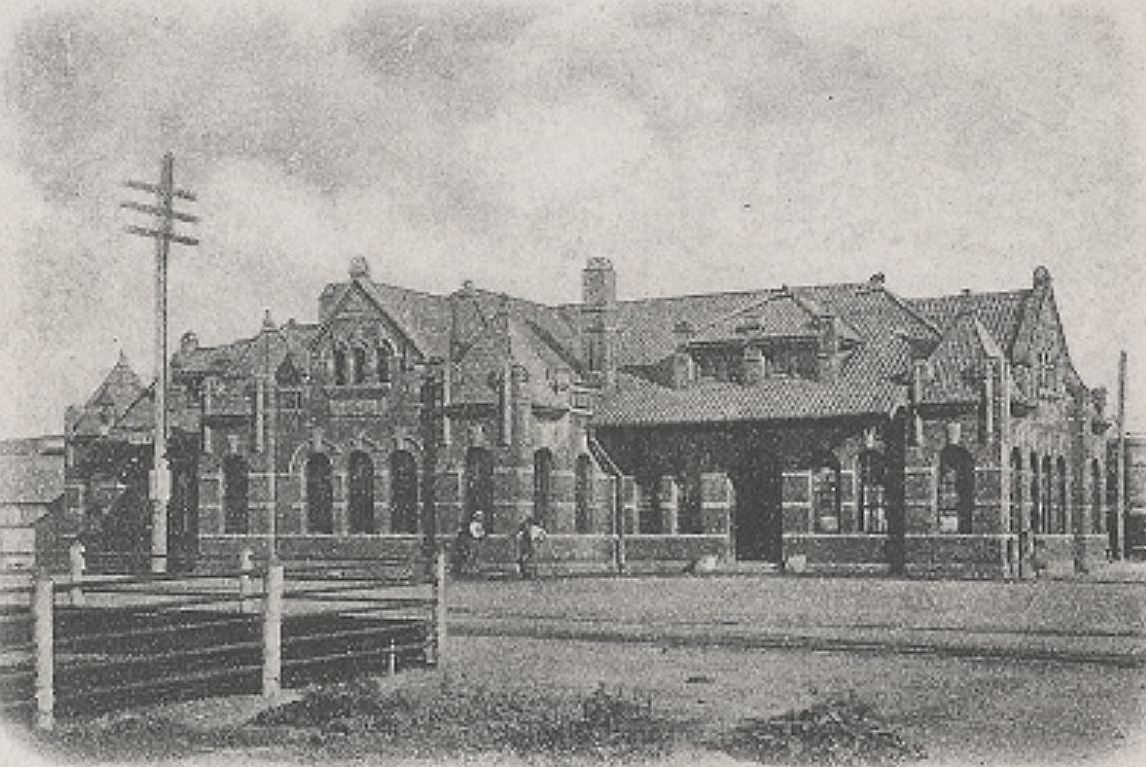
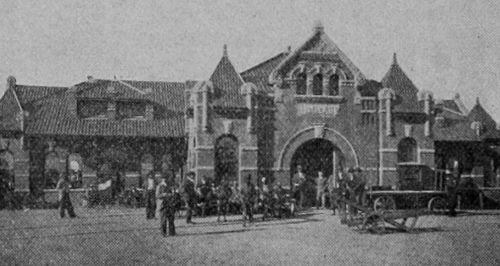
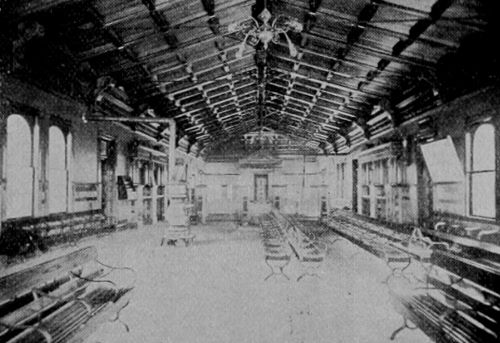
Here’s what the station looked like soon after it opened for business, from an 1898 Texas & Pacific publication (click for larger images):
east-dallas-depot_ext_tx-pac-rr_1898

east-dallas-depot_int_tx-pac-rr_1898

Much better than a shanty!

union-depot_flickr_coltera

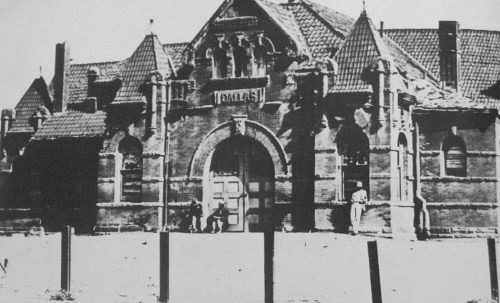
Below in another early photo of the depot:
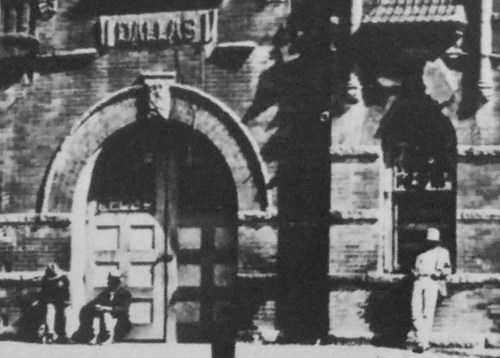
east-dallas-depot_c1890_dallas-redisc_DHS

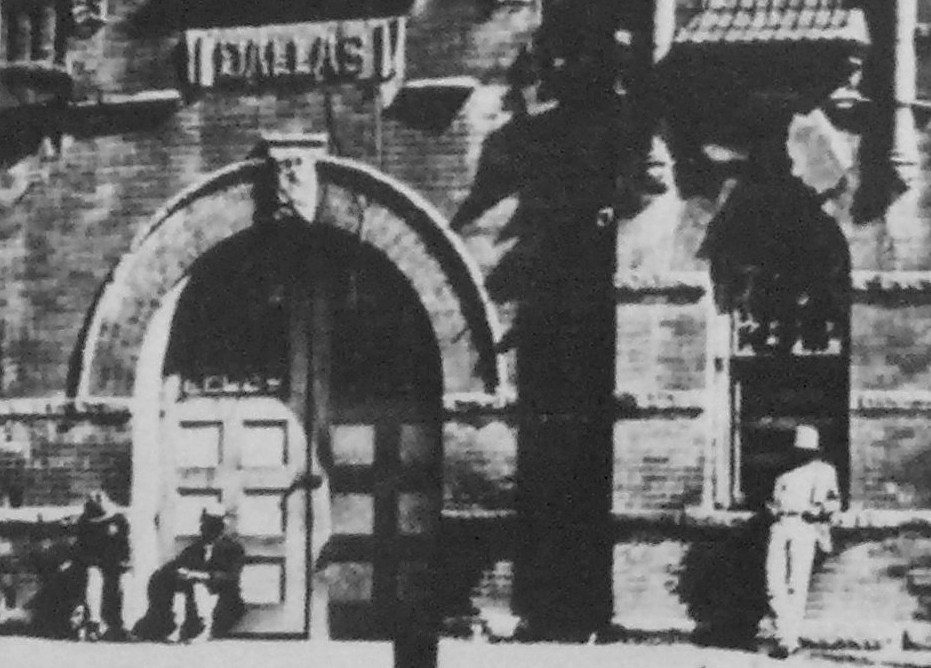
Can’t pass up an opportunity of zooming in on a detail:
east-dallas_c1890_dallas-redisc_DHS-det

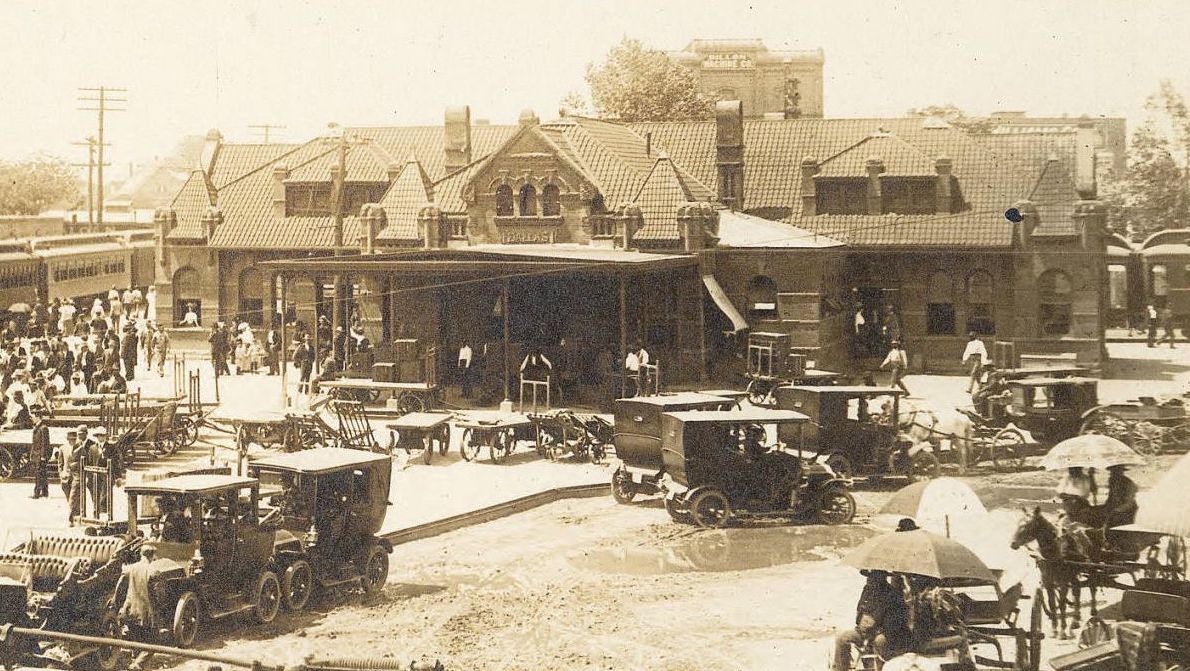
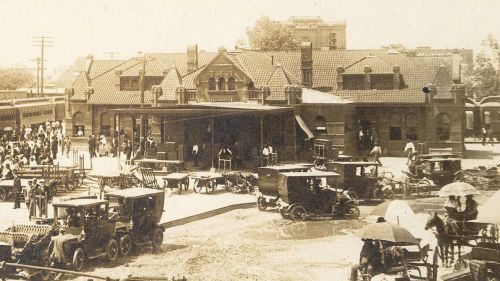
Here it is around 1910, a hotbed of activity, now with the addition of automobiles:
old-union-depot_degolyer_ca1910-det

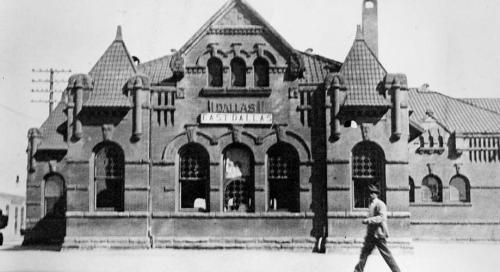
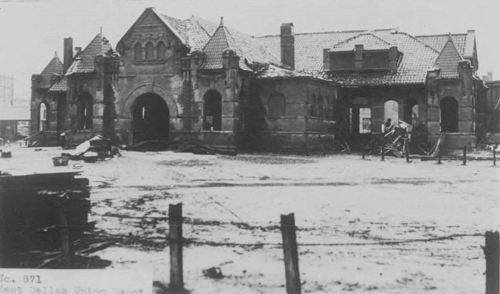
The station served an important role in the growth of (East) Dallas and in the everyday lives of its residents for almost twenty years, but in 1916 the many “independent” passenger and freight depots that had been spread out all over town were shuttered, per the Kessler Plan’s directive to consolidate and run all the rail lines in and out of the new Dallas Union Terminal. (This was when the word “old” began appearing ahead the East Dallas station whenever it was mentioned.)
east-dallas-depot_1916-portal(circa 1916)

So what became of the East Dallas depot? From “Relic of City of East Dallas Being Demolished,” a Dallas Morning News article from Jan. 20, 1935:

Last use of the depot for railroad purposes came in 1933 when it was abandoned as a freight station in August of that year. After that it was used as a station for interviewing destitute clients for the relief board but for several months has been boarded up.

So that original rendering may not have been done in 1931 after all (unless it was a high-concept architect’s vision of what the depot would look like one day all boarded up…).

At some point it was determined that the station would be torn down. It may have been one of those beautify-the-city projects done in preparation for the Texas Centennial Exposition the next year, but it was probably time for the building to come down. It was January of 1935, at the height of the Great Depression, and  not only did the city make it a point to hire laborers on relief to assist in the demolition, but it also approved the use of salvaged materials from the site to be used in building homes for “destitute families.”

Relief Administrator E. J. Stephany received approval Saturday of a project to get men to tear down the old structure and use the materials in building homes for destitute families and work is expected to start immediately. (“East Dallas Station To Be Torn Down and Converted Into Homes,” DMN, Jan. 13, 1935)

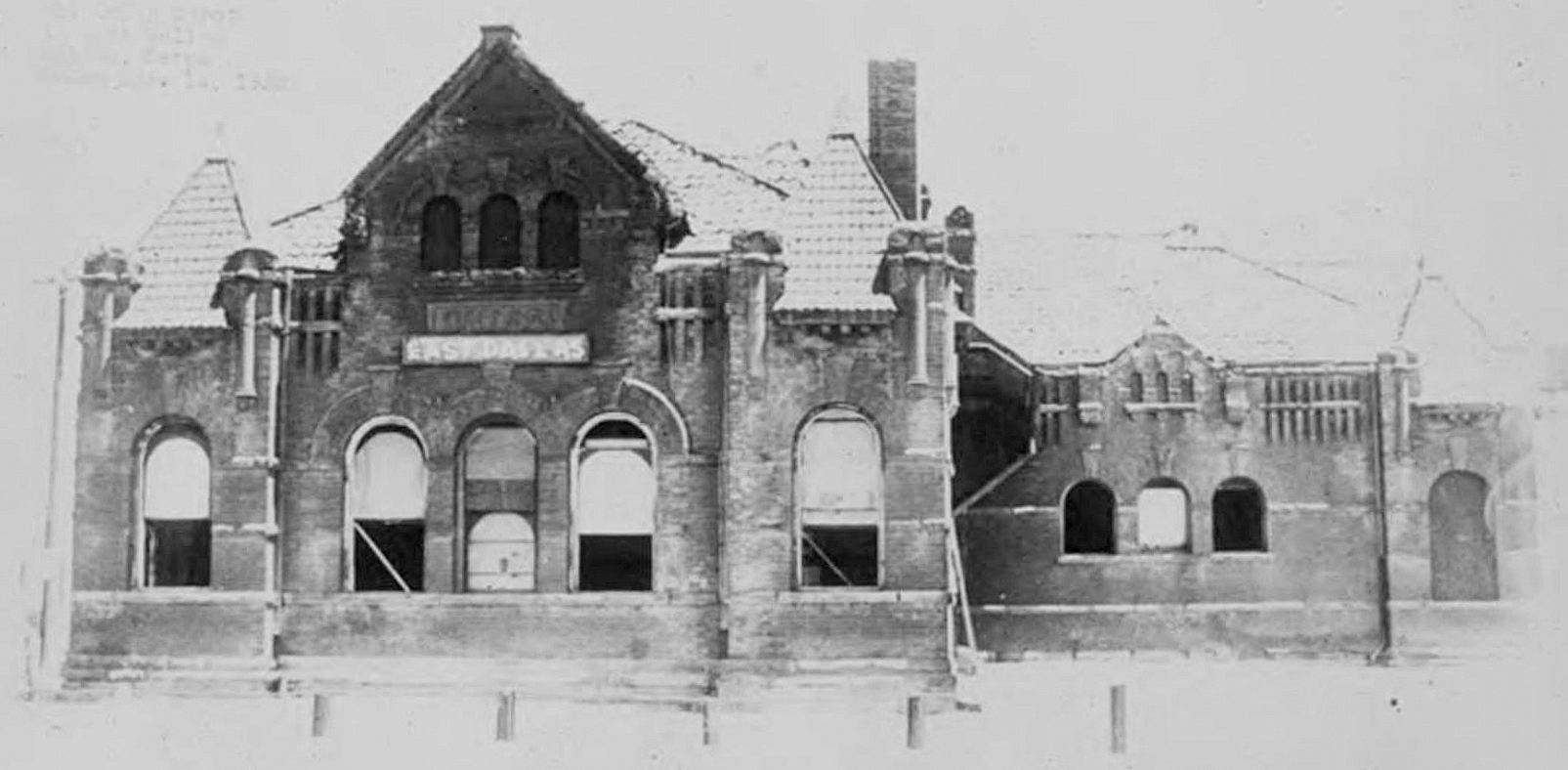
Demolition of the depot — which The News called “The Pride of the Gay Nineties” — began on January 18, 1935. The first solemn paragraph of an article reporting on the razing of the landmark is below.

Shorn of all the dignity it possessed for years as the East Dallas Union Depot, the old red structure near the intersection of Central and Pacific avenues began crumbling beneath the blows of wrecking tools wielded by laborers from the Dallas County relief board Friday.” (“Relic of City of East Dallas Being Demolished,” DMN, Jan. 20, 1935)

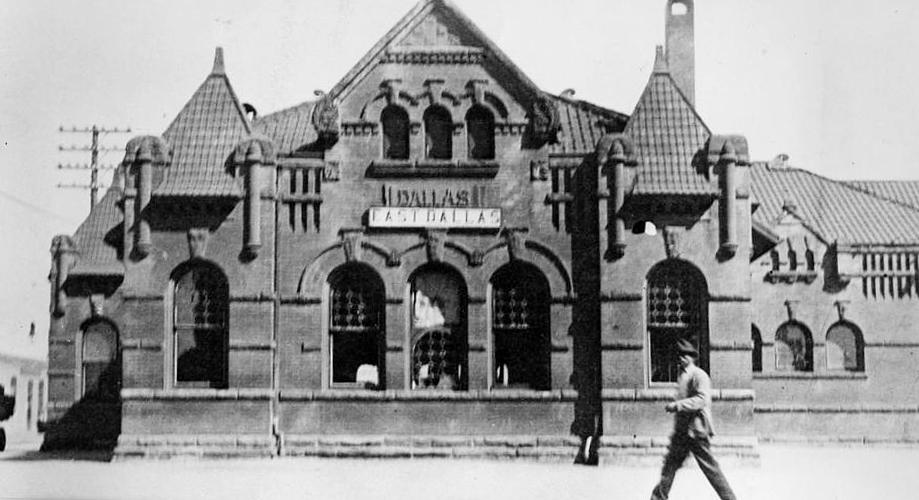
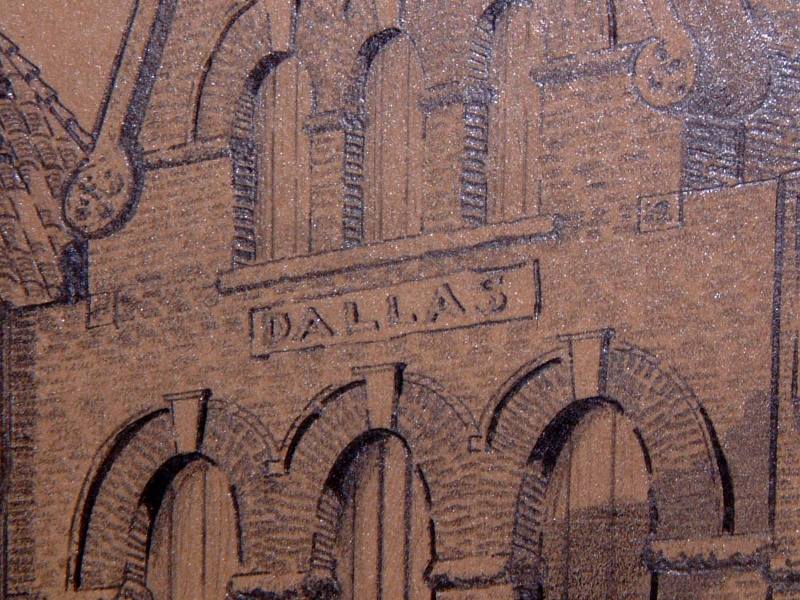
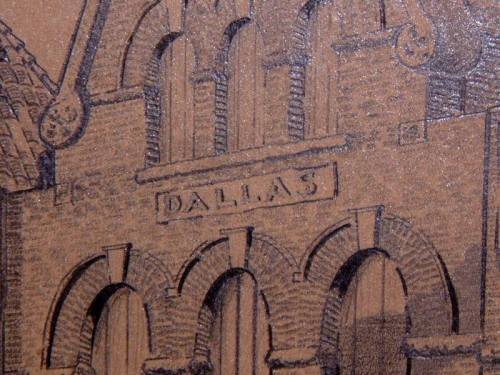
The red stone slabs bearing the word “Dallas” (3 feet long, 18 inches thick) were offered to the Dallas Historical Society “for safekeeping.”
east-dallas-depot_rendering_dallas_Art-Hoffman_sm

So did that relief housing get built? Sort of. All I could find was an article from June, 1935, which states that one little building was constructed with some of the brick and stone from the razed depot. It wasn’t a house for the needy but was, instead, headquarters for relief caseworkers in donated park land in Urbandale. Presumably there was housing built somewhere, but all that brick and stone salvaged from the old depot may not have been used for its intended purpose. BUT, there is this tantalizing little tidbit:

As a reminder of the historic antecedent, the new structure [in Urbandale Park] has as a headpiece for its fireplace the large carved stone bearing the name Dallas. (“Relief Structure Made of Materials From Razed Depot,” DMN, June 20, 1935)

Does this mean that the Dallas Historical Society might still have the second slab? If not, what happened to it?

I checked Google Maps and looked at tiny Urbandale Park at Military Parkway and Lomax Drive, just east of S. Buckner, but I didn’t see anything, so I assume the building came down at some point. (UPDATE, 3/20/16: Finally got around to driving to this attractive park. Sadly, the little building is no longer there.)

It would have been nice if that little bit of the old depot had survived — a souvenir of an important hub of activity which sprang to life when memories were still fresh of East Dallas being its own separate entity — the “David” Dallas to its neighboring “Goliath” Dallas. I would love to learn more about what might have happened to that “Dallas” sign which, for a while, hung over the fireplace of an odd little building in an obscure park in southeast Dallas where it lived out its days in retirement.

**

Since I keep adding photos of the depot to this post, I’m going to just start putting new additions (with captioned and linked sources) here:
east-dallas-union-depot_degolyer-lib_SMUDeGolyer Library, SMU

union-depot_east-dallas_1933_degolyer-lib_SMUDeGolyer Library, SMU

union-depot_your-dallas-of-tomorrow_1943_portal
“Your Dallas of Tomorrow” (1943), Portal to Texas History

***

Sources &  Notes

Original rendering of the old Union Depot at East Dallas by E. L. Watson is from the collection of Art Hoffman, used with his permission.

More on architect Frank J. Woerner (who designed, among other things, the Stoneleigh Hotel), here (see p. 10 of  this PDF).

History of Old East Dallas (and the city of East Dallas), here and  here.

More on architects Lang & Witchell here, with an incredible list of some of the buildings designed by their firm here.

1898 photos of the depot’s exterior and interior from Texas, Along the Line of the Texas & Pacific Ry. (Dallas: Passenger Department of the Texas & Pacific Railway, [1898]).

Photo immediately following the photos from the T & P book is from a postcard, found on Flickr, here.

Photo (and accompanying detail) immediately following that is from Dallas Rediscovered by William L. McDonald (Dallas: Dallas Historical Society, 1978). (McDonald identifies the photo as being “c. 1890” — well before the station was built in 1897.) From the collection of the Dallas Historical Society.

Photo of the depot with automobiles is a detail of a larger photograph from the collection of George A. McAfee photographs in the DeGolyer Library, Central University Libraries, Southern Methodist University. The original can be seen here.

Photograph dated 1916 from The Museum of the American Railroad, via the Portal to Texas History site, here.

More information in these Dallas Morning News articles:

  • “East Dallas Station To Be Torn Down and Converted Into Homes” (DMN, Jan. 13, 1935)
  • “Relic of City of East Dallas Being Demolished” (DMN, Jan. 20, 1935) — very informative
  • “Historical Society Will Be Given Slabs of Former Station” (DMN, Jan. 31, 1935)
  • “County Gets Land To Install Relief Depot; Later Park” (DMN, Feb. 27, 1935
  • “Relief Structure Made of Materials From Razed Depot; Station Occupies Land in Urbandale Donated to County For Park” (DMN, June 20, 1935)
  • “Salvaged Materials Go Artistic” (DMN, June 20, 1935) — photo of “relief structure” which accompanied above article

More photos of this immediate area can be found in these posts:

  • “The Union Depot Hotel Building, Deep Ellum — 1898-1968,” here
  • “The Gypsy Tea Room, Central Avenue, and the Darensbourg Brothers,” here

Many of the pictures and articles can be clicked for larger images.

*

Copyright © 2014 Paula Bosse. All Rights Reserved.


Welcome, Dallas Morning News Blog Readers!

dmn-blog_header

by Paula Bosse

Thanks to the link in yesterday’s Dallas Morning News blog post by Rudolph Bush (about the COOL mosaic he stumbled upon at the Preston-Forest shopping center), I’ve had a ton of new people checking out this blog. Welcome, everyone! And thanks for the mention, Rudy!

***

Check out Rudy’s post “Flashback Dallas Solves the Mystery of the Preston Forest Mosaic” on the dallasnews.com Opinion page, here.

To see the full-page spread on the opening of the shopping center (DMN, Aug. 24, 1960) that Rudy reproduced in the article, check out the zoomable PDF here.

*

Copyright © 2014 Paula Bosse. All Rights Reserved.
Junius Heights … Adjacent!

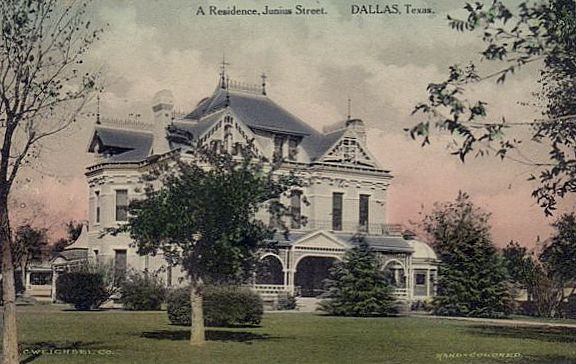
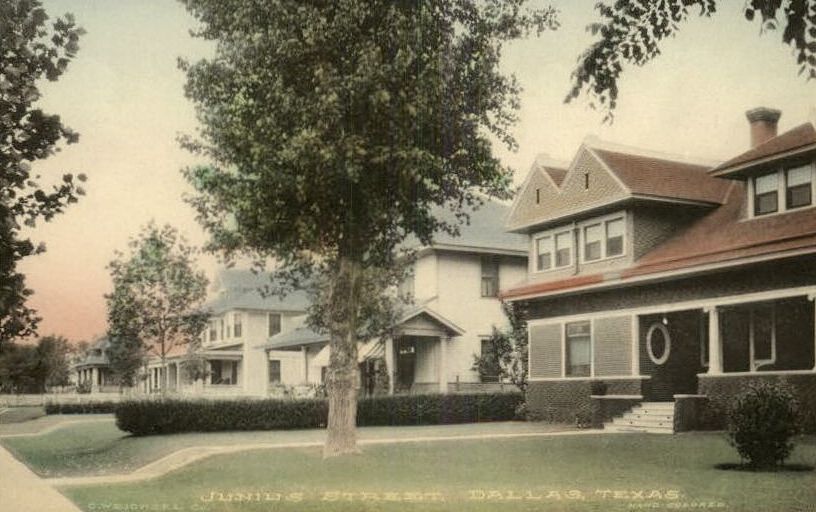
junius-stNot actually Junius Heights, but nearby! (see explanation below)

by Paula Bosse

One of the most popular neighborhoods in Old East Dallas is Junius Heights, which I’m a little surprised to learn is the largest historic district in Dallas. It came into being when streetcar service was extended into the eastern boondocks of the city, opening up tantalizing possibilities of new development. According to Preservation Dallas, when lots went on sale in the neighborhood-to-be in September of 1906, there was a buying frenzy:

“Prospective buyers were encouraged to take the streetcar to a newly platted neighborhood of the same name that afternoon to view the lots. Because it was Sunday, no lots were sold that day. But interested buyers remained in the neighborhood until midnight, when a pistol was fired to indicate the start of the sale. Within an hour, two hundred lots in Junius Heights had been sold and by Wednesday, every lot in the neighborhood had been sold.”

junius-housesUm, apparently not Junius Heights either….

And East Dallas has never looked back.

*

UPDATE: Having determined where the houses in these postcards were actually located — on Junius between Peak & Carroll — I now see this ISN’T Junius Heights! It’s a few blocks west of the Henderson Avenue boundary. So, not Junius Heights, but Junius Heights-adjacent!

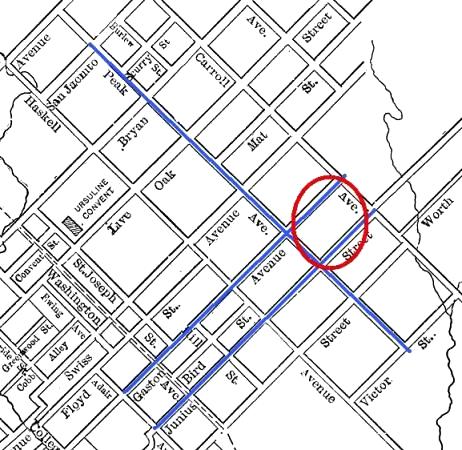
The postcard at top shows the Thomas Field house (built in 1884 and sold to John B. Wilson — of Wilson Building fame — in 1894); it was situated in a full city block bounded by Junius, Carroll, Gaston, and Peak. Before addresses changed throughout the city in 1911, the residence seems to have had no official address; in 1911 it was assigned the address of 4305 Junius. According to William L. McDonald’s book Dallas Rediscovered, the house was demolished in 1922 in order to subdivide and redevelop the property, Below is a map of the area from about 1898, showing the general location of the property.

field_wilson_house_ca-1898-map

The second postcard reproduces a photo seen in a real estate ad from 1906 which shows “portions of Junius Street between Peak and Carroll” — so, in the same block as the Field/Wilson house. Just not actually in Junius Heights!

junius-st_betw-peak-carroll_dmn_090206Dallas Morning News, Sept. 2, 1906 (click for larger image)

***

Quote is from a history of the Junius Heights neighborhood on the Preservation Dallas site, here.

Wikipedia entry is here.

Click pictures for larger images.

*

Copyright © 2014 Paula Bosse. All Rights Reserved.

“I’ve Got the Dallas Blues and the Main Street Heart Disease”

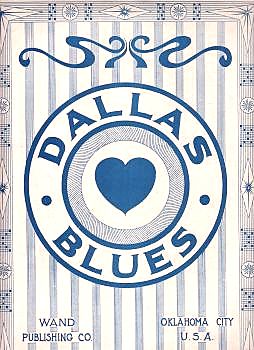
dallas-blues-sheet-music

by Paula Bosse

“Dallas Blues” is an important milestone in the history of blues music. I gather this may be debatable, but it is cited as being the first “true blues song” ever published (at least by sources on Wikipedia). Written sometime before 1909 by Hart A. Wand, a white musician in Oklahoma, “Dallas Blues” was published as an instrumental in 1912; in 1918, lyrics were added by Lloyd Garrett.

I have to admit, when I read the opening lyrics, I assumed it was your typical Dallas-inspired ditty about how Dallas is a cold and heartless city that will chew you up and spit you out:

When your money’s gone, friends have turned you down,
And you wander ’round just like a houn’ (a lonesome houn’),
Then you stop to say, ‘Let me go away
From this old town (this awful town).’

But then the next lines are:

There’s a place I know folks won’t pass me by,
Dallas, Texas, that’s the town I cry! (Oh hear me cry!)
And I’m going back, going back to stay
There till I die (until I die).

Ha! That was unexpected.

Below are a few versions of “Dallas Blues” — fast and slow, some with vocals, and one hot instrumental. Enjoy. I hope those juicy peaches are still hanging on your trees!

**

Ted Lewis’ version from 1931, with Fats Waller’s first vocal appearance on record and Benny Goodman on clarinet. Most of the lyrics have been left out, but this is great

*

Louis Armstrong’s recording, from 1929:

*

George Lewis’ slowed-down version:

*

And, lastly, Isham Jones’ instrumental version — this one is hopping!

***

Sources & Notes

Sheet music from an Art & Seek story on Texas Blues (with sound clips) by Jerome Weeks, here.

Wikipedia entry on the song, here.

Complete lyrics to the song, here.

I’ve got the Dallas Blues and the Main Street heart disease
(It’s buzzin’ ’round),
Buzzin’ ’round my head like a swarm of little honey bees
(Of honey bees).

Interested in Dallas-related blues songs? Check out my previous post “Deep Ellum / Deep Elm / Deep Elem Blues,” here.

*

Copyright © 2014 Paula Bosse. All Rights Reserved.

Irby-Mayes Ad With a Cameo by the Merc — 1948

ad-irby-mayes_merc_dmn_040148Landmark alert!

by Paula Bosse

An ad with the famous local building making a cameo.

It’s called PLATEAU
…the wonder fabric by Pacific Mills
that’s so perfect for our Texas weather. Suits of
[redacted??] look like regular weight worsted
…yet can be worn most every month of the year.
A new shipment exclusive at Irby-Mayes.

I love this 1948 ad. Irby-Mayes was located — where else? — in the Mercantile Bank Building!

*

Copyright © 2014 Paula Bosse. All Rights Reserved.

Night Life Along the Centennial Midway — 1936

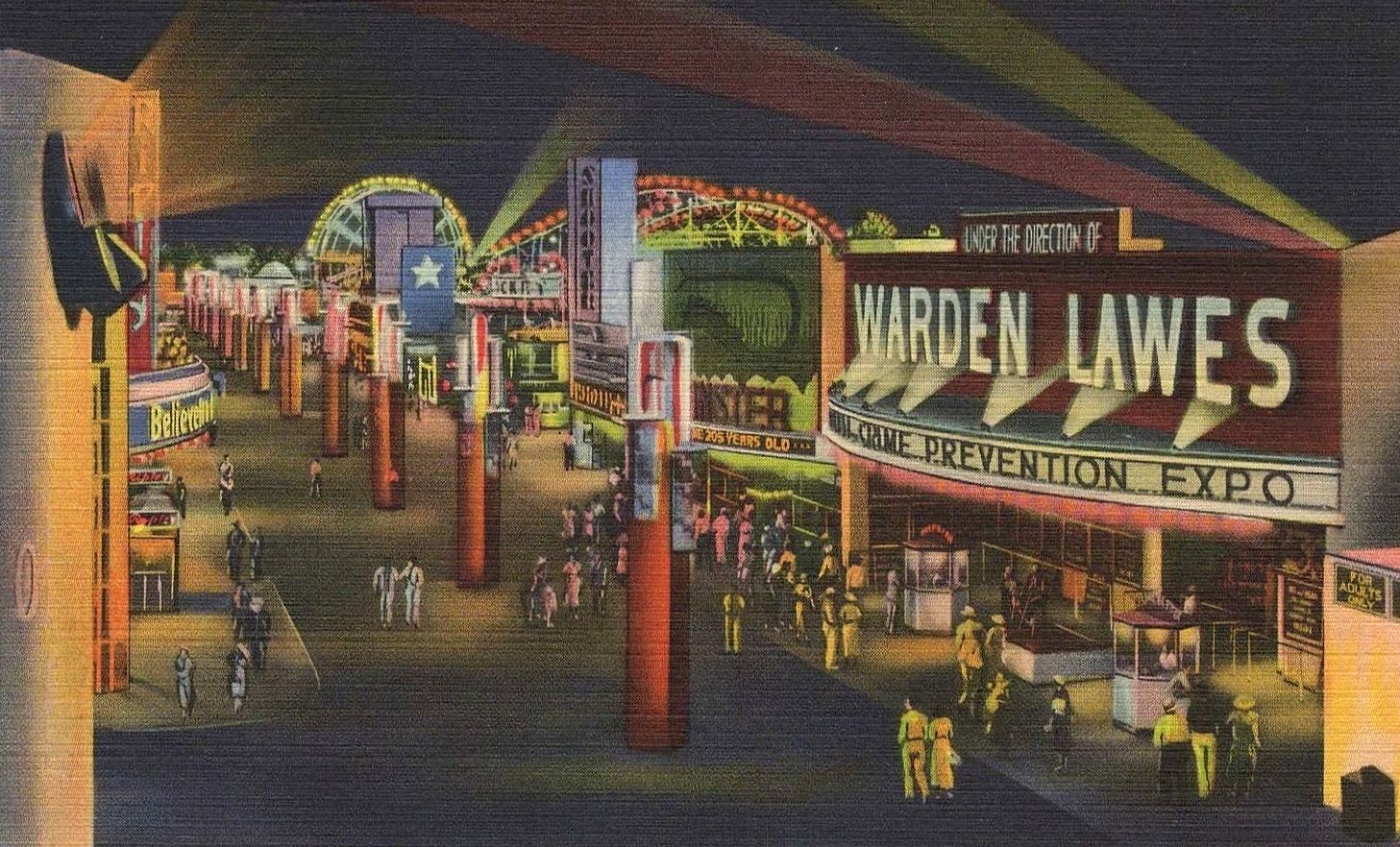
tx-centennial_night-midwayThe magical midway at night (click for larger image)

by Paula Bosse

Glamorous night shots as seen in not-quite-real-looking postcards from the 1930s and ’40s are among my favorites. And this shot, of the Texas Centennial Exposition Midway at night-time is so, so GREAT!

The text on the back of the card:

Night life in all its glory and glamour. Oddities, Animal Shows and Girl Shows to charm the most fastidious, along the Midway.

***

Compare to the shots of this stretch of the Midway from the other direction, in my previous post here.

Click picture for MUCH larger image!

*

Copyright © 2014 Paula Bosse. All Rights Reserved.

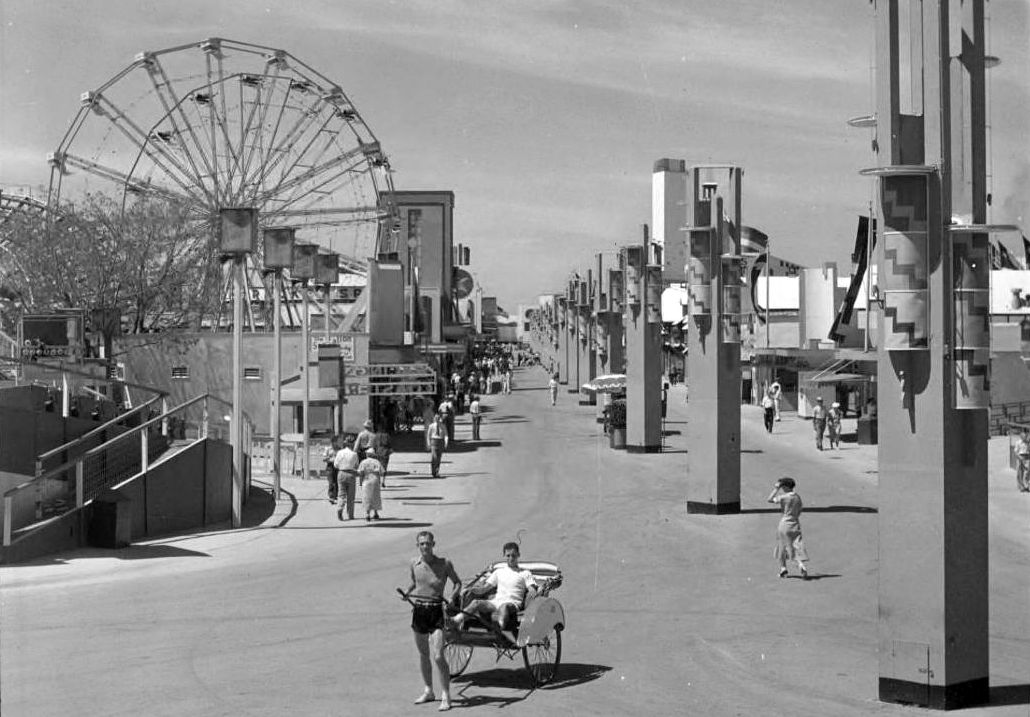
Forget the Ferris Wheel, Take a Ride in a Centennial Rickshaw — 1936

tx-centennial-midway_1936_ucrYour rickshaw awaits…

by Paula Bosse

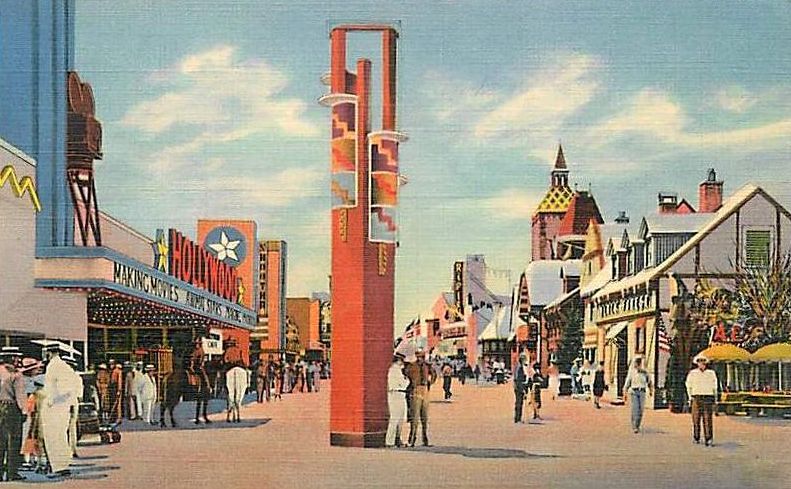
Here’s an odd photo of the Midway at Fair Park, taken in 1936. The whole thing feels a little weird. It’s just so … bright. And empty. It’s kind of bleak-looking for the glamorous Texas Centennial Exposition. And then there’s that rickshaw (?). What this scene needs is a little postcard-colorizing magic. Below, a similar scene, sans rickshaw.

fair-park_hollywood_centennial_midway

Better … but still kind of odd.

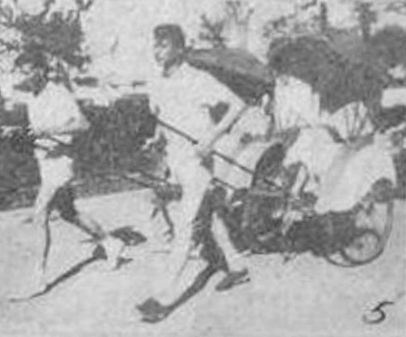
But back to that rickshaw. According to the the Treasury of Texas Trivia, Vol. II:

The Texas Centennial in Dallas had one feature that, considering its uncountable sights and sounds that one had to take in, may very well have been forgotten. College boys, as a means of earning tuition as well as keeping in shape, pulled foot-weary fairgoers from street to street and plaza to plaza in rickshaws during the 1936 celebration of our state’s one hundredth birthday.

rickshaw_tx-centennial-1936

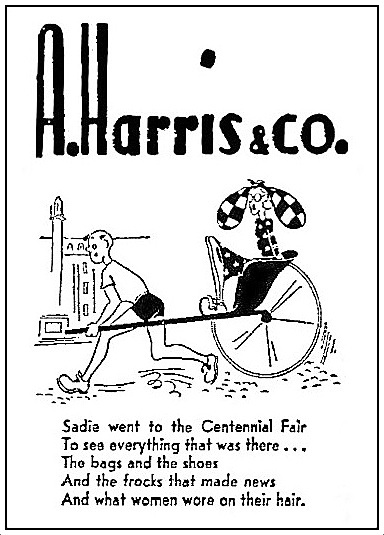
This exotic mode of transportation was even appearing in local advertisements — like this one, from an ad placed by the A. Harris department store:

ad-a-harris_centennial_rickshaw_dmn_052536_detA. Harris ad (det) , 1936

One of the most notable rickshaw-riders of the Dallas Centennial was none other than celebrated fan-dancer, Sally Rand, whose “Nude Ranch” show (check Google for risque film footage) at the competing Frontier Centennial Exposition in Fort Worth was packing them in in Cowtown. Even Sally had to come over and check out the Centennial. The photo below shows her autographing the shorts of one of the “ricksha-toters,” a lucky young man named Guy Johnsen. The caption of the July, 1936 news photo reads:

Sally Rand, who says she never knew success until she thought of taking her pants off, autographs those of Guy Johnson [sic], her ricksha toter, on a visit to the Texas Centennial Exposition at Dallas. With her is Mrs. Voln Taylor, Chairman of the Centennial Advisory Board.

centennial_rickshaw_sally-rand_cook-coll_smuCook Collection/DeGolyer Library/SMU

And now I know.

***

Sources & Notes

Top photo — titled “The Gay Midway of the Texas Centennial Exposition, Dallas” — from the Keystone-Mast Collection, UCR/California Museum of Photography, University of California at Riverside; see here.

Quote from Treasury of Texas Trivia, Vol. II by Bill Cannon (Plano: Republic of Texas Press, 2000).

Sally Rand photo (“Sally Rand Gives an Autograph”) from the George W. Cook Dallas/Texas Image Collection, DeGolyer Library, Central University Libraries, Southern Methodist University; more info on this photo is here. (Arne Miller “Guy” Johnsen — known later as “Swede” Johnsen — was a native South Dakotan who had left home and arrived in Dallas just in time for the Centennial, where he got a job pulling visitors around Fair Park in a rickshaw. This paragraph is from his 2005 obituary: “Raised on a farm in Volin, South Dakota, ‘Guy’ (as he was nicknamed by his mother), left home on a quest for better opportunities. In 1936, his travels found him pulling a rickshaw at the Dallas Centennial Fair. His claim to fame was pulling the famous and beautiful fan-dancer Sally Rand throughout the centennial fair grounds.” I guess a moment like that really stays with a person!)

To see this stretch of the Midway from the other direction — and AT NIGHT (!) — see my companion post here.

I find that — by complete coincidence — I’ve posted this on June 6th, the anniversary of the opening day of the Texas Centennial Exposition.

*

Copyright © 2014 Paula Bosse. All Rights Reserved.