Flashback : Dallas

A Miscellany: History, Ads, Pop Culture

SMU’s First Year: The Dinkey, Campus Hijinx, and the Basket Ball — 1915-16

1smu-rotunda-1916_soph-drawing

by Paula Bosse

As a companion to my previous post on the first year of classes at SMU, here are a few more photos from the yearbook, these documenting the less studious side of campus life.

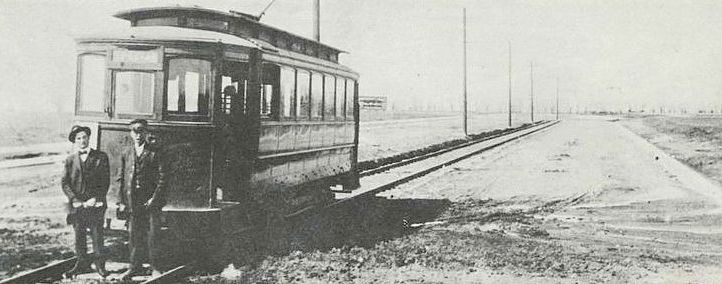
The most interesting thing about these photos, for me, is the SMU trolley, nick-named “The Dinkey” (or “The Dinky”). When SMU opened in 1915, it was waaaaaaaaaay outside the city limits, and the rail line extended only as far north as Knox. In order to get to and from downtown (and points beyond), one had to board the Dinkey near Hillcrest and McFarlin and ride to Knox, then change to an official city streetcar and head into civilization.

This reminiscence appeared in a 1984 issue of Park Cities People:

The first time Manning saw the campus was from the wooden seat of the Dinkey, an electric streetcar built for SMU in 1915.

“I told Dad Johnson, the conductor, as I boarded in Highland Park, I wanted to get off at SMU,” Manning said. “He said, ‘That’s as far as it goes.'”

“‘When we got there, I said, ‘Where’s the campus?’ He said, ‘There’s only two buildings. Dallas Hall is the one with the columns.'”

Manning couldn’t see the building from the Dinkey for the four-foot-tall Johnson grass and had to follow a travel-worn path to Dallas Hall.

2dinkey-hpcentennial“The Dinkey ran from Dallas Hall to Knox Street on tracks in the middle of Hillcrest. This photo taken at McFarlin.”

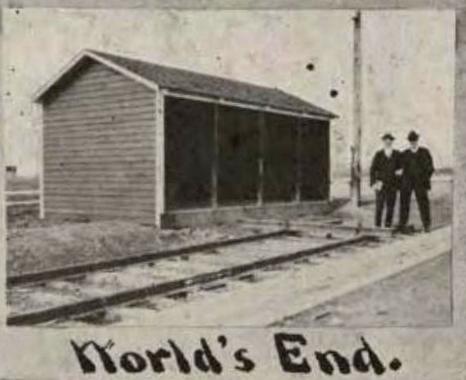
3smu-rotunda-1916_dinkey-stopThe “depot” where the Dinkey picked up and dropped off SMU students, faculty, and visitors.

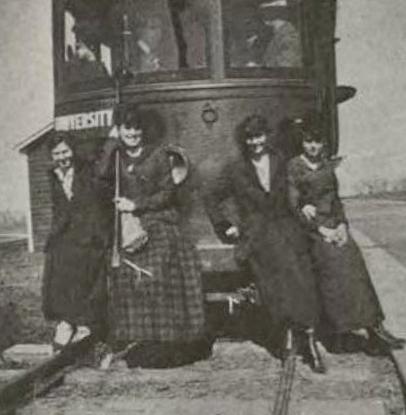
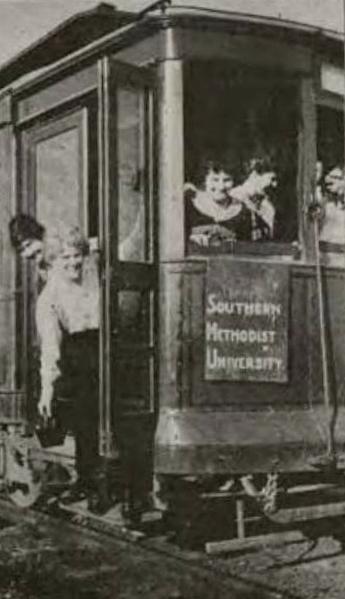
4smu-rotunda-1916_dinkeyThe Dinkey, garnished with co-eds.

5smu-rotunda-1916_dinkey

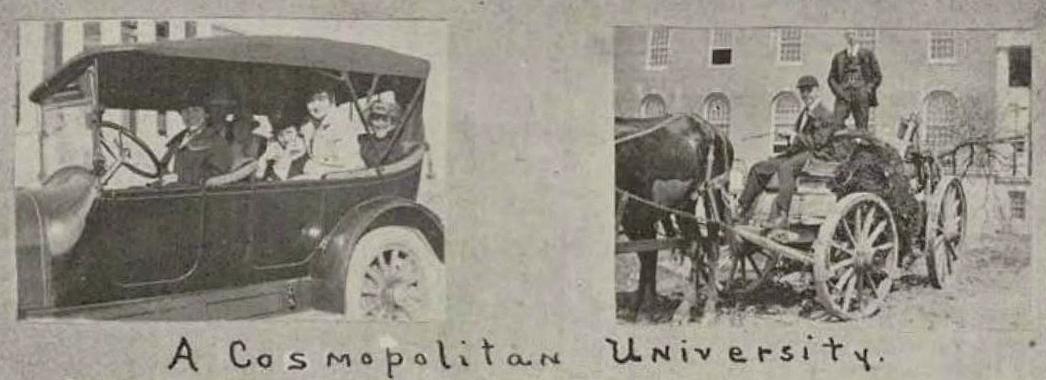
6smu-rotunda-1916_cosmopolitan-univ“Cosmopolitan University” horsepower.

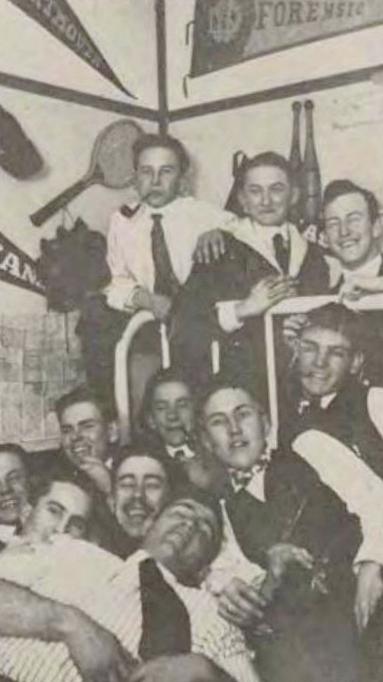
7smu-rotunda-1916_frat

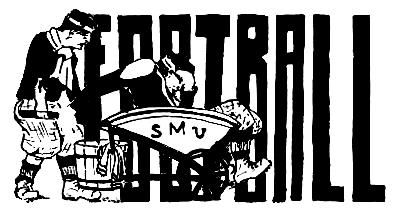
8smu-rotunda-1916_footballBad season?

The inaugural football season started tentatively. The 1915 schedule:

  • Oct. 9th: SMU vs. TCU at Fort Worth
  • Oct. 14th: SMU vs. Hendrick College at Dallas
  • Oct. 27th: SMU vs. Austin College at Dallas Fair
  • Nov. 4th: SMU vs. Dallas University
  • Nov. 12th: SMU vs. Daniel Baker at Brownwood
  • Nov. 19th: SMU vs. Southwestern University at Dallas
  • Nov. 25th: SMU vs. Trinity University at Waxahachie

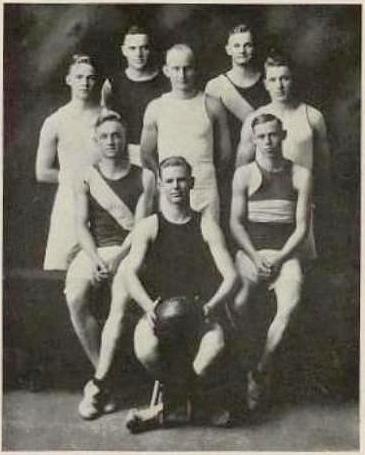
9smu-rotunda-1916_basketballThe men’s “Basket Ball” team.

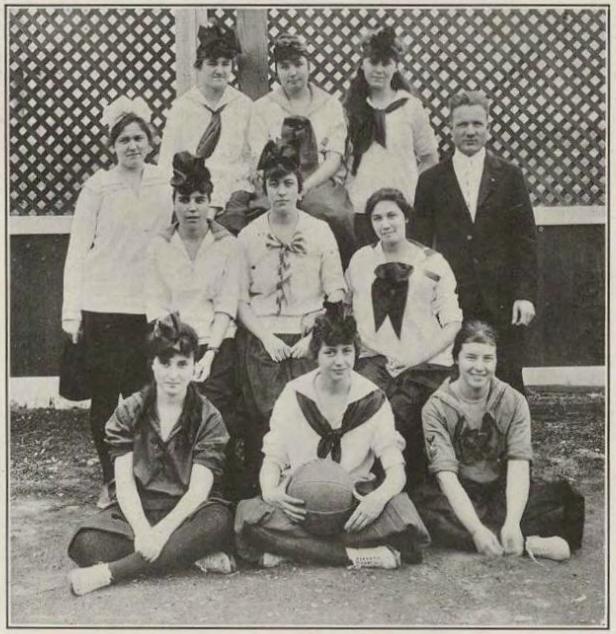
10smu-rotunda-1916_girls-basketballThe girl’s “Basket Ball” team.

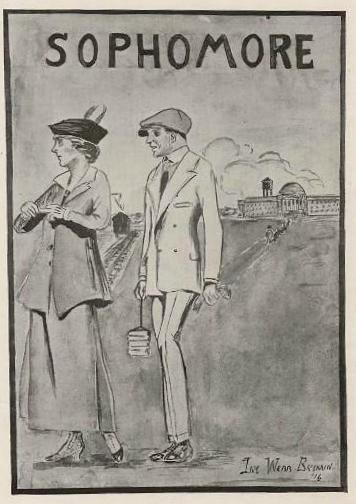
16smu-rotunda-1916_cover

***

Sources & Notes

All images (except the second) from the 1915-1916 edition of SMU’s “Rotunda” yearbook.

Photo (and caption) of the “Dinkey” trolley at Hillcrest and McFarlin from Highland Park Centennial Celebration site, here.

Quote about traveling to the campus from Park Cities People (March 15, 1984).

“Dallas Hall and the Hilltop” by Tom Peeler, an entertaining  1998 D Magazine article on the first days of SMU, is here.

My previous post containing more photos from this first yearbook, is here.

*

Copyright © 2014 Paula Bosse. All Rights Reserved.

SMU, “The School of the Future” — 1915-16

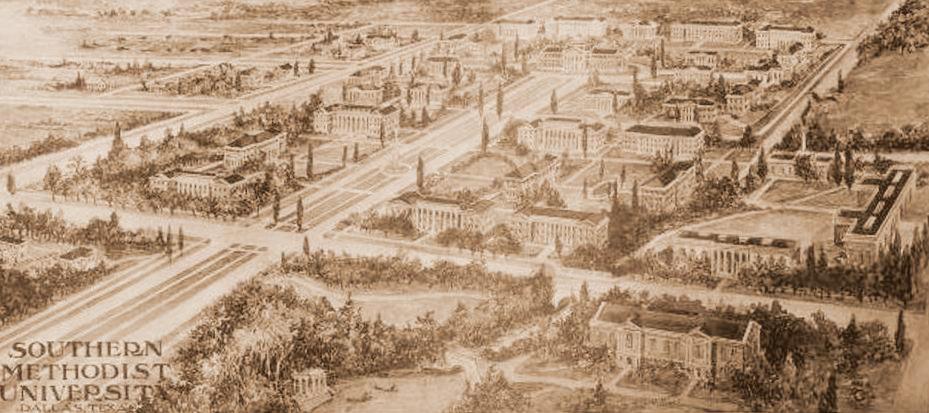
1smu-rotunda-frontis_1916-lgProposed buildings — upper half of the campus

by Paula Bosse

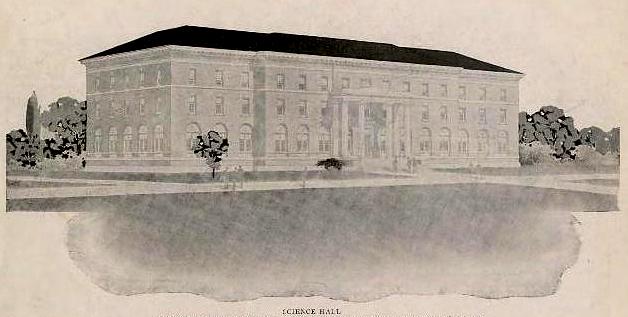
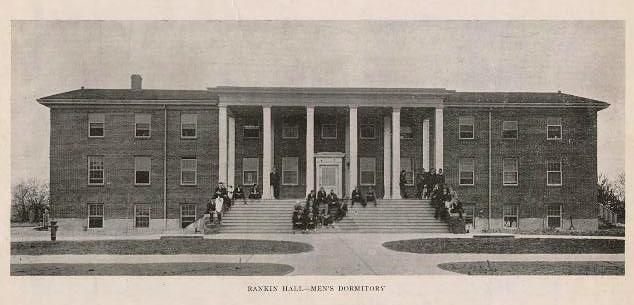
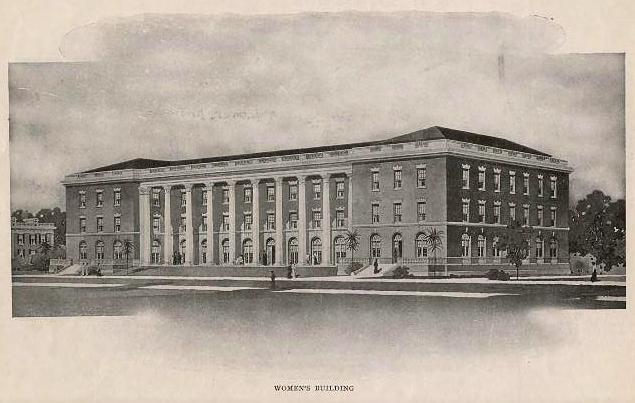
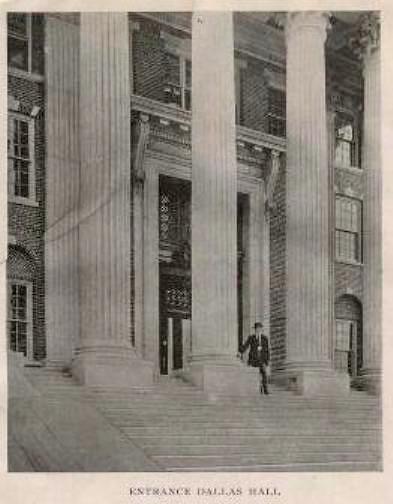
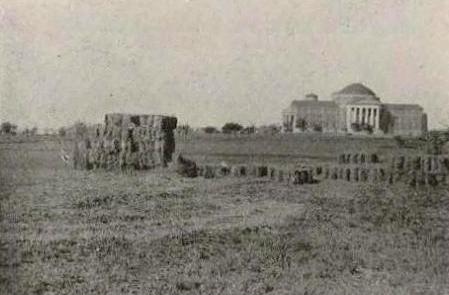
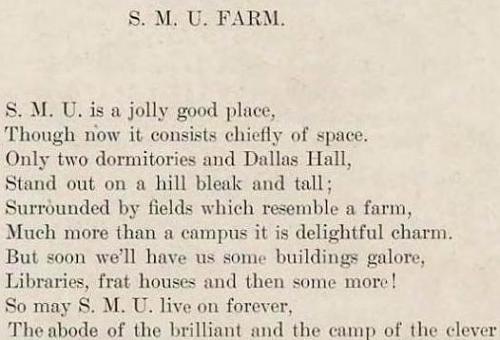
In 1916, the SMU campus consisted of Dallas Hall and four dormitories — five lonely buildings set in a vast empty expanse of some 600-plus acres (a good chunk of which would be sold during the hard times of the Great Depression). There are as many jokes throughout the first yearbook about this prairie outpost’s resemblance to a “farm” as there are about the university’s ongoing construction — there are numerous photos of high-spirited students standing on or next to piles of bricks and constantly churning cement mixers. Even though there were fewer than two dozen members of the senior class, the entire student body of that first year numbered an impressive 701. This first year was, of course, a milestone in the history of SMU, but it was also a significant step forward in the history of Dallas.

2smu-rotunda-1916-aDallas Hall — Administration Building

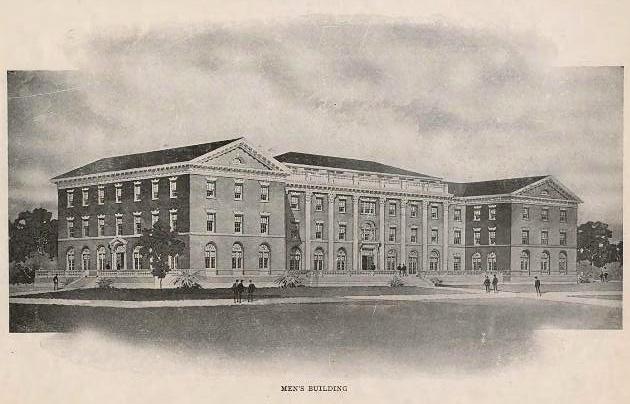
3smu-rotunda-1916-bMen’s Building

4smu-rotunda-1916-b1Science Hall

5smu-rotunda-1916-cRankin Hall — Men’s Dormitory

6smu-rotunda-1916-c1Women’s Building

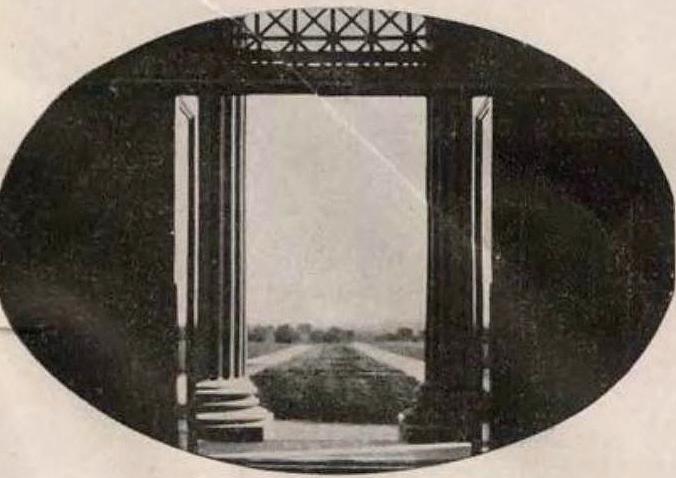
8smu-rotunda-1916-dallas-hall-entranceEntrance Dallas Hall

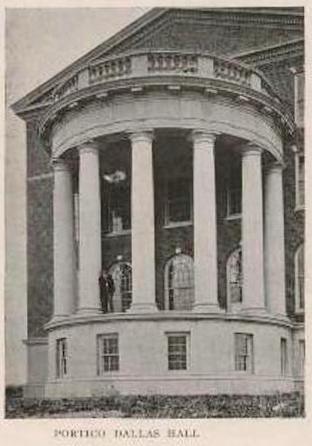
9smu-rotunda-1916-dallas-hall-porticoPortico Dallas Hall

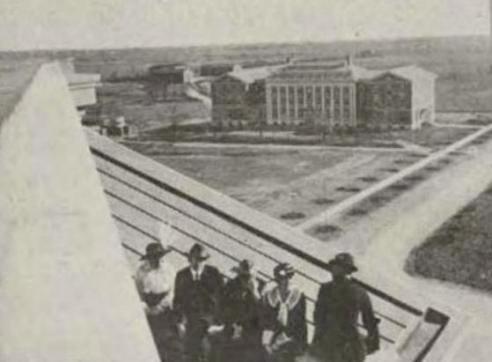
10smu-rotunda-1916_bishop-blvd-fr-admin-bldgBishop Boulevard from Administration Building

11smu-rotunda-1916_viewNewest view in town

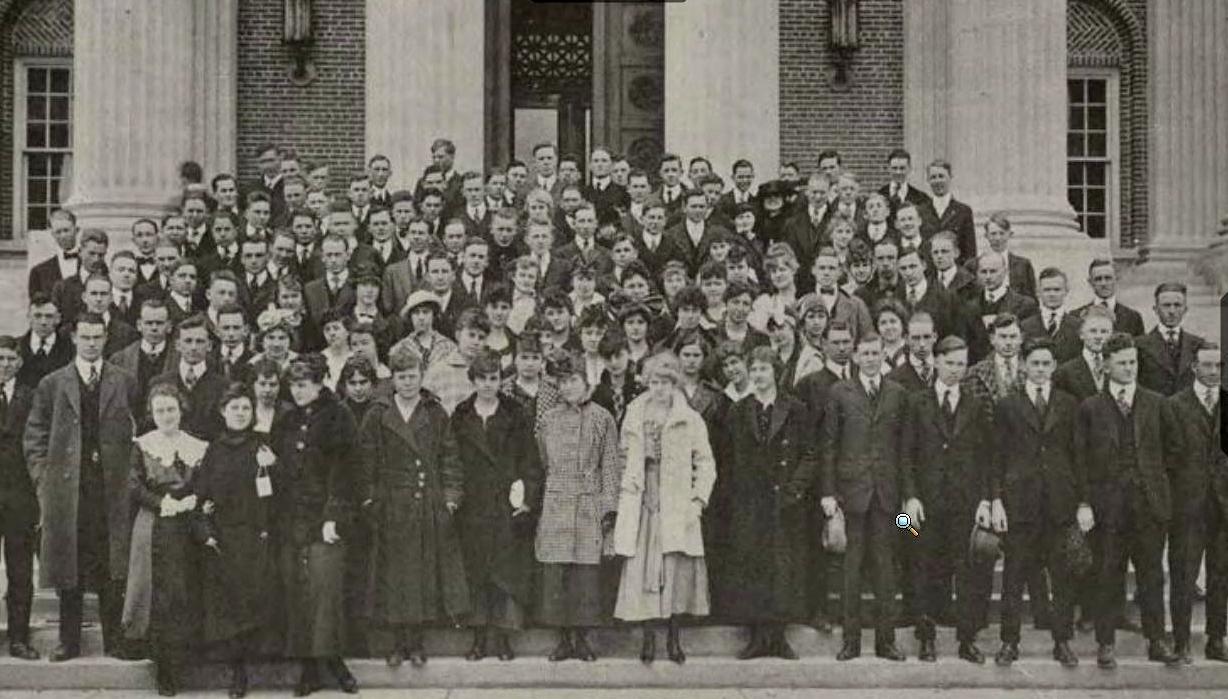
12smu-rotunda-1916_freshman-class1915-16 Freshman Class

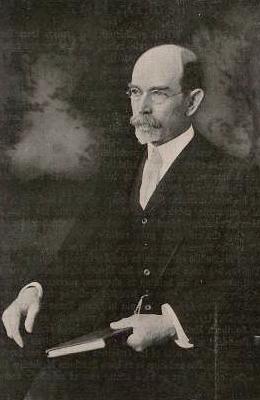
13smu-rotunda-1916_hyerSMU President Robert Stewart Hyer

smu-rotunda-1916_smu-farm_photo

smu-rotunda-1916_smu-farm_verseDallas Hall, bales of hay, and stilted-yet-charming student versification

15smu-rotunda-1916_first-class

16smu-rotunda-1916_cover

SOUTHERN METHODIST UNIVERSITY
Dallas, Texas

For Men and Women
School of Liberal Arts
School of Theology
School of Fine Arts

Student Body:
The first year closes with a matriculation of 701, exclusive of the Summer School, which may bring the total enrollment to more than 1000. This is a record without parallel.

Location:
The campus is located north of the city, and four miles from the center of business activity. It is situated on an eminence above the level of many of the city’s highest buildings. In addition to the many natural trees, there have been several hundred trees and shrubs transplanted, making it a park of unusual beauty.

Buildings:
Dallas Hall, the gift of the citizens of Dallas, and costing $300,000.00, is acknowledged to be one of the best school buildings in the South. It is fireproof throughout and so arranged that it will accommodate the maximum number of students. Four dormitories with accommodations for about 300 students have already been built. They are all equipped with modern conveniences for comfort and study.

All the buildings are provided with electric lights, natural gas, artesian water, and steam heat. No effort has been spared to provide the best in every department.

S.M.U., “THE SCHOOL OF THE FUTURE”

***

Sources & Notes

All images from the “Rotunda” yearbook, issued by Southern Methodist University in 1916.

A very good, brief history of SMU’s beginnings is “From High on the Hilltop…” by Marshall Terry, and it can be read in its entirety here (PDF).

More photos from this yearbook in a later post, “SMU’s First Year: The Dinkey, Campus Hijinx, and The Basket Ball,” here.

*

Copyright © 2014 Paula Bosse. All Rights Reserved.

Chas. Ott: One-Stop Shopping for Bicycles and Dynamite

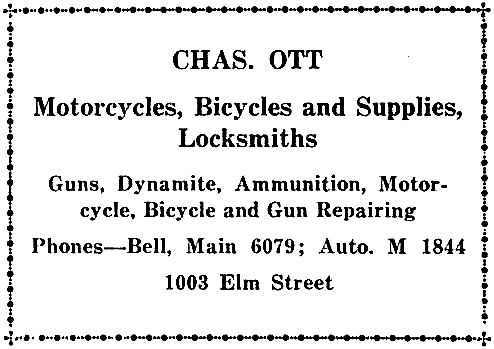
ad-charles-ott-dynamite_smu-19161916 ad

by Paula Bosse

Aside from maybe an ad for a popular off-campus soda shop or one of those bland, dutiful business card ads for an insurance company, I’m not sure that there’s necessarily a specific type of advertisement I expect to see in the pages of a college yearbook. But if I were quizzed on types of ads I wouldn’t expect to see in the pages of a college yearbook, it would probably include an ad for dynamite and ammo. But in 1916, SMU’s inaugural yearbook committee was proudly testing the limits of advertising propriety!

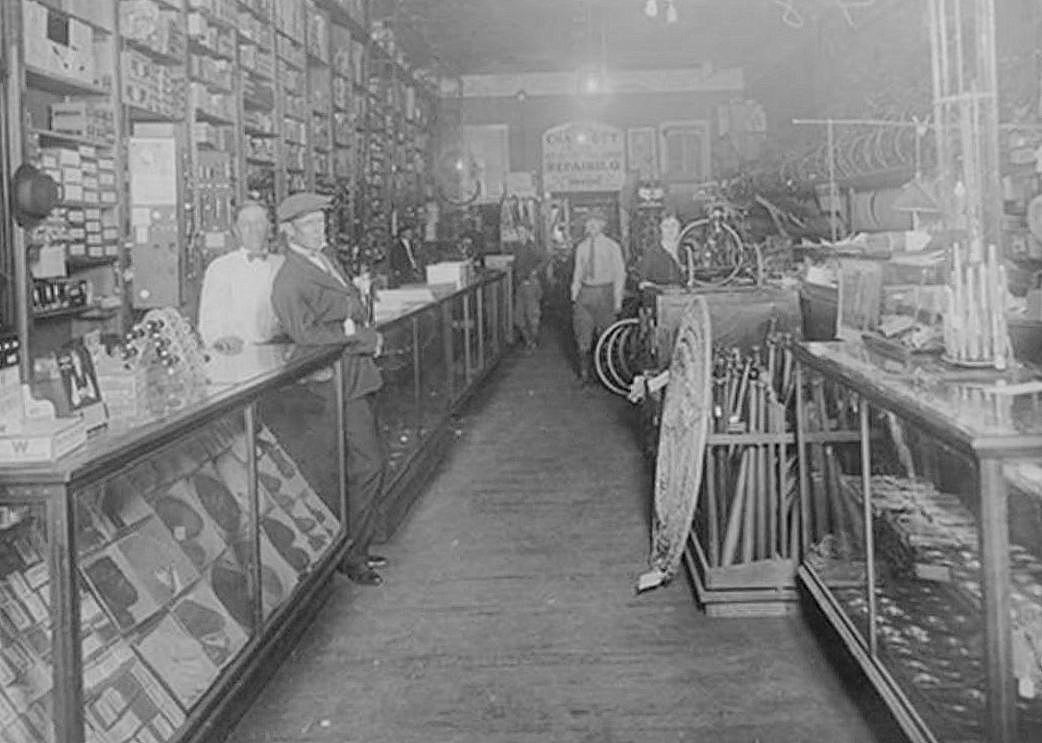
Charles Ott was kind of a big deal in the world of, first, gunsmithing, and second, locksmithing. Born in Germany, he came to Dallas in 1873 and opened a gun shop on Elm Street in 1876. According to The Encyclopedia of Texas, at the time of his death (c. 1921?), he was “the oldest gunsmith in the State of Texas.” That’s an impressive accomplishment. As seen from the ad above, a successful businessman not only knows his craft, but he knows how to diversify. (A nice bio of Mr. Ott can be found here.) Below, a photo of the interior of his shop, sometime in the early 20th century:

chas-ott_interior_cook-coll_degolyer_smu

*

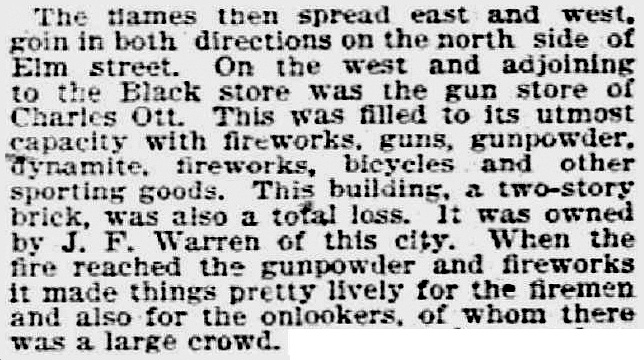
If you’re in business selling ammunition and gunpowder and fireworks and dynamite, you probably need to secure them in a place safe from the reach of the fires that seemed to hit Dallas constantly in the 19th century. ‘Cause if you don’t, you run the risk of something like this happening (north side of Elm, between Griffin and Akard):

ott-fire_dmn_052696Dallas Morning News, May 26, 1896

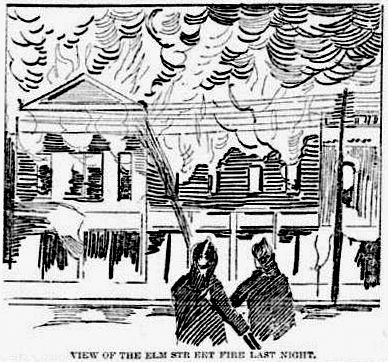
My favorite part of the story, though, was this on-the-spot artist’s depiction of the “conflagration.” You can practically feel the smoke burning your eyes.

ott-fire_pic_dmn_052696

***

Sources & Notes

Top ad from, yes, the 1915-16 SMU Rotunda.

Bio of Charles Ott linked above from Davis & Grobe’s Encyclopedia of Texas (Dallas: Texas Development Bureau, 1922). If you sped-read past it above, you can find it here.

Excerpt and drawing of the explosive Elm St. fire from The Dallas Morning News, May 26, 1896.

Photo of the interior of the Ott store from the George W. Cook Dallas/Texas Image Collection, DeGolyer Libraries, SMU Libraries, Southern Methodist University; more info on this photo is here.

*

Copyright © 2014 Paula Bosse. All Rights Reserved.


Jordan Moore

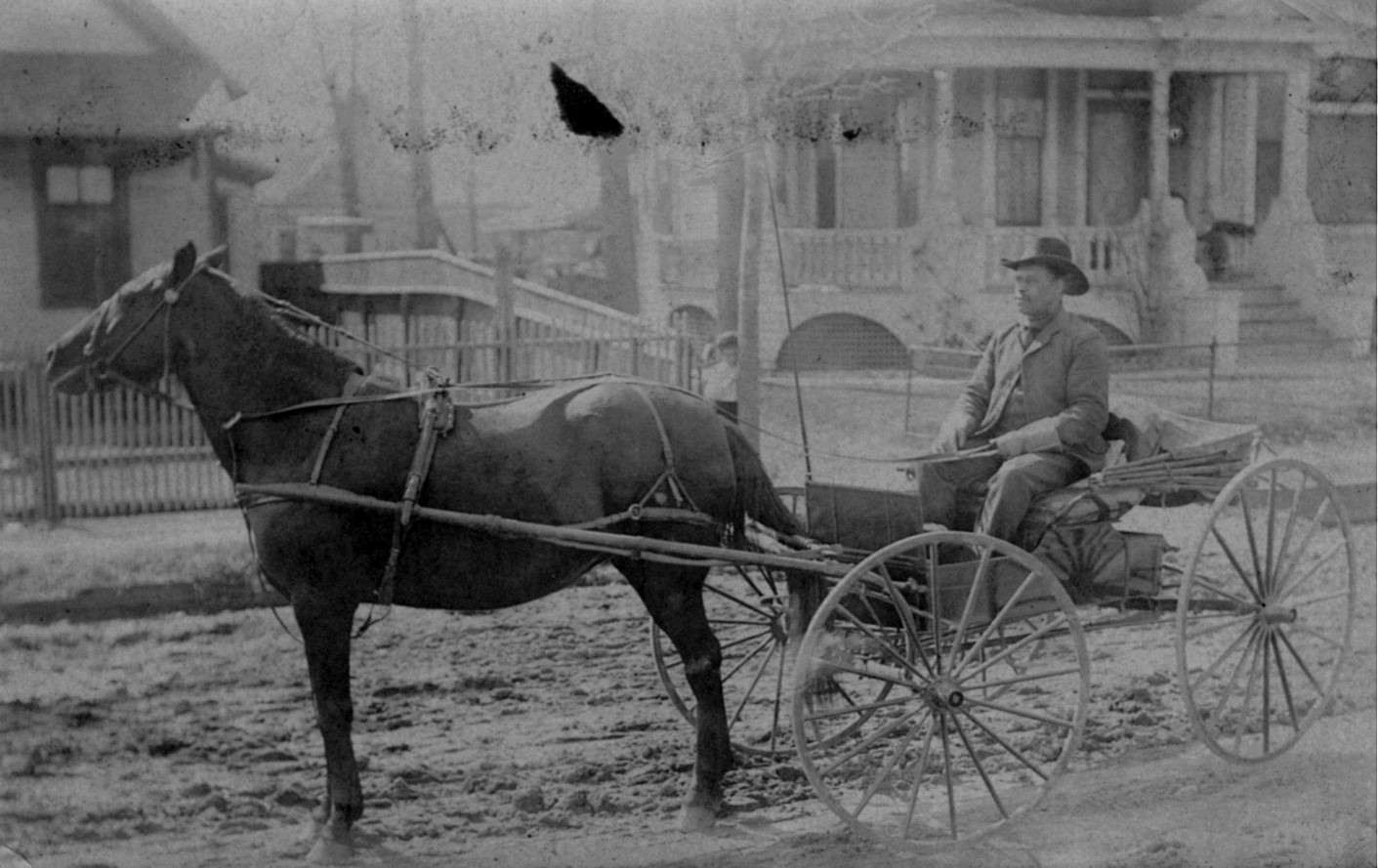
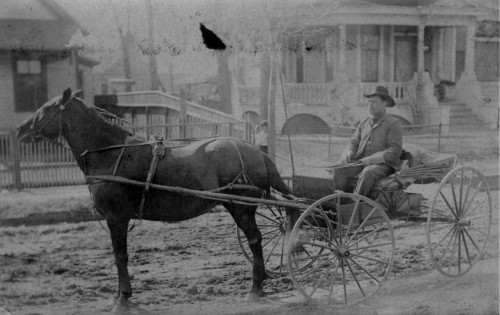
jordan-moore-buggy_c1905Jordan Moore, about 1905 (click for larger image)

by Paula Bosse

When wandering around the internet, one often encounters arresting images. Like the one above. There’s something about that photograph that grabs your attention. The stoic man in the buggy, the stiff, straight-standing horse, the child hiding behind the pole, the partial view of the porch of a fancy house, and the horrible, horrible condition of that street. The description reads simply: “Photograph of Jordan Moore seated in a horse-drawn carriage. Houses are visible in the background.” I wondered if I should know who Jordan Moore was, because the name wasn’t familiar. The photograph was in the collection that had been donated to the Dallas Historical Society by J. L. Patton, a prominent African-American educator. I found a few more photos of Mr. Moore in Patton’s collection, but I still had no idea who Jordan Moore was. So I did a little research.

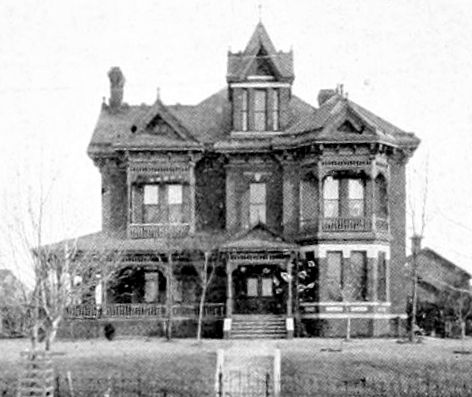
Jordan Moore was born in Virginia in 1863. At some point he made it to Texas, perhaps in the early 1880s, and then to Dallas a few years later. By 1893 he was working for Mrs. Miranda Morrill, who had moved to Dallas in 1886, following the death of her husband, Judge Amos Morrill. Though born in Tennessee, Mrs. Morrill had moved to Texas as a child in 1834 and had strong ties to the state (one of her uncles was a signer of the Texas Declaration of Independence). When she arrived in Dallas, she built an imposing mansion at Ross and Harwood and, as she had no children, she and her servants (as they were listed on census forms) had that huge house to themselves to ramble around in. Mrs. Morrill was a prominent mover-and-shaker in town, devoting her time and money to a host of worthy social causes. In her employ was Jordan Moore, who is listed variously as her coachman and yardman, and who resided on the property. He worked for her until she died in 1906 at the age of 80.

(Mrs. Morrill’s obituary is interesting for many reasons, but particularly because amongst her surviving family members were her half-brothers R. L. Moore and S. J. Moore, sons of Mrs. Morrill’s stepfather. I don’t know if Jordan Moore was born into slavery and was owned by members of Mrs. Morrill’s family, but it’s interesting that he shared a surname with his employer’s family.)

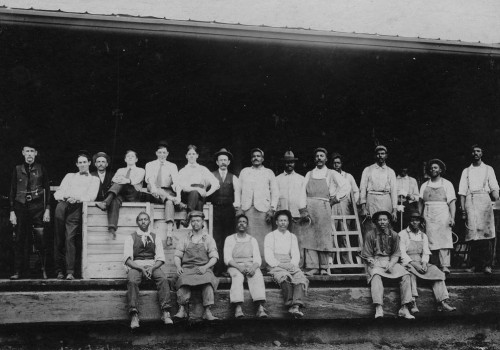
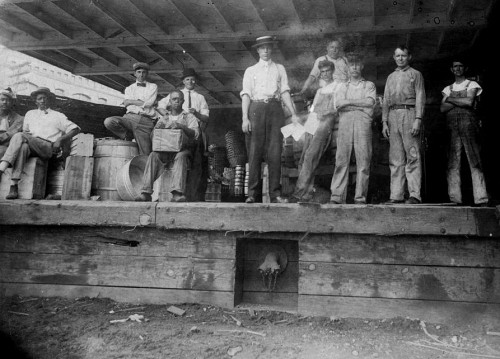
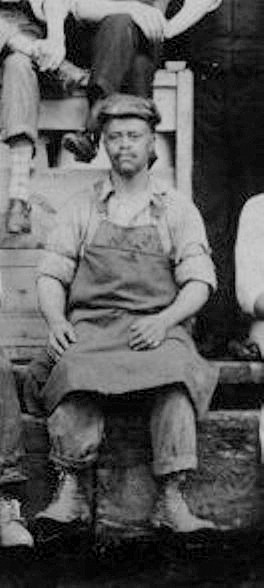
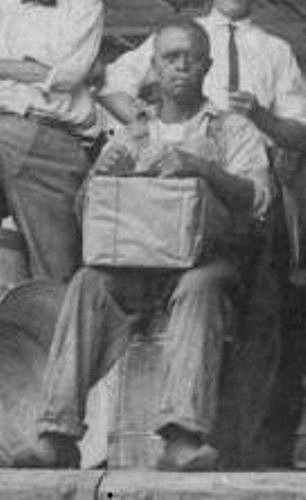
In 1907, after Mrs. Morrill’s death, Mr. Moore had moved to rooms elsewhere and went to work as a porter for the very large, very successful Huey & Philp Hardware Company at Griffin and Elm. Below are a couple of photographs of Moore and co-workers on the loading docks. He does not look very happy. He stayed at the job for 11 years but moved around from rooming house to rooming house — from Ross to Cochran to N. Harwood to Masten. (One of the captions on these photos states that Mr. Moore purchased a house on Cochran St. in 1900. I don’t think that’s correct. If he did buy a house, he doesn’t appear to have ever lived in it.)

Jordan Moore died on January 22, 1918, from complications of  diabetes. He was 54. He never married and had no children, and the friend he had been staying with when he died offered scant and approximate guesses as to dates and places when asked to supply them for the official death certificate.

I wondered why all these photos of a man who apparently left no family and had lived a fairly commonplace life had made their way into the personal collection of J. L. Patton, a principal at Booker T. Washington High School and a pioneer in education for African-American students in Dallas. And then I noticed that the name of the “informant” on the death certificate was Samuel Stanton, a long-time friend with whom Moore had been staying in his last days. Moore was the godfather of Mr. Stanton’s daughter, and Mr. Stanton’s daughter was Mr. Patton’s mother. Patton would have been 12 when Moore died, and he would certainly have remembered him — and one hopes he had fond memories of him.

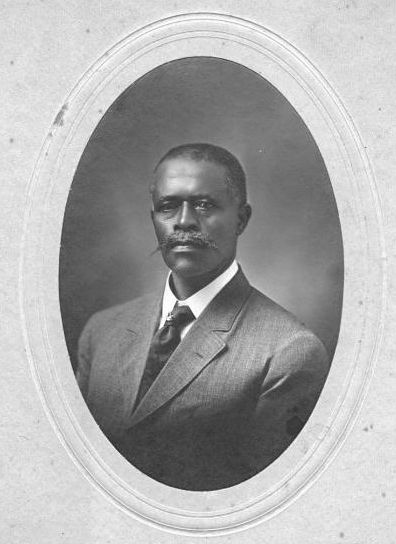
Jordan Moore was buried in Alpha Cemetery, one of the few “negro” cemeteries of the time, near the old freedmen’s town of Alpha, near present-day Preston and Alpha Road. Below are more photographs of Mr. Moore, now in the collection of the Dallas Historical Society.
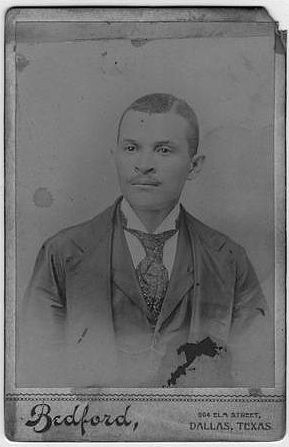
jordan-moore-portrait_18901890

moore-loading-dock_c1905Mr. Moore (seated, second from left), Huey & Philp loading dock, ca. 1907
moore-det

moore-with-box_loading-dock_c1910Mr. Moore (seated, with box), Huey & Philp loading dock, ca. 1910-15
moore-box-det

jordan-moore-photo_c1910sca. 1910-15

morrill-house_1898Mrs. Morrill’s house at Ross & Harwood, 1894
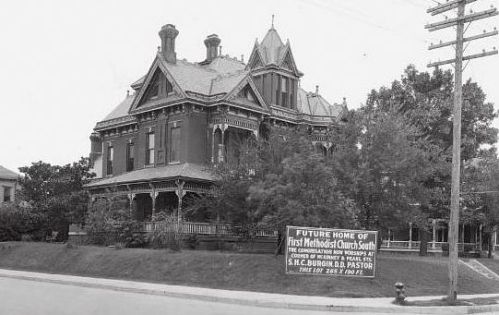
morrill-house_lost-dallas_doty_dmnThe Morrill house — next stop: demolition, 1920
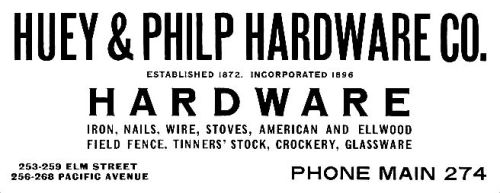
huey-philp_19091909 ad

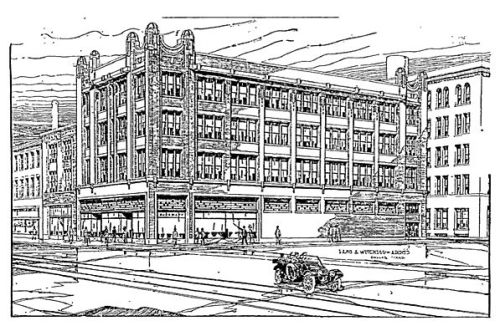
huey-philp_1913_dmn_080212Huey & Philp Hardware Co., at Griffin and Elm — ca. 1913

***

Sources & Notes

Photos of Jordan Moore from the Dallas Historical Society’s J. L. Patton Collection, once viewable at UNT’s Portal to Texas History website. Top photo, c. 1905.

The first photo of Mrs. Morrill’s house at Ross and Harwood is from Clifton Church’s book Dallas, Texas Through a Camera (Dallas, 1894). (As an interesting aside, Church was married to Morrill’s niece.) In the book Dallas Rediscovered, the house is described thusly: “Mrs. Miranda Morrill’s dark, brooding residence, completed in 1886 by A. B. Bristol at the southwest corner of Harwood, was leveled in 1920 for construction of the First United Methodist Church.”

The second photo of the Morrill house is from Mark Doty’s book Lost Dallas (Charleston: Arcadia Publishing, 2012).

Huey & Philp Hardware Co. ad from Worley’s 1909 Dallas directory.

Lang & Witchell drawing of the Huey & Philp building is from a Dallas Morning News blog post by Steve Brown, here.

More on the accomplishments of J. L. Patton from the Handbook of Texas, here.

*

Copyright © 2014 Paula Bosse. All Rights Reserved.


Minor League Ball: The Dallas Rangers — 1958-1964

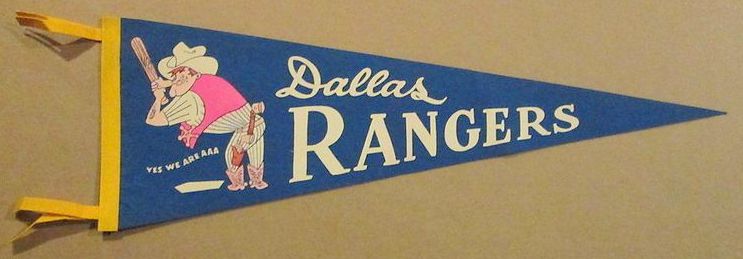
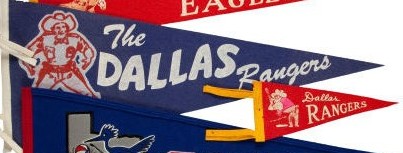
dallas-rangers_1959_ebay

by Paula Bosse

Now there’s a baseball pennant.

“YES WE ARE AAA.” (Apparently triple-A ball had different cleat allowances back in 1959.)

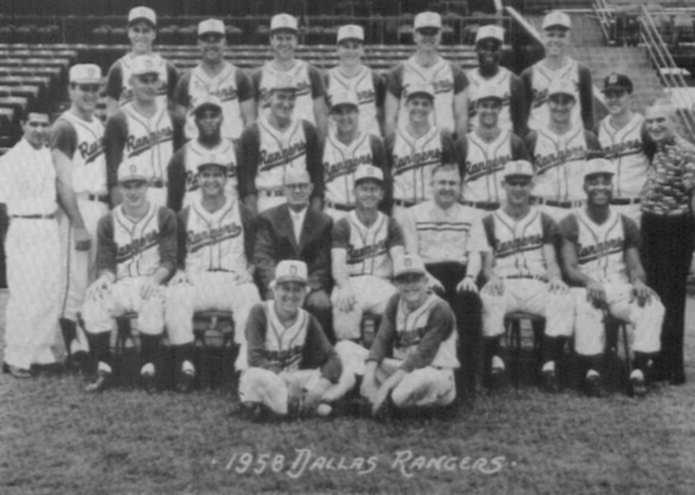
My knowledge of baseball? Pretty limited. I knew that Dallas had professional teams leading up to the Texas Rangers, but that’s about it. Here is a 1958 team photo of the Dallas Rangers, a minor league team that lasted from 1958-1964, known for a couple of those years as the Dallas-Fort Worth Rangers. (This team, by the way, has no historical connection with the present-day Texas Rangers.) They played at Burnett Field. Again, I know precious little about this sort of thing, but, from what I can gather after a hasty skimming, they weren’t very good. The faltering franchise moved to Vancouver in 1965. To Canada! I like this photo. From a purely Americana perspective, the best sports team photos are always, for me, those of  baseball teams.

baseball-dallas-rangers_burnett-field_1958(Click for larger image. Won’t be any sharper, but it’ll be slightly bigger.)

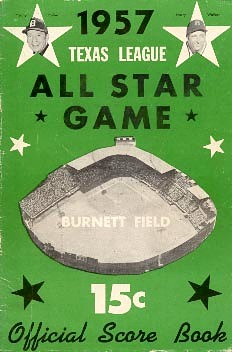
baseball-texas-league_burnett-field_1957

dallas-rangers_dmn-blog-det_102512

***

Sources & Notes

Since I don’t know what I’m talking about, there will be a lot of links.

Top photo of 1959 pennant is from Ebay — which, as of THIS MINUTE, is currently available for purcha$e, here.

The 1958 team photo and 1959 program — I’m not sure where I found them months ago, but I think it might have been here. (As I’m looking at the page right now, all the photos are inactive — but the site may just have exceeded its monthly bandwidth. Lots of good info on the teams that played at Burnett Field, though.)

Bottom image of pennants from a Dallas Morning News blog post by Robert Wilonsky.

Dallas Rangers Wikipedia page here.

Info on Burnett Field here.

And, for those who are really into this sort of thing, the team stats for that 1958 team pictured above can be pored over here.

*

Copyright © 2014 Paula Bosse. All Rights Reserved.
Swell Hats for Swell People — 1911

sangers-hats_dmn_030711asangers-hats_dmn_030711b

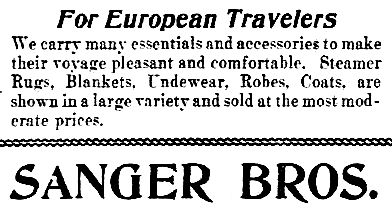
For the ladies: “For every lady desirous of owning a Swell Hat for the Horse Show or any of the other Spring functions…. There are daring creations in the large and small shapes; there are conservative styles for the demure maiden.”

e-m-kahn_hats_dmn_030711

And for the gentlemen, The Ryton:“The most popular style of the season; a wide-brimmed telescope, in all proportions, with the very correct pencil curl edge. Ask for this Hat; you’ll like it.”

(You don’t see a lot of semi-colons in ads anymore, do you?)

***

Sanger Bros. ad and E.M. Kahn ad from The Dallas Morning News, March 7, 1911.

*

Copyright © 2014 Paula Bosse. All Rights Reserved.
A Painterly View of Commerce Street

commerce-st_postcard

by Paula Bosse

I could be WAY off, but this MIGHT be approximately Commerce and Poydras, looking … east? For present-day reference, it’s about where the McDonald’s is on Commerce. Possibly. Click it to make it larger. Misinformation is likely.

*

Copyright © 2014 Paula Bosse. All Rights Reserved.

What Do You Get When You Convert an Old Oak Cliff Firehouse Into a Restaurant?

firehouse-15_glorias

by Paula Bosse

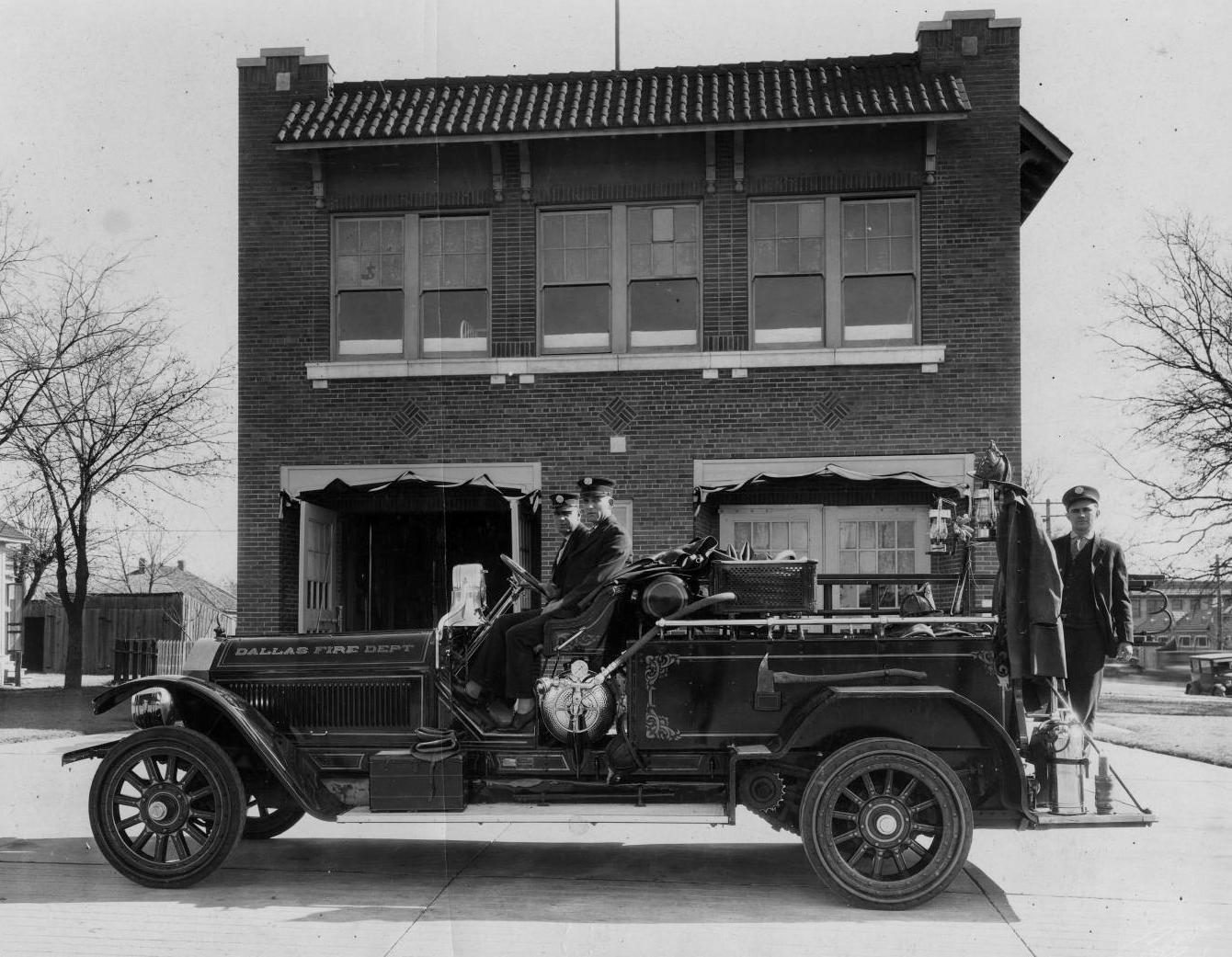
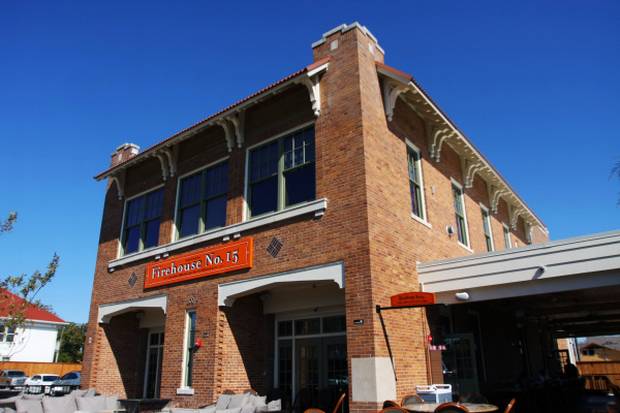
Station 15 — at Davis and Bishop — was a working firehouse decades before it was converted into Gloria’s restaurant in the Bishop Arts District. Here are the “before” photos.

station-15_oak-cliff

fire-station-15_oak-cliff

While you’re enjoying that incredible black rice (among other things…), take the time to enjoy your surroundings — it’s not every day you’re able to dine inside an old firehouse (don’t miss the brass fireman’s pole). Here’s the firehouse today:

firehouse-15_glorias_dmn

***

Sources & Notes

First and third photo from Dallas Firefighters Museum collection on the Portal to Texas History site here.

Second photo (circa 1931) is available for purchase here.

Photo of Gloria’s from The Dallas Morning News.

More info on Station 15 here.

Gloria’s website here.

*

Copyright © 2014 Paula Bosse. All Rights Reserved.

Braniff DC-3 Over Downtown — 1940

braniff_triple-underpass_imagearchives

by Paula Bosse

Unless there was some sort of photo manipulation involved, that photographer pretty much had just one chance to get that shot. And he got it.

***

Sources & Notes

Photo from Image Archives USA, available for purchase here.

*

Copyright © 2014 Paula Bosse. All Rights Reserved.

Pike Park, Fiesta Central — 1926

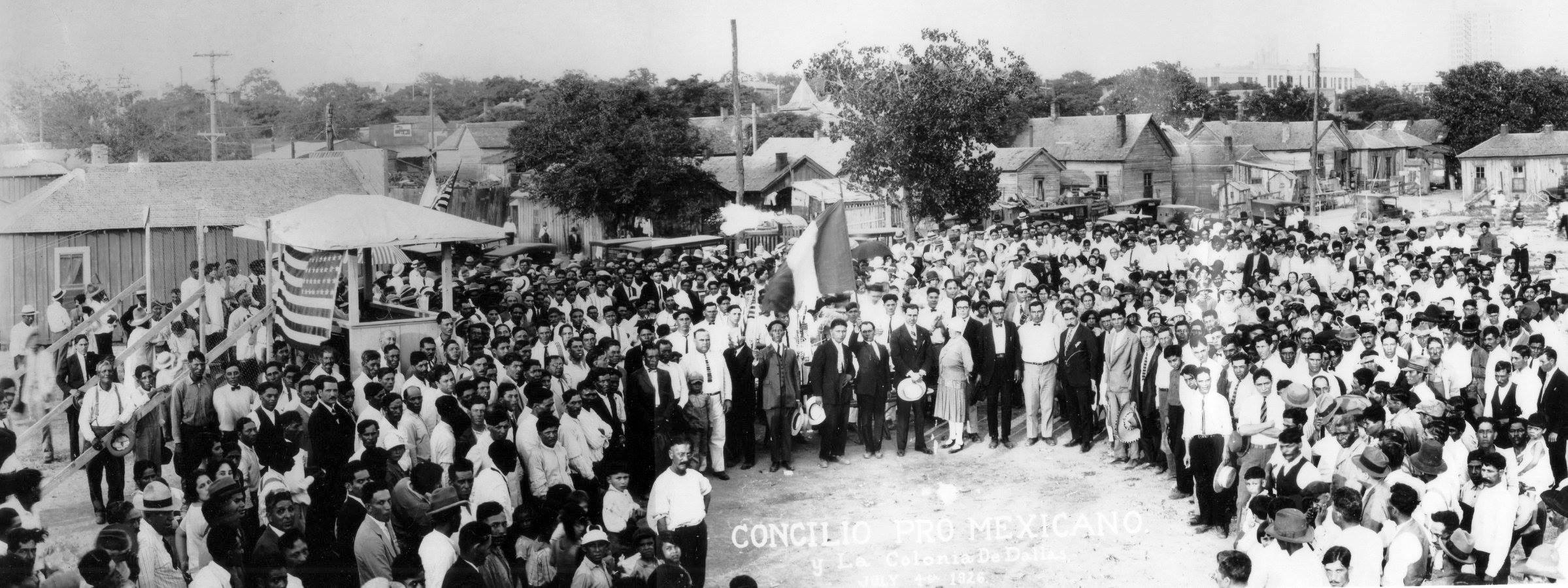
little-mexico_1926_dmahl-facebook-pagePike Park (click for MUCH larger image)

by Paula Bosse

Fantastic photo of a 4th of July celebration in Little Mexico’s Pike Park in 1926, with the caption reading “Concilio Pro Mexicano y La Colonia de Dallas.”

Today is Cinco de Mayo, which, before it was co-opted by the gringo, was primarily a big party in communities populated by Mexican-Americans and Mexican immigrants. In Dallas, that meant a fiesta of music and food at Pike Park. I remember going to a few of these when I was a child, and my unmistakably Anglo family stood out in the crowd, but we were always welcomed and we had a great time. I loved it. Not to be a killjoy, but I’m not a fan of what Cinco de Mayo has become — just another excuse to drink to excess (St. Patrick’s Day with margaritas). But, if you’ve pulled out that novelty sombrero from the back of your closet and you’re celebrating today, well … olé. But pace yourself, amigos.

***

Photo from the Dallas Mexican American Historical League; it accompanied a great Dallas Morning News blog post by Dianne Solís regarding Pike Park, here.

A CNN interview with the always-entertaining Gustavo Arellano — the man behind the very funny “Ask a Mexican” column — on why he believes the Cinco de Mayo holiday is “pointless” is here.

And Arellano’s article “Gringo de Mayo”  is here.

That photo is gigantic. Click for larger image.

*

Copyright © 2014 Paula Bosse. All Rights Reserved.