Flashback : Dallas

A Miscellany: History, Ads, Pop Culture

Garrett Park Aburst in Spring Flowers
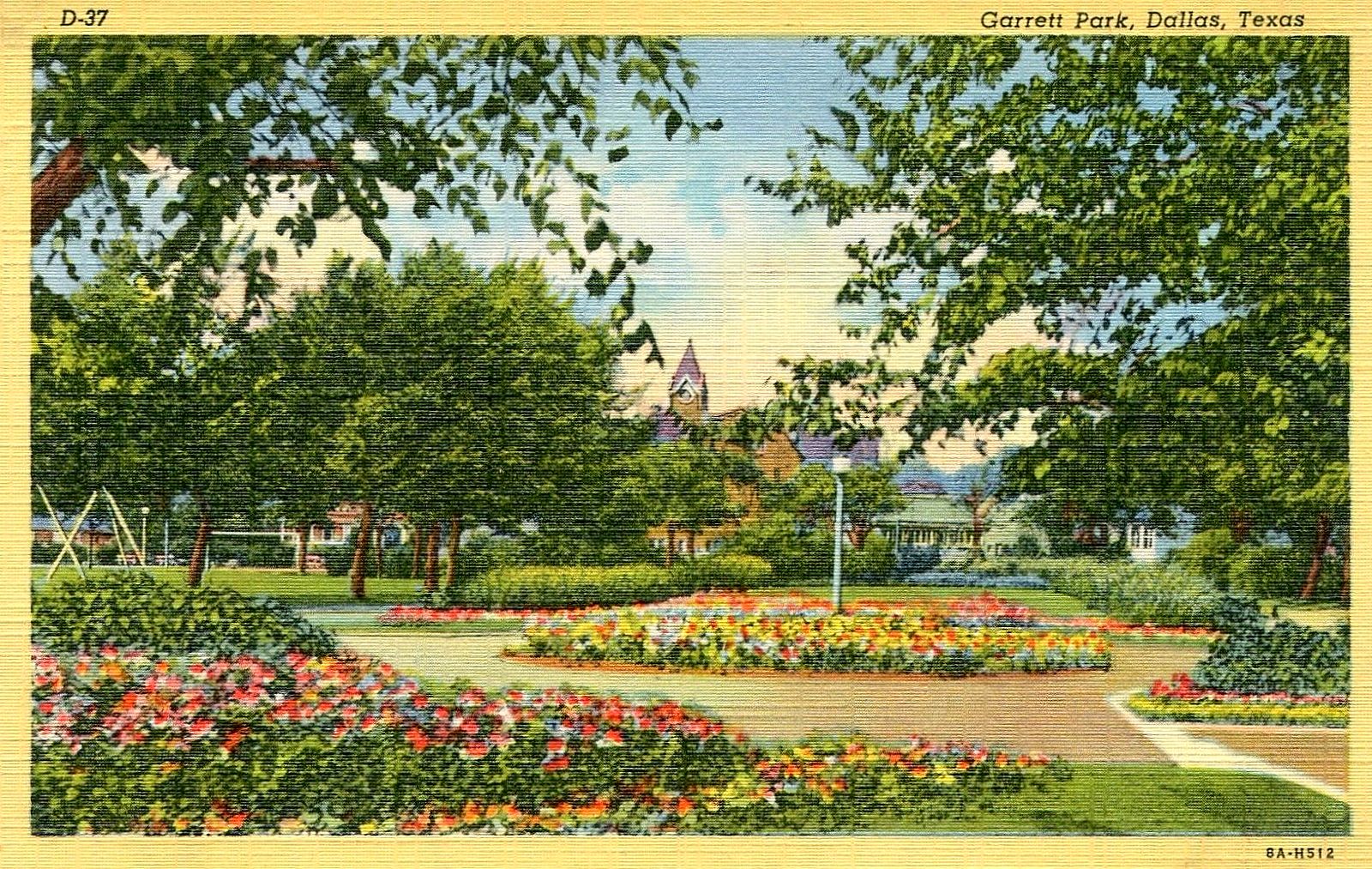
by Paula Bosse

Garrett Park (at Munger and Bryan) was established in 1915. The postcard above shows it filled with leafy trees and bursting with brightly colored flowers. There is playground equipment at the left and, in the background, St. Mary’s College. The park is still there — just south of Ross Ave., past the lowest bit of Lowest Greenville — but the George Kessler-designed charm is almost entirely gone. The trees are sparser, and those flower beds? Below, a modern-day aerial view (click pictures to see larger images). Oh, how the mighty have fallen.

garrett-park_google-earth_sept-2017
Google Earth

But back to more luxuriantly landscaped times. Before it became a city park, the land was once part of the sprawling campus of St. Mary’s College, a prestigious boarding school that prepared girls for college, run by the Episcopal Church since the 1880s. The school was on the far, far, FAR eastern edge of Dallas, and in the early days, the isolated area was so dominated by the school that it was referred to by everyone as “College Hill.” Below, a photo of St. Mary’s taken around 1908 — the land which later became Garrett Park was behind the school. (Note the tower of the school below which is seen in the postcard above. Also, note the tower of the next-door St. Matthew’s Cathedral — it is still standing at the corner of Ross and Henderson.)
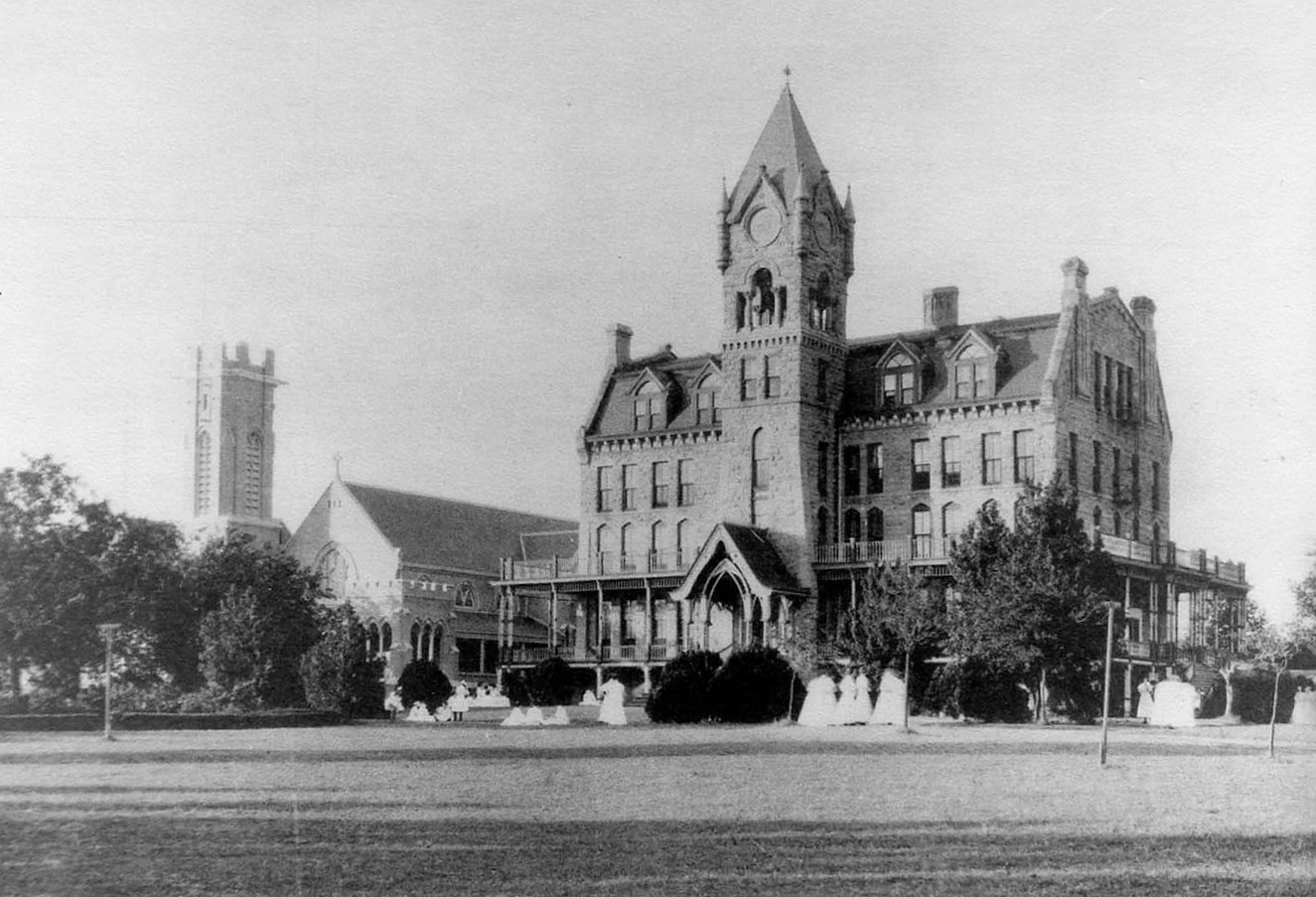
st-marys-college_c1908St. Mary’s College, circa 1908

In September, 1914, St. Mary’s sold the adjoining five-and-a-half-acre parcel of land to the City of Dallas for $30,000 for use as a park.

garrett-park_dmn_091714_acquisitionDallas Morning News, Sept. 17, 1914

The park was officially named in honor of Bishop Alexander C. Garrett in February of 1915.

Below, a “before” photo showing “Garrett Park at Time of Purchase” (1914):
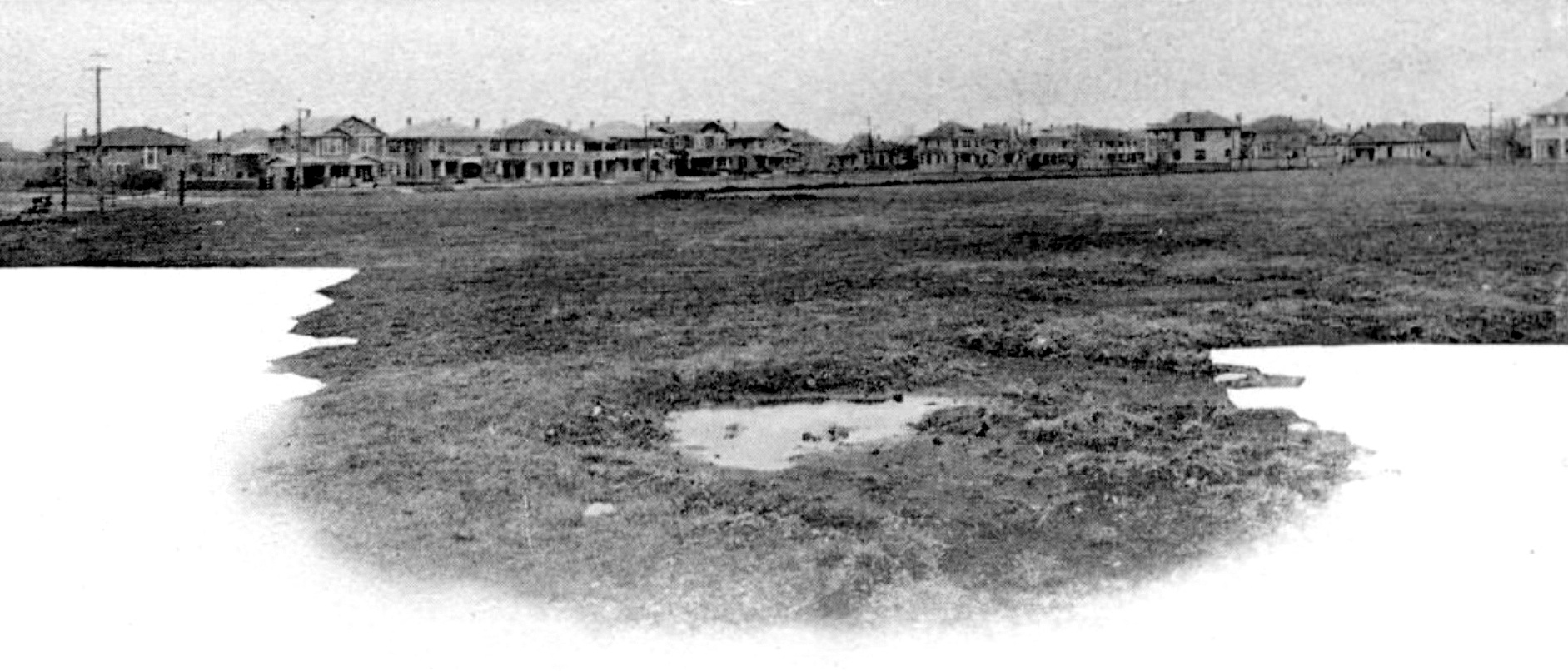
garrett-park-at-time-of-purchase_ca-1913

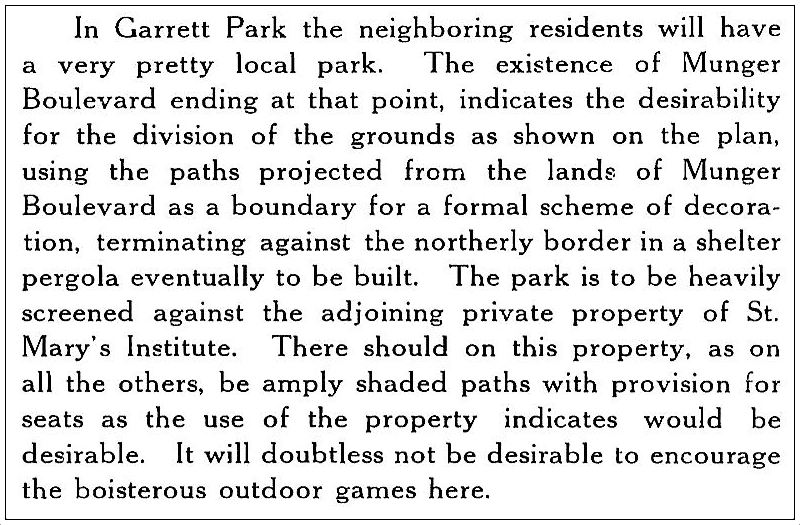
And descriptions of the new park from a 1914-1915 Park Board publication:

garrett-park_-park-board-report-1914-1915_portal

garrett-park_-park-board-report-1914-1915_p24_portal
1915

***

Sources & Notes

Top postcard is from the wilds of the internet.

Source of circa-1908 photo of St. Mary’s College is unknown.

Text and “before” photo of Garrett Park is from the Report for the Year 1914-15 of the Park Board of the City of Dallas; a scanned copy is available at the Portal to Texas History, here.

Map of Kessler’s plan of the park is from Jay Firsching’s article in the Spring, 2003 issue of Legacies; the Garrett Park passage begins on p. 12, here.

To get an idea of the size of the St. Mary campus and Garrett Park in 1922, the Sanborn map from that year is here.

See the location of Garrett Park on a current Google map, here.

Click pictures for larger images.

(This post was updated with additional text and new images on March 23, 2018.)

*

Copyright © 2014 Paula Bosse. All Rights Reserved.


Meet Your City of Dallas Flag, 1916-1967

Oh dear, no….

by Paula Bosse

This was the official flag of the City of Dallas, from 1916 to 1967. Um … ick.

The flag of Dallas County, adopted in 1975 and seen below, is actually worse.

dallas-county-flag

***

More Texas flags can be seen here.

*

Copyright © 2014 Paula Bosse. All Rights Reserved.

Sheraton Dallas, Original Version — 1959

Sheraton Hotel front

sheraton_hotel_back

by Paula Bosse

I love this somewhat fauvist depiction of Dallas in 1959 — it’s exactly what I wish the city actually looked like, yellow sky and all. All those clean, sharp lines and wide-open sidewalks! The foreshortening is completely out of whack here, with enormous cars and ant-size people — perhaps it’s a metaphor for the dismissive Texan view on pedestrian transport. (What are the two flags to right of the Texas flag?)

***

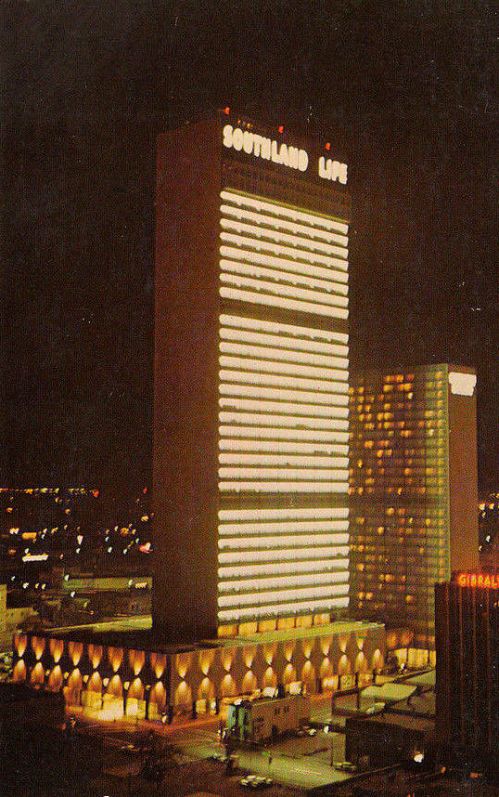
My knowledge of certain aspects of Dallas can be surprisingly spotty sometimes. I’ve seen the Sheraton building all my life, but I knew nothing of its history, or its connection to the Southland Life company (both were part of a complex of buildings, which, during construction, was being compared to Rockefeller Center). The inevitable Wikipedia page is here.

What the heck — here’s another angle: the mighty Southland Life building taking center stage this time, with the Sheraton standing in the wings, spear in hand, waiting to go back on.

southland-life_night

*

Copyright © 2014 Paula Bosse. All Rights Reserved.

Celery Cola: “It Picks You Up!” — 1909

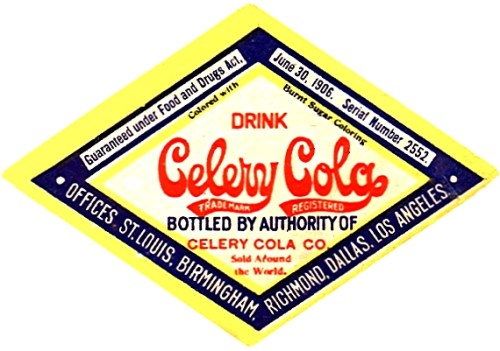
celery-cola_logo_1906

by Paula Bosse

When you think of Dallas and soft drinks, you probably think Dr Pepper. But back in 1909, Dallas was the main office for the Western division for the Birmingham, Alabama fizzy drink Celery Cola (containing, one presumes, delicious celery-flavored syrup). Their offices were in the somewhat low-rent stretch of Exposition while rival Coca Cola was snugly housed at the cushy southeast corner of N. Akard and Ross.

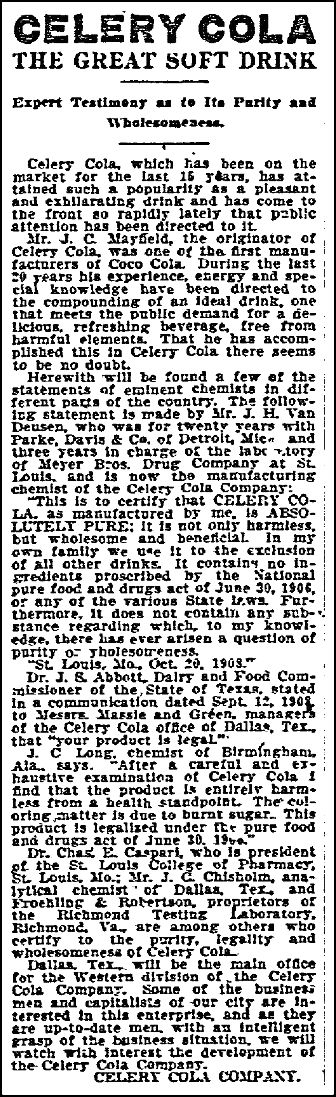
Only a couple of weeks after an official state charter was granted to local aspiring soda tycoons W. A. Massie, E. O. Massie, and J. B. Green to start officially producing the elixir in Dallas, this ad — a bit on the defensive side — appeared in the Dallas Morning News (click to see larger image):

celery-cola-AD_dmn_022809DMN, Feb. 28, 1909

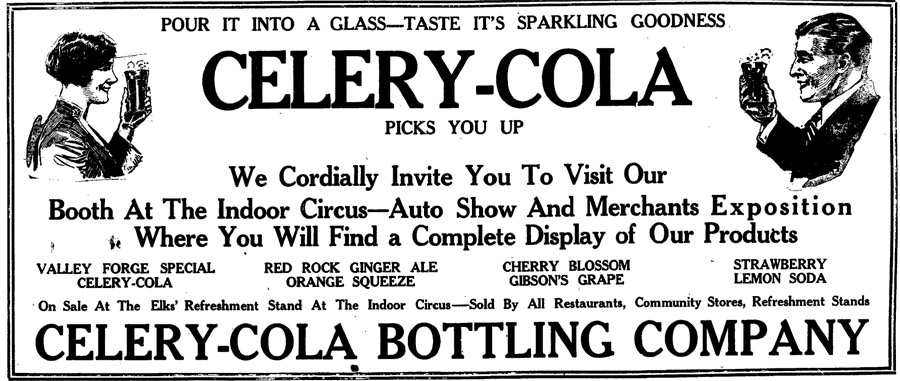
Not so much an ad as testimony. Ads are usually more like this:

celery-cola-ad

As it turns out, Celery Cola ceased production in 1910 after repeated findings of the presence of cocaine and large amounts of caffeine by the Pure Food and Drug Administration. Let’s hope Messrs. Massie, Massie, and Green bounced back from their ill-advised investment. The owner of the Celery Cola Company certainly bounced back — he continued to create soft drinks such as — no kidding — “Koke” and “Dope.” Dallas is better off with Dr Pepper. The only whispered allegation that’s dogged them is prune juice — and that stuff is 100% legal.

Check out the related Flashback Dallas post “‘No Mice, No Flies, No Caffeine, No Cocaine’ — 1911.”

***

Sources & Notes

Top ad from a Celery Cola site here.

Third ad, with the word “its” misspelled (*sigh*) from the comments section of a Shorpy post here.

Best overview on the history of Celery Cola and its creator, James Mayfield, is here.

My favorite part of this story was reading the long list of Dallas-area “illegal” soft drinks (and other oft-tampered-with foodstuffs) in J. S. Abbott’s First Annual Report of the Dairy and Food Commissioner of Texas (Austin, 1908). The soft drink list begins on p. 46 after an interesting prologue here. Celery Cola was not alone! (And, if I’m reading this correctly, Messrs. Massie, Massie, and Green were fully aware of what was going on, having provided the food cops with cocaine-laced samples several months before they bought into the company.)

*

Copyright © 2014 Paula Bosse. All Rights Reserved.

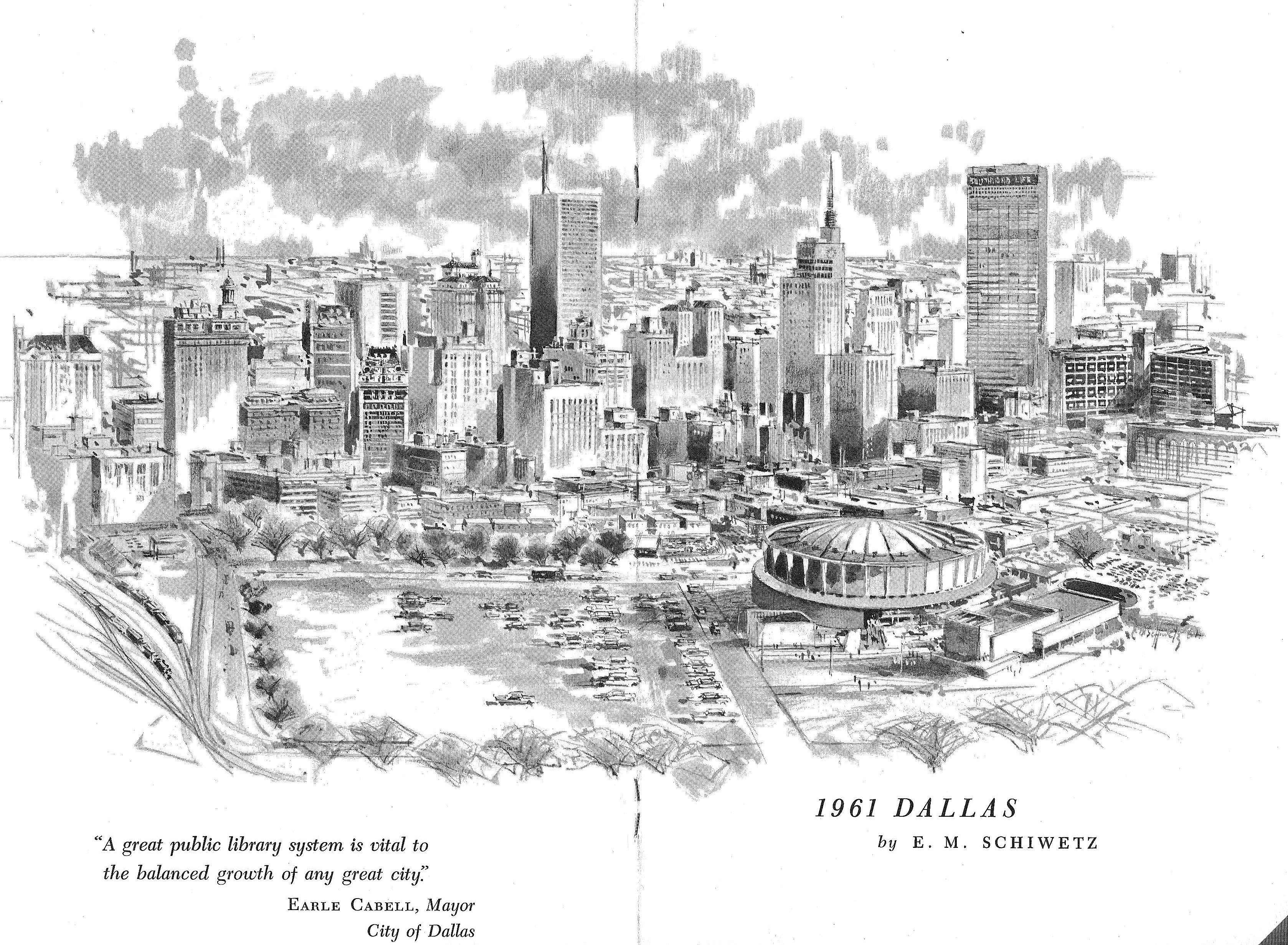
Dallas Skyline by E. M. “Buck” Schiwetz — 1961

13DPL_schiwetz-drawing.jpg

by Paula Bosse

This drawing reminds me of those wonderful telephone book covers (the ones with all the hidden jokes and intricate details) that I used to pore over as a child. (By the way, when clicked, this image is absolutely HUMONGOUS. )

***

From the booklet Five Years Forward: The Dallas Public Library, 1955-1960 (more of which can be accessed here).

*

Copyright © 2014 Paula Bosse. All Rights Reserved.
George Dahl’s Sleek Downtown Library — 1955

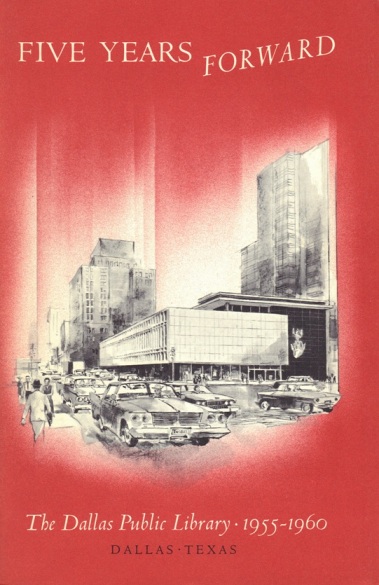
1DPL_cover-sm

by Paula Bosse

This little 31-page booklet was issued to commemorate the fifth anniversary of the Dallas Public Library. The library was built on the site of the old (beautiful!) Carnegie Library and was vacated when the current library (the J. Erik Jonssen Central Library) opened on Young St. in 1982. Unbelievably, the building has remained empty for over 30 years.

This is the only downtown building I have very distinct memories of from childhood. My mother took us to the library often, and I LOVED that place. I loved the building, the space, the books, the adventure of being downtown — I loved everything but that creepy sculpture of the kid standing in the hands that hung on the outside of the building!

This great library was designed by the legendary (and prolific!) Dallas architect, George Dahl. He moved easily from the streamlined grandeur of the Art Deco buildings of Fair Park to the sleek mid-century-modern-cool of this wonderful downtown library.

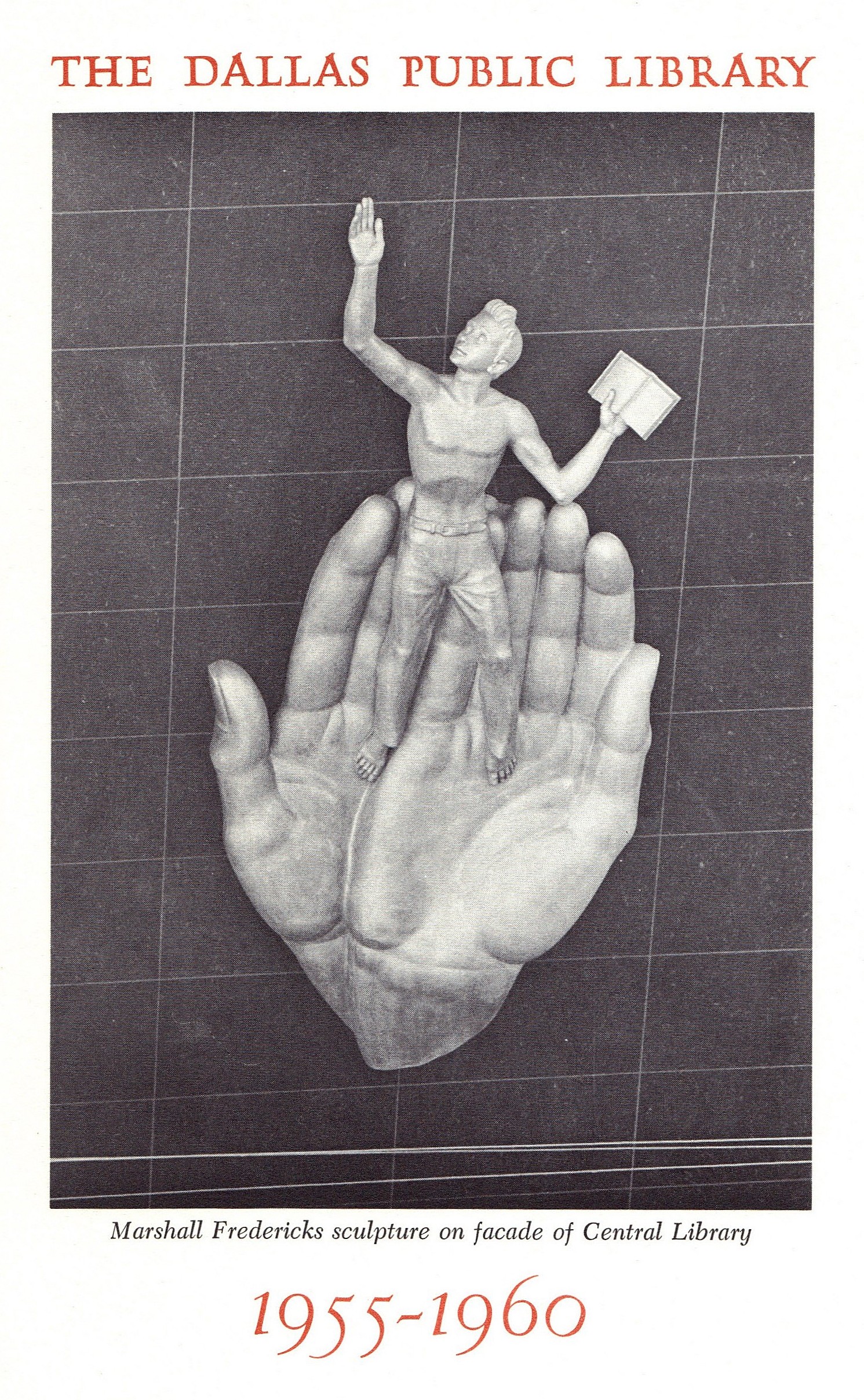
2DPL_hands-sculpture
I know there are fans of this sculpture (“Youth in the Hands of God” by Marshall Fredericks), but I’m afraid I am not one of them. I loved art as a child (in fact, I can remember checking out framed art reproductions from this very library), but, as I said, even as a kid, I strongly disliked that creepy sculpture. The kid was fine, it was those giant disembodied hands. When the library moved to its current location in 1982, this sculpture was left behind to languish for years inside the empty building. It was eventually sold, and the boy and the hands are now resting comfortably in retirement, somewhere in Michigan.

3DPL_lobbybertoiaThere was a huge controversy about the Harry Bertoia sculptural screen seen above, hanging over the circulation desk. (I LOVED this piece as a kid!) The mayor — R. L. Thornton — HATED it, and the brouhaha-loving newspapers launched themselves into the fray by running apoplectic editorials which, of course, only fanned the flames of outrage. After the “scandal” died down, the art was eventually given the okay to stay, but not before a lot of people made a lot of noise about how the city of Dallas had wasted the $8,500 it had spent on the commission. Unlike the discarded hands sculpture, the screen was moved to the new library, where it remains today.

4DPL_outdoorterrace

5DPL_familylivingThis is how I remember the library. Lots of space, cool furniture, and flooded with light.

6DPL_children

7DPL_av

8DPL_globe

9DPL_planningcomm

10DPL_checkingoutI LOVE this photo!

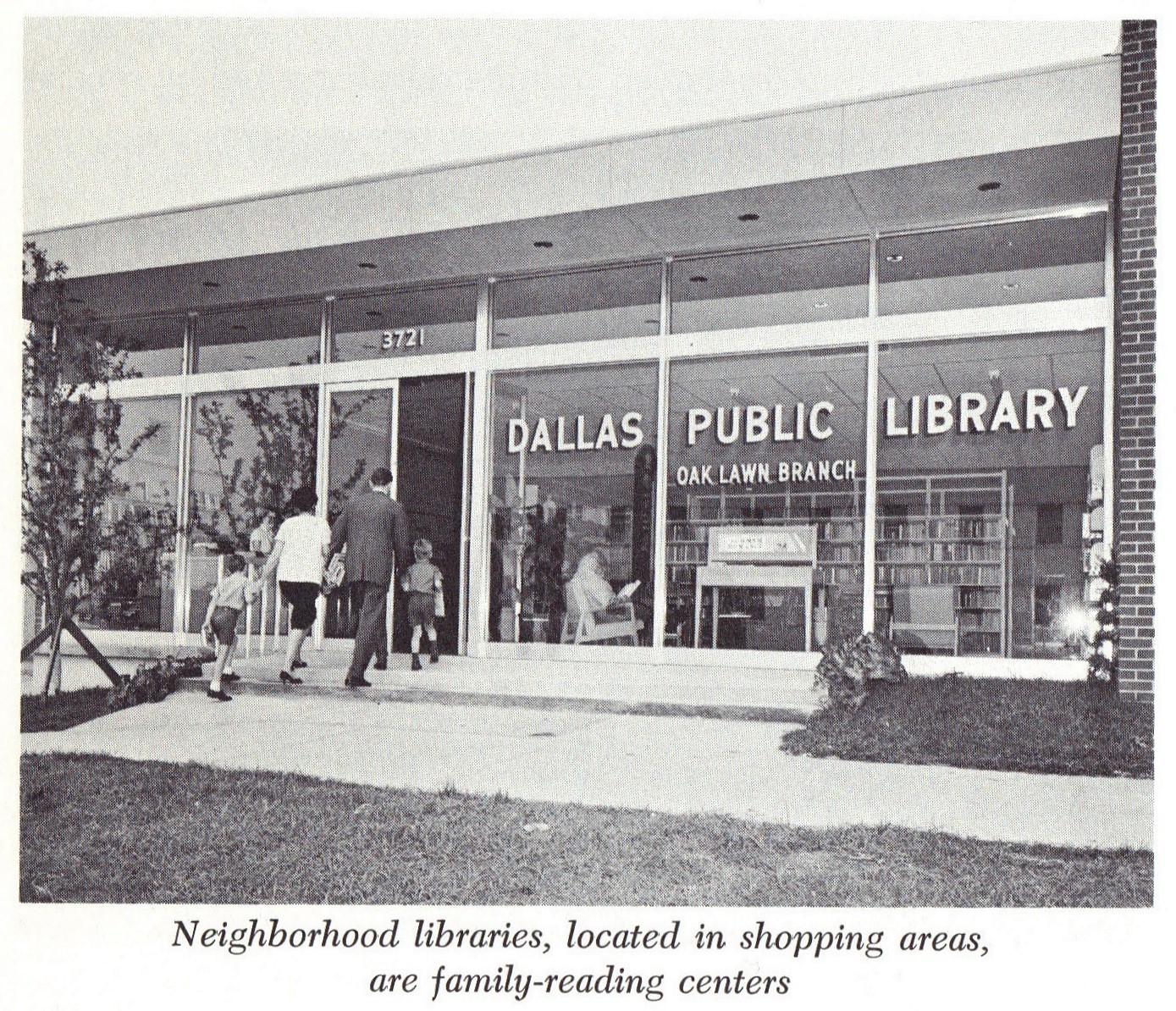
11DPL_oaklawnbranch

12DPL_teens

14DPL_schiwetzcropA detail of the front cover artwork, by Texas artist E. M. “Buck” Schiwetz. I love the driver in the cowboy hat (he must have been awfully small or that car must have been awfully big to accommodate that hat). The energetic frisson of downtown Dallas in the Mad Men era is dampened a bit by those damn hands on the building that seemed to follow you everywhere you went!

***

Sources & Notes

All images from the booklet Five Years Forward: The Dallas Public Library, 1955-1960, compiled and written by Lillian Moore Bradshaw and Marvin Stone. Drawings by E. M. (Buck) Schiwetz. Photographs by C. D. Bayne. (Dallas: Carl Hertzog for Friends of the Dallas Public Library, 1961). (Photos from the archives of the Dallas Public Library.)

More on the history and construction of the Old Dallas Central Library (as well as tidbits about the ridiculous controversy regarding the commissioned art) is here.

Even MORE on the artwork scandals (the hands, the hands, the HANDS!) as well as photos of the beautiful Carnegie Library that was razed to build the 1955 library can be found here.

And just because it’s weird, here’s a postcard showing an early, possibly even creepier depiction of the “hands” sculpture (if those are the “hands of God”…). I guess they wanted to get a postcard out before the sculpture was finished and installed.

dallas-public-library_dahl_postcard

I’ve posted one further image from this booklet — a drawing of the 1961 Dallas skyline by E. M. “Buck” Schiwetz  — here.

UPDATE — Dec., 2017: The Dallas Morning News has moved its operations to the long-vacant library, insuring this wonderful building’s continued existence for many more years! More here.

Click pictures for larger images (some are MUCH larger — click twice!).

*

Copyright © 2014 Paula Bosse. All Rights Reserved.
 

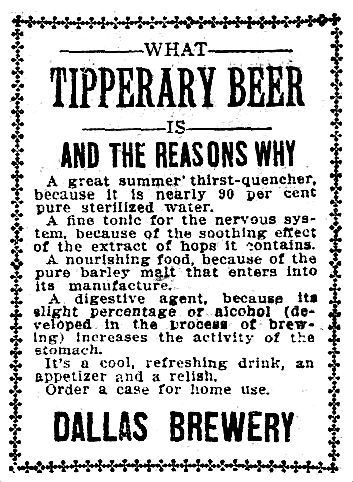
Tipperary Beer from the Dallas Brewery: “Insist Upon Having It”

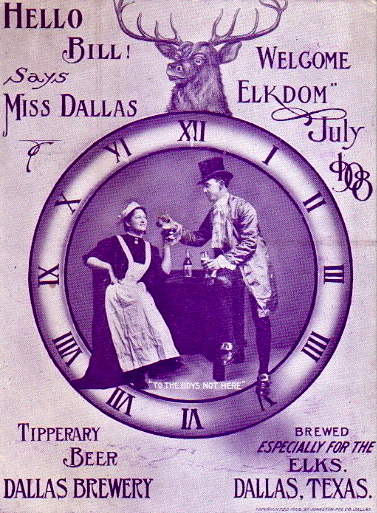
tipperary-beer1908

By Paula Bosse

I’m pretty sure there’s no real Irish connection here — other than the name — but how could I pass this up on St. Patrick’s Day!

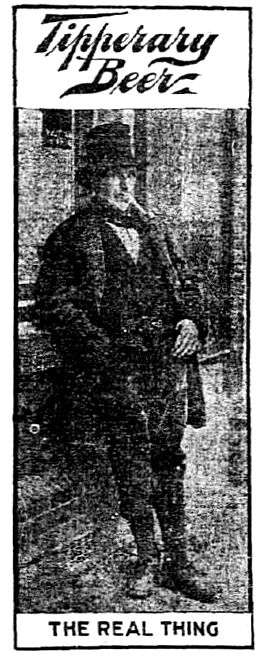
tipperary-beer_dmn_071806atipperary-beer_dmn_071806bDallas Morning News, July 18, 1906

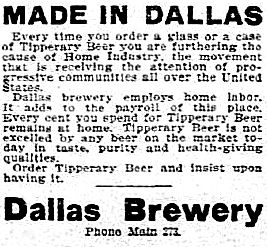
dallas-brewery_tipperary_dmn_090107DMN, Sept. 1, 1907

***

Sources & Notes

Top ad addressing the Elks’ conventioneers who were visiting Dallas in 1908 is from an Elks’ historical site, here.

*

Copyright © 2014 Paula Bosse. All Rights Reserved.
Protected: Never Tell an Irate Irishman That He Can’t Paint a Green Stripe Down Main Street — 1960

This content is password-protected. To view it, please enter the password below.

When Coco Chanel Came to Dallas — 1957

neiman-marcus_coco-chanelStanley Marcus and Coco Chanel

by Paula Bosse

In September of 1957 — way back when that much-missed hyphen was still in “Neiman-Marcus” — Stanley Marcus invited Coco Chanel to Dallas to accept the Neiman Marcus Award for Distinguished Service in the Field of Fashion. Mlle. Chanel had never been to Texas, but her visit here was a meaningful one. Following a 15-year retirement, her re-emergence as a designer in the early 1950s was met with mostly derision by the French press. The American response, on the other hand, was very different. It was because of the enthusiastic reception that her work received from American retailers (such as the even-then legendary Neiman Marcus department store) that she had been able to bounce back and, once again, be considered a force in the fashion world. When she was invited to Dallas to receive the “Oscar” of the fashion industry, Mlle. Chanel was happy to accept.

In the photo above, Coco is seen trying on hats at the downtown Neiman’s store as Mr. Stanley stands by beaming. On her Dallas visit she was also treated to a ranch barbecue (!) where she was photographed watching both a square dance (!!) and a … oh god … Chanel-themed bovine fashion show (!!!). Mlle. Chanel seemed to love the cows-in-ropes-of-pearls runway show, but she was not a fan of the barbecue and beans — she (one hopes discreetly) dumped the contents of her plate onto the ground under the table … right onto the shoes of dining companion Elizabeth Arden (whose shoes may have been ruined, but who had a truly great story to tell for the rest of her life).

From all reports, everyone seemed to enjoy (and no doubt profit) from the successful visit. Karl Lagerfeld, the current creative director of Chanel, recently brought Chanel back to Dallas (both figuratively and literally) with the house’s important Métiers d’Art fashion show which was held at Fair Park in December, 2013. The following day, Lagerfeld was presented with the Neiman Marcus Award for Distinguished Service in the Field of Fashion — just as Coco Chanel had been, 56 years earlier. And the haute-couture circle-pin of life keeps on rolling.

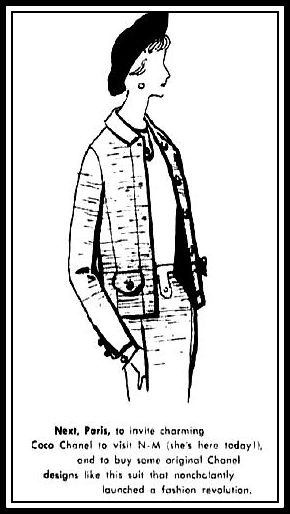
n-m_chanel_ad_dmn_090957

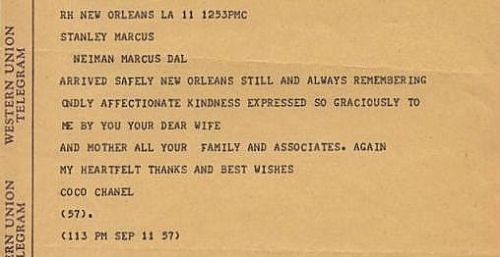
n-m_chanel_telegram

***

Sources & Notes

Top photo by Shel Hershorn for the AP. From the Briscoe Center for American History, University of Texas at Austin.

N-M ad from 1957 (portion of a larger ad).

Chanel’s thank-you telegram to Marcus, from the collection of Stanley Marcus’ Papers at the DeGolyer Library, Central University Libraries, Southern Methodist University.

Entertaining AP article about Chanel and Dallas, then and now (with photos of Stanley Marcus duded-up in an outfit you’d never see an actual cowboy in), can be found here. (Are those butterflies?!)

More photos of Mlle. Chanel in Dallas (along with text of a DMN article on the visit) can be found here.

Even more photos (bovine fashion show…) and a really great post from SMU’s “Off the Shelf” blog is here.

Video of the 2013 Chanel runway extravaganza (Métiers d’Art), held in Fair Park’s hay-stewn Centennial Hall, can be watched here. A shorter video with a few cursory shots of the Dallas skyline and Fair Park can be seen here.

For more on the first French Fortnight, see my post “Neiman-Marcus Brings France to Big D — 1957,” here.

*

Copyright © 2014 Paula Bosse. All Rights Reserved.
Lowest Greenville: “A Small Town of Our Own” — 1925

by Paula Bosse

Anyone who has ever lived in Lower or Lowest Greenville knows that it feels kind of like a small town. Below are the words of a man who thought the same way in 1925.

MOST WONDERFUL OF ALL
But I have witnessed nothing so marvelous as the growth of Dallas since I settled here, Dec. 5, 1921, and built a home at 5615 Sears street. People who stick close to business in the downtown district really do not know what is going on in this teeming city. Our suburban store district, just north of Ross and Greenville avenues, comprises three furniture stores, two hardware stores, four drug stores, six groceries, two dry goods stores, half a dozen filling stations, a Pig Stand or two, a plumbing shop, a fire station, an ice factory, a cleaning and pressing establishment, barber shops, shoemakers’ shops, two gents’ furnishing stores and a Masonic lodge. Practically all these and others, for I am sure I have overlooked some, have been established since I settled in the community four years ago. In fact, we have a small town of our own. But then the modern city of Dallas is made up of a number of such complete units, with one grand central business district, which is thought of and looked upon by outsiders as Dallas.
(Dallas Morning News, March 15, 1925)

These were the words of Dallas resident John T. Hyde. His Lowest Greenville neighborhood was, in 1925, a “suburban” outpost which had experienced unbelievable growth in the early 1920s. Mr. Hyde (who lived right off Greenville — behind where Trader Joe’s is now) would probably be shocked and dismayed by the wild over-indulgences associated with the annual St. Patrick’s Day festivities along his beloved Greenville Avenue. In fact, today’s the day. So, kids, think of Mr. Hyde — an early champion of one of Dallas’ greatest neighborhoods — and please pledge to refrain from puking (…etc.) all over it today. I’m sure he — and the rest of us — would appreciate it.

***

Sources & Notes

Top photo from Mark Doty’s wonderful book Lost Dallas (Charleston: Arcadia Publishing, 2012). Photo from the Texas/Dallas History and Archives Division, Dallas Public Library). Click for larger image.

John T. Hyde’s memories excerpted from the article “Southern Planters Trekked to Texas” by W. S. Adair (DMN, March 15, 1925).

See more photos of Lowest Greenville from this period in the Flashback Dallas post “Bel-Vick’s Anchor: The Angelus Arcade and The Arcadia Theatre — 1920s.”

More Flashback Dallas posts on Lower Greenville/M Streets can be found here.

*

Copyright © 2014 Paula Bosse. All Rights Reserved.