Flashback : Dallas

A Miscellany: History, Ads, Pop Culture

Oak Cliff, The Beautiful Suburb — 1888

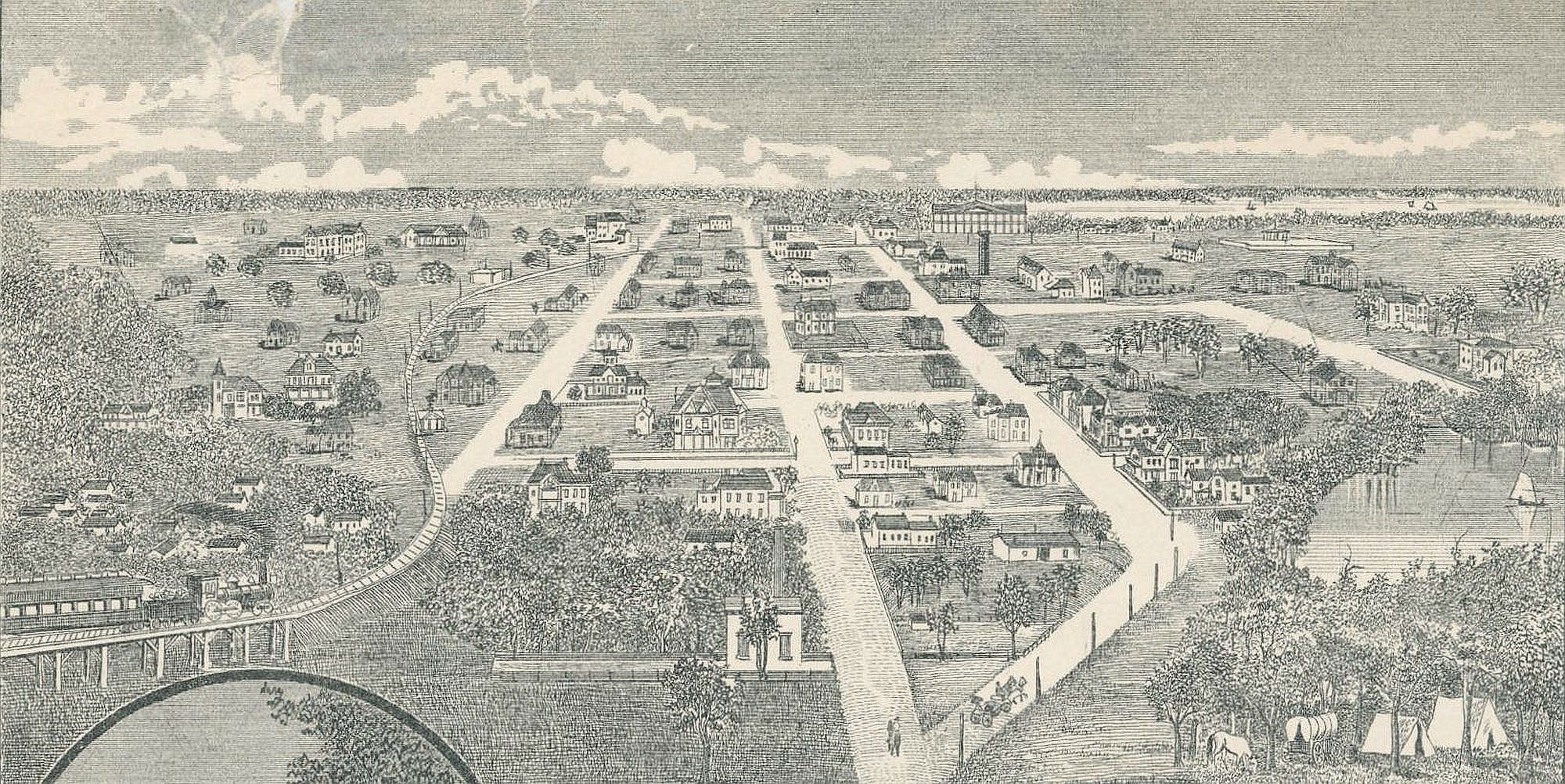
oak-cliff_1888_degolyer_SMU_illus_lgOak Cliff, early days… (click for larger image)

by Paula Bosse

The above view of Oak Cliff is taken from an 1888 broadside advertising land opportunities in Dallas’ most beautiful, healthful, and picturesque suburb. The text:

OAK CLIFF

This beautiful suburb of Dallas is situated on the south side of the river, on a chain of hills from 200 to 250 feet above and overlooking the city, and about three-fourths of a mile from the MERCHANTS’ EXCHANGE, being from any part of it within ten to twenty minutes’ walk from the business center, or eight to fifteen minutes’ drive, or five to ten minutes’ ride by the suburban cars, which run all the time from the court house, from 6 o’clock in the morning to 11 o’clock at night. Fare, five cents.

Oak Cliff has a first-class water works system, furnishing clear, pure spring water; good schools; broad, macadamized avenues and streets; lovely lakes and parks (from the pavilion, surrounding towns can be seen). Owing to its great altitude and topographical formation, perfect drainage is insured, and it is unexcelled in the Southwest as a healthful and picturesque residence site and educational center. 

Its superior accessibility to business, makes it the most desirable portion of the city to live in for the citizen of Dallas, whether he be poor, rich or of moderate means.

Within the past seven months, residences approximating in value one million dollars, costing from $1,000 to $45,000 each, have been built and contracted for in this popular suburb. A few choice lots remain unsold, and persons desiring a site for a home on easy terms will please call on or address

DALLAS LAND & LOAN COMPANY
Knepfly Building
Dallas, Texas, October 1, 1888

oak-cliff_1888_degolyer_SMU_typog

***

Sources & Notes

Images taken from a promotional broadside, which may be seen in full in a downloadable PDF here, from the collection of Texas Promotional Materials held by the DeGolyer Library, Central University Libraries, Southern Methodist University.

This drawing is similar to another Oak Cliff promotional piece (also from SMU’s vast collections) which I wrote about in the post “Thomas Marsalis’ Spectacular Oak Cliff Hotel: 1890-1945,” here.

Top image is much larger when clicked.

*

Copyright © 2017 Paula Bosse. All Rights Reserved.


Halloween Party? Don’t Forget the Dr Pepper! — 1947

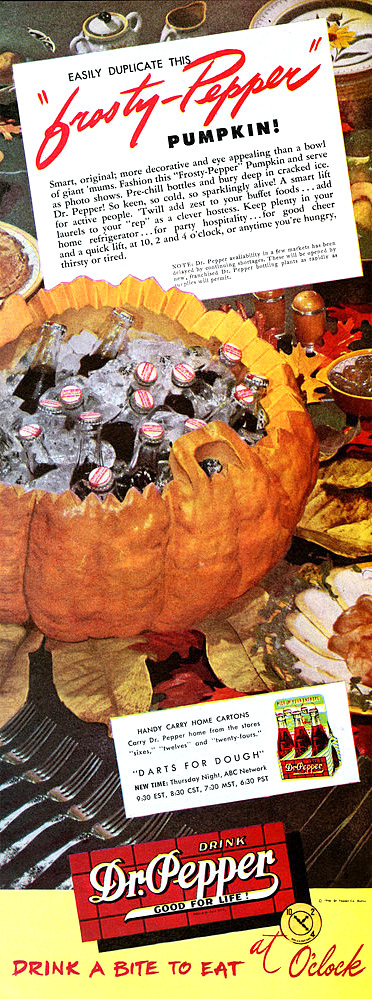
dr-pepper_halloween_1947_flickr“‘Twill add zest to your buffet foods…”

by Paula Bosse

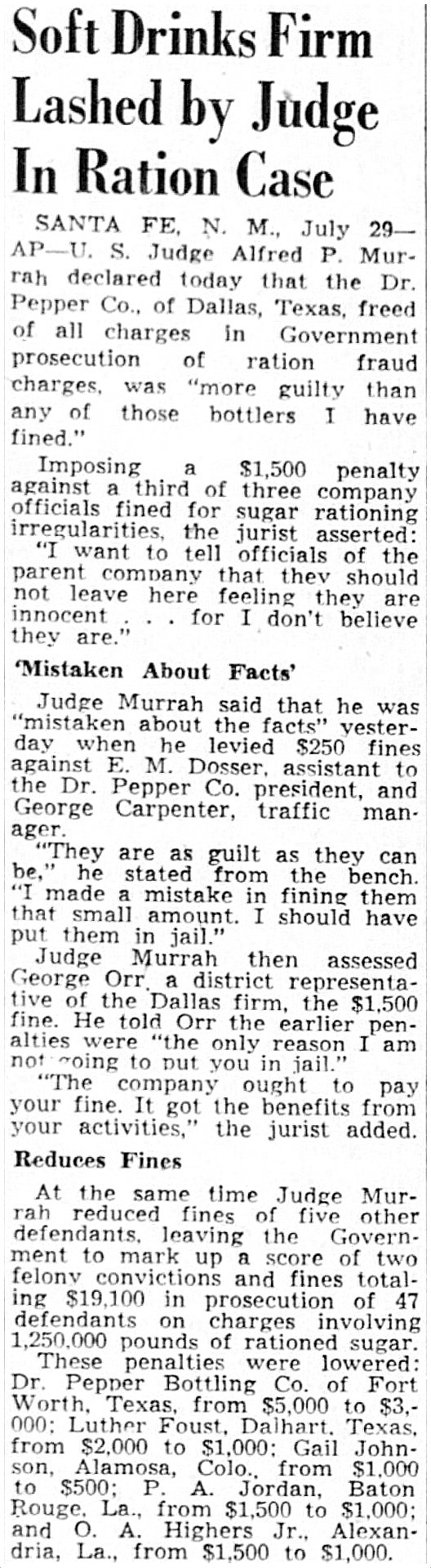
(While searching for a Halloween advertisement, I unexpectedly came across reports of a federal grand jury case brought against Dallas-based Dr Pepper for violating strict wartime sugar-rationing. Scroll down to read about the legal case.)

Happy Halloween! Might I propose an eye-catching party suggestion? The “Frosty-Pepper Pumpkin”! Hollow out a pumpkin, fill it with cracked ice, and load it up with bottles of Dr Pepper. Voilà!

The text of the ad, from the fall of 1947:

EASILY DUPLICATE THIS “frosty-Pepper” PUMPKIN!

Smart, original; more decorative and eye appealing than a bowl of giant ‘mums. Fashion this “Frosty-Pepper” Pumpkin and serve as photo shows. Pre-chill bottles and bury deep in cracked ice. Dr. Pepper! So keen, so cold, so sparklingly alive! A smart lift for active people. ‘Twill add zest to your buffet foods … add laurels to your “rep” as a clever hostess. Keep plenty in your home refrigerator … for party hospitality … for good cheer and a quick lift, at 10, 2 and 4 o’clock, or anytime you’re hungry, thirsty or tired. 

NOTE: Dr Pepper availability in a few markets has been delayed by continuing shortages. These will be opened by new, franchised Dr. Pepper bottling plants as rapidly as supplies will permit.

HANDY CARRY HOME CARTONS
Carry Dr Pepper home from the stores 
“sixes,” “twelves” and “twenty-fours.”
 
“DARTS FOR DOUGH”
NEW TIME: Thursday Night, ABC Network
9:30 EST, 8:30 CST, 7:30 MST, 6:30 PST

Drink Dr. Pepper
GOOD FOR LIFE!

DRINK A BITE TO EAT at 10, 2 and 4 o’clock

***

Sources & Notes

Ad found on Flickr, here.

“Darts for Dough”? I had to look that up. It was a radio game show involving quizzes and dart-throwing, created by Orval Anderson and Bert Mitchell at WFAA radio. It debuted in the summer of 1943 as a strictly local program, but it’s popularity was such that it moved to Hollywood in August, 1944 and — still run by the WFAA creators — it began to be broadcast “coast to coast” for several years, moving to television by 1950. It was originally developed in Dallas as a sponsorship vehicle for Dallas-based Dr Pepper and was frequently advertised as “Darts for Dough — The Dr Pepper Show.”

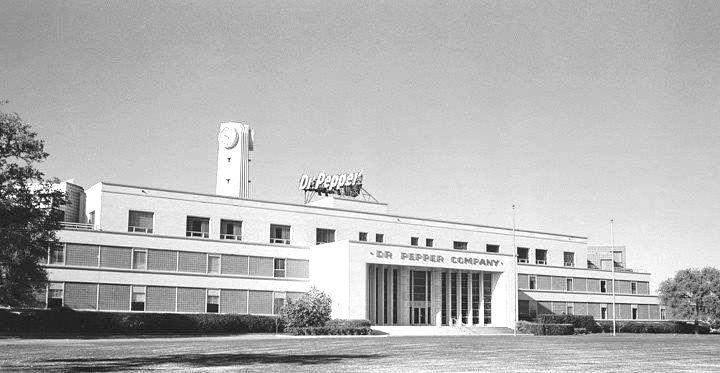
1947 was a big year for Dr Pepper — that was the year their beautiful (and sorely missed) plant opened at Mockingbird and Greenville.

dr-pepper-plant_pinterest

1947 was also a noteworthy year for the company, because of a large federal grand jury indictment which charged several corporations and individuals — including Dr Pepper and some of its bottlers and employees — with sugar-rationing violations (these “irregularities” appear to have begun in the last months of World War II, when wartime food rationing was still serious business). Black-market sugar! A district representative of Dr Pepper was assessed a small fine, but charges of conspiring to violate sugar-rationing regulations which were brought against the DP parent-company were ultimately dismissed, a ruling which angered Federal Judge Alfred P. Murrah, who seems to have been extremely unhappy about the dismissals, as can be read in his blistering statement below.

dr-pepper_sugar-rationing-case_waco-news-tribune_073047
AP story, via Waco News-Tribune, July 30, 1947

Two of the individuals charged in the case — New Mexico residents — received prison sentences in what was described as “the largest black market sugar operation on record,” involving over a million pounds of sugar.

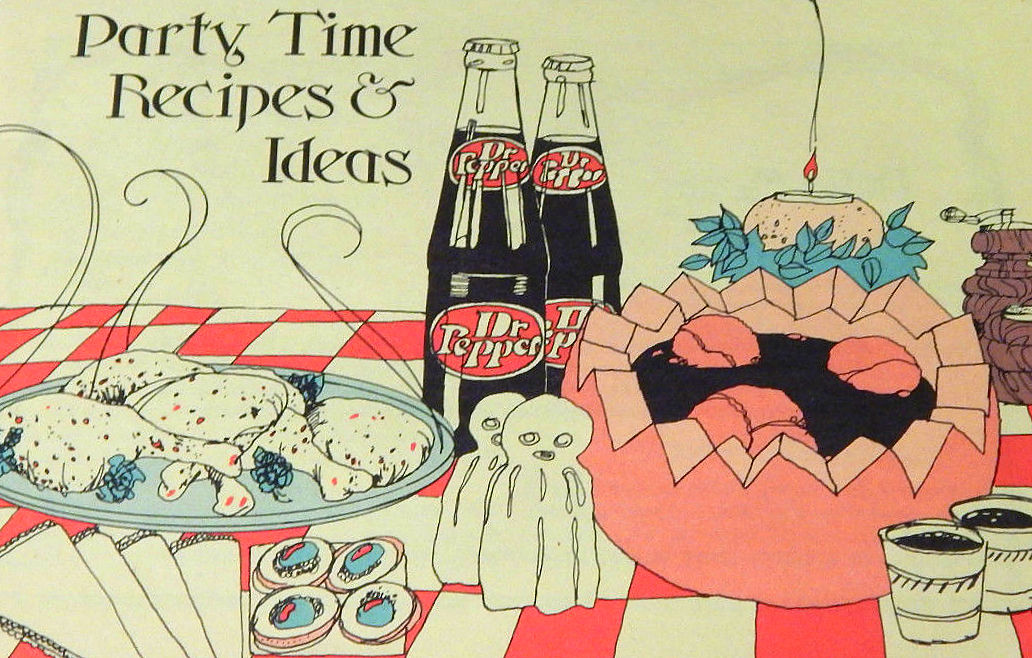
This “Happy Halloween!” post took a bit of an unexpected dark detour. Let’s cleanse our palate with something happier: another party idea with Dr Pepper and a hollowed-out pumpkin (found on eBay).

halloween_dr-pepper_booklet_ebay

More Halloween posts from Flashback Dallas can be found here.

*

Copyright © 2017 Paula Bosse. All Rights Reserved.


From the Vault: Simulcasting the World Series In the Days Before Radio

1912_world-series_dmn_100612October, 1912

by Paula Bosse

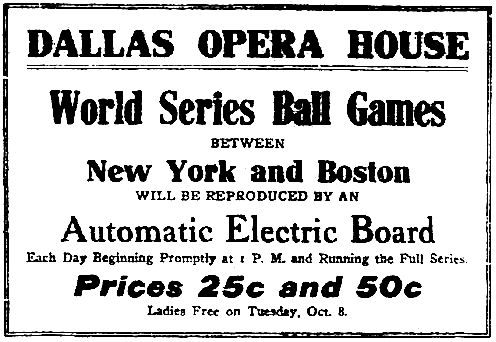
I understand there’s some sort of baseball contest going on at the moment? Seems like a good time to link back to a post I really enjoyed writing and researching, “Simulcasting the World Series in Dallas in the Days Before Radio, Via Telegraph.” The ad above, from 1912, promotes “reproductions” of live games which were happening hundreds of miles away — the play-by-play action was relayed by a telegraph operator to theater personnel who would immediately “reproduce” the game for the audience of eager baseball fans. I’m not a sports fan, but I loved learning about this! Read the 2014 Flashback Dallas post here.

*

Copyright © 2017 Paula Bosse. All Rights Reserved.


KRLD News Crews, At the Ready

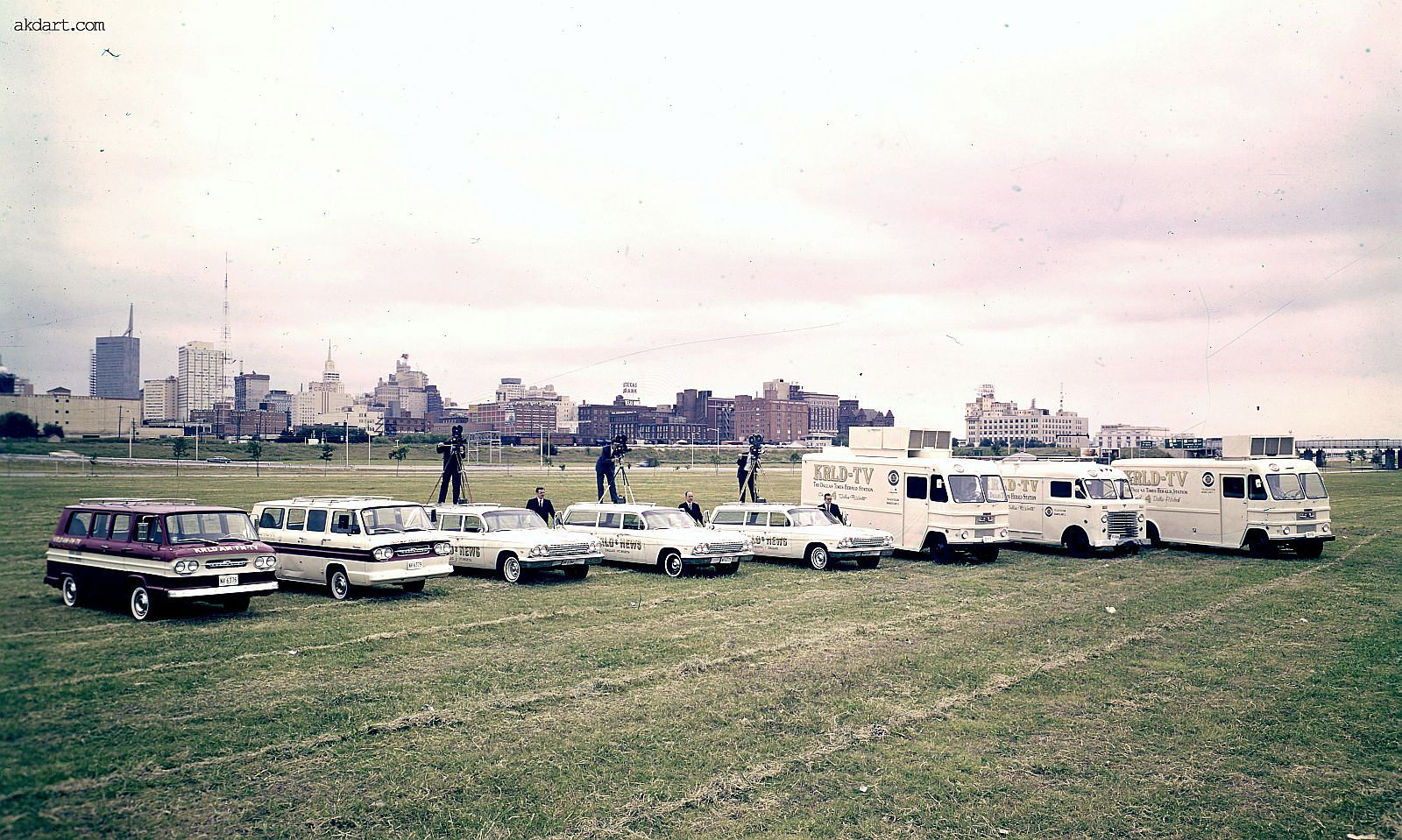
krld_news-crews_early-1960s_akdartThey mean business: they’re wearing suits and ties…

by Paula Bosse

Early-’60s-era KRLD radio and TV mobile news crews are seen above, showing off their fleet and ready for breaking news. Behind them, the Dallas skyline, seen from an unusual vantage point: the Trinity levees. See this photo really big here, and explore the skyline, from the Republic Bank Tower on the northern edge of downtown, to the Dallas Morning News building on the southern edge.

***

Sources & Notes

Photo is from an interesting collection of “very old pictures from KRLD radio and TV,” presented on the website akdart.com.

*

Copyright © 2017 Paula Bosse. All Rights Reserved.

Nighttime on Commerce Street — 1957

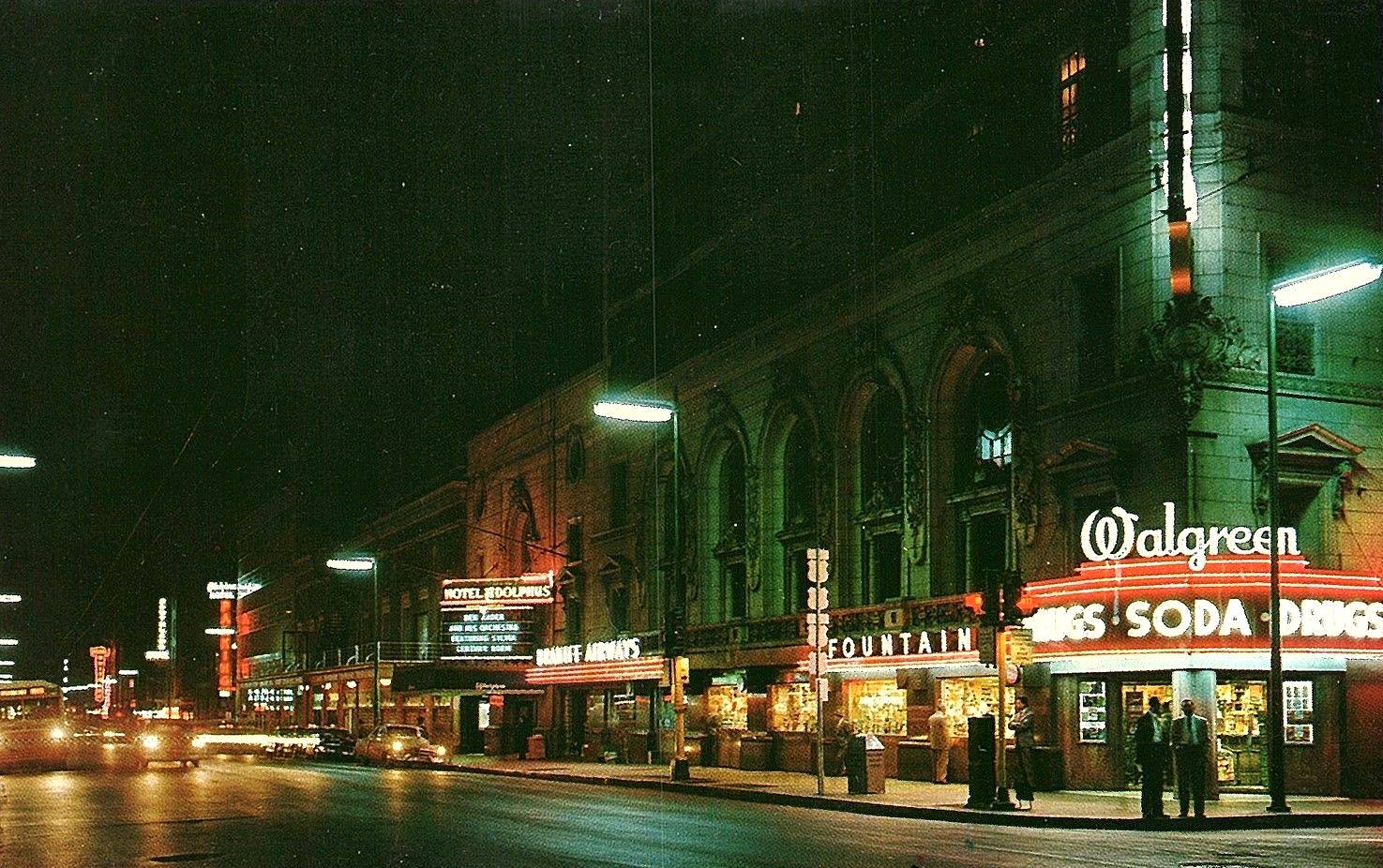
commerce-street_walgreens_adolphus_1957_ebayThe Adolphus block, at Commerce & Akard…

by Paula Bosse

I love this photo showing Commerce Street, looking west from Akard — especially the green light on the walls of the Adolphus. And that heart-stoppingly beautiful deco “Walgreen” font and neon. Downtown Dallas in the ’40s and ’50s is a place I wish I had known, back when drug stores had soda fountains and hotels had “supper clubs.”

This photo was probably taken in March, 1957, when Ben Arden and His Orchestra “featuring Sylvia and her violin” were appearing at the Century Room in the Adolphus Hotel. Downtown Dallas looked pretty good in 1957.

***

Sources & Notes

Postcard photo — “Night view of Commerce Street in downtown Dallas, Texas” — by Leonard Raef; it is currently up for bids on eBay, here. (Thanks to Teresa Musgrove Gibson for posting this today in the Retro Dallas Facebook group!)

I don’t know if I’ve linked to this huge photo of the Adolphus on the Dallas City Hall website, but take a look at it here (then click again to make it really big). I have to say, I think I prefer that Commerce-and-Akard corner with the bright lights of the Walgreens to the more sedate, stripped-down look of the same corner today — it’s still a beautiful  building, of course, but, man, that neon was just fantastic.

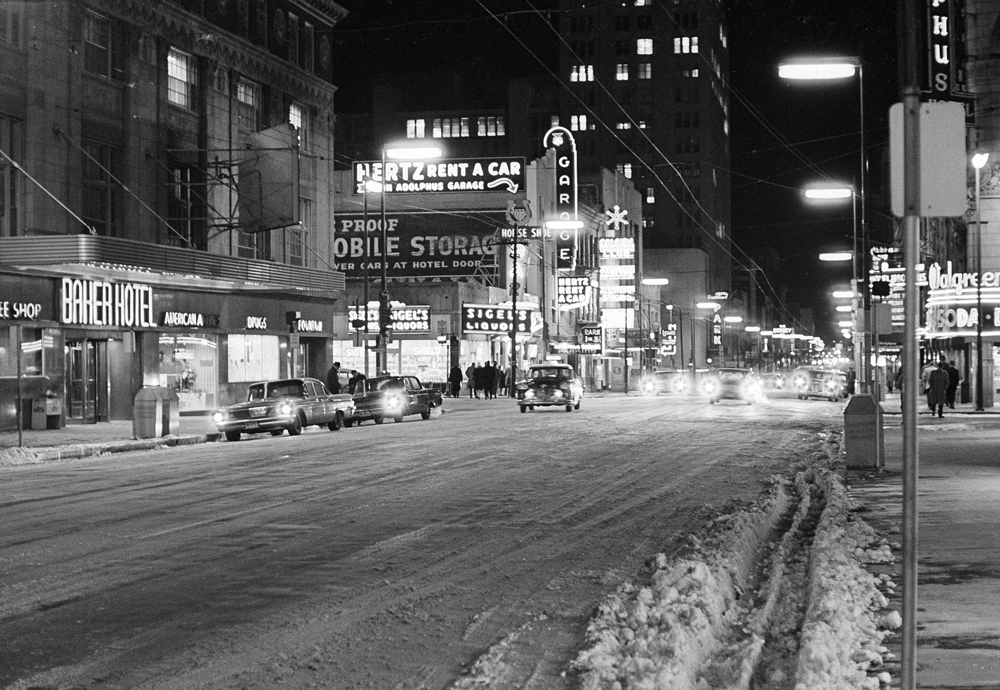
UPDATE: Some people who remember downtown at this time have thought this might show Main Street. As far as I know, Main has never been a one-way street (as seen in the photo above), but there was a Walgreen store at the northwest corner of Main and Akard, one block away. Seems counter-productive to have two drugs stores so close together, but there you are.

The color photo shows the northwest corner of Commerce and Akard, taken from the front of the Baker Hotel. The same corner can be seen at the right of this black-and-white photo from 1962:

Downtown Dallas Texas

*

Copyright © 2017 Paula Bosse. All Rights Reserved.

Flashback Dallas on the Radio: La Reunion

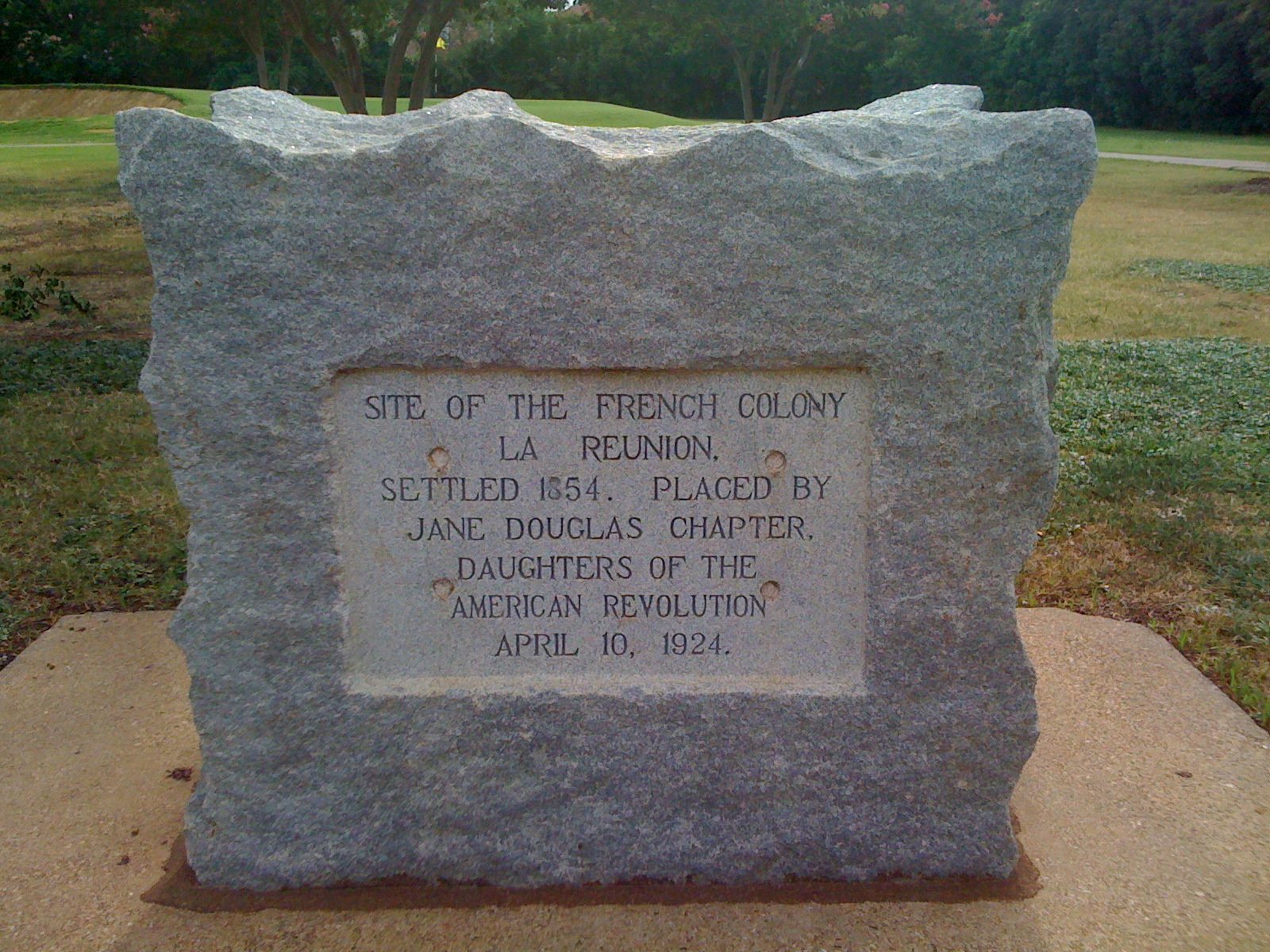
la-reunion-marker_today_bigdhistoryThe La Reunion marker today… (photo by Big D History)

by Paula Bosse

Today a short and informative radio piece on the La Reunion French colony was aired across the state on the public radio program Texas Standard. The story was produced by Stephanie Kuo of KERA News, who was nice enough to invite me to participate as one of the interviewees (along with Dallas historian and storyteller Rose-Mary Rumbley and developer John Scovell). Listen to the 5-and-a-half-minute story here on the KERA site, or here on the Texas Standard site, via Soundcloud.

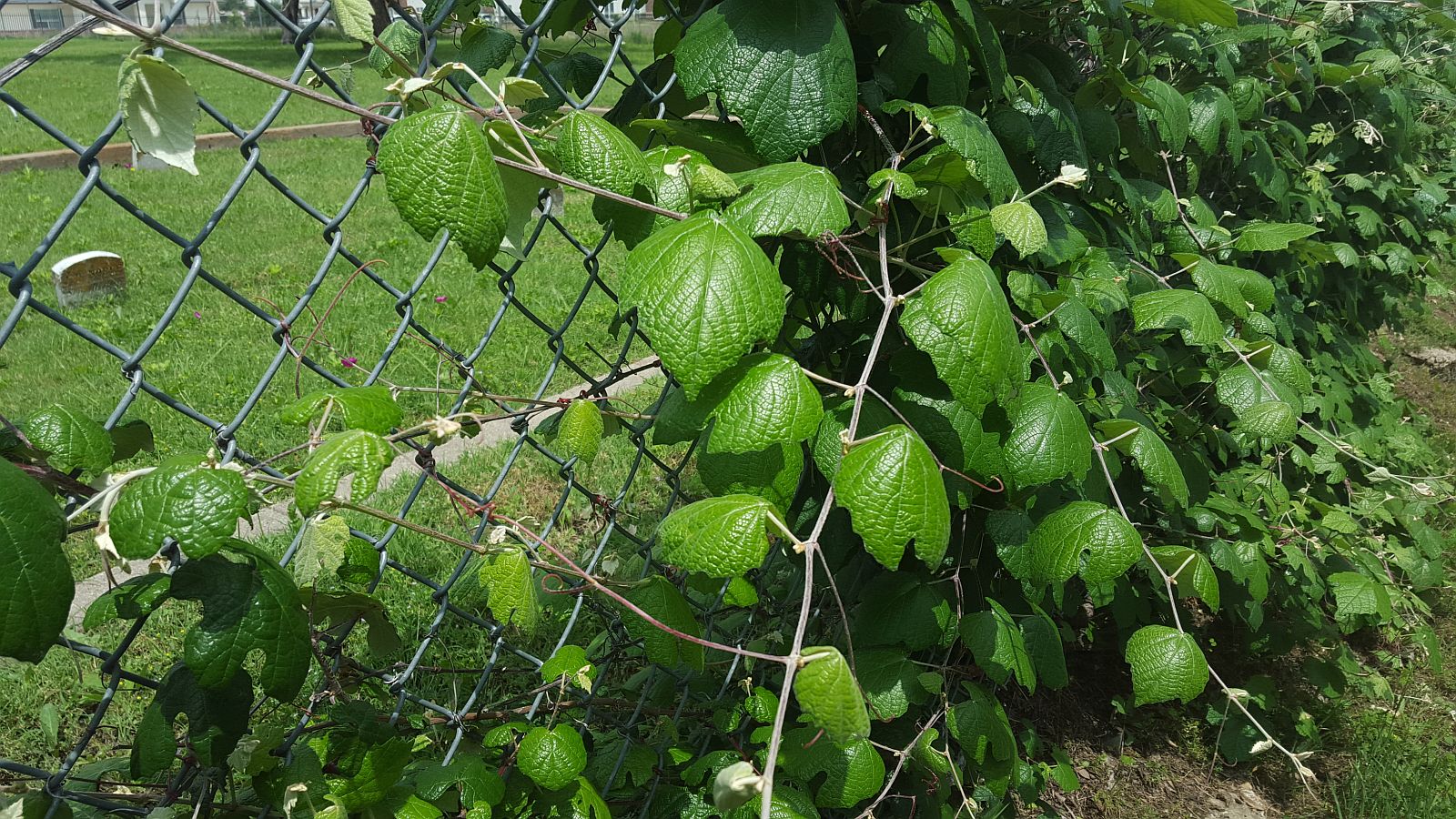
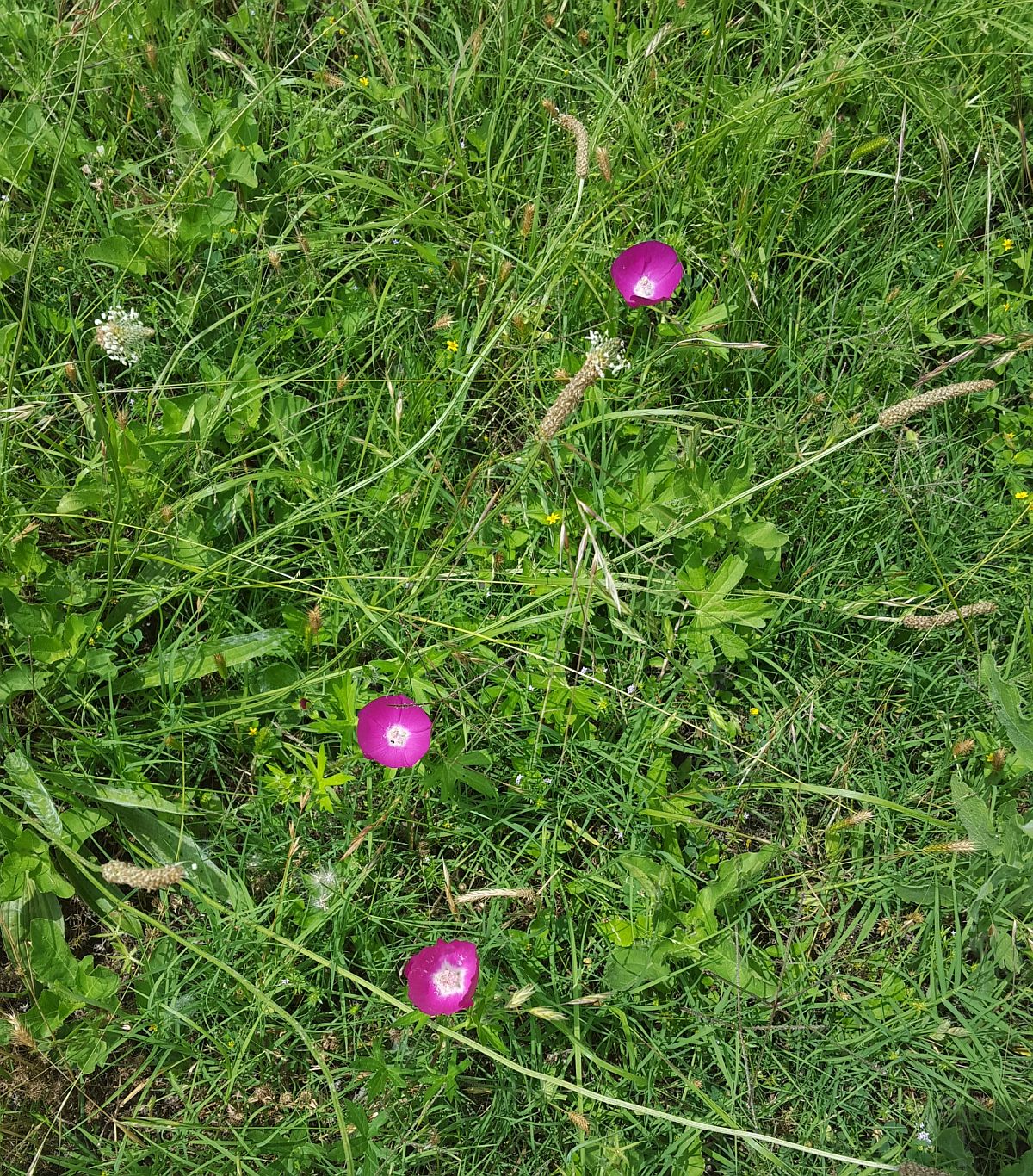
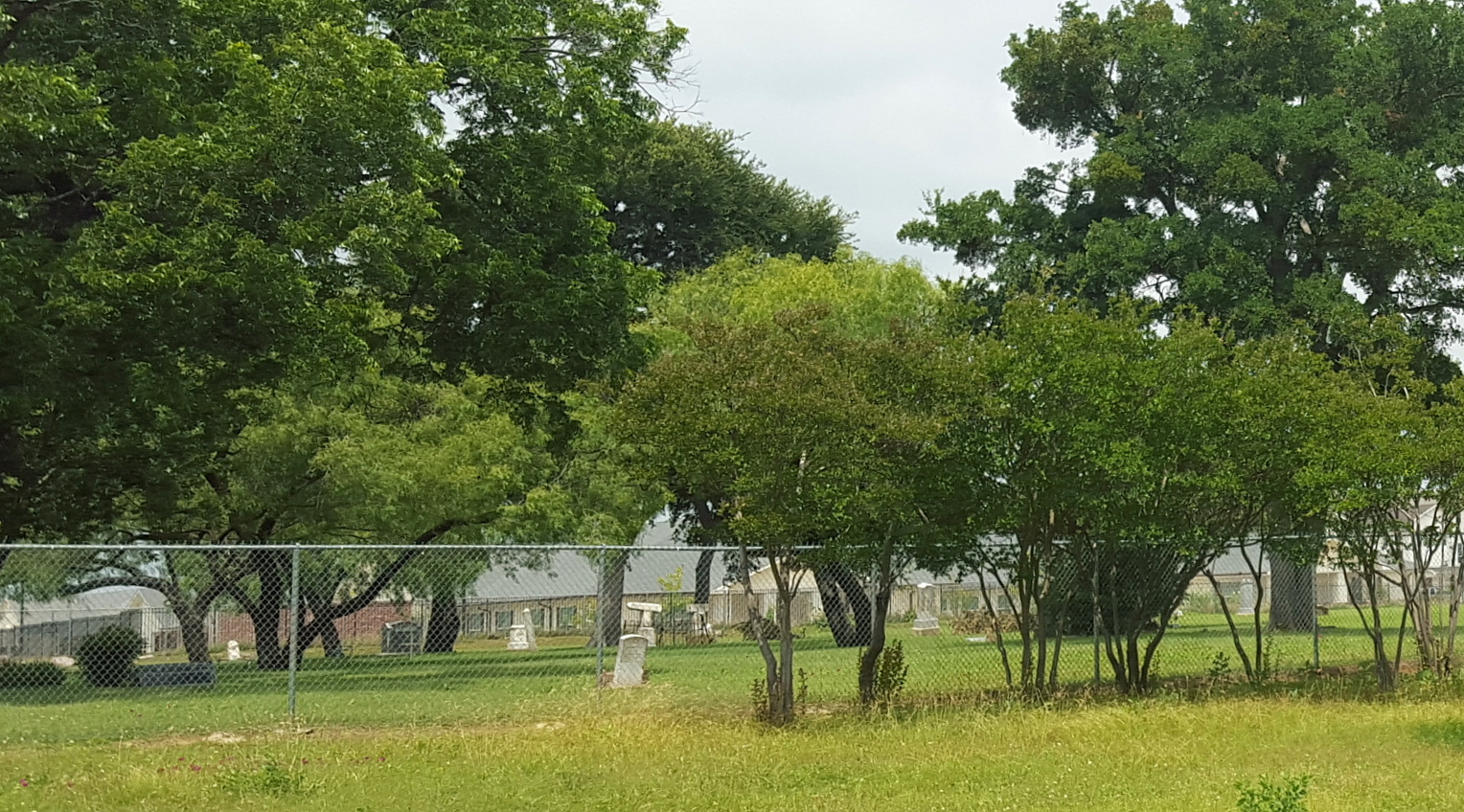
I’ve written about La Reunion before, but here are a few photos I took last year when I trekked over to all that remains of the original colony, its cemetery (known as both “La Reunion Cemetery” and the less romantic “Fish Trap Cemetery”). It’s fenced off to protect the few remaining historic grave markers, which have been eroding in the elements for over 160 years. Somehow I walked away having taken photos only of grape leaves and flowers and not the cemetery. (There are several photos online of the cemetery, including this one, from the Dallas Parks department; read the Texas Historical Commission marker here. You’ll note that 20th-century headstones can be seen: the cemetery was an active cemetery well after the colonists had moved away; in fact, Bonnie Parker was originally buried there until her remains were moved to the Crown Hill Cemetery.)

There are surprisingly few monuments or plaques in Dallas recognizing the historically important colony. In April, 1924, the Jane Douglas Chapter, Daughters of the American Revolution dedicated the very first monument to the La Reunion settlement. The site of this granite marker was originally at Westmoreland and Fort Worth Avenue, but the marker (seen at top) was moved at some point to its current home, on the golf course of Stevens Park.

la-reunion-cemetery_grape-leaves_peb_052116

la-reunion-cemetery_flowers_peb_052116

la-reunion-cemetery_peb_052116

***

Sources & Notes

Photo of the 1924 marker, relocated to Stevens Park, is used with permission of Big D History.

All other photos were taken at La Reunion Cemetery/Fish Trap Cemetery in West Dallas by Paula Bosse on May 21, 2016. The location of the cemetery can be seen on Google Maps here.

An interesting tidbit about the grapevines: when the French colonists prepared to venture to Texas, several took cuttings of plants to take with them, with the intention of planting them in their new home and being able to enjoy wine made from the grape varieties of their homeland. When the colonists arrived in Texas, they planted/propagated the cuttings in Houston, unsure if the plants would survive the month-long walk (!) to Dallas after the lengthy ocean crossing. The flourishing plants were uprooted and transported to La Reunion by later arrivals. It is not inconceivable that the grape leaves seen growing today at the colony’s old cemetery might be descendants of the colonists’ imported grapevines.

The location of the La Reunion land was, more or less, 2,000 acres in West Dallas, with modern-day boundaries being Westmoreland on the west, N. Hampton on the east, the south bank of the Trinity on the north, and W. Davis Street on the south.

In a 1933 letter to The Dallas Morning News, Dallas resident George Cretien — who was born in 1856 in La Reunion (“Frenchtown to the native”) — disputed the location of the colony being near Westmoreland, where the old Delord ruins still stood at the time:

“The village of the colonists was located about a mile northeast of the Delord place on the bluff that the cement company has mostly destroyed for the making of its product.” (DMN, Sept. 17, 1933)

So there. In other words, Cement City: The Early Years.

Thanks again to Stephanie Kuo of KERA for inviting me to participate!

Click photos to see larger images.

*

Copyright © 2017 Paula Bosse. All Rights Reserved.


The Buell Planing Mill — 1901

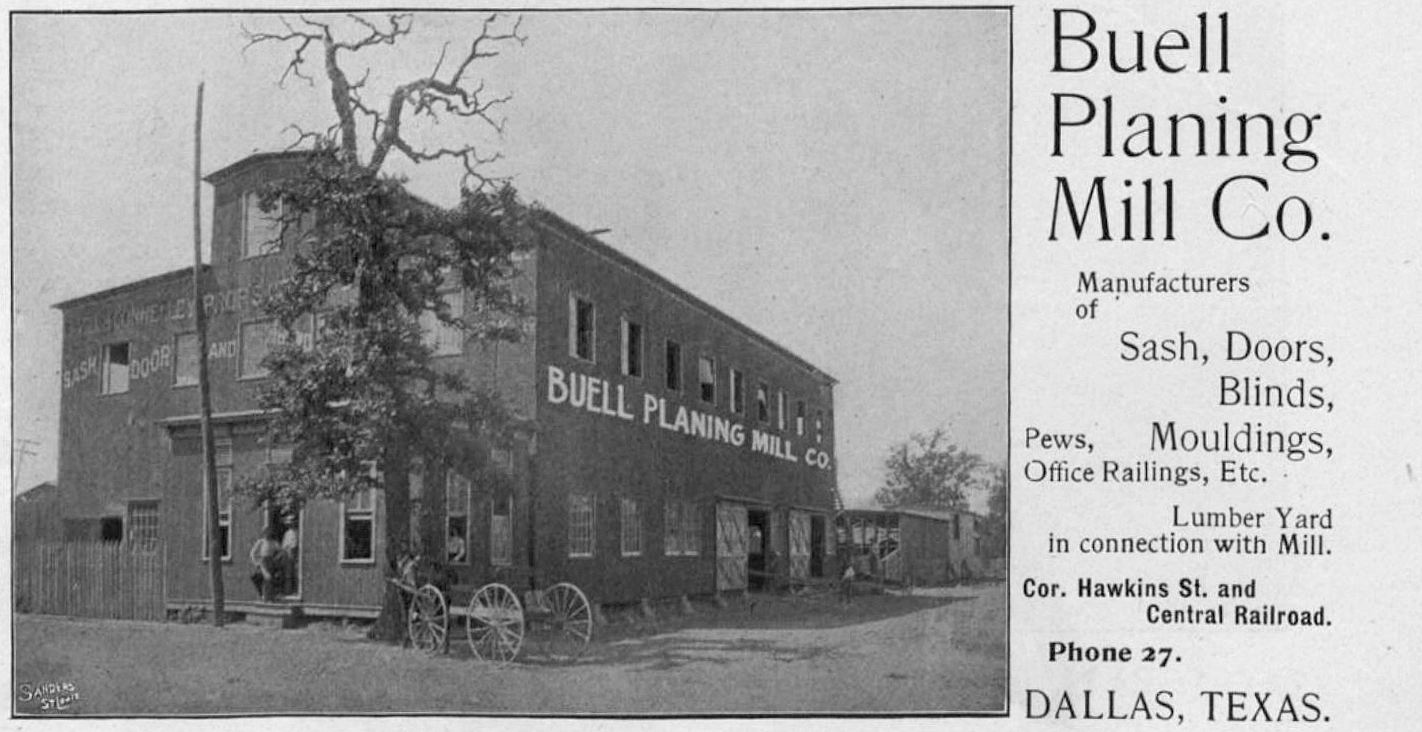
buell-planing-mill_dallas-fire-dept-annual_1901_portalPews a specialty…

by Paula Bosse

The Buell Planing Mill — originally the Buell & Connelly Planing Mill — was established in 1886 by F. T. Buell, a Canadian who came to Dallas as a teenager in 1877. The factory (seen above in an ad from 1901) was built in 1890 just west of the H&TC Railway tracks, at the southwest corner of Hawkins and Montezuma (a street which no longer exists but which ran between Bryan and Live Oak). The mill can also be seen in this ad from 1896:

buell_dallas-directory_18961896 Dallas city directory

The wood frame building burned down in a massive fire in November 1910, and a larger (concrete) factory was built on the same site (an approximate view of the mill’s location as seen today — just to the east of and slightly behind Crozier Tech — can be seen here). The company later became the Buell Lumber & Manufacturing Company in 1918, moved a few times (it left its Hawkins and Montezuma location for Hawkins and Swiss in the late 1940s), eventually became Buell & Co., and was still in business at least into the 1980s.

buell_buell-planing-lumber
Franklin Thomas Buell (1859-1938)

***

Sources & Notes

Ad from the Dallas Fire Department Annual, 1901, from the collection of the Dallas Firefighters Museum; it can be viewed on UNT’s Portal to Texas History site here.

To get an idea of what the surrounding neighborhood looked around the time that photo was taken, see the 1899 Sanborn map here; the 1921 Sanborn map shows the larger post-fire operation, here. Note the neighboring “Central High School”/Bryan Street High School (known more familiarly as Crozier Tech High School); over the years, thousands of high school students walked past (or might even have lived across from) this mill and lumber yard.

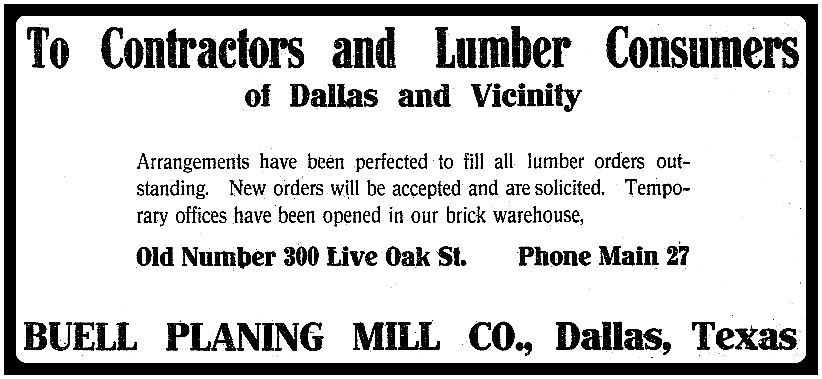
Read about the massive fire of Nov. 30, 1910 that destroyed many of the businesses and houses that surrounded the Buell mill in the Dallas Morning News account “East Dallas Fire Damage $75,000; Near Conflagration at Live Oak and Central Destroys Parts of Four Blocks” (DMN, Dec. 1, 1910) here. The Buell mill was deemed a “total loss” with damages amounting to more than $20,000 (equivalent to over half a million dollars in today’s money). Ads from several of the businesses affected were placed on the page this story appeared on. Below, the Buell ad.

buell-planing-mill_fire_dmn_120110

*

Copyright © 2017 Paula Bosse. All Rights Reserved.

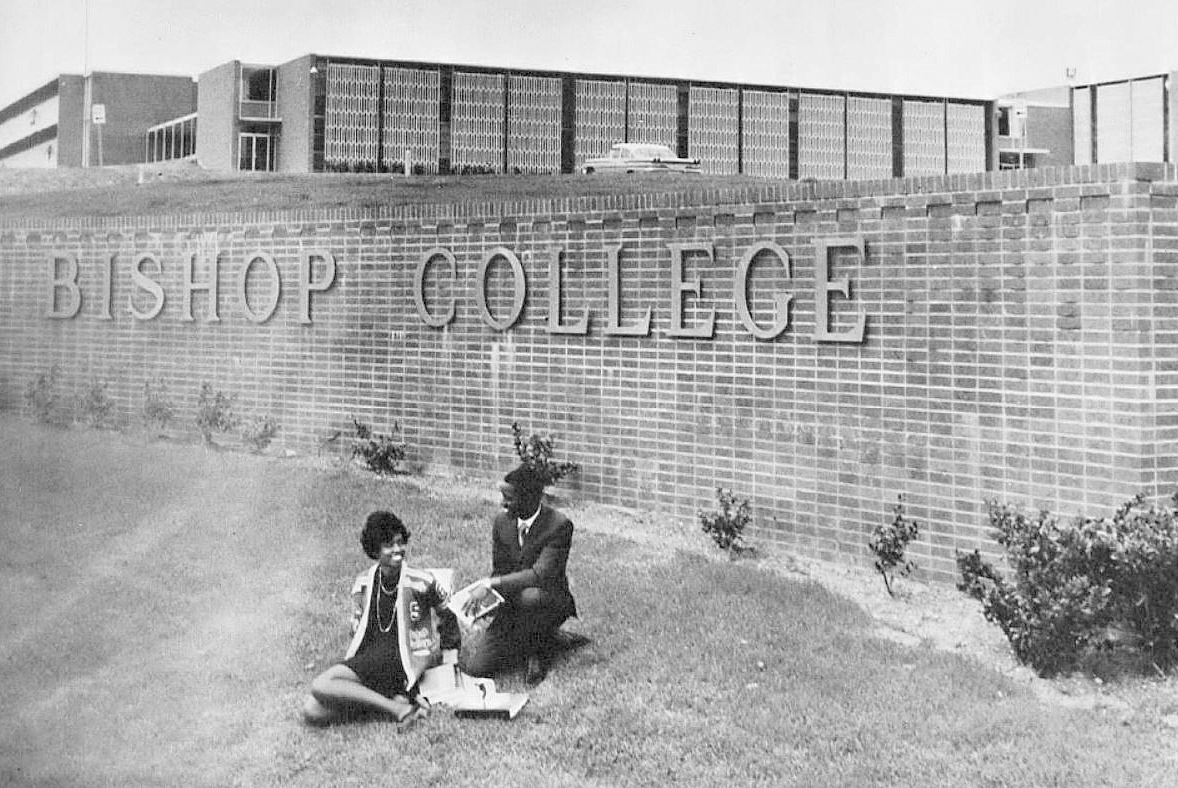
Bishop College — 1969

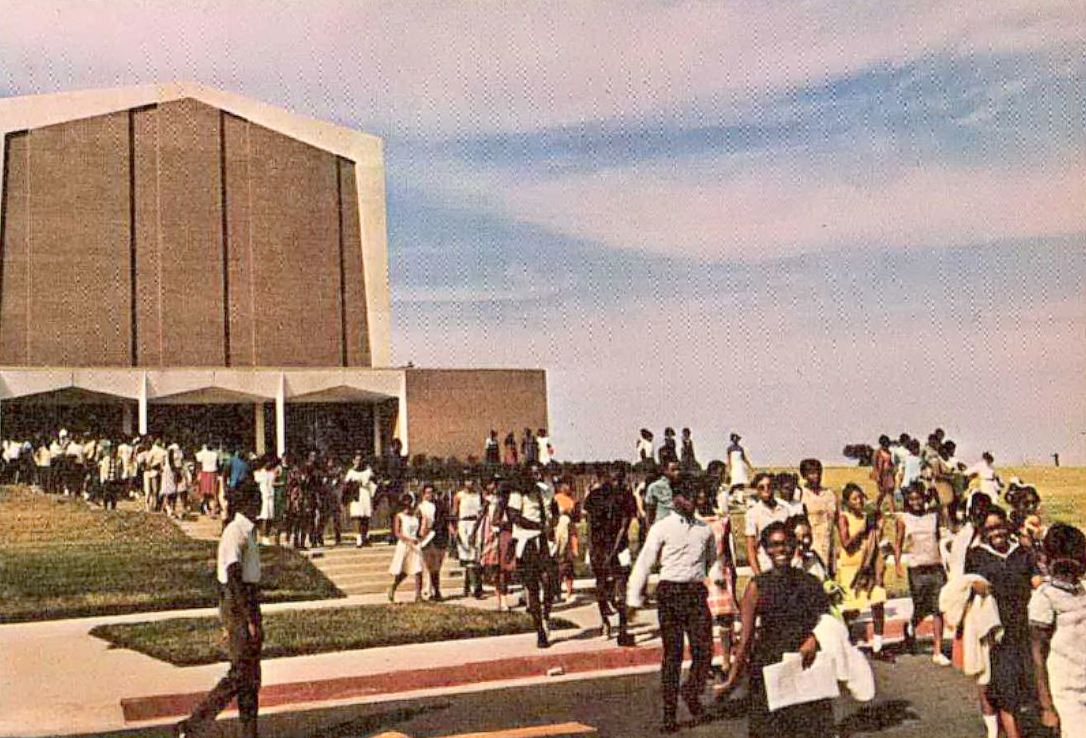
bishop-college_1969Welcome to Bishop College…

by Paula Bosse

Bishop College was a historically black college founded in Marshall, Texas in 1881 by the Baptist Home Mission Society. The main building on the Bishop College campus was a grand plantation house built with slave labor in the late 1840s for the wealthy Holcombe family, who allowed it to be used during the Civil War it as the headquarters of the Trans-Mississippi Agency of the Confederate Post Office Department. That it became the home of one of the first institutions of higher education for African Americans in Texas seems almost poetic.

In 1961 — 80 years after its founding, Bishop College moved to the Highland Hills area of South Dallas, along Simpson Stuart Road, to become Dallas’ first black college. The move was made in a push to increase enrollment and was made possible by money raised by a group of Dallas businessmen headed by Carr P. Collins, Sr., by the American Baptist Convention, and by the Negro Baptists of Texas. Dallas businessman and philanthropist Karl Hoblitzelle donated the land. What started in 1961 as a 103-acre campus with only seven buildings and an enrollment of 651 students, grew to a campus stretching over 360 acres and a peak enrollment of about 2,000 students.

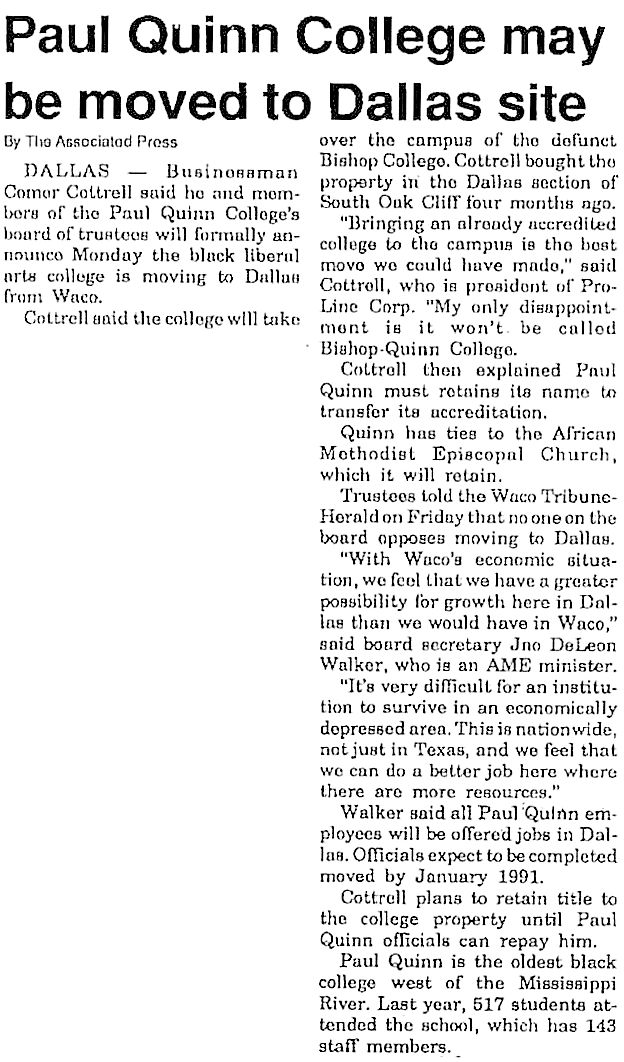
Despite its move to a major metropolitan area and an increase in enrollment, the college was never on firm financial ground. After years of financial mismanagement, charges of embezzlement, and mounting government debt, the college lost its accreditation and eligibility to receive further funds. In a last-ditch effort to remain open, the college filed for Chapter 11 bankruptcy in 1987, but they were never able to recover, and Bishop College closed in 1988 after 107 remarkable years. In 1990, the property was purchased by Comer S. Cottrell, who persuaded the powers-that-be of Waco’s Paul Quinn College — the oldest African-American college in Texas — to move to Dallas and take over the defunct Bishop College campus. Paul Quinn College has been operating in Dallas since 1990.

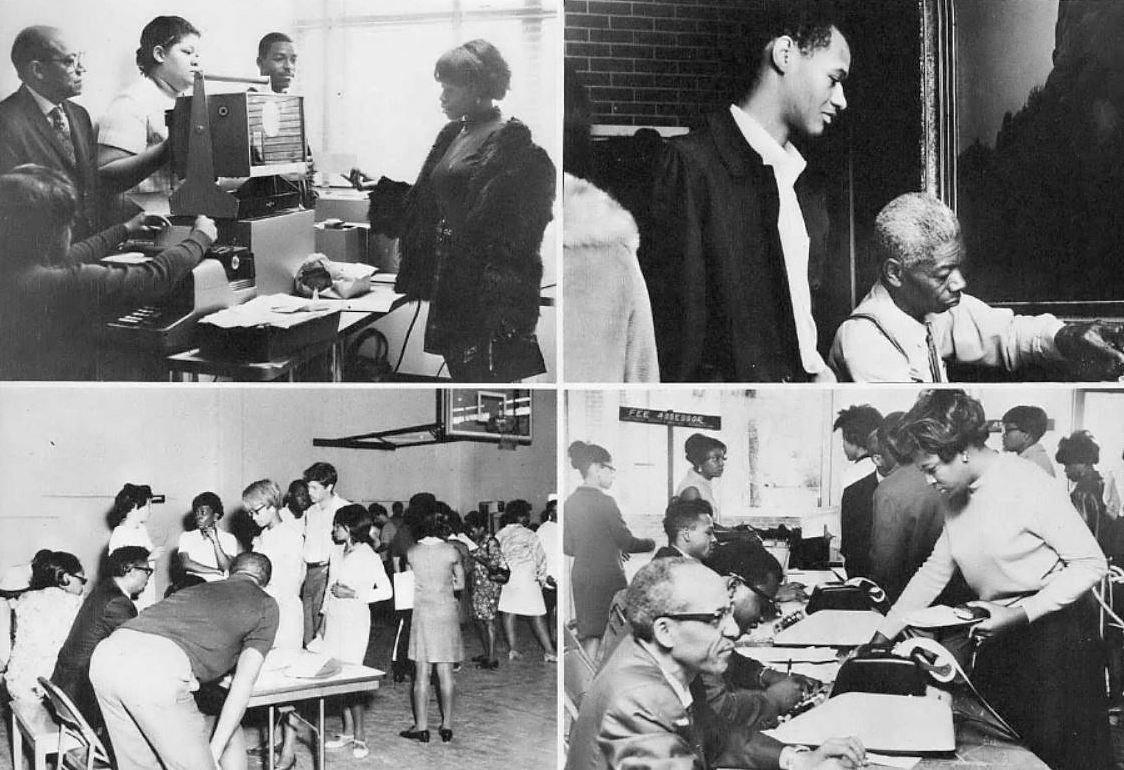
The photos below are from the 1969 Bishop College yearbook, back in its happier, groovier days of growth and progress. (Click to see larger images.)

Below, class registration.

bishop-college_1969-yrbk_registration

*

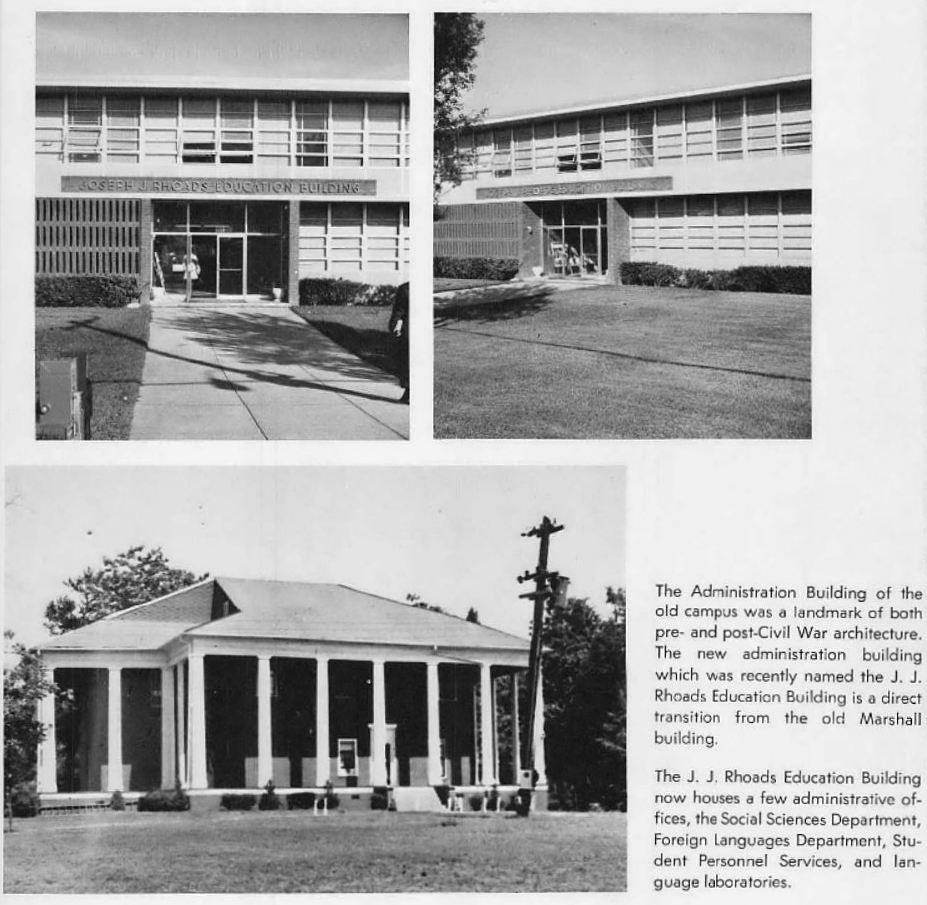
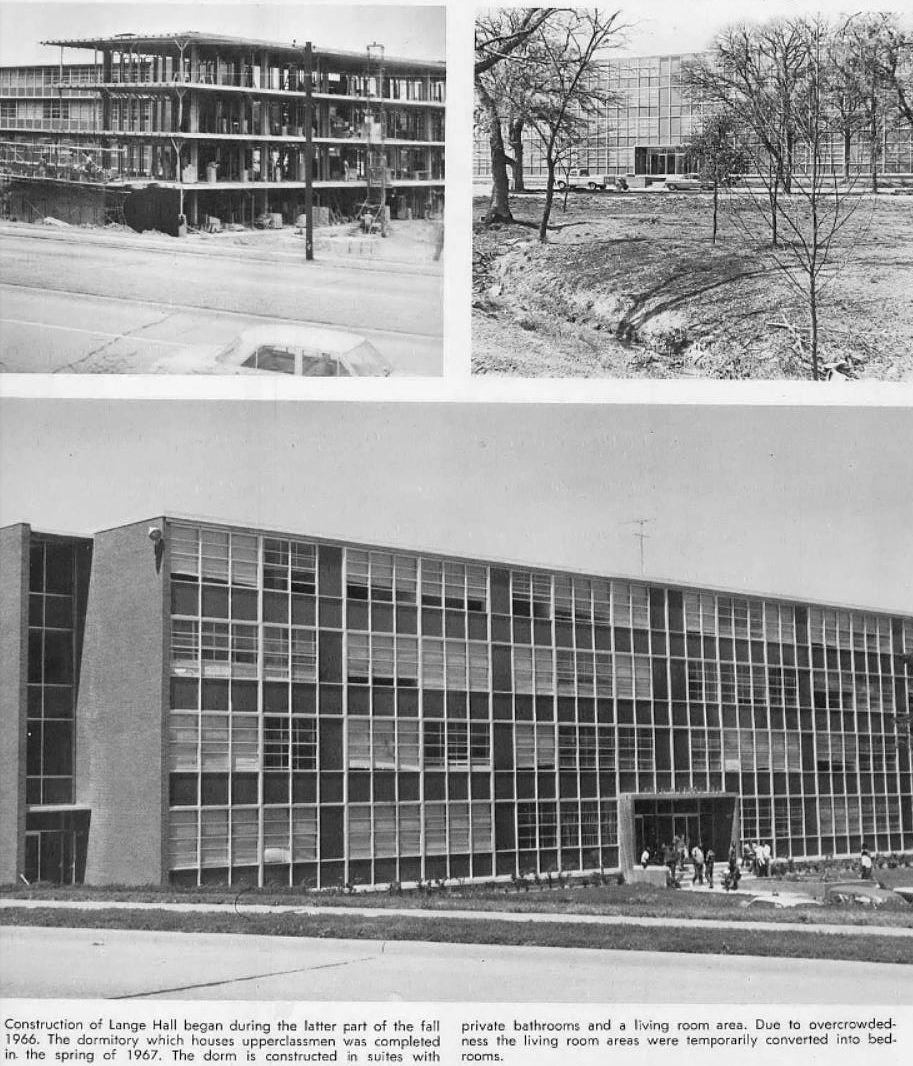
Campus buildings, including the “homage” to the old Bishop administration building in Marshall, “Wyalucing.”

bishop-college_1969-yrbk_education-bldg

bishop-college_1969-yrbk_lange-hall

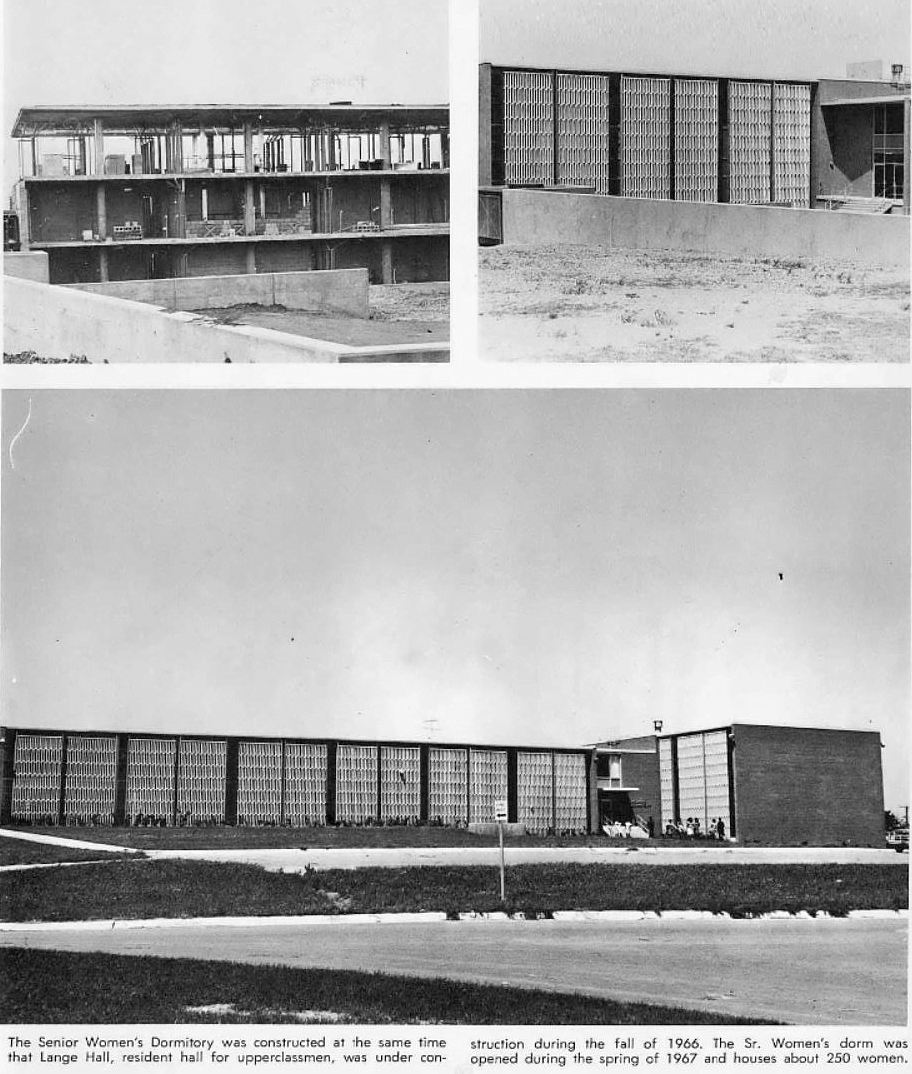
bishop-college_1969-yrbk_sr-womens-dorm

*

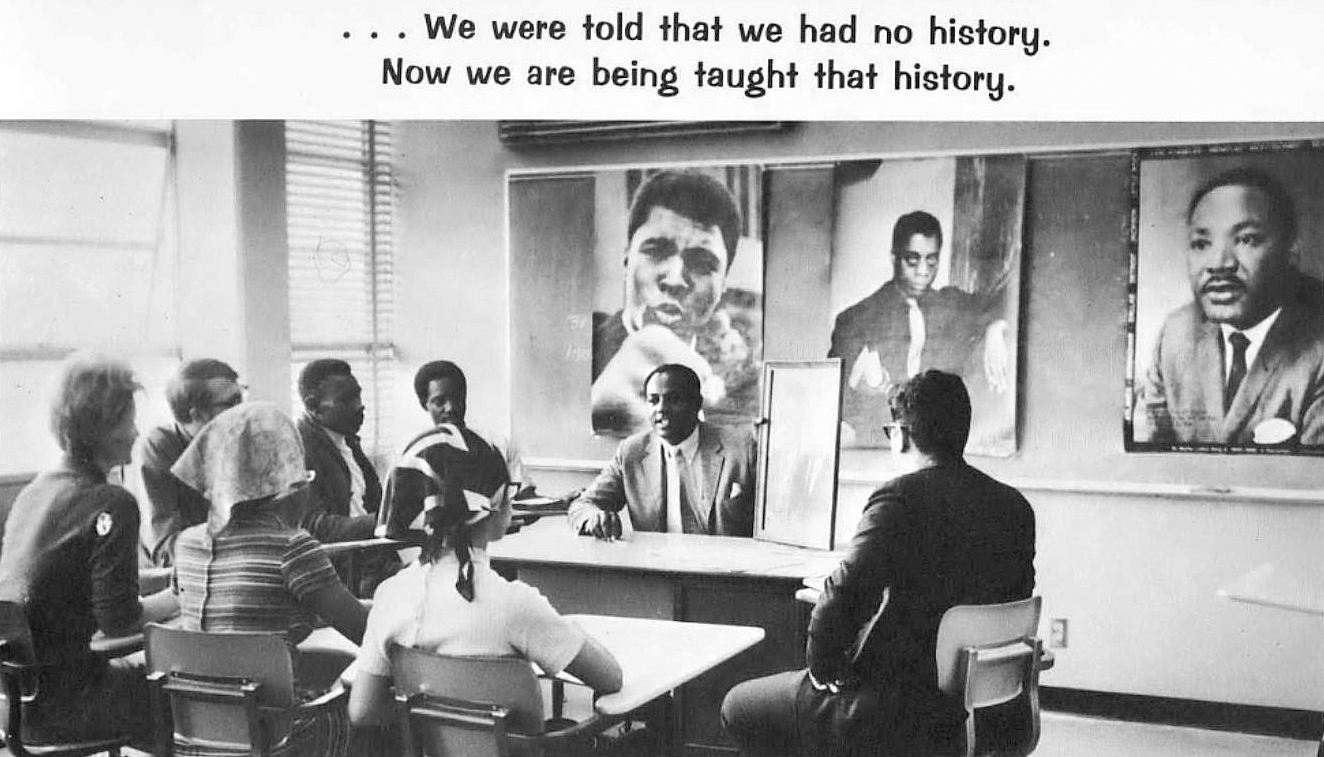
bishop-college_1969-yrbk_afro-amer-history

bishop-college_1969-yrbk_campus_classroom

Above, Raymond Hall, who taught classes in African and American culture.

*

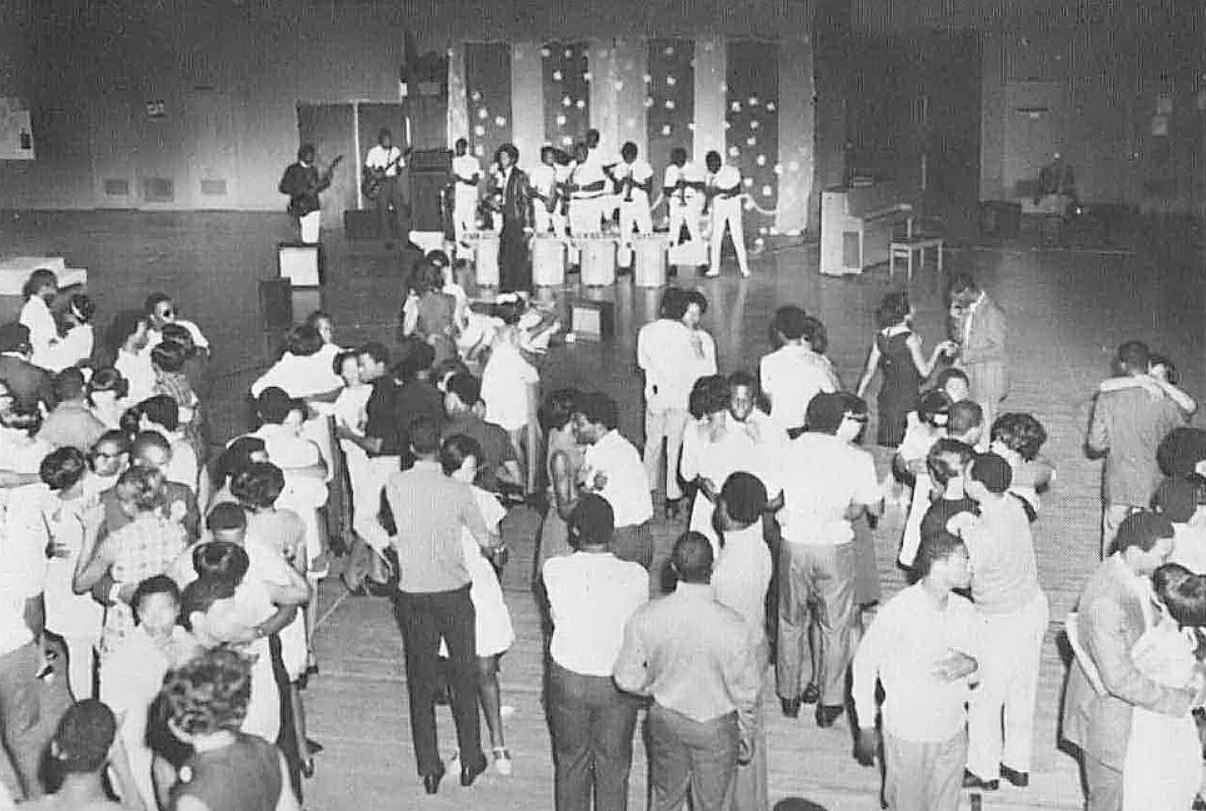
bishop-college_1969-yrbk_dance

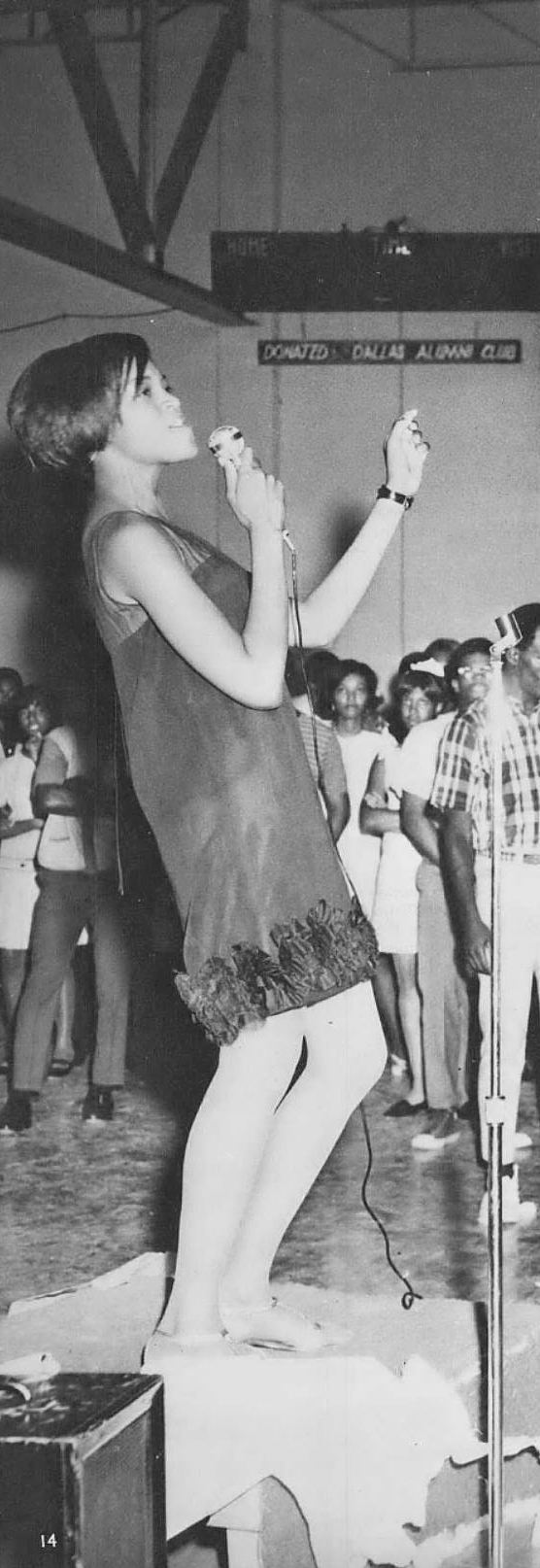
Above: “Energetic students got in the groove. Charles Hunt and members of the Bishop Collegians, the lab band, played and really socked it to the students attending the show. From the lab band has come four different groups which are worthy credits to the band and Mr. VanBolden, director.”

Below: “Theopolis Jones, a freshman from Birmingham, Ala., worked out on the drums. He was but one of the forty freshmen who were members of the Ambassadors of Band. Fellow members of the class stood by and looked on with real enthusiasm.”

bishop-college_1969-yrbk_drummer

Below: “Joyce Morris, a sophomore from Oklahoma, was one of the feature vocalists at the talent show which was sponsored by the Ambassadors of Band, the Bishop College Marching Concert Band.”

bishop-college_1969-yrbk_joyce-morris

*

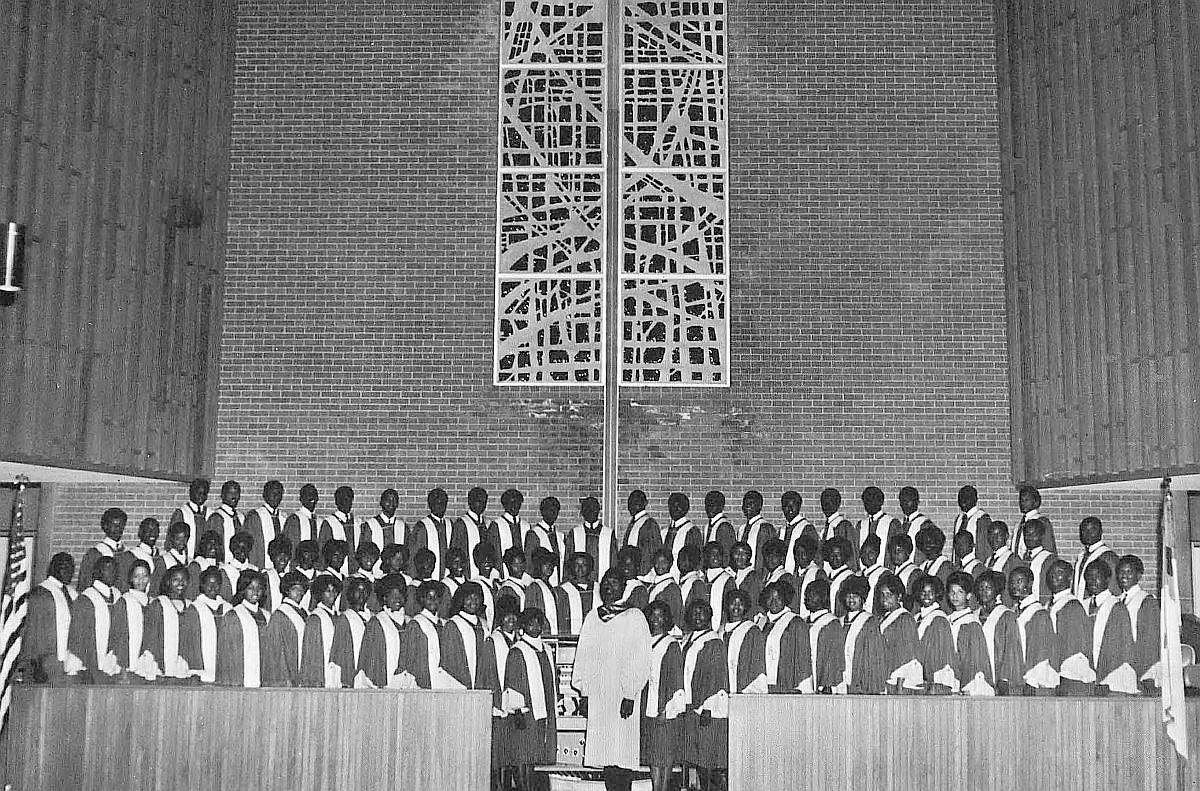
Concert choir, under the direction of John S. Meeks.

bishop-college_1969_concert-choir

*

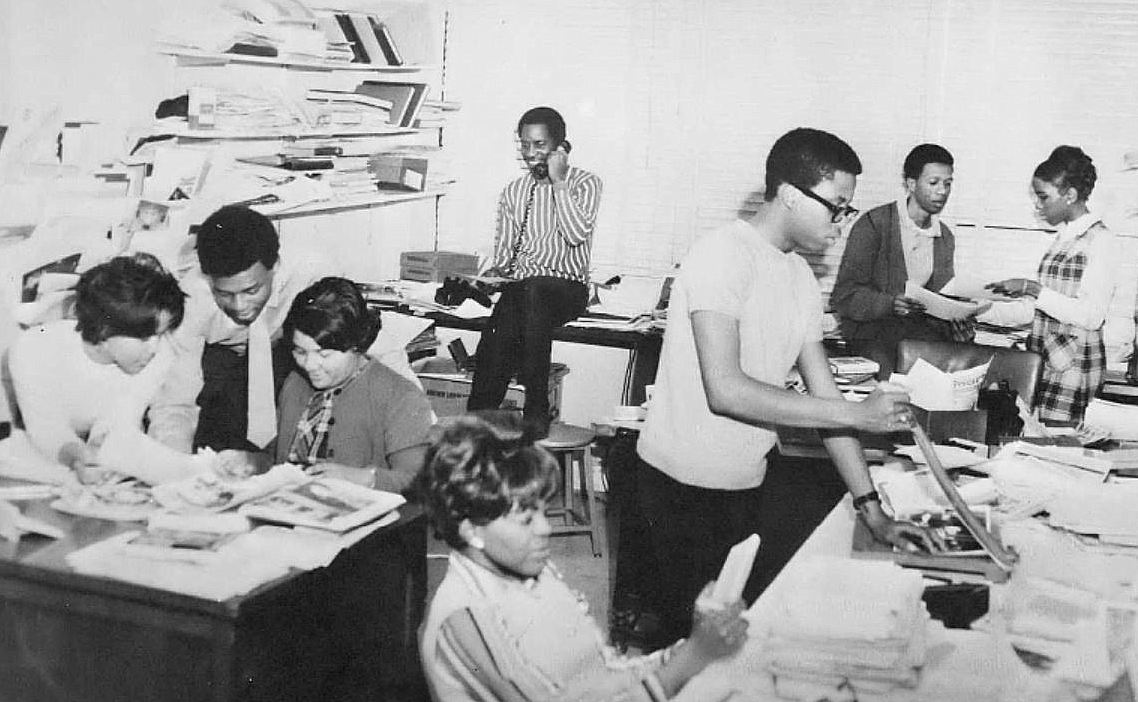
Staff of the college newspaper, the Bishop Beacon.

bishop-college_1969_bishop-beacon-staff

*

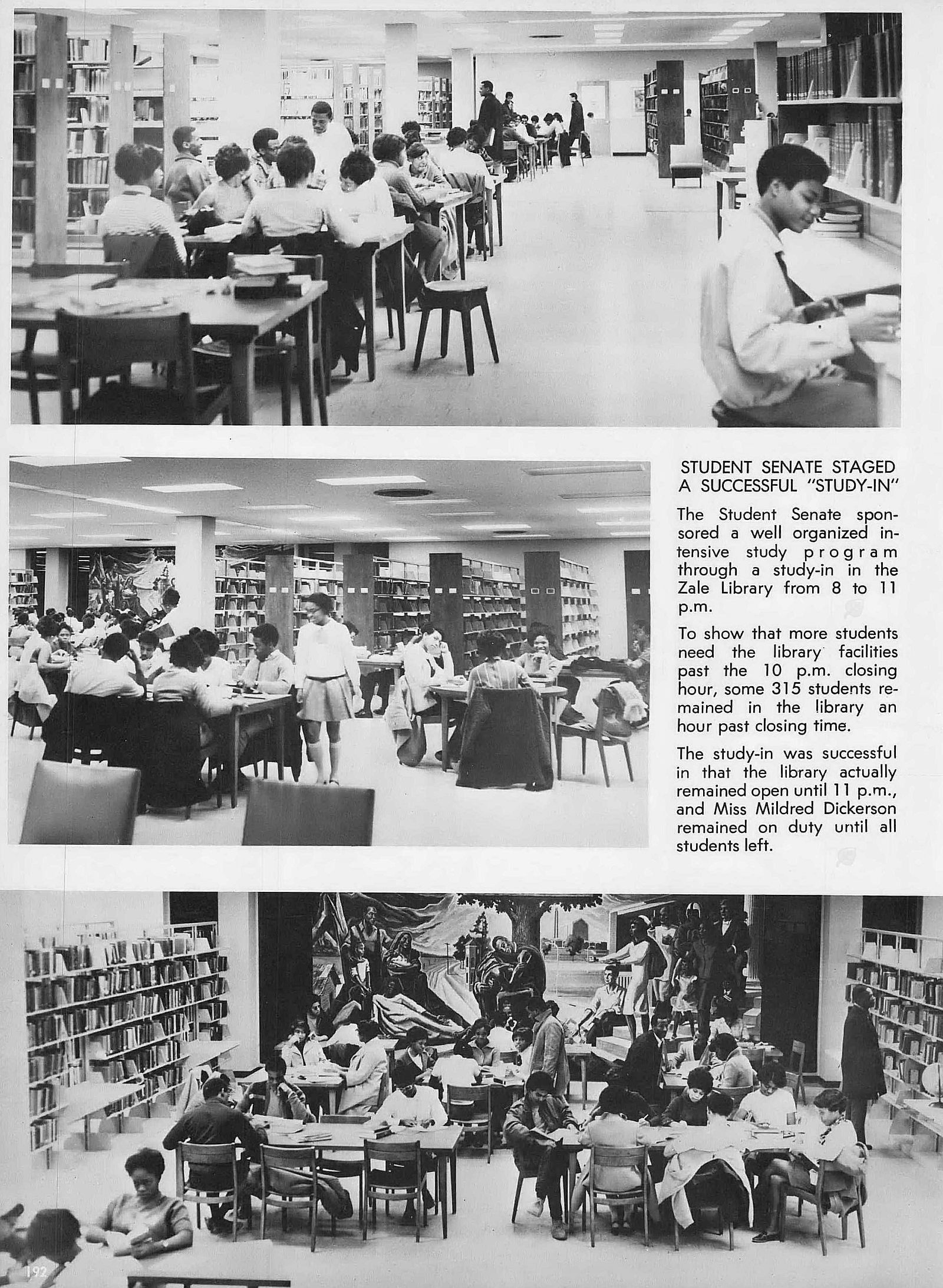
Zale Library “study-in” (note the 1968 mural by Louis Freund — see it in color, on the Paul Quinn website, here).

bishop-college_1969_zale-library-study-in

*

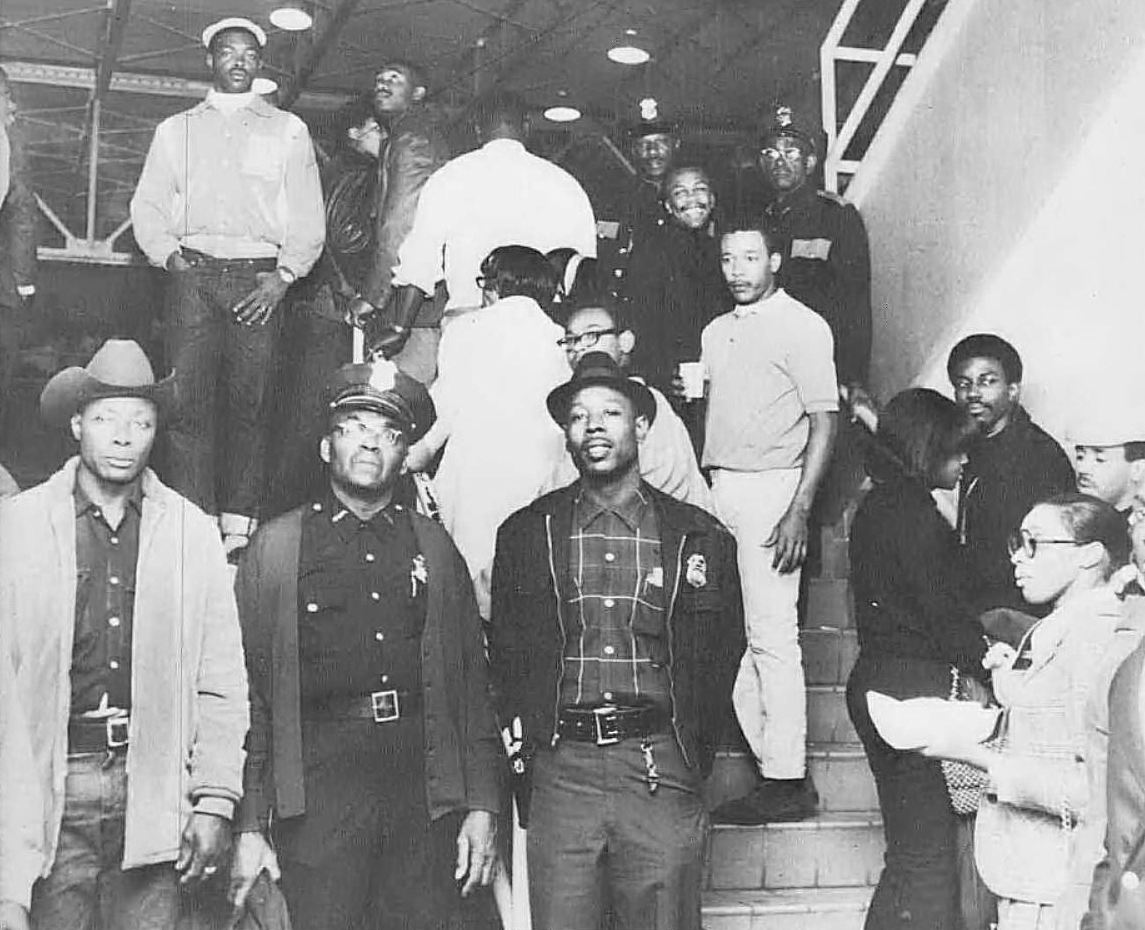
bishop-college_1969-yrbk_campus-security

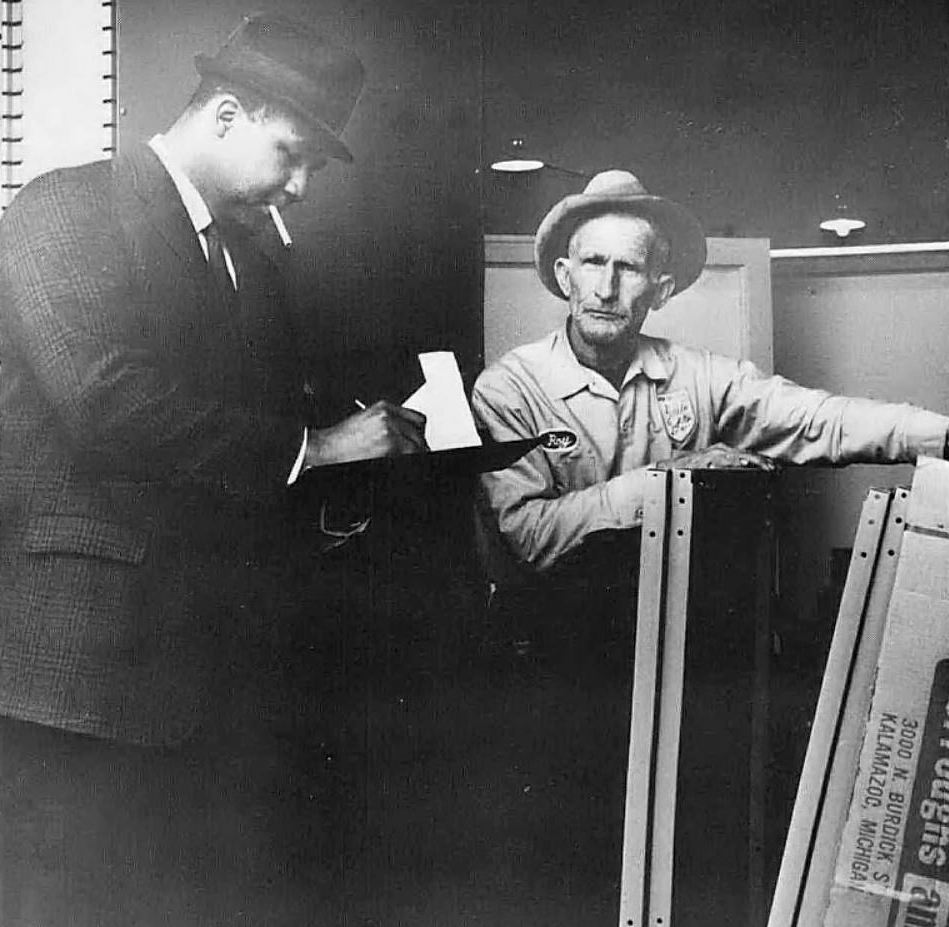
I love these two photos: above, campus security; below, a photo one would never guess was taken in the late 1960s, featuring two men who worked in the receiving department (Wesley Hayes and Roy Sallings).

bishop-college_1969-yrbk_equipment-receiving-dept

*

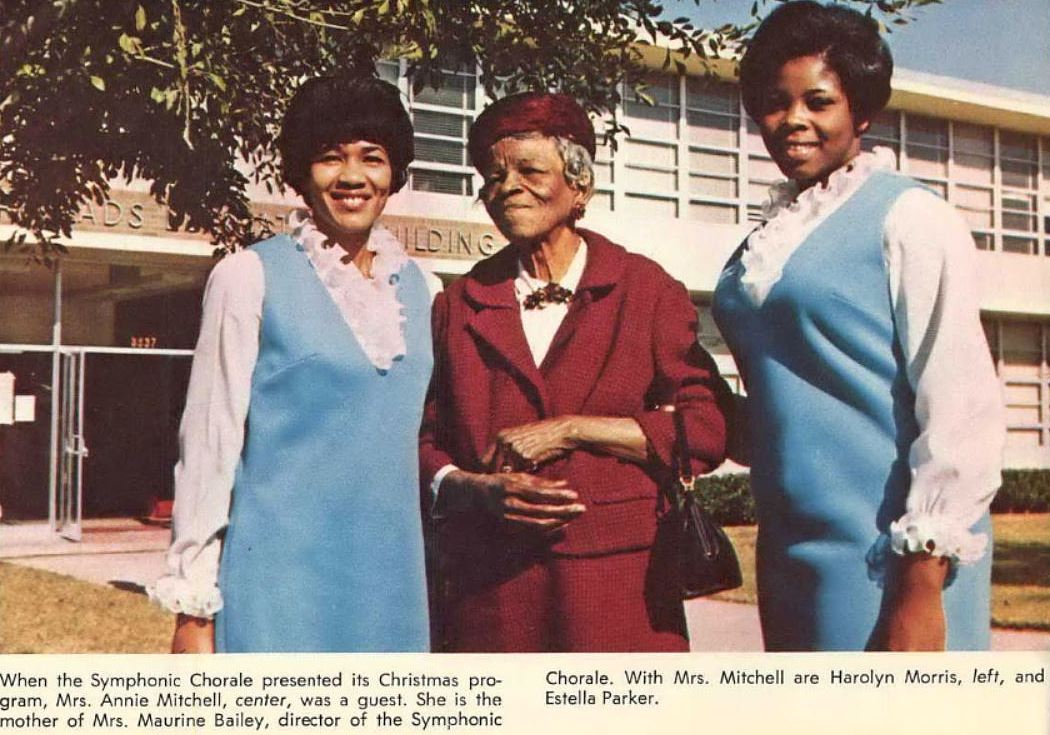
Mrs. Annie Mitchell, mother of music teacher Maurine Bailey (who was a legendary instructor at Lincoln High School for many years), with be-ruffled students Harolyn Morris and Estella Parker.

bishop-college_1969-yrbk_mrs-annie-mitchell

*

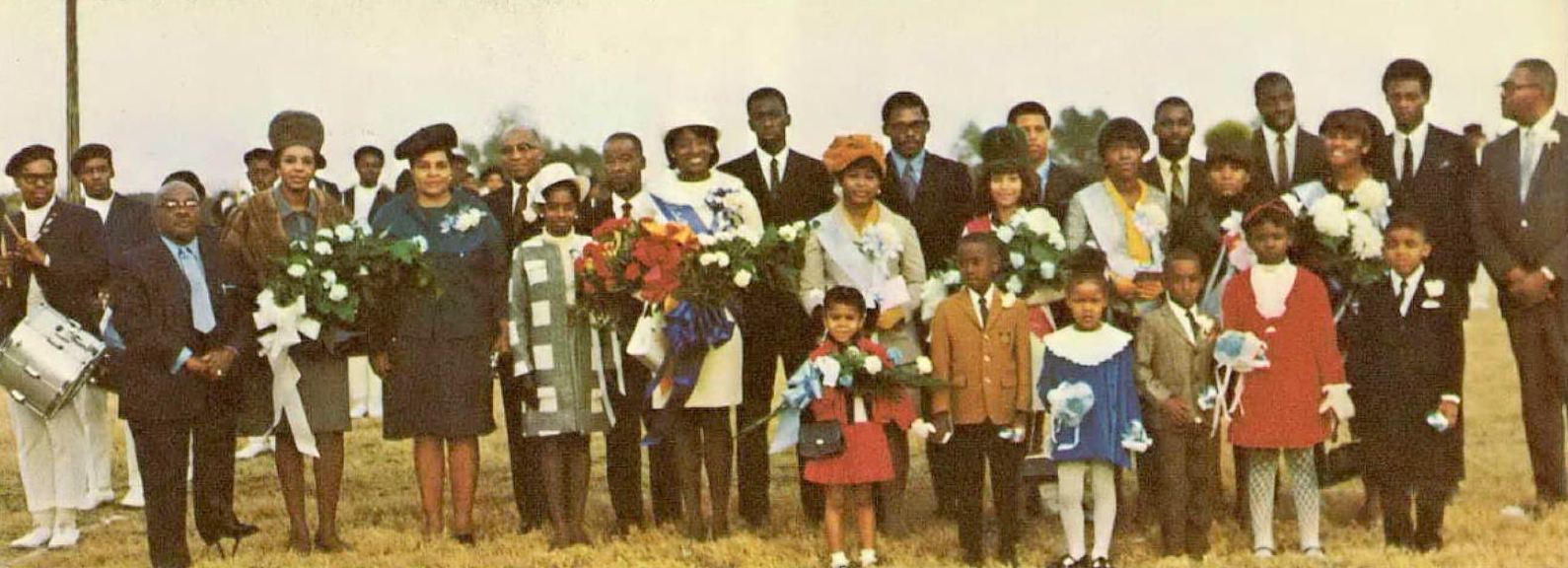
Homecoming half-time fashion parade.

bishop-college_1969_homecoming-halftime

*

Happy students on the hilltop.

bishop-college_1969_crowd

*

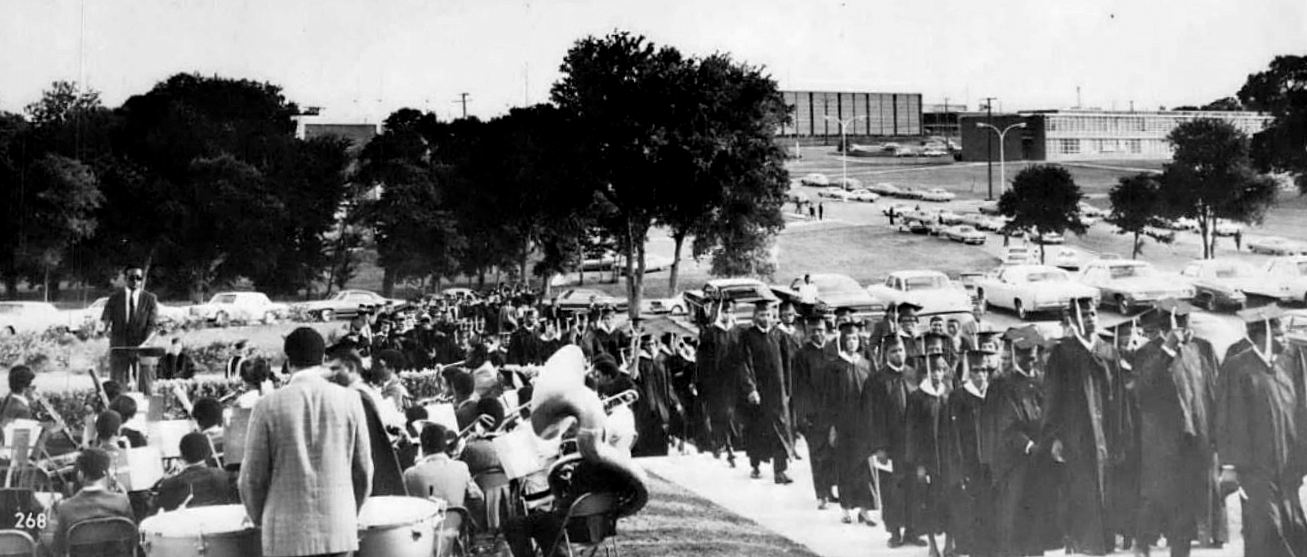
Graduation.

bishop-college_1969-yrbk_spring-1969-grads

**

bishop-college_paul-quinn_paris-news-062490Paris (TX) News, June 24, 1990 (click to read)

***

Sources & Notes

All photos from the 1969 Tiger, the yearbook of Bishop College.

More details on the demise of Bishop College can be found in the Dallas Morning News article “Where Did Bishop Fail? Those Involved With College Disagree on Cause of Fiscal Problems” by Sherry Jacobson (DMN, March 20, 1988).

Bishop College links-o-rama!

*

Copyright © 2017 Paula Bosse. All Rights Reserved.

Neiman-Marcus Welcomes You to the Fair with Jeweled Mementos and Picasso Paintings — 1948

n-m_picasso_1948_fair_jewelryN-M’s 1948 “mementos of Texas…” (click for larger image)

by Paula Bosse

For many who come to Dallas from all across the state to visit the State Fair of Texas, a trip downtown to see the legendary Neiman Marcus department store is a must-see item on the itinerary. This was perhaps more the case years ago when the store was still owned by members of the Marcus family who were eager boosters of the annual event and placed several ads each year which graciously welcomed State Fair visitors to the city. For many years Neiman’s offered “souvenirs” for the tourists, ranging from relatively inexpensive Texas-centric knick-knacks to very expensive Texas-centric knick-knacks.

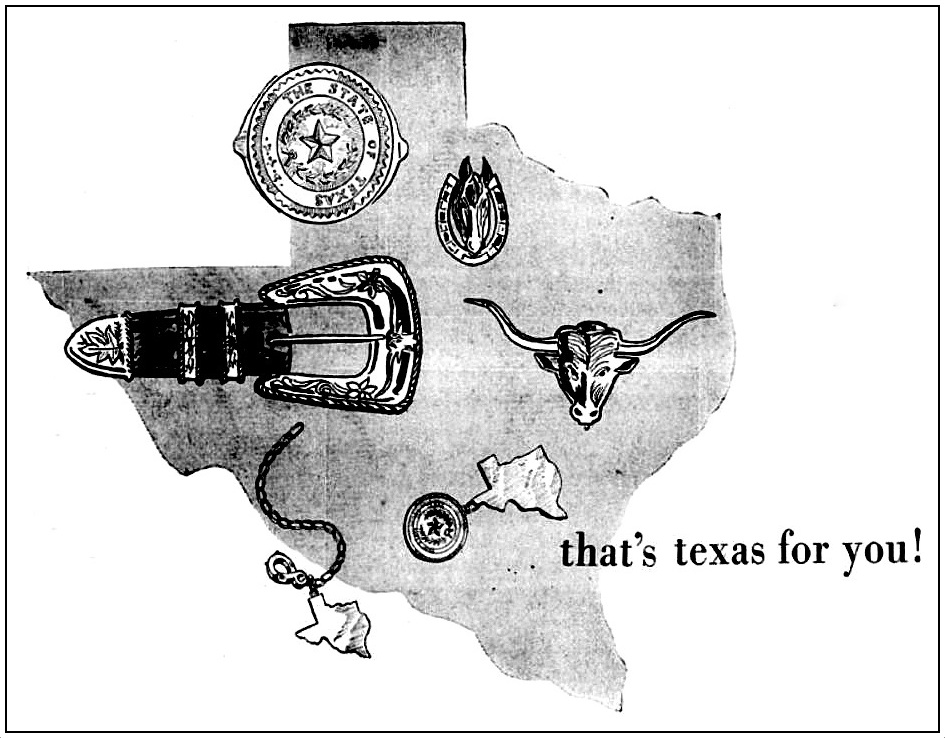
The 1948 N-M offerings can be seen below in an ad that boasts “A 14K gold welcome to Dallas and the State Fair!” (Click the ad below to see a larger image — to see an image of the ad copy alone, click here.)

ad-neiman-marcus_state-fair_1948_full

Here are the trinkets which no doubt wowed them back home in the nicer neighborhoods of Houston and Midland. (I’ve included ball-park prices in today’s money– according to the whiz-bangy Inflation Calculator — in parentheses.)

  • Texas Seal containing circular knife and file: $55 (about $550 in today’s money)
  • Gold belt buckle, made to order: $325 ($3,300)
  • Hand-tooled belt: $5 ($50)
  • Scarf clip, horse with ruby eyes and ruby studded collar: $500 ($5,100)
  • Hand-carved scarf pin, gold steer head with ruby eyes: $500 ($5,100)
  • Pocket key chain with Texas charm: $45 ($450)
  • Texas chain and Texas seal cuff links: $80 ($800)

For the cheap monogrammed hats, giant sunglasses, and salt water taffy, you’d have to head to Fair Park.

Another attraction at Neiman’s during the 1948 State Fair of Texas was an art exhibit: the first showing in Texas of original works by Pablo Picasso. The exclusive show was specifically scheduled to coincide with the State Fair and was prominently displayed on the 4th Floor of the store, in the Decorative Galleries. Twelve canvases — some never before seen in the United States — were “secured directly from Picasso’s studio at Antibes in Southern France,” via Samuel M. Kootz, Picasso’s rep in the U.S. Think about that for a second: in 1948 Pablo Picasso was the world’s most famous living artist, and there was an exhibit of his recent works — some never before seen in the United States — in a department store. In Texas. That was, as they say, a pretty good “get” for the soon-to-be President of the company, Stanley Marcus.

The Picasso exhibit was an early example of Neiman-Marcus’ dedication to bringing international arts and culture to Dallas — an idea which later manifested itself in the store’s Fortnight celebrations (which also ran to coincide with the State Fair in order to maximize publicity, foot traffic, and sales).

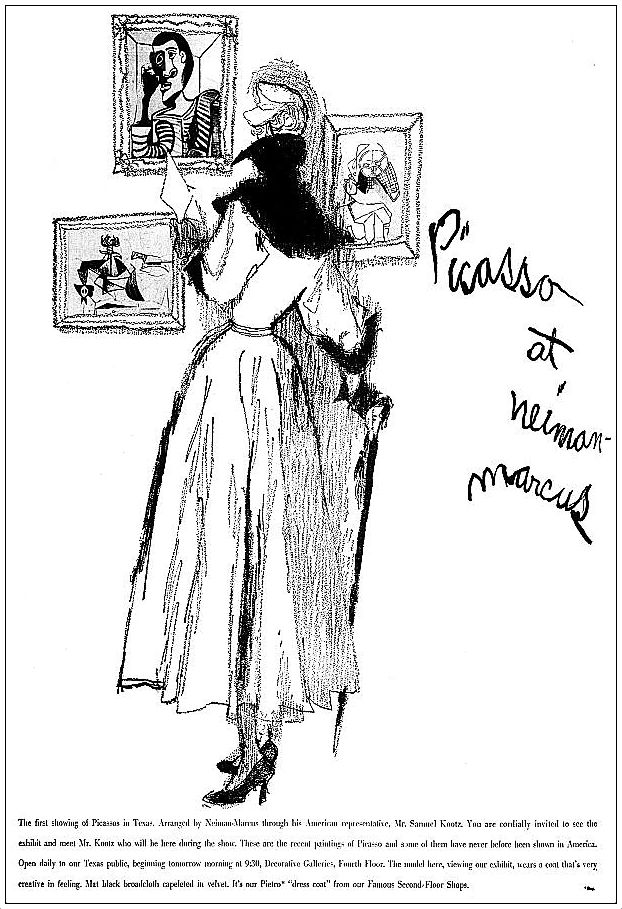
Stanley Marcus was an experienced buyer of art, and his relationship with Mr. Kootz was obviously warm — how else might one explain the inclusion of redrawn Picasso paintings (all of which appeared in the N-M show) in a store advertisement? Pretty ballsy. (Click ad below to see a larger image — the text alone can be seen larger here.)

picasso_n-m_1948

For those who might be interested, these are the first Picasso paintings ever publicly shown in Texas:

  • “Seated Woman” (1929)
  • “Sailor” (1943)
  • “Still Life with Mirror” (1943)
  • “Head” (1944)
  • “Still Life with Skull and Pitcher” (1945)
  • “Cock and Knife” (1947)
  • “Woman” (1947)
  • “Still Life with Coffee Pot” (1947)
  • “Owl and Arrow” (1947)
  • “Concierge’s Daughter with Doll” (1947)
  • “Blue Owl” (1947)
  • “The Glass” (1947)

Another art-world highlight in Dallas during the 1948 State Fair of Texas was the showing of Salvador Dali’s painting “Spain” at the Dallas Museum of Fine Arts in Fair Park (from the collection of Edward James, loaned by the Museum of Modern Art in New York). A Dallas Morning News headline — “Fair Interest to Divide Over Picasso and Dali” — seemed to imply that culturally-inclined Dallasites and/or fair-goers would have to choose one over the other in the battle of which famous Spanish artist-celebrity was most worthy of their attention: “Team Pablo” vs. “Team Salvador.” In regard to Dallas and its (somewhat late-blooming) openness to modern art, the first sentence of the article is interesting:

The simultaneous presence in Dallas during the period of the State Fair of Texas of original works by two of the world’s best-known living artists underscores heavily the swift progress toward cultural maturity in local thinking and planning. (Rual Askew, DMN, Oct. 3, 1948)

“Cultural maturity” and planning — both were in evidence in Dallas in the fall of 1948.

Thousands of Texans had their very first in-the-flesh glimpse of a Picasso canvas or a Dali painting in Dallas during the 1948 State Fair of Texas — either at a tony department store that sold $500 gold-and-ruby scarf pin “souvenirs,” or amongst the hot-dog-eating and roller-coaster-riding hoi polloi in Fair Park. That’s a pretty good reach for fine art.

It’s not all about the automobile shows!

***

Sources & Notes

Ads from October, 1948.

Click pictures to see larger images.

*

Copyright © 2017 Paula Bosse. All Rights Reserved.


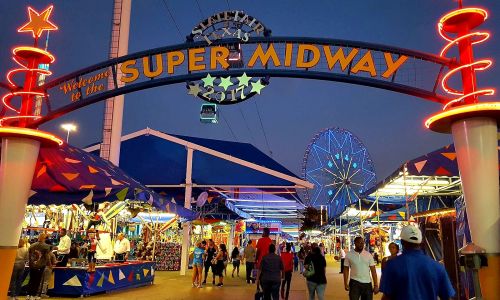
State Fair of Texas Midway — 2017

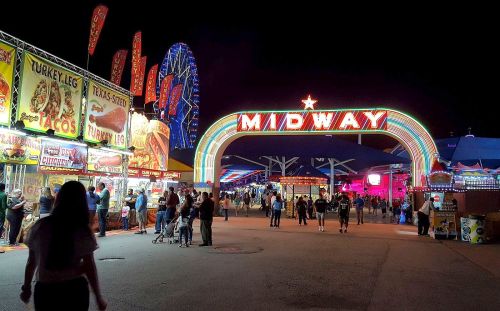
midway-entrance_sfot_night_100417The State Fair of Texas midway never gets old… (click for larger image)

by Paula Bosse

I haven’t been to the State Fair of Texas for several years, so I took a trip out to Fair Park this past Wednesday to see what’s new.

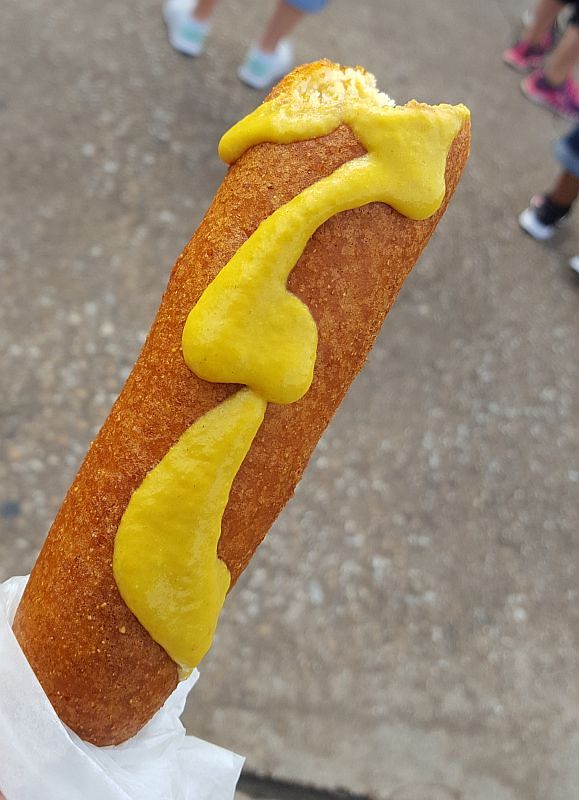
Food. The only thing I ever really want is the traditional Fletcher’s corny dog, and I’m happy to report they’re as good as ever.
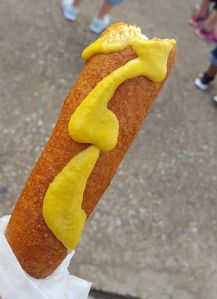
corny-dog_sfot-100417

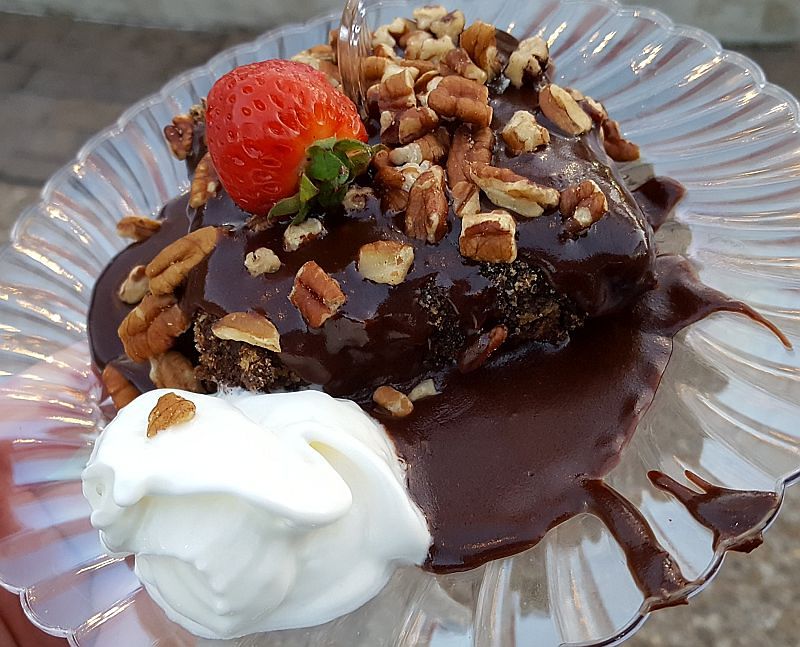
I also tried the Fried Texas Sheet Cake which was — and I can’t believe I’m saying this — too sweet, and just … too much. A bite would have been plenty. The topping of chocolate syrup and pecans was the best part. Maybe someone should offer a bowl of just that. …And then fry the whole thing — bowl and all. I’d probably try it.
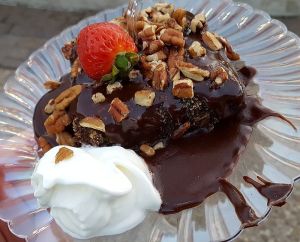
fried-tx-sheetcake_sfot_100417

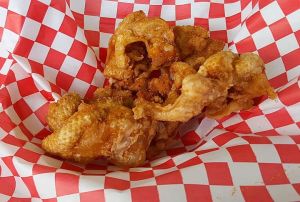
When I saw the sign for “Fried Chicken Skin” I had to try it. I guess it’s something you either really want, or it’s something that makes you recoil in horror. I really wanted it. I was expecting more of a battered-Church’s-fried-chicken experience, but I don’t think there was any batter at all. I still liked it, but it could have been a lot more mouthwatering. It needed a bit more heft. (Speaking of fried skin — there’s a phrase I’ve never uttered — why aren’t there chicharrones at the fair? Done right, those things are incredible. Isn’t pork belly still a thing?) (And someone really should do battered fried chicken skin.)
fried-chicken-skin_sfot_100417

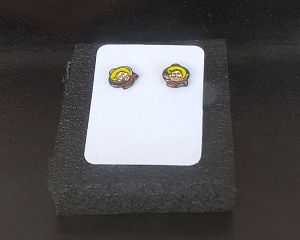
It might have been healthier had I just swallowed the cute Big Tex earrings ($10, zero fat grams), which I almost went back for. It takes a special kind of person to be able to pull those off, and I’m afraid I’m not that whimsical. But I bet they make a great conversation-starter and help break the ice at parties.
big-tex-earrings_sfot_100417

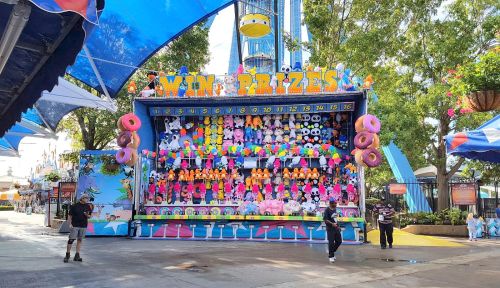
Everything was remarkably clean. I mean really clean. …Freakishly clean. This is not the grimy, dirty, cigarette-butt-laden fair I remember as a kid, and I have to admit, I kind of missed the grime and trash. Also, I don’t remember the plush toys being so remarkably colorful. My retinas will never be the same. Click the photo below to get the full neon blast of color.
midway_prizes_sfot_100417

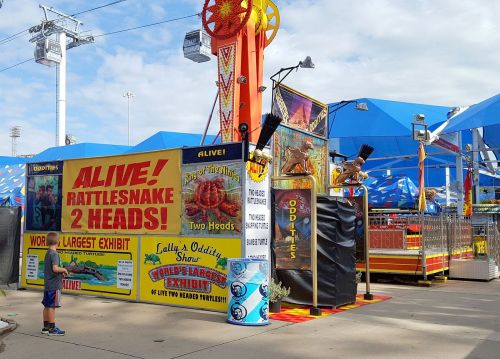
Speaking of things I miss, I also miss the seediness of the fairs from my childhood in the ’70s (certainly the seediest decade in modern times): the unkempt carnival barkers who never sounded like they were from Texas, the bored ride operators going about their repetitive jobs with a cigarette hanging from their mouth, the half-eaten candy apple stuck to the asphalt, and, yes the side shows. Without doubt, I think my favorite thing about the annual fair was seeing the huge banners emblazoned with vivid images of freaks and oddities — those banners were works of art and sheer advertising genius. I never wanted to see the shows, but I loved those banners, and I loved listening to the raspy voices of the going-through-the-motions barkers. Now? I saw a teeny booth along the midway wherein was what was purported to be the world’s smallest horse (yawn), and then there was the exhibit below featuring what appeared to be nothing more than a two-headed rattlesnake and a couple of two-headed turtles inside a little building about the size of a portable garden shed. But a kid will always be fascinated by anything with two heads. I realize my interest in two-headed creatures isn’t what it used to be, and I also realize that the day of the brilliant freak show banner art has come and gone.
midway_alive_sfot_100417

When I was a kid, my favorite “ride” was always the German Funhouse. I did see one funhouse, which did not seem to be specific as to country of origin. These haunted houses get high marks for decorative impact. This is what you want to see at a state fair!
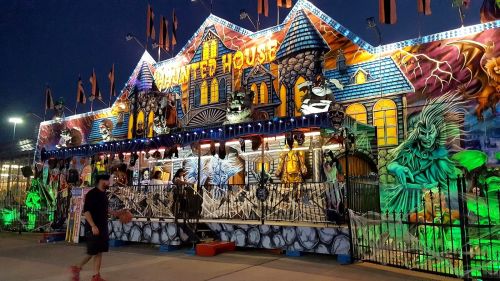
haunted-house_sfot_midway_100417

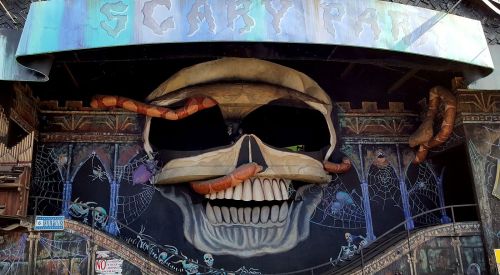
scary-park_sfot_midway_100417

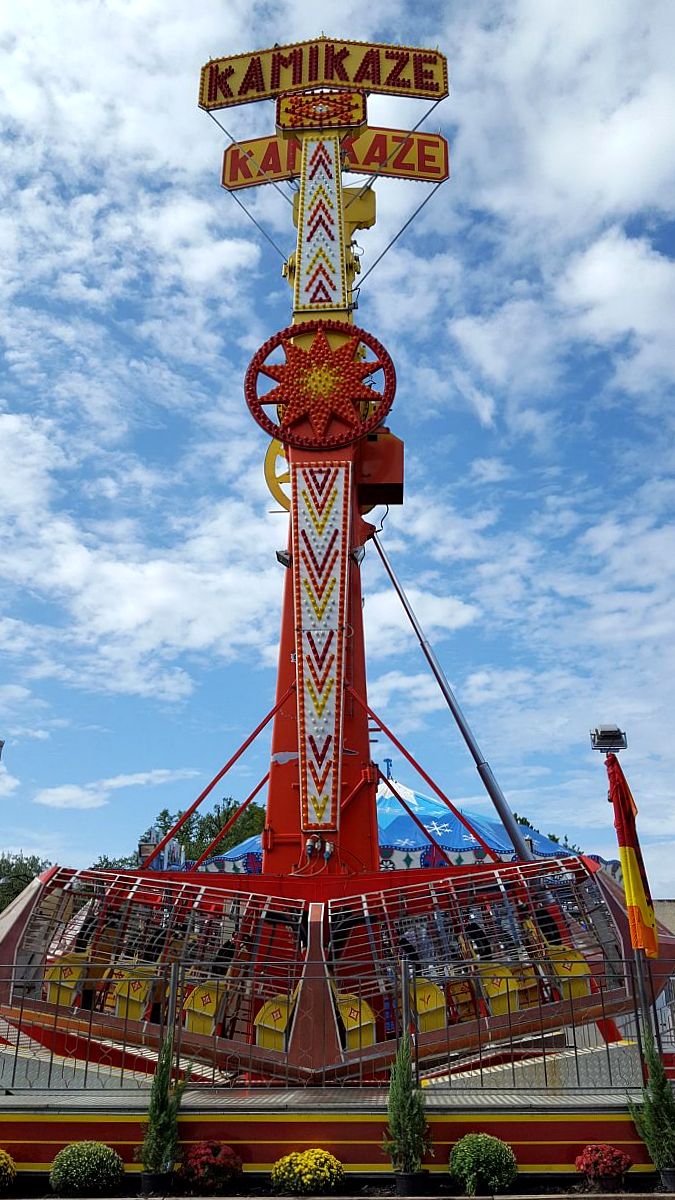
Incidentally, it will cost you 6 coupons to experience the full gory glory of “Scary Park” — that’s HALF the price of one order of fried chicken skin! Seems like a pretty good deal. There are some “extreme” rides that will cost you 150 coupons. ONE HUNDRED AND FIFTY COUPONS. That’s $75. I watched one of these rides, which began with two teenagers being strapped into some sort of horizontal harness. The second step was the signing of the waivers. Then the boys were raised way, way up and then dropped and flung across the sky from a height which makes me queasy just thinking about it. They swung back and forth a few times and were then lowered to terra firma, no doubt thrilled and nauseous. That makes a whirl on the quaint Kamikaze seem like a leisurely stroll around the neighborhood after a light meal.
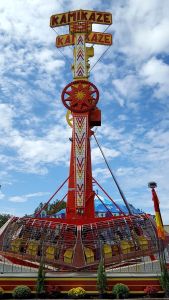
kamikaze_sfot_midway_100417

The Texas Star ferris wheel is pretty impressive and deserves a better photo than this, but look at the ground — you could eat off that!
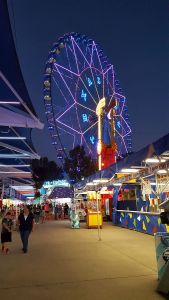
texas-star_sfot_100417

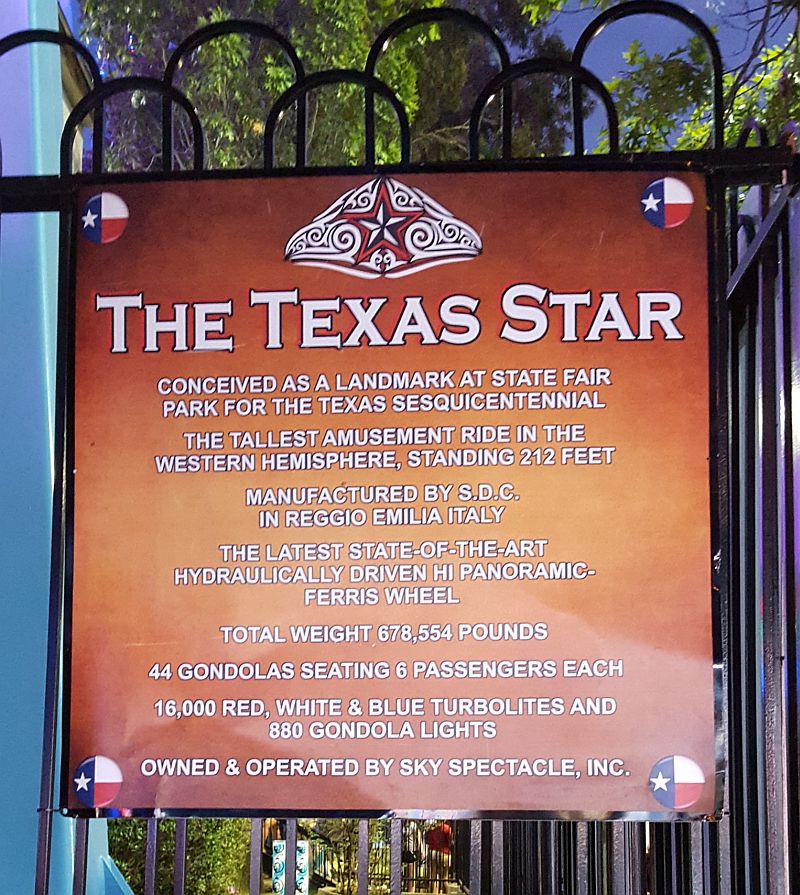
In case you ever find yourself on Jeopardy and the category is “Amusement Park Rides,” this might be helpful.
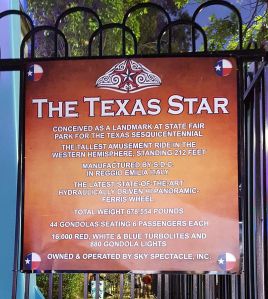
texas-star_ferris-wheel_history_sfot_100417

I don’t know how many Fletcher’s stands there are at the fair, but this one on the midway is certainly the brightest. (And if you say “corn dog” in my presence I will be forced to correct you….)
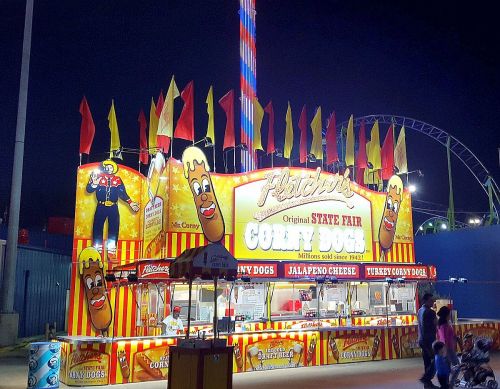
fletchers-corny-dog-stand_sfot_midway_100417

My favorite sign at the fair was this one, at the beautiful entrance to the beautiful Hall of State: “NO FOOD, NO DRINK, NO BALLOONS.” Don’t even think about it.
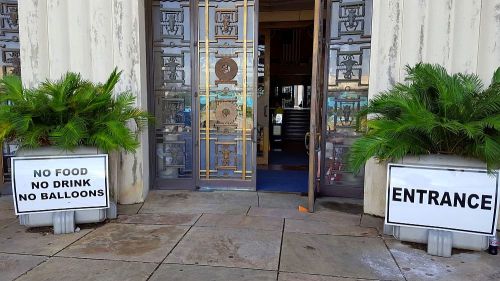
hall-of-state_no-balloons_sfot_100417

And look at Hall of State at night. Nary a balloon in sight.
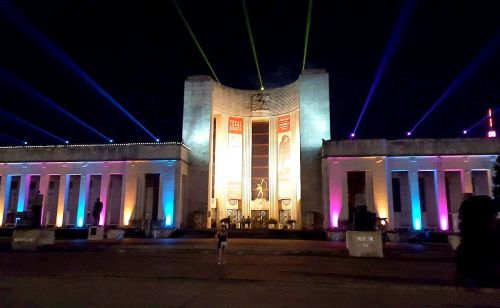
hall-of-state_illuminated_night_sfot_100417

I was actually working in the Hall of State the day I took these photos, so I had a short walk around the park right after it opened (that corny dog was my breakfast!) and a longer walk around the midway at night. A few thoughts:

  • I’m the only person who wishes it weren’t quite so clean.
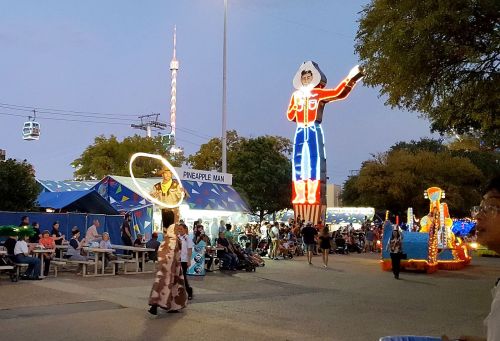
  • Neon Big Tex is way better than “new” post-flambé Big Tex. Everyone complains about the new Big Tex, and I’m one of them. There’s a new kid in town, Tex, and my allegiance is now firmly with Neon Big Tex, the old Centennial Liquor sign featuring a neon-outlined Big Tex recently planted in Fair Park.
  • I never liked the nightly parade as a kid, but I really enjoyed it this year. The floats were attractive, the cowboy on stilts and the unicyclist on a stuffed pony were fun and goofy, and the Carter High School band was really, really good (and brought memories of my high school marching band days back with a vengeance). Also in the parade were several policemen on horses. I wondered what happened when a horse would leave its … um … byproducts behind them in the (meticulously clean) street, and then I saw a policeman riding behind in a golf cart, with a shovel strapped to the side and a large receptacle in the back. I wonder if the officers draw straws before the parade to see who gets stuck with shovel-duty?
  • I did not visit any buildings. I saw no canned peaches, no automobiles, no butter sculptures, no livestock, no miracle mops, no pig races. I’ll have to leave those for next time.
parade_neon-big-tex_lasso-stilts_sfot_100417

The best thing about the fair is that everyone is happy — especially the children, who are often over-stimulated and beside themselves with excitement — and it reminds me how much I used to look forward to my annual visit.

Seeing the fair in the daytime and at nighttime are two completely different experiences. Daytime in general is overrated. Always choose nighttime!
super-midway_sfot_100417

***

Sources & Notes

All photos by Paula Bosse. Most are pretty big — click ’em!

The 2017 State Fair of Texas runs from Sept. 29 to Oct. 22. There’s plenty of time left!

*

Copyright © 2017 Paula Bosse. All Rights Reserved.