Flashback : Dallas

A Miscellany: History, Ads, Pop Culture

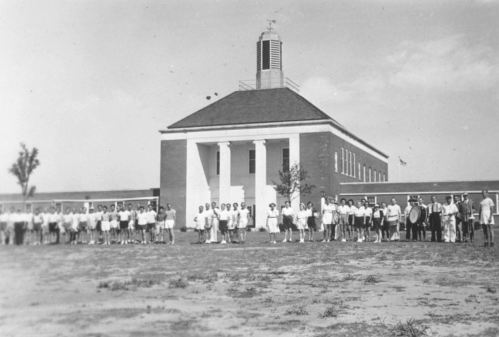
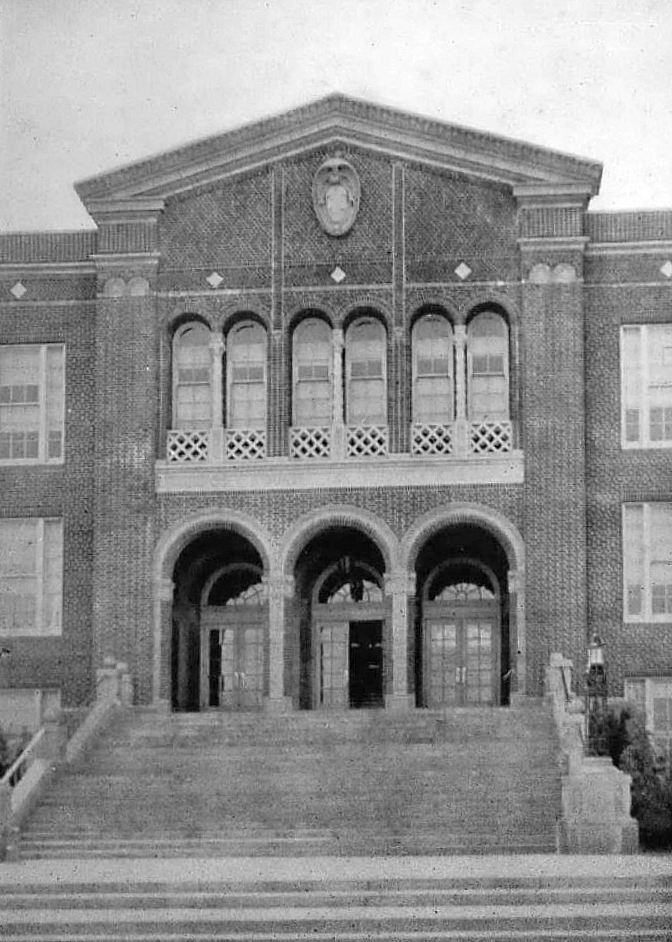
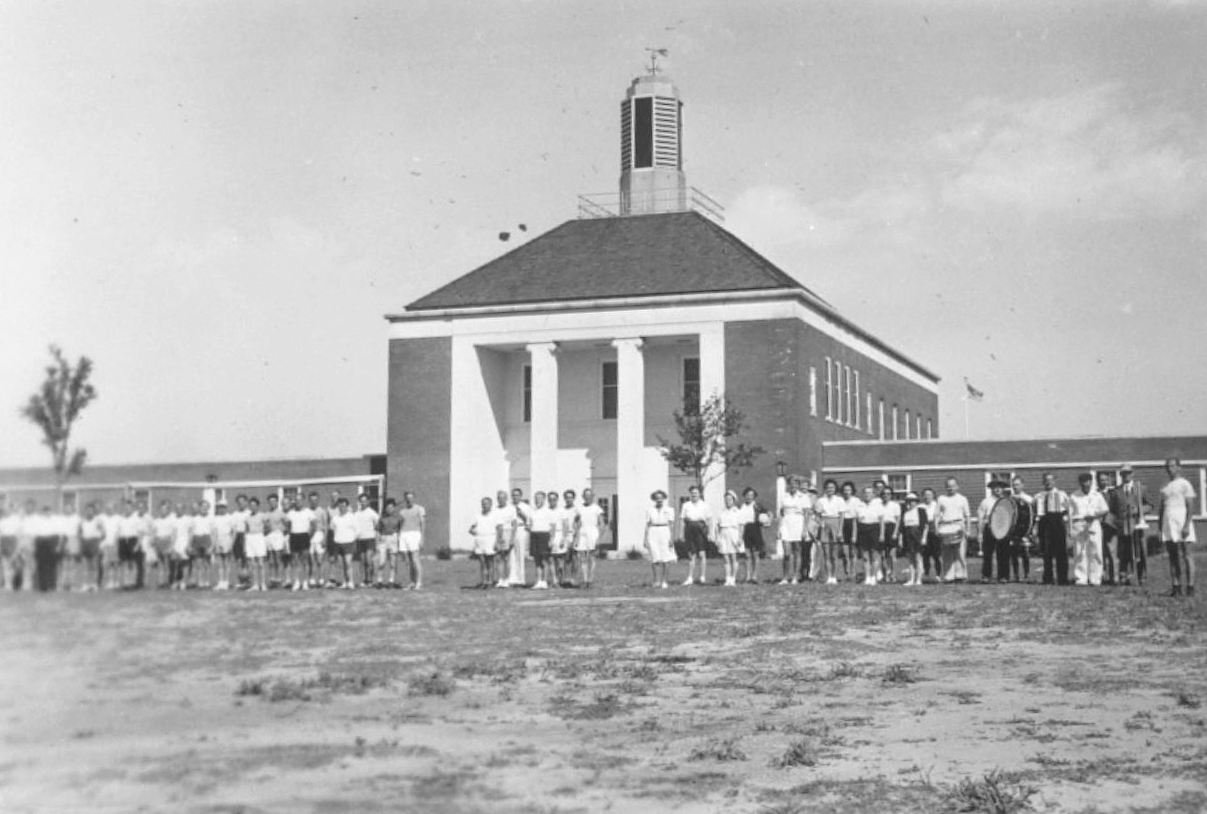
Sunset High School — 1929

sunset-high-school_1929_jan-gradsAbove-the-knee hemlines! (click to see larger image)

by Paula Bosse

Two photos from Oak Cliff’s Sunset High School in 1929. Above, seniors who were to graduate early in January (those girls are wearing surprisingly short skirts!) and, below, the frumpier but generally pleasant-looking faculty.

sunset-high-school_1929_faculty

And the school itself — Oak Cliff’s second high school (Adamson was the first) — then only four years old.

sunset-high-school_1929_front

***

Photos from the 1929 Sunset High School yearbook.

Why, yes, Sunset does have a Wikipedia page, here.

To see what Sunset looks like these days, see it on Google Street View, here.

All photos larger when clicked.

*

Copyright © 2017 Paula Bosse. All Rights Reserved.

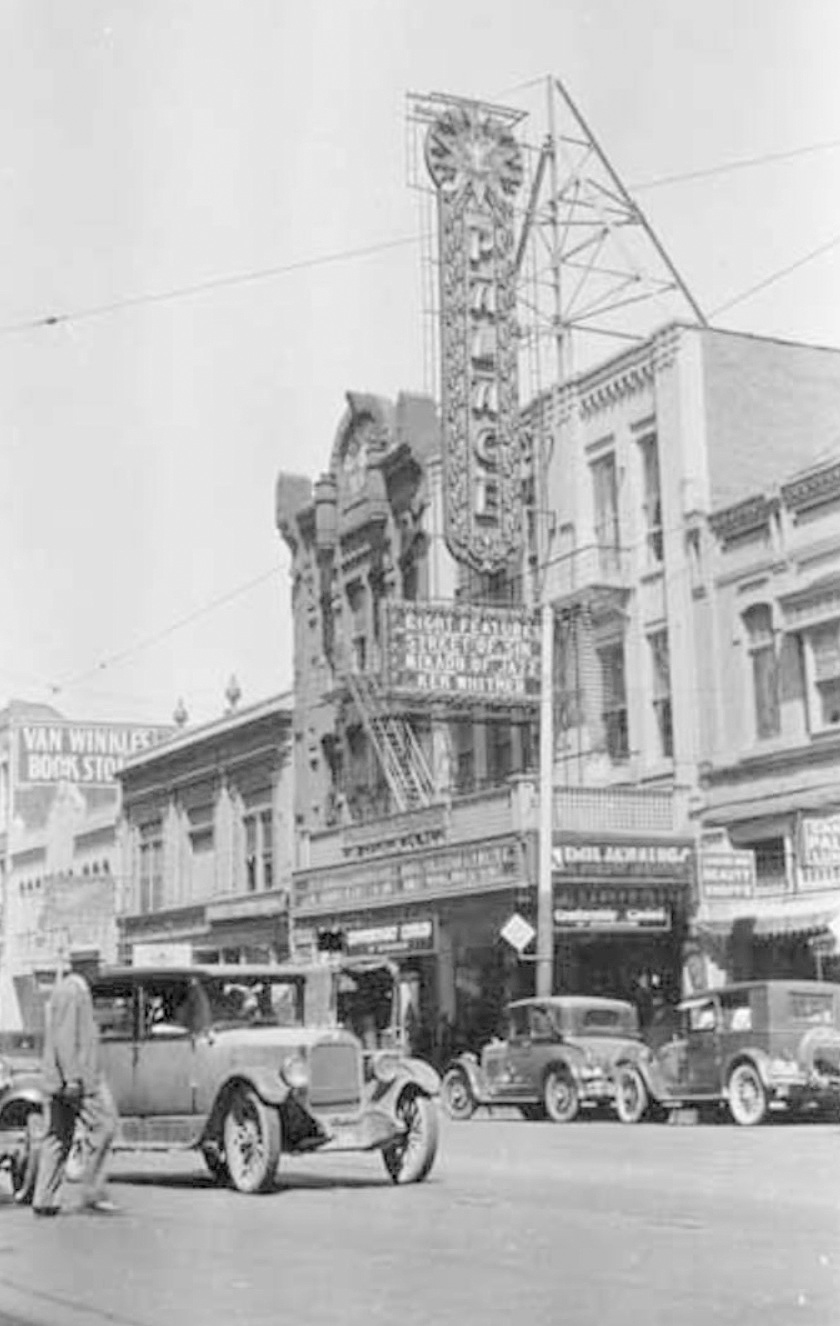
At the Palace: The Streets of Sin and The Mikado of Jazz — 1928

palace-theater_052628_univ-of-washington-librariesElm & Ervay, 89 years ago… (click for larger image)

by Paula Bosse

The photograph above is not the greatest quality, but it’s a photo I’ve never seen before. It shows the Palace Theatre in the 1600 block of Elm Street, just west of Ervay, with the well-known (and very large) Van Winkle’s Book Store in the background. One of the things that makes this photo so interesting is seeing the cumbersome support tower on top of the building holding up the ornate Palace sign. See what a slightly different Palace sign looked like the next year, lit up in neon, here.

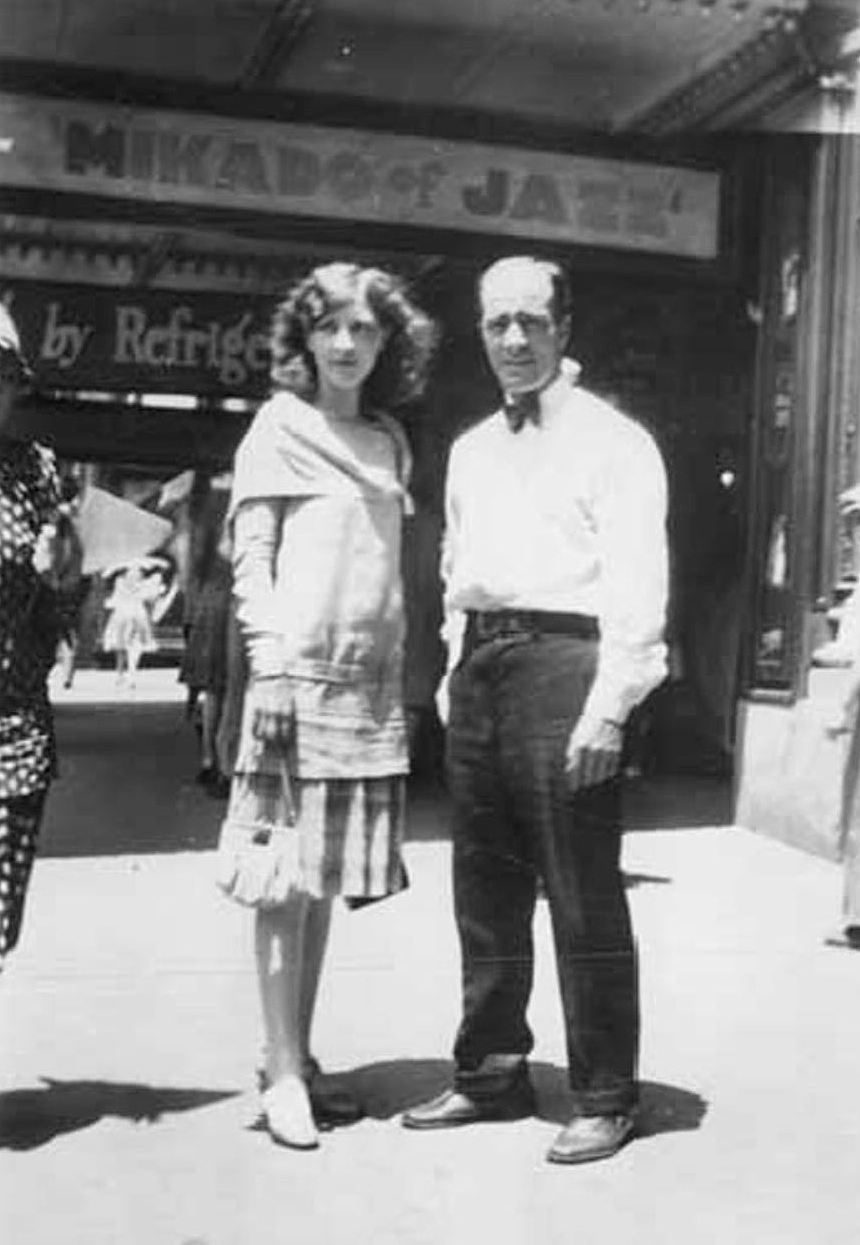
The photo above was an amateur snapshot, taken to document the tour of the traveling live stage revue The Mikado of Jazz which played the Palace in late May of 1928. The photo below — which shows the revue’s stage manager and his wife standing on the sidewalk in front of the Palace — was taken at the same time.

palace-theater_052628_univ-of-washington-libraries_sidewalk

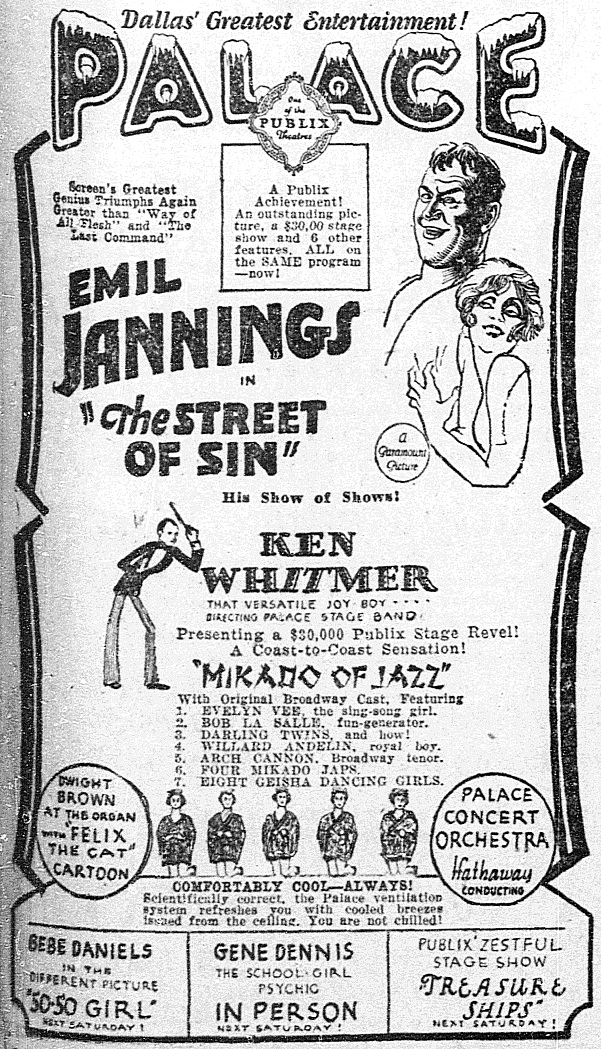
Part of a sign visible behind them was probably advertising that the theater was “cooled by refrigerated air.” The ad at the bottom of this post includes this informative little tidbit:

COMFORTABLY COOL — ALWAYS!

Scientifically correct the Palace ventilation system refreshes you with cooled breezes issued from the ceiling. You are not chilled!

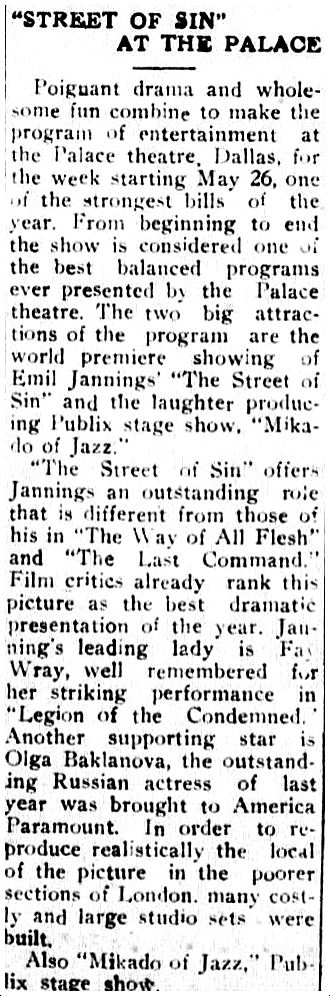
What was The Mikado of Jazz? It appears to have been a jazzed-up version of The Mikado — making Gilbert & Sullivan relevant to 1920s’ audiences — like Hamilton for the Jazz Age (“This is said to be the first time that any comic opera has been syncopated and presented with a stage band.”Dallas Morning News blurb, May 20, 1928)

Also on the bill was the “world premiere” (?) of the film The Street of Sin, starring Emil Jannings and Fay Wray, a live stage orchestra, an organ player, and a Felix the Cat cartoon.

mikado-of-jazz_texas-mesquiter_052528
Texas Mesquiter (Mesquite), May 25, 1928

All at the Palace — “Dallas’ Greatest Entertainment!” Enjoyed at a comfortable temperature.

palace_mikado-of-jazz_dmn_052728
May 27, 1928

***

Sources & Notes

Photographs (taken in May, 1928) are from the Rene Irene Grage Photograph and Ephemera Collection, 1921-1930s, University of Washington Libraries, Special Collections: more information on the first photo (the view of the theater from across the street) is here; more info on the second photo is here.

For other posts that show the Palace in this era, see these posts:

  • “Next-Door Neighbors: The Palace Theater and Lone Star Seed & Floral — 1926,” here 
  • “Dazzling Neon, Theater Row — 1929,” here

Click photos and clippings to see larger images.

*

Copyright © 2017 Paula Bosse. All Rights Reserved.

Happy 3rd Anniversary, Flashback Dallas!

postcard_greetings_pre-1909_cook-coll_smuCook Collection/DeGolyer Library/SMU

by Paula Bosse

Today marks the third anniversary of this blog. It seems like I’ve been doing this a lot longer, if only because I’ve been pretty immersed in it for the past three years. I say this all the time, but researching and writing about Dallas history is one of the most fun things I’ve ever done. I’ve written 851 posts about Dallas’ past (compiled in a continuously updated list which can be found at the link on this page) — about big things and small things — and I’ve learned more about my hometown in the past three years than I had in all the years before I started doing this. It’s gratifying to know that a lot of people out there read the blog: as of this morning, the number of followers of this mini archive stands a few short of 7,400. I sincerely appreciate all of you who read, comment, and share my posts. Thank you!

On to Year 4!

***

Postcard (postmarked 1909) from the George W. Cook Dallas/Texas Image Collection, DeGolyer Library, Central University Libraries, Southern Methodist University; more info on the postcard can be found here.

It shows Main Street looking east toward the white Praetorian Building in the background, Dallas High School (Crozier Tech), the Old Red Courthouse, and the Park Hotel (better known to most of us as the Ambassador Hotel on S. Ervay), built in 1904 as the Majestic Hotel and then renamed by new owners as the Park Hotel in June, 1907. Someday I’ll write more about this history of this still-standing 113-year-old building  — it’s just one of a dizzying number of subjects I’ve researched pretty thoroughly but haven’t gotten around to writing about yet — there are just too few hours in the day…).

Click postcard to see larger image.

*

Copyright © 2017 Paula Bosse. All Rights Reserved.

From the Vault: Parade Day — 1909

parade-day_1909_clogenson_degolyerDeGolyer Library/SMU

by Paula Bosse

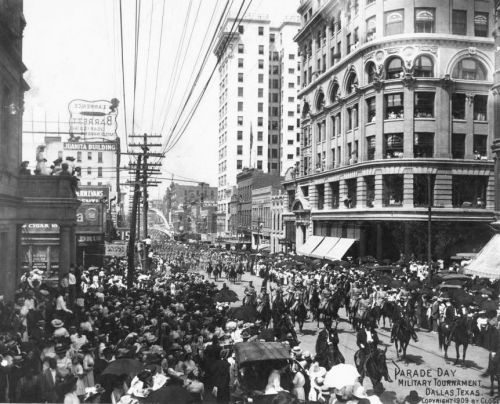
Some of my favorite posts are those containing photographs that I zoom in on to see details in the crowd that one might otherwise miss. This is a perfect photo for discovering little “vignettes.” See the original post from 2014 — “Parade Day — 1909” — here.

*

Copyright © 2017 Paula Bosse. All Rights Reserved.

“Enemy Aliens” and the WWII Internment Camp at Seagoville

japanese_dallas_wwii_corbisDallasites rounded up the day after Pearl Harbor… (click for larger image)

by Paula Bosse

I think most of us know about the sad period in American history of Japanese internment camps when, following Japan’s bombing of Pearl Harbor, the United States “interned” men, women, and children of Japanese descent (often including whole families, some of whom were born in America or were naturalized American citizens). I’ve always thought of these camps as being in the western part of the country. I had no idea until just a couple of days ago that there were three “enemy alien” internment camps in Texas — and one of them was in Dallas County.

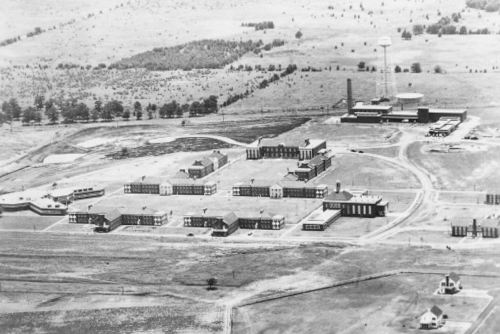
For a full history of the camp in Seagoville — which is a mere 20 miles southeast of Dallas — there are several links at the bottom of this post. But, briefly, the “camp” was originally built as a federal women’s prison in 1938 on 800 acres of farmland. The United States entered World War II as a result of Japan’s bombing of Pearl Harbor on Dec. 7, 1941, and, suddenly, authorities began scrambling to round up enemy aliens living in the U.S.: people born in countries we were now at war with — primarily those of Japanese, German, and Italian descent — were rounded up and questioned. Many were arrested, and some were interned in camps where they were basically kept prisoner for the duration of the war. Even though the bulk of the initial internees were, oddly enough, from Latin America (most of them Japanese, most sent from Peru), there were also several who, before the war, had been living in the United States for decades without any problems. (See a dizzying number of links at the bottom of this post for more on the Texas internment camps at Seagoville, Kenedy, and Crystal City.)

Below, the Seagoville camp.
seagoville_aerial_thc

seagoville-internment-camp_ut-inst-texan-cultures

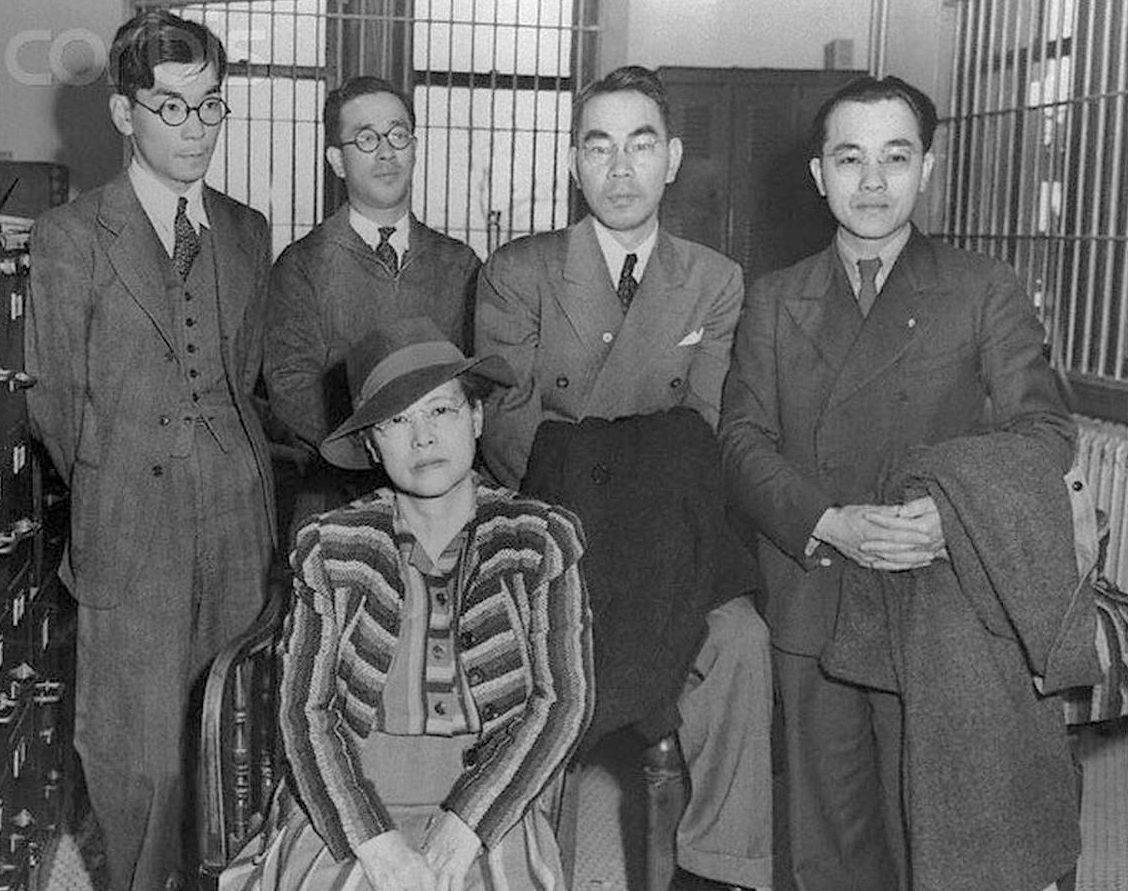
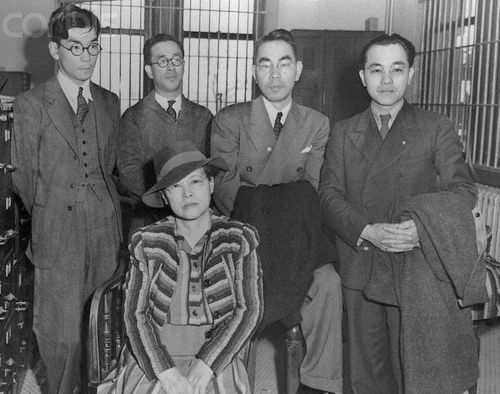
In December, 1941, authorities in every city in the country were swooping down on foreign nationals (or sometimes just people who looked foreign or spoke with an accent), hauling them in for questioning, often arresting them for nothing more than the fact that they had been born in another country. Dallas was certainly no exception. Unsurprisingly, immediately following the bombing of Pearl Harbor, Dallas’ few Japanese residents were rounded up. All ten of them. The photo at the top shows five of the first detainees, at the Dallas jail.

Most of Dallas’ Japanese residents worked for the Japan Cotton Company, an important cotton broker which had occupied space in the Dallas Cotton Exchange building since the late 1920s. (For a bit of weird trivia, the father of famed gossip columnist Liz Smith was working as a cotton buyer for the company during the war, commuting to work from Fort Worth.) If they weren’t working for the Japan Cotton Company, they were probably members of two Japanese families with long ties to Dallas: the Muta and Sekiya families, owners of the respected Oriental Art Company since 1900.

oriental-art-company_1921-ad1921 ad

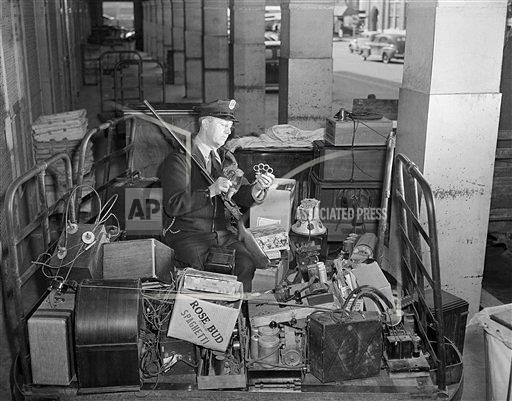
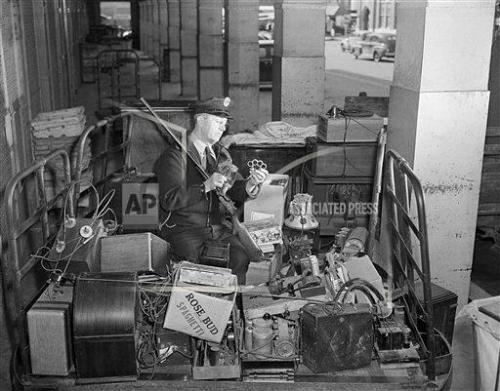
In February 1942, the Associated Press photo below appeared in several newspapers, along with the following caption: “This is a portion of the contraband radios, cameras, guns, that were seized during all-night raids on residences of enemy aliens in Dallas County, Texas, by federal and local officers. Scores of aliens also were taken into custody.”
wwii_aliens_AP_1942

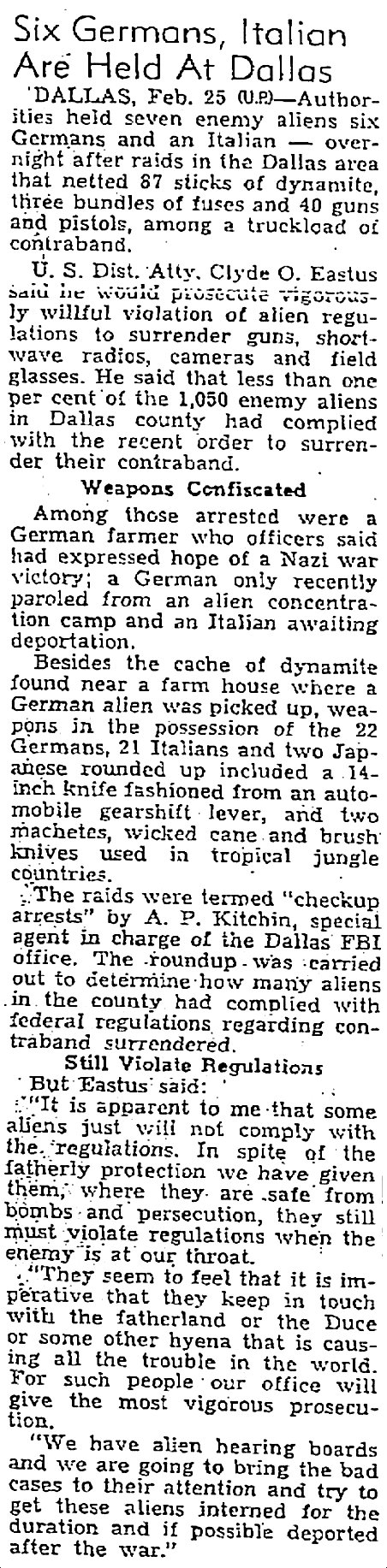
Lubbock Avalanche, Feb. 26, 1942 (click to read)

The first internees arrived in the Dallas area in April 1942. The group was comprised of 250 women and children (“citizens of the Axis nations”) who had been arrested in Panama. They were interned in Seagoville, displacing the federal women prisoners who had previously been held there — they were transferred to a prison in West Virginia.

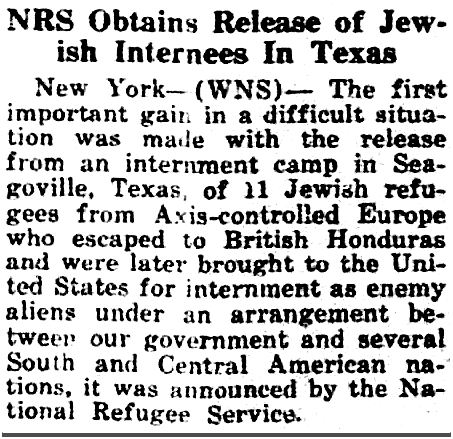
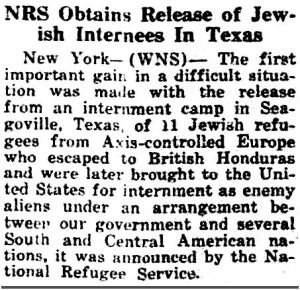
Jewish refugees sometimes found themselves tossed into enemy alien internment camps — simply because they had fled homelands which happened to be “Axis-controlled” countries with which the U.S. was at war (even though it seems highly unlikely that a German Jew would be an ardent Nazi sympathizer, gathering classified information to send the Führer’s way). Yes, Seagoville had detainees from all over the place. It was quite the melting pot. There was even a Bavarian princess in there. I wonder if a single person in that camp, held against his or her will for months and years, posed any actual threat to Allied forces.
seagoville_wwii_wisconsin-jewish-chron_milwaukee_052843
Wisconsin Jewish Chronicle, May 28, 1943

Germans and Italians were able to “blend in” to American society, but Asian men and women had a harder time and were more often harassed. The person who seems to have most disliked and distrusted Japanese people was top Dallas police detective Will Fritz — in fact, The Dallas Morning News called Fritz “one of Dallas’ most enthusiastic Jap-haters” (DMN, Feb. 17, 1943). Let’s just say that Capt. Fritz wasn’t going to be sending the wartime Welcome Wagon to any prospective Dallas residents of Japanese descent.

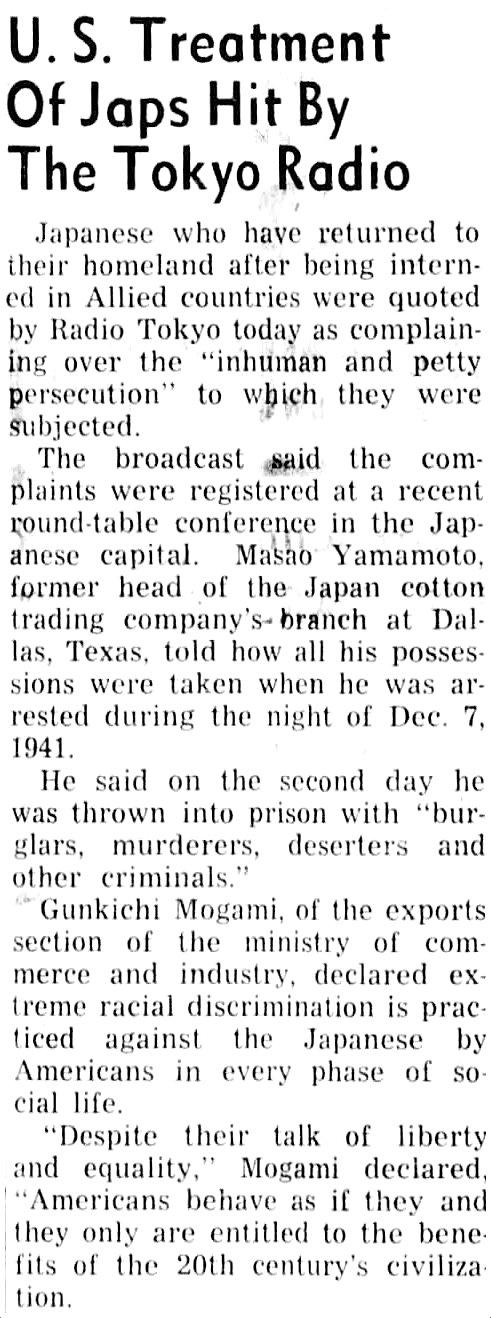
One Dallasite who was pretty angry and unhappy with the situation was Masao Yamamoto, an executive with the Japan Cotton Company who had lived in Dallas since 1928. He and his wife and two young sons (one of whom was born in Dallas) were living what appears to have been a nice life in the M-Streets when they were “detained.” Ultimately, the Yamamoto family was deported and sent to Tokyo, six months after the photo at the top of this post was taken (Mr. Yamamoto is the third from the left in the top photo) — they were part of a sort of prisoner swap.

After his deportation, Mr. Yamamoto complained to the Japanese press about his treatment in Dallas, where he said he was arrested, relieved of his possession, and thrown in jail with “burglars, murderers, deserters and other criminals.” (Click to see larger image.)
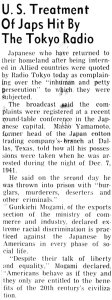
yamamoto_santa-cruz-sentinel_021843UPI wire story, Feb. 16, 1943

Will Fritz just about had a seizure when he heard of Yamamoto’s complaints, insisting that he was not mistreated and that he was a dangerous enemy agent: “Any apology that may be due should go to the murderers and burglars instead of Yamamoto. […] He was deported for we have absolute proof he was an agent of the Imperial Japanese Government and that his cotton-buying story was just another Jap blind. I consider him one of the most dangerous of enemy agents” (DMN, Feb. 17, 1943). (This is from the article which described Fritz as “one of Dallas’ most enthusiastic Jap-haters.”)

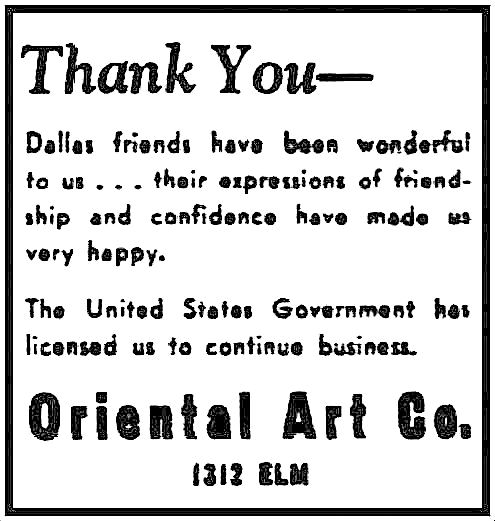
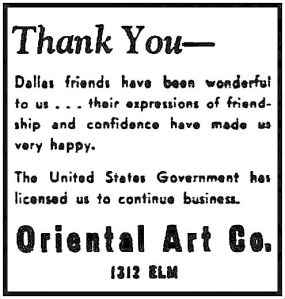
But even in the midst of all this paranoid nastiness, there were occasional heartwarming moments. After the attack on Pearl Harbor, the Oriental Art Company — the 40-year-old business owned by Hideo Muta (who came to Dallas in 1900) — was ordered closed. In a show of support, 200 of his friends, neighbors, and customers signed a petition vouching for his staunch American patriotism (which is plainly evident in his 1951 obituary in which he is described as a “patriot”). In the ad below, the 73-year-old Muta acknowledged the support of his Dallas friends and announced the reopening of his business in an ad taken out on Dec. 15, 1941: “Thank You — Dallas friends have been wonderful to us … their expressions of friendship and confidence have made us very happy. The United States Government has licensed us to continue business. Oriental Art Co., 1312 Elm.”
oriental-art-co_dmn_121541
Dec. 15, 1941

Mr. Muta was spared the “enemy alien” internment camp, but, along with other Asian men and women residing in the United States, he was barred from becoming a naturalized U.S. citizen because of the “Oriental Exclusion Act.” The inability of Mr. Muta to become a U.S. citizen did not dampen his enthusiasm for American democracy: he paid his poll tax every year, even though he was not allowed to vote, and he was a proud member of the Dallas Chamber of Commerce for over 25 years.

The Seagoville Enemy Alien Detention Station was closed in May, 1945, and the site was returned to the Bureau of Prisons.

***

Sources & Notes

Photos of the Seagoville camp are from the Institute of Texan Cultures (UTSA).

Articles of interest from The Dallas Morning News:

  • “Six Japanese Taken in Custody By Local Police” (DMN, Dec. 8, 1941)
  • “Dallas Japs Questioned” (DMN, Dec. 9, 1941)
  • “Six Suspected Germans Held in Dallas Roundup of Aliens; Total of Jap Prisoners Rises to 10” (DMN, Dec. 9, 1941)
  • “Enemy Aliens In Dallas, 776; Arrested, 30: But All Suspects Are Closely Watched By G-Men and Police” (DMN, Dec. 19, 1941)
  • “FBI Rounds Up 50 Enemy Aliens, Seizes Arms, Cameras, Radios” (with photos of Dallas residents of Japanese, German, and Italian descent as well as seized “contraband”) (DMN, Feb. 25, 1942)
  • “Women Aliens Are Interned At Seagoville; 250, Including Their Children, Arrive Here From Panama” (DMN, April 11, 1942)
  • “Chilly Welcome Given 15 Japs From Coast; O.K. to Come to Dallas, Were Told; Still More On Way, Inform Police (DMN, April 23, 1942)
  • “Japs Leave Dallas” and “Tokyo-Bound Jap Lad Takes Candy Six-Gun as Souvenir” (about the deportation of the Yamamoto family, with photo) (DMN, June 6, 1942)
  • “Fritz Sheds No Tears For Mr. Yamamoto” (DMN, Feb. 17, 1943)
  • “Japanese Woman Revisits Seagoville” by Roy Hamric (profile of Masayo Ogawa) (DMN, Sept. 8, 1970)
  • “American Gulag: When Seagoville Housed the Aliens” by Kent Biffle (DMN, July 23, 1978)

More articles on the Seagoville internment camp:

  • One of the best articles I’ve read on the camp was an interview with two men (Erich Schneider and Alfred Plaschke) who, as American-born children of German parents, were interned at Seagoville and were later deported to Nazi Germany (in a prisoner exchange) where they experienced the terrifying bombing of Dresden. Both families returned to the United States after the war. The article by Mark Smith — “German-Americans Recall Horror of Deportation — Hundreds of Detainees Sent to Nazi Germany in POW Trade” — appeared in the Houston Chronicle on Nov. 11, 1990, and can be read here.
  • “Seagoville Enemy Alien Detention Station” (Texas Historical Commission), here
  • “World War II Internment Camps” (Handbook of Texas), here
  • “Seagoville, South America, and War — A Historic Intersection” by Kathy Lovas (Legacies, Fall, 2000), here
  • “Seagoville Detention Facility” (Densho Encyclopedia), here (and for more on the Japanese-American experience overall, see the main page, here)
  • “The Japanese Texans” by John L. Davis (Institute of Texan Cultures), here (opens a PDF)

Thanks to friend Julia Barton for posting about (and suddenly making me aware of) the Seagoville camp.

All photos and clippings are larger when clicked.

*

Copyright © 2017 Paula Bosse. All Rights Reserved.

From the Vault: See Dallas in 1938, Filmed in Technicolor

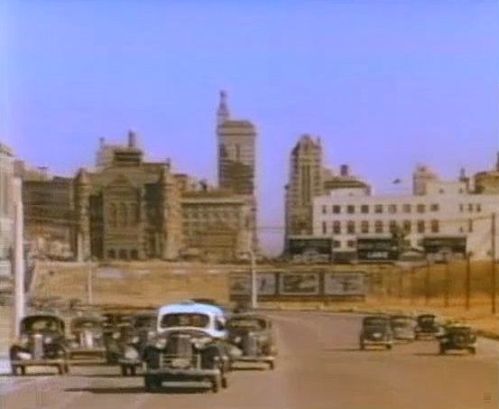
cavalcade-tx_triple-underpassDallas, from “A Cavalcade of Texas”

by Paula Bosse

A friend of mine mentioned this little film to me a couple of days ago, and I thought I’d post the link to it again. I first heard about “A Cavalcade of Texas” in the Dallas History Facebook group from member Steve Schaffer (thanks, Steve!), so I wrote about it the next day, and it quickly became one of the most popular things I’d ever posted. See the two short clips featuring Dallas, with footage filmed around town in 1938, in my post from 2014, “‘A Cavalcade of Texas’ — Dallas, Filmed in Technicolor, 1938.”

*

Copyright © 2017 Paula Bosse. All Rights Reserved.

How To Access Historical Dallas City Directories Online

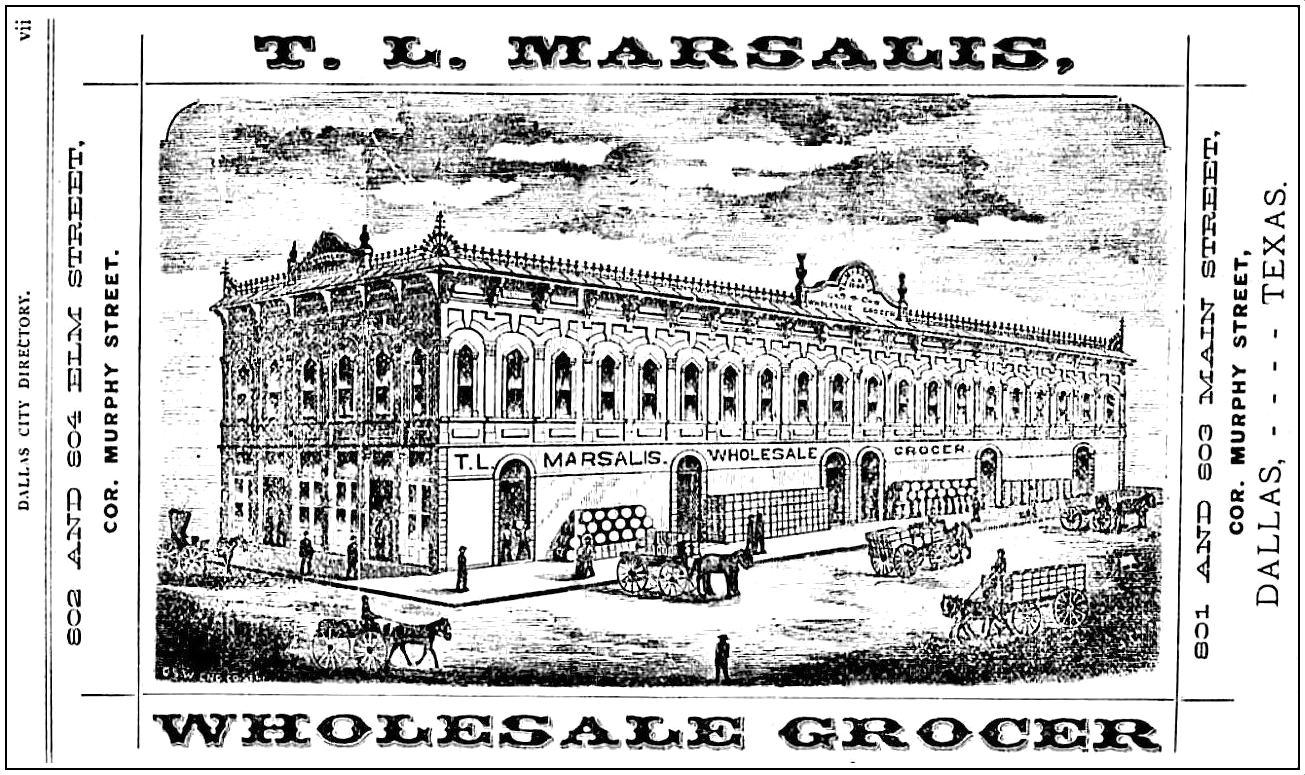
ad-marsalis-grocer_1883-directoryAd from the 1883 Dallas directory… (click for larger image)

by Paula Bosse

Two of the most important resources I use in delving into Dallas history are newspaper archives and city directories. A couple of years ago I wrote about how to access the indispensable online historical archive of The Dallas Morning News, beginning in 1885 (that post is here), but I haven’t written about how to use the equally important database(s) containing scans of Dallas city directories, beginning with the 1875 directory. 

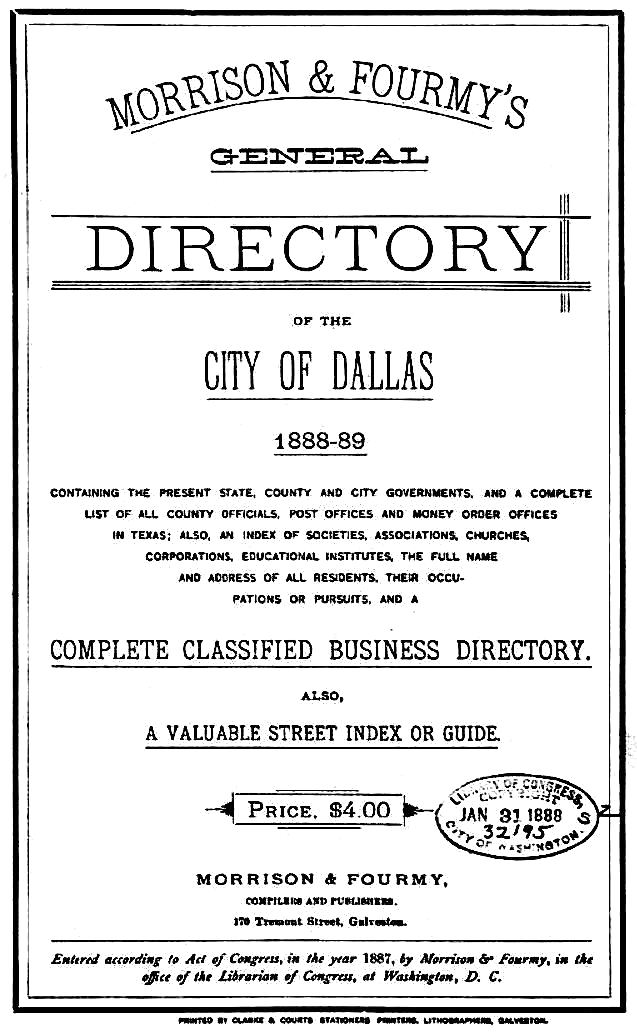
morrison-and-fourmys_1888-1889-dallas-directory_title-page1888-1889 Morrison & Fourmy’s Dallas directory

There are two ways to do this online: for free, and as part of a subscription (pay) service. I started out by accessing the directories through the Ancestry website, which you have to pay for/subscribe to. It was only recently that I discovered that (as far as I can tell) the exact same directories available on Ancestry are accessible through the Dallas Public Library website — for FREE. All you need is a library card. (You must be a resident of the City of Dallas in order to qualify for a library card. There is more about who can get a library and how one must do this — it requires physically going to a branch with proof of residency — I’ve included this information in that earlier post, here.) (There are a few free online sources which require no library card and no subscription — see those at the bottom of this post.)

Once you have your card and have registered for an account at the Dallas Public Library website, here’s what you do next:

  • Log into your account, here
  • Click on “DATABASES” at the top
  • Scroll down, click on “GENEALOGY”
  • Scroll down, click on “HERITAGEQUEST”
  • Click on “CITY DIRECTORIES” at the top (you will be able to search through many city directories from around the country, not just the ones from Dallas — and, as you can see, there are all sorts of other interesting databases here, too, such as census records, etc.)
  • Enter the name you’re looking for and, voilà.

*

So why are these directories so useful?

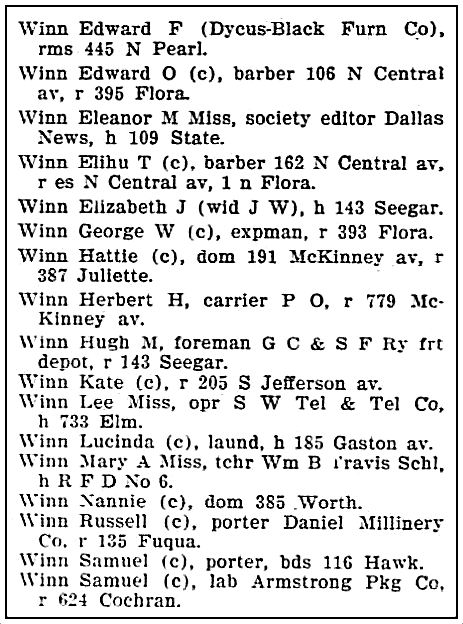
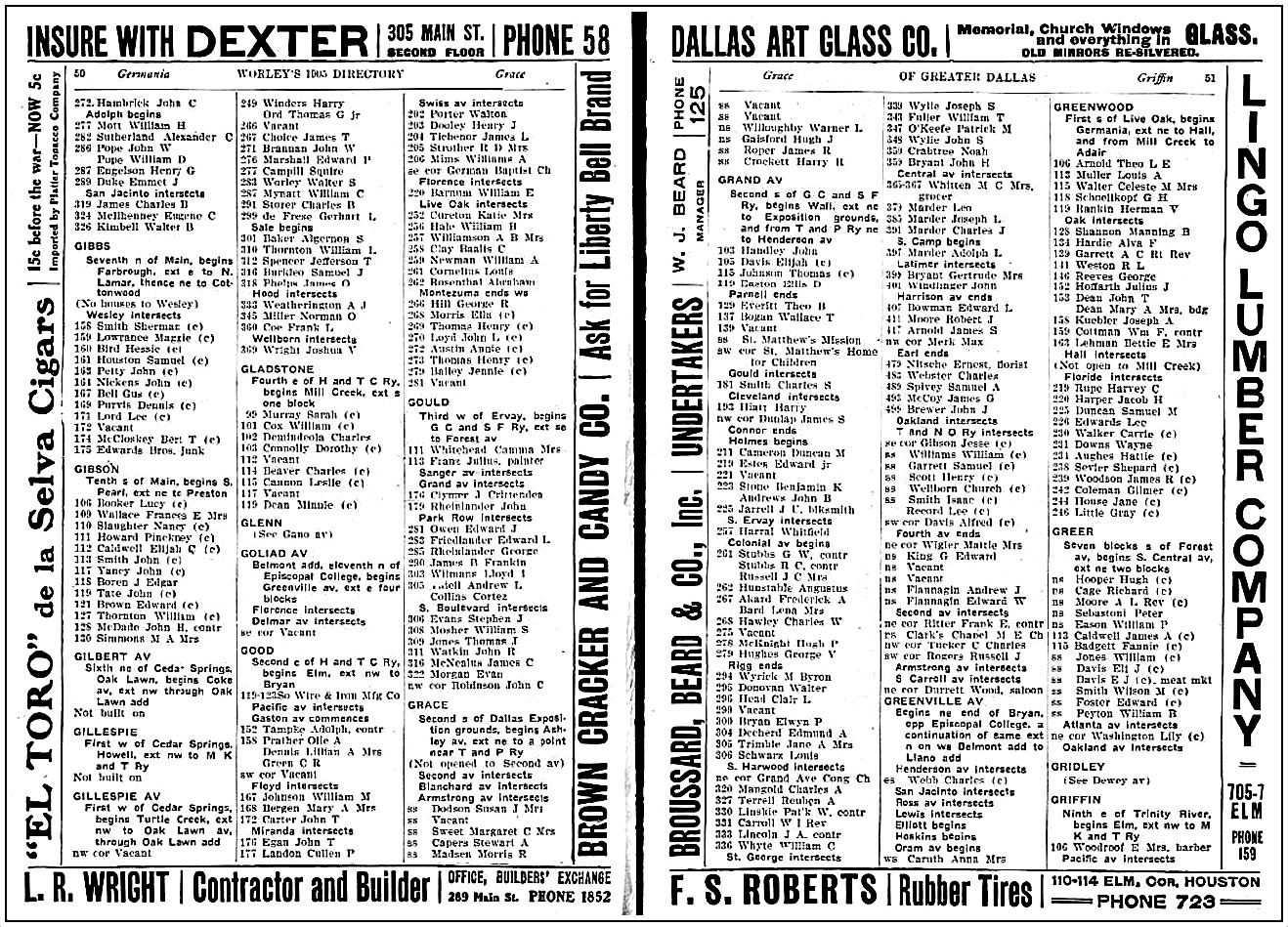
Not only can you determine when someone was living in the city, you can see where they lived, what their occupation was, the name of their spouse, and, in some cases, the race of the person (which, while somewhat disconcerting, can sometimes be quite helpful, especially if the person you are looking for has a common name — up until the ’20s or so, African-American residents and black-owned businesses were followed by “(c)”). (All images shown here are larger when clicked.)

worleys_1907-directory
1907 Worley’s directory

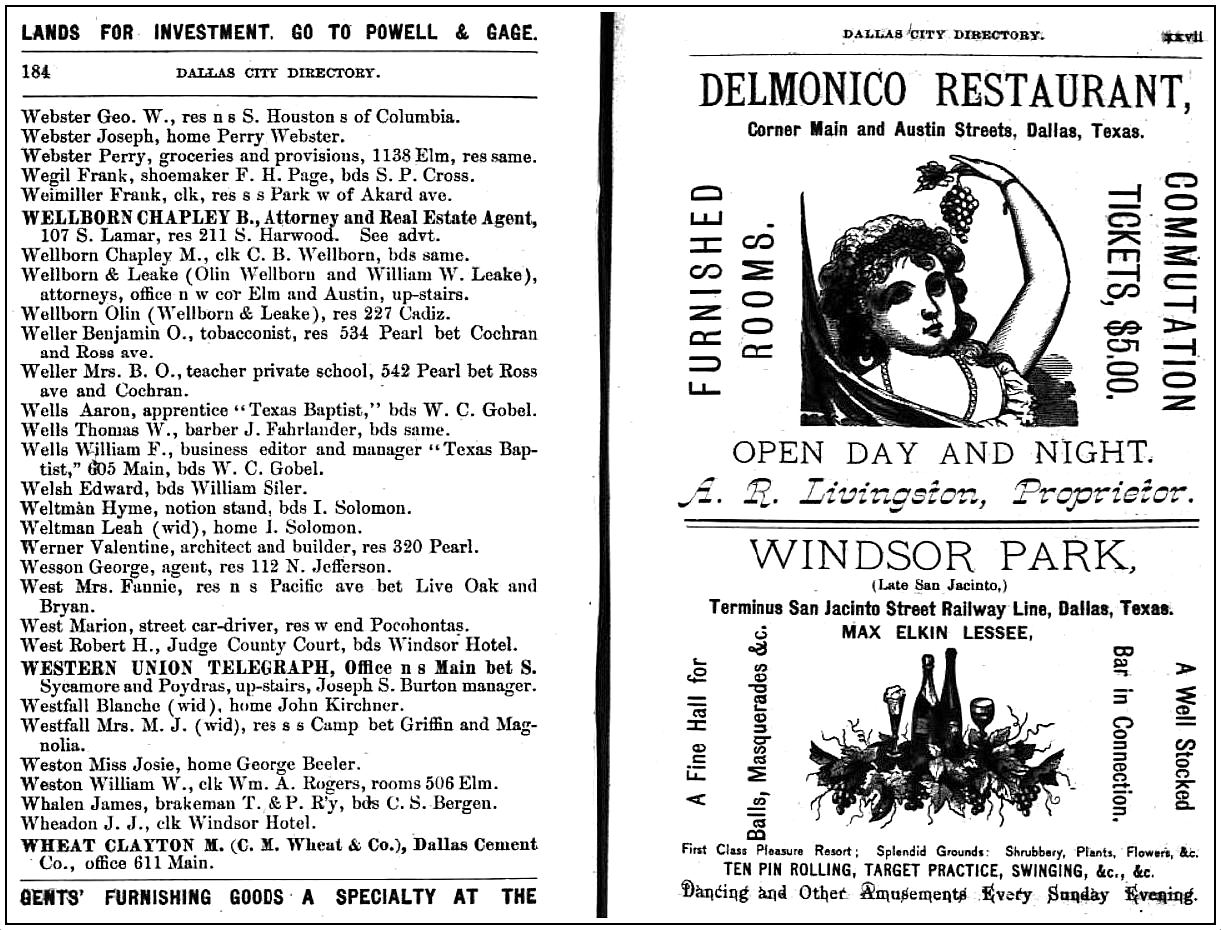
There are also ads, like the one at the top taken from the 1883 directory showing Thomas Marsalis’ wholesale grocery business. Ads are not only interesting, they can contain a lot of information, and, in some cases, a drawing or photograph of the business or proprietor.

c-d-morrison-and-co_1878-dallas-directory
1878 C. D. Morrison & Co. directory

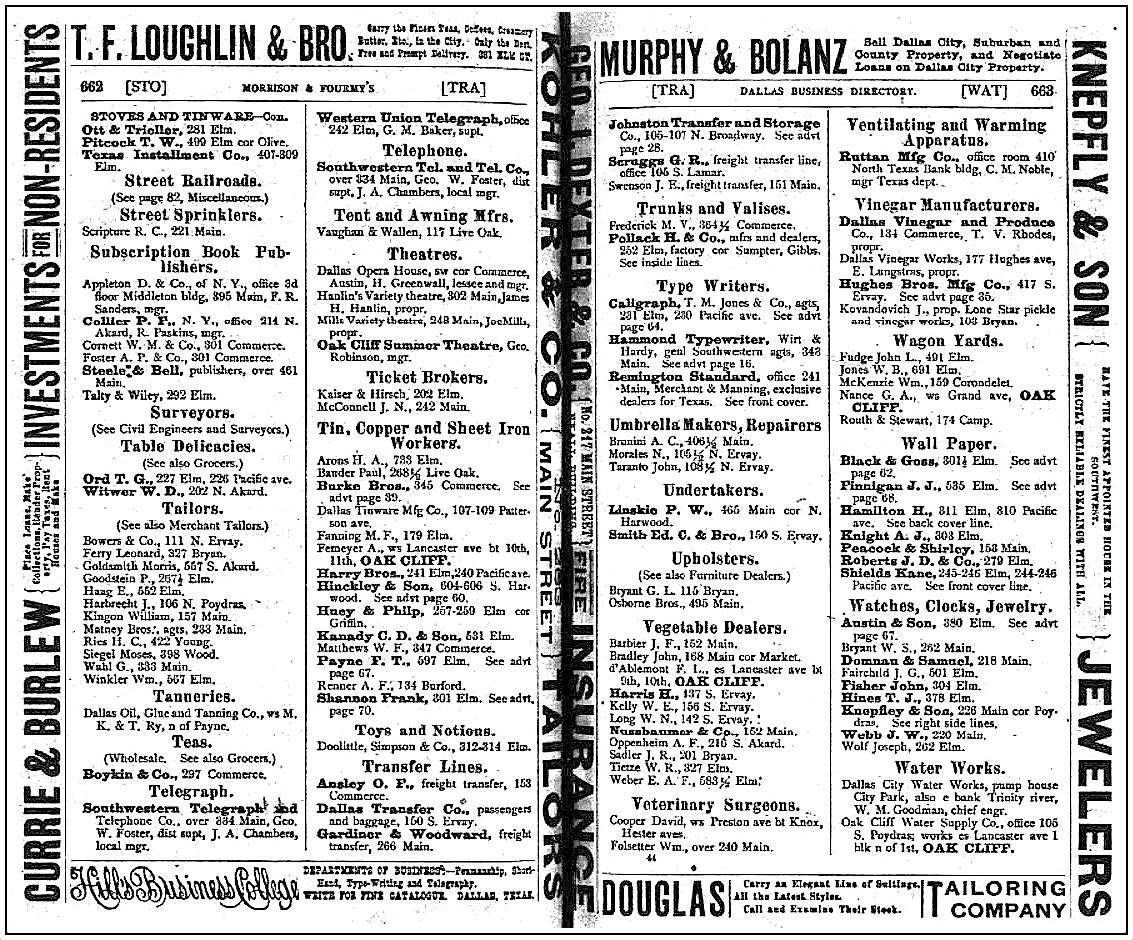
Typical business listings look like this:

morrison-and-fourmys_1891-dallas-directory
1891 Morrison & Fourmy’s directory

For me, one of the most useful things I find about these directories is the section containing the street directory. There are city directories covering more than 140 years of Dallas history, and there are a lot of street names you come across in researching a person or a place that no longer exist, have changed names, have the same name as a street in a different part of town (there used to be a lot of street names duplicated in Oak Cliff before it became part of Dallas), etc. These street guides tell you the names of everyone who lived/had businesses on the street (or at least the name of the head of the household or owner of the business), and it gives the names of all cross-streets. An address of 400 Main Street was not in the same location in 1950 as it was in 1900. (See this post on when and why Dallas street numbers changed.) One of the resources I use most is Jim Wheat’s easy-to-navigate list of street names from the 1911 directory (it’s faster and easier to use than one of the actual directories!), with links to the pertinent scanned page — these pages show you not only the 1911 address (which is often the same address used today) but they also show you what the address was BEFORE the number changed. I can’t tell you helpful this has been for me. (See an example here, which shows that before the number changed, 1400 Commerce was 324 Commerce.)

Pages from the 1905 street guide:

worleys_1905-directory_street-guide
1905 Worley’s directory

One bit of warning: many of the scanned directories that are online are only partial directories — and some years are missing altogether. The directories from the early 1940s, for instance, are a big headache: some have only 20 pages scanned — one wonders why they even bothered. Inevitably, the pages you need (and need badly) are ones that are not available to you, and you will, verily, let fly words your mother would not approve of. Sometimes you can get around the missing data by jumping to the street guide section or the business listings to see if useful info can be found there, but sometimes you are just going to be completely out of luck. This is when a trip to the Dallas Public Library (or possibly just a polite email to an ever-helpful librarian) will help you fill in the blanks, connect the dots, and get that swearing under control. I think they have a complete — or near-complete — set of city directories, either in hard-copy form or on microfilm. (UPDATE: Many of the incomplete directories mentioned above — issued  between 1936 and 1943 — are available fully-scanned, for FREE, at the Portal to Texas History. See link at bottom of post.)

You will find so much useful information in these directories that your head will spin. Right off  your neck. In a good way. But it’s also just enormous fun to browse them and imagine what the city used to be like in, say, 1889 when that year’s list of the city’s almost 150 saloons looked like this.

***

Sources & Notes

HeritageQuest is the service that provides access to scanned U.S. city directories to libraries across the country (it appears to be the same content the genealogy site Ancestry offers its members). This service is available free to holders of library cards. If you do not live in the City of Dallas, check to see if your local library system subscribes to this HeritageQuest database.

Here are a few other free online sources offering Dallas directory info — and these are available to everyone:

  • I’m updating this post on April 5, 2017 to include an INCREDIBLE selection of (from what I can tell) fully-scanned directories — twenty of them! This includes various years between 1902 and 1961 — including most issued between 1936 and 1941 (only partial scans of these editions are available through HeritageQuest/Ancestry, but here we can see complete directories). Thanks to the Dallas Public Library, everyone can access these Dallas city directories at the Portal to Texas History, here.
  • Another fully-scanned Dallas directory available online free for everyone can be found on Archive.org: the 1909 Worley’s directory is here.
  • Jim Wheat’s Dallas County, Texas Archives has all sorts of incredible stuff on his fantastic site, including links to directory information. Scroll down quite a ways on his main page here, and near the bottom in the left column you’ll see several listings under “Dallas City Directories.” Wheat manually transcribed a lot of these things himself, and those of us who research Dallas history owe the late Mr. Wheat a debt of gratitude. (UPDATE: The entire Roots Web website — not just Jim Wheat’s pages — has been down for several months. One can only hope his hundreds — if not thousands — of hours of work will someday be back online and once again accessible to researchers of Dallas history.)

*

Copyright © 2017 Paula Bosse. All Rights Reserved.


Shopping at Sears in Casa View

sears_casa-view_ext_squire-haskins_utaAppliance central… (click for larger image)
by Paula Bosse

I’m not in the Casa View area very often, but I was driving through last week and noted that a lot of the elements of the shopping center looked as if they were original to the buildings — specifically the little metal doo-dads along the top of the canopies over the sidewalks. I came across the photo above tonight and was happy to see those little doo-dads back when they were relatively new. The shopping center is a little confusing to me, but I think this is what that building pictured above looks like these days. (Why, why, WHY did someone think this “remodel” of the buildings was a good idea! Slapping on a new facade and removing the decorative metal doo-dads was an unfortunate decision.)

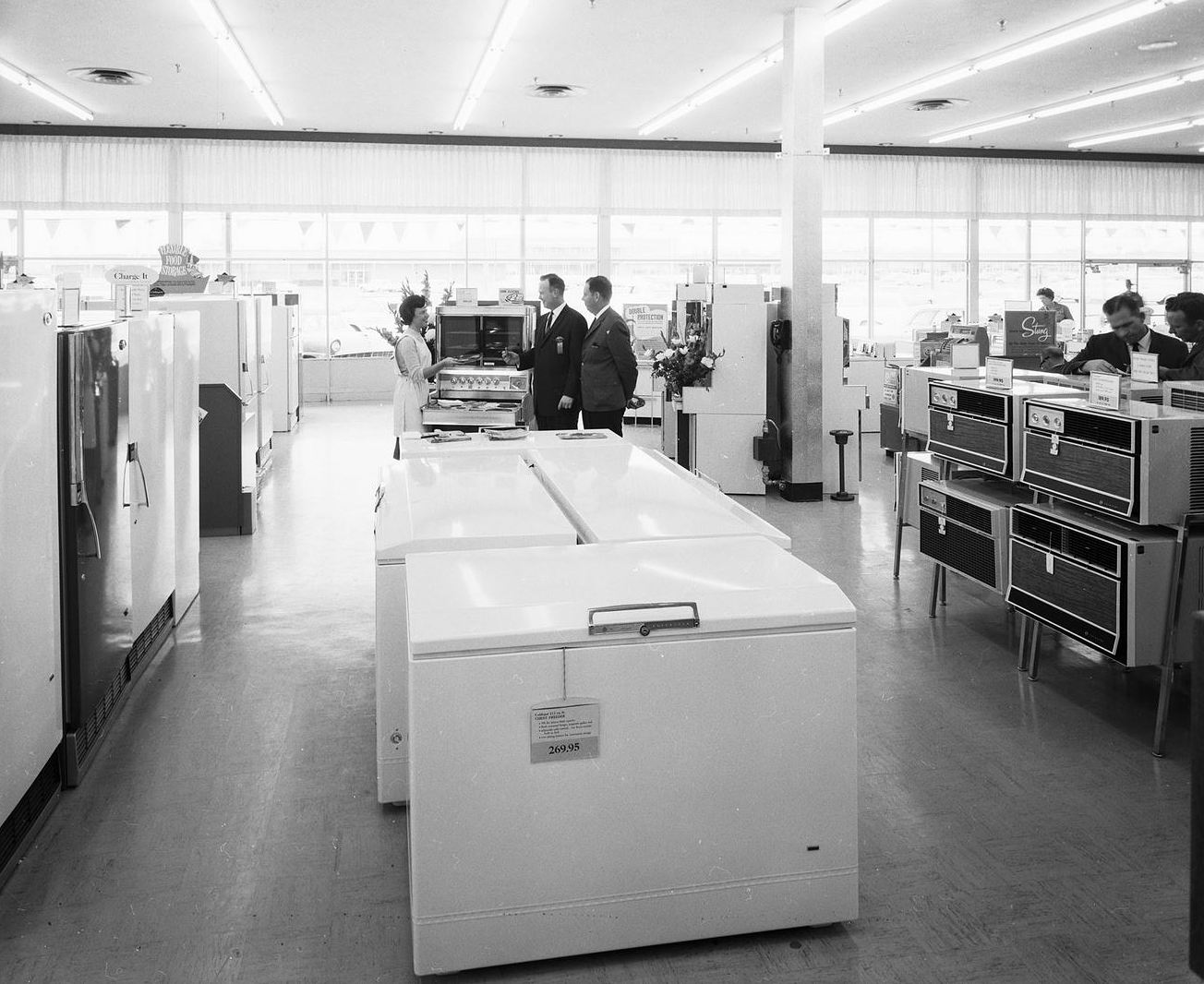
The Sears store pictured above is actually the second Sears in Casa View. The first store opened in October, 1956  at 2211 Gus Thomasson (here’s what the location of the first store looks like now — metalwork still there but that cool brick exterior has been painted over). It was Dallas’ fifth Sears store and opened in the still-under-development Casa View neighborhood. It wasn’t a full department store — its merchandise was limited mostly to appliances and automotive products. It was also a place to pick up catalog orders. (Click photos and ads to see larger images.)

ad-sears_casa-view_dmn_102556
Oct. 25, 1956

Apparently the store was so successful that in March, 1964, a brand new Sears opened up in a five-times-larger location (2310 Gus Thomasson) across the street — the photo at the top of this post was probably taken when it was in its first months.

sears_new-location_casa-view_dmn_031264-detMarch 12, 1964

Its interior — seen below in all its pristine, blinding whiteness — is fantastic. (Is that woman in the apron serving cookies she’s just baked?)

sears_casa-view_int_squire-haskins_uta

*

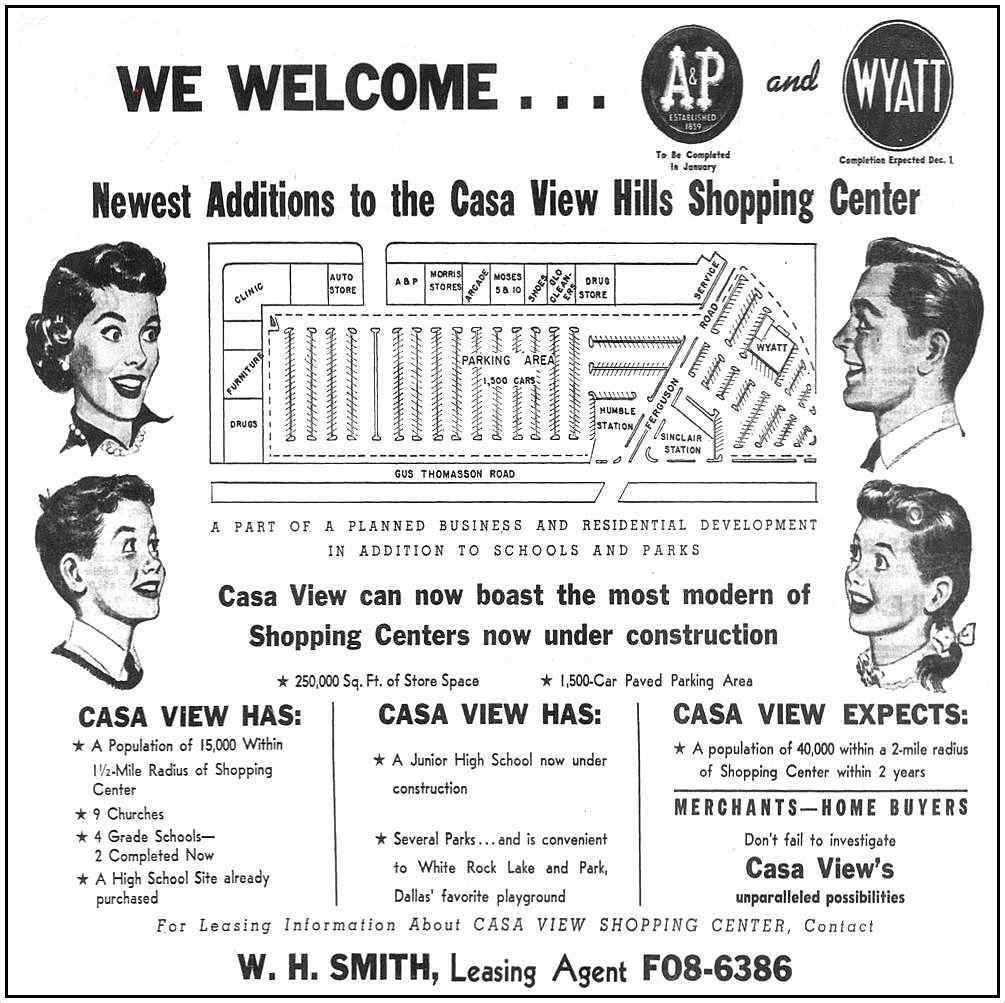
The reason I was confused by the shopping area is that it was built in phases. The first part was built in 1953 and was originally known as Casa View Hills Shopping Center. (Click the ad below to see a larger image.)

casa-view-shopping-center_dmn_100453
Oct. 4, 1953

But then the ownership changed hands in early 1955, and it was renamed Casa View *Village* and reopened in April under the new name.

In the meantime (I might have this chronology a bit out of whack), Casa View Center had been built in 1954, diagonally across the street. And then in 1955, construction began on an expanded Casa View Village. (This might have been its second expansion. Casa View was hopping in the mid-’50s!) And Sears had had stores in both Casa View Village and Casa View Center. It’s all kinda confusing.

The Casa View Shopping Center (I don’t know what its official name is these days, but I’m going with this) is looking a little ragged these days, but it still has a quirky charm, and I’m happy to see it still chugging along after 60 years.

***

Sources & Notes

Photos by Squire Haskins from the Squire Haskins Photography, Inc. Collection, UTA Libraries Special Collections. More info on the top photo showing the exterior of the Sears building can be found here; more info on the interior photo is here. (Click on the thumbnails on the UTA pages to see very large images.)

The Casa View Wikipedia page is here.

D Magazine has a “Dallas Neighborhood Guide” to Casa View here.

Dallas Morning News articles:

  • “Name Changed” (from Casa View Hills Shopping Center to Casa View Village) (DMN, March 13, 1955)
  • “Avery Mays Announces New Shopping Center” (expanded Casa View Village, with aerial photo) (DMN, Nov. 10, 1955)
  • “New Sears Opening in Casa View” (DMN, Oct. 11, 1956)

Other businesses once located in these shopping centers can be found in the post “Bryan Adams High School: Yearbook Ads from 1961 and 1962,” here.

Photos and clippings are larger when clicked.

*

Copyright © 2017 Paula Bosse. All Rights Reserved.


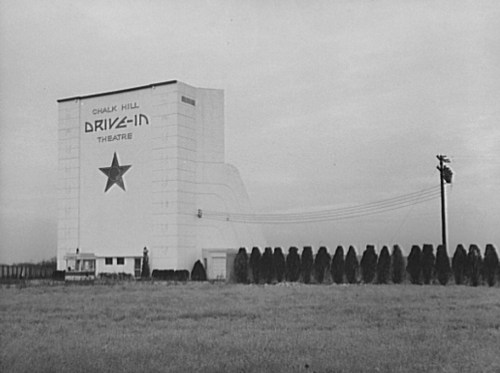
From the Vault: The Northwest Hi-Way and Chalk Hill Drive-Ins — 1941

chalk-hill-drive-in_1942_LOCThe Chalk Hill Drive-In opened on July 4, 1941

by Paula Bosse

Read about a crazy new thing called “drive-ins” which were popping up in far North Dallas and Oak Cliff in the summer of ’41 in the post “Dallas’ First Two Drive-In Theaters — 1941,” here.

*

Copyright © 2017 Paula Bosse. All Rights Reserved.

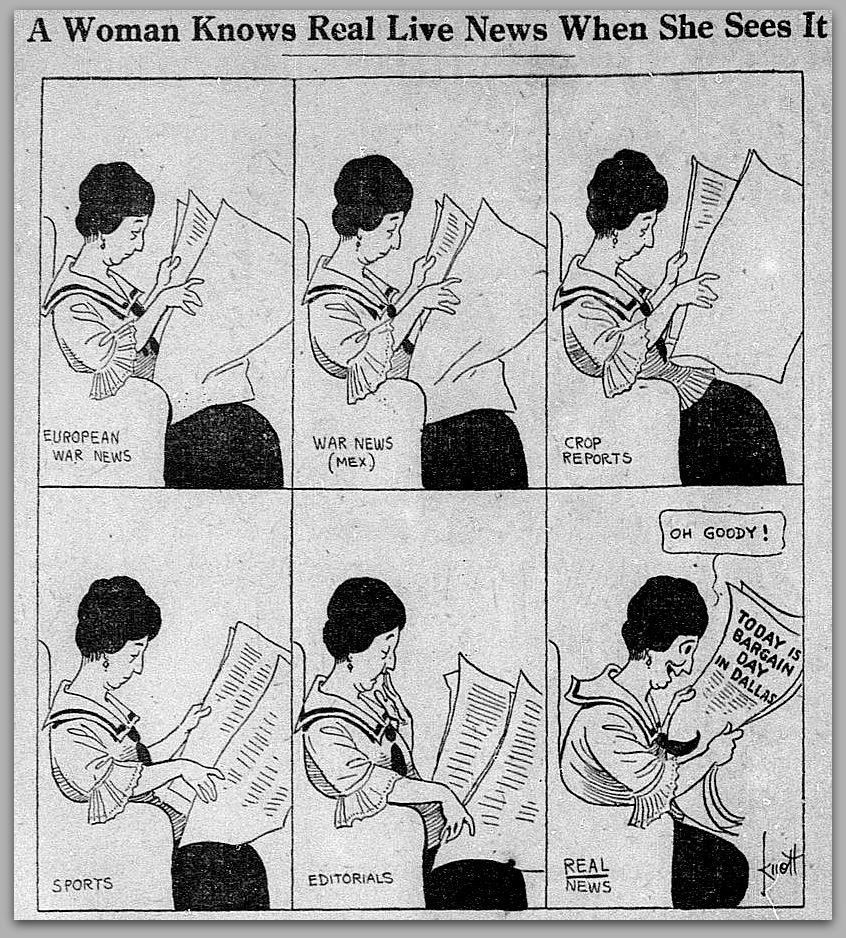
“A Woman Knows Real Live News When She Sees It” — 1915

womens-news_dmn_070815_knott-cartoon“Oh goody!” (click for larger image)
by Paula Bosse

This editorial cartoonist’s take on what was really important to Dallas women is one that probably caused some Dallasites to chuckle and some to fume. The date of this Dallas Morning News cartoon was July 8, 1915. In 1915 women had no constitutional right to vote in the United States and were barred from voting in local, state, and national elections. The Nineteenth Amendment to the U. S. Constitution (which gave women the right to vote) was ratified in Texas in June, 1919.

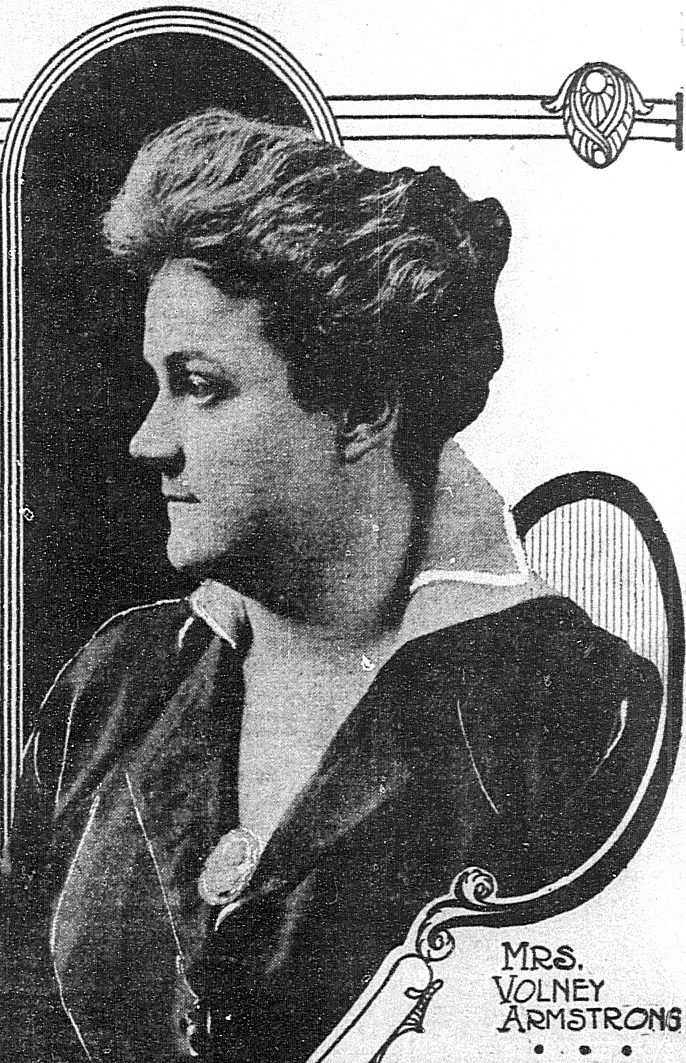
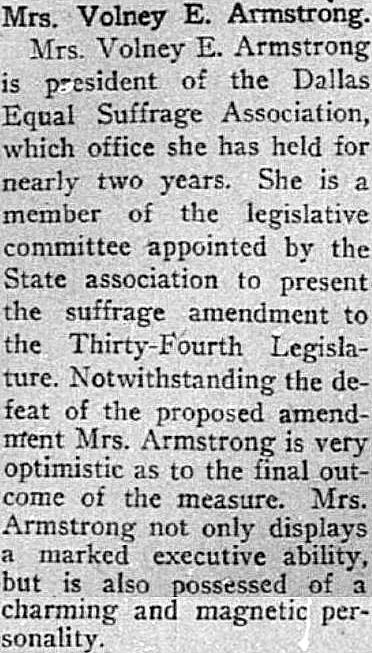
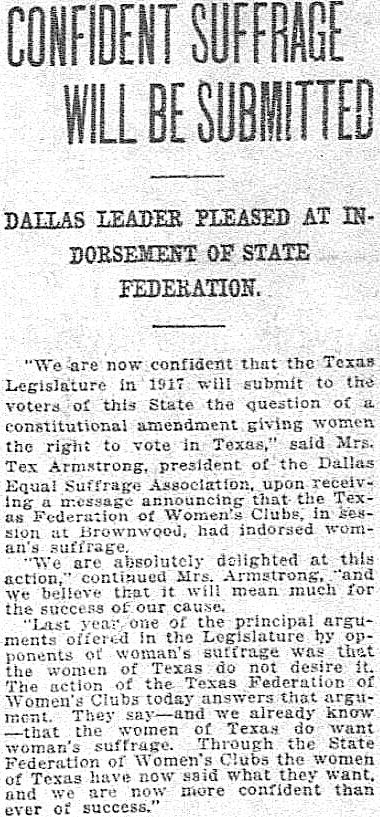
The woman’s suffrage movement in Dallas had been active since at least the 1890s, but it really began to catch fire in the early ‘teens when the Dallas Equal Suffrage Association (DESA) was formed in 1913. The second president of this organization (who was one of the state’s leading suffragists when this cartoon appeared) was Texas Erwin Armstrong (Mrs. Volney E. Armstrong). (Yes, her first name was “Texas” — her friends called her “Tex.”)

I have to admit, I was not aware of Mrs. Armstrong until today, but she was one of many laudable women who helped forge the way for those of us who followed. I like this quote of hers from 1918, commenting on the support (or lack thereof) of politicians during the slow but sure path to ratification:

“Any Democrat who failed to vote for this measure is a man without a party and soon will be a man without a country.” (DMN, Jan. 12, 1918)

tex-armstrong_dmn_031515_suffrage_photo

tex-armstrong_dmn_031515_suffrage
Dallas Morning News, March 15, 1915 (photo and profile)

**

More suffrage news from Dallas (click articles to see larger images).

suffrage_dmn_111115
DMN, Nov. 11, 1915

suffrage_dmn_030818
DMN, March 8, 1918

***

Sources & Notes

Dallas Morning News editorial cartoon “A Woman Knows Real Live News When She Sees It” (by staff cartoonist John Knott) appeared in the July 8, 1915 edition of the paper.

For more on the history of Dallas women and women’s causes, check out the book Women and the Creation of Urban Life: Dallas, Texas, 1843-1920 by Elizabeth York Enstam (College Station: Texas A & M University Press, 1998); a large portion of the chapter “Suffragists and the City” can be read here.

The history of the women’s suffrage movement in Texas can be found at the Handbook of Texas site, here.

The obituary of Mrs. Texas Erwin Armstrong (1878-1960) can be found in the archives of The Dallas Morning News: “Campaigner For Women’s Suffrage Dies” (DMN, March 7, 1960).

Click clippings and pictures to see larger images.

*

Copyright © 2017 Paula Bosse. All Rights Reserved.