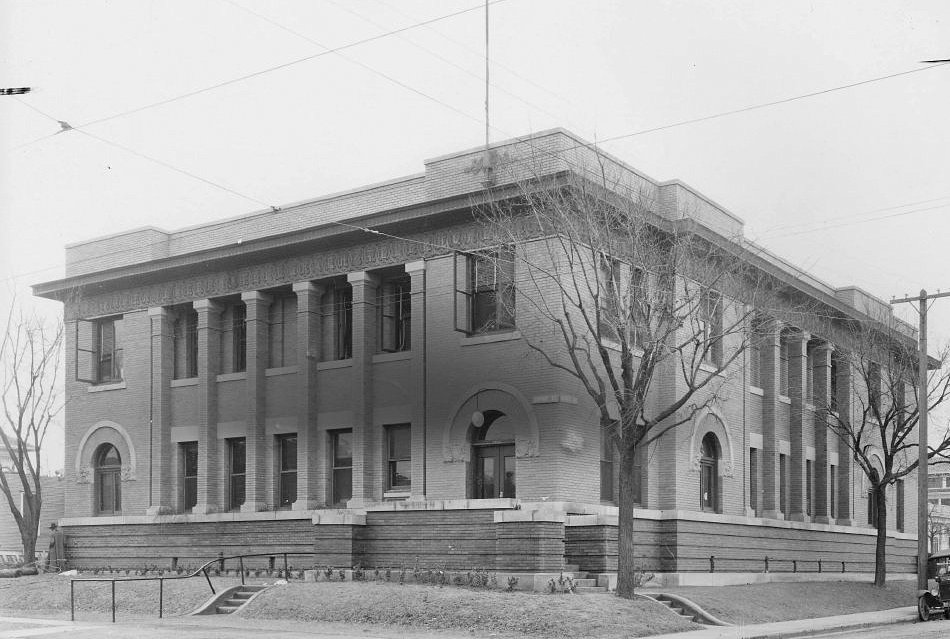
Flashback : Dallas

A Miscellany: History, Ads, Pop Culture

Year-End List! My Favorite Photos Posted in 2016
wiley-grocery_1890s_haskins-coll_uta

by Paula Bosse

Another year is coming to a close. Time for an inevitable year-end “best of” list! Or actually three lists. The first is a list containing some of my personal favorite photos I’ve come across over the past year. I’m sure I’ve left out some, but these are still pretty great. They are in no particular order. Click the highlighted title of the 2016 Flashback Dallas post in which the photo appeared for more info; click the photo itself to see a larger image.

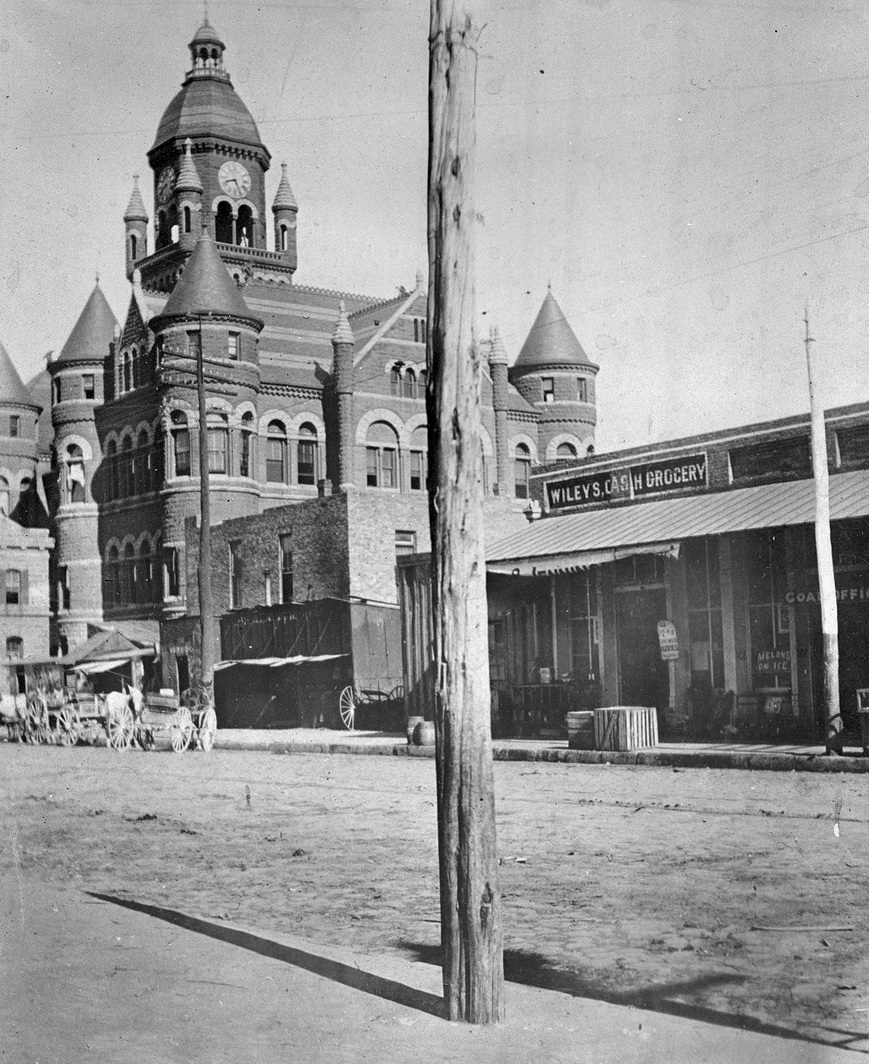
The photo at the top appeared in the post “Melons On Ice — 1890s” (the title comes from a sign advertising melons for sale at Wiley’s Cash Grocery). I’d never seen this photo and was initially a little confused trying to figure out exactly where it had been taken. The Old Red Courthouse is a pretty big hint. The strip of businesses was on Commerce, on land now occupied by the Kennedy Memorial block.

*
farmers-mkt-area_dominoes_portal

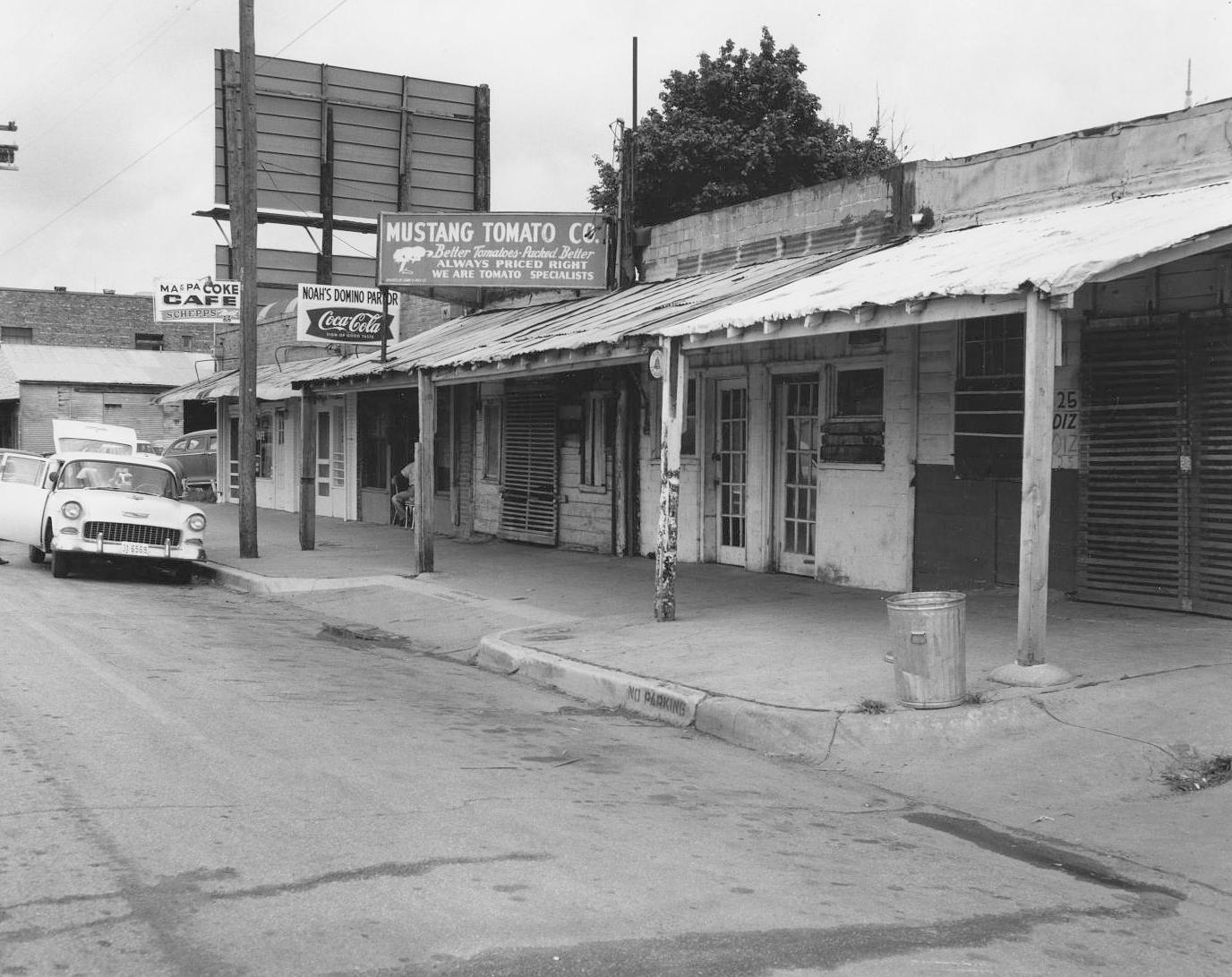
From the post “Tomatoes, Cokes, Dominoes: Cadiz Street — 1959.” I love seeing old photos of the Farmers Market area. Like this one. What I wouldn’t give to have the old gritty, grimy, worn, and real Farmers Market back.

*

“4th of July, White Rock Lake — 1946.” The war is over, and everyone looks happy and relaxed. This was the most-viewed photo I posted this year. I love it. From the Seurat-like composition (see the post for explanation) to the fact that a reader commented that she recognized her aunt and cousins in this photo (the five women sitting in a row, behind the two women with their legs propped up). So much is going on here — it was a great photo to zoom in on.

july-4th_1946_white-rock-lake

*

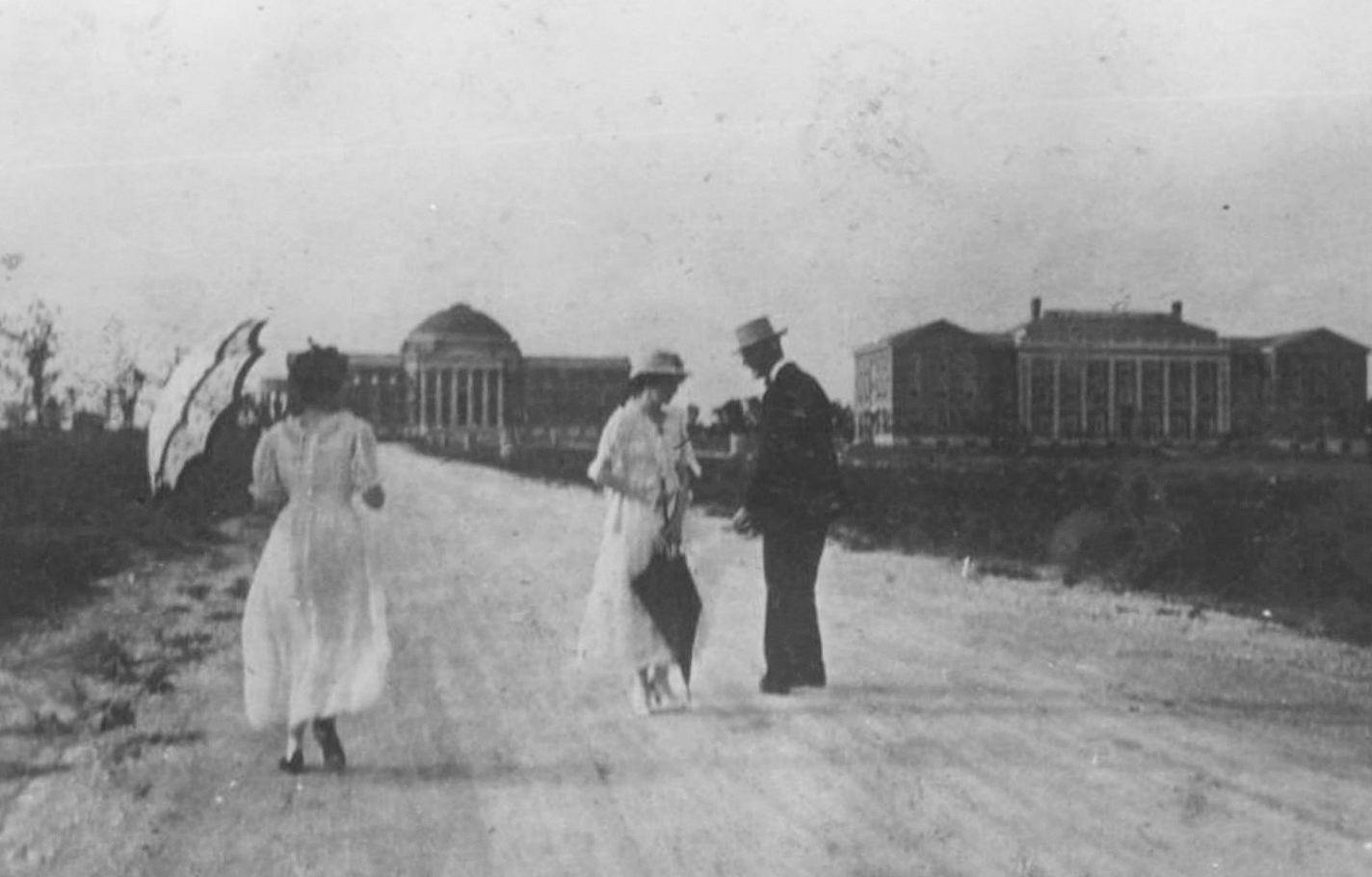
smu_parasols_1917_degolyer

“Parasols on the SMU Campus — 1917.” I love this photo.

*
preston-lbj_122158_squire-haskins_uta

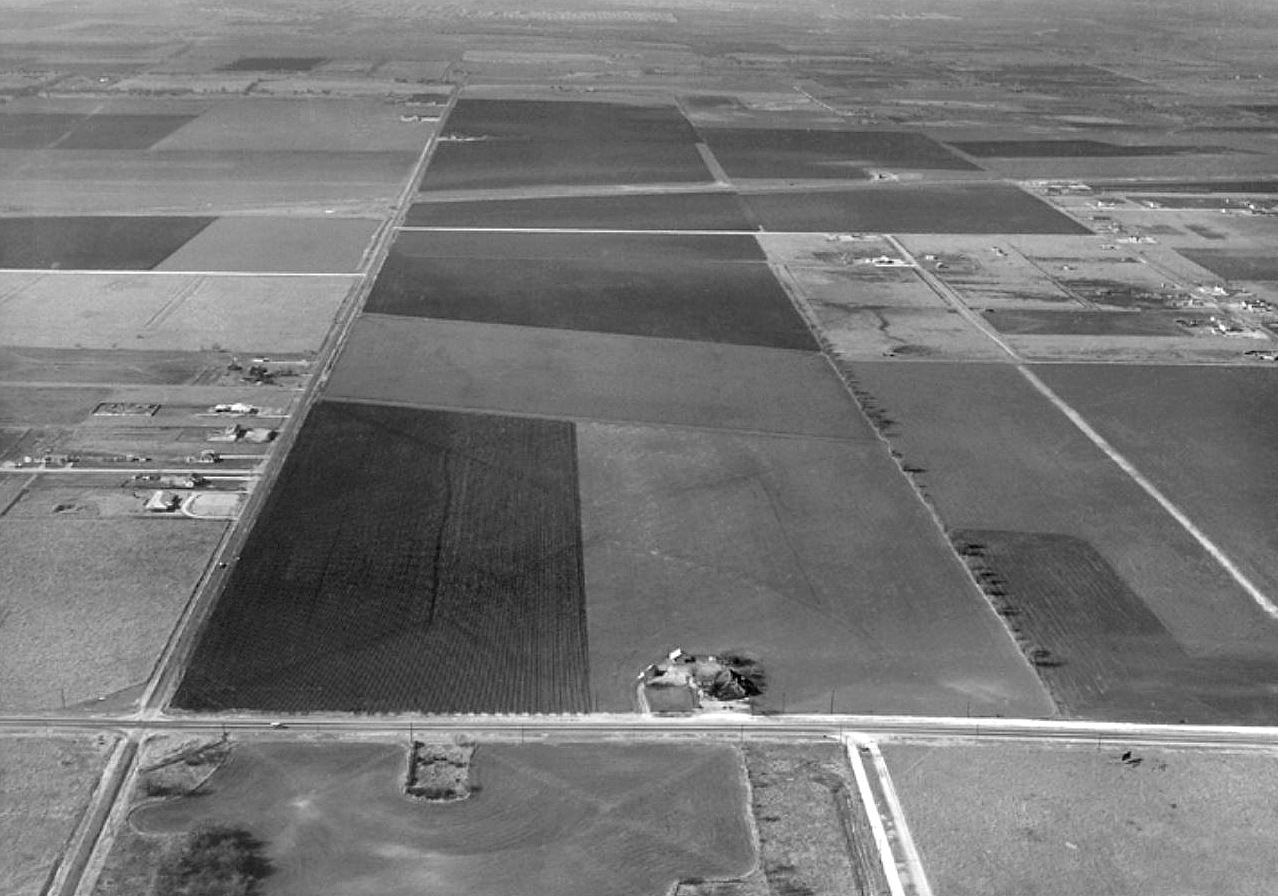
“Preston and Valley View: The Calm Before the Storm — 1958.” The second  most-viewed Flashback Dallas picture posted in 2016. In just a few short years this bucolic vista would be replaced by LBJ Freeway.

*

madison_1970-yrbk_rotc-sweethearts

This photo is just so fantastic. It shows Madison High School’s ROTC “Sweeethearts,” and it may be my favorite school yearbook photo ever. From the post “The Esquire Club, The Charm Club, and The Riflettes: James Madison High School — 1970.”

*
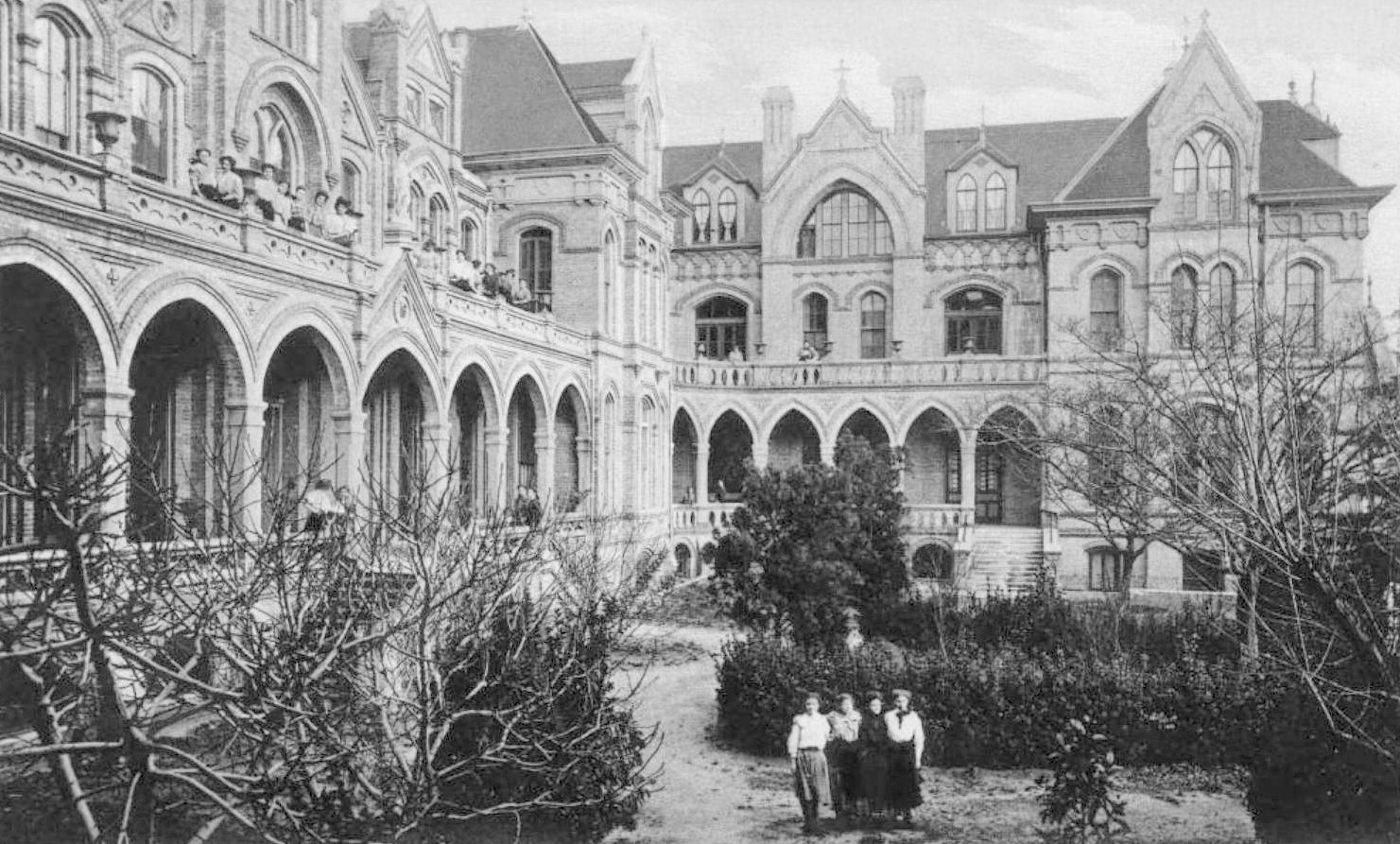
ursuline-convent_cook-colln_degolyer_smu

“On the Grounds of Ursuline Academy and Convent.” Back when Old East Dallas was really old.

*
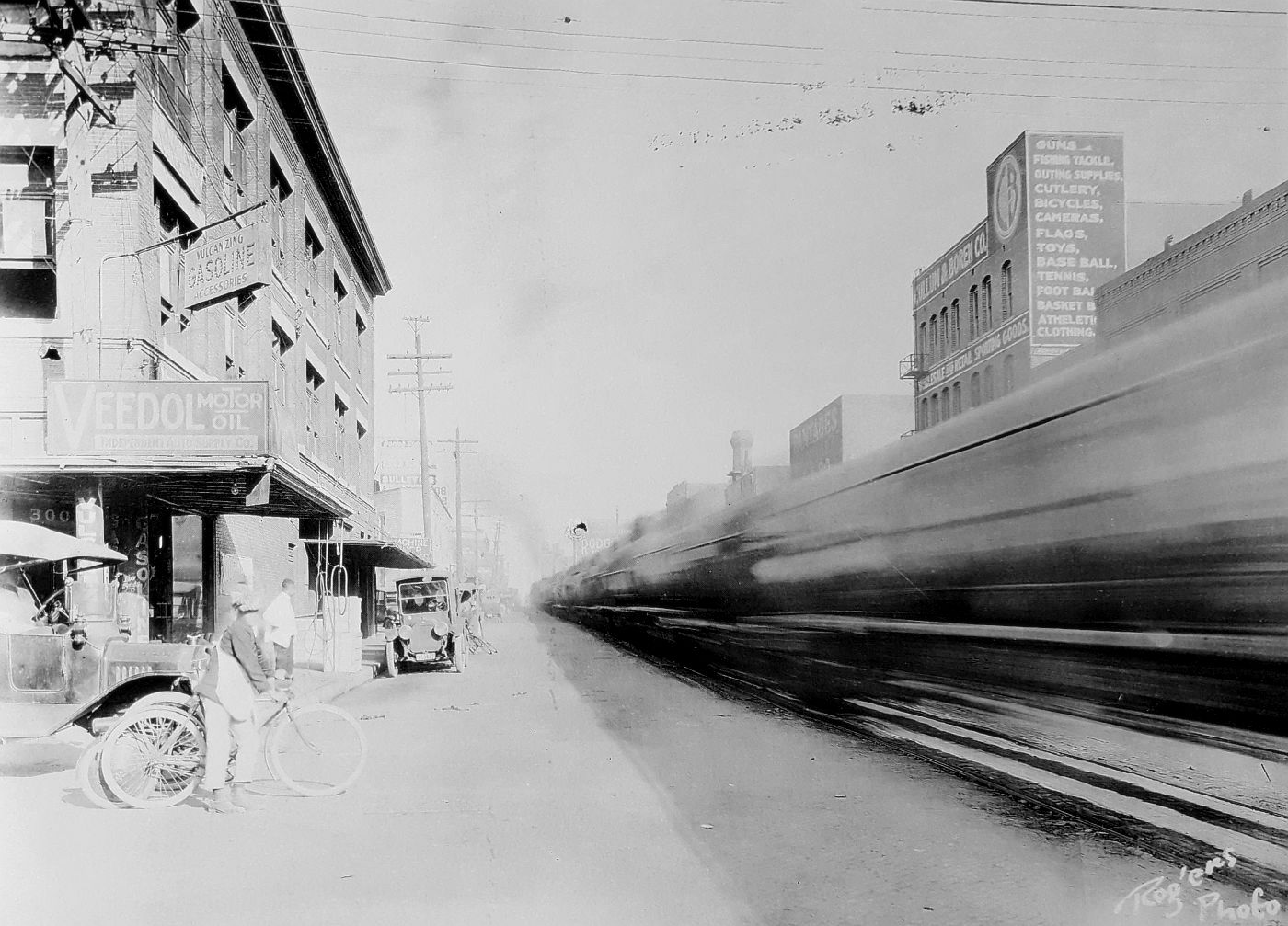
pacific-akard_park-cities-photohistory_frank-rogers

“Pacific Avenue: Watch for Trains! — ca. 1917.” Pacific looking east from Akard. I wish the quality of this image were better, but even washed-out, this Frank Rogers photo of a train whooshing along Pacific is cool.

*
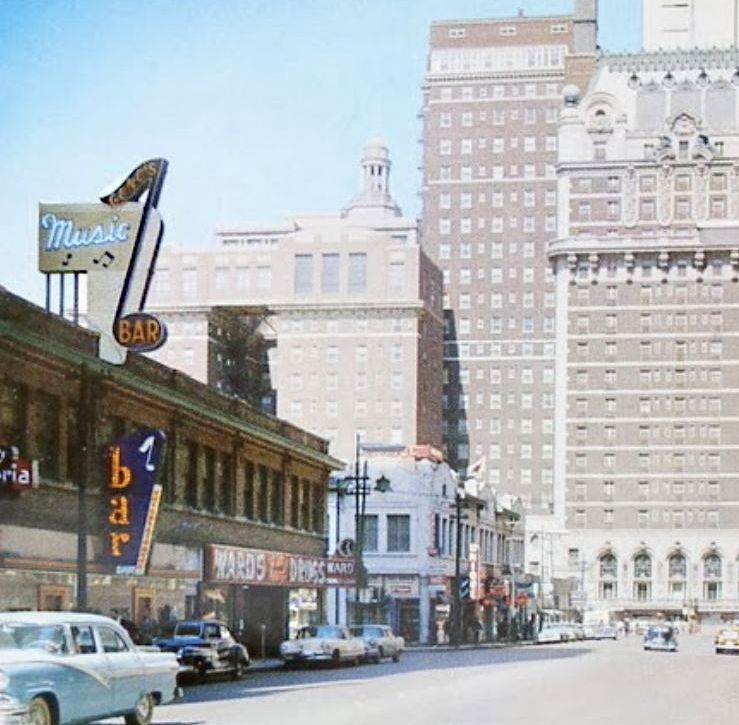
genes-music-bar_dallas-memorabilia

“Gene’s Music Bar, The Lasso Bar, and The Zoo Bar.” I love this — Akard looking north toward the Adolphus. This post also has another photo fave in it: the Zoo Bar on Commerce.

*
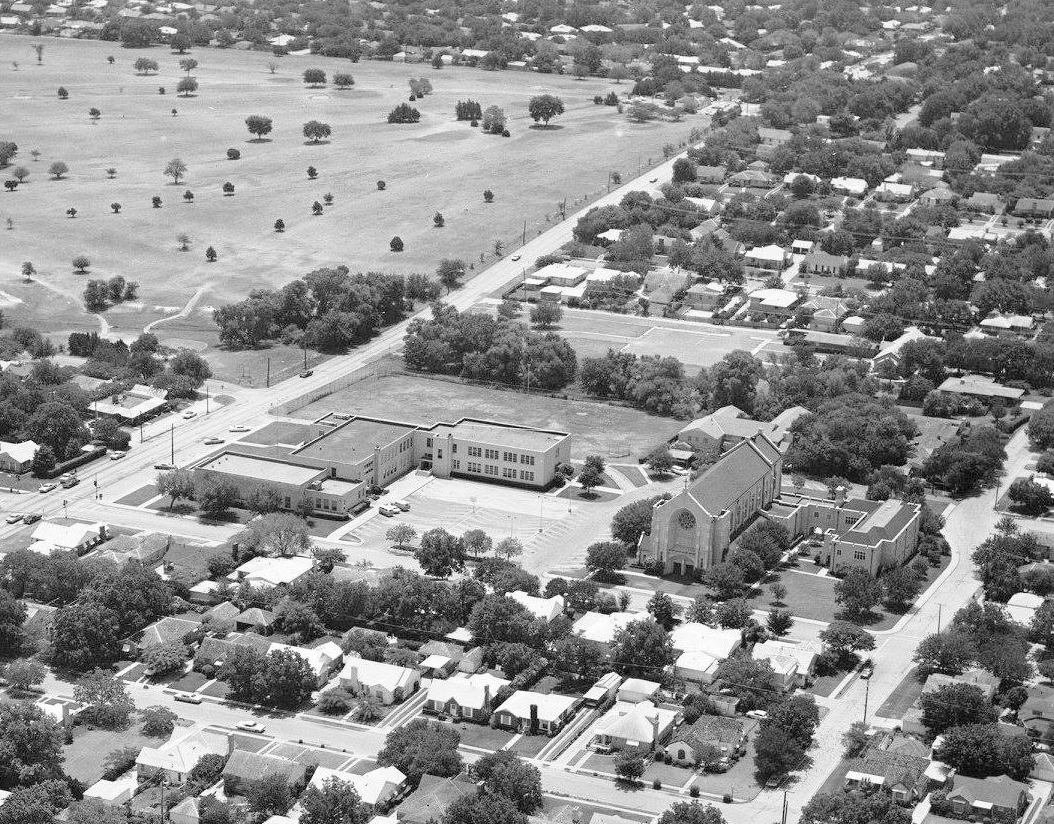
bob-o-links_abrams-rd

“Bob-O-Links Golf Course — 1924-1973.” I grew up not too far from this area, and I can’t believe that it ever looked like this. The street on the left is Abrams; the view is to the southeast. The East Dallas golf course for those who couldn’t afford to join the Lakewood Country Club.

*
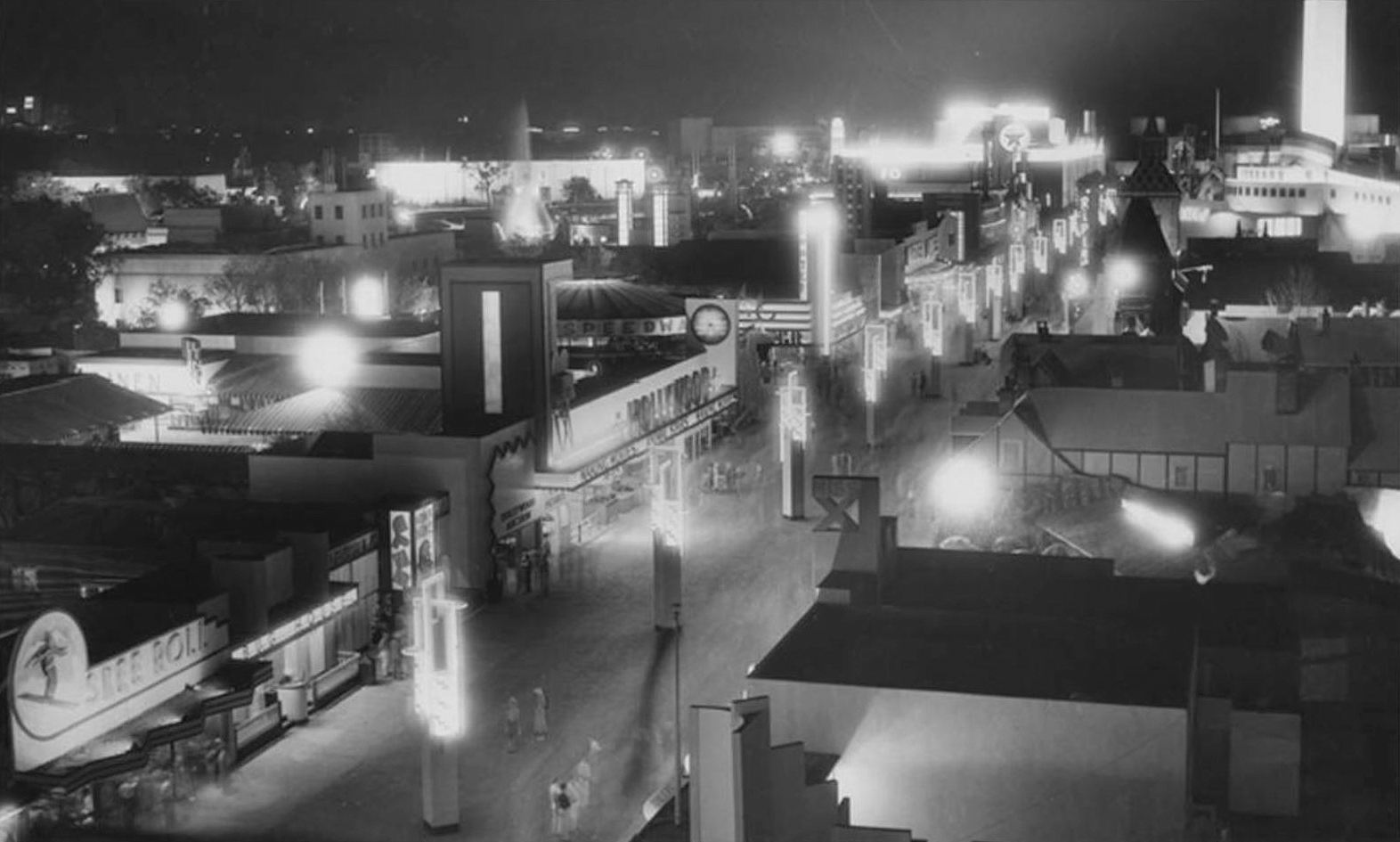
tx-centennial_midway_night_cook-coll_smu

“Dallas Midway, Night Illumination — 1936.” A moody midway during the Texas Centennial.

*
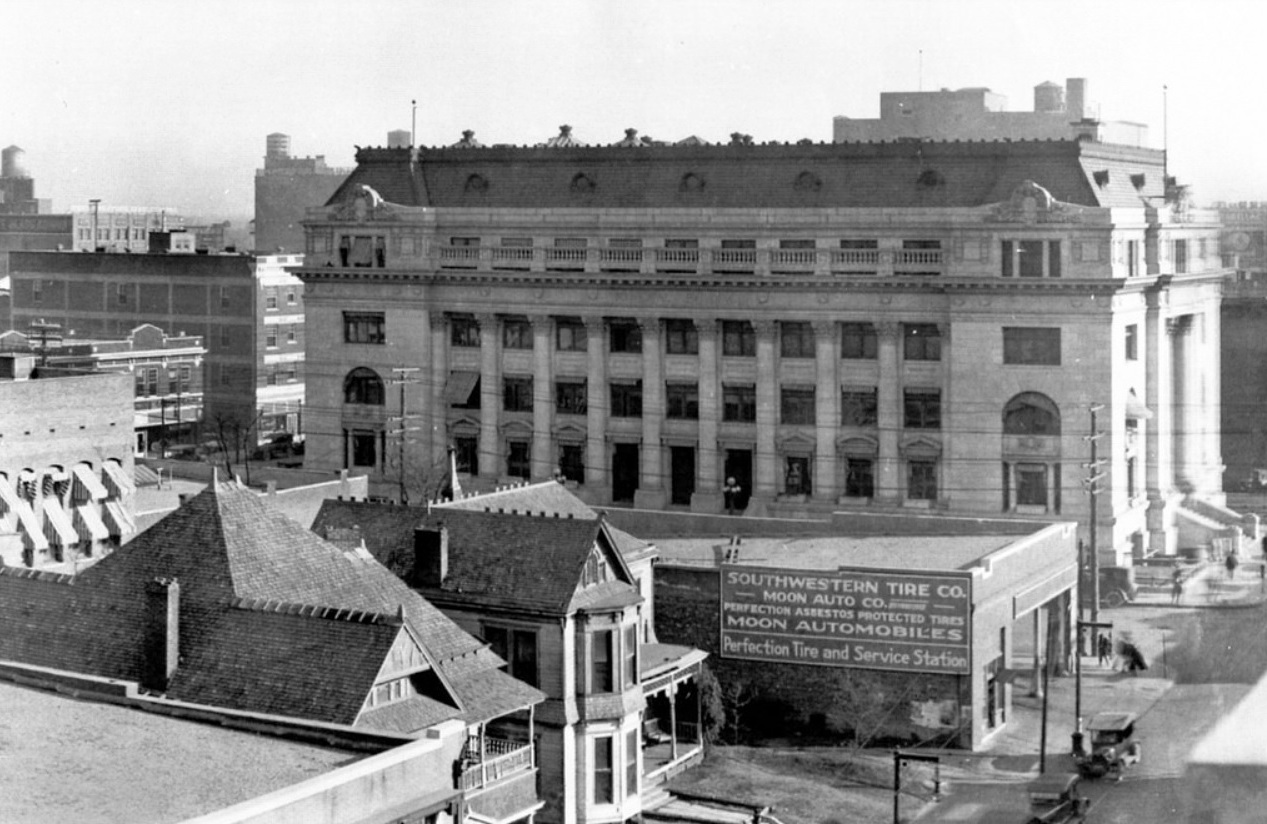
municipal-bldg_houses_jeppson_flickr

“Home Sweet Home at Commerce & Harwood.” Yep, houses downtown.

*
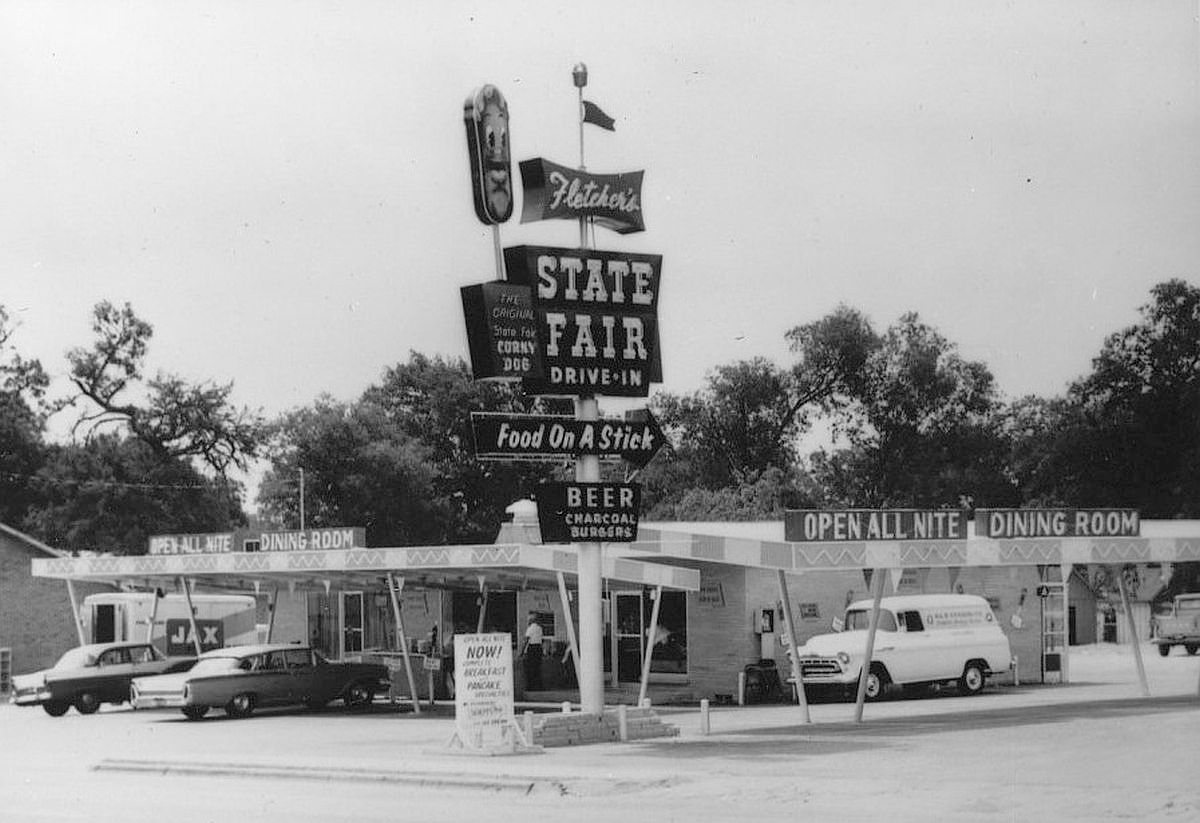
fletchers-state-fair-drive-in_DHS

Desperate for a corny dog out of season? Luckily there was a place to get them. “Fletcher’s State Fair Drive-In — 1960-1963.”

*
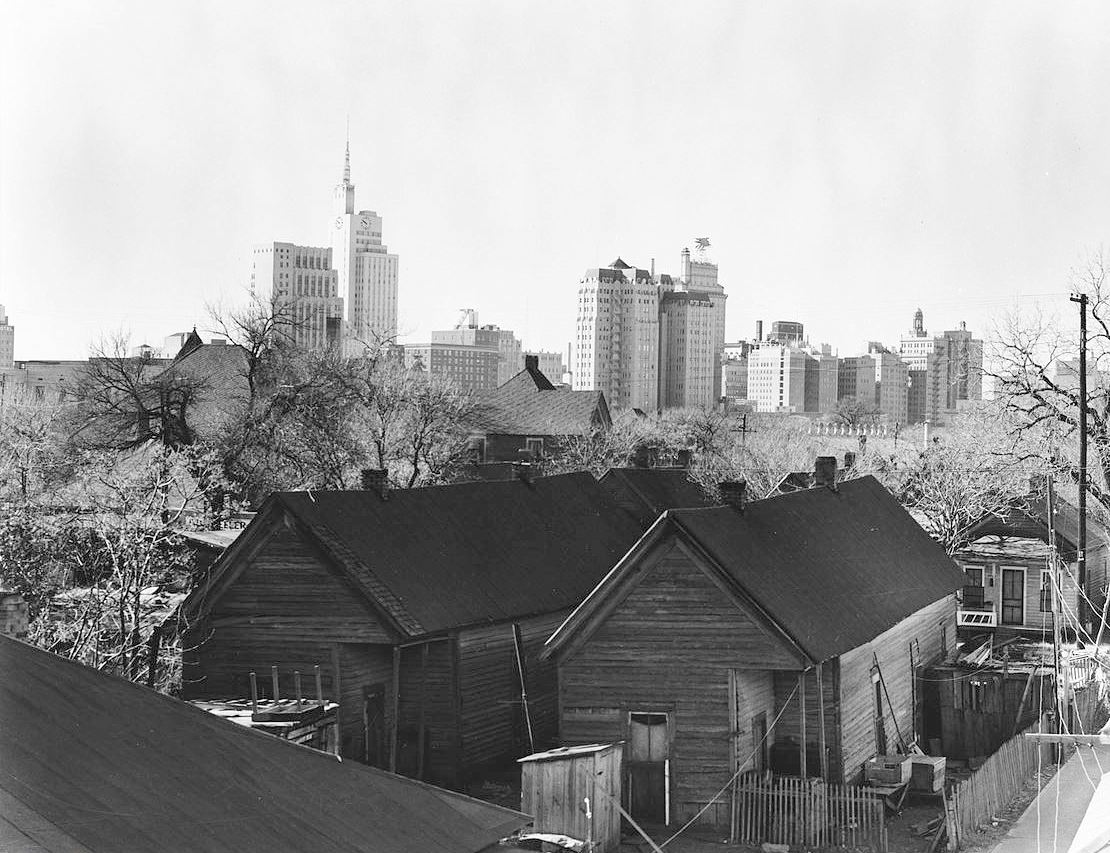
skyline-from-tenement-housing_haskins-coll_uta-120450

“The Skyline Beyond — 1950.” The haves and the have-nots.

*
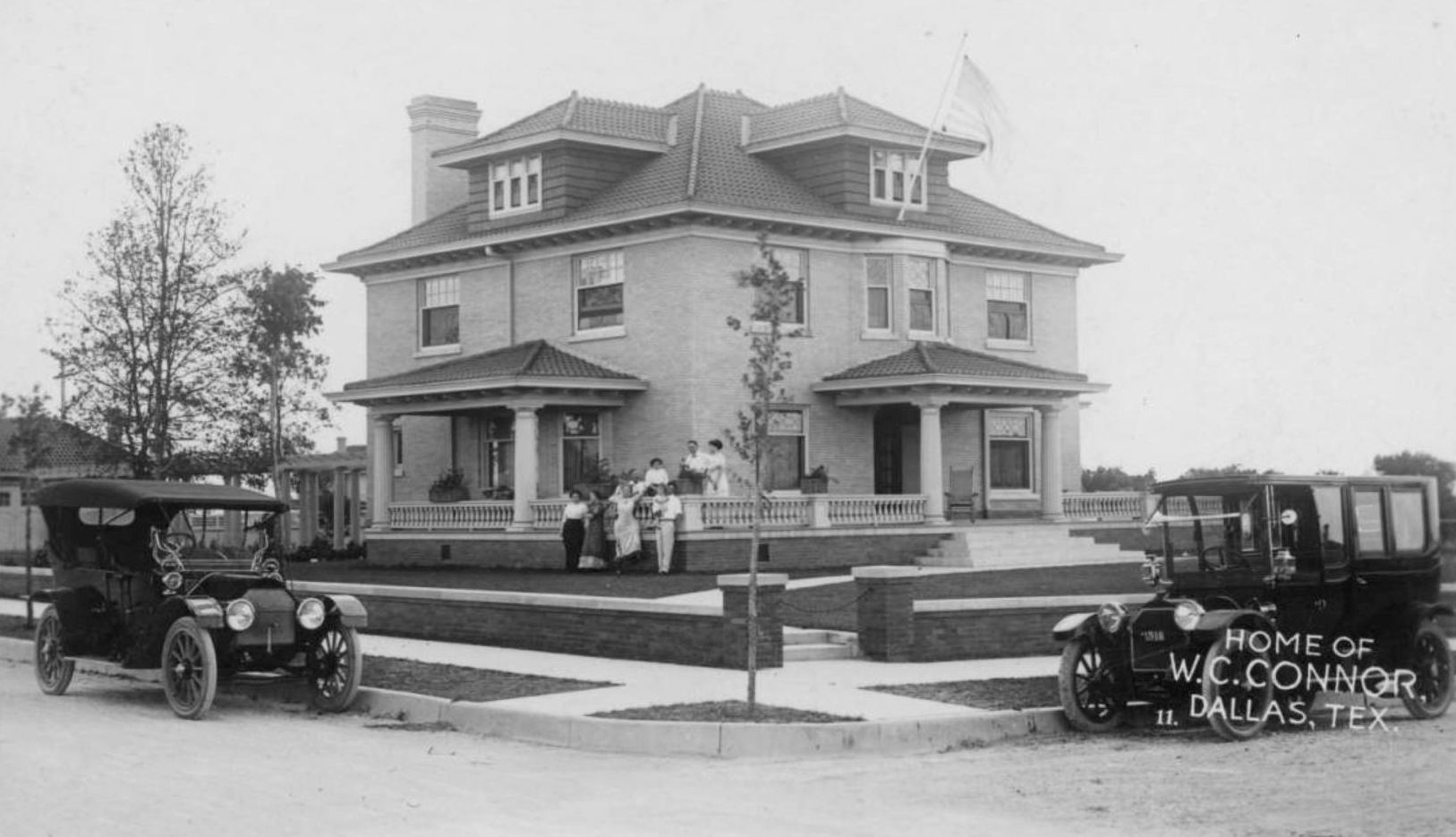
connor-home_cook-colln_degolyer

Sometimes photos of houses just call to me. Like this still-standing home of former mayor W. C. Connor in Highland Park. “The House at Crescent & Byron, Highland Park.”

*

And, well, you have to have runners-up.

“North Dallas High School, The Pre-Beatles Era” had so many great photos from the 1960, ’62, and ’63 yearbooks. The two below were my favorites.

1962_before-school_ndhs_1962-yrbk

jara-rufus_ndhs_1963-yrbk

*

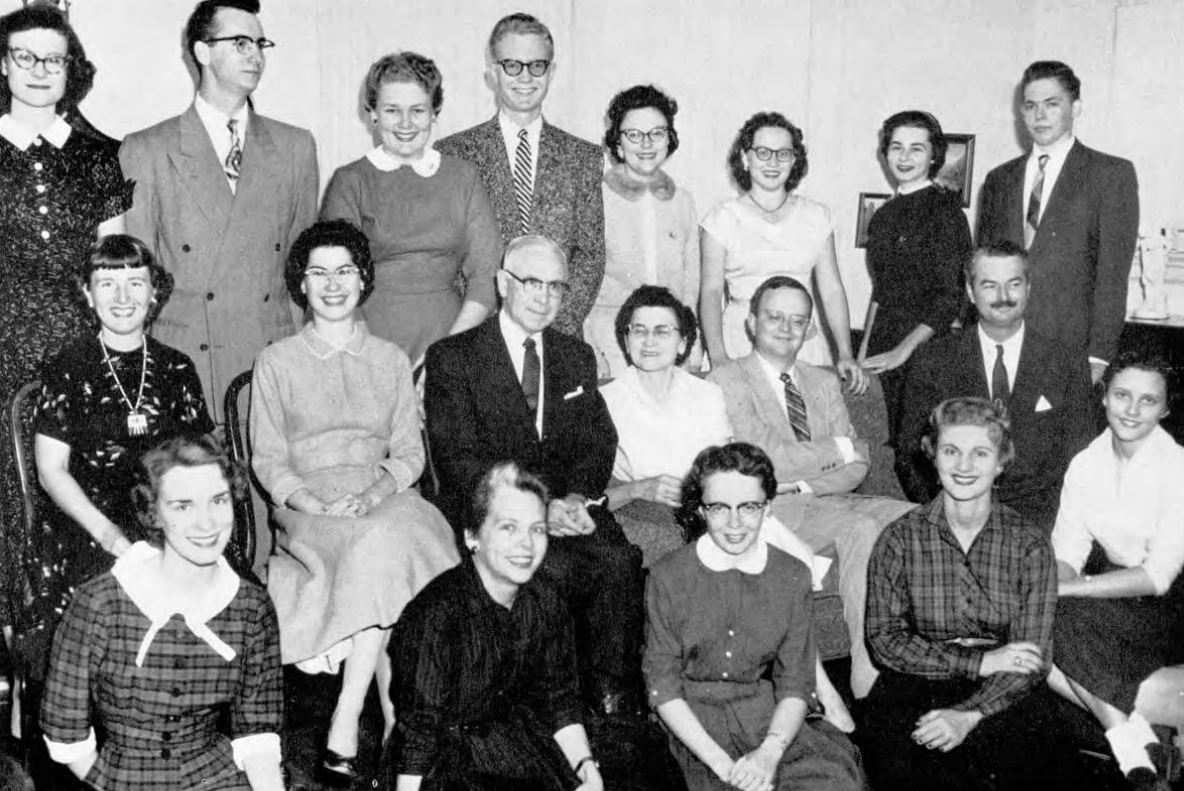
And, finally, a personal favorite, a photo I stumbled across which I’m pretty sure shows the back of my father’s head when he was a grad student at SMU in 1956 (he’s in the white shirt in the foreground). I also love the photo of my mother at SMU from the same year (she’s the third from the left on the top row). From the post “The Digital Collections of SMU’s Central University Libraries: The Gold Standard.”
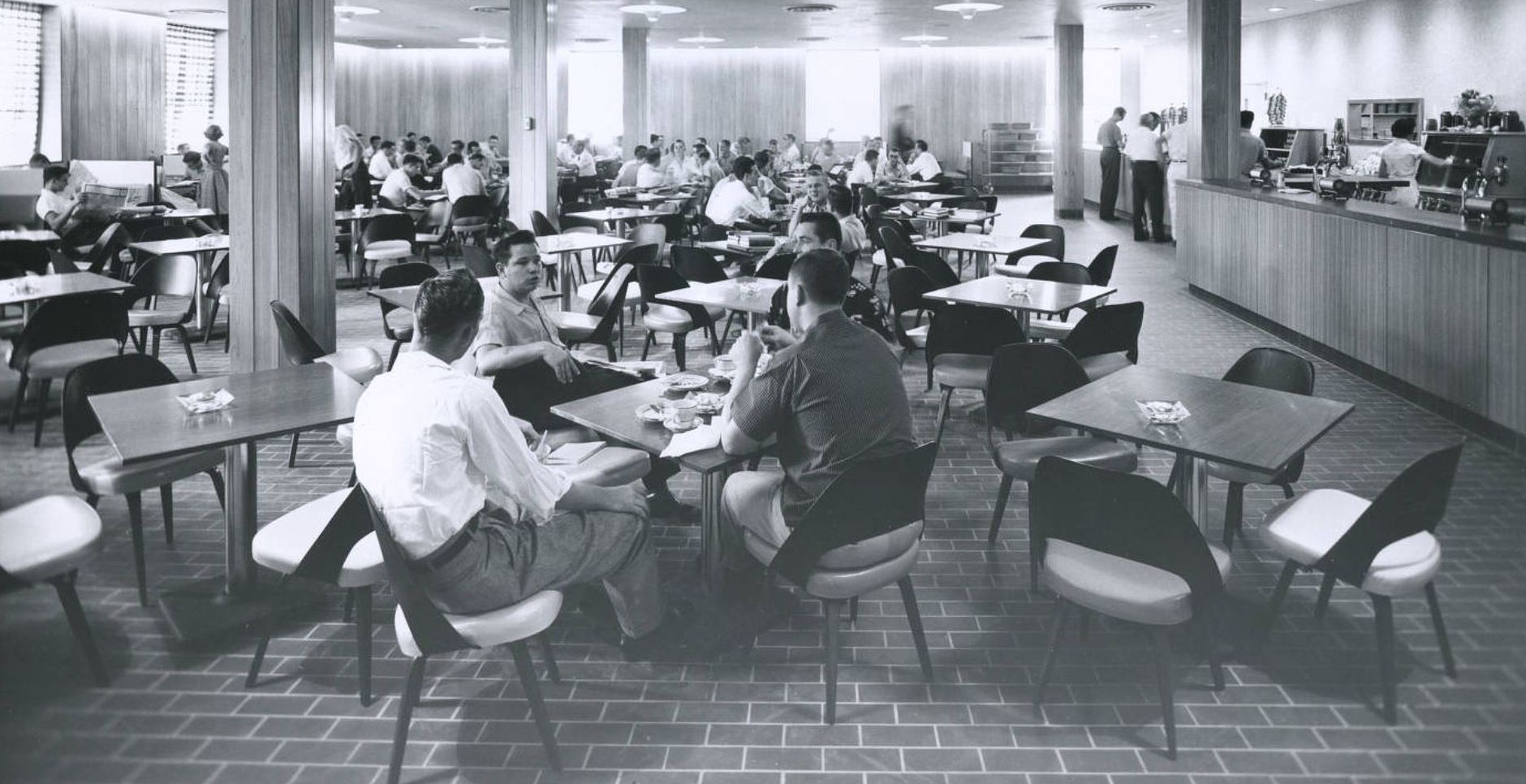
umphrey-lee-snack-bar_rotunda_1956

beta-kappa-gamma_rotunda_1956

*

Copyright © 2016 Paula Bosse. All Rights Reserved
 

Orphaned Factoids: Year-End Grab Bag

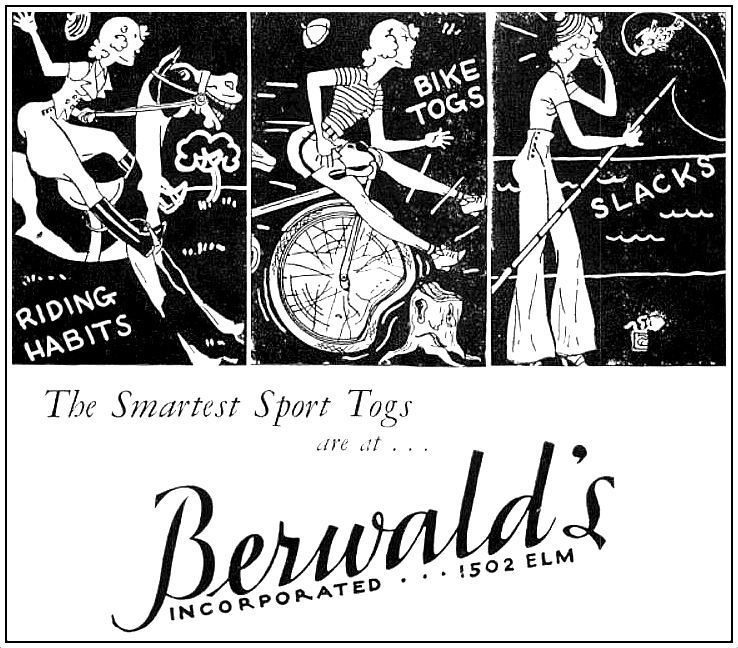
ad-berwalds_forest-ave-high-school_1934-yrbkRiding habits, bike togs, slacks… (click for larger image)

by Paula Bosse

Another year is coming to a close — time to share a whole bunch of bits and pieces I’ve come across over the past year or so but haven’t found a home for.

My posting of vintage Dallas ads has been severely lacking this year. Enjoy the Berwald’s ad above, found in the 1934 Forest Avenue High School yearbook.

Let’s dive in to the rest of the potpourri of randomness. (Most clippings are larger when clicked.)

The Adolphus Hotel once had a bakery (located in Deep Ellum on what is now Clover Street, between Commerce & Canton, and between Crowdus & Malcom X). They produced products called the Adolphus Sr. (one-and-a-half-pound loaves) and the Adolphus Jr. (one pound loaves).

adolphus-bakery_hotel-monthly_june-1920
Hotel Monthly, June, 1920

adolphus-bakery_1921-directory
1921 Dallas city directory

*

That uncooperative Trinity. This odd blurb made it into a small-town Kansas newspaper. Man, Texas sounds rough.

four-printers_great-bend-ks-weekly_072088
Great Bend Weekly (Kansas), July 20, 1888

*

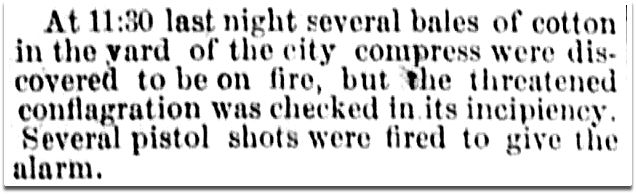
In 19th-century Dallas, things were forever erupting in flames.

cotton-fire_dal-herald_021582
Dallas Herald, Feb. 15, 1882

*

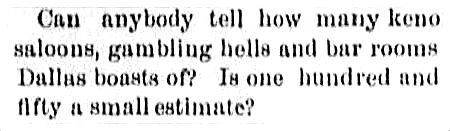
Dallas has always had a lot of bars. This newspaperman’s musing is from 1874. I don’t know what the city’s population was that year, but in 1870 it was 3,000.

bars_saloons_dal-herald_123174
Dallas Herald, Dec. 31, 1874

*

Potholes have been a problem since there were roads. And people have been writing sarcastic letters to the editor almost as long. (Masten Street is now St. Paul.) (The man who wrote this letter — George Atkins — was a purveyor or medicinal rattlesnake oil. I wrote about him here.)

potholes_atkins_dmn_012990
DMN, Jan. 29, 1890

*

Egg Phosphates, made from pure-dee Dallas rainwater.

cistern-milkshakes_dallas-herald_041487
Dallas Herald, April 14, 1887

*

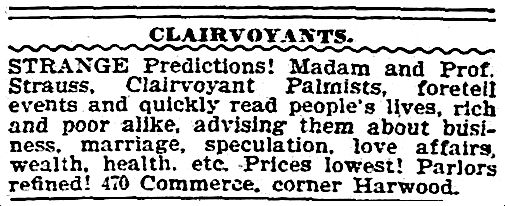
It’s 1907. You need a clairvoyant in a “refined parlor” STAT! Where do you go?

clairvoyant_dmn_083007
DMN, Aug. 30, 1907

*

This is amusing.

guns_fwdailygazette_112587
Fort Worth Daily Gazette, Nov. 25, 1887

*

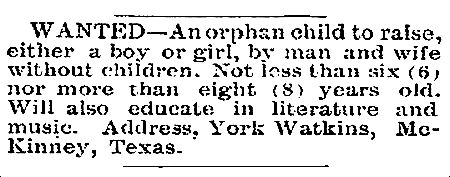
Wanted: orphan. (From The Dallas Express, the city’s long-lived African-American newspaper.)
orphan_dallas-express_011300
Dallas Express, Jan. 13, 1900

*

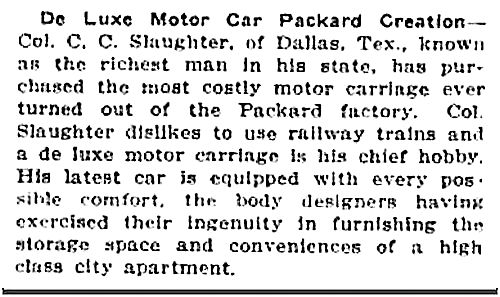
Bazillionaire C. C. Slaughter’s tricked-out Packard (probably the one I wrote about here).

slaughter_packard_motor-age-magazine_052715
Motor Age Magazine, May 27, 1915

*

How many times do we have to ask you people? Do NOT spit in the streetcars!

streetcars_dmn_121811
DMN, Dec. 18, 1911

 *

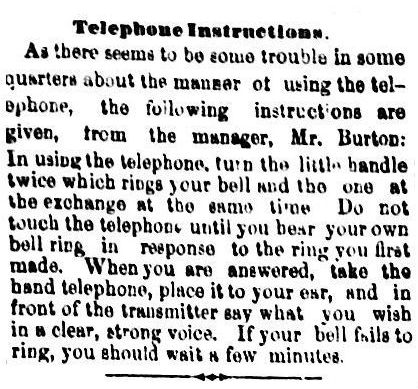
PSA: How to use your telephone.

telephone-instructions_dal-herald_053181
Dallas Herald, May 31, 1881

*

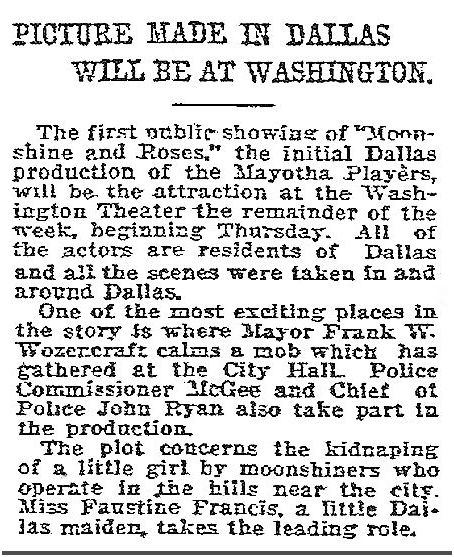
I’ve run across a lot of articles about locally-made little movies like this one, which most likely no longer exist anywhere. It would be so great to be able to see things like this one, “Moonshine and Roses”!

movie-made-in-dallas_dmn_120220_moonshine-and-roses
DMN, Dec. 2, 1920

*

Wolf on Live Oak!

wolf_dallas-herald_022874
Dallas Herald, Feb. 28, 1874

*

Hot weather, gunpowder, English tea, and garbage in the streets.

garbage_dal-herald_082080
Dallas Herald, Aug. 20, 1880

*

A  novel way of driving off rats.

rats-bells_pop-mechanics_june-1927
Popular Mechanics, June, 1927

*

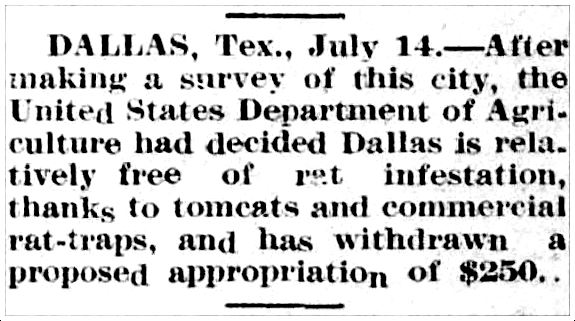
By 1931, the city was “relatively free of rat infestation.” No mention of small bells.

rat-infestation_waxahachie-daily-light_071431
Waxahachie Daily Light, July 14, 1931

*

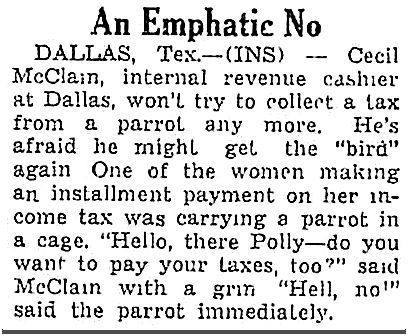
So there’s this parrot and an IRS man….

random_hammond-indiana-times_080339
Hammond Indiana Times, Aug. 3, 1939

***

If the print is too small to read — click it!

*

Copyright © 2016 Paula Bosse. All Rights Reserved.


Holiday Greetings!

xmas_neiman-marcus_ebay

by Paula Bosse

I want to wish everyone a Merry Christmas, a Happy Hanukkah, and Season’s Greetings! I hope this holiday season is a happy and safe one for us all.

***

“Noel” card appears to have been a Neiman-Marcus Christmas card; the flap of the envelope is below. Both images are from eBay.

xmas_neiman-marcus_ebay-envelope

*

Copyright © 2016 Paula Bosse. All Rights Reserved.

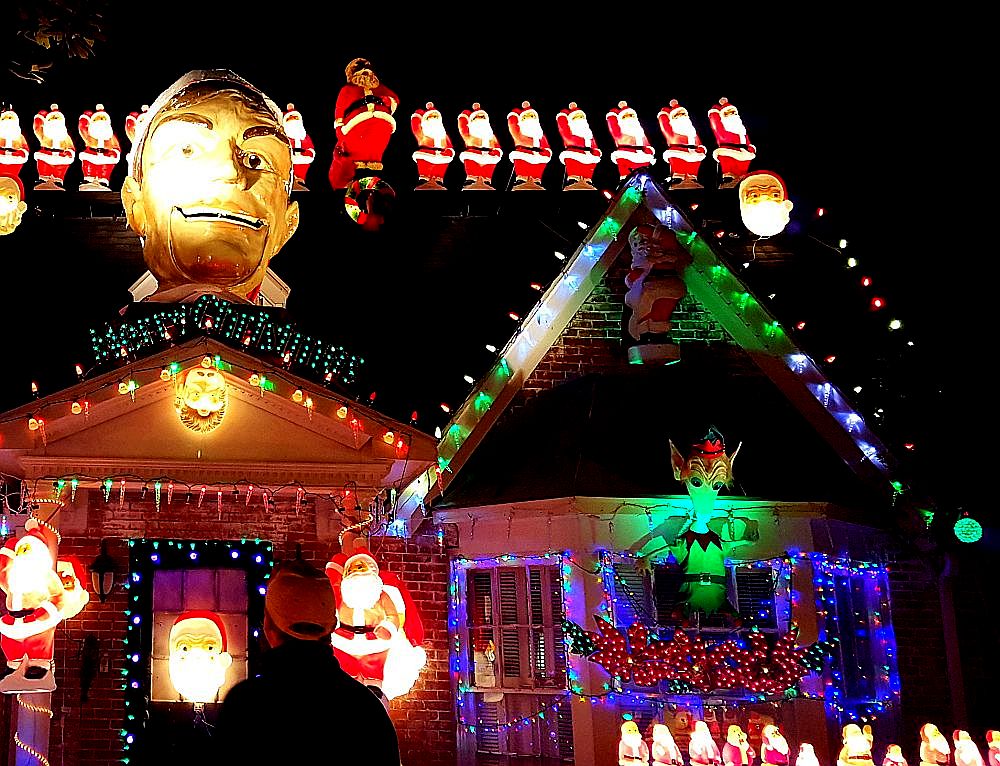
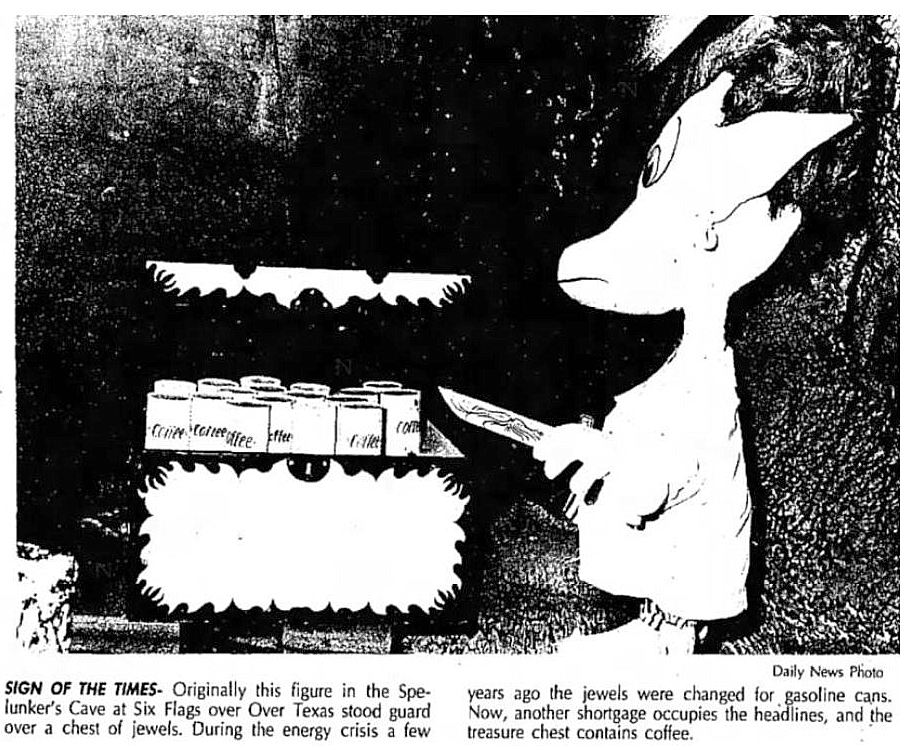
The Over-the-Top University Park Christmas Display Featuring Big Tex and a Six Flags Spee-lunker

xmas-wayne-smith_university-park_2015_big-tex_speelunkerBig Tex on the roof, a “Spee” to the right (click for larger image)

by Paula Bosse

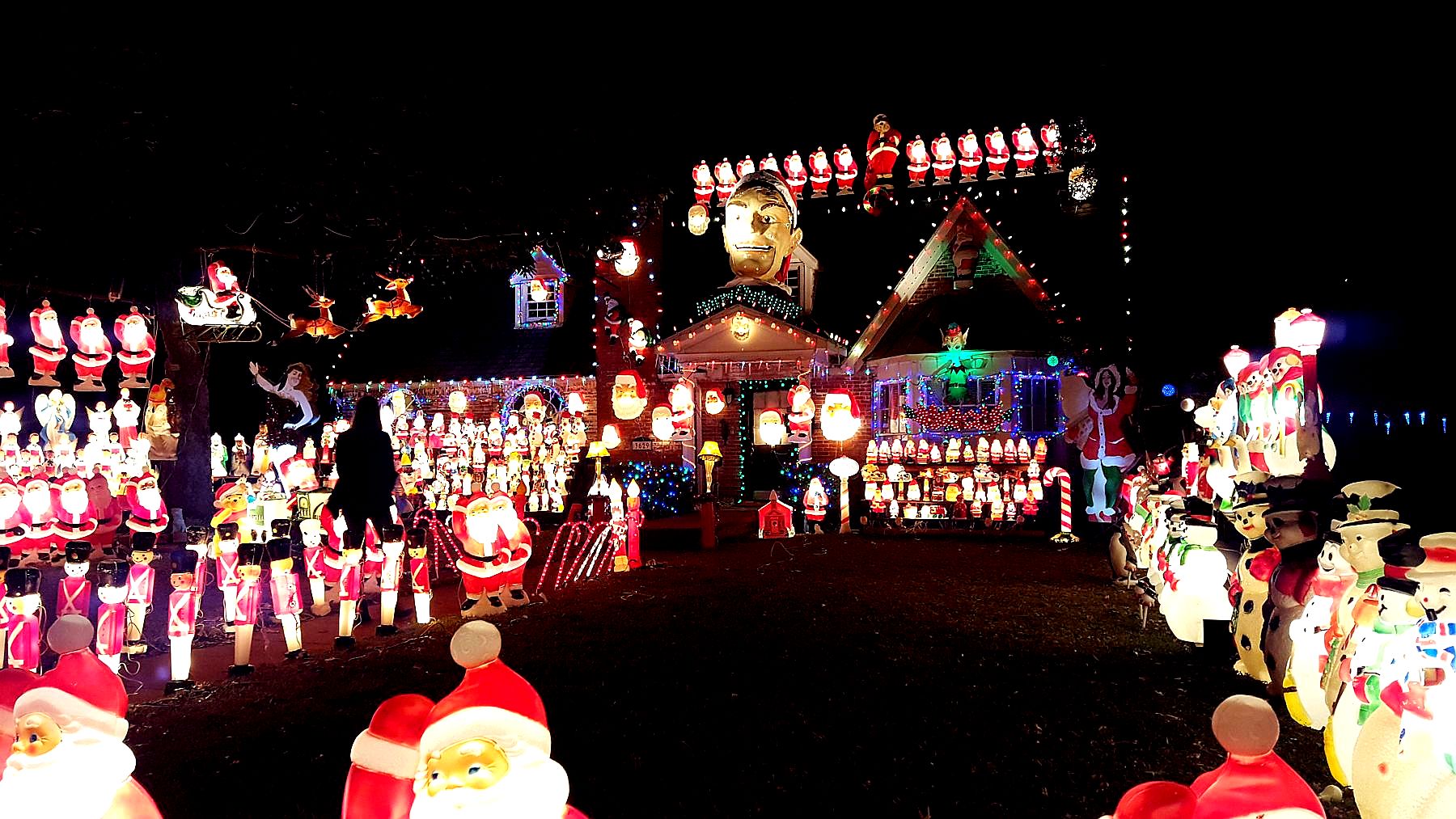
You may have heard about Wayne Smith’s annual spectacular Christmas display in the 3600 block of Southwestern in University Park — the one with a cast of thousands, including a previous head of Big Tex, what seems like hundreds of illuminated Santas, Dracula, Moe Howard, and a former denizen of Six Flags Over Texas’ “Cave”/Spee-lunker ride. Before I get back to the “Spees” (the name the creatures have been given by their surprisingly enthusiastic fan-following), here’s a wider shot of a photo I took during last year’s holiday season. (Click it!)
xmas_wayne-smith_university-park_2015_full

(And this gives you only an inkling of what’s actually there. I LOVED it! I waited until after Christmas — in fact, after New Year’s — to wander around — I can only imagine how backed up with looky-loos the street gets closer to Christmas.)

*

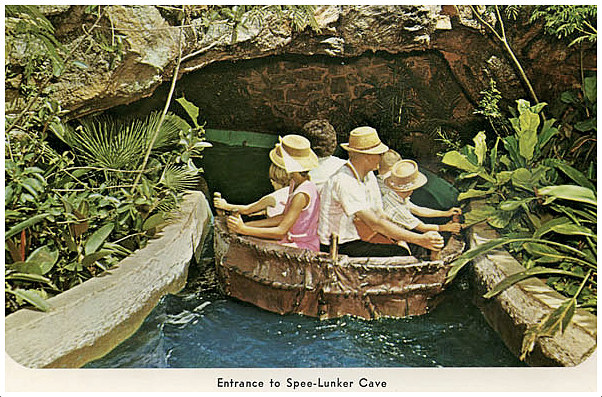
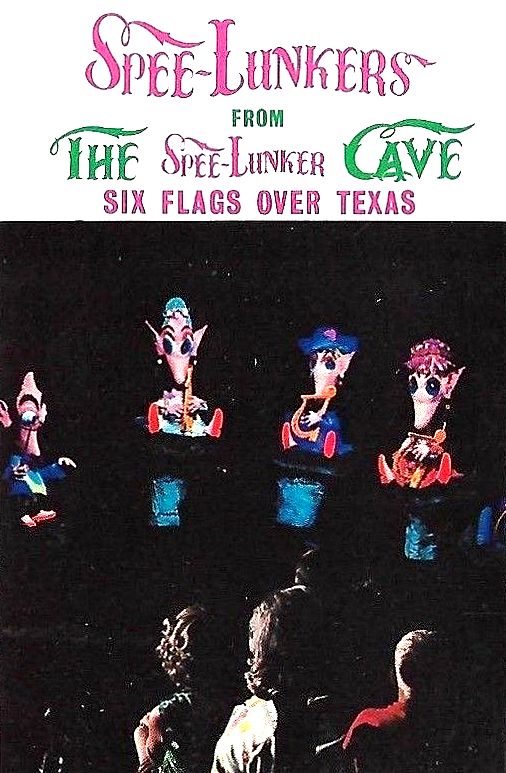
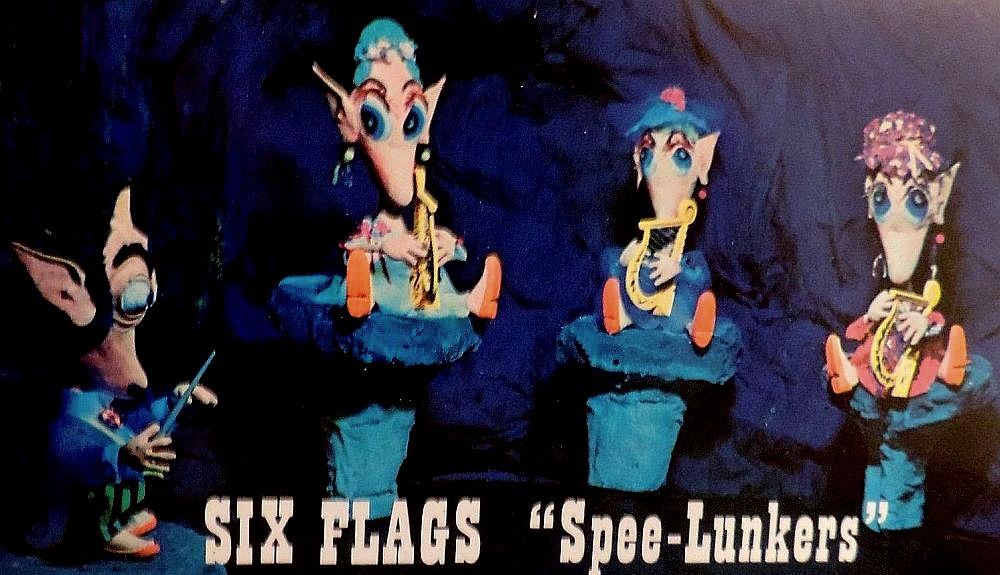
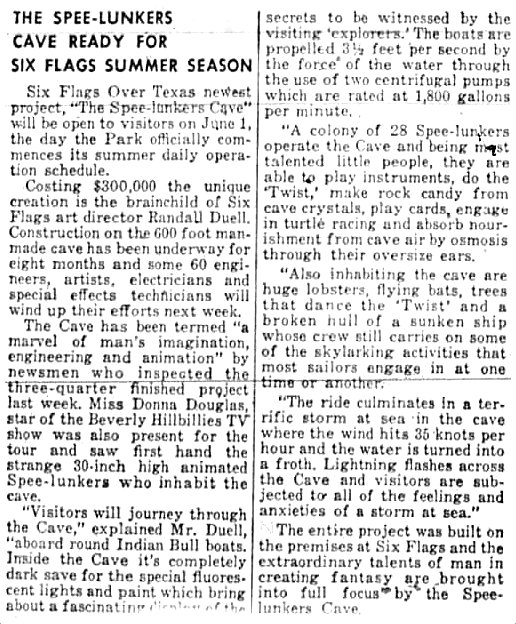
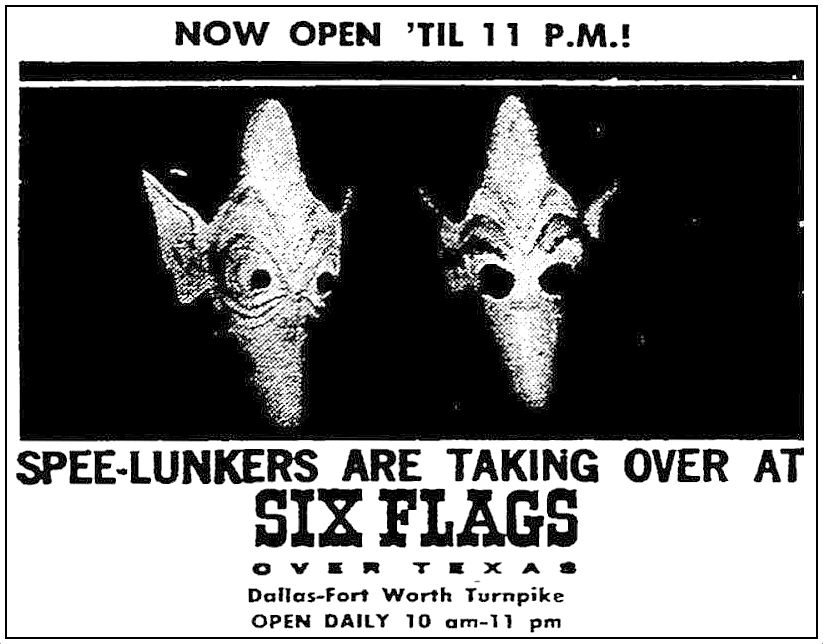
Back to the Spees. The Cave water ride debuted in 1964 and was an immediate hit. When it opened, there were 28 of these creatures who, according to the original marketing, “came from innerspace.”

They are 30 inches high and they play harps, do the Twist, play cards, hammer cave crystals into rock candy and engage in a shell game — turtle racing.

This ride was always one of my favorites (probably because it provided a brief, cool respite from the glaring sun and the blasting heat that plagued my annual summer visits to Six Flags).

The Spee-lunkers left Six Flags a long time ago, so it’s nice to see that one of them is still entertaining local crowds, right next to another beloved DFW icon, Big Tex … along with a phalanx of festive Santas!

spee-lunker-cave_postcar

six-flags_speelunkers_ebay

six-flags_speelunkers_postcard_ebay

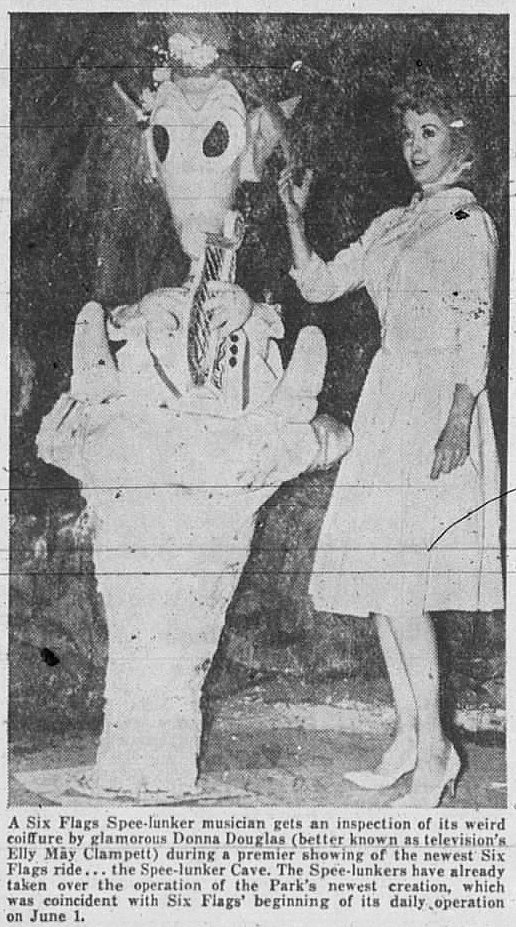
Lest you think the publicity mill wasn’t working all angles of this new attraction, we see below that one of the Spees got a visit from, of all people, TV-darling Donna Douglas who played Elly May Clampett on The Beverly Hillbillies.

cave_hood-county-news-tablet_060464

cave_hood-county-news-tablet_060464-text
photo and article, Hood County News Tablet, June 4, 1964

cave_fwst_082264
August, 1964

cave_grand-prairie-daily-news_052577
Grand Prairie Daily News, May 25, 1977

***

Sources & Notes

Photo of Wayne Smith’s Christmas display taken by me on January 2, 2016. The house is in the 3600 block of Southwestern, between Baltimore and Thackery. Since the display is probably visible from space, there’s no way you can miss it.

Postcards found on eBay and Google.

Every year TV crews descend on Smith’s house to do a story. Watch one from this year — from CW33 News — here.

For those who might like more info on the Spee-lunker attraction/ride (which, by the way, is classified as a “dark ride” in amusement park lingo) at Six Flags Over Texas, here’s a bunch of links:

  • Weird video and music (and history!) by a superfan, here
  • Article by the same guy who put the above video together, here
  • Spee-lunker vignettes described here
  • Google images aplenty, here

More on the new ride can be found in the Dallas Morning News archives in the article “$300,000 Hole: Six Flags To Open Cave Ride” (DMN, May 24, 1964) — accompanying the article is an amusing photo captioned “Gail Powers yelps in mock fear as lobster seizes her hand.”

A shout-out to Wendy Cook who, when I posted the top picture to the Flashback Dallas Instagram feed in January, pointed out to me that the Spee-lunker was even in there. She recognized him right away, but with so much visual overload, I hadn’t even noticed him! Thanks, Wendy!

See stuff bigger — when in doubt, click it!

*

Copyright © 2016 Paula Bosse. All Rights Reserved.


Christmas Toy Sale at Sanger’s! — 1955

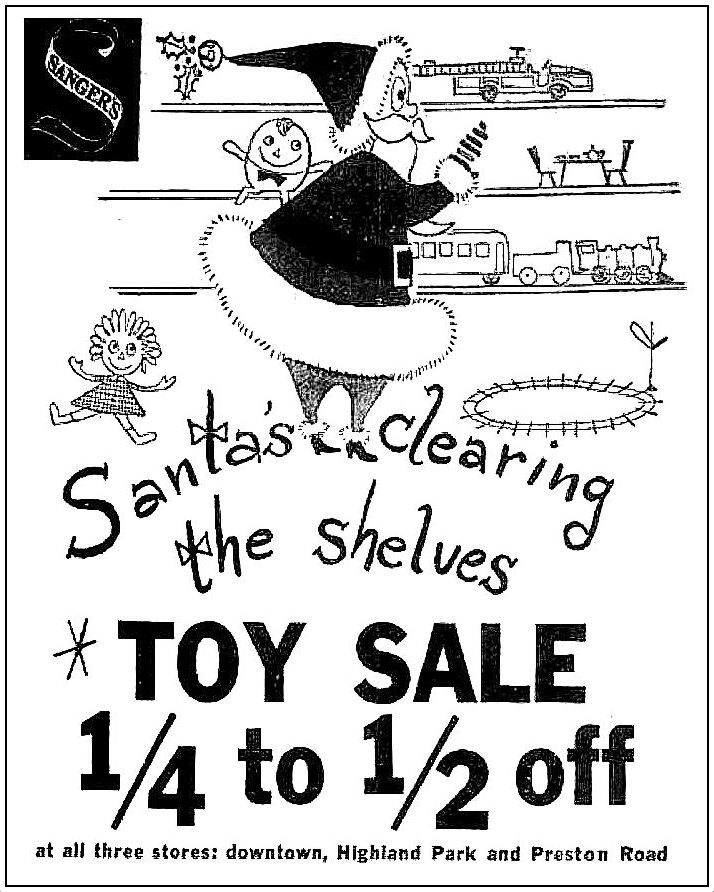
xmas_sangers_dmn_122255aBargains ahead: Santa’s clearing the shelves…

by Paula Bosse

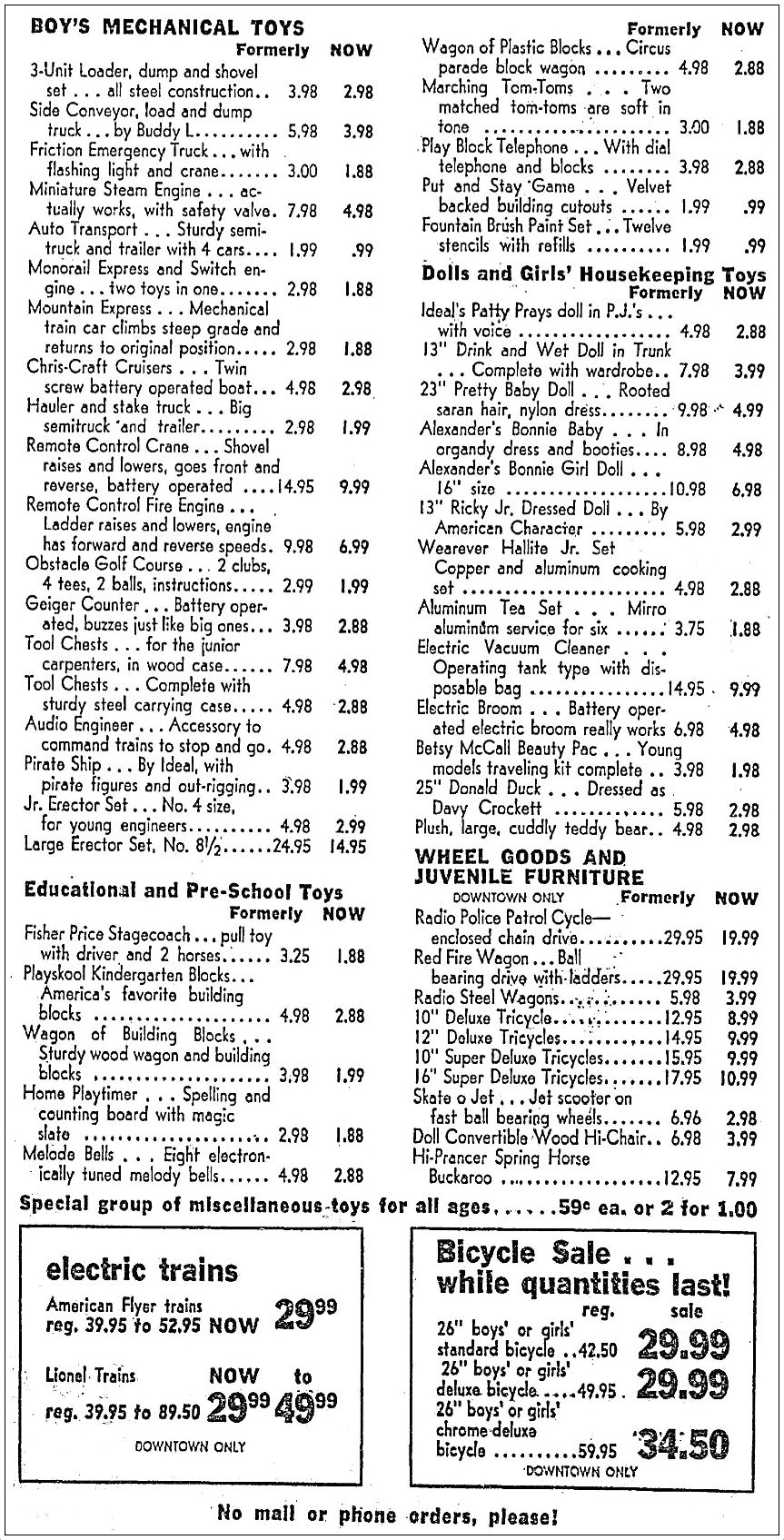
Look at all the toys that were on sale in the final days before Christmas — “at all three [Sanger’s] stores: downtown, Highland Park and Preston Road.” Need a “Ricky, Jr. doll”? A kiddie Geiger counter? A two-foot-tall Donald Duck toy dressed as Davy Crockett? Look no further — Sanger’s has it. (Click ad to see a larger image and take a walk down Childhood Toy Memory Lane.)

xmas_sangers_dmn_122255b

*

Copyright © 2016 Paula Bosse. All Rights Reserved.


From the Vault: Dallas’ First Christmas Tree — 1874

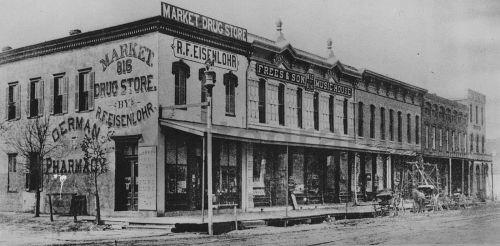
eisenlohr_1885_ebayThe Eisenlohr store and residence, Main and Field streets, 1885

by Paula Bosse

I loved stumbling across this eBay photo of the Eisenlohr store at the southwest corner of Main and Field and then discovering that Mr. Eisenlohr (father of the artist E. G. Eisenlohr) was responsible for introducing the Christmas tree to Dallas. Read about it in the post from last year, here.

*

Copyright © 2016 Paula Bosse. All Rights Reserved.

Merry Christmas from the Priscilla Art Club — 1968

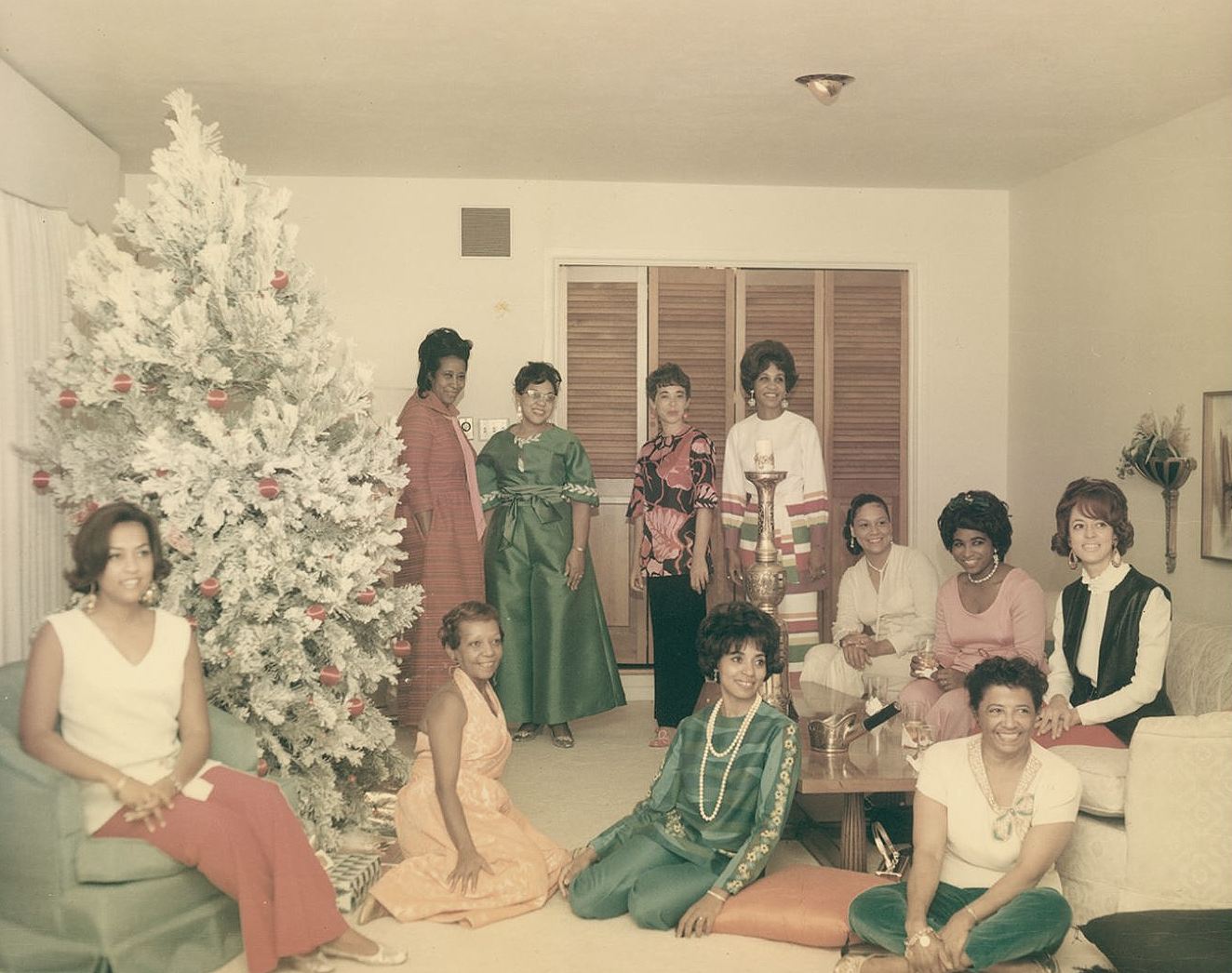
xmas_priscilla-art-club_123168_uta“Say ‘fondue’!”

by Paula Bosse

These women look like they’ve stepped out of a catalog — perfectly dressed, perfectly coiffed, perfectly posed. They are members of the Priscilla Art Club, the oldest African-American women’s club in Dallas. The club was formed in 1911, and I think it may still be active — the most recent news I could find of the club was from 2012, when the “centennial legacy quilt,” made by members to celebrate the club’s 100th anniversary, was displayed at the African American Museum. Below, a little history of the club from the press release announcing the exhibit in February, 2012.

THE PRISCILLA ART CLUB CELEBRATES BLACK HISTORY MONTH

In honor of Black History Month, the Priscilla Art Club, the oldest African American women’s organization in Dallas County, will host a display of its centennial legacy quilt made by its members […] at the African American Museum of Life and Culture, Dallas Fair Park.

“The idea of a custom designed legacy quilt started out as a novel idea from our Systems Committee in recognition of our 100th anniversary. The twenty-two club members quickly became engaged in seeing it to fruition and we are happy to honor the beauty, the inspiration and the legacy of our Club” said Shirley Porter Ware, Club President.

The Priscilla Art Club, organized in 1911 as a club for young matrons, was organized under the encouragement and direction of Mrs. Mattie Mansfield Chalmers. The organization’s purposes were to establish and maintain the aesthetic, promote congenial companionship and foster all social and community interests that pertain to the general uplift. The Club was named for Priscilla, a New Testament woman of extraordinary culture and the wife of Aquila, a Jewish tentmaker.

Since its auspicious beginning, the Club has invited into its membership many of Dallas’ most distinguished homemakers. These members have exhibited an interest or are talented in arts and crafts.

Besides being homemakers and mothers, the members have been and some still are principals, school administrators, teachers, business owners, social workers, church leaders and servant volunteers in the local community.

Throughout the century of service and sisterhood, recorded in The Priscilla’s prolific history include mention of service rendered in support of the World War I efforts by rolling bandages that were sent overseas to the field hospitals in France. For several years, the Priscillas decorated the shotgun house, located in Old City Park, in observance of the holiday season. In more recent years, the members have decorated t-shirts and jackets made from sweat shirts to give to men and women in local assisted living facilities. Club members have made crocheted skull caps in a variety of vivid colors and patterns and donated to cancer patients actively engaged in treatment regimens.

Regardless of change, the Priscilla Art Club’s concern for its artistic endeavors and for civic and social uplift will continue with deepening interest and commitment as the tradition of the founders’ legacy is carried forward.

I hope the club is still around. This year marks its 105th anniversary.

***

Sources & Notes

Photo was taken on December 31, 1968; from the Culmer Family Papers, UTA Libraries, Special Collections, accessible here.

The 2012 press release was posted on the Facebook page of the Dallas Fort Worth Association of Black Journalists, here.

More on the history of the club can be found in the Dallas Morning News article “Reception to Honor Art Club’s 65th Year” by Julia Scott Reed (DMN, April 2, 1976).

The most in-depth history of the club that I could find online can be found in the guide to the Culmer Family Papers at UTA, here (scroll down to the paragraph that begins “The Priscilla Art Club was one of the most prestigious, if not elitist clubs for African American women in Dallas….

*

Copyright © 2016 Paula Bosse. All Rights Reserved.

Albert Einstein “Threw the Switch” in New Jersey to Open the Pan-American Exposition in Dallas — 1937

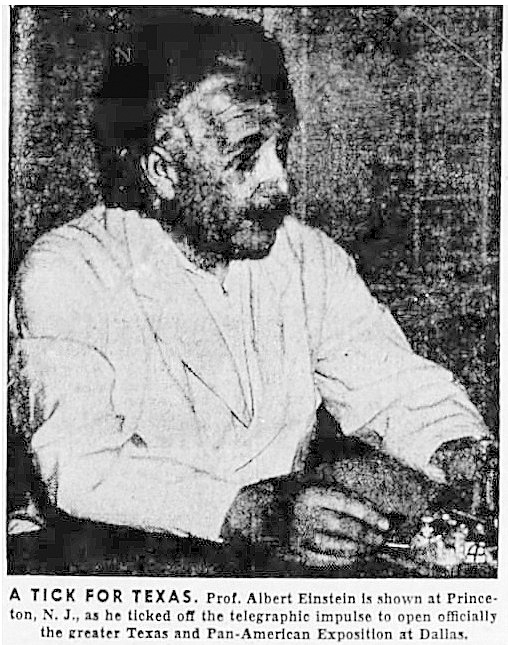
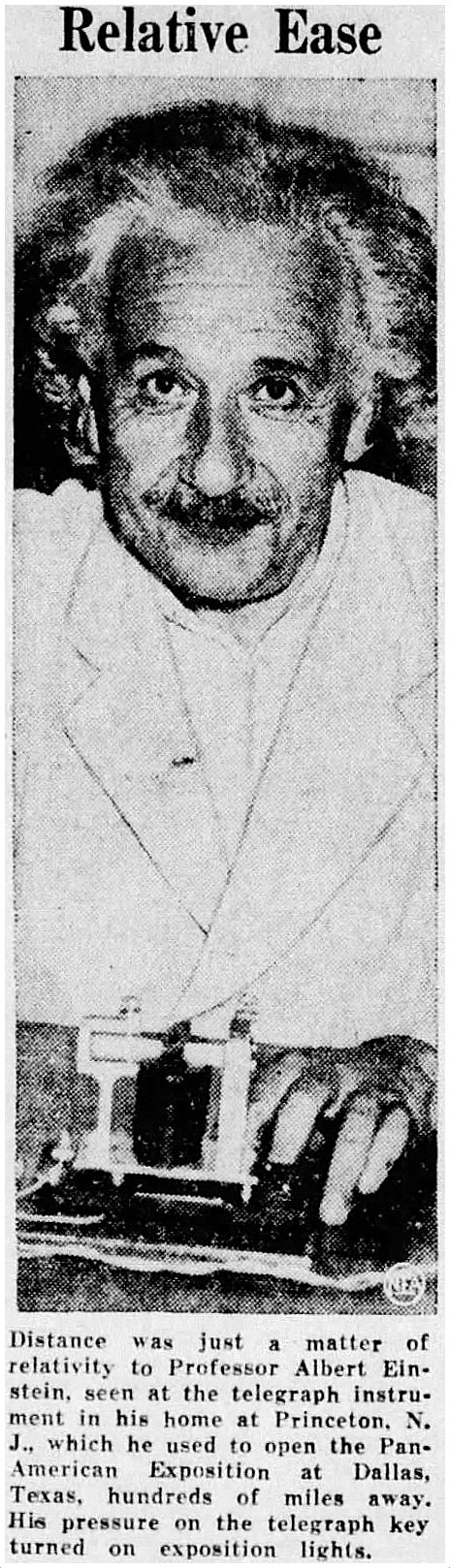
pan-american-expo_einstein_061237Einstein at the switch, June 12, 1937…

by Paula Bosse

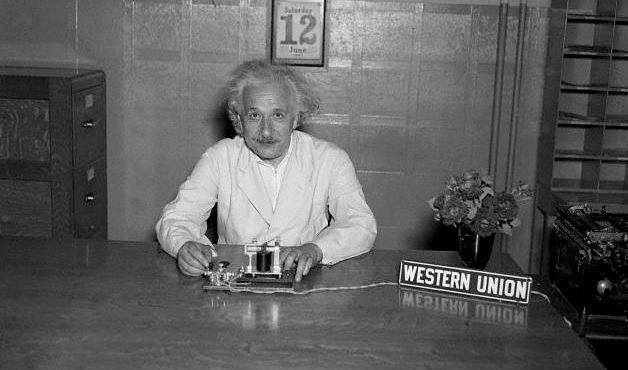
Who knew? Albert Einstein, the world’s most famous physicist, helped open the Greater Texas and Pan-American Exposition. The exposition was held at Fair Park for 20 weeks, from June 12, 1937 to October 31, 1937, as a follow-up of sorts to the Texas Centennial (the city had built all those new buildings — might as well get their money’s worth!). I’m not quite sure how Einstein got roped into this, but looking at the photo above, he seemed pretty happy about what was, basically, a long-distance ribbon-cutting. Via telegraph.

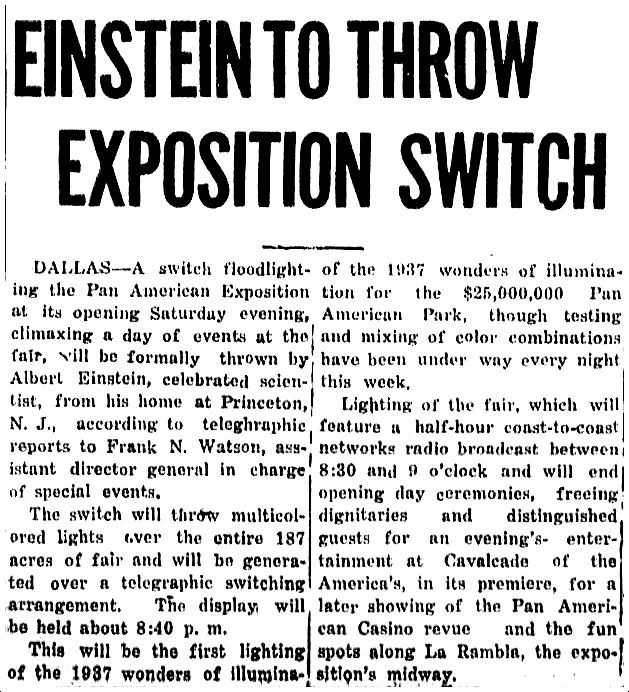
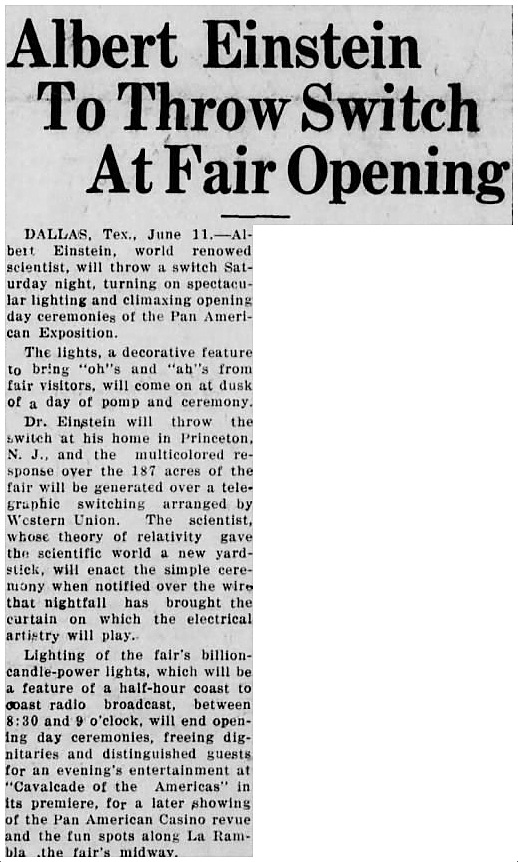
The plan was for Professor Einstein to officially open the Pan-American Exposition by “throwing the switch” which would turn on massive displays of lights around Fair Park. He would do this from Princeton, New Jersey, where he lived, by closing a telegraph circuit which would put the whole thing in motion. Newspaper reports varied on where exactly Herr Einstein was tapping his telegraph key — it was either the study in his home, in his office, in a Princeton University administration building, or in the Princeton offices of Western Union (the latter of which was mentioned in only one report I found, but it seems most likely).

Einstein was a bona fide celebrity, and this was national news — newspapers around the country ran stories about it, and the ceremony was carried live on coast-to-coast radio. Almost every report suggested that Einstein’s pressing of the key in New Jersey would be the trigger that lit up the park in Texas, 1,500 miles away — which was partly correct. According to The Dallas Morning News:

Lights on the grounds will be turned on officially at 8:40 p.m. when Dr. Albert Einstein, exponent of the theory of relativity, presses a key in his Princeton home to fire an army field gun. With the detonation of the shell, switches will be thrown to release the flood of colored lights throughout the grounds. (DMN, June 10, 1937)

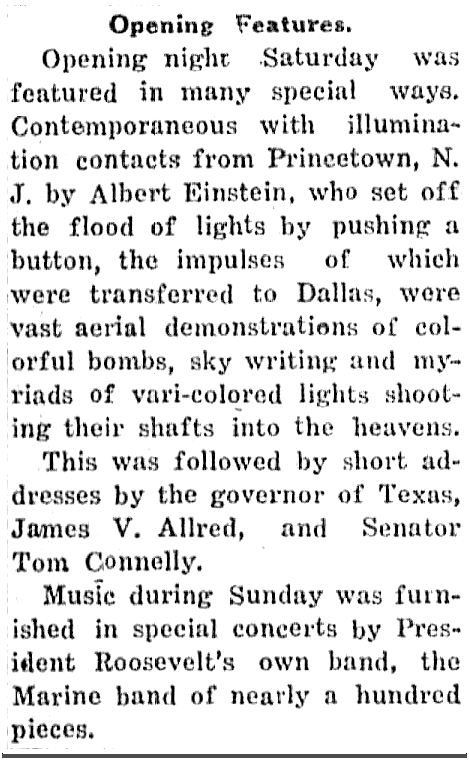
So on June 12, 1937 he pressed a telegraph key somewhere in Princeton, NJ, an alert was instantly wired to Dallas, an army field gun (in some reports a “cannon”) was fired, and that blast was the cue for electricians positioned around the park to throw switches to illuminate the spectacular displays of colored lights.

The Western Union tie-in gimmick was a success. Newspaper reports might have been a little purple in their descriptions, but from all accounts, those lights going on all at once was a pretty spectacular sight.

Dr. Albert Einstein, celebrated scientist, threw a switch that flashed a million lights over the 187-acre exposition park. The flash came at 8:40 o’clock and instantly the huge park became a city of a million wonders. Flags from a thousand staffs proclaimed their nationality [and] bands played the national airs of the nations of the Western Hemisphere as lusty cheers roared with thunderous approval. The Greater Texas and Pan-American Exposition was formally opened. It is on its way. (Abilene (TX) Reporter News, June 13, 1937)

The Dallas News describes the crowd as stunned into silence:

The waiting participants in the ceremonies at Dallas heard the results [of Einstein’s telegraph signal] when a cannon boomed. Electricians at switches around the grounds swung the blades into their niches and the flood of light awoke the colors of the rainbow to dance over the 187-acre park. Its breath taken by the spectacle, the crowd stood silent for a moment, and then broke into a cheer. (“Pan-American Fair Gets Off to Gay Start” by Robert Lunsford, DMN, June 13, 1937)

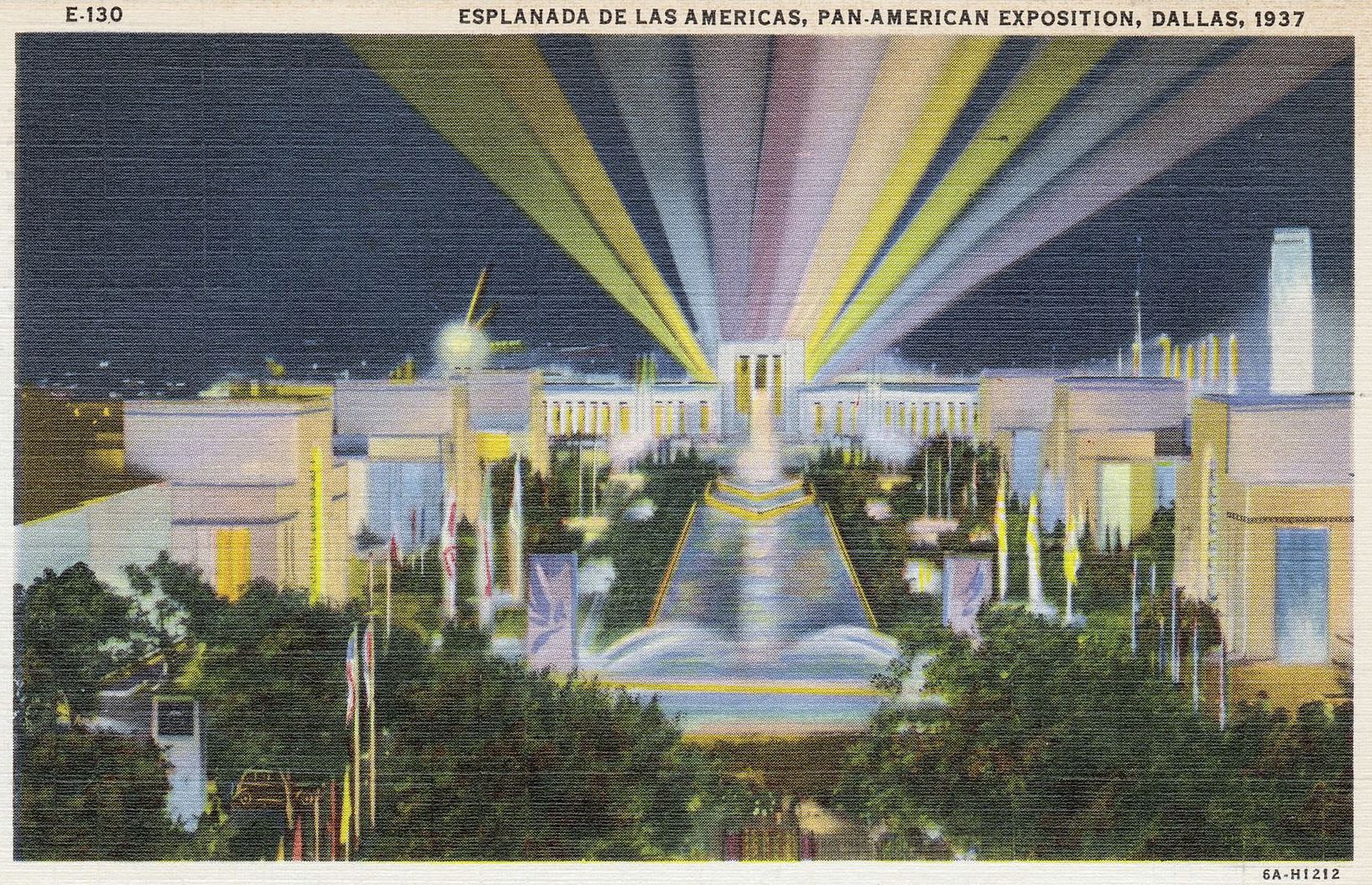
Many of the lighting designs and displays had been used the previous year during the Centennial, but, as with much of the attractions and appointments throughout the park, they were improved and spectacularized for the Pan-American Expo. And people loved what they saw.

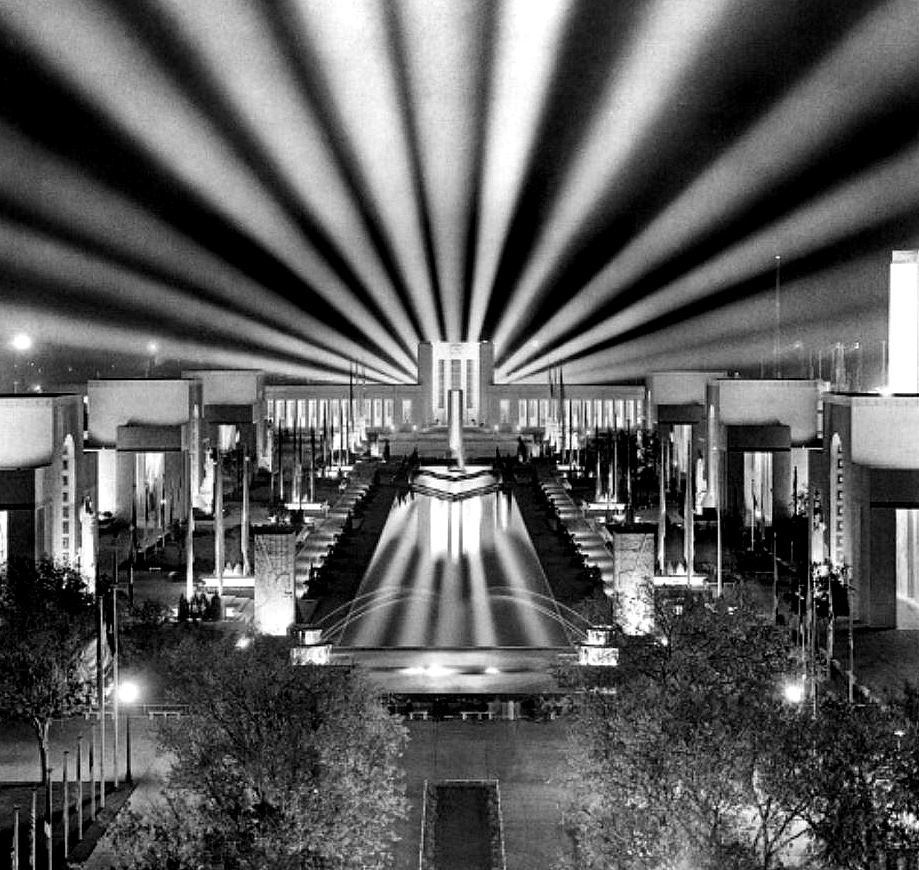
Despite the multi-million dollar structures, air conditioning demos, works of art and other newfangled additions to the space, when people left the Centennial Exposition one thing was on everyone’s tongues, according to historical pollsters: the lights.

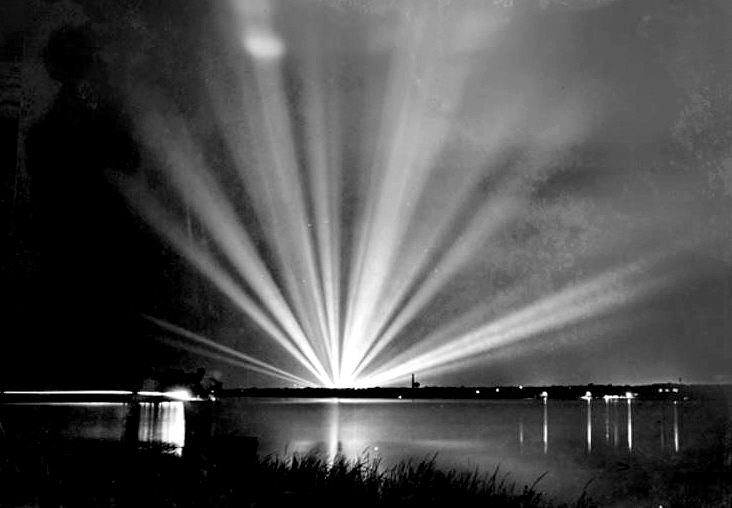
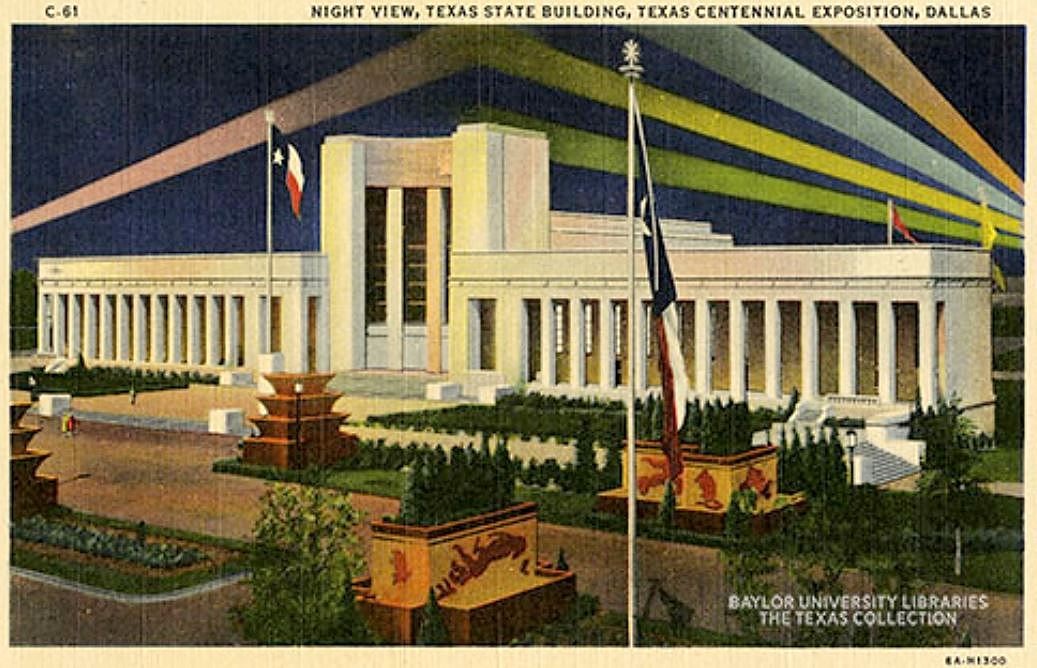
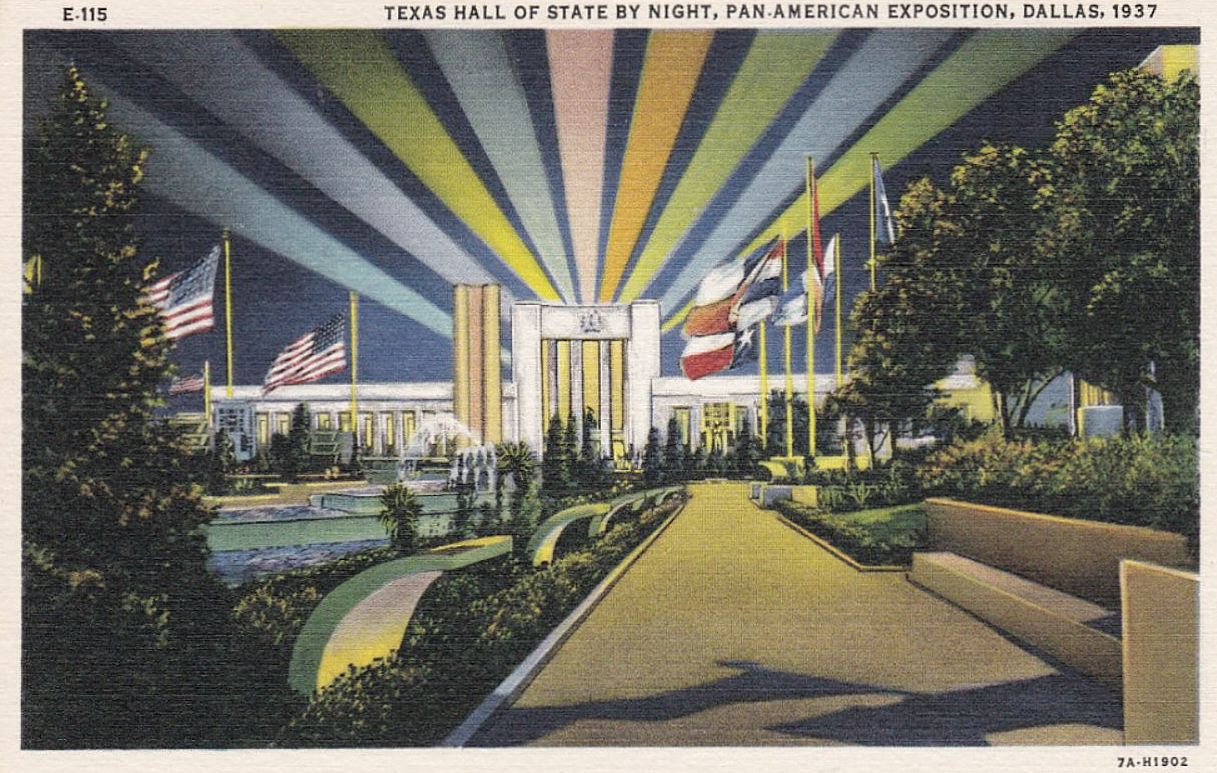
Positioned behind the Hall of State were 24 searchlights scaffolding into a crowned fan shape. “They all moved and were different colors,” says [Jim] Parsons [co-author of the book Fair Park Deco]. “It sounds gaudy, but people loved it.” The lights, he goes on to tell, were visible up to 20 miles away.

Considering most of the people who were visiting the fairgrounds were coming from rural farming communities with no electricity, the inspiring nature of those far-reaching beams makes a lot of sense. (Dallas Observer, Nov. 7, 2012)

Thanks for doing your part for Dallas history, Prof. Einstein!

pan-american-expo_esplanade_postcard

pan-american-expo_hall-of-state_postcard

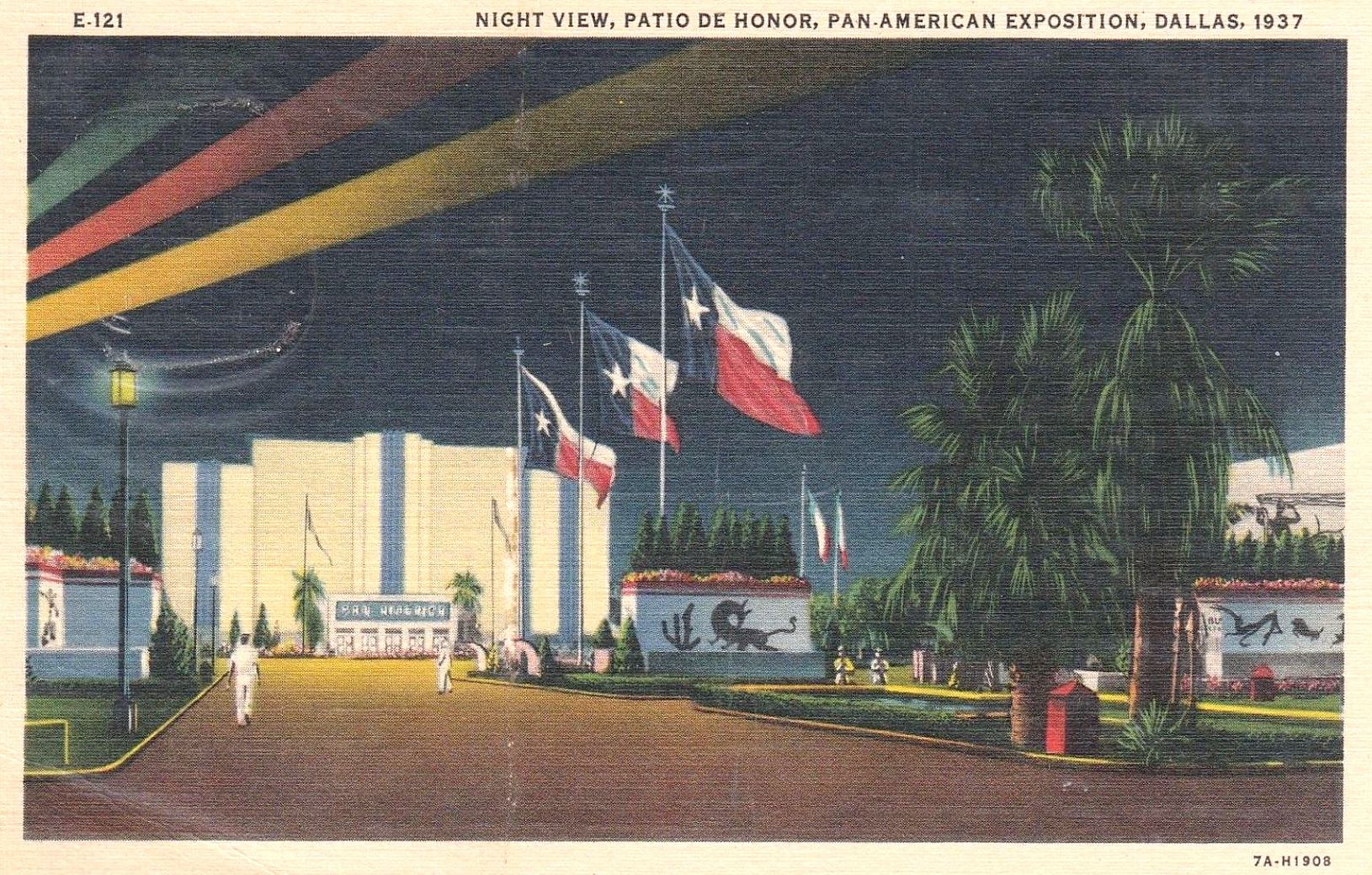
pan-american-expo_patio-de-honor_ebay

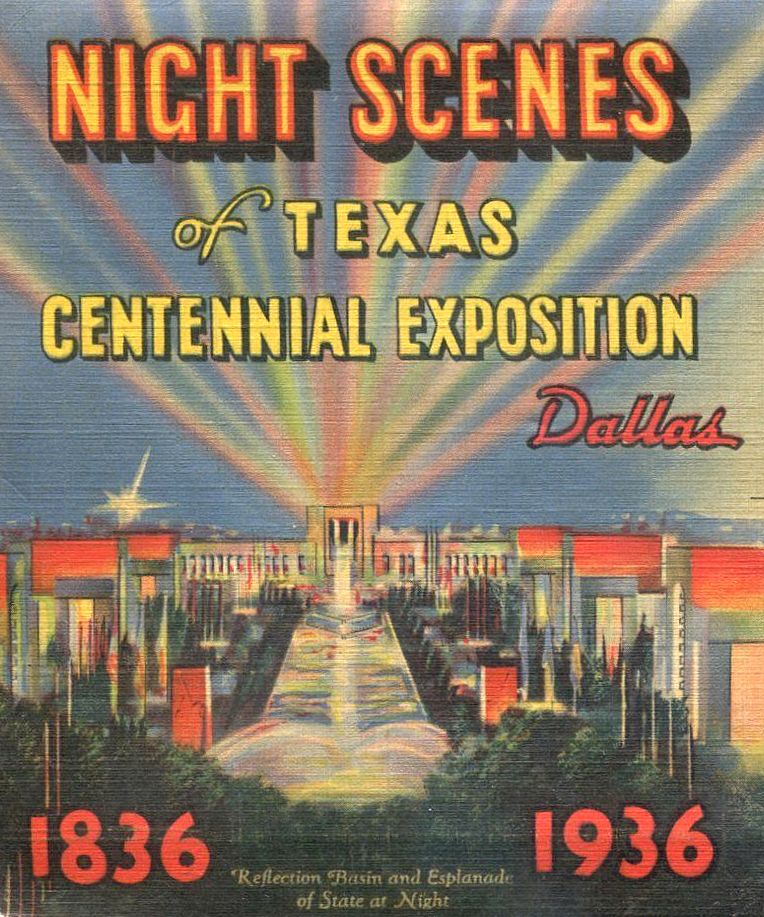
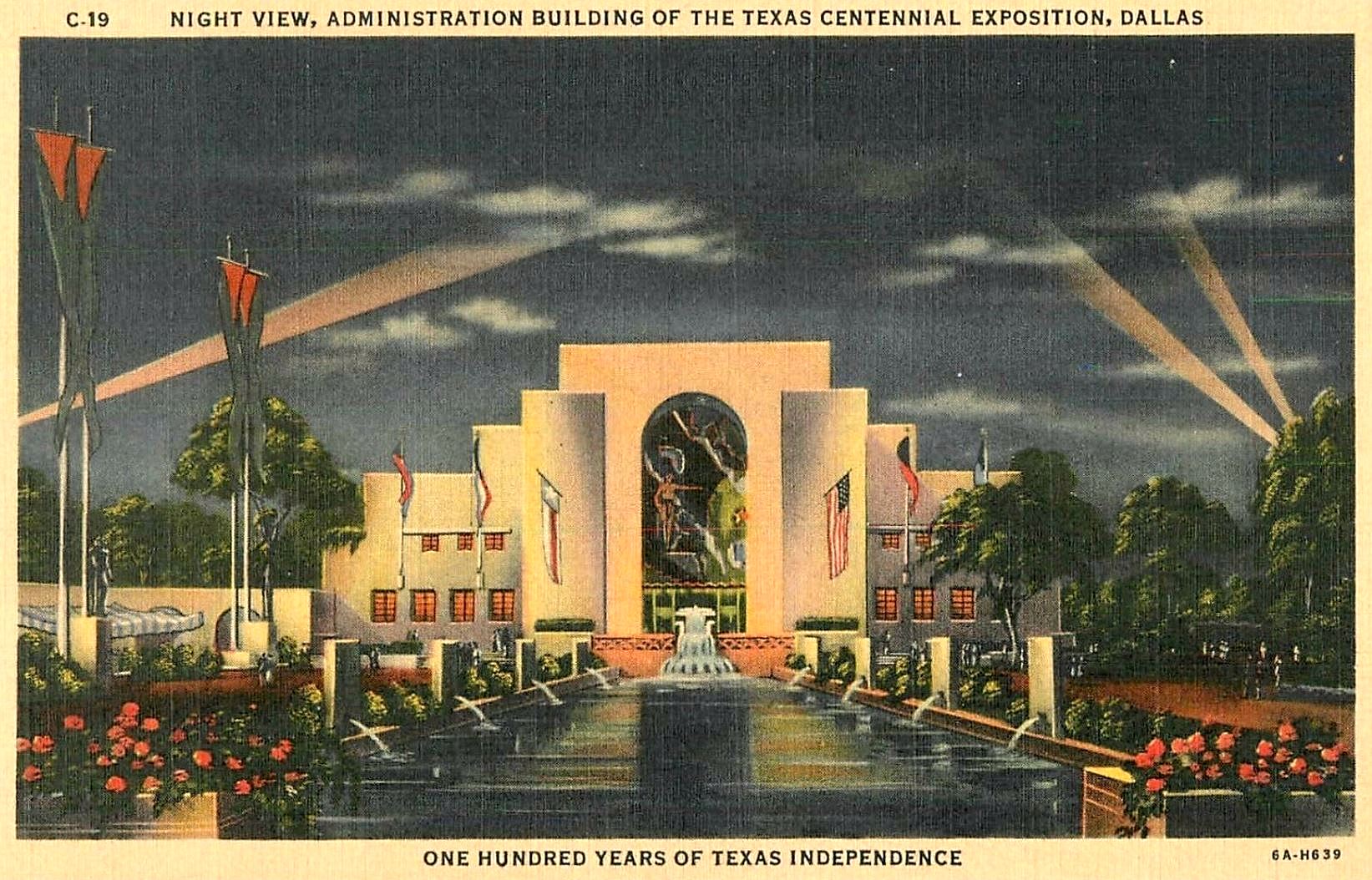
Below, photos from the Texas Centennial, 1936. The multicolored lights could be seen from miles away — here’s what they looked like from downtown and from White Rock Lake.

centennial_pan-american_lights

skyline_downtown-to-fair-park_1936_GE-colln_museum-of-innovation-and-science

fair-park-lights_white-rock-lake

tx-centennial_night-scene_espalanade_hall-of-state_lights_ebay

tx-centennial_night_hall-of-state_lights_flickr_baylorvia Baylor University Flickr stream

tx-centennial_night_administration-bldg_lights_ebay

*

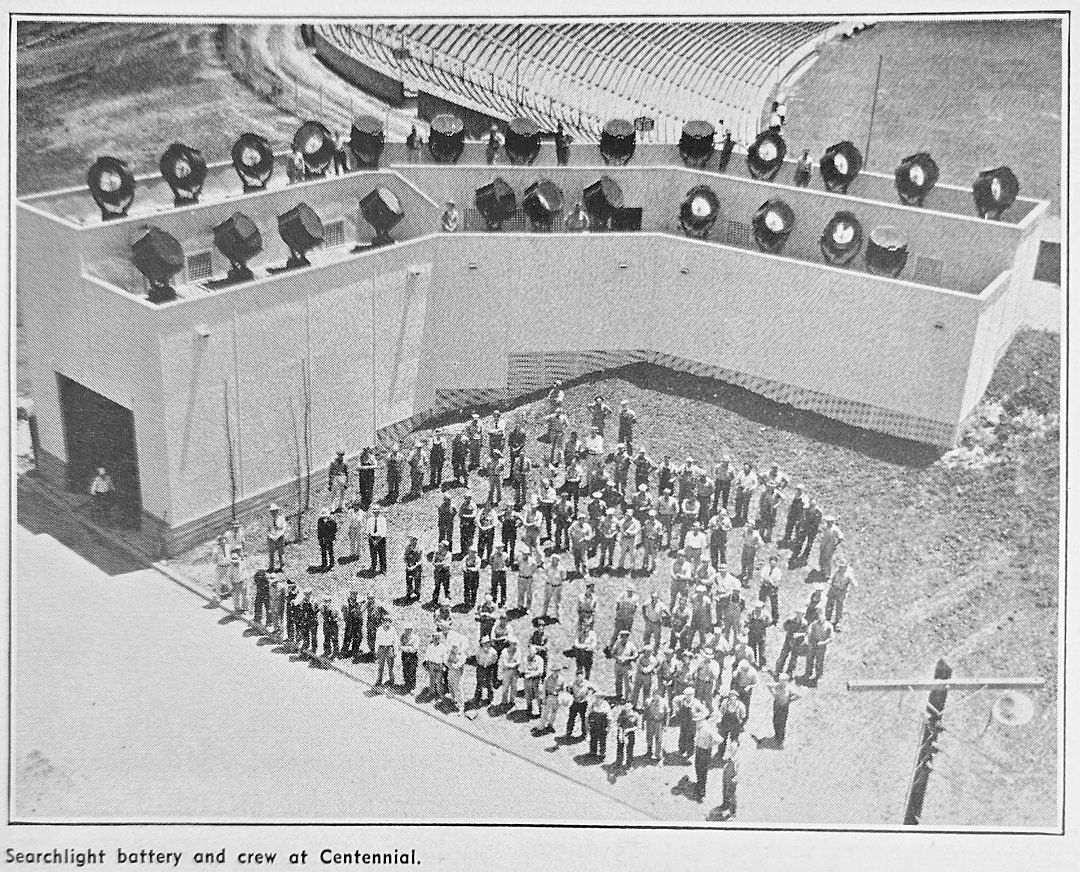
A look behind the scenes: “The general lighting effect is a battery of twenty-four 36-inch searchlights as powerful as the giants that flash from the dreadnoughts of Uncle Sam’s navy. Each searchlight will produce 60 million candlepower. Combined, the battery has a total candlepower of 1.5 billion. A 350,000-watt power generator will produce this colossal quantity of ‘juice.’” And the accompanying photo of the searchlight battery crew manning the candlepower:

tx-centennial_lights_southwest-business-mag_june-1936_photoSouthwest Business, June 1936

**

(All pictures and clippings are larger when clicked.)

einstein_pan-am-expo_denison-press_060937
Denison Press, June 9, 1937

*

einstein_pan-am-expo_waxahachie-daily-light_061137
Waxahachie Daily Light, June 11, 1937

*

einstein_pan-am-expo_denison-press_061437
Denison Press, June 14, 1937

*

einstein_pan-am-expo_medford-oregon-mail-tribune_062337
Medford (Oregon) Mail Tribune, June 23, 1937

*

einstein_pan-am-expo_vernon-daily-record_062437
Vernon Daily Record, June 24, 1937

*

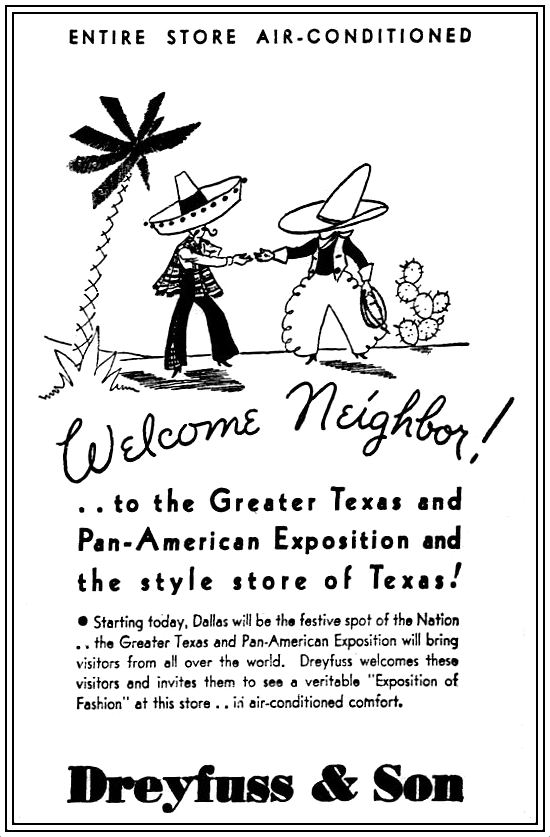
pan-american-expo_drefuss-ad_dmn_061237
1937

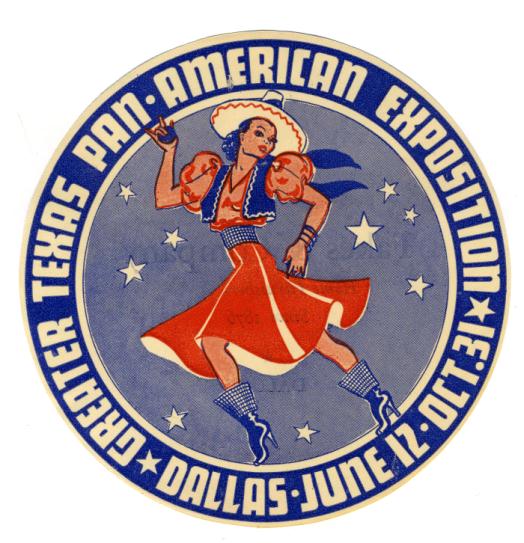
pan-american-expo_sticker_1937_cowgirl

***

Sources & Notes

Top photo from the old Corbis site.

Black-and-white photos from the Centennial seen from Fair Park and White Rock Lake are from the Texas/Dallas History and Archives Division of the Dallas Public Library; the photo of the lights seen from downtown Dallas (titled “New skyline at night from Dallas, Texas”) is from the GE Photo Collection, Museum of Innovation and Science (more info on that photo is here).

Sources of other images and clippings cited, if known.

More on the Pan-American Exposition from Wikipedia, here, and from the fantastic Watermelon Kid site of all-things-Fair-Park, here.

*

Copyright © 2016 Paula Bosse. All Rights Reserved.

Traffic at Ross and Pearl — 1920s

ross-and-pearl_galloway_park-citiesLooking northeasterly on Ross from N. Pearl (click for larger image)

by Paula Bosse

The photo above shows the intersection of Ross and Pearl. The streetcar tracks ran along Pearl. We’re looking northeasterly on Ross. To the left, out of frame, would be the Sacred Heart Cathedral (renamed Cathedral Santuario de Guadalupe in 1977). The photo comes from Diane Galloway’s wonderful book The Park Cities, A Photohistory. Her caption:

Traffic jams such as this one at Ross and Pearl Streets during the twenties encouraged Dallasites to pack up and move to newer developments away from the city.

With the crowd of people at the left, I think the traffic in this photo might have been caused by church-going motorists. The license plates on the cars seem to match those from 1927 and 1928 (links to license-plate-dating sites at bottom of post).

That impressive house at the top left with the pointed turret? At the time of this photograph, it was the George A. Brewer Undertaking Company. Like the two-blocks-away Belo Mansion, which was converted into the Loudermilk-Sparkman funeral home in 1926 (seen here), this spectacular house was once a private residence. It was built by Charles F. Carter (1848-1912), a wealthy cotton merchant, sometime between 1892 and 1895. It took up a huge lot at what is now the northeast corner of Ross and Crockett (see it at the bottom left of the 1921 Sanborn map, here). Here’s what the house looked like, circa 1894. (All pictures are larger when clicked.)

carter-house_church_dallas-through-a-camera_ca-1894_SMU

And, below, you can just see part of the house in a 1910 photo of the new-ish Cathedral at the corner of Ross and Pearl.

 sacred-heart-cathedral_1910_dpl

In 1920 or ’21 the Brewer Undertaking Co. moved into this house at 2303 Ross Avenue and operated as one of the city’s most prominent funeral homes until 1931 when they moved into a new location farther down Ross. When Brewer moved out, the beautiful house was demolished. In its place … a used car lot. Argh. In 1940, Lone Star Olds (later Lone Star Cadillac) moved in, eventually bought up the whole block, and became one of Dallas’ legendary car dealerships. It moved from its Ross Avenue location in 1985.

lone-star-cadillac_ross-ave_squire-haskins_uta

*

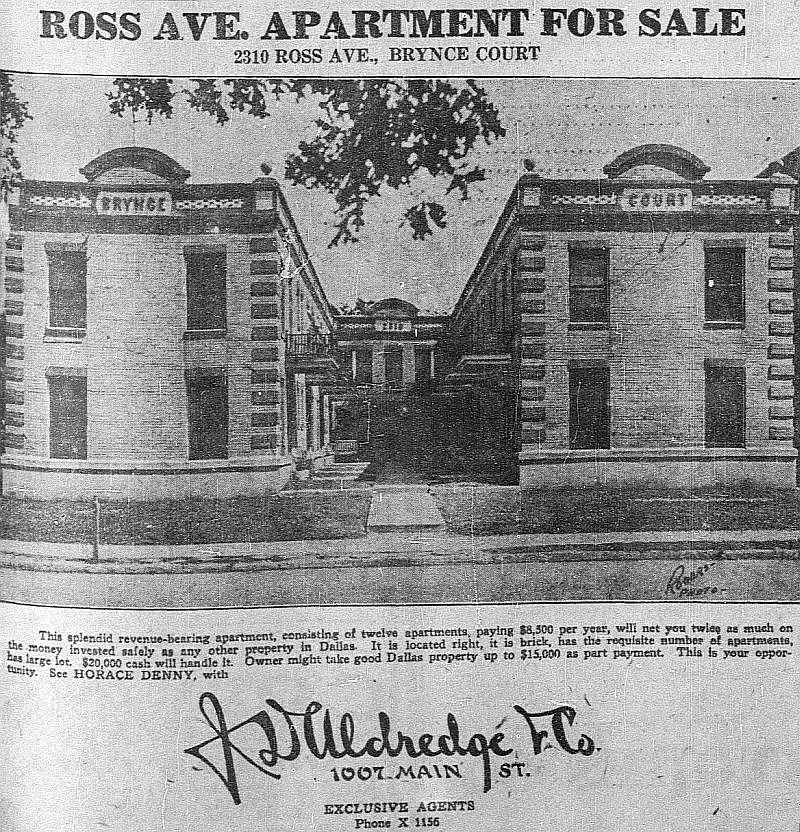
Also, even though it isn’t really visible in the top photo, across the street from the old Carter house — at 2310 Ross — was Brynce Court, a u-shaped apartment building. I haven’t been able to verify this, but The Dallas Morning News had a blurb about the “First Apartments” in the city which read as follows:

Dallas’ first apartment complex was a two-building development at 2310 Ross Ave. Built in 1919 [note: it appears to have been built in 1912], Brynce Court was the first set of apartments housed in more than one building.” (DMN, Jan. 7, 1984)

I mention this because it’s a cool little factoid, but also because I stumbled across a photo of it in an ad while looking for info on Lone Star Olds-Cadillac. So I have to show it. Surprisingly, this apartment block (which probably looked a lot less charming after fifty years) stood at that location until at least 1964.

brynce-court_dmn_051521
Dallas Morning News, May 15, 1921

brynce-court_dmn_042212
DMN, April 22, 1912

*

I always like to look at things in the background of old photos. Here’s an extremely blurry magnified detail from the top photo, showing a two-story building of shops and businesses at Ross and Leonard. Included in these businesses is the Imperial Drug Store — it’s a little hard to make out, but the vertical sign with white letters appears to read “DRUGS” (this building can be seen in the 1921 Sanborn map mentioned above).

ross-pearl_dallas-rediscovered_det

Below, the businesses and residences along Ross Avenue — between  N. Pearl and Leonard — from the 1927 Dallas directory.

ross-avenue_1927-directory

Ross and Pearl these days looks nothing like that top photo. See what the same view looks like today, via Google Street View, here. At least the Cathedral lives on.

***

Sources & Notes

Top photo from Diane Galloway’s book The Park Cities, A Photohistory (Dallas: privately published, 1989); from the collection of John Stull/R. L. Goodson, Jr., Inc., Consulting Engineers.

Photo of the C. F. Carter House is from the book Dallas, Texas Through a Camera, a collection of photos by Clifton Church.

Photo of the Cathedral of the Sacred Heart from the Dallas Public Library, taken in 1910.

(Cropped) photo of Lone Star Cadillac by Squire Haskins from the Squire Haskins Photography, Inc. Collection, University of Texas at Arlington Special Collections; more info is here (click thumbnail on UTA page to see much larger image).

Info on dating Texas license plates can be found here (PDF), here, and here. (If the first link doesn’t open, Google “The History of Texas License Plates.” It’s a report issued by the Texas Department of Transportation. It’s 255 pages long (!) and it’s exhaustive!)

Click pictures to see larger images.

*

Copyright © 2016 Paula Bosse. All Rights Reserved.

The Haskell Exchange — ca. 1910

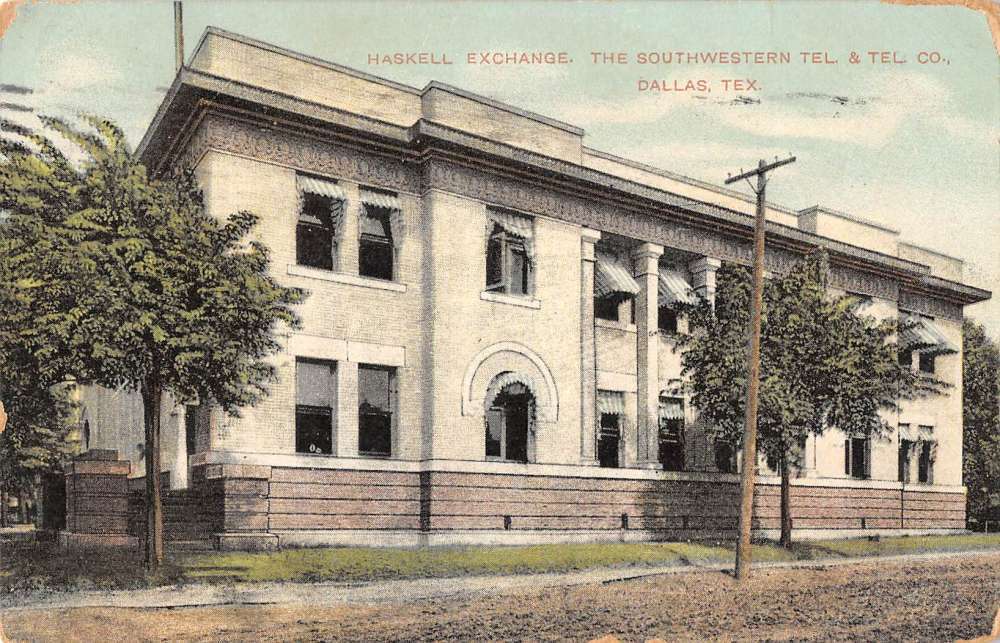
telephone_haskell-exchange_postmarked-1910_ebayThe switchboard hub in Old East Dallas… (click for larger image)

by Paula Bosse

Above, the building that housed the Haskell Exchange of Southwestern Telegraph and Telephone (the company which later became Southwestern Bell Telephone and, eventually, part of AT&T), located at the southeast corner of Bryan and Haskell in Old East Dallas. It was so cute and quaint back in 1910 (the year this postcard was mailed). AT&T still has a building on this very same corner — over a century later. Unfortunately, the building stopped being quaint a long time ago. See the same location today, here. Some awnings might help….

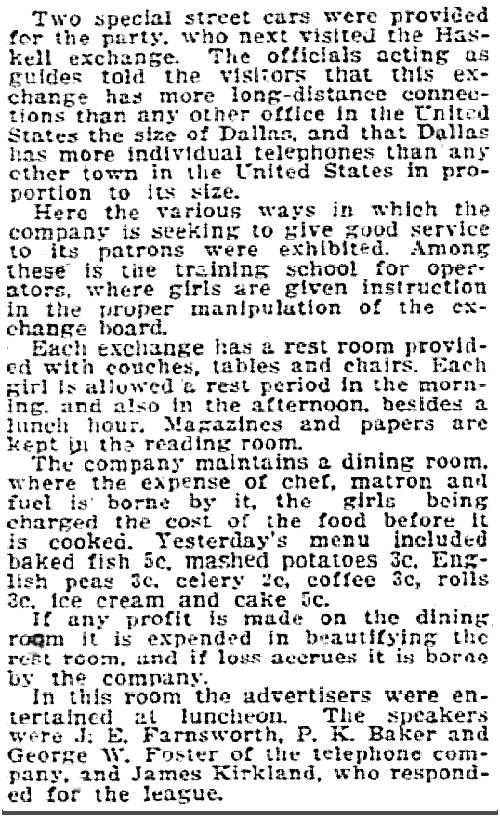
Below is part of an article describing a tour of the Exchange taken by the Dallas Advertising League in 1911 (click for larger image):

haskell-exchange_dmn_021111
Dallas Morning News, Feb. 11, 1911

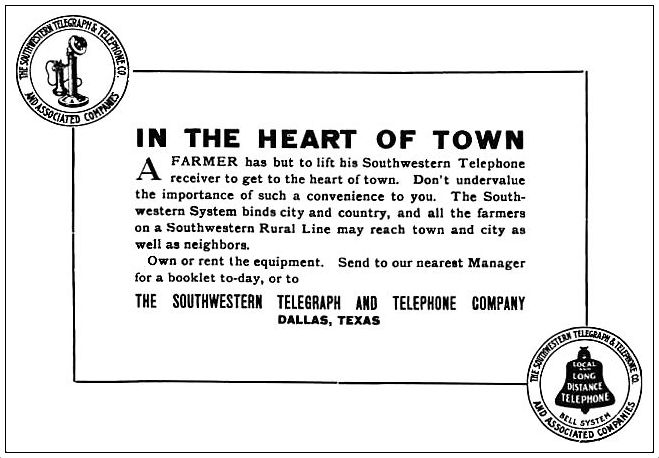
ad-southwestern-telephone-telegraph_1912
Cattle Raisers’ Association of Texas, 1912

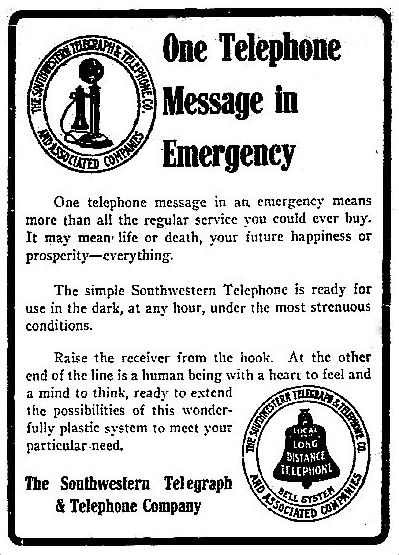
ad-southwestern-telephone-telegraph_dmn_050212
DMN, May 2, 1912

haskell-exchange_ca-1915_DHSDallas Historical Society

***

Sources &  Notes

More about the operators of Southwestern Tel. & Tel. (with photos of their “rest room”) can be found in the Flashback Dallas post “Work and Play in Telephone Land,” here.

In this case “exchange” did not mean the same thing as telephone exchanges such as “Taylor,” “Emerson,” “Lakeside,” “Fleetwood,” “Riverside,” etc. Read more at Wikipedia here and here for the distinctions.

*

Copyright © 2016 Paula Bosse. All Rights Reserved.