Flashback : Dallas

A Miscellany: History, Ads, Pop Culture

So You’re Considering a Move To Dallas … What’s That Tax Situation Like? — 1943

taxation_so-this-is-dallas_ca-1943_detYou and your gardener will *love* Dallas! (click for larger image)

by Paula Bosse

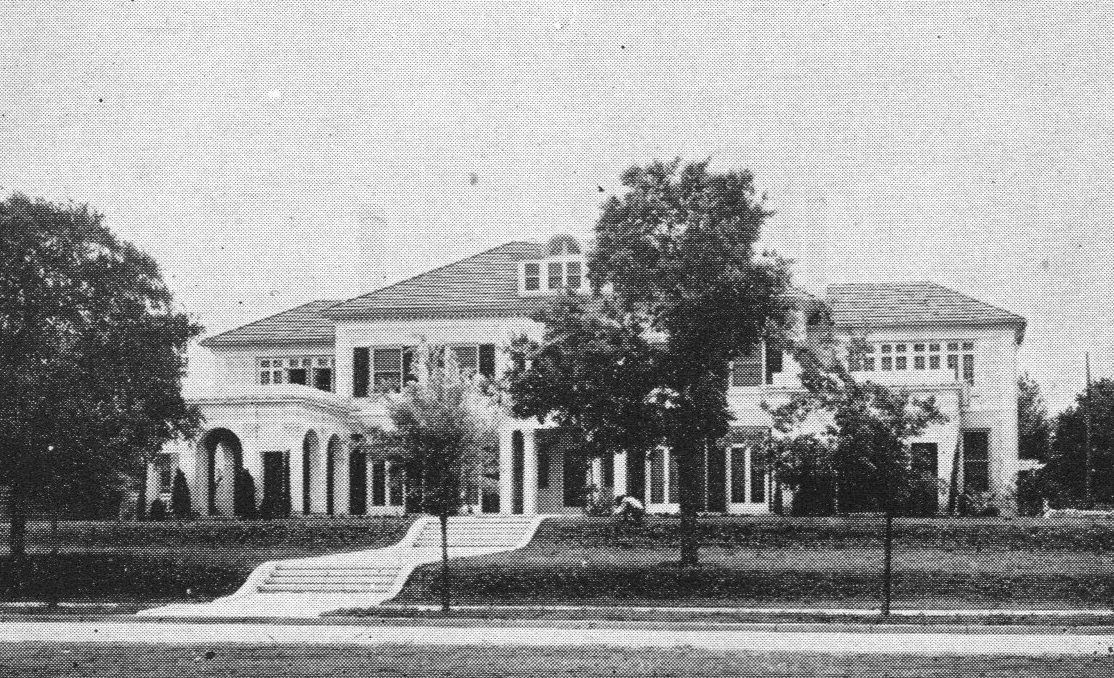
It’s 1943. You’re  considering relocating your business and your family to Dallas. You’ll probably be owning a mansion like the one pictured above. Should you and your large bank account settle in Dallas? I mean, is it really the best place … tax-wise?

Below is a page from a pamphlet called So This Is Dallas, a publication which was intended to sway decisions such as this. It was issued for several years by a group called “The Welcome Wagon,” and this edition came out sometime during World War II. Here’s what Big D had to offer in those days. (Click to see much larger image.)

taxation_so-this-is-dallas_ca-1943

*

Taxation…

Dallas offers a favorable tax situation that can be found in but few communities. There is no State income tax in Texas and no general sales tax.

Corporations operating in the State are subject to three forms of taxation. If they are foreign corporations, they must qualify legally in the State and pay a permit fee, an annual franchise tax and ad valorem taxes. If they are domestic corporations, they pay a fee to secure a Texas charter, an annual franchise tax and ad valoreum [sic?] taxes.

Texas laws do not discriminate against foreign corporations. The permit fee for a foreign corporation and the charter fee of a Texas corporation are arrived at in the same way, the proportionate amount of capital used in Texas by the foreign corporation and the capital stock of the domestic corporation. Franchise taxes for both foreign and domestic corporations are also assessed on the same basis.

Ad Valorem Taxes

All corporations, whether domestic or foreign, and all others owning property within the State of Texas, must render their property as of January 1 each year for city, State and county taxes. The property is rendered at its inventory value. The basis of assessment varies in different counties.

Current ad valorem taxes in Dallas are: City of Dallas, $2.45 per $100 valuation, basis of assessment 53 per cent of value; Dallas County, 74 cents per $100 valuation, basis of assessment 50 per cent of value; State, 69 cents per $100 valuation, basis of assessment 50 per cent of value.

Dallas has the lowest tax rate of any large city in the Southwest. Each city has a different basis of assessment. Reducing their rates to a basis of assessment on 100 per cent of value, net tax rates for the four leading cities in Texas are:

Dallas ….. $20.56 net per $1,000
Houston ….. $22.03 net per $1,000
San Antonio ….. $26.89 net per $1,000
Fort Worth ….. $29.25 net per $1,000

*

I don’t know what ANY of that means, but it looks like Dallas wins. Welcome to your new mansion!

***

Page from So This Is Dallas, published around 1943 by The Welcome Wagon; courtesy of the Lone Star Library Annex Facebook page.

If you recognize any of these homes, let me know and I’ll add the info here. I’m seeing what looks like Lakewood and Swiss Avenue, and maybe Highland Park and Oak Cliff.

Click pictures for larger images.

*

Copyright © 2016 Paula Bosse. All Rights Reserved.

Little Mexico: Turney & Payne — 1940

little-mexico_ca_1940_WPA-GD_DHSLooking southeast, toward Pegasus… (click for much larger image)

by Paula Bosse

Above, a photo taken in 1940 at the intersection of the unpaved Turney Avenue and Payne Street, in Little Mexico — El Barrio — just north of downtown. St. Ann’s school can be seen at the end of the street, and the Villasana Food Store (prop. Rodolfo Villasana, est. 1932) is at the left; in the distance, Pegasus atop the Magnolia Oil Building. (A similar view from 1941 during ongoing street-widening — taken a bit farther back and from a slightly higher elevation — can be seen here.)

In 1941, Turney Avenue was widened and paved and then … lost its name; it became part of the brand new Harry Hines Boulevard.

Hines Boulevard begins at Five Point, where the $100,000 Tom Field Circle will be built and stretches eight miles into Dallas over Turney Street to Cedar Springs, joining Akard at Harwood. (Dallas Morning News, July 23, 1941)

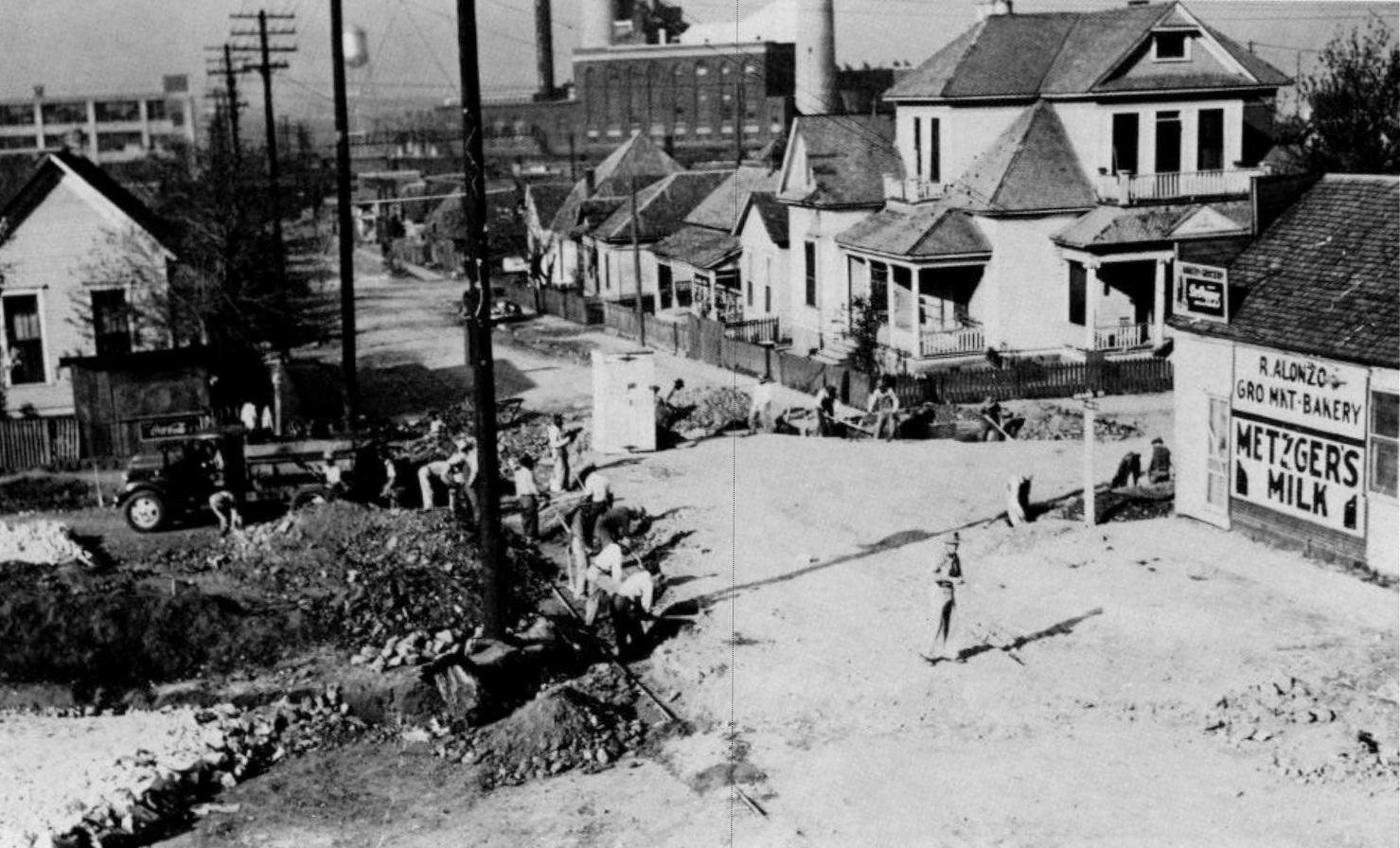
Another view of the area during this period of road work can be seen in the photo below. Ramon Alonzo’s store seen at the lower right was at 2209 Caroline. (The once-familiar “smokestacks” seen in the background belonged to the Dallas Power & Light Company, which sat on land now occupied by the American Airlines Center.)

little-mexico_1941_legacies_fall-1992

Adios, Turney. Big changes are ahead. You’ll never believe how much your old neighborhood is going to change.

**

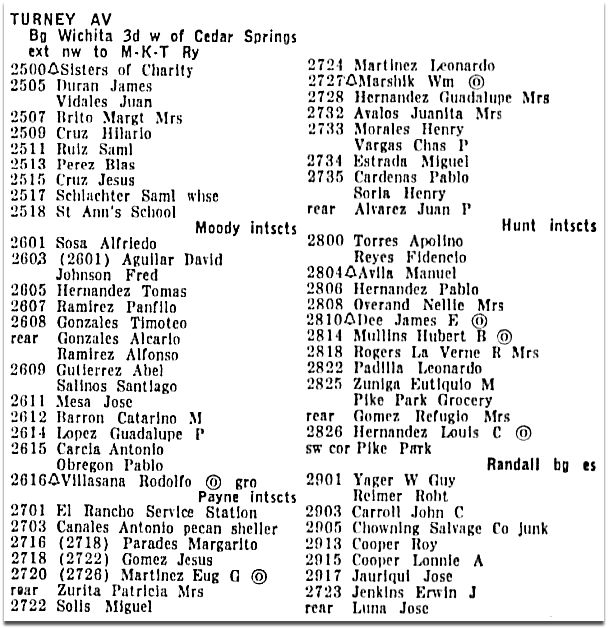
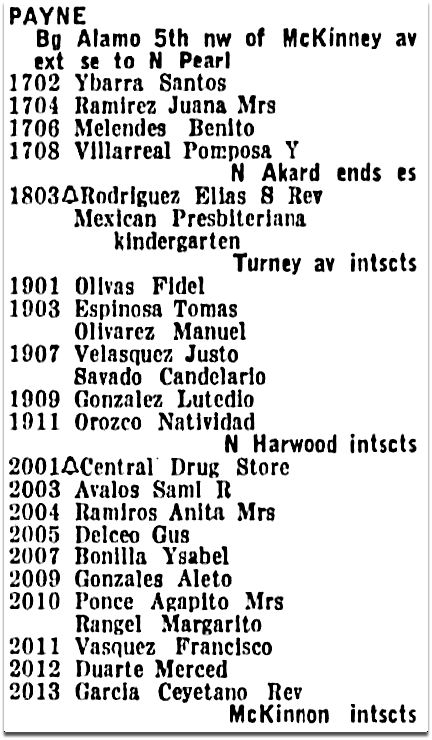
Here are the residents and businesses along both Turney and Payne as listed in the 1939 Dallas directory, one year before the upheaval began (click to see larger images):

turney_1939-directory
1939 Dallas directory

payne_1939-directory
1939 Dallas directory

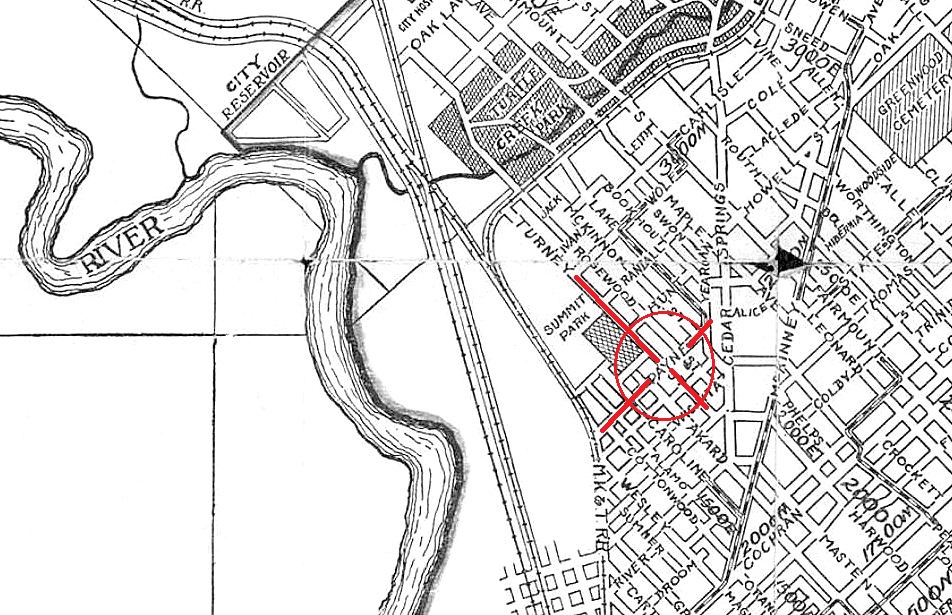
To get an idea of where Turney was, here’s a detail from a 1919 map.

map_turney-payne_1919_portal

Today? It’s part of Victory Park. If you took a right on Payne at the sign advertising “milk” (in front of the Villasana gas station), you’d be about two blocks from what is now the American Airlines Center. Yep. A current Google Street View is here.

***

Sources & Notes

Top photo from the WPA Guide and History (which has been fully scanned and may be accessed at UNT’s Portal to Texas History site, here); photo from the collection of the Dallas Historical Society.

More great photos of Little Mexico from this time can be found in the article “Little Mexico and the Barrios of Dallas” by Gwendolyn Rice (Legacies, Fall, 1991), which can be found here. (The photo of Alonzo’s store is from this article.)

Several images of Turney under construction in 1940/1941 can be see in the Department of Public Works collection at the Dallas Historical Society site, here. (The linked image in the first paragraph is from this collection.)

The top photo also appears in Dallas’s Little Mexico by Sol Villasana (his family owned the store and the gas station at the Turney-Payne intersection); see it — and a northward view of the gas station, here.

For those who enjoy articles about road construction, here are a couple of Harry Hines-related News articles which might be of interest:

  • “Dedication Rites Planned For Boulevard; New Highway Named For Harry Hines Opens About Aug. 1,” DMN, July 3, 1941. (Officials were a little optimistic with that August opening — it didn’t officially open until October, 1941.)
  • It’s weird to think of Harry Hines being an actual person, but see a photo of him at the ribbon-cutting, along with another name more familiar to us today as a freeway than as a flesh-and-blood human being, Woodall Rodgers, then mayor: “Ribbon Road Barrier Snipped,” DMN, Oct. 15, 1941.

All pictures and clippings larger when clicked.

*

Copyright © 2016 Paula Bosse. All Rights Reserved.


Gene’s Music Bar, The Lasso Bar, and The Zoo Bar

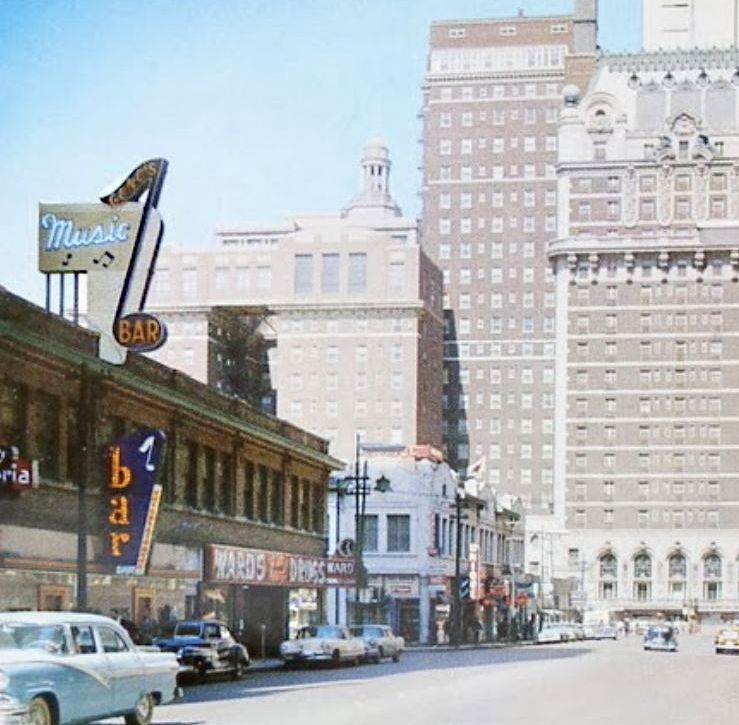
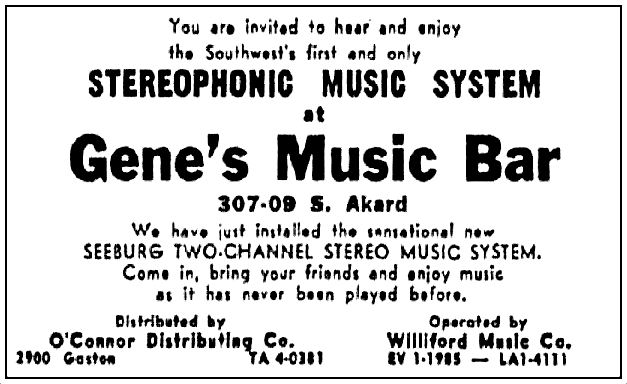
genes-music-bar_dallas-memorabiliaGene’s Music Bar, S. Akard Street (click for larger image)

by Paula Bosse

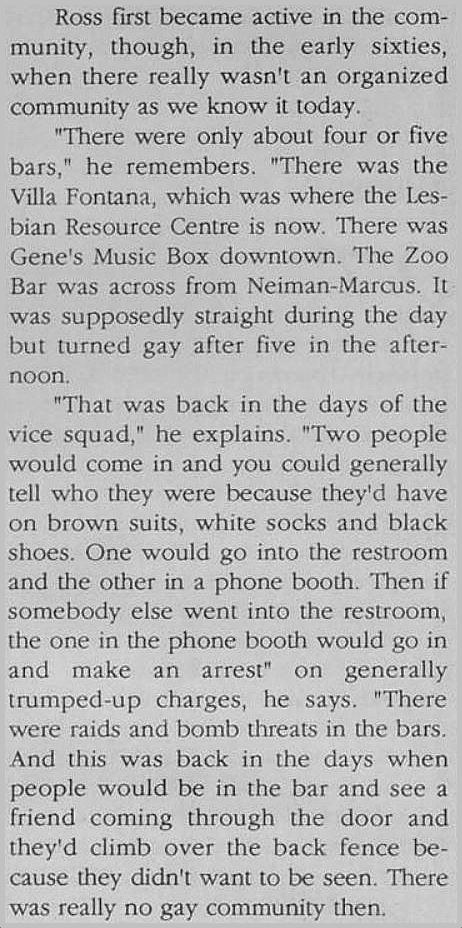
In Dallas’ pre-Stonewall days, there were only a handful of gay bars in the city, and they weren’t widely known beyond those who frequented them. Those were the days when “homosexual behavior” was illegal, and vice raids on gay bars and clubs were frequent occurrences. In an interview with the Dallas Voice Alan Ross remembered what the bar scene was like in Dallas in those days (click for larger image):

gay-dallas_dallas-voice_092190_alan-ross
Dallas Voice, Sept. 21, 1990

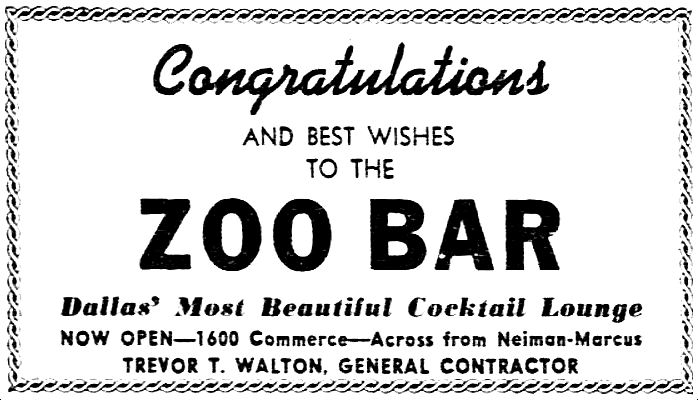
There was the well-appointed Le Boeuf Sur Le Toit (later renamed Villa Fontana), one of Dallas’ earliest gay bars, located on Skiles Street near Exall Park in the area now known as Bryan Place, and there were rougher, seedier places, generally downtown. Three of those downtown bars (which apparently catered to a “straight” clientele during the day and a gay clientele at night) were Gene’s Music Bar and The Lasso — both on S. Akard, in the shadow of the Adolphus Hotel — and The Zoo Bar, on Commerce, “across from Neiman-Marcus.”

Gene’s Music Bar (pictured above) at 307-09 S. Akard began as a place where hi-fi bugs could sip martinis and listen to recorded music played on “the Southwest’s first and only stereophonic music system.” Not only did it have the sensational Seeburg two-channel stereo system, but it also boasted one of the best signs in town.

genes_dmn_110958
Nov. 1958

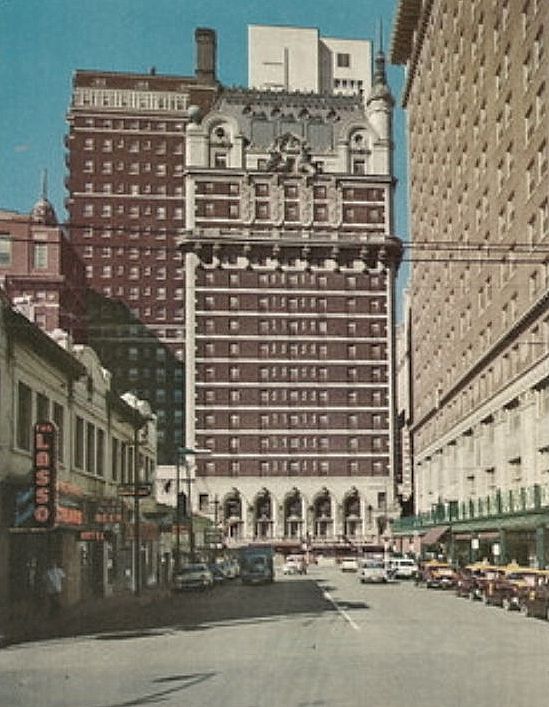
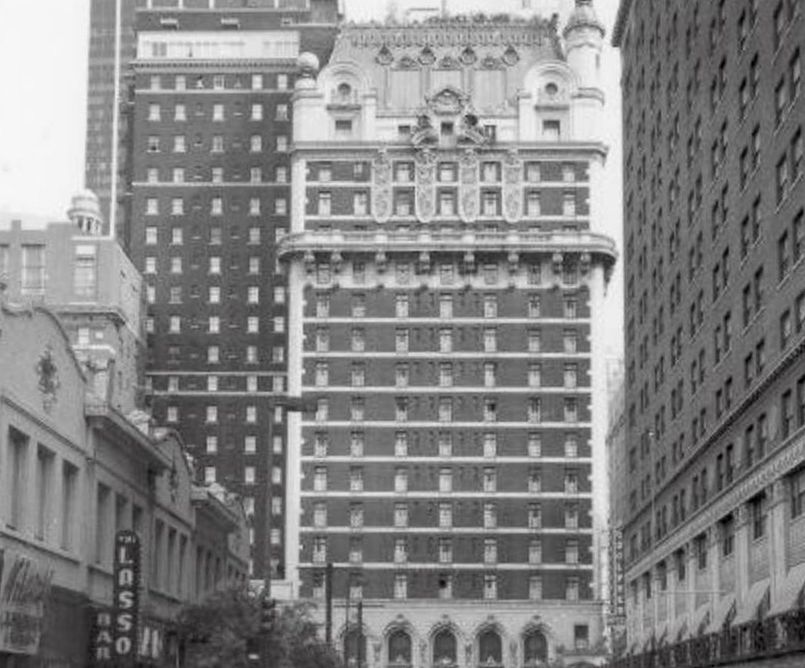
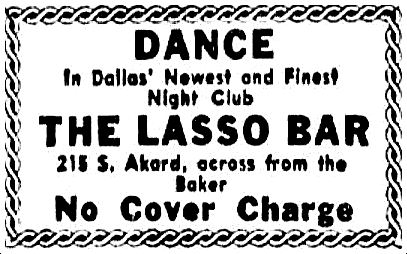
The Lasso Bar at 215 S. Akard was in the next block, across from the classy Baker Hotel, and a hop, skip, and a jump from the elegant Adolphus. Its proximity to the impressive Adolphus meant that the Lasso snuck its way into lots of souvenir picture postcards and Dallas Chamber of Commerce publicity photos. Its sign was pretty cool, too.

lasso-bar_postcard

adolphus_lasso-bar_tx-hist-comm

lasso-bar_dmn_031358
March, 1958

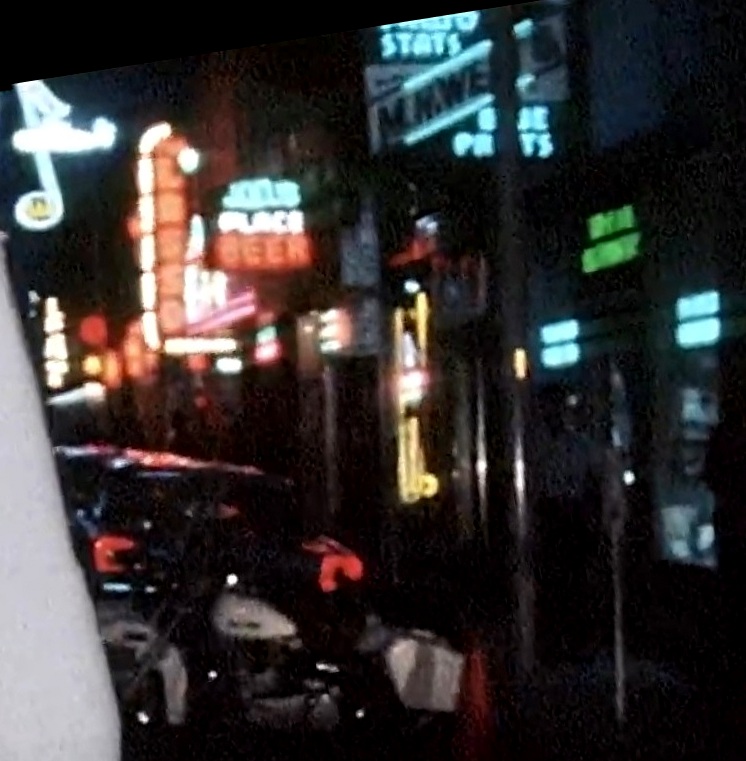
The image below gives you an idea of what that block looked like at night, neon blazing. (This super-blurry screenshot is from WFAA-Channel 8 coverage of 1969’s Texas-OU weekend, here — at 6:16 and 9:13.)

lasso-bar_jones-film_WFAA_101169

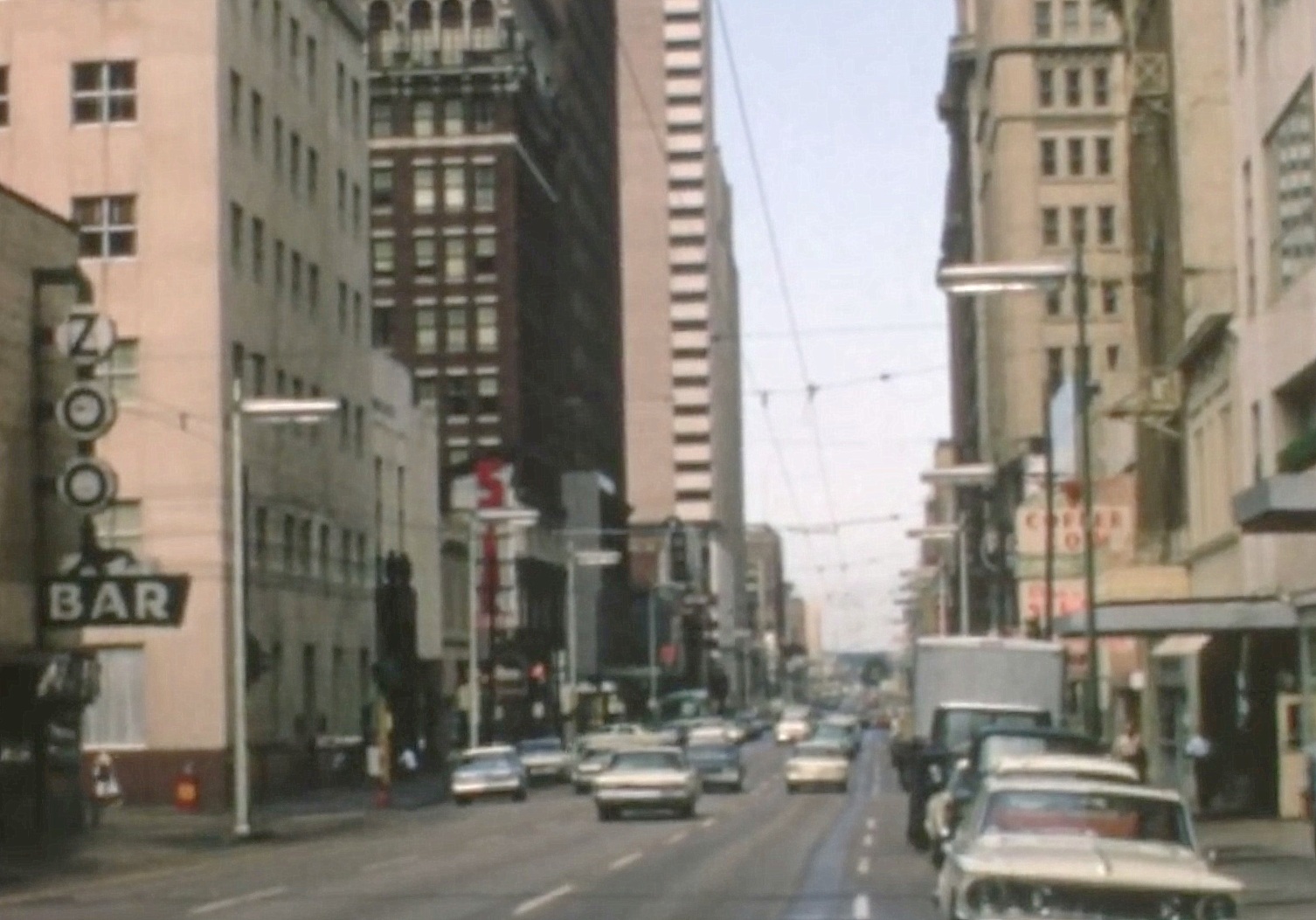
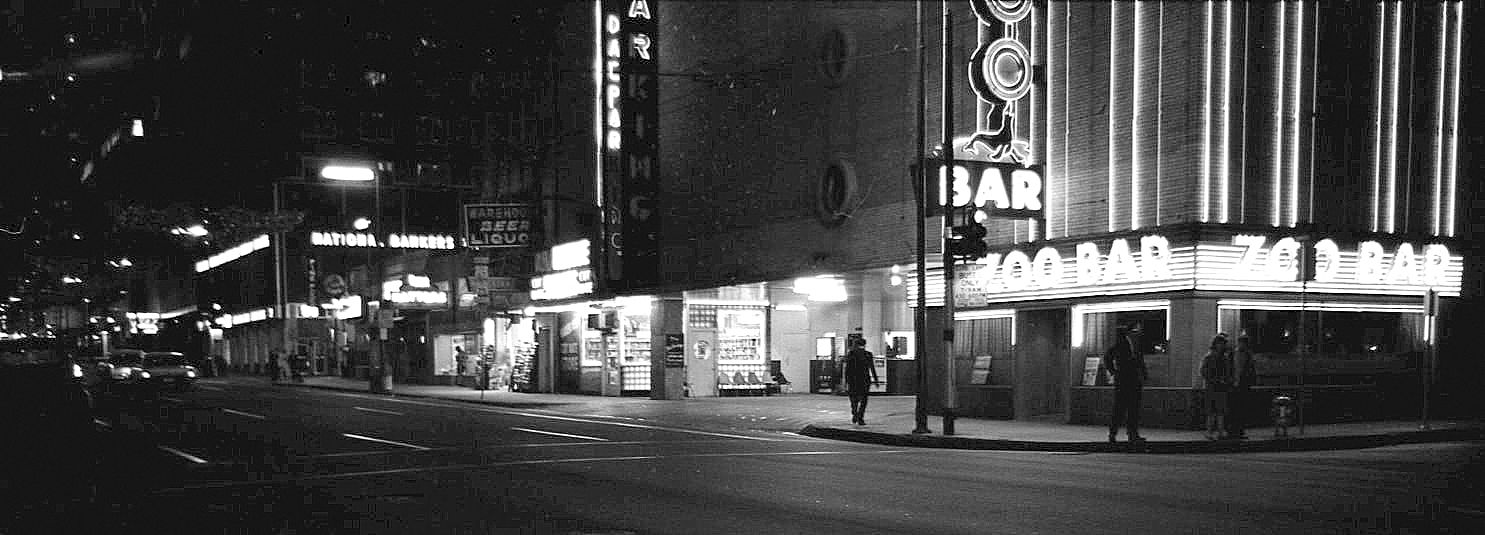
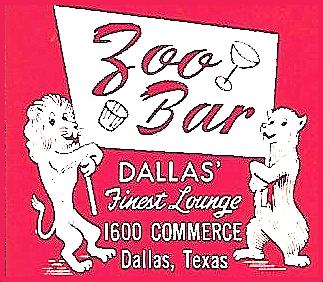
The Zoo Bar at 1600 Commerce began as a cocktail lounge and often had live piano music. It was across from Neiman’s and it was 3 blocks from Jack Ruby’s Carousel Club (downtown Dallas ain’t what it used to be). It also had a better-than-average sign.

zoo-bar_youtube_19661966

zoo-bar_dth-photo_112263_sixth-floor-museum_portal_croppedNov., 1963

zoo-bar_dmn_092752
Sept., 1952

zoo-bar_matchbook_ebay_2     zoo-bar_matchbook_ebay_1

These three downtown bars, popular as hangouts for gay men, had their heyday in the 1960s and ’70s. By the mid 1970s, the LGBT scene was shifting to Oak Lawn. An interesting article about the uneasy relationship between the “old” Oak Lawn and the “new” Oak Lawn can be found in a Dallas Morning News article by Steve Blow titled “Last Oak Lawn Settlers Brought Controversy” (Dec. 9, 1979).

***

Sources & Notes

Top photo of Gene’s Music Bar is from the blog Old Dallas Stuff.

Color photo of the Lasso and the Adolphus is from an old postcard. Black-and-white photo of the Lasso and the Adolphus is from the Texas Historical Commission site, here.

Blurry shot of Gene’s Music Bar and the Lasso Bar at night is a cropped screenshot from daily footage shot by WFAA-Channel 8 on Oct. 11, 1969 — the night before the Texas-OU game; from the WFAA Newsfilm Collection, G. William Jones Film and Video Archive, Hamon Arts Library, SMU.

Color image of the Zoo Bar and Commerce Street is a screenshot from home movie footage of the 1966 Memorial Day parade in downtown Dallas, shot by Lawrence W. Haas, viewable on YouTube. Black-and-white photo of the Zoo Bar from the Sixth Floor Museum Collection, via the  Portal to Texas History, here (I’ve cropped it). Zoo Bar matchbook from eBay.

Read more about Dallas’ gay bar scene in the article I wrote for Central Track, “Hidden in Plain Sight, A Photo History of Dallas’ Gay Bars of the 1970s,” here.

More on the the persistent arrests and police harassment that went on in gay clubs in Dallas for many, many years can be found in the Dallas Voice article by David Webb, “DPD Vice Unit Wages 50-Year War Against Gay Men” (Aug. 3, 2007), here.

*

Copyright © 2016 Paula Bosse. All Rights Reserved.


“Hidden in Plain Sight” on Central Track

central-track_072116

by Paula Bosse

Thanks to Pete Freedman and Central Track for publishing “Hidden In Plain Sight,” my look at Dallas’ gay bar scene of the early 1970s, complete with 16 photos from 1975 showing establishments (and even a couple of neighborhoods) that no longer exist. Read the article here.

Thanks to Tim Bratcher who drew my attention to these great photos and to JD Doyle for archiving the original article on his Houston LGBT History site.

**

UPDATE: I’m happy to report that this article made Central Track’s “15 Most Read Stories of 2016”!

*

Copyright © 2016 Paula Bosse. All Rights Reserved.

Thomas Marsalis’ Spectacular Oak Cliff Hotel: 1890-1945

oak-cliff_cook-coll_degolyer_smu_front“Visit the Oak Cliff…” (click for much larger image) Photo: SMU

by Paula Bosse

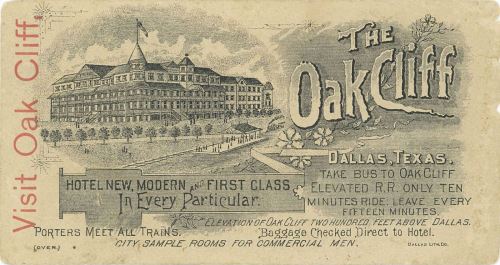
I saw this image yesterday while browsing through the George W. Cook Collection (DeGolyer Library, SMU). It’s from about 1890. It’s great. BUT, the other side of this card is even better:

oak-cliff_cook-coll_degolyer_smu_back

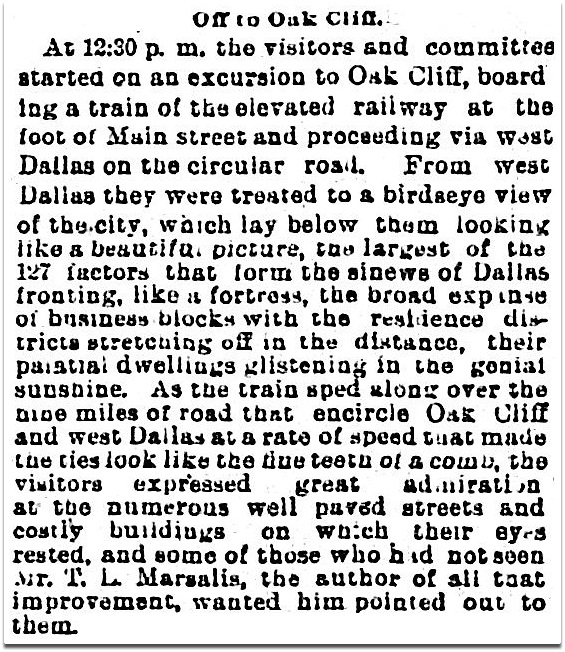
I’m not sure how realistic this drawing is, but it’s great! Oak Cliff never looked so … quaint. The best part is the depiction of the little commuter railway that Oak Cliff developer Thomas L. Marsalis built in the 1880s to handle commuter traffic between Oak Cliff and Dallas — a necessity if his development west of the Trinity was to grow. There were two little steam trains which made a complete circle and offered spectacular views of  Dallas as they headed toward the river. Here’s an account of visitors from Kansas City who enjoyed their scenic ride (click to see a larger image):
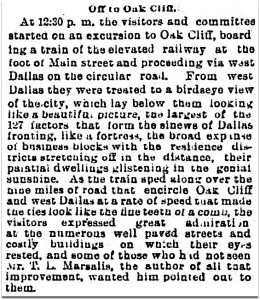
oak-cliff-train_dmn_112490
Dallas Morning News, Nov. 24, 1890

Marsalis had made his fortune in the grocery business, and much of that fortune was funneled into making his vision a reality: Oak Cliff would become a large, beautiful, prosperous community. He spent huge amounts of money developing the then-separate town of Oak Cliff. A wheeler-dealer and an obsessive whirlwind, money was no object to Marsalis as he charged at full speed to make Oak Cliff a booming North Texas garden spot.

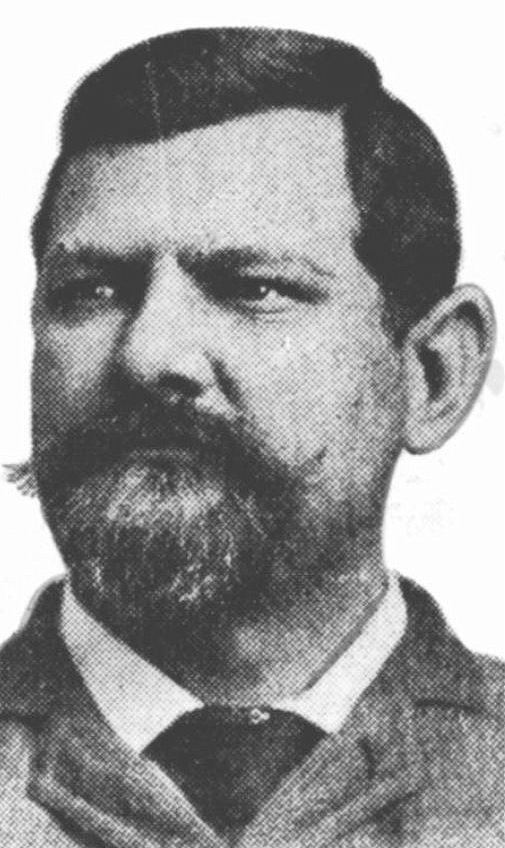
marsalis_legacies_fall-2007
Thomas L. Marsalis — the “Father of Oak Cliff”

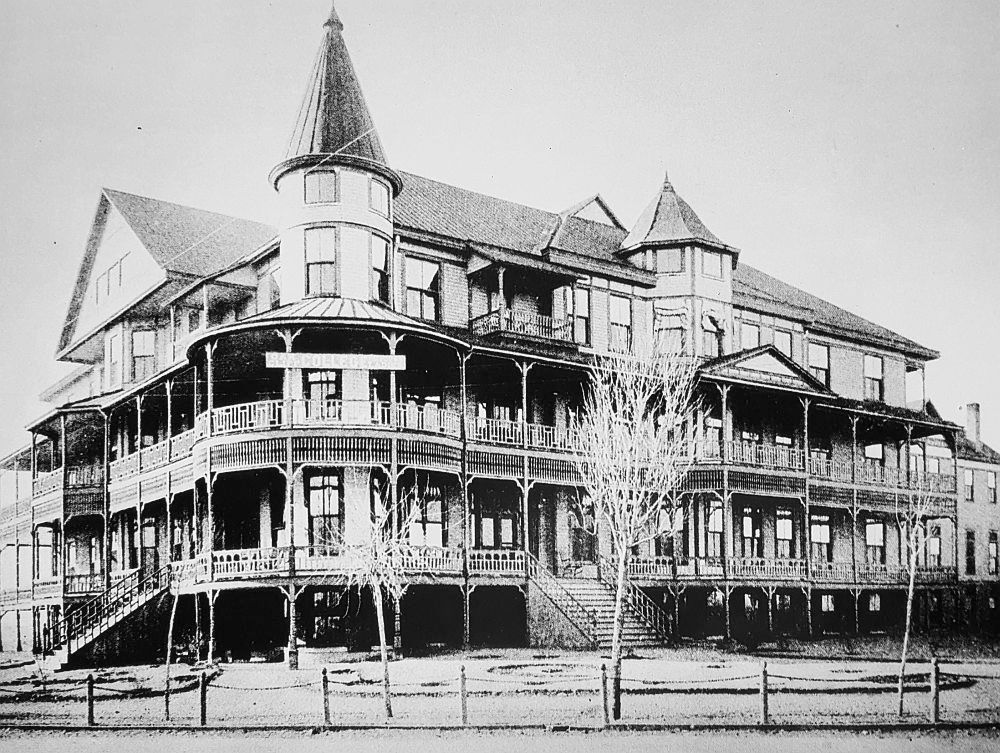
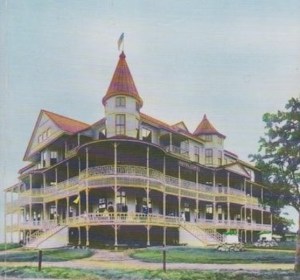
The jewel in T. L.’s O.C. crown was the 100-room resort, the Oak Cliff Hotel (which in its early planning had been called the Park Hotel). Ground was broken on Dec. 21, 1889. Projected to cost $75,000, it is said to have cost over $100,000 when construction was completed, or, over $2.6 million in today’s money.
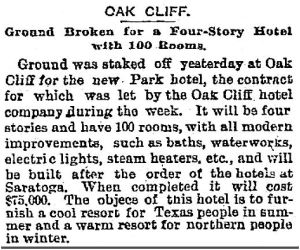
oak-cliff-hotel_dmn_122289_groundbreaking
DMN, Dec. 22,1889

A thorough description of the spectacular $100,000 showplace can be read in a Dallas Morning News article from May 25, 1890, here. When it opened on July 10, 1890, the News’ coverage of the opening included the following lyrical passage:

When darkness had settled down over the cliff the large hotel showed off to its best advantage, as at a short distance away it looked like some living monster with hundreds of fiery eyes. The lights showing from every window made a startling sight to those who coming upon it had previously seen a dark pile looming up in the night.
oak-cliff-hotel_minutaglio

It was, by all accounts, a popular hotel and social gathering place. But, in November of 1891 — having been open only a little over a year — a notice appeared in the papers that the hotel would be closing for the winter for “renovations.” It never reopened. Marsalis had over-extended himself. His dreams for Oak Cliff began to dim as the stacks of unpaid bills mounted, and he found himself mired in lawsuits for the next several years. He eventually had to admit defeat, and he and his family moved to New York.

Six months after that notice of “renovations” appeared, the huge building was leased to Prof. Thomas Edgerton, who planned to open a “female seminary.”

oak-cliff-college_flickr

The Oak Cliff College For Young Ladies opened  in the fall of 1892. And it was a spectacular-looking schoolhouse.

oak-cliff-college_dallas-rediscoverd_dpl

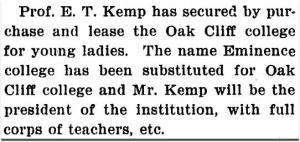
The college lasted until the beginning of 1899 when it changed hands and became Eminence College for a brief year and a half.
eminence-college_southern-mercury_062299
Southern Mercury, June 22, 1899

After Eminence College appears to have gone bust, the building was vacant by 1901. There was talk that Oak Cliff should purchase the property and reinstall a school, but, eventually, the building went up for auction in September, 1903.

oak-cliff-hotel_dmn_082603_for-sale
DMN, Aug. 26, 1903

The building sold to T. S. Miller, Jr. and L. A. Stemmons for $6,850, a fraction of what Marsalis had spent building it. That’s a pretty steep depreciation.
oak-cliff-hotel_dmn_090203_sold
DMN, Sept. 2, 1903

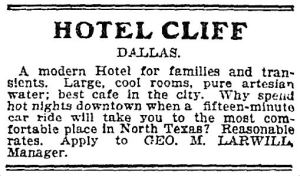
But, no fear, Hotel Cliff opened on April 18, 1904. Still looking good.

hotel-cliff_degolyer

hotel-cliff_dmn_071104
DMN, July 11, 1904

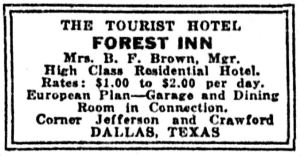
Hotel Cliff was in business through about 1915. There were some “lost” years in there when it seemed to be in limbo (during some of this time it was undergoing extensive renovation), but in 1921 it re-opened as the Forest Inn.

forest-inn_dmn_042421
DMN, April 24, 1921

forest-inn_bartlett-tribune-and-news_070424
Bartlett News, July 4, 1924

The Forest Inn had a long run — 24 years. In 1945 the property was sold, and T. L. Marsalis’ spectacular resort hotel was demolished. It was estimated that it would take ten weeks to finish the demo job — Marsalis had spared no expense building his hotel, and it had been built to last.

The destruction is a tough job, Jack Haake, wrecking contractor, said. Despite its age, the building is so well built that much time is being required to take it apart. The lumber is of the best grade and much of it still is in good condition, Haake said. Scores of huge 2×6 planks, thirty-two feet long, were used in the building, and that timber is in excellent condition. (“Historic Oak Cliff Hotel Being Razed For New Structure,” DMN, Sept. 10, 1945)

The land apparently remained vacant until Southwestern Bell Telephone announced plans to build a three-story office building on the property in 1954; the building opened the following year. In 1986, the building was renovated and became the Oak Cliff Municipal Center, which still occupies the site.

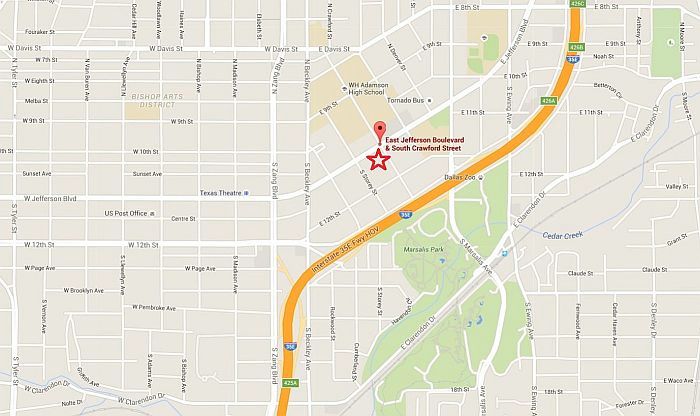
Where exactly was that huge, wonderful hotel that Thomas Marsalis built? It was located at what is now the southwest corner of East Jefferson Blvd. and South Crawford Street. A view of that corner today can be seen here. To get an idea  of how much land the hotel/college once occupied, check out the 1905 Sanborn map, here (and this is after 15 years of explosive growth of Oak Cliff, so it obviously originally had much more open land around it); by 1922, encroachment was well underway, and the property was already being chopped into smaller parcels.

oak-cliff-hotel_map_google
Google Maps

I wonder what Thomas Marsalis would think of Oak Cliff today? And I wonder what Oak Cliff would have become had Marsalis never put his money and energy into its early development?

**

There is a lot of misinformation on various online sources about the timeline of this building. As best I can determine, here is the correct chronology:

  • 1889: groundbreaking for hotel, in December
  • 1890-1891: Oak Cliff Hotel
  • 1892-1899: Oak Cliff College For Young Ladies
  • 1899-1901: Eminence College (also for young women)
  • 1902-1903: vacant
  • 1903: building sold at public auction, in September
  • 1904-1914: Hotel Cliff
  • 1914-1915: Oak Cliff College (reorganized, back for one last gasp)
  • 1915-1920: basically empty, with a couple of token tenants
  • 1921-1945: Forest Inn
  • 1945: demolished

***

Sources & Notes

First two images show both of sides of an advertising card; “Visit Oak Cliff” is from the George W. Cook Dallas/Texas Image Collection, DeGolyer Library, Central University Libraries, Southern Methodist University — more information is here.

Photo of Thomas Marsalis from Legacies, Fall, 2007.

Colorized image of hotel from the front cover of The Hidden City: Oak Cliff, Texas by Bill Minutaglio and Holly Williams. The sign is hard to read, but this may show the building during the Hotel Cliff days.

The detail of an Oak Cliff College envelope comes from the Flickr page for the Texas Collection, Baylor University, here. (Sure hope Mr. Edgerton was able to get a refund on that printing job — having “Oak Cliff” misspelled on official college correspondence probably caused a grimace or two!)

Large black and white photograph of Oak Cliff College appeared in William L. McDonald’s Dallas Rediscovered; photo from the collection of the Dallas Public Library.

Hotel Cliff postcard from the Cook Collection, SMU; information is here.

See the beautiful house Marsalis built for himself (but which he might never actually have lived in) in my post “The Marsalis House: One of Oak Cliff’s ‘Most Conspicuous Architectural Landmarks,'” here.

Thomas L. Marsalis is a fascinating character and an important figure in the development of Oak Cliff, but his post-Dallas life has always been something of a mystery. I never really thought of myself as a “research nerd” until I started this blog, but reading how a few people in an online history group pieced together what did happen to him was surprisingly thrilling. This round-robin investigation began in the online Dallas History Phorum message board, here, and finished as the Legacies article “Where Did Thomas L. Marsalis Go?” by James Barnes and Sharon Marsalis (Fall 2007 issue). If you have some time, I highly recommend reading through the Phorum comments and then reading the article. It’s very satisfying!

All images and clippings larger when clicked. 

*

Copyright © 2016 Paula Bosse. All Rights Reserved.

Dallas Fire Stations — 1901

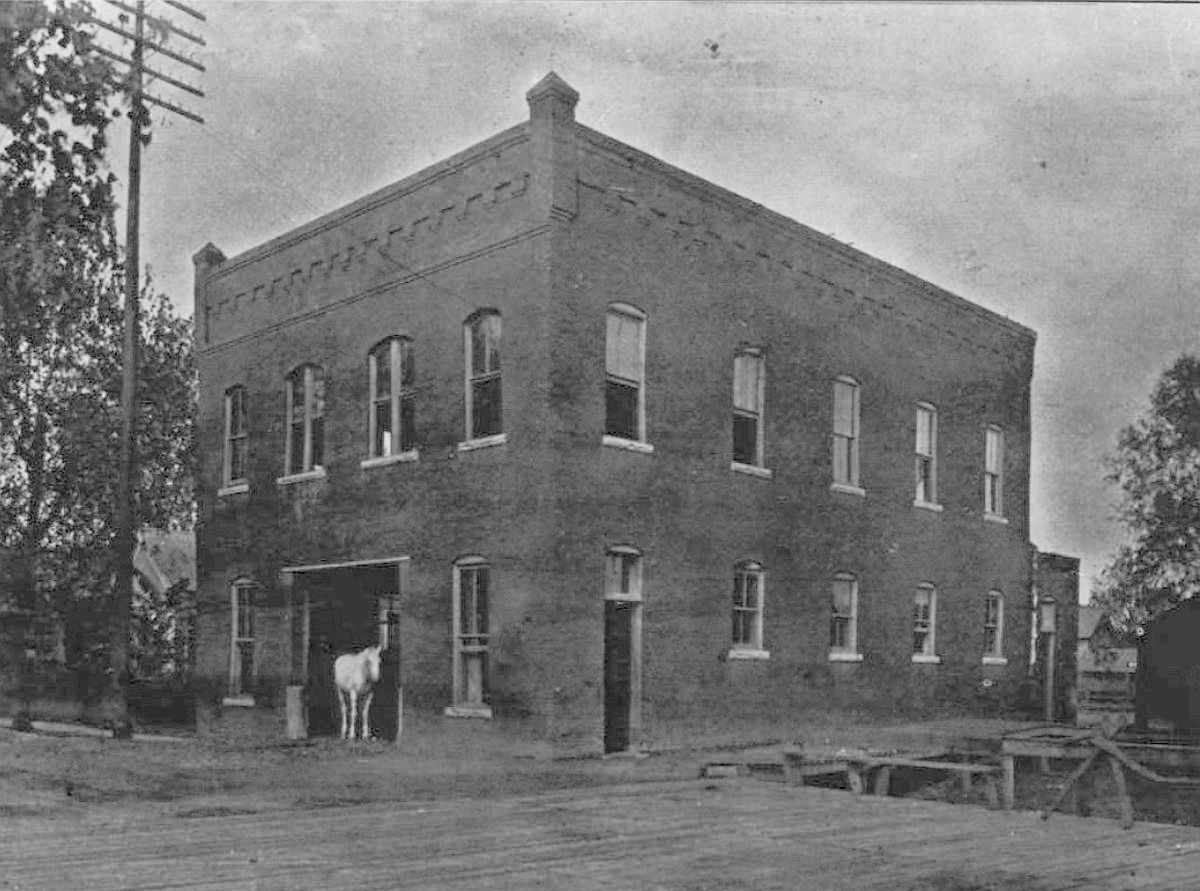
fire-dept_engine-co-3_gaston-and-college_1901Fire horse in Old East Dallas relaxing between calls (click for larger image)

by Paula Bosse

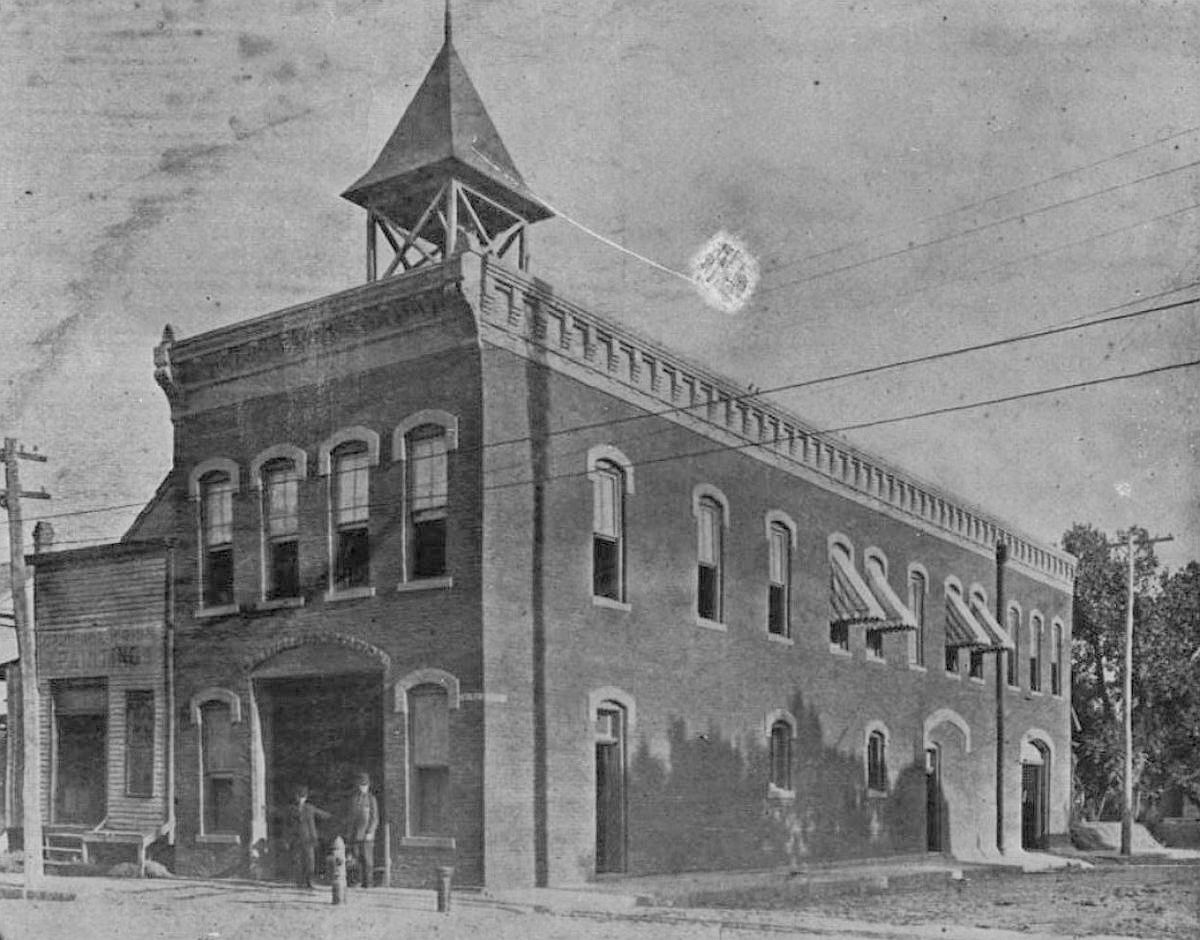
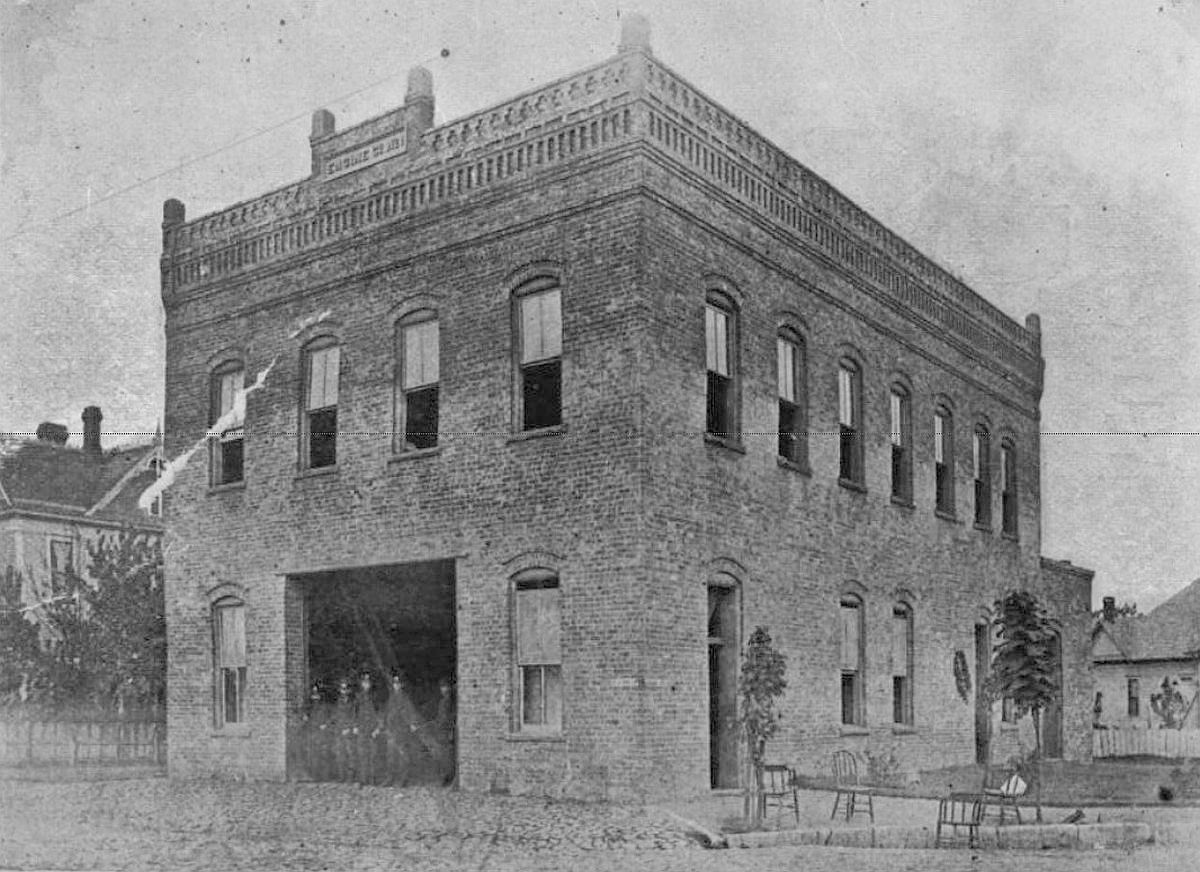
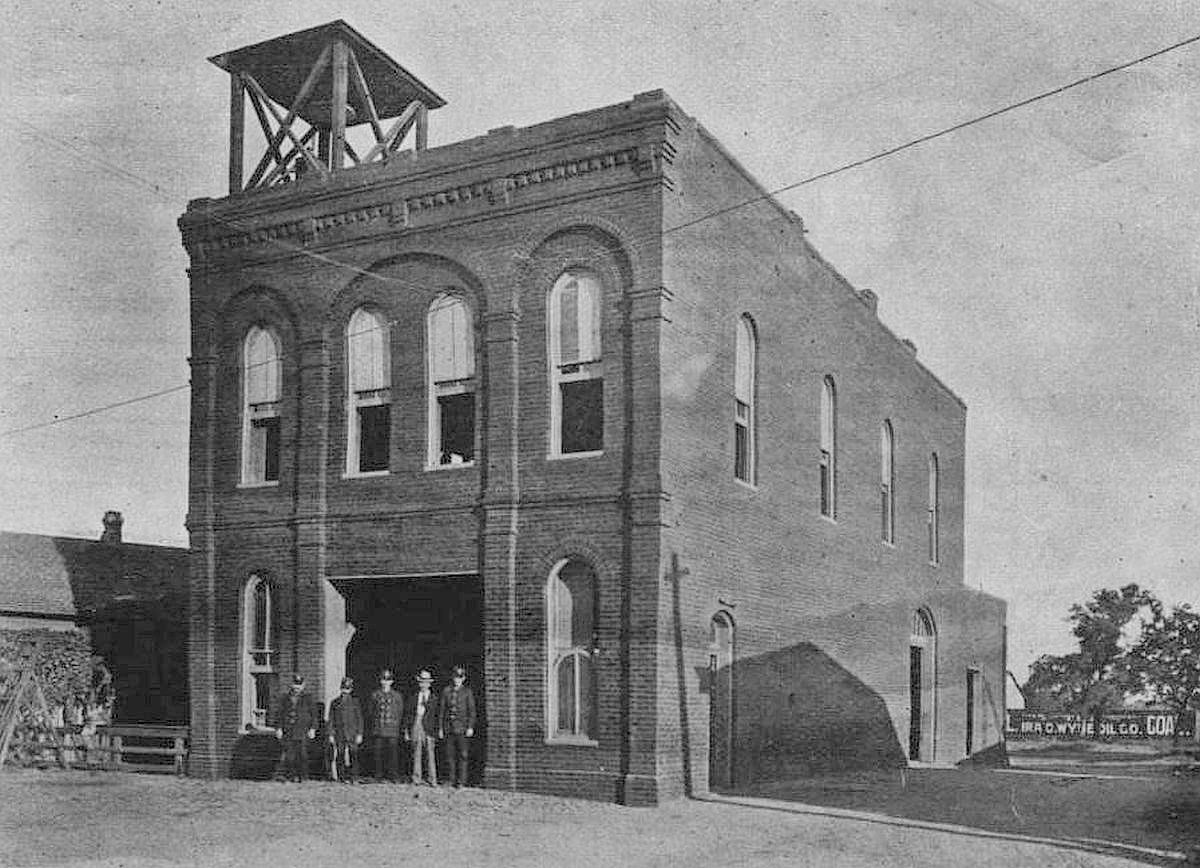
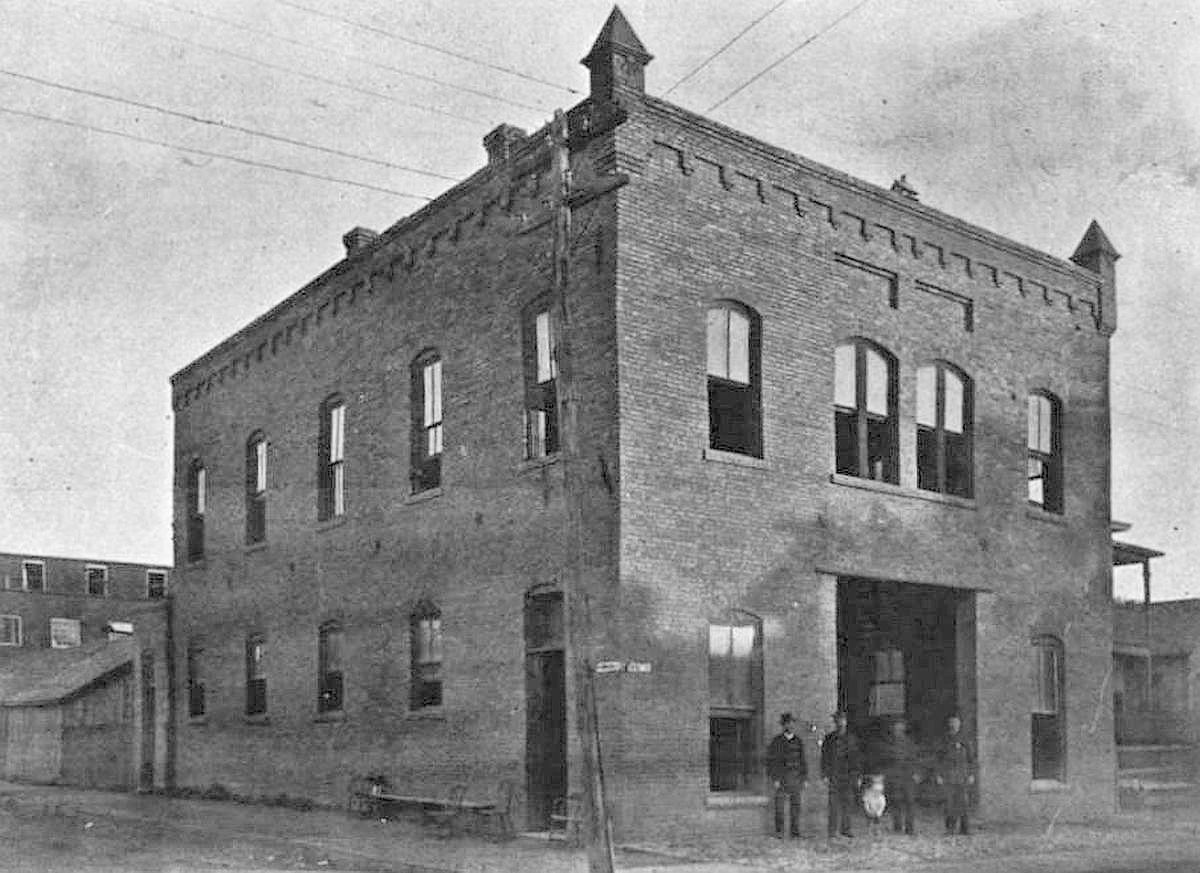
A few turn-of-the-century photos of Dallas’ fire stations, from a 1901 photographic annual. These seven firehouses were built between 1882 and 1894. One of these buildings is, miraculously, still standing on McKinney Avenue, in the heart of Uptown.

*

At the top, Engine Co. No. 3, at Gaston and College Avenues. In service: January, 1892. Equipment: an Ahrens Steamer, capacity 750 gallons per minute, and a Cooney Hose Carriage. See it on a 1905 Sanborn map here; see the present location (Gaston and Hall) here. (And since I just used it a few days ago, here’s a 1921 Sanborn map, showing Mill Creek running right through the property.)

*

fire-dept_central-station_main-harwood_1901

Above, Central Fire Station, Main and Harwood Streets. In service: October, 1887. Equipment: a double-sixty-gallon Champion Chemical Engine and a City Hook and Ladder Truck. See it on a 1905 Sanborn map here; see the present location here (the site of the old City Hall/Municipal Building).

*

fire-dept_mckinney-leonard_engine-co-1_1901

Engine Co. No. 1, McKinney Avenue and Leonard. Equipment: an Ahrens Steamer, 750 gallons per minute, and a Cooney Hose Carriage. In service: August, 1894. See it on a 1905 Sanborn map here; see the present location here. NOTE: This is the only one of these firehouses still standing. I wrote about it here.

UPDATE: Well, sort of. Thanks to a comment on Facebook, I researched this station a bit more and found that it was rebuilt and modernized at the end of 1909 — using materials from the original building seen above, built on the same plot of land. So instead of being 122 years old, the building on McKinney today is a mere 106 years old.

*

fire-dept_commerce-hawkins_engine-co-2_1901

Engine Co. No. 2, Commerce and Hawkins Streets. In service: January, 1882. Equipment: an Ahrens Steamer, capacity 750 gallons per minute, and a Cooney Hose Carriage. See it on a 1905 Sanborn map here; see a shot-in-the-dark guess at a present location here.

*

fire-dept_ervay-kelly_hose-co-2_1901

Hose Co. No. 2 and Chemical Co. No. 2, Ervay Street and Kelly Avenue. In service: September, 1894. Equipment: a Cooney Hose Carriage and double-sixty-gallon Champion Chemical Engine. See it on a 1905 Sanborn map here; see the present location here (right behind where the word “Cedars” is).

fire-dept_bryan-hawkins_hook-and-ladder-1_1901

Hose Co. No. 1 and Hook and Ladder Co. No. 1, Bryan and Hawkins Streets. In service: January, 1893. Equipment: Preston Aerial Truck with 75-foot extension ladder, and a Cooney Hose Carriage. See it on a 1905 Sanborn map here; see the approximate present location here.

*

fire-dept_commerce-akard_engine-co-4_1901

Engine Co. No. 4, Commerce and Akard Streets, next door to the City Hall. In service: August, 1894. Equipment: an Ahrens Steamer, capacity 1,100 gallons per minute, and a Cooney Hose Carriage. See it on a 1905 Sanborn map here; see the present location here (just out of frame at the right was the City Hall; the block is now the site of the Adolphus Hotel).

*

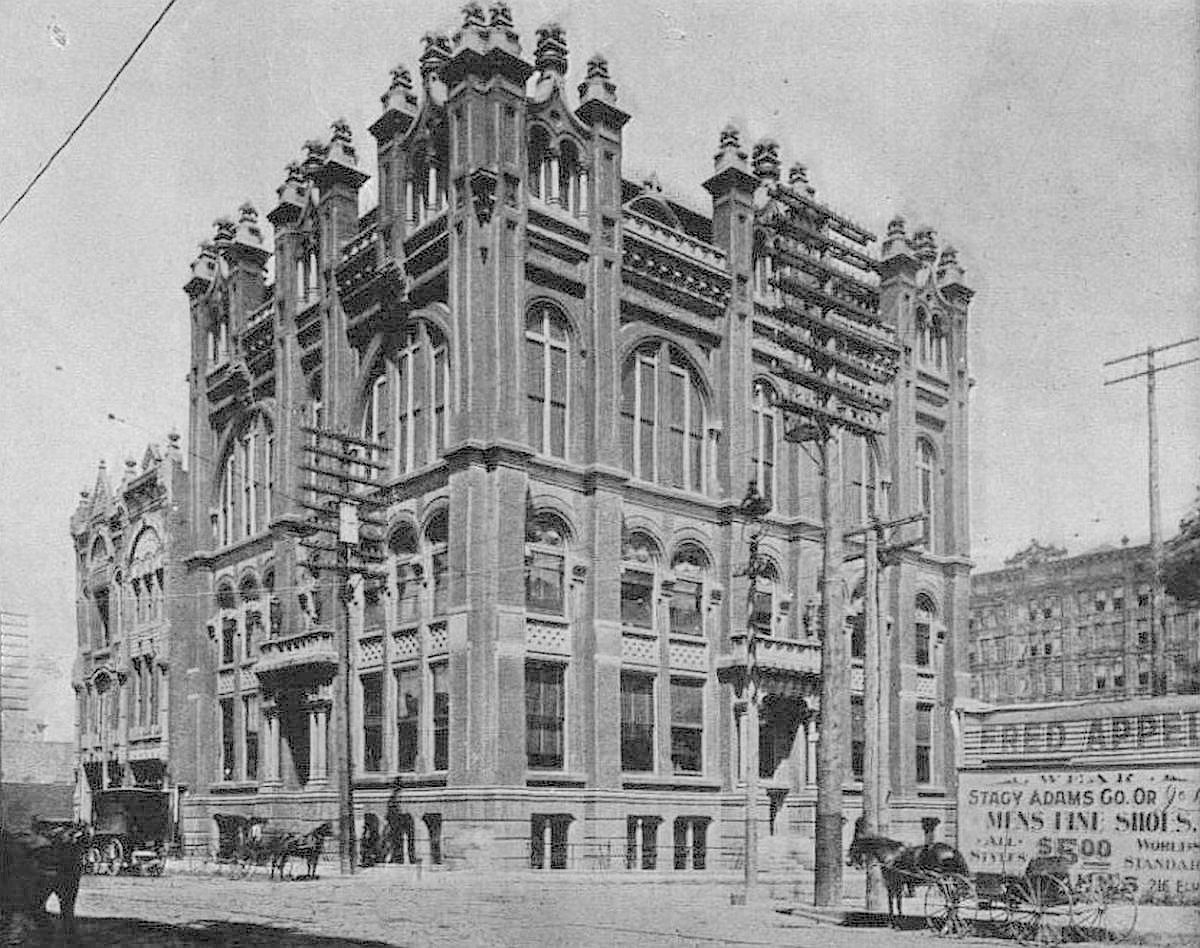
city-hall_1901_fire-dept-annual_portal

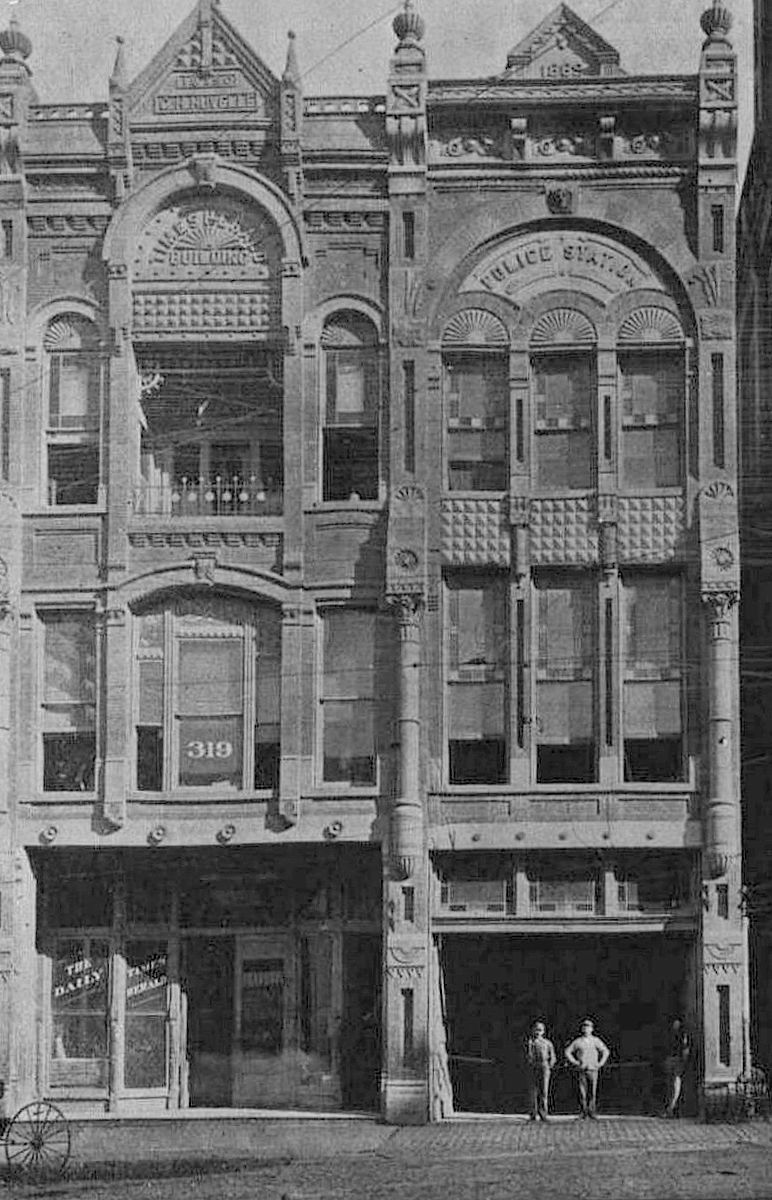
City Hall, Commerce and Akard Streets, now the location of the Adolphus Hotel. Half of the shorter building to the left housed the police department and Engine Co. No. 4.

*

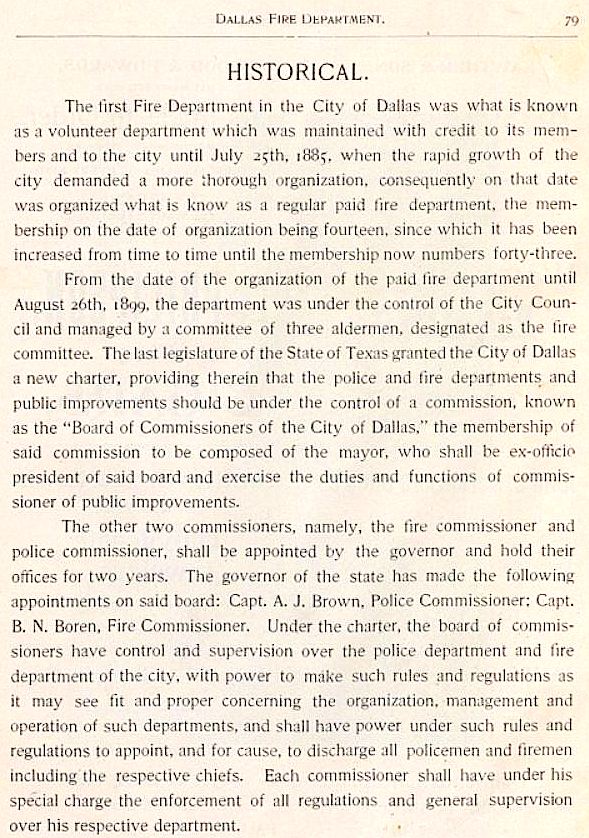
The “Historical” page from the book (click to read).

fire-dept-hist_dallas-fire-dept-annual_1901_portal

**

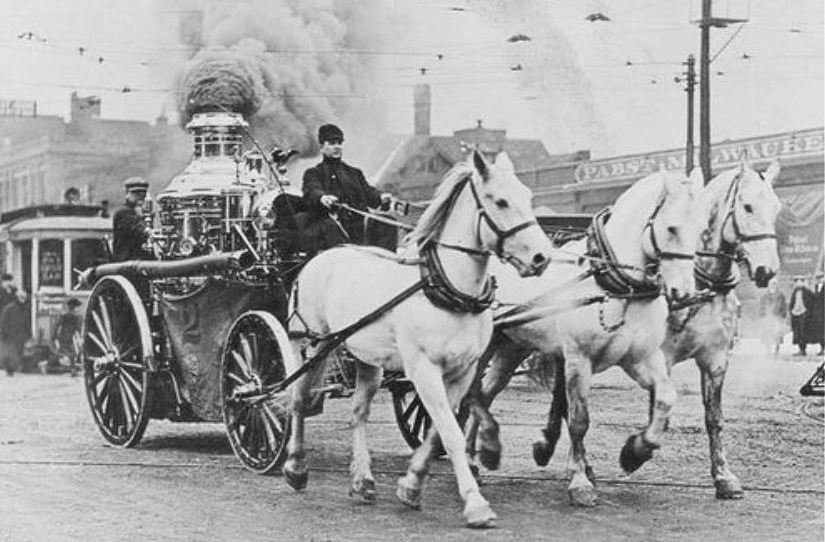
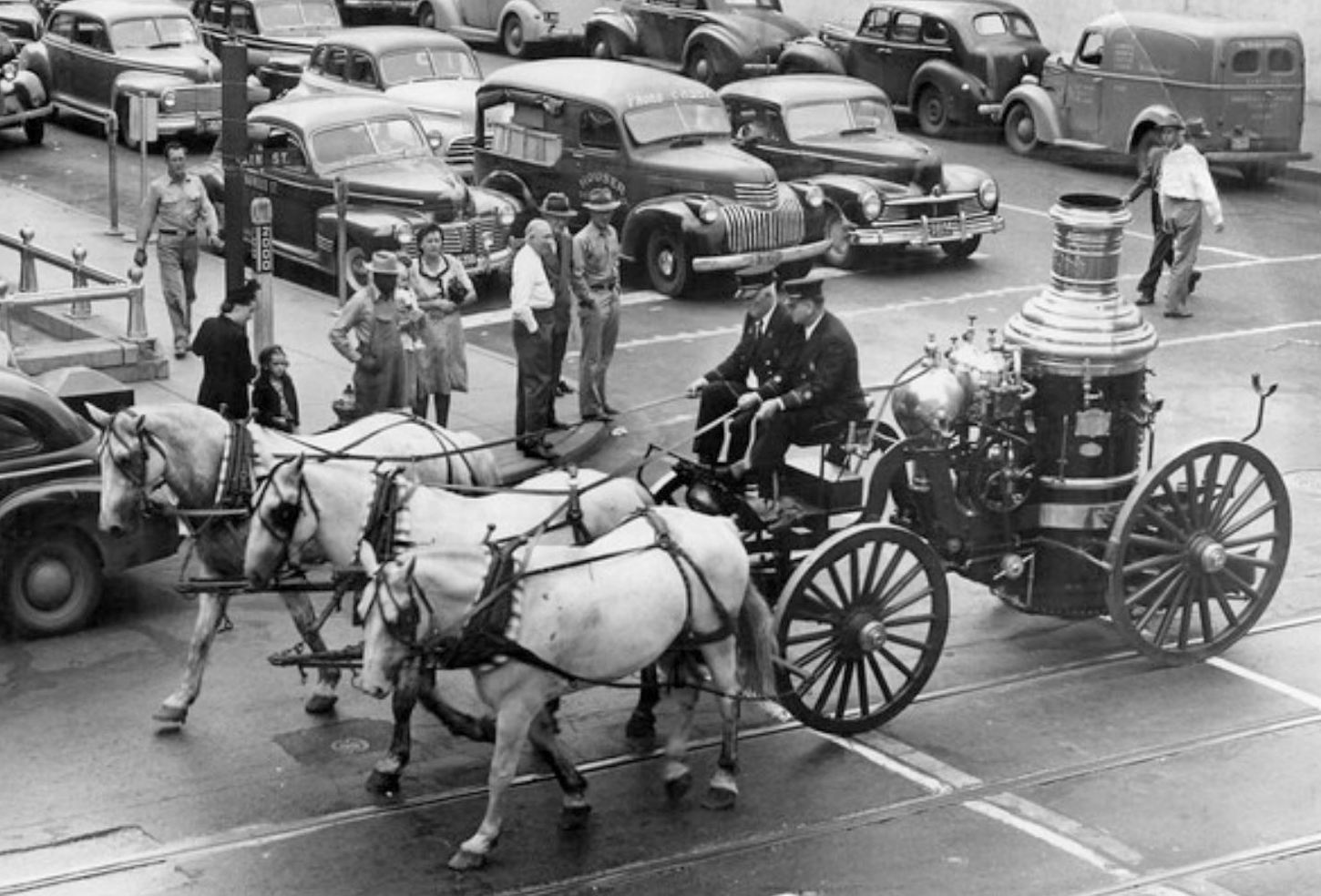
Since there is no sign of the actual equipment in these photos, here’s what horse-drawn steam engines (Ahrens steamers) looked like at this time. (Photo from the Wisconsin Historical Society).

fire-steam-engine_wisconsin-hist-soc

UPDATE: I found this photo on Flickr, showing equipment from those early days being driven through the streets of Dallas during a fire prevention parade.

fire-department_pumper_flickr_coltera

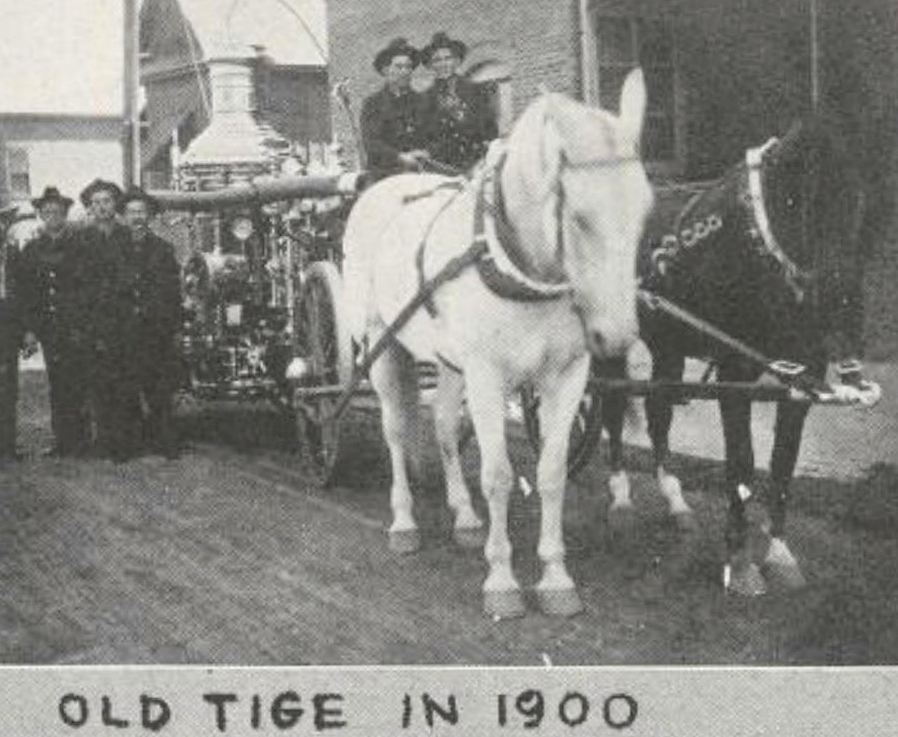
UPDATE: Lo and behold, a photo from 1900 of Old Tige, the 600 gallons-per-minute steam pumper, built in 1884, which was in service with the Dallas Fire Department until 1921. (Old Tige can be seen in the Firefighters Museum across from Fair Park.) Found at the Portal to Texas History.

old-tige_1900_fire-dept-bk_1931_portal

***

Sources & Notes

Photos by Clifton Church, from the Dallas Fire Department Annual, 1901, which can be viewed in its entirety on the Portal to Texas History, here.

A contemporary map of Dallas (ca. 1898) can be viewed on the Portal to Texas History site, here.

More Flashback Dallas posts on historic Dallas firehouses can be found here.

All photos larger when clicked.

*

Copyright © 2016 Paula Bosse. All Rights Reserved.
The Jefferson Hotel and Its “Wireless Telegraph” Rooftop Tower — 1921

jefferson-hotel_1921_UTAThe view from Union Station… (click for larger image)
by Paula Bosse

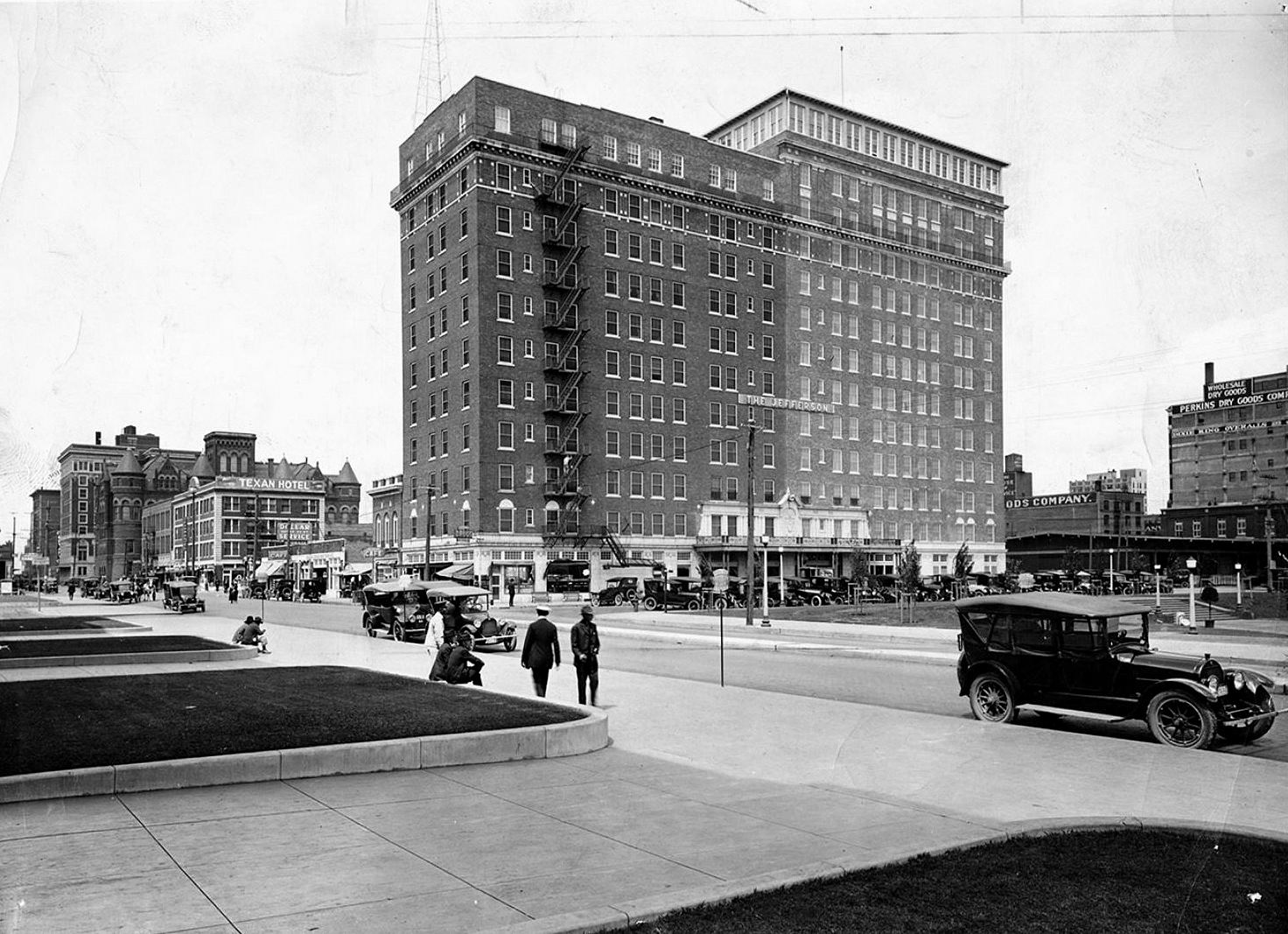
I haven’t seen many photographs showing this striking view of Dallas along Houston Street. This is what visitors saw when they emerged from Union Station after having arrived in the city by train: in the distance, the John Deere Plow Co. Building on Elm, the Dallas Jail and Criminal Courts Building, the Dallas County Courthouse, the Texan Hotel, the Jefferson Hotel, and (mostly out of frame at the right) the very pretty Ferris Plaza.

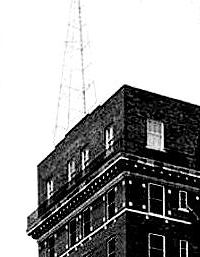
This photo was taken as one of several coinciding with the formal opening of the Jefferson Hotel’s major new addition (the addition is the taller, lighter-colored half of the hotel) — it was published in the May 8, 1921 edition of The Dallas Morning News in a special Jefferson Hotel section of the paper. I guessed that the the date of the photo was later because of what looks like a radio broadcast tower on the roof. Commercial radio broadcasts were not available in Dallas until June of 1922 when WFAA went on the air (their rooftop towers looked like this). WRR — the municipal broadcasting station — was a little older, but in those early days it was used exclusively for police communication (they appear to have had an aerial on top of the City Hall by at least September of 1921, if not earlier). So what was that tower on the roof?

jefferson-hotel_UTA_tower

It took a while to find out what it was, but … turns out it was, in fact, an antenna. It was part of the “wireless telegraph” equipment owned by the Continental Radio Telegraph Co., which had a Western Union-like office in the hotel’s lobby (the company had to relocate their tower and office from the Southland Hotel, their home for a little over a year before moving to the Jefferson’s roof).

The Continental Radio Telegraph and Telephone Co. began in about 1919. It was one of the first companies in the Southwest to attempt to commercialize the nascent “wireless” technology which allowed the sending and receiving of messages via radio waves. The initial motivation for establishing this new-fangled business appears to have been the inability of those with interests in the remote Texas oilfields to communicate with their workers in areas not served by telephone and telegraph wires. The plan was to build radio towers in these areas to broadcast and receive messages. When a “radiogram” was received and transcribed, a “polite, intelligent boy” would be dispatched to deliver the message to its recipient — all for about the same price as sending a regular telegram. Not only did the company envision the ability to one day communicate with ships, trains, and airplanes that were in transit, they also hoped to develop “wireless telephone” communication.

The Continental Radio Telegraph Company was based in Dallas from at least January of 1920, but they were gone by the time the 1922 city directory was printed — gone just a few short months after planting that aerial on top of the Jefferson Hotel. They seem to have erected only four towers: in Dallas, Fort Worth, Wichita Falls, and (possibly) Breckenridge. Then, as now, technology has a way of racing ahead of somewhat limited business plans.

But at least we have a nice photograph of their rooftop tower as proof that they existed.

**

(Click articles to see larger images.)

continental-radio_dmn_022720
Dallas Morning News, Feb. 27, 1920

continental-radio_jefferson-hotel_dmn-042921
April 29, 1921

continental-radio_jefferson-hotel_dmn_073121
“Wirless”! — DMN, July 31, 1921

*

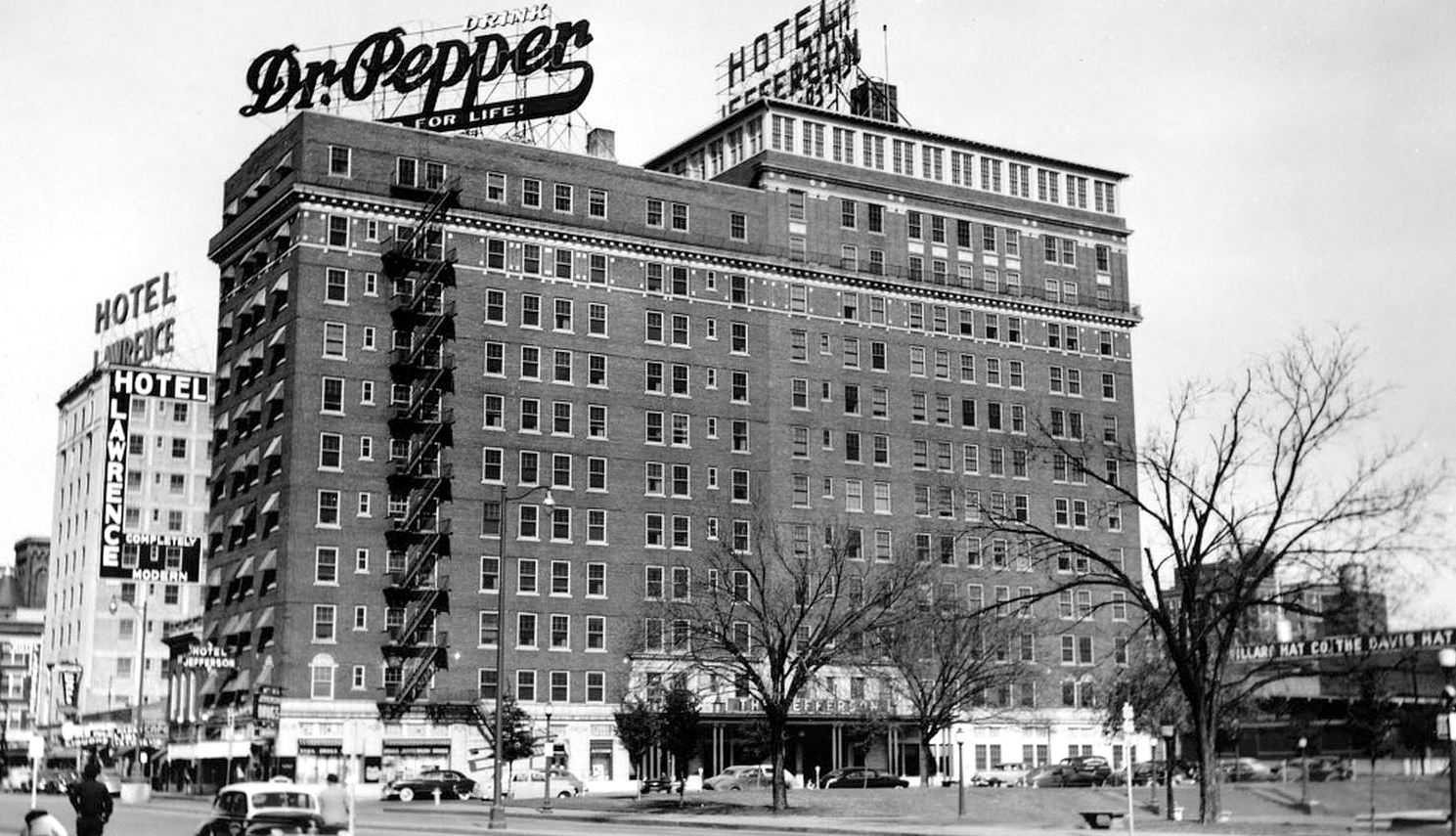
Here’s a shot from the same location a few years later; the tower has been replaced by the huge Dr Pepper sign which became something of a city landmark, and the Hotel Lawrence has popped up and is open for business next door. (More on this sign can be found in the Flashback Dallas post “Neon Refreshment: The Giant Dr Pepper Sign.”)

jefferson-hotel_hotel-lawrence_dr-pepper-sign_dmn-tumblr

***

Sources & Notes

Top photo is from the Fort Worth Star-Telegram Collection, UTA Libraries; more information is here. When the picture ran in the May 8, 1921 edition of The Dallas Morning News, the credit line read “Photo by Raymond.”

Photo with the Dr Pepper sign was purchased at an antique mall/flea market and was uploaded to Tumblr, here.

The Jefferson Hotel — which opened in October, 1917 — was demolished in 1975.

All images larger when clicked.

*

Copyright © 2016 Paula Bosse. All Rights Reserved.


DFW Airport Under Construction — 1973

dfw_under-construction_ca-1973_UTAA bird’s-eye view of the old Harrington place (click for HUGE image)

by Paula Bosse

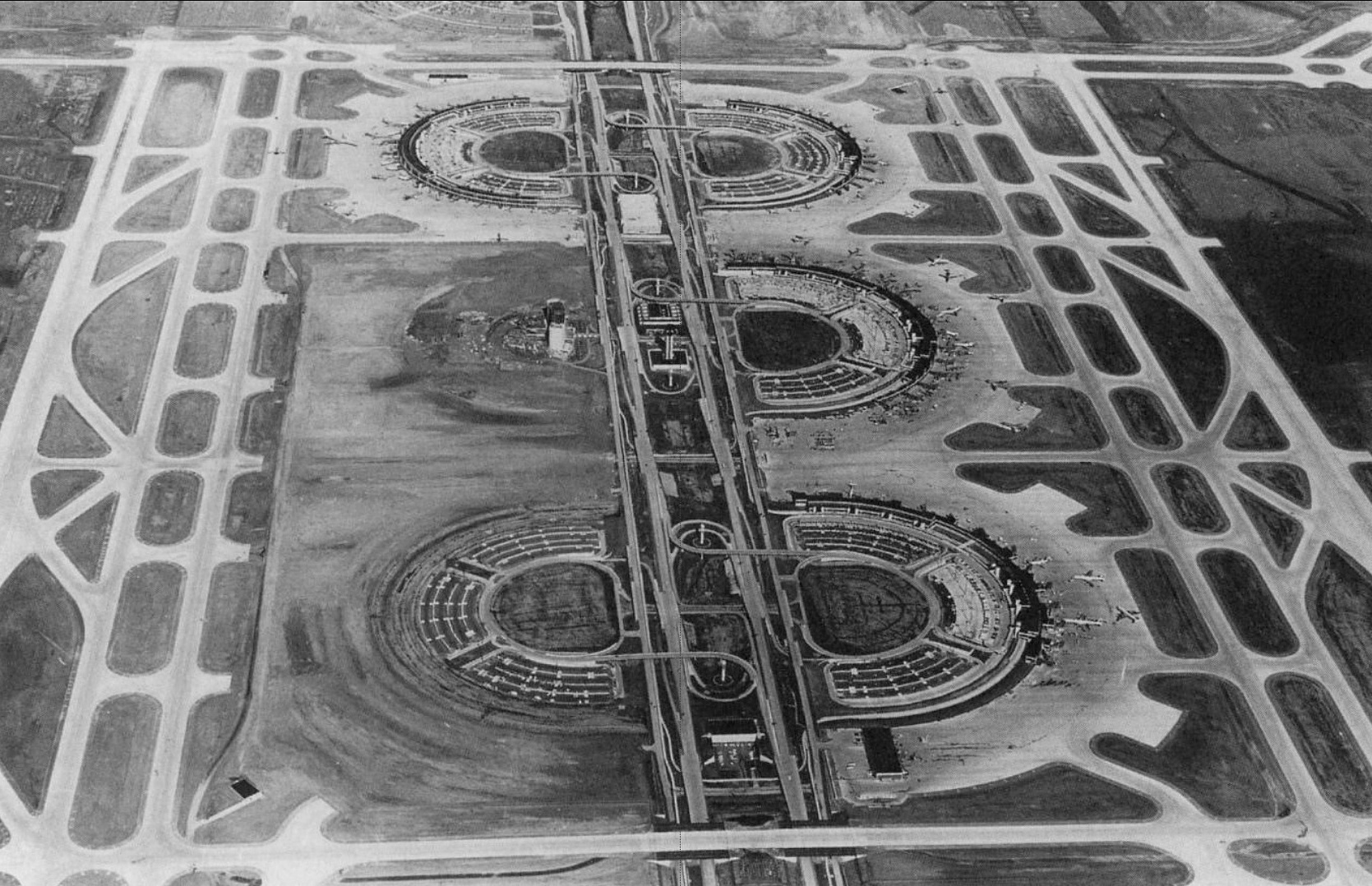
Dallas-Fort Worth Airport, during construction in 1973. DFW before it was DFW.

dfw-airport_1974-tsha

When DFW opened in January, 1974 — on 700 acres of land purchased from Irving rancher R. D. Harrington — it was served by only 8 airlines, had 3 runways and 56 gates. American Airlines Flight 341 from New York/Memphis/Little Rock was the first commercial flight to land at the airport, on Jan. 13, 1974. There was apparently an onboard battle to claim bragging rights to being the first passengers off the very first flight: a Fort Worth couple beat out a Dallas businessman for the honors — the Dallas man asserted, “I was the third person off the plane as the result of a shoulder block from the young lady who was the first person off” (Dallas Morning News, “First Flight A Scramble For History by Charlie Bates, Jan. 14, 1974).

***

Sources & Notes

Top photo titled “Airview of terminal buildings and highway through the airport at Dallas-Fort Worth Airport during construction, ca. 1973; from UTA Libraries, Special Collections — more info here.

Second photo is from the Texas State Historical Association 103rd Annual program (March, 1999), found on UNT’s Portal to Texas History site, here.

More on the history of DFW Airport can be found in the Fort Worth Star-Telegram article “40th Anniversary: DFW Ready to Soar Into the Future” by Andrea Ahles (Jan. 11, 2014), here.

DFW Wikipedia entry is here.

An aerial view of the airport today, from Google Maps, is here.

Photos are MUCH larger when clicked.

*

Copyright © 2016 Paula Bosse. All Rights Reserved.


Views of Elm Street, With Cameo Appearances by the Fox Theater — 1920s-1960s

fox-theater_sherrod_dpl
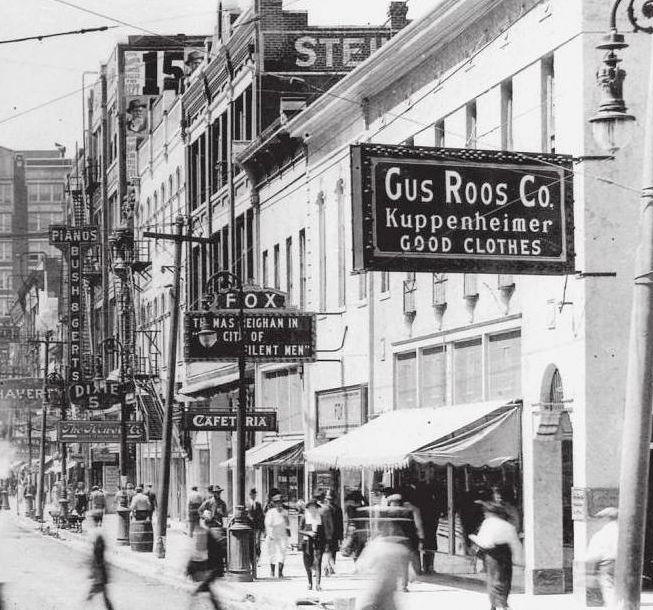
Elm looking west from Akard, ca. 1922

by Paula Bosse

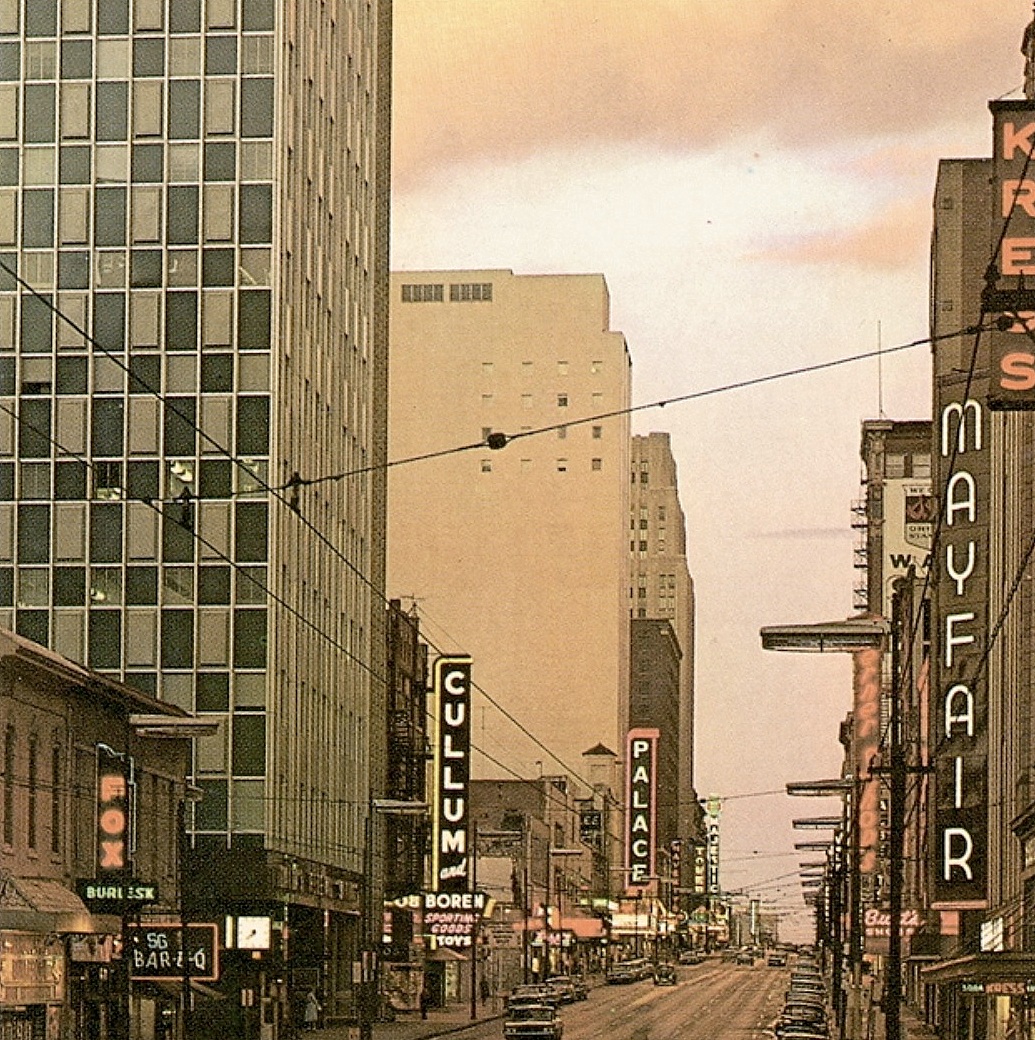
From the earliest days of moving pictures, most downtown movie houses called Elm Street home. Some were originally vaudeville houses which occasionally featured short films between acts of the live revues, and some were theaters built expressly as move theaters. Most of the downtown theaters could be found on Elm Street, and the stretch between, say, Field and Harwood became known as “film row” or “theater row.” Most theaters were located on the north side of Elm in the blocks east of Akard Street, but a few found a home west of Akard. One of these — which I’ve seen in several of the photos I’ve posted — was the Fox Theater, located next to the Gus Roos store, at 1411 Elm, just west of the Akard intersection.

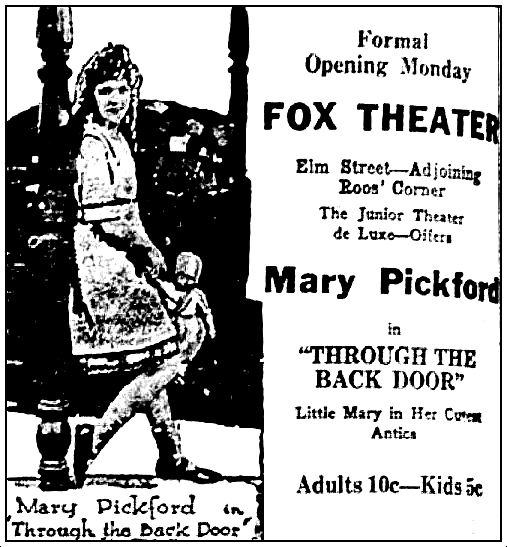
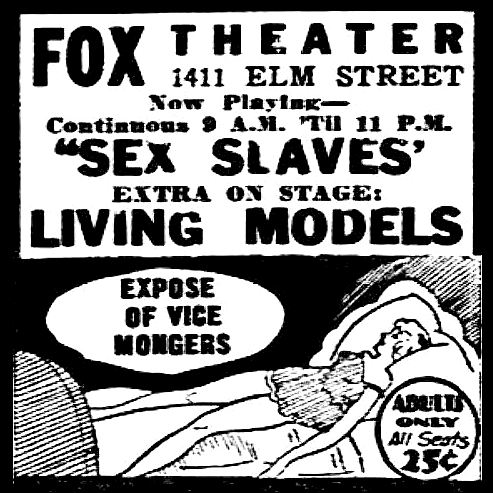
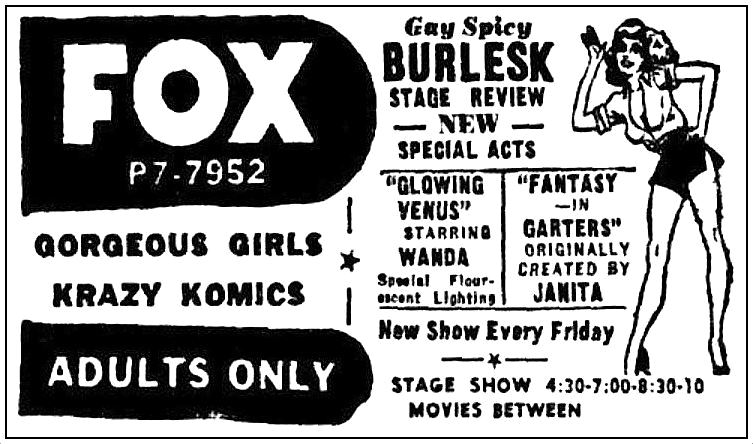
The Fox — which was named after owner Max Fox, a Polish immigrant who also owned the nearby Strand Theater — opened in the early months of 1922. During its 40-year history, it had something of a “colorful” life: despite opening with a sweet, family-friendly Mary Pickford movie and then showing mostly second-run features, it ultimately became one of Elm Street’s seedier theaters, showing cheap exploitation flicks and, later, becoming a “burlesk” house with on-stage strippers and “adult-only” fare playing continuously from 9 AM (!) to 11 PM. The Fox remained in business until the end of 1961 when property in the 1400 block began to be sold in order to build the First National Bank Building. (A comprehensive history of the theater can be found on Cinema Treasures.)
*

As I said, I’ve noticed the Fox Theater in a number of photos I’ve come across — some of which I’ve posted previously. Here are a few views of Elm Street in which the Fox pops up in a cameo appearance.

The top photo shows Elm looking west in about 1922. Down the street a bit you can see the Dixie Theater at 1315 Elm, one of the (if not THE) oldest permanent movie theater spaces in Dallas. The Dixie began life in 1909, the third theater in the location originally occupied by the Theatorium, which opened in 1906. (I wrote about the Dixie and other early “photoplay houses” in Dallas here.)

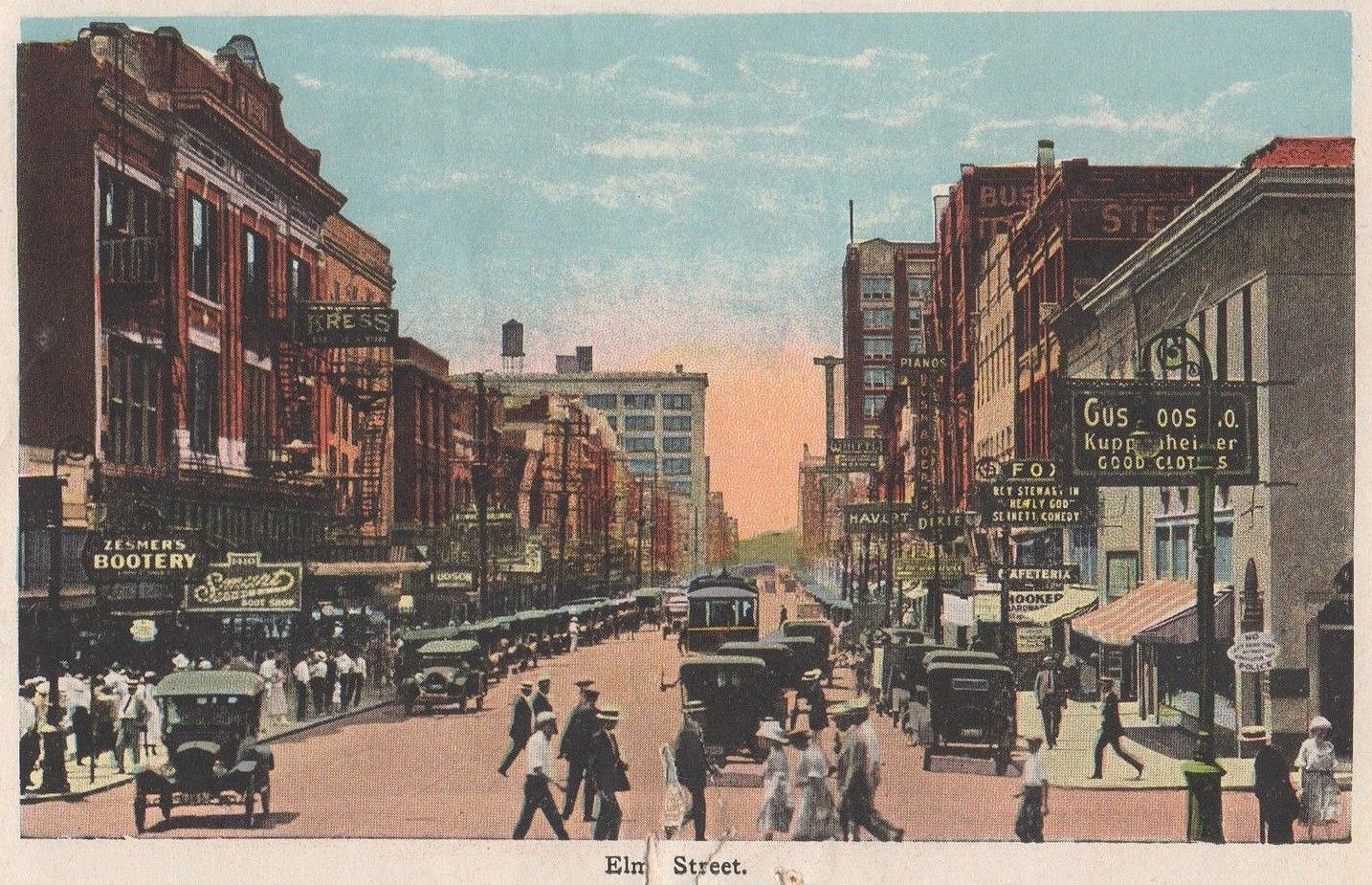
A similar view from about the same year is seen in this postcard (click to see a very large image):

elm-st-color_1920s

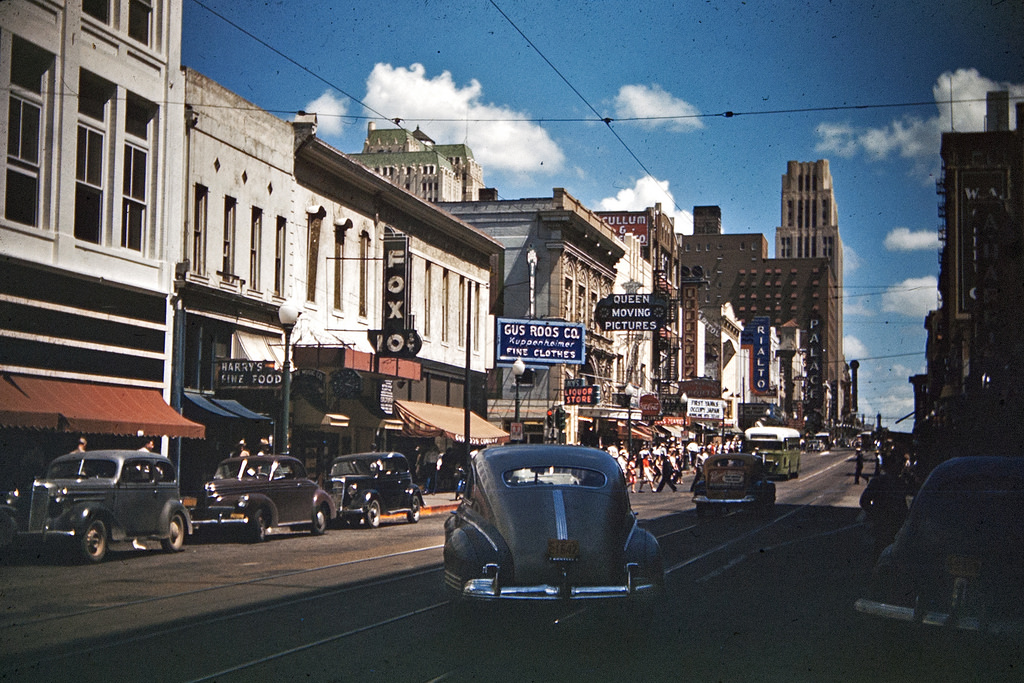
From the WWII-era, this fantastic color photo, looking east (the Queen, Telenews, Capitol, Rialto, and Palace theaters can be seen in this photo, with the silhouette of the Majestic Theatre’s sign seen way in the distance):

elm-street-color_1940s_jeppson-flickr

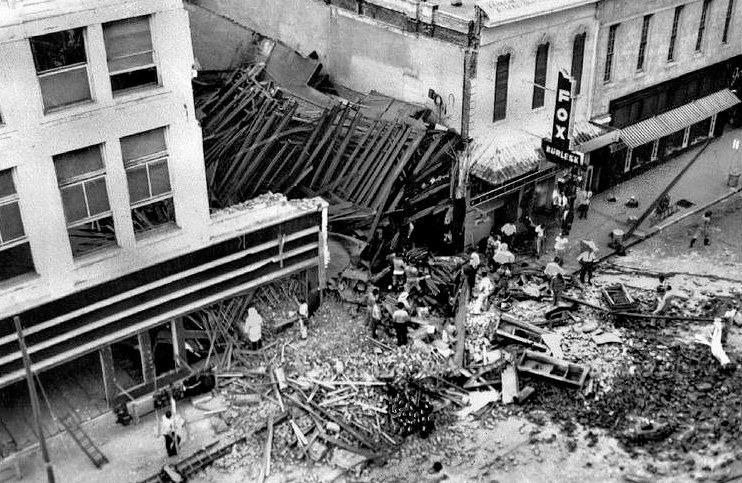
In 1955, the wall of the building next door to the theater collapsed, killing several people (I wrote about that building collapse, here):

building-collapse_observer-090511

And, lastly, a photo of a decidedly less glamorous Elm Street, showing the “Fox Burlesk” in its final months, taken about 1961:

1400-block-elm_schaffershot54_flickr_ca-1961

**

fox-theater_032022
Dallas Morning News, March 20, 1922

fox-theater_pickford_dmn_031922
March 19, 1922

fox-theater_dmn_031940
1940

fox-burlesk_dmn_061850
1950

***

Sources & Notes

Top photo from Troy Sherrod’s book Historic Dallas Theatres; photo from the Dallas Public Library.

1940s color photo from Noah Jeppson’s Unvisited Dallas post, “Elm Street 1945,” here.

UPI photo showing the building collapse was posted a few years ago by Robert Wilonsky on the Dallas Observer’s Unfair Park blog, here.

Bottom color photo from Flickr user Schaffershot54, here.

Other Flashback Dallas posts on Dallas theaters can be found here.

*

Copyright © 2016 Paula Bosse. All Rights Reserved.

Summer Rerun: 7-Eleven Day!

7-eleven_1966

by Paula Bosse

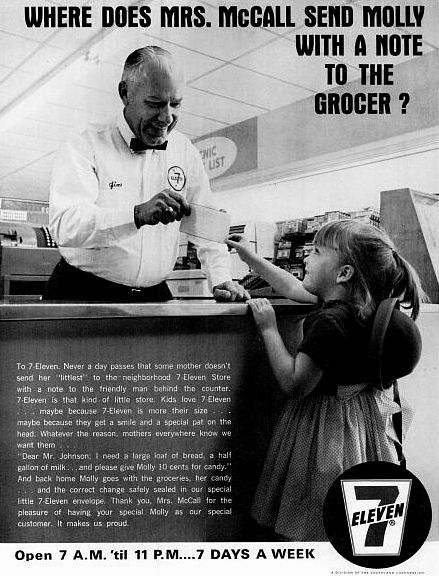
Today — July 11 — is “7-Eleven Day,” the day when the Dallas company that revolutionized the world of retail convenience offers free Slurpees to a hot and sweaty public. The 1966 ad above is one of the first things I ever posted on this blog. It’s sweet and quaint. The world has changed quite a bit since that folksy advertisement appeared 50 years ago. Read the ad copy in the original post, here.

*

Copyright © 2016 Paula Bosse. All Rights Reserved.