Flashback : Dallas

A Miscellany: History, Ads, Pop Culture

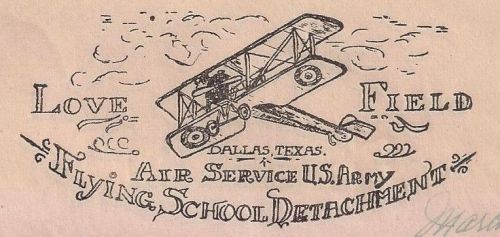
From the Vault: A Valentine from Love Field — 1919

love-field_stationery_ca19191

by Paula Bosse

Yeah, it’s a bit of a stretch, but check out my Valentine’s Day post from a couple of years ago. It has cool Love Field stationery from WWI (“Love,” get it?), a tentative start at a correspondence between a young man and woman, and a sky full of 30 “skylarking” airplanes piloted by jubilant flyers who have just been told they will soon be on their way home after the long war. Read it here.

If you’re celebrating Valentine’s Day, have a good one — if you’re not, enjoy the rest of your Sunday!

*

Copyright © 2016 Paula Bosse. All Rights Reserved.

Dallas’ Mid-Century Skyline

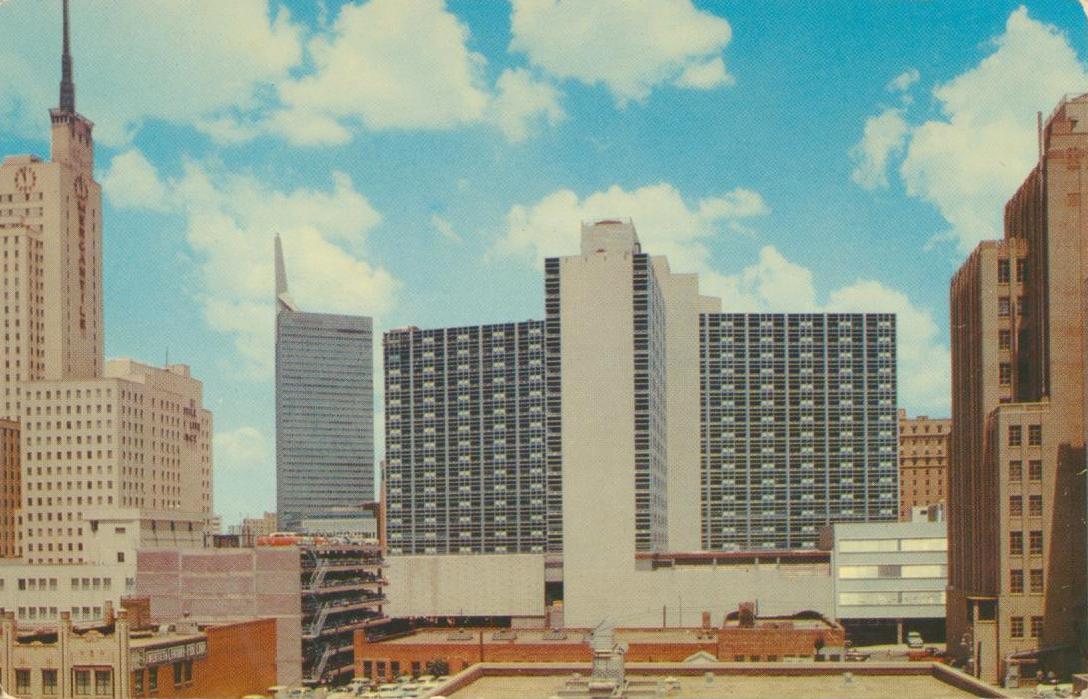
skyline_statler_mercantile_republic_ebayBack then: more sky, fewer parking lots (click for larger image)

by Paula Bosse

Dallas architecture at mid-century: the Mercantile Bank Building, the Republic Bank Building, the Statler-Hilton (from behind!), and … a multi-level parking garage. Dallas is nothing if not a city full of banks, banks (and more banks), flashy hotels, and parking lots. Then and now.

***

Slightly fuzzy postcard from eBay. The Statler-Hilton (which this postcard identifies as the “Hilton-Statler”) isn’t often seen from behind like this in photos (not really its best side). Other than the three main buildings (and the old library, which is as architecturally cool as the other three), I think that just about everything else in this photo is gone. There are now parking lots (…yay…) where the buildings at the right and at the bottom left are seen — there’s even a parking lot where the parking garage once stood! (Dallas really loves its parking lots.) At least we managed not to tear down the most architecturally significant buildings seen here. (Even though the number of downtown parking spaces could be exponentially increased if we pulled those suckers down and replaced them with multi-multi-story garages!)

*

Copyright © 2016 Paula Bosse. All Rights Reserved.

Fletcher’s State Fair Drive-In — 1960-1963

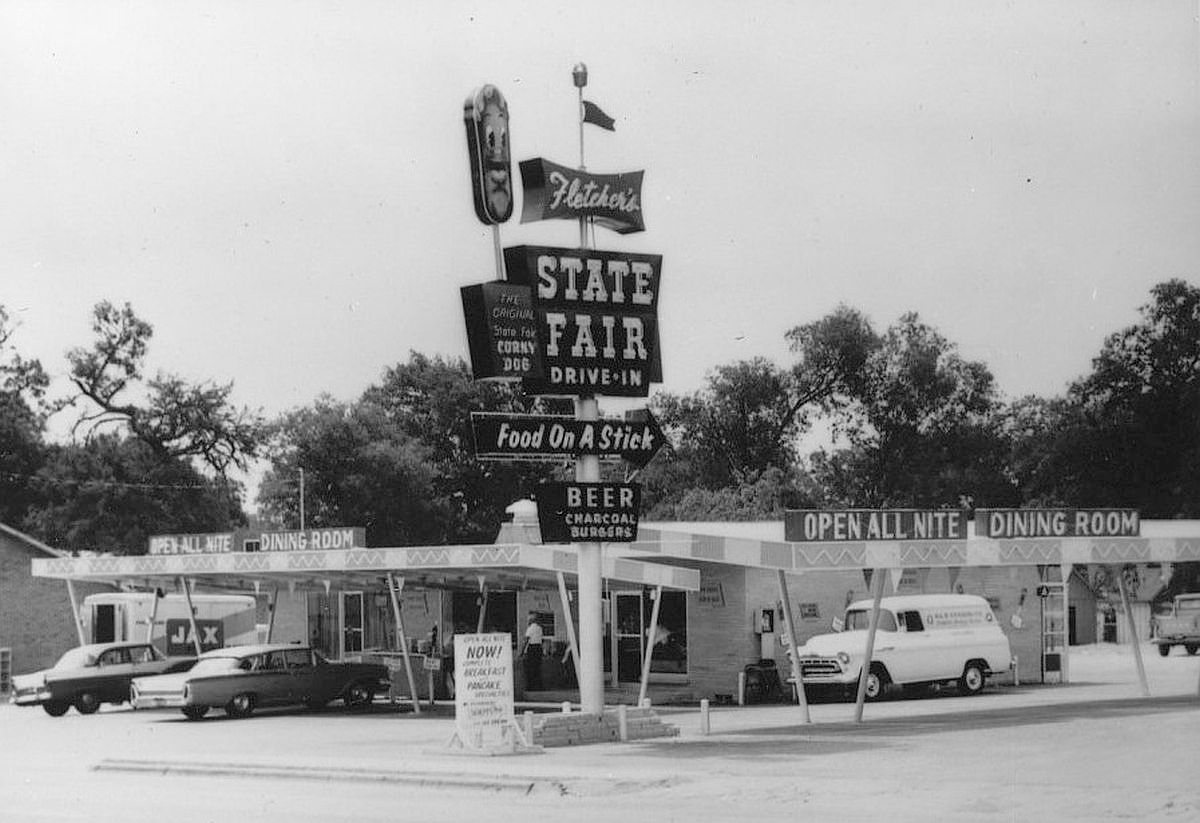
fletchers-state-fair-drive-in_DHSFood-on-a-stick, open all nite

by Paula Bosse

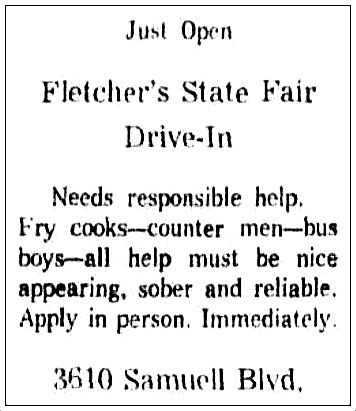
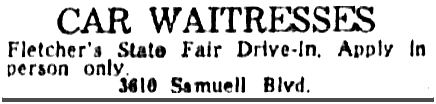
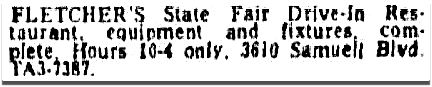
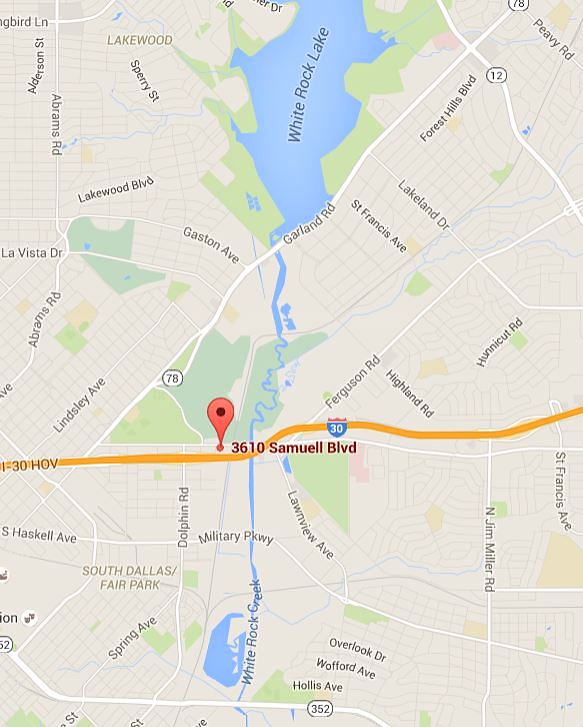
The legendary Fletcher’s Corny Dog once had its own drive-in! You didn’t have to wait until the State Fair of Texas rolled around to get your favorite “food on a stick” fix — you just needed to head to 3610 Samuell Boulevard, across from the Tenison Golf Course.

Sadly, there was a lot of drive-in and tavern competition along Samuell back then (Keller’s was practically next door!), and the State Fair Drive-In seems to have lasted only a little over three years, from the spring of 1960 to the fall of 1963.

I’d love to see this around NOW! Come on, Fletcher’s family: bring this back!

*

fletchers_dmn_051560May , 1960

fletchers_dmn_062960June, 1960

fletchers_dmn_102463_for-sale
Oct., 1963

***

Sources & Notes

Top photo from the Dallas Historical Society.

An article on Neil Fletcher’s new restaurant and a photo of the interior can be found in the archives of The Dallas Morning News: “State Fair Drive’In Fixtures Designed, Installed by Bab’s” (DMN, June 12, 1960).

After the Fletcher’s Drive-In closed, it was replaced by a Red Coleman liquor store, and was most recently a club, El Palmeras. Google Street View shows the shabby neighborhood these days, here.

3610-samuall_googleGoogle Maps

An entertaining interview with the late Neil Fletcher appeared in the Oct. 1982 issue of D Magazine, here.

A Travel Channel video focuses on the famed corny dog, here.

A previous Flashback Dallas post about that same stretch of Samuell Blvd. — “Red’s Turnpike Open-Air Dance: An East Pike/Samuell Blvd. Joint — 1946” — is here.

UPDATE: I’ve received many comments that Fletcher’s had several short-lived drive-thru restaurants which started popping up in the mid-’80s. More on the franchise plans can be read in the article “Fletcher and Firm Very Much Alive” by Donna Steph Hansard (DMN, Aug. 5, 1984).

*

Copyright © 2016 Paula Bosse. All Rights Reserved.

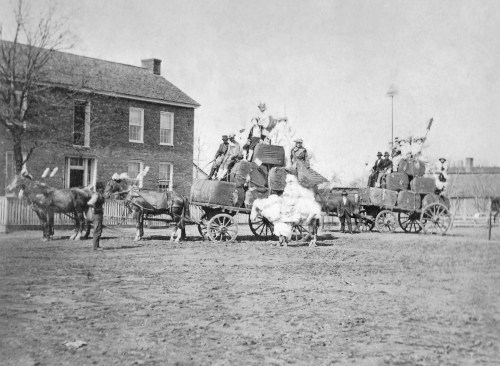
From the Vault: Dallas’ First Mardi Gras Parade — 1876

mardi-gras_dhs_1876Waiting in the wings…

by Paula Bosse

Read about the crazy goings-on in 1876 as Dallas pulled out all the stops for its first Mardi Gras parade in the post “Mardi Gras: ‘Our First Attempt at a Carnival Fete’ — 1876,” here.

Happy Mardi Gras!

*

Copyright © 2016 Paula Bosse. All Rights Reserved.

Main & Murphy — ca. 1907

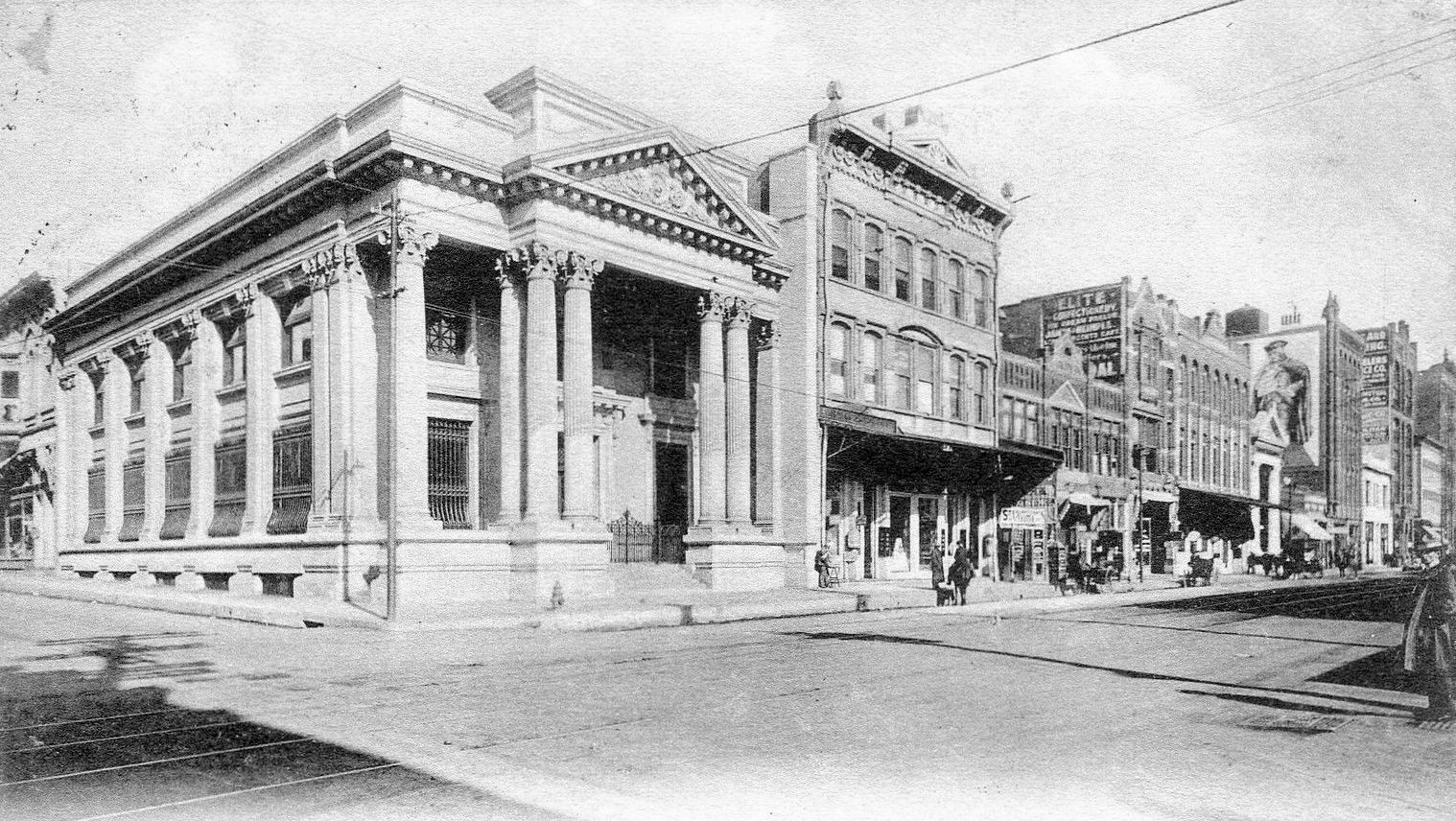
city-national-bank_postcard_bwMain St. looking east

by Paula Bosse

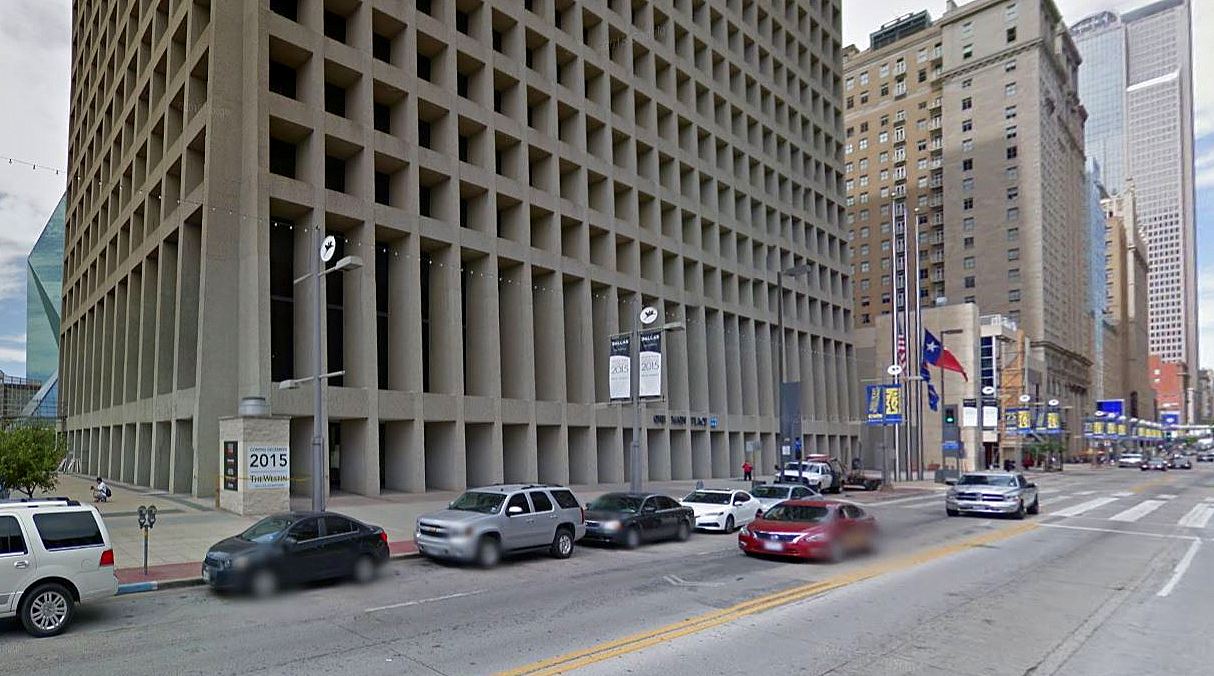
Above, Main Street looking east, taken from Murphy, anchored by the beautiful City National Bank, built in 1903. This block today? One Main Place.  Whatever old buildings were left in this block in 1965 (including the old City National Bank) were bulldozed into oblivion to make way for the skyscraper.

The same view today:

one-main-place_google_2015Google Street View, 2015

***

Sources & Notes

Top image from a postcard found on eBay.

Imagine looking up to the sky from the photographer’s vantage point in the top photo and seeing what things would look like a century later.

Murphy no longer exists — it was between what is now Griffin and Field. A map from 1898 showing the location:

main-murphy_1898-map

See another photo of the same view taken at about the same time, only with horse-and-buggy traffic, here.

*

Copyright © 2016 Paula Bosse. All Rights Reserved.

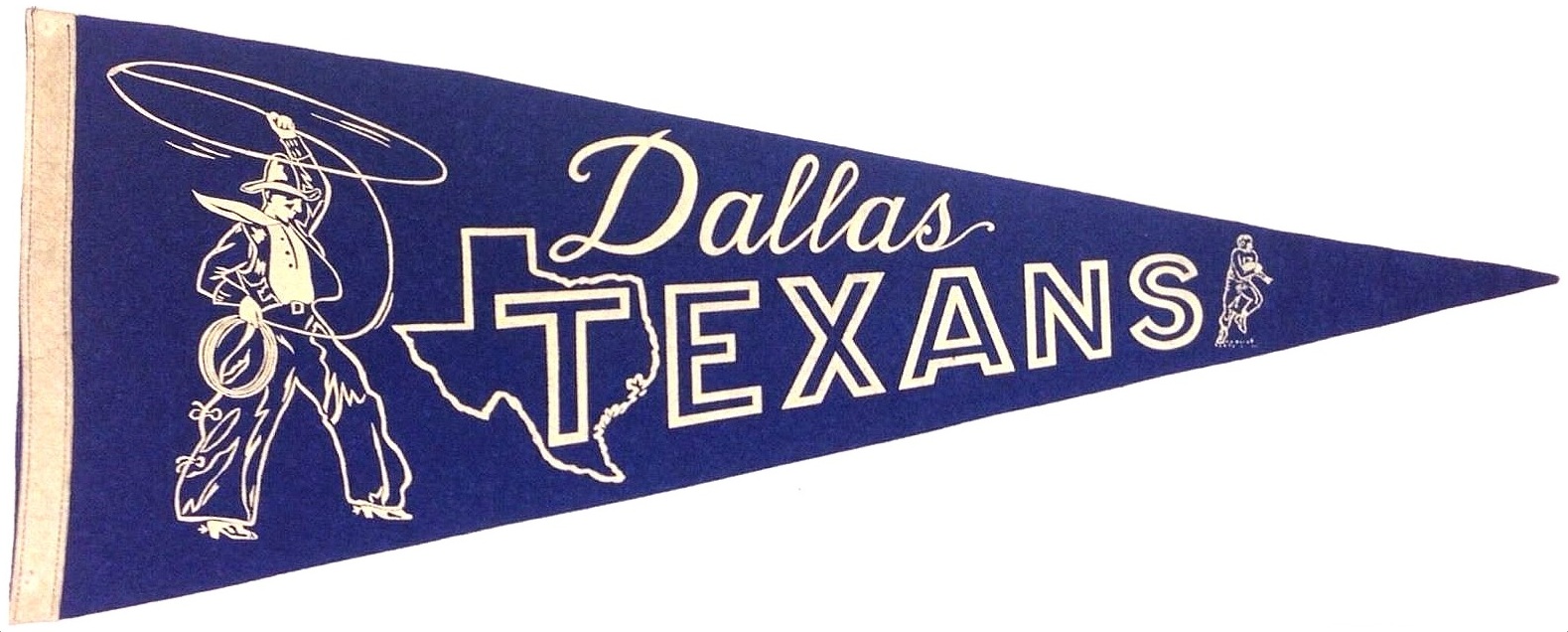
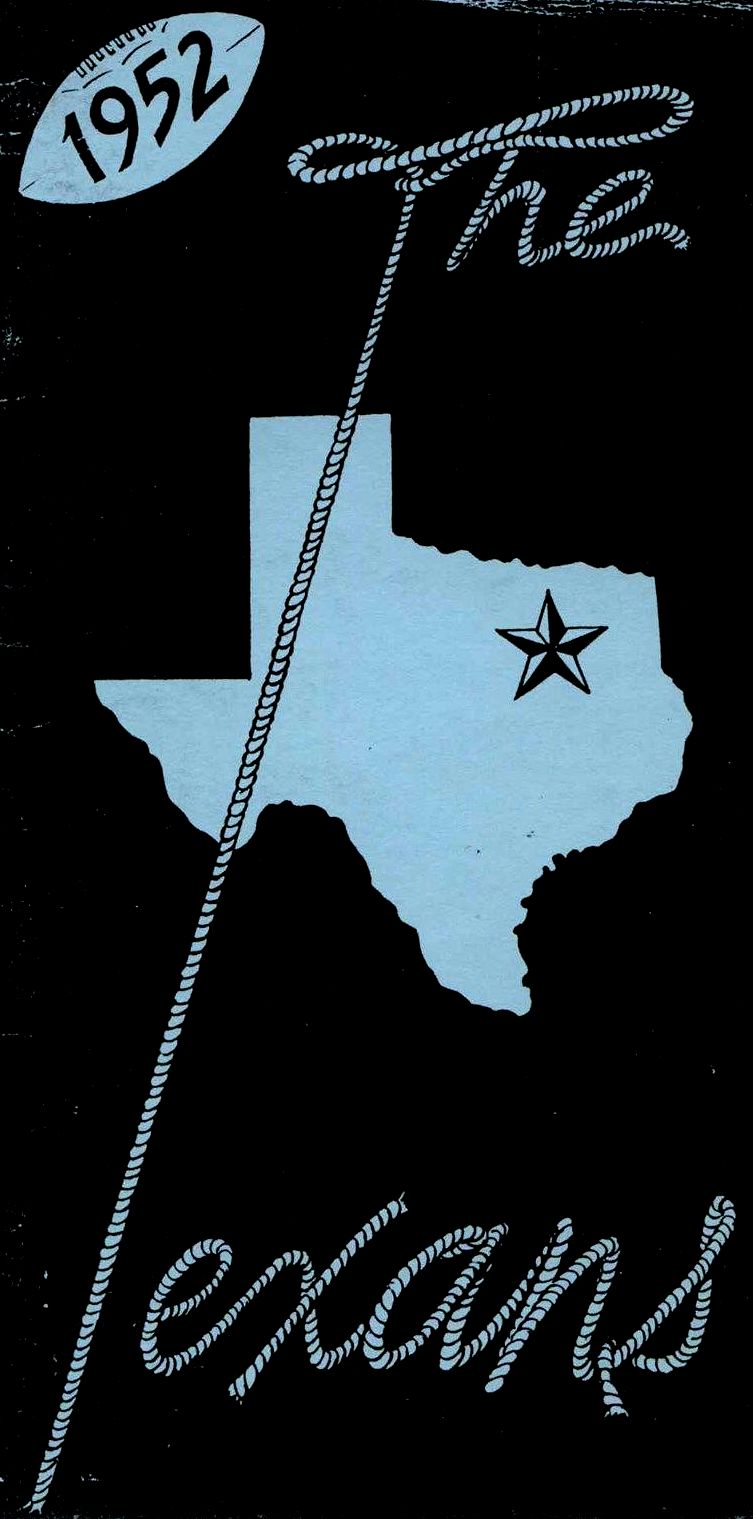
The 1952 Dallas Texans: Definitely NOT America’s Team

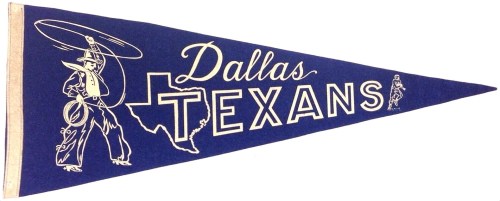
dallas-texans_pennant_ebay

by Paula Bosse

The “Dallas Texans” was the name of two different short-lived professional football teams representing doesn’t-like-to-lose Dallas, Texas. One played in the NFL (1952), the other played in the AFL (1960-1962). The ’60s team won the AFC championship. The ’50s team … oh dear.

That 1950s team already had a checkered past before it got to Dallas in 1952. In 1944, the team was founded as the Boston Yanks. It moved to New York in 1949, becoming the New York Bulldogs. In 1950 the name was changed to the New York Yanks. By 1951, the franchise was in financial trouble and was put up for sale.

Young Dallas “textile tycoon” Giles Miller — a native Dallasite who was “the great-grandson of a pioneer Texan who was wagon-master for Sam Houston at the Battle of San Jacinto” (Dallas Morning News, Jan. 21, 1952) — bought the franchise (and took on a heavy debt incurred by the original owner to repay the New York Yankees for rental of their stadium — see below) for $300,000 (three million dollars in today’s money).

giles-miller_connell-miller_dmn_012152Giles Miller, 1952

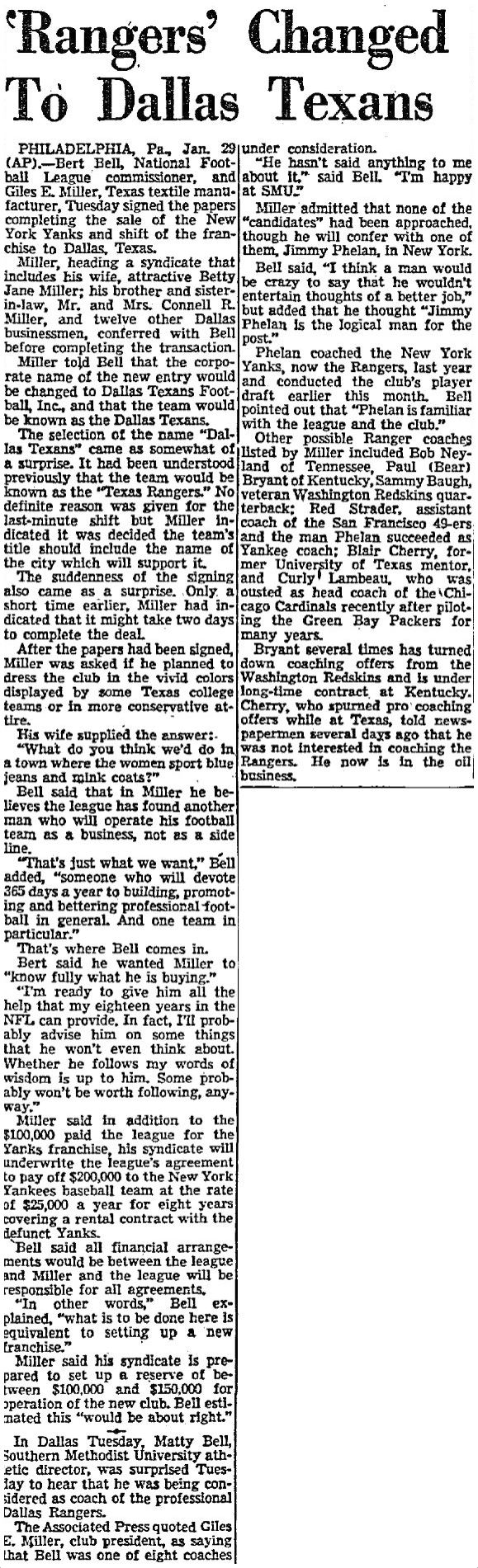
People went crazy. The team (which was initially going to be called the Texas Rangers) was the first professional football team in Texas. I think it was the first professional SPORTS team in Texas. There was much rejoicing.
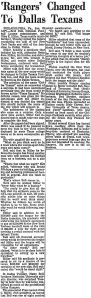
dallas-texans_dmn_013052AP wire story, Jan. 30, 1952 (click for larger image)

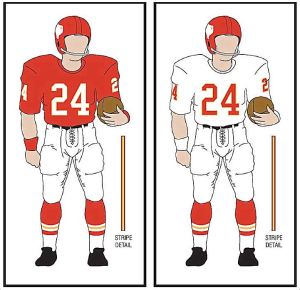
The team would play in the Cotton Bowl. Their colors would  be royal blue, silver, and white (…hmm, sounds familiar…).
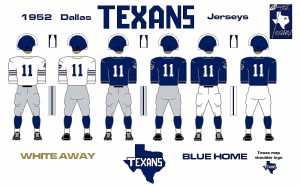
dallas-texans-uniforms

Their “traveling clothing” would be, for some reason, western wear. “When the team goes on the road, it will be decked out in typical western dress — cowboy boots, 10-gallon hats and other gear typical of the cow country. At least that’s the aim of the stockholders at this time” (DMN, Jan. 31, 1952). (See the shirts here.)

And they had a flashy logo.
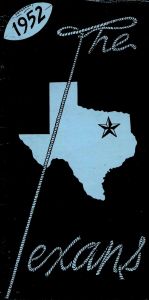
dallas-texans_logo_ebay

Unfortunately, there doesn’t seem to have been as much attention directed to the players.  Even though there were a few new players brought in (including local boy Jack Adkisson, better known later by his wrestling name, Fritz von Erich), the team was basically the same one inherited from the failed New York team (including three black players, which caused a lot of questions about whether they would be retained by Dallas — they were).

So how’d that first season go? They played 12 games. They won one. Attendance started out sparse, and it only got sparser. The team quickly went bankrupt. Giles Miller tried to get financial help from the city and from fellow wealthy businessmen, but after the seventh game, Miller “returned” the team to the NFL. I didn’t know you could do that — like a dog owner who had happily adopted a German Shepherd without having researched how much it would cost for its upkeep, then after realizing he couldn’t afford it and being unable to find anyone else who would be able to take him in, he had to return him to the shelter. The remainder of the season had a homeless team (still called the “Dallas Texans”) traveling to various cities until the season mercifully ended. The Dallas Texans were, somewhat ignominiously, the last NFL team to fold.

The team eventually became the Baltimore Colts. Sort of. From the Wikipedia entry:

The NFL was unable to find a buyer for the Texans, and folded the team after the season. A few months later, the NFL granted a new franchise to a Baltimore-based group headed by Carroll Rosenbloom, and awarded it the remaining assets (including the players) of the failed Texans operation. Rosenbloom named his new team the Baltimore Colts. For all intents and purposes, Rosenbloom bought the Texans and moved them to Baltimore. However, the Colts (now based in Indianapolis) do not claim the history of the Yanks/Bulldogs/Yanks/Texans as their own, in spite of the fact that the Colts 1953 roster included many of the 1952 Texans. Likewise, the NFL reckons the Colts as a 1953 expansion team.

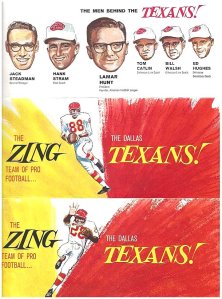
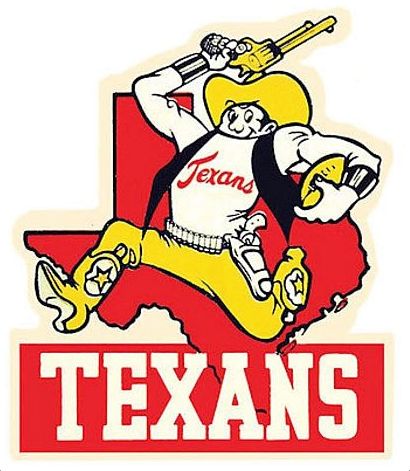
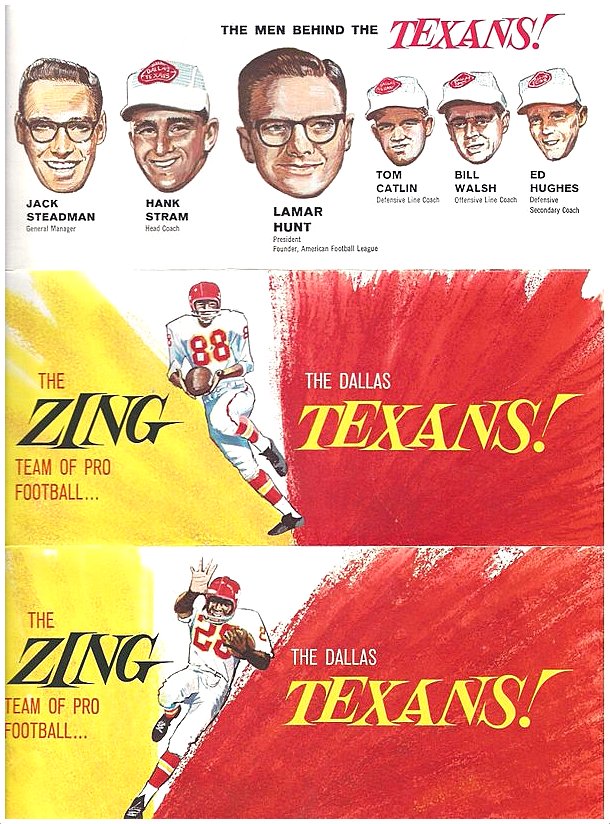
Dallas didn’t have a professional football team again until 1960. And then it got TWO. Clint Murchison gave us the Dallas Cowboys (my sports knowledge is obviously pretty paltry, because I’d never heard how Murchison got the NFL franchise until I read the story about his pretty amusing feud with the Washington Redskins owner), and Lamar Hunt created the AFL and gave us … the Dallas Texans. Mach Two. They wore red, white, and yellow and actually won a few games. Someone even created a weird little nickname for them: “The Zing Team of Pro Football.” The Zing Team lasted for three seasons before becoming the Kansas City Chiefs.
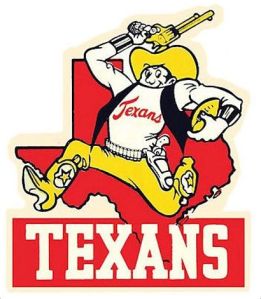
dallas-texans_1960s_ebay

dallas-texans_AFL_1962-uniform

dallas-texans_zing-team

***

Sources & Notes

1952 pennant and 1960s sticker from eBay.

Illustration of 1952 uniforms from AmericanFootballWikia.com, here. 1960s uniform from BlackReign.net, here.

“Zing” image from Twitter user @ToddRadom.

Stats? 1952 Texans (read ’em and weep), here; 1960s Texans, here.

A couple of interesting articles from The Dallas Morning News archives:

  • “The Sports Scene” by Bill Rives” (DMN, Jan. 31, 1952). Rives shared with his readers several instances of Texas stereotypes showing up in national stories about the city’s new acquisition.
  • “The Inside Story” by Charles Burton (DMN, Jan. 18, 1953). A bitter article on the 1952 team going to Baltimore. Columnist Charles Burton felt that Dallas was “railroaded” and that there were some suspicious backroom dealings going on having to do with the big Yankee Stadium debt Giles Miller took on when he bought the team.

Click pictures and clippings for larger images.

*

Copyright © 2016 Paula Bosse. All Rights Reserved.


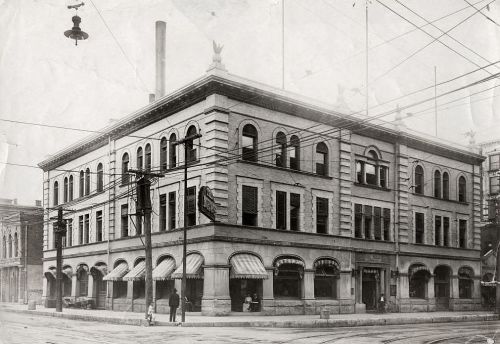
From the Vault: Loitering In Front of the DMN Building — 1900

dmn-bldg_c1900_degolyer_smuDeGolyer Library/SMU

by Paula Bosse

There are several almost dreamlike vignettes contained in this wonderful photo of the old Dallas Morning News Building at Commerce and Lamar. See them in my previous post “Loitering In Front of The Dallas Morning News Building — ca. 1900,” here. (Links to two other photos of the building taken at about the same time are linked at the bottom of the post.)

*

Copyright © 2016 Paula Bosse. All Rights Reserved.
Early Aerial View of the SMU Campus

smu_early-aerial_ca1920s_degolyerWide open… (click for much larger view)

by Paula Bosse

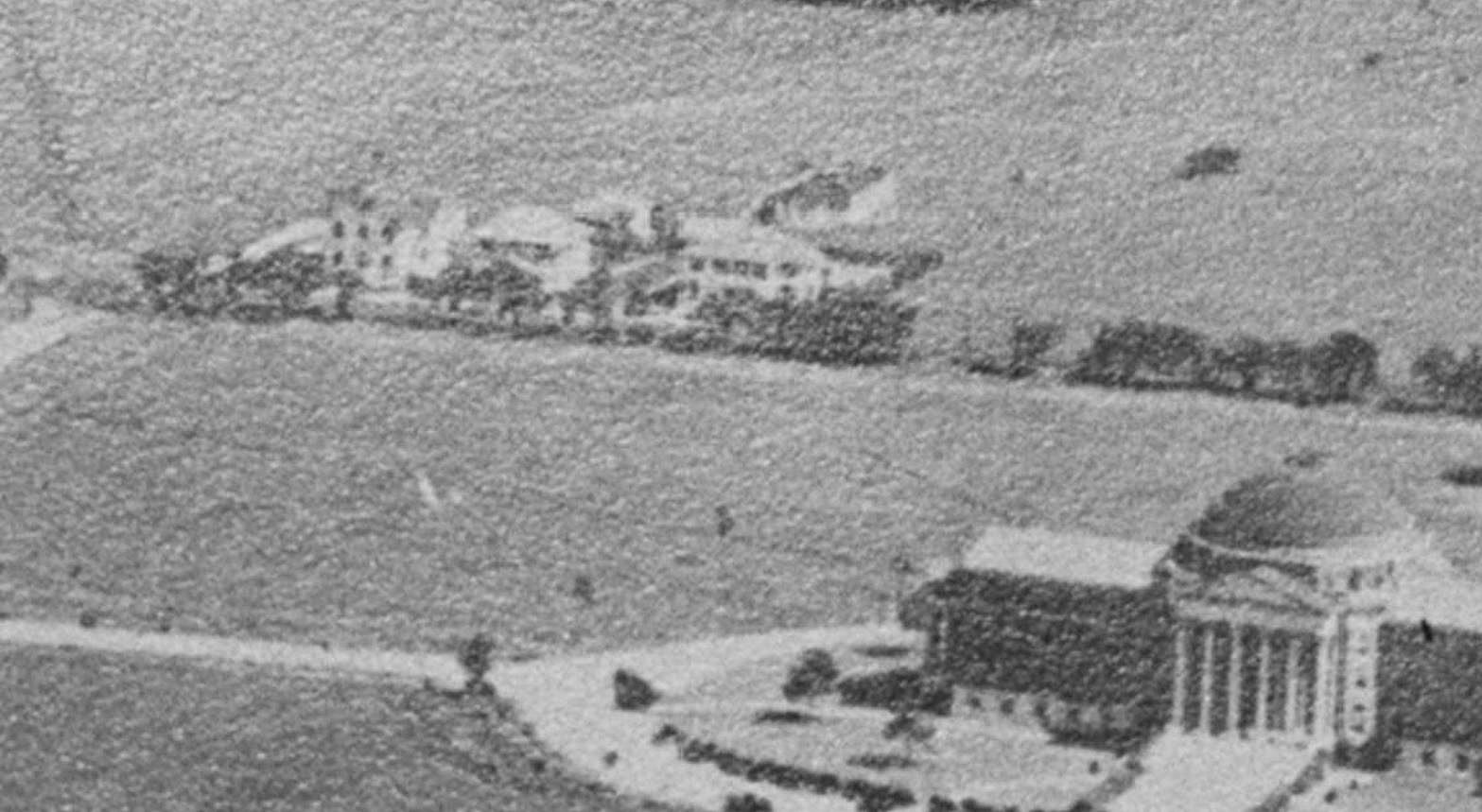
Does anyone else fear the SMU campus is getting a little crowded these days? Here’s what it looked like back when there was still plenty of room to stretch out.

This photo is in the SMU archives, accompanied by this description:

Pictured is an aerial view of campus from the southeast. At the bottom is Mockingbird Lane; on the right is Airline Road; at the top is Daniel Avenue; and on the left is Hillcrest Avenue. Situated in the middle of fields is a water tower, Dallas Hall, Atkins Hall, Rankin Hall, North Hall, South Hall, the Women’s Gymnasium, Armstrong Field, and the Morrison-Bell Track.

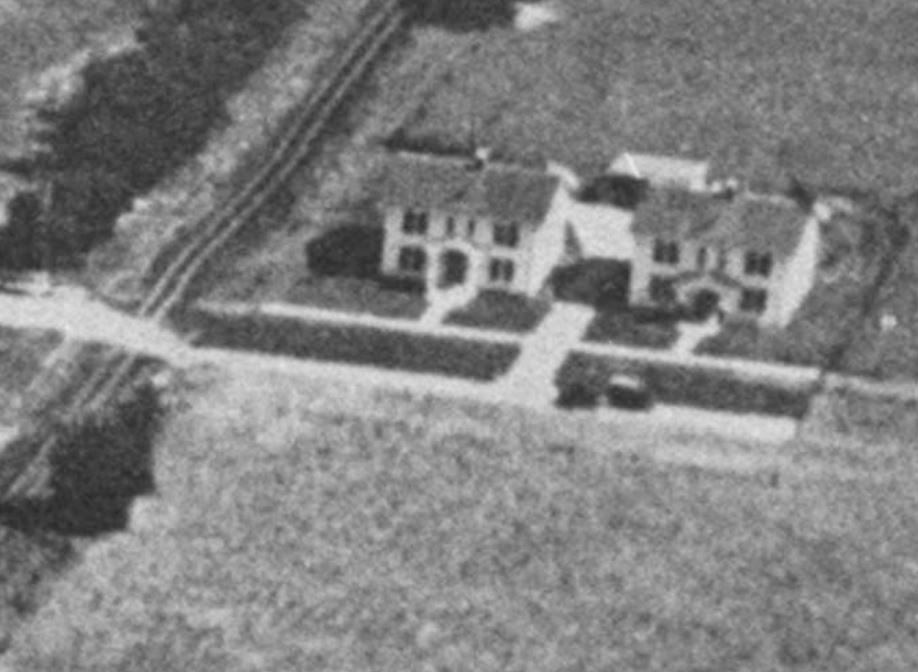
What is the huge hacienda at Hillcrest and Daniel (below)? Is that the Daniel family home?

smu_early-aerial_ca1920s_degolyer_a

And what are the little houses next to the under-construction stadium? Faculty housing? Fraternity houses? Houses not even connected with the university?

smu_early-aerial_ca1920s_degolyer_b

I kinda wish the campus still looked like this.

***

Photo titled “Early aerial view of campus,” ca. 1920s, from the DeGolyer Library, Central University Libraries, Southern Methodist University; it is accessible here.

Zoom in on this photo as much as you can and wander around it — it’s pretty cool. Go here, then slide the magnification bar at the top all the way to the right.

Click pictures for larger images.

*

Copyright © 2016 Paula Bosse. All Rights Reserved.
Happy 2nd Anniversary, Flashback Dallas!

skyline-1914_cook_degolyer_smuDallas, New Year’s Day, 1914 (click for larger image) (photo: SMU)

by Paula Bosse

Two years! Time really does fly when you’re having fun. Without duplicating the entirety of my anniversary post of last year, I just want to thank everyone who reads this blog. I’m still excited and enthusiastic to delve into and explore Dallas’ past, and whenever I sit down at my computer to research something or write about a photo or a person or a forgotten moment of the city’s history, I know I’ll always come across something interesting. I haven’t been disappointed yet.

My mini Dallas archive here is now at 639 posts (which, I have to say, I find pretty unbelievable), and I’ve recently surpassed 5,000 followers. It’s encouraging to know there are so many people interested in the history of our city, a city often accused of having no regard for the importance of its own past. There are a lot of us who do care.

Thank you for reading!

***

Photo is titled “Dallas Sky Line, January 1st, 1914,” taken by Jno. J. Johnson; it is from the George W. Cook Dallas/Texas Image Collection, DeGolyer Library, Central University Libraries, Southern Methodist University, and it can be viewed here. (I’ve manipulated the color.) The photograph may have been taken from the roof of the still-standing Butler Brothers building, about where the City Hall now stands, looking north. (Johnson’s photo of the 1913 skyline can be seen here.)

I want to take this opportunity to personally thank the Central University Libraries of SMU — and especially the DeGolyer Library — for providing so much of their collection online in such high-quality images. It is, hands down, the best digital collection of historical Dallas images available online. Thank you, SMU!

*

Copyright © 2016 Paula Bosse. All Rights Reserved.
From the Vault: Groundhog Day in DFW!

tobolowskyNed!

by Paula Bosse

It’s Groundhog Day. ..Again! See my post from last year with a few DFW-related groundhog tidbits, here.

*

Copyright © 2016 Paula Bosse. All Rights Reserved.