Flashback : Dallas

A Miscellany: History, Ads, Pop Culture

The Gypsy Tea Room, Central Avenue, and The Darensbourg Brothers
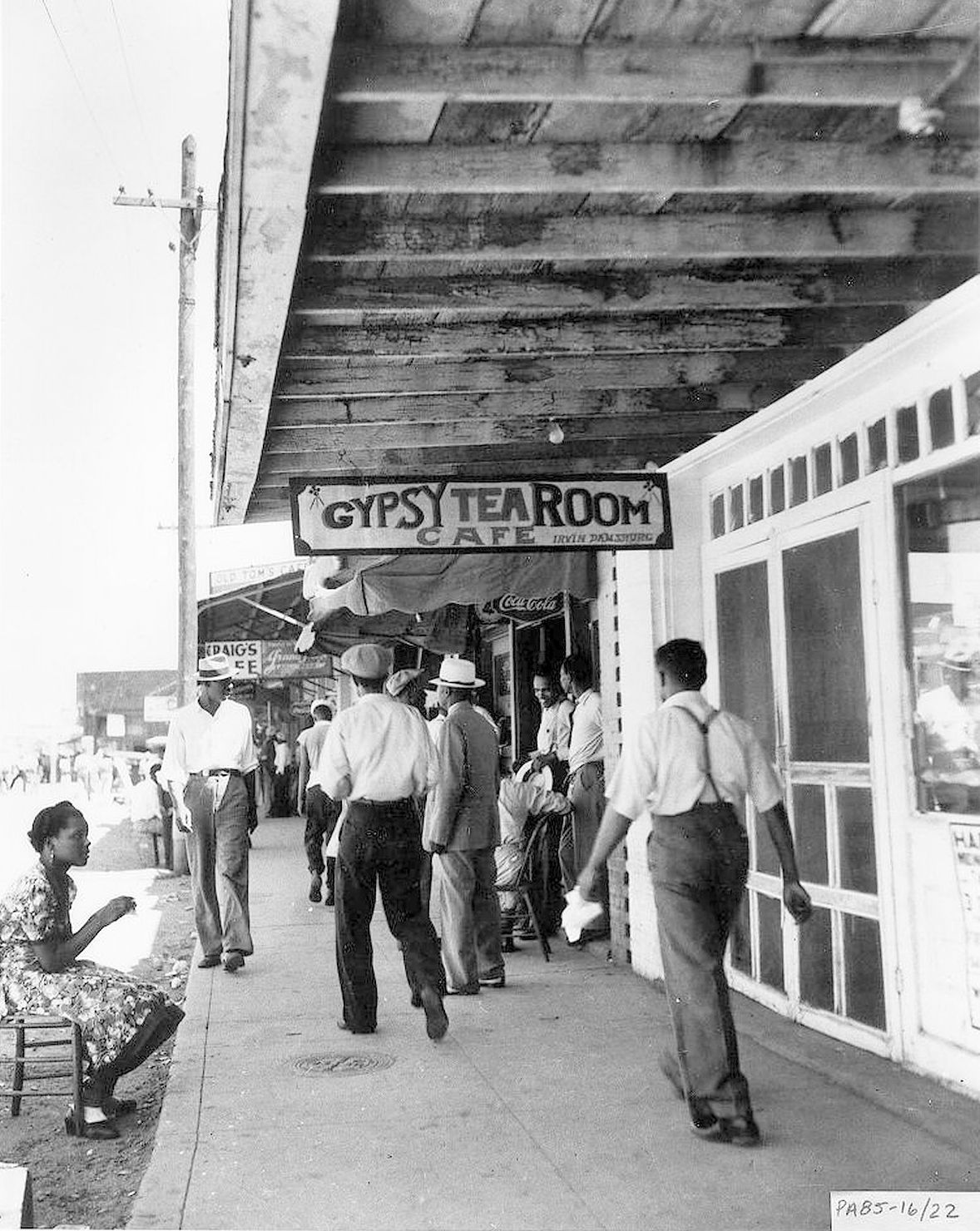
gypsy-tea-room_dallas-public-libraryThe 200 block of Central Ave., about 1937…  (Dallas Public Library photo)

by Paula Bosse

I’ve seen this photograph of Deep Ellum for years, and I’ve always loved it. But for some reason, I always thought this showed Elm Street — across from the Knights of Pythias Temple, just west of Good-Latimer (probably because that’s where a recent club with the same name was located). In fact, this scene was captured a couple of blocks west, just north of Elm, on Central Avenue, sometimes referred to as Central Track, along the Houston & Texas Central railroad tracks — a part of Deep Ellum that’s been gone for more than 60 years.
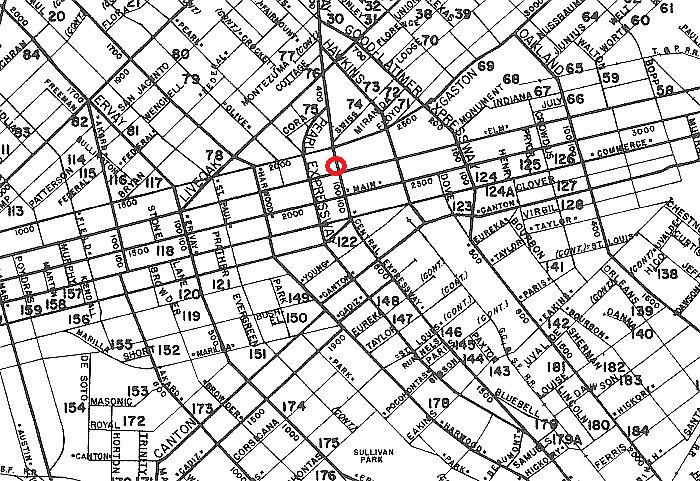
gypsy-tea-room-location_1952-map.jpgAfter Central Expwy. replaced Central Ave. (1952 Mapsco)

This area — which many have described as being the very heart of Deep Ellum in the 1920s through the 1940s (and which was somewhat ironically referred to as “the gay white way of the Negro in Dallas” by an uncredited WPA writer) — was demolished to make way for the construction of North Central Expressway (which closely followed the H&TC Railway tracks). This photo was taken in the 200 block of North Central Avenue, looking south toward Elm (the building farthest in the background, jutting out to the left, is across Elm, on the south side of the street). To the immediate left of this photo (out of frame) was the old union depot (read about it here).

You can see that the Sanborn map from 1921 shows that same building jutting out. (See the full Sanborn map here; it might be more helpful to see this detail rotated to show the same view as the photo, here.)
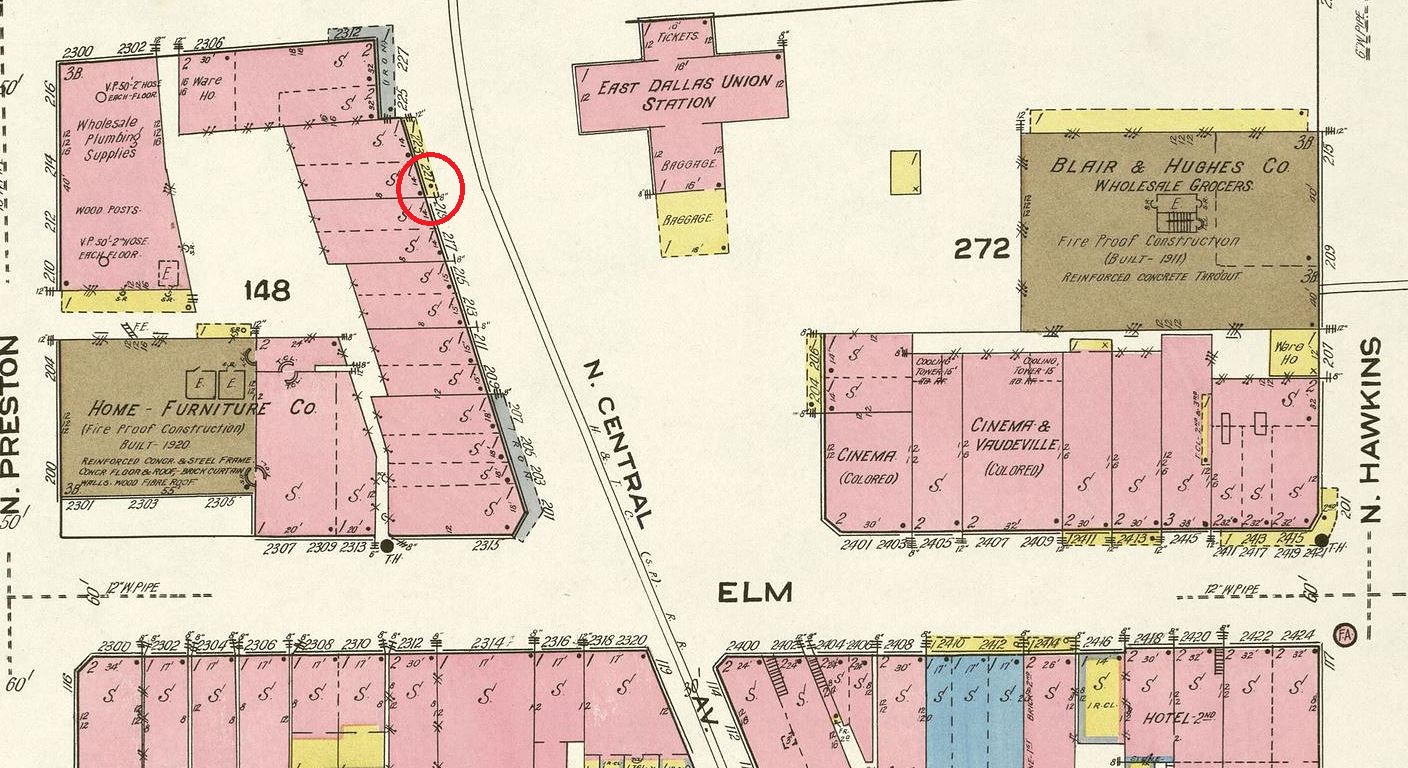
sanborn-map_1921_sheet-17-det1921 Sanborn map, detail (click for larger image)

Information about The Gypsy Tea Room is scant. The proprietor was a man named Irvin Darensbourg, whose family was from the black community of Killona, Louisiana in St. Charles Parish; they appear to have been of French Creole extraction, and the family’s last name was probably correctly spelled as D’Arensbourg.

The Darensbourgs were an interesting family (and not just because their mother’s maiden name was Louise Jupiter!). There were several children, and at least two of them were professional musicians: Percy Darensbourg (1899-1950) and Caffery (often spelled “Caffrey”) Darensbourg (1901-1940). Both played with several jazz bands, and Percy even made a few recordings, playing banjo. Below are a couple of promotional photos showing them at work in the 1920s, when they were still based in New Orleans, before they settled in Dallas. (These are cropped details — click pictures to see the full photos.)

Percy Darensbourg, with Lee Collins‘ band, 1925 or 1926:

percy-darensbourg_duke_det

Listen to Percy on banjo, here:


And, below, Caffery Darensbourg, with Manuel Perez’s Garden of Joy Orchestra (click photo to see full band — the other band members are identified here):
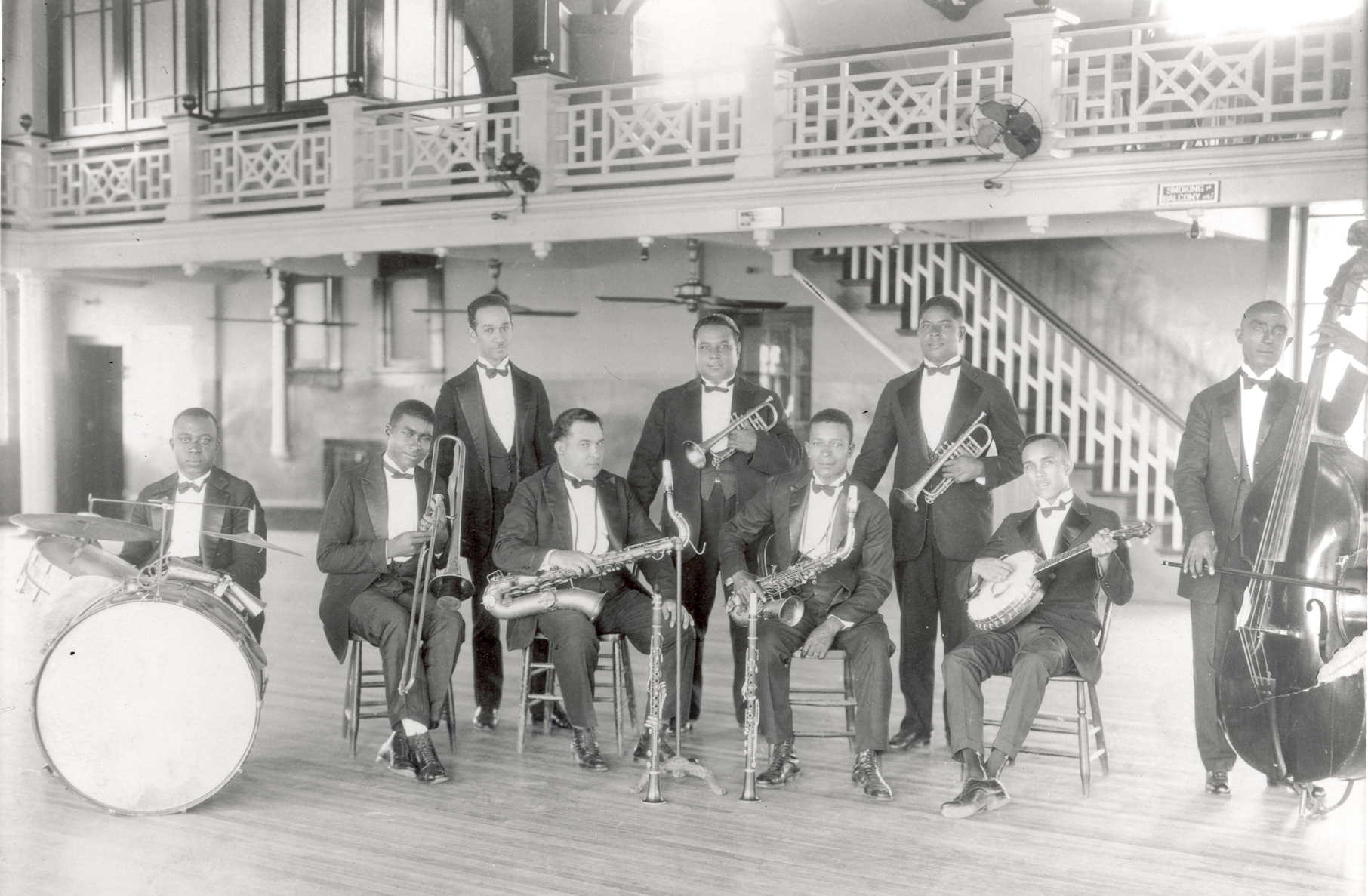
caffery-darensbourg_tulane-library

The first of the brothers to arrive in Dallas from New Orleans was Percy, in about 1929, and for the next few years he continued to make his living as a professional musician. Caffery followed in 1932 and opened the short-lived Frenchie’s Creole Inn on Boll Street. Their non-musician brother Irvin was here by 1935 and promptly opened the Green Tavern at 217 Central Avenue, just a few doors down from Percy’s drinking establishment, the Central Tavern Inn, at 223 Central. At about this same time, Percy was also running a club at 3120 Thomas called The Gay Paree — which The Dallas Morning News described as a “swanky negro night club” (April 12, 1938) in a short mention of Percy’s being fined for selling alcohol to an already-inebriated customer.

But back to that 200 block of Central Avenue — the one pictured in the photo at the top. Between 1937 and 1939, Irvin also owned/ran a small restaurant or cafe — and later a pool hall — out of 219½ Central. The Darensbourgs had that block locked up.

*

In 1935, a song called “In a Little Gypsy Tea Room” by Bob Crosby swept the country. It was a huge hit. Suddenly there were scads of places popping up all over calling themselves The Gypsy Tea Room or The Little Gypsy Tea Room. Some might have been actual tearooms, but there were also a lot of clubs and bars with the “tea room” name — the most famous of these was The Gypsy Tea Room in the Tremé district of New Orleans, at Villere & St. Ann, which opened the same year the song was being played incessantly by every dance band in the nation. This famous New Orleans nightclub booked the biggest jazz bands around and was a legendary musician’s hangout.

gypsy-tea-room_new-orleans_1942_tulane-libNew Orleans’ Gypsy Tea Room, 1942 (via Tulane University)
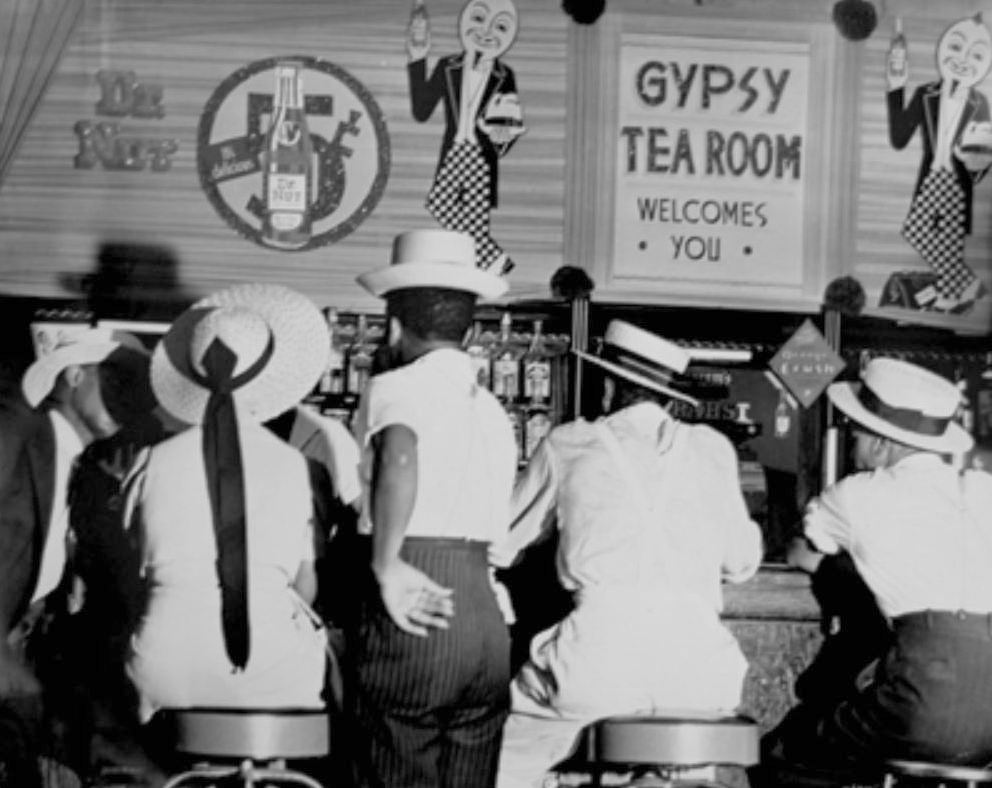
gypsy-tea-room_NOLA_myneworleansNew Orleans’ Gypsy Tea Room, 1930s (via MyNewOrleans.com)

The Darensbourgs most likely knew the club, its owner, its patrons, and the musicians who played there. Perhaps Irvin Darensbourg decided to name his own little Gypsy Tea Room in Dallas in honor of the New Orleans landmark. Whatever the case, Deep Ellum’s Gypsy Tea Room appears to have come and gone fairly quickly (and one assumes there was more than tea being sipped inside).

*

The life of a tavern and club operator could be a hard one, especially in those days, especially in the black neighborhoods of Deep Ellum and North Dallas. Irvin seemed to be forever sleeping on a relative’s couch and had a different address every few months. By 1940 he had moved to Fort Worth to open another bar, and after that … I’m not sure what became of him — but one hopes that he met a less violent end than his brothers did here in Dallas. According to Caffery’s death certificate, he died in 1940 after having been shot in the abdomen while “in a public place.” His death was ruled a homicide. Percy, who by all indications was the most stable and successful of the brothers, was also killed — in 1950 he was stabbed in the neck (!) while out on the street at 4:20 AM.

**

As for the original photograph, I’ve pored over it and looked through directories, but I can’t pinpoint the exact year this photo was taken or determine what the actual address of the Gypsy Tea Room was. Since it was mentioned in the WPA Dallas Guide and History, which was written and compiled between 1936 and 1940 and contains the only contemporary mention of the Tea Room, my guess is that this photograph was taken about 1937, as this was the last year that Old Tom’s Tavern (209 ½ Central) seems to have been in business (although the bar that replaced it was owned by the same person, and the sign seen in this photograph could well have remained up for a while).

Craig’s Cafe, at 213 Central, was in business between 1929 and at least 1946 when property began to be demolished in order to begin construction on the expressway. The Gypsy Tea Room looks to be either two or three doors down from Craig’s place. My guess is that it’s 219 Central. The 1937 street directory has Irvin Darensbourg (whose name is constantly mangled and misspelled everywhere) listed as being the proprietor of both the Green Tavern (at 217 Central) as well as an unnamed restaurant at 219-A (sometimes written as 219 ½) Central. The 1938 and 1939 directories specify Darensbourg’s business at this address in those years is a pool hall, not a restaurant. So I’m going to venture that Irvin Darensbourg ran the Gypsy Tea Room at 219 Central Avenue in 1937. 

1937_gypsy-tea-room_central_1937-directory
1937 Dallas directory

That was exhausting!

***

Sources & Notes

Photo of the Gypsy Tea Room at the top of this post is from the Texas/Dallas History & Archives Division of the Dallas Public Library: “Gypsy Tea Room Cafe located in Deep Ellum” is from the WPA Dallas Guide & History Collection of the Dallas Public Library — its call number is PA85-16/22.

Thanks to Bob Dunn of the Lone Star Library Annex for deciphering “Darensbourg” from this badly garbled printed name on the Gypsy Tea Room sign.
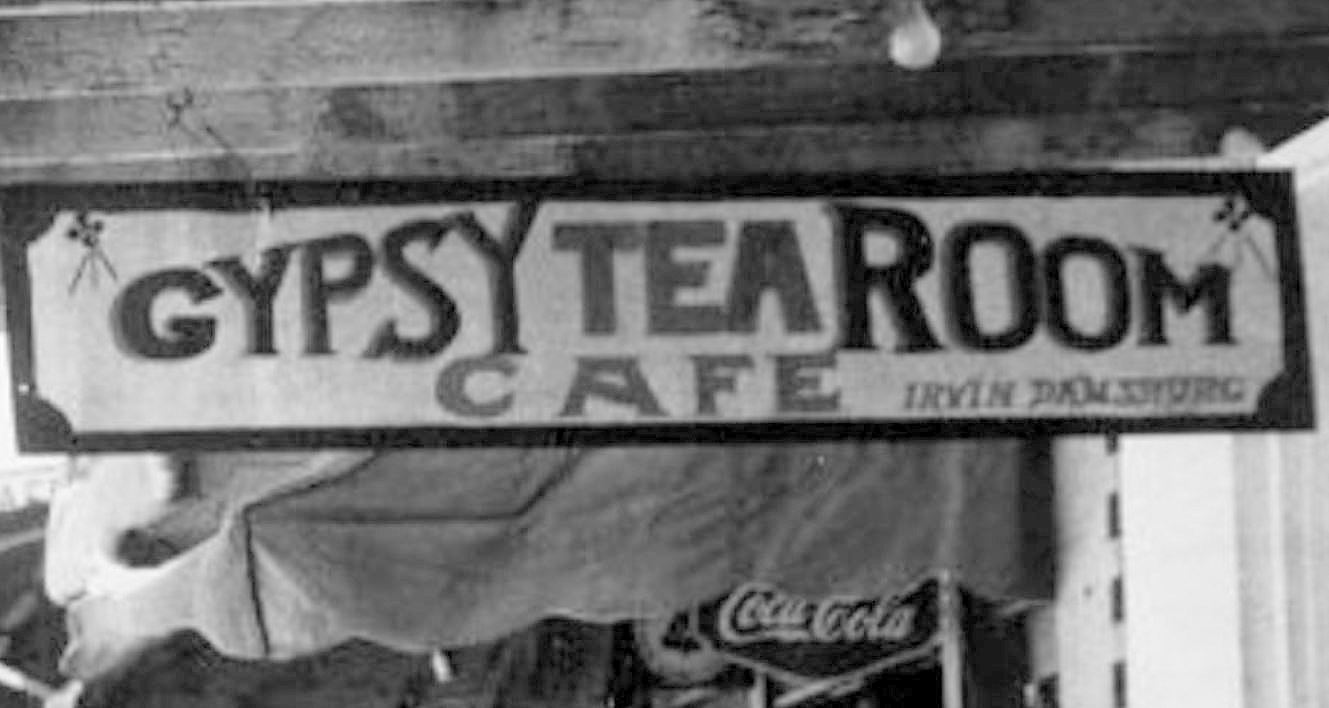
gypsy-tea-room-sign

Here are a few of the numerous ways this Darensbourg’s family’s name is misspelled across the internet:

D’Arensbourg
Darensbourg
Darensburg
Darenbourg
Darenburg
Darnburg
Darnsberg
Dansberg

Darensborough

And I’m still not actually sure whether it’s “Irvin” or “Irving,” or “Caffery” or “Caffrey.”

When clicked, the photo of Percy Darensbourg above opens up to show the full band — the personnel is identified in a caption from the book Oh, Didn’t He Ramble: The Life Story of Lee Collins: “Lee’s band in Dallas, 1925 or 1926. From the left: Coke Eye Bob (Arthur Joseph?), Mary Brown, Freddie ‘Boo-Boo’ Miller, Octave Crosby, Henry Julien, ‘Professor’ Sherman Cook, Lee, and Percy Darensburg [sic].”

A couple of other versions of “In a Little Gypsy Tea Room,” if you must:

  • The version by The Light Crust Doughboys (no strangers to Deep Ellum), recorded in 1935 in Dallas at 508 Park, is here.
  • The at-least-peppier version by Louis Prima and His New Orleans Gang, also recorded in 1935, is here.

See what the area once occupied by the vibrant street life of Central Track looks like now, here. The expressway overpass is now planted about where the photo was taken. It’s a shame this important part of town — in a way it was Dallas’ second downtown — was bulldozed into oblivion.

*

Copyright © 2015 Paula Bosse. All Rights Reserved.
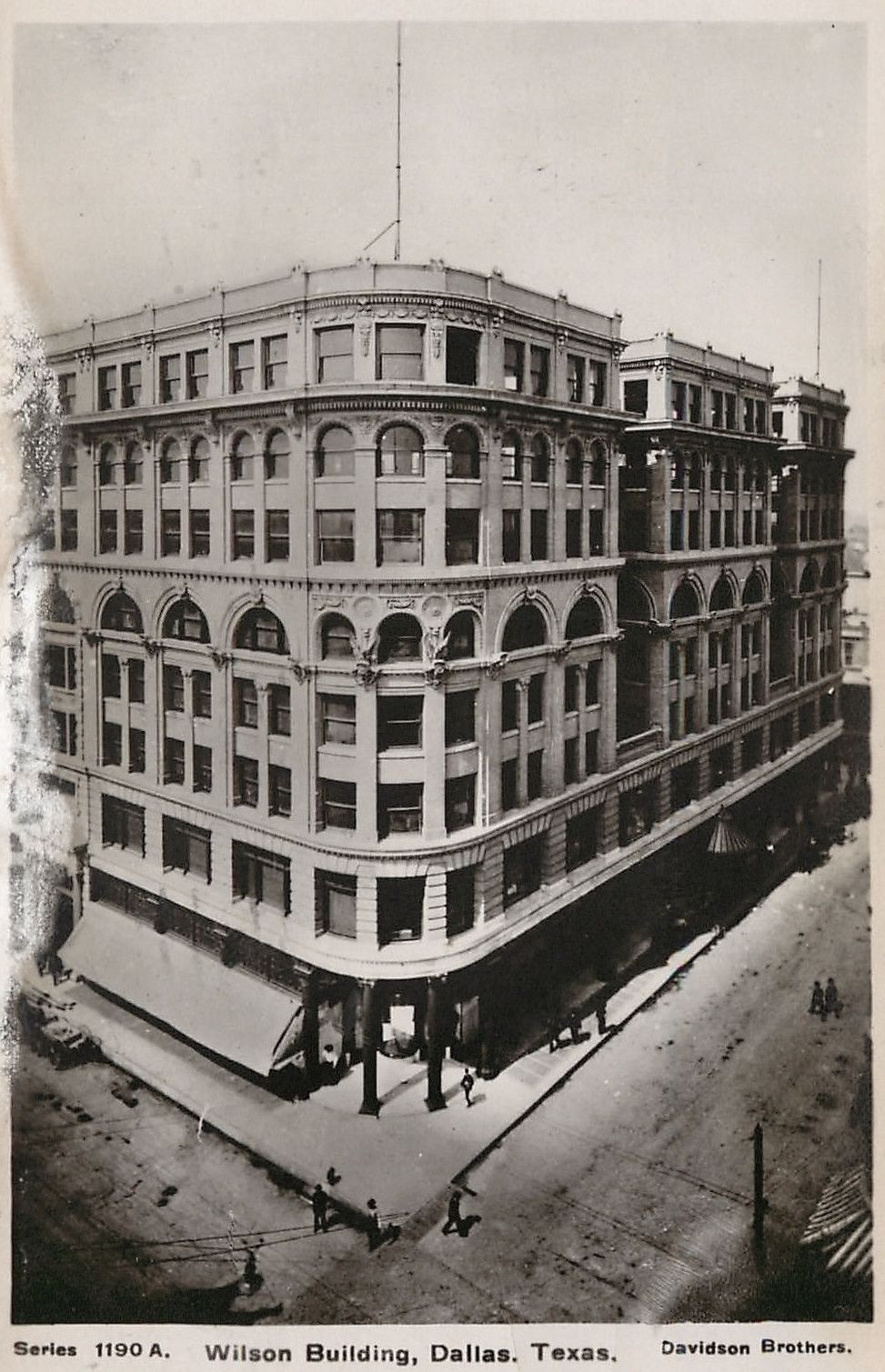
The Wilson Building, Early Days

wilson-bldg_RPPC_ebay_pm1908_smallMain & Ervay (click for larger image)

by Paula Bosse

Yet another view of one of Dallas’ most beautiful buildings!

***

Postcard from eBay, postmarked 1908.

For meatier Wilson Building posts, see the previously posted “The Wilson Building Under Construction — 1902,” here, and “The Wilson Building & Its Tenants — 1908/1909,” here.

Click for larger image.

*

Copyright © 2015 Paula Bosse. All Rights Reserved.

Main Street — ca. 1942

main-street-canyon_ebay_smallThe Merc, Titche’s, the White Plaza (click for much larger image)

by Paula Bosse

I love postcards like this. All signs of people, automobiles, and streetcars have been magically erased. Poof! This lunchtime scene of empty streets and sidewalks — looking west down Main from Harwood at 12:30 PM — was definitely a view never seen by a human being!

In trying to figure out the year of this image, I narrowed it down to about 1942 — that was the year the Mercantile Building was completed, and that was also about the time that Henry Pollock’s luggage store packed up (…as it were…) and vacated 1911-13 Main (the store was no longer listed at this address by the time the 1943 directory was issued). That’s not to say that the sign painted on the side of the building didn’t remain after Pollock had left, but later occupants would most likely have painted over it as soon as they moved in.

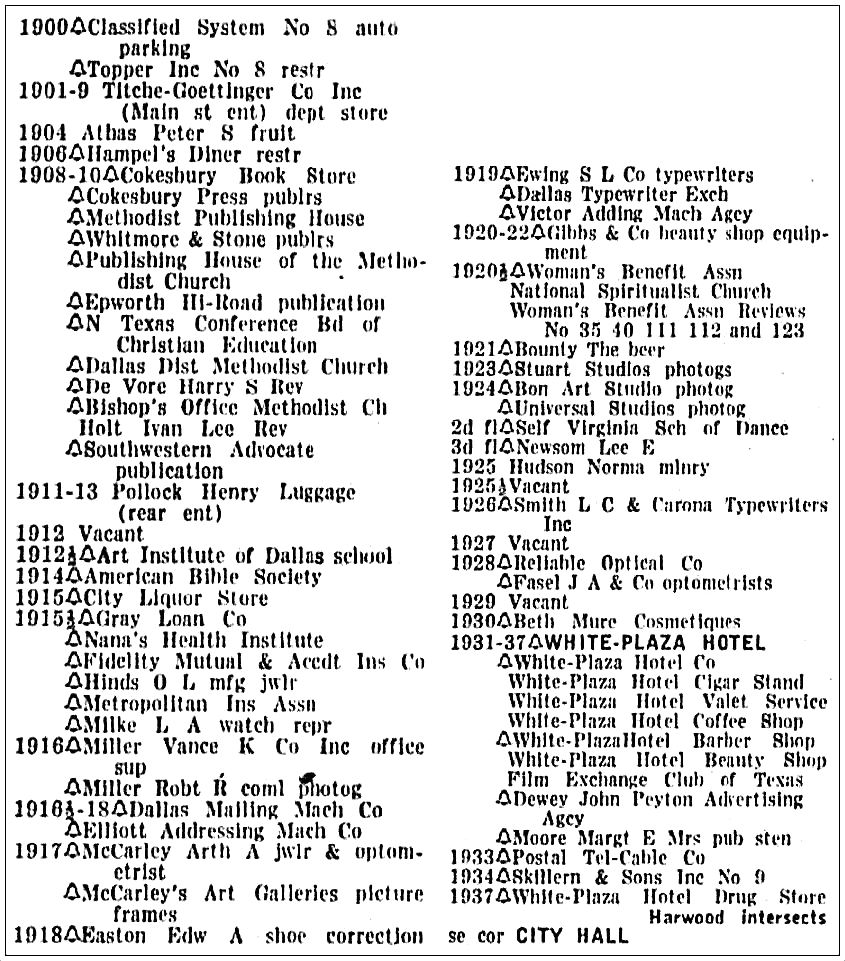
Speaking of directories, here’s a look at the businesses in the 1900 block of Main — between St. Paul and Harwood — in 1941. (Click for larger image.)

main-st_19411941 Dallas directory

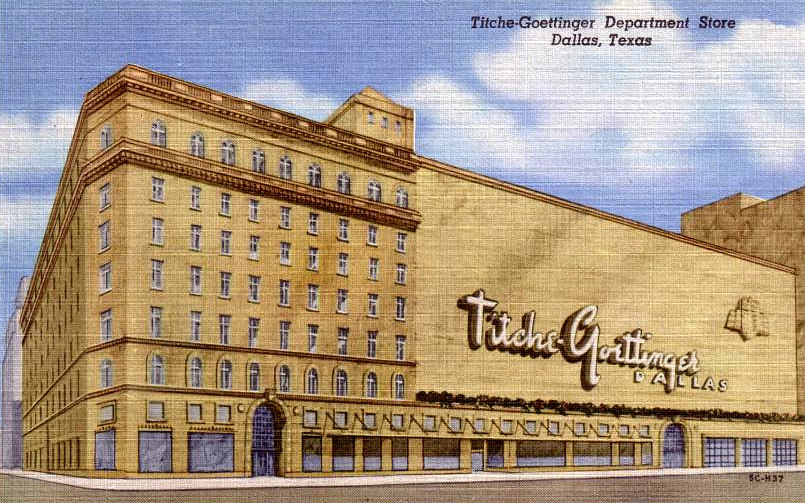
For me, the interesting thing about this postcard is seeing the Titche’s building (at the corner of St. Paul) before it was expanded. The small buildings between Titche’s and the White Plaza Hotel (a hotel which was originally Dallas’ first Hilton — Conrad’s first-ever hotel to bear his name) were demolished sometime around 1952, and the expansion began that year, its 50th in business in Dallas.

The original building was built in 1929, designed by George Dahl (whose office was, a few years later, right across the street); the architectural firm responsible for the expansion was Thomas, Jameson & Merrill.

Here’s what the building looked like before the expansion (with another magic erasure — this time, the hotel at the end of the block has been removed to make way for an unobstructed view of the moon):

titches_night.jpg

And here’s the building after its expansion:

titches

***

Sources & Notes

More on the Titche’s expansion in the Dallas Morning News article “Titche’s Reports Plans to Double Present Size” by Edd Routt (Sept. 7, 1952).

Present-day photo of the Titche’s building, from Wikipedia, is here.

Present-day street view showing roughly the same vantage point as the postcard at top, can be seen on Google Street View, here.

A previous Flashback Dallas post — “George Dahl’s Titche-Goettinger Building” — is here.

All images larger when clicked.

*

Copyright © 2015 Paula Bosse. All Rights Reserved.
 

The Obligatory “Star Wars” Post

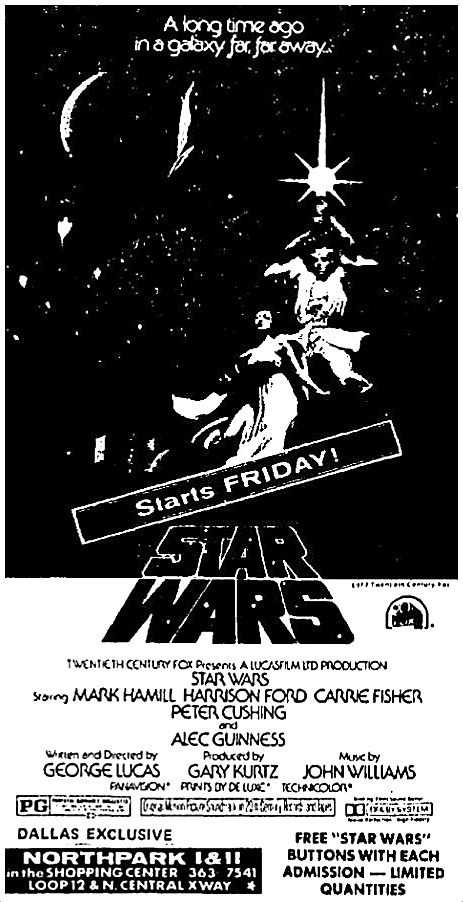
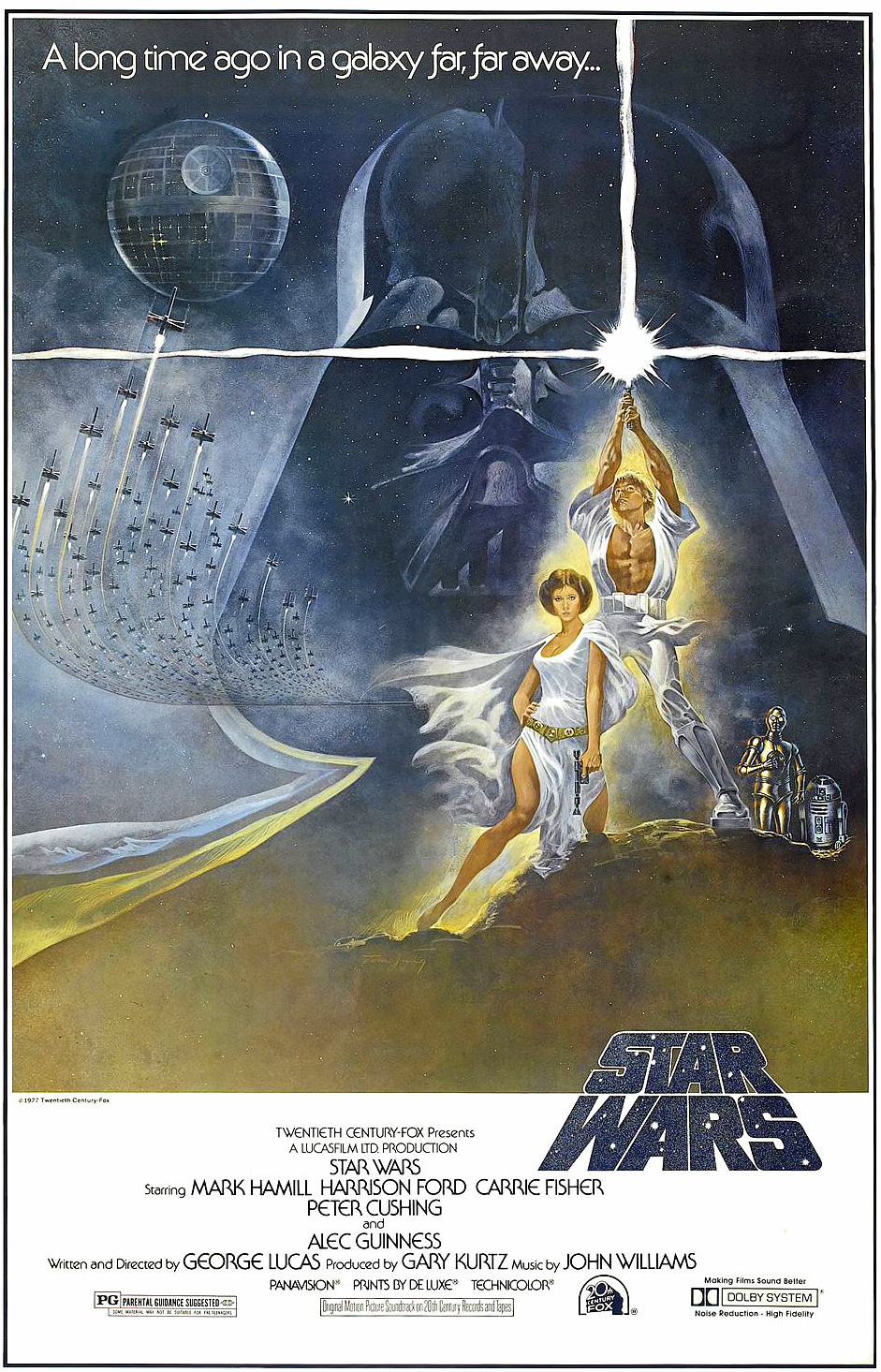
star-wars_jung_sm“A long time ago, in 1977…”

by Paula Bosse

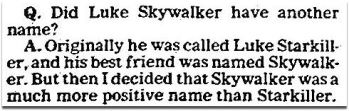
The relentless Star Wars promotional onslaught has been upon us for a while now. I have no idea what episode we’re up to at this point, but let’s look back to overlooked tidbits about that first movie. My favorite is this wire-service blurblet which appeared newspapers in April, 1976 — a full year before the movie was released.

star-wars_dmn_042076_starkiller

“Luke Starkiller” is a great name. Too bad Lucas changed it. Gene Siskel asked him about it in 1983.

star-wars_siskel_FWST_052283

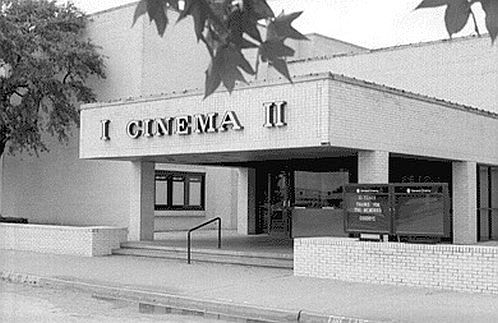
The movie played exclusively at the late, lamented NorthPark I & II; it opened on Friday, May 27, 1977. Lines were around the block. For weeks.

northpark-cinema

star-wars_dmn_052677May 26, 1977 (click for larger image)

(Did you keep your “free Star Wars buttons”?)

Moviegoers were stunned that the ticket price had been boosted to a then-unheard-of $3.75 (the equivalent of about $14.50 today). As one article explained, “Twentieth-Century Fox takes 90 percent of the gross receipts after deduction of expenses” in exchange for allowing theaters to show the movie. (I wonder how much popcorn was!)

Lastly, a fairly enthusiastic social commentary piece about the movie can be found in an article written by Dallas Morning News editor and editorial-page mainstay William Murchison (in fact, the article appeared on the editorial page of the DMN). The moneyed Mr. Murchison likens the exhilaration felt in finally getting into a showing that hadn’t been sold out to “crashing the Astor Ball” and is shocked at the “ungodly” ticket price — “a price that would buy a good Cabernet Sauvignon.”  Even so, he and Lovey apparently were quite taken with the exploits of Mr. Starkiller Skywalker, et al.) (Check the Dallas Morning News archives for the article “Movies to Make You Feel Good” by William Murchison, DMN, Aug. 30, 1977.)

***

Sources & Notes

“Star Wars” poster by Tom Jung found here.

*

Copyright © 2015 Paula Bosse. All Rights Reserved.

From the Vault: Dallas Slaves

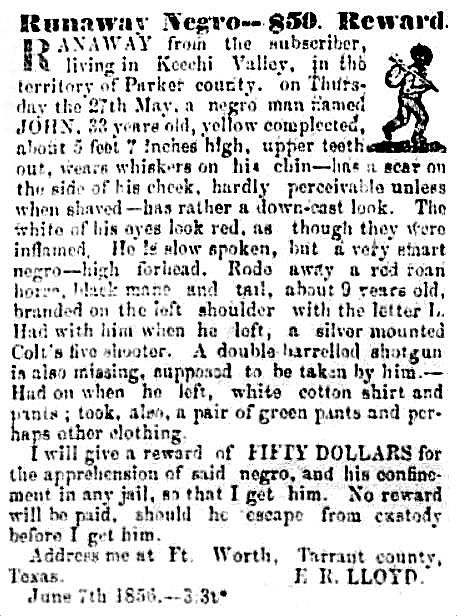
runaway_negro_dallas-herald-1856The Dallas Herald, June 7, 1856

by Paula Bosse

For some reason, I think I had always convinced myself that there weren’t slaves in the Dallas area. Wishful thinking, I suppose. A sobering post from last year — “Ads for Slaves, Lost Found, and For Sale in the Pages of The Dallas Herald” — contains several ads similar to the one above and can be read here.

*

Copyright © 2015 Paula Bosse. All Rights Reserved.
From the Vault: Skate Date!

skate-date_ebay-sm“All skate!”

by Paula Bosse

From last year, a look at the roller rink at Fair Park, which began its long history with a vice bust in 1907.  Read the post “Skate Date!” here.

*

Copyright © 2015 Paula Bosse. All Rights Reserved.
Ervay, Live Oak, and Elm: Just Another Wednesday Night — 1953

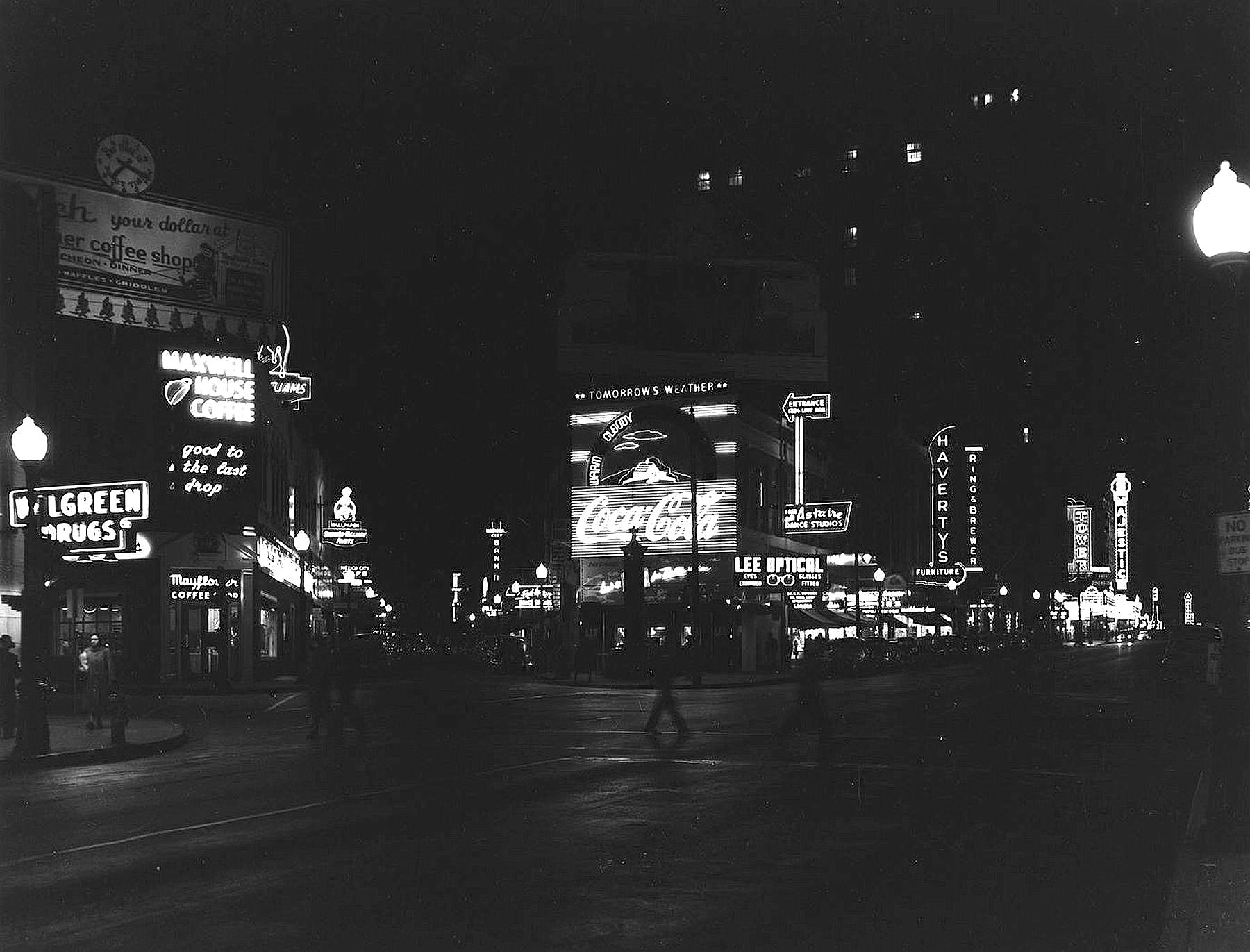
ervay-live-oak-elm_haskins_uta_010753“Tomorrow’s weather: warm & cloudy”

by Paula Bosse

Here’s what 7:18 PM looked like at the old five-point intersection of Ervay, Live Oak, and Elm streets on January 7, 1953, a Wednesday night. All that neon — especially that Coca-Cola sign, which was probably flashing and strobing like crazy — gives this scene a sort of mini-Times Square feel. Imagine this intersection on a Friday or Saturday night when the streets and sidewalks would have been packed with people heading to theaters, restaurants, and night clubs!

On the left, at the street light (I love those street lights!) and the Walgreen’s sign, is N. Ervay. To the left of the Coca-Cola sign is Live Oak, which used to come through to Elm. To the right, Elm Street, heading east.

So many interesting things here: the Mayflower Coffee Shop (with its “Anytime Is Donut Time” clock and its animated Maxwell House Coffee sign), that incredible neon sign above the Lee Optical store which gave the forecast, that Fred Astaire Dance Studios sign (with “Astaire” in a fantastic neon font), and the Tower and Majestic theater signs lit up for moviegoers who ventured to the movies on a school night. Unseen: the public restrooms (or “public comfort stations”) hidden beneath the street, with the entrance (I think) on the Lee Optical triangular “corner.”

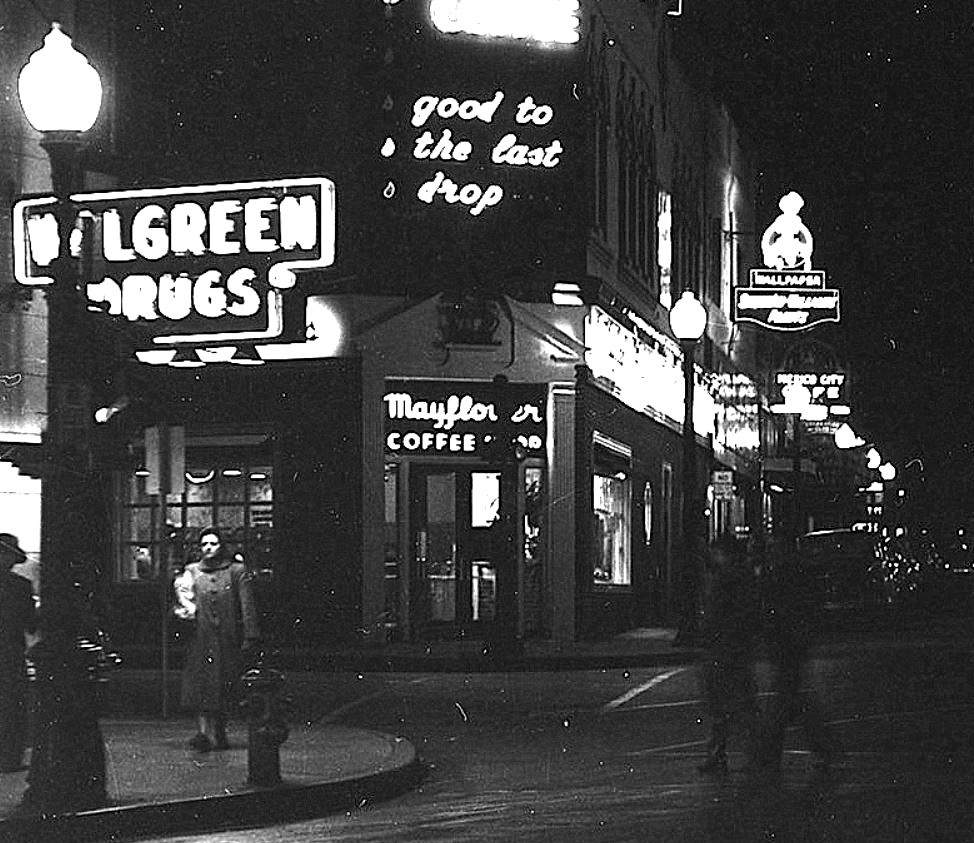
I love all the neon, but this quiet little vignette of a woman carrying some sort of sack or parcel down a chilly downtown street is why I wish I had been around back then — it’s weird to feel nostalgia for a time and place you never actually experienced.

elm-ervay-live-oak_squire-haskins_uta_010753-det

*

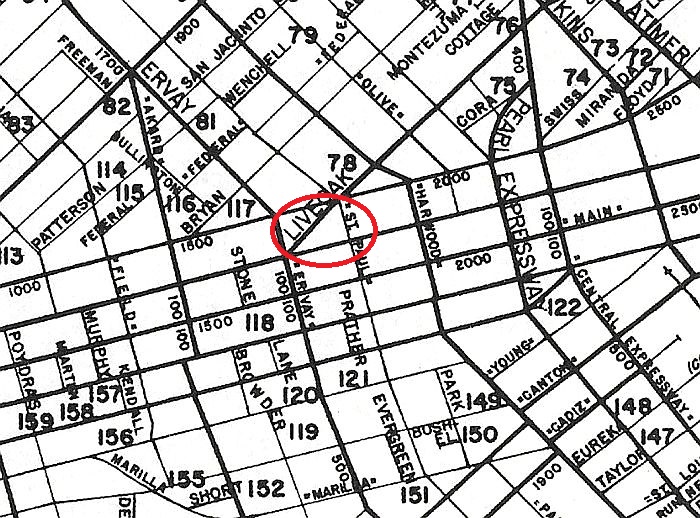
A map showing that this intersection once had five points.

ervay-elm-live-oak_1952-mapsco1952 Mapsco (click for larger image)

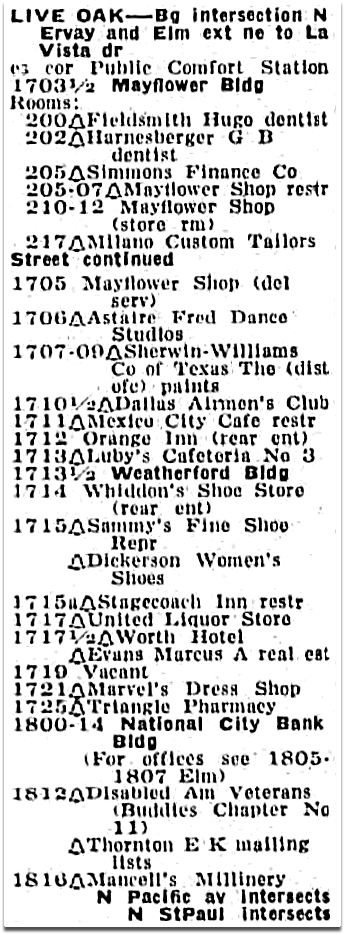
A listing of the businesses along Live Oak, between N. Ervay and N. St. Paul, from the 1953 city directory (click to read):

live-oak_1953-directory

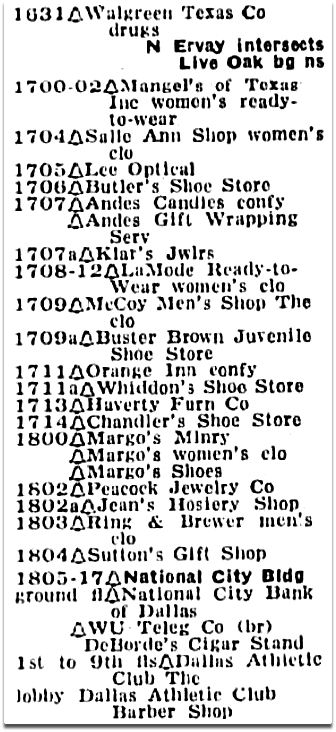
And the businesses along Elm, between N. Ervay and the old Dallas Athletic Club:

elm-st_1953-directory-1

***

Sources & Notes

This photograph — an untitled night scene — was taken by Squire Haskins on Jan. 7, 1953; from the Squire Haskins Photography, Inc. Collection at the University of Texas at Arlington Libraries, Special Collections, accessible here.

See this same view during the DAY in the post “Tomorrow’s Weather at Live Oak & Elm — 1955-ish,” here.

*

Copyright © 2015 Paula Bosse. All Rights Reserved.

The 67-80 Split Near Mesquite — ca. 1951

interchange_hwys-67-and-80_THC_flickr_largeFar East Dallas (click for VERY LARGE image)

by Paula Bosse

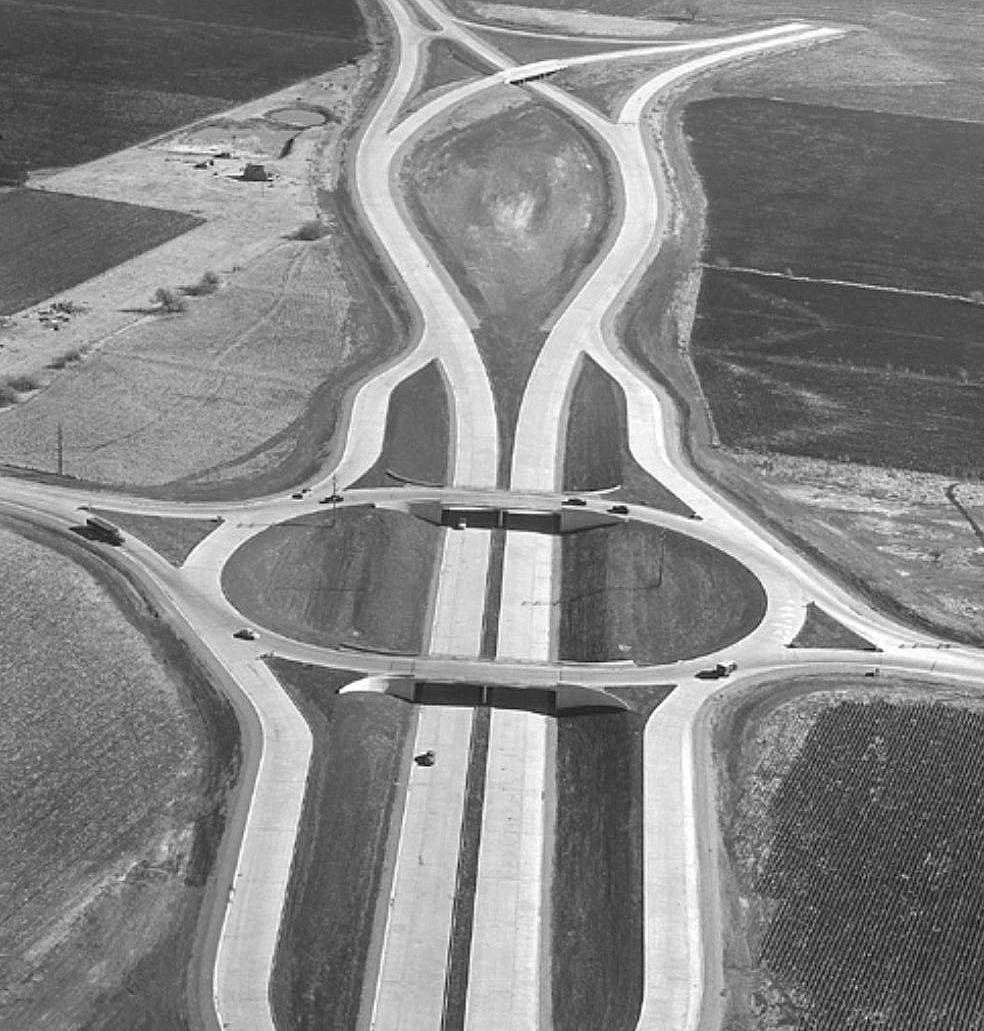
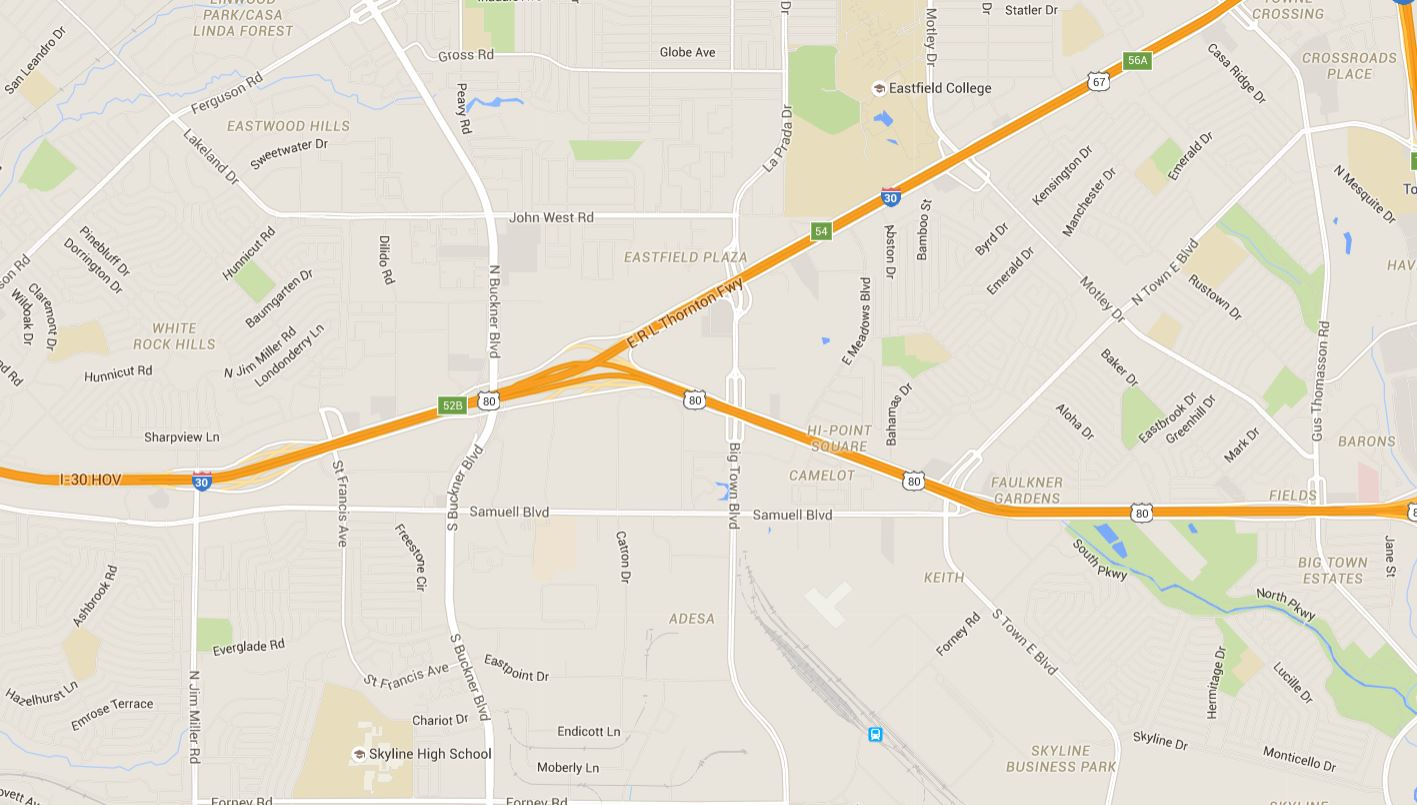
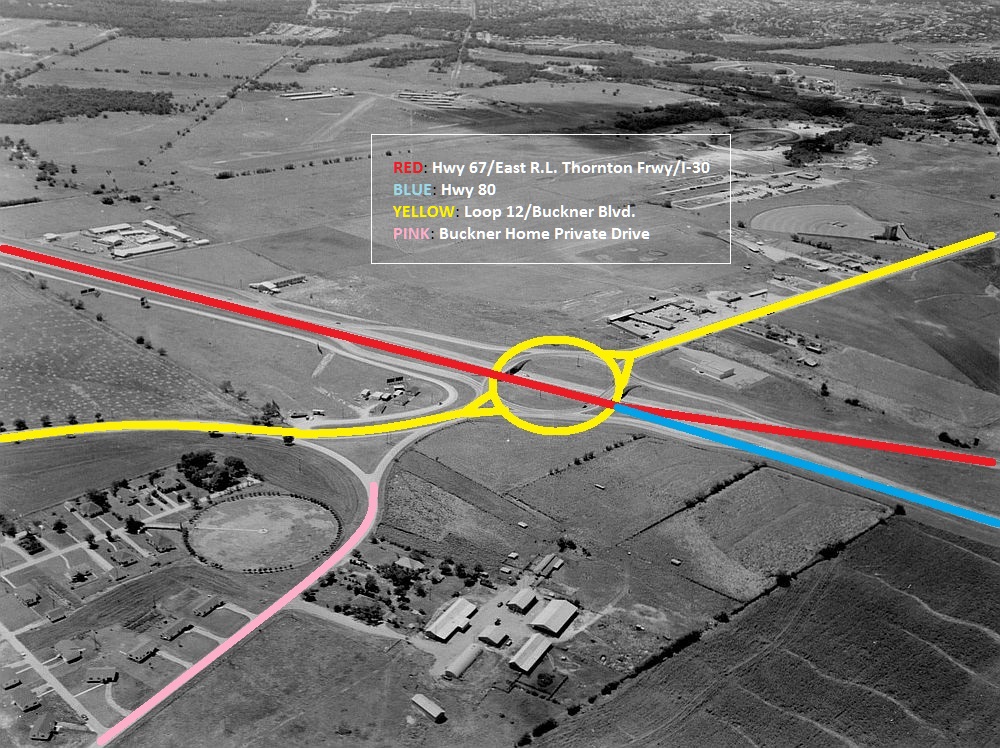
Above, a wonderful photo showing Highway 67 (now East R. L. Thornton Freeway and I-30) splitting off into Highway 80, just east of Loop 12/Buckner Blvd., surrounded by lots and lots of open land. At the top right, along Buckner, you can see the Buckner Drive-In, above it the original location of the Devil’s Bowl Speedway, and farther over, to the left, White Rock Airport. Part of the sprawling property belonging to the Buckner Orphans Home can be seen at the bottom left. Today, this is right about at the Dallas/Mesquite border. Except for the highways, this is pretty unrecognizable today!

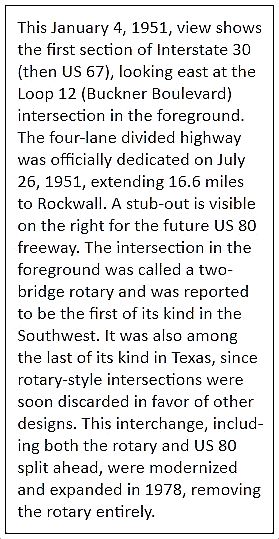
Here is a second photo, dated Jan. 4, 1951, with Oscar Slotboom’s caption below (from Slotboom’s exhaustively researched book and website, Dallas-Fort Worth Freeways).

thornton-frwy_1951_dfw-freeways

thornton-frwy_1951_dfw-freeways_INFO_pdf-p40

*

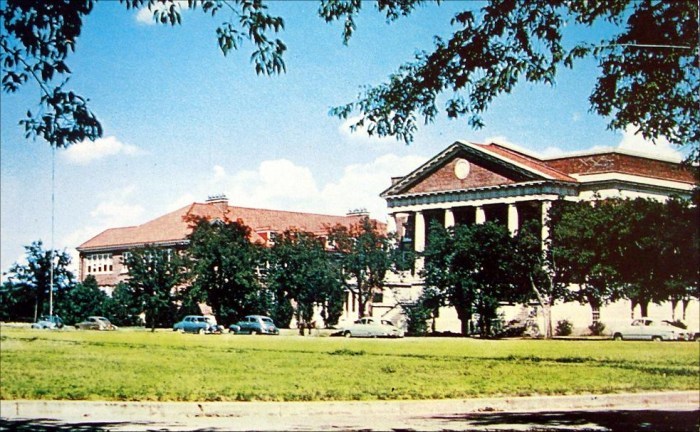
The Buckner Orphans Home was founded in 1879; it was both a home for orphaned children and a working farm, and at its height, it occupied some 3,000 acres of land (!). Take a look at a 1911 photo here to give you an idea of the size of the place. The buildings seen at the bottom left of the photo above were houses used by Buckner staff; the Home itself is out of frame.

buckner-orphans-homeBuckner Children’s Home

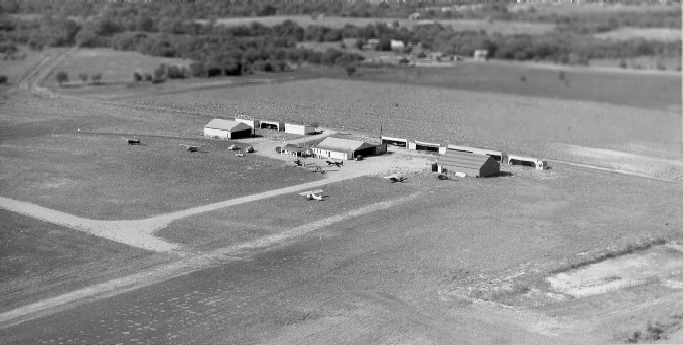
White Rock Airport opened about 1941 and was in use until 1974. Here is a photo of it soon after it opened.

white-rock-airport_early-1940sWhite Rock Airport

(Several more photos and memories about this airport can be found here.)

Devil’s Bowl Speedway opened in March, 1941. If you wanted to see jalopy races, you headed to Devil’s Bowl. (DBS is still around, nearby, at a different location.)

The Buckner Boulevard Drive-In opened on June 4, 1948. It was the first drive-in in Dallas to have individual car speakers that one placed in one’s car. (More on the Buckner Drive-In can be found at Cinema Treasures, here.)

***

Sources & Notes

Top photo is from the TxDOT Photo Files and can be viewed on the Texas State Archives’ Flickr page, here; the date is given as “circa 1940,” but as the drive-in didn’t open until 1948, the date of the photo is probably closer to 1950. (The second aerial photograph — from Oscar Slotboom’s fantastic Dallas-Fort Worth Freeways — is dated 1951, so I’ve updated the title of this post.)

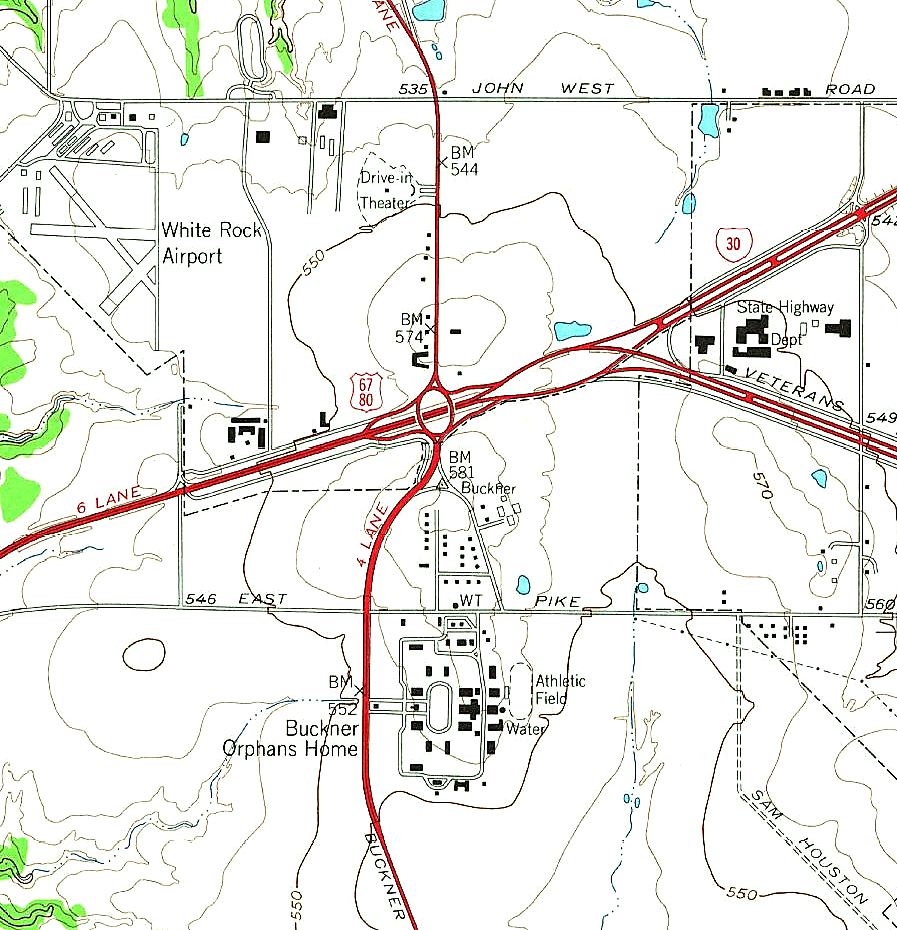
Thanks to Mark’s comment below, I’ve found this detail of a 1957 topo map from the United States Geological Survey. It’s a few years after the photo above was taken, but it shows the layout of the Buckner Children’s Home more fully. (The east-west highway called “East Pike” here is now known as Samuell Blvd.) Click map for larger image.

1957-topo_usgs

The Dallas/Mesquite city limits boundaries have moved over the years, but a current view of the boundary — which involves the area seen in this photo (seriously, this exact area) — can be seen here.

Below, a current Google Maps view of this interchange:

interchange-map

And, if like me, you need some helpful guidance:

interchange_marked.jpg

Thanks to members of the Dallas History Facebook group for helping me figure out what I was looking at, especially David and Chuck — thanks, guys!

Click pictures and articles for larger images.

*

Copyright © 2015 Paula Bosse. All Rights Reserved.
The “Dallas” Theme Song You’ve Never Heard — En Français

paris-texas_eiffel-towerNo, not Paris, TEXAS…. (via anatravels.org)

by Paula Bosse

You know that theme music for the TV show Dallas? Actually, that should just be a statement of fact: you KNOW that theme music for the TV show Dallas. We all do. But you know what you DON’T know? You don’t know what the French did to “improve” the J.R.-watching experience. For reasons which I don’t exactly understand, they had someone (Jean Renard) write a theme song for the show. A song. Une chanson. With lyrics. To all-new music. Sounds crazy and unnecessary, but it was a big hit on the French pop charts. And it’s so gloriously awful and fabulously weird that it must be shared. This is not a joke. This is the actual music that accompanied Dallas when it was shown on French television.

I give you a rough approximation of the lyrics (the French lyrics are here).

Dallas, your ruthless world,
Dallas, where might is right,
Dallas, and under your relentless sun,
Dallas, only death is feared.

Dallas, home of the oil dollar,
Dallas, you do not know pity;
Dallas, the revolver is your idol,
Dallas, you cling to the past.

Dallas, woe to him who does not understand,
Dallas, one day he will lose his life.
Dallas, your ruthless world,
Dallas, where might is right.

And here it is. Sing along!

*

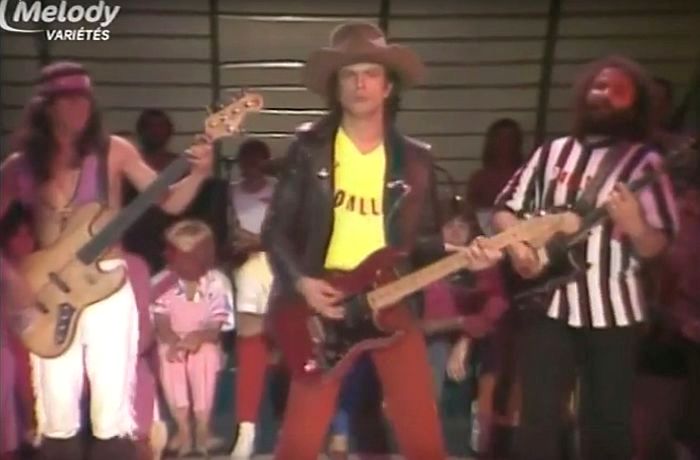
Catchy, huh? What could be better than hearing it sung? Watching it being sung! I’m not sure who the singer is, but he’s attacking this song with a rock attitude that totally isn’t warranted.

*

Nice hat!

This was a big, big hit in France. I’ve even seen the word “beloved” used to describe it. Remember this the next time you might feel a lack of confidence or a twinge of inadequacy in the presence of a chic and sophisticated Parisian. Stand tall, my fellow Texans, and remember OUR Dallas theme.

*

Silly Frenchmen.

 dallas-french_youtube

*

UPDATE: Julia Barton has hipped me to her segment about “Dallas” which aired on public radio’s “Studio 360” in 2011, focusing on the sometimes surprising global and sociopolitical impact of this pop-culture juggernaut. I went to college in the UK, and there wasn’t a day that passed without several people gleefully asking me about J.R. Ewing. It was weird. Had the TV show never existed, I’m sure I would have been queried endlessly (and possibly angrily) about JFK, and I might well have been shunned — yes, shunned! (I remember when people embarking on international trips pre-Southfork were advised to respond to the question “Where are you from?” with the somewhat vague answer “Texas” rather than the explosively specific “Dallas,” because, post-assassination, we were “the city of hate” around the planet.) I’d much rather have had people ask me about a soap opera character than blaming my hometown for killing an American president. So, um, thanks, Lorimar!

Listen to Julia Barton’s 15-minute “Studio 360” segment here (audio plays above J.R.’s silhouette).

***

Read about this odd practice the French have of concocting whole new TV theme songs for American television shows, here.

I can’t believe I’ve never heard of this. All thanks to my friend Carlos Guajardo for passing along this very entertaining nugget of Dallas kitsch! Thanks, Carlos!

*

Copyright © 2015 Paula Bosse. All Rights Reserved.
Get Your “Flying Merkel” at the Texas Motorcycle Co. — 1911

tx-motorcycle-co_flying-merkel_dallas-high-school_yrbk_1911“All shaken to pieces?”

by Paula Bosse

I might have bought a Flying Merkel in 1911 for the name alone.

The Texas Motorcycle Company was at 1605 Commerce. This ad is from 1911, but see what that block of Commerce looked like two years later in the detail of a larger photo, below. The motorcycle company was next to Worley’s, in the building with the Knight Tires/Stutz Auto signs.

2-traffic-skyline-1

Imagine two years before: Commerce would have been filled with Flying Merkels on test drives, zipping in and out of traffic!

***

Sources & Notes

Ad from the 1911 Dallas High School yearbook.

Photo is a detail from a larger photo contained in my earlier post “Horses, Carriages, Horseless Carriages — Commerce Street, 1913,” here.

Read about the 1911 Flying Merkel, here.

One of these bikes recently sold for more than $200.000!

1911-flying-merkel

Click pictures to see larger images.

*

Copyright © 2015 Paula Bosse. All Rights Reserved.