Flashback : Dallas

A Miscellany: History, Ads, Pop Culture

Tag: Dallas TX

3800 Main: Fritos Central — 1947

by Paula Bosse

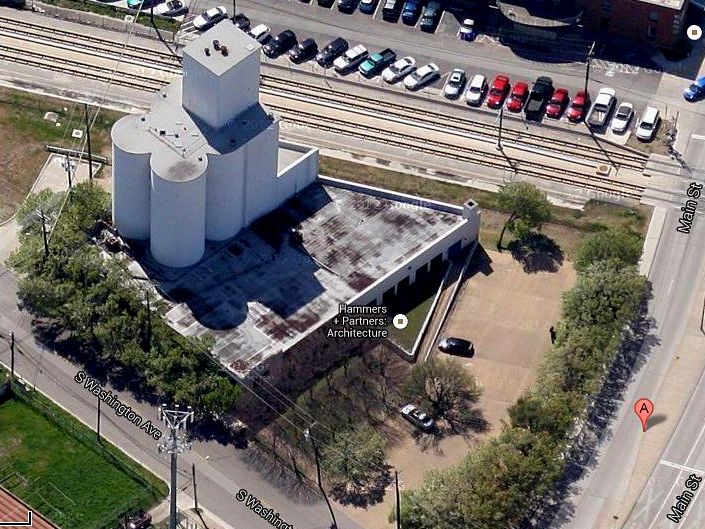
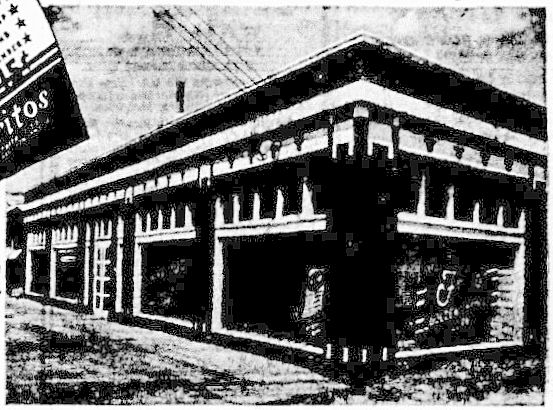
Last week I came across the above photo of old cars parked in front of a Fritos building of some sort, and I wondered where it had been. After a little bit of digging, I found out that it was near Fair Park — in the 3800 block of Main, between Washington and Exposition, on land right next to the railroad tracks. The building in the foreground appears to be gone  now, but I recognized the white, rounded towers behind it — I never knew what that building was, but I now know that it is the Frito company’s former grain elevator. And it’s still standing. Which I’m thankful for (and a bit surprised by) since it’s always been one of my favorite buildings in the area.

The Frito company (now Frito-Lay) has had its headquarters in the Dallas area since 1933. In the ’40s, its corporate offices were on Cedar Springs and its manufacturing plant was over near Fair Park, on Main Street. By 1947, the ever-expanding company had grown so much and had become so successful that it spent half a million dollars to build a whopping new grain elevator. The Dallas Morning News was there for a sneak-peek:

The extra-tough volcanic stones in the adjacent factory Monday will begin grinding corn supplied from a spanking new, ten-story white building just off the 3800 block of Main Street. […] The tall square gleaming structure is a $515,000 thoroughly modern elevator. […] Air-conditioned and equipped with the latest design apparatus, the elevator has storage capacity for 90,000 bushels of corn. It will supply the grain to the company’s factories in Dallas, San Antonio, Houston, Denver, Tulsa, and two plants in Los Angeles.

The new Frito elevator, weather proofed on the outside and weather controlled inside, was designed by Eugene Davis, architect. Huge grain cleaners which remove all chaff and foreign matter by shaking and air blast, occupy the second floor. Spray machinery gives the grain a thorough treatment to prevent infestation — the ‘buga-boo’ of grain products manufacturers. (DMN, Aug. 10, 1947, “Corn: $515,000 Elevator Latest Chapter in Corn-Chip Saga”)

Fifty-one boxcar loads of “select corn” — sans chaff and infestation — could be stored in that gleaming state-of-the-art grain elevator, designed by Eugene Davis (who a few years earlier, had designed another building for the Frito people, a small building at Wall and Corinth which housed the Pork Skin Chip Company).

In 1947, 3800 Main appears to have been something of a corn-chip Hyannisport — a self-contained compound in which all aspects of chip-production were seen to. As Kaleta Doolin (daughter of company founder C. E. Doolin) wrote in her book Fritos Pie:

Mr. Davis was the architect of all the various parts of the Frito plant in Dallas. The plant included the company’s grain elevator, where all the corn was stored; the machine shop (which my uncle Earl was in charge of); the food processing area; and the shipping warehouse, all built by Mr. Davis in 1947.

But that building in the top photo… that one had been there for years. 3800 Main Street had been the home of two or three car dealerships in the decades before Frito moved in. In 1929, as this photo shows, it was the location of the long-lived Ford dealership, Lamberth Motor Company.

lamberth-ford_1929

And here’s the same building in 1947, Frito-ized.
And the side of the building, taken from across the railroad tracks, then and now.

Another old building survives! What a relief that Dallas doesn’t tear down EVERY cool old building!

***

Sources & Notes

Can’t find a source for the top photo. It looks as if someone took a photo of a framed picture which is probably hanging on the wall of a person who feels a great kinship to old Dallas. Or to Fritos. Or to snacks.

Quote about the various parts of the plant is from Fritos Pie: Stories, Recipes, and More by Kaleta Doolin (College Station: Texas A & M University Press, 2011), p. 45.

The two 1947 photos of the Frito building are insets from a series of logrolling ads in which Frito thanks Texas Bank & Trust for all the money they’ve helped Frito make, and Texas Bank & Trust thanks Frito for all the money they’ve helped Texas Bank & Trust make. The take-away? There sure is a lot of money to be made in fried food.

The bottom two photos are from Google maps: the first looking toward the old granary from the railroad tracks, and the second looking down from the unblinking Google eyeball in the sky.

Lastly, a current photo of the building, now renovated and occupied by Hammers + Partners Architecture (whose daily business affairs are probably always accompanied by the faint smell of fried corn wafting past), can be seen here. (What must that building look like inside?!)

Click pictures for larger images.

*

Copyright © 2014 Paula Bosse. All Rights Reserved.


“Throw Me a Pink Thing, Mister!” — 1967

mardi-gras_1967_doubloon-a

mardi-gras_1967_doubloon-b1967 Mardi Gras doubloon (click for larger images)

by Paula Bosse

“THROW ME SOMETHING, MISTER.”

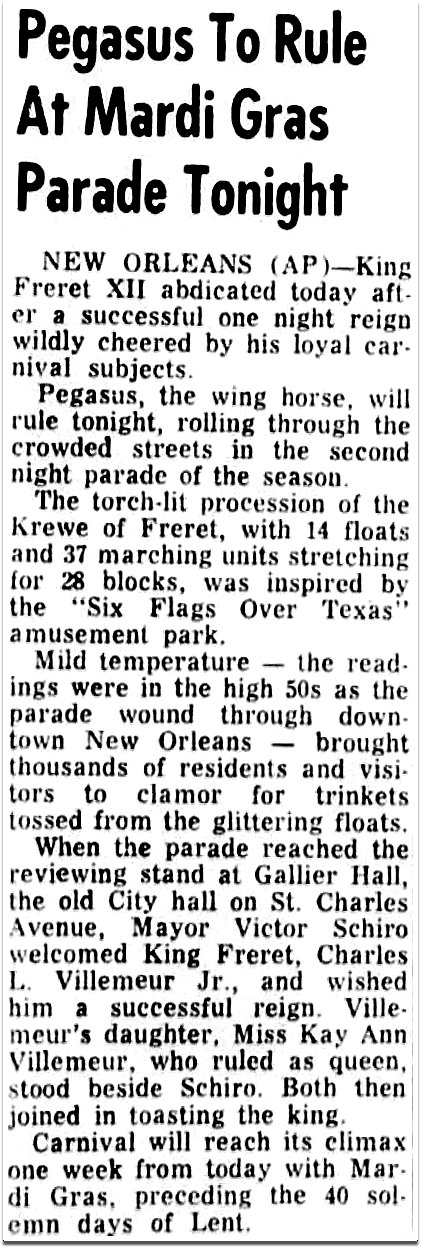
Pictures of these are all over the internet, but I found only ONE reference explaining why “Six Flags Over Texas” was on a Krewe of Freret Mardi Gras doubloon — and it was in this Jan. 31, 1967 AP article from the Monroe (Louisiana) News Star (transcription below):

mardi-gras_six-flags_monroe-louisiana-news-star_013167

NEW ORLEANS (AP)-King Freret XII abdicated today after a successful one night reign wildly cheered by his loyal carnival subjects. Pegasus, the winged horse, will rule tonight, rolling through the crowded streets in the second night parade of the season. The torch-lit procession of the Krewe of Freret, with 14 floats and 37 marching units stretching for 28 blocks, was inspired by the “Six Flags Over Texas” amusement park. Mild temperatures — the readings were in the high 50s as the parade wound through downtown New Orleans — brought thousands of residents and visitors to clamor for trinkets tossed from the glittering floats. When the parade reached the reviewing stand at Gallier Hall, the old city hall on St. Charles Avenue, Mayor Victor Schiro welcomed King Freret, Charles L. Villemeur Jr., and wished him a successful reign. Villemeur’s daughter, Miss Kay Ann Villemeur, who ruled as queen, stood beside Schiro. Both then joined in toasting the king. Carnival will reach its climax one week from today with Mardi Gras, preceding the 40 solemn days of Lent.

I wonder if there actually IS any connection to the amusement park? It might just be a friendly nod to neighboring Texas and not to the Arlington park we all know and love. But who am I to doubt the fine folks at the Biloxi Daily Herald?

Laissez les bons temps rouler!

***

Click the doubloons to get those suckers big. REAL big.

*

Copyright © 2014 Paula Bosse. All Rights Reserved.

Mardi Gras Parade in Dallas — ca. 1876/1877

mardi-gras_c1870s_degolyerMain St. looking east from Austin (click for larger image)

by Paula Bosse

What was happening downtown on this day, about 140 years ago? Mardi Gras, Dallas-style! Let’s wander around this parade photo, taken by Alfred Freeman. (Click photos to see larger images.)

mardi-gras_c1870s-det1This kid has a great, unobstructed second-story view of the parade below.

mardi-gras_c1870s-det2No glitz, no beads, no flashing.

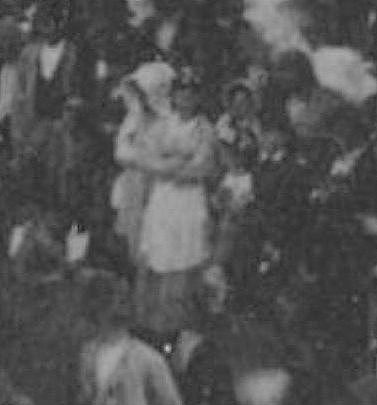
mardi-gras_c1870s-det5Every time I look at the original photograph, my eye always goes to this woman.

mardi-gras_c1870s-det3Okay, that kid’s view is nothing compared to these guys who’ve scaled the Dallas Herald building.

mardi-gras_c1870s-det4In information about the 1876 parade, the Feb. 24, 1876 edition of The Dallas Herald advised: “To prevent accidents, owners of buildings having varandas [sic] will permit no one to stand on them, unless the same have been sufficiently strengthened.” I don’t know … some of those “varandas” look pretty shaky.

And down Main Street they go.

***

This is a stereograph photo by Alfred Freeman, from the Lawrence T. Jones III Texas Photographs Collection, DeGolyer Library, Central University Libraries, Southern Methodist University; it can be viewed here. (I have manipulated the color.) SMU has the photo as being “ca. 1870,” but the first Mardi Gras parade in Dallas wasn’t held until 1876. The view shows Main Street looking east, apparently taken from the roof of the Reed & Lathrop building on the northeast corner of Main and Austin.

UPDATE: This might be a photograph of the Mardi Gras celebration held in Dallas on February 24 (a Thursday…), in 1876. This was the first such celebration held in the city, and it was a massive undertaking, attracting more than 20,000 spectators. For weeks after the event, Alfred Freeman was advertising his Mardi Gras photographs with the following text: “Freeman, the artist, has nine different views of the Mardi Gras procession, for sale.”

mardi-gras_c1870s_freeman

Read about the first Mardi Gras parade in Dallas in the Flashback Dallas post “Mardi Gras: ‘Our First Attempt at a Carnival Fete’ — 1897,” here.

Click pictures for larger images.

*

Copyright © 2014 Paula Bosse. All Rights Reserved.
The Store That Doak Built

doak-walker-sport-center

by Paula Bosse

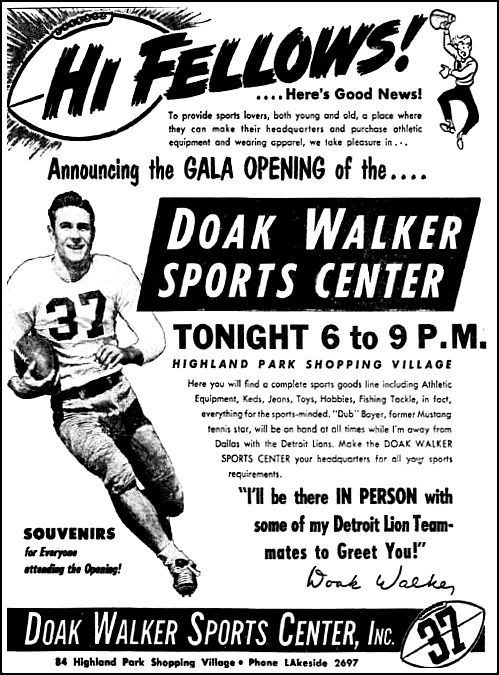
Doak Walker, the Heisman-winning superstar football player for SMU from 1945 to 1949, was, for a good forty-odd years, a partner in a successful sporting goods business that bore his name: the Doak Walker Sports Center. When it opened in Highland Park Village on August 23, 1951, the 24-year old — then playing pro ball with the Detroit Lions — was a bona fide celebrity, both locally and nationally. Predictably, the grand opening drew large crowds of sports fans eager to see their homegrown hero and check out the new place in town to get tennis balls and baseball bats (and, who knows, there might even have been some who showed up to see those unnamed Lions teammates the ads said he’d bring with him). The promise of “souvenirs for everyone!” was merely icing on the cake.

At the same time that the Sports Center was opening, Doak’s name was also on a Gulf station that he and former Mustangs teammate Raleigh Blakely owned on Hillcrest across from the SMU campus. And while both of those business concerns were chugging along, he was also appearing in local and national ads for everything from chewing gum to Vitalis (with a name like “Doak” you’re going to have instant name recognition). Oh, and he was also playing football. Doak Walker was a force to be reckoned with — on the field, on Madison Avenue, and in the dang Park Cities.

*

doak-walker_sports-ctr_opening_dmn_082351

***

Postcard of Doak Walker Sports Center from the Boston Public Library Tichnor Brothers Postcard Collection on Flickr, here.

Life magazine from Sept. 27, 1948. The cover story on Doak Walker and the SMU team can be accessed here.

Signed issued of Sport magazine is currently available for sale here.

Triangle Motors ad from a 1951 program for an SMU-Rice game at the Cotton Bowl.

Doak Walker bio on the Pro Football Hall of Fame website is here.

*

Copyright © 2014 Paula Bosse. All Rights Reserved.

Mr. Blandings Builds His Dream House … In Preston Hollow — 1948

blandings_preston-hollow_dallas_dream-houseThe Blandings Dream House in Preston Hollow… (click for larger image)

by Paula Bosse

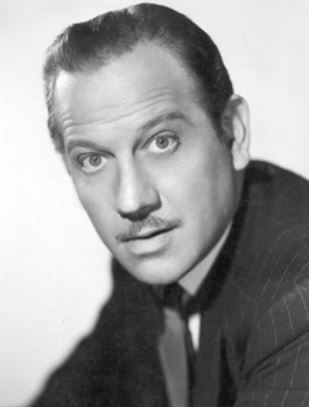
I watch a lot of old movies, and one of my favorites has always been Mr. Blandings Builds His Dream House, the 1948 comedy about the trials and tribulations of home renovation and construction starring Cary Grant, Myrna Loy, and Melvyn Douglas. It wasn’t until fairly recently that I learned there had been a nationwide promotion in which replicas of the “dream house” were built in cities around the country. And, to my surprise, one of those houses was built in Dallas! To be exact, in Preston Hollow. To be precise, at 5423 Walnut Hill Lane (the northwest corner of Walnut Hill and Hollow Way). Sadly, when I went looking for it last week, I found an empty lot. (Figures.) The photo above shows the house in September, 1948 when it (and, not so coincidentally, the movie) opened to the public.

Ahead of the movie’s release, Selznick Studios approached local builders around the country and provided them with architectural plans, asking that they build houses as near to the specifications of the movie house as conditions would permit. The studio contracted Dallas builder A. Pollard Simons and supervising architect Lucien O’Brien to work on the Dallas dream house, seen below in a rendering (all images are larger when clicked).

blandings_a-pollard-simons_rendering

Simons greatly increased the size of the original two-story, three-bedroom house quite a bit (of course he did!), and he allowed the Junior League to raise money by selling 25-cent tickets to curious dream-house-wanters clamoring to wander through the house and gawk at its plush interior and its state-of-the art appliances. Afterwards, Simons put the completely furnished house on the market (in some cities the houses were put up as raffle prizes), and life, presumably, returned to normal for all concerned.

It was a clever way to promote the movie, and, as most of the contractors rushed to boast of their participation by taking out large ads (likely bought in conjunction with studio money), it was also an advertising bonanza for local newspapers. In amongst such ads I discovered that the company owned by my mother’s uncle and my grandfather — Fred Werry Electric Co. — did all the electrical work for the house!

Below are some of those ads that appeared at the time — and, trust me, this was just the tip of the iceberg. The ads were non-stop. This was a huge campaign, going far beyond traditional Hollywood promotion — and it certainly paid off. I’m fairly certain that most Dallasites who read the paper during that time were aware of the house (and the movie), even if they had absolutely no interest in houses (or movies). It was that that unavoidable. (Scroll to the bottom of this post to listen to a FABULOUS commercial-slash-PSA made by actor Melvyn Douglas at a local radio station during a trip to Dallas to tour the Preston Hollow house.)

There were other Texas “Dream Houses” built in Fort Worth (still standing, see link at bottom of page), Austin, Houston, and Amarillo. I only wish Dallas still had its “Dream House,” but I fear a tasteful-but-puny, little ol’ 3,000-square-foot house would not meet today’s definition of a “dream house” in ultra-swanky Preston Hollow.

*

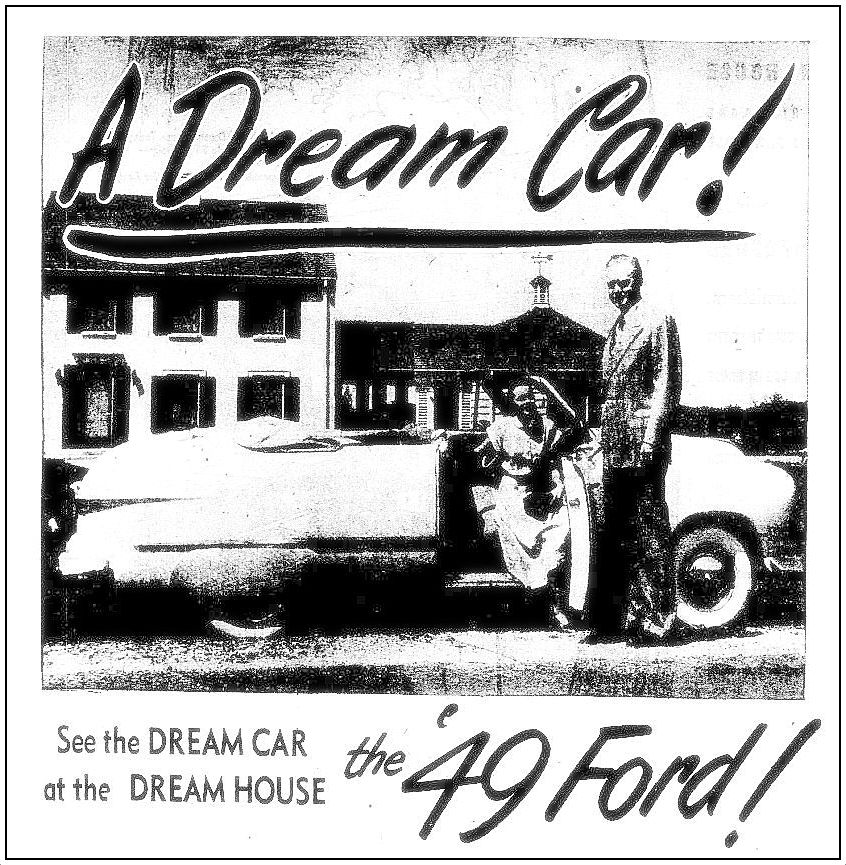
ad-blandings_dallas-ford-dealers_sept-1948The Ford people got into the advertising. This appears to be have been taken in front of the Dallas house.

ad-blandings_werry-electric_sept-1948My great-uncle and grandfather! I can now claim my six degrees of separation (LESS!) from Cary, Myrna, and Melvyn.

ad-blandings_langs_sept-1948Kitchen porn from Lang’s.

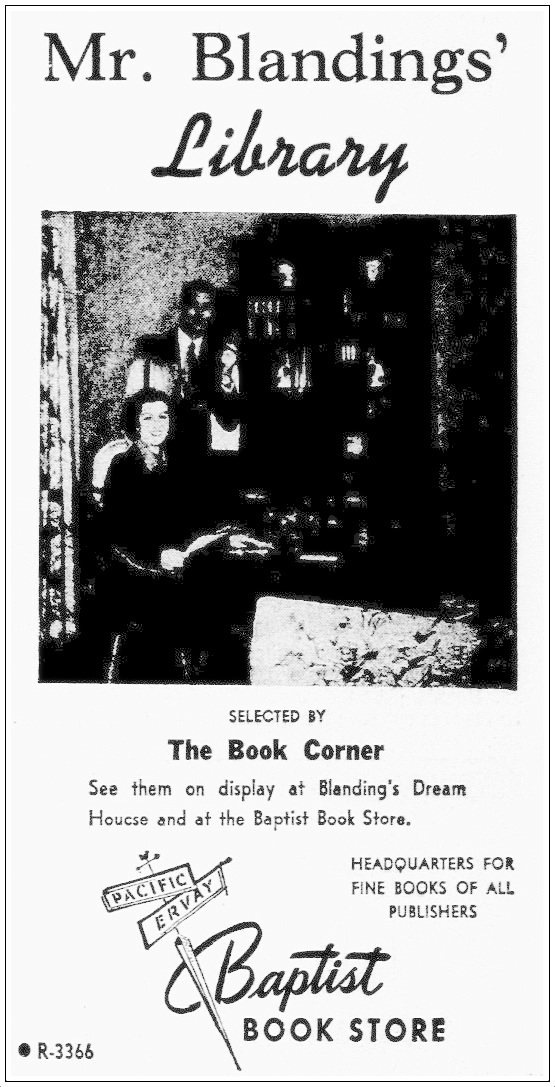
ad-blandings_baptist-book-store_sept-1948The Baptist Book Store stocked the shelves of the Blandings library!

I really like the Wyatt’s Cafeteria ad below, which begins with an itinerary. “Program for today: go to church, eat at Wyatt’s, drive out to see the Mr. Blandings’ ‘Dream House’ in Preston Hollow.” This cafeteria ad sneaked in a mention of the Wyatt’s grocery stores by informing the reader that they had supplied the food for the Dream House’s refrigerator and pantry shelves. But this was my favorite part: “When Mr. Blandings takes his family out for a delicious meal you may rest assured that he will take them to a Wyatt’s De Luxe Cafeteria where each may choose the foods of his own liking from Wyatt’s tremendous varieties. Mr. Blandings won’t mind paying the bill because Wyatt’s prices are really modest.” If Cary Grant was going to be dining at a Dallas cafeteria, I only hope he was choking down large slabs of Wham.

ad-blandings_wyatts_sept-1948

*

The original “dream house” from Mr. Blandings Builds His Dream House — cute, but much smaller than its Dallas counterpart.

***

Sources & Notes

All ads relating to the Dallas Dream House appeared throughout September, 1948.

A nice look at the still-standing Fort Worth Dream House can be found in “Standing at the Corner of Hollywood and Cowtown,” here.

A short radio promo about the Preston Hollow Dream House was recorded on Aug. 10, 1948 by the wonderful Melvyn Douglas, one of the stars of the film (who, by the way, went on to win an Oscar for his role as the family patriarch in the brilliant — and iconically Texan — film Hud in 1963). It was recorded when he visited Dallas in August, 1948 at station KIXL (in which he was an investor), and it can be heard here. (By permission of the great Dallas DJ and broadcasting archivist, George Gimarc.) I LOVE THIS! Thank you, George!

melvyn-douglas

UPDATE: I wrote this post in 2014, and at the time I could find no information about this Dallas Blandings house outside contemporary newspaper archives. Which is the only reason I took some small amount of credit for the house showing up in a Preston Hollow-centric mural in 2015 at the then-new Trader Joe’s at Walnut Hill and Central. I took the photo below in 2015, but, sadly, this tribute to Mr. Blandings and his Dallas dream house is no more. Last time I stopped in, it had been painted over. But here it lives on!

blandings_trader-joes-walnut-hill_PEB_2015Trader Joe’s, Walnut Hill, Dallas (photo by Paula Bosse, 2015)

*

Copyright © 2014 Paula Bosse. All Rights Reserved.

Main Street, 1875 — Very Little Hustle, Very Little Bustle

by Paula Bosse

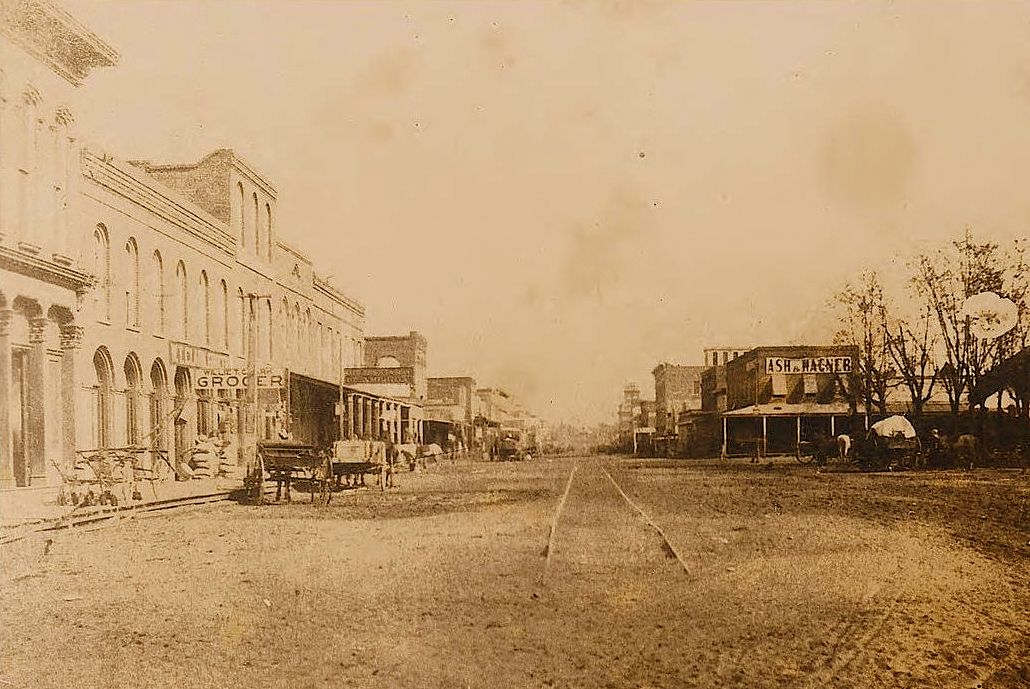
Main Street, looking east from the old courthouse, at Houston Street. 1875. Wow.

***

Stereograph from the George A. McAfee collection, DeGolyer Library, Central University Libraries, Southern Methodist University; more info on this image can be found here.

Click to see larger image.

*

Copyright © 2014 Paula Bosse. All Rights Reserved.

Southwestern Bell Telephone Goings-On, Circa 1928

by Paula Bosse

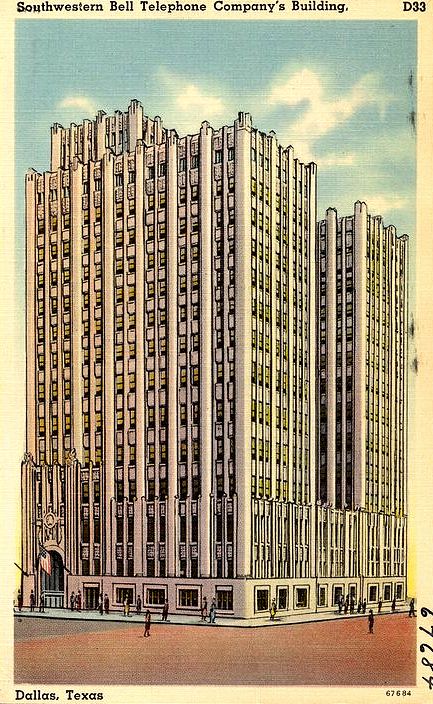
The beautiful Southwestern Bell Telephone Company building, designed by Lang & Witchell in 1929.

From the book Dallas Landmarks:

Dallas’ first telephone exchange opened on June 1, 1881, with 40 subscribers. There were several competing telephone companies before 1925 when Southwestern Bell became the sole provider. The number of telephones in used quickly soared from 30,000 in 1922 to 200,000 in 1949.

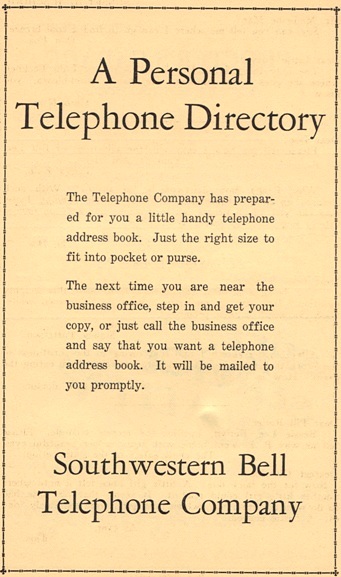
The relatively few telephone subscribers at the time the building was going up might explain this folksy little notice about a “personal telephone directory” that the fine folks at Southwestern Bell have been working on night and day, just for you. Next time you’re in the neighborhood, why don’t you just drop right on in and pick one up? Set a spell. Take your shoes off. Y’hear?

***

Sources & Notes

Postcard from the Boston Public Library Tichnor Brothers Postcard Collection on Flickr, here.

Quote from the book Dallas Landmarks, by Preservation Dallas and Dallas Heritage Village (Charleston: Arcadia Publishing, 2008). p. 31.

Quaint little ol’ phone book ad, from, of all places, the Nov. 1928 issue of “The Stampede,” the school magazine published by and for the students of Sunset High School in Oak Cliff.

*

Copyright © 2014 Paula Bosse. All Rights Reserved.
 

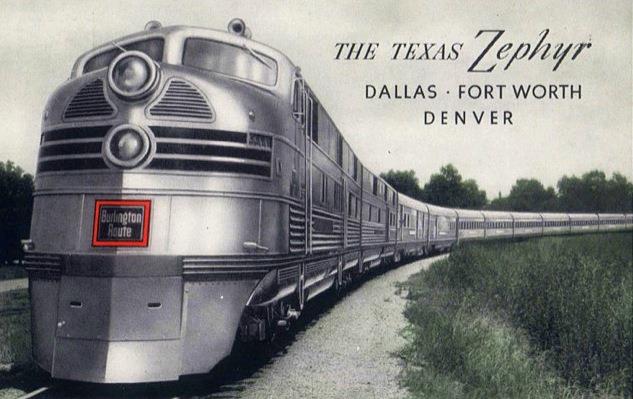
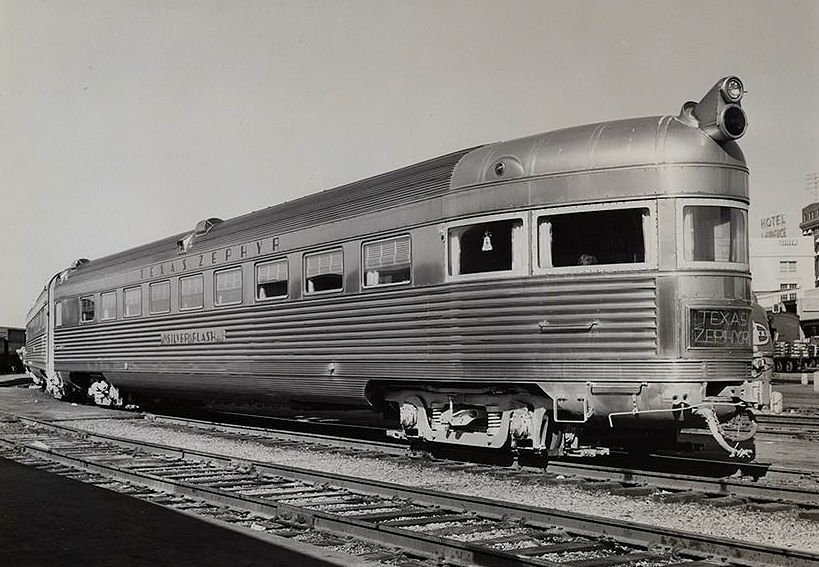
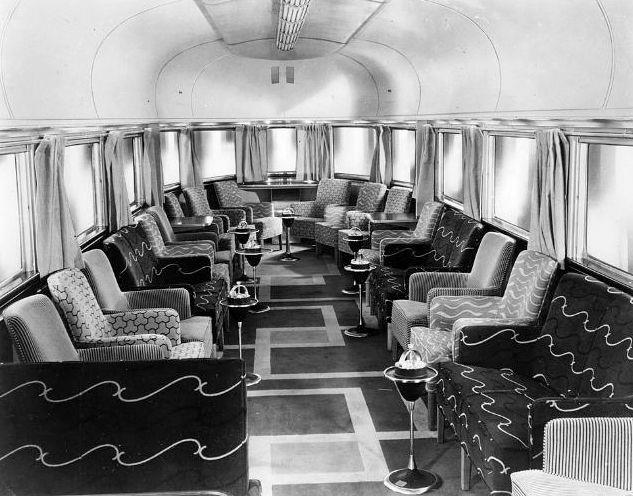
The Texas Zephyr — Streamlined Luxury Train Travel

Dallas — Fort Worth — Denver

by Paula Bosse

From the golden age of train travel. …I was born in the wrong era.

***

Sources & Notes

Second photo showing the exterior of the “Silver Flash” passenger car on the tracks at Union Station in Dallas is from the DeGolyer Library, Central University Libraries, Southern Methodist University; it was taken by Everett L. DeGolyer Jr. in 1960; more information on this photo is here.

Top and bottom images are from the wilds of the internet.

More on the Texas Zephyr here.

*

Copyright © 2014 Paula Bosse. All Rights Reserved.

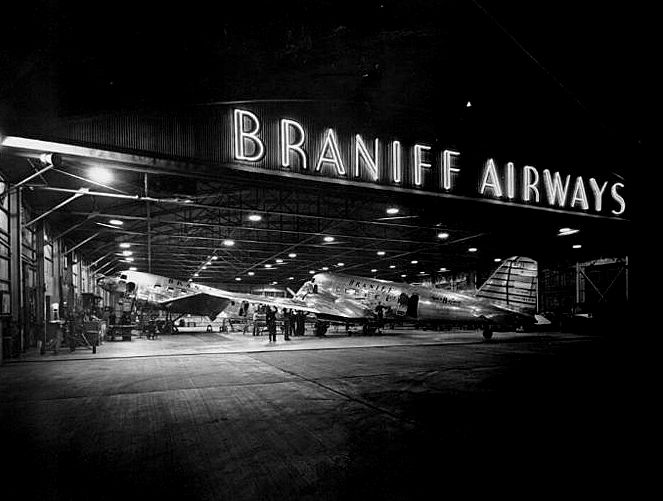
Braniff Hangar, Love Field — 1940s

by Paula Bosse

Overnight maintenance. Beautiful sign.

Photo caption:

Night maintenance at the Braniff hangar, main entrance on Roanoke Drive at Dallas Love Field, early 1940s.

Planes being serviced include a DC-2 and DC-3.

*

Copyright © 2014 Paula Bosse. All Rights Reserved.

Dallas Steam Mills at the Cedar Spring — 1855

by Paula Bosse

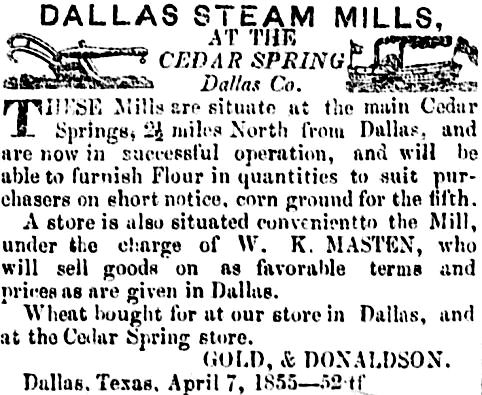
DALLAS STEAM MILLS, at The Cedar Spring, Dallas Co.

These Mills are situate at the main Cedar Springs, 2 1/2 miles North from Dallas, and are now in successful operation, and will be able to furnish Flour in quantities to suit purchasers on short notice, corn ground for the fifth. A store is also situated convenient to the Mill, under the charge of W. K. MASTEN, who will sell goods on as favorable terms prices as are given in Dallas. Wheat bought for our store in Dallas, and at the Cedar Spring store.

–GOLD, & DONALDSON. Dallas, Texas , April 7, 1855

*

In 1843, a trading post was established just outside the city of Dallas at the new settlement of Cedar Springs. There were few settlers at the time, so items traded were pretty much limited to only the essentials (groceries, ammo, buffalo hides). By 1850, though, sexier luxury goods like “hoopskirts, silk stockings, bridal bouquets, Bibles, accordions, Mustang liniment, snake-root and castor oil were listed in the inventory of a deceased merchant. This advance in merchandising may be attributed to the establishment by that time of a gristmill to which farmers from many miles around brought their grain. Naturally they visited the stores to trade” (WPA Dallas Guide and History). The Dallas Steam Mills was one of the first commercial mills in “the Cedar Spring,” and as it was affiliated with successful early Dallas retailers Gold and Donaldson, it must have also been one of the most profitable.

The community grew quickly. Until 1850. That was when Dallas County residents went to the polls and voted on which of the local communities would be the county seat. The choices were: the city of Dallas, Cedar Springs, and the ever-popular Hord’s Ridge. Cedar Springs came in dead last. The agony of defeat must have hit hard — the loss seems to have dampened civic enthusiasm and contributed to stagnant growth. It wasn’t until the turn of the century that the area — by then called Oak Lawn — had rebounded with a boom in population. By the 1940s, though, the area had been officially annexed by the city of Dallas. Oak Lawn (né Cedar Springs) had, at least, managed to hold onto a shred of independence a few decades longer than its former opponent had — Hord’s Ridge had changed its name to Oak Cliff, but it, too, had been swallowed up by the voracious, mammoth city surrounding it. No hard feelings, guys. You can run but you can’t hide. Resistance has always been futile. We’re all just one big happy kudzu-like sprawling sprawl now.

*

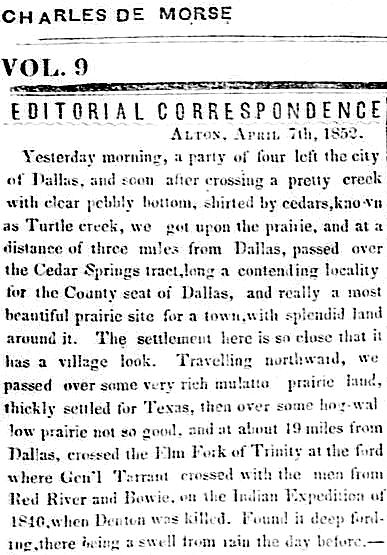
Below is an interesting account of traveling through Cedar Springs in 1852.

***

Dallas Steam Mills ad from the Dallas Herald, 1855.

Quote mentioning accordions and hoopskirts from The WPA Dallas Guide and History (Dallas Public Library Texas Center for the Book, University of North Texas Press, 1992). p.124

The account of passing though Cedar Springs, by Charles DeMorse, is the lead story in the July 17, 1852 issue of Clarksville’s Northern Standard newspaper; it can be found here  on UNT’s invaluable Portal to Texas History site; from the collection of the Dolph Briscoe Center for American History.

A biography of Charles DeMorse, writer and editor of Clarksville’s Northern Standard can be found here.

The Handbook of Texas History entry for Cedar Springs is here.

*

Copyright © 2014 Paula Bosse. All Rights Reserved.