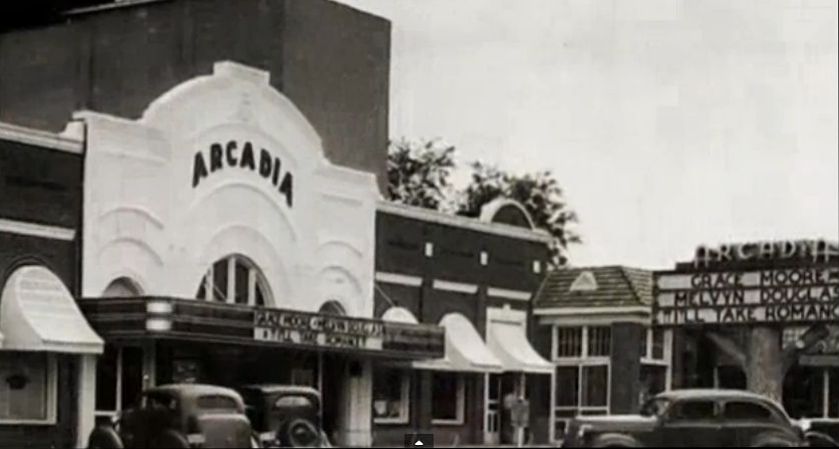
Flashback : Dallas

A Miscellany: History, Ads, Pop Culture

Tag: Dallas TX

Roger Corman Does Dallas — 1970
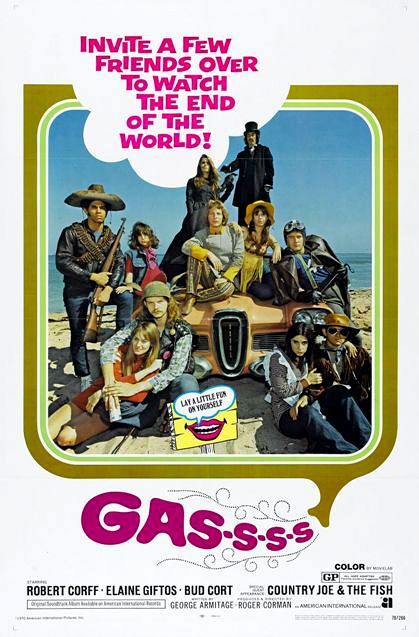
by Paula Bosse

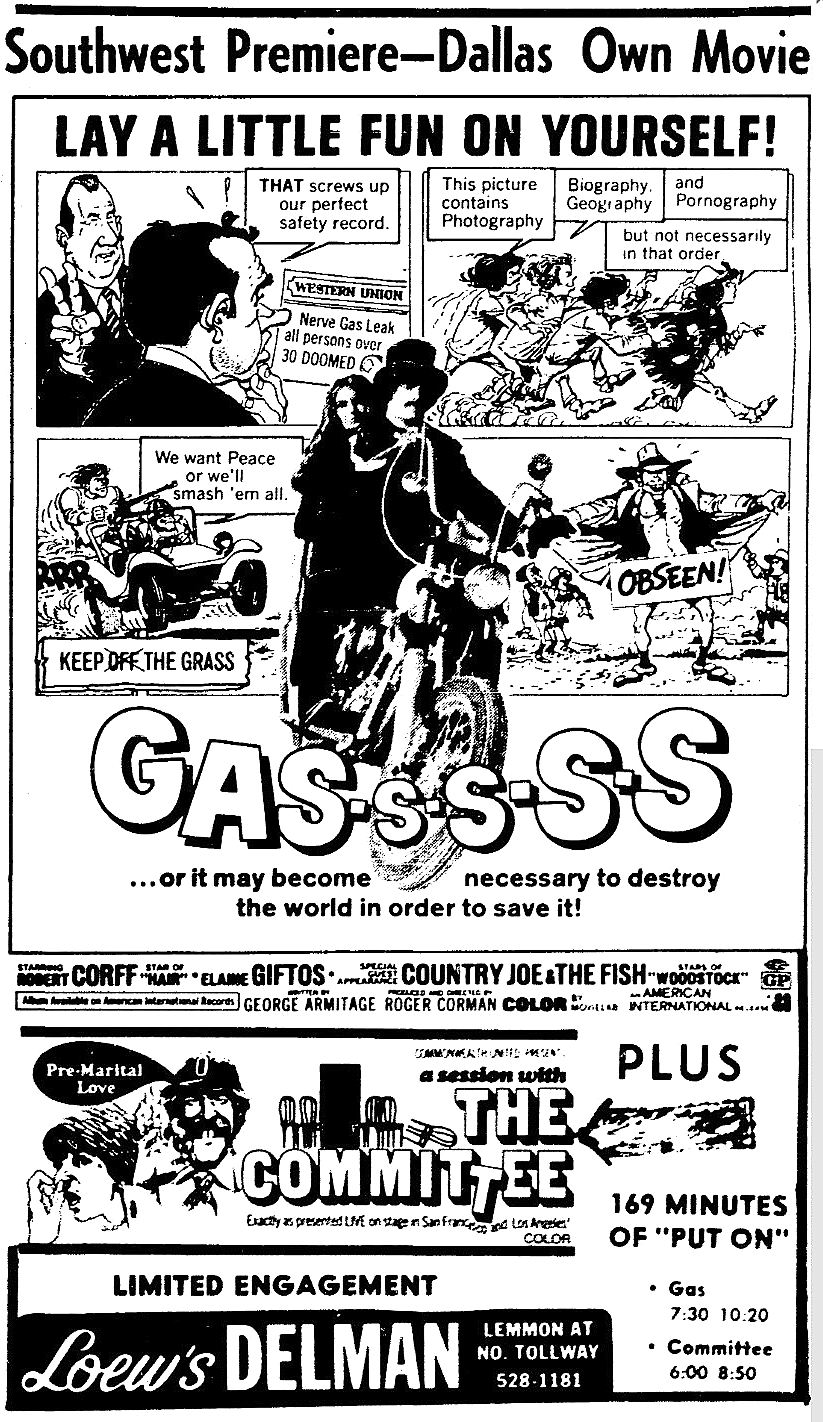
Think you’re up on your “movies-shot-in-Dallas” trivia? I thought I was. Until I happened across a strange little movie in the wee hours of the morning a couple of years ago. The movie is called Gas-s-s-s! Or sometimes Gas–Or–It Became Necessary to Destroy the World In Order to Save It. And it’s directed and produced by the great schlockmeister (and I use that word lovingly), Roger Corman.

For my purposes here, I’m not going to try to describe the meandering plot of this vaguely post-apocalyptic screwball hippie groove-fest, but other than the fact that it has early appearances on film by Bud Cort, Cindy Williams, Ben Vereen, and Talia Shire (billed here as “Tally Coppola”), the only thing that really matters is that a good ten minutes of this really bad movie take place in Dallas — a good chunk of it shot on the SMU campus (?!). (I wonder if there was some guerrilla film-making going on here because it seems unlikely that the powers-that-be at SMU would have allowed Corman to film one of his typical counter-culture movies in the heart of the Park Cities.) (ETA: Well, I’ve recently come across an article from the SMU Daily Campus, which appeared during filming (read it at the bottom of this post). It mentions previous Corman movies, so I guess the Hilltop decision-maker knew of Corman’s oeuvre and was fine with everything. Either that, or that person was lazy and didn’t bother investigating. The working title, by the way, was “Arrowfeather.”)

The Dallas scenes are conveniently right at the beginning of the movie (following a short animated sequence of plot exposition and titles). Corman’s opening montage of the streets of Dallas is only 30-seconds long, but it’s really great! Not that he meant it to be, but it’s like a little valentine to downtown Dallas as it was embarking on a new decade. Look at all those buildings! Look at all those people! Later on you see an eerie, deserted downtown, Dealey Plaza, SMU fraternity row, and a mod, weird-looking church which I’ve never seen (where is that, anyway?). Here’s the opening couple of minutes of the movie:

*

The entire movie is occasionally on YouTube, but it seems to go up and get pulled off with some frequency. By the time you read this it may no longer be available, but you can watch the trailer here. (If you can find the full movie, the Dallas bits start at about the 3:30 mark and last until about the 13:00 mark.)

I watched the whole thing, and I can’t say I enjoyed it. I DID really like Cindy Williams as an excitable music geek, here in her first movie — three years before American Graffiti and longer still before Laverne & Shirley — but I’m not sure that’s enough of a reason to recommend sitting all the way through it. (And don’t get excited about Bud Cort, because his participation is minimal.)

Watch the whole thing if you must. But, remember: you’ve been warned!

**
gassssss_movie_smu-daily-campus_nov-4-1970SMU Daily Campus, Nov. 4, 1970

This article appeared in the SMU newspaper — The Daily Campus — while the movie was being filmed in Dallas. (Click for larger image.)
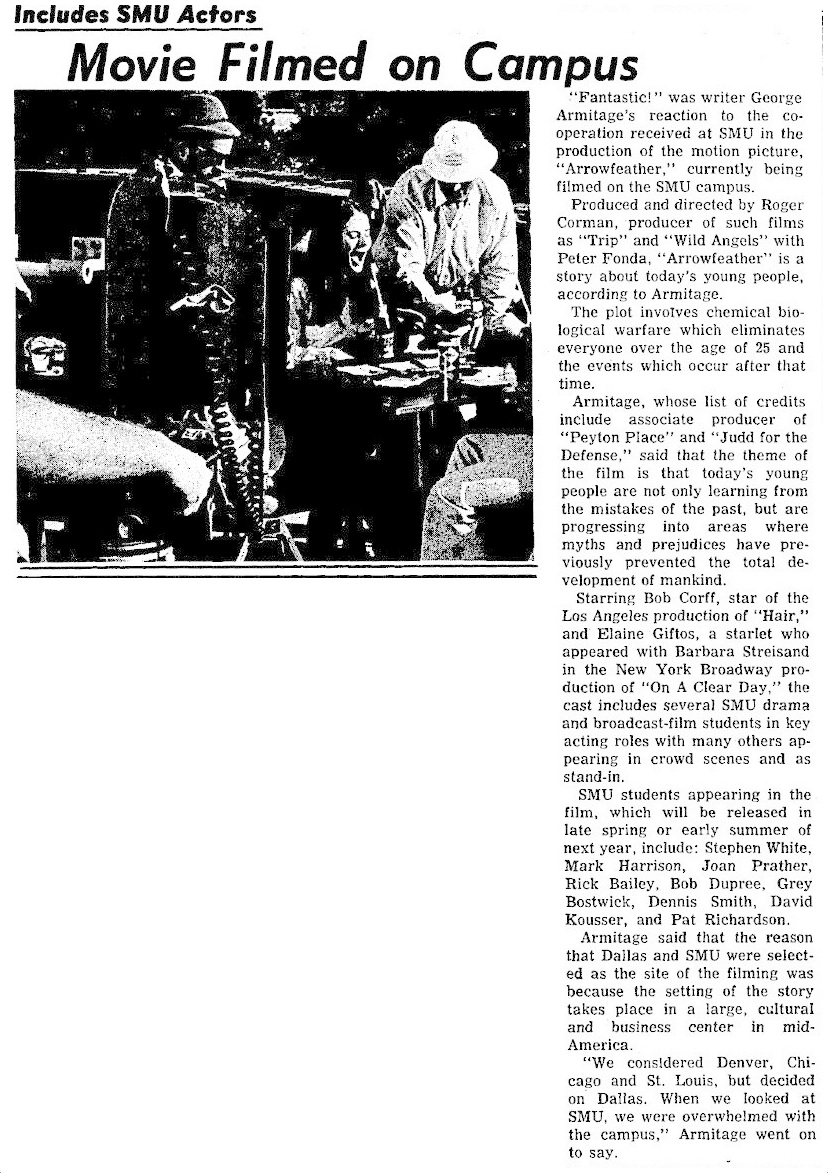
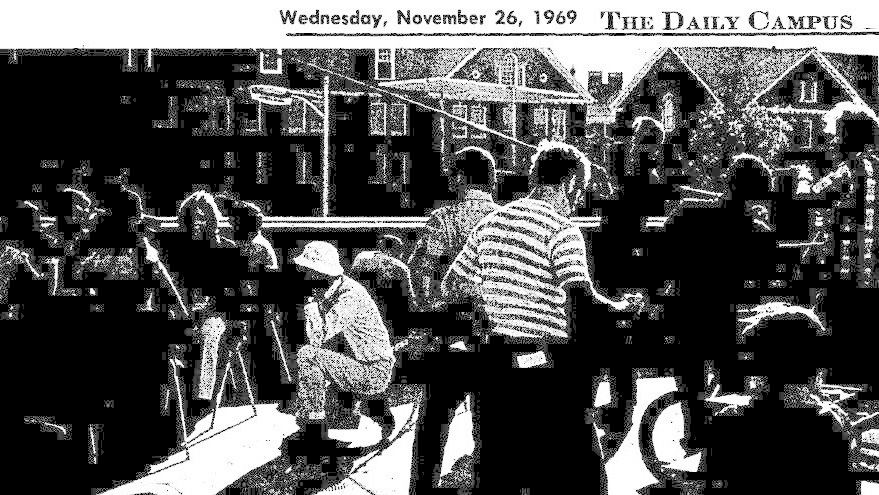
gas_making-of_roger-corman_smu-daily-campus_112669SMU Daily Campus, Nov. 26, 1969

The photos accompanying the article are, sadly, not the greatest resolution, but here’s one:
gas_making-of_roger-corman_smu-daily-campus_112669_photo

***

Sources & Notes

SMU Daily Campus article (Nov. 26, 1969) is from the Southern Methodist University Student Newspapers collection, DeGolyer Library — see the scanned issue here.

The IMDb listing for the movie is here. Who knows? You might know people in it! …Heck, you might be in it.

If you’ve arrived at this post by searching on “schlockmeister,” I invite you to peruse these other Flashback Dallas posts about Dallas’ own Roger Corman, Larry Buchanan:

*

Copyright © 2014 Paula Bosse. All Rights Reserved.
Not Every ‘Good Luck Trailer Park’ Story Has a Happy Ending — 1964

chimp_fwst_012864Fort Worth Star-Telegram, Jan. 28, 1964

by Paula Bosse

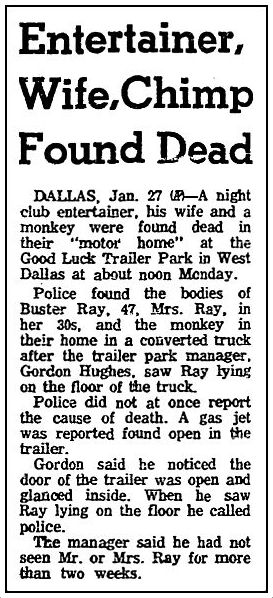
“Entertainer, Wife, Chimp Found Dead.” THAT is a headline.

Had I not known that the (ironically named) Good Luck Trailer Park on W. Commerce had been a favorite with visiting circus folk, I might have been a little more surprised by the weird circumstances reported in this article. As it was, I was only mildly surprised.

(I kind of think the chimp did it….)

***

Sources & Notes

Hats off to the Fort Worth Star-Telegram‘s headline writer. The story ran in the Star-Telegram on Jan. 28, 1964.

The victims — Harold Allen Ray and his wife Nadine (and unnamed monkey) — were later determined to have died of accidental carbon monoxide poisoning.

“Buster Raye” (stage name of Harold Ray) had been a comedian and master of ceremonies who seems to have played a lot of burlesque joints/strip clubs as the between-stripper entertainment. He was billed as “The Mighty Mite of Mirth.” In a Feb. 24, 1948 review of his act, The Bryan Eagle wrote:

Buster Raye, diminutive master of ceremonies, stole the show with a clever line of chatter punctuated with juggling, acrobatics, songs, imitations. His jokes were well handled with none of the vulgarity common to many floor shows.

I’m not sure where the monkey fits in.

buster-raye_corpus_042948Corpus Christi Caller-Times, April 29, 1948
*

Copyright © 2014 Paula Bosse. All Rights Reserved.


A Robot Visits the Texas Centennial — 1936

by Paula Bosse

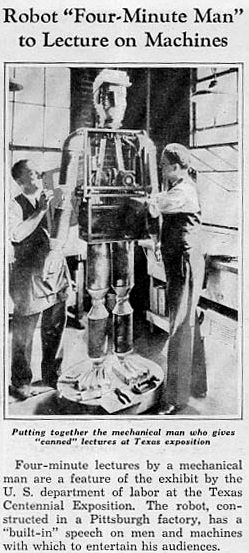
This “mechanical man, built by human hands” was quite the attraction at the 1936 Texas Centennial.

Four-minute lectures by a mechanical man are a feature of the exhibit by the U.S. department of labor at the Texas Centennial Exposition. The robot constructed in a Pittsburgh factory, has a ‘built-in’ speech on men and machines with which to entertain his audiences.

***

Lower image from Popular Mechanics (Sept. 1936).

*

Copyright © 2014 Paula Bosse. All Rights Reserved.

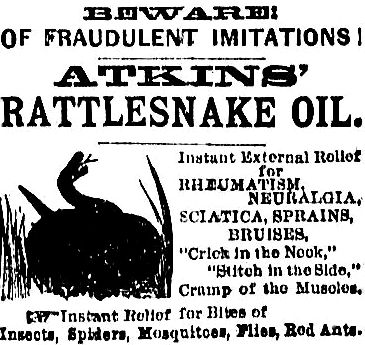
Atkins’ Rattlesnake Oil — Beware of Fraudulent Imitations!

by Paula Bosse

“From the Aboriginal Indians of this country — the early trappers — and pioneers learned that Rattle Snake Oil was the best remedy for rheumatism, pains, sprains, bruises, etc. Every cabin had its bottle hanging ready, from the rafters. The day will come when every house will have it again.”

That little tidbit appeared under the heading “Folk-Lore” in the October 9, 1888 issue of the Dallas-based Southern Mercury newspaper. As there was no company name or product attached, it appeared to be a mere space-filling “factoid” rather than an advertisement. Conveniently, though, it was just a hop, skip, and a jump across three ink-smeared pages from a large ad for Atkins’ Rattlesnake Oil, an ad that warned the reader to “Beware of Fraudulent Imitations!” before it launched into a long list of testimonials from the once-weak and infirm. The ad ended with “Geo. T. Atkins, Dallas, Texas — For Sale by All Druggists.”

Southern Mercury, Oct. 9, 1888 (detail)

*

George T. Atkins was born in New York in 1837. Educated and having the bearing of a “trained businessman,” he drifted south and for some reason decided to join the Confederate army.

He was described by a fellow brigade member as a dark and handsome “compactly built” snappy dresser who “talked in a louder tone than the others, and [had] a peculiarly non-chalant, devil-may-care manner [that] emphasized his presence.” Atkins became a captain and quartermaster in the Fourth Kentucky Cavalry and though his position did not require participation on the battlefield, he was painted as something of a hot-dogging thrill-seeker: “[T]he gallant captain was frequently found in the ‘thickest of the fray,’ notably in the desperate battle at Saltville, where he recklessly and conspicuously rode up and down the lines, seeming determined to get himself killed.”

After the war, he eventually made his way to Texas with his family, arriving in Dallas in 1876 and settling into a large house at Ross Avenue and Masten Street (now St. Paul). At some point he opened a drugstore on Elm which seems to have been quite a successful enterprise. Perhaps it was his close proximity to drugs and medicinal compounds that prompted Atkins to launch his lengthy (and presumably lucrative) side-business as a snake oil manufacturer and salesman.

As far as I can tell, his “rattle snake oil” ads started around 1888. “Snake oil” has become a synonym for fraudulent wares sold by hucksters who know their products are ineffective but figure they can make a quick buck by grossly exaggerating — if not outright lying about — the magically curative properties of whatever it is they’re selling. As an actual “druggist,” Atkins probably had at least a little credibility compared to the other latter-day medicine-show men flogging their tonics and elixirs out of the back of a wagon before the law ran them out of town.

Southern Mercury, 1890 (det)

In fact, Atkins was, himself, such an expert flogger that his claim in ads that the United States Patent Office had officially ruled that his rattlesnake oil was “The Only True and Genuine Rattlesnake Oil” is automatically suspect, even though the editors of the Dallas Morning News (who, by the way, were no stranger to the popular and socially prominent Atkins, a man with, let’s not forget, a hefty newspaper advertising budget) published in its pages the following blurb (probably supplied by “the plaintiff”):

Dallas Morning News, Dec. 12, 1888

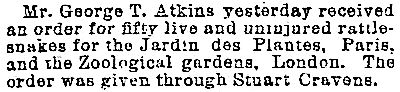
 1888 was a good year, and Atkins was riding a snake-oil wave of good publicity. There were even reports in the local papers that Dallas’ favorite herpetologically-inclined drugstore owner was hustling “live and uninjured rattlesnakes” to interested parties in Paris and London. I don’t know … maybe…. Probably just some more creative publicity.

DMN, June 3, 1888

Atkins continued to run his drugstore and sell his snake oil until 1892 when, out-of-the-blue, he was assigned to dig the Texas Trunk Railroad out of receivership. The appointment seemed a little odd, but Atkins was a savvy businessman and a charming and persuasive speaker (he occasionally spoke in front of the Dallas City Council in a manner described as “felicitous and lucid”) — he could easily have back-slapped his way into the job. Despite the fact that he had no background in the railroad business, he seems to have spent several fairly productive years in the position. (His son, by the way, legitimately worked his way up through the ranks of the M-K-T, from lowly freight clerk to powerful executive VP.)

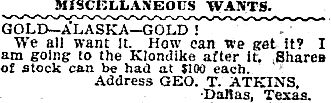
Eventually the railroad job ended and, in the waning years of the nineteenth century, Atkins seemed to be flailing a bit — he set the snake oil aside for a moment and placed an ad in the DMN classifieds soliciting investors to stake a claim in a Klondike gold scheme — at a mere $100 a share!

DMN, Aug. 8, 1897

 He continued in the rattlesnake oil biz until at least 1907, but at some point that began to fade away (or his inventory finally ran out), and he and his wife began running a boarding house. By 1918, though, he was tired of being a landlord and, at the age of 80, Atkins was finally ready to retire.

DMN, Oct. 20, 1918

The large 12-room house at Ross and Masten sold after spending a lengthy time on the market, and Atkins and his wife moved to Lemmon Avenue, where, ultimately, he died on August 8, 1920.

DMN, Aug. 9, 1920

 George T. Atkins placed COUNTLESS snake oil ads in newspapers for something like twenty years. Each ad had his name on it. Boldly. Proudly. And there’s nary a mention of the famous Atkins’ Rattle Snake Oil in his obit! That’s a shame, because, to me, that’s the single most interesting thing about the man. He was a career snake oil salesman! He was also one of Dallas’ very first advertising empresarios — an entrepreneur who had a natural flair for the creative hard-sell and knew how to wield it.

“TAKE NO SUBSTITUTE!”

*

Southern Mercury, Dec. 20, 1900 (click to enlarge)

***

Quotes about Atkins’ time in the Confederate army from Kentucky Cavaliers in Dixie, Reminiscences of a Confederate Cavalryman by George Dallas Mosgrove (Madison: University of Wisconsin Press/Bison Books, 1999 — originally published in 1895); pp. 116-117.

Atkins’ physical examination of his snake oil, published in Chemist and Druggist (1890) can be seen here.

More on the Texas Trunk Railroad here.

*

Copyright © 2014 Paula Bosse. All Rights Reserved.

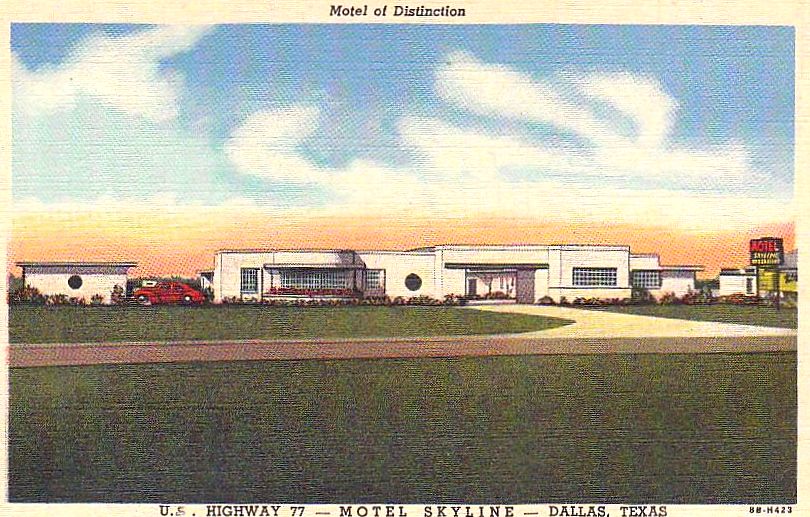
Motel Skyline / Skyline Motel — “The Motel of Distinction” (1947)

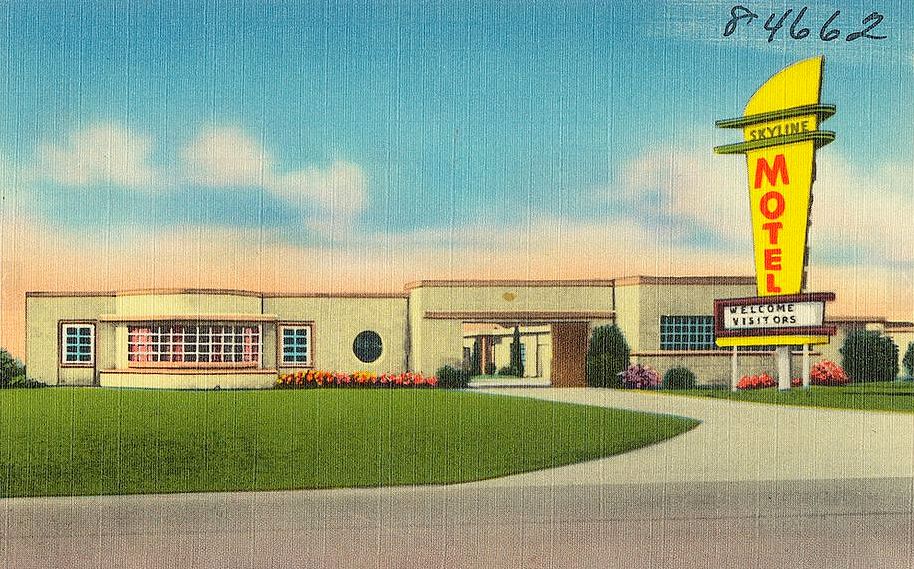
motel-skyline_postcard

by Paula Bosse

THIS is a great, great-looking motel. I only hope it looked half as sleek in real life. It was, rather surprisingly, designed in 1947 by the architect George Marble who was known for his large Tudor-revival homes in the pricier areas of Dallas (particularly Highland Park and Lakewood), so this is a major divergence in style. 1947 seems a little late for something this Deco-looking, but, no matter — this is just a fantastic building.

The “Motel Skyline” (or “Skyline Motel” as it was being referred to in ads not long after it opened in September, 1947) was located at 6833 Harry Hines, near West Mockingbird, just past Love Field. It’s not a great neighborhood these days, but perhaps it was better 60-some-odd years ago, when Harry Hines was the route that the old Hwy. 77 followed. The 30-unit “motor hotel” was built at a cost of $250,000 — it boasted year-round air conditioning and “mattresses of fiberglass.” 

I don’t know how long the place lasted — perhaps until the mid- or late-’60s, when advertising petered out and by which time the probably no-longer-so-sleek motel seems to have started catering to customers paying by the week and by the month. It might not have gotten as seedy as I fear it might have, as I saw only a couple of fairly run-of-the-mill appearances on the police blotter (cash stolen from a sleeping customer and a likely suicide in one of the rooms). Still, I shudder to think of that once-beautiful building ending its days cheek-by-jowl with modern-day Harry Hines.

It’s nice to know Dallas once had this wonderful building, if only for a little while. If anyone has photographs of the actual building, I’d love to see them, even though I know I would probably be disappointed.

*


1962 ad

***

Check out the kind of architectural design that George N. Marble is actually known for (residential, palatial), here.

Second postcard from the absolutely fantastic Boston Public Library Tichnor Brothers Postcard Collection on Flickr, here.

Matchbook from Flicker, here.

Click postcards for larger images. It’s worth it.

*

Copyright © 2014 Paula Bosse. All Rights Reserved.

2400 McKinney Avenue — 100+ Years and Counting

by Paula Bosse

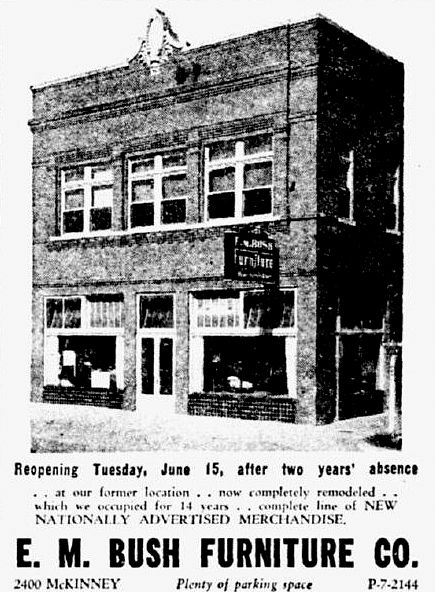
I came across this ad and wondered just where on McKinney Avenue this building had been. The ad was from 1948, but the building certainly looked older than that. I’m not sure when the building was built (update: it was built in 1909), but by at least 1929 the Hughes Auction Market was conducting furniture auctions there. An ad from 1929 invites the public to attend the regular auctions in which their two floors were packed to the gills with furniture and household goods that “positively must sell.” Prospective buyers were promised a large parking lot and a “comfortable, cool building.”

In the summer of 1933, a longtime Dallas furniture salesman, E. M. Bush, opened his retail business in the building and remained there for many years, perhaps until 1958 when he moved to Snider Plaza.

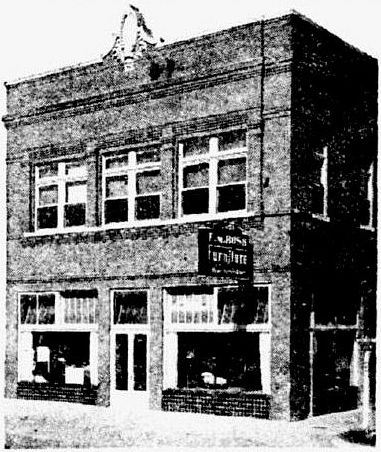
I wondered what’s at 2400 McKinney these days, and, I have to say … I’m shocked to find that the building is actually still there! On McKinney Avenue! And it looks very much the same as it does in the photo above (and, presumably, since it was built) — a little more elegant, perhaps, as it’s now part of the fabulous Hotel ZaZa — but the building looks pretty much the same. The building has survived! I feel like crying.

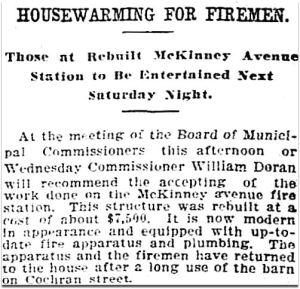
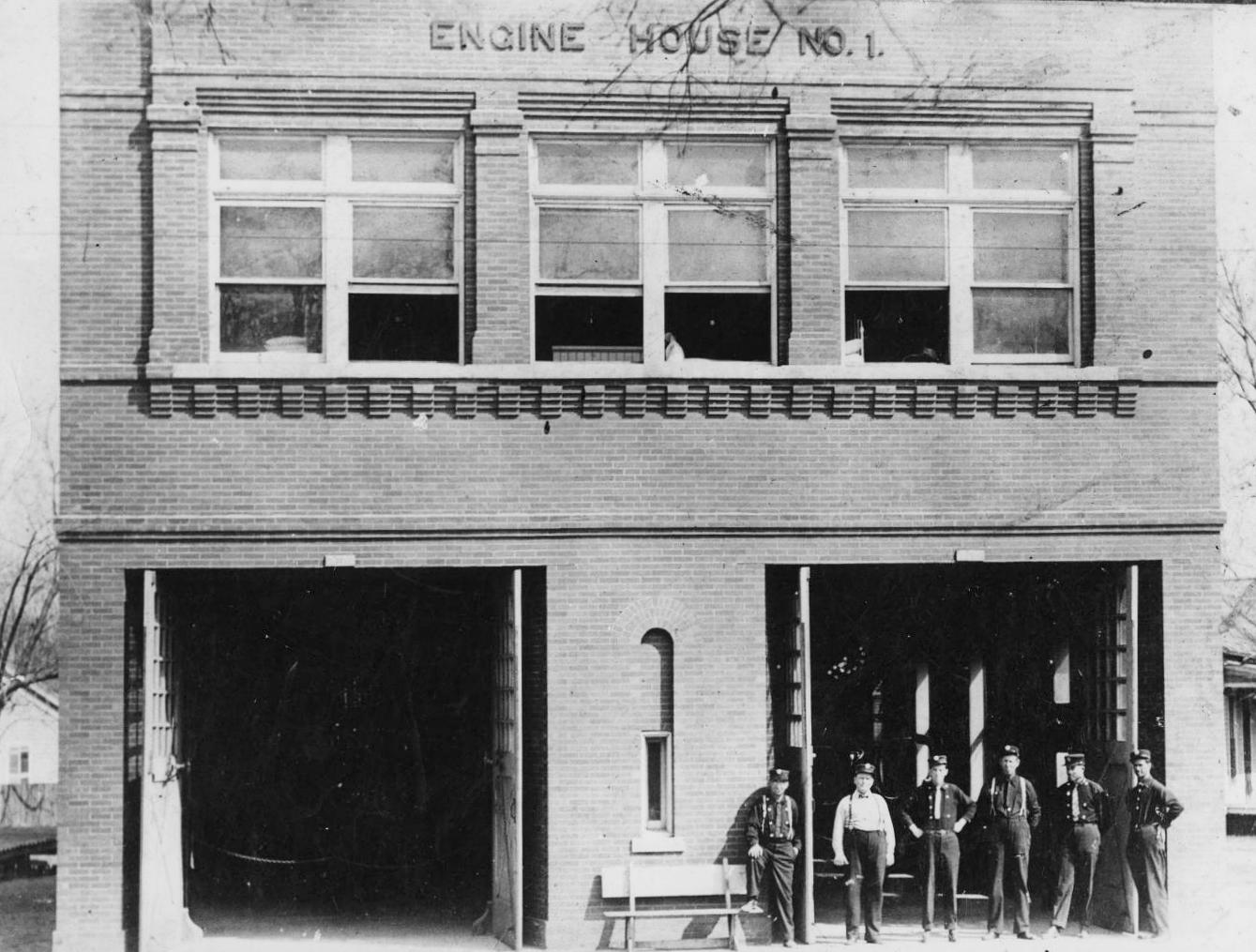
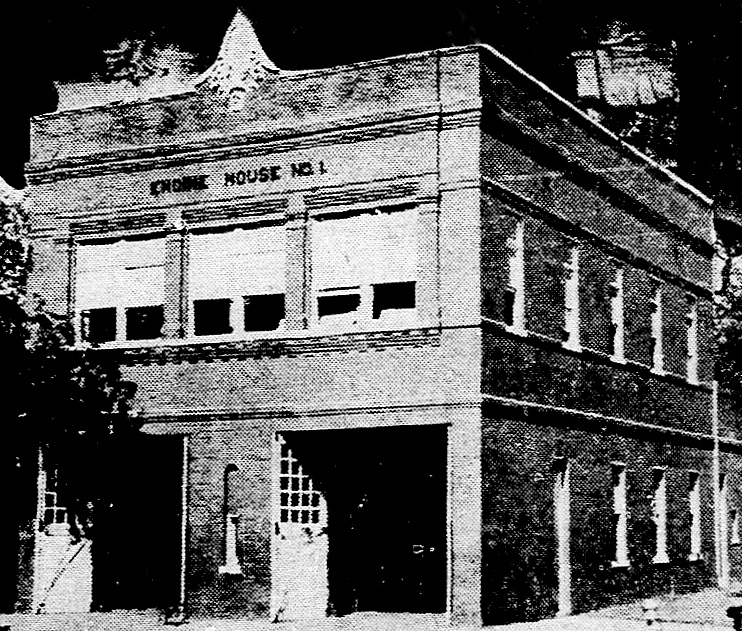
But wait, there’s more. What was this building originally? It was a firehouse! More specifically, it was Engine House No. 1, in use until 1928. The fire station that originally occupied this location was built in 1894 (see what it looked like in 1901 here, third photo down). By 1909, automobiles were placing horse-drawn fire engines, one of many reasons the station house needed to be modernized. Newspaper articles from 1909/1910 used the words “rebuilt” and “remodeled” almost interchangeably, so it’s unclear whether the original building was completely, or only partially demolished and then rebuilt, using materials from the original structure. The “new” engine house re-opened in January, 1910.

rebuilt_dmn_012510
Dallas Morning News, Jan. 25, 1910

Here’s a photo from its early days:

engine-house-no-1_mckinney

And from the 1920s:

fire-dept_mckinney-leonard-photo_1920s

The city ordered the building sold in 1928 when plans had been made to move personnel and equipment from McKinney and Leonard to a new station at Ross and Leonard.

To have a 100-plus-year-old building still standing in “newer-is-better” Dallas — and in Uptown — is quite a feat!

***

Sources & Notes

E. M. Bush Furniture Co. ad from 1948.

Photo of Stay ZaZa Art House and Social Gallery from the Hotel ZaZa website.

Firehouse photo from The Dallas Firefighters Museum. More on this station here.

Most images are larger when clicked.

*

Copyright © 2014 Paula Bosse. All Rights Reserved.


Dear JFK: Welcome to Big “D” — Love, DP

Nov. 22, 1963

by Paula Bosse

Sorry, Dr Pepper, but this might be the most unfortunate, unintended instance of product placement ever.

***

Sources & Notes

AP photo, November 22, 1963.

*

Copyright © 2014 Paula Bosse. All Rights Reserved.

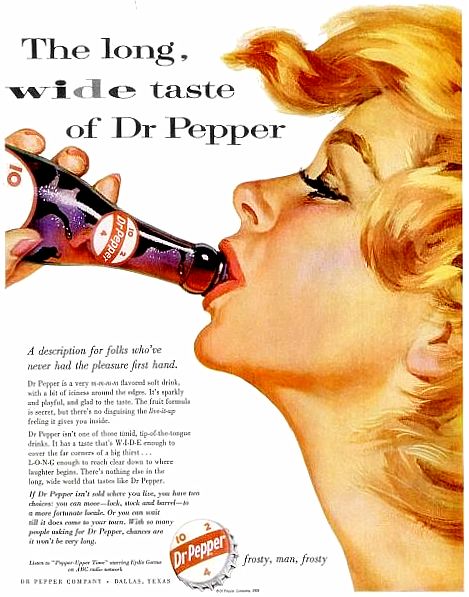
Dr Pepper: “Sparkly, Playful” — 1959

dr-pepper-1959

by Paula Bosse

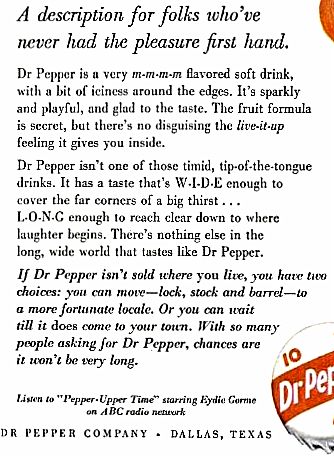
An early national advertisement for a product on its way to becoming more than just a regional soft drink. I grew up right down the street from the Dr Pepper plant. And, yes, I am still pissed.

And here, a bit larger, the wordy and intensely caffeinated copy that seems to have been written by a Madison Avenue flat-earther:

*

Copyright © 2014 Paula Bosse. All Rights Reserved.

Speaking of the Arcadia and Its “Rustic Simplicity”…

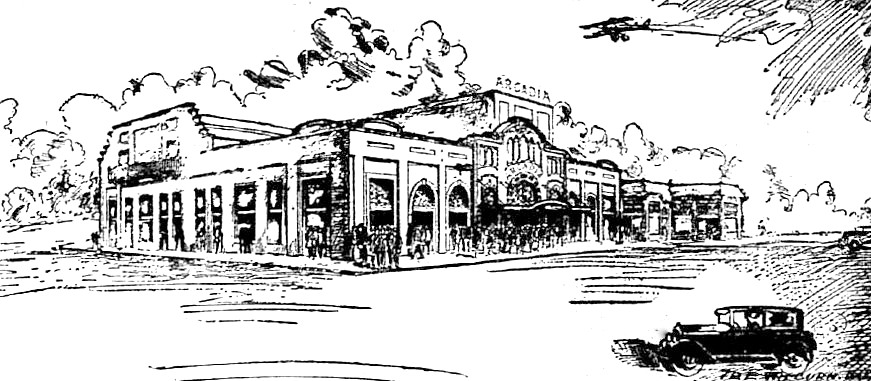
arcadia_architectural-renderingArcadia Theater, 1927…

by Paula Bosse

Above is a rendering of architect W. Scott  Dunne’s design for the Arcadia Theater on Greenville Avenue, at Sears Street, between Ross Avenue and Belmont. (The low-flying bi-plane is a nice touch.) Among the many Dallas theaters designed by Dunne were the Esquire in Oak Lawn and the Texas Theatre in Oak Cliff (as well as another entertainment mecca, the Fair Park Band Shell).

The Dallas Morning News had this to say about Dunne’s concept for the new “suburban theater” in 1927:

W. Scott Dunne, architect of Arcadia, is working out an interior design that should prove in harmony with the theater’s name — an atmospheric design of as near rustic simplicity as is possible in a theater.

“Rustic”!

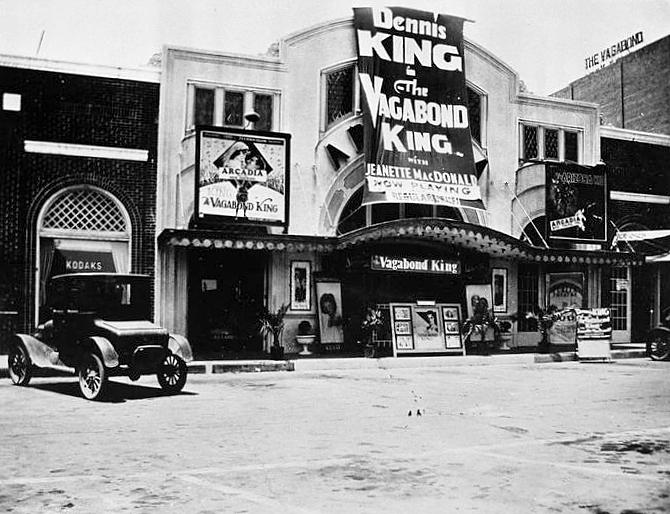
A photo of the not-particularly-rustic exterior in 1930:

arcadia-theater_1930_portal1930

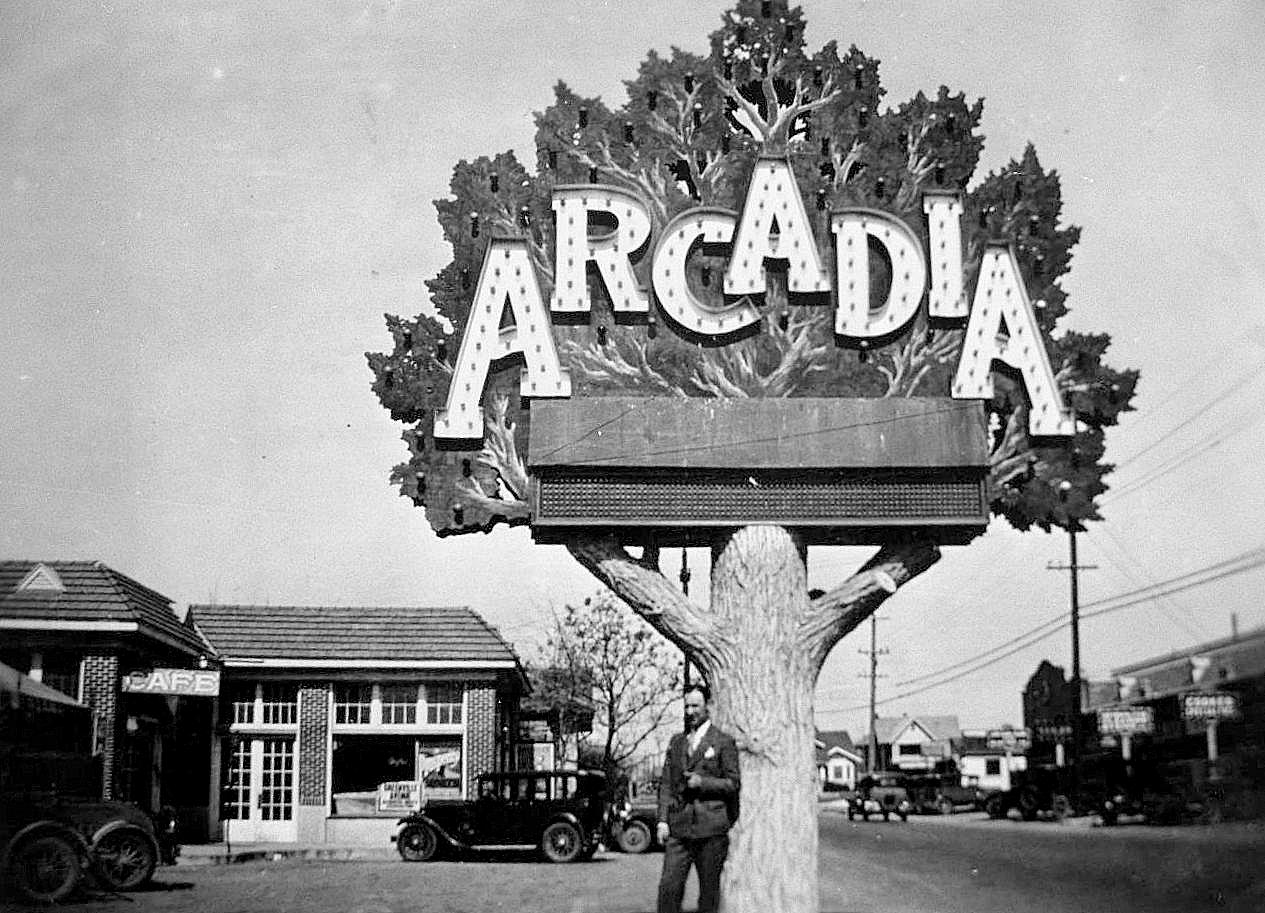
The fabulous giant tree marquee, posted previously (link to post below), from about this time can be seen here.

All went well for many years until 1940 or ’41 when the original 1927 building was badly damaged in a fire; it had to be gutted and completely overhauled by architects Pettigrew & Worley. John A. Worley wrote an article for Box Office magazine about the rebuilding process (link below), including the hard-to-believe tidbit that the firm had been “vigorously instructed to studiously avoid any pretense of ‘super-colossal’ — or, more thoroughly defined, we were told to steer clear of that ‘regal’ air, which had been known to impel theater patrons to take off their shoes before daring to walk across the foyer.

The article even has a photo of the lopped-off, now-sadly diminished tree sign. (The author — in something of a reach — explains that the “stump” was there as a symbol of the “Arcadian” nature of the theater.) (You just know that both Pettigrew and Worley were praying for the go-ahead to just get rid of it already.)

1941

There was another bad fire in 1958, which led to further renovation. By then, that tree was loooooong gone and but a dim memory.

There sure were a lot of fires at the ol’ Arcadia. Including the final, fatal one, in 2006. R.I.P. And from the ashes sprang the present-day Trader Joe’s.

***

Sources & Notes

Photo showing “The Vagabond King” (1930), from the Hardin-Simmons University Library via the Portal to Texas History, here.

Photo showing “stump” is from the June 21, 1941 issue of Boxoffice.

An interesting article on the Arcadia — and life along Lowest Greenville — can be found in a Lakewood Advocate article “The Rise and Fall of the Arcadia,” here.

The original post that spurred a further look into the early days of the Arcadia — and the one with the crazy huge electric tree marquee — can be found in the Flashback Dallas post “The Arcadia Theater Sign You’ve Never Seen,” here.

*

Copyright © 2014 Paula Bosse. All Rights Reserved.


The Arcadia Theater Sign You’ve Never Seen

Best theater marquee EVER! Lower Greenville, late ’20s (click for larger image)

by Paula Bosse

I LOVE this photo! Forget the sign for a moment (difficult though that may be…) — take a look at Greenville Avenue in the late-1920s! That building at the top right, across the street from the (late, lamented) Arcadia, is still there. The car heading north is just about to pass where the 7-Eleven is now (at Richmond). As for that tree-shaped sign … wow. I’ve never seen anything like that. The photo was used in a promotional campaign for a new sort of electric marquee technology.


Here’s what Arcadia manager Wally Akin (pictured above) had to say about this new-fangled Vendope Changeable ‘Lectric Letter thing:


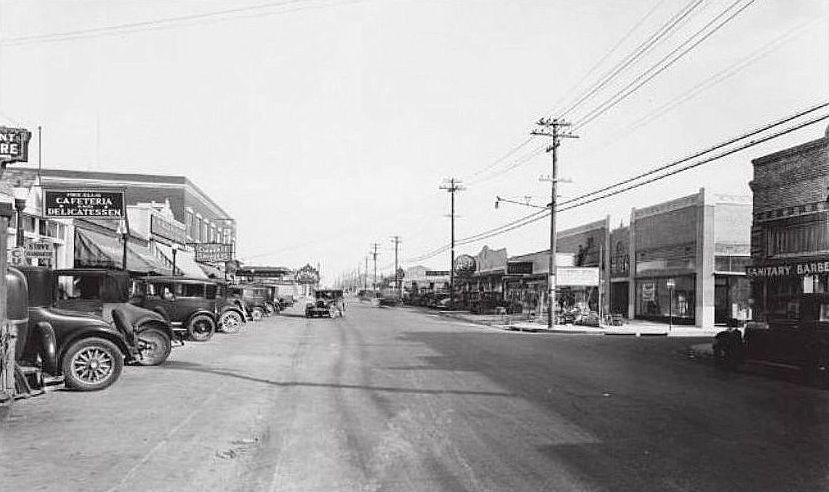
I’m not sure the Vendope Service System took off, but, damn, that sign is cool. Here’s a another view, from 1930, looking up Greenville from about Alta — you can see how close to the curb the sign was. Imagine driving up the street and seeing that lit up in front of you.

greenville-avenue_1930

It was a little less cool, though, by 1937 when the “tree” had been pruned and tampered with almost beyond recognition, but, still, that is one weird eye-catcher of a marquee.

*

UPDATE: The following information comes from a comment to me from the estimable Angus Wynne, who took over the Arcadia in the 1980s (and 1990s?) and booked some great live shows there (several of which I paid to see): “The tree sign evolved from a lesser marquee that was installed in a real tree which grew in the original parkway formerly located adjacent to the street. A very unusual attraction, it remained there for many years until the tree died, upon which the owner had it concreted over and had the electric branches added, pictured here. It was torn down when the theater’s facade and interior were renovated during the 1940’s.”

What a shame that something so wonderful didn’t survive. All those lights! I’d have loved to have seen it lit up at night, back when this lowest stretch of Greenville Avenue was called a “northern” and “remote” part of the city.

***

Sources & Notes

First three images, including top photo, from the Hardin-Simmons University Library, via the Portal to Texas History — these and other Arcadia Theatre images from this collection can be viewed here. The main photo (MUCH larger when clicked) is undated, but it’s sometime between the Arcadia’s opening in 1927 and the Publix theater chain’s plummet into receivership around 1931. UPDATE: When I posted this photo back in February, 2014, I was excited to think I had stumbled across something that had been unseen for years. At almost the exact time I posted this, Troy Sherrod’s great book Historic Dallas Theatres was published … and this photo was in it. Troy beat me to it!

If you’re into patent-perusing, just google “Vendope” and you’ll see oodles — an example of one them is here. I’m not sure if this is part of the same system described above, but this patent is dated 1931. The inventor (apparently of Fort Worth) had the unlikely name of Vendope L. Pistocco. Or maybe Van Lawrence Vendope. …There’s a Vendope in there somewhere.

1930 view of Lowest Greenville, looking north from Alta, is from the archives of the Dallas Public Library.

For further exploration of the Arcadia (and another photo of the barely recognizable tree), see my follow-up post here.

*

Copyright © 2014 Paula Bosse. All Rights Reserved.