Flashback : Dallas

A Miscellany: History, Ads, Pop Culture

Tag: Historic Dallas

Zephyr, Meet Ox Cart — 1936

zephyr_sam-houston-zephyr_oxcart_ebay_front…Ox cart, meet Zephyr

by Paula Bosse

On Oct. 4, 1936, the Sam Houston Zephyr — the very first streamlined passenger train in Texas — made one of it very first public appearances, at the Texas Centennial in Dallas. This beautiful train (check out a photo of its interior here) was operated by the Burlington-Rock Island railroad between Fort Worth and Houston, with stops in Dallas, Waxahachie, Corsicana, and Teague. (See footage of it arriving it what might be Dallas in what might be 1936 in cool home movie footage here — then go to the beginning to see great Centennial footage — some of it in color! — and other footage shot in Kidd Springs.)

Back to the Zephyr. At its Centennial stop, a photo-op presented itself: the super-new (Zephyr) alongside the super-old (an ox cart). This photo ran in newspapers around the world, accompanied by variations of the following captions:

PROGRESS! Just a zephyr in the breeze is the Burlington Zephyr, particularly when compared to an ancient ox cart. The two were shown together at the Texas centennial fair at Dallas. The speedy streamliner runs from Dallas to Houston, Texas.

*

MARCH OF PROGRESS. An excellent contrast in the modes of transportation of today and yesterday is presented here as the Sam Houston Zephyr, streamlined train running between Dallas, Tex., and Houston, enters the grounds of the Texas Centennial exposition with an ox cart plodding along beside it. The presentation is part of the Cavalcade of Texas given at the exposition in Dallas. The girls are LaNeyl Brown and Peggy Humphreys.

*

From a Dallas Morning News article on the Centennial exhibit at Fair Park:

The streamlined Sam Houston Zephyr, operated between Dallas, Fort Worth and Houston by the Burlington-Rock Island, will be displayed on the siding in the grounds east of the Hall of Transportation. One of the powerful Opp Mogul freight engines of the Texas & Pacific also will be shown. To furnish a contrast with modern and ancient transportation the ox cart and stagecoach used in Cavalcade will be rolled out. (DMN, Oct. 4, 1936)

zephyr_sam-houston-zephyr_oxcart_DMN_100436_events

*

An interesting sidelight regarding the older modes of transportation is this blurb about the difficulty Centennial personnel had in finding authentic stagecoaches, covered wagons, and ox carts to use in various Fair Park productions celebrating the history of Texas, forcing them to resort to building reproductions (seems hard to believe that there were only two authentic stagecoaches to be found in the entire state!):

zephyr_centennial_AP-wire-story_may-1936
AP wire story, May 1936

The article is referring to props needed for the giant Cavalcade of Texas historical pageant, but check out the nice little novelty “prairie schooner” below, which served as a quirky, casual Centennial restaurant (“Smacking of the old West is the Chuck Wagon, a dining place for 250, with an overgrown chuck wagon serving as the kitchen and service counter” — Dallas Morning News, June 7, 1936):

patreon_tx-centennial_chuckwagon-restaurantDallas Historical Society

patreon_tx-centennial_chuck-wagon-restaurant_worthpointvia Worthpoint

***

Sources & Notes

Top photo was found on eBay (German wire photo).

Photo of the Chuck Wagon restaurant is from the Texas Centennial Exposition Collection, Dallas Historical Society, Object ID V.38.3.245 — more info on this photo is here.

Consider becoming a member of my Flashback Dallas Patreon page for as little as $5 a month — I post there daily. No strings attached. Cancel at any time!

zephyr_sam-houston-zephyr_oxcart_ebay_front

*

Copyright © 2024 Paula Bosse. All Rights Reserved.

Ulterior Flashback

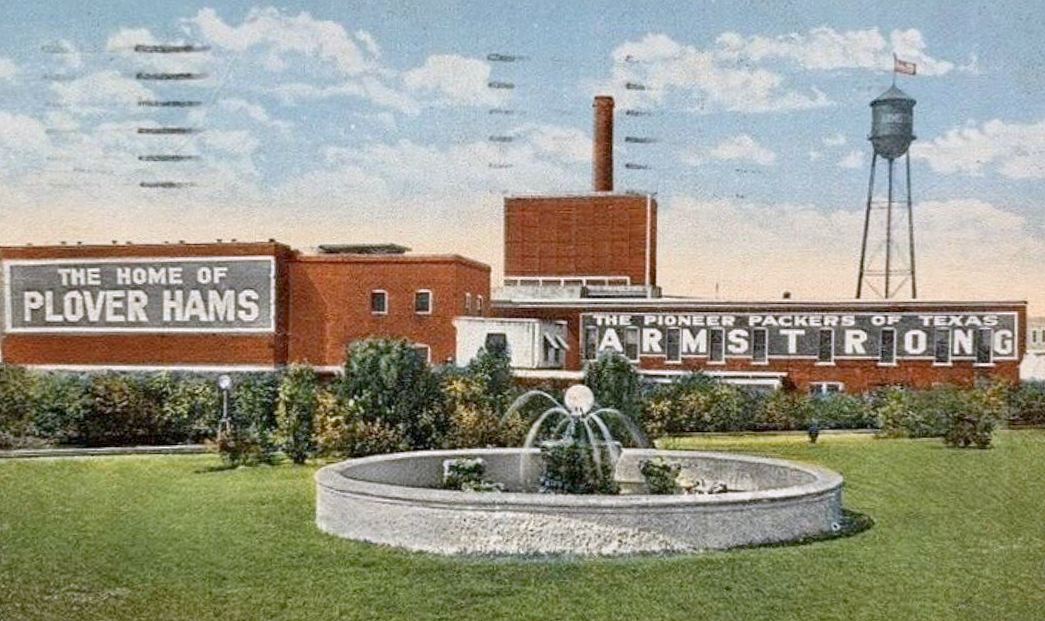
patreon_armstrong-meat-packing-plant_postmarked-1921_ebay_nookA picture-perfect abattoir…

By Paula Bosse

Every couple of months I offer up a list of posts from the Flashback Dallas Patreon page — with the reminder that if you’d like to receive daily Dallas-history tidbits, please consider becoming a member, for as little as five dollars a month.

One of the posts from May concerned the unusual subject of a picture postcard: the massive Armstrong meat-packing plant in South Dallas (see it on a 1921 Sanborn map here). I’m not sure how many people would choose — or seek out — a postcard showing a slaughterhouse to send to their friends and family back home (“Having a lovely time! Wish you were here!”), but this was, verily, available for those who wanted it. (This postcard was mailed in 1921.)

*

Here are the topics I’ve covered recently on Patreon. You can see titles of all the posts I’ve done over the past year or so here.

MAY 2024

  • Butterfly Greetings from Dallas, Texas – ca. 1909
  • The North Texas Building, Main Street
  • The Oriental Hotel Welcomes the Elks – 1908
  • The Official Neiman-Marcus Flag – 1966
  • Alamo Beer, “For Mothers Who Require a Natural Tonic” – 1910
  • Mister Ice (The Freezit Corp. of America) – ca. 1954
  • Alpha Epsilon Party
  • Audie Murphy Book Signing at McMurray’s – 1949
  • Gaston Avenue Baptist Church (Domeless) – ca. 1961
  • Arbuckle Bros. Grain Elevators – 1899
  • The A. Harris Employees’ Symphony Orchestra – 1923
  • Elm Street, East from Lamar — ca. 1906
  • New Yorker Become Texas Citizen, Obtains Texas Passport – 1949
  • The Dallas Skyline and “Dresser Couplings” – 1947
  • Kids on KRLD-Channel 4
  • An Evening at The Chalet, Lakewood
  • Roger Corman, RIP
  • Business Section – 1928
  • Commerce Street Bridge During the Great Flood – 1908
  • Houston Street Viaduct at Night
  • Spider-Man and the Hulk Save the Dallas Cowboys Cheerleaders – 1982
  • Bush & Gerts/Bush Temple of Music
  • North from Cobb Stadium – 1957
  • Topper: “Tops in Eats” – ca. 1940
  • Fire Drill Training Tower, Fair Park – 1936
  • Armstrong Meat Packing Plant
  • David Hardie Seed Co. – 1922

APRIL 2024

  • Big Tex’s Big Teeth – 1962
  • Knox Theater/Linda Darnell – 1945
  • Mystery Boarding House
  • The Dallas-Fort Worth Pike at Chalk Hill – ca. 1920
  • Ernie Banks, Baseball Legend from Dallas
  • Nighttime Melba – 1955
  • Warren Beatty (et al.) in Denton – 1967
  • The Cloverleaf
  • Juliette Fowler, From the Air – 1956
  • A Fistful of Corny Dogs – 1979
  • Hello, Weekend! Hello, Schlitz!
  • Big D Jamboree – 1955
  • Northwest Highway, If You Must – 1945
  • Love Field Hospital – 1918
  • Minit-Man Automatic Car Washing Station
  • SMU Graduation Procession – 1919
  • Drink Dr Pepper for Vim, Vigor, and Vitality – 1900
  • Oak Cliff: Free from Mosquitoes and Malaria – 1907
  • Springsteen Canceled at the Sportatorium – 1974
  • Fooshee & Cheek Building on Gaston Avenue – 1926
  • Love Field Interior, Empty – 1958
  • Mr. Tweedy: Lovable, Hapless Sap
  • DP&L Substation, South Dallas — 1925
  • “The Coziest Gift Shop In the South” – 1912
  • Texas Has So. Many. Things. – 1936
  • Preston Road Shopping Center
  • Happy Anniversary: Thank You!
  • The Ford Building at Fair Park – 1936

***

Sources & Notes

Armstrong postcard found on eBay.

Subscribe to my Patreon page for the rock-bottom price of only five bucks a month! In return, you get a post every day. Cancel anytime! No strings attached! The page is here. Thank you!

patreon_logo

*

Copyright © 2024 Paula Bosse. All Rights Reserved.

The Cloverleaf

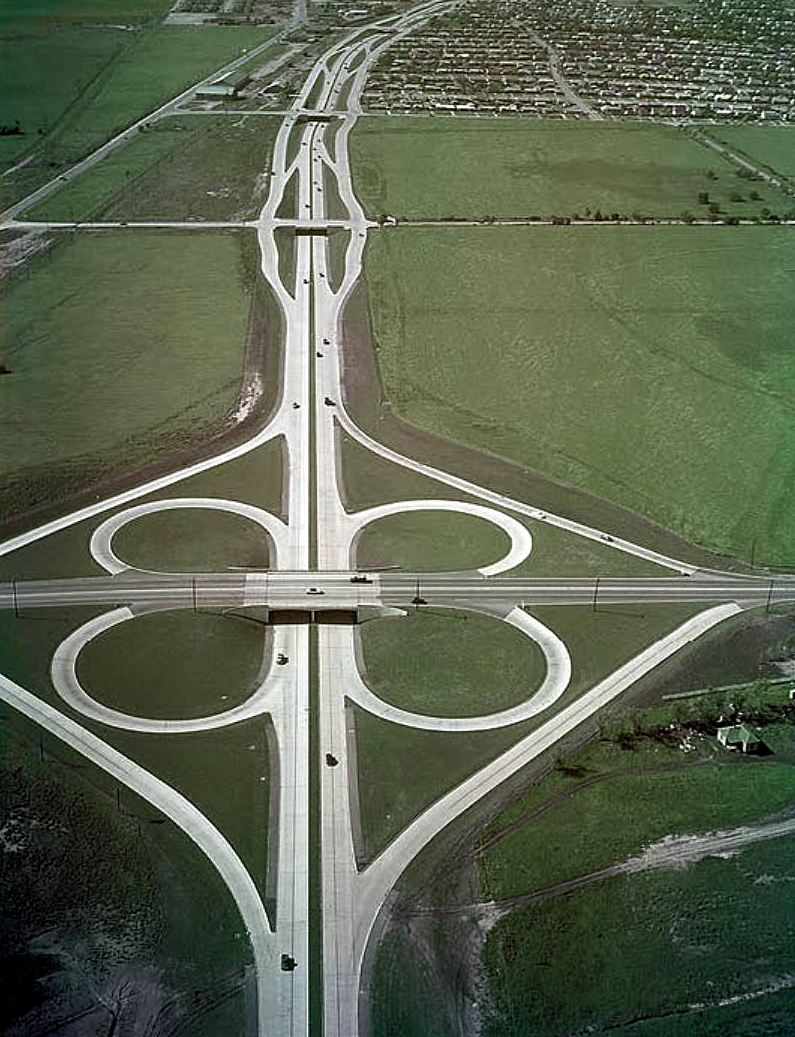
patreon_cloverleaf_south_txdot_slotboom_ca-mid-1950s_colorBehold... (via TxDOT)

by Paula Bosse

I have such a weird fondness for the old Central Expressway/Northwest Highway cloverleaf interchange, at NorthPark. In fact, I kind of forget it’s not there anymore. I have fairly scary memories of my mother driving like a bat out of hell on it. I’m pretty sure the car was tipped at an angle on two tires as we rounded those curves. And I remember being behind the wheel myself when I was a new driver, white-knuckling it until I hit the straight-away. Strange that I have such fond memories of it, because a lot of those memories were kind of terrifying! I guess it has to be the design. It was cool. COOL! The photo above is just great. The view is to the south from Northwest Highway, across open Caruth farmland. Mid-’50s. Pre-NorthPark. Pre-people. Pre-traffic.

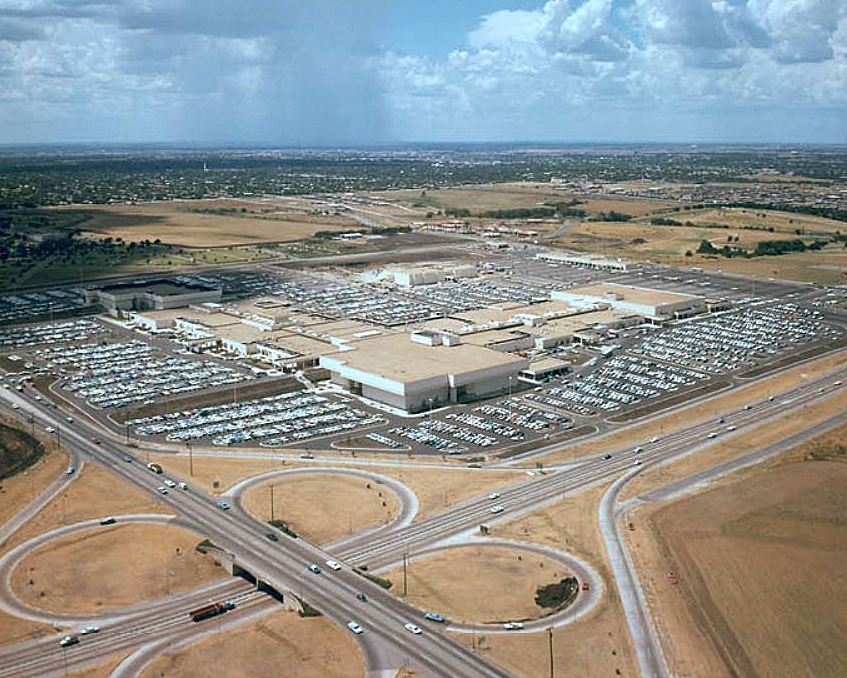
Below, after NorthPark’s arrival (photo from Oct. 1967):

patreon_cloverleaf_northpark_oct-1967_UTA_slotboom_color

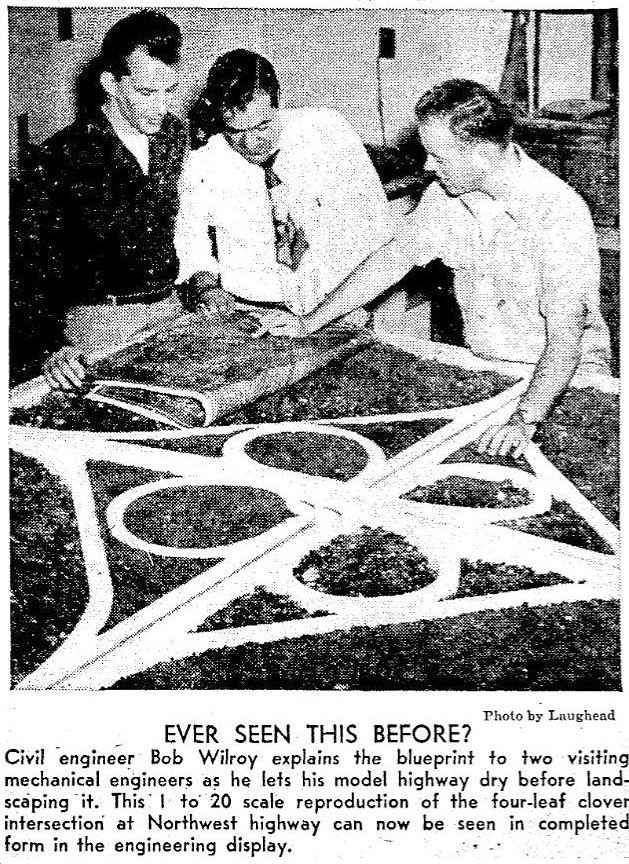
Here’s an interesting photo I stumbled across in an issue of SMU’s Daily Campus newspaper from 1951 — a personal-size cloverleaf:

patreon_cloverleaf_SMU-daily-campus_050551SMU Daily Campus, May 5, 1951

I really miss the Northwest Highway cloverleaf. I think about it almost every time I drive past NorthPark on Central. Shoulda kept it, Dallas.

***

Sources & Notes

The top two photos are from the book Dallas-Fort Worth Freeways by Oscar Slotboom (top photo from TxDOT, second photo from UTA Libraries, Special Collections).

This post appeared in a slightly different form on the Flashback Dallas Patreon page.

patreon_cloverleaf_south_txdot_slotboom_ca-mid-1950s_color

*

Copyright © 2024 Paula Bosse. All Rights Reserved.

KVIL: The “VIL” Stands for Village

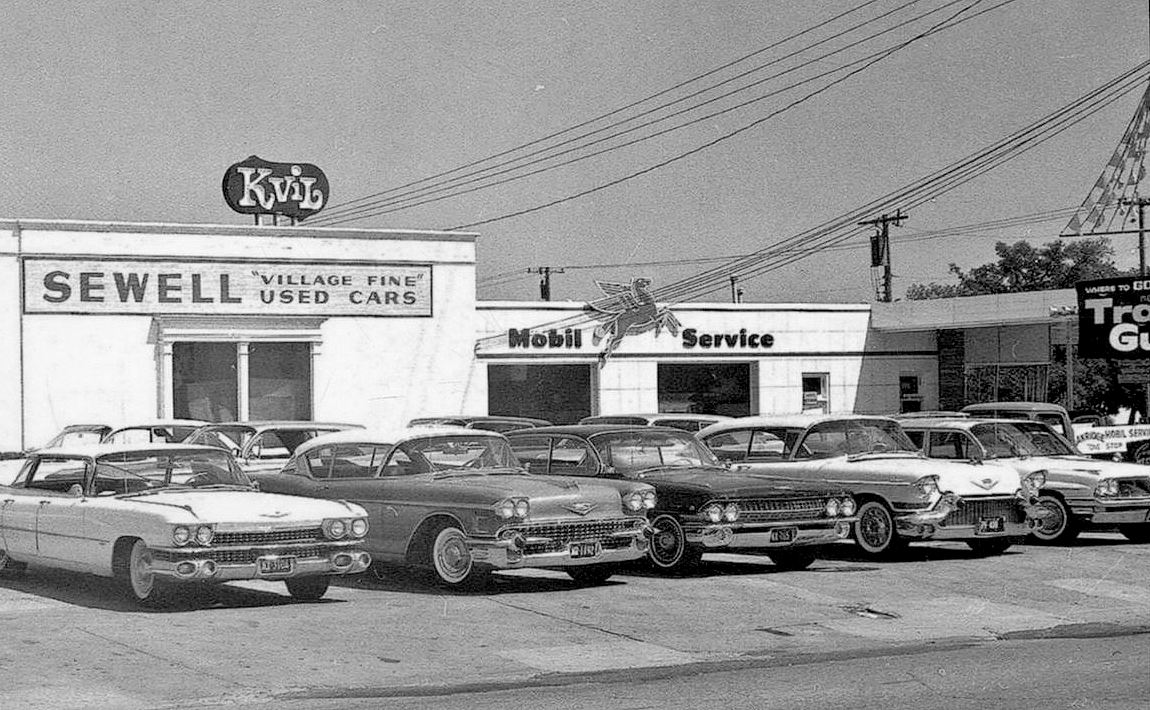
sewell-auto_KVIL_ebayNortheast corner of Preston & Mockingbird…

by Paula Bosse

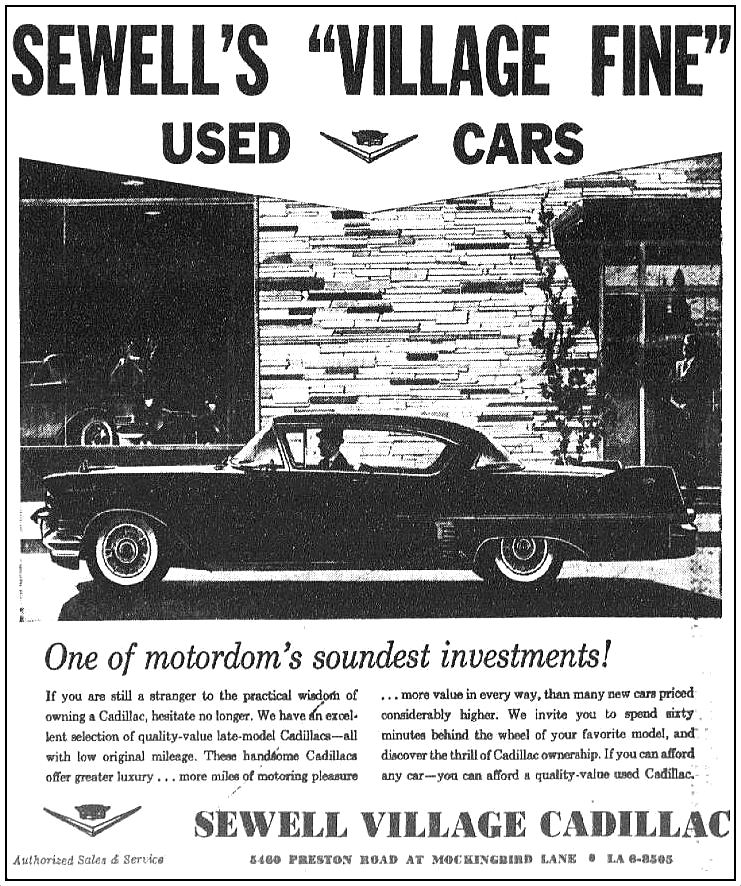
Sewell Village Used Cars and a Mobil station were at the northeast corner of Preston and Mockingbird (Sewell was at 5460 Preston Road), catty-corner from Highland Park Village. The KVIL studios were right around the corner, at 4152 Mockingbird Lane, across the street from the Dallas Country Club — you can see the jauntily-lettered sign in the background of this undated.photo. I am really bad at determining car-model years, but let’s say this is about 1960. What does this corner look like these days? It looks like this.

I just learned (from the KVIL Wikipedia page) that the “VIL” in the station’s call letters stood for “Village,” as in Highland Park Village. Who knew? The AM station began broadcasting on March 1, 1960, and the FM station hit the airwaves on Aug. 25, 1961. I believe both stations had a strict “no-rock-and-roll” policy. In the early days, a block of programming was aimed directly at housewives:

The program policy followed by the station is designed to fit the various hours of the day. For the driving hours when listeners drive to work (5:45 to 9 a.m.) and return (4:30 to 6:55 p.m.) the music is livelier. “Sing Along” is the order of the day from 9 a.m. to noon for the housewife’s work hours. (“KVIL Mark’s First Birthday Wednesday,” Dallas Morning News, March 1, 1961)

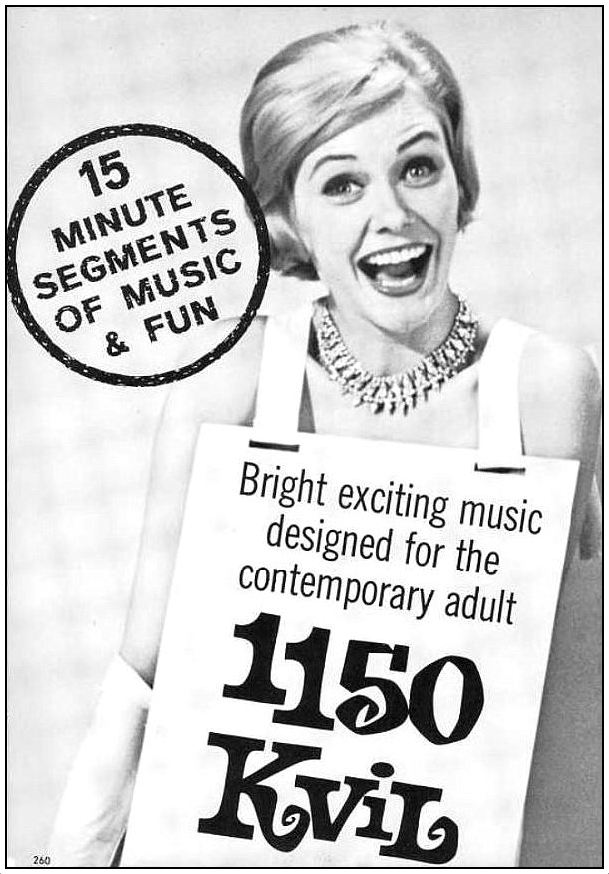
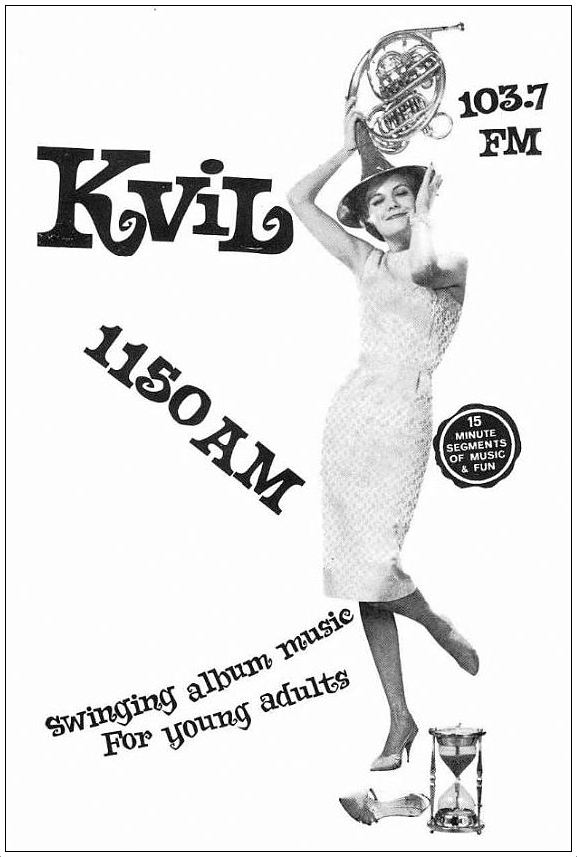
Here are a couple of hep, caffeinated KVIL ads from those early days:

patreon_KVIL_HPHS_1961-yrbk1961 ad

patreon_KVIL_HPHS_1962-yrbk1962 ad

kvil-logo_broadcasting-mag_122462_ad-det1962 logo

Most of my sort of generally vague awareness of KVIL was in the 1980s, when it was an absolute powerhouse in the ratings. But even its most stalwart fans would probably not describe its playlist as “bright,” “exciting,” or “swinging.” But look how much fun the promotions department imagined the effect on “young adults” was!

*

And what about Sewell Village Cadillac and its selection of “Village Fine” used cars? If circa-1960 Highland Park is going to have a used car lot, you better believe it’s going to be populated with Cadillacs. (UPDATE: Thanks to Peter K’s link in the comments, check out what appears to be the original photo by Squire Haskins, with a wider view, at the UTA Libraries website, here.)

sewell-village-cadillac_032158March 1958

***

Sources & Notes

Photo from eBay.

KVIL ads from the 1961 and 1962 Highland Park High School yearbooks.

KVIL logo is a detail from an ad that appeared in the Dec. 24, 1962 issue of Broadcasting magazine.

This post appeared in an abbreviated form on the Flashback Dallas Patreon page.

sewell-auto_KVIL_ebay

*

Copyright © 2024 Paula Bosse. All Rights Reserved.

A Few Photo Additions to Past Posts — #23

banks-ernie_wife-mollye-ector-banks_101155_patton-collection_DHSHometown hero… (Dallas Historical Society)

by Paula Bosse

Time for another installment of whatever this is, in which I add photos I’ve recently come across to old posts on the same topic, in order to keep things together.

*

The photo above shows baseball great (and Dallas native) Ernie Banks, and his wife, Mollye, on a trip back to Dallas to participate in an all-star game and to be the man of the hour on Ernie Banks Day in Big D (Oct. 11, 1955). I’ve added this photo to the 2014 post “Ernie Banks: From Booker T. Washington High School to the Baseball Hall of Fame to the Presidential Medal of Freedom.” (Source: John Leslie Patton Jr. Papers, Dallas Historical Society, Object ID V.86.50.902)

*

Below is a somewhat odd-looking, down-at-the-heels house, as seen in 1975 — at the time, it was the HQ for community radio station KCHU. The once-palatial residence, built in 1897, was on Maple Avenue, a favorite residential street of the upper crusters. It still stands, and is, somehow, more beautiful today than it was when it was built 127 years ago. It is now Hotel St. Germain (2516 Maple). I’ve added this screenshot of a house that has seen some STUFF to a post from 2019, “The Murphy House — Maple Avenue.” (Source: screenshot and detail from footage shot in December 1975 by KERA-Channel 13, probably for their local show “Newsroom”; KERA Collection, G. William Jones Film and Video Collection, Hamon Arts Library, SMU — watch the short report about KCHU on YouTube here)

kchu_murphy-house_KERA_dec-1975_screenshot

kchu-sign_kera_dec-1975_SMU

*

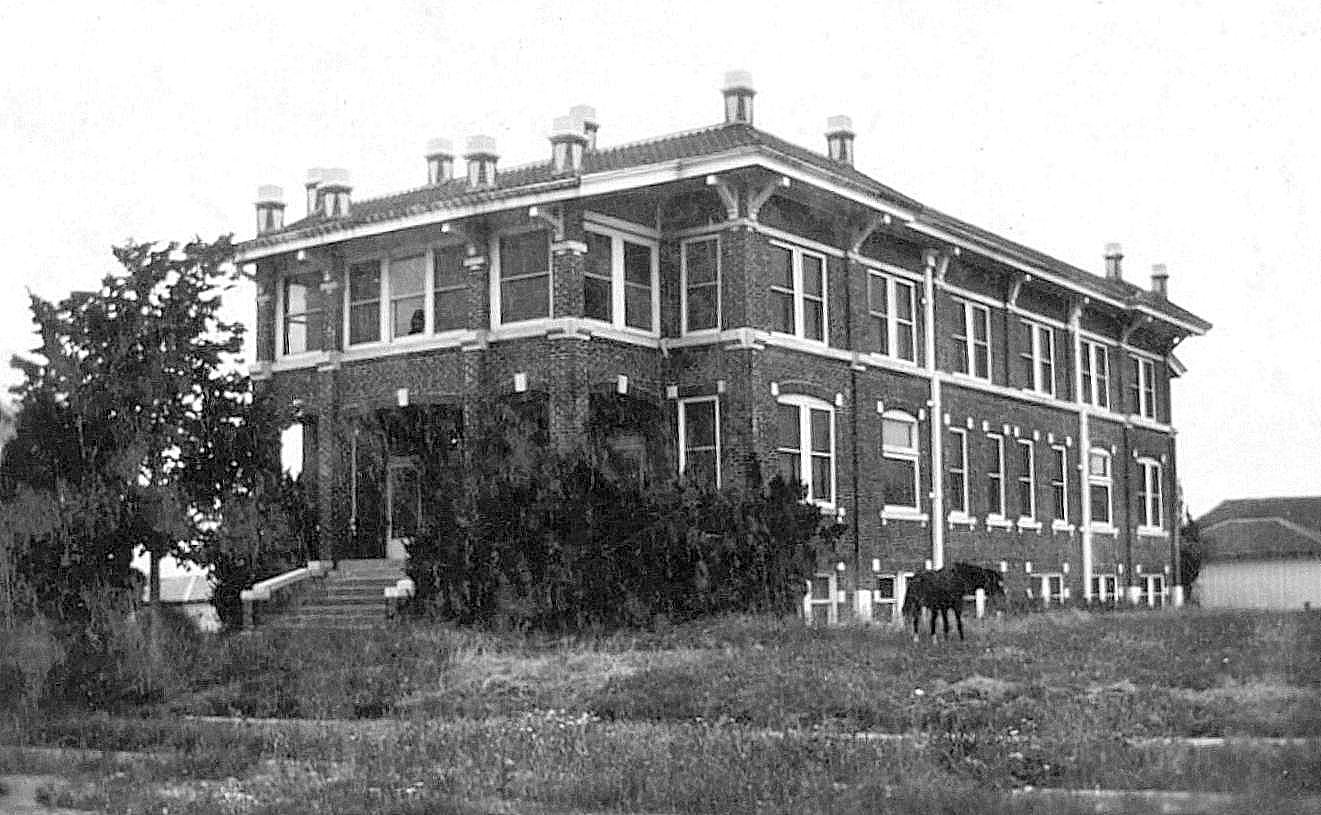
This photo shows the former Powell University prep school at Binkley and Hillcrest, across from SMU. The school was dissolved in 1927/1928. This photo is from 1931, and the old place is looking a little shaggy. Not sure what it was at that time. The building still stands (or last time I looked, anyway!). Nice to see a horse grazing on the property (in the Park Cities…). This photo has been added to 2019’s “Send Your Kids to Prep School ‘Under the Shadow of SMU’ — 1915.” (Source: Brown Book, University Park Public Library)
powell-univ-training-school_brown-bk_university-park_1931

*

In 2014, I wrote about the Metzger’s Milk home delivery drivers wearing a new uniform, which included Bermuda shorts and knee socks. This was pretty shocking at the time, and it made news around the country — it was featured in Life magazine, and there was even newsreel footage. I’ve added the silent footage to the post “Metzger’s Milkmen in Bermuda Shorts — 1955.” Watch the 1-minute silent clip from 1955 here. (Source: Grinberg, Paramount, Pathe Newsreels, via Getty Images)

metzgers_bermuda-shorts-footage_1955_getty

*

For those who couldn’t afford to be a member of the swanky Lakewood Country Club, the nearby Bob-O-Links course was the affordable neighborhood answer for those looking to play an affordable round of golf. This matchbook cover art has been added to 2016’s Bob-O-Links Golf Course — 1924-1973.” (Source: eBay)

patreon_bob-o-links_harry-mccommas_matchbk_ebay_a

patreon_bob-o-links_harry-mccommas_matchbk_ebay_b

*

I haven’t had a Great Flood mention in a while. I’ve added this photo (a real photo postcard) to the 2015 post about a boat that served an important role in rescuing victims, “The Nellie Maurine: When a Pleasure Boat Became a Rescue Craft During the Great Trinity River Flood of 1908.” (Source: John Miller Morris collection of Texas real photographic postcards and photographs, DeGolyer Library, SMU, here)

nellie-maurine_flood_1908_RPPC_john-miller-morris-collection_de-golyer-lib_SMU_front

*

A photo of the all-dressed-up Oriental Hotel (southeast corner of Commerce & Akard), draped in bunting and various festoonage to welcome the Elks Convention to Dallas in The Year of Our Flood 1908, is now squeezed into 2022’s “Elks-a-Plenty — 1908.” Note the woman with the parasol at the bottom right corner. (Source: eBay)

oriental-hotel_postcard_elks_1908_ebay

*

Fast-forward to 1939 and a screenshot from a fantastic bit of color (!!) film brought to our attention a few years ago by author Mark Doty and local bon vivant Robert Wilonsky (I HIGHLY encourage you to watch the short film here). It shows the legendary (to me, anyway) animated neon Coca-Cola sign which once stood at the 3-way downtown intersection of Live Oak, Elm, and Ervay. I’ve added it to “Tomorrow’s Weather at Live Oak & Elm — 1955-ish,” from 2016. (Source: screenshot from a 1939 color film — see link above to watch it)

coca-cola-sign_downtown_1939-film_youtube_screenshot

*

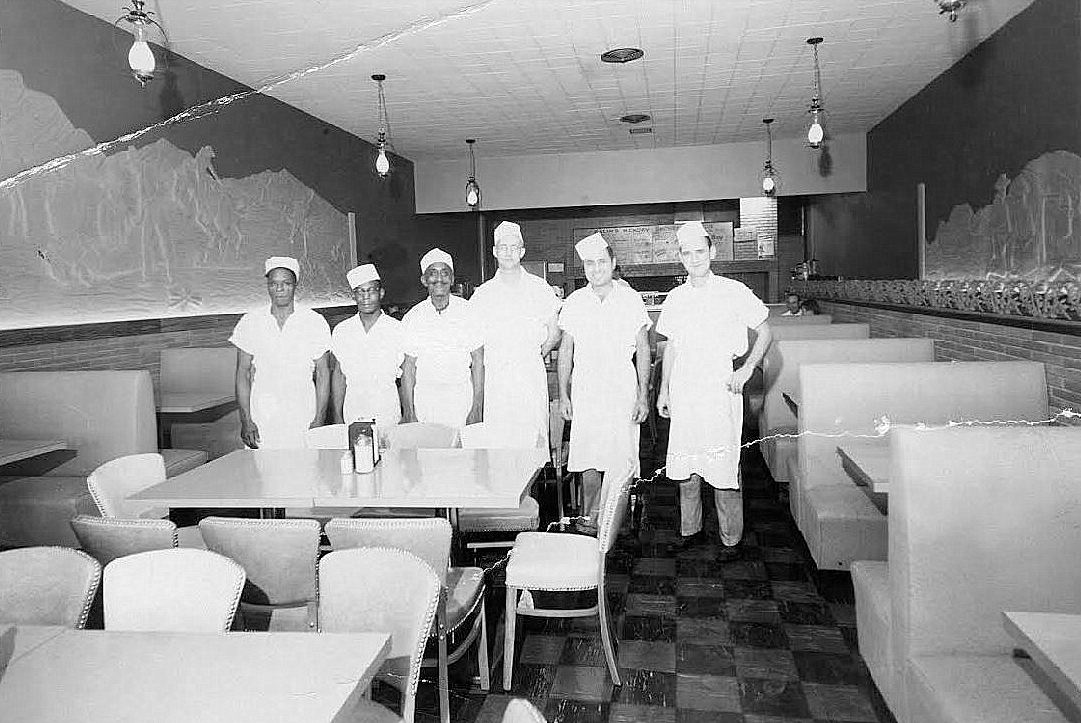
I posted about Salih’s earlier this year, and Mark Salih, the son of co-owner Jack Salih, sent me this photo showing the interior of the restaurant and a glimpse of the carved Western mural on the walls. Owner George Salih is on the far right, and his brother Jack is next to him. I’ve added it to “Salih’s, Preston Center: 1953-1977.” (Source: Mark Salih, used with permission — thank you, Mark!)
salihs_mark-salih

*

Finally, I recently updated an old post from 2014, “Ned Riddle: Dallas Artist and Creator of ‘Mr. Tweedy.'” My parents were fans of the Mr. Tweedy single-panel comic that appeared in newspapers around the country, and I used to read those little books over and over. Poor Mr. Tweedy. Nothing ever went right for him! I added this panel to the post. (Source: somewhere online — the panel appeared in newspapers on Nov. 5, 1969)

tweedy_panel_110569

**

That should do it for now!

banks-ernie_wife-mollye-ector-banks_101155_patton-collection_DHS

*

Copyright © 2024 Paula Bosse. All Rights Reserved.

Rudolph Gunner: Dallas Bookseller and Emperor Maximilian’s “Best Friend”

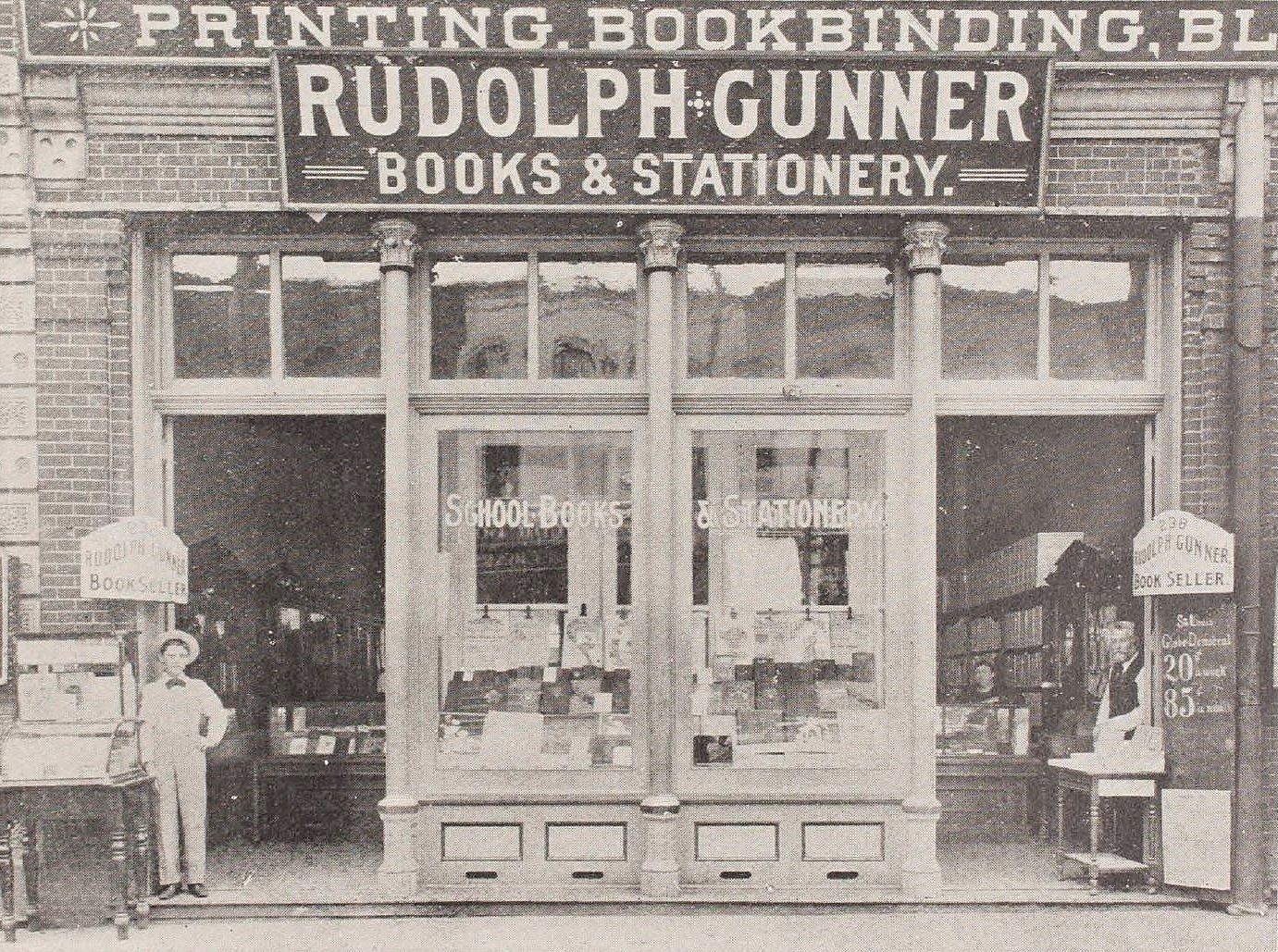
books_rudolph-gunner_dallas-through-a-camera_1894_degolyer-lib_SMU238 Main, circa 1894

by Paula Bosse

For the past several years, I’ve been posting bookstore-related posts on the birthday of my late father, Dick Bosse, an antiquarian bookseller who began his career straight out of SMU at The Aldredge Book Store, a literary landmark to many, which he eventually ended up owning. This year’s offering goes back to 19th-century Dallas.

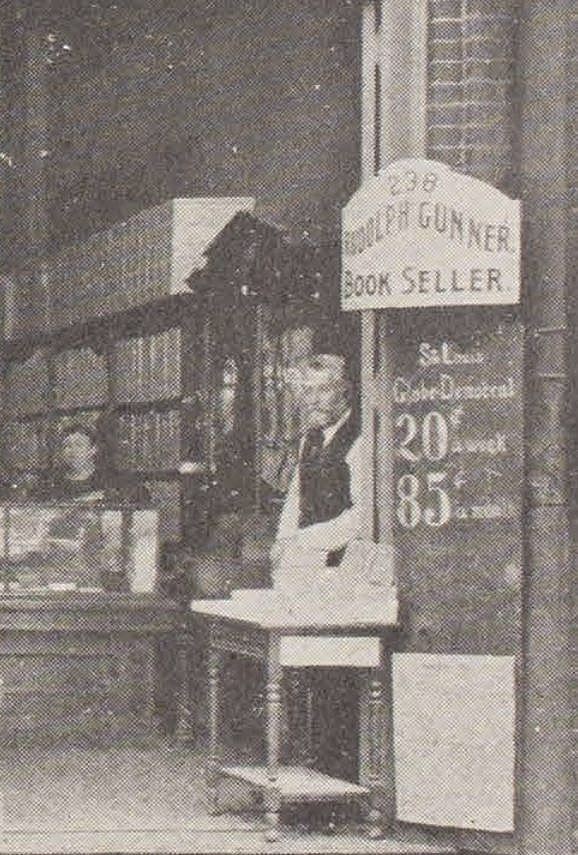
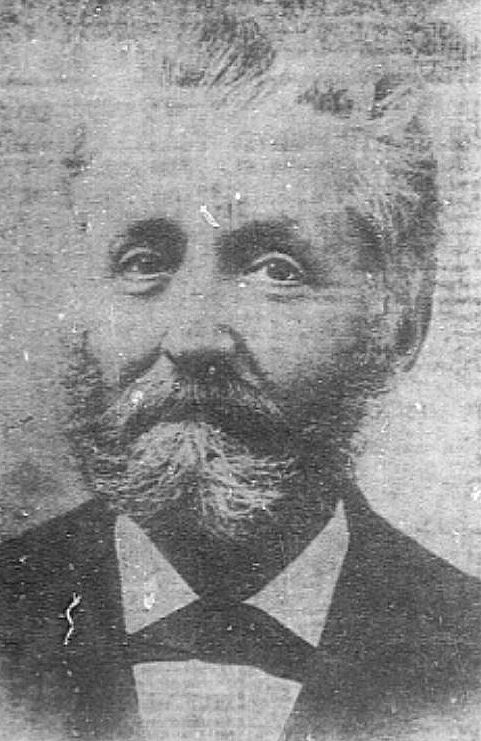
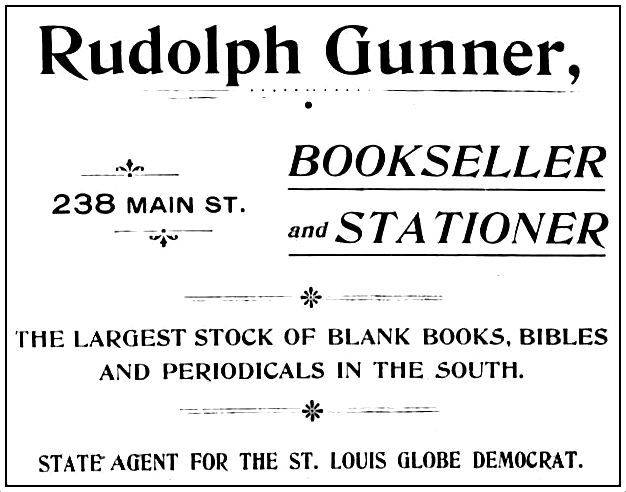
Above is a photo of the bookstore owned by Austrian immigrant Rudolph Gunner, located at 238 Main (later 1006 Main), between Poydras and Martin. Gunner (1833-1911) had, perhaps, one of the most impressive and colorful historical pedigrees of any Dallas resident. He served in the Austrian navy all over the world, but his most important service was as confidante and aide-de-camp to Emperor Maximilian and Empress Carlota of Mexico in the 1860s. That story is too big to tell here (Wikipedia is here to help), but it’s interesting that a man who was often referred to as “Maximilian’s best friend” eventually wound up in Dallas in 1885 and opened a bookstore, first on Elm Street, later on Main.

My father had a fascination with Mexico and used to talk about Maximilian quite a bit. I wonder if he knew Maximilian’s right-hand man lived out his days in Dallas, having spent several years as a bookseller?

books_rudolph-gunner_dallas-through-a-camera_1894_degolyer-lib_SMU_det_gunner

gunner-rudolph_photo

rudolph-gunner_1896-directory_adDallas city directory, 1896

*

In a sidenote, Gunner mentioned in several interviews that he had a LOT of historical documents and souvenirs from his military career serving in the Crimea, Egypt, Africa, and, especially, Mexico. I winced when I read this passage from an article by A. C. Greene in The Dallas Morning News (“Bookstore Owner Once Was Colorful General — He Headed Maximilian’s Mexico Palace Guard.” DMN, Apr. 18, 1993):

[A]t the time of his death in 1911 [his] home was at 1506 Fitzhugh. [His wife] was still living there, with a considerable collection of historic memorabilia, books, medals and military items, when the home burned, destroying everything but Gen. Gunner’s sword with the emperor’s crest.

Wow. All of that, gone. (And to answer my question above, I’m pretty sure my father would have known this, if only because he read A. C. Greene’s columns and probably even discussed this with him on a visit to the store.)

***

Sources & Notes

Top photo by Clifton Church, from his book Dallas, Texas, through a camera: a collection of half-tone engravings from original photographs (1894) — from the DeGolyer Library, SMU, here.

Read a first-hand account of Gunner’s time in Mexico in a Dallas Morning News article from Jan. 14, 1886 here; his DMN obituary (Aug. 25, 1911) is here.

Read previous Flashback Dallas articles on Dallas bookstores here.

I would love you to join me over on Patreon, where I upload Dallas history posts daily for subscribing members (as little as $5 a month!). If you would like to support what I do, check out Flashback Dallas on Patreon.

books_rudolph-gunner_dallas-through-a-camera_1894_degolyer-lib_SMU

*

Copyright © 2024 Paula Bosse. All Rights Reserved.
Col. McCoy’s Residence, Commerce & Lamar — 1879

mccoy-col-john-c_home_1879_southwest-business_june-1940_DHSMcCoy homestead… (photo: Dallas Historical Society)

by Paula Bosse

Imagine the “village” of Dallas in its very, very early days. 1852. That’s when pioneer Col. John C. McCoy (1819-1897) built the very pretty frame house seen in the photograph above. It had the honor of being the first frame house built in Dallas (and, in other firsts, McCoy had the distinction of being the first practicing lawyer in Dallas).

Commerce and Lamar streets, 1879. Col. John C. McCoy, one of Dallas’ first “leading citizens,” built this house at the corner of Commerce and Lamar in 1852, and it immediately became a landmark in the village — the one frame house in a colony of log cabins. The photograph, made in 1879, shows Mr. and Mrs. W. H. Taggart, Col. John C. McCoy and Miss Eliza McCoy on the porch. Standing at the gate are Capt. John M. McCoy (nephew of Col. McCoy and brother of Mrs. Taggart) and Cora and Laura Taggart, his nieces. (Southwest Business magazine, June 1940)

See what this view looks like now, here. Sadly, the Colonel’s white fence and grove of trees are gone.

When I was looking at this photo, I thought I should check to see what it looked like on the hand-drawn map of Herman Brosius from 1872. His maps were celebrated for their incredible attention to detail. I wrote about this map in a previous post (here), and… yes! The house seen in the photo has been realistically captured in Brosius’ map. As seen below — in the center of a detail from the map — it’s right there, at the southeast corner of Commerce and Lamar (facing Lamar), just south of the Methodist church. McCoy owned the entire block, and he did not skimp on the trees.

mccoy-house_brosius-map_1872_det

Read about the life of Col. John C. McCoy in Sixty Years in Texas by George Jackson at the Portal to Texas History, here, and in the Handbook of Texas entry on the Texas State Historical Society site, here. He is almost as important to the history of Dallas as his business partner, John Neely Bryan.

mccoy-col-john-c_portrait_find-a-graveCol. John C. McCoy

***

Sources & Notes

Photo from the Dallas Historical Society — it and the caption appeared in Southwest Business magazine, June 1940.

Detail of “A Bird’s Eye View of the City of Dallas, Texas” (1872) by H. Brosius is from the Dallas Historical Society and can be seen in a very, very high-resolution scan on Wikimedia Commons here (click map to really zoom in on the very precise details). I wrote about this map in the 2018 post “The Bird’s-Eye View of Dallas by Herman Brosius — 1872.”

Portrait of Col. John C. McCoy from Find-a-Grave. (McCoy and his family are buried in Oakland Cemetery. More on the family can be found in a video recorded at the grave site and posted on the Facebook group Friends of Oakland Cemetery Dallas, here.)

mccoy-col-john-c_home_1879_southwest-business_june-1940_DHS

*

Copyright © 2024 Paula Bosse. All Rights Reserved.

On the Line at Coca-Cola — 1964

patreon_coca-cola-bottling-plant_john-rogers_portal_ca-circa-1964Gleaming!

by Paula Bosse

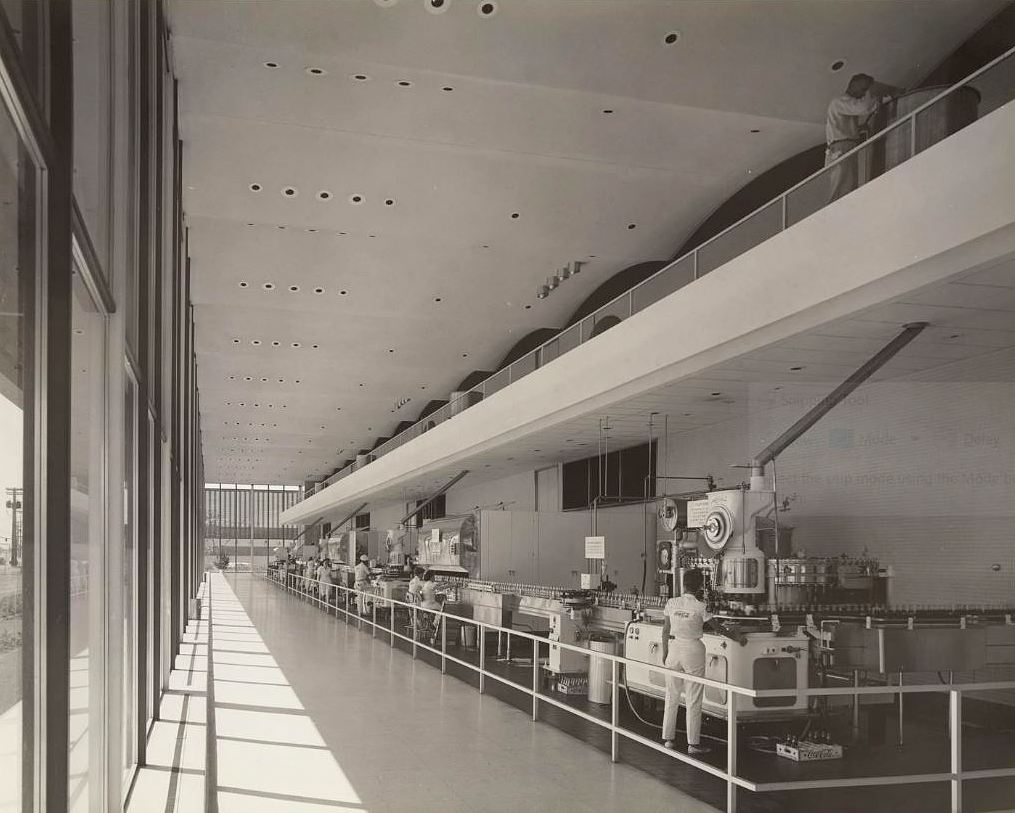
The photo above shows the sunniest factory floor I’ve ever seen. You don’t think of factories filled with sunlight, but this is what it looked like inside the new Coca-Cola bottling works at Lemmon and Mockingbird in 1964. It’s gone now (as is that UNBELIEVABLY FANTASTIC ANIMATED NEON SIGN that made me look forward to nighttime drives to Love Field). All that remains is the small syrup plant (from 1948?). (…I think it’s a syrup plant. Or a warehouse. Or something syrup-related.)

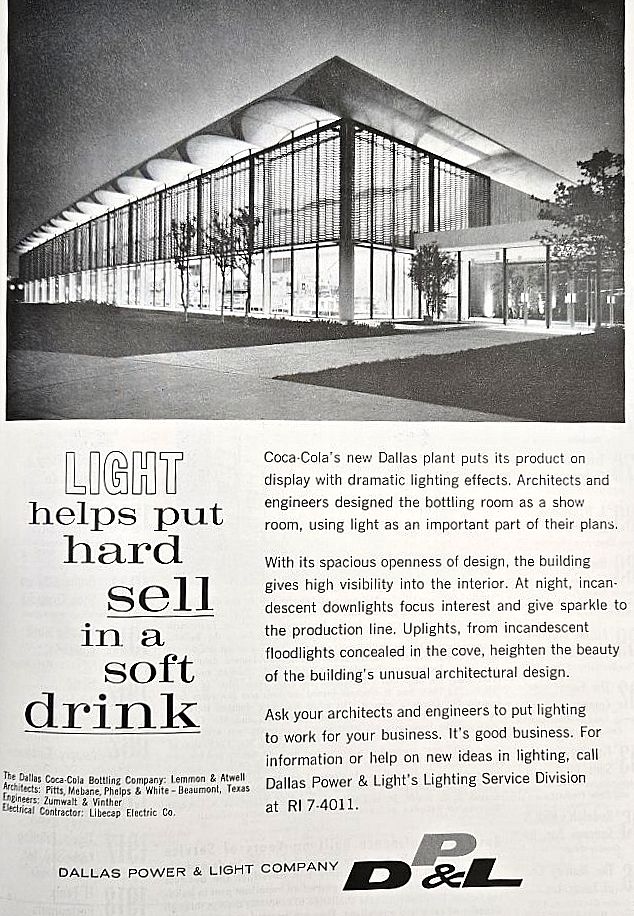
The new plant opened in June 1964. The building had floor-to-ceiling glass — I’ve read reminiscences of people who remember driving by and seeing the work going on through those huge windows. I don’t know if there was bottling work going on after dark, but here’s a grainy photo from a Dallas Power & Light ad that shows the building at night, lit up like a stage.

patreon_coca-cola_opening_060964_dpl_night_det-1Dallas Power & Light ad (det), June 1964

Speaking of which, The Dallas Morning News wrote this:

The bottling room, which fronts on Lemmon, has a glass front 254 feet long and 26 feet high to provide a view of the bottling process to the passing public. (DMN, June 9, 1964)

Free show!

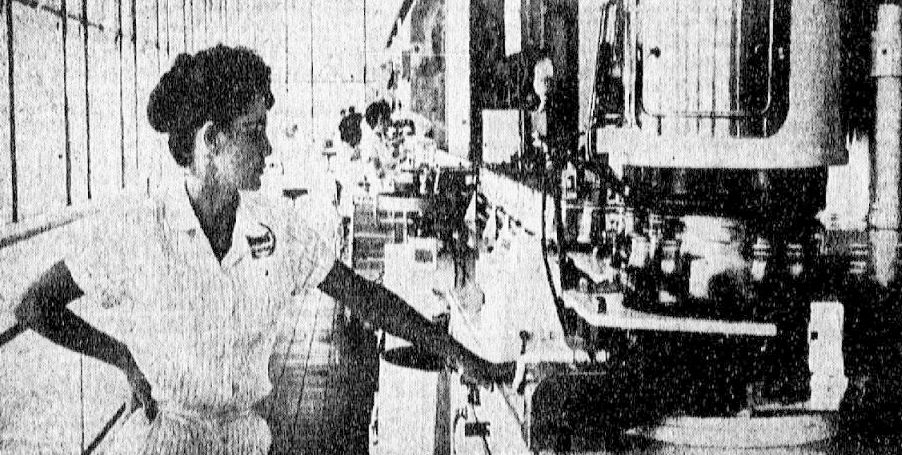
The woman featured in an Employers National Life Group Insurance Company ad (below), might be the same woman seen in the photo at the top. Manning her station.

patreon_coca-cola_opening_060964_ad-det_employers-natl-life-group-insuranceEmployers National Life ad (det), June 1964

And what was rolling off the automated line? Coke, Sprite, and Tab. And something called Mission (grape and orange drinks). 1,860 bottles a minute (!).

Back to the sign for a second. I haven’t invested a LOT of time in a search (but *kind of* a lot…), but I have been unable to find footage of that truly wonderful, mesmerizing neon Coca-Cola sign. Living in an age of Instagram and YouTube, we just expect to find this sort of thing quickly, without having to set aside large chunks of time to devote to searching. If YOU know where film/video of that sign might be hiding… SPEAK UP!

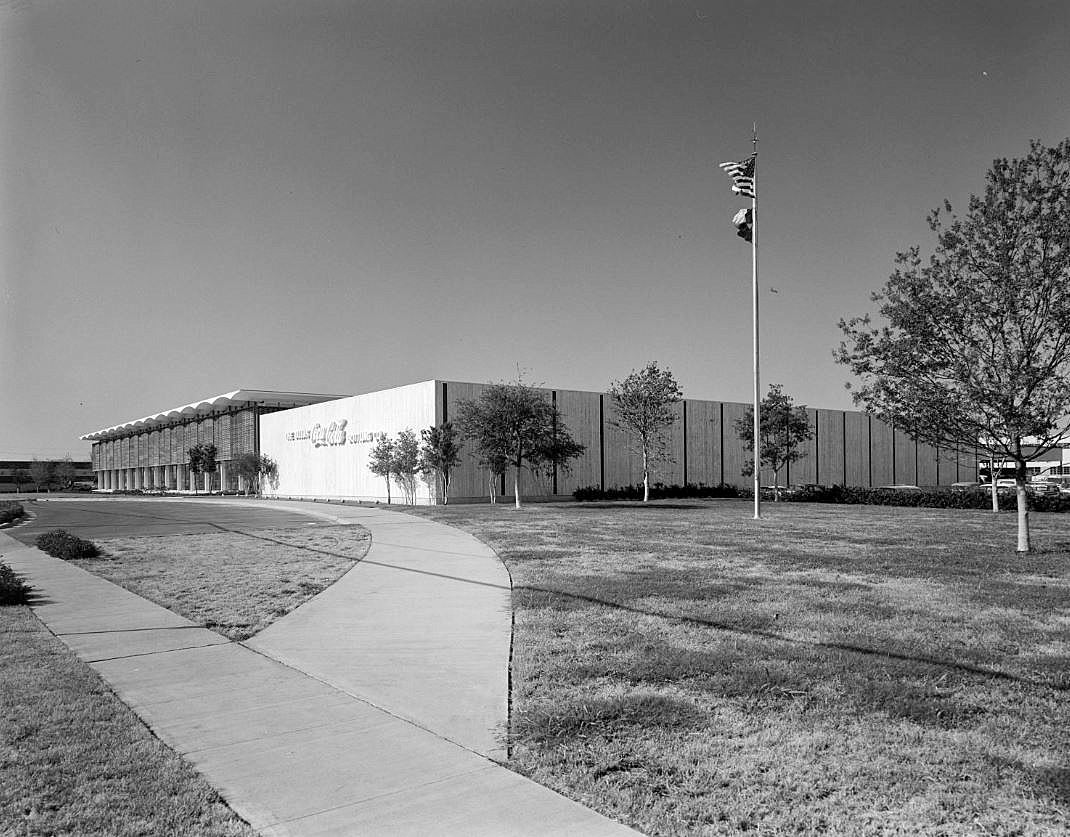
A couple of shots of the exterior:

patreon_coca-cola-bottling-plant_john-rogers_portal_ext_ca-circa-1964

patreon_coca-cola-bottling-plant_john-rogers_portal_exterior_ca-circa-1964

*

coca-cola-plant_mockingbird_dallas-power-light-ad_dallas-mag_april-1964_full
April 1964

***

Sources & Notes

Top photo and last two photos are all by John Rogers and were probably taken around the time the plant began operation in mid-1964; all are from the John Rogers and Georgette de Bruchard Collection, UNT Libraries Special Collections, via the Portal to Texas History, here, here, and here.

A shorter version of this post previously appeared on the Flashback Dallas Patreon page in November 2023.

patreon_coca-cola-bottling-plant_john-rogers_portal_ca-circa-1964

*

Copyright © 2024 Paula Bosse. All Rights Reserved.

Hotel Rodessia

patreon_rodessia_hotel-rodessia_postcard_ebay“First-class style…”

by Paula Bosse

I’ve seen SO MANY postcards of Dallas through the years that when I come across one that is completely new to me, it’s pretty exciting. Especially turn-of-the-century-ish cards, like the one above. This is the first I’ve ever heard of the Rodessia Hotel, which opened in Oct. 1904 at 361-363 Elm (the address later became 1601½ Elm). The hotel proprietor (as well as the proprietor of the street-level saloon underneath it) was German immigrant Joseph F. Rode (1858-1911).

patreon_rodessia_hotel-rodessia_dmn_oct-1904Dallas Morning News, Oct. 2, 1904

And, because it’s so unusual to be able to note something like this, I must mention that Rode’s wife, Victoria Virginia “Nannie” Rode, was also a business owner.

rode-j-f_mrs_dmn+100794
DMN, Oct. 7, 1894

Even though I hadn’t heard of the hotel, I did know about the building. In fact, I wrote a whole post about it: “S. Mayer’s Summer Garden, Est. 1881.” It would have been a building everyone knew at the turn of the century. Here’s what it looked like when it was a young whippersnapper:

mayers-garden_DPL_1885

It was built in 1881 by Simon Mayer and was the site for many years of his very popular beer garden. Around 1902 it became the Clifton Hotel, and in Oct. 1904, J. F. Rode opened his interestingly named Rodessia Hotel, which remained in business until about 1920 (it was run after his death by the Widow Nannie and her second husband). Around 1920, another hotel — the La France — opened. See the building at various times in the post mentioned above, here.

So. The Rodessia was in business for at least 15 years. I still can’t believe I haven’t seen it pop up in at least one Elm Street postcard or photograph until now. Better late than never!

(Note: In the postcard at the top, just to the right of the hotel, is the David Hardie Seed Co., which I believe continues today as Nicholson-Hardie stores.)

***

Sources & Notes

Postcard from eBay.

Photo of Mayer’s Garden from the Dallas Public Library: “[Mayer’s Beer Garden, Dallas, Texas”], Call Number PA87-1/19-27-1.

This post originally appeared in a shorter version on the Flashback Dallas Patreon page, which I enthusiastically invite you to subscribe to!

patreon_rodessia_hotel-rodessia_postcard_ebay

*

Copyright © 2024 Paula Bosse. All Rights Reserved.

Jimi Hendrix in Dallas, 4/20/69

jimi_WFAA_042069_SMU_aDoug, Mitch, Noel, and Jimi

by Paula Bosse

Today is 4/20 Day. An alternate (or parallel) way to celebrate the already alternative “holiday” is to mark the anniversary of one of Jimi Hendrix’s best interviews, on the Love Field tarmac on April 20, 1969, given to Dallas reporter Doug Terry (still a college student when he was at WFAA-Channel 8). The band was in Dallas for a show at Memorial Auditorium. It’s just a fantastic, laid-back, cool interview.

I had tried contacting Doug several years ago to let him know this clip was racking up the hits on YouTube, in case he wasn’t aware it was there, but I didn’t hear back from him until this week! He had seen the post I had written about this interview and wrote a bit about that momentous occasion in the email. He also adds some interesting behind-the-scenes tidbits I always find interesting (the following is used with Doug’s permission):

I was still a college student most of the time I worked at WFAA. I handed in my resignation after covering the north Texas pop festival in that same year. [Watch one of Doug’s reports from the Texas International Pop Festival here.] Your comment about being in a large city and its advantages was something that I did not fully grasp until years later. The access was wonderful, I saw Hendrix at least three times, on one occasion being in the dressing room with a camera when he warmed up for a show (that footage is nowhere to be found).

There are two aspects to mention about that interview. First, I was a weekend reporter and late night news anchor at Ch. 8 and I assigned myself to go interview him. In those days, one could call up the airlines when a notable person was coming in and they would give the flight number and arrival time. Amazing. Most of the people at the station at that time probably had no idea who Jimi was and wouldn’t have cared if they did know.

The other interesting point is the work of the photographer. Ordinarily, we did over the shoulder interviews, the camera to the back and side of the reporter. The fact that this was shot from the side made all the difference. As a shooter, he was not otherwise outstanding but this interview would be much less interesting if it had been shot in the traditional line-up sort of way. The two bandmates goofing around was distracting but great.

Thank you so much for getting in touch, Doug!

My original 2017 post about this interview (with the film clip of Jimi, Mitch Mitchell, and Noel Redding at Love Field) — which includes additional info about Jimi’s other performances in Dallas — is here: “Jimi Hendrix, Glen Campbell, Tiny Tim — In Dallas (…Separately), 1969.”

jimi_WFAA_042069_SMU_b

***

Sources & Notes

Screenshots from the WFAA Collection, G. WIlliam Jones Film and Video Collection, Hamon Arts Library, SMU.

Excerpt from Doug Terry’s email to me (April 16, 2024), used with permission.

jimi_WFAA_042069_SMU_a

*

Copyright © 2024 Paula Bosse. All Rights Reserved.