Flashback : Dallas

A Miscellany: History, Ads, Pop Culture

Tag: Historic Dallas

Oak Lawn Ave. — Keep on Truckin’ (1971)

iconoclast_oak-lawn-avenue_iconoclast_aug-1971

by Paula Bosse

This is a great little ad, which includes a bunch of notable Oak Lawn landmarks in the neighborhood’s hippie-fabulous days. I love this artwork — it’s almost as good as a photograph!

The 3500 block of Oak Lawn — between Lemmon and Bowser — is depicted in super-groovy, early-’70s, patchouli-scented artwork (inspired by R. Crumb). Starting at the left, here’s what we see:

  • A tiny portion of the sorely missed diner mainstay, LUCAS B & B, 3520 Oak Lawn
  • Next, NAME BRAND SHOES (men’s shoes), 3516 Oak Lawn
  • Next, R.F.D. No. 1 COUNTRY STORE (clothing), 3514 Oak Lawn, subject of the ad (formerly El Chico, which you can see in the second and third photos here)
  • Next, THE FOG (rock club), 3508 Oak Lawn
  • Next, SUPERIOR BAKERY, 3502 Oak Lawn
  • Next, NATIONAL AUTO SOUND OF DALLAS (car stereos), 3500 Oak Lawn (at Lemmon)

iconoclast_oak-lawn-avenue_aug-1971_1972-directory1972 city directory

*

Watch silent home movie footage shot in this block around this same time at the Portal to Texas History, here (unfortunately, there are only glancing images of The Fog, which I would have liked to have seen more of). The Oak Lawn footage begins at 10:34 and continues until the end, with scenes shot at Lee Park. (There’s a guy who looks like he should be someone important — he looks a bit like Harry Nilsson — at 10:59.)

*

The illustration is by Steve Brooks, a 1967 graduate of Sunset High School who has had quite the career in illustration, commercial art, and rock posters. He’s worked extensively with Willie Nelson and Buddy magazine, and… yes, if you saw that drawing above and thought “head shop,” he’s the guy (THE guy) behind all the artwork connected to The Gas Pipe (which deserves a post of its own as a truly iconic Dallas success story!). Read an interesting biography about Brooks here. See some of his work in the collection of his alma mater, UNT, here.

***

Sources & Notes

Ad from the August 1971 issue of the underground newspaper, The Iconoclast.

iconoclast_oak-lawn-avenue_iconoclast_aug-1971

*

Copyright © 2024 Paula Bosse. All Rights Reserved.

The Girls of St. Mary’s

st-marys-college_girl-athletes_frank-rogers_post-1911_ebay“Juxta Dallas Texas”

by Paula Bosse

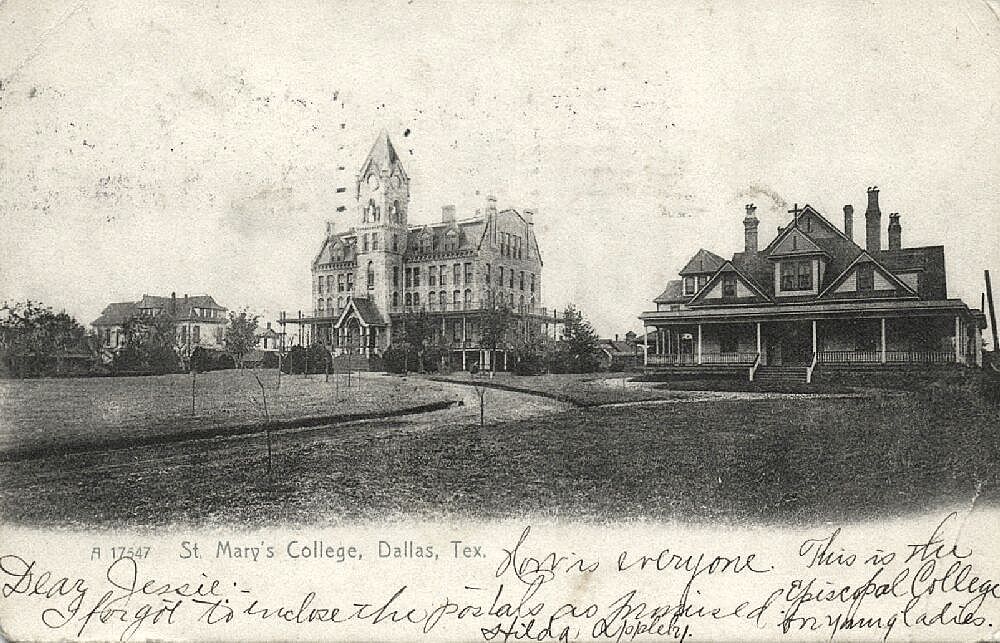
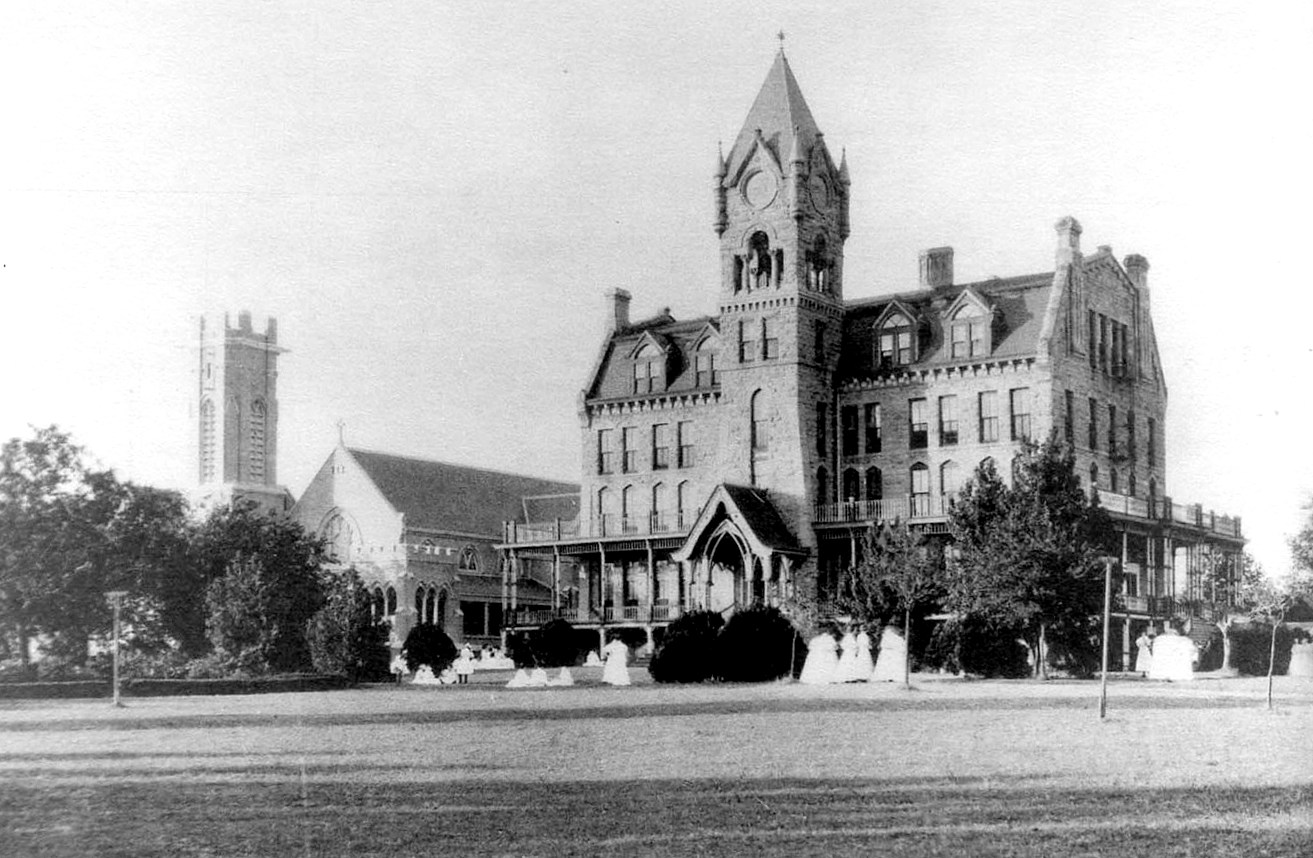
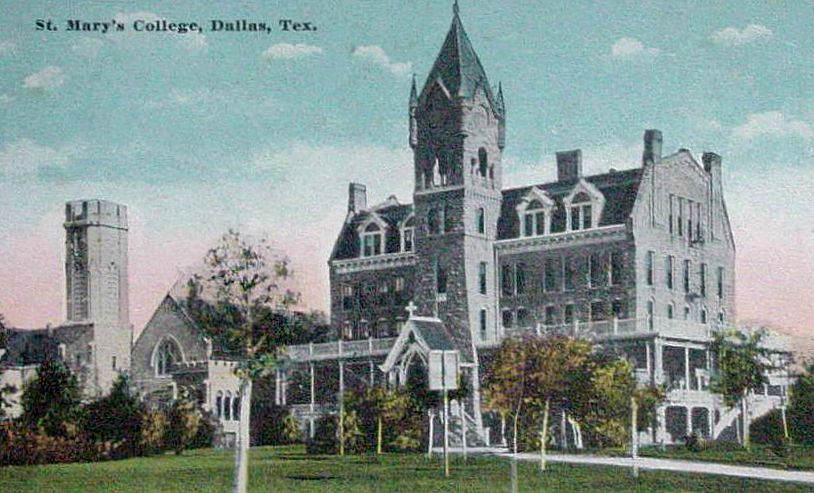
St. Mary’s College, founded in 1889 in East Dallas (at Ross and Garrett avenues), was a prestigious school for girls, affiliated with the Episcopal Church. It had a statewide reputation, and many girls attended as boarding students — Lady Bird Johnson was a proud alumna. Around 1930 it became home to a relocated Terrill School for Boys.

The once sprawling “College Hill” campus covered 20 acres (see it on a 1922 Sanborn map here). I can find no news reports of its demolition, but one source says 1948. Read more about the school’s history in the Handbook of Texas entry here. and see other photos and a short history in the Flashback Dallas post “Private Education in Dallas — 1916.”

The site of the former school has recently been filled with apartments. The old chapel tower still stands, but the large, open school campus is long gone. See the most recent Google Street View of St. Matthew’s Cathedral here. — the main school building would have been directly to the right.

*

As far as the photo at the top of this post, I really love this image of smiling girl athletes (the basketball team?) posing in their gym togs in front of the school.

“Juxta Dallas Texas” (“near Dallas Texas”).

st-marys-college_girl-athletes_frank-rogers_post-1911_ebay_det

*

The ad below touts the school’s offerings in 1911 (including a school dairy):

ST. MARY’S COLLEGE AND SCHOOL OF MUSIC

Founded by the Right Rev. A. C. Garrett [Alexander Garrett], D.D., LL. D.
Twenty-third Year Opens Sept. 13, 1911

A College for Christian education of women — college, scientific and literary courses. Bishop A. C. Garrett, instructor in mental science and logic. Advanced classes in charge of graduates of universities of recognized standing. European instructors of modern languages. School of Music under direction of instructors trained in Germany, Paris, France and New England Conservatory of Music. Pianoforte pupils examined annually. Art and China Painting taught according to the best methods. Health, diet and physical culture in charge of two trained nurses and teachers of physical culture. 

The group of buildings comprise:
1. St. Mary’s Hall (stone).
2. Graff Hall, which is devoted to the Schools of Music and Art.
3. Hartshorne Memorial Recitation Hall.
4. The Mary Adams Bulkley Memorial Dormitory.
5. Sarah Nielson Memorial for the care of the sick.

Houses heated by steam and lighted by electricity. A very attractive College Chapel and large Gymnasium built last year. A very attractive home. Artesian well. Milk supplied from college dairy. Homemade bread and sweetmeats. Night watchman. School opens Sept. 13. For catalogue address:

Bishop Garrett, President St. Mary’s College, Dallas, Texas

st-marys_standard-blue-bk_1912-1914

*

st-marys-college_postcard

*

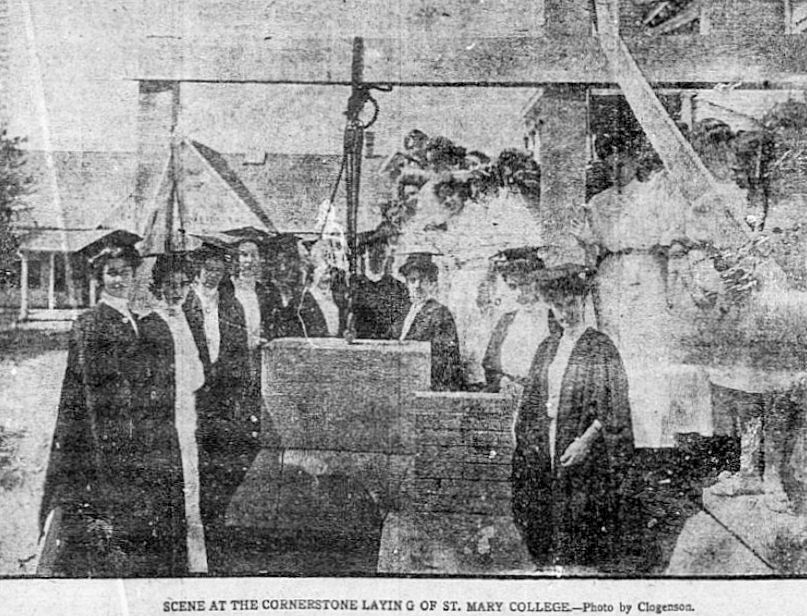
st-marys_cornerstone_dmn_092907-clogensonLaying the cornerstone for the chapel, Dallas Morning News, Sept. 29, 1907

*

st-marys-college_ebay

*

st-marys-college_postmarked-1909

*

Below, the chapel tower can be seen at the left. It still stands, as part of St. Matthew’s Cathedral (5100 Ross Avenue).

patreon_st-marys-college_c1908

*

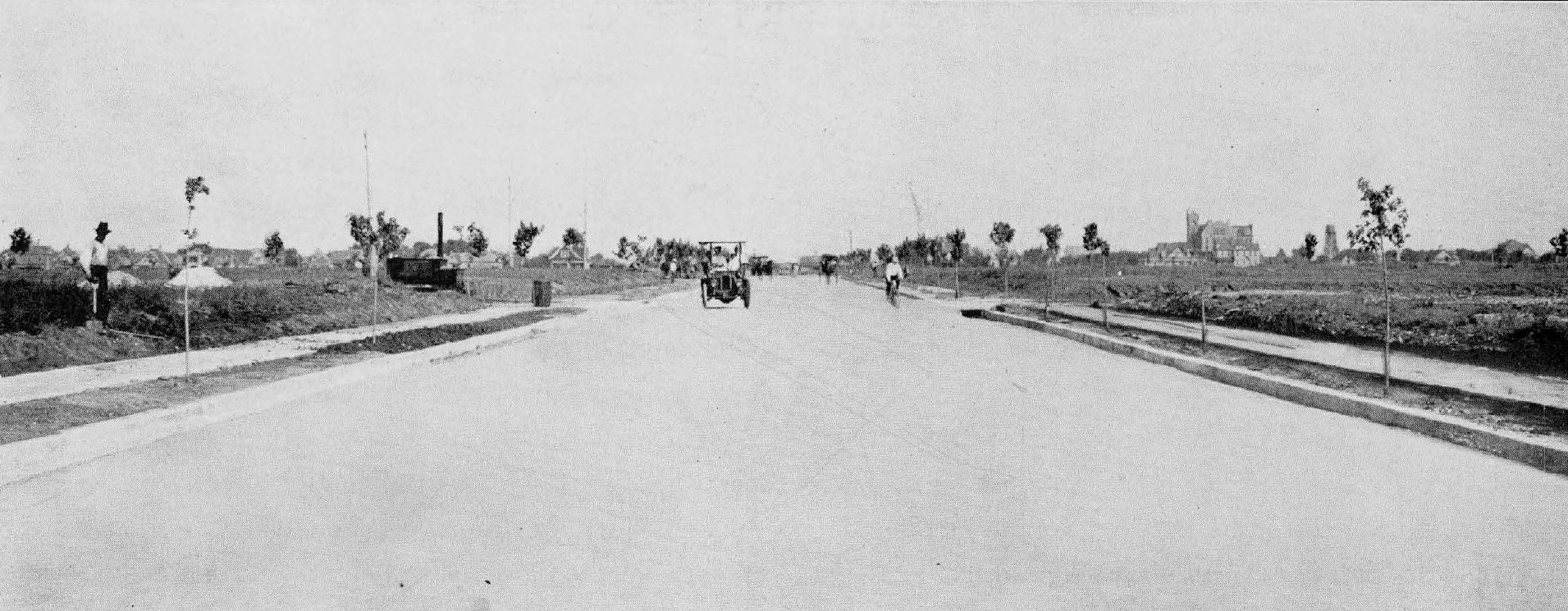
As seen from a distance — on the right, from Collett and Junius (more info on this photo from the Flashback Dallas post it originally appeared in, “Munger Place, The Early Days: 1905-1909”):

munger-place-bk_ca-1905_degolyer-lib_SMU_collett-and-junius_2

*

st-marys-college-ebay

*

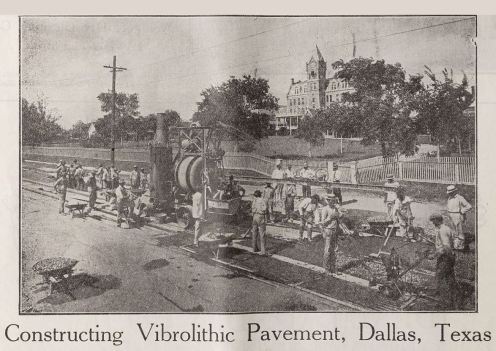
St. Mary’s appeared in an ad for a street-paving company in 1916 (from the original post here):

street-construction_vibrolithic-pavement_SFOT-booklet_1916_SMU_st-marys

*

st-marys-college_dallas-rediscovered_DHSDallas Historical Society

***

Sources & Notes

Top photo by Frank Rogers, taken some time after 1911. Found on eBay. Originally used in a Patreon post, “The Girls of St. Mary’s.”

Last photo from the Dallas Historical Society, found in the book Dallas Rediscovered by William L. McDonald.

Unless otherwise noted, most other images/postcards found on eBay.

Please consider supporting me on Patreon, where for as little as $5 a month, you can get daily Flashback Dallas posts! (You can follow for free, but only a small handful of posts are “public.”)

st-marys-college_girl-athletes_frank-rogers_post-1911_ebay_det

*

Copyright © 2024 Paula Bosse. All Rights Reserved.
Salih’s, Preston Center: 1953-1977

patreon_salihs_w-t-white_1968-yrbk_ext1968, Preston Center (W. T. White yearbook)

by Paula Bosse

If you’re reading this, chances are pretty good that you have fond memories of Salih’s Barbecue in Preston Center (or its later incarnation in Addison as “Solly’s”). I have to admit, I had never heard of Salih’s until I started this blog in 2014 (I completely forgot to note the landmark of 10 full years of Flashback Dallas a couple of weeks ago!). But, from what I’ve read, this was an incredibly popular place, and people still rhapsodize about the BBQ, the po’ boys, the fries, the cole slaw, and the potato salad.

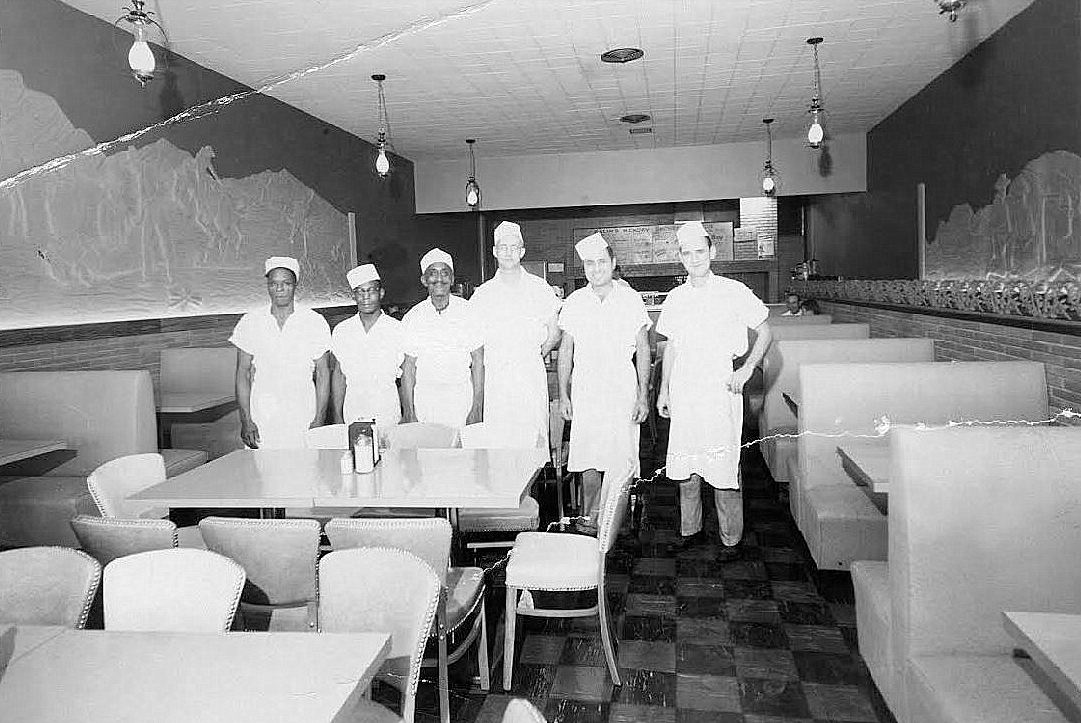
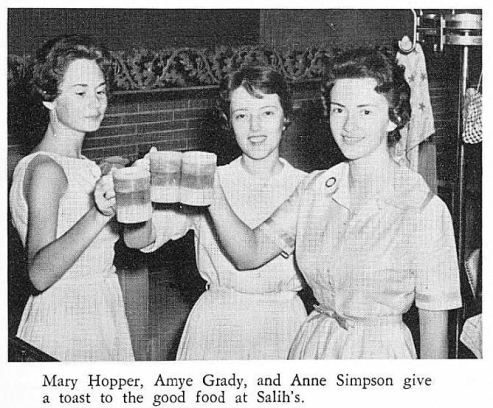
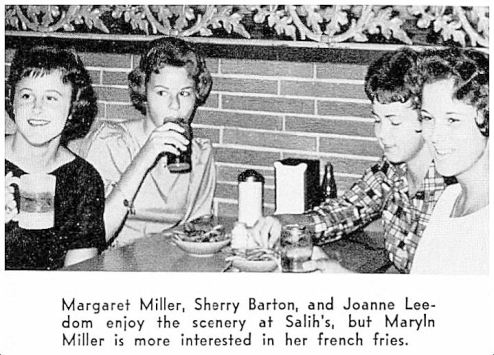
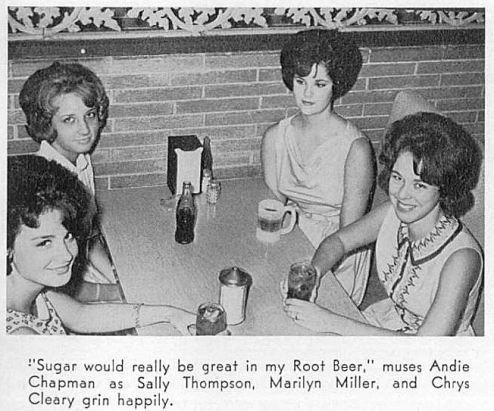
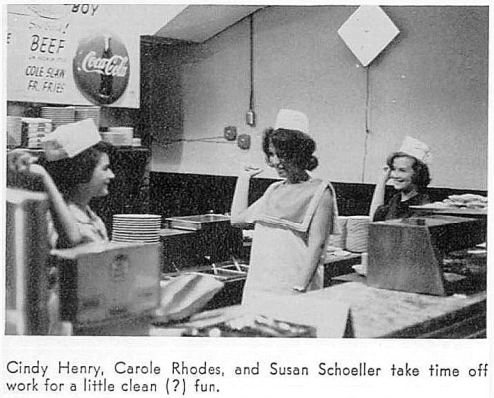
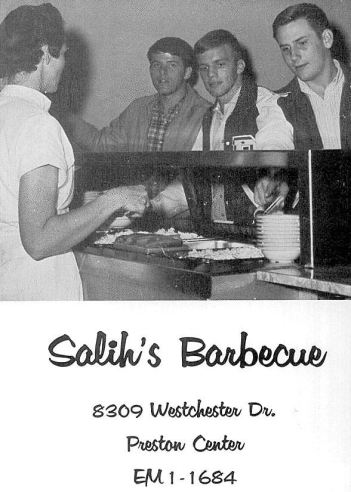
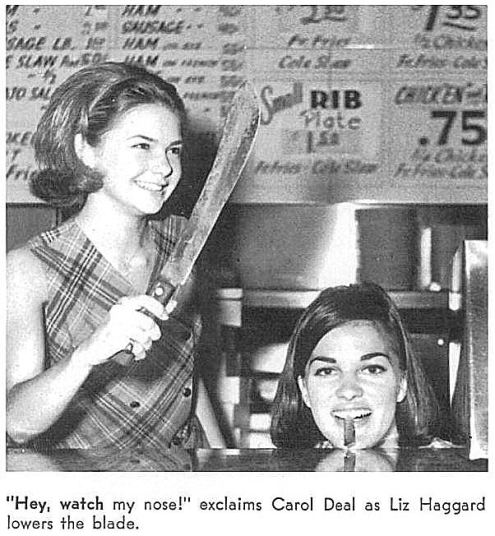
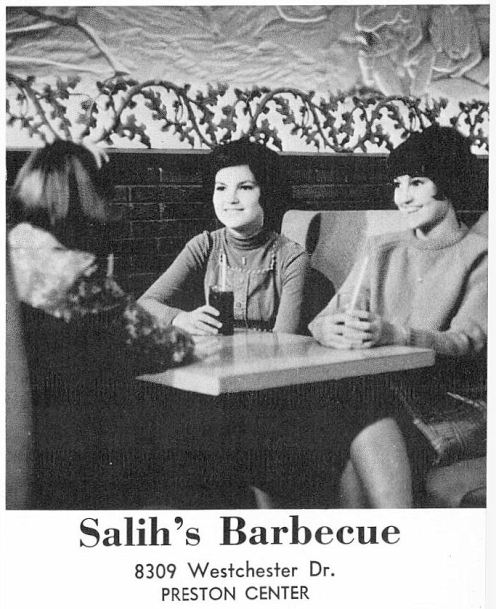
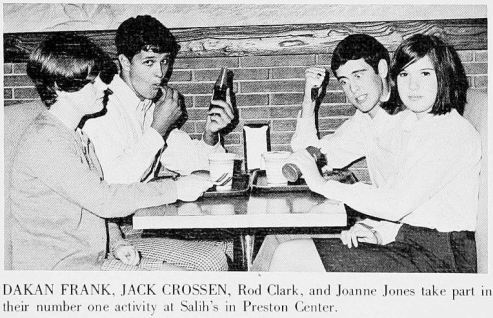
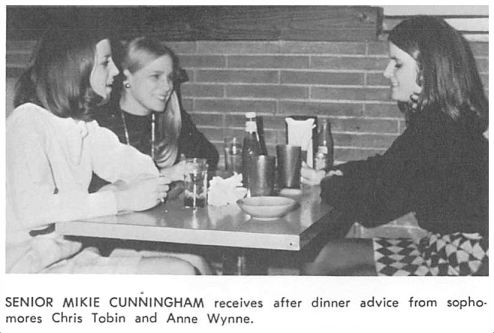
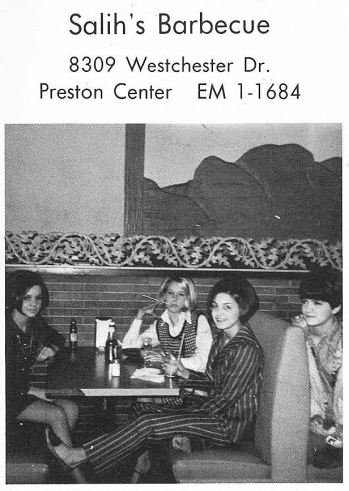
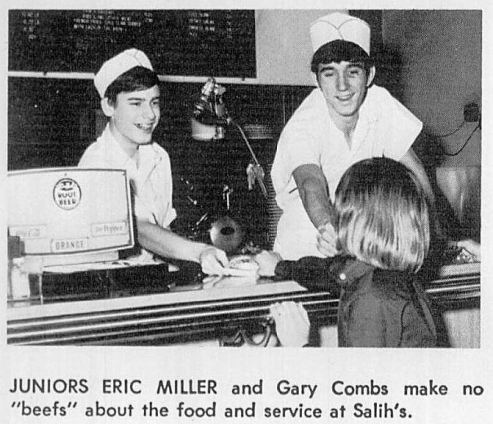
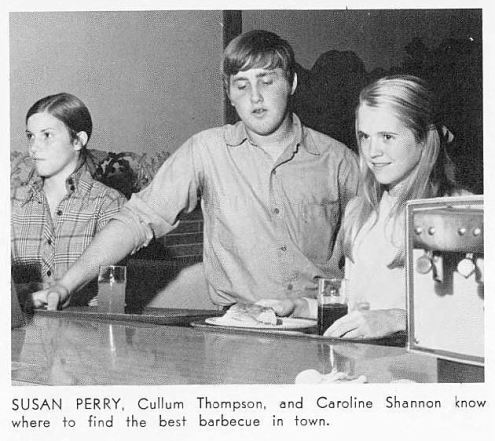
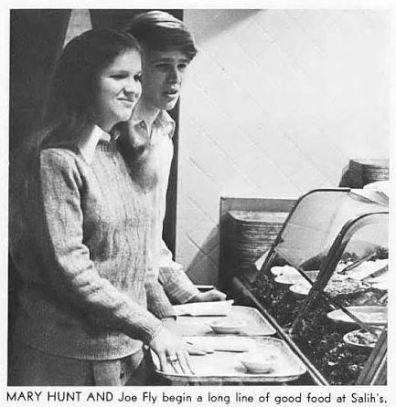
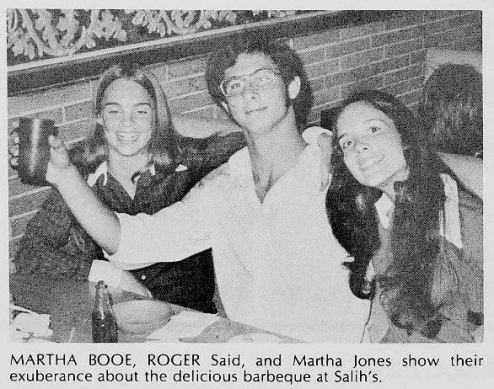
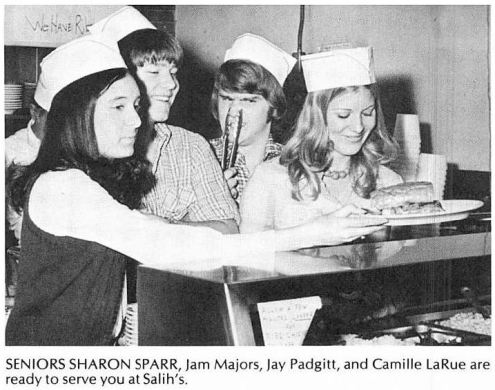
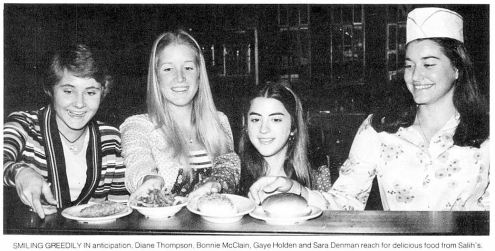
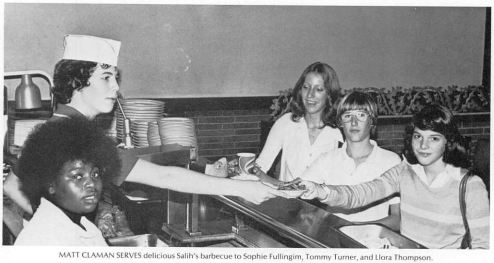
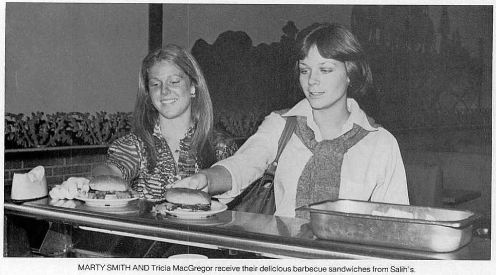
So, I’ve read all these memories… but I can find no good photos of the place! There’s the cropped shot of the exterior above and a lot of not-very-helpful shots which appeared in high school yearbooks over the years, taken inside — but they don’t actually show the restaurant! And I understand there was quite a mural in there. I’d love to see a photo of that! Do YOU have any photos of Salih’s in Preston Center? Exterior? Interior? Mural? Please send me whatever images you have. I really want to see them!

UPDATE: Thanks to Mark Salih, son of co-owner Jack Salih, I have a photo of the interior, with parts of the mural visible. George Salih is on the far right, and his brother Jack is next to him. (Thank you, Mark!)

salihs_mark-salihMark Salih photo, used with permission

*

Salih’s Barbecue was opened by George and Jack Salih on March 20, 1953. The brothers had previously owned a small drive-in and later worked in or managed locations of Lobello’s in Lakewood (2005 Abrams) and Casa Linda (328 Casa Linda Plaza) — either before, during, or after these locations became “Fred’s” BBQ stands (owned by Fred Bell, founder of Kip’s).

That first business, Salih’s Drive-In, was located across from Fair Park at 912 S. Haskell — it opened around 1945. Read George Salih’s memories of serving the “circus people” there in a Feb. 11, 1987 article from the Farmers Branch Times here.

salihs-drive-in_haskell_DMN_081849Aug. 18, 1949

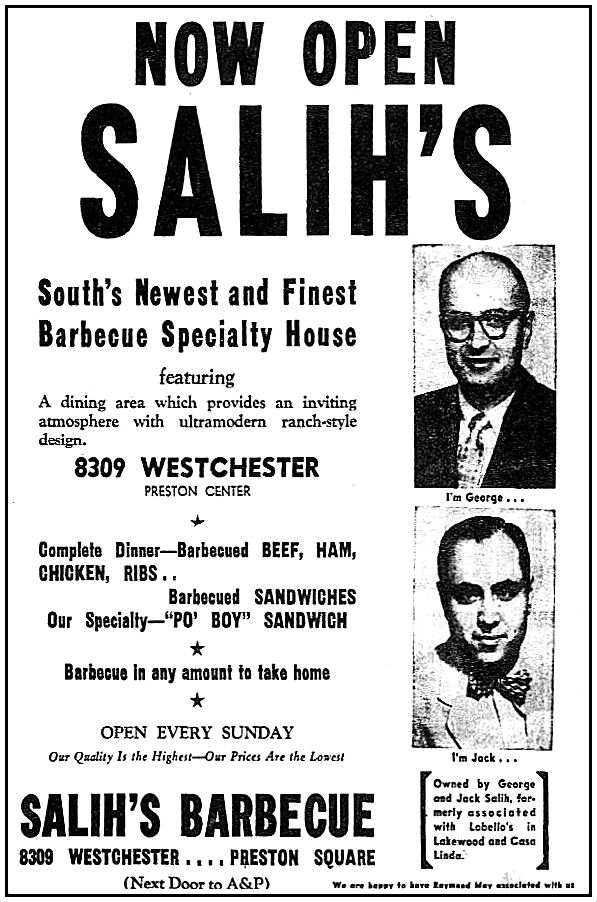
After a few years of working for the Lobello family, George and Jack opened their own place at 8309 Westchester, in Preston Center, not far from the original Lobello’s on Northwest Highway. Eventually, Jack moved to East Texas and opened another barbecue place (the Angus Inn in Longview), and George ran the Dallas restaurant. (Click ad to see a larger image.)

salihs_opening_032053_adMarch 20, 1953 — opening day

An article in the Dallas Morning News describes the new Dallas restaurant thusly:

The restaurant features unique styling in both interior and exterior design. Relief murals decorate the walls inside, while small wooden shutters afford a rustic flavor. The exterior incorporates Roman brick construction, with tall red columns decorated with glass paneling added as a decorative feature. (DMN, March 20, 1953)

It also notes that the Salih brothers were the restaurant’s chefs.

I mentioned this Park Cities landmark in a recent Patreon post, and a kind member described the mural (designed, I believe, by artist Frank J. Boerder):

It was a 3-dimensional cut-out depiction of a cowboy scene, back-lit by a set of red-orange lamps. It ran the length of the south wall of the interior. When you looked at it the scene was in black, back-lit by the lamps. Very striking for a BBQ place. (Plus, the food was very, very good.)

Salih’s is described in the ad above as “a dining area which provides an inviting atmosphere with ultramodern ranch-style design.” I would really like to see this!

Salih’s left Preston Center around 1977, leaving for the then-sparsely populated wilderness of Addison. The restaurant’s name was changed to “Solly’s” (which was either a new name for a new location, a guide for new customers on how to pronounce the Lebanese name, or a sad concession to deal with possible Middle Eastern biases). Solly’s closed in 2004.

*

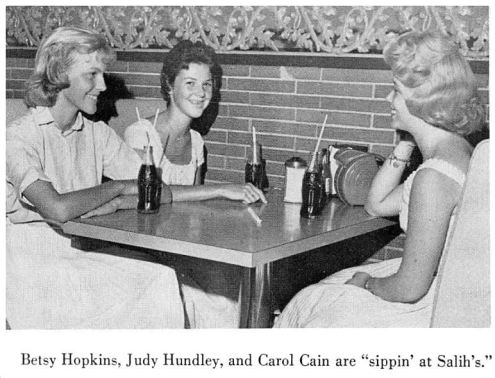
Below are a lot of ads that appeared in the yearbooks of Highland Park High School and W. T. White High School. I was hoping to see more of the interior but, instead, got lots of photos of kids in paper hats (which I still enjoy!). So here they are!

salihs_smu-campus_081656SMU Daily Campus, 1956
*

salihs_HPHS_1960-yrbkHPHS, 1960
*

salihs_HPHS_1961-yrbkHPHS, 1961
*

salihs_HPHS_1962-yrbkHPHS, 1962
*

salihs_HPHS_1963-yrbkHPHS, 1963
*

salihs_HPHS_1964-yearbookHPHS, 1964
*

salihs_w-t-white_1966-yearbookWTW, 1966
*

salihs_HPHS_1967-yrbkHPHS, 1967
*

Part of the mural over their heads?

salihs_w-t-white_1967-yrbkWTW, 1967
*

salihs_HPHS_1968-yearbookHPHS, 1968
*

salihs_HPHS_1969-yrbkHPHS, 1969
*

More of the carved mural?

salihs_w-t-white_1969-yrbkWTW, 1969
*

salihs_HPHS_1970-yrbkHPHS, 1970
*

salihs_HPHS_1971-yrbkHPHS, 1971
*

salihs_HPHS_1972-yrbkHPHS, 1972
*

salihs_HPHS_1973-yrbkHPHS, 1973
*

salihs_HPHS_1974-yrbkHPHS, 1974
*

salihs_HPHS_1975-yrbkHPHS, 1975
*

salihs_HPHS_1976-yrbkHPHS, 1976
*

And, the last one, from 1977 — could that be a another very, very dark part of the mural at the right?

salihs_HPHS_1977-yrbkHPHS, 1977

***

Sources and Notes

All sources as noted.

Read the obituary of George Salih here. Read a longer, more colorful obituary in the Dallas Morning News archives (“George Salih — Operated Barbecue Restaurant in Dallas” by Joe Simnacher, DMN, Aug. 14, 2009).

Jack Salih died in Gilmer in Jan. 1991.

patreon_salihs_w-t-white_1968-yrbk_ext_sm

*

Copyright © 2024 Paula Bosse. All Rights Reserved.

Deep Ellum: Life Along Central Track

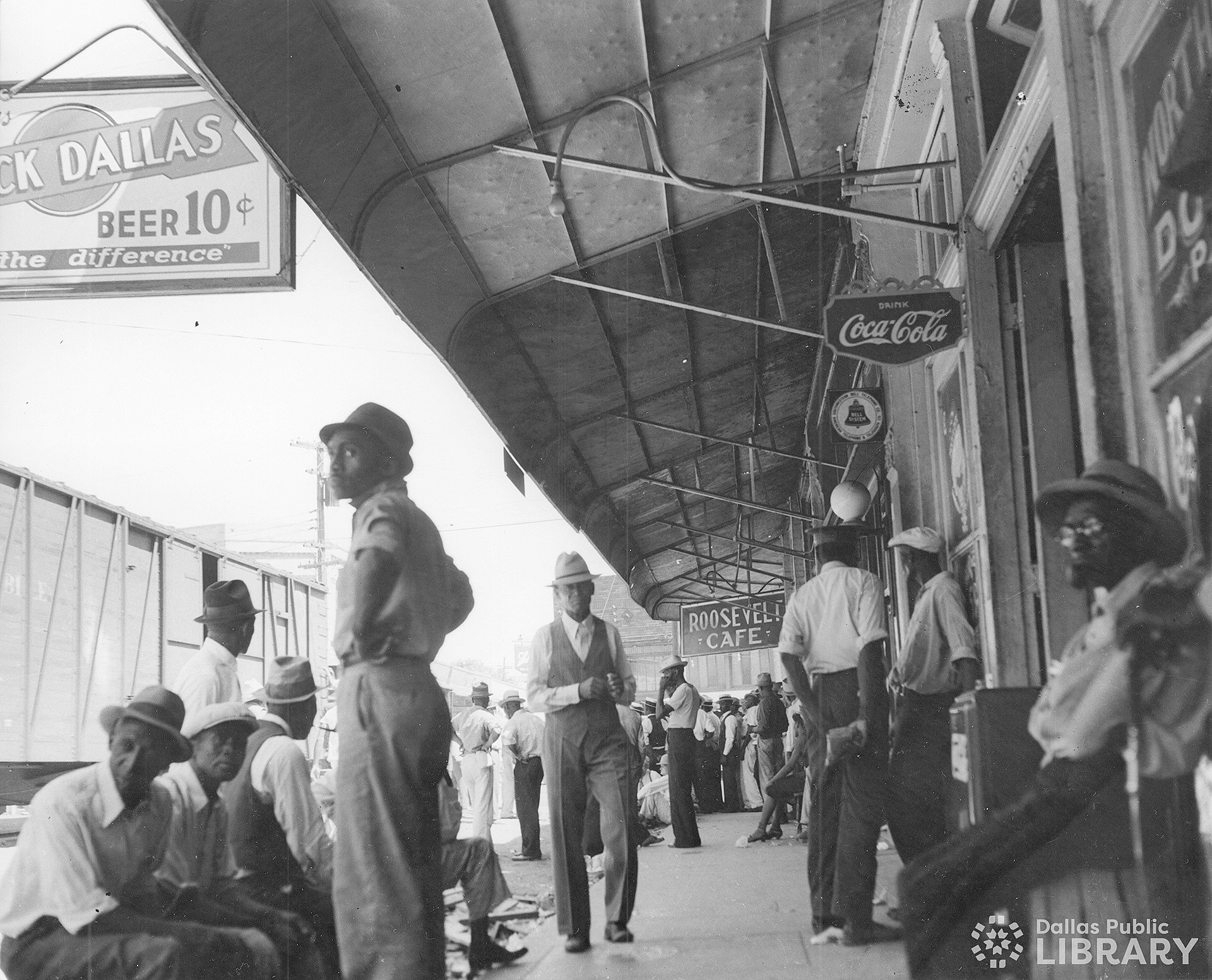
The heart of Deep Ellum… (Dallas Public Library photo)

by Paula Bosse

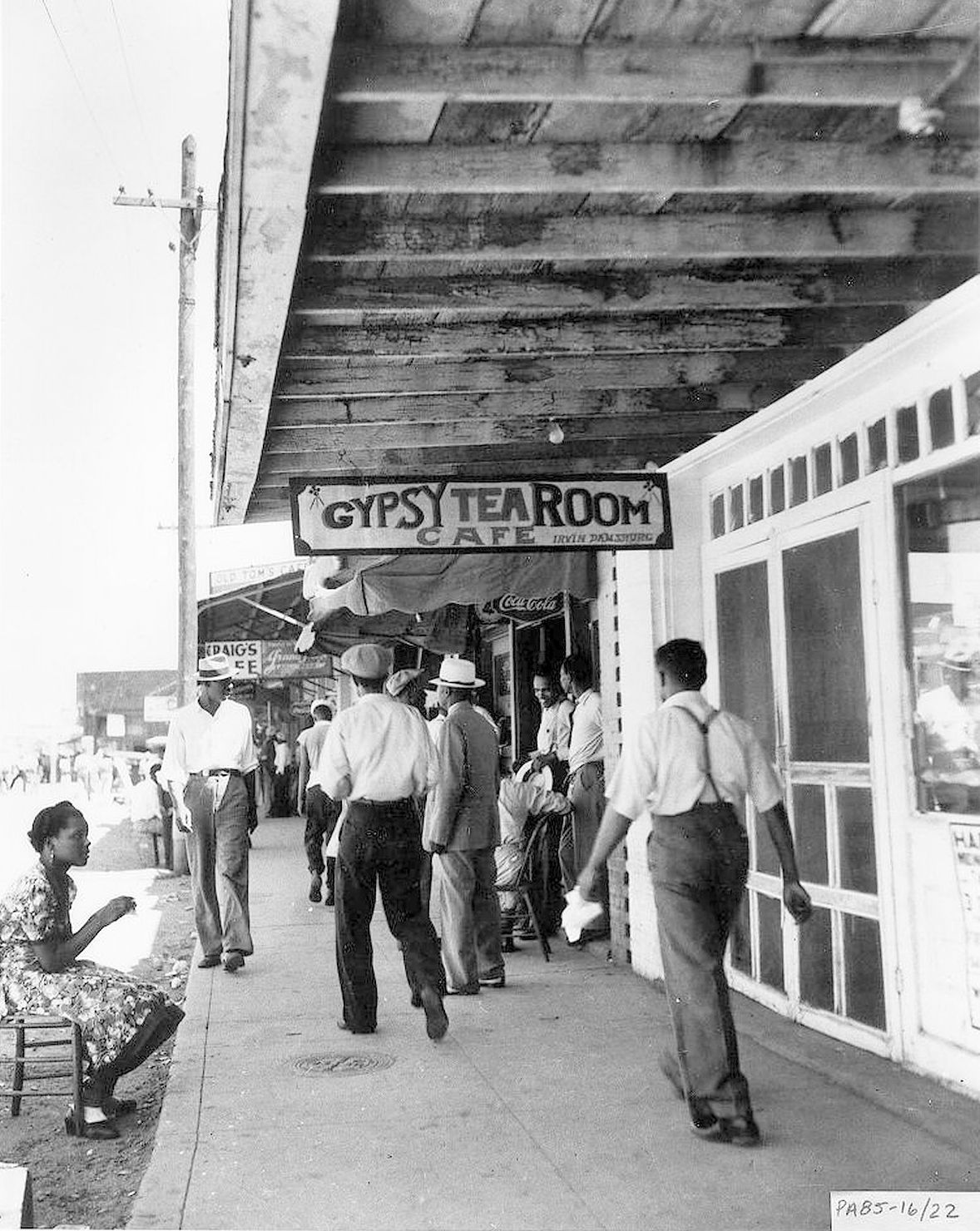
One of my happiest Flashback Dallas research deep-dives resulted in the post “The Gypsy Tea Room, Central Avenue, and The Darensbourg Brothers.” It was prompted by a photo I had seen for years but had never really known what it showed. I loved writing that, and I’m so happy that it is a perennially popular post. Here is that original photo, below, which shows people walking along the row of barber shops, cafes, pool rooms, domino parlors, taverns, and other businesses:

gypsy-tea-room_dallas-public-libraryDallas Public Library photo

The view is to the south — Elm Street is in the distance, where that building juts out to the left. The street about the same distance away to the north (behind the photographer) was Pacific. Someone walking out of the Gypsy Tea Room would have been facing the old train depot. Between the depot and the block of businesses were railroad tracks (not in frequent use in the 1930s, the time of these photos) — the unpaved road that ran alongside the tracks was Central Avenue (when North Central Expressway was built years later, it closely followed the path of these railroad tracks). This general area was considered the heart of Deep Ellum and was filled with Black-owned retail establishments and was a gathering place for social activities and entertainment.

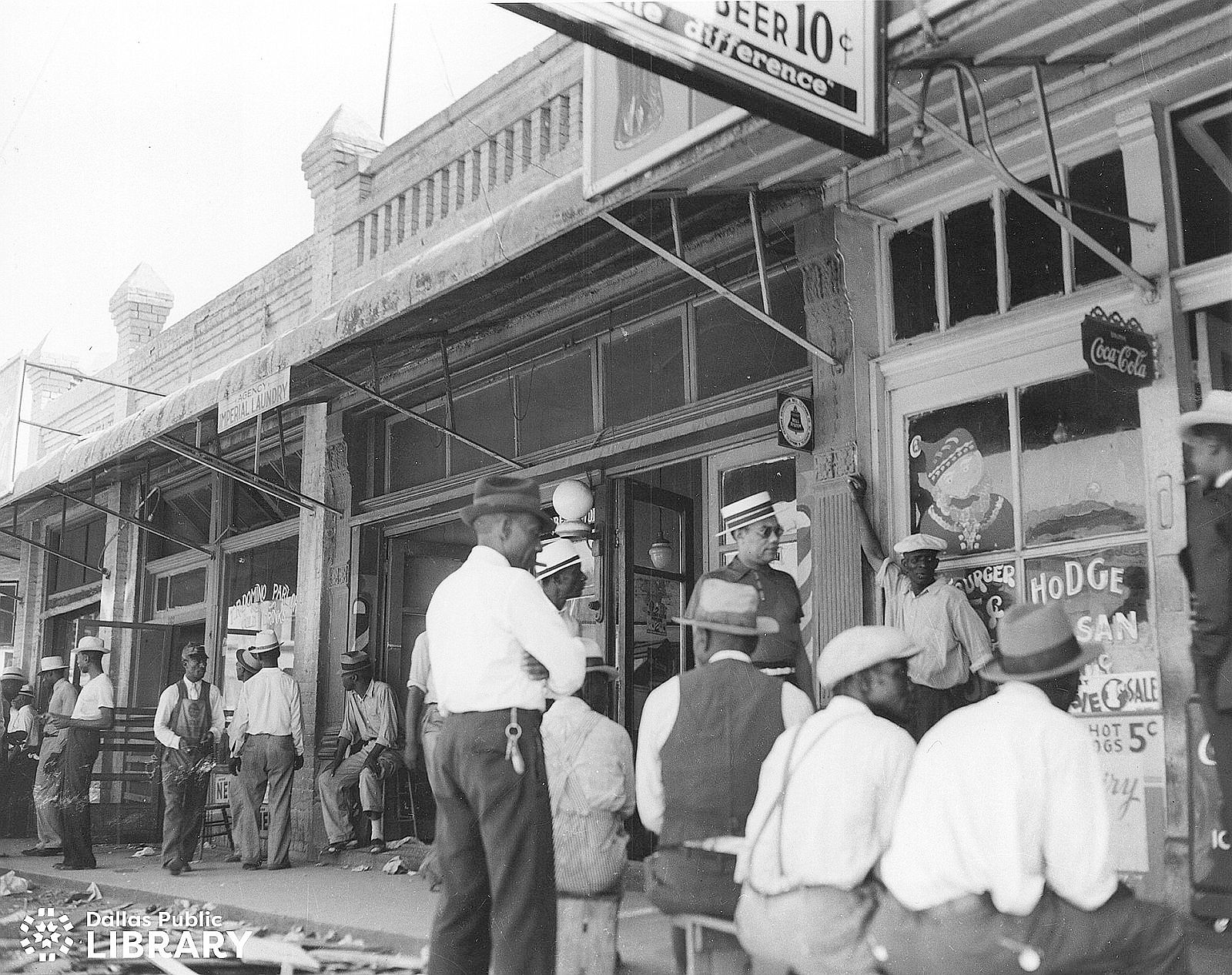
A while back, I came across two other photos, which I recognized as being “companion” photos to the “Gypsy Tea Room” one — the one at the very top of this post, and the one below.

Dallas Public Library photo

The photo immediately above shows the Roosevelt Cafe, which was at 201 N. Central, and the North Pole Domino Parlor (a partial window sign is seen at the right), at 207 Central. A train is passing. This photo and the photo at the very top both show partial signs for Black Dallas beer. (All images are larger when clicked.)

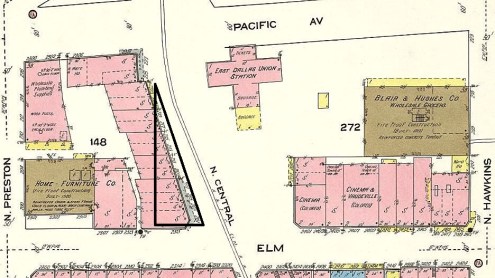
For a better idea of where these photos were taken, see the map below (it shows a detail from a 1921 map — about 15 years before these photos were taken). (See the larger, full Sanborn map here.)

central-ave_1921-sanborn_sheet-17_det1921 Sanborn map (det) showing where photos were taken

*

These are just great, great photos. There aren’t enough photographs like this which capture everyday life in Dallas’ minority communities. Deep Ellum was a thriving Black area at the time. Read a contemporary description of the good things and the bad things going on in this vibrant neighborhood in a (mostly uncondescending) chapter in the WPA Guide to Dallas, “Deep Ellum: Harlem in Miniature.”

**

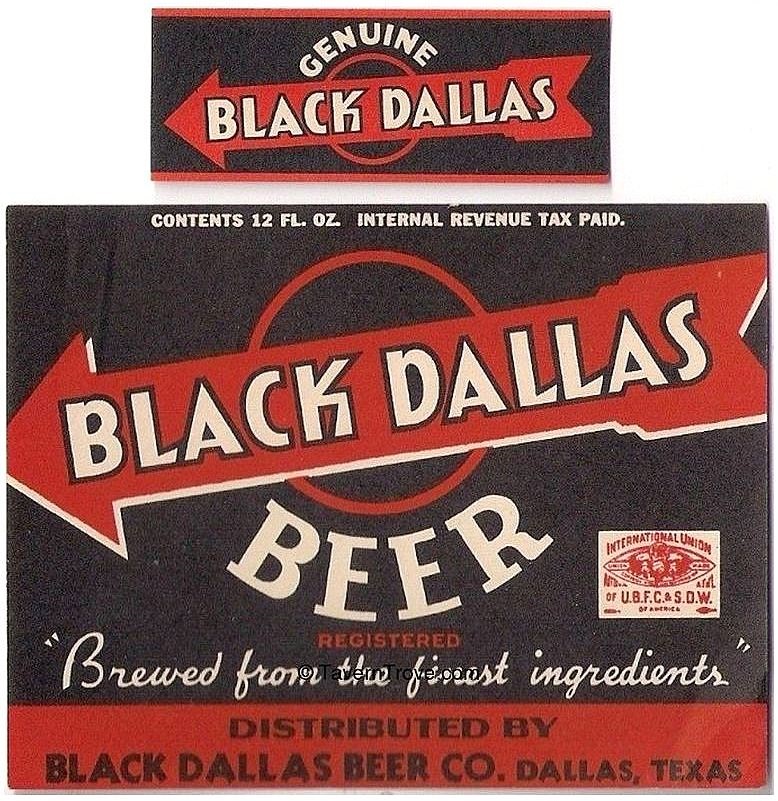
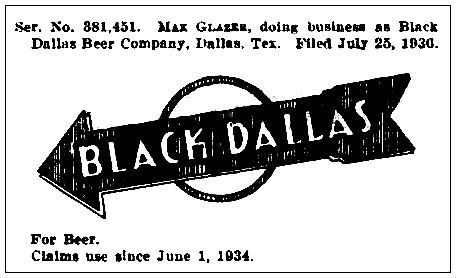
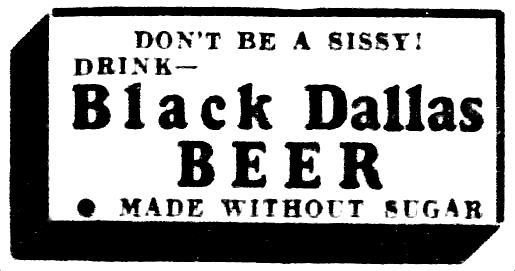
What about “Black Dallas Beer”? I haven’t found a lot about it, but it apparently began as a Dallas-brewed beer in the 1930s but was later brewed elsewhere. (A mention of its Schepps Beer affiliation is here.)

black-dallas-beer_taverntrove_label1937, via Taverntrove.com

black-dallas_beer_u-s-patent-office_090836U.S. Patent Office bulletin, Sept. 8, 1936

“Don’t be a sissy! Drink Black Dallas Beer — Made Without Sugar.”

black-dallas_beer_ad_waco-times-herald_052237Waco Times-Herald, May 22, 1937

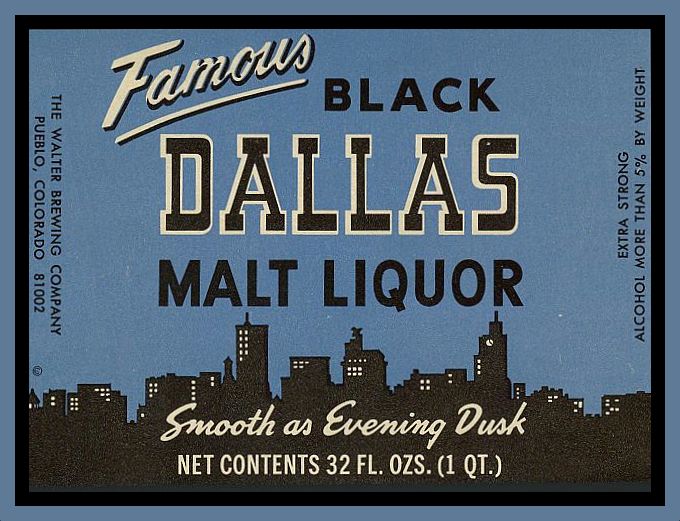
A “Famous Black Dallas Malt Liquor” popped up a few decades later — at that point, there was no connection to Dallas, except for the name and the fantastic label boasting the Dallas skyline. “Smooth as Evening Dusk.”

fbd_beer_black-dallas-malt-liquor_ebayeBay

***

Sources & Notes

The top Dallas Public Library photo — “[African American men walking and sitting along North Central Avenue in downtown Dallas in the early 1930’s]” — is from the Saxon Collection, Texas/Dallas History & Archives Division of the Dallas Public Library; its call number is PA85-16/4.

The second photo — “Gypsy Tea Room Cafe located in Deep Ellum” — is from the WPA Dallas Guide & History Collection of the Dallas Public Library — its call number is PA85-16/22.

The third photo — “[African American men seated on benches and standing outside of the Roosevelt Cafe in downtown Dallas in the 1930’s]” — is from the Saxon Collection, Texas/Dallas History & Archives Division of the Dallas Public Library; its call number is PA85-16/5.

Much more info on this Deep Ellum block can be found in the previously linked post from 2015, “The Gypsy Tea Room, Central Avenue, and The Darensbourg Brothers.”

See my other Flashback Dallas posts on Deep Ellum here.

*

Copyright © 2024 Paula Bosse. All Rights Reserved.

The Hilltop Is for Lovers — 1963

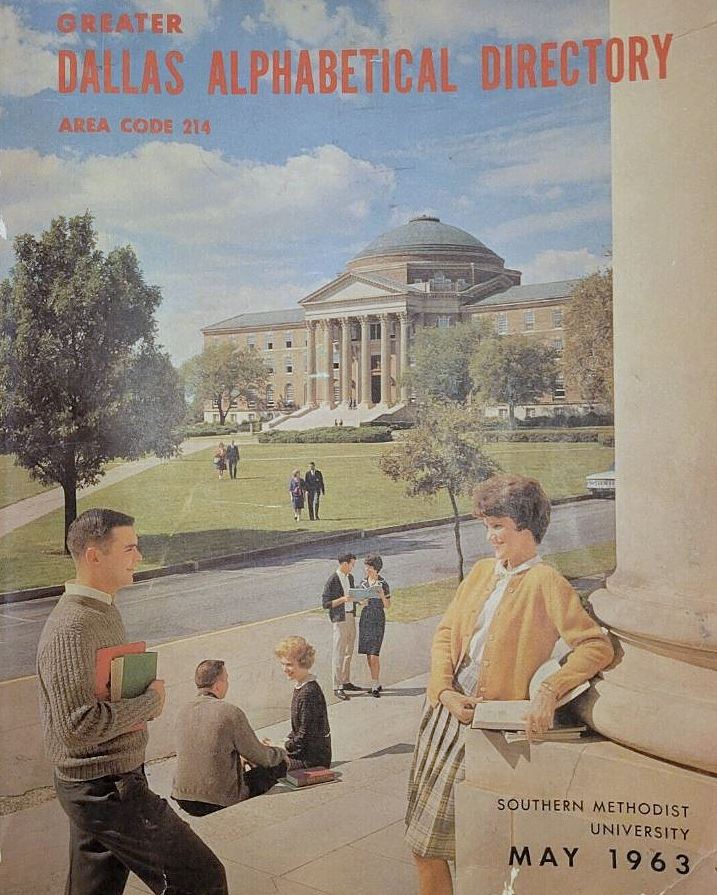
valentines-day_yellow-pages-cover_may-1963_HILLTOP IS FOR LOVERSLove is in the air…

by Paula Bosse

Happy Valentine’s Day!

This seems like a timely image. Sort of a half-photo, half-illustration depiction of dreamy campus life, in which SMU appears to be populated entirely by smiling paired-off couples, as a soft-focus Dallas Hall rests serenely in the background.

***

Sources & Notes

Cover of the 1963 Greater Dallas Yellow Pages, which popped up sometime last year on eBay.

valentines-day_yellow-pages-cover_may-1963_HILLTOP IS FOR LOVERS_sm

*

Copyright © 2024 Paula Bosse. All Rights Reserved.

More Flashback

patreon_main-street_hurst-bros_1927_ebay1300 block of Main, 1927

by Paula Bosse

This photo — which captures a good up-close view of 1920s traffic — shows the south side of Main Street, with a view to the southeast from Field. Hurst Bros., a men’s clothing store, was at 1300-04 Main. This view looks very different today — see it on Google Street View here.

This is one of the many photos I’ve shared on my Patreon account, where subscribers get daily mini- (and sometimes not-so-mini) Flashback Dallas posts for the low, low price of $5 a month (or more, if you’re so inclined). You can cancel at any time. No strings attached. I appreciate everyone who supports me there. There are the occasional public posts, and there is an option to join for free to see those posts. More info can be found here.

*

Below are the Patreon posts from December 2023 and January 2024.

JANUARY 2024

  • 2700 Block of Live Oak – 7-Up, Etc.
  • Carhops and a Convertible Ford Deluxe
  • WFAA Transmitter – 1930
  • Funeral Procession, Matched White Horses – 1904
  • 1300 Block of Main: Hurst Bros., Etc. – 1927
  • Braniff, Home of the “College-Girl Hostesses”
  • The Changing Face of Commerce Street: Historic Clinic to Adult Movie Theater
  • School Book Depository Lunchroom – 1963
  • Mario’s (and Brenda Vaccaro)
  • Lone Wolf
  • Julius Dorsey School/Colonial Hill School
  • Kessler Park: “High Above the City, Where Breezes Blow” – 1927
  • Fritos Fruit Salad Mold – 1947
  • After the Show at the State Fair Auditorium – 1954
  • Dallas Railway & Terminal Co. – 1930
  • Nighttime View from a Suite at the Sheraton – 1959
  • A Great Big “Statue” at Fair Park
  • McKinney Avenue Feed Store – 1897
  • “If Football Is Your Game, Pearl Is Your Beer”
  • The “Gulf Clouds” Fountain – 1916
  • Highland Park Village, Brought to You by Flippen-Prather – 1940
  • Dallas Has Always Loved Cars – 1912
  • Papa Dad’s Barbecue – 2214 N. Hall Street
  • Fretz Park Soccer Champions – 1928
  • Lee Park, From the Air – 1950
  • Ross Avenue Courts/Ross Avenue Motel
  • Bon Air Courts, Ross Avenue
  • Baker Hotel, A Texas Institution – 1942-43
  • Howdy from Dallas – And Happy New Year!

DECEMBER 2023

  • Pan American Sombrero – 1937
  • Fondren Library, SMU: 1938-39
  • Merry Christmas!
  • Bronco Bowl – 2600 Fort Worth Avenue
  • Exall Lake, Highland Park
  • The Gaston Building
  • El Centro Hotel, 906 North Central – 1954
  • The Blessing of the Animals — 1971
  • Memorial Auditorium – 1957
  • Dallas Academy – Excellence & Happiness in The Cedars
  • Geo. A. Brewer Undertaking Co. and Funeral Home
  • Forget the Counterfeiters, What About the Motorcycles?
  • My Pal, Mr. Wiggly Worm
  • Neiman’s Gets Bigger – 1926/1927
  • Helpy-Selfy: “A Dallas Institution” – 1920s
  • Longhorns Wading in the Fair Park Lagoon – 1936
  • Bob Clark’s Tom Thumb, Cockrell Hill – ca. 1951
  • James Surls in East Dallas – 1975
  • Big Tex Army-Navy: Hippies Welcome!
  • Holy Trinity Greek Orthodox Church, South Dallas
  • Concorde/Braniff International – 1979
  • Tailfins at the Meadows Building
  • VP Dick Nixon Visits Big D – 1960
  • Melrose Theater, Oak Lawn – 1932
  • Mt. Horeb Baptist Church, South Dallas

***

Sources & Notes

Photo from eBay.

I’ve been posting on Patreon since April 2023. If you’d like to check out all the subjects I’ve posed about, you can see them listed in the links below (or see them all here).

And if you’d like to join me on Patreon, I would appreciate the generosity!

patreon_logo

*

Copyright © 2024 Paula Bosse. All Rights Reserved.
The Higginbotham-Pearlstone Building

higginbotham-pearlstone_1978_portalHigginbotham-Pearlstone Building, 1978

by Paula Bosse

In a previous post, “The South End ‘Reservation’ Red-Light District — ca. 1907” (which, amazingly, has generated so much traffic, that, in one month, it has gotten almost 4 times as many views as the most popular post of last year got all YEAR…), I mentioned that the reason I stumbled across the main photo from that post was because I was searching for a photo of the Hobson Electric Co. in the West End (the photo was originally described as showing the West End, but it actually showed the other side of downtown). So why was I looking for something which, let’s be honest, doesn’t sound all that exciting? The Hobson Electric Co.? Because an anonymous reader asked recently in comments of a post from 2019 — “Caterpillars On the Job at Ross and Market — 1922” — what businesses had been in the building at 1701 N. Market in the West End, known as the Higginbotham-Pearlstone Building. And here, anonymous question-asker, is what I found.

But before any building at all was there, what was there? (See the “Sources & Notes” section at the bottom of the page to see this location on six Sanborn maps from 1885 to 1921.) Before any building sat on the northwest corner of N. Market and Ross Avenue (originally Carondelet), it was a wagon yard/camp yard — a place where people coming to the city could stable their horses and stay the night. As seen on the 1899 Sanborn map, it was near the MKT freight and passenger depots. By 1905, that block was the site of a lumber yard.

In 1910, the Hobson Electric Co. (“for everything pertaining to electric light and telephone plants, largest supply house in the Southwest”) opened their new building at the northwest corner of Market and Ross (they were formerly in what is now the 700 block of Commerce). The new building was described thusly:

The above new building of the Hobson Electric Company, located near Market street and Ross avenue, Dallas, is an example of modern construction which secures a low insurance rate. The front is 100 feet, depth 200 feet. There are three stories with a total floor space of 60,000 square feet. The foundation is of concrete, the walls of light colored brick 18 inches thick; the interior is of mill construction of unusually heavy and special type, the floorboards being five inches in thickness. The general construction is of the best available at this date. The building is heated by the hot water system, electrically lighted and equipped with the automatic sprinkler system for fire protection. (Dallas Morning News, April 16, 1910)

hobson-electric_1911-directory1911 city directory

In January 1913, Charles W. Hobson changed the name of his company to the Southwest General Electric Co., (Hobson was the Southwest manager of General Electric/G.E.), as can be seen in this photo of the building from 1922:

caterpillar-ad_1922_photoDetail of a 1922 ad for Caterpillar tractors

In October 1923, the Moroney Hardware Co. (est. 1875) moved in. “You will find everything here that a modern, progressive wholesale hardware house should carry. Shipping everywhere in the large Dallas trade territory” (ad, Sept. 23, 1923).

moroney-hardware_1701-n-market-at-ross_DMN_101423_photoDMN, Oct. 14, 1923

moroney-hardware_1701-n-market-at-ross_DMN_112325DMN, Nov. 23, 1925

moroney_ad_112325_det50th anniversary ad detail, Nov. 23, 1925

In February 1926, the Moroney company (having just celebrated its 50th anniversary) announced the sale of the pioneering Dallas business (as well as its building) to R. W. Higginbotham and Hyman Pearlstone — the new wholesale company would be called the Higginbotham-Pearlstone Hardware Co.

higginbotham-pearlstone_hardware-catalog_1954_ebayca. 1954

Higginbotham-Pearlstone lasted until about 1977, when they vacated the building (but their name remained on it). The photo at the top of this post shows the building in 1978, as does the photo below — at that time, it (or part of it) became home to a factory-outlet clothing store. Below, a slightly different view, looking north on Market from Pacific.

higginbotham-pearlstone_tx-hist-comm_danny-hardy_mar-1978_det_n-on-market-from-pacific1978

It continues to be an important landmark in the Historic West End, and it still looks great — see the building on Google Street View, here.

***

Sources & Notes

The top photo, from 1978, is from the collection of the Texas Historical Commission, via the Portal to Texas History.

The 1954 Higginbotham-Pearlstone photo is from eBay.

The second photo (which I have cropped slightly), from 1978, is also from the Texas Historical Commission — it was taken in March 1978 by Danny Hardy. It is part of a nomination form for “National Register of Historic Places” designation — the whole 90-page application can be viewed as a PDF, here (this photo is on p. 50). There are lots of great photos of West End buildings from 1978 in this!

Other sources as noted.

See Sanborn maps which include this block (northwest corner of N. Market and Carondolet) in 1885, 1888, 1892, 1899, 1905, and — the “modern” block which, finally, is home to our building — in 1921.

higginbotham-pearlstone_1978_portal_sm

*

Copyright © 2024 Paula Bosse. All Rights Reserved.

A Few Photo Additions to Past Posts — #22

exall-lake_postcard_ebayHighland Park of yesteryear…

by Paula Bosse

Periodically, I add photos or postcards or ads that I’ve recently come across to old Flashback Dallas posts. And I’m doing that again here.

*

I’m adding the very pretty postcard of Exall Lake (above) to the 2016 post “Lakeside Drive, Highland Park.” (Source: eBay)

*

This early-’40s shot of an MKT train rolling through the Upper Greenville area, with SMU seen in the background and a couple of helpful maps have been added to the 2014 post “Katy Comin’ ‘Round the Bend — 1908.” (Source: DeGolyer Library, SMU — as printed in The Park Cities: A Walker’s Guide and History by Diane Galloway and Kathy Matthews)

smu_katy-train_park-cities-walkers-gd_diane-galloway_photo

*

These two great photos by R. C. Hickman have been added to the 2017 post about one of the top Black clubs in Dallas (which had several names…): “1710 Hall: The Rose Room/The Empire Room/The Ascot Room — 1942-1975” These two photos show teen dancers (in 1956) and entertainers (in 1951, pardon the watermark)) at the Empire Room. (Source: R. C. Hickman Photographic Archive, Briscoe Center, University of Texas Libraries)

empire-room_teenage-dance_hickman_080656

empire-room_l-g-mccutcheon_hickman_042351_briscoe-center_watermark

*

I always say I’m not a sports person, but whenever I’ve written about sports, I’ve enjoyed it. But it’s got to have an “angle” — like 2014’s “Simulcasting the World Series in Dallas in the Days Before Radio, Via Telegraph,” which I still think is weird/cool. I’ve added an ad from 1913 featuring the Baseball Play-o-Graph. (Source: Billboard magazine, Mar. 22, 1913)

baseball-simulation_play-o-graph_billboard_032213

*

Dallas once had tons of swellegant downtown nightclubs, including the Mural Room at the Baker Hotel. Below a 1956 ad geared to the tourist, promoting the Baker, in the age of the cigarette girl. It’s been added to “The Baker Hotel,” from 2017. (Source: This Month in Dallas, Dec. 1956)

baker-hotel_cigarette-girl_this-week-in-dallas_dec-1956

*

Margo Jones was a force to be reckoned with. This 1956 ad for Theatre ’56 (which continued after her untimely death in 1955) has been added to 2022’s “New Wheels for Margo Jones — 1955.” (Source: This Week in Dallas, Dec. 1956)

jones-margo_theatre-56_this-month-in-dallas_dec-1956_ad

*

My father was a big fan of the Old West (and the modern Old West), and he mentioned famed Texas Ranger “Lone Wolf” Gonzaullas frequently. I’ve added this photo of one of his custom pistol grips to the 2020 post “Lone Wolf Gonzaullas: Texas Ranger, Dallas Resident.”

gonazaullas_pistol-grip

*

This photo of Elm Street looking east from about Akard, circa 1894, shows Mayer’s beer garden at the left. It has been added to 2022’s “S. Mayer’s Summer Garden, Est. 1881.” (Source: detail of a photo by Clifton Church, from his book Dallas, Texas Through a Camera, DeGolyer Library, SMU)

mayers-garden_clifton-church_1894_degolyer-library_SMU_det

*

A portrait of Andrew Goodman, a man who was born into slavery, has been added to the 2023 post “Ex-Slaves in Dallas — 1937.” The lithograph is by Merritt Mauzey, a Texas artist who studied art and etching in Dallas. (Source: Smithsonian American Art Museum)

mauzey-merritt_andrew-goodman_portrait_smithsonian-art-museum_1946

*

I love ads that have photos of the businesses in them. …Unless the image quality is pretty dire. Like this one. Which I’m including here anyway. The 1956 ad for the Highland Park Cafeteria shows the interior — which I somehow managed to never see personally. But this photo (which in its original form is quite small and difficult to make larger) isn’t great, but, as things often go, I really wanted to know what that was that looked like a mural. I eventually found another ad (the one below from 1950), which referenced a “Williamsburg mural,” and, after asking about this on the Flashback Dallas Facebook page, a comment led to the screenshot from unknown news footage from 1953. I tried to sharpen the image but didn’t have much luck — except that I could tell that it does, in fact, appear to show a mural of Colonial Williamsburg, above a long planter (where, as the ad below says, an “Easter lily hedge” would have been). I have no idea why that was in the HPC, but I’d love to know. This tiny tidbit of information gleaned from a 68-year-old ad is of very little importance, as these things go — except that it took me so long to figure out! Anyway, these have all been added to last year’s “Highland Park Cafeteria and the Knox Street Business District.” (Sources: ad with photo from This Month in Dallas, Dec. 1956; ad without photo from April 1950; screenshot from unknown news footage, 1953)

hp-cafeteria_ad_this-month-in-dallas_dec-1956_full

hp-cafeteria_ad_this-month-in-dallas_dec-1956_photo

hp-cafeteria_williamsburg-mural_040750

hp-cafeteria_1953_mural_screenshot_det

*

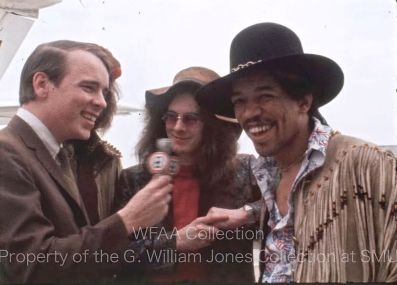
Lastly, a short Channel 8 News clip from Oct. 1973, which has an interview with Carl Anderson, a lifelong monarch butterfly enthusiast, talking about his favorite subject. In the video he is shown walking through Lake Cliff Park (the reporter mistakenly calls it Tenison Park). In the background you can see the late, lamented Polar Bear Ice Cream “igloo” on Zang Blvd. I am adding the video to one of my all-time favorite posts, “University Park’s Monarch Butterfly Wrangler.” I always think of Carl and his love of butterflies when monarchs pass through Dallas. (Source: WFAA-Channel 8 News clip, WFAA Collection, G. William Jones Film and Video Collection, Hamon Arts Library, SMU)

**

Until next time!

exall-lake_postcard_ebay_sm

*

Copyright © 2024 Paula Bosse. All Rights Reserved.

The Three Witches of Stemmons Tower

stemmons_three-witches_hooded-figures_pedro-coronelConvening…

by Paula Bosse

I have to admit, I had never heard of “the Stemmons witches” until a few years ago. They seem to have made quite the impression on teenagers of the ’60s and ’70s (and ’80s?), who would frequently take uninitiated fellow teens to visit the mysterious/sinister cloaked figures, after having told them elaborate scary stories about the figures that stood solemnly and forebodingly on the grounds of the 4-building Stemmons Towers complex.

I gather they could be seen from the freeway, and I can understand how they’d look pretty creepy, especially at night, from a distance (and up close). What a perfect teenage ritual for kids with cars: wait until dark, then take your friends to the Towers, pumping them full of spooky urban legends on the drive over, then watch their faces as you introduce them to witches 1-3. If there were night watchmen on overnight duty at Stemmons Towers, they must have had their hands full.

The reminiscences I’ve read all say the three figures disappeared at some point (late ’80s or early ’90s?) — and no one seems to know what happened to them. Do YOU know what happened to them? Where are they today?

*

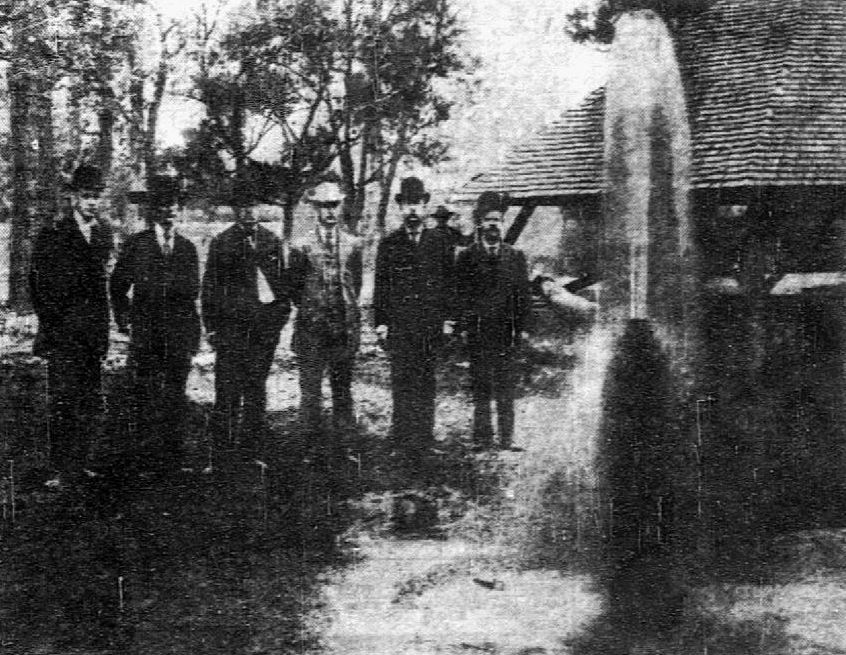
The three figures are by artist Pedro Coronel, a Mexican sculptor and painter aligned with Rufino Tamayo — he was influenced by Diego Rivera and worked with Constantine Brancusi. He often used onyx and sandstone (from the photo, it looks like the “witches” were made of a black stone). The name of this work was “Hooded Figures.” From The Dallas Morning News:

These strange figures are permanent sidewalk superintendents at the new Stemmons Tower North, fourth and final building being erected in the complex on Stemmons Freeway. The three stone “Hooded Figures,” by sculptor Pedro Coronel, are among several works on the Towers’ landscaped plaza. (DMN, July 31, 1966)

(“Stemmons witches” has a much better ring to it than “sidewalk superintendents.”)

Read memories of teenage visits to these “witches” on the Dallas Historical Society “Phorum,” here.

Where have these “Figuras Encapuchadas” scurried off to?

***

Sources & Notes

Thank you SO MUCH to Fred Goodwin, who sent me this photo. He says he came across it years ago somewhere on the internet and does not know the original source. Thank you, Fred!

I’ve seen only one other photo of this work by Coronel — it accompanies the caption quoted above, in The Dallas Morning News (July 31, 1966, p. 1C). Sadly, it’s not a good scan.

A story by Steve Brown appeared in the DMN on Dec. 14, 2023, reporting that the four towers are to be converted to a residential community (“Dallas’ Landmark Stemmons Towers Sell for Conversion to Apartments”). Um, okay.

See a cool night-time photo of Stemmons Tower #1 in the 2018 Flashback Dallas post “Stemmons Tower, Downtown Skyline — 1963.”

stemmons_three-witches_hooded-figures_pedro-coronel_sm

*

Copyright © 2024 Paula Bosse. All Rights Reserved.

The South End “Reservation” Red-Light District — ca. 1907

south-end_hobson-electric_southeast-from-courthouse_ca-1907_cook-collection_degolyer_SMUThere’s a lot going on here that you can’t see… (DeGolyer Library, SMU)

by Paula Bosse

I am reminded how much fun it is to just dive into something with no idea where you’re heading and end up learning interesting things you might have been unaware of had you not wondered, “What am I looking at?”

Yesterday I was working on a future post that involves the Hobson Electric Co., and I was looking for photos. The one above popped up in one of my favorite collections of historical Dallas photos, the George W. Cook Collection at SMU’s DeGolyer Library. I was looking for a post-1910 West End photo — this photo is identified as just that [the title has now been updated by the SMU Libraries], but the presence of the Schoellkopf Saddlery Co. building (center left, with the Coca-Cola ad on it) puts this location on the other side of the central business district — Schoellkopf was at S. Lamar and Jackson. Even knowing that, this scene didn’t look familiar at all.

I checked a 1907 city directory to find out the address of the Hobson Electric Co. before it moved to the West End in 1910 — it was located at 172-74 Commerce Street (in what is now the 700 block), between S. Market and S. Austin. The view here is to the southeast, probably taken from the courthouse.

I don’t think I’ve seen this particular view before — it shows hardly any of the downtown area but shows instead the area to the south. I was really intrigued by the block of houses facing Jackson (between Market and Austin) — the block the horse-and-buggy is moving past, at the center right. The trees. The low buildings. That block really stood out. It was kind of quaint. Did people live there? While I had the 1907 directory open, I checked to see who the occupants were. (I just picked 1907 because the Hobson Co. changed its name from “Duncan-Hobson” around 1906, and it had moved away from Commerce by mid 1910.) Here were the occupants of those houses in 1907:

jackson-between-market-and-austin_1907-directory1907 Dallas directory

That seemed odd. Three single women occupying three separate houses, all next door to one other. There weren’t a lot of single women living in houses alone in 1907. Hmm. I checked all the directories between 1905 and 1910 to see who was living in that block. Every year, each of those houses showed a new occupant, and, with one exception, all were single woman (the exception was a man who owned a saloon across the street and who had faced charges at one point for “keeping a disorderly house”). …Okay. I got the picture.

I checked the Sanborn map from 1905 for this block and saw something I’d never seen before: the designation of a building with the letters “F.B.” What did that mean? Turns out, it means “Female Boarding House.” Or, less euphemistically… a brothel. Look at the map here (more maps are linked at the bottom of this post) to see the frankly ASTRONOMICAL number of “F.B.” buildings in this one small area. (There weren’t as many saloons — designated with “Sal.” — as I expected, but I’m pretty sure a lot of saloons in this area were operating illegally.)

You might have noticed that all of those F.B.s are south of Jackson. Not one of them is north of Jackson. This area — the southwestern part of downtown — was referred to at the time as the “South End” or “The Reservation” (some called this general area “Boggy Bayou,” but I think that was technically farther south). Its boundaries were, basically, S. Jefferson Street (now Record Street) on the west, Jackson on the north, S. Lamar(-ish) on the east, and beyond Young Street on the south. If you wanted to avail yourself of illicit things and engage in naughty behavior, this was the place for you: Ground Zero for a sort of wide-open, lawless Wild West. There were other red-light districts in Dallas (most notably “Frogtown,” which was north of downtown in the general area formerly known as Little Mexico) (does anyone still call this now-over-developed area “Little Mexico”?), but if you wanted the primo experience of one-stop-shopping for drinking, gambling, drugging, and “consorting with fallen women,” you were probably familiar with the South End, where all of these activities were tolerated and, for the most part, ignored by the police (they might mosey by if there were an especially egregious shooting or stabbing or robbery). In fact, this vice-filled area had been created by a helpful city ordinance in the 1890s. So, enjoy!

Prostitutes were allowed to ply their trade in this specified chunk of blocks because the city fathers felt that it would be best to keep all that sort of thing in one somewhat controllable area, away from the more reputable neighborhoods. But once a prostitute stepped outside the Reservation to sell something she shouldn’t have been selling… laws suddenly applied, and she’d be thrown in jail and/or fined. Do not step north of Jackson, Zelma!

So, at one time, Dallas had legal brothels. Depending on whose account you read, these houses of ill repute ranged from godawful “White Slavery” operations and bubbling cauldrons of sin and sleaze to, as Ted Dealey remembers in his book Diaper Days of Dallas (p. 74), “ultra-fashionable houses of prostitution” which attracted Big D’s moneyed movers and shakers. Something for everyone.

Eventually, people started to get really bent out of shape about this, and there was a big push to get these houses shut down — or at least moved out of the area. The Chief of Police reported to the City Council in 1906 that, among the many Reservation-related problems, the area was getting cramped because the railroads were buying up real estate in the area and kicking people out. The city-sanctioned no-man’s land was getting too small, so city officials needed to find a bigger place to move the red-light district to. The Chief thought that North Dallas (i.e. Frogtown) was “the most logical place” — except that residents of nearby swanky neighborhoods there were not at all keen on this. But that idea seemed to stick. It took several years to actually happen, but a relocation of sorts occurred, and the South End brothel-hotspot was pretty much scrubbed of all offending “disorderly houses” by 1910. (Frogtown bit the dust around 1913, after those unhappy well-to-do North Dallas neighbors complained bitterly, loudly, and effectively.)

So, anyway, I never expected to find such an exciting photograph! I wonder if the photographer took this photo as a way of documenting the very controversial, in-the-news, not-long-for-this-world Reservation, or whether it was just a nice scenic view. I have to think it was the former, because the Reservation was well-known to everyone, near and far, and this shot would have been an unusual vista to, say, reproduce for postcards (or at least postcards sold to the general public!). Whatever the case, I’ve never seen this view, and it’s really great — and it comes with an interesting slice of Dallas history. I had heard of the Frogtown reservation to the north, but I’d never heard of the South End reservation. And now I have. And here’s a photo of it!

Let’s bring back the neighborhood designation of “South End.” It was good enough for 1900, it’s good enough for today.

*

Here are a few zoomed-in details of the photo. Unless I’m imagining things, I think I can see women sitting on their porches, advertising their wares, as was the custom. (All images are larger when clicked.)

south-end_cook-collection_degolyer_SMU_det-1

*

south-end_cook-collection_degolyer_SMU_det-2

*

south-end_cook-collection_degolyer_SMU_det-3

*

Below is an excerpt from a blistering directive to city lawmakers by W. W. Nelms, Judge of the Criminal District Court (from an article with the endless headline “Calls For Action; Judge Nelms Charges Police Chief, Sheriff and Grand Jurors; Warfare on Crime; Says Lawbreakers Shall Not Construe Statutes of State to Suit Themselves; Stop Murder and Robbery; Declares Harboring Places for Thugs, Thieves and the Like Must Be Destroyed,” Dallas Morning News, Oct. 15, 1907).

reservation_judge-w-w-nelms_DMN_101507DMN, Oct. 15, 1907

*

Below, the general area of the South End Reservation around 1907 (this map is from about 1898). The blue star is the Old Red Courthouse; the Reservation is bordered in red. In 1893, the original area was loosely designated as the area bounded by Jackson Street, Mill Creek, the Trinity River, and the Santa Fe railroad tracks, in which “women of doubtful character […] were not to be molested by police” (from “Passing of Reservation,” DMN, Dec. 11, 1904). As noted above, the area shrank over time, and the red lines show the general Reservation area about 1907, the time of the photo at the top.

south-end_reservation_1898-map_portalDallas map, ca. 1898 (det), via Portal to Texas History

***

Sources & Notes

Top photo — “[Jackson Street, Looking Southeast from the Courthouse, Including a Partial View of the South End ‘Reservation’]” (previously incorrectly titled “[Dallas West End District with View of Railroad Yards]”) — is from the George W. Cook Dallas/Texas Collection, DeGolyer Library, SMU Libraries and can be accessed here. (I appreciate SMU for responding to my request to re-title and re-date this photograph — it’s always worth notifying archival collections with corrections!) (And, as always, I WELCOME corrections. I make mistakes all the time!)

The 1905 Sanborn map I linked to above (Sheet 104) is here and seems to be the epicenter of the booming brothel trade; more evidence of this can be seen just south of that in Sheet 102; and it continues just east of that in Sheet 105 (it’s interesting to note the specially designated “Negro F.B.” bawdy houses). (Sanborn maps do not open well on cell phones — or at least on my cell phone. You may have to access these from a desktop to see the full maps. …It’s worth it.)

Read more about this whole “Reservation” thing in the lengthy and informative article “Not in My Backyard: ‘Legalizing’ Prostitution in Dallas from 1910-1913” by Gwinnetta Malone Crowell (Legacies, Fall 2010).

Also, there’s a good section on this (“Fallen Women”) in the essential book Big D by Darwin Payne (pp. 48-56 in the revised edition).

If you enjoy these posts, perhaps you would be interested in supporting me on Patreon for as little as $5 a month — in return, you have access to (mostly!) exclusive daily Dallas history posts. More info is here.

south-end_hobson-electric_southeast-from-courthouse_ca-1907_cook-collection_degolyer_SMU_sm

*

Copyright © 2024 Paula Bosse. All Rights Reserved.