Flashback : Dallas

A Miscellany: History, Ads, Pop Culture

Tag: Historic Dallas

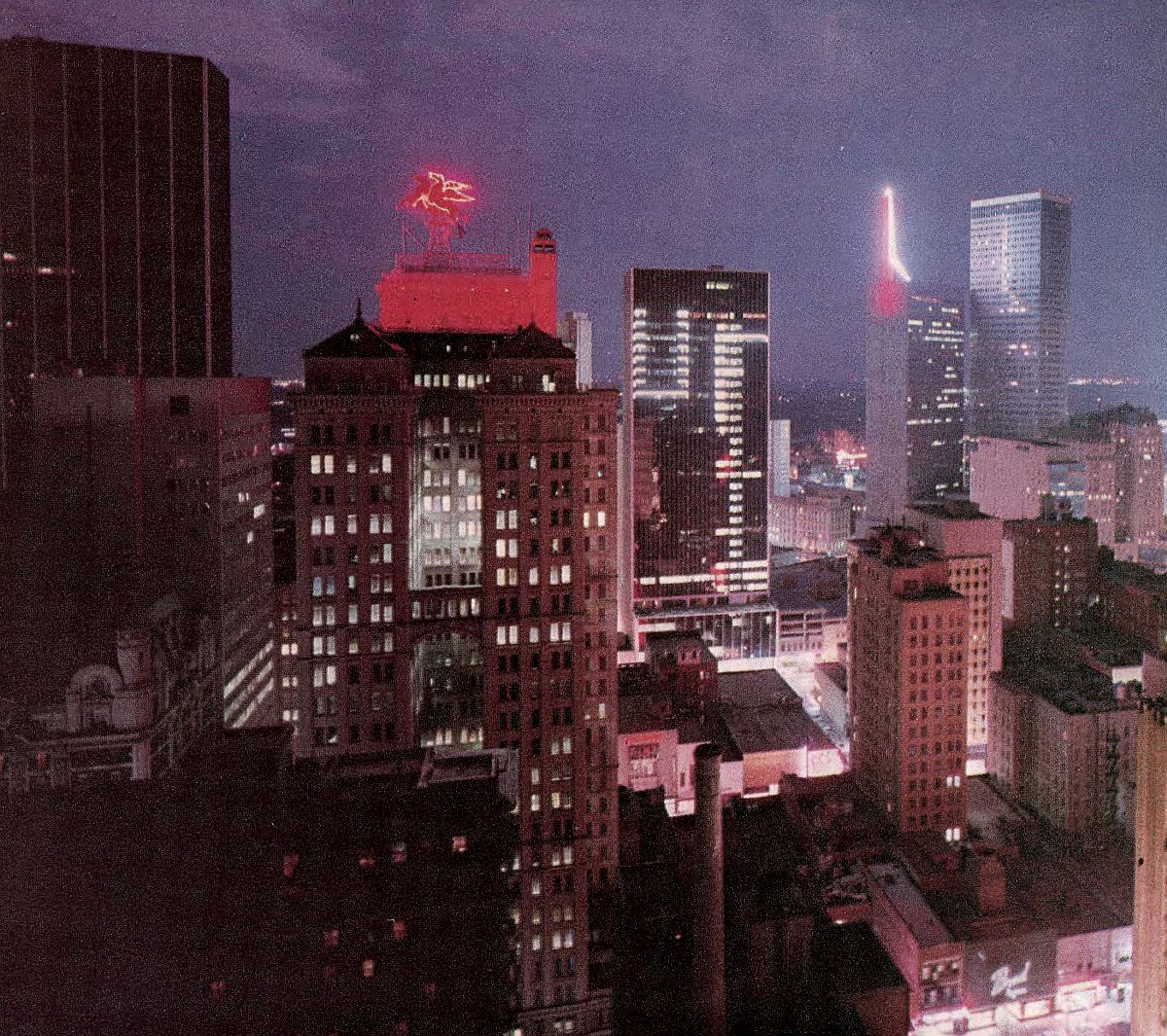
Dallas Skyline at Night — ca. 1965

downtown_chamber-of-commerce_ca1965Goodnight, Pegasus…

by Paula Bosse

It might just be because this photo is so grainy, but it’s very dreamy-looking — a sort of soft-focus view of Dallas’ sophisticated nighttime skyline.

***

Sources & Notes

The photo is credited to the Dallas Chamber of Commerce. I’m pretty sure this came from a high school yearbook, but I’m afraid I neglected to note which one.

See another great photo from the same period in the Flashback Dallas post “Nighttime Skyline — 1965.”

*

Copyright © 2016 Paula Bosse. All Rights Reserved.

A Few Photo Additions to Previous Posts

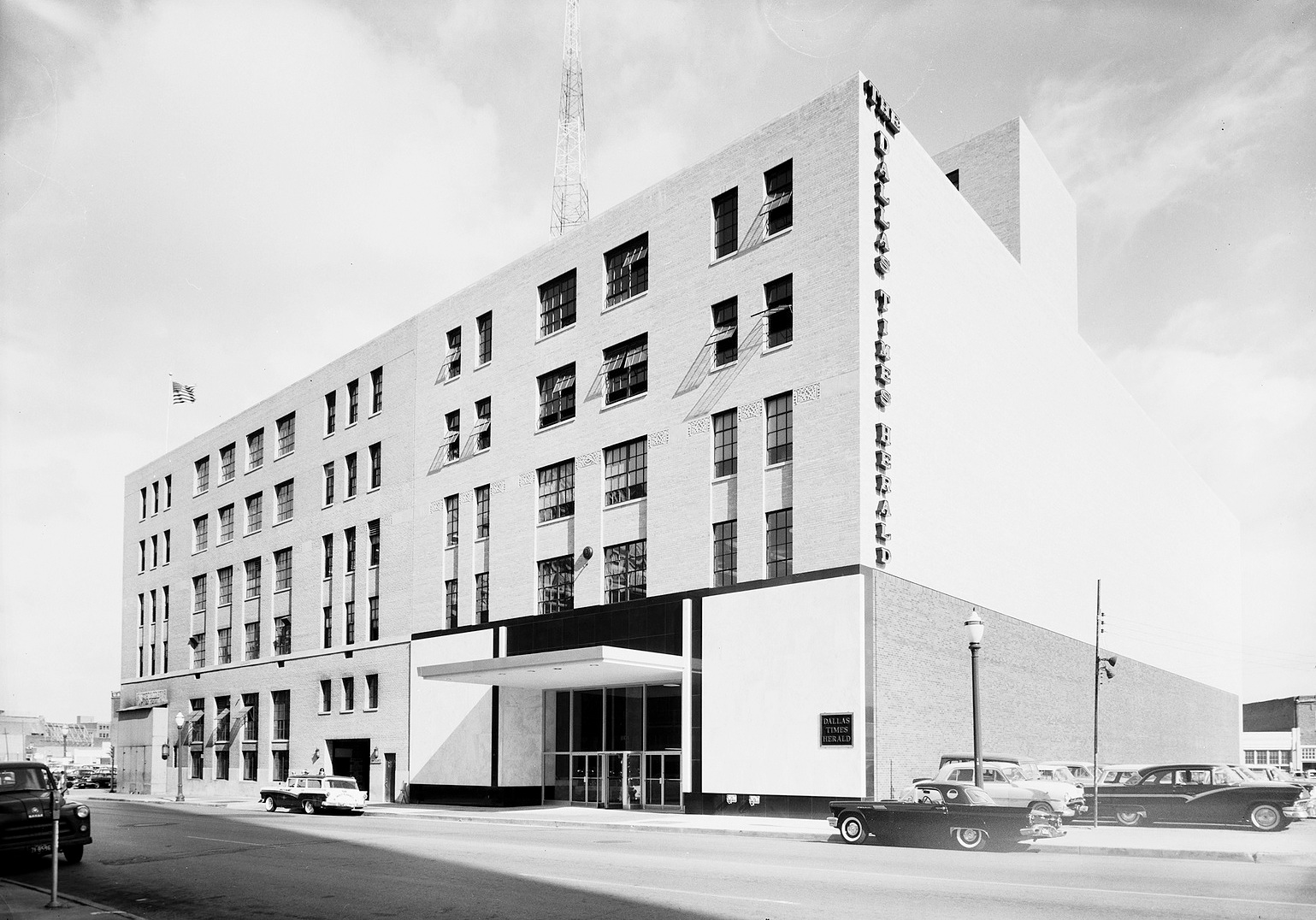
dallas-times-herald-bldg_squire-haskins_utaExterior of The Dallas Times Herald building (click for larger image)

by Paula Bosse

After doing a bit of digital housecleaning, I’ve added a few odds and ends to previous posts.

The top photo by Squire Haskins, from the Squire Haskins Collection, UTA, has been added to the post “‘The Times Herald Stands For Dallas As a Whole.'”

*

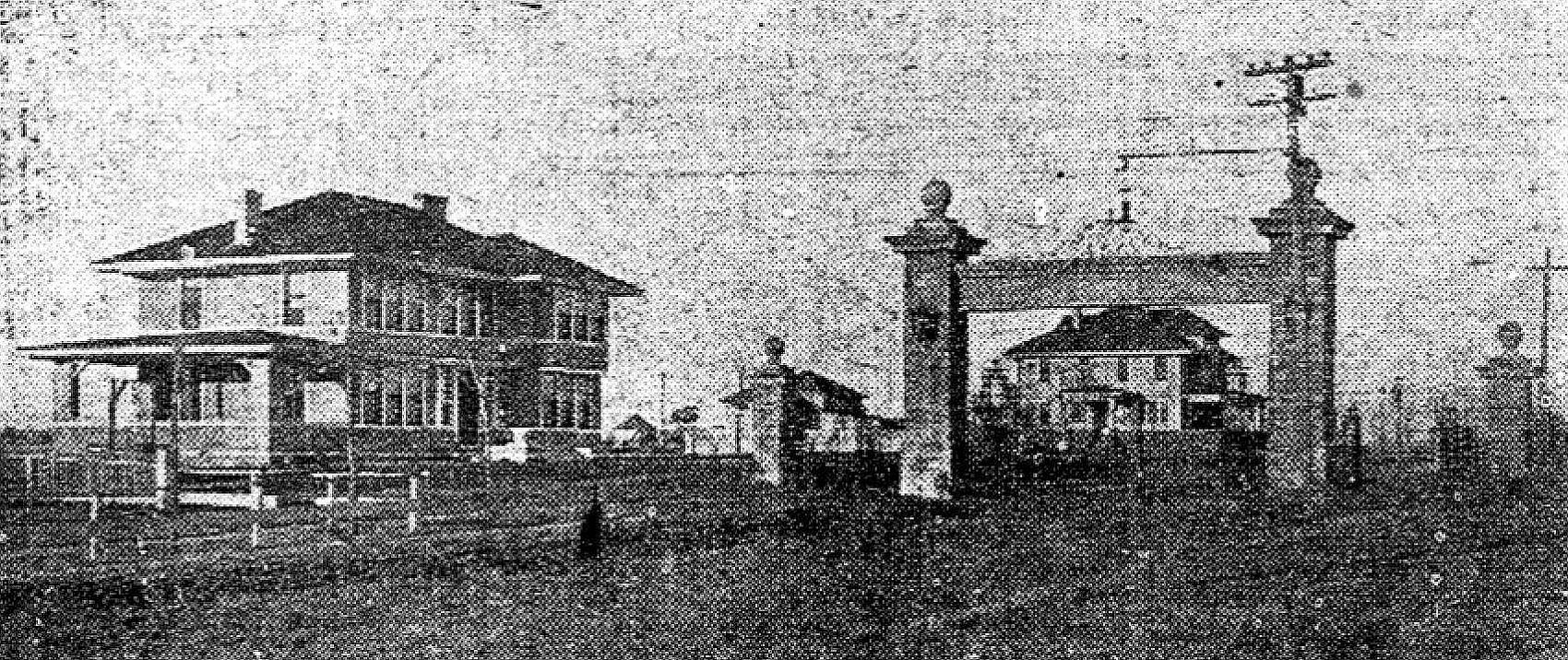
This very early photo of the Junius Heights gate has been added to my recent post “The Gateway to Junius Heights.” (This photo was taken in the Lakewood restaurant The Heights, unfortunately with lights reflecting off the picture — stop by The Heights to see a better image!) (Original source unknown.)

junius-heights-gateway_the-heights-restaurant

*

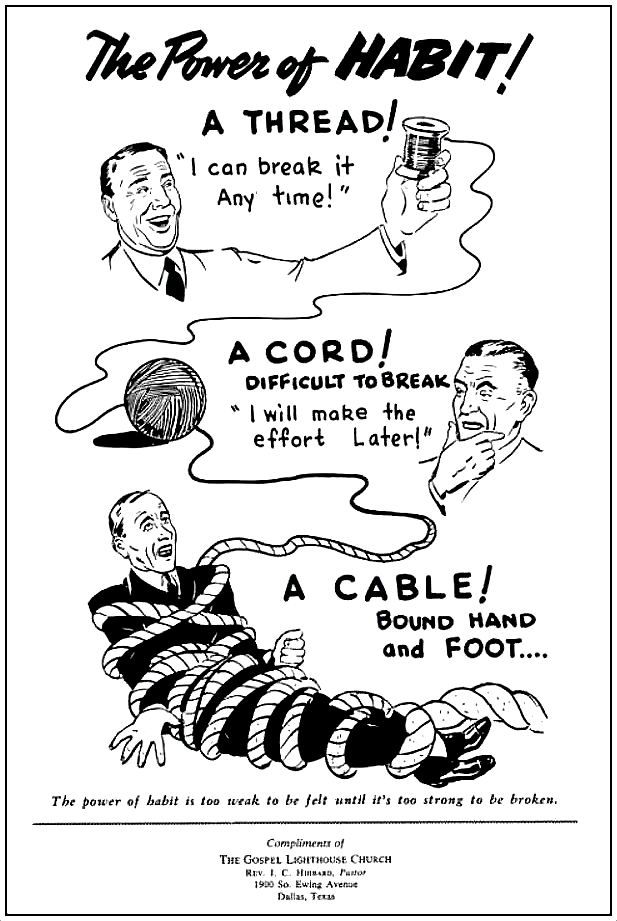
This ad for the Gospel Lighthouse Church appeared — surprisingly — in the 1967 Carter High School yearbook, and it has been added to the perennially popular post with my favorite unwieldy title: “The Lighthouse Church That Warned of Sin’s Penalty with a Beam of Blue Mercury Vapor Shot Into the Skies Above Oak Cliff — 1941.”

gospel-lighthouse_carter-high-school_1967-yrbk

*

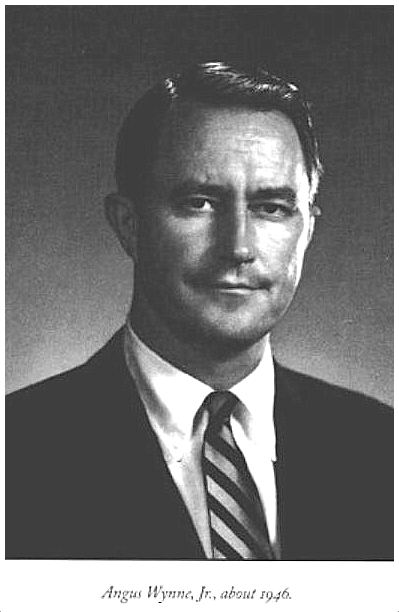
This dashing photograph of Angus Wynne, Jr. has been added to “Angus Wynne, Jr.’s ‘Texas Disneyland’ — 1961.”

wynne_angus-jr_legacies_fall-2002

*

Another dashing portrait — this one of Preston Hollow, etc. developer Ira P. DeLoache — has been added to “Preston Elms: Your Country Estate Awaits — 1935.” (The DeLoache and Wynne photos from the Fall, 2002 issue of Legacies.) 

deloache_legacies_fall-2002

*

And these two photos are from yearbooks of the Terrill School (first one from 1915, second one from 1928) and have been added to the post “George Cacas, The Terrill School’s Greek Ice Cream Man — 1916.”

spaghetti_terrillian_1915

terrill-yrbk_1928

*

Copyright © 2016 Paula Bosse. All Rights Reserved.


On Top of the World: The Southland Center

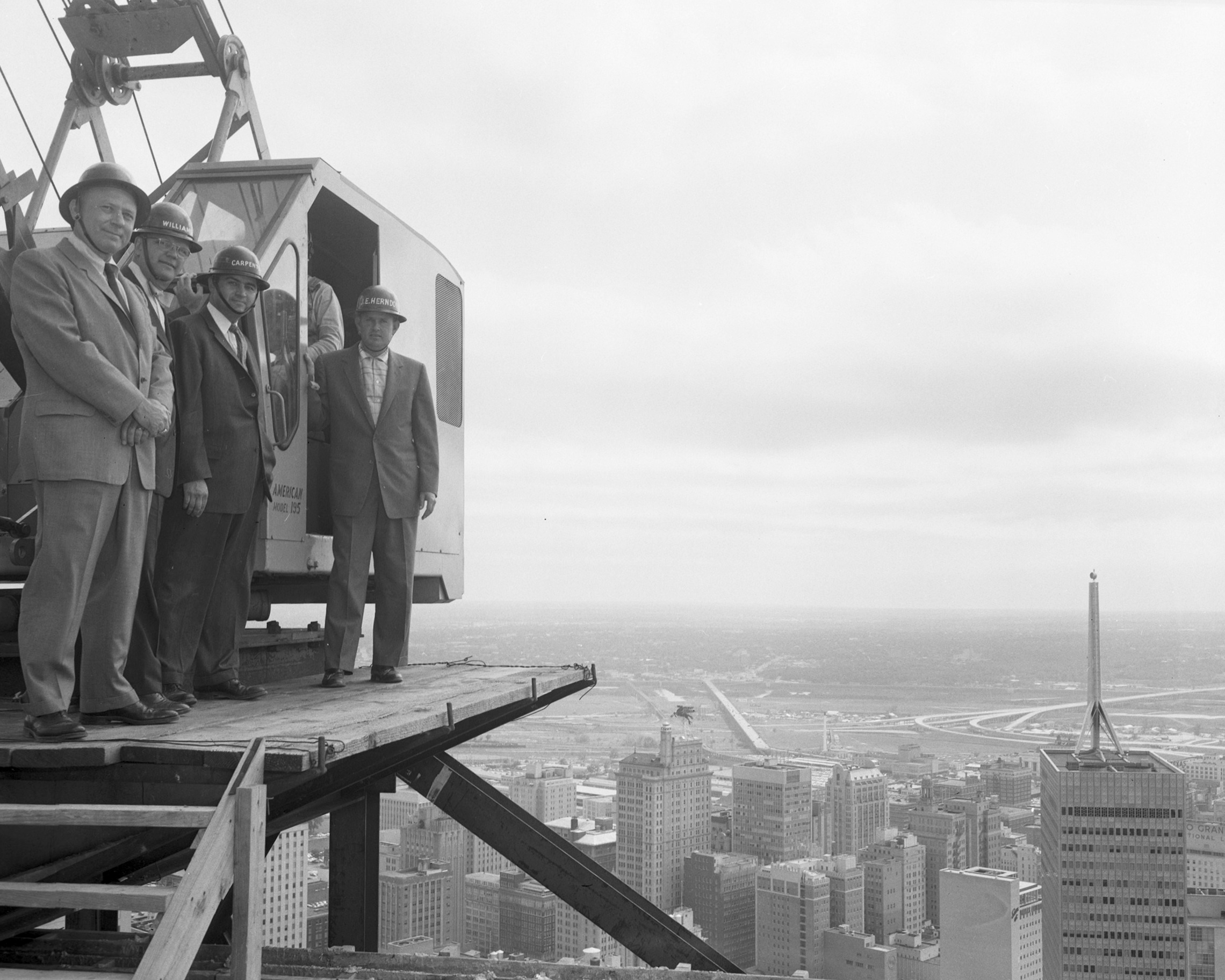
skyline_construction_squire-haskins_UTA_1Executive privilege…

by Paula Bosse

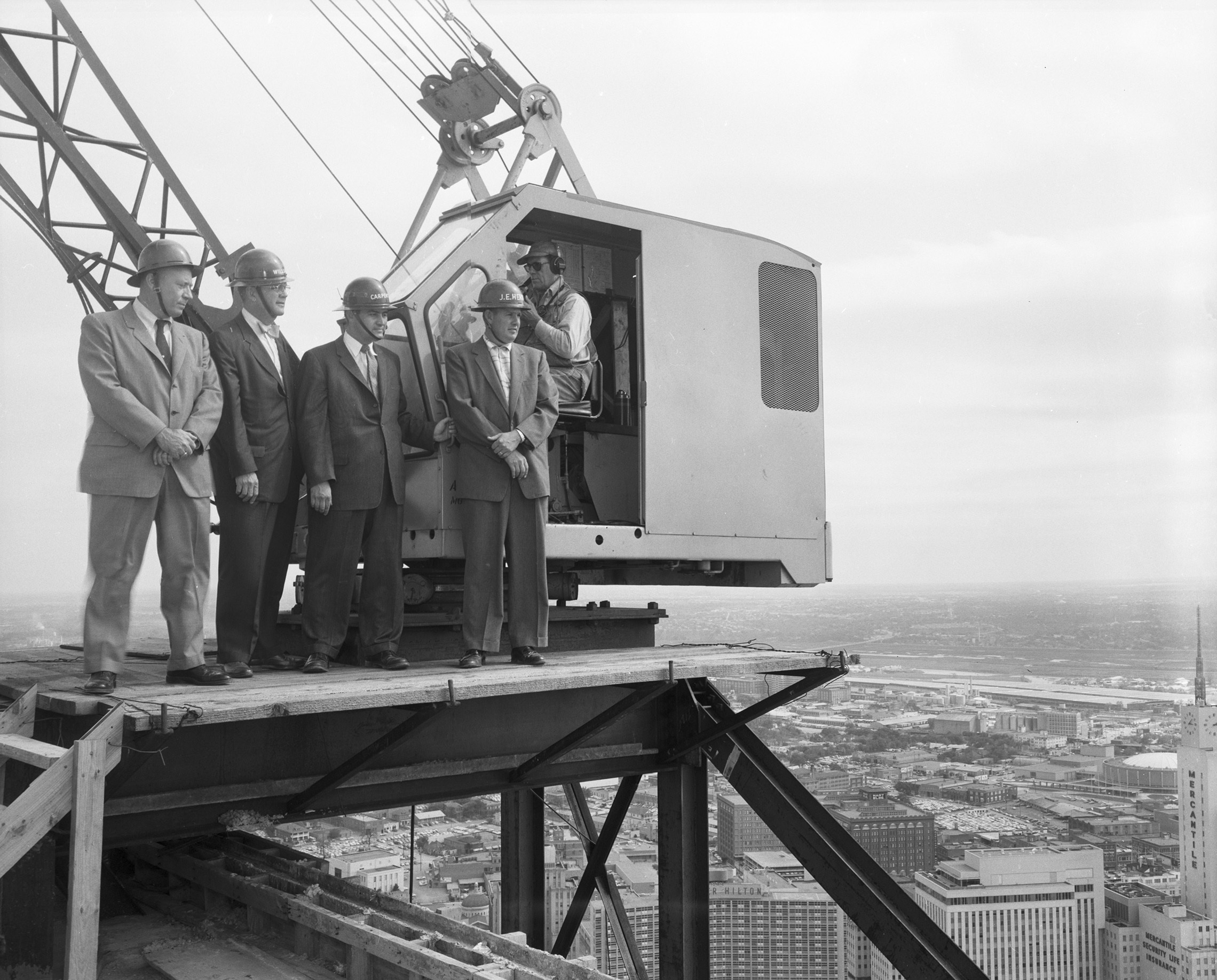
Here are a couple of cool, vertigo-inducing photos taken by Squire Haskins in 1958 or very early 1959 showing Southland Life Insurance executives and a crane operator perched atop the under-construction Southland Center, which included the Southland Life building (which was the tallest building in Dallas for a while) and the Sheraton Hotel. Once completed and opened in April, 1959, there was an observation deck at the top of the Southland Life building, offering an unequaled, unobstructed view of the city.

skyline_construction_crane_squire-haskins_UTA

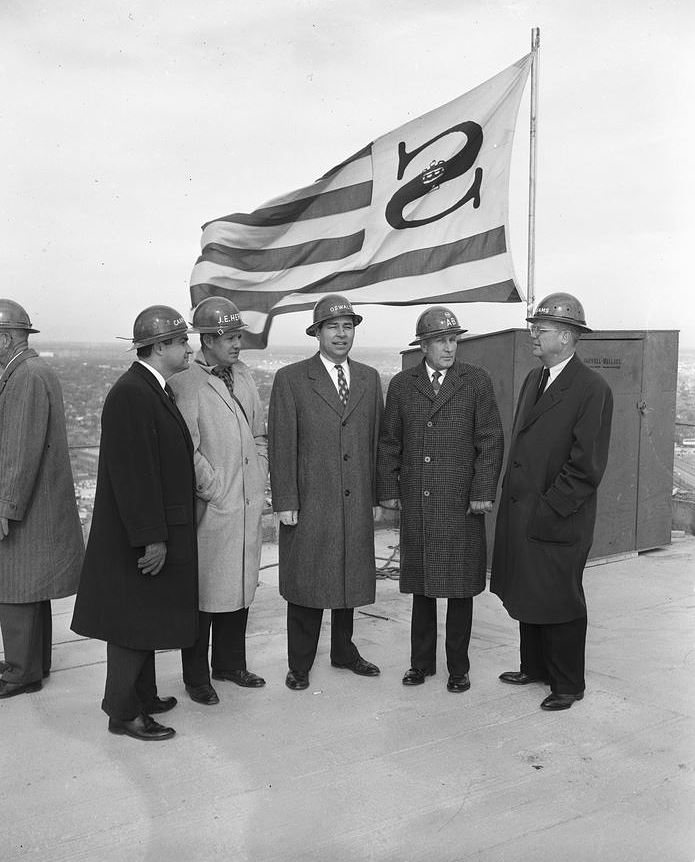
The building under construction in these photos is unidentified, but the familiar Sheraton logo seen elsewhere with the same men is a tip-off.

sheraton_construction_squire-haskins_UTA

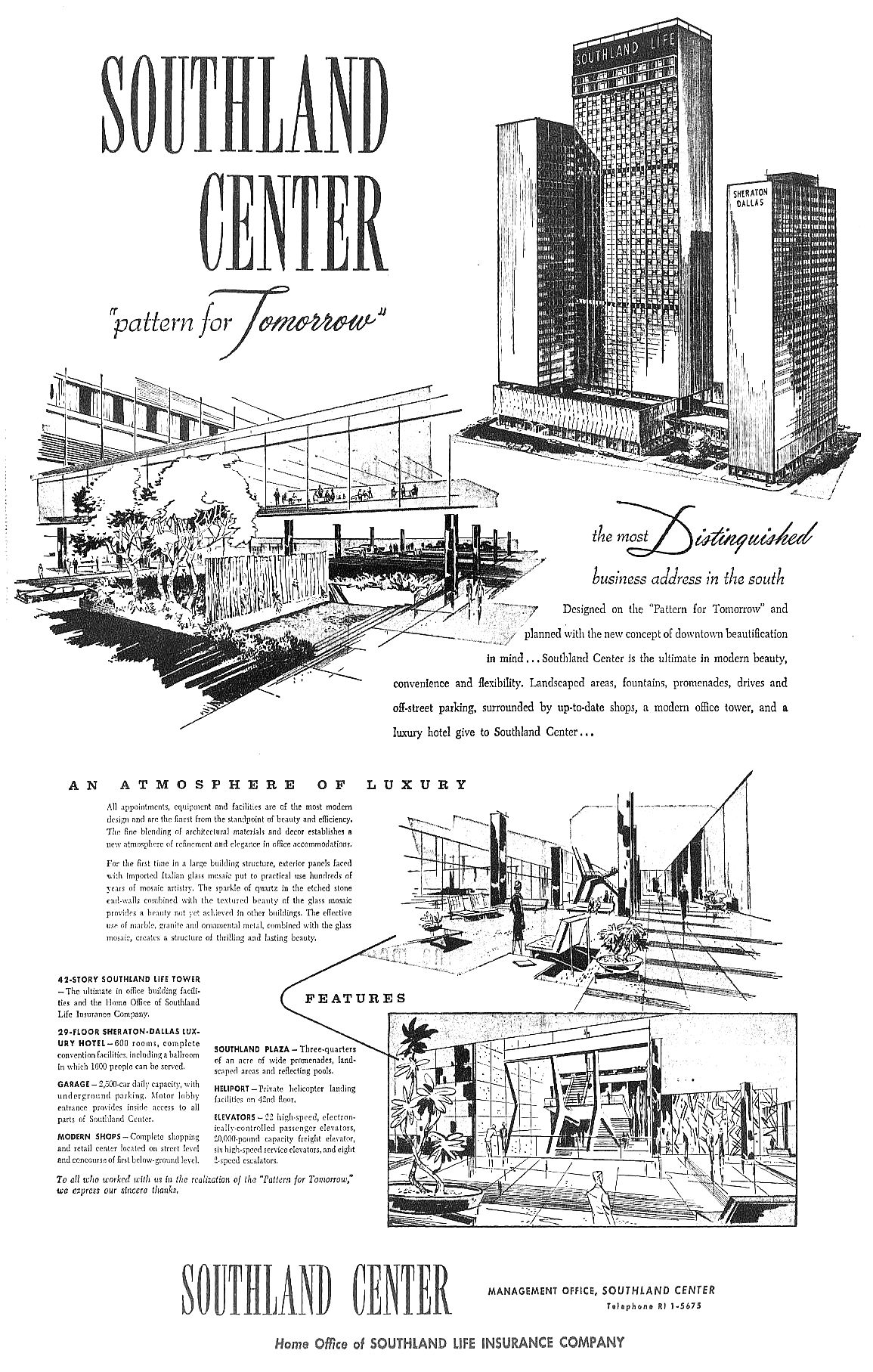
Here’s what it all looked like when it opened. Click to see a larger image.

ad-southland_sheraton_april-1959
April, 1959

***

Sources & Notes

Photos are by Squire Haskins, from the Squire Haskins Photography, Inc. Collection, Special Collections, University of Texas at Arlington Libraries. Info on the top photo can be found here.

Some of the men in the photos are Dan C. Williams (President, Southland Life), Ben H. Carpenter (Executive Vice-President), William H. Oswalt, III (Vice-President, Director of Project Development for Southland Center), J. E. Herndon, and “A. B.”

A related Flashback Dallas post — “Sheraton Dallas, Original Version — 1959” — is here.

*

Copyright © 2016 Paula Bosse. All Rights Reserved.

“Reminiscences: A Glimpse of Old East Dallas”

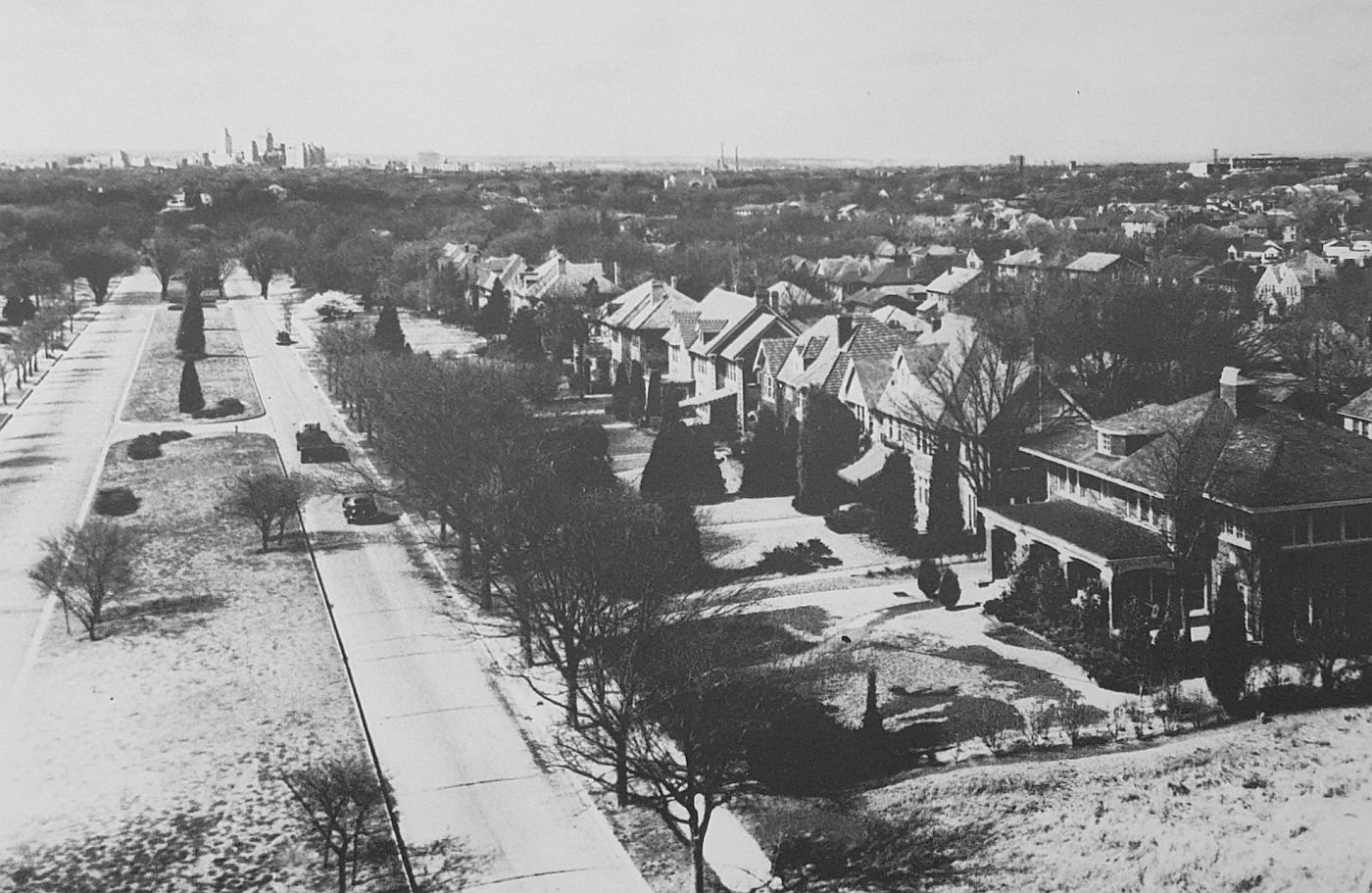
swiss-ave_ca-1950_reminiscencesSwiss Avenue, about 1950… (click for larger image)

by Paula Bosse

(This post has been edited, as the book is no longer available for purchase — all 100-plus copies have sold! Thanks to everyone who bought copies and helped raise money for the Lakewood Library!)

***

I’m not sure I’ve ever used this blog to direct a potentially interested audience to something they might want to buy, but I think this is something that warrants mention.

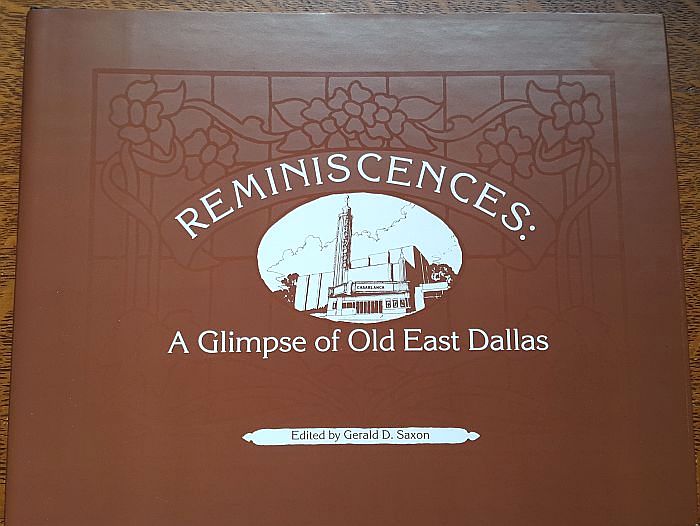
I encourage interested parties to track down a copy of the wonderful  book Reminiscences: A Glimpse of Old East Dallas, edited by Gerald D. Saxon and published in 1983 by the Dallas Public Library.

reminiscences_saxon_front-cover

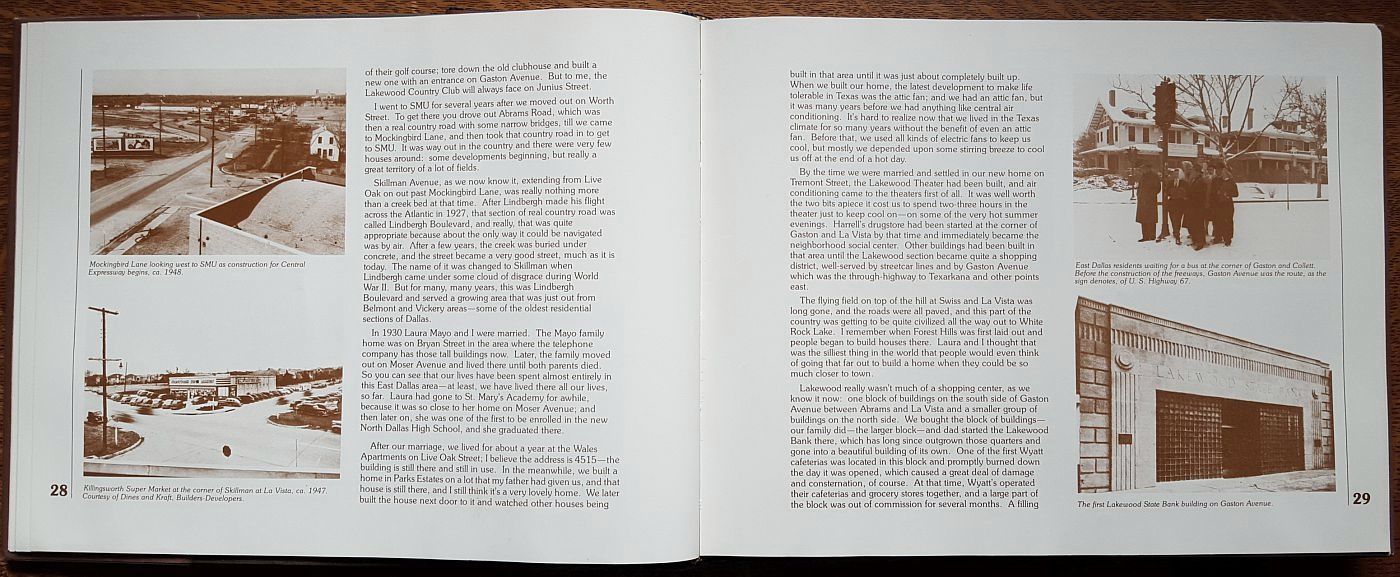
It contains over 150 historic photos of East Dallas and environs (most of which I’d never seen before) and more than 20 oral histories of the area from older folks who grew up or lived in Lakewood, Munger Place, Junius Heights, and other Old East Dallas neighborhoods (the oral histories are from the Lakewood Community Library Oral History Collection, which one may listen to at the downtown library or at the Lakewood Branch).

reminiscences-book_open

*

The photo of Swiss Avenue at the top (with a closer-than-I-always-think downtown in the distance) is one of the great photos in the book. Another is the one below, the caption of which reads: “The 7100 block of Lakewood Boulevard in 1932 looking east to White Rock Lake. (Courtesy of Dines and Kraft, Builders-Developers.)” It’s weird seeing the lake at the end of the street. To see what it looks like today, click here

lakewood-blvd_1932_reminiscences

*

And this photo — taken around 1938 — is one of my favorites. It shows the Lakewood Shopping Center, with the old Lakewood Library just right of center. The Junius streetcar tracks are at the right. The empty space at the left is where the Lakewood Theater will be built.

lakewood-shopping-ctr_streetcar-tracks_ca1938_reminiscences

***

Sources & Notes

All black and white photos are from the book; top photo is from the collection of the Dallas Public Library (“Bird’s-eye-view of Swiss Avenue,” DPL Call Number PA81-00043). The color has been adjusted. I love this book, but my only complaint is that the text and photos are printed in sepia-colored ink.

All photos are larger when clicked.

*

Copyright © 2016 Paula Bosse. All Rights Reserved.


The Gateway to Junius Heights

junius-streetcar_junius-gates_DPL_sm
Welcome to Junius Heights!

by Paula Bosse

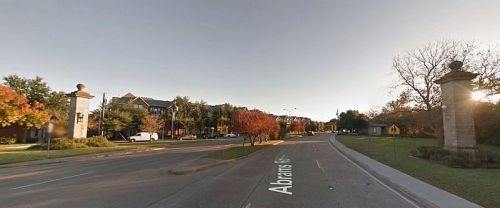
If you’ve driven along Abrams Road, between, say, Beacon and the Lakewood Country Club, you’ve probably passed two tall stone pillars which stand across Abrams from one another, and you’ve probably asked yourself, “What are those things?”

These things:
junius-heights-pillars_google-street-viewGoogle Street View here

They were built as gateway markers to the Junius Heights neighborhood in about 1909 — they’re just not in their original location anymore. They were originally on either side of Tremont Street, half a block east of Ridgeway. They’ve been moved, but they’re only a stone’s throw from their original site.

In 1973, when the city was in the midst of widening and connecting Abrams with Columbia, the 30-foot pillars were situated on a roadway which was going to be demolished. The pillars would have been destroyed were it not for the efforts of a small group of preservation-minded neighborhood residents who managed to raise enough money to have the historic East Dallas structures dismantled and moved. It took a while for the money to be fully raised, but the pillars were placed on their new sites in 1975.

The thing that is most interesting about the saving of these columns is that this took place at a time when this part of East Dallas — Swiss Avenue included — was on something of a downslide. Many of the houses were in disrepair and many residents had moved out, seeking newer homes and better (i.e. newer) neighborhoods. Thankfully, in the early 1970s people began to focus on historic preservation, and the area began to make a slow comeback. Thanks to the preservation efforts of these people, their persistence in gaining “historic district” status for Junius Heights and Munger Place, and their successful fights on zoning issues, the areas surrounding these stone pillars are once again highly desirable neighborhoods, full of homeowners who are good caretakers and thoughtful preservationists.

**

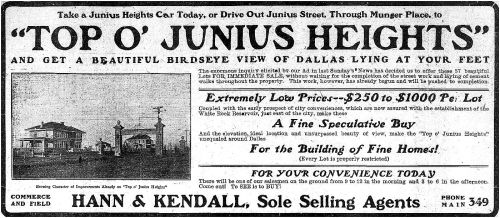
When researching this post, it was very difficult to determine when the pillars had been built. For some reason 1917 seemed to be a popular guess, and it was repeated in several articles I came across. But it was actually earlier. The earliest photo I’ve found (and I was pretty excited to have stumbled across it!) was one that first appeared in a November, 25, 1909 ad for a new development called “Top o’ Junius Heights.” (All photos and clippings are larger when clicked.)
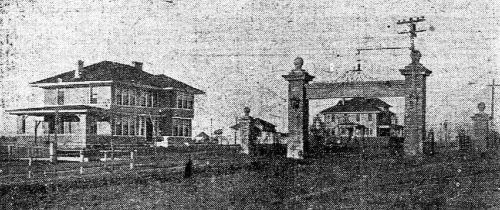
ad-junius-heights_dmn_112509-det

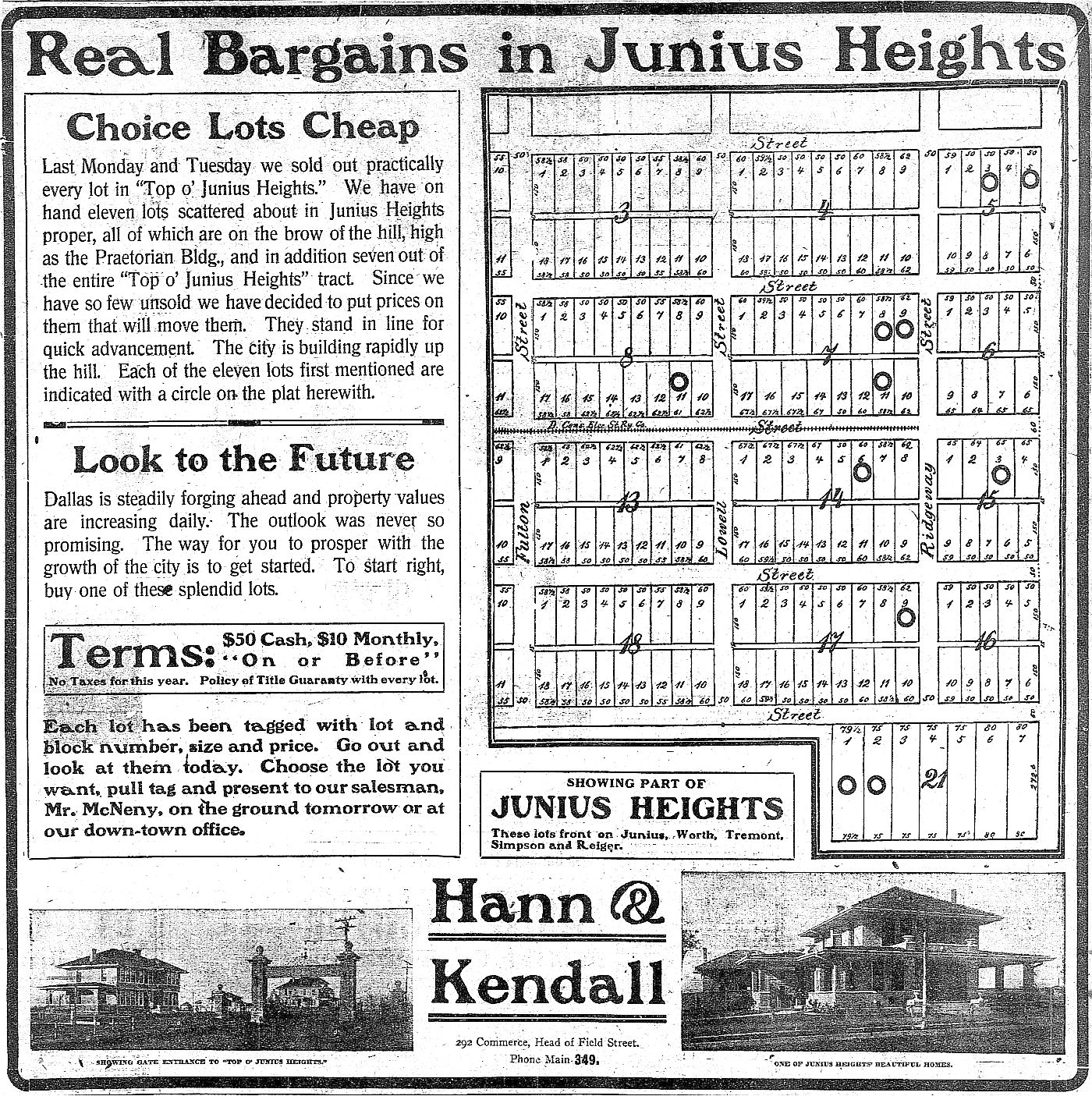
Here’s the full ad:

junius-heights_dmn_112509Dallas Morning News, Nov. 25, 1909

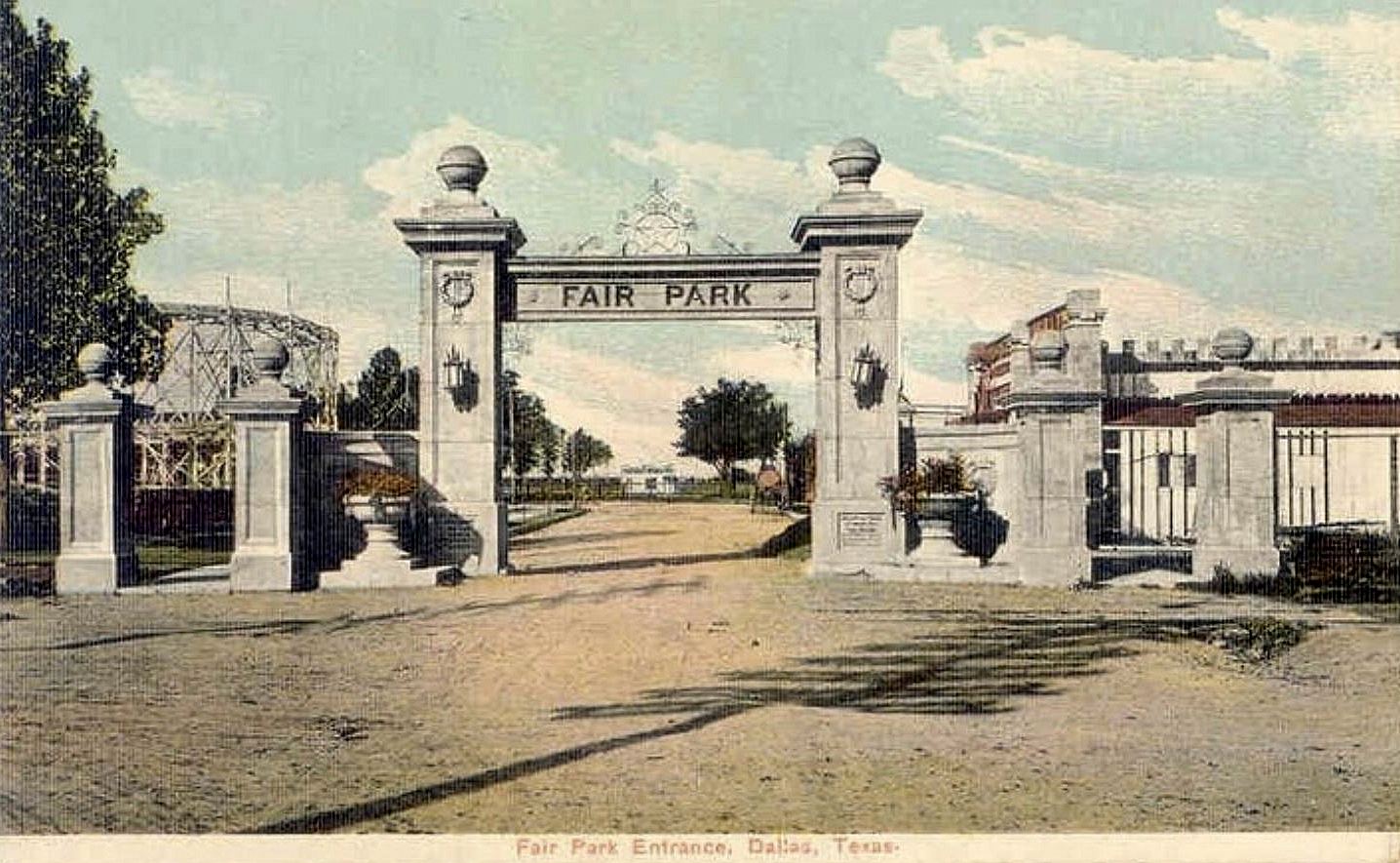
Note how similar this entrance looks to the entrance to Fair Park from the same time:
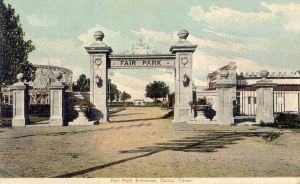
fair-park-entrance_1910_flickr_coltera

The same photo was used in another ad a few months later. If you live in Junius Heights, perhaps you can find your house in the diagram:
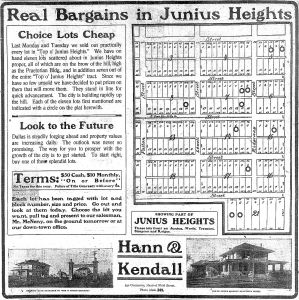
ad-junius-heights_dmn_050810DMN, May 8, 1910

The pillars were actually built as a gateway — the columns connected at the top, spanning Tremont. Lots in Junius Heights first began to be sold in 1906; in 1909, the second addition — called “Top o’ Junius Heights” — began to be offered for sale. The opening of the second addition appears to be when the gateway might have been built. Not only did this gate serve as an entrance to Junius Heights, it actually separated the two additions (see clippings below). It was also a handy landmark, and for many years it stood at the end of the Junius Heights streetcar line (which ended at Tremont and Ridgeway).

Below, part of an ad for Top o’ Junius Heights that appeared in The Dallas Morning News on Nov. 28, 1909, in which the “big stone gate entrance” is mentioned:
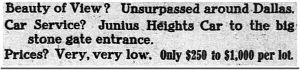
junius-heights-ad_dmn_112809_det

Part of another ad for Top o’ Junius Heights:
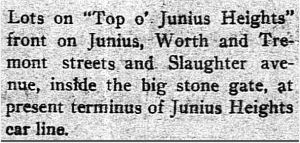
junius-heights-gates_dmn_050110_ad-det
DMN, May 1, 1910

And part of an ad for just plain ol’ Junius Heights, mentioning that the gate can be seen as a boundary:

junius-heights-gates_dmn_090410_ad-detDMN, Sept. 4, 1910

Here’s a detail from a 1922 Sanborn map which might make the location of the gate a little easier to visualize (and, again, these streets no longer look like this): the blue line represents the streetcar line (which ran all the way to Oak Cliff — the photo at the top of this post shows the Hampton streetcar), and the red circles are about where the pillars were originally planted. (The full map is here.)
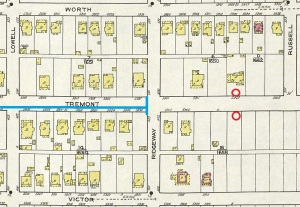
junius-heights-gate_1922-sanborn_sheet-394

It was pretty exciting finding that photograph from 1909, but it was also pretty exciting seeing a photograph posted in the Dallas History Facebook group by Jerry Guyer which shows a dreamy-looking view of the gate as seen from the yard of the home owned by his great-uncle, A. P. Davis, who lived at 5831 Tremont between 1911/12 and 1921/22 (see what the house looked like back then, here).  The house was on the northwest corner lot of Tremont and Ridgeway (it is still standing), only half a block away from the gate. This detail of that photo is fantastic!
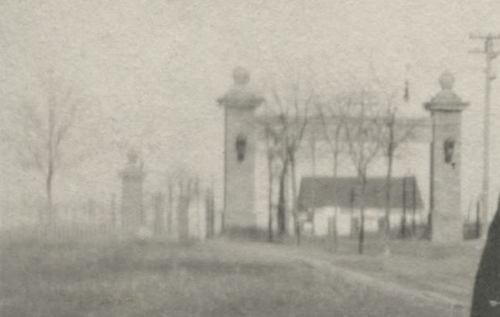
junius-gates_ca-1920s_guyer_dallas-history-fb

*

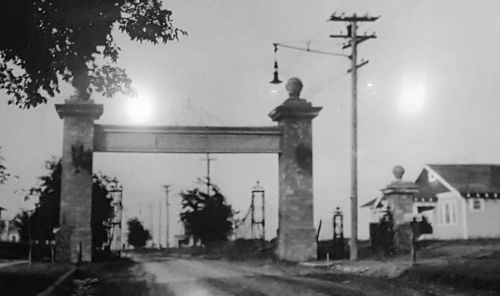
Another very early photo of the pillars/columns/gateway can be seen in this photo. (I’m afraid it’s a little odd-looking as I took a photo of it on the wall of The Heights restaurant in Lakewood and lights are reflecting off the picture. Please check this large photo out in person. Not only are there other great historical photos on the walls, but the coffee is great.)
junius-heights-gateway_the-heights-restaurant

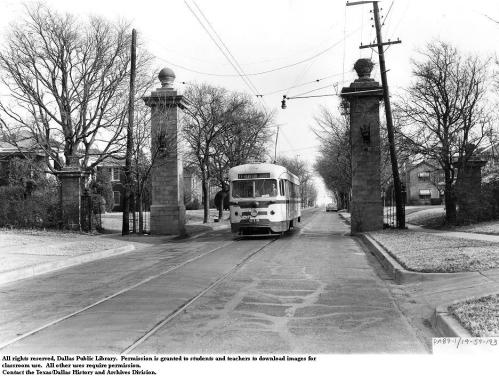
Here is the same photo as the one at the top. Note that this “gateway” has actual iron gates and that there are smaller secondary pillars on the opposite side of the sidewalks. Also note that the pillar on the right actually extends into the narrow street.
junius-streetcar_junius-gates_DPL

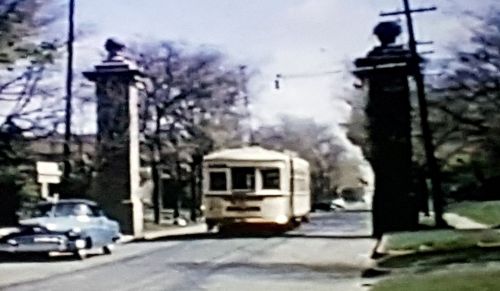
And here’s another view I just came across (I’ve added so much since I originally wrote this post!), from a DVD called Dallas Railway & Terminal — this from 1951 or 1952, showing the Junius streetcar coming through the “gates” (sorry for the low-res):
junius-gates__early-1950s_streetcar-video

***

Sources & Notes

Top photo is from the Texas/Dallas History & Archives Division, Dallas Public Library (with special thanks to M C Toyer); DPL’s call number for this photograph is PA87-1/19-59-193.

Photo of the view of the gate from the home of Andrew P. Davis is from the collection of Jerry Guyer, used with permission.

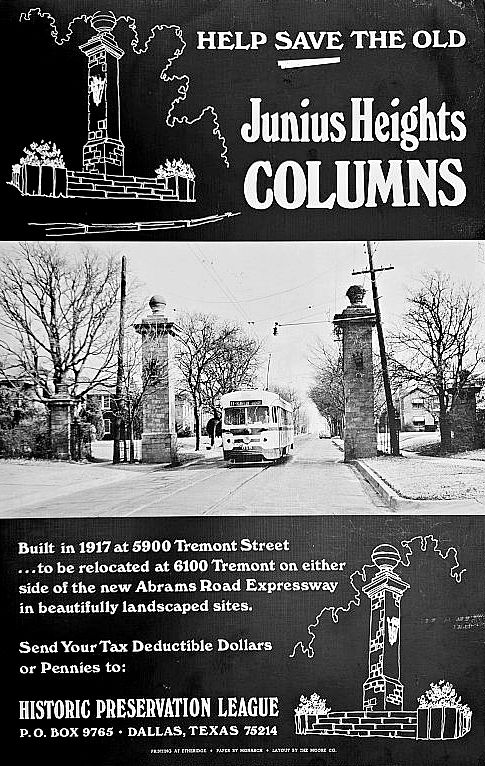
More info on Junius Heights and the saving of the pillars can be found on the Preservation Dallas site, here. Here is a poster from the Dallas Public Library Poster Collection (with an incorrect date on it….).
junius-heights-columns_1973_DPL_poster

A few Dallas Morning News articles on the fight to save the pillars:

  • “Residents Try Saving Pillars From the Past” by Lyke Thompson (DMN, May 30, 1973, with photo of pillar)
  • “Columns Come Down” (DMN, June 2, 1973, with photo)
  • “Cash Raised for Pillars” (DMN, June 7, 1973)
  • “Cornerstone Placed In East Dallas Area” by Michael Fresques (DMN, July 29, 1973, no photo, but description of pillars lying in pieces, awaiting funds to reconstruct them)
  • “Junius Dedicates Columns” by Doug Domeier (DMN, June 16, 1975, pillars finally relocated, with photo of preservationist Dorothy Savage standing beneath one of the pillars)

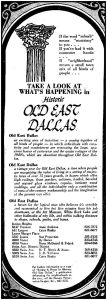
East Dallas and Old East Dallas are fiercely proud of their history and fight for preservation issues.
old-east-dallas_dmn_072775
July, 1975

*

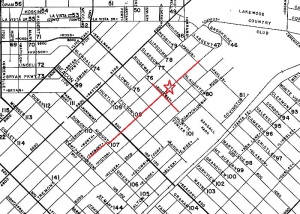
It’s a bit difficult for me to visualize where these pillars were originally. Here’s a 1952 map showing Tremont with the approximate location of the columns before they were moved.
junius-heights-columns_1952-mapsco
1952 Mapsco

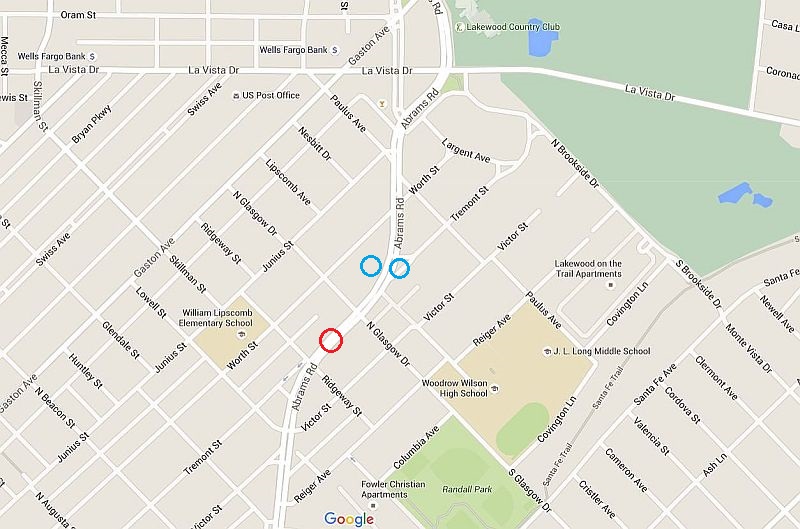
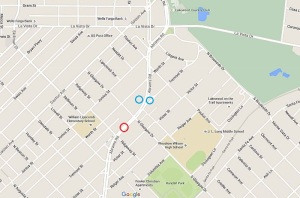
And here’s a present-day map, showing the post-Abrams extension. I’m not sure exactly where those pillars originally stood, but it was near the intersection of Tremont and Slaughter seems to have been between Ridgeway and Glasgow (location edited, thanks to Terri Raith’s helpful comments below) — this location is circled in red on the map below; the locations of the pillars today are in blue.
junius-heights-columns_google

*

Copyright © 2016 Paula Bosse. All Rights Reserved.

Cold Smut: Henry Miller’s “Tropic of Cancer” Banned in Dallas — 1961

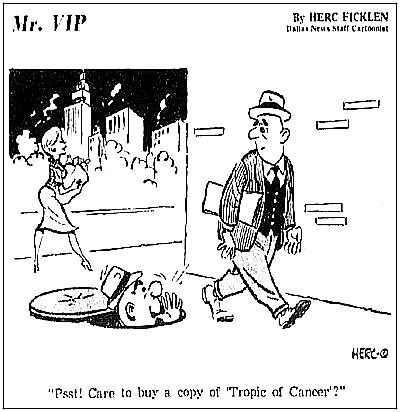
cartoon_topic-of-cancer_dmn_083061_small

by Paula Bosse

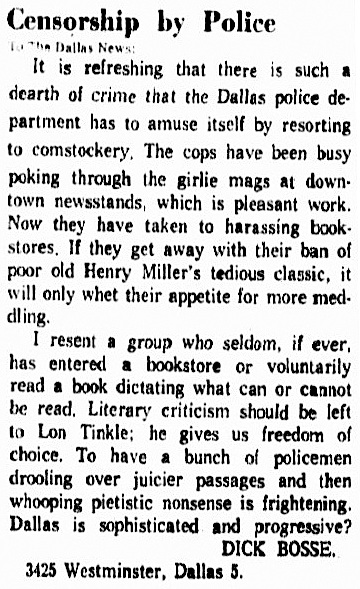
Today is my late father’s birthday. He was a Dallas bookseller, and when searching on his name in the Dallas Morning News archives, I found this pithy letter to the editor he had written in the summer of 1961 (click for larger image; transcribed below).

tropic-of-cancer_prb_dmn_082461
Aug. 24, 1961

*

It is refreshing that there is such a dearth of crime that the Dallas police department has to amuse itself by resorting to comstockery. The cops have been busy poking through the girlie mags at downtown newsstands, which is pleasant work. Now they have taken to harassing bookstores. If they get away with their ban of poor old Henry Miller’s tedious classic, it will only whet their appetite for more meddling.

I resent a group who seldom, if ever, has entered a bookstore or voluntarily read a book dictating what can or cannot be read. Literary criticism should be left to Lon Tinkle: he gives us freedom of choice. To have a bunch of policemen drooling over juicier passages and then whooping pietistic nonsense is frightening. Dallas is sophisticated and progressive?

Dick Bosse

*

After I looked up the word “Comstockery,” I was spurred to find out what he was writing about.

Henry Miller’s “tedious classic,” Tropic of Cancer, was originally published in Paris in 1934. It was considered too vulgar to be published in the United States. In fact, it was considered “obscene” by the U.S. Customs Department, and its very presence in one’s suitcase after returning home from a holiday in France was illegal. The only booksellers in the U.S. that sold the book did so at the risk of being jailed. That’s not to say there wasn’t a lot of piracy, bootlegging, and hush-hush selling of this much talked-about book going on, because there was — especially in New York.

In 1961, the book was finally published in the U.S. by Grove Press, and it was an immediate hit. (Grove priced it at an unbelievably steep $7.50, the equivalent today to about $60.00! The typical new hardcover fiction title in 1961 was around $3.95.) Unsurprisingly, the book was immediately banned in Boston, because Boston’s “thing” was banning stuff. But then … it was unexpectedly banned in Dallas, even though it was the #1 bestseller at the respected McMurray’s Bookshop downtown.

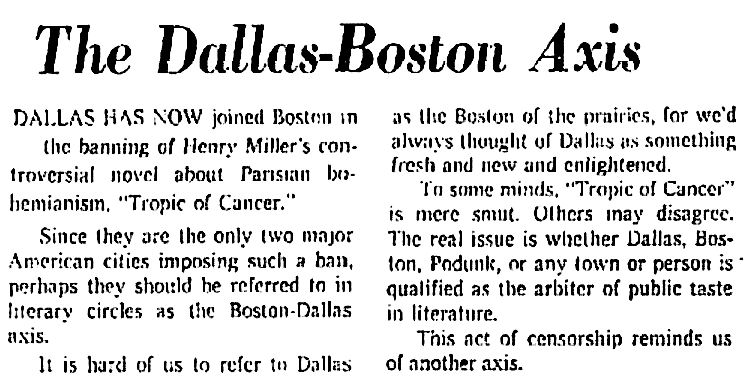
Dallas Police Department officials had decided the book violated a new Texas “anti-smut” law, and, on August 15th, policemen visited all the large bookstores in the city and informed them that if any copies of the book continued to be offered for sale, criminal charges would most likely be brought against the booksellers and the stores. (The state law called for fines up to $1,000 and one year in county jail for selling lewd and obscene material.) Dallas joined Boston as the only major American city banning the book. And then the whole thing became a cause célèbre — a “Dallas-Boston axis”!

tropic_long-beach-independent_081861The Long Beach (California) Independent, Aug. 18 1961

The move was roundly deplored by most of the Dallas public. The “Letters to the Editor” section of the historically very conservative Dallas Morning News contained many, many letters to the editor from outraged Dallasites, speaking out against the police department’s action. Sure, there were a few who were happy that objectionable material was being removed from Dallas bookstores, but they seemed to be in the minority. Even those who vehemently disliked the book were steadfastly opposed to its being banned, including the editors of The News.

As with many other non-issues like this that tend to cause near-obsession by the media, this story would not go away. The summer of ’61 was, for Dallas, the Summer of Smut. Best headline throughout all of this? One which appeared on a Morning News editorial: “COLD SMUT.”

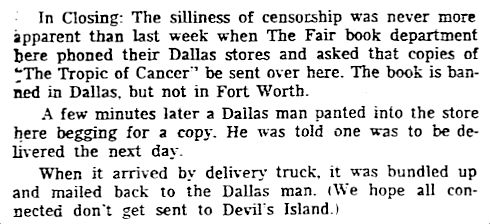
Booksellers pulled the book, but, as the editorial says above, there were almost certainly sales continuing to interested clientele. Also, it should be noted that only Dallas was banning the book at this point (by 1962 other cities around the country had become embroiled in threatened legal action, resulting in books being pulled from shelves). You couldn’t buy the book in Dallas, but you could buy it in Fort Worth.

tropic-of-cancer_elston-brooks_FWST_082261
Elston Brooks, Fort Worth Star-Telegram, Aug. 22, 1961

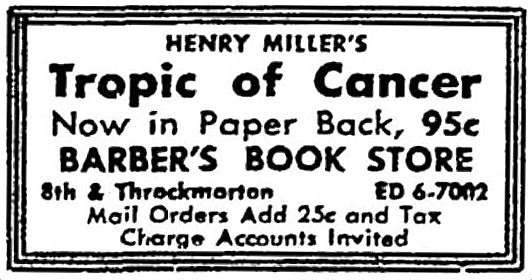
One assumes bookstores in Cowtown were cashing in on Tropic of Cancer sales — Barber’s Book Store must have been doing land-office mail order business.

tropic-of-cancer_FWST_110861_ad
FWST, Nov. 8, 1961

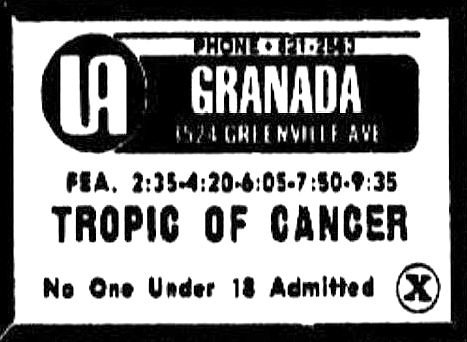
I thought this was a silly flare-up that lasted only a few weeks, but letters to the editor continued to show, at least through the winter of 1963, that it was still impossible to find the book in a Dallas bookstore. It probably wasn’t until 1964, when the United States Supreme Court ruled that the book was not obscene, that Dallas booksellers were finally free to openly sell a book which was published in 1934. No one seemed to care much when the X-rated film version (starring Texan Rip Torn) played at the Granada in 1970.

movie_dmn_090970
Sept., 1970

***

Sources & Notes

Cartoon by Herc Ficklen, from Aug. 30, 1961.

More on Tropic of Cancer at Wikipedia, here. This article contains my favorite line of any I read from the people who really, REALLY hated the book. It came from a Pennsylvania judge:

“[It is] not a book. It is a cesspool, an open sewer, a pit of putrefaction, a slimy gathering of all that is rotten in the debris of human depravity.”

Tons of articles on this appeared in The Dallas Morning News.in just ONE WEEK. Here are just a few (seriously, it’s the tip of the iceberg):

  • “Sales Banned: Police Label Book Obscene” by James Ewell (DMN, Aug. 16, 1961)
  • “Stores Stop Selling Book Called Obscene” by James Ewell (DMN, Aug. 17, 1961)
  • “Censorship of ‘Tropic’ Looses Opinion Barrage” by Scott Buchanan (Aug. 17, 1961)
  • “What Is Obscenity?” — editorial (DMN, Aug. 19, 1961)
  • “Book Fight Takes On Circus Air” (DMN, Aug. 19, 1961)
  • “Citizens Group Lauds Police Move On Book; Some Less Costly Smut Considered Main Problem” by Frank Hildebrand (Aug. 20, 1961)
  • “Cold Smut” — editorial (DMN, Aug. 20, 1961)
  • “Wade Orders Study On Smut Literature” by Carlos Conde (DMN, Aug. 21, 1961)
  • “Police Lectured On Book Action” by Jimmy Thornton (DMN, Aug. 22, 1961)
  • “Primer for Censors: A Few Basic Ideas”  by Lon Tinkle, Book Critic of The News (DMN, Sept. 3, 1961)

Every time I came across the word “smut” mentioned in connection with this topic — and it was mentioned a LOT — I couldn’t help but think of Vera Carp and the other Smut Snatchers of the New Order from Greater Tuna.

If it looks too dang small to read, click it!

*

Copyright © 2016 Paula Bosse. All Rights Reserved.
 

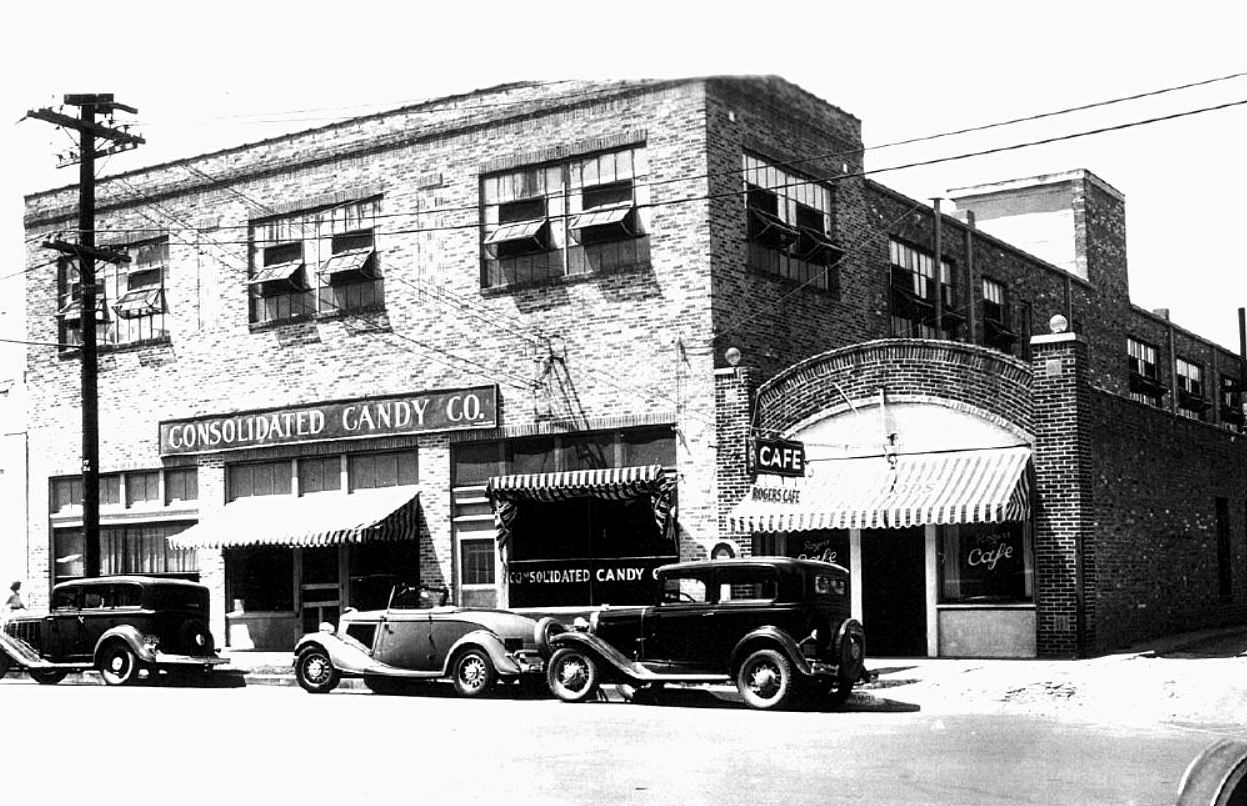
Consolidated Candy Co., 826-830 Exposition — ca. 1936

consolidated-candy-co_826-830-exposition-st_jim-wheatCandy manufacturing in Expo Park (click for larger image)

by Paula Bosse

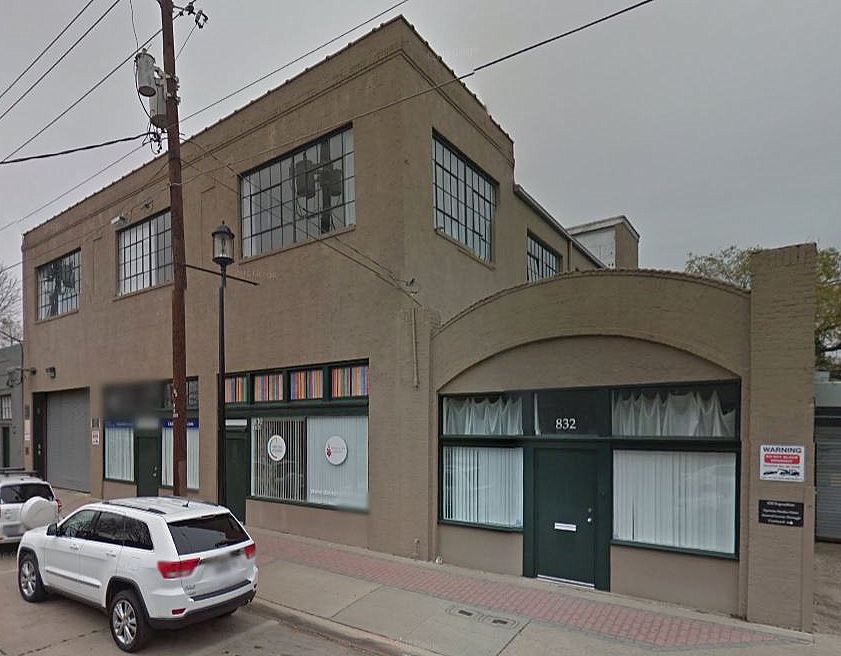
A photo of Exposition Park about the time of the huge Texas Centennial celebration held in 1936 at Fair Park, one block away. The Consolidated Candy Co. at 826-830 Exposition Avenue was liquidated in 1939, and the Rogers Cafe next door at 832 Exposition was around only a couple of years, about 1935 to 1937, so 1936 seems a good guess.

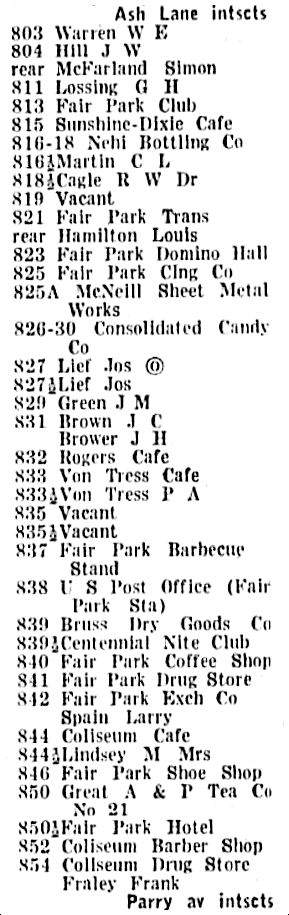
Here’s a list of businesses that were operating along hopping Exposition Avenue in 1936, between Ash and Parry (click for larger image):

expostion_1936-directory
1936 Dallas directory

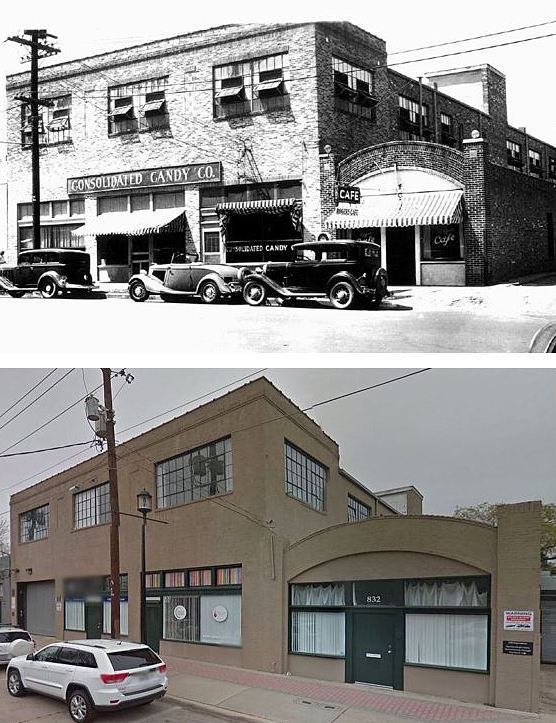
Most of the buildings from that period along Parry and Exposition are still standing, including the buildings seen in the photo above. Here is a current view.

826-830-exposition_google_jan-2016
Google Street View, Jan. 2016

I’m happy to see these two buildings still holding down that spot after all this time, but they both appear to have lost some character in the intervening 80 years. It’s like someone’s sanded all the interesting bits off and made it as bland-looking as possible. You know what I think needs to make a comeback? Awnings.

***

Top photo from Jim Wheat’s Dallas County Texas Archives site.

A Google Street View showing this block looking toward Fair Park, with these buildings on the left, is here.

exposition_google-maps
Google Maps

expo-then-now

Images larger when clicked.

*

Copyright © 2016 Paula Bosse. All Rights Reserved.

Dallas Police Moonlighting as “Bonnie and Clyde” Movie Extras — 1966

bonnie-and-clyde_movie_dallas-police-extras“Action!” (click for BIG image) Photo: Dallas Police Museum

by Paula Bosse

Need to hire a bunch of movie extras who look comfortable toting rifles? When Hollywood came to Dallas and environs in the fall of 1966 to shoot the movie “Bonnie and Clyde,” they found plenty of law enforcement officers happy to don a pair of overalls and add some local color to their production.

I came across this photo on the Dallas Police Department Museum Facebook page. One of the comments under the photo: “I remember when all the overtime slots were allowed (paid by the film company)…. I recognize Chief Curry and the other officers.” Another person commented that an ex-DPD cop told him that he was in the movie, dressed as a farmer, chasing a car across an open field.

Did you have an Uncle Earl who was on the DPD force in 1966? There’s a chance he might be in the movie. Hell, he might be in this photo!

***

Sources & Notes

Photo from the Dallas Police Department Museum Facebook page.

Read the Preston Hollow Advocate article “A Criminal Record: Dallas Police Department Museum,” here.

*

Copyright © 2016 Paula Bosse. All Rights Reserved.

The St. Joseph Orphanage — 1891

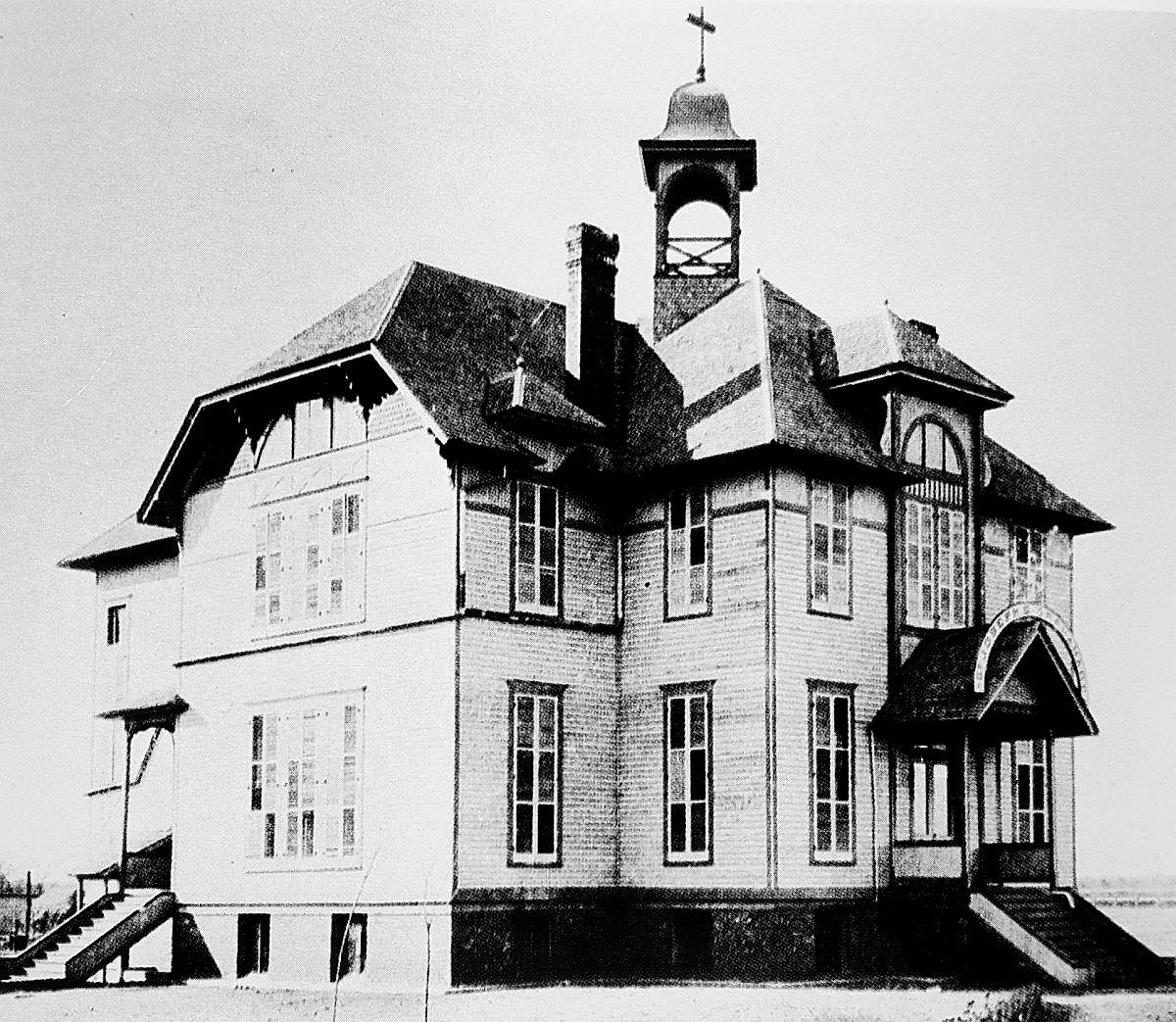
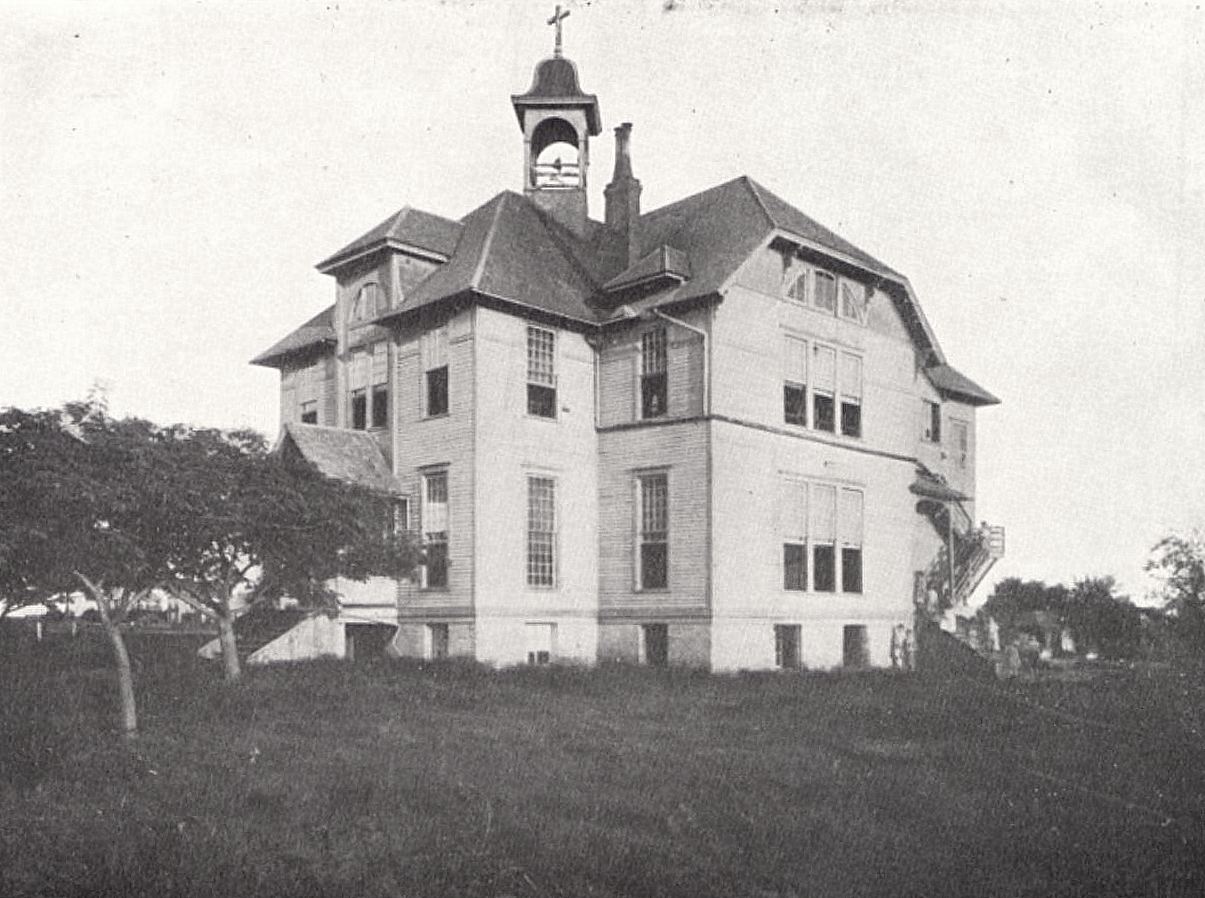
st-josephs-orphanage_dallas-rediscoveredThe new Oak Cliff orphanage, ca. 1891 (click for larger image)

by Paula Bosse

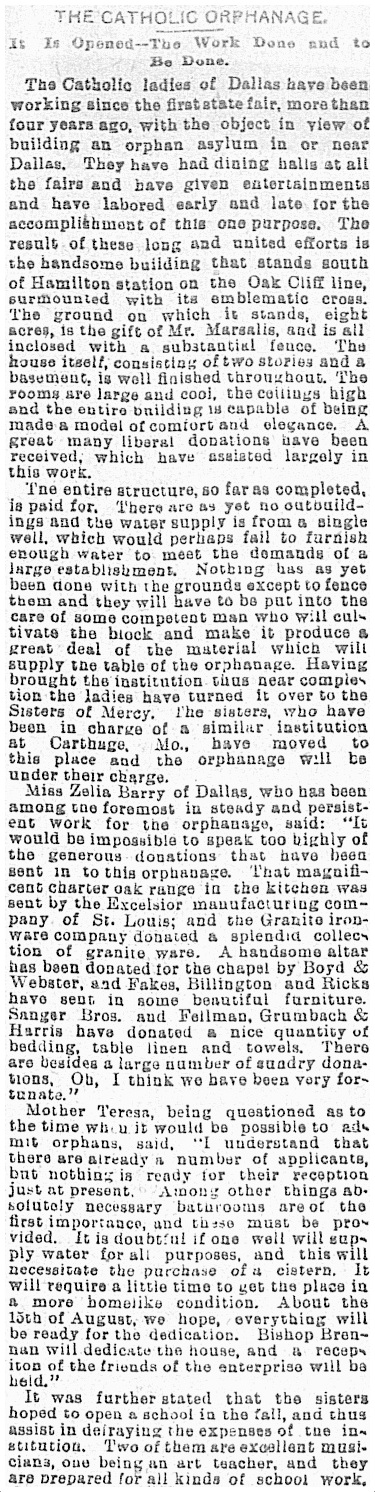
The St. Joseph orphanage was built in Oak Cliff in 1891 on 6-8 acres donated to the Catholic Diocese by Thomas Marsalis. The building was a large house, built and furnished with funds raised from local donations.

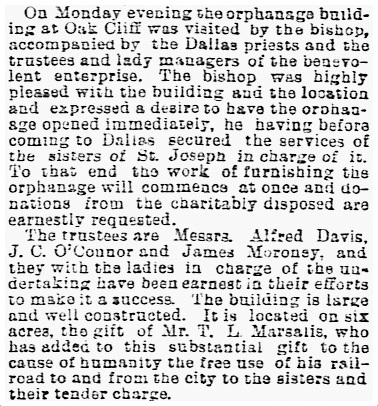
The house itself, consisting of two stories and a basement, is well finished throughout. Rooms are large and cool, the ceilings high and the entire building is capable of being made a model of comfort and elegance. A great many liberal donations have been received which have assisted largely in this work. (Dallas Morning News, July 16, 1891)

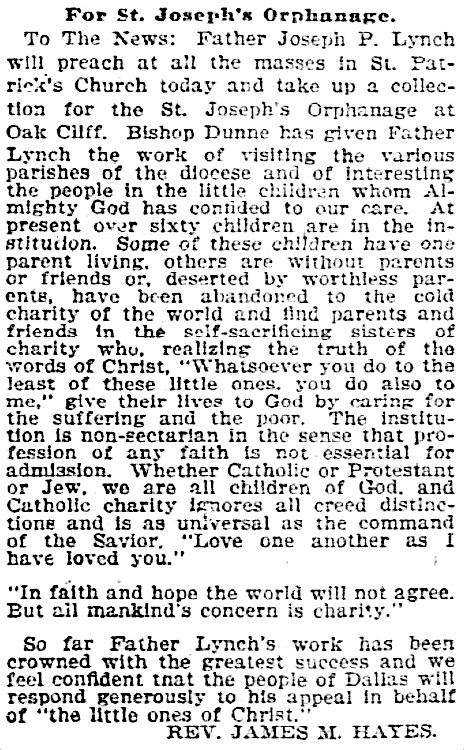
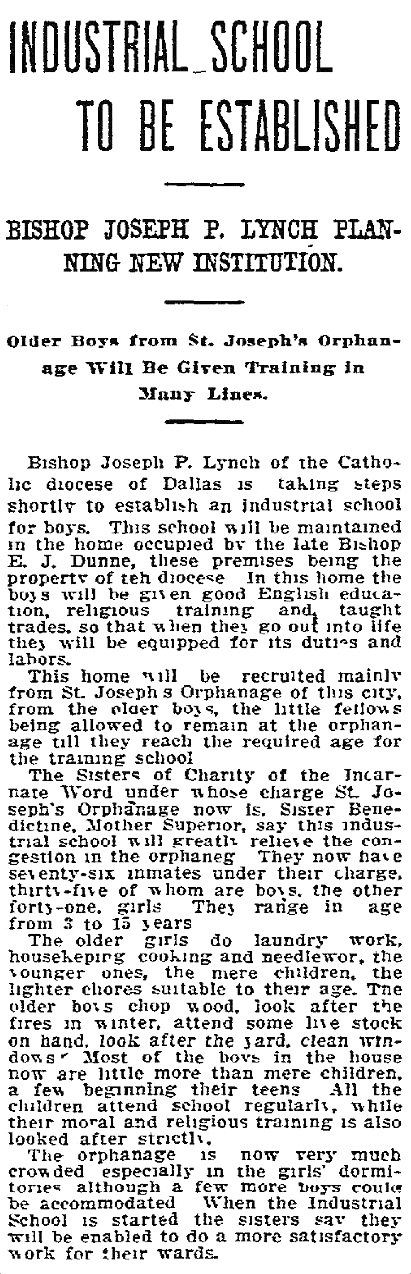
The orphanage was a Catholic institution — run at various times by the Sisters of St. Joseph, the Sisters of Mercy, the Sisters of Charity of St. Vincent de Paul, and the Sisters of Charity of the Incarnate Word — but it was “non-sectarian” in that the children or families in need were not required to be of the Catholic faith.

Some of these children have one parent living, others are without parents or friends or, deserted by worthless parents, have been abandoned to the cold charity of the world and find parents and friends in the self-sacrificing sisters of charity…. (DMN, Feb. 9, 1902)

st-josephs-orphanage_smu_ca1913-1919DeGolyer Library, SMU

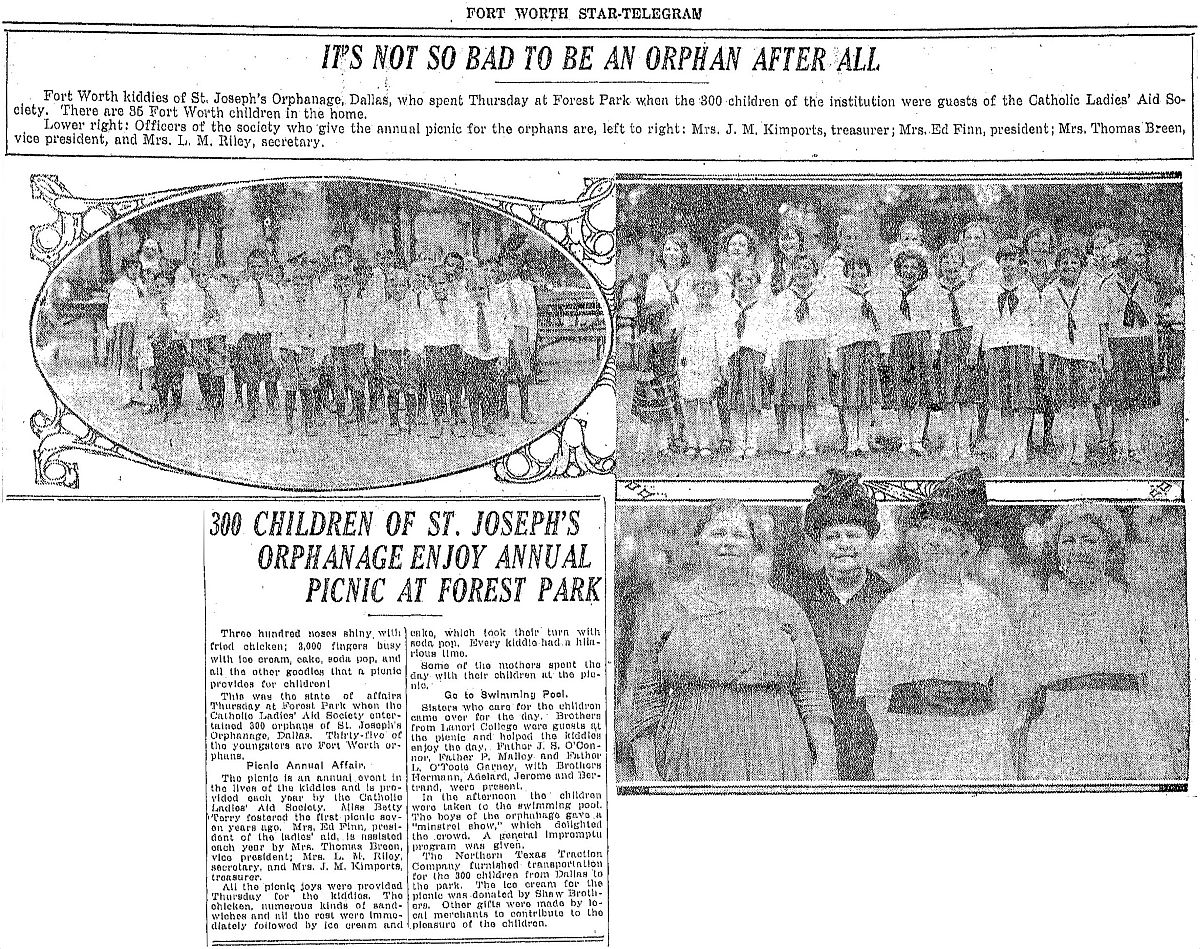
In the late ‘teens or early ’20s, the Catholic Ladies’ Aid Society of Fort Worth began an annual tradition of hosting a party for the children at Forest Park in Fort Worth. The 1923 picnic entertained 300 children. The Fort Worth Star-Telegram ran a story about the event under the unfortunate headline “It’s Not So Bad To Be An Orphan After All.” (Click article for a much larger image.)

st-josephs-orphanage_FWST_060123FWST, June 1, 1923

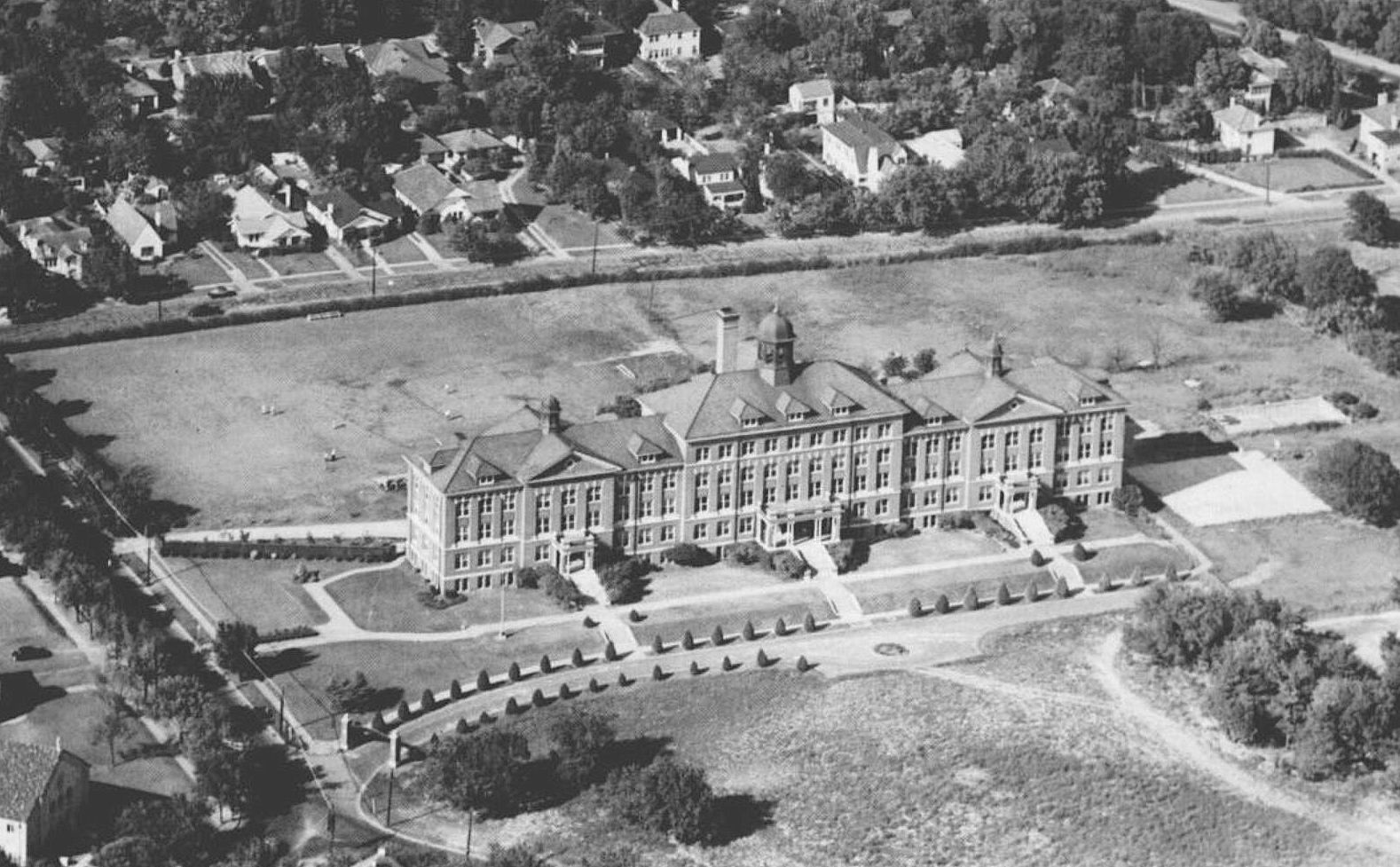
According to William L. McDonald in his book Dallas Rediscovered, “the orphanage was converted into a Carmelite convent and school in 1929 and demolished in 1945.” In December, 1930, the girls moved into their new (huge!) home in Oak Lawn (at Blackburn), in the old Dallas University building (later the Jesuit campus). The boys, I believe, moved to the Dunne Memorial Home. Here is a photo of the girls’ new home, which was taken over by Jesuit High School in 1941. (The impressive building originally built in 1906 was demolished in 1963.)

jesuit_legacies_fall-2005

**

st-josephs-orphanage_dmn_042991Dallas Morning News, April 29, 1891

st-josephs-orphanage_dmn_071691
DMN, July 16, 1891

orphanage_dmn_020902
DMN, Feb. 9, 1902

orphanage_dmn_113013-inudstrial-school-to-open
DMN, Nov. 30, 1913

st-josephs-orphanage_catholic-charities-of-dallas

***

Sources & Notes

Top photo from Dallas Rediscovered by William L. McDonald, is from the collection of the Dallas Public Library.

Photo titled “Children and Nuns, St. Joseph’s Orphanage, Dallas, Texas” was taken by Frank Rogers and is from the George W. Cook Dallas/Texas Image Collection, DeGolyer Library, Southern Methodist University; more information can be found here.

Photo of the old Dallas University/University of Dallas/Trinity University is from the article “Jesuit High School” by Liz Conrad Goedecke, which appeared in the Fall, 2005 issue of Legacies.

Bottom photo of St. Joseph’s Orphanage is from a PDF titled “A Brief Visual History of the Catholic Diocese of Dallas,” here (p. 19).

More on the original St. Joseph orphanage can be found here (scroll down to the 1902 article, “Charities of Dallas”).

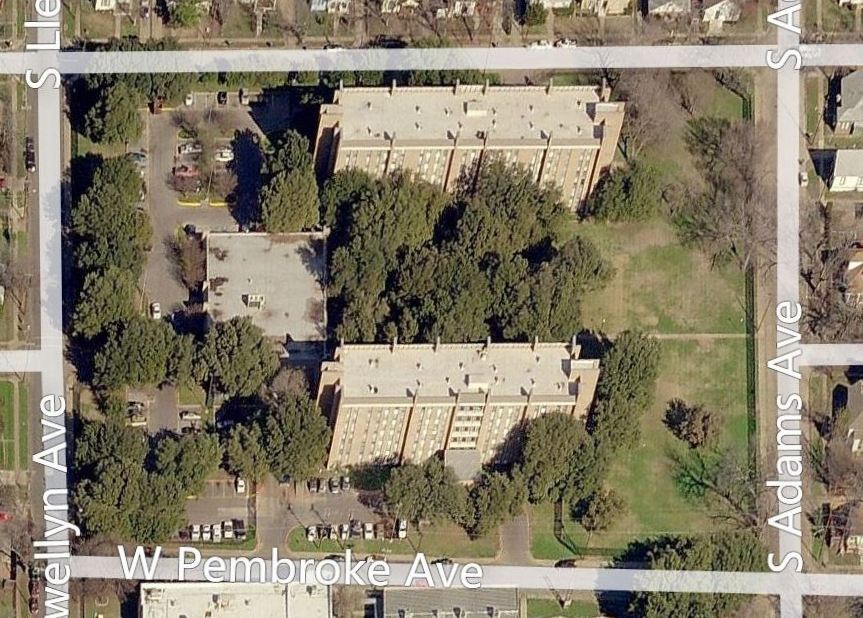
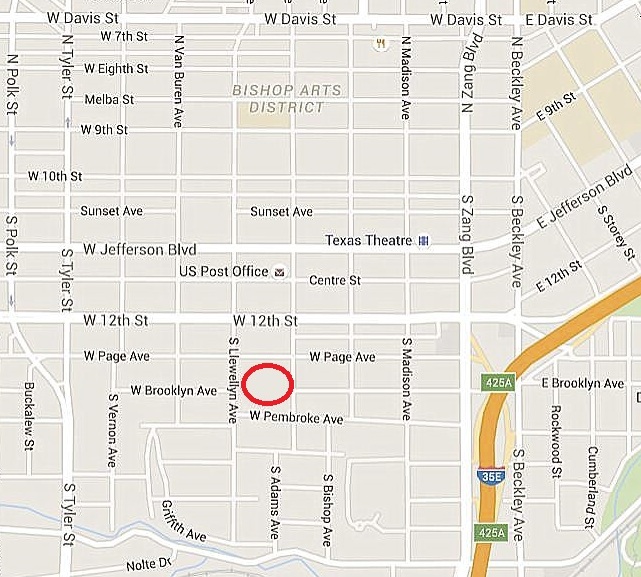
The original St. Joseph orphanage was at the southwest corner of West Page and South Adams, in Oak Cliff. See the 1922 Sanborn map, here. According to the Dallas Central Appraisal District website, the land is currently owned by the Dallas Housing Authority, which, as recently as 2014, had sought permission to build a new “home for the aged” on this property. The Bing Maps aerial view shows the Brooks Manor low-income housing project which had occupied this block for several decades before its recent demolition.

brooks-manor_bing

The Google Street view from Jan. 2016 shows an empty block.

orphanage_googleGoogle Maps

The original building at the top is not to be confused with the later St. Joseph home for girls (or the earlier Virginia K. Johnson home for unwed mothers), which was also on West Page, but a couple of blocks to the east. More on that can be found here. (It was at the Page and Madison, seen on the 1922 Sanborn map, here.) (Perhaps this was the campus the St. Joseph school moved to when Jesuit took over the campus in Oak Lawn in 1941?)

All photos and articles are larger when clicked.

*

Copyright © 2016 Paula Bosse. All Rights Reserved.


South Central Expressway Under Construction — 1955

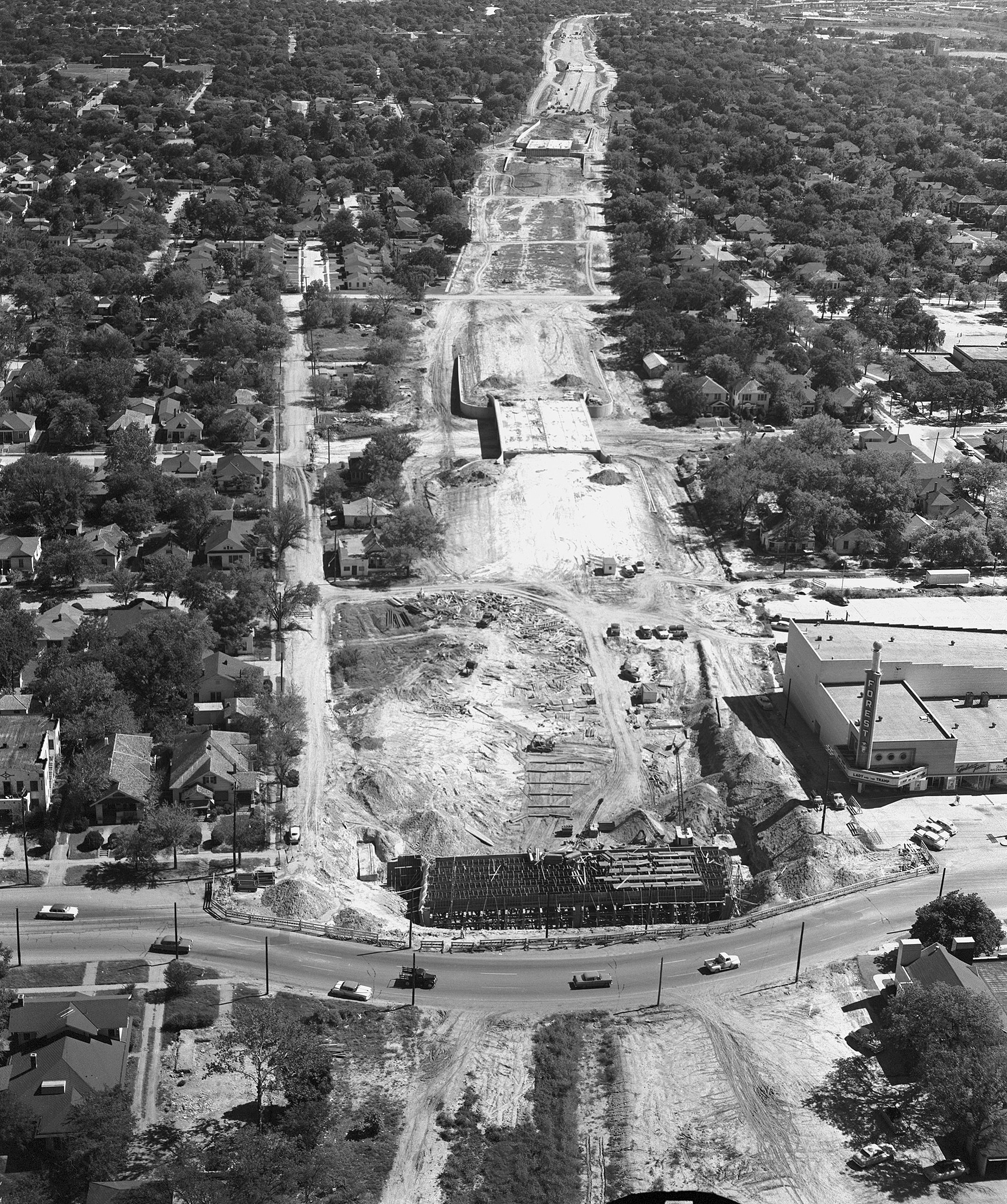
central-expwy_forest-ave_092955_squire-haskins_UTAComing soon to a neighborhood near you… (UTA Special Collections)
by Paula Bosse

Behold, a photo of South Dallas on Sept. 29, 1955, showing a lengthy stretch of bulldozed land cleared for the imminent construction of South Central Expressway. We’re looking south, with Forest Avenue (now Martin Luther King Blvd.) running horizontally in the foreground. To the right is the Forest Theater (now playing: “Lady and the Tramp”). And if you zoom in, you can just see the post-Ross Avenue location of the famed Jim Beck recording studio to the right of the theater.

This great swath of land cut through an established tree-filled residential area — it ran alongside the once-swanky Colonial Hill neighborhood. Zoom in and take a last look at some of those straggler houses that haven’t yet met their maker. …But they will. …And they did.

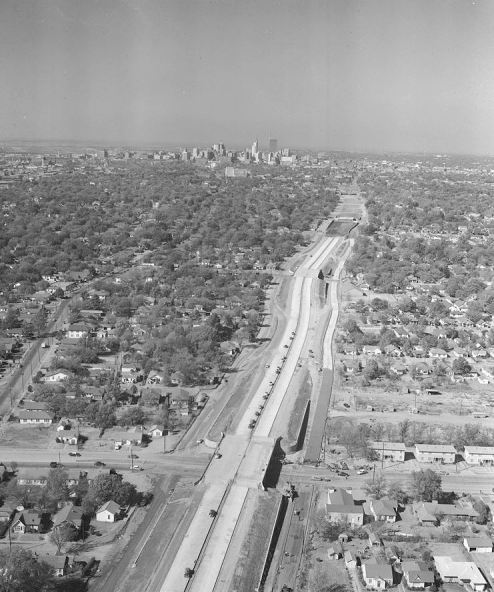
Below is another Squire Haskins aerial photo looking north, toward downtown, taken a few weeks later, on Nov. 11, 1955 (see a very large image of this photo on the UTA website here).

south-central-expwy_squire-haskins_nov-1955_UTASquire Haskins, Nov. 1955, UTA Special Collections
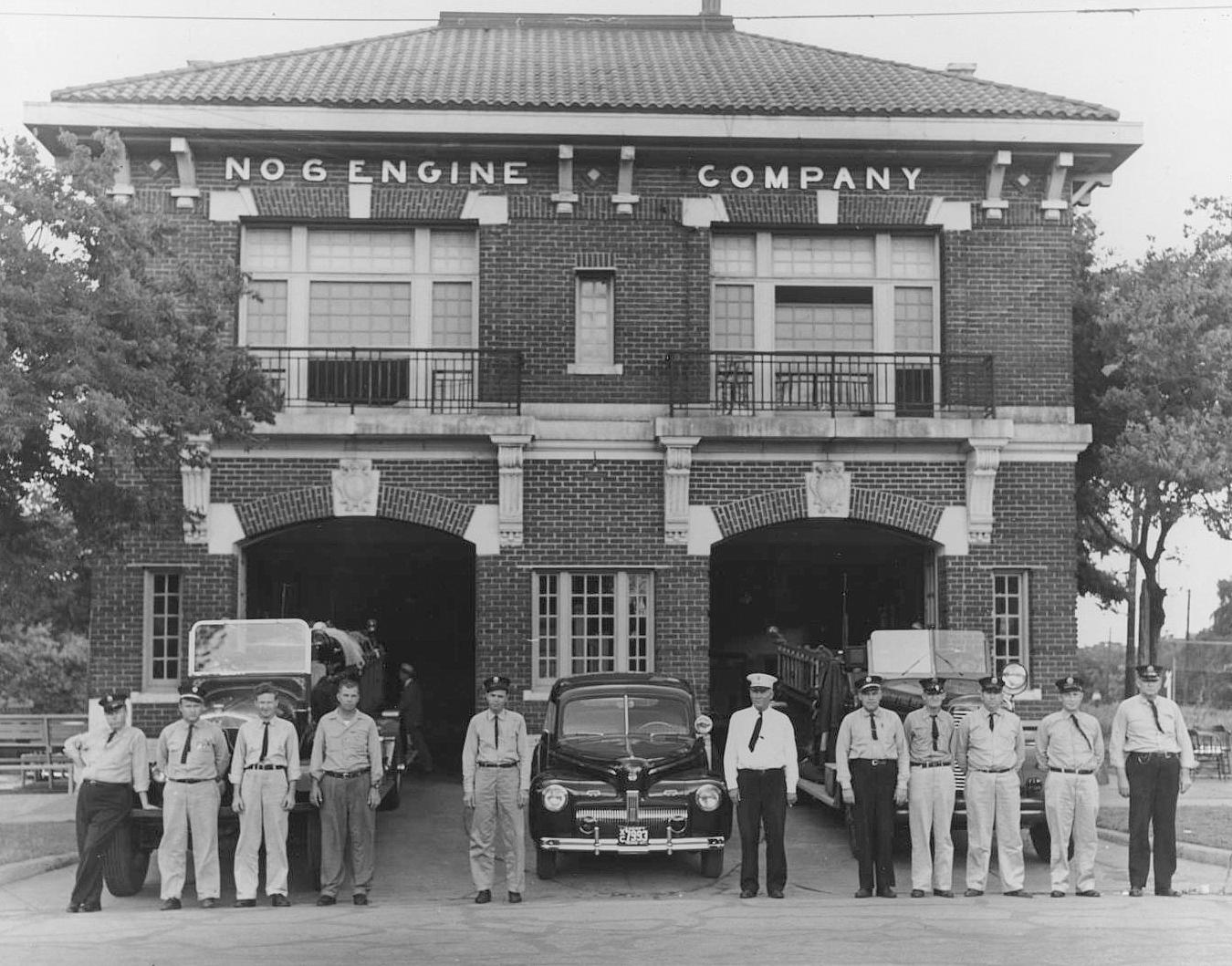
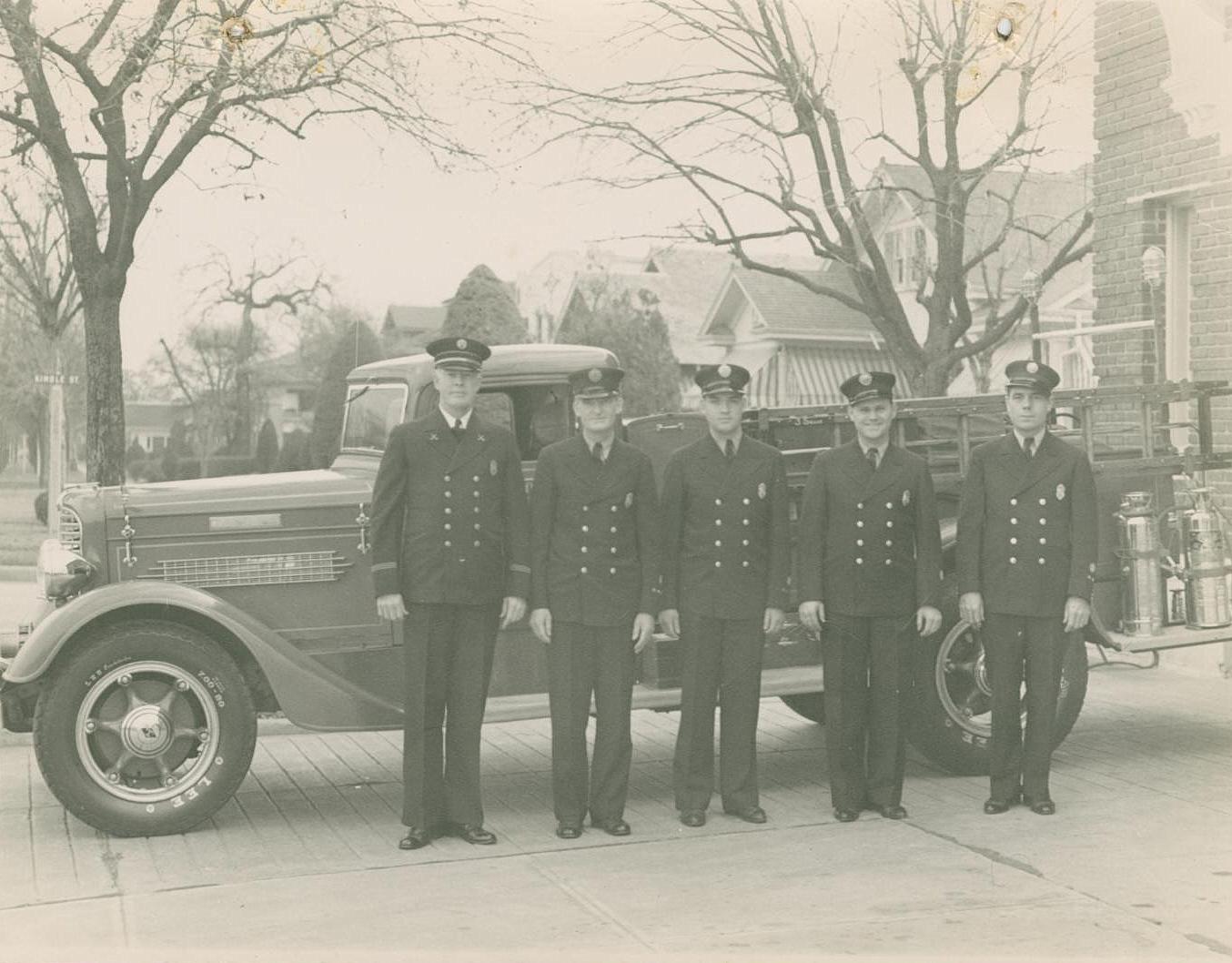
I wondered what had been demolished on Forest between the houses to the left and the theater to the right. It was Fire Station No. 6, at 2202 Forest Avenue. I looked in my bulging file of miscellaneous photos and was surprised to actually find a couple of photos of that No. 6 Engine Company, which was built in 1913.

fire-department_no. 6_forest-ave-mlk

The station was on the south side of Forest Avenue, alone in a very short block. As we look at the station in the photo above, the H&TC railroad runs just to the right of the station, and Kimble Street runs along the left. See a Sanborn map of this area in 1922, here.

The photo  below shows what Forest Avenue once looked like, from the front of the firehouse looking east (the intersection with Kimble is on the other side of the firetruck — you can see the street sign). These houses are still standing in the 1955 photo at the top.

forest-central_fire-station_portal

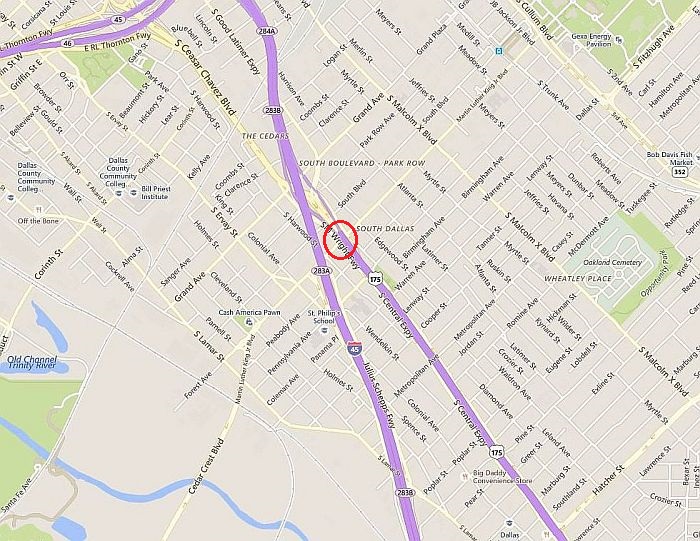
When you know what this intersection looks like today (see this same view today, here), it’s hard to believe it ever looked like a cozy neighborhood. Progress is a helluva thing, man.

**

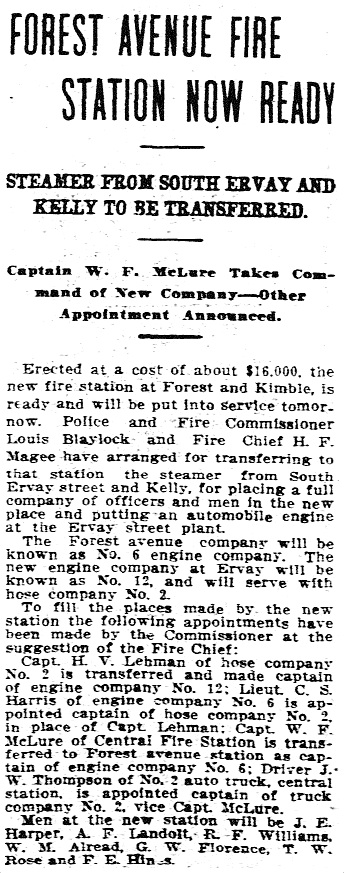
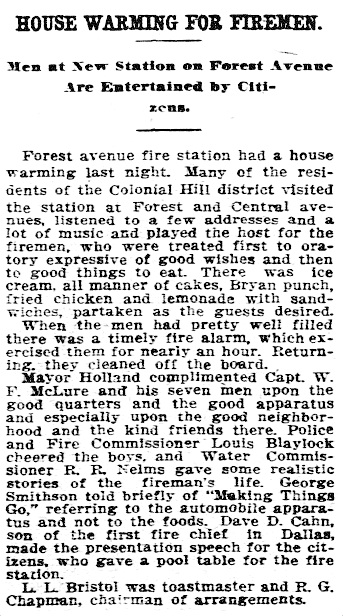
A couple of short articles for those who might want a little more info about the fire station, which was demolished sometime between April and September of 1955. (Click articles for larger images.)

forest-central_fire-station_dmn_070613
Dallas Morning News, July 6, 1913

forest-central_fire-station_dmn_072213
DMN, July 22, 1913

*

forest-ave-central_today_bing
Bing Maps

***

Sources & Notes

Top photo by Squire Haskins, from the Squire Haskins Photography, Inc. Collection, UTA Libraries, Special Collections, University of Texas at Arlington; it is accessible here.

Second photo by Squire Haskins, from the Squire Haskins Photography, Inc. Collection, UTA Libraries, Special Collections, University of Texas at Arlington; it is accessible here.

The two fire station photos are from the collection of the Dallas Firefighters Museum, via the Portal to Texas History, University of North Texas. The first photo can be viewed here, the second photo here.

*

Copyright © 2016 Paula Bosse. All Rights Reserved.