Flashback : Dallas

A Miscellany: History, Ads, Pop Culture

Category: 1890s

Snag Boat Dallas — 1893

snagboat_dplSnag Boat Dallas of Dallas, Trinity River

by Paula Bosse

“Snagboat.” It’s a great word. And if you’ve taken even a glancing look into the history of the Trinity River, you’ve probably come across it. What is it? According to the Wikipedia entry, it is “a river boat, resembling a barge with superstructure for crew accommodations, and deck-mounted cranes and hoists for removing snags and other obstructions from rivers and other shallow waterways.” If you’re from Dallas, “shallow waterway” will immediately bring to mind our very own Trinity River, which, unless it’s flooding, you probably rarely even think of as being an actual river. But Dallas money-men have tried their damnedest for what seems like EVER to make the Trinity do what they wanted it to do.

In the late 19th century, a group of Dallas businessmen organized the Trinity River Navigation and Improvement Company and began to sink large sums of money into it. The goal was to make the Trinity navigable for large boats between the Gulf of Mexico and Dallas. They knew that if they could open this waterway to vessels carrying all manner of freight that they could make a lot of money. A lot.

In order to make the Trinity navigable, it first had to be cleared of all sorts of impassable debris in it, on it, over it, and along it. The stretch of the river around the soon-to-be inland port of Dallas was particularly snarled with all sorts of things making passage of large boats through its waters impossible. A snagboat was needed, and construction on the Snag Boat Dallas of Dallas began in November of 1892.
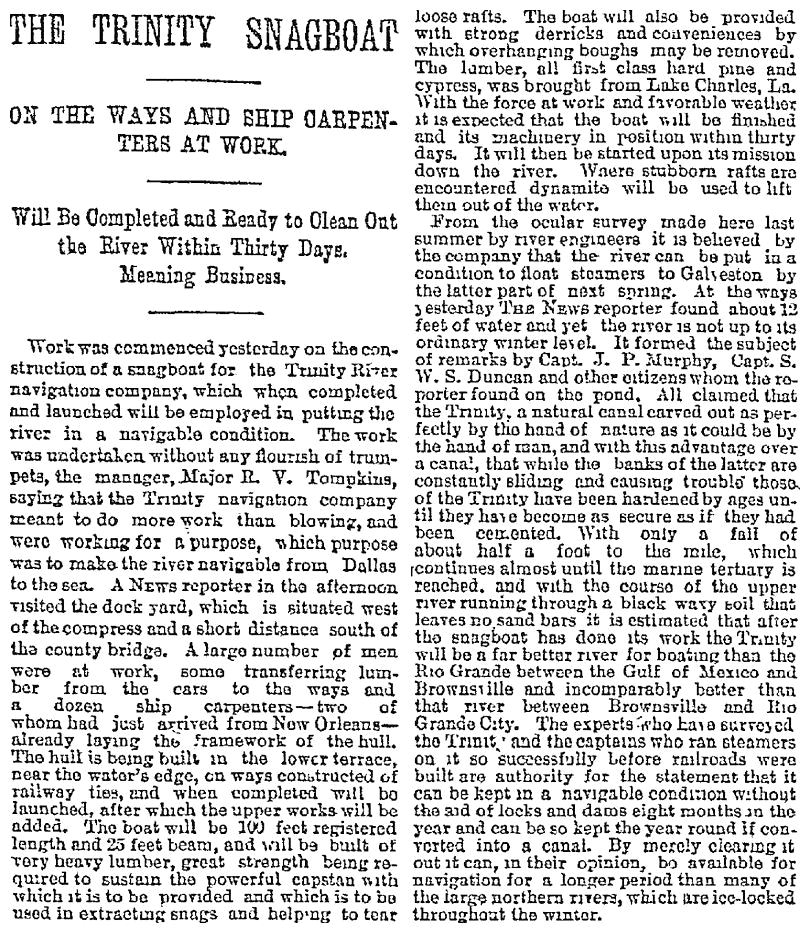
snagboat_dmn_112692Dallas Morning News, Nov. 26, 1892

The construction of the boat was followed closely in the Texas papers, and giddy ads/editorials like this one were filling the pages of Dallas newspapers.
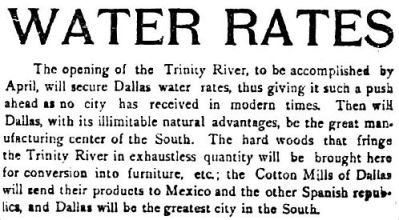
ad-water-rates_dmn_011593DMN, Jan. 15, 1893

“Water rates” — charges for freight shipped via boat — were lower than the rates charged by railroads. Were the Trinity able to support freight traffic, this new competition would mean that railroads would lower their rates, and the savings for manufacturers and builders would  be substantial. As a result, manufacturing and building in the city would boom, and before you knew it, Dallas would become “the greatest city on Earth in the South”!

A few days before the official launch of the boat, reporters, businessmen, and the public were invited to a preview. An interesting account in The Galveston Daily News described the boat’s machinery (which included a “liquid battering ram”) and took the reader on a tour of the crew’s quarters (which had separate sleeping and dining areas for black and white crew members, per the “Separate Coach Law” of 1891).

snagboat_galveston-daily-news-021993Galveston Daily News, Feb. 19, 1893

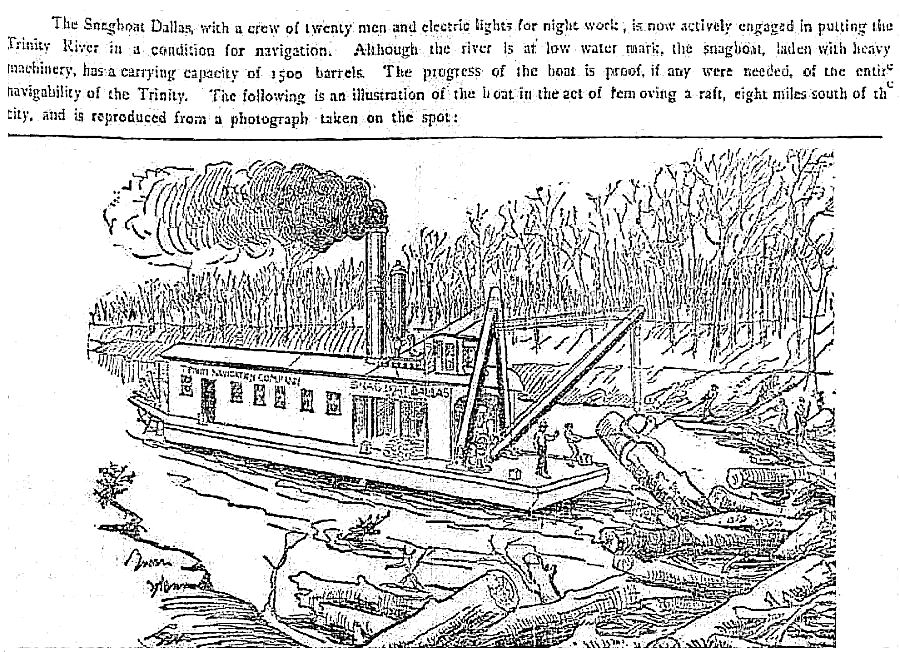
The boat began its snagging work in February, 1893, and, in order to keep readers abreast of all Snag Boat Dallas developments, there were almost daily updates on its progress in the newspapers, and (in lieu of photographs) Dallas Morning News illustrators provided scenes of the boat’s important work.
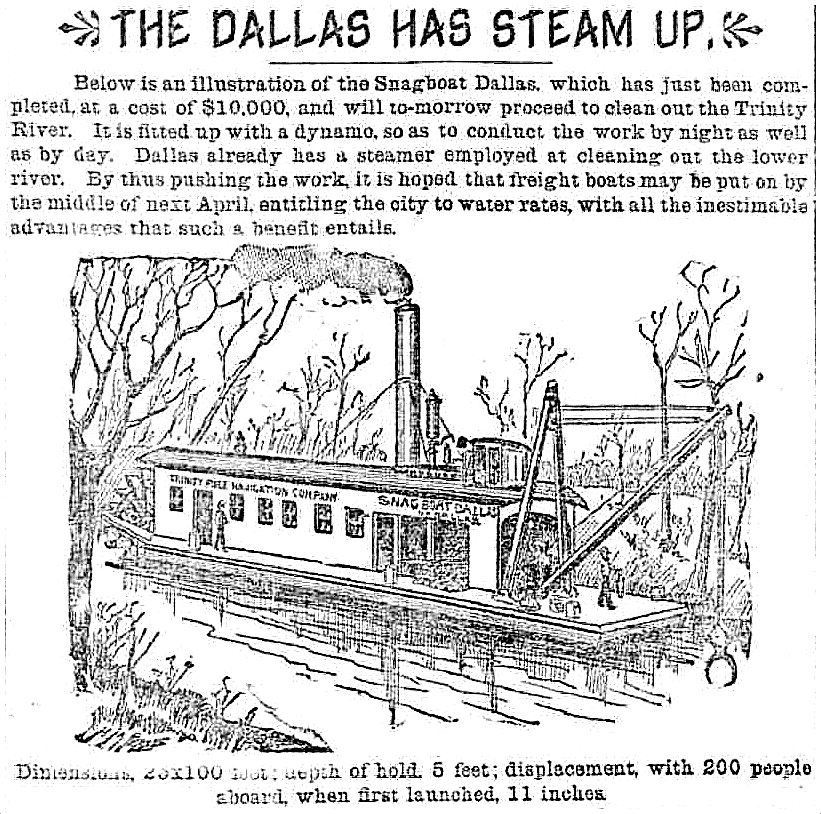
snagboat_dmn_021293DMN, Feb. 12, 1893

snagboat_dmn_022693DMN, Feb. 26, 1893

The celebrity snagboat succeeded in clearing the debris, and in May, 1893, the steamer H. A. Harvey, Jr. arrived in Dallas, having, yes, navigated the Trinity River from the Gulf, even though it had faced two months’ worth of difficulties along the way (problematic water levels, low bridges which had to be dismantled in order for it to pass under, underwater impediments which had to be dynamited into oblivion, etc.). When it finally pulled into Dallas — accompanied by the hard-working snagboat that had paved its way — the city shut down and had a massive celebration. The Dallas Morning News went so far as to print several of its pages in red ink (!). This proof that the Trinity River was, in fact, navigable, meant that the city was on the cusp on becoming “the greatest city in the South.” The DMN (which was not shy in its almost rabid boosterism of this project) published an editorial for those Dallasites who might “not fully comprehend” the significance of why they were celebrating.

harvey-impact_dmn_052293DMN, May 22, 1893

Dallas would become an important inland port. “It can be done.”

Except that we know that it couldn’t be done. Too many other natural forces were working against the Trinity River entrepreneurs. The Harvey and the snagboat didn’t actually do much after that tumultuous reception in 1893. Sure, they moved some small loads back and forth along the Dallas stretch of the river, but that grand vision of taming the Trinity never came to pass. Even now, more than 120 years later, it still has yet to happen. Dallas has done pretty well without the Trinity River being truly navigable, but people can’t seem to stop trying to somehow monetize it. It’s probably time we just appreciated our little section of the Trinity River for what it is: a little trickle of a river that has (so far) survived everything we’ve tried to do to it in the name of “progress.”

*

For closure, snagboat fans: the hard-working little Dallas had an ignominious end. It was tied to an old pier and left to rot on the water before it was eventually cannibalized and slowly picked apart. Its end came in January of 1898 when it was finally “broken up.”
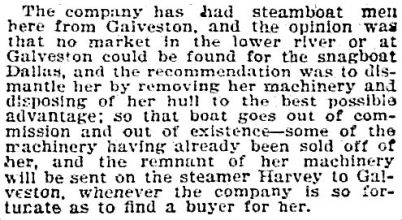
rip_dmn_052897DMN, May 28, 1897

RIP, Snag Boat Dallas of Dallas — we hardly knew ye.

*

The Harvey (which quietly left town when it was sold to a Louisiana company in 1898) has gotten the lion’s share of the historical attention, but the snagboat is the one that did all the work. Here are two more photos of the Dallas and its crew taking a break from snagging to pose for posterity.

snagboat_dfwurbanwildlife

The photo below shows just what the crew of the snagboat was up against. The caption was written by C. A. Keating, president of the Trinity River Navigation Company.
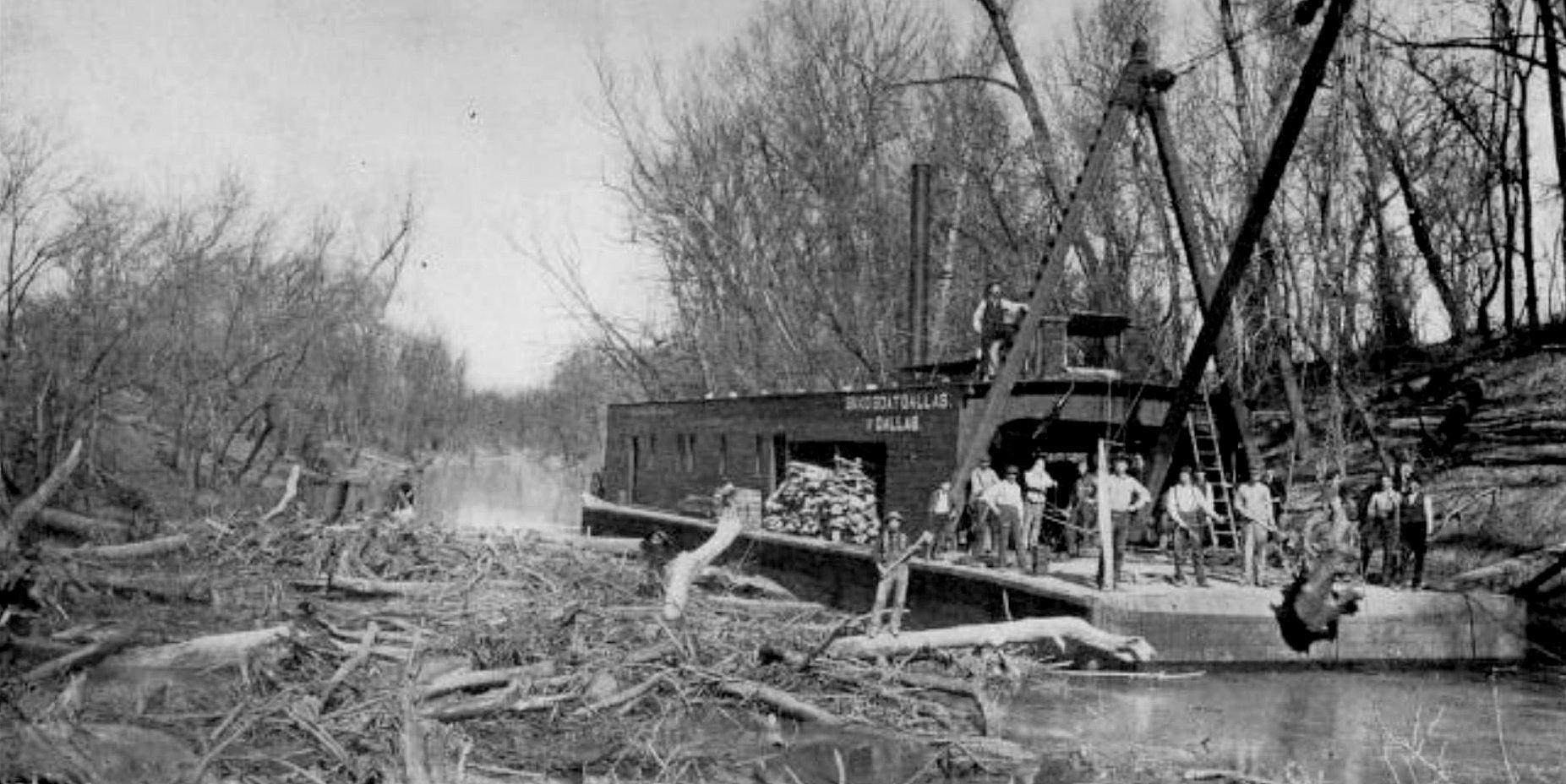
snagboat_keating_1890s

snagboat-caption_keating

And, finally, what prompted me to find out more about the snagboat in the first place: this ad for the Dallas Lithograph Company from the 1893 city directory. It featured an illustration of a little boat chugging along on the idyllic (and blissfully snag-free) Trinity River, with the Old Red Courthouse in the background and a little tent pitched on the bank. I wasn’t all that familiar with snagboats, but that’s what I thought it looked like. I’m sure it’s supposed to be something grander, but I’ll think of it as a snagboat anyway.

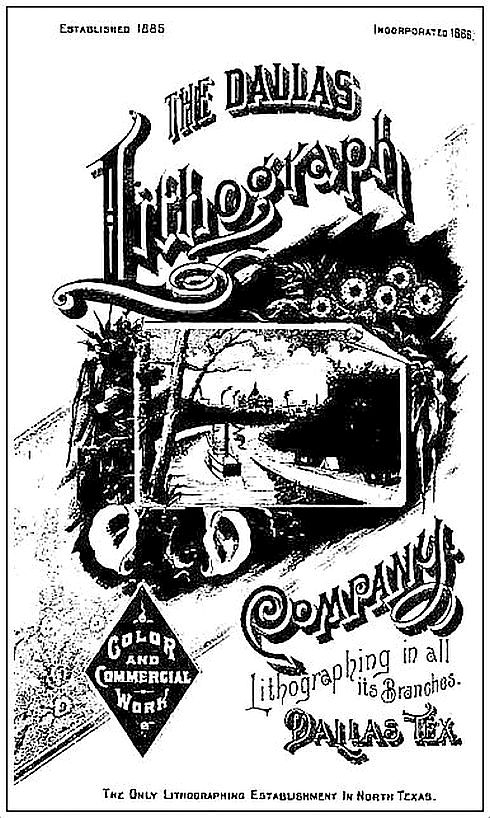
ad-dallas-lithography-co_1893-directory-det

ad-dallas-lithograph-co_1893-dir1893 Dallas directory

***

Sources & Notes

I came across the top photo (which is from the archives of the Dallas Public Library) on the web page for the 99% Invisible podcast, here. I was so enthralled with the pictures on this page that I didn’t even realize until just now that there was a podcast to listen to, called “The Port of Dallas” — about this very topic! Listen to it at the top of the page — it’s very entertaining. I think Julia Barton and I were separated at birth!

There are lots of other photos on that page, including a photo of the H. A. Harvey, Jr. and a photo showing what the Dallas Morning News looked like printed in red.

Second photo of the Snag Boat Dallas is from the DFW Urban Wildlife blog, here. More great photos there!

The final photo of the Dallas and the photo’s caption are from C. A. Keating’s autobiography, Keating and Forbes Families and Reminiscences of C. A. Keating (Dallas: self-published, 1920).

All other clippings, as noted.

To read about how people have tried and tried and tried over the years to make the Trinity River do what they wanted it to do — and failed — read the article “Navigating the Trinity, A Dream That Endured for 130 Years” by Jackie McElhaney (Legacies, Spring 1991), here.

UPDATE: I swear I was completely unaware of Julia Barton’s podcast about the “Port of Dallas” when I wrote this post, but I’m happy to report there is ALSO a video, from a presentation she did at the TEDxSMU talks in October. Watch it here. (Thanks, for alerting me to that this, Julia — my “internet twin”!)

*

Copyright © 2015 Paula Bosse. All Rights Reserved.
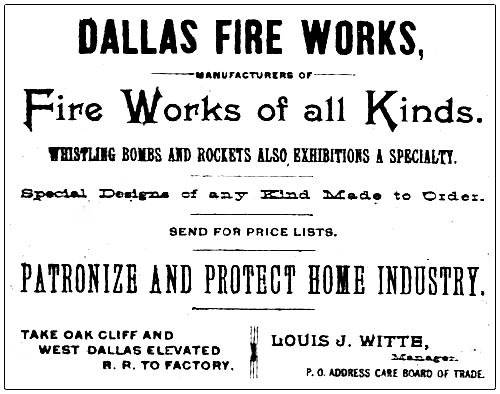
Dallas Fire Works Ad — 1891

ad-dallas-fireworks_1891-directory

by Paula Bosse

Even in the 1890s, Oak Cliff was encouraging people to buy local.

DALLAS FIRE WORKS
Manufacturer of
Fire Works of All Kinds.
Whistling Bombs and Rockets Also Exhibitions A Specialty.
Special Designs of any Kind Made to Order.
Send For Price Lists.
PATRONIZE AND PROTECT HOME INDUSTRY.
Take Oak Cliff and West Dallas Elevated R.R. to Factory.

Louis J. Witte, Manager.
P.O. Address Care Board of Trade.

Do NOT go to Fort Worth for your fireworks!

***

Ad from the 1891 city directory.

*

Copyright © 2015 Paula Bosse. All Rights Reserved.
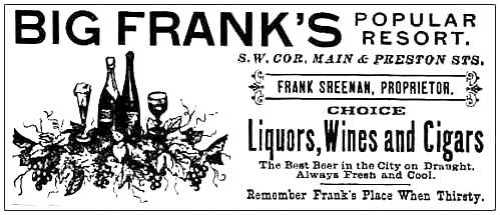
Thirsty For Something Stronger Than a Sarsaparilla? — 1890

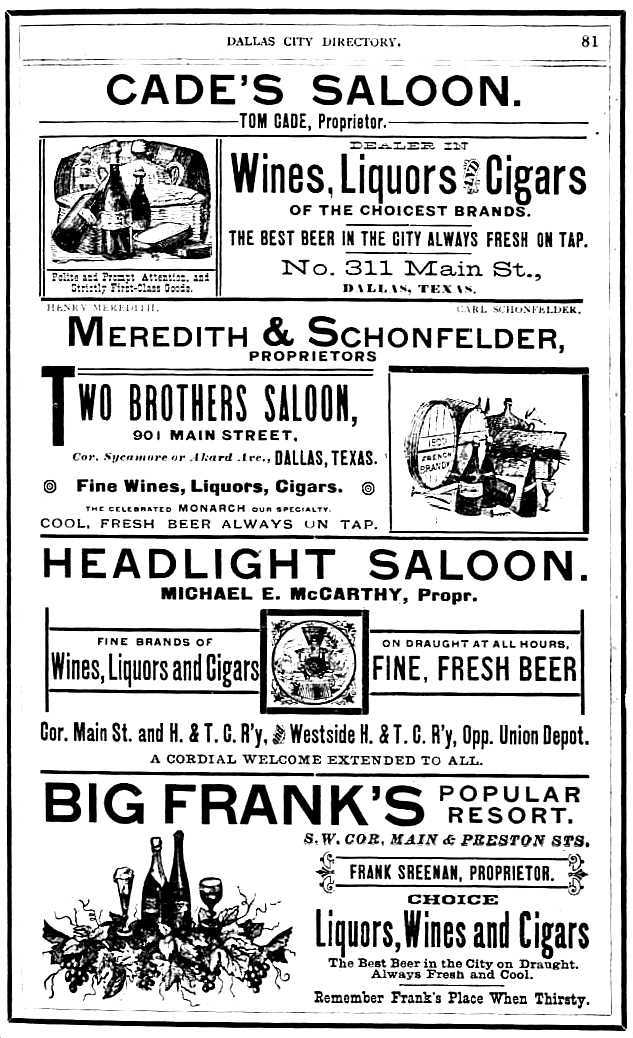
ad-saloons_city-directory_1890-det“Remember Frank’s Place When Thirsty”

by Paula Bosse

According to the 1890 city directory, Dallas had roughly 145 saloons. That seems like a lot when the city’s population was only 38,000. That would be one bar for every 262 people — and this is before you take out all the residents who wouldn’t have been allowed in saloons, like African Americans, Hispanics, women, children, etc. (and I’m sure there MUST have been a few adult white men who didn’t drink…). And there were probably a lot more than 145 bars — this doesn’t include private clubs or “unlicensed” holes in the wall (I’m not sure how heavily enforced “licensing” was back then). So it could have been more like one bar for every 50 imbibing Dallasites. Call me crazy, but this seems like a disproportionate ratio of bars to customers. But depending where you fall on the how-many-bars-is-too-many spectrum, it might have been just the perfect number. It fact it might have been a veritable paradise.

ad-saloons_city-directory_1890(click me!)

Here are a few of the “popular resorts” of the day into which a white man could mosey and slake his big Texas thirst.

  • Meisterhans’ Garden
  • Mayer’s Garden
  • Glen Lea
  • Planters House
  • Pat’s Place
  • Frank’s Place
  • Ord’s Place
  • Two Johns
  • Two Brothers
  • Louis
  • Bohny’s Hall
  • New Idea
  • U Bet
  • Walhalla
  • Coney Island
  • Butchers’ and Drovers’
  • Q. T.
  • Eureka
  • Gem
  • The Wonder
  • Sample Room
  • Monarch
  • Casino
  • Little Casino
  • Red Front
  • Blue Front
  • Blue Corner
  • Buck Horn Corner
  • Sharp Corner
  • Mikado
  • Apollo Hall
  • Mammoth Cave
  • Headlight
  • Green Tree
  • Live Oak
  • Moss Rose
  • Sunny South
  • White House
  • Cabinet
  • Senate
  • Postoffice
  • Board of Trade
  • First and Last Chance
  • Turf
  • Black Elephant
  • Jockey
  • Union Depot
  • 9-45
  • Dallas Club
  • Wichita Exchange
  • City Hall Exchange
  • Ross’ Exchange
  • Mechanics’ Exchange

That’s a whole lot of places to get drunk in.

***

Sources & Notes

Saloon ad from the 1899/1890 edition of Morrison & Fourmy’s Dallas City Directory.

See the complete list of saloons, with addresses and proprietors’ names, here.

Street names and addresses have changed over the years. Plot the location of your favorite bar by referring to an 1890s map, here.

In the nineteenth century, the word “resort” often denoted places a bit more unsavory than, say, Puerto Vallarta. A list of similar establishments might include “tippling houses, gaming houses, bawdy houses, billiard saloons, lager beer saloons, and other places of public resort” (source here).

I’m wondering if “respectable” women were allowed as customers in the larger beer gardens in Dallas at this time? If anyone has info on this, I’d love to know.

Was drunkenness a goldmine-like source of city revenue? Oh yeah. See my previous post “Police Blotter — 1880s,” here. Building a greater Dallas, five bucks at a time.

*

Copyright © 2015 Paula Bosse. All Rights Reserved.

Akard Street Looking South, 1887-2015

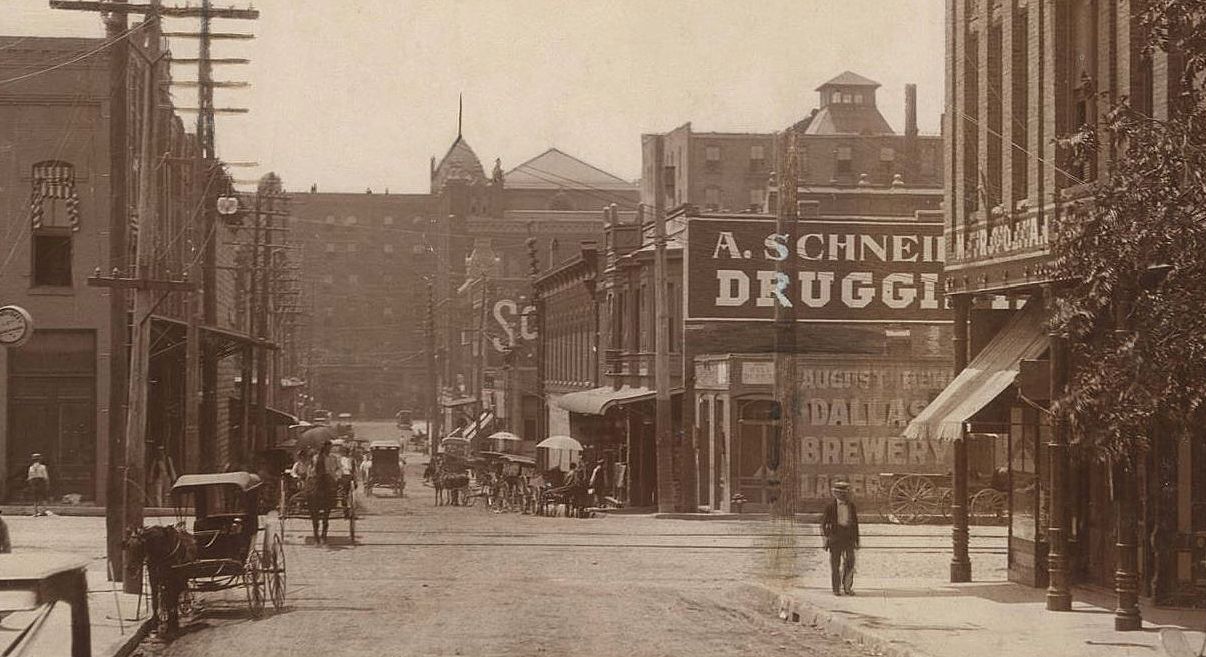
akard_from-pacific_cook_degolyer_smu_ca1898-detAkard Street from Pacific, ca. 1898, via Cook Collection, SMU

by Paula Bosse

I realized the other day that I have an inordinate number of photographs and postcards showing Akard Street looking south — usually taken from Pacific or Elm, so I thought I’d collect them all together. Some of these aren’t dated, so they’re not in strict chronological order, but I’ve made a half-hearted attempt to make sure horse-and-buggy photos are before the men-in-straw-hat-boaters, which are before the women-in-Miss-Crabtree-dresses, which are before the cars-with-rounded-bodies. It might be easiest to just assume they are not in chronological order. (All photos are larger when clicked — a couple are really  big.)

*

The oldest is from 1887, when North Akard was still called Sycamore Street, and before the Oriental Hotel was built at Commerce and Akard in 1895.

akard_south-from-elm_1887

*

Next up, an incredible photo, taken around 1898, a detail of which appears at the top of this post. The Oriental Hotel can now be seen at the end of Akard, at Commerce, where Akard used to make a dog-leg turn before continuing south, giving the appearance of a dead-end street.

akard_from-pacific_cook_de-golyer_smu-ca1898via George W. Cook Collection, DeGolyer Library, SMU

*

Another, with the Adolphus Hotel (built in 1912) now on the right, across Commerce from the Oriental. The tall building across Akard from the Adolphus is the Southwestern Life Building. The Gentry photography studio was at the southeast corner of Elm and Akard from 1912, which is probably the date of this postcard image. Construction of the Busch Building (now known as the Kirby Building) began in December, 1912.

akard-elm_postcard_ebay_ca-1912via eBay

*

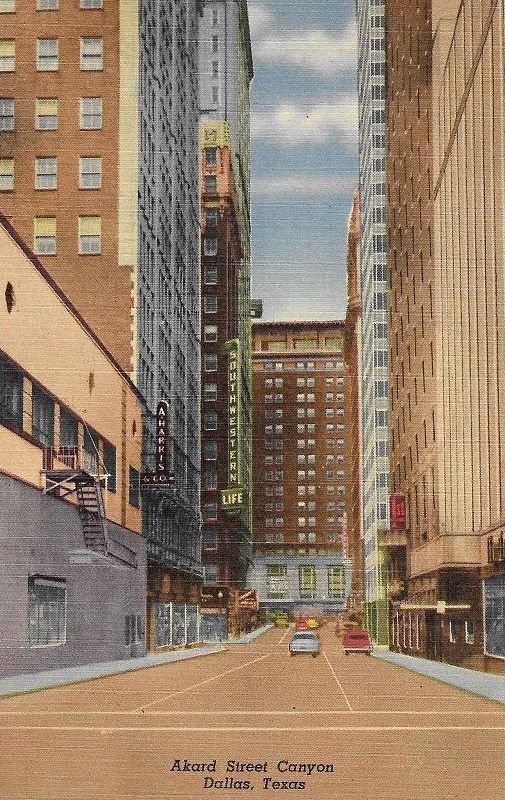
From 1925, with the new Baker Hotel having replaced the Oriental Hotel. This area was now being called “the canyon district” or “the canyon.”

akard_south-from-elm_1925

*

In this great Frank Rogers photo, the canyon walls are getting higher, with the Adolphus Hotel firmly anchoring the Commerce corner across from the Baker.

akard_baker-adolphus_postcard_rogers_ebayvia eBay

*

By the time this photo was taken in about 1936, Pegasus had become a part of the skyline, perched atop the Magnolia Petroleum Building. (Note the Queen Theater at the northeast corner of Elm and Akard.)

akard_pacific_1936_legacies-spring-1989via Legacies History Journal

*

This photo is from the early- or mid-1930s — LOOK AT ALL THOSE PEOPLE.

akard-canyon_municipal-archives_dma-uncratedvia the DMA’s Uncrated blog

*

As opposed to this one, which has NO people in it.

akard-canyon_ebayvia eBay

*

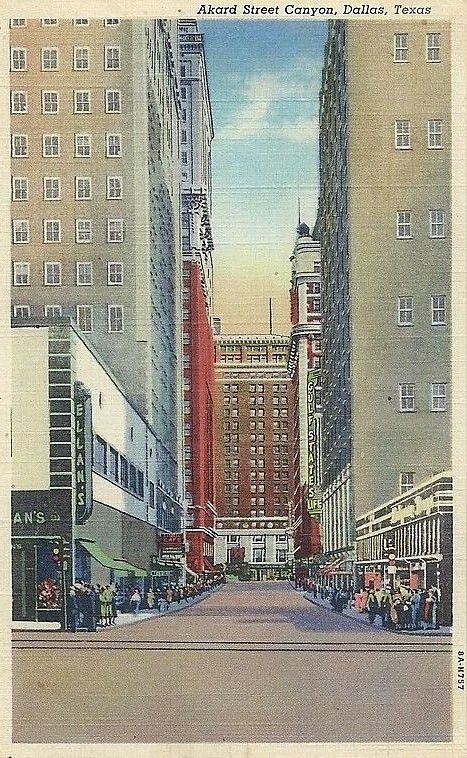
More canyon, this view showing the super-cool art-deco-y building at Elm and Akard with Ellan’s hat shop on the ground floor, late-1930s.

akard-st-canyon_ellans

*

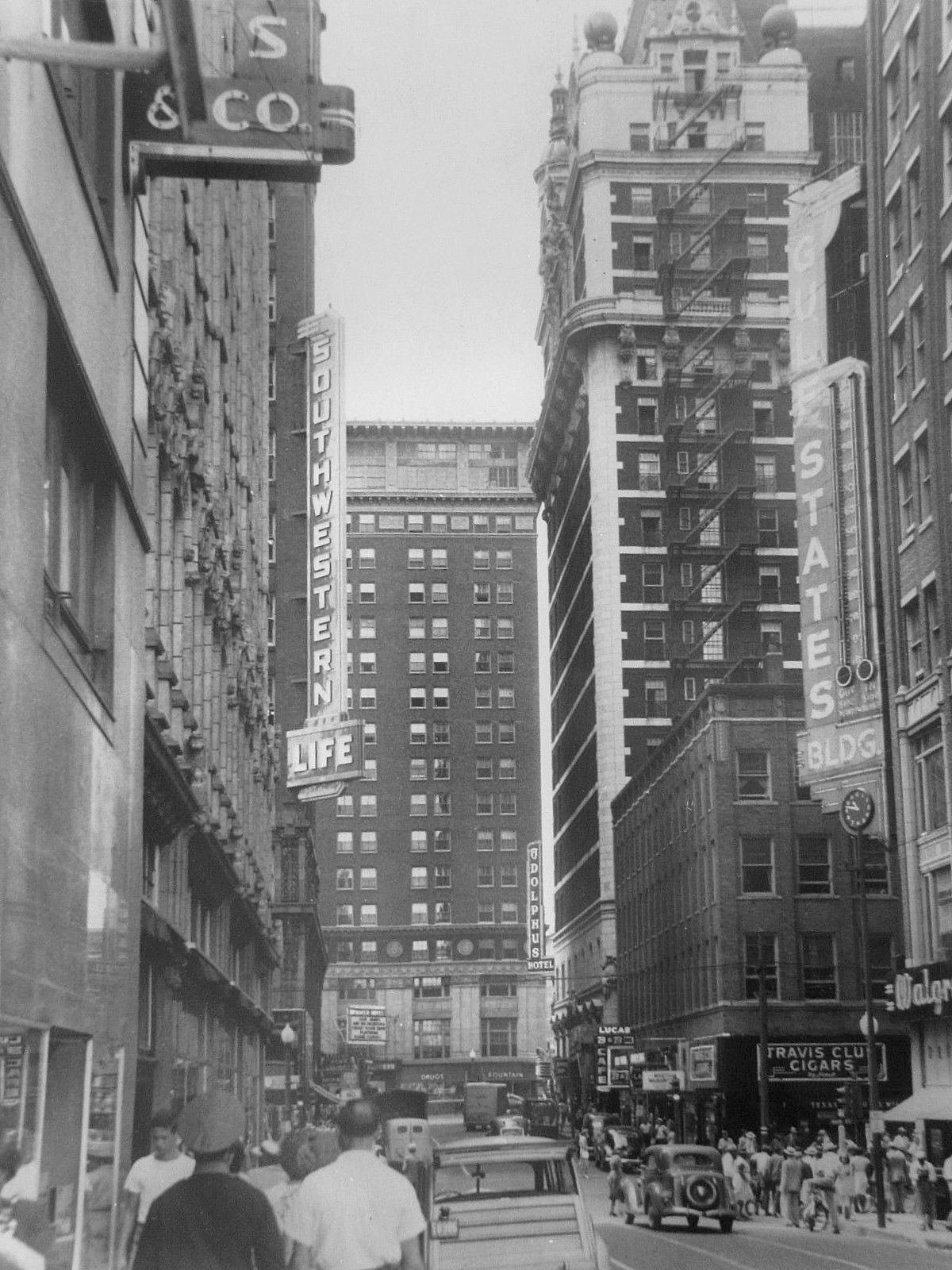
This candid photograph, a little deeper into the canyon, is one of my favorites. (Click to see a gigantic image.)

akard-looking-south_ebayvia eBay

*

From 1951 — a bit grainy, but a slightly closer view of the side of the Queen Theater at the left and the Mayfair department store, built in 1946, at the right:

akard_dpl_1951via Dallas Public Library

*

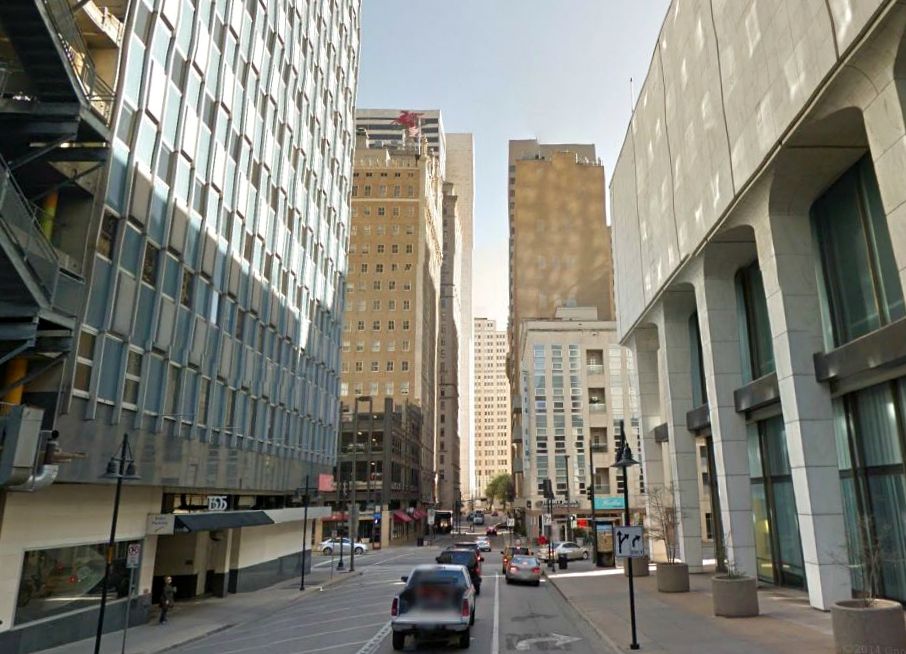
And, finally, today. Pegasus and the Adolphus are still there, but the Baker Hotel was demolished in 1980, replaced by the One AT&T Plaza/Whitacre Tower.

akard-looking-south_google_2015via Google Street View, 2014

***

Sources & Notes

The photo dated by SMU as “circa 1898” is titled “Akard Street from Akard and Pacific Avenue Intersection”; it is from the George W. Cook Dallas/Texas Image Collection, DeGolyer Library, Central University Libraries, Southern Methodist University, and it can be viewed here.

The circa 1936 photo showing Pegasus is from the Spring, 1989 issue of Legacieshere; it is from the Hayes Collection, Texas/Dallas Archives Division, Dallas Public Library, and is attributed to Denny Hayes.

The photo showing “ALL THOSE PEOPLE” is from the Dallas Museum of Art’s Uncrated blog — here — is from the Dallas Municipal Archives. They have the date as “1940,” but Liggett’s Drug Store was gone from Elm and Akard by 1936.

Other sources as noted.

Click pictures for larger images — sometimes MUCH larger images.

*

Copyright © 2015 Paula Bosse. All Rights Reserved.


Tracking Down a Photo Location & Discovering a City Pioneer: D. M. Clower, The Man Who Brought the Telephone to Dallas

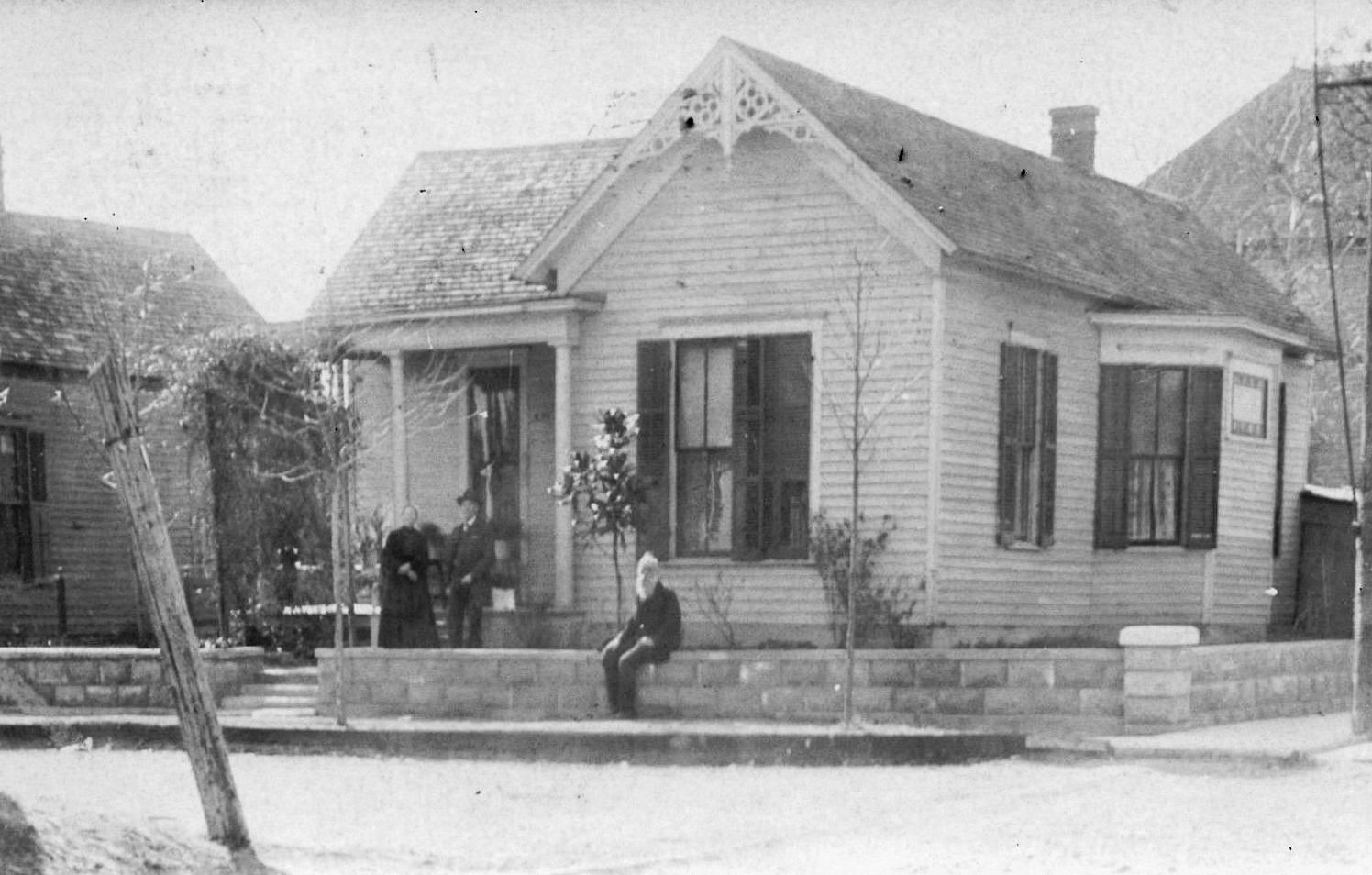
house_RPPC_1909_ebayMystery house, Dallas, ca. 1908 (click for larger image)

by Paula Bosse

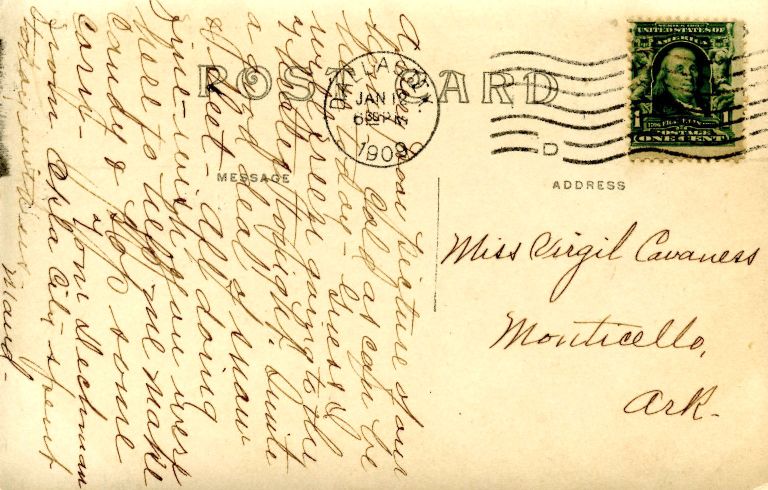
Not too long ago I came across the above photo which had been made into a real photo postcard.” It was postmarked January 12, 1909, and it contained a chatty message.

“A very good picture of our house. Cold as can be here today – guess I will freeze going to the theater tonight. Quite a good deal of snow and sleet. All doing fine – wish you were here to help me make candy & pop some corn. Tom Dechman from Okla. City spent today with us. Maud.”

house_RPPC_1909_ebay_back

Such a nice photo of a modest little house in Dallas, probably taken in 1908. When I saw it, I thought it would be cool if I could figure out where it was. There wasn’t much to go on from the postcard, though. But, as it turns out, there was just enough information to put the pieces together and figure it out. Someone asked me recently how I track down things like this. Basically, I look for a long time in a lot of different places. Here’s how I found out where this mystery house was.

Using Ancestry.com, I found Virginia (“Virgil” — sometimes “Virgie”) Cavaness in Monticello, Arkansas. She was born in 1871 and would have just turned 37 years old when she received this card. The familiar tone of the postcard message indicated to me that Virgil was probably a close friend or family member.

I found Thomas Dechman in Oklahoma City — he would have been 23 when he visited Maud. He probably wasn’t a close friend or immediate family member because she writes his full name out. According to the 1909 Oklahoma City directory (accessible on Ancestry.com), he worked alongside his father, A. F. Dechman, at a wholesale produce company.

Then I checked the Dallas Morning News archives and found this from Dec. 30,1909.

clower_dmn_123009DMN, Dec. 30, 1909

Tom Dechman was Mrs. A. F. Dechman’s son. So I searched on “Maud Clower.” Maud, born in 1877, was also D. M. Clower’s daughter. Mrs. A. F. Dechman was Maud’s sister Annie, and Tom was her nephew.

I continued searching the DMN archives for mentions of the Clower family and found that in 1906 Maud Clower had married Jesse (J. D.) Patterson — and, hey, Virgil had attended the wedding.

virgie_dmn_090206DMN, Sept. 2, 1906

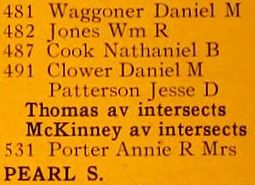
I checked to see where Maud and J. D. Patterson were living in 1908/1909. Most directories are available on Ancestry (a subscription site), but, as it happens, the 1909 directory is one of the few historical Dallas city directories that is available online (for free) — you can access it here (a few other directories are here). I found a Jesse D. Patterson listed as living at 491 N. Pearl, but no spouse’s name was listed, so I cross-referenced the address with the street directory section to determine whether this was the right J. D. Patterson. (Street directories are very helpful — not only do they list the occupants for each address, they also help to pinpoint where specific addresses were as they show which cross-streets those addresses were between; this is extremely helpful when trying to figure out where things were when streets had different names and/or when trying to figure out where things were before all of Dallas’ street numbers were changed in 1911. Another useful resource is a page on Jim Wheat’s site, which has links to every page of the 1911 street directory — click on a street name and find your address: the “new” address is on the left, and the “old” address is next to it, in bold.)

clower-patterson_1909-directory1909 city directory, residents of N. Pearl Street
Even though this didn’t have Maud’s name listed alongside her husband’s, it DID show that her father, D. M. Clower, was living at the same address. Success!

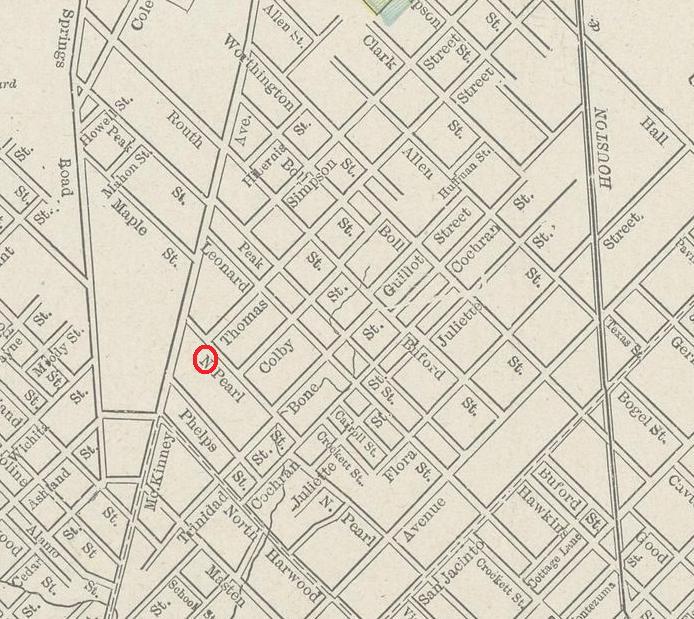
So there it is. When Maud sent that postcard to Virgil, she and her husband were living with her parents at 491 N. Pearl Street. The house in the photo was at the southwest corner of N. Pearl and Thomas. It’s always helpful to check a street map from about the same period for context and to make sure you’re looking at the right location — many street names have changed over the years — if a street named “Forest” is being referenced in the 1940s, for instance, you need to know that the old Forest Avenue and the current Forest Lane are absolutely nowhere near each other. Below is a map drawn about 1900, with the location of the Clower house circled in red (this is one of many maps found on the Portal to Texas History site; the one below is a detail of the map found here).

clower-home_map-ca1898

I also checked out Sanborn maps to see if the house in the photo matched the house that was actually on the lot at N. Pearl and Thomas. It does. To see what the general footprint of the house looked like in 1905 (the Clowers lived at 491 N. Pearl from about 1905 to 1910), see here. In the 1921 map (by which time the address had been changed to 2221 N. Pearl), you can see that additions had been made to the house since 1905 and that it looks more like the house in the photo (a room now juts out at the right and there is an out-building behind the house); see the 1921 Sanborn map here. To see what that Uptown block looks like now, see here (N. Pearl is on the left, looking south). Quite a change! It took me a long time to realize just how essential Sanborn maps can be — they are incredibly useful, and I try to use them whenever I can.

**

I really didn’t expect to track down the actual address of an unidentified house found on a picture postcard, but persistence pays off. A bonus of this persistence was that I ended up learning about the very interesting man who owned the house — a man who played a pivotal role in the development of Dallas: Daniel Morgan (D. M.) Clower. Clower was an electrical engineer who, in 1881, installed the very first telephone in Dallas (for Judge John Bookhout) and ran the city’s first telephone exchange; he also set up phone systems in other cities. In addition to his work for Bell Telephone, he also ran Dallas’ electric company for many years and was responsible for setting up the city’s first electric street lights and helped in developing electrified rail systems in the region.

clower_electrician_1889-directory1889 Dallas directory (click for larger image)

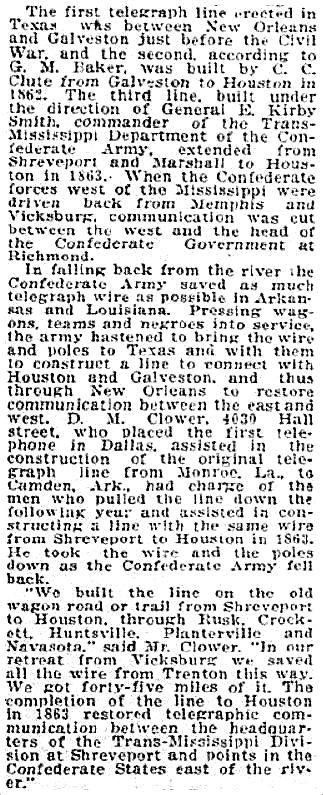
During the Civil War, Clower was a Confederate telegraph operator in the 1st Louisiana Regiment (see Clower’s fascinating obituary below). When the Union army was advancing after the fall of Vicksburg, Clower directed (and helped in) the destruction of the Confederate telegraph system he had helped set up, in order to prevent its being commandeered by Yankee forces — he and his men raced to pull up over 40 miles of wire and equipment, loaded everything on wagons, bugged out, and then used the same wire and poles to string a new Confederate line into and across Texas.

clower-telegrapher_dmn_010822DMN, Jan. 8, 1922

The war ended before Clower had completed his line northward from Houston, but his efforts had helped lay the telegraph infrastructure that the state of Texas relied on for decades afterward.

*

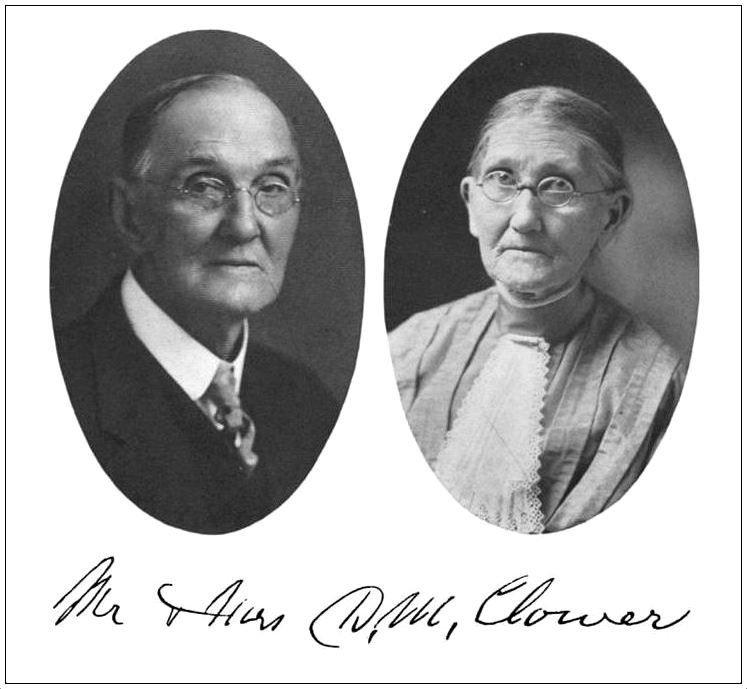
The people in the top photo are not identified. When that photo was taken, D. M. Clower and his wife, Ellender, would have been about 73; their daughter Maud and her husband Jesse would have been in their early 30s. I assume it’s the elder Clowers, with a mystery bearded man in the foreground.

clowers_d-m-and-ellender_hist-of-tx-and-texans_1914_portal
Mr. and Mrs. D. M. Clower, ca. 1914

You never know what you’re going to discover when you read a 106-year-old postcard and wonder where an old house used to be.

***

Sources & Notes

Postcard found on eBay.

Daniel Morgan Clower was born in Alabama in 1835; he arrived in Dallas in 1879, coming from Comanche, where Maud was born in 1877. Clower died in 1927 at the age of 92; Maud died in 1948. His wife, Ellender Paralee Clower, died in 1917 (at which time the couple had been married for more than sixty years).

More on Clower can be found in the pages of The Dallas Morning News:

  • “Telegrapher Tells Civil War Episode” (DMN, Feb. 1, 1924) — a fantastically cinematic account of Clower’s past, in his own words
  • A photo of Clower and Eli Sanger, (DMN, May 1, 1927) — what might well be the last photo of Clower ran in the News just a few months before his death at the age of 92; also in the photo is Eli Sanger, of Sanger Bros. (Clower once had a business in Millican, TX when Sanger’s opened there at the close of the Civil War, and he proudly boasted that he was one of their very first customers)
  • “Daniel Clower Funeral Held” (DMN, Aug. 19, 1927) — Clower’s obituary, with photo

Photo of Mr. Clower with text from a Dallas Times Herald story published on the occasion of his 89th birthday can be found here (scroll down to 1924, about halfway down the page), via Jim Wheat’s site.

The photo of Mr. Clower and his wife Ellender is from the book A History of Texas and Texans, published in 1914; the accompanying entry about Clower’s very interesting life can be found here, via the Portal to Texas History.

*

Copyright © 2015 Paula Bosse. All Rights Reserved.

Clifton Church’s Central Business District — ca. 1894

main_by-church_1894Main Street looking west, toward a ghostly courthouse (click for larger image)

by Paula Bosse

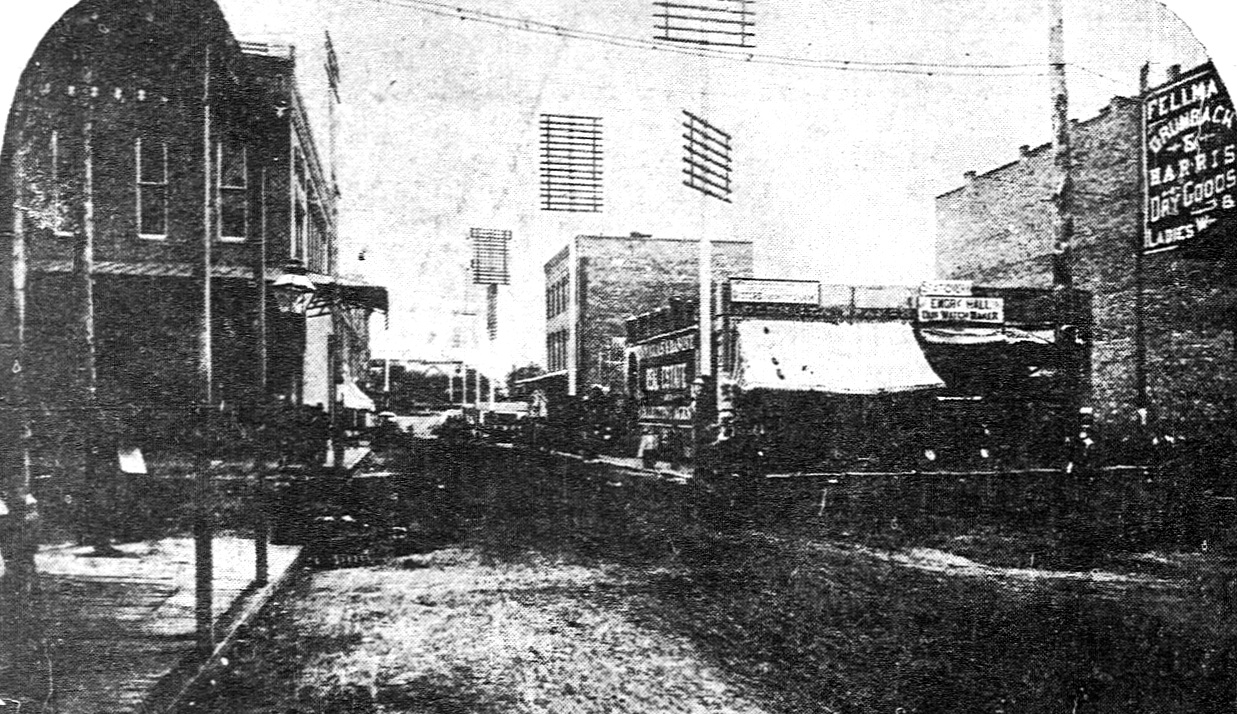
These three photographs were taken by prominent Dallas photographer Clifton Church, probably in 1893 or 1894. The one at the top shows Main Street looking west, taken just east of Poydras. (The then-new courthouse at the end of the street appears to have been lightly fleshed out by the hand of a photo re-toucher, giving it a mirage-like quality.) The Trust Building, on the right, was at the northeast corner of Main & N. Austin; the Dexter insurance office was in the North Texas Building, at 221-223 Main (under the old numbering system), between N. Lamar and Poydras; and the Scruggs & Scruggs wholesale liquor business was at 237-239 Main, two doors east of the Poydras intersection. The present-day view from the same location can be seen on Google Street View, here.

*

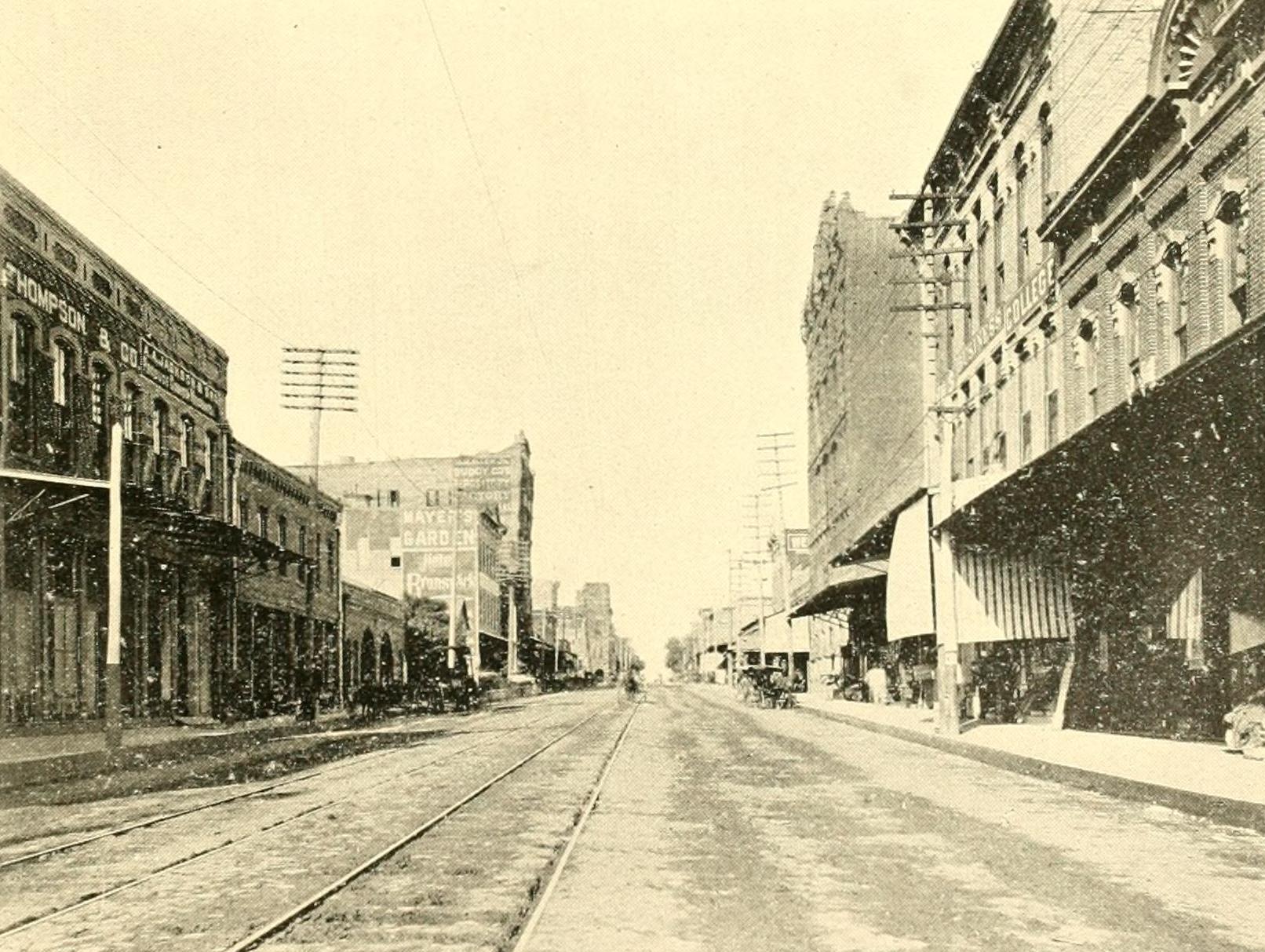
The photo below shows Elm Street looking east, taken just east of Akard. In the middle of the block on the left is Mayer’s Beer Garden & Saloon, at 361-363 Elm; the tall building behind it was the Guild Building at 369-371 Elm. Across the street, the tall building on the right is the Chilton Building. In the foreground at the right is the Dallas Business College at 342 Elm (which, in the 1892 city directory, showed to be where artist Frank Reaugh had studio space). The present-day view can be seen here.

elm_by-church_1894

*

And, below, Commerce Street, looking east from about Poydras. At the bottom left is the L. J. Bartlett Oriental Livery and stables, at 237-241 Commerce; next to it is the St. George Hotel. In the distance, across the street, is the brand new Oriental Hotel at Commerce and Akard with its distinctive rounded topknot. In the middle of the block is the famed Padgitt Bros. Saddlery at 248-250 Commerce, and in the foreground is Ballard & Burnette at 240-242 Commerce, a company that sold “wholesale hats, caps, gloves, and umbrellas.” The present-day view is here

commerce_by-church_1894

*

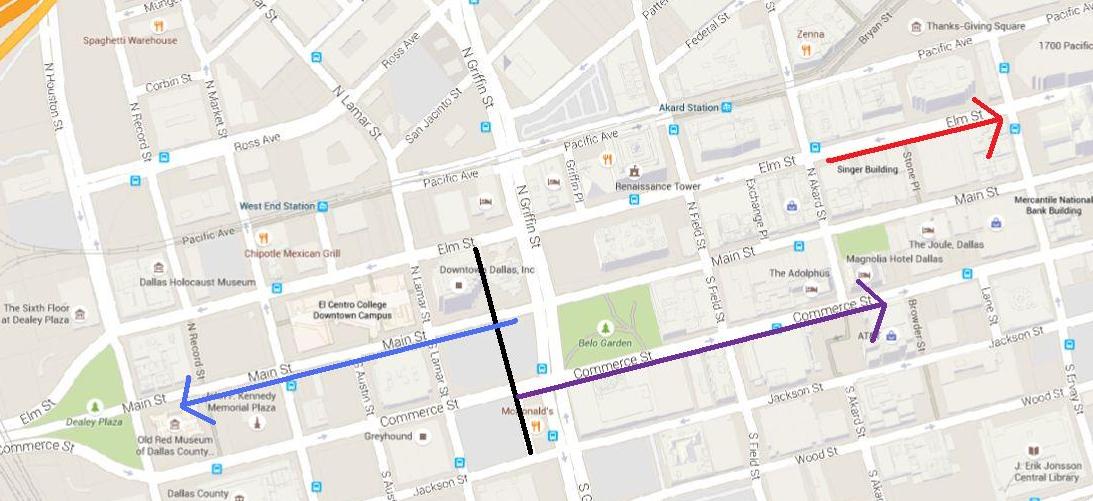
Below is a handy-dandy visual showing the locations of the above photos on a present-day map. (The black line shows where Poydras used to be. It exists today only as an alley-like block-long stretch of asphalt that runs alongside the downtown McDonald’s.) Click for larger image.

downtown_church-photos_googleGoogle Maps

***

Photos by Clifton Church (1855-1943), from his book Dallas, Texas Through a Camera: A Collection of Half-Tone Engravings from Original Photographs (Dallas: J. M. Colville, Franklin Printing House, 1894). (Sadly, these images are a bit washed out. I’d love to see the original photographs — and I’d love to see a copy of the original book.)

Address information from city directories and Sanborn maps.

Click pictures for larger images.

*

Copyright © 2015 Paula Bosse. All Rights Reserved.

Post Office, Sunbonnets — ca. 1890s

post-office_hist-photos-of-dallas

“Little Post Office on the Blackland Prairie” (click for larger image)

by Paula Bosse

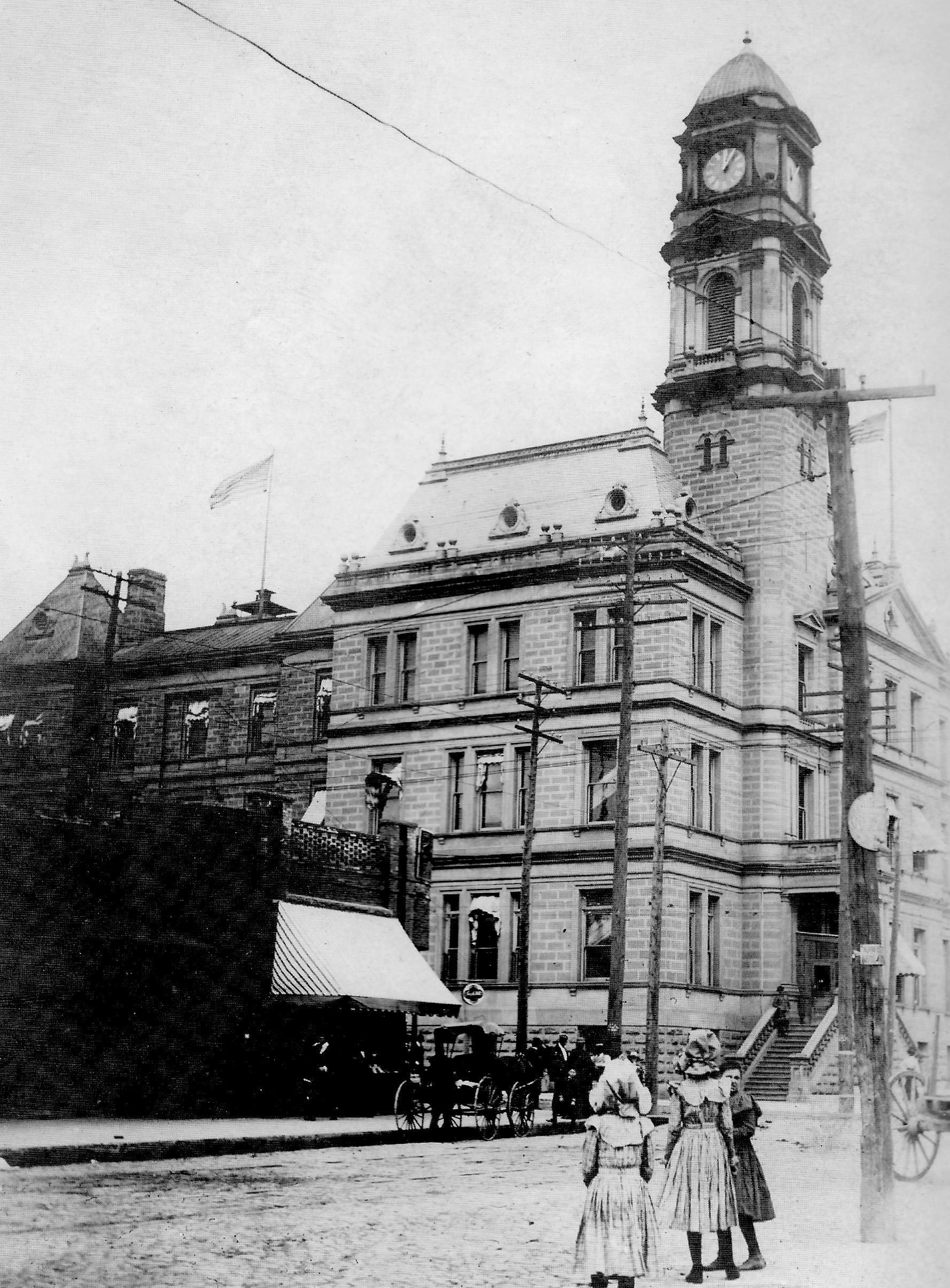
Laura and Mary Ingalls and Nellie Oleson appear to have wandered into Dallas to take a look at the new Post Office clock tower, seen here at Commerce and Ervay, probably in the mid- to late-1890s.

***

Photo from the book Historic Photos of Dallas by Michael V. Hazel (Nashville: Turner Publishing Co., 2006).

For an incredible view of this same spot from 1894, see my previous post “Henry Stark’s ‘Bird’s Eye of Dallas’ — 1895/96” here (click pictures for larger images).

Click picture for very large image!

*

Copyright © 2015 Paula Bosse. All Rights Reserved.

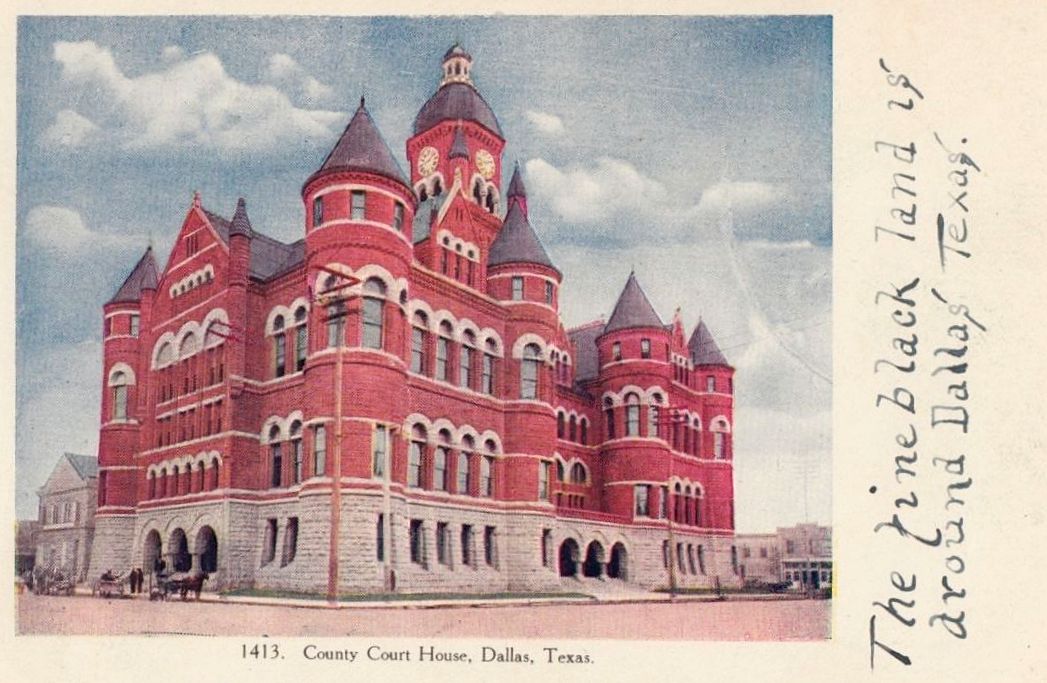
“The Fine Black Land Is Around Dallas, Texas”

old-red-courthouse_earlyOld Red doesn’t disappoint (click for larger image)

by Paula Bosse

A quick note to the folks back home on an impressive picture postcard.

*

Copyright © 2015 Paula Bosse. All Rights Reserved.

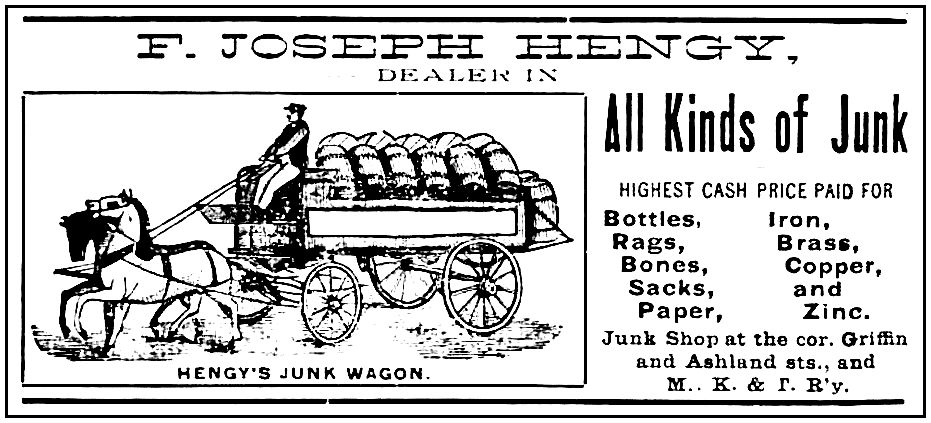
F. J. Hengy: Junk Merchant, Litigant

ad-hengy-junk_city-directory_1890-sm“All Kinds of Junk” — 1890 ad

by Paula Bosse

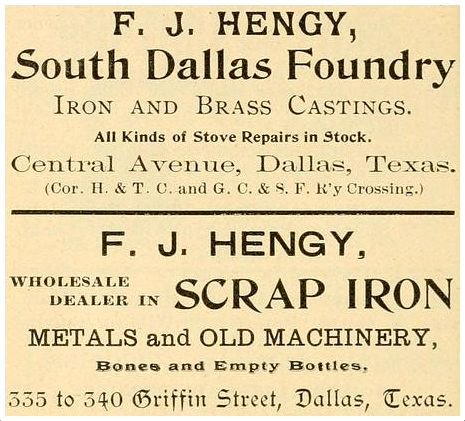
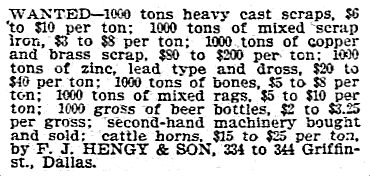
Frank Joseph Hengy was born in Germany in 1850. He immigrated to the United States in 1873, and in about 1880 he made his way to Dallas with a wife and children and established himself as a prosperous buyer and seller of scrap metal and other assorted “junk.” He also owned and operated a foundry, producing amongst other things, sash weights. In the 1894 city directory, there were exactly two “junk dealers” listed, which is surprising, seeing as Dallas was a sizable place in 1894 — there must have been a lot of bottles, rags, bones, sacks, paper, iron, brass, copper, and zinc lying around all over the place, just waiting to be hauled away.

hengy_souv-gd_1984Souvenir Guide to Dallas, 1894

F. J. “Joe” Hengy’s junkyard (and adjacent residence) was at Griffin and Ashland, right next to the M K T Railway tracks. He advertised in the newspapers constantly and was apparently THE man to sell your junk to. His name even made its way into the minutes of an 1899 city council meeting, when, during the discussion on how the city was going to pay for the shipping of a Spanish cannon that had been captured in Cuba and had been given to the city as a war trophy, a councilman asked sarcastically, “What will Hengy give for it?” (Dallas Morning News, Aug. 5, 1899).

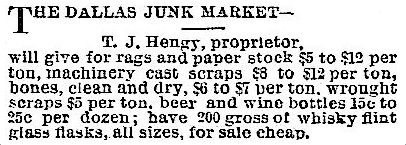
But, seriously, got junk? Call Hengy. Got tons of it? By god, he wants it. A couple of examples of the endless ads placed over the years — two ads, 12 years apart (the 1887 one getting his first initial wrong).

1887_hengy_dmn_082487DMN, Aug. 24, 1887

1899_hengy_dmn_102299DMN, Oct. 22, 1899

In the mid-1890s, Joe took his son Louis on as a partner, which, in retrospect, was probably not a good idea, because it wasn’t long before Joe found himself in the middle of years and years of lawsuits: father against son, son against father, father and associates against son, son and associates against father, etc. Not only was he constantly being sued by his son, he was also sued for divorce … twice … by the same woman. He turned around and sued her for custody of their youngest children (and won). She sued him for the business when he was threatening to sell it and retire. He sued her back for something or other. And on and on and on.

Not only was Joe spending all his non-junk-hauling time traipsing about courthouses, but he also found the time to suffer the occasional partial destruction of buildings on his property — twice by fire and once by the massive flood of 1908. The fires were suspicious (the flood was not).

Then there was the time he was charged with the crime of mailing an obscene letter (I’m gonna go out on a limb and guess that it was probably a letter sent to his wife — or maybe ex-wife by that point — who was in the midst of suing him and their son). Even though this was a potentially serious federal offense, he was ordered to pay only a small fine for “misuse of the mails.” He was also charged at one point with “receiving and concealing stolen property,” but I’m not sure that got past a grand jury investigation, and one might wonder if there wasn’t some sort of “set-up” by aggrieved relatives involved. It was something new anyway. Probably broke up the monotony a little bit.

But the thing that seems to have been Hengy’s biggest headache and was probably the root of most of the lawsuits filed BY him and AGAINST him concerned property he owned which had been condemned in the name of eminent domain by the M K T Railway. The condemnation was disputed, the appraisal of land value was disputed, the question of which Hengy actually owned the land was disputed, etc.

By the end of 1913, Joe Hengy had been engaged in at least 10 years of wall-to-wall litigation. He moved to Idaho at some point, remarried, started another business, and, finally, died there in 1930. Let’s hope his later years were lawsuit-free.

*

hengy_map_ca1900

Hengy’s business and residence (which was, surprisingly, right next door to his litigious son) was at 2317 Griffin, very close to the present-day site of the Perot Museum. (Full map circa 1900, here.) (Click for larger image.)

*

Lastly, two odd, interesting tidbits.

Joe Hengy took time out from junk and courtrooms to invent new and improved … suspenders! I’m not sure exactly what was so revolutionary about them, but a patent was granted in 1912 — you can read the abstract here, and see them in all their suspendery glory here. (With so much foundry and scrap metal know-how, you’d think he’d go in a more … I don’t know … anvil direction or something.)

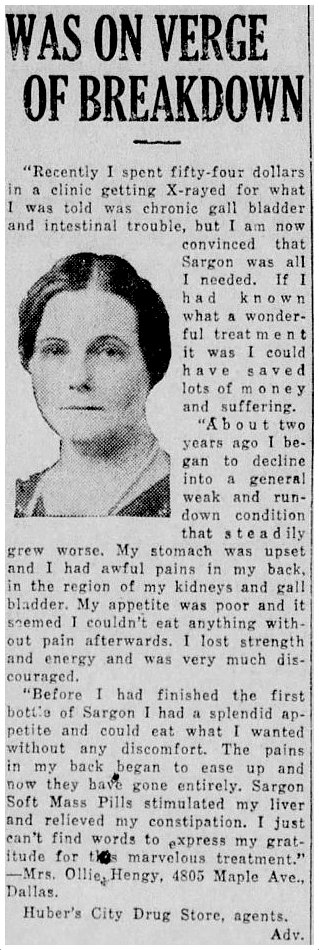
And, then there’s this — a kind of sad ad for a tonic called “Sargon” with a testimonial from Mrs. Ollie Hengy, the no doubt long-suffering wife of perennial plaintiff/defendant Louis Hengy. “Was On Verge of Breakdown.” I don’t doubt it! (Incidentally, Ollie and Louis divorced the same year this advertisement appeared in Texas newspapers. Maybe that stuff did work.)

ollie-hengy_vernon-daily-record_0906291929

***

Sources & Notes

Top ad from Dallas’ 1890 city directory.

Sargon ad appeared in The Vernon Daily Record, Sept. 6, 1929. More on the quack tonic Sargon here.

Sources for other clippings and images as noted.

Lastly, an interesting article that answers the questions “Why was the scrap metal game profitable?” and “Just where did all that metal GO, anyway?” can be found in the article “Many Uses for Junk: How Wornout and Discarded Metal is Utilized,” originally published in The Brooklyn Citizen in 1899; it can be read here. I’m nothing if not exhaustive.

*

Copyright © 2015 Paula Bosse. All Rights Reserved.

A Post Office on the Fairgrounds?

tx-state-fair_post-office_postcardTeeny-tiny post office at Fair Park… (click for larger image)

by Paula Bosse

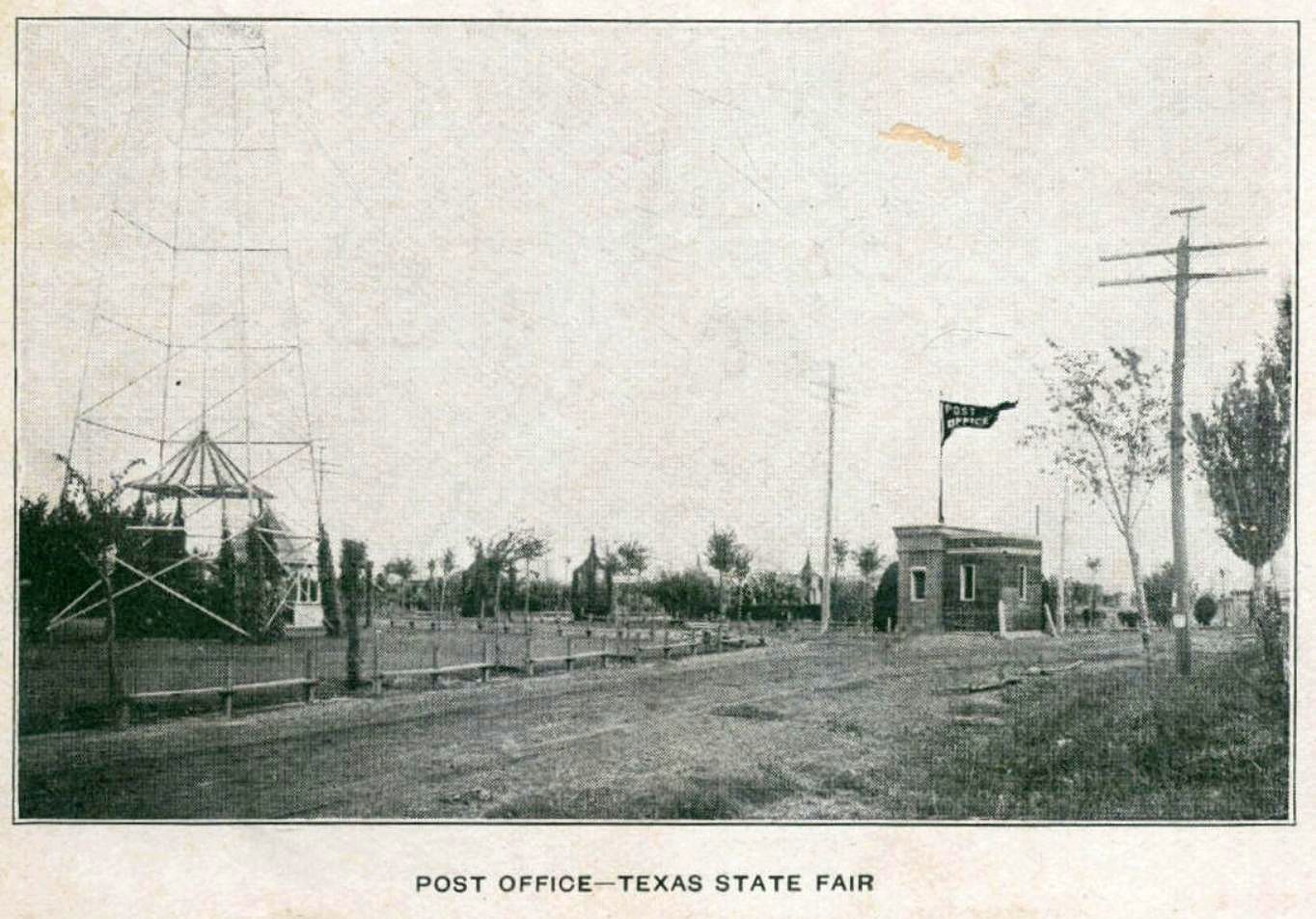
I’m not really sure about this. It’s a postcard with a photograph captioned “Post Office — Texas State Fair” on the front, and “Missouri, Kansas & Texas Ry. Co.” printed on the back.

mkt_post-office-back

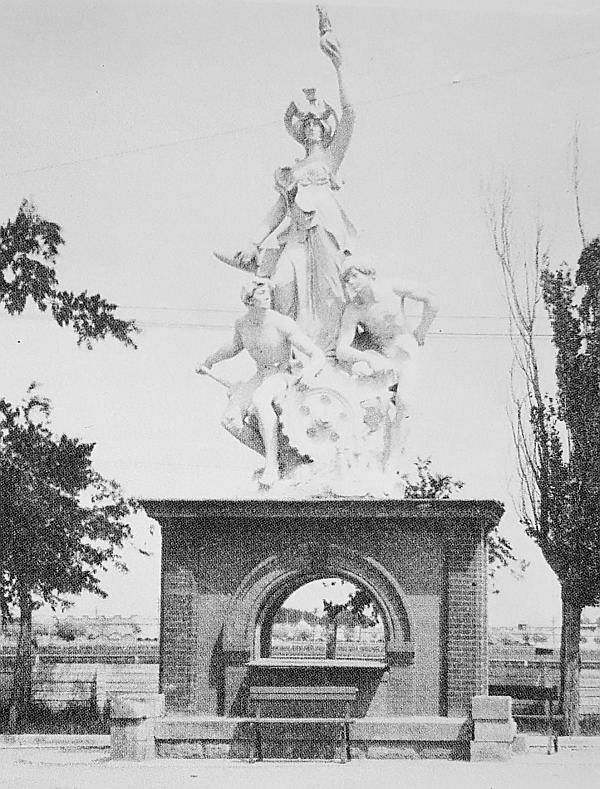
Was there a post office on the fairgrounds? After much googling, I came across a photo of a huge statue atop an arch in the book Fair Park by Willis Cecil Winters. Winters writes that this masonry arch […] served the fairgrounds as a post office.” I’m not sure how that worked, but it’s interesting.

fair-park_arch_statuary_post-office_dallas-rediscovered

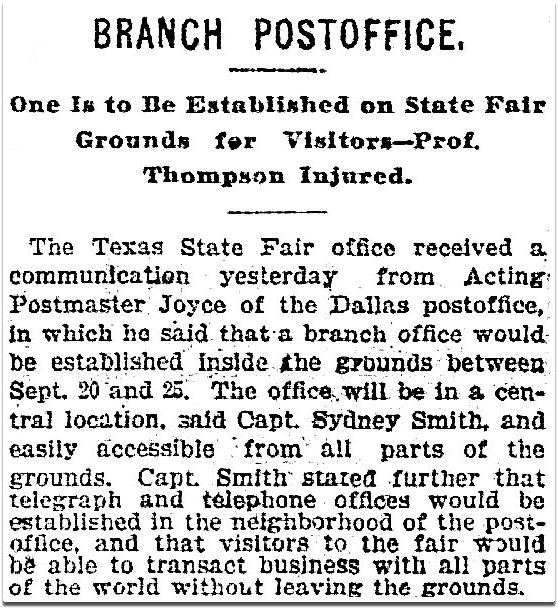
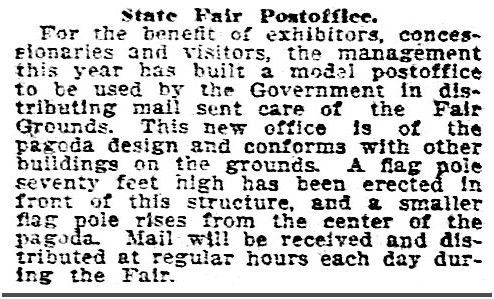
I did find a few mentions of a post office on the grounds of the state fair. Seems that it was a fairly standard temporary fixture on the fairgrounds — not only was it a post office branch that served those who worked the fair, it was also a one of the many features (along with huge steam-powered engines, restaurants, and telegraph and telephone service) that made the fairgrounds a self-contained mini city of sorts:

[I]t is no longer necessary for those doing business at the fair grounds to come down town, as the grounds constitute a completely appointed modern city, with all connection with the outside world. (Dallas Morning News, Sept. 25, 1901)

(Click clippings to see larger images.)

post-office_fairgrounds_dmn_091799
DMN, Sept. 17, 1899

post-office_fairgrounds_dmn_092501
DMN, Sept. 29, 1901

post-office_fairgrounds_dmn_091103
DMN, Sept. 11, 1903

state-fair_post-office_dmn_100408
DMN, Oct. 4, 1908

And now I know.

***

Top photo is from eBay (where this postcard is currently waiting for bids, here).

Photo of the Fair Park sculpture was taken in 1910. The Dallas Historical Society photo is captioned thusly by William L. McDonald in his book Dallas Rediscovered: “‘Progress,’ a sculptural monument to the promise of the age of technology which disappeared mysteriously just before the 1936 Centennial.” (THAT sounds like an interesting story!)

About the only mention I could find of the “colossal statuary that spans the driveway near the grand stand of the race track” (DMN, Oct. 15, 1905) was this short mention in a News article:

fair-park_arch_statuary_dmn_091505
DMN, Sept. 15, 1905

Want to know what the “Act of Congress” mentioned on the back of this “privately printed” postcard means? See here. Kind of interesting. And the info seems to indicate that the postcard above was printed between 1898 and 1901.

Click pictures and clippings to see larger images.

*

Copyright © 2015 Paula Bosse. All Rights Reserved.