Flashback : Dallas

A Miscellany: History, Ads, Pop Culture

Category: 1900s

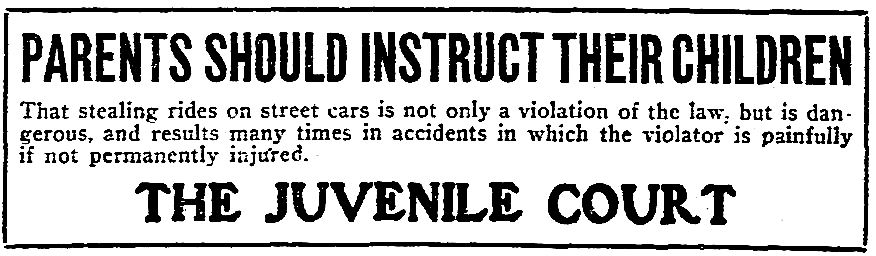
A Word From the Juvenile Court on Stealing Rides on Streetcars…

akard-car_cook-coll_degolyerThe Akard St. trolley, car #249 (click for larger image)

by Paula Bosse

…DON’T DO IT!

streetcar-ride-stealing_dmn_071309Dallas Morning News, July 13, 1909

***

Photo titled “Two Streetcar Employees with Dallas Streetcar No. 249,” is from the George W. Cook Dallas/Texas Image Collection, DeGolyer Library, Central University Libraries, Southern Methodist University; is can be accessed here.

Both images larger when clicked.

*

Copyright © 2016 Paula Bosse. All Rights Reserved.

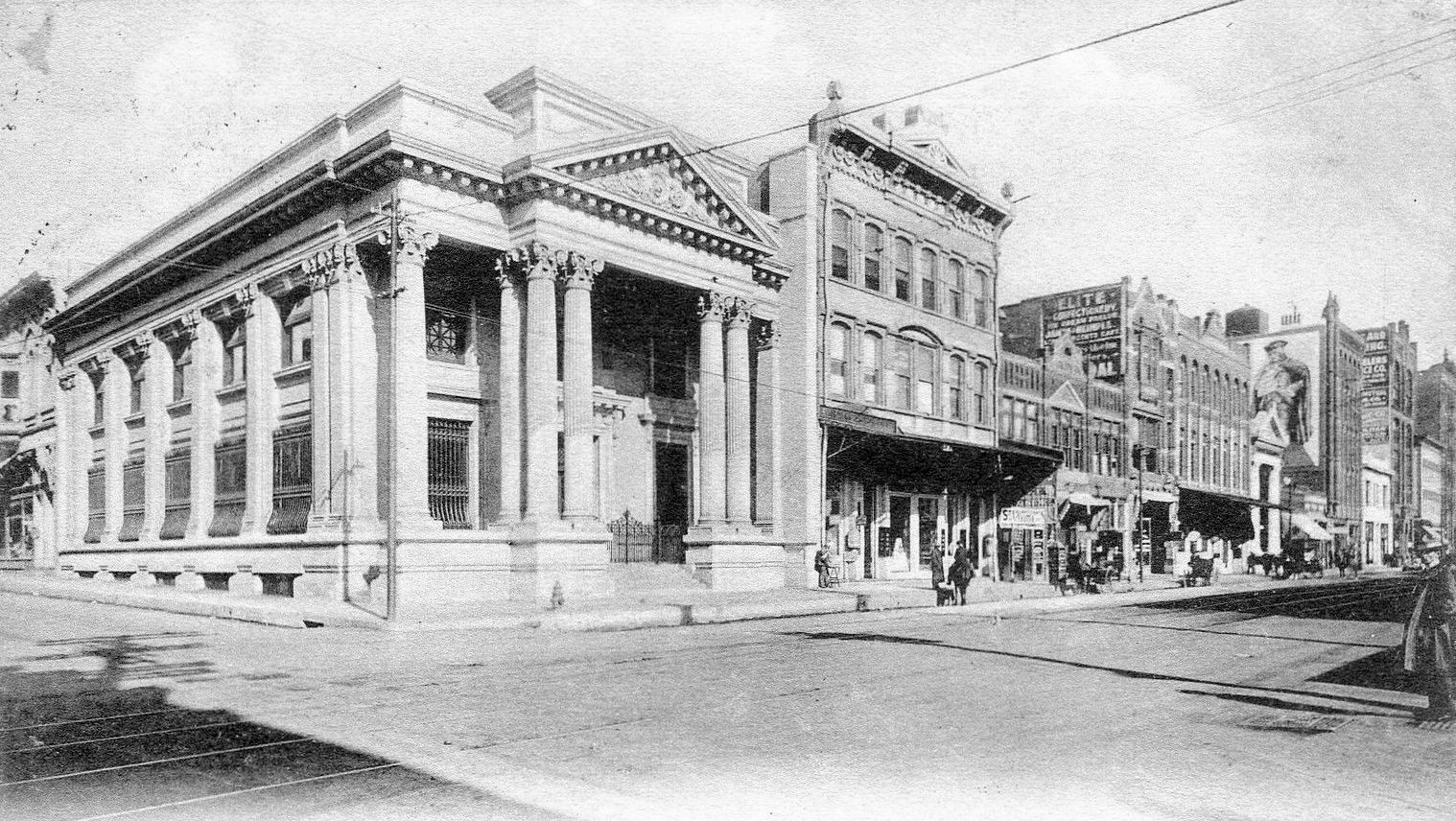
Main & Murphy — ca. 1907

city-national-bank_postcard_bwMain St. looking east

by Paula Bosse

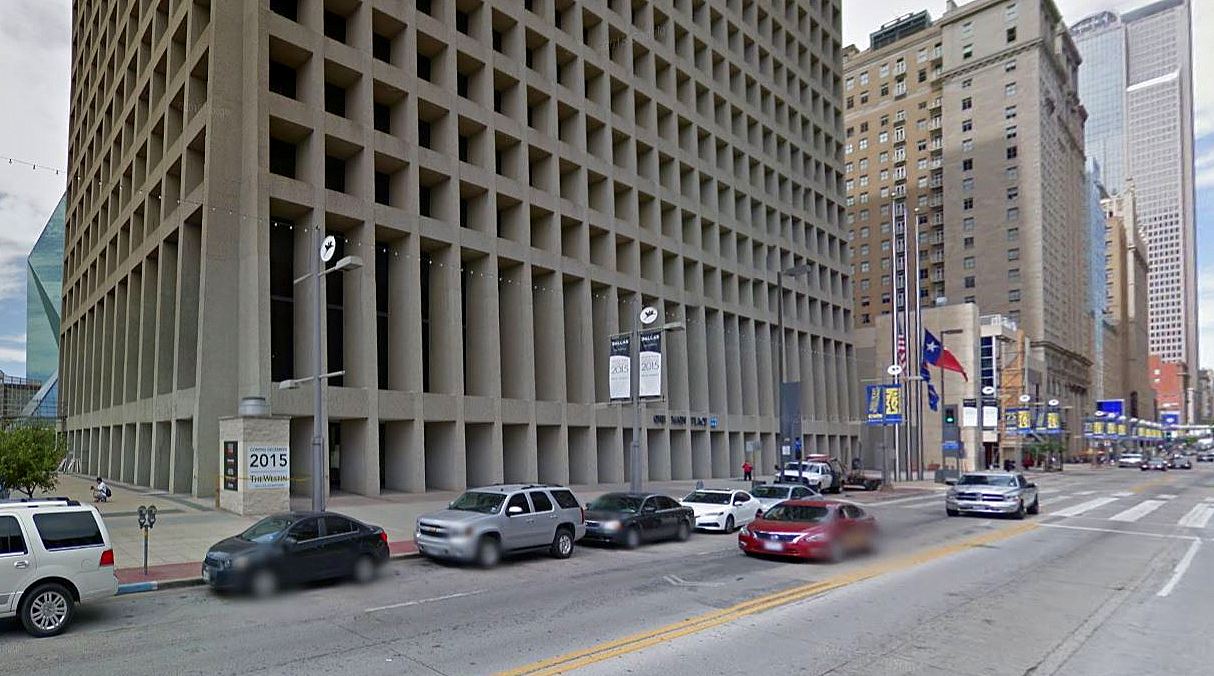
Above, Main Street looking east, taken from Murphy, anchored by the beautiful City National Bank, built in 1903. This block today? One Main Place.  Whatever old buildings were left in this block in 1965 (including the old City National Bank) were bulldozed into oblivion to make way for the skyscraper.

The same view today:

one-main-place_google_2015Google Street View, 2015

***

Sources & Notes

Top image from a postcard found on eBay.

Imagine looking up to the sky from the photographer’s vantage point in the top photo and seeing what things would look like a century later.

Murphy no longer exists — it was between what is now Griffin and Field. A map from 1898 showing the location:

main-murphy_1898-map

See another photo of the same view taken at about the same time, only with horse-and-buggy traffic, here.

*

Copyright © 2016 Paula Bosse. All Rights Reserved.

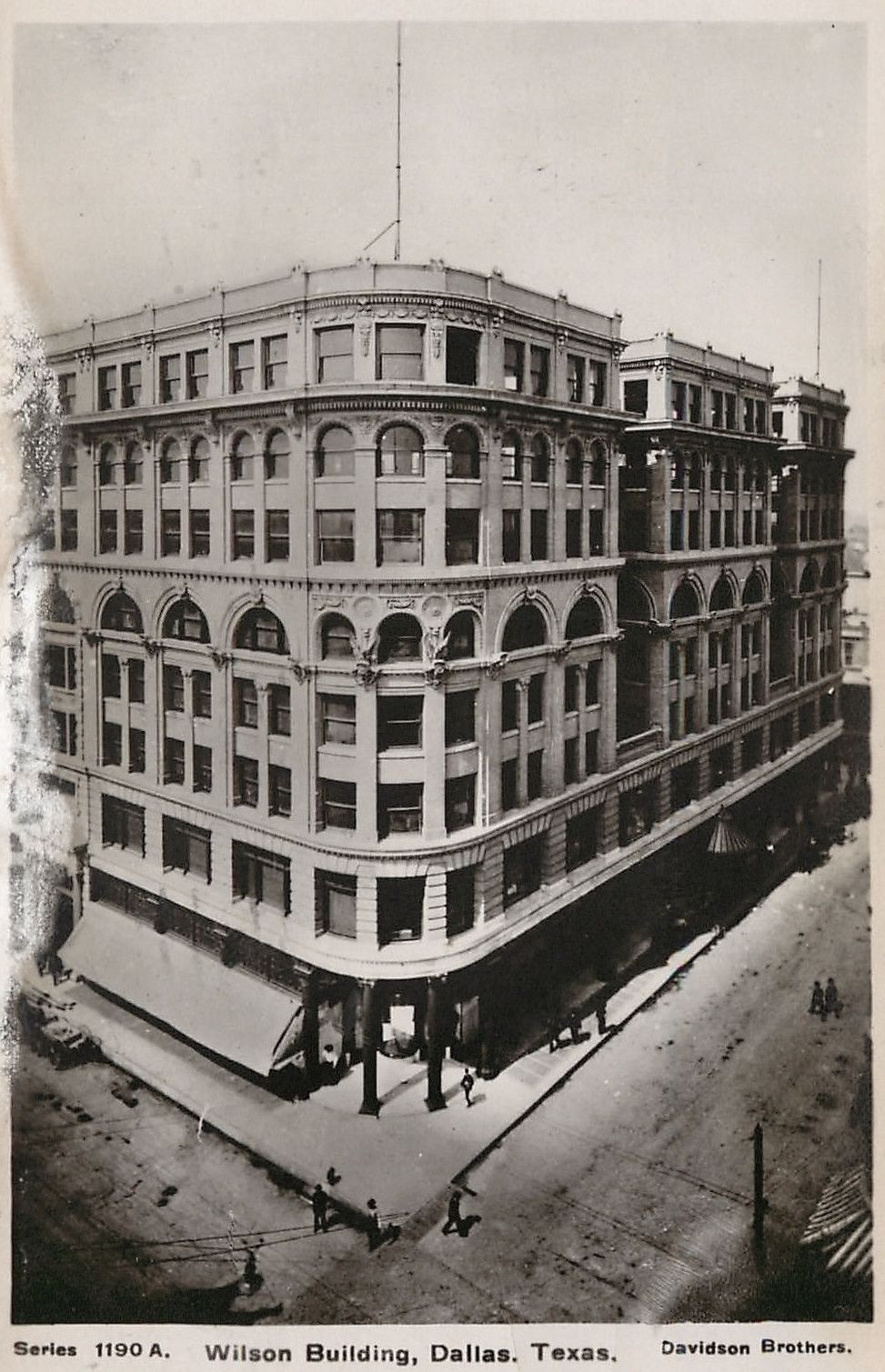
The Wilson Building, Early Days

wilson-bldg_RPPC_ebay_pm1908_smallMain & Ervay (click for larger image)

by Paula Bosse

Yet another view of one of Dallas’ most beautiful buildings!

***

Postcard from eBay, postmarked 1908.

For meatier Wilson Building posts, see the previously posted “The Wilson Building Under Construction — 1902,” here, and “The Wilson Building & Its Tenants — 1908/1909,” here.

Click for larger image.

*

Copyright © 2015 Paula Bosse. All Rights Reserved.

Turn-of-the-Century Maple Avenue

maple-ave_colteraHope this wasn’t between McKinney & Cedar Springs…

by Paula Bosse

When the fashionable and wealthy began to move their residences north from the downtown area, they built their homes along Maple Avenue, between McKinney and about where the Stoneleigh Hotel now stands. This exclusive neighborhood of imposing houses hit its stride in the first decade of the 20th century.

One of the well-to-do families who lived on Maple at this time was that of G. B. Dealey, founding editor of The Dallas Morning News. His son Ted Dealey wrote at length about all of his boyhood neighbors in his very entertaining book, Diaper Days of Dallas. Rather ominously, though, these amusing and colorful childhood memories end with this paragraph:

I hate to write this paragraph because some people may think I had a pernicious influence on the neighborhood. But there were five men living on Maple between McKinney and Cedar Springs who committed suicide in the 1900s. Not all in one day, or one week, or one month, of course, but over a period of years.

Wow. The distance between McKinney Avenue and Cedar Springs is only two-tenths of a mile!

Beautiful houses, though!

***

Postcard from Flickr, here.

Paragraph from Diaper Days of Dallas by Ted Dealey (Nashville: Abingdon Press, 1966), p. 39.

Click postcard to see larger image.

*

Copyright © 2015 Paula Bosse. All Rights Reserved.

Selling Kidd Springs Heights, 1909-1910

gaston-bldg_1910_cook-degolyerThe L. A. Wilson Co. is having a sale! (photo: SMU)

by Paula Bosse

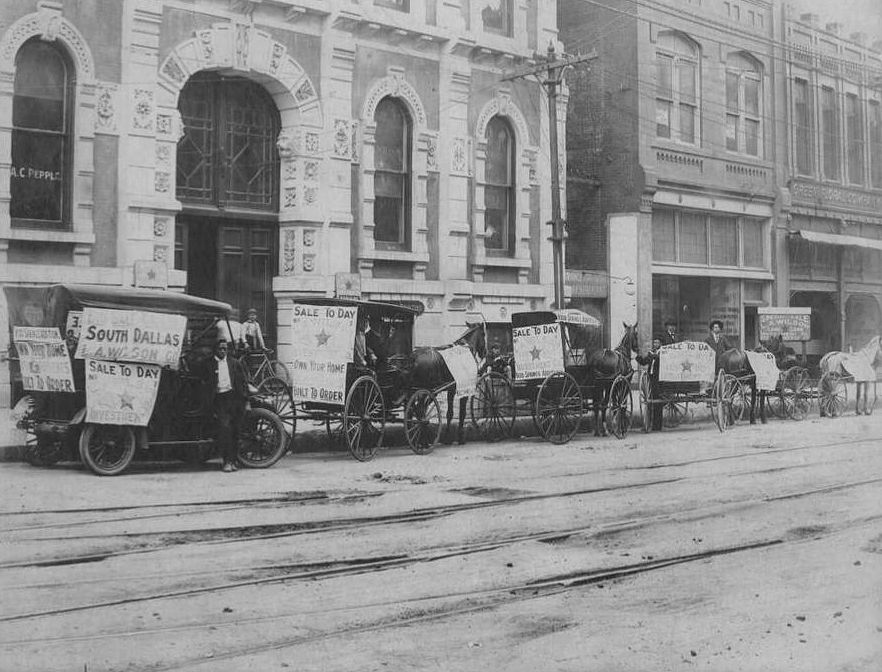
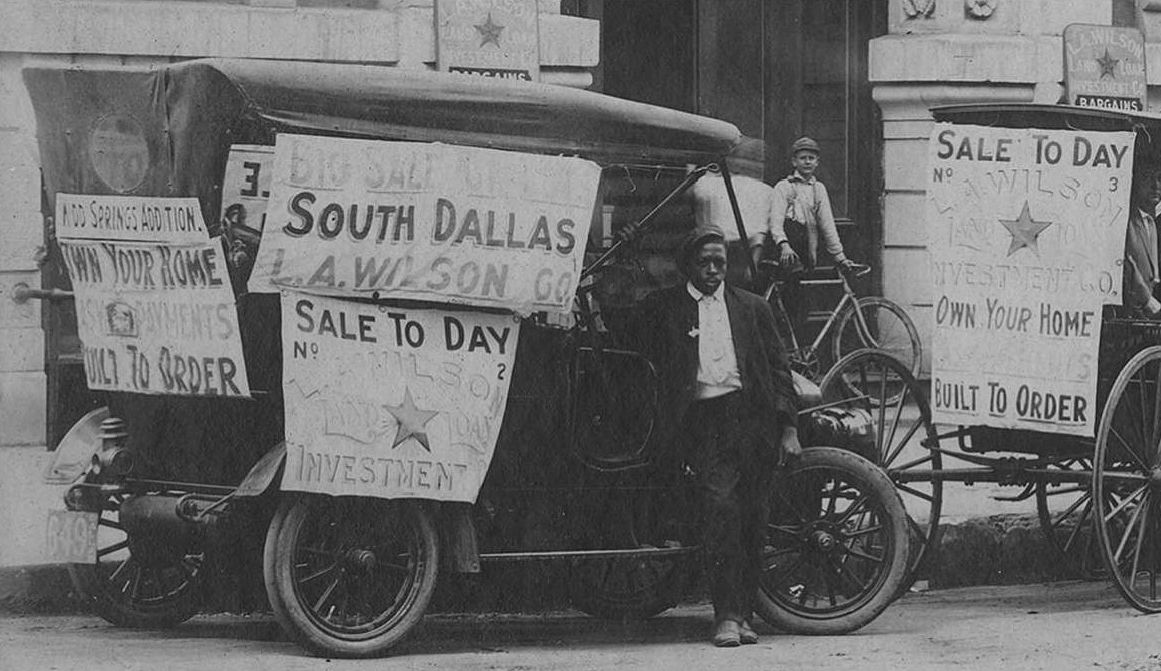
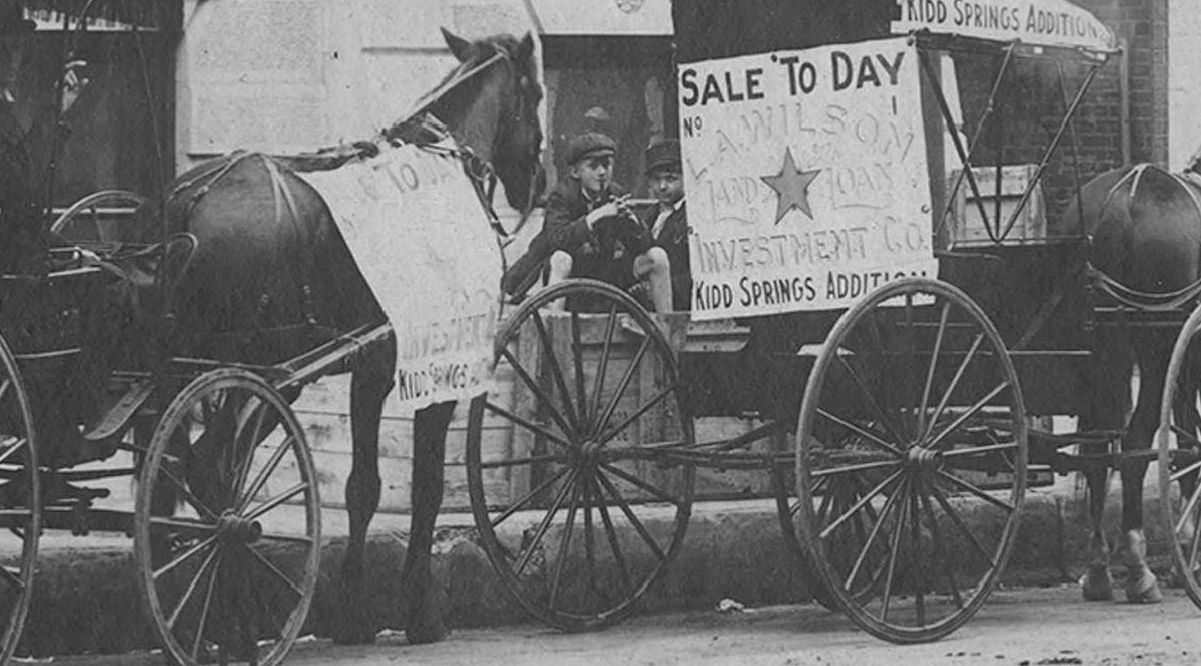
The above photo shows a car-and-buggy convoy belonging to the L. A. Wilson Land, Loan & Investment Company, stretched out in front of the Gaston Building at Commerce and S. Lamar. There’s a “Sale To Day” and they’re really pushing property in the Kidd Springs Addition in Oak Cliff. The date “April 20, 1910” is written on the back of the photo, and if that’s true, the big show here might be rooted more in desperation than in enthusiasm. The Wilson company began selling the 30-or-so lots in the new Kidd Springs Heights neighborhood in July of the previous year. An ad that appeared seven months before this photo was taken announced that there were only ten lots left. It looks like this was an impassioned display to make Kidd Springs seem more exciting and move that remaining property. People love parades.

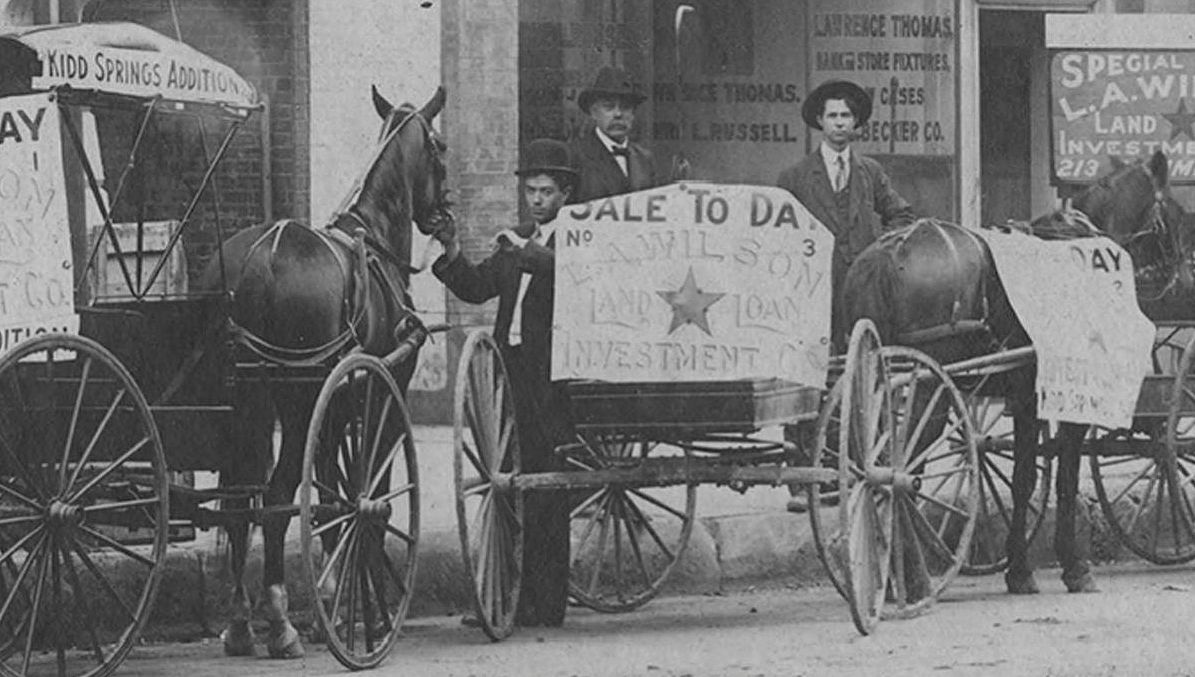
(This is another great photo to zoom in on to see the details. All images are larger when clicked.)

gaston-bldg_1910_cook-degolyer-det1

gaston-bldg_1910_cook-degolyer-det4

gaston-bldg_1910_cook-degolyer-det5

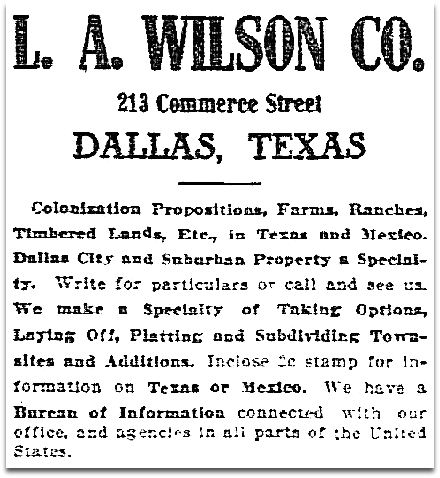
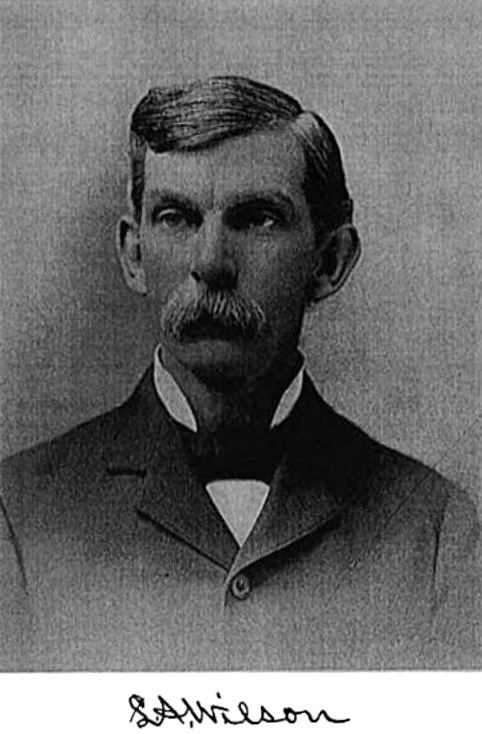
The L. A. Wilson Co. was a fairly large real estate company founded by Missouri-born Lewis A. Wilson (1851-1926); at the time of this photo, the company’s offices were in the Gaston Building at 213 Commerce. (In the photo immediately above, I think the man with the moustache is Mr. Wilson.)

wilson_dmn_070409-detDallas Morning News, July 4, 1909 (ad detail)

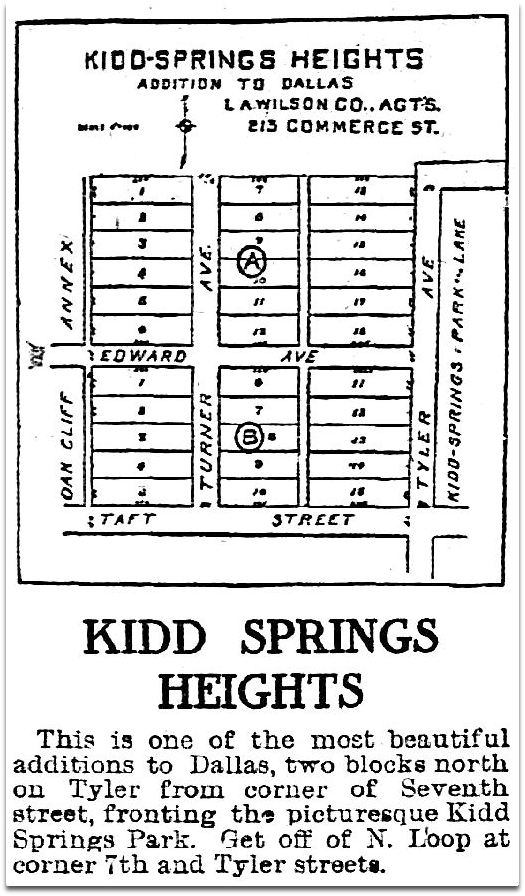
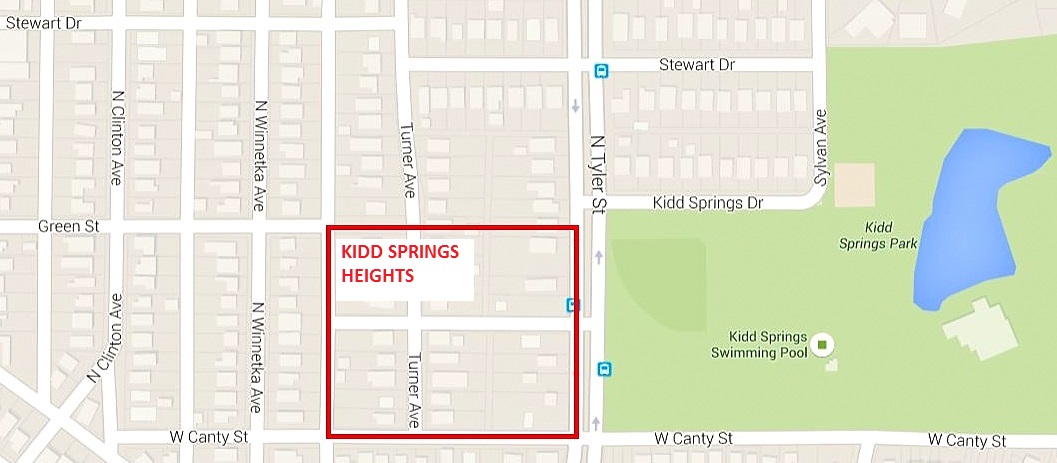
The first ad announcing the sale of lots in the Kidd Springs Heights area of Oak Cliff appeared on July 4, 1909. It included the two blocks north of what is now W. Canty, bounded by Turner Ave. on the west and N. Tyler (and Kidd Springs Park) on the east.

ad-wilson_dmn_070409-text

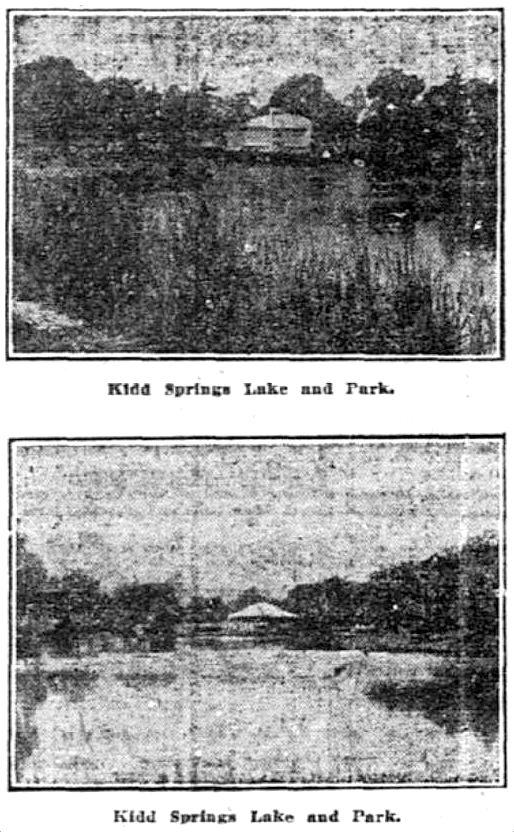
ad-wilson_dmn_070409-photosDMN, July 4, 1909

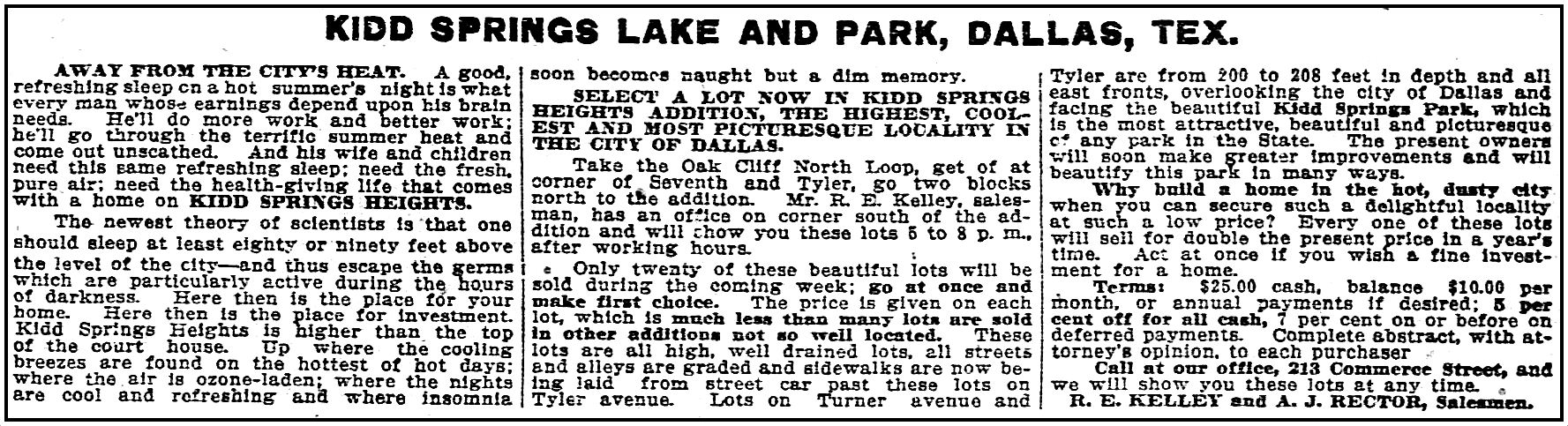
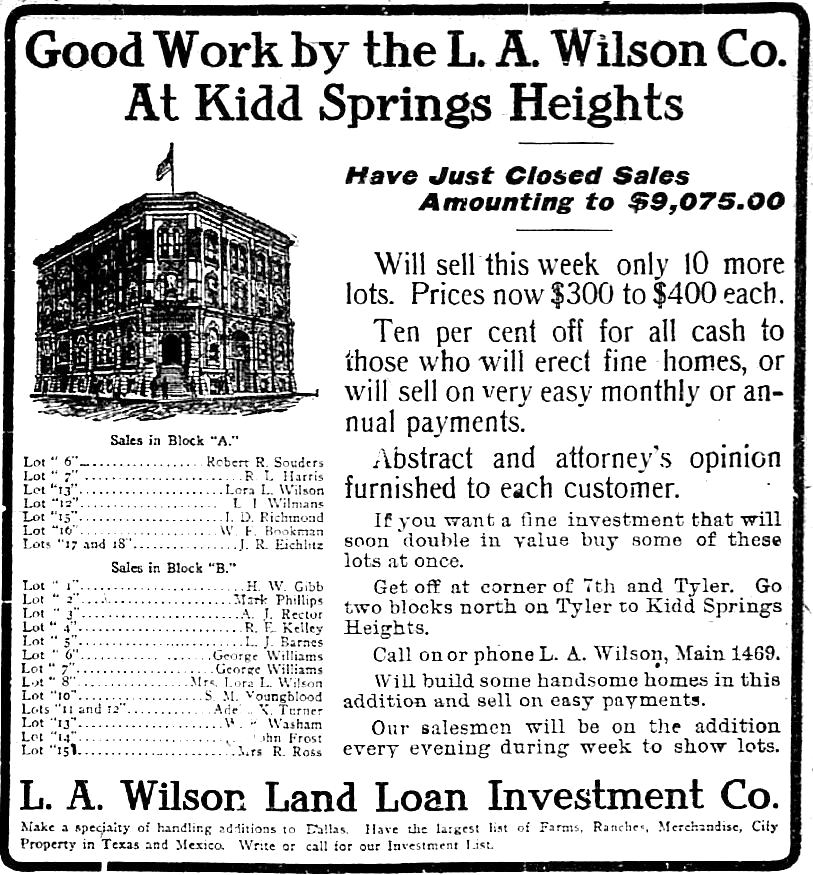
Four weeks later, a huge half-page ad ran in The Dallas Morning News, full of wonderful reasons why life would be better in Kidd Springs Heights:

The newest theory of scientists is that one should sleep at least eighty or ninety feet above the level of the city – and thus escape the germs which are particularly active during the hours of darkness. Here then is the place for your home. Here then is the place for investment. Kidd Springs Heights is higher than the top of the court house. Up where the cooling breezes are found on the hottest of hot days; where the air is ozone-laden; where the nights are cool and refreshing and where insomnia soon becomes naught but a dim memory.

The effusive sales copy is definitely worth a read (click ad below to read the full sales pitch).

wilson_kidd-springs-heights_dmnn_090109DMN, Aug. 1, 1909

Six weeks later the following self-congratulatory ad appeared. (It’s interesting to note that of the twenty lots sold, two of them had been sold to Mrs. L. A. Wilson, and one each had been sold to the two salesmen. The next year’s telephone directory showed that the Wilsons lived on Live Oak, and the two salesmen lived in boarding houses.)

wilson-kidd-springs_dmn_091209DMN, Sept. 12, 1909

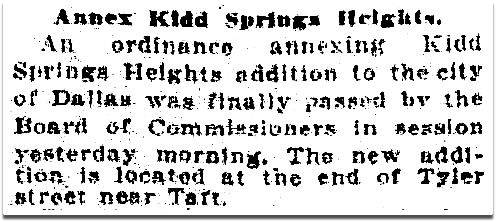
It wasn’t until 1921 that the tiny little Kidd Springs Heights was annexed to the city of Dallas.

annexed_dmn_051421DMN, May 14, 1921

Things may be different today, but in 1909, these were the boundaries of Kidd Springs Heights.

kidd-springs-heights_google_2015

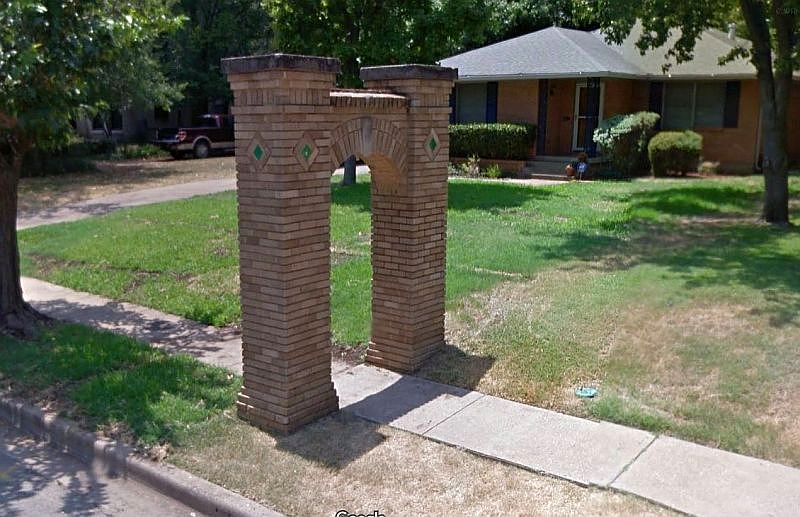
The most interesting odd thing about Kidd Springs Heights? There appear to be two brick archways placed (very awkwardly) across Turner Avenue from one another — each spanning the sidewalk. I can’t find any information about these, but it looks as if they were set right at the northern boundary of the Kidd Springs Heights Addition. Old maps (such as this one from 1919) show no development to the north of this boundary up into at least the ’20s (it doesn’t look as if this addition is even in Oak Cliff proper), so I guess they were there before those sidewalks and served as a welcoming gateway to a new development where germs did not dwell after nightfall.

arch_google
900 block of Turner Avenue (Google Street View)

(Check out both of these markers on Google Street View, here. It’s pretty strange-looking.)

If anyone has information on these markers, please pass it along!

***

Sources & Notes

Top photo is titled “L. A. Wilson Land Loan Investment Company, Gaston Building, Commerce Street” — the photographer’s name and the date are written on the back: W. R. Lindsay, April 20, 1910. It is from the George W. Cook Dallas/Texas Image Collection, DeGolyer Library, Central University Libraries, Southern Methodist University, and it can be viewed here. I have adjusted the color.

Lewis A. Wilson’s biography can be read in A History of Greater Dallas and Vicinity (1909), here. His photo:

wilson_hist-greater-dallas

The Kidd Springs Wikipedia entry is here.

The Sanborn map from 1922 showing this tiny neighborhood at about the middle of the page on the right can be found here. Note how few lots actually have houses built on them. (Taft is now W. Canty; Edwards is now Everts.)

The Murphy & Bolanz map can be seen here. (If the link doesn’t work, you may need to download the plug-in — information on how to do that is here.)

*

Copyright © 2015 Paula Bosse. All Rights Reserved.

Dallas Consolidated Electric Street Railway Co. Ad — 1902

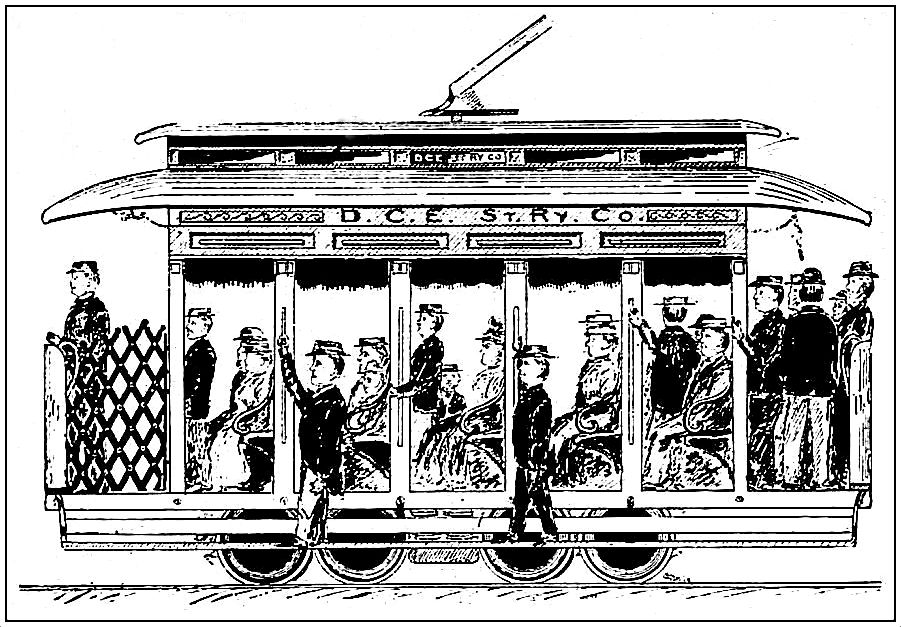
streetcar_dce_worleys_1902-det

by Paula Bosse

Why bother with a horse and buggy when you can take the streetcar?

streetcar_dce_worleys_1902-det1

streetcar_dce_worleys_1902(click me!)

streetcar_dce_worleys_1902-det2

***

D.C.E. St. Ry. Co. ad from the 1902 city directory.

Click for larger images.

*

Copyright © 2015 Paula Bosse. All Rights Reserved.

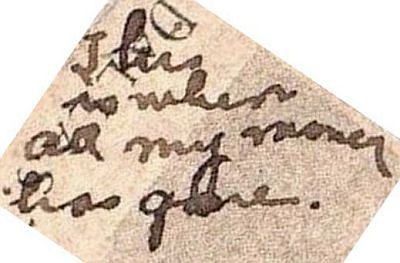
The State Fair of Texas: “This Is Where All My Money Has Gone”

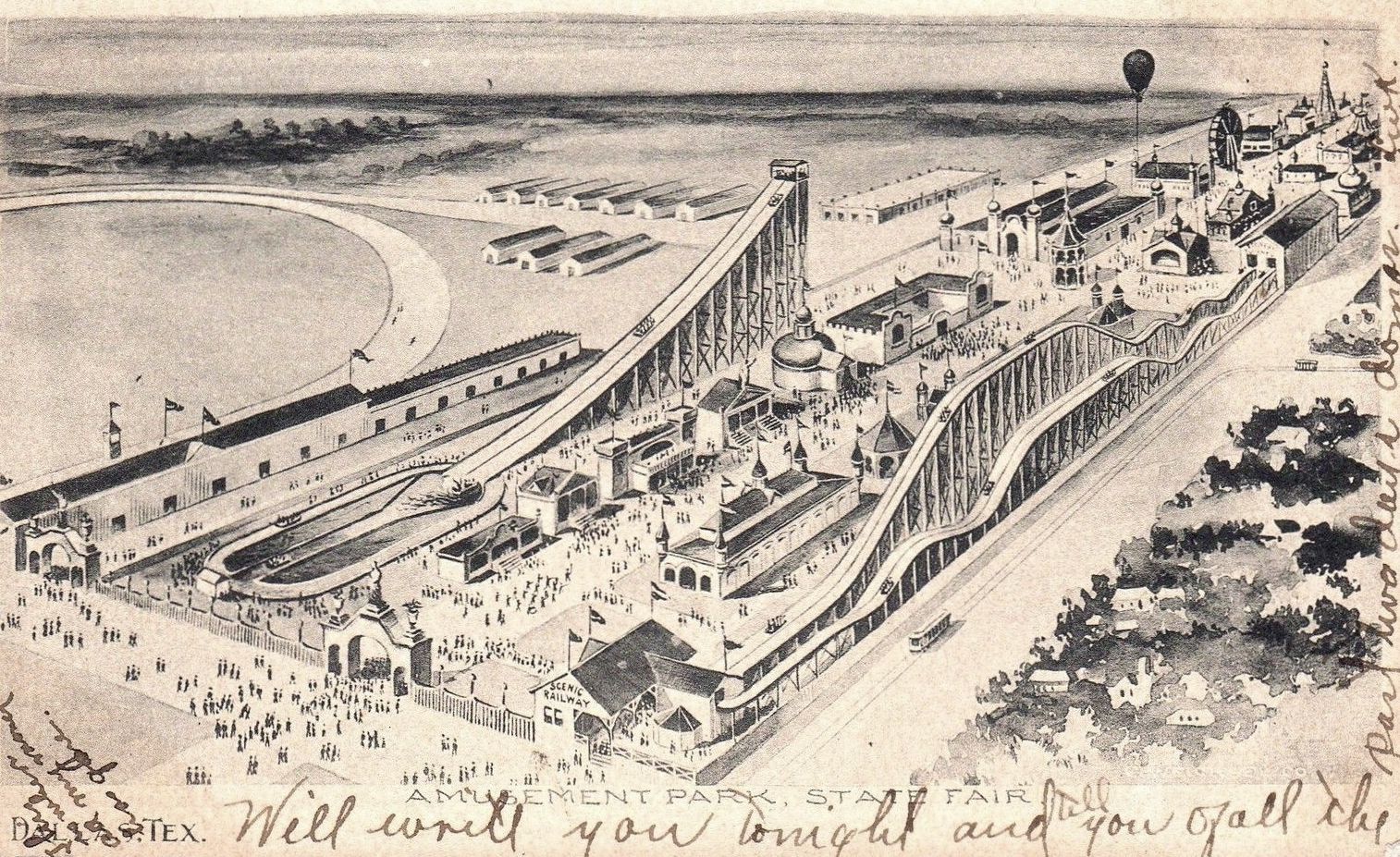
state-fair_ebay

by Paula Bosse

Today is the last day of the fair. If you haven’t been yet, you should go! Have fun — and watch your moolah drain from your wallet at an alarming rate. It’s a tradition!

state-fair_money

***

Postcard from eBay. Click it to see a REALLY  BIG image!

*

Copyright © 2015 Paula Bosse. All Rights Reserved.

“The Fair Is In the Air — Let’s Go!”

state-fair_1923Look at this 1923 typeface!

by Paula Bosse

Here we are again in the final days of another State Fair of Texas. Why not take a look at a few random images of the fair over the years. (Click pictures for larger images.)

First, from 1900, the entrance to the fairgrounds. (It appears to be the same view as the top postcard seen in a previous post, here, just a few steps inside the archway.)

fairgrounds-main-entrance_bohemian_1900_fwplFort Worth Public Library

*

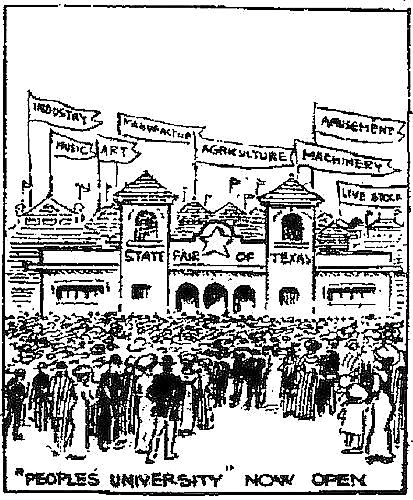
A cartoon from The Dallas Morning News in 1912 — “The People’s University.” Remember, it’s not just about Ferris wheels and candy apples.

state-fair_dmn_102012-cartoonDMN, Oct. 20, 1912

*

1921. Don’t miss The Whip.

state-fair_1921

*

From the Texas Centennial in 1936, a shot of a remarkably spotless Midway. (Am I the only one who would have paid to see the “28-Ft. Monster” do battle with whatever freakish specimens were ensconced within the walls of the Ripley’s Believe It Or Not building?)

tx-centennial-midway_1936_ebay

*

During World War II, no fair was held between 1942 and 1945. “Not until the boys come home, will there be another State Fair of Texas.”

state-fair_wwii_tx-almanac_1945-46

*

By the ’50s, everything was back to normal. Big Tex had arrived, and this ad promises “She’s a LULU in ’52.” Martin & Lewis and whatever a Thrillcade was!

state-fair_dmn_092552_lg

*

And, lastly, an aerial view of the Midway from 1966. Now this IS all Ferris wheels and candy apples. (To watch a short collection of color footage from the damp 1967 SFOT — including a sad, rainy parade downtown — click here.)

state-fair_1966_UNTUniversity of North Texas

***

Sources & Notes

1900 photo of the entrance to the fair is from The Bohemian magazine (1900) in the collection of the Fort Worth Public Library (those perforations in the photo are the FWPL’s).

1921 photo — I’m afraid I have no source on this one.

1936 postcard of the Centennial Midway is from eBay.

Patriotic WWII ad is from the 1945-1946 Texas Almanac.

Photo of the 1966 Midway is from the University of North Texas University Libraries blog, here.

My previous collection of SFOT photos over the decades appeared in the post “So Sorry Bill, But Albert Is Taking Me To The State Fair of Texas,” here.

Other Flashback Dallas posts on the State Fair of Texas are here; posts specifically on the Texas Centennial are here.

Again … some of these pictures are pretty dang big — when in doubt, click ’em!

*

Copyright © 2015 Paula Bosse. All Rights Reserved.


“Clean, Delightful, Refined” — The 1908 State Fair of Texas

ad-1908_sfot_dmn_101508_katzenjammer-castleDon’t miss the Katzenjammer Castle!

by Paula Bosse

As it’s State Fair of Texas time again and I’ve recently reposted the wonderful 1908 panoramic photo of a crowd-filled entrance to Fair Park (seen here), I thought I’d look to see what kinds of attractions that particular fair had to offer.

The 23rd State Fair of Texas was held from October 17 to November 1, 1908. Below are two ads that ran before the opening of the fair, the first one in The Dallas Morning News, the second in The Fort Worth Star-Telegram. The very wordy ad copy is similar in both, but they’re different enough to warrant taking a look at each one (click for larger images).
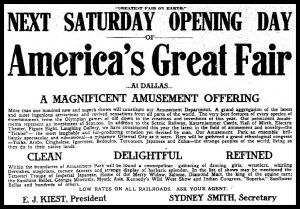
ad-1908_sfot_dmn_101508-textDMN, Oct. 15, 1908

An excerpt:

The very best features of every species of entertainment, from the Olympian games of old down to the creations and inventions of this year. Our permanent amusements represent an investment of $100,000. In addition to the Scenic Railway, Katzenjammer Castle [pictured at top], Hall of Mirth, Electric Theater, Figure Eight, Laughing Gallery, we have constructed this year the latest in the field of amusement and novelty – the ‘Tickler’ – the most laughable and fun-producing creation yet devised by man. Our Amusement Park an ensemble brilliantly spectacular and educational – a miniature Oriental City as it were. Here will be gathered a grand ethnological congress – Turks, Arabs, Cinghalese, Igorrotes, Bedouins, Turcomen, Japanese and Zulus – the strange peoples of the world, living as they do in their native lands.

Wow. The Hall of Mirth, the Tickler, and a “grand ethnological congress” — it had everything! But, wait — there’s more!

Here’s the ad for Fort Worth:

ad-1908-sfot_FWST_ 101608FWST, Oct. 16, 1908

And an excerpt:

Clean, Delightful, Refined

More than 100 new and superb shows constitute our amusement department. Permanent attractions alone represent an investment of $100,000. A grand aggregation of the latest and most ingenious attractions and revived sensations from all parts of the world. A cosmopolitan gathering of Oriental dancing girls, wrestlers, whirling dervishes, magicians, torture dancers, rough riders of the world, in a strange display of barbaric splendor. Marvelous free attractions, including the great Velaire, in his act “Beyond the Limit.”

Wonderful Exhibitions

Six acres of implement and vehicle displays. Three thousand birds in the poultry department. Over two thousand head of exhibition stock. Magnificent arena program. Agricultural and industrial growth of the state exemplified. Notable display of the handiwork of the women of the South in all departments of home life. Superb art display. Great dog show.

Martial Pyrotechnic Display Thrilling to Thousands.

Barbaric splendor, whirling dervishes, and a “great dog show.” And that mysterious “torture dance” (which I’m sure was “clean, delightful, and refined”).

Here’s one more ad promoting “Fort Worth Day,” which was held as “The Greatest Fair on Earth” was winding down:

ad-1908_sfot_FWST_102808FWST, Oct. 28, 1908

So, lots of interesting stuff was going on. But apparently the thing that people were most excited about was the horse racing (…and the wagering). Back then, people looked forward to the races with the same manic enthusiasm that people today look forward to the fried food. Racing aficionados were such a huge source of SFOT revenue that it seemed only fair they got a brand new grandstand that year.

state-fair_grandstand_dmn_082308DMN, Aug. 23, 1908

state-fair_grandstand_dmn_082308_textDMN, Aug. 23, 1908

There was also a new Grand Gateway at the main entrance to Fair Park, designed by one of Dallas’ most notable early architects, James Edward Flanders (read about him here).

fair-park-entrance_gate_flanders_dmn_052208DMN, May 22, 1908

fair-park-entrance_gate_flanders_dmn_090608DMN, Sept. 6, 1908

You can see it in this detail from the panoramic photo by Henry Clogenson mentioned earlier:
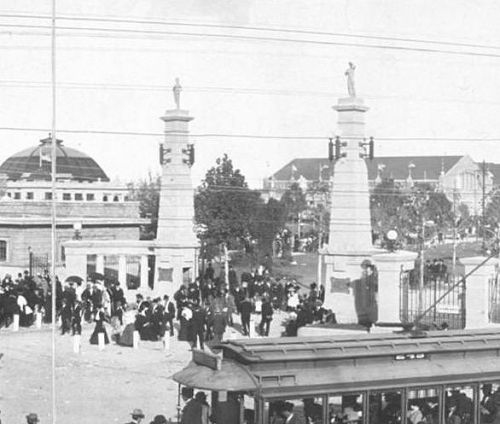
fair-park-entrance_gate_clogenson-photo_1908_loc-det

There was an exhibit of thousands of live bees in a mesh-enclosed apiary.

state-fair_bees_dmn_092908DMN, Sept. 29, 1908

And fireworks. Gotta have fireworks. Somehow they managed to recreate a pyrotechnic display which simulated a Crash at Crush scenario of two locomotives colliding with each other head-on. I’m not quite sure how that worked, but it seems to have been effective. (I’m not a fireworks connoisseur, but this “set-list” is really great.)

fireworks_trains-colliding_dmn_103108DMN, Oct. 31, 1908

fireworks_trains-colliding_dmn_110108DMN, Nov. 1, 1908

I have to say, I’m a big fan of the exhibit that was set up in the new Agricultural Building: three figures of women, each about seven feet tall, one made of rice (from Beaumont), one made of salt (from Grand Saline), and one made of coal (I’m going to guess from somewhere like Thurber),

state-fair_salt_lots-wife_dmn_092408DMN, Sept. 24, 1908

That last sentence:

She will stand in the attitude of looking over her shoulder, and in the direction in which she is represented as looking will be placed paintings of the Cities of the Plain in flames, and the terrified inhabitants making desperate though vain attempts to escape the wrath which they have called down on their stiff necks.

How fun! (When I visited Grand Saline a few years ago, I saw a little cabin in the center of town purported to be made of salt. I was curious, and when no one was looking, I licked it. Yep. Salt. I’m sure I wasn’t the first to have done that, disgusting as it was. But I digress….)

Lastly, my favorite little throwaway factoid mentioned in one of the many endless articles that appeared in the weeks leading up to the opening of the fair was that the walkways were paved with “finely crushed pink granite.”

state-fair_pink-granite_dmn_092708DMN, Sept. 27, 1908

I’d like to have seen that.

***

The photo at the top shows the Katzenjammer Castle, a popular attraction that had appeared the previous year and which sounds like the old German Funhouse (the thing *I* used to look forward to every year). The photo accompanied the ad that appeared in The Dallas Morning News on Oct. 15, 1908 (the first ad posted above). It looks as if it shows part of the Shoot the Chute water ride. (You can see several pictures of this ride, which was right next to that brand new grandstand, in a previous post “The Chute,” here.

*

Copyright © 2015 Paula Bosse. All Rights Reserved.

Crossing Main Street

main-looking-east_watermelon-kidLife in the Big City…

by Paula Bosse

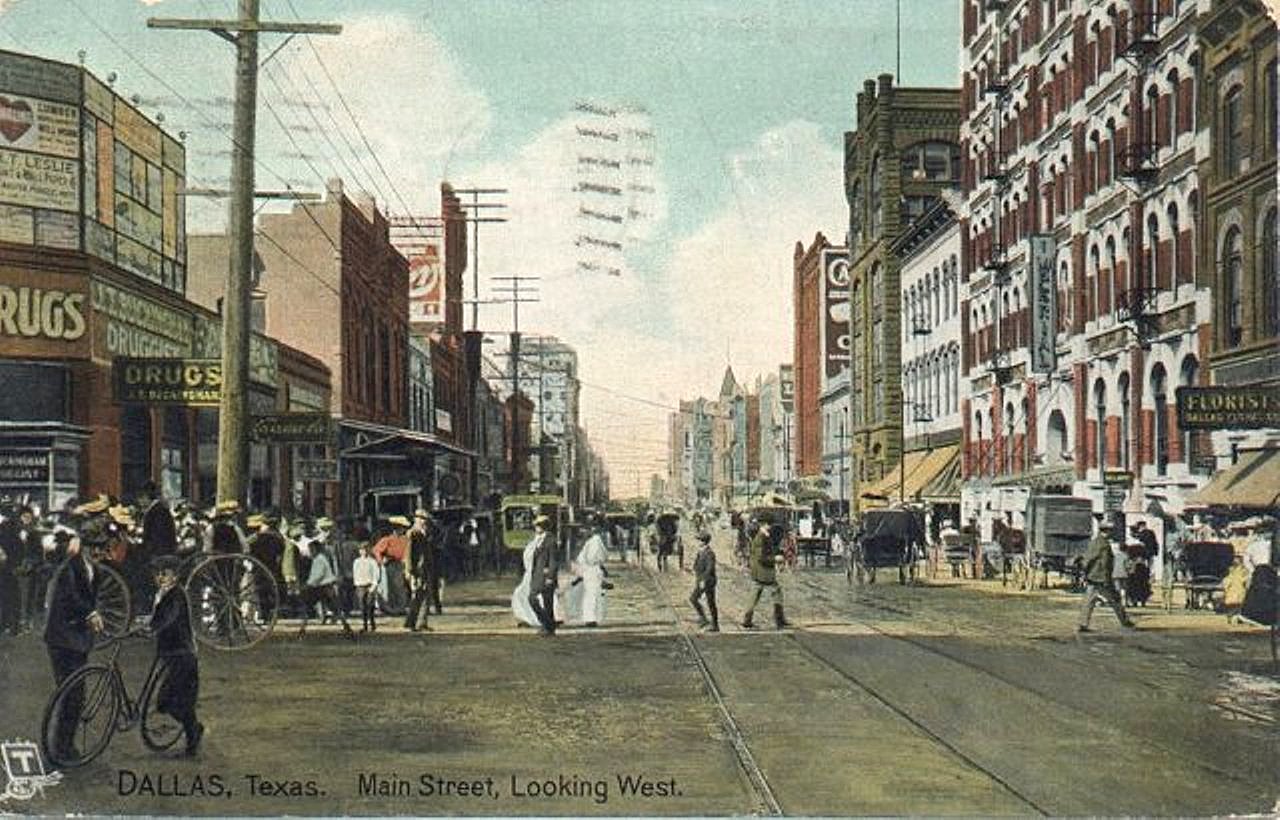
Turn-of-the-century traffic: buggies, bicycles, wagons, and people.

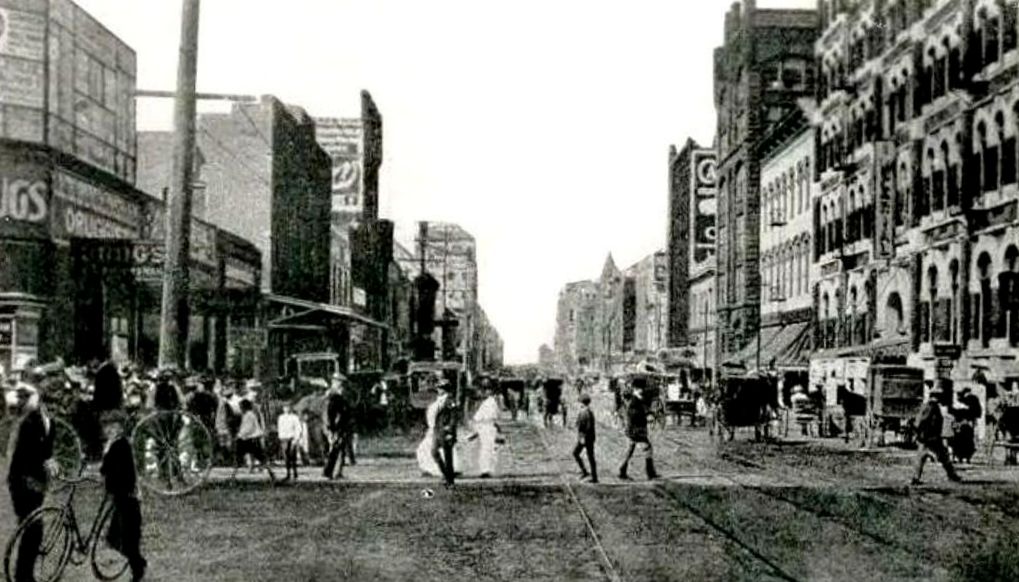
I first came across the image below in — of all places — a 1931 SMU yearbook and backtracked to finding the “color” postcard, above. The very grainy image (below) may just have been a black and white photo of this postcard rather than the original photograph, but it’s interesting to see them together. The yearbook identifies this as being Main and Akard, looking west on Main; it also dates it about 1906, but I think it’s earlier than that — there probably would have been evidence of automobiles on Main Street by then. Whenever it was, it seems like a pleasantly nostalgic frozen-in-time moment.

main-west-from-akard_smu-rotunda-1931***

Postcard at top from the Watermelon Kid’s great site, here.

Weird, blurry black and white image from the 1931 Southern Methodist University Rotunda yearbook.

Click pictures for larger images.

*

Copyright © 2015 Paula Bosse. All Rights Reserved.