Flashback : Dallas

A Miscellany: History, Ads, Pop Culture

Category: 1910s

The Elegant Municipal Building — 1914
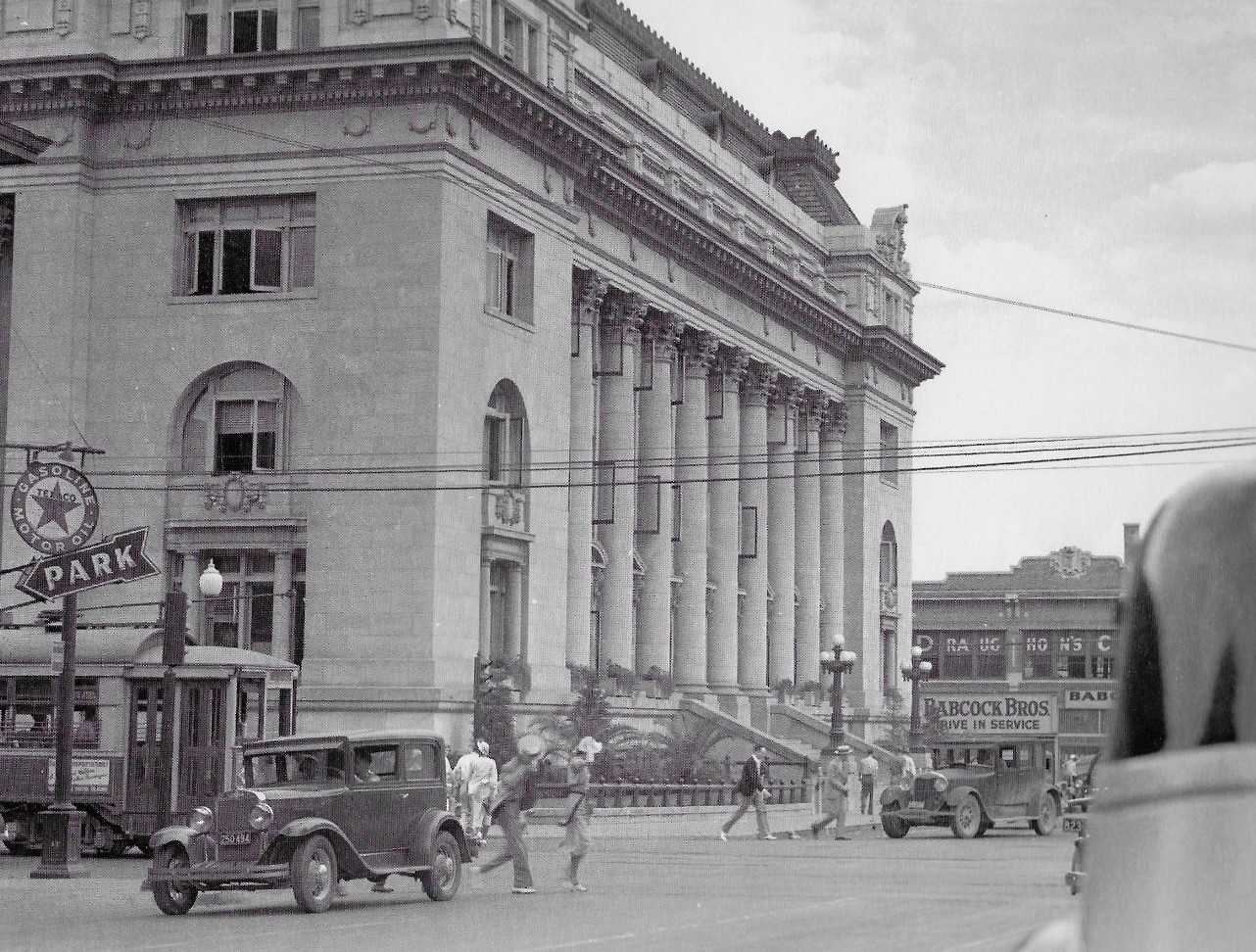
ciA very un-Dallas-looking building … and one of its finest

by Paula Bosse

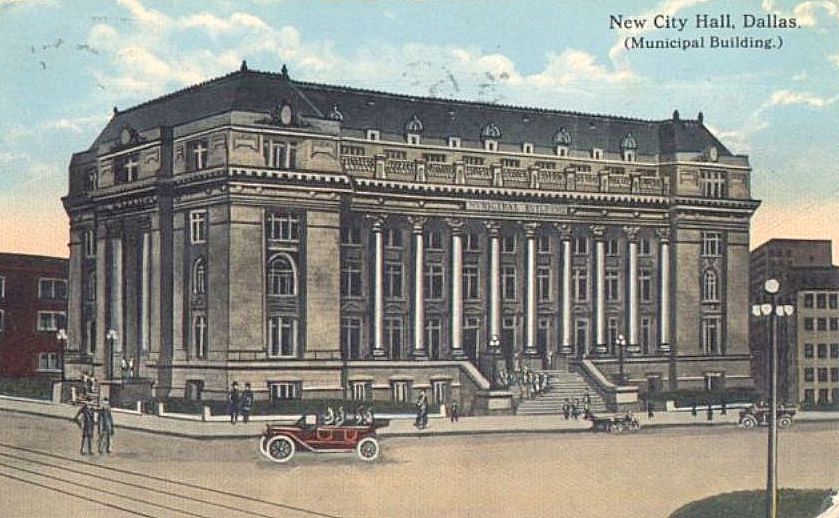
Appearing in the May 7, 1914 issue of Municipal Journal was a short article on Dallas’ then-under-construction Municipal Building and a drawing of what it would look like when completed.
municipal_bldg_watermelon-kid

Dallas Will Have Modern Municipal Building
Dallas, Tex. – The new municipal building of the city of Dallas is nearing completion and will be ready for occupancy in a few months. It will house all of the city departments and in addition will have a modern emergency hospital in the basement and public rest rooms for both men and women. The building is said to be a radical departure in architectural design from the usual type of public buildings in the South; it is constructed along simple but dignified lines. The structure will be of steel construction covered with blue Bedford stone, the five stories, basement and sub-basement will be a home worthy of the city of the hour, as Dallas people like to call their town. Ventilating and heating systems are being installed together with vacuum cleaners. The building, without furnishings, will cost about $550,000. C. D. Hill and Company are the architects. The structure was started by the Fred A. Jones Building Company, which failed just as the steel was up, and it is being finished within the estimates by the city under the supervision of the architects.

This new City Hall, located at Main, Harwood, and Commerce, was designed by Dallas architect C. D. Hill. Construction began in late 1913 — by January of 1914, its steel frame was in place.

municipal-bldg_dmn_010114Dallas Morning News, Jan. 1, 1914

The cornerstone was laid in a Masonic ceremony on Valentine’s Day, 1914.

municipal- bldg_FWST_021514-cornerstoneFort Worth Star-Telegram, Feb. 15, 1914

As the construction was winding down, workmen complained of an “intolerable” swarm of mosquitoes flying around the site. Apparently an underground spring was flooding the sub-basement and providing palatial digs for endless cycles of constantly-hatching mosquitoes. (I wonder if the basement still floods on occasion?)
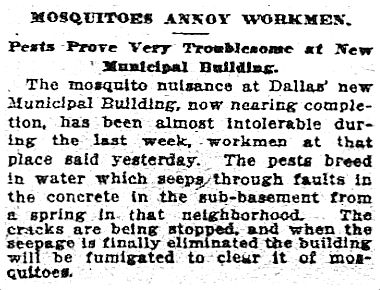
municipal-bldg_dmn_091014-mosquitoesDMN, Sept. 10, 1914

The building was officially opened on October 17, 1914. Here’s a grainy photo that absolutely does not do that beautiful building justice.

municipal-bldg_dmn_101714DMN, Oct. 17, 1914

When the doors were finally opened to the public, it was expected that a few thousand people would show up to tour their new municipal building — in actuality, the much-larger-than-anticipated crowd numbered somewhere between 12,000 and 15,000 curious Dallasites.

municipal-bldg_dmn-101814DMN, Oct. 18, 1914 (click for larger image)

The beautiful exterior was faced with granite and stone, and the interior boasted marble, mosaic tilework, and wood paneling. All of the furniture used in the building was made in Dallas. In addition to the mayor’s office, fire, police, and other municipal departments, the building also housed an emergency hospital, a sub-basement shooting range (!), and, on the 3rd floor, an 1,100-seat auditorium, with a 4th-floor gallery. (The auditorium was designed so that if, in the future, it was determined that it was not needed, it could easily be converted to office space by adding a few columns and beams — a renovation which obviously happened at some point.) Interestingly, the northern half of the top floor was left unfinished as the space was not needed at the time.

ALSO included in the new building’s amenities were much-needed public restrooms (or as they were euphemistically referred to back then, “comfort stations”). A men’s restroom and a women’s restroom (“positively divided with heavy walls”) were located under the Main Street sidewalk, accessible down stairs on either side of the building’s entrance. Up until this point, there was only ONE public “comfort station” in the city (for women and children) — at Fair Park. So for most downtown visitors, this might well have been the most exciting aspect of Dallas’ newest landmark.

The building referred to as both “City Hall” and “the Municipal Building” was considered to be one of the city’s finest and most elegantly imposing. But there are always a few people who just don’t like nice things, and there was a surprising amount of vandalism to the building in its first few weeks.
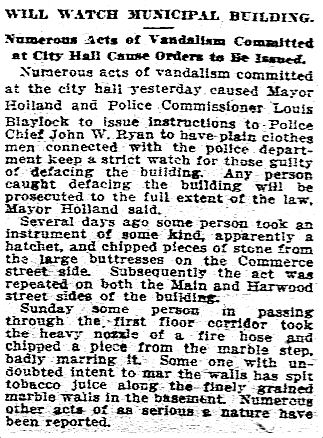
municipal-bldg_dmn_111014-vandalismDMN, Nov. 10, 1914

This is one of the truly great buildings in Dallas, and it just recently celebrated its 100th birthday. It is a Dallas Landmark and a Texas Recorded Historic Landmark. No longer a city property, it is now part of the University of North Texas Dallas College of Law campus (along with the old Titche’s building). UNT is currently working to restore and renovate this beautiful historic building. Thank you, UNT!

*

A few images of the building over the years. Here it is in its pristine early days:

city_hall*

Then there was a weird middle-age-crazy period when someone thought that the addition of awnings would be a good idea (that person was incorrect).

municipal-bldg_color-ebay*

And, today, it’s back to looking distinguished and lovely. Thanks to the wonderful new open park in front of it, it has been given the stately space it deserves — what may be Dallas’ most beautiful building is finally able to be fully admired from a respectful distance.

municipal-bldg-today_wikipediaJoe Mabel, Wikipedia

***

Sources & Notes

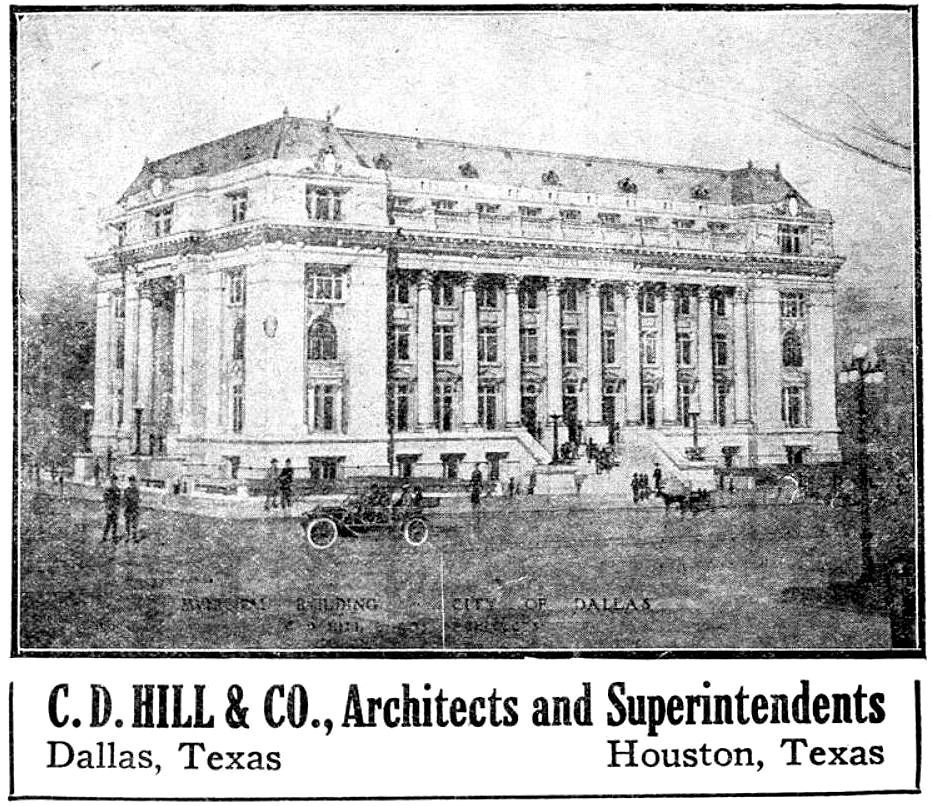
Top photo from the book Historic Photos of Dallas by Michael V. Hazel (Nashville: Turner Publishing Co., 2006).

Quote from Municipal Journal, Vol. XXXVI, No. 19 — May 7, 1914.

Photo of the old Municipal Building today by Joe Mabel, from Wikipedia. (And, yes, the parking garage of the Dallas Municipal Building is where Ruby shot Oswald.)

Newspaper photos and clippings as noted.

For a detailed description of the architectural details, design elements, and description of office and department locations within the building, see the article “Municipal Building Handsome Structure” (DMN, Oct. 4, 1914), here.

I’d love to know more about the little “aluminum trays, bearing a picture of the building” mentioned as being given away on opening day in an article above. There were FIVE THOUSAND of them given away. Surely there are some still around. Has anyone seen one of the these?
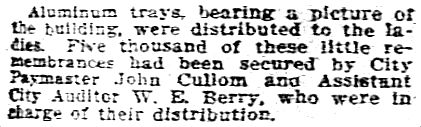
municipal-bldg_dmn_101814_aluminum-traysDMN, Oct. 18, 1914

municipal-bldg_c-d-hill_tx-almanac_19141914 Texas Almanac ad for C. D. Hill & Co.

*

Copyright © 2015 Paula Bosse. All Rights Reserved.
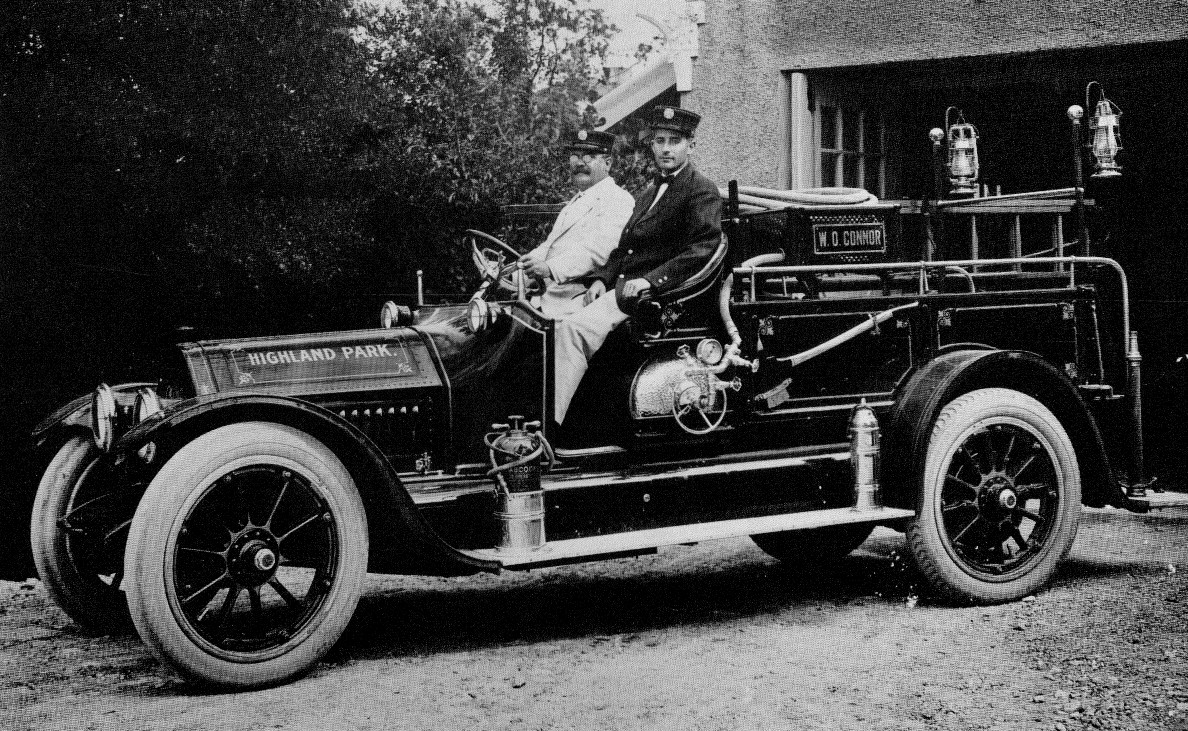
Highland Park’s Snazzy New Fire Engine — 1914

hp_fire-truck_1914Chief McGoldrick behind the wheel of HP’s new fire engine…

by Paula Bosse

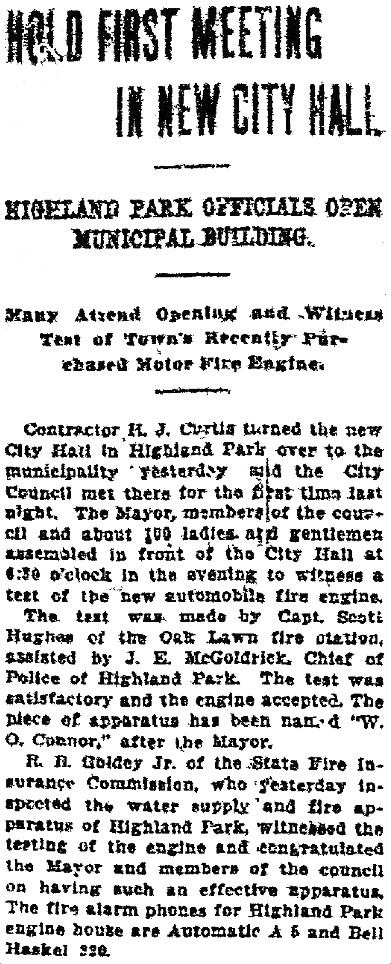
Above, Ed McGoldrick — who was both police chief and fire chief for Highland Park — sits behind the wheel of HP’s new fire engine. It even had a  name — “W. O. O’Connor,” after the mayor. Seated next to Chief McGoldrick is most likely Capt. Scott Hughes of the Oak Lawn fire station. The engine was tested, deemed satisfactory, and accepted into service on June 4, 1914 on the day the new Highland Park City Hall was officially opened. (Click article below to see larger image.)

hp_fire-engine_dmn_060514Dallas Morning News, June 5, 1914

J. E. McGoldrick was apparently something of a peace officer renaissance man. He was an officer on the Dallas Police force from about 1902 to 1912, and then became head police and fire honcho in Highland Park from 1912 to 1917 (where he was also the Street Superintendent). At the same time he was serving as HP Chief Peace Officer, he was also appointed to head the Game Commission of Dallas County. In 1917, he resigned his position in HP to accept a job at SMU where he “would have charge of buildings and grounds” (DMN, June 6, 1917). In 1924, he was appointed Chief Peace Officer of University Park.

That SMU move seems like a bit of a weird detour for a career policeman, but even weirder is the following sentence, which appeared in the blurb about his University Park appointment:

[McGoldrick served as the chief peace officer of Highland Park] until 1917 and then undertook confidential duties for the United States Government. During the past two years he has been connected with Sanger Bros. (DMN, Oct. 5, 1924)

James E. McGoldrick died in October 1927 when he suffered a heart attack while eating his lunch in a drugstore at Main and Lamar. He was 54. His obituary mentioned that he had been “connected with a meat market” in his post-public-service life.

But back to the photo. It’s great. There’s nothing quite like the smell of a new fire engine. And Chief McGoldrick looks very proud.

***

Sources & Notes

Photo from a postcard issued as part of the Park Cities Bank “Heritage Series” in the 1970s; the credit line on the postcard reads “Donated by the Town of Highland Park.” Thanks to the Lone Star Library Annex Facebook group for use of the image.

Newspaper clipping as noted.

*

Copyright © 2015 Paula Bosse. All Rights Reserved.
The Interurban Parlor Car: Perusing the News in Comfy Chairs

interurban-interior_tx-historian_jan81(Click for larger image)

by Paula Bosse

The height of comfort!

You know this photo was taken for promotional purposes, because none of the men has a reeking cigar clenched between his teeth.

***

Texas Electric Railway Interurban ad reprinted in Texas Historian, Jan. 1981.

Interurbans were great. I wish we still had them. Read about what they were, here.

*

Copyright © 2015 Paula Bosse. All Rights Reserved.

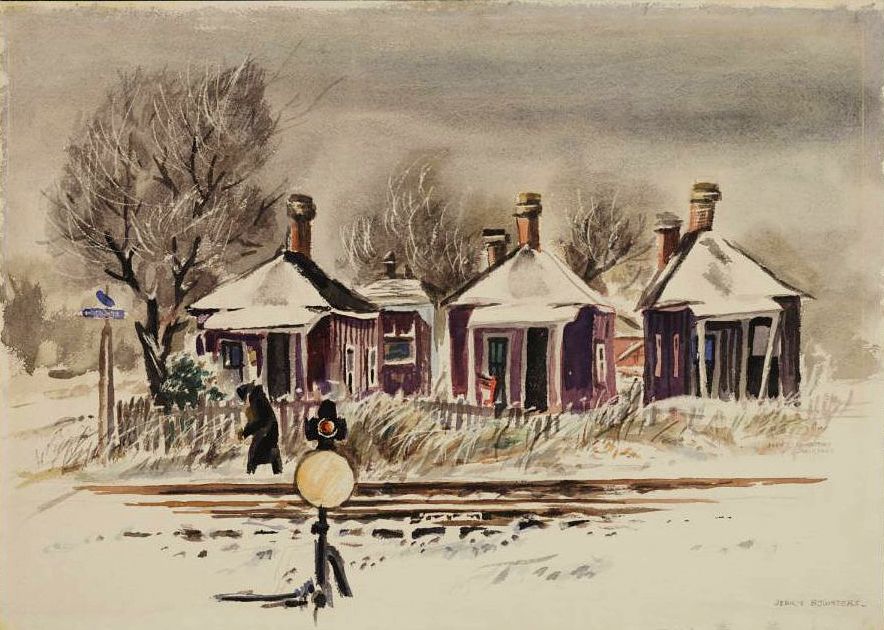
“Along the Tracks” in the Fair Park Area

bywaters_along-the-tracks_fair-park_smu_1947“Along the Tracks” by Jerry Bywaters, 1947 (Hamon Arts Lib., SMU)

by Paula Bosse

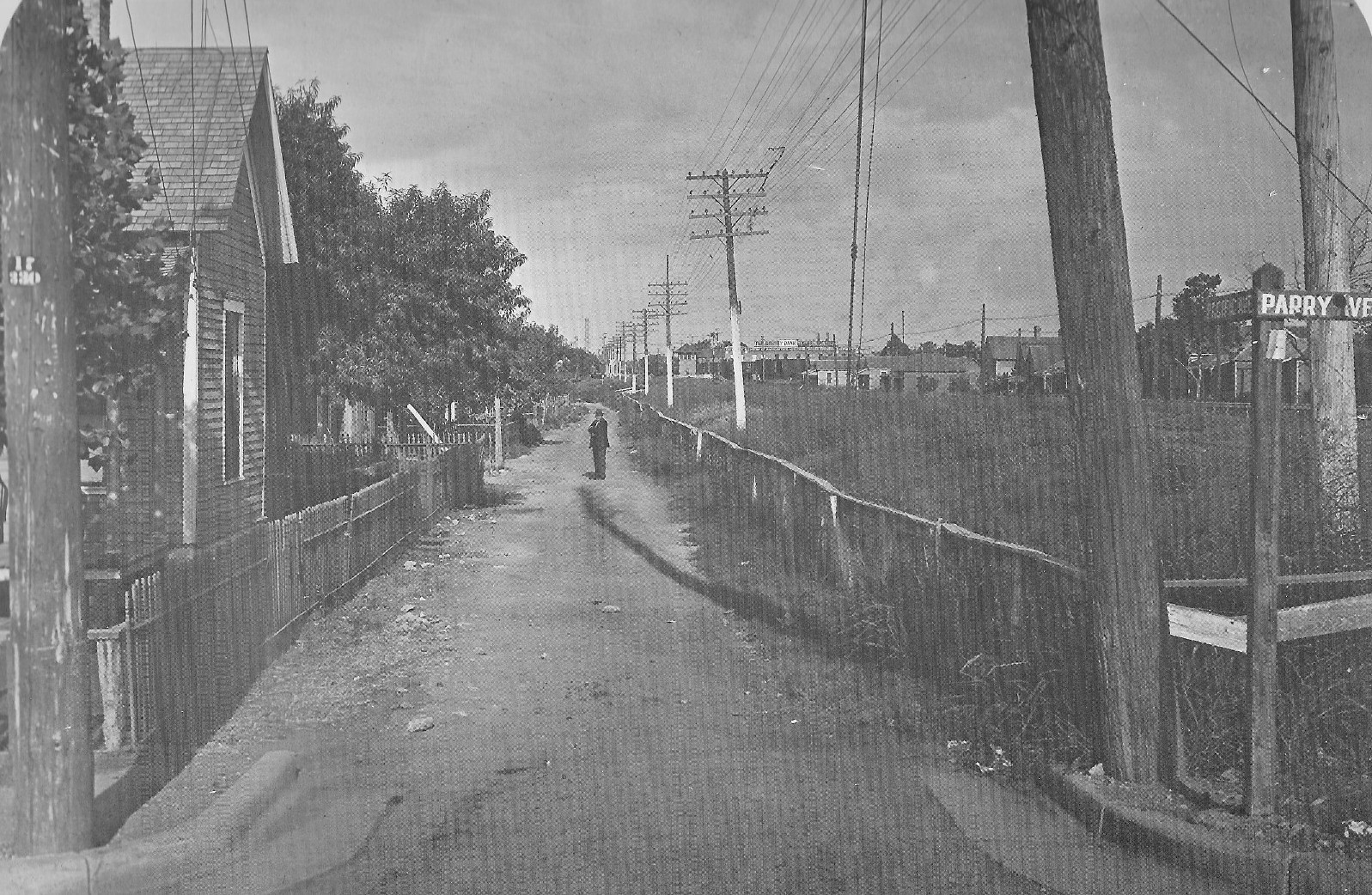
As we’re currently experiencing an extended period of cold, snowy, icy weather, what better time than now to post this atmospheric watercolor by Jerry Bywaters? Titled “Along the Tracks,” it was painted during a very cold and snowy early January of 1947, in the area around Fair Park (where Bywaters worked as the head of the Dallas Museum of Fine Arts). Railroad tracks ran on either side of Fair Park — the Texas & New Orleans tracks ran along Trunk on the west side, and the Texas & Pacific tracks ran along Pacific on the east side. The DMFA was on the very western edge of Fair Park, and as it was bitterly cold, Bywaters probably wasn’t traipsing any farther than he had to — the west side of Fair Park near the T&NO tracks would certainly have been more convenient for him. But I came across a photo that looks pretty much the same as the scene Bywaters painted, only from the T&P side to the east, so who knows?

pacific-parry_ca1916_greene

The photo above (taken around 1916) shows the intersection of Pacific and Parry, looking west on Pacific. “Along the tracks.”

***

Sources & Notes

Jerry Bywaters’ painting “Along the Tracks” is from the Bywaters Special Collections in the Hamon Arts Library at Southern Methodist University; it can be accessed here. As far as I can tell, that street sign doesn’t actually say anything, but if you see something in the scribble, let me know!

The 1916-ish photograph of the Pacific and Parry intersection is from Dallas, The Deciding Years by A. C. Greene (Austin: Encino Press, 1973).

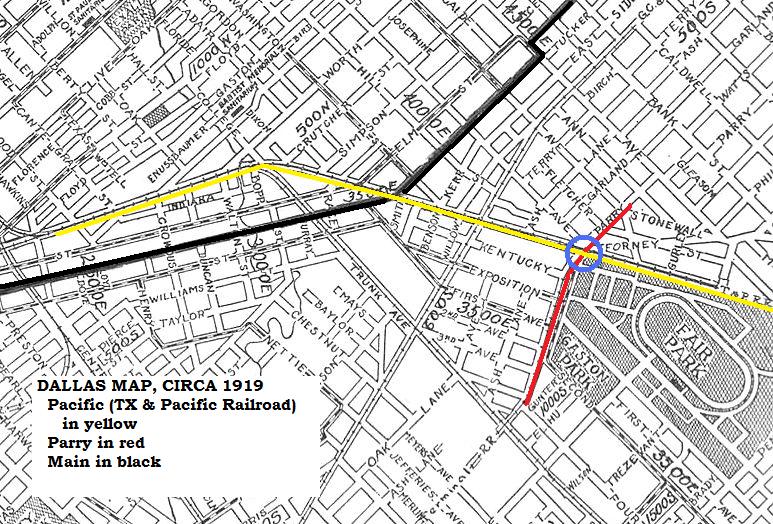
Here is a 1919 map detail showing the area around Fair Park (full map is here):

pacific-parry_1919

When Bywaters painted “Along the Tracks” it was REALLY cold. A couple of photos from the Jan. 1, 1947 edition of The Dallas Morning News show a snow-dusted Cotton Bowl and two very cute Oak Cliff teenage girls ice skating on West Jefferson Blvd.

*

Copyright © 2015 Paula Bosse. All Rights Reserved.
The Continental Gin Complex — 1914

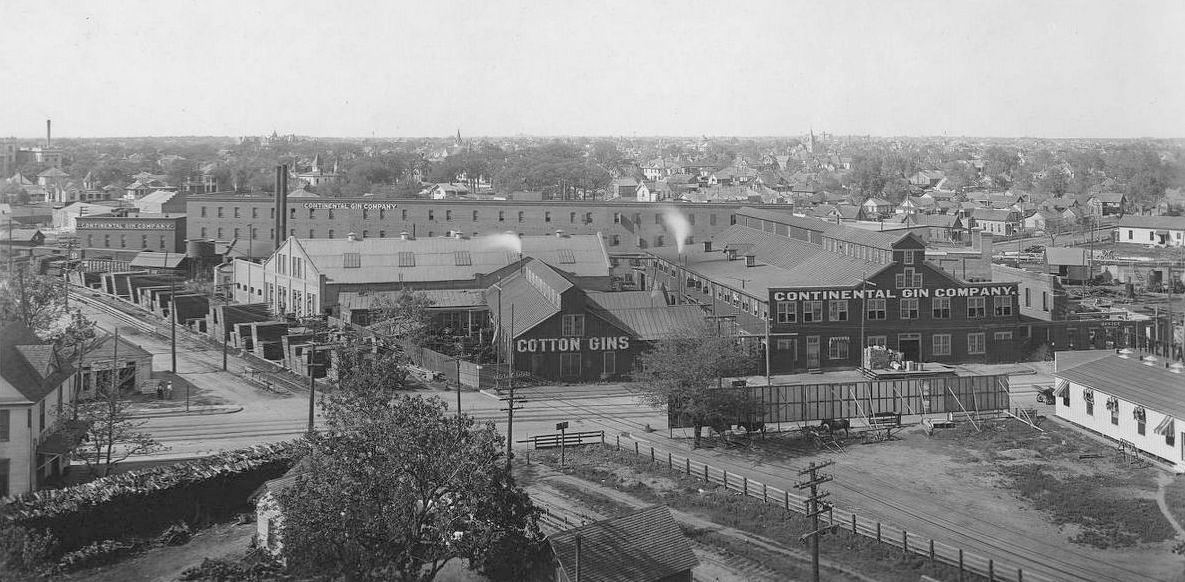
continental-gin-bldg_1914_cook-degolyer-smu-bwPhoto by Chas. Erwin Arnold (DeGolyer Lib., SMU) (click for larger image)

by Paula Bosse

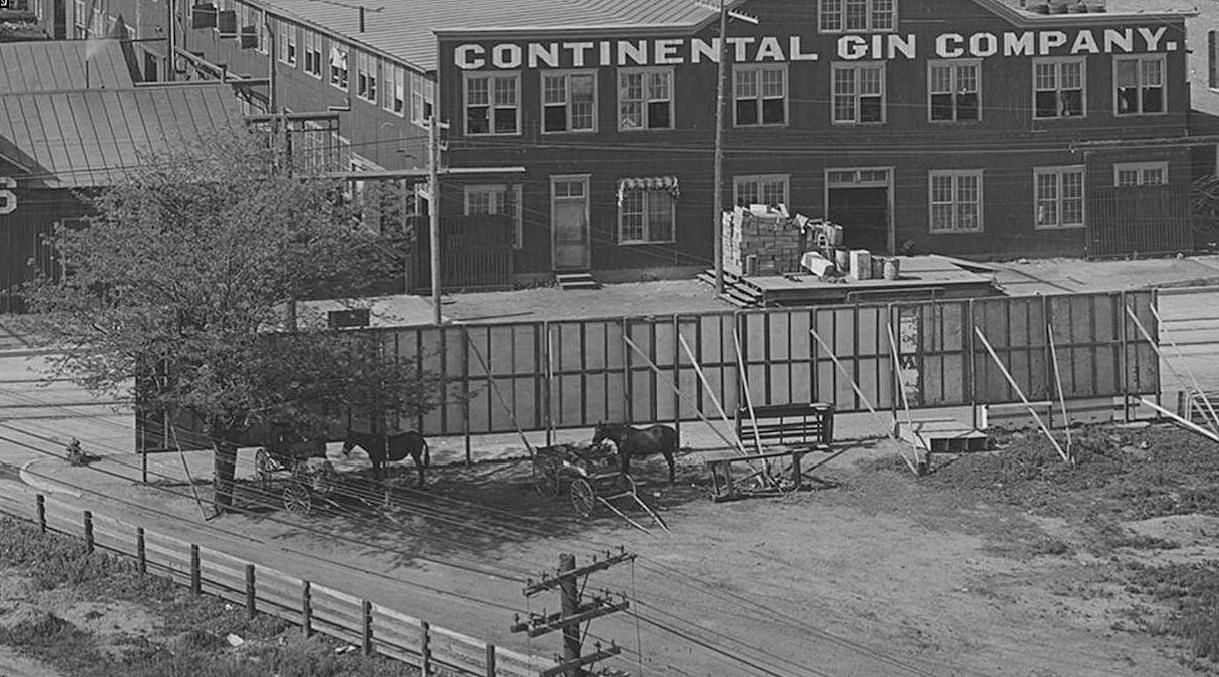
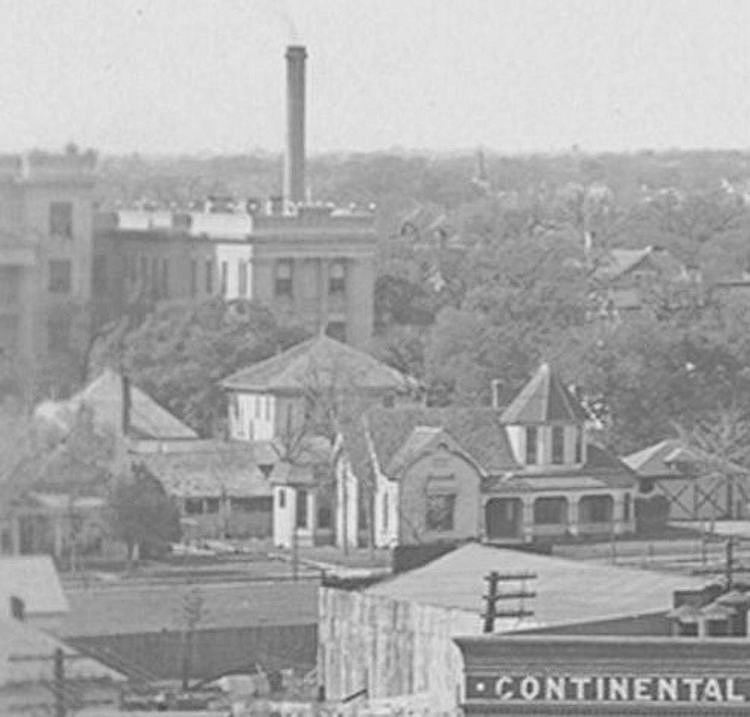
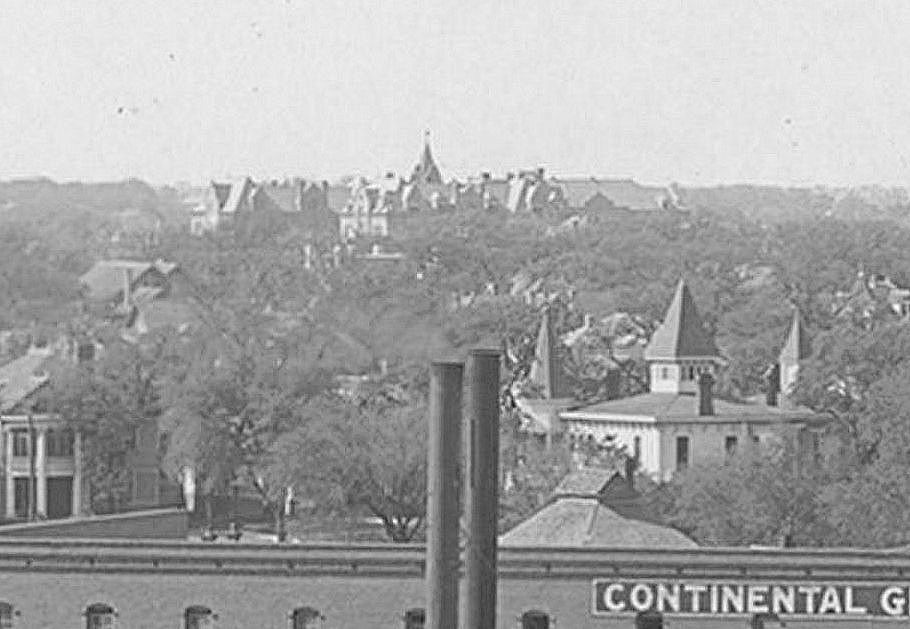
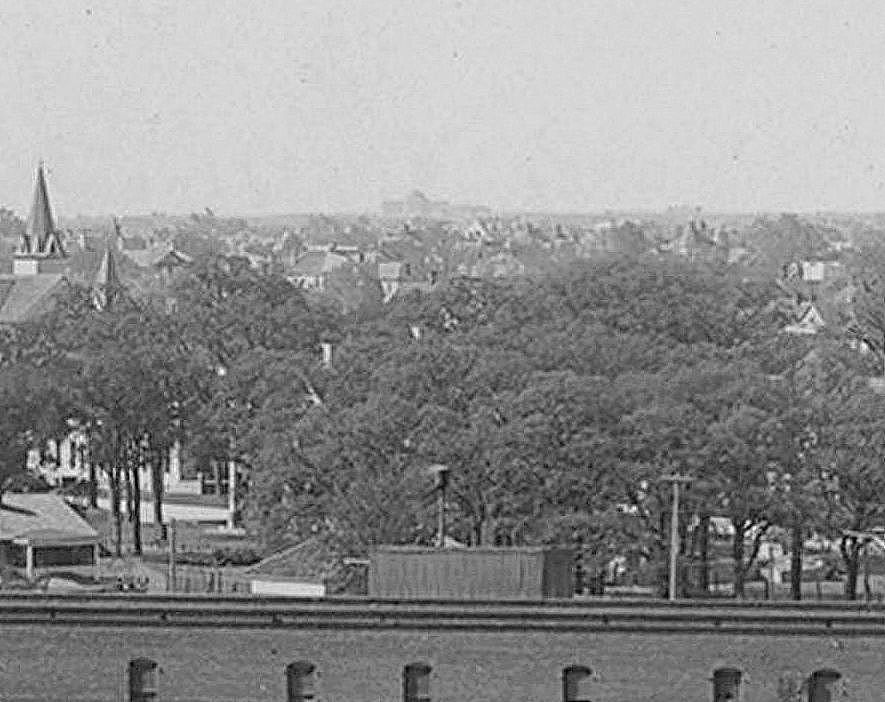
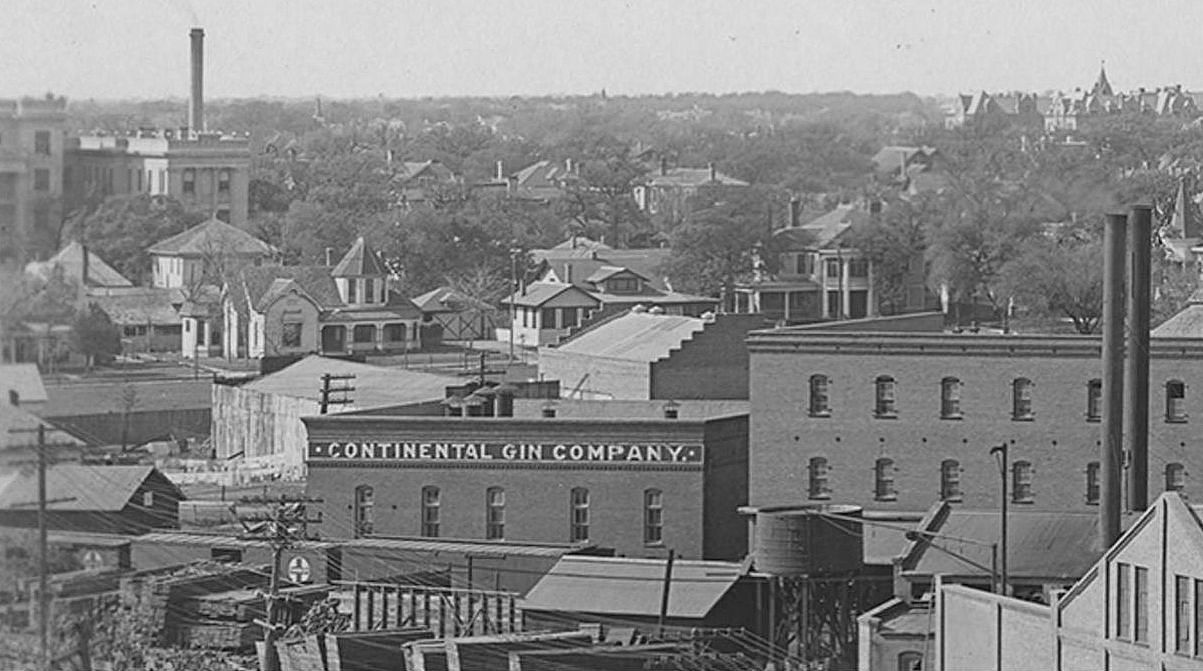
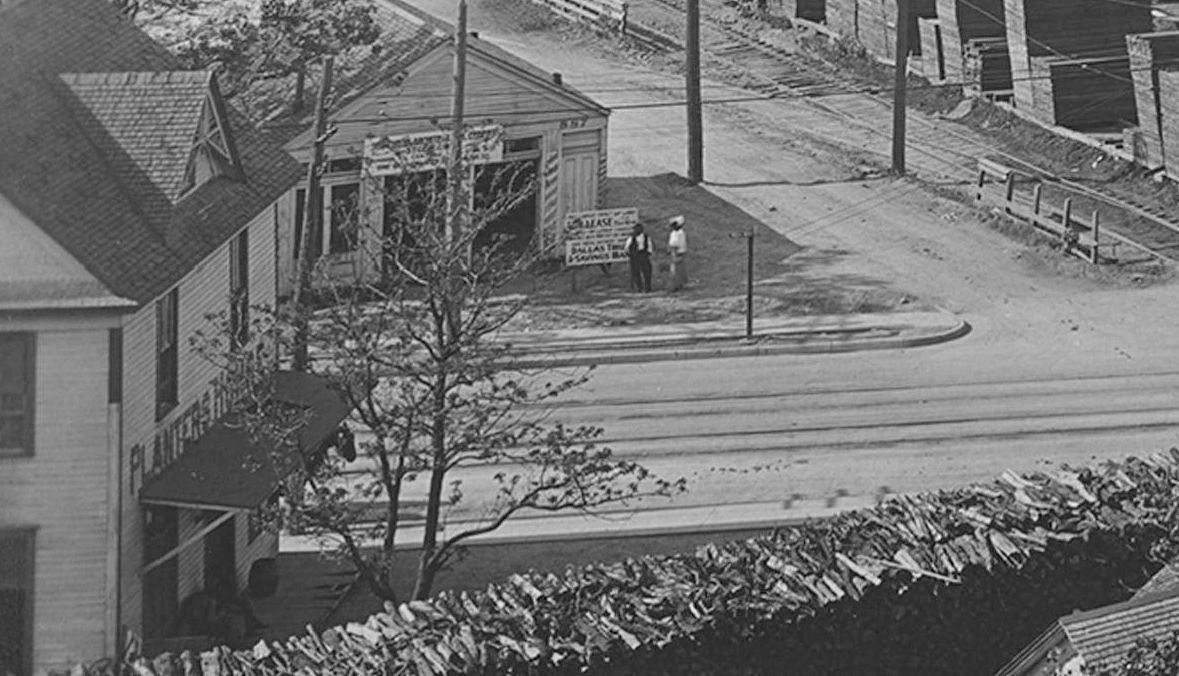
This is a really wonderful view of the Continental Gin Company complex, a Dallas landmark, much of which is, remarkably, still standing in Deep Ellum. Granted, my experience is limited, but I’ve never seen a photograph from this period showing the manufacturing end of Deep Ellum and the residential neighborhood just beyond it to the north. This is another incredible image from the George W. Cook Collection at the DeGolyer Library at SMU. A few magnified details, below. (Click for much larger images.)

continental-gin-bldg_1914_cook-degolyer-det1_bw

continental-gin-bldg_1914_cook-degolyer-det2_bw

continental-gin-bldg_1914_cook-degolyer-det3_bw

And zooming into the distance….

continental-gin_baylor_1914_bwThe back side of Baylor, at the top left. See it from the front here.

continental-gin_ursuline_1914_bwIn the middle at the top, Ursuline. (See more views of it here.)

continental-gin_smu_1914_bwAnd, my favorite, SMU’s Dallas Hall, waaaaaaaaaaaaaay in the distance. SMU hadn’t even officially opened when this photo was taken!

map_1919_continental-gin-bldg1919 map

***

Photograph titled “Continental Gin Company on Elm Street, Facing North” by Charles Erwin Arnold; from the George W. Cook Dallas/Texas Image Collection housed at the DeGolyer Library, Central University Libraries, Southern Methodist University. The photo and its details can be viewed here (I have altered the color in the images seen in this post).

Map detail from a large 1919 Dallas street map (which can be seen via the Portal to Texas History, here).

A view of this area from the 1921 Sanborn maps can be found here (click to make larger). (What’s a Sanborn map? Wikipedia tells you here.)

I wrote at length about the history of the Continental Gin complex of buildings in the post “Munger’s Improved Continental Gin Company,” here.

All images larger when clicked.

*

Copyright © 2015 Paula Bosse. All Rights Reserved.
 

Roseland — 1916

roseland_terrill-yrbk_1916The Roseland Theater, 1613 Main St. (click for larger image)

by Paula Bosse

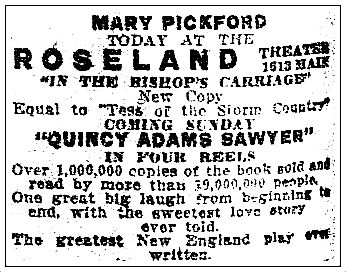
Despite its grainy quality, I really like this photo. It shows people walking past the Roseland Theater at 1613 Main Street, a theater I’d never heard of. I couldn’t find out much about it other than that it doesn’t seem to have lasted very long (from at least 1914 until at least 1916). It was owned/managed by P. G. Cameron, who ran several theaters and was in the general “amusements” business around town (he had run the Fair Grounds Skating Rink back in the aughts for a short while, until the place was shut down because of the discovery of a prostitution operation being conducted there … on city-owned property).

roseland_dmn_050914Dallas Morning News, May 9, 1914

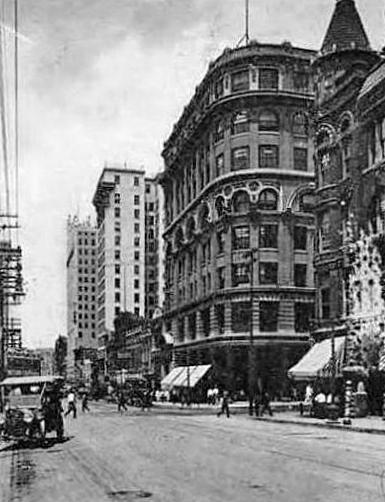
In 1916, the north side of Main Street contained three theaters: the Nickelodeon (1607 Main), the Roseland (1613 Main), and the Best (1615 Main). This is the much-beleaguered (and now mostly demolished) block of Main, which in 1916 was anchored by the dazzling Praetorian and Wilson buildings. The Roseland occupied part of what was once the Everts Jewelers building. Below, another view of this block in 1916, with the theater(s) on the right, about halfway between the tall white Praetorian Building and the stately rounded Wilson Building.

main-st_1916_smu-rotunda_sm Another grainy photo, Main looking west

I like this Roseland photo because it’s a candid shot taken by a teenager on the sidewalk of a lively downtown Dallas who had happened upon his teacher away from school. And the sign is cool. Too bad it’s so hard to see.

roseland_terrill-yrbk_1916_det

***

Sources & Notes

Photo from the 1916 Terrillian, the Terrill School yearbook. (The caption for the photo of one of the school’s teachers: “Passing by or coming out, Mr. F.?”)

Photo of Main Street, looking west, from the 1916 Rotunda, the yearbook of SMU.

See what the 1600 block of Main looked like in 1909, here. Much of the block has been demolished.

See the 1921 Sanborn map showing this block, here.

Below, a recent (2015) Google Street View of the building that housed the Roseland: the really lovely shorter white building. This building may already have been razed. What a shame. (UPDATE — 2018: Yep, demolished.) The current view (as I assume this block is ever-changing) can be seen on Google Street View here.

roseland_google2015, not long for this world….

*

Copyright © 2015 Paula Bosse. All Rights Reserved.
 

The Southern Rock Island Plow Company

southern-rock-island-plow_city-directory_1908-det_smFrom plow company to Dallas’ most famous building (click to enlarge)

by Paula Bosse

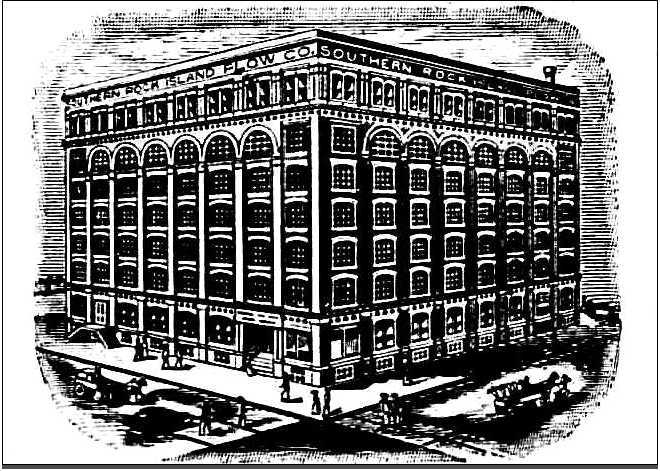
Behold, the Southern Rock Island Plow Company building. Looks familiar? Perhaps “Texas School Book Depository” is an easier hook to hang your hat on. When Dallas seemed to be farm implement-central, there were numerous plow companies in business here. This is the second Southern Rock Island Plow Co. building — the first one (built in the same location around 1898) burned down when it was struck by lighting. The building that still stands was built in 1903, and it is, without question, the most famous building in Dallas.And it’s probably not that far behind the Alamo.

southern-rock-island-plow_city-directory-19081908

southern-rock-island-plow_bldg-code_19141914

***

Sources & Notes

Ad from the 1908 city directory.

Photo from the Building, Plumbing, Gas & Electrical Laws of the City of Dallas (1914).

More on the history of the Dallas branch of the Southern Rock Island Plow Co. can be found here.

For more about what’s going on with the building these days, see the Dallas Morning News article “Dallas County May Move Offices Out of Historic School Book Depository” by Matthew Watkins, here.

For more on the various incarnations of the building (which, by the way, is officially called the County Administration Building and which now houses county offices as well as the Sixth Floor Museum), see my previous post, “The Sexton Foods Building and the Former Life of the School Book Depository,” here.

*

Copyright © 2015 Paula Bosse. All Rights Reserved.
 

F. J. Hengy: Junk Merchant, Litigant

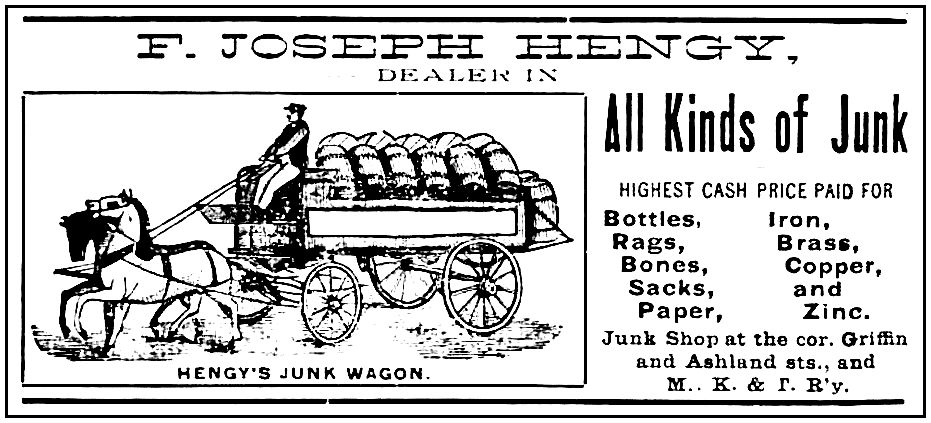
ad-hengy-junk_city-directory_1890-sm“All Kinds of Junk” — 1890 ad

by Paula Bosse

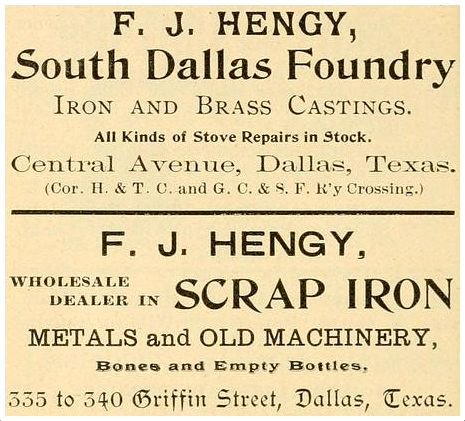
Frank Joseph Hengy was born in Germany in 1850. He immigrated to the United States in 1873, and in about 1880 he made his way to Dallas with a wife and children and established himself as a prosperous buyer and seller of scrap metal and other assorted “junk.” He also owned and operated a foundry, producing amongst other things, sash weights. In the 1894 city directory, there were exactly two “junk dealers” listed, which is surprising, seeing as Dallas was a sizable place in 1894 — there must have been a lot of bottles, rags, bones, sacks, paper, iron, brass, copper, and zinc lying around all over the place, just waiting to be hauled away.

hengy_souv-gd_1984Souvenir Guide to Dallas, 1894

F. J. “Joe” Hengy’s junkyard (and adjacent residence) was at Griffin and Ashland, right next to the M K T Railway tracks. He advertised in the newspapers constantly and was apparently THE man to sell your junk to. His name even made its way into the minutes of an 1899 city council meeting, when, during the discussion on how the city was going to pay for the shipping of a Spanish cannon that had been captured in Cuba and had been given to the city as a war trophy, a councilman asked sarcastically, “What will Hengy give for it?” (Dallas Morning News, Aug. 5, 1899).

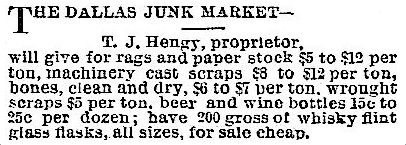
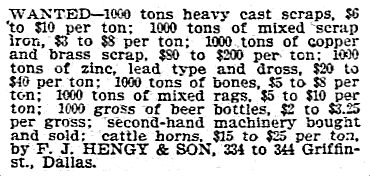
But, seriously, got junk? Call Hengy. Got tons of it? By god, he wants it. A couple of examples of the endless ads placed over the years — two ads, 12 years apart (the 1887 one getting his first initial wrong).

1887_hengy_dmn_082487DMN, Aug. 24, 1887

1899_hengy_dmn_102299DMN, Oct. 22, 1899

In the mid-1890s, Joe took his son Louis on as a partner, which, in retrospect, was probably not a good idea, because it wasn’t long before Joe found himself in the middle of years and years of lawsuits: father against son, son against father, father and associates against son, son and associates against father, etc. Not only was he constantly being sued by his son, he was also sued for divorce … twice … by the same woman. He turned around and sued her for custody of their youngest children (and won). She sued him for the business when he was threatening to sell it and retire. He sued her back for something or other. And on and on and on.

Not only was Joe spending all his non-junk-hauling time traipsing about courthouses, but he also found the time to suffer the occasional partial destruction of buildings on his property — twice by fire and once by the massive flood of 1908. The fires were suspicious (the flood was not).

Then there was the time he was charged with the crime of mailing an obscene letter (I’m gonna go out on a limb and guess that it was probably a letter sent to his wife — or maybe ex-wife by that point — who was in the midst of suing him and their son). Even though this was a potentially serious federal offense, he was ordered to pay only a small fine for “misuse of the mails.” He was also charged at one point with “receiving and concealing stolen property,” but I’m not sure that got past a grand jury investigation, and one might wonder if there wasn’t some sort of “set-up” by aggrieved relatives involved. It was something new anyway. Probably broke up the monotony a little bit.

But the thing that seems to have been Hengy’s biggest headache and was probably the root of most of the lawsuits filed BY him and AGAINST him concerned property he owned which had been condemned in the name of eminent domain by the M K T Railway. The condemnation was disputed, the appraisal of land value was disputed, the question of which Hengy actually owned the land was disputed, etc.

By the end of 1913, Joe Hengy had been engaged in at least 10 years of wall-to-wall litigation. He moved to Idaho at some point, remarried, started another business, and, finally, died there in 1930. Let’s hope his later years were lawsuit-free.

*

hengy_map_ca1900

Hengy’s business and residence (which was, surprisingly, right next door to his litigious son) was at 2317 Griffin, very close to the present-day site of the Perot Museum. (Full map circa 1900, here.) (Click for larger image.)

*

Lastly, two odd, interesting tidbits.

Joe Hengy took time out from junk and courtrooms to invent new and improved … suspenders! I’m not sure exactly what was so revolutionary about them, but a patent was granted in 1912 — you can read the abstract here, and see them in all their suspendery glory here. (With so much foundry and scrap metal know-how, you’d think he’d go in a more … I don’t know … anvil direction or something.)

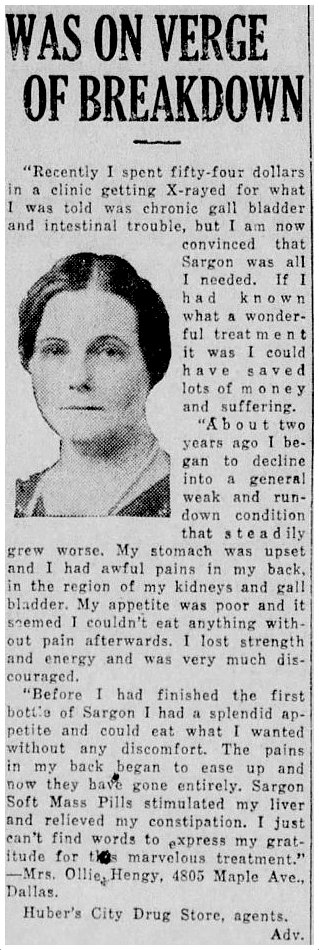
And, then there’s this — a kind of sad ad for a tonic called “Sargon” with a testimonial from Mrs. Ollie Hengy, the no doubt long-suffering wife of perennial plaintiff/defendant Louis Hengy. “Was On Verge of Breakdown.” I don’t doubt it! (Incidentally, Ollie and Louis divorced the same year this advertisement appeared in Texas newspapers. Maybe that stuff did work.)

ollie-hengy_vernon-daily-record_0906291929

***

Sources & Notes

Top ad from Dallas’ 1890 city directory.

Sargon ad appeared in The Vernon Daily Record, Sept. 6, 1929. More on the quack tonic Sargon here.

Sources for other clippings and images as noted.

Lastly, an interesting article that answers the questions “Why was the scrap metal game profitable?” and “Just where did all that metal GO, anyway?” can be found in the article “Many Uses for Junk: How Wornout and Discarded Metal is Utilized,” originally published in The Brooklyn Citizen in 1899; it can be read here. I’m nothing if not exhaustive.

*

Copyright © 2015 Paula Bosse. All Rights Reserved.
George Cacas, The Terrill School’s Greek Ice Cream Man — 1916

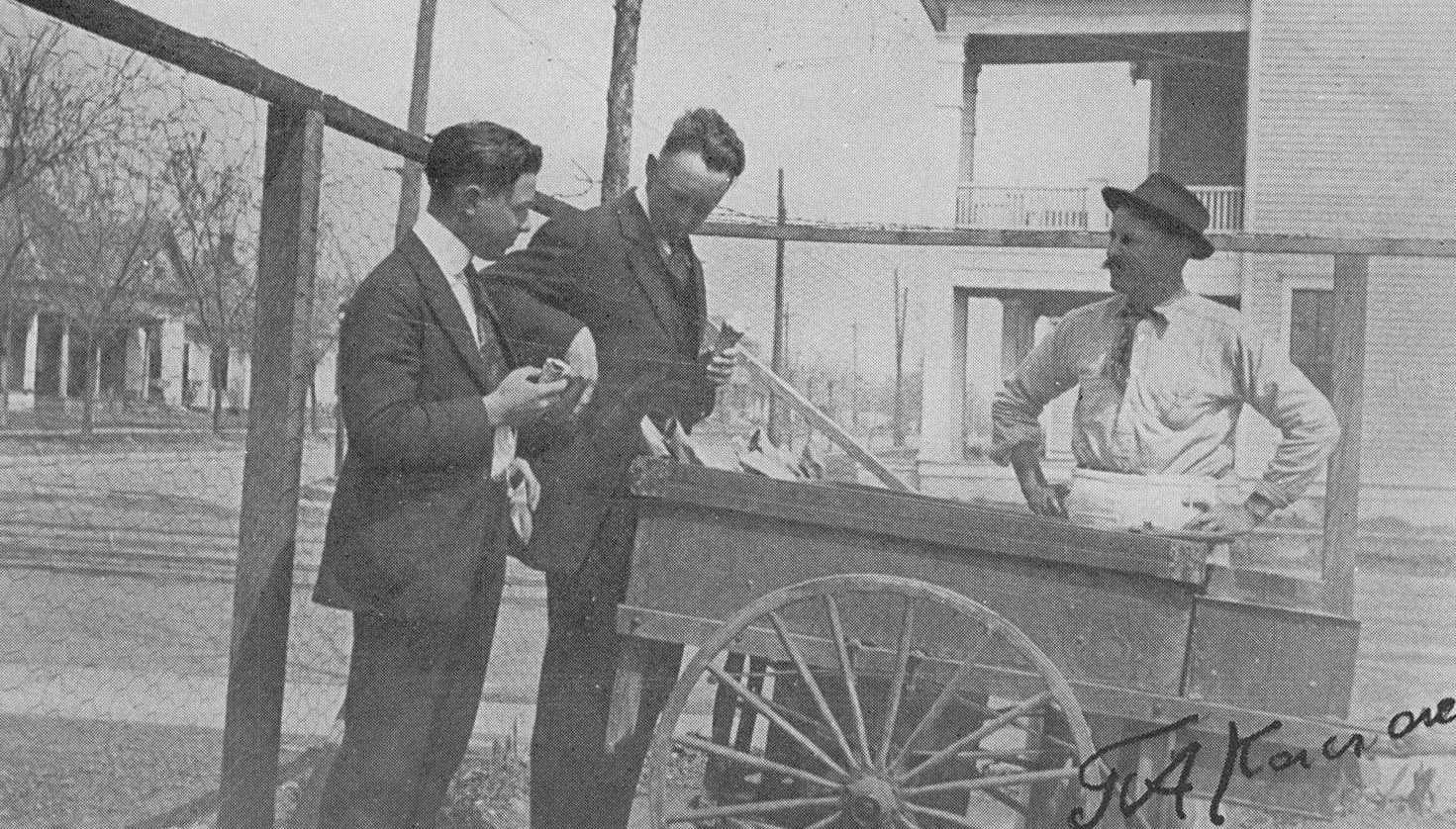
terrill_ice-cream_yrbk_1916-cacasPrep-school boys & the ice cream man, 1916

by Paula Bosse

I love this photo. It shows two students from the Terrill School for Boys, buying ice cream from George Cacas, a Greek immigrant. I’m not sure of the exact location of the photo, but I would assume it is either in front of, next to, or very nearby the Terrill School, which was located at Swiss and Peak. It appeared in the school’s 1916 yearbook accompanying an “interview” with Mr. Cacas, whom the boys apparently (and one hopes affectionately) called “Spaghetti” (click for larger image):

terrill_ice-cream_cacas_1916-yrbk_text

Another photo of Mr. Cacas, from the previous year’s yearbook (click for larger image):

spaghetti_terrillian_1915

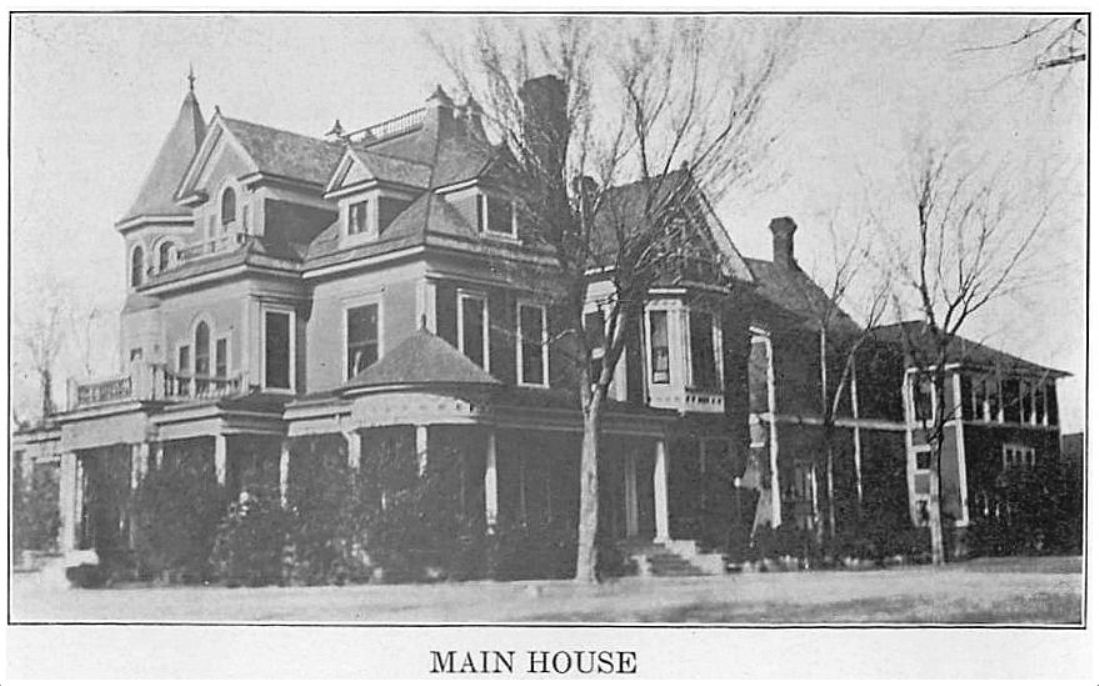
The Terrill School was established in 1906 and was one of the city’s early important prep schools for boys. (Incidentally, the Terrill School shared a fenceline with the prestigious Miss Hockaday’s School for Girls for many years — I’ll be writing more on this convenient arrangement in the future!) Below, two photos showing three of the campus’ many buildings, from about the same time as the one featuring Mr. Cacas.

terrill-school_main-house_yrbk_1919_lg

terrill-school_recitation-hall_phelps-hall_yrbk_1919Recitation Hall on the left; Phelps Hall, right — 1919

terrill-yrbk_19281928

***

Sources & Notes

Top photo and interview from the 1915-1916 Terrillian, the Terrill School yearbook; photos of the “Main House” and two campus buildings from the 1918-1919 Terrillian.

The Terrill School for Boys was located in Old East Dallas at 4217 Swiss Avenue, from 1906 to about 1930. It then moved to Ross Avenue for a few years and was eventually merged with a couple of other schools to form St. Mark’s School of Texas — more on that from the St. Mark’s website, here.

terrrill_school_bingLocation on present-day map (Bing)

The name “Cacas” didn’t seem right for a Greek surname — and the signature at the bottom of the photo looks like it might have been George’s, with his last name beginning with a “K.” But George’s family’s name was, in fact, spelled “Cacas,” as seen here in the city directory from 1915. I wonder if they spelled it “Cacas” back in Sparta?

cacas_directory_1915

*

Copyright © 2015 Paula Bosse. All Rights Reserved.
Baylor Hospital — 1909-1921

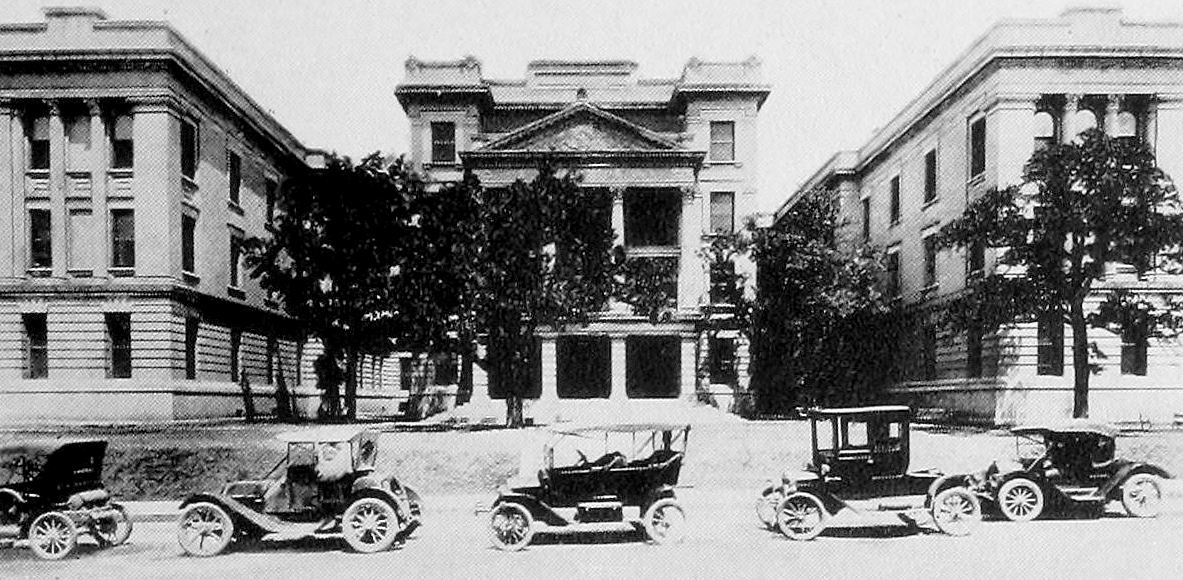
baylor_postcardClassic cars on Junius Street… (click for larger image)

by Paula Bosse

I originally thought the street in front of Baylor Hospital in this postcard was Gaston. But Baylor originally faced Junius Street (see it on a 1921 Sanborn map here), and, in fact, its address was 3315 Junius for many years. I had no idea.

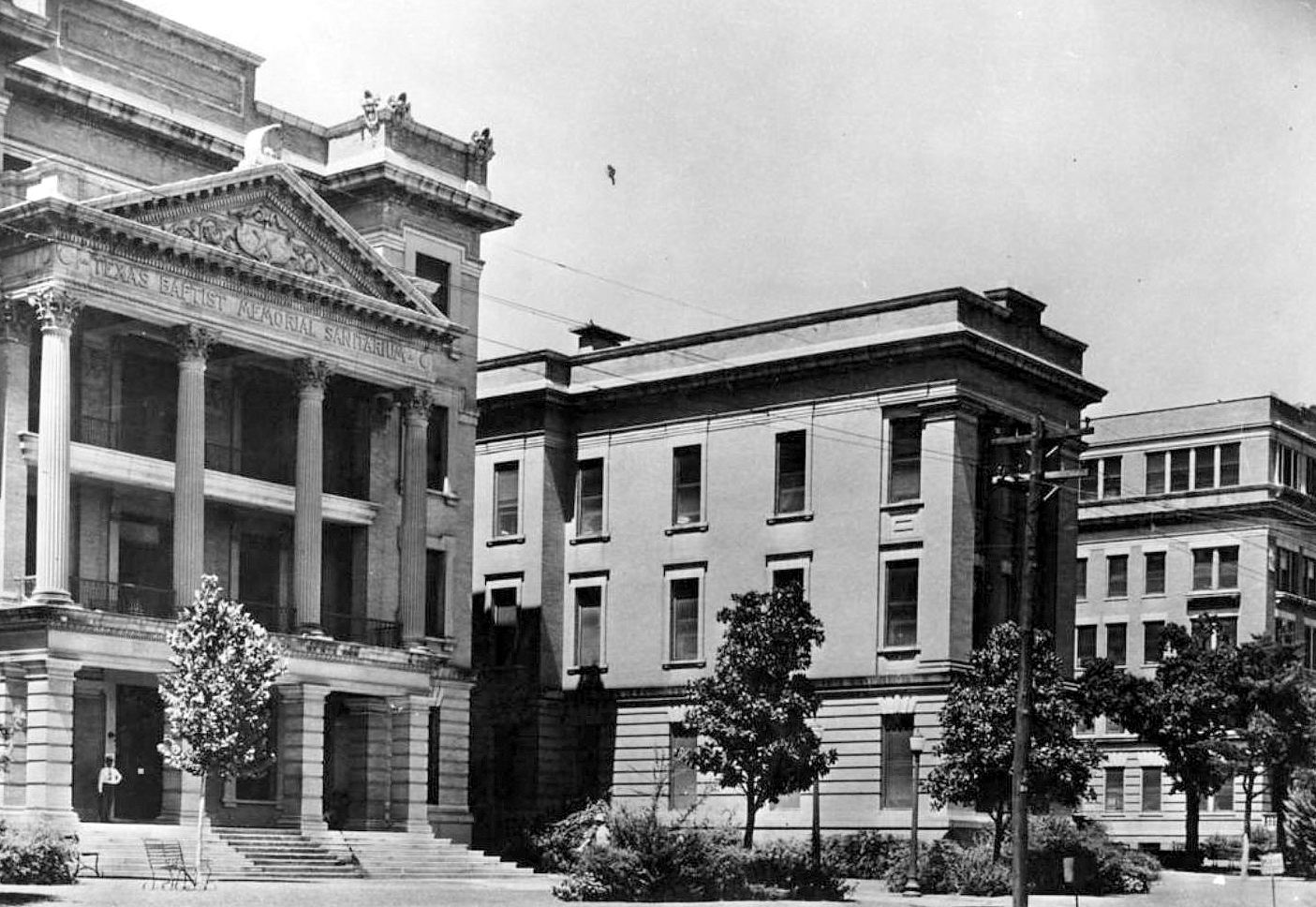
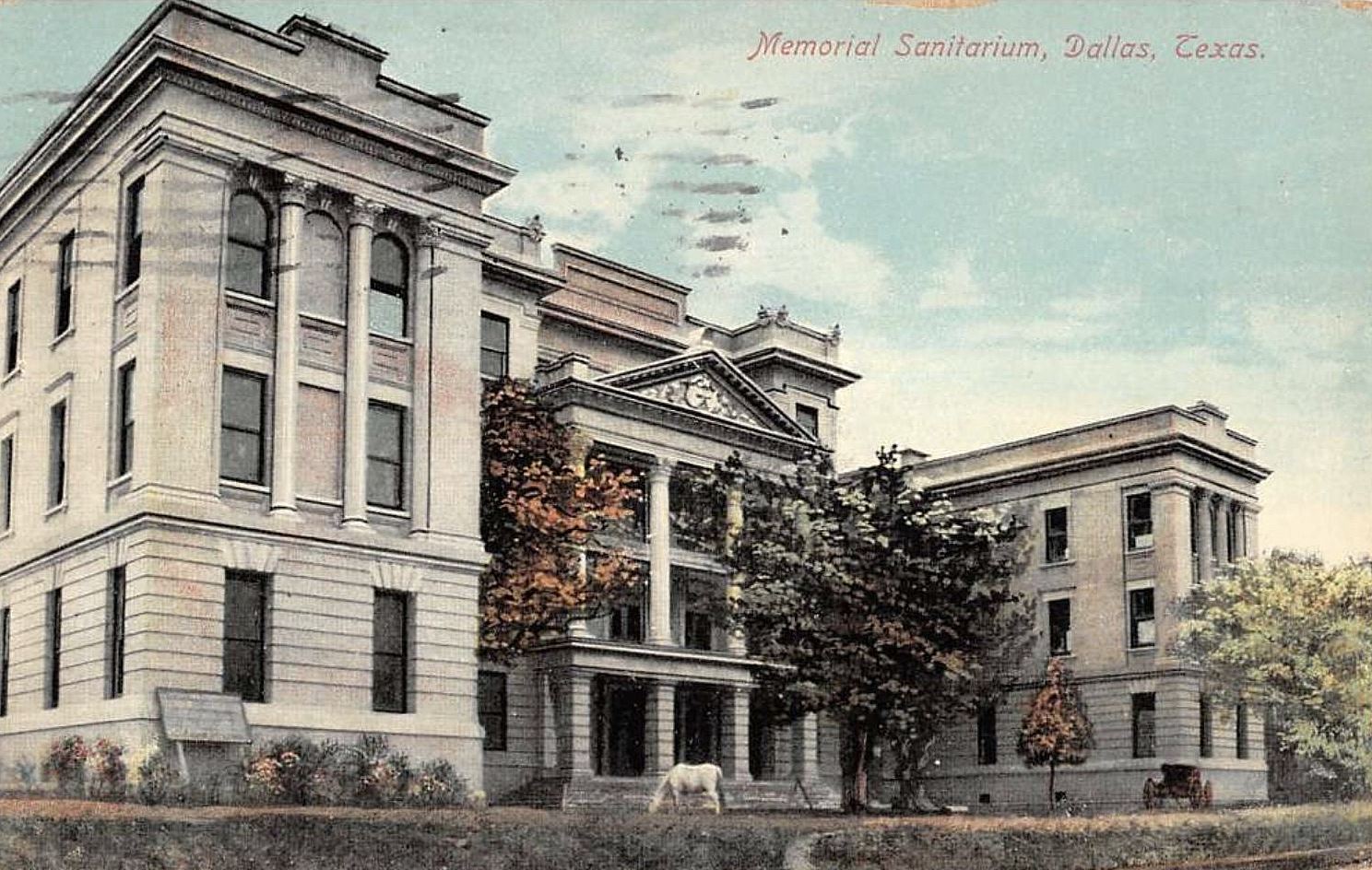
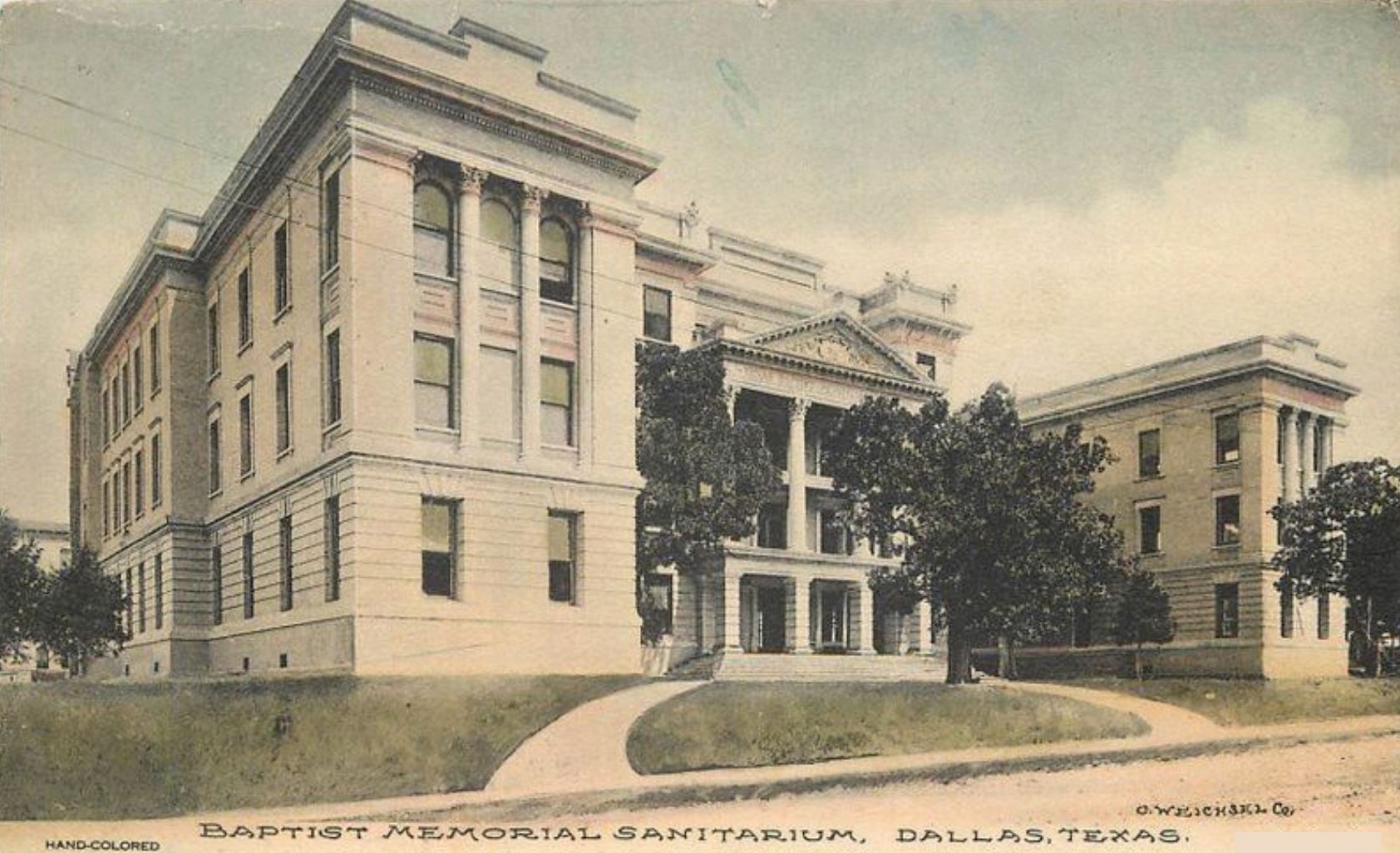
Below are a few more photos and postcards of the medical facility which eventually grew into Baylor Hospital (its Dallas roots go back to 1903, but the buildings seen in these images — buildings designed by noted Dallas architect C. W. Bulger & Co. — were built around 1909). Originally known as the “Texas Baptist Memorial Sanitarium,” it changed its name to the more familiar “Baylor Hospital” in 1920/1921 (and later became “Baylor University Hospital” in 1936). (More on the timeline of Baylor Hospital can be found here and here.)

baylor_postmarked-1919_ebaypostmarked 1919

Dig those cars.

baylor_baylor-univ-waco-yrbk_the-round-up_19171915

baylor-hospital_baptist-sanitarium_postcard

baylor_tx-baptist-memorial-sanitarium_ca-1912_UTSW-libraryca. 1912 (photo: UT Southwestern Library)

This is my favorite one: no cars, but there’s a horse grazing at the entrance!

baylor_horse_postmarked-1911_ebaypostmarked 1911

The postcard below was postmarked 1909, the year these new buildings opened. No cars, no horse, no people. 

baylor_postmarked-1909_ebay1909

And here is the brand new sanitarium, in a photograph that appeared in The Dallas Morning News less than a month after its official opening.

baylor-hospital_exterior_dmn_111009_clogensonDMN, Nov. 10, 1909

***

Sources & Notes

Postcards found on eBay.

The first black-and-white photo is from the 1917 Round-Up, the yearbook of Baylor University in Waco; the same image (uncolorized) appears in the digital archives of UT Southwestern, here, with the date 1915.

The second black-and-white photo is from the UT Southwestern Library archives, here.

The name-change of the Texas Baptist Memorial Sanitarium to Baylor Hospital was proposed in Nov. of 1920 and formally approved by the Board of Trustees of Baylor University in Waco on January 16, 1921. More about the major changes happening to the medical facility/facilities affected can be found in the article “Medical Center For Dallas Is Authorized by Texas Baptists” by Silliman Evans (Fort Worth Star-Telegram, Nov. 13, 1920), here.

Read a detailed description of the Texas Baptist Memorial Sanitarium in the Dallas Morning News article “Baptist Memorial Sanitarium, Just Completed at Dallas, Represents an Investment of More Than Four Hundred Thousand Dollars” (DMN, Nov. 10, 1909), here and here. There are several photographs taken inside and outside (and on top of) the brand new buildings.

*

Copyright © 2014 Paula Bosse. All Rights Reserved.