Flashback : Dallas

A Miscellany: History, Ads, Pop Culture

Category: 1910s

“The Chute”

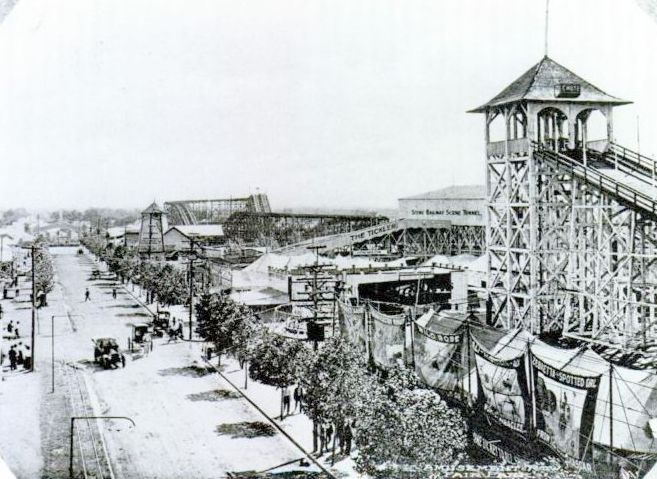
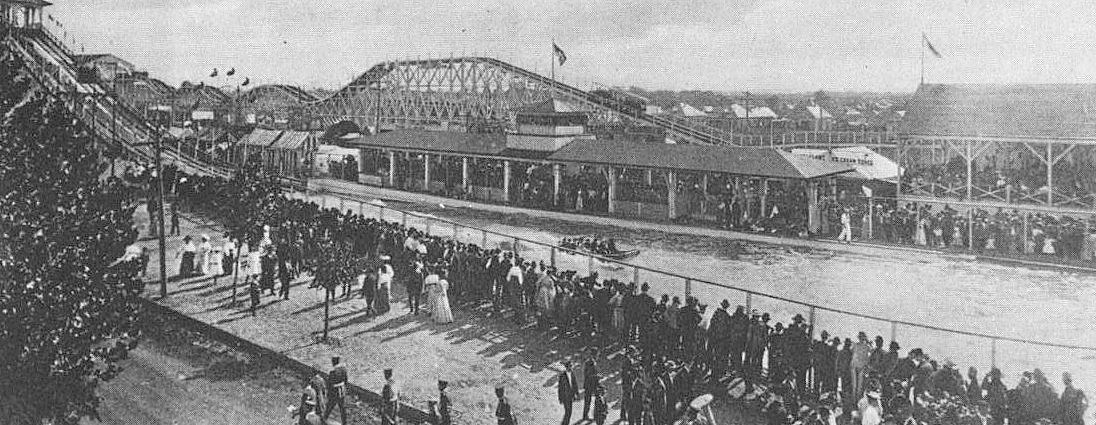
chute-roller-coaster_c1908_tsha_2The Chute and The Tickler, Texas State Fair, 1908

by Paula Bosse

Construction began in 1906 on a new entertainment area at Fair Park called The Pike.

“What is known as ‘Smokey Row’ has been set back against the fence on the south side of the grounds, and the space between it and the race track, all the way to the grandstand, will be occupied by exhibits. Two streets through this part of the grounds lead to the grandstand and the Pike. The Pike will be located beyond the grandstand, occupying a space 250×1125 feet. Here are being constructed the scenic railway and the shoot the chute, which will represent an investment of $75,000. The State Fair has agents in the East booking the remaining attractions for this department. These agents have instructions to pay the money and get the newest and best things to be had.” (Dallas Times Herald, June 24, 1906)

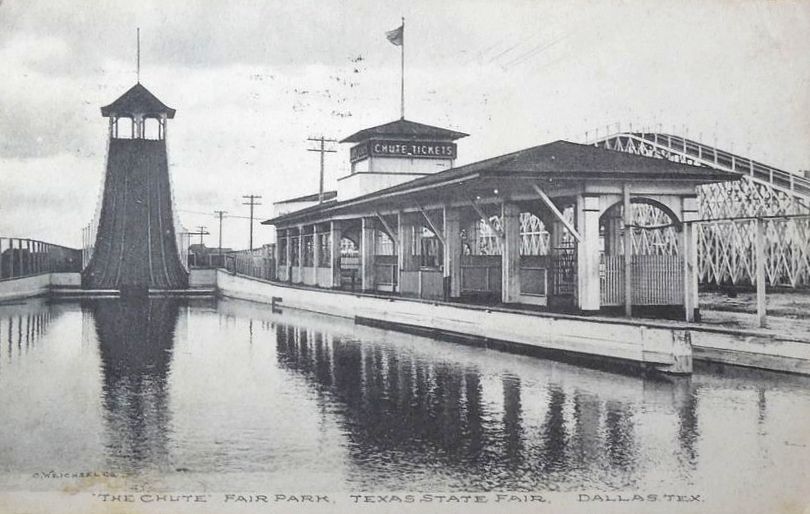
The new Pike meant that visitors to the State Fair of Texas would be able to ride “The Chute,” an amusement park attraction that had been popular in other parts of the country (and which automatically brings to mind the log ride at Six Flags Over Texas). In 1908, a roller coaster with the delightful name of “The Tickler” joined the rides in the area that was referred to as the “Pleasure Plaza” in at least one newspaper account. The Chute/Shoot the Chute/Chute the Chutes lasted a relatively short time — only until 1914 when it was torn down to “make room for the new shows known as the ‘World at Home,’ to be open to the public at the State Fair next fall” (DTH, Aug. 18, 1914).

Rides such as The Chute and The Tickler were enormously popular, and one wonders how all those hats managed to stay on all those heads of all those pleasure-seekers.

*

The Chute, head-on:

chute_postcard_1908

A view of The Pike, with The Chute to the right, above the sideshow banners.

chute_willis_dpl

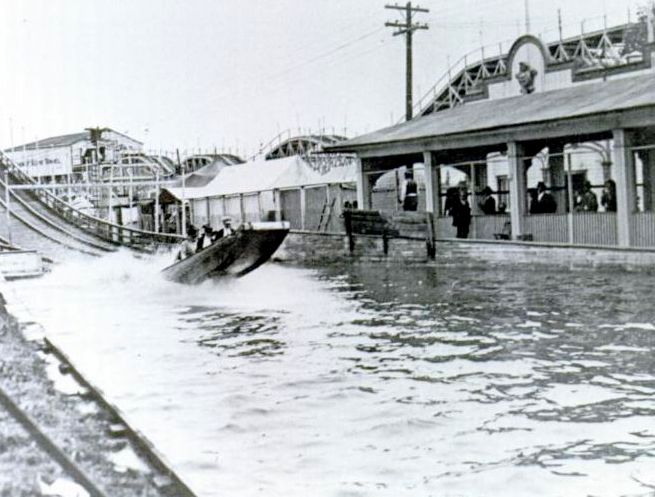
In action:

chute_willis_sfot

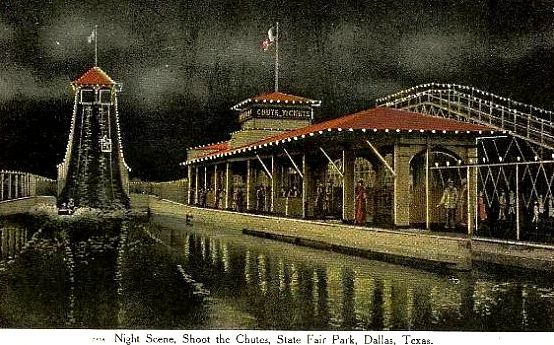
At “night” (the second photo above, glamorized, with postcard magic applied):

chute-night_observer

***

Sources & Notes

Top photo from the collection of the Texas State Historical Association.

Second photo, a 1908 postcard, from eBay.

Third and fourth photos from the book Fair Park by Willis Cecil Winters (Charleston: Arcadia Publishing, 2010). Photo of The Pike from the Dallas Public Library; photo of the boat from the State Fair of Texas Archives.

Night scene from a story by Robert Wilonsky on Winters’ book in the Dallas Observer, here.

Dallas Times Herald quotes from the indispensable Dallas County Archives pages compiled by Jim Wheat; these two articles can be found here.

Yes, Wikipedia does have an entry on the history of Shoot the Chute rides, here.

 As always, most pictures are larger when clicked.

*

Copyright © 2014 Paula Bosse. All Rights Reserved.

University Park, Academic Metropolis — ca. 1915

university-hillcrest_1915University Park, prime real estate (click for larger image; see below for HUGE image)

by Paula Bosse

In the 1970s, Park Cities residents received oversized postcards in the mail featuring historic photos of the area. This “Heritage Series” was presented by the Park Cities Bank and later by Fidelity Bank. I’ll be sharing these wonderful images in the weeks to come. First up is this hard-to-fathom view of the intersection of University and Hillcrest, seen around 1915 when SMU opened, taken from Dallas Hall on the university campus. The description:

“In 1915, University Park was a sparsely populated community north of Dallas. At the time, most Dallas residents thought of Highland Park as ‘country living.’ This photo was taken from SMU’s Dallas Hall looking west along University Boulevard with the cross street being Hillcrest. The two-story home seen on the northwest corner of University and Hillcrest has long been replaced with a series of commercial buildings.”

***

UPDATE: For a much, much larger image of this photo, click here.

“Heritage Series” postcards used courtesy of the Lone Star Library Annex Facebook page. Postcard credits image to Dallas Public Library.

There is a book all about the houses that were built in that first block of University: The Block Book by Bonnie Wheeler (a review of which can be read here). (You probably won’t be able to find a copy of it, but if you do, snap it up. I see only one copy for sale online, and it is rather outrageously priced at just under $500!)

*

Copyright © 2014 Paula Bosse. All Rights Reserved.

Jim Conner, Not-So-Mild-Mannered RFD Mail Carrier

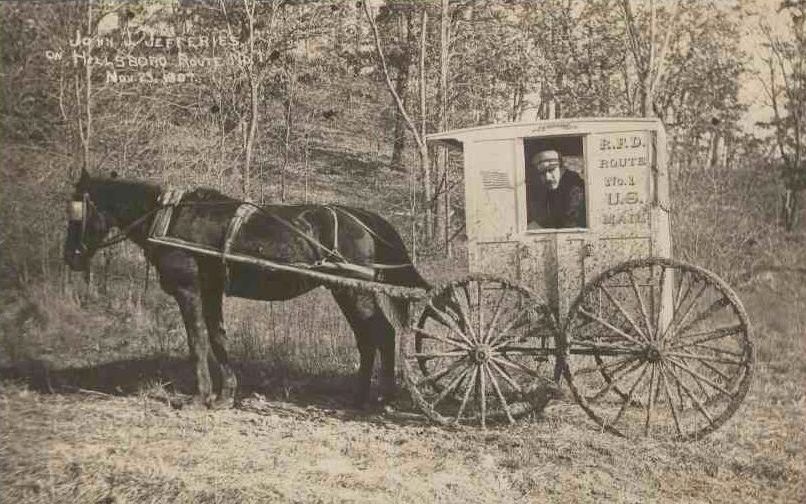
rfd_real-photo_1907-ebayAn RFD mail carrier… (click for larger image)

by Paula Bosse

The man in the photo below looks like every character actor working in Hollywood in the 1930s and ’40s.

conner-james-norton_mail-carrier_1940s

But he wasn’t an actor — he was a retired Dallas postal worker who began his career in 1901 as a rural mail carrier when the Rural Free Delivery (RFD) system was implemented in Dallas. (Before this, those who lived beyond the city limits — generally farmers — had to trek to a sometimes distant outpost — such as a general store — to pick up their mail.) RFD service began locally on October 1, 1901, and an 18-year old Jim Conner was one of six men hired to work the new mail routes beyond the city.

conner_FWregister_090101Fort Worth Register, Sept. 1, 1901

When Rural Free Delivery service began in Dallas, four rural post offices were closed: Lisbon, Wheatland, Five Mile, and Rawlins (the office at Bachman’s Branch, which Jim Conner’s route replaced).

In a 1940 interview with The Dallas Morning News, Conner talked about his early postal route (Route 5), which was 32 miles long; before the arrival of automobiles, he traveled on horseback, by horse cart, by buggy and cart, or by bicycle. The photo at the top shows what early RFD mail wagons looked like.

Jim’s route took him well beyond the city limits: out Cedar Springs to Cochran’s Chapel, to within a mile of Farmers Branch, and over to Webb’s Chapel by way of the “famous” Midway Church and School corner (which became Glad Acres Farm); he returned on Lemmon Avenue. It took him 8 hours if the weather was nice; if the weather was particularly bad, it could take 12 to 15 hours to complete his appointed rounds. He was paid $500 a year and was required to keep two horses, a cart, a buggy, and saddles. He retired in 1935.

**

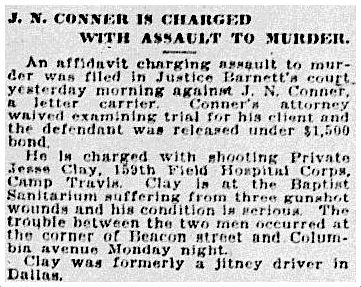
So. A delightfully nostalgic walk down memory lane with an avuncular-looking guy we all kind of feel we know. I thought I’d do a quick search to see if there was an obituary for Jim — there was: he died in 1956 at the age of 73, survived by his wife, 11 children (!), 22 grandchildren, and 3 great-grandchildren. But in addition to the obit, I found something else: a report of a shooting, an arrest, and a charge with “assault to murder.”

conner-charged_dmn_010218DMN, Jan. 2, 1918

What?!!

Though the account of the incident is described as being “somewhat vague,” on New Year’s Eve, 1918, Jim Conner shot a soldier named Jesse Clay after “words” were exchanged at the corner of Beacon and Columbia in Old East Dallas. There had been bad blood between the two in the past, and the New Year’s Eve situation apparently escalated quickly. Clay had been walking down the street with a lady-friend when Conner’s car came to a stop next to them. Clay (described as being drunk at the time) forced his way into the car, and Conner, fearful of being attacked, reached for a gun in the back seat. The two tussled and, after they were both out of the car, Conner saw that Clay also had a gun. This was when Conner shot him three times, intending, he said, to merely wound him. Clay shot back but missed. (The entire account, as it appeared in The Dallas Morning News on Jan. 1, 1918 can be read in a PDF here.)

The soldier was badly injured, with two of the three shots hitting his chest. He was not expected to live. Conner had surrendered to police at the scene and was charged with “assault to murder.” The last report on this incident that I could find was on Jan. 3, in which Clay was described as being in “very critical condition.”

So what happened? As Conner spent a full career as a postal employee, it seems unlikely he was tried for murder. I used every possible combination of search words I could think of but found nothing more on this case. The story just disappeared. I did find a 1943 obituary for a Jesse P. Clay (killed while working on an Army Air Force Instructors School runway when he was struck by the wing of an airplane coming in for a landing), and it seems likely that it was the same guy — he was about the right age, he was a career military man, he lived in Dallas most of his life, and he was born in Kentucky. I assume the soldier in question (who would have been 37 at the time of the shooting) survived his gunshot wounds and that charges against Conner were either dismissed (with Conner pleading self-defense?) or settled (perhaps the military intervened to keep the story out of the press — this was during the height of WWI). Whatever actually happened, it seems that both men were able to move on from that really, really bad New Year’s Eve, a night I’m sure neither forgot.

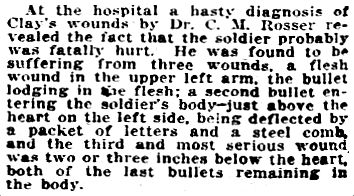
My favorite little detail in the story of this sordid shooting was the line in the initial newspaper report in which it was revealed that one of the (potentially deadly) bullets was “deflected by a packet of letters and a steel comb.” How appropriate that the thing that probably saved mailman Jim Conner from a murder rap was “a packet of letters.” (…And a steel comb, but that doesn’t fit in with my narrative quite so well. Although Mr. Conner does look quite well-groomed.)

packet-of-letters_dmn_010118DMN, Jan. 1, 1918

***

Sources & Notes

Real-photo postcard of Hillsboro, Wisconsin RFD mail wagon is from eBay.

The full DMN account of the bizarre 1918 shooting can be read in a PDF, here.

An informative site on history of Rural Free Delivery — with lots of photos — can be found here.

“RFD”? Wiki’s on it, here.

*

Copyright © 2014 Paula Bosse. All Rights Reserved.


Send Your Kids to Prep School “Under the Shadow of SMU” — 1915

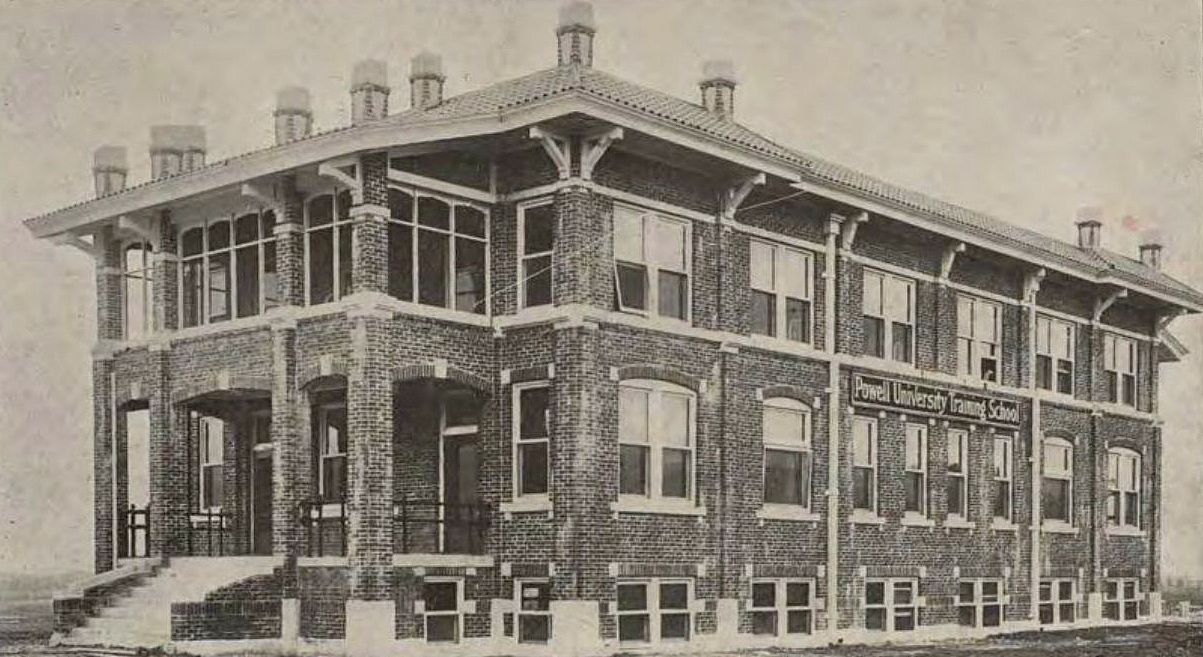
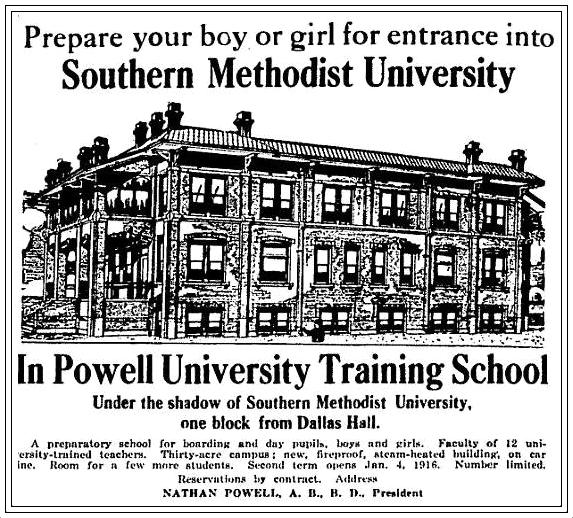
powell-prep_rotunda_1916Powell University Training School, 1915

by Paula Bosse

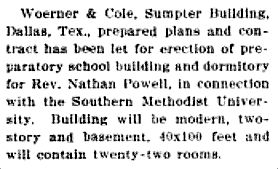
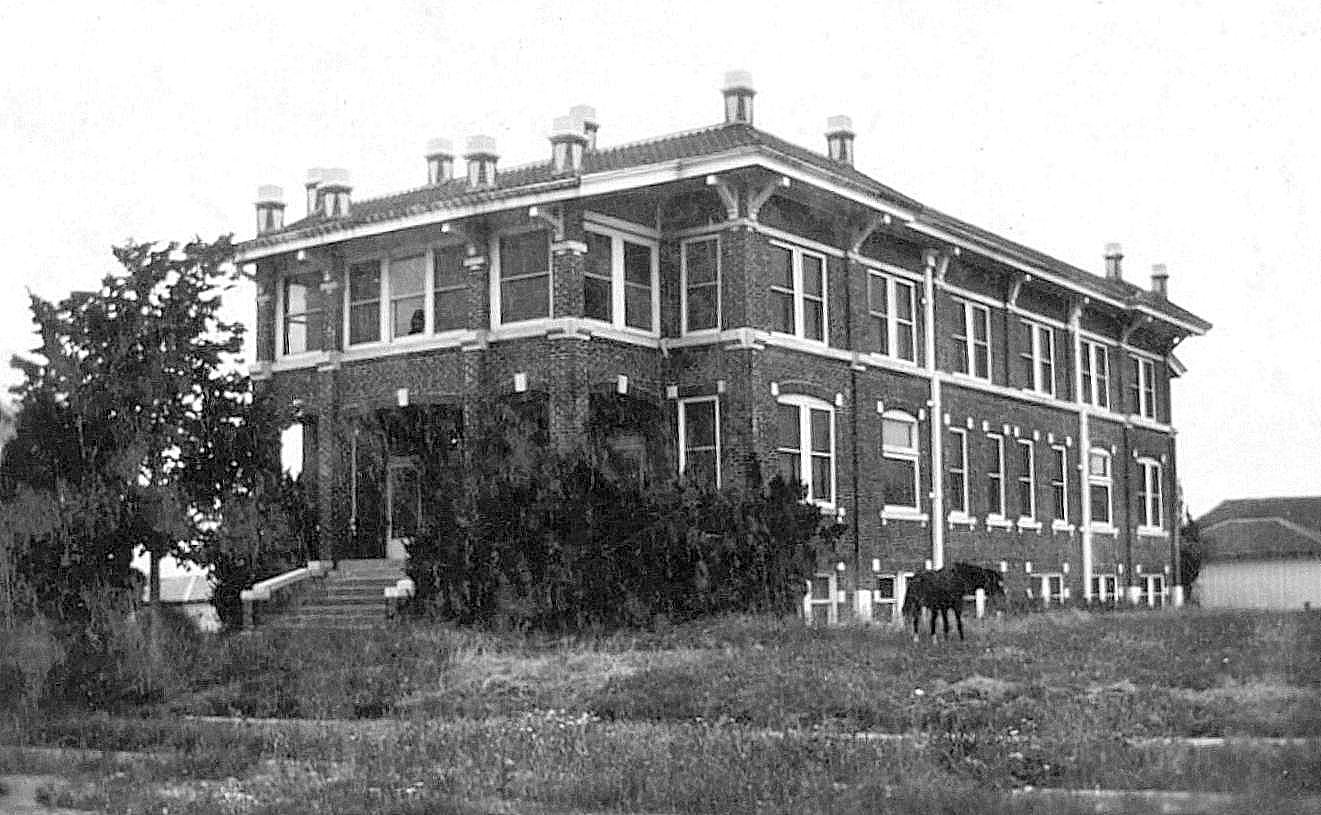
Nathan Powell (1869-1963) was a former Methodist minister who opened his prep school, Powell University Training School, on thirty acres of open land, just across an unpaved road from SMU (which was still in the very early days of its construction). SMU and the Powell school shared more than just adjacent addresses — which they both rather idealistically touted as being “situated on high ground overlooking the university campus and the city” — they also opened on the same day, September 15, 1915.

The location and the opening date were not a coincidence, as Dr. Powell was one of the Methodist movers and shakers who originally promoted the idea of Dallas as the site for a new Methodist university. The following (perhaps exaggerated) sentence can be found in the (perhaps overly laudatory) profile of Powell in one of those ubiquitous late-19th, early-20th century “mug books,” A History of  Texas and Texans (1916):

Beyond his activities as a minister and teacher, the most notable achievement in the life and career of Doctor Powell lies in the fact that he was the sole originator and promoter of the great Southern Methodist University at Dallas, which began its first year September 15, 1915.

Powell University Training School lasted for only about twelve years, until Powell’s rather sudden retirement in 1927 (the good reverend’s “retirement” might have been precipitated by numerous lawsuits and mounting debt). When the school closed, Dr. Powell and his family moved to Harlingen to — as his obituary states — “help organize the grapefruit growers of the Rio Grande Valley.” He operated a citrus nursery himself for a while until it was destroyed by a 1933 hurricane. Nathan Powell died in Harlingen in 1963 at the age of 94.

It’s always exciting to see old buildings still standing in Dallas, and, happily, this one is still around — and it still looks good. Fittingly, it’s currently home to an early-child development center. Next time you’re near the intersection of Binkley and Hillcrest, go take a look.

*

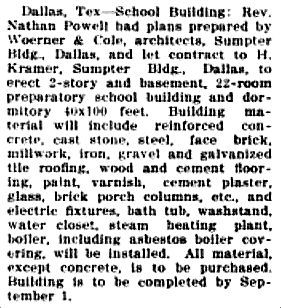
powell_tx-trade-rev-industrial-record_071515a*powell_tx-trade-rev-industrial-record_071515bBoth items from the Texas Trade Review & Industrial Record, July 15, 1915

powell_school_ad_smu-times_121815SMU Times, Dec. 18, 1915 (click for larger image)

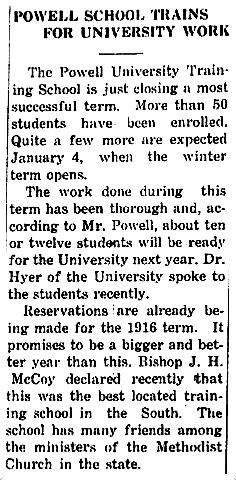
powell_school_smu-times_121815SMU Times, Dec. 18, 1915

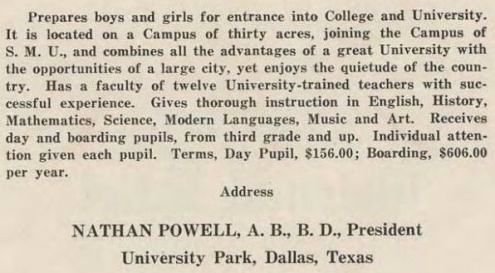
ad-powell-prep_smu-rotunda-19161915 (click to read text)

Below, after the school closed. Looking a little shaggy. I would have guessed the photo was from much earlier, but it’s dated 1931. Complete with horse.

powell-univ-training-school_brown-bk_university-park_19311931, Brown Book, University Park Public Library

***

Sources & Notes

Top image and bottom ad appeared in the very first edition of The Rotunda, SMU’s yearbook for their inaugural year, 1915-16.

More on Rev. Powell’s early life and involvement with the founding of Southern Methodist University can be read in A History of Texas and Texans by Frank W. Johnson (Chicago and New York: American Historical Society, 1916), here.

Information regarding Powell’s retirement in Harlingen is from “The Chronological History of Harlingen” by Norman Rozeff (circa 2009), in a PDF here.

Powell’s obituary can be found in The Dallas Morning News, Nov. 8, 1963: “Dr. Powell Dies; Helped Found SMU.”

Currently occupying 3412 Binkley is The Community School of the Park Cities. According to the history page of their website (here), the building has been operated as a school since at least the 1950s.

I’m not sure what the actual facts are concerning Nathan Powell’s role in the founding of SMU. There are very few results when searching the internet. Most newspaper articles connecting him with the university seem to have been generated by Powell himself. If Powell was as important in the history of SMU as he claimed to be, it’s surprising to see so little information on any connection. Was Powell’s assertion that he was the driving force behind the creation of SMU a blatant lie? Was it merely an exaggeration of the truth? Or was it accurate, but something happened to cause the university to distance itself from him? A collection of papers in the SMU archives (which I have not seen) seems to indicate that there were those in Methodist circles who disputed Powell’s claims, as Elijah L. Shettles took it upon himself to prove that Nathan Powell was the driving force behind the very existence of SMU. An overview of the collection — The Elijah L. Shettles Papers on the Founding of Southern Methodist University — can be found here.

(I’ve found an article from the Fort Worth Star-Telegram in 1910 that had Powell all but saying Fort Worth — not Dallas — would be the best choice for the university’s location. Read that article and see other photos of the school — and also read about the lawsuit against Powell (which had nothing to do with SMU) that took thirteen years to reach trial and ended in quite a hefty judgement, in a PDF here.)

See more of SMU’s first year in previous posts here and here.

*

Copyright © 2014 Paula Bosse. All Rights Reserved.

Dallas County Criminal Courts Building and Jail — 1915

Dallas County Criminal Courts and Jail Building, TX

by Paula Bosse

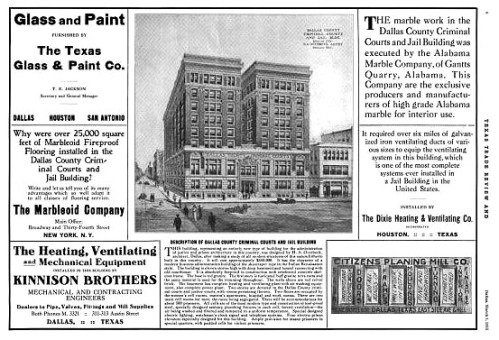
Admit it — that picture above is probably the most attractive jailhouse you’ve ever seen. The first couple of floors were devoted to the courtrooms and administration offices of Dallas’ criminal courts system, but this was primarily the county jail, designed by Dallas architect H.A. Overbeck. Still standing, it faces the Old Red Courthouse (Main St. is in the foreground of the picture above, Houston St. is at the left) — it was even built with a tunnel connecting the two buildings. I’ve always liked this building, but for some reason it’s weird to think of it as a jailhouse. It’s hosted celebrity outlaws like Clyde Barrow and Raymond Hamilton, Benny Binion, and Billie Sol Estes, but  its main claim to fame is its connection to the Kennedy assassination: not only was Jack Ruby tried in one of the downstairs courtrooms for the murder of Lee Harvey Oswald (whom he shot while Oswald was in the process of being transferred to the county jail), but, as a reader notes in the comments, Ruby also spent considerable time there upstairs, as a prisoner, incarcerated in a cell overlooking Dealey Plaza.

When this building opened in 1915, it was a veritable showplace — one of the country’s most modern (and attractive) jails. Here’s what it offered:

This building, representing an entirely new type of building for the administration of justice in prison architecture in this country, was designed by H.A. Overbeck, architect, Dallas, after making a study of all modern architecture of this nature hitherto built in this country. It will cost approximately $550,000. It has the character of a modern business administration building of the skyscraper type in the Italian Renaissance style. The building is eleven stories high with deep basement and tunnel connecting with old courthouse. It is absolutely fireproof in construction with reinforced concrete skeleton frame. The base is red granite. The first story is rusticated buff granite terra cotta and the same material is used for the trimming throughout. The walls above are red velvet brick. The basement has complete heating and ventilating plant with air washing equipment, also complete power plant. Two stories are devoted to the Dallas County criminal courts and justice courts, with rooms pertaining thereto. Two floors are occupied by the women’s cell rooms, matron’s apartments, hospital and work rooms. There are two main cell rooms for men: the races being segregated. There will be accommodations for about 500 prisoners. All cells are of the most modern type and construction of tool-proof steel, specially designed sanitary plumbing fixtures in each cell, forced ventilation – the air being washed and filtered and tempered to a uniform temperature. Special designed electric lighting, Watchman’s clock signal and telephone systems. Four electric prison elevators especially designed for this building. Ample provision for insane prisoners in special quarters, with padded cells for violent prisoners. (Texas Trade Review and Industrial Record, March1, 1915)

(When you go to architecture school you probably don’t envision designing a building with padded cells and “ample provision for insane prisoners.”)

The building will celebrate its 100th anniversary next year. With any luck, by then work will have begun on its much-needed restoration.

criminal-courts-jail_tx-trade-review_march-1915-full-page

***

Sources & Notes

For a perhaps easier-to-read view of the ad from The Texas Trade Review and Industrial Record, see it here.

For an interesting article on a push for the building’s restoration — and to see tons of photographs taken inside the deteriorating jail and courtrooms — check out “Old Courthouse, Jail a Fading Bit of Dallas Lore” by Tom Benning (Dallas Morning News, May 13, 2014), here.

UPDATE — June 30, 2016: Well, it looks like big changes are coming for the (interior) of the old jail — read about them here.

*

Copyright © 2014 Paula Bosse. All Rights Reserved.

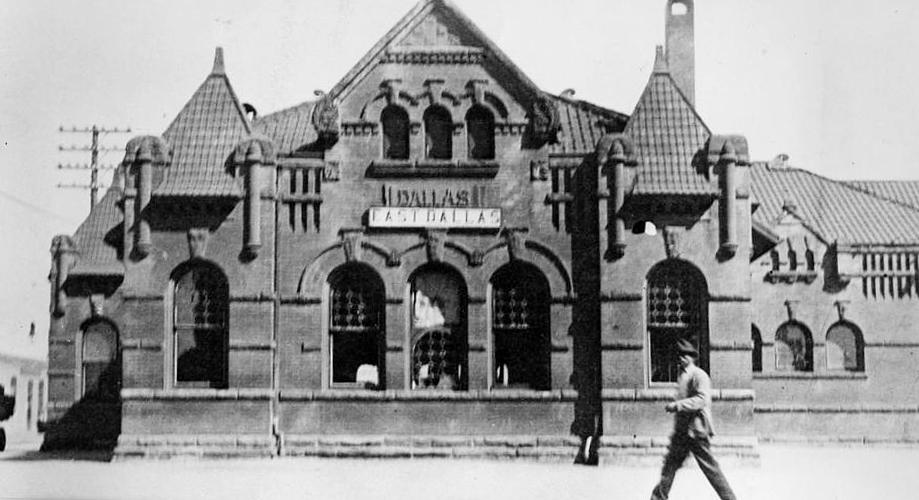
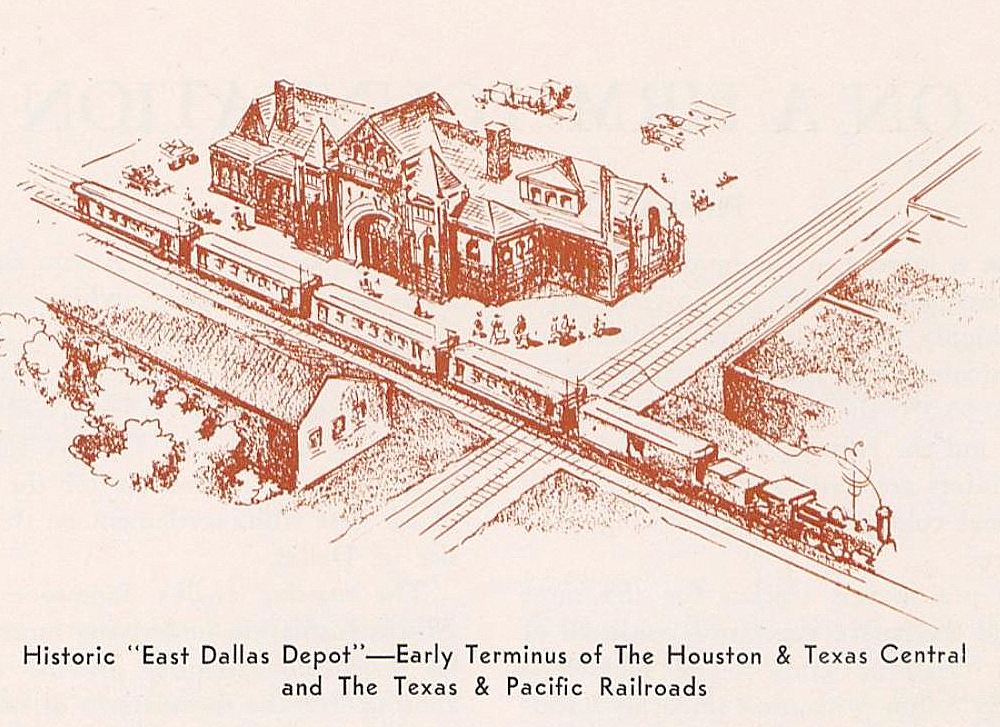
The Old Union Depot in East Dallas: 1897-1935

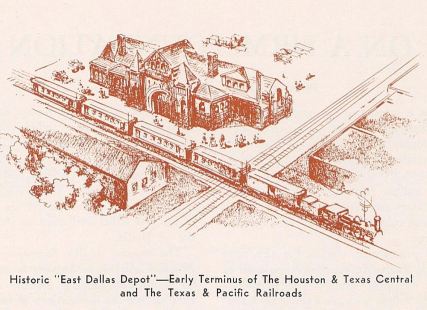
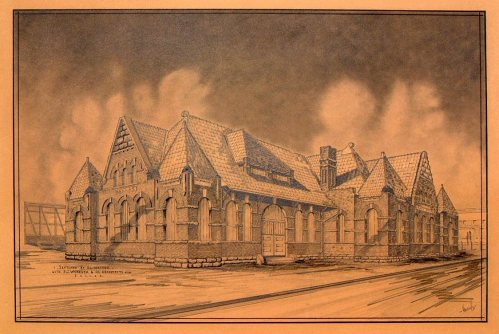
east-dallas-depot_rendering_art-hoffmanFrom the collection of Art Hoffman (click for larger image)

by Paula Bosse

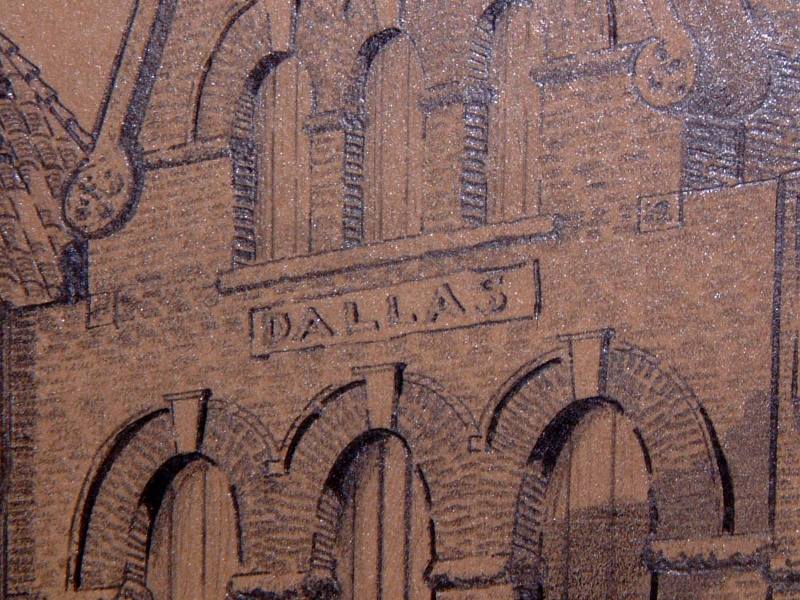
I saw the above rendering of the old East Dallas rail depot posted recently in a Dallas history group. It was bought several years ago by Art Hoffman who was told it had belonged to a former employee of the Houston & Texas Central Railroad (which, along with the Texas & Pacific, served this station). It’s an odd thing for an architect to sketch — a boarded-up railroad depot. I couldn’t find anything on E. L. Watson, the architect who did the rendering (perhaps a member of the Watson family who were prominent Dallas contractors?), and I couldn’t find any connection between the depot and the F. J. Woerner & Co. architectural firm. The drawing might have been done in 1931, with what looks like “31” next to the artist’s signature. Could the drawing have been done merely as a study for E. L. Watson’s portfolio?

But back to the building itself. It was referred to by all sorts of names: Union Station, Union Depot, East Dallas Depot, Old Union Station, etc. With all these permutations, it took considerable digging to determine exactly when it had been built and when it had been demolished.

A couple of stations had previously occupied this site (about where Pacific Avenue and Central Expressway would cross), the first being built in 1872 at the behest of William H. Gaston who was developing the area, well east of the Dallas city limits. Due to the presence of the railroad, the area grew quickly, and in 1882, it was incorporated as the city of East Dallas. It thrived and continued to grow and on January 1, 1890 it was annexed and became part of the city of Dallas.
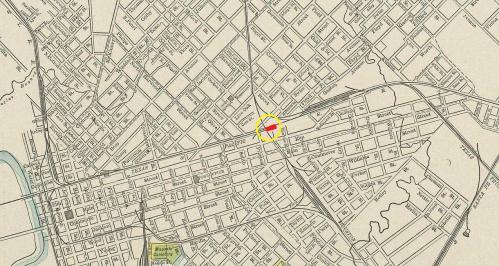
dallas-map-ca1900Location of depot in red — map circa 1890-1900 (click to enlarge)

The depot pictured in the drawing above was built in 1897. The previous station, a woefully inadequate and outdated “shanty,” was, by early 1897, being nudged toward demolition in order to remain competitive with the new Santa Fe depot then under construction. In the Feb. 10, 1897 edition of The Dallas Morning News, it was referred to as “the present eye-sore in East Dallas” which would be better off “abandoned and used for kindling wood.”

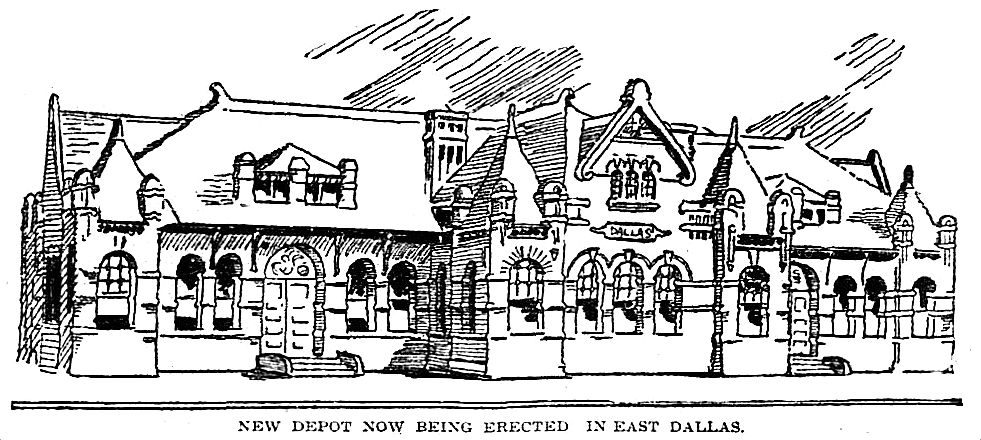
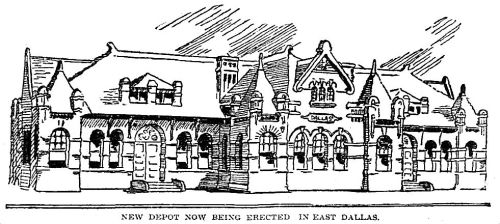
On April 4, 1897, it was reported that plans for a new Texas & Pacific passenger depot were nearly completed. By the beginning of June, the shanty had been torn down, and on June 6, 1897, the drawing below appeared in the pages of the Morning News, giving the people of Dallas a first look at what the much grander station would look like when completed. (It’s unfortunate that the actual architectural rendering was not used, but, instead, a more rudimentary staff artist’s version was printed.) The accompanying information revealed that the new depot had been designed by Mr. O. H. Lang, an architect who worked in the engineering department of the Texas & Pacific Railroad. This was an exciting tidbit to find, because I had wondered who had designed the structure but had been unable to find this elusive piece of information. And it was Otto Lang! Eight years after designing this railroad depot, Lang and fellow architect Frank Witchell would form the legendary firm of Lang & Witchell, and they would go on to design some of Dallas’ most impressive buildings.
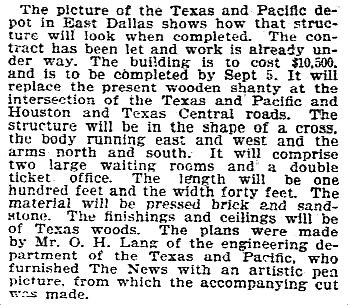
east-dallas-depot_dmn_060697-DRAWING

east-dallas-depot_dmn_060697-TEXTDallas Morning News, June 6, 1897

The building was completed fairly quickly, and its official opening was announced on Oct. 12, 1897.
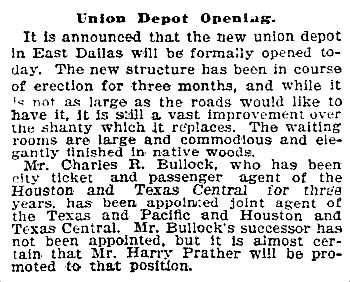
east-dallas-depot_GRAND-OPENING_dmn_101297DMN, Oct. 12, 1897

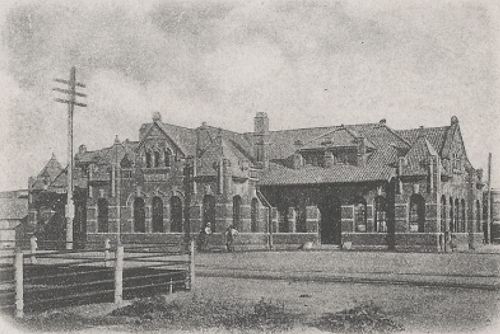
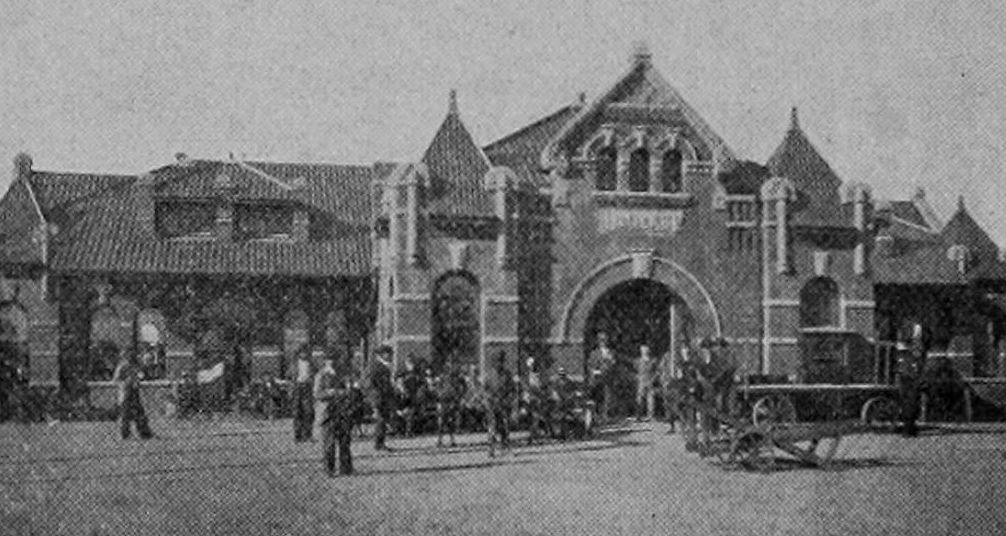
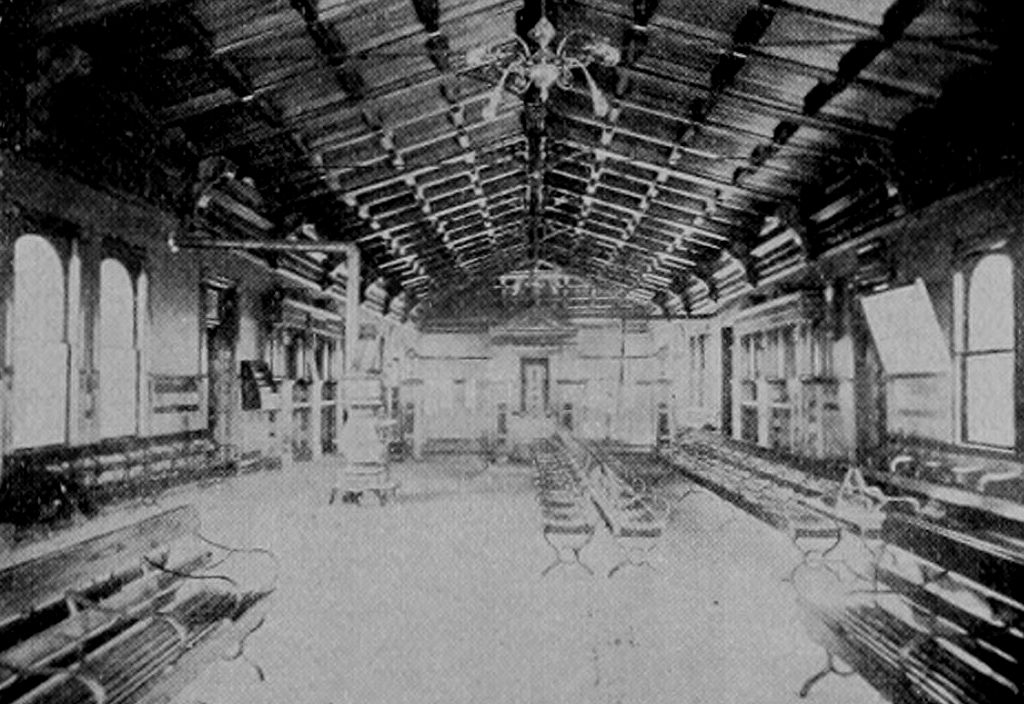
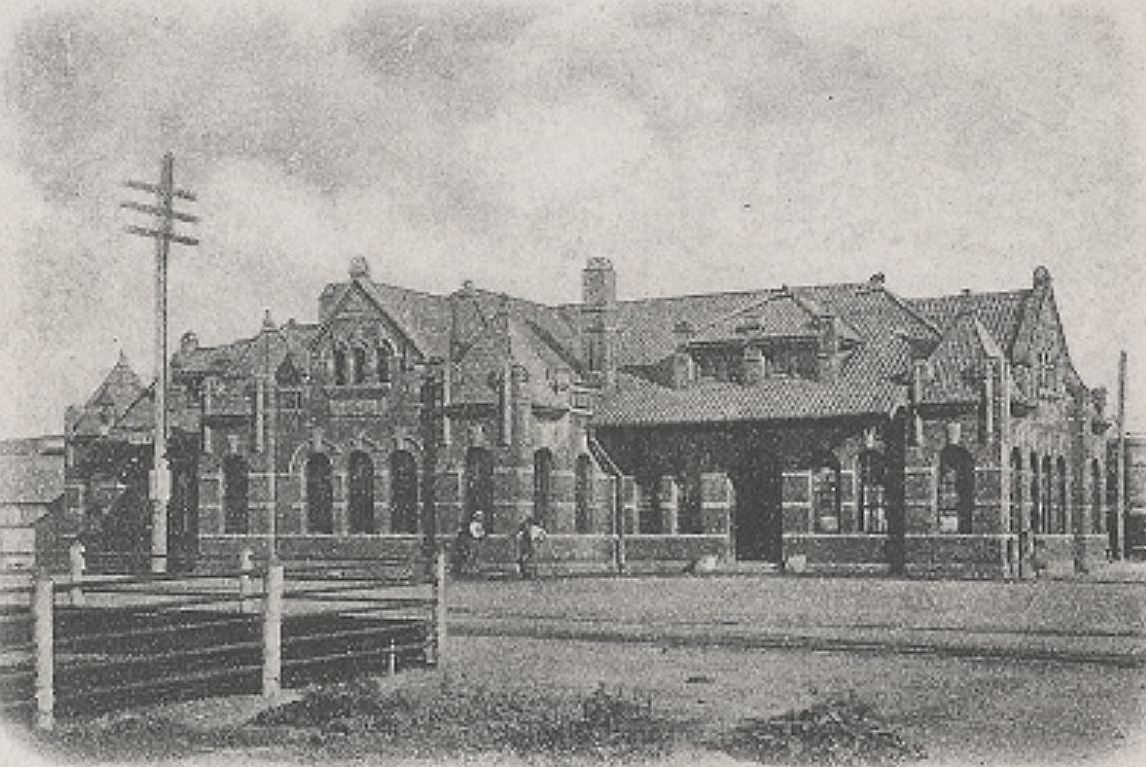
Here’s what the station looked like soon after it opened for business, from an 1898 Texas & Pacific publication (click for larger images):
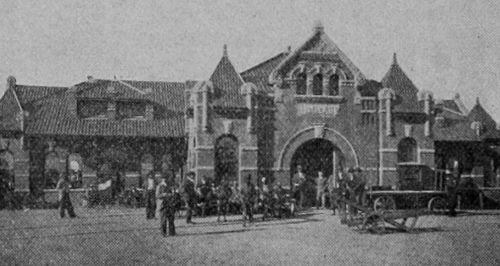
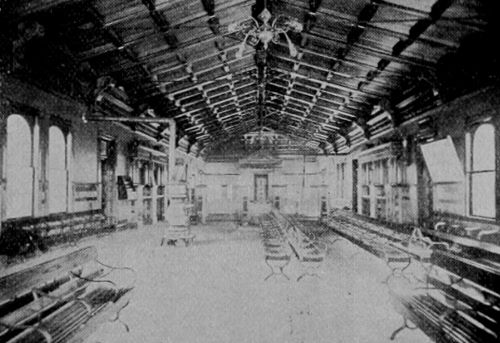
east-dallas-depot_ext_tx-pac-rr_1898

east-dallas-depot_int_tx-pac-rr_1898

Much better than a shanty!

union-depot_flickr_coltera

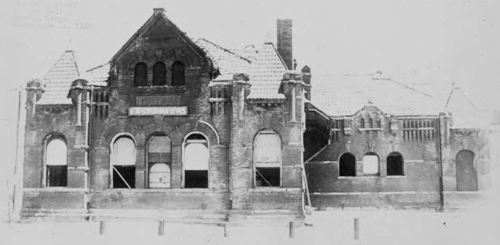
Below in another early photo of the depot:
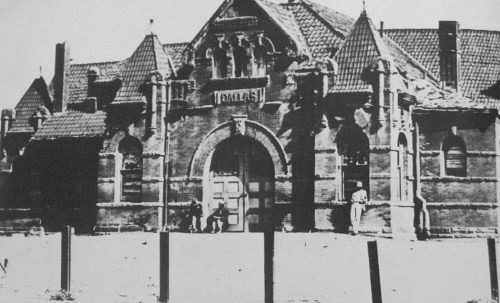
east-dallas-depot_c1890_dallas-redisc_DHS

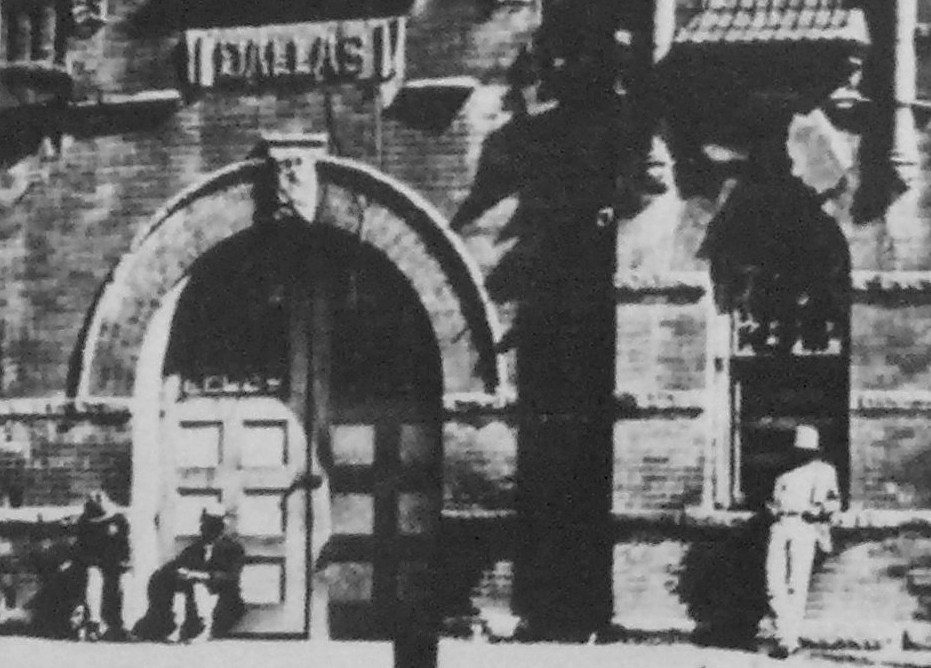
Can’t pass up an opportunity of zooming in on a detail:
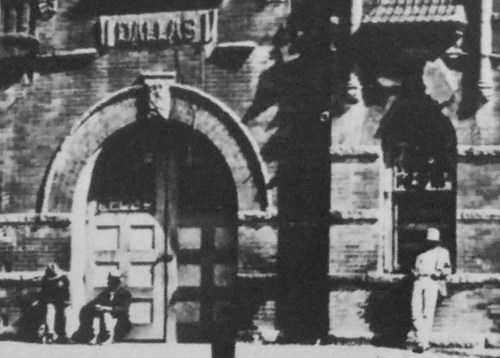
east-dallas_c1890_dallas-redisc_DHS-det

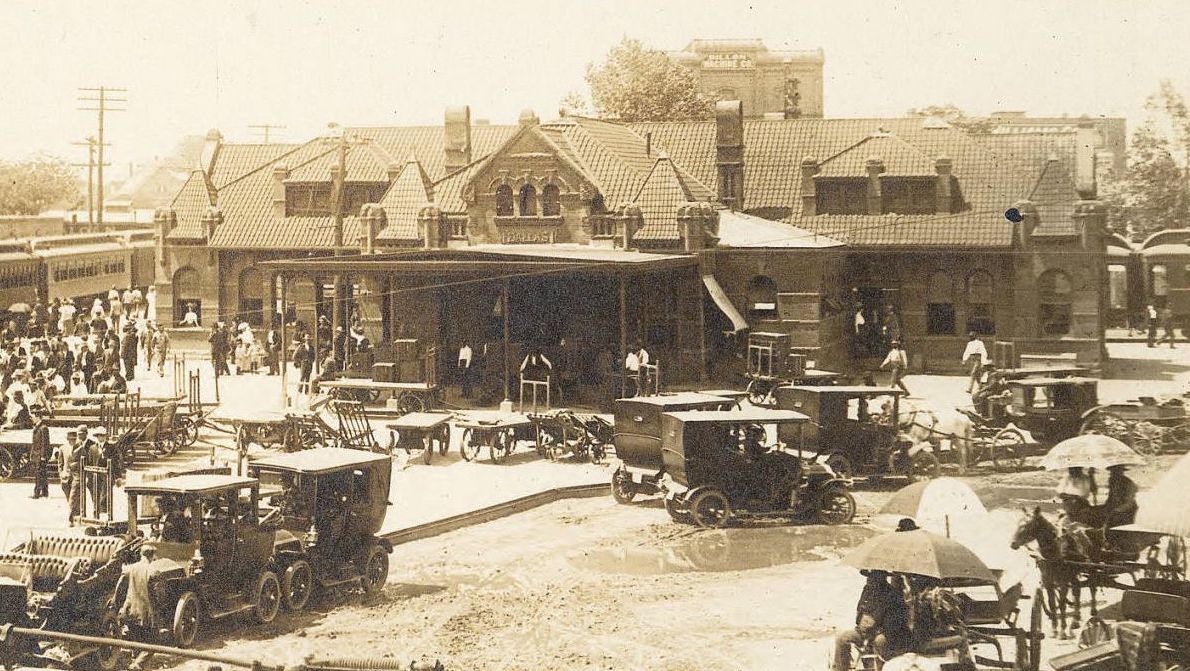
Here it is around 1910, a hotbed of activity, now with the addition of automobiles:
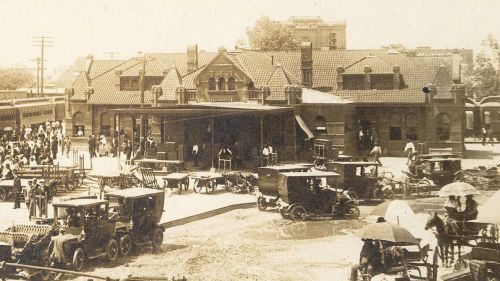
old-union-depot_degolyer_ca1910-det

The station served an important role in the growth of (East) Dallas and in the everyday lives of its residents for almost twenty years, but in 1916 the many “independent” passenger and freight depots that had been spread out all over town were shuttered, per the Kessler Plan’s directive to consolidate and run all the rail lines in and out of the new Dallas Union Terminal. (This was when the word “old” began appearing ahead the East Dallas station whenever it was mentioned.)
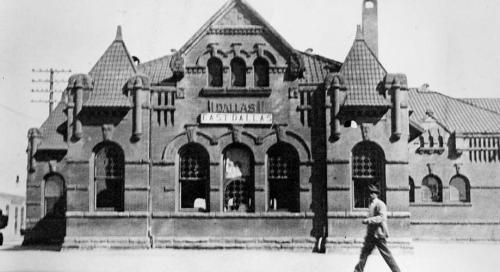
east-dallas-depot_1916-portal(circa 1916)

So what became of the East Dallas depot? From “Relic of City of East Dallas Being Demolished,” a Dallas Morning News article from Jan. 20, 1935:

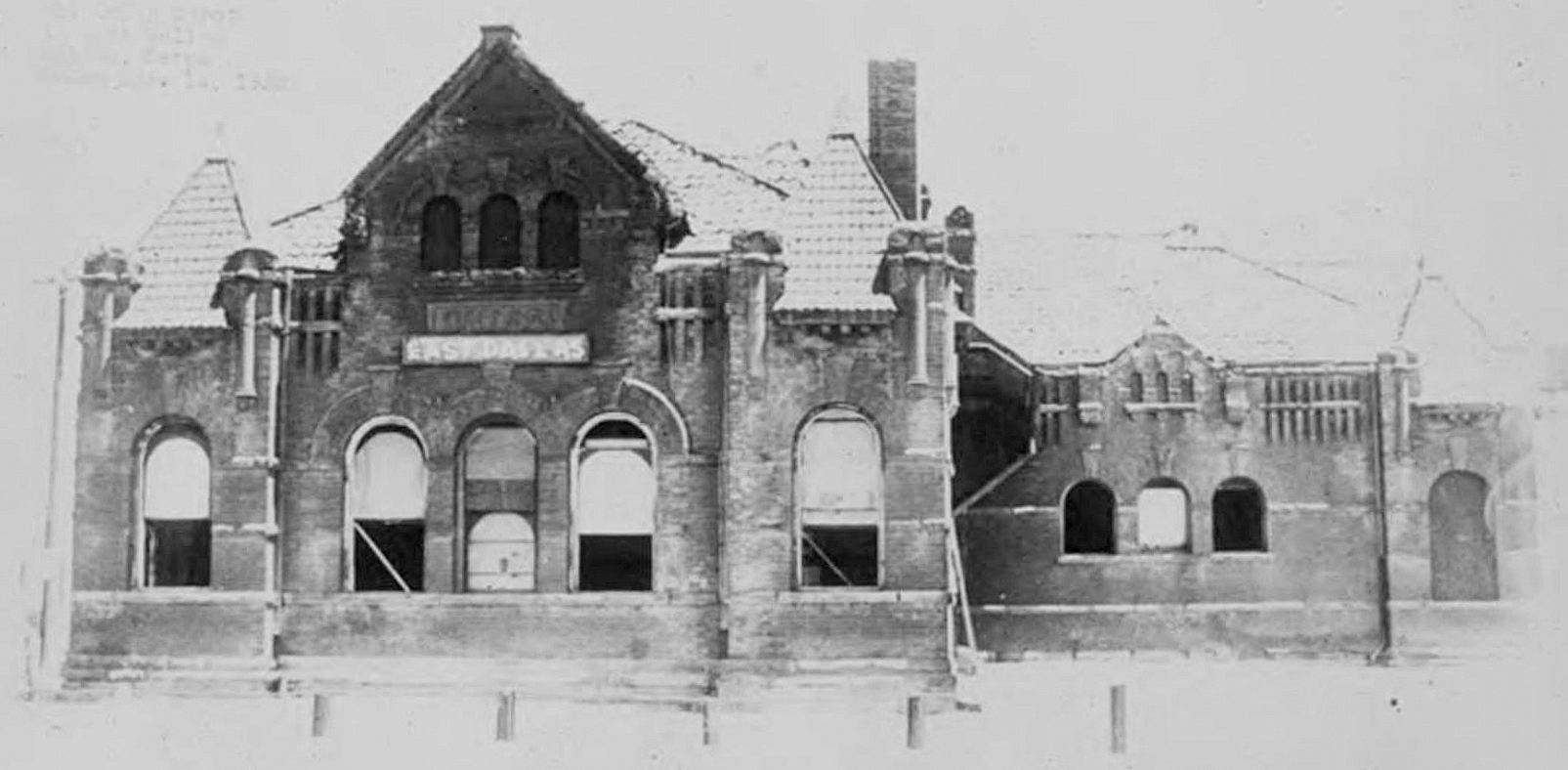
Last use of the depot for railroad purposes came in 1933 when it was abandoned as a freight station in August of that year. After that it was used as a station for interviewing destitute clients for the relief board but for several months has been boarded up.

So that original rendering may not have been done in 1931 after all (unless it was a high-concept architect’s vision of what the depot would look like one day all boarded up…).

At some point it was determined that the station would be torn down. It may have been one of those beautify-the-city projects done in preparation for the Texas Centennial Exposition the next year, but it was probably time for the building to come down. It was January of 1935, at the height of the Great Depression, and  not only did the city make it a point to hire laborers on relief to assist in the demolition, but it also approved the use of salvaged materials from the site to be used in building homes for “destitute families.”

Relief Administrator E. J. Stephany received approval Saturday of a project to get men to tear down the old structure and use the materials in building homes for destitute families and work is expected to start immediately. (“East Dallas Station To Be Torn Down and Converted Into Homes,” DMN, Jan. 13, 1935)

Demolition of the depot — which The News called “The Pride of the Gay Nineties” — began on January 18, 1935. The first solemn paragraph of an article reporting on the razing of the landmark is below.

Shorn of all the dignity it possessed for years as the East Dallas Union Depot, the old red structure near the intersection of Central and Pacific avenues began crumbling beneath the blows of wrecking tools wielded by laborers from the Dallas County relief board Friday.” (“Relic of City of East Dallas Being Demolished,” DMN, Jan. 20, 1935)

The red stone slabs bearing the word “Dallas” (3 feet long, 18 inches thick) were offered to the Dallas Historical Society “for safekeeping.”
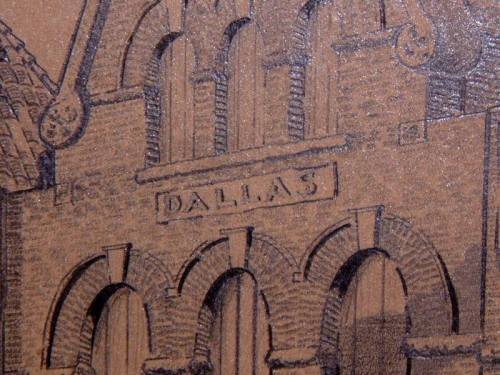
east-dallas-depot_rendering_dallas_Art-Hoffman_sm

So did that relief housing get built? Sort of. All I could find was an article from June, 1935, which states that one little building was constructed with some of the brick and stone from the razed depot. It wasn’t a house for the needy but was, instead, headquarters for relief caseworkers in donated park land in Urbandale. Presumably there was housing built somewhere, but all that brick and stone salvaged from the old depot may not have been used for its intended purpose. BUT, there is this tantalizing little tidbit:

As a reminder of the historic antecedent, the new structure [in Urbandale Park] has as a headpiece for its fireplace the large carved stone bearing the name Dallas. (“Relief Structure Made of Materials From Razed Depot,” DMN, June 20, 1935)

Does this mean that the Dallas Historical Society might still have the second slab? If not, what happened to it?

I checked Google Maps and looked at tiny Urbandale Park at Military Parkway and Lomax Drive, just east of S. Buckner, but I didn’t see anything, so I assume the building came down at some point. (UPDATE, 3/20/16: Finally got around to driving to this attractive park. Sadly, the little building is no longer there.)

It would have been nice if that little bit of the old depot had survived — a souvenir of an important hub of activity which sprang to life when memories were still fresh of East Dallas being its own separate entity — the “David” Dallas to its neighboring “Goliath” Dallas. I would love to learn more about what might have happened to that “Dallas” sign which, for a while, hung over the fireplace of an odd little building in an obscure park in southeast Dallas where it lived out its days in retirement.

**

Since I keep adding photos of the depot to this post, I’m going to just start putting new additions (with captioned and linked sources) here:
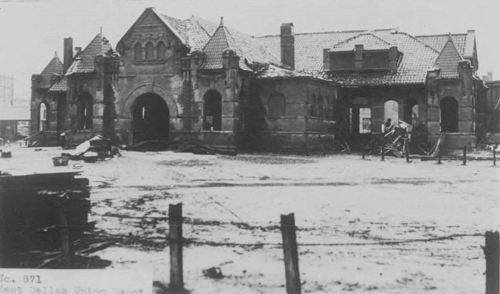
east-dallas-union-depot_degolyer-lib_SMUDeGolyer Library, SMU

union-depot_east-dallas_1933_degolyer-lib_SMUDeGolyer Library, SMU

union-depot_your-dallas-of-tomorrow_1943_portal
“Your Dallas of Tomorrow” (1943), Portal to Texas History

***

Sources &  Notes

Original rendering of the old Union Depot at East Dallas by E. L. Watson is from the collection of Art Hoffman, used with his permission.

More on architect Frank J. Woerner (who designed, among other things, the Stoneleigh Hotel), here (see p. 10 of  this PDF).

History of Old East Dallas (and the city of East Dallas), here and  here.

More on architects Lang & Witchell here, with an incredible list of some of the buildings designed by their firm here.

1898 photos of the depot’s exterior and interior from Texas, Along the Line of the Texas & Pacific Ry. (Dallas: Passenger Department of the Texas & Pacific Railway, [1898]).

Photo immediately following the photos from the T & P book is from a postcard, found on Flickr, here.

Photo (and accompanying detail) immediately following that is from Dallas Rediscovered by William L. McDonald (Dallas: Dallas Historical Society, 1978). (McDonald identifies the photo as being “c. 1890” — well before the station was built in 1897.) From the collection of the Dallas Historical Society.

Photo of the depot with automobiles is a detail of a larger photograph from the collection of George A. McAfee photographs in the DeGolyer Library, Central University Libraries, Southern Methodist University. The original can be seen here.

Photograph dated 1916 from The Museum of the American Railroad, via the Portal to Texas History site, here.

More information in these Dallas Morning News articles:

  • “East Dallas Station To Be Torn Down and Converted Into Homes” (DMN, Jan. 13, 1935)
  • “Relic of City of East Dallas Being Demolished” (DMN, Jan. 20, 1935) — very informative
  • “Historical Society Will Be Given Slabs of Former Station” (DMN, Jan. 31, 1935)
  • “County Gets Land To Install Relief Depot; Later Park” (DMN, Feb. 27, 1935
  • “Relief Structure Made of Materials From Razed Depot; Station Occupies Land in Urbandale Donated to County For Park” (DMN, June 20, 1935)
  • “Salvaged Materials Go Artistic” (DMN, June 20, 1935) — photo of “relief structure” which accompanied above article

More photos of this immediate area can be found in these posts:

  • “The Union Depot Hotel Building, Deep Ellum — 1898-1968,” here
  • “The Gypsy Tea Room, Central Avenue, and the Darensbourg Brothers,” here

Many of the pictures and articles can be clicked for larger images.

*

Copyright © 2014 Paula Bosse. All Rights Reserved.


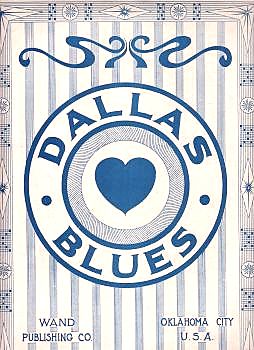
“I’ve Got the Dallas Blues and the Main Street Heart Disease”

dallas-blues-sheet-music

by Paula Bosse

“Dallas Blues” is an important milestone in the history of blues music. I gather this may be debatable, but it is cited as being the first “true blues song” ever published (at least by sources on Wikipedia). Written sometime before 1909 by Hart A. Wand, a white musician in Oklahoma, “Dallas Blues” was published as an instrumental in 1912; in 1918, lyrics were added by Lloyd Garrett.

I have to admit, when I read the opening lyrics, I assumed it was your typical Dallas-inspired ditty about how Dallas is a cold and heartless city that will chew you up and spit you out:

When your money’s gone, friends have turned you down,
And you wander ’round just like a houn’ (a lonesome houn’),
Then you stop to say, ‘Let me go away
From this old town (this awful town).’

But then the next lines are:

There’s a place I know folks won’t pass me by,
Dallas, Texas, that’s the town I cry! (Oh hear me cry!)
And I’m going back, going back to stay
There till I die (until I die).

Ha! That was unexpected.

Below are a few versions of “Dallas Blues” — fast and slow, some with vocals, and one hot instrumental. Enjoy. I hope those juicy peaches are still hanging on your trees!

**

Ted Lewis’ version from 1931, with Fats Waller’s first vocal appearance on record and Benny Goodman on clarinet. Most of the lyrics have been left out, but this is great

*

Louis Armstrong’s recording, from 1929:

*

George Lewis’ slowed-down version:

*

And, lastly, Isham Jones’ instrumental version — this one is hopping!

***

Sources & Notes

Sheet music from an Art & Seek story on Texas Blues (with sound clips) by Jerome Weeks, here.

Wikipedia entry on the song, here.

Complete lyrics to the song, here.

I’ve got the Dallas Blues and the Main Street heart disease
(It’s buzzin’ ’round),
Buzzin’ ’round my head like a swarm of little honey bees
(Of honey bees).

Interested in Dallas-related blues songs? Check out my previous post “Deep Ellum / Deep Elm / Deep Elem Blues,” here.

*

Copyright © 2014 Paula Bosse. All Rights Reserved.
The Texas Land & Mortgage Company — 1912

ad-texas-land-mortgage_19121912

by Paula Bosse

The Texas Land and Mortgage Company of London, Ltd. was the first mortgage company in the state of Texas. The Dallas branch of the English company opened in 1882 at a time when British investment across Texas was booming; it was one of the few speculation firms in the state that grew and prospered into the 20th century. Much development of the city in this period can be attributed to loans granted by the Texas Land & Mortgage Company.

The building they occupied (built by them in 1896) was located at the northwest corner of Commerce and Field, across Field from where the Adolphus has stood since 1912. The building in the 1912 ad looks a little different from the one in the photo below, taken four years earlier. It’s not a terribly attractive building in either photo, but there is some improvement in the later picture, and it IS vastly superior to the 7-Eleven occupying that corner today.

texas-land-mortgage_grtr-dal-ill_19081908

***

Advertisement from the pages of The Cattle Raisers’ Association of Texas, March 1912.

Bottom photograph from Greater Dallas Illustrated (Dallas: Friends of the Dallas Public Library, 1992 — originally published in Dallas in 1908).

For a short biography of A.G. Wood, the Scottish general manager of the Texas Land & Mortgage Co., see the Encyclopedia of Texas (1922) entry here.

Click pictures for larger images.

*

Copyright © 2014 Paula Bosse. All Rights Reserved.

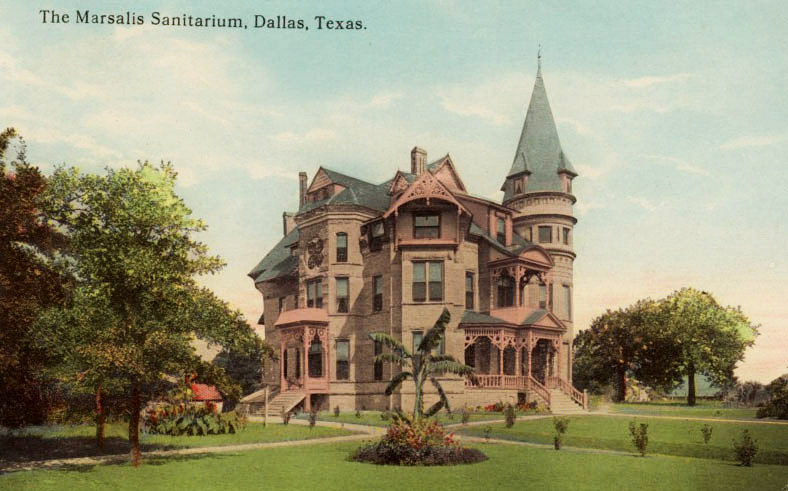
The Marsalis House: One of Oak Cliff’s “Most Conspicuous Architectural Landmarks”

marsalis_sanitarium_oak-cliffThe fabulous Marsalis house in Oak Cliff (click for larger image)

by Paula Bosse

The Marsalis Sanitarium was a 15-bed private surgical and convalescent hospital in Oak Cliff, established in 1905 by Dr. J. H. Reuss and his partner, Dr. James H. Smart. Whether or not that building was actually pink (and I certainly hope that it was!), it was most definitely a show-stopper — one of those stunning structures that one doesn’t expect to see in and around Dallas because almost none of them still stand.

This grand home was built by Oak Cliff promoter and developer Thomas L. Marsalis in about 1889 as his personal residence at a reported cost of $65,000 (the equivalent of more than $1,750,000 in today’s money). It was located at what is now the southwest corner of Marsalis Avenue and Colorado Boulevard. The house was apparently never occupied. Supposedly, Marsalis’ wife did not want to live there because it was “too far from town” (!), but Marsalis’ financial distress throughout this time was probably more to blame.

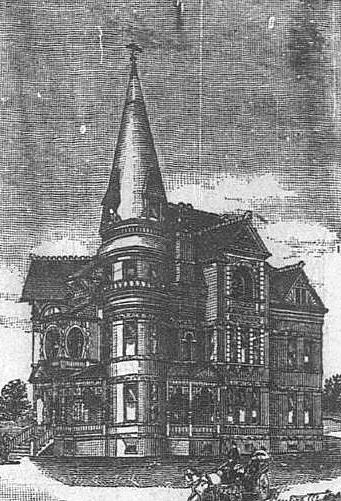
marsalis-house_drawing
Dallas Morning News

Marsalis’ insolvency resulted in the foreclosure of the house in the early 1890s and its ultimate sale at public auction in 1903. The winning bidder at that auction was Dr. Reuss, and the house became the Marsalis Sanitarium soon after.

marsalis-sanitarium_tx-state-journal-medical-advertiser_dec-1905_portal
1905 ad (click for larger image)

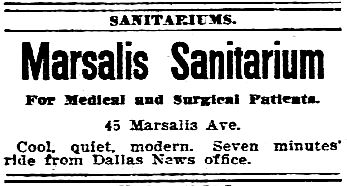
marsalis_sanitarium_dmn_010109DMN, Jan. 1, 1909

marsalis-sanitarium_worleys-1909
Worley’s City Directory, 1909

Sometime after 1909 it became a girls’ seminary, and then in 1913 it fell into private hands. On August 10, 1914 the poor house burned to the ground. The headlines the next day read:

“Oil Starts Oak Cliff Early Morning Fire; Fisher Asserts Some One Set Old Building Ablaze; Firemen Find Structure Completely Enveloped in Flames and Interior Roaring Furnace.”

marsalis-house-fire_dmn_081114DMN, Aug. 11, 1914

Such a sad ending for such a beautiful house!

marsalis-home

***

Sources & Notes

1905 ad for the Marsalis Sanitarium from the December 1905 issue of the Texas State Journal of Medicine, found on the Portal to Texas History, here.

Black and white photograph of the Marsalis home in 1895 from the article in Legacies magazine, “Where Did Thomas L. Marsalis Go?” by James Barnes and Sharon Marsalis (which can be read here); photo from the collection of the Dallas Public Library.

For a biography of the family of Dr. Joseph H. Reuss, proprietor of the Marsalis Sanitarium, see here.

Click pictures for larger images.

*

Copyright © 2014 Paula Bosse. All Rights Reserved.


“There Are Eight Million Stories in the Naked City…” — ca. 1920

1-ervay

by Paula Bosse

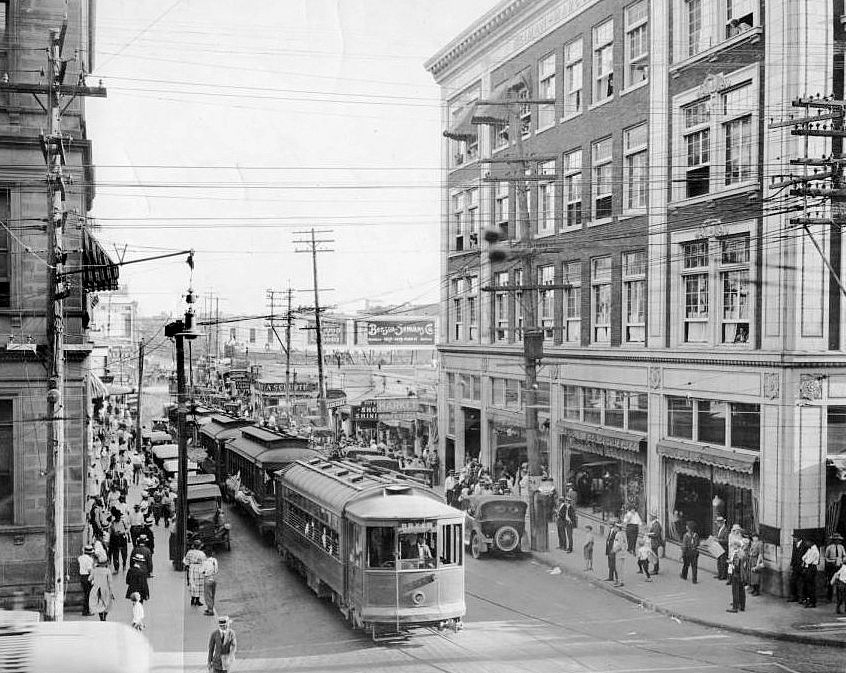
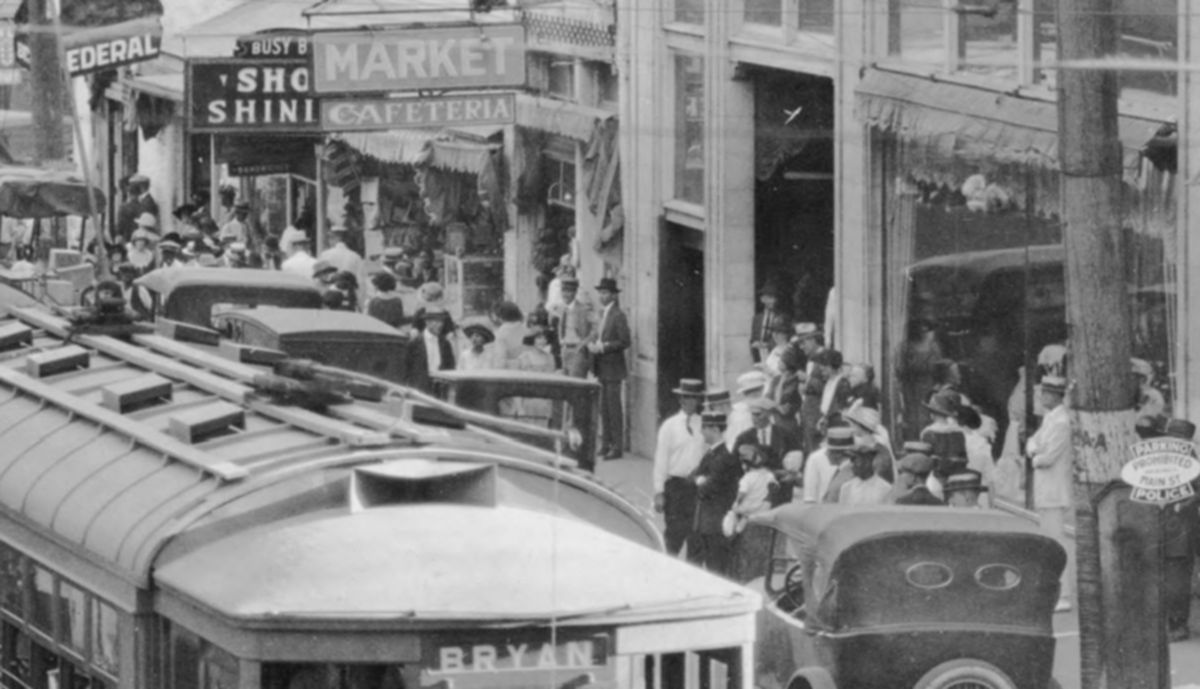
The photograph above, by George A. McAfee, shows Ervay Street, looking south from Main, in about 1920. Neiman’s is on the right. I’m not sure what the occasion was (I see special-event bunting….), but the two things that jump out right away are the number of people on the sidewalks and the amount of  congestion on the streets. In addition to private automobiles (driven by “automobilists” or “autoists,” as the papers of the day referred to them), the street is also packed with cars standing in the taxi rank (cab stand) at the left, and a long line of hulking streetcars. This busy intersection is jammed to capacity.

The city of Dallas was desperately trying to relieve its traffic problems around this time, and there were numerous articles in the papers addressing the concerns of how to manage the congestion of streets not originally designed to handle motor vehicle traffic. Dallas and Fort Worth were working on similar plans of re-routing traffic patterns and instituting something called “skip stop” wherein streetcars would stop every other block rather than every block. Streetcars, in fact, though convenient and necessary, seemed to cause the most headaches as far as backing up and slowing down traffic, as they were constantly stopping to take on and let off passengers. There was something called a “safety zone” that was being tried at the time. I’m not sure I completely understand it, but it allowed cars to pass streetcars in certain areas while they were stopped.

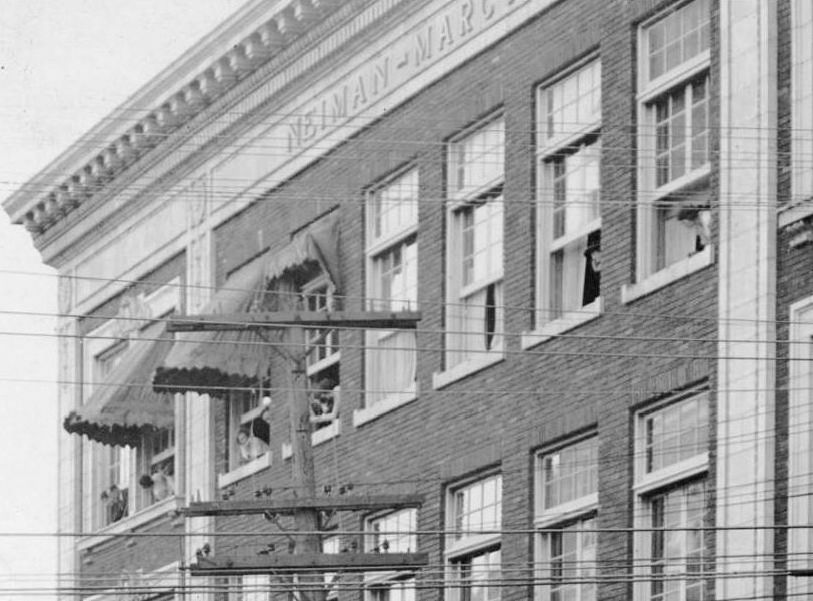
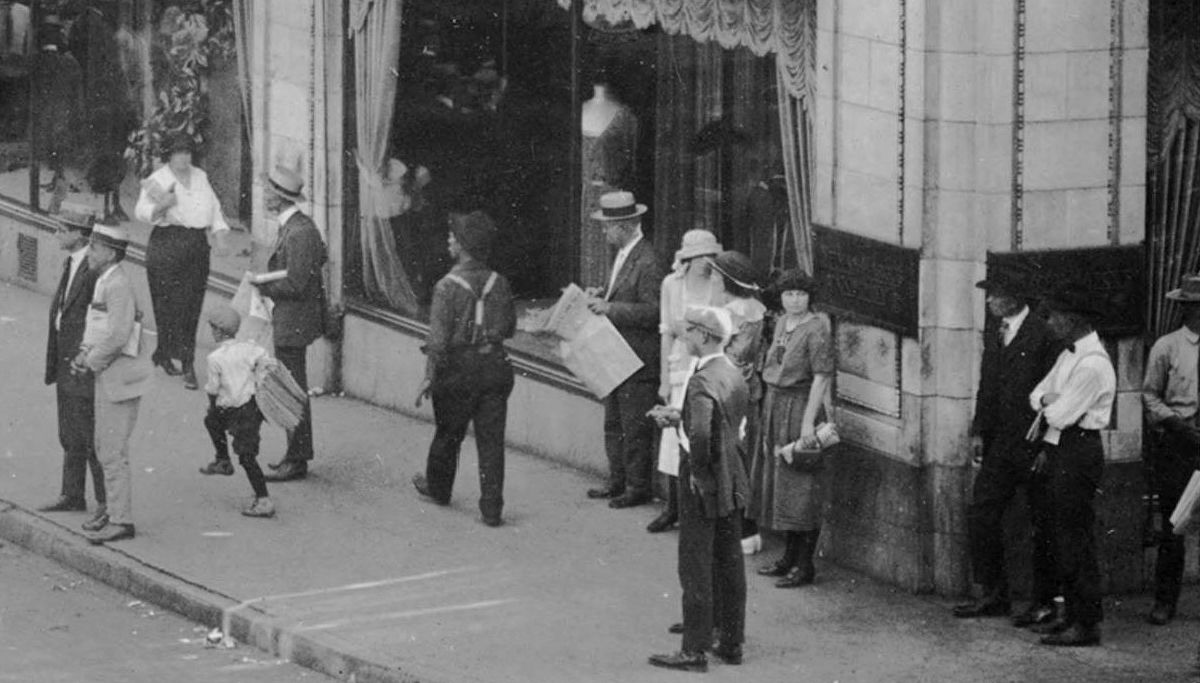
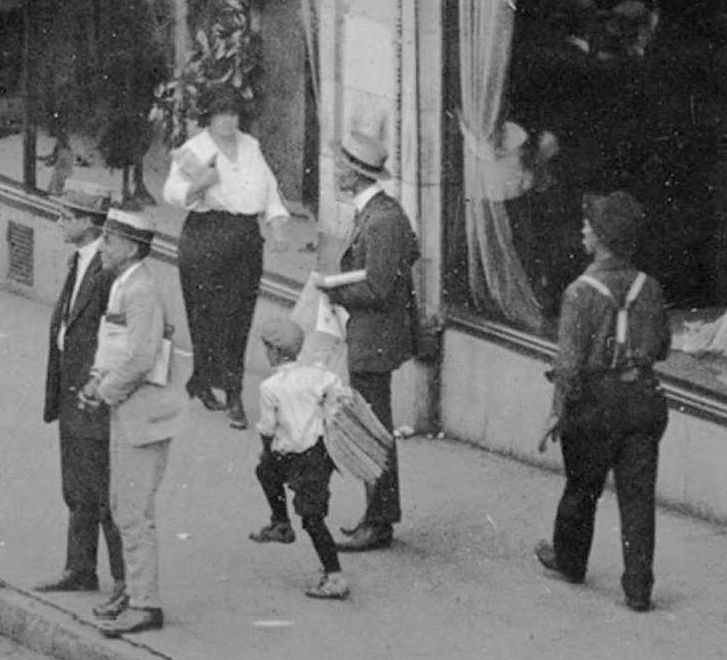
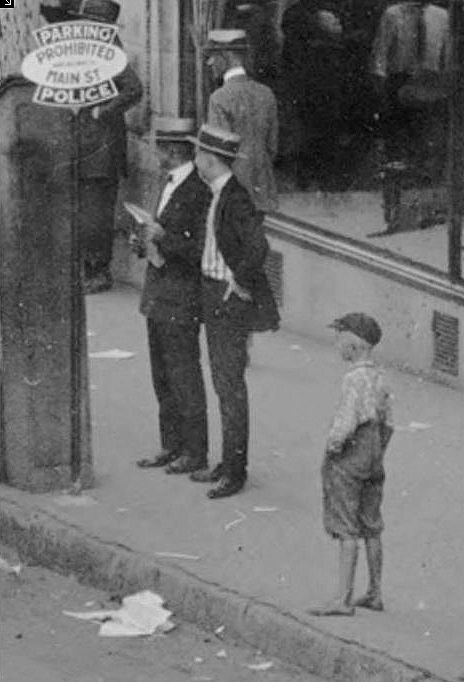
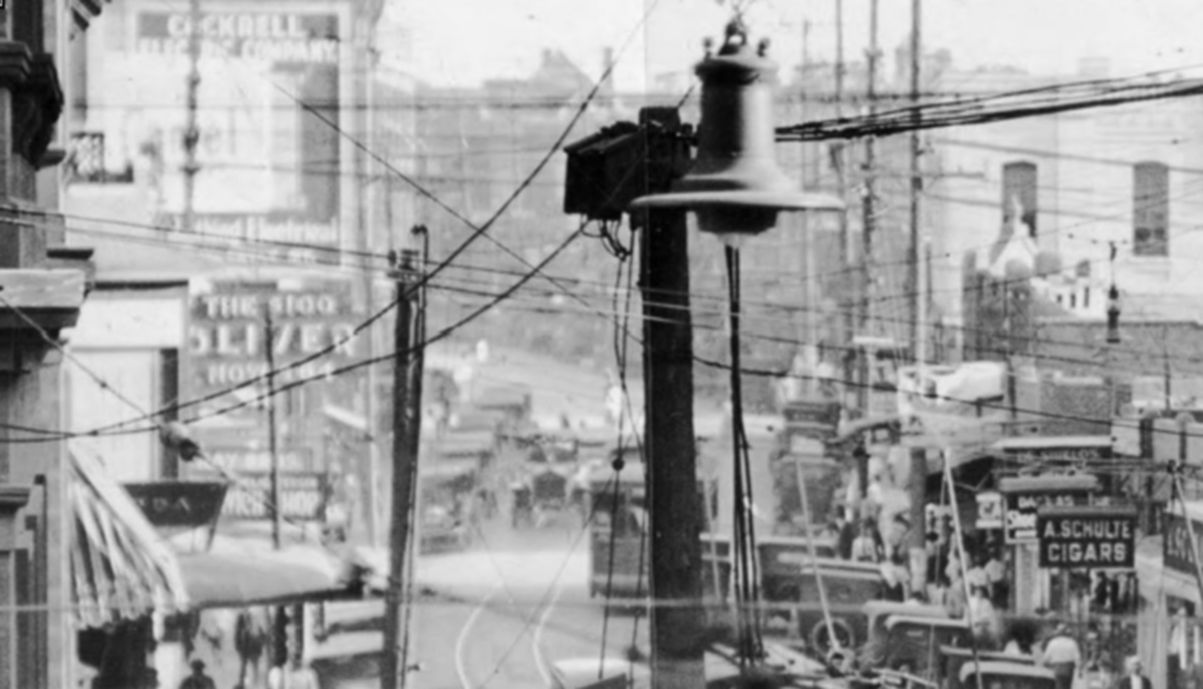
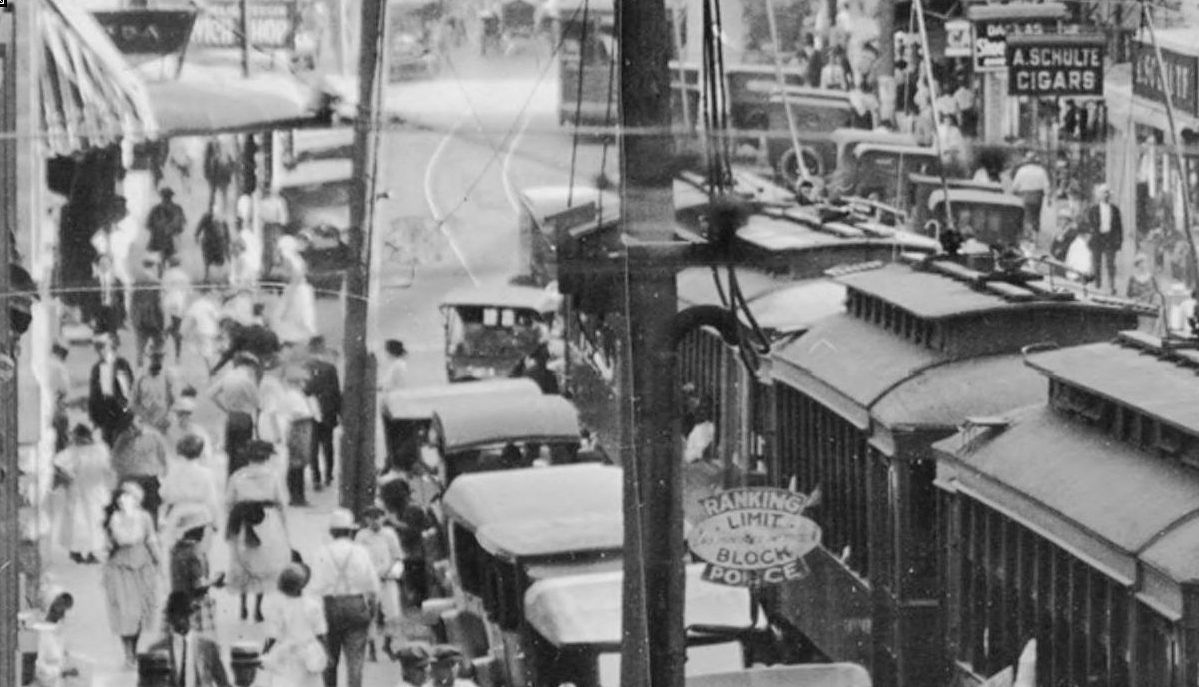
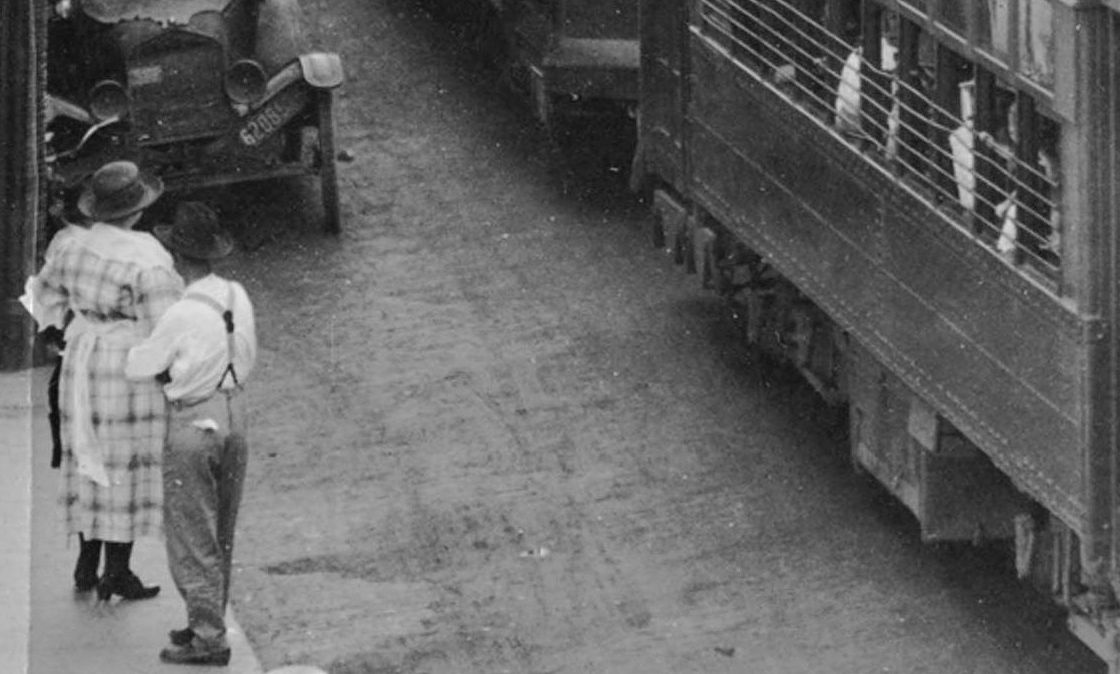
That traffic is crazy. But, to be perfectly honest, it’s far less interesting than all that human activity — hundreds of people just going about their daily business. It’s always fun to zoom in on these photos, and, below, I’ve broken the original photograph into several little vignettes. I love the people hanging out the Neiman-Marcus windows. And all those newsboys! Not quite as charming was all that overhead clutter of power lines and telephone lines; combined with the street traffic, it makes for a very claustrophobic — if vibrant — downtown street scene. (Click photos for larger images.)

2-ervay

3-ervay

4-ervay

5-ervayMy favorite “hidden” image in the larger photograph. The only moment of calm.

6-ervayI love this. The woman in front of the Neiman-Marcus plaque looking off into the distance, the display in the store window, the newsboy running down the street, the man in suspenders, the women’s fashions, and all those hats!

7-ervay

8-ervayA barefoot boy and litter everywhere.

9-ervay

10-ervay

11-ervayThe congestion is pretty bad above the streets, too.

12-ervay

13-ervayCabbies, newsboys, and working stiffs.

14-ervay

15-ervayI swear there was only one streetcar driver in Dallas, and he looked like this! Those motormen had a definite “look.”

***

Sources & Notes

Original photograph attributed to George A. McAfee, from the DeGolyer Library, Central University Libraries, Southern Methodist University, accessible here.

For other photos I’ve zoomed in on the details, see here.

*

Copyright © 2014 Paula Bosse. All Rights Reserved.