Flashback : Dallas

A Miscellany: History, Ads, Pop Culture

Category: 1920s

“There Are Eight Million Stories in the Naked City…” — ca. 1920
1-ervay

by Paula Bosse

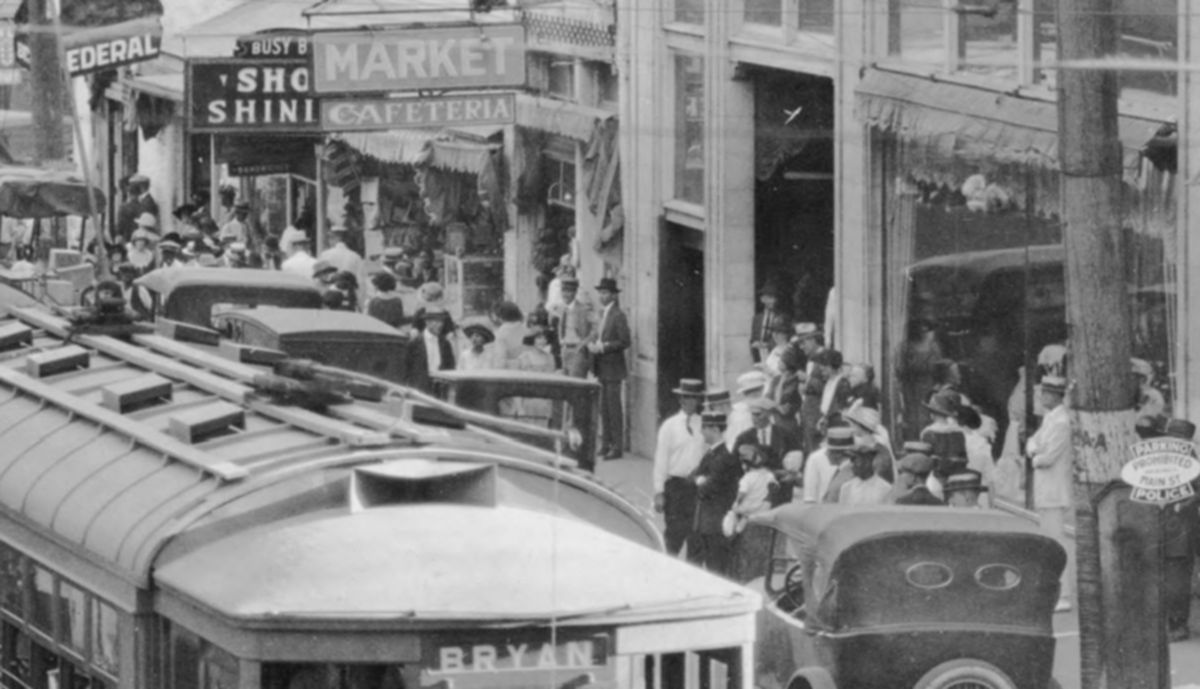
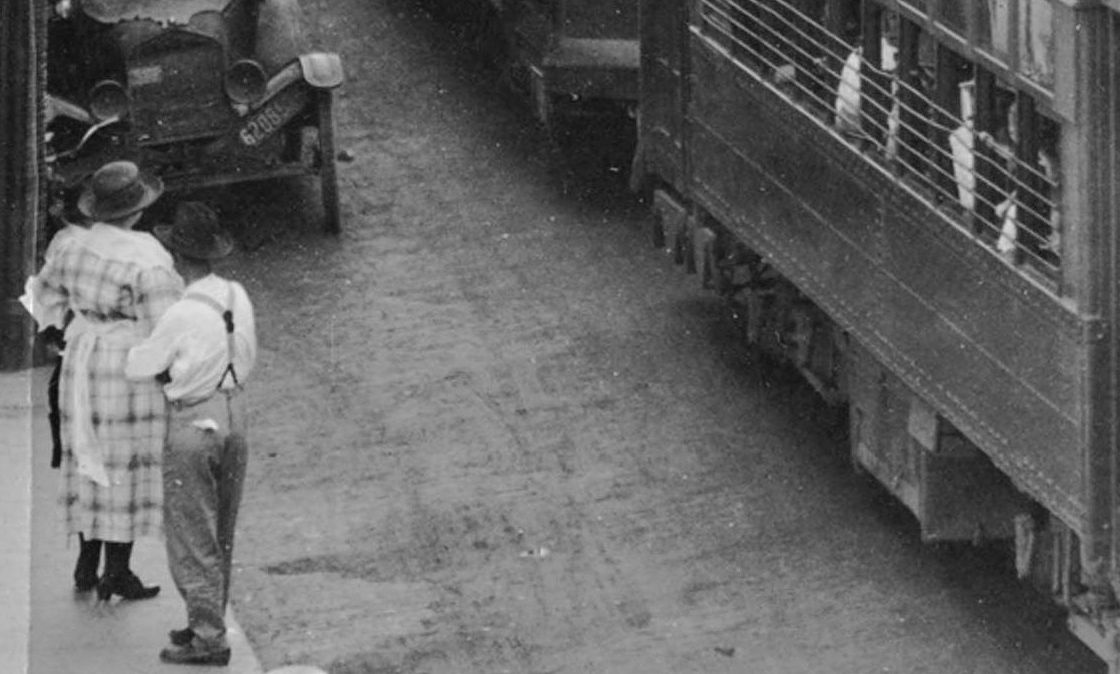
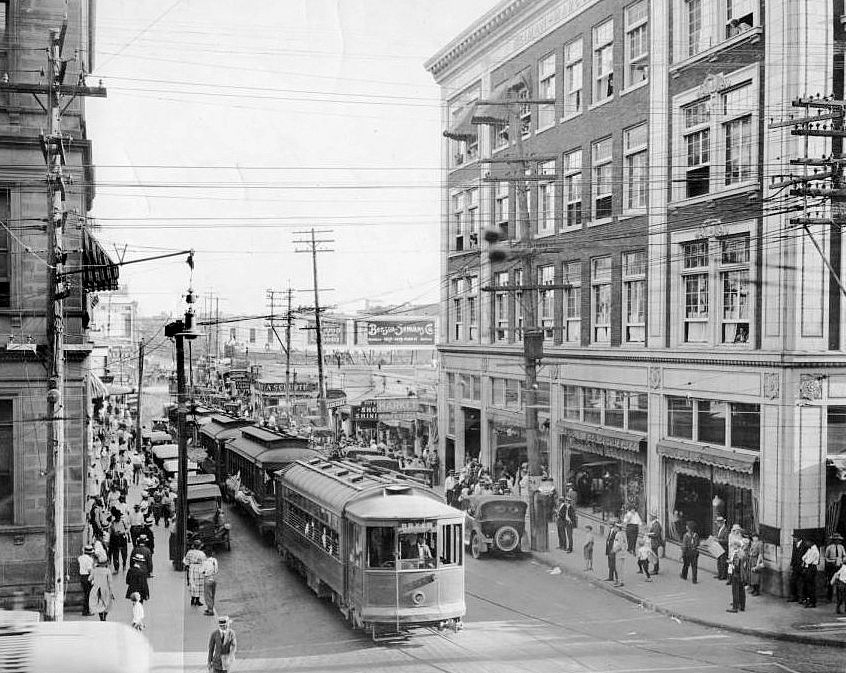
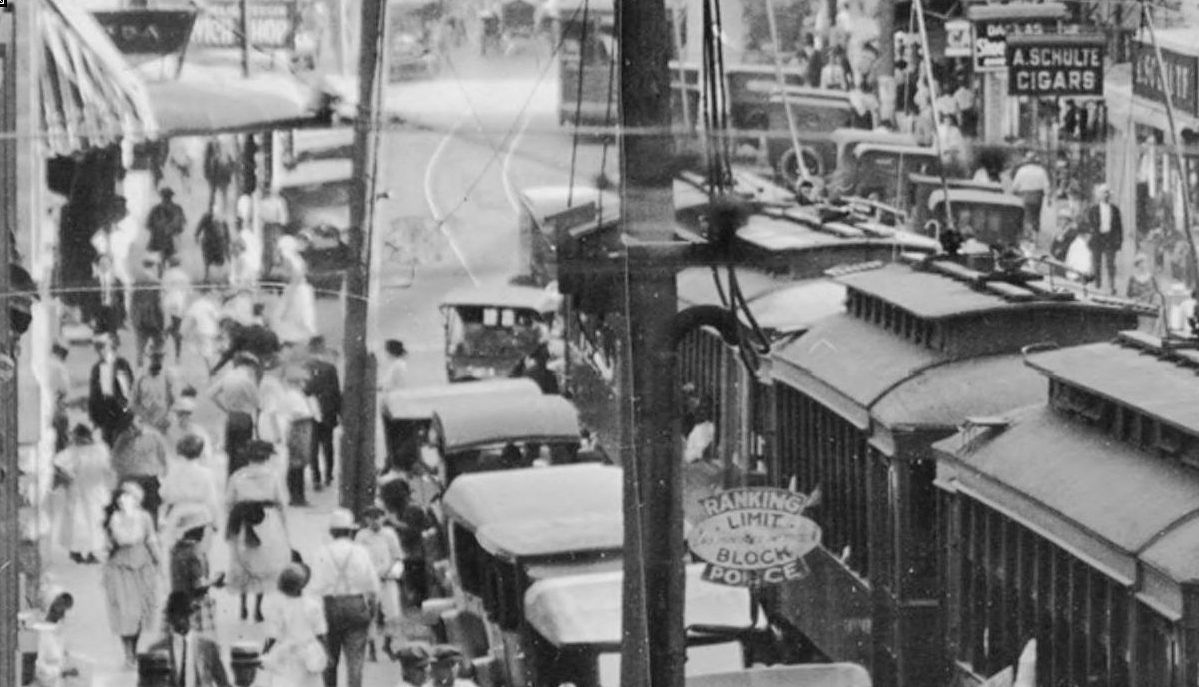
The photograph above, by George A. McAfee, shows Ervay Street, looking south from Main, in about 1920. Neiman’s is on the right. I’m not sure what the occasion was (I see special-event bunting….), but the two things that jump out right away are the number of people on the sidewalks and the amount of  congestion on the streets. In addition to private automobiles (driven by “automobilists” or “autoists,” as the papers of the day referred to them), the street is also packed with cars standing in the taxi rank (cab stand) at the left, and a long line of hulking streetcars. This busy intersection is jammed to capacity.

The city of Dallas was desperately trying to relieve its traffic problems around this time, and there were numerous articles in the papers addressing the concerns of how to manage the congestion of streets not originally designed to handle motor vehicle traffic. Dallas and Fort Worth were working on similar plans of re-routing traffic patterns and instituting something called “skip stop” wherein streetcars would stop every other block rather than every block. Streetcars, in fact, though convenient and necessary, seemed to cause the most headaches as far as backing up and slowing down traffic, as they were constantly stopping to take on and let off passengers. There was something called a “safety zone” that was being tried at the time. I’m not sure I completely understand it, but it allowed cars to pass streetcars in certain areas while they were stopped.

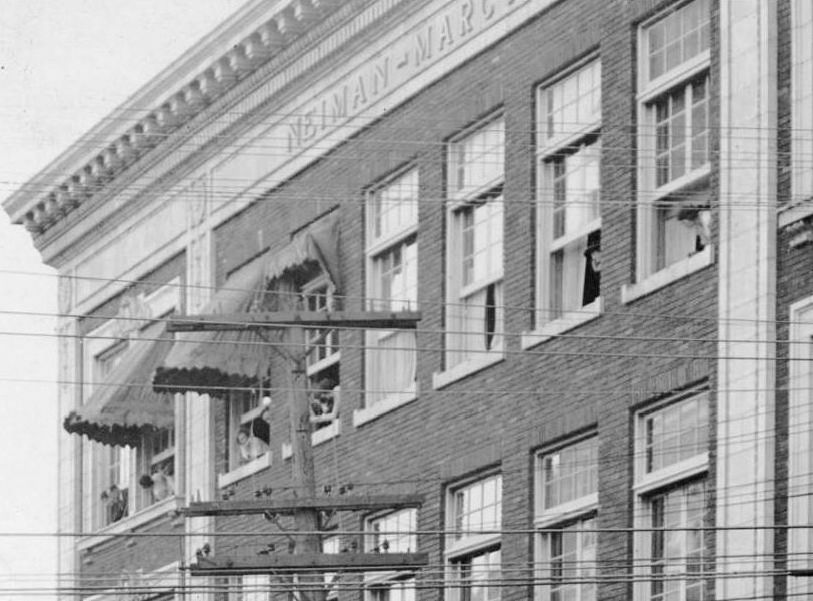
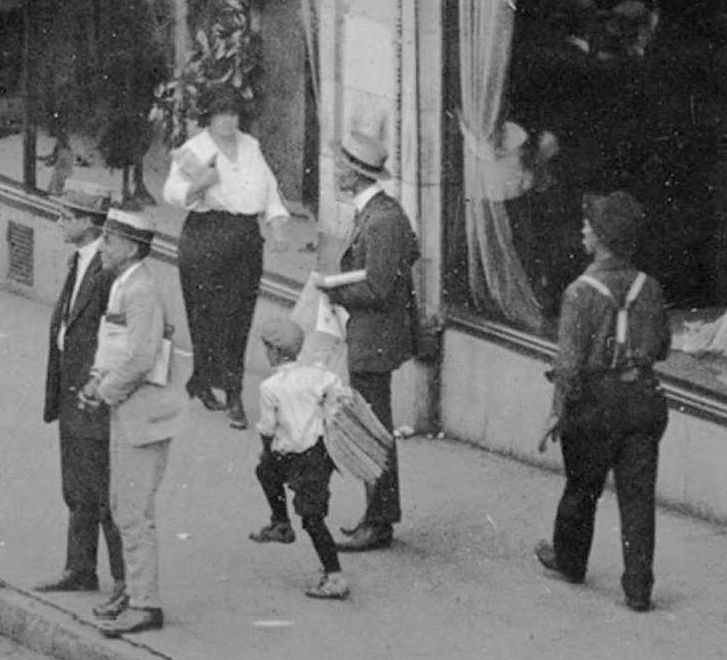
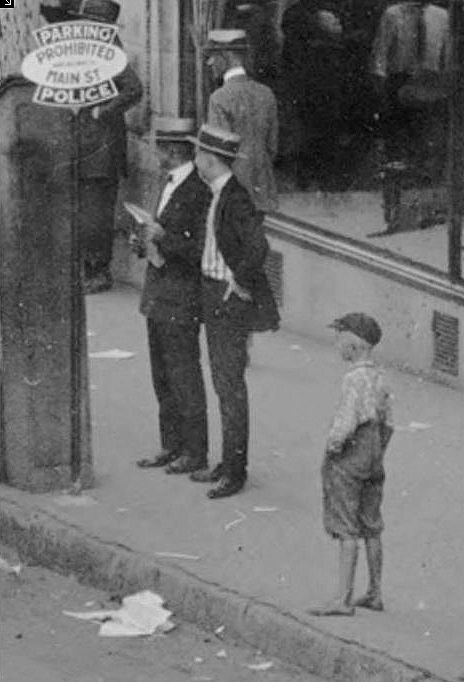
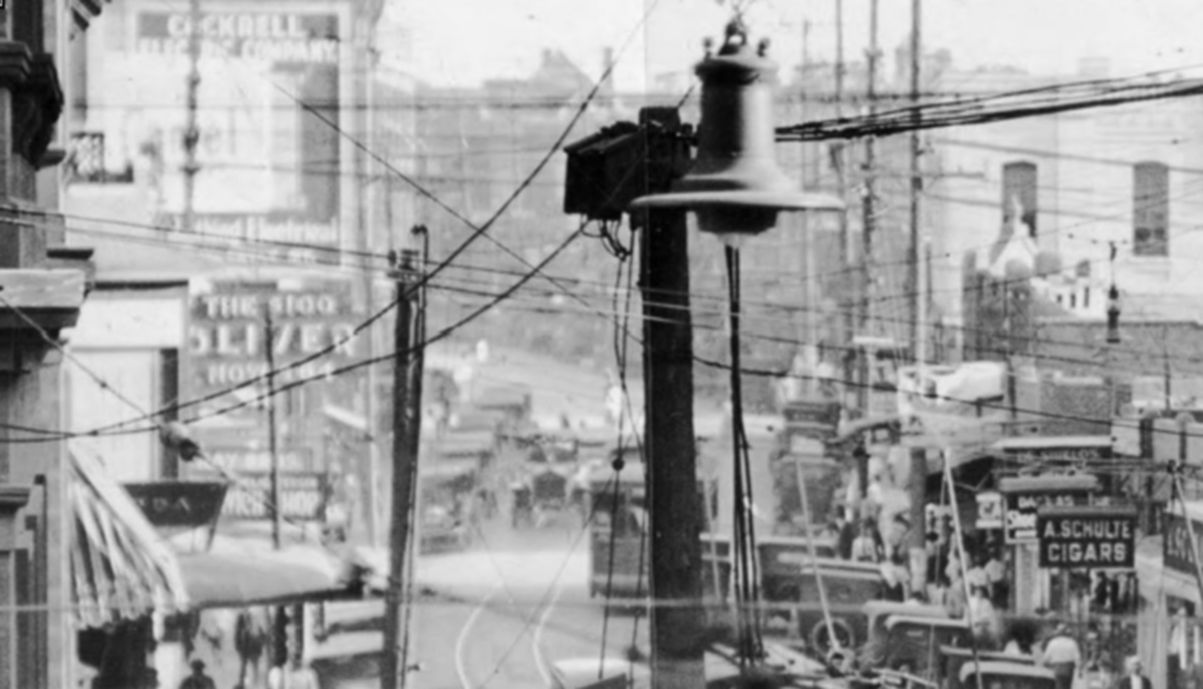
That traffic is crazy. But, to be perfectly honest, it’s far less interesting than all that human activity — hundreds of people just going about their daily business. It’s always fun to zoom in on these photos, and, below, I’ve broken the original photograph into several little vignettes. I love the people hanging out the Neiman-Marcus windows. And all those newsboys! Not quite as charming was all that overhead clutter of power lines and telephone lines; combined with the street traffic, it makes for a very claustrophobic — if vibrant — downtown street scene. (Click photos for larger images.)
2-ervay

3-ervay

4-ervay

5-ervayMy favorite “hidden” image in the larger photograph. The only moment of calm.
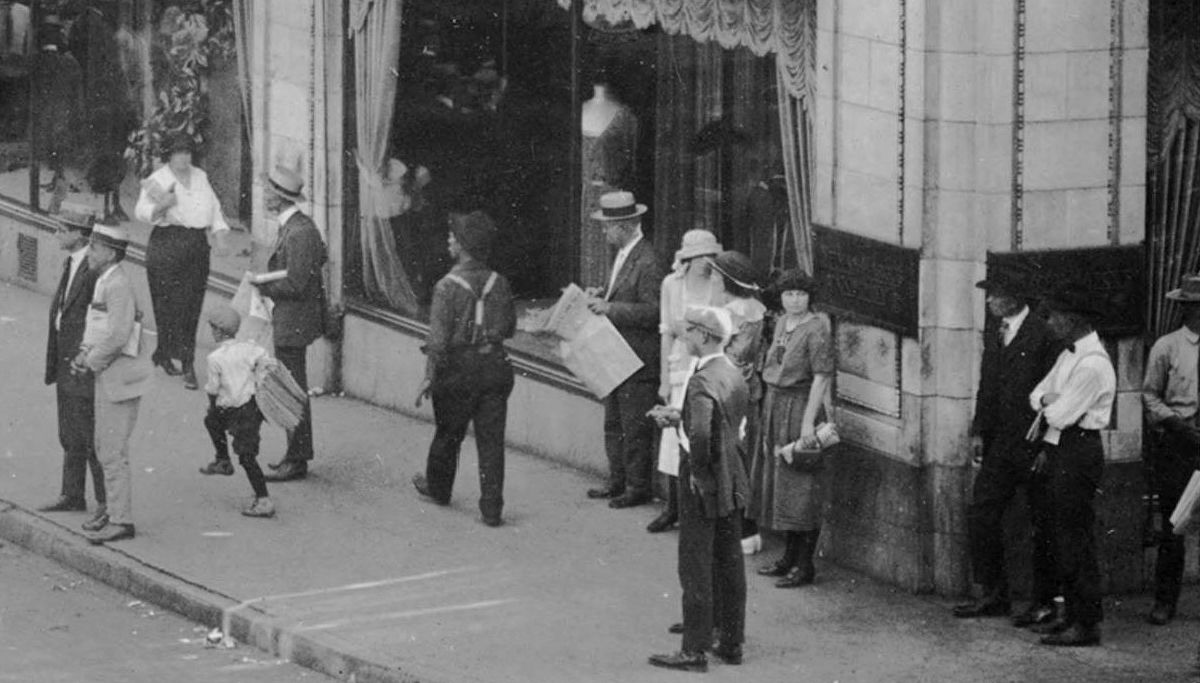
6-ervayI love this. The woman in front of the Neiman-Marcus plaque looking off into the distance, the display in the store window, the newsboy running down the street, the man in suspenders, the women’s fashions, and all those hats!
7-ervay

8-ervayA barefoot boy and litter everywhere.
9-ervay

10-ervay

11-ervayThe congestion is pretty bad above the streets, too.
12-ervay

13-ervayCabbies, newsboys, and working stiffs.

14-ervay

15-ervayI swear there was only one streetcar driver in Dallas, and he looked like this! Those motormen had a definite “look.”

***

Sources & Notes

Original photograph attributed to George A. McAfee, from the DeGolyer Library, Central University Libraries, Southern Methodist University, accessible here.

For other photos I’ve zoomed in on the details, see here.

*

Copyright © 2014 Paula Bosse. All Rights Reserved.
The Britling Cafeteria Serves Those Who Serve Themselves

britling-cafeteria_rear-entrance_degolyerBritling Cafeteria’s rear entrance on Jackson St., 1920s

by Paula Bosse

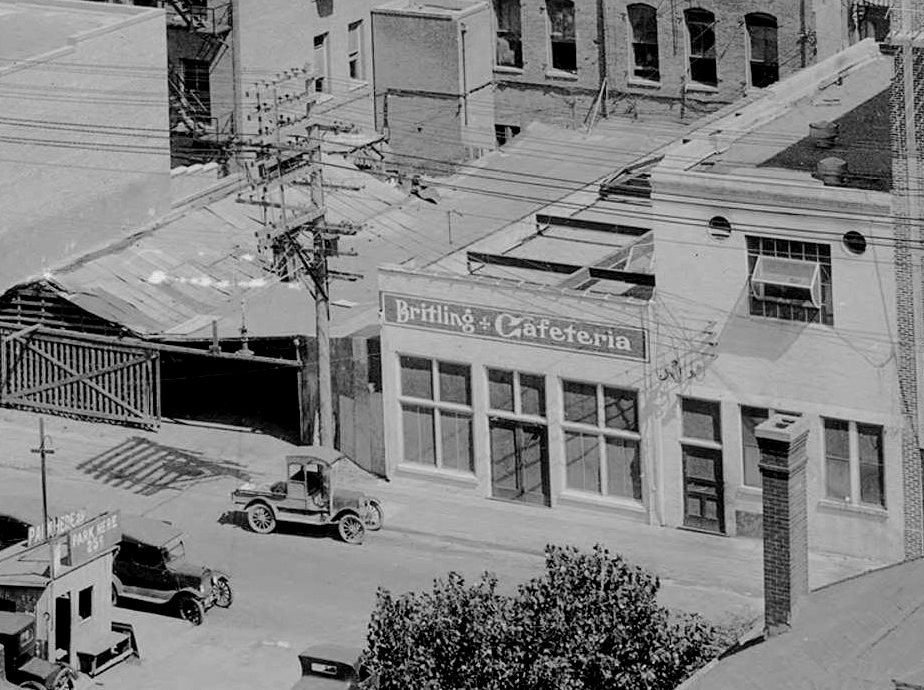
A few weeks ago, I was zooming in on a view of the Dallas skyline when I saw an interesting restaurant sign: the Britling Cafeteria. After a little research, I learned that Britling Cafeterias are something of a cultural institution in Birmingham and Memphis (Elvis’ mother worked the coffee urn station in Memphis, and if that isn’t the sign of a Southern institution, I don’t know what is). Here in Texas, though … I’d never heard of it. It claimed to be the first cafeteria chain in the South, having begun in Birmingham in 1917 (and named for a character in, of all things, an H. G. Wells story). When the Dallas location opened at the end of 1922, it was only the sixth restaurant in the chain, joining others in Birmingham, Atlanta, and Memphis.

The Britling Cafeteria was at 1316 Commerce (“Right in the Heart of Things”), between Field and Akard. There were two entrances, one on Commerce and one on Jackson (seen in the photo above). It sounds pretty nice for a cafeteria — it was lavishly decorated in black and gold, lined with mirrors, filled with flowers, and it had a mezzanine and a raised platform for a live orchestra to provide background music. It had a seating capacity of 450, with an expected daily capacity of 3,000. We’re not talkin’ Luby’s here. Quick “Southern home-cooking” had arrived in Dallas, and it seems to have remained an active advertiser until the ads suddenly stopped in 1926. I hope Dallas enjoyed it while it had it.

Below is the interior of the Atlanta location, from about the same time as the Dallas location. Cafeterias were a whole lot nicer back then.

britling_atlanta

The first non-institutional cafeteria I can find mentioned in The Dallas Morning News was the one in the basement of the Praetorian Building (“Cleanliness, courteous, tipless”) in 1912, but the cafeteria “concept” must have still been fairly new to Dallas as the Britling advertisements that appeared in the week before the grand opening felt it necessary to explain how the system worked. “You’ll wait on yourself — and do it gladly.”

britling_dmn_112722abritling_dmn_112722b1922 (click to read)

But first, stop by for a “Day of Courtesy” preview — flowers for the ladies!

britling_open_dmn_1127221922

britling-cafeteria_forest-ave-high-school-yrbk_19231923

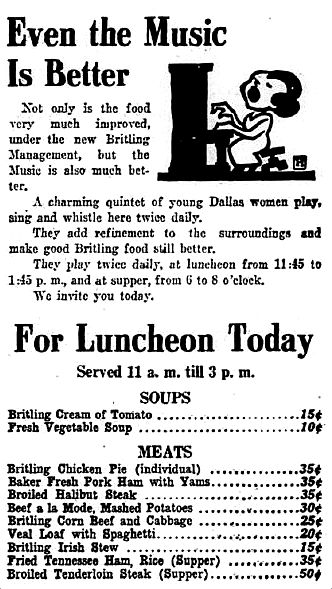
Below, a sample of some of the Southern home-cooking on the menu as well as the warning that there WILL be live music as “a charming quintet of young Dallas women play, sing and whistle (!) here twice daily.”

britling_dmn_030926abritling_dmn_030926b1926

britling_logo_dmn-112722

***

Sources & Notes

Photo is a detail from a larger view of the city from the DeGolyer Library, Southern Methodist University, seen in an earlier post here. The block in which the cafeteria was located is now 2 AT&T Plaza.

Postcard of the interior of the Atlanta Britling Cafeteria from somewhere on the internet.

More can be found in the DMN article “Britling Cafeteria Will Open” (Nov. 26, 1922), with details on the chain and specifics on the Dallas location, here.

Great short history on the cafeteria that every self-respecting citizen of Alabama and Tennessee is apparently familiar with can be found here.

An amusing first-hand account of a Texan (J. J. Taylor) visiting a newfangled cafeteria in San Francisco appeared in The Dallas Morning News on Aug. 25, 1912 and can be read here.

*

Copyright © 2014 Paula Bosse. All Rights Reserved.

What Do You Get When You Convert an Old Oak Cliff Firehouse Into a Restaurant?

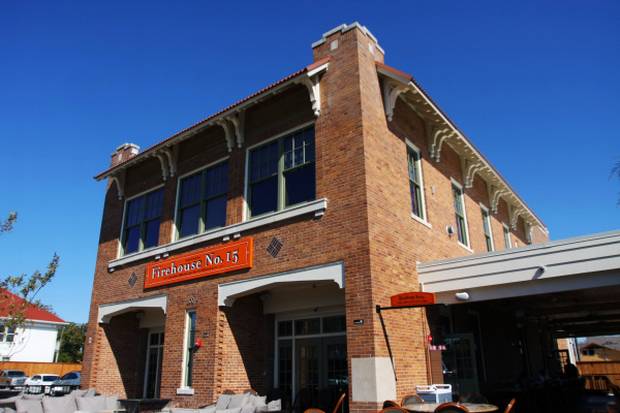
firehouse-15_glorias

by Paula Bosse

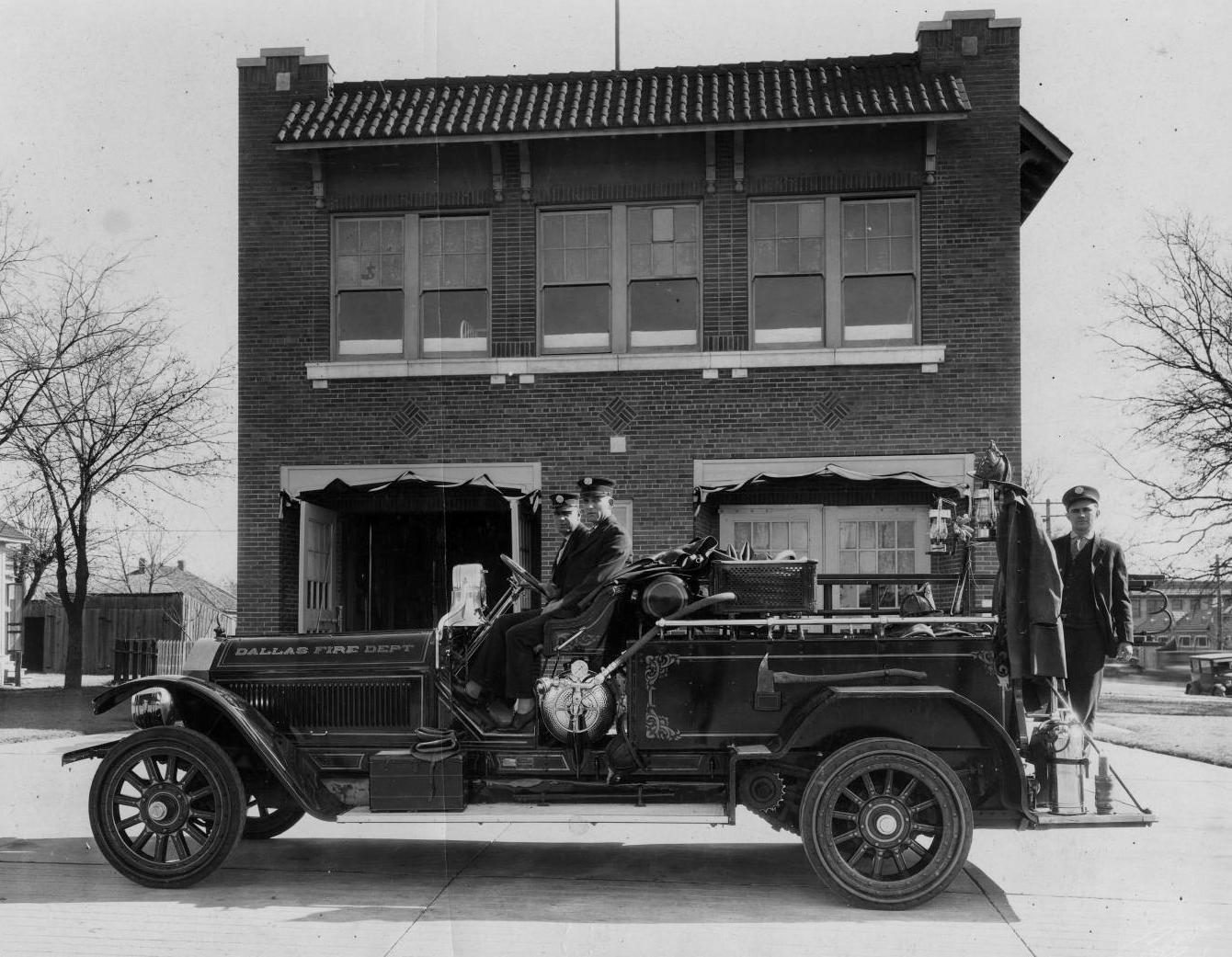
Station 15 — at Davis and Bishop — was a working firehouse decades before it was converted into Gloria’s restaurant in the Bishop Arts District. Here are the “before” photos.

station-15_oak-cliff

fire-station-15_oak-cliff

While you’re enjoying that incredible black rice (among other things…), take the time to enjoy your surroundings — it’s not every day you’re able to dine inside an old firehouse (don’t miss the brass fireman’s pole). Here’s the firehouse today:

firehouse-15_glorias_dmn

***

Sources & Notes

First and third photo from Dallas Firefighters Museum collection on the Portal to Texas History site here.

Second photo (circa 1931) is available for purchase here.

Photo of Gloria’s from The Dallas Morning News.

More info on Station 15 here.

Gloria’s website here.

*

Copyright © 2014 Paula Bosse. All Rights Reserved.

Pike Park, Fiesta Central — 1926

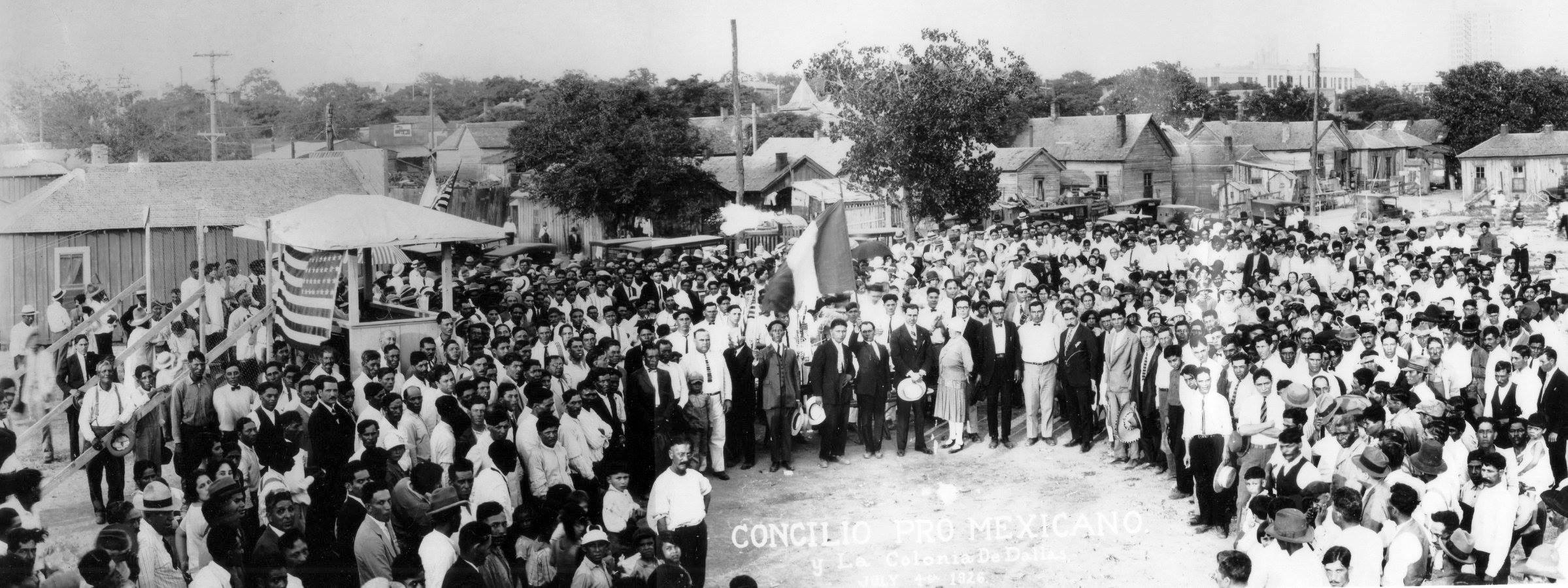
little-mexico_1926_dmahl-facebook-pagePike Park (click for MUCH larger image)

by Paula Bosse

Fantastic photo of a 4th of July celebration in Little Mexico’s Pike Park in 1926, with the caption reading “Concilio Pro Mexicano y La Colonia de Dallas.”

Today is Cinco de Mayo, which, before it was co-opted by the gringo, was primarily a big party in communities populated by Mexican-Americans and Mexican immigrants. In Dallas, that meant a fiesta of music and food at Pike Park. I remember going to a few of these when I was a child, and my unmistakably Anglo family stood out in the crowd, but we were always welcomed and we had a great time. I loved it. Not to be a killjoy, but I’m not a fan of what Cinco de Mayo has become — just another excuse to drink to excess (St. Patrick’s Day with margaritas). But, if you’ve pulled out that novelty sombrero from the back of your closet and you’re celebrating today, well … olé. But pace yourself, amigos.

***

Photo from the Dallas Mexican American Historical League; it accompanied a great Dallas Morning News blog post by Dianne Solís regarding Pike Park, here.

A CNN interview with the always-entertaining Gustavo Arellano — the man behind the very funny “Ask a Mexican” column — on why he believes the Cinco de Mayo holiday is “pointless” is here.

And Arellano’s article “Gringo de Mayo”  is here.

That photo is gigantic. Click for larger image.

*

Copyright © 2014 Paula Bosse. All Rights Reserved.

Linz Bros. and “The Vogue of Bracelets” — 1923

ad-linz-bros_dmn_031123

by Paula Bosse

What a beautiful art nouveau-inspired ad, echoing Beardsley’s pen and ink drawings and Whistler’s Peacock Room. This is wonderful. And it’s unsigned! Ah, the lot of the commercial artist.

***

Ad from The Dallas Morning News, March 11, 1923.

More on Linz Brothers, premier Dallas jewelers, here.

*

Copyright © 2014 Paula Bosse. All Rights Reserved.

One of the Earliest Homes Belonging to Original La Reunion Settlers Is Razed — 1925

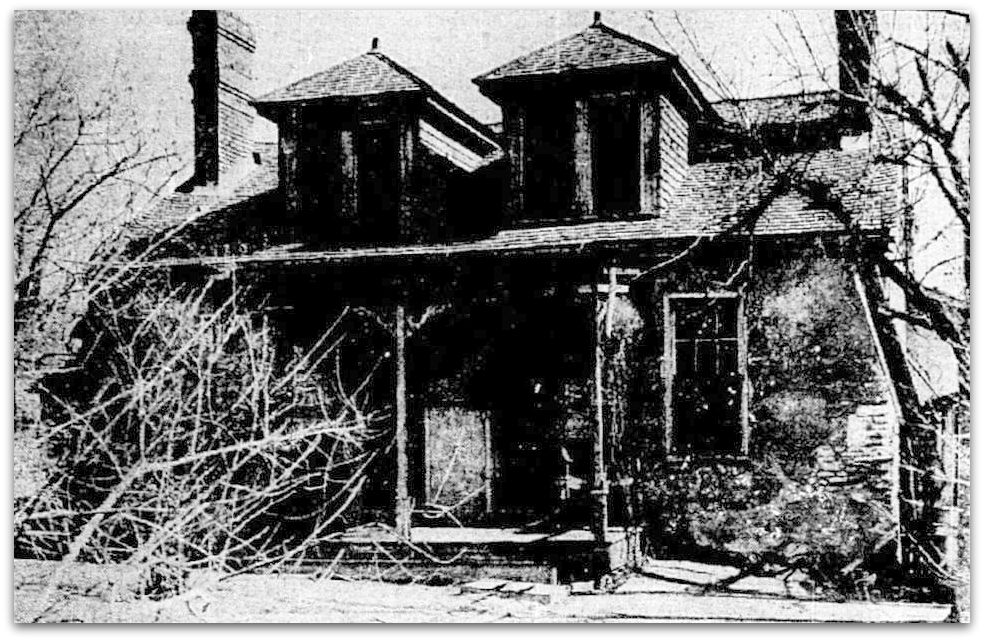
frichon_house-dmn_030525aBryan & Harwood

by Paula Bosse

ONE OF EARLIEST DALLAS HOMES WILL BE RAZED TO MAKE WAY FOR NEW HOME OF KNIGHTS OF PYTHIAS
(Dallas Morning News, March 5, 1925)

An ancient Dallas landmark that obviously is entitled to the name, a modest little plaster cottage that serves as the sole surviving relic of the old French colony that figured in the early history of Dallas, is to be torn away in a few weeks to make room for a new home of the Knights of Pythias. The house now is numbered 2012 on Bryan street, near the corner of Harwood, but when it was built in 1874 by A. Frichot there was no need of street numbers to distinguish it from its neighbors. “About a mile and a half east of the courthouse” was the official designation of the house in those post-bellum days.

John Priot on May 4, 1874, sold the lot for $200 to A. Frichot and described it in the deed as beginning at “the west corner of a piece of land sold on Dec. 8, 1860, by P. P. Frichot to Mrs. Barbar[a] Frick, being a part of the original John Grigsby League.” This deed was recorded by A. Harwood, then County Clerk. There is a legend that the two Frichot brothers built homes near each other of the same type, one of which was torn down years ago to make room for a brick building on the southwest corner of Harwood and Bryan streets. The other is the modest dwelling that is to be razed to make room for the new Pythian building.

In 1876, after the house was built, A. Frichot deeded it to Mary L Frichot, his daughter, in consideration of the sum of $1,000, the records show. The next change made in the ownership of the place, according to the records, was in 1908 when deeds were signed conveying the property from “Mary L. J. Prine and J. A. Prine” to Colonel John M. McCoy for the sum of $4,600.

The Knights of Pythias bought the property from the estate of Colonel McCoy recently. This deal was made for the estate by Judge Wendel Spence, executor for the McCoy estate. For the last seventeen years the house has been occupied by Mrs. Pearl Miller as a residence.

A week or two ago a Dallas woman approached the agent of the Knights of Pythias with an offer to lease the place and transform it into an antique tea room. The offer was refused, as the building must come down shortly to make way for the new structure.

**

THE STORY OF OLD FRENCHTOWN (excerpt)
(Dallas Morning News, Nov. 23, 1919)

Jean Priot was a tailor. He was born in Nevers, Oct. 26, 1832, came to La Reunion in 1855, died in Dallas in 1908. He came to New Orleans with a tailor who held out false inducements, and from New Orleans joined this colony. M. Priot married Leontine Frichot, who came with her father, Philip Pierre Frichot, and his brother, Christophe Desire Frichot. From this union were born three daughters – now Mesdames, Beilharz and Petermann.

Philip Frichot was a contractor, and, upon disintegration of the colony, established a brickyard, from which he, with his son Achilles and M. Emil Remond built all the brick houses and concrete structures of that day in Dallas.

***

Sources & Notes

As cited in the articles above, the Frichot family was one of the original settlers of the French La Reunion utopian colony of Dallas in 1855, and the land — and later the house — stayed in the family from before 1860 until 1908, when the property was sold to John M. McCoy (who was, perhaps, appropriately, the son of one of the very first settlers of Dallas who arrived in the 1840s). Info about La Reunion is here and here.

The Knights of Pythias building referenced above is not to be confused with the substantially more “famous” one — the then-already standing and now-historic structure in Deep Ellum at 2551 Elm Street — less than a half a mile away. The building going in at Bryan and Harwood was, for want of more delicate language, the “white” one, and the one on Elm Street was the “black” one. Both were fraternal organizations dedicated to philanthropy and civic involvement, but apparently “fraternity” went only so far as race was concerned.

More Flashback Dallas posts on La Reunion can be found here.

Click photo for larger image.

*

Copyright © 2014 Paula Bosse. All Rights Reserved.

Babyface Barrow — 1926

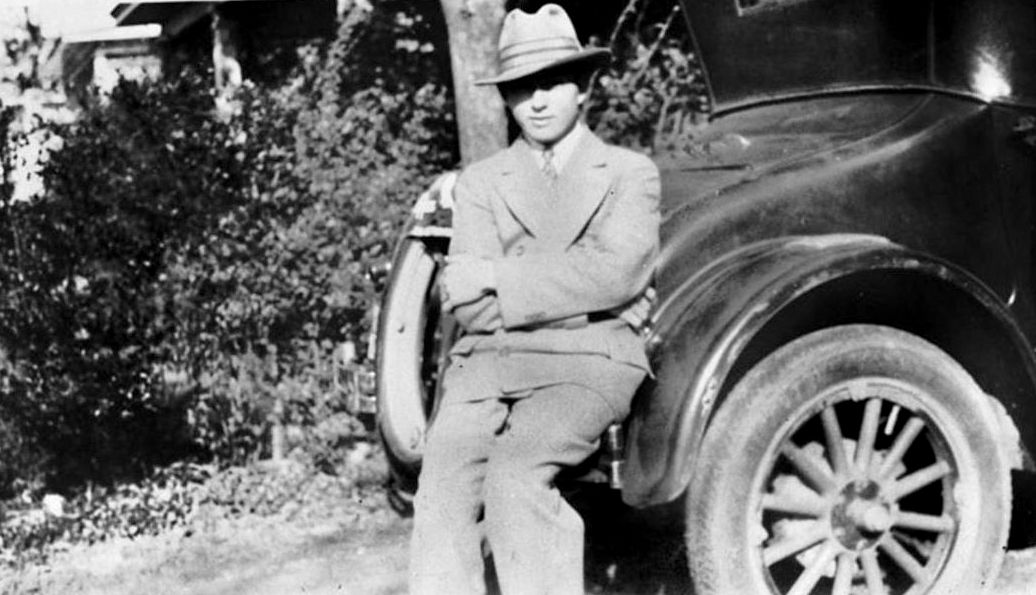
clyde-barrow_with-car_1926_utsa17-year-old Clyde Barrow, 1926

by Paula Bosse

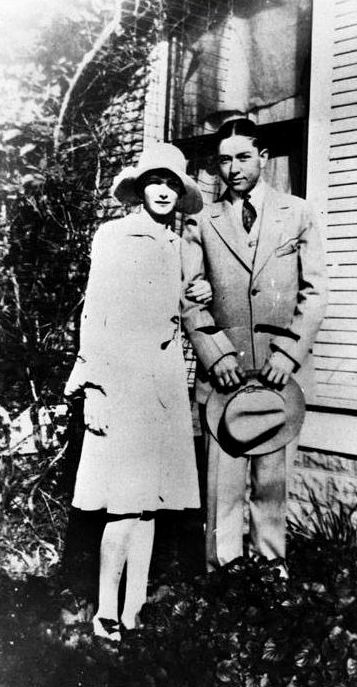
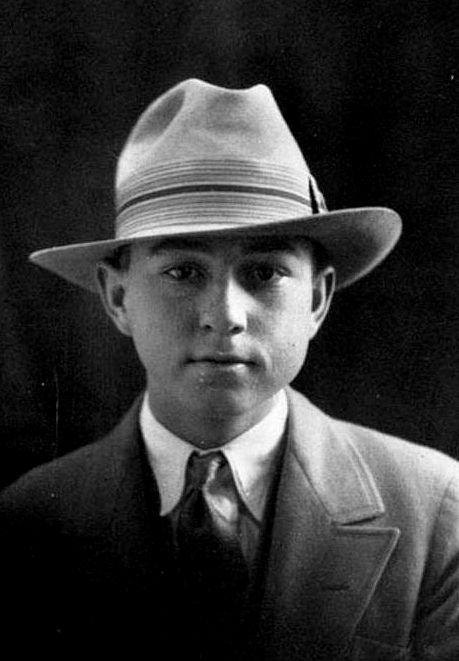
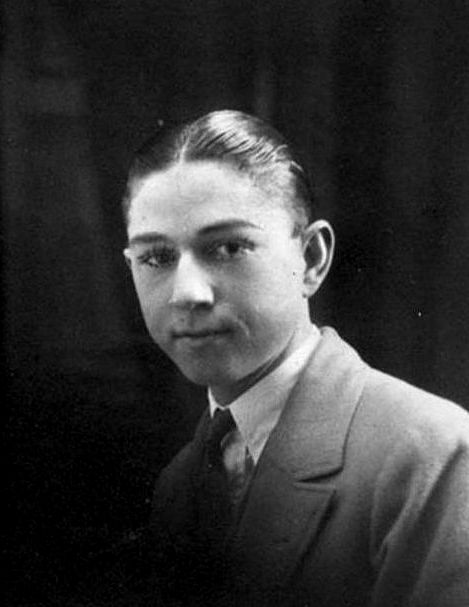
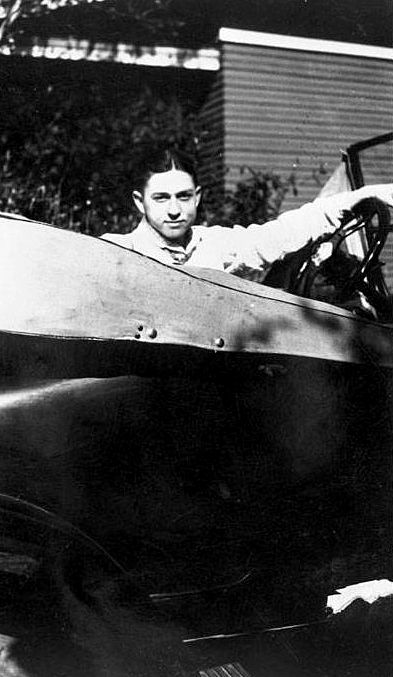
These photos of a 17-year-old Clyde Barrow belonged to one of Clyde’s first girlfriends, Eleanor Williams, a student at Forest Avenue High School in 1926. For all anyone knew, Clyde was just an ordinary kid who liked to dress up and show off his car. (Or “a” car — he was arrested for stealing his first car the same the year this photo was taken — 1926 — so I’m not sure whose car this actually is….)

clyde-barrow_eleanor-williams_1926_utsaEleanor and Clyde (whose unsubtle attempt to appear taller by standing on … something … is unconvincing and a little ridiculous).

clyde-barrow_1926_utsaSuch a babyface. In a few short years, his name and face would be splashed across the country’s newspapers as Bonnie and Clyde’s violent killing spree made him and Bonnie Parker outlaw celebrities.

clyde-barrow_no-hat_1926_utsaHe looks a lot younger than 17 here.

clyde-barrow_car_1926_utsaThe reverse of both this original photo and the top one — the car photos — have a hand-written “1926” on them as well as the film processing stamp “Finished by The National Studio, 1205 1/2 Elm St., Dallas, Texas.”

***

Sources & Notes

Photographs from University of Texas at San Antonio Libraries Special Collections, Copy and Reuse Restrictions Apply. Photos loaned to UTSA by Henry J. Williams, nephew of Eleanor B. Williams. All photos have “1926” on the back.

The Handbook of Texas entry for Clyde Barrow (1909-1934) is here.

Additional photos of Eleanor Williams can be seen on the Bonnie and Clyde “Texas Hideout” site here.

*

Copyright © 2014 Paula Bosse. All Rights Reserved.

Early Dallas Radio & “Verified Reception Stamps”

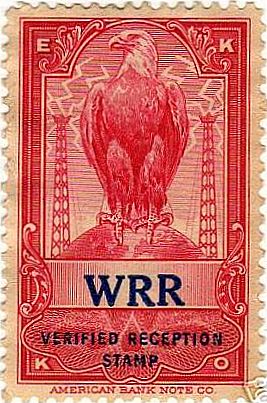
ekko_wrr

by Paula Bosse

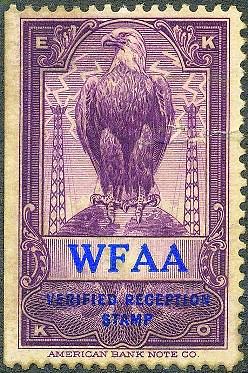
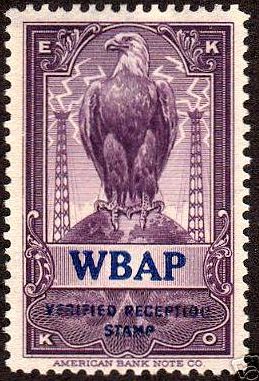
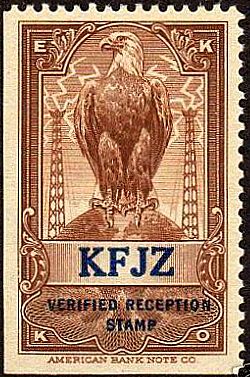
Chances are you’ve never heard of “Verified Reception Stamps” which were issued in the 1920s by a company in Chicago called EKKO. I certainly hadn’t. The stamps (referred to by collectors as “Cinderellas”) were enthusiastically and obsessively collected in the mid-’20s — people were really into it. Basically, it seems to have been a clever form of advertising which banked on both the public’s fascination with early radio and the then-very-popular hobby of stamp collecting.

How did it work? Briefly, the EKKO company printed these stamps for subscriber radio stations around the country (and later for stations in Canada, Mexico, and Cuba). Once the radio stations received them, they issued them to listeners who wrote in to affirm that they had, in fact, picked up their station on the wireless. The listener had to prove it by stating the time he or she had tuned in and then give a short synopsis of the program they had heard. Oh, and they had to enclose a dime. (The dime was probably the most important part of this whole fad — at least for the broadcasters.) In return, the station would check their logs and “verify” that the dime-sender probably DID hear the station, and one of these little stamps would be sent out post haste. The EKKO company also conveniently printed up albums for collectors to paste the stamps into. I’m not sure how one was expected to fill up the book (with pages devoted to each state), since there’s no way you’d be able to pick up the signals of all those stations, but I guess that’s what gets collectors’ blood racing. It’s the thrill of the chase. The verified reception stamp-collecting fad died out as the Depression set in, and it became hard to justify spending one’s precious hard-earned dimes on a frivolous hobby.

*

Verified reception stamps were issued by the five main stations in the Dallas-Fort Worth area in the 1920s. WRR, at the top, was the first radio station in Dallas and one of the earliest stations in the country. It began broadcasting as a sort of early police radio in 1920 and received its official broadcasting license in 1922. It remains an oddity in the radio world as it is a commercial radio station that is owned and operated by the City of Dallas.

*

ekko_wfaa

WFAA signed on in 1922 and was part of the nascent Dallas Morning News media empire.

*

ekko_wbap

WBAP, a Fort Worth station, also signed on in 1922. Someone thought it might be cute if “WBAP” stood for “We’ll Be At the Party.” More serious-minded station people went with “We Bring a Program” which, really, isn’t much better.

*

ekko-kfjz

KFJZ (another Fort Worth station) came along in 1923. Its founder sold the station five years later for a good chunk of change and then went to work for WBAP.

*

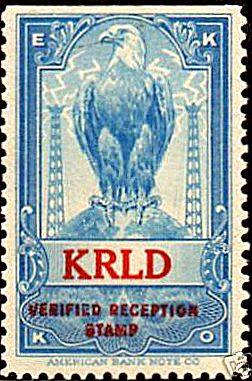
ekko-krld

KRLD began broadcasting in 1926 and was acquired by The Dallas Times Herald a year later.

*

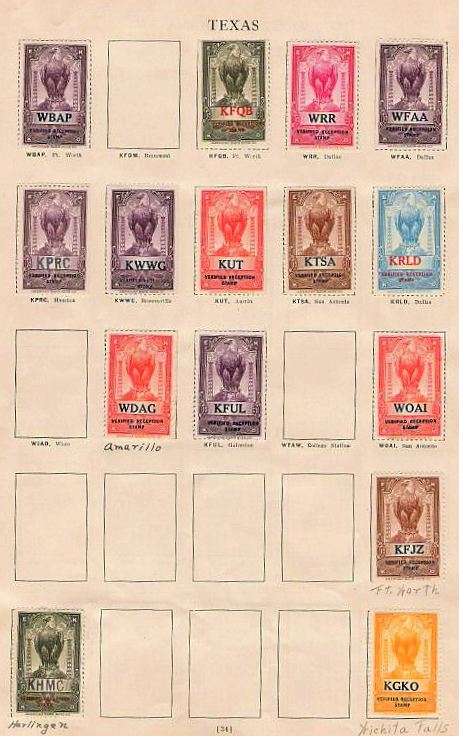
ekko-texas-stations

A sample page of the “Texas” portion of the official EKKO stamp album.

*

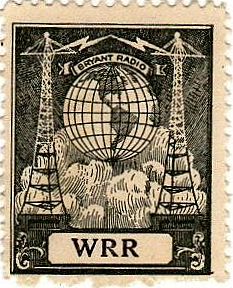
ekko_wrr-globe

The EKKO company had some competition in the PM Bryant Co. Bryant stamps required no “verification” — you just sent them your dime and got a stamp. Their stamps had no eagle, but they DID have transmitter towers and the essential lightning bolts.

*

And now you (and I) know!

***

Sources & Notes

An incredibly comprehensive history of Dallas radio is the DFW Radio Archives site — its main page is here. The pages dealing with the stations broadcasting in DFW in the 1920s are here and here. I highly recommend reading the very interesting account about how WRR evolved from an experimental police communication transmission tool to a full-fledged entertainment station.

*

Copyright © 2014 Paula Bosse. All Rights Reserved.

George Dahl’s Titche-Goettinger Building

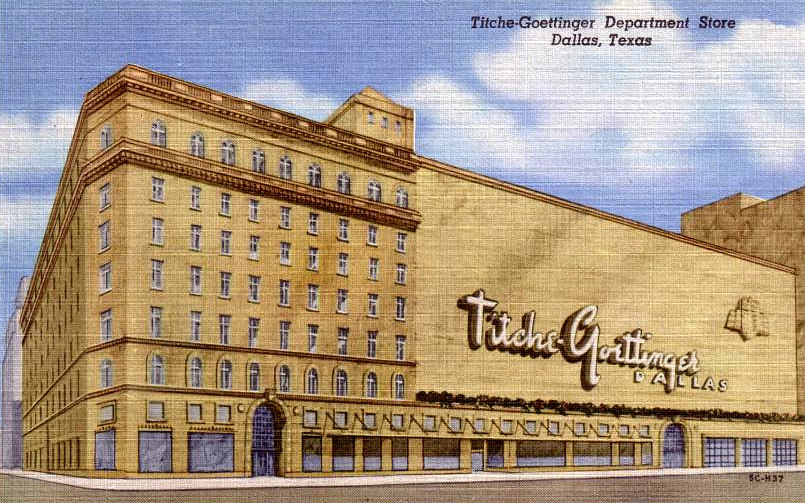
titches

by Paula Bosse

Such a beautiful building! Such a beautiful font!

George Dahl designed the original building (on the left) in the late-1920s, and Thomas, Jameson & Merrill designed the expansion (on the right) in the early ’50s.

titches_new-store_sunset-high-school-yrbk_1929
Ad from the 1929 yearbook of Sunset High School

***

Read about the building here.

Everything you could want to know about Titche-Goettinger/Titche’s is here.

UNT owns the building at 1900 Elm now, and it’s installed windows in that cool solid wall where the store’s name used to be. Check out photos of key renovations and read why they were made here.

More on the Titche’s building (including news on its expansion in 1952 and an architect’s drawing) can be found in the Flashback Dallas post “Main Street — ca. 1942,” here. See the expanded building here.

Click for larger image!

*

Copyright © 2014 Paula Bosse. All Rights Reserved.

The Margules Family’s Passover Seder

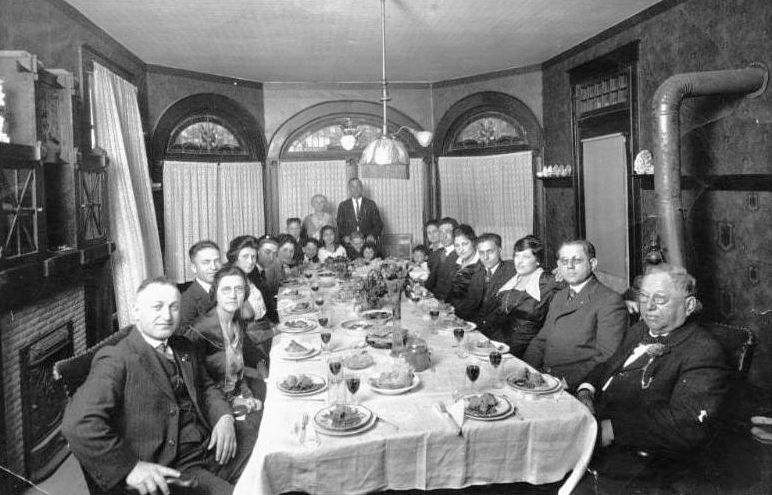
1-passover_djhsClick for larger image (Dallas Jewish Historical Society photo)

by Paula Bosse

Above, a photograph of Passover seder, probably in the 1920s, taken at the South Dallas home of Sam and Dubbie Margules, with some (or all) of their nine children.

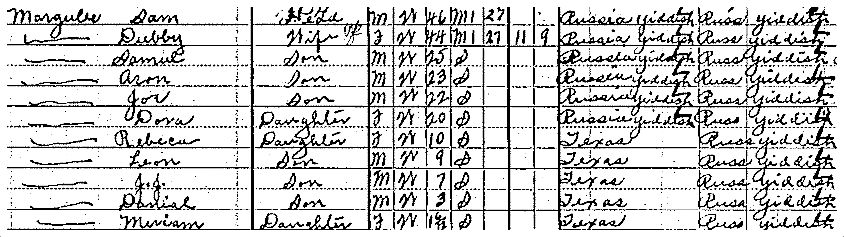
2-margules_census_1910(1910 Census — click for larger image)

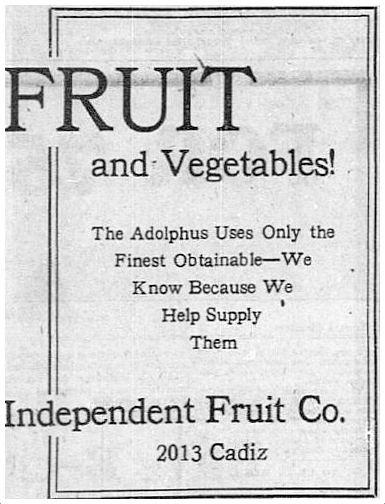
Sam Margules immigrated to the United States from Russia in the late 1880s. By the early 1890s he had made his way to Dallas and had begun working in the wholesale produce business. Once settled and on secure financial footing, he sent for his wife and four children (five more would be born in Dallas). In 1915, Sam established his own business, the Independent Fruit Co.

3-margule_ind-fruit-co_dmn_010116(1916)

4-margules_adolphus_dmn_101224(1924)

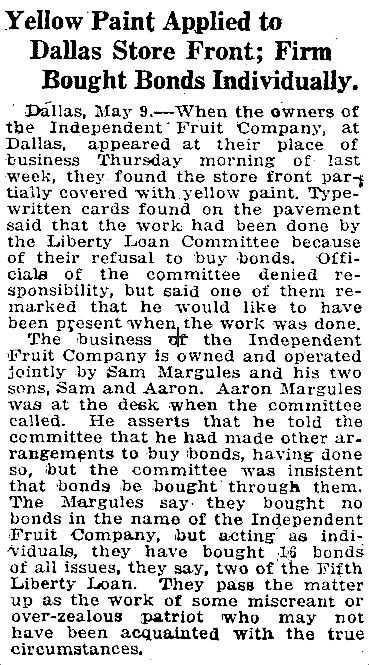
Even thought the Margules family seems to have had a happy and successful life in Dallas, there was one incident that must have been very unsettling for them. In the waning days of World War I, a Chicago trade publication reported an instance of vandalism against the Independent Fruit Co., perpetrated by a thuggish Liberty war bond committee. In what was clearly meant as intimidation, the shakedown “committee” had splashed yellow paint across the Margules storefront in the dead of night, as punishment for what they believed was the family’s refusal to purchase Liberty bonds. These attacks with yellow paint were a common occurrence around the country in those days (as was tarring and feathering!), and they were frequently directed at immigrants, as were nasty accusations that they were “slackers”  (a much-used pejorative at the time meaning “unpatriotic shirker” or even “coward”)

The family seems to have shrugged off the incident, but it must have been a frightening time for them. The Jewish community in Dallas was a large and thriving one, but there was always antisemitism to deal with, and the Ku Klux Klan’s rise to power in the 1920s was particularly difficult for Jews in Dallas. (Click article below to see larger image.)

5-margules_chicago-packer_051019(1919)

Sam Margules died in 1930 at the age of  67, a 40-year resident of Dallas. His wife, Dubbie, died in 1953 at the age of 90, survived by 18 grandchildren and 17 great-grandchildren.

***

Sources & Notes

Photo from the Dallas Jewish Historical Society — the full citation is here.

Ads from The Dallas Morning News.

Article on the yellow paint attack from The Chicago Packer, May 10, 1919.

A passage on other yellow paint attacks on America’s immigrants by Liberty Bond committees can be read here.

A lengthy article on “The Jews Who Built Dallas” by David Ritz  (D Magazine, Nov. 2008) can be read here.

Click top two pictures for larger images.

*

Copyright © 2014 Paula Bosse. All Rights Reserved.