Flashback : Dallas

A Miscellany: History, Ads, Pop Culture

Category: 1930s

Happy 75th Anniversary, Stonewall!

1938-stonewall-jackson-elementary-school_renderingStonewall Jackson Elementary School, 1938 rendering (click for larger image)

by Paula Bosse

Classes begin today for students in DISD schools, one of which is Stonewall Jackson Elementary School, located at Mockingbird and Matilda. Stonewall turns 75 years old this year (2014), and I’m proud to say it’s where I spent many years as a happy student. When I learned recently that the school had originally been built as a single-story building (instead of the two stories we know today), I was pretty surprised, and this little unknown nugget prompted me to look into the early years of my alma mater.

In the 1920s and ’30s, Dallas was expanding very quickly northward from Vickery Place, the residential neighborhood around Belmont and Greenville. As the area we now know as Lower Greenville and the M Streets was developed, the two elementary schools (Vickery Place School, then at Miller and McMillan, and Robert E. Lee, at Matilda and Vanderbilt) were soon filled to capacity. Building a new school to serve burgeoning “Northeast Dallas” was an immediate necessity. So in 1938, the city purchased a 9-acre chunk of land along Mockingbird, one block east of Greenville Avenue and right alongside the Denison interurban tracks that ran on Matilda (when I was growing up a couple of blocks away, I used to see remains of those tracks but didn’t know what they had been used for — I wrote about those tracks here and here). The land had been part of the vast Caruth land holdings.

The building was designed by architect C. H. Griesenbeck. It had eleven classrooms, a cafeteria, and an auditorium with a seating capacity of 400. Although originally built as a one-story building, Griesenbeck was mindful that expansion would be necessary in the future, and his design took into account that a second story would be added in the years to come. Construction began in late 1938 and was scheduled to be completed for the opening of the 1939-40 school year.

The name of the new school was decided upon a few months later:

“Stonewall Jackson’s name was chosen for the new school, Dr. Norman R. Crozier, superintendent, said because of the high ideals of Thomas Jonathan Jackson, one of the unique and romantic figures of the War Between the States, and as a companion to its nearest school, Robert E. Lee.” (Dallas Morning News, Feb. 1, 1939)

But if you’re going to sink a hundred thousand dollars into a school, you’ve got to have houses for families to live in to make sure your future student pool doesn’t run dry — and at that time very few houses had been built that far north. Cut to W. W. Caruth, Jr., son of the Caruth family patriarch who basically owned everything north of Mockingbird (Caruth owned a huge expanse of land once estimated at being over 30,000 acres). Not long after selling the land at Mockingbird and Greenville to Dr Pepper, Caruth fils began to develop the land around the then-under-construction school — he called the new neighborhood “Stonewall Terrace.”

The property went fast.
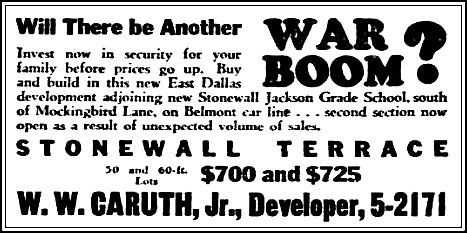
stonewall-terrace_dmn_092339September, 1939

As the neighborhood was taking shape and the construction of the school building was nearing completion, the school’s official boundaries were announced:

“Boundaries of the Stonewall Jackson School will be from the alley south of Morningside on the east side of Greenville Avenue and from the alley south of Mercedes on the west side of Greenville to the M-K-T Railroad on the north.” (DMN, Sept. 3, 1939)

Despite some problems with labor shortages, the school managed to open on time, on Sept. 13, 1939, the start of the new school year.

The school and the neighborhood grew quickly, and the number of students soon doubled. In 1950 the school board approved preliminary plans for an addition to the school. This addition (which would cost $369,000 and be handled by the architectural firm of Tatum & Quade) would include a first-floor wing with four classrooms, a gymnasium, and a lunchroom, and a second story containing eight classrooms, a library, and a music room. (The cost of construction would probably have been quite a bit more had the original architect not had the foresight to design the building with the expectation that a second story would be added in the future.)

The construction was substantial enough that it had to be done during the 1951-52 school year. Because the old lunchroom was being dismantled while the new wing was being built, students were required to bring their lunches the entire year. All they could get at school was milk. No fish sticks, no Salisbury steak, no chess pie. Just milk. Sorry, kids.

The new addition was completed in time for the beginning of the 1952 school year. And that’s the version of the building that stands today, looking pretty much unchanged.
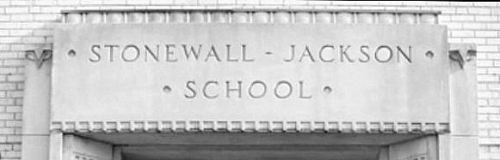
stonewall_front

It was a cool building then, and it’s a cool building now. It’s sad to see how much of the playing fields keep disappearing as ugly portable buildings take over, but the new garden is a great new addition — I wish they’d had that when I was there.

I really loved that school. When I was a student there, grades went from 1st to 7th, and I loved all seven years I spent there. Thanks for the great childhood memories, Stonewall. And Happy 75th Anniversary!
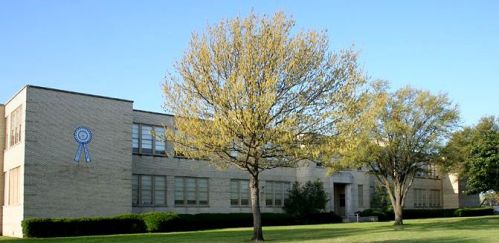
stonewall-nowPhoto: DISD

***

Sources & Notes

Top image is architect C. H. Griesenbeck’s architectural rendering of Stonewall Jackson Elementary School, originally a one-story building.

Here are a few articles to check out in the Dallas Morning News archives:

  • “$11,250 Offer Made for New School Site” (DMN, Oct. 26, 1938)
  • “Contracts for $104,150 Let on Northeast Dallas School” (DMN, Dec. 22, 1938)
  • “New Northeast Dallas School Named Jackson; Board Pays Tribute to Famous General” (DMN, Feb. 1, 1939)

And, yes, it probably sounds weird to outsiders, but students actually do call the school “Stonewall” — just like we call Woodrow Wilson High School (the high school Stonewall feeds into) “Woodrow.” It’s like a secret handshake.

Below, an undated photo from DISD’s Pinterest board (if you squint, you can see the Piggly Wiggly at the southwest corner of Mockingbird and Matilda).

stonewall_DISD-pinterest

UPDATE: After years of controversy, Stonewall Jackson Elementary School will be rechristened “Mockingbird Elementary” in 2018. Whatever its name, it’s still a great school!

*

Copyright © 2014 Paula Bosse. All Rights Reserved.
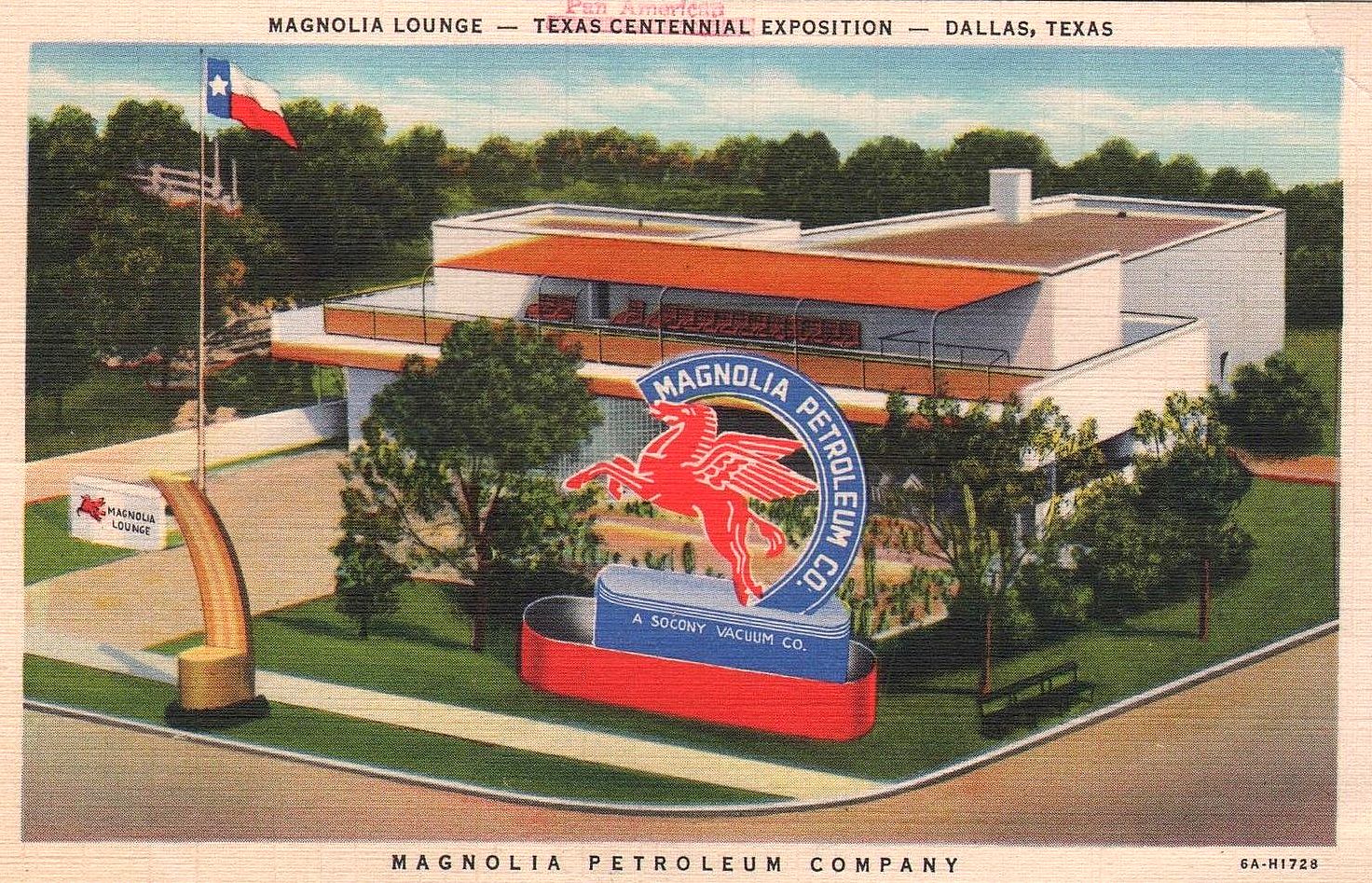
William Lescaze’s Ultramodern Magnolia Lounge — 1936

magnolia-lounge_tx-centennial

by Paula Bosse

The sleekly cool Magnolia Lounge, designed by Swiss-born American architect William Lescaze for the Texas Centennial, is considered the first International-style building built in Texas, and though it feels perfectly at home in Art Deco Fair Park, it looks completely different and much more modern that the buildings around it. It was built by the Magnolia Petroleum Company as a place for visitors to the Centennial Exposition to relax and cool off (it boasted a 20-ton refrigeration plant). The Magnolia Company’s slogan for their building was “Be Our Guest and Rest at the Magnolia Lounge.” In other words, this was the most insistently fabulous rest stop ever built!

How did we GET this cool building? Two words: Stanley Marcus.

“Young retailer Stanley Marcus was dispatched to New York City by Dallas-based Magnolia Petroleum to find the most up-to-date architect of the United States for their Centennial pavilion. Marcus chose William Lescaze, who had just designed the first International-style skyscraper in the United States [the PSFS Building in Philadelphia, which opened in 1932].” (– Virginia Savage McAlester)

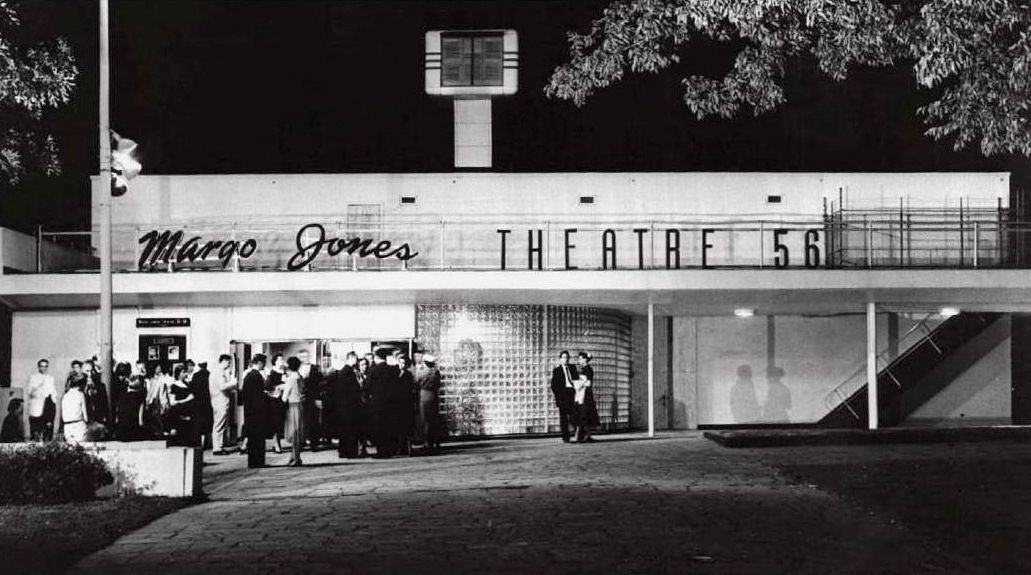
It was a popular oil company-branded “comfort station” for fair visitors until 1942 when the Magnolia Petroleum Co. (who had owned the building), gave title of the Magnolia Lounge to the State Fair, which used it for many years to house its general offices. In 1947, the space became Theatre ’47, Margo Jones’ legendary regional theater where, among other achievements, she produced plays of a young Tennessee Williams and introduced the innovation of theater-in-the-round. After Jones’ death in 1955, the theater carried on for a few years but eventually closed in 1959. After some difficult lean years for the building (during which demolition was considered!), it has been home to organizations such as the Friends of Fair Park, and it is now an active performance space again. And all is well with the world.

margo-jones_theatre-56_dpl

***

Sources & Notes

Postcard of the Magnolia Lounge from the vast wilds of the internet. Click it. It’s huge.

The Virginia McAlester quote is from a Friends of Fair Park advertising section in the Oct. 1989 issue of Texas Monthly.

Photograph of Theatre ’56 from Historic Dallas Theatres by D. Troy Sherrod, from the collection of the Dallas Public Library. (The theater struggled to continue after the sudden death of Margo Jones in 1955, which I wrote about here.)

For more on the history of the Magnolia Lounge, see the official Fair Park home page here; also, check out the the City of Dallas page devoted to this building, here.

And for more on this cool building, particularly in connection with Margo Jones, see the page on the always informative Watermelon Kid site, here.

A lengthy description of the building can be found in the article “Daylight Movies of Texas Scenes To Reward Visitors to Magnolia’s Cool Lounge” (The Dallas Morning News, April 26, 1936).

The Wikipedia page on architect William Lescaze is here.

*

Copyright © 2014 Paula Bosse. All Rights Reserved.
 

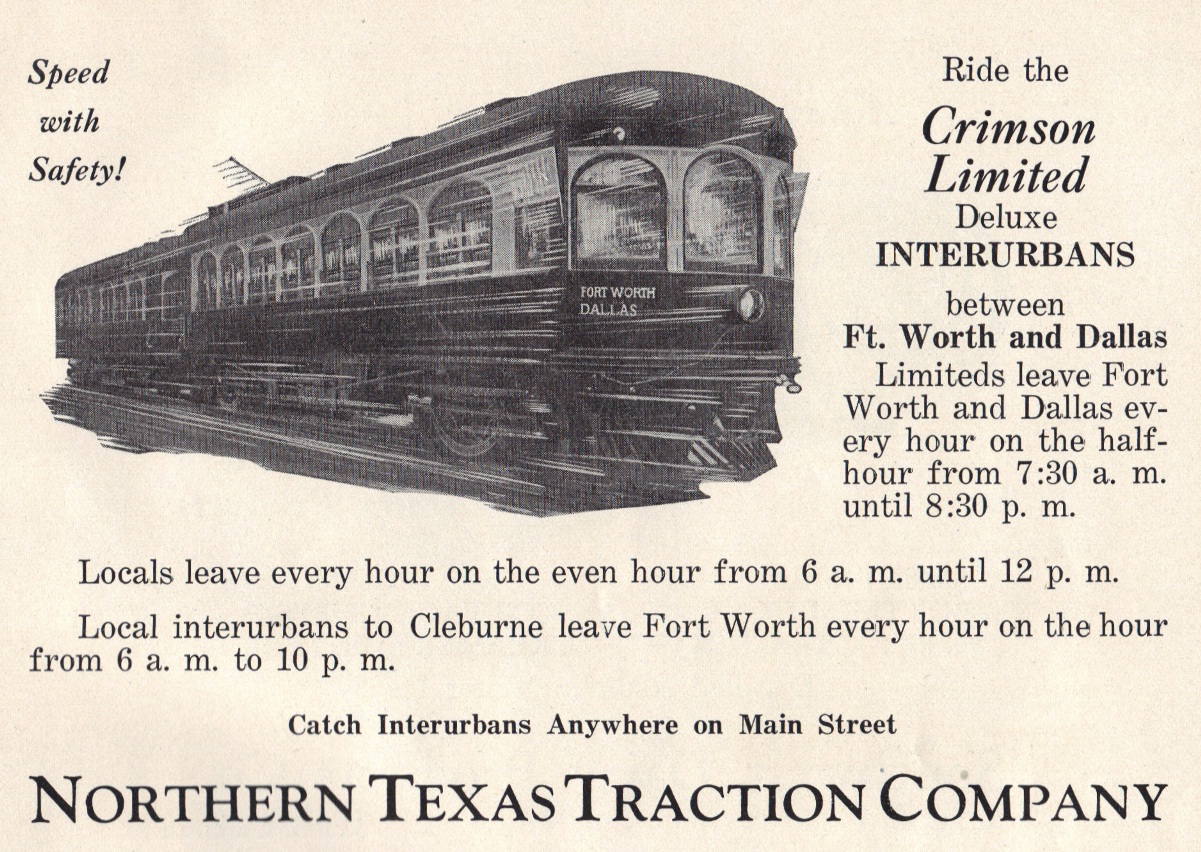
“Speed With Safety” on the Crimson Limited — 1930

crimson-ltd_interurban_1930

by Paula Bosse

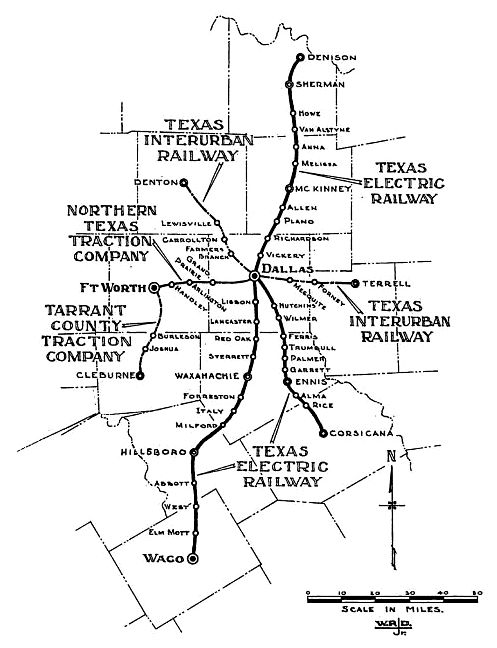
A 1930 ad for the Crimson Limited deluxe interurbans (electrified railway trains) that ran between Dallas and Fort Worth, a couple of years before the company went into receivership, put out of business by the rise of automobile culture. Even though the writing was pretty much on the walls, the Northern Texas Traction Company fought hard to reverse the decline in ridership by introducing these fancy Crimson Limited cars:

The most notable of their moves was the introduction of the Crimson Limited in October of 1924. The Crimson Limited was the name given to the upgraded interurban service to Dallas because the cars were painted bright red. The trailer car saw the most extensive upgrades. The bench seats in the rear half of the car were removed and replaced with wicker chairs. The rear doors were converted to windows giving the car a ‘parlor car’ appearance. Additional upgrades were implemented in 1927. Although the public approved of the new more luxurious trains and more modern streetcars, they continued to abandon mass transit for the automobile. (–North Texas Historic Transportation, Inc.)

Wicker chairs? Pure LUXURY!

interurban-map

***

Sources & Notes

The ad is from an old magazine I can’t cite because it’s stuck in a box in a closet somewhere.

The quote is from a page on the North Texas Historic Transportation site.

For more on this topic, check out the nice, meaty, image-filled post (which includes an ad touting the somewhat vague “Special Conveniences for Ladies”) on the Hometown by Handlebar blog, here. (Hometown by Handlebar is a really great Fort Worth history blog that might prove I was separated at birth from a twin sibling I knew nothing about!)

Not quite sure what an “interurban” is? Fret not. Wikipedia’s here to help, here.

*

Copyright © 2014 Paula Bosse. All Rights Reserved.
A Decade of Spectacular Growth for the Dallas Skyline: 1929-1939

downtown_night_lloyd-long_smu_foscueA stunning view of the city at night… (click for larger image)

by Paula Bosse

Two photographs showing the same view: the top from about 1939, the bottom from 1928. This city has always been a show-stopper at night, but Dallas went from looking like a typical big, prosperous city to a glamorous and elegant, fantastically illuminated metropolis in the span of only ten years. The 1930s was a good time to be an architect in Dallas.

rotarian-magazine_jan-1929

***

Sources & Notes

Top photo by Lloyd M. Long, from the Edwin J. Foscue Map Library, Central University Libraries, Southern Methodist University; it is accessible here. To see this photo with major buildings identified, the labeled version is here. The view is from the Medical Arts Building. Elm and Ervay is the intersection at the lower left, and Pacific runs along the right.

Bottom photo from the January, 1929 issue of The Rotarian, showing its readers what was in store for them at their annual convention to be held in Dallas in May. The night-time skywriting is a nice touch. (It’s weird seeing the Magnolia Building before Pegasus was installed on top of it in 1934.)

Click photos for larger images.

*

Copyright © 2014 Paula Bosse. All Rights Reserved.
 

Michael G. Owen, Jr. — Dallas Sculptor of Lead Belly

leadbelly_three-views_paul-l_yelp

by Paula Bosse

Above, three views of “Leadbelly,” the sculpted head of the blues legend, by Michael G. Owen, Jr., 1943.

Michael Owen (profiled here previously as the 15-year-old soap-sculptor who made headlines at the 1930 State Fair of Texas), was the youngest member of the group of artists loosely affiliated with the Dallas Nine group who were making a name for themselves in the 1930s and ’40s. He studied life drawing as a student of Olin Travis and painting as a student of Jerry Bywaters, but he was most proficient as a sculptor. He is best known for his award-winning 1943 bust of bluesman Lead Belly, a piece in the permanent collection of the Dallas Museum of Art (which can be seen in a 1951 DMFA catalog here).

In a 1950 letter to the (then-) Dallas Museum of Fine Arts, Owen recounted how Lead Belly sat for him in New York and sang “Goodnight Irene” as Owen worked on a clay model. Owen was living in Greenbelt, Maryland at the time, and Louisiana-born Lead Belly was living in New York City, but I’d like to think that the two men reminisced about their formative days in Dallas where Owen was a much-talked-about young artist and Lead Belly performed on the streets of Deep Ellum with Blind Lemon Jefferson.

I noticed in the newspaper article that the stone was called black Belgian marble. Actually it isn’t so exotic. It was quarried not far from Charlottesville, Virginia, and is called Black Serpentine. It was the first time I have ever heard of the stuff being black. If you’ll notice it seems quite a bit more crystalline than marble.

The way I happened to do the head went like this. A young fellow I had known in Dallas by the name of Ralph Knight had gone to New York a year or so after I went to Washington. He was interested in folk music and became acquainted with Leadbelly. It was at Ralph’s instigation that I did the head — he got me the stone, sent pictures (I first roughed out the head in clay at home in Greenbelt) and then arranged the sitting at his apartment in New York. Leadbelly sat for me one afternoon and I finished the clay model at that time. From that I worked out the stone cutting, only being able to work on it in my spare time. All in all it was about a full month’s work, I guess. During the time he was “sitting” for me (playing his guitar and singing) he played “Goodnight Irene,” but at that time the folk music devotees did not consider the tune “true folk music.” Still it pleased me when it became a popular song. It’s too bad Leadbelly couldn’t have lived to see himself gain such popularity. (Mike Owen in 1950, from a letter excerpted in the book Lone Star Regionalism, The Dallas Nine and Their Circle)

Sadly, Mike Owen’s career stalled soon after this 1940s artistic high point. He eventually settled in Oregon, where he was sidelined by multiple sclerosis. He died in 1976 at the age of 60.

owen-michael_1930s
Mike Owen in his early 20s

I’m not sure how often the piece is displayed at the Dallas Museum of Art, but it’s a wonderful work of art. When I saw it a couple of years ago, I just stood and stared at it for ages. It’s really fantastic. And it’s fitting that it resides here in Dallas where Michael Owen was once a part of a group of Texas artists whose influence continues to be felt today.

It also seems fitting to throw in this classic from Mr. Ledbetter, who, like Mike Owen, spent time honing his craft in Dallas:

lead-belly-wikipedia

***

Sources & Notes

“Leadbelly” sculpture by Michael G. Owen, Jr. is in the collection of the Dallas Museum of Art.

Photo of the artwork is by Paul L. as posted on Yelp.

Photo of Lead Belly from Wikipedia.

Quote from Mike Owen’s letter to the DMFA (April 11, 1950) can be found in the superb book Lone Star Regionalism, The Dallas Nine and Their Circle, 1928-1945 by Rick Stewart (Austin: Texas Monthly Press, Dallas Museum of Art, 1985) — the best book on Dallas art of this period.

Read the Handbook of Texas entry about Huddie Ledbetter (aka Lead Belly/Leadbelly) here.

Other Flashback Dallas posts on Owen:

  • Young Mr. Owen’s star-turn as the teenager who carved the WFAA transmitter plant from 8,400 pounds of Ivory Soap is here.
  • Owen’s monument to SMU Mustangs’ mascot Peruna, commissioned in 1937, is here.

UPDATE: Read about a recently discovered large painting by Owen up for auction in Dallas in 2019 here.

*

Copyright © 2014 Paula Bosse. All Rights Reserved.


Stevens Park Estates: “The Ideal Place for Your Home” — 1930

oak-cliff_stevens-park_dmn_092830
You deserve “maximum enjoyment”

by Paula Bosse

Do you dream of a home of your own? Then go and see the beautiful scenic Stevens Park Estates. “The Ideal Place for Your Home.” There you will find the ideal place for your “dream home.” A beautiful 146-acre park — 18 holes of golf — modern fan-shaped lots — broad sweeping boulevards — in fact, everything to make you realize the maximum enjoyment out of your home.

***

Sources & Notes

Ad from 1930.

History of Oak Cliff’s Stevens Park Estates can be found here and here.

*

Copyright © 2014 Paula Bosse. All Rights Reserved.

Juneteenth at the Texas Centennial — 1936

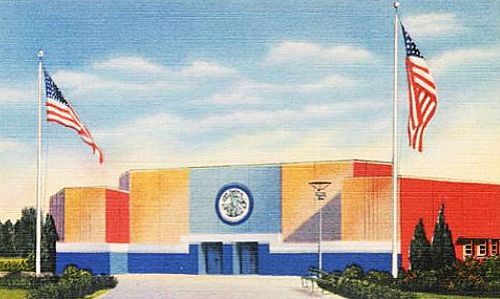
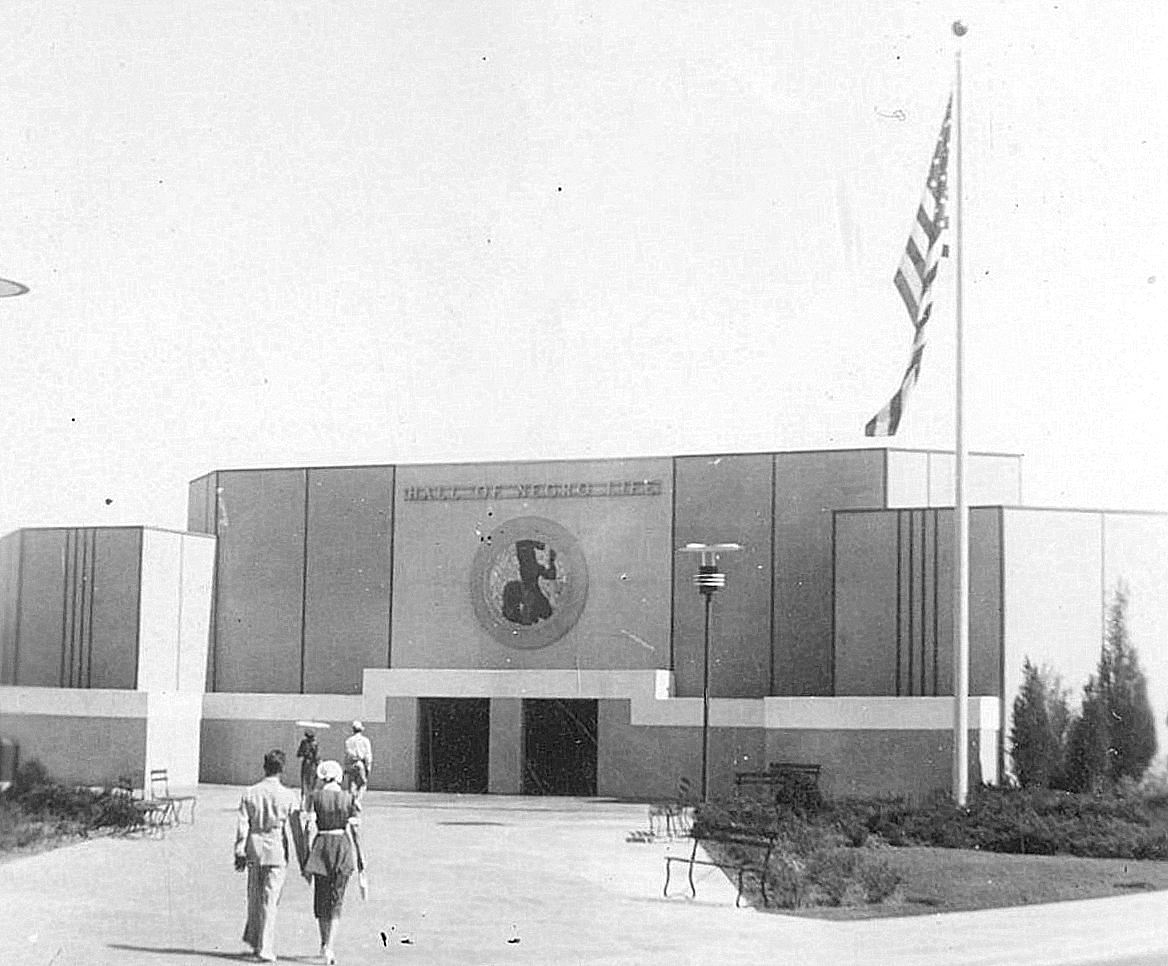
hall-of-negro-life_centennialThe Hall of Negro Life at the Texas Centennial Exposition, Fair Park

by Paula Bosse

Juneteenth, the anniversary of the date that African American Texans learned they were freed from slavery, was celebrated at the Texas Centennial Exposition with a day of entertainment and exhibits. It was also the day that the Hall of Negro Life — a federally funded exhibition hall acknowledging and honoring the history and accomplishments of African Americans in the United States — was officially dedicated.

tx-centennial_hall-of-negro-life_portal

One of the more interesting things I’ve stumbled across is a drawing of the proposed building (published in J. Mason Brewer’s The Negro In Texas History in 1935). I don’t believe I’ve seen this before. It’s interesting to note the changes from original proposal to finished product.

hall-of-negro-life_proposed_the-negro-in-texas-history_1935

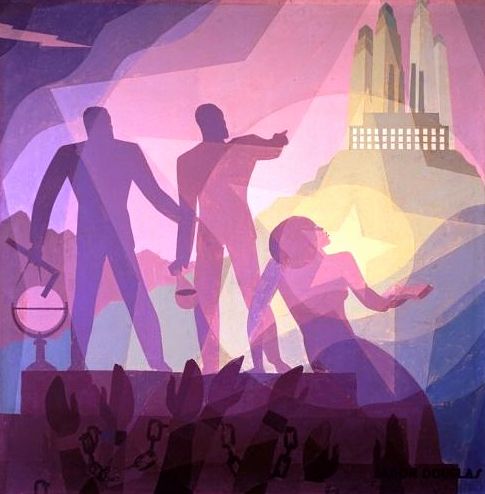
Among the large collection of art by black artists displayed in the Hall of Negro Life were four murals by the artist Aaron Douglas, depicting black history in Texas. Below are the two murals that survive, “Into Bondage” and “Aspiration.” These are incredible murals, and it must have been an emotional experience for those Juneteenth visitors in 1936 to be surrounded by all four powerful pieces in the lobby of a government-backed project that formally recognized the contributions of fellow African Americans.

aaron-douglas_into-bondage_1936_corcoran“Into Bondage” by Aaron Douglas, 1936 (Corcoran Gallery of Art)

aaron-douglas_aspiration_1936“Aspiration” by Aaron Douglas, 1936 (Fine Arts Museum of San Francisco)

***

Sources & Notes

Black-and-white photograph of the Hall of Negro Life from the Private Collection of Mary Newton Maxwell, Portal to Texas History, here.

Photo of proposed Hall of Negro Life from An Historical and Pictorial Souvenir of the Negro In Texas History, written by J. Mason Brewer (Dallas: Mathis Publishing Co., 1935).

“Into Bondage” by Aaron Douglas (1936) is from the collection of The Corcoran Gallery of Art.

“Aspiration” by Aaron Douglas (1936) is from the collection of The Fine Arts Museum of San Francisco. (There is an amazing interactive look at this painting here.)

More on the Hall of Negro Life, from the Handbook of Texas, here.

More on the Hall of Negro Life from The Crisis, the magazine of the NAACP, in the July, 1936 article “Negroes and the Texas Centennial” by Jesse O. Thomas, here.

How was this important Juneteenth celebration at the Texas Centennial covered by The Dallas Morning News? Well, the paper actually devoted a lot of space to the day’s events in a fairly lengthy article which appeared on June 20, 1936. I think the DMN editorial board probably thought they were being magnanimous in the amount of coverage given, but, really, the article — though brimming with a certain amount of probably well-intentioned jubilation — is so unremittingly racist that it’s actually shocking to see this sort of thing in print in a major newspaper. I encourage you to check out the article published on June 20, 1936 which carries the laboriously headlined and sub-headlined “Negroes Stage Big Juneteenth at Centennial; Dallas Eats Cold Supper and Cotton Patches Emptied as Thousands Inspect Magic City; Hall Is Dedicated; Dusky Beauties Prance; Cab Calloway Does His Stuff For Truckers.”

*

Copyright © 2014 Paula Bosse. All Rights Reserved.

Protected: Parking Hogs, Meet Your Nemesis: The Parking Meter — 1935

This content is password-protected. To view it, please enter the password below.

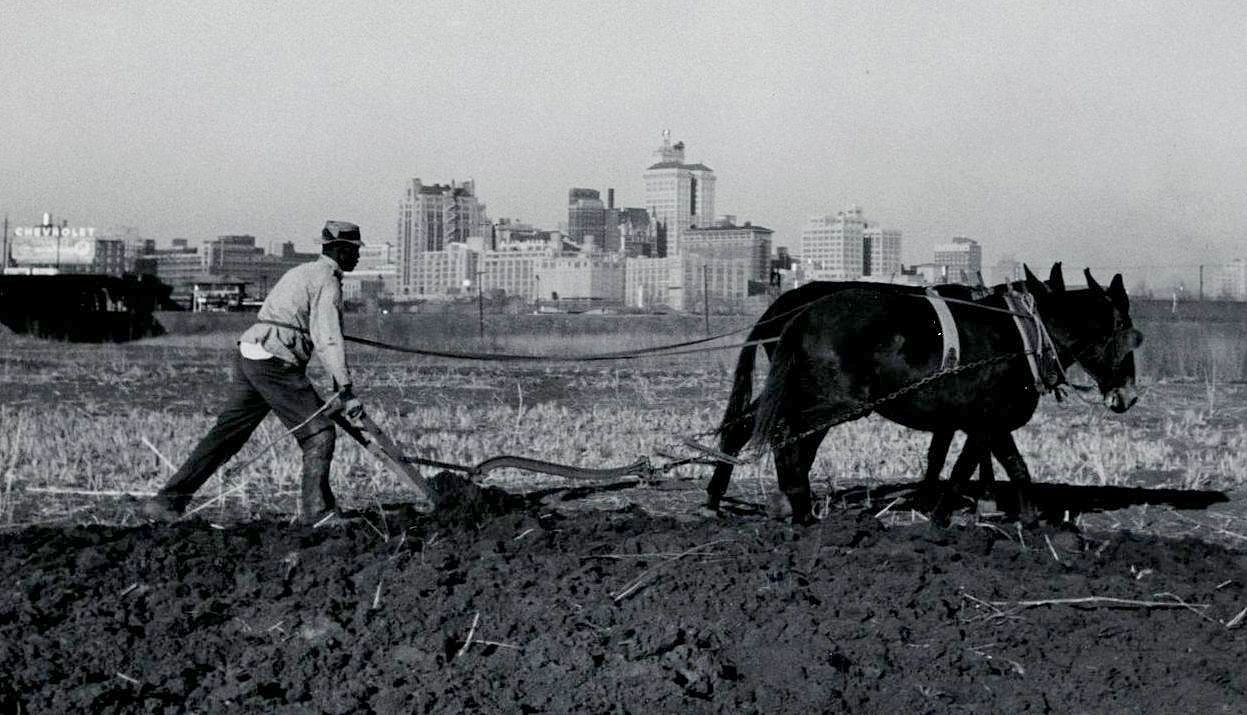
Plow vs Skyscraper

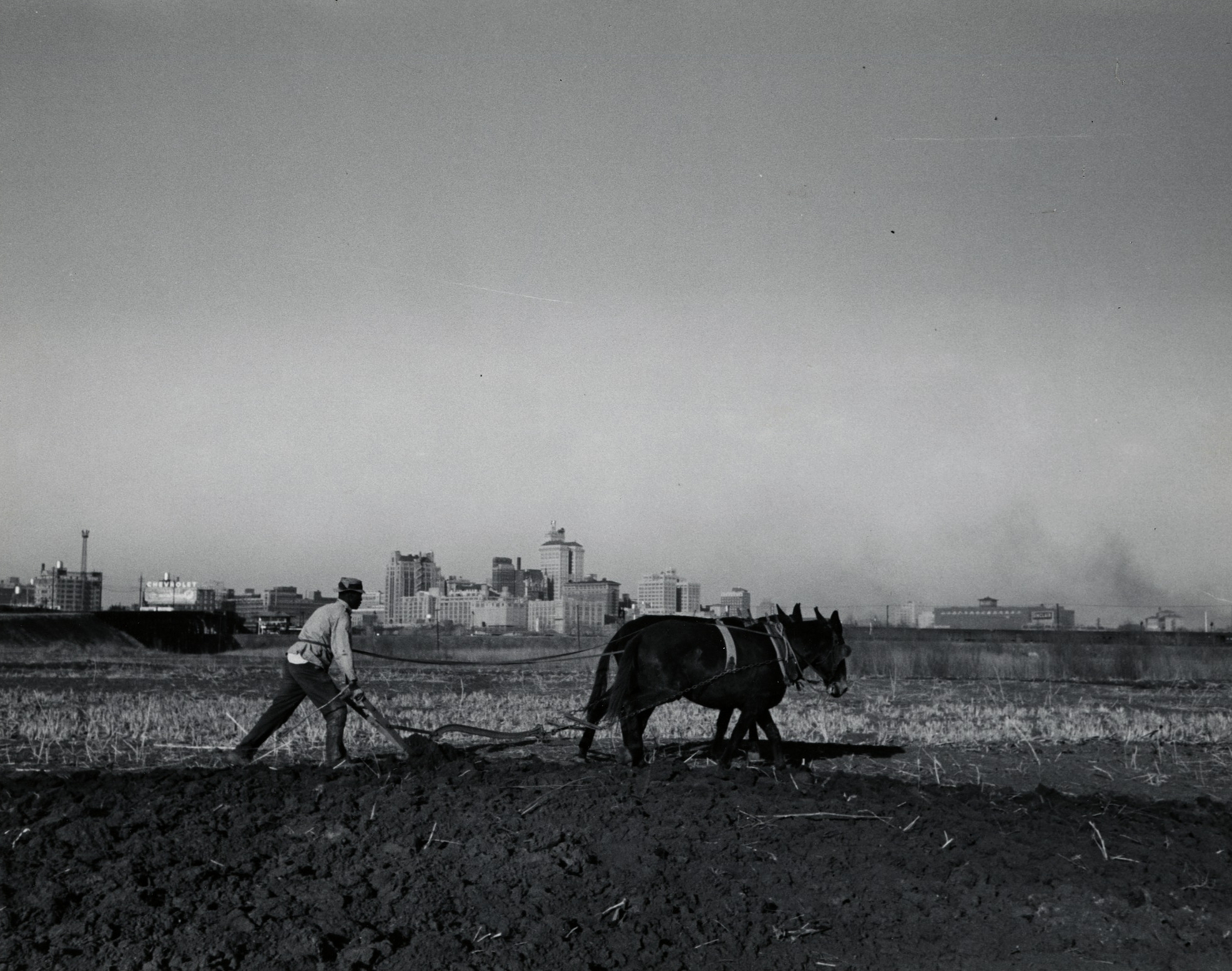
mydans_lucius-washington_smithsonian_1939(click for super-gigantic image)

by Paula Bosse

Here’s an unexpected view of the Dallas skyline, by legendary Life magazine photographer Carl Mydans. The photograph — titled “Lucius Washington and Two Mules Plow the Fields Before the Dallas Skyline” — is from the collection of the Smithsonian Institution, with catalog description here. Though the Smithsonian lists this photo as being from 1939, it’s possible that it was taken a year earlier, as The Dallas Morning News reported on April 2, 1938 that Mydans was in town shooting the Dallas skyline. A major article on Texas appeared in Life magazine a year later, in the April 10, 1939 issue, featuring a different, very large photo of the Dallas skyline by Mydans, which can be seen here.

Below, an enlarged detail, lightened a bit.

mydans_lucius-washington_smithsonian_1939-det

***

More on Mydans from the Duke University collection here, with examples of his FSA, Life magazine, and WWII reportage here.

Wikipedia article on Mydans here.

Click photos for much larger images.

*

Copyright © 2014 Paula Bosse. All Rights Reserved.

Give a 15-Year-Old 8,400 Pounds of Soap and He’ll Carve You a Radio Transmitter — 1930

owen-michael_soap_1930a
Michael Owen, Jr., boy soap-carver 1930

by Paula Bosse

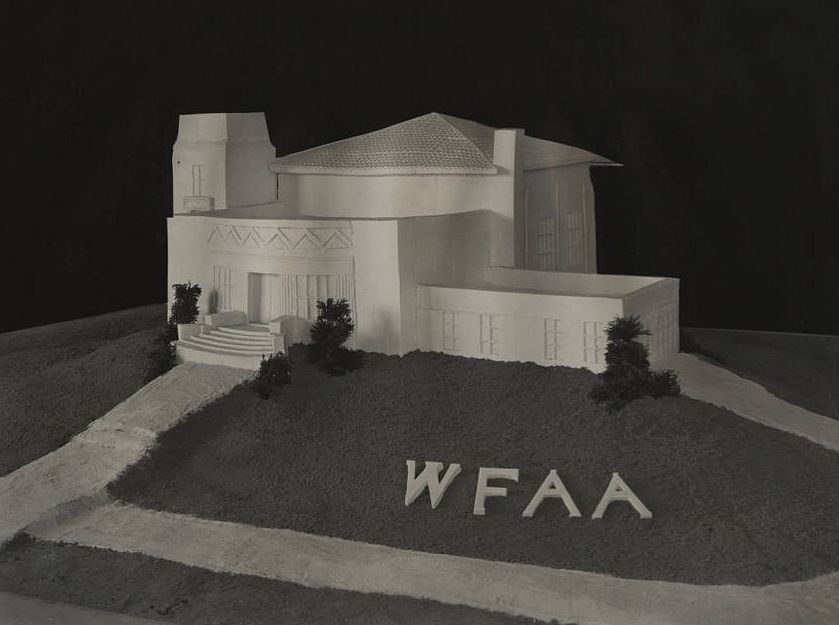
In 1930, 15-year-old sculptor Michael G. Owen, Jr. carved a replica of the WFAA transmitter building out of 8,400 pounds of Ivory soap. And why not? It was a big draw at that year’s State Fair of Texas.

Mike Owen, a student at well-to-do Highland Park High School (although Dallas artist Olin Travis, who had him as a pupil at about this time, described him as being “very poor”), had been sculpting all sorts of things, from the age of 3. He had begun winning awards when he was 13 or 14, one in an earlier “soap modeling” contest sponsored by Procter & Gamble. Not only did that soap-carving award result in young Mr. Owen being commissioned by Sanger Bros. to carve a model of the downtown skyline (I’m not sure this commission was ever actually completed), he was also asked to create an attraction for the State Fair: a replica-in-soap of the WFAA transmitter plant located on Northwest Highway near Grapevine (see a photo of the transmitter building and tower here). Owen worked from blueprints of the building and a bronze model supplied by the Belo Corporation (owner of WFAA), and Proctor & Gamble supplied the huge bars of Ivory soap (12 bars, each weighing 700 pounds). The finished piece was an “exact replica” of the 50,000-watt transmitter plant and was touted by Procter & Gamble as being the largest soap sculpture ever executed. It was a big hit at the 1930 State Fair of Texas.

Michael Owen went on to become a professional artist, with early enthusiastic support from Jerry Bywaters. He was associated with the Dallas Nine (and was, by far, the youngest member affiliated with that somewhat amorphous group), and I will address his more serious non-soap forays into the art world in a later post. But, first, back to soap!

The photo below shows Mike Owen’s finished product, which took him 12 days to complete.

owen_wfaa-soap_degolyerBelo Collection, DeGolyer Library, SMU

It’s difficult to tell what the size of the finished work was from this photo, but it was described as being five feet high and seven feet wide. So… big. When it was displayed at the fair it was, for some reason, bathed in blue light. After the 12 days it took Owen to complete this sculpture, I bet that kid was squeaky-clean and positively reeked of Ivory soap.

owen-michael_soap_1930b

owen-michael_soap_1930

***

Sources & Notes

Photo of Owen’s soap carving of the WFAA transmitter plant is from the Belo Records collection, DeGolyer Library. Central University Libraries, Southern Methodist University; more information on this photo can be found on the SMU website here.

Other Flashback Dallas posts on artist and sculptor Michael G. Owen, Jr.:

  • For a look at Owen’s professional career as a sculptor, see my post “Michael G. Owen, Jr., Dallas Sculptor of Lead Belly” here.
  • To read about the Peruna monument SMU commissioned him to produce in 1937 (when he had just turned 22), see my post here.

UPDATE: Read about a recently discovered large painting by Owen up for auction in Dallas in 2019 here.

*

Copyright © 2014 Paula Bosse. All Rights Reserved.