Flashback : Dallas

A Miscellany: History, Ads, Pop Culture

Category: 1940s

2222 Ross Avenue: From Packard Dealership to “War School” to Landmark Skyscraper
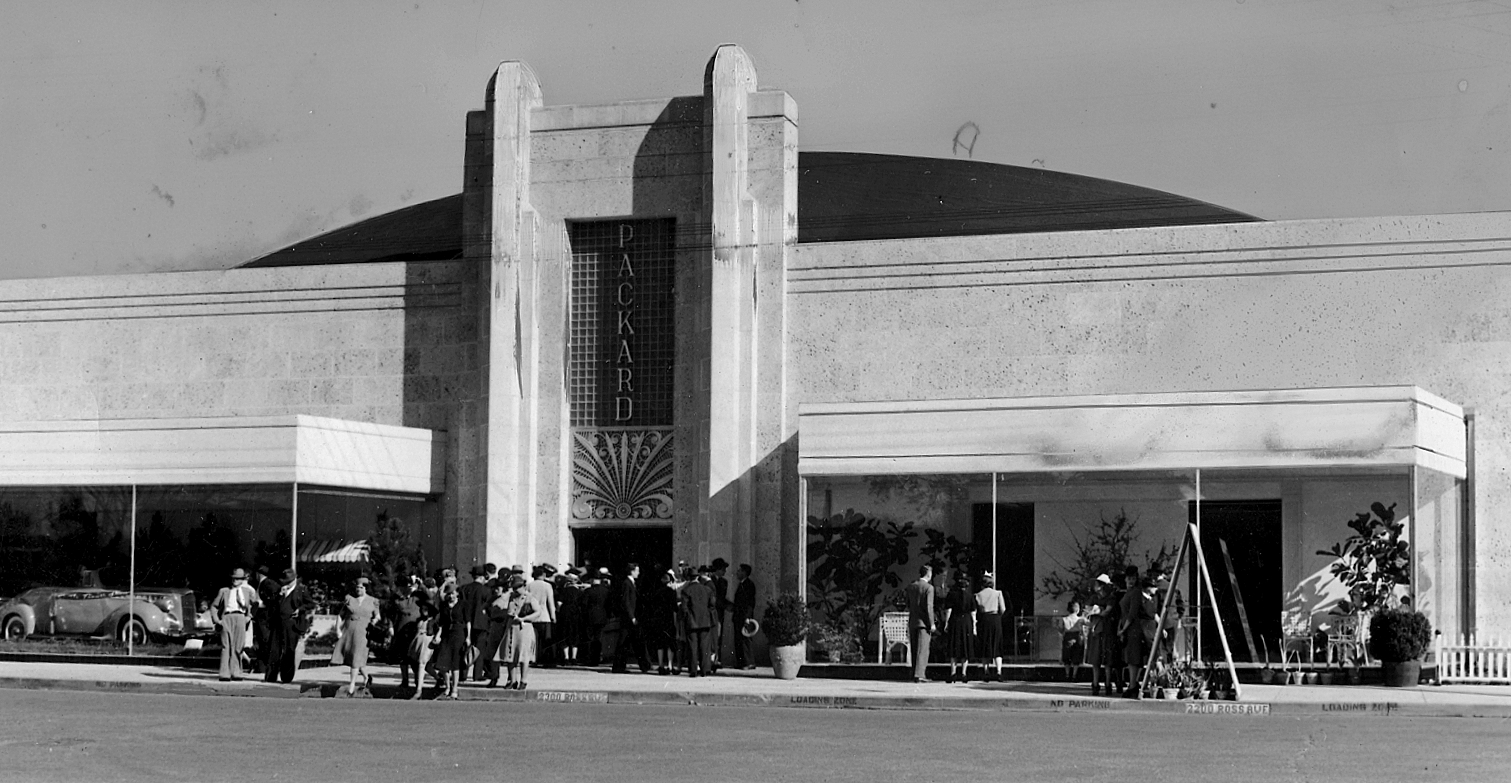
packard-dealership_2222-ross_detroit-pub-lib_1940Packard automobile showplace, 1940

by Paula Bosse

In late summer of 1939, a new 60,000-square-foot. $250,000 home for Packard-Dallas, Inc. featuring a “luxurious showroom” was announced. The first Packard automobile dealership had opened in 1933 at Pacific and Olive, and in the intervening six years, their growth had been tremendous, necessitating several moves and expansions.
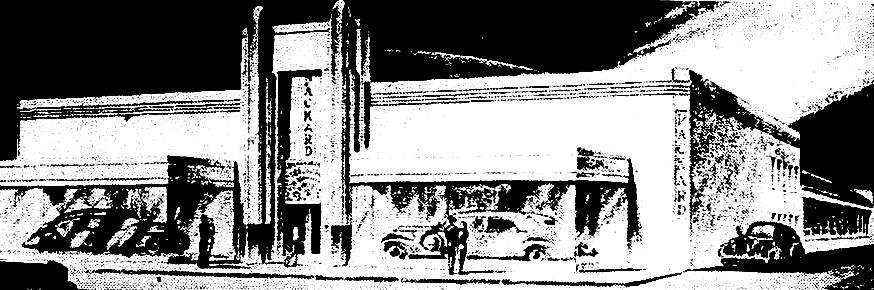
packard_ross_rendering_1939

The attractive art deco building, faced with Cordova limestone and decorated with glass bricks, cast aluminum letters, and neon, was designed by J. A. Pitzinger and Roy E. Lane Associates, and was constructed at 2222 Ross Avenue in a mere three months. The large building was right across the street from the Cathedral of the Sacred Heart, in the block bounded by Ross, Crockett, San Jacinto, and N. Pearl. The president of Packard-Dallas was J. A. Eisele and the secretary-treasurer was his son, Horace. The grand opening on Dec. 16, 1939 was a big enough deal that the home-office Detroit honchos flew in, and there was even a 15-minute radio program devoted to it on KRLD.

Under the headline “Growing With Dallas,” the opening-day ad featured a photograph of Joe and Horace Eisele and “A Message of Appreciation and an Invitation”:
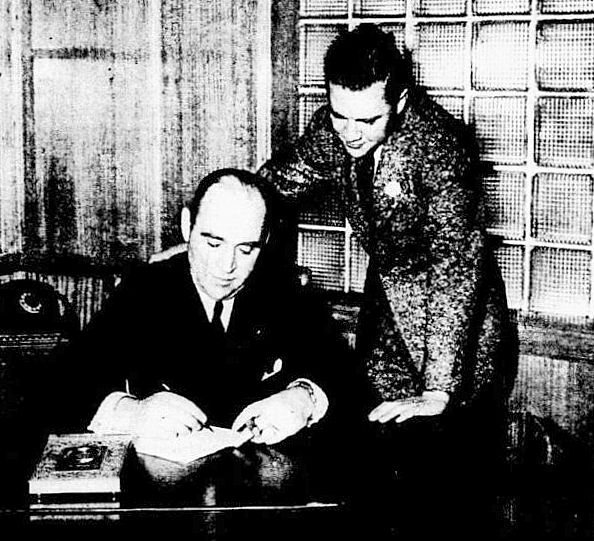
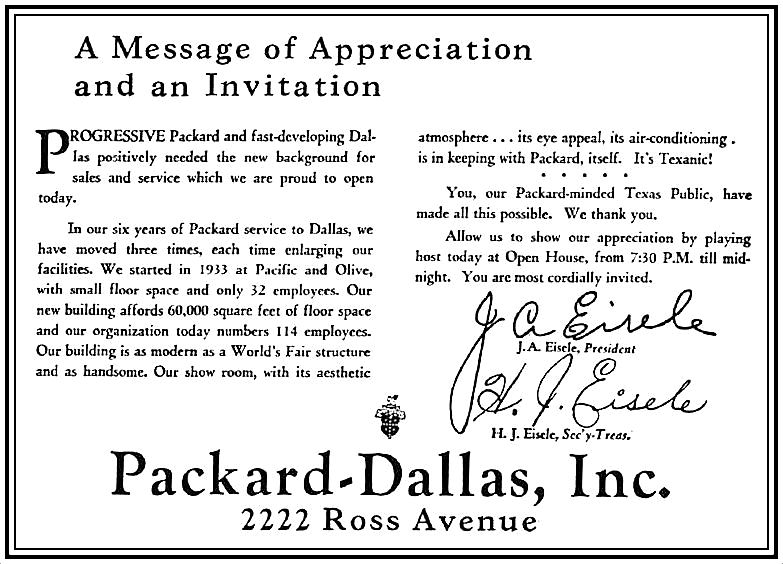
packard_dmn_121639_ad1

packard_dmn_121639_ad2Ad, Dec. 16, 1939 (click for larger image)

“It’s Texanic!”

And another ad featured this nifty little line drawing of the cool building:
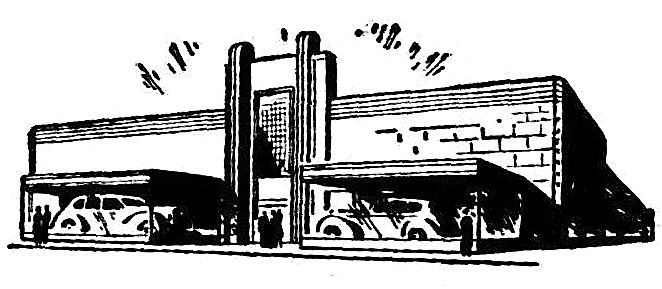
packard_dmn_121639-drawing-detDec. 16, 1939 (ad detail)

One of the stories about the opening of Dallas’ new auto showroom palace boasted that this big, beautiful, brash building was here to stay — Packard-Dallas had a 15-year lease on the place. …Which is why it was surprising to read that the building was sold less than two years later.

The U.S. was on the inevitable brink of involvement in the European war, and the National Defense School had begun operation in Dallas in July 1940. After a year of classes in which young men were taught “to do the technical and mechanical work necessary to warfare” (DMN, March 20, 1941), classrooms at the Technical high school and at Fair Park were bursting at the seams, and a larger facility was necessary. The Dallas Board of Education (which oversaw the program, often called “the War School”), was given the go-ahead to purchase the building (and, presumably, the property) for $125,000 in August 1941.

I’m not sure why J. A. Eisele sold the building (his name was listed as owner, rather than the Packard Company) — it wasn’t even two years old, and he got only half of what it cost to build. Patriotism? His son Horace had been drafted in April, so … maybe. Eisele seems to have left the auto sales business, which he had been in for decades, and had moved out of Texas by 1945.

After the U.S. officially entered the war and it became obvious that “defense schools” around the country would have to admit women in order to maintain manufacturing quotas, women began to work beside men at the Ross Avenue school in January 1942.

Eighty women Saturday pulled their fingers against the triggers of aircraft rivet guns as the Dallas National Defense School, 2222 Ross Avenue, started the state’s first major training course designed to place women side by side with men in Texas war materials plants. (DMN, Jan. 4, 1942)
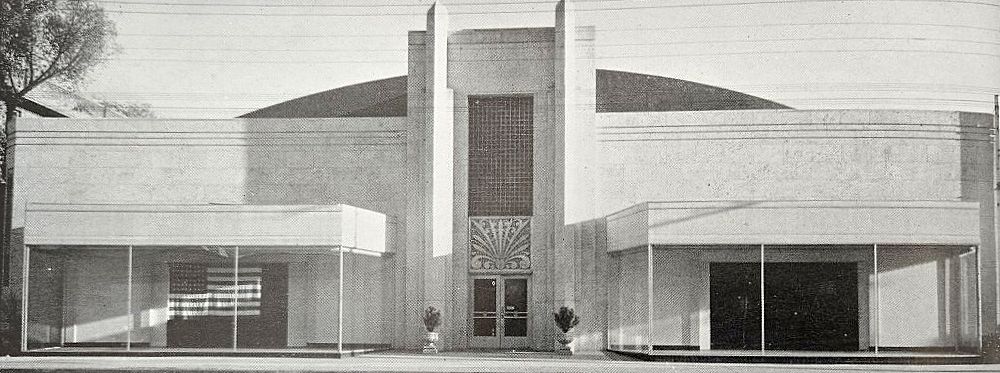
packard_ross-avenue_war-school_young-america-in-dallas_1942_DPL
1942

This “War School” was a training school for war-time jobs at places like North American Aviation.
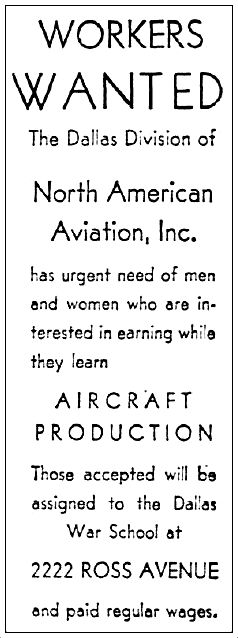
defense-school_dmn_090643Sept. 1943

Thousands of men and women trained at the Ross Avenue facility until the war ended in 1945. The school continued, but no longer as a Defense School — it became Dallas Vocational School, and its first students were veterans.

In 1976, the school was designated as one of the Dallas Independent School District’s magnet schools — it became the Transportation Institute, where “students interested in owning their own dealership, becoming a technician-mechanic or an auto body specialist will receive on the spot training in a laboratory consisting of a new car showroom, a modernly equipped repair center and a complete auto rebuilding facility” (DMN, Aug. 22, 1976). Back to its roots! And it only took 37 years.

The school continued for a while but, inevitably, the property became more and more attractive to developers. In 1981, as the developers were circling, a City Landmark Designation Eligibility List was issued. It contained buildings which had “particular architectural, historical, cultural and/or other significance to the City of Dallas,” and, if approved, were eligible to receive historic landmark designation. I’m guessing 2222 Ross Avenue didn’t make the cut, because Trammell Crow bought the building in 1983 and tore it down the next year.
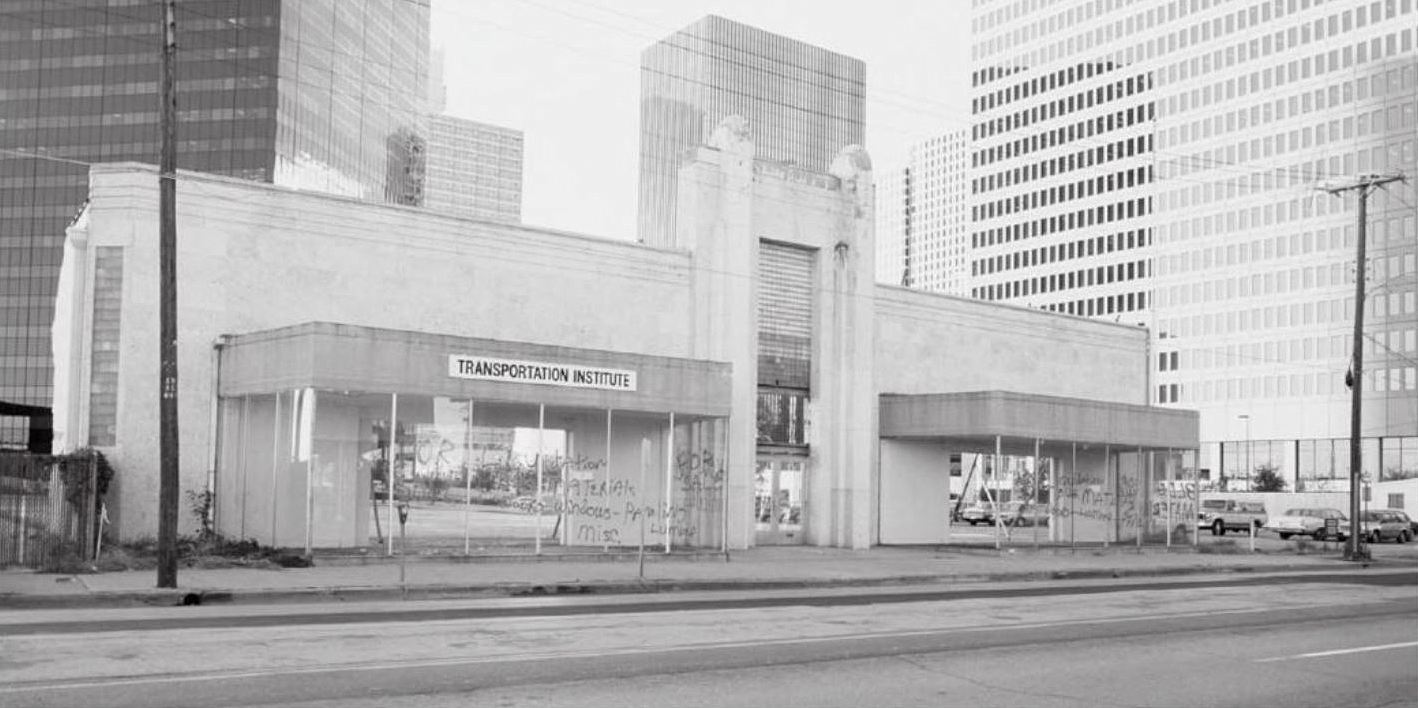
transportation-institute_lost-dallas_dotyvia Lost Dallas by Mark Doty

But … Crow sold the facade to real estate developer and investor Lou Reese, who said that he would reassemble the limestone facade and incorporate it into a restaurant he planned to build in Deep Ellum. That was an interesting plan. (Incidentally, in the same city council meeting in which the demolition/disassembling of the building’s facade was discussed, the council also considered “a request for more than $7 million in federal funds for a project to renovate the Adams Hat Co building into apartments” (DMN, Aug. 8, 1984). …Lou Reese owned the Adams Hat building. What a coincidence!)

The city council’s decision?

The council authorized developer Trammell Crow to disassemble the art deco facade of the former Transportation Institute Magnet High School on the condition that the facade be reconstructed in Deep Ellum…. The company [has] demolished all but the building’s limestone facade, which was determined to be eligible for designation as an historic landmark. (DMN, Aug. 9, 1984)

So? Where’s that facade? There was no mention of it for three years, until an article in the Morning News about another developer who had big plans for a major Deep Ellum complex called “Near Ellum,” which would be bounded by Commerce, Crowdus, Taylor, and Henry streets.

Highlighting Near Ellum will be a 40-foot art deco facade, formerly on the front of the Transportation Institute on Ross Avenue, in the main parking plaza. The plaza will also include an outdoor stage for concerts and special events. (“Developer Plans Deep Ellum Project,” DMN, June 25, 1987)

Aaaaaaaaaaaaaaaand … that never happened. I wonder if that 76-year-old disassembled limestone facade is still crated up somewhere around town. Somehow I doubt it.

So, 2222 Ross Avenue. What’s there now? None other than the 55-story skyscraper, Chase Tower, also known as “The Keyhole Building.”

You could get a lotta Packards in there.

***

Sources & Notes

Top photo from the Detroit Public Library’s Packard Collection in the National Automotive History Collection, viewable here; I’ve straightened and cropped it. The reverse has this notation: “Packard Motor Car Co., branches/dealerships/agencies, 2300 [sic] Ross Avenue Dallas, Texas, exterior, show windows left to right; 1940 Packard 110 or 120, eighteenth series, model 1800 or 1801, 6/8-cylinder, 100-120-horsepower, 122/127-inch wheelbase, convertible coupe (body type #1389/1399), special furniture display.”

1942 photo of the building is from a publication called “Young America in Dallas,” Dallas History and Archives, Dallas Public Library.

The developer who apparently came into possession of the facade after Lou Reese was Ed Sherrill. Perhaps someone associated with the Near Ellum project might know what became of the “saved” facade.

Chase Tower info on Wikipedia here; photo of it here. Imagine a teeny-tiny car dealership at its base.

Packard automobiles? Some of them were pretty cool. Check ’em out here.

A lengthy article on the notorious developer Lou Reese — “Hide and Seek” by Thomas Korosec (Dallas Observer, June 8, 2000) — is here.

*

Copyright © 2015 Paula Bosse. All Rights Reserved.
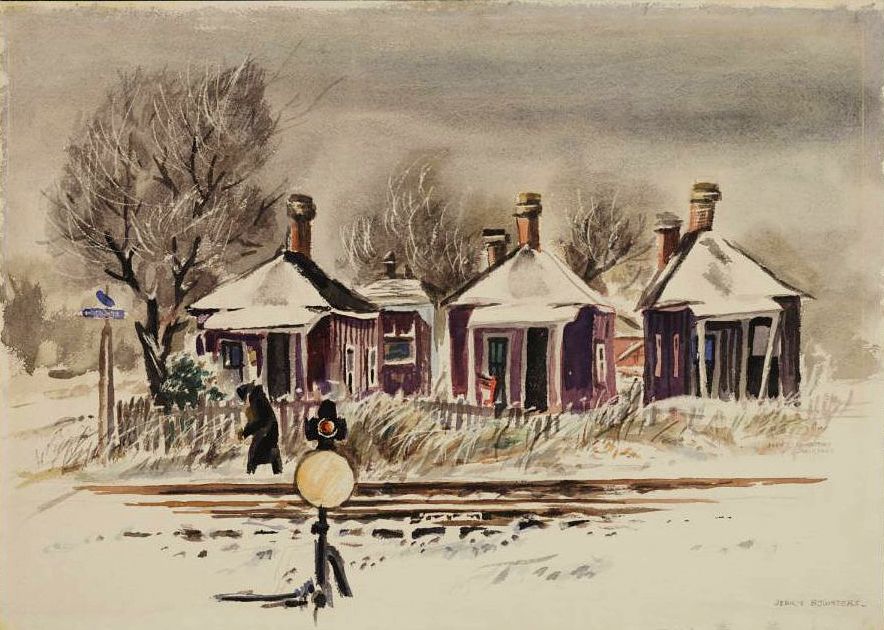
“Along the Tracks” in the Fair Park Area

bywaters_along-the-tracks_fair-park_smu_1947“Along the Tracks” by Jerry Bywaters, 1947 (Hamon Arts Lib., SMU)

by Paula Bosse

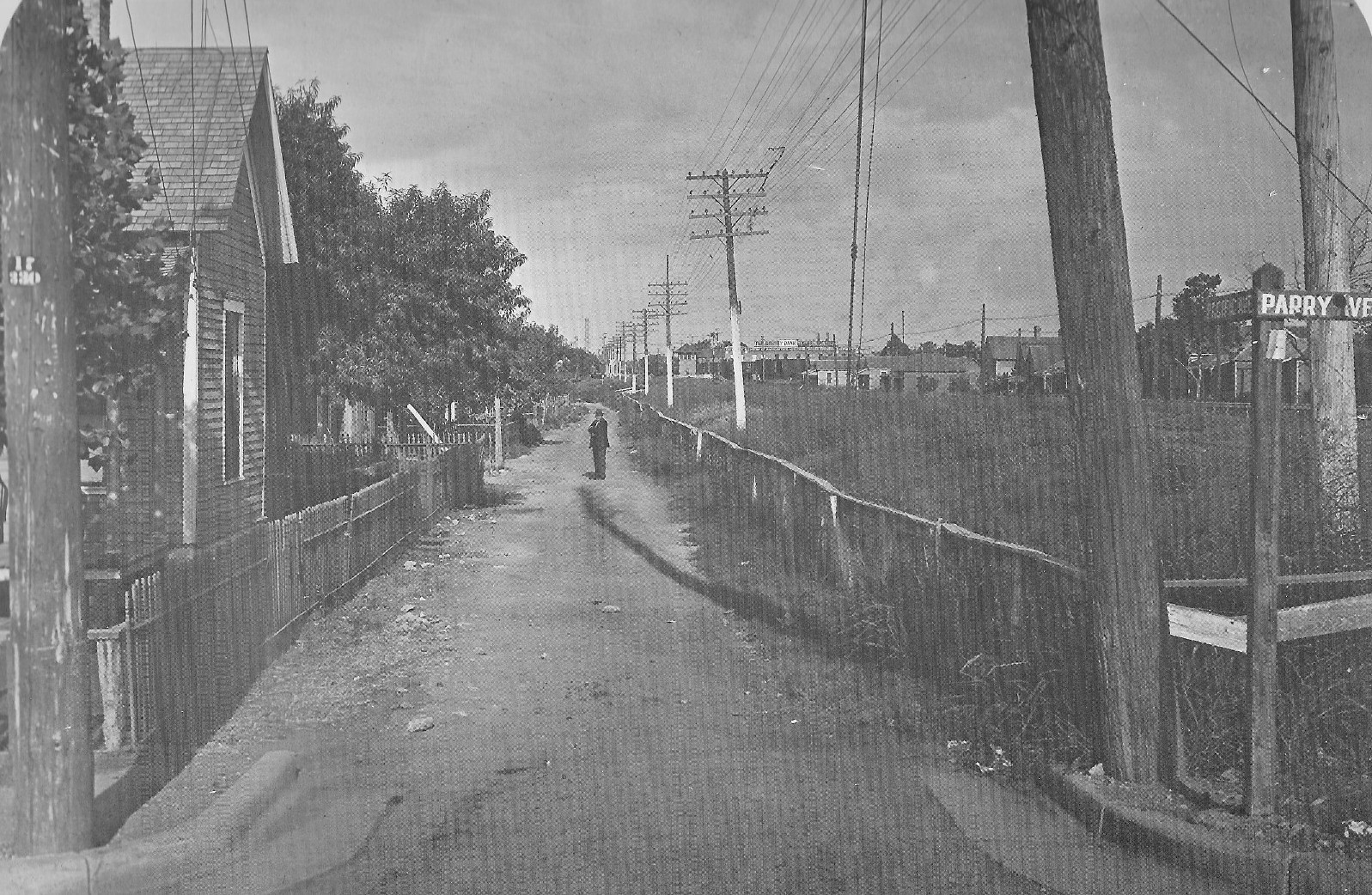
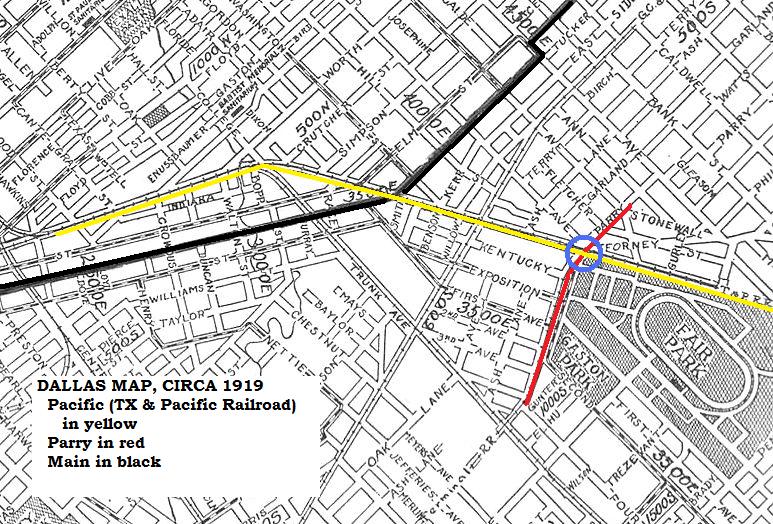
As we’re currently experiencing an extended period of cold, snowy, icy weather, what better time than now to post this atmospheric watercolor by Jerry Bywaters? Titled “Along the Tracks,” it was painted during a very cold and snowy early January of 1947, in the area around Fair Park (where Bywaters worked as the head of the Dallas Museum of Fine Arts). Railroad tracks ran on either side of Fair Park — the Texas & New Orleans tracks ran along Trunk on the west side, and the Texas & Pacific tracks ran along Pacific on the east side. The DMFA was on the very western edge of Fair Park, and as it was bitterly cold, Bywaters probably wasn’t traipsing any farther than he had to — the west side of Fair Park near the T&NO tracks would certainly have been more convenient for him. But I came across a photo that looks pretty much the same as the scene Bywaters painted, only from the T&P side to the east, so who knows?

pacific-parry_ca1916_greene

The photo above (taken around 1916) shows the intersection of Pacific and Parry, looking west on Pacific. “Along the tracks.”

***

Sources & Notes

Jerry Bywaters’ painting “Along the Tracks” is from the Bywaters Special Collections in the Hamon Arts Library at Southern Methodist University; it can be accessed here. As far as I can tell, that street sign doesn’t actually say anything, but if you see something in the scribble, let me know!

The 1916-ish photograph of the Pacific and Parry intersection is from Dallas, The Deciding Years by A. C. Greene (Austin: Encino Press, 1973).

Here is a 1919 map detail showing the area around Fair Park (full map is here):

pacific-parry_1919

When Bywaters painted “Along the Tracks” it was REALLY cold. A couple of photos from the Jan. 1, 1947 edition of The Dallas Morning News show a snow-dusted Cotton Bowl and two very cute Oak Cliff teenage girls ice skating on West Jefferson Blvd.

*

Copyright © 2015 Paula Bosse. All Rights Reserved.
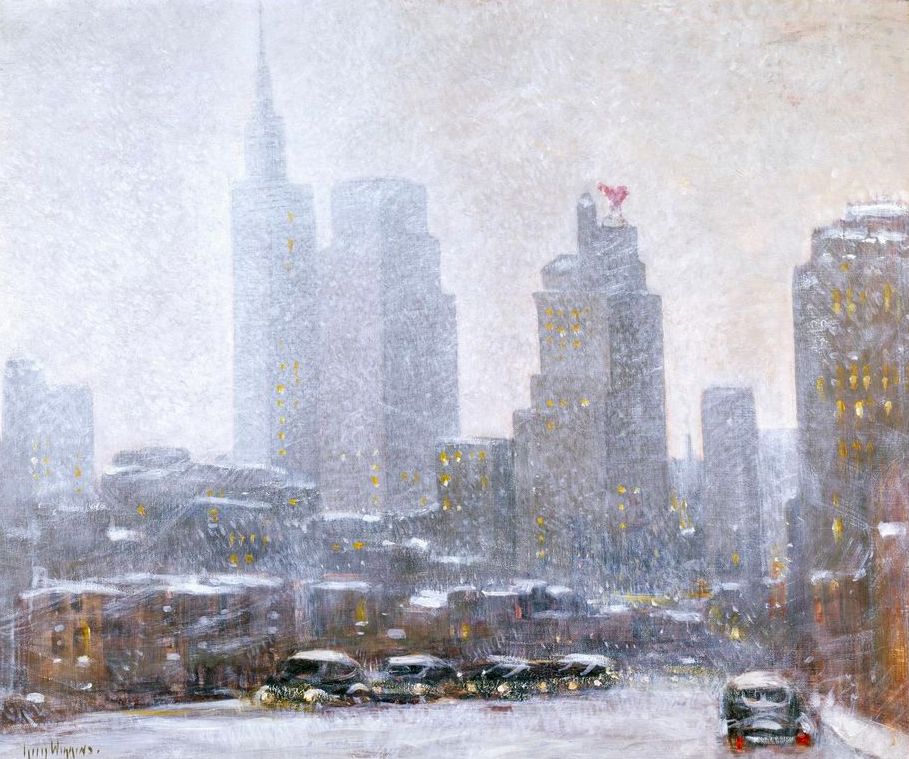
“Dallas in Winter” by Guy Wiggins — ca. 1942

wiggins_dallas-in-winter_c1942_dma“Dallas in Winter” by Guy Carleton Wiggins (Dallas Museum of Art)

by Paula Bosse

A nostalgic look back at a snowy Dallas scene from the 1940s by Guy Wiggins (1893-1962), an artist most remembered for his snow scenes of New York City. Wiggins was apparently quite fond of Dallas and was a frequent visitor, beginning in the 1920s. He had countless gallery shows here over the years, and while in town he’d often present lectures and “master classes” to arts groups and women’s groups. According to articles in local newspapers, Wiggins painted views of the Dallas skyline several times, paintings which no doubt found their way into private collections and are probably still hanging on the walls of local art patrons. In 1952, his daughter and her family moved here, giving Wiggins yet another reason to visit.

The wonderful snow scene above is in the collection of the Dallas Museum of Art; this is the DMA’s description of the painting:

A rare snowstorm in Dallas captured the eye of Guy Carleton Wiggins, who recorded this scene from the downtown vantage point of Live Oak and Pearl streets, showing the skyline’s distinctive historic landmark of the red statue of Pegasus on the Magnolia building.

Although born and raised in the East, where he was affiliated with the artists’ colony in Old Lyme, Connecticut, Wiggins traveled widely throughout the United States during his career. He became known for urban winter scenes such as this one.

***

Sources & Notes

The painting “Dallas in Winter” by Guy Carleton Wiggins is from the Patsy Lacy Griffith Collection, Dallas Museum of Art; it was a bequest of Patsy Lacy Griffith. More information on the painting can be found on the DMA’s website, here.

(Patsy Lacy Griffith was the daughter of oil millionaire Rogers Lacy, who was this close to building the incredible Frank Lloyd Wright-designed hotel downtown. I wrote about it in a previous post, here.)

More on the career of Guy Wiggins, from Wikipedia, here, and from a 2011 New York Times profile of the Wiggins family of painters, here.

Because he visited so often and had many friends here (and because he apparently painted very quickly), Wiggins’ paintings were well represented in private collections in Dallas. (One of his earliest patrons was Miss Ela Hockaday, of the Hockaday School for Girls, who loaned one of her paintings for an exhibit at the Dallas Public Library in 1930.) Among works depicting views of the city were oil studies with the titles “Morning Over Dallas,” “The Akard Canyon,” “Dallas: Morning From Cliff Towers,” and “Dallas Nocturne,” all of which were probably still damp when first shown, as The Dallas Morning News reported that they had been painted “little more than a week ago” before they went on display at the Ed Spillars gallery on Fairmount at the end of December, 1948 (DMN, Dec. 22, 1948). I’d love to see these paintings.

Want “Dallas in Winter” hanging on your walls? Buy the poster from the DMA Shop here. Look at it longingly when it’s 157 degrees in August.

*

Copyright © 2015 Paula Bosse. All Rights Reserved.
The Dunbar Branch: Dallas’ First Library for the African-American Community, 1931-1959

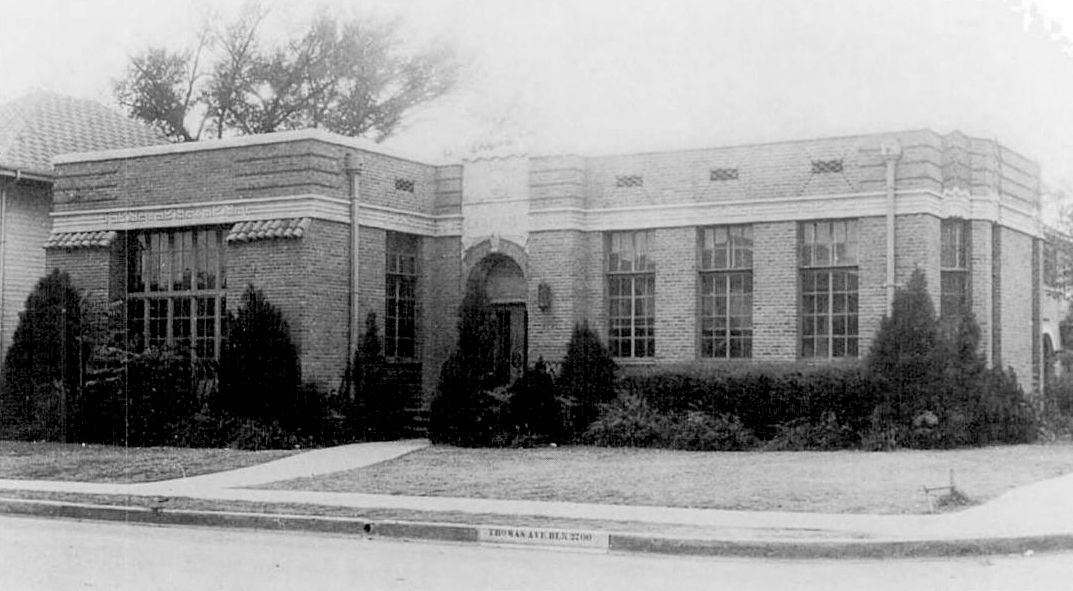
dunbar_hazel_dpl-bkThe Paul Laurence Dunbar Branch of the Dallas Public Library

by Paula Bosse

The Paul Laurence Dunbar Branch of the Dallas Public Library was the first library in Dallas to welcome and serve the African-American community. It opened in June, 1931 at the northwest corner of Thomas and Worthington in what was then the predominantly black neighborhood of “North Dallas” (the area is now known as “Uptown”), a thriving business and residential neighborhood which was home to everyone from the city’s black professionals who lived in large, lovely gingerbread-style houses, to middle- and lower-class black families who lived in more modest homes.

This was a time when almost every aspect of life was racially segregated — the grand downtown Carnegie Library was expressly off-limits to non-whites, and few of the black schools had any sort of functioning library. It was a long, hard bureaucratic battle of petitioning the city, the state, the Carnegie corporation … anyone … for a library which the city’s woefully underserved black citizens could call their own. It took years until the powers-that-be gave the go-ahead to finally build one. The building was designed by Dallas architects Ralph Bryan and Walter Sharp.

The charming one-story, brick-and-reinforced-concrete building was very, very popular and was a source of pride in the community. And it was beautiful!

dunbar_ref-and-reading-rm_hazelThe reference and reading room

dunbar-lib_hazel_062931-photoOpening-day crowds, June 1931

dunbar-children_hazel_1949Children in costumes to celebrate National Book Week, Nov. 1949

Even though the photo featured in the ad below is very grainy, it’s still kind of cool (from 1958, one year before the branch closed).

dunbar-branch-library_lincoln-high-school-yrbk-ad_19581958 Lincoln High School yearbook

dunbar-branch-library_lincoln-high-school-yrbk-ad_1958-det

In the late 1940s, construction began on Central Expressway. Unfortunately, this much-needed highway cut right through the heart of the North Dallas/State-Thomas/Freedman’s Town area. The destruction of many of the area’s buildings and displacement of many of its residents was a devastating blow to the African-American community who lived, worked, and shopped there. That and other economic forces led to the eventual dispersal of the area’s black population to other parts of the city. By the 1950s, the library had lost many of its core patrons, and in 1959 the Dunbar Branch closed. At some point that beautiful building, located just a few blocks south of McKinney Avenue, was demolished. The historic State-Thomas area has now been almost completely obliterated as “Uptown” has taken over. And another part of the city’s history has been lost.

***

Sources & Notes

All photos are from the book Dallas Public Library, Celebrating a Century of Service 1901-2001 by Michael V. Hazel (Denton: University of North Texas Press/Friends of the Dallas Public Library, 2001); photos are presumably from The Texas/Dallas History & Archives Division of the Dallas Public Library.

Hazel’s chapter on the Dunbar Branch is well worth reading. Not only is it interesting (and kind of shocking) to learn the lengths to which the black community had to go simply in order to have access to a library system which their tax dollars were helping to support, but there are also more wonderful photos like the ones above. The Dunbar chapter is accessible here.

Two articles of interest from the archives of The Dallas Morning News:

  • Description of the planned new “Negro branch” library (DMN, Aug. 15, 1930)
  • “City Plans To Sell Building” (DMN, May 15, 1959) — on the decision to close the branch and sell the building

The library’s (white) architects, Ralph Bryan and Walter Sharp also designed the nearby Moorland YMCA — it was built at almost the same time as the library, and, hallelujah, that building still stands, currently housing the Dallas Black Dance Theatre. A few years later Sharp designed Lincoln High School in South Dallas. All in all, these architects were responsible for three extremely important buildings that served Dallas’ black citizens.

Paul Laurence Dunbar (1872-1906) was one of the first nationally prominent African-American writers; more about him, here.

There is another Dunbar branch library in the Dallas Public Library system — the website for the Paul Laurence Dunbar Lancaster-Kiest Branch Library is here.

*

Copyright © 2015 Paula Bosse. All Rights Reserved.
Carhops as Sex Symbols — 1940

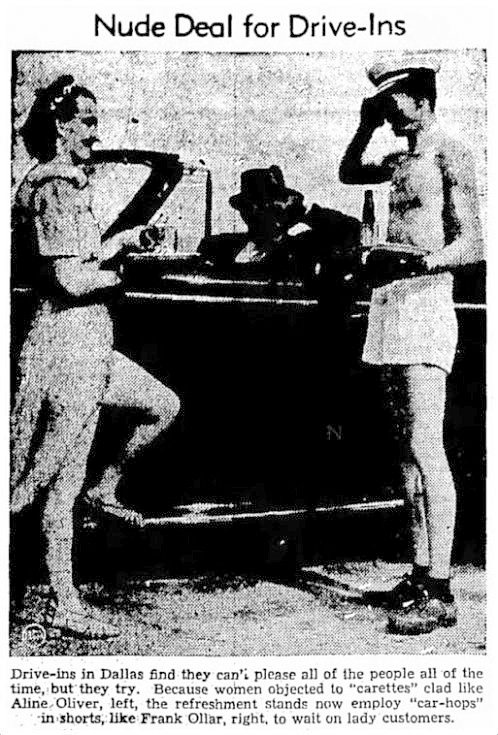
male-car-hops_AP_1940“At your service, ma’am…” / AP Photo

by Paula Bosse

In 1940, Dallas was in a tizzy about the sudden fad of scantily-clad “girl carhops.” This scourge had made its way to Dallas from Houston (brought to Oak Cliff by the enterprising husband and wife team behind Sivils Drive-In), and in April of 1940, it was a newspaper story with, as it were … legs. For a good month or two, stories of sexy carhops were everywhere.

The girls started wearing uniforms with very short skirts — or midriff-baring costumes with cellophane hula skirts. Some of the women reported an increase in tips of $25 or more a week — a ton of money for the time.

The public’s reaction ranged from amusement to outrage. There were reports of community matrons who reported the “indecent” attire to the police department and demanded action. Other women were annoyed by the objectification of young womanhood. Lawmakers in Austin discussed whether the practice of waitresses exposing so much extra skin posed a health risk to consumers.

But it wasn’t until a woman from Oak Cliff piped up that something actually happened. She complained that she didn’t want to look at girls’ legs when she stopped in at her local drive-in — she wanted to look at men’s legs. Drive-in owners thought that was a GREAT idea, and the idea of the scantily-clad male carhop was born.

carhops_FWST_042840Fort Worth Star-Telegram, Apr. 28, 1940 

One might think that the woman behind this “equal ogling” campaign was sort of proto-feminist, until you get to the part where she said that the whole girl carhop thing was “wrong socially and economically and should not be tolerated” (DMN, Apr. 27, 1940) — not because of the skin flashed, but because men needed jobs, not girls. And that also raised hackles. Two married women who had been carhops wrote to the Dallas News to speak up for these girls and women who were “at least coming nearer to making a living wage than at any other time of their existence. […] The girl carhops are either supporting their family or sharing the expenses. […] Why all the storm about a leg? It is nothing more than you see at a movie and a vaudeville” (DMN, May 5, 1940).

The photo at the top ran in newspapers around the country with the headline: “Adonis and Apollo of Roadside Bring Trade to Daring Stand.”

First large roadside stand Friday to bow to the demand of Dallas women and feature husky young male carhops in shorts was the Log Lodge Tavern at Lemmon and Midway where four six-footers found jobs. Above, in blue shorts, white sweatshirt and cowboy boots, Joe Wilcox serves Pauline Taylor who smiles her approval of the idea. Bound for another car is James Smith, at right.

April, 1940 must have been a slow news month, because this story really got around (click to see a larger image).

sexy-carhops_corsicana-daily-sun_042740Corsicana Daily Sun, April 27, 1940

One intrepid reporter even tracked down a Texas Ranger (!) to ask his opinion, to which the Ranger replied, “…letting those roadside glamor boys wear boots is nothing more than a slam at the state. People think of booted Texans as men, not as fancy-panted carhops.” The whole article, below, is pretty amusing.

sexy-carhops_anniston-AL-star_042840Anniston (AL) Star, April 28, 1940

There were other male carhops around town, some not quite so hunky. This guy — game as he was — really needed to reconsider his outfit.

carhops_xenia-ohio-daily-gazette_050340Xenia (Ohio) Daily Gazette, May 3, 1940

But back to the female carhops and their siren-like hold over their male customers. This was, by far, the best story to hit the wires:

sexy-carhops_waxahachie-daily-light_071640
Waxahachie Daily Light,  July 16, 1940

***

Sources & Notes

Top image from the Associated Press, 1940. 

The Log Lodge Tavern was located at 7334 Lemmon Avenue, which was across from Love Field and adjacent to the Log Lodge Tourist Court. It was located approximately where the red circle is below, on a page from the 1952 Mapsco (click for larger image).

lemmon-ave_mapsco-1952

Check out these related articles from The Dallas Morning News:

  • “Skimpiest Costumes Bring Biggest Wages” (DMN, April 24, 1940)
  • “Women To Fight Girl Carhops; Slogan: Let Us See Men’s Legs” (DMN, April 26, 1940)
  • “Adonis and Apollo of Roadside Bring Trade to Daring Stand” (DMN, April 27, 1940)
  • “Word For Carhops Grass Skirts And All” (letter to the editor) (DMN, May 5, 1940)
  • “Went Crazy Over Car Hops, Wife Says of Fugitive” (DMN, July 16, 1940)

UPDATE: This has been a weirdly popular post — it’s gotten thousands and thousands of hits and even resulted in a short radio interview on Dallas’ public radio station, KERA. I don’t really add anything new to this story, but if you’d like to listen to the interview conducted by Justin Martin, it is here.

If you like what you’ve seen on Flashback Dallas, please consider supporting me on Patreon, where for as little as $5 a month, you can receive all-new updates several times a week (if not daily!). More information can be found at Patreon, here.

*

Copyright © 2015 Paula Bosse. All Rights Reserved.
University Park’s Monarch Butterfly Wrangler

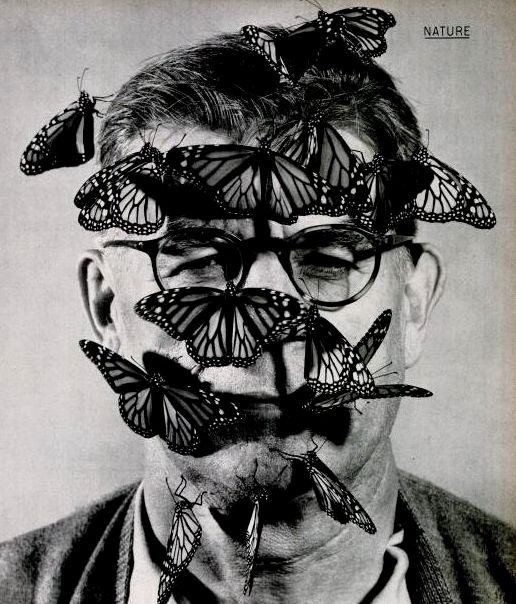
monarch_life_colorCarl Anderson & friends (John Dominis, Time-Life Pictures/Getty Image)

by Paula Bosse

Carl Axel Anderson (1892-1983) was a mild-mannered internal revenue executive by day and a mild-mannered Monarch butterfly expert by night (and weekend … and probably every waking second). Anderson had been interested in insects and butterflies from an early age, and he studied entomology at the University of Minnesota and Columbia. When he was away from the office, he was raising, tagging, tracking, and, perhaps, training Monarch butterflies at his University Park home on Centenary Avenue, which writer Frank X. Tolbert dubbed “the Butterfly Ranch.” Even the neighborhood children — who called themselves The Centenary Monarchs — joined in and learned all about Monarchs from Anderson, their butterfly mentor.

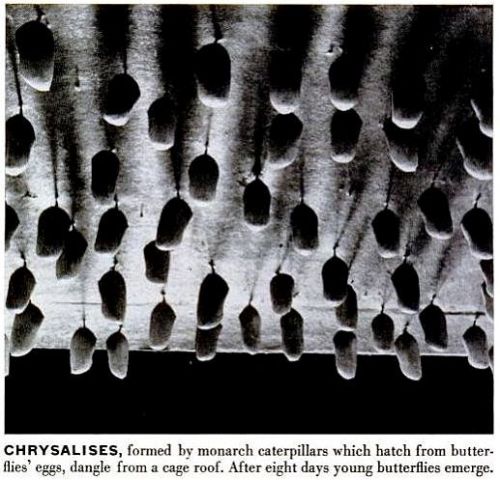
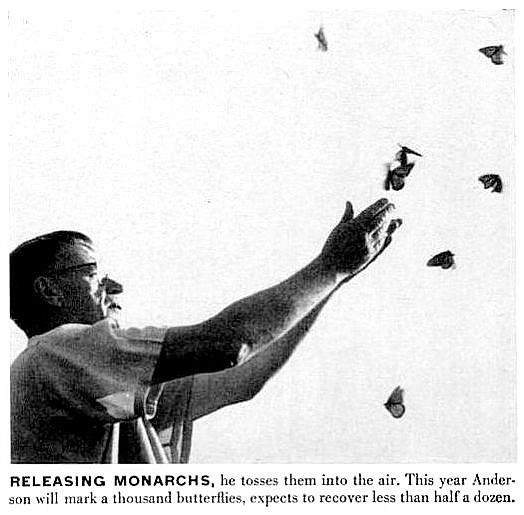
Anderson’s primary interest was studying the migration patterns of the Monarch butterfly, and, conveniently, Dallas was on their pathway, twice a year, so he had a front-row seat. Not only did he observe them passing overhead, he also raised them from eggs laid on the underside of his milkweed plants, enjoyed them as caterpillars, and when they became butterflies, he “branded” their wings painlessly (see below) and released them into the wild, hoping to be able to track their migration from fellow butterfly spotters around the country. He wrote letters to newspapers around the country and mailed hundreds of postcards to groups and individuals, hoping to get his message out. His message, in part:

Monarch butterflies raised from the egg are being released. A number is placed on their wings before they are released. Members of the public are invited to join the observers on the magic carpet of these wings to see where it will take us. Invite your friends and associates to come along, too…. Examine the wings of the Monarch…for numbers or other marks. Allow the butterfly to go on its way after your observation. Please report any observation where marked wings are found….”

In 1950, big news was made when one of his butterflies — one with the number “9” on its wing — was reported to have been seen in California by a 10-year old boy named Ben Harris in Santa Monica, California. That must have been one of the happiest moments of Anderson’s life.

Every year during Monarch migration over Texas, Mr. Anderson was a reliable go-to story for the local media. Particularly fascinated by Anderson and his “butterfly ranch” was Dallas Morning News writer Frank X Tolbert, who wrote about him numerous times. A very early profile by Tolbert rhapsodized about Anderson’s “pet” butterfly Pete which set the tone for all his very sweet subsequent articles about Anderson that appeared over the years. (Next time you’re wandering around in the Dallas News archives, check out Tolbert’s story “An Affectionate Fellow Was Pete the Butterfly” published on May 16, 1948 — but if you like happy endings, beware of the last two paragraphs of the story: personally, I’d advise readers to stop reading when Pete sets off on his journey.)

Anderson was the subject of newspaper and magazine articles all over the country, but the high point was, undoubtedly, his appearance in the pages of Life magazine in 1954, accompanied by the striking photo of him with several of his butterfly pals resting on his face.

monarch_life_052454-a

The caption for this photo reads: “Mottled with Monarchs, butterfly breeder Carl Anderson stares serenely ahead as the domesticated insects swarm all over his face.” (That is NOT a “swarm,” Life!)

The two-page photo spread was titled “Monarch Man: Texan Breeds Bushels of Them To Help Map Butterfly Migration.”

Each spring Mr. Anderson raises hundreds of Monarchs in cages. If released, they flutter about him, looking for a sip of sugar water. When the Monarchs mature, he brands them and turns them out, alerting friends across the U.S. to watch for them. One of Anderson’s butterflies turned up 1,200 miles away. But instead of clarifying the northward migration it added another enigma by flying cross-country and winding up almost directly west of Dallas. (Life, May 24, 1954)

monarch_life_052454-b

monarch_life_052454-c

monarch_life_052454_d

Anderson died at the age of 91, having spent the bulk of his long life engrossed in the study of his beloved Monarch butterflies. This excerpt from a 1955 interview shows a glimpse of the wonder and enthusiasm that kept him fascinated by the butterflies his entire life:

“Just at dusk on Oct. 26, the wind shifted to the north with a velocity of 15 MPH. It brought in a huge cloud of Monarchs riding ahead of the cool front. The cloud changed into the shape of a tremendous, brown, moving carpet of unusual surging design. A signal from some leader or leaders in the great flight designated a grove of our hackberry trees as the resting place for the night. Down came the flying carpet of thousands of butterflies. And in a few minutes every twig was bent by the weight of Monarchs. They took off in small groups the next morning, leaving our Dallas hackberries bare of leaves.” (DMN, May 3, 1955)

Thanks, Carl. I wish I’d known you.

**

Below, a short clip from Oct. 1973 featuring an interview with Carl Anderson by Arch Campbell of Channel 8 News (Campbell mistakenly refers to the park as being Tenison Park — it is Lake Cliff Park).

***

Sources & Notes

Color photo of Carl Anderson by John Dominis (Time & Life Pictures/Getty Image). It is from the same session that produced the slightly different black and white image featured in Life magazine.

The profile of Anderson (which includes the text and photos reproduced above) appeared in the May 24, 1954 issue of Life; it can be accessed here.

The Channel 8 film clip is from the WFAA Collection, G. William Jones Film & Video Collection, Hamon Arts Library, SMU; the direct YouTube link is here.

Read another profile of Anderson from the Bakersfield Californian, “Lepidopterist Traces Branded Butterflies” (July 11, 1949), here.

A bunch of Monarch butterfly sources:

  • “The Monarch Butterfly’s Annual Cycle” from the Monarch Butterfly Fund, is here.
  • “The Monarch Butterfly Journey North News,” a regularly updated blog on the current (overwintering/leading-up-to-Spring 2105) migration, is here.
  • A regularly updated map of Monarch sightings (currently at Winter 2015, showing Monarchs warming up in the bullpen along the Texas coast) is here.
  • An animated map of 2014’s Spring migration is here. UPDATE: An animated map of the Fall/Winter 2015 migration is here.
  • “Monarch Butterflies Could Gain Endangered Species Protection,” from the Scientific American blog, is here. (“Populations of the iconic and beloved Monarch butterfly (Danaus plexippus plexippus) have dropped an astonishing 96.5 percent over the past few decades, from an estimated 1 billion in the mid-1990s to just 35 million in early 2014.”)
  • Information on the Monarch butterfly conservation program — and some beautiful photographs — can be found on the World Wildlife Fund site, here.

Keep your eyes peeled — they’ll be on their way soon

*

Copyright © 2015 Paula Bosse. All Rights Reserved.

The Marietta Mask

marietta-mask_doak_boys-life_oct55SMU football star Doak Walker in an ad from Boys’ Life, Oct. 1955

by Paula Bosse

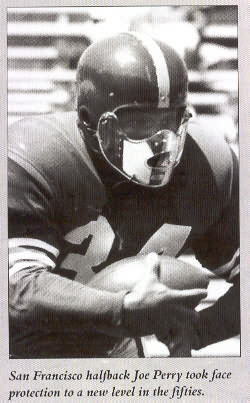
Dr. Thomas M. Marietta (1910-1995), a Dallas dentist, devised a startlingly new invention in 1947: a specially-made facemask. Initially, the mask was created to protect the face of a Dallas hockey player who had recently sustained a broken nose and would have been unable to play without a mask for fear of further injury. Marietta’s creation was a success — not only did the player get back on the ice, but tentative inquiries from other sports teams began to trickle in. But what changed everything were the masks he made for TCU’s star quarterback Lindy Berry, who had suffered a broken jaw, and Texas A&M’s fullback Bob Smith, who had a badly broken nose. Without the odd-looking masks that protected their entire faces, they would not have been able to play out the seasons. The masks were an unqualified success, and the doc went commercial.

marietta-face-mask_marion-OH-star_112251_wireDr. Marietta (Marion Ohio Star, Nov. 22, 1951 — full article is here)

In 1951, football players did not generally wear facemasks. It was commonplace for players to rack up a dizzyingly large number of injuries such as broken and dislocated jaws and noses, knocked-out teeth, facial lacerations, major bruising, concussions, etc. An article appeared in The Dallas Morning News on Aug. 31, 1951 describing what this whole facemask thing was about and how the Texas Aggies were about to try a revolutionary experiment by equipping “possibly half of the A&M team” with Dr. Marietta’s newfangled masks. Coach Ray George approved a trial test of the masks, saying that his primary concerns were reduction of facial injuries, elimination of head injuries, and improvement of athletic performance. A&M’s trainer, Bill Dayton, predicted that the wearing of facemasks would become universal among players in the coming years.

Many head injuries happen as the result of a player ducking his head. We believe that by the use of this face gear we can eliminate head ducking, and our players will see where they are going. When they watch their opponents, they are able, by reflective action, to keep their heads out of the way. (A&M trainer Bill Dayton, DMN, Aug. 31, 1951)

The various incarnations of the Marietta Mask over the next couple of decades were used in various sports by children, by college athletes, and by professionals. Dr. Marietta patented several designs for masks and helmets and had a lucrative manufacturing business for many years. In 1977 the business was sold, and the Marietta Corp. became Maxpro, a respected name in helmets.

Football and hockey will always be extremely physical sports with the very real possibility of injury, and though there’s need for further improvement, Dr. Marietta’s invention helped lower the danger-level quite a bit. Thanks to a mild-mannered dentist from Dallas, a lot of athletes over the years managed to avoid all sorts of nasty head and facial injuries. Thanks, doc.

*

marietta-mask_corbis_oct1954Oct. 1954 (©Bettmann/CORBIS)

marietta_joe-perry

marietta-mask_envelope

***

Sources & Notes

Photo ©Bettmann/CORBIS; the original caption: “An outer-space look is given by this all-plastic mask lined with foam rubber. It was designed by Dr. M. T. Marietta, a Dallas, Texas dentist.”

Joe Perry photo from HelmetHut. To see some pretty wacky versions of early masks from a Marietta catalog, see images from HelmetHut.com, here.

Read the following newspaper articles:

  • “Mask Maker: Dentist Helped Wolves Win Title (Abilene Reporter-News, Nov. 29, 1950) — regarding the Colorado City (TX) Wolves and their injured player, Gerald Brasuell, the team’s tackle who wore Dr. Marietta’s mask and was able to play despite having a triple-fracture to his jaw, here
  • “Broken Jaw Protection: Doctor’s Face Mask Enables Injured Gridders To Play” (Marion, Ohio Star, Nov. 22, 1951), here

To see several of Marietta’s patents (including abstracts and drawings), see them on Google Patents, here.

And to read an interesting and entertaining history of the football facemask (and I say that as someone who isn’t really a sports person), check out Paul Lukas’ GREAT piece “The Rich History of Helmets,” here. (If nothing else, it’s worth it to see the cool-but-kind-of-weird-and-scary, crudely-fashioned, one-of-a-kind facemask made out of barbed wire wrapped in electrical tape!)

And because a day without Wikipedia is like a day without sunshine, the facemask/face mask wiki is here.

*

Copyright © 2015 Paula Bosse. All Rights Reserved.

“Trailerville” by Charles T. Bowling — 1940

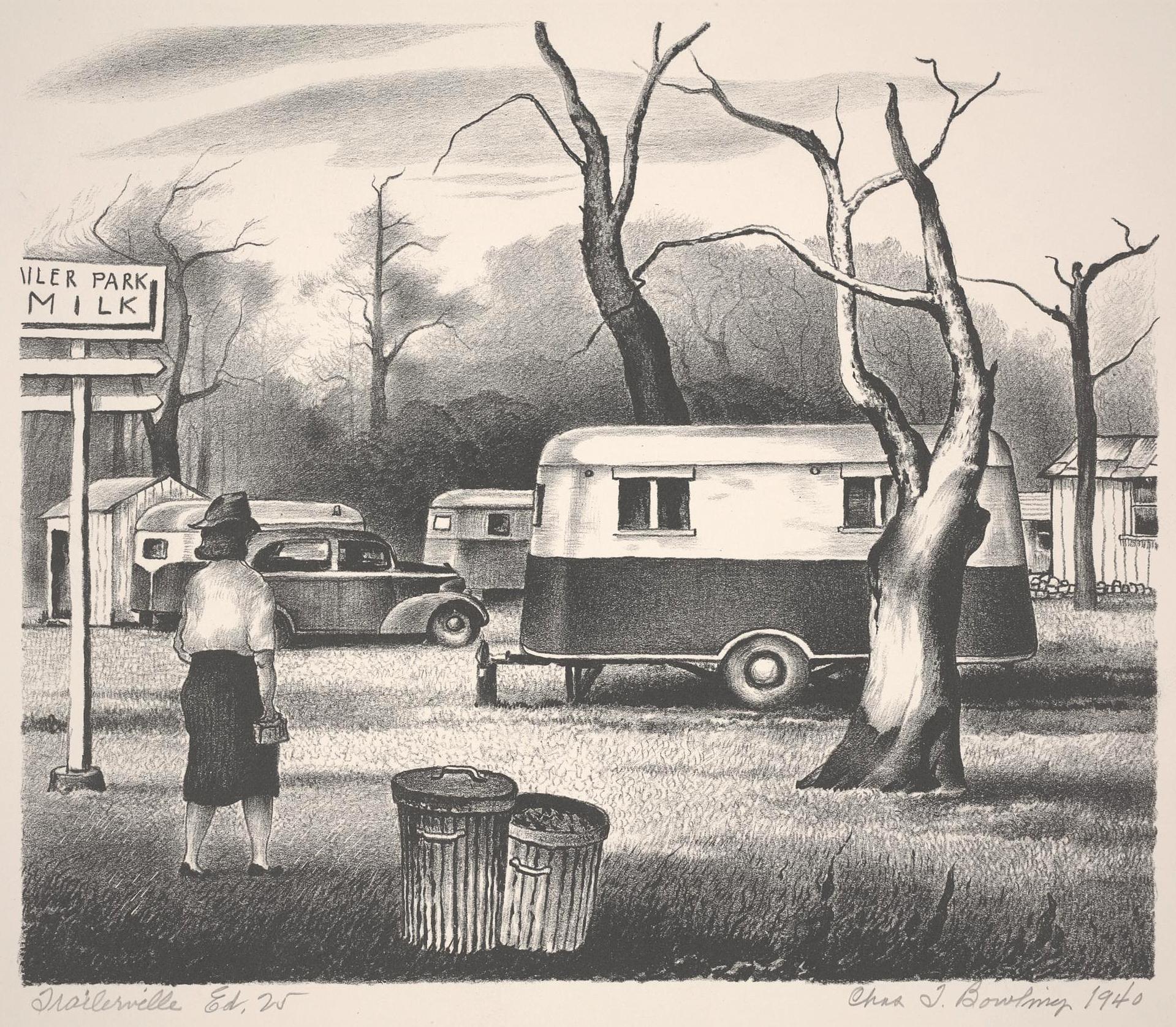
bowling_trailerville_1940_dma(Dallas Museum of Art)

by Paula Bosse

A 1940 lithograph by one of my favorite Dallas artists, Charles Bowling (1891-1985). I don’t know if this trailer park was in Dallas, but I certainly hope so.

***

This lithograph is in the collection of the Dallas Museum of Art, a gift of A. H. Belo Corporation and The Dallas Morning News. More info can be found at the DMA website, here.

Biographical information on Bowling can be found here.

Image is much larger when clicked.

*

Copyright © 2015 Paula Bosse. All Rights Reserved.

The Dallas Athletic Club Building, 1925-1981

dallas-athletic-clubThe Dallas Athletic Club, 1920s

by Paula Bosse

Dallas’s premier architects Lang & Witchell designed the Dallas Athletic Club building. It was built between 1923 and 1925 on a triangular piece of land located at St. Paul, Elm, and Live Oak, its entrance facing St. Paul. It was one of the city’s top private clubs, catering to Dallas’ businessmen. Aside from sports and recreational facilities — swimming pools (for men and women), gymnasiums, games courts, billiard rooms, etc. — the club also offered meeting rooms, a dining room, a ballroom, and lounges. It also offered use of hotel-like “rooms” to members and their guests. (If it was anything like old movies from this period, I assume it was a handy place to stay if a DAC member was in the doghouse with his wife — or in the midst of divorce proceedings. “If the VP from the home-office calls, Miss Klondike, I can be reached at my room at the club.”) The building also housed a variety of non-DAC-related businesses and offices — my great aunt had a hat shop there in the late 1930s and early 1940s.

The Athletic Club was a major social and recreational spot for years and was something of a landmark in the east end of downtown. In the 1950s the membership opened a country club and golf course near Mesquite but kept the downtown facility open as well. But with suburbia’s surge and downtown’s decline, it was only a matter of time until the club closed the downtown facility. The DAC finally sold the building in 1978, and it was demolished in 1981 to make way for the 50-story 1700 Pacific tower. It had a good run.

*

Before construction began, an artesian well was dug on the property.

dac_artesian-well_dmn_031722DMN, March 17, 1922

When it was finished five months later, “water sufficient to produce 300,000 gallons of water every twenty-four hours was reached” (Dallas Morning News, Aug. 20, 1922).

*

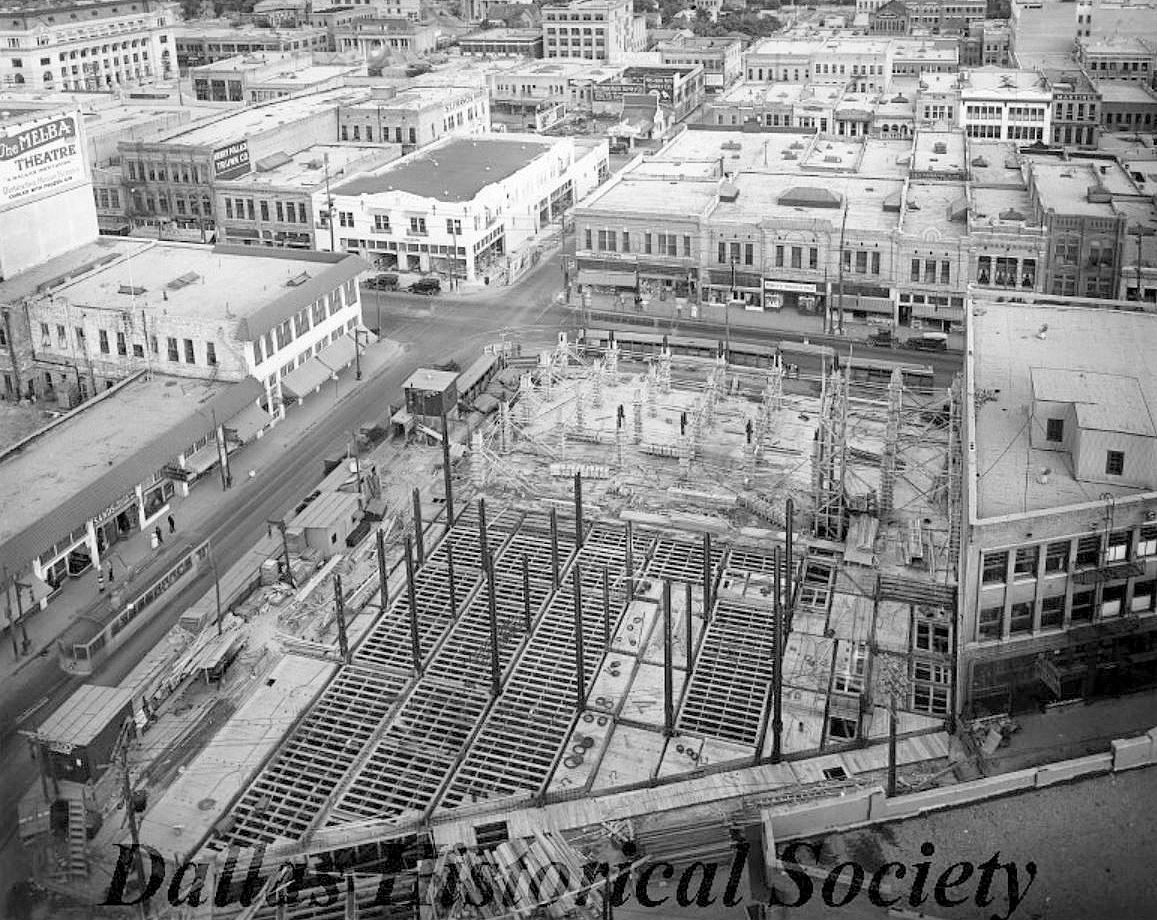
Photo by Charles Erwin Arnold showing construction in progress:

dallas-athletic-club_construction_DHSvia Dallas Historical Society

*

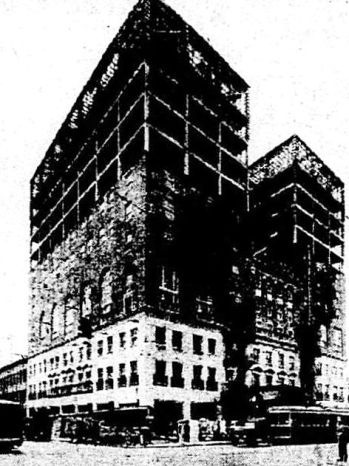
dac_construction_dmn_112523

The progress made to date on the new home of the Dallas Athletic Club Building, which is under construction. […] The picture was snapped from an upper floor of the Medical Arts Building. […] The facing for the three lower floors is of gray Bedford stone. The exterior walls for the upper floors will be of dark red brick. The large openings extending from the fourth to sixth floors will contain the massive windows over the men’s swimming pool. The men’s gymnasium will be on the south side of the fourth floor. When completed, the building will cost approximately $2,000,000, and it will be the most modern athletic club in the United State, according to club officials. (DMN, Nov. 25, 1923)

*

dac_berloy-ad_1924_cropAd for “Berloy Floor Cores” from 1924. Great photo!

*

dac_construction_dmn_111624

Work is nearing completion on the concrete framing for the five upper floors of the thirteen-story Dallas Athletic Club building at Elm and St. Paul street, and bricklaying will be started probably this week. The five upper floors will be used for office purposes, with the club quarters on the eight lower floors, except for some storerooms facing the two streets. (DMN, Nov. 16, 1924)

*

dallas-athletic-club_so-this-is-dallas_c1946_sm1946-ish (click for much larger image)

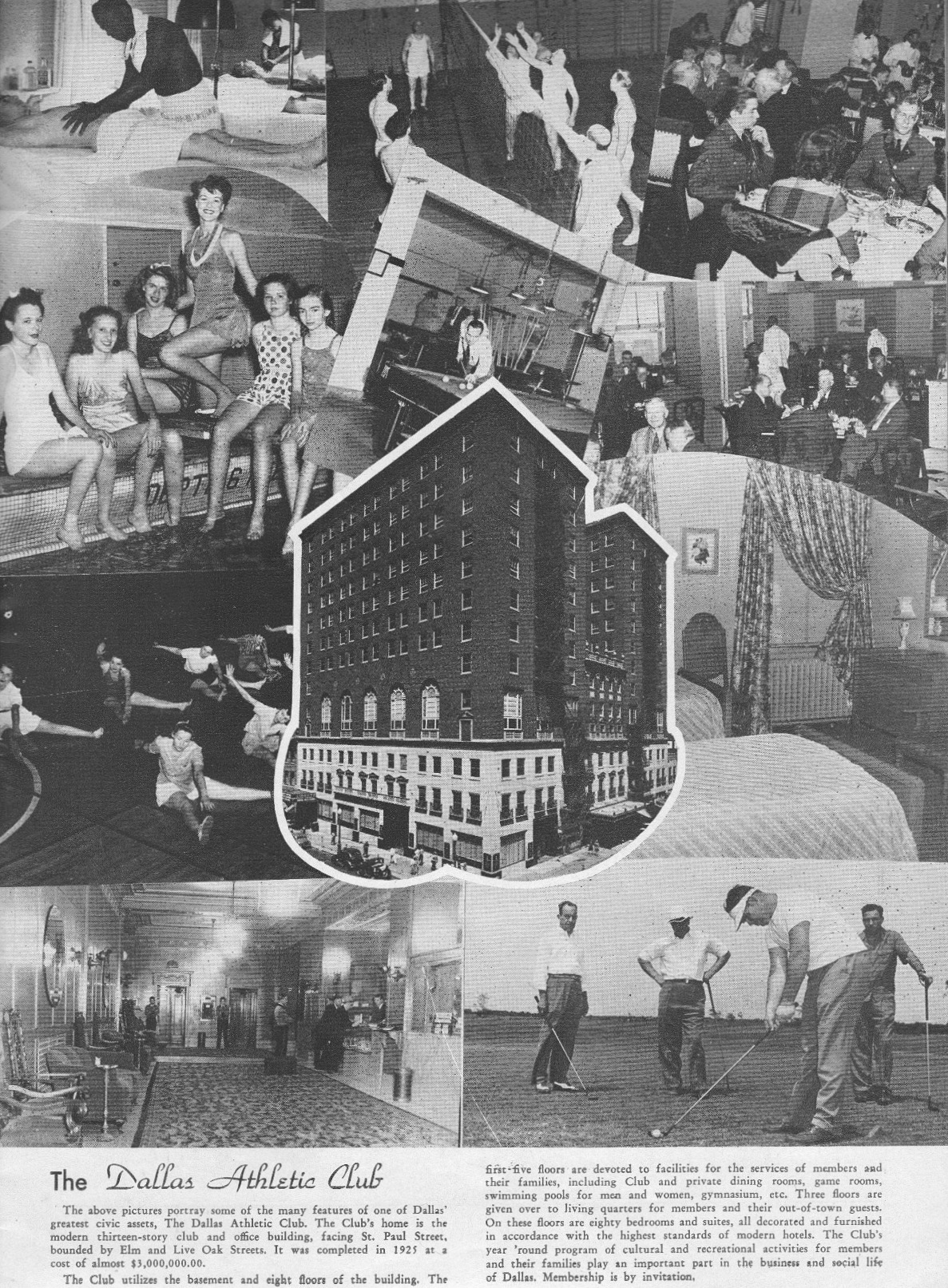
The above pictures portray some of the many features of one of Dallas’ greatest civic assets, the Dallas Athletic Club. The club’s home is the modern thirteen-story club and office building, facing St. Paul Street, bounded by Elm and Live Oak streets. It was completed in 1925 at a cost of almost $3,000,000.

The Club utilizes the basement and eight floors of the building. The first five floors are devoted to facilities for the services of members and their families, including clubs and private dining rooms, game rooms, swimming pools for men and women, gymnasium, etc. Three floors are given over to living quarters for members and their out-of-town guests. On these floors are eighty bedrooms and suites, all decorated and furnished in accordance with the highest standards of modern hotels. The Club’s year ’round program of cultural and recreational activities for members and their families play an important part in the business and social life of Dallas. Membership is by invitation.  (“So This Is Dallas,” a guide for newcomers to the city, circa 1946)

*

dac_smu_1938-crop

Aerial view from 1938, looking east; the DAC is in the center, with Elm Street to the right. (SMU)

*

dallas-athletic-club_matchbook_cook-collection_degolyer_smu_a     dallas-athletic-club_matchbook_cook-collection_degolyer_smu_b
1950s matchbook, via SMU

*

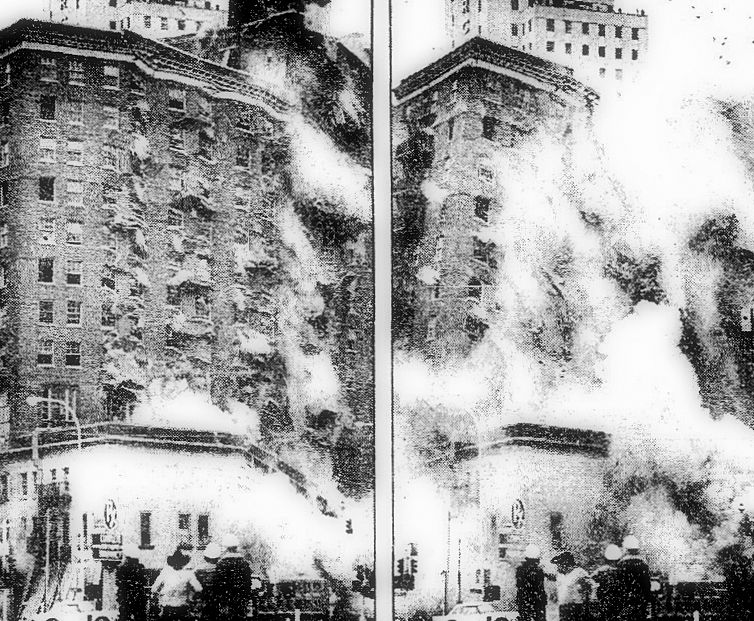
In March, 1981 it was announced that the building would be imploded.

The former Dallas Athletic Club building, which for 53 years served as a health club and meeting place for Dallas businessmen, will be imploded. […] A 50-story office building will be constructed on the site. The 57-year-old building has been empty since the club moved from the building in 1978. (Dallas Morning News, March 22, 1981)

And on March 22, 1981…

dallas-athletic-club_demo_dmn_032381a

dallas-athletic-club_demo_dmn_032381bDMN, March 23, 1981

The end of an era.

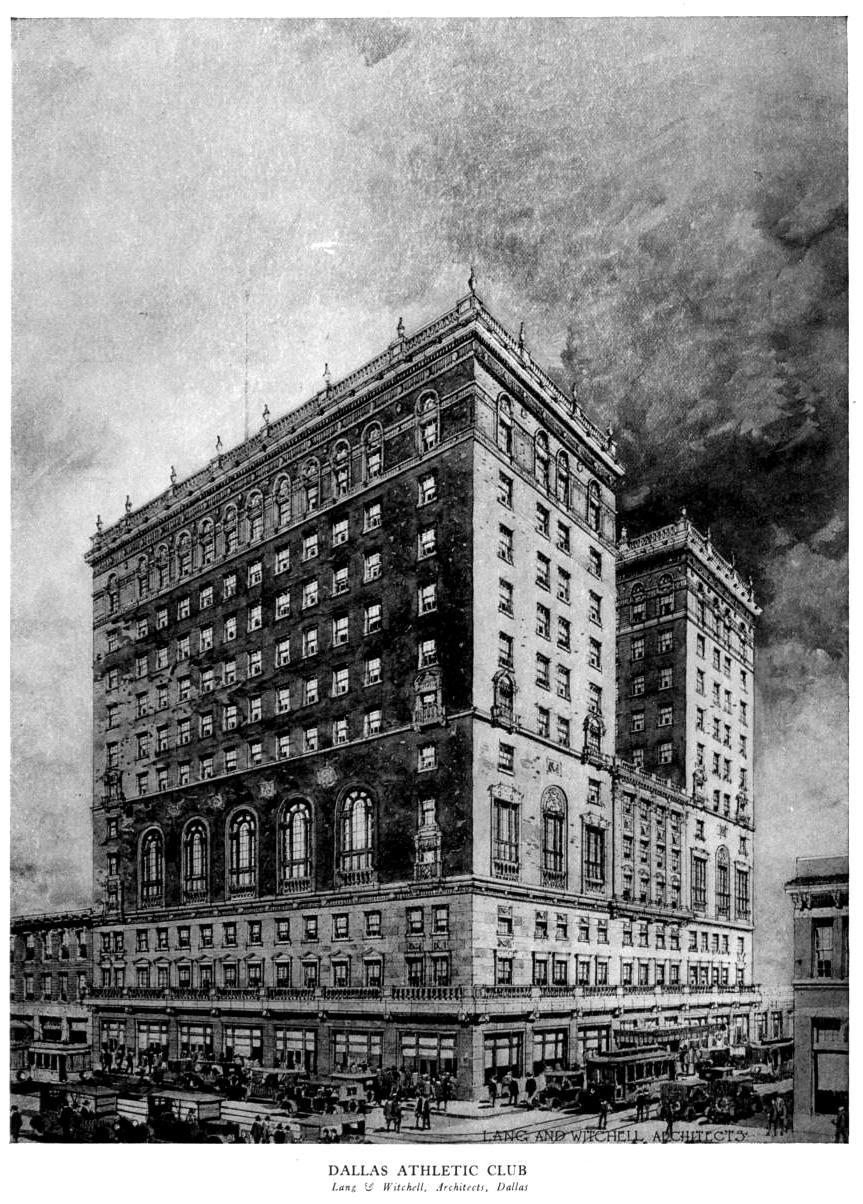
But let’s remember happier times for the Dallas Athletic Club building and gaze at this idealized version from Lang & Witchell’s original drawing (circa 1922).

dallas-athletic-club_drawing_arch-yrbk_1922

***

Sources & Notes

Bird’s-eye view of the construction site is by Charles Erwin Arnold and is from the Arnold Photographic Collection, Dallas Historical Society; its ID number is A.68.28.17.

Aerial view is a detail from a photograph taken by Lloyd M. Long in 1938; it is from the Edwin J. Foscue Map Library, Southern Methodist University. The full photo can be seen here; the same photo, with buildings labeled, is here.

Lang & Witchell drawing from The Yearbook of the Dallas Architectural Club, 1922.

Dallas Morning News clippings and photos are as noted.

Live Oak used to cut through the block bounded by St. Paul, Elm, Ervay, and Pacific. To get an idea of where the building was, here is a 1962 map of the area (the full map can be seen here).

map_1962

The Dallas Athletic Club is still around. Their website is here.

*

Copyright © 2015 Paula Bosse. All Rights Reserved.

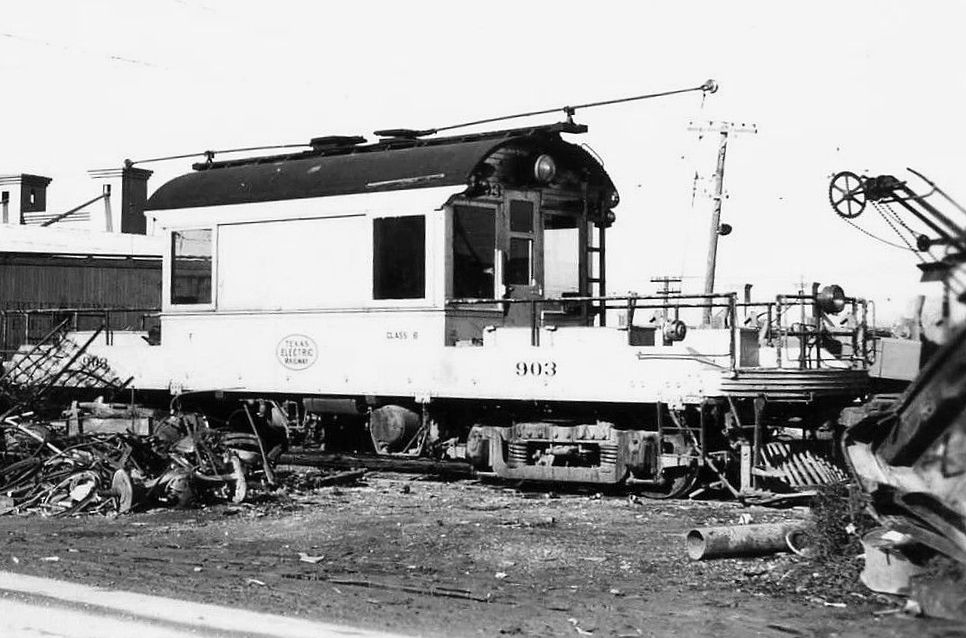
Interurbans: Freight Movers?

People-mover, above; freight-mover, below…

by Paula Bosse

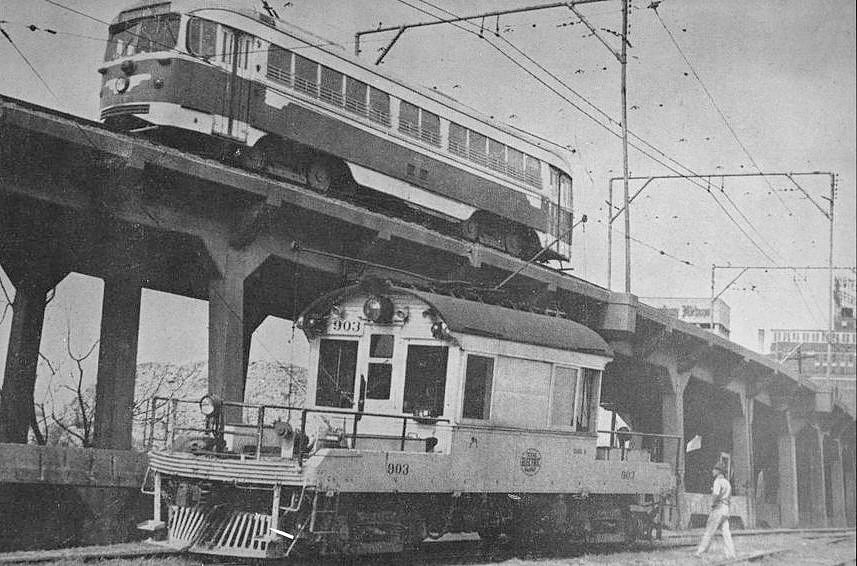
When I saw this photo, I had no idea what I was looking at — what was that odd-looking thing in the foreground? A couple of rail enthusiasts informed me that it was an interurban freight engine on rail tracks beneath the old elevated interurban/streetcar trestle that spanned the Trinity. This is the Dallas side, with the Dallas Morning News building and the Hotel Jefferson in the background, to the north. (You can see the tracks running right next to the DMN in a photo in a previous post, here.) According to one of the experts:

The interurban did some exchange of freight cars with the regular railroads and the exchange tracks were under the streetcar/interurban viaduct. This track merged with the streetcar tracks at the foot of the viaduct right next to the DMN.

The interurban, though primarily a mover of people, also hauled freight. With more than 200 miles of track across North Texas, the Texas Electric Railway was the largest interurban railway operator in the South. But its glory days were starting to wane as the popularity of automobiles increased. By the ’20s, freight-moving was added to the company’s services, generating welcomed revenue.

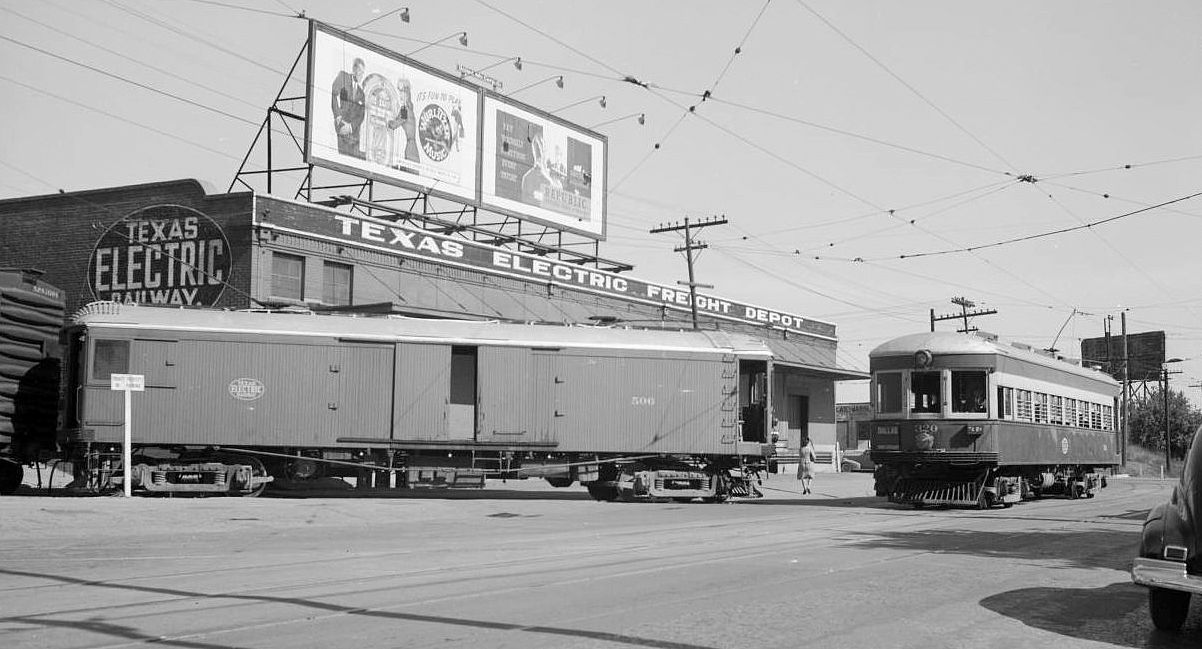
The interurban freight depot — seen below in 1946 — was located just east of Ferris Plaza. At the left, part of a railroad freight car is visible, in the middle, an interurban freight car, at the right, an interurban (passenger) streetcar, and at the far right, an automobile. And some crazy person walking.

freight_interurban_denver-pub-lib_1946

But the automobile eventually proved too popular, and more and more people began using trucks for hauling. After 40 years in business, the Texas Electric Railway interurban ceased operations in 1948.

*

When searching around for possible other images of engine 903 (as seen in the top photo), I found it hanging out over on eBay — described as being in the “Waco car house yards” in 1944. Small world.

engine-903_ebay

***

Sources & Notes

Top image found on Flickr.

Photo of the freight depot taken by Robert W. Richardson on April 27, 1946; from the Western History/Genealogy Dept., Denver Public Library.

Bottom photo (cropped) from eBay..

Interurban freight operation Wikipedia entry here.

Texas Electric Railway: Handbook of Texas entry here; Wikipedia entry here.

MANY photos of various Texas Electric Railway freight motors and locomotives, here.

And, lastly, great photos from around Dallas in CERA’s “Texas Electric and the Journey to DART,” here.

(Thanks to Bob J. and Robert P. for their helpful info!)

*

Copyright © 2014 Paula Bosse. All Rights Reserved.