Flashback : Dallas

A Miscellany: History, Ads, Pop Culture

Category: 1940s

Ann Wedgeworth: 1934-2017

wedgeworth_ann

by Paula Bosse

The actress Ann Wedgeworth has died. If you don’t know her by her name, you probably know her by her face, or, even more likely, by her voice. I’m always impressed when actors are able to retain their natural accents without having to homogenize them to meet Hollywood standards, and Wedgeworth’s Texas accent was pretty thick. I would bet hard cash she reminds you of someone you know or someone in your own family.

Even though she had worked as an actor since she was a teenager — in school productions, small regional theaters, off-Broadway, Broadway, TV, soap operas, and movies — it was probably her short-lived role as Lana on Three’s Company which brought her to the attention of the widest audience.

Elizabeth Ann Wedgeworth was born in 1934 in Taylor County and spent her early years in Snyder and Perryton, Texas, where her father had been the superintendent of schools (her mother died when she was 2); she arrived in Dallas around 1946 when she was about 12 years old. Her father worked in conjunction with SMU and the Veteran’s Administration for a time before becoming a longtime employee of the City of Dallas; her stepmother was a student counselor at Highland Park Junior High School.

She attended high school in Highland Park, graduating from HPHS in 1950 (the same year as her school friend, Jayne Mansfield). She began her acting career when she was a teenager, racking up quite a lot of experience in Dallas theater productions and in a Colorado stock company. She focused on acting during college, which included both SMU and the University of Texas — she probably met her future husband Rip Torn in Austin, where he was a fellow actor who had been active in the UT theater program (and who was, incidentally, the cousin of future actress Sissy Spacek). The couple was married in Dallas in 1955, at the First Methodist Church (which I wrote about here). They lived in Killeen briefly until Torn’s military stint at Ford Hood was up, then they headed to New York City, where the couple began to find acting work fairly quickly. The two had one daughter and divorced in 1961; she remarried and had another daughter. (More about Ann Wedgeworth can be read in the Wikipedia entry here.)

Ann worked a lot, and, as I said, I’m pretty sure you’ve seen her in something. Though known mostly for her work in TV and movies, she won a Tony Award in 1978 for her role in Neil Simon’s Broadway play Chapter Two. Her breathlessly exuberant (and charmingly ditzy) acceptance speech is amusing (I am such a sucker for that accent!):


*
Ann Wedgeworth died on November 16, 2017; she was 83 years old.

*

wedgeworth-ann_HPHS_sophomore-1948Highland Park High School sophomore, 1948
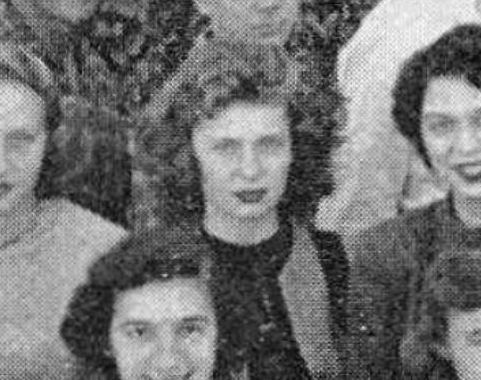
wedgeworth-ann_HPHS_junior_1949HPHS junior, 1949

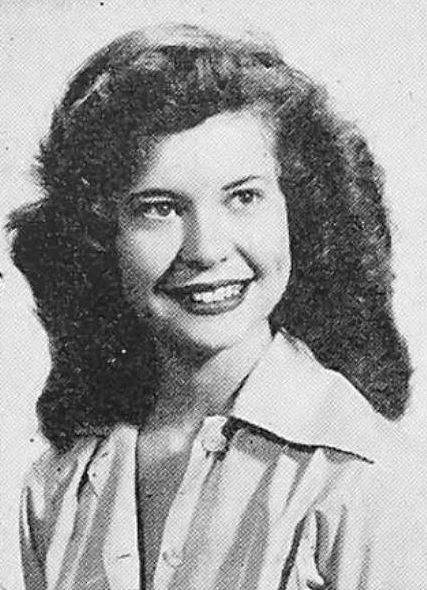
wedgeworth-ann_HPHS_senior_1950
wedgeworth-ann_HPHS_senior_1950_info
HPHS senior, 1950

wedgeworth-ann_smu_freshman_1951SMU freshman, 1951

wedgeworth-ann_smu_campus_022252_photo
SMU sophomore, 1952

wedgeworth-ann_smu_campus_030552_cronyn
Appearing on national radio with Hume Cronyn, 1952

wedgeworth-torn_longview-news-journal_020655

wedgeworth-torn_longview-news-journal_020655_caption1955 announcement of her marriage to Rip Torn
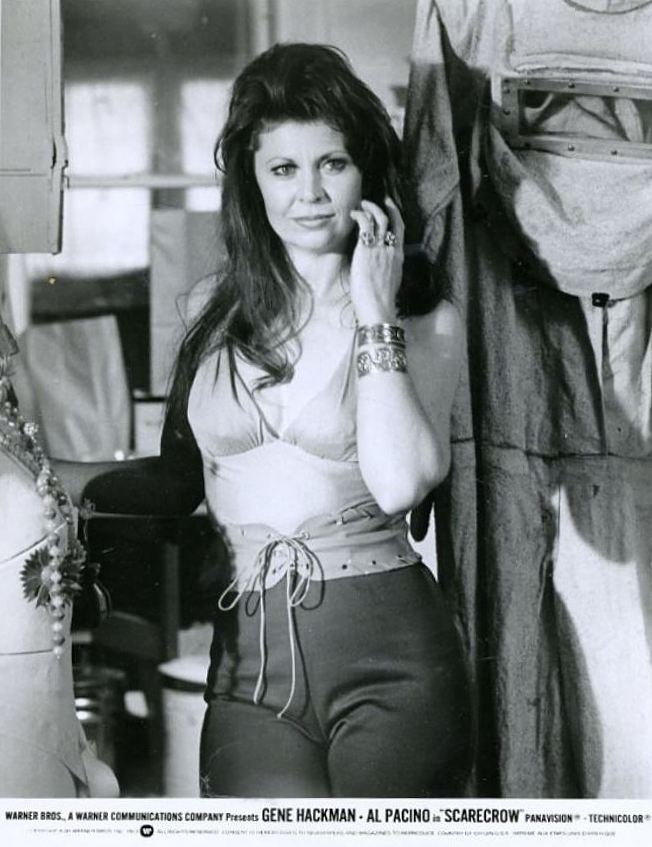
wedgeworth-ann_scarecrow_1973Publicity photo for the 1973 movie “Scarecrow”
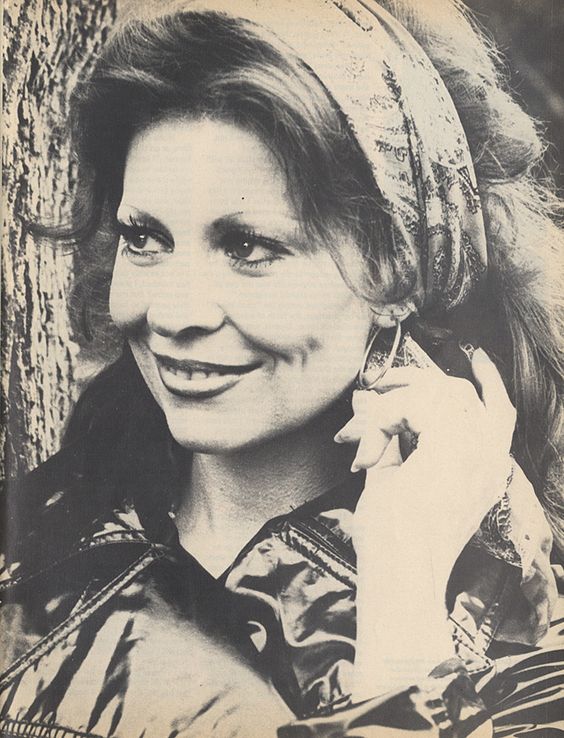
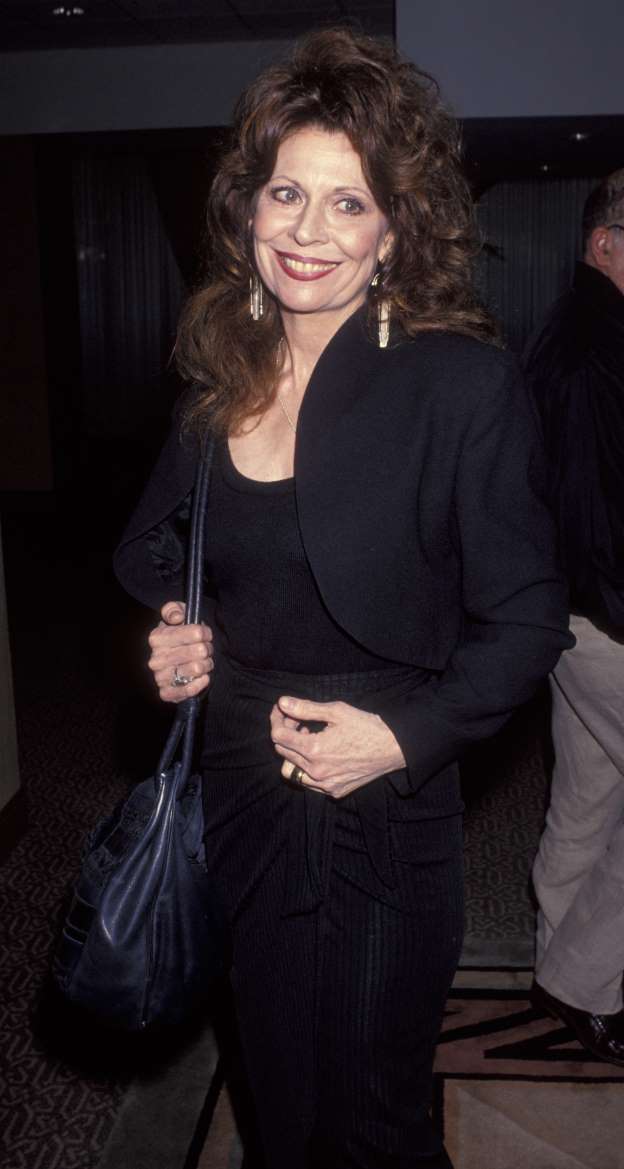
wedgeworth_pinterest

wedgeworth-ann

ann-wedgeworth
photo via Lipstick Alley

***

Sources & Notes

Ann Wedgeworth’s obituary in The Washington Post can be found here.

School photos are from Highland Park High School and Southern Methodist University yearbooks.

The photo of 18-year-old Ann with Hume Cronyn appeared in the SMU Campus newspaper on March 5, 1952. (I believe Ann came in second in the competition.)

The wedding announcement of Ann and Rip Torn appeared in the Longview Daily News  on Feb. 6, 1955. (Rip Torn was born Elmore Rual Torn, Jr. — as a kid he was actually known as “Skip” Torn. …Doesn’t have quite the same ring to it….)

Most photos and clippings are larger when clicked.

*

Copyright © 2017 Paula Bosse. All Rights Reserved.
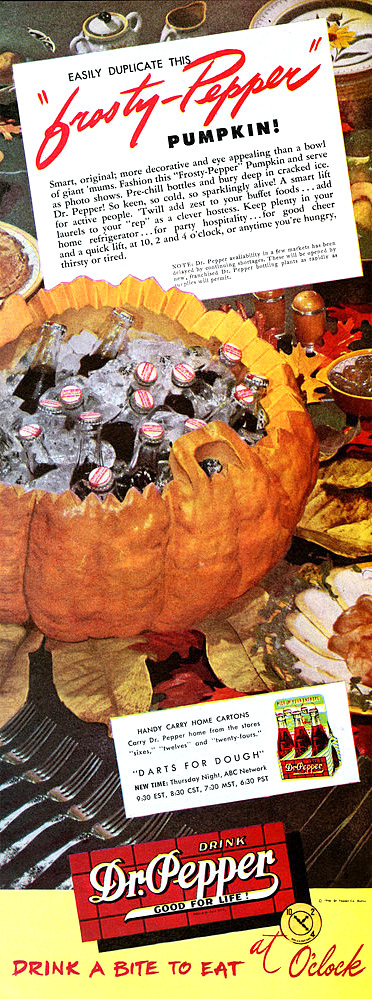
Halloween Party? Don’t Forget the Dr Pepper! — 1947

dr-pepper_halloween_1947_flickr“‘Twill add zest to your buffet foods…”

by Paula Bosse

(While searching for a Halloween advertisement, I unexpectedly came across reports of a federal grand jury case brought against Dallas-based Dr Pepper for violating strict wartime sugar-rationing. Scroll down to read about the legal case.)

Happy Halloween! Might I propose an eye-catching party suggestion? The “Frosty-Pepper Pumpkin”! Hollow out a pumpkin, fill it with cracked ice, and load it up with bottles of Dr Pepper. Voilà!

The text of the ad, from the fall of 1947:

EASILY DUPLICATE THIS “frosty-Pepper” PUMPKIN!

Smart, original; more decorative and eye appealing than a bowl of giant ‘mums. Fashion this “Frosty-Pepper” Pumpkin and serve as photo shows. Pre-chill bottles and bury deep in cracked ice. Dr. Pepper! So keen, so cold, so sparklingly alive! A smart lift for active people. ‘Twill add zest to your buffet foods … add laurels to your “rep” as a clever hostess. Keep plenty in your home refrigerator … for party hospitality … for good cheer and a quick lift, at 10, 2 and 4 o’clock, or anytime you’re hungry, thirsty or tired. 

NOTE: Dr Pepper availability in a few markets has been delayed by continuing shortages. These will be opened by new, franchised Dr. Pepper bottling plants as rapidly as supplies will permit.

HANDY CARRY HOME CARTONS
Carry Dr Pepper home from the stores 
“sixes,” “twelves” and “twenty-fours.”
 
“DARTS FOR DOUGH”
NEW TIME: Thursday Night, ABC Network
9:30 EST, 8:30 CST, 7:30 MST, 6:30 PST

Drink Dr. Pepper
GOOD FOR LIFE!

DRINK A BITE TO EAT at 10, 2 and 4 o’clock

***

Sources & Notes

Ad found on Flickr, here.

“Darts for Dough”? I had to look that up. It was a radio game show involving quizzes and dart-throwing, created by Orval Anderson and Bert Mitchell at WFAA radio. It debuted in the summer of 1943 as a strictly local program, but it’s popularity was such that it moved to Hollywood in August, 1944 and — still run by the WFAA creators — it began to be broadcast “coast to coast” for several years, moving to television by 1950. It was originally developed in Dallas as a sponsorship vehicle for Dallas-based Dr Pepper and was frequently advertised as “Darts for Dough — The Dr Pepper Show.”

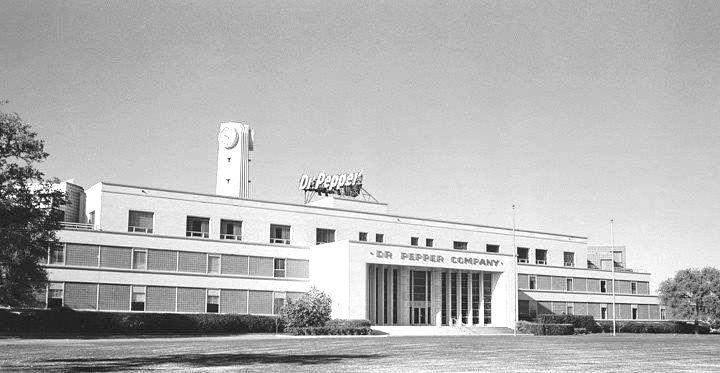
1947 was a big year for Dr Pepper — that was the year their beautiful (and sorely missed) plant opened at Mockingbird and Greenville.

dr-pepper-plant_pinterest

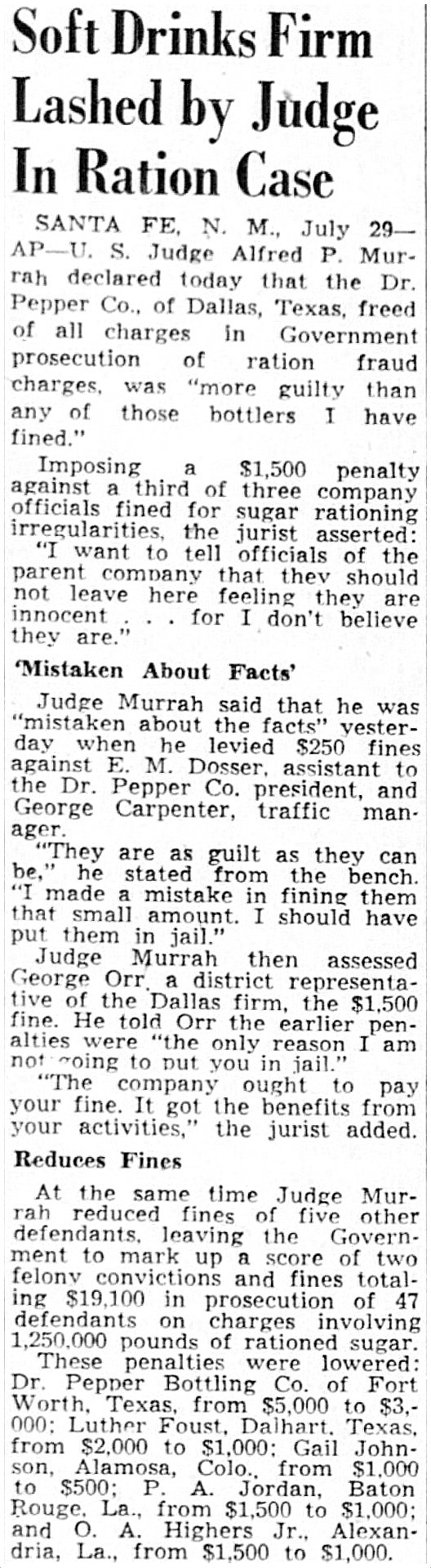
1947 was also a noteworthy year for the company, because of a large federal grand jury indictment which charged several corporations and individuals — including Dr Pepper and some of its bottlers and employees — with sugar-rationing violations (these “irregularities” appear to have begun in the last months of World War II, when wartime food rationing was still serious business). Black-market sugar! A district representative of Dr Pepper was assessed a small fine, but charges of conspiring to violate sugar-rationing regulations which were brought against the DP parent-company were ultimately dismissed, a ruling which angered Federal Judge Alfred P. Murrah, who seems to have been extremely unhappy about the dismissals, as can be read in his blistering statement below.

dr-pepper_sugar-rationing-case_waco-news-tribune_073047
AP story, via Waco News-Tribune, July 30, 1947

Two of the individuals charged in the case — New Mexico residents — received prison sentences in what was described as “the largest black market sugar operation on record,” involving over a million pounds of sugar.

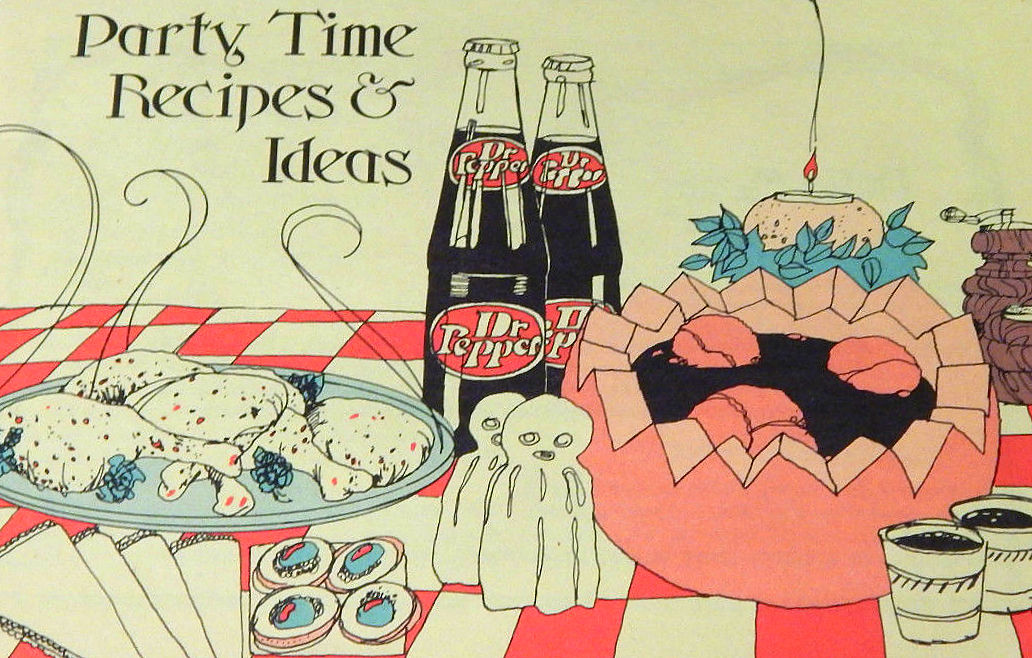
This “Happy Halloween!” post took a bit of an unexpected dark detour. Let’s cleanse our palate with something happier: another party idea with Dr Pepper and a hollowed-out pumpkin (found on eBay).

halloween_dr-pepper_booklet_ebay

More Halloween posts from Flashback Dallas can be found here.

*

Copyright © 2017 Paula Bosse. All Rights Reserved.
 

Neiman-Marcus Welcomes You to the Fair with Jeweled Mementos and Picasso Paintings — 1948

n-m_picasso_1948_fair_jewelryN-M’s 1948 “mementos of Texas…” (click for larger image)

by Paula Bosse

For many who come to Dallas from all across the state to visit the State Fair of Texas, a trip downtown to see the legendary Neiman Marcus department store is a must-see item on the itinerary. This was perhaps more the case years ago when the store was still owned by members of the Marcus family who were eager boosters of the annual event and placed several ads each year which graciously welcomed State Fair visitors to the city. For many years Neiman’s offered “souvenirs” for the tourists, ranging from relatively inexpensive Texas-centric knick-knacks to very expensive Texas-centric knick-knacks.

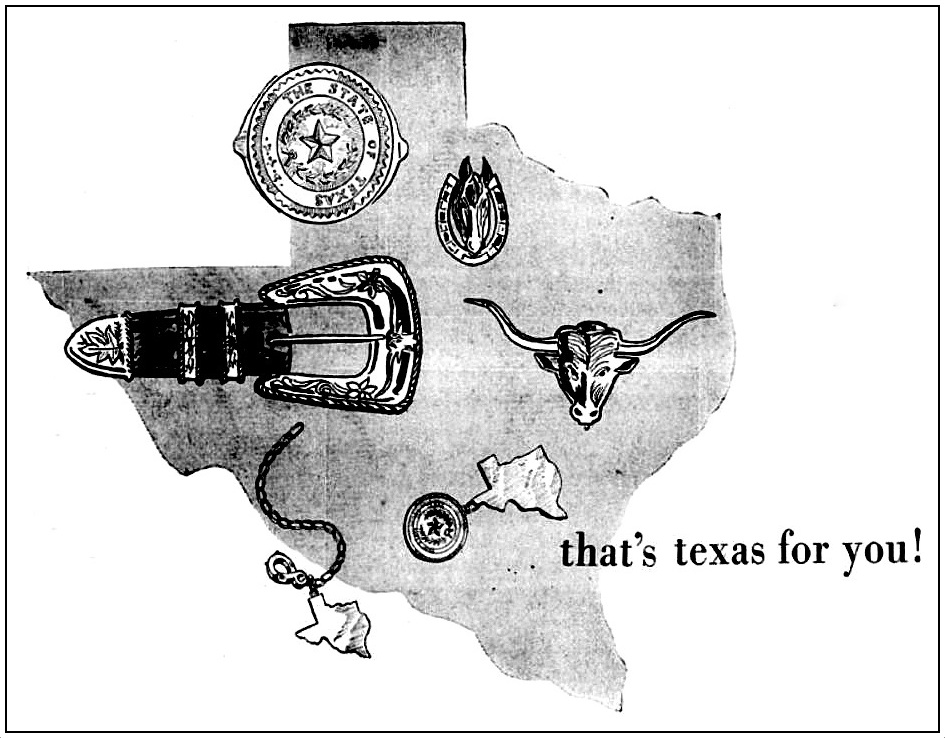
The 1948 N-M offerings can be seen below in an ad that boasts “A 14K gold welcome to Dallas and the State Fair!” (Click the ad below to see a larger image — to see an image of the ad copy alone, click here.)

ad-neiman-marcus_state-fair_1948_full

Here are the trinkets which no doubt wowed them back home in the nicer neighborhoods of Houston and Midland. (I’ve included ball-park prices in today’s money– according to the whiz-bangy Inflation Calculator — in parentheses.)

  • Texas Seal containing circular knife and file: $55 (about $550 in today’s money)
  • Gold belt buckle, made to order: $325 ($3,300)
  • Hand-tooled belt: $5 ($50)
  • Scarf clip, horse with ruby eyes and ruby studded collar: $500 ($5,100)
  • Hand-carved scarf pin, gold steer head with ruby eyes: $500 ($5,100)
  • Pocket key chain with Texas charm: $45 ($450)
  • Texas chain and Texas seal cuff links: $80 ($800)

For the cheap monogrammed hats, giant sunglasses, and salt water taffy, you’d have to head to Fair Park.

Another attraction at Neiman’s during the 1948 State Fair of Texas was an art exhibit: the first showing in Texas of original works by Pablo Picasso. The exclusive show was specifically scheduled to coincide with the State Fair and was prominently displayed on the 4th Floor of the store, in the Decorative Galleries. Twelve canvases — some never before seen in the United States — were “secured directly from Picasso’s studio at Antibes in Southern France,” via Samuel M. Kootz, Picasso’s rep in the U.S. Think about that for a second: in 1948 Pablo Picasso was the world’s most famous living artist, and there was an exhibit of his recent works — some never before seen in the United States — in a department store. In Texas. That was, as they say, a pretty good “get” for the soon-to-be President of the company, Stanley Marcus.

The Picasso exhibit was an early example of Neiman-Marcus’ dedication to bringing international arts and culture to Dallas — an idea which later manifested itself in the store’s Fortnight celebrations (which also ran to coincide with the State Fair in order to maximize publicity, foot traffic, and sales).

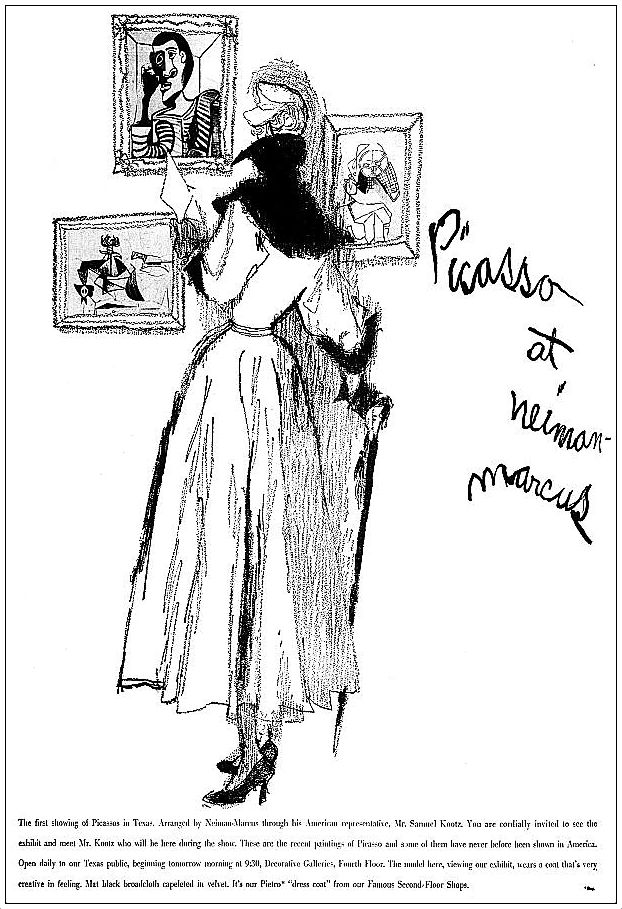
Stanley Marcus was an experienced buyer of art, and his relationship with Mr. Kootz was obviously warm — how else might one explain the inclusion of redrawn Picasso paintings (all of which appeared in the N-M show) in a store advertisement? Pretty ballsy. (Click ad below to see a larger image — the text alone can be seen larger here.)

picasso_n-m_1948

For those who might be interested, these are the first Picasso paintings ever publicly shown in Texas:

  • “Seated Woman” (1929)
  • “Sailor” (1943)
  • “Still Life with Mirror” (1943)
  • “Head” (1944)
  • “Still Life with Skull and Pitcher” (1945)
  • “Cock and Knife” (1947)
  • “Woman” (1947)
  • “Still Life with Coffee Pot” (1947)
  • “Owl and Arrow” (1947)
  • “Concierge’s Daughter with Doll” (1947)
  • “Blue Owl” (1947)
  • “The Glass” (1947)

Another art-world highlight in Dallas during the 1948 State Fair of Texas was the showing of Salvador Dali’s painting “Spain” at the Dallas Museum of Fine Arts in Fair Park (from the collection of Edward James, loaned by the Museum of Modern Art in New York). A Dallas Morning News headline — “Fair Interest to Divide Over Picasso and Dali” — seemed to imply that culturally-inclined Dallasites and/or fair-goers would have to choose one over the other in the battle of which famous Spanish artist-celebrity was most worthy of their attention: “Team Pablo” vs. “Team Salvador.” In regard to Dallas and its (somewhat late-blooming) openness to modern art, the first sentence of the article is interesting:

The simultaneous presence in Dallas during the period of the State Fair of Texas of original works by two of the world’s best-known living artists underscores heavily the swift progress toward cultural maturity in local thinking and planning. (Rual Askew, DMN, Oct. 3, 1948)

“Cultural maturity” and planning — both were in evidence in Dallas in the fall of 1948.

Thousands of Texans had their very first in-the-flesh glimpse of a Picasso canvas or a Dali painting in Dallas during the 1948 State Fair of Texas — either at a tony department store that sold $500 gold-and-ruby scarf pin “souvenirs,” or amongst the hot-dog-eating and roller-coaster-riding hoi polloi in Fair Park. That’s a pretty good reach for fine art.

It’s not all about the automobile shows!

***

Sources & Notes

Ads from October, 1948.

Click pictures to see larger images.

*

Copyright © 2017 Paula Bosse. All Rights Reserved.
 

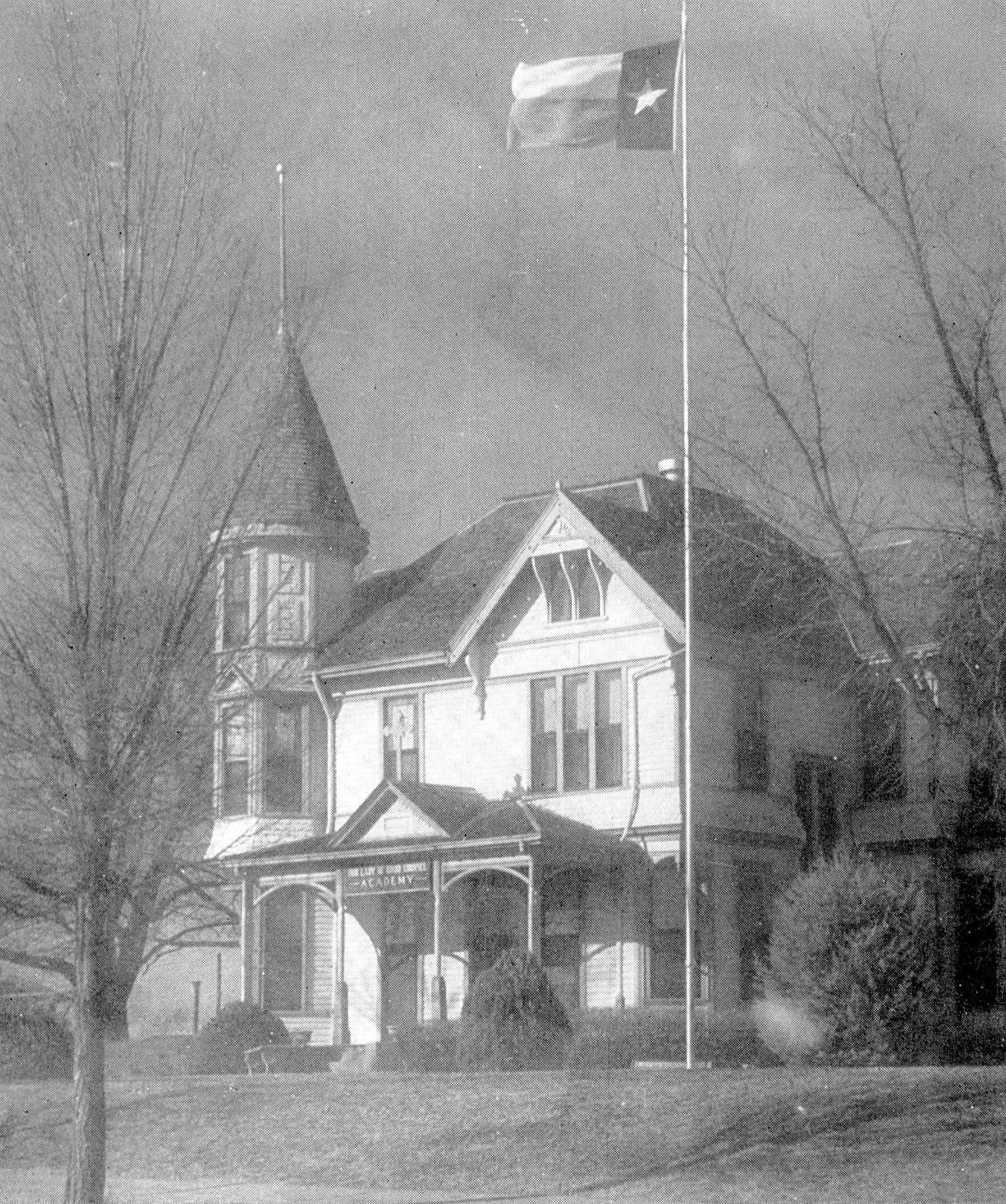
Our Lady of Good Counsel, Oak Cliff — 1901-1961

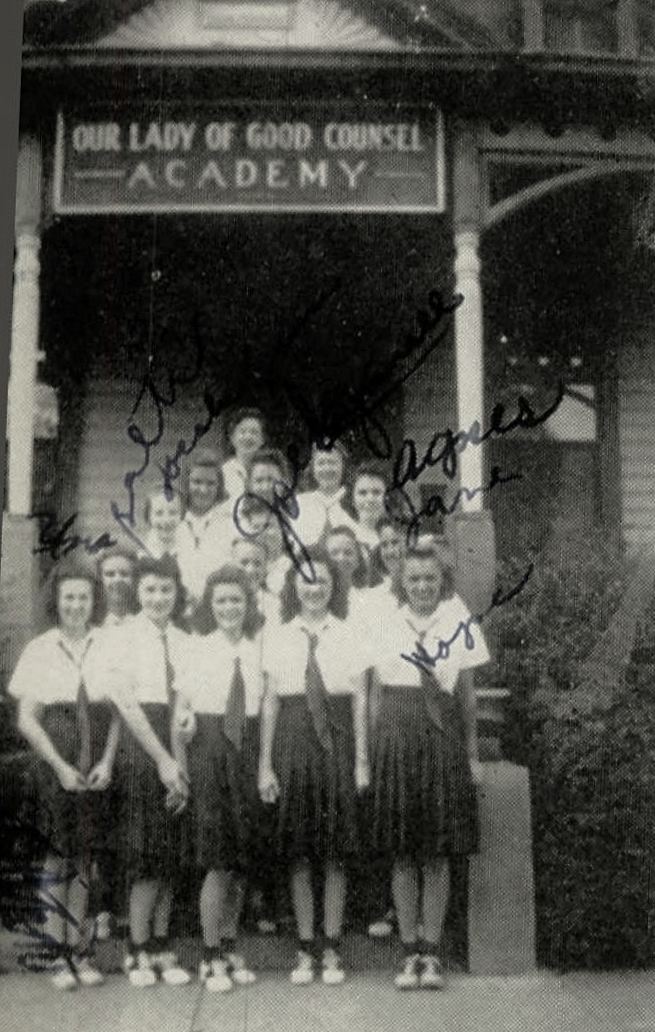
our-lady-of-good-counsel_1944-yrbkOur Lady of Good Counsel, 1944… (click for larger image)

by Paula Bosse

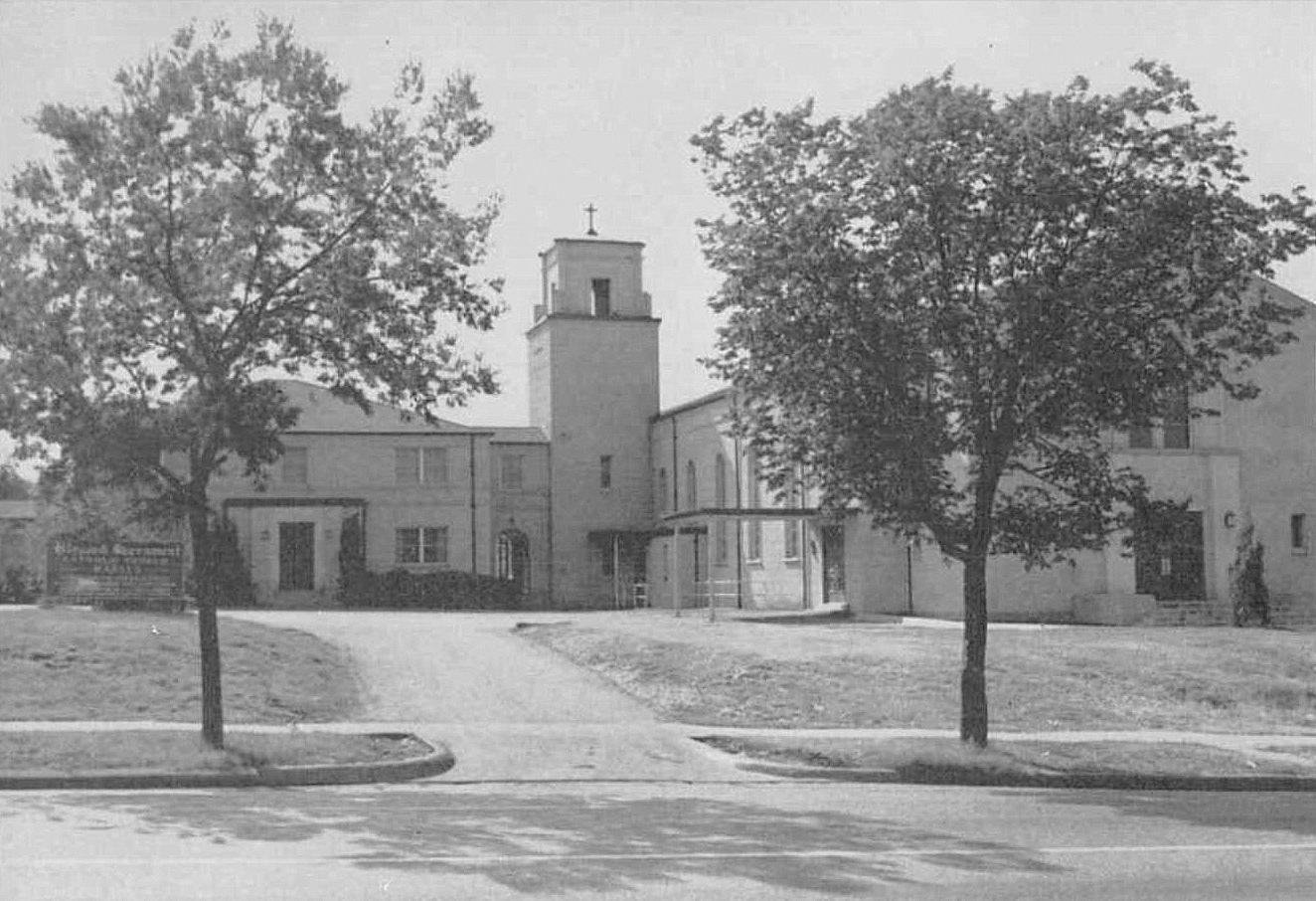
Talking to my aunt today reminded me that she briefly attended Our Lady of Good Counsel, the all-girls Catholic high school in Oak Cliff next to the Church of the Blessed Sacrament, at the northwest corner of North Marsalis (originally named Grand Avenue) and 9th Street. I’m still not sure why she went there (our family isn’t Catholic), but she seems to have enjoyed her time there for a year or two before she transferred to Crozier Tech.

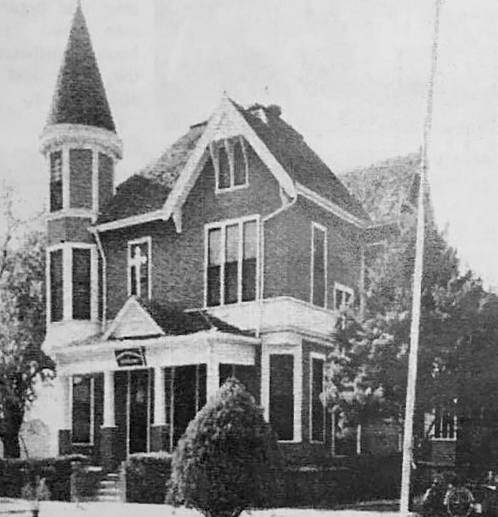
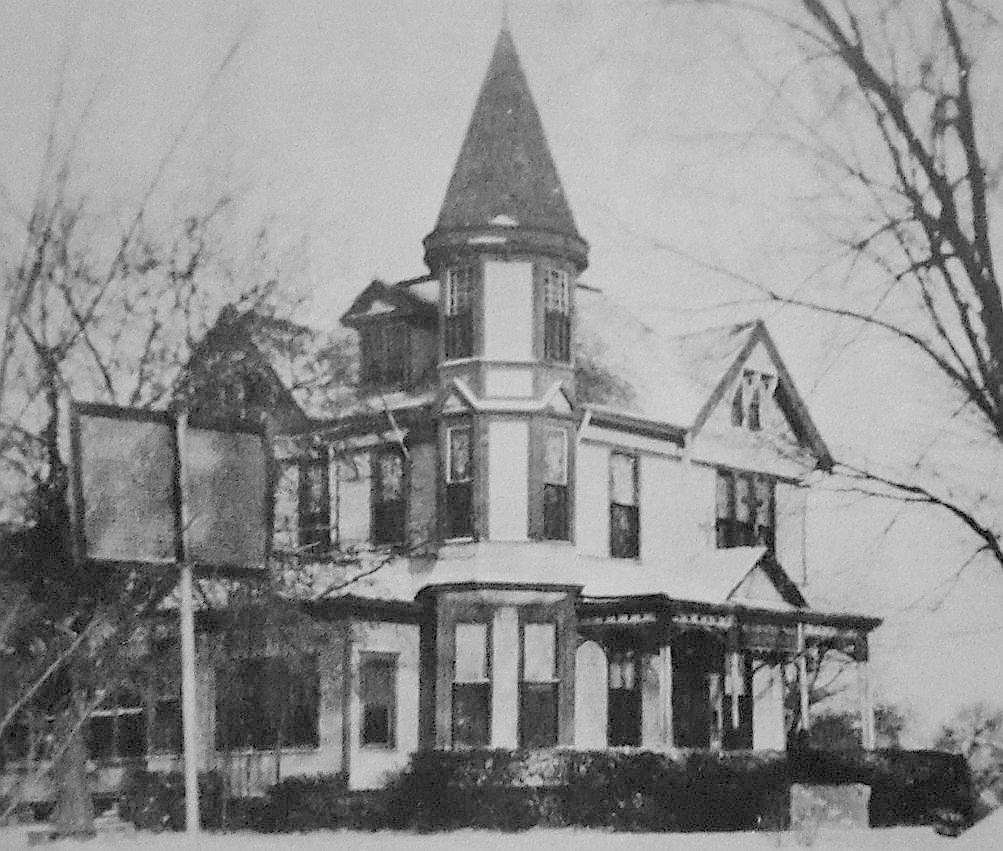
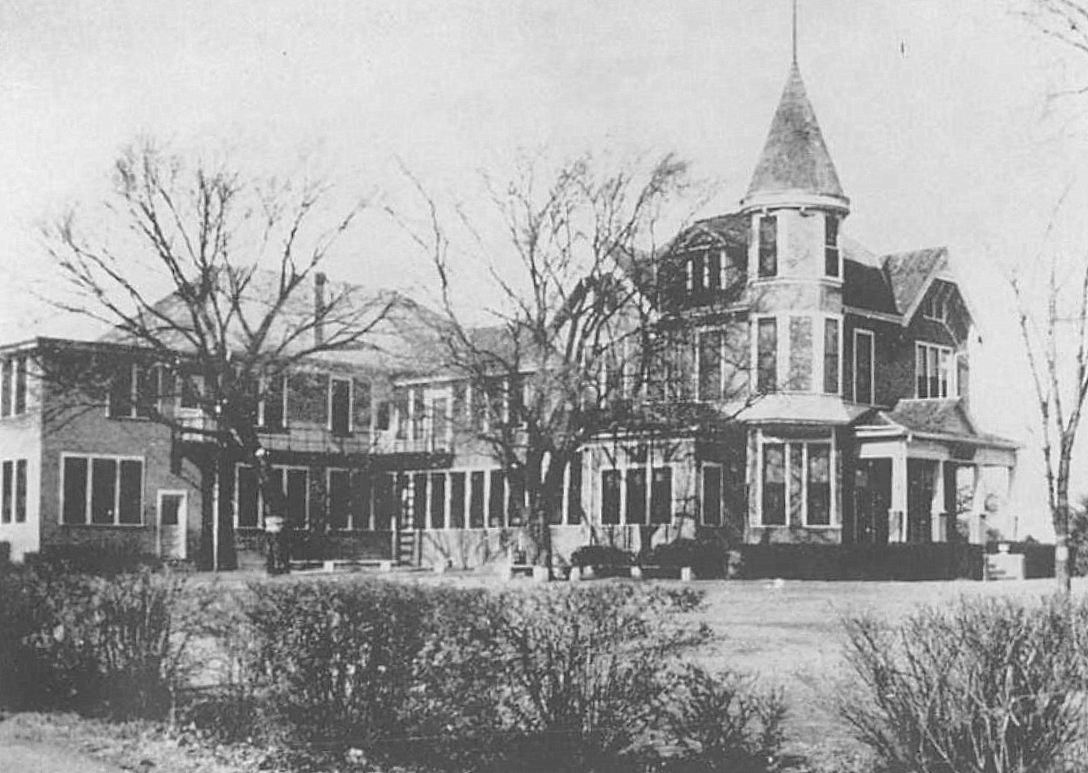
The school building was the former palatial home of wealthy businessman James T. Dargan, a one-time partner of Thomas L. Marsalis. The house was built about 1888, and according to Dallas Rediscovered author William L. McDonald, it was designed by the Dallas architectural firm of Stewart and Fuller.

dargan_1889-directory1889 Dallas directory

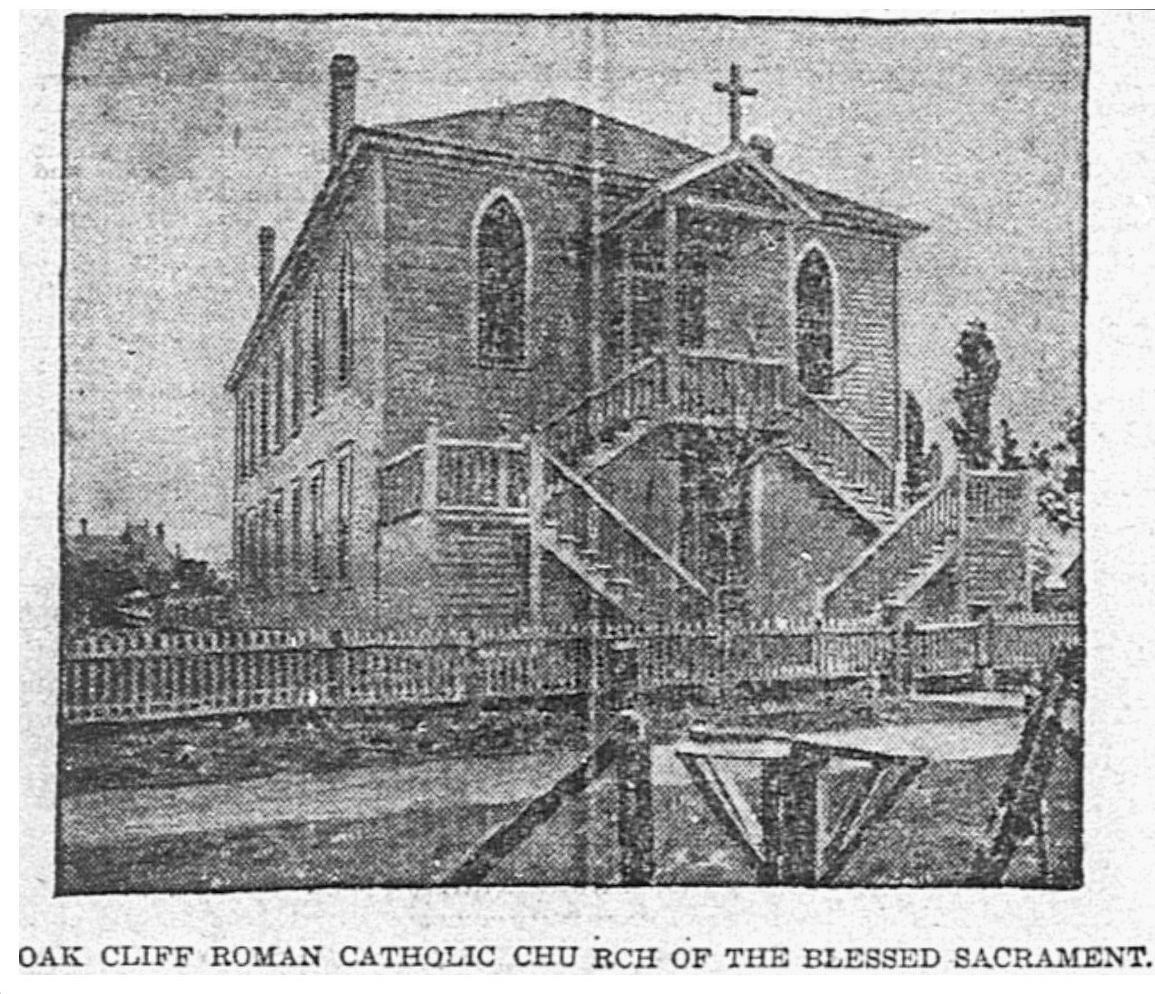
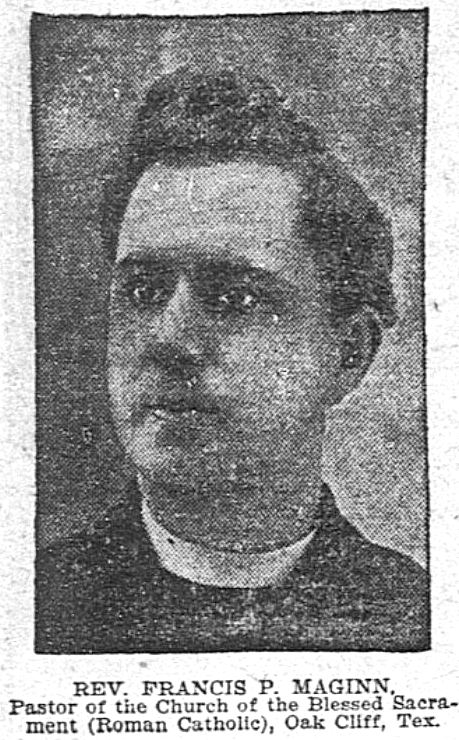
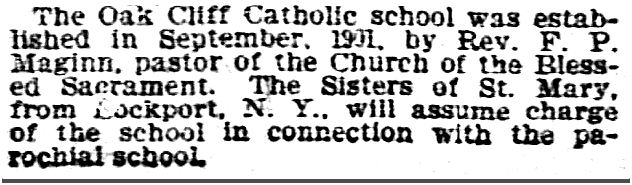
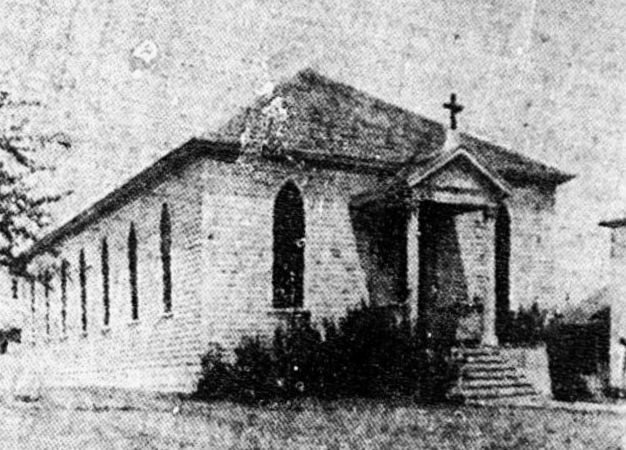
The church was holding services in Oak Cliff as early as 1901, and an affiliated school was established by Rev. Francis P. Maginn in September of that year. It appears that the Dargan house was acquired in 1902, the same year that the (new?) church building was dedicated in ceremonies officiated by Bishop E. J. Dunne.

Below, the new church can be seen in a photo which appeared in The Dallas Morning News on the day of its dedication in June, 1902 (all images are larger when clicked):

church-of-blessed-sacrament_dmn_061502_photoDMN, June 15, 1902

The neighboring school can be seen in these two early photos:

OLGC_ad_dallas-history-guild
Our Lady of Good Counsel, ca. 1902

our-lady-of-good-counsel_ca-1905_dallas-rediscovered
Our Lady of Good Counsel, ca. 1905

The school’s founder, Rev. F. P. Maginn:

maginn-francis-p_dmn_061502_church-of-blessed-sacrament
DMN, June 15, 1902

OLGC_dmn_042302DMN, April 23, 1902

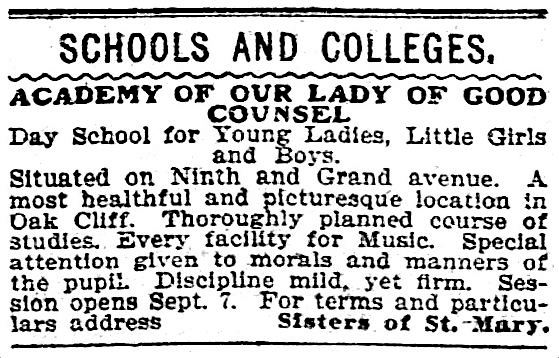
And an early ad for the school, from 1903 (“Discipline mild, yet firm”):

our-lady-of-good-counsel_1903-ad
1903

Here it is in 1942:

our-lady-of-good-counsel_1942-yrbk

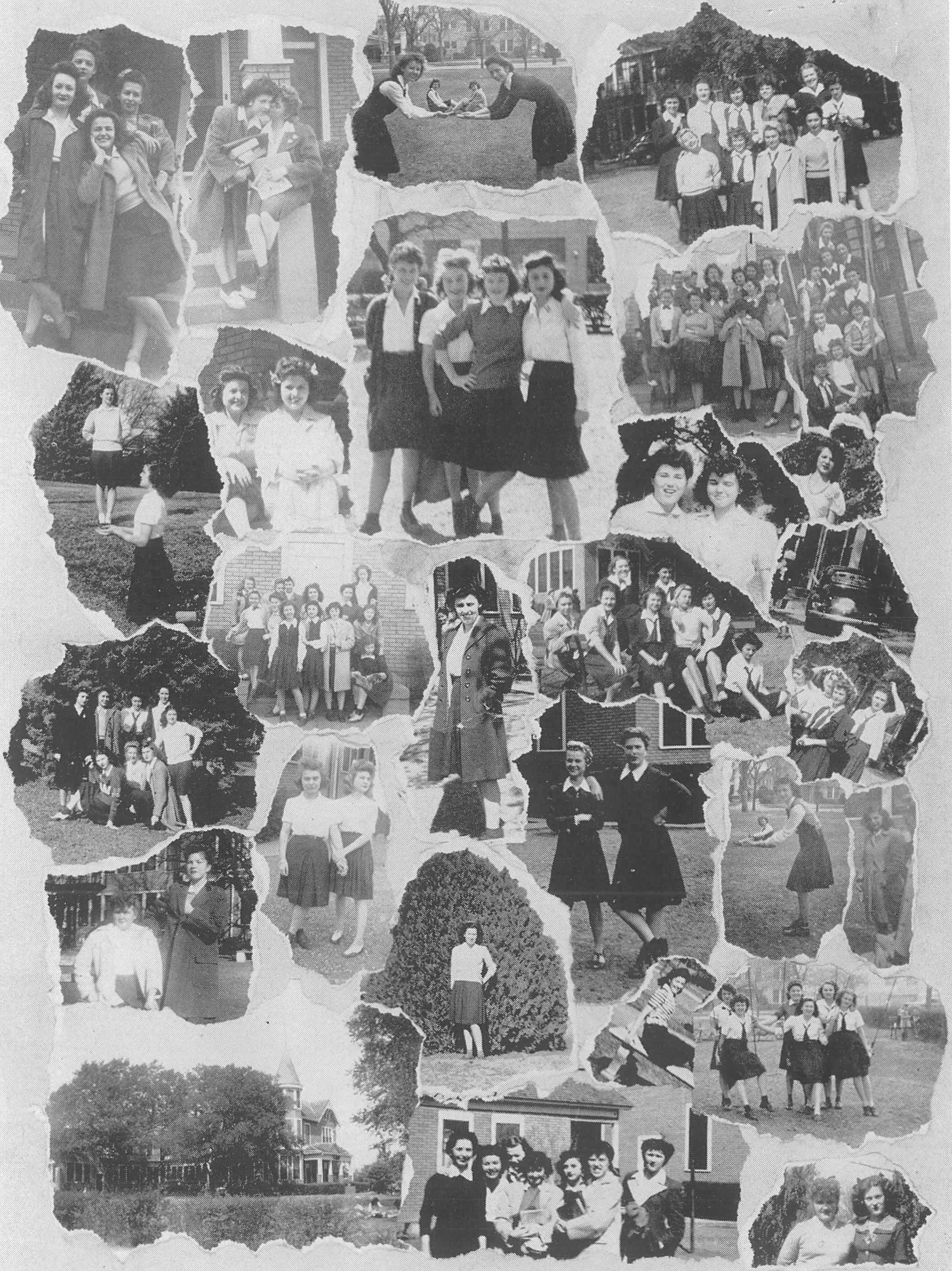
And here are some of the LGC high school students from 1944, looking bobby-soxer-y (with another view of the augmented house in the lower left corner):

our-lady-of-good-counsel_1944-yrbk_candids

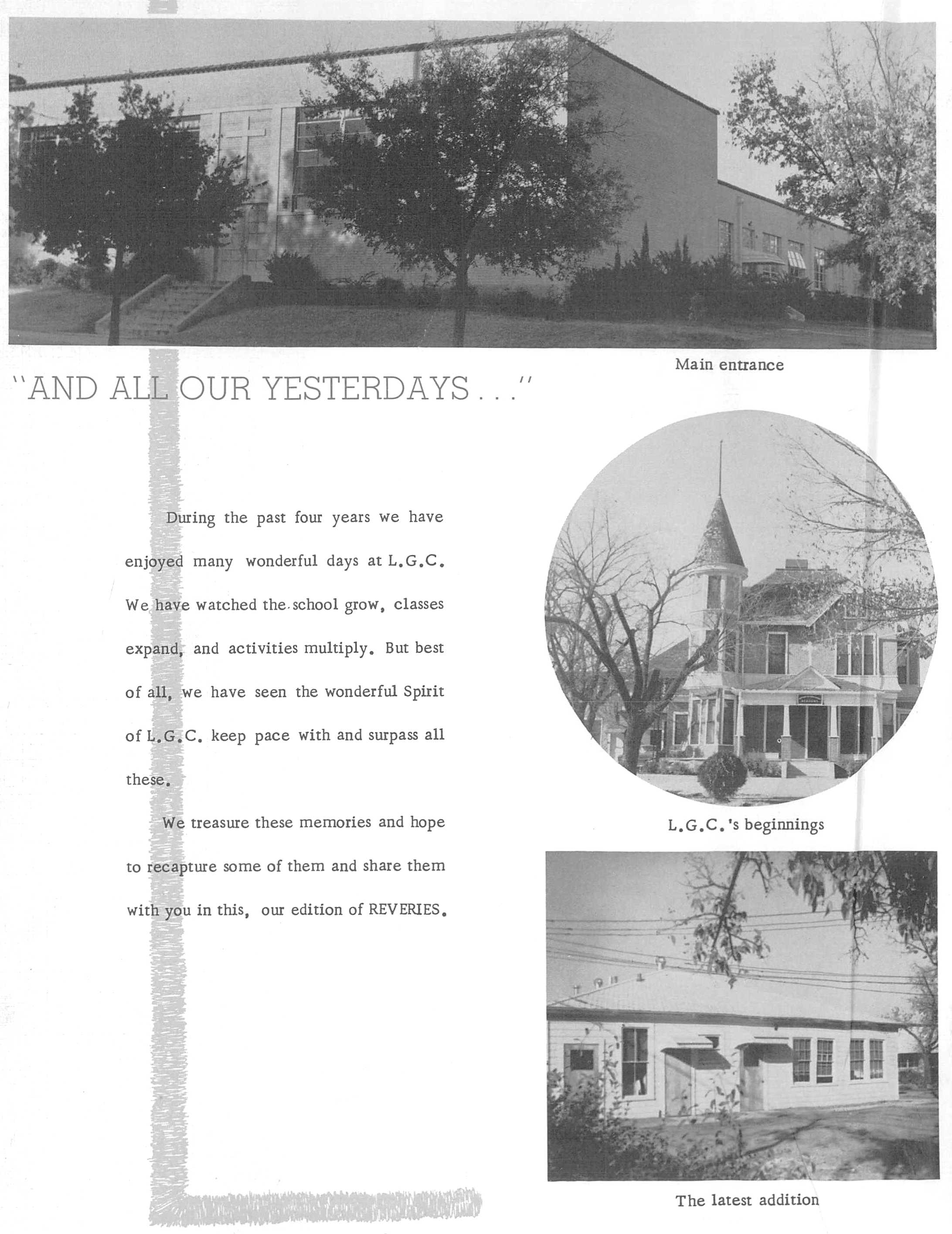
The newest additions to the building can be seen in the 1959 yearbook:

our-lady-of-good-counsel_1959-yrbk

In 1961, Our Lady of Good Counsel was a fast-fading memory: a new 32-acre campus had been acquired and on it had been built the new (coed) Bishop Dunne High School. Mr. Dargan’s old house-turned-school-building was torn down a few years later, and the land became a parking lot for the Blessed Sacrament church next door (which had also seen many changes and a new building over the years). Today, the view of the land the Dargan house sat on 130 years ago looks like this. (The church looks like this.)

The church in 1930:

church-of-blessed-sacrament_1930

And in 1958 (from the LGC yearbook):

blessed-sacrament-church_OLGC-yrbk_1958

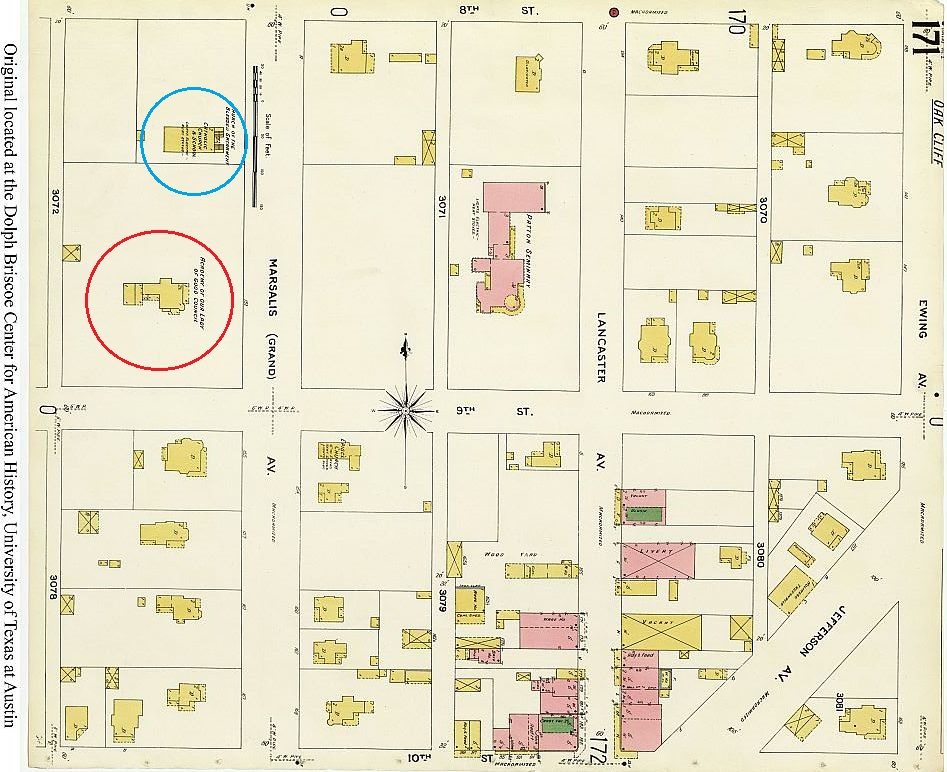
This visual aid will help give an idea of the acreage of both the school (circled in red) and the church (circled in blue), via the 1905 Sanborn map:

OLGC_sanborn_dallas-1905_sheet-171

I’m still not sure why my aunt went there….

OLGC_address_1958
1958

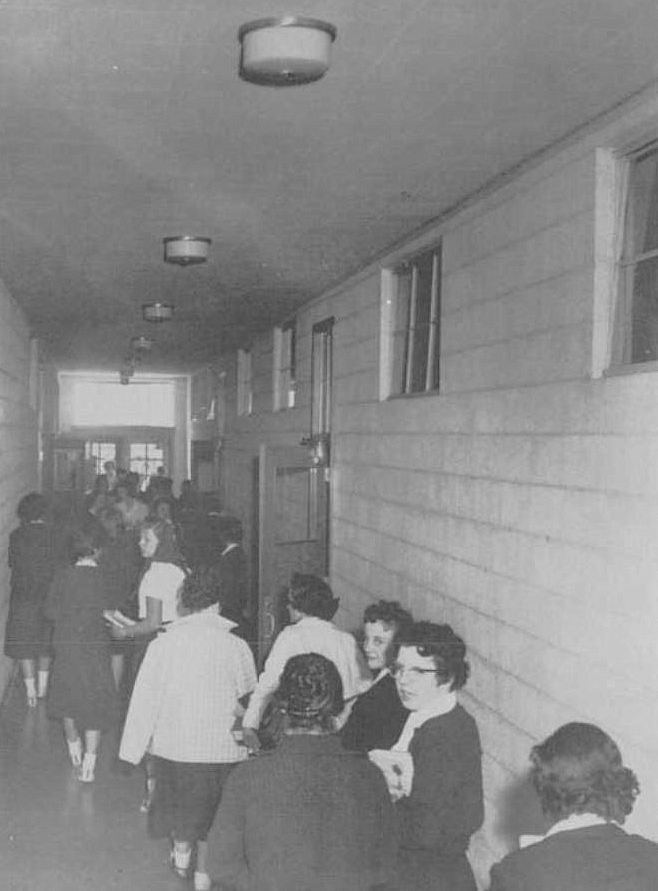
UPDATE: For those who might have wanted to see some interior photos, I didn’t find many, other than typical classroom shots, but here are some additional photos, a couple of which show the hallway.

Between classes, 1959:

OLGC_1959-yrbk_hallway

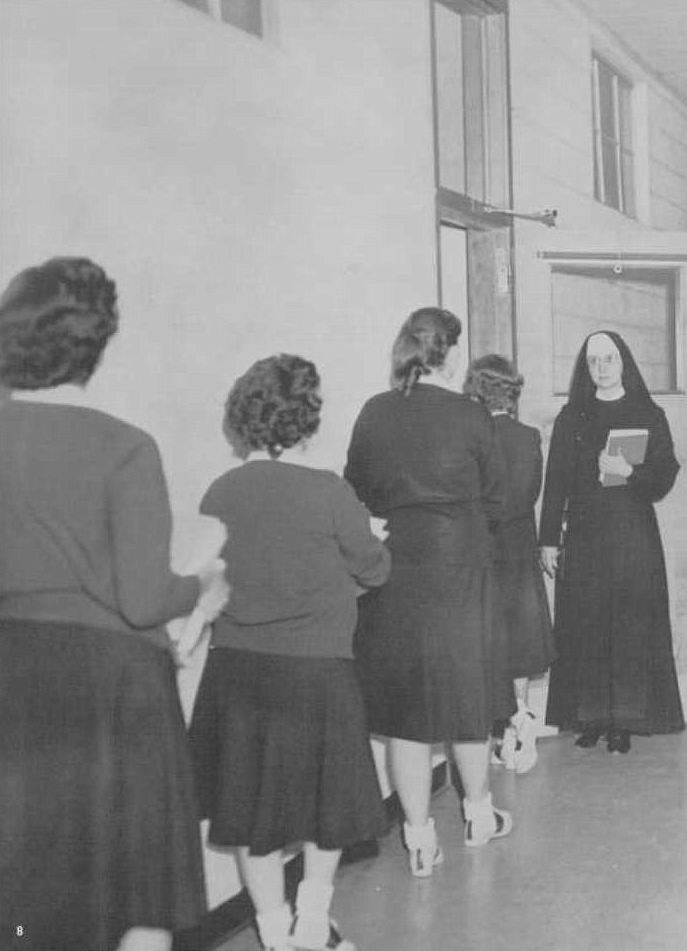
Girls lining up to go into class, 1960:

OLGC_1960-yrbk_hallway

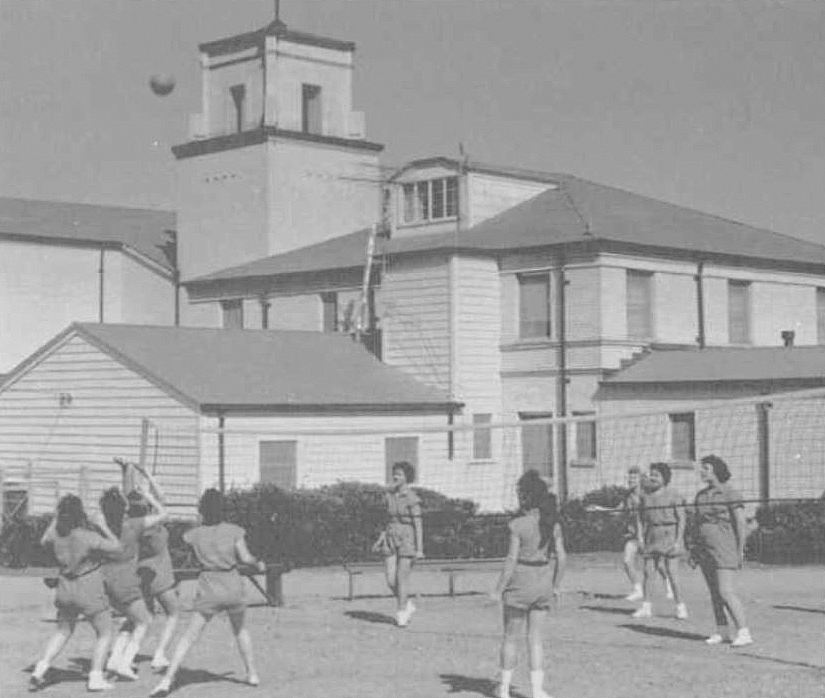
Girls outside playing volleyball, 1960:

OLGC_1960-yrbk_volleyball

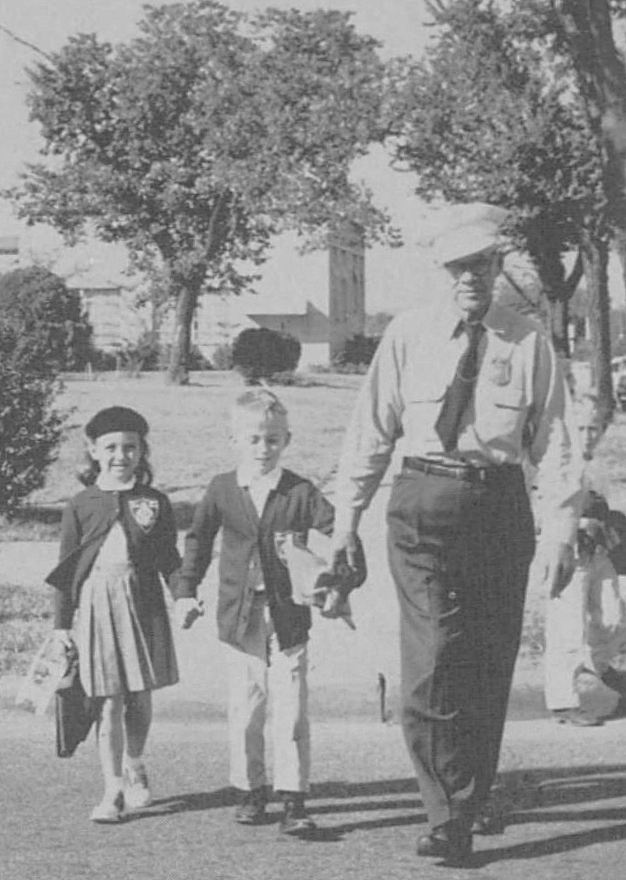
I had erroneously assumed that LGC was an all-girls 4-year high school; I believe it was a 12-year school, with boys and girls up to high school level, when it became girls-only. This photo appeared in the 1960 yearbook with the following caption: “The safety of all LGC students is the responsibility of the school as long as the students are on campus. For this reason, Officer H. A. Baxtley is available every day as a gracious escort for our little ‘Lions’ across the busy Ninth and Marsalis intersection.”

OLGC_1960-yrbk_crossing-guard

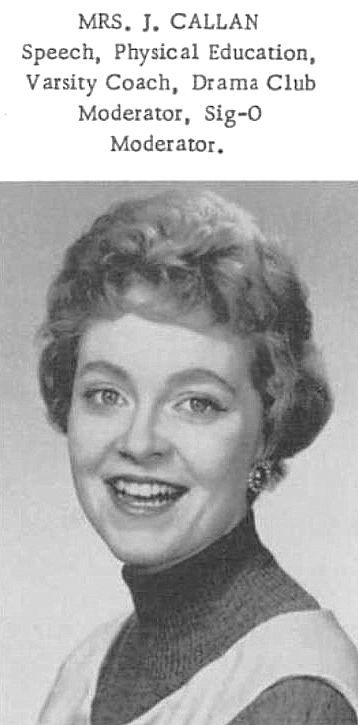
And finally, because I’m such a movie nerd who loves character actors, I was happily surprised to see that the actress K Callan was a 23-year-old drama teacher (etc.) at the school in 1959 before she entered the professional acting world of New York and Hollywood. (Callan was born in Dallas as Katherine “Kay” Borman and actually attended Our Lady of Good Counsel as a student before she taught there.) (UPDATE: Read K’s memories of her time at LGC in the comments, here.)

callan-k_our-lady-of-good-counsel_1959-yrbk_drama-teacher

callan-k_our-lady-of-good-counsel_1959-yrbk_drama-teacher_b

***

Sources & Notes

All photos of the school (except the one from 1905) are from various editions of Reveries, the yearbook for Our Lady of Good Counsel.

The 1902 photo was posted in the Dallas History Guild Facebook group.

The 1905 photo is from Dallas Rediscovered by William L. McDonald (p. 215), with the following credit: “Courtesy of Sister M. Adelaide Mars.”

The Blessed Sacrament Catholic Church still stands, at 231 N. Marsalis; their website is here.

olgc_1942-yrbk_girls_sign
1942

*

Copyright © 2017 Paula Bosse. All Rights Reserved.
Weber’s Root Beer Stands: “Good Service with a Smile”

webers-root-beer_traces-of-texasFeeling parched?  (click for larger image)

by Paula Bosse

I’ve heard of these legendary root beer stands from family members, but, sadly, I missed their heyday, which seems to stretch from the 1920s to the 1950s. The photo above was taken around 1940 in Dallas at an unknown location. (The 1940 Dallas directory lists only two stands that year: at Greenville and Richmond — currently a 7-Eleven — and at 1119 N. Zang.)

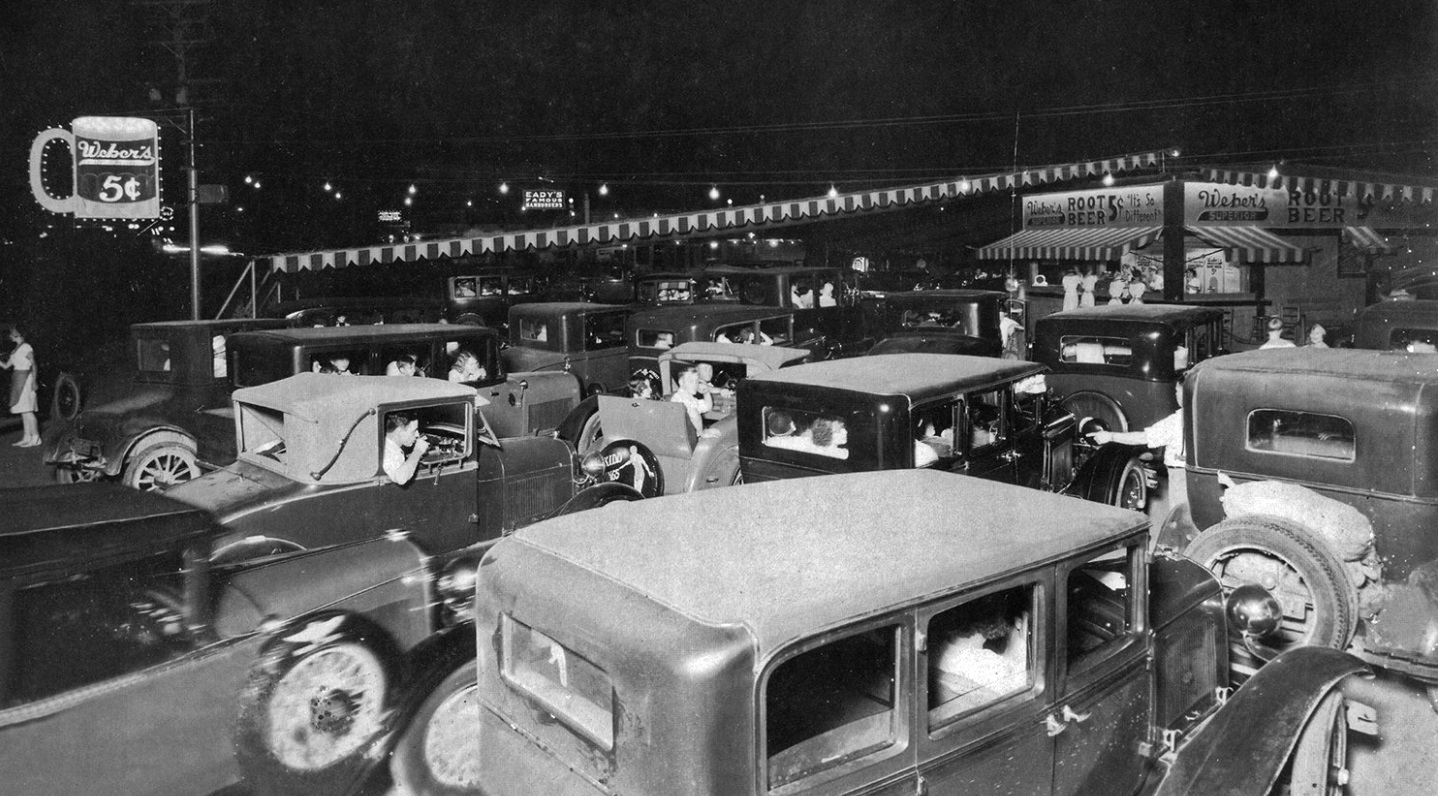
Here’s another photo, this one from 1930, taken at night, with a jam-packed lot filled with thirsty teenagers, rumble seats, and future jalopies.

webers_root-beer_traces-of-texas

In the photo above, a sign for Eady’s Famous Hamburgers can be seen in the background. This would seem to indicate that this photo was taken at one of the two locations where both Eady’s and Weber’s were neighbors: in Oak Cliff in the 1100 block of Zang, or near the Lower Greenville intersection of Greenville and Richmond. So it’s possible the two photos were taken at the same Weber’s Root Beer stand.

“It’s So Different”

ad-webers-root-beer_1930-dallas-technical-high-school-yrbk_frank-rogers

***

Sources & Notes

Top photo appeared on the fantastic Facebook page Traces of Texas. It was submitted by reader Shelly Tucker showing her aunt (second from left) working as a Weber’s carhop around 1940.

The second photo is from Traces of Texas’ Twitter feed; the source is unknown.

Ad is from the 1930 yearbook of the Dallas Technical High School (later named Crozier Tech); the photo is by the always-busy Dallas photographer, Frank Rogers.

*

Copyright © 2017 Paula Bosse. All Rights Reserved.
 

The Square Dancing Craze in Big D — Late 1940s

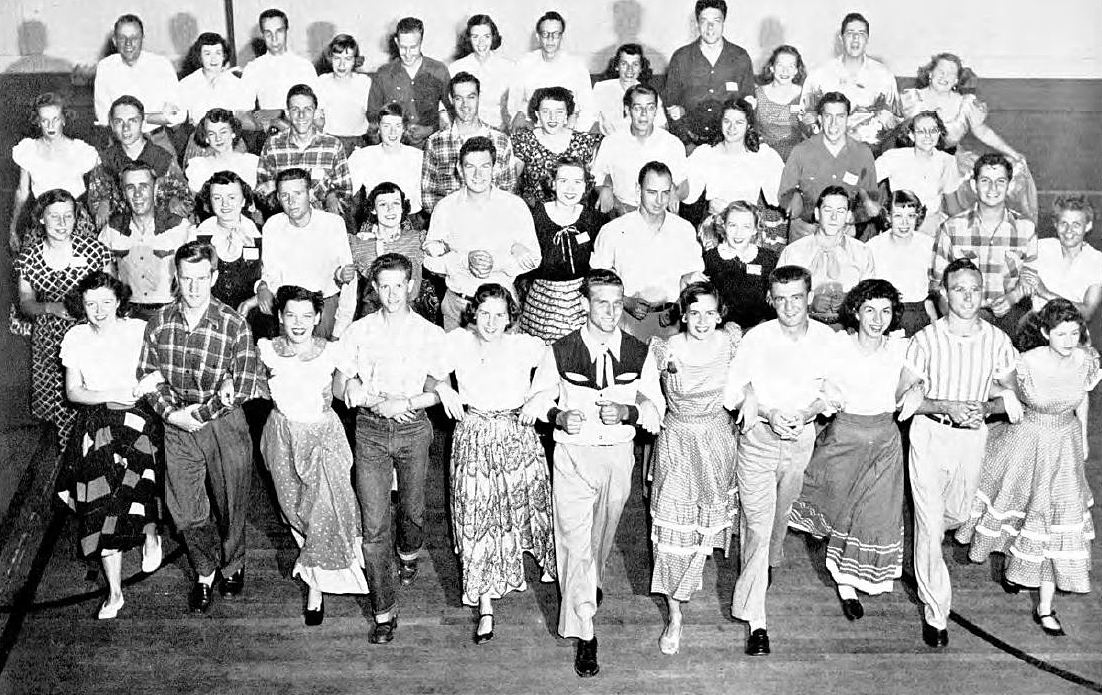
calamity-jane_premiere_-sam-bass_majestic-theatre_july-1949Hoedown at the Majestic, 1949…

by Paula Bosse

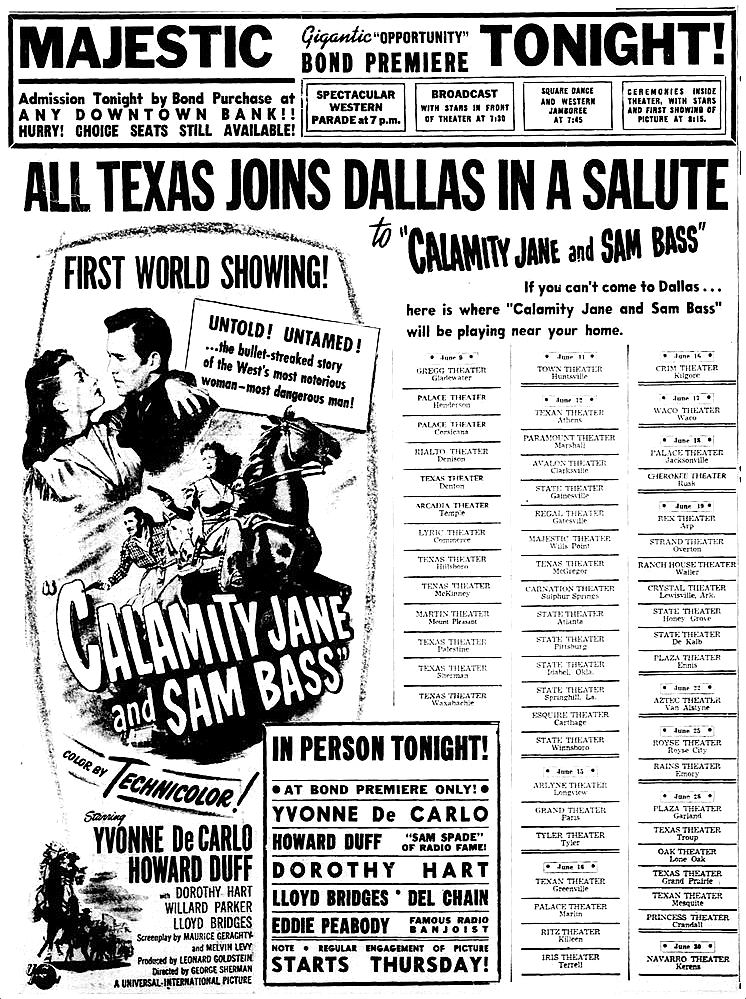
The photo above appeared in a show-biz trade publication showing part of the festivities which swirled around the world premiere of the movie “Calamity Jane and Sam Bass” starring Yvonne DeCarlo and Howard Duff at the Majestic Theatre on June 8, 1949. Several of the film’s stars made personal appearances and were made honorary deputies by Sheriff Bill Decker, sworn in by Judge Lew Sterrett (yes, Lily Munster was an honorary Dallas deputy sheriff!). There was a parade, a live show performed by the actors on the Majestic’s stage before the movie, a block party, and square dancing in Elm Street, with music provided by the Big D Jamboree band.

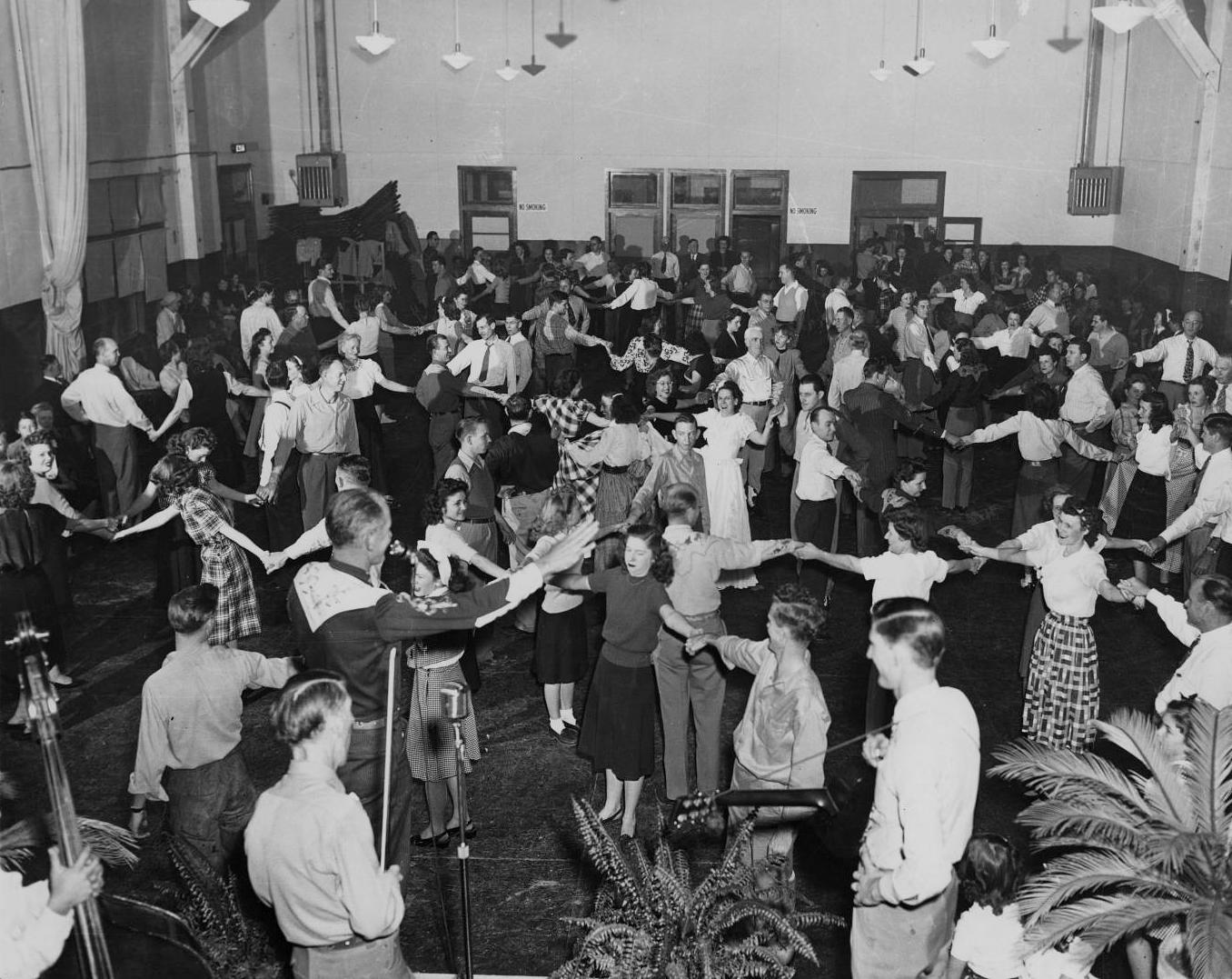
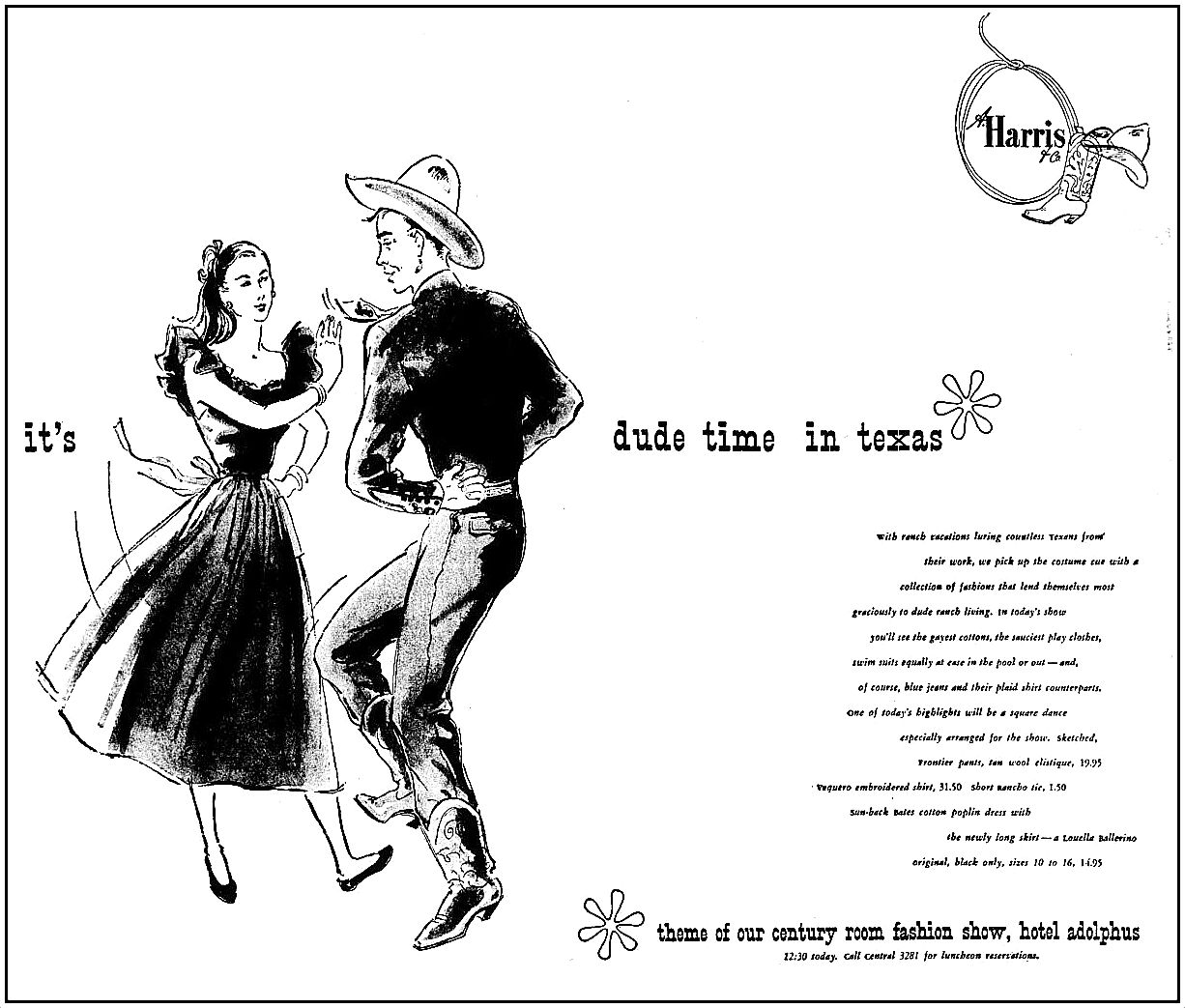
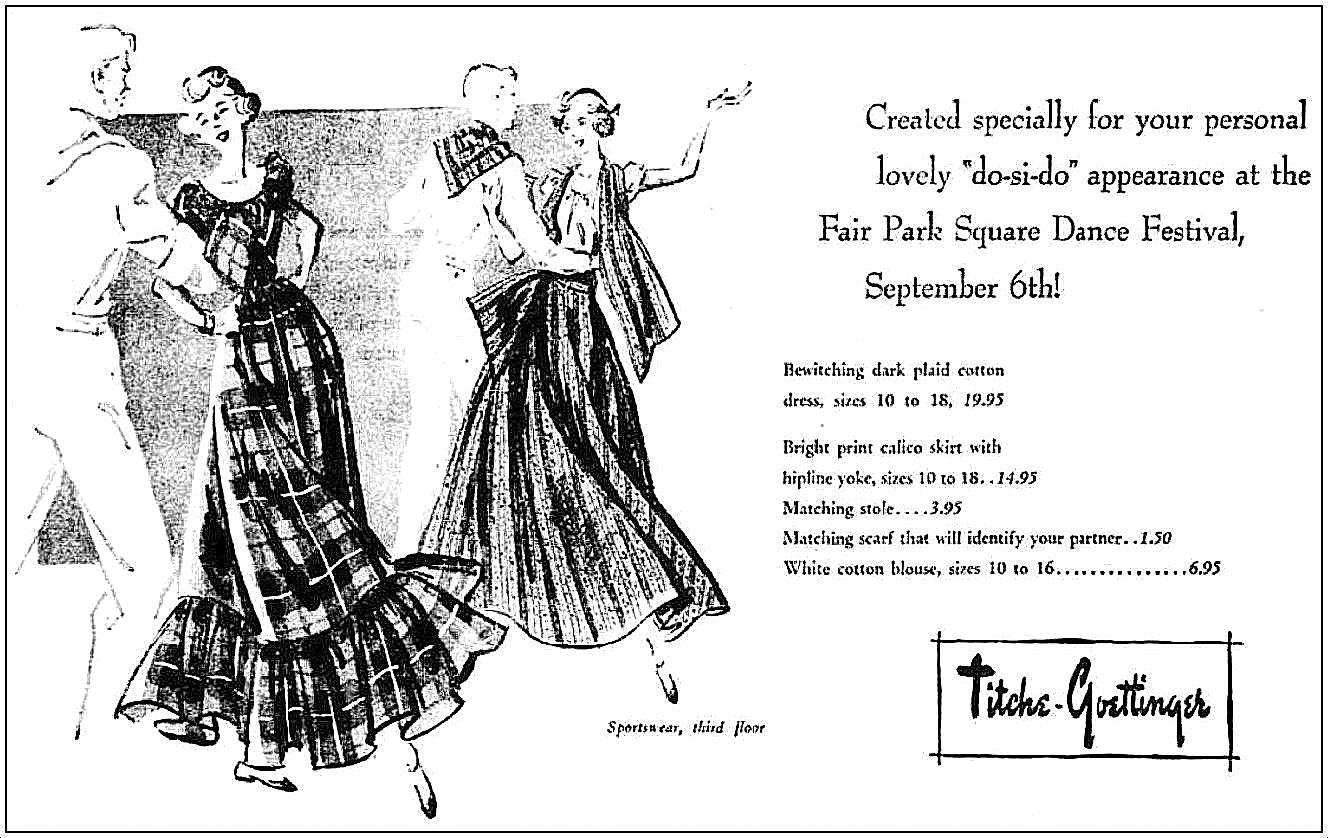
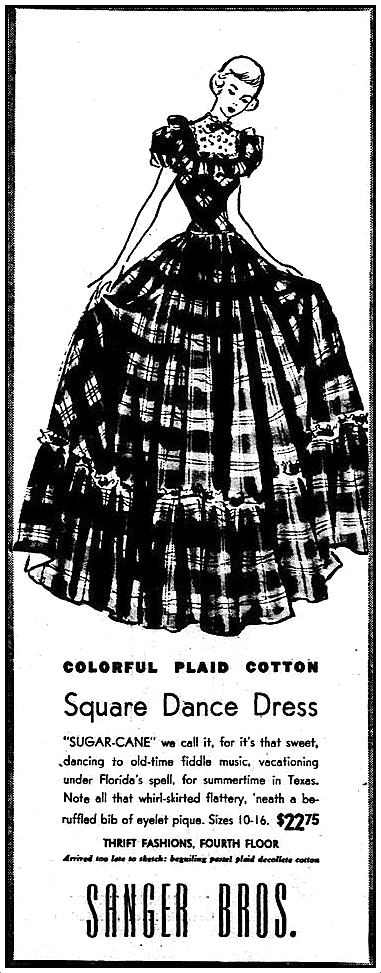
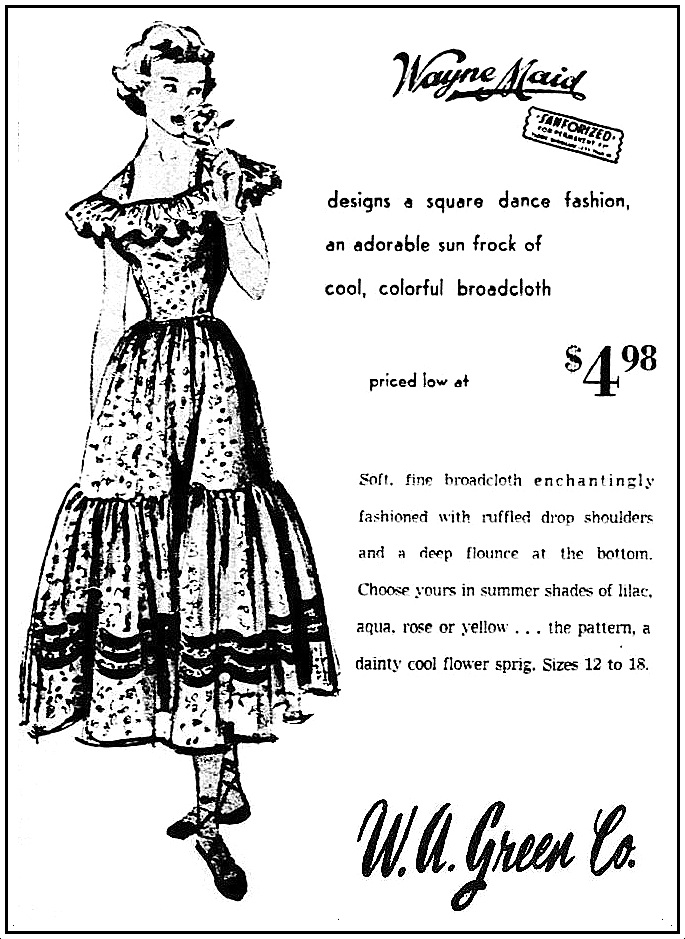
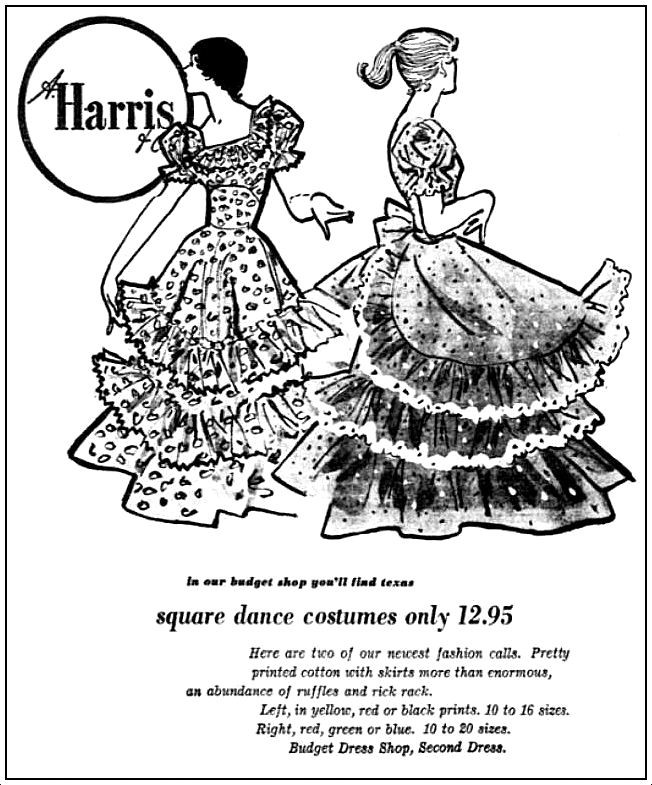
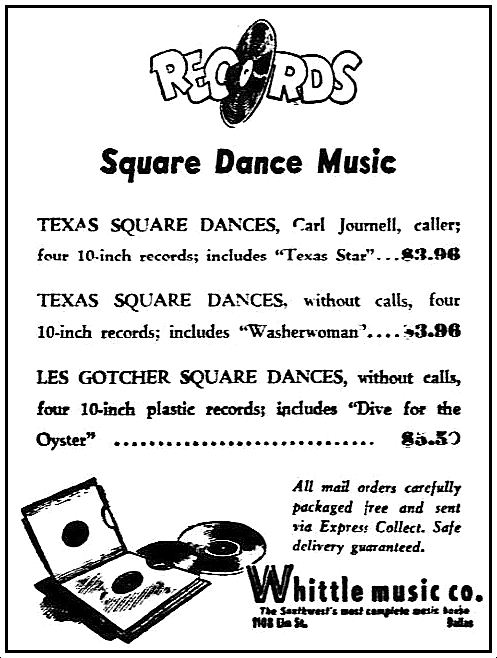
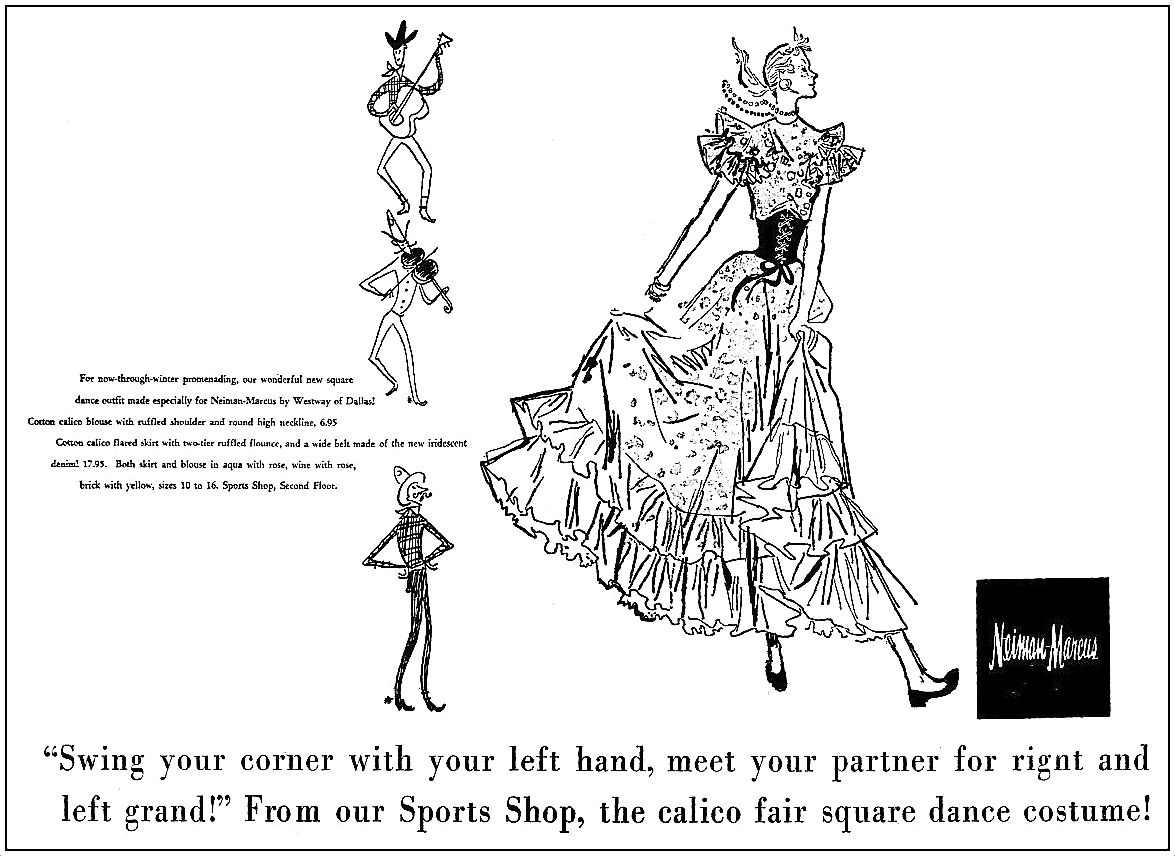
In 1949, as unlikely as it seems, square dancing was a HUGE fad which swept the country (or at least the Southwest). The peak years of the retro craze were probably 1948 to 1950, and its impact was pretty big locally, not only on the dance floor, but also in the fashion pages. When you see every major Dallas department store — even Neiman’s — selling calico and gingham square dance fashions … well, it’s big.

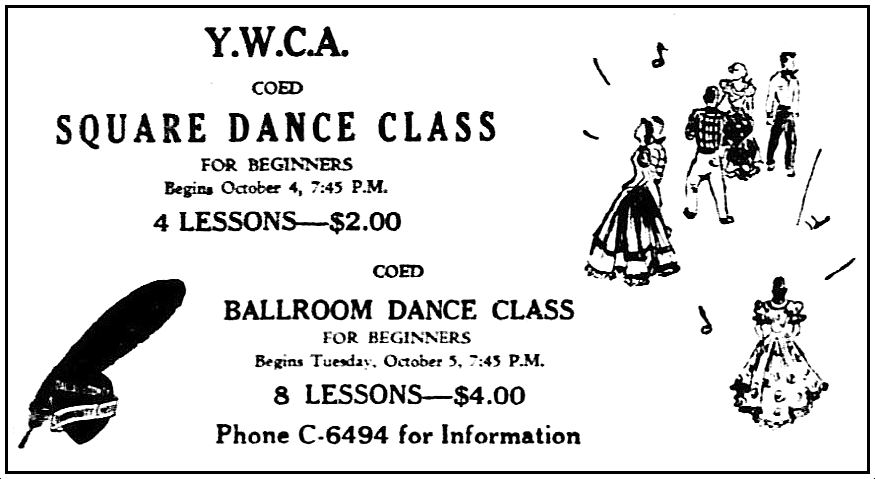
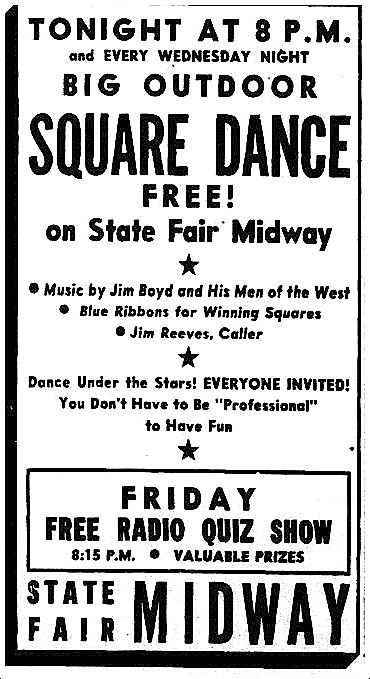
Not only were there lessons available everywhere, but there were clubs and weekly events all over town — every Wednesday in the summer of 1949, there was a big outdoor square dance held at the Fair Park Midway, with music courtesy of local celeb Jim Boyd.

I’m not sure when it stopped (…I’m assuming it has…), but for decades, a lot of us participated in square dancing as part of gym class in elementary school. This interesting throw-back take on physical fitness seems to have begun around 1950 or ’51. Not everyone was thrilled about this odd-but-charming grade-school rite of passage — some ultra-conservative communities complained, but the wholesome and old-timey dancing won out and became a standard part of Texas schools’ physical education curriculum.  Forget young people’s cotillions — most Texas children had their first experience dancing with a partner to the strain of a cowboy fiddle and a voice telling us to “allemande left” and “do-si-do.” And I’m sure we’re all better for it.

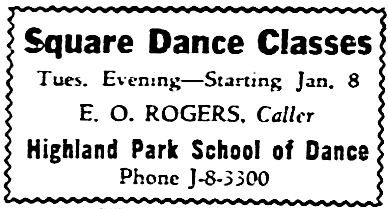
Here are a bunch of ads and things (click pictures to see larger images):

square-dance_la-reunion-place_squire-haskins_dallas-municipal-archivesSquare dance at La Reunion Place (Dallas Municipal Archives)

square-dance_jan-1946_highland-park
1946

square-dance_may-1947_a-harris
1947

square-dance_aug-1948_titches
1948

square-dance_jan-1948_sanger-bros1948

square-dance_oct-1948_neiman-marcus
1948

square-dance_april-1948_a-harris
1948

square-dance_oct-1948
1948

square-dance_dec-1950_e-m-kahn
1949

square-dance_june-1949_w-a-green
1949

square-dance_may-1949_fair-park-midway
1949

square-dance_nov-1949_a-harris
1949

square-dance_march-1949_whittles
1949

square-dance_oct-1949_a-harris
1949

square-dancing_promenaders_smu_1951-yrbk1951

Above, a photo of the Promenaders, a group of SMU students whose purpose is described in the 1951 yearbook as being “to promote the appreciation of square and folk dancing on this campus.” (Think you recognize any of those faces? See who’s in the photo here.)

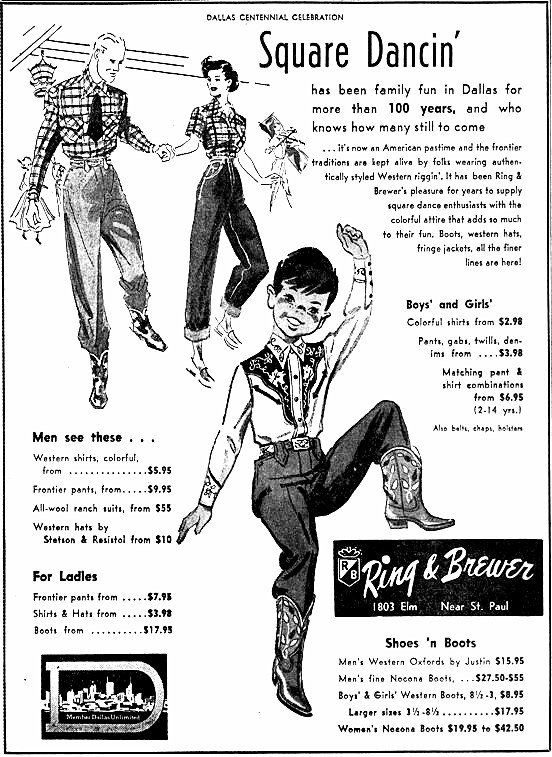
dallas_ringandbrewer_1956
1956

***

Sources & Notes

Premiere of “Calamity Jane and Sam Bass” was held at the Majestic Theatre on June 8, 1949, and it seems to have been a pretty big deal. There was newsreel footage filmed that night — wonder if it’s floating around anywhere?

square-dance_calamity-jane_majestic_june-1949

Photo of the square dance taken at La Reunion Place is by Squire Haskins and is from the Dallas Municipal Archives; is can be seen on UNT’s Portal to Texas History site, here.

Photo of the SMU Promenaders square- and folk-dancing group is from the 1951 Rotunda, the yearbook of Southern Methodist University.

Jim Boyd was a country-western singer who appeared in a few Hollywood films and was a Dallas disc jockey for many years. He also appeared around town often as a performer and personality. Dallas filmmaker Hugh V. Jamieson, Jr. and director Milton M. Agins made a short film called “Saturday Night Square Dance” (made in either 1949 or 1950); it features Boyd and his Men of the West band, plus square dance groups Silver Spur Square Set and Thompson Square Dance Club. I can find nothing on the two groups, but it seems likely that this film was made in Dallas. The quality of the film uploaded to YouTube is not very good, but, who knows — you might see your parents or grandparents in there if they were big square dancers! You can watch it here.

All images larger when clicked.

*

Copyright © 2017 Paula Bosse. All Rights Reserved.


Proposals From the Bartholomew Master Plan For Dallas — 1940s

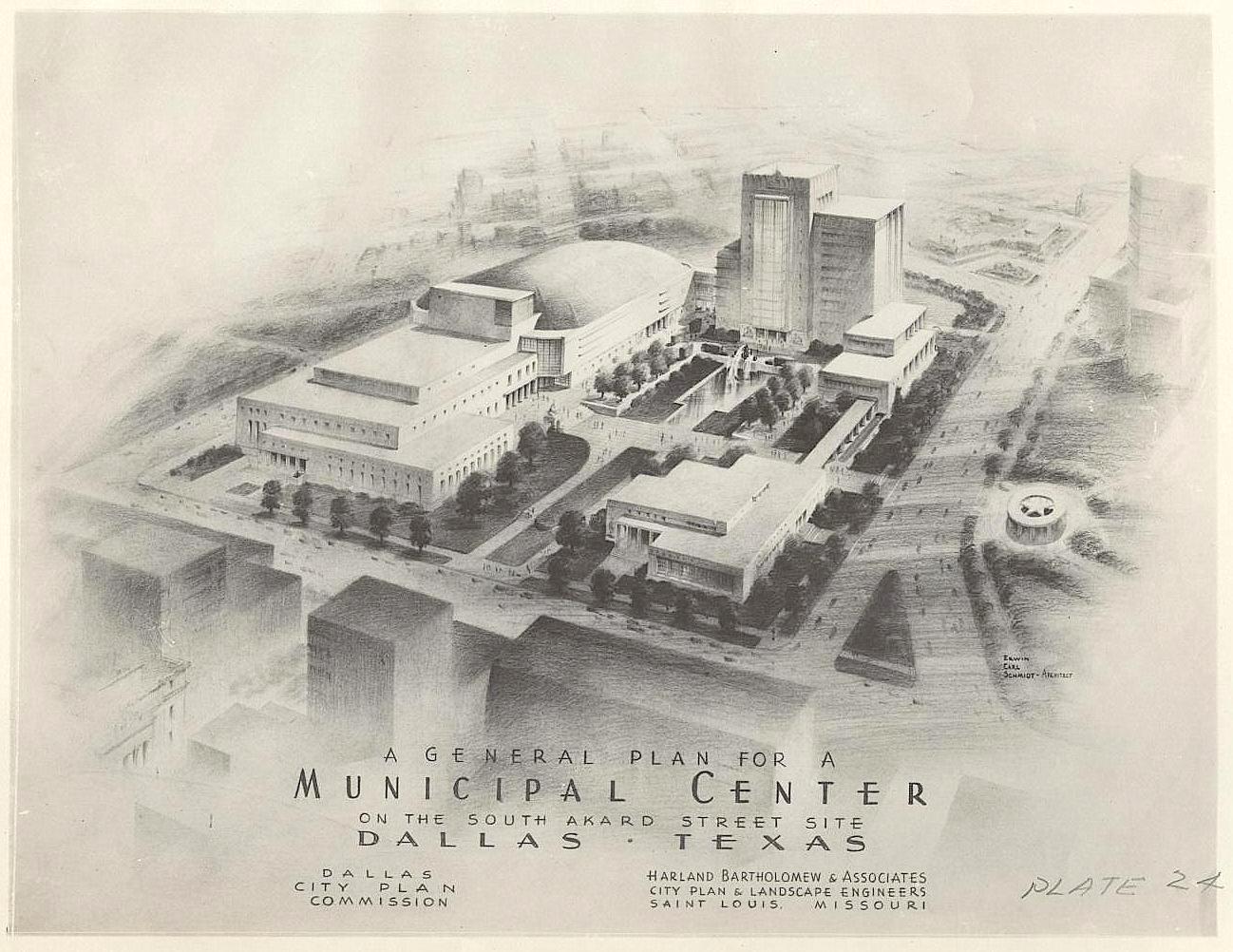
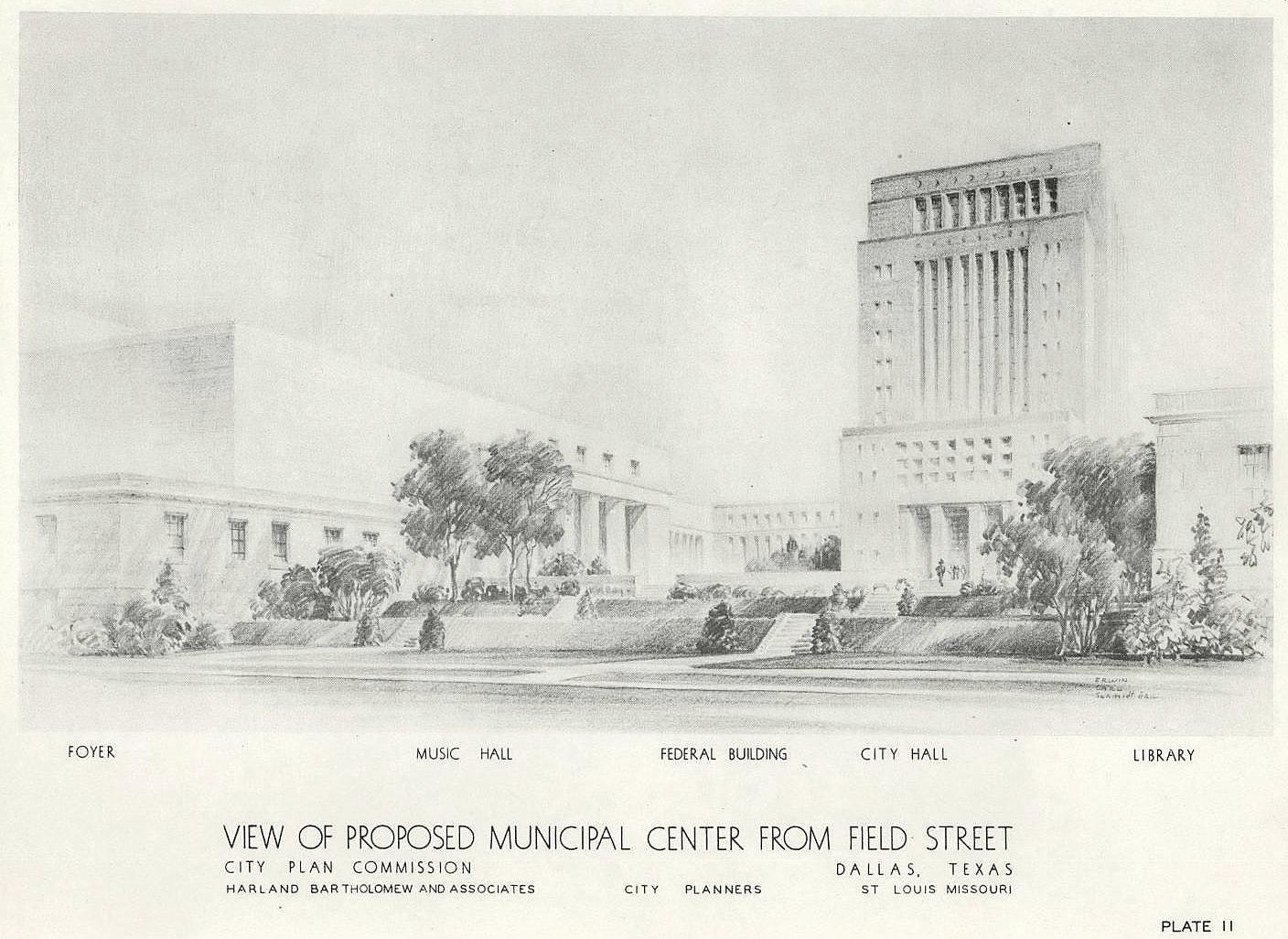
municipal-center_erwin-earl-schmidt-rendering_bartholomew-plan-1946Behold… (click for larger image)

by Paula Bosse

A few proposals from the Dallas master plan for post-war development and planning, commissioned by the city from the St. Louis firm of Harland Bartholomew and Associates (in association with Hare & Hare Landscape Architects). The scanned reports which made up this plan — submitted between 1943 and 1946 — can be found on the Portal to Texas History site, here, courtesy of the Dallas Municipal Archives. If you’re interested in urban planning and maps, these reports are fascinating.

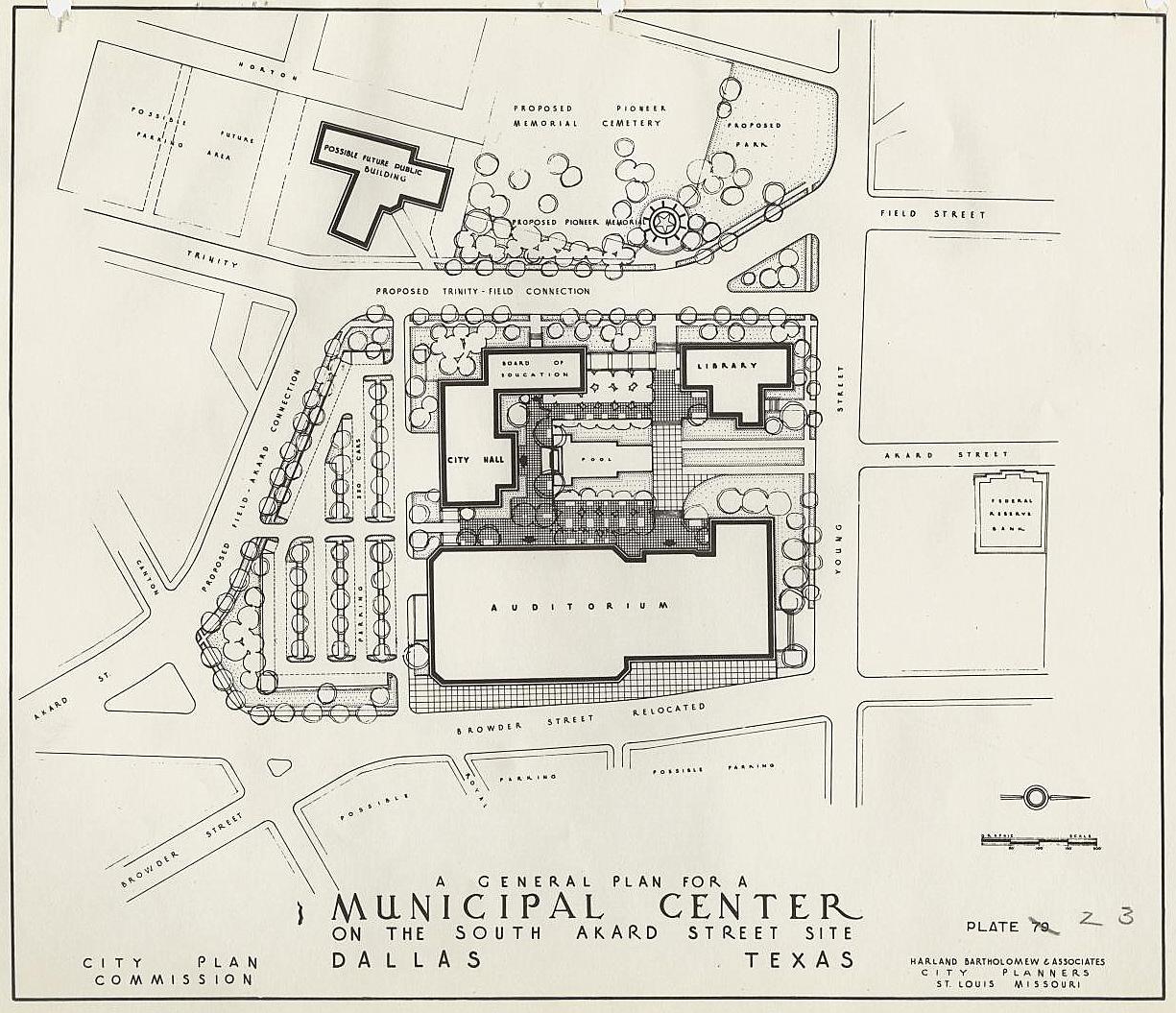
The image above (from 1946, rendered by architect Erwin Earl Schmidt) shows a proposed municipal center on the familiar “South Akard Street Site.” The plan is below. (All images are larger when clicked.)

municipal-center_bartholomew-plan-1946

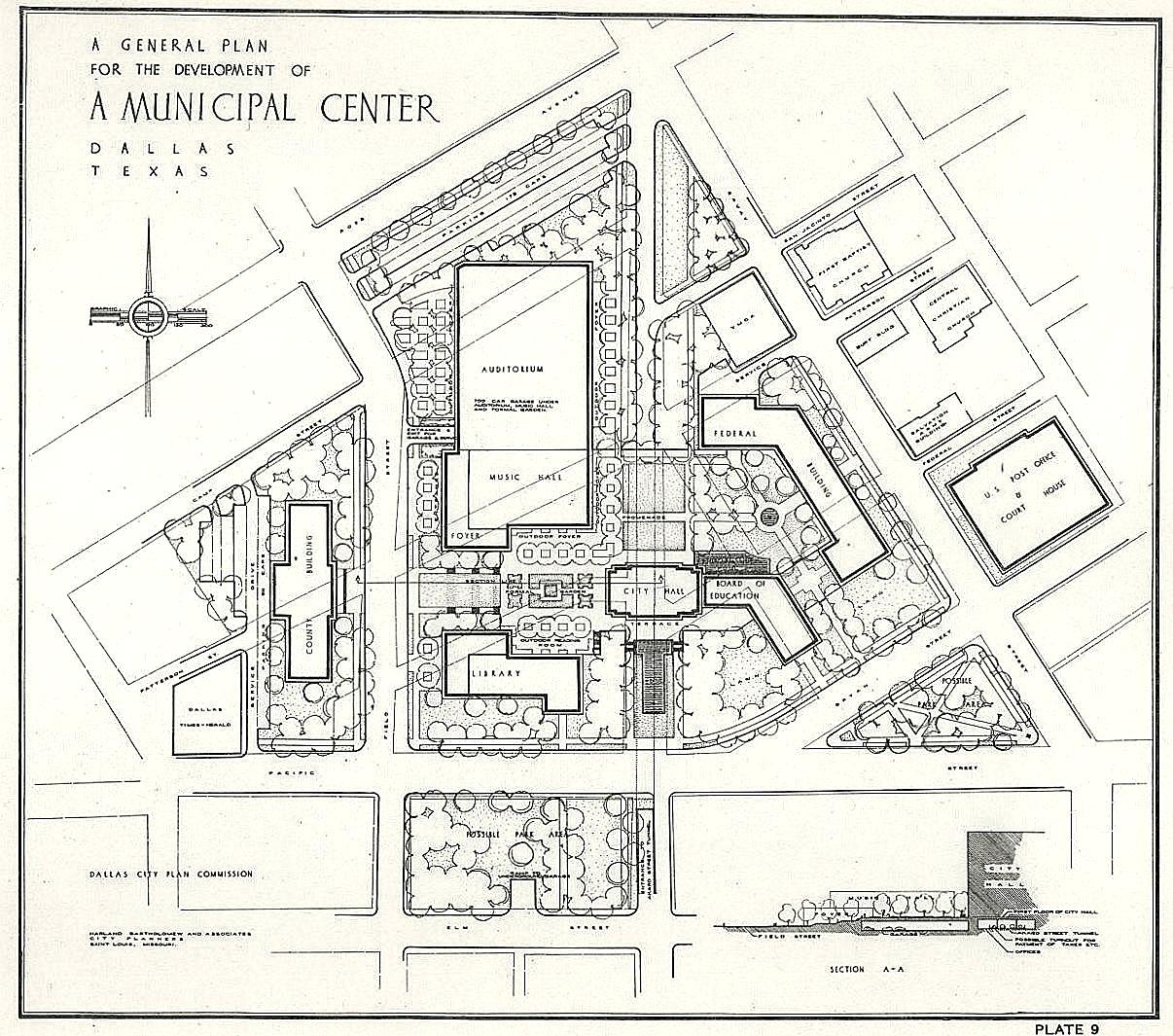
The previous year, the site for this proposed municipal center was north of Pacific:

municipal-center-plan_bartholomew-plan-1945

And Schmidt’s rendering for that compound is just as interesting:

municipal-center_erwin-earl-schmidt-rendering_bartholomew-plan-1945

Also discussed in the plan was what to do with Fair Park. Here’s a 1945 redevelopment proposal:

fair-park-redevelopment_bartholomew-plan-1945

And here’s the 1946 re-jiggering (the Cotton Bowl’s getting a lot of action):

fair-park_preliminary-plan_bartholomew-1946

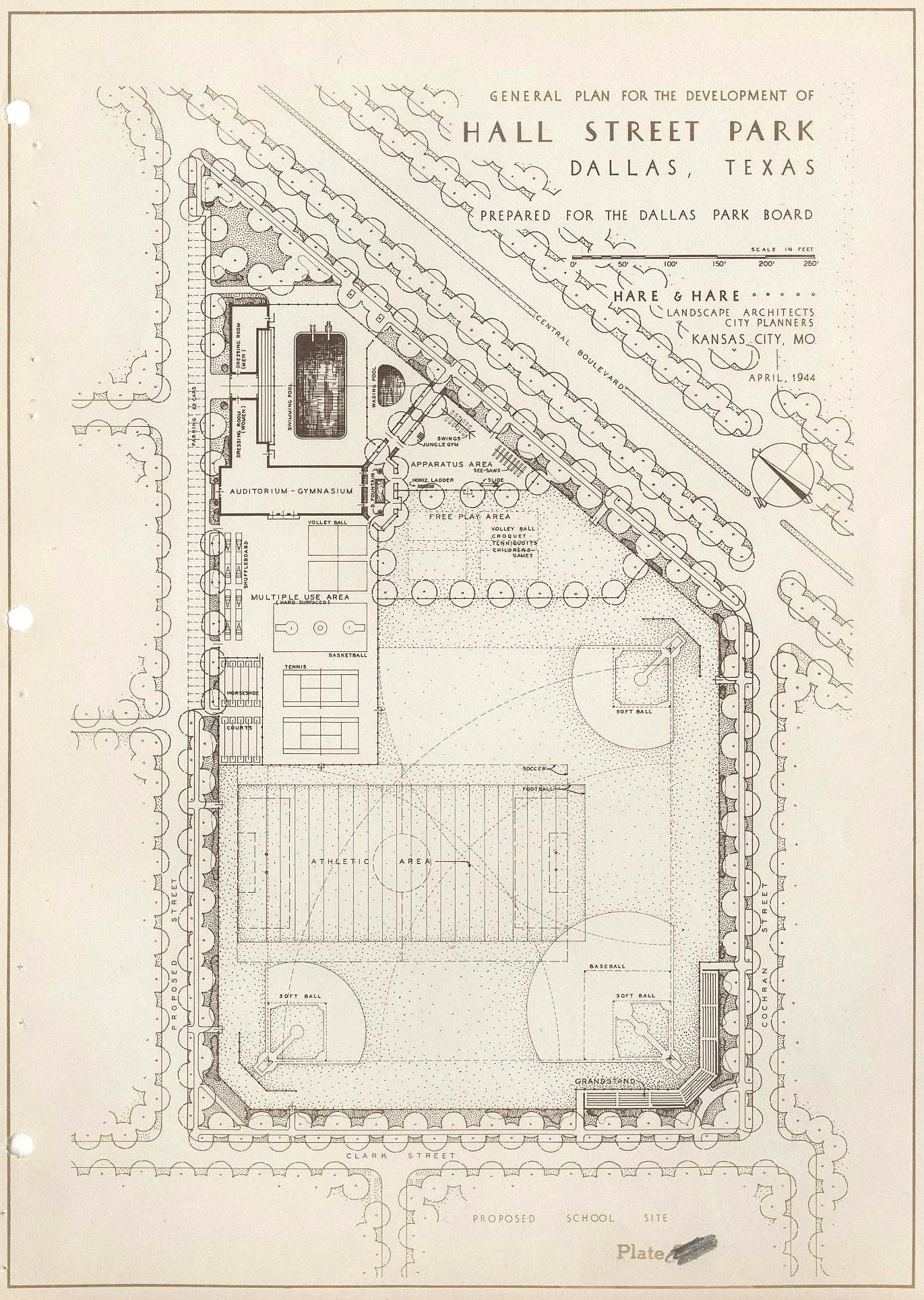
And, lastly, a 1946 plan for expansion of the “Hall Street Park for Negroes.” I’m not sure that any of this ever happened. The last mention I see of this park was in 1945 (the first mention I found of the park in the Dallas Morning News archives was 1922, and it had clearly been around for a while before that — perhaps it was absorbed into the existing Griggs Park? “Central Boulevard” would soon be built and renamed Central Expressway, the highway that sliced through the thriving black neighborhood centered around Hall Street.

hall-street-park_bartholomew-plan-1946

***

Sources & Notes

The 1945 plates can be found in the original publication here; the 1946 plates here.

All illustrations are from the Bartholomew master plan proposal; these reports are from the collection of the Dallas Municipal Archives, accessible on UNT’s Portal to Texas History, here.

Additional images from the plan can be found in the Flashback Dallas post “‘Your Dallas of Tomorrow’ — 1943,'” here.

All images larger when clicked.

*

Copyright © 2017 Paula Bosse. All Rights Reserved.
“Your Dallas of Tomorrow” — 1943

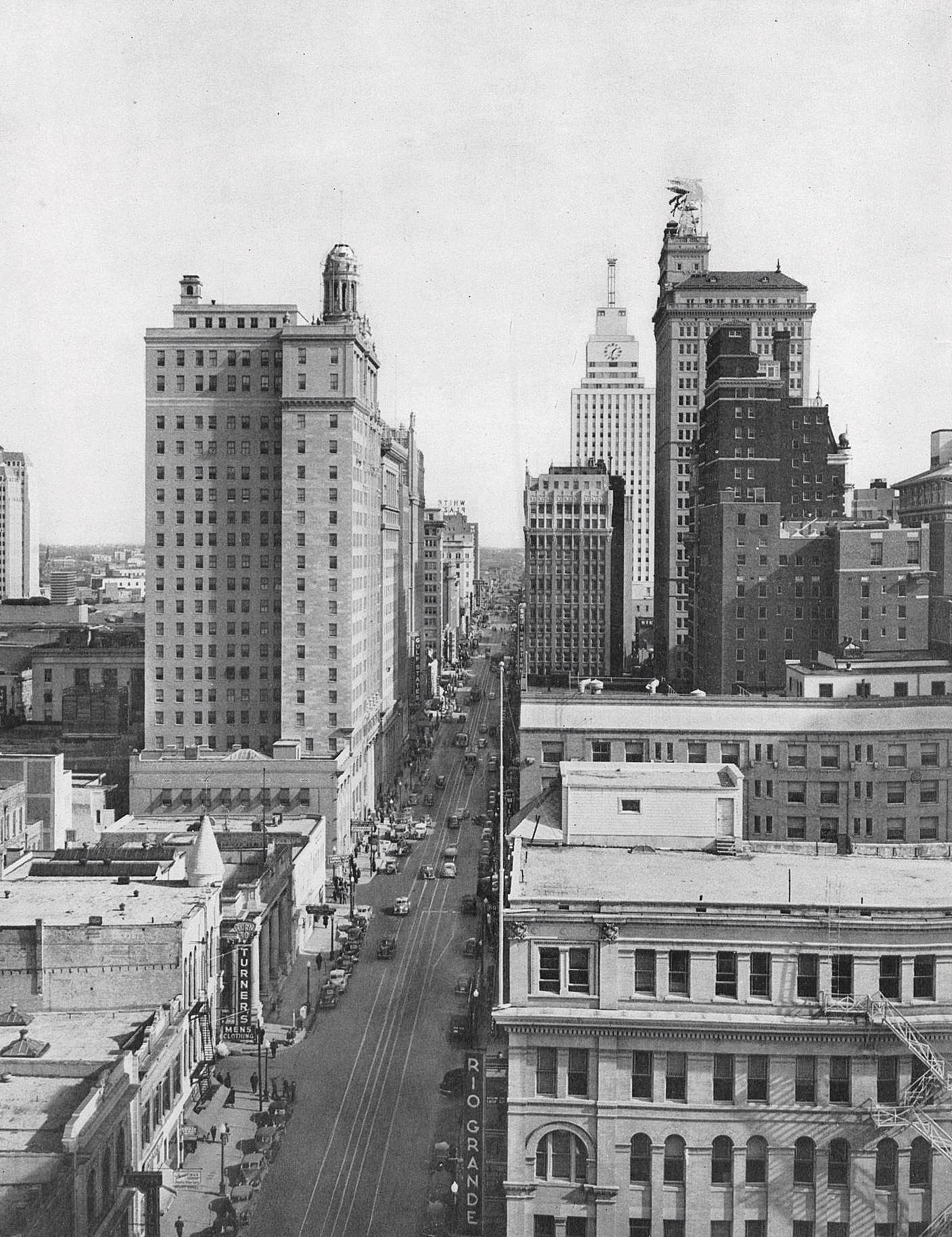
downtown_your-dallas-of-tomorrow_1943_portalMain Street, 1943… (click for larger image)

by Paula Bosse

Harland Bartholomew, a St. Louis urban planner and civil engineer, was asked by the City of Dallas in 1943 to prepare a master plan for Dallas which would address the needs of the city’s post-war growth and livability. As then-mayor Woodall Rodgers said, “We need another Kessler Plan and have waited long enough to start. We want to be ready to put Dallas ahead when the war is over and we will have great opportunities to put a master plan in effect” (Dallas Morning News, April 1, 1943).

Read Bartholomew’s incredibly thorough 51-page report titled “Your Dallas of Tomorrow” here. It has been scanned in its entirety and is presented (courtesy of the Dallas Municipal Archives) on UNT’s Portal to Texas History site. In addition to the report, there are drawings, graphs, maps, and the wonderful photo seen above showing an already-vibrant metropolis, with its newest addition to the skyline, the Mercantile Bank Building. Below are a few other things from Bartholomew’s master plan I found interesting. (All images are larger when clicked.)

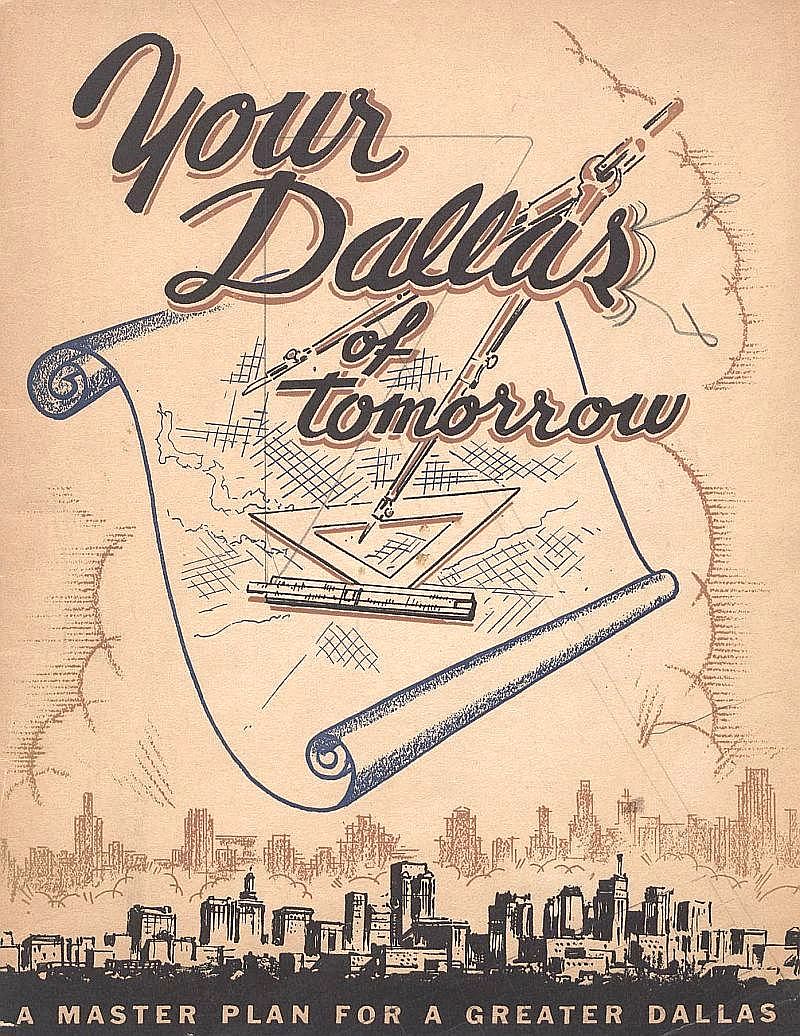
your-dallas-of-tomorrow_1943_portal_cover

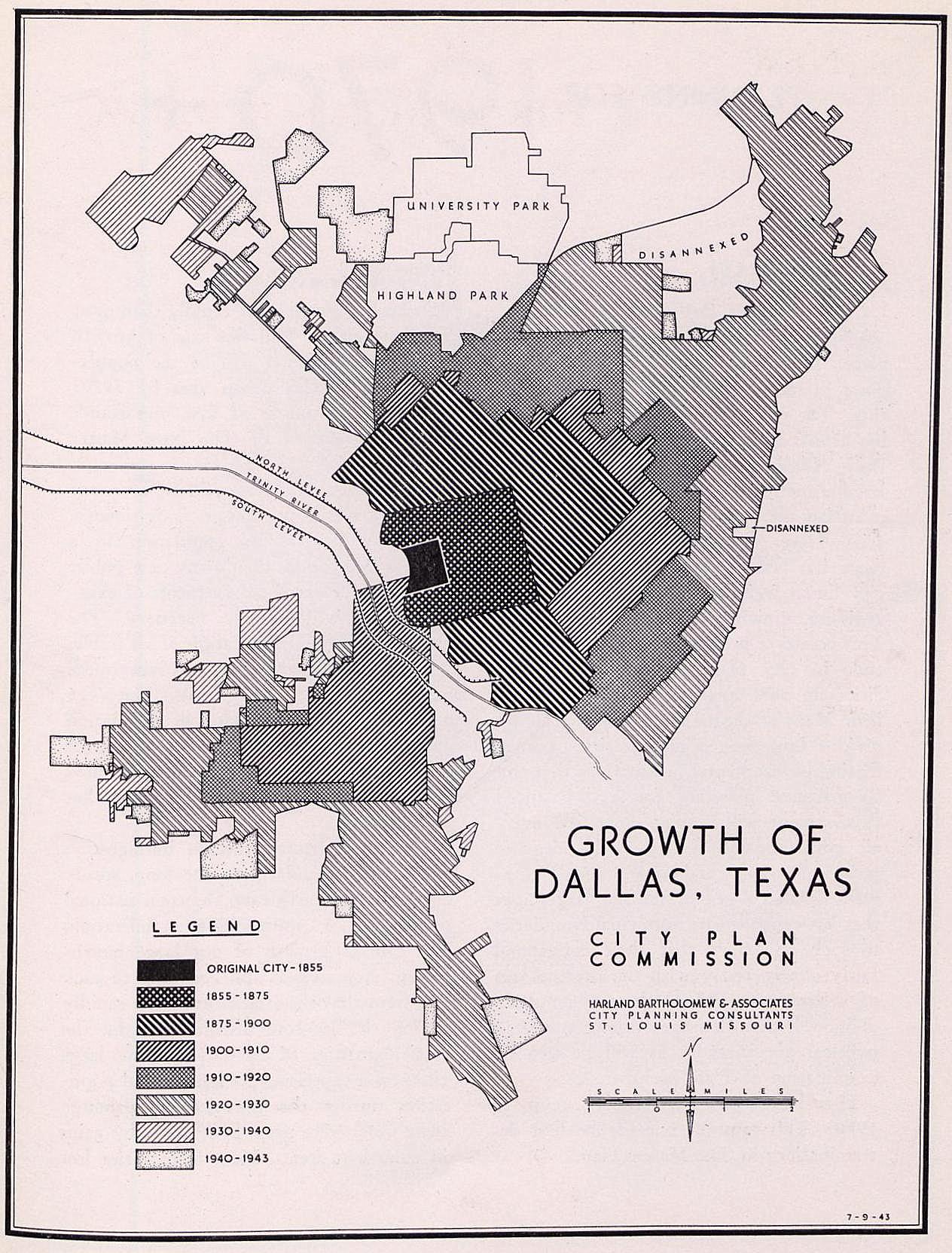
This map showing the growth of the city, from 1855 to 1943, is really interesting. Check out the “disannexed” areas. (I think that area east of the Park Cities was disannexed because landowners — which included W. W. Caruth — argued that it was undeveloped farmland and shouldn’t be subjected to city taxation. …I think.)

growth-of-dallas-to-1943_your-dallas-of-tomorrow_portal

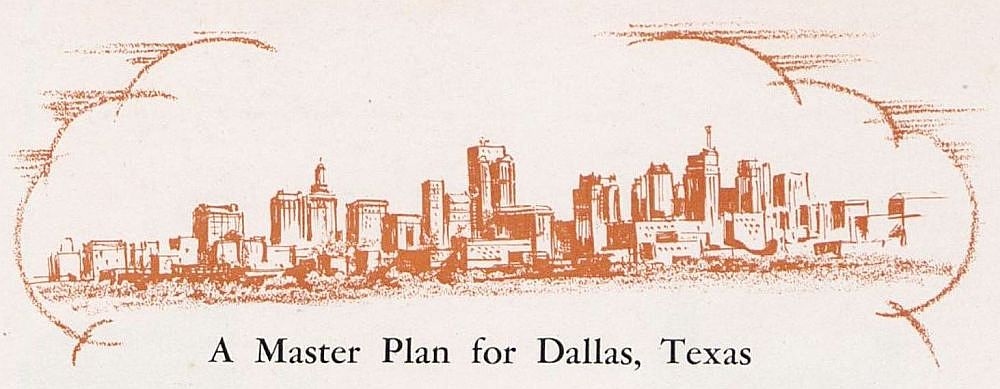
A somewhat recognizable skyline.

skyline_your-dallas-of-tomorrow_1943_portal

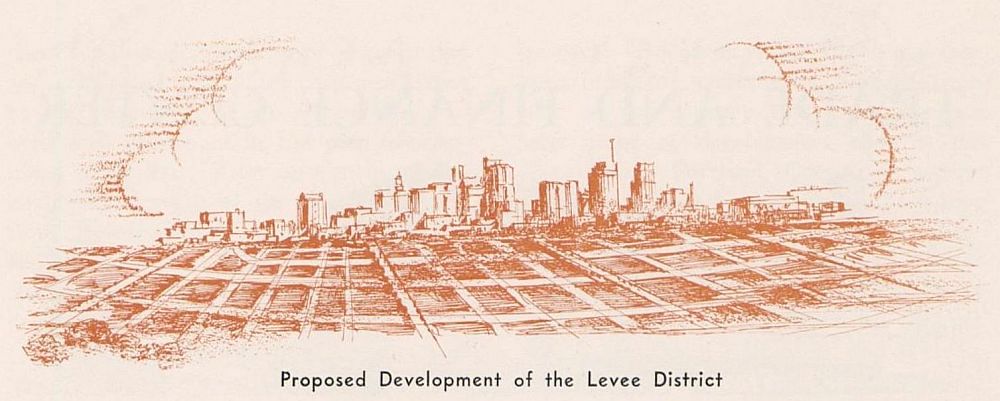
Levee District.

levee-development_your-dallas-of-tomorrow_portal

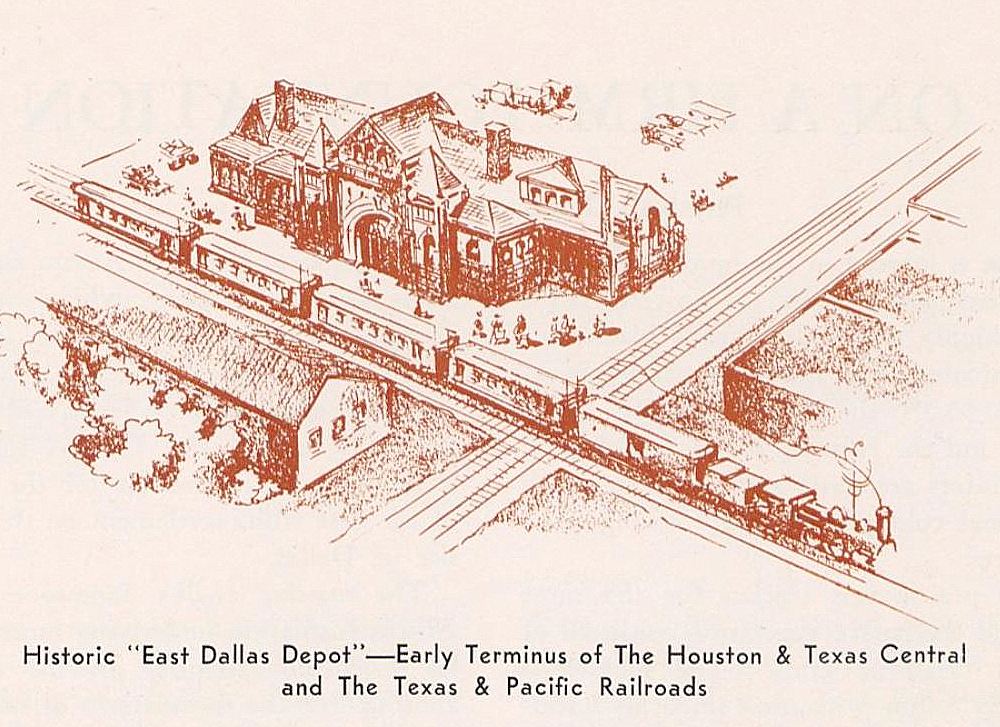
The old Union Depot at the edge of Deep Ellum, demolished in 1935.

union-depot_your-dallas-of-tomorrow_1943_portal

There is much more in this interesting report, including quite a bit of good historical information on the development and growth of Dallas.

***

Source & Notes

All images from “Your Dallas of Tomorrow, A Master Plan for Dallas, Texas,” prepared by Harland Bartholomew and Associates of St. Louis, Missouri in September, 1943. Booklet from the Dallas Municipal Archives, accessible on the Portal to Texas History, here.

The report above was the first one issued — and it was the most glitzy. The ones that followed were more down-to-business. Some of the plans were implemented, some were not. See all of the reports of the master plan prepared by Bartholomew and Associates — issued between 1943 and 1946 — here. If you like maps, this link has your name all over it!

*

Copyright © 2017 Paula Bosse. All Rights Reserved.
Cowtown Extra: Fort Worth Zookeeper Ham Hittson and His Forest Park Friends

FW-zoo_hamilton-hittson_fawn_062937_UTAZookeeper Hittson and tiny friend…

by Paula Bosse

Today, Fort Worth. I was looking for photos of the old Forest Park in Oak Cliff (which was renamed Marsalis Park in 1925) and came across photos of the Forest Park Zoo. A search on the internet showed me that there was also a Forest Park Zoo in Fort Worth. I’ve never actually been a big fan of zoos, but I saw the photo above and was won over by its sheer cuteness. So let’s just take a little trip westward and enjoy some photos of cute animals, most of which feature zookeeper Henry Hamilton (“Ham”) Hittson.

Ham Hittson (1912-1966) began working as a zookeeper at the Forest Park Zoo in the early 1930s — if his obituary is correct, he became the zoo’s director in 1933 — at the age of only 21! During World War II he served for two years in the Coast Guard, assigned to work with sentry and attack dogs and with patrol horses. After the war he returned to the zoo (he was the director of the zoo for 21 years) and eventually became the director of the Fort Worth Park Department. His 1966 obituary (he was only 54 when he died) noted that he was instrumental in forming the Fort Worth Zoological Association. And, well, these photos are very sweet.

(All photos are from the University of Texas at Arlington Libraries. Click pictures to see larger images; click the link below each photo for more information.)

*

The photo at the top is my favorite — it shows Hittson with a tiny fawn born the previous day. The photo above and the one below were taken on June 29, 1937.

FW-zoo_hamilton-hittson_fawn_062937-b_UTAMore info here

Below, Hittson with a new baby lion cub named Will (June 29, 1939).

FW-zoo_hamilton-hittson_lion-cub_062939_UTAMore info here

Actor Jimmy Stewart stopped by the zoo on May 22, 1953 to check out the zoo’s new rhinoceros, Marilyn Monroe. F. Kirk Johnson, zoological board president, is at the left and Hittson, then park department director, is at the right.

FW-zoo_jimmy-stewart_052253_UTAMore info here

Back to Ham’s zookeeper days: in the photo below (taken on August 2, 1940), he’s standing with one of the zoo’s top attractions, an elephant named Queen Tut. He’s bidding her farewell as he is about to leave for New York where he will pick up a baby elephant to be her companion. (Hittson and the zoo’s veterinarian brought the one-year-old elephant back with them in a trailer — they must have attracted a lot of stunned looks along the highway as they drove back from New York.)

FW-zoo_hamilton-hittson_elephant_080240_UTAMore info here

The arrival of this new elephant was big news — there were almost daily updates in the pages of the Fort Worth Star-Telegram. In order to buy the elephant, the zoo had had to take out a loan from the bank, and in what was both a speedy way to pay off the debt and a clever way to garner publicity, there followed a successful drive to raise money to pay off the “mortgage”: countless school children happily did their parts by contributing pennies, nickels, and dimes in the fundraising effort and then flocked to the zoo to see the newest member of the zoo family and welcome her to Fort Worth.

And here’s Queen Tut with her new little pal, Penny, on September 10, 1940.

FW-zoo_queen-tut-and-penny_091040_UTAMore info here

Awww.

***

Sources & Notes

There are tons of photos of the Forest Park Zoo in the UTA Libraries Special Collections, here (20 pages’ worth!).

*

Copyright © 2017 Paula Bosse. All Rights Reserved.

Happy Mother’s Day from Mrs. Baird’s Bread — 1949
mothers-day_mrs-bairds_freshie_dmn_050649

by Paula Bosse

Sure hope Mom can handle all that gluten!

Happy Mother’s Day!

***

Sources & Notes

Newspaper ad from 1949. The “Freshie” ad campaign — featuring a Mrs.-Baird’s-Bread-obsessed kid — ran in Texas newspapers from about 1945 to 1953. More of the ads can be seen in the post “The ‘Freshie’ Ads for *-@!!@!* Delicious Mrs. Baird’s Bread — 1945-1953,” here.

*

Copyright © 2017 Paula Bosse. All Rights Reserved.