Flashback : Dallas

A Miscellany: History, Ads, Pop Culture

Category: 1950s

J. L. Long, Woodrow Wilson — 1958

woodrow_long_022758_squire-haskins_UTA_smBuccaneers, Wildcats: represent… (click for B-I-G image)

by Paula Bosse

Another fab aerial photo from Squire Haskins: a 1958 southwesterly shot of J. L. Long Jr. High School (on the left) and Woodrow Wilson High School.

…I am not unfamiliar with these East Dallas institutions. 

***

Photo taken above Lakewood by Squire Haskins on Feb. 27, 1958. From the Squire Haskins Photography, Inc. Collection, UTA Libraries, Special Collections — more info here. To see UTA’s super-gigantic image, click the photo!

*

Copyright © 2016 Paula Bosse. All Rights Reserved.

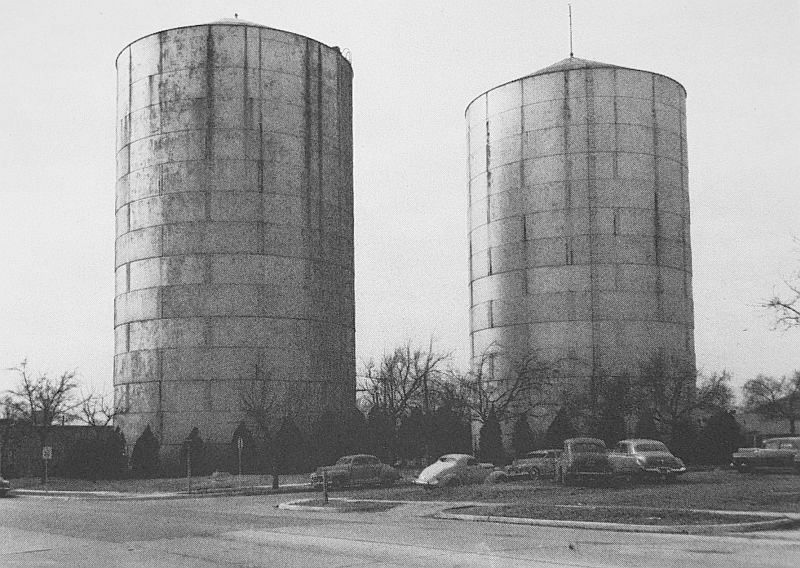
The Twin Standpipes of Lakewood Heights: 1923-1955

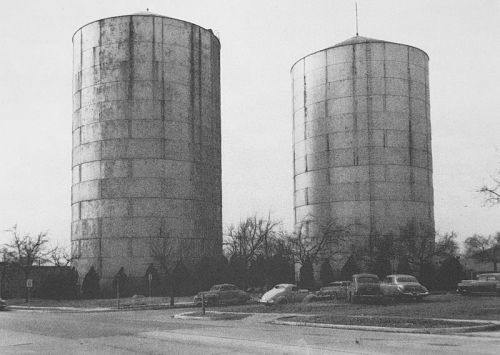
lakewood_water-towers_reminiscencesAbrams and Goliad, y’all… (click for larger image)

by Paula Bosse

The two large water towers pictured above loomed over the East Dallas neighborhood of Lakewood Heights for over 30 years. They sat at the southwest corner of what was then known as Greenville Road (not to be confused with Greenville Avenue) and Aqueduct Avenue — the streets are known today as Abrams Road and Goliad Avenue. The towers replaced a previous (single) water tank, which, by the early 1920s, was proving inadequate for the needs of an exploding Lakewood area.

These water tanks — called “standpipes” — were really big: each was 100 feet tall, 60 feet in diameter, and held two million gallons of water. They were erected in October, 1923 and, rather surprisingly, stood until 1955. Even though I grew up in this part of town, I never knew about these tanks until a couple of years ago when I saw a photo in a Dallas history group. It’s hard to believe those industrial behemoths were smack dab in the middle of what is now a jam-packed residential neighborhood.

**

Here are a few photos featuring cameo appearance by the omnipresent tanks. In the first one, from the 1930s, they can be seen at the top right, ghostlike in the distance.
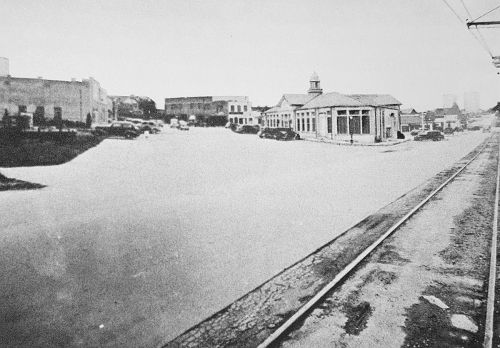
lakewood-shopping-ctr_streetcar-tracks_ca1938_reminiscences

*

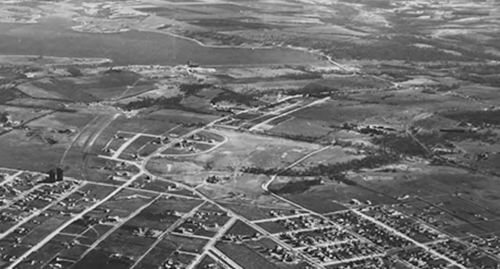
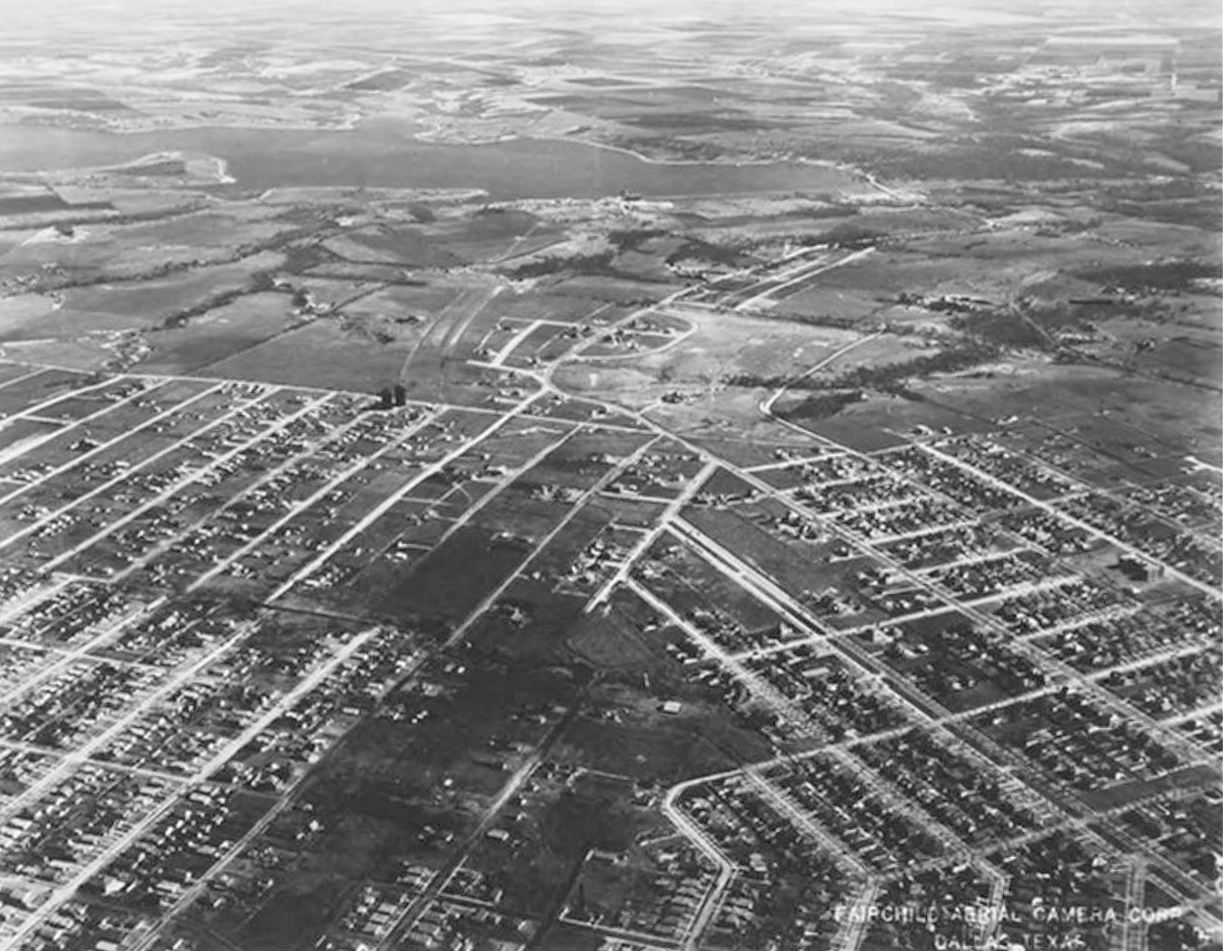
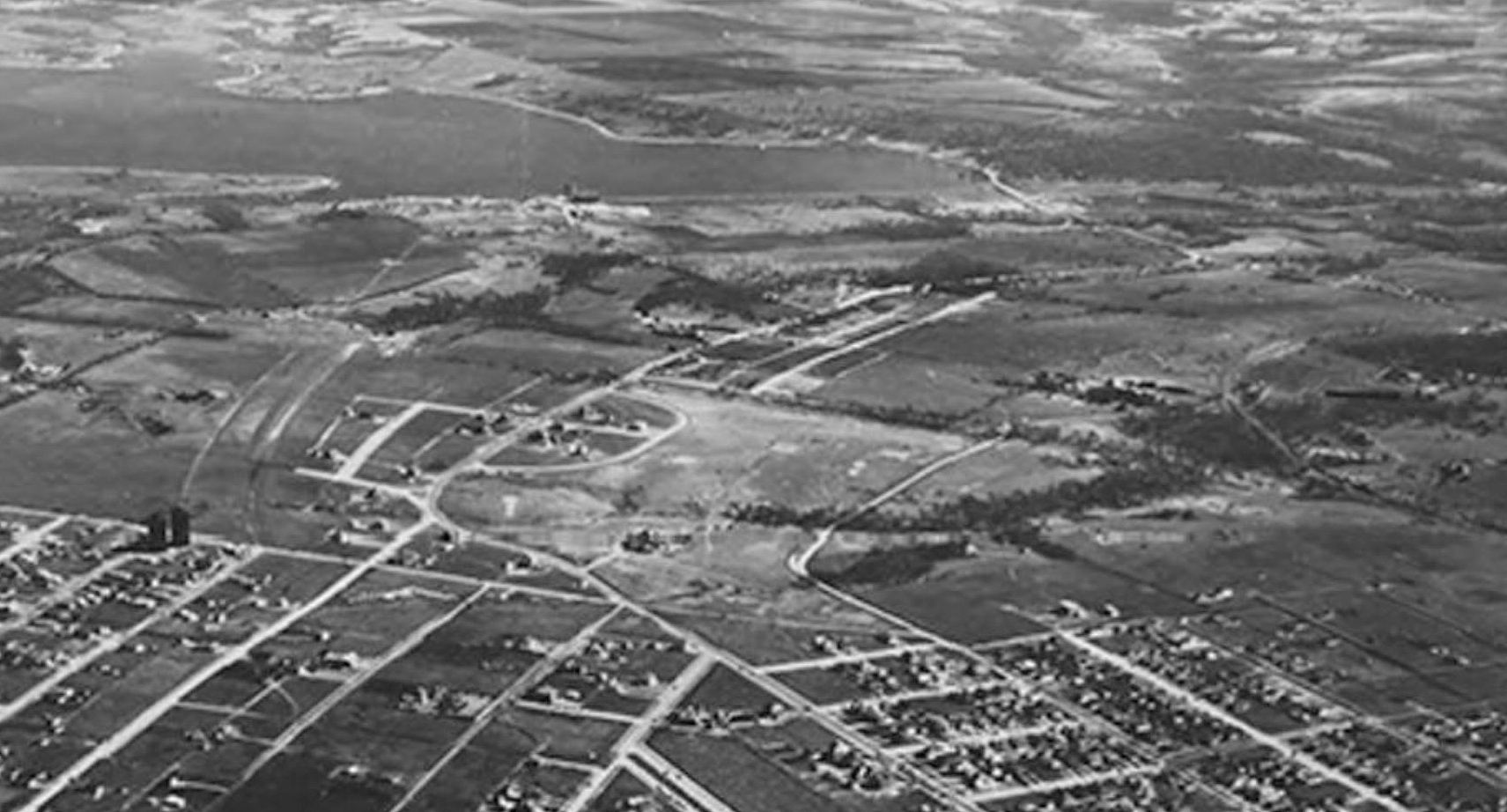
Then there’s this fantastic aerial shot of what would later become the fully developed Lakewood area (and beyond). Looking east, White Rock Lake is in the distance, and the two towers — brand new when this photo was taken in 1923, and taller than anything else in the photograph — are at the left.
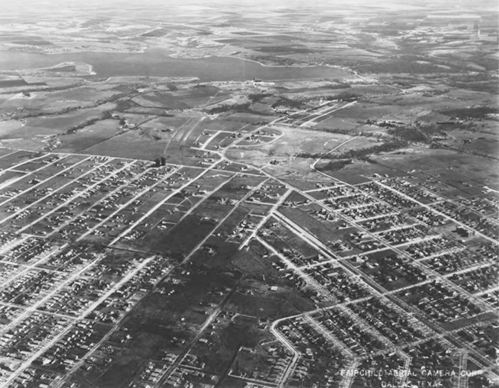
east-dallas_lakewood_fairchild_1923_cook-coll_degolyer_smu

Let’s zoom in a bit:

east-dallas_lakewood_fairchild_1923_cook-coll_degolyer_smu_det

*

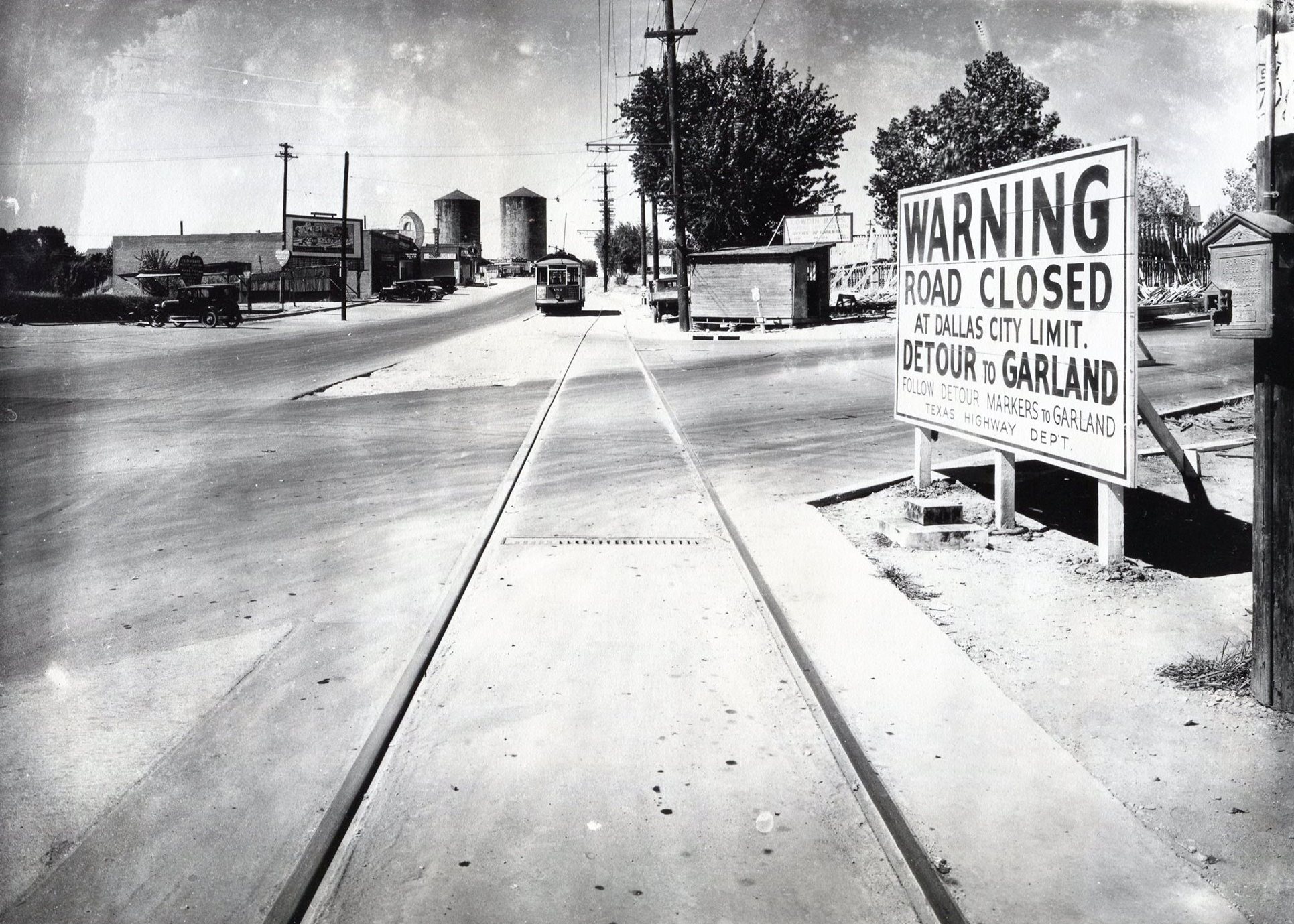
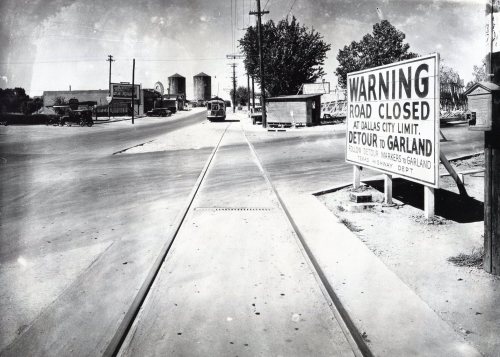
And here is a really wonderful photo which was posted in the Dallas History Facebook group by Mary Doster from the collection of her husband Jim Doster, showing Abrams, looking north, in 1925. (The location of the twin tanks was actually outside the Dallas city limits in 1919 — see the boundary on a 1919 map here.) I never get tired of seeing streetcars, especially traveling down streets I drive everyday.
water-tanks_abrams_dallas-hist-FB-jim-dosterCollection, Jim Doster

**

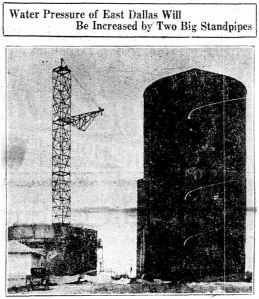
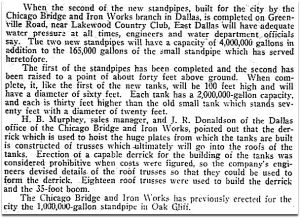
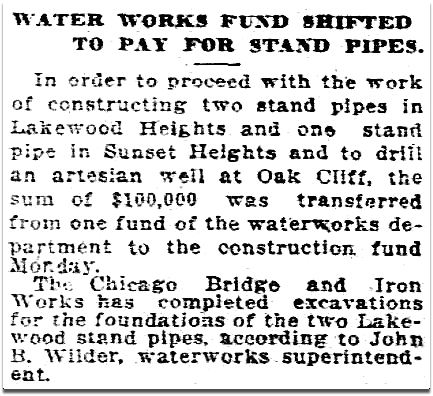
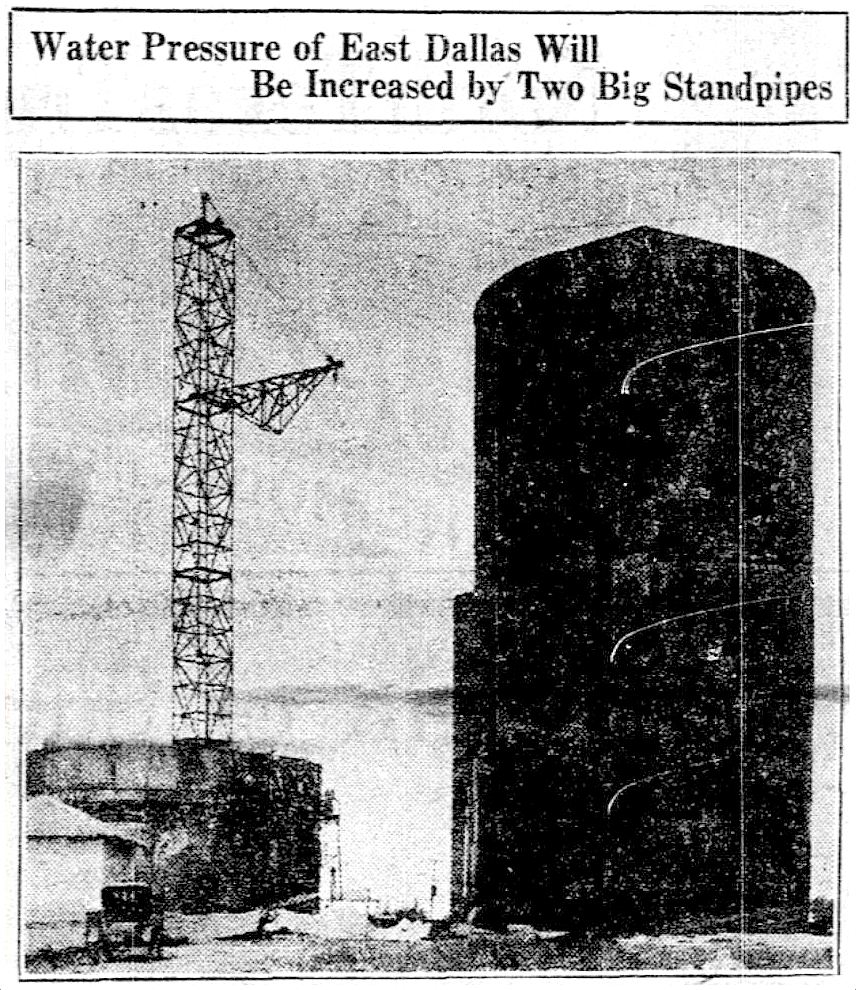
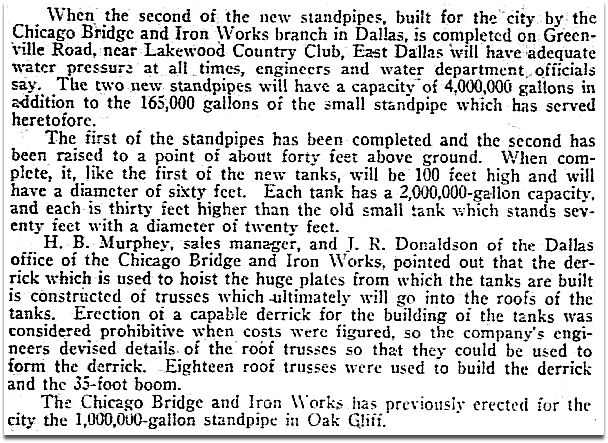
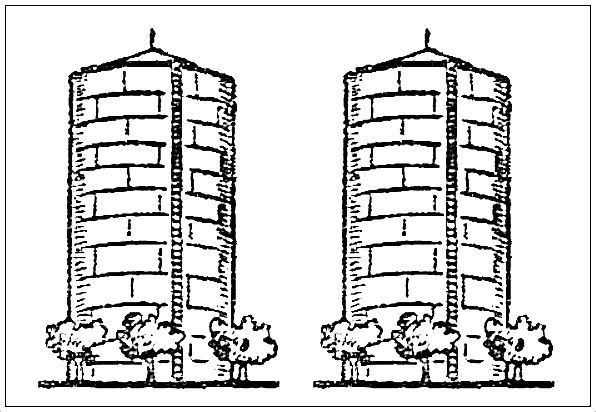
A few articles about the tanks’ beginning in 1923.
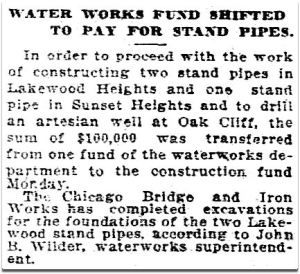
water-towers_dmn_022723Dallas Morning News, Feb. 27, 1923

water-towers_dmn_100723a
DMN, Oct. 7, 1923

water-towers_dmn_100723b
DMN, Oct. 7, 1923

*

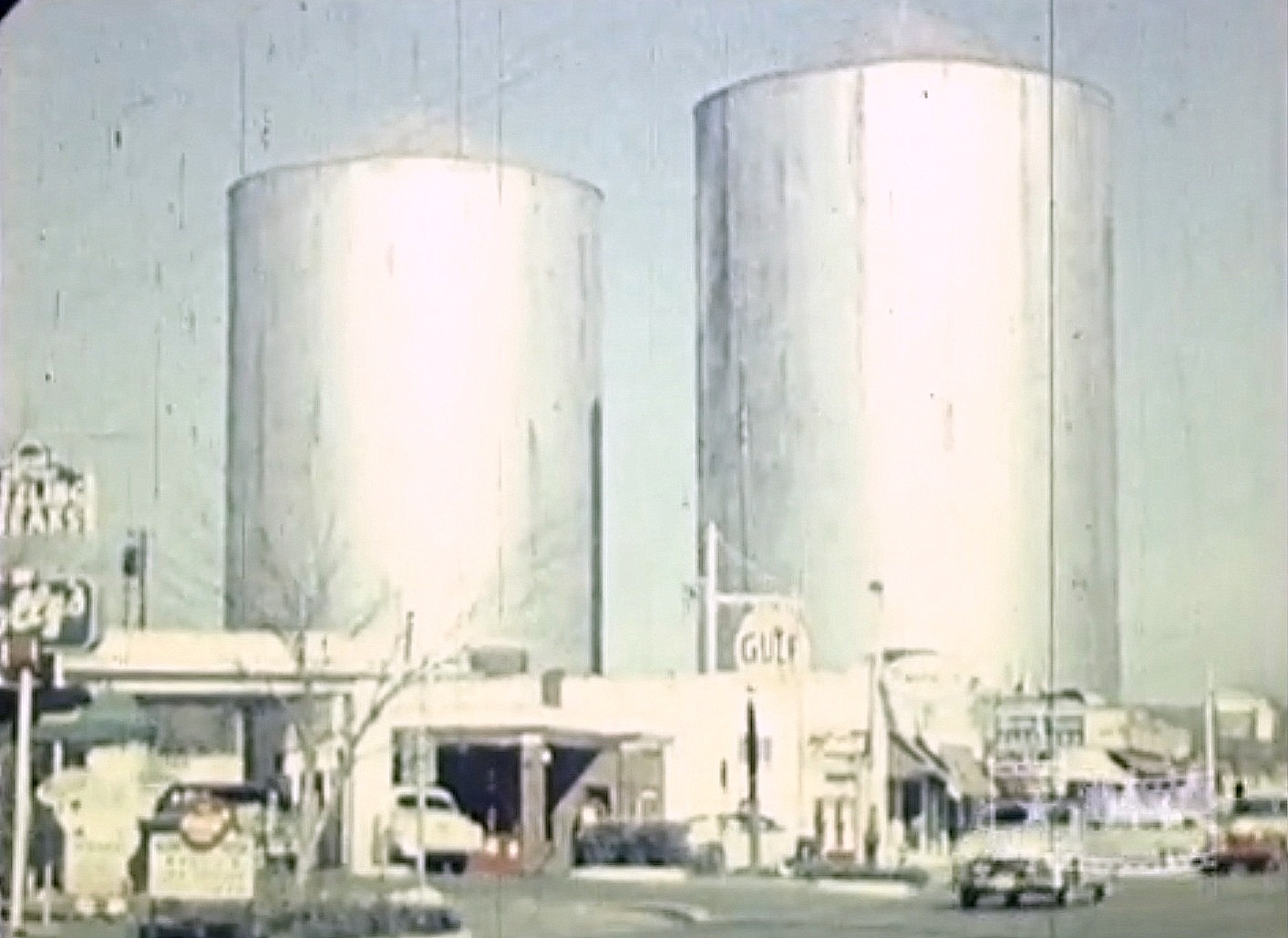
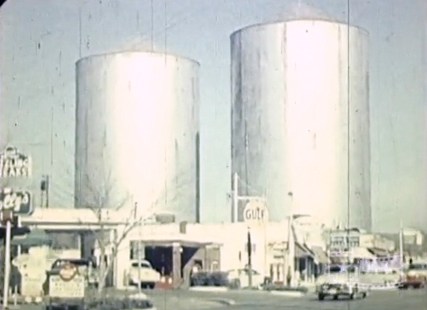
Here’s a screenshot from a silent film produced by the City of Dallas waterworks department, showing them at traffic-level, with a view to the northwest from Abrams.
stand-pipes_lakewood_TAMI_water-dept-film_6.39

The tanks were dismantled in 1955 (pertinent articles are listed below, in the “Notes” section). Their fate, post-dismantling? One of them was destined to be reassembled in Tarrant County for the Hurst-Euless-Bedford water system, and the other one was “to be kept as stand-by storage for the city” (DMN, June 7, 1955).
standpipes_dmn_060755
RIP in HEB…

***

Sources & Notes

First two photos from the book Reminiscences, A Glimpse of Old East Dallas.

Aerial photo — titled “East Dallas — 1923” — is a Fairchild Aerial Surveys photograph, from the George W. Cook Dallas/Texas Image Collection, DeGolyer Library, Central University Libraries, Southern Methodist University; more information is here. (I have adjusted the color.)

Screenshot is from a City of Dallas silent film, shot for the water department — the film is in the TAMI collection here, and the standpipes pop up at the 6:39-ish mark. Thanks to John Botefuhr for posting the link to this film on the Lakewood 1925-1985 Facebook group.

More on the tanks’ removal in 1955 can be found in these Dallas Morning News articles:

  • “Familiar Old Landmark To Be Removed” (DMN, March 20, 1955)
  • “Offers Vary on Standpipe” (DMN, April 26, 1955)
  • “East Dallas Landmark Coming Down” (DMN, June 7, 1955 — has photo taken from inside the tank looking up as dismantling was underway)

The present-day view seen in the top photo — looking south on Abrams — can be seen on Google Street View here.

A very interesting Sanborn Map from 1922 — before the twin tanks were built, but still showing the “Lakewood Heights Water Works” — can be found here. There’s, like, nobody living there, man.

I’d love to see other photos of these particular “standpipes” — if anyone has any, forward them to me and I’ll include them in this post. Contact info is at the top.

As always, images are magically larger when clicked.

*

Copyright © 2016 Paula Bosse. All Rights Reserved.


“Greetings From Dallas, Texas” — 1955

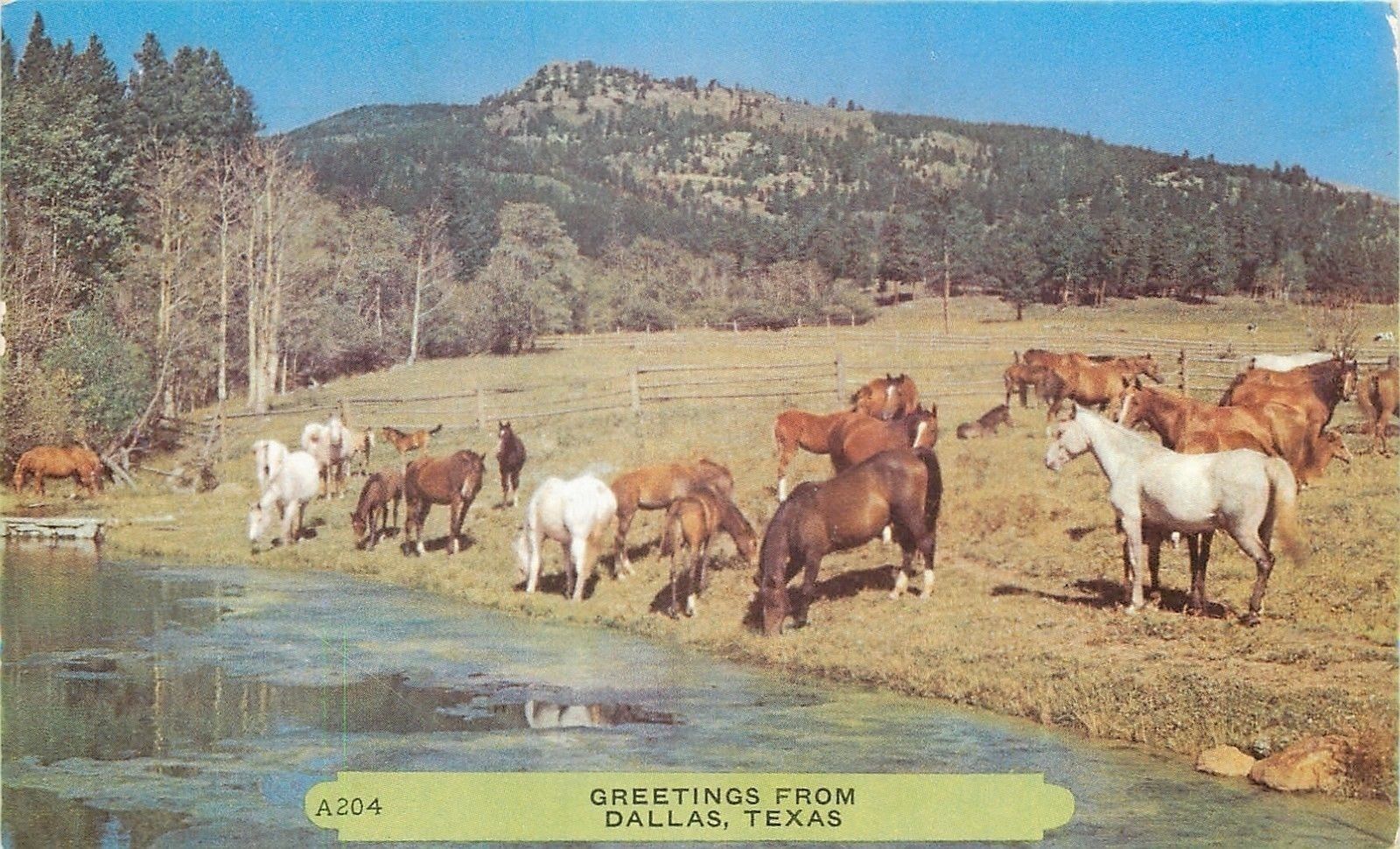
greetings-from-dallas-texasDallas?

by Paula Bosse

Um….

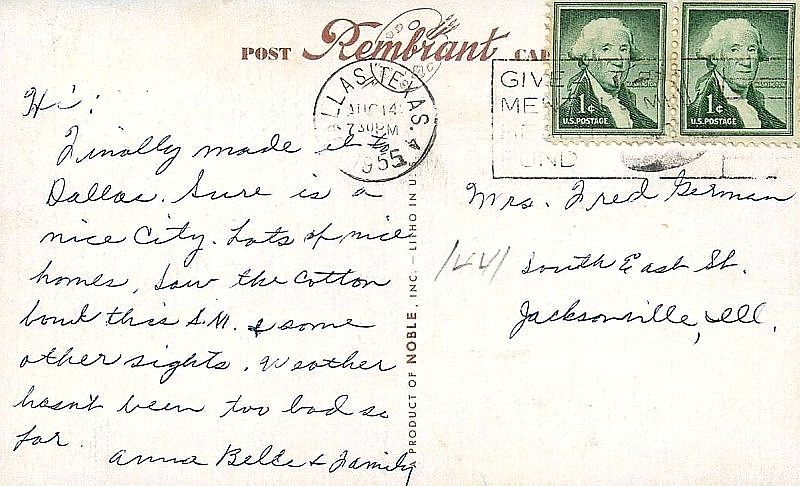
Somehow Anna Belle and her family found the Cotton Bowl. Over yonder, past that ridge.

greetings-from-dallas-texas_back

***

Sources & Notes

Postcard purporting to be “Dallas, Texas” from eBay.

**

UPDATE: A person commenting on Facebook says that he thinks this shows “Cedar Mountain, near where Joe Pool Lake was built” — an area which actually is within the Dallas city limits. I’m not familiar with that area. Does this postcard show this view? Read about the Cedar Mountain Preserve here; and about Joe Pool Lake here. Check out a map that shows the City of Dallas boundary, here.

Read about Cedar Mountain (“…that wooded white rock ridge that runs from Eagle Ford to Cedar Hill…”) in the Dallas Morning News article “Bear Slapped Him But He Survived” by Kenneth Foree (Sept. 1, 1948).

Apologies, Cedar Mountain and Rembrant (sic) Post Card Company, if I have made unfounded sarcastic comments.

**

UPDATE TO THE UPDATE: I have to admit, nothing I’ve posted before has stirred up quite so much controversy. This post has been shared quite a bit, and I’ve dipped into Facebook pages where members are discussing this idyllic photo. Half swear up and down there’s no way this could be anywhere near Dallas, and the other half are pretty certain it’s in the Cedar Hill area.

Is it possible that it could be the Cedar Hill area (aka “The Hill Country of the Metroplex”)? The highest point in North Texas is just a stone’s throw from Dallas. According to the Wikipedia entry, it “stands at an elevation of about 800 feet (240 m) above sea level — the highest point in a straight line from the Red River at the Texas-Oklahoma border to the Gulf Coast.”

The Old Penn Farmstead was a working family farm/ranch from the 1850s until the 1970s (remaining in the Penn family the entire time). Photos show that the fence construction on the Penn property is the same as that seen behind the horsies in the postcard. There were several large-ish farms and ranches nearby, several of which had horses. There were even a couple of “retreats” operating in the area in the late-1940s and ’50s (notably, the 520-acre retreat sponsored by the Dallas Baptist Association).

Even though it’s likely this was just some sort of stock Western-looking photo used by the postcard company, I suppose it could show the unexpected beauty around what is now the Cedar Hill State Park, Cedar Ridge Preserve, Cedar Mountain Preserve, Dogwood Canyon Audobon Center, Joe Pool Lake, Mountain Creek Lake, etc. I mean, I’ve never seen anything around here that looks remotely like this, but a lot of people have some very strong opinions!

Watch a short Texas Parks & Wildlife video about Cedar Hill State Park here; the Penn Farmstead is located here and is seen in the video.

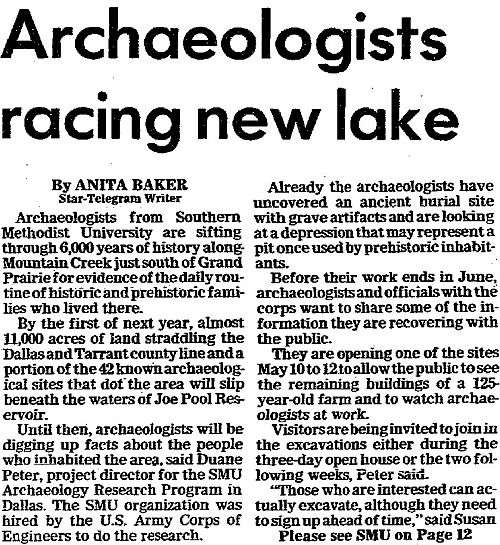
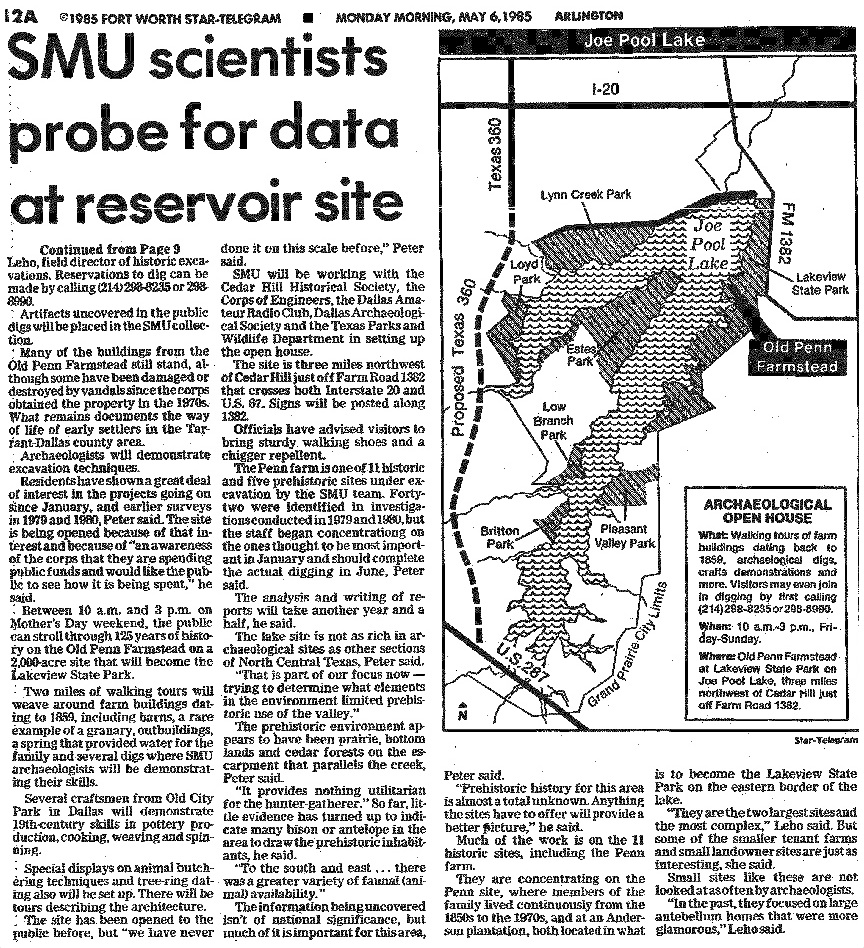
Here’s a 1985 article about the 11,000 nearby acres which would soon be inundated in the construction of Joe Pool Lake. (Click article to see larger image.)

joe-pool-lake_FWST_050685a

joe-pool-lake_FWST_050685b
Fort Worth Star-Telegram, May 6, 1985

**

UPDATE TO THE UPDATE OF THE UPDATE: It appears that the Rembrant Post Card people will tell you whatever you want to believe! The same image has been found without “Dallas” but with “Colorado” on it (see link in comments section). Horrors! So, anyway. After all that, my original sarcastic tone stands. Always trust your inner cynic! At least I learned about Cedar Hill!

UPDATE, ETC.: And now this saga has been taken on by intrepid Dallas Morning News reporter Charlie Scudder! Read his coverage, here.

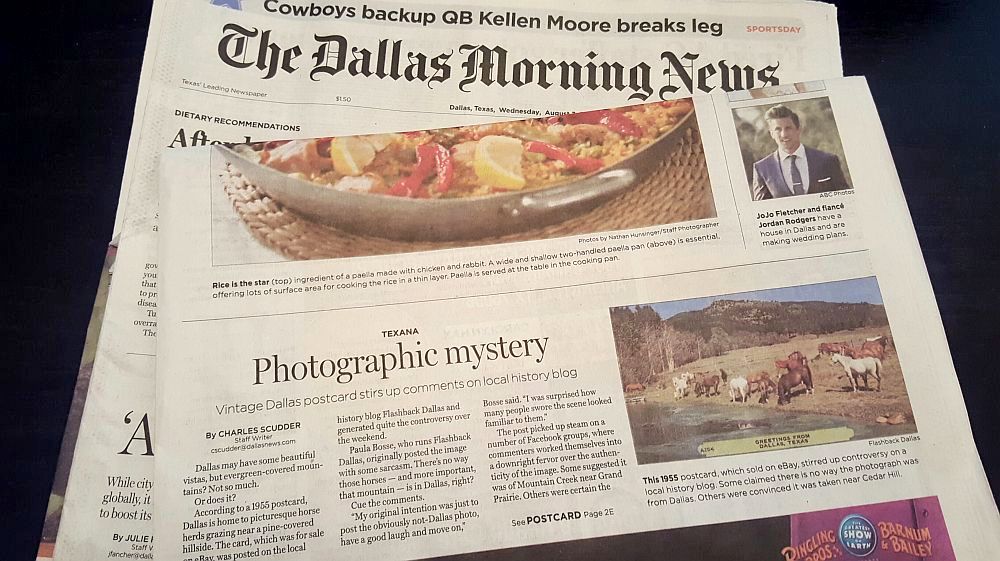
UPDATES, INCORPORATED: And, somehow, this story ended up in the pages of the actual paper edition of The Dallas Morning News. Lordy.

DMN_080316
DMN, Aug. 3, 2016

*

Copyright © 2016 Paula Bosse. All Rights Reserved.

Gene’s Music Bar, The Lasso Bar, and The Zoo Bar

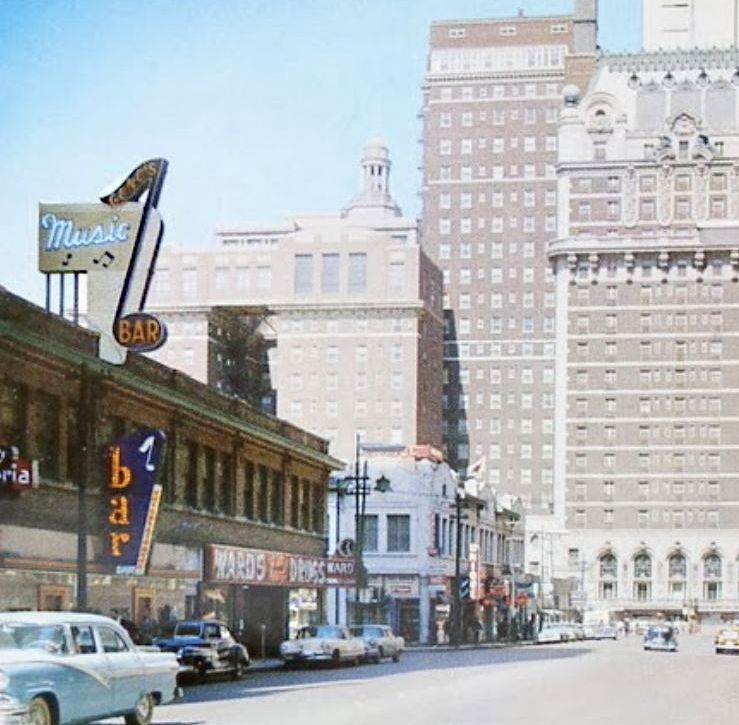
genes-music-bar_dallas-memorabiliaGene’s Music Bar, S. Akard Street (click for larger image)
by Paula Bosse

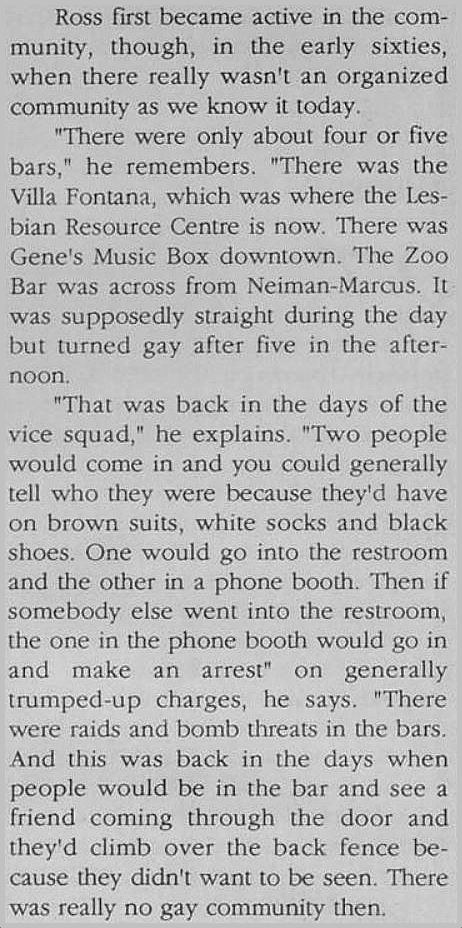
In Dallas’ pre-Stonewall days, there were only a handful of gay bars in the city, and they weren’t widely known beyond those who frequented them. Those were the days when “homosexual behavior” was illegal, and vice raids on gay bars and clubs were frequent occurrences. In an interview with the Dallas Voice Alan Ross remembered what the bar scene was like in Dallas in those days (click for larger image):

gay-dallas_dallas-voice_092190_alan-ross
Dallas Voice, Sept. 21, 1990

There was the well-appointed Le Boeuf Sur Le Toit (later renamed Villa Fontana), one of Dallas’ earliest gay bars, located on Skiles Street near Exall Park in the area now known as Bryan Place, and there were rougher, seedier places, generally downtown. Three of those downtown bars (which apparently catered to a “straight” clientele during the day and a gay clientele at night) were Gene’s Music Bar and The Lasso — both on S. Akard, in the shadow of the Adolphus Hotel — and The Zoo Bar, on Commerce, “across from Neiman-Marcus.”

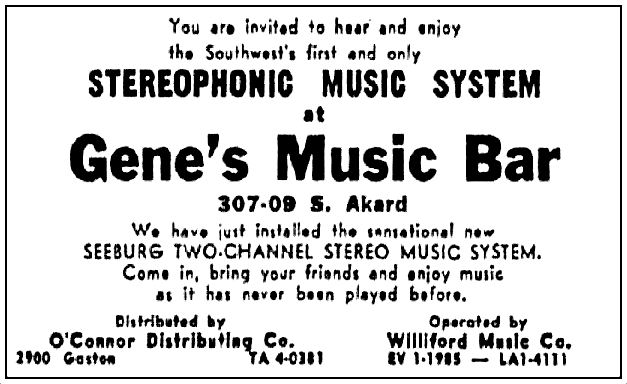
Gene’s Music Bar (pictured above) at 307-09 S. Akard began as a place where hi-fi bugs could sip martinis and listen to recorded music played on “the Southwest’s first and only stereophonic music system.” Not only did it have the sensational Seeburg two-channel stereo system, but it also boasted one of the best signs in town.

genes_dmn_110958
Nov. 1958

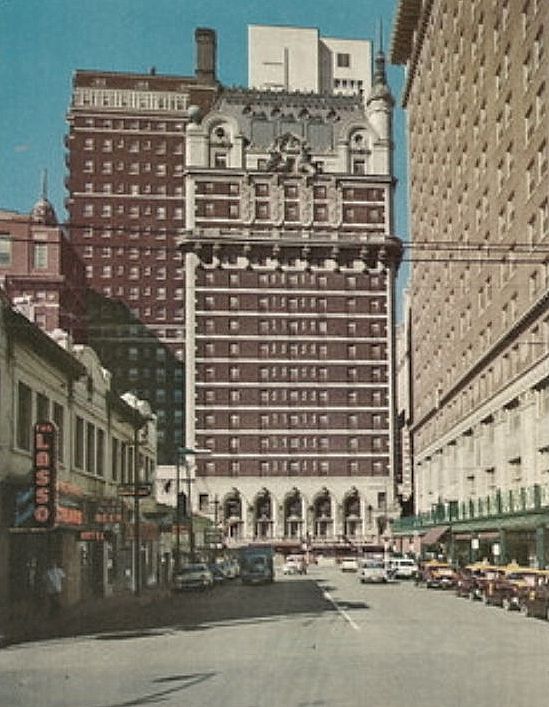
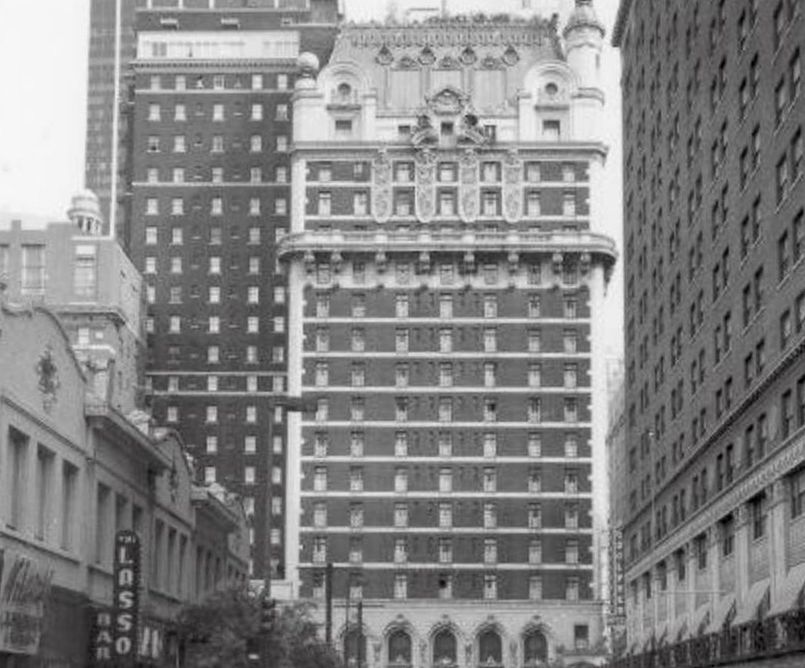
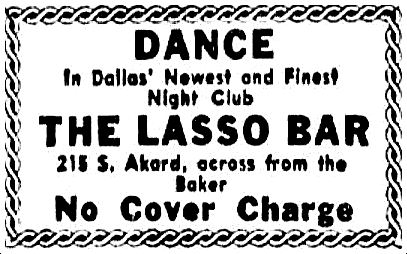
The Lasso Bar at 215 S. Akard was in the next block, across from the classy Baker Hotel, and a hop, skip, and a jump from the elegant Adolphus. Its proximity to the impressive Adolphus meant that the Lasso snuck its way into lots of souvenir picture postcards and Dallas Chamber of Commerce publicity photos. Its sign was pretty cool, too.

lasso-bar_postcard

adolphus_lasso-bar_tx-hist-comm

lasso-bar_dmn_031358
March, 1958

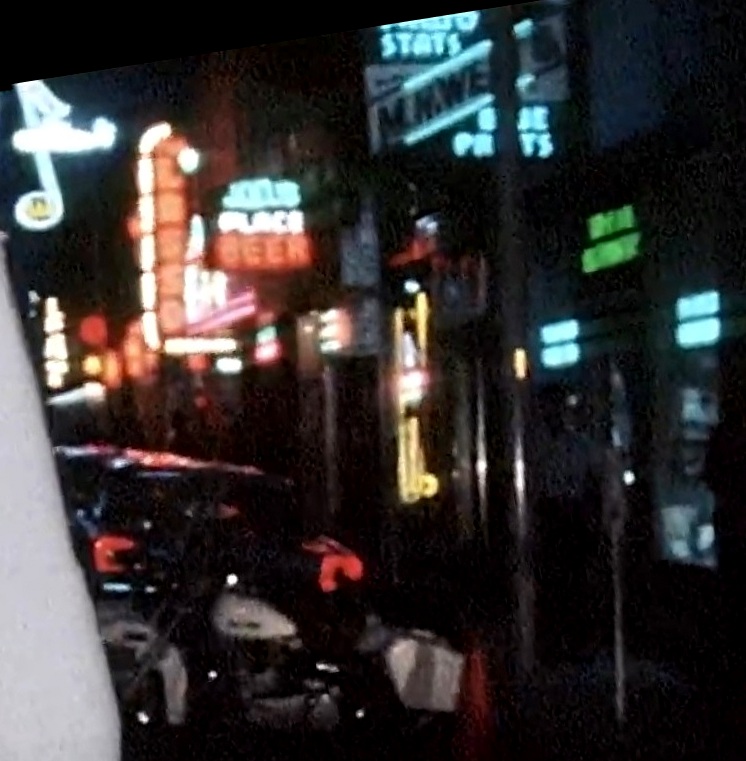
The image below gives you an idea of what that block looked like at night, neon blazing. (This super-blurry screenshot is from WFAA-Channel 8 coverage of 1969’s Texas-OU weekend, here — at 6:16 and 9:13.)

lasso-bar_jones-film_WFAA_101169

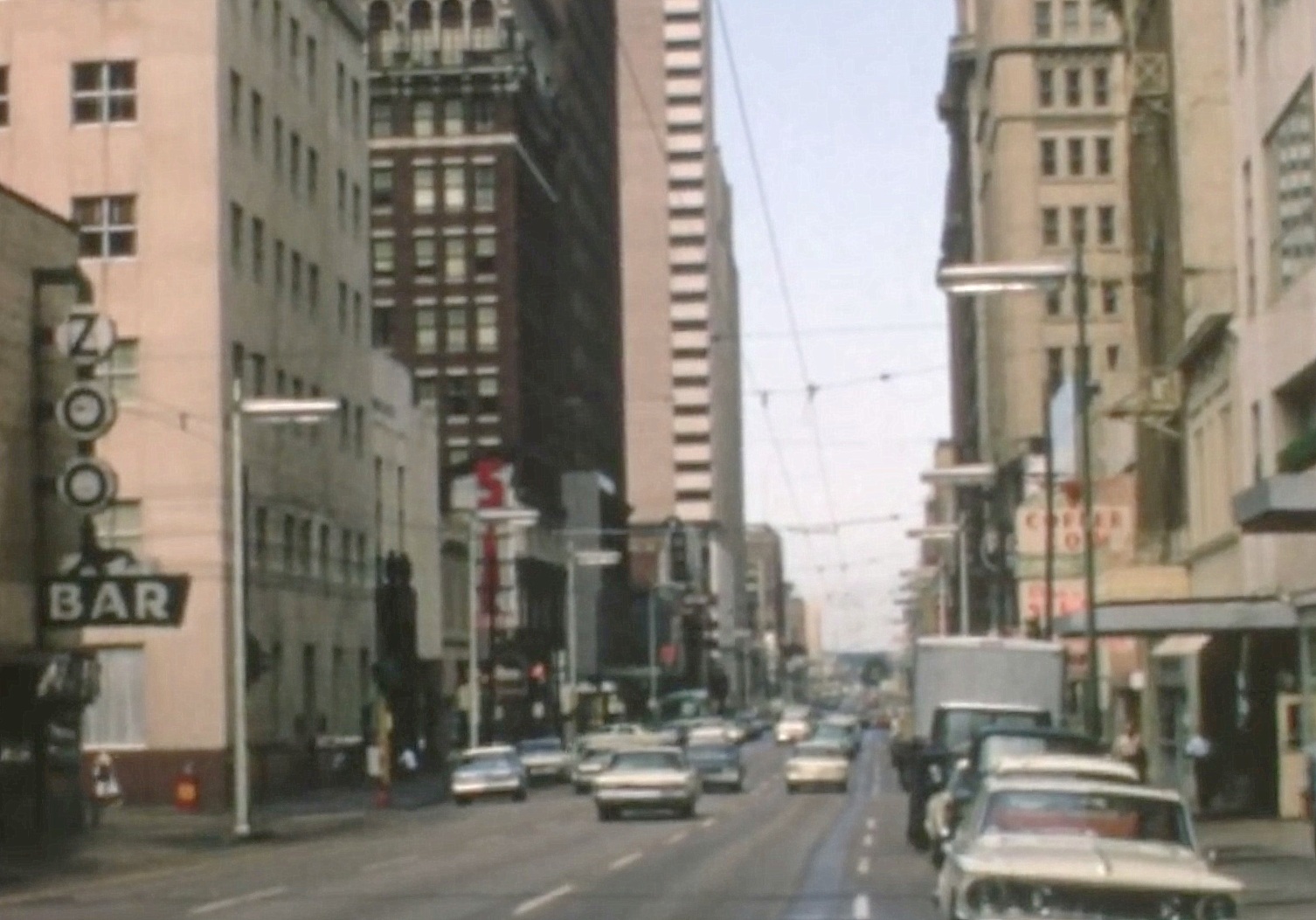
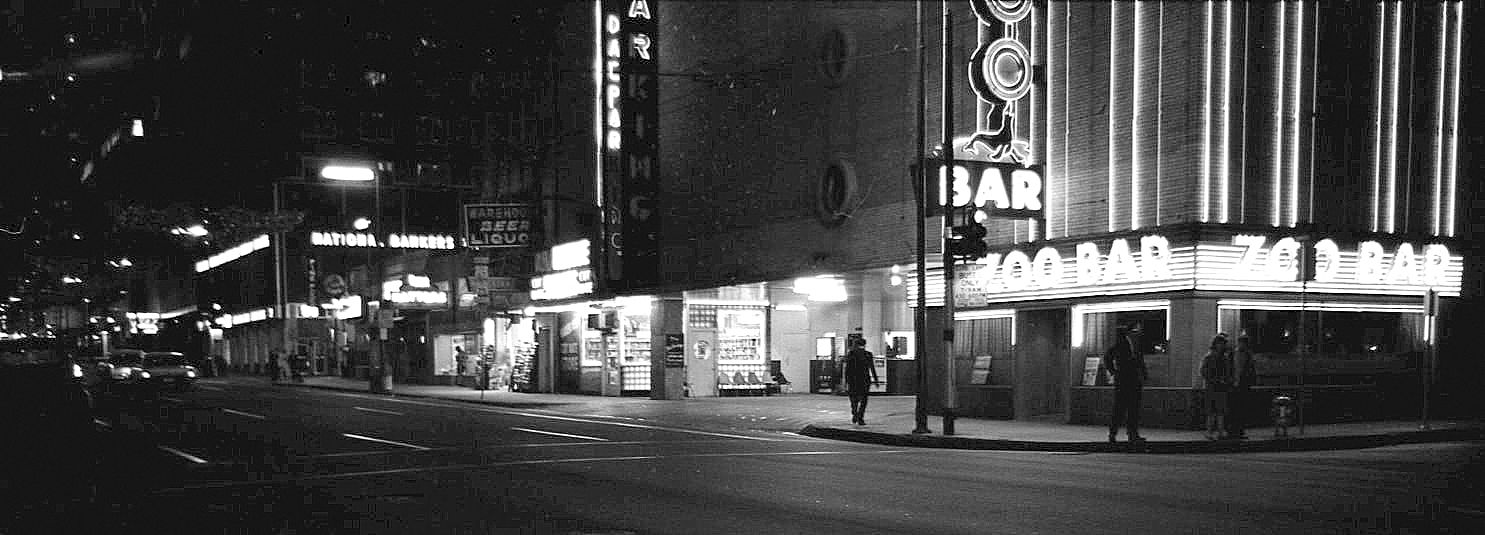
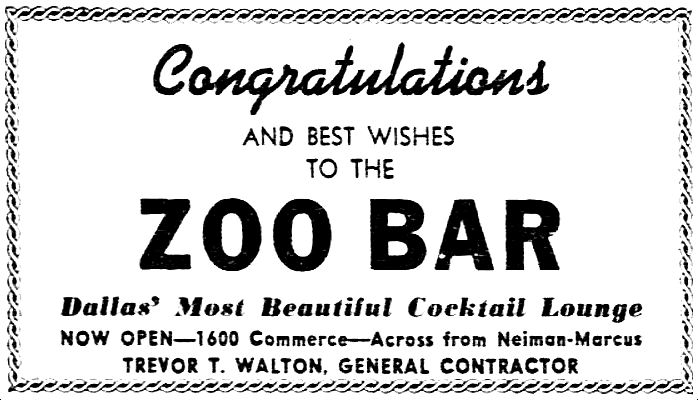
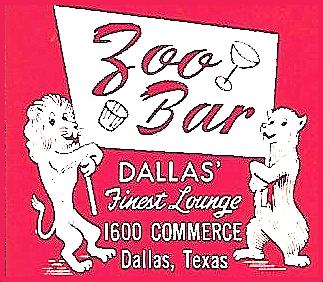
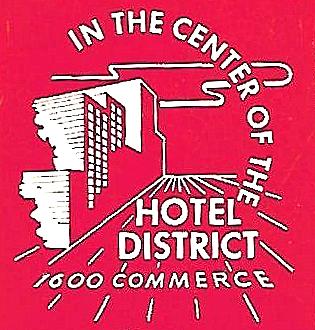
The Zoo Bar at 1600 Commerce began as a cocktail lounge and often had live piano music. It was across from Neiman’s and it was 3 blocks from Jack Ruby’s Carousel Club (downtown Dallas ain’t what it used to be). It also had a better-than-average sign.

zoo-bar_youtube_19661966

zoo-bar_dth-photo_112263_sixth-floor-museum_portal_croppedNov., 1963

zoo-bar_dmn_092752
Sept., 1952

zoo-bar_matchbook_ebay_2     zoo-bar_matchbook_ebay_1

These three downtown bars, popular as hangouts for gay men, had their heyday in the 1960s and ’70s. By the mid 1970s, the LGBT scene was shifting to Oak Lawn. An interesting article about the uneasy relationship between the “old” Oak Lawn and the “new” Oak Lawn can be found in a Dallas Morning News article by Steve Blow titled “Last Oak Lawn Settlers Brought Controversy” (Dec. 9, 1979).

***

Sources & Notes

Top photo of Gene’s Music Bar is from the blog Old Dallas Stuff.

Color photo of the Lasso and the Adolphus is from an old postcard. Black-and-white photo of the Lasso and the Adolphus is from the Texas Historical Commission site, here.

Blurry shot of Gene’s Music Bar and the Lasso Bar at night is a cropped screenshot from daily footage shot by WFAA-Channel 8 on Oct. 11, 1969 — the night before the Texas-OU game; from the WFAA Newsfilm Collection, G. William Jones Film and Video Archive, Hamon Arts Library, SMU.

Color image of the Zoo Bar and Commerce Street is a screenshot from home movie footage of the 1966 Memorial Day parade in downtown Dallas, shot by Lawrence W. Haas, viewable on YouTube. Black-and-white photo of the Zoo Bar from the Sixth Floor Museum Collection, via the  Portal to Texas History, here (I’ve cropped it). Zoo Bar matchbook from eBay.

Read more about Dallas’ gay bar scene in the article I wrote for Central Track, “Hidden in Plain Sight, A Photo History of Dallas’ Gay Bars of the 1970s,” here.

More on the the persistent arrests and police harassment that went on in gay clubs in Dallas for many, many years can be found in the Dallas Voice article by David Webb, “DPD Vice Unit Wages 50-Year War Against Gay Men” (Aug. 3, 2007), here.

*

Copyright © 2016 Paula Bosse. All Rights Reserved.


Views of Elm Street, With Cameo Appearances by the Fox Theater — 1920s-1960s

fox-theater_sherrod_dpl
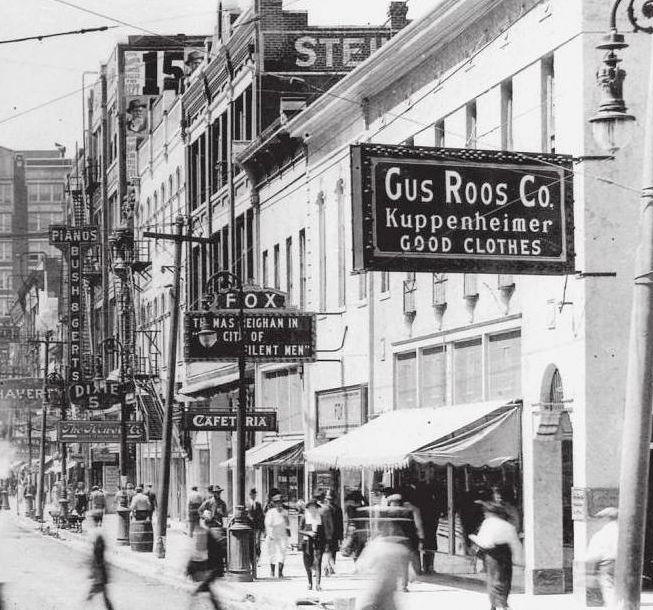
Elm looking west from Akard, ca. 1922

by Paula Bosse

From the earliest days of moving pictures, most downtown movie houses called Elm Street home. Some were originally vaudeville houses which occasionally featured short films between acts of the live revues, and some were theaters built expressly as move theaters. Most of the downtown theaters could be found on Elm Street, and the stretch between, say, Field and Harwood became known as “film row” or “theater row.” Most theaters were located on the north side of Elm in the blocks east of Akard Street, but a few found a home west of Akard. One of these — which I’ve seen in several of the photos I’ve posted — was the Fox Theater, located next to the Gus Roos store, at 1411 Elm, just west of the Akard intersection.

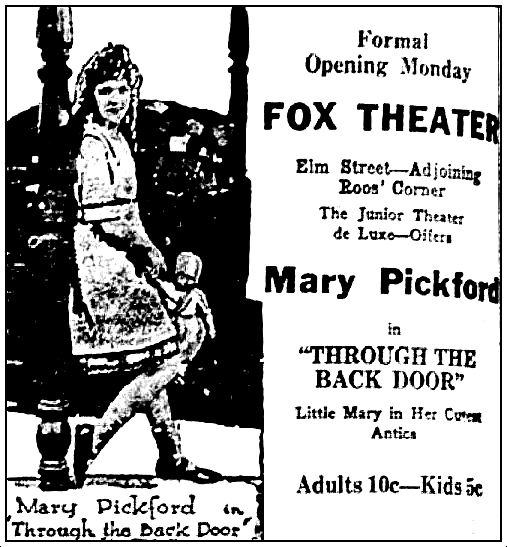
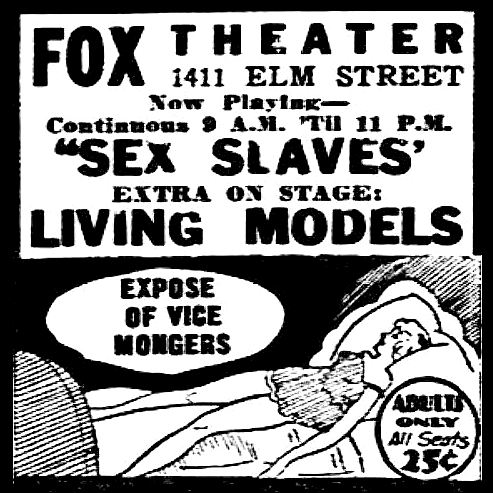
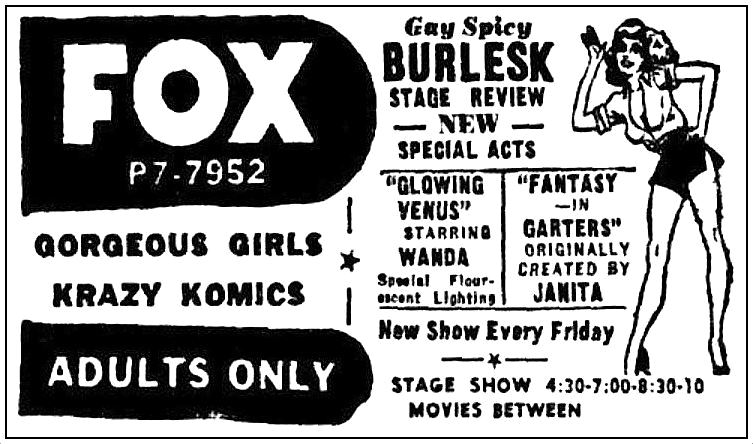
The Fox — which was named after owner Max Fox, a Polish immigrant who also owned the nearby Strand Theater — opened in the early months of 1922. During its 40-year history, it had something of a “colorful” life: despite opening with a sweet, family-friendly Mary Pickford movie and then showing mostly second-run features, it ultimately became one of Elm Street’s seedier theaters, showing cheap exploitation flicks and, later, becoming a “burlesk” house with on-stage strippers and “adult-only” fare playing continuously from 9 AM (!) to 11 PM. The Fox remained in business until the end of 1961 when property in the 1400 block began to be sold in order to build the First National Bank Building. (A comprehensive history of the theater can be found on Cinema Treasures.)

*

As I said, I’ve noticed the Fox Theater in a number of photos I’ve come across — some of which I’ve posted previously. Here are a few views of Elm Street in which the Fox pops up in a cameo appearance.

The top photo shows Elm looking west in about 1922. Down the street a bit you can see the Dixie Theater at 1315 Elm, one of the (if not THE) oldest permanent movie theater spaces in Dallas. The Dixie began life in 1909, the third theater in the location originally occupied by the Theatorium, which opened in 1906. (I wrote about the Dixie and other early “photoplay houses” in Dallas here.)

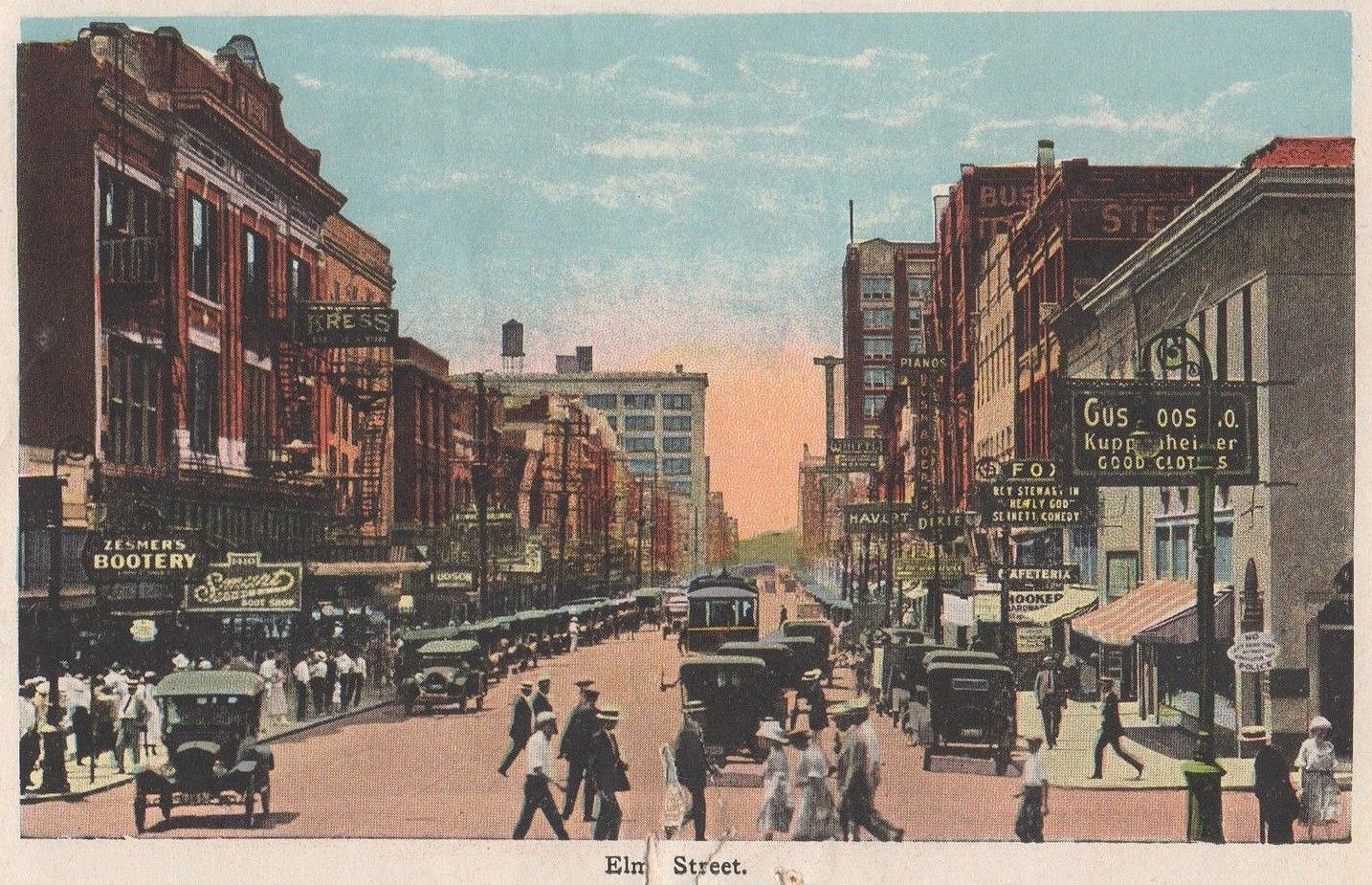
A similar view from about the same year is seen in this postcard (click to see a very large image):

elm-st-color_1920s

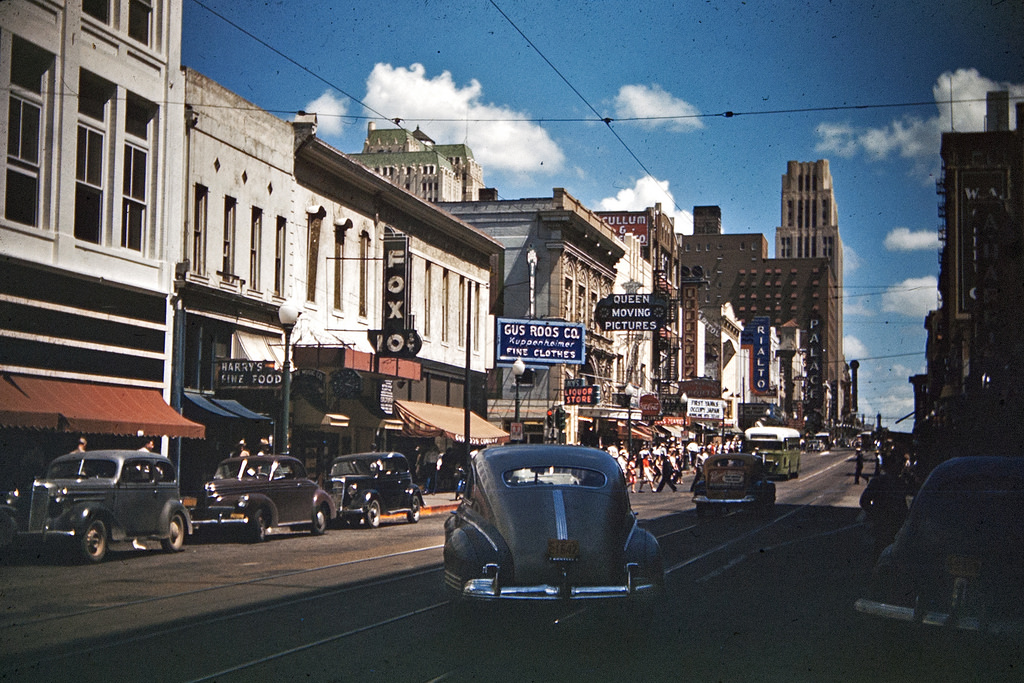
From the WWII-era, this fantastic color photo, looking east (the Queen, Telenews, Capitol, Rialto, and Palace theaters can be seen in this photo, with the silhouette of the Majestic Theatre’s sign seen way in the distance):

elm-street-color_1940s_jeppson-flickr

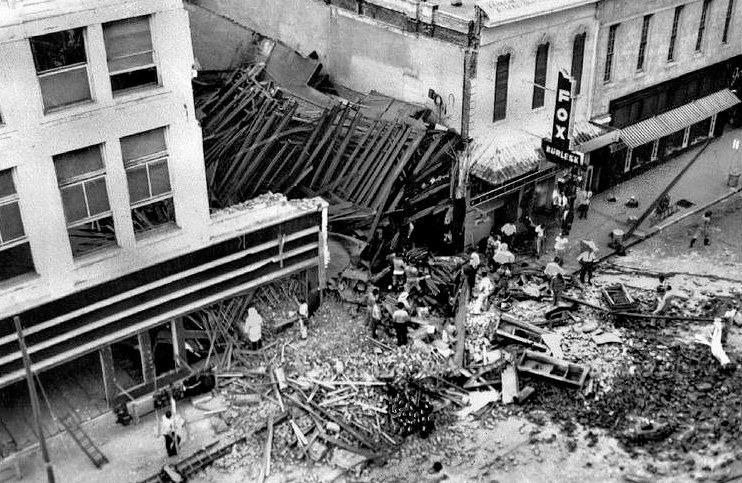
In 1955, the wall of the building next door to the theater collapsed, killing several people (I wrote about that building collapse, here):

building-collapse_observer-090511

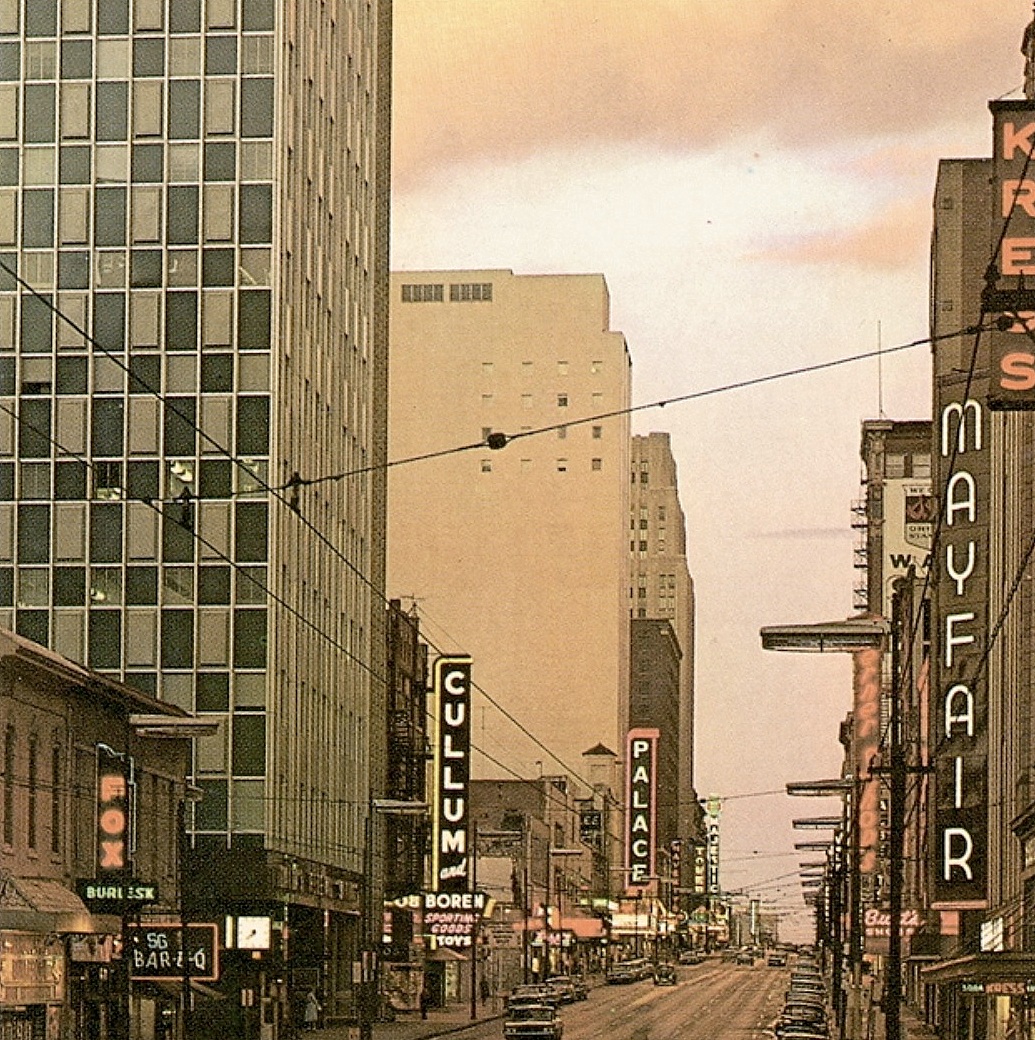
And, lastly, a photo of a decidedly less glamorous Elm Street, showing the “Fox Burlesk” in its final months, taken about 1961:

1400-block-elm_schaffershot54_flickr_ca-1961

**

fox-theater_032022
Dallas Morning News, March 20, 1922

fox-theater_pickford_dmn_031922
March 19, 1922

fox-theater_dmn_031940
1940

fox-burlesk_dmn_061850
1950

***

Sources & Notes

Top photo from Troy Sherrod’s book Historic Dallas Theatres; photo from the Dallas Public Library.

1940s color photo from Noah Jeppson’s Unvisited Dallas post, “Elm Street 1945,” here.

UPI photo showing the building collapse was posted a few years ago by Robert Wilonsky on the Dallas Observer’s Unfair Park blog, here.

Bottom color photo from Flickr user Schaffershot54, here.

Other Flashback Dallas posts on Dallas theaters can be found here.

*

Copyright © 2016 Paula Bosse. All Rights Reserved.

The Inwood Theatre

theater_inwood_oct_1954_d-mag_dplSeven years after opening, in 1954… (click for larger image)
by Paula Bosse

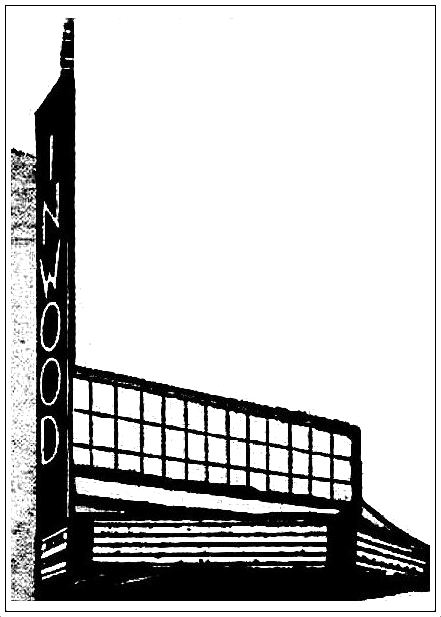
The Inwood Theatre opened at Lovers Lane and Inwood Road on May 16, 1947. Even though the surrounding neighborhood has changed pretty dramatically over the years, the exterior of the H. F. Pettigrew-designed building looks pretty much the same today. Happily, the 69-year old movie theater is still in business.

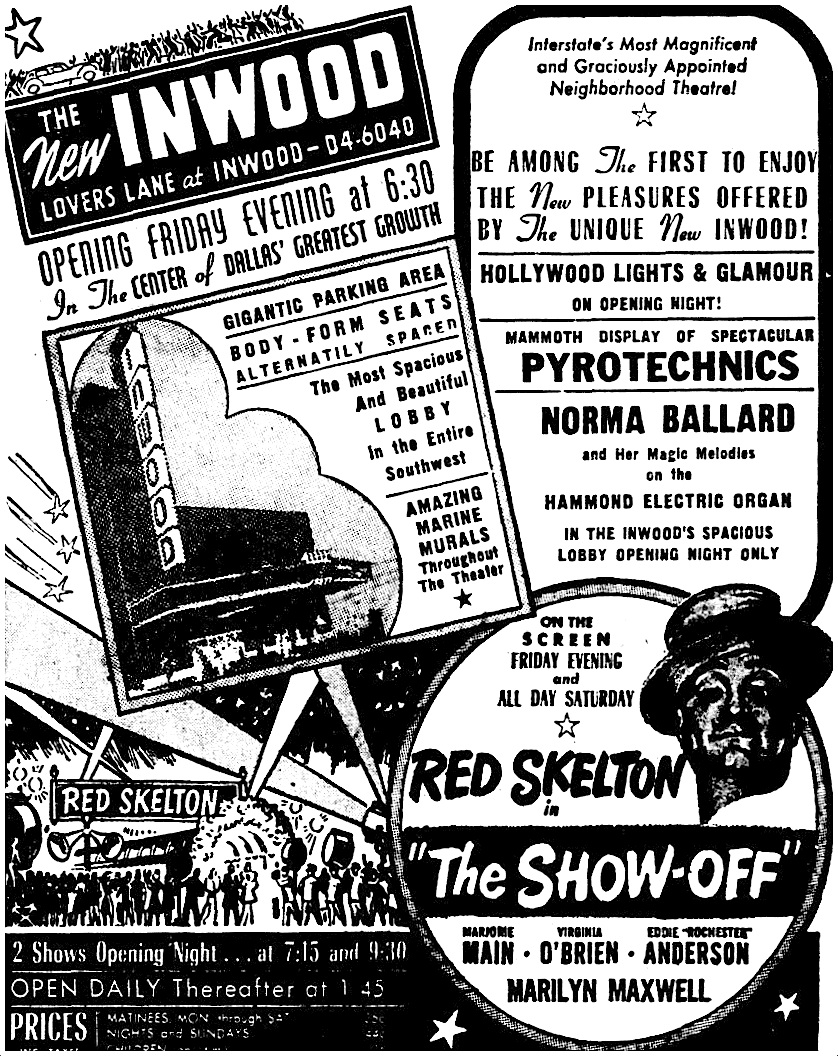
inwood_dmn_051647_grand-opening
The Grand OpeningMay 16, 1947 (click to see larger image)
theater_inwood_cinema-treasures via Cinema Treasures

inwood_1947_d-mag_dplvia D Magazine

theater_inwood_instagram_architexasvia Architexas on Instagram

inwood_el-chico_dmn-website

inwood_dmn_051947_ad-det
Ad detail, May, 1947

inwood_dmn_051147_ad-det
Ad detail, May, 1947

***

Sources & Notes

Top photo from D Magazine, here; from the Texas/Dallas History and Archives Division, Dallas Public Library. If you zoom in, there seems to be some drama going on inside one of those parked cars:

inwood_1954-zoom

Images are larger when clicked.

*

Copyright © 2016 Paula Bosse. All Rights Reserved.


Peak Season at the Farmers Market — 1951

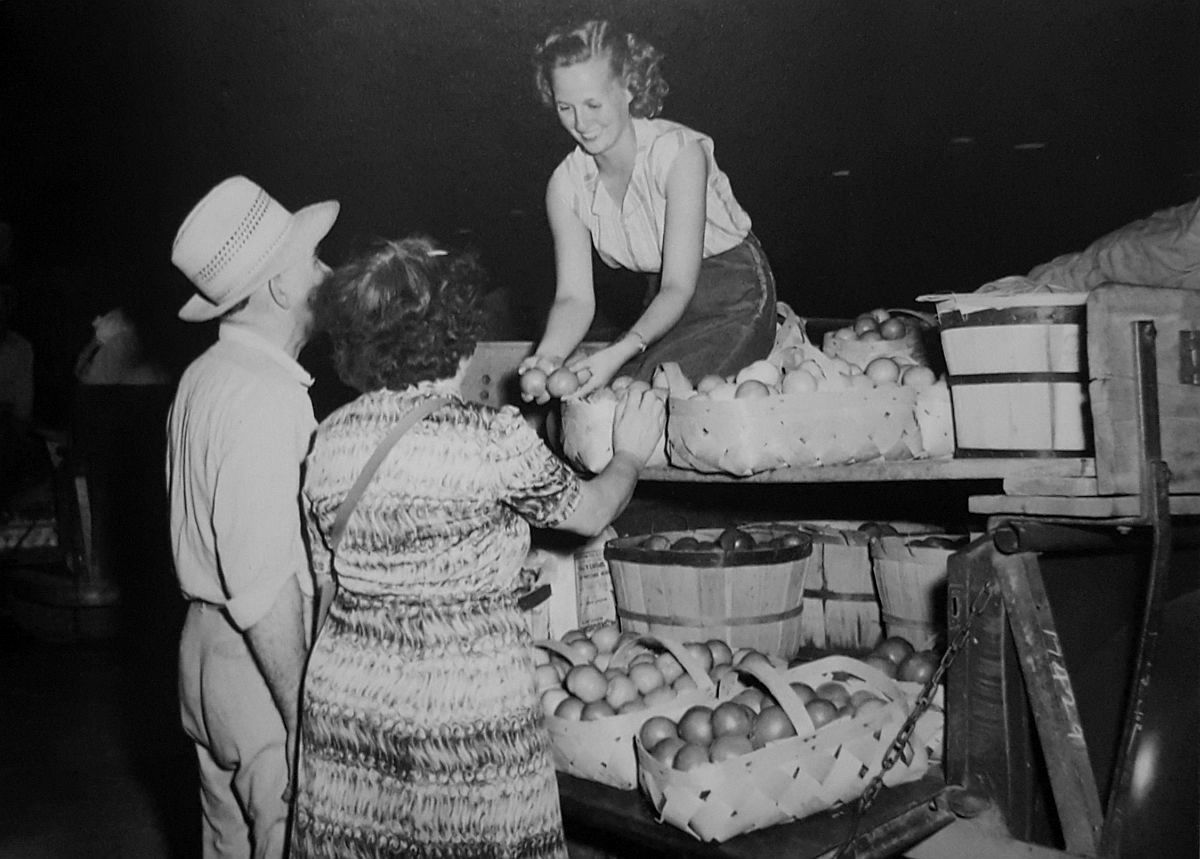
farmers-market_1951_DPLCute tomatoes…

by Paula Bosse

Some of my favorite summertime memories are wandering around the Farmers Market as a child with my family — back when it was still gritty and still had real farmers and real farm families selling produce actually grown nearby. I loved moving from shed to shed and marveling at everything: the endless baskets of fruits and vegetables, the weather-worn farmers, and a vibrant marketplace comprised of the most diverse crowds I can remember seeing in one place as a child.

This photo — showing Peggy Mayne of Grand Saline selling tomatoes out of the back of her family’s pickup — was taken in 1951, during a summer of fruit and vegetable plenitude. July inventories and sales were breaking records — right before the effects of what would turn into one of the longest and worst-ever droughts in Texas history began to be felt by farmers and consumers.

I miss you, Dallas Farmers Market of yesteryear.

***

Sources & Notes

Photo from the Texas/Dallas History and Archives Division, Dallas Public Library.

More Flashback Dallas posts on the Farmers Market area — which I realize more and more was one the city’s most interesting parts of town — can be found here.

More on the devastating 1950-1957 drought and its impact on everyday life in Dallas can be found in my previous post, “Whither Water? — 1956.”

*

Copyright © 2016 Paula Bosse. All Rights Reserved.

From the Vault: Sweating at the Switchboard — 1951

summer_telephone-operators_1951Blocks of ice at the ready…

by Paula Bosse

Warning: heat advisory! Talk about your low-tech A/C!

Read more about this photo in my 2014 post “Telephone Operators Sweating at the Switchboard — 1951,” here.

Stay cool!

*

Copyright © 2016 Paula Bosse. All Rights Reserved.

Happy Flag Day from the Girls of Miss Hockaday’s School — 1957

flag_hockaday-yrbk_1957On flag detail in lovely Vickery Place (click for larger image)

by Paula Bosse

Today is Flag Day. This seems an appropriate day to post this photo of Hockaday girls on flag duty in 1957, a few short years before the prestigious school moved from this Lower Greenville campus which once occupied the entire block at the northwest corner of Belmont and Greenville to its present location in North Dallas.

***

Photograph from the 1957 Hockaday yearbook.

Click picture for larger image.

*

Copyright © 2016 Paula Bosse. All Rights Reserved.

On Top of the World: The Southland Center

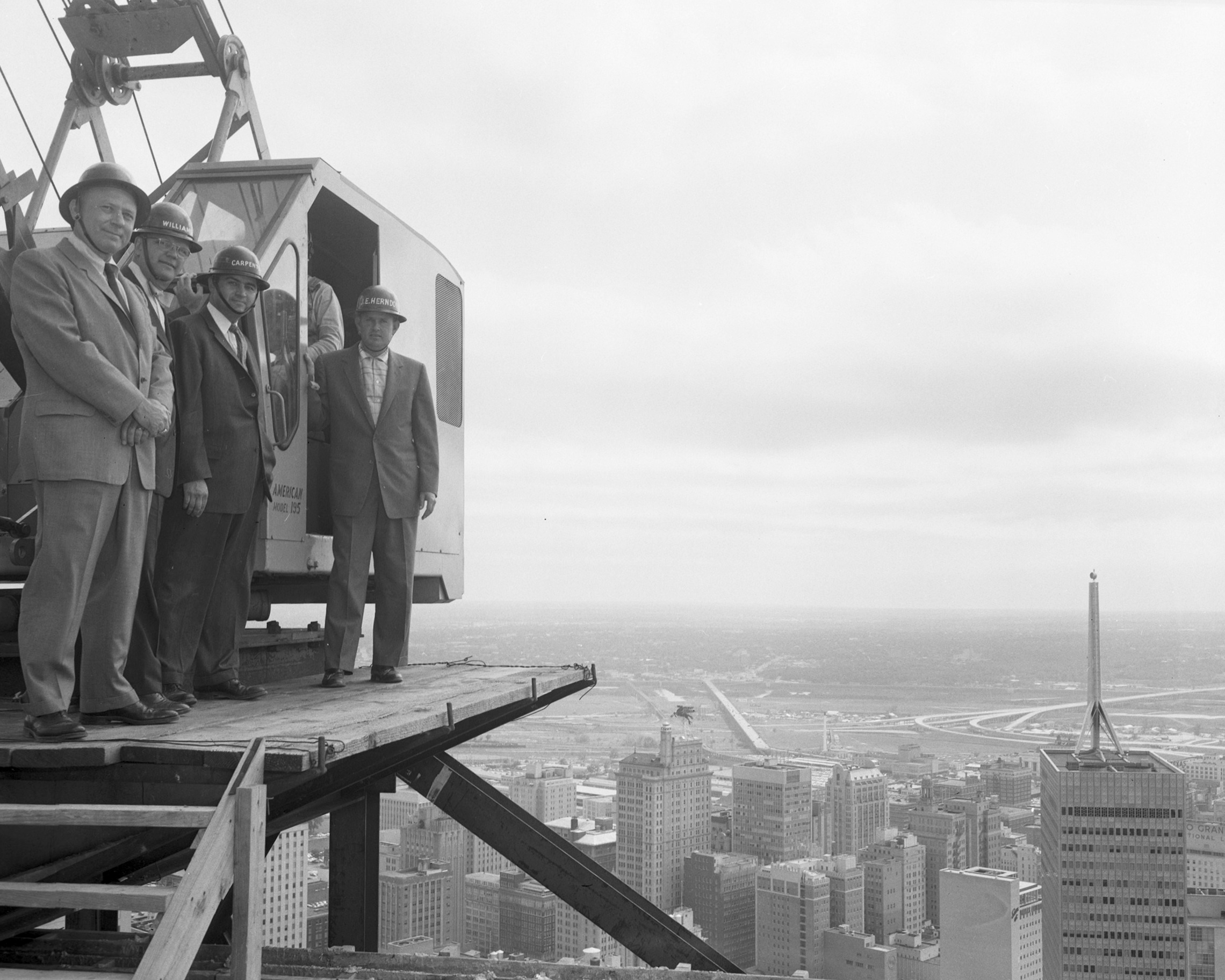
skyline_construction_squire-haskins_UTA_1Executive privilege…

by Paula Bosse

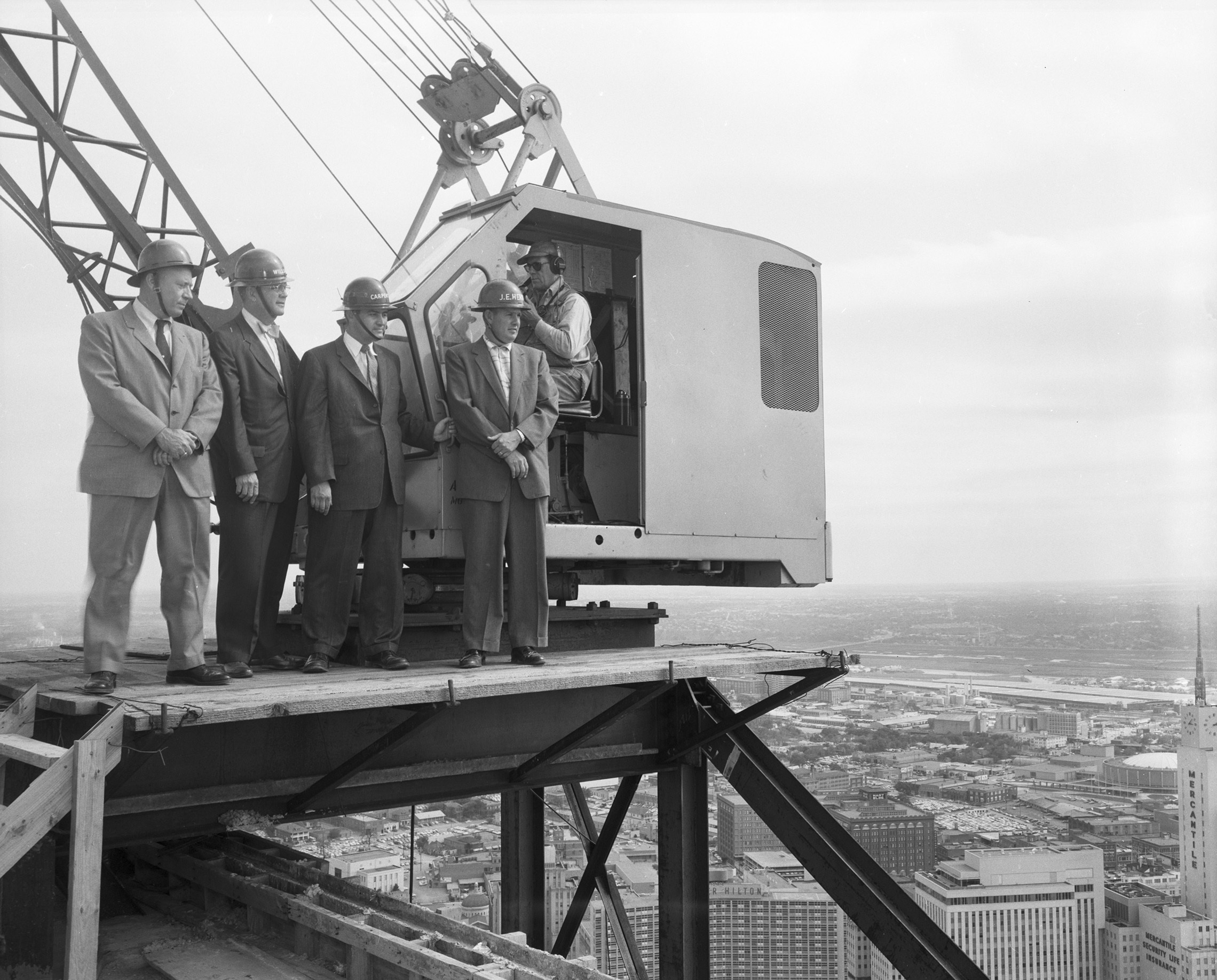
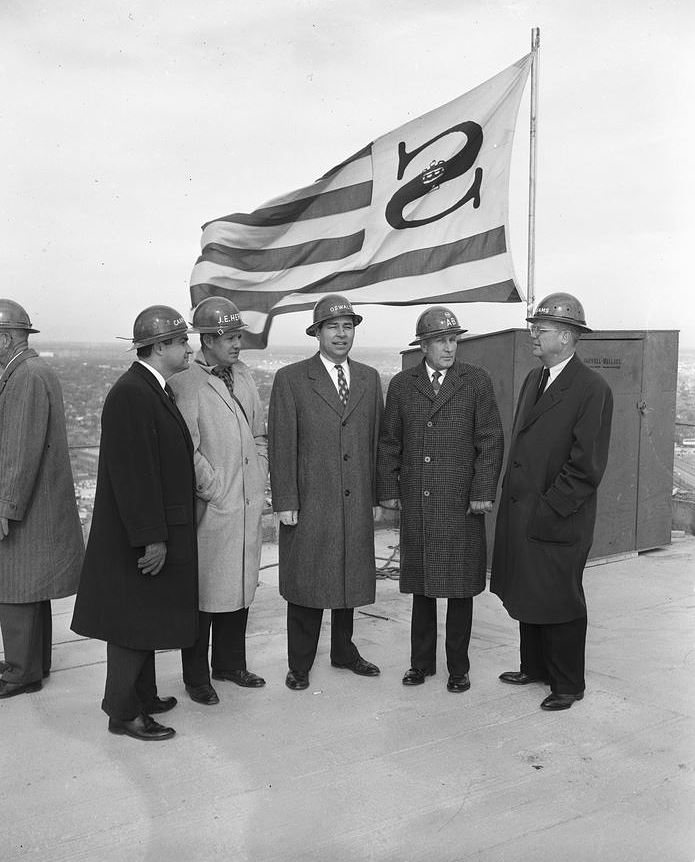
Here are a couple of cool, vertigo-inducing photos taken by Squire Haskins in 1958 or very early 1959 showing Southland Life Insurance executives and a crane operator perched atop the under-construction Southland Center, which included the Southland Life building (which was the tallest building in Dallas for a while) and the Sheraton Hotel. Once completed and opened in April, 1959, there was an observation deck at the top of the Southland Life building, offering an unequaled, unobstructed view of the city.

skyline_construction_crane_squire-haskins_UTA

The building under construction in these photos is unidentified, but the familiar Sheraton logo seen elsewhere with the same men is a tip-off.

sheraton_construction_squire-haskins_UTA

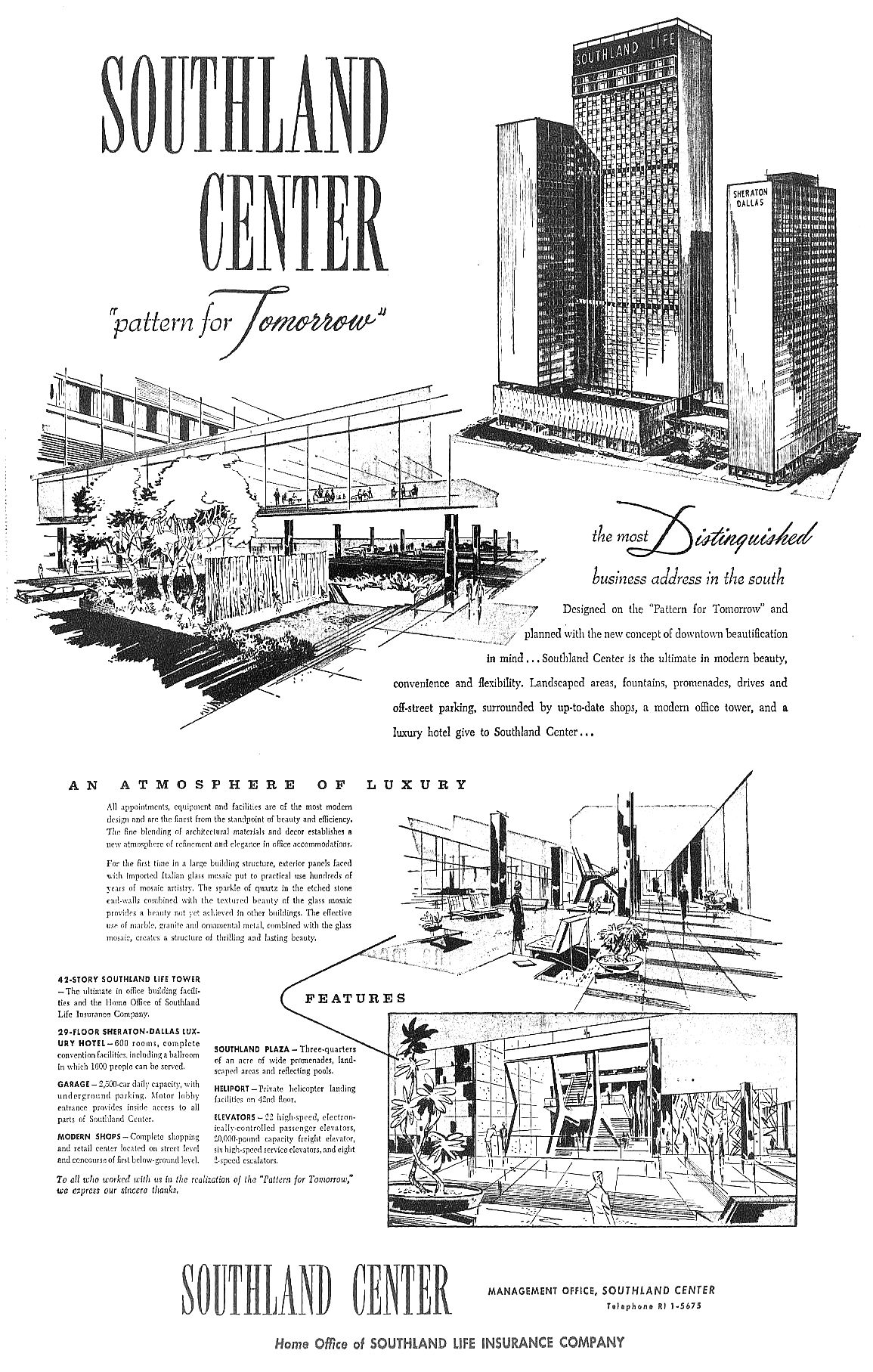
Here’s what it all looked like when it opened. Click to see a larger image.

ad-southland_sheraton_april-1959
April, 1959

***

Sources & Notes

Photos are by Squire Haskins, from the Squire Haskins Photography, Inc. Collection, Special Collections, University of Texas at Arlington Libraries. Info on the top photo can be found here.

Some of the men in the photos are Dan C. Williams (President, Southland Life), Ben H. Carpenter (Executive Vice-President), William H. Oswalt, III (Vice-President, Director of Project Development for Southland Center), J. E. Herndon, and “A. B.”

A related Flashback Dallas post — “Sheraton Dallas, Original Version — 1959” — is here.

*

Copyright © 2016 Paula Bosse. All Rights Reserved.