Flashback : Dallas

A Miscellany: History, Ads, Pop Culture

Category: 1960s

JFK & Dallas — 60th Anniversary

JFK_postcard_memorial_flowers_melton

by Paula Bosse

What more can be said about this subject? The city of Dallas and the assassination of President John F. Kennedy will, sadly, be tied together forever. I wonder how the city’s evolution would have been different had this horrible event never happened?

*

A few related Flashback Dallas posts from the past decade:

***

Sources & Notes

Postcard sent to me many years ago by someone known only as “Amy from Dallas.” (Thank you, Amy!) The text from the back of the card is here.

This postcard — which carries the title “President Kennedy’s Assassination and Memorial Site, Dallas, Texas/Collector’s Photo,” ©1964, Joe C. Melton, Publisher, Dallas — comes in more than one version. A later version has the same image, but with a couple of exceptions: the later version has an inset of a Kennedy half-dollar coin in the upper left corner, and the three guys standing behind the “Men of St. Bernard’s Church” memorial wreath have been completely erased from postcard history (as have the words “Men of St. Bernard’s Church”). Unless I’ve stumbled upon new conspiracy fodder, the photographer probably failed to get the men to sign a release form.

Side note: regarding that wreath, this sentence appeared in a Dallas Morning News article the day after Oswald was killed (“‘Oh, My God — He’s Dead'” by Joe Thornton, Nov. 25, 1963): “People took pictures of their families standing behind the white-flowered cross erected in memory of President Kennedy by the Men of St. Bernard’s Catholic Church.” St. Bernard of Clairvaux Catholic Church is in East Dallas, at 1404 Old Gate Lane.

JFK_postcard_memorial_flowers_melton_sm

*

Copyright © 2023 Paula Bosse. All Rights Reserved.
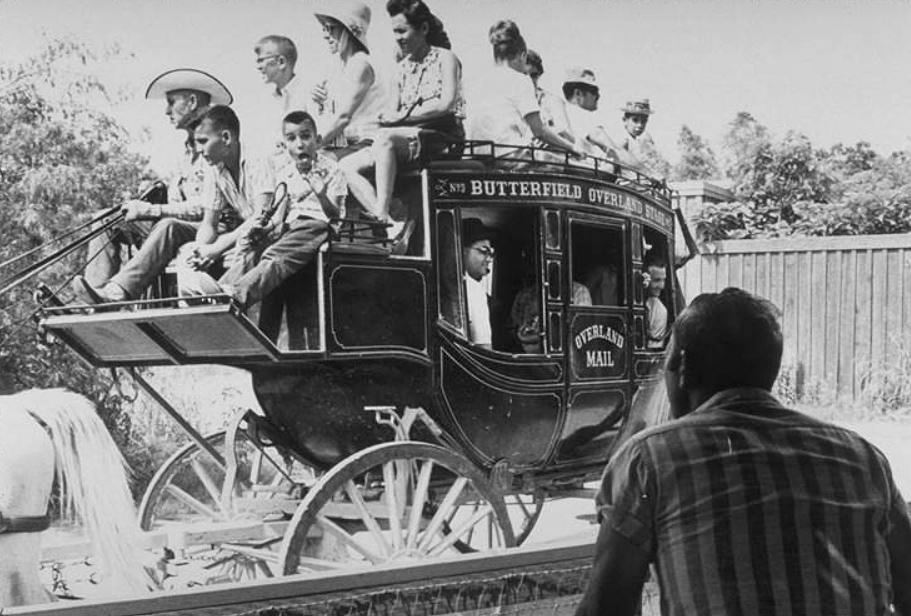
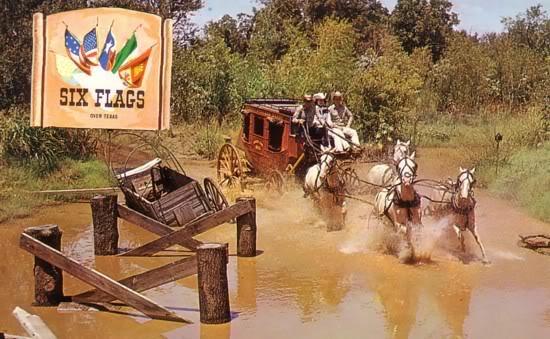
The Stagecoach Ride at Six Flags: 1961-1967

six-flags_stagecoach_fort-worth-magazineWhat could possibly go wrong?

by Paula Bosse

Did you ride the stagecoach at Six Flags?

The stagecoach at Six Flags? What? This:

six-flags_stagecoach

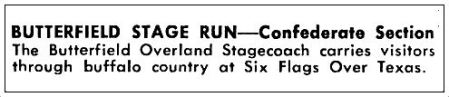
And this (with grazing buffalo for added Old West atmosphere):

six-flags_stagecoach_buffalo_ebay_front

When I first saw Six Flags postcards touting stagecoach rides, my first thought was, “How did they ever manage to get insurance for that?”

six-flags_stagecoach_buffalo_ebay_reverse

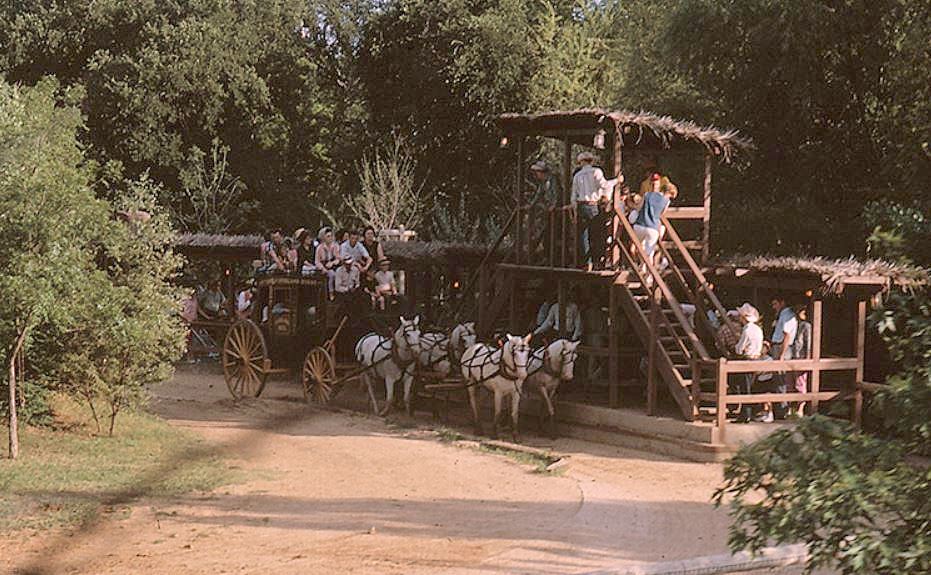
The “Butterfield Overland” ride debuted in the “Confederate” section when the park opened in 1961 and lasted until about 1967. It was very, very popular.

six-flags_stagecoach_1965_UTA_det1965, via UTA Libraries Special Collections (det)

Why did I never know about this when I was a kid? I never saw a stagecoach. I would have LOVED to ride a stagecoach. What happened? Well, here’s what happened: in May 1967, one of the stage’s wheels came off mid-ride, and the stage overturned, injuring 11 of the 14 people on board, most of them children. A 4-year-old Haltom City girl — who was riding on the top — was pinned beneath the overturned stagecoach. When she was freed, she was rushed to the hospital and underwent emergency surgery on both feet. One of the news stories about this unfortunate incident ended with, “Saturday’s accident was the first involving the stagecoach since the park opened in 1961,” adding that more than 4 million persons had ridden this ride between 1961 and 1967. (Four million!) (Granted, I think there were four stagecoaches and four teams of horses, but… four million!!)

One month after the accident, it was reported that the girl’s father had sued Six Flags for $531,000, contending that park officials were guilty of 30 counts of negligence. ($531,000 would be the equivalent in today’s money of about $5 million.) I can’t find anything about what happened with this lawsuit, but I assume there was probably a quiet settlement. Coincidentally or not, that spelled the end of the Butterfield Overland stagecoach ride at Six Flags Over Texas.

And that’s why I never heard of — or got to experience — a stagecoach ride at Six Flags.

(I don’t know what happened to the buffalo.)

***

Sources & Notes

Top photo of a Six Flags stagecoach jam-packed with kids from Fort Worth magazine.

The 1965 image is a detail of a larger photo from the Jack White Photograph Collection, UTA Libraries Special Collections — see the full photo and more details here.

Read more about this Butterfield Overland stagecoach ride at Parktimes.com.

The whole “Confederate” and “Texas” sections of SFOT were kind of weird, including a several-times-a-day lynching (!), as can be seen in one of the postcards in the 2014 Flashback Dallas post “Angus Wynne Jr.’s ‘Texas Disneyland’ — 1961.”

For real, non-amusement-park stagecoach tidbits, check out the post (also from 2014) “Dallas to Austin by Stagecoach: Only Three Days! (1854).”

A slightly different version of this post originally appeared on the Flashback Dallas Patreon page in August 2023. If you’d like to see daily Flashback Dallas posts, please consider supporting me on Patreon, for as little as $5 a month.

six-flags_stagecoach_fort-worth-magazine_sm

*

Copyright © 2023 Paula Bosse. All Rights Reserved.
Aunt Stelle’s Sno Cone

aunt-stelles_sign_googleAn Oak Cliff oasis…

by Paula Bosse

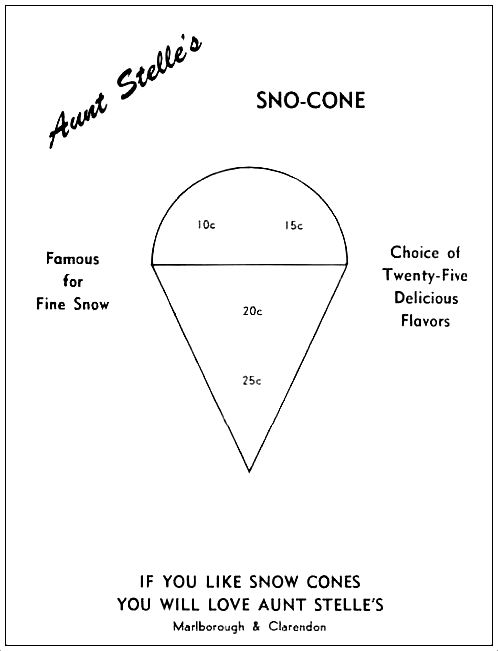
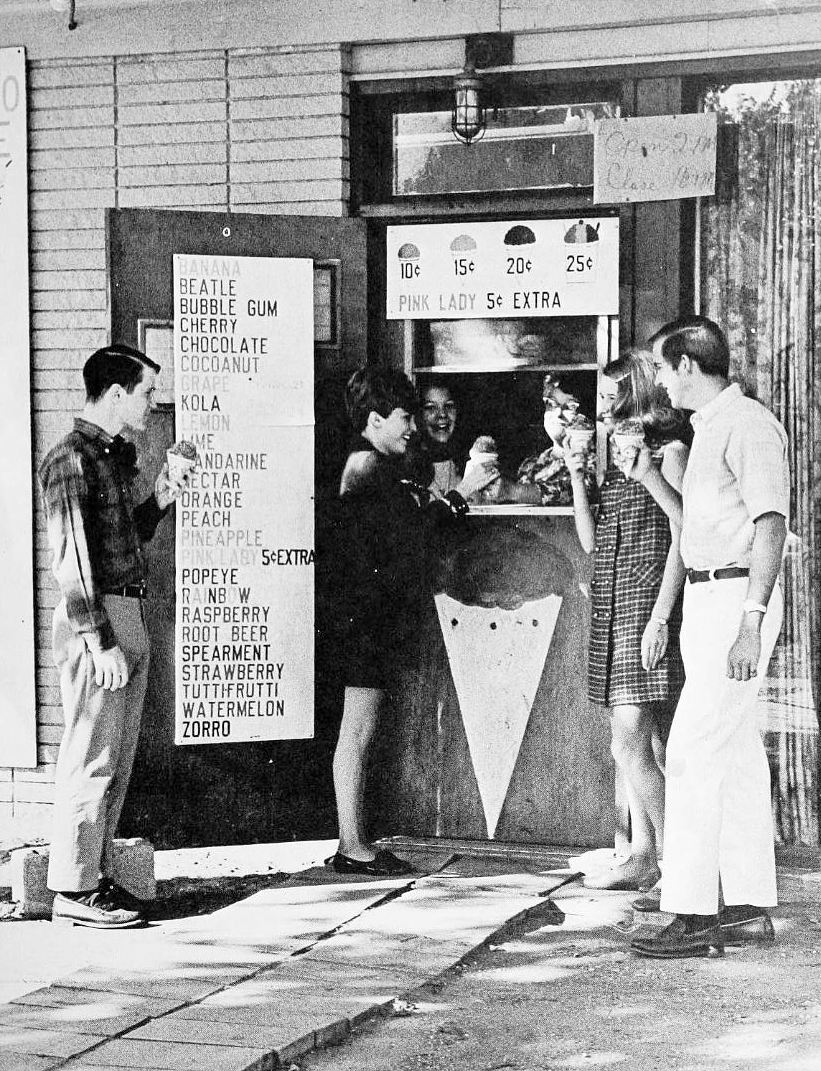
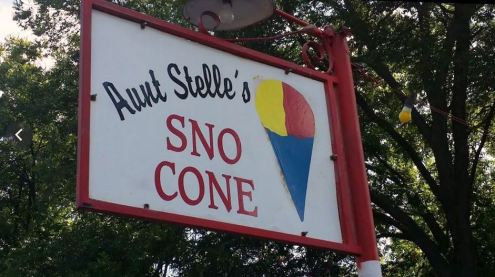
This has been a brutally hot summer. The kind of summer when a snow cone would really hit the spot at just about any sweltering hour of the day. One place that was famous for its snow cones (they were described as being like “fine snow”) was Aunt Stelle’s Sno Cone, at 2002 W. Clarendon (at Marlborough) in Oak Cliff. Established by Estelle Williams in 1962, the little stand was hugely popular until it officially closed in 2018. Her snow cones were flying out of there every summer season for more than 55 years! To generations of customers. Not many businesses can boast that kind of longevity and patron loyalty. (One of those loyal patrons was Oak Cliff homeboy Stevie Ray Vaughan.)

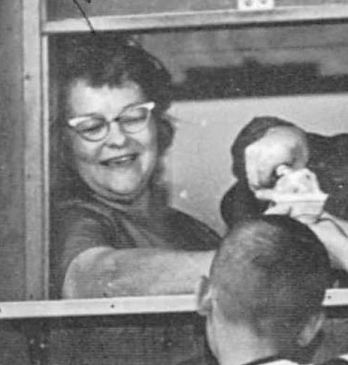
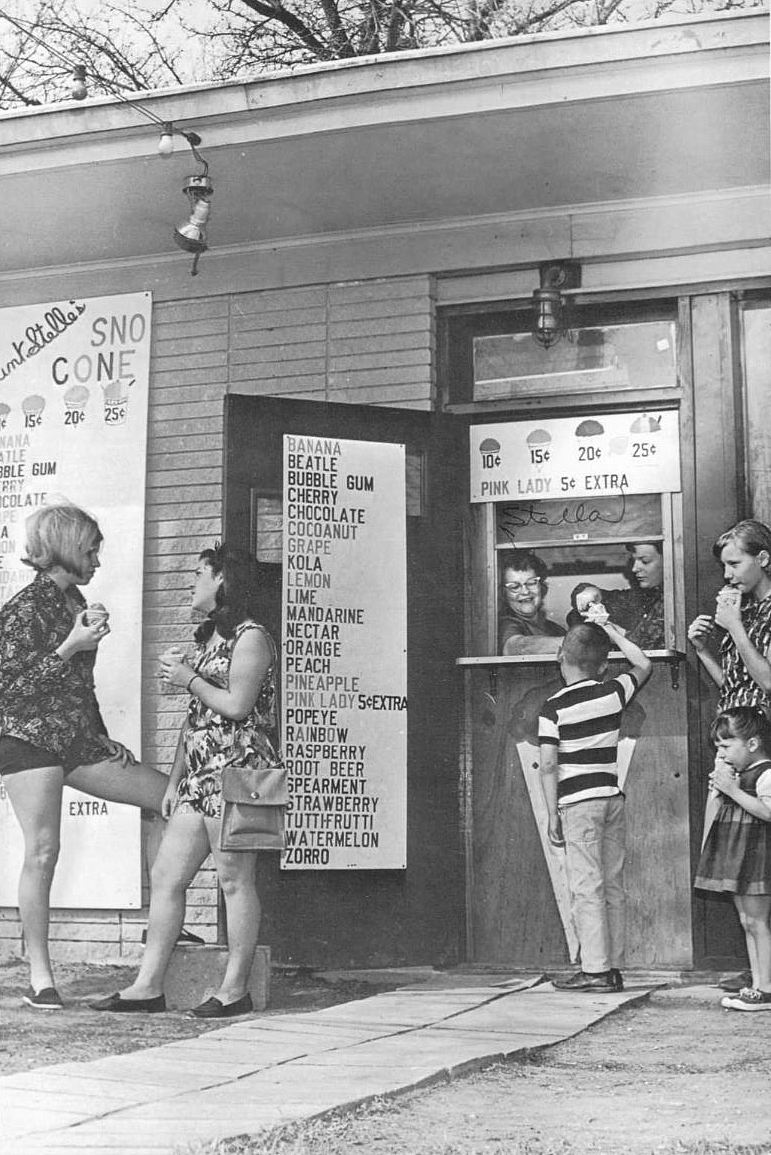
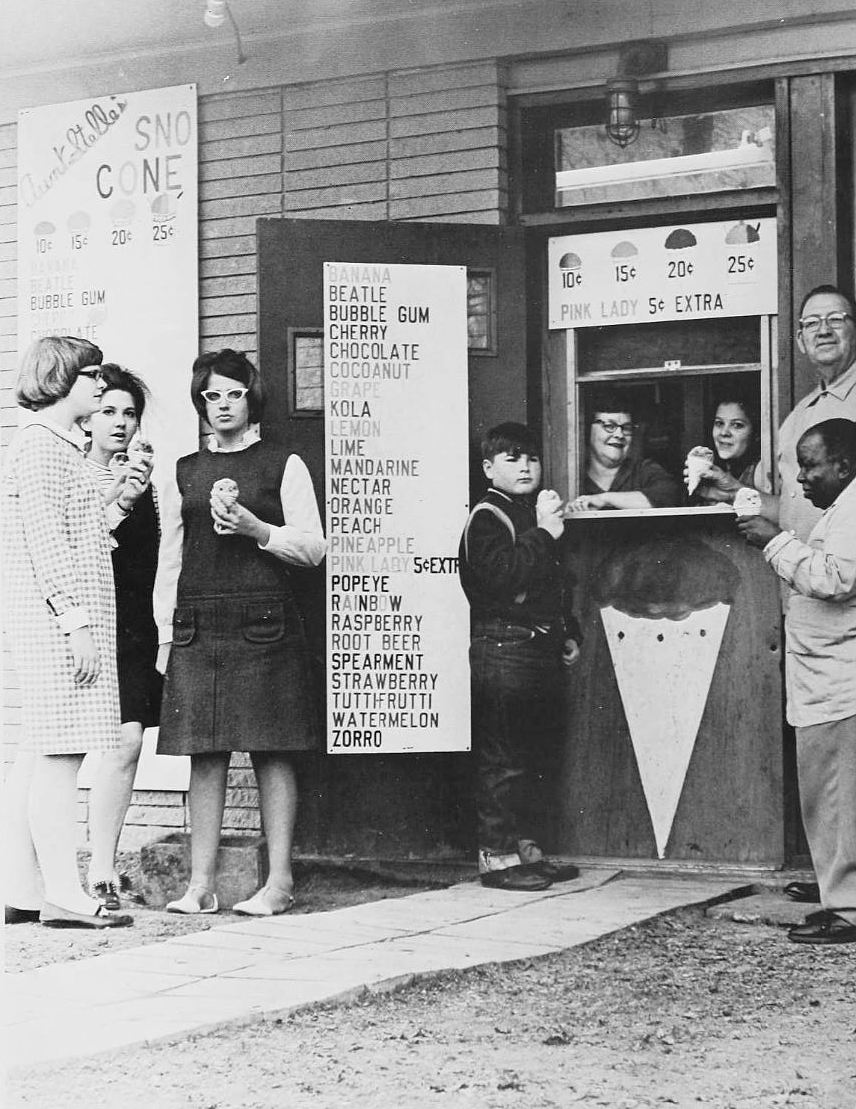
Having not grown up in Oak Cliff, I wasn’t familiar with Aunt Stelle’s until I saw the photos below which appeared as ads in editions of the Sunset High School yearbook. You can see Estelle in the window. She looks exactly like the kind of person I’d want serving me a delicious, refreshing, messy treat.

aunt-stelle_sunset-high-school-yrbk_1967-det

Speaking of the treats, check out that menu board! I understand the “Beatle” tasted like a grape SweeTart, the “Zorro” tasted like licorice (and it was black!), the “Pink Lady” tasted like vanilla ice cream, and the “Popeye”… I really wanted it to be green and taste like spinach, but apparently it tasted like gumballs (what a missed opportunity!).

*

summer_aunt-stelles-sno-cones_sunset-high-school_1967-yrbk._b1967 Sunset High School yearbook

summer_aunt-stelles-sno-cones_sunset-high-school_1967-yrbk1967 Sunset yearbook

summer_aunt-stelles-sno-cones_sunset-high-school_1968-yrbk1968 Sunset yearbook

summer_aunt-stelles-sno-cones_sunset-high-school_1969-yrbk1969 Sunset yearbook

***

Sources & Notes

Top image of the Aunt Stelle’s sign is from Google — the photographer is listed simply as “Scott.”

A great story about Aunt Stelle’s can be found in the Dallas Morning News archives in the story “Sno Days: Aunt Stelle’s Has Been Keeping Oak Cliff Cool for 40 Seasons” by Dave Tarrant (DMN, June 22, 2001).

Consider supporting me on Patreon! Five bucks a month gets you daily morsels of Dallas history!

aunt-stelles_sign_google

*

Copyright © 2023 Paula Bosse. All Rights Reserved.

Gritty Dallas — 1969

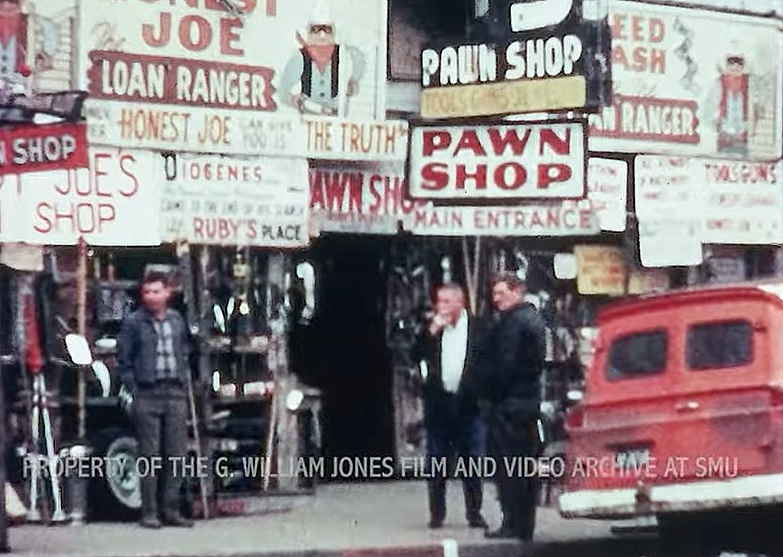
honest-joes-pawn-shop_deep-ellum_perkins-school-recruitment-film_1969_jones-film_SMU_5.13Honest Joe’s: sign overload in Deep Ellum

by Paula Bosse

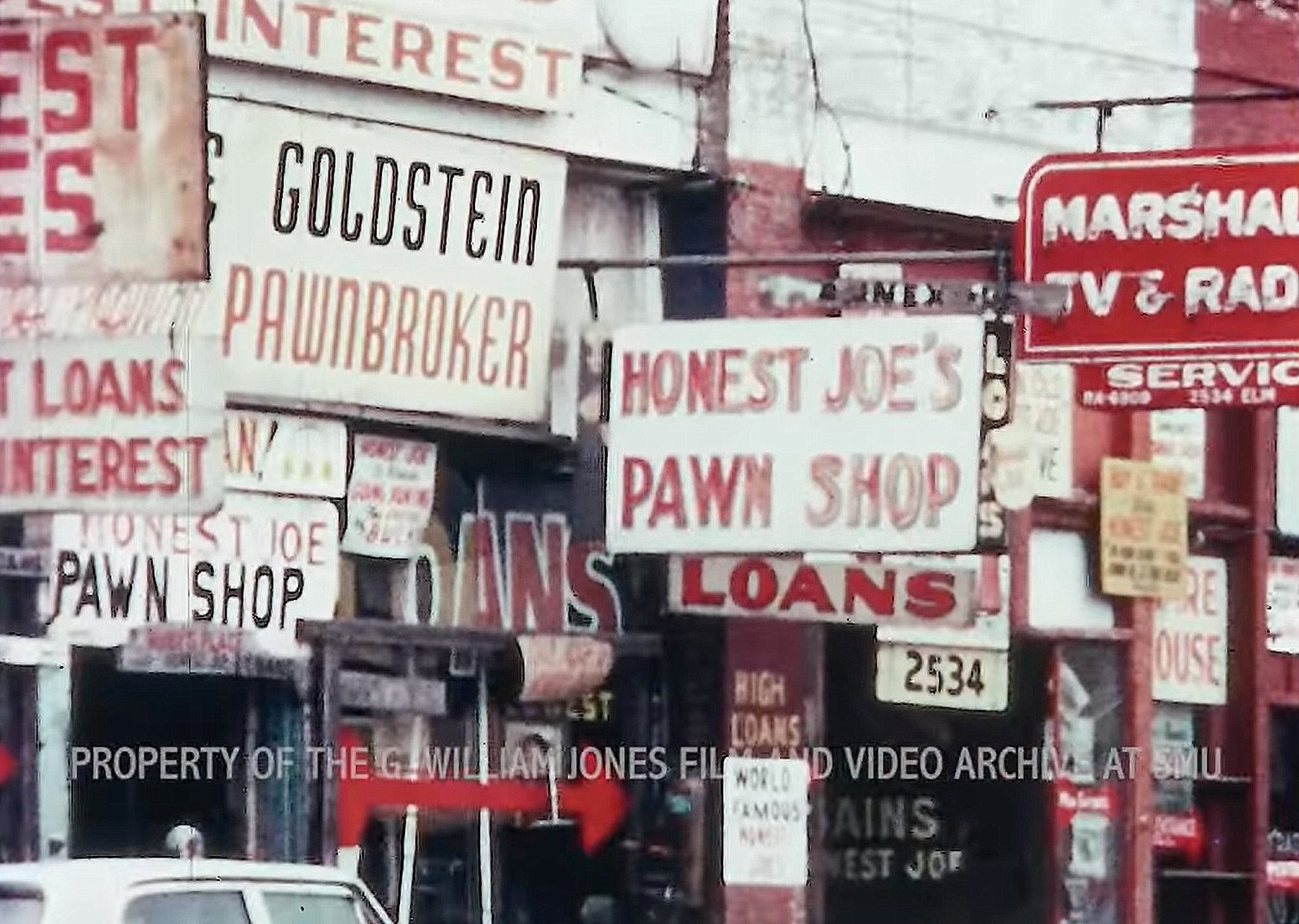
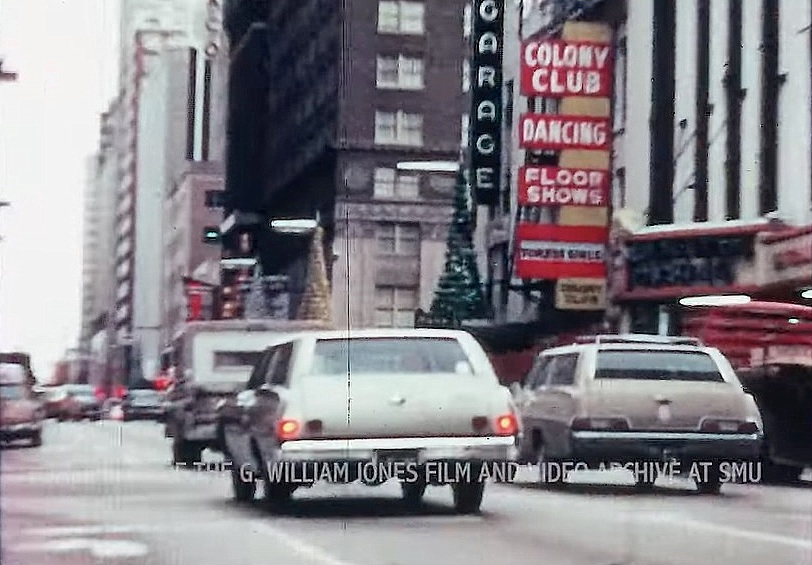
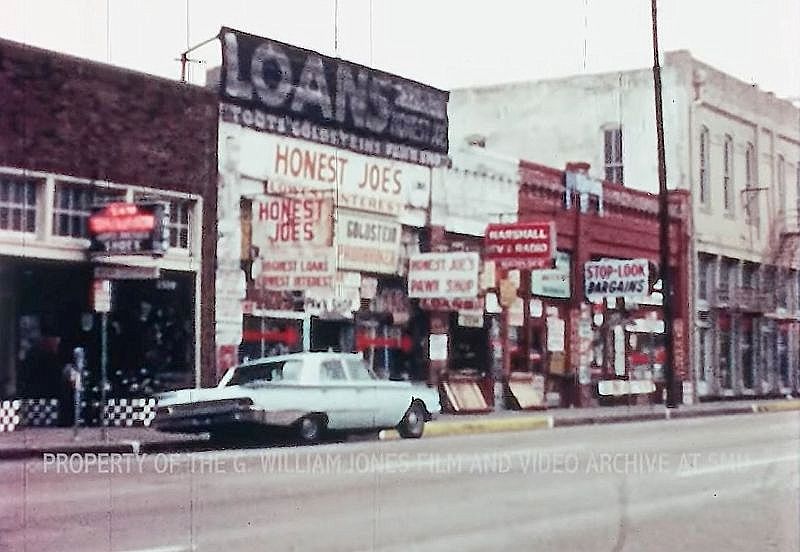
Here are a few things I found when I clicked on something I normally wouldn’t have, but I’m glad I did. These are screenshots from a 20-minute film made in 1969 by SMU’s Perkins School of Theology. (I certainly hope SMU has the original somewhere — or at least a crisper copy — because the quality of this 54-year-old film is, as you can see in these screenshots, pretty low-resolution.) The title of this offering on YouTube is the supremely un-sexy “Perkins School of Theology (SMU) Orientation and Recruiting Film — 1969.” Which is all well and good, but, let’s face it, how many of us would click on that? I wouldn’t! But it was the thumbnail that drew me in — a shot of the Colony Club, the famous burlesque club on Commerce Street. What did that have to do with theology school? I clicked and started fast-forwarding until I found the Colony Club — and it paid off, because I found a bunch of cool shots of places that, for the most part, don’t exist anymore.

The image above shows one of dozens of pawn shops in Deep Ellum, Honest Joe’s Pawn Shop, owned by Joe Goldstein. (Various Goldstein family members ran a dizzying number of pawn shops in Deep Ellum. I mean a LOT.) In 1969, Honest Joe’s and its adjacent office and warehouse spread from 2516 Elm to 2526 Elm — most of these buildings still stand (see them today, here), but others were torn down to make way for the highway-palooza. (Two more photos of Honest Joe’s are at the end of this post.)

*

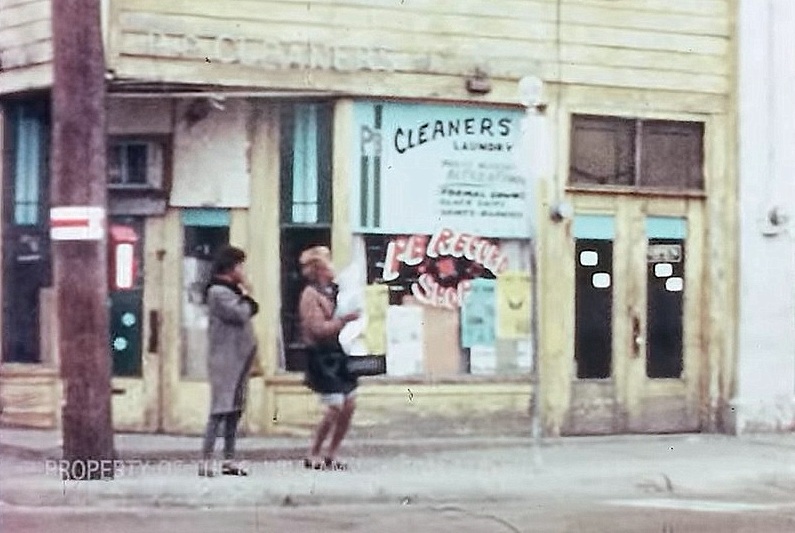
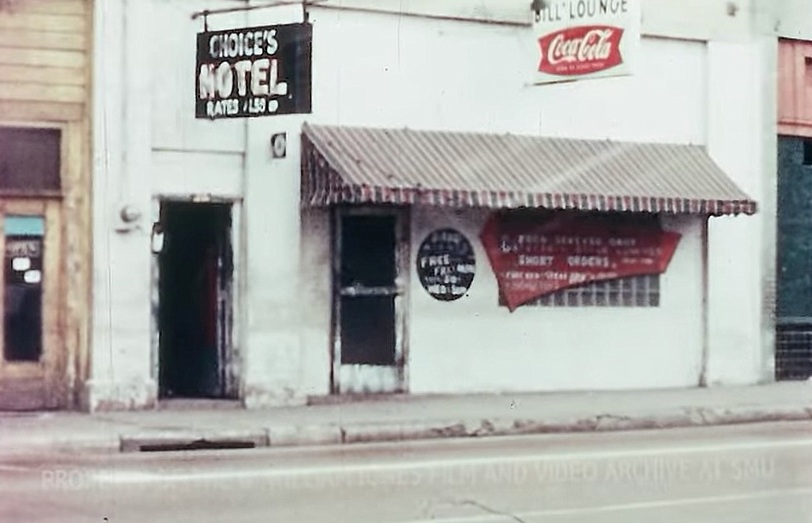
The two shots below were in the same block — keep panning right from the P B Cleaners (2700 S. Ervay, at Grand Avenue — now Al Lipscomb Way), and you’ll see Choice’s Hotel and Bill’s Lounge next door. What’s there now? Nothing.

p-b-cleaners_choices-hotel_perkins-school-recruitment-film_1969_jones-film_SMU_8.38

bills-lounge_choices-hotel_perkins-school-recruitment-film_1969_jones-film_SMU_8.33

*

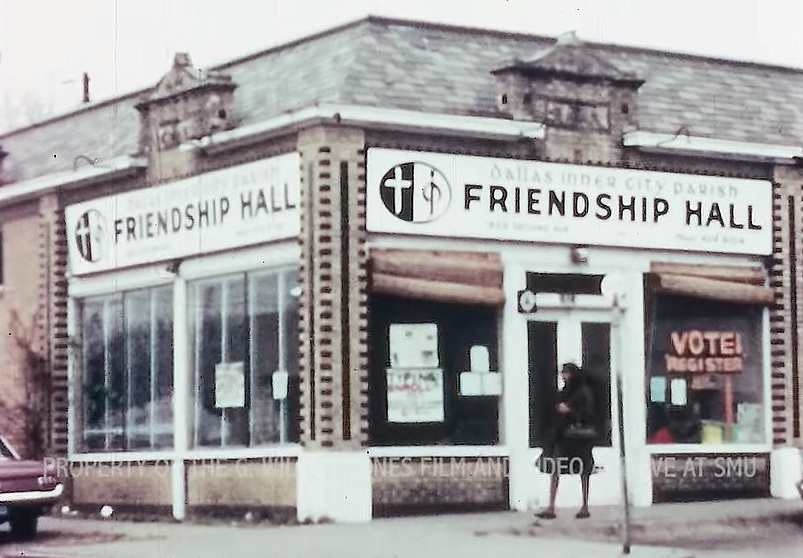
This is Friendship Hall (Dallas Inner City Parish), at 1823 Second Avenue. It was one of many businesses and homes condemned by the city and torn down to expand Fair Park and build new parking lots. See where this used to be, here.

friendshop-hall_perkins-school-recruitment-film_1969_jones-film_SMU_6.25

*

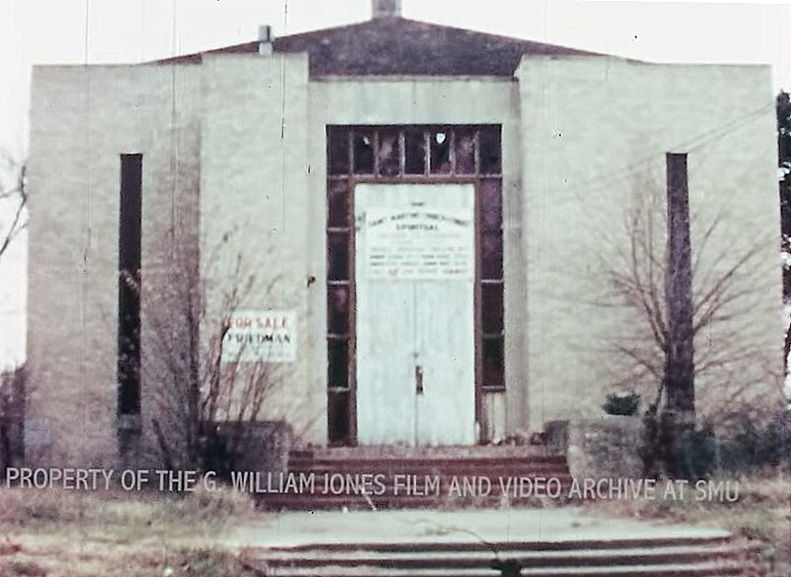
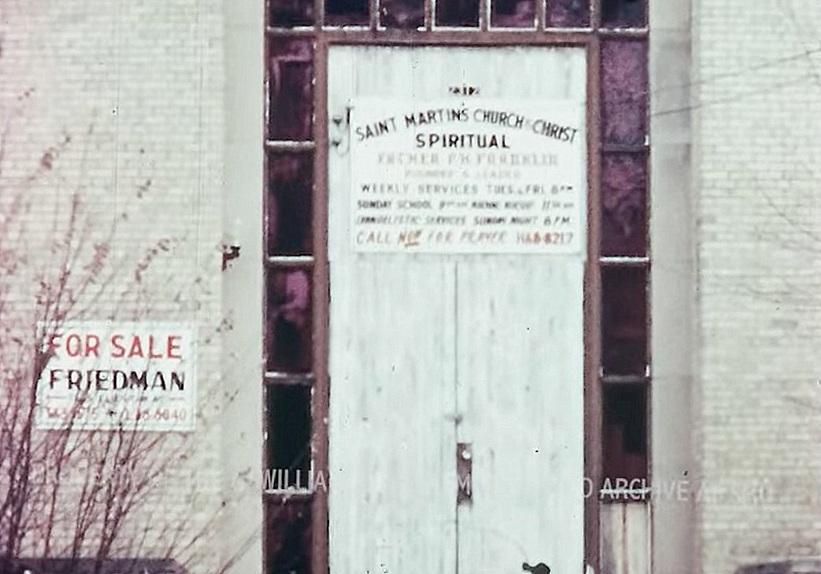
St. Martin’s Spiritual Church of Christ, 2828 Carpenter. This is such an unusual-looking building. It’s gone, but there’s a new church in its place, here.

st-martins-church-of-christ-spiritual_perkins-school-recruitment-film_1969_jones-film_SMU_8.03

st-martins-church-of-christ-spiritual_perkins-school-recruitment-film_1969_jones-film_SMU_8.08

*

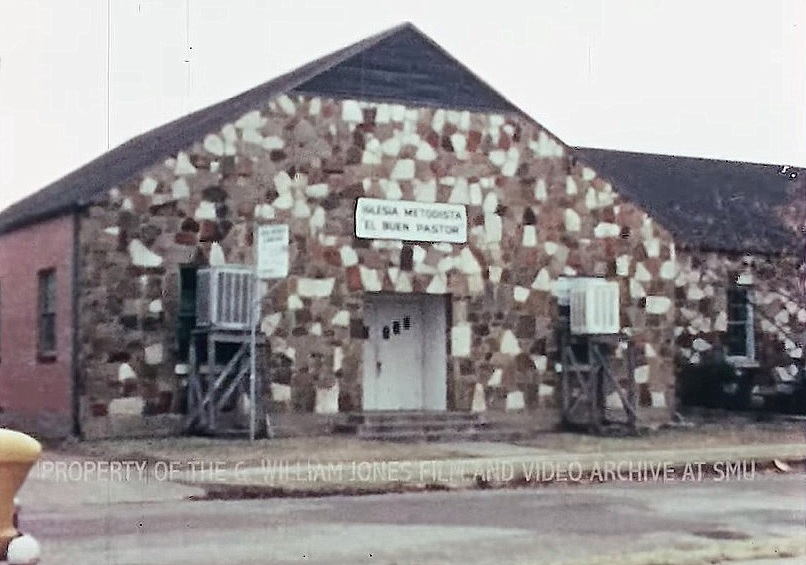
Iglesia Metodista, 1800 Park Avenue (at Beaumont), not too far from Old City Park. Wow, this area (a couple of blocks’ worth, anyway) has been developed way beyond what I would have guessed. The church once stood, I think, in this grassy area.

iglesia-methodista_perkins-school-recruitment-film_1969_jones-film_SMU_5.54

*

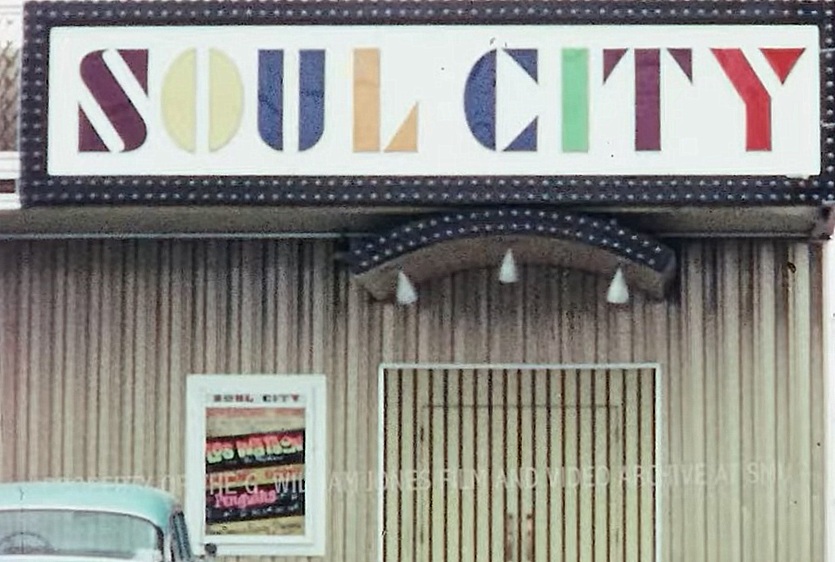
Soul City, 4714 Greenville Avenue, near University Blvd. (you might know it from its recent incarnation as a Vespa dealership). This wasn’t in a “gritty” neighborhood, but it was close to the filmmakers’ home, the SMU campus, and, surely, there were reprobates cavorting inside who could have benefited from a good Methodist sermon. From what I gather, this was a cool place for cool people to see cool bands. The building still stands, here. I don’t think it’s occupied at the moment.

soul-city_choices-hotel_perkins-school-recruitment-film_1969_jones-film_SMU_19.03

*

Speaking of reprobates, their Big D mecca for many years was Commerce and Akard, home to all sorts of places you probably wouldn’t book for a Mother’s Day brunch. Clogging up this area at various times were strip joints and dive bars, including the Colony Club, the Theatre Lounge, and the Carousel Club. The Colony Club was at 1322½ Commerce. That whole block (and the one just beyond it — across Akard — home to the Baker Hotel) went bye-bye a long time ago.

colony-club_perkins-school-recruitment-film_1969_jones-film_SMU_4.29

*

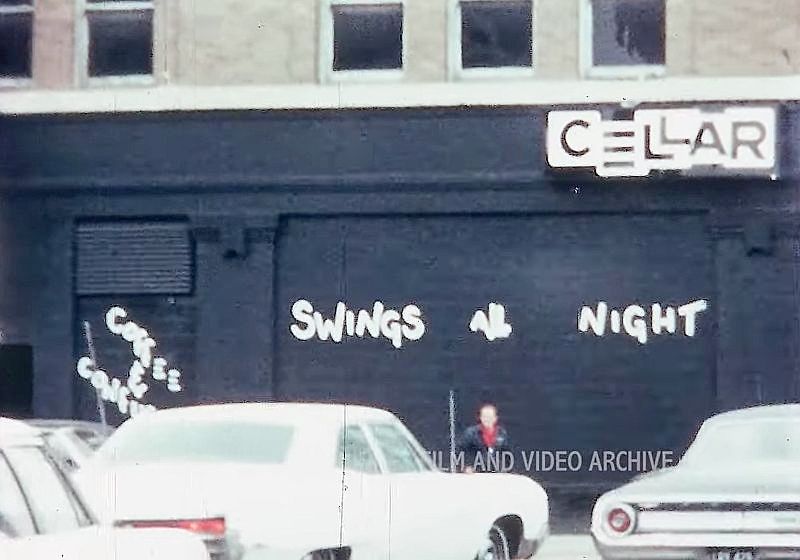
And, like Soul City, the legendary Cellar was cool, but I’ll bet there were more illicit substances in this downtown “coffeehouse” than in the Greenville Ave. club. “Swings all night.” It stood at 2125 Commerce (at what is now Cesar Chavez). This building appears to be gone.

cellar_perkins-school-recruitment-film_1969_jones-film_SMU_4.43

*

More shots of Honest Joe’s Pawn Shop, which took up a good chunk of the 2500 block of Elm. See what this view looks like today, here (I warn you: do not rotate 180 degrees). I assume the tall white building bit the dust for highway construction. I would have loved to have wandered around that place and chatted with Joe. I bet that guy saw some stuff. Deep Ellum has lost most of its grittiness. It used to be so cool. Thank you, seminary students from 1969, for preserving this for future generations, ’cause in a few years, the place won’t be recognizable.

honest-joes-pawn-shop_deep-ellum_perkins-school-recruitment-film_1969_jones-film_SMU_5.06

honest-joes-pawn-shop_deep-ellum_perkins-school-recruitment-film_1969_jones-film_SMU_17.41

***

Sources & Notes

All images are screenshots from the film “Perkins School of Theology (SMU) Orientation And Recruiting Film – 1969” — see it on YouTube here. It’s odd. It is from the keeps-on-giving G. William Jones Film and Video Archive, Hamon Arts Library, Southern Methodist University.

If you like this kind of thing, perhaps you will consider supporting me on Patreon. I post something there every day. More info is here.

honest-joes-pawn-shop_deep-ellum_perkins-school-recruitment-film_1969_jones-film_SMU_5.13_sm

*

Copyright © 2023 Paula Bosse. All Rights Reserved.
Walking on the Wild Side at Commerce & Akard (Crowdsourcing)

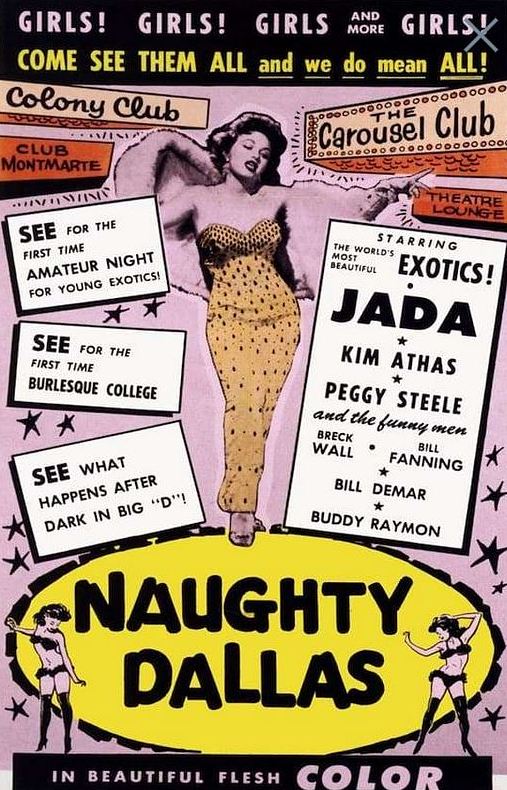
naughty-dallas_poster

by Paula Bosse

Occasionally on the Flashback Dallas Facebook page I ask questions, hoping to crowdsource answers — and people on that page know a lot of obscure stuff! I attempted to post the question(s) below on F*cebook, but I apparently crossed some sort of line. I think I used too many “forbidden” words. When I tried to post, the screen froze and ultimately ate my (lengthy) question. *Poof*! So I shall bypass F*cebook and just post it here.

I am looking for anyone who might have first-hand knowledge about the illicit side of downtown Dallas nightlife in the early 1960s. I am particularly interested in the seedier activities which might have been going on in the Baker Hotel. Namely, gambling and prostitution. Please contact me if you worked at the Baker (or the Adolphus) between, say, 1960 and 1964.

I know these activities were going on all around Dallas, but was it common to find illegal card games and prostitution going on inside the swanky hotels? If so, managers – and cops – must have known. Would they have turned a blind eye? Would they have been aware and on the take? Would they have just accepted it as part of the hotel business? I mean, Dallas was/is a huge convention city – this sort of thing must have been everywhere!

Would dancers who performed at the Colony Club have stayed at the Baker or Adolphus? They seem kind of ritzy for people in that line of work. Would management have cared if strippers stayed in their hotels? Would there have been a higher tolerance for more discreet “call girls” than your average run-of-the-mill prostitute? (I don’t mean to suggest that dancers were prostitutes, but, since I’m typing this, was it known that prostitution connected with the Colony Club or Carousel Club was going on?)

There is an amusing Dallas Morning News article titled “Officer Says Syndicated Crime Doubtful in Dallas” (DMN, Oct. 8, 1963) in which a vice cop proudly proclaims organized crime just doesn’t really exist in Big D. That seems highly unlikely, but I’m not even talking about big-time crime – more like high-stakes poker games with local high-rollers and pimping done by small-time operators. How common would it have been for this sort of thing to be going on in Dallas’ two most upscale hotels?

If you worked at the Baker Hotel in the early ’60s — or if you were employed by the Dallas Police Department at that time – or if you, yourself, were a participant in the seedier side of Dallas nightlife and spent significant time hanging around Commerce & Akard doing naughty things! – please comment below or send me an email at FlashbackDallas214@gmail.com.

This has nothing to do with the assassination, even though it’s the same time-period and there is undoubtedly a lot of overlap. But, seriously: NOTHING TO DO WITH YOU-KNOW-WHAT.

Thanks!

–Paula

***

Sources & Notes

Poster of “Naughty Dallas” (directed by cult Dallas director Larry Buchanan) found somewhere on the internet.

naughty-dallas_poster_sm

*

Copyright © 2023 Paula Bosse. All Rights Reserved.
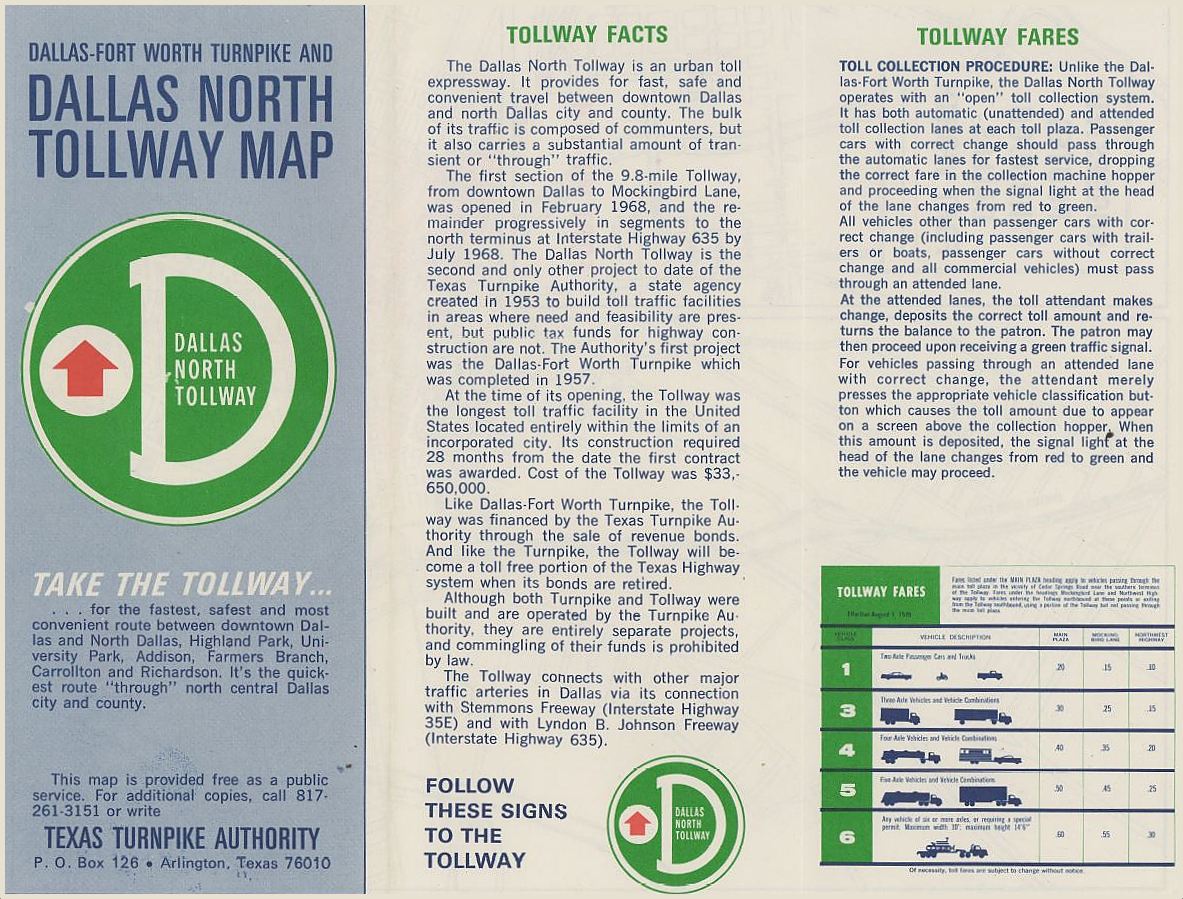
The Dallas North Tollway — 1968

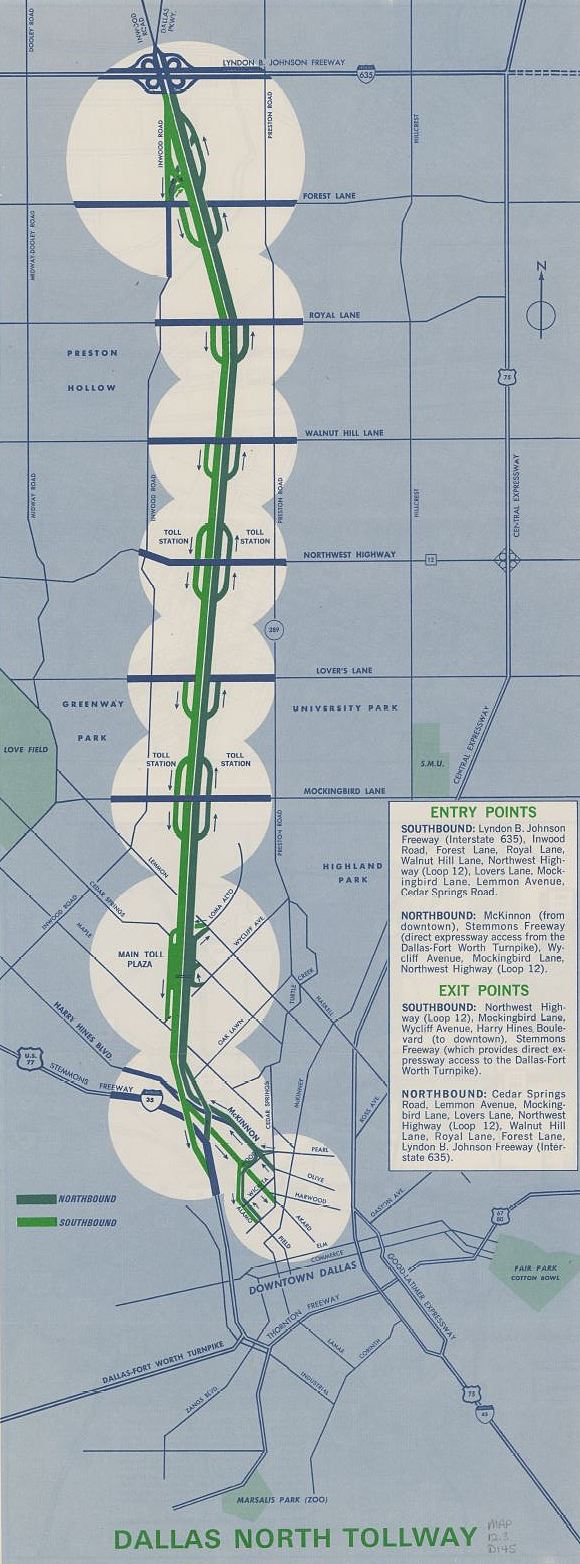
tollway_dallas-north-tollway_brochure_1972_tx-tech_detHead north, young man…

by Paula Bosse

The Dallas North Tollway opened in stages, as stretches were completed. The first bit of its 9.8 miles opened in February 1968, and it was fully open by June 1968. From downtown to LBJ. Am I crazy, or does that seem incredibly fast?

On its opening day, an ecstatic Texas Turnpike Authority official told reporters, “People love it to death.” Which is something you don’t hear said everyday about a toll road.

When one speaks of the tollway, one often muses to oneself, “Shouldn’t this thing be paid off by now?”

Here’s what the Texas Turnpike Authority assured taxpayers back then in that Summer of Love:

Like Dallas-Fort Worth Turnpike, the Tollway was financed by the Texas Turnpike Authority through the sale of revenue bonds. And like the Turnpike, the Tollway will become a toll-free portion of the Texas Highway System when its bonds are retired.

Unbelievably, the DFW Turnpike DID become a “free” highway, but I think we all know that will never happen again. But, just for an amusing tidbit to toss around at your next smart cocktail party, here’s when that was supposed to happen (from the final paragraph of a very comprehensive Dallas Morning News overview of the history of the tollway):

If the traffic keeps going up and coincides with projections, the tollway may become part yours — as a Texas citizen — on Jan. 1, 2005. That’s when the last bond payment is due. (DMN, June 2, 1968)

I guess the important word there was “may.”

tollway_dallas-north-tollway_1972_tx-tech

tollway_dallas-north-tollway_brochure_1972_tx-tech

I don’t really have any nostalgia connected with the tollway, but I do kind of miss hurling a fistful of change at that basket.

***

Sources & Notes

Dallas North Tollway brochure (1972) is from the Southwest Collection Maps, Special Collections Library, Texas Tech University — it can be downloaded here.

The very informative article referenced above is “Dallas North Tollway: A Long Road is Ending” by Jimmie Payne (Dallas Morning News, June 2, 1968).

tollway_dallas-north-tollway_brochure_1972_tx-tech_det

*

Copyright © 2023 Paula Bosse. All Rights Reserved.

St. Mark’s From the Air

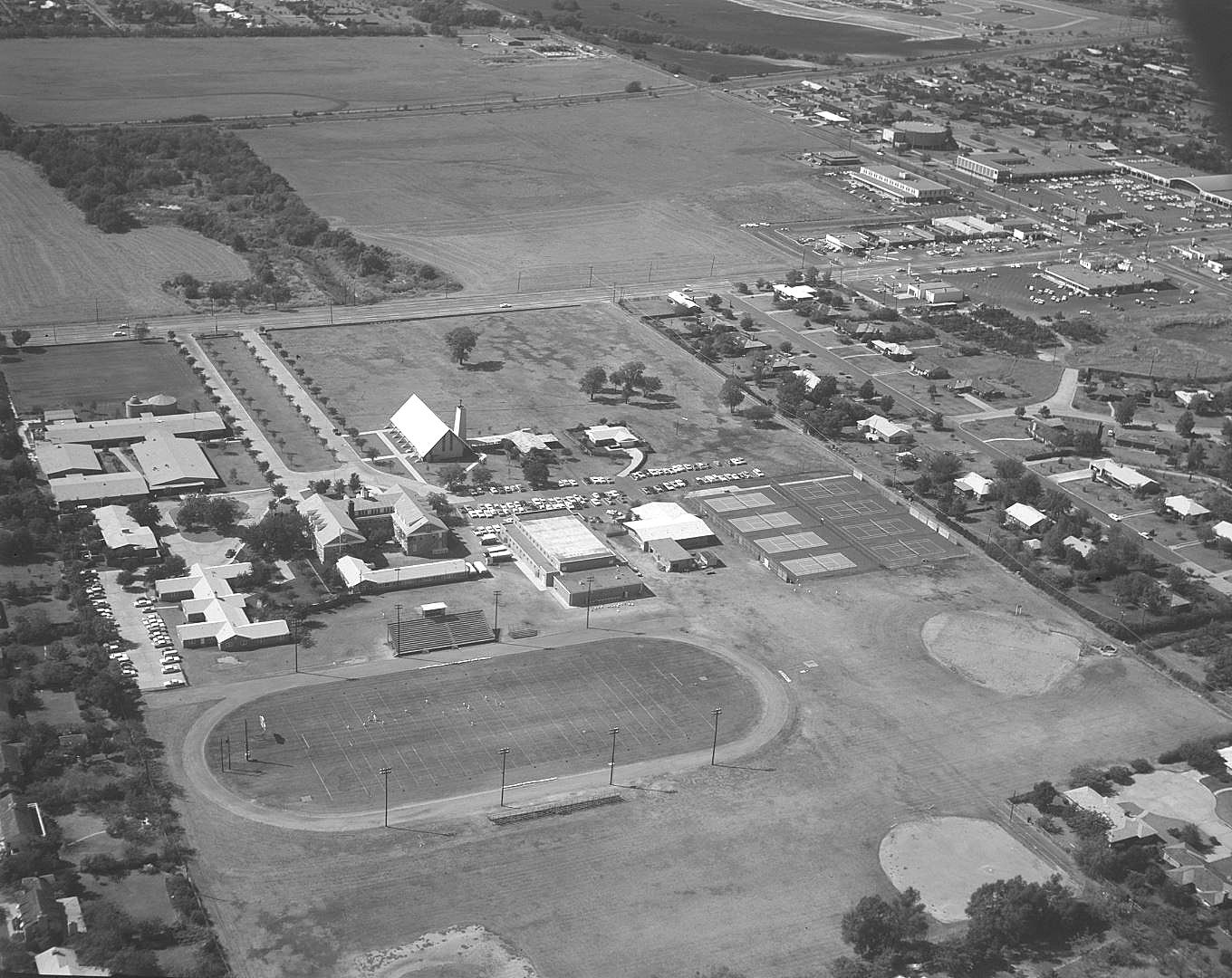
st-marks_preston-royal-to-the-west_squire-haskins_UTAGo west, young man…

by Paula Bosse

The photo above shows an aerial view of the St. Mark’s campus, with a view to the northwest. So. Much. Space. The horizontal road in the top third of the photo is Preston Road. In the top right corner, at 5923 Royal Lane, is the round St. Luke’s Episcopal Church, which was built in 1959. (I have learned only tonight that the architect of that church — and many other buildings around Dallas — was designed by architect William H. Hidell Jr., who studied with George Dahl. Hidell grew up in the same house I grew up in — several decades earlier. Small world.) Across the street from the round church is the Preston Royal fire station, built in 1958, and recently destroyed by a tornado (and which I wrote about here). This photo is undated, but it was obviously taken sometime after 1959. That amount of empty land is surprising. (If you really want to freak out about miles of nothing in North Dallas, check out this unbelievable photo of Preston and Valley View in 1958, pre-LBJ).

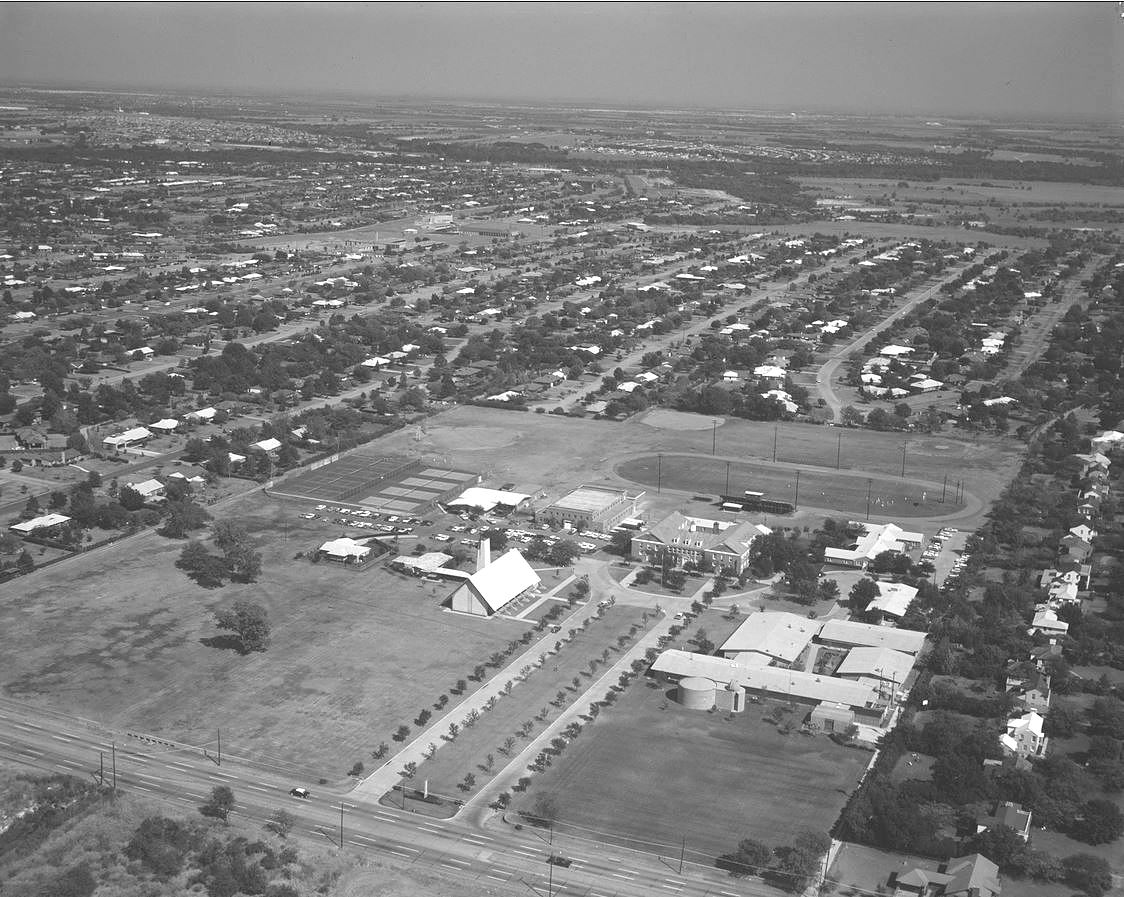
And here are two other St. Mark’s-centric photos from the same flight — all taken by Squire Haskins (see links below for very large images on the UTA website). Below, a view to the northeast:

st-marks-aerial_to-northeast_squire-haskins_UTA

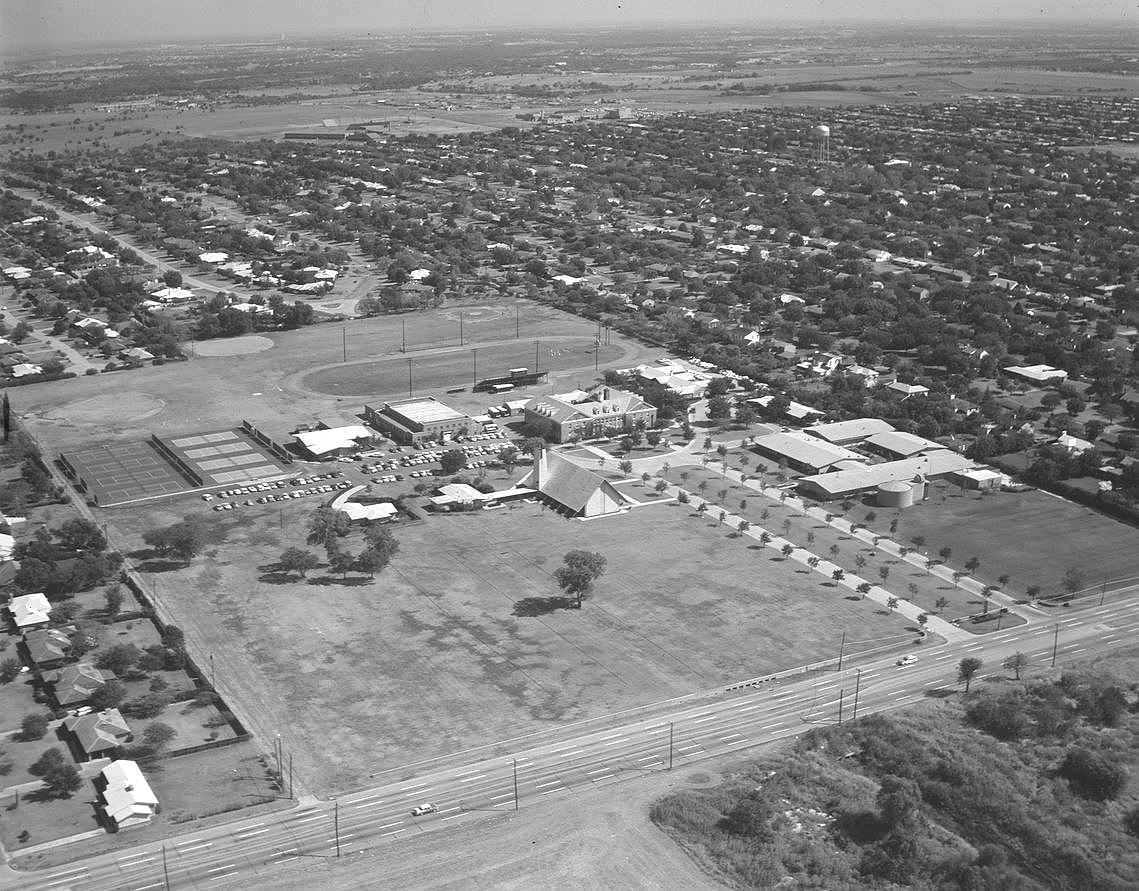
And a view to the southeast:

st-marks-aerial_to-southeast_squire-haskins_UTA

***

Sources & Notes

These three aerial photos are by Squire Haskins, from the Squire Haskins Photography Inc. Collection, University of Texas at Arlington Libraries. Read more information about these individual photos: the first one is here (view to the northwest); the second is here (view to the northeast); and the third is here (view to the southeast). Click the pictures on the UTA site to see really, really big images.

Please consider supporting the work I do at Flashback Dallas by funding me on Patreon, where I post exclusive content.

st-marks_preston-royal-to-the-west_squire-haskins_UTA_sm

*

Copyright © 2023 Paula Bosse. All Rights Reserved.
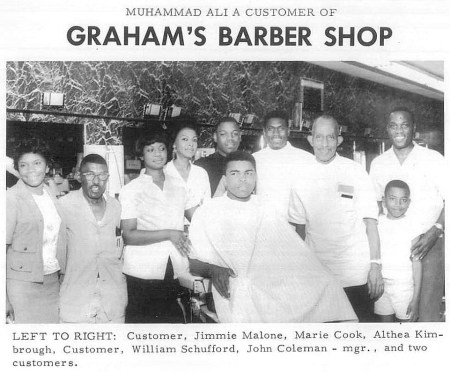
Muhammad Ali Visits Graham’s Barber Shop — ca. 1967

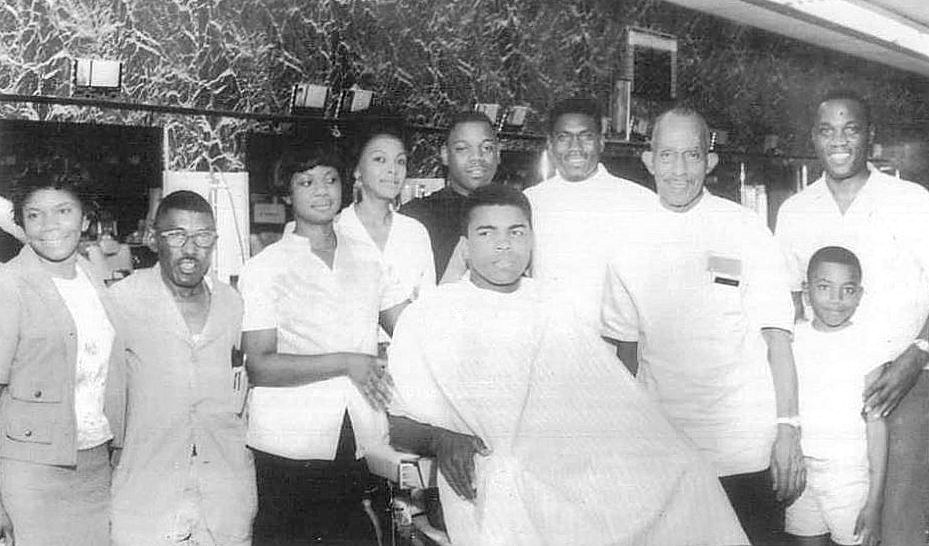
ali-muhammad_grahams-barber-shop_lincoln-high-school-yrbk_1967_photoMuhammad Ali in a Dallas barber chair

by Paula Bosse

I often just browse through the ads of old Dallas high school yearbooks on Ancestry.com. The other day, I saw the photo above and stopped and said to myself, “Is that Muhammad Ali?” I then looked at the text and, yes, that was, in fact, Muhammad Ali. Sitting in a barber chair in Dallas, Texas. What was the story behind that?

In my less-than-extensive research, I found three instances of Ali being in Dallas in or before 1967 (the year of this Lincoln High School yearbook ad). The first was in November 1960, just one month after the 18-year-old Olympic champion had won his first professional fight. He was tagging along with Archie Moore (who was acting as something of a mentor) when Moore came to Dallas to fight local boxer Willie Morris. (Morris had lost to the then Cassius Clay in the Olympic trials, and, in a somewhat bitter interview with The Dallas Morning News said this about the young upstart: “He’s not near as good as all this talk about him.”)

The photo of Ali in the barber chair isn’t from this 1960 visit, but he was specifically mentioned in a Dallas Times Herald article as being in the crowd of a Nov. 1960 event I wrote about a few years ago. There’s film footage of this, and I’ve scanned the crowds, hoping to find him, with no luck. But if you want to look to see if you can find him, that footage is linked in the Flashback Dallas post “Newly Discovered Footage of Jack Ruby — 1960.”

It’s more likely that the barbershop photo was taken in March 1967 when Ali, a Muslim, made two appearances in Dallas: the first was to “preach” at a local mosque, and the second (two days later) was to speak to students at Bishop College.

The mosque appearance was on Easter Sunday — March 26, 1967 — at Muhammad’s Mosque of Islam, described by Dallas Morning News sportswriter Bob St. John as being housed in “an old, pinkish building which used to belong to an insurance company and heretofore rested in reasonable obscurity on the corner across from Booker T. Washington High School.”

St. John continued: “On Sunday afternoon, it was no longer obscure. The old building rocked from its foundation as people filled it and lined the sidewalk outside and even poured into the streets, some coming to see Cassius Clay and others Muhammad Ali….”

The article mentions that Ali was living in Houston at the time, so it’s certainly possible he visited Dallas more often, but he was so famous at this time that it seems likely that the mere hint of his charismatic presence in town would have shown up in the papers. As it was, a visit by him to a Dallas barbershop was memorialized in this ad, which someone like me can now write about in a vaguely historical way (on a day which just happens to be Easter Sunday, the anniversary of Muhammad Ali’s 1967 Islamic sermon delivered across from Booker T. Washington High School).

**

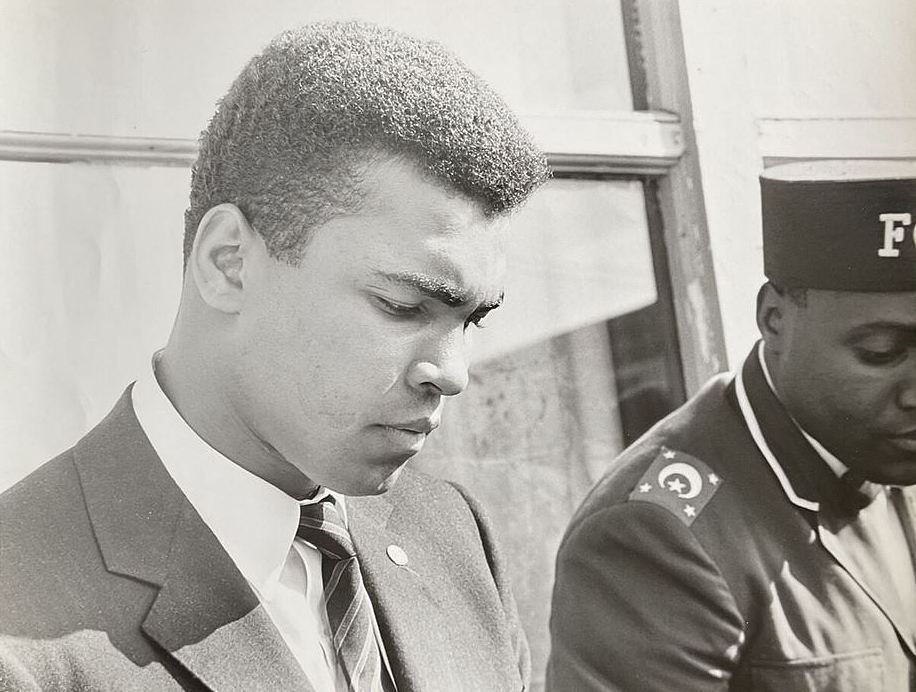
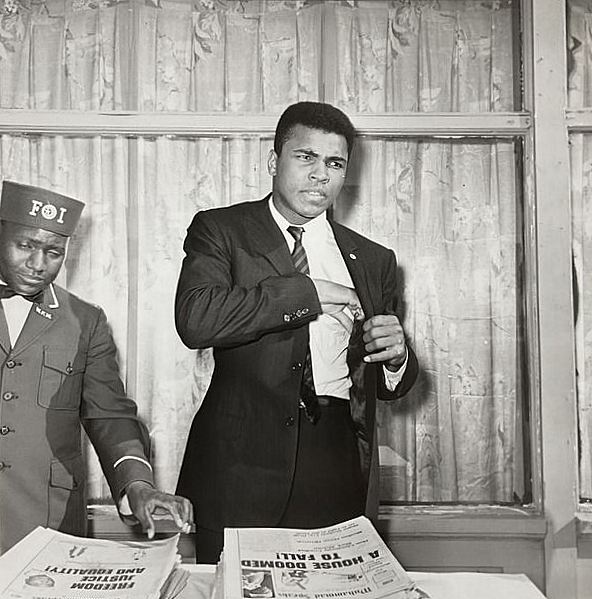
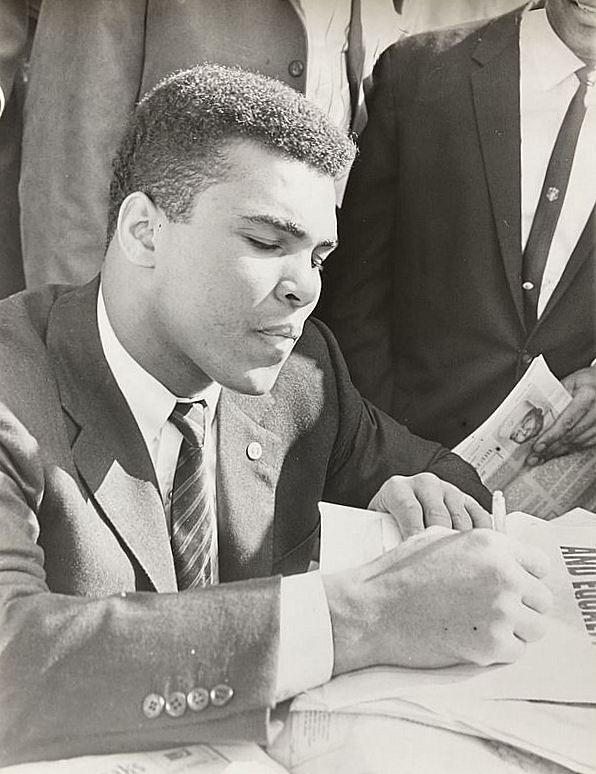
UPDATE: I was very excited to see the three photos below pop up recently on eBay — they show Ali at his mosque appearance (all three were taken on March 26, 1967 by Bob W. Smith, a Dallas news photographer). Ali is seen signing copies of a 20-cent Muslim paper called “Muhammad Speaks.” (A quote from Ali about why he was autographing these newspapers, from Bob St. John’s article: “A fish goes for bait. Then it’s hooked. I’m bait. Many would not buy if I didn’t autograph them. But once they’re bought… they’ll be sittin’ around some evening and pick up the paper. They’ll start reading. First thing you know, they’re hooked.”)

muhammad-ali_dallas_march-1967_a

muhammad-ali_dallas_march-1967_ebay_b

muhammad-ali_dallas_march-1967_ebay_c

**

But back to the barbershop and Johnny Graham and a closer look at the two photos from the ad that originally caught my eye.

ali-muhammad_grahams-barber-shop_lincoln-high-school-yrbk_1967

“Muhammad Ali a Customer of Graham’s Barber Shop.” Ali is shown with an unidentified Graham’s customer, Jimmie Malone, Marie Cook, Althea Kimbrough, a customer, barber William Schufford, manager John Coleman, and two other customers.

*

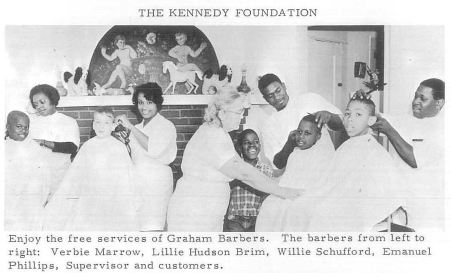
ali-muhammad_grahams-barber-shop_lincoln-high-school-yrbk_1967_ford

The photo above also appeared in the ad, showcasing Graham’s community service and his work with the Kennedy Foundation. “Enjoy the free services of Graham Barbers. The barbers from left to right: Verbie Marrow, Lillie Hudson Brim, Willie Schufford, Emanuel Phillips, Supervisor, and customers.”

*

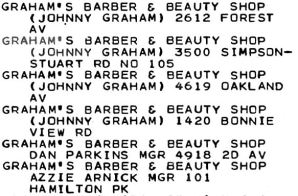
Johnny Graham was one of the most successful Black businessmen in Dallas at the time and was known for his philanthropic generosity. By the end of 1967, he owned eight barber shops and employed 135 barbers. Six of his shops are listed in the 1967 directory:

grahams-barber-shop_19671967 Dallas directory

***

Sources & Notes

Barbershop photos are from an ad in the 1967 Lincoln High School yearbook.

Photos of Muhammad Ali at Muhammad’s Mosque of Islam in Dallas were taken by news photographer Bob W. Smith on March 26, 1967, found on eBay.

The Dallas Morning News articles about Muhammad Ali in Dallas — and one about Johnny Graham:

  • “Morris Prefers Bout with Clay” (DMN, Nov. 26, 1960)
  • “Clay Makes Dallas Stop” by Bob St. John (DMN, Mar. 27, 1967)
  • “Clay Pleases Crowd With Speaking Form” by David Morgan (DMN, Mar. 29, 1967)
  • “Johnny Graham Offers Example” by Julia Scott Reed (DMN, Dec. 28, 1967)

Please consider supporting the work I do at Flashback Dallas by funding me on Patreon.

ali-muhammad_grahams-barber-shop_lincoln-high-school-yrbk_1967_photo_sm

*

Copyright © 2023 Paula Bosse. All Rights Reserved.

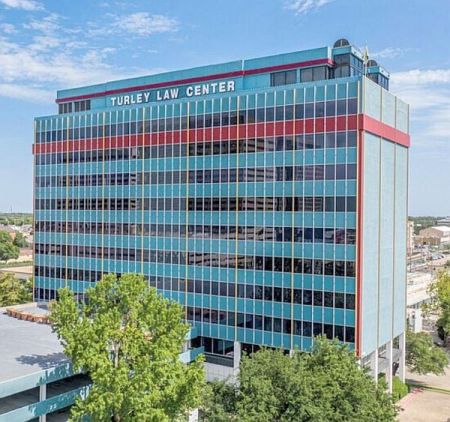
The Noel Page Building — 1966

noel-page-bldg_turley-law-center_cityfeet-dot-com_cropped
Fast-forward 50-something years…

by Paula Bosse

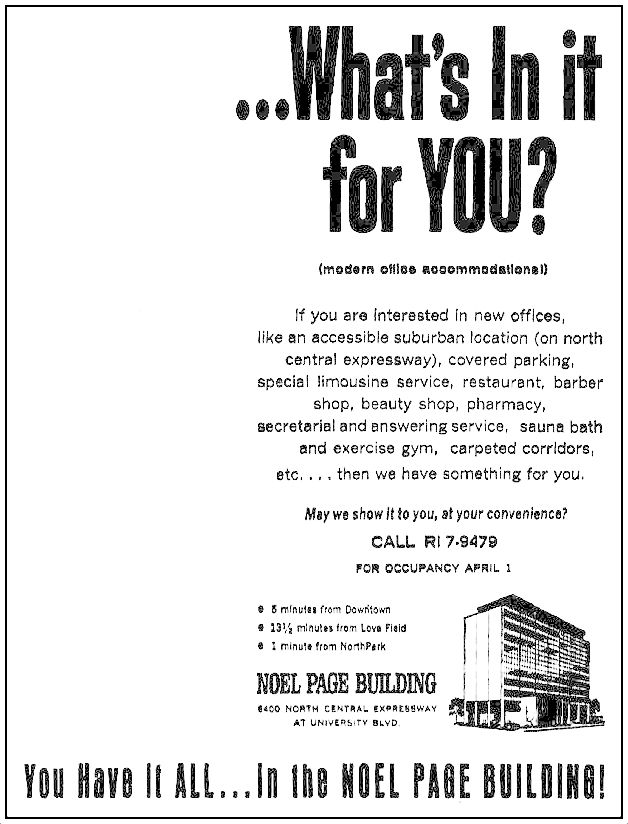
The Noel Page Building opened in 1966 at 6400 N. Central Expressway, between Yale and University — see it on Google Street View here. For many years it has been the home of the Turley Law Center (its address is now 6440 Central). It was designed by Thomas E. Stanley, who designed a ton of buildings, including the not dissimilar 211 North Ervay (the blue-and-white building you’ll probably recognize on Google Street View here).

The developer/owner — a Dallas orthodontist named Noel J. Tomlin Jr. (1916-2003) — envisioned this office building as something of an answered prayer for businesspeople who didn’t enjoy the hassle of commuting to workplaces downtown (or, as he said in a 1965 Dallas Morning News interview, [a place] where parking is no problem and the business livin’ is easy”). 

Tomlin acquired the property in 1961, at a time when there were very, very few office buildings that far from downtown (and before NorthPark had even been built), but, presciently, he felt it would be a good location for what was described at the time as an office “tower.” He also hoped to get in on the overflow waiting-list action of prospective business tenants who had been turned away from the very successful nearby Meadows Building (which is generally considered to be the first substantial office building built beyond the Central Business District). It took Tomlin five years to finally build his “tower,” but he did it. Big-money commercial real estate was starting to heat up above Mockingbird!

noel-page-bldg_feb-1966Feb. 1966

The physical properties of the planned building were described in two Dallas Morning News articles, printed four years apart (the architectural renderings which accompanied the articles showed slightly different designs).

From July 1961 (a 10-story building):

Exterior walls will be made of pre-cast concrete on the east and west, and the north and south walls will be of glass, aluminum, porcelain enamel, and mosaic tile. Three elevators will be included in the structure. There will be three parking levels — two underground and one above-ground ramp at the rear of the building.

From April 1965 (an 11-story building, with just under 10,000 square feet of rentable space per floor, with the cost of the land and construction estimated “in excess of $2.5 million” — about $25 million in 2023 dollars): 

End walls will be of white marblecrete. A curtain wall system utilizing clear vision glass and white spandrel glass with anodized aluminum vertical mullions will complete the tower. The first and second floors will be recessed, forming a colonnade emphasized by white marble columns.

The name of the building? “Noel” was Tomlin’s first name, and “Page” was his wife’s maiden name.

For some reason, I thought this building was built much more recently. Were those red stripes added during a renovation? I’ve never thought that much about this building — it’s always just been there — but I stumbled across the above ad today while looking for something else and immediately recognized it in the ad. And now I find it really interesting! Especially when comparing this somewhat modest “tower” with the 211 N. Ervay building. So… happy accident!

***

Sources & Notes

Top photo is a (cropped) image from a commercial real estate listing, here. More photos can be found there.

Read more in the Dallas Morning News archives:

  • “Dallas Developer Plans 10-Story Office Tower” (DMN, July 9, 1961)
  • “Away-From-Town Office Building Slated for Start” by Jim Stephenson (DMN, Apr. 11, 1965)

noel-page-bldg_turley-law-center_cityfeet-dot-com_cropped_sm

*

Copyright © 2023 Paula Bosse. All Rights Reserved.

Kimball High School, Off Campus — Ads, 1959-1961

priest-music_kimball-high-school_1959-yrbk
Browsing the Elvis releases, 1959

by Paula Bosse

A few years ago I posted several Oak Cliff-centric ads found in the 1963 and 1967 Kimball High School yearbooks (see those ads here). I’m back for another installment.

**

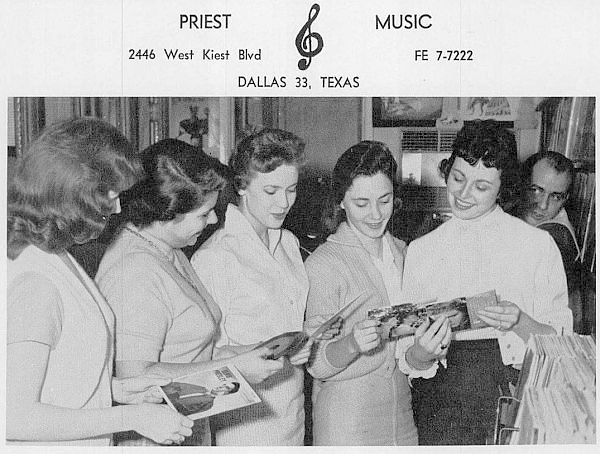
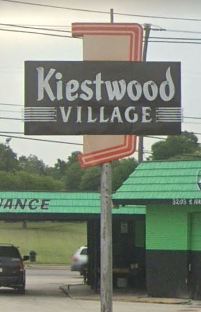
Above, a photo I really love, showing five Kimball girls checking out Elvis records at Priest Music (2447 W. Kiest Blvd). No, they don’t look like high school girls, and, yes, they are. The man at the right is, apparently, the owner, Frank M. Anderson (whom, I think, changed the name of the store to Music Hall the following year?). I posted this ad on my Facebook page last week, and one man wrote, about the owner: “Frank, the owner. His shop was known for its collection of Jazz and Classical albums. We became friends as I got into Jazz thanks to the Great Pete Fountain!” And because, why not, here’s a recent Google Street View of the Kiestwood Village sign which was probably there at that little shopping strip when Frank and the girls were photographed for this ad. 

kiestwood-village_2022

*

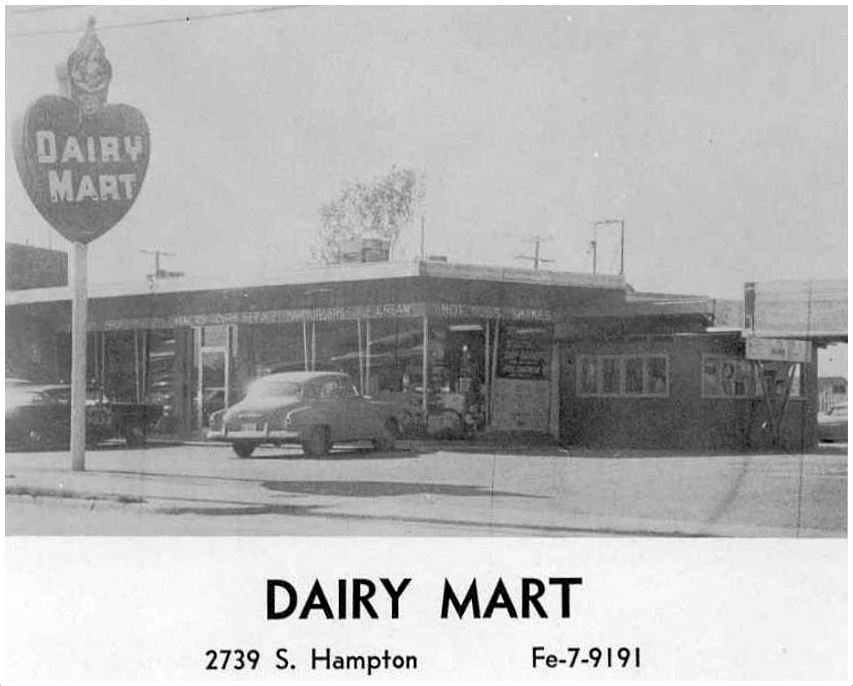
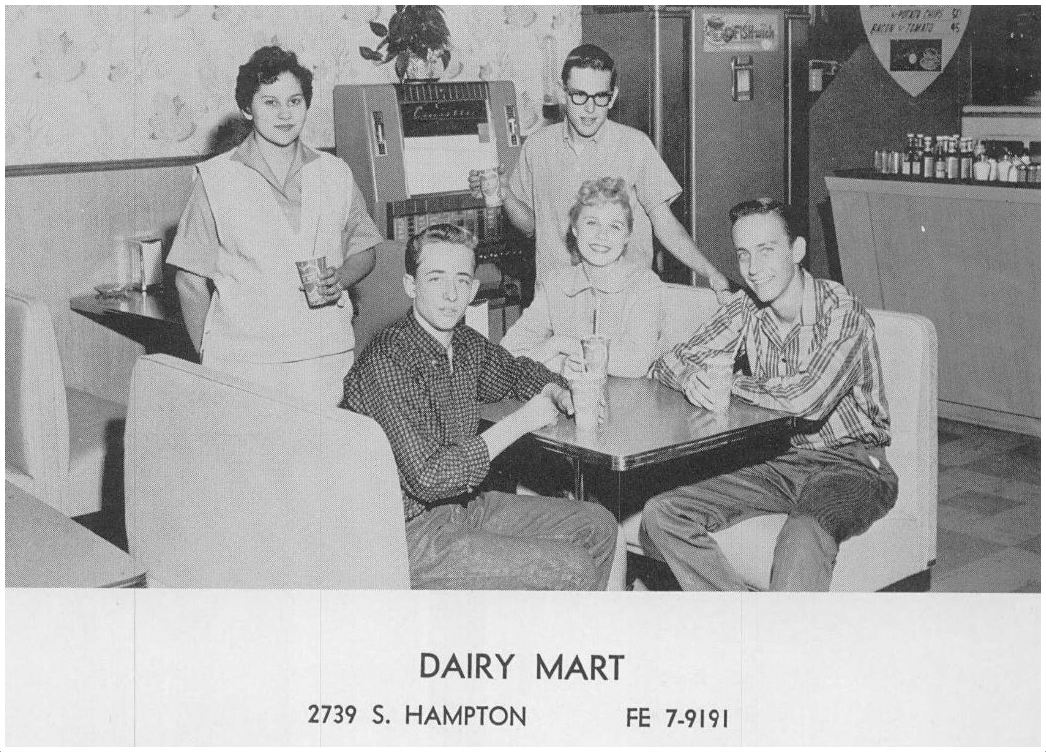
Dairy Mart (2739 S. Hampton):

kimball-high-school_1960-yrbk_dairy-mart1960

kimball-high-school_1959-yrbk_dairy-mart1959

*

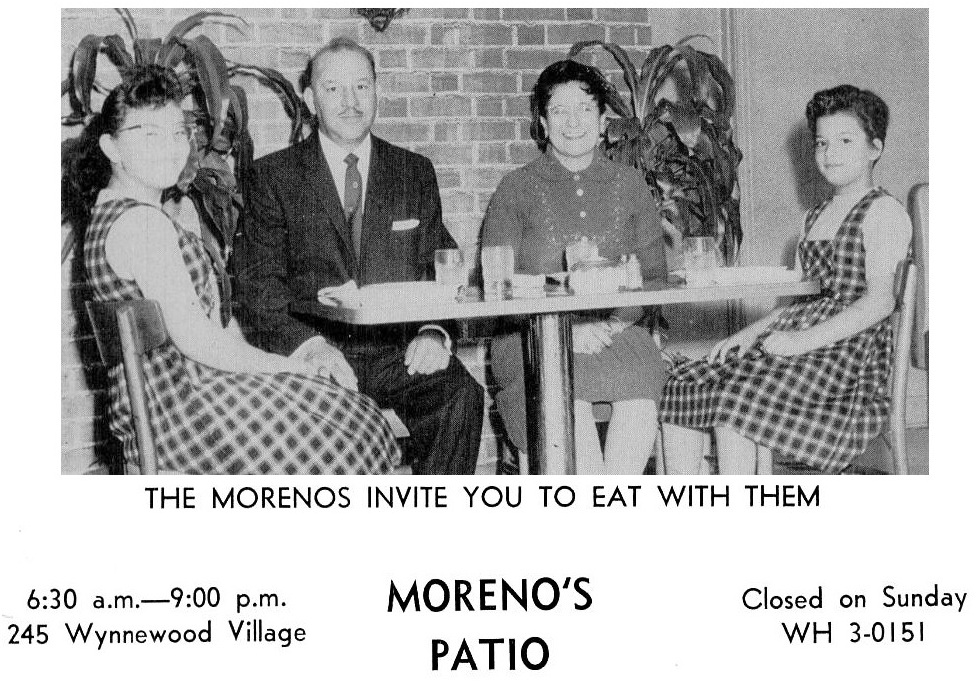
Moreno’s Patio (245 Wynnewood Village):

kimball-high-school_1961-yrbk_morenos-patio_restaurant1961

*

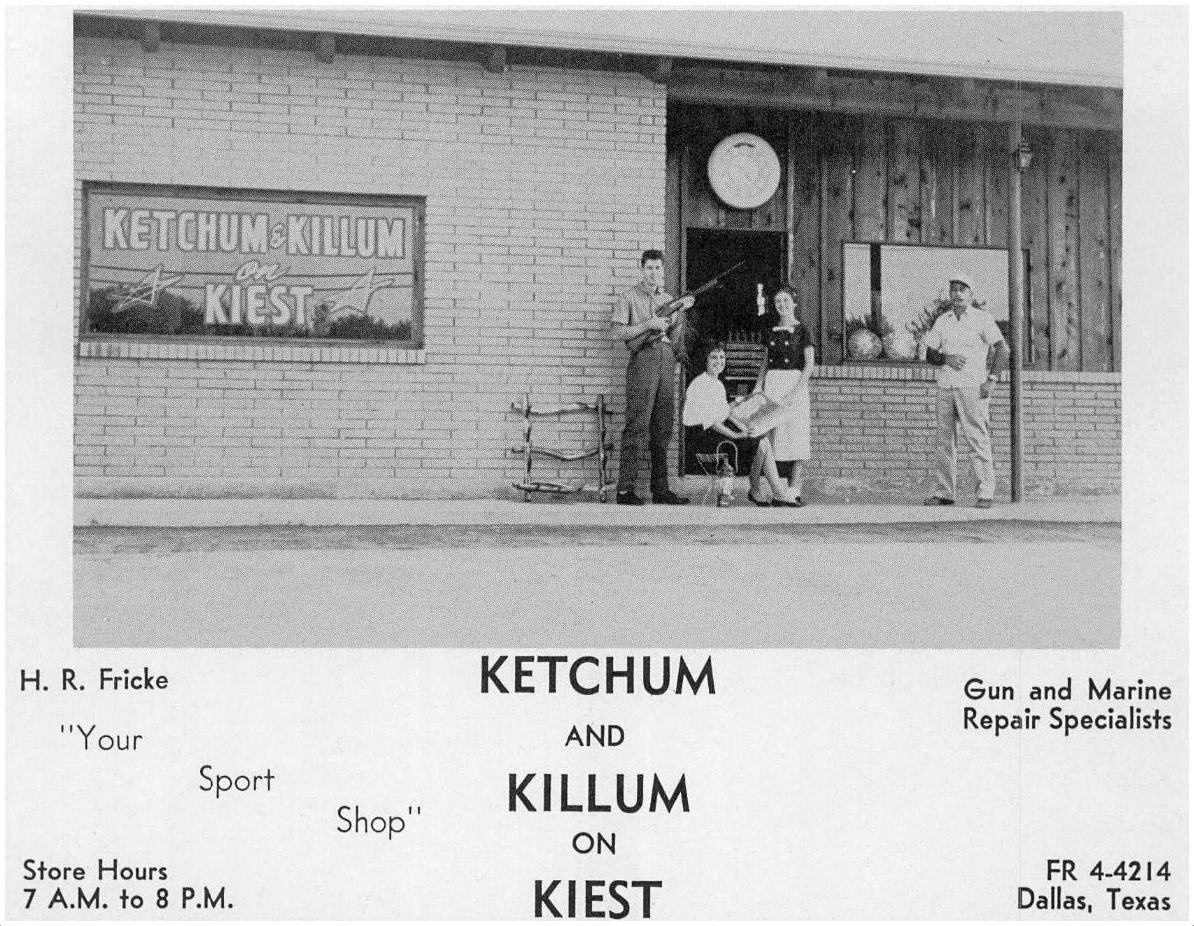
Ketchum & Killum (334 W. Kiest) — a sporting goods store with perhaps the best name ever (UPDATE: or not — see the comments below):

kimball-high-school_1961-yrbk_ketchum-and-killum1961

*

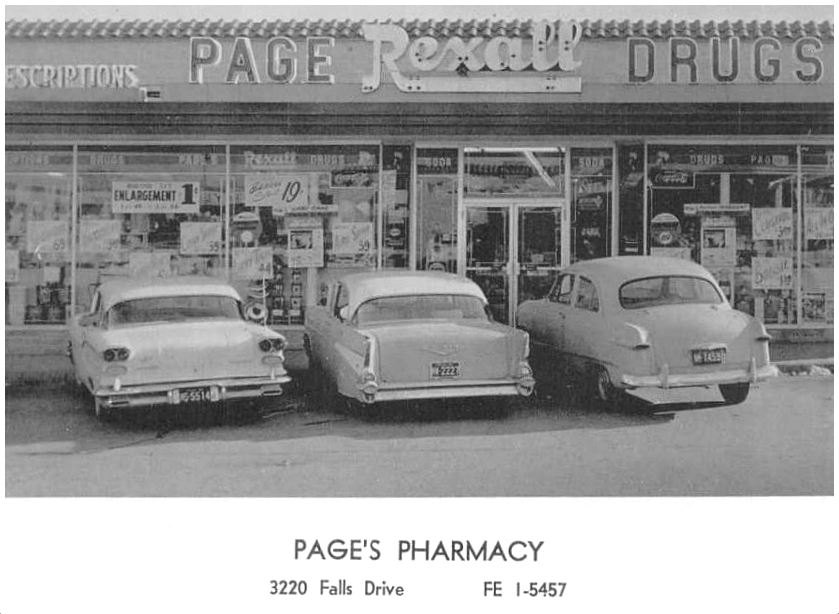
If you’re in need of some bandages or Mercurochrome after being a little too curious at Ketchum & Killum, head over to Page’s Pharmacy (3220 Falls Dr.):

kimball-high-school_1959-yrbk_page-drugs1959

*

For all things “fun,” Playland (3900 W. Illinois):

kimball-high-school_1959-yrbk_playland1959

***

Sources & Notes

All ads from the 1959, 1960, and 1961 yearbooks of Justin Kimball High School in Oak Cliff.

More Kimball yearbook ads can be found in the Flashback Dallas postA Few Ads From the Pages of the 1963 and 1967 Kimball High School Yearbooks.”

priest-music_kimball-high-school_1959-yrbk_sm

*

Copyright © 2023 Paula Bosse. All Rights Reserved.