Flashback : Dallas

A Miscellany: History, Ads, Pop Culture

Category: Advertisements

“The Only Motel Located In the Park Cities” — 1964

university-house-hotel_smu-rotunda_1965-detA palm tree, a palm tree, my kingdom for a palm tree… (click for large image)

by Paula Bosse

Behold, an architect’s rendering of University Park’s first motel (… motel?!). With palm trees! (The architects — Barron, Heinberg and Brocato  — were from Alexandria, Louisiana, where they might actually have palm trees. Perhaps they assumed they grew in Dallas. Or could be imported. Or just looked nice as a whimsical garnish.) Palm trees or not, look at that great mid-century design!

Plans for the University House Motel were announced in December, 1963 — it was to be built on Hillcrest at Binkley, right across the street from SMU by Edward T. Dicker, the man who built 3525 Turtle Creek. (Interestingly, according to a press release printed in The Dallas Morning News on Dec. 8, 1963, real estate transactions for the property involved a land lease from Shell Oil Co.) With 60 suites, it was the perfect location for hotel lodgings for parents visiting their children in college.

This was to be both a major commercial addition to University Park as well as something of an architectural departure. The closest hotel/motel alternative (according to the ad below, anyway) was farther away than might have been convenient for visiting families — the (also super-cool-looking) Holiday Inn was all the way down Central, just past Fitzhugh.

ad-holiday-inn_central-expwy_smu-rotunda_1965
If I were a visiting parent, I’d probably choose the University House option because of its unbelievably close proximity to the campus. And if I saw the ad below, I’d definitely book a room — pronto!
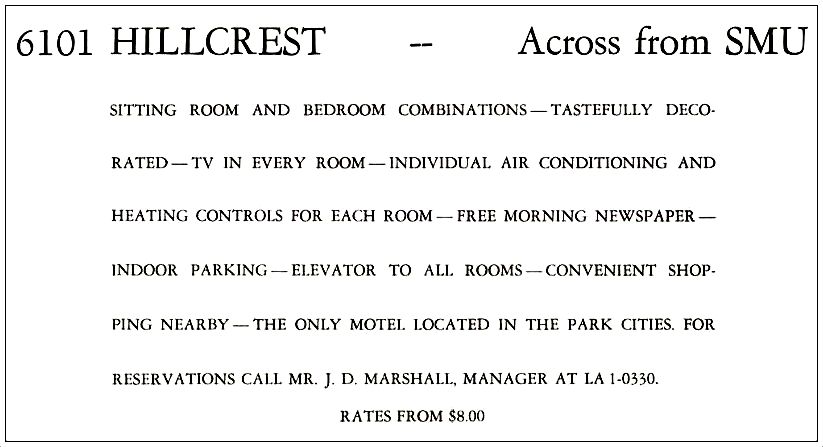
university-house-hotel_smu-rotunda_1965(click to read text)

When construction was complete and the motel opened for business, the sans-palm-tree reality of the building had to have been a bit of a disappointment to anyone who had salivated over that sleek Mid-Century Modern drawing (even though I’m sure the interior decor was much nicer than most motels). Maybe it’s just me. It sort of looks like the drawing. …Sort of….

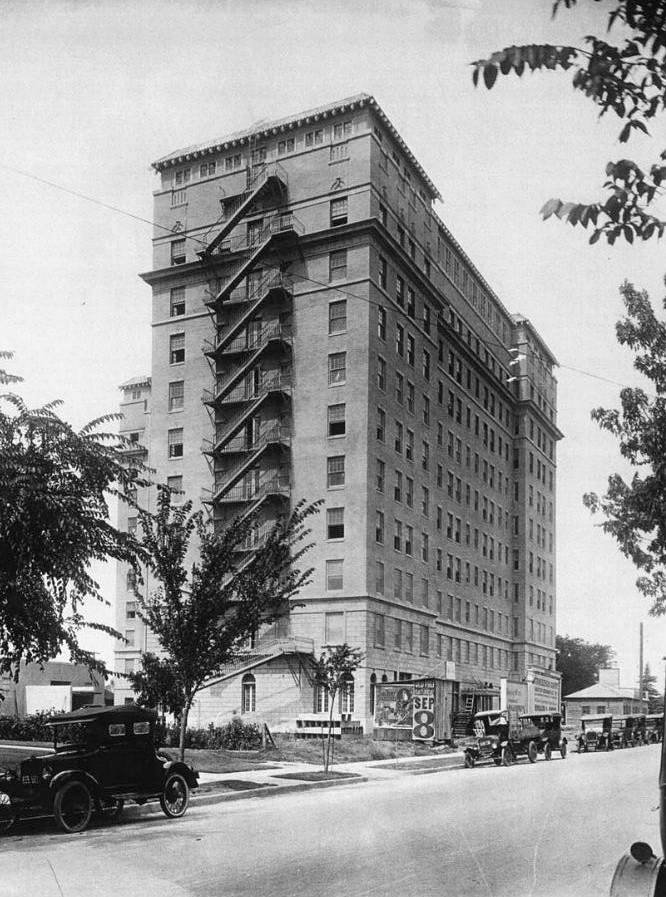
university-house_smu-rotunda_1965

The University House hung on for several years, then changed ownership and names several times. It is now the site of the much-expanded and certainly much-swankified Hotel Lumen. Interestingly, the skeleton of the original building is still in there somewhere. As Alan Peppard wrote in the Dallas Morning News on Oct. 16, 2006 soon after Hotel Lumen opened, “The old hotel was gutted back to nothing but the concrete frame and rebuilt as a hip University Park hotel.” (To see what things look like now, click here — the renovated original building is on the left, the expansion is on the right.)

In the 21st century, Hotel Lumen is exactly the kind of hotel that comfortably-well-off-but-still-tastefully-hip SMU parents want to stay in when they arrive in town to visit the progeny. All that’s missing are a few palm trees….

***

The University House Motel ad appeared in the 1965 Southern Methodist University Rotunda yearbook. That same yearbook also contained the Holiday Inn ad and the photograph of the University House Motel. (The photo appeared over the yearbook’s cheeky “Why be discreet?” caption and was featured in the previous Flashback Dallas post, “The SMU ‘Drag’ — 1965,” here.)

The 1965 ad has the nightly rate at the University House Motel at $8 — about $60 in today’s money, adjusted for inflation. Not bad for parents who could afford to send their children to SMU and who weren’t staying downtown at the Adolphus, the Baker, or the Hilton.

Photos of Hotel Lumen — inside and out — can be found on their website, here.

Click pictures for larger images.

*

Copyright © 2015 Paula Bosse. All Rights Reserved.
 

Thirsty For Something Stronger Than a Sarsaparilla? — 1890

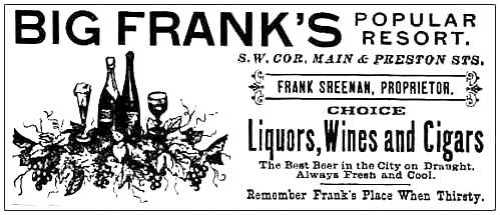
ad-saloons_city-directory_1890-det“Remember Frank’s Place When Thirsty”
by Paula Bosse

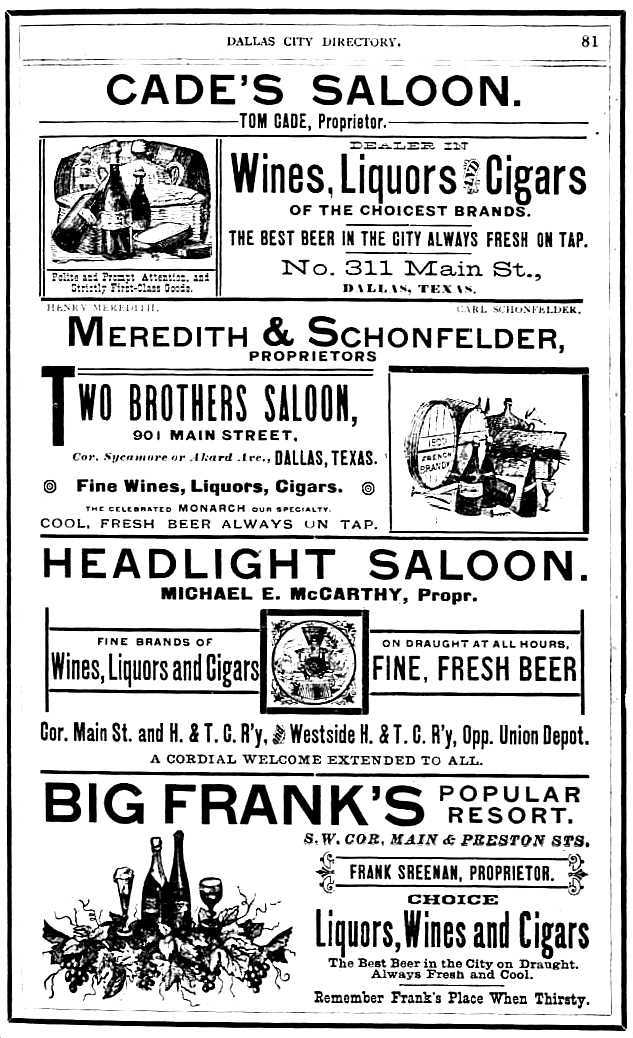
According to the 1890 city directory, Dallas had roughly 145 saloons. That seems like a lot when the city’s population was only 38,000. That would be one bar for every 262 people — and this is before you take out all the residents who wouldn’t have been allowed in saloons, like African Americans, Hispanics, women, children, etc. (and I’m sure there MUST have been a few adult white men who didn’t drink…). And there were probably a lot more than 145 bars — this doesn’t include private clubs or “unlicensed” holes in the wall (I’m not sure how heavily enforced “licensing” was back then). So it could have been more like one bar for every 50 imbibing Dallasites. Call me crazy, but this seems like a disproportionate ratio of bars to customers. But depending where you fall on the how-many-bars-is-too-many spectrum, it might have been just the perfect number. It fact it might have been a veritable paradise.

ad-saloons_city-directory_1890(click me!)

Here are a few of the “popular resorts” of the day into which a white man could mosey and slake his big Texas thirst.

  • Meisterhans’ Garden
  • Mayer’s Garden
  • Glen Lea
  • Planters House
  • Pat’s Place
  • Frank’s Place
  • Ord’s Place
  • Two Johns
  • Two Brothers
  • Louis
  • Bohny’s Hall
  • New Idea
  • U Bet
  • Walhalla
  • Coney Island
  • Butchers’ and Drovers’
  • Q. T.
  • Eureka
  • Gem
  • The Wonder
  • Sample Room
  • Monarch
  • Casino
  • Little Casino
  • Red Front
  • Blue Front
  • Blue Corner
  • Buck Horn Corner
  • Sharp Corner
  • Mikado
  • Apollo Hall
  • Mammoth Cave
  • Headlight
  • Green Tree
  • Live Oak
  • Moss Rose
  • Sunny South
  • White House
  • Cabinet
  • Senate
  • Postoffice
  • Board of Trade
  • First and Last Chance
  • Turf
  • Black Elephant
  • Jockey
  • Union Depot
  • 9-45
  • Dallas Club
  • Wichita Exchange
  • City Hall Exchange
  • Ross’ Exchange
  • Mechanics’ Exchange

That’s a whole lot of places to get drunk in.

***

Sources & Notes

Saloon ad from the 1899/1890 edition of Morrison & Fourmy’s Dallas City Directory.

See the complete list of saloons, with addresses and proprietors’ names, here.

Street names and addresses have changed over the years. Plot the location of your favorite bar by referring to an 1890s map, here.

In the nineteenth century, the word “resort” often denoted places a bit more unsavory than, say, Puerto Vallarta. A list of similar establishments might include “tippling houses, gaming houses, bawdy houses, billiard saloons, lager beer saloons, and other places of public resort” (source here).

I’m wondering if “respectable” women were allowed as customers in the larger beer gardens in Dallas at this time? If anyone has info on this, I’d love to know.

Was drunkenness a goldmine-like source of city revenue? Oh yeah. See my previous post “Police Blotter — 1880s,” here. Building a greater Dallas, five bucks at a time.

*

Copyright © 2015 Paula Bosse. All Rights Reserved.

Brown Cracker Co. Cracker Wrappers

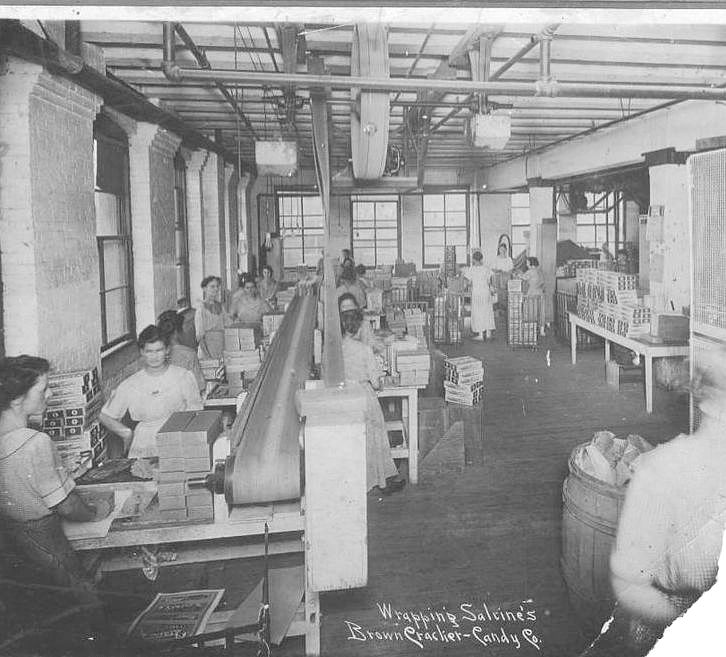
brown-cracker_ca1918_cook_degolyerThe saltine-wrapping room

by Paula Bosse

I will stop and look at great length at any photograph containing a conveyor belt. The conveyor belt in this photo belonged to the Brown Cracker and Candy Company, a large and important Dallas manufacturer and employer. The cracker, cake, and candy factory opened in 1903 in a brand new building in the industrial area just south of McKinney Avenue (the part of town that borders downtown, now known as the West End). Best known these days as the West End Marketplace building, the structure still stands and, in fact, has just been purchased and is about to undergo renovation.

brown-cracker_postcard_cook-degolyerDeGolyer Library, SMU

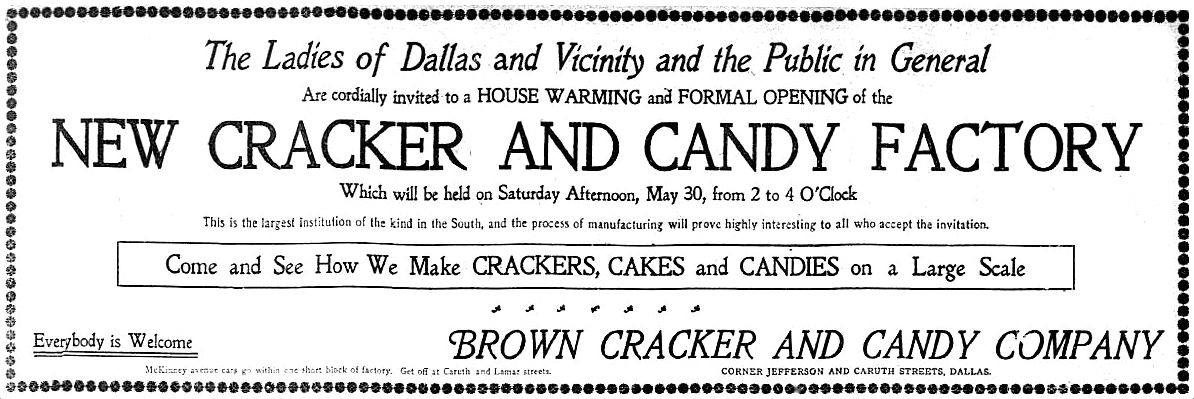
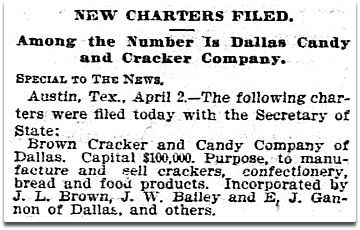
As the new building was nearing completion, the company charter was filed in April 1903, and just a few short weeks later, the factory opened itself up for inspection by the community.

brown-charter_dmn_040303Dallas Morning News, April 3, 1903

brown_opening_dmn_052903
DMN, May 29, 1903 (click for larger image)

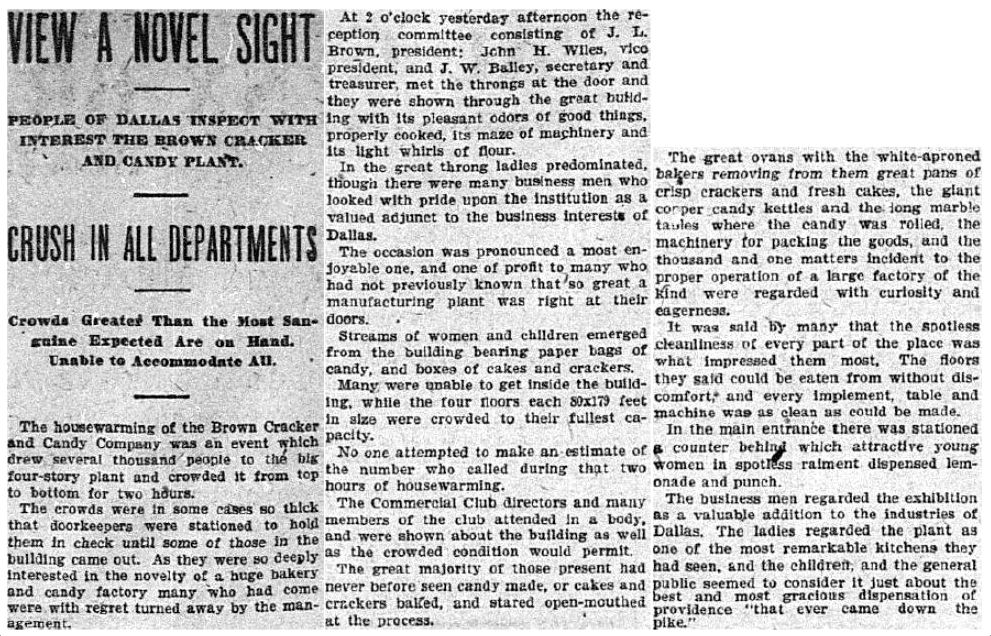
The open house was packed — several thousand people (mostly women) showed up to tour the plant, fascinated by the inner workings of the city’s newest business, a manufacturer of crackers and sweet treats. Of particular interest must have been the two giant brick ovens on the the second floor, which used more than one ton of coal daily, and the huge copper kettles used in candy making on the top floor. There were also things like chocolate dipping machines, starch machines (?), and marshmallow heaters (I don’t know what that is, but I want to see one in action — could it have been a “marshmallow beater,” like the one seen here?).

brown-cracker_dmn-053103DMN, May 31, 1903

The main reason to open the factory to the public for inspection — other than as a PR-managed meet-and-greet — was to let the people see for themselves just how CLEAN the place was. This was at a time when unsanitary food handling and manufacturing practices were much in the news (see here) — concerns which ultimately led to the enactment of the Pure Food and Drug Act of 1906 — and the above article stresses that visitors were impressed by the factory’s “spotless cleanliness” (“The floors they said could be eaten from without discomfort…”). In regard to the “cracker wrappers” pictured at the top, the company wanted to make sure everyone knew that their products were wrapped and boxed — gone were the days of shoppers dipping their (probably unclean) hands into the old “cracker barrel” full of loose, stale crackers.

crackers_dmn_040603DMN, April 6, 1903

Let’s take a closer look at the top photo, probably taken around 1920 (click pictures for larger images).

brown-cracker_ca1918_cook_degolyer_det2

brown-cracker_ca1918_cook_degolyer_det1

ad-brown_dmn_122003DMN, Dec. 20, 1903

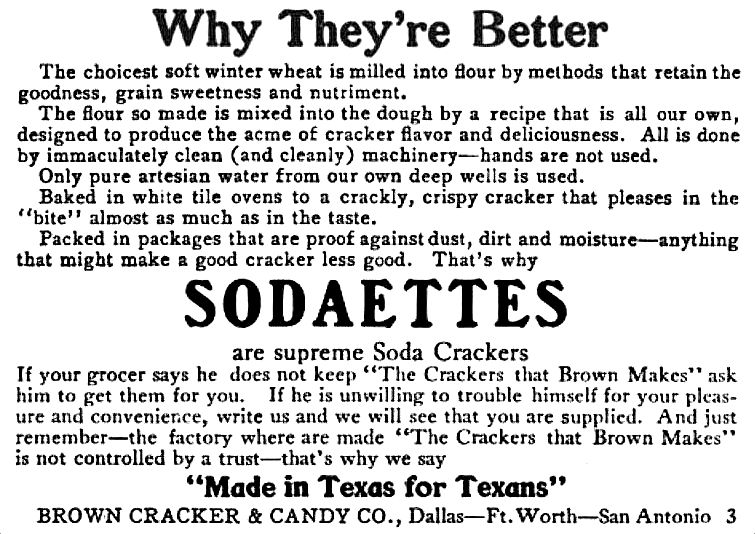
sodaette-crackers(click to read text)

brown-cracker_1922-directory1922 city directory

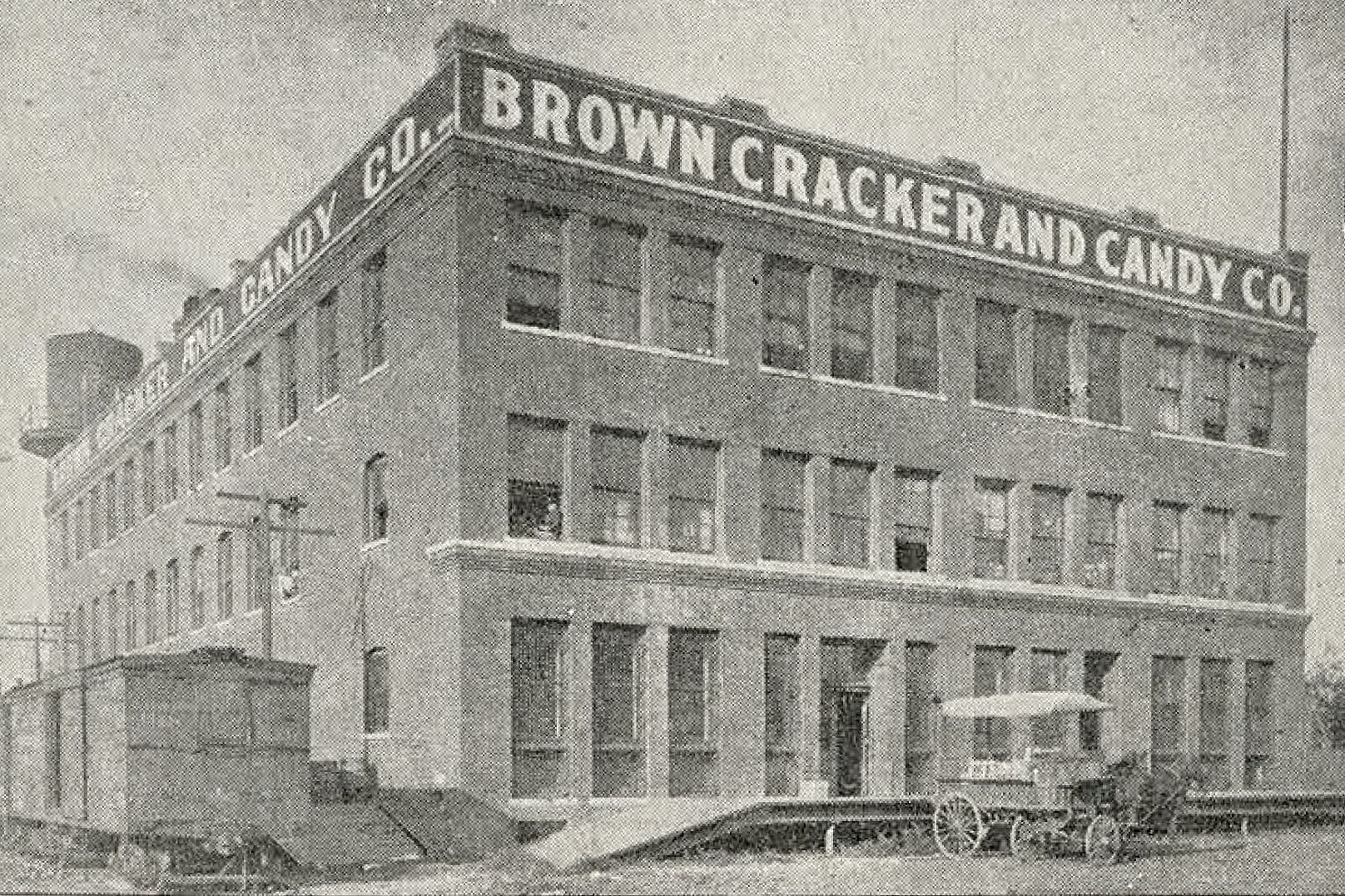
brown-cracker_come-to-dallas_degolyer_SMU_ca1905ca. 1905

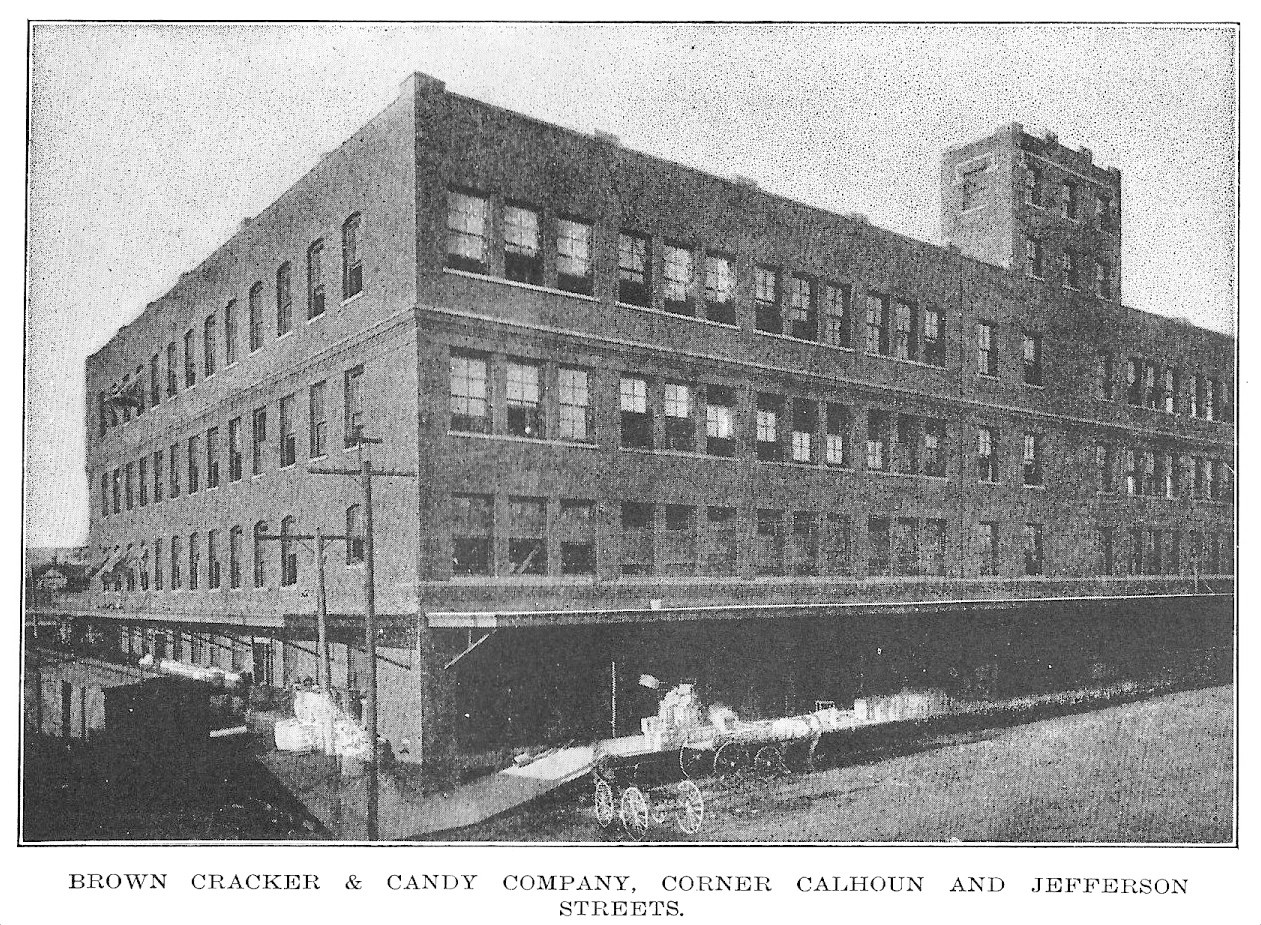
brown-cracker-greater-dallas-illustrated_ca1908ca. 1908

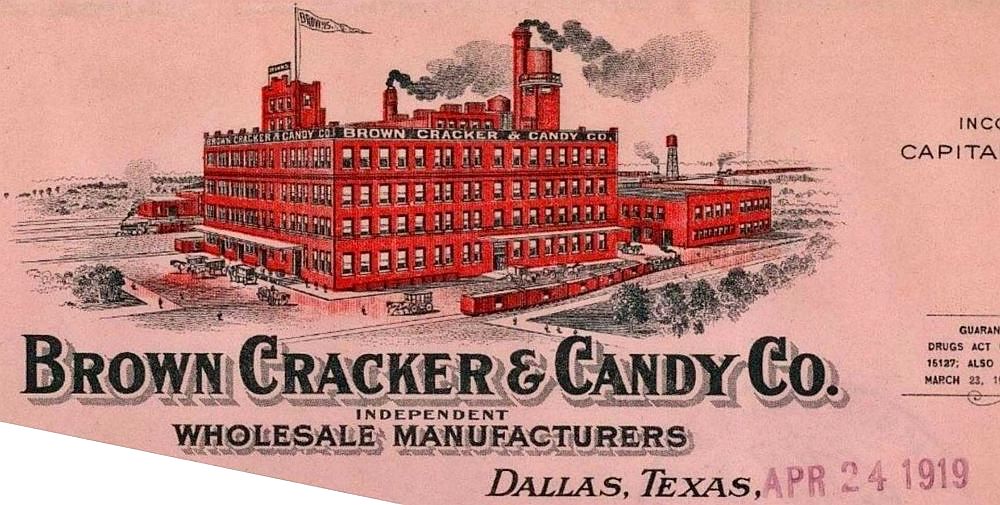
brown-cracker-co-lettrhead_1919_ebay1919 (eBay)

***

Sources & Notes

Top photo, titled “Wrapping Saltines at Brown Cracker and Candy Co.,” is from the George W. Cook Dallas/Texas image collection, DeGolyer Library, Central University Libraries, Southern Methodist University; it can be accessed here.

Written on the back of the photo: “Miss Bessie Manning, 2724 Roadwood [sic] avenue, Dallas, Texas.” Bessie Manning (born Bena Manina in 1899 to Italian immigrants), began working at the Brown Cracker Co. (with a brother and a sister) around 1917 but wasn’t living on Rosewood (later North Harwood) until 1919; she left Brown in 1921 or 1922. She isn’t identified in the photo, but she is, presumably, one of the women on the left; she would have been about 20.

bessie-manning_1920-censusBessie Manning’s occupation, 1920 census
The color postcard showing the Brown Cracker Co. is also from the Cook collection at SMU; it is here.

The Sodaette ad is from Library of Advertising by A. P. Johnson (Chicago: Cree Publishing Co., 1911).

The photo from about 1905 is from the promotional brochure titled “Come To Dallas” (Dallas: Dorsey Printing Co., about 1905), in the collection of the DeGolyer Library, Southern Methodist University; more info is here.

The photo at the bottom is from Greater Dallas Illustrated, The Most Progressive Metropolis in the Southwest (Dallas: The American Illustrating Company, 1908; reprinted by Friends of the Dallas Public Library, 1992). The informative company profile that accompanied the photo can be read in a PDF, here.

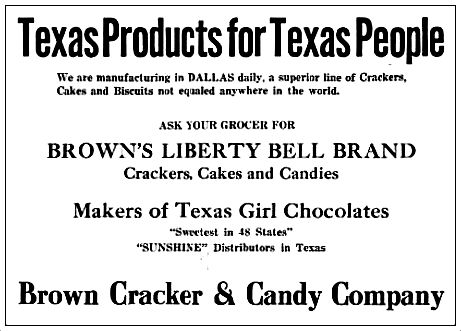
All other ads and clippings as noted.

Another very informative article which details the specifics of the building and its machinery — “New Dallas Industry, Brown Cracker and Candy Company About to Begin Operations” (DMN, Apr. 6, 1903) — can be read in a PDF, here.

To see the Brown Cracker Company’s specs on a Sanborn map from 1905, see here; to see where it is on a modern map, see here.

For current info on what’s about to happen to the building (much expanded over the years), see Steve Brown’s Dallas Morning News article, here.

And, yes, a teenaged Clyde Barrow apparently worked there briefly, for a dollar a day.

*

Copyright © 2015 Paula Bosse. All Rights Reserved.

The Stoneleigh Court Apartment Hotel — 1923/1924

stoneleigh_1923_natl-reg-application
Still standing, still beautiful…

by Paula Bosse

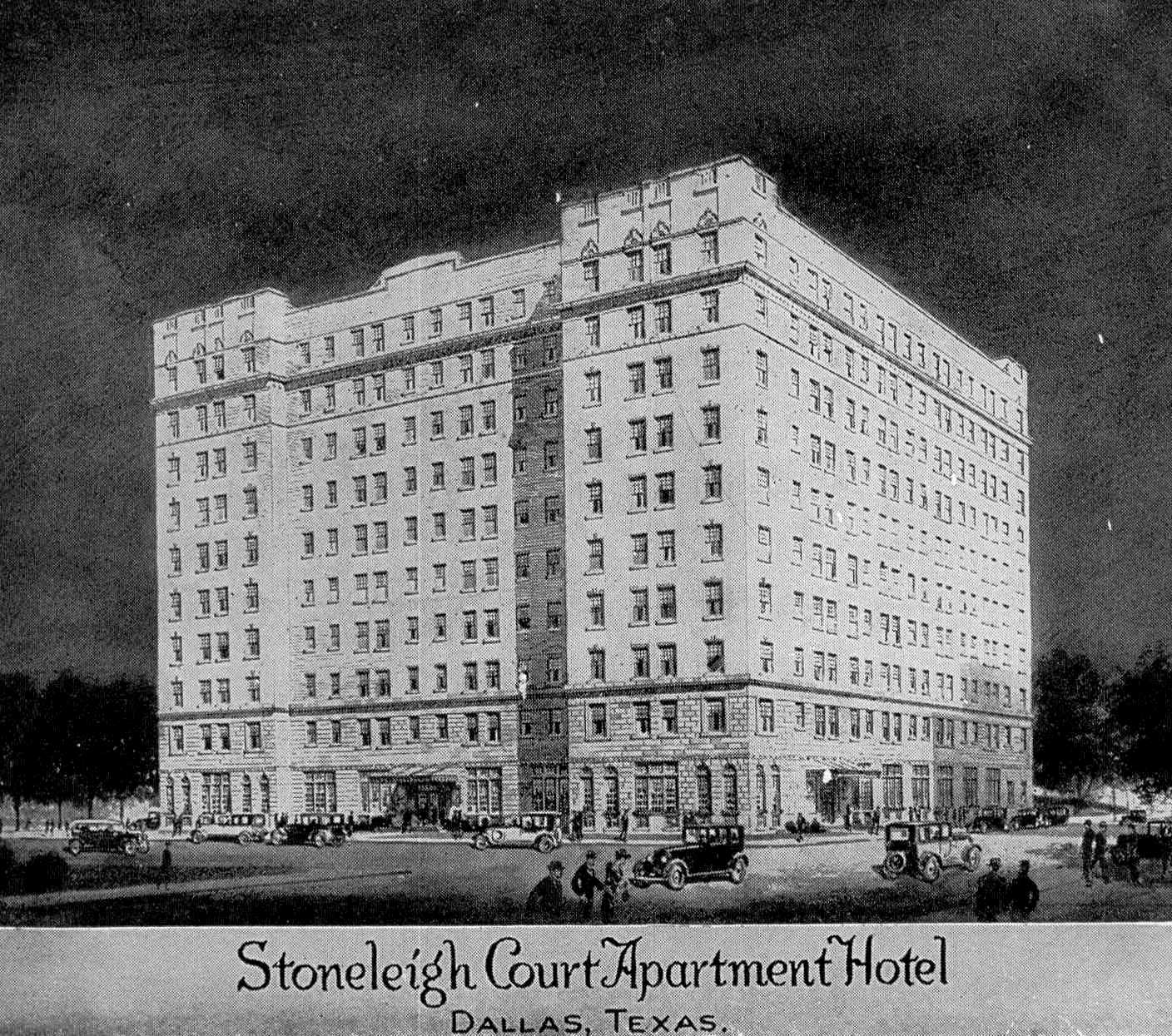
Above, the Stoneleigh Hotel (originally known as the Stoneleigh Court Apartment Hotel) in 1923, in its final weeks of construction. When the Stoneleigh opened in October, 1923 at the corner of Maple Avenue and Wolf Street, it was a swanky apartment house, with hotel amenities (a few rooms were set aside for “transient” travelers). Thankfully, the Frank J. Woerner-designed building still stands and remains a lovely hotel.

Originally there were 125 apartments (which ranged from 1-5 rooms each), all of which were fully furnished (linens, silver, kitchen utensils, dishes, telephones, etc.), and maid service was provided. There were also radios in every room (a pretty new-fangled thing at the time). Each apartment had a kitchenette and a private bath, and ice water was piped to all apartments. Another innovative feature was the Servidor delivery service which allowed residents and hotel staff to conduct transactions without ever having to look one another in the eye or exchange stilted chit-chat. There was a grocery store, a pharmacy, a beauty shop, and a barber shop on the premises. There were smoking rooms, billiards rooms, and lounges on the ground floor and a grand ballroom on the top floor. And apartments were “handsomely furnished, [with] a color scheme of taupe, blue and mulberry being observed alternately on the various floors.” Sign me up!

*

Below, an early ad (click to see a much larger image of the illustration on its own).

ad-stoneleigh_terrill-yrbk_1924

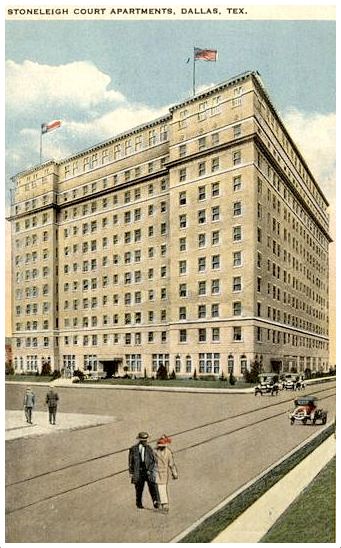
And, of course, the obligatory postcard in which the building looks familiar, but which its surroundings seem somewhat … romanticized.

stoneleigh_court_apartments

*

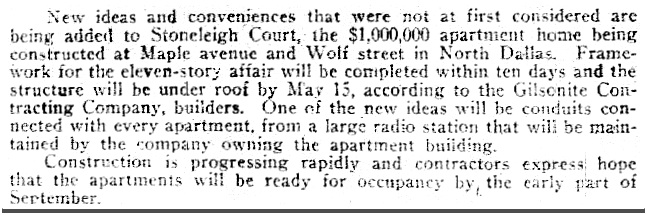
A grainy photo from the construction and its caption:

stoneleigh-hotel_dmn_042223_under-construction_photo

stoneleigh-hotel_dmn_042223_under-construction_captionDallas Morning News, April 22, 1923

***

Sources & Notes

Photo of the building nearing the end of its construction is from the application to the National Register of Historic Places, which can be found in a PDF, here. (Dallas Historical Society photo.)

Ad is from the 1924 Terrill School yearbook.

To read a lengthy article published a few days before the Stoneleigh officially opened — “Stoneleigh Court Most Pretentious Apartment Hotel in the Southwest” (Dallas Morning News, Oct. 14, 1923) (with “pretentious” used here in a good way!) — click here.

Not sure what an “apartment hotel” is? See Wikipedia, here.

The Stoneleigh is currently called “Le Méridien Dallas, The Stoneleigh,” and the official website is here.

*

Copyright © 2015 Paula Bosse. All Rights Reserved.

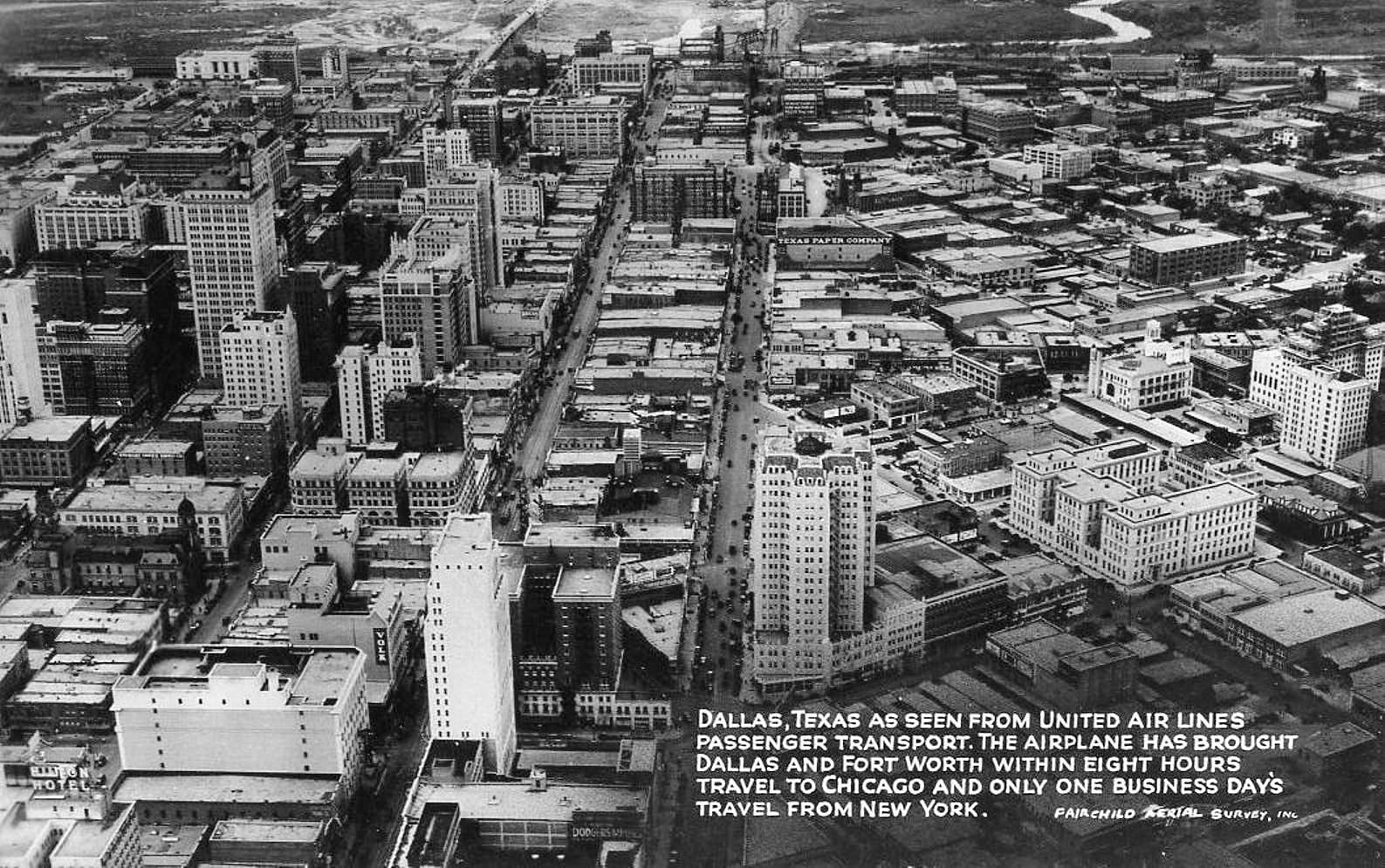
Fly United to Chicago in Only Eight Hours!

aeiral_united-air-lines_fairchild_ebay_rppcHow many buildings can you identify? (click for larger image)

by Paula Bosse

Dallas, Texas as seen from United Air Lines passenger transport. The airplane has brought Dallas and Forth Worth within eight hours travel to Chicago and only one business day’s travel from New York.

Back when it took all day to fly to New York from Dallas.

This is another great aerial photo by the Fairchild Aerial Survey company, probably taken by Lloyd M. Long. Date-wise? Late-1920s? Before the Trinity was straightened (beginning in 1928), with land being cleared in the area that would become Dealey Plaza? 1928-ish? Or could it have been the very early 1930s? The United Air Lines promotional postcard was issued around 1932 or 1933.

It wasn’t until 1933 that United introduced its new Boeing “twin motor airline transports” and boasted that they would finally “bring the city within eleven and a half hours of New York City” (Dallas Morning News, Aug, 16, 1933).

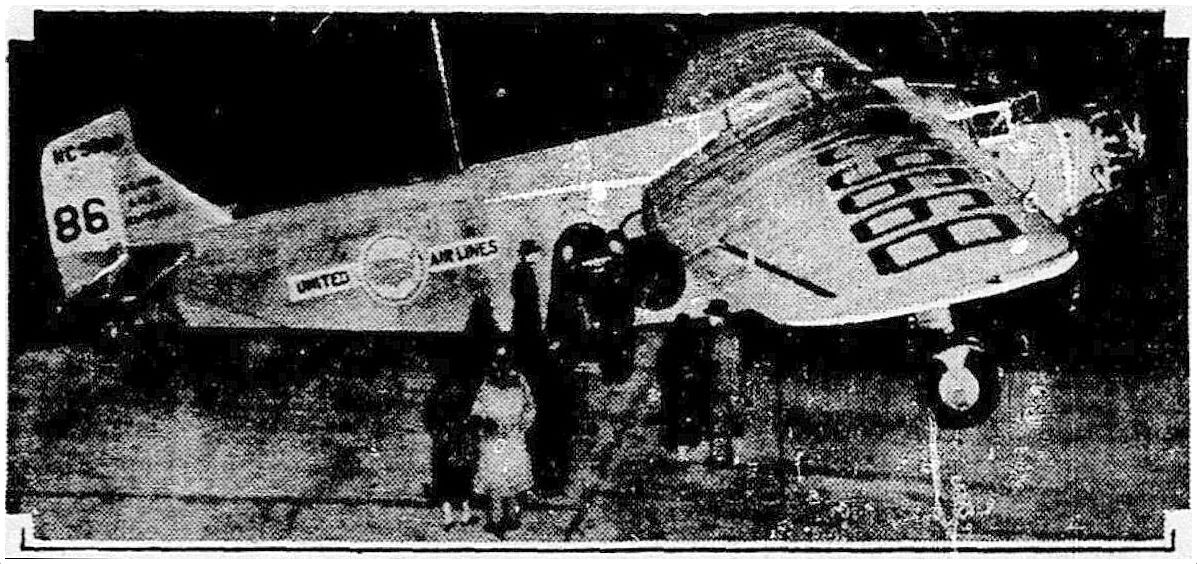
Below is a photo from a Dallas newspaper ad showing one of United’s planes from the earlier, more carefree days of 1932, when passengers were still trudging through the skies at a more leisurely pace.

united-air-lines_ad-det_dmn_110432United Air Lines ad, detail, 1932

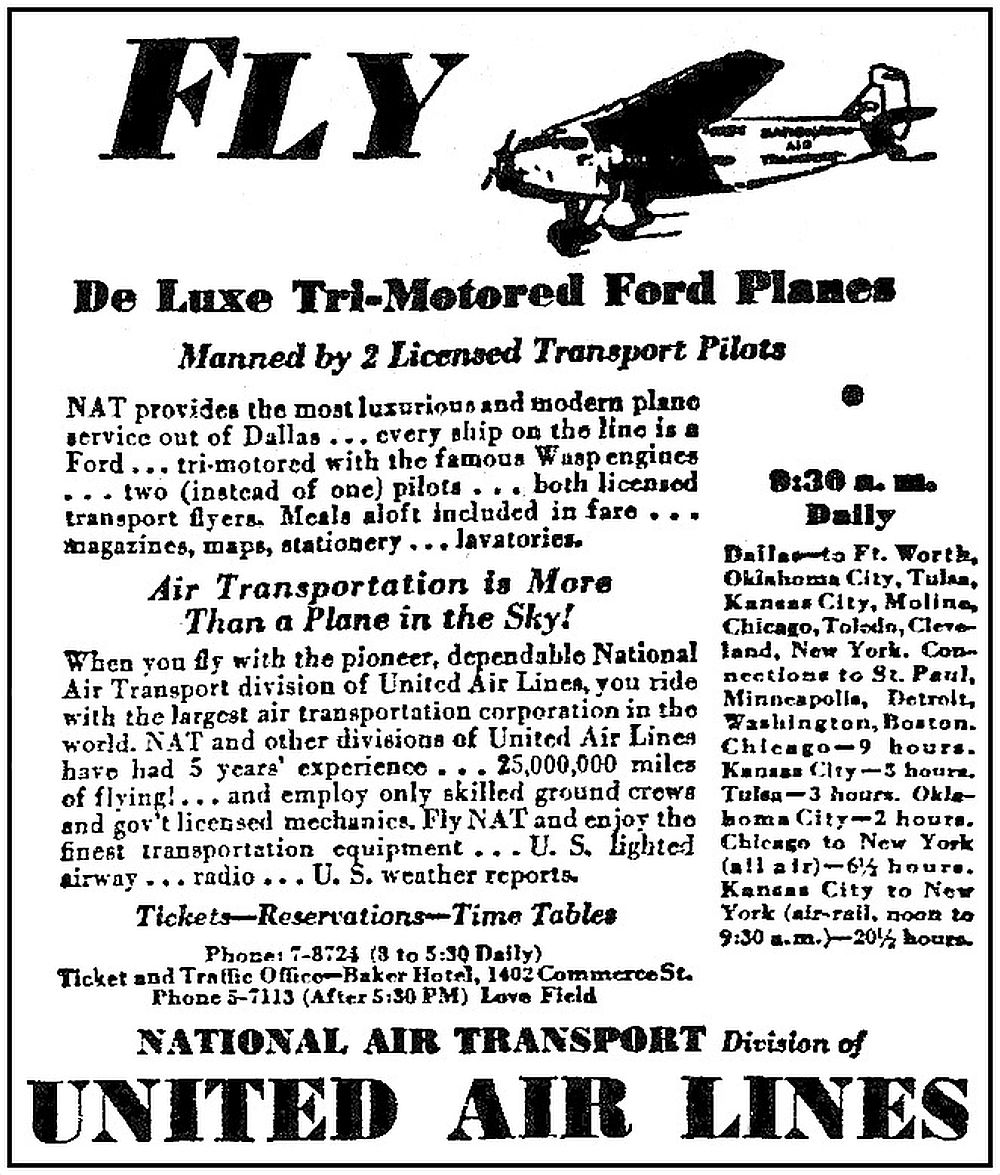
And an even earlier ad, from 1931, when a flight from Love Field to Chicago was nine hours long (today a direct flight from Love Field to Chicago takes about two hours and fifteen minutes). And if you wanted to continue to NYC, you had to board another plane and fly from Chicago to New York, adding another six and a half hours!

united-air-lines_dallas-to-nyc_1931
1931 ad

FLY

De Luxe Tri-Motored Ford Planes Manned by 2 Licensed Transport Pilots
 
NAT provides the most luxurious and modern plane service out of Dallas … every ship on the line is a Ford … tri-motored with the famous Wasp engines … two (instead of one) pilots … both licensed transport flyers. Meals aloft included in fare … magazines, maps, stationery … lavatories. 

Air Transportation is More Than a Plane in the Sky! 

When you fly with the pioneer, dependable National Air Transport division of United Air Lines, you ride with the largest air transportation corporation in the world. NAT and other divisions of United Air Lines have had 5 years’ experience … 25,000,000 miles of flying! … and employ only skilled ground crews and gov’t licensed mechanics. Fly NAT and enjoy the finest transportation equipment … U.S. lighted airway … radio … U.S. weather reports.

*

In an interesting side-note, the first pilot to fly a mail plane between Kansas City and Dallas (on May 12, 1926) was Richard Dobie, brother of Texas literary legend, J. Frank Dobie. In 1926 he flew a Curtiss Carrier Pigeon; in 1933, he’d worked his way up to the speedy and powerful Boeing. He flew for United for several years.

***

Sources & Notes

Top image is a promotional postcard, found on eBay.

Read more about the tri-motor airplane (manufactured by the Ford Motor Company and affectionately known as the “Tin Goose”) in the article “Ford’s Tri-Motor” by Edward J. Vinarcik (Advanced Materials and Processes, Oct. 2003) here.

All images larger when clicked.

*

Copyright © 2015 Paula Bosse. All Rights Reserved.


The Caveteria: “Marvelous Food at Moderate Prices”


caveteria_ebay
The finest in downtown basement dining (click for larger image)

by Paula Bosse

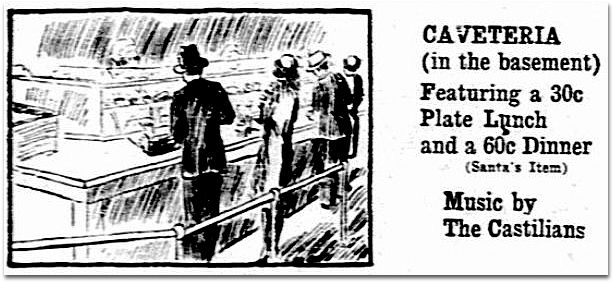
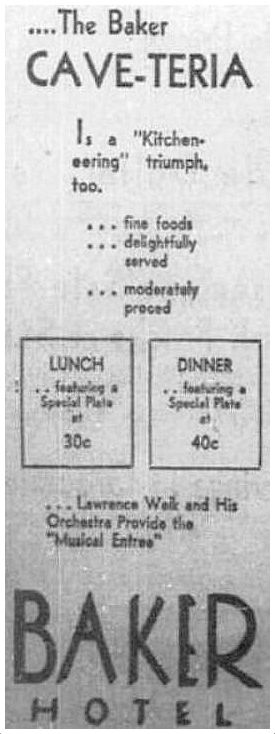
How could you NOT want to dine in a restaurant called a “Caveteria”? It was a cafeteria in the basement — the cave — of the swanky Baker Hotel, and it looks like it was a nice cheap place to grab a quick lunch downtown in the 1920s and 1930s.

caveteria_baker-hotel_postcard_ebay

*

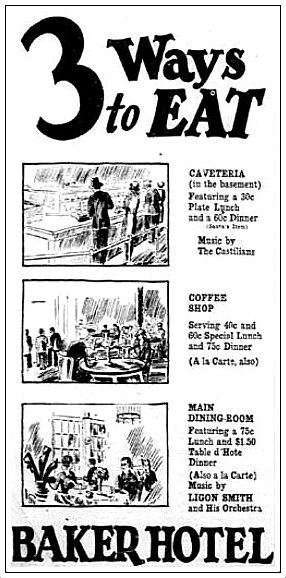
The Baker Hotel had “3 ways to eat”: one could eat cheap in the basement Caveteria (where, according to the Inflation Calculator, a 30-cent lunch in 1927 was the equivalent of about four bucks today), eat sort of cheap in the probably street-level coffee shop (lunch was about $6.75 there), and eat not cheap in the main hotel dining room (where lunch was over $10.00). (There was also the Peacock Terrace night club, well beyond reach of basement-dwelling diners.)

caveteria_dmn_120427

caveteria_dmn_120427-det1927

*

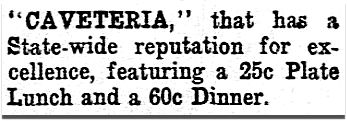
The price actually went down to a quarter by 1931 and had a “State-wide reputation for excellence.”

caveteria_dmn_020131DMN, Feb. 1, 1931

*

A year later the price was holding at 25 cents and it seems like a pretty good deal.

caveteria_dmn_021532DMN, Feb. 15, 1932

*

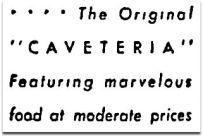
“The Original ‘Caveteria'” — accept no imitations! At least one other hotel in the Baker chain — the Gunter, in San Antonio — had a “Caveteria,” but apparently Dallas’ was first. In fact, the word and the hotel made their way into H. L. Mencken’s The American Language, Supplement One (see here).

caveteria_corsicana-daily-sun_031632Corsicana Daily Sun, Mar. 16, 1932

*

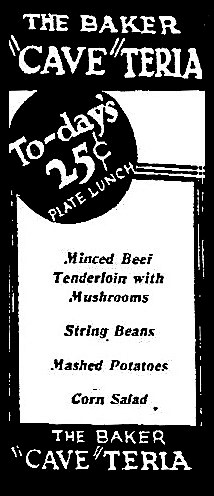
Oh yeah — live bands played while you ate your hearty meal of minced beef tenderloin. Even Lawrence Welk settled in for a stint as the “musical entree” in 1934.

caveteria_dmn_022234-lawrence-welkFeb., 1934

*

In 1942, the space once occupied by the Caveteria was turned over to the USO:

The Baker Hotel has provided the USO with what used to be the Caveteria in the basement of the hotel. It will be known as USO Club in the Cave. The entrance will be through the Akard Street entrance of the hotel.  (Dallas Morning News, Jan. 27, 1942)

*

And there it is — another place I wish I’d been able to visit.

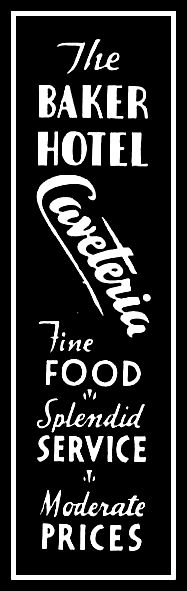
“Fine food. Splendid Service. Moderate prices.”

ad-baker-hotel-caveteria

***

Sources & Notes

Color postcards found on eBay.

The Baker Hotel opened in 1925 at Commerce & Akard on the site where the Oriental Hotel had previously stood, catty-corner from the Adolphus.

*

Copyright © 2015 Paula Bosse. All Rights Reserved.


University Park: The Addition — 1916

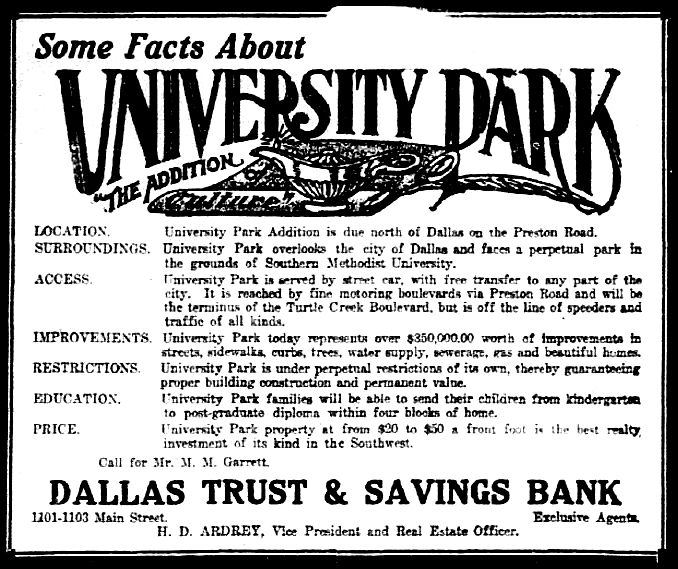
university-park_dmn_0625161916 ad (click for larger, slightly more legible image)

by Paula Bosse

Mr. M. M. Garrett of the Dallas Trust & Savings Bank wants you to know some facts about the University Park Addition:

  • LOCATION. University Park Addition is due north of Dallas on the Preston Road.
  • SURROUNDINGS. University Park overlooks the city of Dallas and faces a perpetual park in the grounds of Southern Methodist University.
  • IMPROVEMENTS. University Park today represents over $350,000.00 worth of improvements in streets, sidewalks, curbs, trees, water supply, sewerage, gas and beautiful homes.
  • RESTRICTIONS. University Park is under perpetual restrictions of its own, thereby guaranteeing proper building construction and permanent value.
  • EDUCATION. University Park families will be able to send their children from kindergarten to post-graduate diploma within four blocks of home.
  • PRICE. University Park property at from $20 to $50 a front foot is the best realty investment of its kind in the Southwest.

Hurry!

*

Copyright © 2015 Paula Bosse. All Rights Reserved.


Movie Houses Serving Black Dallas — 1919-1922

palace-theatre_elm-st_1922-dplThe Palace Theatre, Elm St., Deep Ellum, 1922 (click for larger image)

by Paula Bosse

In 1920, movie theaters — like most places in Dallas at the time — were segregated. If black customers were allowed at all in the downtown white vaudeville and movie houses, they had separate entrances and restricted seating areas (generally in the balcony). But Dallas’ African-American community had their own popular theaters, run by enterprising and energetic men who endlessly promoted their jam-packed and constantly-changing bills.

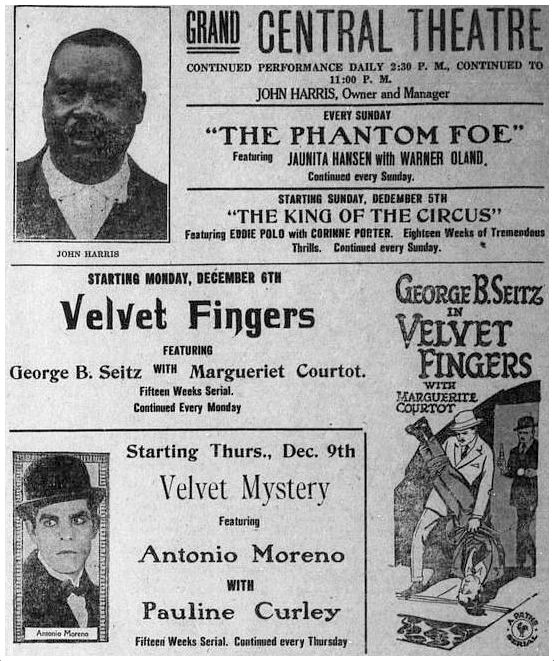
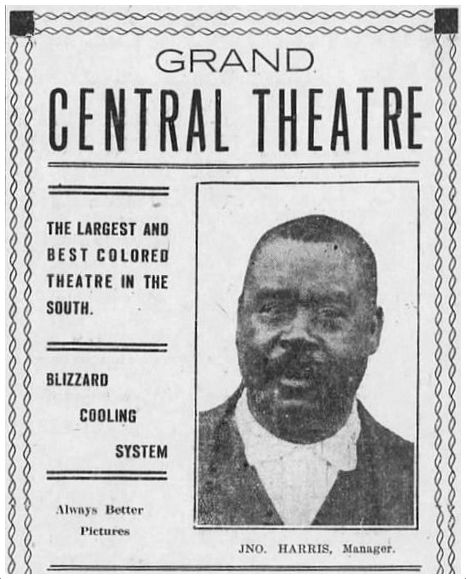
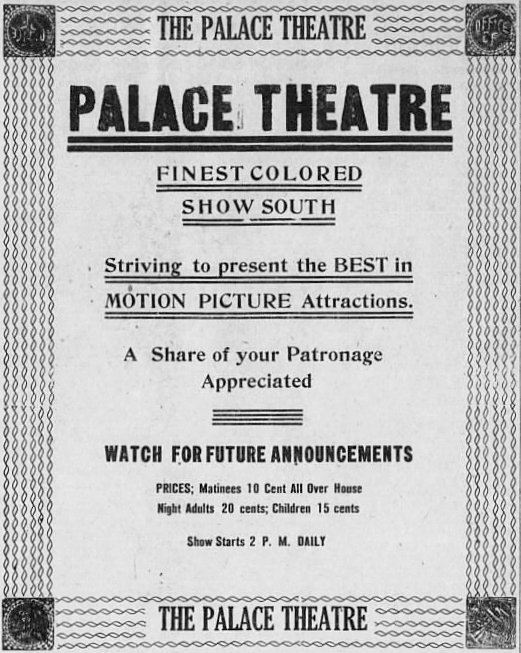
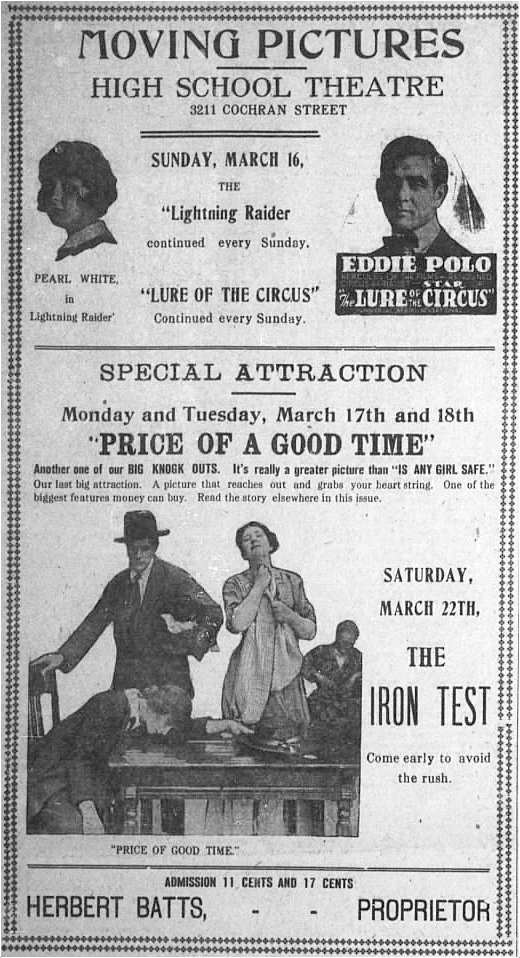
Judging by the amount of ad space purchased in the black-owned and operated Dallas Express, there were four main movie theaters catering to black Dallasites around 1920: the Grand Central Theatre, run by John Harris, the Mammoth Theatre, run by Joe Trammell, the Palace Theatre, run initially by Felix Moore, and the High School Theatre, run by Herbert Batts; the first three of these houses were in Deep Ellum, the last one was in what was then called “North Dallas.’ The theaters played both “white” films and films with “all-Colored casts.” The advertising for these theaters is great — far more ad space was available in the tiny Express to publicize the movies, the popular but now-forgotten Silent Film stars of the era, and the proprietors themselves than was available to the theaters on the other end of Elm Street in the much larger, white-owned News, Journal, or Times Herald. Sometimes it’s good being the big fish in the little pond — absolutely everybody knows who you are.

*

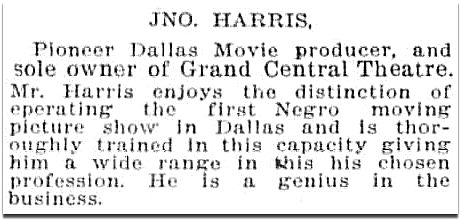
The Grand Central Theatre was at 405-407 N. Central Ave. (which later became Central Expressway), between Swiss and Live Oak on the outer northern edge of Deep Ellum. John Harris, the owner, put himself in practically all of his ads. He included this autobiographical sketch in one of them:

micheaux-grand_dallas-express_052821-detDallas Express, May 28, 1921

I’m not sure if he operated “the first Negro moving picture show in Dallas,” but I wouldn’t doubt it — the man was a dynamo who possessed not only a bold self-confidence, but he also seems to have had an unlimited promotional budget. UPDATE: The first appearance of a theatrical enterprise by John Harris shows up in the 1913 city directory (directories generally collected their information the previous year, so he was probably in business in 1912). Harris is listed under the “Amusements” section at the same address as the Grand Central Theatre, a name which came later. The same 1913 directory also lists the Star Theatre, which later became the Palace (see below). These are the only two theatres designated as “colored.” It’s unclear whether the theaters hosted live performances or showed movies. Or both.

The Grand Central advertised relentlessly. (Click ads to see larger images.)

grand-central-theatre_dal-express_120420Dec. 4, 1920

grand-central-theatre_dal-express_051421May 14, 1921

grand-central-theatre_dallas-express_080621Aug. 6, 1921

Below, an ad showing one of the offerings to be a Ben Roy Motion Picture Corp. movie called “My Baby” which was “made in Dallas, featuring William Lee and All Colored Cast.”

grand-central-theater_dal-express_052722May 27, 1922

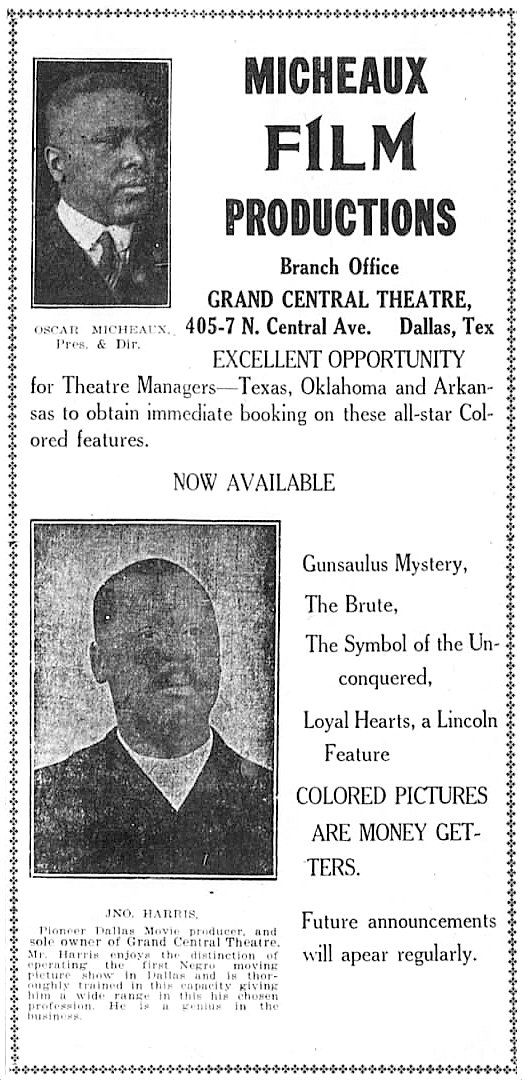
Harris was connected with the legendary black filmmaker Oscar Micheaux. Not only did he regularly run his films, but he also seems to have been working as a booker, promoter, and distributor of Micheaux’s films and ran the Micheaux Film Productions branch office out of the Grand Central. “Colored Pictures are Money-Getters.”

micheaux_dallas-express_051421May 14, 1921

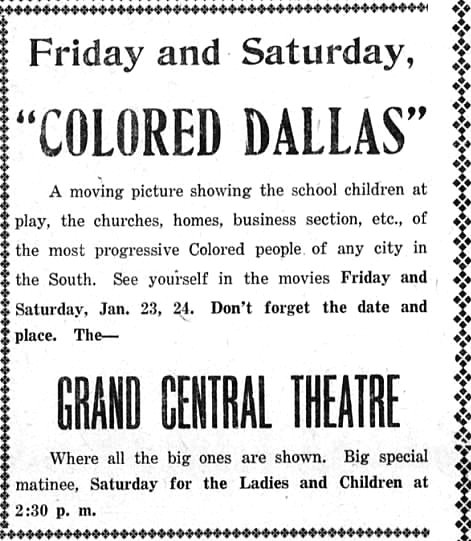
One ad that caught my attention was this one, for a locally-shot film called “Colored Dallas.” I really, REALLY want to see this, but the possibility of an extremely minor, 95-year-old silent film having survived into the 21st century is slim.

colored-dallas_dallas-express_012420Jan. 24, 1920

*

The Mammoth Theatre was located at 2401 Elm Street, between Central and Hawkins. It opened in late 1919 — the run-up to the opening was publicized in this Dallas Express item.

mammoth_dallas-express_112219Nov. 22, 1919

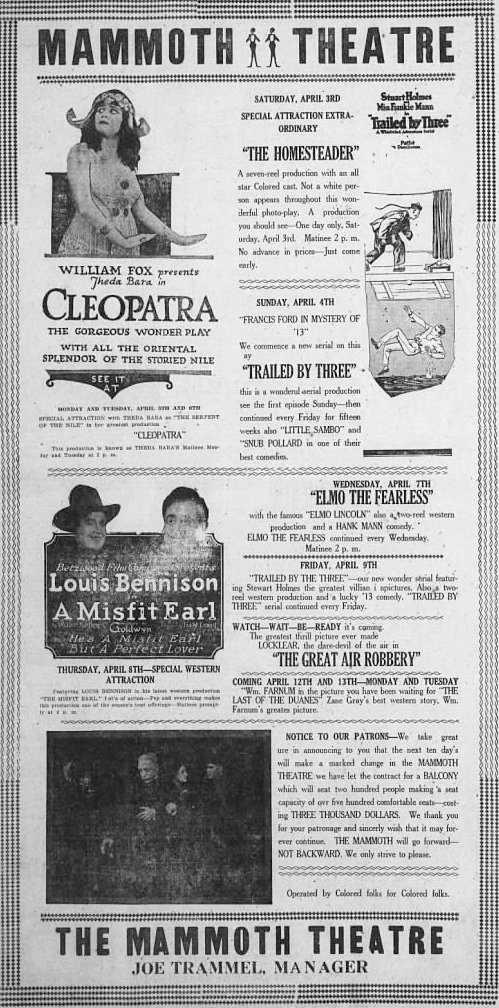
The Mammoth might not have advertised quite as much as the Grand Central did, but it frequently took out splashy full-page ads. Full-page! I bet that royally irked John Harris. Below, a Mammoth ad from 1920.

mammoth_dallas-express_040320April 3, 1920

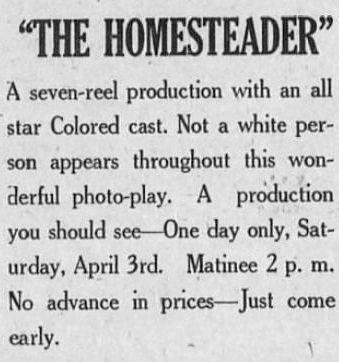
Two details from the above ad:

mammoth_dallas-express_040320-det-2

mammoth_dallas-express_040320-det
“Operated by Colored folks for Colored Folks.”

The owner, Joe Trammell, seems to have had an inexhaustible source of money for advertising — those frequent full-pagers (unusual for the time) must have cost a pretty penny. I couldn’t find much information about any of these men, but I stumbled across this photo of Trammell, tacked on to one of his … um … mammoth ads.

mammoth_joe-trammell_dallas-express_021221Feb. 12, 1921

*

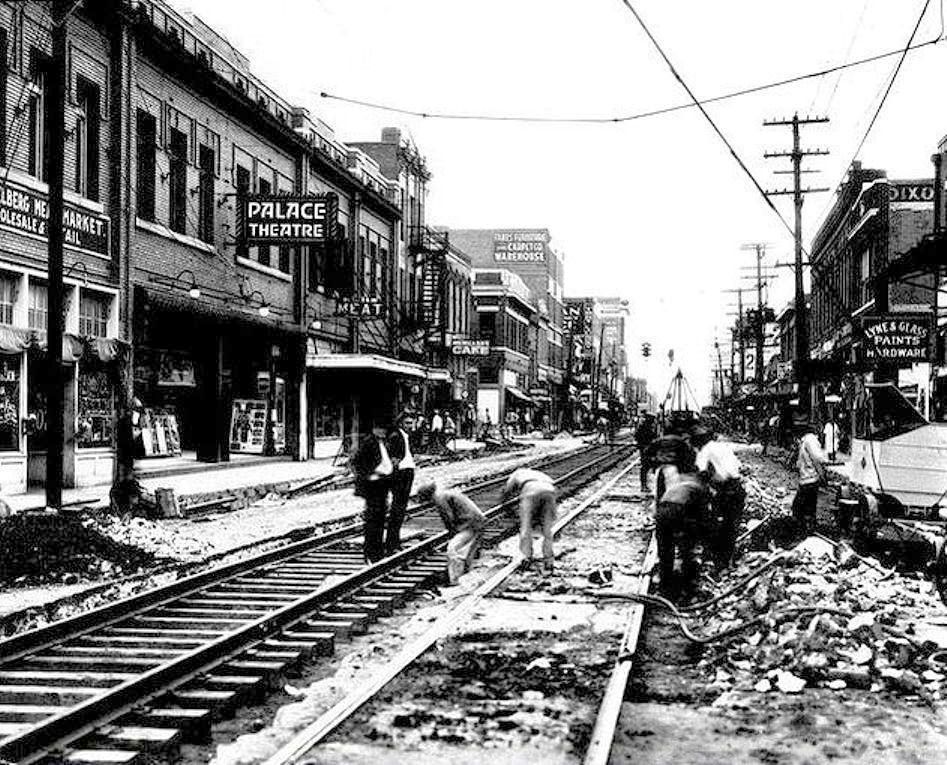
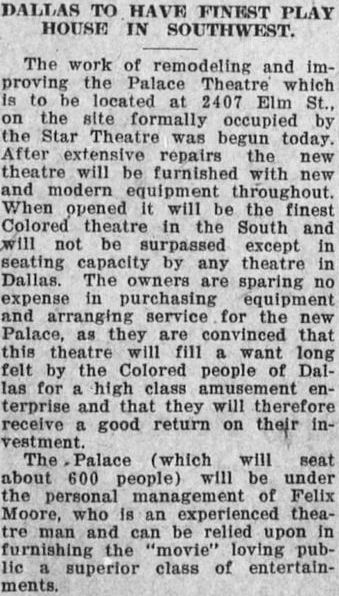
The Palace Theatre, seen in the photo at the top, was at 2407 Elm Street, just a couple of doors down from the Mammoth. (This Palace is not to be confused with the “white” Palace Theatre, the stalwart of Theater Row at the other end of Elm.) It opened in 1920 in the remodeled space formerly occupied by the Star Theatre,

palace_dallas-express_030620March 6, 1920

palace_dallas-express_050820May 8, 1920

*

Lastly, moving up to North Dallas, we find the High School Theatre, located at 3211 Cochran, between Central and N. Hall Street. The reason for its name was its close proximity to the Colored High School (the only high school for African-American students at the time — it would soon merge with and relocate to the new Booker T. Washington High School a short distance away). The following businesses were in this same block: the High School Cold Drink Stand, the High School Cafe, the High School Shine Parlor, and the High School Tailor Shop. Location, location, location.

high-school-theater_dallas-express_031519March 15, 1919

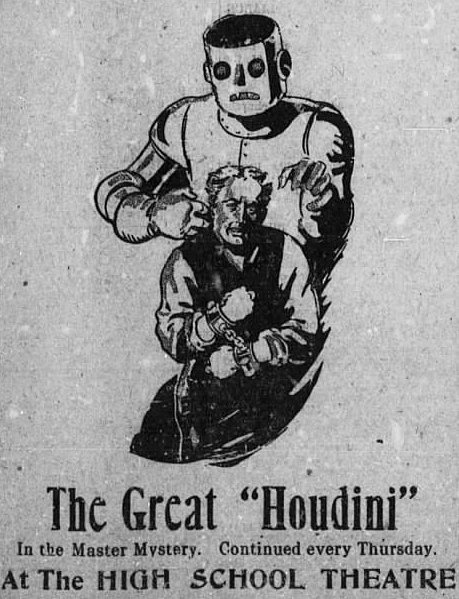
My favorite High School Theatre ad is this one, touting a serial called “The Master Mystery” starring Houdini … one of the screen’s first appearances of a robot! (Check out a scene featuring both Houdini and the robot/automaton, here.)

houdini_dallas-express_031519March 15, 1919

*

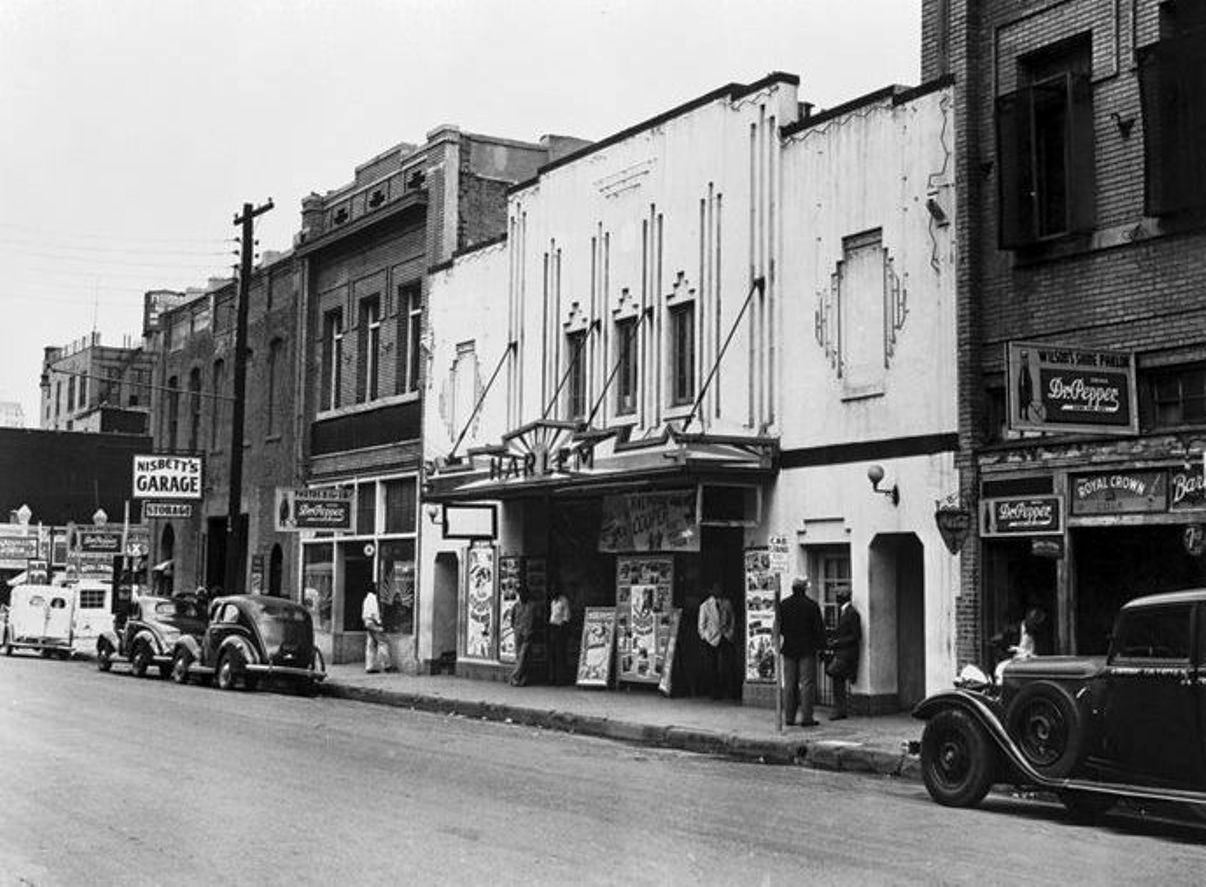
The only one of these theaters still in business in 1930 was the Palace. by 1937, the Palace had become the Harlem Theatre.

harlem-theatre_deep-ellum

harlem-theatre_dpl

***

Sources & Notes

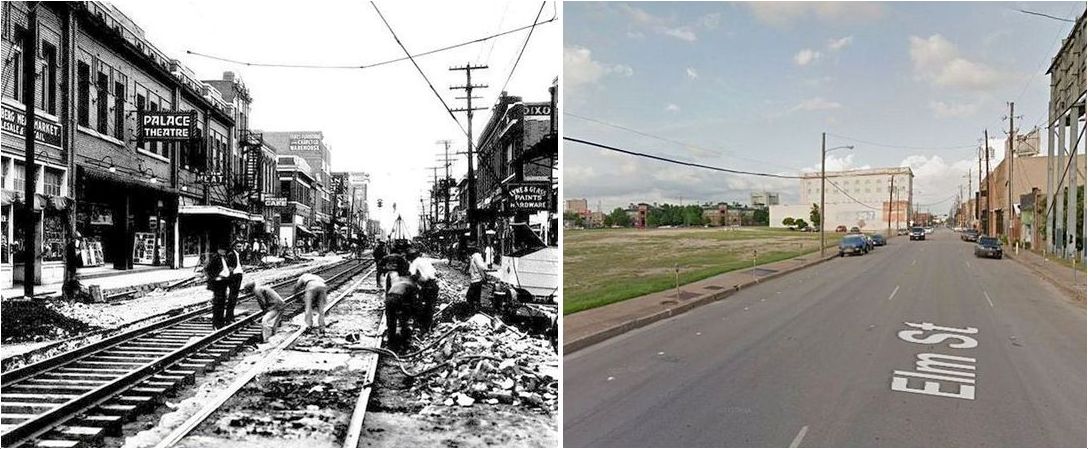
Top photo showing Elm Street and the Palace Theatre and the bottom two photos showing the Harlem Theatre are from the Texas/Dallas History & Archives Division, Dallas Public Library. The upsetting view of what that stretch of Elm looks like now can be seen on Google Street View, here. Below, side-by-side, 1922 and 2015 — Elm St. looking east to Deep Ellum, the Knights of Pythias temple in both images down the street on the left. Look what we’ve lost.

elm-looking-east_1922-2015

All ads and clippings from The Dallas Express, as noted. A few years’ worth of this important newspaper, which served Dallas’ African-American community, can be accessed here.

More on Oscar Micheaux, here.

Another Flashback Dallas post on a theater serving the black community is “Oak Cliff’s Star Theatre — 1945-1959.”

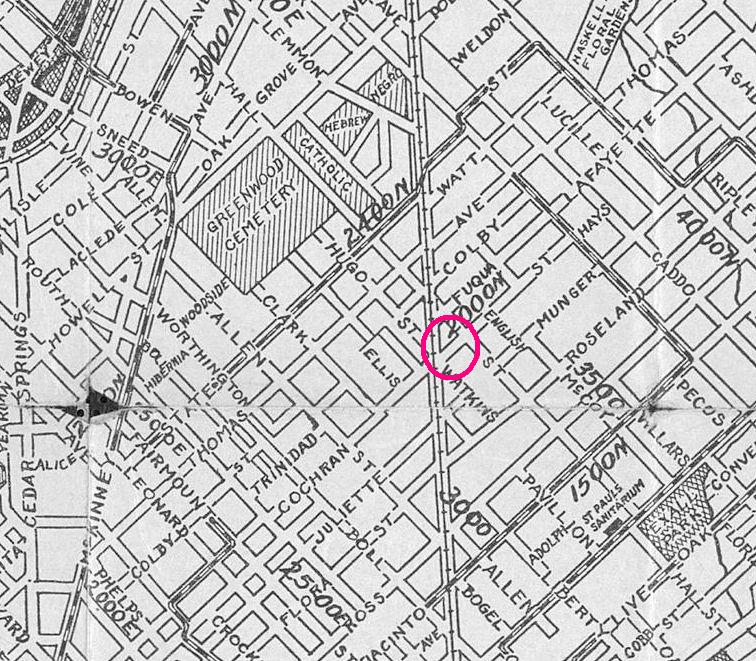
A 1919 map from UNT’s Portal to Texas History shows the location of the Grand Central Theatre (red square), the Mammoth (blue), and the Palace (yellow).

black-cinemas_ca1920_deep-ellum

The High School Theatre — up in “North Dallas” (adjacent to present-day Uptown) — is seen on a different portion of the same map, below.

black-cinemas_ca1920_north-dallas

Most images are larger when clicked.

*

Copyright © 2015 Paula Bosse. All Rights Reserved.

Three of Dallas’ Earliest “Photoplay Houses” — 1906-1913

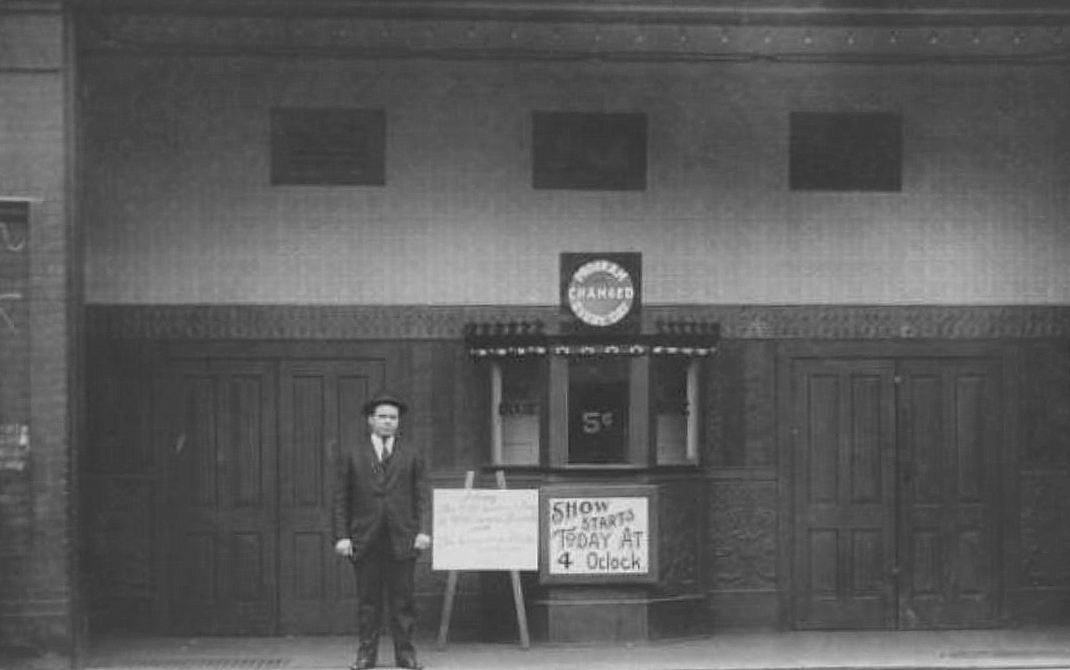
dixie-theater_1910_sherrod_smuDallas’ first movie house, here in 1910 on its third name (click for larger image)

by Paula Bosse

I seem to be deep into an unintended “Movie Week” here, all because I’ve been researching a photo of a little-known early suburban movie theater — and that’s how I stumbled onto a great article about Dallas’ first “picture shows.” The rather clunky title of the extremely informative Dallas Morning News article (which is linked below) is: “Startling Progress of Picture Shows; One-Third of Dallas’ Population Daily Entertained; History Local Houses; Dark Storerooms and Rickety Chairs Give Way to the Modern Photo-Play Theater” (March 9, 1913).

Some of the facts in the article are a bit off, but it’s fascinating to read that the first (or certainly ONE of the first) showings of a moving picture in Dallas was at the State Fair in 1897, when a boxing promoter presented what was one of the earliest “pay for view” matches in history — he showed footage of the highly publicized Jim Corbett-Bob Fitzsimmons Heavyweight Championship fight which had taken place a few months previously — the fight was originally intended to be fought in Dallas, but it was moved to Nevada, causing, one would assume, much consternation to those involved with the staging of and promotion of the fight. Not only did the promoter make back all the money he had invested locally in the thwarted boxing match, but he made a hefty profit trundling the film around the country for curious viewers (which included a large number of women who were not generally allowed to watch boxing matches).

Later, two men set up a projector in a second-story window and began showing movies on an open-air screen across the street, at Main and Lamar. It was popular, but it was also something of a traffic hazard. Also, there were itinerant hucksters who came and went, showing motion pictures wherever they could, moving from city to city.

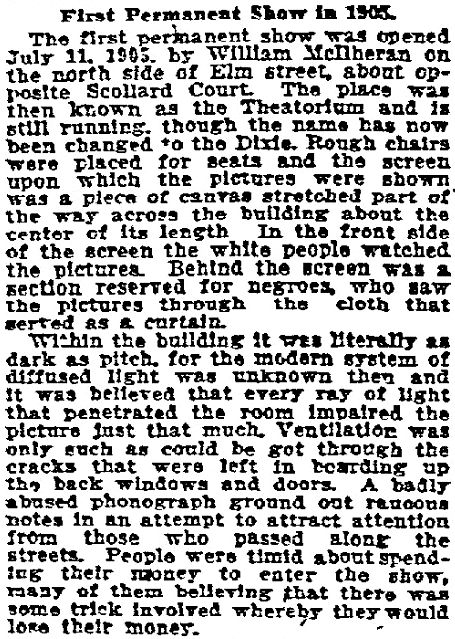
It wasn’t until the summer of 1906 that Dallas got its first permanent movie house when William McIlheran opened the Theatorium (a common word used around the country back then for a movie theater, but which, to virgin ears, sounds as odd as “Sportatorium” must to people who have never heard that word). It was at 311 Elm Street (which later became 1315 Elm), at about where Field is today, and it was the first movie theater on Theater Row! I love this description of what the place was like, from the DMN article mentioned above — even though the opening date is off by a year (click for larger image):

theatorium_dmn_030913DMN, March 9, 1913

theatorium_sherrod

With the arrival of this permanent theater (one with an actual roof over it), the moving picture had finally became more than just a mere novelty, and the success of the Theatorium started a mad dash of entrepreneurs opening up their own theaters. Within a month of the Theatorium’s opening, at least four more such houses were open for business.

At some point the Theatorium became the Wonderland (in 1907 or 1908), and it began showing so-called “talking films” (the talking was, apparently, provided by an off-stage actor providing the spoken dialogue while trying to match the silent actors’ lips on screen).

cameraphone_talking-pictures_dmn_101908The “Cameraphone” — DMN, Oct. 19, 1908
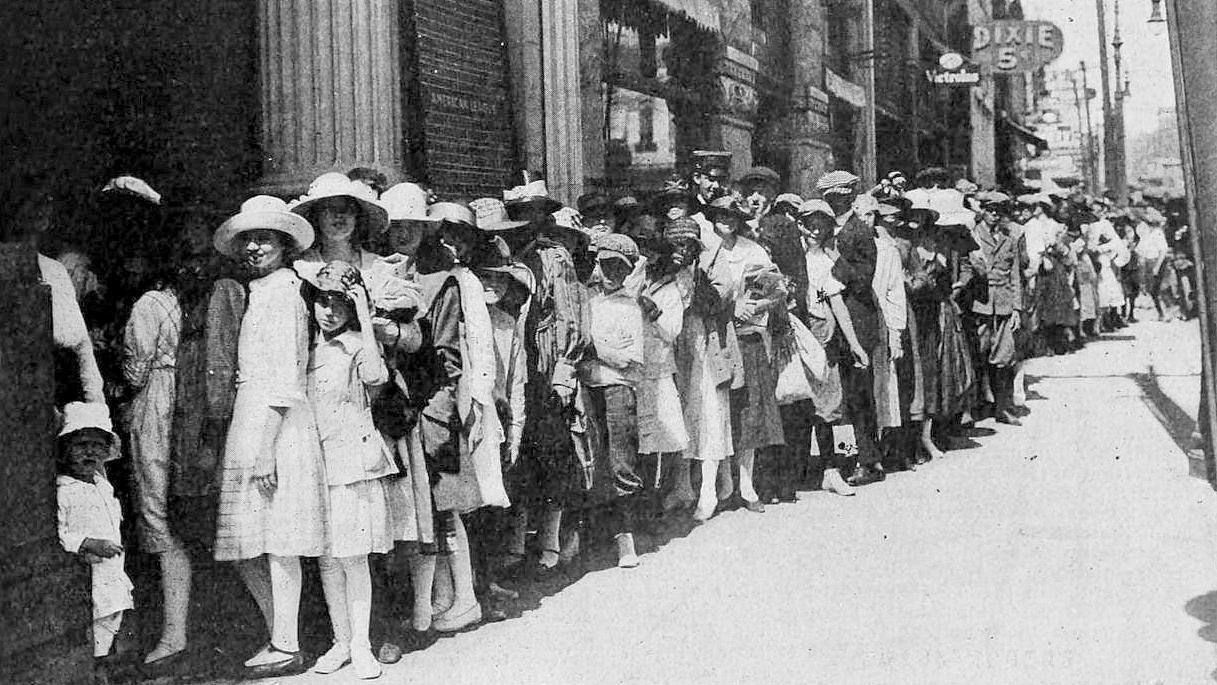
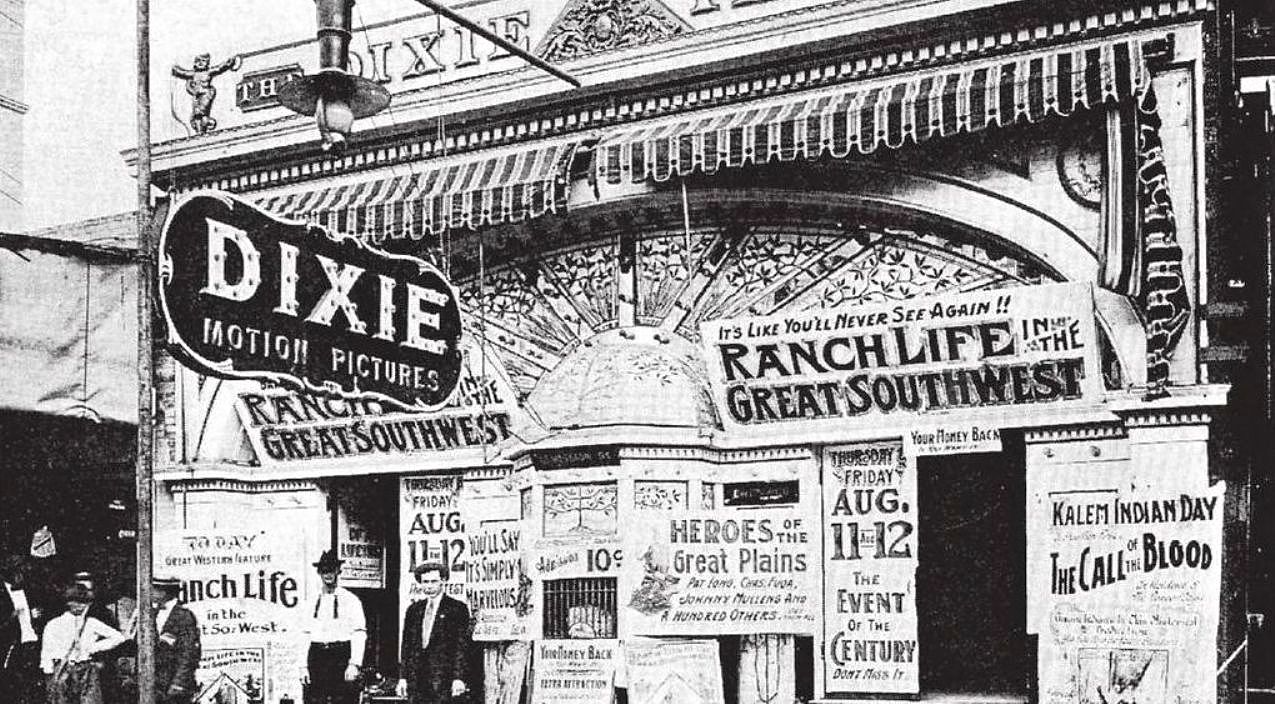
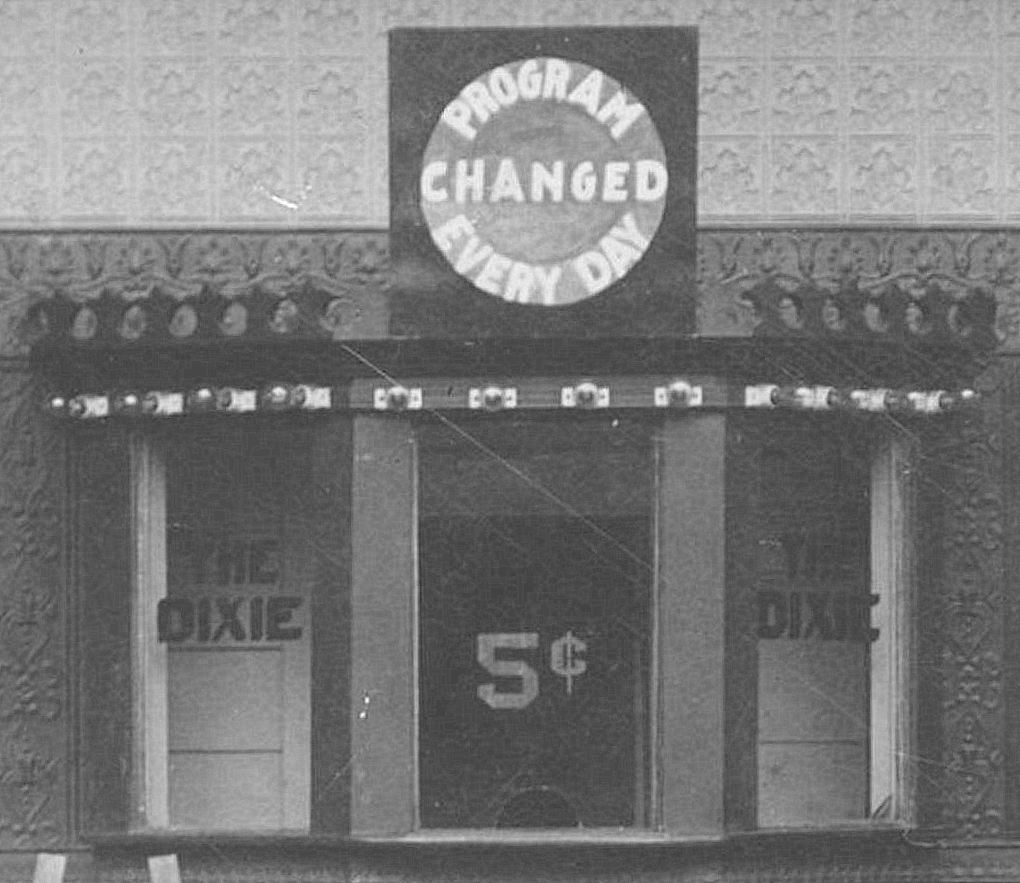
And finally, the Wonderland turned into the Dixie, seen at the top, in 1910, and below, in 1909.

dixie-theatre_1909_cook-colln_degolyer

dixie-theatre_1909_cook-colln_degolyer_detBox office, detail (click for larger image)

Another photo, from 1918, shows mostly children lined up in front of the theater, with the sign in the background. (They were lined up to see a WWI-related movie at the nearby Hippodrome; the photo is looking east along the north side of Elm, near where Field now intersects.)

hippodrome_dixie_elm-street_moving-picture-world_062218from The Moving Picture World magazine, June 22, 1918

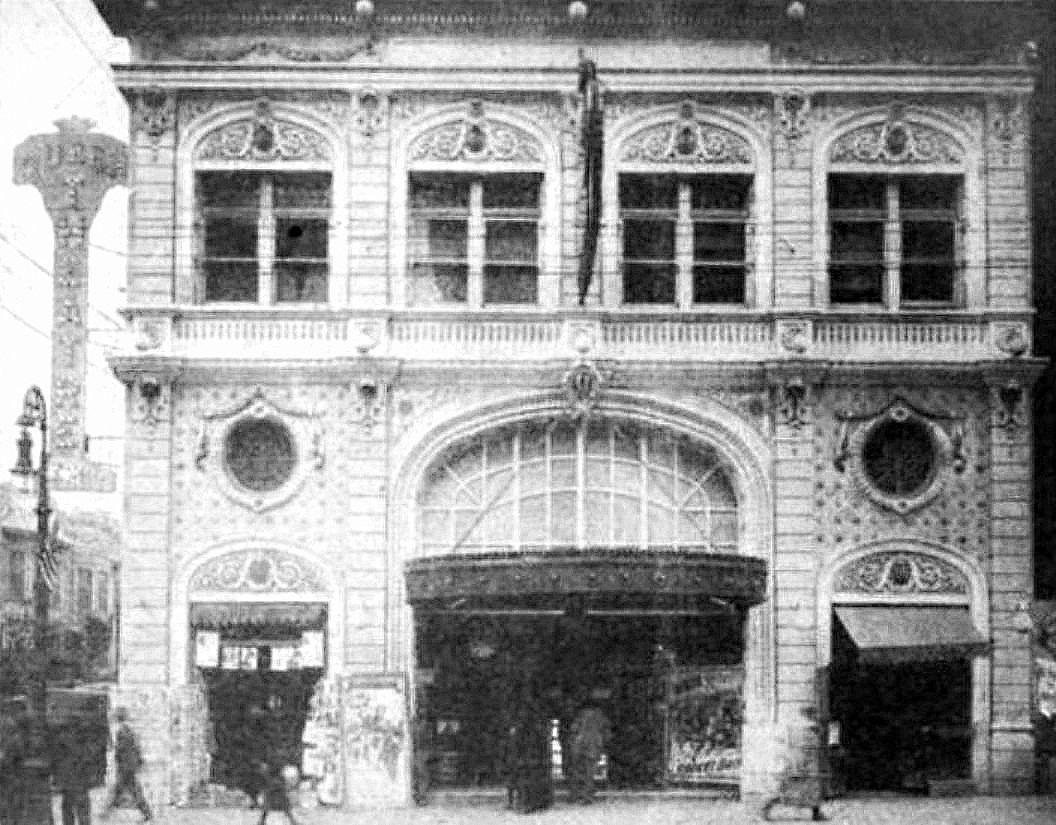
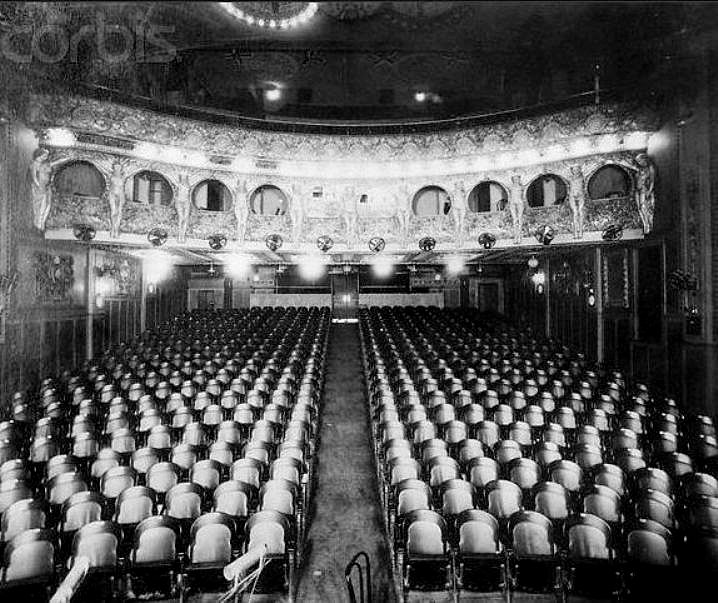
But it wasn’t until the beginning of 1913 that the first “palaces” arrived. The Queen Theatre opened first, at the corner of Elm and Akard. The DMN raved: “The most beautiful Photo-Play Theater in the South. Every man, woman and child in Texas should see this theater — truly a credit to the State” (DMN, Feb. 2, 1913).

queen_bldg-code-bk_1914Photo from Building Laws of the City of Dallas, 1914

queen_cinema-treasuresElm St. about 1917, with Queen on left — photo from CinemaTreasures.org

queen-theater-1939-CORBISInterior, 1930s — photo from CorbisImages.com

queen-theatre_dmn_102012DMN, Oct. 20, 1912

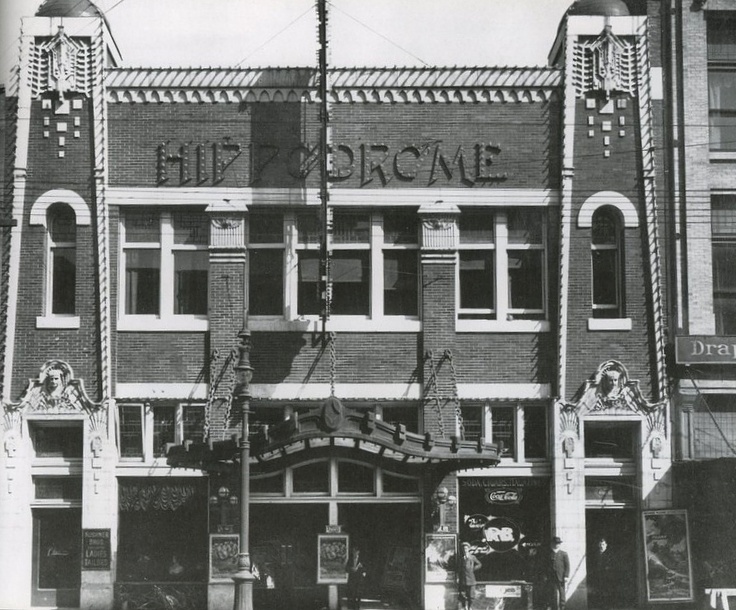
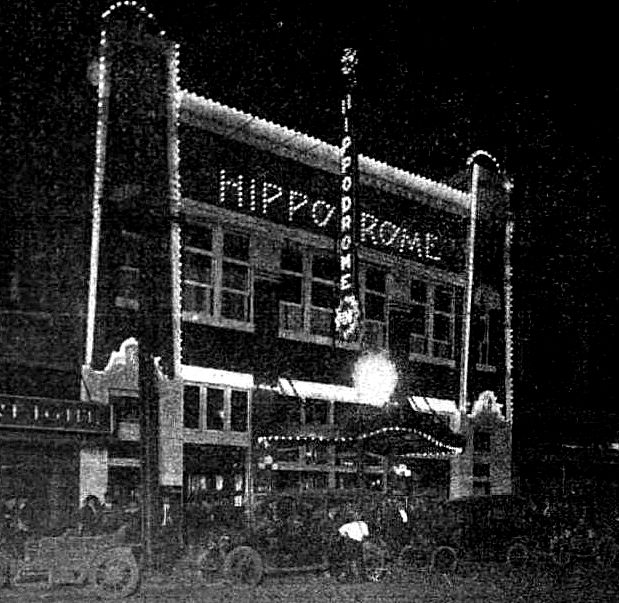
The Queen opened to rapturous crowds in January, 1913, but moviegoers barely had time to catch their collective breath when the Hippodrome opened at 1209 Elm, just a few weeks later, on March 1, 1913. It was “…conceded to being the finest moving picture house in the United States” (DMN, March 9, 1913).

hippodrome

hippodrome_bldg-code_1914Photo from Building Laws of the City of Dallas, 1914

hippodrome_dmn_022813DMN, Feb. 28, 1913

By the time the Queen and Hippodrome opened, movies had become a popular and profitable form of entertainment. In 1913 Dallas had 28 “picture shows” — 24 for white patrons and 4 for black patrons. Even vaudeville houses occasionally ran short films to pad out their live shows. And, notably, movie houses had begun to pop up away from downtown: in 1913 there were a dozen “suburban” theaters in residential areas of town (many of these, though, showed movies outdoors and thus operated only in the warmer months and at night).

There was a tremendous appetite for movies in Dallas in those early years, and when the money men realized that motion pictures weren’t just a here-today-gone-tomorrow novelty but a burgeoning industry, they dived in with enthusiasm.

Any tendency to cast the movies aside as a passing fad has given way to a realization that they are here to stay and that the crest of their popularity has not yet been approached. (DMN, March 9, 1913)

And Theater Row was off and running.

***

Sources & Notes

The top photo of the Dixie Theatre and the Theatorium ad are from the Hamon Arts Library, Southern Methodist University. I found them in Historic Dallas Theatres by D. Troy Sherrod. Sherrod’s passage on the Theatorium/Wonderland/Dixie is well worth reading, here. The second Dixie Theatre photo, with the man standing next to the box office, is from the George W. Cook Dallas/Texas Image Collection, DeGolyer Library, Central University Libraries, Southern Methodist University; it can be found here.

The very informative Dallas Morning News article of March 9, 1913 on the history of movie theaters in Dallas can be read here (it opens in a PDF, click the plus-sign at top of page to increase the text size).

Background on the Corbett-Fitzsimmons fight is here. Background on the now-legendary FILM of the fight is here; highlights of the 1897 film can be viewed here.

Many images larger when clicked.

*

Copyright © 2015 Paula Bosse. All Rights Reserved.


“A Perfect Auto Tent” — 1921

ad-dallas-tent-awning_dmn_061221-smRemember to turn off engine before retiring for the night…

by Paula Bosse

Personally, I don’t understand why anyone would want to be outside when it’s 157 degrees, but for those of you who are insistent campers who might be heading out for a sweaty and bug-filled weekend in the wilderness, might I direct your attention to the “automobile tent,” ready for purchase in 1921 at the Dallas Tent and Awning Co. at 2620 Main Street, in the heart of Deep Ellum. Adjusted for inflation, the cost of this admittedly charming-looking “car tent” would be the equivalent of about $200.

My weekend? I will be camped out in a blissfully air-conditioned house — shades drawn, blinds closed — with an iced tea in hand, moving slowly, and not smelling like insect repellent.

*

Copyright © 2015 Paula Bosse. All Rights Reserved.