Flashback : Dallas

A Miscellany: History, Ads, Pop Culture

Category: Advertisements

Stop at the Delmonico — ca. 1919

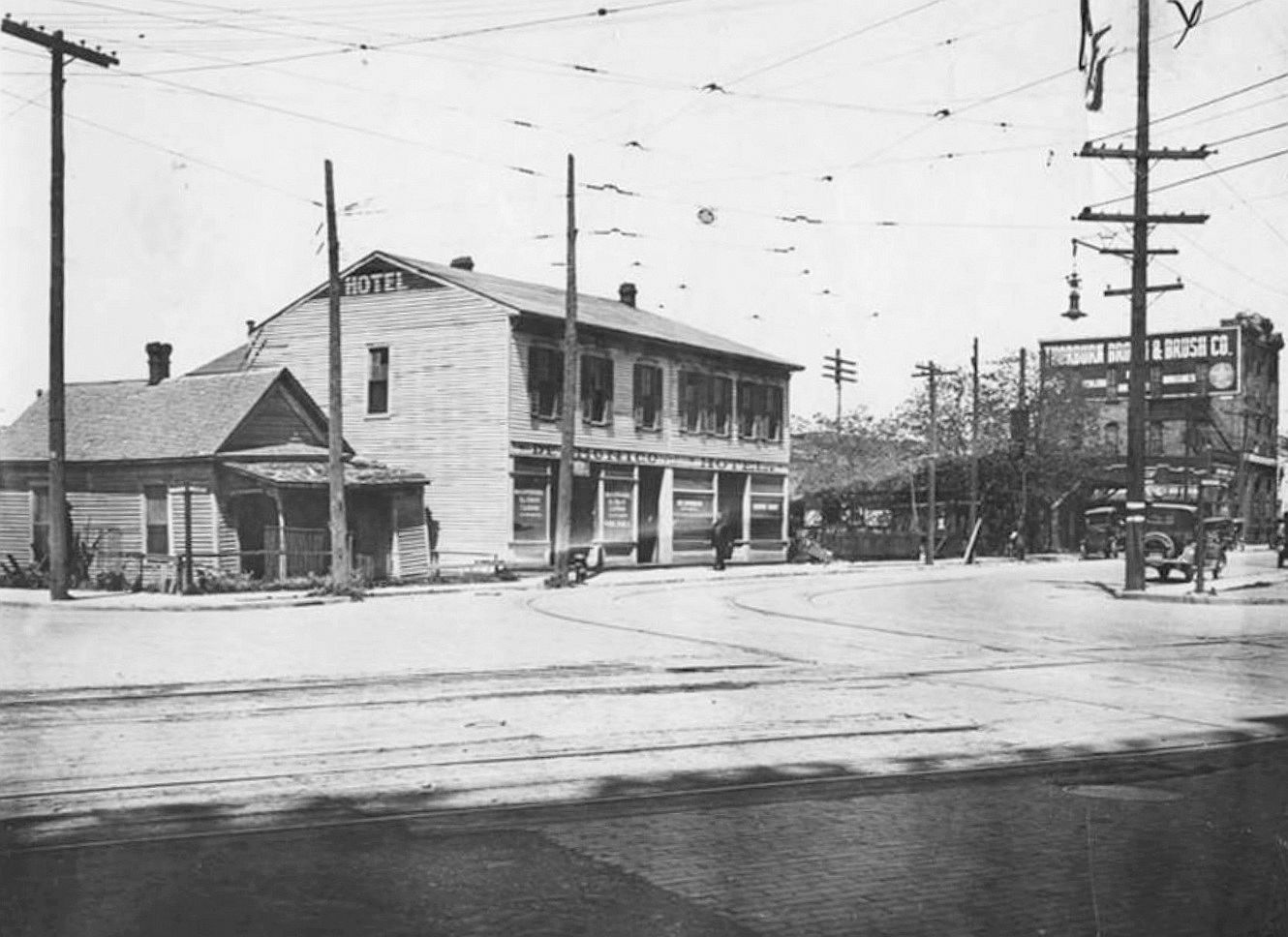
delmonico-hotel_degolyer_SMU_ca-1919The Delmonico Hotel & Thorburn Broom factory… (click for larger image)

by Paula Bosse

How does one refer to the area just above Pacific and Central, where Swiss once crossed Central? “Deep Ellum-adjacent”? “Far North Deep Ellum”? The “Extreme Western Edge of Old East Dallas”? It was very close to the old union railroad depot, where the T&P and H&TC tracks crossed (about where Pacific and Central crossed). It was once a bustling area, but after the depot closed in the ‘teens, it didn’t bustle so much anymore. 

The photo above — looking to the northeast and taken about 1918 or 1919 — shows the Delmonico Hotel (at 2309-2311 Swiss Avenue) and, to the right, the Thorburn Broom & Brush Co. factory (2405-2409 Swiss). (See the Swiss Avenue occupants of these two blocks as listed in the 1919 Dallas directory here.) The street that runs between the two blocks is Central Ave. The railroad tracks running horizontally at the bottom of the photo run along Pacific, and the streetcar tracks curve up and to the right to run along Swiss.

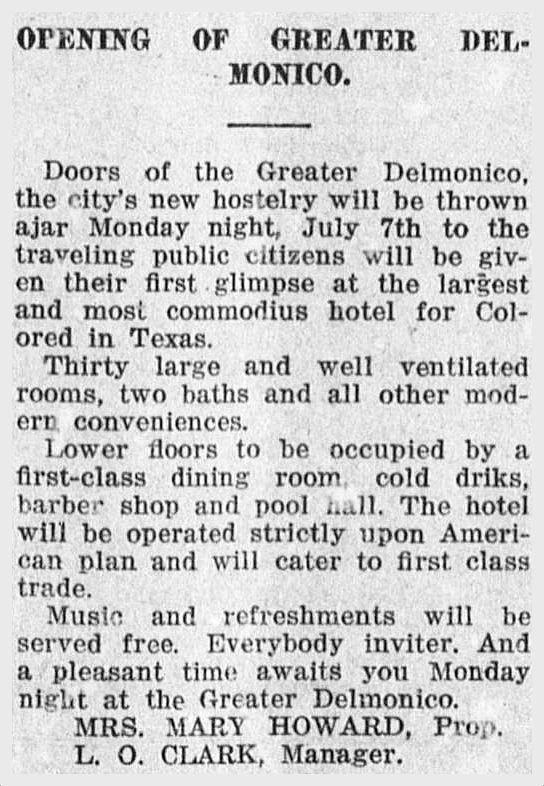
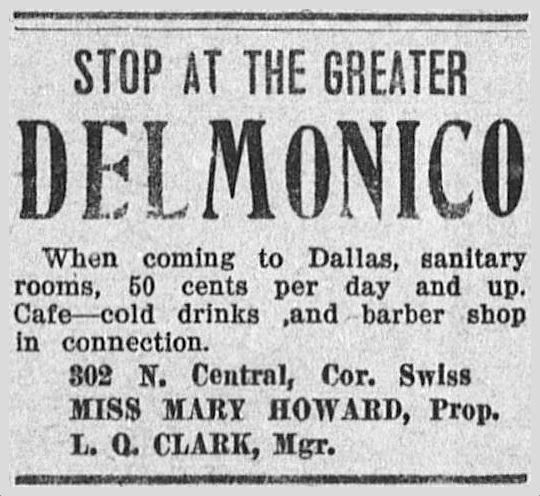
The Delmonico Hotel was at this location for only a couple of years until it moved a block around the corner, facing Central — the new, larger “Greater” Delmonico opened in July, 1919, occupying the upper floor at 302 Central. The proprietress of both locations was Miss Mary Howard (later Mrs. L. O. Clark). Miss Howard was, apparently, an enterprising African American woman who ran what was described in Dallas’ premiere black newspaper as “the largest and most commodious hotel for Colored in Texas… [catering] to first class trade” (Dallas Express, July 5, 1919). It remained in business at its second location on Central Ave. until 1927 or 1928.

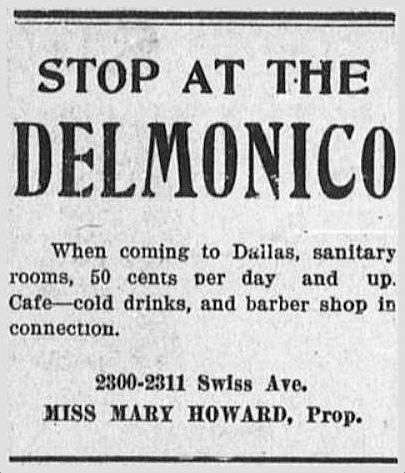
delmonico-hotel_dallas-express_011119Dallas Express, Jan. 11, 1919

Above, an ad for the hotel’s first location (the address should read “2309-2311 Swiss”). Below, a nice article on the opening of the second location on Central.

delmonico-hotel_dallas-express_070519_NEW-greater-delmonicoDallas Express, July 5, 1919

delmonico-hotel_dallas-express_082319Dallas Express, Aug. 23, 1919

It’s interesting that the 1919 Dallas directory has a business listing for this hotel (the first location, the one seen in the photo) — it is the sole hotel for “colored” patrons listed (denoted with the letter “c” — you can see the list of hotels from the 1919 directory here).

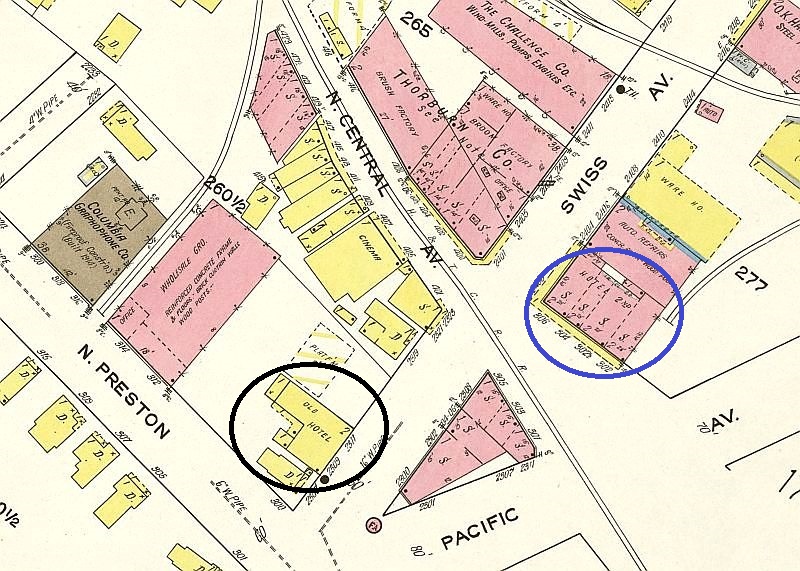
The first location can be seen in this detail of a 1921 Sanborn map, circled in black; the second location is circled in blue; the Thorburn Co. broom factory at Swiss and Central is labeled. (All images are larger when clicked.)

delmonico_swiss-central_sanborn_1921-sheet-14-det

The 2300 block of Swiss is no longer there — it is now empty land beneath the elevated North Central Expressway. The 2400 block (where the broom factory stood) is still there and is the site of a self-storage business (the Thorburn factory once stood here, across from the Lizard Lounge).

*

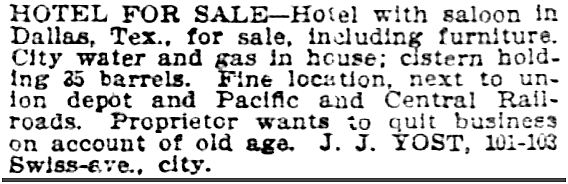
The large white building housing the Delmonico appears to have been built in 1889 by Swiss-born John Jacob (“J. J.”) Yost, who soon opened the Bear Hotel, which seems to have been a popular rooming house/hotel for German immigrants. By 1902 Yost was looking for a buyer for the hotel (“with saloon”) and placed the ad seen below (an ad which appeared not too long after a court notice appeared in the papers showing  that Yost had been found guilty of operating a “disorderly house” (a brothel) and had been fined $200, which was a huge fine at the time).

bear-hotel_dmn_042602_for-saleDallas  Morning News, April 26, 1902

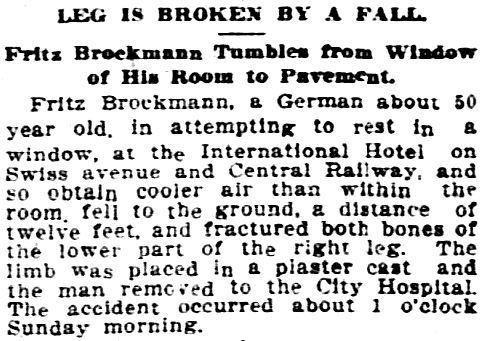
As Yost described it, the hotel really was in “a fine location” — just a block or two from a very busy passenger-train depot. Perhaps he was asking too much for it, but the Bear Hotel appears to have remained in operation until 1906, when it became the International Hotel (which was in business until 1918 when the hotel became the Delmonico, the first of these hotels to be owned by an African American for a strictly black (segregated) clientele). Below is an amusing (or terrifying) news tidbit from 1909 about a guest at the International Hotel. When you find yourself asking “what did people do before air-conditioning?” remember what happened to poor Fritz Brockmann:

international-hotel_dmn_070509
DMN, July 5, 1909

**

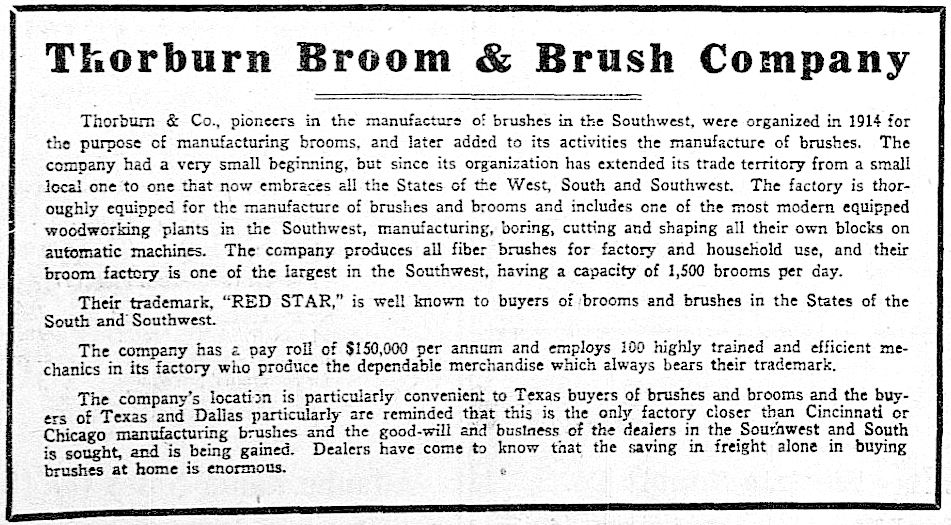
The Thorburn Broom & Brush Co. manufactured … brooms and brushes in their factory seen at the right in the photo above. A few bristly factoids about the company were included in a Chamber of Commerce-like series of ads from 1922.

thorburn-broom-brush_june-1922June, 1922

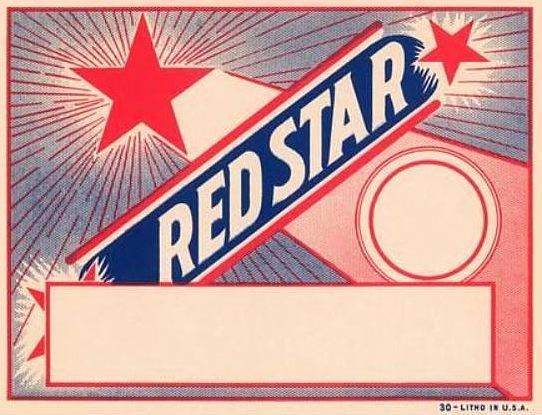
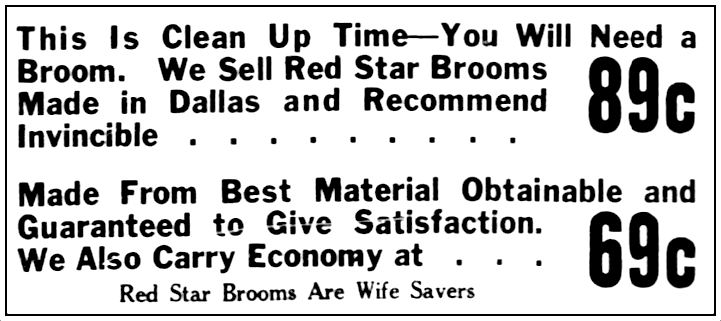
Thorburn’s marquee brand seems to have been the trademarked Red Star brooms (“Red Star brooms are Wife Savers”).

thorburn_red-star-brooms_1924Piggly Wiggly ad, 1924

red-star-broom-label

***

Sources & Notes

Top photo — titled “[Swiss Avenue at Central and the Houston and Texas Central Tracks]” — is attributed to George A. McAfee and is from the DeGolyer Library, SMU Libraries, Southern Methodist University; more information on this photo may be found here.

More info about the old Union Depot — which was one block south from the location seen in the photo above — can be found in these Flashback Dallas posts:

  • “The Old Union Depot in East Dallas: 1897-1935,” here
  • “The Union Depot Hotel Building, Deep Ellum — 1898-1968,” here
  • “The Gypsy Tea Room, Central Avenue, and The Darensbourg Brothers,” here

*

Copyright © 2018 Paula Bosse. All Rights Reserved.
Life on Hall Street — 1947

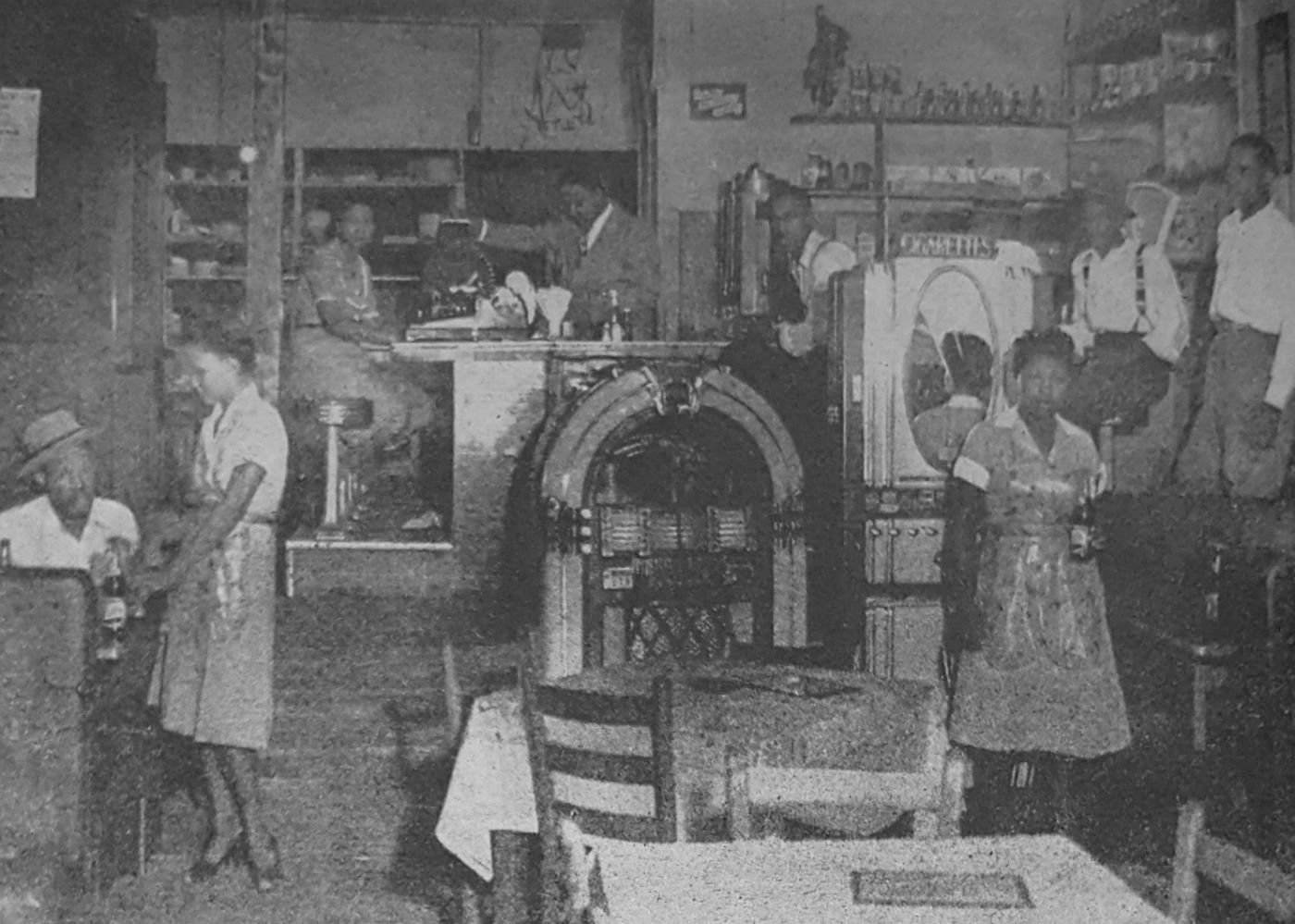
adolphus-bar-b-q_dallas-negro-directory_1947-48_dining-roomInterior of Adolphus Isaac’s Bar-B-Q Palace…

by Paula Bosse

Here are a few post-war ads for businesses in the 2200 and 2300 blocks of N. Hall, between Thomas and State, in the heart of “North Dallas,” a once-thriving business and entertainment district which catered to Dallas’ black community, until construction of Central Expressway sliced it in half a year or two after these ads appeared. These two blocks are completely unrecognizable today (a Google Street View looking north on Hall from Thomas can be seen here), and evidence that this area was once a lively African American neighborhood teeming with small businesses, cafes, and clubs exists almost entirely in old photos and ads like these.

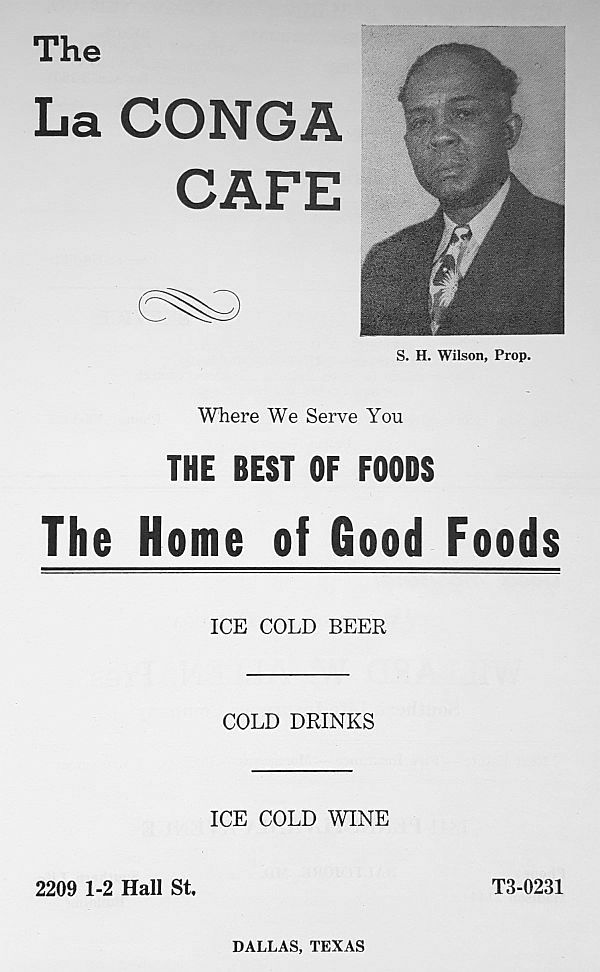
Below, the LA CONGA CAFE, 2209½ Hall, S. H. Wilson, proprietor. “Where we serve you the best of foods. The home of Good Foods. Ice cold beer.” (All pictures are larger when clicked.)


la-conga_dallas-negro-directory_1947-48

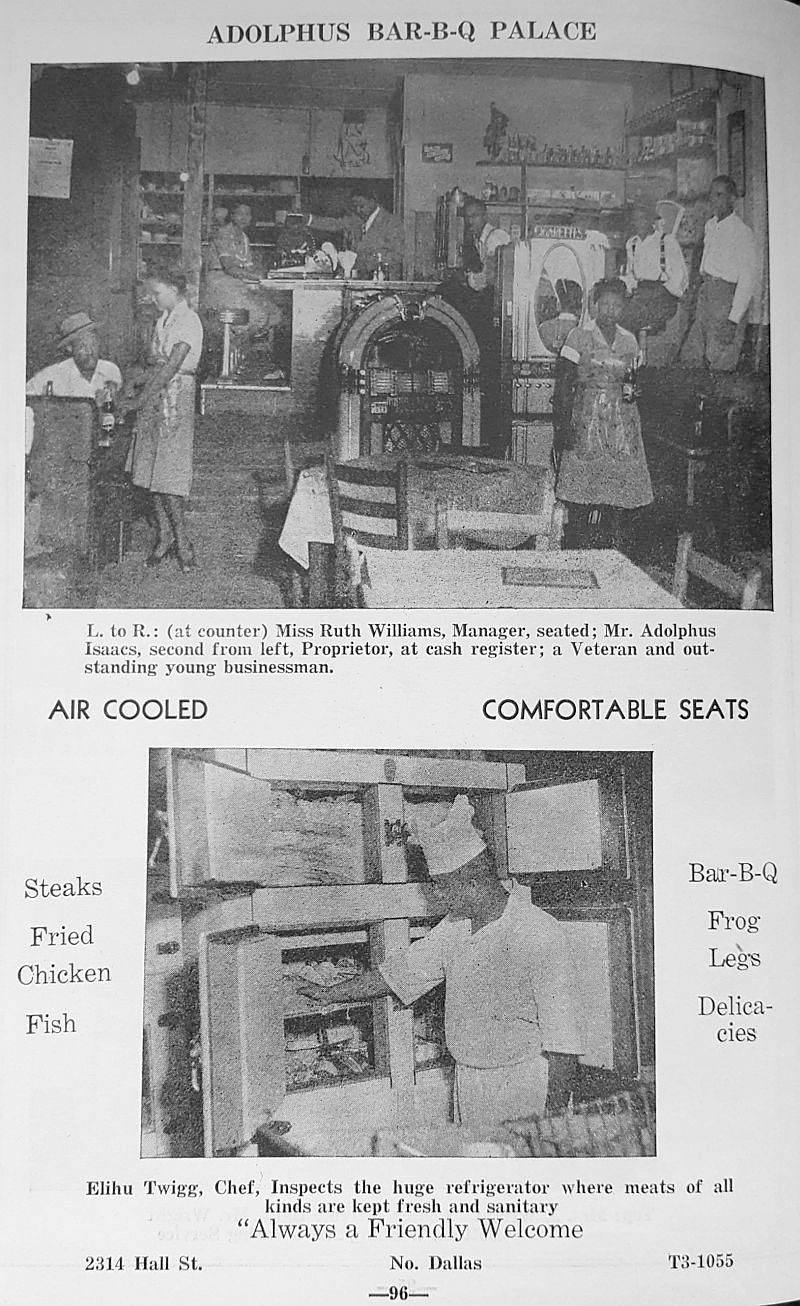
THE ADOLPHUS BAR-B-Q PALACE, 2314 Hall, Adolphus Isaac (whose name in the ad appears to be misspelled), proprietor. “Always a friendly welcome. Steaks, fried chicken, fish, bar-b-q, frog legs [!], delicacies.”

adolphus-bar-b-q_dallas-negro-directory_1947-48

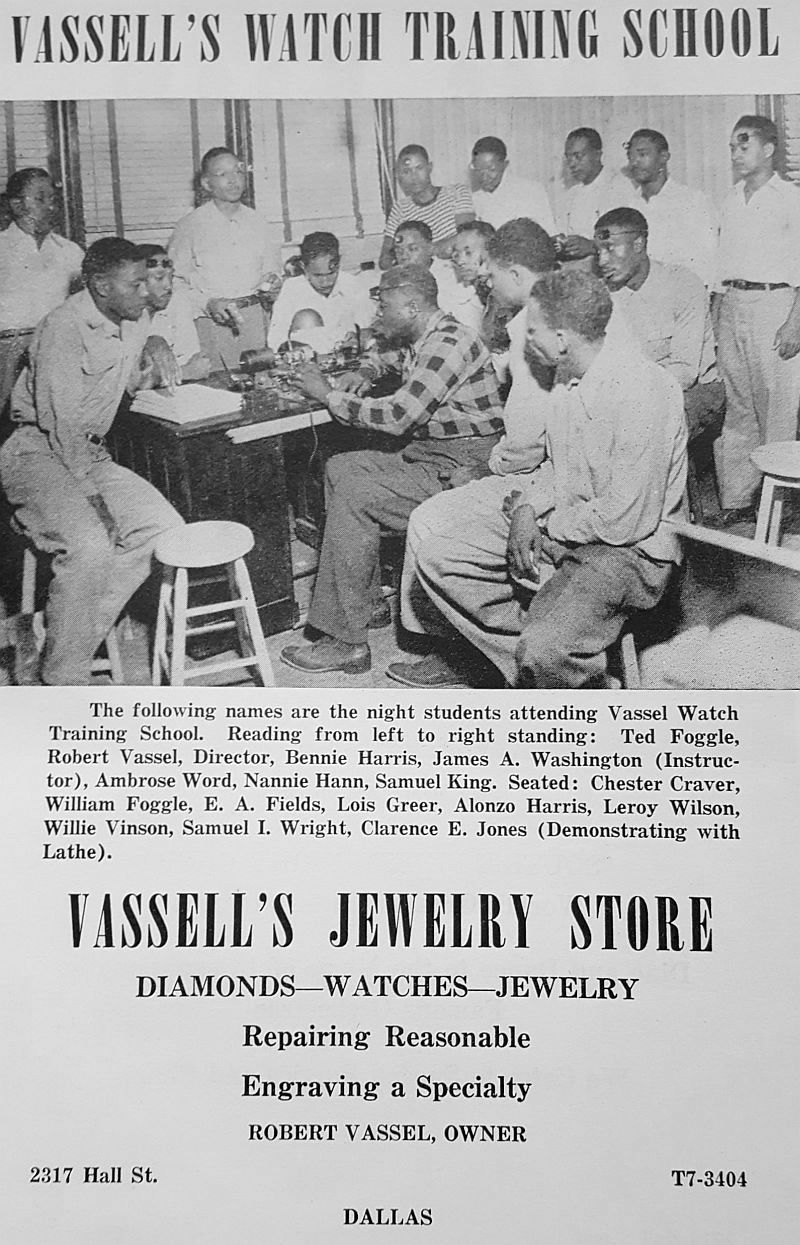
VASSELL’S JEWELRY STORE, 2317 Hall, Robert Vassell, proprietor. “Diamonds — watches — jewelry. Repairing reasonable, engraving a specialty.” This ad shows the “watch training school” Vassell operated in which WWII GI’s learned watch-repair.

vassells-watch-training-school_negro-directory_1947

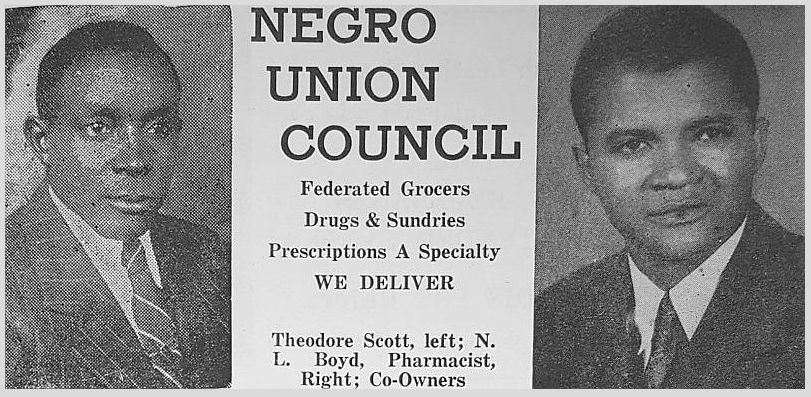
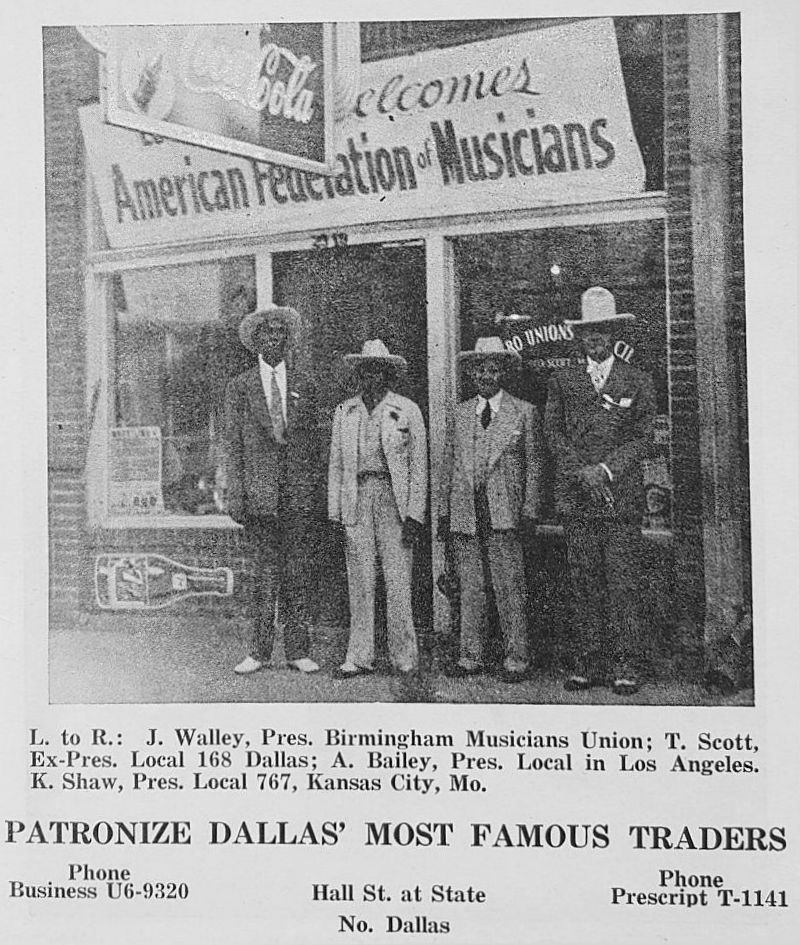
NEGRO UNION COUNCIL, 2319 Hall. A group of black unionists shared space at 2319 Hall: the Negro Unions Council, the Musicians Protective Union Local 168 (whose former president was Theodore Scott seen in both photos below), Federated Labor (AF of L), Hotel & Restaurant Employees Intl. Local No. 825. (Ned L. Boyd, pictured below, was a pharmacist who owned Boyd’s Pharmacy a couple of doors down at 2311 Hall.)

negro-union-council_negro-directory_1947

American Federation of Musicians officials (and their hats) standing in front of 2319 Hall.

negro-union-council_musicians_negro-directory_1947

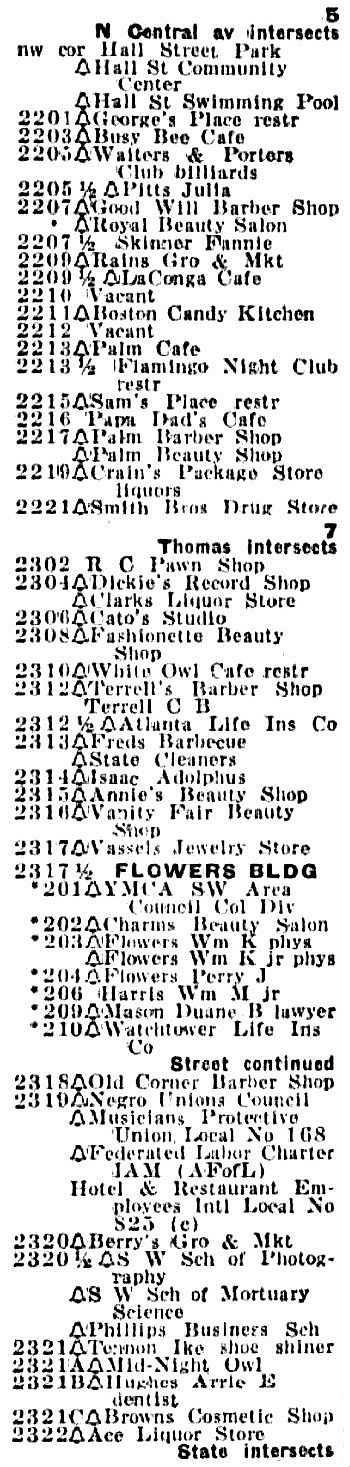
Below, the 1947 Dallas street directory, showing the businesses in the 2200 and 2300 blocks of N. Hall.

vassell_hall-st_1947-directory1947 Dallas directory (click to see larger image)

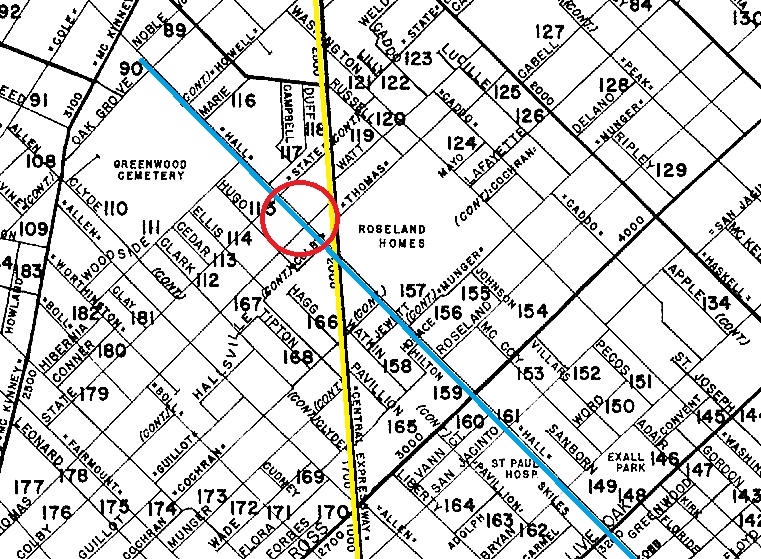
Below, a detail of a 1952 Mapsco page, with Hall Street in blue, Central Expressway (which hadn’t yet been built when the ads above appeared in 1947) in yellow, and the 2200 and 2300 blocks of Hall circled in red.

state-thomas_mapsco_1952
1952 Mapsco

As an aside, Roseland Homes seen in the map detail above, was a low-income public housing project for black residents, which opened in June 1942. It covered a 35-acre tract, with 650 units and was the first of many such housing projects for low-income black, white, and Hispanic families which opened that year, and it continues to this day.

***

Sources & Notes

Ads from the Dallas, Texas Negro City Directory, 1947-1948, with thanks to Pat Lawrence.

Read more about Hall Street — just a few blocks south, near Ross — in the Flashback Dallas post “1710 Hall: The Rose Room/The Empire Room/The Ascot Room — 1942-1975,” here.

*

Copyright © 2018 Paula Bosse. All Rights Reserved.
Casa View Elementary/Casa View Park — 1954-1974

casa-view-elementary_park_aerial_squire-haskins_1954_dallas-municipal-archives_portalCasa View Elementary and next-door park, 1954 (click for larger image)

by Paula Bosse

I wrote about Casa Linda Park not long ago, so today … Casa View Park (and its neighbor, Casa View Elementary School).

After World War II, there was a severe housing shortage in Dallas, and developers began looking to areas which offered new land to build on and were ripe for annexation. One such area — east of White Rock Lake and beyond the city limits — was eyed as a prime site for a new residential neighborhood: it didn’t take long for the area now known as Casa View to pop up.

One of Casa View’s neighborhoods was Casa View Heights (which, roughly, is bounded by Garland Road, Centerville Road, Shiloh Road, and … maybe Barnes Bridge? — see ad below) — it was a development spearheaded by Carl Brown, whose nearby Casa Linda development had been a big hit. The land this addition was built on was annexed by the City of Dallas in 1949. In mid-1950, it was announced that “ten acres of pasture land north of Centerville Road in the Casa View area” had been purchased by the Dallas School Board, a tract which “some day may be the site of a school […] though the school building program has no project scheduled for the area” (“Sizable Land Plots,” Dallas Morning News, July 16, 1950).

About half that parcel of land became Casa View Park sometime in 1950; the other half became the campus of Casa View Elementary School. The school (designed by premier Dallas architect Mark Lemmon) began construction in 1952 and was ready for use by the opening of the new school year in 1953 (enrollment on the first day was an impressive 870 students).

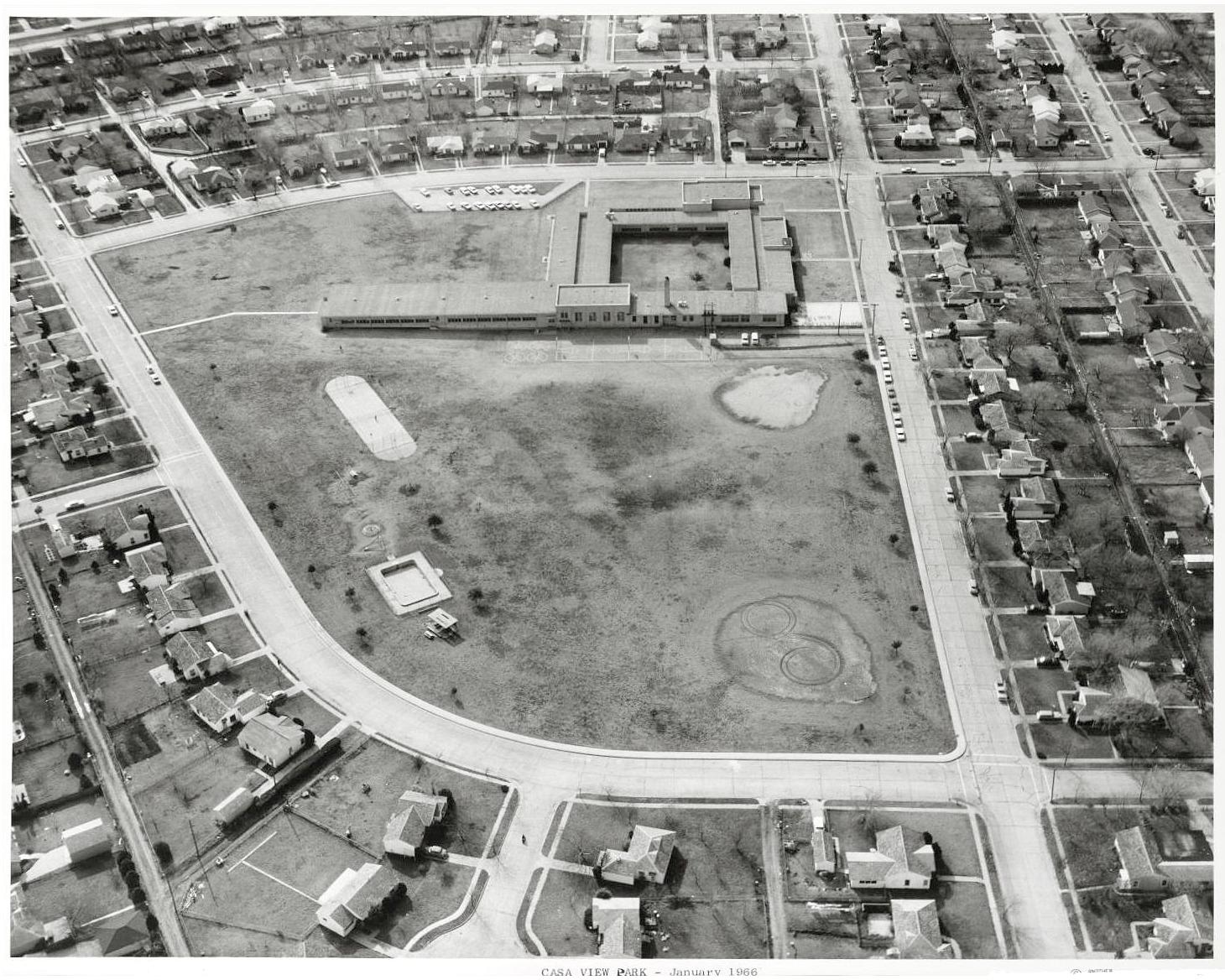
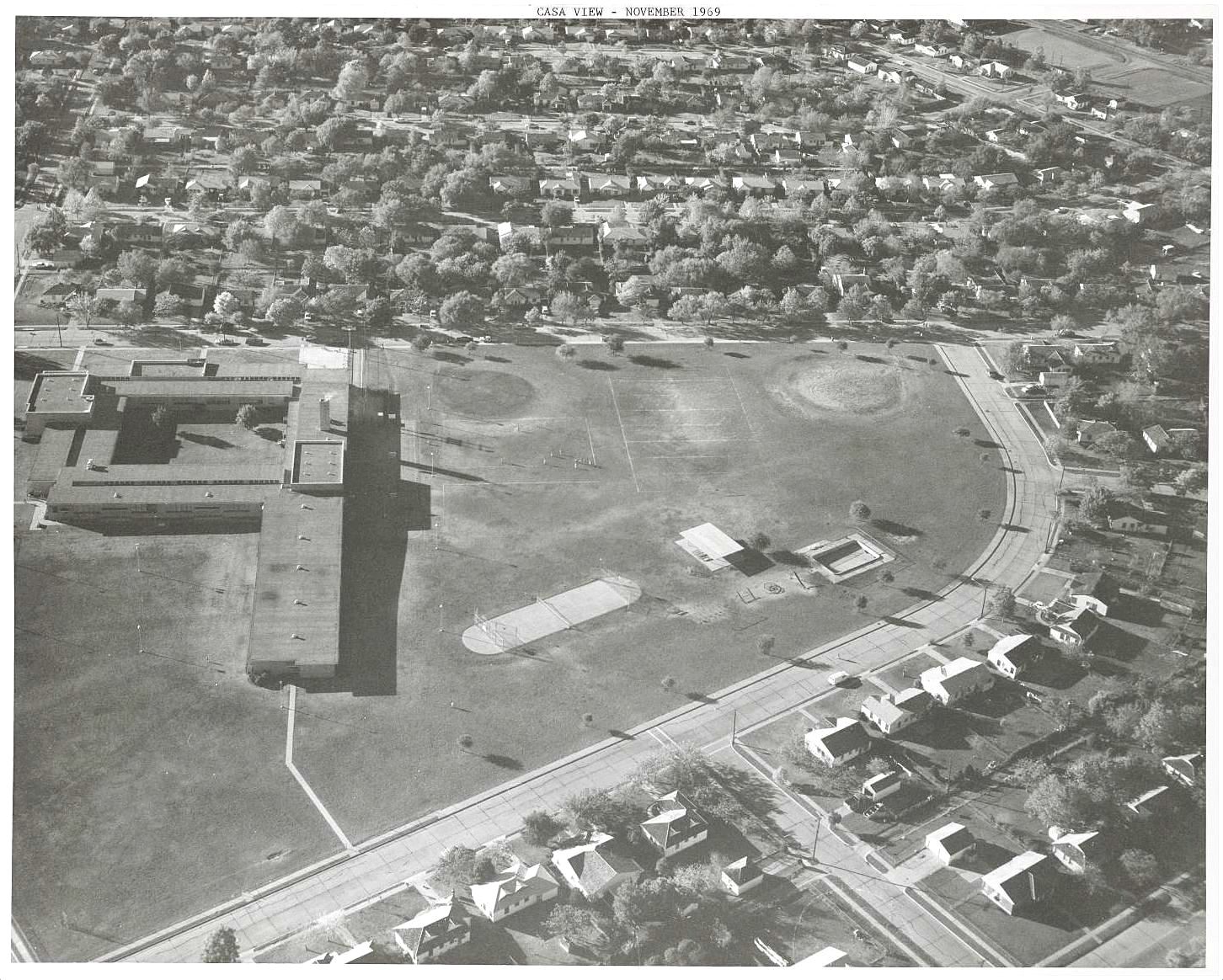
Below are four aerial photos showing the Casa View park and school, taken over a 20-year period by Squire Haskins. (All images are larger when clicked.)

*

At the top: a photo from 1954, with the year-old Casa View Elementary School on the left (in its original square shape, with an unusual-for-the-time open courtyard in the center); the fairly bleak-looking, treeless Casa View Park is on the right. The view is to the west, with Farola at the top, Monterrey on the left, and Itasca at the bottom and right.

Below, from January, 1966 — a view toward the south:

casa-view-elementary_park_aerial_squire-haskins_jan-1966_dallas-municipal-archives_portal

November, 1969 — looking west:

casa-view-elementary_park_aerial_squire-haskins_nov-1969_dallas-municipal-archives_portal

August, 1974 —  looking east:

casa-view-elementary_park_aerial_squire-haskins_aug-1974_dallas-municipal-archives_portal

*

Below, with annexation under their belt (and assurance of city services, schools, etc.) developers’ ads like this one began appearing in local newspapers, hoping to entice prospective homeowners to the brand new “Casa View Heights” addition. (The description of these modest homes as “luxury” was a bit of a stretch….) 

casa-view-heights_103049_adOctober, 1949

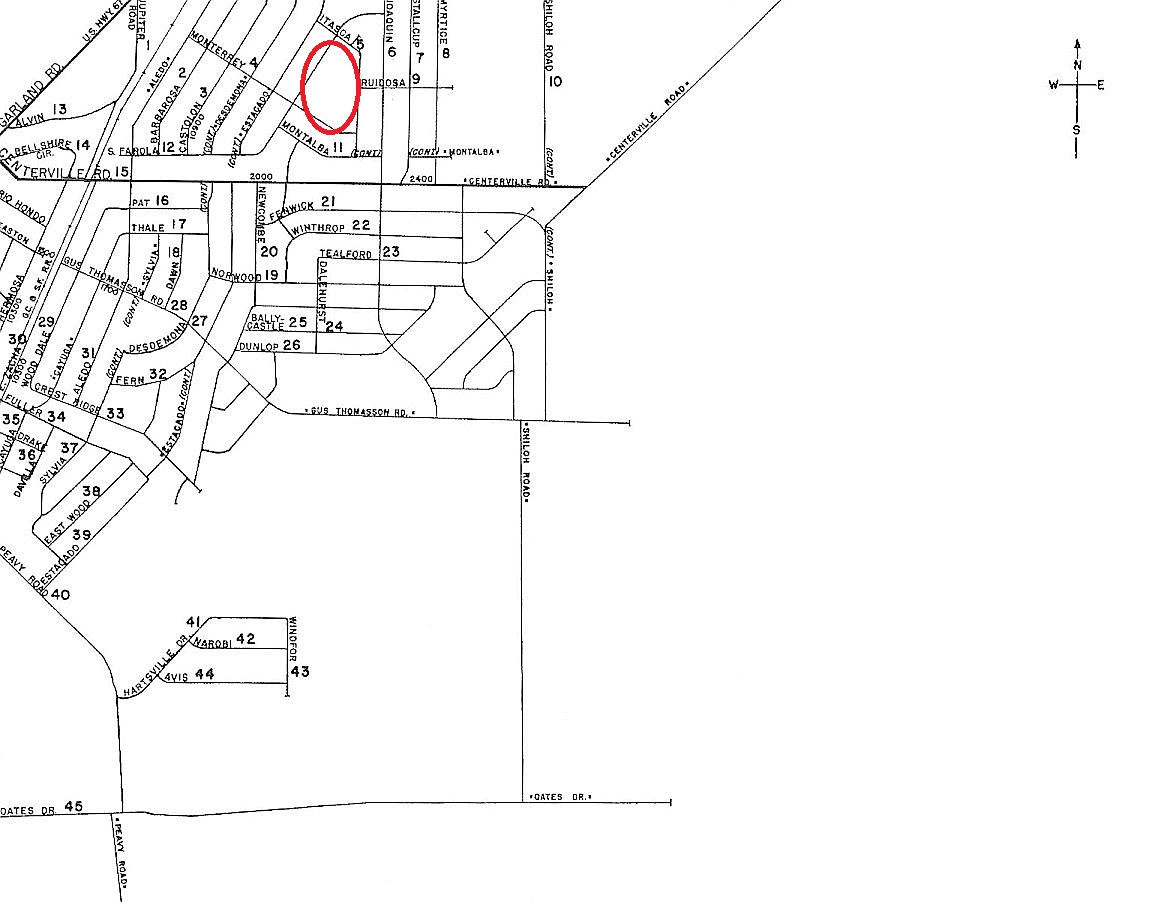
Here are a couple of interesting pages from the 1952 Dallas Mapsco. Take a look at all that empty white space just waiting to be gobbled up by an ever-sprawling Big D. (The location of the park and school is marked in the second image.)

casa-view_mapsco-1952a


casa-view_mapsco-1952b_marked

***

Sources & Notes

The aerial photos are from the Dallas Municipal Archives, and are included in the collection “Dallas Parks Aerial Photographs” provided to UNT’s Portal to Texas History site; all photos above can be found here.

The location of the school and park can be seen here. A present-day aerial view from Google is here.

*

Copyright © 2018 Paula Bosse. All Rights Reserved.
 

The State Fair of Texas Over the Decades

state-fair-of-tx_midway_kodachrome_1961_ebaySFOT midway, 1961… (click for larger image)

by Paula Bosse

The history of the State Fair of Texas is also the history of Dallas — if you live in Dallas, you know a lot about the fair, if only by osmosis. Here are a few images from the decades since the fair began in 1886.

Below, from 1889, a sedate advertisement for the Texas State Fair and Dallas Exposition (from The Immigrant’s Guide to Texas, 1889). (All images are larger when clicked.)

state-fair_imm-gd_1889

*

A great-looking poster from 1890, colorful and exciting:

sfot_poster_1890

*

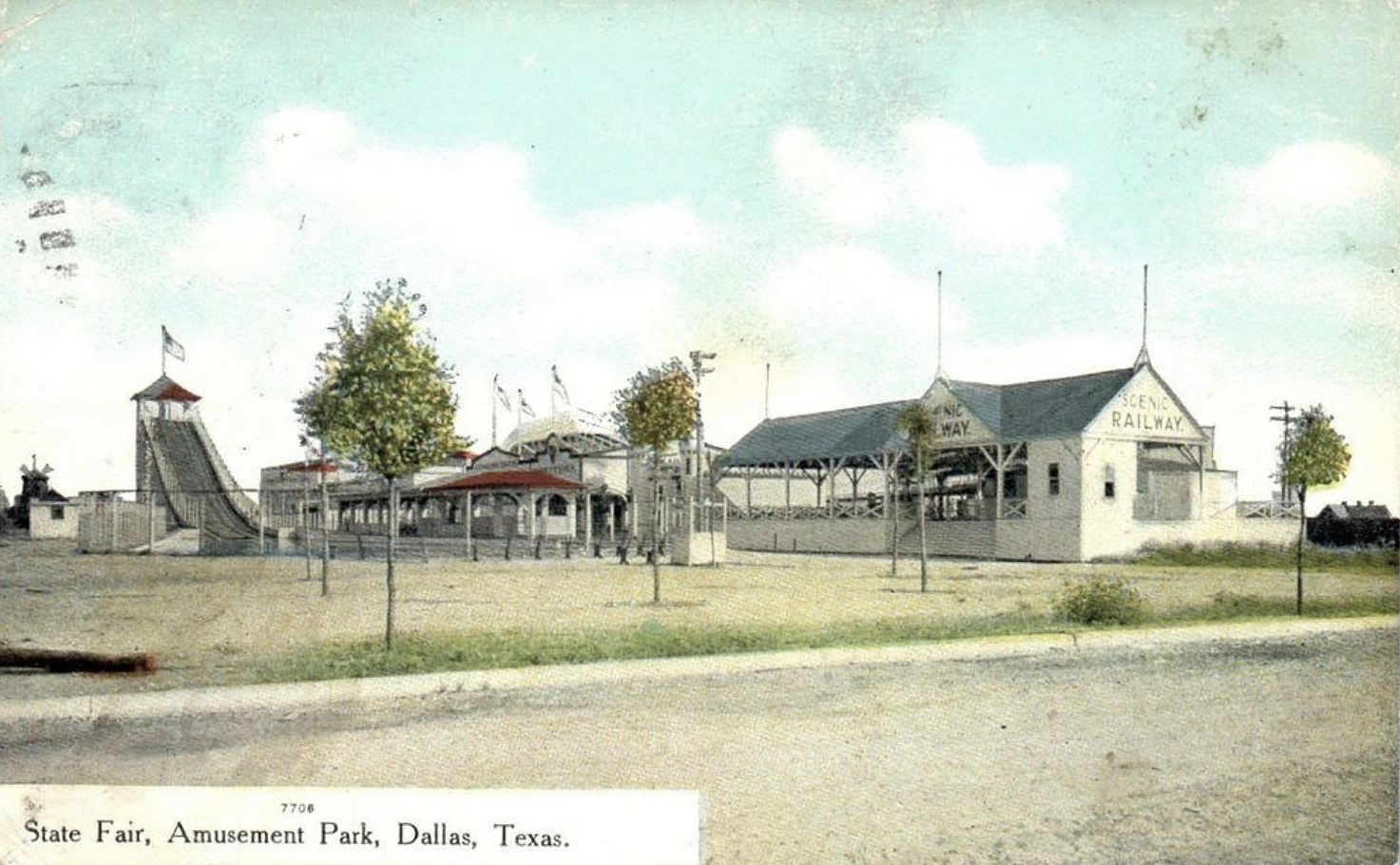
A midway in its infancy, in the aughts. (I wrote about the “The Chute” water ride, here.)

shoot-the-chute_postcard_ca-1906

*

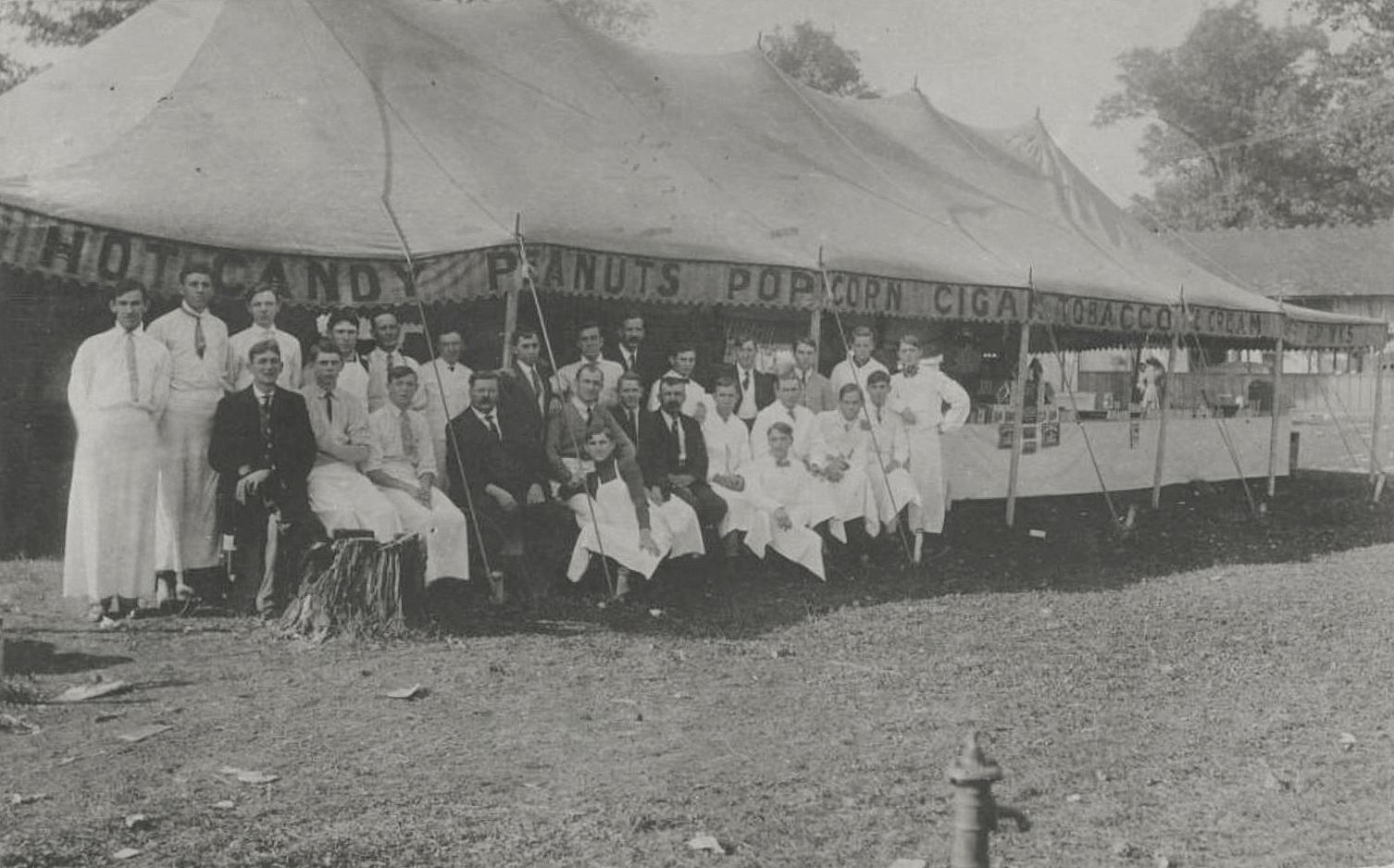
Here’s a group photo showing the food vendors at the 1910 fair. No corny dogs in 1910, but plenty of candy, peanuts, popcorn, ice cream, and, sure, why not, cigars and tobacco.

state-fair-concessionaires_1910_cook-colln_degolyervia George W. Cook Collection, DeGolyer Library, SMU

*

In the 1920s, Fair Park looked a lot smaller:

fair-park_mcafee_degolyer_SMU_ca-1920s
via George A. McAfee Collection, DeGolyer Library, SMU

Here’s a handy 1922 map of the grounds, from the fine folks at Caterpillar (don’t miss those tractors!) — you can see where the people in the photo above are walking.

state-fair-map_caterpillar_ad_1922

*

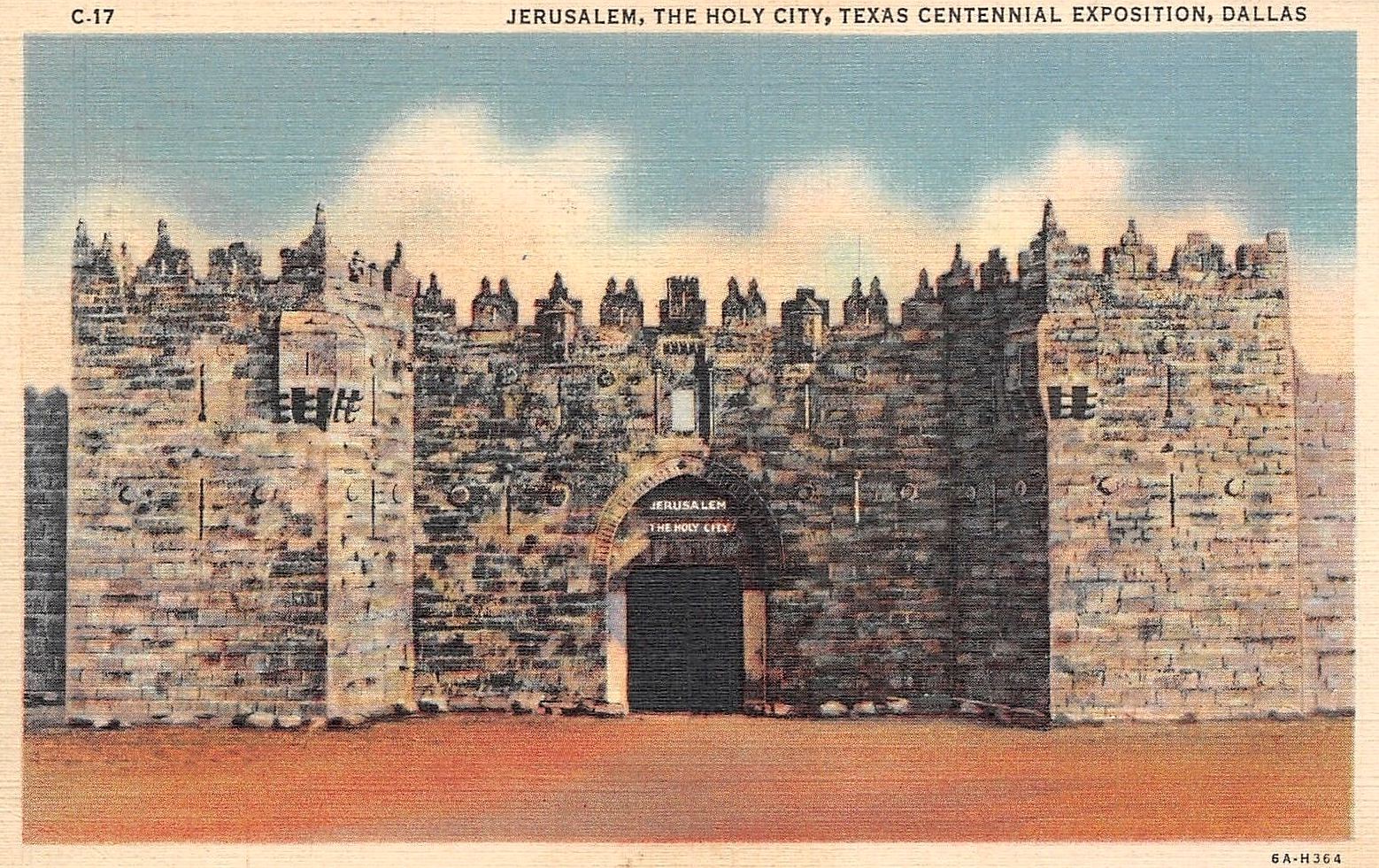
If it’s 1936, it’s gotta be the Texas Centennial — and here’s an exhibit I’d never heard of: Jerusalem, The Holy City. This was one of many exhibits at the Texas Centennial previously seen at the 1933 Chicago World’s Fair, where it apparently had attracted more than one million visitors. In the weeks leading up to the Centennial’s opening, it was described thusly: “The Holy City will contain a collection of religious artworks and other material. The entrance will represent the Damascus gate of Jerusalem. No admission will be charged but donations will be asked visitors” (Dallas Morning News, May 17, 1936).

tx-centennial_jerusalem-the-holy-city_postcard

*

The State Fair of Texas was not held during much of World War II, but it was back in 1946, with Tommy Dorsey, Gypsy Rose Lee, and Jackie Gleason.

state-fair_sept-1946_ad-cow
Sept., 1946

*

Neiman-Marcus was at-the-ready in 1950 with suggestions on stylish footwear for ladies wanting to trudge around the Fair Park midway in heels.

For the Million-Dollar Midway — For taking in this famous “main drag” of the State Fair — get into our famous-maker midway heel shoes. Most everybody — after walking a block or two in them — says they’re worth a million! Have all the comfort of low heels, plus the high-heel’s way of making your ankles look prettier.

sfot-neiman-marcus_ad_101650October, 1950

*

The 1960s were certainly colorful, and this is a great color photo from 1961 (currently available on eBay as a 35mm Kodachrome slide) — it’s the photo at the top of this post, but in order to cut down on unnecessary scrolling, I’ll slide it in again right here:

state-fair-of-tx_midway_kodachrome_1961_ebay

*

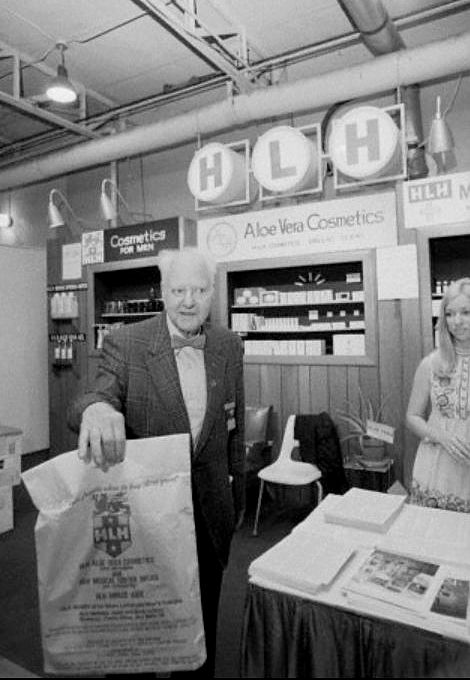
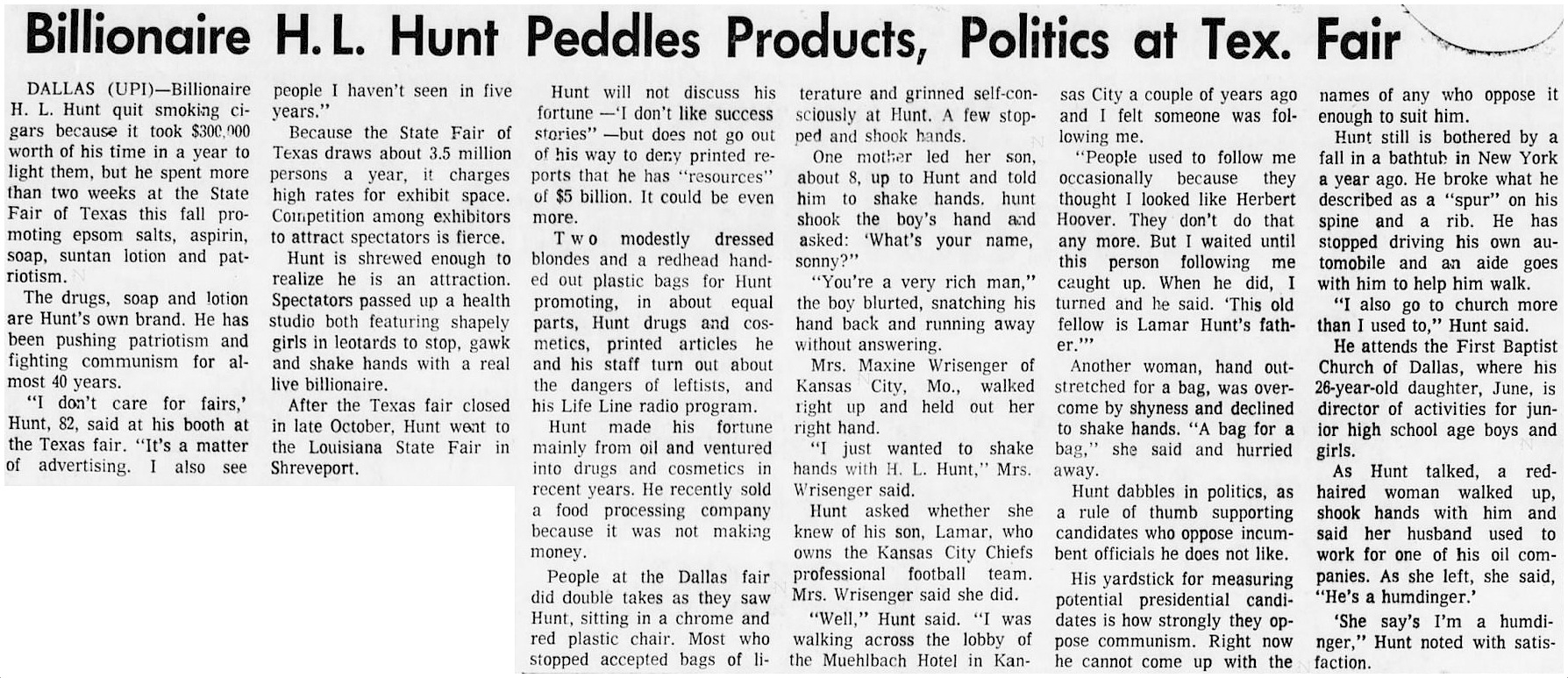
The 1970s was a weird decade, and what better way to start off a weird decade than with 80-something-year-old oil tycoon (and eccentric Dallas resident) H. L. Hunt handing out cosmetics at a booth at the State Fair? Hunt — whom Frank X. Tolbert described as “probably the world’s only billionaire health freak” — manufactured a line of cosmetics and other products containing aloe vera, the wonder elixir. Imagine seeing the world’s richest man handing out plastic goodie-bags to awe-struck passersby. Like I said, weird.

h-l-hunt_state-fair_1971

hunt_state-fair_pomona-progress-bulletin_CA_111471Pomona (CA) Progress-Bulletin, Nov. 14, 1971 (click to read)

*

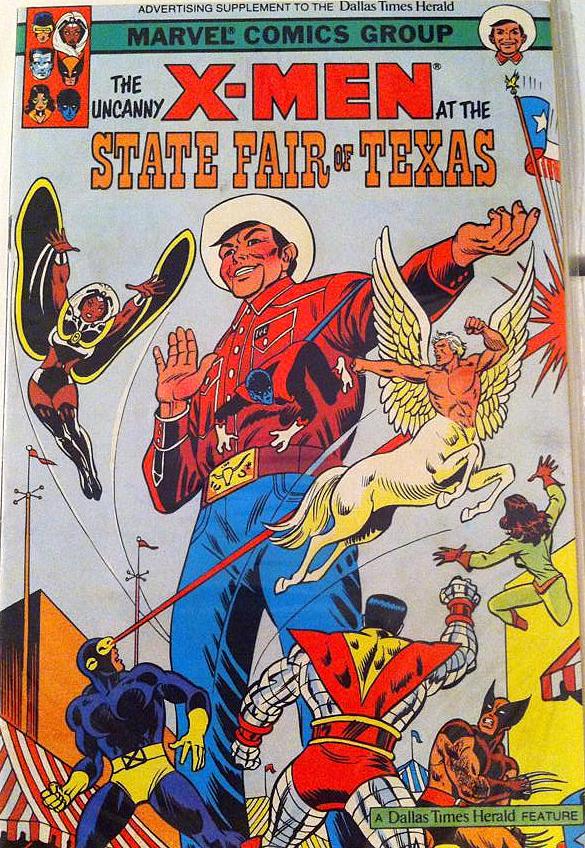
And, finally, the 1980s. A century after the State Fair of Texas began, the X-Men came to Big D to do whatever it is they do — and The Dallas Times Herald got a cool little advertising supplement out of it. (If this appeals to you, check out when Captain Marvel came to Dallas in 1944, here, and when Spider-Man came to Dallas in 1983, here.)

sfot_xmen_comic-book_1983

***

Sources & Notes

Sources (if known) are noted.

All images are larger when clicked.

I wrote a similar State-Fair-of-Texas-through-the-ages post a few years ago: “So Sorry, Bill, But Albert Is Taking Me to the State Fair of Texas,” here.

*

Copyright © 2018 Paula Bosse. All Rights Reserved.
Prepping for the 1932 State Fair of Texas Midway

state-fair-of-texas_1932_gimarcBackstage” at the SFOT… (click for larger image)

by Paula Bosse

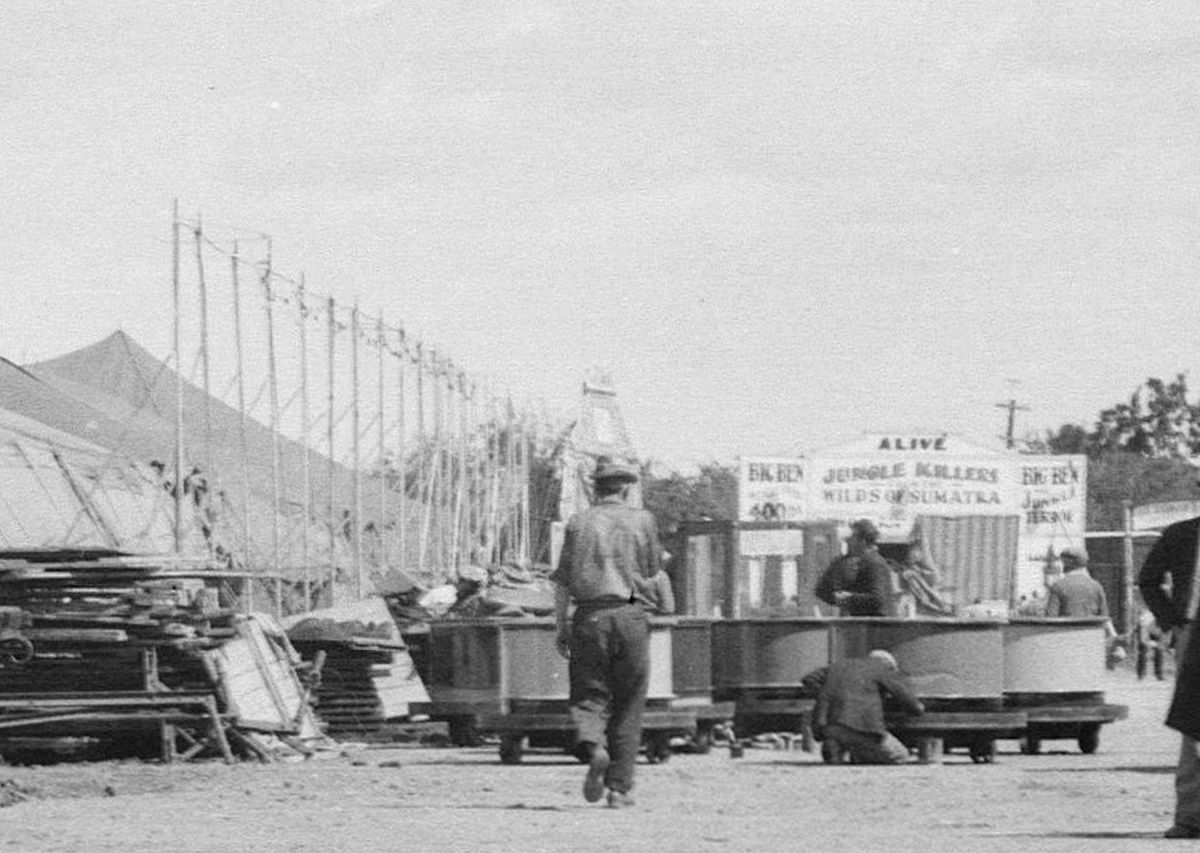
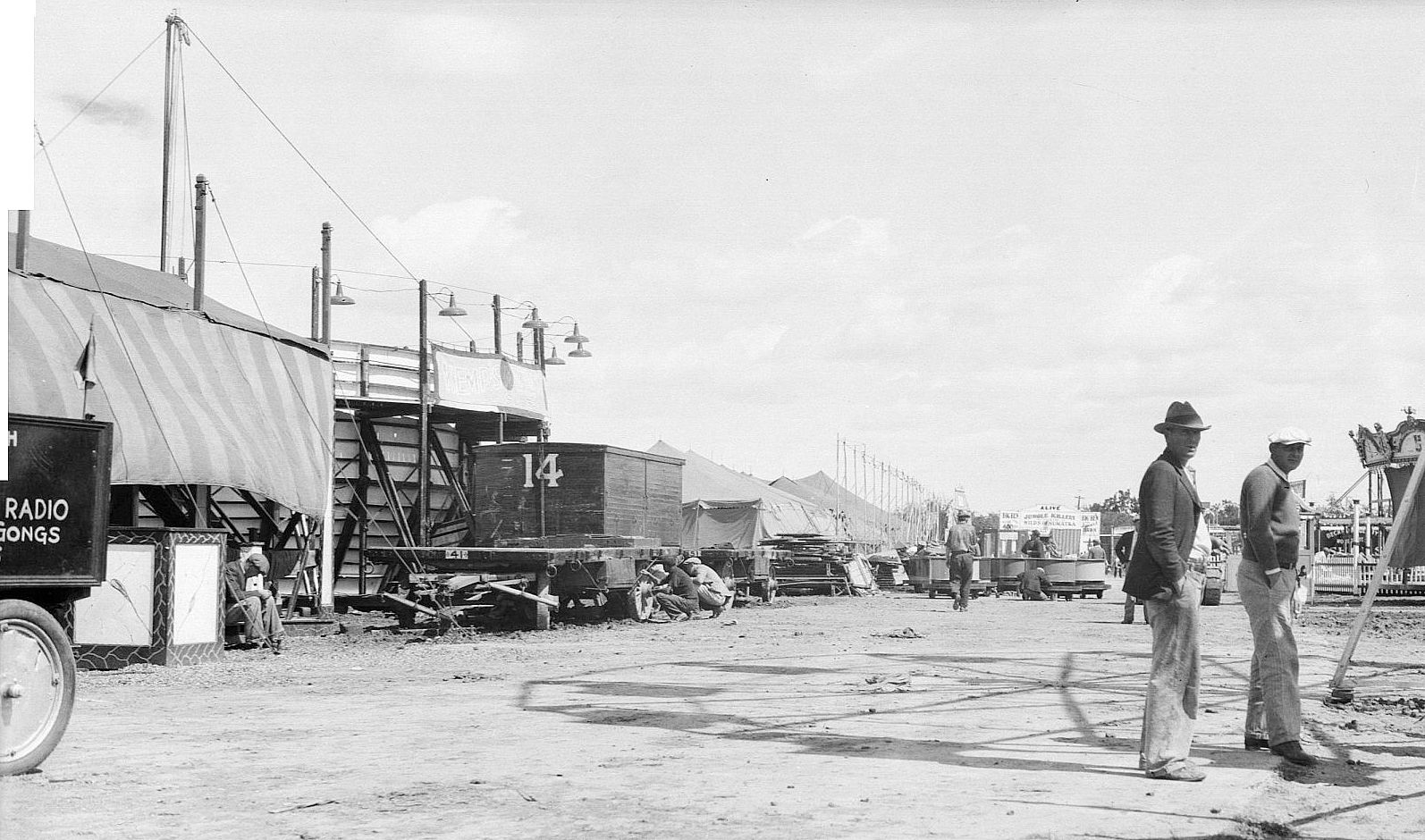
We usually see photos of the State Fair of Texas as the fair is underway, with everything already built, assembled, painted, and manned. But what happens before the gates open each year? Here’s a great photo (from pack rat George Gimarc, of Dallas dj fame) showing what things looked like in 1932 as workers prepped midway attractions for the fair’s opening. Let’s zoom in and look at a few details (all images are larger when clicked).

sfot_1932_gimarc_det-3Axle problem?

sfot_1932_jungle-killers-det_gimarc“ALIVE. Jungle Killers from the Wilds of Sumatra.” And someone — or some creature — named “Big Ben.”

sfot_1932_beckman-gerety-det_gimarcAbove, in the background at the right you can see a partial sign for Beckman & Gerety, providers of midway entertainment for fairs and carnivals around the country. (I don’t  know who these two men are, but they do not appear to be Fred Beckman and Barney Gerety, who can be seen here.)

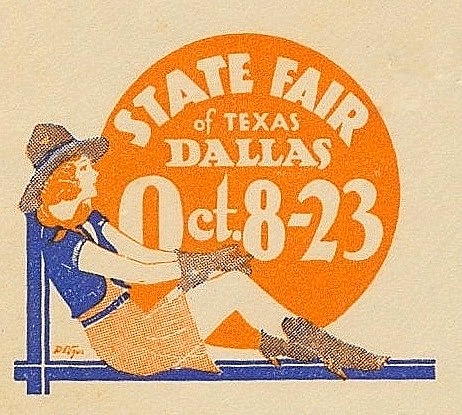
When George Gimarc sent me this photo, he also sent me images of the State Fair of Texas envelope he found it in (see the envelope here). Below are details from the front and back.

sfot_1932_envelope_logo_gimarc

sfot_1932_envelope_back_det_gimarc

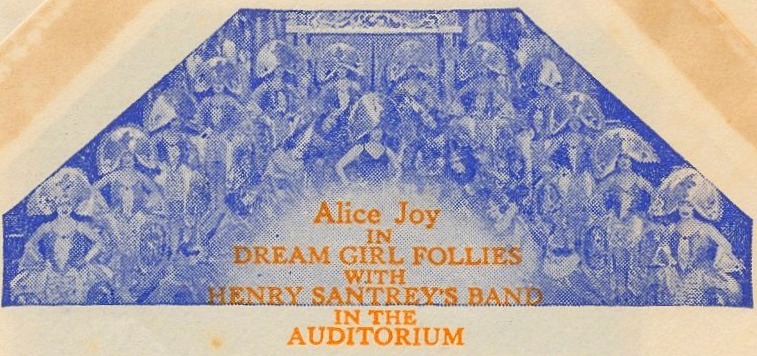
“Alice Joy in ‘Dream Girl Follies’ with Henry Santrey’s Band in the Auditorium.” Alice Joy was fresh from two years as NBC’s “radio dream girl” and was the namesake-headliner of this spectacular three-and-a-half-hour revue at the Music Hall which featured a bevy of chorus girls, acts-a-plenty, and “hot jazz novelties.” 4,000 people witnessed the show’s opening night. Probably gave those jungle killers from the wilds of the Sumatra a run for their money.

There was a lot going on at the 1932 State Fair of Texas. Check out this (comprehensive) ad from the opening weekend (click it!). Cars! Football! Alligator wrestling! Hoot Gibson’s Rodeo (“famous outlaw broncs”)! An aviation show! Everything!

sfot-1932_oct-9-1932_adOct. 9, 1932 (click to see large image)

***

Sources  & Notes

Photo and color images from the collection of George Gimarc, used with permission (thank you, George!).

*

Copyright © 2018 Paula Bosse. All Rights Reserved.
 

Oak Cliff: “A City Within a City” — 1929

oak-cliff-city-within-a-city_cover_ca-1929_SMU

by Paula Bosse

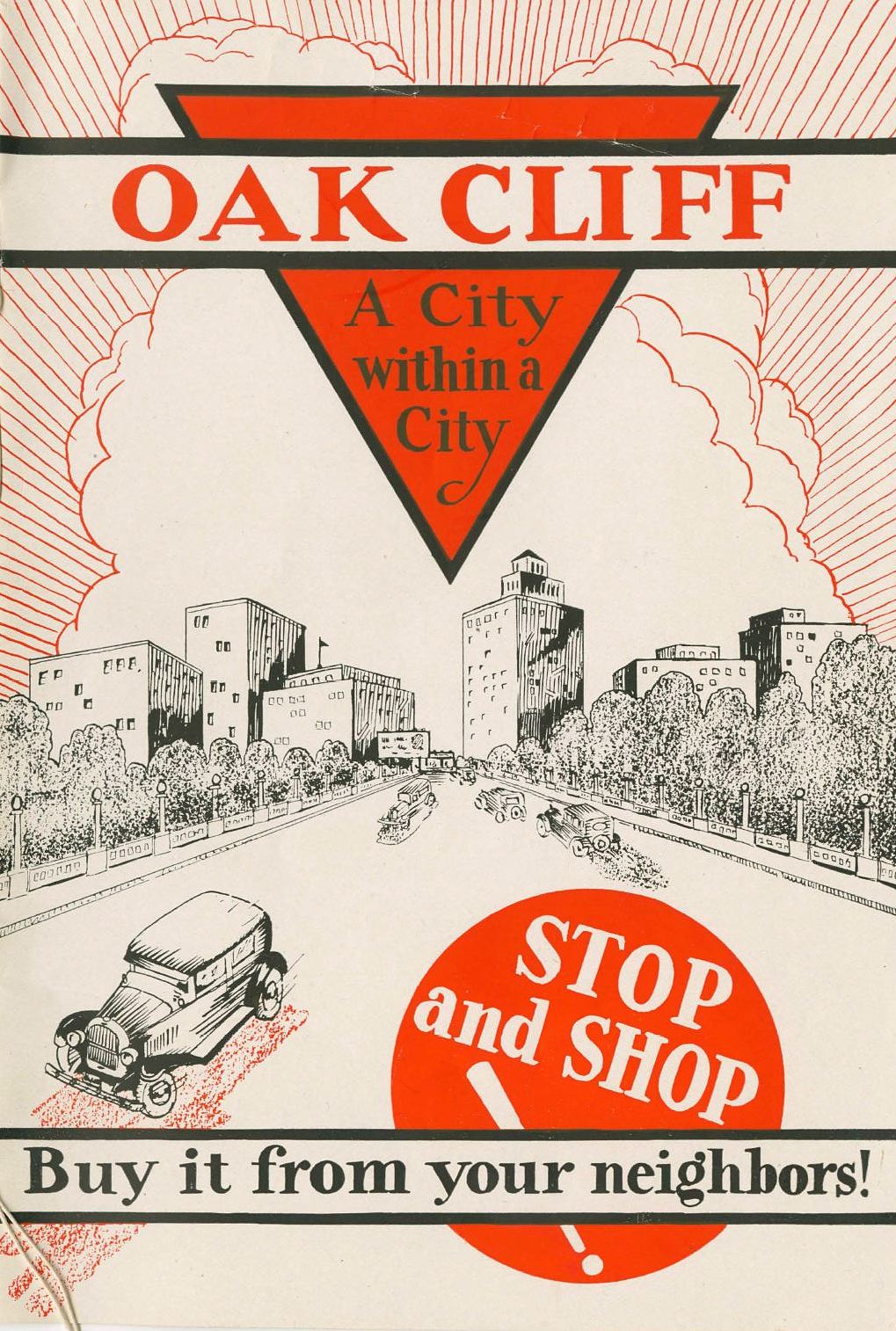
Publications like Oak Cliff, A City Within a City (“Stop and Shop — Buy it from your neighbors!”) are wonderful glimpses into a city’s proud self-promotion. This little booklet is for the newcomer to Oak Cliff — to show that it is its own self-contained community, full of friendly, neighborhood businesses; even better, each ad is accompanied by a photograph. Though undated, the photo of the famed Cliff Queen movie theater features movies released in 1929. (All photos are larger when clicked.)

*

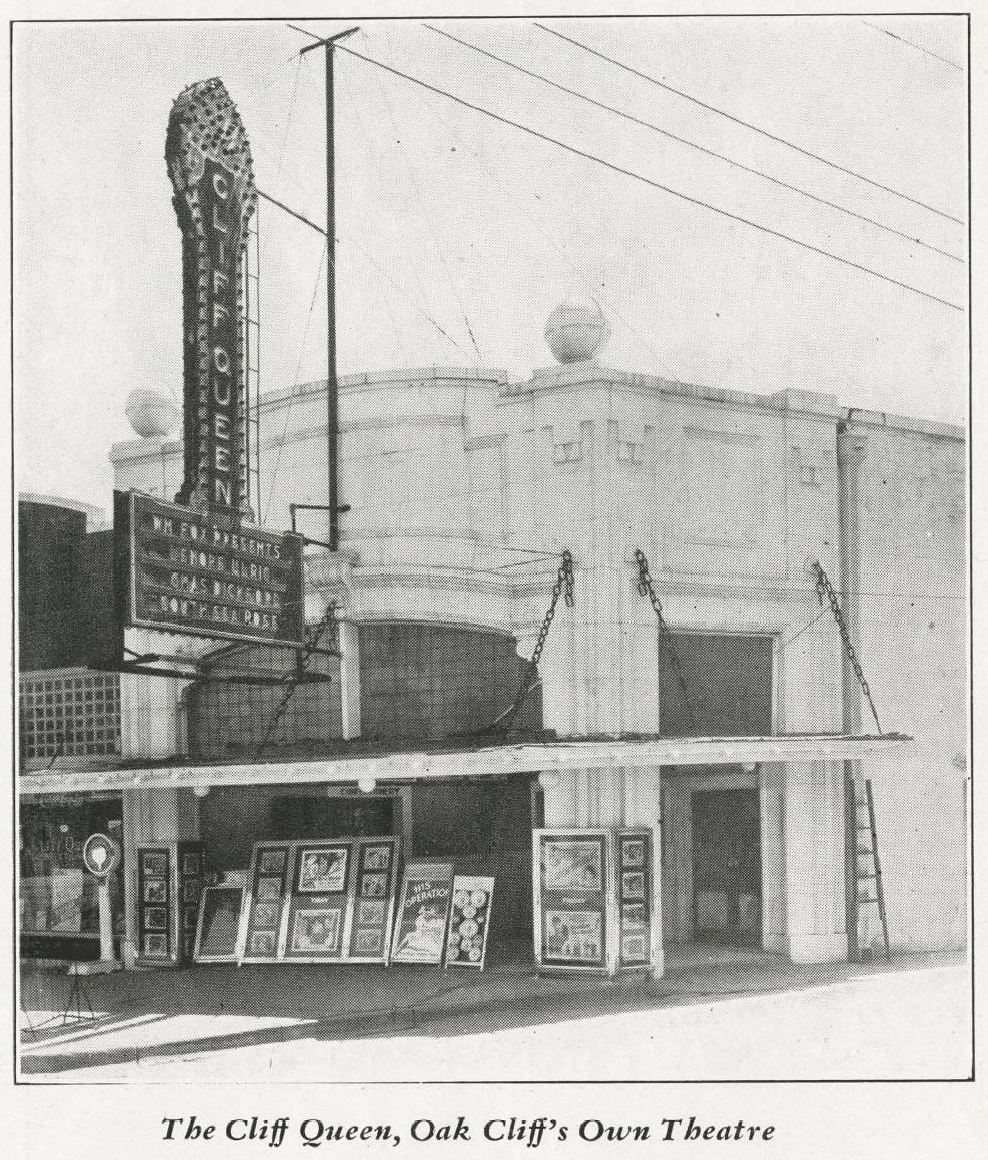
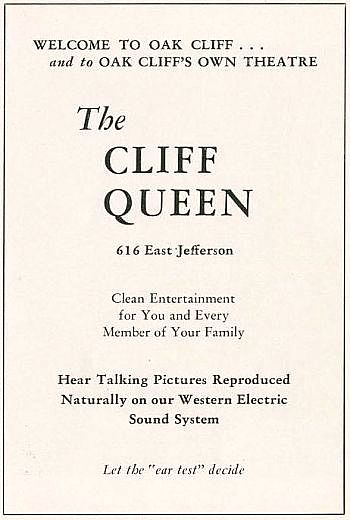
CLIFF QUEEN THEATRE (L. L. Dunbar, proprietor), 616 E. Jefferson. On the marquee: “South Sea Rose,” starring Charles Bickford and Lenore Ulric (1929). Talking pictures — “clean entertainment” for the whole family.

cliff-queen-theater_OC-city-within-a-city_ca-1929_SMU

cliff-queen-theater_ad_OC-city-within-a-city_ca-1929_SMU

*

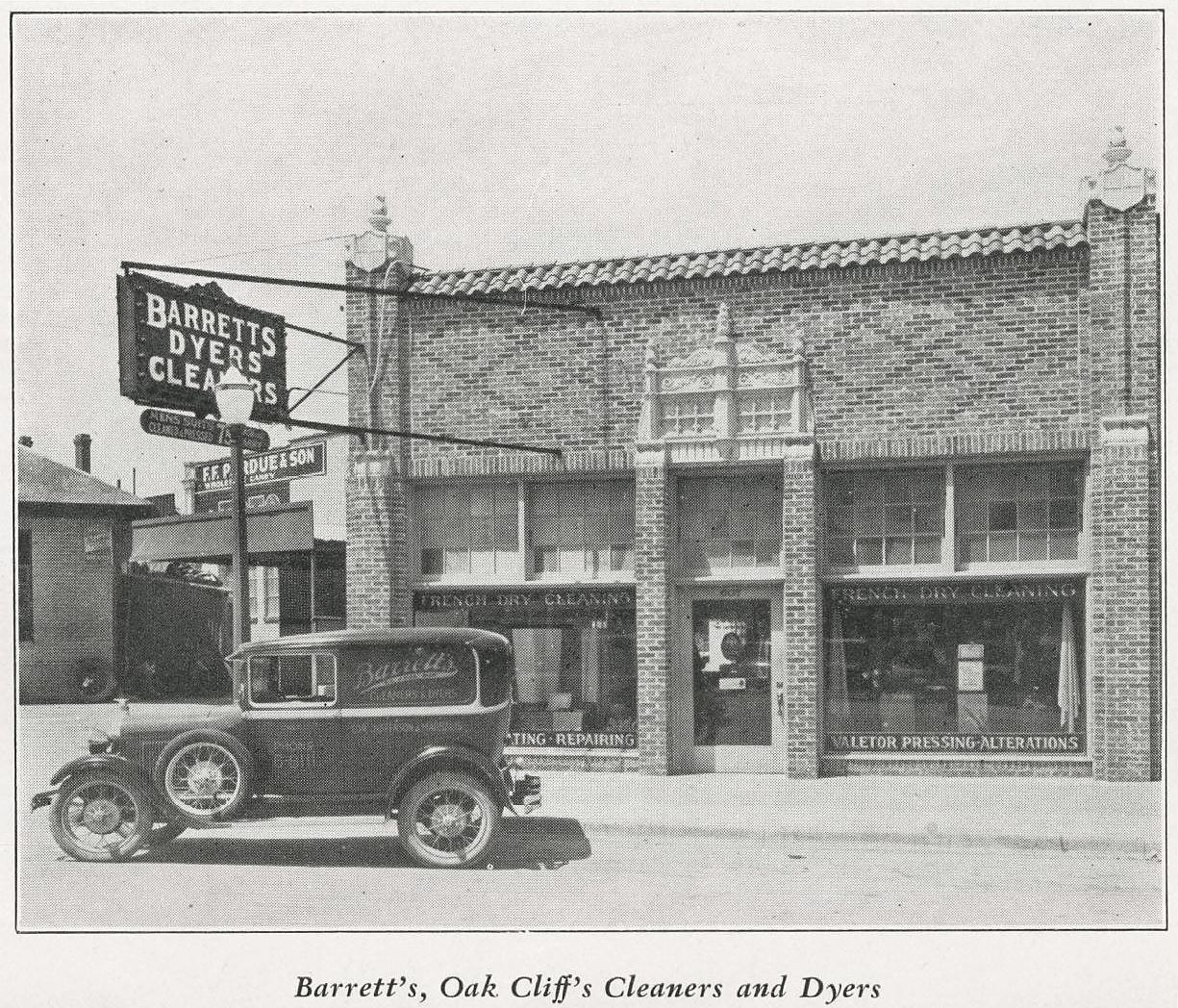
BARRETT’S CLEANERS (E. B. Tipton, prop.), 607 E. Jefferson (building still stands, here). “We clean everything but a guilty conscience.”

barretts-cleaners_OC-city-within-a-city_ca-1929_SMU

barretts-cleaners_ad_OC-city-within-a-city_ca-1929_SMU

*

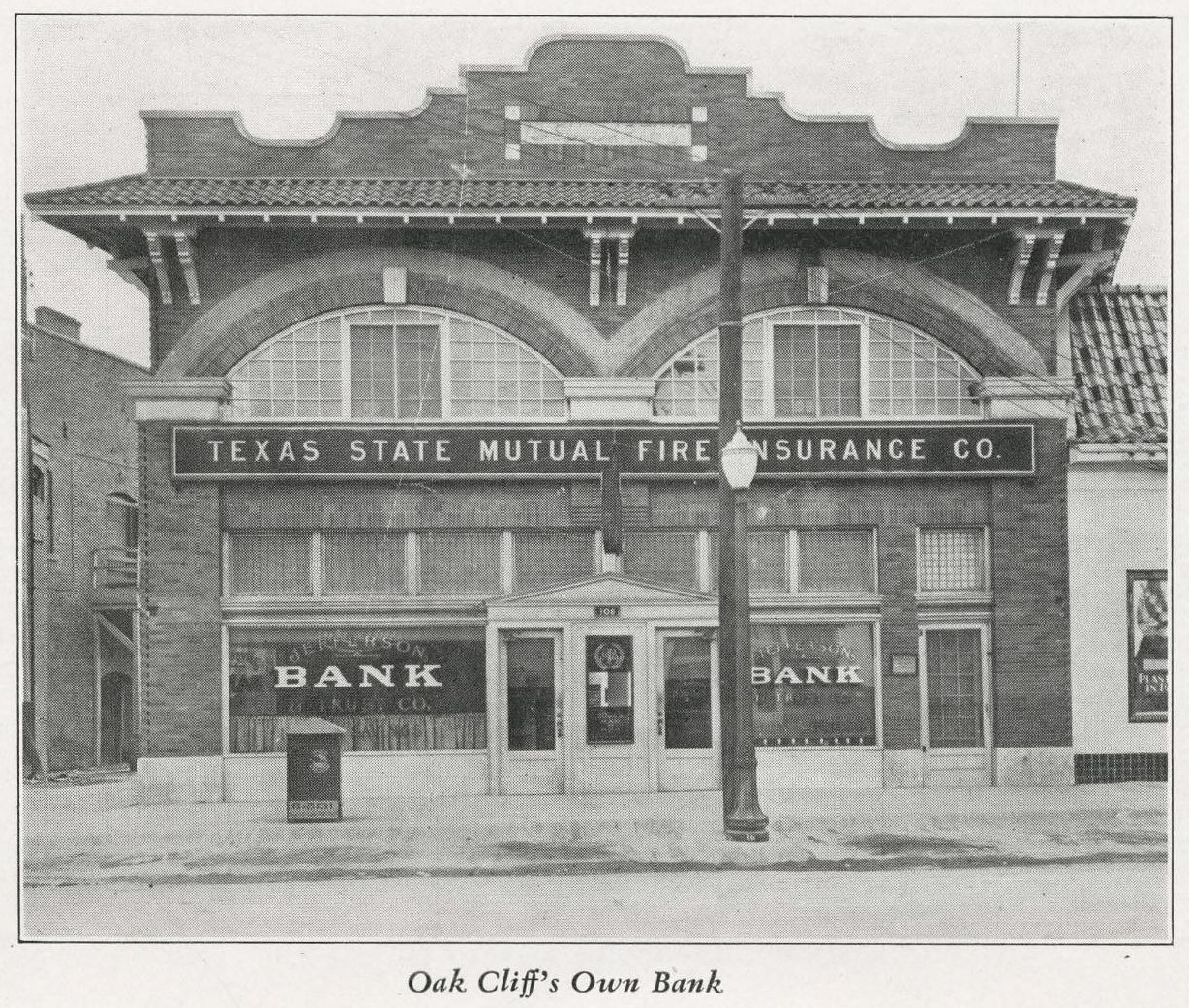
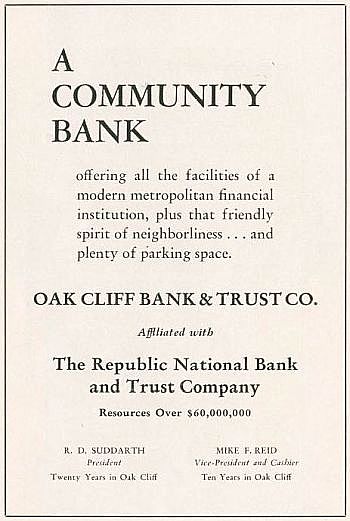
OAK CLIFF BANK & TRUST (aka Jefferson Bank & Trust), 106-108 W. Jefferson (with the Texas State Mutual Life Insurance Co. upstairs). “Plenty of parking space.”

oak-cliff-bank-and-trust_OC-city-within-a-city_ca-1929_SMU

oak-cliff-bank-and-trust_ad_OC-city-within-a-city_ca-1929_SMU

*

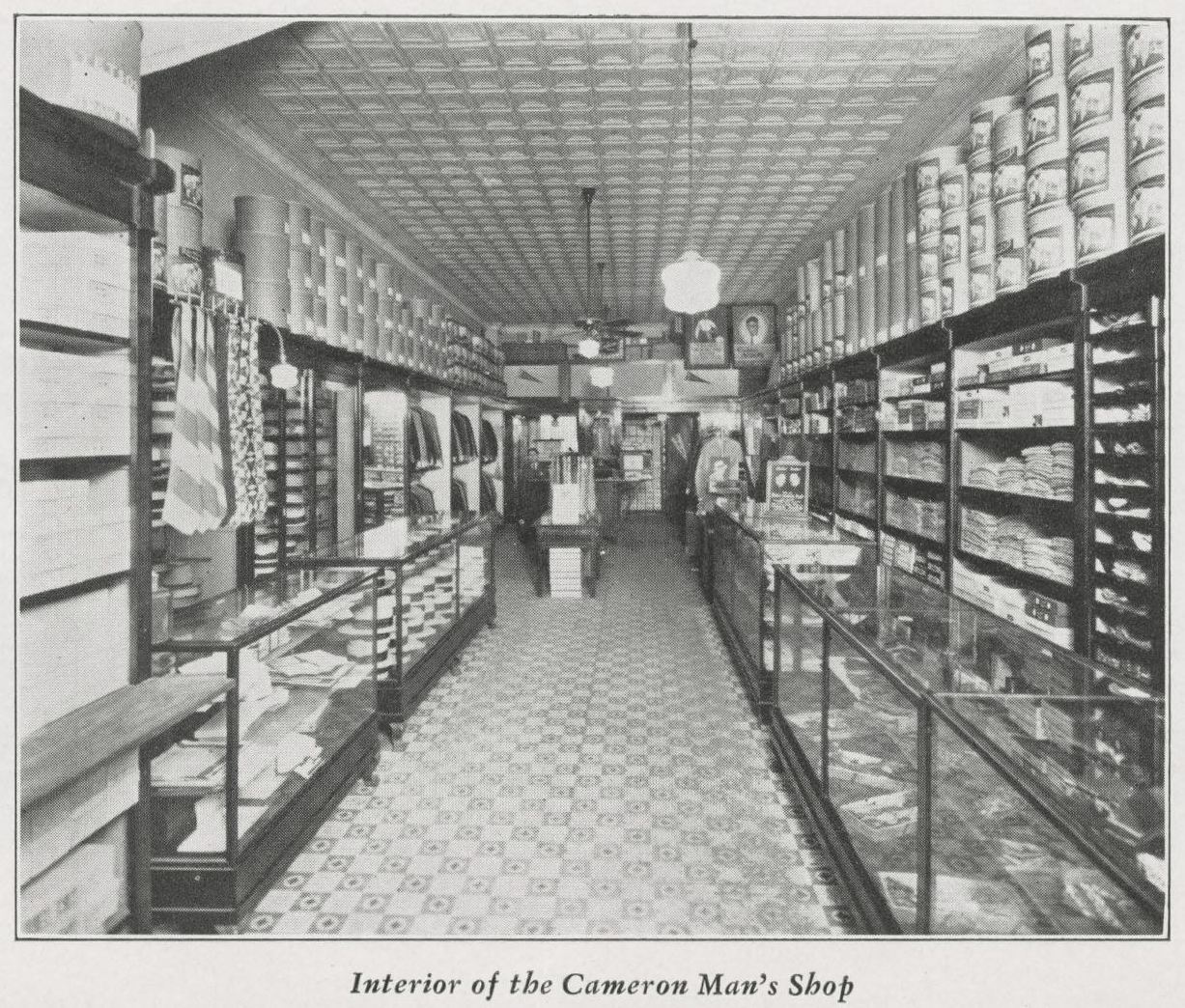
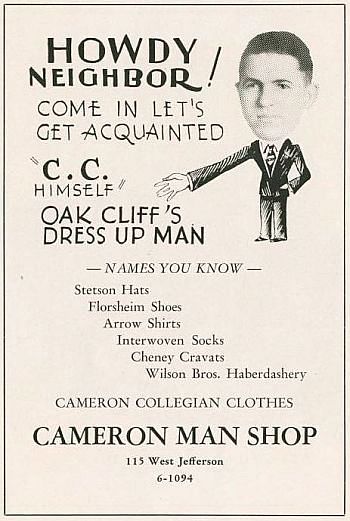
CAMERON MAN SHOP (prop. C. C. Cameron), 115 W. Jefferson. Stop in and say howdy to “Oak Cliff’s dress-up man.”

camerons-mans-shop_OC-city-within-a-city_ca-1929_SMU

camerons-mans-shop_ad_OC-city-within-a-city_ca_1929_SMU

*

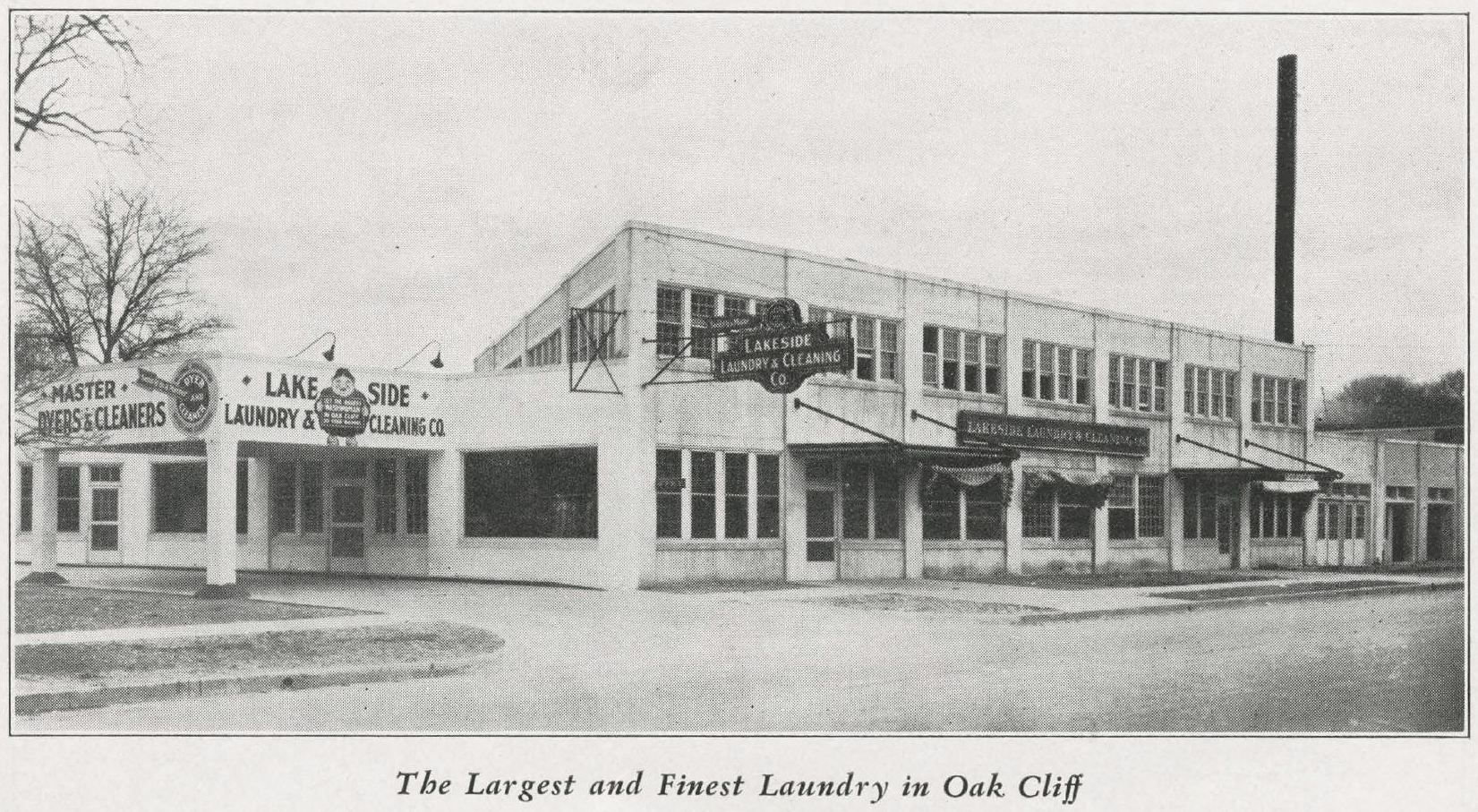
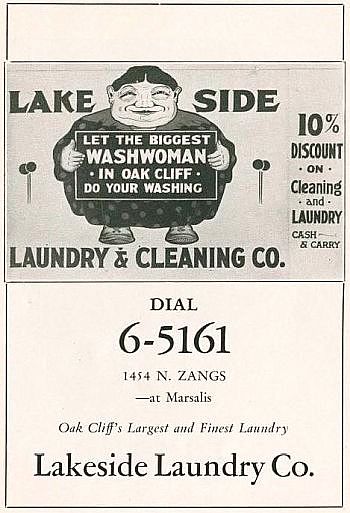
LAKESIDE LAUNDRY & CLEANING CO., 1454 N. Zang (at Marsalis). “Let the biggest washwoman in Oak Cliff do your laundry.”

lakeside-laundry_OC-city-within-a-city_ca-1929_SMU

lakeside-laundry_ad_OC-city-within-a-city_ca-1929_SMU

*

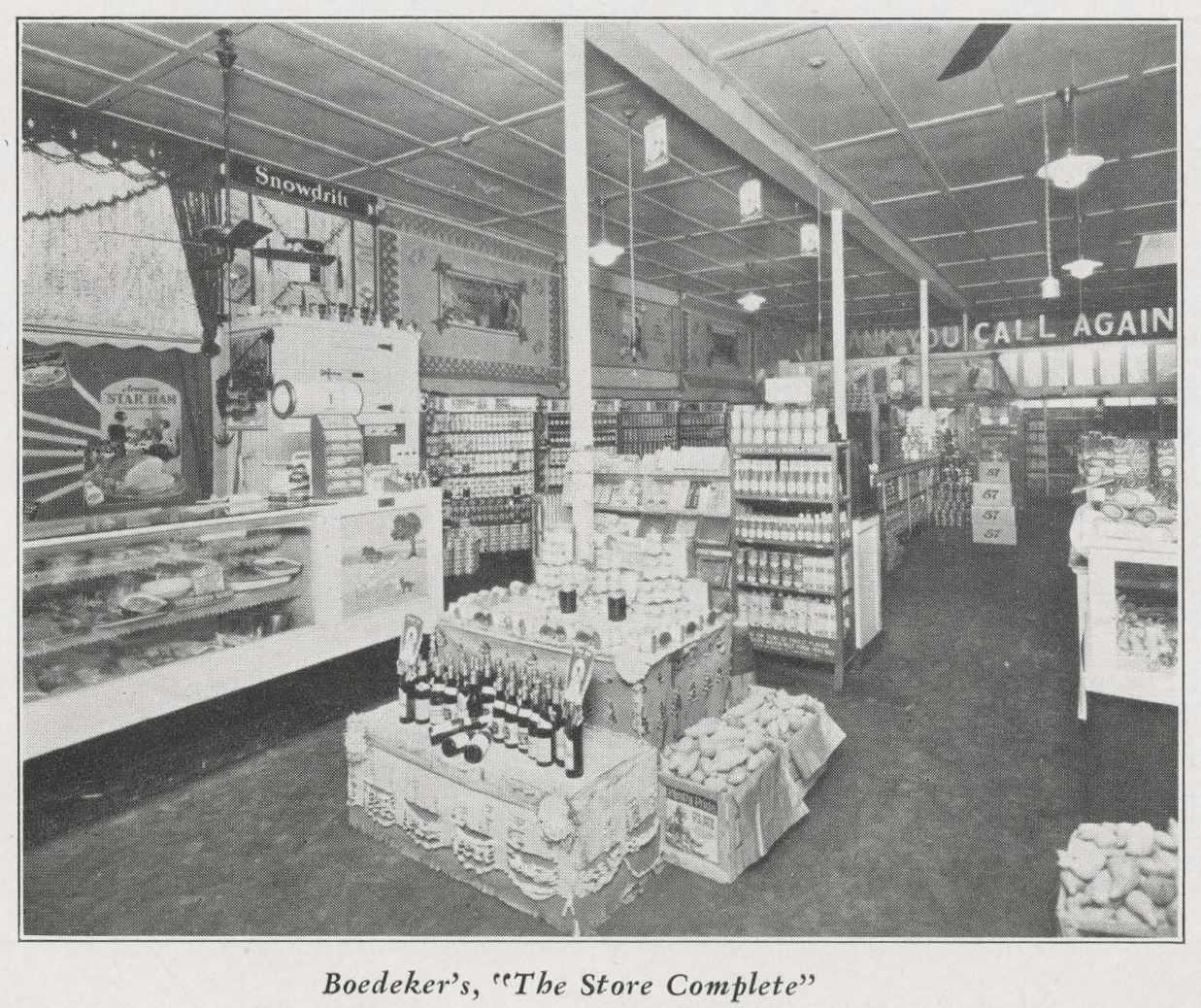
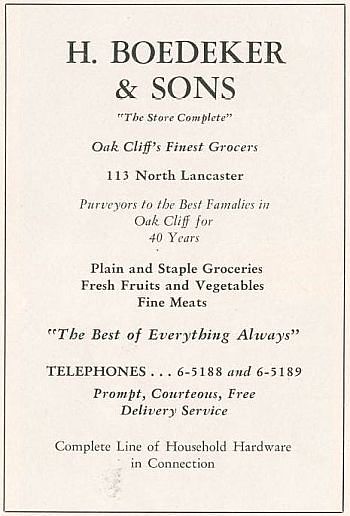
H. BOEDEKER & SONS, Grocery and Hardware (Huber Boedeker, Oscar Boedeker, and W. C. Boedeker), 113 N. Lancaster. “The store complete.”

boedeker_OC-city-within-a-city_ca-1929_SMU

boedeker_ad_OC-city-within-a-city_ca-1929_SMU

*

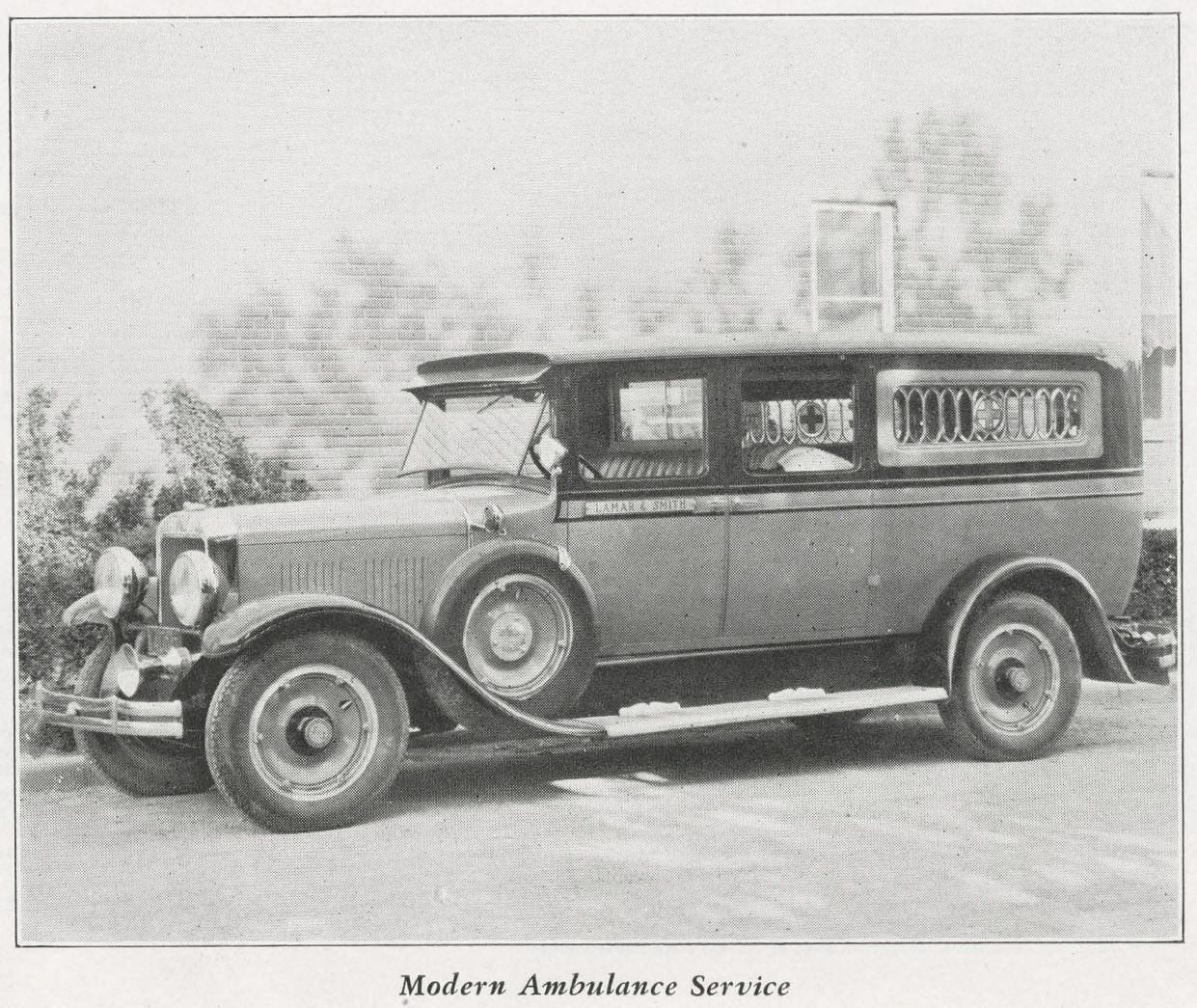
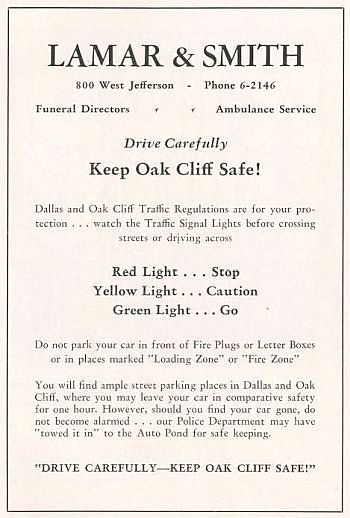
LAMAR & SMITH, Funeral Directors and Ambulance Service, 800 W. Jefferson. “Keep Oak Cliff safe!” (…or there will be unfortunate consequences you will be calling us to deal with).

lamar-and-smith_ambulance_funeral-directors_OC-city-within-a-city_ca-1929_SMU

lamar-and-smith_ambulance_funeral-directors_ad_OC-city-within-a-city_ca-1929_SMU

*

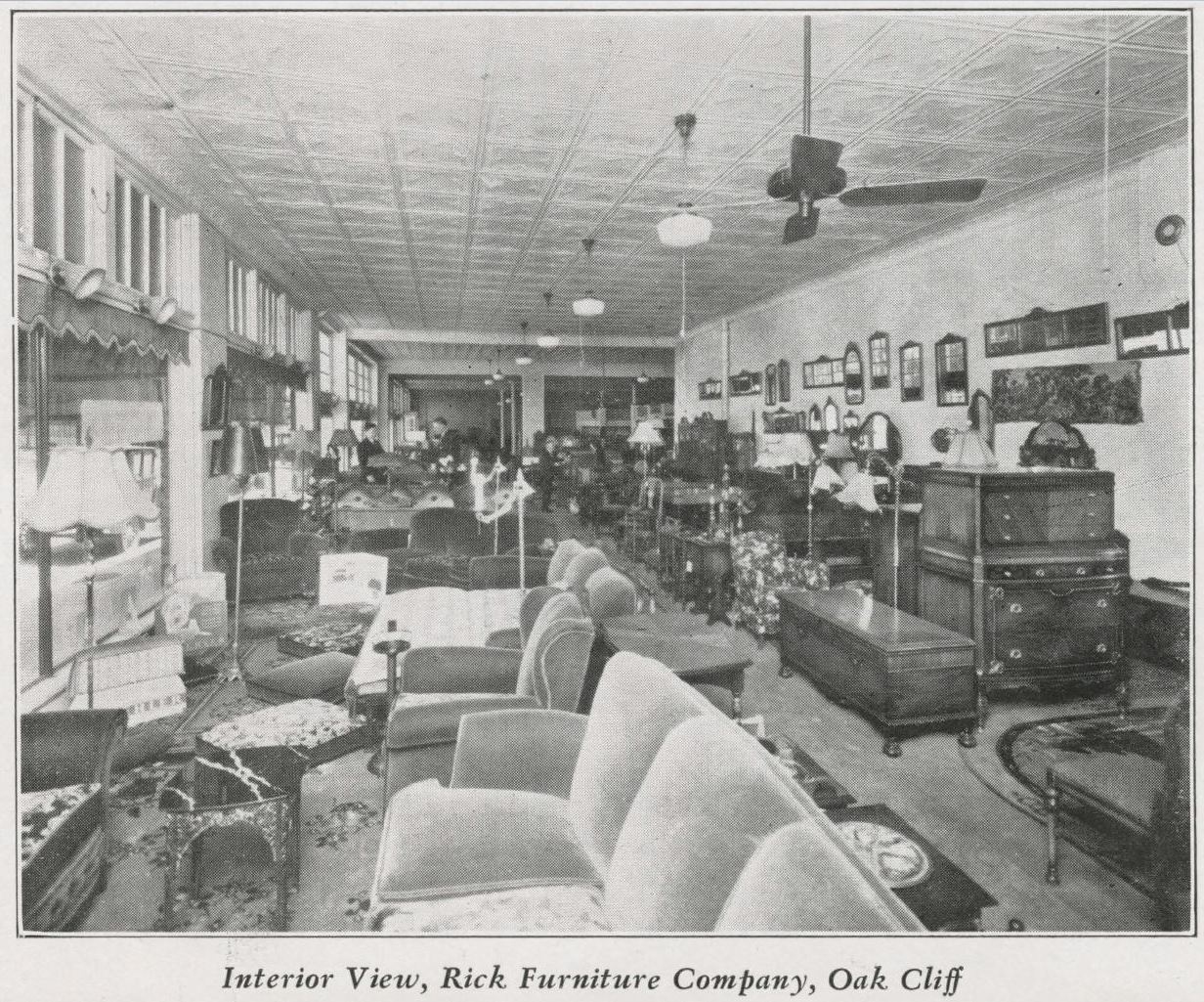
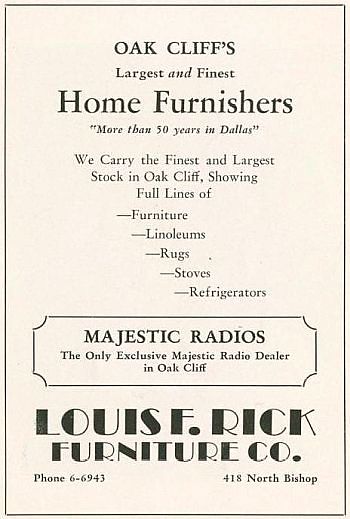
RICK FURNITURE CO. (Louis F. Rick, prop.), 418 N. Bishop. “More than 50 years in Dallas.”

rick-furniture_OC-city-within-a-city_ca-1929_SMU

rick-furniture_ad_OC-city-within-a-city_ca-1929_SMU

*

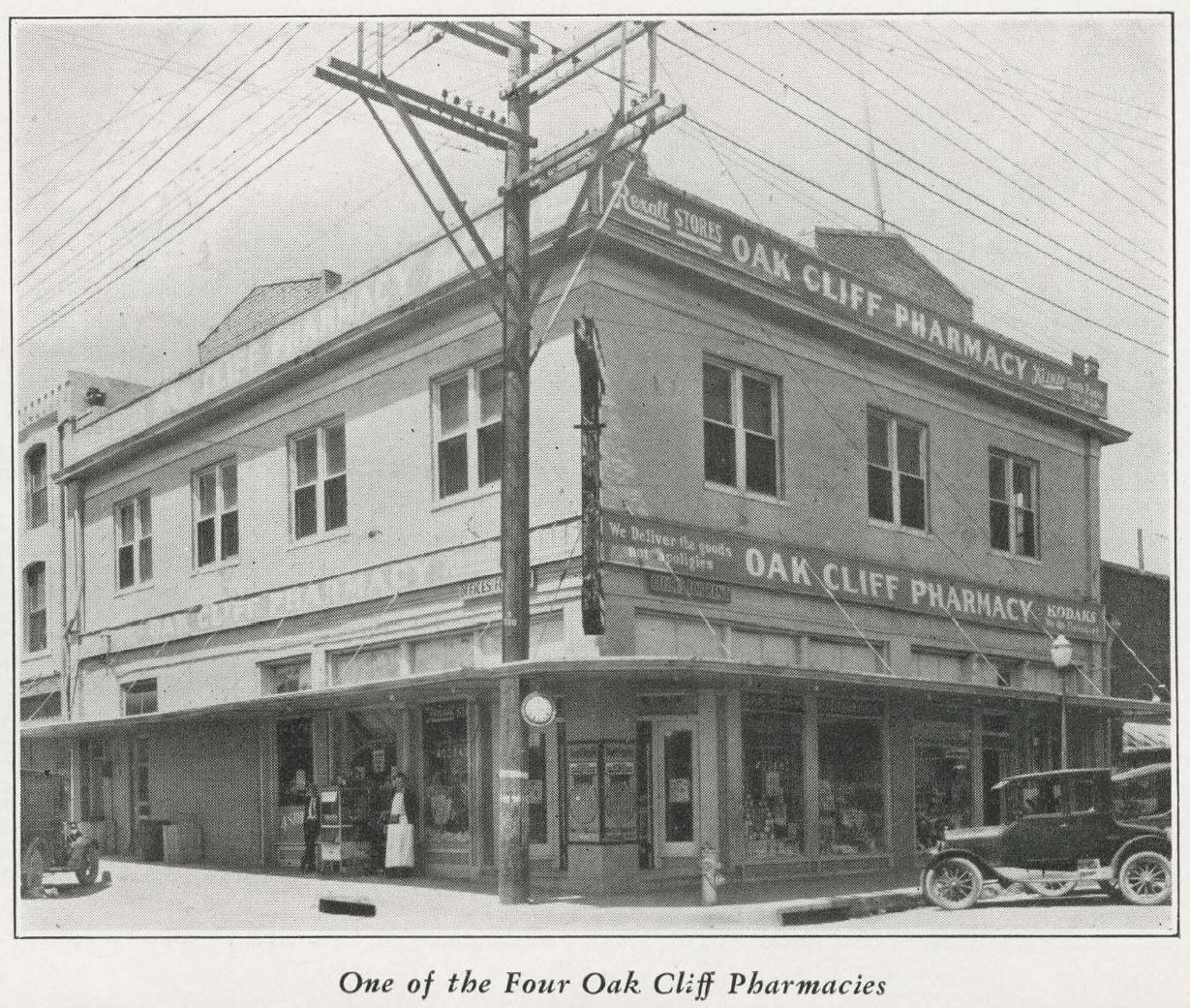
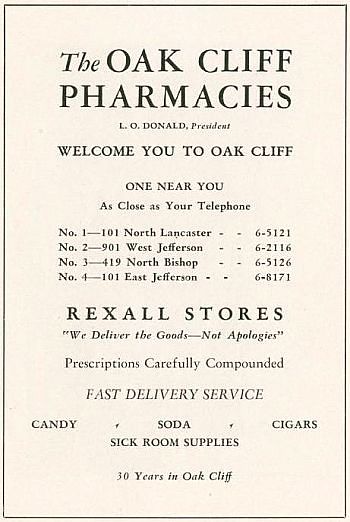
OAK CLIFF PHARMACY, various locations. “Candy, soda, cigars, sick-room supplies.”

oak-cliff-pharmacy_OC-city-within-a-city_ca-1929_SMU

oak-cliff-pharmacy_ad_OC-city-within-a-city__ca-1929_SMU

*

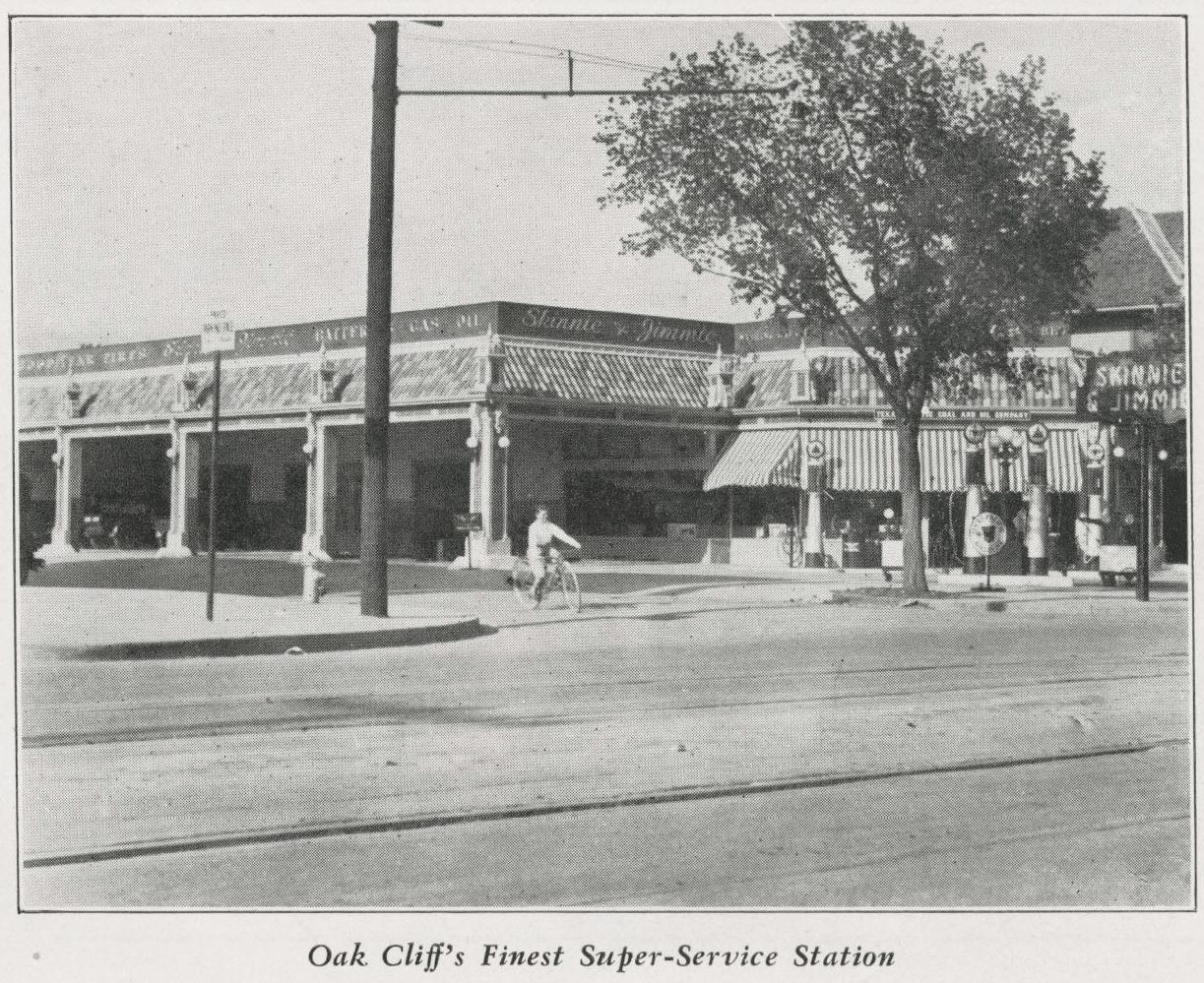
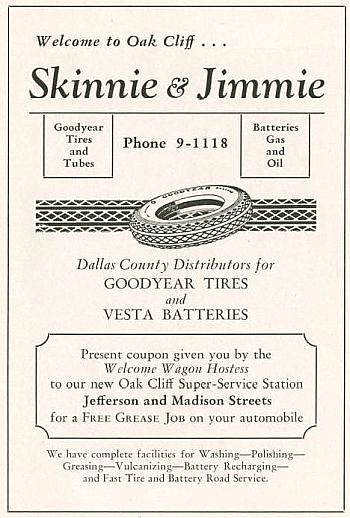
SKINNIE & JIMMIE SERVICE STATION, W. Jefferson and Madison (northeast corner). A free grease job awaits the coupon-bearing newcomer.

skinnie-and-jimmie_OC-city-within-a-city_ca-1929_SMU

skinnie-and-jimmie_ad_OC-city-within-a-city_ca-1929_SMU

*

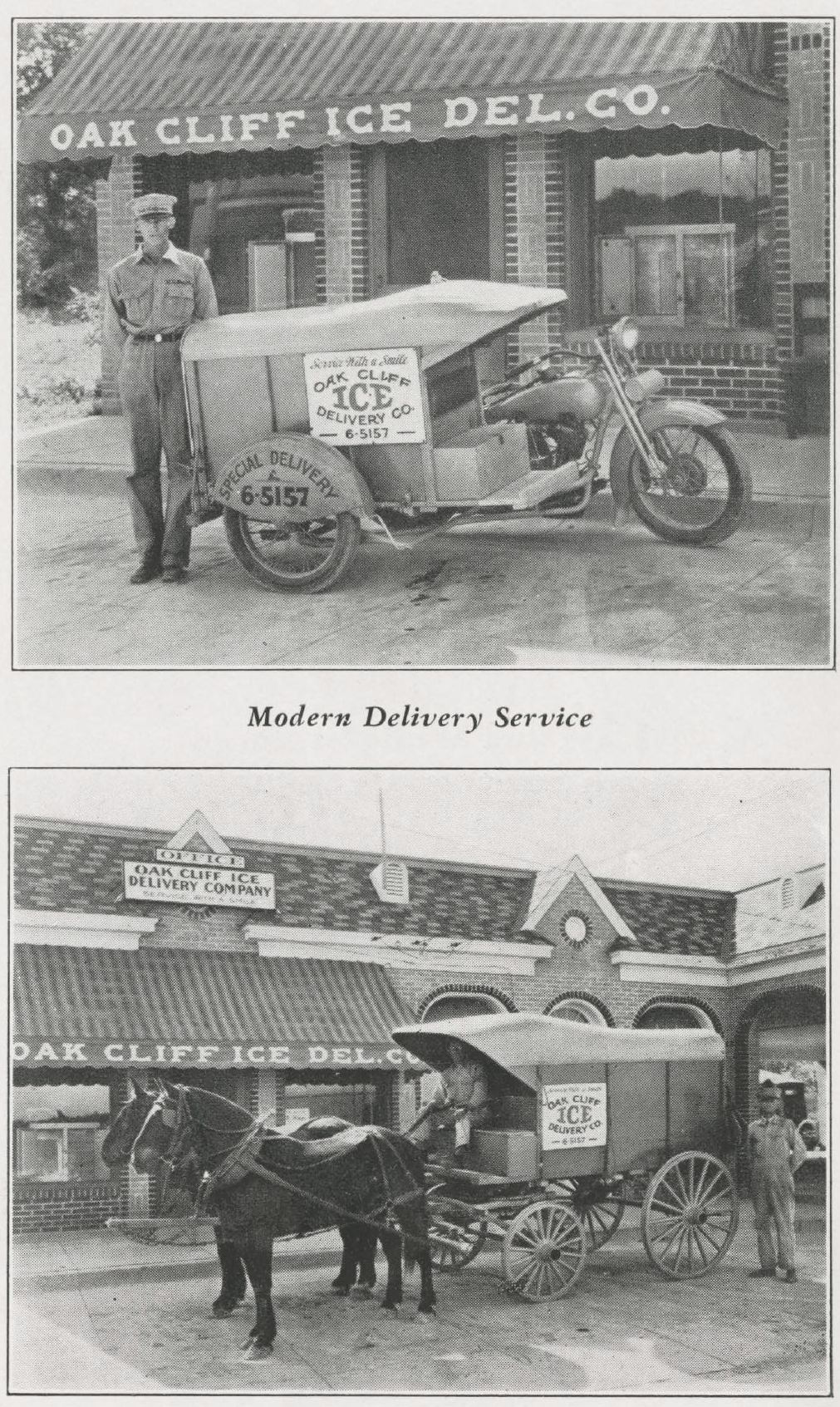
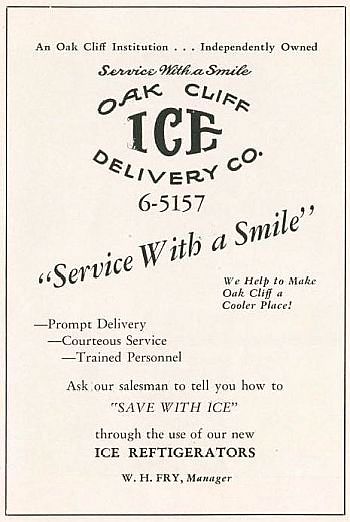
OAK CLIFF ICE DELIVERY CO., 1027 S. Beckley (building may still be standing, here). “We help to make Oak Cliff a cooler place.”

oak-cliff-ice_OC-city-within-a-city_ca-1929_SMU

oak-cliff-ice_ad_OC-city-within-a-city_ca-1929_SMU

*

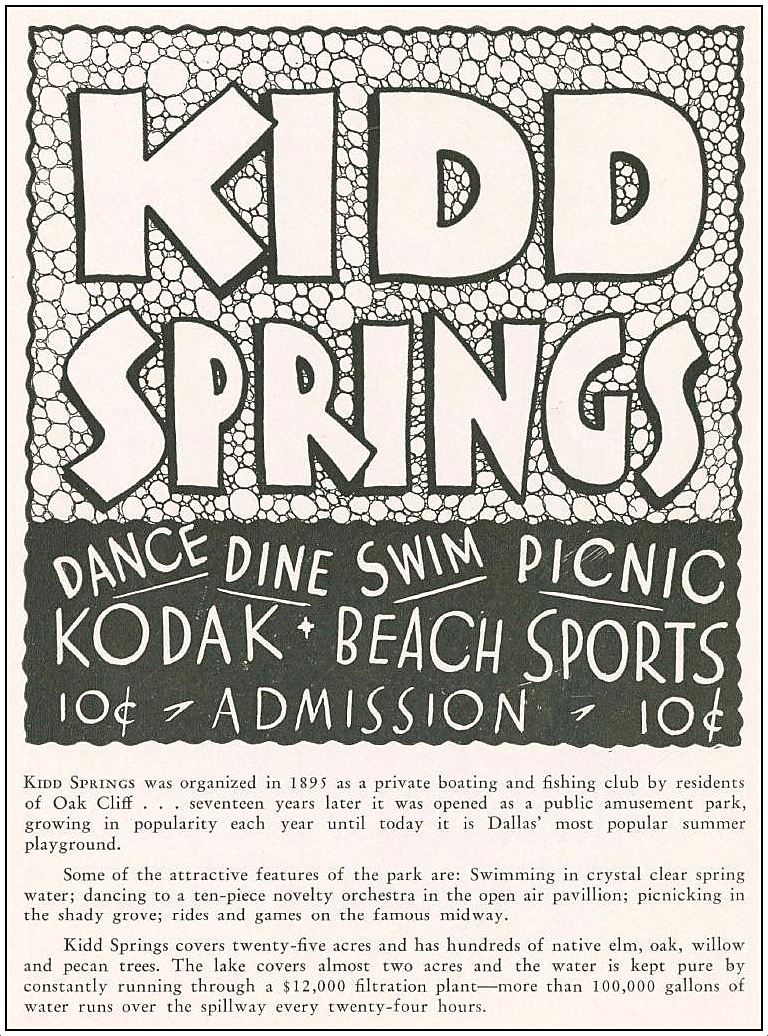
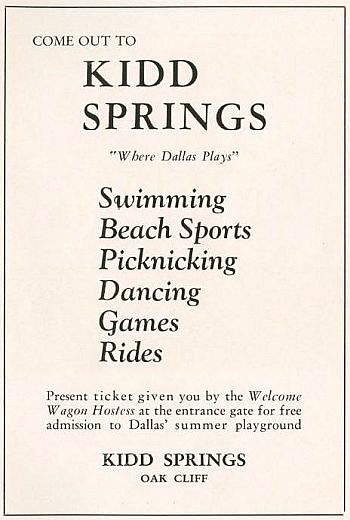
KIDD SPRINGS, 715 W. Canty (see the amusement area on a 1922 Sanborn map, here). “Where Dallas plays.”

kidd-springs_OC-city-within-a-city_ca-1929_SMU

kidd-springs_ad_OC-city-within-a-city_ca-1929_SMU

***

Sources & Notes

“Oak Cliff, A City Within a City,” published by The Welcome Wagon, Dallas, ca. 1929, is from the collection of the DeGolyer Library, SMU Libraries, Southern Methodist University; more information may be accessed here.

*

Copyright © 2018 Paula Bosse. All Rights Reserved.
Titche-Goettinger, Fashions for the Chic Dallas Woman — 1940s

titches_newton-elkin-shoes_1944_my-vintage-vogue

by Paula Bosse

Just a few 1940s ads for fashions available at Titche-Goettinger, one of many of Dallas’ nicer department stores which made the city a fashion meccas for the chic Texas woman.

Above, a 1944 ad featuring the latest in shoes from Newton Elkin (“two new shoe shades: Tanbark — Cedar Green”): “the sling-back pump with perforated Cleopatra vamp” and “Vicki in brown lizard” (which I sincerely hope someone uses as a song title).

Below, a newspaper ad from 1945 featuring other Newton Elkin shoes, these dressier, with fancy paillettes (sparkly decorations). Perfect to wear with the matching black silk turban. (Click to see a larger image.)

titche-goettinger_nov-19451945

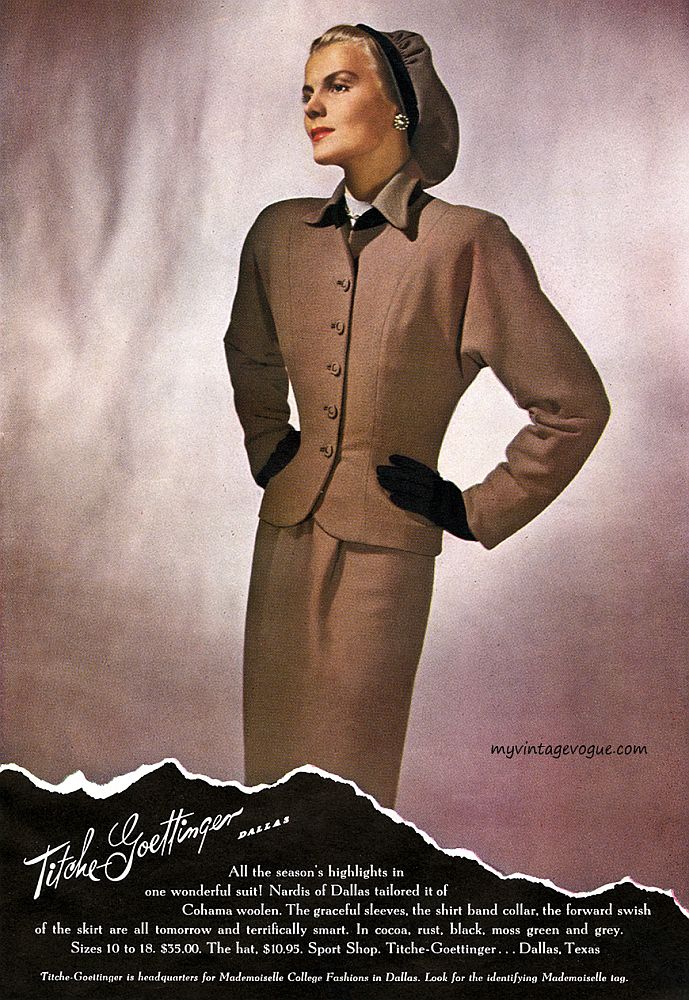
A “Nardis of Dallas” wool suit from 1945, “tomorrow and terrifically smart… in cocoa, rust, black, moss green, and grey.”

titches_nardis-of-dallas_suit_1945_my-vintage-vogue1945

Another “Nardis of Dallas” suit from 1945, this one in “superlative” gabardine: “a suit you’ll wear from swivel chair to swizzle stick… platinum, aqua, lime, red, brown.” Sold separately: a matching hat and slacks (!). “Men prefer it.”

titches_nardis-of-dallas_1945_my-vintage-vogue1945

Speaking of hats: “Sally Victor creates the ‘Big and Little Filly’ for Titche-Goettinger.” …There’s a lot going on up there. (1947)

titche-goettinger_1947_ebay_hats1947

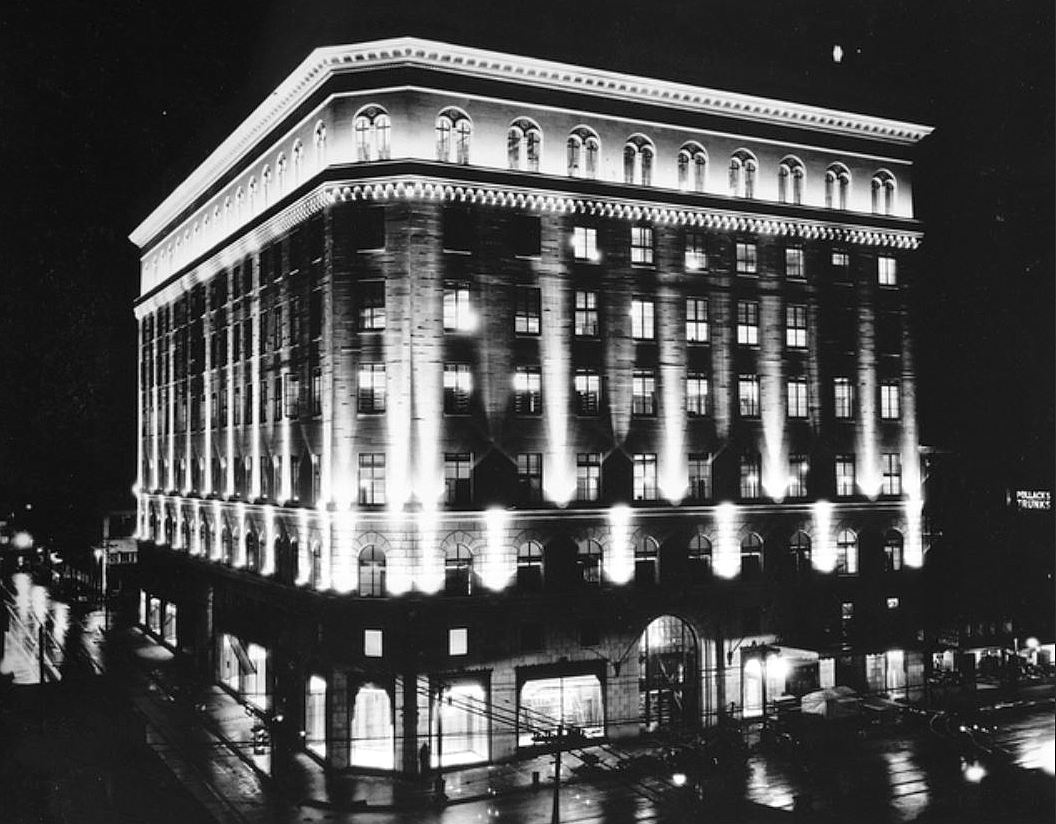
The still-standing Titche’s building at Main and St. Paul was designed by George Dahl in 1929 and was expanded in the 1950s. The women buying these clothes in the 1940s would have shopped at the smaller — though still elegant — store, which looked like this:

titches_unvisited-dallas_jeppsonNoah Jeppson/Unvisited Dallas

When shopping was more sophisticated.

titches-logo_1945

***

Sources & Notes

All color ads from the FABULOUS website My Vintage Vogue, here, here, and here.

Sally Victor ad found on eBay, here.

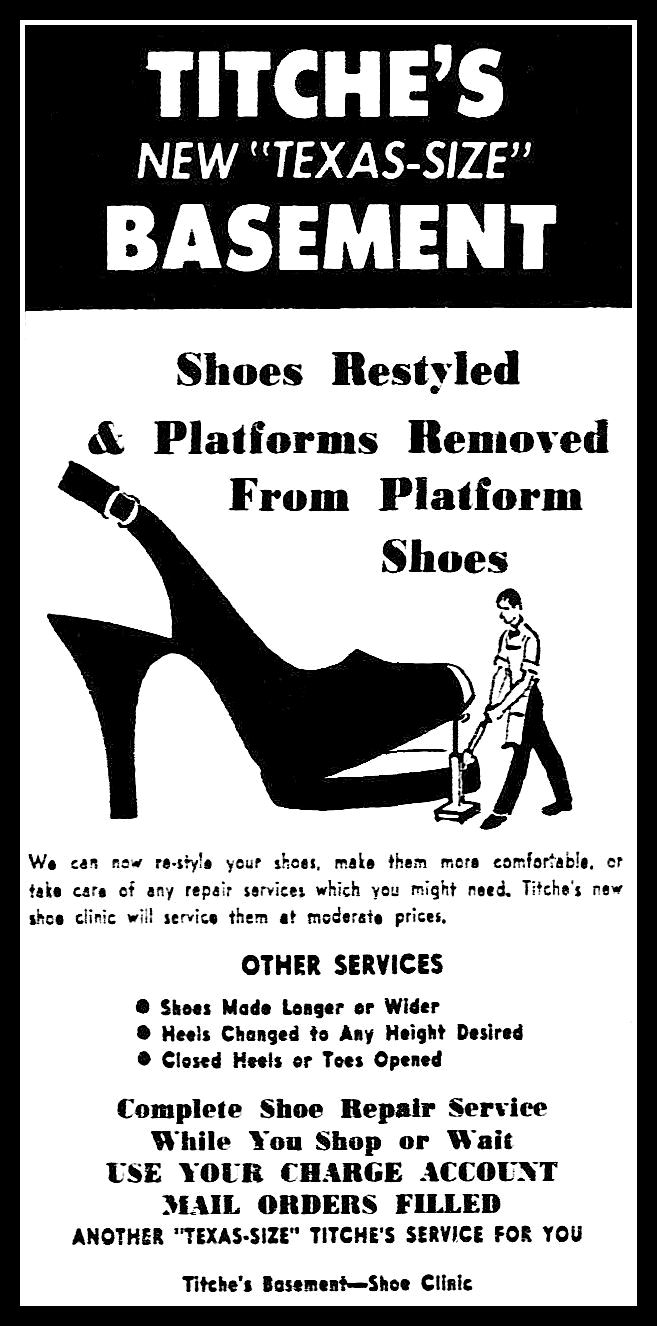
This doesn’t really fit into the 1940s, but I’ve had this 1955 ad for the Titche’s Shoe Clinic kicking around for a few years — this seems like a good place to slip it in. Platforms removed! Open toes closed! Closed toes opened! Pop down to the basement for all your shoe repair and restyling needs.

ad-titches_shoe-clinic_19551955

Check out other Flashback Dallas posts on Titche’s, here.

Flashback Dallas posts on Nardis of Dallas can be found here and here.

All images are larger when clicked.

*

Copyright © 2018 Paula Bosse. All Rights Reserved.
Dallas Ice Factory

dallas-ice-factory_dallas-observer_ebayIce…

by Paula Bosse

Lordy, it was hot today. At one point I looked at my phone and it told me it was 112° (but thanks to the chill factor, it felt like a refreshing 110°). It’s 10:00 p.m. and it’s 100°. That’s too many degrees.

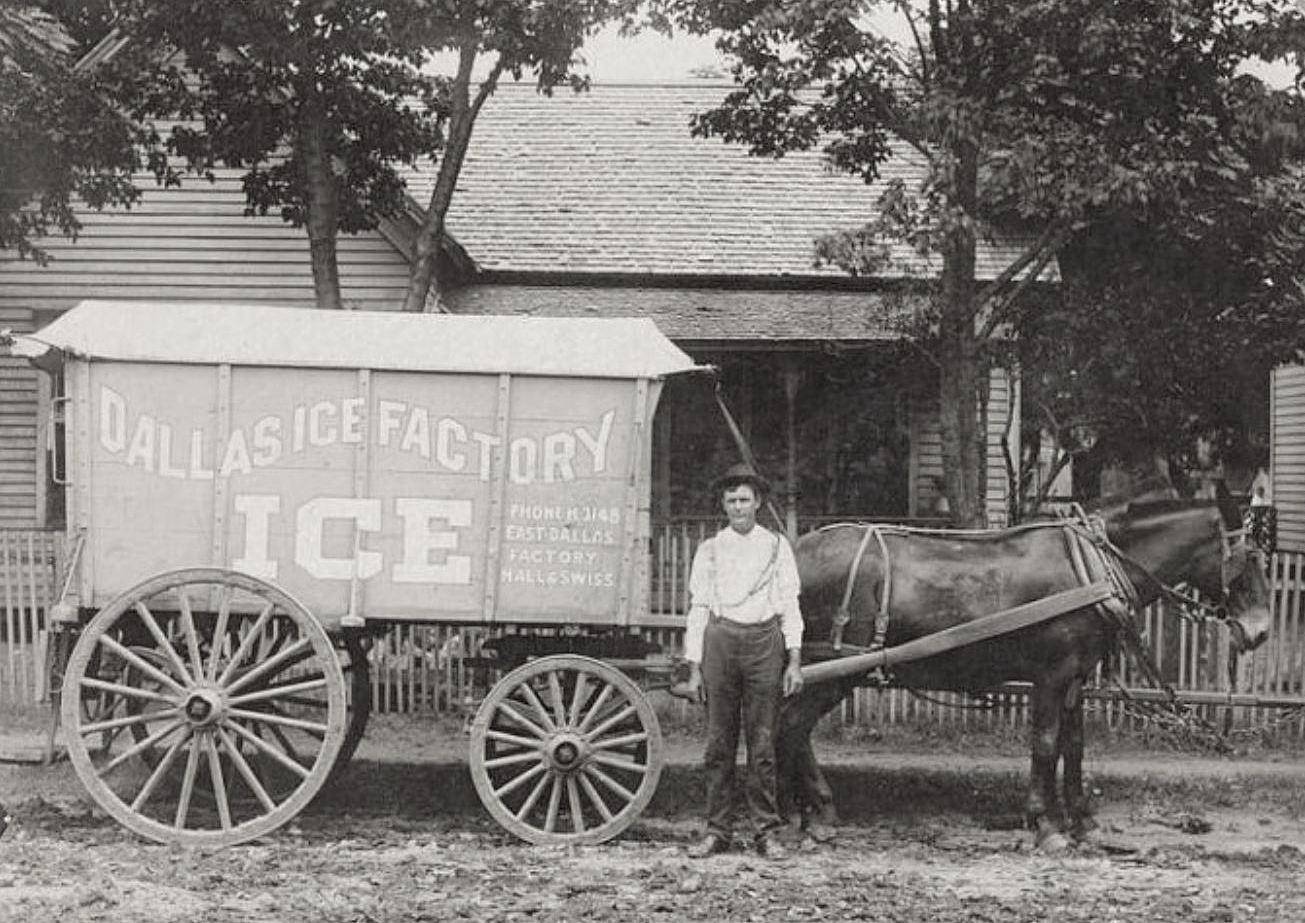
Above is a photo of a horse-drawn Dallas Ice Factory wagon and its driver. There was probably ice in there.

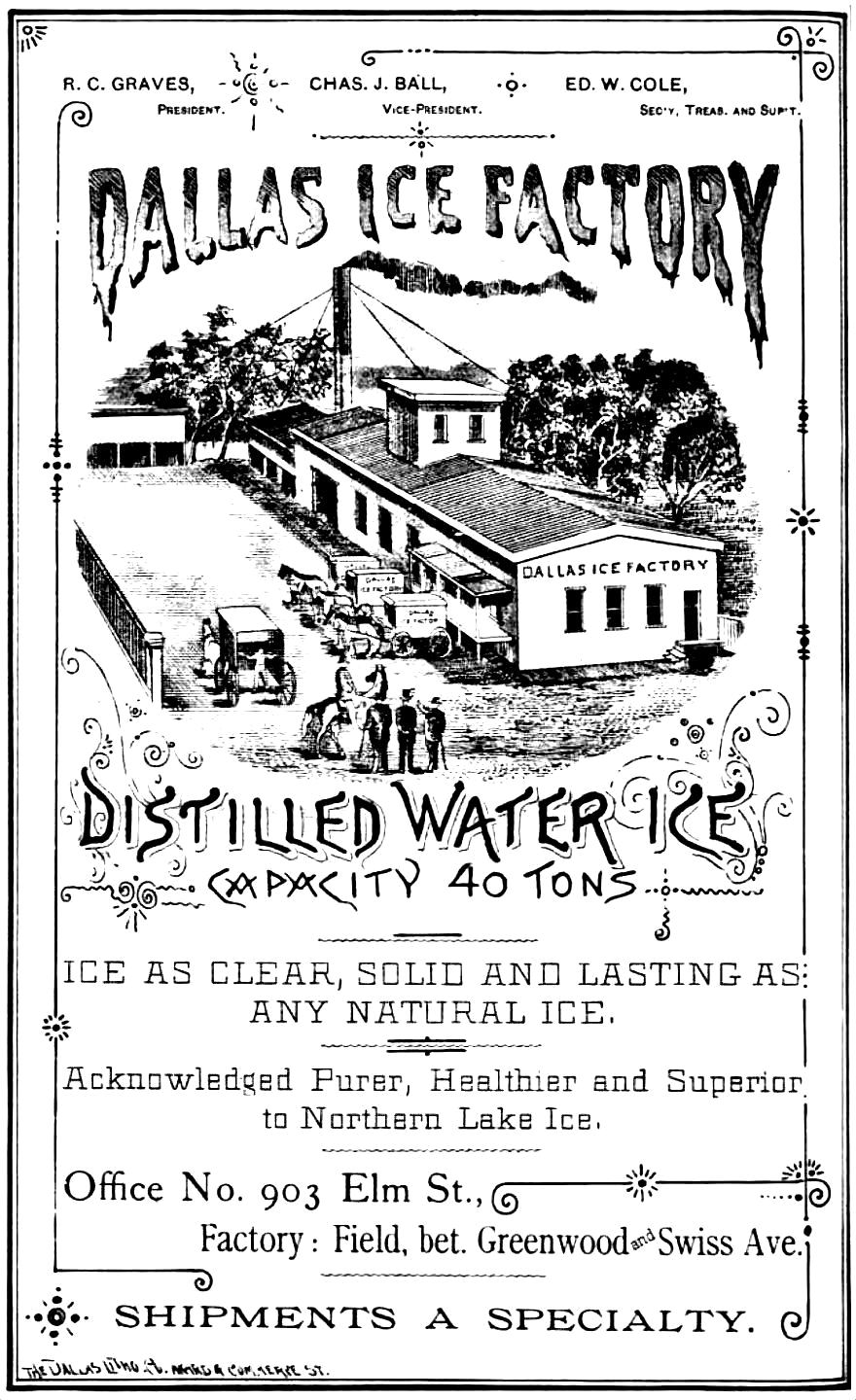
Here’s an ad from 1888 showing the factory:

dallas-ice-factory_1888-directory1888 Dallas directory

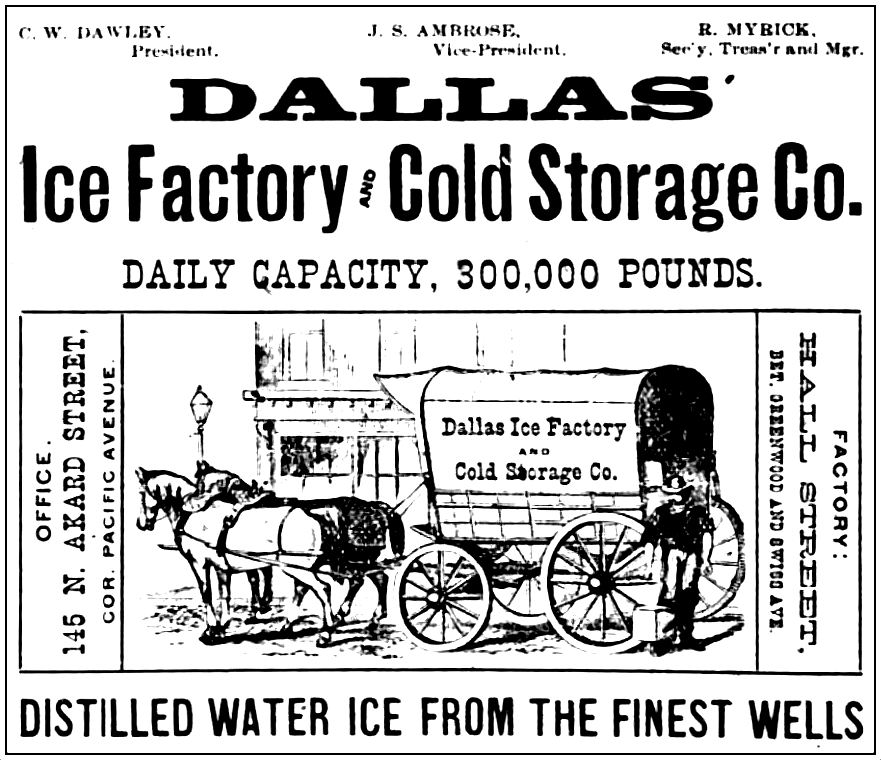
Here’s an ad from 1894 not showing the factory:

dallas-ice-factory_1894-directory1894 Dallas directory

Here’s a link to an 1899 Sanborn map showing you where the Dallas Ice Factory was located (in Old East Dallas, at Swiss and Hall): link.

That’s about all I can muster. It’s too dang hot.

***

Sources & Notes

Photo from a 2011 eBay listing, reproduced in The Dallas Observer by Robert Wilonsky; now owned by Peter Kurilecz.

Ads from Dallas directories.

Heat from the sun.

And here’s an ice-factory-related post I actually did some work on, when I wasn’t feeling like a sweaty, limp dishrag (…a long, long time ago…): “Oak Lawn Ice & Fuel Co.”

*

Copyright © 2018 Paula Bosse. All Rights Reserved.
“Dallas Is a Major Target Area!” — Know Where Your Nearest Fallout Shelter Is

passport-to-survival_nov-1958_art

by Paula Bosse

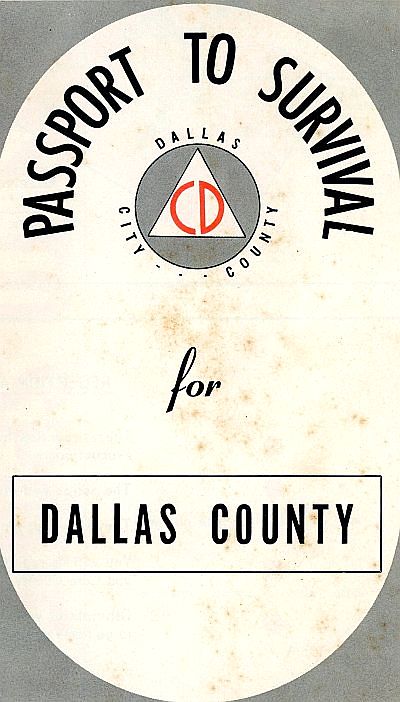
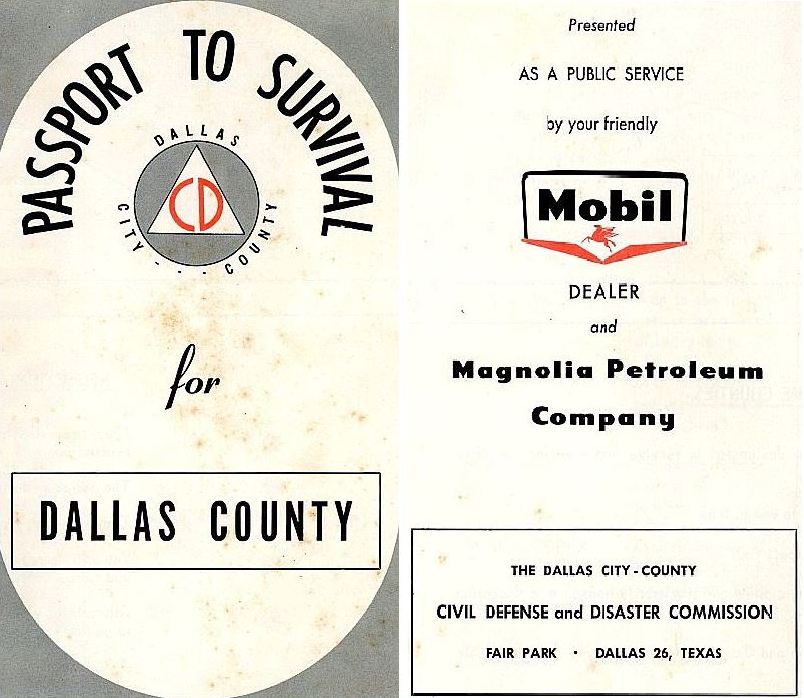
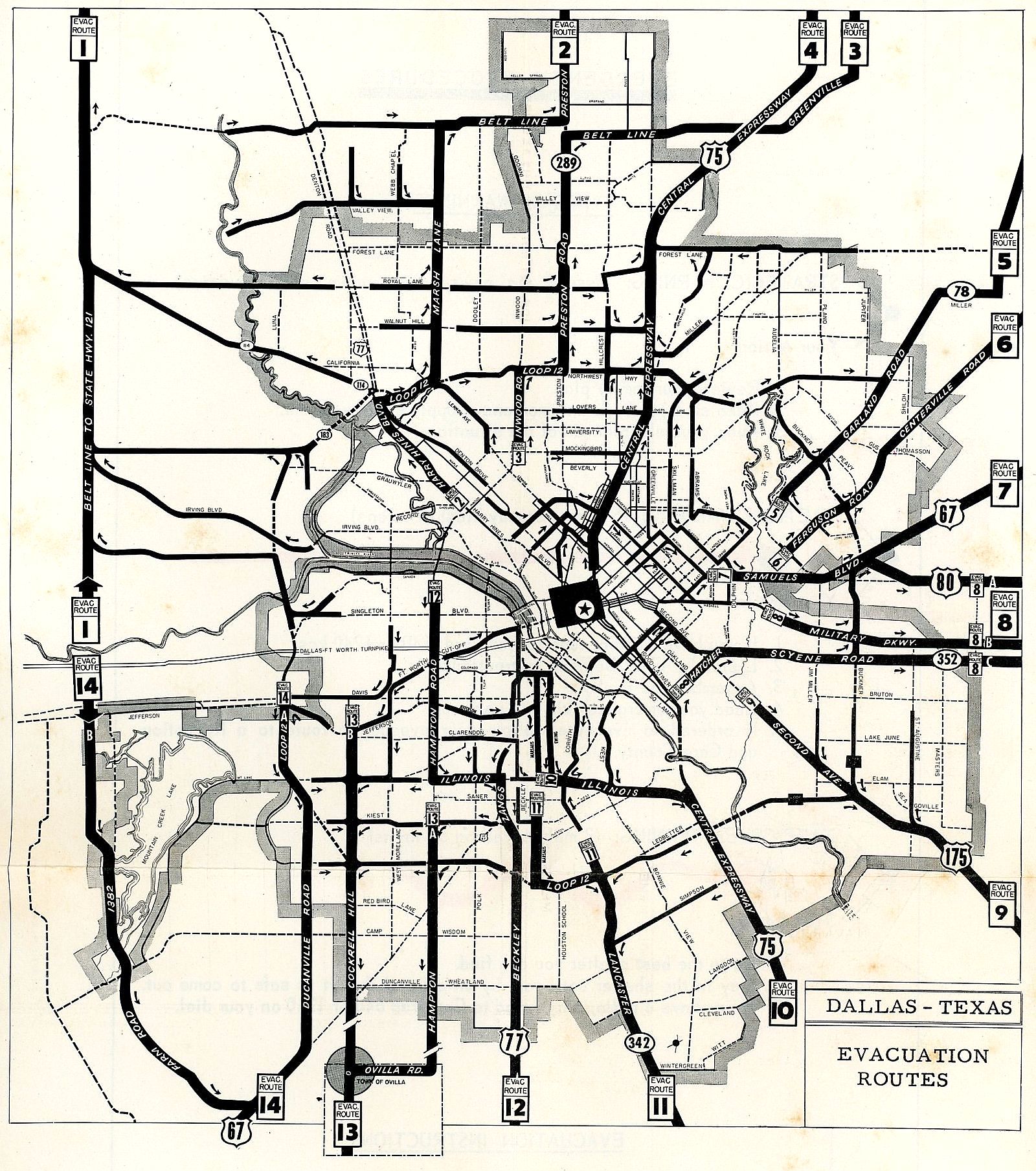
During the Cold War, the fear of nuclear attack was very real in the United States, reaching its peak of anxiety in the late 1950s and early 1960s. In 1958, the Dallas City-County Civil Defense Commission published a free informational pamphlet titled Passport to Survival, which contained evacuation maps for Dallas County, preparation tips, an emergency supply checklist, etc. Though the information contained in this publication could be applied to any disaster or emergency (nuclear-based or otherwise), it was printed a time when visions of Soviet atomic bombs were dancing in the heads of many concerned Americans. And this mild-mannered-looking pamphlet made sure you, Mr. and Mrs. Dallas County, knew that it was talking about a potential direct strike by nuclear missiles: “DALLAS IS A MAJOR TARGET AREA!” (See images from this pamphlet at the end of this post.)

civil-defense_passport-to-survival_front-cover

The arrival of Passport to Survival (“presented as a public service by your friendly Mobil dealer and Magnolia Petroleum Company”) was heralded by a newspaper ad in November, 1958 (its eye-catching “DISASTER CAN HIT DALLAS!” artwork is seen above). (The full ad — with an exhortative letter by Commission chairman John W. Mayo, addressed to the people of Dallas — can be seen here.) I’m not sure how much “survival” there would be in case of a nuclear attack, but, like a good Boy Scout, one should at least be prepared.

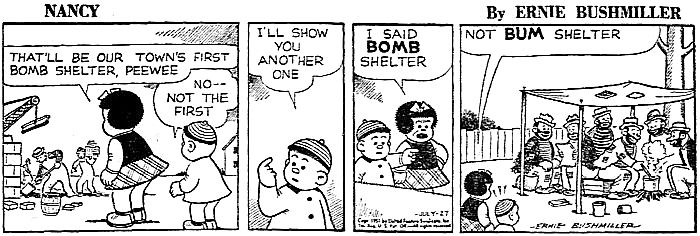
Backyard bomb shelters were necessary in Britain during World War II and saved countless lives during the almost nightly German air raids (I wrote about these shelters on another blog, here), but it was a new concept to post-war America. It wasn’t long, though, before bomb shelters became all the rage in the early ’50s as the Cold War heated up. If it’s becoming a common reference-point on the country’s funny-pages, it’s hit mainstream acceptance.

bomb-shelter_nancy-comic_072751“Nancy” by Ernie Bushmiller, July 27, 1951

I’m not sure how many people were building these shelters, but they were certainly talking about them. When Highland Park Village announced their new underground parking garage in 1953, owners Flippen-Prather made sure to note that the two subterranean parking levels (the lowest of which was 20 feet below street level) would not only accommodate 300 vehicles, but, if needed, it could serve as a bomb shelter for 3,500 very well-dressed Park Cities residents seeking refuge.

But what really caused the mania for nuclear fallout shelters to reach its zenith was the Bay of Pigs Invasion in April of 1961. In May, 1961, ground was broken for construction of the $180,000 Civil Defense Emergency Operating Center at Fair Park (the first such center in Texas), adjacent to the Health and Science Museum. The underground bunker was to serve as a government operating and communications center for Dallas County in the event of a nuclear attack or natural disaster. It would house about 30 people (which would include the mayor and other city officials) and would be stocked with provisions for 14 days. It had its own water supply, electric generators, radios, and telephones. It was built to withstand a 20-megaton nuclear blast three miles away (i.e. downtown, where, presumably, the mayor and other city officials would be working when the 20-megaton bomb lit up Big D). When not in use as a shelter, it was to be maintained by the Health and Science Museum staff, and operated as a center for survival training. For many years it was open to the public, seven days a week. (It’s worth noting that the Civil Defense headquarters in Dallas was also located in Fair Park, at the building housing radio station WRR.)

The man behind the everything-you-need-to-know-about-Civil-Defense website CivilDefenseMuseum.com did a really interesting video walk-through of the surprisingly large decommissioned (if that’s the correct word to use here) Fair Park shelter in 2013:

*

1961 was THE year if you wanted to get into the bomb-shelter business. There was even a three-day “Fallout Survival Show” at Market Hall. You couldn’t open the pages of a magazine or newspaper without seeing ads for personal bomb shelters.

Some of the ads were kind of cozy:

fallout-shelter-ad_sept-1961Sept., 1961

Some were not:

scot_fallout-shelter-ad_sept-1961Sept., 1961

Again, not all that many people were actually building them, but everyone was certainly talking about them. But in just a few short months … no one cared anymore. The ads disappeared. A lot of people who had been trying to sell them went broke. Those who survived (as it were) repurposed their products as “storm shelters” — turns out tornadoes were more of a pressing threat to Dallasites than Russian A-bombs.

Public shelters, however, didn’t disappear. In September, 1962, the very first public fallout shelter in Dallas was officially designated: the Southland Life Insurance Building could accommodate a staggering 30,000 people in the event of disaster. (The plan for this shelter was actually announced in 1954, and the Southland Center opened in 1959, but the official designation was not made until 1962.)

In 1966, Dallas had more than 300 official shelters, able to house 971,000 people:

…323 buildings in the city have been approved as shelters. The owners and managers of 204 of them have entered into agreements with the federal government and with the city to permit their use in emergencies as public shelters…. Shelters in Dallas can house 971,000 persons. Many of the buildings are permanently stocked with water, food supplies and medical supplies sufficient to sustain about 300,000 people for approximately two weeks. (“Maps at Fire Stations To Pinpoint Shelters,” Dallas Morning News, March 9, 1966)

Some of the permanent provisions kept in these places were water, food, “fortified crackers,” hard candy, bandages, iodine, and Geiger counters.

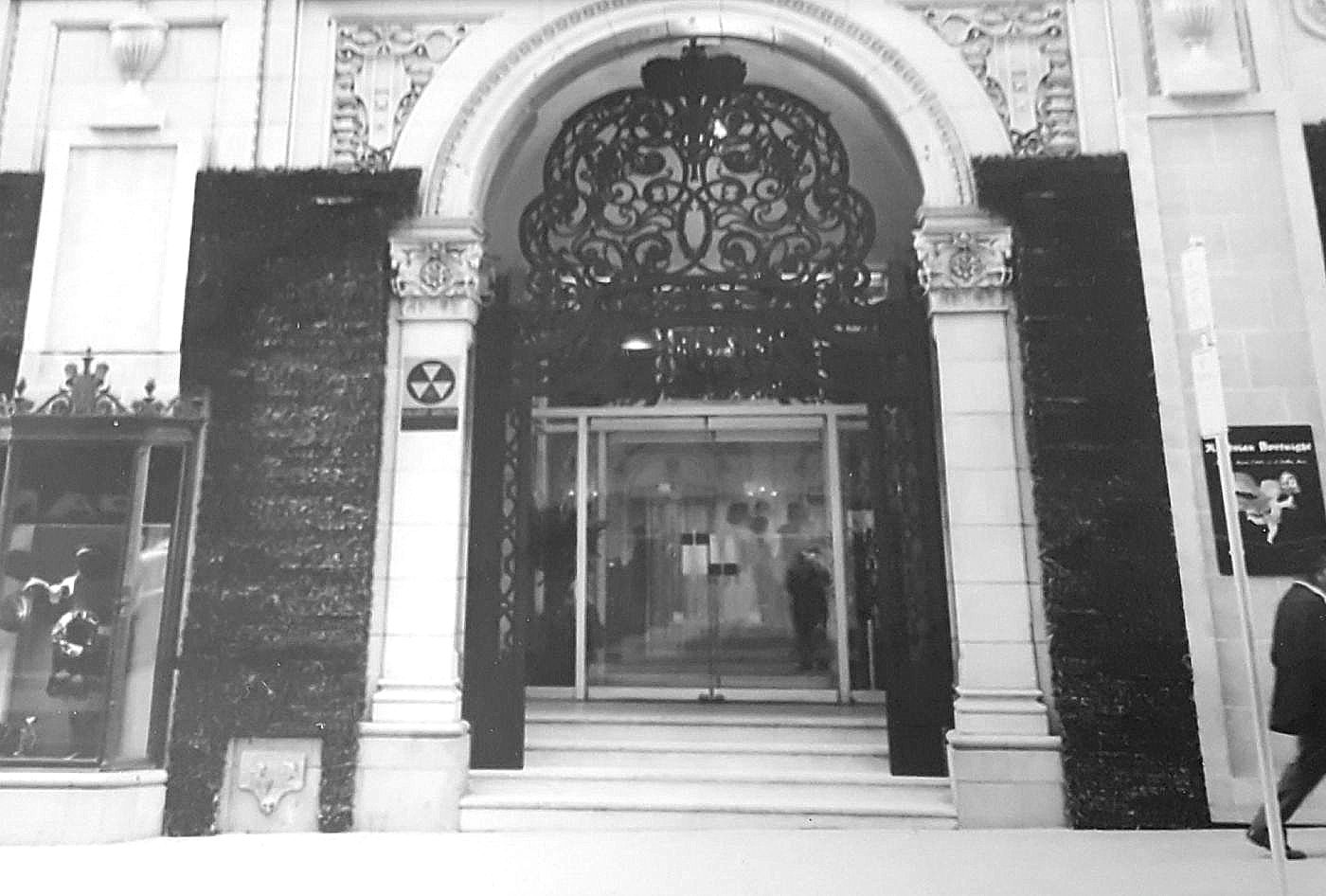
As one might expect, many of the city’s fallout shelters were in downtown buildings, their exteriors adorned with official Civil Defense signage. My favorite? Neiman-Marcus, of course, seen below in 1965, decorated for the Austrian Fortnight.

civil-defense_NM-austrian-fortnight_1965_degolyer_SMU_cropNeiman-Marcus, the most elegant bomb shelter in town…

If I were able to choose where to huddle during a nuclear attack, I think I’d choose Neiman’s. I’m sure Mr. Stanley made sure his basement was comfortable, tasteful, and well-appointed. …And one would have to expect he wouldn’t have had his guests living off hard candy and fortified crackers.

**

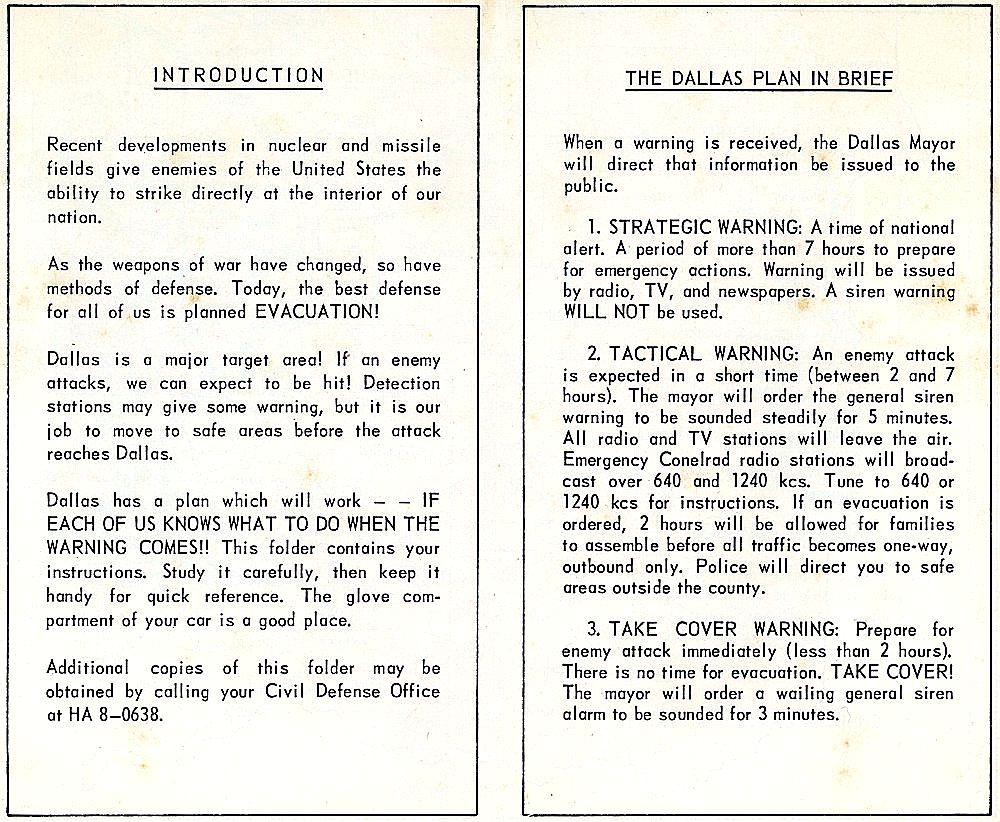
Below are images from the 1958 publication Passport to Survival (thanks to Jeff Hanning for his original scans, which precipitated this post) — all images are larger when clicked.

passport-to-survival_1958_covers

“Introduction” / “The Dallas Plan in Brief” (more information of CONELRAD is in this YouTube video):

civil-defense_passport-to-survival_intro

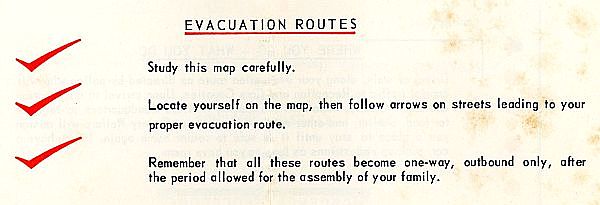
“Evacuation Routes.” (This plan did not sit well with the citizens of Grand Prairie as they were not included in the evacuation plans of either Dallas County or Tarrant County — this seems to have been a particularly odd oversight, seeing as Grand Prairie was a military aviation hub — home to Hensley Field and Chance Vought — and a likely target if DFW were attacked. As an editorial in the Grand Prairie Daily News-Texan stated somewhat bitterly: “Dallas seems to have it all sewed up.”) (Also interesting in these evacuation plans was that the county was divided into four divisions, the boundaries of which corresponded to school districts: District I covered the Dallas Independent School District, Division III covered the Highland Park Independent School District, District IV covered the “Negro Unit,” and District II covered every other school district in Dallas County not covered in the other divisions.)


civil-defense_passport-to-survival_evacuation-routes-map


civil-defense_passport-to-survival_evacuation-routes

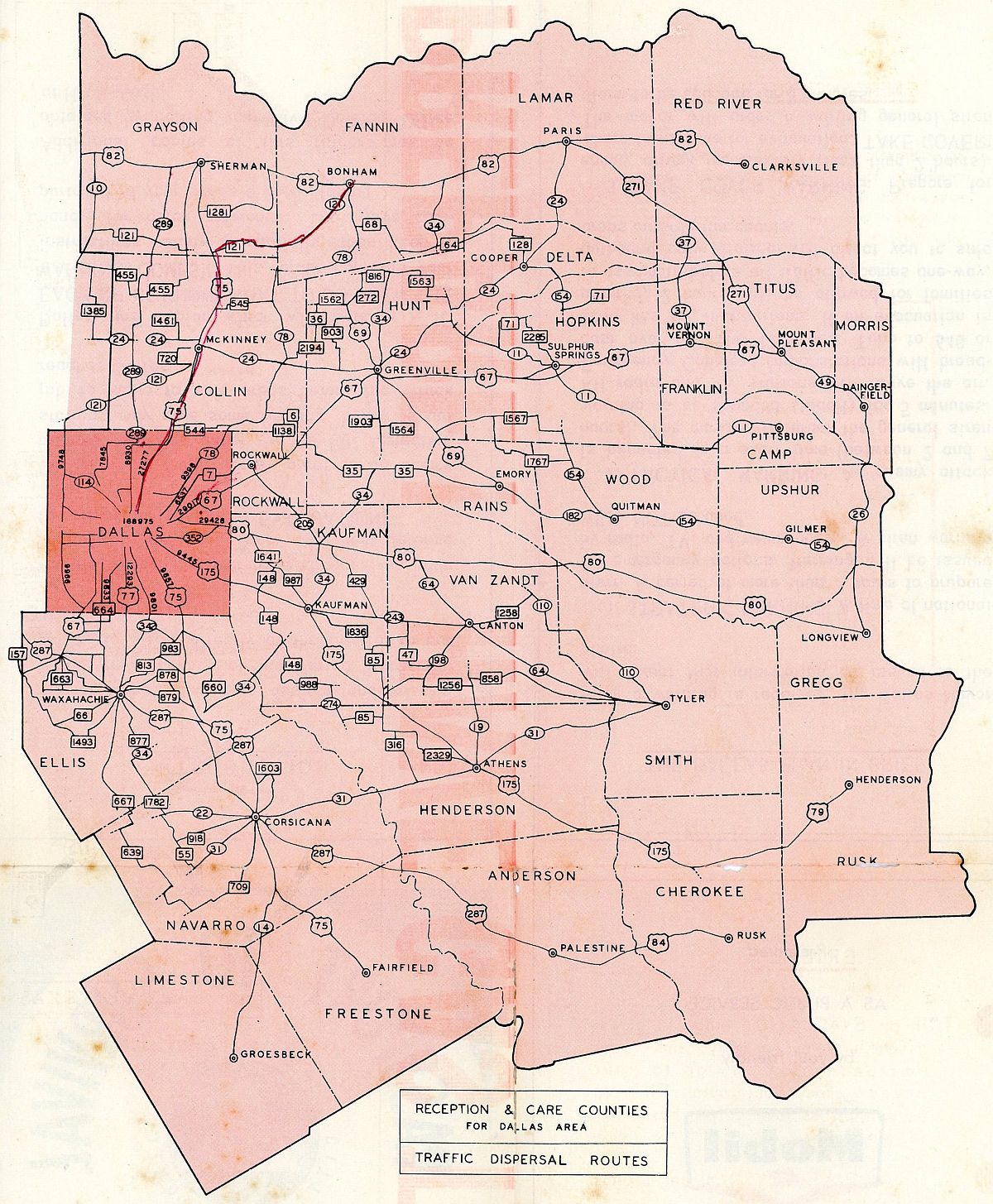
“Reception & Care Counties For Dallas Area Traffic Dispersal Routes” (the person who owned this pamphlet was planning to hightail it to Bonham):


civil-defense_passport-to-survival_traffic-dispersal_map


civil-defense_passport-to-survival_reception-and-care-counties

“Emergency Procedures”:

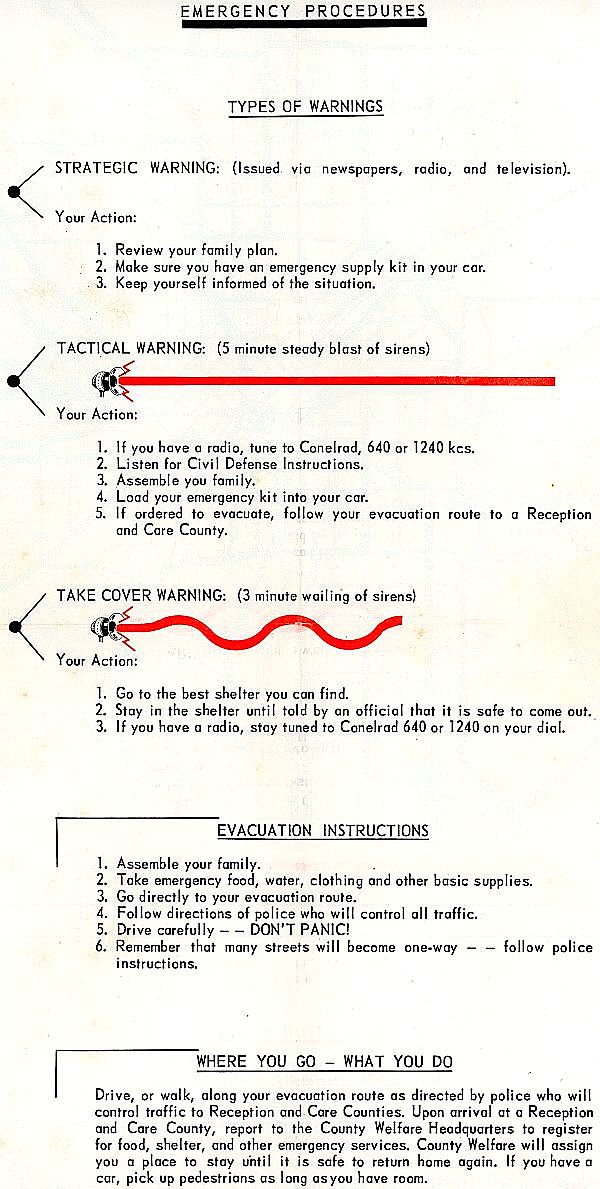
civil-defense_passport-to-survival_warnings

“Emergency Supply Kit” (do NOT forget the can opener!) / “Taking Cover”:


civil-defense_passport-to-survival_preparation

***

Sources & Notes

Thanks again to Jeff Hanning for sending me scans of his Passport to Survival, Dallas County pamphlet.

The photo of Neiman-Marcus is from the DeGolyer Library at SMU. The above image is a really bad photo I took as a reference photo for a project I was working on at SMU last year. The actual photograph in the DeGolyer collection is, of course, much better! Apologies to the DeGolyer Library! I would link to the photo in SMU’s online database, but a scan of that particular photo is not available.

As mentioned above, if you’re interested in Civil Defense in Dallas, the CivilDefenseMuseum.com site is where you need to be. There’s TONS of stuff there. In addition to the great video walk-though of the old Fair Park shelter, there are also several pages of photos here (click through all the pages by following the links at the bottom of each page).

More on the history of United States Civil Defense, here.

And two stories from the Lakewood Advocate on Dallas’ Civil Defense shelters and preparedness can be found here and here.

A related Flashback Dallas post: “A-Bomb in Akard Street! — 1950,” with an eerie illustration of a smoldering downtown Dallas.

*

Copyright © 2018 Paula Bosse. All Rights Reserved.
Willie’s Picnic Or Bust

willie-nelson-picnic_1980_austin-american-statesman“All’s we need is a ride, man…”  (photo: Austin American-Statesman)

by Paula Bosse

Today is July 4th, 2018 — the 45th anniversary of the first Willie Nelson 4th of July Picnic. The photo above — taken by Austin photographer Stanley Farrar — ran in The Austin American-Statesman in 1980 and shows hitchhikers (including a bare-chested Jerry Rundell and his go-with-the-flow cat “Precious”) thumbing it on Highway 71, hoping for a ride to that year’s picnic at Willie’s Pedernales Country Club, near Austin.
Take a look at the full illustrated program for the second Picnic, which was held at the Texas World Speedway in College Station, July 4-6, 1974, in a PDF, here. The huge line-up included Dallas natives Michael Murphey, B. W. Stevenson, Ray Wylie Hubbard (all three of whom attended Adamson High School in Oak Cliff), and singer-turned-DJ-turned-singer, Johnny Dallas (aka Groovey Joe Poovey). To make this a somewhat Dallas-y, I’ve pulled out a few of the local ads (click ’em to see larger images).

willie-nelson-program_cover-1974

willie-nelson-program_1974_kzewKZEW — from the Zoo’s “Progressive Country” years?

willie-nelson-program_1974_wbapWBAP — how much Ray Wylie Hubbard was WBAP playing?

Speaking of Ray Wylie Hubbard:

willie-nelson-program_1974_ray-wylie-hubbard_mother-bluesMother Blues had a one-buck cover charge, and Gertie’s was rocking until 5 a.m.

willie-nelson-program_1974_lyons-pubLyon’s Pub, 5535 Yale Street.

willie-nelson-program_1974_fannie-annsFannie Ann’s, 4714 Greenville Avenue, the lower part of Upper Greenville.

willie-nelson-program_1974_lone-star-opryhouseThe Lone Star Opry House, 1011 S. Industrial, at Cadiz (formerly the Aragon Ballroom). Willie appeared during its first week in business.

willie-nelson-program_iconoclastThe Iconoclast, Dallas’ underground newspaper, which began as Stoney Burns’ Dallas Notes.

willie-nelson-program_1974_ethylsEthyl’s (“Only Bluegrass Club in Dallas”), 3605 McKinney Avenue.

***

Sources & Notes

Top photo from The Austin American-Statesman (July 4, 1980); photo taken by photographer Stanley Farrar. See many more photos of Willie Nelson 4th of July Picnics in an American-Statesman slideshow, here.

I wonder if Willie’s picnics have their own Wikipedia page? Of COURSE they do! Have at it.

I’ve written about it before, but, hey, it’s the 4th of July, so here’s Willie’s very … um, unusual ode to Dallas:

*
Happy 4th!

*

Copyright © 2018 Paula Bosse. All Rights Reserved.