Flashback : Dallas

A Miscellany: History, Ads, Pop Culture

Category: Architecture/Significant Bldgs.

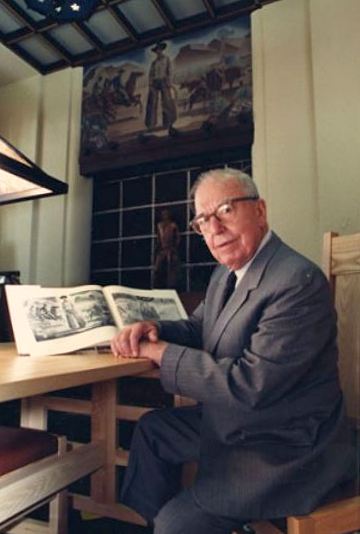
Architect Donald Barthelme’s Hidden Signature on the Hall of State

hall-of-state_barthelme_080917“B-A-R-T-H-E-L-M-argh!”

by Paula Bosse

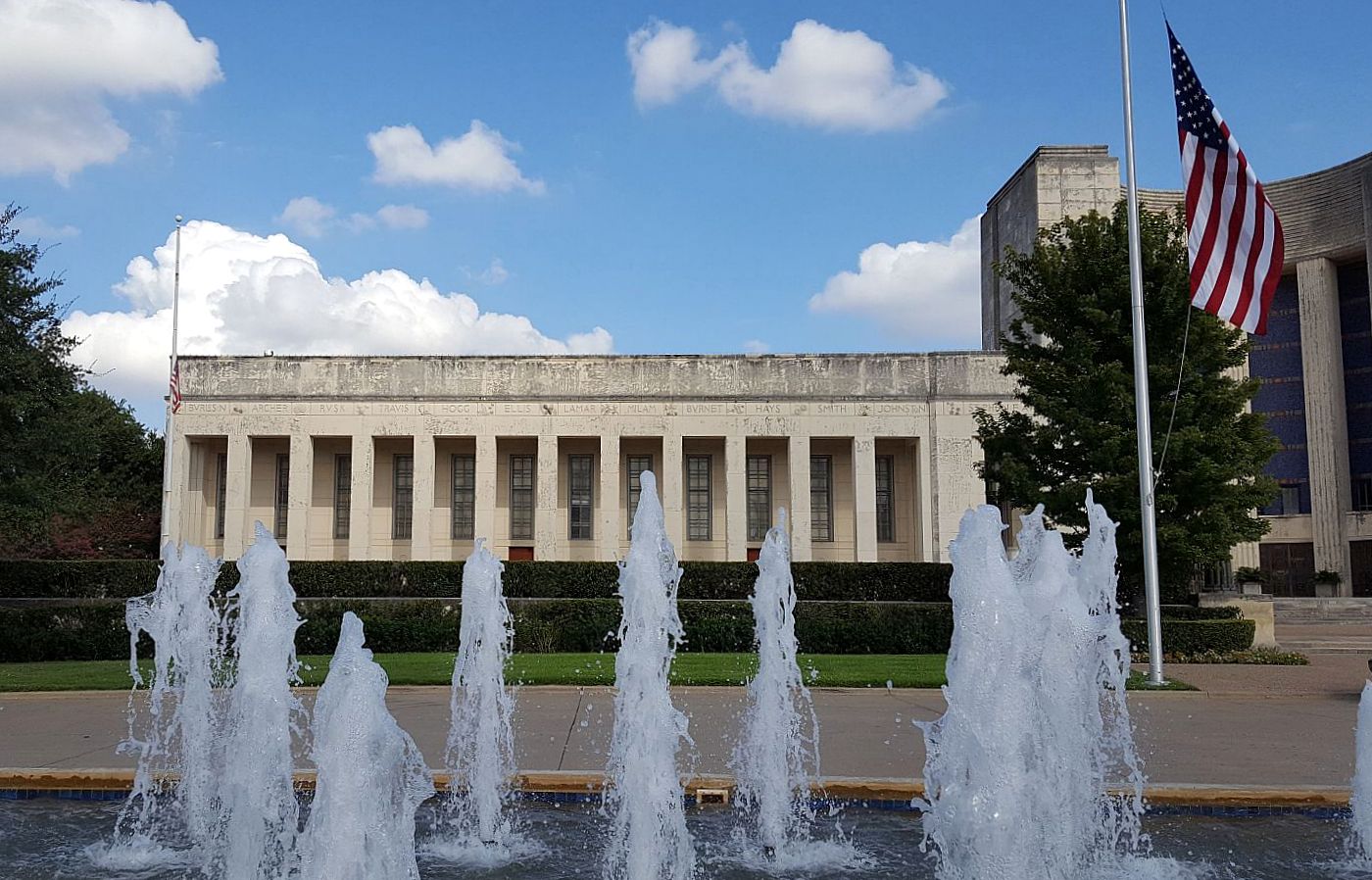
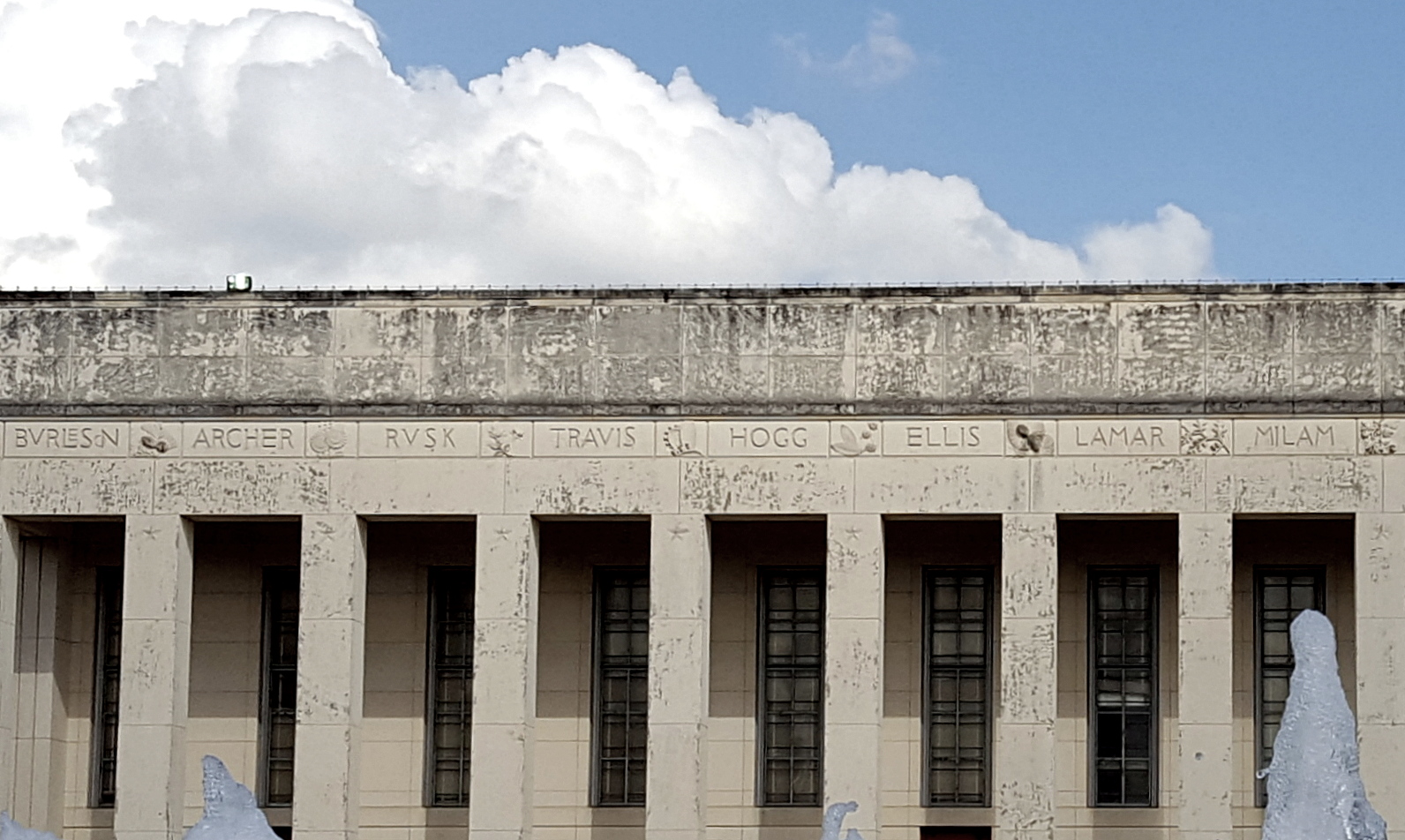
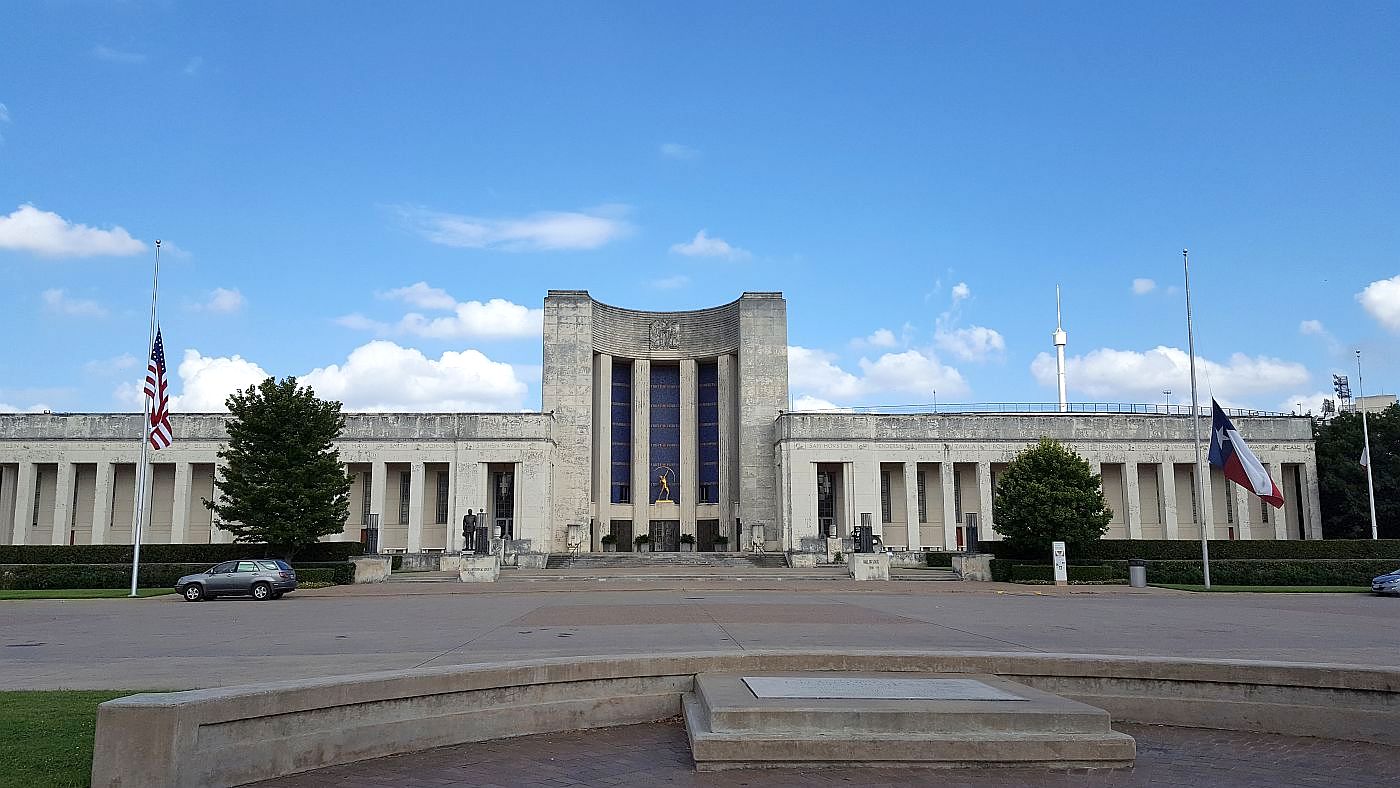
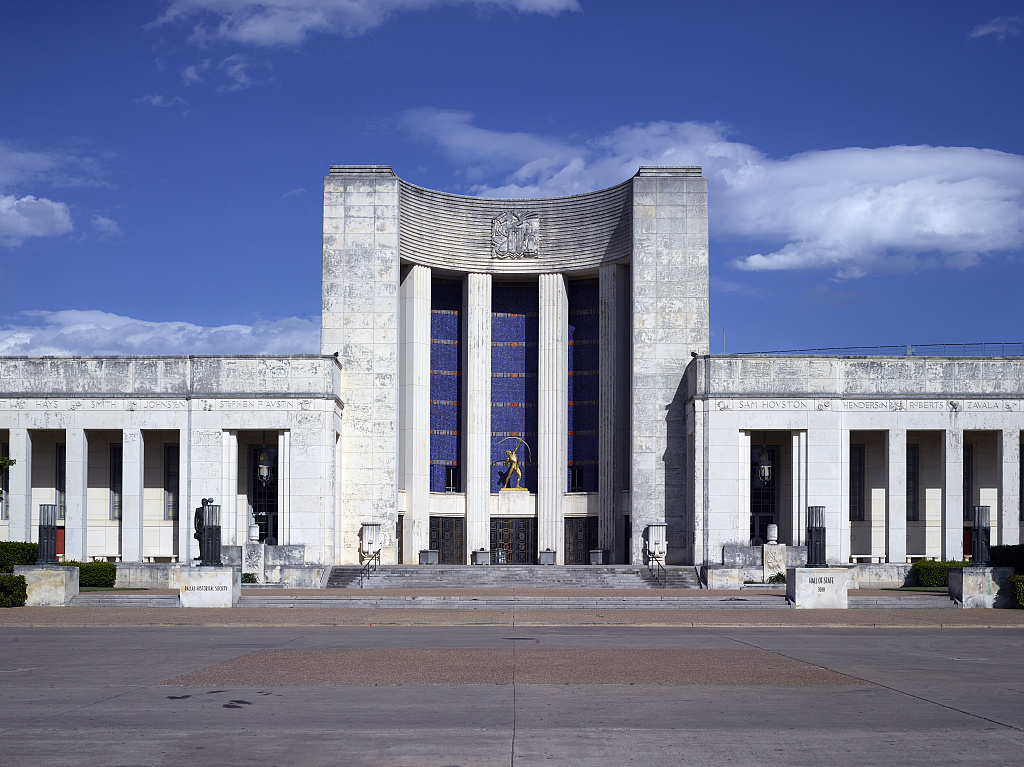
A large number of Texas architects had a hand in designing the Fair Park buildings built expressly for the Texas Centennial in 1936. One such architect was the young (still in his 20s!) Donald Barthelme (1907-1996) of Houston, the principal architect for the Centennial park’s crowning jewel, the Hall of State. Years ago — when the only Donald Barthelme I had ever heard of was the acclaimed writer (who was the son of the architect) — I read an amusing factoid about Barthelme’s amusing “signature” which adorns his beautiful building. It can be seen on the wing to the left of the Hall’s entrance — seen above. (I took the photo this week — the flags are at half-mast in honor of the recent death of former governor Mark White.)

Around the top of the building is a frieze containing names of notable Texans. I’m sure a committee of some sort came up with this list of names which were carved into what was then the most expensive public building in Texas. All I can say is that it’s a shame they couldn’t have come up with just one more name — someone whose last name began with the letter “E,” because Mr. Barthelme arranged the first eight names to spell out his last name (which ended one letter too soon, at “M” — for Milam). I think if I had been in Barthelme’s position I might have just thrown in another name. Maybe “Erath.” …For closure. Click the photo below to see Mr. B’s winking historic signature.

hall-of-state_barthelme_080917_det

hall-of-state_080917

A couple of sentences on the Hall of State by David Dillon, former architecture critic for The Dallas Morning News, written for the paper in November 1989:

Few Texans know who designed the Hall of State — it was Donald Barthelme of Houston, assisted by 10 other architects — yet 53 years after it opened it continues to stir us. It is a building of exceptional individual pieces held together by a powerful central idea — an exemplary period piece that reminds us what public design used to be, and what much contemporary civic architecture is not.

barthelme-donald_1949_univ-houston-yrbk_faculty

barthelme-donald_1950_faculty_univ-houston

***

Sources & Notes

Photos of the Hall of State taken by me on Aug. 9, 2017.

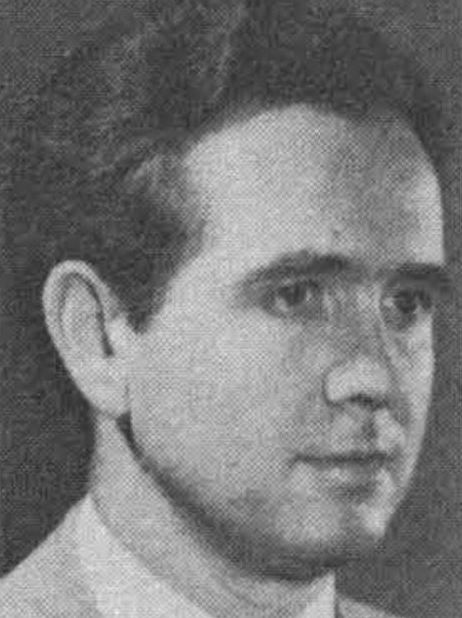
Photos of Donald Barthelme, Sr. taken from the 1949 and 1950 yearbooks of the University of Houston where he was an Architecture professor for many years.

David Dillon quote from his article “An Old Friend Triumphs Anew: The Hall of State Redo Affirms the Power of Great Architecture” (DMN, Nov. 14, 1989), written after an extensive renovation to the building.

More on Barthelme at the Handbook of Texas History and on Wikipedia.

More on the exterior of the Hall of State from Steven Butler (with a list of the names carved into the frieze) here.

*

Copyright © 2017 Paula Bosse. All Rights Reserved.

The Swiss Avenue Car on Main Street — ca. 1900

swiss-ave-streetcar_main-and-market_cook-degolyer_c1900Main and Market, looking east…

by Paula Bosse

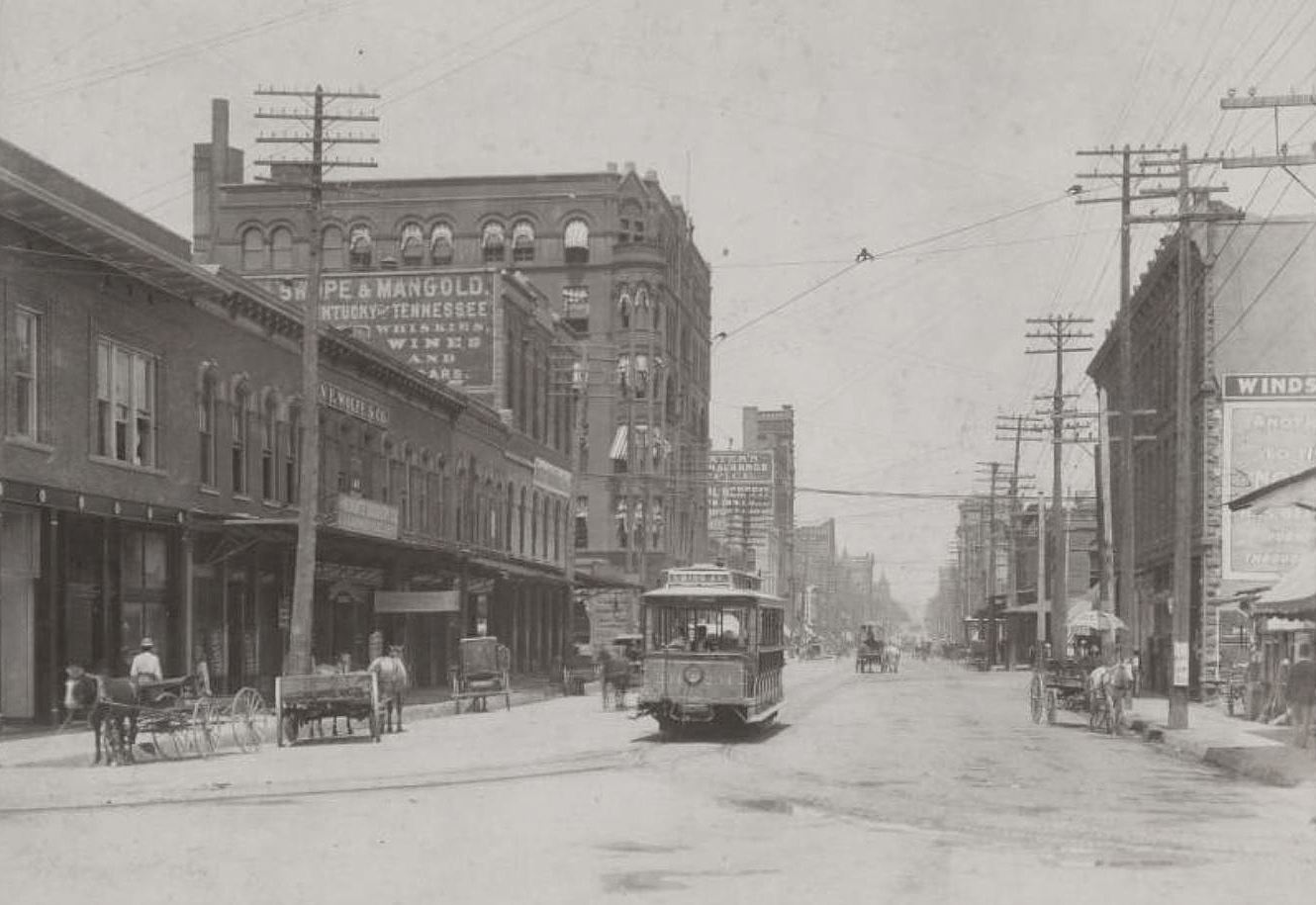
Here’s another great photo from the George W. Cook collection at SMU. This one shows Main Street sometime between 1899 and 1902 (the year asphalt was laid on Main and the year that Sanger Bros. expanded their building from two stories to six); we’re looking east from Market Street. (The aesthetically challenging view as seen today on Google is here.)

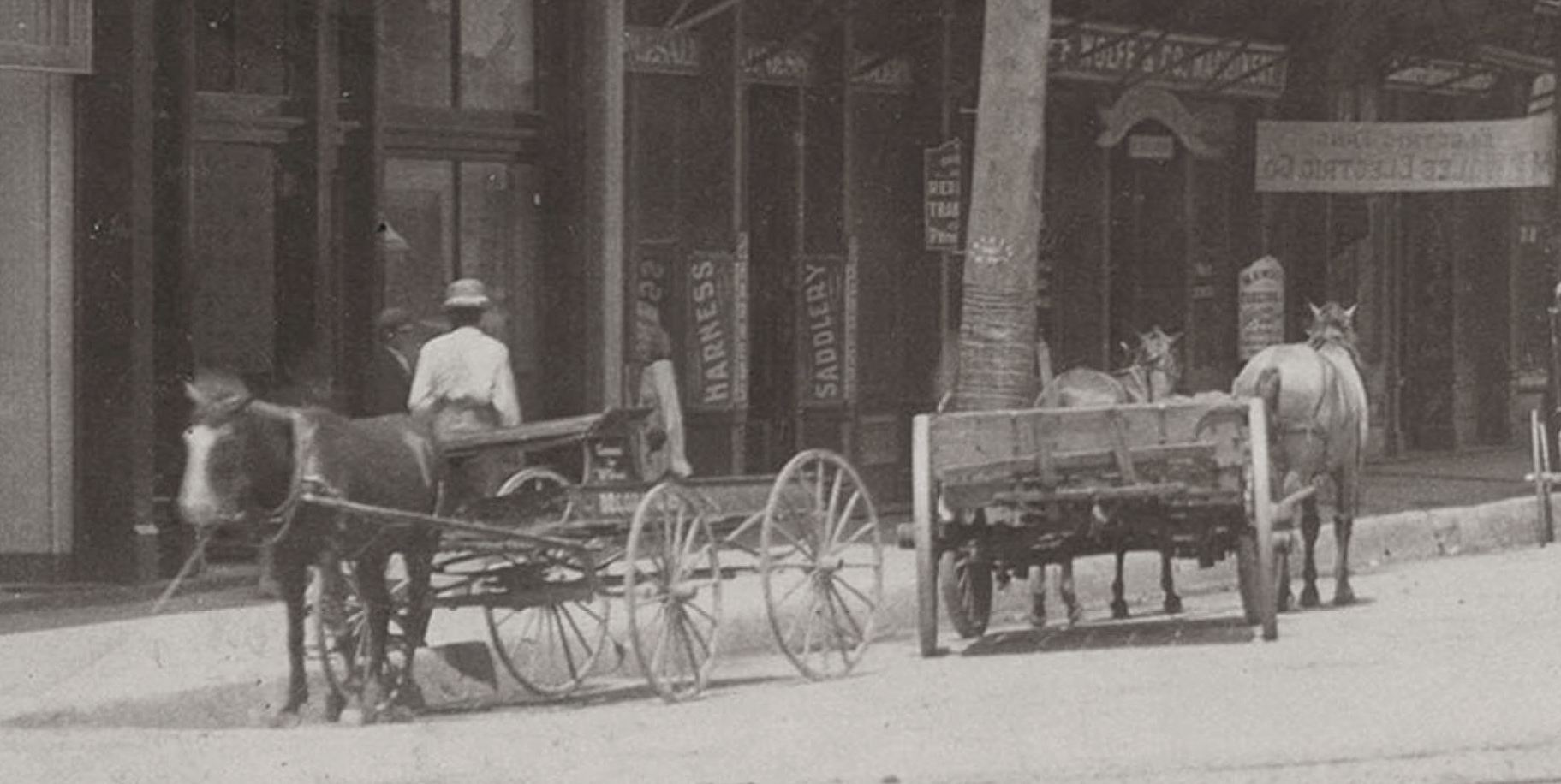
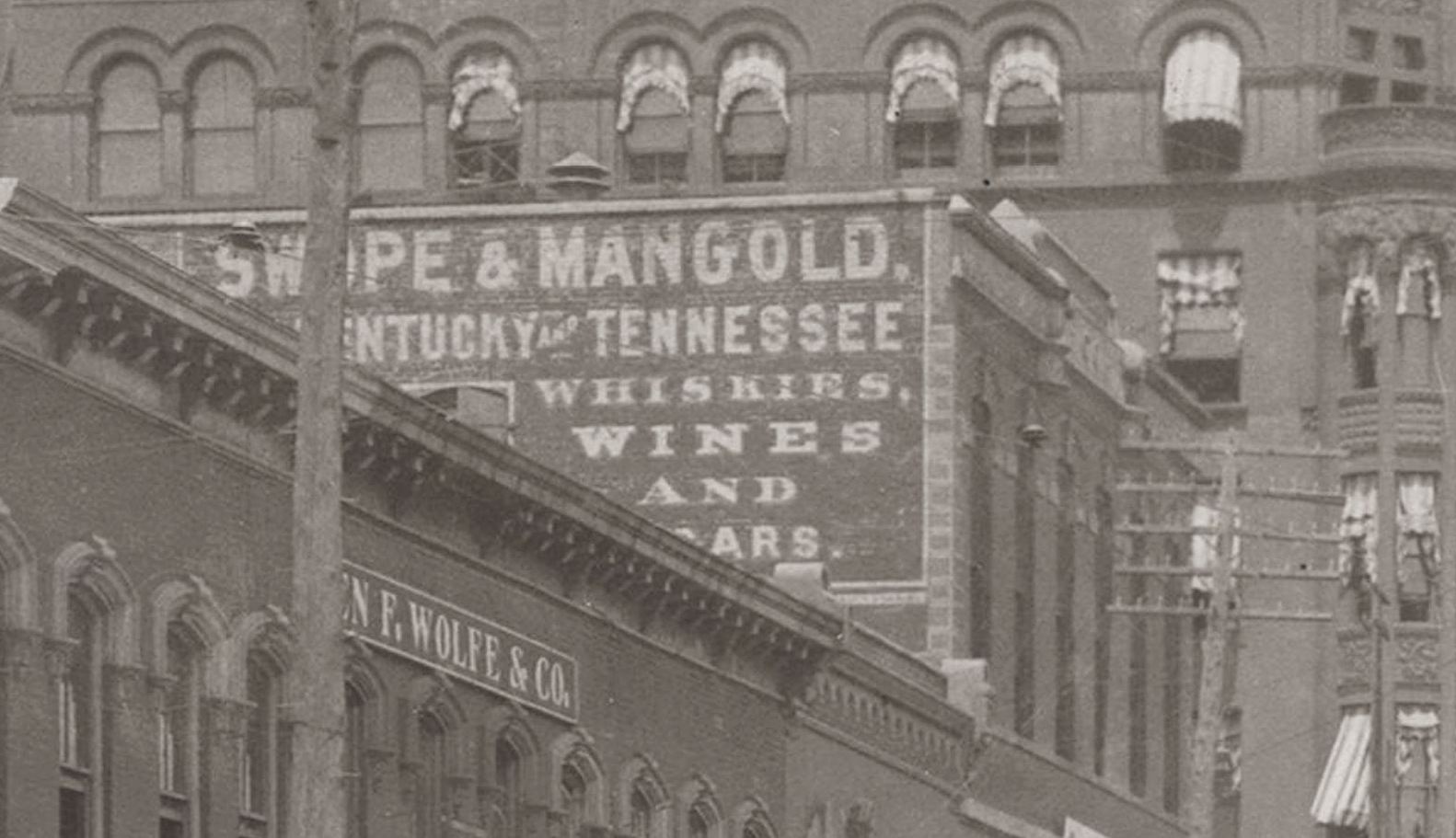
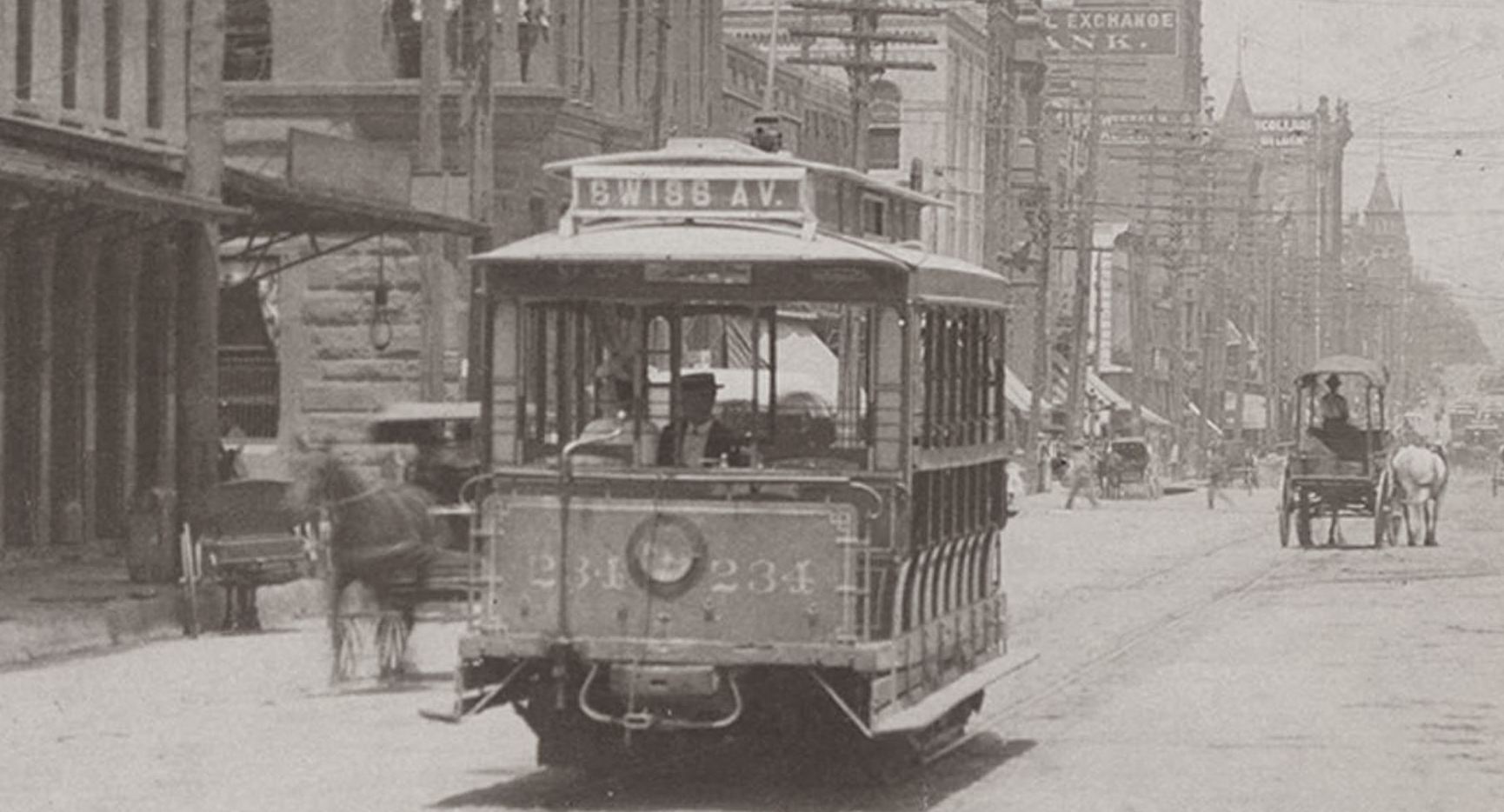
On the north side of Main (at the left), we can see horse-drawn wagons parked in front of a group of businesses including Konantz Saddlery Co., Ben F. Wolfe & Co. (machinery), a banner across the sidewalk for the Southwestern Electrical Engineering & Construction Co., Swope & Mangold wholesale and retail liquor company; then past Austin Street, on the corner, is the Trust Building, with the then-two-story Sanger Bros. building right next door (Sanger’s would build that up to six floors in 1902 and would eventually take over the Trust Building); across Lamar is the North Texas Building, with Charles L. Dexter’s insurance company advertised on the side; and, beyond, the Scollard Building, etc. The Windsor Hotel can be seen on the south side of the street in the foreground. And in the middle, an almost empty little streetcar with “Swiss Av.” on it, moving down Main underneath a canopy of hundreds of ugly electric wires zig-zagging overhead. Let’s zoom in around the photo to see a few closeups (all images are much larger when clicked).

Wagons parked at the curb:

swiss-car_1

*

Is that someone in the window looking down the street?

swiss-car_2

*

Swope & Mangold was one of the oldest “liquor concerns” in turn-of-the-century North Texas.

swiss-car_3

*

The electric streetcar shared the roadway with horses, buggies, and wagons.

swiss-car_4

*

I can’t quite make out the writing on the umbrella or on the sign posted on the pole. Part of the old Windsor Hotel can be seen at the right. At the bottom corner is a shop that sold “notions” and household goods, and just out of frame were a fish market and a meat market.

swiss-car_5

*

And the little Swiss Avenue car 234. Lotsa free seats.

swiss-car_4-a

*

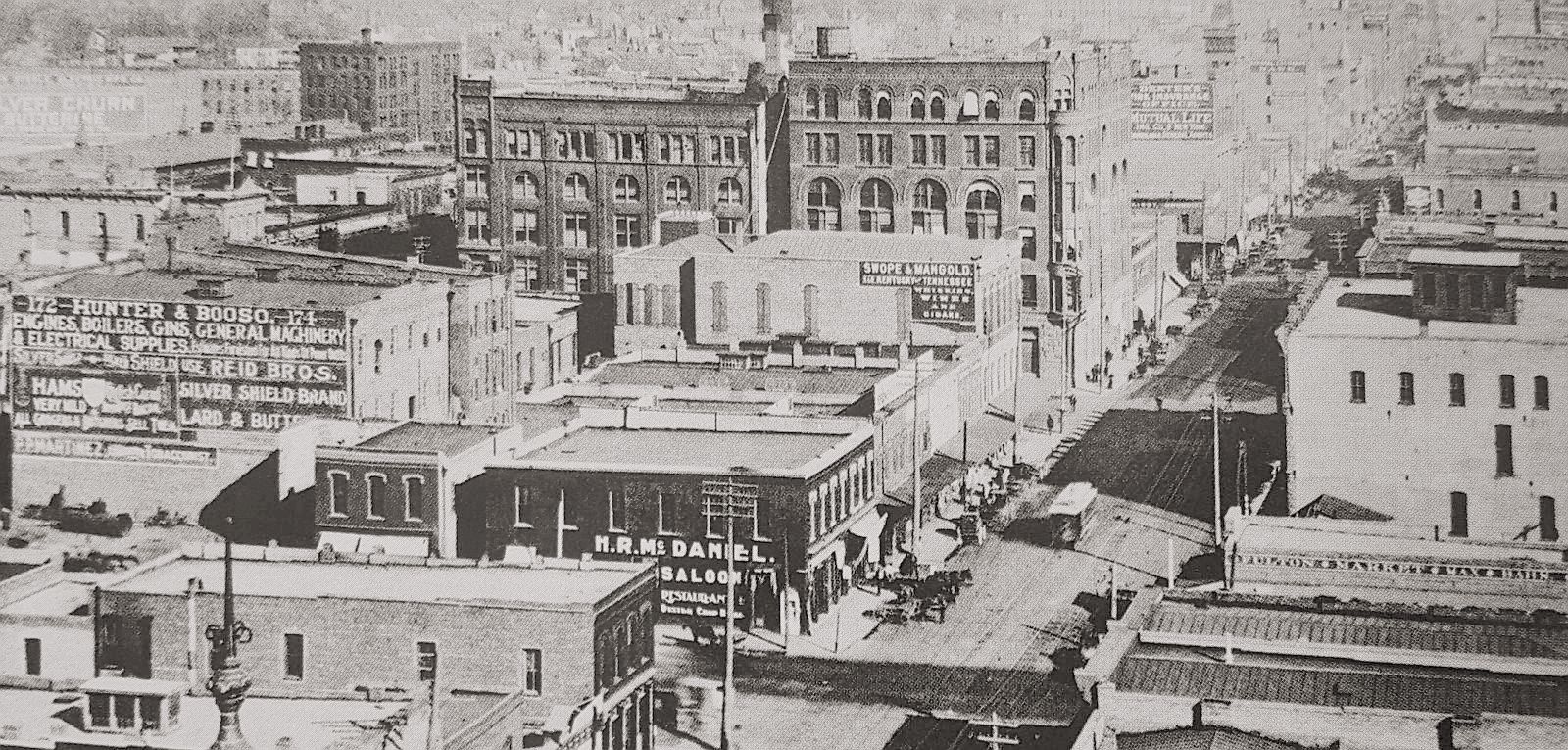
Here’s another view of Main Street looking east, taken around the same time. There’s even a streetcar in about the same spot.

main-street-birdseye_ca-1900_dallas-rediscov_p42_DHS

*

See the 1899 Sanborn map for this general area here (note that Record Street was once Jefferson Street).

***

Sources & Notes

Top photo — titled “Main Street between Austin and Market Streets” — is from the George W. Cook Dallas/Texas Image Collection, DeGolyer Library, Central University Libraries, Southern Methodist University; more information on this photo is here.

The circa-1900 bird’s-eye view photo at the bottom is from the collection of the Dallas Historical Society, found in the book Dallas Rediscovered by William L. McDonald (p. 42).

*

Copyright © 2017 Paula Bosse. All Rights Reserved.

The “Akard Street Canyon” — ca. 1962

downtown-dallas_aia-journal-april-1962Looking north toward Main, and beyond…

by Paula Bosse

A view of the dowtown “canyon” — looking north on Akard from just south of Main, published in 1962, but probably taken in 1961 — possibly from the Baker Hotel.

A few of the tall buildings which made up the walls of the “canyon“:

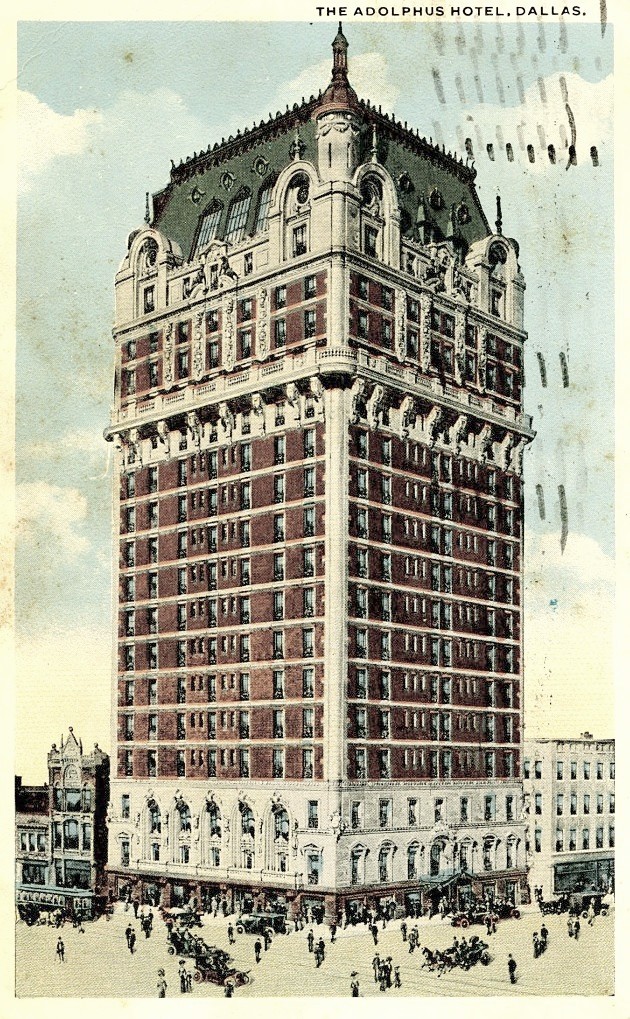
Adolphus Hotel — northwest corner of Commerce and Akard, built in 1911/12, designed by architects Barnett, Haynes & Barnett. The Adolphus — the oldest building in this group and the tallest building in the city when it was built — is definitely one the canyon’s anchors, but in the photo above it is mostly — if not entirely — out of frame at the left foreground.

adolphus_1910s_postcard

Magnolia Building — northeast corner of Commerce and Akard (seen at right foreground of photo); called the “Mobil Building” in the 1962 Dallas directory, built in 1922; Alfred C. Bossom, architect. Now the Magnolia Hotel.

magnolia-building_postcard_pre-pegasus

Adolphus Tower — southwest corner of Main and Akard, built in 1954; Wyatt Hedrick, architect (click pictures to see larger images). The building is currently being remodeled for office use.

adolphus-tower_jan-1955_ad-det_sm

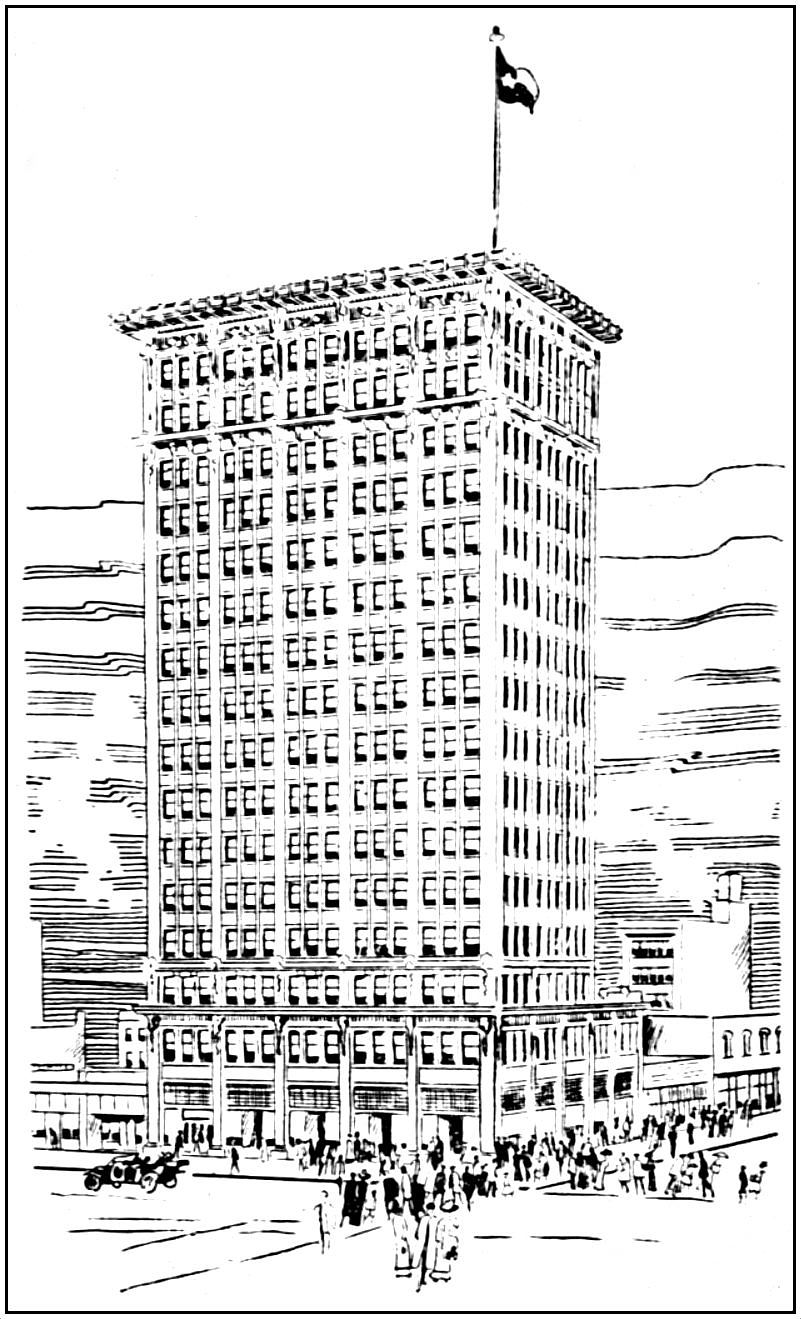
Southwestern Life Building — southeast corner of Main and Akard, built in 1911/12; Otto H. Lang, architect. Bill Clements (before he became Governor of Texas) bought the building on spec in 1965, then had it demolished in 1972. It was a parking lot for many years. It is now Pegasus Plaza, an attractive open area.

southwestern-life-bldg_1913-directory

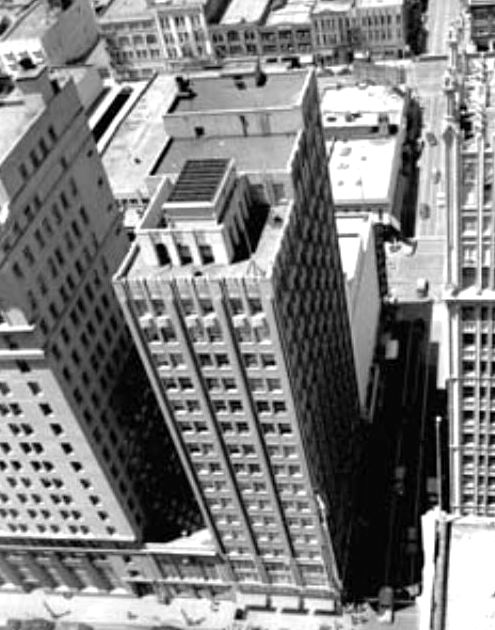
Gulf States Building — northwest corner of Main and Akard; originally known as the Marvin Building, built in 1927, with a later addition of upper stories designed by Lang and Witchell. Converted to lofts.

gulf-states-bldg_dpl

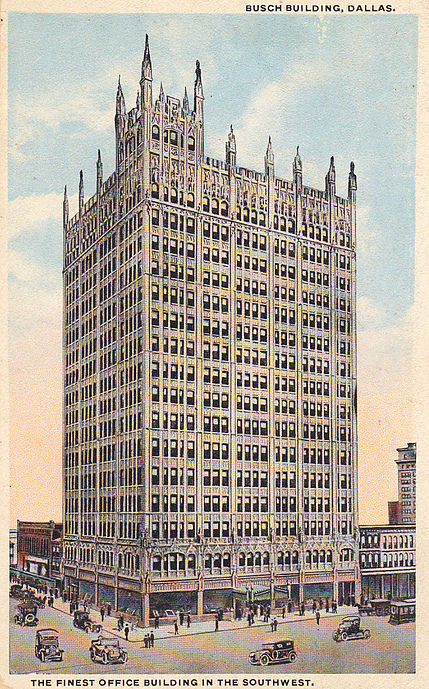
Kirby Building — northeast corner of Main and Akard. The Kirby Building — the beautiful white building at center right in the top photo — was designed by the same architects who designed the Adolphus Hotel, Barnett, Haynes & Barnett, with a 1924 annex designed by Lang and Witchell. When construction began in 1912, the building was originally called the Busch Building, named after Adolphus Busch, whose hotel was just a stone’s throw away (it was called the Great Southern Life Building from 1918 to 1922 and was renamed “Kirby” when it was purchased in 1922 by John H. Kirby). When the building opened in 1913, its most prominent tenant was the A. Harris department store, which occupied the first five floors and the basement. On December 31, 1960, it was announced that the parent company of pioneer Dallas department store Sanger’s (which, at the time of this announcement was part of the Federated Stores chain, but which had opened as Sanger Bros. in Dallas in 1872) had acquired another pioneer Dallas department store, A. Harris & Co. (established in 1892, though Adolph Harris had been in business in Dallas since 1887). The newly christened “Sanger-Harris” store settled into the old Harris space in the Kirby in 1961. It’s hard to tell, but it looks as if there is both an “S” on the corner of the building in this photo (for “Sanger’s”?) as well as the “A. Harris & Co.” sign affixed to the Akard side of the building. The A. Harris store had been a Dallas landmark at Main and Akard for almost 50 years, but it seems the sign would have come down by the time of the official change in name (which happened on July 10, 1961). So perhaps this photo was taken between January and July of 1961, when both stores were actually operating under the same roof and accepting either store’s credit card. The Kirby is now a snazzy apartment building.

busch_bldg_postcard

Mayfair Department Store — 1414 Elm, southwest corner of Elm and Akard. Built in 1946, this Dallas outpost of a department store chain was designed by George L. Dahl and has been converted to apartments.

mayfair-dept-store_dahl_feb-1947

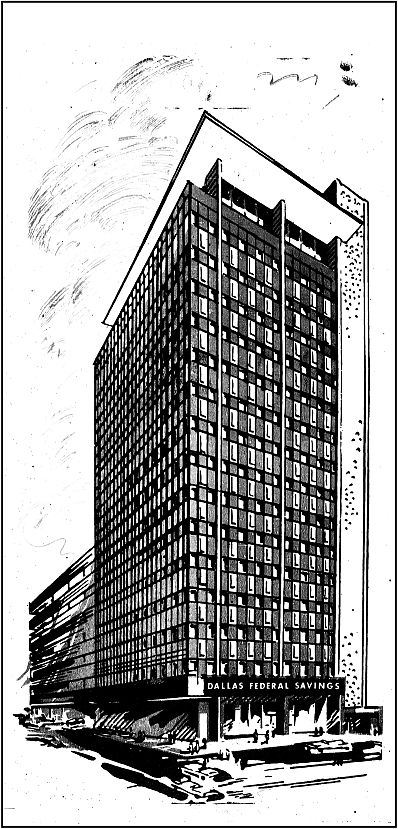
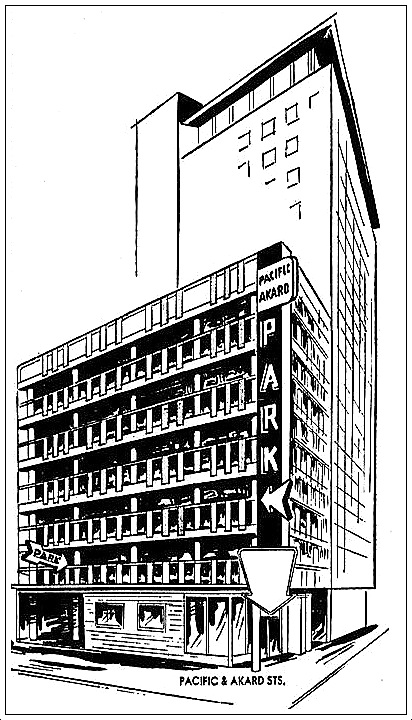
Dallas Federal Savings and Loan Building  —  1505 Elm, northeast corner of Elm and Akard. This blue, gray, and white building was built in 1956/57 and was designed by George Dahl. One of Dallas’ earliest movie theaters — the Queen Theater, built in 1912 — was demolished in 1955 to make way for the new office building. (A brand new parking garage was built at the same time.) Converted to condos and apartments.

dallas-federal-savings-and-loan_1505-elm_1957_sm     dallas-federal-savings_parking-garage_1957_ad-det

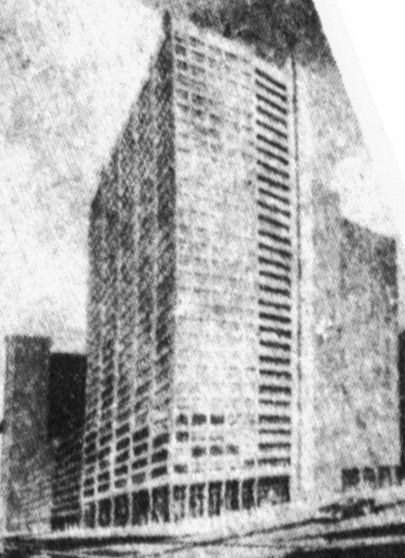
Fidelity Union Tower — northeast corner of Pacific and Akard, built in 1959/60, designed by Hedrick & Stanley; called the Mayflower Building for a short time. Now the Mosaic, converted to residences.

fidelity-union-tower-mayflower-bldg_hedrick-and-stanley_1958

511 North Akard — between Patterson and San Jacinto, built in 1958/59, designed for the Relief and Annuity Board of the Southern Baptist Convention by architects Thomas, Jameson & Merrill. Currently apartments, with a 7-Eleven at street-level.

511-akard_1958-rendering_advance-leasing_ad-det

All but one of these buildings are still standing, and most have been converted into apartments and condos. The view up Akard today (here) doesn’t look as much like a canyon as it did 55 years ago, due mainly to the loss of the Southwestern Life Building at Main and Akard.

Below is a photo looking south on Akard, with the Baker Hotel (on Commerce) straight ahead. That “third wall” formed by the Baker makes things a little more “canyon-esque.” (Note the Queen Theater at the left.)

akard_mayfair_pinterest

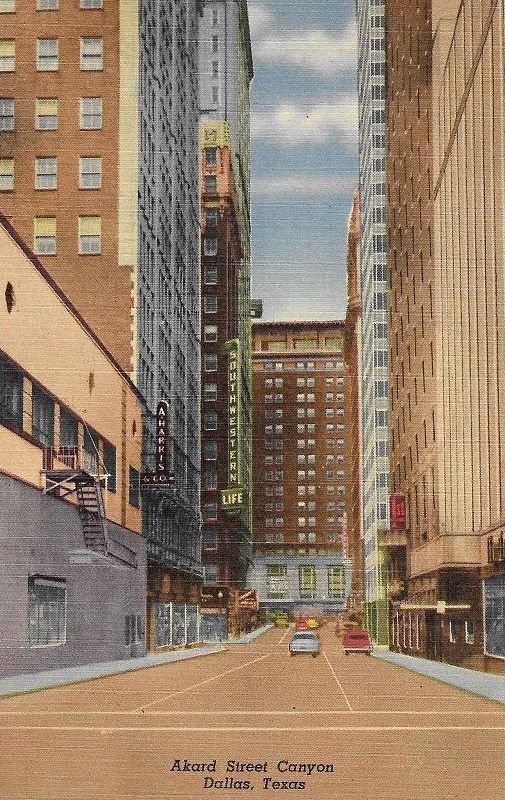
And, finally, a postcard of “The Akard Street Canyon” which tourists could share with the family back in Poughkeepsie.

akard-canyon_ebay

***

Sources & Notes

Top photo from the April, 1962 issue of AIA Journal (which is scanned in its entirety in a PDF, here).

Adolphus Hotel postcard from the Portal to Texas History.

Bird’s-eye view of the Gulf States Building from the collection of the Dallas Public Library.

Photo looking south on Akard from Pinterest.

Sketches and renderings of buildings mostly from ads, almost all of which appeared when the building in question opened.

For several photos showing the view south on Akard over the years, see the Flashback Dallas post “Akard Street Looking South, 1887-2015,” here.

*

Copyright © 2017 Paula Bosse. All Rights Reserved.

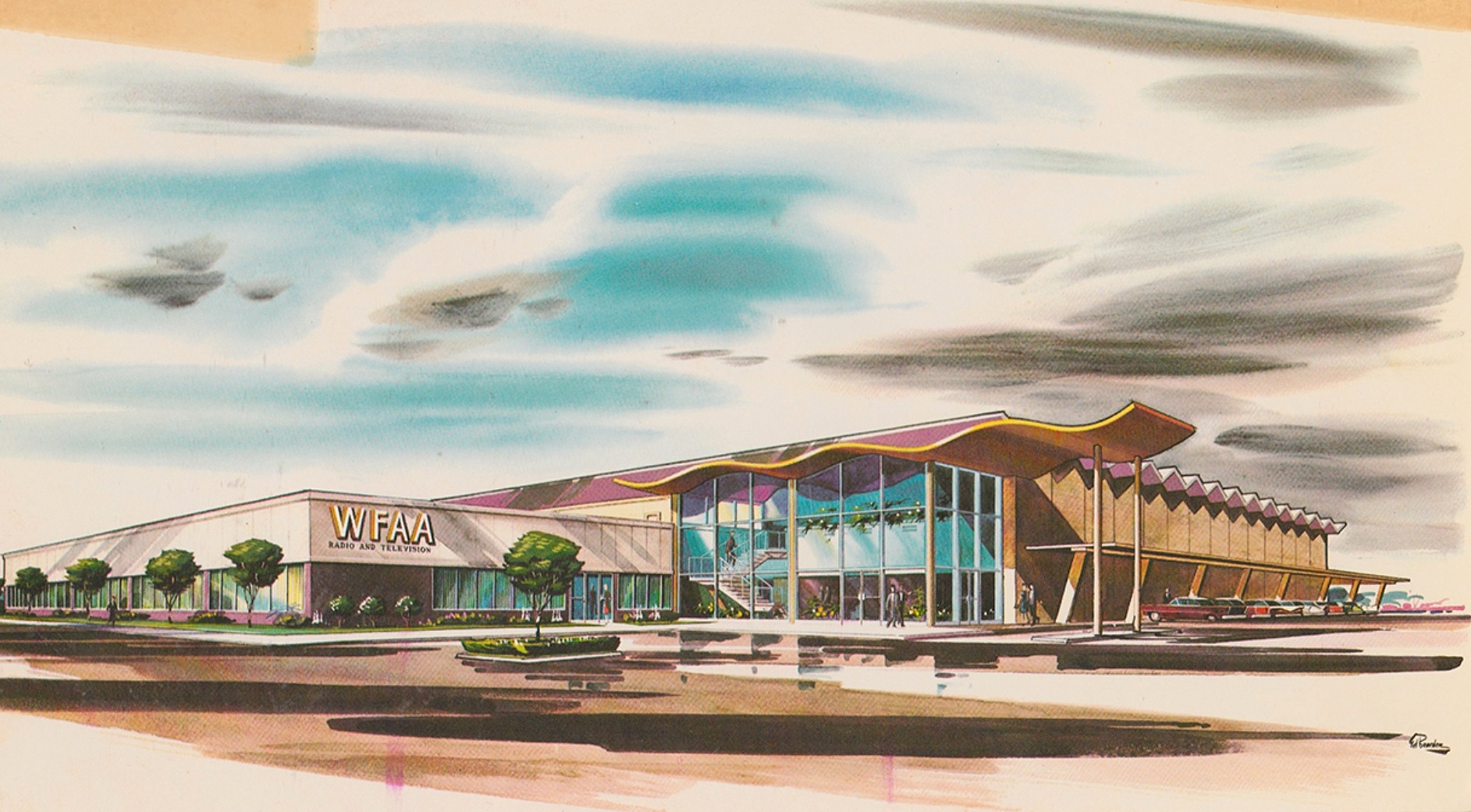
The WFAA Studios, Designed by George Dahl, Rendered by Ed Bearden — 1961

wfaa_george-dahl_ed-bearden_postcard“Communications Center”

by Paula Bosse

Above, the WFAA studios, seen in a wonderful painting by Dallas artist Ed Bearden. The image is from a postcard touting the brand new ultra-modern building designed by one of Dallas’ top architects, the prolific George L. Dahl. The building still stands at Young and Record streets, next to the home of its then-sister-company, The Dallas Morning News (appropriately, the News building was also designed by Dahl … as was the soon-to-be HQ of The News, the old Dallas Public Library at Commerce and Harwood).

The super-cool mid-century “WFAA AM-FM-TV broadcasting plant” was completed in 1961. It opened to much fanfare in April of that year, with star-studded festivities featuring personal appearances by a host of ABC stars such as Connie Stevens, Johnny Crawford, and Nick Adams. If catching a glimpse of “Cricket” or the Rifleman’s son didn’t wow you, the public was also invited to tour the building and gawk at its state-of-the-art radio and television studios. This large 68,000-square-foot building allowed WFAA radio and WFAA-TV to be housed under the same roof. Before this, the AM and FM radio stations were broadcasting from studios atop the Santa Fe Building, and Channel 8 was broadcasting from their television studios on Harry Hines, at Wolf (studios which they sold to KERA at the end of 1959).

Aside from the innovative “folded-plate” concrete roof, one of the first things I noticed about this building was the staircase behind a “wall” of plate glass — I was instantly reminded of the staircase from the old Rogers Electric building (now Steinway Hall) on the Central Expressway service road at McCommas — all it needed was a gigantic ficus tree. (Unsurprisingly, that building — built in 1959 — was also designed by the very, very busy George Dahl.)

Cool building, cool architectural design, cool artistic rendering.

**

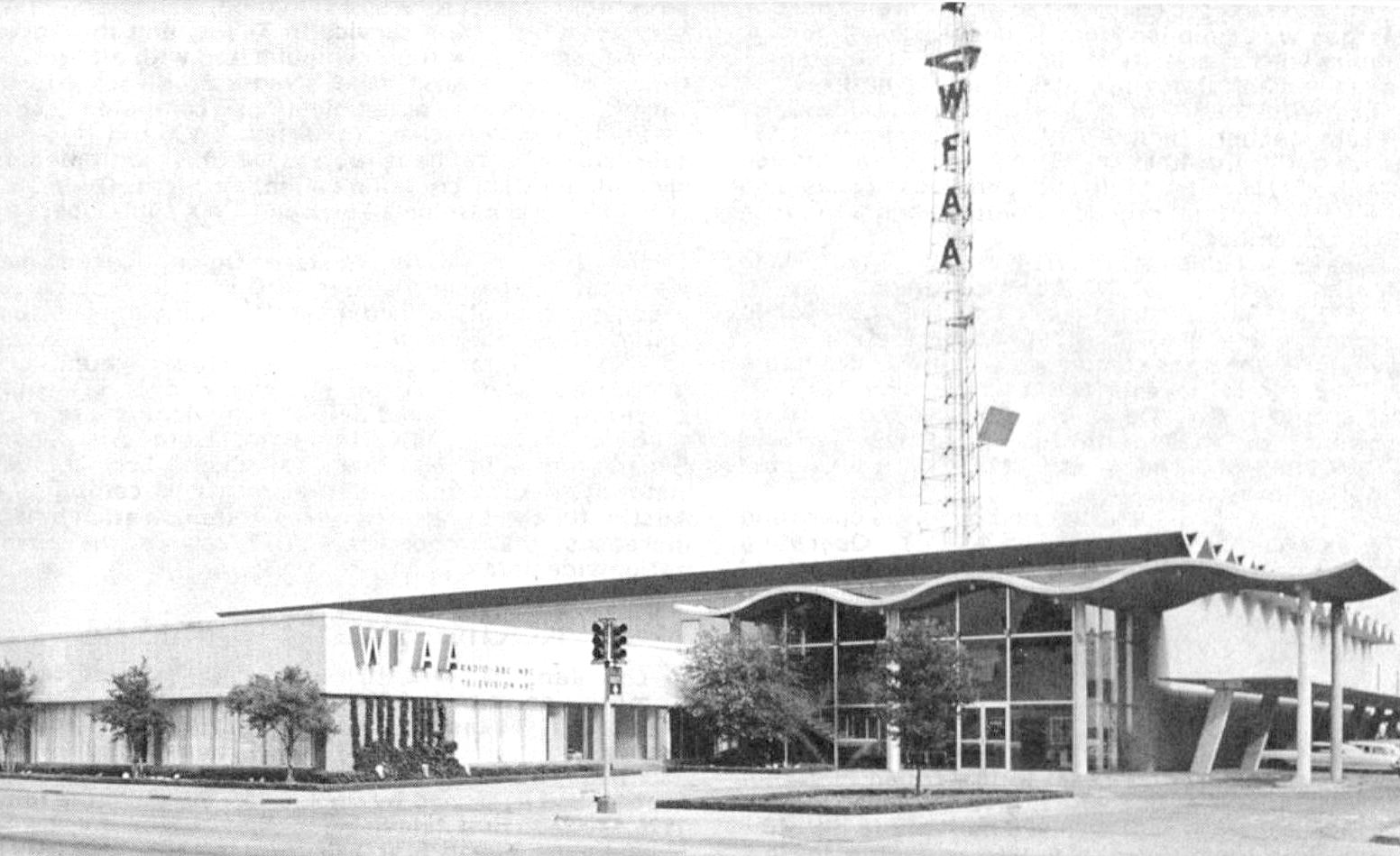
Below is an early pre-construction rendering of the WFAA building, from 1959.

wfaa_bw_rendering_1959

*

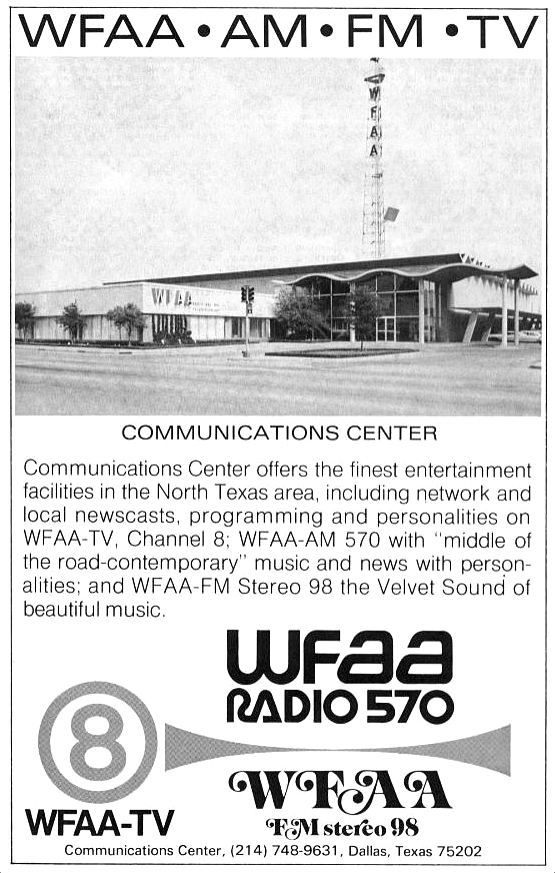
And a photo from the early 1970s.

wfaa_texas-almanac_1974-75

*

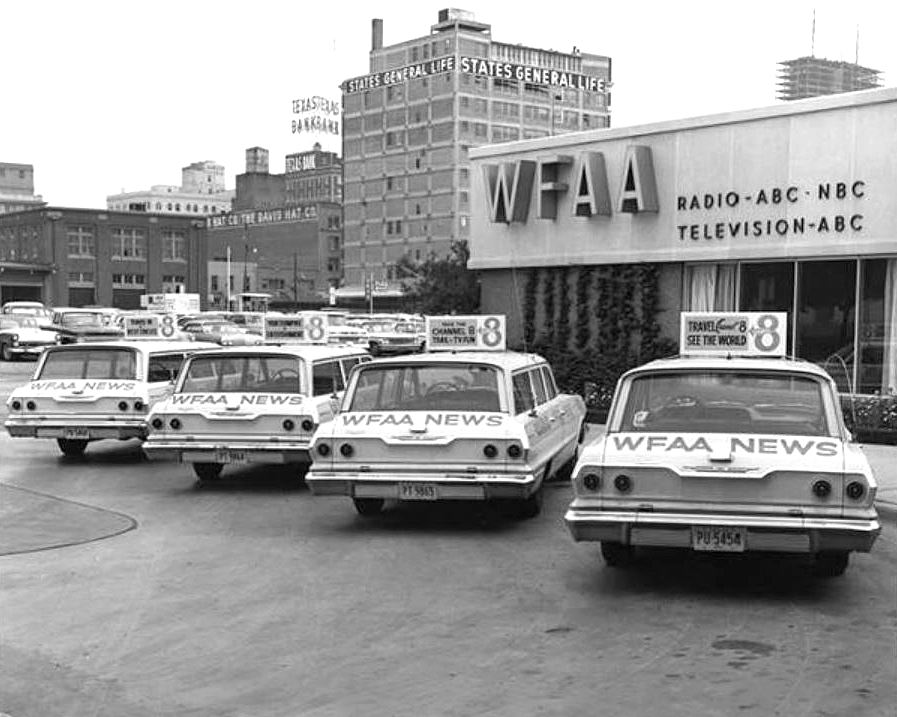
And here’s a view taken from the side of the building in 1963, looking toward Young Street.

wfaa_news-vehicles_belo-records_degolyer_smu_1963

*

The early-’70s photo above was taken from this ad from the 1974-75 Texas Almanac. Ah, “Communications Center.” (I have to say, I’ve never heard of “WFAA-FM Stereo 98” nor their slogan “The Velvet Sound of Beautiful Music.” In fact, by the time this edition of the Almanac was published, WFAA-FM no longer existed — it had changed both its name — to KZEW — and its format — to rock.)

wfaa_texas-almanac_1974-75_portal

***

Sources & Notes

Color postcard found on the entertaining blog Texas Pop Culture; see the post — which includes scans of the reverse side of the card — here.

Bearden’s signature is a bit hard to make out — the slightly distorted magnified signature can be seen here.

The more I see of Ed Bearden’s work, the more I like it. See his Dallas skyline from 1958 here; see his Dallas skyline from 1959 here.

Photo of the Channel 8 news vehicles is from the Belo Records collection, DeGolyer Library, Central University Libraries, Southern Methodist University; more info on this photo is here.

More on architect George L. Dahl can be found at the Handbook of Texas, here, and at Wikipedia, here.

Read more about the history of FM radio in Dallas — including histories of WFAA-FM and KZEW — at the indispensable website of local broadcasting history — DFW Retroplex, here.

*

Copyright © 2017 Paula Bosse. All Rights Reserved.

Downtown Dallas, Last Week

ervay-north-from-commerce_det_052417_bosseSo many architectural styles! (click for larger image)

by Paula Bosse

Last week I went downtown to check on the restoration of the St. Jude Chapel mosaic (I’ll write about that soon…). Sadly, I’m hardly ever downtown, so I took the opportunity to walk around a bit and was struck by how much construction and beautifying is going on. Parts of it are verging on the overly hipsterized, but, generally, downtown is looking better these days than I’ve ever seen it.

I parked at an incredibly affordable parking garage behind Neiman’s — Dal-Park on Commerce just west of Ervay (you do not have to be a Neiman’s customer to park there). Three bucks! (Just drive slowly on your way out — it’s kind of cool, but it’s like going down a spiral staircase … in a car.)

One of the first things you see when you emerge from the parking garage is the Mercantile Building. I never tire of seeing this building. (All photos in this post are much larger when clicked.)

mercantile-from-commerce_052417_bosse

*

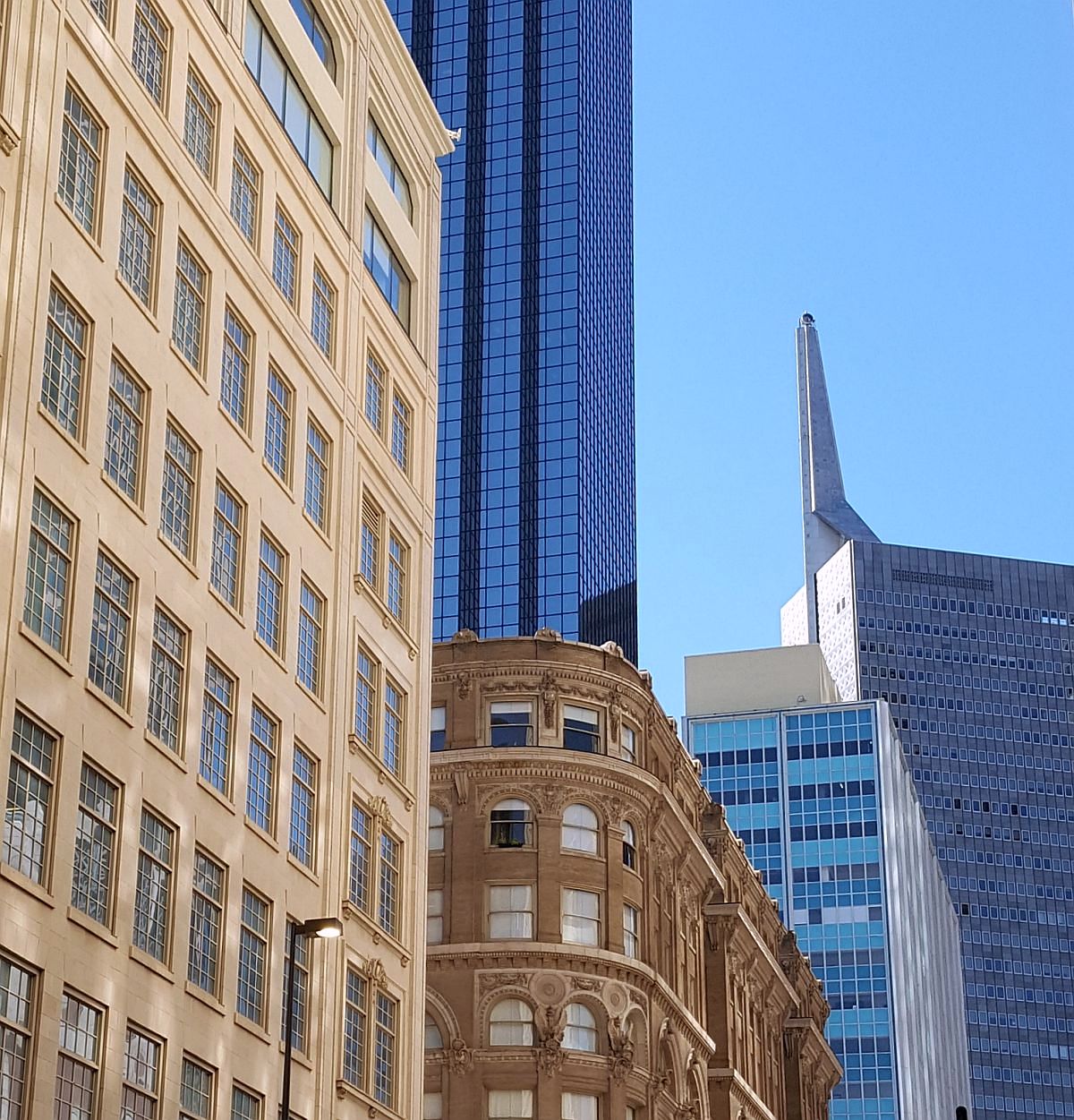
Head north on Ervay from Commerce and you see that great view seen in the top photo — it’s kind of crazy to see so many wildly different styles of architecture, from so many eras all clustered together: the Neiman Marcus building (opened in 1914) on the left, the Wilson Building (1904), 211 N. Ervay (1958), the Republic Bank Building (1954), Thanksgiving Tower (1982), and just out of frame to the right, the Mercantile Bank Building (1943). Too bad the Old Red Courthouse (1891) is in the other direction! 

Heading up Ervay from Commerce, Neiman’s takes up the whole block to your left. The display windows on this side might not get the glory of the Main Street side, but the display seen in the photo below is great. I chuckled to myself when I realized that the star of a Neiman Marcus window was corrugated cardboard. But those dogs are fantastic! The name of the Dallas artist who made them is Loran Thrasher and you can see other examples of similar works at his website — click on “Installations.”

neiman-marcus-window_loran-thrasher_dogs_052417_bosse

*

As you approach Main Street you see this elegant sign (Neiman-Marcus, for me, will always have that hyphen in it!). (See what this block looked like around 1920, looking south from Main, here.)

neiman-marcus-sign_ervay_052417_bosse

*

Turn left on Main, and you’ll see this wonderful building across the street, just west of Stone Place — it’s one of the oldest buildings downtown, built sometime between 1892 and 1899. (I wrote about this building — and its two immediate neighbors — here.) I love this building which was very nicely restored by the fine folks at Architexas about 15 years ago.

sol-irlandes_052417_bosse

*

After admiring the Sol Irlandes building I turned around to see this surreal sight several stories above street-level.

joule-pool_052417_bosse

It’s an infinity pool — part of the Joule hotel (see what the pool looks like from up there here). It was pretty odd. If I felt a twinge of vertigo looking at this from the ground, I can’t even imagine how I would handle looking down. If the view isn’t obstructed, those brave swimmers can get a pretty good look at Pegasus (who is probably also a little concerned). This must be quite a sight at night.

joule-pool_pegasus_052417_bosse

*

Just to the right of the Magnolia Building, you can see the Adolphus peeking through.

adolphus_052417_bosse

*

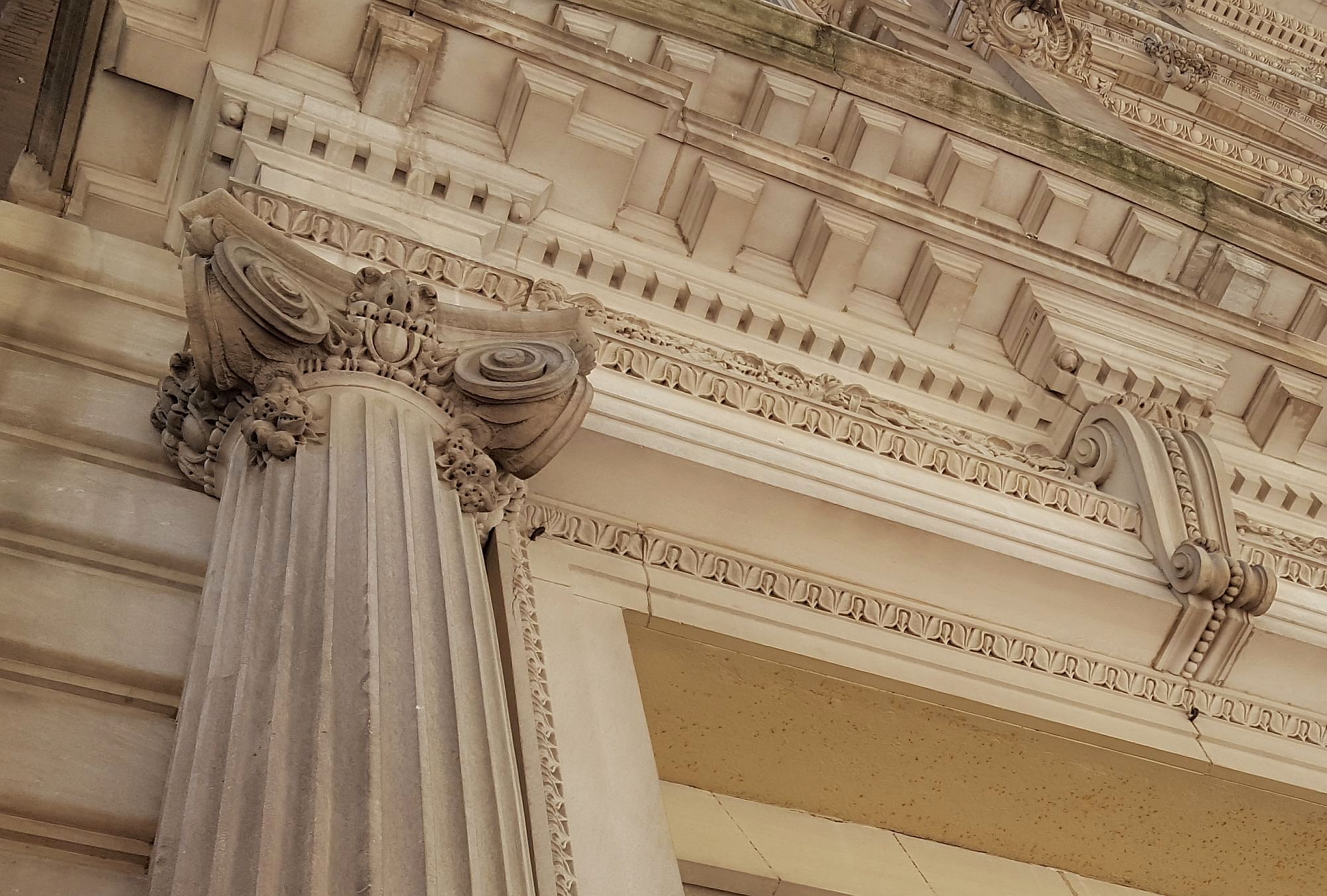
One of the most impressive buildings in Dallas is the Wilson Building, at Main and Ervay (…and Elm and Ervay). It’s even more impressive when you see it up-close. I love seeing all these intricate decorative details on a building so unlike anything else in Dallas. (See what it looked like under construction in 1902 here.) Thank you, Sanguinet & Staats, for building us such a lovely architectural landmark.

wilson-bldg_detail_052417_bosse

*

I decided to walk over to see how work on the Statler was coming, so I headed to Main Street Garden Park. This photo isn’t the best, but I wanted to get the Municipal Building (which is currently being restored to its original 1914 grandeur) in the same shot. The Statler is coming along nicely and should be open soon. I’ve always wanted to see inside that building. (Even if it no longer has its original heliport!)

municipal-bldg_statler_052417_bosse

*

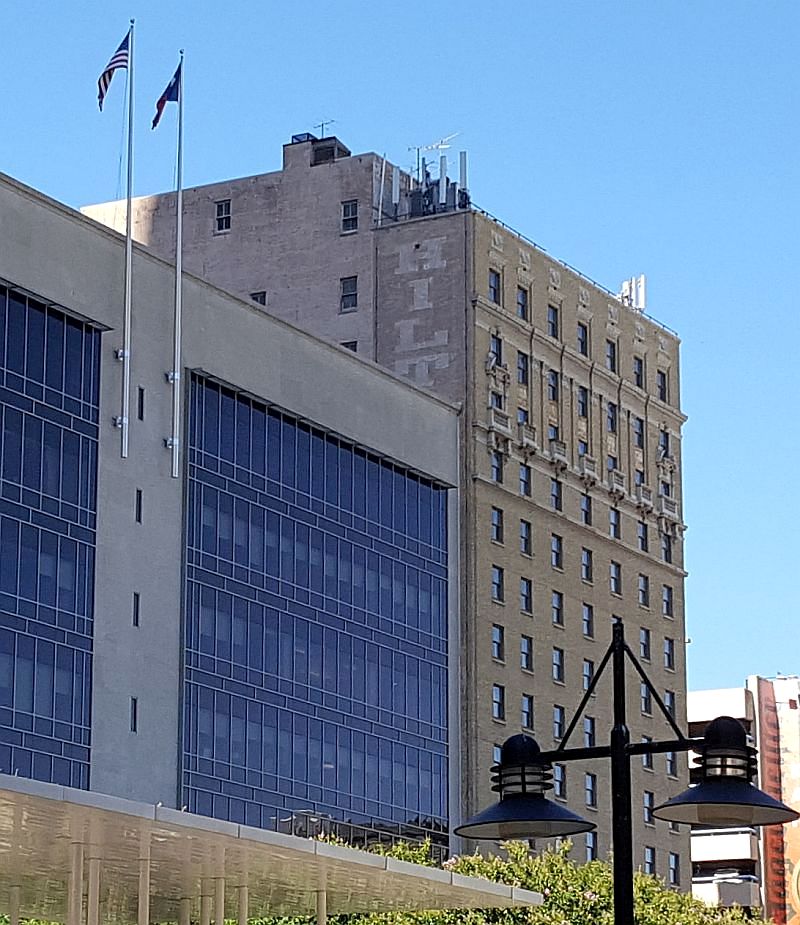
Speaking of the Statler Hilton Hotel (opened by Conrad Hilton in 1956), it’s nice to see that someone has repainted the “Hilt” on the side of what was the first hotel Conrad Hilton built anywhere, The Hilton Hotel, built at Main and Harwood in 1925 (it is now Hotel Indigo). (See the original “Hilton” sign in about 1925 here; it was repainted when it became the White Plaza a few years later.)

hilton-hotel_ghost-sign_052417_bosse

*

I took the photos above from St. Paul, looking east. I turned around and saw this great view of the Merc! It looks good from every angle. (Here it is around 1942, looking west from Harwood.)

mercantile-from-st-paul_052417_bosse

*

It’s nice to see that so many of Dallas’ landmark buildings are still looking good — and it’s also a little strange seeing the places I read about and write about every day standing right in front of me. I need to get back downtown again soon — there’s so much more to see.

***

Sources & Notes

All photos by Paula Bosse; they were taken on May 24, 2017.

All are much larger when clicked.

*

Copyright © 2017 Paula Bosse. All Rights Reserved.


The Wide Open Spaces Northeast of Central and Lovers — 1957

central_north-from-mockingbird_060657_squire-haskins_UTASquire Haskins, UTA Special Collections

by Paula Bosse

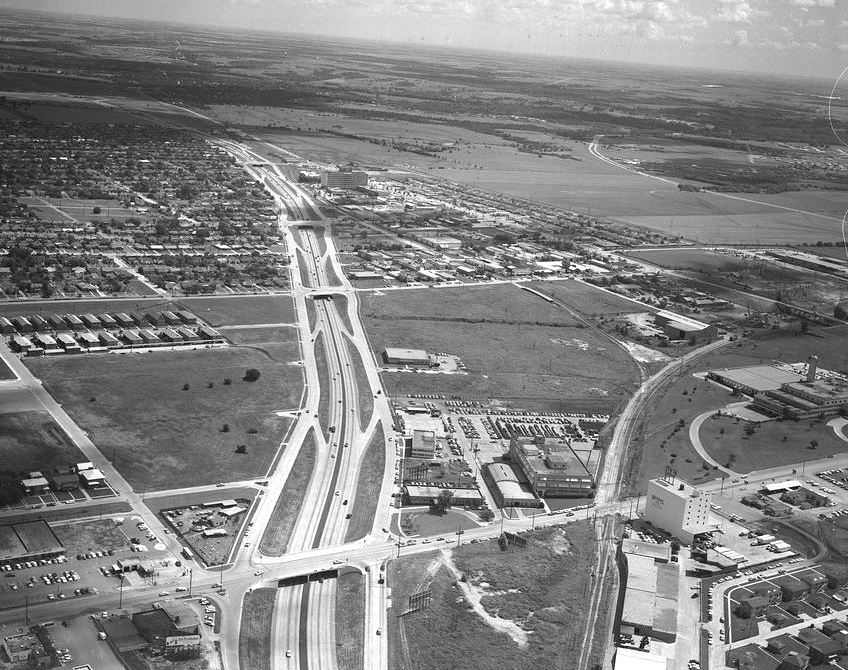
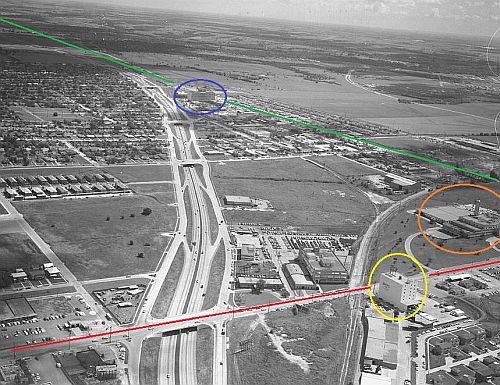
Here’s another great aerial photo by Squire Haskins, taken on June 6, 1957 — sixty years ago. The view is to the north, from a little south of Mockingbird. Mockingbird runs from left to right at the bottom of the photo; at the far right you can see the still much-missed Dr Pepper plant, which stood at the northwest corner of Mockingbird and Greenville Avenue. The only “tall” structure north of Mockingbird is the Meadows Building, at Greenville and Milton, just south of Lovers Lane. North and east of Lovers and Greenville is … pretty much nothing. The old Vickery community was north on Greenville, around what is now Park Lane. To the east? I don’t know … lots of open land and then … Garland? (See a huge image of this photo on the UTA website, here.)

If you need your bearings, here are a few of the landmarks (red, Mockingbird Lane; green, Greenville Ave.; yellow, Bekins Storage, orange, Dr Pepper plant; blue, Meadows Building):

meadows-bldg-from-mockingbird_squire-haskins-june-1957_UTA_annotated

Let’s turn it around and look south, toward downtown, from just north of Lovers Lane, with the Meadows Building in the foreground. Greenville is at the left, Central Expressway at the right. This photo, also by Squire Haskins, was taken on June 20, 1956. (See it on the UTA website, here.)

central_south-from-lovers_062056_squire-haskins_UTA_meadows

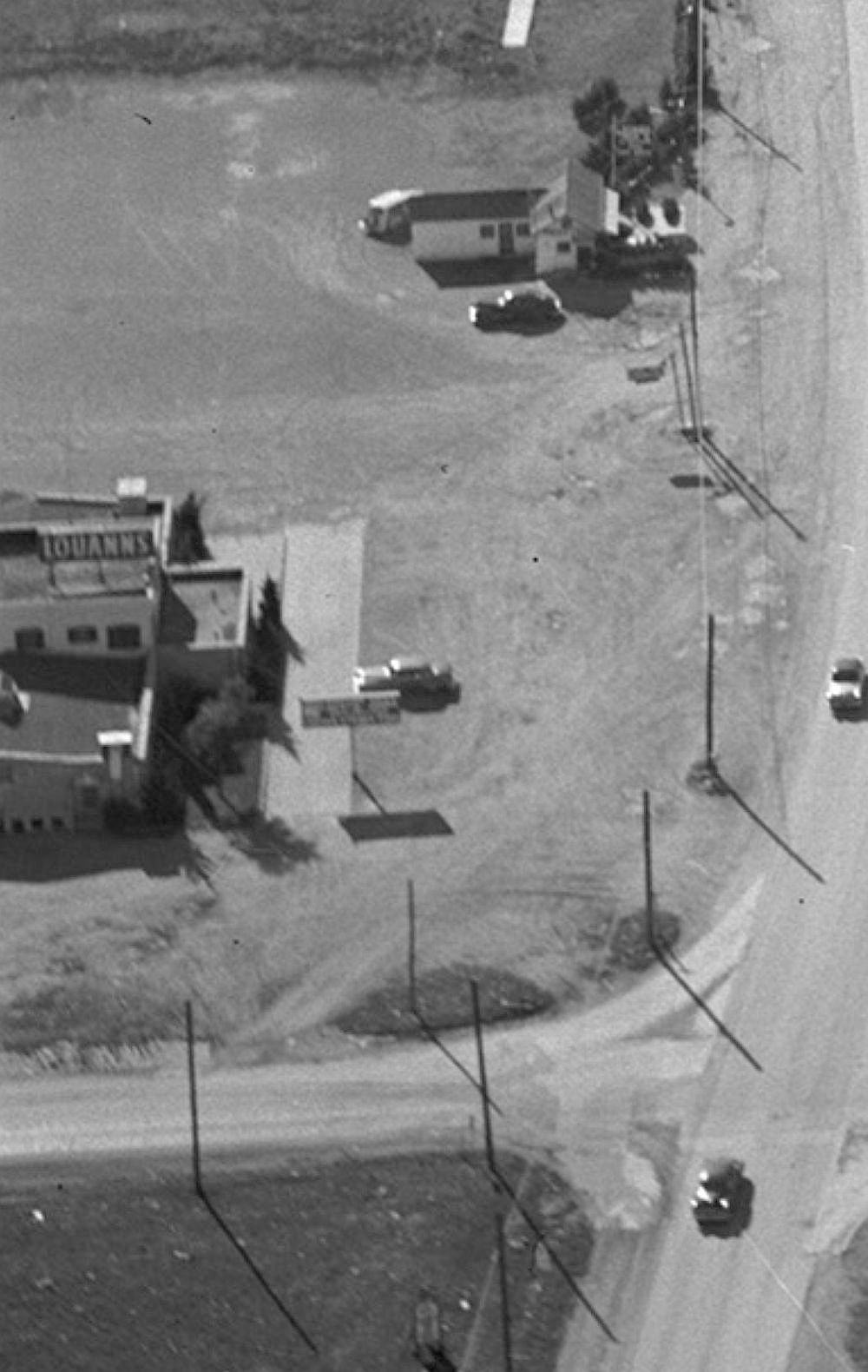
If, like me, you’ve always wondered where the legendary Louanns nightclub was, it was just out of frame at the bottom left of the photo above — at the southeast corner of Lovers and Greenville, where Central Market sits these days. You can see it below, in a detail of another great Squire Haskins photo (click on the thumbnail of the photo on this page to see the full photo — Louanns is at the bottom left) — it was taken on Dec. 4, 1953 and shows the Meadows Building under construction. In this detail you can see a slightly blurry Louanns, with what looks like an unpaved Lovers Lane at the bottom and Greenville Avenue at the right. I’d always  heard that Louanns was way out in the sticks in its heyday in the ’40s and ’50s. And looking at the top photo, I can see how true that was — especially before the arrival of the Meadows Building, which was, I believe, the largest “suburban” office building in Dallas beyond the downtown Central Business District. And for those who went out “parking” along the isolated Lovers Lane back then, you can see how the street got its name.

louanns_squire-haskins_UTA_det

louanns-postcard

Here is a clipping from the 1957 Dallas city directory showing the businesses along East Mockingbird — between Airline, west of Central, and Greenville Avenue.

mockingbird_central-to-greenville_1957-directory
1957 Dallas directory

See the Greenville Avenue businesses from the same 1957 directory here (the directory is scanned in its entirety on the Portal to Texas website here).

Here’s a map showing what this same area looked like a few years earlier, in 1952, when Mustang Airport was still out there (between Lovers and Northwest Highway, and between about where Skillman would later extend to and Abrams). (On the map below, Central Expressway is red, Greenville Avenue is blue, East Mockingbird Lane is purple, and Lovers Lane is green.)

map_north-from-mockingbird_1952-mapsco
1952 Mapsco

***

Sources & Notes

Top two photos by Squire Haskins, from the Squire Haskins Photography, Inc. Collection, UTA Libraries, Special Collections. Additional information on the first one (ID No. 10002957), looking north, is here; additional info on the second one (ID No. 10000568), looking south, is here. (To see HUGE images of both photos, click the thumbnails on these linked pages.)

*

Copyright © 2017 Paula Bosse. All Rights Reserved.

The G. B. Dealey Library and Reading Room at the Hall of State

hall-of-state_dealey-library_entrance_042517A quiet place to read or study… (click for larger image)

by Paula Bosse

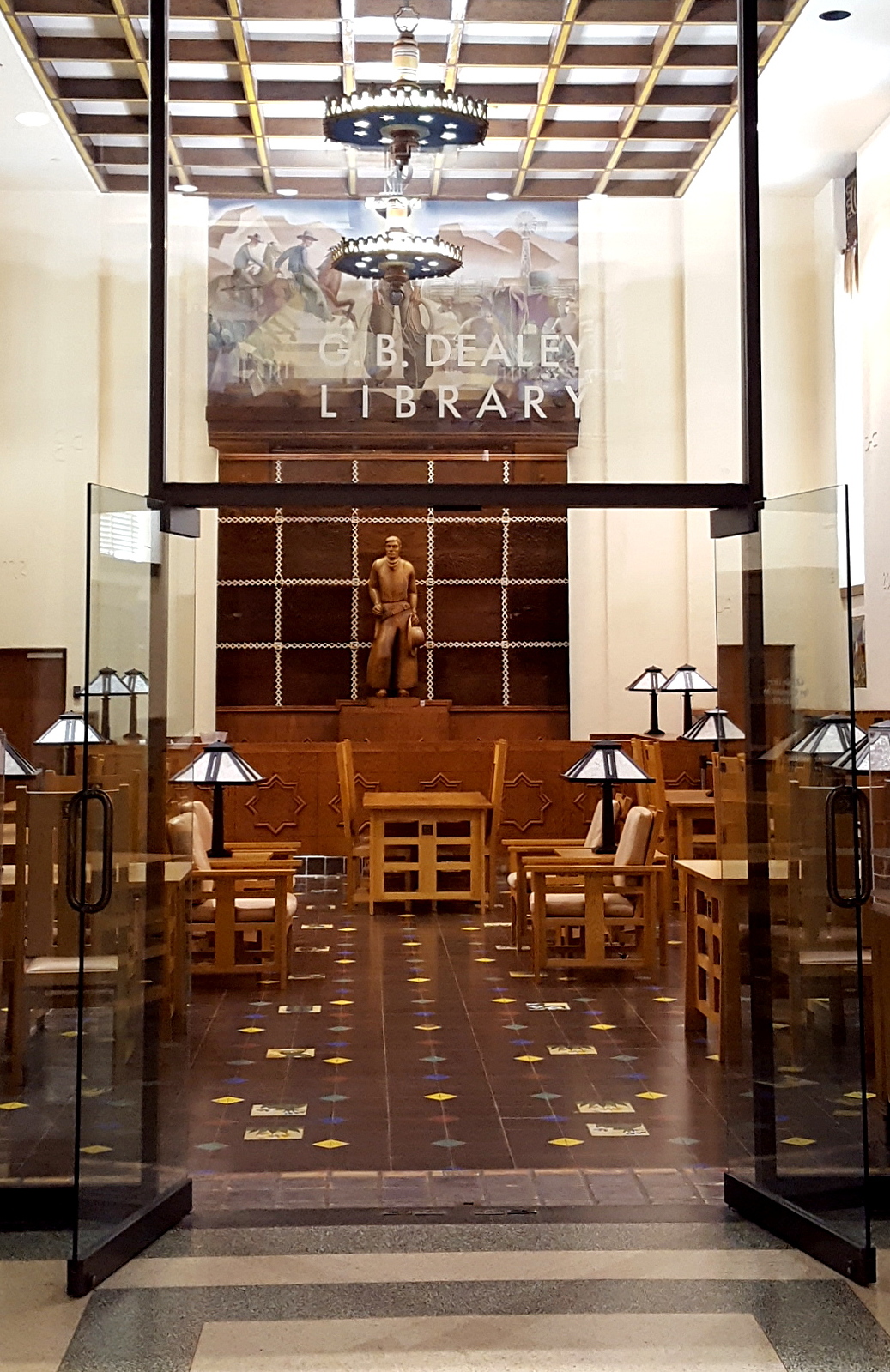
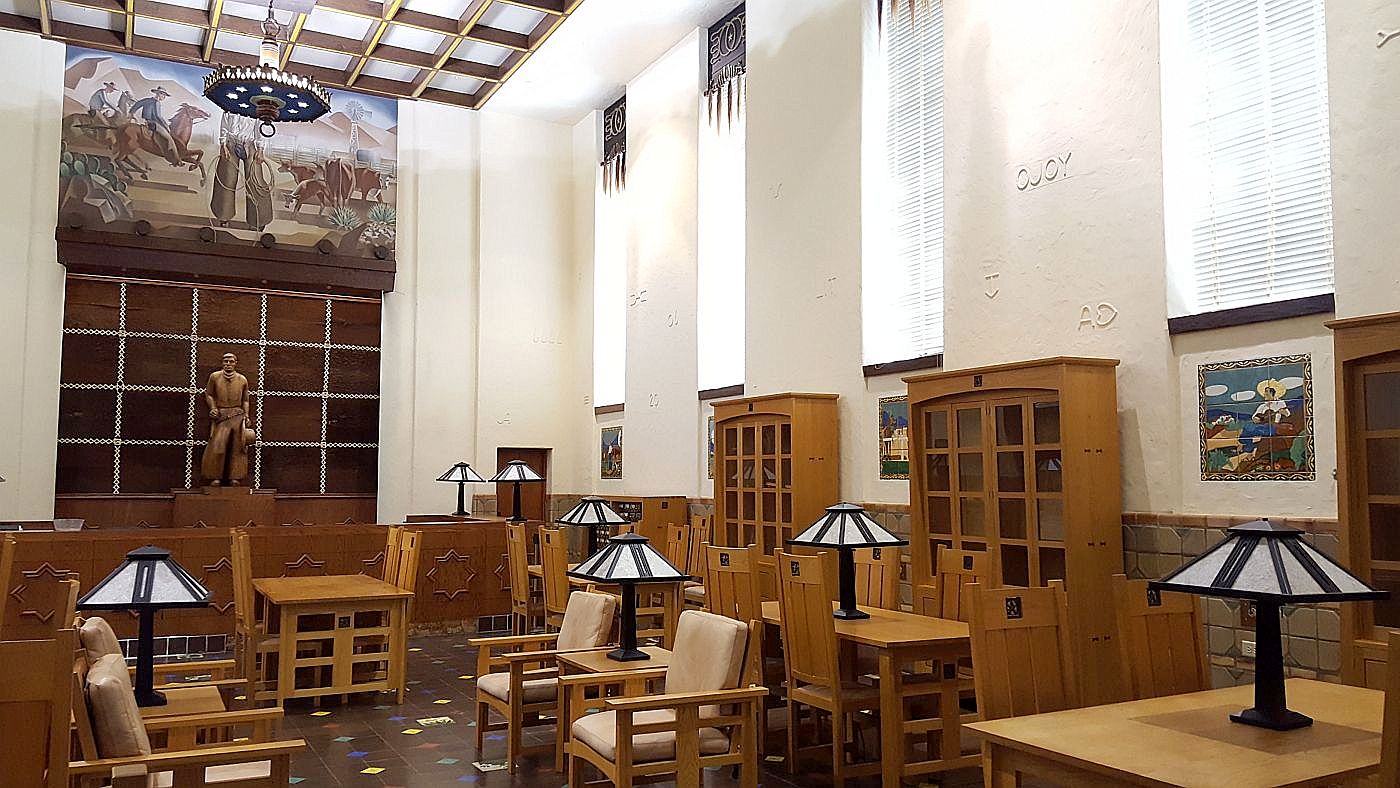
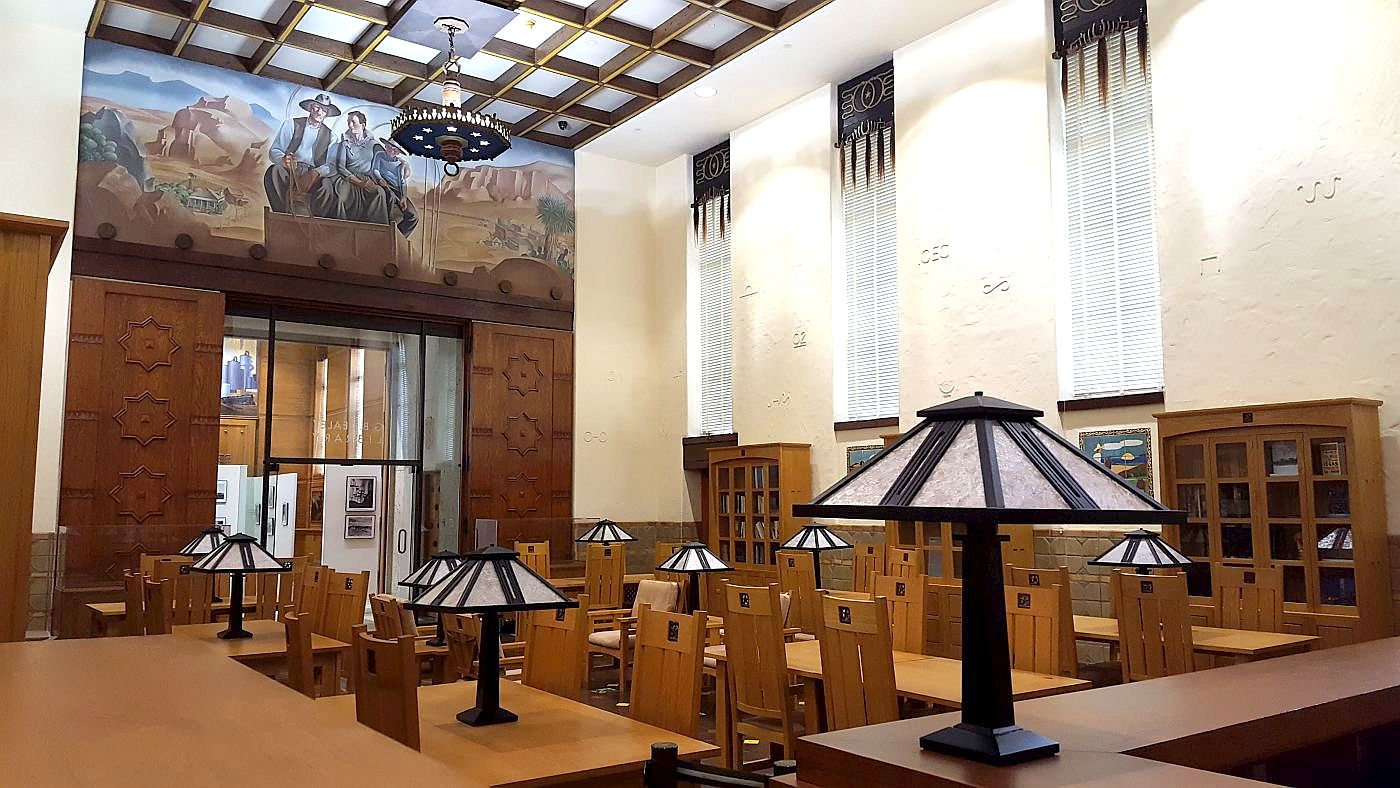
I spent time this week walking around the G. B. Dealey Library and Reading Room at the Hall of State in Fair Park. It is part of the Dallas Historical Society, and it is a quiet, high-ceilinged, airy-but-cozy Western-themed oasis filled with lots of warm wood and featuring two large murals by legendary El Paso artist Tom Lea. If you haven’t seen it, I highly encourage you to go take a look.

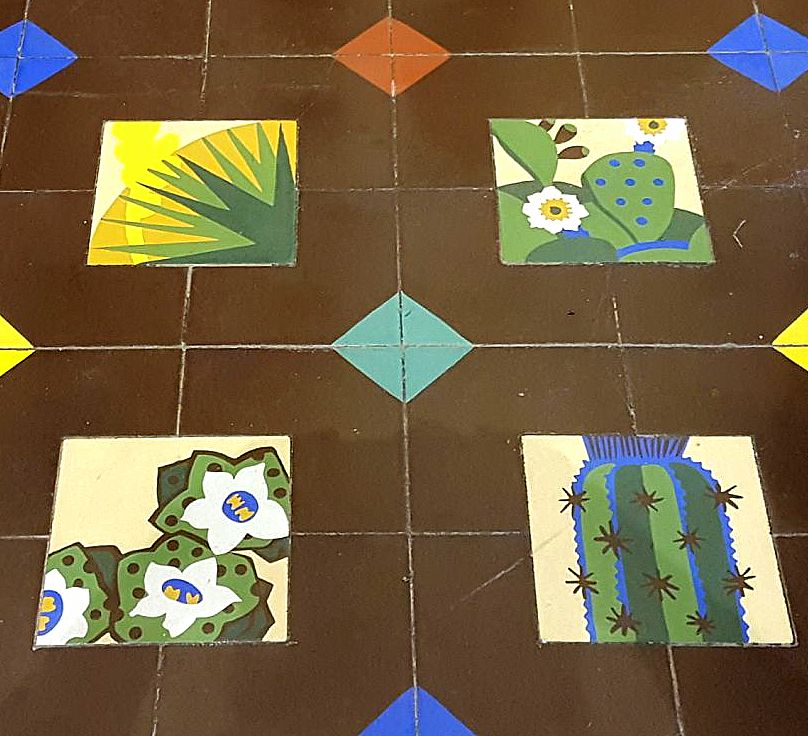
What we now call the Hall of State was the architectural jewel in the crown of the Art Deco splendor created throughout Fair Park for the Texas Centennial Exposition in 1936. The room now housing the Dealey Library was originally the West Texas Room — one of four geographically-specific rooms in the Hall of State. The two Tom Lea murals (one depicting a cowboy, the other, pioneers) are on opposite walls (walls finished with an adobe-like plaster, decorated with famous Texas brands, in relief). One wall is covered with cowhide. There are painted ceramic tiles set into both the walls and the floor (the ones on the floor decorated with images of cactus are great!). There is a wood sculpture of a cowboy, carved by Dallas artist Dorothy Austin, who was only 25 years old when the Centennial opened. And … well — like everything in the Hall of State — everywhere you look you see incredible attention to detail. Every fixture, grating, knob … everything is absolutely wonderful.

In 1989, after a two-and-a-half-year renovation, the West Texas Room became the home of the G. B. Dealey Library (named in honor of the former publisher of The Dallas Morning News). The project was headed by architect Downing Thomas who took great care in choosing the Arts and Crafts-style furniture (the chairs, tables, and bookcases were handmade by Thomas Moser in Portland, Maine, the chairs emblazoned with bronze Texas stars and upholstered in tanned leather), reading lamps with mica shades (made by Boyd Lighting of San Francisco), and a woven rug by Sally Vowell of Fort Worth (I don’t recall seeing a rug, but there’s a lot to take in and I might have missed it). I really love this room.

When the library opened in November, 1989, the first guest through the doors was Tom Lea who had been shocked to learn that his then-53-year-old murals were still in place. And they’re still there, 81 years after Lea created them. And you should go see them.

The library and reading room is open Tuesday-Sunday, same hours as the Hall of State. If you are interested in researching materials from the collection of the Dallas Historical Society, you are encouraged to contact the staff in advance of your visit and make an appointment; though the room is open to the public, research hours are limited. More about this and the hours of operation can be found here.

*

Below, one of the Tom Lea Murals can be (partially) seen above the cowhide wall-covering and above Dorothy Austin’s cowboy sculpture. (Click photo to see a larger image.) That light fixture is fantastic! (See the full Tom Lea mural here.)

hall-of-state_dealey-library_042517_inside-entrance

Here’s the view from the back corner looking toward the entrance, over which can be seen Lea’s second mural.

hall-of-state_dealey-library_042517_toward-entrance

In the photo at the very top, you can see the floor, which is studded with all sorts of cactus-themed tiles. Here are examples of four of them.

hall-of-state_dealey-library_042517_floor

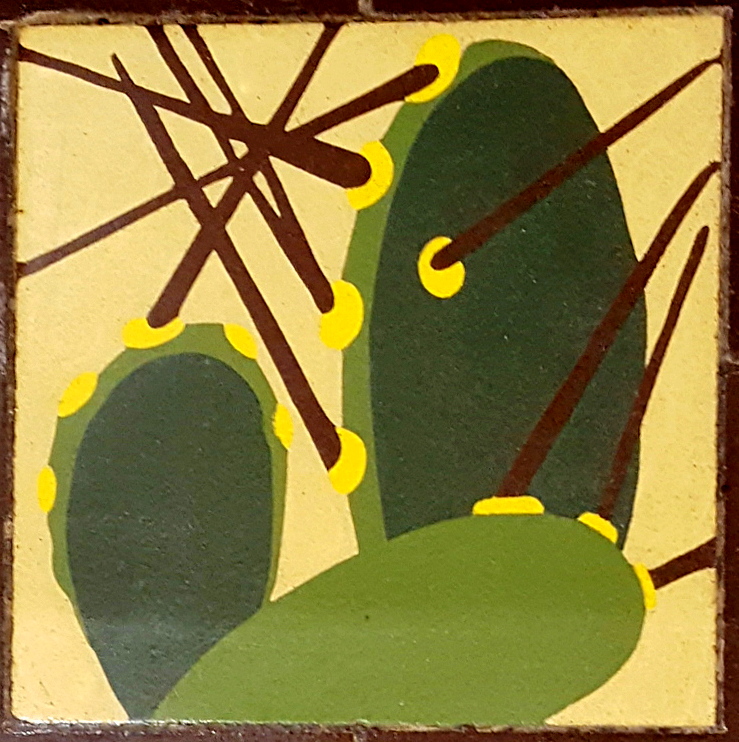
My absolute favorite of the cactus tiles is this one, in a very Japanese-like rendering.

hall-of-state_dealey-library_cactus-tile

*

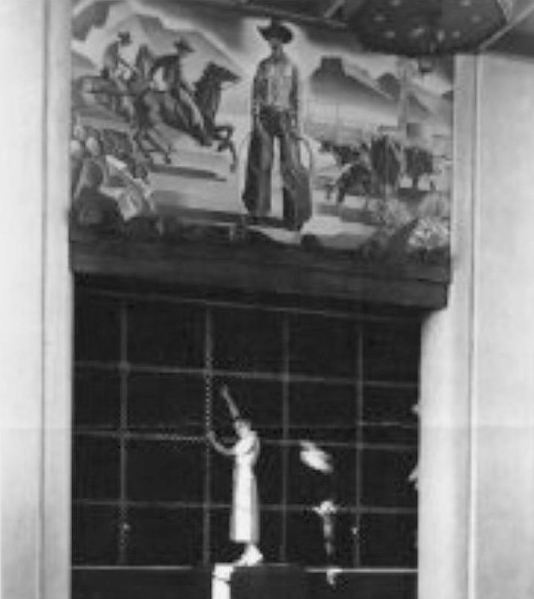
That’s what the room looks like today. Here are a few photos of the West Texas Room under construction in 1936 (photos from the Dallas Historical Society’s Centennial Visual Collection). The first one shows Dorothy Austin standing below the Tom Lea mural, about where her cowboy statue would be placed. Those ceilings are pretty high.

tom-lea_dorothy-austin_west-tx-room_DHS

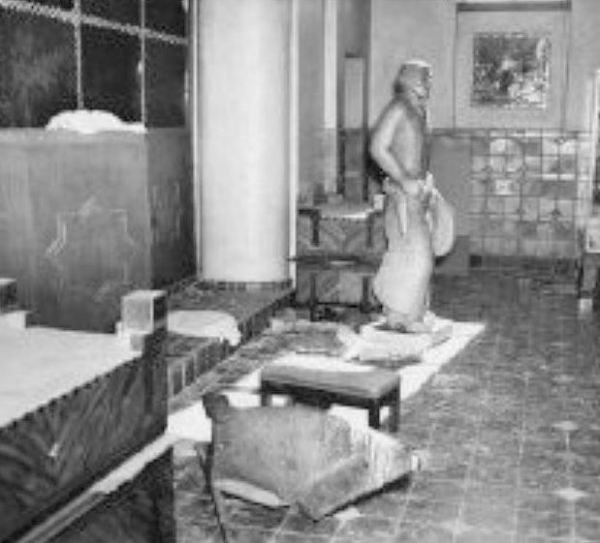
And here’s the statue. (See Austin’s statue close up, here, in a 2014 photo by Carol M. Highsmith, from the Library of Congress.)

dorothy-austin_cowboy-sculpture_west-tx-room_DHS

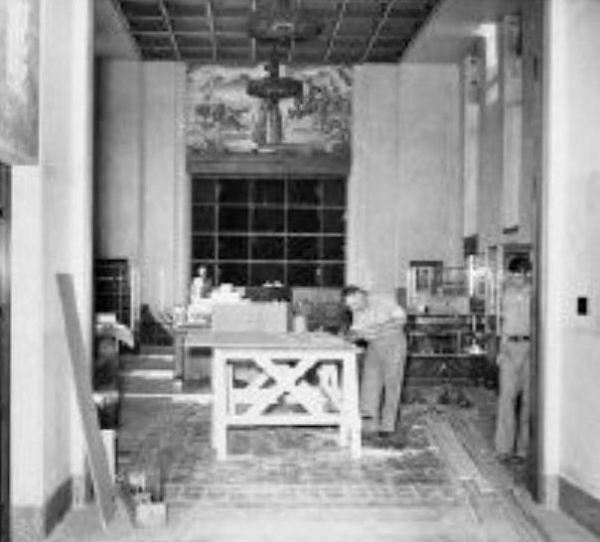
And here is a look into the room from the entrance, showing a construction crew at work.

west-tx-room-construction_hall-of-state_DHS

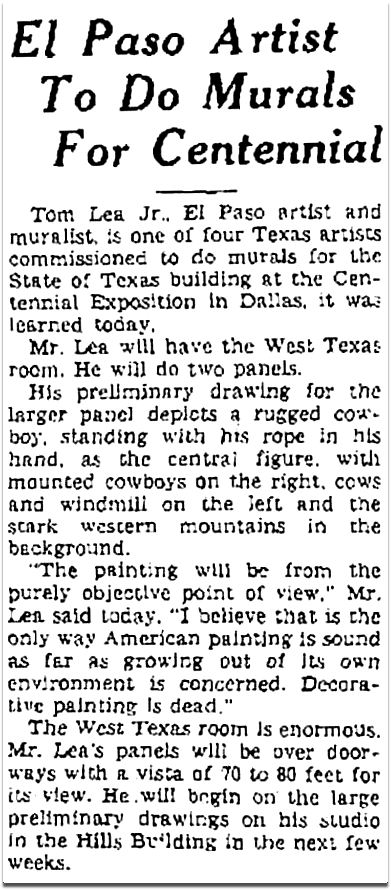
Below are 28-year-old Tom Lea’s thoughts on being informed of his important commission, from the El Paso Herald Post, March 24, 1936.  (Click to see larger image.)

tom-lea_west-tx-room-murals_el-paso-herald-post_032436

It seems strange that Lea was only in the preliminary-drawing stage of the murals’ creation in March — the Centennial was scheduled to open in June, less than three months away. (It’s worth noting that even though the Centennial — which ran for almost six months — opened in June, the Hall of State did not open to the public until September, three months behind schedule and the only Exposition building that did not meet its deadline. It was finally dedicated on September 5, 1936, the 100th anniversary of Sam Houston’s election as the first President of Texas.)

Below, a photo of Mr. Lea at the 1989 opening of the Dealey Library, with his 1936 mural behind him.

tom-lea_west-texas-room_1989_tom-lea-institute
via Tom Lea Institute

*

To read more details on the 1989 opening of the G. B. Library and the renovation of the West Texas Room, please check out these articles from The Dallas Morning News archives:

  • “A Rare Blend — Art Deco, Western and Shaker Unite for a Modern Adaptation at the Hall of State” by Mariana Greene (DMN, Nov. 12, 1989)
  • “G. B. Dealey Library Dedicated at Fair Park — Center Will House Texas Documents” by Todd Coplivetz (DMN, Nov. 13, 1989)
  • “How the West was East at the Hall of State Redo”  by Alan Peppard (DMN, Nov. 14, 1989)
  • “An Old Friend Triumphs Anew: The Hall of State Redo Affirms the Power of Great Architecture” by David Dillon (DMN, Nov. 14, 1989)
  • “Reviving a Cultural Paean to Dallas — Fair Park Changes Designed to Restore Centennial’s Glory” by David Dillon (DMN, April 9, 1986) (this article concerns Fair Park as a whole)

***

Sources & Notes

Photos of the Dealey Library and Hall of State door (below) are by me.

Photos of the West Texas Room from 1936 are from the collection of the Dallas Historical Society. You can search through low-res thumbnails of some of the images from their very large collection here.

As mentioned above, if you plan a trip to the Dealey Library in order to inspect or research items from the DHS collection, these materials must be requested in advance and an appointment must be scheduled (info here).

More on Tom Lea (1907-2001) can be found at the Tom Lea Institute website, here (with specific information on the Hall of State murals here); a profusely illustrated blog post with an emphasis on his time as a WWII artist-correspondent can be found here.

Obituary for Dorothy Austin Webberley (1911-2001) can be found on the Dallas Morning News site, here; family obituary is here.

Detailed info on the architecture and design of the Hall of State can be found in a Dallas Historical Society PDF, here. The Wikipedia entry is here (someone please correct the erroneous info that the Dealey Library is in the “East” Texas room!), and the always informative Watermelon Kid site has information on the East Texas and West Texas rooms here.

A series of photos of Fair Park, taken in 2014 by Carol M. Highsmith, can be found at the Library of Congress website, here. Her photo of the Hall of State is below.

hall-of-state_library-of-congress_carol-m-highsmith_2014

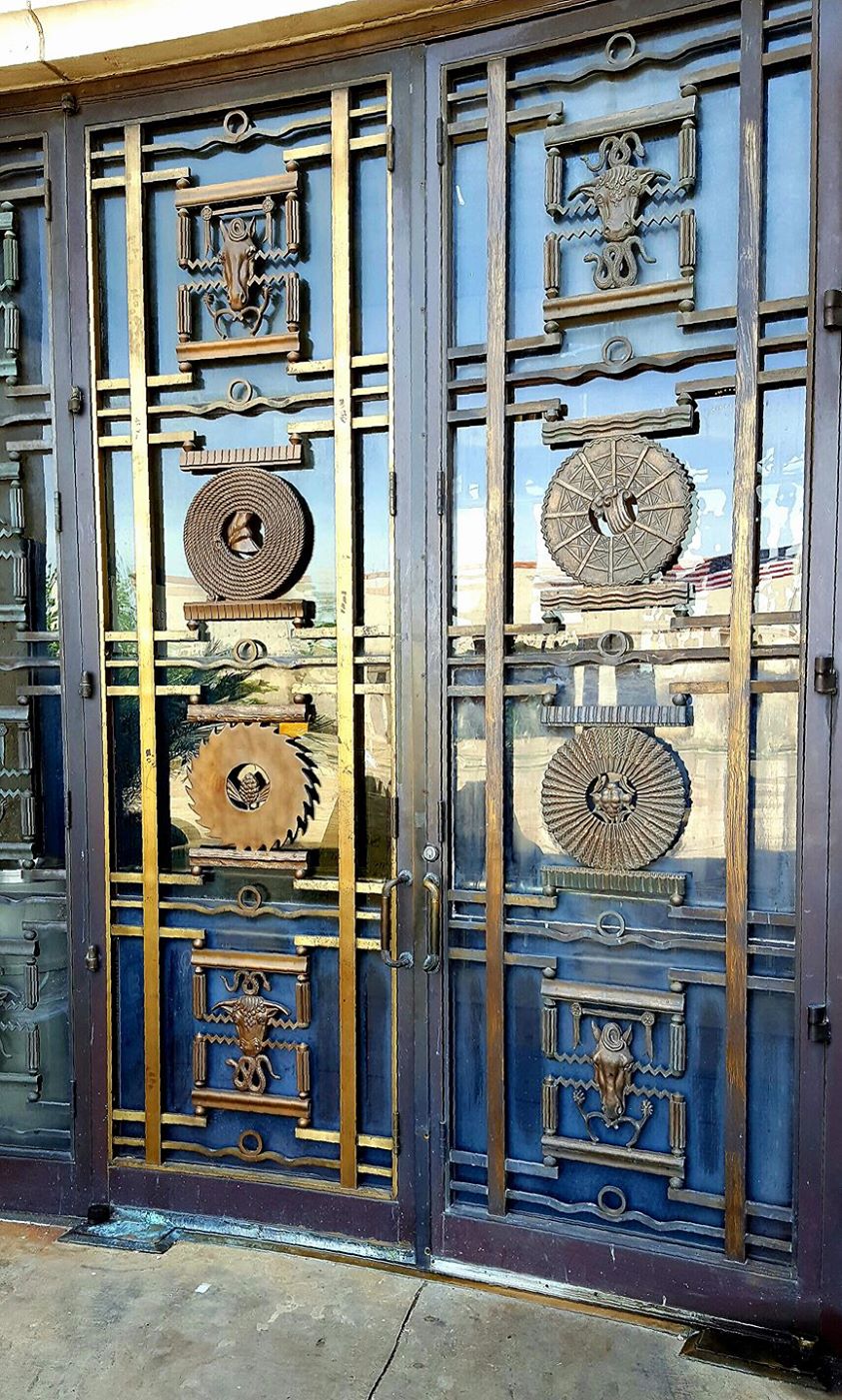
And, lastly,  a photo I took showing one of my favorite elements of a building packed with aesthetically pleasing details (seriously, everywhere you look): one of the doors of the main entrance to the Hall of State, designed by Houston architect Donald Barthelme, honoring Texas industry (ranching, timber, oil, agriculture, etc.). That sawmill blade gets me every time. And the aerial perspective of oil coming up through a derrick (middle right) is pretty cool, too. (Click to see a larger, more exciting image!)

hall-of-state-doors_042517_bosse

*

Copyright © 2017 Paula Bosse. All Rights Reserved.


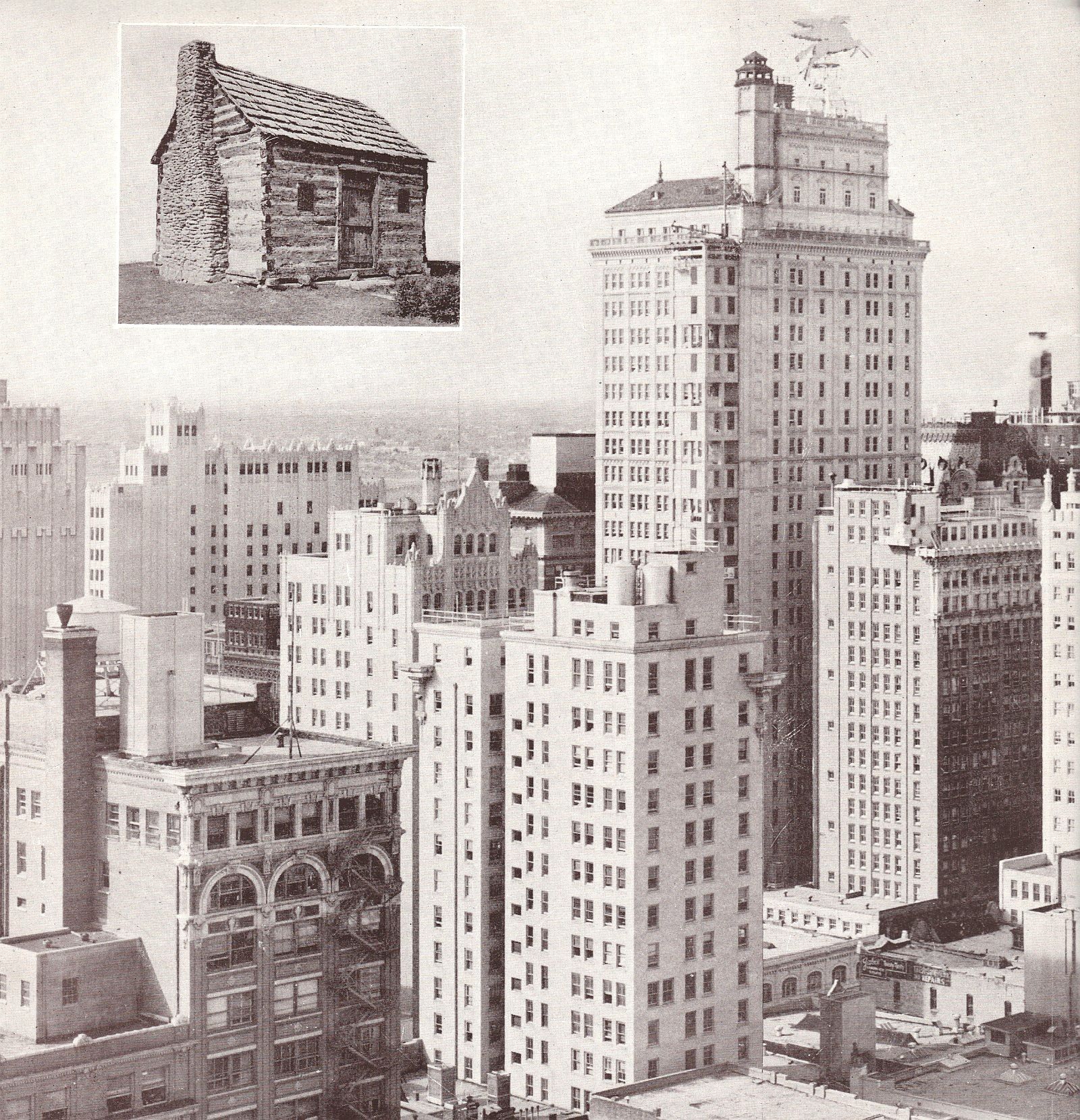
A Century of Growth: From Log Cabin to Skyscrapers

cityscape_cabin_so-this-is-dallas_ca-1943Ol’ JNB wouldn’t recognize the place… (click for larger image)

by Paula Bosse

To think it all began with John Neely Bryan’s little log cabin on the banks of the Trinity…. 

***

Photo from the booklet So This Is Dallas (Dallas: The Welcome Wagon, circa 1943); courtesy of the Lone Star Library Annex Facebook page.

*

Copyright © 2017 Paula Bosse. All Rights Reserved.

The Praetorian Building and Its 19th-Century Neighbors

praetorian_empire_main-street_postcard_ebay_detIn the shadow of the Praetorian —  Main Street, 1907

by Paula Bosse

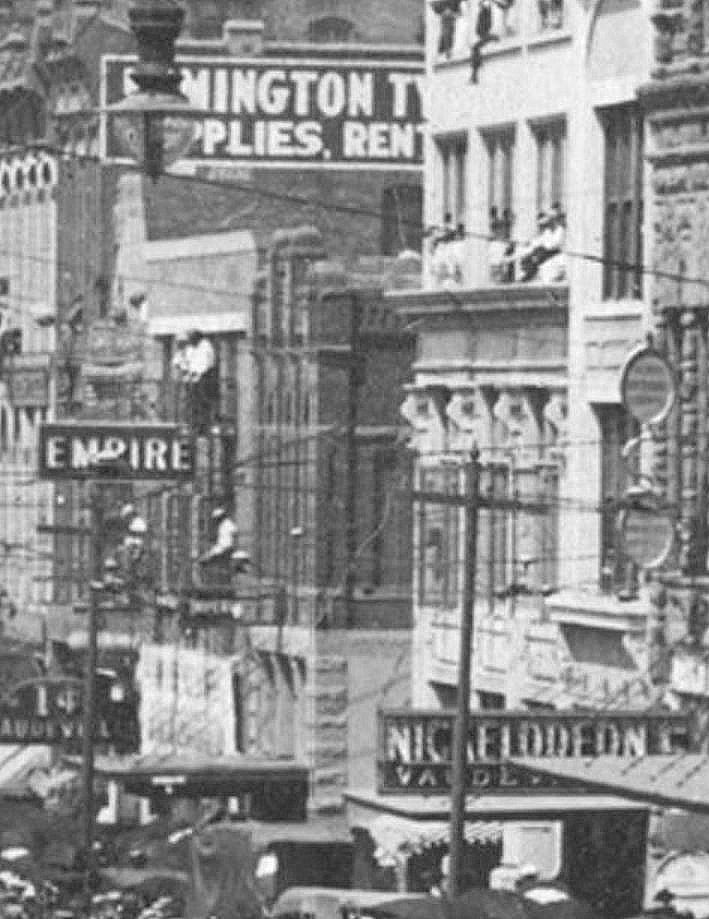
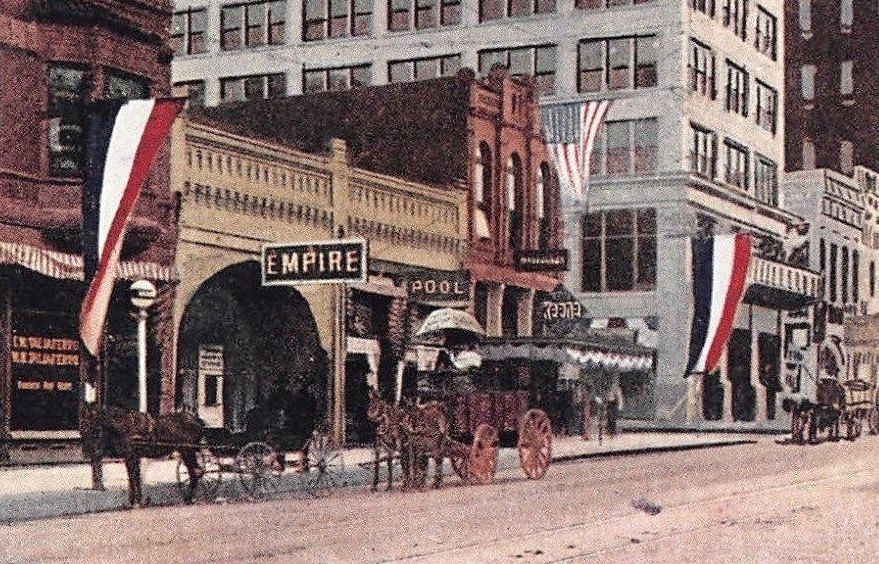
The photo below is a detail of a larger photo from the George W. Cook Collection treasure trove at SMU’s DeGolyer Library, which shows the Praetorian Building under construction. It appeared on a real-photo postcard which shows a postmark of July 25, 1907. What I found most interesting about this photo are the two buildings standing in its shadow, just west of Stone Street (now Stone Place). Here’s a close-up (click to see a larger image):
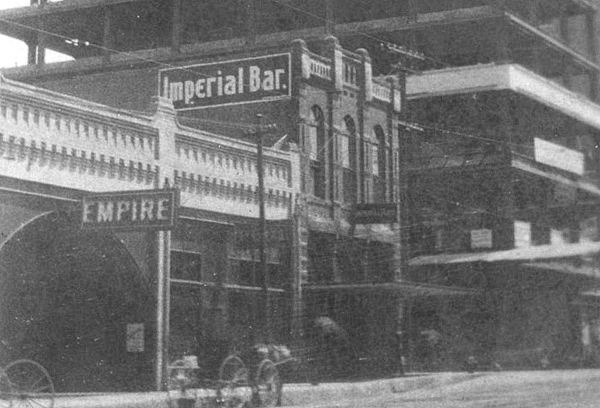
empire-imperial-praetorian_1907_cook-collection_SMU_det

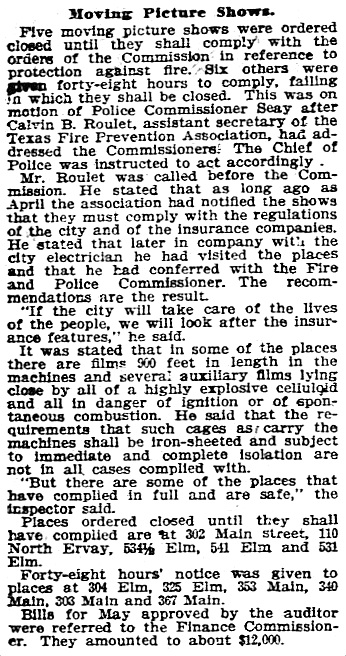
I knew that the building with “Imperial Bar” on the side is still standing (the Sol Irlandes restaurant at 1525 Main has been its occupant for several years), but I wondered about the one with the “Empire” sign. It took a bit of digging, but I’m happy to report that it was a very early movie theater. I had determined that the address of the building with the Empire sign was 353 Main Street (in what is today the 1500 block of Main) and found this article from 1907 about officials closing down “moving picture shows” which had not complied with fire precautions in the storing and projection of highly flammable celluloid film — one of these movie houses was at 353 Main (clippings and photos are larger when clicked):
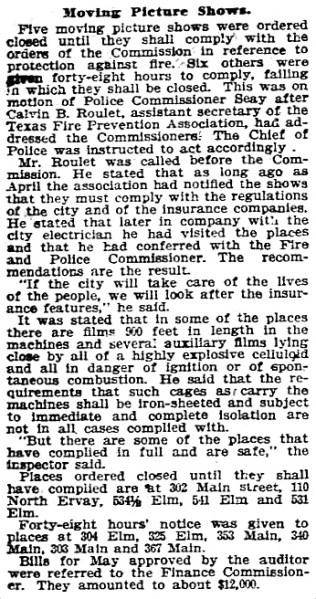
fire-code-violations_moving-pictures_dmn_062507
Dallas Morning News, June 25, 1907

Below is a clipping from the Dallas city directory issued in 1907 — the first year a special “Moving Pictures” category was included in the directory.
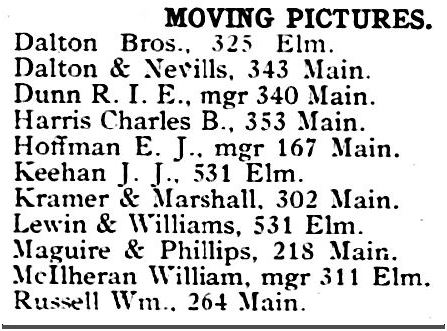
1907-directory_harris-empire
1907 Dallas directory

These “picture shows” were listed not by theater name (if they had one), but by owner or manager. (This was the era of nickelodeons, which were not so much “theaters” as “viewing rooms” — a great article from 1908 about the sudden surge in popularity of the nickelodeon — what they were and what they were like — can be read here.) The theater at 353 Main was owned by Charles B. Harris (usually referred to as C. B. Harris, who had previously worked as a wholesaler for the Edison Phonograph Co. a couple of doors down the block). When the picture above was taken, the Empire was showing movies at 353 Main, men were playing pool for 45¢ an hour at the New Brunswick Billiard Hall next door at 355 Main, and Bartholomew Lynch was running the Imperial Bar on the corner, at 357 Main.

pool-hall_355_dmn_041307
DMN, April 13, 1907

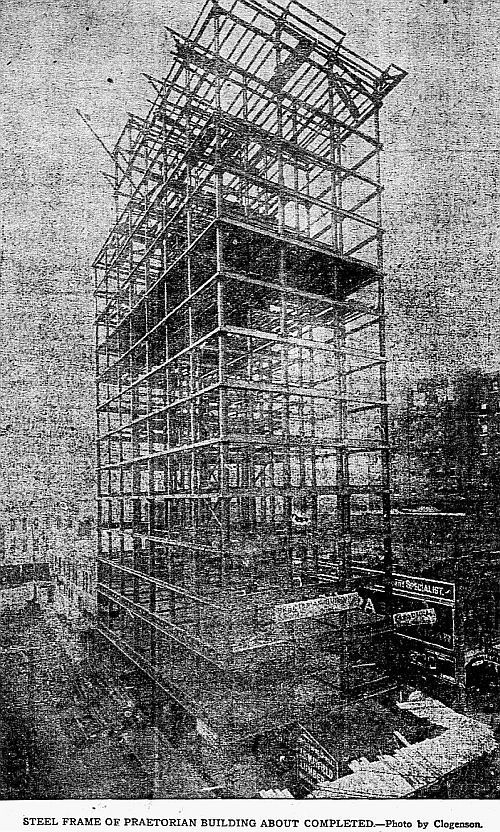
Construction of the C. W. Bulger-designed Praetorian Building — Dallas’ first skyscraper (14 stories!) — had begun in September, 1906. Here’s what it looked like in March, 1907:
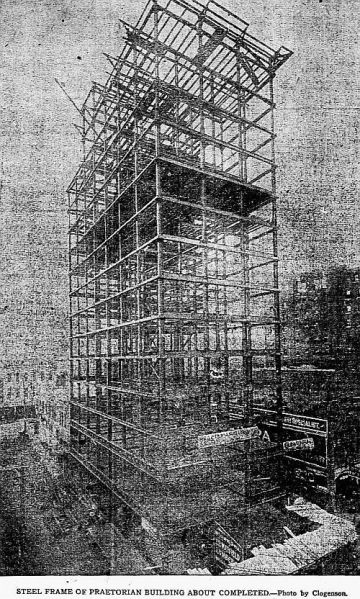
praetorian_construction_dmn_031707
DMN, March 17, 1907

And here it is shortly after completion:
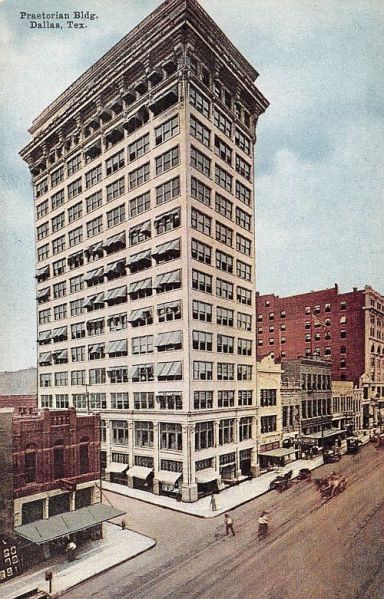
praetorian-building_main-street_postcard_ebay

In January, 1909, C. B. Harris decided to expand up and into the space next door. The Empire Theater stopped showing movies, and in March, 1909, it became a venue for live stage productions.
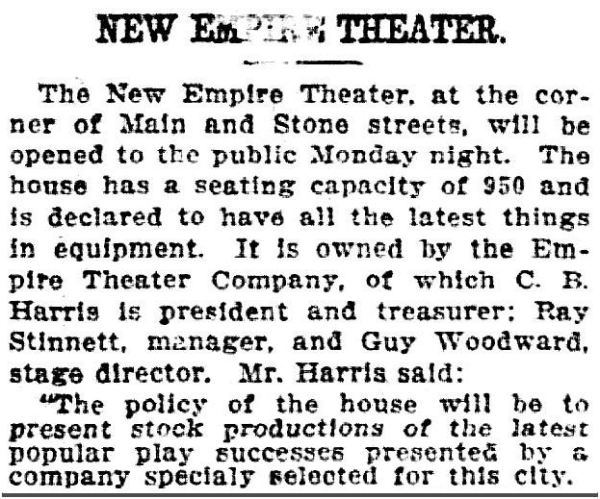
empire_dmn_032109_opening
DMN, March 21, 1909

Here are a few photos showing the Empire and the finished Praetorian Building, around 1909. The first one may be one of the few to show the short-lived Colonial Theater (352 Main), a vaudeville house, across the street.

empire-imperial-praetorian_flickr_colteravia Flickr

Here is another postcard view, showing the Empire (the detail of this image is at the top of this post).
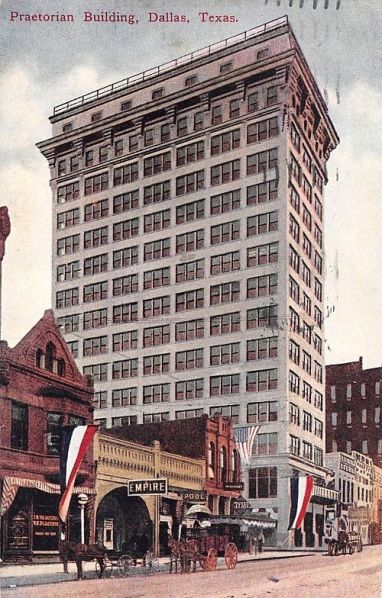
praetorian_empire__main-street_postcard_ebay

Below, a detail of a larger photo, also from around 1909.
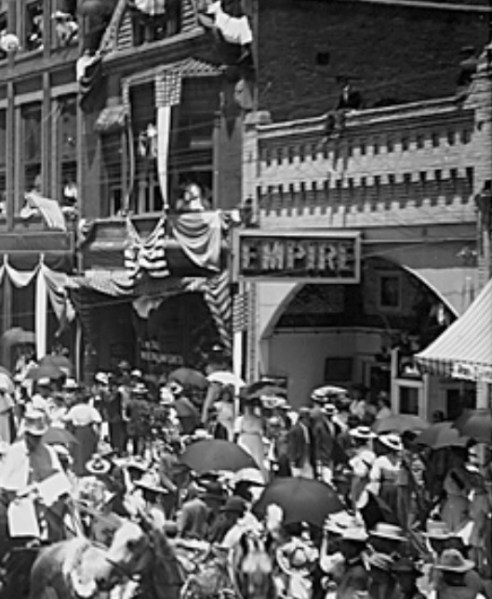
empire_ca-1908_parade_flickr

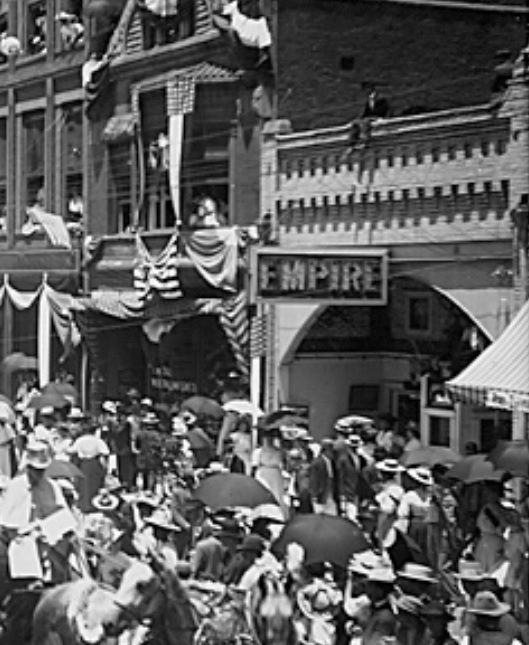
And below, a detail from a larger photo, with spectators watching a parade in August, 1909, showing the Empire with its new construction.
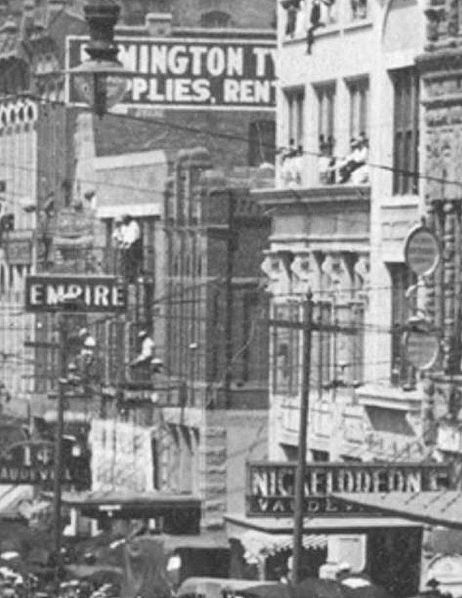
empire_parade-day_1909_degolyer_SMU_close-up

In December, 1909, Harris changed the name of the theater to the Orpheum — it became a vaudeville house.
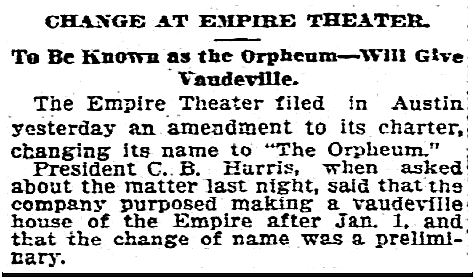
empire-orpheum_dmn_121409
DMN, Dec. 14, 1909

You can see the Orpheum Theater sign in this detail of a larger photo (click thumbnail on page to see full image). (Note that the Happy Hour Theater has taken over the Colonial’s space.)
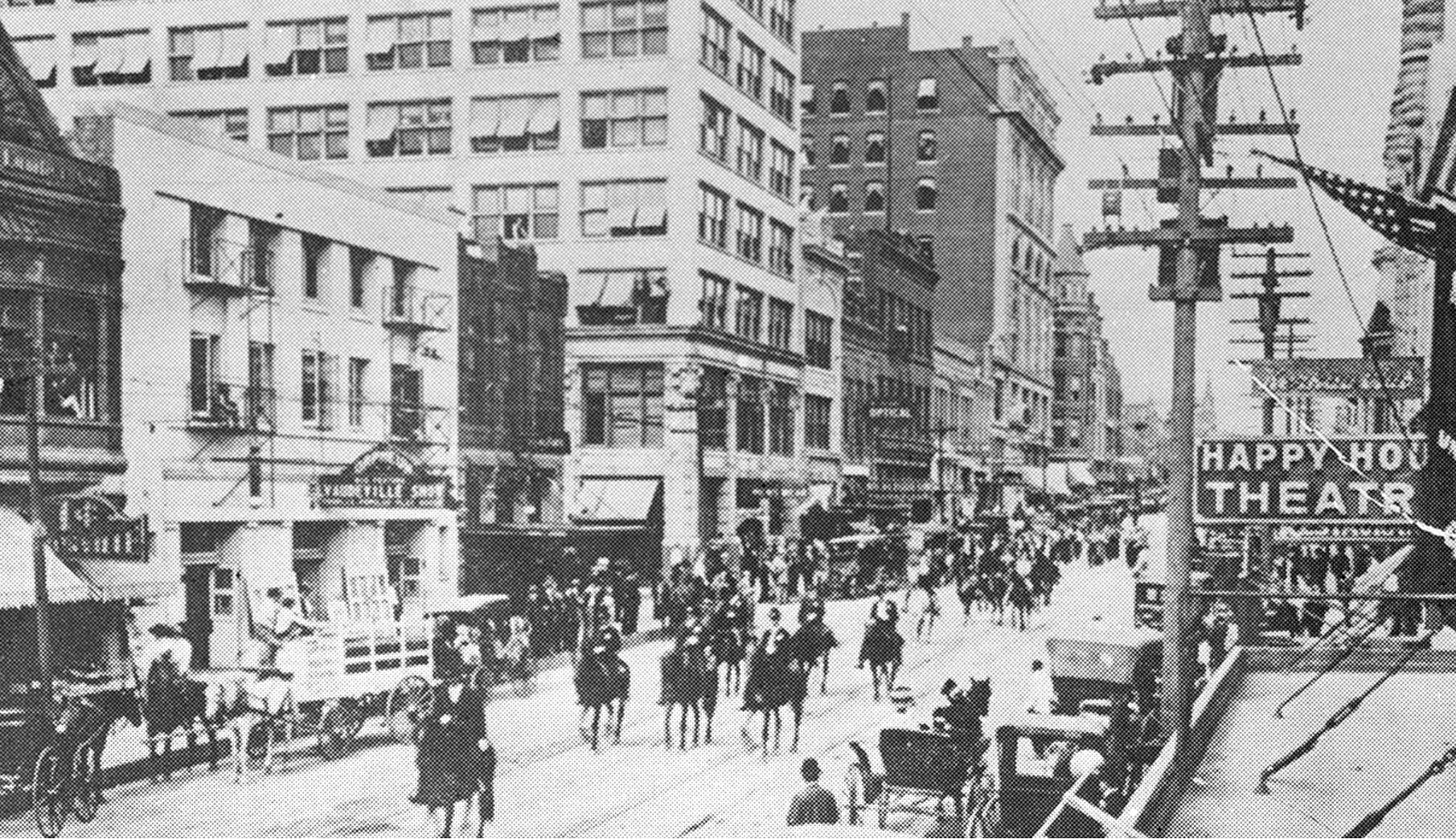
orpheum_happy-hour_praetorian_uta_det

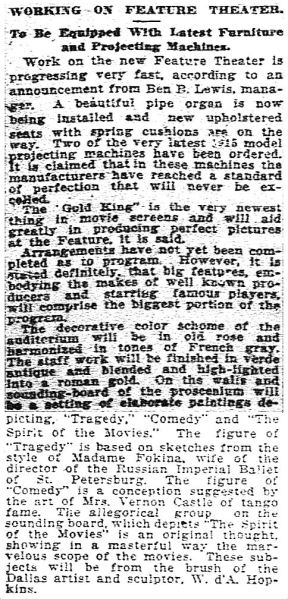
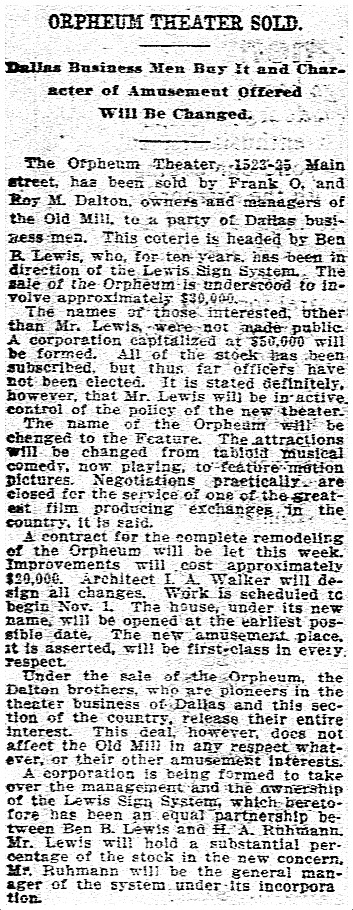
By 1914, the building’s address was 1521 Main (or, more specifically, 1521-23 Main), and ownership of the theater (which was now featuring “tabloid musical comedy”) had changed hands (to the Dalton brothers, who owned the Old Mill Theater). In October, 1914, the Daltons sold the theater. It was extensively remodeled and became the Feature Theater, a motion picture house (once again!).
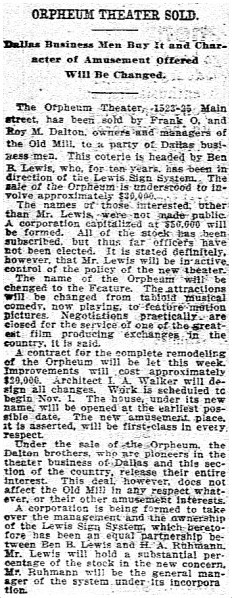
orpheum_dmn_101814_sold
DMN, Oct. 18, 1914

feature-theater_dmn_111514
DMN, Nov. 15, 1914

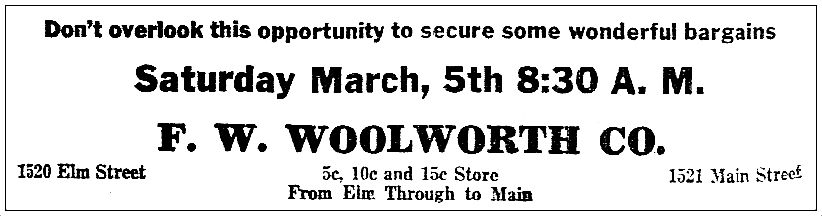
The Feature hung on through the Great War, but finally sputtered out in 1919. In 1920, Woolworth’s expanded into the space (they were already located on Elm Street, and the expansion afforded them entrances on both Elm and Main — and, I think, Stone. Woolworth’s had already been occupying the old Imperial Bar building on the corner when they took over the old Empire space (1525 Main). That was a big Woolworth’s store.
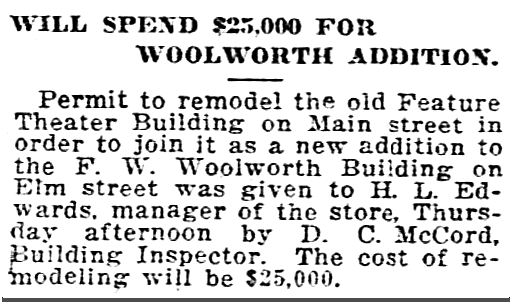
feature-theater_dmn_122420_woolworths
DMN, Dec. 24, 1920

woolworth_dmn_030421_grand-openingDMN, March 4, 1921

Here’s what our old pal, The Praetorian, and NKOTB, Woolworth’s, looked like around 1930.
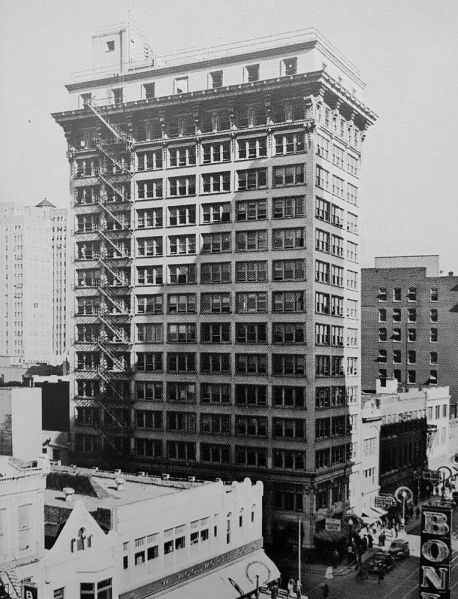
praetorian_ca-1930_dallas-rediscovered-cushman-and-wakefield-inc

Here’s Woolworth’s closer up — you can see how the two buildings (the old Empire and the old Imperial Bar) have been joined together a little oddly.
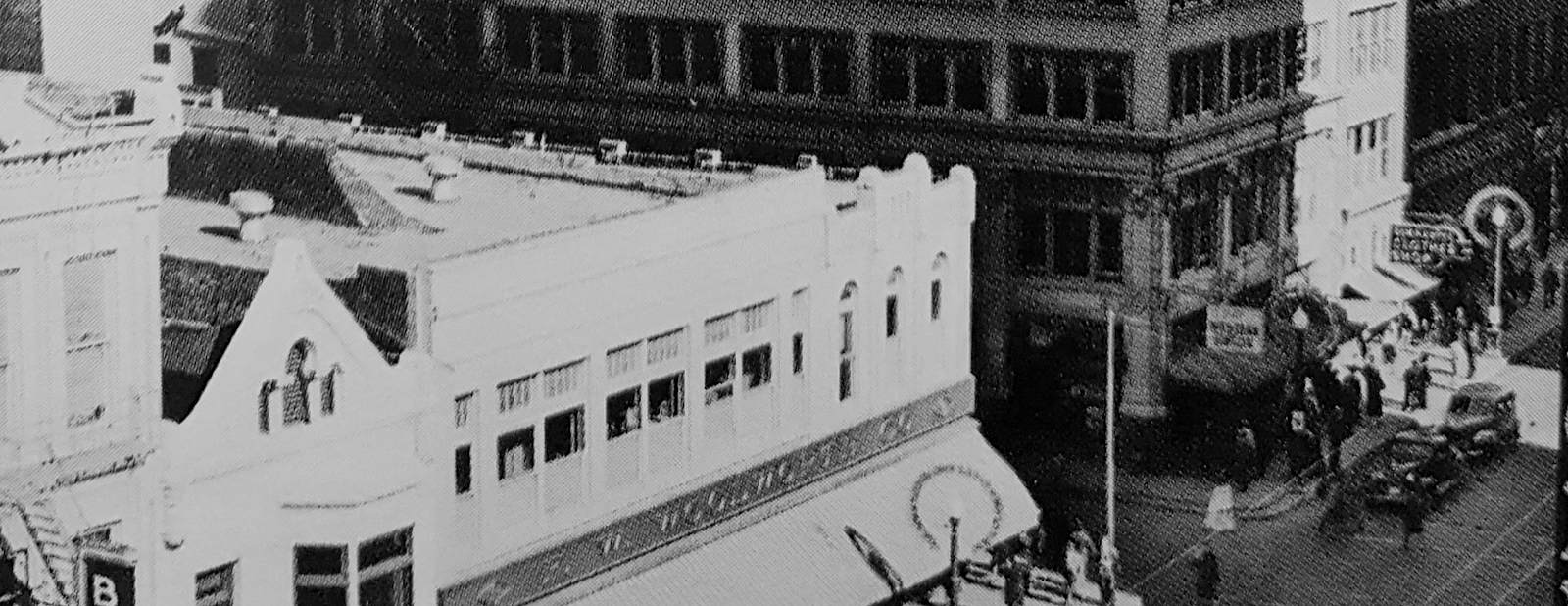
praetorian_ca-1930_dallas-rediscovered_cushman-and-wakefield-inc

Here’s a street-level view from the 1940s.

praetorian_william-langley_DPL_ca-1940
via Dallas Public Library

Fast-forward to 1953: the Shaw Jewelry Company moved into the old Empire Theater space at 1521 Main.

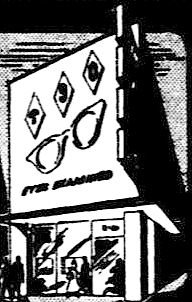
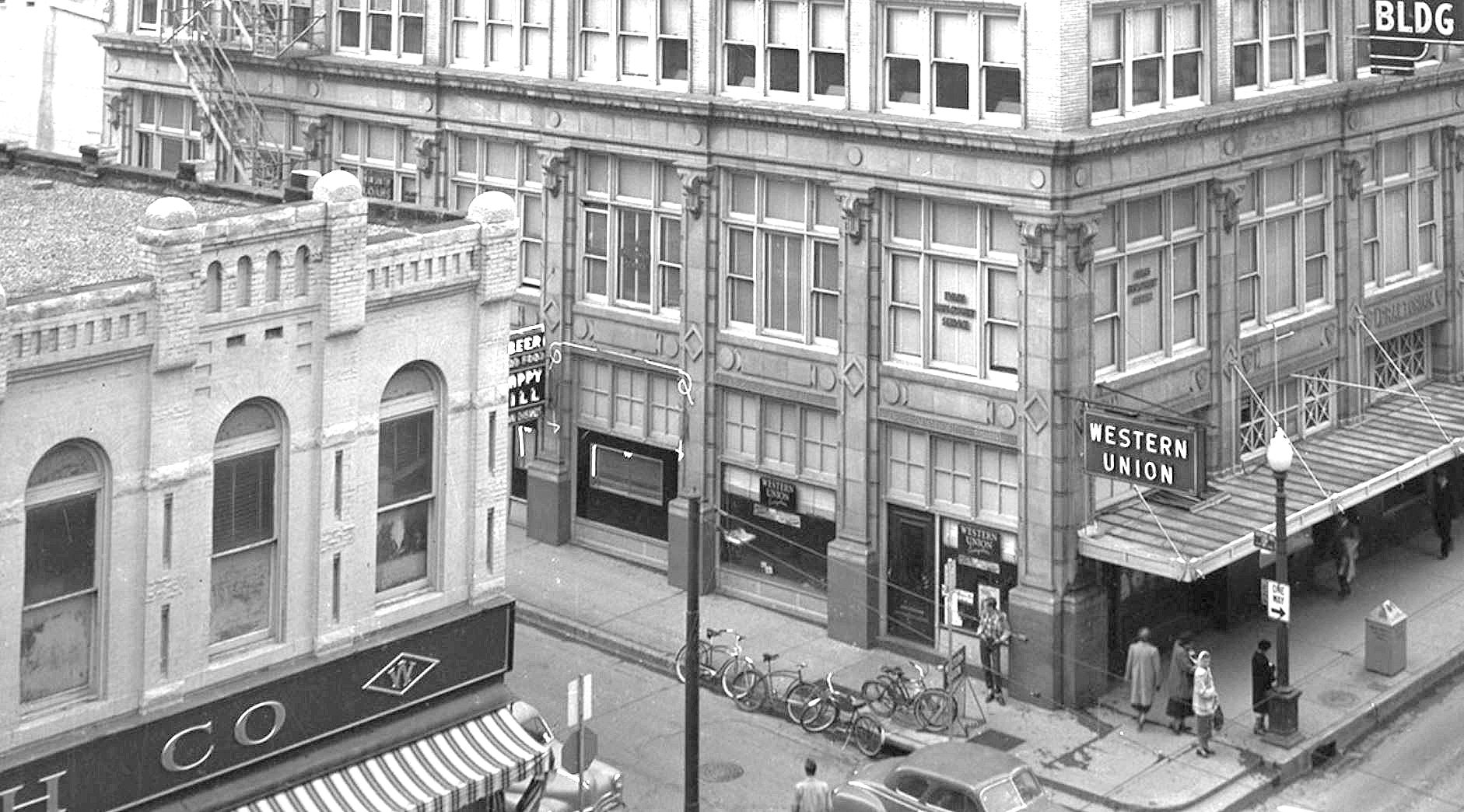
Meanwhile, next door, the old Imperial Bar space had become Texas State Optical. Sadly, someone thought it would be a good idea to wrap the original brick building (which has been estimated as having been built around 1895) in, I don’t know … aluminum siding? Here are before-and-after photos of that corner (Imperial Bar) building. It looked pretty good before TSO took over. (The detail below is from a Squire Haskins photo, via UTA — full photo is here — click thumbnail on UTA page to see a larger image). (I love the delivery boys’ bicycles parked at the curb outside the Western Union office.)
main-and-stone_praetorian_haskins_UTA_det

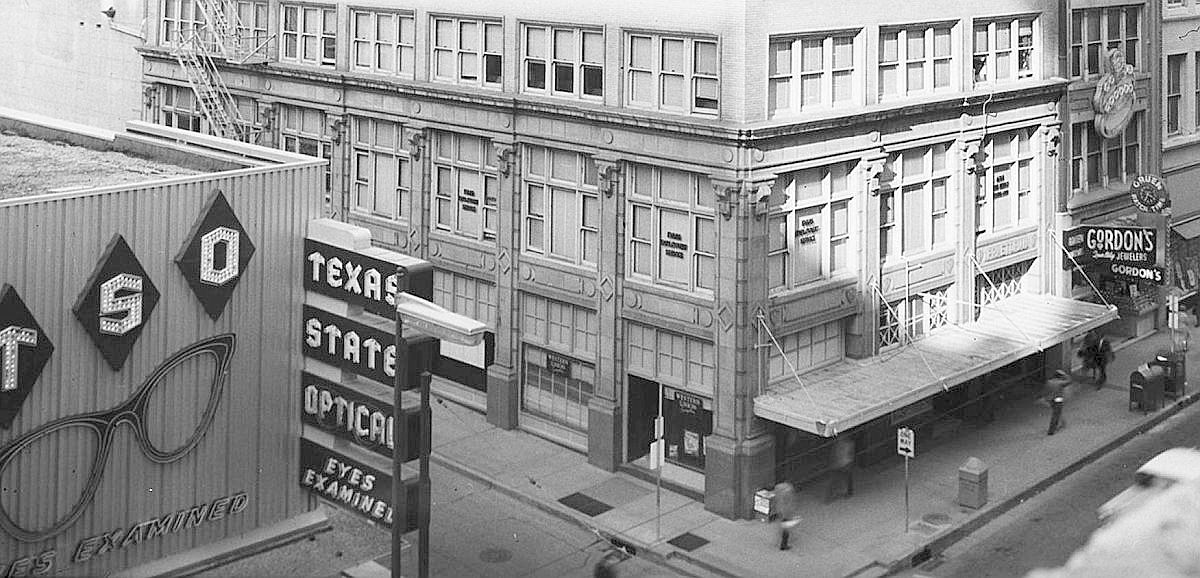
And here’s the same corner after “improvements” (this is another detail from another of Squire Haskins’ fab photos from the UTA collection — see the full photo here — click on thumbnail), circa 1950s.
tso_praetorian_squire-haskins_UTA_1950s

Oh dear. There should be a law….

tso_1525-main_dmn_102055_texas-state-optical
1955 (ad detail)

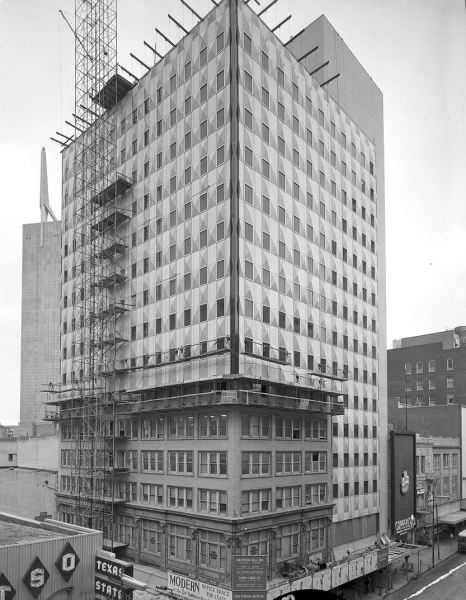
Speaking of “oh dear,” a few short years after this, the Praetorian Building expanded and was … argh … “re-clad.” Here’s a shot of it, mid-cladding, about 1961 (Squire Haskins photo info from UTA here).
praetorian_recladding_ca-1961

I believe it was … yellow.

In 1968, the Saint Jude Catholic Chapel moved into 1521 Main — the old Empire Theater space. The front was adorned with a vivid mosaic by Gyorgy Kepes (I wrote about the mosaic here).

gyorgy-kepes_mosaic_st-jude-chapel_website_videovia St. Jude Chapel website

The chapel is still there.

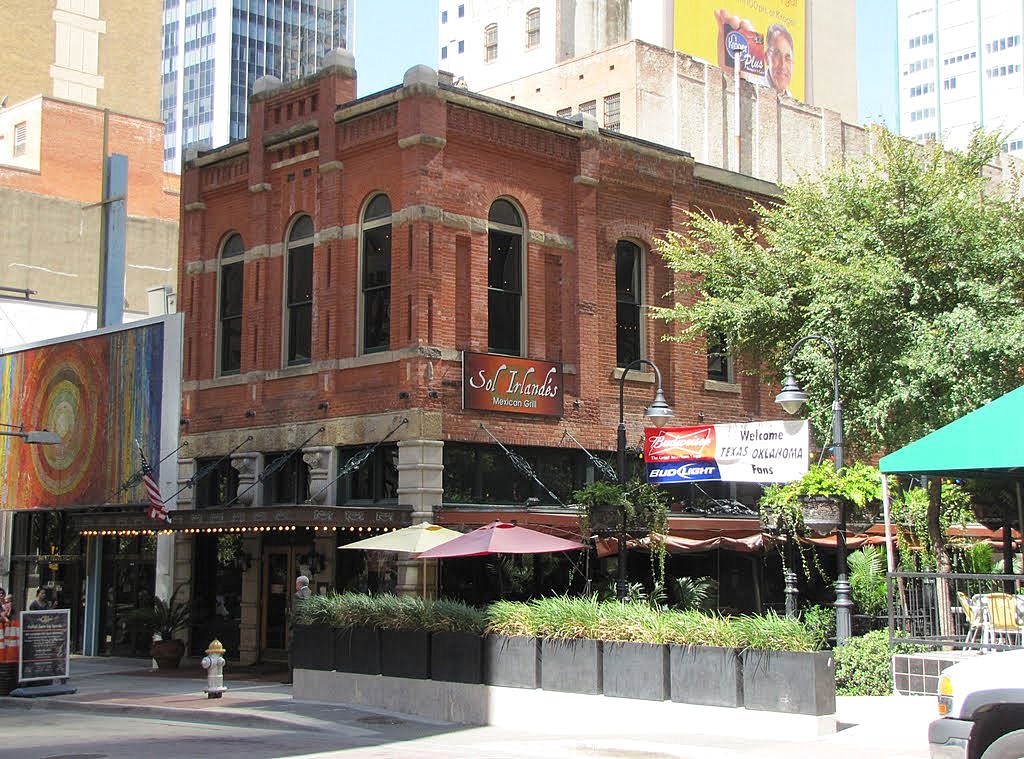
TSO — and later Pearle Vision — lasted at 1525 Main for years. In 2001, renovation and restoration efforts to develop Stone Place began. 1525 Main was restored as closely as possible to its original design and became home to a succession of restaurants (it has been occupied by Sol Irlandes for several years). ArchiTexas did a GREAT job with the building’s restoration!! (Read a 2001 Dallas Morning News article about this project — and about the historic 1525 building: “Historic Downtown Buildings To Be Restored — Shops, Restaurants Will Breathe New Life Into Stone Place,” DMN, Feb. 21, 2001.)
sol-irlandes_panoramio

So. Back to the top photo. There’s good news and bad news. Empire Theater building: still there. Imperial Bar building: still there. But the Praetorian Building — the most historically important of the three? The fabulous “skyscraper” was demolished in 2013 and replaced by a giant eyeball. Here’s a 2012 Dallas Morning News photo of it in mid death spiral, being slowly dismantled.

praetorian-pre-demo_dmn-photo_2012

See what this view looks like in the most recently updated Google Street View, here.

**

Interested in seeing the development of this block, as chronicled in Sanborn maps? Of particular interest is the northwest corner of Main and Stone — before 1911 the addresses of these two building were 353-355 Main and 357 Main; after 1911 the addresses changed to 1521-23 Main and 1525 Main. It appears that both buildings were built between 1892 and 1899.

  • 1885 — not a lot in this block yet — but there is a well
  • 1888 — a building has appeared one lot off Stone
  • 1892 — that building from 1888 is now nothing but “ruins” — likely the result of a fire
  • 1899 — the buildings we’ve been looking at in this post have appeared
  • 1905 — C. B. Harris’ Empire would occupy 353 Main by 1907 — possibly by 1906 (in 1905, Harris was working three doors down, at 347 Main, as an agent for the Edison Phonograph Co.)
  • 1921 — This map indicates that the 1521-23 building is two stories. Pictures going back to 1909 (see a couple above) seem to show three stories, but pictures of the building as part of Woolworth’s appear to show two floors (for comparison, the building on the corner at 1525 was two stories). So … what looks like a third floor on 1521-23 Main might be … architectural trompe l’oeil? Either that, or there was demolition and construction and demolition of the two-story building currently occupied by the St. Jude Chapel. This is confusing. Whatever the case, the renovation/restoration of these two buildings in 2001 shows them to look pretty much as they did in the top 1907 photo — once again, that original roofline is present. Below, the 1907 photo is on the left, a 2012 photo is on the right.
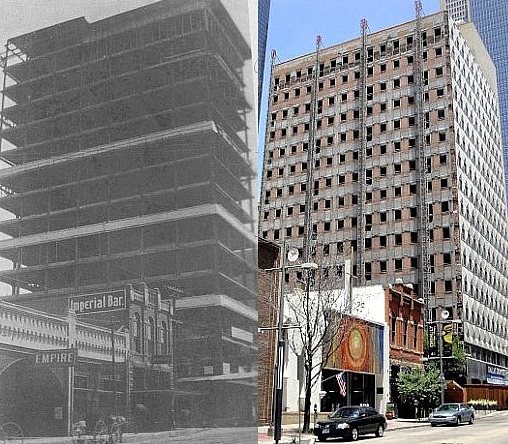
praetorian_main-stone_1906-1912

And here the buildings are today, minus the dearly departed Praetorian (RIP).
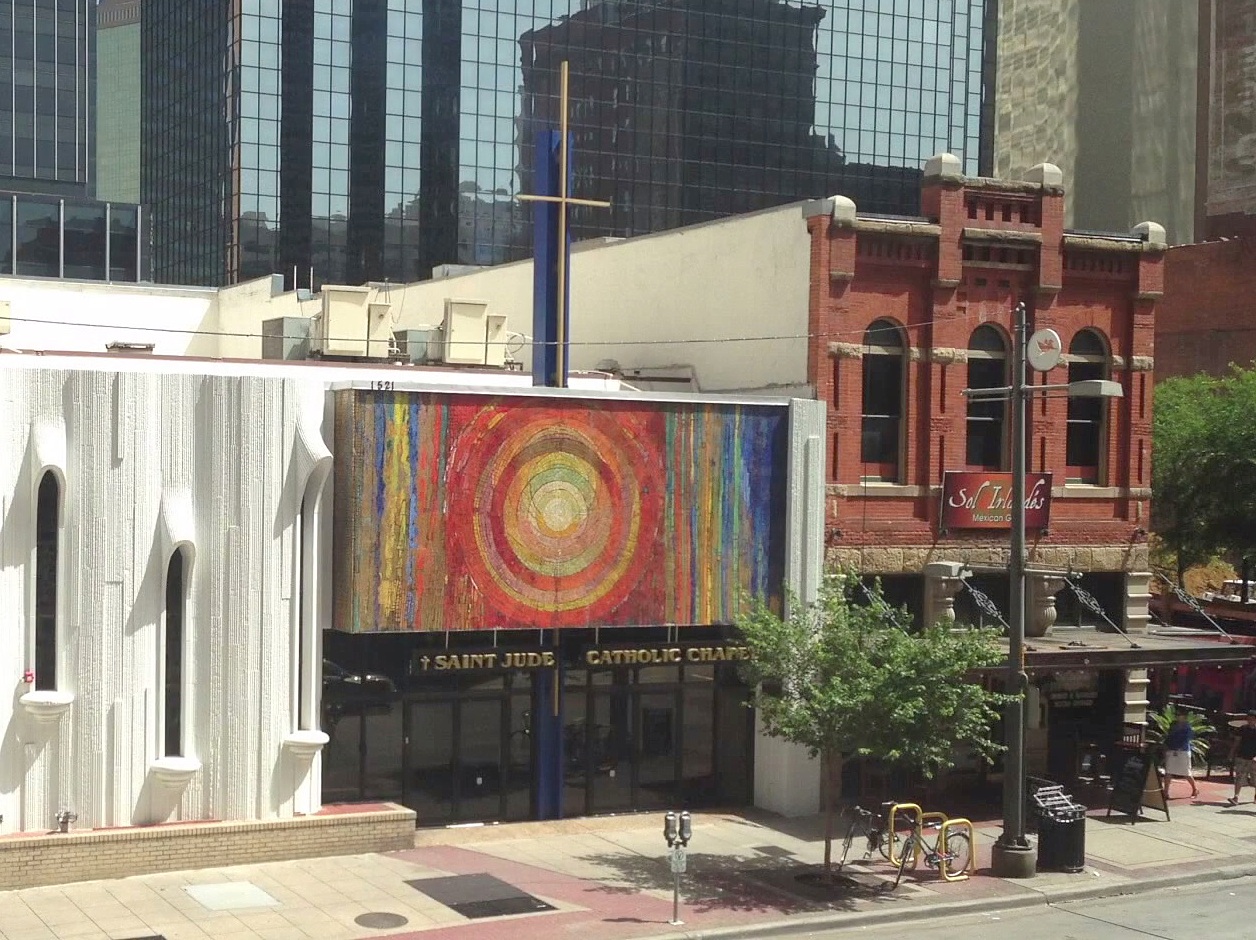
st-jude-chapel_website_present-day

Pretty cool.

***

Sources & Notes

Top photo from the George W. Cook Dallas/Texas Image Collection, DeGolyer Library, Central University Libraries, Southern Methodist University; more info is here. (I have edited the image slightly — and rather poorly — please see link for original image.)

The photo and detail showing Woolworth’s, circa 1930, is from William L. McDonald’s book Dallas Rediscovered; photo credit cites Cushman & Wakefield, Inc.

Sources of all other images noted, if known.

For an entertaining history of the construction of the Praetorian Building (which had MANY detractors and doubters), read check the archives of The Dallas Morning News for the article by Kenneth Foree, “First Skyscraper Had Its Skeptics” (Oct. 27, 1948).

More on the Praetorian Building on Wikipedia, here.

*

Copyright © 2017 Paula Bosse. All Rights Reserved.

Union Station — ca. 1916

union-station_ca-1916A century ago… (click to see larger image)

by Paula Bosse

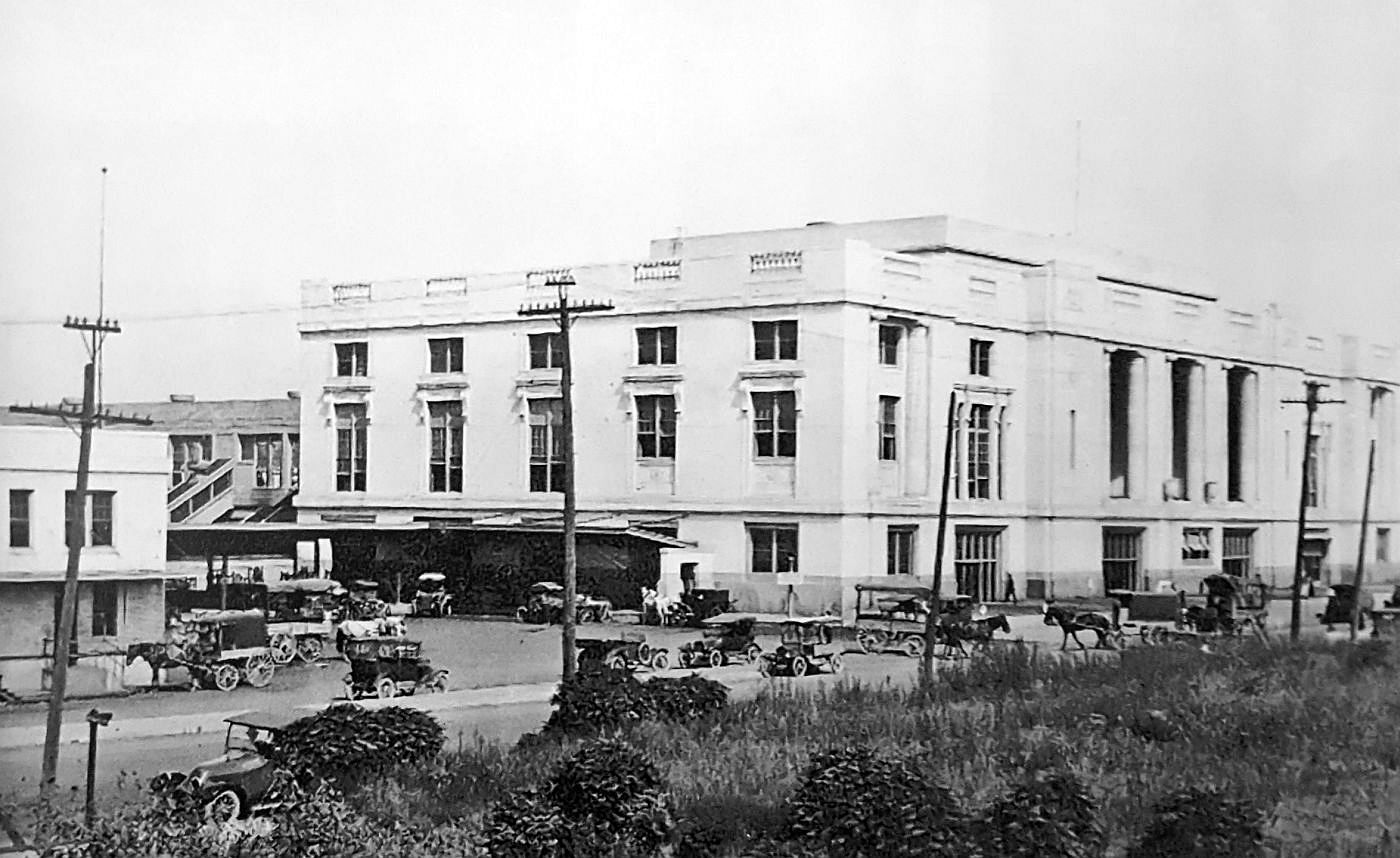
A new Union Station, bustling with activity, as seen across a scrubby vacant lot which, today, is the home of the Dallas Morning News building at S. Houston and Young. See the view today, here.

The photo shows the baggage shed which used to be on the south side of the building as well as the passenger bridge heading to and from the trains, with steps leading down to the platforms. See the details on the Sanborn map from 1921 here.

Union Station has weathered some difficult times and suffered from neglect after the golden age of train travel ended, but after recent extensive renovation/restoration, the historic landmark looks as good as new!

*

Copyright © 2017 Paula Bosse. All Rights Reserved.