Flashback : Dallas

A Miscellany: History, Ads, Pop Culture

Category: Architecture/Significant Bldgs.

Main Street Looking East — 1920s
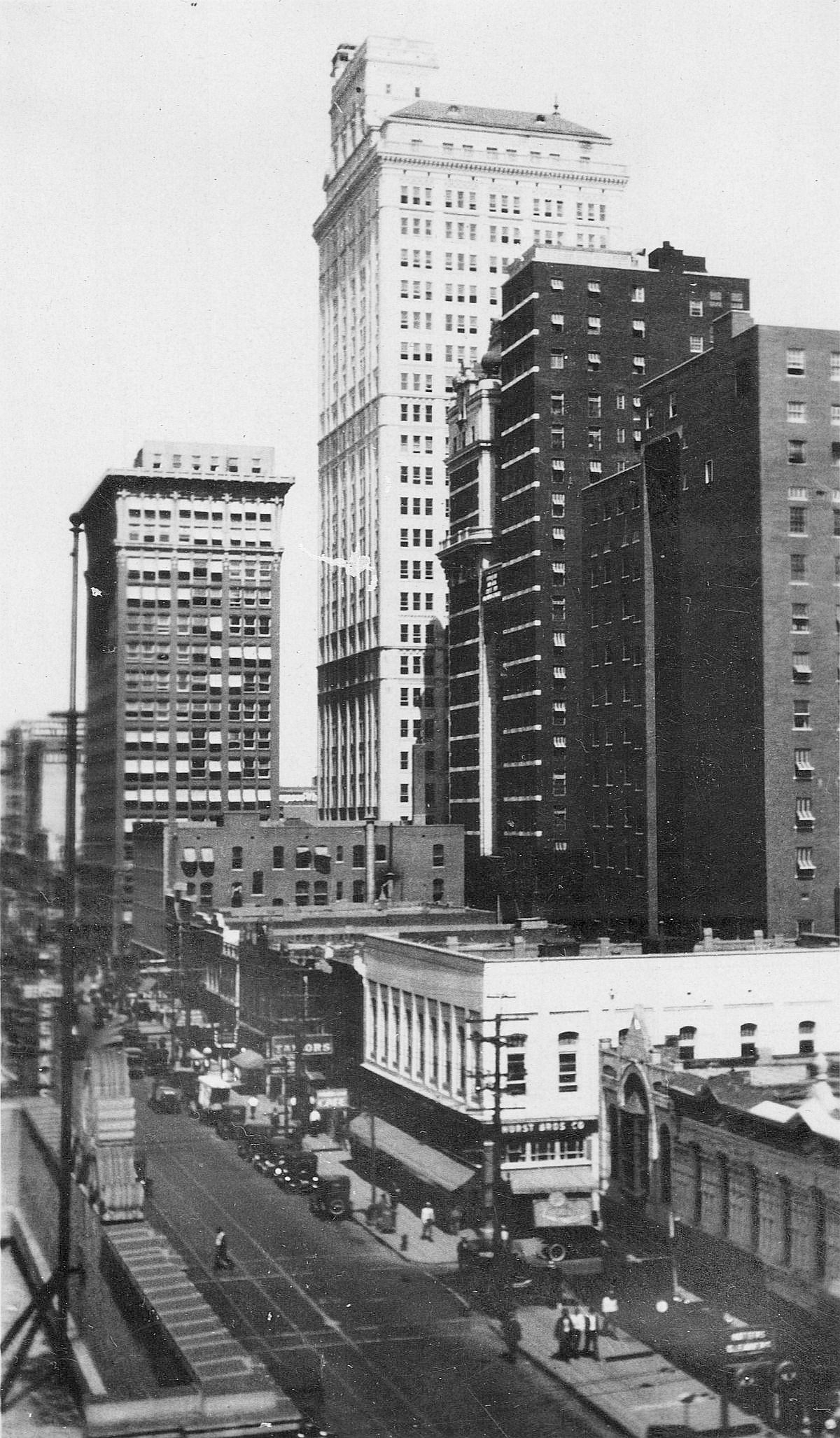
main-street_east_ca-1925_erik-swansonEast from the 1200 block of Main (photo courtesy Erik Swanson)

by Paula Bosse

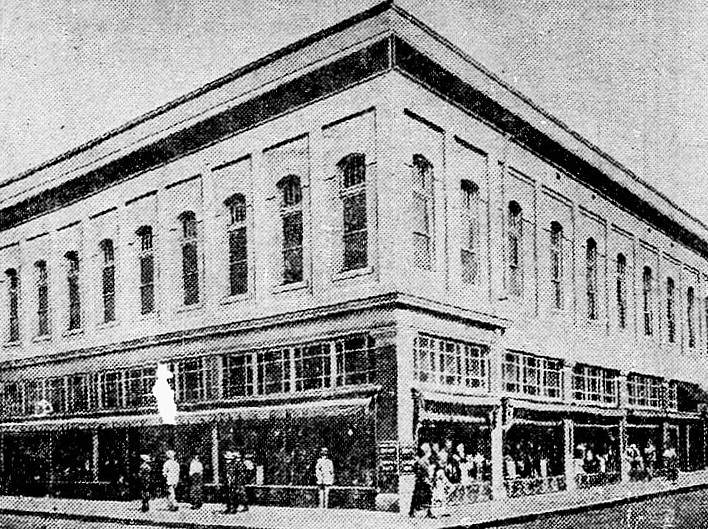
This great photo (sent in by reader Erik Swanson) shows Main Street around 1925. The white building seen in the lower right is Hurst Bros., a men’s clothing shop, which was at the southeast corner of Main and Field (1300-1304 Main). It was a little confusing to me at first because it looks like there is a street behind it (to the south), which would have been Commerce, but then the Magnolia Building and the Adolphus would all be out of place. But what appears to be a street was just a wide alleyway/passage (seen on the 1921 Sanborn map here — Main east of Akard can be seen on the Sanborn map here).

The very tall building is the Magnolia, at Commerce and Akard (it opened in 1922 — Pegasus wasn’t added until 1934); to the right, across Akard, is the Adolphus Hotel and the Adolphus Annex. The tall building to the left of the Magnolia is the Southwestern Life Building (southeast corner Main and Akard, demolished in 1972, now a small open plaza area). The 4-story building at the southwest corner of Main and Akard is the Andrews Building. The white building in the center is Hurst Bros. (southeast corner Main and Field), and across Main can be seen the sign for the men’s clothing shop Benson-Semans.

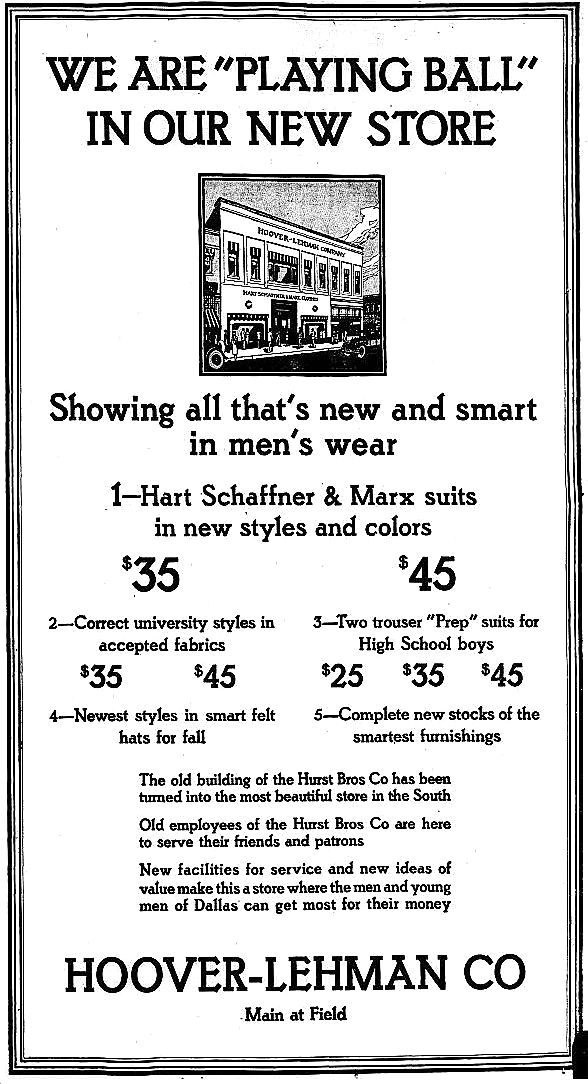
Hurst Bros. was gone by 1929 when it became Hoover-Lehman, another clothing store, and Benson-Semans appears to have vacated that space around 1926, helping to date the photo between 1922 and 1926.

*

The Hurst brothers, Melvin K. Hurst and Edgar S. Hurst (along with their father, Alfred K. Hurst) began their men’s clothing business around 1912 and moved into the building seen in this photo in 1915 (it was renovated by prominent Dallas architect H. A. Overbeck, whose still-standing courts building and jail was built at about the same time). The business was dissolved in 1929, and its stock, fixtures, and lease were acquired by a longtime employee who, with a partner, remodeled the store and reopened it as the Hoover-Lehman Co. (A present-day Google Street View of this southeast corner of Main and Field can be seen here.)
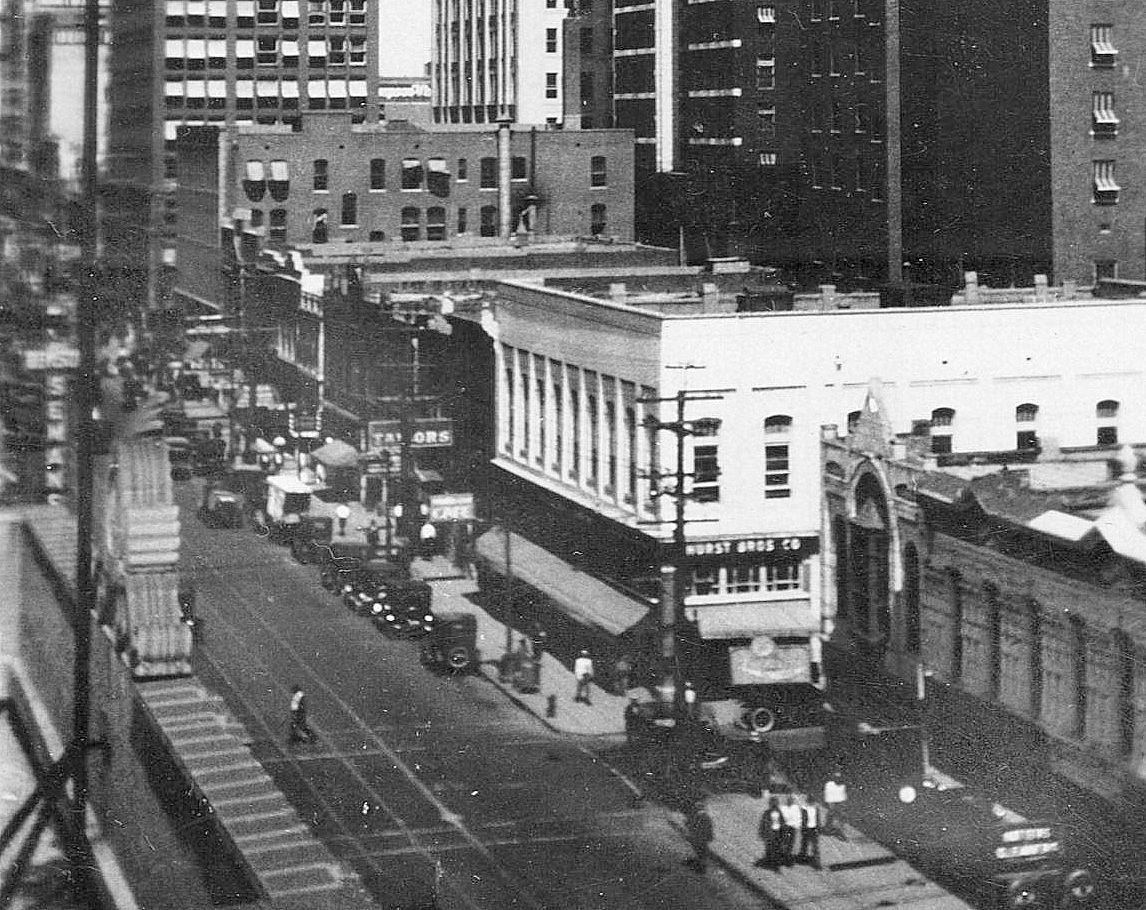
main-street_east_ca-1925_hurst-bros-det_erik-swansonDetail from top photo, ca. 1925 (click for larger image)
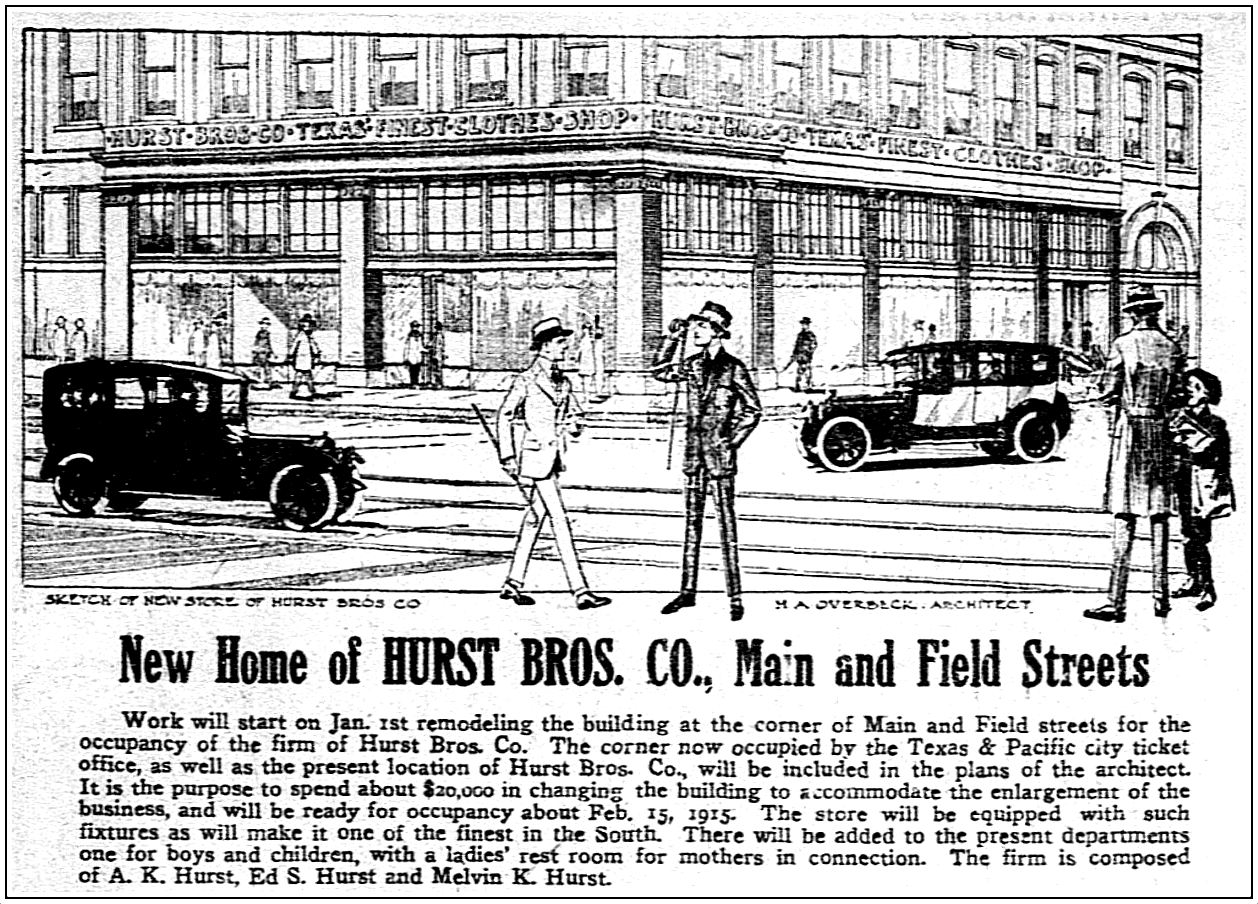
hurst-bros_dmn_112214_adAd from Nov., 1914

hurst-bros_1920sLate 1920s

hurst-bros_hoover-lehman_091329Sept., 1929

***

Sources & Notes

Top photo sent in by Erik Swanson, used by permission. The photo may have been taken by his grandfather, F. V. Swanson, an optometrist (see the post “Thompson & Swanson: ‘The Oldest Exclusive Optical House in Dallas,” here). Thanks for the great photo, Erik! (Update: Sadly, local music favorite Erik Swanson died on Feb. 16, 2021 at the age of 57 — he had been suffering from ALS. RIP, Erik. And thanks for the great music.)

All images are larger when clicked.

*

Copyright © 2018 Paula Bosse. All Rights Reserved.
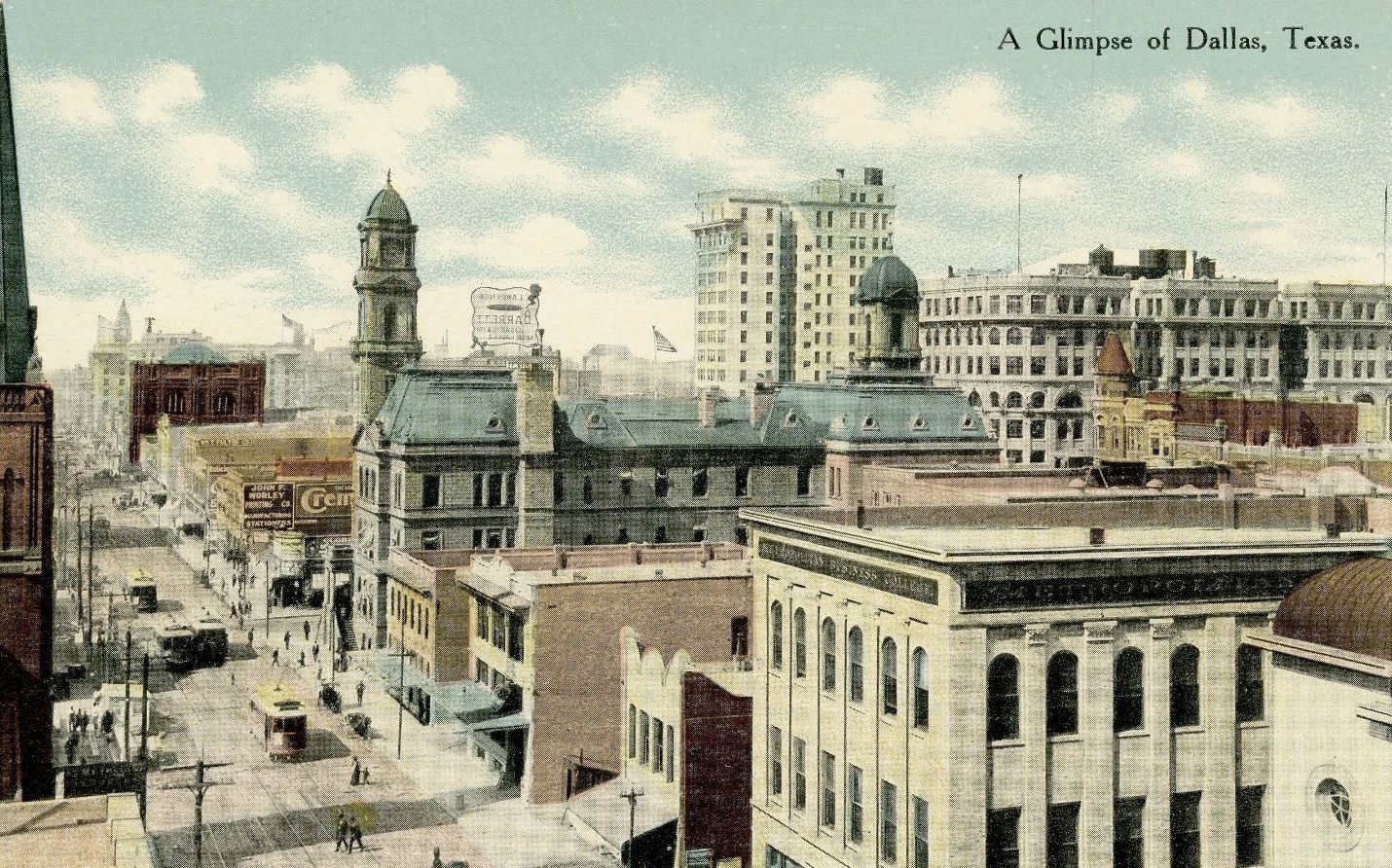
“A Glimpse of Dallas” — ca. 1909

postcard_charles-e-arnoldCommerce Street, looking west from St. Paul…

by Paula Bosse

This very attractive postcard shows a growing downtown Dallas, looking west from Commerce and St. Paul, photographed by Charles E. Arnold from the YMCA building (which once sat in the block now occupied by the Statler). The Wilson Building can be seen at the top right, the Praetorian Building (then the tallest building in the city) is to its left, and the Post Office and Federal Building is in the center. The photo was probably taken in 1909 or 1910 (the Praetorian was completed in 1908 and the Adolphus Hotel (not seen in this postcard) was under construction in 1911.

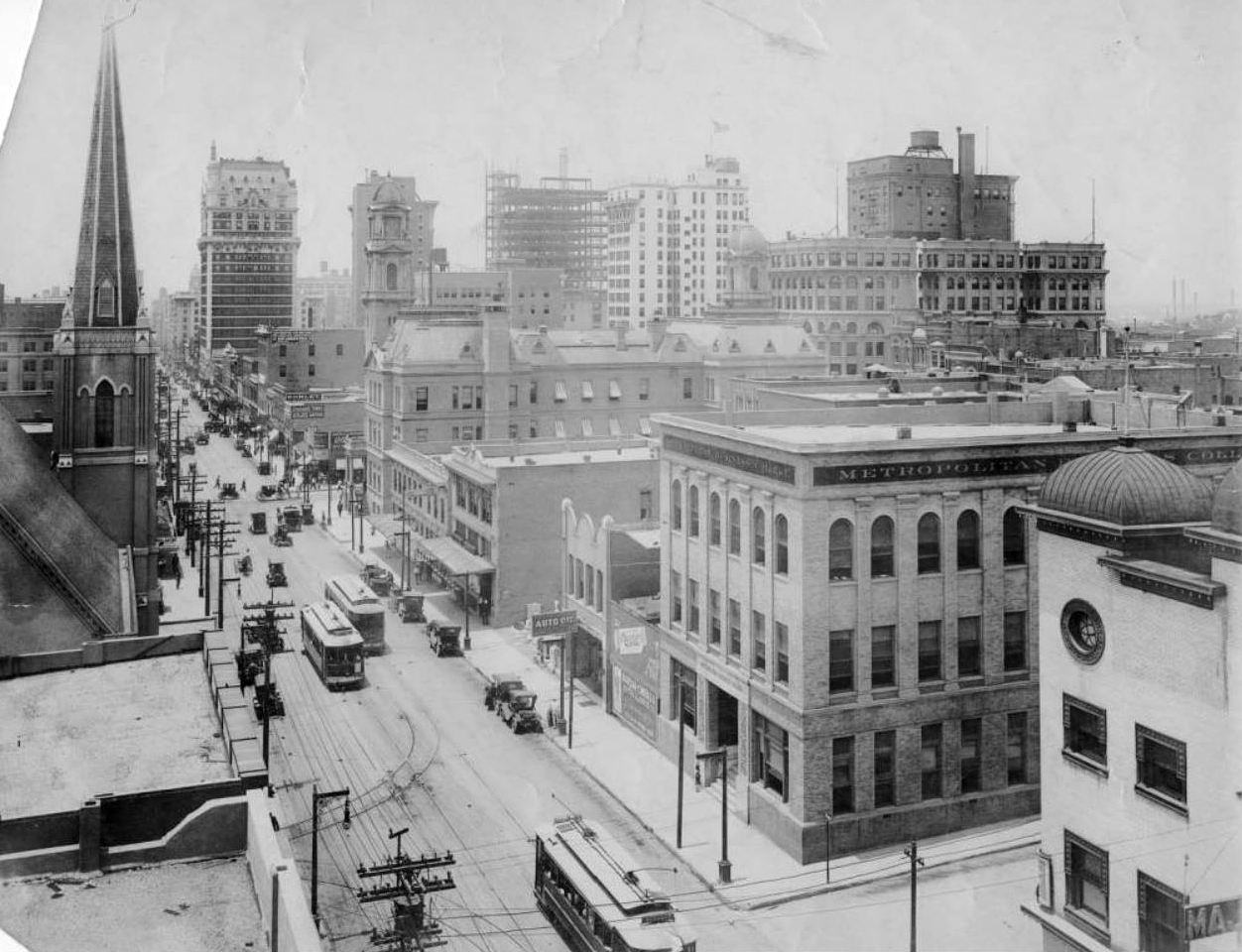
The photo below, taken by Jno. J. Johnson from the exact same vantage point, shows the many changes to the skyline which happened over a very short span of time. The photo below is from about 1913.

new-skyline_c1912_degolyer_smuvia DeGolyer Library, SMU

I zoomed in on this photo in a previous post, “Horses, Carriages, Horseless Carriages: Commerce Street — 1913,” here.

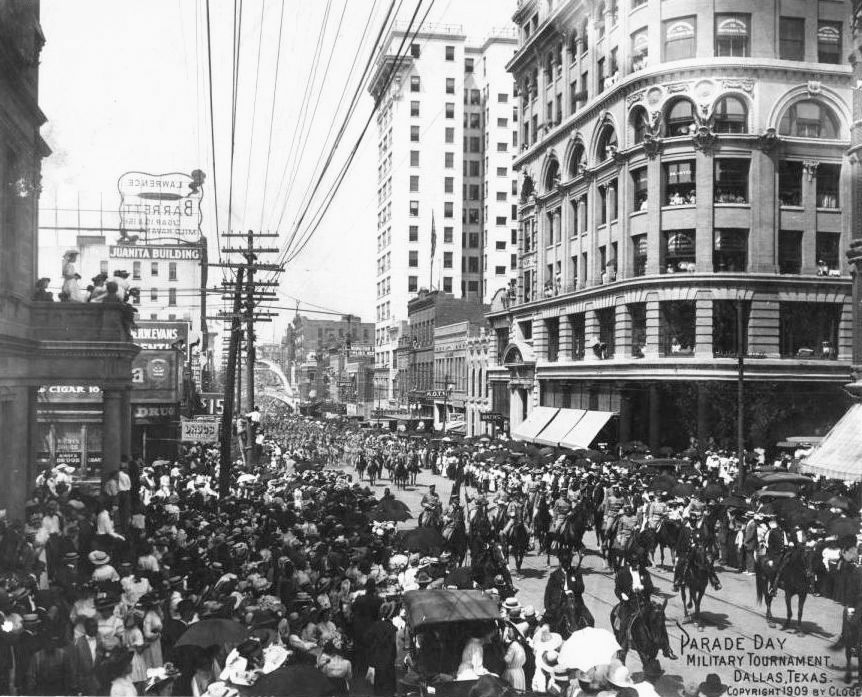
The large “Barrett Cigar” sign seen in the top postcard image is also visible in a 1909 photo by Clogenson, below — it can be seen at the left, atop the Juanita Building on Main Street, opposite the Praetorian.

parade-day_1909_clogenson_degolyervia DeGolyer Library, SMU

I zoomed in on this photo in the post “Parade Day — 1909,” here.

This was the beginning of staggering growth for Dallas, and new skyscrapers seemed to be going up every month.

***

Sources & Notes

I came across the postcard image a couple of years ago — I noted that the photographer was C. E. Arnold, but I did not note the source.

The two photos are from the DeGolyer Library, Central University Libraries, Southern Methodist University; further information on each photo can be found at the links posted immediately below the images.

All images are larger when clicked.

*

Copyright © 2018 Paula Bosse. All Rights Reserved.
Highland Park Village From Above

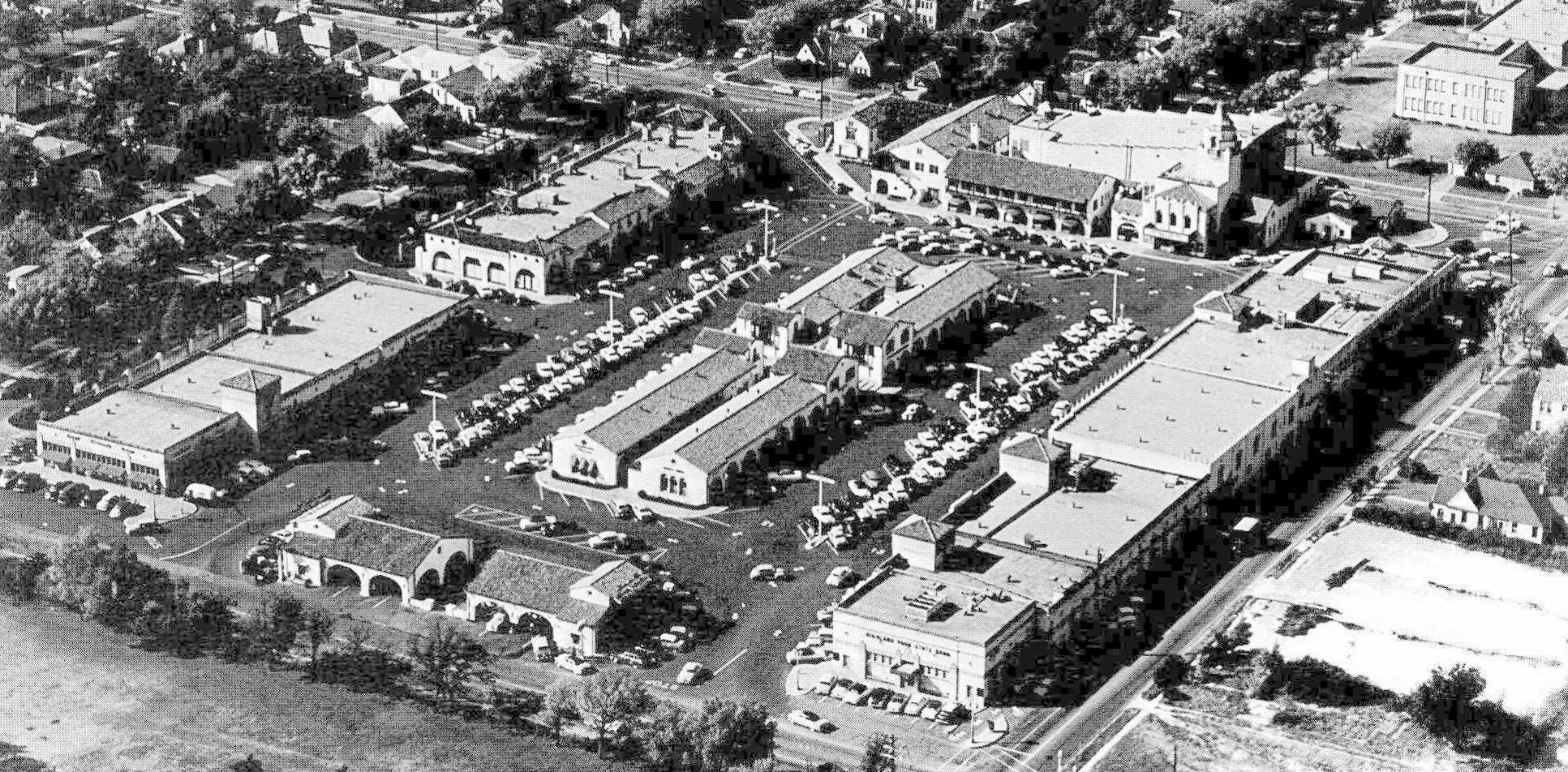
h-p-village_HPHS_1966_ad-detPlenty of parking, above & below ground… (click for larger image)

by Paula Bosse

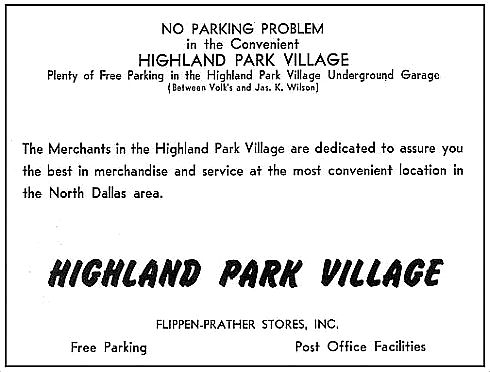
This bird’s-eye view of Highland Park Village is from an ad placed in the Highland Park High School yearbook by Flippen-Prather, who really wanted to stress how there was NO PARKING PROBLEM at this convenient “North Dallas” location, above ground and below ground. Don’t worry, Flippen-Prather had you covered.

h-p-village_HPHS_1966_text1966 ad

Fifty years on from this ad, Highland Park Village is physically still recognizable, just expanded. The tenants, however, are now much more chi-chi.

hp-village_google-2017Google, 2017

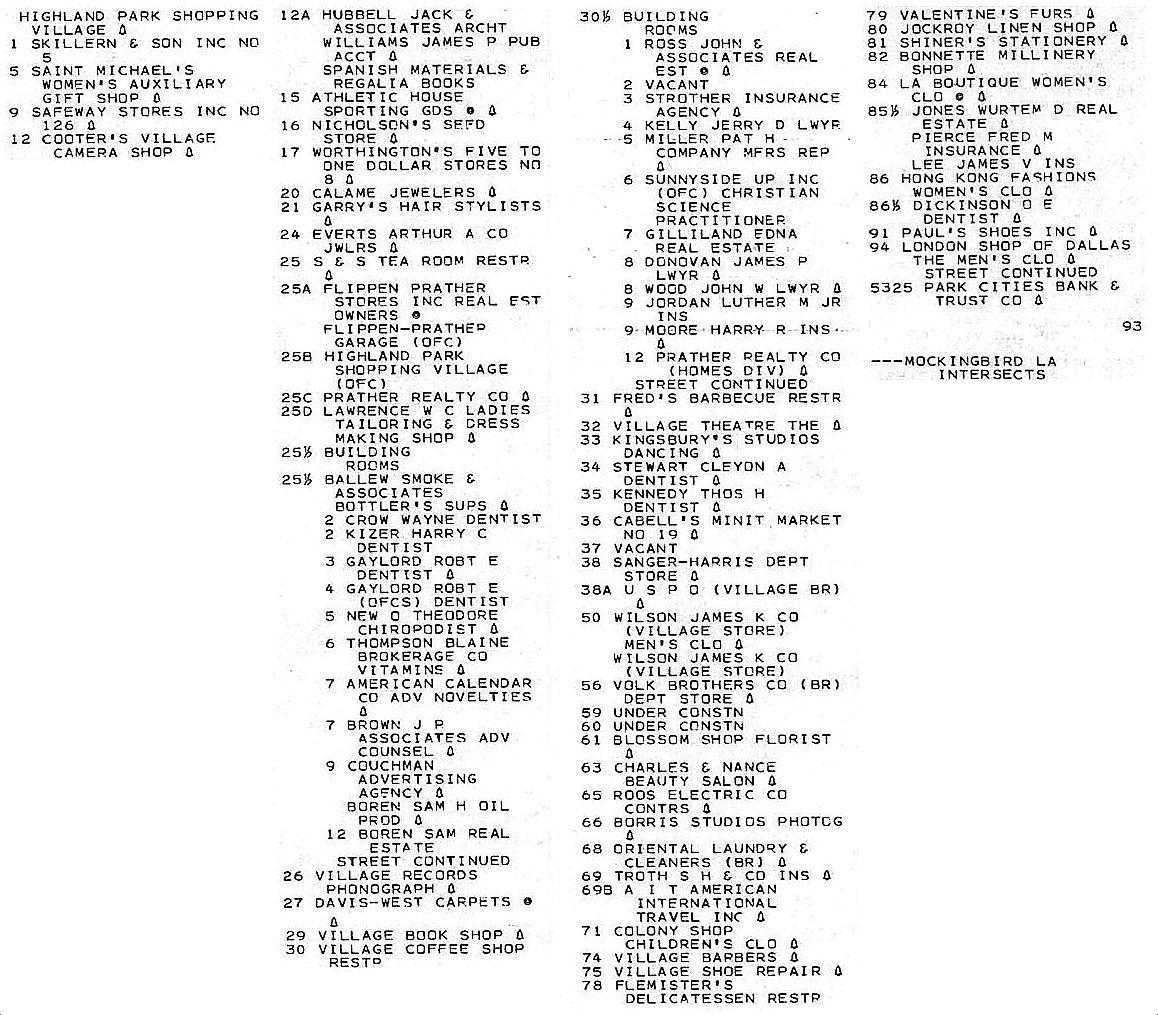
I’m not sure when the top photo was taken, but it appeared in the 1966 Highland Park High School yearbook. Here are the tenants of Highland Park Village in 1966 (click to see a larger image).

hp-village_1966-directory

***

Sources & Notes

Ad for Highland Park Village/Flippen-Prather Stores, Inc. appeared in the 1966 Highland Park High School yearbook.

Color image from Google.

Listing of Highland Park Village businesses is from Polk’s Greater Dallas City Directory, 1966.

All images larger when clicked.

*

Copyright © 2017 Paula Bosse. All Rights Reserved.

George Dahl’s Downtown Public Library Is Now the Home of The Dallas Morning News

14DPL_schiwetzcrop

by Paula Bosse

Today is the official beginning of the next step in the history of the George Dahl-designed building at Commerce and Harwood which once housed the Dallas Public Library: after years of abandonment and deterioration, it is now the miraculously preserved and spiffed-up home of The Dallas Morning News! Read Robert Wilonsky’s valentine to the beautiful building — along with photos old and new — on the News site, here.

And while we’re at it, let’s look back to the beginnings of the building as the wonderfully modern Dallas Public Library in one of my very first Flashback Dallas posts, “George Dahl’s Sleek Downtown Library — 1955,” here.

Thank you, DMN, for saving and resuscitating this landmark Dallas building!

*

Copyright © 2017 Paula Bosse. All Rights Reserved.
 

“New Terminal Passenger Station” — 1916

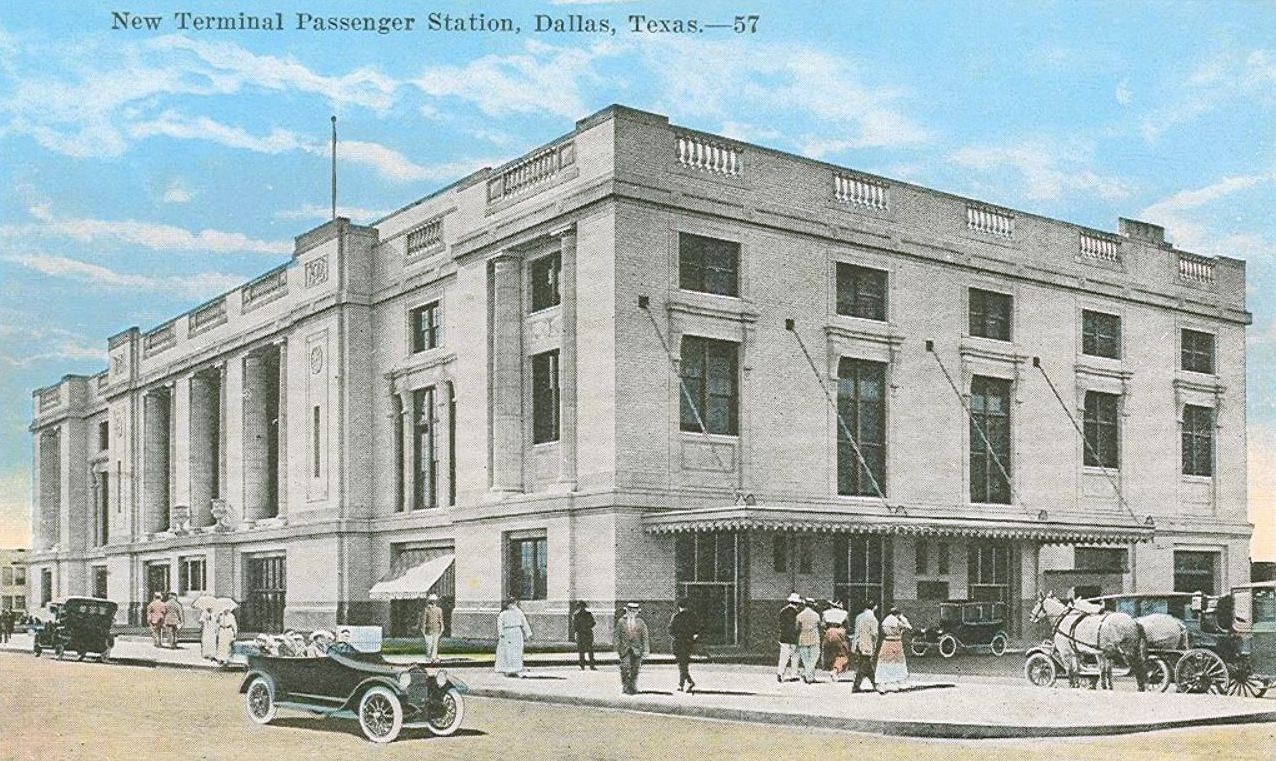
union-station-postcard_1916Union Station, open for business…

by Paula Bosse

I love this postcard view of Dallas’ own Union Station, brand new in 1916. Minus the horses, it looks very much like this today.

***

Sources & Notes

Postcard found on eBay. 

*

Copyright © 2017 Paula Bosse. All Rights Reserved.

Aerial View of the JFK Memorial — 1970

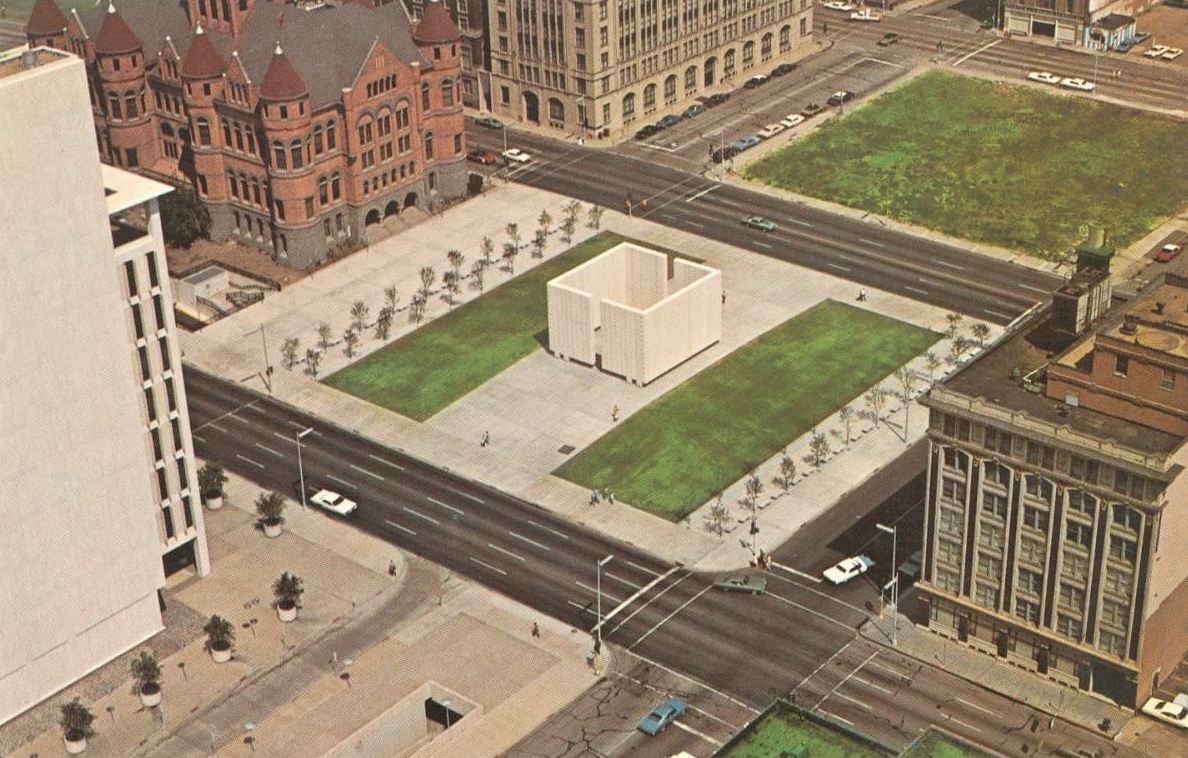
jfk-memorial_postcard_portalThe JFK memorial, newly dedicated…

by Paula Bosse

The Kennedy Memorial — designed by architect Philip Johnson at the behest of Stanley Marcus — was dedicated on June 24, 1970. This postcard view is one I’ve never seen before. The caption from the back of the card:

jfk-memorial_postcard_portal_caption

***

Sources & Notes

Postcard “Aerial of John Fitzgerald Kennedy Memorial, Dallas, Texas” from the Texas History Collection provided by Dallas Heritage Village to the Portal to Texas History; more here.

*

Copyright © 2017 Paula Bosse. All Rights Reserved.
Dallas Skyline, Looking West — 1970

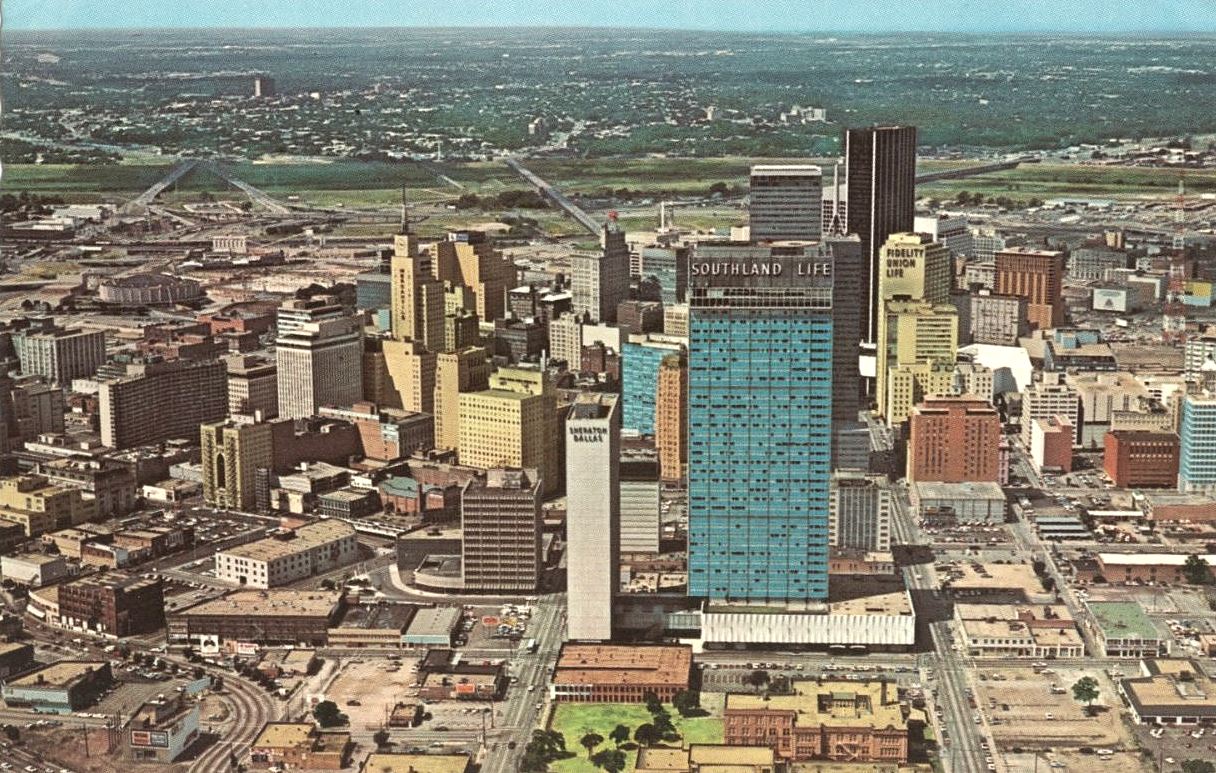
skyline-looking-west_southland-center_1970_portalSouthland Life welcomes you to Big D…

by Paula Bosse

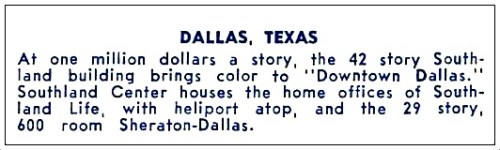
This is a view of the Dallas skyline that isn’t seen that often — a view across downtown toward the west. This 1970 Southland Center postcard has the heliport-topped Southland Life Building (one of the few downtown buildings designed to face to the east) and the Sheraton Hotel front and center. It’s really interesting to zoom in on this photo and look around — for instance, the sight of the Hilton/White Plaza/Indigo hotel at the left, at Harwood and Main across from the Municipal Building, is a little disorienting (I think it’s the empty lot/parking lot at Elm and Harwood).

Have a little fun and zoom way in on this photo of 1970 downtown Dallas on the Portal to Texas History website, here.

skyline-looking-west_southland-center_1970_portal_info

***

Sources & Notes

Postcard was provided to the Portal to Texas History by Dallas Heritage Village; more info on this can be found on the Portal, here.

*

Copyright © 2017 Paula Bosse. All Rights Reserved.
Our Lady of Good Counsel, Oak Cliff — 1901-1961

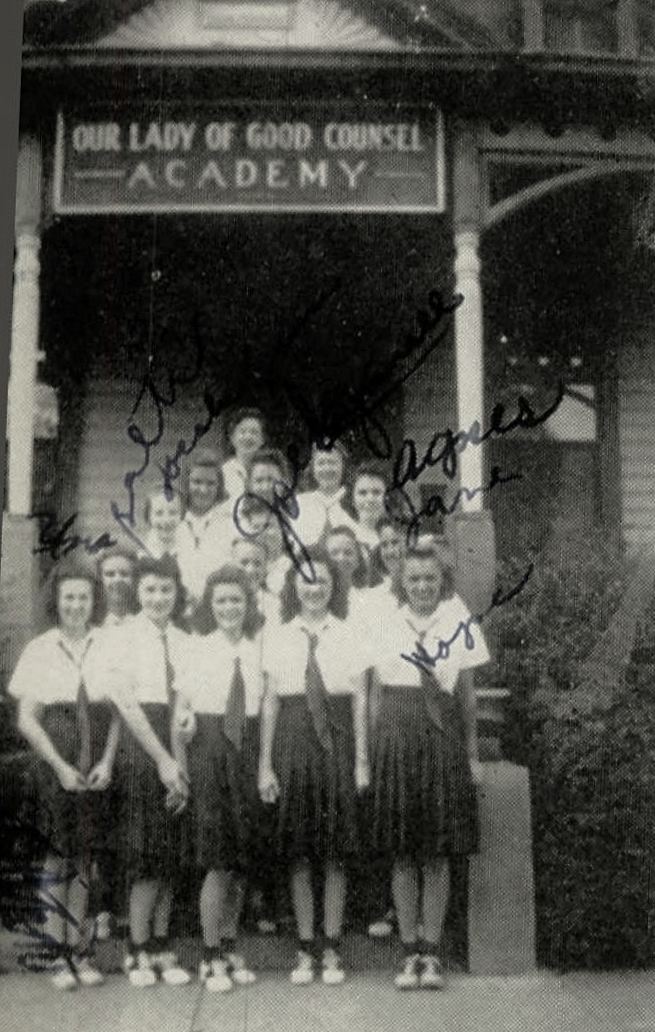
our-lady-of-good-counsel_1944-yrbkOur Lady of Good Counsel, 1944… (click for larger image)

by Paula Bosse

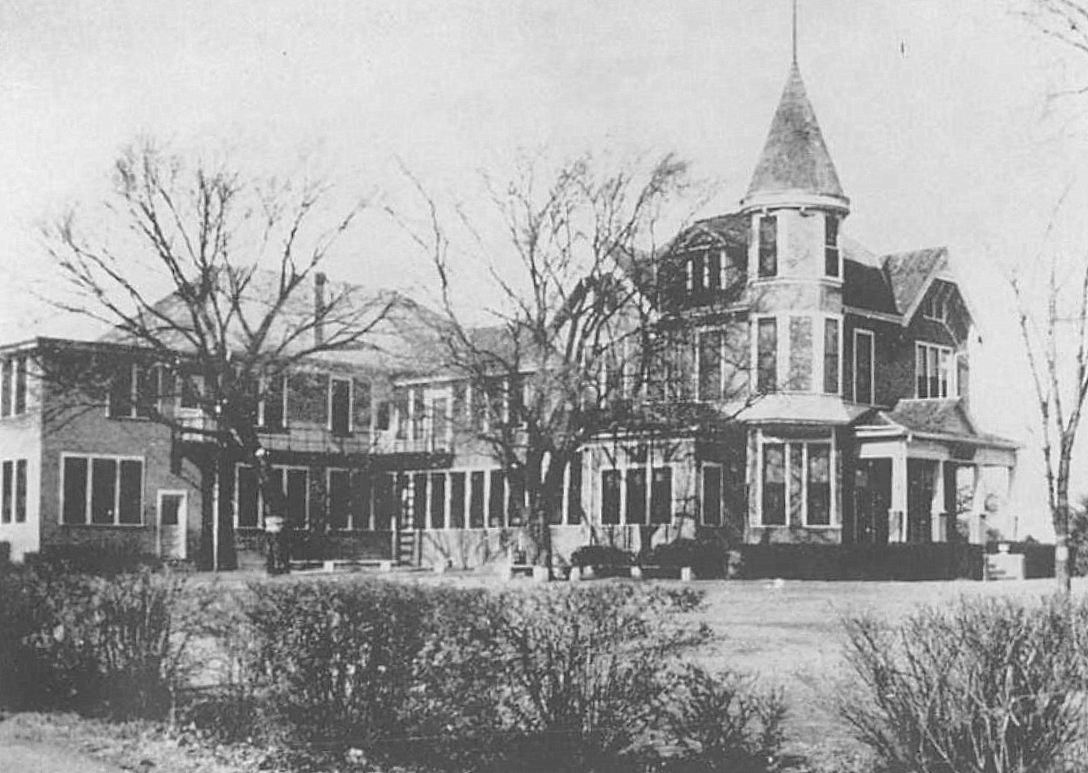
Talking to my aunt today reminded me that she briefly attended Our Lady of Good Counsel, the all-girls Catholic high school in Oak Cliff next to the Church of the Blessed Sacrament, at the northwest corner of North Marsalis (originally named Grand Avenue) and 9th Street. I’m still not sure why she went there (our family isn’t Catholic), but she seems to have enjoyed her time there for a year or two before she transferred to Crozier Tech.

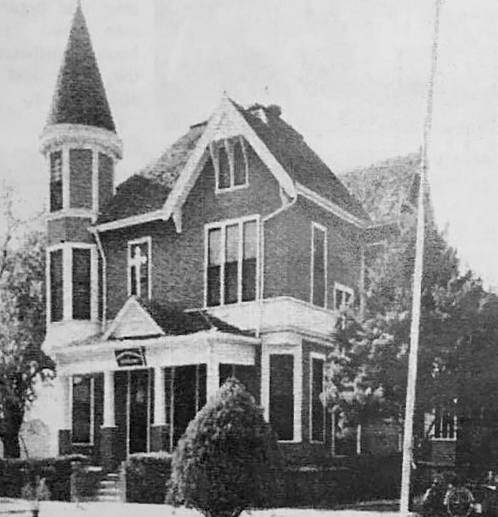
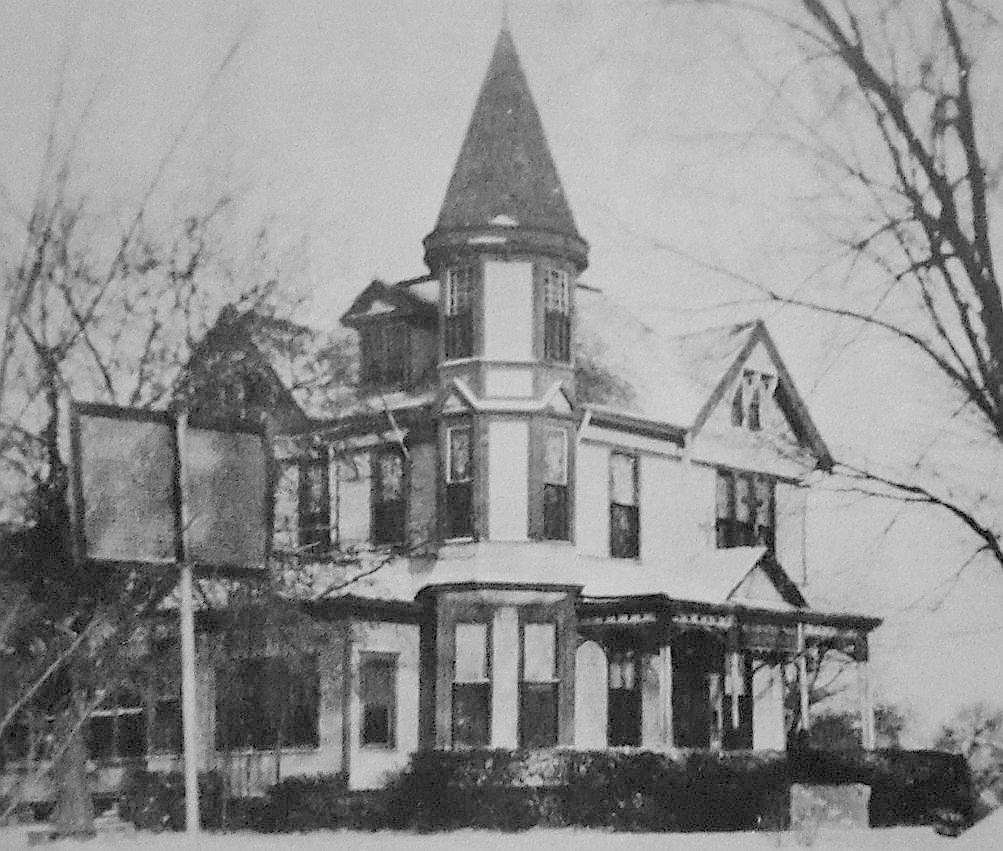
The school building was the former palatial home of wealthy businessman James T. Dargan, a one-time partner of Thomas L. Marsalis. The house was built about 1888, and according to Dallas Rediscovered author William L. McDonald, it was designed by the Dallas architectural firm of Stewart and Fuller.

dargan_1889-directory1889 Dallas directory

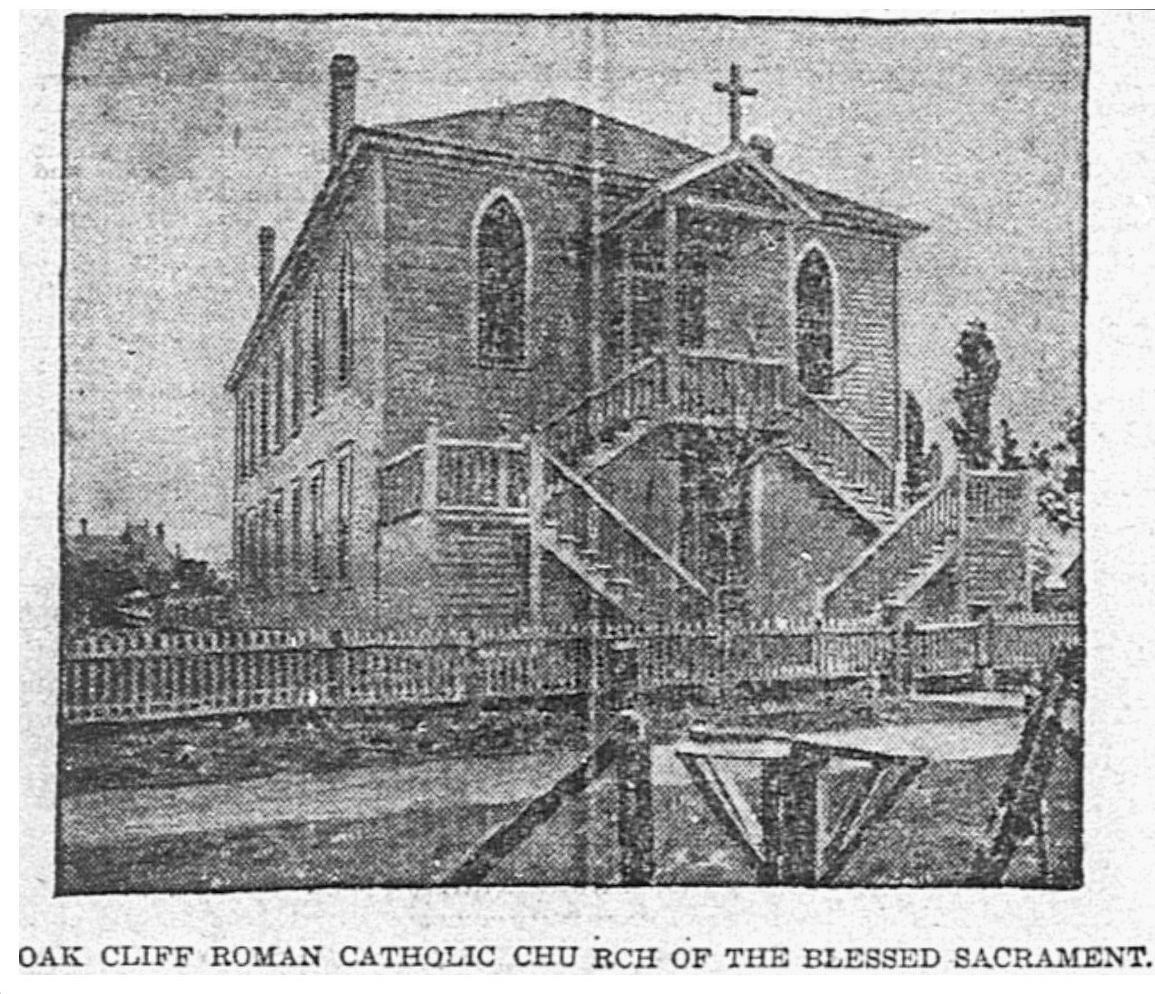
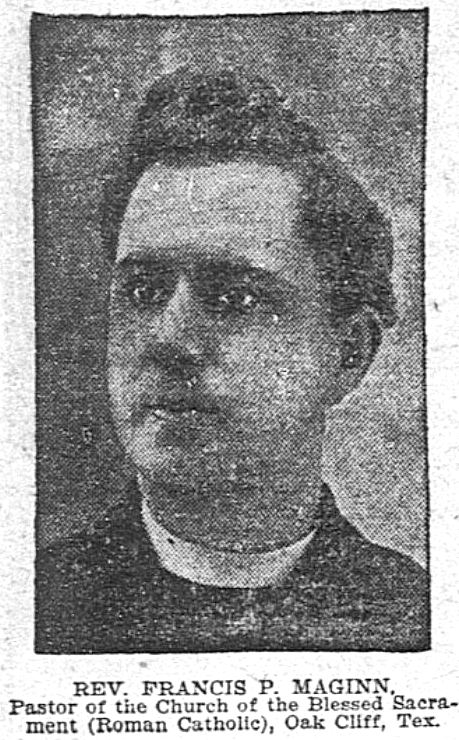
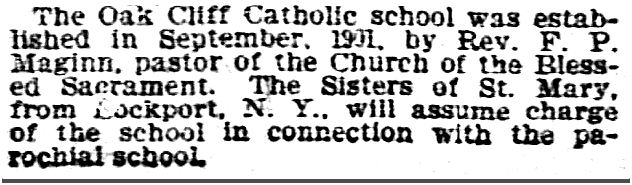
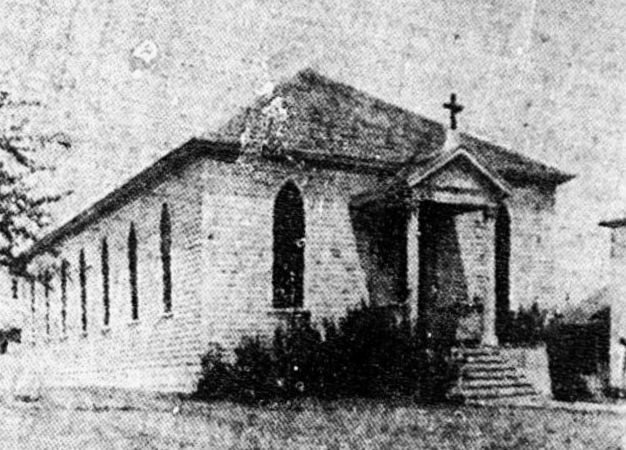
The church was holding services in Oak Cliff as early as 1901, and an affiliated school was established by Rev. Francis P. Maginn in September of that year. It appears that the Dargan house was acquired in 1902, the same year that the (new?) church building was dedicated in ceremonies officiated by Bishop E. J. Dunne.

Below, the new church can be seen in a photo which appeared in The Dallas Morning News on the day of its dedication in June, 1902 (all images are larger when clicked):

church-of-blessed-sacrament_dmn_061502_photoDMN, June 15, 1902

The neighboring school can be seen in these two early photos:

OLGC_ad_dallas-history-guild
Our Lady of Good Counsel, ca. 1902

our-lady-of-good-counsel_ca-1905_dallas-rediscovered
Our Lady of Good Counsel, ca. 1905

The school’s founder, Rev. F. P. Maginn:

maginn-francis-p_dmn_061502_church-of-blessed-sacrament
DMN, June 15, 1902

OLGC_dmn_042302DMN, April 23, 1902

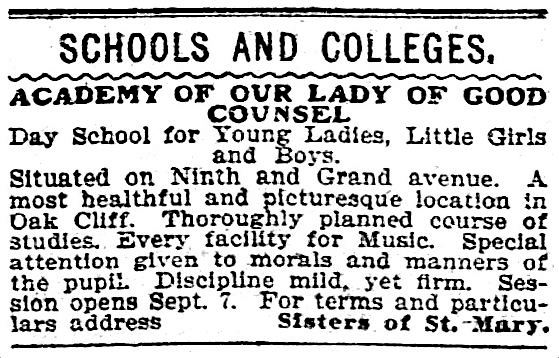
And an early ad for the school, from 1903 (“Discipline mild, yet firm”):

our-lady-of-good-counsel_1903-ad
1903

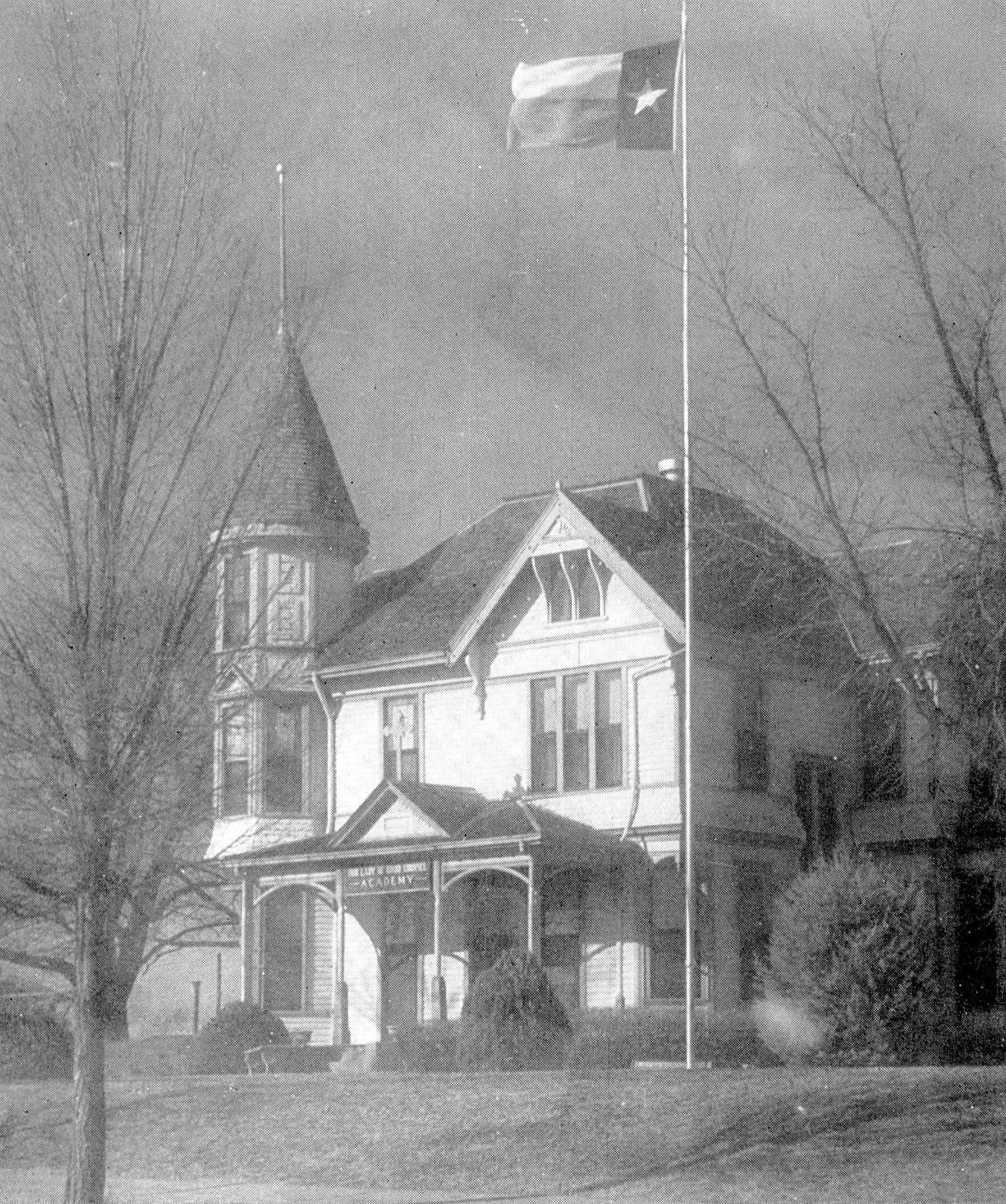
Here it is in 1942:

our-lady-of-good-counsel_1942-yrbk

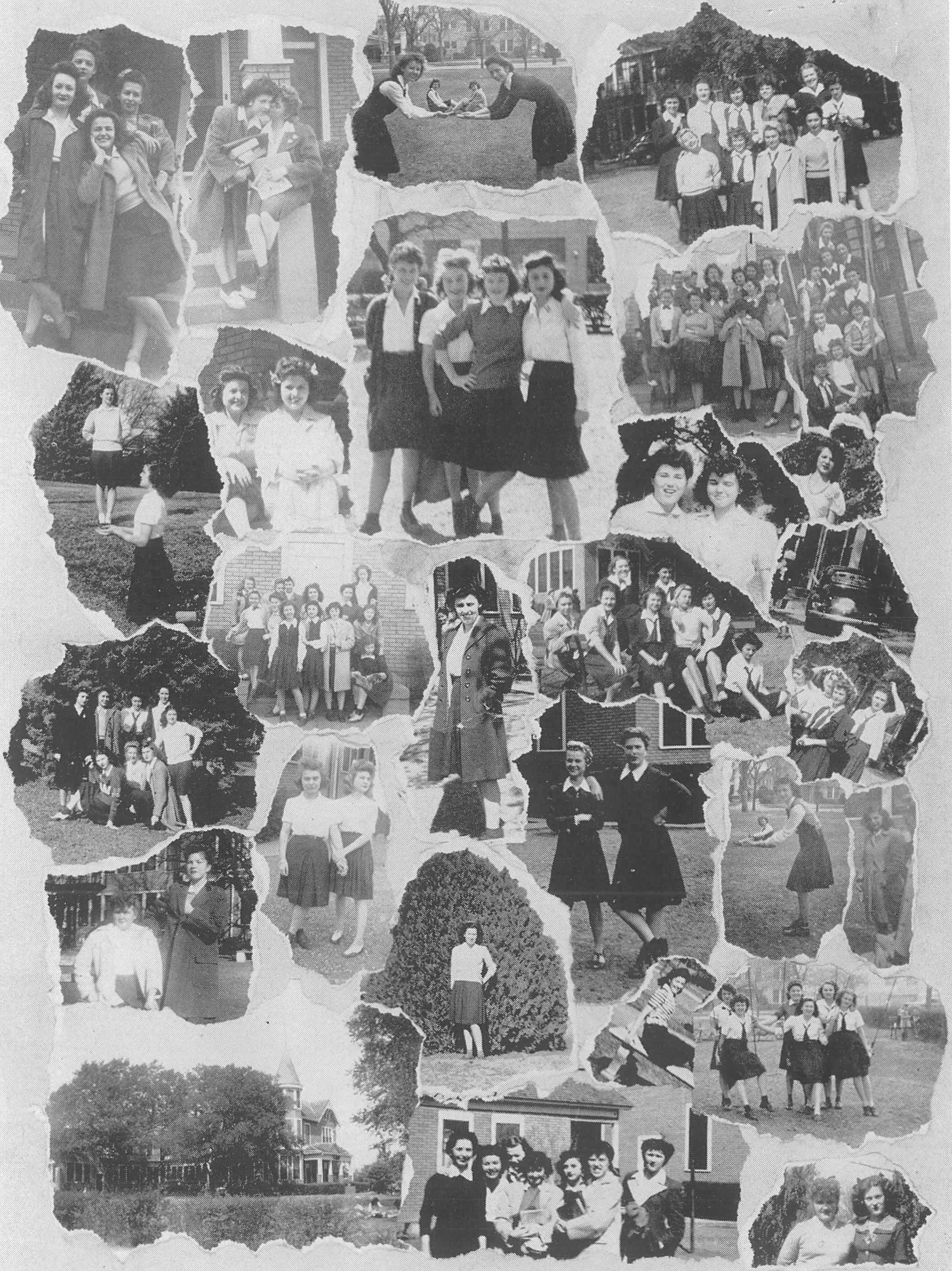
And here are some of the LGC high school students from 1944, looking bobby-soxer-y (with another view of the augmented house in the lower left corner):

our-lady-of-good-counsel_1944-yrbk_candids

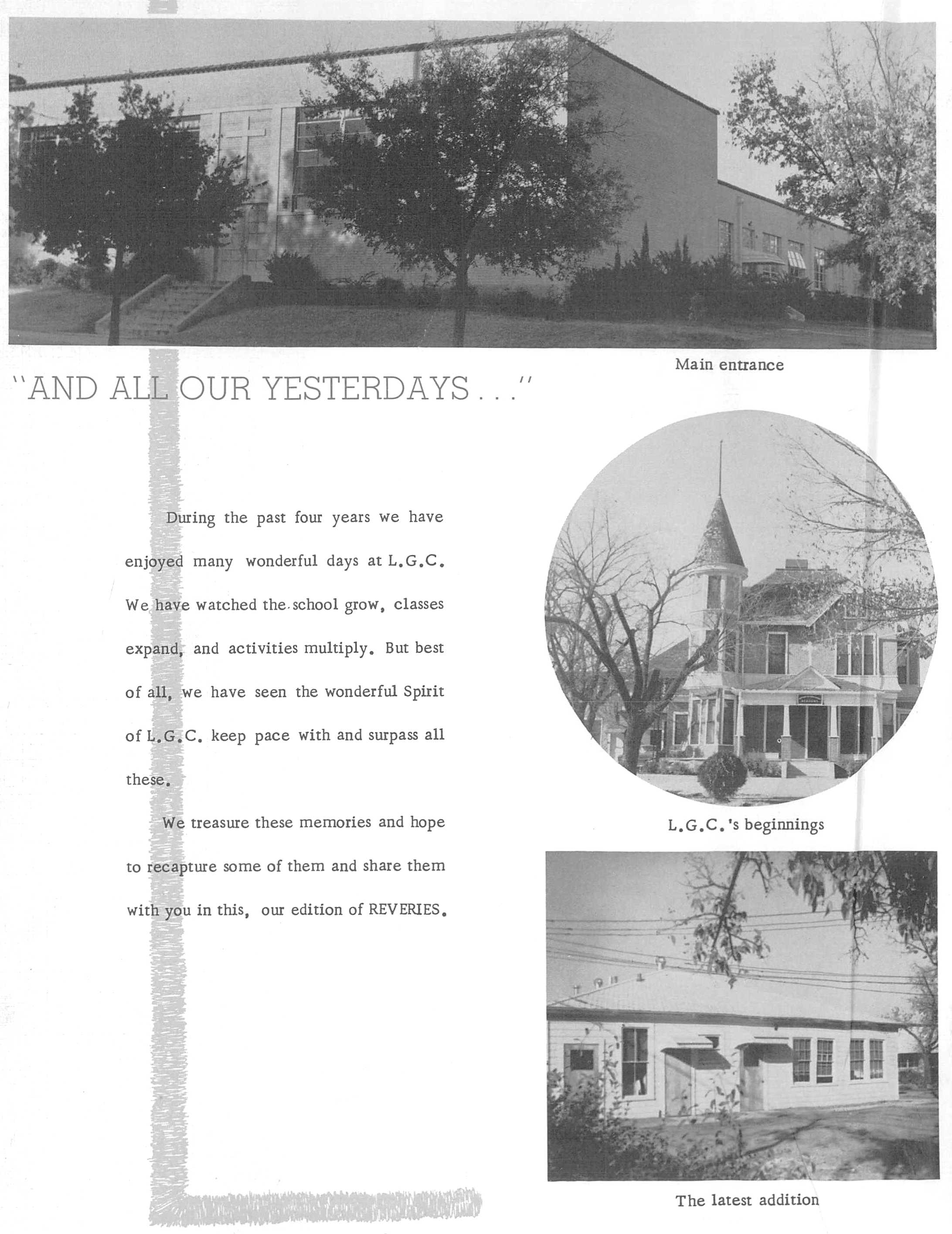
The newest additions to the building can be seen in the 1959 yearbook:

our-lady-of-good-counsel_1959-yrbk

In 1961, Our Lady of Good Counsel was a fast-fading memory: a new 32-acre campus had been acquired and on it had been built the new (coed) Bishop Dunne High School. Mr. Dargan’s old house-turned-school-building was torn down a few years later, and the land became a parking lot for the Blessed Sacrament church next door (which had also seen many changes and a new building over the years). Today, the view of the land the Dargan house sat on 130 years ago looks like this. (The church looks like this.)

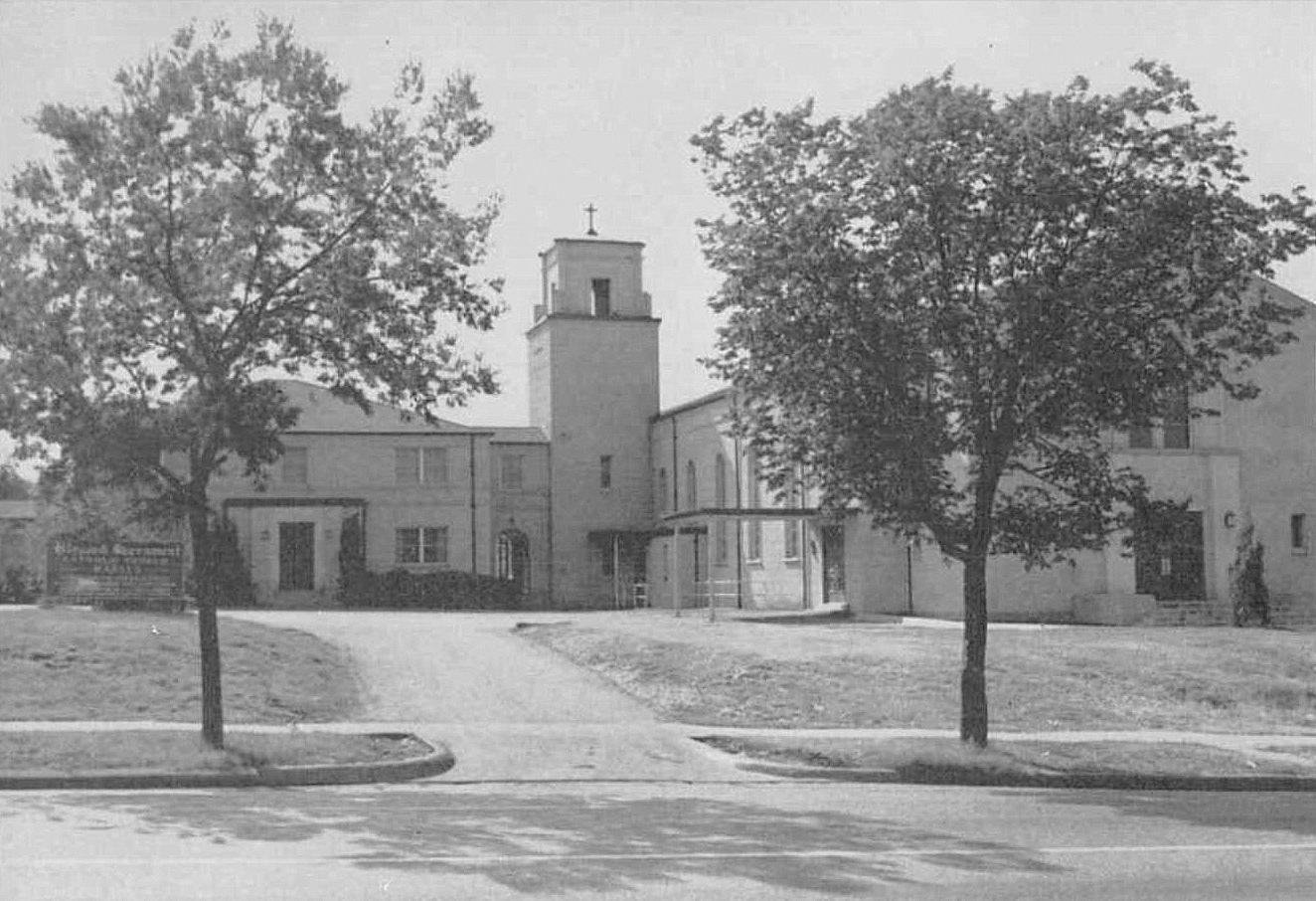
The church in 1930:

church-of-blessed-sacrament_1930

And in 1958 (from the LGC yearbook):

blessed-sacrament-church_OLGC-yrbk_1958

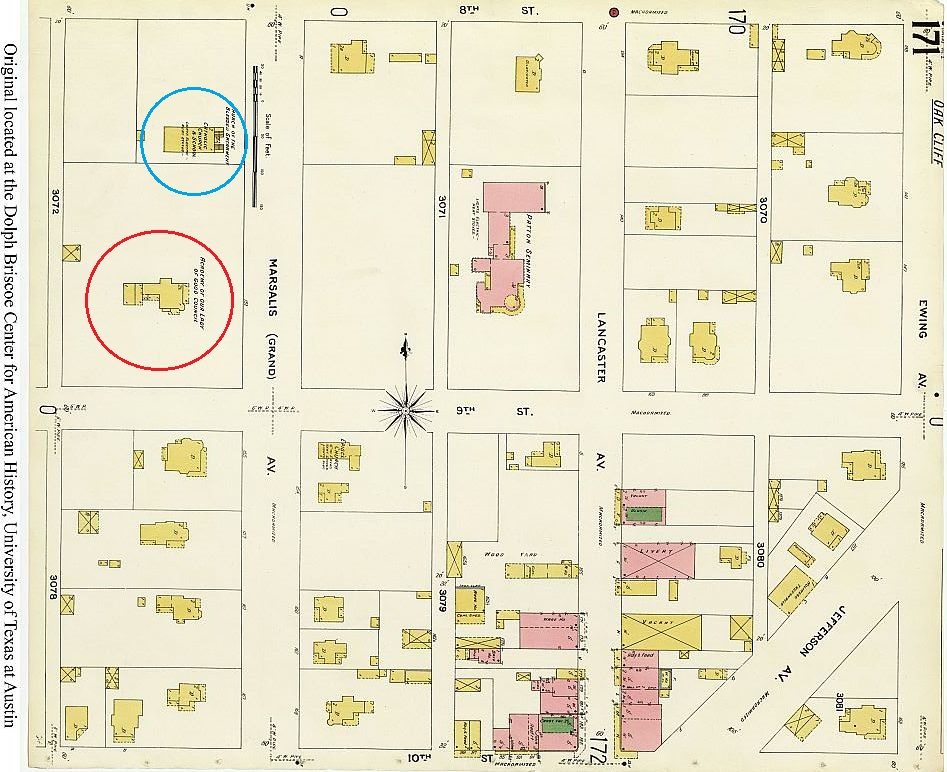
This visual aid will help give an idea of the acreage of both the school (circled in red) and the church (circled in blue), via the 1905 Sanborn map:

OLGC_sanborn_dallas-1905_sheet-171

I’m still not sure why my aunt went there….

OLGC_address_1958
1958

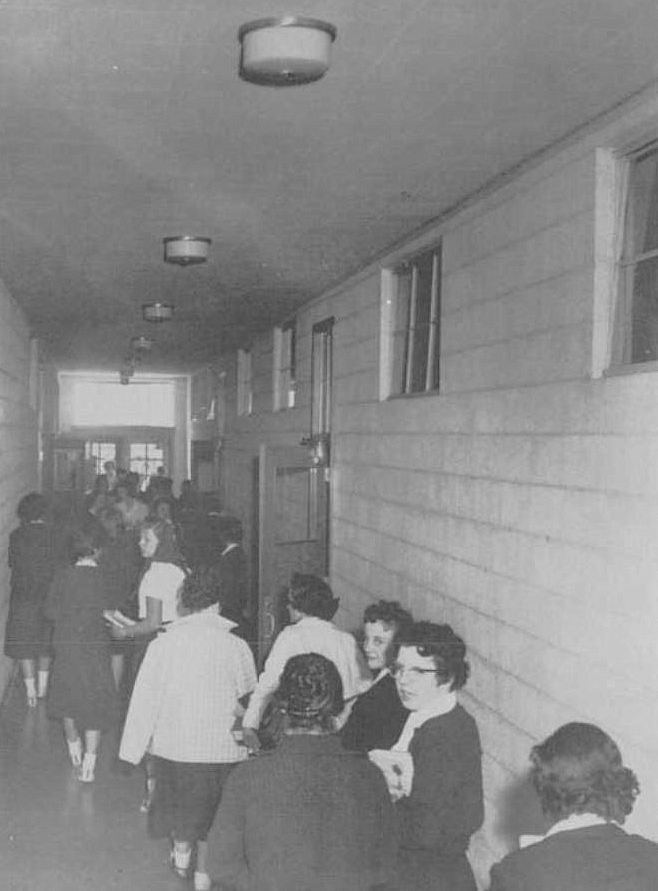
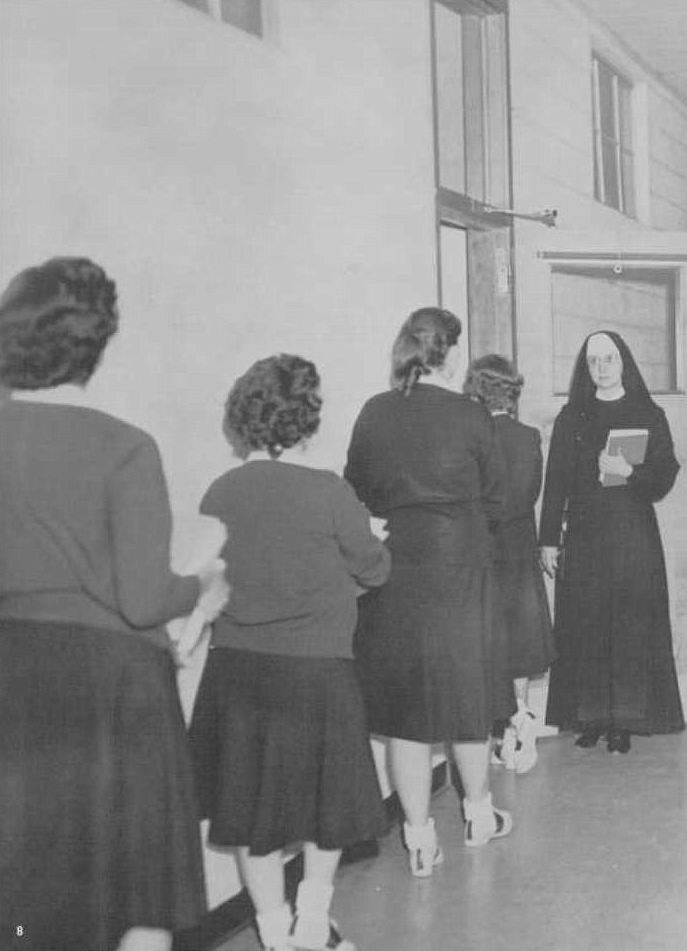
UPDATE: For those who might have wanted to see some interior photos, I didn’t find many, other than typical classroom shots, but here are some additional photos, a couple of which show the hallway.

Between classes, 1959:

OLGC_1959-yrbk_hallway

Girls lining up to go into class, 1960:

OLGC_1960-yrbk_hallway

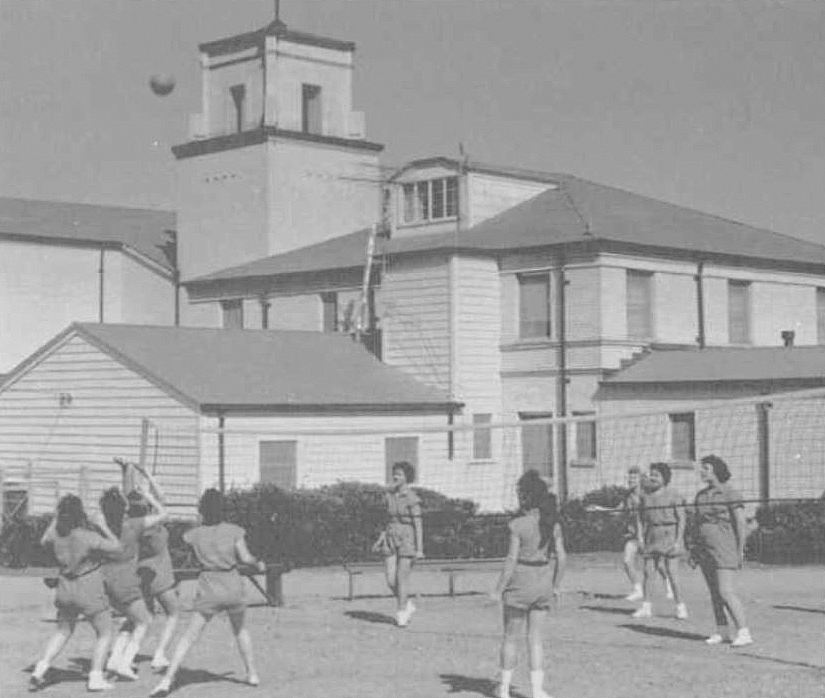
Girls outside playing volleyball, 1960:

OLGC_1960-yrbk_volleyball

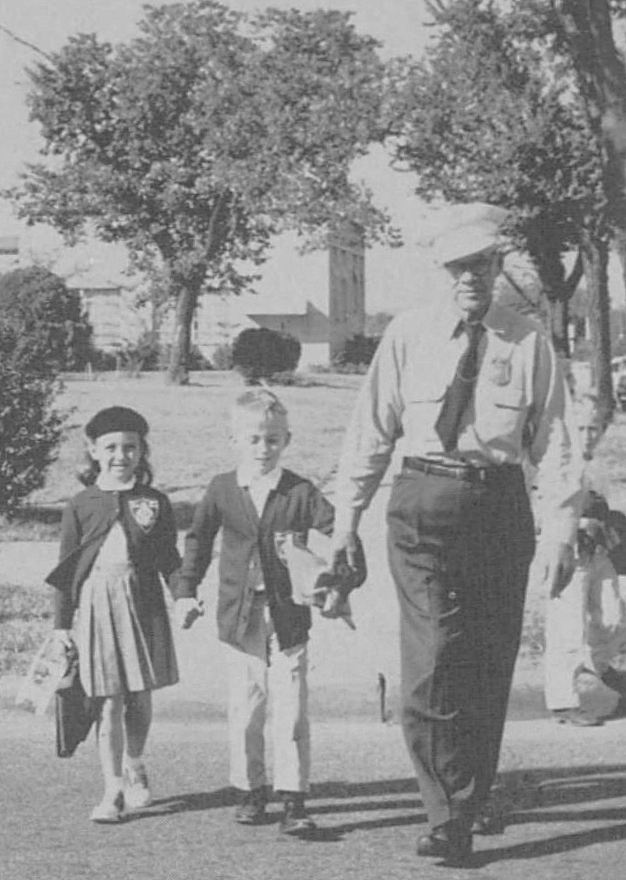
I had erroneously assumed that LGC was an all-girls 4-year high school; I believe it was a 12-year school, with boys and girls up to high school level, when it became girls-only. This photo appeared in the 1960 yearbook with the following caption: “The safety of all LGC students is the responsibility of the school as long as the students are on campus. For this reason, Officer H. A. Baxtley is available every day as a gracious escort for our little ‘Lions’ across the busy Ninth and Marsalis intersection.”

OLGC_1960-yrbk_crossing-guard

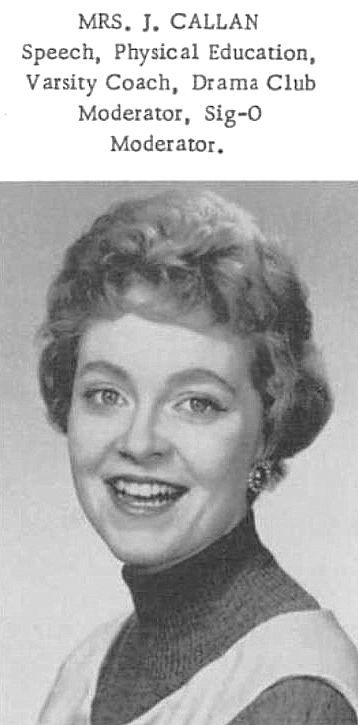
And finally, because I’m such a movie nerd who loves character actors, I was happily surprised to see that the actress K Callan was a 23-year-old drama teacher (etc.) at the school in 1959 before she entered the professional acting world of New York and Hollywood. (Callan was born in Dallas as Katherine “Kay” Borman and actually attended Our Lady of Good Counsel as a student before she taught there.) (UPDATE: Read K’s memories of her time at LGC in the comments, here.)

callan-k_our-lady-of-good-counsel_1959-yrbk_drama-teacher

callan-k_our-lady-of-good-counsel_1959-yrbk_drama-teacher_b

***

Sources & Notes

All photos of the school (except the one from 1905) are from various editions of Reveries, the yearbook for Our Lady of Good Counsel.

The 1902 photo was posted in the Dallas History Guild Facebook group.

The 1905 photo is from Dallas Rediscovered by William L. McDonald (p. 215), with the following credit: “Courtesy of Sister M. Adelaide Mars.”

The Blessed Sacrament Catholic Church still stands, at 231 N. Marsalis; their website is here.

olgc_1942-yrbk_girls_sign
1942

*

Copyright © 2017 Paula Bosse. All Rights Reserved.

La Reunion Tower

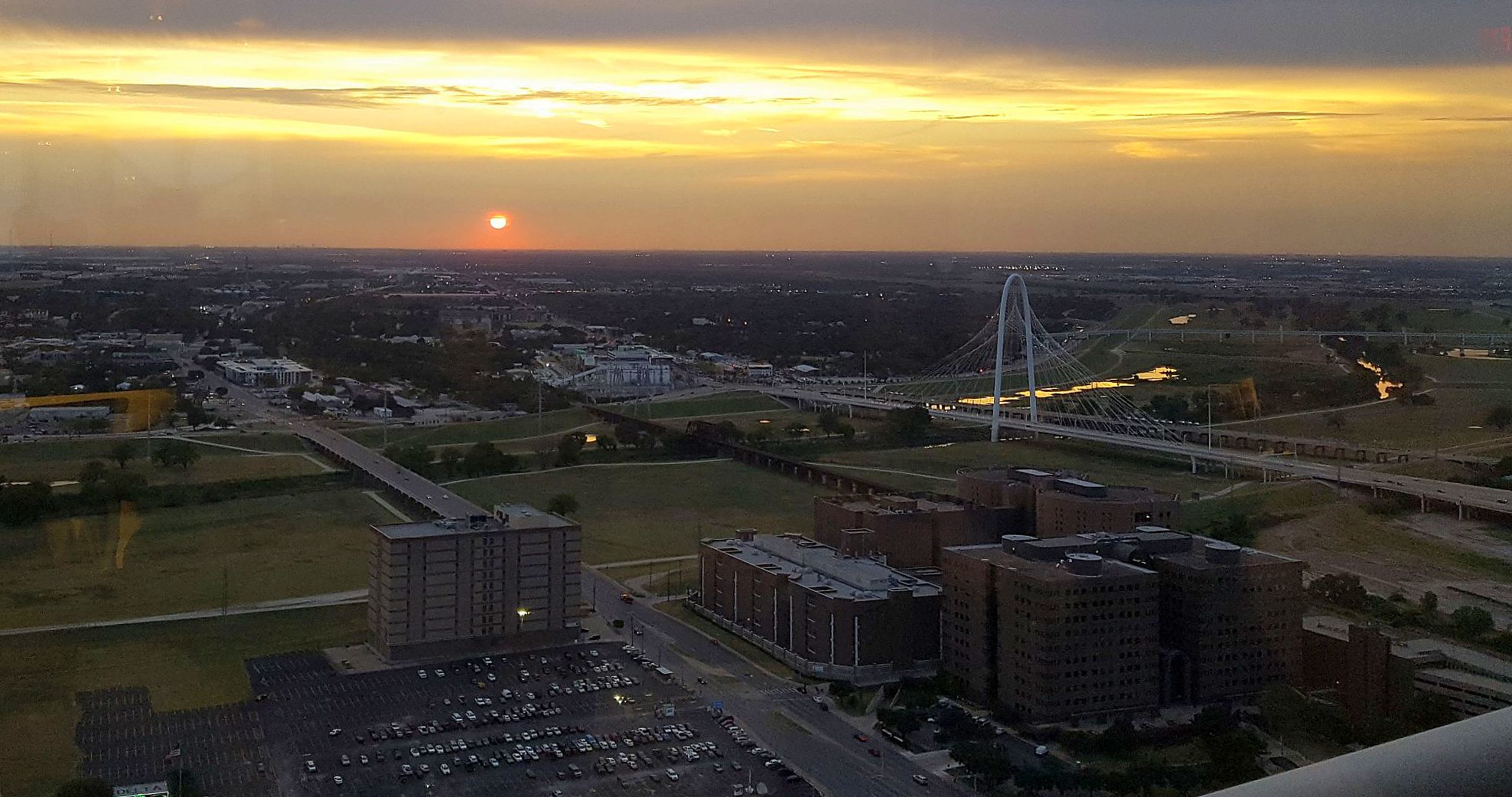
reunion-tower_skyline_091217Big D from inside the ball…

by Paula Bosse

On Tuesday night I gave a little talk on the history of the La Reunion colony as part of the Dallas Historical Society’s Pour Yourself Into History series. The event was held in the *very nice* Five Sixty by Wolfgang Puck restaurant high atop Reunion Tower — right in the ball. I was a bit of a last-minute fill-in presenter, and I hesitated to accept the invitation because I always feel awkward talking in front of more than, say, two or three people, but I really, really wanted to go up to the top of Reunion Tower.

I hadn’t been to Reunion Tower since a family outing back in the ’80s. Back then I was most fascinated by the fact that the restaurant slowly revolved to give diners a leisurely 360-degree view of the city (I always imagined it spinning out-of-control, pinning diners — and their meals — against the walls with centrifugal force, like a fine-dining version of the Spindletop ride at Six Flags, or The Rotor ride at the State Fair of Texas); but now, decades later, as an adult, the image of the spinning restaurant was eclipsed by the real star: the VIEW.

As you can imagine, the view is unbelievably spectacular — especially at night when Dallas is at its most glamorous. The ticket price is fairly steep to get up to the observation deck, and a meal and/or cocktails at the restaurant will set you back a goodly amount, but it is, without question, the most fabulous view of the city you’ll ever see. And you see all of it. When I started my talk about the history of the La Reunion colony of the 1850s (which was located about 5 miles due west of Reunion Tower, in West Dallas) the view was pretty much the one seen in the photo above; by the time I finished, we were, serendipitously, looking out over where the plucky colonists of “French Town” had toiled unsuccessfully 160 years ago. (Estimates on the boundary of La Reunion’s 2,000-acre land is the area now bounded by Westmoreland on the west, Hampton on the east, Davis on the south, and the Trinity River on the north — the southwest corner is marked here on Google Maps.)

It was a little noisy at the event Tuesday night, so if you were one of the very nice people who turned out, you might not have been able to hear anything I said! If you’d like to hear more about the history of La Reunion (and about Reunion Tower — and how, if a marketing agency had had its way, it might have been named “Esplanade” Tower), I enthusiastically recommend this very entertaining radio piece from Julia Barton (the La Reunion segment begins at about the 5:15 mark).

**

I took photos, but they don’t do justice to the view. The really breathtaking vistas are at night, and, sadly, none of those photos came out. Seriously, if you’ve never been up Reunion Tower — or if you haven’t been since it was opened in 1978 — you should definitely go now. Better still, go at sunset and enjoy the best view in Dallas as you sip delicious cocktails.

The view stretches for miles. Here’s a cropped view of Dealey Plaza (click to see it really big).

reunion-tower_dealey-plaza_triple-underpass_091217a

And, at sunset, the jail has never looked lovelier.

reunion-tower_sunset_jail_091217

Back down on terra firma, looking up and saying “goodbye” to the ball.

reunion-tower_the-ball_091217

Thank you, Dallas Historical Society, for inviting me to be part of your event! And thanks to everyone who came out … and up!

***

Sources & Notes*

Photos by Paula Bosse. Click ’em to see ’em bigger.

For more information of the La Reunion colony, see other Flashback Dallas posts here.

*

Copyright © 2017 Paula Bosse. All Rights Reserved.
Main and Ervay — The Favorite Downtown View of Postcard Publishers

main_west-from-ervay_ebayLandmarks a-plenty… (click to see larger image)

by Paula Bosse

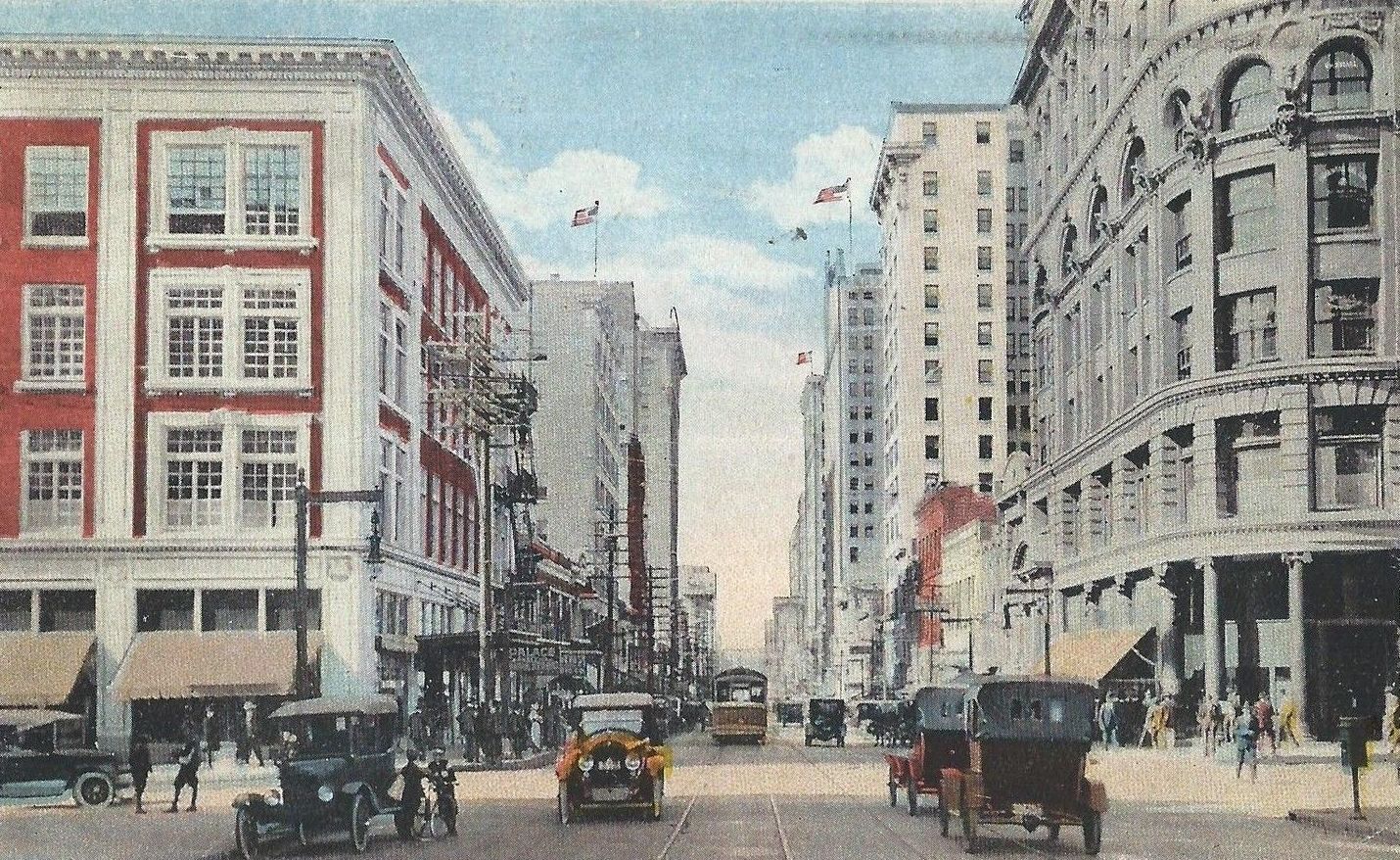
Without question, the most popular view of downtown Dallas offered to postcard buyers in the early years of the 20th century — the one repeated over and over and over — is Main Street looking west from Ervay. The constant is the Wilson Building, which opened in 1904 and has elegantly held the fort at the northwest corner ever since. Later came the skyscraping Praetorian Building at Main and Stone. And a few years later, Neiman-Marcus arrived at the southwest corner of Main and Ervay to firmly establish the intersection as one of the city’s most impressive.

I love these colorized postcards, but it’s always interesting to see them drained of color — they look more realistic, but they still have that air of otherworldliness.

main_west-from-ervay_ebay_bw

Here are a couple more. This one is lacking Neiman’s (built in 1914), taken around 1908 or 1909 (the Elk’s Arch can be seen in the distance).

main-ervay-elks-arch_postcard_ebay.jpg

And this one, before the Praetorian Building was built in 1907.

main-st_1905

***

Sources & Notes

Postcards from eBay.

Click pictures to see larger images.

*

Copyright © 2017 Paula Bosse. All Rights Reserved.