Flashback : Dallas

A Miscellany: History, Ads, Pop Culture

Category: Art

“When ‘Big D’ Lights Up” — Phelps Dodge Ad (1969)
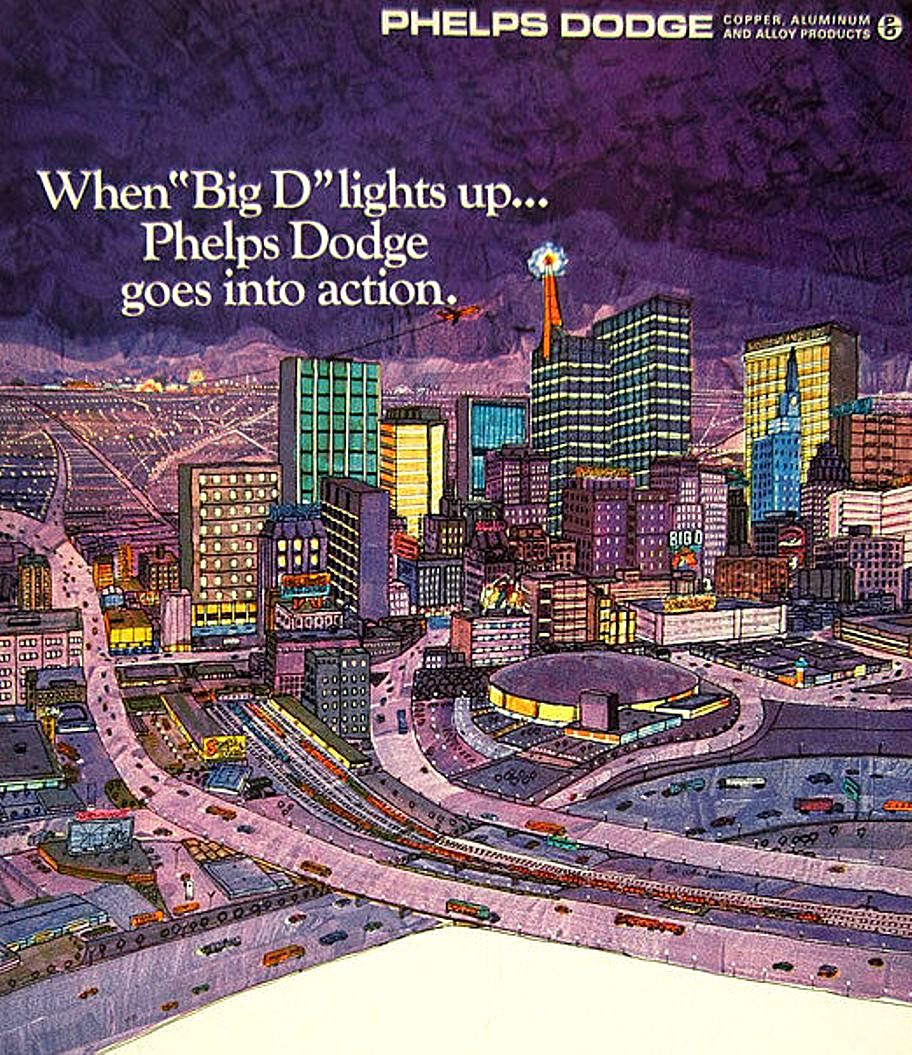
ad-phelps-dodge_1969_ebayCopper, aluminum, and alloys … EVERYWHERE!

by Paula Bosse

One doesn’t expect a cute, quirky drawing of Dallas to appear in an advertisement for an international mining company that excavates and manufactures “copper, aluminum, and alloy products.” But here you are, a 1969 Phelps Dodge ad featuring the Dallas skyline. It’s a bit reminiscent of both the delightful telephone book cover art of Karl Hoefle and the distinctive naive “matchstick men” art of L. S. Lowry. The ad copy is a lot less whimsical:

Dallas … a busy, prospering commercial center and Showplace of the Southwest. A bright, shining ever-changing city where the new is commonplace.

Look behind the splendor and the bright lights and you’ll see that Dallas is also a Phelps Dodge city. Our condenser tubes are used at the generating plants of the Dallas Power and Light Company. Our 135-kv transmission cables and other high-voltage power cables distribute power throughout the city … and the transformers, coils and motors wound with our magnet wire make things happen … from the flashing signs downtown, to factories along the river … to homes, stores, and offices everywhere.

Go north on Stemmons Freeway or west to Fort Worth on the Turnpike, or south on I-45 and Phelps Dodge buried lighting cables, telephone or coaxial CATV cables are following alongside. You’ll also find our building wire and aluminum conduit … our plumbing, gas and refrigeration copper tubing at work everywhere. Many new buildings, like the Statler Hilton Hotel, use PD building wire and copper tubing exclusively.

We specialize in conductors of electricity, liquids, gases and heat made of copper, aluminum and alloys. Look closely, and you’ll find Phelps Dodge products at work everywhere.

***

Sources & Notes

Ad found on eBay.

See the artwork from this same ad — only in black and white — here. Zoom in and look at the details. No Karl Hoefle, but still pretty cool.

ad-phelps-dodge_1969_bw_small

Interested in knowing more about Phelps Dodge? Wikipedia to the rescue, here.

The drawing is by commercial artist Lee Albertson, who, apparently, did a whole series of these ads, each featuring a different “copper, aluminum and alloy product”-enriched city, a few of which can be seen here.


*

Copyright © 2015 Paula Bosse. All Rights Reserved.
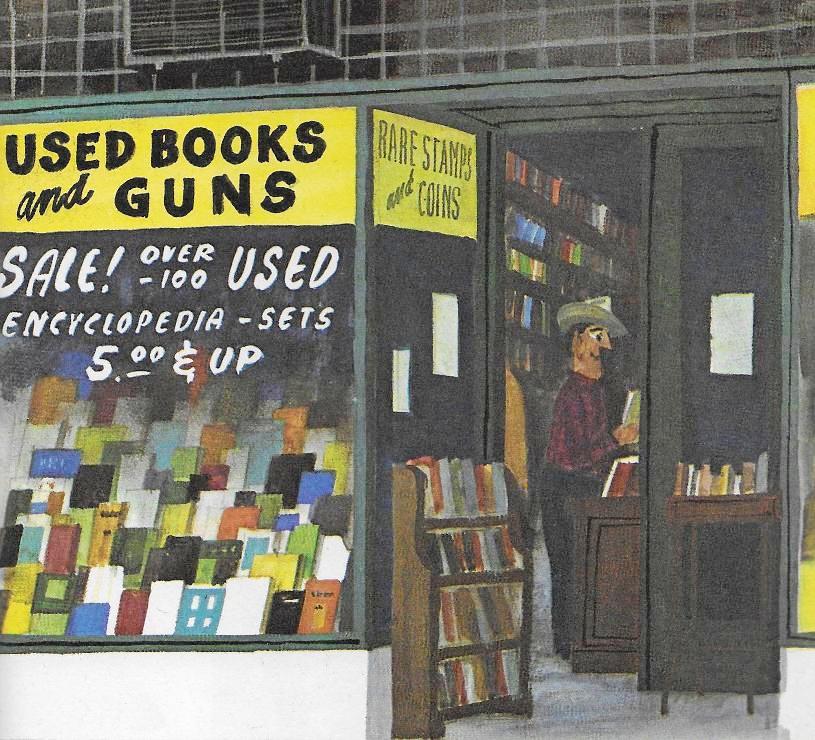
“Used Books and Guns” — 1967

used-books-and-guns_SASEKJust your typical Texas bookshop….

by Paula Bosse

In honor of my father’s birthday, I give you this great illustration by M. Sasek from his book This Is Texas, an amusing children’s book featuring a tour around Texas. The above is one of the offerings from San Antonio, and it’s accompanied by the following caption:

“San Antonio bookstore. There is all you need if you want to start a long literary argument — or to end one quickly.”

(I don’t know what bookshop this was, but it was real. If anyone knows its identity, please let me know!)

As this book was in my house growing up, I’m sure my father — a bookseller with a great sense of humor and an enthusiasm for firearms — must have seen this and laughed — and seriously considered whether the used books-and-guns combo-shop was feasible.

UPDATE: Thanks to my old friend Rodney H., I now have this photo to post here. I don’t know the source of this photo or where it was taken, but it certainly looks like Sasek’s illustration! (See them side by side, here.) Thanks, Rod!

used-books-guns

***

Miroslav Sasek (1916-1980) was a Czech author and illustrator best known for his fantastic “This Is…” series of books, many of which have been reprinted. More on Sasek here and here.

A previous post I wrote about my father, Dick Bosse, owner of The Aldredge Book Store, is here.

Yes, there WAS a similar bookstore envisioned in a “King of the Hill” episode; read about it here.

I love this book, and even though it was reprinted in 2006, I think it is out-of-print again. There are several for sale here (I’d avoid the copies listed as “fair” or “good.” And make sure you get a dust jacket!)

Click picture for larger image.

*

Copyright © 2015 Paula Bosse. All Rights Reserved.

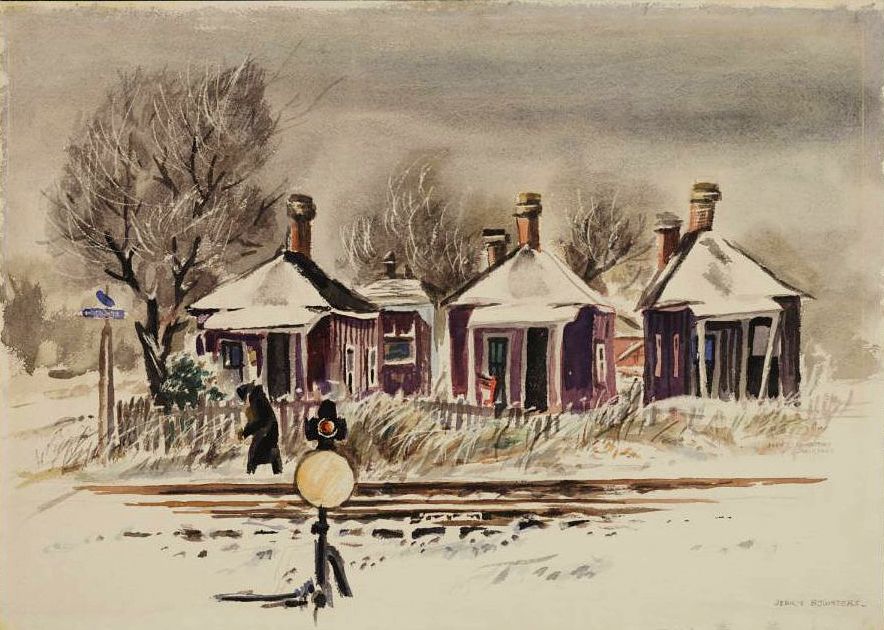
“Along the Tracks” in the Fair Park Area

bywaters_along-the-tracks_fair-park_smu_1947“Along the Tracks” by Jerry Bywaters, 1947 (Hamon Arts Lib., SMU)

by Paula Bosse

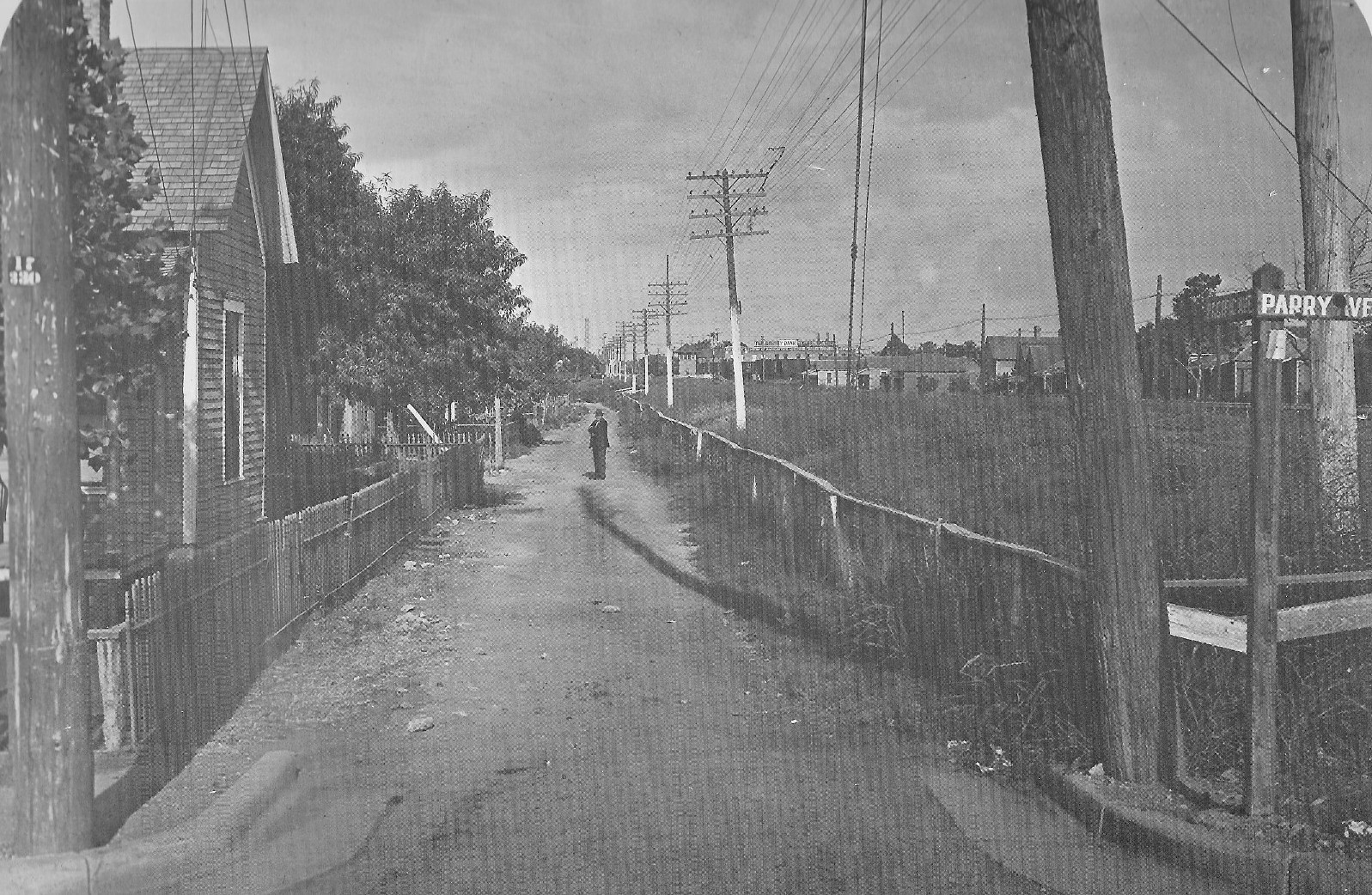
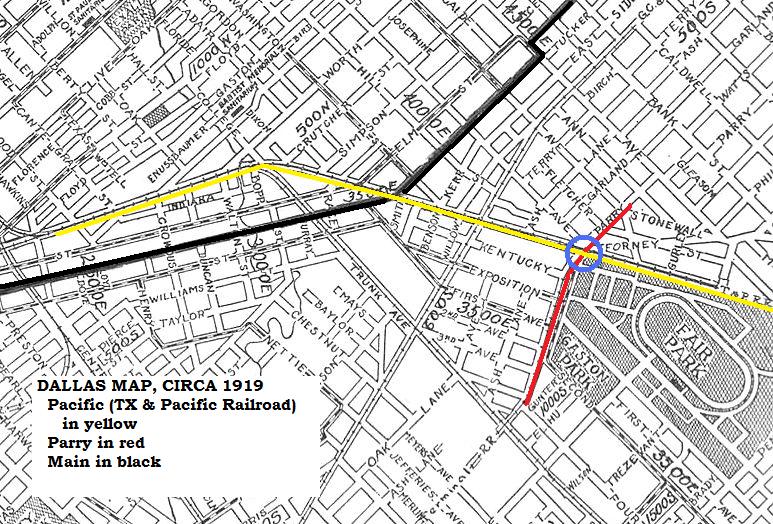
As we’re currently experiencing an extended period of cold, snowy, icy weather, what better time than now to post this atmospheric watercolor by Jerry Bywaters? Titled “Along the Tracks,” it was painted during a very cold and snowy early January of 1947, in the area around Fair Park (where Bywaters worked as the head of the Dallas Museum of Fine Arts). Railroad tracks ran on either side of Fair Park — the Texas & New Orleans tracks ran along Trunk on the west side, and the Texas & Pacific tracks ran along Pacific on the east side. The DMFA was on the very western edge of Fair Park, and as it was bitterly cold, Bywaters probably wasn’t traipsing any farther than he had to — the west side of Fair Park near the T&NO tracks would certainly have been more convenient for him. But I came across a photo that looks pretty much the same as the scene Bywaters painted, only from the T&P side to the east, so who knows?

pacific-parry_ca1916_greene

The photo above (taken around 1916) shows the intersection of Pacific and Parry, looking west on Pacific. “Along the tracks.”

***

Sources & Notes

Jerry Bywaters’ painting “Along the Tracks” is from the Bywaters Special Collections in the Hamon Arts Library at Southern Methodist University; it can be accessed here. As far as I can tell, that street sign doesn’t actually say anything, but if you see something in the scribble, let me know!

The 1916-ish photograph of the Pacific and Parry intersection is from Dallas, The Deciding Years by A. C. Greene (Austin: Encino Press, 1973).

Here is a 1919 map detail showing the area around Fair Park (full map is here):

pacific-parry_1919

When Bywaters painted “Along the Tracks” it was REALLY cold. A couple of photos from the Jan. 1, 1947 edition of The Dallas Morning News show a snow-dusted Cotton Bowl and two very cute Oak Cliff teenage girls ice skating on West Jefferson Blvd.

*

Copyright © 2015 Paula Bosse. All Rights Reserved.
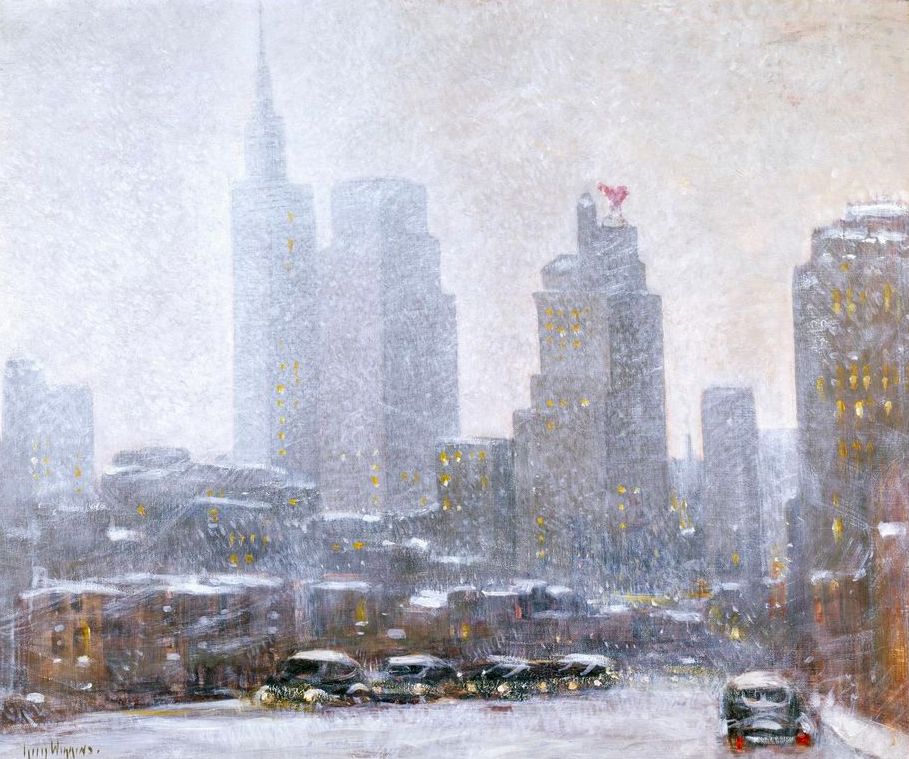
“Dallas in Winter” by Guy Wiggins — ca. 1942

wiggins_dallas-in-winter_c1942_dma“Dallas in Winter” by Guy Carleton Wiggins (Dallas Museum of Art)

by Paula Bosse

A nostalgic look back at a snowy Dallas scene from the 1940s by Guy Wiggins (1893-1962), an artist most remembered for his snow scenes of New York City. Wiggins was apparently quite fond of Dallas and was a frequent visitor, beginning in the 1920s. He had countless gallery shows here over the years, and while in town he’d often present lectures and “master classes” to arts groups and women’s groups. According to articles in local newspapers, Wiggins painted views of the Dallas skyline several times, paintings which no doubt found their way into private collections and are probably still hanging on the walls of local art patrons. In 1952, his daughter and her family moved here, giving Wiggins yet another reason to visit.

The wonderful snow scene above is in the collection of the Dallas Museum of Art; this is the DMA’s description of the painting:

A rare snowstorm in Dallas captured the eye of Guy Carleton Wiggins, who recorded this scene from the downtown vantage point of Live Oak and Pearl streets, showing the skyline’s distinctive historic landmark of the red statue of Pegasus on the Magnolia building.

Although born and raised in the East, where he was affiliated with the artists’ colony in Old Lyme, Connecticut, Wiggins traveled widely throughout the United States during his career. He became known for urban winter scenes such as this one.

***

The painting “Dallas in Winter” by Guy Carleton Wiggins is from the Patsy Lacy Griffith Collection, Dallas Museum of Art; it was a bequest of Patsy Lacy Griffith. More information on the painting can be found on the DMA’s website, here.

(Patsy Lacy Griffith was the daughter of oil millionaire Rogers Lacy, who was this close to building the incredible Frank Lloyd Wright-designed hotel downtown. I wrote about it in a previous post, here.)

More on the career of Guy Wiggins, from Wikipedia, here, and from a 2011 New York Times profile of the Wiggins family of painters, here.

Because he visited so often and had many friends here (and because he apparently painted very quickly), Wiggins’ paintings were well represented in private collections in Dallas. (One of his earliest patrons was Miss Ela Hockaday, of the Hockaday School for Girls, who loaned one of her paintings for an exhibit at the Dallas Public Library in 1930.) Among works depicting views of the city were oil studies with the titles “Morning Over Dallas,” “The Akard Canyon,” “Dallas: Morning From Cliff Towers,” and “Dallas Nocturne,” all of which were probably still damp when first shown, as The Dallas Morning News reported that they had been painted “little more than a week ago” before they went on display at the Ed Spillars gallery on Fairmount at the end of December, 1948 (DMN, Dec. 22, 1948). I’d love to see these paintings.

Want “Dallas in Winter” hanging on your walls? Buy the poster from the DMA Shop here. Look at it longingly when it’s 157 degrees in August.

Click picture for larger image.

*

Copyright © 2015 Paula Bosse. All Rights Reserved.
 

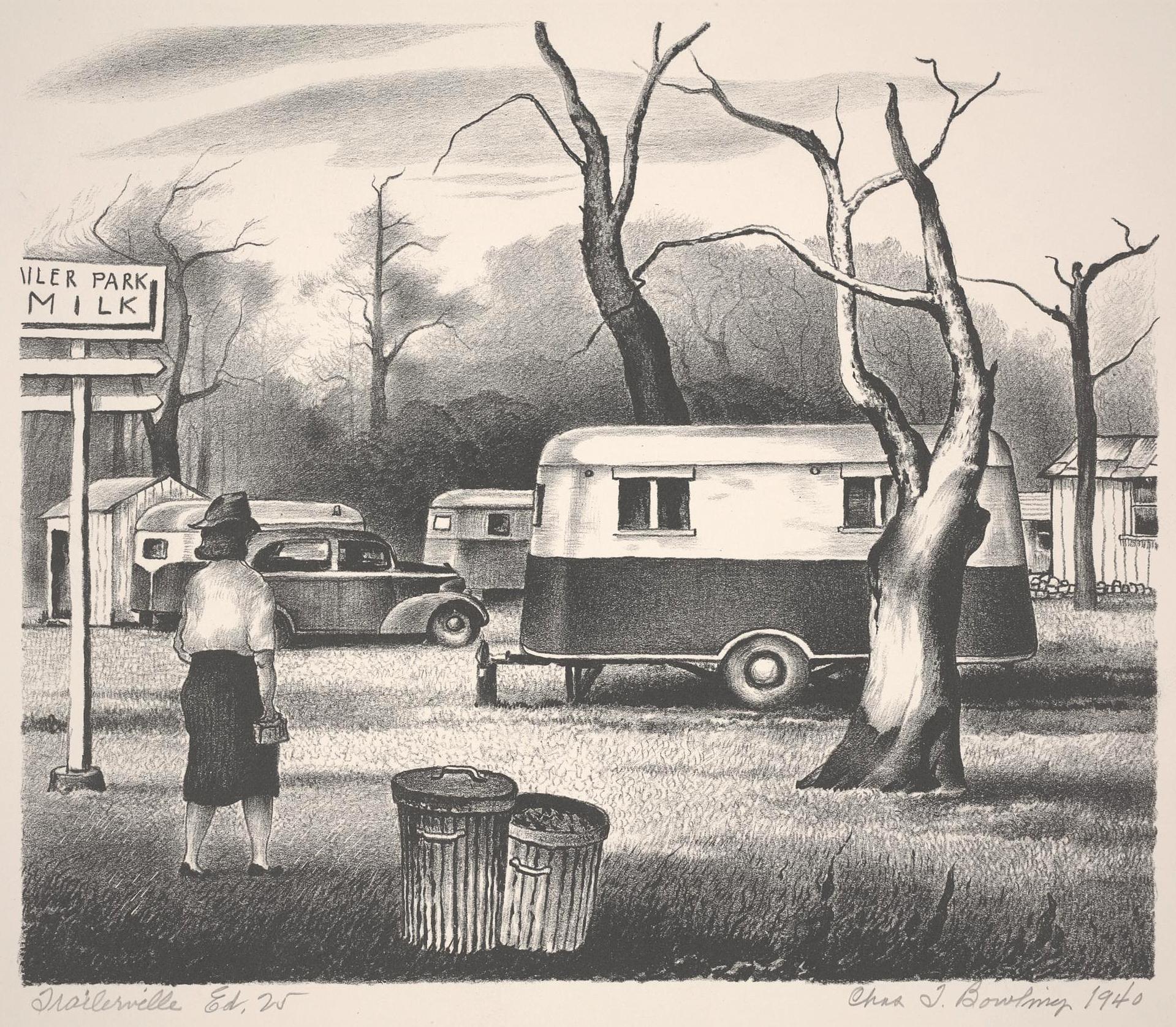
“Trailerville” by Charles T. Bowling — 1940

bowling_trailerville_1940_dma(Dallas Museum of Art)

by Paula Bosse

A 1940 lithograph by one of my favorite Dallas artists, Charles Bowling (1891-1985). I don’t know if this trailer park was in Dallas, but I certainly hope so.

***

This lithograph is in the collection of the Dallas Museum of Art, a gift of A. H. Belo Corporation and The Dallas Morning News. More info can be found at the DMA website, here.

Biographical information on Bowling can be found here.

Image is much larger when clicked.

*

Copyright © 2015 Paula Bosse. All Rights Reserved.
Year-End List! My Favorite (Non-Photo) Images Posted in 2014

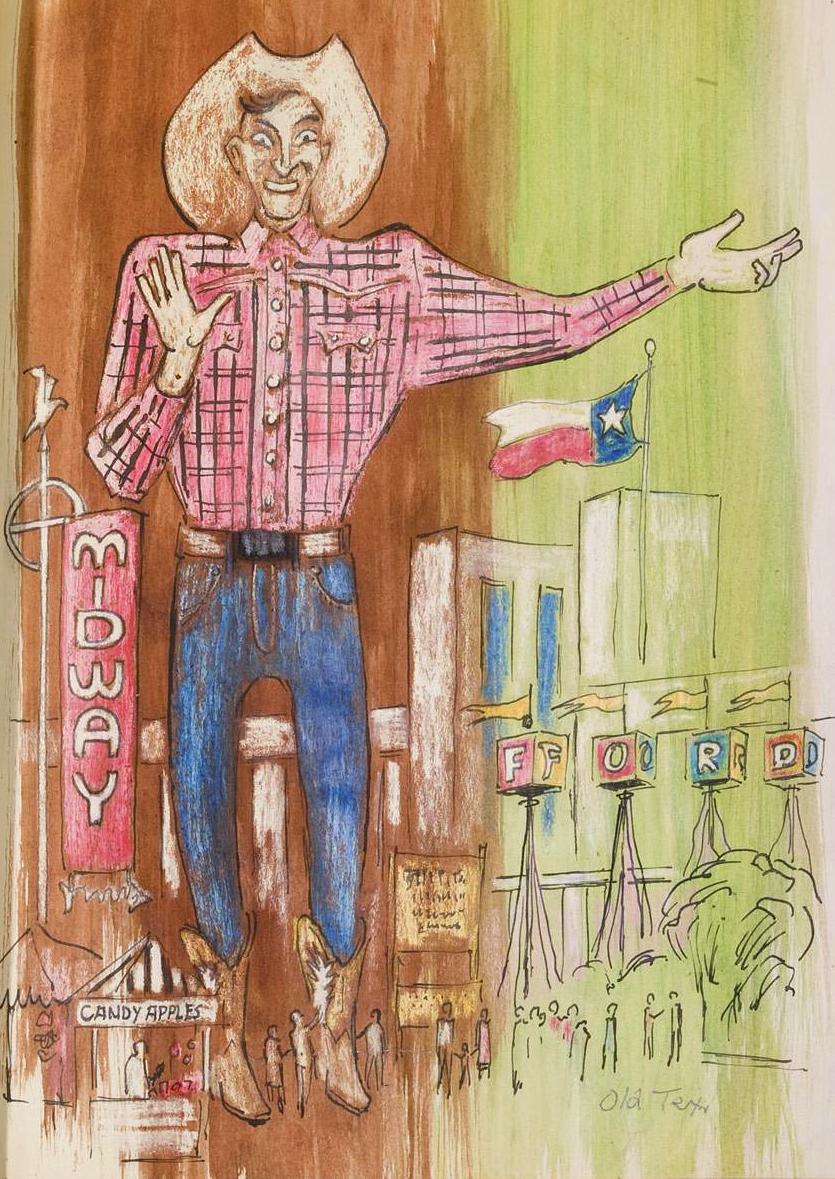
dozier_big-tex_sketchbook_1954_dma“Old Tex” sketch by Otis Dozier, 1954 — Dallas Museum of Art
© Marie Scott Miegel and Denni Davis Washburn

by Paula Bosse

It’s the end of the year, the traditional time for lists! Yesterday I compiled my favorite ads I’ve posted in 2014, today it’s my ten favorite images — either art or postcards (my favorite photographs of the year will be posted tomorrow). For more info on the images, click on the title of the post they originally came from. Most images are larger when clicked — some are quite a bit larger.

*

1. “Big Tex, Old Tex, Big Ol’ Tex — Whatever You Call Him, Otis Dozier Wins (1954)” (above)

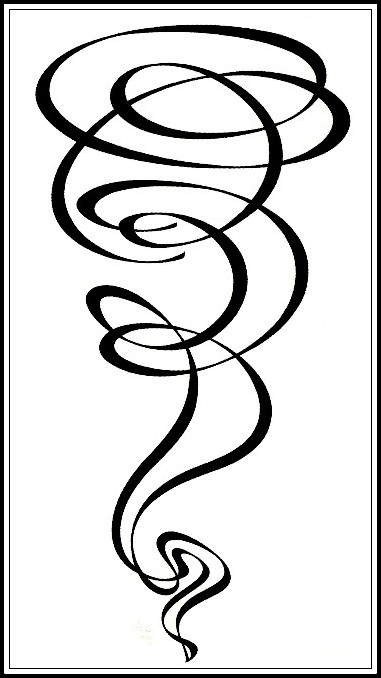
2. “Alexandre Hogue’s ‘Calligraphic Tornado’ — 1970” (also, I want to mention the possibly previously unknown 1927 bookplate by Hogue that I discovered, here)

3. “Dallas’ Frank Lloyd Wright Skyscraper — 1946”

frank-lloyd-wright_rogers-lacy_1946-sm

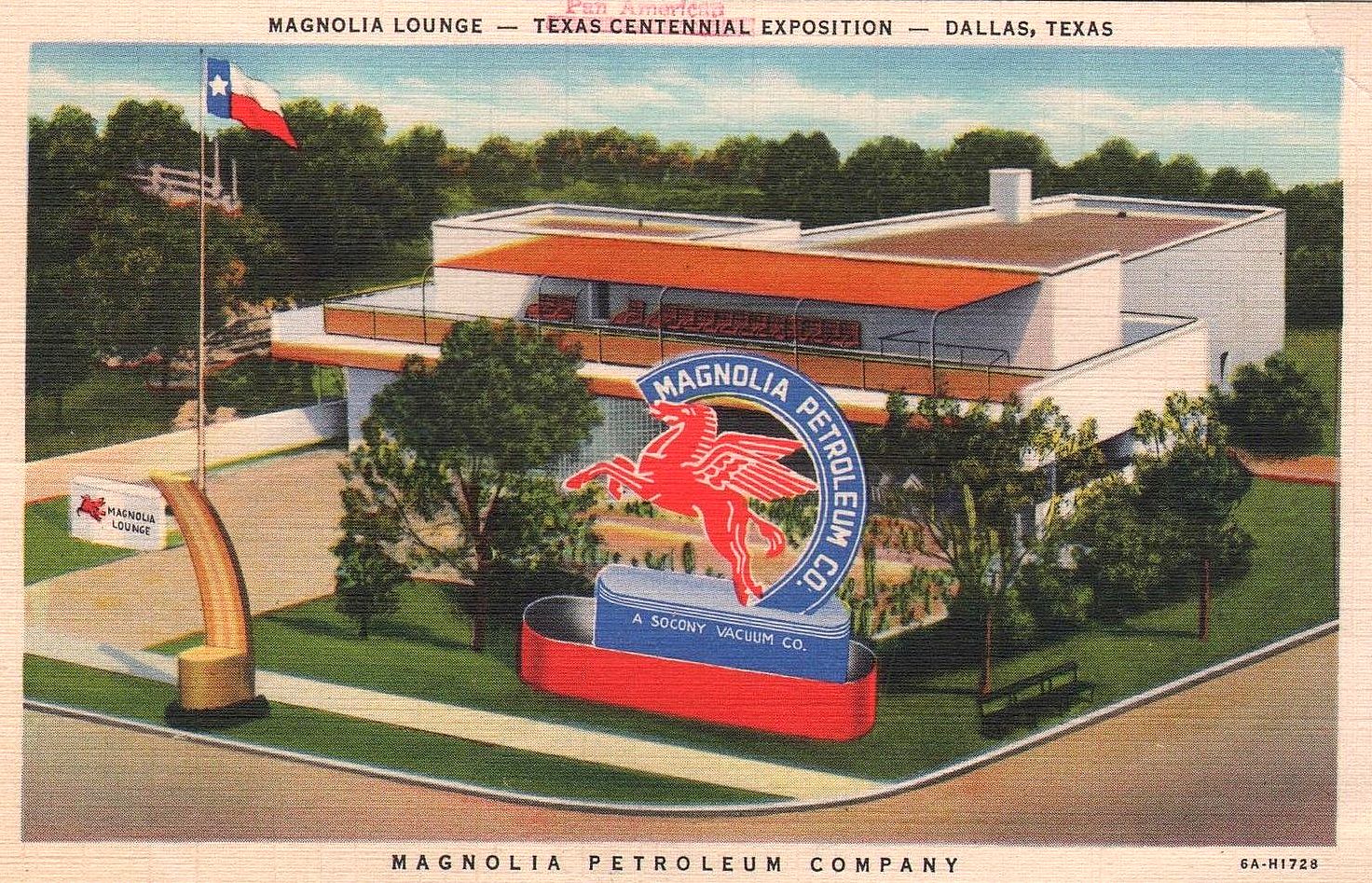
4. “William Lescaze’s Ultramodern Magnolia Lounge — 1936”

magnolia-lounge_tx-centennial

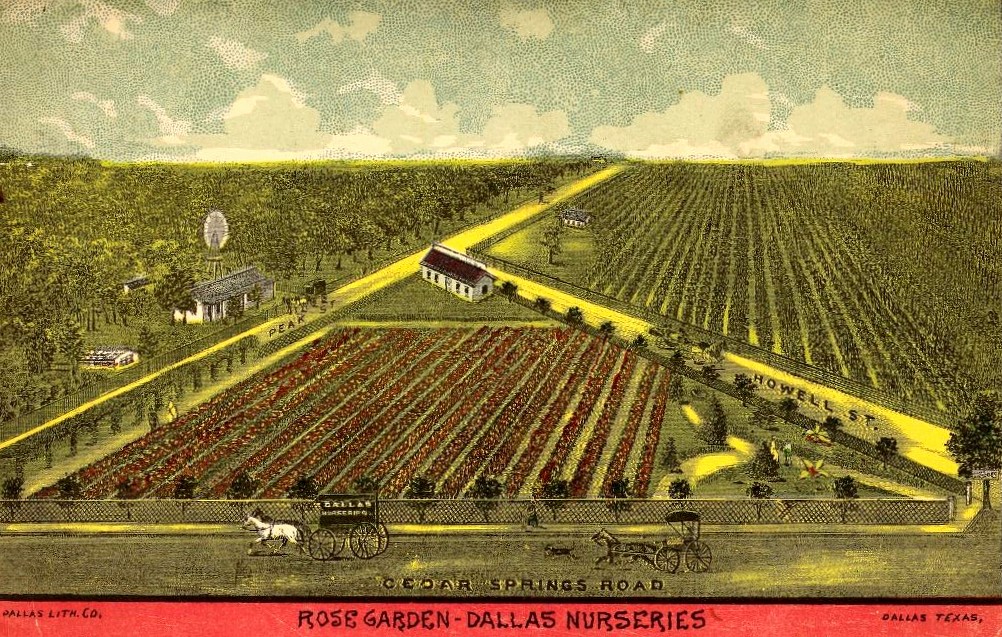
5. “J. M. Howell’s Dallas Nurseries — 1880s”

howell_rose-garden_1888

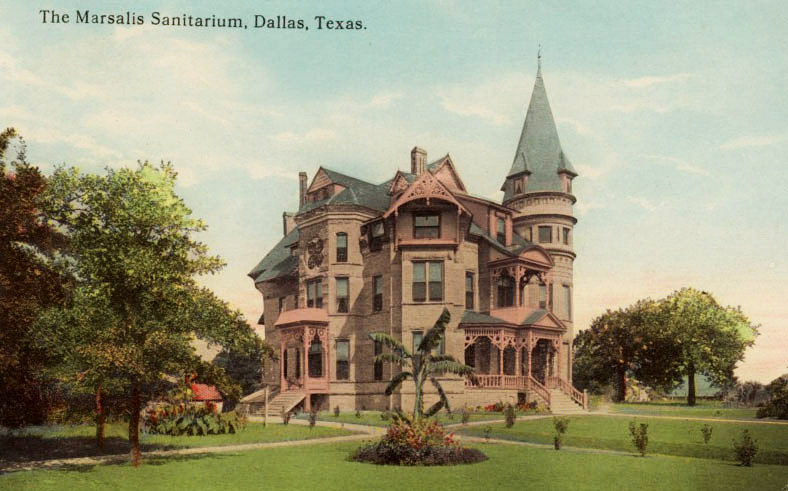
6. “The Marsalis House: One of Oak Cliff’s ‘Most Conspicuous Architectural Landmarks'”

marsalis_sanitarium_oak-cliff

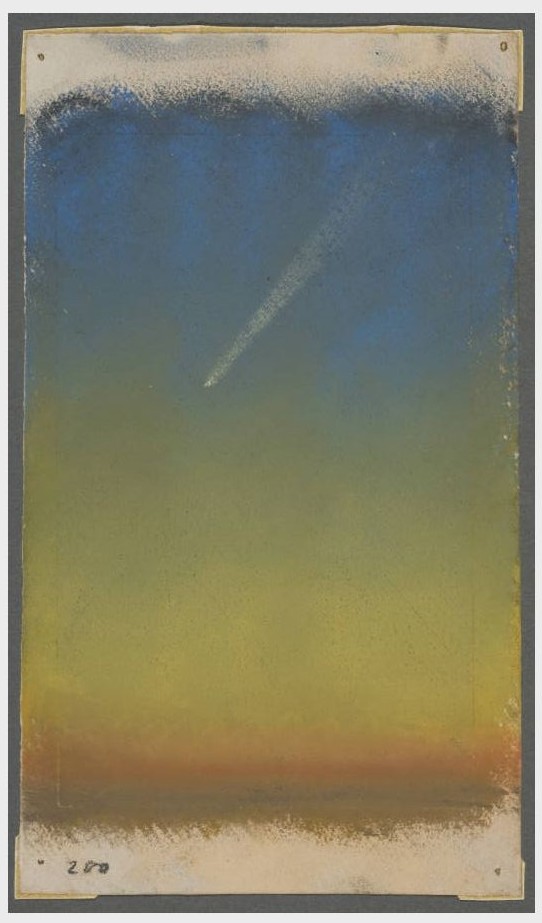
7. “Frank Reaugh or Mark Rothko?”

reaugh_meteor_nd_ransom-smu_2

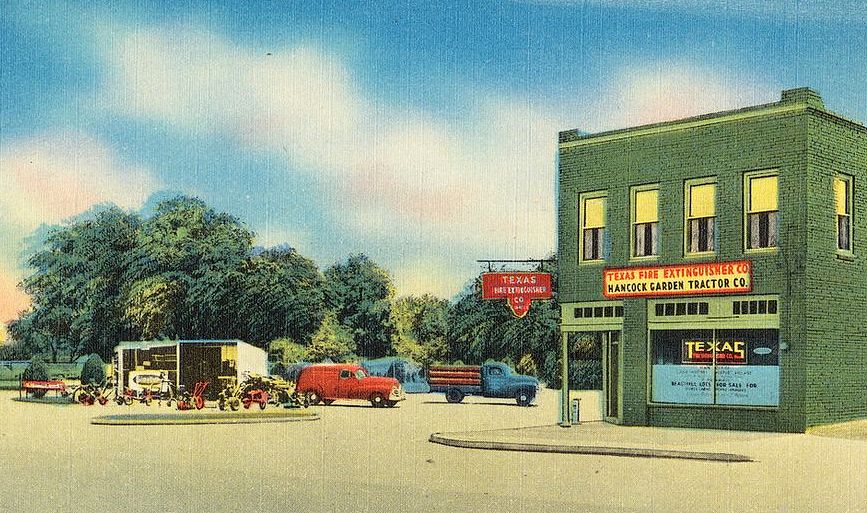
8. “The Texas Fire Extinguisher Co. and Hitler — 1942”

tx-fire-extinguisher-co

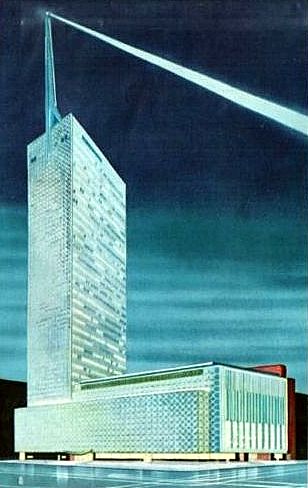
9. “The Republic National Bank Building: Miles of Aluminum, Gold Leaf, and a Rocket”

republic-national-bank_beacon_front

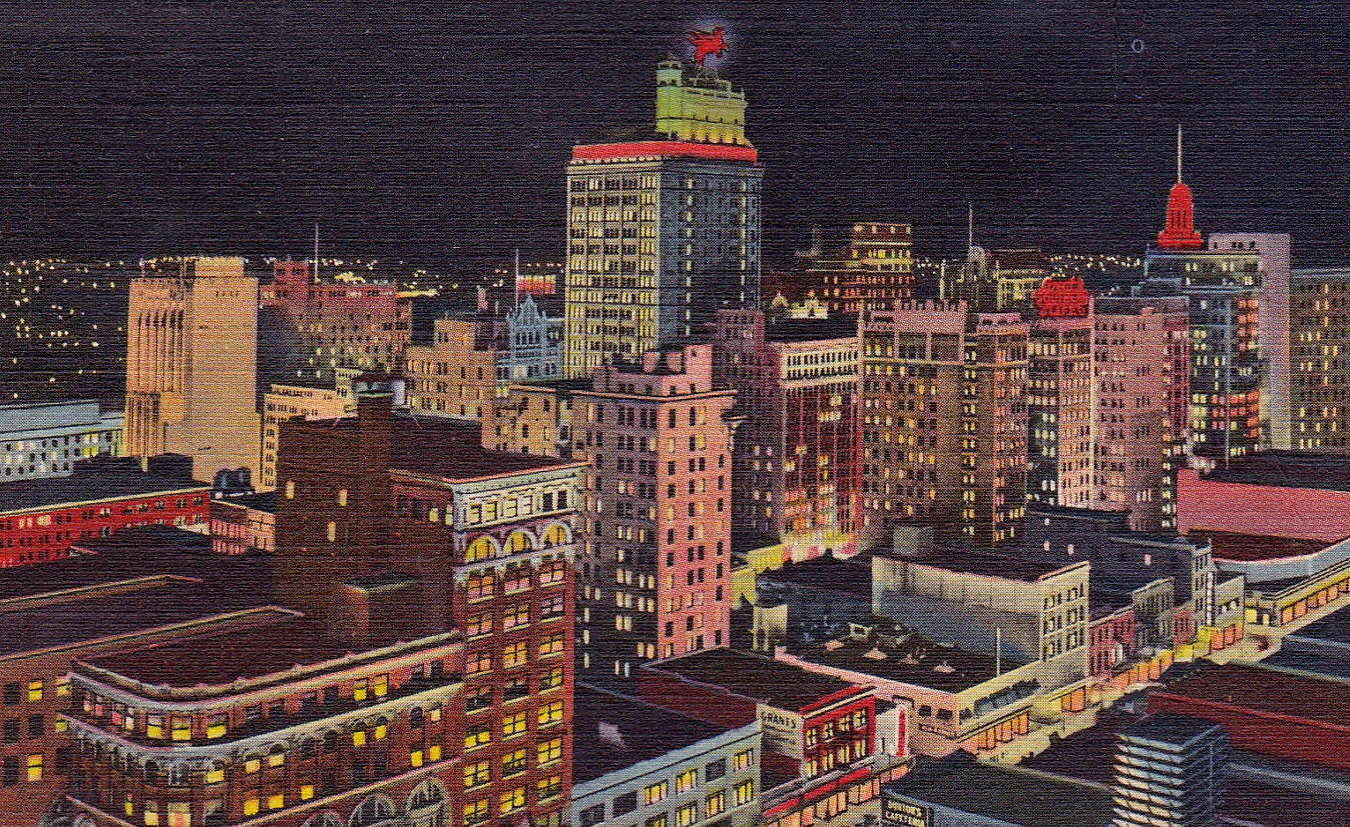
10. “When the Flying Red Horse Could be Seen From Miles Away”

birdseye_night_early1940s

*

Honorable Mention: A whole bunch of cool night-time postcards in “Theatre Row — A Stunning Elm Street at Night.”

*

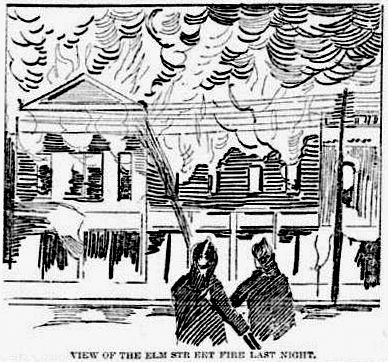
And, lastly, a runner-up, just because it’s so ridiculous it makes me chuckle every time I see it: a newspaper artist’s rendition of a massive fire that swept through downtown in 1896, from “Chas. Ott: One-Stop Shopping for Bicycles and Dynamite.”

ott-fire_pic_dmn_052696

*

For all the “Year-End Best of 2014” lists, click here.

*

Copyright © 2014 Paula Bosse. All Rights Reserved.
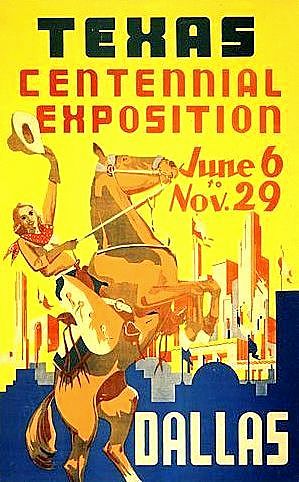
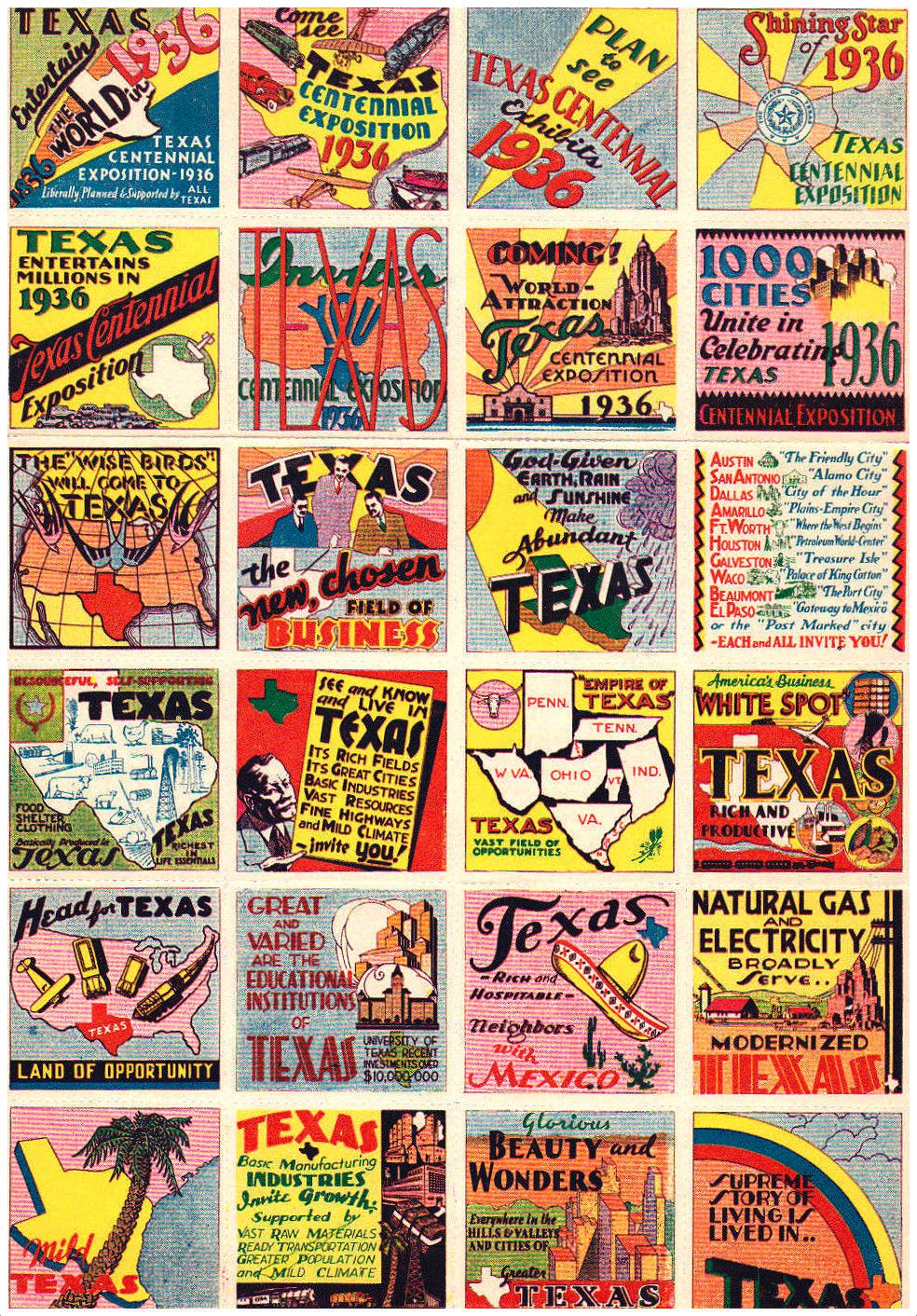
Texas Centennial Promotion on Hyper-Drive! — 1936

tx-centennial_poster_cowgirl_briscoe-ctr

by Paula Bosse

A bit of color and giddy enthusiasm on a gray day.

tx-centennial_promo_sheet(click for MUCH larger image)

***

Top image is a Texas Centennial poster from the Ephemera Collection of the Dolph Briscoe Center for American History. I would provide a link, but I am unable to find it now. It was online a few months ago!

Source of bottom image is unknown. Probably eBay. A long, long time ago.

*

Copyright © 2014 Paula Bosse. All Rights Reserved.
The Peruna Monument — 1937

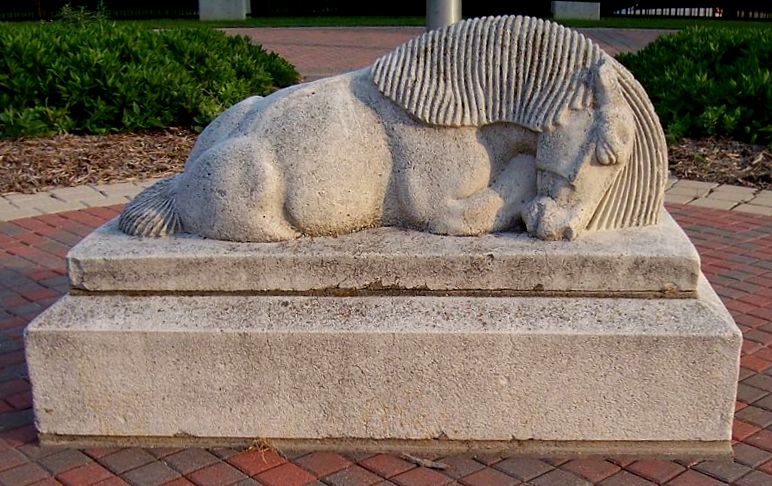
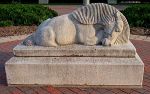
owen_peruna_monument_flickrMichael Owen’s Peruna monument today, SMU campus (photo by David Steele)

by Paula Bosse

When Peruna — SMU’s beloved Shetland pony that served as the Mustangs’ first live mascot — died in 1934, there was an immediate call to erect a memorial monument over the little horse’s grave, but it wasn’t until 1937 that a serious push for the erection began. Money was raised by the student council, which asked every student to contribute at least ten cents to the fund, and the search was on for the right sculptor.

The commission went to young Michael G. Owen, Jr., who, at only 21, was the same age as many of the students who were hiring him. (It has been erroneously reported that Owen attended SMU, but he did not.) Michael Owen was well-known within the Dallas art community and had made a mark for himself as something of an artistic prodigy — as a teenager, he had been on the periphery of the movement that spawned the Dallas Nine group of Regionalist artists, and he had  been mentored by many of the older artists, most notably Jerry Bywaters.

owen_peruna_smu-campus_050537
SMU Semi-Weekly Campus, May 5, 1937 (click for larger image)

Owen worked quickly and completed the memorial — which was six feet long and four feet high and carved from 2,800 pounds of hard limestone — in time for the unveiling just outside Ownby Stadium on May 19, 1937.

The result was a quietly emotional — and even a very sweet — monument depicting the small slumbering horse atop a stone slab, with an inscription reading “Peruna I.” Jerry Bywaters wrote a glowing review of the piece, even though he seems a bit taken aback to find what he called “a memorial to a midget horse” on a college campus to be “one of the best pieces of memorial sculpture in the State.”

“Accustomed to seeing rather bad sculptured monuments erected to Confederate soldiers, Texas Rangers, political dignitaries or such abstract ideas as justice, plenty, or  beauty, it is slightly confusing to find a very good piece of sculpture set up as a memorial to a midget horse. […] Whatever the paradox of the situation, this monument is surely one of the best pieces of memorial sculpture in the State.” (Jerry Bywaters  in The Dallas Morning News, May 23, 1937)

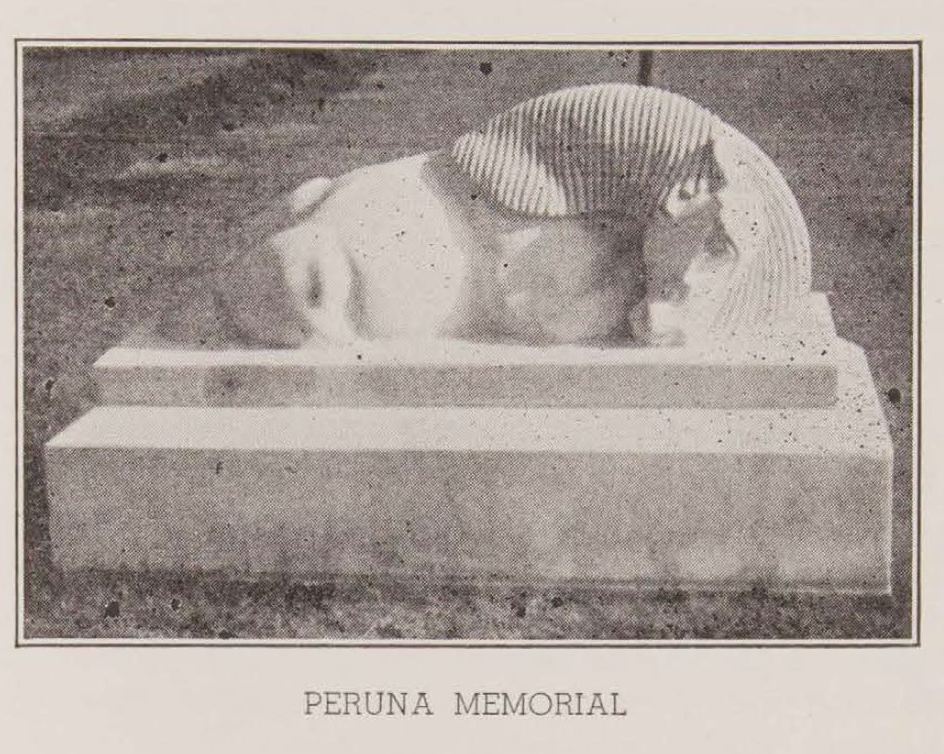
peruna-memorial_mike-owen_m-book_1937_SMU-archives1937 (SMU Archives)

When Ownby Stadium was demolished and the new Ford Stadium built, the Peruna I monument was moved to the new stadium where it has become a memorial to all the Perunas.

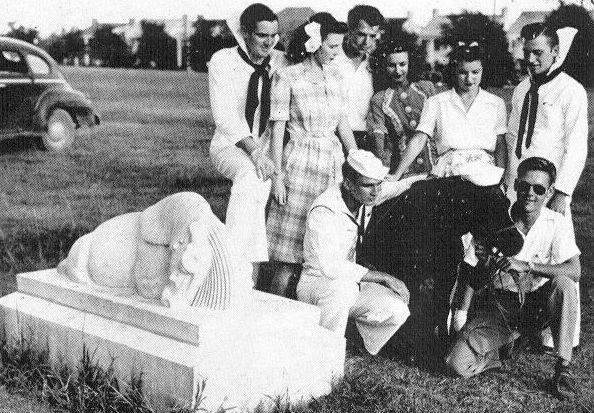
owen_peruna-memorial_wiki_1944With Peruna III, during WWII (Wikipedia)

owen_peruna-statue_1950-degolyer-DET1950 (DeGolyer Library, SMU)

***

Sources & Notes

Top photo by David Steele, from Flickr, here.

Article from SMU’s The Semi-Weekly Campus (May 5, 1937, p. 3), here.

Photo of Peruna III with sailors from the Peruna page on Wikipedia, here.

Bottom photo (cropped) of the Peruna monument from the DeGolyer Library, Central University Libraries, Southern Methodist University, here.

Previous Flashback Dallas posts on Mike Owen:

  • “Give a 15-Year Old 8,400 Pounds of Soap and He’ll Carve You a Radio Transmitter — 1930” is here.
  • “Michael G. Owen, Jr. — Dallas Sculptor of Lead Belly” — is here.

UPDATE: Read about a recently discovered large painting by Owen up for auction in Dallas in 2019 here.

The previous post on the untimely demise of Peruna is here.

owen_peruna_monument_flickr_sm

*

Copyright © 2014 Paula Bosse. All Rights Reserved.
The Roller Coaster on the Prairie — 1894

state-fair-grounds_souv-dallas_1894Texas State Fair & Dallas Exposition Fair Grounds, circa 1888

by Paula Bosse

Above, a wonderful view of the “State Fair Grounds and Dallas Exposition” from an 1894 advertisement. The Little Roller Coaster on the Prairie!

If you want to see this very large (and, trust me, you DO), click here (and then click again). It’s like wandering through those old phone book covers, but without the jokes and the dinosaurs.

*

UPDATE: The artwork was used in a previous ad that appeared in The Dallas Morning News in 1888, with the following text:

The coming Fair and Exposition will, beyond a doubt, excel in point of attractiveness, numbers and variety of exhibits any heretofore held.

The County Exhibit Department promises to be the most attractive feature, one never before attempted by any State. Over forty counties up to date have secured space, and more still to enter. The exhibits these counties will present will be something that will astonish visitors.

Every variety of attractions has been provided for, and the musical treat we have in store for visitors will be presided over by the world renowned Cornetist , Prof. A. Liberati.

The purses offered in the Race Department cover $20,000, and will be competed for by the best racers in the land. The management of this department propose to give during the Fair and Exposition the finest races ever given in the South.

We desire to call the attention of counties to the fact that now is the time to get up their exhibits, when grain, fruits, etc. are ripening, and not wait until it is too late.

Space in the County Exhibit Department is free, and no county of our State can afford to be not represented. There will be more people here than ever before, and we want them all to see the varied resources of our great State.

To exhibitors in general we can promise them the finest opportunity ever offered to make displays from which will return good results, and to visitors we can assure them of the grandest entertainment ever given in the Southwest.

dallas-fair_dmn_090588

*

The scene above looks idyllic (to me, anyway), but here is a description of what the land was like before anything was built on it, from a Dallas Morning News history of the SFOT (Oct. 2, 1960):

An 80-acre tract approximately in the center of the present-day State Fair Park was chosen as the site for the Fair. The location was termed by some to be “the worst kind of hog wallow,” and the question most frequently asked was “How are you going to hold a fair in all that mud?”

*

The Dallas State Fair and Exposition (which became the State Fair of Texas) was chartered in 1886, and unless that artist’s rendering is highly romanticized (which it probably is), it looks like the hog wallow was but a faint memory by the time that roller coaster was plopped down on top it.

***

Sources & Notes

Artwork by the Dallas Engraving and Manufacturing Company. Top ad appeared in the Souvenir Guide of Dallas (1894); bottom ad appeared in The Dallas Morning News, Sept. 5, 1888.

*

Copyright © 2014 Paula Bosse. All Rights Reserved.
“Dallas Skyline” by Ed Bearden — 1958

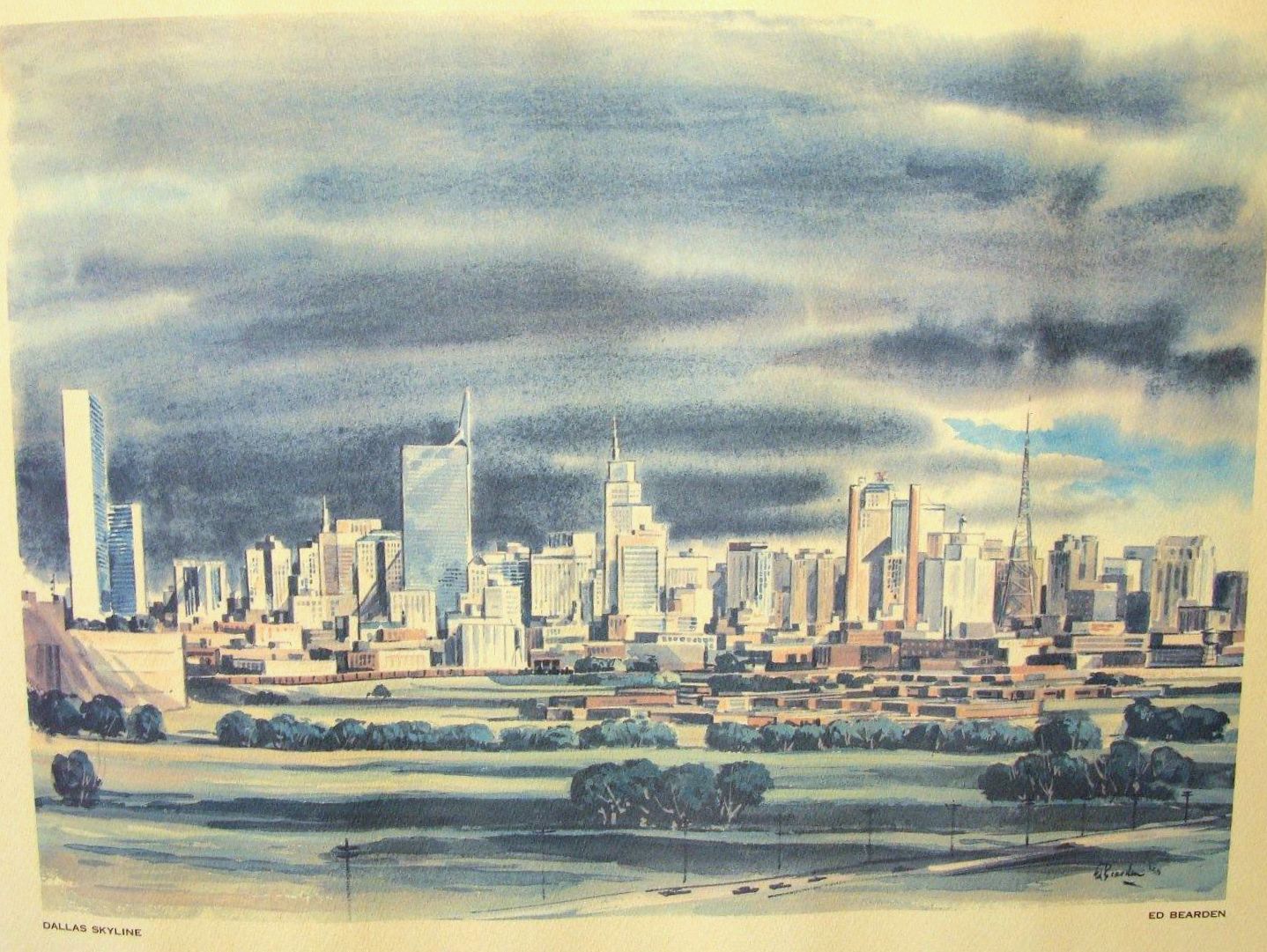
dallas-skyline_ed-bearden“Dallas Skyline” by Ed Bearden (click for much larger image)

by Paula Bosse

Ed Bearden (1919-1980) was a Dallas painter who studied under Jerry Bywaters and Otis Dozier and was loosely affiliated with the Dallas Nine group of artists. He worked with Bywaters at the Dallas Museum of Fine Art as Assistant Director, and he helped found the Dallas Museum for Contemporary Arts. He also spent several years at SMU — both as a student and as a member of the faculty — until he decided to leave to focus on his own art career. In addition to working as a fine artist, he also owned a commercial art business.

The constantly changing Dallas skyline was a particular favorite subject of his, and he returned to it again and again. The one above is a personal favorite. I’m not sure why I feel so nostalgic when I look at it, except that I swear that I saw this print as a child at my father’s bookstore. It’s a Dallas I’ve never known, but one I wish I had.

***

Apologies for the wonky image, but I can’t find a better scan of it. I’m assuming this was first a watercolor, then issued as a lithograph, then maybe printed as a broadside or a loose plate in a book? The date in the lower right corner is very difficult to make out — it looks like either 1958 or 1959. I’m going with 1958. ‘Cause I’m like that.

A brief biography of Ed Bearden can be found here.

An unlikely gig came Bearden’s way when director George Stevens asked him to draw the storyboards for the film Giant, hoping that having a Texas artist do them would lend an air of authenticity to the look and feel of the movie (and, in fact, Bearden’s sketches were used as reference by makeup and wardrobe personnel). Read more about this interesting assignment on SMU’s Hamon Arts Library site, and see some of Bearden’s sketches from the set in Marfa, here.

*

Copyright © 2014 Paula Bosse. All Rights Reserved.