Flashback : Dallas

A Miscellany: History, Ads, Pop Culture

Category: Crime/Law Enforcement

Police Blotter — 1880s

san-angelo-saloonA saloon in a calm moment

by Paula Bosse

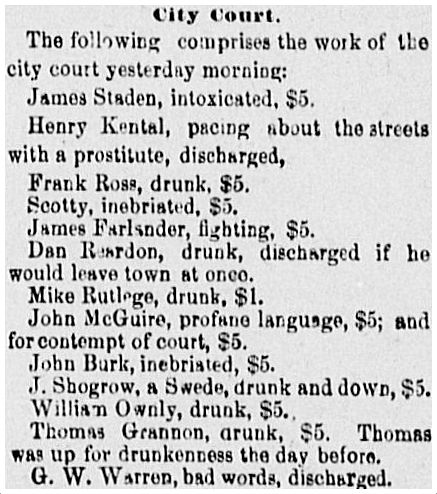
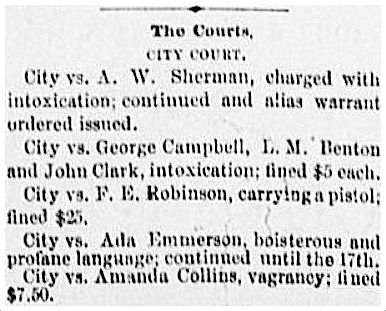
A few snapshots of life among Dallas’ lively and unruly set in the 1880s, as reported in The Dallas Daily Herald:

police-blotter_dal-her_061681(June 16, 1881)

police-blotter_dal-herald_060381(June 3, 1881)

police-blotter_dal-her_102782(Oct. 27, 1882)

police-blotter_dal-her_111782(Nov. 17, 1882)

Looks like Dallas had a steady flow of cash coming into the city coffers. The usual fine seemed to be five dollars, and that was a LOT of money back then. If you plug that into the Inflation Calculator, it shows that five bucks in 1881 would be equivalent to about $118 in today’s money. So, yeah — the city was raking it in. Prosperity! Thank you, drunks and reprobates — you  helped build our city!

***

Top photo shows imbibers inside the Arc Light Saloon in San Angelo, Texas; photo found here. Not Dallas, but I was unable to find a photo of a saloon in Dallas in this period. (I bet there’s a Tumblr on this, though. Or a Pinterest page….)

All newspaper clippings from The Dallas Daily Herald, accessible through the invaluable Portal to Texas History; browse through the collection here.

See more tidbits from the police blotter in the Flashback Dallas post “Police Blotter — Drunks, Vagrants, Adulteres,”  here.

*

Copyright © 2014 Paula Bosse. All Rights Reserved.

When Halloween In Dallas Was Mostly “Trick” and Very Little “Treat”

halloween-trick-or-treat

by Paula Bosse

Dallas used to have some pretty bad Halloweens. Way more “trick” than “treat.” The word “riot” was used frequently to describe the typical Halloween night goings-on, when thousands of people clustered downtown and did unsavory things (such as drinking, fighting, pick-pocketing, mugging, and being generally obnoxious), while out in the “suburbs” (meaning far-flung locales such as East Dallas and Oak Lawn), marauding bands of young “pranksters” were keeping themselves busy breaking things and setting things on fire. Like kids do. Each Halloween, every policeman was called in for duty — only those in their sickbeds were exempt.

The worst of these Halloweens seemed to happen in the 1930s. Elm, Main, and Commerce, between Lamar and Harwood, were cordoned off from traffic. This is where upwards of 25,000 revelers would slowly cruise up and down the streets, causing mayhem and inflicting occasional bodily injury (much like the notorious Texas-OU weekends of later years). Even though the area was off-limits to automobile traffic, the streetcars still ran, and the poor drivers must have dreaded that night each year and steeled themselves for the worst, as if heading into battle.

Apparently Dallas revelers had a signature tradition, and it was to carry large wooden paddles — sometimes as large as canoe oars — and to swat people in the crowd on their backsides, usually women. At some point women also began to carry paddles, and they did their fair share of swatting, too. It was a paddling free-for-all.

1935 was a particularly noteworthy year, as it was the first Halloween after the state of Texas had voted to repeal Prohibition. Yes, people were drinking. And paddling. Sounds like a bad combination.

Below is a list of just a few of the reported instances of vandalism and “high-spiritedness” which routinely plagued the city every Halloween:

  • Broken streetlights
  • Broken windshields
  • Broken everything
  • Flooded streets from opened fire hydrants
  • The throwing of rocks
  • The throwing of eggs and rotting fruit
  • The throwing of stink-bombs
  • The throwing of WASHTUBS (!)
  • The setting of fires, both large and small
  • The malicious uprooting of shrubbery
  • The driving of cars on sidewalks
  • The reporting of false alarms to fire stations
  • Random gunfire
  • Occasional mysterious explosions
  • Extremely loud noise
  • Smoke
  • The overturning of outhouses
  • The soaping of windows
  • The breaking of windows
  • The breaking of soaped windows
  • The soaping of streetcar tracks
  • And the unsuccessful attempt one year by a small band of aspiring shake-down artists to “extort” money (rather than candy) from their eye-rolling neighbors by foregoing the chant of “Trick or Treat!” and demanding “Dime or Damage!”

In 1939, an intoxicated man who was “playfully threatening people with a knife” was playfully arrested.

In 1935, there was a huge mud-fight in Oak Lawn at Newton and Throckmorton which involved over 100 boys. Like greased pigs, an adrenaline-fueled, mud-encased 10-year old running from beleaguered and hopelessly out-numbered policemen — who, quite frankly, had bigger fish to fry that night — were almost impossible to catch. Spectators and passersby did not escape unscathed. Except for the dry cleaners the next day, Oak Lawn was not amused.

And in 1936, during the Texas Centennial, a policeman was suspended and demoted after an incident of “horseplay” at Parry and Exposition in which he had been shocking passing pedestrians by poking them with the end of a walking stick that had been hooked up to the battery of a police motorcycle. He got into trouble because one of his victims was a young woman who had been standing on wet pavement when the electrified stick touched her, resulting in a more-powerful-than-expected shock. She lost consciousness, fell to the ground, and hit her head on the sidewalk. Luckily, she recovered quickly and even requested that the officer not be punished, but the police chief was not so forgiving. He was understandably livid, especially when he discovered that a number of motorcycle cops had been doing the same thing. One imagines there were several new orifices opened up amongst the force in the days that followed.

But the pièce de résistance was in 1920 when several boys “anchored a block and tackle around a two-story house in Cockrell Hill and hoisted a wagon and a team of terrified mules up in the air” (DMN, Oct. 27, 1963). That right there required impressive organizational planning and a certain amount of entry-level engineering skill.

Eventually things settled down. By 1949 officials had finally put an end to the swarming, surging masses downtown. People began to celebrate Halloween with candy and costumes and haunted houses and parties. In 1966, a policeman was asked if things had improved from those earlier dark days:

There’s been an extensive change for the better in recent years. Police almost never get a call to let a cow out of a school house anymore. (DMN, Oct. 27, 1966)

And Halloween became more “treat” than “trick.” Good news for the City of Dallas. And for its mules. Bad news for the makers of Ivory soap and thick wooden paddles.

***

Sources & Notes

Selected tidbits gleaned from the frenzied coverage in The Dallas Morning News archives:

  • 1935: “Much Damage Done By Hoodlums During Halloween Rioting” (DMN, Nov. 1, 1935)
  • 1936: “Young Woman Victim of Police Prank Asks Jones Pardon Men” (DMN, Nov. 3, 1936)
  • 1939: “Witches Stage Costly Carnival For Halloween; Roughness Breaks Out In Downtown Crowd; Police, Firemen Busy” (DMN, Nov. 1, 1939)

Other Flashback Dallas posts on Halloween can be found here and here.

Happy Halloween!

*

Copyright © 2014 Paula Bosse. All Rights Reserved.


The Dallas Police Department & Their Fleet of Harleys — 1951

ad-harley-davidson_dpd_19511951 ad

by Paula Bosse

Group photo day!

Like so many cities all over the country — whether large or small — the motorcycle division of the Dallas Police Department is equipped with Harley-Davidsons exclusively. Effective traffic regulation is assured through the use of 35 solo Harley-Davidsons and 29 Servi-Cars. Traffic experts recognize that no other method matches motorcycles for efficiently handling so many phases of traffic control work and accident prevention.

***

Sources & Notes

1951 Harley-Davidson ad from… somewhere — probably eBay.

Back in 1910, the DPD was perfectly happy with Indian motorcycles, as can be seen in a previous post, “Dallas Motor Cycle Cops — 1910.”

*

Copyright © 2014 Paula Bosse. All Rights Reserved.

The Runyonesque Pearl Street Market, Full of Colorful Characters and an Army of Rats

bob-taylors-cafe_ebayProduce seller, Pearl Street Market

by Paula Bosse

Last week I wrote about the produce market area in the neighborhood where the Farmers Market was eventually built, mainly because I had come across the above undated and unidentified photograph. I really wanted to know more about this photo, and the more I read about the area known in the ‘teens through the ’50s as the Pearl Street Market, the more I became fascinated by it.

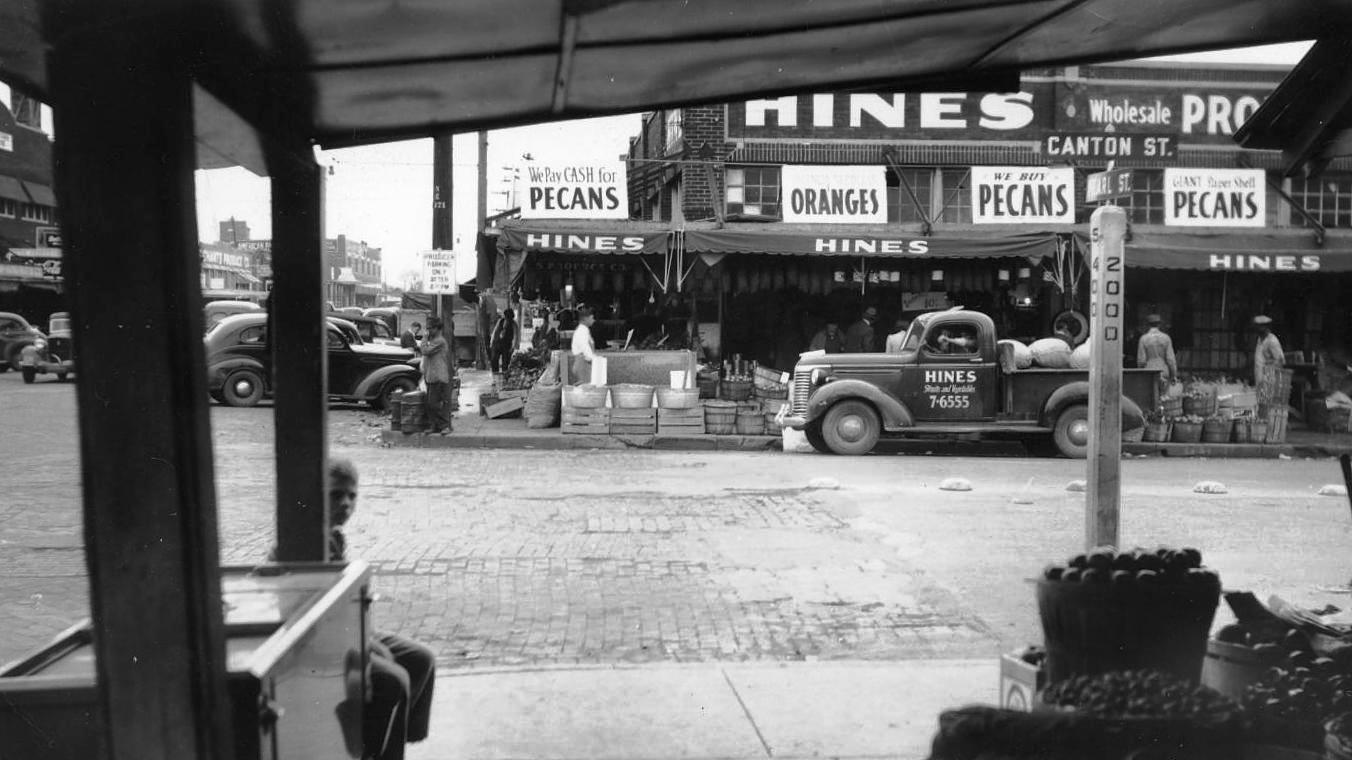
I love this photo, but, sadly, I never found out who cafe-namesake Bob Taylor was, and I never discovered the identity of the man sitting on the sidewalk with his produce. BUT, I did realize that this produce seller was right across the street from one of the biggest wholesale produce sellers in Dallas, the Hines Produce Company. In fact, the photo below might show my mystery man’s view across the street. Both photos show the intersection of the 2000 block of Canton and the 400 block of South Pearl, the heart of the Pearl Street Market.
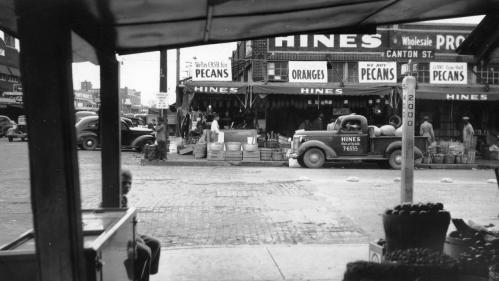
hines_canton-pearlHines Wholesale Produce Company, Canton & S. Pearl

These two scenes look so wholesome — produce peddlers selling their fresh fruits and vegetables, quaint old cars and trucks parked along streets that are still vaguely familiar-looking, and the overall old-fashioned-ness of everything — all presented in nice, sharp, black-and-white photographs that always make me feel a little nostalgic, even though I wasn’t actually around back then and have nothing, really, to be nostalgic about.

But “wholesome” is not a word that would have been associated with the Pearl Street Market. In fact, this was a part of town your mother would probably strongly suggest you not visit. Here are a few of the illicit activities that went on here on a fairly regular basis:

  • Brawls in cafes, often involving weaponized broken beer bottles
  • Shootings
  • Stabbings
  • Pickpocketing
  • Burglary
  • Robberies (of victims both asleep and awake)
  • Gambling
  • Muggings
  • Drug dealing
  • Arson
  • Hit-and-runs
  • Vehicular homicides
  • Regular homicides
  • Prostitution (I’m just guessing…)
  • Shoplifting
  • Vagrancy
  • Selling another man’s melons and fleeing with the money
  • The occasional being “severed” by a train
  • Etc.

A typical police blotter story went something like this:

[Miss Esther Lee Bean] told physicians she was attacked by another woman who broke a beer bottle on her head and then used the jagged neck of the bottle as a weapon, cutting her several times on the right arm…. The affray occurred in a cafe in the 400 block of South Pearl. (Dallas Morning News, Dec. 17, 1938)

So … yes, very nostalgic.

Crime was a big problem, but what seems to have been even more upsetting to the people of Dallas was the general squalor of the place. Sanitary conditions were appalling. Rotting fruit and vegetables were thrown in the street, and live chickens were kept in cages, doing things that chickens do (which probably shouldn’t be done that close to things people might eat). And there were NO public toilets in the area — visiting farmers (who often bypassed the flea-bag hotels and slept in their trucks — or even on the sidewalks) routinely used the alleys as “comfort stations.” And then there were the rats. LOTS of rats. A staggering number of rats. Rats absolutely everywhere. Typhus? Not just a rumor. City sanitation crews would come by daily to hose the place down, but there was so much solid matter going down the drains that sewers were frequently clogged. It was, in a word, disgusting.
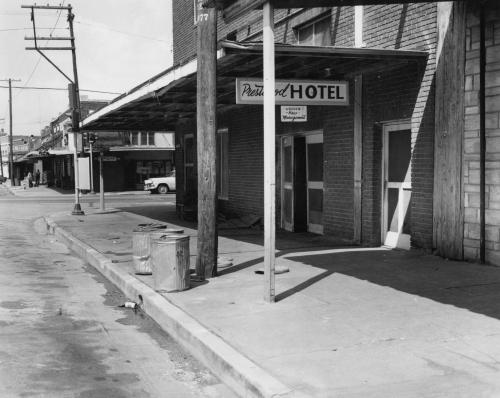
hotel_pearl_1959_portalA typical hotel near Pearl & Canton, a bit cleaner by the ’50s

For years this part of Dallas, just south of the central business district, had been a place where farmers (and produce brokers) had been selling their fruits, vegetables, poultry, eggs, pecans, and whatever else they could haul into town. It was all very informal, and for much of that time it was completely unregulated. This part of town had been the base of the “truck farmers” since at least 1912. Before that, the market was at Pearl and Main, and in the earliest days it was at Ervay and Elm.

In 1914 a city-sanctioned (and presumably regulated) municipal retail market where vendors would sell directly to consumers was proposed, but eventually consumers became irritated that the produce they bought at the municipal market was significantly more expensive than that which could be purchased from the “hucksters” who parked along Pearl Street and roamed residential neighborhoods. The Pearl Street vendors sold primarily to wholesale customers, but over time, they opened up their stalls to the public and did a bustling business with housewives. The wholesale market was hit pretty hard by the 1930s as the number of independent grocers — once the major buyers on Pearl Street — diminished as chain stores took over. Those housewives became more and more important as time went on.

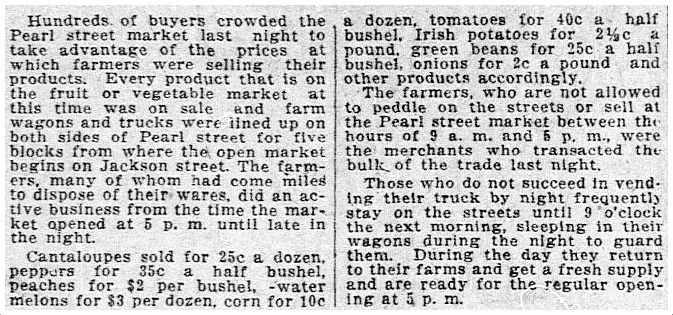
farmers_dmn_071721DMN, July 17, 1921 (click to enlarge)

farmers_dmn_071721afarmers_dmn_071721c

farmers_dmn_071721bDMN, July 17, 1921

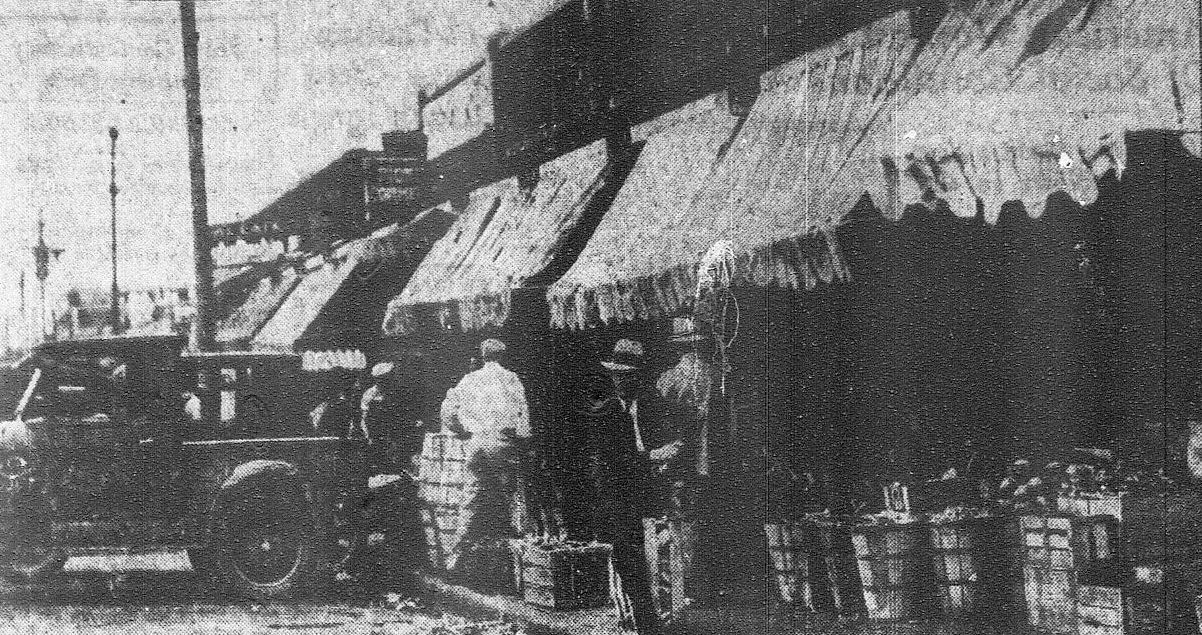
By the 1920s, the Pearl Street Market was well-established, and it was where one went to buy fresh (and “fresh”) fruits and vegetables. And according to this real estate ad, business was booming:

produce-mkt-dist_dmn_110423DMN, Nov. 4, 1923

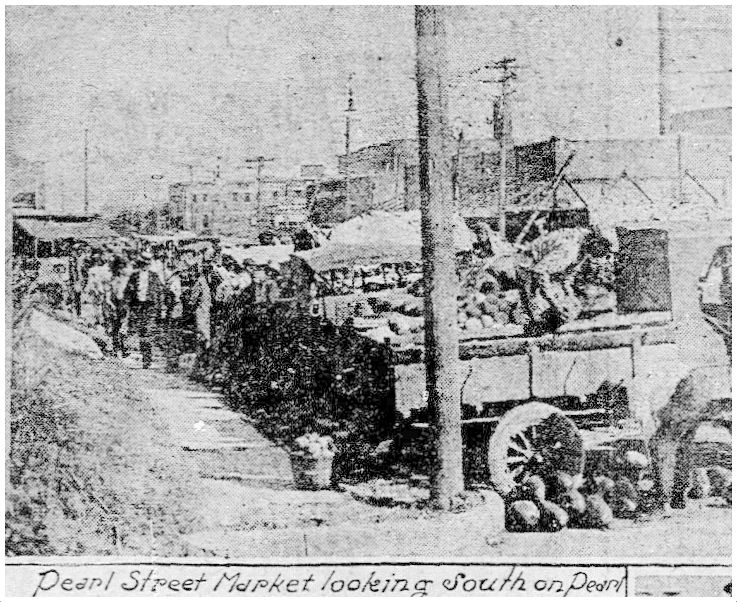
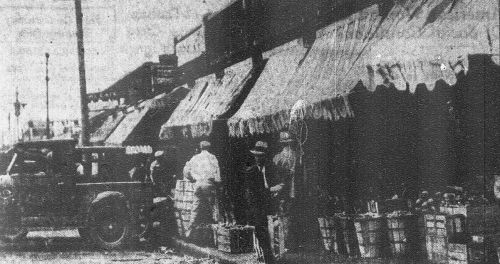
In 1933, The Dallas Morning News printed a fantastic, full-page, Runyonesque article about the “Pearl Streeters,” written by Eddie Anderson, who interviewed the colorful characters of the area and described the buzzing street life. With tongue only partially in cheek, he wrote: “Chicago has its Water Street. In New York you will find it on Washington. And if you go abroad there is the famous Smithfield Market of London and the vaulted bazars of Constantinople. In Dallas, it is Pearl Street.” Below, a photo that accompanied the story (click for larger image).
pearl-st-mkt_dmn_051433a

Anderson’s story was certainly entertaining, but it mostly glossed over the area’s more unsavory aspects. By 1938, there were louder and louder demands to clean up the neighborhood. Housewives organized and protested the deplorable conditions of the area, echoing points covered in a scathing Morning News editorial in which it was described as “a hazard to the health of the city because of the number of persons who visit it and because 75 per cent of the vegetables and poultry consumed in Dallas pass through that market” (DMN, Aug. 17, 1938).

In the early 1940s, the city finally stepped in and built the forerunner to the Farmers Market that we know today. By the 1950s, things in the squalor department had settled down a bit, and photos featuring pretty suburban housewives examining the produce and smiling children sampling fresh strawberries.

Nary a rat to be seen.

*

A street map of the Canton & Pearl area in about 1920, back when Canton Street was still part of an uninterrupted grid. (Note that many of the street names have changed over the years.)

1919-map

***

Sources & Notes

Top photo (with Bob Taylor’s Cafe in the background) is from the author’s collection.

Photos of the Hines Produce Co. and the Prestwood (?) Hotel are from the Dallas Municipal Archives’ Dallas Farmers Market / Henry Forschmidt Collection, via the Portal to Texas History. You can browse this great collection here.

Map detail is from the very large “1919 Map and Guide of Dallas & Suburbs” (C. Weichsel Co.), via the Portal to Texas History, here.

The following DMN articles on the Pearl Street Market/Farmers Market are worth a read:

  • “Pearl Street Market in Morning, Dallas’ Most Picturesque and Busiest Place in City” (July 19, 1925)
  • “$1,500 Dope Cache Found Under Pile of Pineapples” (July 15, 1936), a story about a heroin bust with a headline that seems right out of The Weekly World News
  • “Let’s Keep Our Pantry Clean,” editorial by Harry C. Withers (DMN, Aug. 17, 1938)
  • “Dallas: The Old Public Market” by Tom Milligan (Aug. 15, 1966)

And even though I linked to it above, it’s so good and such a fun read that I’m going to mention it again: I highly recommend Eddie Anderson’s “Pearl Street Market As It Sees Itself” (May 14, 1933), here. Edward Anderson was an interesting guy: read about him at the Handbook of Texas here; read about his novels and see photos, here. All these years I’ve had his novel Thieves Like Us on my bookshelf, but I had never gotten around to reading it. Now I have a reason to!

I’ve gathered a pretty entertaining collection of crime reports from the Pearl & Canton neighborhood into one handy document, which can be read in all its seedy glory, hereSERIOUSLY. THIS IS FANTASTIC STUFF!

*

Copyright © 2014 Paula Bosse. All Rights Reserved.

Jim Conner, Not-So-Mild-Mannered RFD Mail Carrier

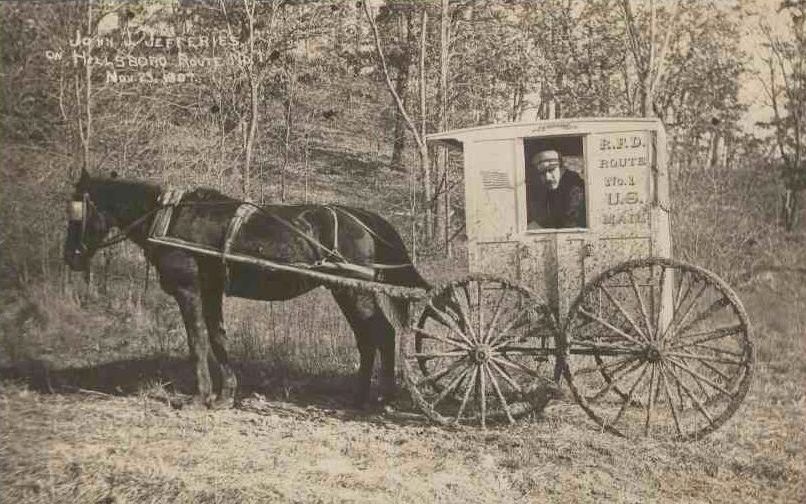
rfd_real-photo_1907-ebayAn RFD mail carrier… (click for larger image)

by Paula Bosse

The man in the photo below looks like every character actor working in Hollywood in the 1930s and ’40s.

conner-james-norton_mail-carrier_1940s

But he wasn’t an actor — he was a retired Dallas postal worker who began his career in 1901 as a rural mail carrier when the Rural Free Delivery (RFD) system was implemented in Dallas. (Before this, those who lived beyond the city limits — generally farmers — had to trek to a sometimes distant outpost — such as a general store — to pick up their mail.) RFD service began locally on October 1, 1901, and an 18-year old Jim Conner was one of six men hired to work the new mail routes beyond the city.

conner_FWregister_090101Fort Worth Register, Sept. 1, 1901

When Rural Free Delivery service began in Dallas, four rural post offices were closed: Lisbon, Wheatland, Five Mile, and Rawlins (the office at Bachman’s Branch, which Jim Conner’s route replaced).

In a 1940 interview with The Dallas Morning News, Conner talked about his early postal route (Route 5), which was 32 miles long; before the arrival of automobiles, he traveled on horseback, by horse cart, by buggy and cart, or by bicycle. The photo at the top shows what early RFD mail wagons looked like.

Jim’s route took him well beyond the city limits: out Cedar Springs to Cochran’s Chapel, to within a mile of Farmers Branch, and over to Webb’s Chapel by way of the “famous” Midway Church and School corner (which became Glad Acres Farm); he returned on Lemmon Avenue. It took him 8 hours if the weather was nice; if the weather was particularly bad, it could take 12 to 15 hours to complete his appointed rounds. He was paid $500 a year and was required to keep two horses, a cart, a buggy, and saddles. He retired in 1935.

**

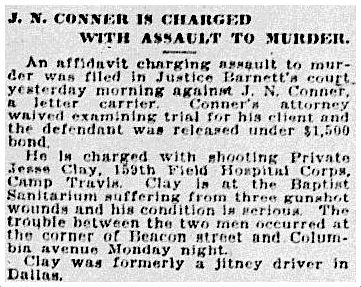
So. A delightfully nostalgic walk down memory lane with an avuncular-looking guy we all kind of feel we know. I thought I’d do a quick search to see if there was an obituary for Jim — there was: he died in 1956 at the age of 73, survived by his wife, 11 children (!), 22 grandchildren, and 3 great-grandchildren. But in addition to the obit, I found something else: a report of a shooting, an arrest, and a charge with “assault to murder.”

conner-charged_dmn_010218DMN, Jan. 2, 1918

What?!!

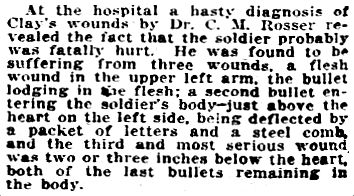
Though the account of the incident is described as being “somewhat vague,” on New Year’s Eve, 1918, Jim Conner shot a soldier named Jesse Clay after “words” were exchanged at the corner of Beacon and Columbia in Old East Dallas. There had been bad blood between the two in the past, and the New Year’s Eve situation apparently escalated quickly. Clay had been walking down the street with a lady-friend when Conner’s car came to a stop next to them. Clay (described as being drunk at the time) forced his way into the car, and Conner, fearful of being attacked, reached for a gun in the back seat. The two tussled and, after they were both out of the car, Conner saw that Clay also had a gun. This was when Conner shot him three times, intending, he said, to merely wound him. Clay shot back but missed. (The entire account, as it appeared in The Dallas Morning News on Jan. 1, 1918 can be read in a PDF here.)

The soldier was badly injured, with two of the three shots hitting his chest. He was not expected to live. Conner had surrendered to police at the scene and was charged with “assault to murder.” The last report on this incident that I could find was on Jan. 3, in which Clay was described as being in “very critical condition.”

So what happened? As Conner spent a full career as a postal employee, it seems unlikely he was tried for murder. I used every possible combination of search words I could think of but found nothing more on this case. The story just disappeared. I did find a 1943 obituary for a Jesse P. Clay (killed while working on an Army Air Force Instructors School runway when he was struck by the wing of an airplane coming in for a landing), and it seems likely that it was the same guy — he was about the right age, he was a career military man, he lived in Dallas most of his life, and he was born in Kentucky. I assume the soldier in question (who would have been 37 at the time of the shooting) survived his gunshot wounds and that charges against Conner were either dismissed (with Conner pleading self-defense?) or settled (perhaps the military intervened to keep the story out of the press — this was during the height of WWI). Whatever actually happened, it seems that both men were able to move on from that really, really bad New Year’s Eve, a night I’m sure neither forgot.

My favorite little detail in the story of this sordid shooting was the line in the initial newspaper report in which it was revealed that one of the (potentially deadly) bullets was “deflected by a packet of letters and a steel comb.” How appropriate that the thing that probably saved mailman Jim Conner from a murder rap was “a packet of letters.” (…And a steel comb, but that doesn’t fit in with my narrative quite so well. Although Mr. Conner does look quite well-groomed.)

packet-of-letters_dmn_010118DMN, Jan. 1, 1918

***

Sources & Notes

Real-photo postcard of Hillsboro, Wisconsin RFD mail wagon is from eBay.

The full DMN account of the bizarre 1918 shooting can be read in a PDF, here.

An informative site on history of Rural Free Delivery — with lots of photos — can be found here.

“RFD”? Wiki’s on it, here.

*

Copyright © 2014 Paula Bosse. All Rights Reserved.


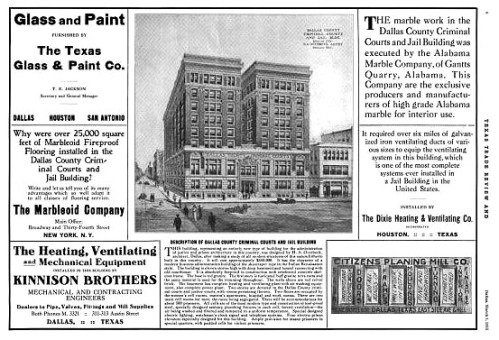
Dallas County Criminal Courts Building and Jail — 1915

Dallas County Criminal Courts and Jail Building, TX

by Paula Bosse

Admit it — that picture above is probably the most attractive jailhouse you’ve ever seen. The first couple of floors were devoted to the courtrooms and administration offices of Dallas’ criminal courts system, but this was primarily the county jail, designed by Dallas architect H.A. Overbeck. Still standing, it faces the Old Red Courthouse (Main St. is in the foreground of the picture above, Houston St. is at the left) — it was even built with a tunnel connecting the two buildings. I’ve always liked this building, but for some reason it’s weird to think of it as a jailhouse. It’s hosted celebrity outlaws like Clyde Barrow and Raymond Hamilton, Benny Binion, and Billie Sol Estes, but  its main claim to fame is its connection to the Kennedy assassination: not only was Jack Ruby tried in one of the downstairs courtrooms for the murder of Lee Harvey Oswald (whom he shot while Oswald was in the process of being transferred to the county jail), but, as a reader notes in the comments, Ruby also spent considerable time there upstairs, as a prisoner, incarcerated in a cell overlooking Dealey Plaza.

When this building opened in 1915, it was a veritable showplace — one of the country’s most modern (and attractive) jails. Here’s what it offered:

“This building, representing an entirely new type of building for the administration of justice in prison architecture in this country, was designed by H.A. Overbeck, architect, Dallas, after making a study of all modern architecture of this nature hitherto built in this country. It will cost approximately $550,000. It has the character of a modern business administration building of the skyscraper type in the Italian Renaissance style. The building is eleven stories high with deep basement and tunnel connecting with old courthouse. It is absolutely fireproof in construction with reinforced concrete skeleton frame. The base is red granite. The first story is rusticated buff granite terra cotta and the same material is used for the trimming throughout. The walls above are red velvet brick. The basement has complete heating and ventilating plant with air washing equipment, also complete power plant. Two stories are devoted to the Dallas County criminal courts and justice courts, with rooms pertaining thereto. Two floors are occupied by the women’s cell rooms, matron’s apartments, hospital and work rooms. There are two main cell rooms for men: the races being segregated. There will be accommodations for about 500 prisoners. All cells are of the most modern type and construction of tool-proof steel, specially designed sanitary plumbing fixtures in each cell, forced ventilation – the air being washed and filtered and tempered to a uniform temperature. Special designed electric lighting, Watchman’s clock signal and telephone systems. Four electric prison elevators especially designed for this building. Ample provision for insane prisoners in special quarters, with padded cells for violent prisoners.” (Texas Trade Review and Industrial Record, March1, 1915)

(When you go to architecture school you probably don’t envision designing a building with padded cells and “ample provision for insane prisoners.”)

The building will celebrate its 100th anniversary next year. With any luck, by then work will have begun on its much-needed restoration.

criminal-courts-jail_tx-trade-review_march-1915-full-page

***

For a perhaps easier-to-read view of the ad from The Texas Trade Review and Industrial Record, see it here.

For an interesting article on a push for the building’s restoration — and to see tons of photographs taken inside the deteriorating jail and courtrooms — check out “Old Courthouse, Jail a Fading Bit of Dallas Lore” by Tom Benning (Dallas Morning News, May 13, 2014), here.

UPDATE — June 30, 2016: Well, it looks like big changes are coming for the (interior) of the old jail — read about them here.

*

Copyright © 2014 Paula Bosse. All Rights Reserved.

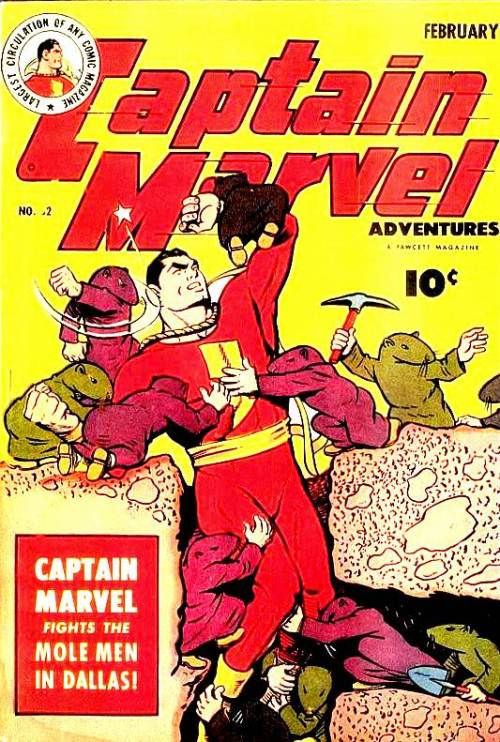
Captain Marvel Fights the Mole Men in Dallas! — 1944

captain-marvel-fights-mole-men-dallas_1944sm

by Paula Bosse

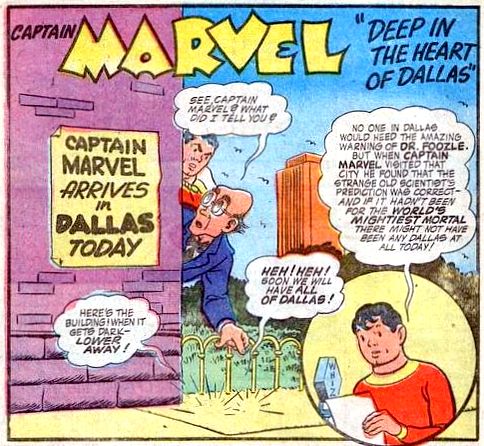
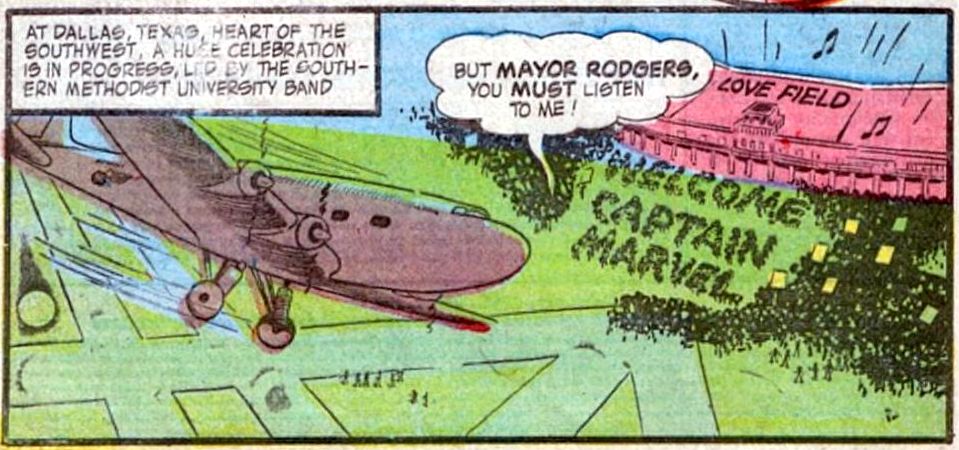
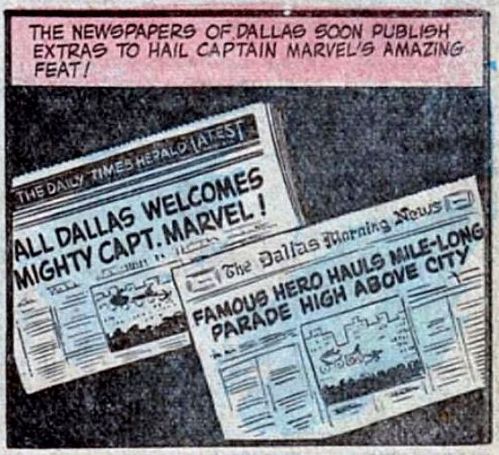
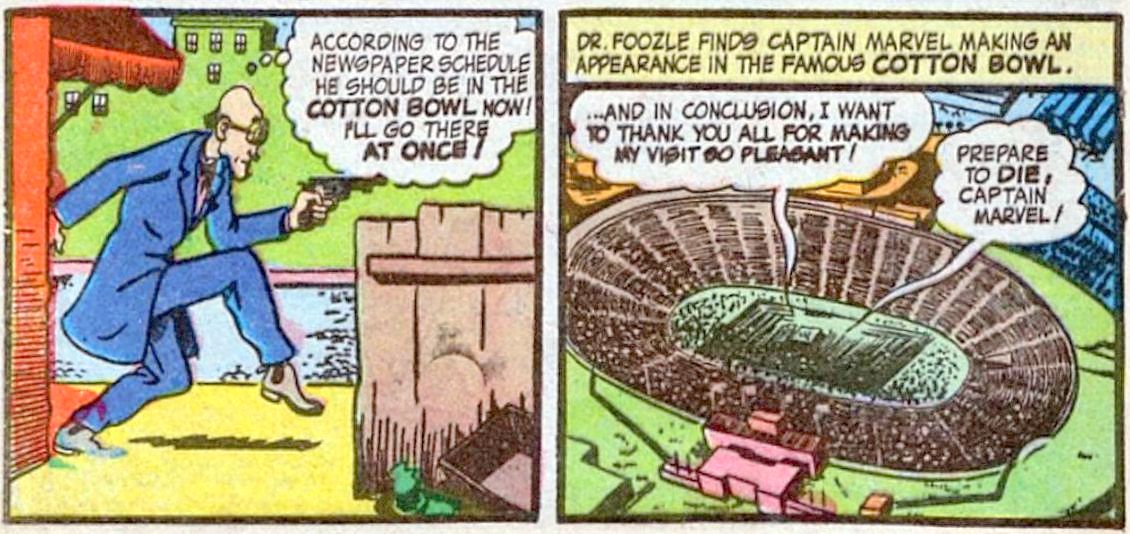
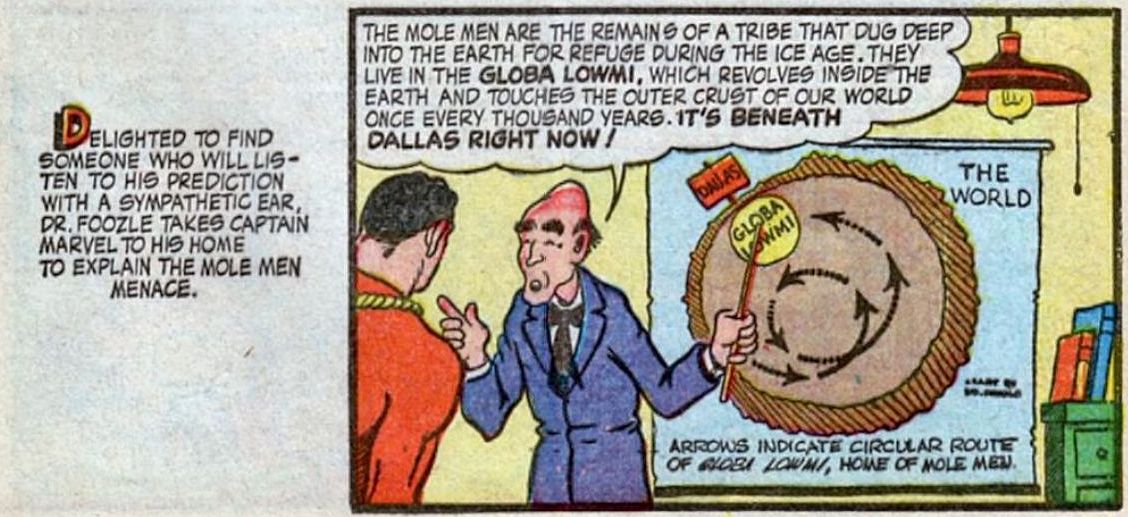
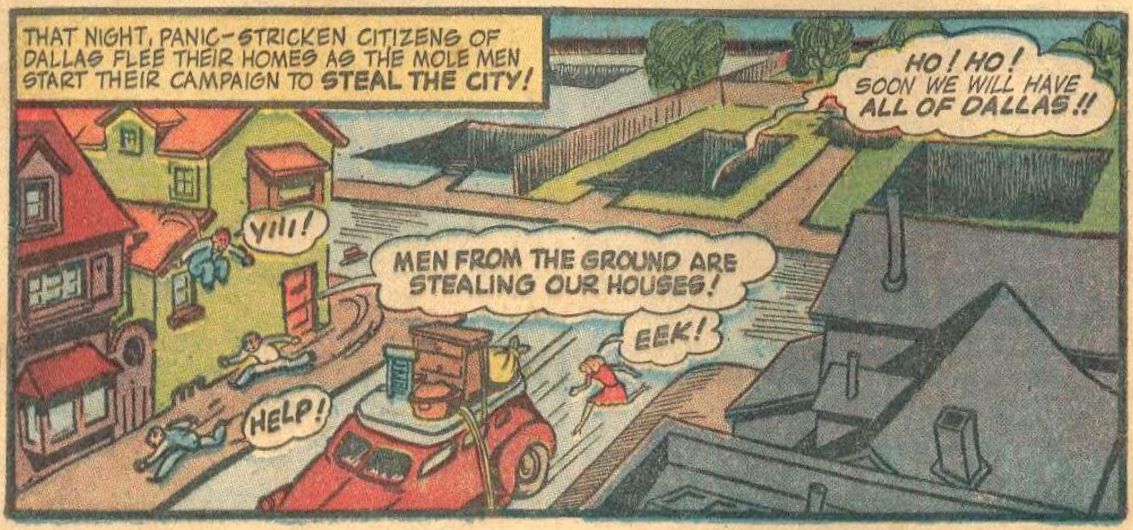
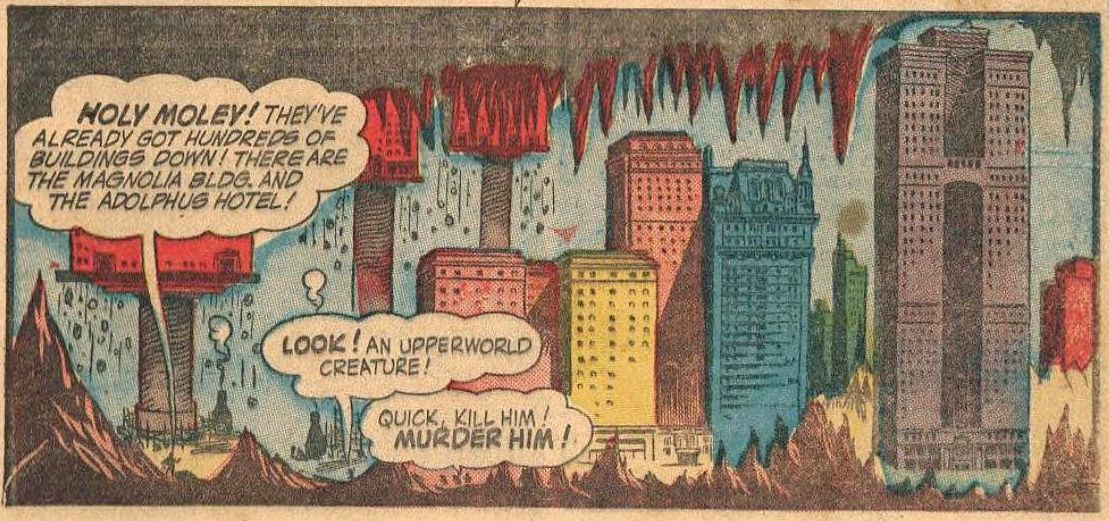
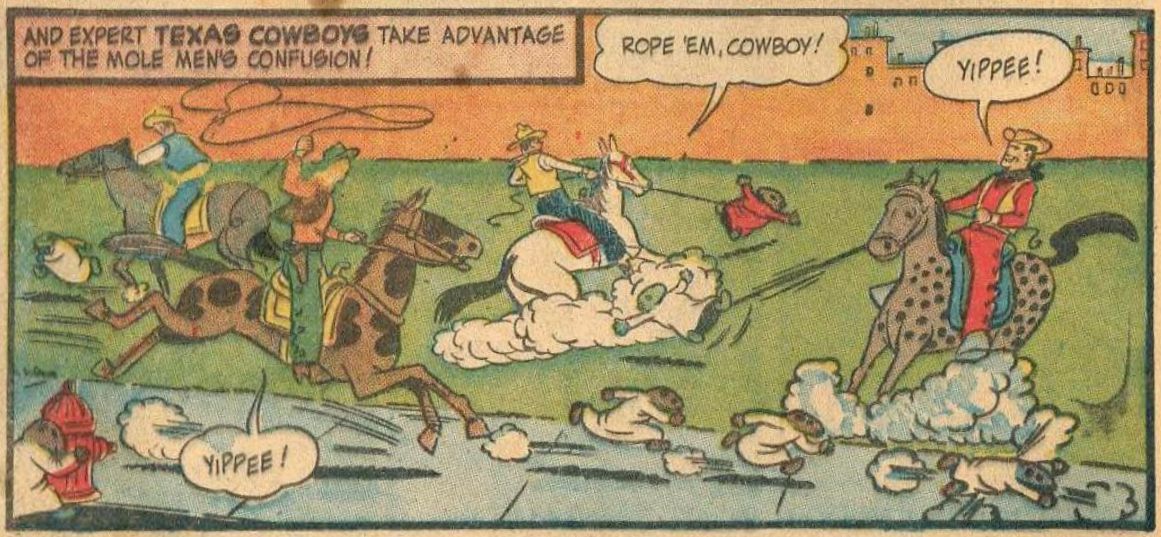
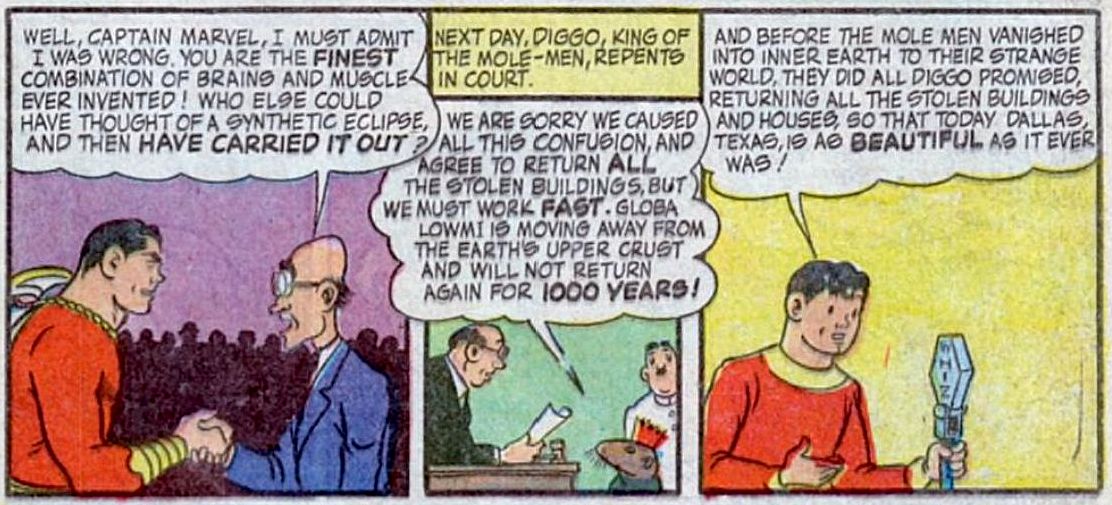
In 1944 Captain Marvel came to Dallas. He had brushes with the SMU marching band, Love Field, Mayor Woodall Rodgers, Fair Park, the Cotton Bowl, a sunken Adolphus, Ted Dealey, and a bunch of “expert lariat throwers.” And he saved us from the Mole Men (and their “mole-kids”). People, you have NO idea…. A few of the highlights below (click for larger images). (To go directly to the entire scanned comic book, click here.)

1capt-marvel_intro

2capt-marvel_smu_love-field

3capt-marvel_dth-dmn

4capt-marvel_cotton-bowl

5capt-marvel_globa-lowmi

6capt-marvel_panic

7capt-marvel_magnolia-adolphus

8capt-marvel_expert-cowboys

9capt-marvel_finale

Holy Moley! That was close! Thank you, Captain Marvel! SHAZAM!

***

To read the entire adventure “Deep in the Heart of Dallas” — in fact, to read the entire comic book (which also includes a trip to Greenpoint, Brooklyn…), check out the whole thing here. Enjoy! (And sorry about the spoilers!)

Some panels are larger when clicked.

*

Copyright © 2014 Paula Bosse. All Rights Reserved.

Dallas in 1879 — Not a Good Time to Be Mayor

main-jefferson_1879_greeneA view from the courthouse, looking north (click for larger image)

by Paula Bosse

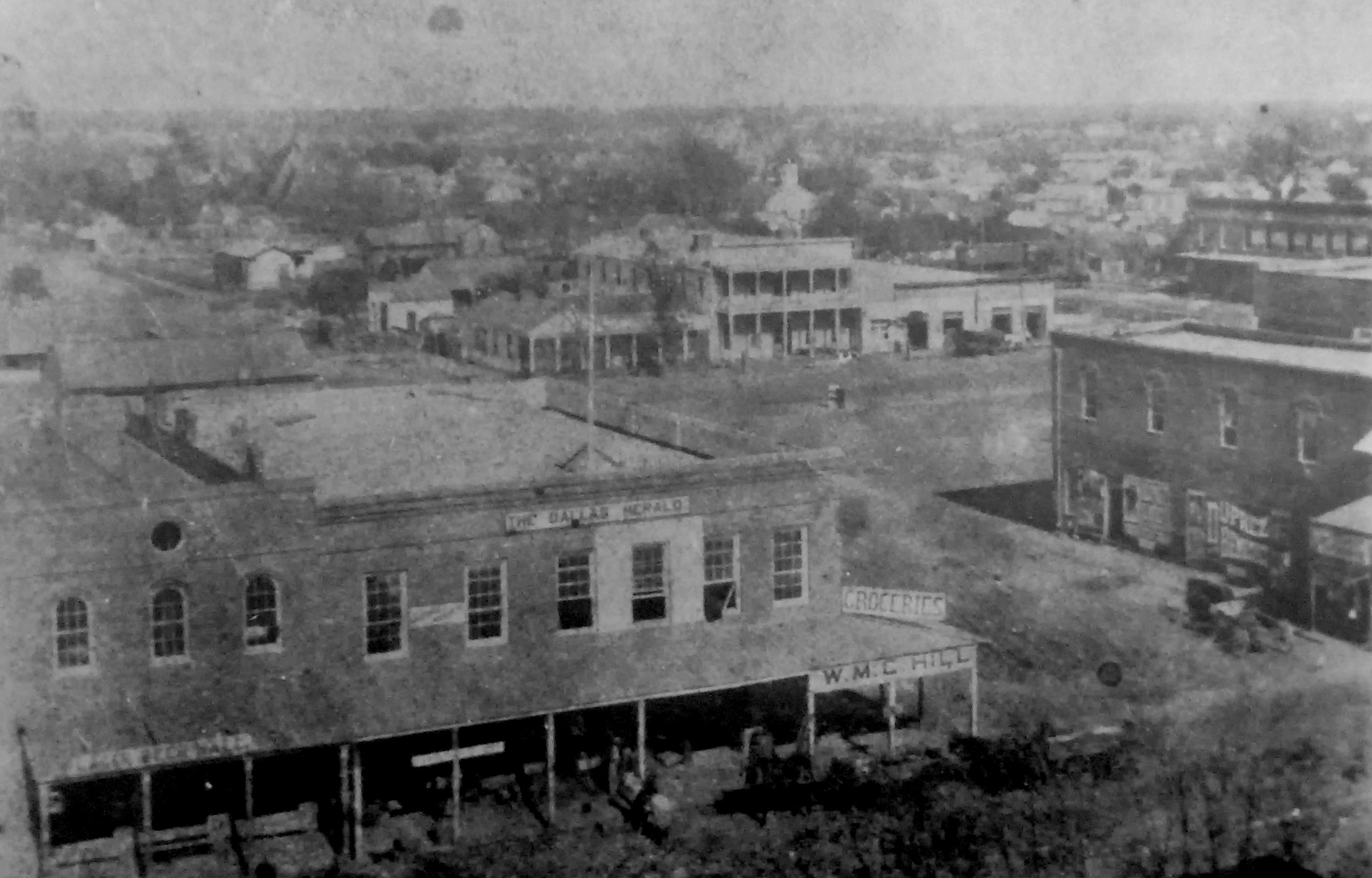
Above, a view of Dallas in 1879, looking north from the courthouse (one of many in the city’s past that eventually burned down); the intersection in the right foreground is Main and Jefferson (now Record Street).

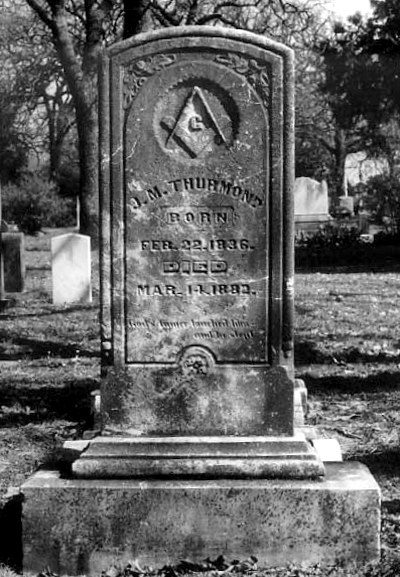
This is such a cool photo that, on a whim, I checked to see what exciting things might have happened in Dallas in 1879. I found that the city’s voters had just elected a new mayor, James M. Thurmond, who had run on an “independent reform and morality ticket.” Yawn. On the surface, that hardly seemed very interesting — a  historical fact, yes, but not all that exciting. But, wait, there’s more to the story.

Thurmond’s post-election honeymoon was short-lived because, even though he had won a second (one-year) term, he had made some serious enemies in his first term. He was removed from office in 1880 by the city council in a lack-of-confidence vote, the result of a nasty trial and probably slanderous accusations by lawyer Robert E. Cowart.

The feud between Thurmond and Cowart grew more and more bitter as time passed, and on March 14, 1882 — moments after the two men had exchanged angry words in Judge Thurmond’s courtroom — Cowart shot and killed Thurmond. Witnesses described the shooting as an act of self-defense. They said that Cowart shot when the judge reached for his pistol. (For an incredibly gruesome account of this incident, the contemporary newspaper report is linked below.)

The photograph above was taken from the courthouse where this shooting took place. When the photograph was taken in 1879, the animosity between the new mayor and an unhappy lawyer had already begun to percolate. I suppose men with “Esq.” after their names in the 1880s were predisposed to shoot-outs indoors in well-appointed courtrooms rather than out in the dusty streets at high noon. It’s classier.

thurmond_headstone_greenwood-cemetery_findagraveGreenwood Cemetery, Dallas (photo: David N. Lotz)
***

Top photo is from Dallas, The Deciding Years — A Historical Portrait by A. C. Greene. (Austin: The Encino Press for Sanger-Harris, 1973); photo is from the collection of the Dallas Public Library.

Photo of J. M. Thurmond’s headstone in Greenwood Cemetery is from Find A Grave, here. Cowart — who died in 1924 — is buried in a nearby plot in the same cemetery. (Incidentally, Cowart’s claim to fame — other than shooting a judge in his own courtroom — appears to be that he was the person who inadvertently came up with Fort Worth’s nickname, “Panther City” when he wrote a tongue-in-cheek newspaper article about Fort Worth in 1875. Read a great history of this amusing kerfuffle in Hometown by Handlebar’s post, here — scroll to the second story.)

For an interesting contemporary report of the shooting — including gruesome eyewitness accounts — check out the article from the March 15, 1882 edition of The Dallas Herald (under the headline “The Deadly Pistol”), here, via the Portal to Texas History.

A short background on the Thurmond-Cowart feud, from the WPA Dallas Guide and History (which includes the verdicts of Cowart’s two trials for murder), can be read here.

Click top photograph for HUGE image.

*

Copyright © 2014 Paula Bosse. All Rights Reserved.

The Shooting of “Bonnie & Clyde” — 1966

bonnie-clyde_unt_113066On location: Greenville Avenue (click for larger image)

by Paula Bosse

Today is the 80th anniversary of the ambush and killing of Bonnie and Clyde. Since I’ve written about Ted Hinton (one of the ambushers and erstwhile motor lodge operator) and Clyde Barrow (as a not-yet-completely-delinquent 17-year old) (and dressed up in a sailor suit), why not a brief look at the movie?

I was hoping to find a bunch of local as-it-was-happening anecdotes in the newspaper archives, but I found very little. (Hey, Dallas — you had a major motion picture with Hollywood celebrites in it — couldn’t you have devoted a little more ink to it?)

The photo at the top is the only one I could find that showed shooting (…as it were) at a Dallas location. The above was shot at the Vickery Courts motor lodge at 6949 Greenville Avenue (just north of Park Lane, across Greenville and up a bit from where the old Vickery Feed Store was).

So photos were practically non-existent, but I did learn that the interiors were shot at a large soundstage on Dyer, just off Greenville, called Stage 2, owned by Bill Stokes of Bill Stokes & Associates (where I spent a blink-of-an-eye interning back in high school).

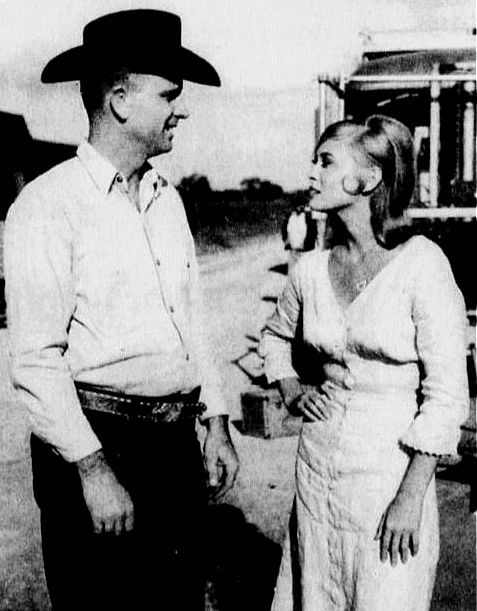
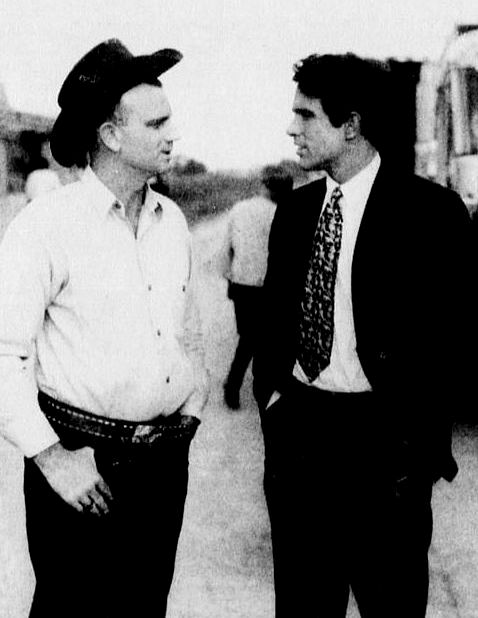
Below are two photos of Warren Beatty and Faye Dunaway between shots in Lavon, Texas, just outside Wylie — talking with one of the extras, Billy Joe Rogers, a saddlemaker from Wylie.

bonnie-clyde_lavon_beatty_102066

bonnie-clyde_lavon_dunaway-102066

The reactions to the finished movie from the local critics was interesting. The reviewer for The Dallas Morning News hated it. Hated it.

Bonnie and Clyde were a couple of rat punks who created terror in a vast area simply because they had no hesitation in gunning down those who stood in their way. […] They became for a brief span the nation’s most hunted outlaws and finally were shot down […] like the mad dogs they were. […] In a word: There is nothing entertaining about mad dogs; they should be killed — and quickly. (William A. Payne, DMN, Sept. 14, 1967)

I don’t know anything about the reviewer, William A. Payne, but my guess is that he vividly remembered the real-life Bonnie and Clyde and, like many other reviewers of the time, deplored the perceived glamorization of violence. (As an aside, I wondered why I wasn’t finding listings for “Bonnie and Clyde” in the early ’30s when I searched through the Dallas Morning News archives. As I learned from Mr. Payne, the two were commonly known as “Clyde and Bonnie” back then. So there you go!)

The review from Elston Brooks of The Fort Worth Star-Telegram, on the other hand, was ecstatic.

“Bonnie and Clyde,” which had every right to be a B-grade gangster shootout in double-breasted suits, is instead a shattering emotional experience, a fascinating film and  — oddly enough — an important motion picture. (Elston Brooks, FWST, Sept. 15, 1967)

My guess is that Brooks was about 30 years younger than Payne and had little, if any, personal connection to the real-life outlaws who killed real people.

*

The film ran up against a lot of studio problems. Warner Bros. head Jack Warner called it “the longest two hours and ten minutes I ever spent,” and the plan was to dump the movie in drive-ins and second-string-movie houses and be done with it. But producer-star Beatty was persistent and got it into the Montreal Film Festival where the positive reviews as well as the 9,000-word rave from Pauline Kael in The New Yorker assured it got the attention it merited. And it did. It was nominated for 10 Academy Awards and is considered a classic move of the 1960s.

*

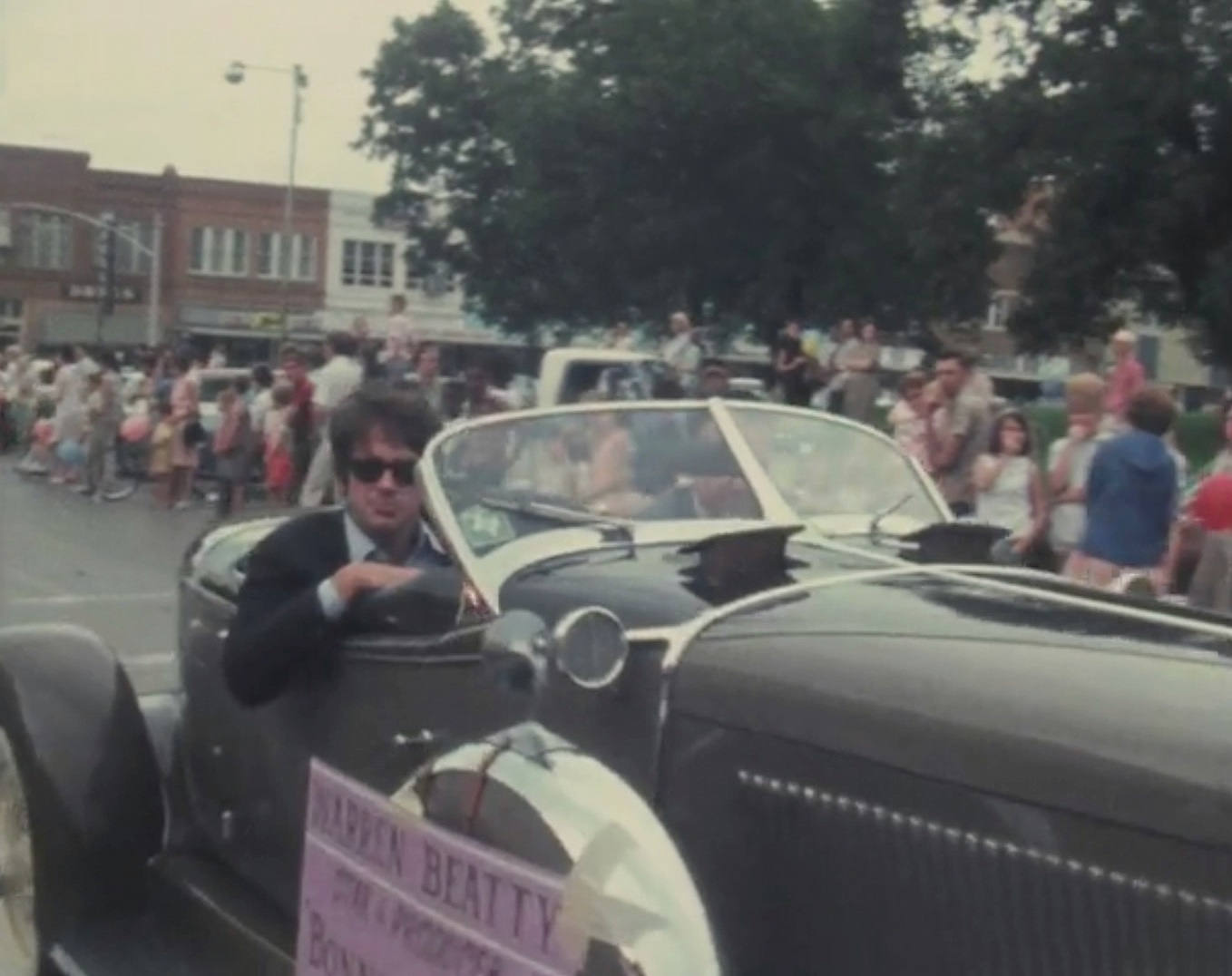
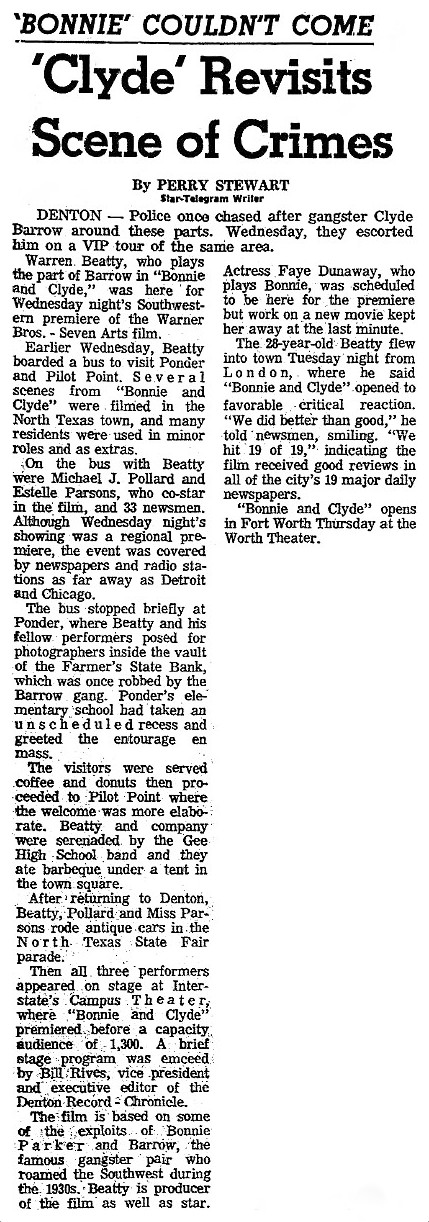
The movie had its Southwestern premiere at the Campus Theater in Denton in September, 1967. Watch (silent) news footage of the premiere from WBAP-TV (Ch. 5) at the Portal to Texas History, here (it begins about the 4:41 mark). Here’s a screen capture of Warren Beatty that day — also appearing were Michael J. Pollard and Estelle Parsons.

bonnie-and-clyde-movie_beatty_denton-premiere_wbap-tv_091367_portal

*

One last little interesting tidbit was what happened after the movie wrapped production in Dallas. Warren Beatty donated the so-called “death car” to a local wax museum. Unfortunately for the wax museum, the car’s bullet holes had been filled in to shoot another scene, so the museum had to search for someone to professionally and authentically re-riddle the car with bullet holes.

It’s always something.

***

Sources & Notes

Top dark and grainy photo of location shooting at Vickery Courts from The Campus Chat (newspaper of North Texas State University, Denton), Nov. 30, 1966.

Photos of Beatty and Dunaway in Lavon, Texas from The Wylie News, Oct. 20, 1966. An article and more photos from the set (local extras, etc.) can be found here and here.

Here’s a bonus Fort Worth Star-Telegram article on the fun and unusual bus trip that Beatty and other stars of the film took to some of the small towns they’d filmed in when they were back in the area for the local premiere in Denton (click to read):

bonnie-clyde_fwst_091467
FWST, Sept. 14, 1967

And a good overview of the making of the film can be found at TCM’s website here.

*

Copyright © 2014 Paula Bosse. All Rights Reserved.


Babyface Barrow — 1926

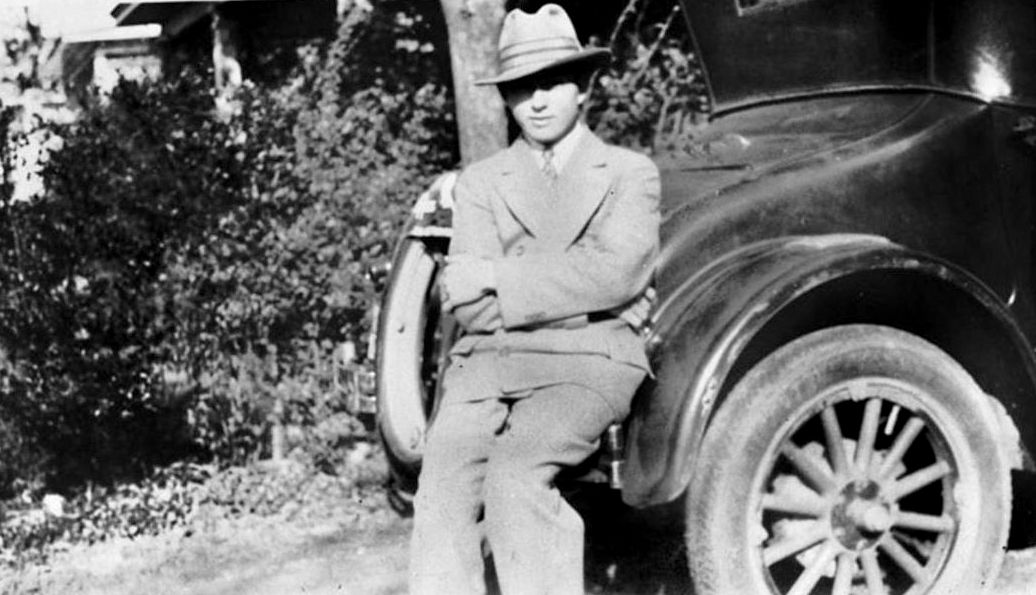
clyde-barrow_with-car_1926_utsa17-year-old Clyde Barrow, 1926

by Paula Bosse

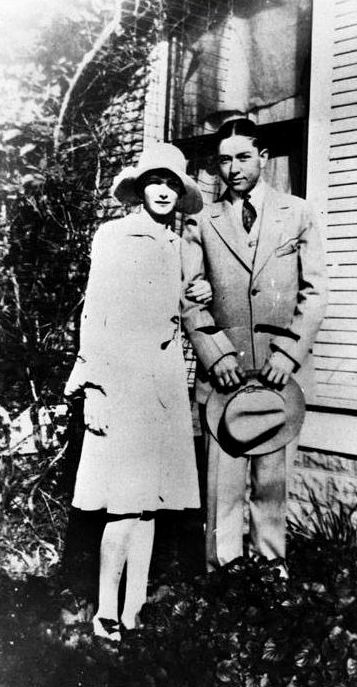
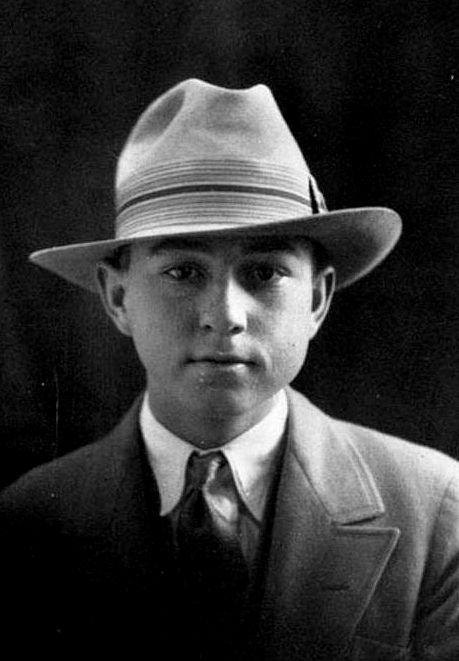
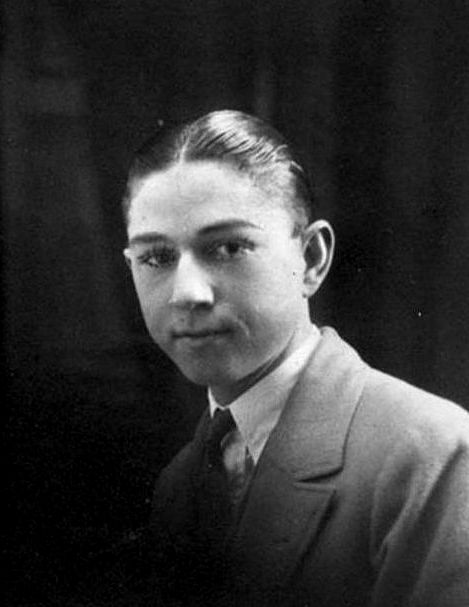
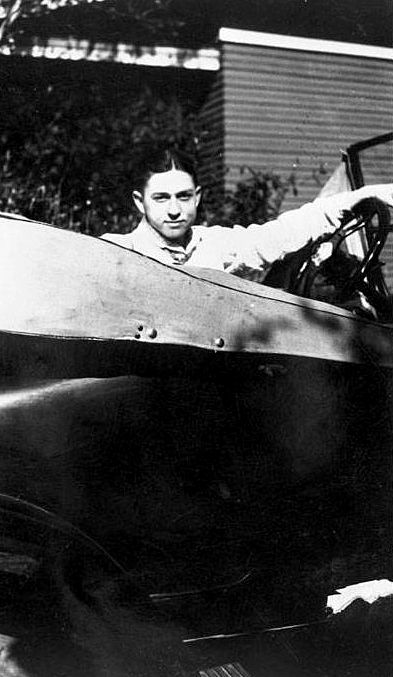
These photos of a 17-year-old Clyde Barrow belonged to one of Clyde’s first girlfriends, Eleanor Williams, a student at Forest Avenue High School in 1926. For all anyone knew, Clyde was just an ordinary kid who liked to dress up and show off his car. (Or “a” car — he was arrested for stealing his first car the same the year this photo was taken — 1926 — so I’m not sure whose car this actually is….)

clyde-barrow_eleanor-williams_1926_utsaEleanor and Clyde (whose unsubtle attempt to appear taller by standing on … something … is unconvincing and a little ridiculous).

clyde-barrow_1926_utsaSuch a babyface. In a few short years, his name and face would be splashed across the country’s newspapers as Bonnie and Clyde’s violent killing spree made him and Bonnie Parker outlaw celebrities.

clyde-barrow_no-hat_1926_utsaHe looks a lot younger than 17 here.

clyde-barrow_car_1926_utsaThe reverse of both this original photo and the top one — the car photos — have a hand-written “1926” on them as well as the film processing stamp “Finished by The National Studio, 1205 1/2 Elm St., Dallas, Texas.”

***

Sources & Notes

Photographs from University of Texas at San Antonio Libraries Special Collections, Copy and Reuse Restrictions Apply. Photos loaned to UTSA by Henry J. Williams, nephew of Eleanor B. Williams. All photos have “1926” on the back.

The Handbook of Texas entry for Clyde Barrow (1909-1934) is here.

Additional photos of Eleanor Williams can be seen on the Bonnie and Clyde “Texas Hideout” site here.

*

Copyright © 2014 Paula Bosse. All Rights Reserved.