Flashback : Dallas

A Miscellany: History, Ads, Pop Culture

Category: Dallas Fire Department

No. 4 Hook and Ladder Company, Oak Lawn — 1909

fire-dept_no-4-hook-company_ebay
Oak Lawn Fire Station

by Paula Bosse

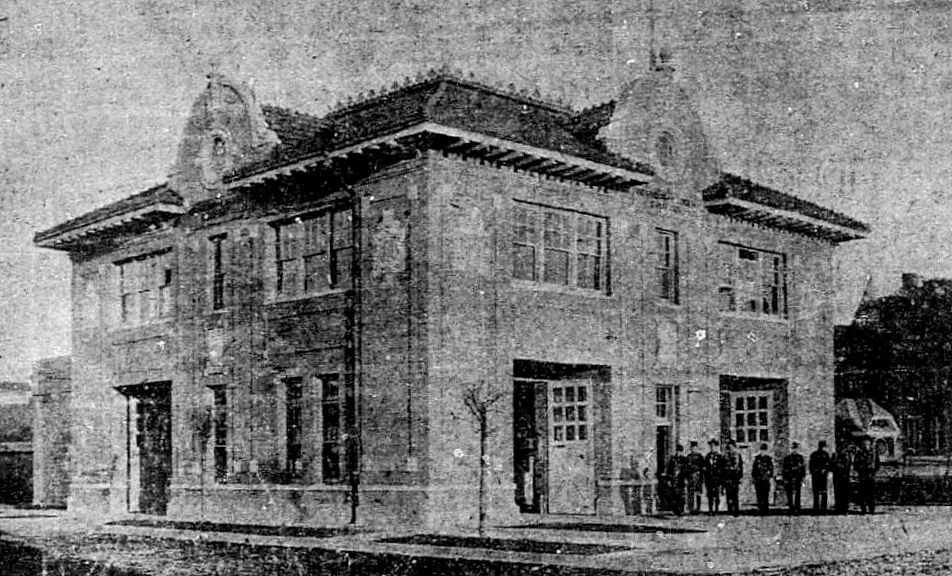
The photograph below appeared in The Dallas Morning News on December 5, 1909 under the headline, “Fire Station Lately Erected in the Oak Lawn District.”

fire-station_oak-lawn_clogenson_dmn_120509

“Hook & Ladder Company No. 4” (now known as the more prosaic “Station No. 11”), was designed by noted architects Hubbell & Greene. It was built at Cedar Springs Road and Reagan Street in 1909 as the first “suburban” fire station in Dallas. Still a working firehouse, the Mission Revival building is a designated historic landmark and is listed in the National Register of Historic Places.

firehouse-oak-lawn_google

*

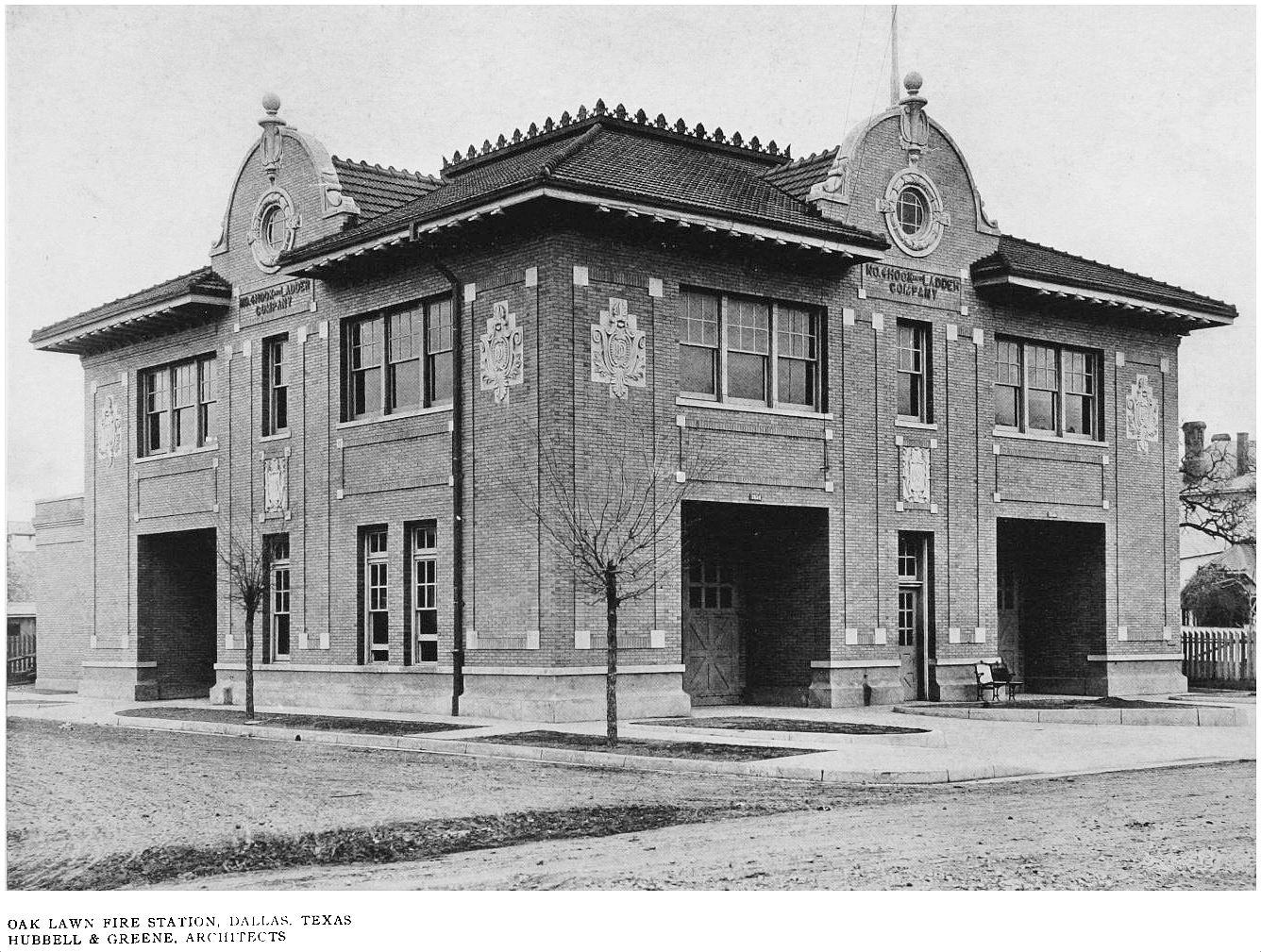
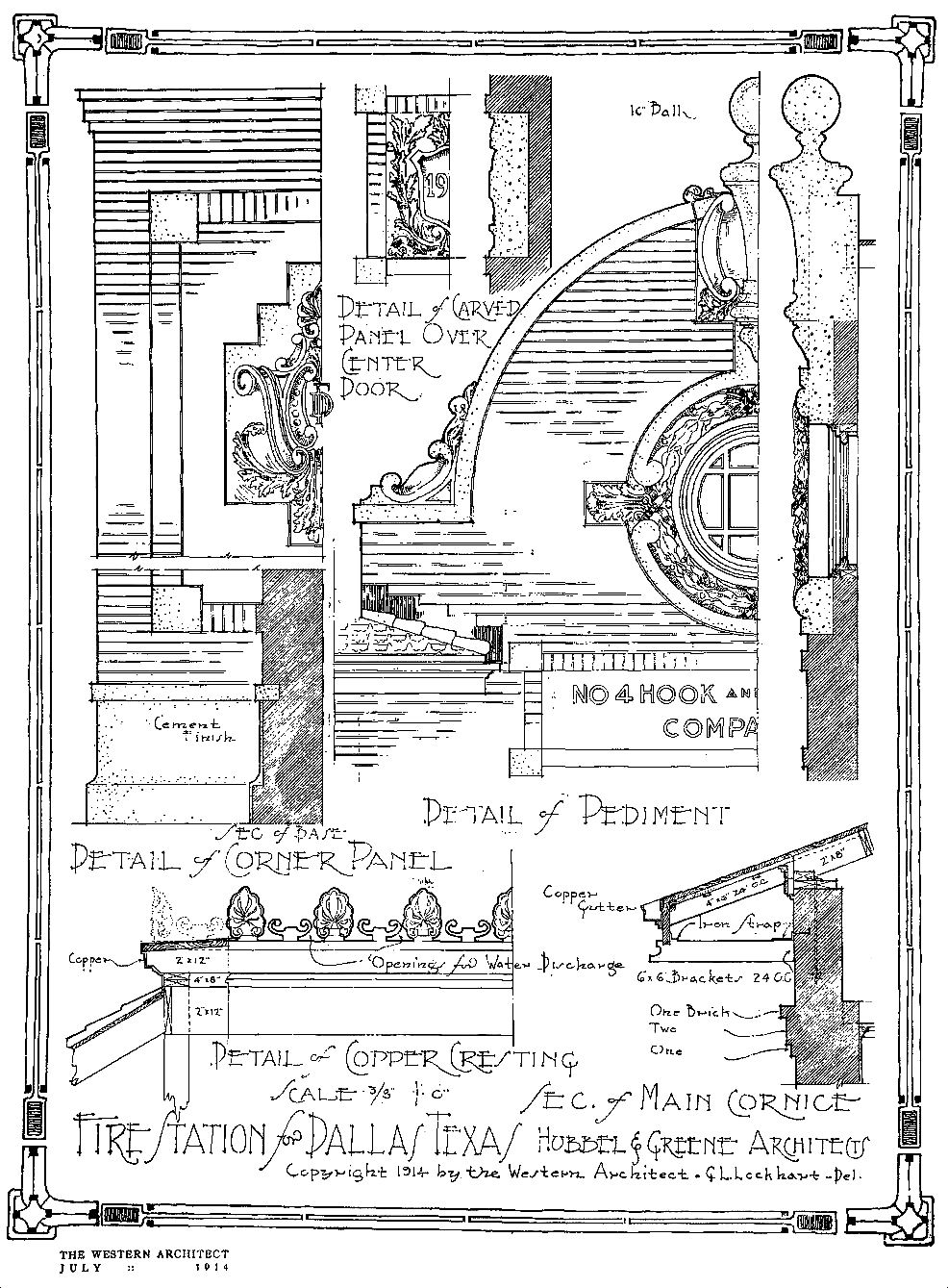
Below, a photo and architectural plan which appeared in the 1914 “Western Architect” journal (more about this here):

firehouse_oak-lawn_western-architect_july-1914

firehouse_oak-lawn_western-architect_july-1914_architectural-details_2

*

Another photo of the historic firehouse, from a 1931 publication, captioned “No. 11 Engine Co., Cedar Springs & Reagan”:

cedar-springs_fire-station_fire-dept-bk_1931_portal

***

Sources & Notes

Top photo found on eBay.

1909 Dallas Morning News photograph by Clogenson.

Color image of the station as it looks today from Google Street View.

Final photograph is from The Man in the Leather Helmet: A Souvenir Booklet of The Dallas Fire Department (1931), via the Portal to Texas History.

For more on the history of this historic fire station, see the page devoted to it on the Dallas Fire Rescue Department website, here. Also, see the City of Dallas Landmark Structures and Sites page here.

*

Copyright © 2014 Paula Bosse. All Rights Reserved.

Always Have a Bucket of Water Nearby — 1890s

fire-dept_ervay-kelly_hose-co-2_1901Hose Co. No. 2, S. Ervay at Kelly, ca. 1901… (click for larger image.)

by Paula Bosse

fire-signals_souv-gd_1894

Dallas used to burn down a lot. Here is a handy tip sheet for residents and visitors printed in 1894, about the time the above photo was taken. I’m sure everyone in the city knew where the alarm boxes were and what the various signals meant. When to relax, and when to run. When to hold ’em, and when to fold ’em.

fire-boxes_fire-alarm-signals_souvenir-gd_18941894 (click for larger image.)

***

Sources & Notes

Top photo of Hose Co. #2/Fire Station #12 from The Dallas Firefighters Museum, found on the Portal to Texas History site.

List of fire alarm boxes from Souvenir Guide of Dallas. A Sketch of Dallas and Dallas County, their resources, business enterprises, manufacturing and agricultural advantages (Dallas: D.M. Anderson Directory Company, 1894).

*

Copyright © 2014 Paula Bosse. All Rights Reserved.


Building Collapse on Elm Street — 1955

elm-st-collapse_1955
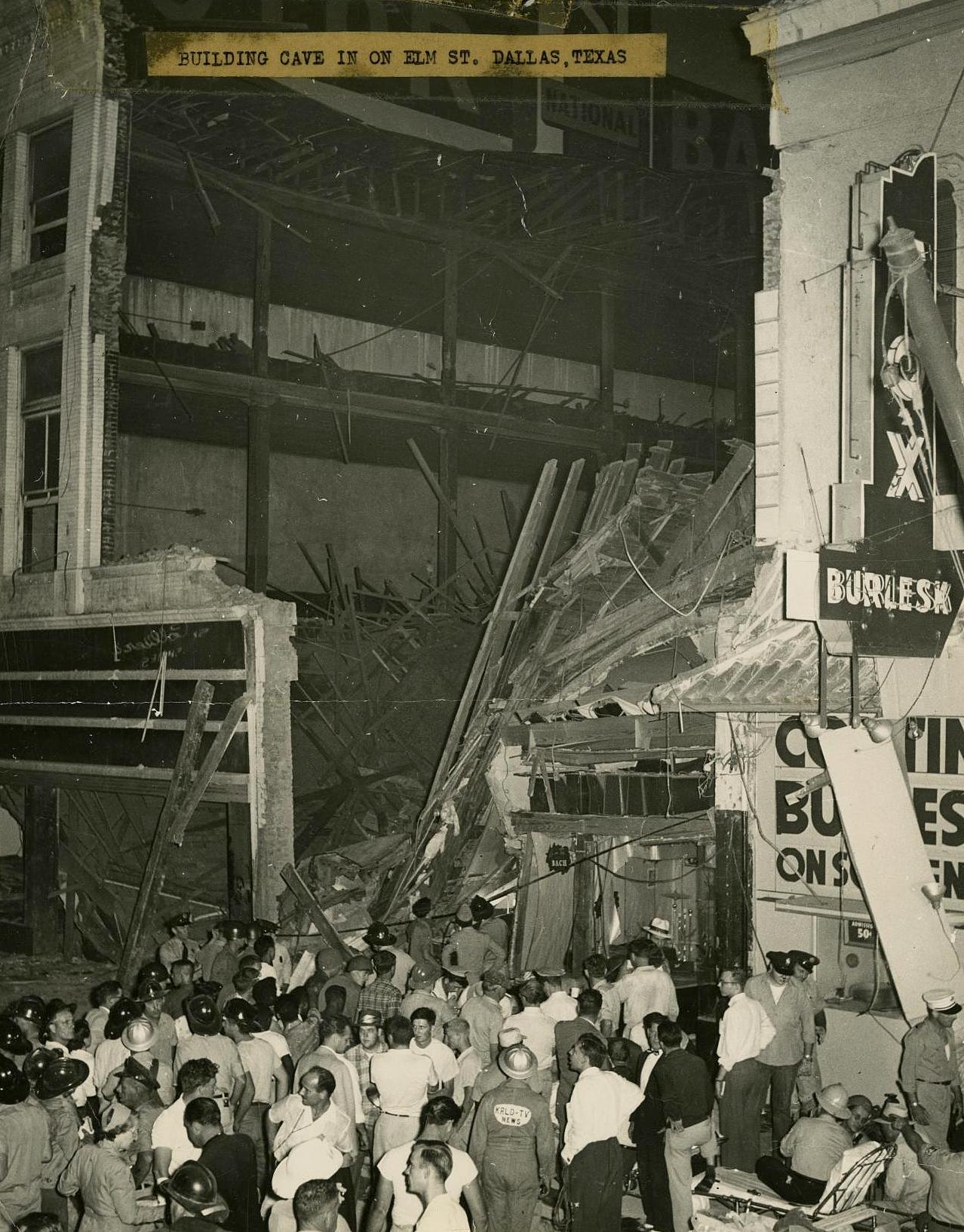
Aftermath… June 1, 1955 (photo by Gene Gauss)

by Paula Bosse

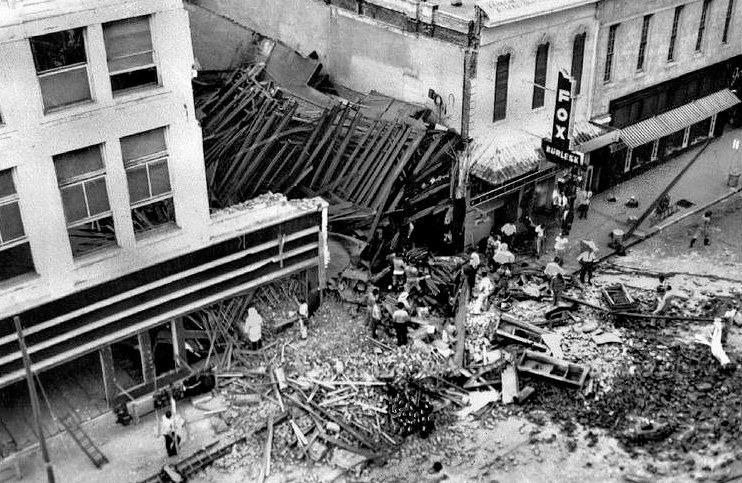
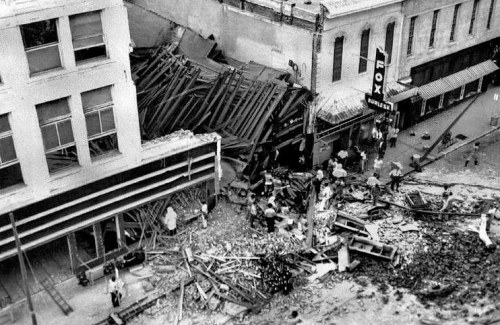
At 6:40 p.m. on June 1, 1955, a 3-story building in the process of being razed collapsed onto the smaller building next door at 1409 Elm St. The “story-and-a-half” building contained the Cline Music Company and Harry’s Fine Food, a bar and cafe. Four people were killed, and several people sustained major injuries; many were trapped for hours in the rubble.

The rousing report in The Dallas Morning News the next day described the scene as pandemonium. As emergency personnel arrived and rescue operations began, the street was roped off — there were fears a partially standing wall would topple at any moment. The Fox Burlesk house next door was quickly emptied of its 50-or-so patrons for safety concerns.

Witnesses said the building fell with a gigantic whoosh and spewed rubble about four feet deep across the sidewalk and into the street. Trolley wires were snapped and lay crackling sparks in the street for a while before the power was cut. A late-model station wagon parked at the curb was flattened under the rubble to a height of only about three feet. It belonged to [the owner of the music store]. (DMN, June 2, 1955)

Nine companies of firemen and several doctors — one of whom just happened to be passing by the scene — worked to rescue and treat the victims. A passing clergyman administered conditional last rites for those still trapped. A troop of Boy Scouts who had been nearby practicing civil defense drills, ran to help in the real-life emergency. And most cinematic of all, a Houston truck driver named Larry Ford — who just happened to be visiting Dallas and was standing in the crowd of spectators — was called in to help when someone noticed that he was wearing a truck drivers’ union insignia — authorities had obtained a winch truck to clear the heavy rubble but had been unable to find anyone to operate it. Ford sprang to action and worked through the night for 16 grueling hours. He was later hailed as a hero. Just like in the movies.

So what caused the collapse? The city manager was quick to say that the city was not to blame and, basically, had no responsibility to determine who WAS to blame.

City Mgr. Elgin Crull told The News an investigation by Chief Building Engineer Cecil A. Farrell has not been completed. “There won’t be anything on it for a long, long time — if ever at all,” Crull declared. “It’s not our responsibility to say why it fell or who was at fault. We’ll just seek to determine whether or not all the proper safety precautions were followed.” (DMN, June 3, 1955)

Well, all right, then.

As several people noted, had the collapse happened an hour earlier — in the midst of rush hour — many, many more people would have been killed and injured. I’m not sure if the cause was ever determined. The block (between Field and Akard) now contains the old First National Bank Building, built a decade later.

elm-st-collapse_060155

UPDATE: Just stumbled across this UPI photo, posted a few years ago by Robert Wilonsky on the Dallas Observer’s Unfair Park blog:
building-collapse_observer-090511

And below, a photo showing the 1400 block of Elm in the 1920s (looking west from Akard), with the “cafeteria” sign in front of the doomed building, to the left of the Fox Theater. The wall with what looks like the beginning of the word “Steinway” is the one that crushed its neighbor. (From Troy Sherrod’s Historic Dallas Theatres; photo from the Dallas Public Library.)

fox-theater_sherrod_dpl

***

Sources & Notes

The first two photos are from the collection of the Dallas Firefighters Museum, via the Portal to Texas History; they can be seen here and here.

The reports of the collapse that appeared in The Dallas Morning News are pretty exciting to read. You can find them in the newspaper’s archives.

  • “Three Killed, 10 Injured As Elm St. Building Falls” (DMN, June 2, 1955)
  • “Building Ruins Termed Clear Of All Victims” (DMN, June 3, 1955)
  • “Debris Yields Another Body” (DMN, June 4, 1955)

Click pictures for larger images (especially the first two, which are HUGE).

*

Copyright © 2014 Paula Bosse. All Rights Reserved.

What Do You Get When You Convert an Old Oak Cliff Firehouse Into a Restaurant?

firehouse-15_glorias

by Paula Bosse

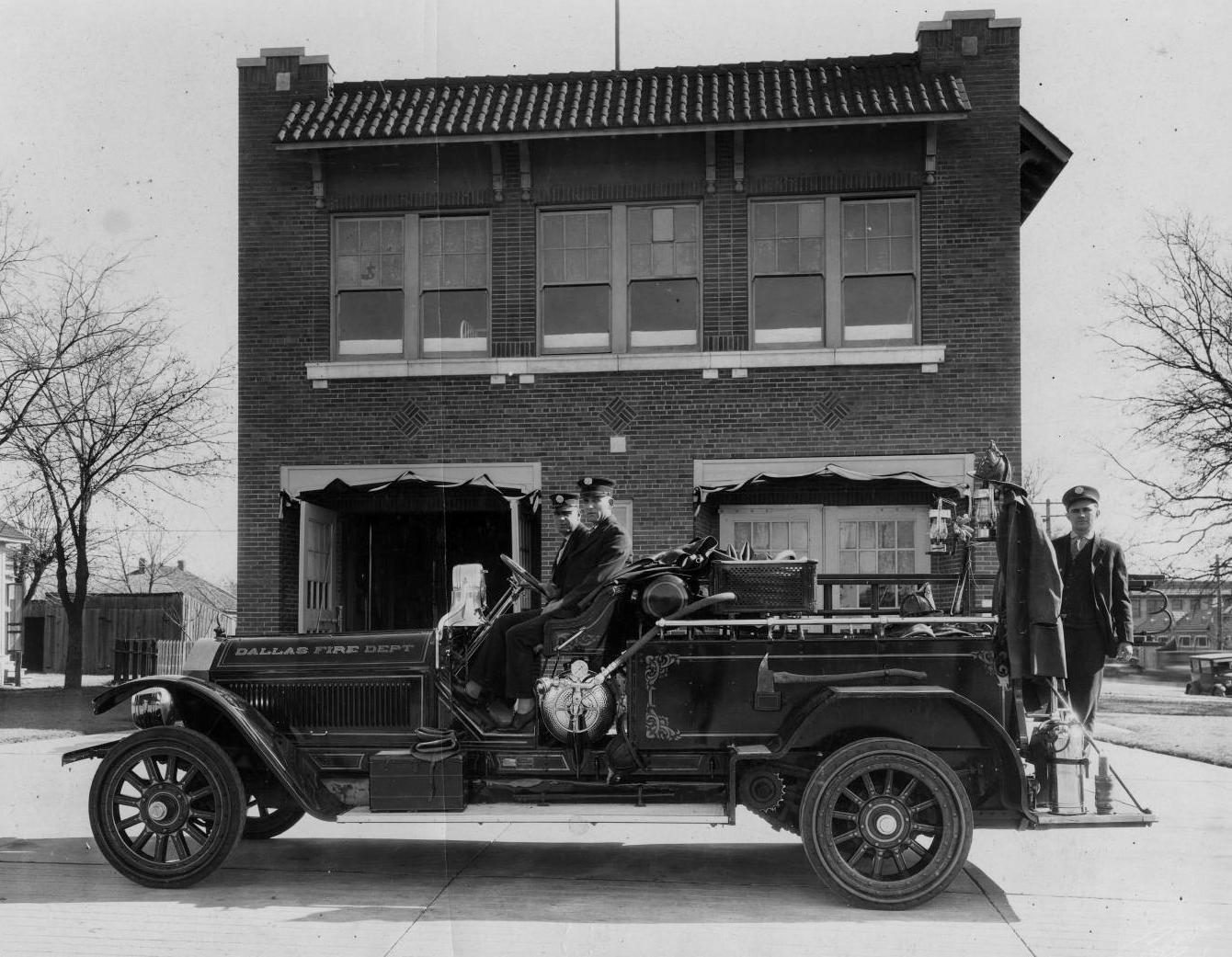
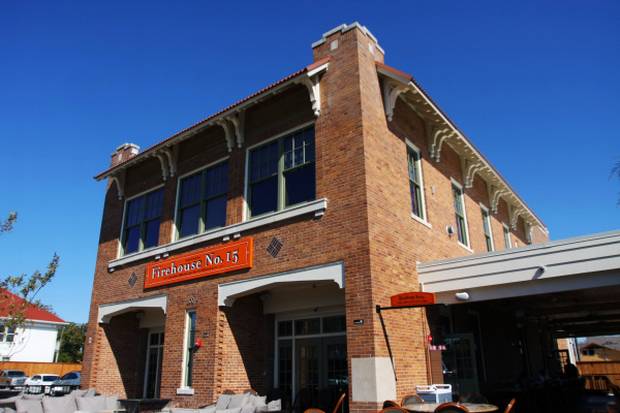
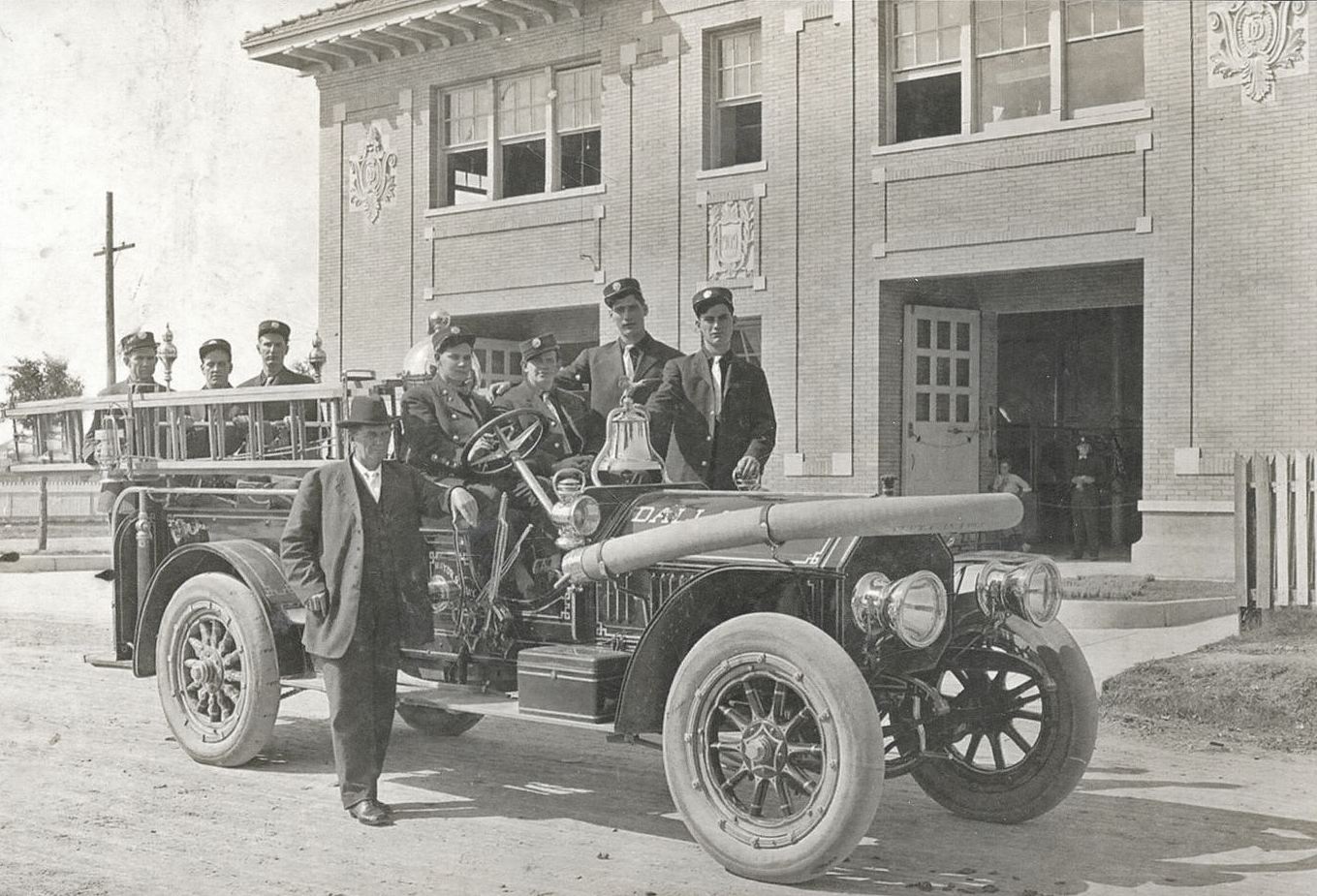
Station 15 — at Davis and Bishop — was a working firehouse decades before it was converted into Gloria’s restaurant in the Bishop Arts District. Here are the “before” photos.

station-15_oak-cliff

fire-station-15_oak-cliff

While you’re enjoying that incredible black rice (among other things…), take the time to enjoy your surroundings — it’s not every day you’re able to dine inside an old firehouse (don’t miss the brass fireman’s pole). Here’s the firehouse today:

firehouse-15_glorias_dmn

***

Sources & Notes

First and third photo from Dallas Firefighters Museum collection on the Portal to Texas History site here.

Second photo (circa 1931) is available for purchase here.

Photo of Gloria’s from The Dallas Morning News.

More info on Station 15 here.

Gloria’s website here.

*

Copyright © 2014 Paula Bosse. All Rights Reserved.
2400 McKinney Avenue — 100+ Years and Counting

by Paula Bosse

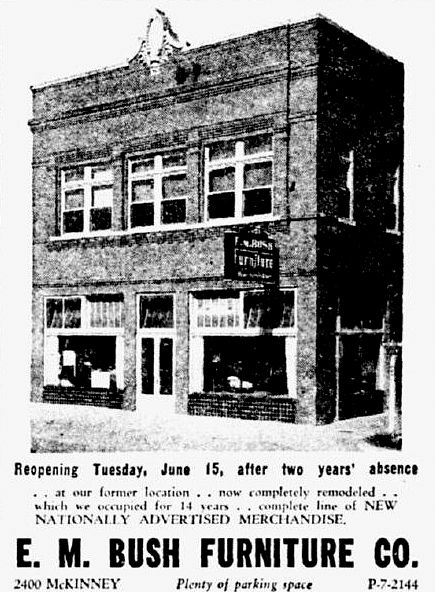
I came across this ad and wondered just where on McKinney Avenue this building had been. The ad was from 1948, but the building certainly looked older than that. I’m not sure when the building was built (update: it was built in 1909), but by at least 1929 the Hughes Auction Market was conducting furniture auctions there. An ad from 1929 invites the public to attend the regular auctions in which their two floors were packed to the gills with furniture and household goods that “positively must sell.” Prospective buyers were promised a large parking lot and a “comfortable, cool building.”

In the summer of 1933, a longtime Dallas furniture salesman, E. M. Bush, opened his retail business in the building and remained there for many years, perhaps until 1958 when he moved to Snider Plaza.

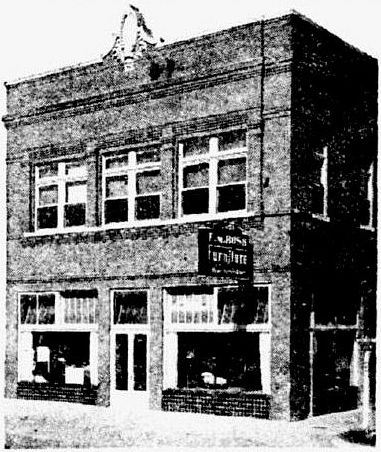
I wondered what’s at 2400 McKinney these days, and, I have to say … I’m shocked to find that the building is actually still there! On McKinney Avenue! And it looks very much the same as it does in the photo above (and, presumably, since it was built) — a little more elegant, perhaps, as it’s now part of the fabulous Hotel ZaZa — but the building looks pretty much the same. The building has survived! I feel like crying.

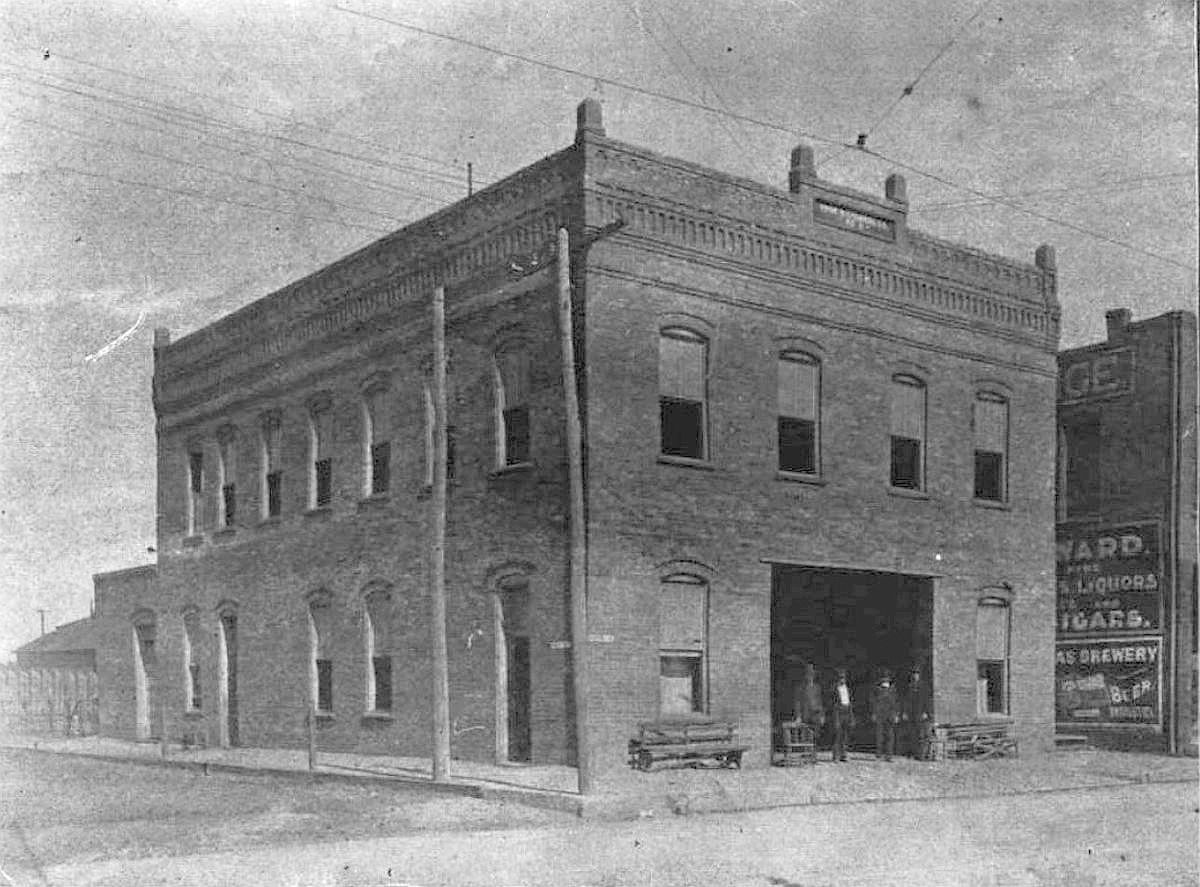
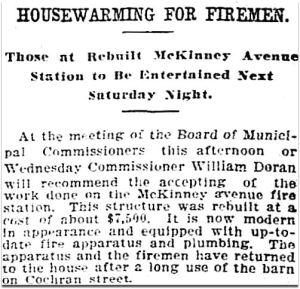
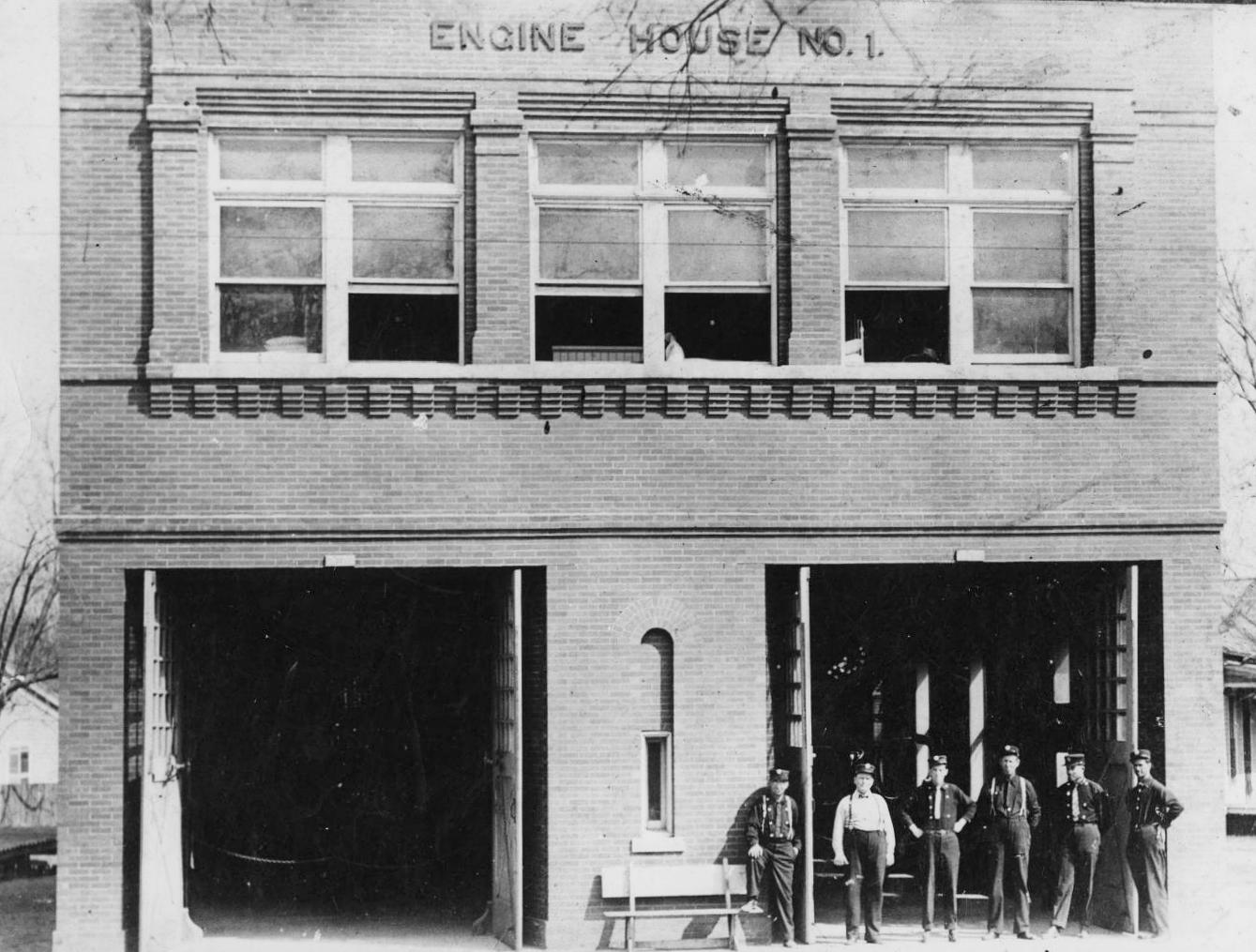
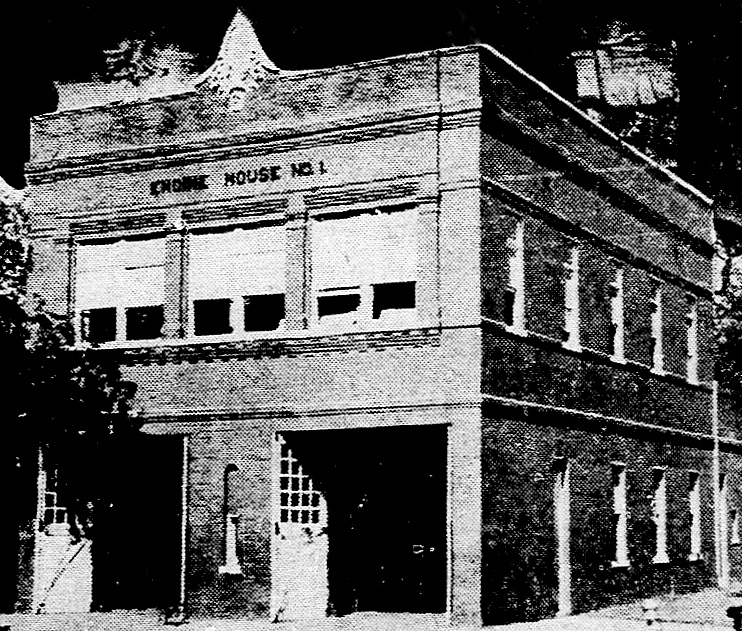
But wait, there’s more. What was this building originally? It was a firehouse! More specifically, it was Engine House No. 1, in use until 1928. The fire station that originally occupied this location was built in 1894 (see what it looked like in 1901 here, third photo down). By 1909, automobiles were placing horse-drawn fire engines, one of many reasons the station house needed to be modernized. Newspaper articles from 1909/1910 used the words “rebuilt” and “remodeled” almost interchangeably, so it’s unclear whether the original building was completely, or only partially demolished and then rebuilt, using materials from the original structure. The “new” engine house re-opened in January, 1910.

rebuilt_dmn_012510
Dallas Morning News, Jan. 25, 1910

Here’s a photo from its early days:

engine-house-no-1_mckinney

And from the 1920s:

fire-dept_mckinney-leonard-photo_1920s

The city ordered the building sold in 1928 when plans had been made to move personnel and equipment from McKinney and Leonard to a new station at Ross and Leonard.

To have a 100-plus-year-old building still standing in “newer-is-better” Dallas — and in Uptown — is quite a feat!

***

Sources & Notes

E. M. Bush Furniture Co. ad from 1948.

Photo of Stay ZaZa Art House and Social Gallery from the Hotel ZaZa website.

Firehouse photo from The Dallas Firefighters Museum. More on this station here.

Most images are larger when clicked.

*

Copyright © 2014 Paula Bosse. All Rights Reserved.