Flashback : Dallas

A Miscellany: History, Ads, Pop Culture

Category: Dallas Radio/TV

Santos Rodriguez, 1960-1973
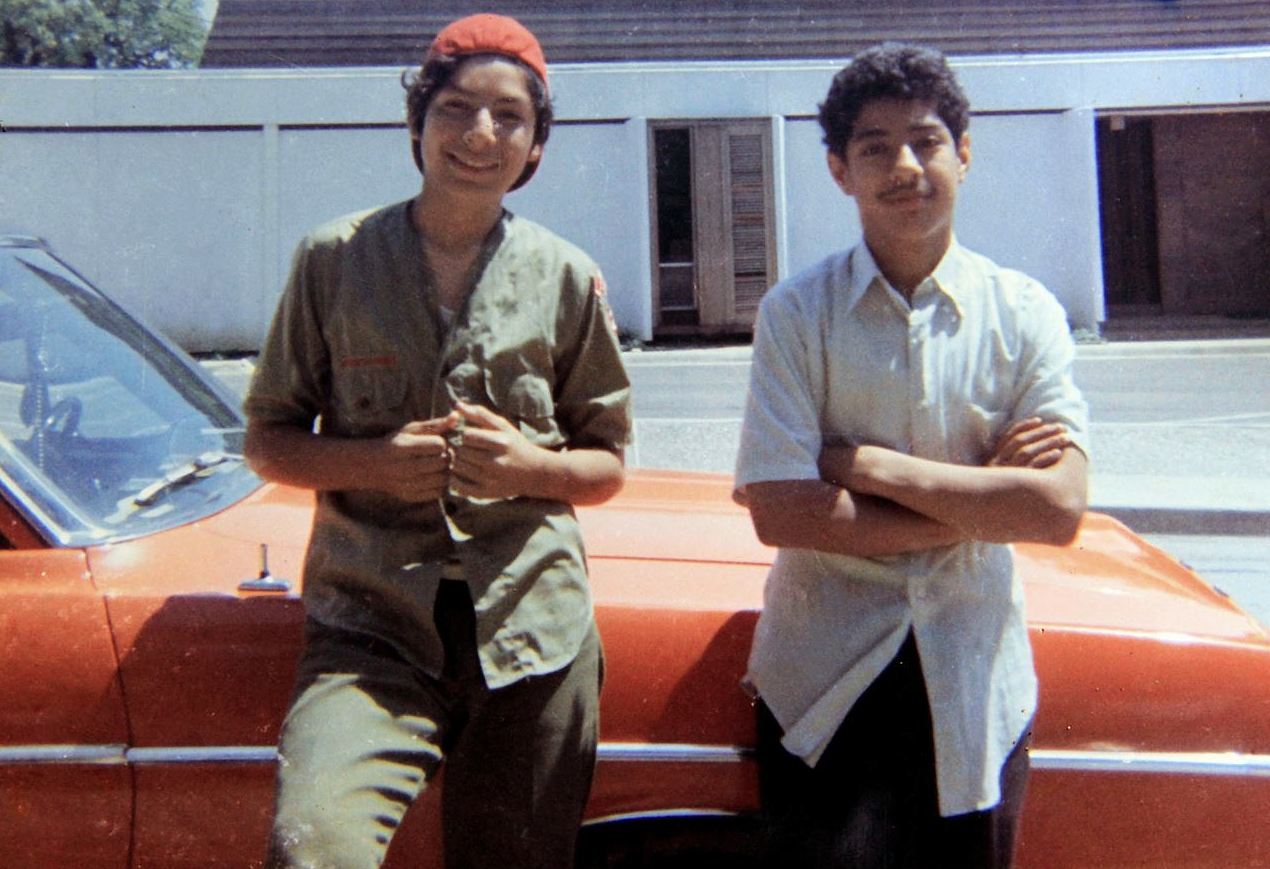
david-and-santos-rodriguez_austin-american-statesmanDavid and Santos Rodriguez (via Austin American-Statesman)

by Paula Bosse

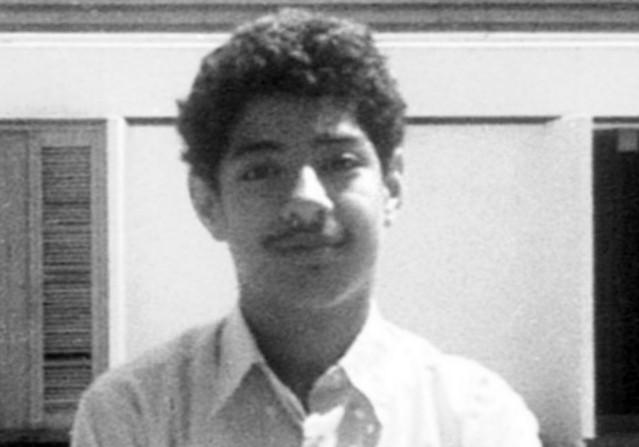
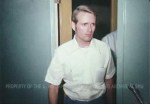
Today is the anniversary of the tragic shooting of Santos Rodriguez, the 12-year-old boy who, on July 24, 1973, was shot in the head by a policeman as he and his 13-year-old brother David sat handcuffed in a police car. It shocked the city of Dallas in 1973, and it is still shocking today.

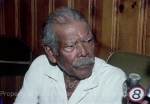
Santos and David had been awakened and rousted out of bed by Officers Darrell L. Cain and his partner Roy R. Arnold who were investigating a late-night burglary at a nearby gas station where money had been stolen from a cigarette machine — the boys matched a witness’ vague description. The boys said they had nothing to do with the burglary but were taken from their home as their foster-grandfather (an elderly man who spoke no English) watched, helpless, as they were handcuffed and placed in a squad car.

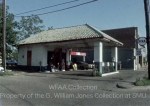
The boys were driven back to the scene of the burglary — a Fina station at Cedar Springs and Bookhout. Santos was in the front passenger seat, and Cain sat behind him in the backseat, next to David. Cain insisted the two boys were guilty and, in an attempt to coerce a confession, held his .357 magnum revolver to Santos’ head. He clicked the gun, as if playing Russian Roulette, telling Santos that the next time he might not be so lucky. The boys continued to insist they were innocent. And then, suddenly, Cain’s gun went off. Santos died instantly. Stunned, Cain said that it had been an accident. He and Arnold got out of the car, leaving 13-year-old David, still handcuffed, in the backseat of the police car — for anywhere from 10 minutes to half an hour — alone with his brother’s bloody body. (It was determined through fingerprint evidence that Santos and David did not break into the gas station that night.)

More in-depth articles about this horrible case can be found elsewhere, but, briefly, Cain (who had previously been involved in the fatal shooting of a teenaged African American young man named Michael Morehead) was charged with committing “murder with malice” and was found guilty. He was sentenced to 5 years in prison but ended up serving only two and a half years in Huntsville.

The killing of Santos Rodriguez sparked outrage from all corners of the city, but particularly in the Mexican American community. All sorts of people — from ordinary citizens to militant Brown Berets — organized and protested, persistently demanding civil rights, social justice, and police reform. If anything positive resulted from this tragic event, perhaps it was a newly energized Hispanic community.

**

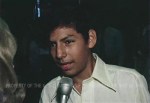
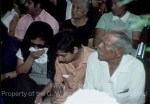
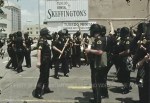
I am ashamed to say that I was not aware of what had happened to Santos Rodriguez until I began to write about Dallas history a few years ago. This was an important turning point in the history of Dallas — for many reasons (namely in the Chicano movement, race relations, the fight for social justice, and an examination of Dallas Police Department procedure). Over the past week I’ve read a lot of the local coverage of the events of this case, and I’ve watched a lot of interviews of people who were involved, but perhaps the most immediate way I’ve experienced the events and emotions swirling about this case has been to watch television news footage shot as the story was unfolding. Thanks to the incredibly rich collection of TV news footage in the possession of the G. William Jones Film & Video Collection at SMU, I’ve been able to do that.

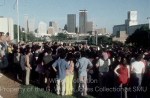
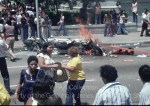
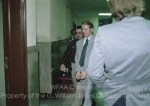
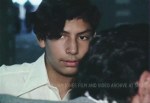
Below is footage shot by KDFW Channel 4, which has, most likely, not been seen since 1973. Some of it appeared in news reports, and some is just background B-roll footage shot to be edited into news pieces which would eventually air on the nightly news. The finished stories that aired do not (as far as I know) survive, but we have this footage. It’s choppy and chaotic and darts from one thing to the next, which is how a red-hot news story develops. Of particular interest is the short interview with 13-year-old David at 9:16 and the violent aftermath of what began as a peaceful march through downtown at 19:54.

A more comprehensive collection of the events — from just hours after the shooting to the conviction of Darrell Cain — can be found in this lengthy compilation of WFAA Channel 8 news footage. This and the Channel 4 footage are essential sources.

*
santos-rodriguez-cropped_smuSantos Rodriguez (Nov. 7, 1960 – July 24, 1973)

***

Sources & Notes

Top photo is a family photo, from the Austin American-Statesman article “Is It Time for Dallas to Honor Santos Rodriguez?” by Gissela Santacruz, here.

My sincerest thanks to Jeremy Spracklen at SMU for alerting me to these two collections of important historical news footage from KDFW-TV/Ch. 4 and WFAA-TV/Ch. 8, both of which are held by the G. William Jones Film & Video Collection, Hamon Library, Southern Methodist University. (All screenshots are from these two videos.)

An excerpt from the 1982 KERA-produced documentary “Pride and Anger: A Mexican American Perspective of Dallas and Fort Worth” (the Santos Rodriguez case is discussed) is on YouTube here.

“Civil Rights in Black & Brown” is a fantastic oral history project by TCU. I watched several of the interviews focusing on Santos Rodriguez, but I was particularly taken with the oral history of Frances Rizo — her 2015 interview is in two parts, here and here.

More on the events surrounding the killing of Santos Rodriguez can be found at the Handbook of Texas History site, here.

My continuation of this story can be found at the Flashback Dallas post “Santos Rodriguez: The March of Justice” — 1973,” here.

*

Copyright © 2018 Paula Bosse. All Rights Reserved.
Willie’s Picnic Or Bust

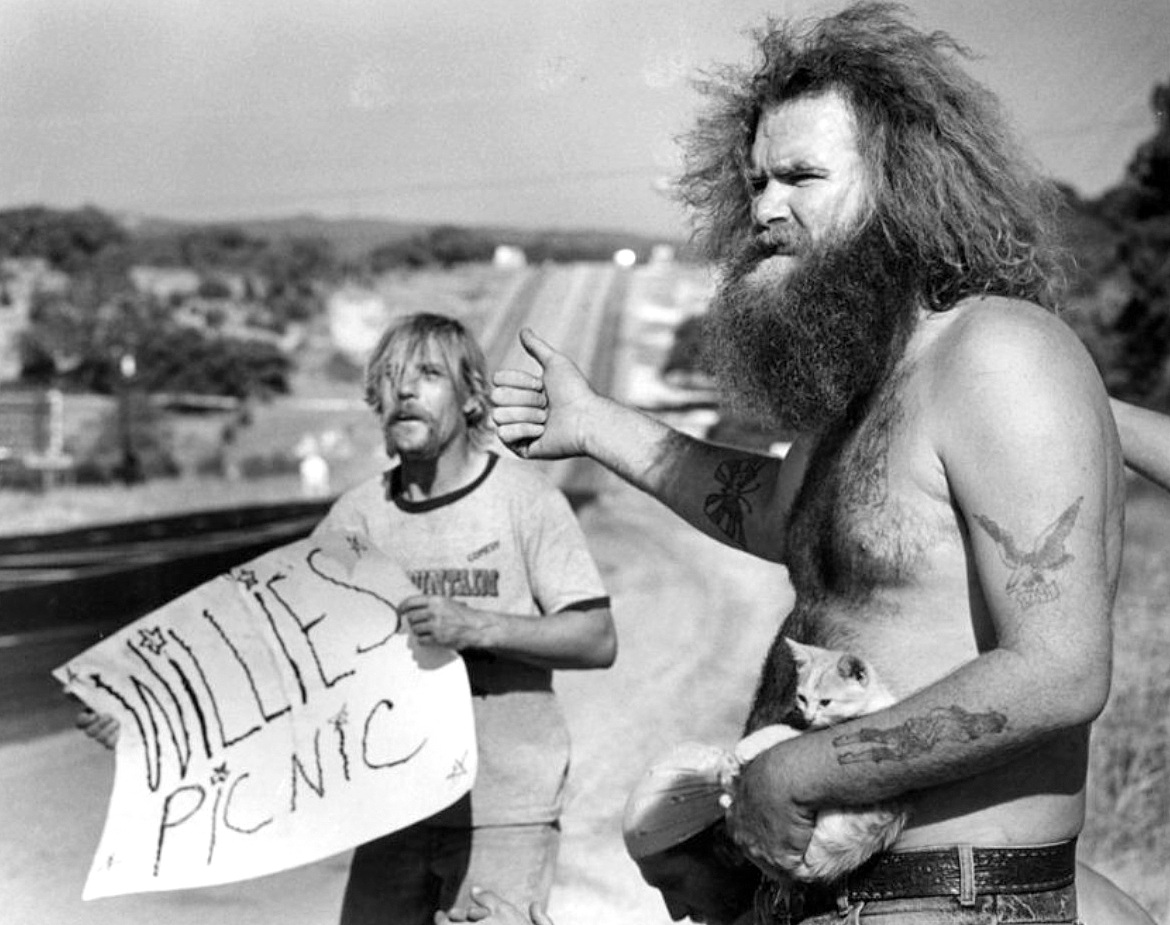
willie-nelson-picnic_1980_austin-american-statesman“All’s we need is a ride, man…”  (photo: Austin American-Statesman)

by Paula Bosse

Today is July 4th, 2018 — the 45th anniversary of the first Willie Nelson 4th of July Picnic. The photo above — taken by Austin photographer Stanley Farrar — ran in The Austin American-Statesman in 1980 and shows hitchhikers (including a bare-chested Jerry Rundell and his go-with-the-flow cat “Precious”) thumbing it on Highway 71, hoping for a ride to that year’s picnic at Willie’s Pedernales Country Club, near Austin.

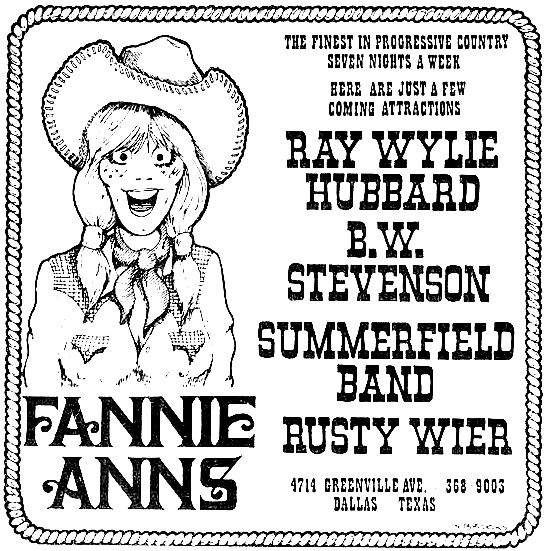
Take a look at the full illustrated program for the second Picnic, which was held at the Texas World Speedway in College Station, July 4-6, 1974, in a PDF, here. The huge line-up included Dallas natives Michael Murphey, B. W. Stevenson, Ray Wylie Hubbard (all three of whom attended Adamson High School in Oak Cliff), and singer-turned-DJ-turned-singer, Johnny Dallas (aka Groovey Joe Poovey). To make this a somewhat Dallas-y, I’ve pulled out a few of the local ads (click ’em to see larger images).

willie-nelson-program_cover-1974

willie-nelson-program_1974_kzewKZEW — from the Zoo’s “Progressive Country” years?

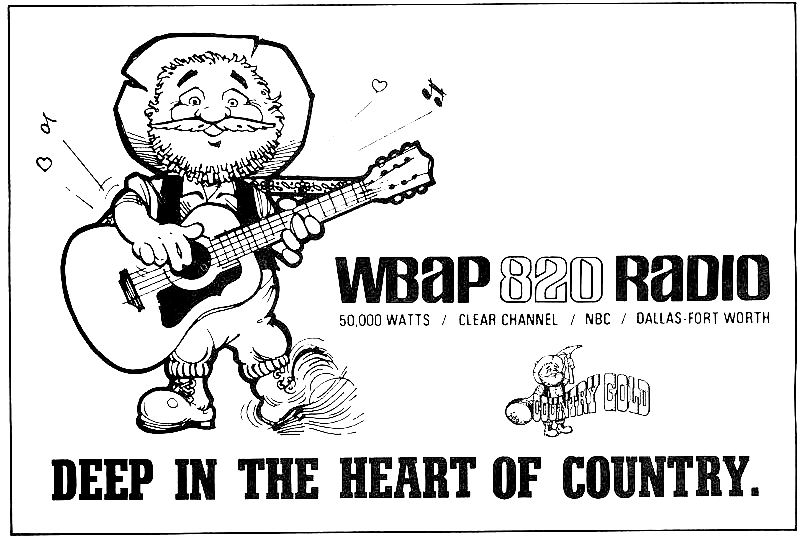
willie-nelson-program_1974_wbapWBAP — how much Ray Wylie Hubbard was WBAP playing?

Speaking of Ray Wylie Hubbard:

willie-nelson-program_1974_ray-wylie-hubbard_mother-bluesMother Blues had a one-buck cover charge, and Gertie’s was rocking until 5 a.m.

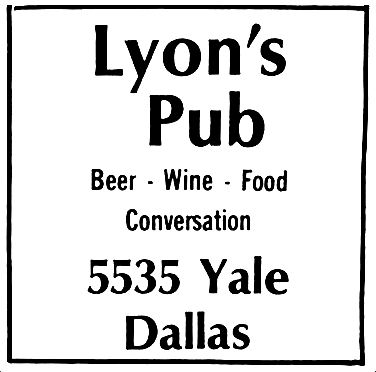
willie-nelson-program_1974_lyons-pubLyon’s Pub, 5535 Yale Street.

willie-nelson-program_1974_fannie-annsFannie Ann’s, 4714 Greenville Avenue, the lower part of Upper Greenville.

willie-nelson-program_1974_lone-star-opryhouseThe Lone Star Opry House, 1011 S. Industrial, at Cadiz (formerly the Aragon Ballroom). Willie appeared during its first week in business.

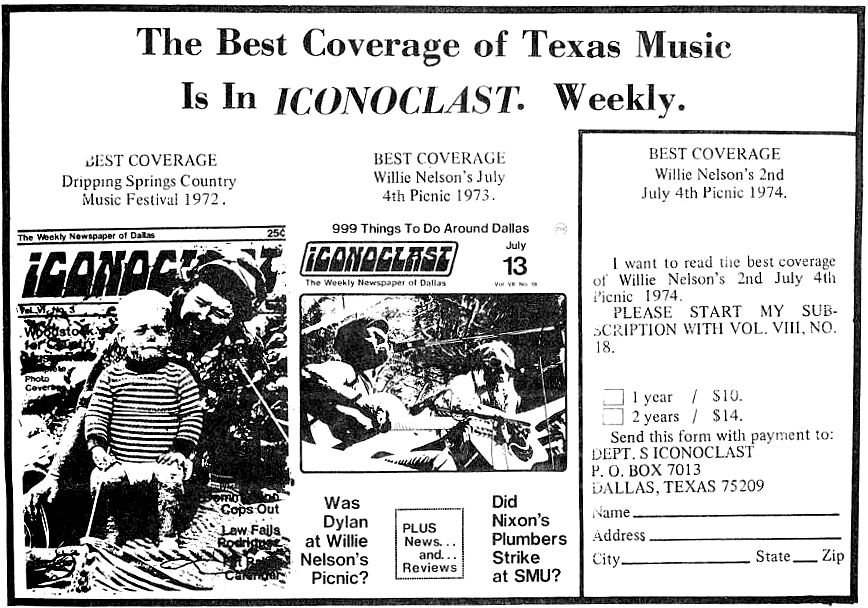
willie-nelson-program_iconoclastThe Iconoclast, Dallas’ underground newspaper, which began as Stoney Burns’ Dallas Notes.

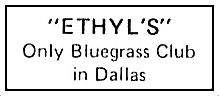
willie-nelson-program_1974_ethylsEthyl’s (“Only Bluegrass Club in Dallas”), 3605 McKinney Avenue.

***

Sources & Notes

Top photo from The Austin American-Statesman (July 4, 1980); photo taken by photographer Stanley Farrar. See many more photos of Willie Nelson 4th of July Picnics in an American-Statesman slideshow, here.

I wonder if Willie’s picnics have their own Wikipedia page? Of COURSE they do! Have at it.

I’ve written about it before, but, hey, it’s the 4th of July, so here’s Willie’s very … um, unusual ode to Dallas:

*
Happy 4th!

*

Copyright © 2018 Paula Bosse. All Rights Reserved.


“Mr. Wiggly Worm Does Much More Than Wiggle”

mr-peppermint_sponsor-mag_112061-det

by Paula Bosse

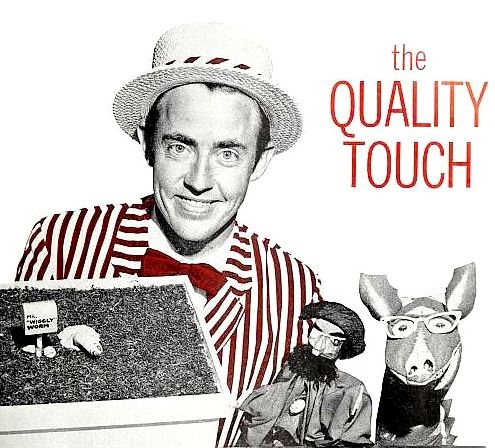
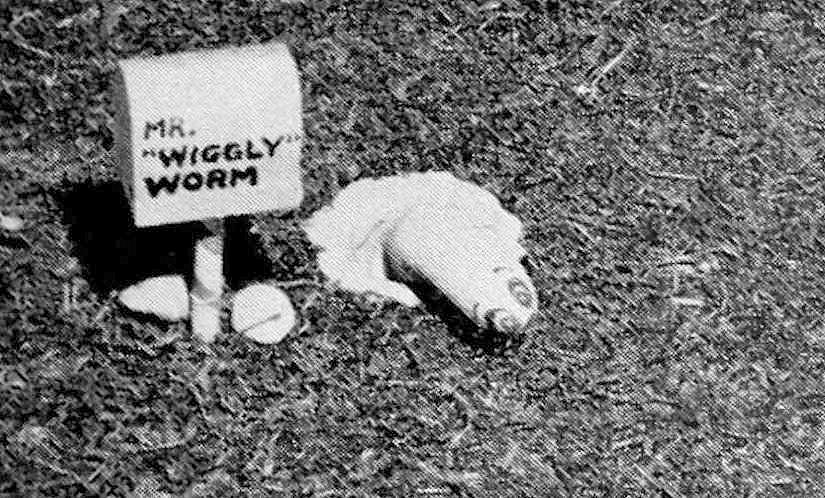
My first crush was on Mr. Peppermint, and I really, really, really loved Mr. Wiggly Worm.

This is a rather unfortunate depiction of my childhood TV pal, but how can you not love a smiling wiggly worm with a mailbox?

mr-peppermint_sponsor-mag_112061_mr-wiggly-worm_det

mr-peppermint_sponsor-mag_021163_text

WFAA understood the appeal of Mr. W. W. They even built a whole broadcasting-trade-magazine ad around him. (Click to see it larger.)

mr-peppermint_sponsor-mag_021163Sponsor, Feb. 11, 1963

Here he is again:

mr-peppermint_sponsor-mag_112061
Sponsor, Nov. 20, 1961

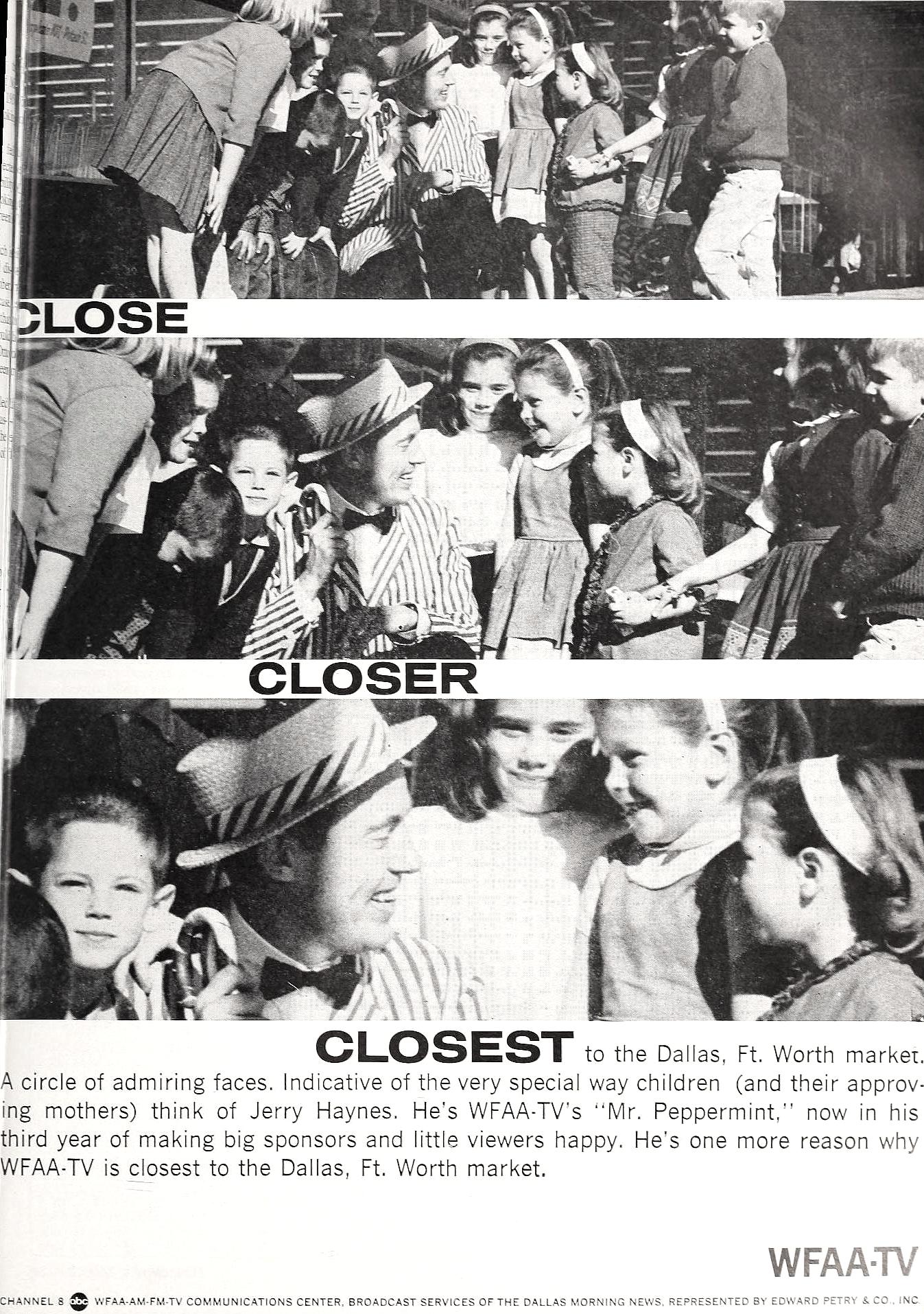
Mr. W. W. stayed at home for this one, but here we see Mr. Peppermint out mingling with his adoring public.

mr-peppermint_broadcasting-mag_061063
Broadcasting, June 10, 1963

And, look, “Communications Center” — bet you haven’t heard that in a while!

communications-center_sponsor-mag_112061_det1961

***

Sources & Notes

These Mr. Peppermint advertisements were part of a series of WFAA-Channel 8 ads which ran for several years in television trade magazines.

Click pictures to see larger images.

*

Copyright © 2017 Paula Bosse. All Rights Reserved.
Event: “Remixing the News” Screening at SMU

remixing_hamon-library-blog-header

by Paula Bosse

UPDATE: The screening was great! For those of you who might have missed this event — or who would like to see the films again — the one-hour program is airing on KERA-Channel 13’s “Frame of Mind” on Thurs. Nov. 16, 2017 at 10:30 p.m., with another airing at 2:00 a.m. on Nov. 20.

*

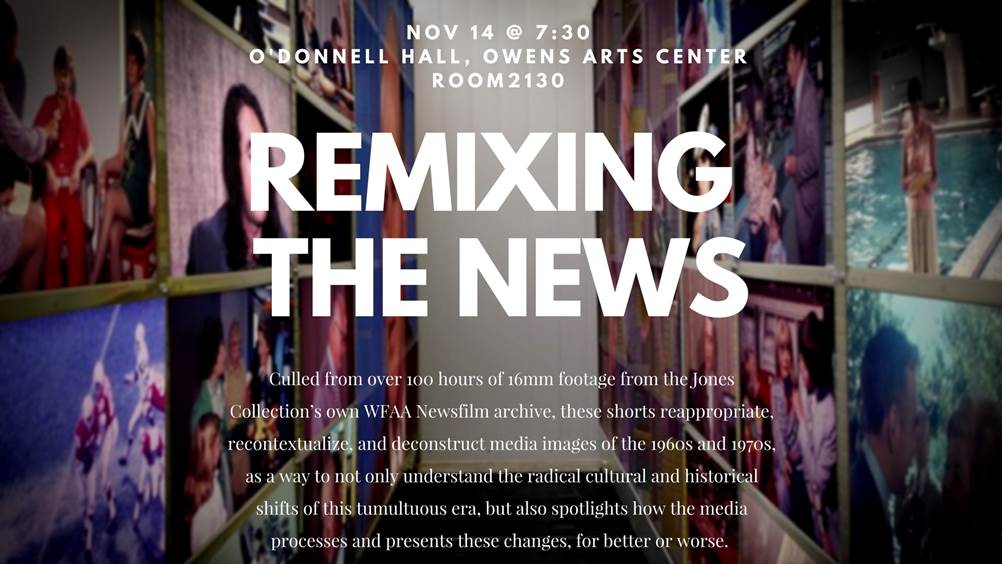
I’m really late announcing this event — WHICH TAKES PLACE TUESDAY, NOV. 14!! — but it sounds like something that people who are interested in Dallas history and/or video art would really enjoy: “Remixing the News,” presented by the G. William Jones Film and Video Collection at the Hamon Arts Library (SMU), in collaboration with KERA television and Dallas VideoFest.

So what is it?

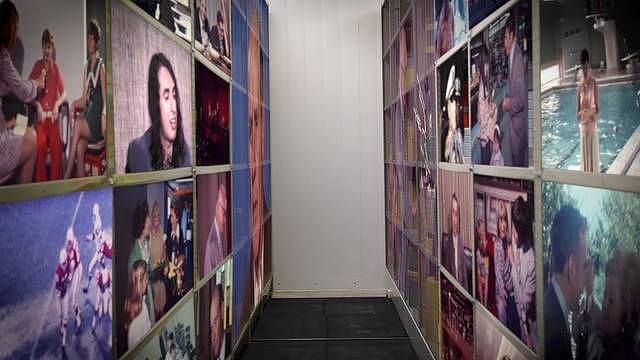
The Jones Collection at SMU includes the WFAA Newsfilm archive which contains what must be thousands of hours of 16mm film footage from the 1960s and ’70s, originally shot to be used as part of Channel 8 News broadcasts (this includes tons of B-roll footage shot to supplement the stories, but not always used in newscasts). As you can imagine, this is an unusual treasure trove of local news, history, and pop culture. I’ve dipped in and showcased some of the offerings in previous posts about the State Fair of Texas, and on Dallas appearances by Jimi Hendrix, Tiny Tim, and Glen Campbell.

Jeremy Spracklen, head curator of the Jones Collection, describes how this interesting local news archive was “reappropriated, recontextualized, and deconstructed” to become something altogether different:

We went in a unique direction in this — we did an experiment where we gave 10 local filmmakers a hard-drive with several hundred hours’ worth of footage on it and had them create their own interpretation of it. So, it is part history and part new video art.

I love this sort of thing. Eleven short films were produced by ten Texas filmmakers (Spracklen himself contributed two). Here are the films which will be shown Tuesday night, November 14:

  • “2,000 Hours in Dallas” by Jeremy Spracklen
  • “The Story of Jane X” by Christian Vasquez
  • “Dallas Circle” by Justin Wilson
  • “Lawmen & Cowpokes” by Gordon K. Smith
  • “History Lessons” by Steve Baker
  • “Beyond 10” by Carmen Menza
  • “Glass” by Madison McMakin
  • “Poofs are New” by Blaine Dunlap
  • “Divided” by Michael Thomas & Dakota Ford
  • “The Night in the Last Branches” by Michael Alexander Morris
  • “Echoes of the Past” by Jeremy Spracklen

The FREE advance screening of this collection (which will air at a later time on KERA’s long-running “Frame of Mind” series) will be held at SMU in the Owen Art Center on Tuesday, Nov. 14 (which might be TODAY!) — it begins at 7:30 p.m. After the screening, Bart Weiss, artistic director of the Video Association of Dallas, will host a Q&A with several of the filmmakers in attendance.

ALSO, Jeremy Spracklen tells me that those who are interested are invited to tour his very chilly subterranean film-archive lair after the event. So much Texas film history lurks beneath the SMU campus!

This event sounds great. Be there!

remixing-the-news_smu_hamon

“Remixing the News”

Presented by the G. William Jones Film and Video Collection, Hamon Arts Library, in collaboration with KERA and VideoFest

Date: Tuesday, November 14, 2017
Time: 7:30 p.m. – 9:00 p.m.

O’Donnell Hall, room 2130, Owen Arts Center (see map below)

FREE to the public

***

Resources & Notes

More on this event can be found on the SMU website here and on the Hamon Arts Library blog here; the Facebook event page is here.

The event is free, and parking on the SMU campus after 7:00 p.m. is also free. Parking at SMU scares me, but here is what Jeremy advises: “The closest parking is in the meters in front of the Meadows building (they are not active after 7:00), the ‘U’ lot just south of the building, and, if those are full, the Meadows Museum parking garage is open — it is just down Bishop Blvd. and about a 5-minute walk.”

His map is below, with the parking areas highlighted in red. (Click to see larger image.)

SMUCampusMapNamesBLK

More on the WFAA Newsfilm archive can be found in a Flashback Dallas post “How the News Got Made.”

One of the filmmakers who has contributed a film to this event is Blaine Dunlap — I have posted links to two of his films, both of which I really enjoyed: Sunset High School on Film — 1970″ (which he made while he was a Sunset student) and “‘Sometimes I Run’: Dallas Noir — 1973” (about a philosophizing downtown street cleaner).

More on “Frame of Mind” here.

*

Copyright © 2017 Paula Bosse. All Rights Reserved.
 

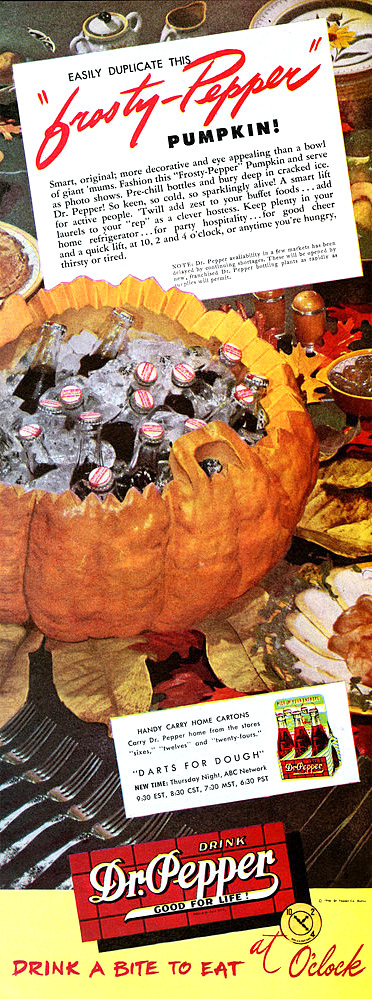
Halloween Party? Don’t Forget the Dr Pepper! — 1947

dr-pepper_halloween_1947_flickr“‘Twill add zest to your buffet foods…”

by Paula Bosse

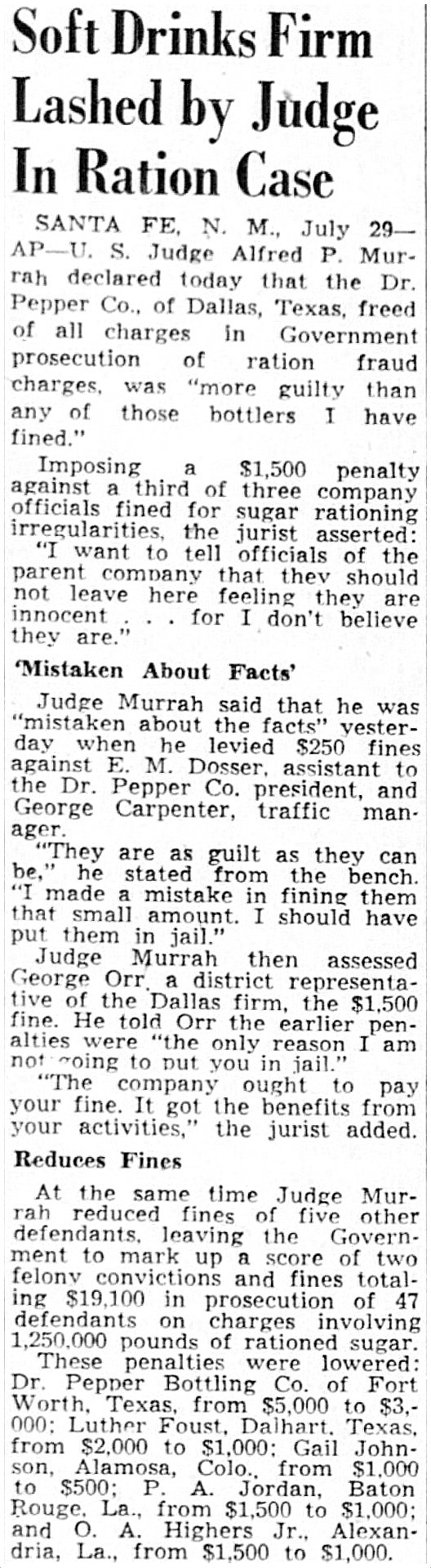
(While searching for a Halloween advertisement, I unexpectedly came across reports of a federal grand jury case brought against Dallas-based Dr Pepper for violating strict wartime sugar-rationing. Scroll down to read about the legal case.)

Happy Halloween! Might I propose an eye-catching party suggestion? The “Frosty-Pepper Pumpkin”! Hollow out a pumpkin, fill it with cracked ice, and load it up with bottles of Dr Pepper. Voilà!

The text of the ad, from the fall of 1947:

EASILY DUPLICATE THIS “frosty-Pepper” PUMPKIN!

Smart, original; more decorative and eye appealing than a bowl of giant ‘mums. Fashion this “Frosty-Pepper” Pumpkin and serve as photo shows. Pre-chill bottles and bury deep in cracked ice. Dr. Pepper! So keen, so cold, so sparklingly alive! A smart lift for active people. ‘Twill add zest to your buffet foods … add laurels to your “rep” as a clever hostess. Keep plenty in your home refrigerator … for party hospitality … for good cheer and a quick lift, at 10, 2 and 4 o’clock, or anytime you’re hungry, thirsty or tired. 

NOTE: Dr Pepper availability in a few markets has been delayed by continuing shortages. These will be opened by new, franchised Dr. Pepper bottling plants as rapidly as supplies will permit.

HANDY CARRY HOME CARTONS
Carry Dr Pepper home from the stores 
“sixes,” “twelves” and “twenty-fours.”
 
“DARTS FOR DOUGH”
NEW TIME: Thursday Night, ABC Network
9:30 EST, 8:30 CST, 7:30 MST, 6:30 PST

Drink Dr. Pepper
GOOD FOR LIFE!

DRINK A BITE TO EAT at 10, 2 and 4 o’clock

***

Sources & Notes

Ad found on Flickr, here.

“Darts for Dough”? I had to look that up. It was a radio game show involving quizzes and dart-throwing, created by Orval Anderson and Bert Mitchell at WFAA radio. It debuted in the summer of 1943 as a strictly local program, but it’s popularity was such that it moved to Hollywood in August, 1944 and — still run by the WFAA creators — it began to be broadcast “coast to coast” for several years, moving to television by 1950. It was originally developed in Dallas as a sponsorship vehicle for Dallas-based Dr Pepper and was frequently advertised as “Darts for Dough — The Dr Pepper Show.”

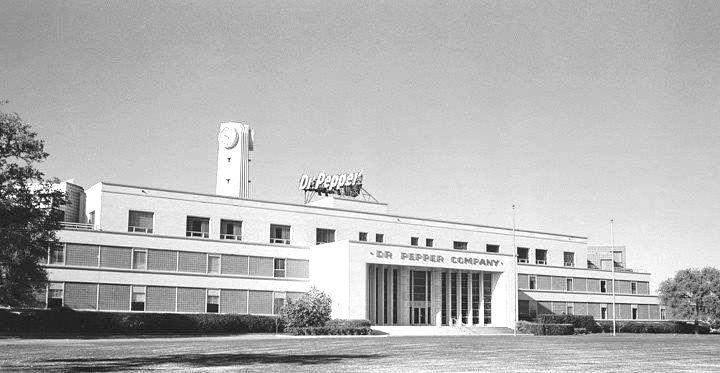
1947 was a big year for Dr Pepper — that was the year their beautiful (and sorely missed) plant opened at Mockingbird and Greenville.

dr-pepper-plant_pinterest

1947 was also a noteworthy year for the company, because of a large federal grand jury indictment which charged several corporations and individuals — including Dr Pepper and some of its bottlers and employees — with sugar-rationing violations (these “irregularities” appear to have begun in the last months of World War II, when wartime food rationing was still serious business). Black-market sugar! A district representative of Dr Pepper was assessed a small fine, but charges of conspiring to violate sugar-rationing regulations which were brought against the DP parent-company were ultimately dismissed, a ruling which angered Federal Judge Alfred P. Murrah, who seems to have been extremely unhappy about the dismissals, as can be read in his blistering statement below.

dr-pepper_sugar-rationing-case_waco-news-tribune_073047
AP story, via Waco News-Tribune, July 30, 1947

Two of the individuals charged in the case — New Mexico residents — received prison sentences in what was described as “the largest black market sugar operation on record,” involving over a million pounds of sugar.

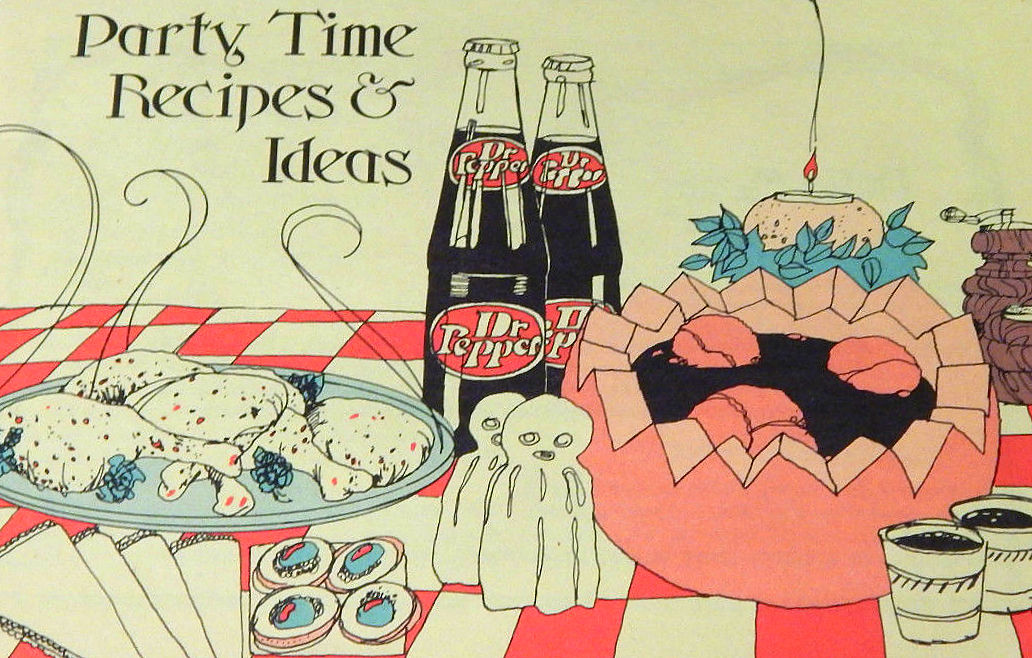
This “Happy Halloween!” post took a bit of an unexpected dark detour. Let’s cleanse our palate with something happier: another party idea with Dr Pepper and a hollowed-out pumpkin (found on eBay).

halloween_dr-pepper_booklet_ebay

More Halloween posts from Flashback Dallas can be found here.

*

Copyright © 2017 Paula Bosse. All Rights Reserved.


KRLD News Crews, At the Ready

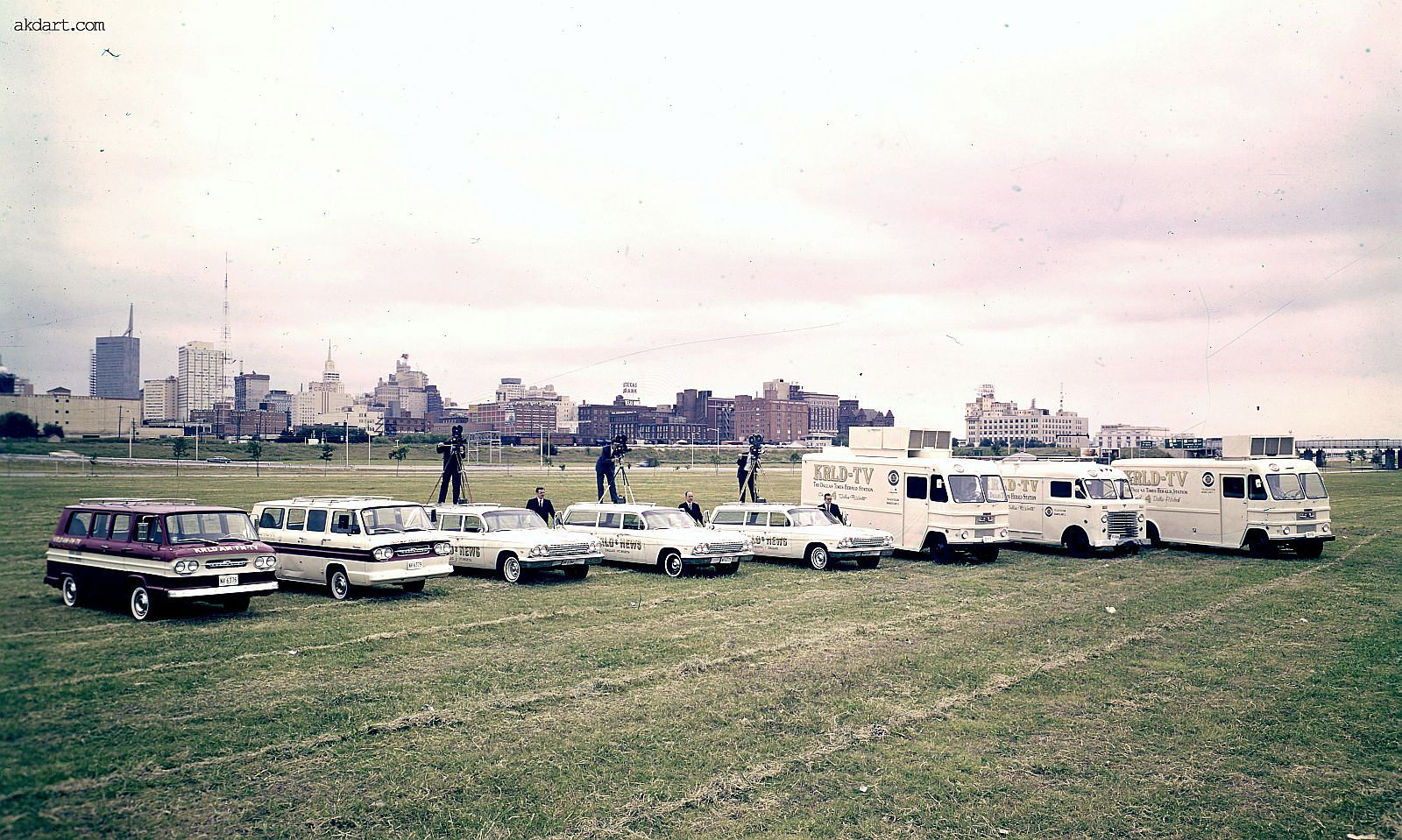
krld_news-crews_early-1960s_akdartThey mean business: they’re wearing suits and ties…

by Paula Bosse

Early-’60s-era KRLD radio and TV mobile news crews are seen above, showing off their fleet and ready for breaking news. Behind them, the Dallas skyline, seen from an unusual vantage point: the Trinity levees. See this photo really big here, and explore the skyline, from the Republic Bank Tower on the northern edge of downtown, to the Dallas Morning News building on the southern edge.

***

Sources & Notes

Photo is from an interesting collection of “very old pictures from KRLD radio and TV,” presented on the website akdart.com.

*

Copyright © 2017 Paula Bosse. All Rights Reserved.
Film Footage: “The State Fair of Texas in the 1960s”

sfot_1960s_jones-collection_smu_men-in-suits_ice-creamEveryone likes ice cream…. (G. William Jones Collection, SMU)

by Paula Bosse

Thanks to Twitter, I discovered this cool video of film clips of the State Fair of Texas, shot throughout the 1960s, courtesy of SMU’s WFAA Newsfilm Collection/G. William Jones Film and Video Collection, put together by Moving Image Curator Jeremy Spracklen. There are 15 or so clips, some in black and white, some in color, some silent, some with sound. This compilation runs about 24 minutes. Watch it. You’ll enjoy it — especially the montage of fair food at the end! (Make sure you watch in fullscreen.)

*

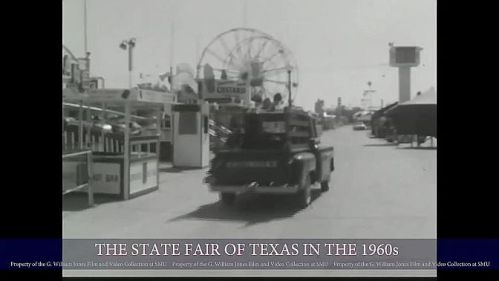
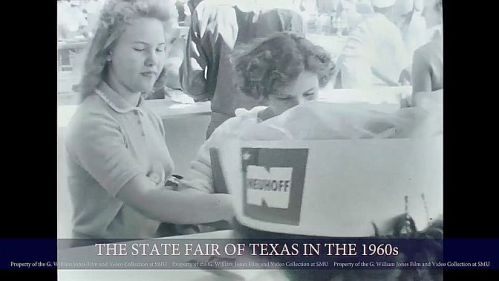
Here are a few screengrabs I took, to give you an idea of the content (images are much cleaner in the video!).

Getting ready for the fair.

sfot_1960s_jones-collection_smu_midway

Fair Park entrance.

sfot_1960s_jones-collection_smu_entrance

Crowd, baby, binoculars.

sfot_1960s_jones-collection_smu_crowd

Neuhoff hot dog stand.

sfot_1960s_jones-collection_smu_neuhoff-hot-dogs

The monorail (with a cameo by Big Tex).

sfot_1960s_jones-collection_smu_monorail_big-tex

I don’ t know who this guy is, but he’s in several shots and I love him! Here he is losing out to the woman who correctly guessed his weight.

sfot_1960s_jones-collection_smu_guess-your-weight

Kids eating … Pink Things! “Made famous at Six Flags.”

sfot_1960s_jones-collection_smu_kids_pink-thing

Aqua Net and Moët. (I have to say, I’ve never seen champagne at the fair, but perhaps those are circles I don’t travel in.)

sfot_1960s_jones-collection_smu_aqua-net-and-moet

Everyone needs a corny dog fix.

sfot_1960s_jones-collection_smu_corny-dog_girl

Everyone.

sfot_1960s_jones-collection_smu_corny-dog

Have a groovy time at this year’s State Fair of Texas!

sfot_1960s_jones-collection_smu_groovy-poster

***

Sources & Notes

Film clips from Southern Methodist University’s WFAA Newsfilm Collection/G. William Jones Film and Video Collection; the video has been edited by SMU’s Moving Image Curator, Jeremy Spracklen. The direct link to the video on Vimeo is here.

*

Copyright © 2017 Paula Bosse. All Rights Reserved.
The WFAA Studios, Designed by George Dahl, Rendered by Ed Bearden — 1961

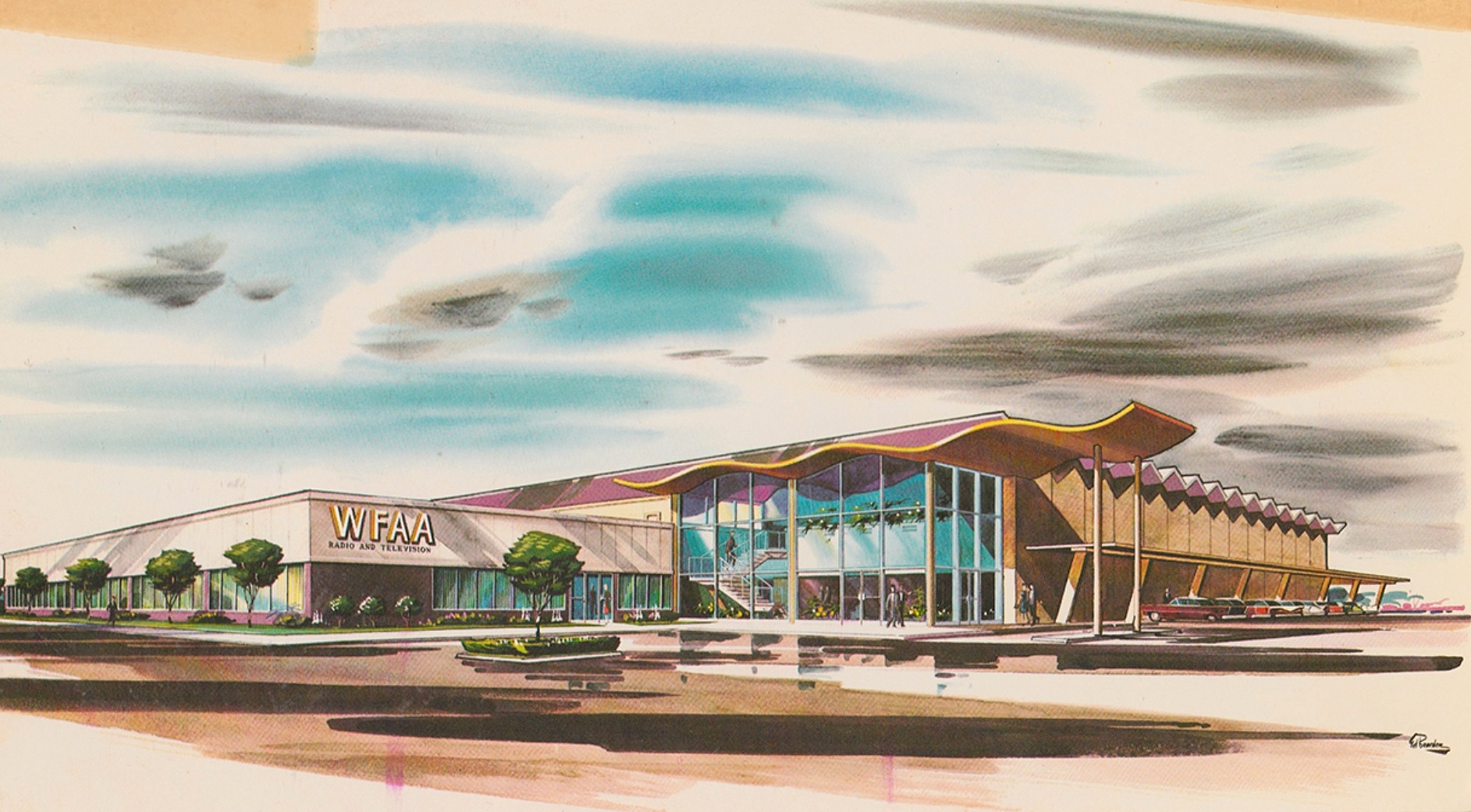
wfaa_george-dahl_ed-bearden_postcard“Communications Center”

by Paula Bosse

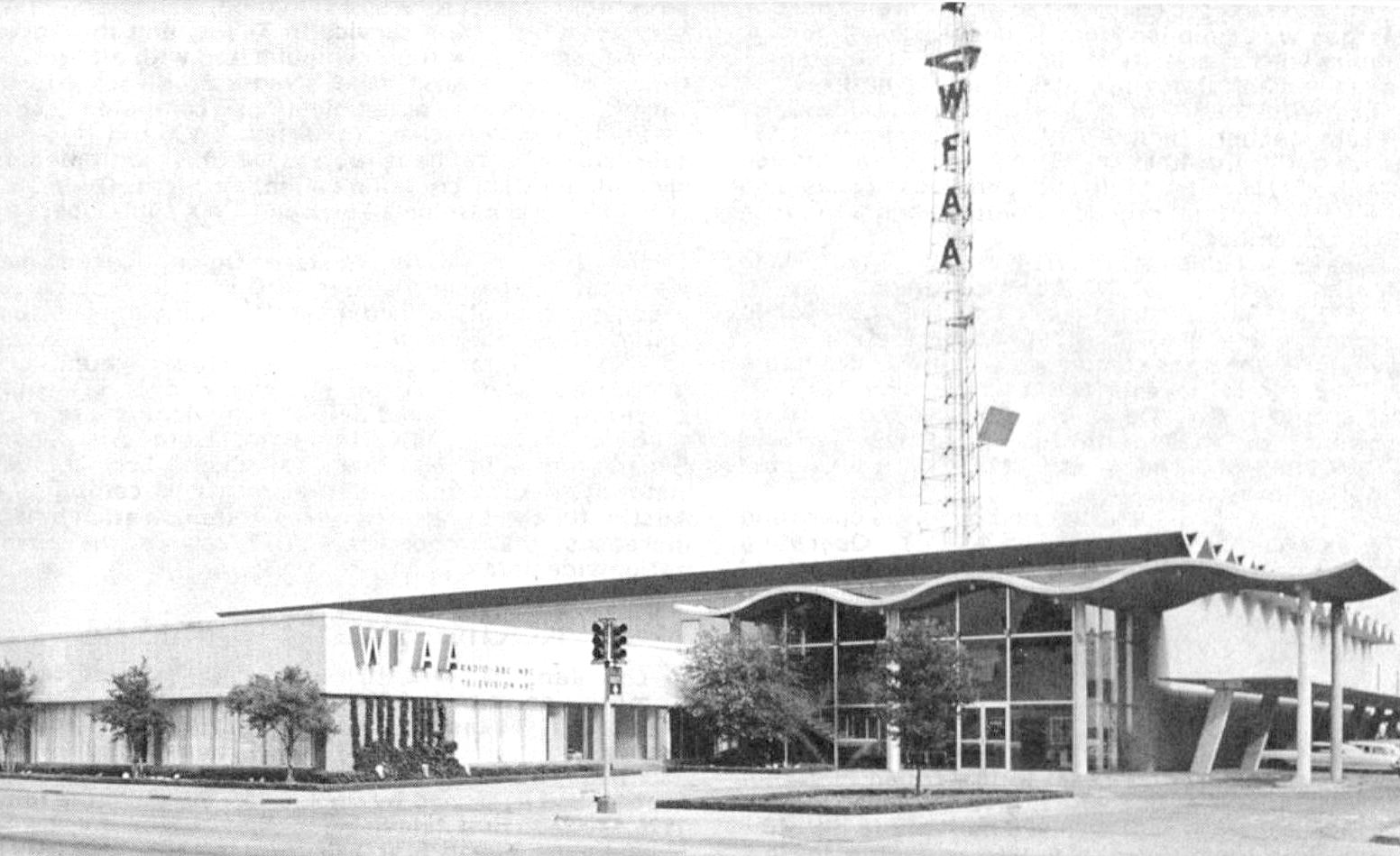
Above, the WFAA studios, seen in a wonderful painting by Dallas artist Ed Bearden. The image is from a postcard touting the brand new ultra-modern building designed by one of Dallas’ top architects, the prolific George L. Dahl. The building still stands at Young and Record streets, next to the home of its then-sister-company, The Dallas Morning News (appropriately, the News building was also designed by Dahl … as was the soon-to-be HQ of The News, the old Dallas Public Library at Commerce and Harwood).

The super-cool mid-century “WFAA AM-FM-TV broadcasting plant” was completed in 1961. It opened to much fanfare in April of that year, with star-studded festivities featuring personal appearances by a host of ABC stars such as Connie Stevens, Johnny Crawford, and Nick Adams. If catching a glimpse of “Cricket” or the Rifleman’s son didn’t wow you, the public was also invited to tour the building and gawk at its state-of-the-art radio and television studios. This large 68,000-square-foot building allowed WFAA radio and WFAA-TV to be housed under the same roof. Before this, the AM and FM radio stations were broadcasting from studios atop the Santa Fe Building, and Channel 8 was broadcasting from their television studios on Harry Hines, at Wolf (studios which they sold to KERA at the end of 1959).

Aside from the innovative “folded-plate” concrete roof, one of the first things I noticed about this building was the staircase behind a “wall” of plate glass — I was instantly reminded of the staircase from the old Rogers Electric building (now Steinway Hall) on the Central Expressway service road at McCommas — all it needed was a gigantic ficus tree. (Unsurprisingly, that building — built in 1959 — was also designed by the very, very busy George Dahl.)

Cool building, cool architectural design, cool artistic rendering.

**

Below is an early pre-construction rendering of the WFAA building, from 1959.

wfaa_bw_rendering_1959

*

And a photo from the early 1970s.

wfaa_texas-almanac_1974-75

*

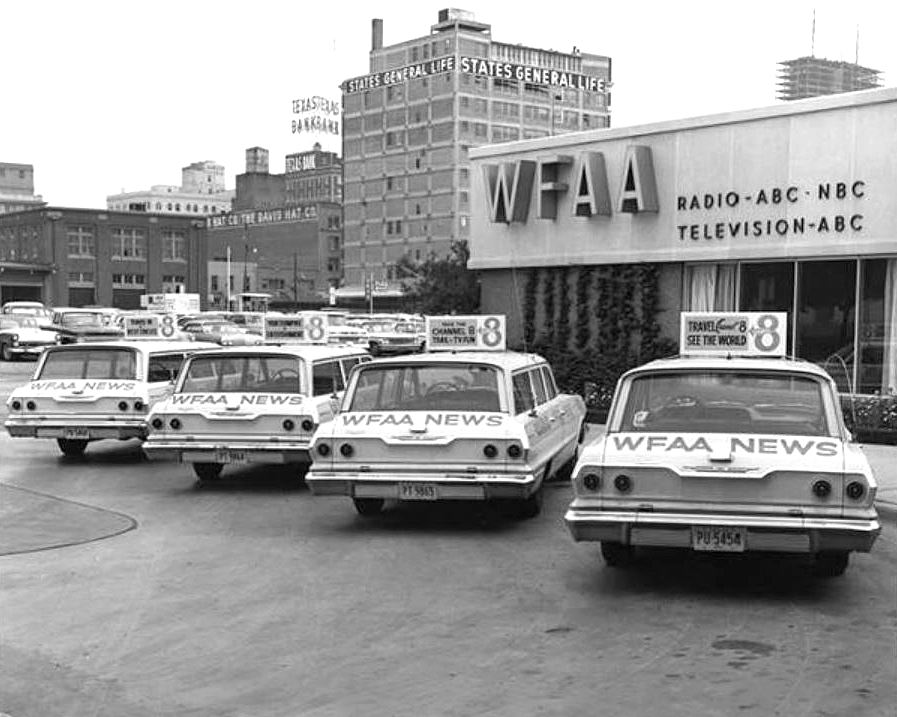
And here’s a view taken from the side of the building in 1963, looking toward Young Street.

wfaa_news-vehicles_belo-records_degolyer_smu_1963

*

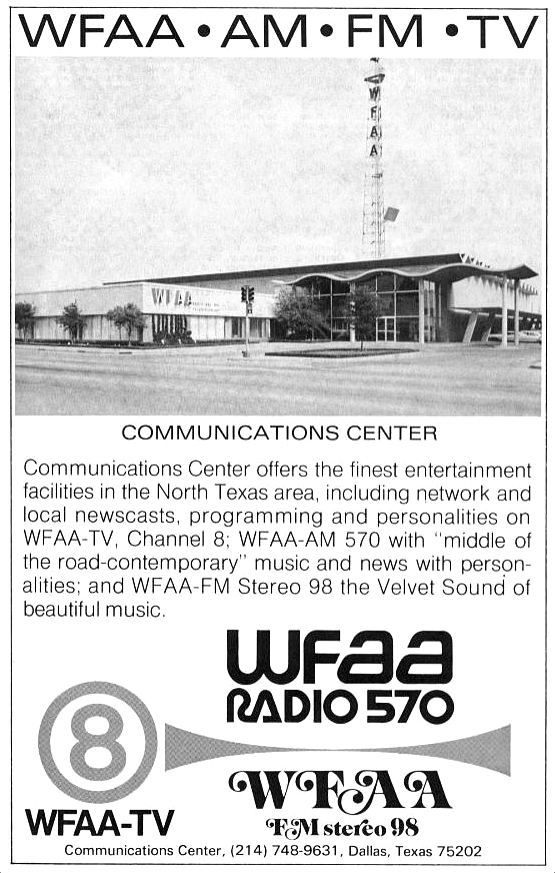
The early-’70s photo above was taken from this ad from the 1974-75 Texas Almanac. Ah, “Communications Center.” (I have to say, I’ve never heard of “WFAA-FM Stereo 98” nor their slogan “The Velvet Sound of Beautiful Music.” In fact, by the time this edition of the Almanac was published, WFAA-FM no longer existed — it had changed both its name — to KZEW — and its format — to rock.)

wfaa_texas-almanac_1974-75_portal

***

Sources & Notes

Color postcard found on the entertaining blog Texas Pop Culture; see the post — which includes scans of the reverse side of the card — here.

Bearden’s signature is a bit hard to make out — the slightly distorted magnified signature can be seen here.

The more I see of Ed Bearden’s work, the more I like it. See his Dallas skyline from 1958 here; see his Dallas skyline from 1959 here.

Photo of the Channel 8 news vehicles is from the Belo Records collection, DeGolyer Library, Central University Libraries, Southern Methodist University; more info on this photo is here.

More on architect George L. Dahl can be found at the Handbook of Texas, here, and at Wikipedia, here.

Read more about the history of FM radio in Dallas — including histories of WFAA-FM and KZEW — at the indispensable website of local broadcasting history — DFW Retroplex, here.

*

Copyright © 2017 Paula Bosse. All Rights Reserved.
Country Music — Every Saturday Night on Channel 11

country-music_saturday-night_channel-11_ktvt_1969The warm-up for wrestling…

by Paula Bosse

I have a surprisingly deep knowledge of classic country music. And it can all be traced back to sitting with my father every Saturday night as he watched the jam-packed lineup of country music TV shows on KTVT-Channel 11.

Followed by wrestling.

Which I also have a surprisingly deep knowledge of. If only by osmosis.

Thank you, Channel 11, for providing this bonding time with my father, which I didn’t really appreciate as a child, but I do now.

(And, yes, I’m happy that my antiquarian bookseller father and Comparative Literature-degree-holding mother often took our family to the Sportatorium to see both country music package-shows and wrestling matches. You can’t say our family wasn’t well-rounded.)

***

Sources & Notes

1969 ad from an odd little local publication (which probably used to belong to my father) called Country and Western — The Sound That Goes Around the World, published in DFW by PegAnn Production.

*

Copyright © 2017 Paula Bosse. All Rights Reserved.
Tiny Tim Mobbed at the Melody Shop — 1969

tiny-tim-appearance_dallas_WFAA_SMU_june-1969
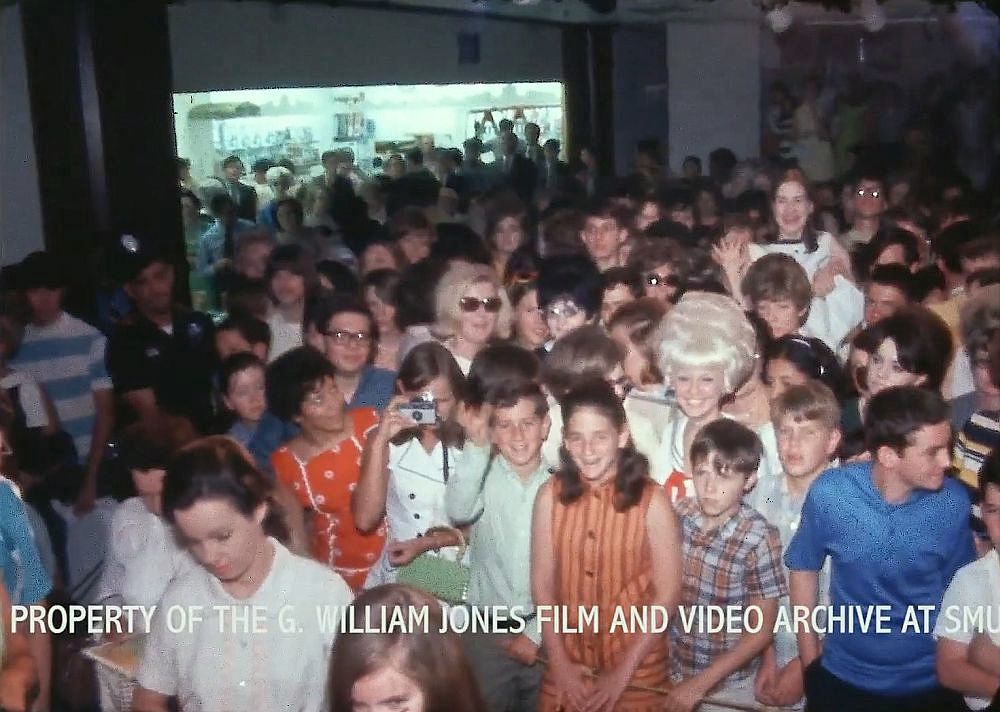
Dallas teens loved Tiny Tim… (Sanger-Harris book-signing, June 1969) 

by Paula Bosse

Tiny Tim — one of the most … unusual performers of the 1960s — was a hit with teenagers when he made his first appearance in Dallas at the Melody Shop in NorthPark mall on January 23, 1969. What had been expected to be a nice little autograph party which might attract a small number of fans and curiosity-seekers turned into something altogether unexpected.

tiny-tim_melody-shop_1969

Tiny Tim (…”Tiny”? “Tim”? “Mr. Tim?”…) had the unlikeliest of hits during the hippie-era: “Tiptoe Through the Tulips,” a lilting little ukulele-accompanied song which had originally been a hit in 1929. Tiny Tim’s first few appearances on U.S. television must have caused a lot of heads to be scratched and/or jaws to be dropped. He was just kind of … weird. But gentle, and he seemed to be a genuinely nice fellow who just happened to have a penchant for songs from the megaphone-era of popular music. If you’ve never seen footage of a Tiny Tim performance, search for a clip of him on the Tonight show around 1968.

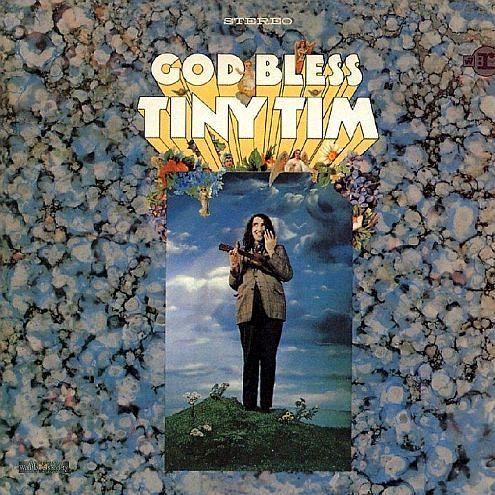
tiny-tim_god-bless_cover

So anyway, Tiny was booked to do a little autograph party at the Melody Shop in NorthPark mall. I’m not sure what sort of crowd they thought they’d get, but it’s safe to say they did not expect 5,000 teenagers. The news report the next day was peppered with words like “pandemonium,” “swarm,” “mob scene,” and “human wall.” Who knew a 36-year-old man who strummed a ukulele and sang songs from the Victrola-age in a nasal falsetto would whip up that much enthusiasm amongst Texas teenagers?

My favorite description of the “riot” was this one:

Inside, a disheveled Tiny Tim was crouched on the floor behind a row of electric organs….. “Pretend he’s not in the store,” directed a manager. Tiny Tim, his shirttail out and his orange, green and brown tie twisted to the side, huddled alone on the floor. (“5,000 Kids Mob Tiny Tim,” Dallas Morning News, Jan. 24, 1969)

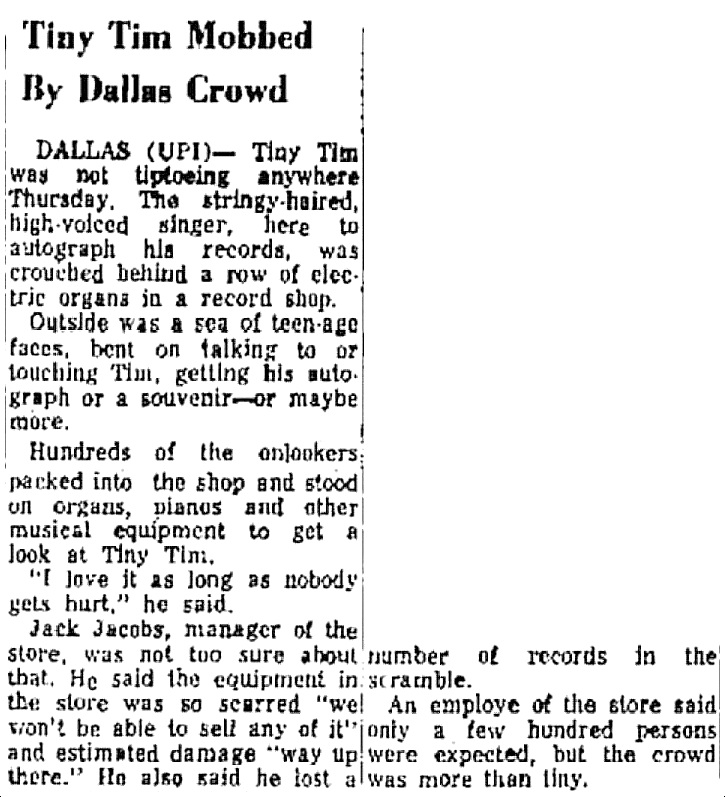
The story was even picked up by wire services. (Click article below to see a larger image.)

tiny-tim_amarillo-globe-times_012469
Amarillo Globe Times, Jan. 24, 1969

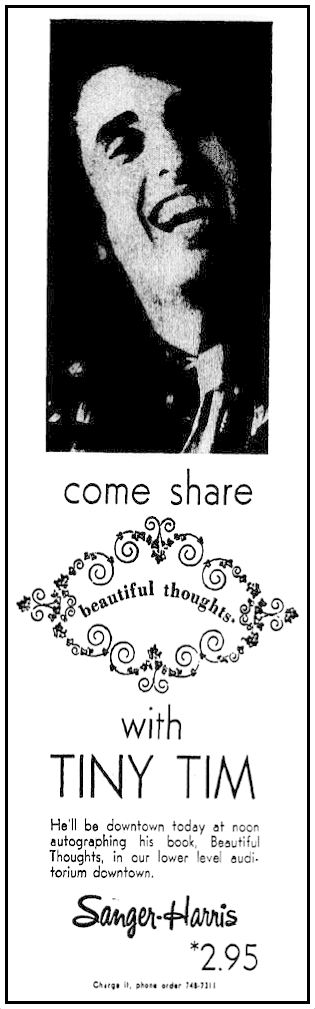
Tiny was back in Dallas a few months later, this time to do a book-signing at the downtown Sanger-Harris. (Yes! He wrote a book!)

tiny-tim_dmn_061769_book-signing
June 17, 1969

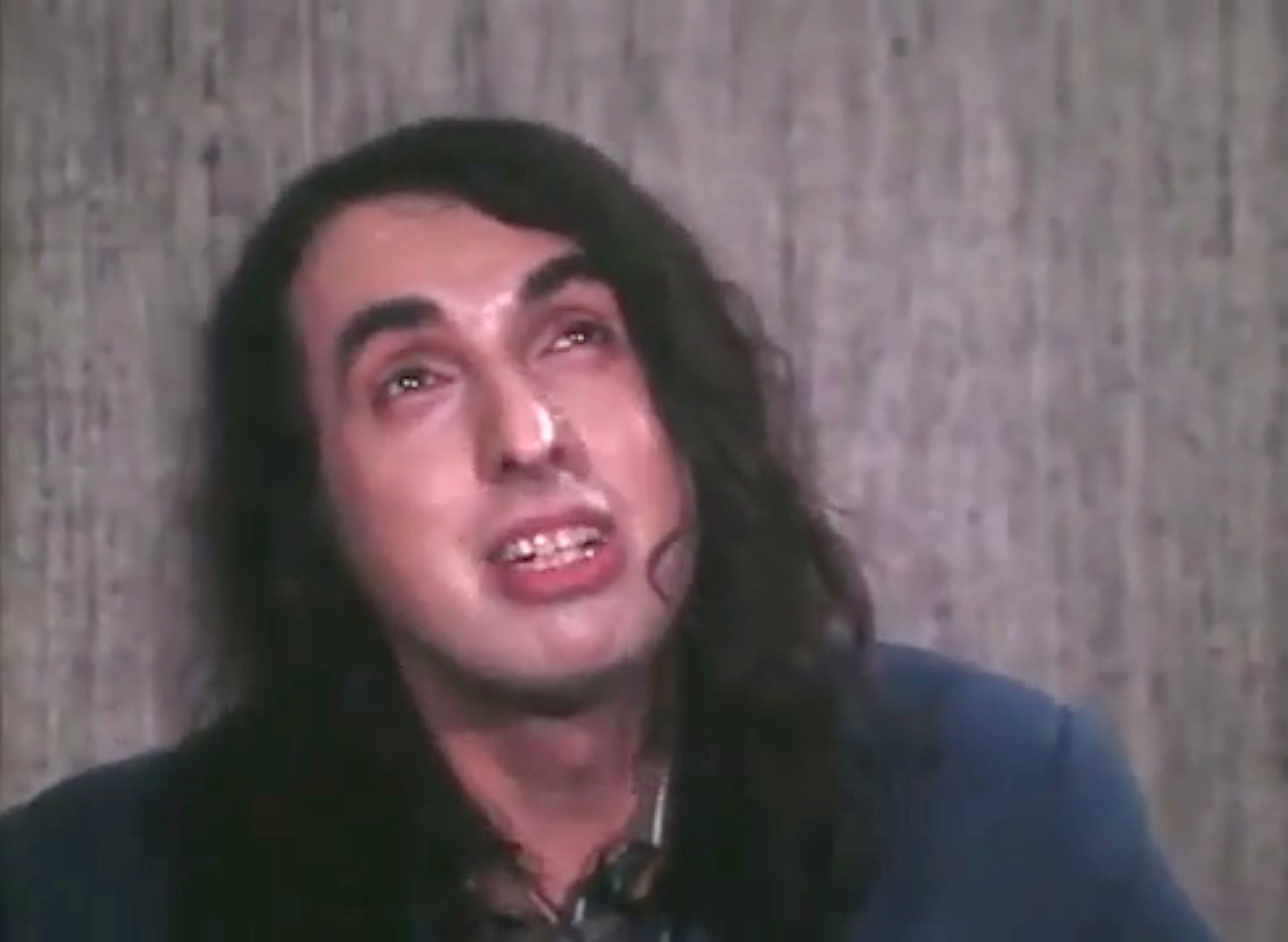
No riot was reported this visit, but Sanger’s still packed by fans who wanted a book signed by Mr. Tim (who signed with a pink quill pen). While in town, he give a little interview and an impromptu performance at a press conference (am I the only person who sees shades of Jeffrey Tambor here?):

*

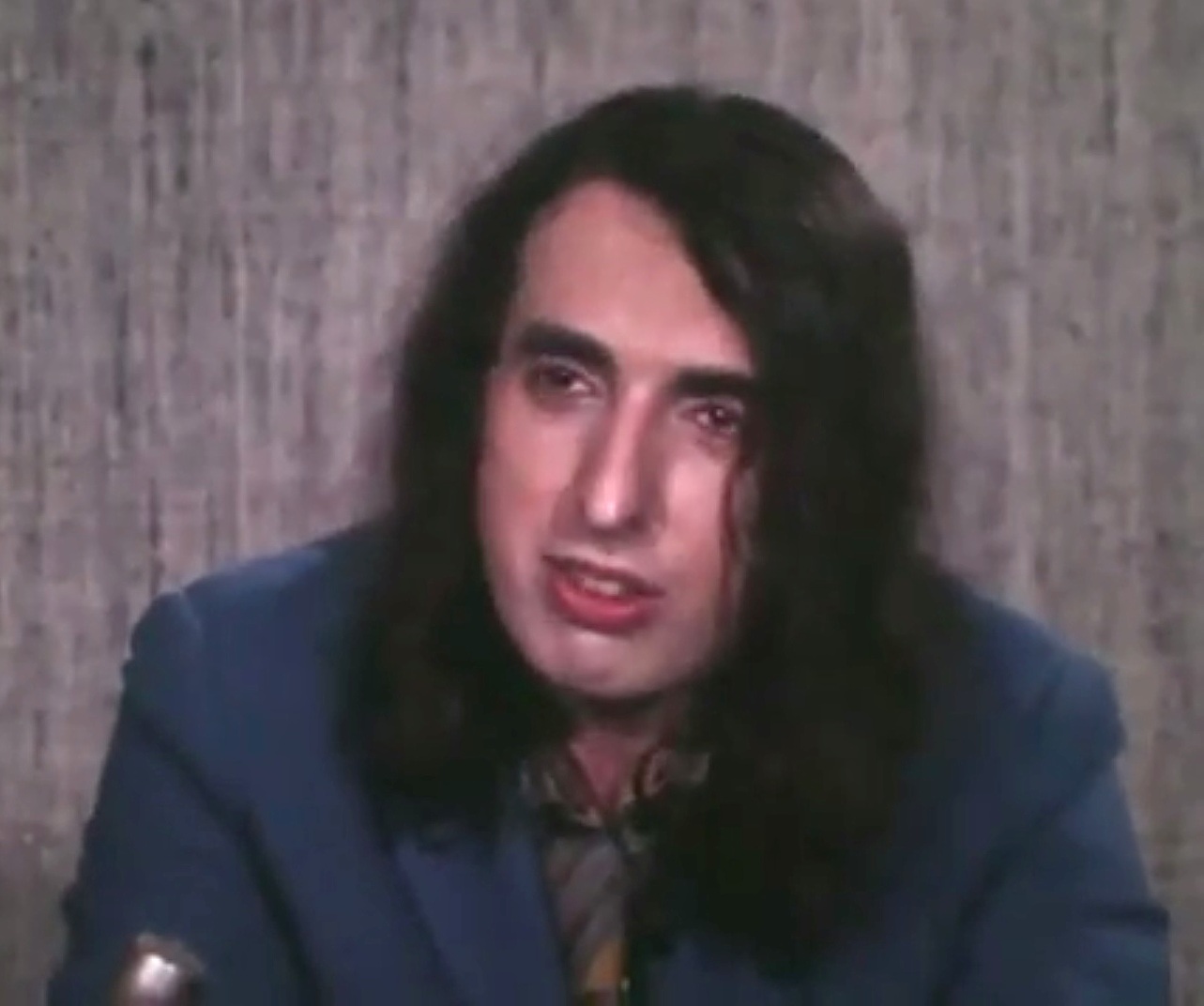
tiny_ch-8_3  tiny_ch8_2  tiny-ch-8_1

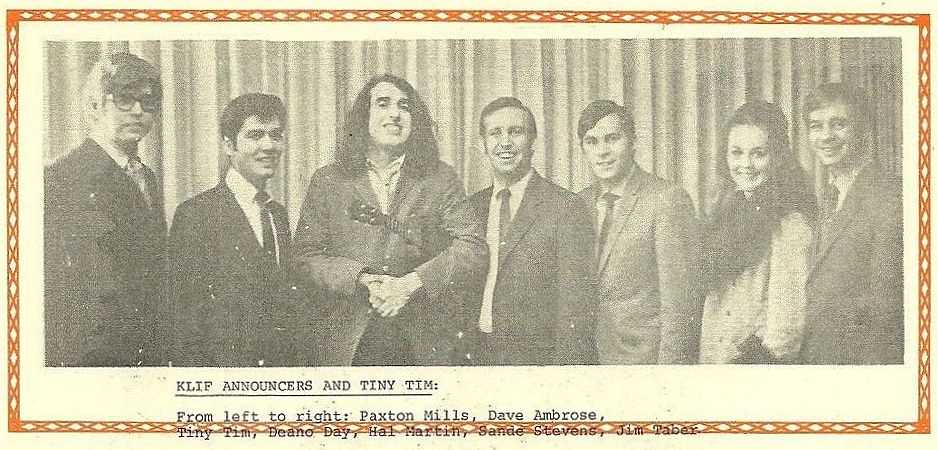
Also in 1969, he took time out to pose with KLIF on-air talent Paxton Mills, Dave Ambrose, Deano Day, Hal Martin, Sande Stevens (not sure if she worked for KLIF), and Jim Taber, seen below.

klif_tiny-tim_1969_ebay_photo-det

klif_tiny-tim_1969_ebay

But wait, there’s more… he was back in Dallas in September, 1970 for a NINE-DAY engagement (two shows nightly) at Abe Weinstein’s famed downtown burlesque house. (I don’t know if the strippers took the time off while Tiny was in residence or if they might have entertained between his sets.) Here’s a clip from a press conference during that visit:

And, why not, here’s an early publicity photo of Herbert Khaury, the man who would one day become famous as the singer Bing Crosby once described as having (I paraphrase) a vibrato big enough to throw a Labrador through.

tiny-tim_headshot

***

Sources & Notes

The 1969 Chanel 8 video is from the WFAA Newsfilm Collection held by the Hamon Arts Library, Southern Methodist University; it is posted on YouTube here (the first image and the three color photos of Tiny Tim are screenshots I captured from the video); the 1970 footage is from the same source and can be found on YouTube here.

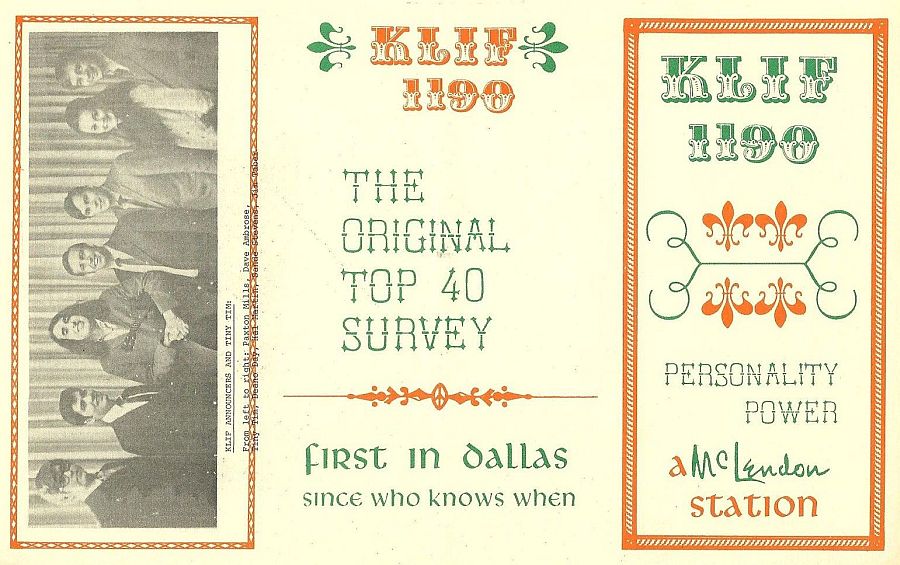
KLIF promotional material found on eBay several months ago. The back of the card lists the KLIF’s top 40 of the week, here.

Glamour shot of Mr. Khaury found somewhere on the internet.

Tiny Tim Wikipedia entry is here.

One would be remiss in not mentioning Tiny Tim’s other ties to Dallas, namely his association with Bucks Burnett’s Edstock and Burnett’s tiny Tiny Tim museum from the 1990s. I’d link to articles in the Dallas Observer, but every time I go to the DO site my computer freezes. I encourage you to seek out these articles yourself.

More on Tiny’s January, 1969 visit to Dallas can be found in these Dallas Morning News articles:

  • “5,000 Kids Mob Tiny Tim” by Jean Kelly, with photo (DMN, Jan. 24, 1969)
  • “Magical Mystery Tour: On Meeting Tiny Tim” by Marge Pettyjohn, “YouthBeat” editor, with photo (DMN, Jan. 25, 1969)

*

Copyright © 2017 Paula Bosse. All Rights Reserved.