Flashback : Dallas

A Miscellany: History, Ads, Pop Culture

Category: Dallas Skyline

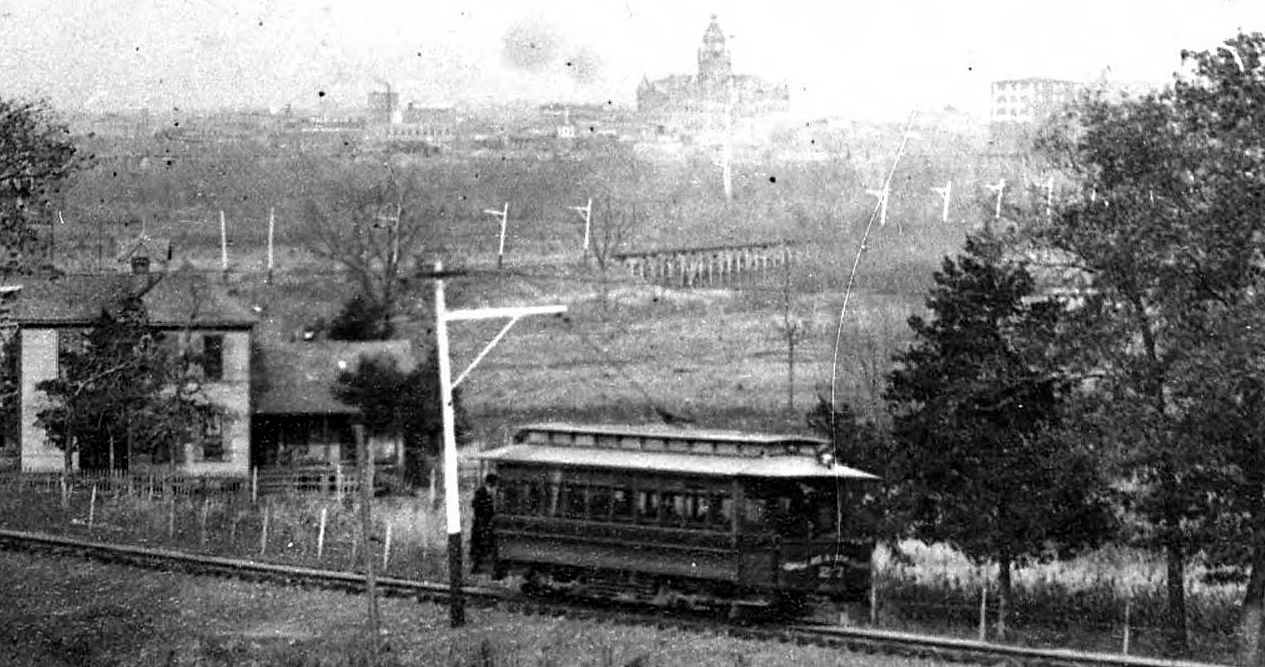
Oak Cliff Trolley — 1895

trolley_oak-cliff_stark_1895_hpl“Dallas from Oak Cliff” by Henry Stark, 1895/96 (click for larger image)

by Paula Bosse

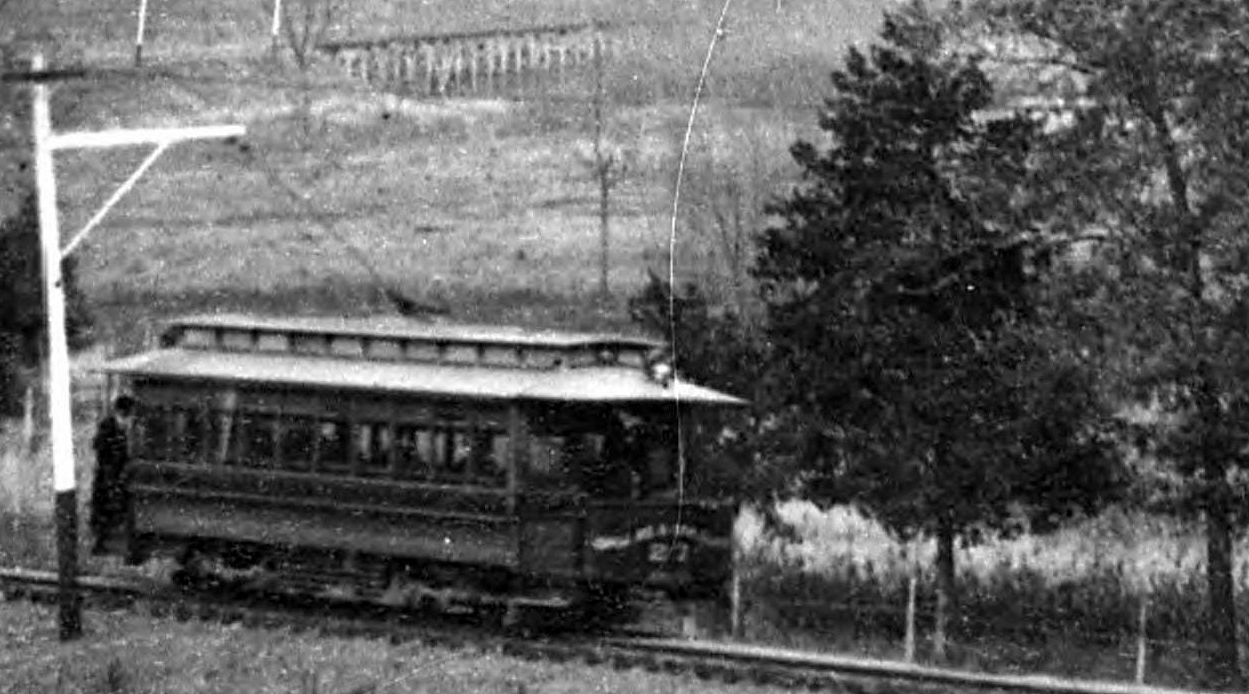
As present-day trolley service to Oak Cliff has been in the news in recent months, here’s a pastoral view of a little trolley chugging through the wilds of Oak Cliff in 1895. In the background, across the river, the still-fairly-new courthouse looms like a mirage. Below are a few details, magnified. (All images are much larger when clicked.) Enjoy!

trolley_oak-cliff_det1

trolley_oak-cliff_det2

trolley_oak-cliff_det3

trolley_oak-cliff_det4

***

Photo (labeled by the Houston Public Library as “Trolley moving through the woods”) is by Henry Stark, taken on a visit to Dallas in the winter of 1895/96; from the collection of the Houston Public Library — it can be viewed here.

For more on Henry Stark, see the previous post “Henry Stark’s ‘Bird’s Eye View of Dallas,'” here.

Other photos which I’ve “Zoomed In On the Details” can be seen here.

CLICK PHOTOS — REAL BIG.

*

Copyright © 2014 Paula Bosse. All Rights Reserved.

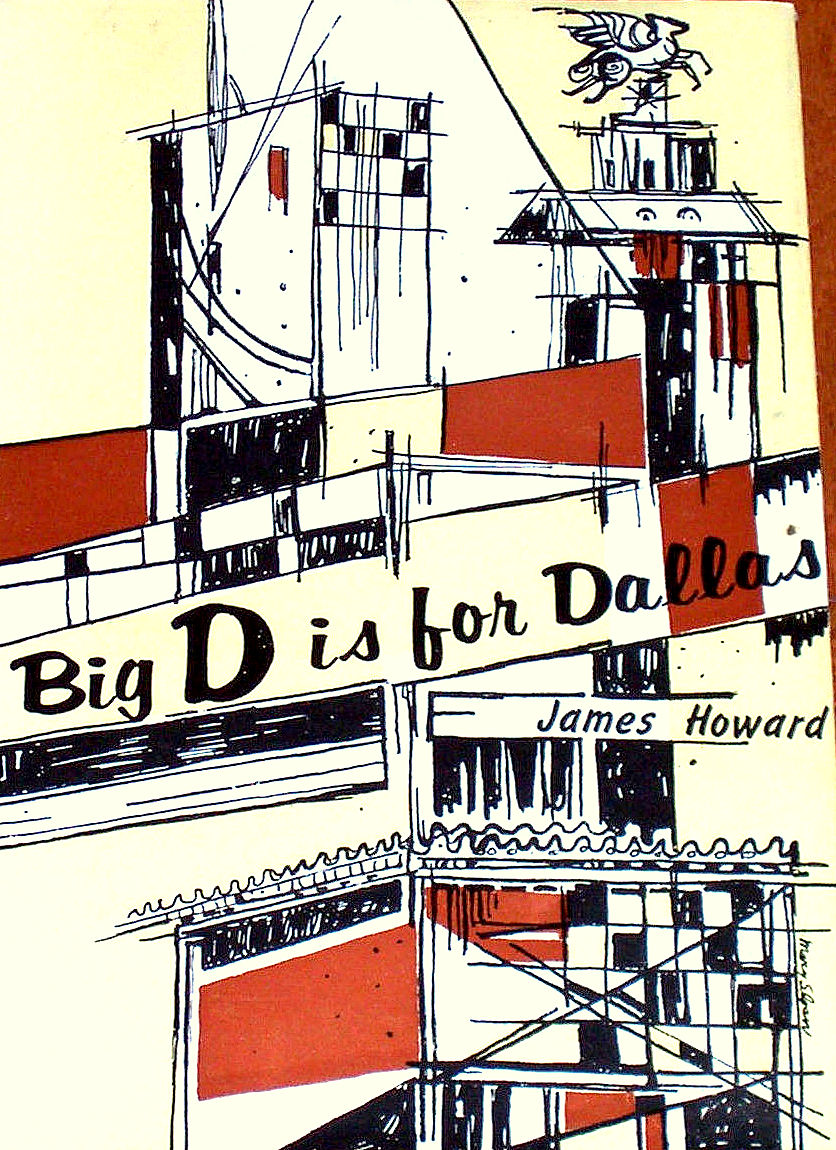
Mary Sloan’s Stylized Dallas Skyline

mary-sloan_jacket-art_front_1957-smArt by Mary Sloan, 1957

by Paula Bosse

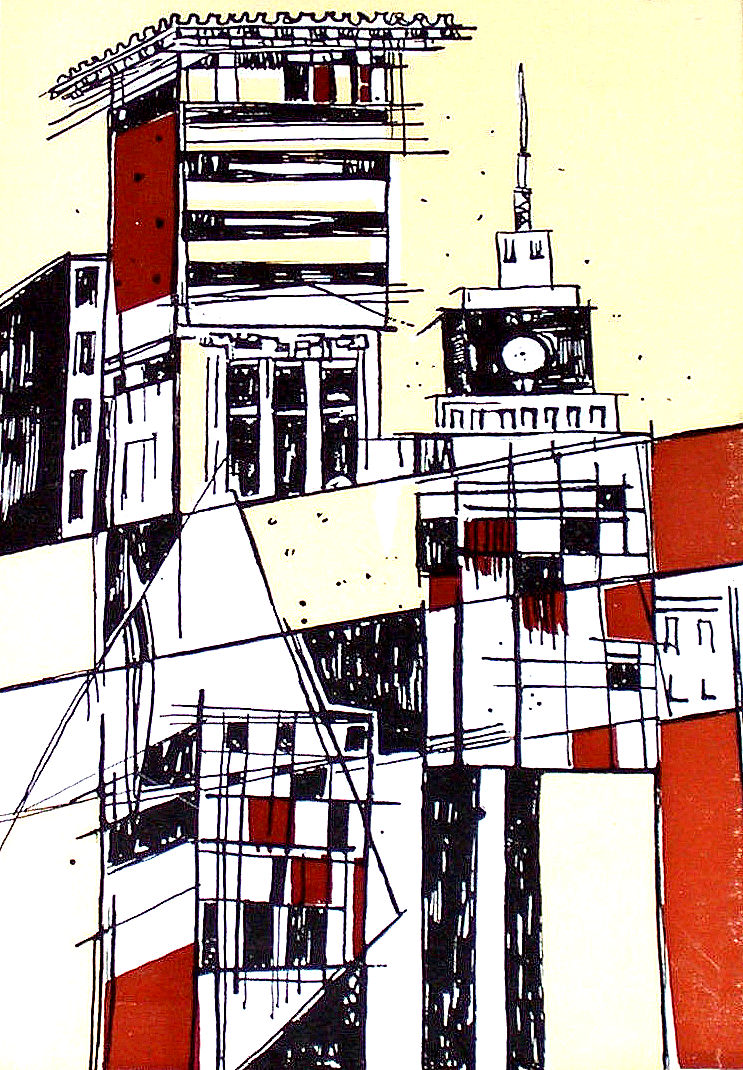
Dust jacket artwork and design are often taken for granted, which makes no sense because the cover of a book does actually tend to drive book sales. Things have improved in recent years, but in the past, these artists were frequently not credited at all. Here’s an example, though, of jacket art that actually gives full credit to the artist, Mary Sloan. This fantastic, stylized depiction of the Dallas skyline positively reeks (in a good way) of mid-century illustration. I don’t think I’ve seen this before, which is a bit of a surprise, because I was a bookseller for many years, specializing in Texana titles. I’m not sure how this one escaped me, but I’m pretty sure I’d remember this cover art.

Mary Sloan was born Mary Key in about 1925 and grew up in Denton. She studied art in Denton and Austin, working under noted Texas artists such as William Lester, Everett Spruce, and Charles Umlauf. She won numerous art competitions and is represented in several Texas museums. She settled with her husband and family in Corpus Christi where she taught art for many years at Del Mar College. In addition to painting and drawing, she was also a proficient mosaic artist and designed glass and stone mosaic murals. I don’t know if she did any other book jacket art — it would be a shame if this is all she did, because I think it’s really great.

mary-sloan_jacket-art_back_1957_smRear panel of dust jacket

mary-sloan_ad_swhq_1957-det

mary-sloan_swhq_1957_ad-text

***

Sources & Notes

Dust jacket for Big D is for Dallas by James Howard (Austin: self-published, 1957), a collection of biographical profiles of Dallas business luminaries.

Black-and-white image of the cover art and accompanying text are from an ad that appeared in the Southwestern Historical Quarterly in 1957.

*

Copyright © 2014 Paula Bosse. All Rights Reserved.

Henry Stark’s “Bird’s Eye View of Dallas” — 1895/96

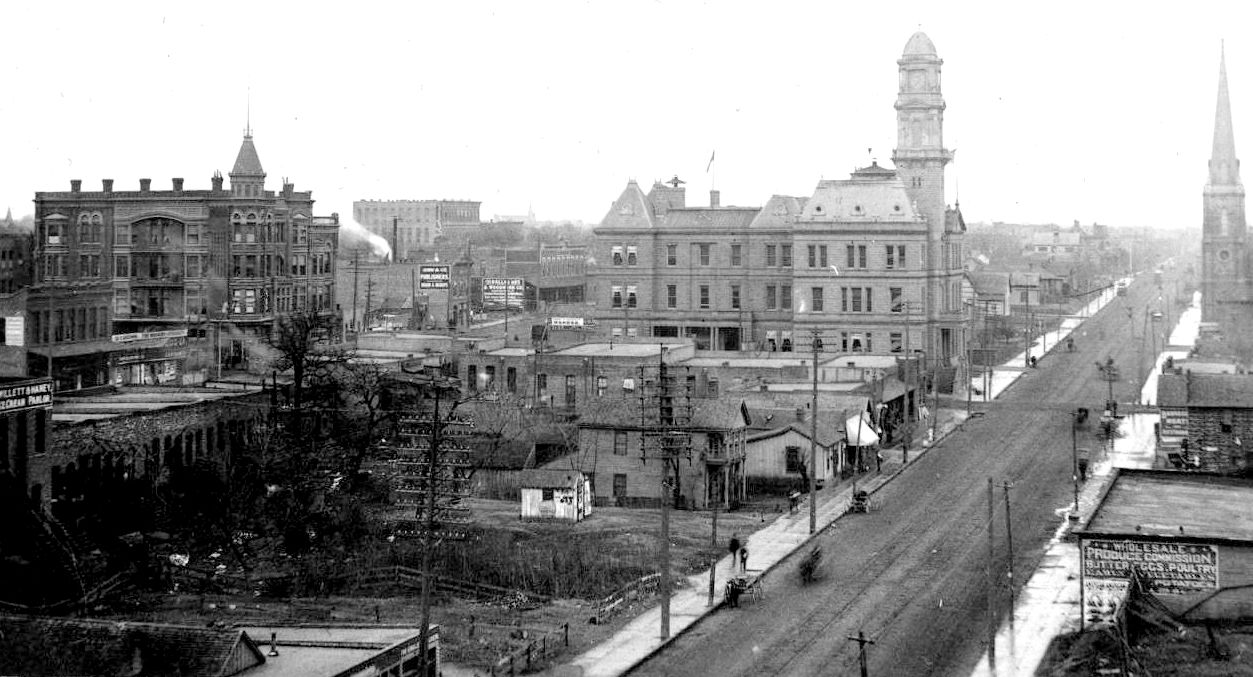
stark_downtown_1895-96_hplCommerce St. looking east from about Akard

by Paula Bosse

In the winter of 1895-1896, a St. Louis photographer named Henry Stark traveled to Texas, photographing scenes and vistas across the state. According to The Handbook of Texas, he is believed to be “the first photographer to have made an extensive photographic record of Texas.” A collection of his photos was published under the title Views in Texas.

The photograph above shows Commerce Street looking east, with the post office and its tall clock tower dominating the scene (the clock shows that it is 9:35 in the morning). The Old Post Office was bounded by Main, Ervay, Commerce, and St. Paul.

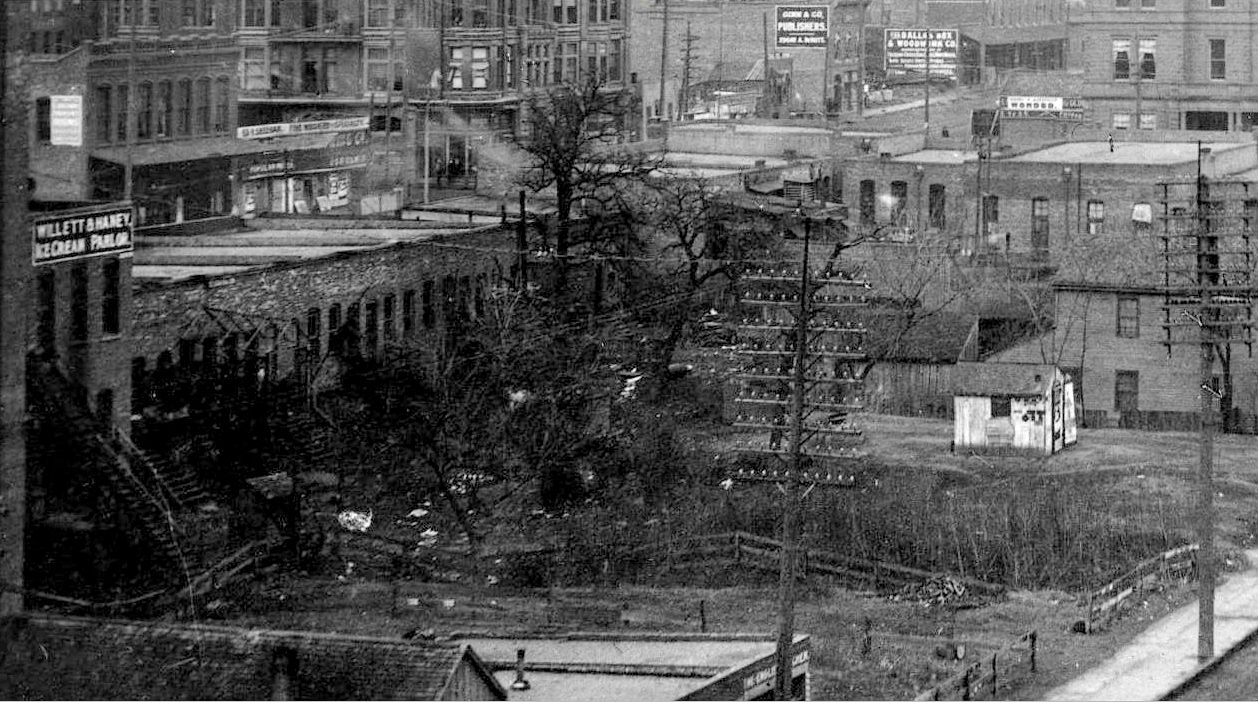
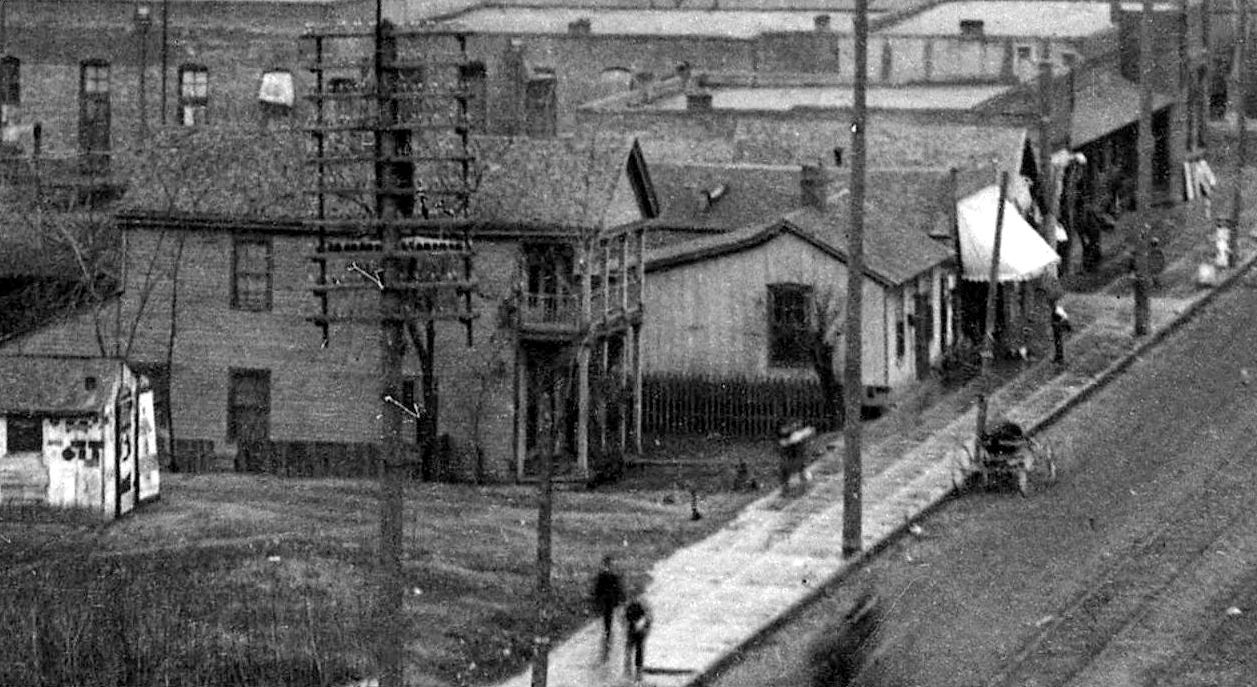
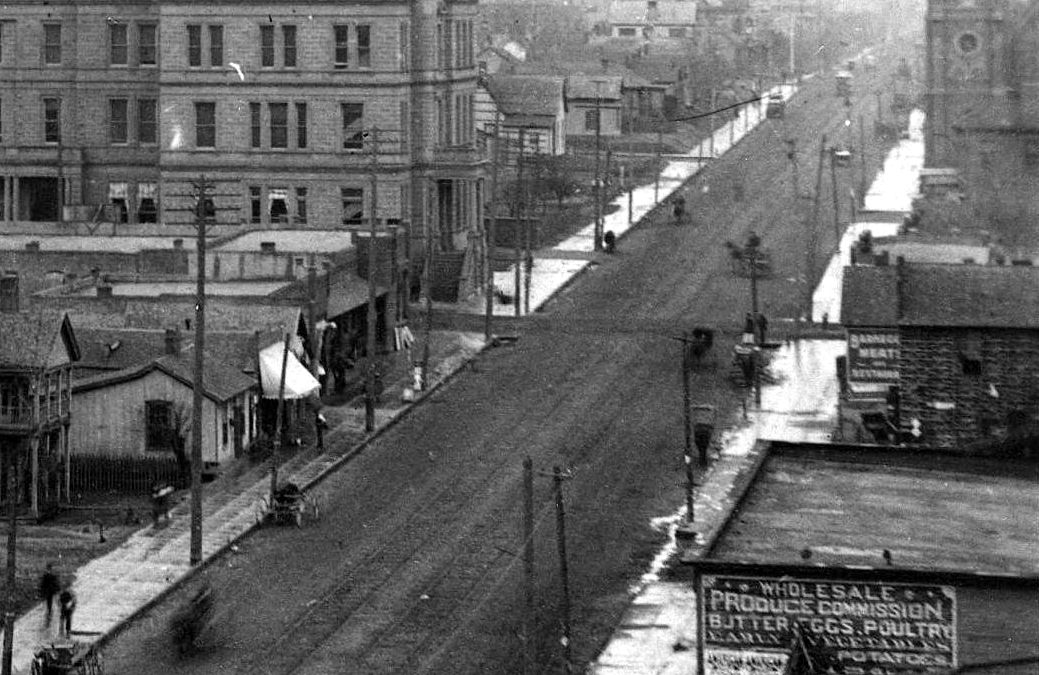
This is a great photo, showing Dallas as I’ve never seen it before. I’ve zoomed in to see the “hidden” details. (All photos are larger when clicked.)
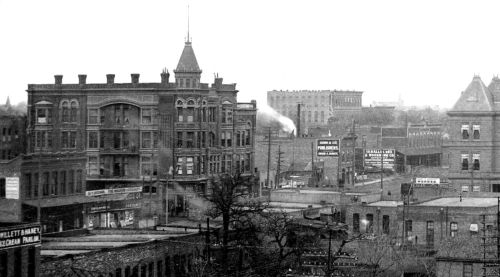
stark_det1What is the building on the left? It’s very unusual-looking. (UPDATE: See the comments below. This appears to be the adjoining Bookhout and Middleton Buildings at Ervay and Main.)
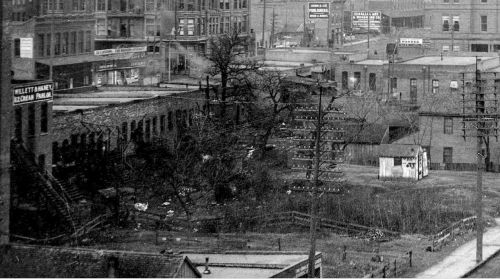
stark_det2This is my favorite detail. All that trash. And vacant lots. And a haphazard, meandering fence. Are those steps leading to rear entrances of buildings facing Main? And those utility poles! That block looks kind of squalid. Not Dallas at its best. I think this would be around Akard. (UPDATE: A reader wrote to say that this looks like a “ravine” — that the fence may be following the course of an old stream — something that might explain why that area of prime real estate hadn’t been developed yet.)
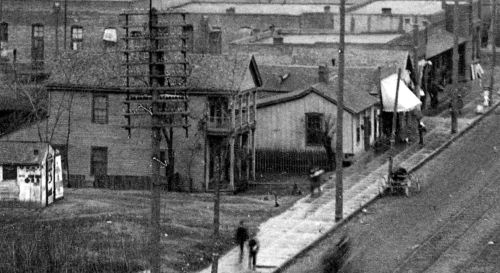
stark_det3Houses just a few steps from the giant post office building. Horse-drawn buggies parked at the curb. People on the sidewalk. What looks like a man with his hands on his hips looking down at a child. Or maybe a dog.
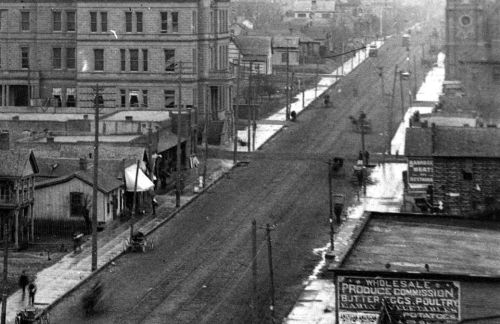
stark_det4A bustling Commerce Street at the intersection of Ervay, with trollies in the distance.

*

This photograph shows almost exactly the same view as one I posted earlier under the title “Something Like N.Y.” — check out the 1904 version here.

***

Sources & Notes

The photograph, by Henry Stark, is from the Houston Metropolitan Research Center, Houston Public Library. The resolution is a bit grainy when trying to enlarge the details — to explore the photo for yourself, see it here.

What little is known of Henry Stark can be read in the brief Handbook of Texas bio, here.

For another Henry Stark photo, see the post “Oak Cliff Trolley — 1895,” here.

For other examples of photographs I’ve zoomed in on to reveal unintended vignettes, see here.

*

Copyright © 2014 Paula Bosse. All Rights Reserved.

A Decade of Spectacular Growth for the Dallas Skyline: 1929-1939

downtown_night_lloyd-long_smu_foscueA stunning view of the city at night… (click for larger image)

by Paula Bosse

Two photographs showing the same view: the top from about 1939, the bottom from 1928. This city has always been a show-stopper at night, but Dallas went from looking like a typical big, prosperous city to a glamorous and elegant, fantastically illuminated metropolis in the span of only ten years. The 1930s was a good time to be an architect in Dallas.

rotarian-magazine_jan-1929

***

Sources & Notes

Top photo by Lloyd M. Long, from the Edwin J. Foscue Map Library, Central University Libraries, Southern Methodist University; it is accessible here. To see this photo with major buildings identified, the labeled version is here. The view is from the Medical Arts Building. Elm and Ervay is the intersection at the lower left, and Pacific runs along the right.

Bottom photo from the January, 1929 issue of The Rotarian, showing its readers what was in store for them at their annual convention to be held in Dallas in May. The night-time skywriting is a nice touch. (It’s weird seeing the Magnolia Building before Pegasus was installed on top of it in 1934.)

Click photos for larger images.

*

Copyright © 2014 Paula Bosse. All Rights Reserved.


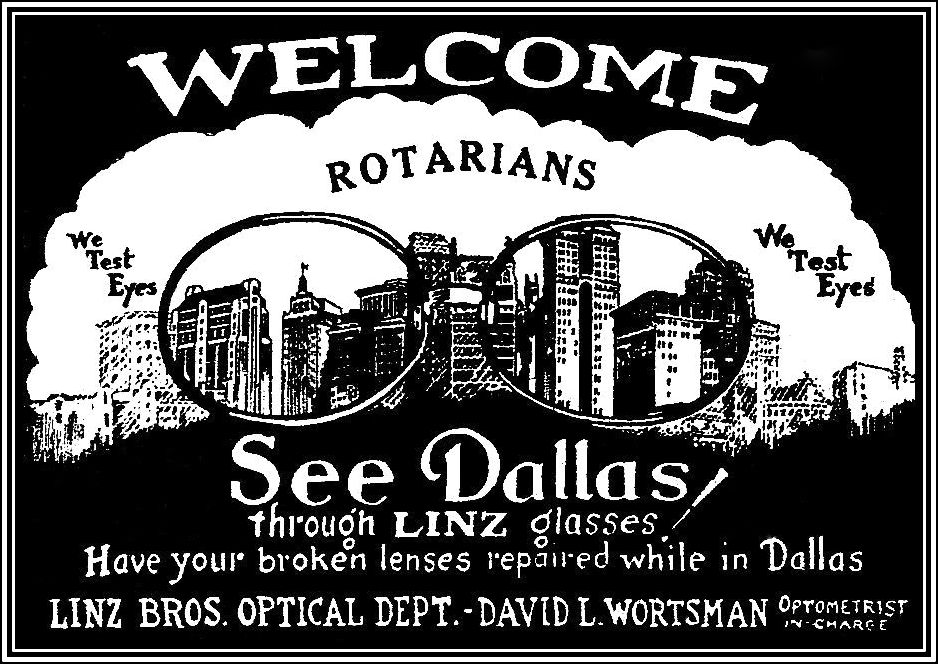
“See Dallas Through Linz Glasses!” — 1929

ad-linz_rotarians_dmn_052629

by Paula Bosse

What a great ad from 1929!

The huge annual convention of the Rotarians was underway in Dallas at this time — 10,000 people were flooding the city from around the world, and all the larger businesses had specially-branded advertisements aimed at the pool of potential new customers.

*

Copyright © 2014 Paula Bosse. All Rights Reserved

The Trinity River at the City’s Doorstep

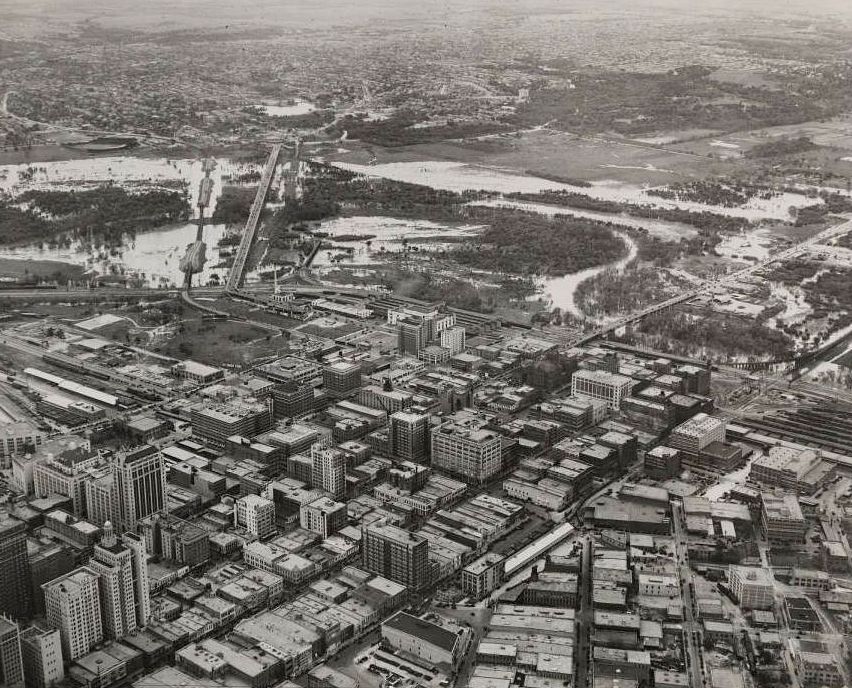
downtown_trinity_ca1920s_smu_foscueWhat? You didn’t know the Trinity River was straightened?

by Paula Bosse

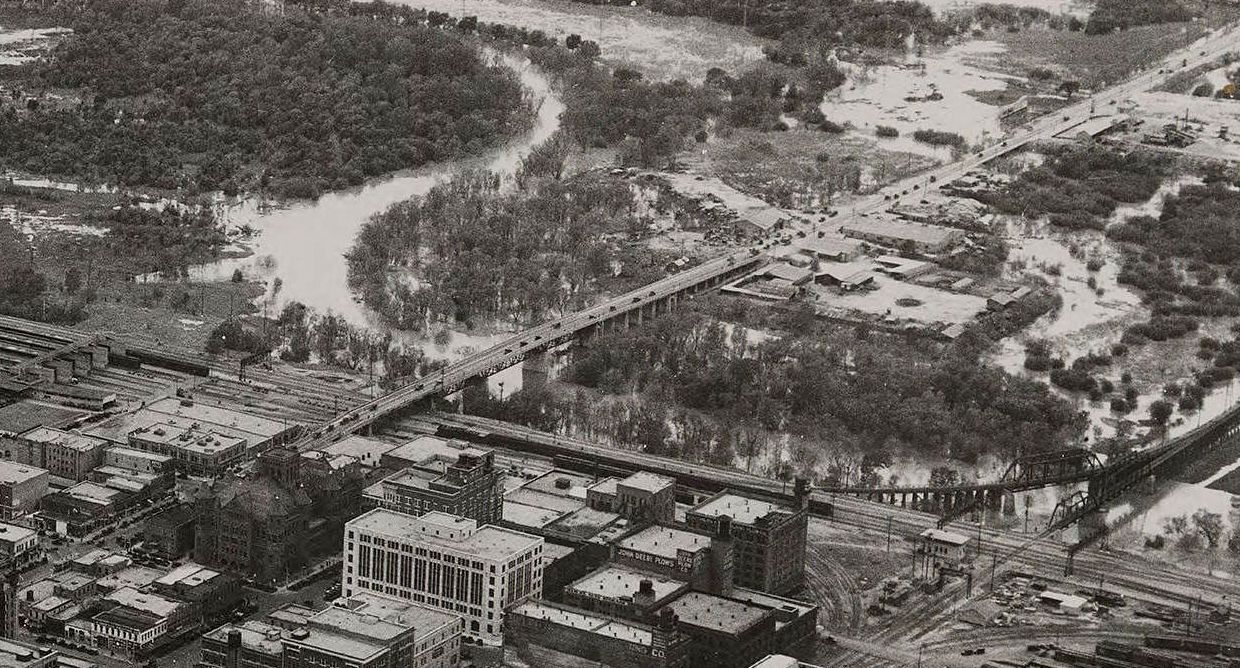
Back before Dallas decided to straighten out the Trinity River and move it a mile or two to the west (in an attempt to prevent future flooding), the river ran only about a block from the Old Red Courthouse. It’s so strange looking at this picture and seeing a river in a place where we’ve never seen it. It’s a shame they moved it (who knew you could “move a river”?), but flooding was a major issue, and, in fact, it looks like there was flooding the day this photo was taken. Below, you can see a magnified view — it looks so different from what we’re used to that it takes a second to get your bearings. Imagine how different Dallas would feel today if the Trinity had been allowed to run its natural course.

downtown_trinity_ca1920s_smu_foscue-det

***

Sources & Notes

Photograph by Lloyd M. Long, from the Edwin J. Foscue Map Library, Central University Libraries, Southern Methodist University; it can be seen here (with many of the buildings labeled) and here (without the labeling).

SMU has the photo dated “ca. 1930s or 1940s,” but I think it may be from the late ’20s. I’ve seen non-specific dates of the river’s realignment from the 1920s to the 1930s, but a couple of landmarks in the photo above place it sometime between 1925 (the year the Santa Fe buildings were constructed) and 1933 (the year the Hippodrome Theater — seen here, on Pacific — became the Joy Theater).

UPDATE: The river was straightened in 1928. See fascinating information about the when, where, why, and how of the Trinity River realignment, below in the comments — it was a true feat of modern engineering.

A few Trinity River-related links: the Trinity Commons Foundation site is here; the Trinity River Corridor Project site is here; and an interesting look at plans and proposals for the future of Dallas and the Trinity River can be read on the American Institute of Architects (Dallas) site here.

*

Copyright © 2014 Paula Bosse. All Rights Reserved.

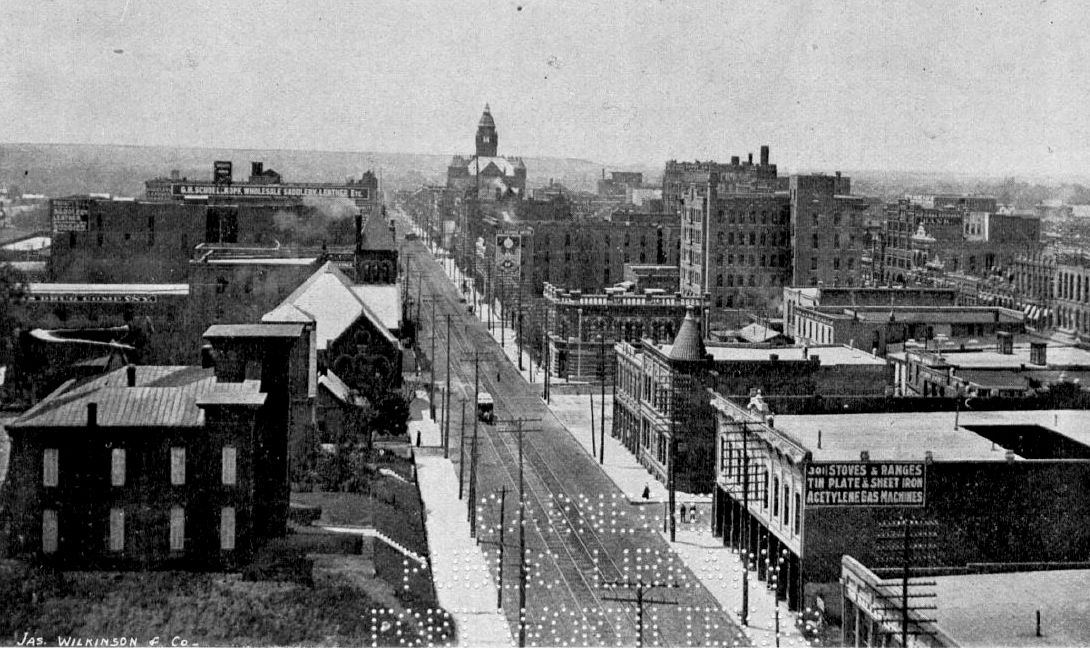
Commerce Street Looking West — 1900

commerce-west-from-akard_bohemian_1900_FWPL

by Paula Bosse

The companion photo from the one I posted yesterday. Both were taken by the same photographer (Jas. Wilkinson) and both appeared in The Bohemian magazine in 1900. It appears that both were probably taken from the top floor or roof of the Oriental Hotel at Commerce & Akard. The building about half-way up in this picture — the one on the right with the conical turret — is the Texas Land & Mortgage Company (seen here), located at Commerce and Field, placing the photographer at Commerce and Akard (the Oriental Hotel).

So it seems likely that the photo from yesterday (seen here) was from the Oriental looking north up Akard.

***

Photograph from The Bohemian magazine (1900) in the collection of the Fort Worth Public Library (which perforated the library’s name into the image).

Click photo for larger image.

*

Copyright © 2014 Paula Bosse. All Rights Reserved.

Plow vs Skyscraper

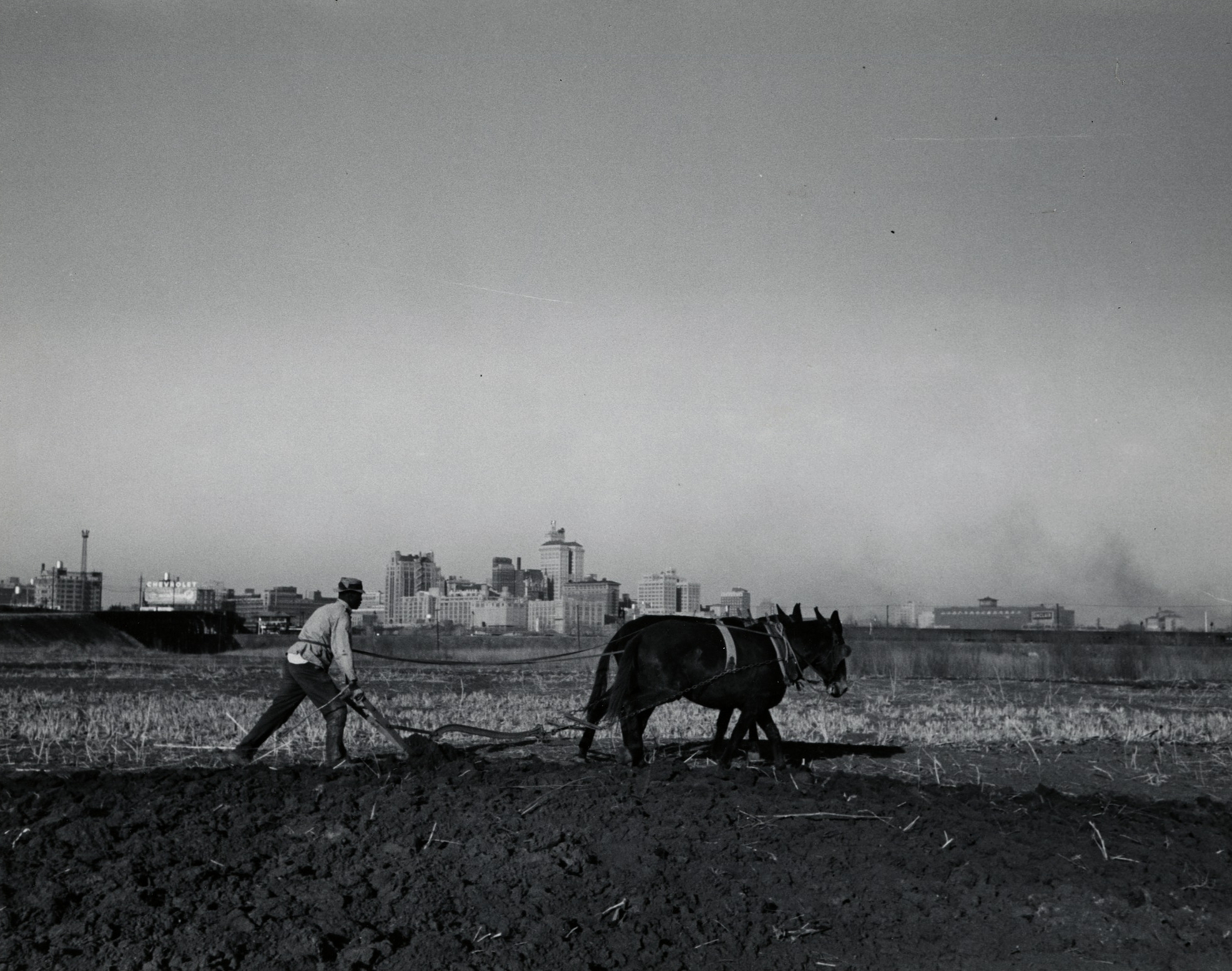
mydans_lucius-washington_smithsonian_1939(click for super-gigantic image)

by Paula Bosse

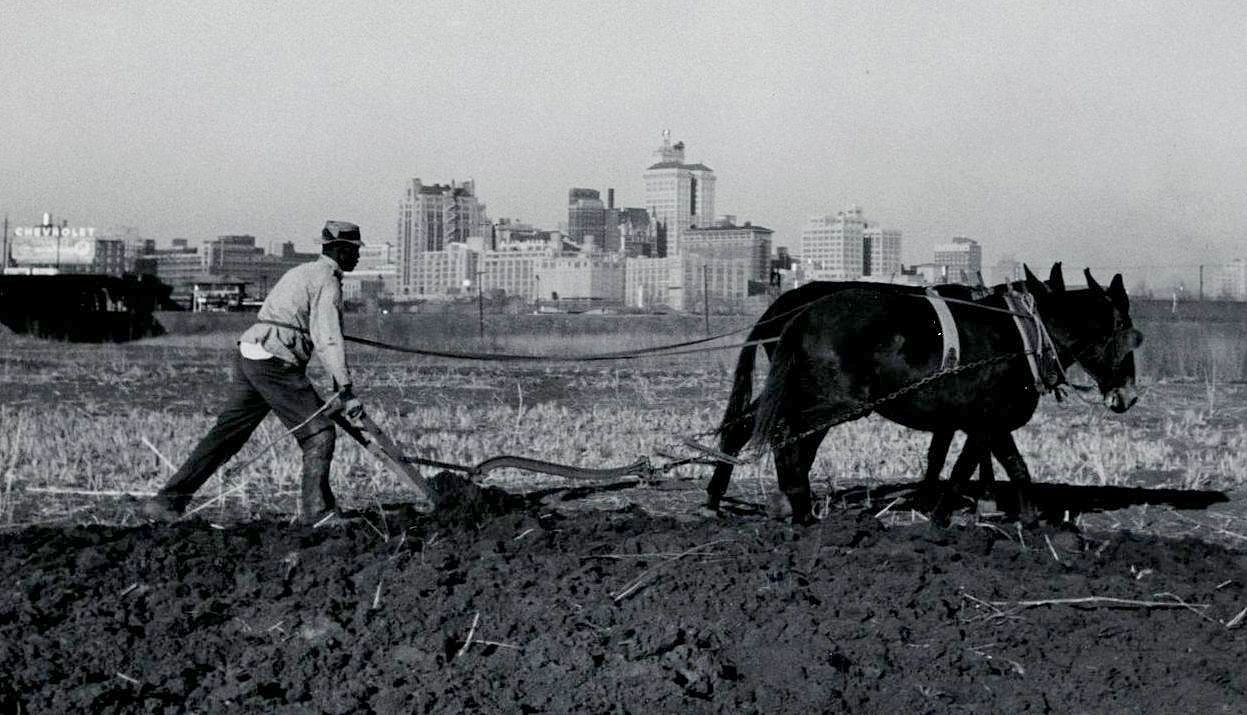
Here’s an unexpected view of the Dallas skyline, by legendary Life magazine photographer Carl Mydans. The photograph — titled “Lucius Washington and Two Mules Plow the Fields Before the Dallas Skyline” — is from the collection of the Smithsonian Institution, with catalog description here. Though the Smithsonian lists this photo as being from 1939, it’s possible that it was taken a year earlier, as The Dallas Morning News reported on April 2, 1938 that Mydans was in town shooting the Dallas skyline. A major article on Texas appeared in Life magazine a year later, in the April 10, 1939 issue, featuring a different, very large photo of the Dallas skyline by Mydans, which can be seen here.

Below, an enlarged detail, lightened a bit.

mydans_lucius-washington_smithsonian_1939-det

***

More on Mydans from the Duke University collection here, with examples of his FSA, Life magazine, and WWII reportage here.

Wikipedia article on Mydans here.

Click photos for much larger images.

*

Copyright © 2014 Paula Bosse. All Rights Reserved.

When the Flying Red Horse Could Be Seen From Miles Away

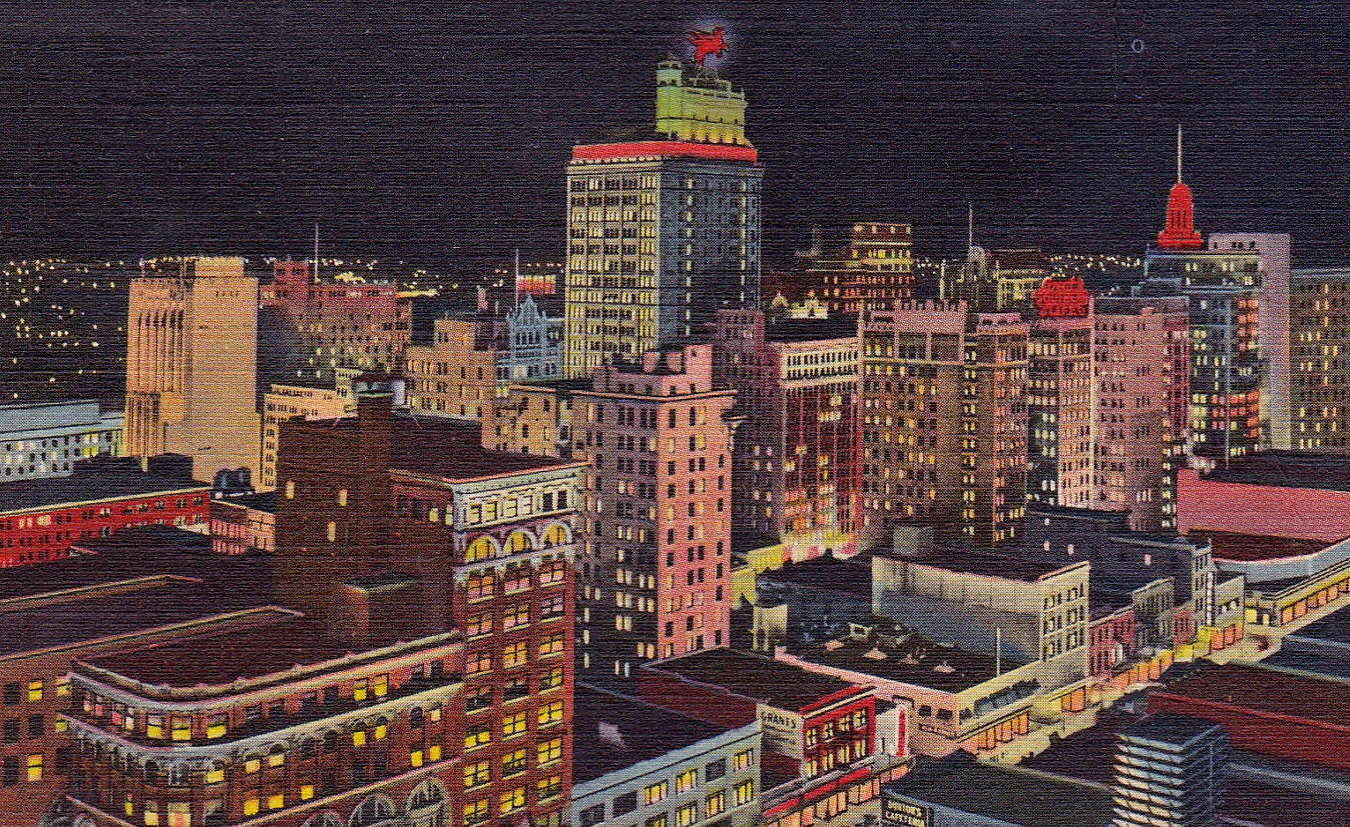
birdseye_night_early1940sThe symbol of Dallas…

by Paula Bosse

One of my favorite views of the skyline — back when Pegasus had no competition.

***

Sources & Notes

Original photograph by Lloyd M. Long, from postcard “Night Scene, Heart of Dallas, Texas” (D-43).

*

Copyright © 2014 Paula Bosse. All Rights Reserved.

The Oak Cliff Viaduct & The Weird Composite Photo — 1912

oak-cliff-viaduct-panorama_c1912_LOC

First you take a photo of the beautiful new Oak Cliff Viaduct, above.

Then you take a photo of the Dallas skyline, below.

dallas-panorama-skyline_1912_LOC

Then you put them together and get this bizarro Franken-photo!

oak-cliff-viaduct-panorama_skyline_c1912_LOC

It doesn’t look like any view of Dallas you’ve ever seen, but it still looks pretty damn cool.

***

Sources & Notes

All these panoramic photos are in the collection of the Library of Congress, all from the studio of Johnson & Rogers. The top photo has a copyright date of March, 1912, and the bottom two have copyright dates of August, 1912. See these panoramic photos (as well as one of the Buckner Orphan’s Home in 1911) on the Library of Congress site here.

Would this unusual composite have been done for a fanciful postcard or some other kind of promotional material (for the city or for the photographers)? Was it just done for fun? Tellingly, it’s the only one of the three without the studio’s imprint. If anyone has further info on this, please let me know!

These photos are HUGE. Click to see larger images — and use that horizontal scrollbar!

*

Copyright © 2014 Paula Bosse. All Rights Reserved.