Flashback : Dallas

A Miscellany: History, Ads, Pop Culture

Category: Education/Schools

Dallas’ Twin High Schools: Thomas Jefferson and Bryan Adams

bryan-adams_1961It’s one or the other… (click to see a larger image)

by Paula Bosse

Perhaps everyone knows this, but this is news to me. While compiling recent posts about Bryan Adams High School (named, by the way, after the business manager for the Dallas school system), I discovered that the plans used for the building were the exact same plans originally drawn up for Thomas Jefferson High School. That’s weird, right? TJ opened its brand-spanking-new building on Walnut Hill in North Dallas in January, 1956; BA opened its brand-spanking-new building on Millmar in the Casa View area of East Dallas in 1957. And they looked just alike. Here are aerial photos of the two campuses from the schools’ respective 1961 yearbooks (Thomas Jefferson can be seen is the top photo — click to see a larger image):

tj-ba_aerial

Here they are, as seen from street level: a 1957 photo of TJ on top, a 1961 photo of BA below it.

tj_ba_front

So why did this happen? By the mid-1950s, demand for new schools — which were needed to keep up with the population growth and sprawl — was intense. Two sites were chosen in the early ’50s: in North Dallas and in the White Rock Lake area of East Dallas. The two high schools were planned to be about the same size and were meant to serve about the same number of students (2,500). Plans for Thomas Jefferson High School in North Dallas were completed first. But then … the architects wondered, “If these two school are to be the same size and built one right after the other … why not just use the same architectural plans for both?”

Even though duplicating architectural plans for schools had never been done before (in Dallas, anyway), and even though local architects were very unhappy about this, the architects on both projects — Robert Goodwin and L. C. Cavitt, Jr. of Goodwin & Cavitt, Architects — argued that this duplication would be both practical and economical: using the same plans would save money as well as more than six months in planning time.

I don’t know if this sort of thing happened again in DISD, but the cross-town twin high schools opened in Dallas in 1956 and 1957.

And I still think it’s kind of strange.

bryan-adams_1958_new-kids1957-58 Bryan Adams yearbook

***

Sources & Notes

Drawing at the top appeared in the 1961 Bryan Adams yearbook, but it might well have been the architectural rendering prepared for the Thomas Jefferson project. Either way, it’s pretty damn cool-looking.

The schools have undergone changes over the years, but they still look alike. See current aerial views of both campuses, via Google: Thomas Jefferson is here; Bryan Adams is here.

More can be found in the archives of the Dallas Morning News:

  • “Super High School Planned” (Thomas Jefferson) by Francis Raffetto (DMN, Dec. 9, 1953)
  • “Schoolmen OK Duplicate Plan” by Lester Bell (DMN, June 23, 1955) — the architectural plans for the new high school (Bryan Adams) would duplicate the Thomas Jefferson design — the AIA was not amused
  • “Doors Open at Newest High School” (Thomas Jefferson) (DMN, Jan. 31, 1956)

All images and clippings are larger when clicked.

*

Copyright © 2017 Paula Bosse. All Rights Reserved.


Bryan Adams High School: Yearbook Photos from 1961 and 1962

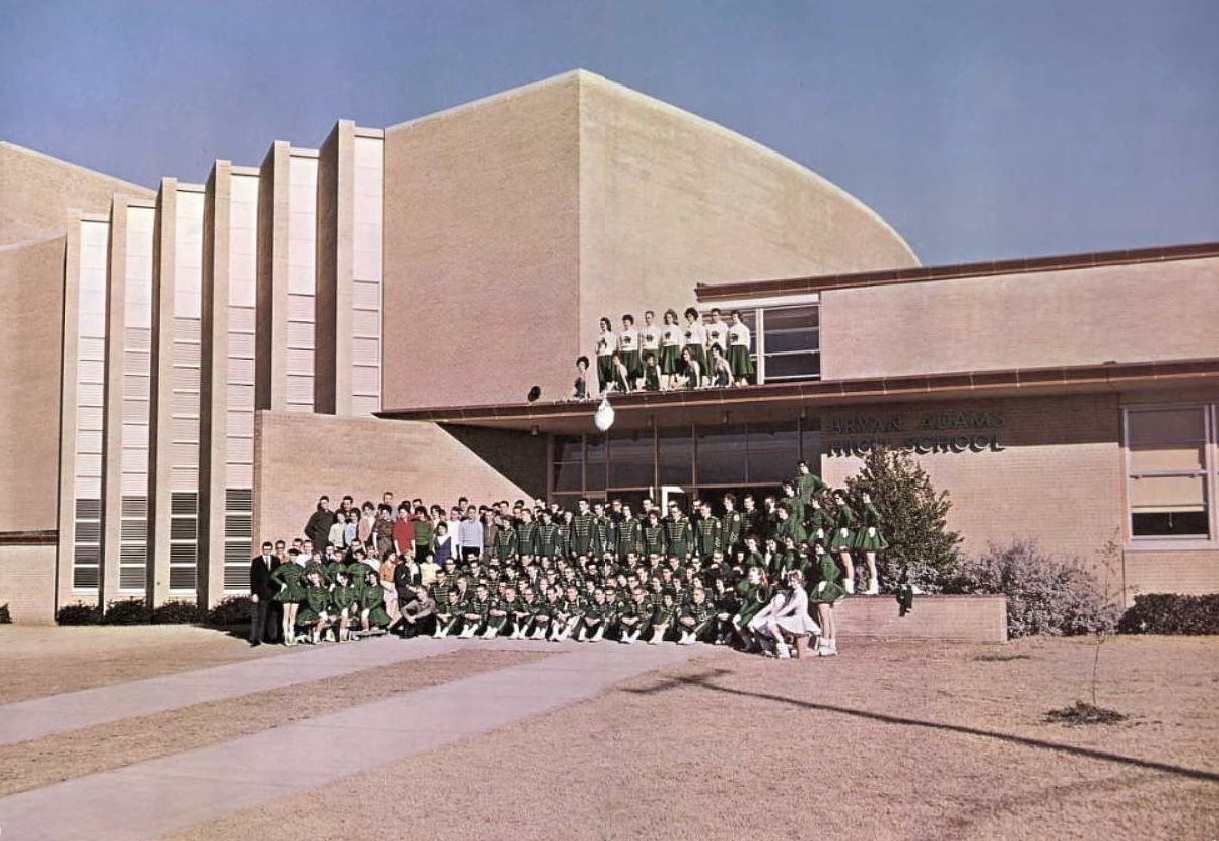
bryan-adams_1961_colorGreetings, from BAHS… (click for larger image)

by Paula Bosse

Yesterday I posted a bunch of ads (seen here) from the 1961 and 1962 yearbooks of Bryan Adams High School, and today I’m posting a bunch of photos of random school life from those same yearbooks. (All photos are larger when clicked.)

Above, band, drill team, and cheerleaders. (1961)

Below, the rigors of the art student. (1961)

bryan-adams_1961-yrbk_art-students

*

Boys. (1961)

bryan-adams_1961-yrbk_boys

*

The Corals. The caption: “The Corals play an important role in the life of El Conquistador.” (El Conquistador is the name of the yearbook, and The Corals were a popular combo that played around Dallas in the late ’50s and early ’60s. I assume they were BA students.) (1961)

bryan-adams_1961-yrbk_the-corals

*

The Senior Ball, held downtown at the Sheraton. (1961)

bryan-adams_1961-yrbk_sr-ball-sheraton

*

Gymnasium drama. (1961)

bryan-adams_1961-yrbk_gym

*

BA drill team in the stands at a football game. “Beautiful Belles.” (1961)

bryan-adams_1961-yrbk_beautiful-belles

*

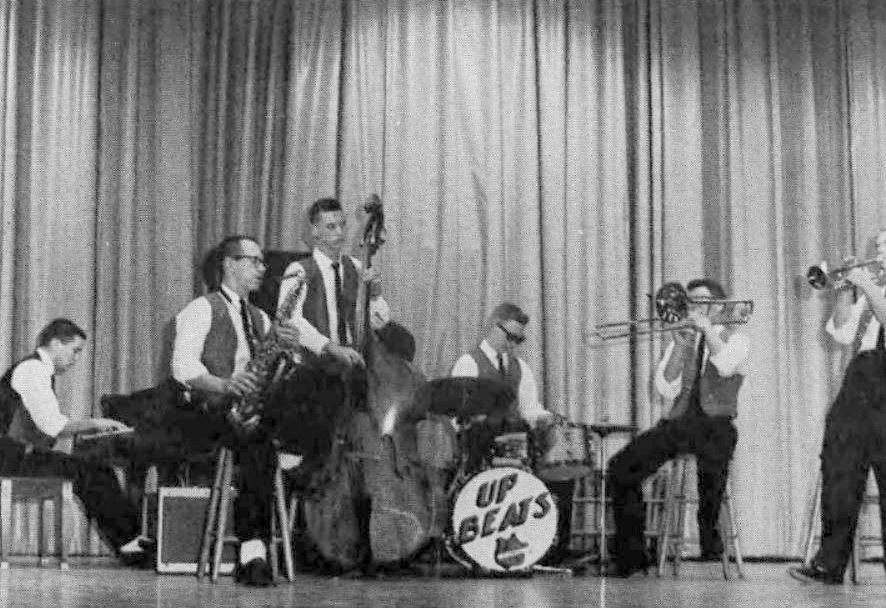
The Up Beats. (1962)

bryan-adams_1962-yrbk_up-beats

*

The guy in the glasses is Sverker Olson, “our exchange student from Sweden.” He looks very happy. (1961)

bryan-adams_1961-yrbk_exchange-student

*

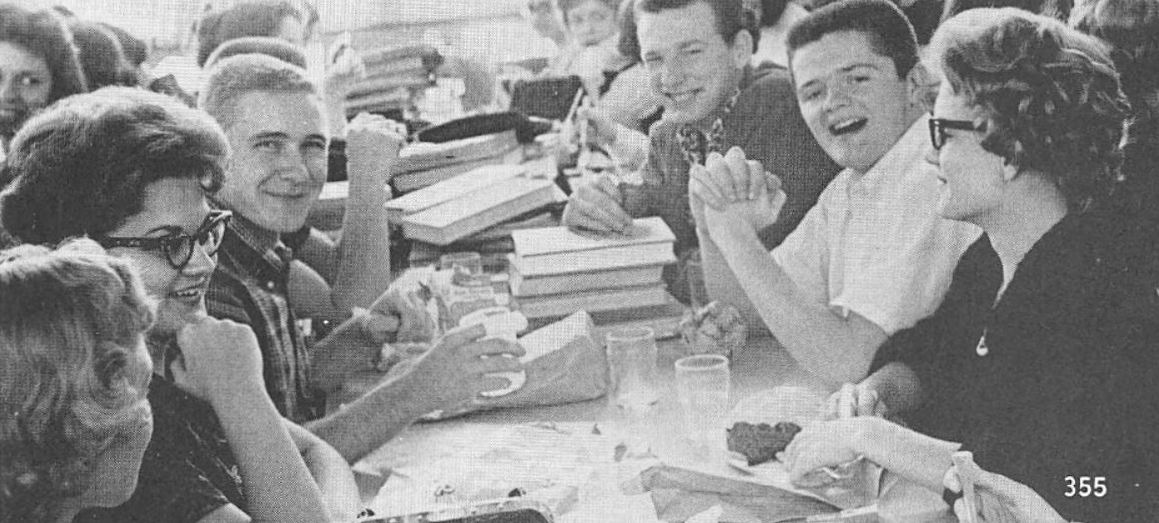
I saw many, many photos of that guy on the right in the white shirt. He was either very popular or was slipping the photographer a buck every time he saw him in order to get as many photos of himself as possible into the yearbook. (1961)

bryan-adams_1961-yrbk_lunchroom

*

I was in band in high school. We never got to play at the State Fair of Texas at the feet of Big Tex.

bryan-adams_1962-yrbk_big-tex

*

Grainy photo that’s interesting mostly because of how tiny downtown looked from the eastern shore of White Rock Lake back in 1962.

bryan-adams_1962_white-rock

***

All photos from the Bryan Adams High School yearbook, El Conquistador — all are larger when clicked.

*

Copyright © 2017 Paula Bosse. All Rights Reserved.

Bryan Adams High School: Yearbook Ads from 1961 and 1962

bryan-adams_1962-yrbk_penneys_casa-view

by Paula Bosse

I love ads from high school yearbooks — especially when they feature students. Here are several from the Bryan Adams 1961 and 1962 yearbooks. (Click the ads to see larger images.)

Above, the J. C. Penney store in Casa View at 2596 Gus Thomasson. Great ad! (1962)

Below, Jackson’s Sporting Goods in Casa Linda. (1962)

bryan-adams_1962-yrbk_jacksons-sporting-goods

*

Gingham Girl Dance Studio on Northwest Highway (“We Also Feature Baton Lessons”). (1961)

bryan-adams_1961-yrbk_gingham-girl-dance-studio_baton

*

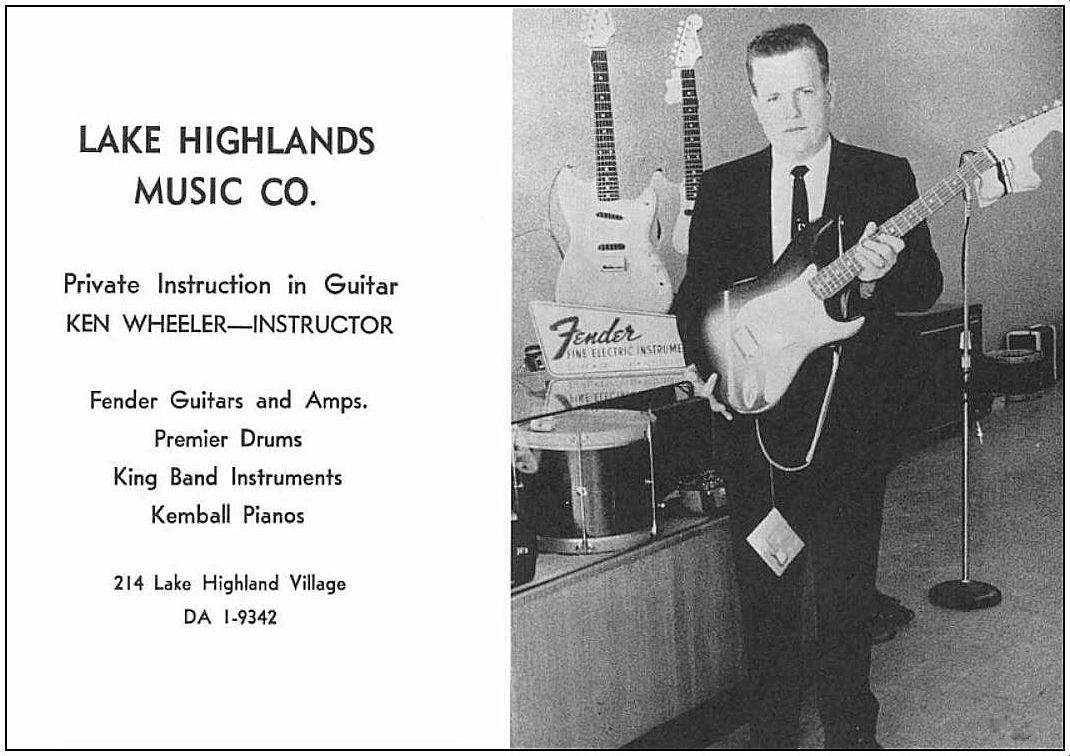
Lake Highlands Music Co. — guitar lessons by Ken Wheeler. (1961)

bryan-adams_1961-yrbk_lake-highlands-music-co

*

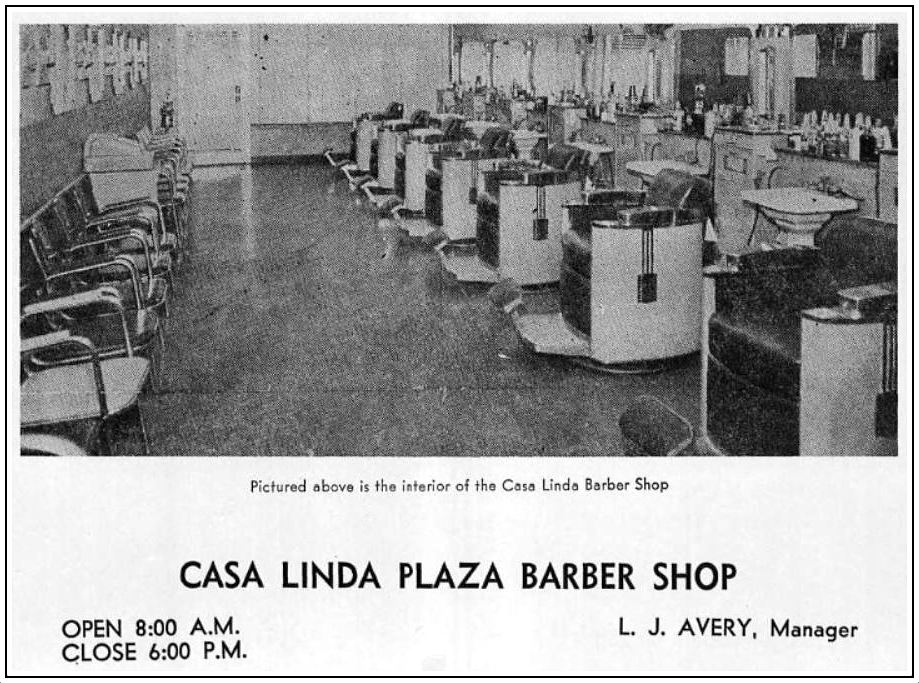
Casa Linda Barber Shop. (1962)

bryan-adams_1962-yrbk_casa-linda-barber-shop

*

Ethel Shipp — female attire, from tots to teens and beyond; Casa Linda and Casa View. (1961)

bryan-adams_1961-yrbk_ehtel-shipp

*

Dallas Ice Arena — ice skating at Fair Park. (1962)

ad-dallas-ice-arena_bryan-adams-yrbk_1962

*

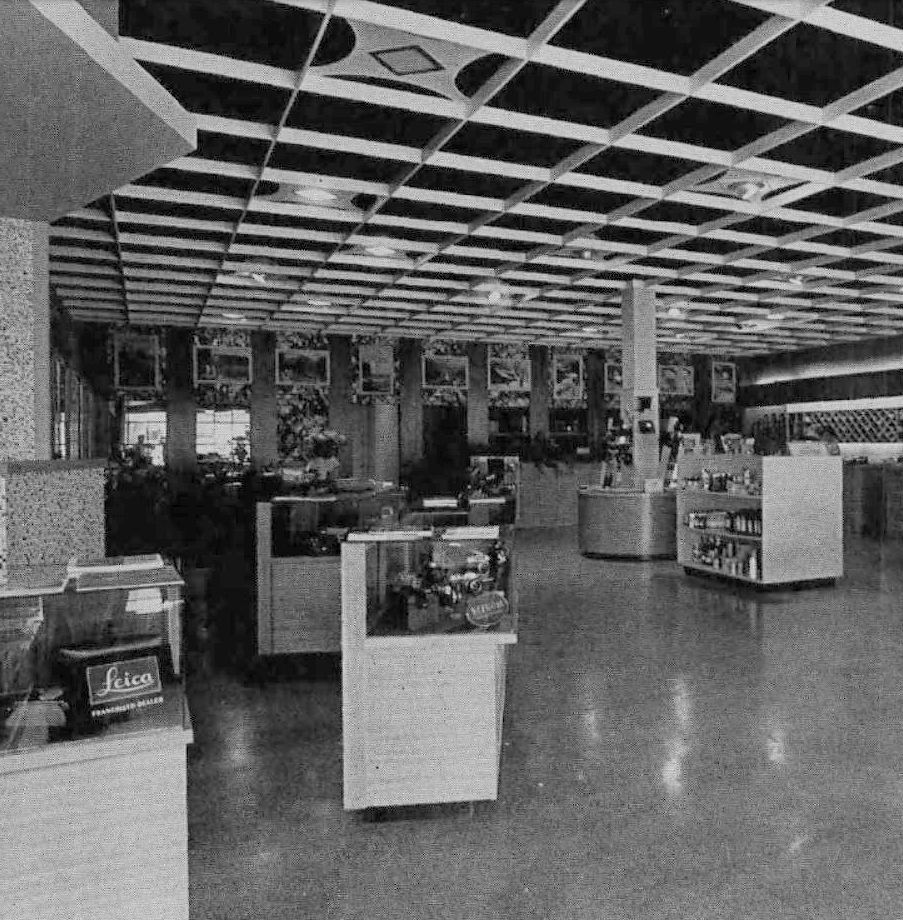
Cooter’s Village Camera Shop — Highland Park Village. (First ad 1961, second 1962)

ad-cooters-village-camera_bryan-adams_1961-yrbk_photo

ad-cooters-village-camera_bryan-adams_1962-yrbk_photo

ad-cooters-village-camera_bryan-adams_1961-yrbk

*

Pop’s Spaghetti House (Frank Da Mommio and Pop Da Mommio), on Gaston, near Baylor. (1962)

bryan-adams_1962-yrbk_pops_gaston

*

Colbert’s in Casa Linda. (1962)

bryan-adams_1962-yrbk_colberts

*

Stone’s Shoes, Northlake Shopping Center. (1962)

bryan-adams_1962-yrbk_stones-shoes

*

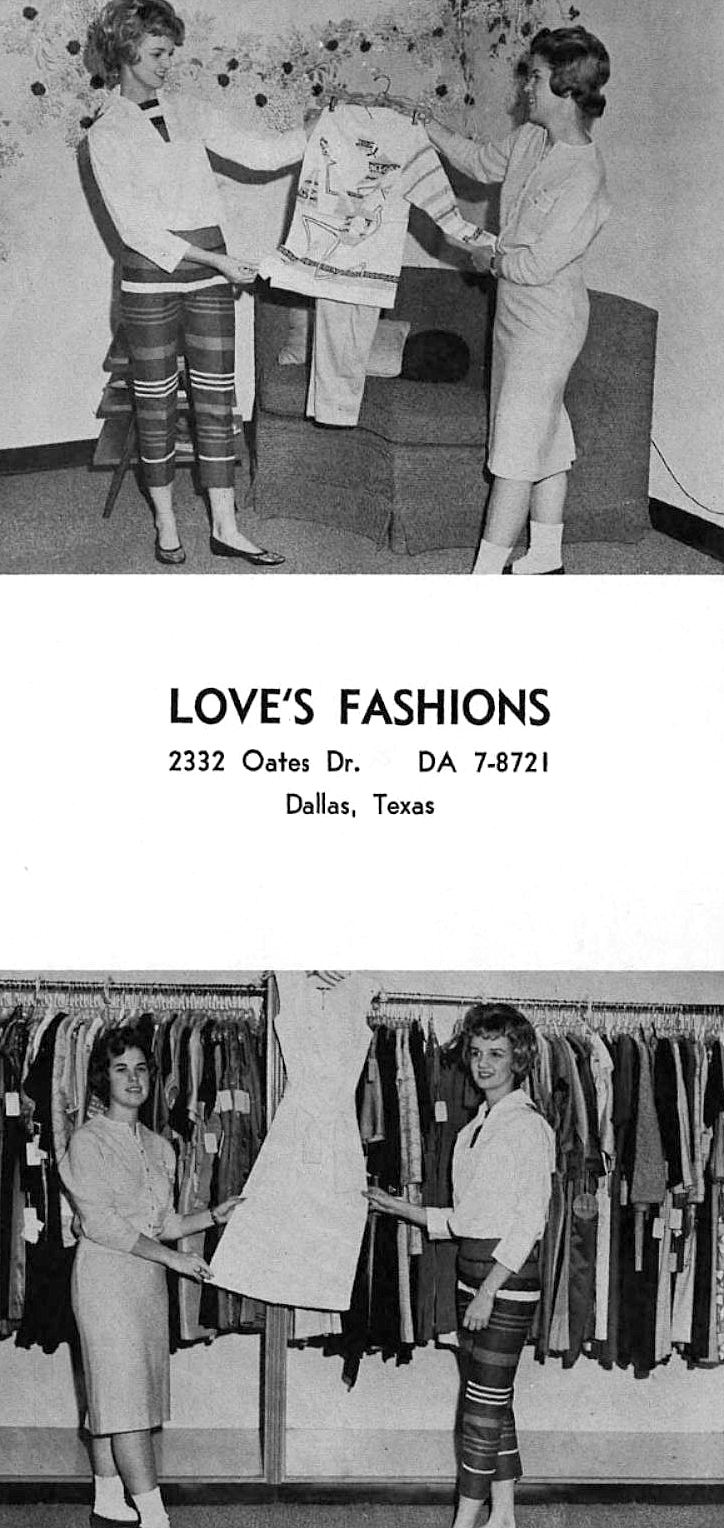
Love’s Fashions, on Oates. (Those striped pants are cool!) (1962)

bryan-adams_1962-yrbk_loves-fashions

*

Smitty’s Party Room, Bakery, and Coffee Bar, also on Oates Drive. (1961)

bryan-adams_1961-yrbk_smittys

*

KBOX and their happenin’ djs: Jerry Clemmons, Johnny Borders, Pat Hughes, Chuck Benson, Bill Holley, and Gary Mack. (1961)

kbox_bryan-adams_1961-yrbk

*

And my favorite ad because of its association to greatness: Belvick Electric Company, Garland Road. Greatness? Here’s a hint: the proprietors are Jerry Dauterive and Buck Dauterive. Maybe it’s just because I watch a lot of television, but any fan of the classic animated show “King of the Hill” (created by Mike Judge, who lived in Garland for several years) will recognize the name “Dauterive” — as in Bill Dauterive, Hank Hill’s sad-sack friend. It’s such an unusual name and there are so many Dallas jokes in the show that I figured the men in this ad must have some sort of connection to the TV show. It turns out that the character is named for series writer-producer Jim Dauterive, a native Dallasite and … a Bryan Adams alum! And Buck was his father. According to an interview in White Rock Lake Weekly, Jim Dauterive liked to slip neighborhood references into the show: he named a character in the show “Gus Thomasson,” had Hank Hill direct someone to a liquor store near White Rock Lake, and even snuck in a mention of Louanns on Greenville. So there you have it! (Ad from 1961.)

bryan-adams_1961-yrbk_dauterive_king-of-the-hill

*

Copyright © 2017 Paula Bosse. All Rights Reserved.


Sunset High School on Film — 1970

sunset-pt-2_3_pep-rallyPep rally in progress… (click for larger image)

by Paula Bosse

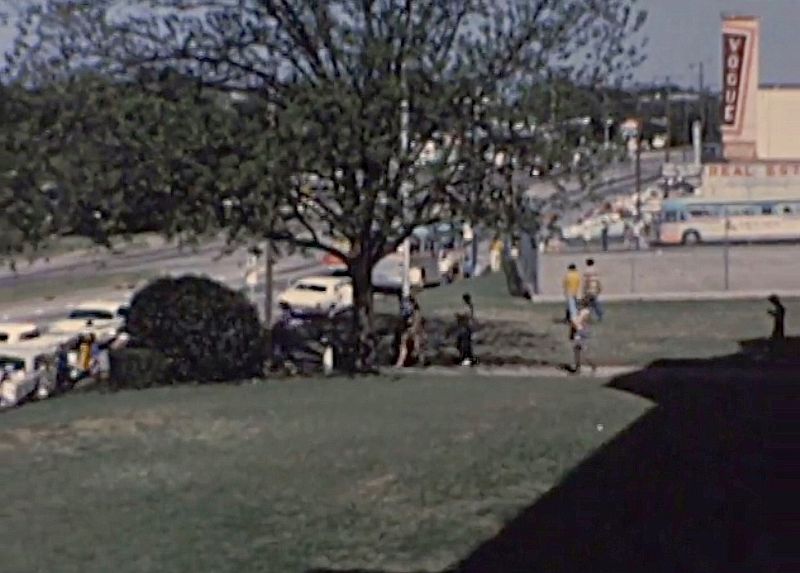
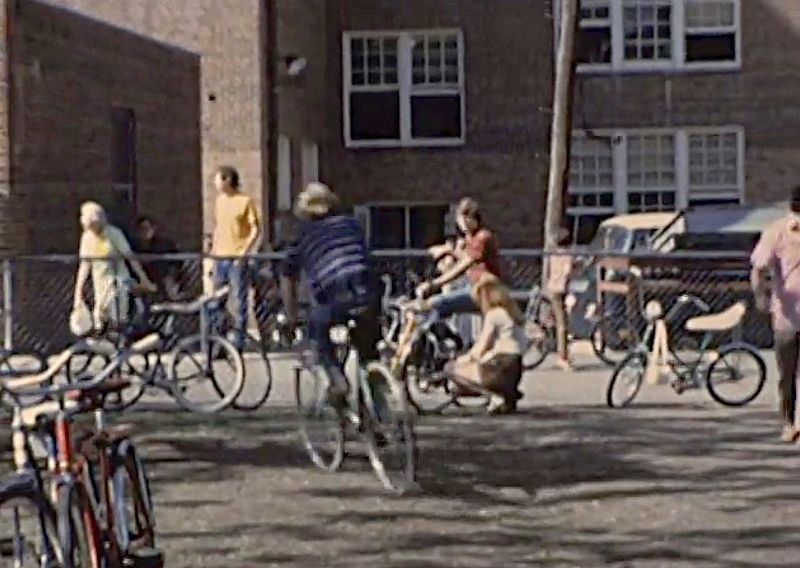
Thanks to the heads-up from UNT media librarian and film/video archivist Laura Treat, I now know about “Spotlight on North Texas,” a collaborative project between the University of North Texas Libraries and the Texas Archive of the Moving Image (TAMI) to preserve North Texas film history. The bulk of the collection centers on Denton County, but there are the occasional glimpses of Dallas, such as the 3-part “Sunset on Film” which was shot by student James Dunlap in and around Sunset High School in 1970 on Super-8 film (without sound). It’s definitely a student effort — nerdy and charming — but it has lots of great footage, and if you are a Sunset alum, you’ll probably see a lot of familiar sights from your Oak Cliff school days. And for those who missed the era when high school students dressed like extras from The Partridge Family or The Brady Bunch — and who swarmed to get their bikes after school (when was the last time you saw that?!) — this will be almost exotic.

PART 1 (running time 7:55) is here (click image on UNT site, then click the “play” arrow — don’t forget to watch in full-screen). The images below are screenshots from the digitized film; they are larger — and grainier — when clicked.

sunset-pt-1_1

sunset-pt-1_2

sunset-pt-1_3_vogue
Vogue Theater alert!

sunset-pt-1_4

PART 2 (running time 11:51) is here.

sunset-pt-2_1

sunset-pt-2_2Pep rally alert!

sunset-pt-2_4

PART 3 (running time 10:43) is here.

sunset-pt-3_1Groovy mini-skirt alert!

sunset-pt-3_2AMC Gremlin alert!

sunset-pt-3_3

***

Sources & Notes

More about last year’s “Spotlight on North Texas” project can be found here. You can see what’s been uploaded here. They also have a Facebook page, here.

All images in this post are screenshots taken from the film(s) “Sunset on Film,” which was donated by Blaine Dunlap to the Spotlight on North Texas collection, University of North Texas Media Library; accessible on the UNT-hosted Portal to Texas History website.

More on filmmaker Blaine Dunlap can be found in “Spotlight on Dallas Filmmakers: Blaine Dunlap” by Laura Treat, here.

See a related Flashback Dallas post about another of Blaine Dunlap’s films, “Sometimes I Run: Dallas Noir — 1973.”

Thanks, Laura!

*

Copyright © 2017 Paula Bosse. All Rights Reserved.


Sunset High School — 1929

sunset-high-school_1929_jan-gradsAbove-the-knee hemlines! (click to see larger image)

by Paula Bosse

Two photos from Oak Cliff’s Sunset High School in 1929. Above, seniors who were to graduate early in January (those girls are wearing surprisingly short skirts!) and, below, the frumpier but generally pleasant-looking faculty.

sunset-high-school_1929_faculty

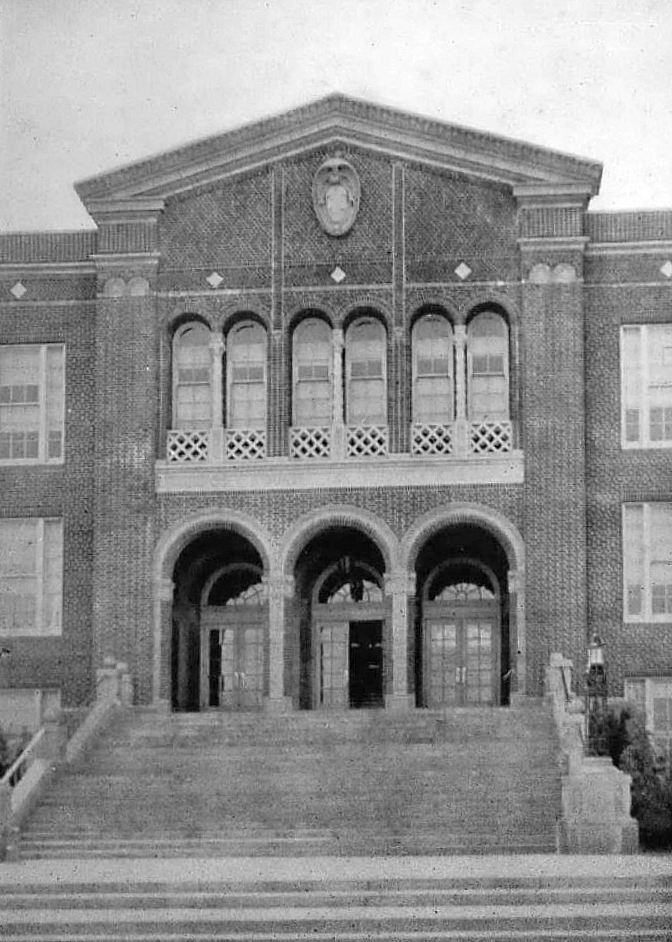
And the school itself — Oak Cliff’s second high school (Adamson was the first) — then only four years old.

sunset-high-school_1929_front

***

Photos from the 1929 Sunset High School yearbook.

Why, yes, Sunset does have a Wikipedia page, here.

To see what Sunset looks like these days, see it on Google Street View, here.

All photos larger when clicked.

*

Copyright © 2017 Paula Bosse. All Rights Reserved.

Adamson High School People and Places, Part 2 — 1960s

adamson_1966-yrbk_dance-plaidHave plaid, will dance — 1966… (click for larger images)

by Paula Bosse

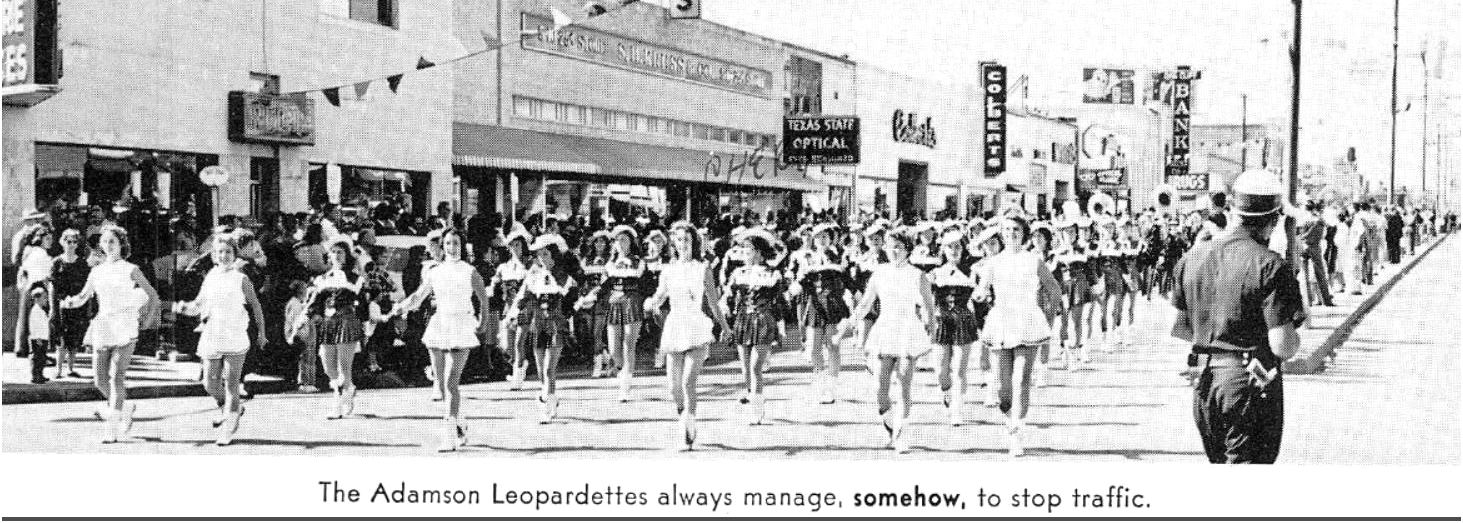
Check out these random photos of Adamson High School and its students, mostly from the 1966  yearbook. (Click for larger images.)

1961_adamson-yrbk_leopardettes1961

adamson_1966-yrbk_leopard
Go Leopards!

***

See the companion post (which shows advertisements from 1960s editions of the W. H. Adamson High School yearbook) here.

*

Copyright © 2016 Paula Bosse. All Rights Reserved.

The Esquire Club, The Charm Club, and The Riflettes: James Madison High School — 1970

madison_1971-yrbk_exteriorPhoto op on the front steps….

by Paula Bosse

Browsing through high school yearbooks (as one does), one always finds images of teenagerdom from yesteryear that are charming. I’ve never been a huge fan of the 1970s, but 1970 was still hanging onto the ’60s for dear life before polyester and disco completely took hold and refused to give up.

These photos are from the 1970 yearbook of James Madison High School (the top photo is from 1971, but … close enough). Here are a few tidbits from that annual. Enjoy.

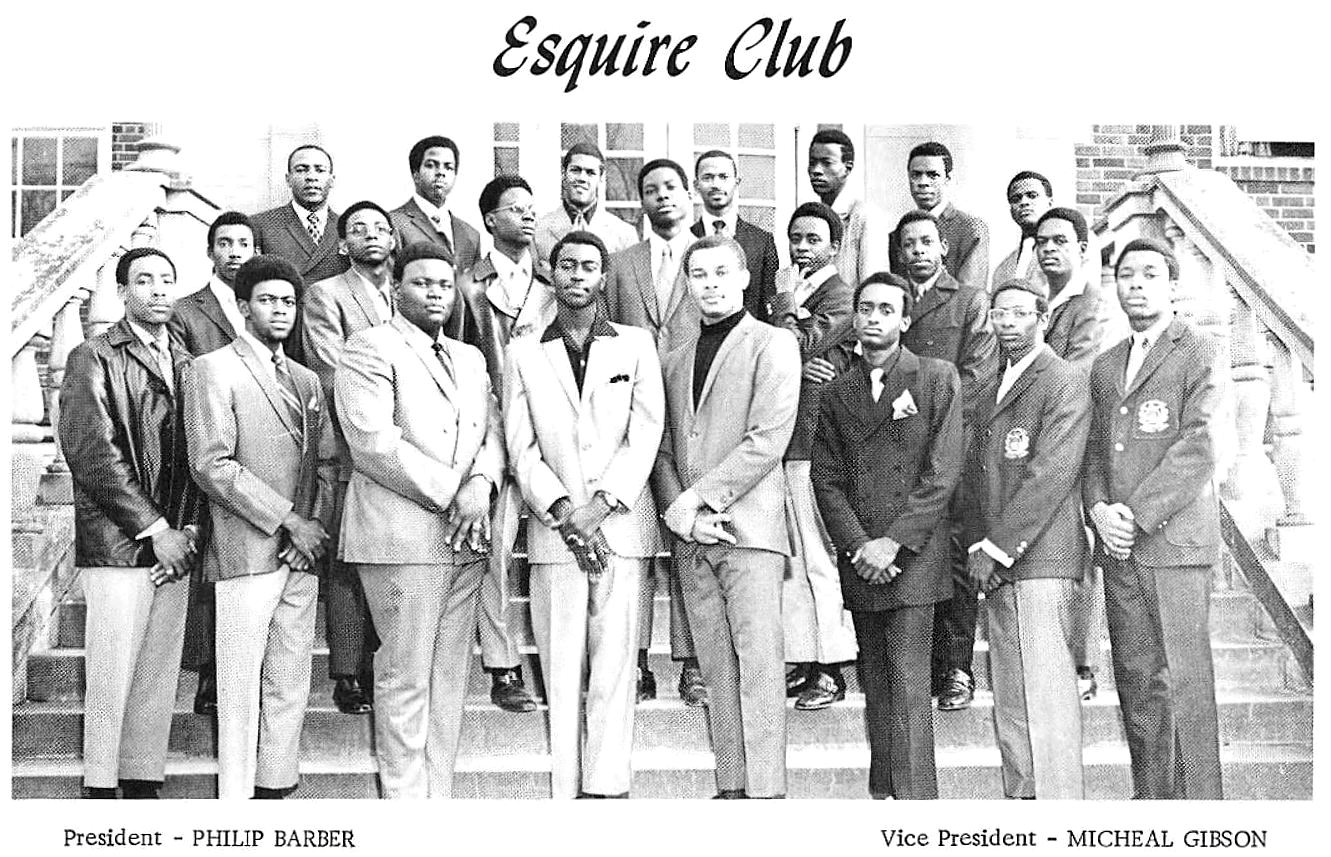
First, the Esquire Club. ‘Nuff said.

madison_1970-yrbk_esquire-club

*

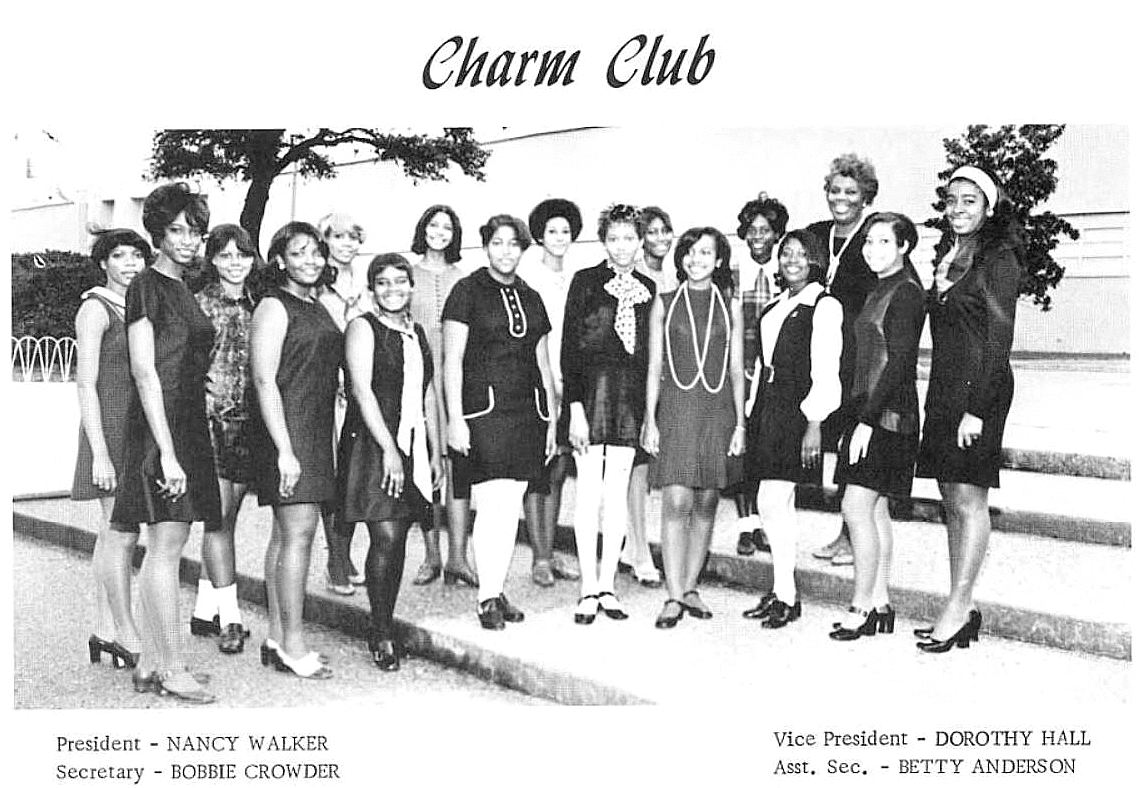
And the Charm Club:

madison_1970-yrbk_charm-club

*

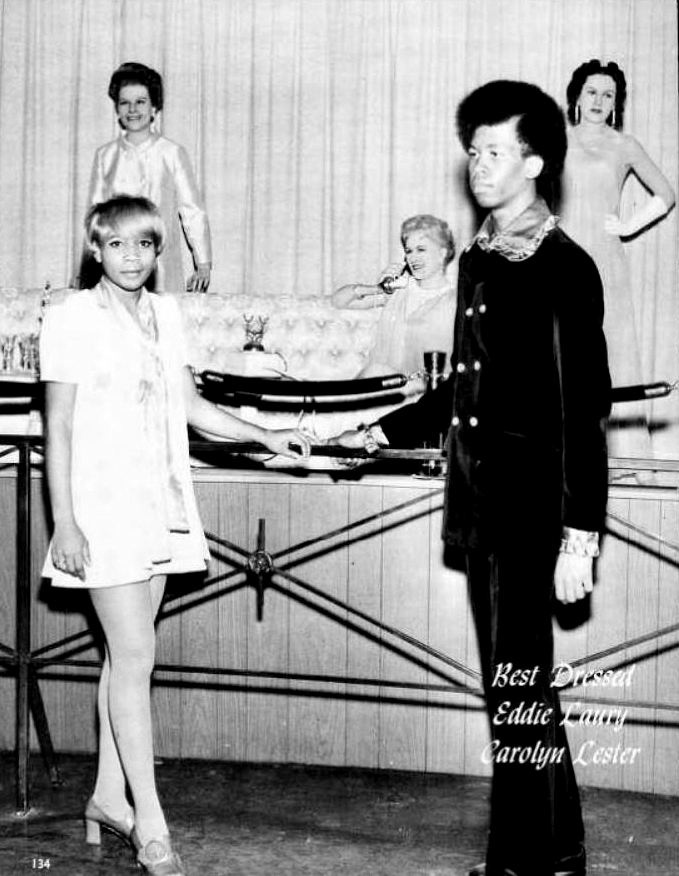
And the crème de la crème of Madison’s fashionable young men and women, Eddie Laury and Carolyn Lester, the “Best Dressed” of 1970. (Eddie, are you wearing ruffled satin and velvet? You win the ’70s!)

madison_1970-yrbk_best-dressed

(All the class favorites were photographed in front of confusing background dioramas. Was it … a wax museum?)

*

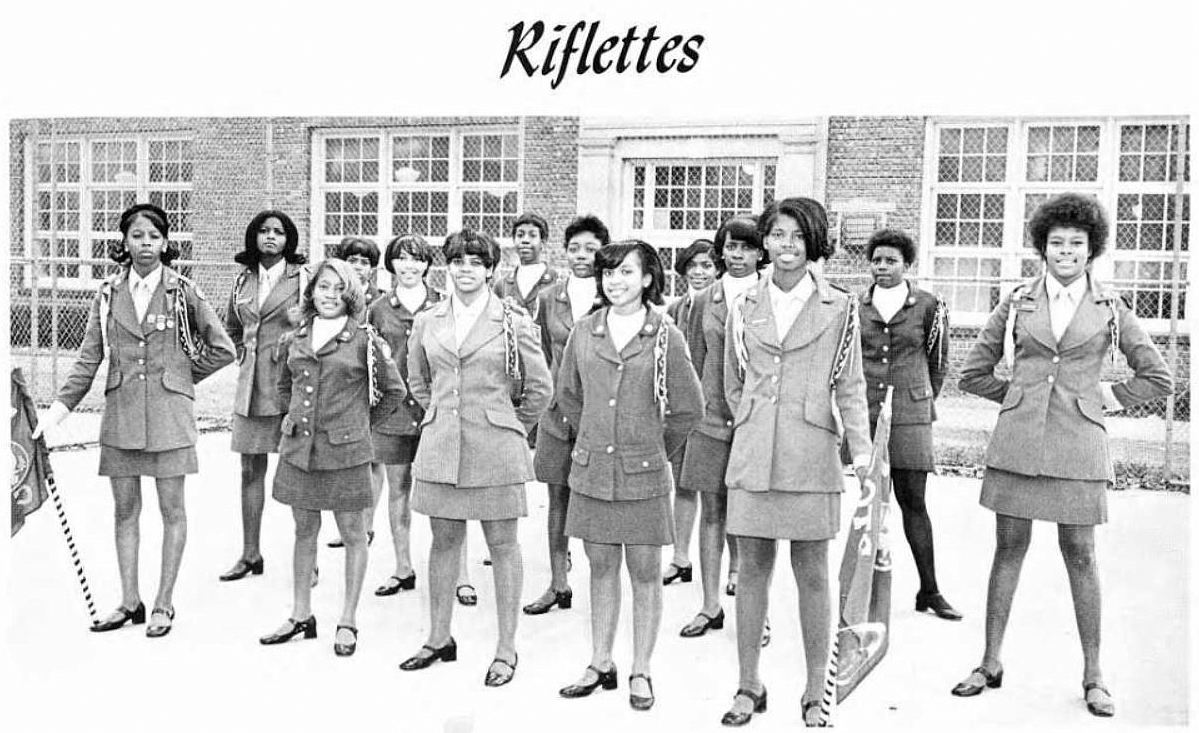
The winsomely named “Riflettes”:

madison_1970-yrbk_riflettes

*

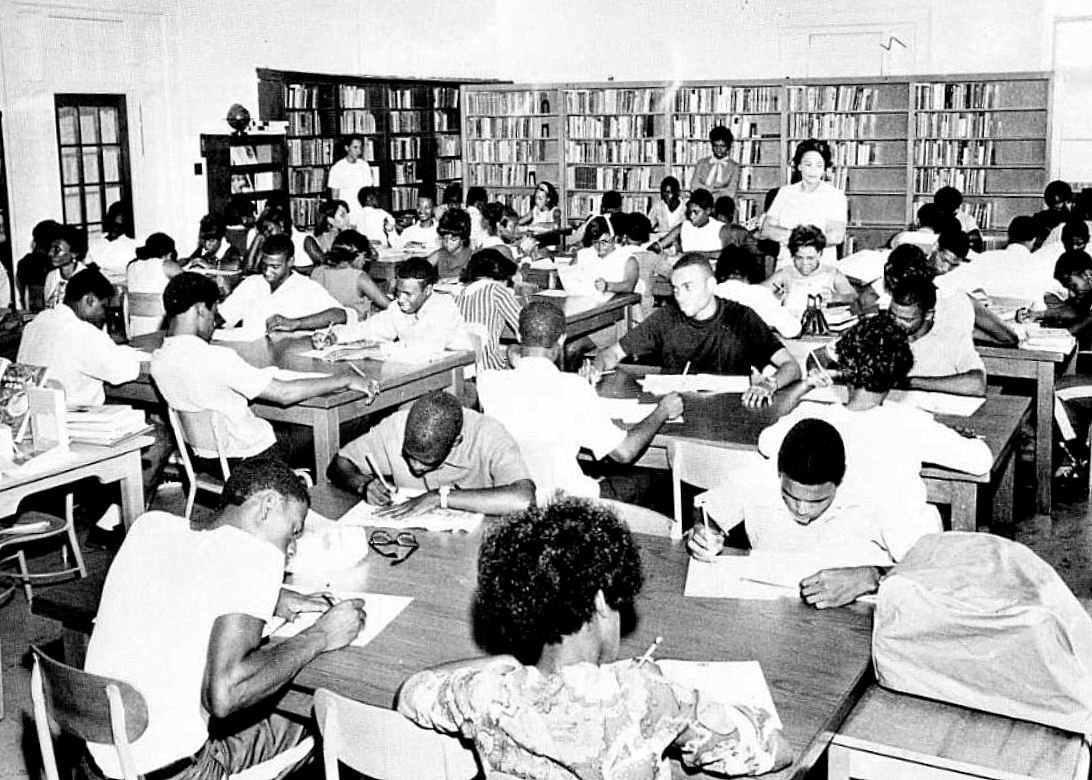
The dreaded taking of the SAT (under Mrs. Penn’s watchful eye):

madison_1970-yrbk_sat

*

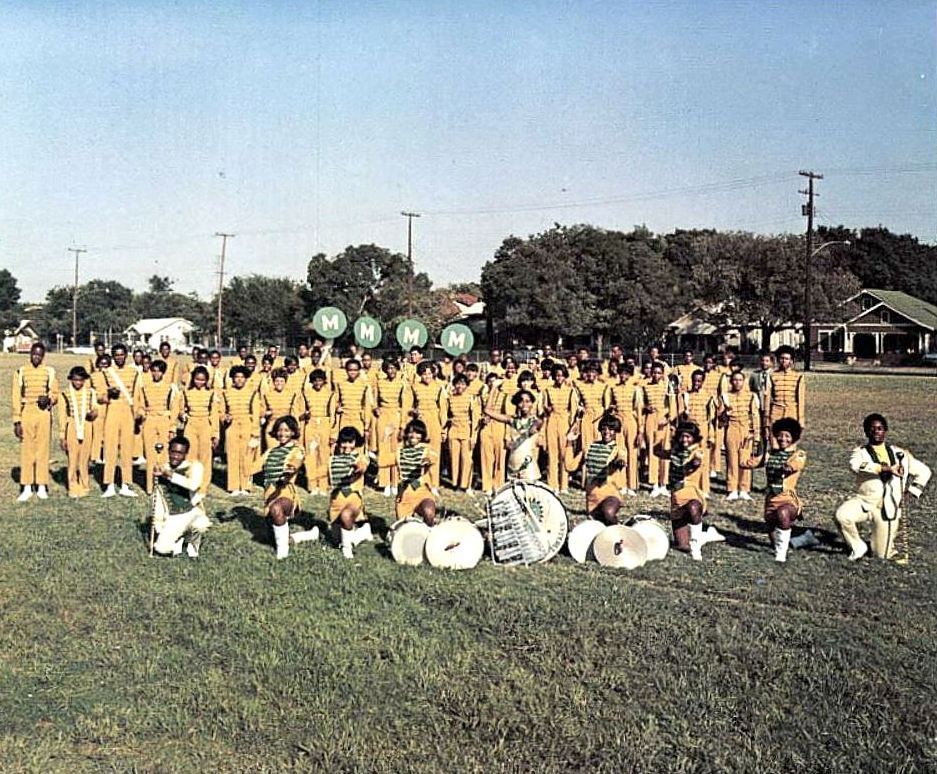
The fun of marching band:

madison_1970-yrbk_marching-band

*

And my favorite of almost any Dallas high school yearbook photo I’ve seen, the ROTC “Sweethearts”:

madison_1970-yrbk_rotc-sweethearts

Best. Photo. EVER.

***

Sources & Notes

Photos from James Madison High School’s 1970 and 1971 yearbook, The Trojan Archives.

*

Copyright © 2016 Paula Bosse. All Rights Reserved.

J. L. Long, Woodrow Wilson — 1958

woodrow_long_022758_squire-haskins_UTA_smBuccaneers, Wildcats: represent… (click for B-I-G image)

by Paula Bosse

Another fab aerial photo from Squire Haskins: a 1958 southwesterly shot of J. L. Long Jr. High School (on the left) and Woodrow Wilson High School.

…I am not unfamiliar with these East Dallas institutions. 

***

Photo taken above Lakewood by Squire Haskins on Feb. 27, 1958. From the Squire Haskins Photography, Inc. Collection, UTA Libraries, Special Collections — more info here. To see UTA’s super-gigantic image, click the photo!

*

Copyright © 2016 Paula Bosse. All Rights Reserved.

Thomas Marsalis’ Spectacular Oak Cliff Hotel: 1890-1945

oak-cliff_cook-coll_degolyer_smu_front“Visit the Oak Cliff…” (click for much larger image) Photo: SMU

by Paula Bosse

I saw this image yesterday while browsing through the George W. Cook Collection (DeGolyer Library, SMU). It’s from about 1890. It’s great. BUT, the other side of this card is even better:

oak-cliff_cook-coll_degolyer_smu_back

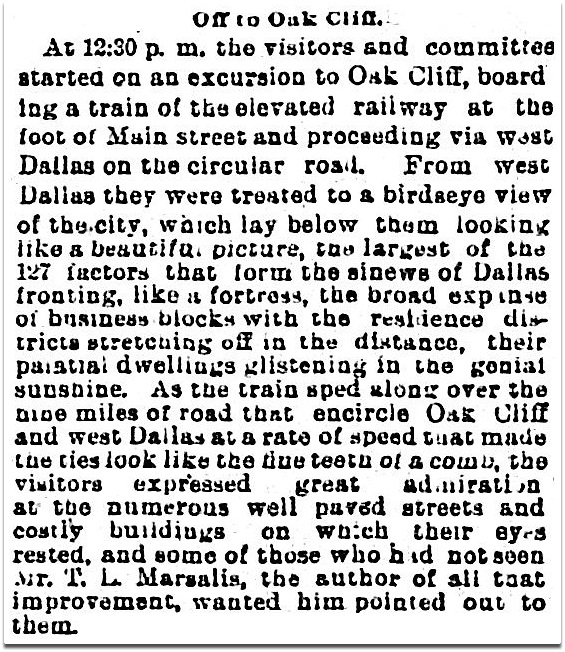
I’m not sure how realistic this drawing is, but it’s great! Oak Cliff never looked so … quaint. The best part is the depiction of the little commuter railway that Oak Cliff developer Thomas L. Marsalis built in the 1880s to handle commuter traffic between Oak Cliff and Dallas — a necessity if his development west of the Trinity was to grow. There were two little steam trains which made a complete circle and offered spectacular views of  Dallas as they headed toward the river. Here’s an account of visitors from Kansas City who enjoyed their scenic ride (click to see a larger image):

oak-cliff-train_dmn_112490
Dallas Morning News, Nov. 24, 1890

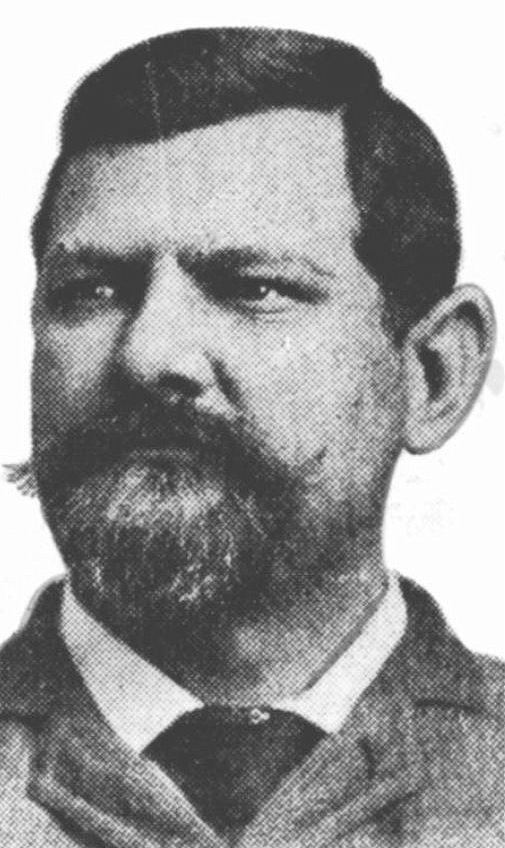
Marsalis had made his fortune in the grocery business, and much of that fortune was funneled into making his vision a reality: Oak Cliff would become a large, beautiful, prosperous community. He spent huge amounts of money developing the then-separate town of Oak Cliff. A wheeler-dealer and an obsessive whirlwind, money was no object to Marsalis as he charged at full speed to make Oak Cliff a booming North Texas garden spot.

marsalis_legacies_fall-2007
Thomas L. Marsalis — the “Father of Oak Cliff”

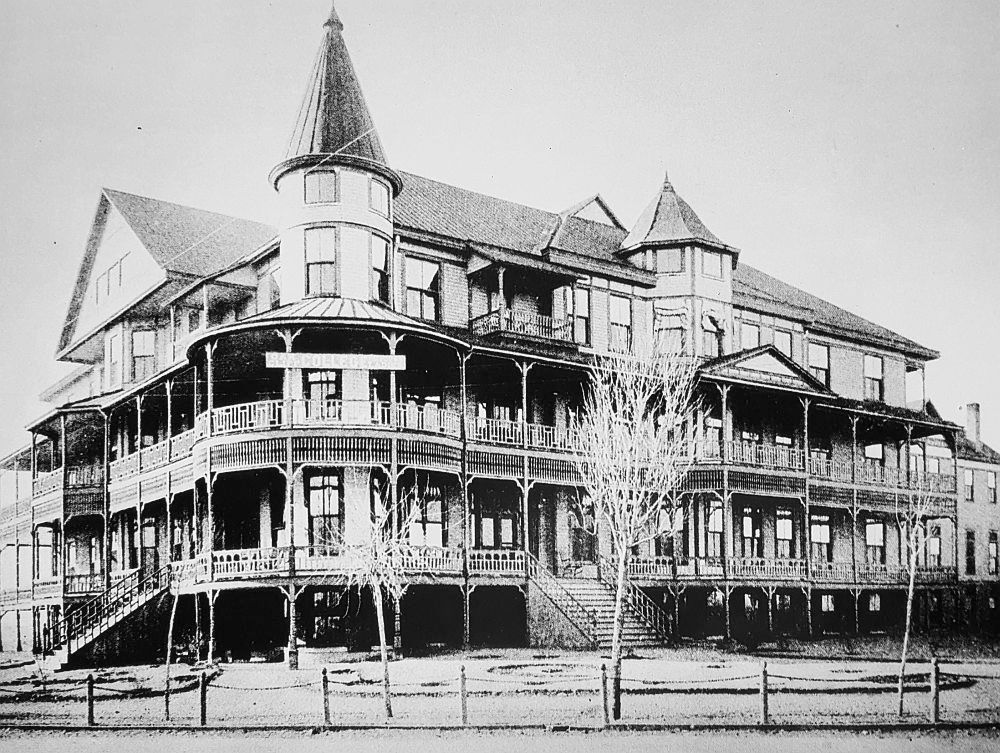
The jewel in T. L.’s O.C. crown was the 100-room resort, the Oak Cliff Hotel (which in its early planning had been called the Park Hotel). Ground was broken on Dec. 21, 1889. Projected to cost $75,000, it is said to have cost over $100,000 when construction was completed, or, over $2.6 million in today’s money.

oak-cliff-hotel_dmn_122289_groundbreaking
DMN, Dec. 22,1889

A thorough description of the spectacular $100,000 showplace can be read in a Dallas Morning News article from May 25, 1890, here. When it opened on July 10, 1890, the News’ coverage of the opening included the following lyrical passage:

When darkness had settled down over the cliff the large hotel showed off to its best advantage, as at a short distance away it looked like some living monster with hundreds of fiery eyes. The lights showing from every window made a startling sight to those who coming upon it had previously seen a dark pile looming up in the night.

oak-cliff-hotel_minutaglio

It was, by all accounts, a popular hotel and social gathering place. But, in November of 1891 — having been open only a little over a year — a notice appeared in the papers that the hotel would be closing for the winter for “renovations.” It never reopened. Marsalis had over-extended himself. His dreams for Oak Cliff began to dim as the stacks of unpaid bills mounted, and he found himself mired in lawsuits for the next several years. He eventually had to admit defeat, and he and his family moved to New York.

Six months after that notice of “renovations” appeared, the huge building was leased to Prof. Thomas Edgerton, who planned to open a “female seminary.”

oak-cliff-college_flickr

The Oak Cliff College For Young Ladies opened  in the fall of 1892. And it was a spectacular-looking schoolhouse.

oak-cliff-college_dallas-rediscoverd_dpl

The college lasted until the beginning of 1899 when it changed hands and became Eminence College for a brief year and a half.

eminence-college_southern-mercury_062299
Southern Mercury, June 22, 1899

After Eminence College appears to have gone bust, the building was vacant by 1901. There was talk that Oak Cliff should purchase the property and reinstall a school, but, eventually, the building went up for auction in September, 1903.

oak-cliff-hotel_dmn_082603_for-sale
DMN, Aug. 26, 1903

The building sold to T. S. Miller, Jr. and L. A. Stemmons for $6,850, a fraction of what Marsalis had spent building it. That’s a pretty steep depreciation.

oak-cliff-hotel_dmn_090203_sold
DMN, Sept. 2, 1903

But, no fear, Hotel Cliff opened on April 18, 1904. Still looking good.

hotel-cliff_degolyer

hotel-cliff_dmn_071104
DMN, July 11, 1904

Hotel Cliff was in business through about 1915. There were some “lost” years in there when it seemed to be in limbo (during some of this time it was undergoing extensive renovation), but in 1921 it re-opened as the Forest Inn.

forest-inn_dmn_042421
DMN, April 24, 1921

forest-inn_bartlett-tribune-and-news_070424
Bartlett News, July 4, 1924

The Forest Inn had a long run — 24 years. In 1945 the property was sold, and T. L. Marsalis’ spectacular resort hotel was demolished. It was estimated that it would take ten weeks to finish the demo job — Marsalis had spared no expense building his hotel, and it had been built to last.

The destruction is a tough job, Jack Haake, wrecking contractor, said. Despite its age, the building is so well built that much time is being required to take it apart. The lumber is of the best grade and much of it still is in good condition, Haake said. Scores of huge 2×6 planks, thirty-two feet long, were used in the building, and that timber is in excellent condition. (“Historic Oak Cliff Hotel Being Razed For New Structure,” DMN, Sept. 10, 1945)

The land apparently remained vacant until Southwestern Bell Telephone announced plans to build a three-story office building on the property in 1954; the building opened the following year. In 1986, the building was renovated and became the Oak Cliff Municipal Center, which still occupies the site.

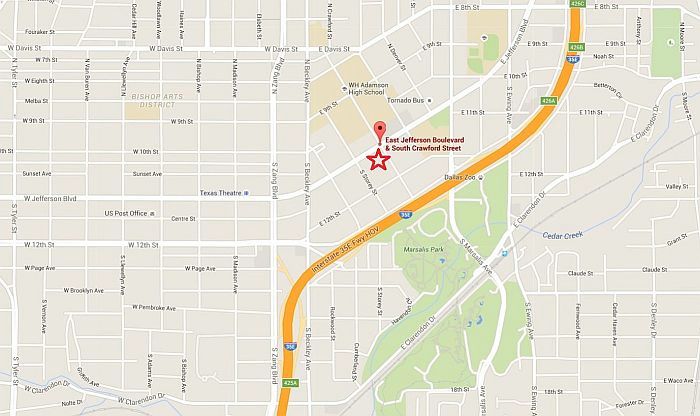
Where exactly was that huge, wonderful hotel that Thomas Marsalis built? It was located at what is now the southwest corner of East Jefferson Blvd. and South Crawford Street. A view of that corner today can be seen here. To get an idea  of how much land the hotel/college once occupied, check out the 1905 Sanborn map, here (and this is after 15 years of explosive growth of Oak Cliff, so it obviously originally had much more open land around it); by 1922, encroachment was well underway, and the property was already being chopped into smaller parcels.

oak-cliff-hotel_map_google
Google Maps

I wonder what Thomas Marsalis would think of Oak Cliff today? And I wonder what Oak Cliff would have become had Marsalis never put his money and energy into its early development?

**

There is a lot of misinformation on various online sources about the timeline of this building. As best I can determine, here is the correct chronology:

  • 1889: groundbreaking for hotel, in December
  • 1890-1891: Oak Cliff Hotel
  • 1892-1899: Oak Cliff College For Young Ladies
  • 1899-1901: Eminence College (also for young women)
  • 1902-1903: vacant
  • 1903: building sold at public auction, in September
  • 1904-1914: Hotel Cliff
  • 1914-1915: Oak Cliff College (reorganized, back for one last gasp)
  • 1915-1920: basically empty, with a couple of token tenants
  • 1921-1945: Forest Inn
  • 1945: demolished

***

Sources & Notes

First two images show both of sides of an advertising card; “Visit Oak Cliff” is from the George W. Cook Dallas/Texas Image Collection, DeGolyer Library, Central University Libraries, Southern Methodist University — more information is here.

Photo of Thomas Marsalis from Legacies, Fall, 2007.

Colorized image of hotel from the front cover of The Hidden City: Oak Cliff, Texas by Bill Minutaglio and Holly Williams. The sign is hard to read, but this may show the building during the Hotel Cliff days.

The detail of an Oak Cliff College envelope comes from the Flickr page for the Texas Collection, Baylor University, here. (Sure hope Mr. Edgerton was able to get a refund on that printing job — having “Oak Cliff” misspelled on official college correspondence probably caused a grimace or two!)

Large black and white photograph of Oak Cliff College appeared in William L. McDonald’s Dallas Rediscovered; photo from the collection of the Dallas Public Library.

Hotel Cliff postcard from the Cook Collection, SMU; information is here.

See the beautiful house Marsalis built for himself (but which he might never actually have lived in) in my post “The Marsalis House: One of Oak Cliff’s ‘Most Conspicuous Architectural Landmarks,'” here.

Thomas L. Marsalis is a fascinating character and an important figure in the development of Oak Cliff, but his post-Dallas life has always been something of a mystery. I never really thought of myself as a “research nerd” until I started this blog, but reading how a few people in an online history group pieced together what did happen to him was surprisingly thrilling. This round-robin investigation began in the online Dallas History Phorum message board, here, and finished as the Legacies article “Where Did Thomas L. Marsalis Go?” by James Barnes and Sharon Marsalis (Fall 2007 issue). If you have some time, I highly recommend reading through the Phorum comments and then reading the article. It’s very satisfying!

All images and clippings larger when clicked. 

*

Copyright © 2016 Paula Bosse. All Rights Reserved.

Belmont & Greenville: From Caruth Farmland to Hub of Lower Greenville

hockaday_aerial_squire-haskins_022750_UTA
Hockaday campus, 1950 (UTA Libraries)

by Paula Bosse

If you’ve driven down lower Greenville Avenue lately, you’re probably aware that the buildings that most recently housed a retirement home at the northwest corner of Belmont and Greenville were scheduled to be been torn down. When I drove past that intersection a few weeks ago and saw the entire block leveled, I was shocked. It’s weird suddenly not seeing buildings you’ve seen your entire life. It got me to wondering what had been on that block before. I’d heard that Hockaday had occupied that block for several years, but even though I’d grown up not too far away, I’d only learned of that within the past few years. When I looked into this block’s history, the most surprising thing about it is that it has passed through so few owners’ hands over the past 140 or so years.

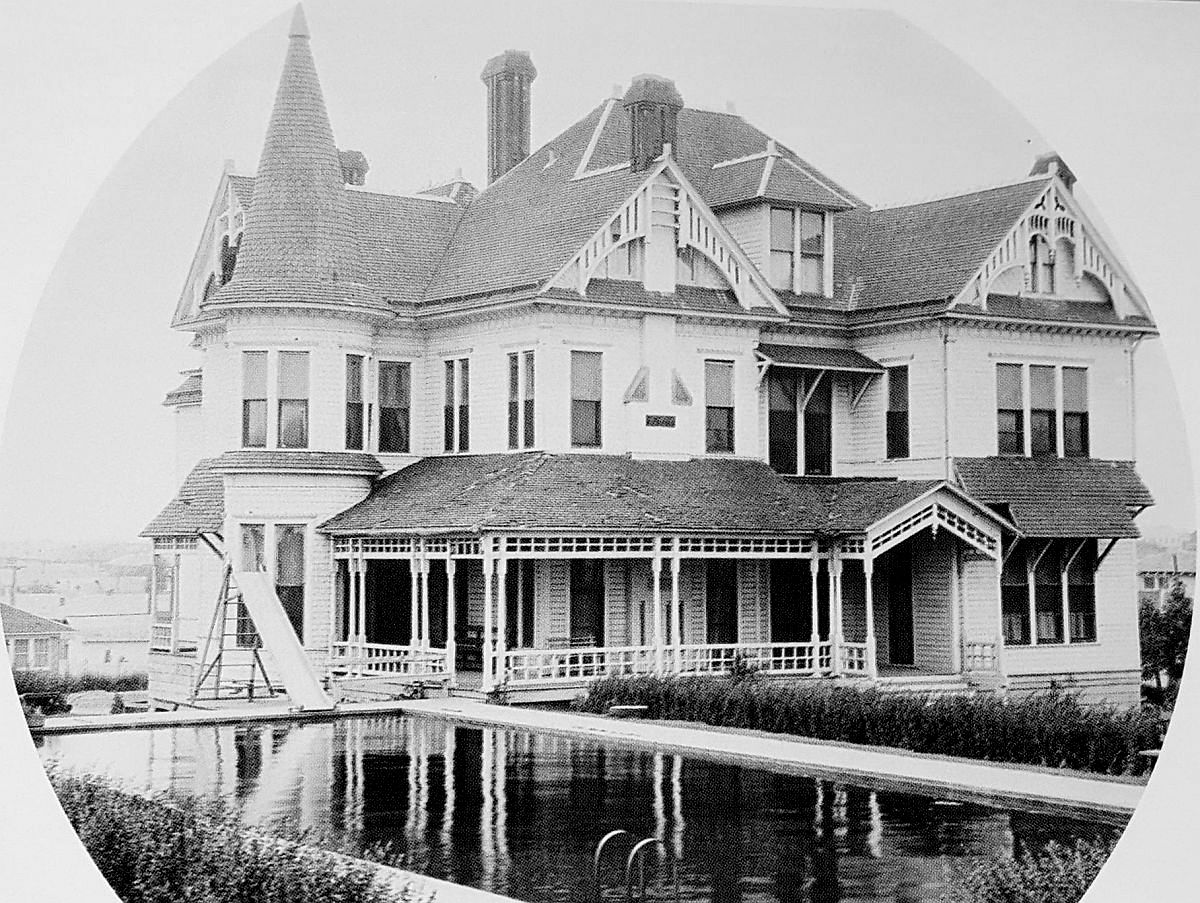
As far as I can tell, the first owner or this land was Walter Caruth (1826-1897), a pioneer merchant and farmer who arrived in this area in the 1840s (some sources say the 1850s), along with his brother, William. Over the years the brothers amassed an absolutely staggering amount of land — thousands and thousands of acres which stretched from about Inwood Road to White Rock Lake, and Ross Avenue up to Forest Lane. One of Walter Caruth’s tracts of land consisted of about 900 acres along the eastern edge of the city — this parcel of land included the 8 or 9 acres which is now the block bounded by Greenville, Belmont, Summit, and Richard, and it was where he built his country home (he also had a residence downtown). The magnificent Caruth house was called Bosque Bonita. Here is a picture of it, several years after the Caruths had moved out (the swimming pool was added later).
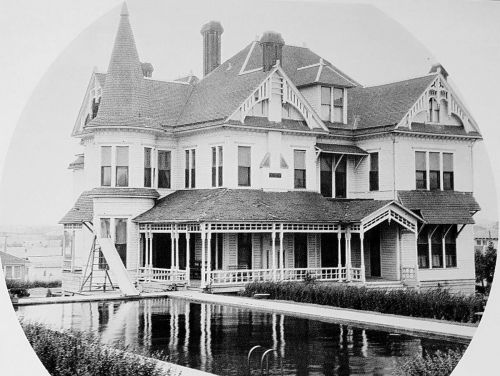
caruth_bosque-bonita_dallas-rediscovered

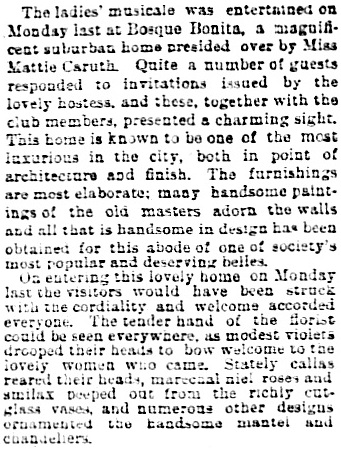
Most sources estimate that the house was built around 1885 (although a 1939 newspaper article stated that one of Walter’s children was born in this house in 1876…), but it wasn’t until 1890 that it began to be mentioned in the society pages, most often as the site of lavish parties. (Click pictures and  articles to see larger images.)
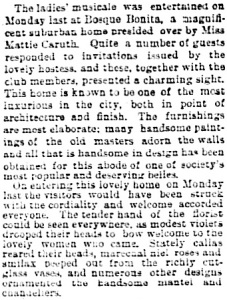
bosque-bonita_dmn_020390Dallas  Morning News, Feb. 3, 1890

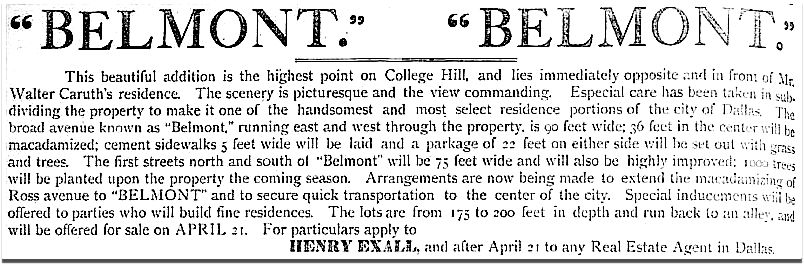
At the time, the Caruth house was one of the few buildings in this area — and it was surrounded by endless acres of corn and cotton crops. It wasn’t long, though, before Dallas development was on the march eastward and northward. This ad, for the new Belmont Addition, appeared in April of 1890, and it mentioned the Caruth place as a distinguished neighboring landmark.
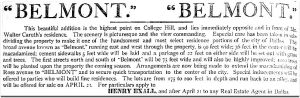
belmont-addition_dmn_041690
DMN, April 16, 1890

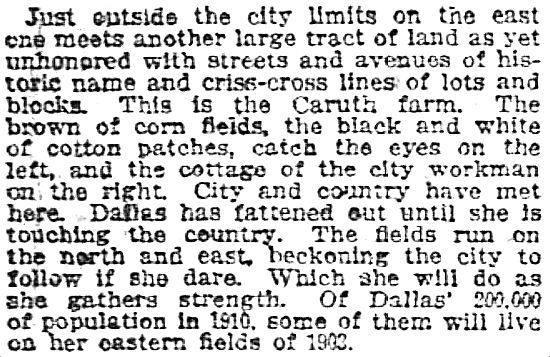
By the turn of the century — after Caruth’s death in 1897 — it was inevitable that this part of town (which was not yet fully incorporated into the City of Dallas) would soon be dotted with homes and businesses.
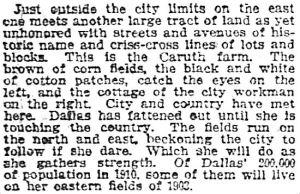
caruth-farm_dmn_092703
DMN, Sept. 27, 1903

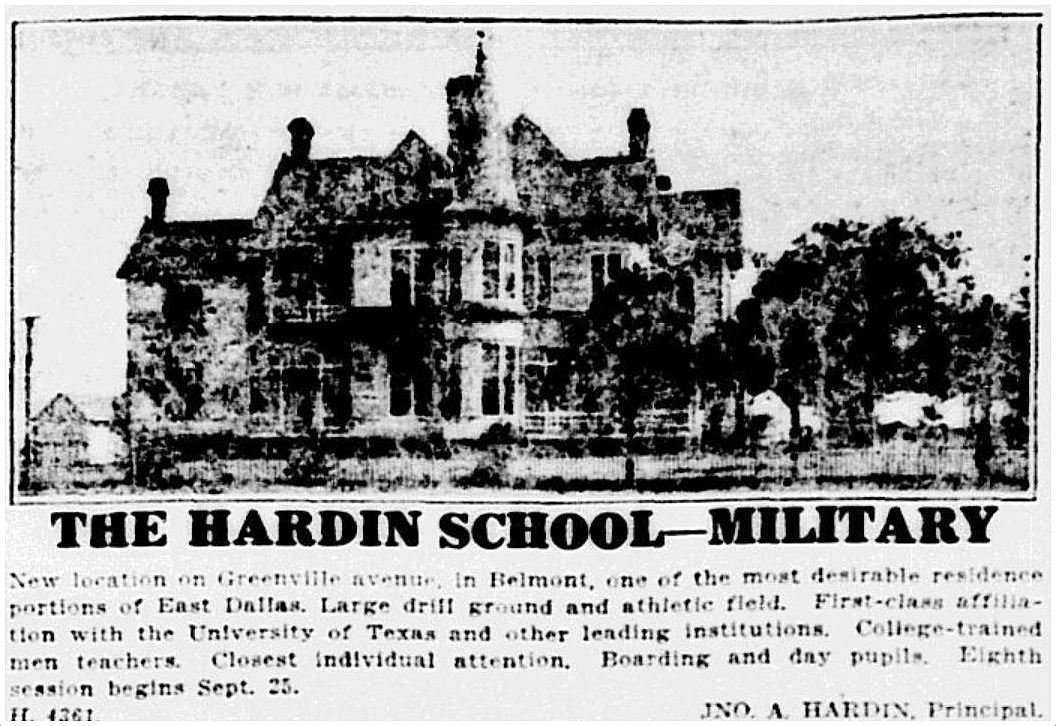
At one time the Caruth family owned land in and around Dallas which would be worth the equivalent of billions of dollars in today’s money. After Walter Caruth’s death, the Caruth family became embroiled in years of litigation, arguing over what land belonged to which part of the family. I‘m not sure when Walter Caruth’s land around his “farmhouse” began to be sold off, but by 1917, the Hardin School for Boys (established in 1910) moved into Bosque Bonita and set up shop. It operated at this location for two years. The Caruth house even appears in an ad.
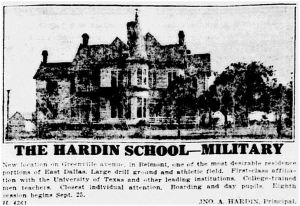
hardin-school_dmn_071517_bosque-bonita_ad
DMN, July 15, 1917

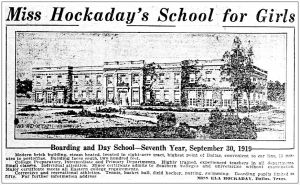
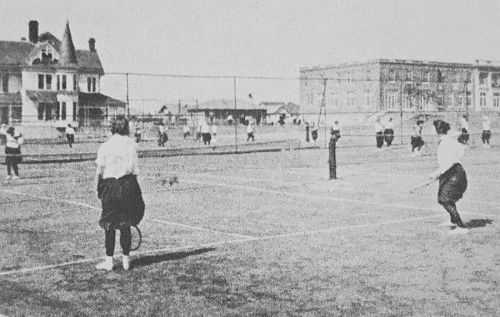
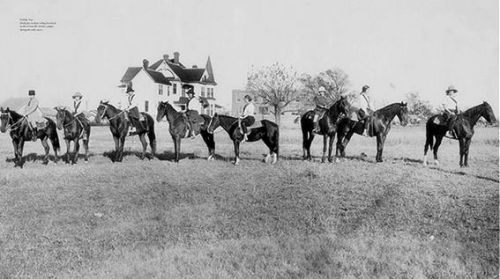
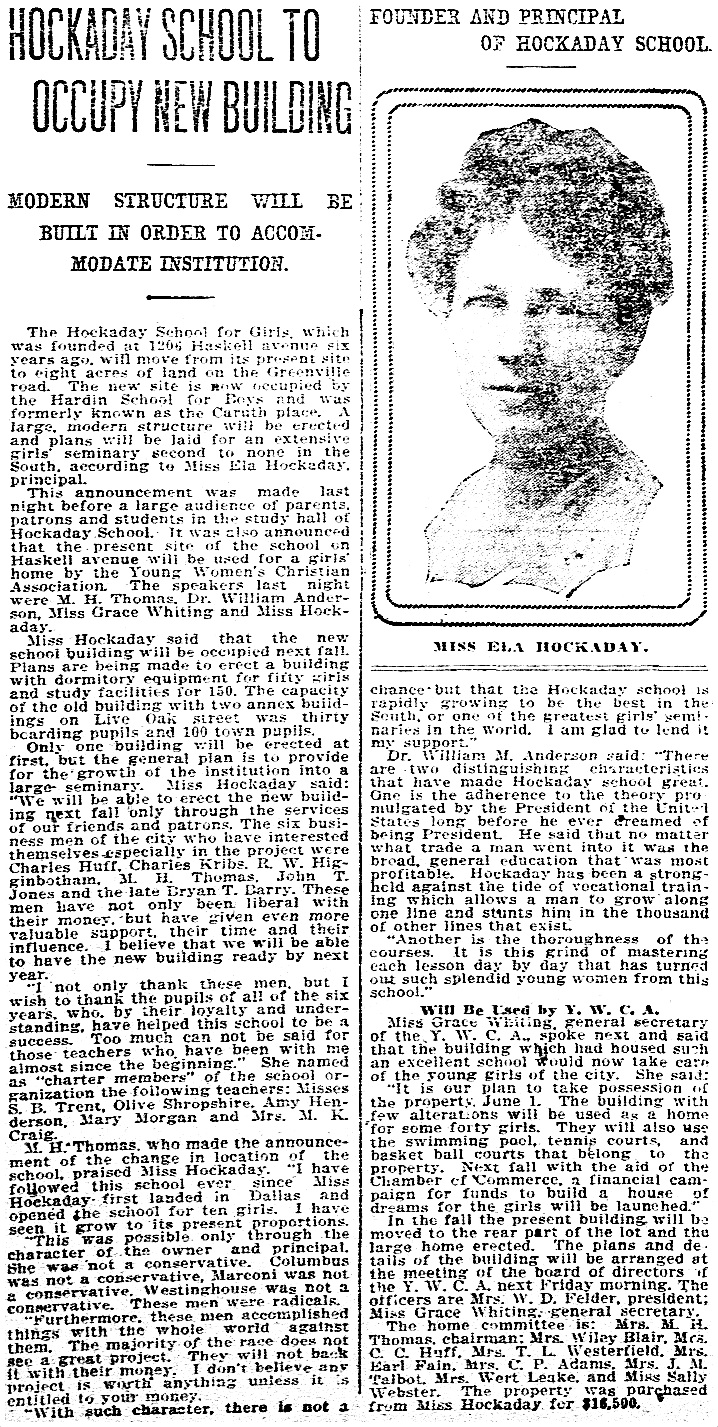
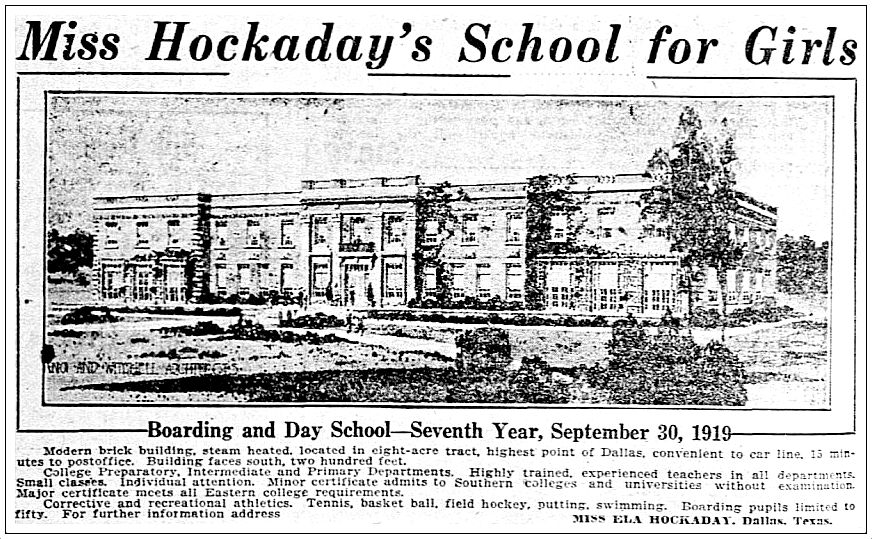
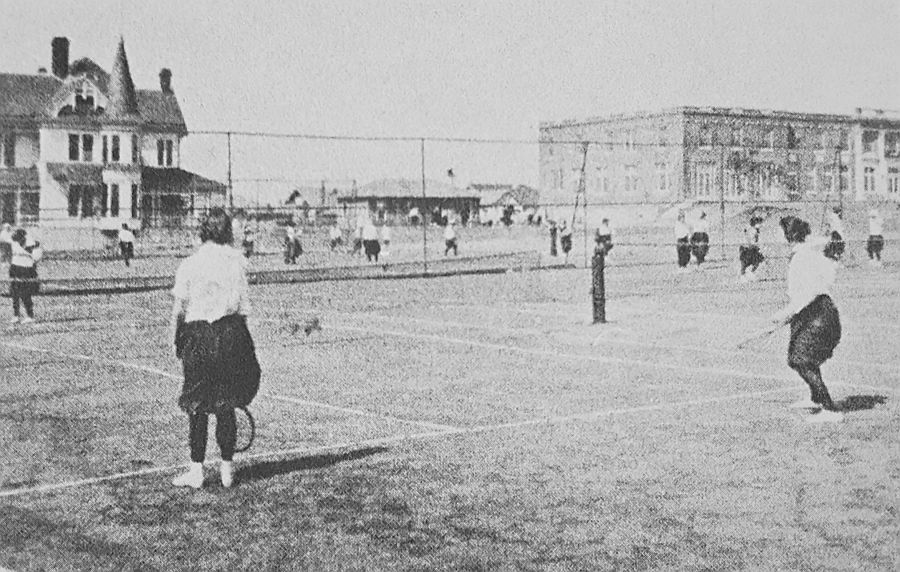
I’m not sure if the Hardin School owned the land or was merely leasing it and the house, but in 1919, Ela Hockaday announced that she had purchased the land and planned to move her school — Miss Hockaday’s School for Girls (est. 1913) — to this block and build on it a two-story brick school building, a swimming pool (seen in the photo above), tennis courts, basketball courts, hockey fields, and quarters for staff and girls from out of town who boarded.
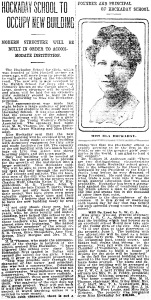
hockaday_dmn_051119DMN, May 11, 1919

hockaday_dmn_070619
DMN, July 6, 1919

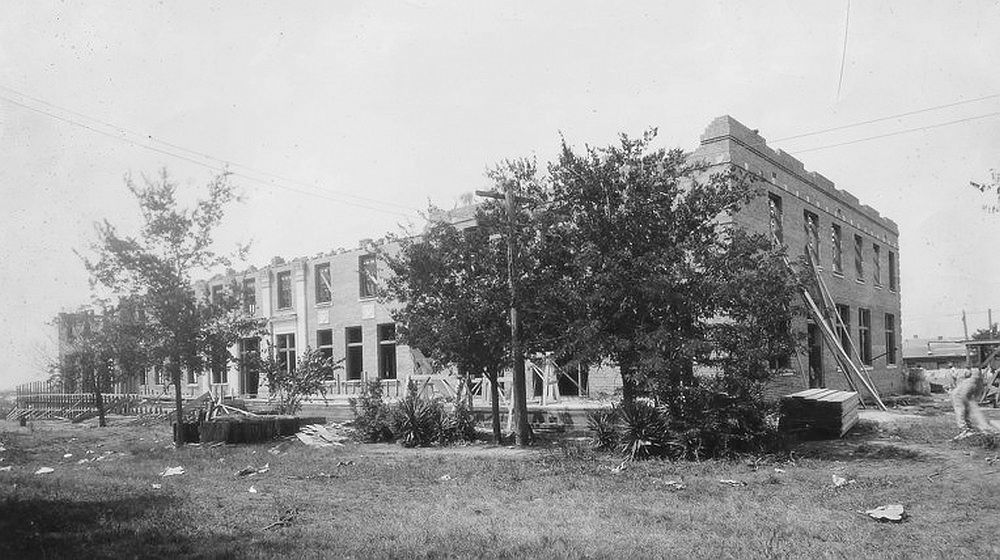
Ground was broken in July of 1919, and the first session at the new campus began on schedule in September. Below, the building under construction. Greenville Avenue is just out of frame to the right.
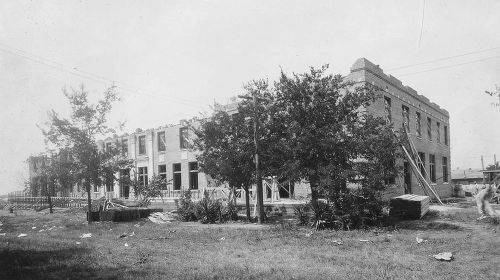
hockaday_greenville_construction_hockaday100Photo: Hockaday 100

hockaday_greenville-ave_1919_reminiscences

hockaday_greenville-belmont_1920s_horses

The most interesting thing I read about the Hockaday school occupying this block is that very soon after opening, the beautiful Caruth house was moved from its original location at the northwest corner of Belmont and Greenville. It was rolled on logs to the middle and back of the property. “Bosque Bonita” became “Trent House.” Former student (and later teacher) Genevieve Hudson remembered the moving of the house in an oral history contained in the book Reminiscences: A Glimpse of Old East Dallas:
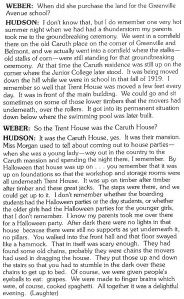
caruth-house_hockaday_reminiscences-bk

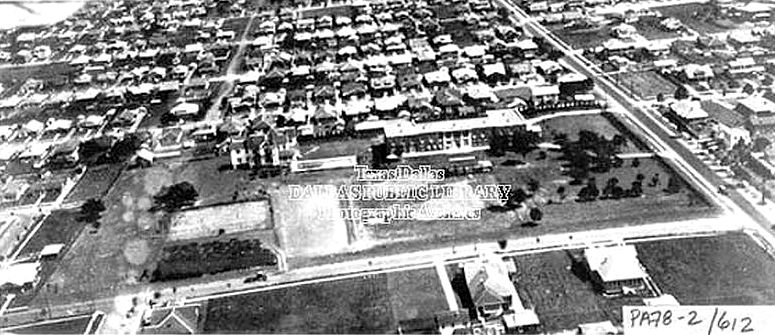
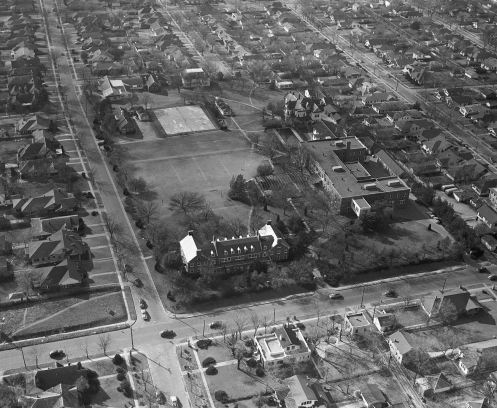
You can see the new location of the house in the top aerial photo, and in this one:
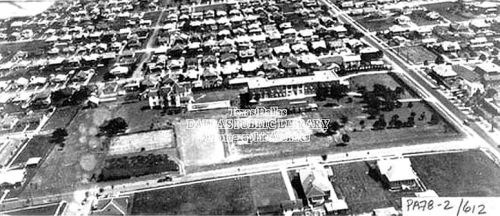
hockaday_aerial_dpl
Dallas Public Library

Another interesting little tidbit was mentioned in a 1947 Dallas Morning News article: Caruth’s old hitching post was still on the property — “on Greenville Avenue 100 feet north of the Belmont corner” (DMN, May 2, 1947). I’d love to have seen that.

After 42 years of sustained growth at the Greenville Avenue location (and five years after the passing of Miss Hockaday), the prestigious Hockaday School moved to its current location in North Dallas just after Thanksgiving, 1961. Suddenly, a large and very desirable tract of land between Vickery Place and the M Streets was available to be developed. Neighbors feared the worst: high-rise apartments.

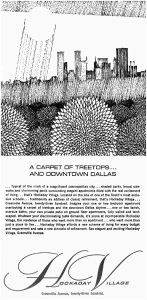
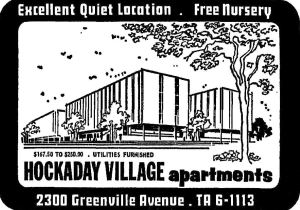
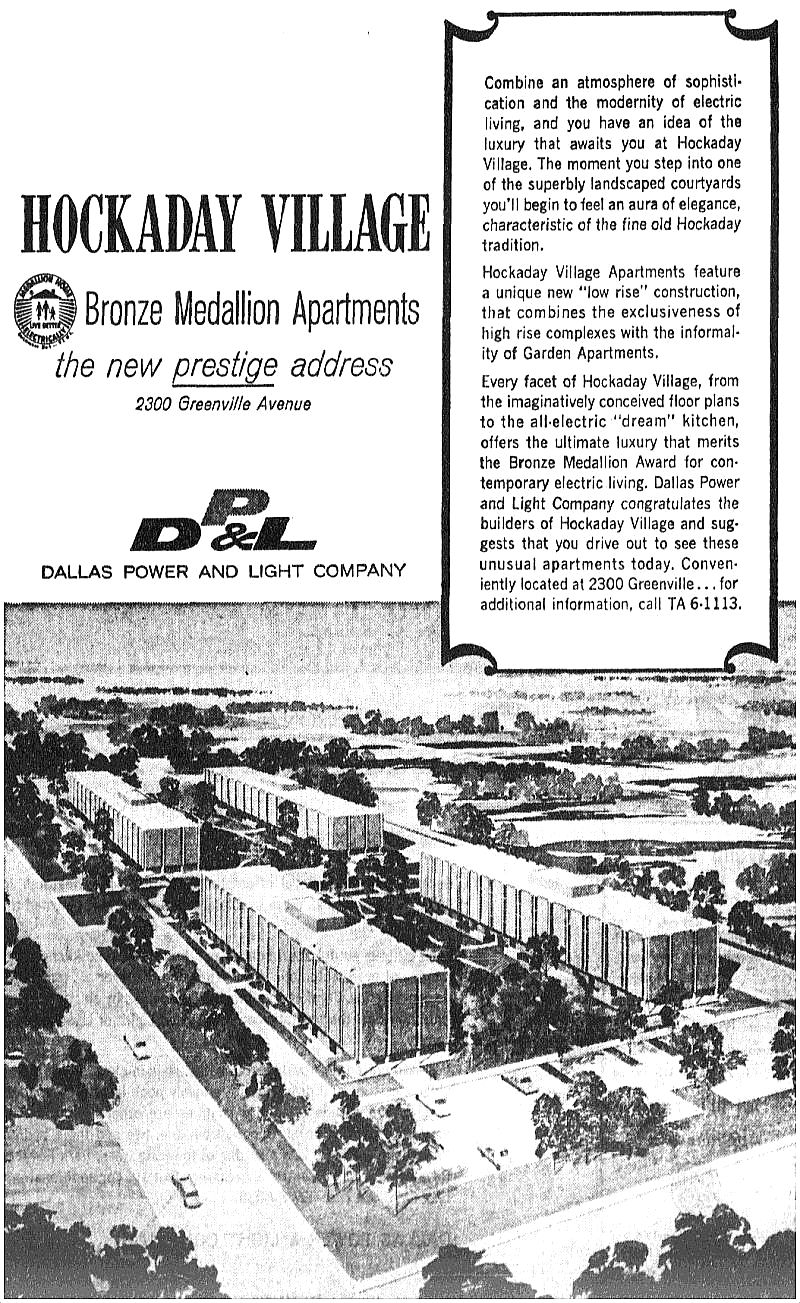
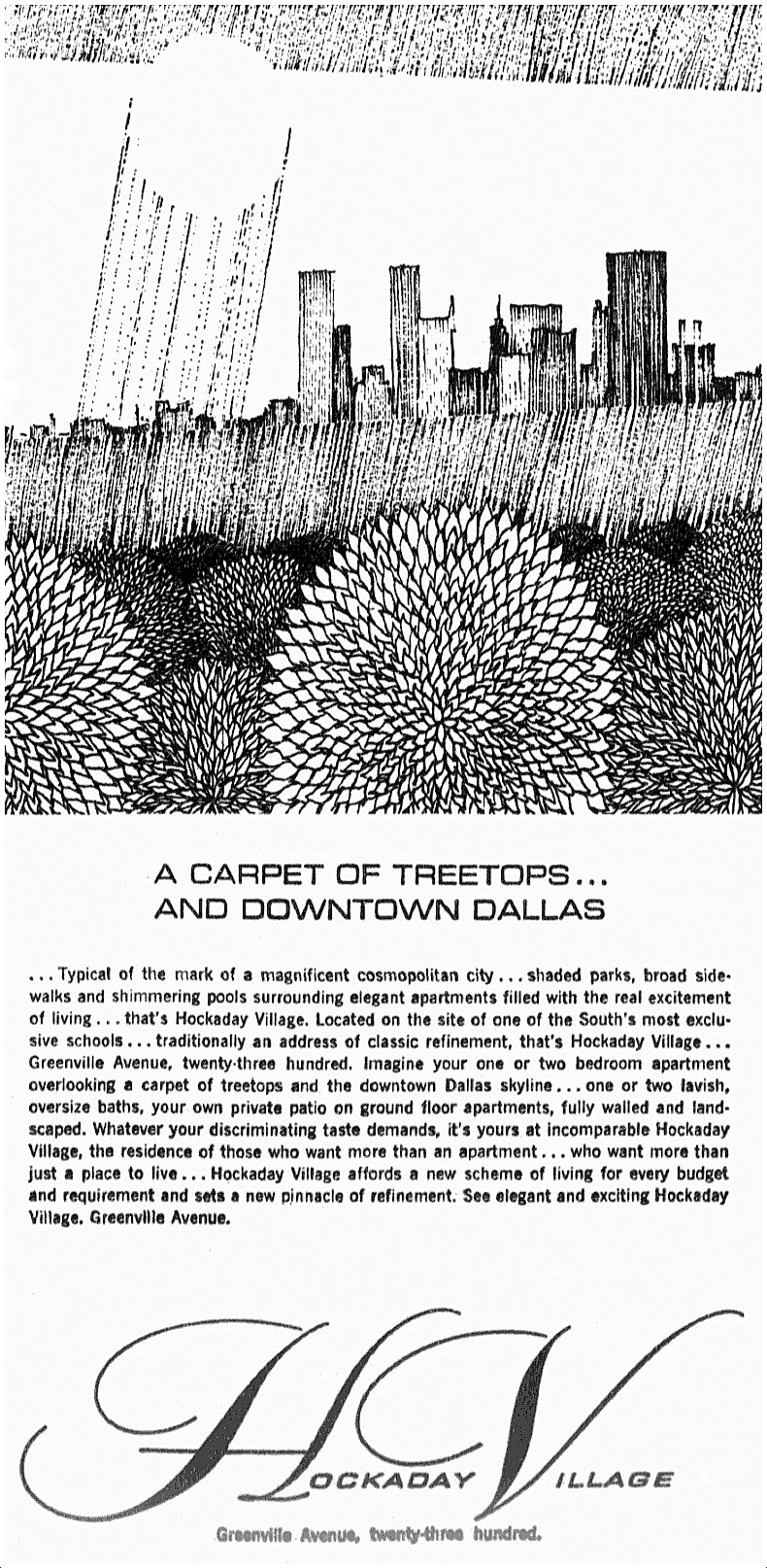
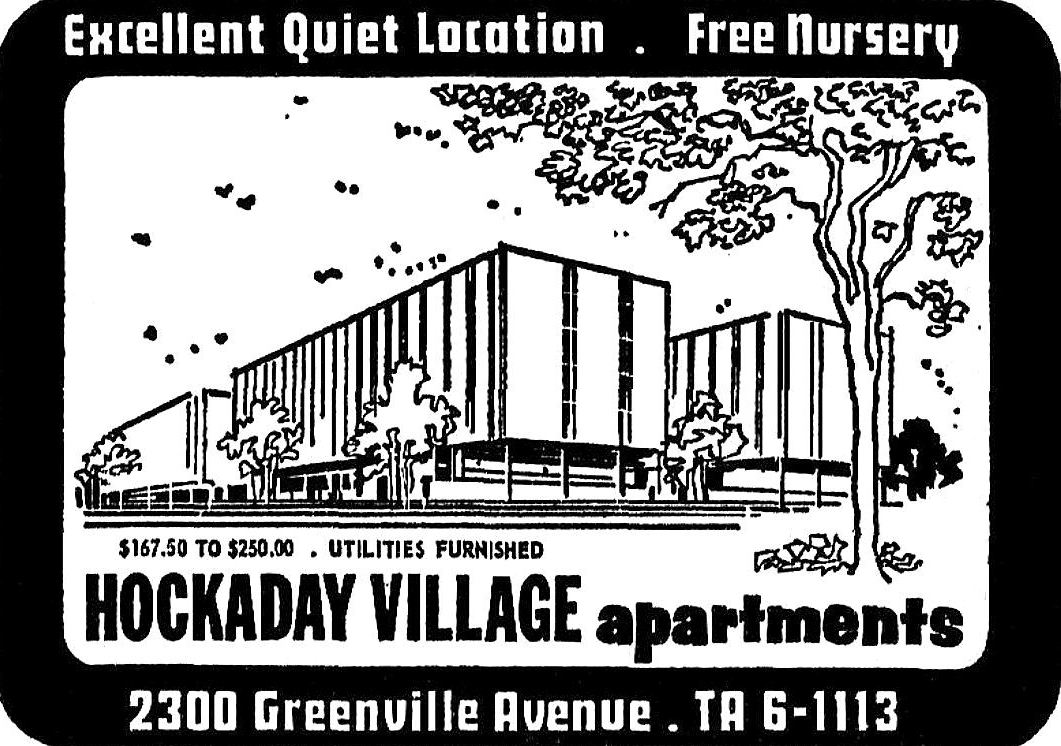
The developer proposed a “low-rise,” “semi-luxury” (?) group of four 5-story apartment buildings, each designed to accommodate specific tenants: one for swinging singles (“where the Patricia Stevens models live”), one for single or married adults, one for families with children, and one for “sedate and reserved adults.” It was to be called … “Hockaday Village.” The architect was A. Warren Morey, the man who went on to design the cool Holiday Inn on Central and, surprisingly, Texas Stadium.

Bosque Bonita — and all of the other school buildings — bit the dust in preparation for the apartment’s construction. Hockaday Village (…what would Miss Hockaday have thought of that name?) opened at the end of 1964.
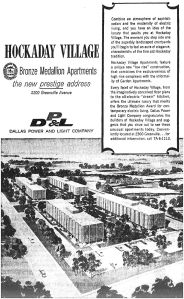
hockaday-village_dmn_101864
Oct. 1964

hockaday-village_dmn_101864_carpet-of-treetops
Oct. 1964

hockaday-village_dmn_031365
March 1965

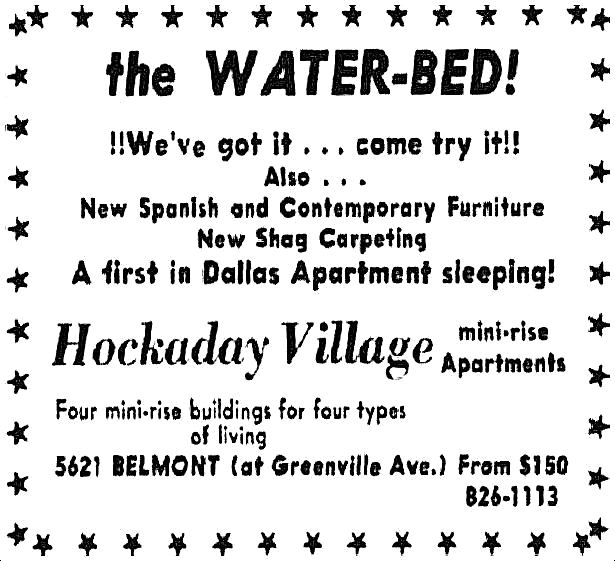
And then before you knew it, it was the ’70s, the era of waterbeds and shag carpeting. (Miss Hockaday would not have tolerated such tackiness, and I seriously doubt that Mr. Caruth would have ever understood why shag carpeting was something anyone would actually want.)
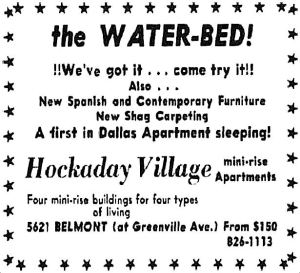
hockaday-village_dmn_052271_waterbeds
1971

Then, in 1973, the insistently hip ads stopped. In April, 1974 this appeared:
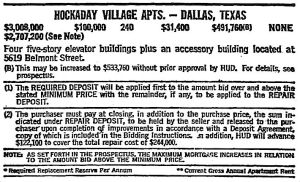
hockaday-village_FWST_042874
Fort Worth Star-Telegram, April 28, 1974

The apartments were being offered for public auction by the “Office of Property Disposition” of the Federal Housing Authority and HUD. Doesn’t sound good. So who bit and took the plunge? The First Baptist Church of Dallas, that’s who. The plan was to redevelop the existing apartments into a retirement community called The Criswell Towers, to be named after Dr. W. A. Criswell. But a mere three months later, the Baptists realized they had bitten off more than they could chew — the price to convert the property into a “home for the aged” would be “astronomical.” They let the building go and took a loss of $135,000. It went back on the auction block.

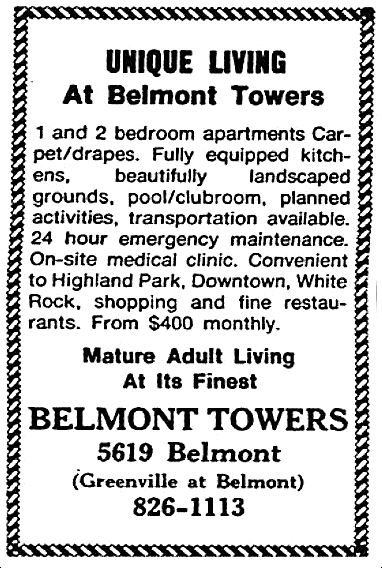
Two years later, in the summer of 1976 … the old Hockaday Village became Belmont Towers — and the new owners must have thought the Baptists’ idea was a good one, because Belmont Towers advertised itself as “mature adult living at its finest” — “perfect for retired or semi-retired individuals.”
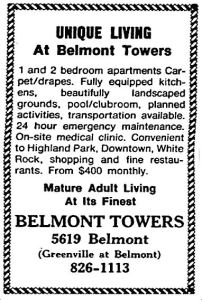
hockaday-village_dmn_043083_belmont-towers
April 1983

It was Belmont Towers for 20-or-so years. In 1998, the buildings were renovated and updated, and it re-opened as Vickery Towers, still a retirement home and assisted living facility. A couple of years ago it was announced that the buildings would be demolished and a new development would be constructed in its place. It took forever for the 52-year-old complex to finally be put out of its misery since that announcement. Those buildings had been there my entire life and, like I said, it was a shock to see nothing at all in that block a few weeks ago.
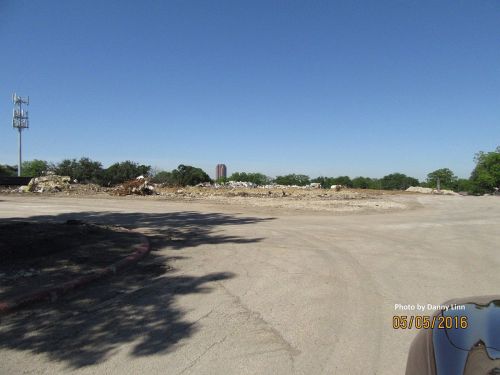
vickery-towers_050516_danny-linn-photoPhoto: Danny Linn

In the 140-or-so years since Walter Caruth acquired this land in the 1870s or 1880s, it has been occupied by Caruth’s grand house, a boys school, the Hockaday School, and four buildings which have been apartments and a retirement community. And that’s it. That’s pretty unusual for development-crazy Dallas. I’ll miss those familiar old buildings. I hope that whatever is coming to replace them won’t be too bad.
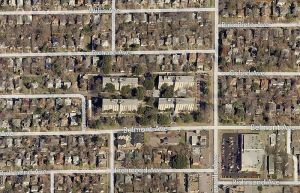
greenville-belmont_bing_aerial
Bing Maps

***

Sources & Notes

The top aerial photograph is by Squire Haskins, taken on Feb. 27, 1950 — from the Squire Haskins Photography Inc. Collection, University of Texas at Arlington Libraries, Special Collections, accessible in a massive photo here (click the thumbnail). Greenville Avenue is the street running horizontally at the bottom. The Hockaday Junior College can be seen at the northwest corner of Belmont and Greenville — the original location of Bosque Bonita before it was rolled across the campus.

That fabulous photo of Bosque Bonita is from the book Dallas Rediscovered by William L. McDonald.

Photo of Hockaday girls playing tennis is from the book Reminiscences: A Glimpse of Old East Dallas.

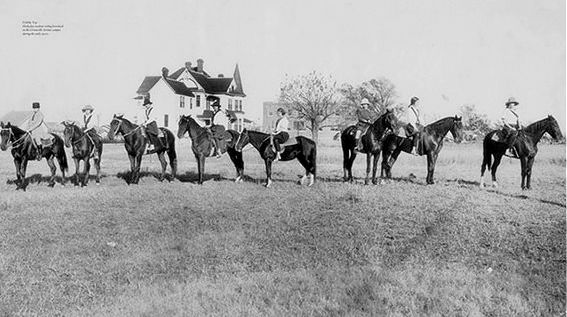
Photo of girls on horseback … I’m not sure what the source of this photo is.

Photo of the block, post-razing is by Danny Linn who grew up in Vickery Place; used with permission. (Thanks, Danny!)

All other sources as noted.

In case you were confused, the Caruth Homeplace that most of us might know (which is just south of Northwest Highway and west of Central Expressway) was the home of Walter Caruth’s brother William — more on that Caruth house can be found here.

The Hockaday School can be seen on the 1922 Sanborn map here (that block is a trapezoid!).
More on the history of the Hockaday School can be found at the Hockaday 100 site; a page with many more photos is here. Read about the history of the school in the article “Miss Ela Builds a Home” by Patricia Conner Coggan in the Spring, 2002 issue of Legacies, here.

Additional information can be found in these Dallas Morning News articles:

  • “Proposal to Change Hockaday Site to Apartment Zoning Opposed” (DMN, Oct. 29, 1961)
  • “Retirement Home Plans Going Ahead” (regarding the purchase by the First Baptist Church of Dallas) (DMN, June 15, 1974)
  • “Church Takes $135,000 Loss on Property” (DMN, Sept. 10, 1974)

*

If you made it all the way through this, thank you! I owe you a W. C. Fields “hearty handclasp.”

*

Copyright © 2016 Paula Bosse. All Rights Reserved.