Flashback : Dallas

A Miscellany: History, Ads, Pop Culture

Category: Education/Schools

Dallas Medical College: 1900-1904

dallas-med-college_1903_utswPhotos from the UT Southwestern Library (click for larger image)

by Paula Bosse

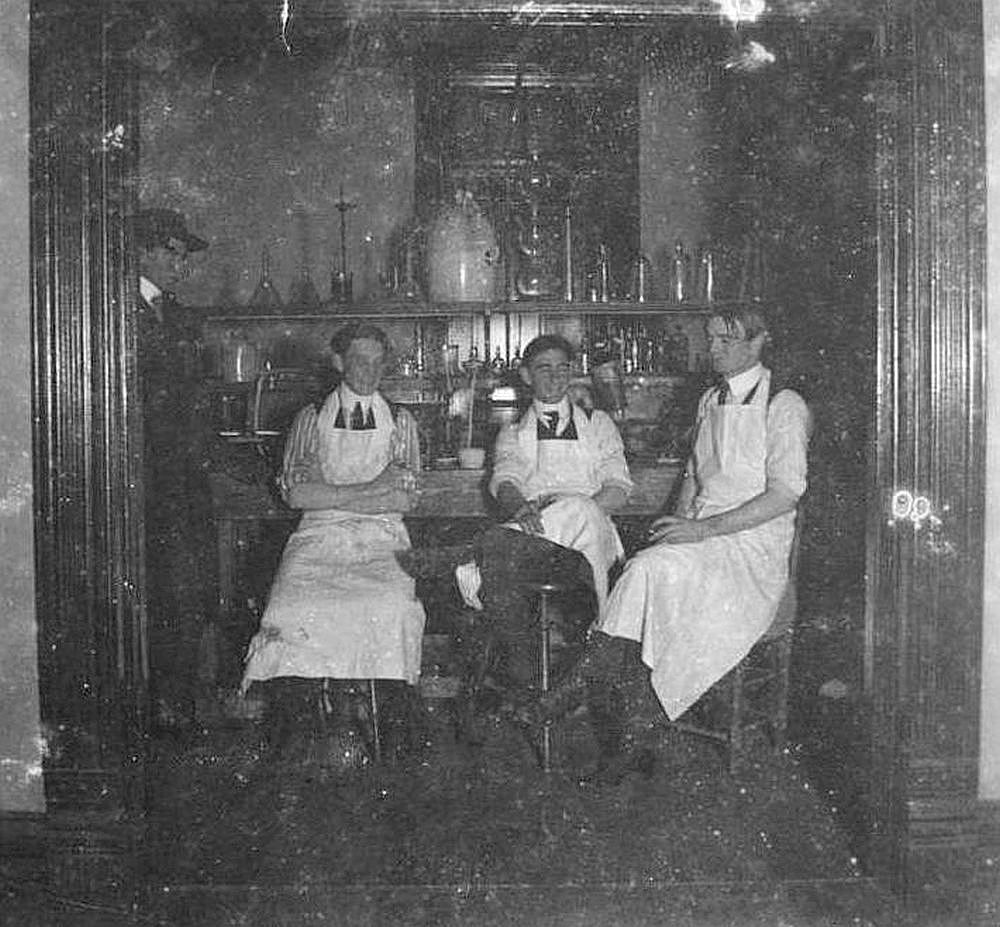
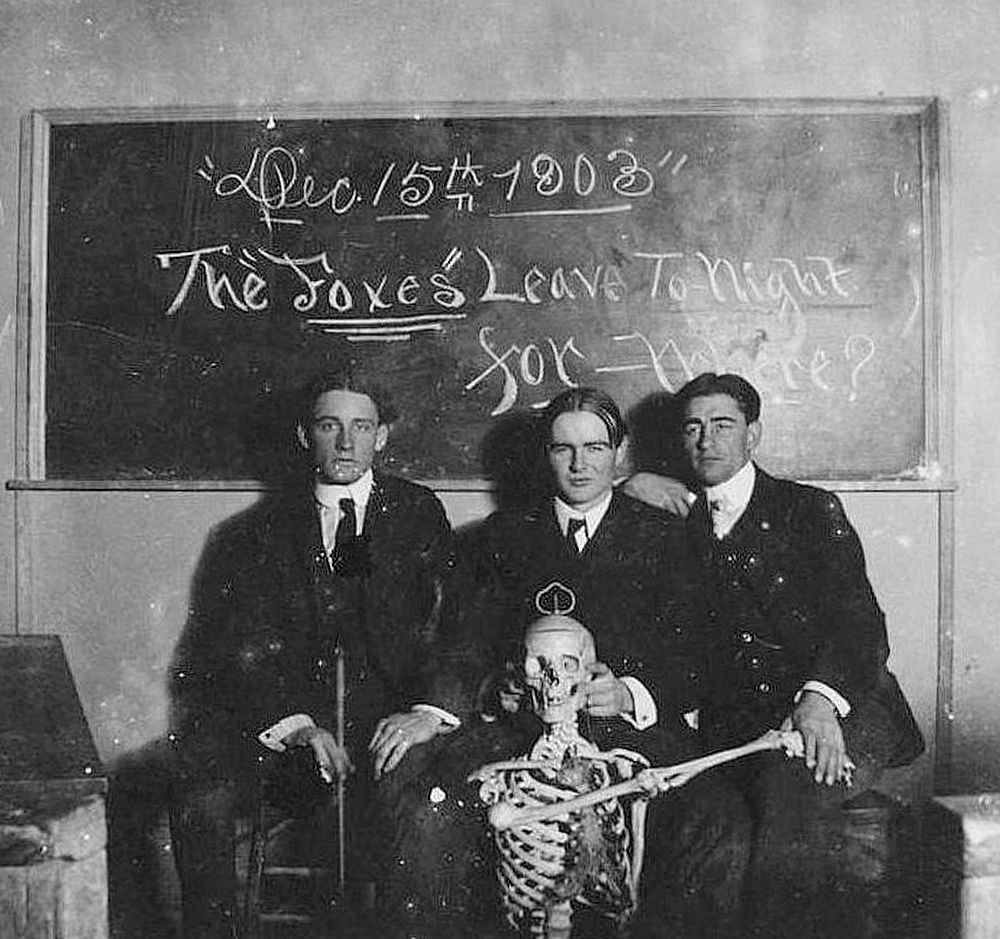
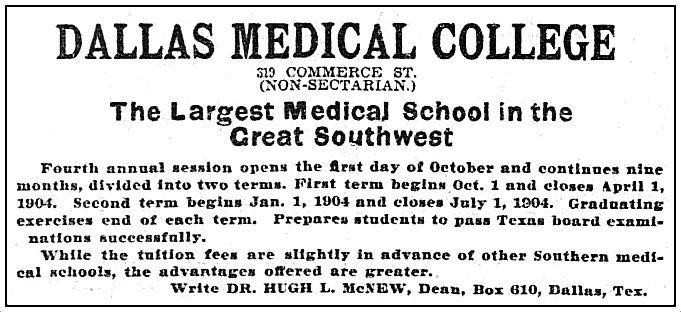
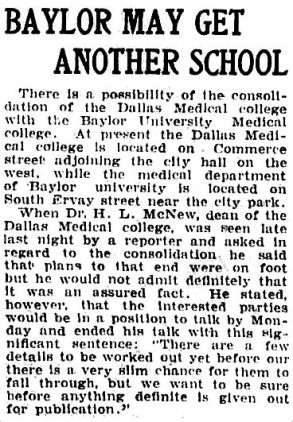
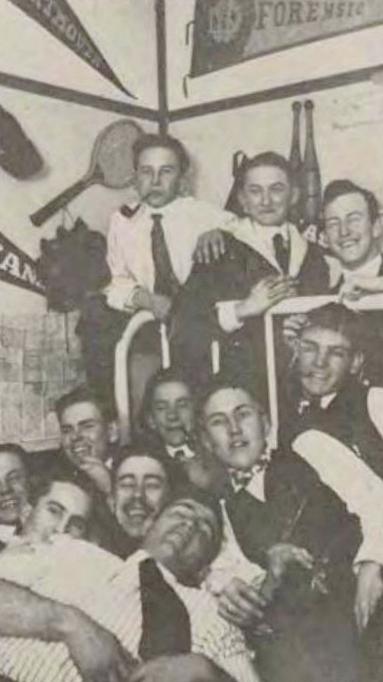
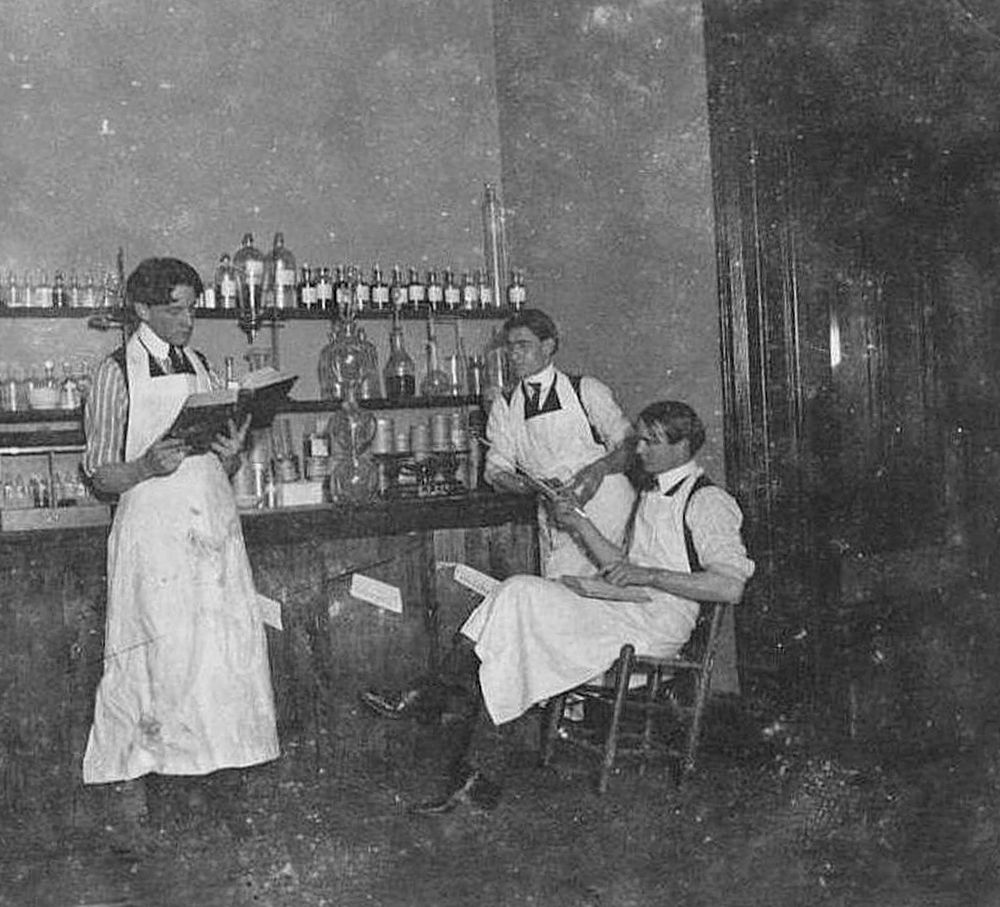
Between 1900 and 1910, Dallas had ELEVEN medical schools, some of dubious distinction. One of the earliest and most successful was Dallas Medical College, an offshoot of Trinity University which was eventually merged with Baylor College of Medicine. It was located on Commerce St. near Akard, neighbors with a fire station and the City Hall (the Adolphus Hotel now occupies this site). Here are several photos from the Dallas Medical College archives, showing three typical medical students engaging in typical medical school hijinks.

dallas-med-college_1903a_utsw

dallas-med-college_1903b_utsw

dallas-med-college_1903c_utsw

dallas-med-college_1903d_utsw

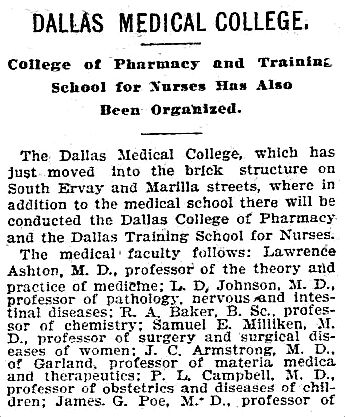
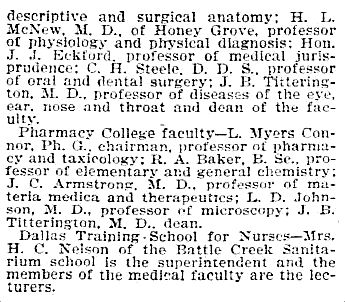
dallas-medical-college_dmn_020301adallas-medical-college_dmn_020301b Dallas Morning News, Feb. 3, 1901

dallas-medical-college_dmn_020301-sketchThe school’s first location on S. Ervay & Marilla (DMN, Feb. 3, 1901)

dallas-medical-college_dmn_092703DMN, Sept. 27, 1903

dallas-med-coll_southern-merc_111004Southern Mercury, Nov. 10, 1904

The official announcement of the merging, with details on how the two schools would function for the rest of the school year can be read here.

***

Sources & Notes

Photographs from the UT Southwestern Library, here and here.

More on early medical schools in Texas, with several paragraphs on Dallas, can be found in “Training the Healers” by Vernie A. Stembridge, M.D., an article from the May, 1999 issue of Heritage magazine (a publication of the Texas Historical Foundation) which can be read here.

*

Copyright © 2014 Paula Bosse. All Rights Reserved.


The Ladies’ Reading Circle: An Influential Women’s Club Organized by Black Teachers in 1892

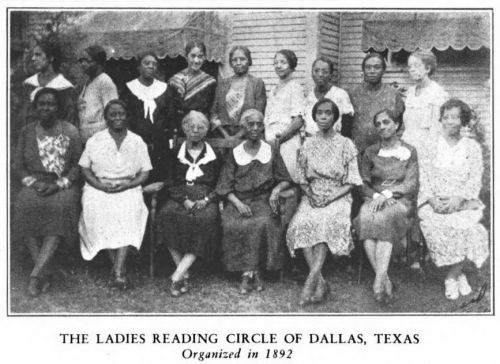
ladies-reading-circle_negro-leg-brewer_1935The Ladies (click for larger image)

by Paula Bosse

When one thinks of “ladies’ clubs” of the past, one probably tends to think of groups of largely well-to-do women in fashionable dresses, gloves, and smart hats who gathered for quaint meetings in one another’s homes to discuss vaguely literary or cultural topics, sip tea, chit-chat, and gossip. Often they would plan projects and events which would aid pet community or charitable causes. There were clubs of varying degrees of serious-mindedness, but, for the most part, club meetings were mostly an excuse for women to socialize. 100 years ago, these women rarely worked outside the home, and these groups offered an important social and cultural outlet for well-educated women of means. White women. Women of color were not part of that particular club world. They had to create clubs for themselves. And they did.

In 1892, eight African-American teachers in Dallas organized their own club, the Ladies’ Reading Circle, and while it, too, was an important social outlet for the women, the focus of the group tended to be more serious, with reading lists comprised primarily of political, historical, and critical texts.

The members of the Ladies’ Reading Circle (a group that lasted at least until the 1950s) were, for the most part, middle-class black women who set an agenda for the club of education, self-improvement, and social responsibility. Like most women’s clubs of the time, each meeting of the LRC was held in a different member’s home and usually ended with a “dainty” luncheon and light musical fare, courtesy of the Victrola or player piano; but what set the LRC apart from most of the other women’s clubs of the day was the choice of reading material — from books on world history and international politics, to texts on current affairs and social criticism. (Several surprising examples appear below.)

Not only did the women gather weekly to discuss current and cultural affairs, they also worked to improve their community by tackling important social issues and by inspiring and encouraging young women (and men) who looked to them as civic leaders. Noted black historian J. Mason Brewer dedicated his 1935 book Negro Legislators of Texas to the women of the Ladies’ Reading Circle. The photograph above is from Brewer’s book, as is the following dedication:

lrc_negro-leg-brewer_1935-dedication

Included were the names of the members, several of whom had organized the club in 1892:

lrc_members_brewer

One of the LRC’s concerns was establishing a home which, like the white community’s YWCA, offered housing and career training for young women. The charming frame house the club bought for this purpose in 1938 (and which is described in the Jan. 10, 1952 News article “Ladies Reading Circle Seeks $7,500 for Expanding Home”) still stands at 2616 Hibernia in the State-Thomas area

lrc-home_2616-hibernia_google2616 Hibernia (Google Street view, 2014)

But the group was organized primarily as a “reading circle,” and the minutes of three randomly chosen meetings show the sort of topics they were interested in exploring. The following three articles are from the post-WWI-era, and all appeared in The Dallas Express, a newspaper for the city’s black community.

lrc_dallas-express_040320April 3, 1920

lrc_dallas-express_041020April 10, 1920

lrc_dallas-express_102023October 20, 1923

My favorite juxtaposition of content on the pages of The Dallas Express was the article below which reported on a white politician’s promise that he would fight to keep “illiterate Negro women” from voting — just a column or two away was one of those eye-popping summaries of the latest meeting of the Ladies’ Reading Circle. My guess is that the black educators who comprised the Ladies’ Reading Circle were probably far more knowledgeable about world events than he was.

negro-womans-suffrage_dallas-express_052220May 22, 1920

In reading the limited amount of information I could find on the LRC, I repeatedly came across the name of one of the earliest members, Callie Hicks (she is in the 1935 photo at the top, seated, second from the right). She was a dedicated teacher as well as a respected civic leader who worked for several causes and was an executive of the Dallas branch of the NAACP. A Dallas News article about Miss Hicks appeared in Feb., 1950 when she was named “Woman of the Year” by one of the largest African American women’s organizations in Dallas County (“Honor Caps 40 Years of Helpful Teaching,” DMN, Feb. 10, 1950). Miss Hicks died in May, 1965.
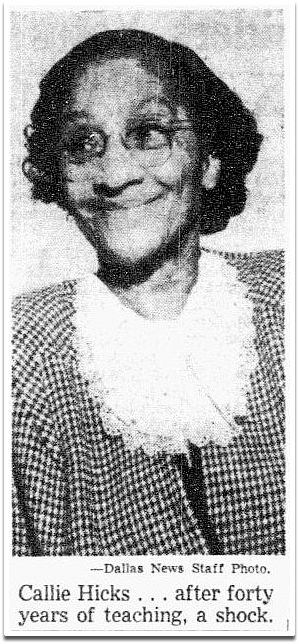
callie-hicks_dmn-021950-photo1950

It’s a shame that the Ladies’ Reading Circle is not better known in Dallas today. I have to admit that I had never heard of the group until I stumbled across that 1935 club photo. Their tireless work to improve the intellectual lives of themselves and others no doubt influenced the generations that followed.

***

Sources & Notes

Top photograph, dedication, and member list, from Negro Legislators of Texas and Their Descendants; A History of the Negro in Texas Politics from Reconstruction to Disenfranchisement by J. Mason Brewer (Dallas: Mathis Publishing Co., 1935).

Minutes from the Ladies’ Reading Circle meetings all printed in The Dallas Express.

Relevant material on the LRC and other historic African-American women’s clubs can be read in Women and the Creation of Urban Life, Dallas, Texas, 1843-1920 by Elizabeth York Enstam (College Station: Texas A & M University Press, 1998), here.

The Handbook of Texas entry for one of the founding members of the Ladies’ Reading Circle, Julia Caldwell Frazier, can be found here.

*

Copyright © 2014 Paula Bosse. All Rights Reserved

SMU’s First Year: The Dinkey, Campus Hijinx, and the Basket Ball — 1915-16

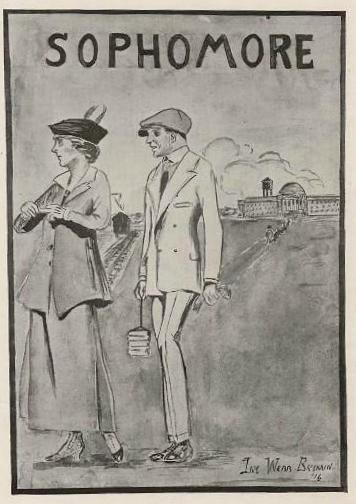
1smu-rotunda-1916_soph-drawing

by Paula Bosse

As a companion to my previous post on the first year of classes at SMU, here are a few more photos from the yearbook, these documenting the less studious side of campus life.

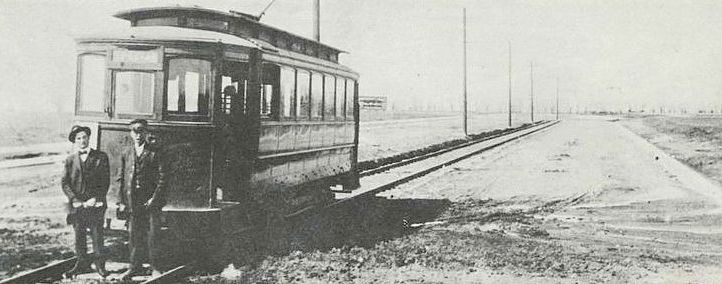
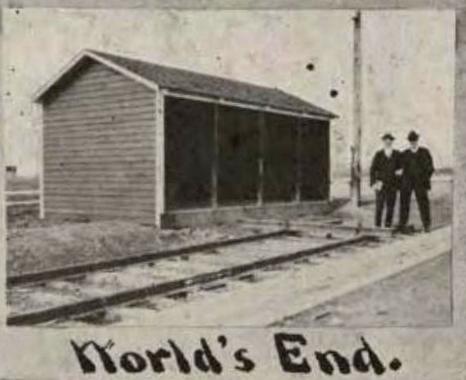
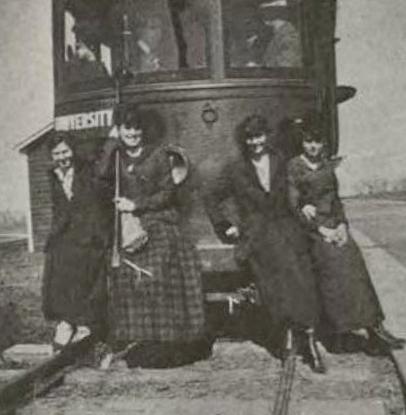
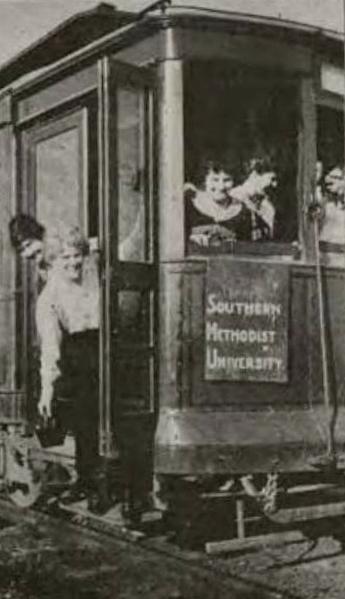
The most interesting thing about these photos, for me, is the SMU trolley, nick-named “The Dinkey” (or “The Dinky”). When SMU opened in 1915, it was waaaaaaaaaay outside the city limits, and the rail line extended only as far north as Knox. In order to get to and from downtown (and points beyond), one had to board the Dinkey near Hillcrest and McFarlin and ride to Knox, then change to an official city streetcar and head into civilization.

This reminiscence appeared in a 1984 issue of Park Cities People:

The first time Manning saw the campus was from the wooden seat of the Dinkey, an electric streetcar built for SMU in 1915.

“I told Dad Johnson, the conductor, as I boarded in Highland Park, I wanted to get off at SMU,” Manning said. “He said, ‘That’s as far as it goes.'”

“‘When we got there, I said, ‘Where’s the campus?’ He said, ‘There’s only two buildings. Dallas Hall is the one with the columns.'”

Manning couldn’t see the building from the Dinkey for the four-foot-tall Johnson grass and had to follow a travel-worn path to Dallas Hall.

2dinkey-hpcentennial“The Dinkey ran from Dallas Hall to Knox Street on tracks in the middle of Hillcrest. This photo taken at McFarlin.”

3smu-rotunda-1916_dinkey-stopThe “depot” where the Dinkey picked up and dropped off SMU students, faculty, and visitors.

4smu-rotunda-1916_dinkeyThe Dinkey, garnished with co-eds.

5smu-rotunda-1916_dinkey

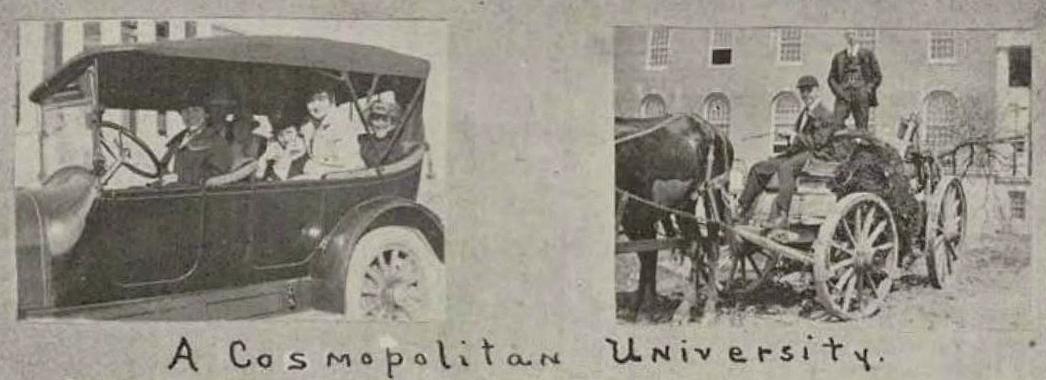
6smu-rotunda-1916_cosmopolitan-univ“Cosmopolitan University” horsepower.

7smu-rotunda-1916_frat

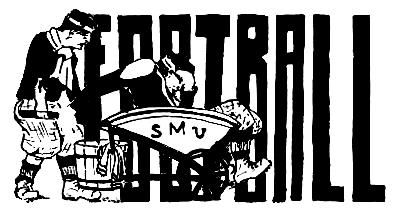
8smu-rotunda-1916_footballBad season?

The inaugural football season started tentatively. The 1915 schedule:

  • Oct. 9th: SMU vs. TCU at Fort Worth
  • Oct. 14th: SMU vs. Hendrick College at Dallas
  • Oct. 27th: SMU vs. Austin College at Dallas Fair
  • Nov. 4th: SMU vs. Dallas University
  • Nov. 12th: SMU vs. Daniel Baker at Brownwood
  • Nov. 19th: SMU vs. Southwestern University at Dallas
  • Nov. 25th: SMU vs. Trinity University at Waxahachie

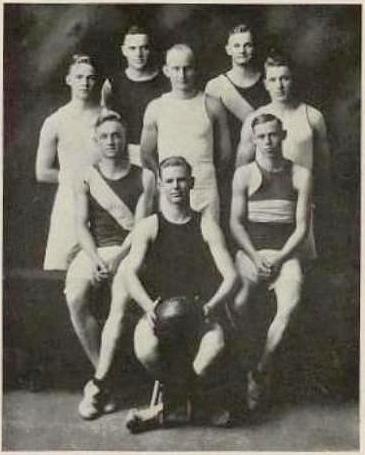
9smu-rotunda-1916_basketballThe men’s “Basket Ball” team.

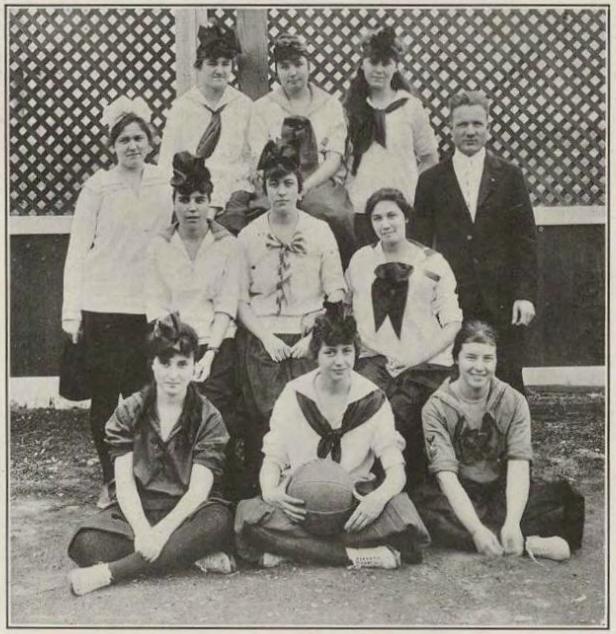
10smu-rotunda-1916_girls-basketballThe girl’s “Basket Ball” team.

16smu-rotunda-1916_cover

***

Sources & Notes

All images (except the second) from the 1915-1916 edition of SMU’s “Rotunda” yearbook.

Photo (and caption) of the “Dinkey” trolley at Hillcrest and McFarlin from Highland Park Centennial Celebration site, here.

Quote about traveling to the campus from Park Cities People (March 15, 1984).

“Dallas Hall and the Hilltop” by Tom Peeler, an entertaining  1998 D Magazine article on the first days of SMU, is here.

My previous post containing more photos from this first yearbook, is here.

*

Copyright © 2014 Paula Bosse. All Rights Reserved.

SMU, “The School of the Future” — 1915-16

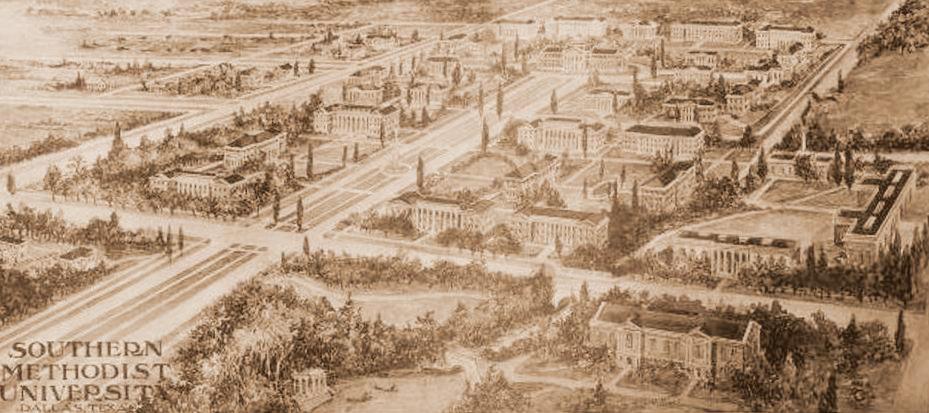
1smu-rotunda-frontis_1916-lgProposed buildings — upper half of the campus

by Paula Bosse

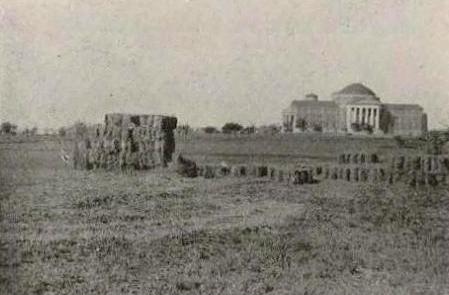
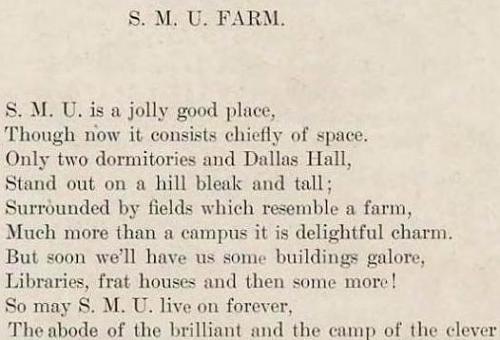
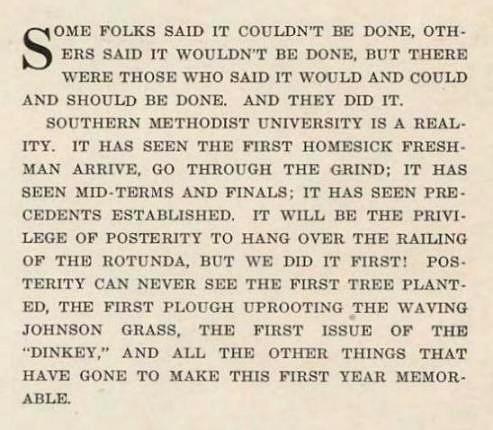
In 1916, the SMU campus consisted of Dallas Hall and four dormitories — five lonely buildings set in a vast empty expanse of some 600-plus acres (a good chunk of which would be sold during the hard times of the Great Depression). There are as many jokes throughout the first yearbook about this prairie outpost’s resemblance to a “farm” as there are about the university’s ongoing construction — there are numerous photos of high-spirited students standing on or next to piles of bricks and constantly churning cement mixers. Even though there were fewer than two dozen members of the senior class, the entire student body of that first year numbered an impressive 701. This first year was, of course, a milestone in the history of SMU, but it was also a significant step forward in the history of Dallas.

2smu-rotunda-1916-aDallas Hall — Administration Building

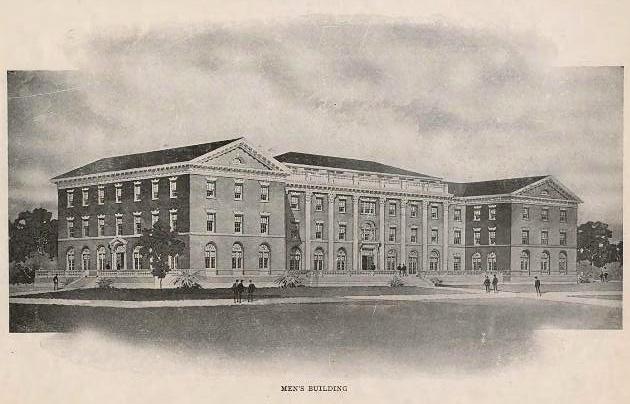
3smu-rotunda-1916-bMen’s Building

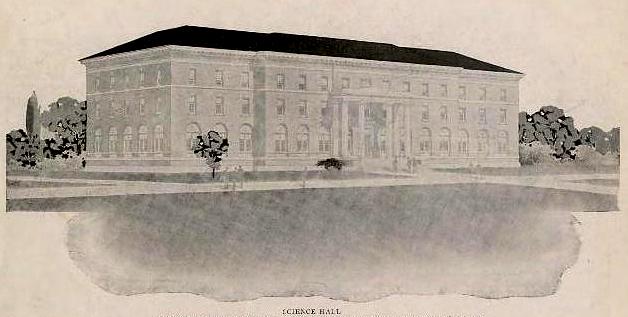
4smu-rotunda-1916-b1Science Hall

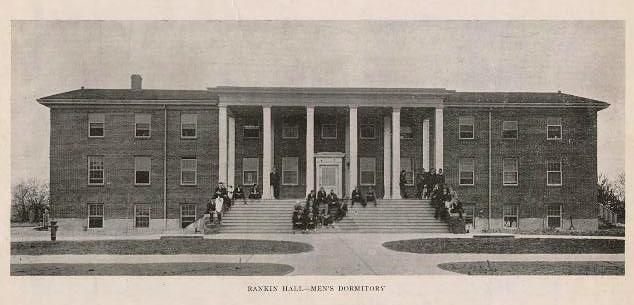
5smu-rotunda-1916-cRankin Hall — Men’s Dormitory

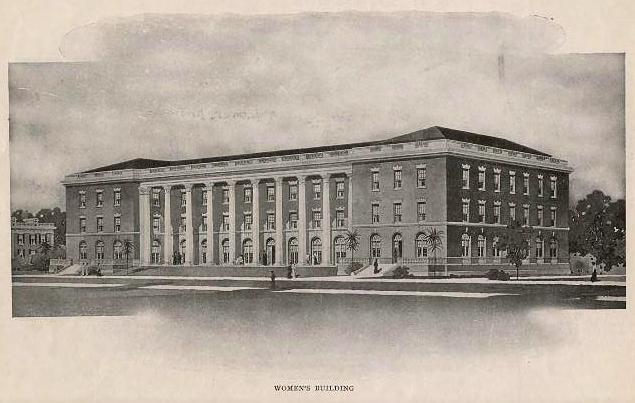
6smu-rotunda-1916-c1Women’s Building

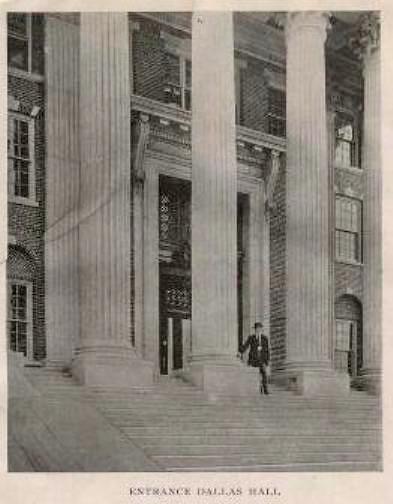
8smu-rotunda-1916-dallas-hall-entranceEntrance Dallas Hall

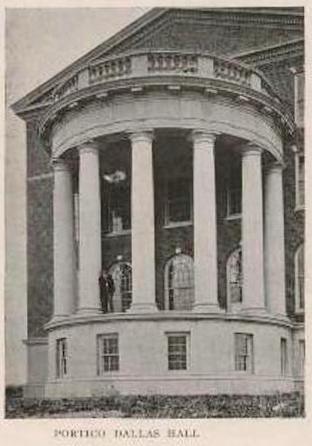
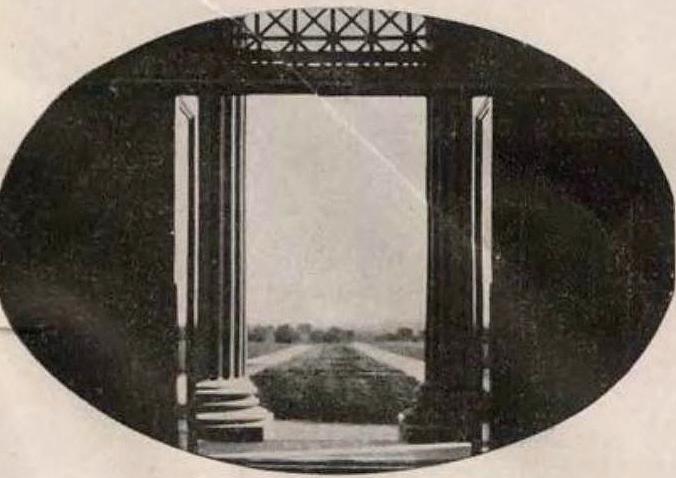
9smu-rotunda-1916-dallas-hall-porticoPortico Dallas Hall

10smu-rotunda-1916_bishop-blvd-fr-admin-bldgBishop Boulevard from Administration Building

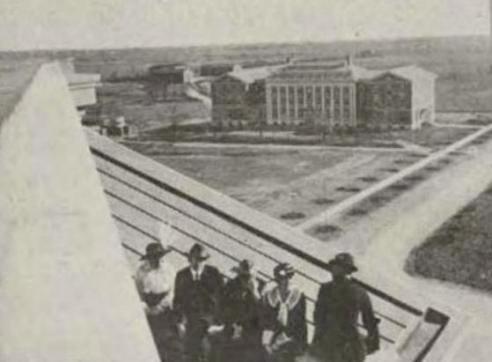
11smu-rotunda-1916_viewNewest view in town

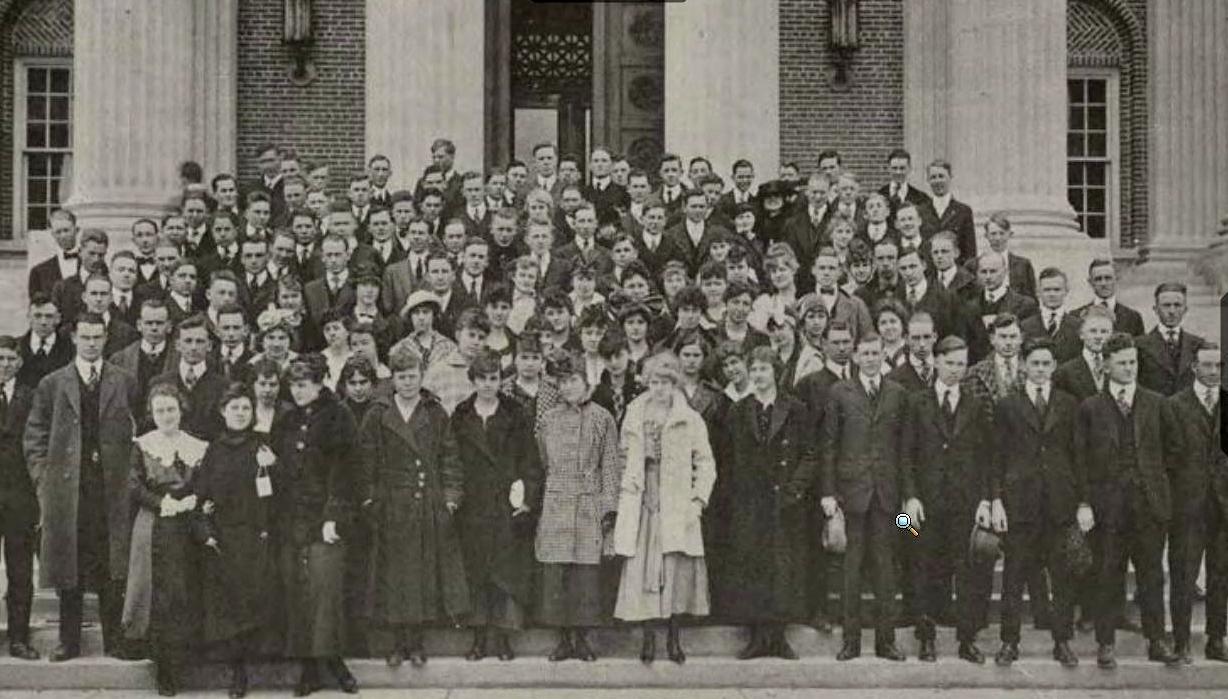
12smu-rotunda-1916_freshman-class1915-16 Freshman Class

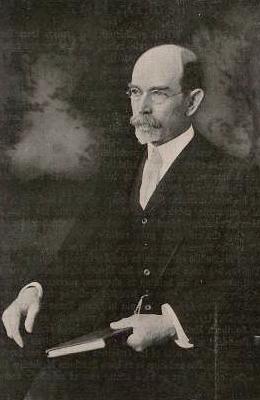
13smu-rotunda-1916_hyerSMU President Robert Stewart Hyer

smu-rotunda-1916_smu-farm_photo

smu-rotunda-1916_smu-farm_verseDallas Hall, bales of hay, and stilted-yet-charming student versification

15smu-rotunda-1916_first-class

16smu-rotunda-1916_cover

SOUTHERN METHODIST UNIVERSITY
Dallas, Texas

For Men and Women
School of Liberal Arts
School of Theology
School of Fine Arts

Student Body:
The first year closes with a matriculation of 701, exclusive of the Summer School, which may bring the total enrollment to more than 1000. This is a record without parallel.

Location:
The campus is located north of the city, and four miles from the center of business activity. It is situated on an eminence above the level of many of the city’s highest buildings. In addition to the many natural trees, there have been several hundred trees and shrubs transplanted, making it a park of unusual beauty.

Buildings:
Dallas Hall, the gift of the citizens of Dallas, and costing $300,000.00, is acknowledged to be one of the best school buildings in the South. It is fireproof throughout and so arranged that it will accommodate the maximum number of students. Four dormitories with accommodations for about 300 students have already been built. They are all equipped with modern conveniences for comfort and study.

All the buildings are provided with electric lights, natural gas, artesian water, and steam heat. No effort has been spared to provide the best in every department.

S.M.U., “THE SCHOOL OF THE FUTURE”

***

Sources & Notes

All images from the “Rotunda” yearbook, issued by Southern Methodist University in 1916.

A very good, brief history of SMU’s beginnings is “From High on the Hilltop…” by Marshall Terry, and it can be read in its entirety here (PDF).

More photos from this yearbook in a later post, “SMU’s First Year: The Dinkey, Campus Hijinx, and The Basket Ball,” here.

*

Copyright © 2014 Paula Bosse. All Rights Reserved.

The San Jacinto School — Frittering Away the Gay Nineties, Stuck in a Classroom

san-jacinto-school_1893_shorpy1893 class photo, Ross Avenue

by Paula Bosse

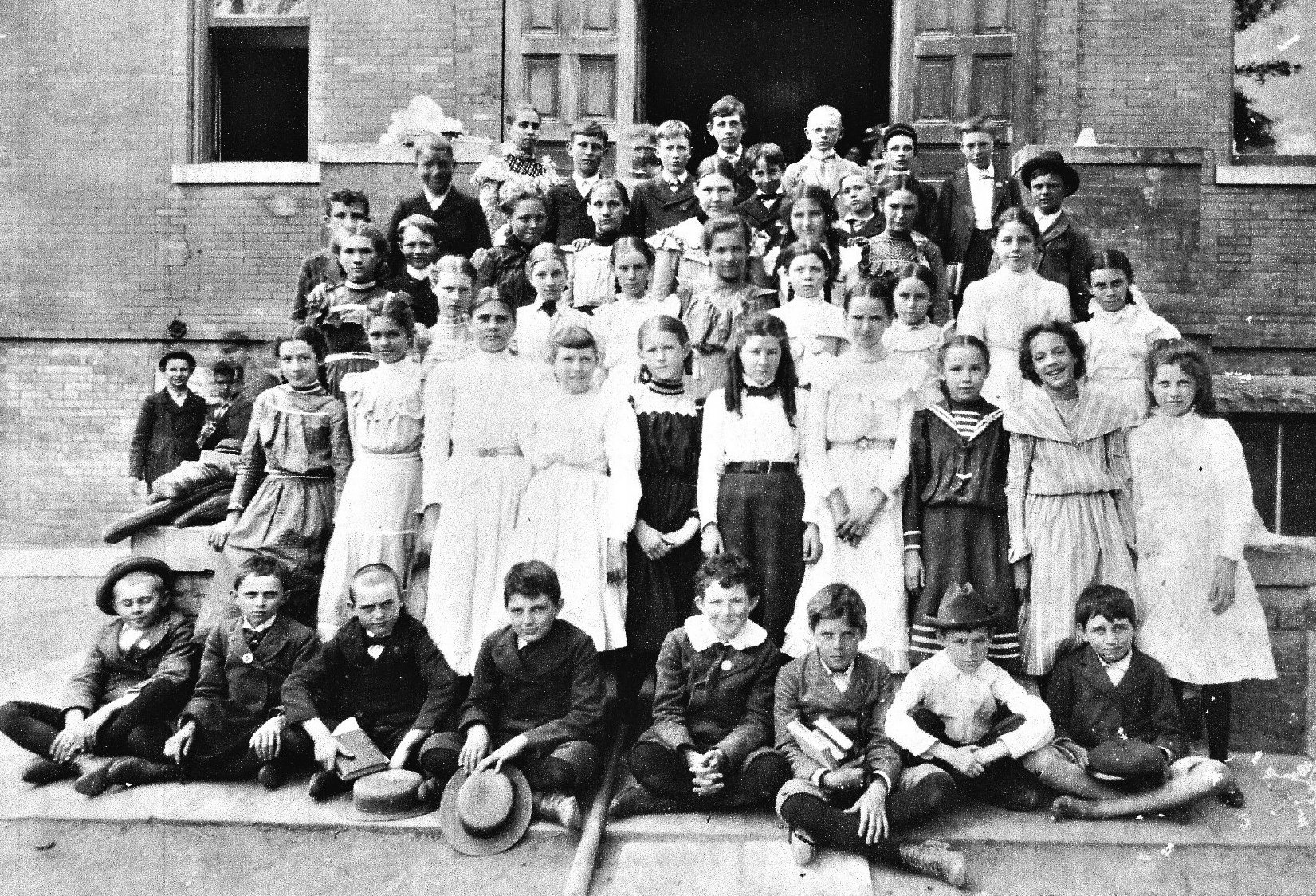
Above, fourth graders lined up in 1893 on the steps of the San Jacinto School, once located at Ross and Washington (now the site of the DISD Administration Building). All seem fairly glum. (At least they’re not toiling in factories like many other children of this period.)

Below, the sixth-grade class of 1899 seems slightly less bummed-out, perhaps because they’re on the brink of the much-anticipated 20th century. Those boys (and sadly probably only the boys) might well have been among the city’s business and political leaders during Dallas’ most explosive period of growth just a few short years later.

san-jacinto-school_6th-grade_1899-1900

The San Jacinto School was designed by James E. Flanders and built in 1891 on two acres at the corner of Ross Avenue and Washington. It was demolished in 1948 to make way for the somewhat more severe (and perhaps a bit more interesting) DISD Administration Building.

san-jacinto-school_tx-and-pac-rr_1898

san-jacinto-school_dhs

***

Sources & Notes

Top photo is from the wonderful historical photo blog Shorpy, and can be found here.

First photo of the school building is from Texas: Along the Line of the Texas & Pacific Ry. (Dallas: Texas & Pacific Railway, n.d. [1898]).

Last photo is from a website devoted to “Dallas’ First Architect,” James Edward Flanders.

*

Copyright © 2014 Paula Bosse. All Rights Reserved.

Girl Doctors? No Way! — 1946

southwestern-med-coll_female_1946Photo from the UT Southwestern Library (click for larger image)
by Paula Bosse

Female medical students were fairly uncommon back in the 1940s, and, as this photo is described in the UT Southwestern archives, they were “so rare that they merited this photo captioned ‘Freshman Girl Students’ in the 1946-47 Southwestern Medical College yearbook, Caduceus.” I love this photo.

***

Photo is from the UT Southwestern Medical Center Library and can be accessed here.

Click photo for larger image.

*

Copyright © 2014 Paula Bosse. All Rights Reserved.

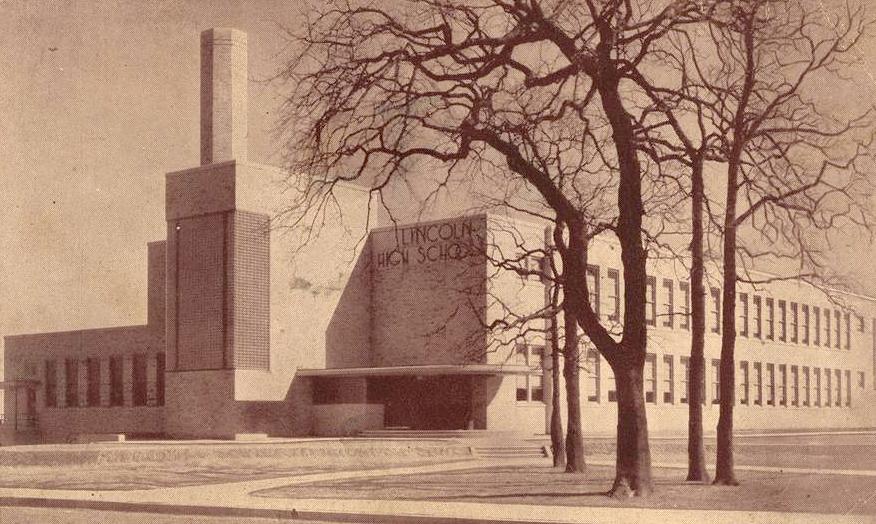
Lincoln High School — 1939

lincoln-high-school_1939The cool deco design of Lincoln High School… (click for larger image)

by Paula Bosse

When it opened on eleven acres in South Dallas in January, 1939, Lincoln High School was one of the largest high schools in Dallas, and one of the largest African-American high schools in the entire South. Shockingly, in 1939 it was one of only TWO (!) high school for black students in Dallas. As one would expect, its opening was greeted with great enthusiasm, and students rushed to enroll, pushing its capacity to a maximum. At its height, it had over 3,000 students. The building was designed by architect Walter C. Sharp, who designed many schools in and around Dallas, and with those clean lines and glass bricks, it’s pretty cool.

***

Photo from the J. L. Patton Collection, Dallas Historical Society.

For more on the background of Lincoln High School, see the info from the “Open Plaques” project here.

Click photo for larger image.

*

Copyright © 2014 Paula Bosse. All Rights Reserved.

Nicholas J. Clayton’s Neo-Gothic Ursuline Academy

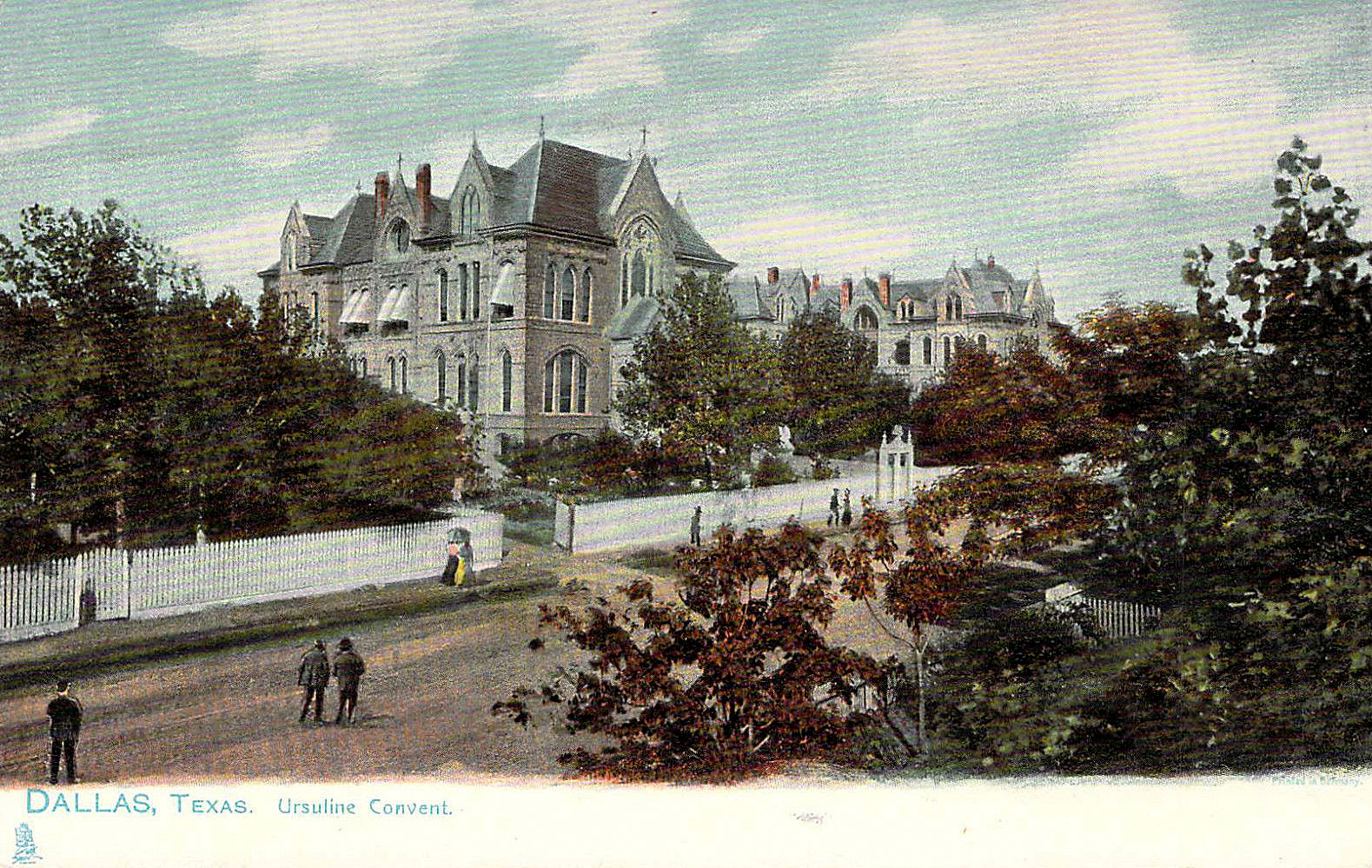
ursuline_postcard-color

by Paula Bosse

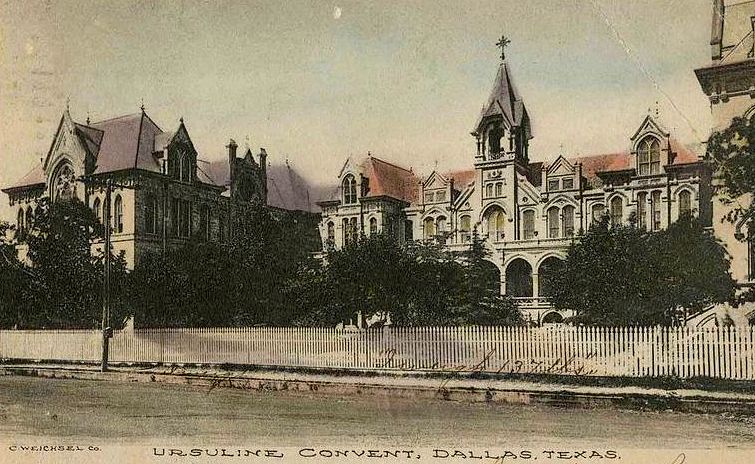
Over the years, Dallas has been the site of dozens and dozens of beautiful educational campuses, almost none of which still stand — such as the long-gone Victorian-era Ursuline Academy, at St. Joseph and Live Oak streets (near the current site of the Dallas Theological Seminary). The buildings, which began construction in 1882, were designed by the Catholic church’s favorite architect in Texas, Nicholas J. Clayton of Galveston. Such a beautiful building in Dallas? It must be demolished!

ursuline_first_bldg
Six Ursuline Sisters, sent to Dallas from Galveston, established their academy in 1874 in this poorly insulated four-room building (which remained on the Ursuline grounds until its demolition in 1949). When they opened the school, under tremendous hardship, they had only seven students. But the school grew in size and reputation, and they were an academic fixture in East Dallas for 76 years. In 1950 the Sisters moved to their sprawling North Dallas location in Preston Hollow where it continues to be one of the state’s top girls’ prep schools. After 140 years of educating young women, Ursuline Academy is the oldest continuously operating school in the city of Dallas.

clifton-church_ursuline_1894Construction took a long time. (ca. 1894)

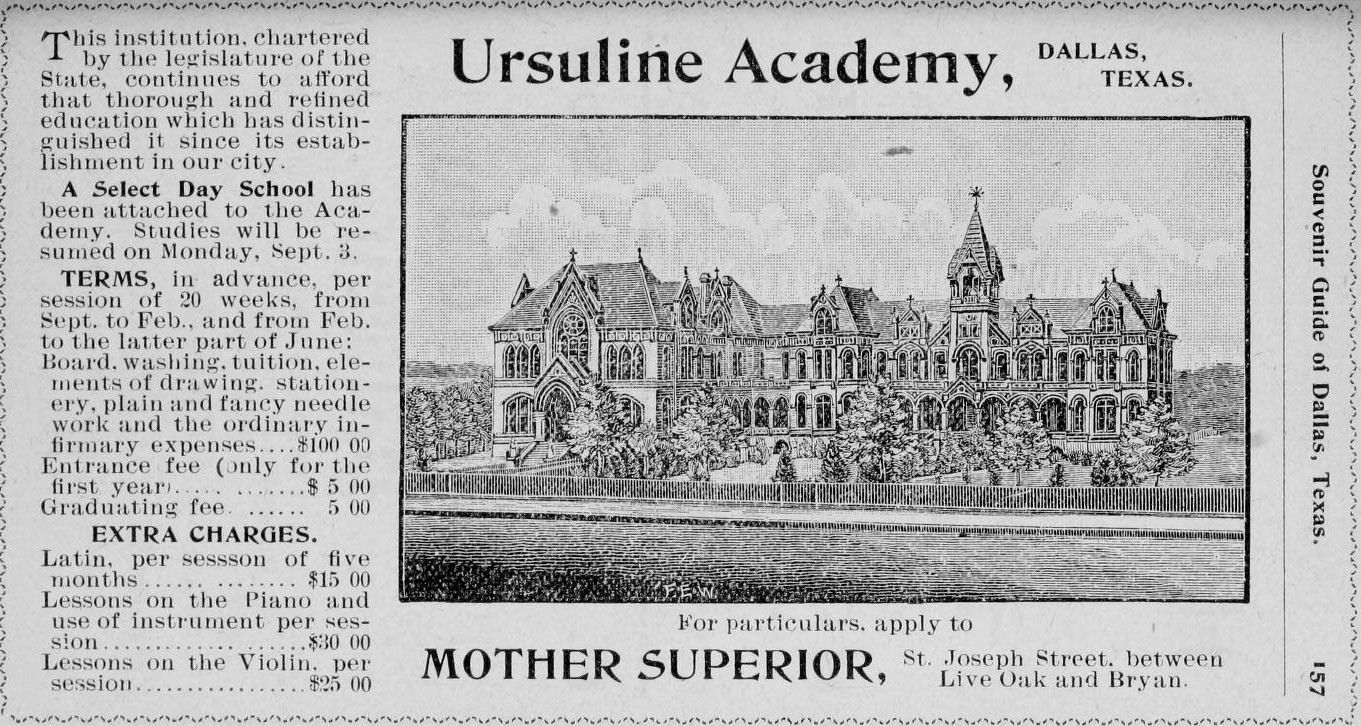
ad-ursuline_souv-gd_1894When Latin cost extra. (1894) (Click for larger image.)

ursuline_1906_largeIt even had a white picket fence. (ca. 1906)

ursuline-flickr1908-ish

ursuline_worleys_1909_det_LARGE1909 city directory

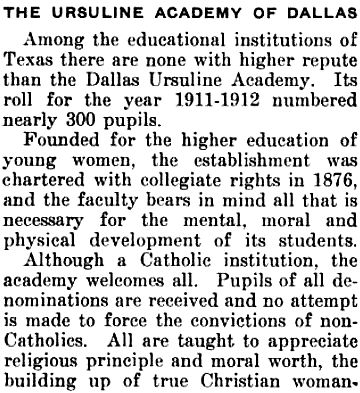
ursuline-academy_tx-mag_1912b1912 (click for large image)

After a year and a half on the market, the land was sold in 1949 for approximately $500,000 to Beard & Stone Electric Company (a company that sold and serviced automotive electric equipment). The property was bounded by Live Oak, Haskell, Bryan, and St. Joseph — acreage that would certainly go for a lot more these days (according to the handy Inflation Calculator, half a million dollars in 1949 would be the equivalent in today’s money of about five million dollars). A small cemetery was on the grounds, in which the academy’s first chaplain and “more than 40 members of the Ursuline order” had been buried. I’m not sure how these things are done, but the cemetery was moved.

ursuline_aerial_cook-colln_degolyer_smu

From a November, 1949 Dallas Morning News article on the vacated buildings’ demolition:

A workman applied a crowbar to a high window casing of the old convent and remarked: “I sure hate to wreck this one. It’s like disposing of an old friend. My father was just a kid when this building was built in 1883.” (DMN, Nov. 13, 1949)

And one of East Dallas’ oldest and most spectacular landmarks was gone forever. Looking at these photographs, it’s hard to believe it ever existed at all.

ursuline_cook-colln_degolyer_smu

*

Where was it? In Old East Dallas, bounded by Live Oak, Haskell, Bryan, and St. Joseph. See the scale of the property in the 1922 Sanborn map, here (once there, click for full-size map). Want to know what the same view as above looks like today? If you must, click here.

ursuline_today_bing-map
Bing Maps

***

Sources & Notes

Photo of the school’s first building is from the Ursuline Academy of Dallas website here. A short description of the early days of hardship faced by the Sisters upon their arrival in Dallas is here.

The photograph, mid-construction, is by Clifton Church, from his book Dallas, Texas Through a Camera (Dallas, 1894).

1894 ad is from The Souvenir Guide of Dallas (Dallas, 1894).

1912 text is from an article by Lewis N. Hale on Texas schools which appeared in Texas Magazine (Houston, 1912).

Aerial photograph from the George W. Cook Dallas/Texas Image Collection, DeGolyer Library, Southern Methodist University, here. Bottom image also from the Cook Collection, here.

Examples of buildings designed by Nicholas J. Clayton can be seen here (be still my heart!).

DMN quote from the article “Crews Begin Wrecking Old Ursuline Academy” by William H. Smith (DMN, Nov. 13, 1949).

Another great photo of the building is in another Flashback Dallas post — “On the Grounds of the Ursuline Academy and Convent” — here.

Many of the images are larger when clicked.

*

Copyright © 2014 Paula Bosse. All Rights Reserved.

Garrett Park Aburst in Spring Flowers

by Paula Bosse

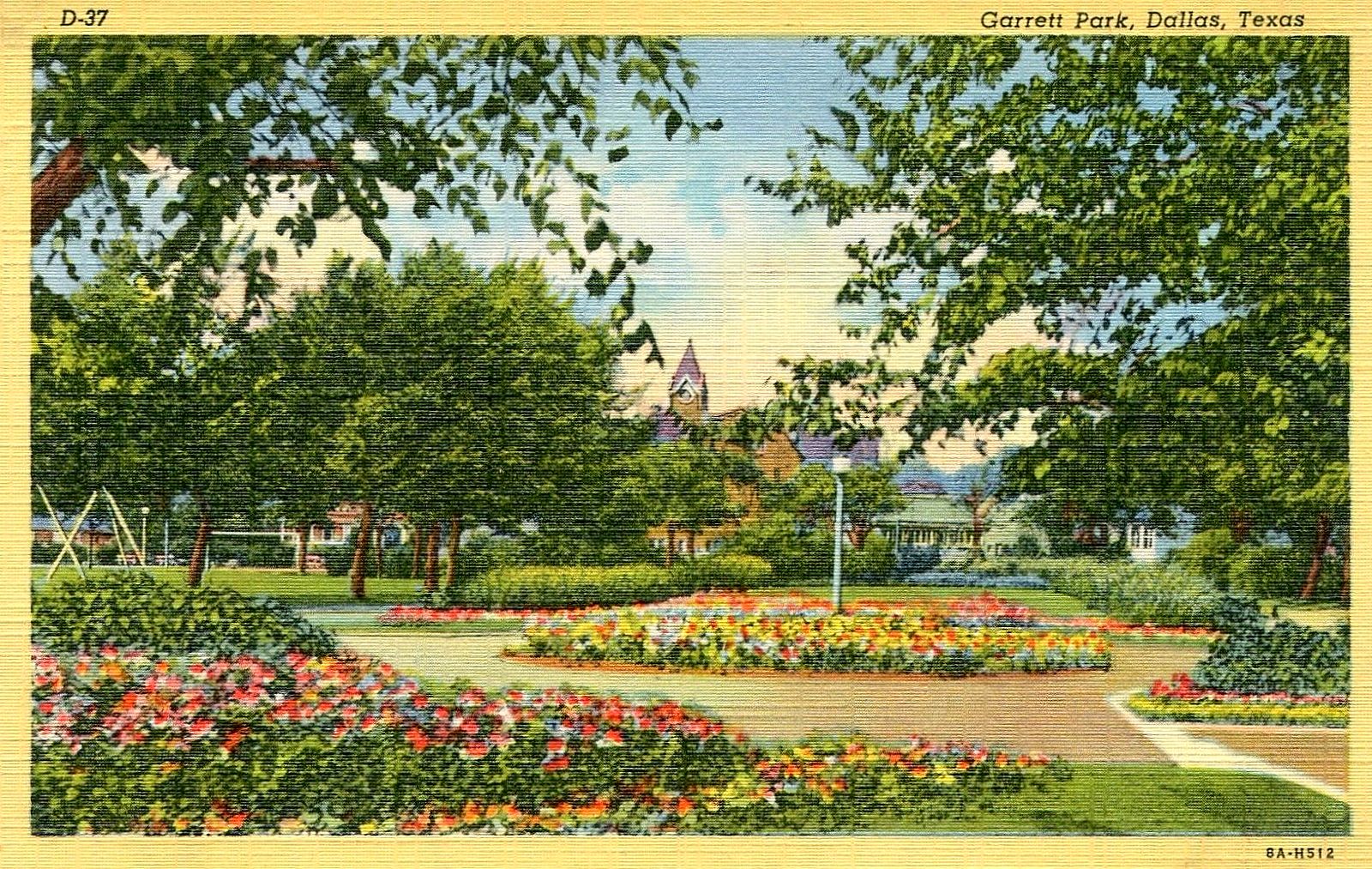
Garrett Park (at Munger and Bryan) was established in 1915. The postcard above shows it filled with leafy trees and bursting with brightly colored flowers. There is playground equipment at the left and, in the background, St. Mary’s College. The park is still there — just south of Ross Ave., past the lowest bit of Lowest Greenville — but the George Kessler-designed charm is almost entirely gone. The trees are sparser, and those flower beds? Below, a modern-day aerial view (click pictures to see larger images). Oh, how the mighty have fallen.

garrett-park_google-earth_sept-2017
Google Earth

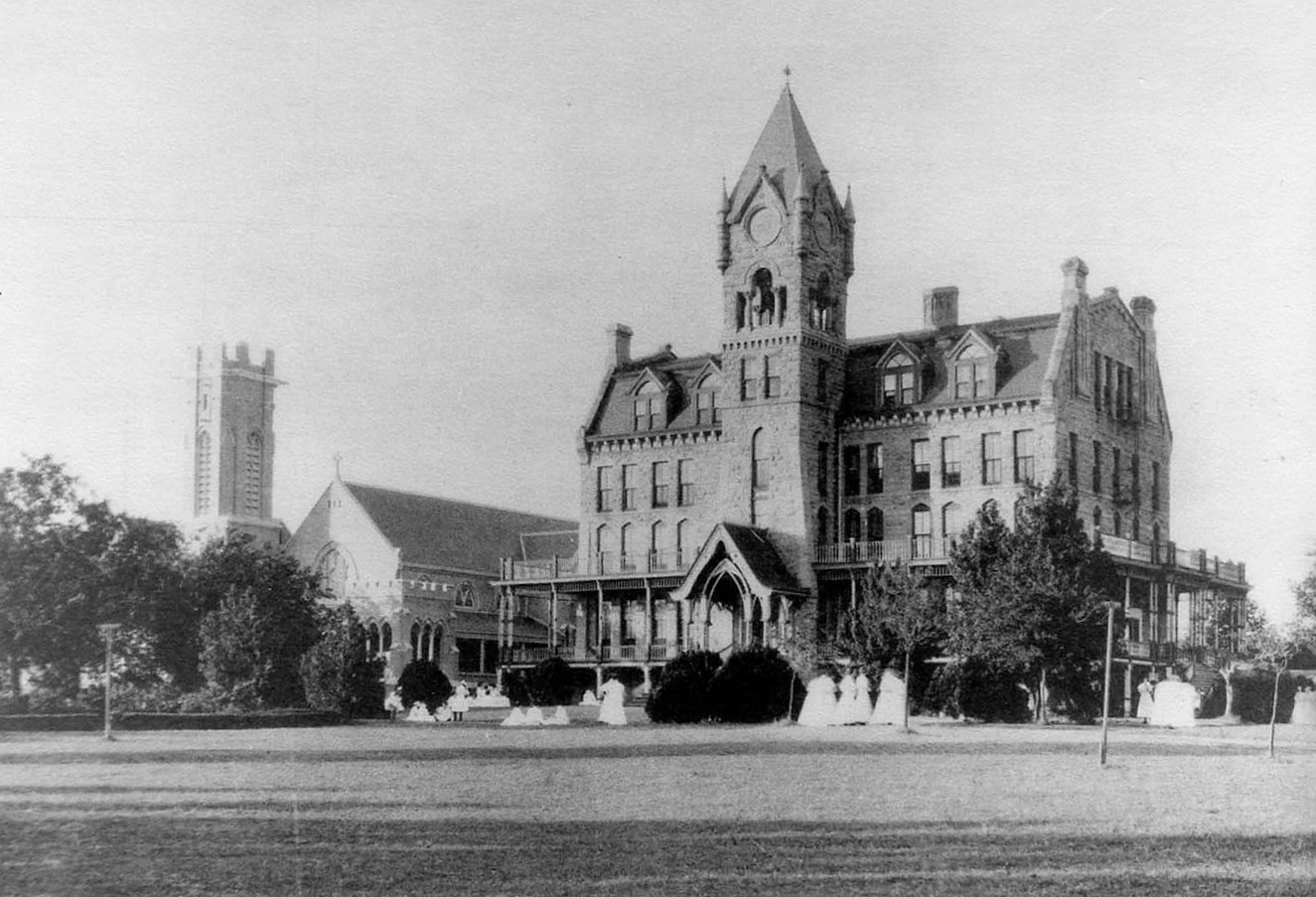
But back to more luxuriantly landscaped times. Before it became a city park, the land was once part of the sprawling campus of St. Mary’s College, a prestigious boarding school that prepared girls for college, run by the Episcopal Church since the 1880s. The school was on the far, far, FAR eastern edge of Dallas, and in the early days, the isolated area was so dominated by the school that it was referred to by everyone as “College Hill.” Below, a photo of St. Mary’s taken around 1908 — the land which later became Garrett Park was behind the school. (Note the tower of the school below which is seen in the postcard above. Also, note the tower of the next-door St. Matthew’s Cathedral — it is still standing at the corner of Ross and Henderson.)

st-marys-college_c1908St. Mary’s College, circa 1908

In September, 1914, St. Mary’s sold the adjoining five-and-a-half-acre parcel of land to the City of Dallas for $30,000 for use as a park.

garrett-park_dmn_091714_acquisitionDallas Morning News, Sept. 17, 1914

The park was officially named in honor of Bishop Alexander C. Garrett in February of 1915.

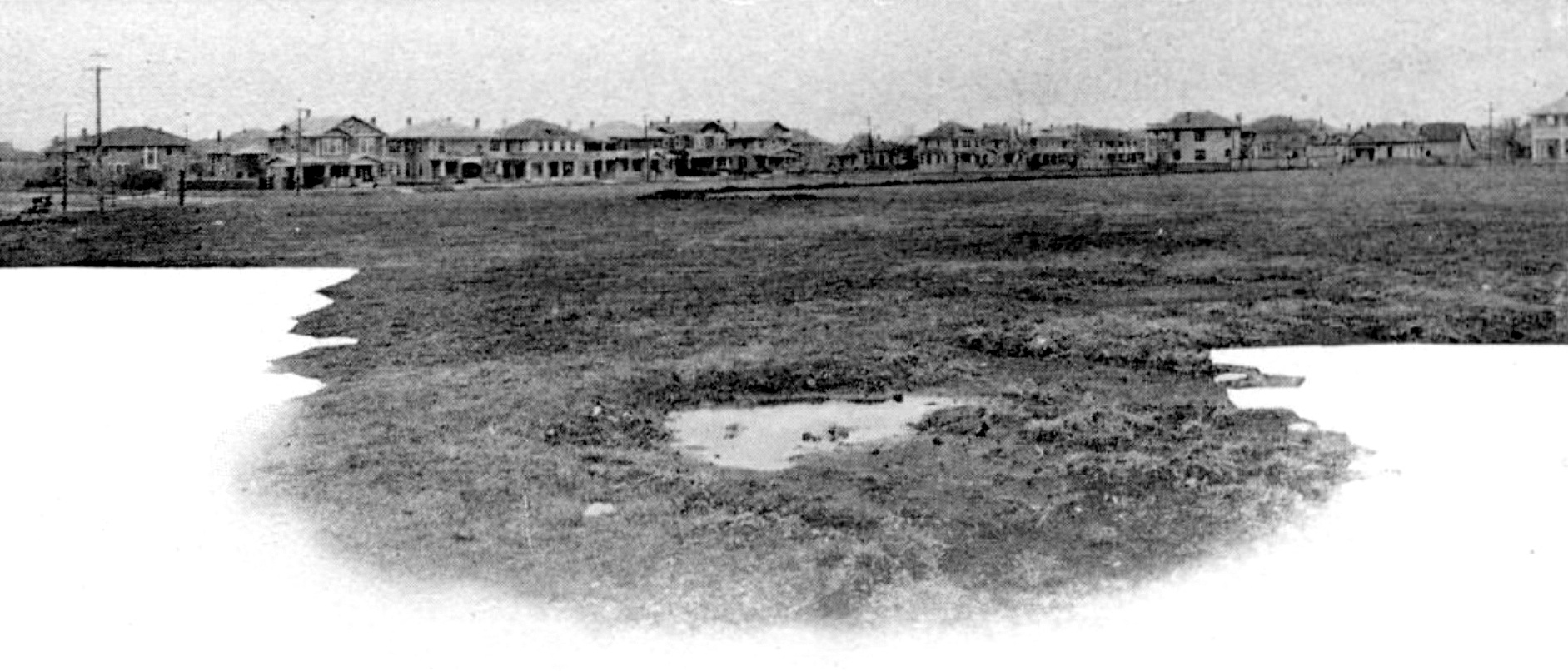
Below, a “before” photo showing “Garrett Park at Time of Purchase” (1914):

garrett-park-at-time-of-purchase_ca-1913

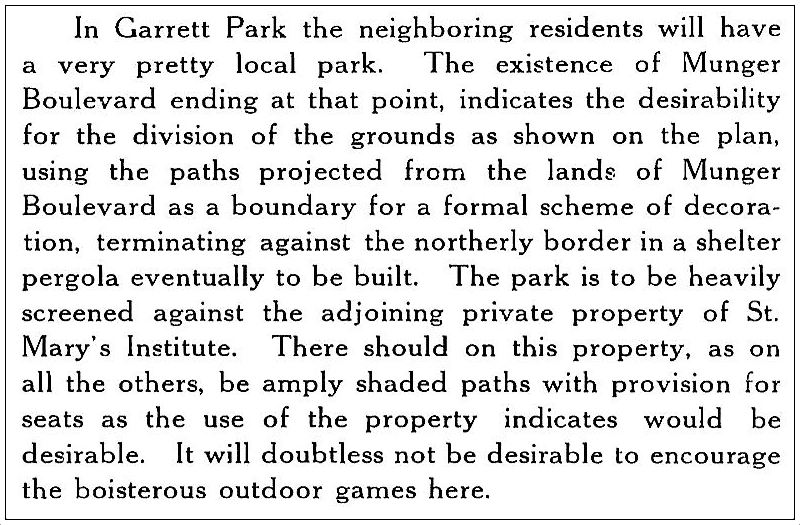
And descriptions of the new park from a 1914-1915 Park Board publication:

garrett-park_-park-board-report-1914-1915_portal

garrett-park_-park-board-report-1914-1915_p24_portal
1915

***

Sources & Notes

Top postcard is from the wilds of the internet.

Source of circa-1908 photo of St. Mary’s College is unknown.

Text and “before” photo of Garrett Park is from the Report for the Year 1914-15 of the Park Board of the City of Dallas; a scanned copy is available at the Portal to Texas History, here.

Map of Kessler’s plan of the park is from Jay Firsching’s article in the Spring, 2003 issue of Legacies; the Garrett Park passage begins on p. 12, here.

To get an idea of the size of the St. Mary campus and Garrett Park in 1922, the Sanborn map from that year is here.

See the location of Garrett Park on a current Google map, here.
Click pictures for larger images.

(This post was updated with additional text and new images on March 23, 2018.)

*

Copyright © 2014 Paula Bosse. All Rights Reserved.


George Dahl’s Sleek Downtown Library — 1955

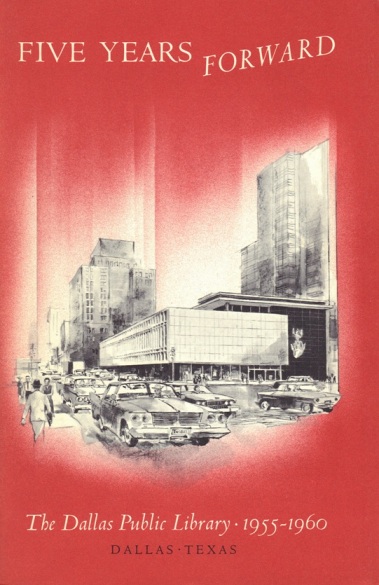
1DPL_cover-sm

by Paula Bosse

This little 31-page booklet was issued to commemorate the fifth anniversary of the Dallas Public Library. The library was built on the site of the old (beautiful!) Carnegie Library and was vacated when the current library (the J. Erik Jonssen Central Library) opened on Young St. in 1982. Unbelievably, the building has remained empty for over 30 years.

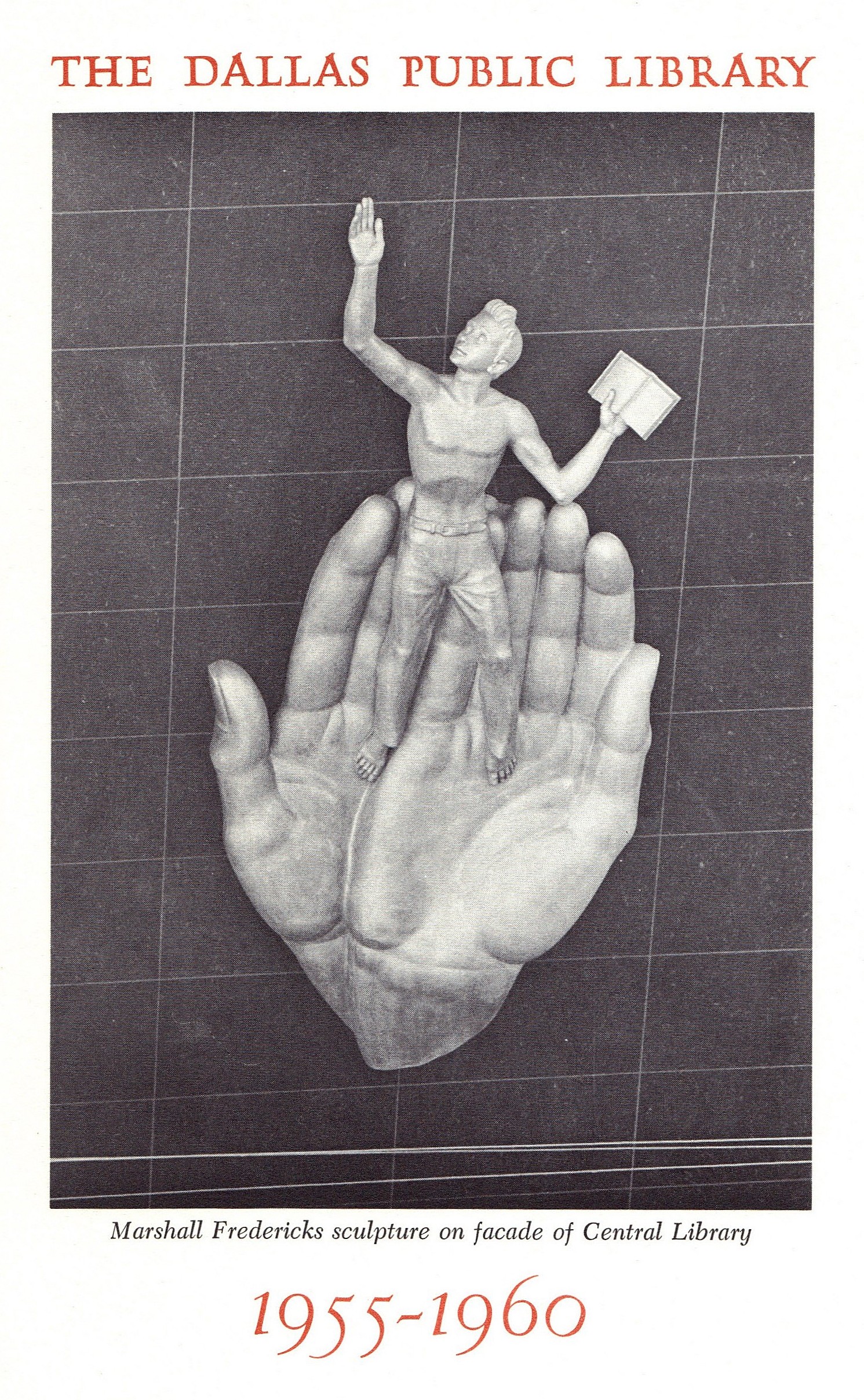
This is the only downtown building I have very distinct memories of from childhood. My mother took us to the library often, and I LOVED that place. I loved the building, the space, the books, the adventure of being downtown — I loved everything but that creepy sculpture of the kid standing in the hands that hung on the outside of the building!

This great library was designed by the legendary (and prolific!) Dallas architect, George Dahl. He moved easily from the streamlined grandeur of the Art Deco buildings of Fair Park to the sleek mid-century-modern-cool of this wonderful downtown library.

2DPL_hands-sculpture
I know there are fans of this sculpture (“Youth in the Hands of God” by Marshall Fredericks), but I’m afraid I am not one of them. I loved art as a child (in fact, I can remember checking out framed art reproductions from this very library), but, as I said, even as a kid, I strongly disliked that creepy sculpture. The kid was fine, it was those giant disembodied hands. When the library moved to its current location in 1982, this sculpture was left behind to languish for years inside the empty building. It was eventually sold, and the boy and the hands are now resting comfortably in retirement, somewhere in Michigan.

3DPL_lobbybertoiaThere was a huge controversy about the Harry Bertoia sculptural screen seen above, hanging over the circulation desk. (I LOVED this piece as a kid!) The mayor — R. L. Thornton — HATED it, and the brouhaha-loving newspapers launched themselves into the fray by running apoplectic editorials which, of course, only fanned the flames of outrage. After the “scandal” died down, the art was eventually given the okay to stay, but not before a lot of people made a lot of noise about how the city of Dallas had wasted the $8,500 it had spent on the commission. Unlike the discarded hands sculpture, the screen was moved to the new library, where it remains today.

4DPL_outdoorterrace

5DPL_familylivingThis is how I remember the library. Lots of space, cool furniture, and flooded with light.

6DPL_children

7DPL_av

8DPL_globe

9DPL_planningcomm

10DPL_checkingoutI LOVE this photo!

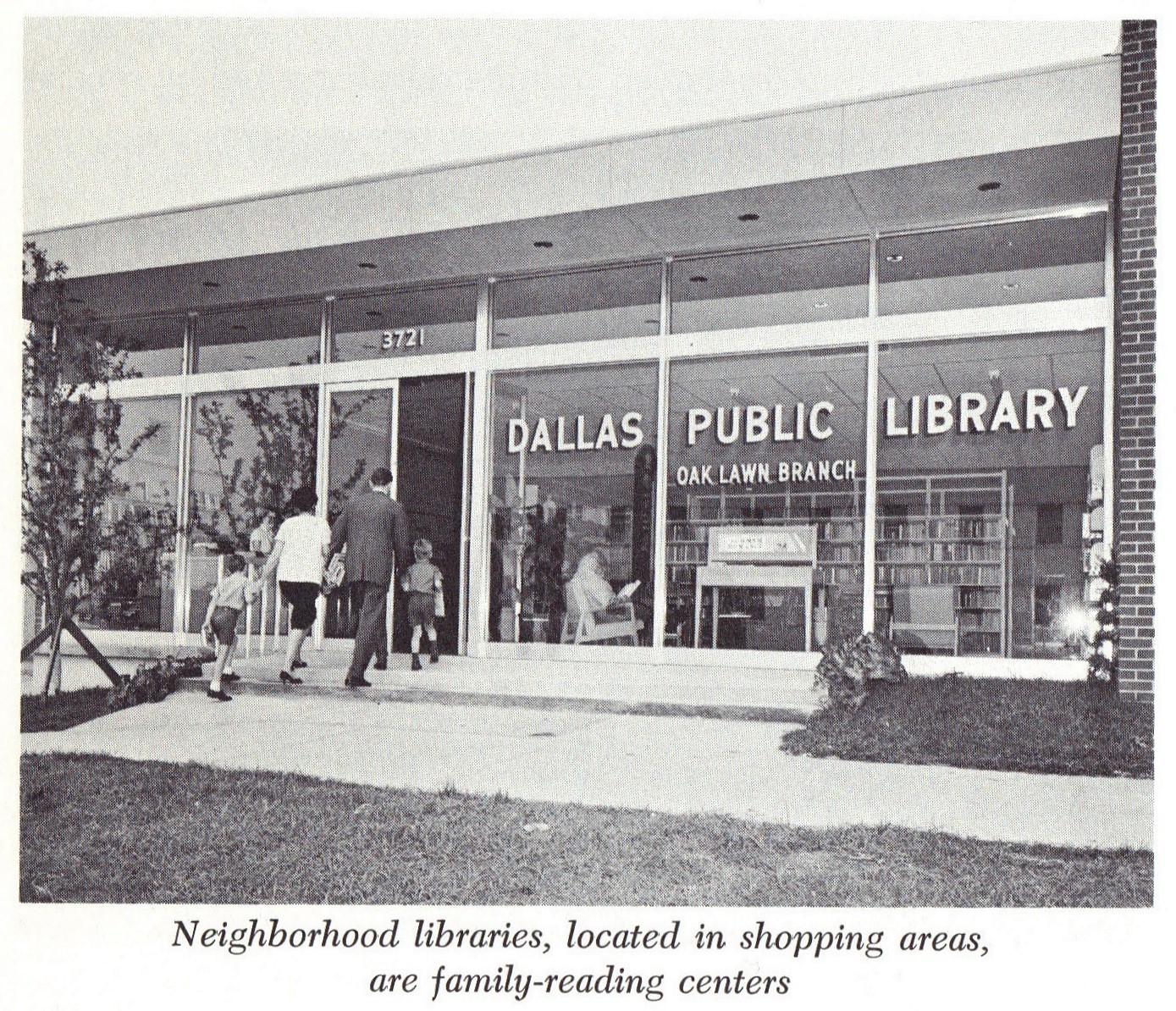
11DPL_oaklawnbranch

12DPL_teens

14DPL_schiwetzcropA detail of the front cover artwork, by Texas artist E. M. “Buck” Schiwetz. I love the driver in the cowboy hat (he must have been awfully small or that car must have been awfully big to accommodate that hat). The energetic frisson of downtown Dallas in the Mad Men era is dampened a bit by those damn hands on the building that seemed to follow you everywhere you went!

***

Sources & Notes

All images from the booklet Five Years Forward: The Dallas Public Library, 1955-1960, compiled and written by Lillian Moore Bradshaw and Marvin Stone. Drawings by E. M. (Buck) Schiwetz. Photographs by C. D. Bayne. (Dallas: Carl Hertzog for Friends of the Dallas Public Library, 1961). (Photos from the archives of the Dallas Public Library.)

More on the history and construction of the Old Dallas Central Library (as well as tidbits about the ridiculous controversy regarding the commissioned art) is here.

Even MORE on the artwork scandals (the hands, the hands, the HANDS!) as well as photos of the beautiful Carnegie Library that was razed to build the 1955 library can be found here.

And just because it’s weird, here’s a postcard showing an early, possibly even creepier depiction of the “hands” sculpture (if those are the “hands of God”…). I guess they wanted to get a postcard out before the sculpture was finished and installed.

dallas-public-library_dahl_postcard

I’ve posted one further image from this booklet — a drawing of the 1961 Dallas skyline by E. M. “Buck” Schiwetz  — here.

UPDATE — Dec., 2017: The Dallas Morning News has moved its operations to the long-vacant library, insuring this wonderful building’s continued existence for many more years! More here.

Click pictures for larger images (some are MUCH larger — click twice!).

*

Copyright © 2014 Paula Bosse. All Rights Reserved.