Flashback : Dallas

A Miscellany: History, Ads, Pop Culture

Category: Hotels/Motels/Motor Courts

On Top of the World: The Southland Center

skyline_construction_squire-haskins_UTA_1Executive privilege…

by Paula Bosse

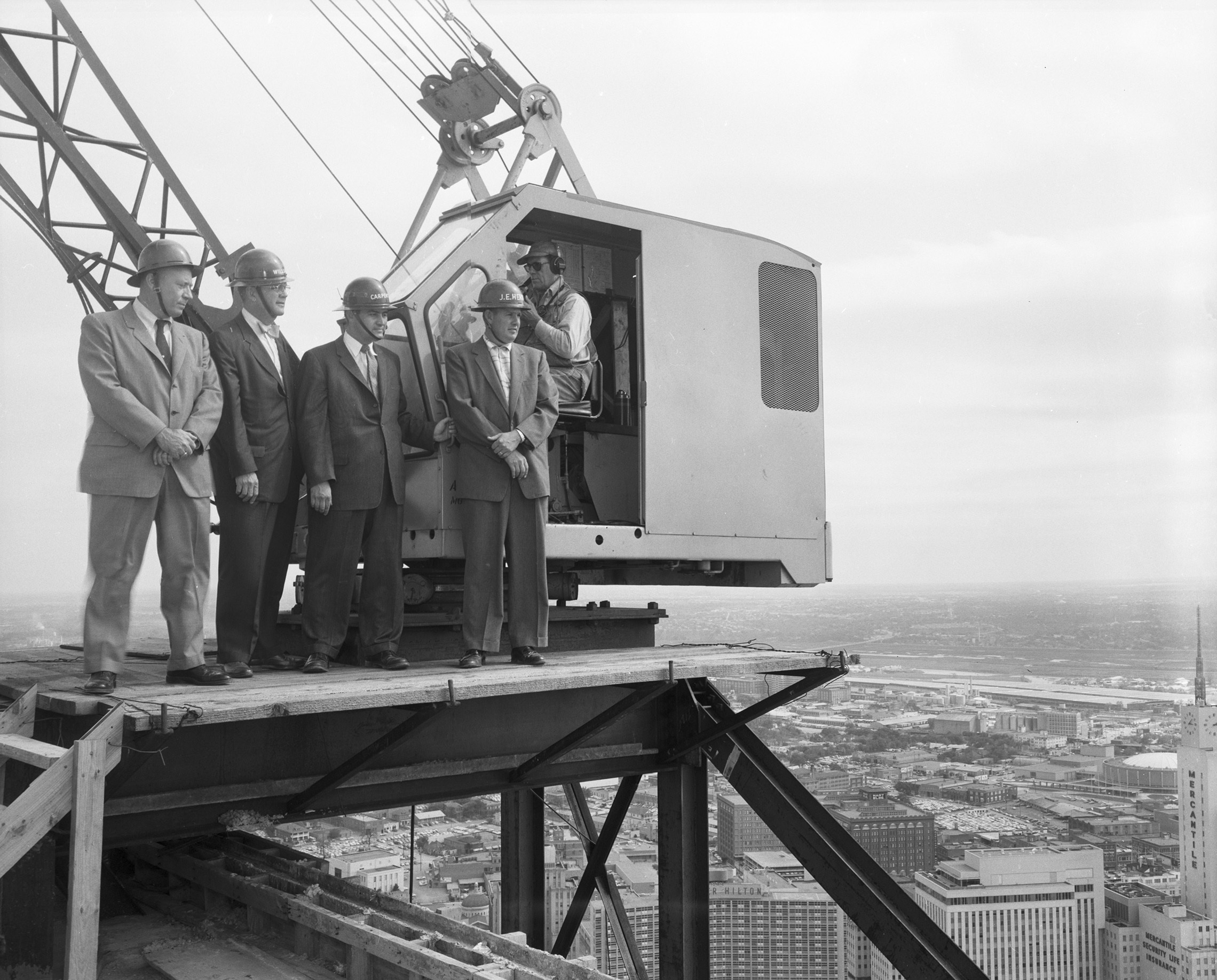
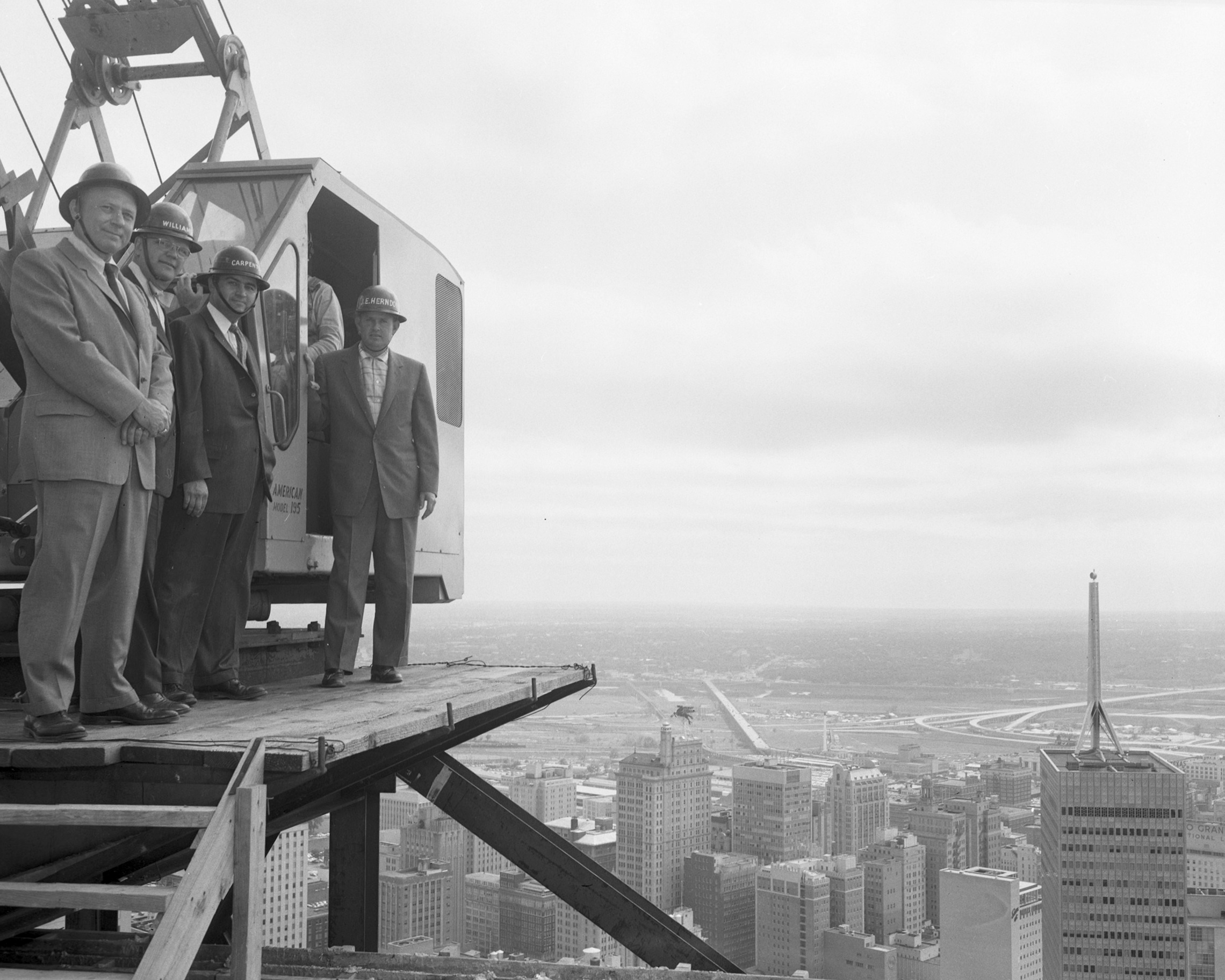
Here are a couple of cool, vertigo-inducing photos taken by Squire Haskins in 1958 or very early 1959 showing Southland Life Insurance executives and a crane operator perched atop the under-construction Southland Center, which included the Southland Life building (which was the tallest building in Dallas for a while) and the Sheraton Hotel. Once completed and opened in April, 1959, there was an observation deck at the top of the Southland Life building, offering an unequaled, unobstructed view of the city.

skyline_construction_crane_squire-haskins_UTA

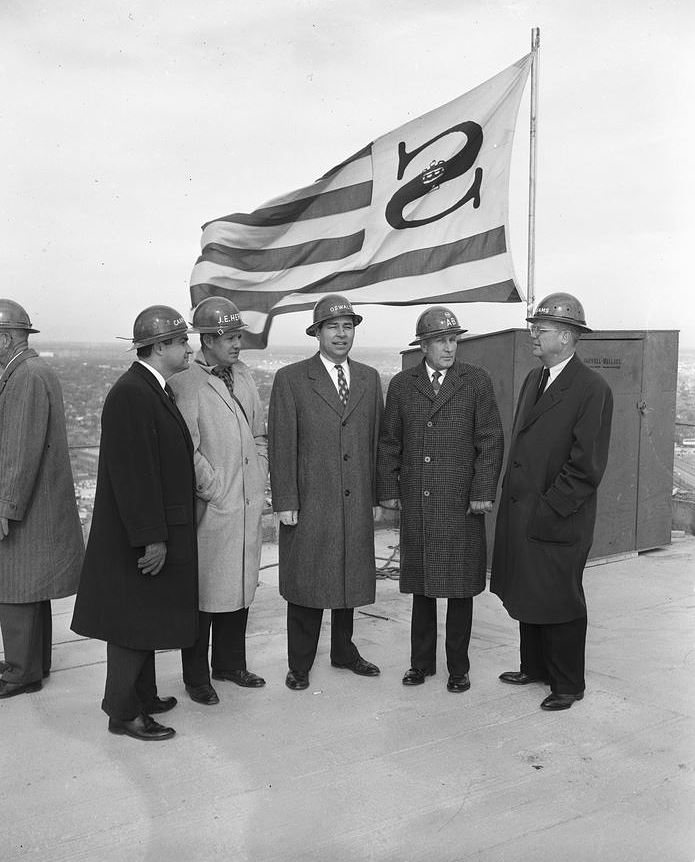
The building under construction in these photos is unidentified, but the familiar Sheraton logo seen elsewhere with the same men is a tip-off.

sheraton_construction_squire-haskins_UTA

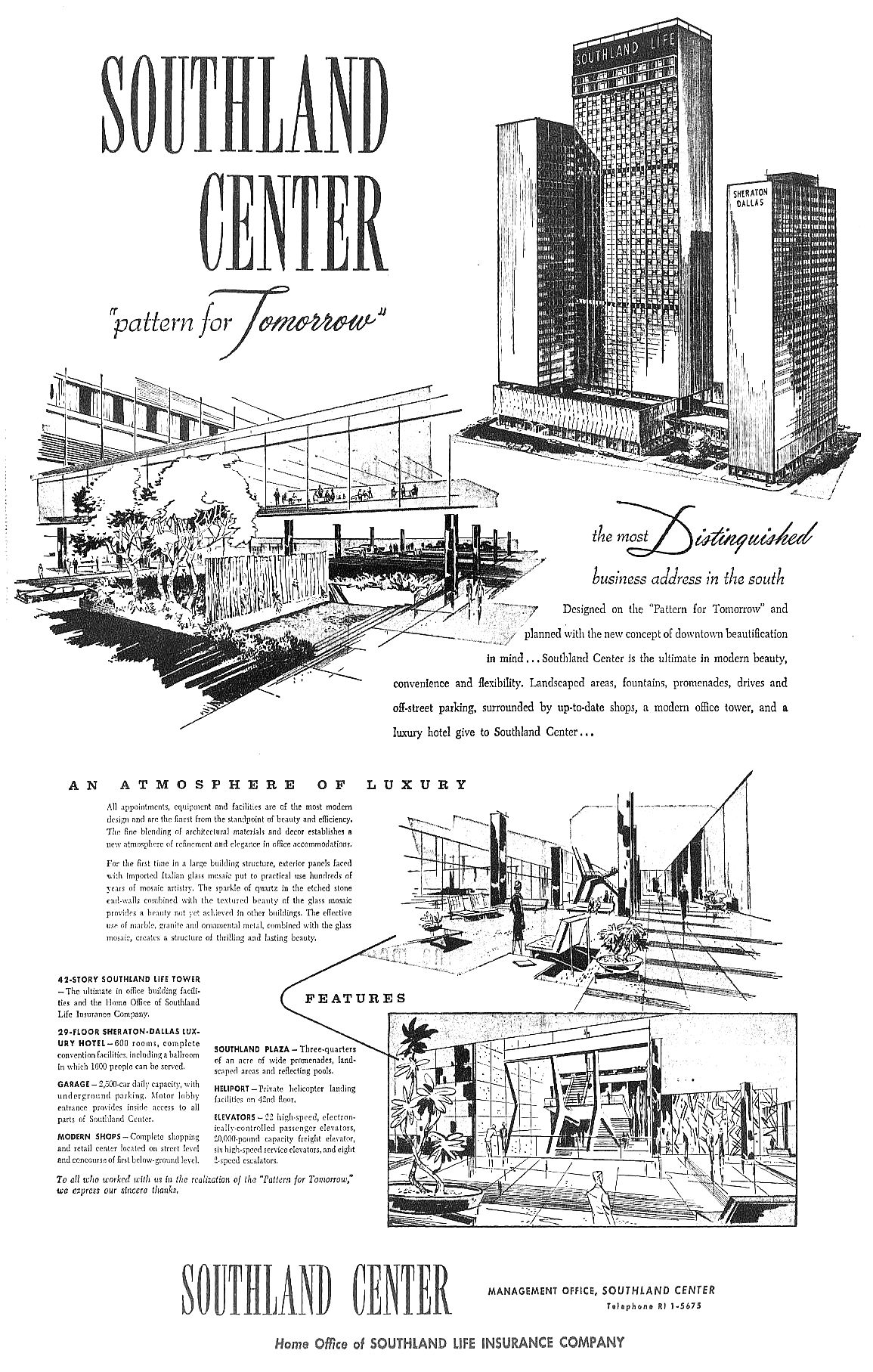
Here’s what it all looked like when it opened. Click to see a larger image.

ad-southland_sheraton_april-1959
April, 1959

***

Sources & Notes

Photos are by Squire Haskins, from the Squire Haskins Photography, Inc. Collection, Special Collections, University of Texas at Arlington Libraries. Info on the top photo can be found here.

Some of the men in the photos are Dan C. Williams (President, Southland Life), Ben H. Carpenter (Executive Vice-President), William H. Oswalt, III (Vice-President, Director of Project Development for Southland Center), J. E. Herndon, and “A. B.”

A related Flashback Dallas post — “Sheraton Dallas, Original Version — 1959” — is here.

*

Copyright © 2016 Paula Bosse. All Rights Reserved.

The Union Depot Hotel Building, Deep Ellum — 1898-1968

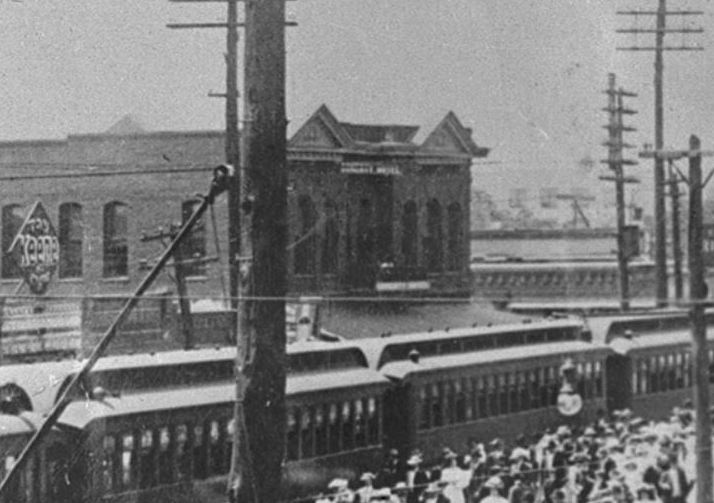
union-depot-hotel_1909_uta-detThe old Union Depot Hotel, about 1909 (click for larger image)

by Paula Bosse

Above, we see the hotel known originally as the Union Depot Hotel, built in 1898 across from the very busy old Union Depot, at the intersection of two major rail lines: the Houston & Texas Central (the H&TC, which ran north-south) and the Texas & Pacific (the T&P, which ran east-west). The tracks crossed at the intersection of Central and Pacific — streets named after the two railroads — in the area east of downtown we now call Deep Ellum. The hotel was on the southwest corner of that intersection.

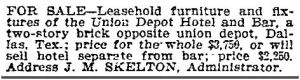
The large, two-story hotel (which also housed a popular cafe and bar) was built by William S. Skelton — more commonly known as Wiley Skelton — to cash in on the large number of travelers coming to Dallas via the bustling passenger depot right across the street. When it opened, it was charging a hefty two bucks a day (the equivalent of about $60.00 in today’s money) — a large-ish sum in 1899, but … location, location, location. This two-dollar-a-day rate to stay at Skelton’s hotel was the same as the base rate of Dallas’ ritziest, priciest hotels, The Windsor and The Oriental. How could Skelton’s “wrong side of the tracks” hotel charge similar rates as the city’s most elegant hotels? Convenience, convenience, convenience. The Union Depot Hotel could not have been more convenient to weary travelers unless it had been located inside the depot.
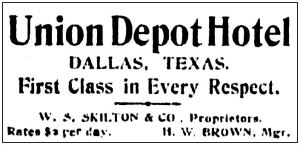
union-depot-hotel_houston-post_012599Houston Post, Jan. 25, 1899

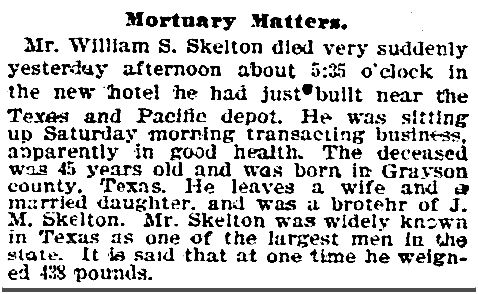
Skelton was a popular and successful businessman (and noted saloon pugilist) who was known far and wide for his substantial physical bulk. He was a founding member of the city’s “fat men’s club” and was reported to be the heaviest man in the city. When he died suddenly at the age of 45 (probably not a huge surprise, as his obituary mentioned that his weight had, at one time, reached 438 pounds), his new hotel had been open only weeks (perhaps only days).
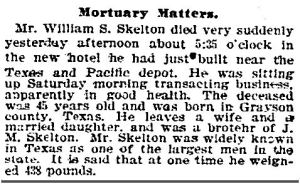
skelton_dmn_011699Dallas Morning News, Jan. 16, 1899

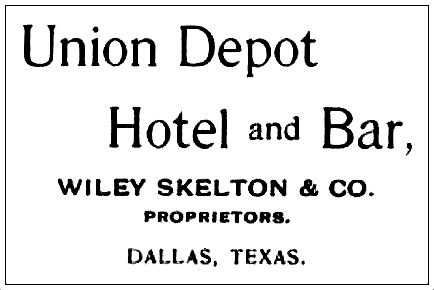
His unexpected death threw the running of the hotel into confusion. His brother (another famed “fighting fat man”) took over the business side of its operations and occasionally placed ads in the paper seeking a hard-to-find buyer.
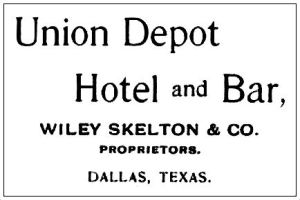
union-depot-hotel_1901_portal1901 ad

union-depot-hotel_dmn_111602DMN, Nov. 16, 1902

Eventually the hotel was sold, and it went through several owners and name changes over the years. Then, in 1916, a major catastrophe struck: brand new Union Station, which was waaaay on the other side of town, opened, consolidating passenger rail service to one depot, resulting in the shuttering of most of the city’s smaller depots. Location, location, location wasn’t such a great thing for the old Skelton hotel after this.

The hotel went through many changes over the years, but after the closing (and later razing) of the old Union Depot, it was on a general, inevitable, slide downward. By the time it was demolished in 1968 — when large swaths along Central Avenue were leveled to facilitate highway construction — the building was in disrepair and, apparently, long-vacant. It stood for 70 years.

*

Below is a photo taken from Elm Street in 1908 or 1909, when the hotel (seen at the top left) was owned by Charles S. Conerty and named the Conerty Hotel (you can see the name on two signs, but you have to really zoom in to make them out). Conerty, an Irishman who had previously run bars, owned the hotel very briefly. By May of 1909, plagued with legal troubles stemming from his being charged with selling liquor on a Sunday, Conerty sold the hotel (which he seems to have been running as a boarding house), stating in his classified ad that he was “leaving city.” (He did not leave the city.) In 1910, with a new owner, the hotel was once again known as the Union Depot Hotel.

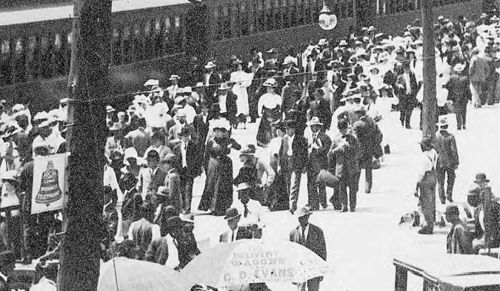
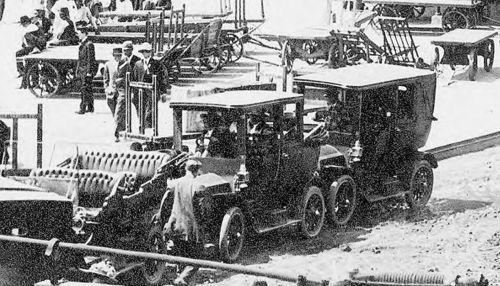
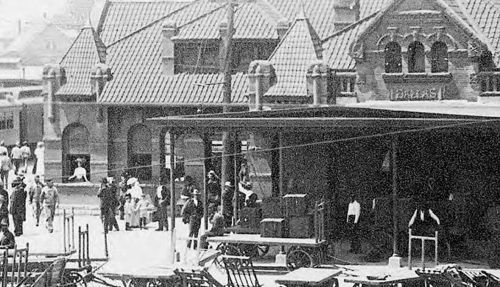
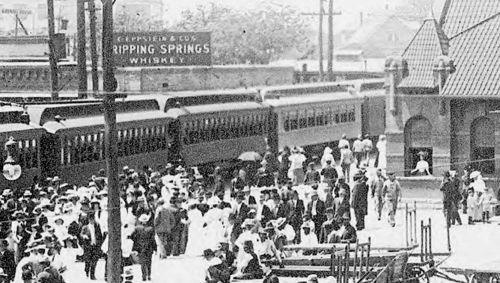
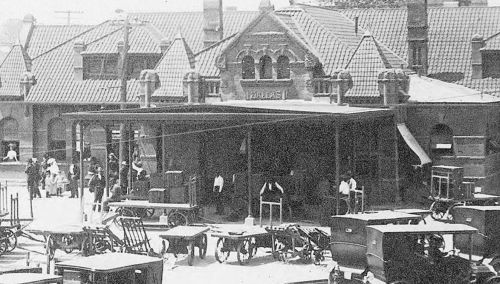
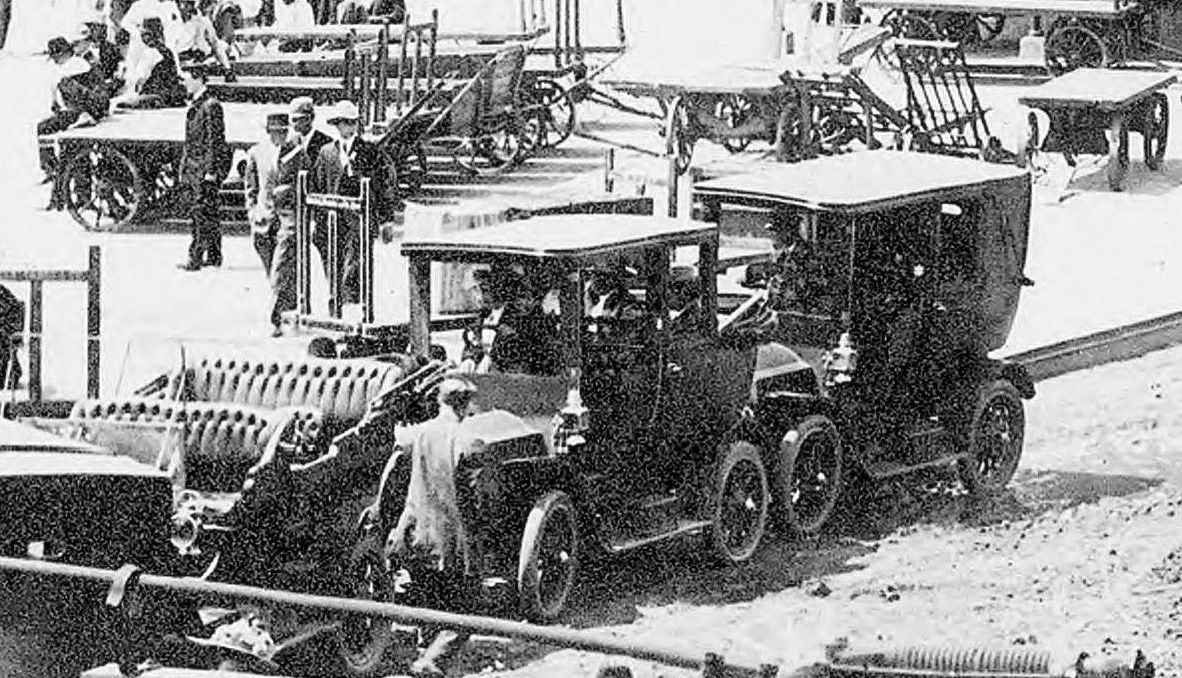
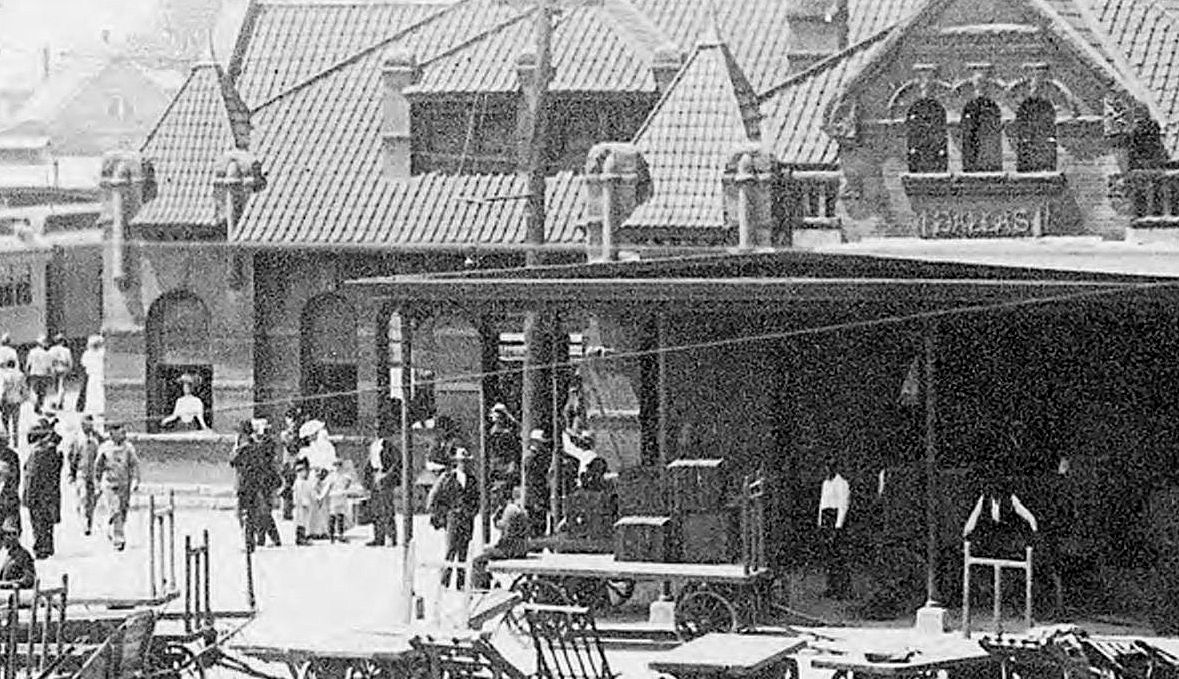
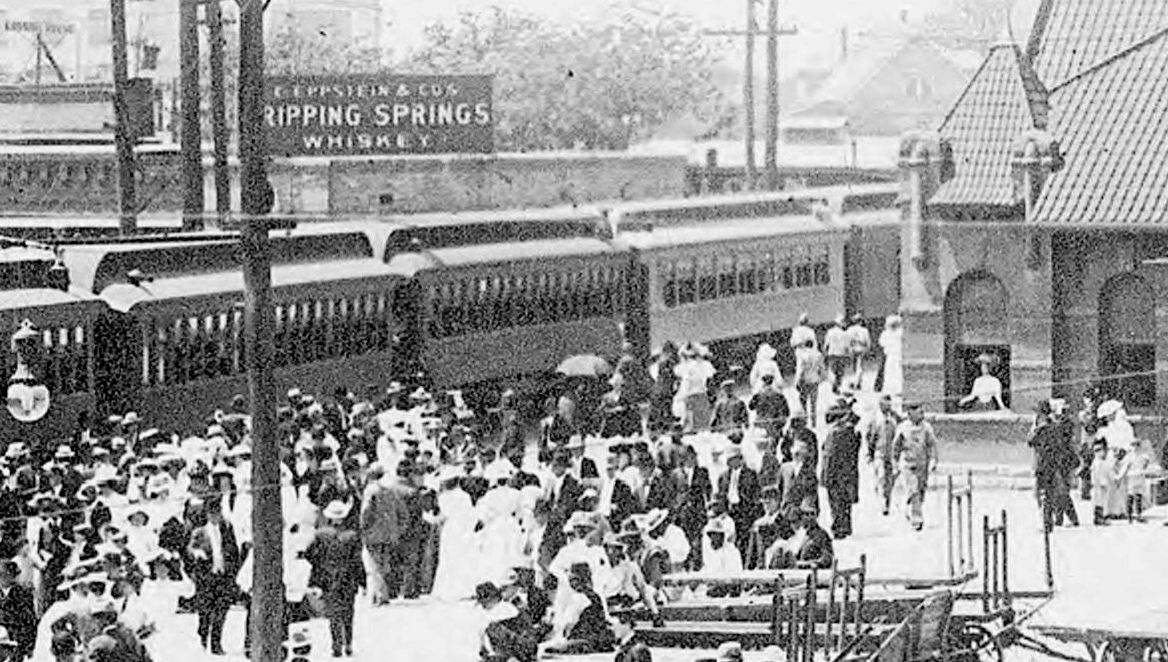
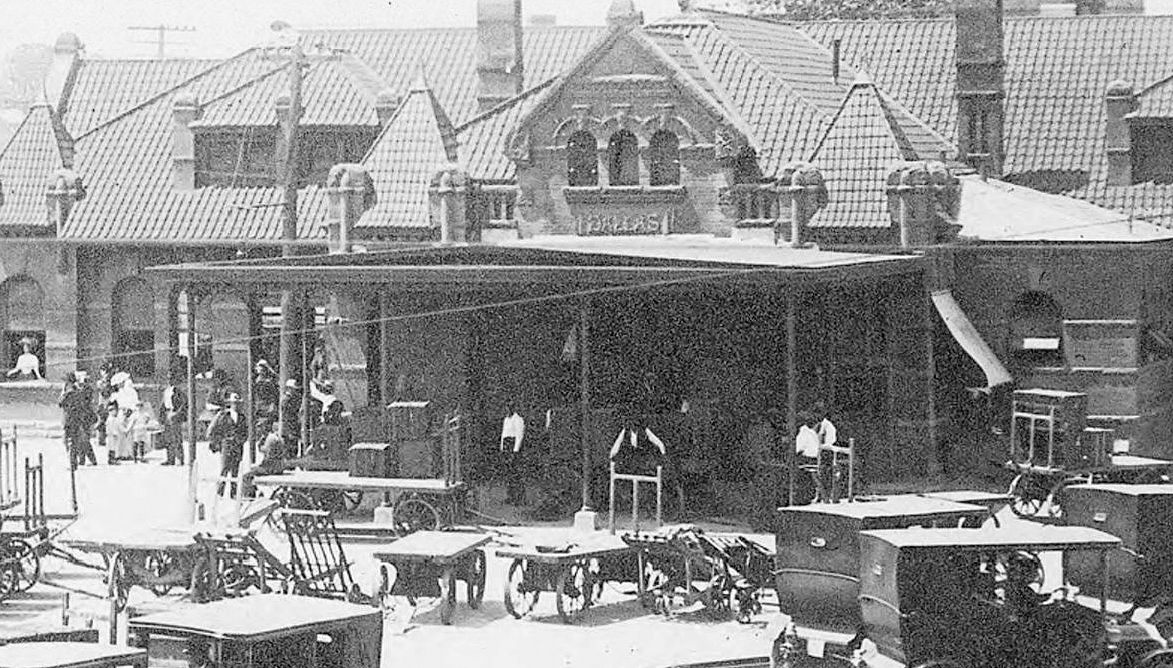
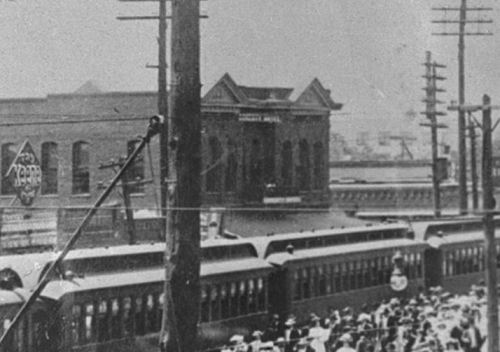
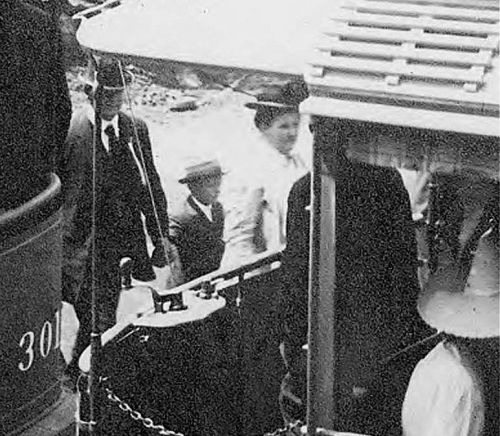
Back to the photo. Across Central Avenue from the hotel is the old Union Depot, where there was always a lot going on. Let’s look at the photo a little more closely. (Click photos to see larger images.)
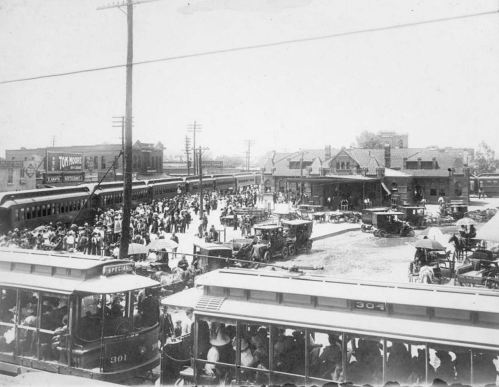
old-union-depot_degolyer_ca1910

old-union-depot_degolyer_det1

old-union-depot_degolyer_det2

old-union-depot_degolyer-det3

old-union-depot_degolyer_det4

old-union-depot_degolyer_det5

old-union-depot_degolyer_det6

Just seven or eight years after this photo was taken, all that human traffic was gone.

In the fall of 1968, having been vacant for years and counting down its final hours, Dallas Morning News writer Doug Domeier wrote about the old run-down hotel which had long outlived the passenger depot it had been built to serve (see the article “Demolition Leveling Once-Noisy Deep Elm,” DMN, Oct. 19, 1968). Domeier’s entertaining article about those early days includes memories of Lizzie Mae Bass, who once worked in the hotel’s cafe as a waitress and remembers when “horses back[ed] away in fright when a locomotive pulled in at the lively intersection linking the Houston and Texas Central with the Texas & Pacific.”

And today? You’d never EVER suspect that that patch of empty land at the edge of Deep Ellum was ever occupied by one of the city’s busiest train depots.

*

So where was it? Get a good visual idea of how things were laid out in the Sanborn map from 1905, here. Below is a street map that shows where the hotel was (red star) and where the train depot was (blue star). These days? Depressing. See it here (the view is looking north from Elm — the hotel would have been under the overpass, the train station straight ahead).
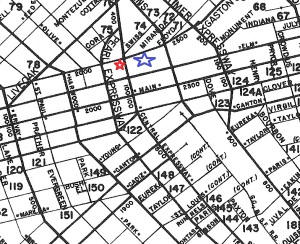
union-depot-hotel_1952-mapsco1952 Mapsco

It’s interesting to note that during the heyday of the Union Depot, the west side of the block of Central Ave. which ran between Elm and Pacific was the only block in this area not filled with black-owned businesses or residences. When the depot shut down and white-owned businesses moved out, the block began to fill with popular African-American establishments. It’s also interesting (to me, anyway!) to realize that the Gypsy Tea Room of the 1930s was just a few steps to the left of the hotel in the top photo. It took me forever to try to figure out where the Gypsy Tea Room had been — I wrote about it here.

***

Sources & Notes

Top photo is a detail of a larger photo, from the Squire Haskins Photography, Inc. Collection, University of Texas at Arlington Libraries; it is accessible here. The same photograph is shown in full farther down the post — this copy is from the DeGolyer Library, Central University Libraries, Southern Methodist University, and it is accessible here. The quality of both photos makes it difficult to zoom in on them with much clarity, but both sites offer very large images to view.

As mentioned above, an entertaining Dallas Morning News article full of historical info about the area around the depot is highly recommended: “Demolition Leveling Once-Noisy Deep Elm” by Doug Domeier (DMN, Oct. 19, 1968). (I’m not sure why the hotel is referred to as the “Grand Central Station Hotel” throughout — just substitute “Union Depot Hotel” whenever you come across that incorrect name.) The article also has a few paragraphs about the Harlem Theater which was also about to be torn down as part of what Domeier described as the “brutal change” then affecting Deep Ellum.

See a great early-’20s photo of the hotel building (the Tip-Top Tailors moved in around 1922) in the book Deep Ellum: The Other Side of Dallas by Alan Govenar and Jay Brakefield, here (the view is from Pacific to the southwest).

A related Flashback Dallas post — “The Old Union Depot in East Dallas: 1897-1935” — can be read here.

All images larger when clicked.

*

Copyright © 2016 Paula Bosse. All Rights Reserved.


Signage Overload on Main Street — ca. 1925

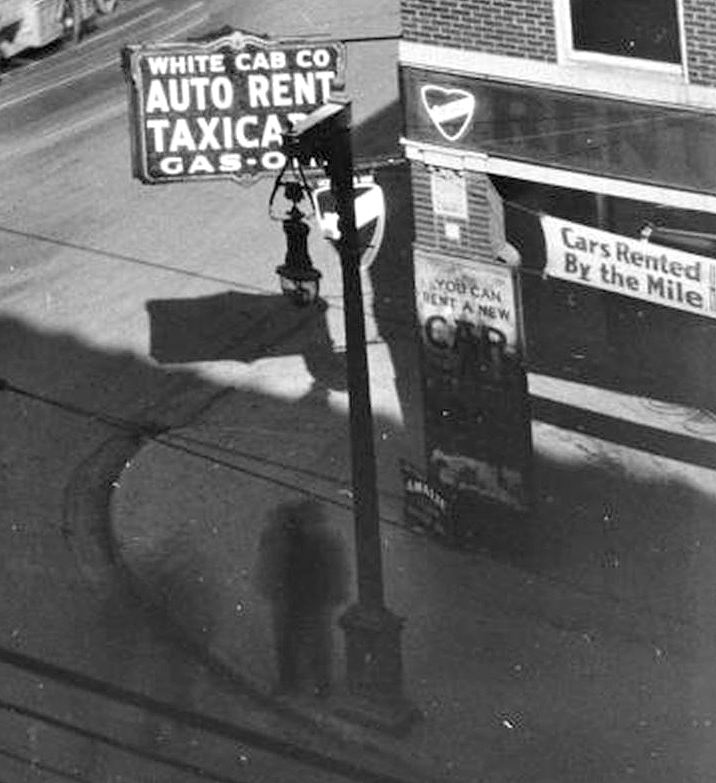
main-street_east_hilton_ebayI hope the photographer has a red light behind him…

by Paula Bosse

This photo makes me feel anxious. There’s just too much going on here: too many signs, too many overhead wires, too garish a light.

This is the 1800 block of Main Street, looking east. The photographer’s shadow can be seen at the bottom of the photo. A large hotel of some sort (the name of which escapes me at the moment) can be seen in the distance (in the 1900 block) at Harwood.

The businesses in this block, from the 1925 city directory (click for larger image):

1800-block_main_1925-directory

I have no 1926 directory to reference, but the 1927 directory has the building at 1811 Main (occupied in the photo by the Rund-Humphrey Water Heater Co. and the Stevenson Printing Co.) listed as being vacant. And the Hilton opened in 1925, so the photo seems to have been taken in 1925 or 1926.

***

Sources & Notes

Photo from eBay.

See the Hilton (the first one, not the later Statler-Hilton on Commerce) from a different angle in the post “The Hilton Hotel, Main & Harwood,” here.

*

Copyright © 2016 Paula Bosse. All Rights Reserved.
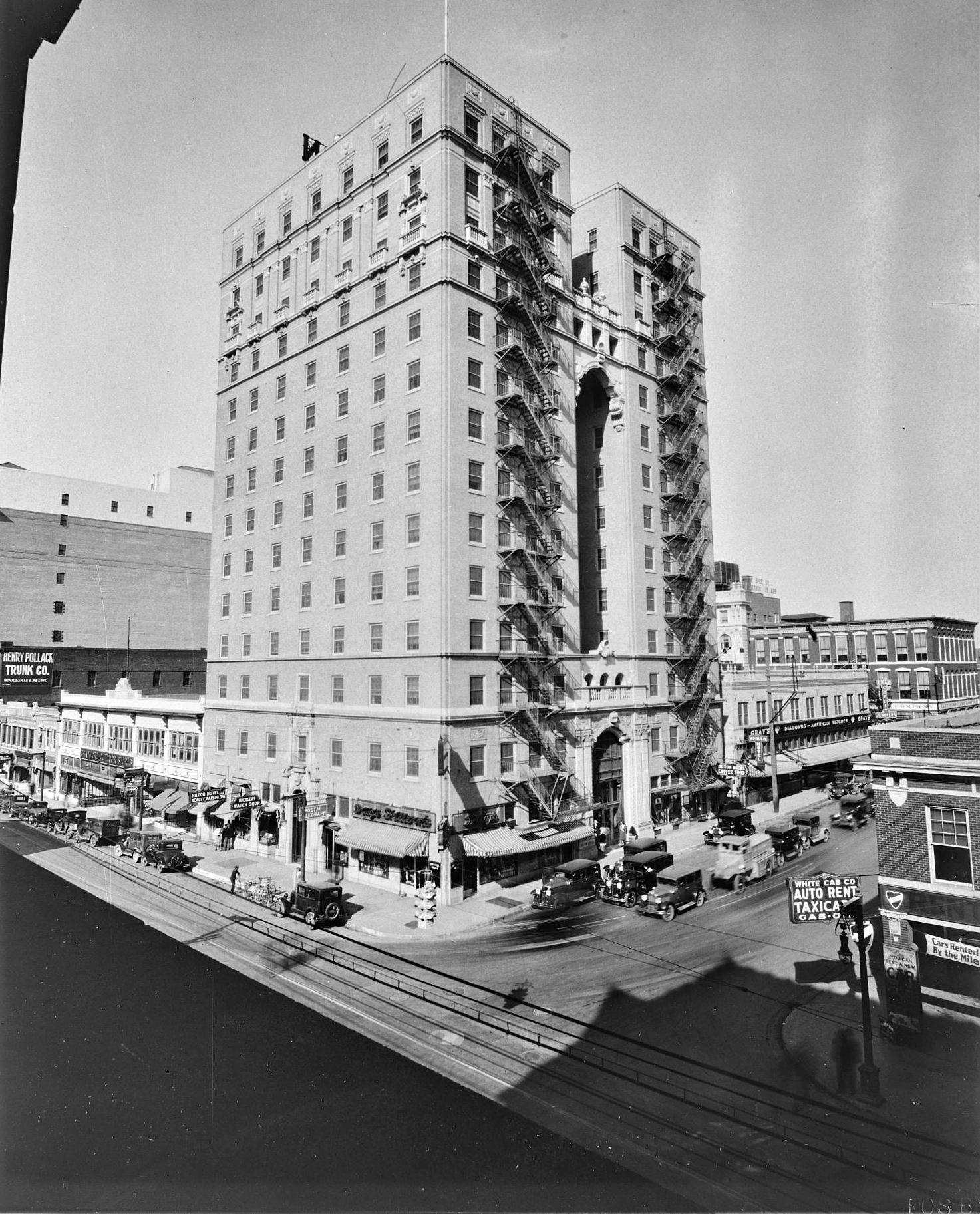
The Hilton Hotel, Main & Harwood

hilton-hotel_1930_portal_smThe Hilton, Main & Harwood, 1930 (click for much larger image)

by Paula Bosse

When Conrad Hilton built the Lang and Witchell-designed Hilton Hotel in Dallas in 1925, it was the first hotel he had built from the ground up. It’s been through several name changes over the years (its White Plaza Hotel incarnation was its longest), and, remarkably (for Dallas), the building still stands — it is now Hotel Indigo

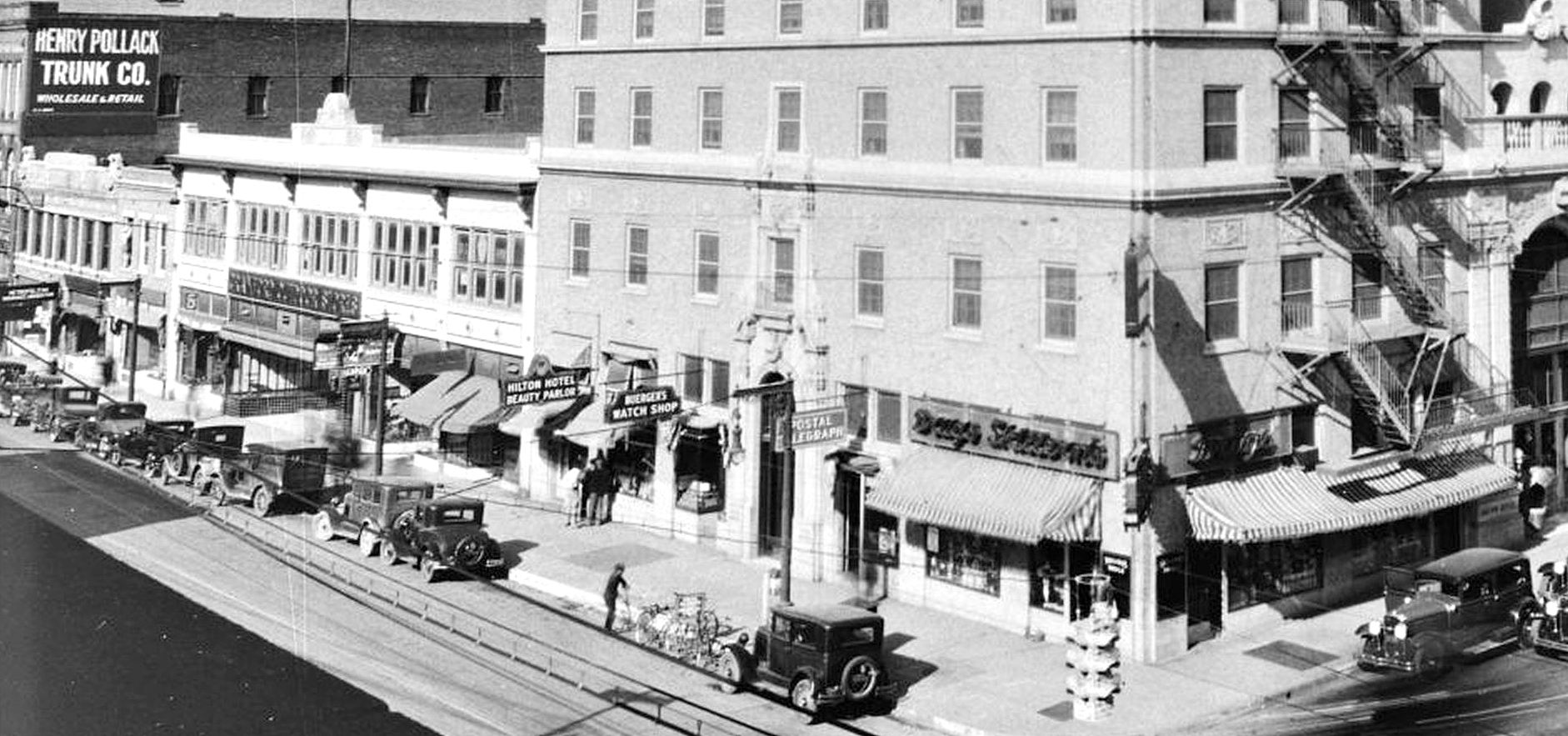
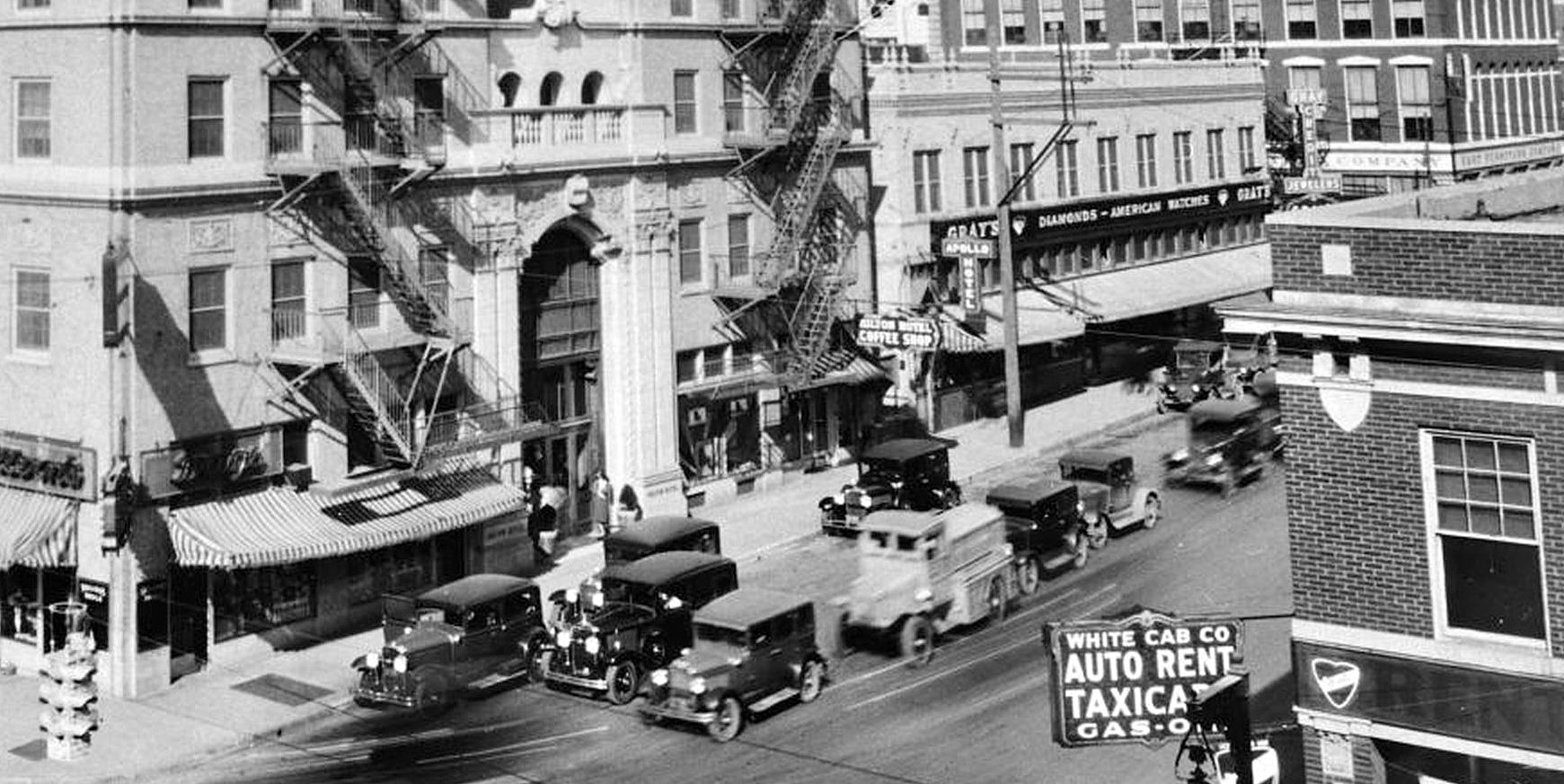
Above, a photo from 1930, with so much going on, it’s worth zooming in to see some of the details. All images are pretty big when clicked.

The left side of the photo shows Main Street looking west.

hilton_1930_det-1

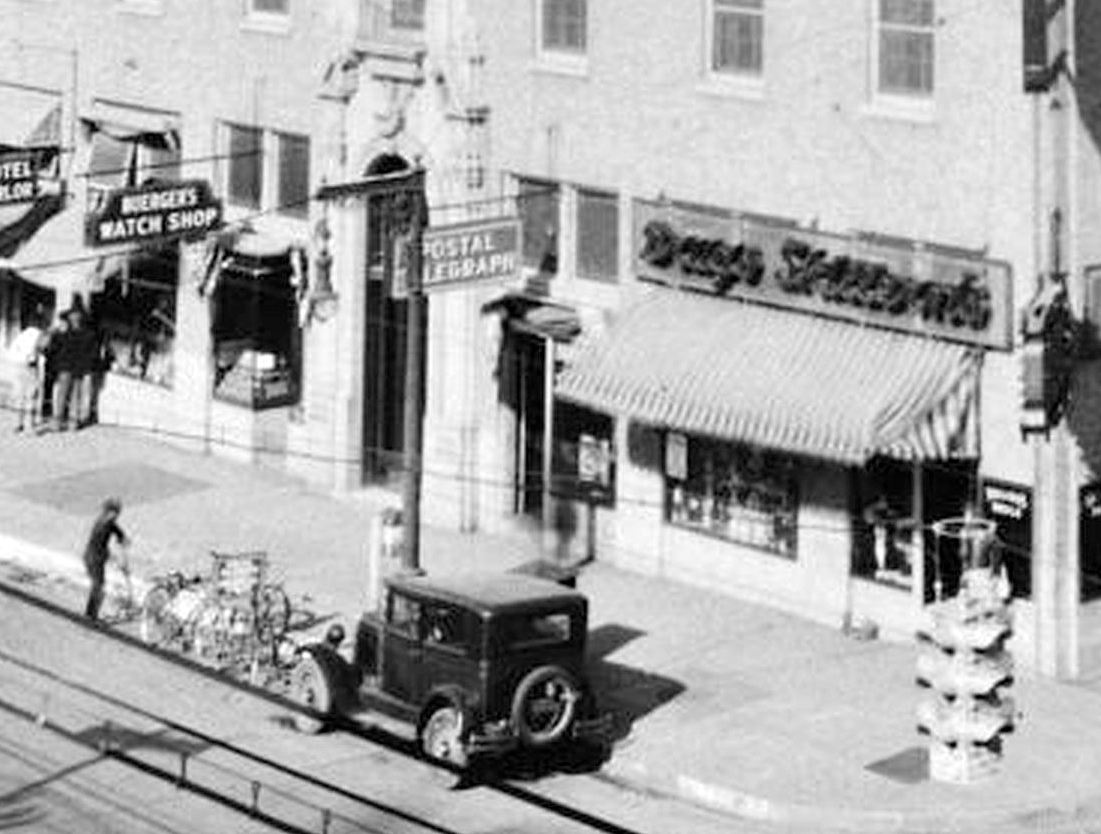
I’m not sure what’s going on with the man at the curb — construction? Street cleaning? And I’ve looked and looked at that small tower-like thing on the corner but can’t figure out what it is. (UPDATE: Ha! Thanks to a helpful comment below, I now see that this “tower” which was confusing me so much is, not, in fact, an odd structure set on the sidewalk but is — of course! — a traffic light suspended above the street!) (UPDATE #2: I think another commenter was right when he said it is a uniformed telegram boy at a bicycle stand. I’ve never considered that telegram offices would have had bike stands — but of course they would!)

hilton_1930_det1a

The right side shows Harwood looking north.

hilton_1930_det-2

hilton_1930_det3

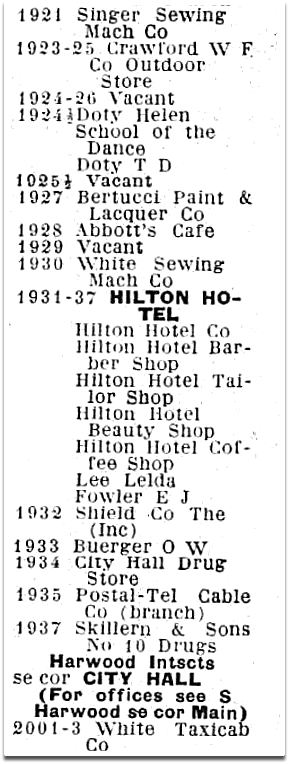
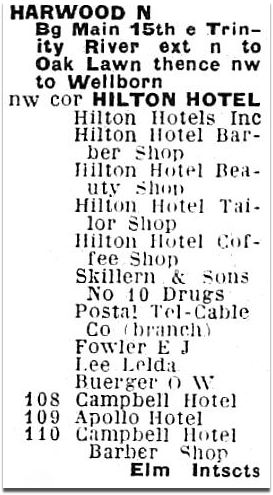
Here are the businesses listed in these blocks in 1930:

hilton_main_1930-directory1930 Dallas directory

hilton_harwood_1930-directory1930 Dallas directory

As a bonus, here’s a detail of another photo, showing the same intersection, around the same time, taken from the steps of the Municipal Building (then the city hall). The Drake’s Drug Store would be replaced by a Skillern’s in later years.

hilton_from-municipal_1927_det

***

Sources & Notes

Top photo from the Texas Historical Commission Historic Resources Survey Collection, via the Portal to Texas History, here.

The Wikipedia entry for Dallas’ first Hilton Hotel (not to be confused with the Statler-Hilton of the ’50s) is here.

The Hotel Indigo website is here.

All images larger when clicked.

*

Copyright © 2016 Paula Bosse. All Rights Reserved.

“The Only Motel Located In the Park Cities” — 1964

university-house-hotel_smu-rotunda_1965-detA palm tree, a palm tree, my kingdom for a palm tree… (click for large image)
by Paula Bosse

Behold, an architect’s rendering of University Park’s first motel (… motel?!). With palm trees! (The architects — Barron, Heinberg and Brocato  — were from Alexandria, Louisiana, where they might actually have palm trees. Perhaps they assumed they grew in Dallas. Or could be imported. Or just looked nice as a whimsical garnish.) Palm trees or not, look at that great mid-century design!
Plans for the University House Motel were announced in December, 1963 — it was to be built on Hillcrest at Binkley, right across the street from SMU by Edward T. Dicker, the man who built 3525 Turtle Creek. (Interestingly, according to a press release printed in The Dallas Morning News on Dec. 8, 1963, real estate transactions for the property involved a land lease from Shell Oil Co.) With 60 suites, it was the perfect location for hotel lodgings for parents visiting their children in college.

This was to be both a major commercial addition to University Park as well as something of an architectural departure. The closest hotel/motel alternative (according to the ad below, anyway) was farther away than might have been convenient for visiting families — the (also super-cool-looking) Holiday Inn was all the way down Central, just past Fitzhugh.

ad-holiday-inn_central-expwy_smu-rotunda_1965
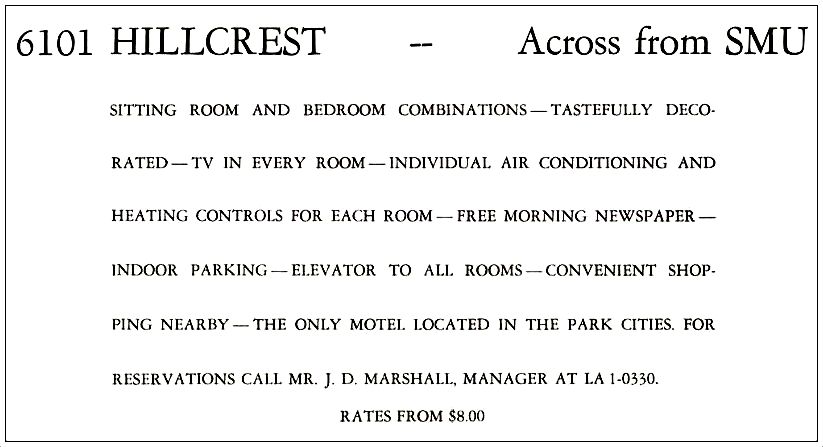
If I were a visiting parent, I’d probably choose the University House option because of its unbelievably close proximity to the campus. And if I saw the ad below, I’d definitely book a room — pronto!

university-house-hotel_smu-rotunda_1965(click to read text)

When construction was complete and the motel opened for business, the sans-palm-tree reality of the building had to have been a bit of a disappointment to anyone who had salivated over that sleek Mid-Century Modern drawing (even though I’m sure the interior decor was much nicer than most motels). Maybe it’s just me. It sort of looks like the drawing. …Sort of….

university-house_smu-rotunda_1965

The University House hung on for several years, then changed ownership and names several times. It is now the site of the much-expanded and certainly much-swankified Hotel Lumen. Interestingly, the skeleton of the original building is still in there somewhere. As Alan Peppard wrote in the Dallas Morning News on Oct. 16, 2006 soon after Hotel Lumen opened, “The old hotel was gutted back to nothing but the concrete frame and rebuilt as a hip University Park hotel.” (To see what things look like now, click here — the renovated original building is on the left, the expansion is on the right.)

In the 21st century, Hotel Lumen is exactly the kind of hotel that comfortably-well-off-but-still-tastefully-hip SMU parents want to stay in when they arrive in town to visit the progeny. All that’s missing are a few palm trees….

***

The University House Motel ad appeared in the 1965 Southern Methodist University Rotunda yearbook. That same yearbook also contained the Holiday Inn ad and the photograph of the University House Motel. (The photo appeared over the yearbook’s cheeky “Why be discreet?” caption and was featured in the previous Flashback Dallas post, “The SMU ‘Drag’ — 1965,” here.)

The 1965 ad has the nightly rate at the University House Motel at $8 — about $60 in today’s money, adjusted for inflation. Not bad for parents who could afford to send their children to SMU and who weren’t staying downtown at the Adolphus, the Baker, or the Hilton.

Photos of Hotel Lumen — inside and out — can be found on their website, here.

Click pictures for larger images.

*

Copyright © 2015 Paula Bosse. All Rights Reserved.


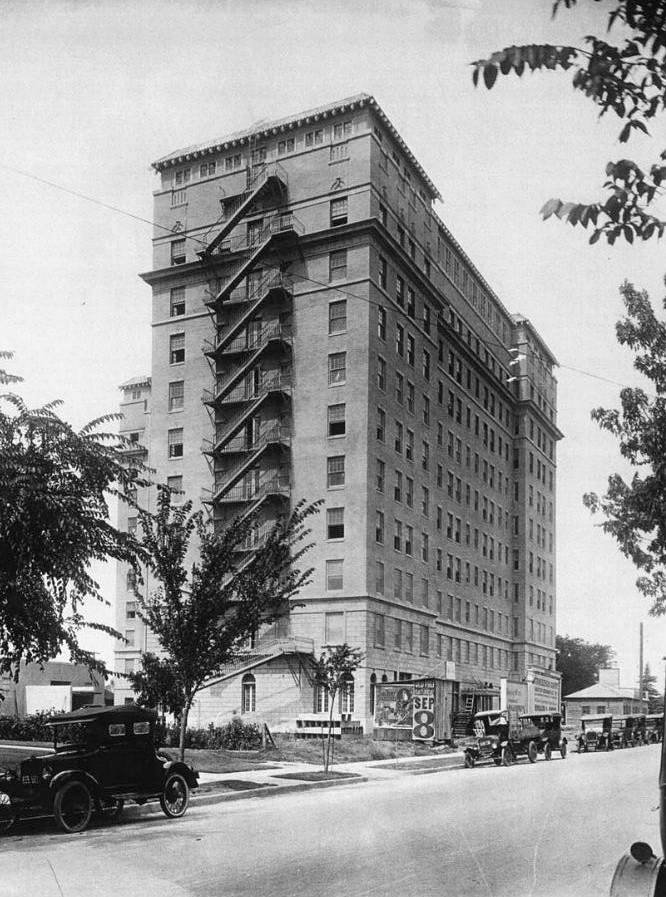
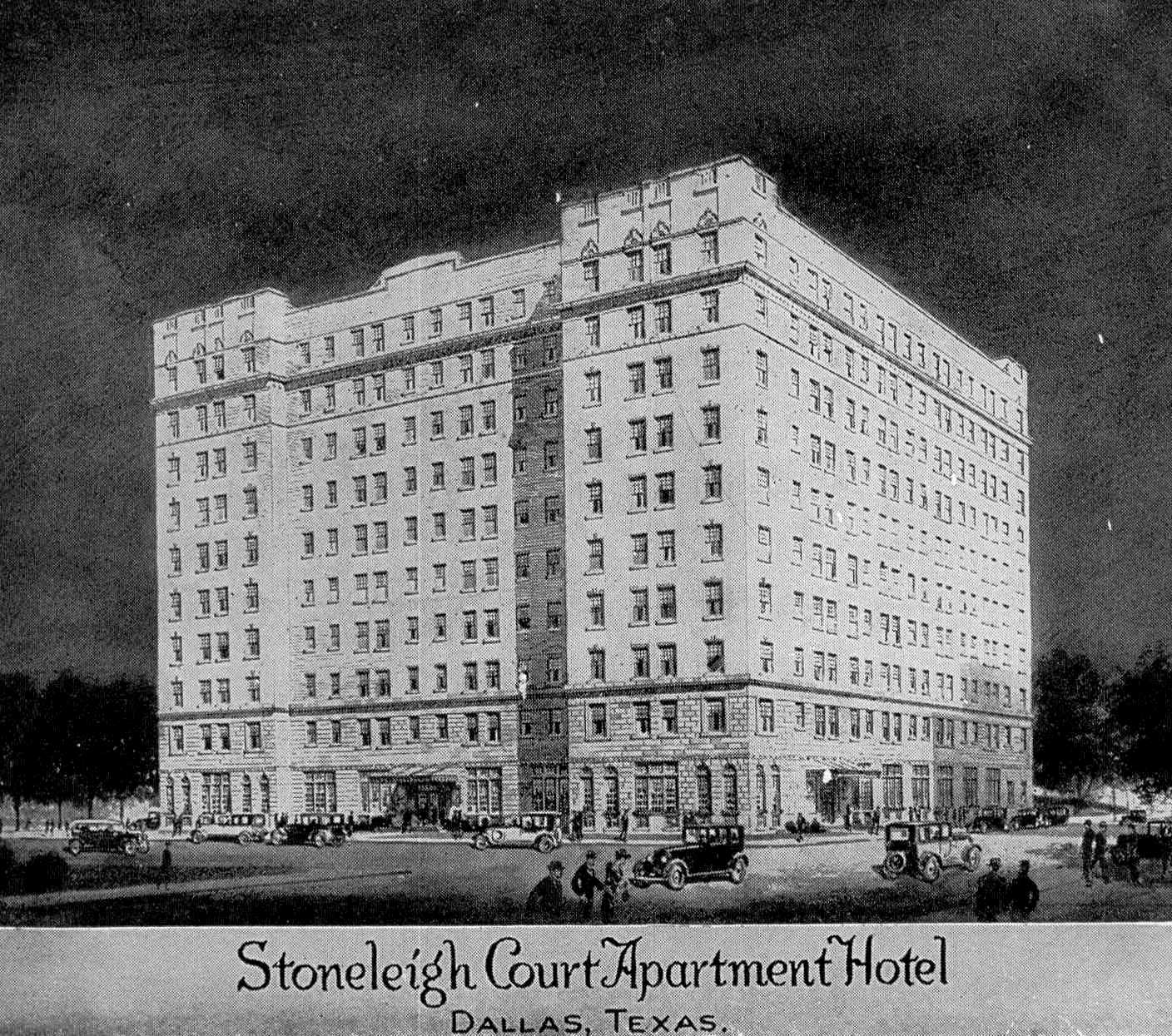
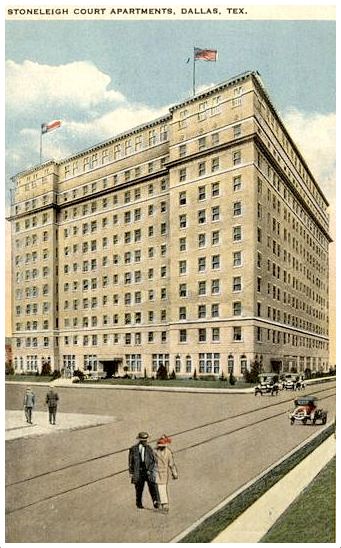
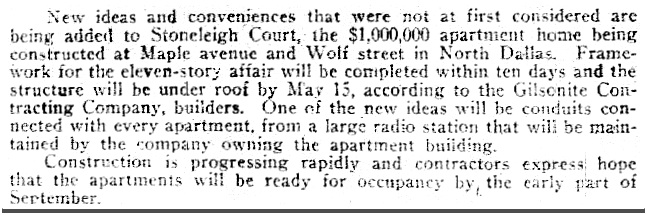
The Stoneleigh Court Apartment Hotel — 1923/1924

stoneleigh_1923_natl-reg-application
Still standing, still beautiful…

by Paula Bosse

Above, the Stoneleigh Hotel (originally known as the Stoneleigh Court Apartment Hotel) in 1923, in its final weeks of construction. When the Stoneleigh opened in October, 1923 at the corner of Maple Avenue and Wolf Street, it was a swanky apartment house, with hotel amenities (a few rooms were set aside for “transient” travelers). Thankfully, the Frank J. Woerner-designed building still stands and remains a lovely hotel.

Originally there were 125 apartments (which ranged from 1-5 rooms each), all of which were fully furnished (linens, silver, kitchen utensils, dishes, telephones, etc.), and maid service was provided. There were also radios in every room (a pretty new-fangled thing at the time). Each apartment had a kitchenette and a private bath, and ice water was piped to all apartments. Another innovative feature was the Servidor delivery service which allowed residents and hotel staff to conduct transactions without ever having to look one another in the eye or exchange stilted chit-chat. There was a grocery store, a pharmacy, a beauty shop, and a barber shop on the premises. There were smoking rooms, billiards rooms, and lounges on the ground floor and a grand ballroom on the top floor. And apartments were “handsomely furnished, [with] a color scheme of taupe, blue and mulberry being observed alternately on the various floors.” Sign me up!

*

Below, an early ad (click to see a much larger image of the illustration on its own).

ad-stoneleigh_terrill-yrbk_1924

And, of course, the obligatory postcard in which the building looks familiar, but which its surroundings seem somewhat … romanticized.

stoneleigh_court_apartments

*

A grainy photo from the construction and its caption:

stoneleigh-hotel_dmn_042223_under-construction_photo

stoneleigh-hotel_dmn_042223_under-construction_captionDallas Morning News, April 22, 1923

***

Sources & Notes

Photo of the building nearing the end of its construction is from the application to the National Register of Historic Places, which can be found in a PDF, here. (Dallas Historical Society photo.)

Ad is from the 1924 Terrill School yearbook.

To read a lengthy article published a few days before the Stoneleigh officially opened — “Stoneleigh Court Most Pretentious Apartment Hotel in the Southwest” (Dallas Morning News, Oct. 14, 1923) (with “pretentious” used here in a good way!) — click here.

Not sure what an “apartment hotel” is? See Wikipedia, here.

The Stoneleigh is currently called “Le Méridien Dallas, The Stoneleigh,” and the official website is here.

*

Copyright © 2015 Paula Bosse. All Rights Reserved.

The Caveteria: “Marvelous Food at Moderate Prices”


caveteria_ebay
The finest in downtown basement dining (click for larger image)

by Paula Bosse

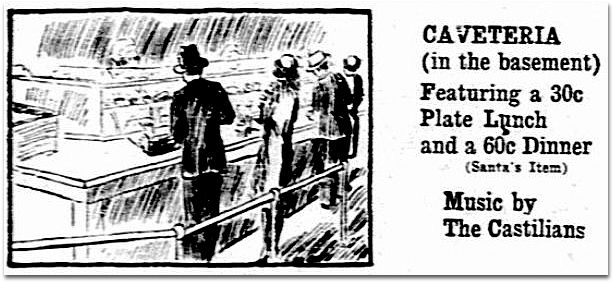
How could you NOT want to dine in a restaurant called a “Caveteria”? It was a cafeteria in the basement — the cave — of the swanky Baker Hotel, and it looks like it was a nice cheap place to grab a quick lunch downtown in the 1920s and 1930s.

caveteria_baker-hotel_postcard_ebay

*

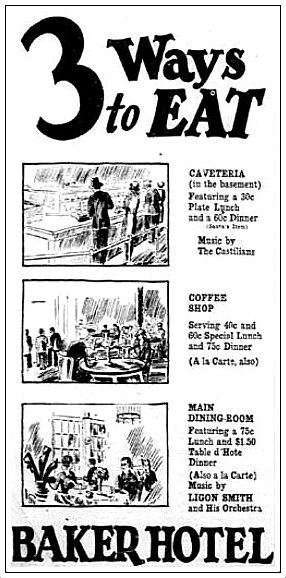
The Baker Hotel had “3 ways to eat”: one could eat cheap in the basement Caveteria (where, according to the Inflation Calculator, a 30-cent lunch in 1927 was the equivalent of about four bucks today), eat sort of cheap in the probably street-level coffee shop (lunch was about $6.75 there), and eat not cheap in the main hotel dining room (where lunch was over $10.00). (There was also the Peacock Terrace night club, well beyond reach of basement-dwelling diners.)

caveteria_dmn_120427

caveteria_dmn_120427-det1927

*

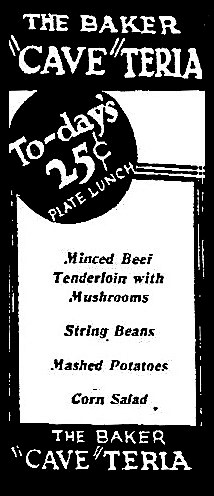
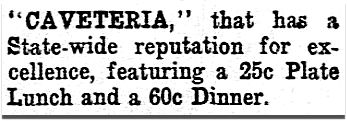
The price actually went down to a quarter by 1931 and had a “State-wide reputation for excellence.”

caveteria_dmn_020131DMN, Feb. 1, 1931

*

A year later the price was holding at 25 cents and it seems like a pretty good deal.

caveteria_dmn_021532DMN, Feb. 15, 1932

*

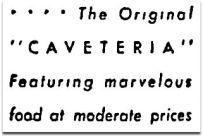
“The Original ‘Caveteria'” — accept no imitations! At least one other hotel in the Baker chain — the Gunter, in San Antonio — had a “Caveteria,” but apparently Dallas’ was first. In fact, the word and the hotel made their way into H. L. Mencken’s The American Language, Supplement One (see here).

caveteria_corsicana-daily-sun_031632Corsicana Daily Sun, Mar. 16, 1932
*

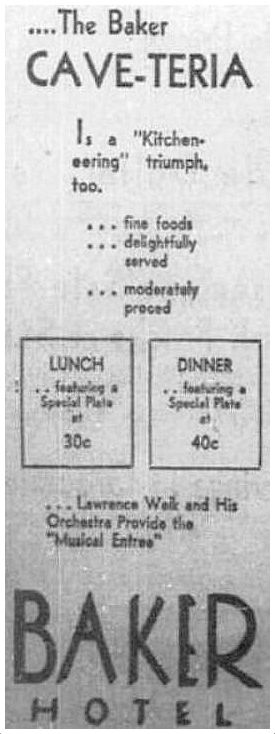
Oh yeah — live bands played while you ate your hearty meal of minced beef tenderloin. Even Lawrence Welk settled in for a stint as the “musical entree” in 1934.

caveteria_dmn_022234-lawrence-welkFeb., 1934

*

In 1942, the space once occupied by the Caveteria was turned over to the USO:

The Baker Hotel has provided the USO with what used to be the Caveteria in the basement of the hotel. It will be known as USO Club in the Cave. The entrance will be through the Akard Street entrance of the hotel.  (Dallas Morning News, Jan. 27, 1942)

*

And there it is — another place I wish I’d been able to visit.

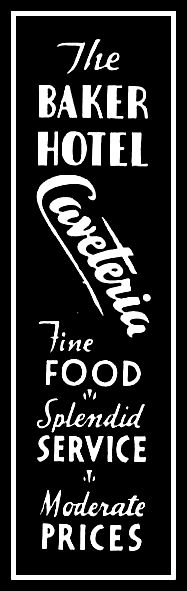
“Fine food. Splendid Service. Moderate prices.”

ad-baker-hotel-caveteria

***

Sources & Notes

Color postcards found on eBay.

The Baker Hotel opened in 1925 at Commerce & Akard on the site where the Oriental Hotel had previously stood, catty-corner from the Adolphus.

*

Copyright © 2015 Paula Bosse. All Rights Reserved.


Neon Refreshment: The Giant Dr Pepper Sign

hotel-jefferson_neon-dr-pepper_cook_degolyer_SMU_ca1945

by Paula Bosse

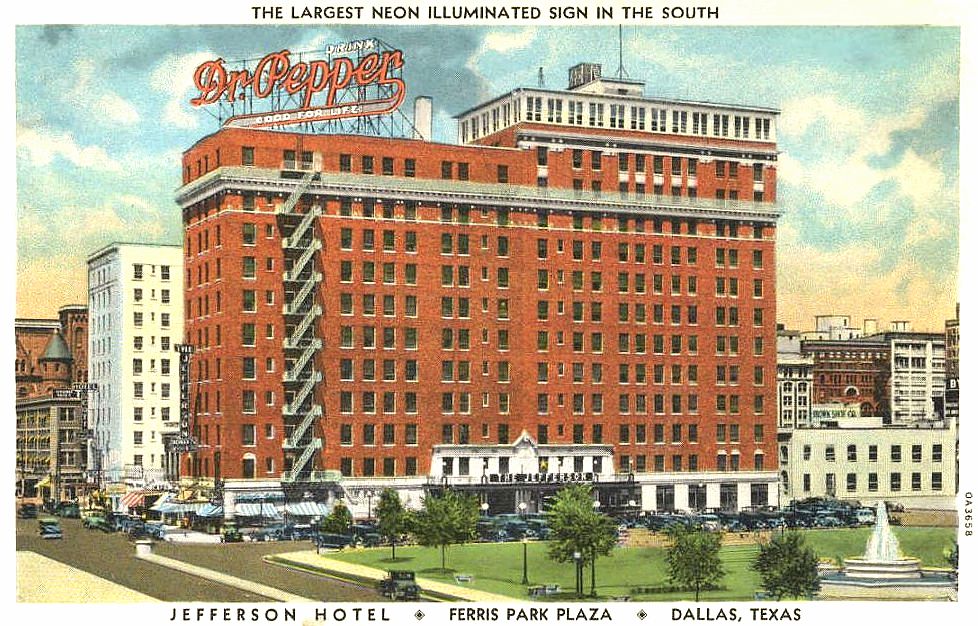
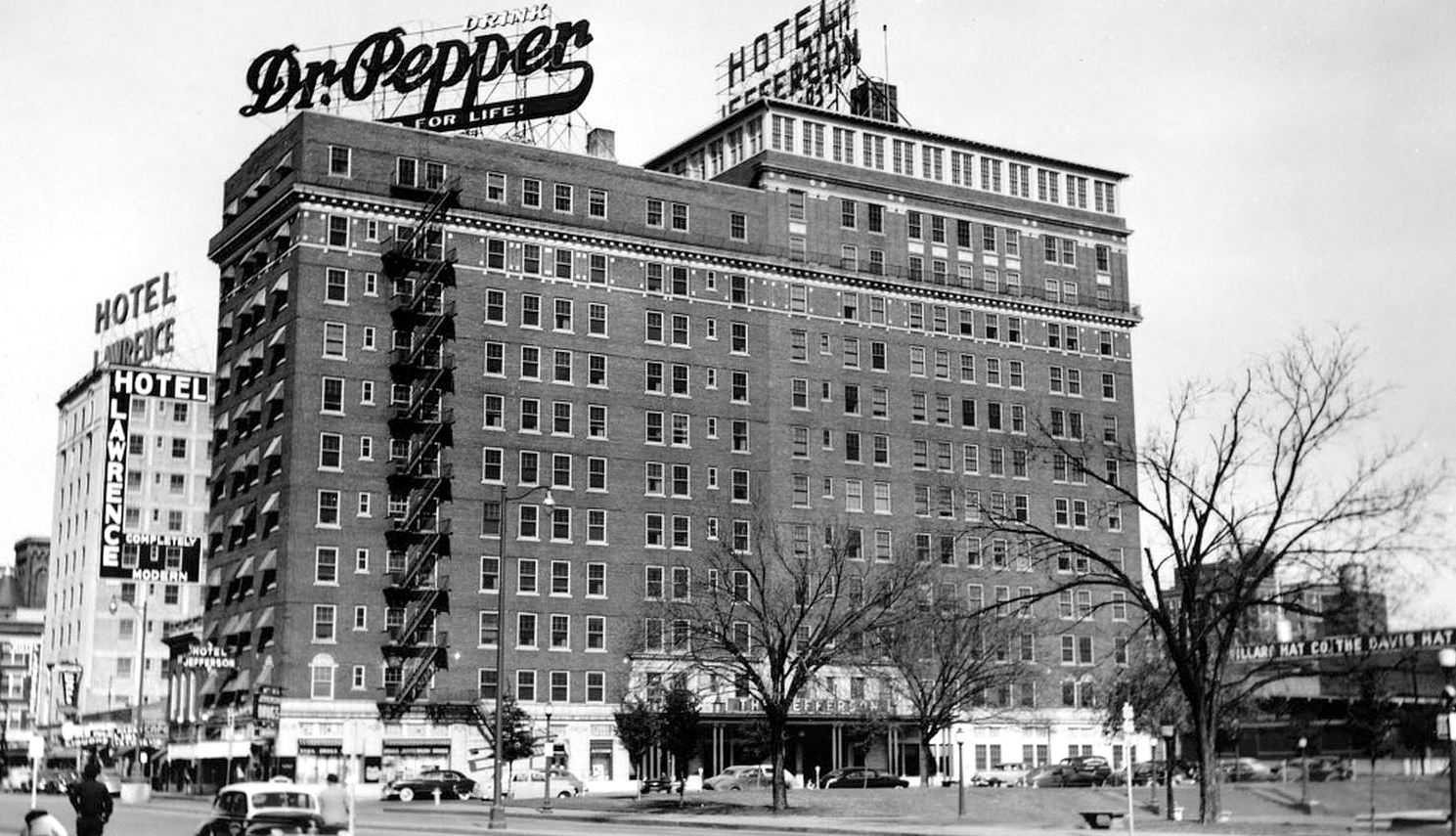
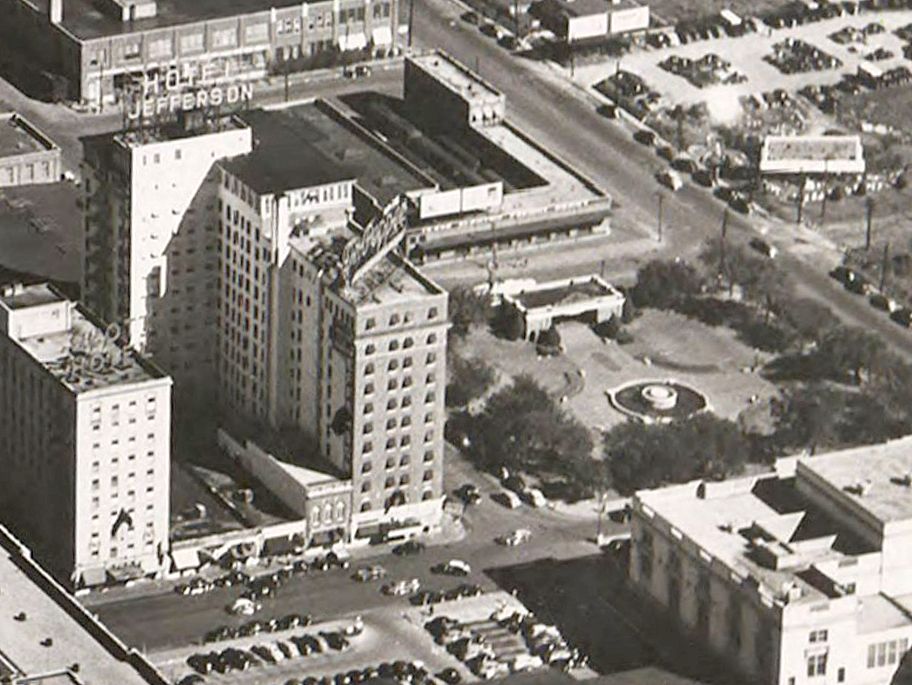
The Jefferson Hotel probably made some serious money leasing out rooftop acreage to the Dr Pepper people who erected a huge neon sign there. The hotel was located across from Union Station and a couple of blocks from the Old Red Courthouse. For people approaching the city from the southwest, there was absolutely nothing between them and that refreshing beacon rising tantalizingly above S. Houston and Wood streets.

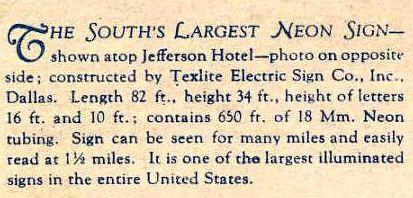
hotel-jefferson_neon-dr-pepper_cook_degolyer_ca1945-verso

jefferson-hotel_hotel-lawrence_dr-pepper-sign_dmn-tumblr

Texlite — the Dallas company that made the sign — was the first company in the Southwest to build and sell neon signs. Their first neon in Dallas advertised a shoe store in 1926 or 1927. (Texlite is best known as the company that built the red neon Pegasus and installed him on top of the Magnolia Petroleum Building in 1934.) My guess is that this Dr Pepper sign went up sometime between 1927 and 1934. It was up there for quite some time. Below is a detail from a photo taken sometime after 1943, and that DP sign was still there, continuing to make people subliminally thirsty

hotel-jefferson_dp_foscue-det(click for larger image)

It’s surprising Dallas didn’t have more neon back then. With a pioneering hometown neon company, the Dallas skyline should have been lit up like a Christmas tree 24 hours a day!

***

Sources & Notes

Postcard is from the George W. Cook Dallas/Texas Image Collection, Central University Libraries, Southern Methodist University; it can be viewed here.

First black-and-white photo was purchased at an antique mall or flea market, origin unknown; found here.

The 1940s-era aerial photo is a detail of a larger photo, “Downtown Dallas looking east (unlabeled)” by Lloyd M. Long, from the Edwin J. Foscue Map Library, Central University Libraries, SMU; the full photo can be viewed here.

A great photo of the hotel and sign can be seen in Sam Childers’ Historic Dallas Hotels, here. Childers writes that the Dr Pepper sign came down when the Jefferson was sold and became the Hotel Dallas in 1953. 20-some-odd years for a sign like that to remain in one place is a pretty good run.

The Jefferson Hotel (or as it’s sometimes identified, “Hotel Jefferson”) was at 312 S. Houston St. The building was demolished in 1975. It is now a hotel-shaped parking lot.

See what other clever thing once occupied the roof of the Jefferson Hotel in the Flashback Dallas post “The Jefferson Hotel and Its ‘Wireless Telegraph’ Rooftop Tower — 1921.”

*

Copyright © 2015 Paula Bosse. All Rights Reserved.


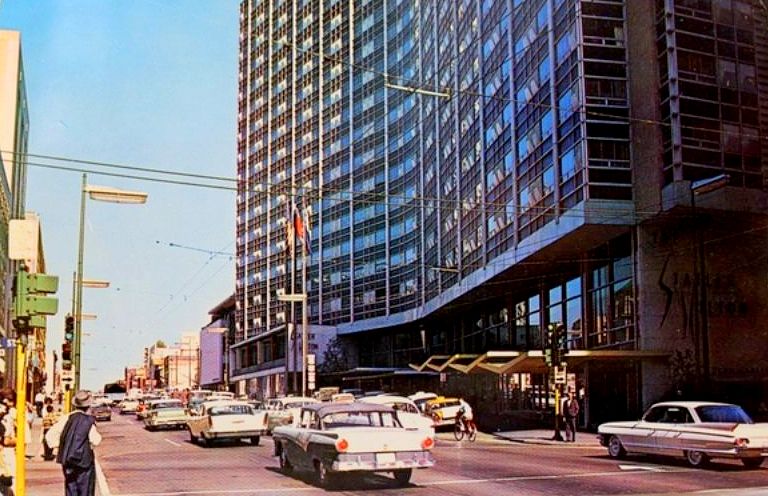
The Statler Hilton, Commerce & St. Paul

statler-hilton_postcard_ebay1956 modes of transport: automobiles, taxis, bikes, & feet

by Paula Bosse

Great shot of the Statler Hilton, looking east down Commerce — looks both hot and cool.

The blurb on the back: “The beautiful facade of the Statler Hilton in busy downtown ‘Big D,’ business and convention center of the Southwest.”

The message on the reverse of this postcard contained the following message to the folks back in Cincinnati:

Hi, folks, we’re having a wonderful time. This is beautiful country. We’ve been to San Antonio for a couple of days. Saw the Alamo, also San Jose Mission and went to Mexico. The children are darling and we’re having fun spoiling them. Love to all — Helen and Walter.

Tourists sure write a lot about San Antonio on picture postcards of Dallas….

***

Sources & Notes

Postcard found on eBay.

Great news! After decades of that beautiful building sitting empty, it has been announced that it will finally be coming back to life — and the Hilton company is going to be part of it. More here.

See a current view of the same corner on Google, here.

*

Copyright © 2015 Paula Bosse. All Rights Reserved.

The Adolphus & Its Annex

adolphus_lang-witchell_arch-yrbk_1922The Adolphus Hotel and its annex, circa 1922 (click for larger image)

by Paula Bosse

Built in 1912, the ornate and luxurious Barnett, Haynes, and Barnett-designed Adolphus Hotel (which was modeled on/inspired by the Plaza Hotel in New York) quickly became THE hotel in Dallas. It was so successful that in only four years an expansion was already underway. The 12-story “Annex” (seen above, just to the left of the original building) was designed by preeminent Dallas architects Otto Lang and Frank Witchell. The so-called “Junior Adolphus” was built around 1916/17 and added 229 rooms to Dallas’ most glamorous hotel. A third addition (“Adolphus III”) came along in the 1920s.

Below, a few views of the Adolphus complex at different stages of its growth. (Click photos for larger images.)

*

adolphus-construction_dallas-then-and-nowBuilt at the northwest corner of Commerce and Akard streets, the Adolphus Hotel was built on the spot previously occupied by the City Hall. This photo, looking northeast, shows the site’s excavation by Vilbig Brothers Construction.

*

1913-pano-2In this detail from an April 1913 panoramic photograph of the city’s skyline, the Adolphus can be seen just six months after its opening at the end of 1912. (A previous post devoted to the full panoramic photo can be accessed here.) The Oriental Hotel, with its rounded topknot, can be seen across Commerce from its sister hotel (both were built by beer king Adolphus Busch). Seen in the background is the Praetorian Building — once the tallest structure in Dallas (it is the tall building, second from the right).

*

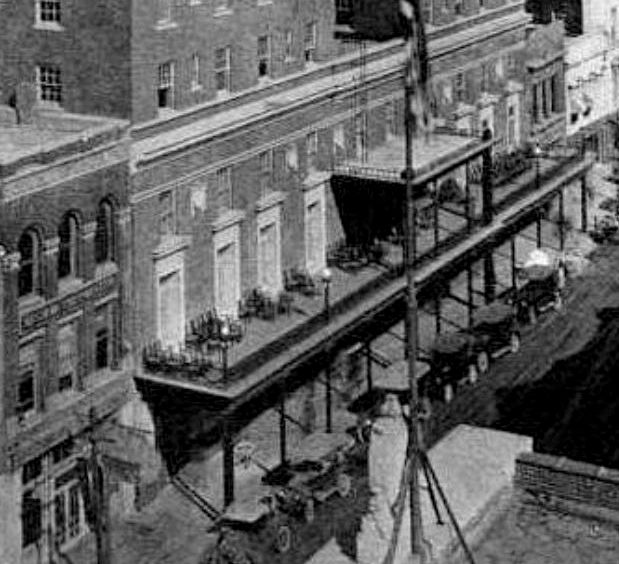
adolphus_lang-witchell_arch-yrbk_1922-detThe the Lang & Witchell-designed annex came along around 1916/17 (see top photo). My favorite detail is what looks like an open-air terrace, with tables and chairs, overlooking Commerce Street.

*

adolphus-annex_dallas-hotelsAnother view, showing the hotel and annex in 1924.

*

adolphus-annex_dallas-hotels-detA closer look shows that the terrace is now enclosed.

*

adolphus-hotelA few years later, a further, taller addition was built.

***

Top photo from the 1922 Yearbook of the Dallas Architectural Club.

Photo of the excavation from Dallas Then and Now by Ken Fitzgerald (San Diego: Thunder Bay Press, 2001); photograph from the Texas/Dallas History and Archive Division of the Dallas Public Library. A similar photo can be seen on the fascinating history page of the Vilbig & Associates website, here.

Detail of 1913 panoramic photo from the Jno. J. Johnson photo in the Library of Congress. (For more info, see previous post, “‘New Dallas Skyline’ — 1913,” here.)

Photo of the Adolphus with the Coca Cola sign in the lower left from Historic Dallas Hotels by Sam Childers (Charleston: Arcadia Publishing, 2010). The author’s extremely informative caption can be read here.

See a wonderful pictorial history of the Adolphus Hotel on the Dallas Morning News website here.

The official website for the Adolphus Hotel is here.

Click photos for larger images.

*

Copyright © 2015 Paula Bosse. All Rights Reserved.